 NATO
@NATO

We are strengthening our defence and deterrence for the long term, across all domains and against all threats and challenges

Politicians, athletes, journalists, NGOs, companies... They all use corporation-owned social networks to communicate with us. Citizens shouldn't have to hand over their data to companies to read content published by public entities. Public Feeds changes that by making posts of popular accounts freely available. Read more.

Anna Maria Kinberg Batra (Swedish: [ˈânːa ˈɕɪ̂nːbærj ˈbɑ̌ːtra]; née Kinberg; born 14 April 1970) is a Swedish politician who served as Leader of the Opposition and as Leader of the Moderate Party from 2015 to 2017. She was a Member of the Riksdag for Stockholm County from 2006 to 2018. She also served as parliamentary leader from 2010 to 2015. More on Wikipedia

Landshövding i Stockholms län/Governor of Stockholm County. Inte aktiv här/not active here. Contact: stockholm@lansstyrelsen.se .
Anna Kinberg Batra reposted
Anna Kinberg Batra reposted
 Darth Putin
@DarthPutinKGB
Russia:
Invades Moldova 1992
Flattens Grozny 1999
Uses polonium UK 2006
Cyber attacks Estonia 2007
Invades Georgia OTD 2008
Invades Crimea & Eastern Ukraine 2014
Downs MH17 2014
Flattens Aleppo 2015
Uses Novicok 2018
Invades Ukraine more 2022
Also Russia: West is so aggressive
Anna Kinberg Batra reposted
 Josef Aschbacher
@AschbacherJosef
Huge congratulations to @isro, to Chairman Shri S. Somanath and to all of the teams and people involved with the #chandrayaan3 mission. Quite an achievement and absolutely stunning!
Anna Kinberg Batra reposted
 scandipop
@scandipop
The line-up for Schlager Night of Stockholm Pride was 💥💥💥
Linda Bengtzing
Emil Henrohn
Melanie Wehbe
Towe Jaarnek
Kiana
Signe & Hjördis
One More Time
Nanne
Paul Rein
Selma
Euroband
Sarek
Drömhus
Margaret Berger
Theoz
Bettan
Magnus Carlsson
Alessandra
Loreen
📸: Stefan Fors

Anna Kinberg Batra reposted
 Ziv Nevo Kulman
@zivnk
Thank you @SwedishPM Ulf Kristersson for hosting this afternoon the 1st #pride mingle at Sagerska Palace, in honor of @stockholmpride. As a member of the #lgbtq diplomatic community and as a representative of the State of Israel, it also meant a lot to me that the event was held on Raoul Wallenberg’s birthday. #happypride.


Anna Kinberg Batra reposted
 Johan Forssell
@JohanForssell
”2014 startade en företrädare till mig tradition att som statsminister gå Prideparaden. Fredrik Reinfeldts deltagande då var historiskt. I dag är det en självklarhet. Nu startar vi en ny tradition, fortsätter Ulf Kristersson.” www.expressen.se/nyheter/kristersson-flaggar-for-pride-ut…
Anna Kinberg Batra
@KinbergBatra
Får man inte rösta på något i år? Jodå, t.ex. här, senast 8 augusti :-)
instagram.com/p/CvZdZVAoPtP/
Anna Kinberg Batra reposted
Anna Kinberg Batra
@KinbergBatra
Så här borde vi väl inte behöva ha det. Eller hur, @BuschEbba , @Pau_Brandberg , @maria_mahl, @juliadelin och diverse män med makt?
 TT Nyhetsbyrån
@ttnyhetsbyran
Kvinnor startade hälften så många företag som män förra året. Sverige hamnar också i bottenligan i EU när det gäller andel kvinnor som driver eget företag.
www.hn.se/nyheter/ekonomi/sverige-sticker-ut-fa-kvinnor-d…
Anna Kinberg Batra reposted
 Defense of Ukraine
@DefenceU
In Ukraine we don't say “when the war ends”, we say “when we win”.

Anna Kinberg Batra reposted
 Lars Wilderäng
@Cornubot
Fredagsmys: Ungern ratificerar svenskt Natomedlemskap på måndag cornucopia.se/2023/07/fredagsmys-ungern-ratificerar-svens…
 Anna Kinberg Batra
@KinbergBatra
Bra tips! 🌟
 Paulina Brandberg
@Pau_Brandberg
Jag vill varmt rekommendera alla att lyssna på @lise_tamm sommarprat! Lise är min fd chef och en stor inspiration för mig. Hon, liksom jag, kan inte vara tyst när hon ser orättvisor och hon brinner för att göra skillnad på riktigt. En riktig powerkvinna! sverigesradio.se/play/avsnitt/2181548
Anna Kinberg Batra reposted
 Swedish Ministry for Foreign Affairs
@SweMFA
Certain actors outside Sweden are spreading and perpetuating false claims that the Swedish State is behind the desecration of copies of holy scriptures.
Wednesday, the Government held a press briefing on recent influence campaigns against Sweden.⬇️
government.se/press-releases/2023/07/disinformation/
Anna Kinberg Batra
@KinbergBatra
Ukraina insåg direkt hur molnet kan vara säkrare än marken i skarpa lägen, åtminstone för den som använder satelliter och modern rymdteknik. Bra av @PlJonson i @dagensnyheter om hur även svenska försvaret behöver tänka mer så: etidning.dn.se/p/dagens-nyheter/2023-07-28/a/satelliter-o…
Anna Kinberg Batra reposted
 Tobias Billström
@TobiasBillstrom
En mycket intressant studie av opinionen av @pewresearch Studien visar på 78 procent av 🇸🇪-befolkningen som har en positiv syn på @NATO www.pewresearch.org/global/2023/07/10/large-shares-see-ru…
 Anna Kinberg Batra
@KinbergBatra
Retweeta gärna detta, men tänk en gång till på en del annat: www.regeringen.se/pressmeddelanden/2023/07/en-okad-spridn…
Anna Kinberg Batra reposted
 SSC Sverige
@SSCSpaceSverige
#throwback ⏪: En glimt av Esrange Space Center i dess tidiga dagar. Här ser vi en bild på kontrollrummet och huvudbyggnaden med sina karakteristiska runda radomantenner på taket.

Anna Kinberg Batra reposted
 Department of State
@StateDept
.@SecBlinken: We will not only help Ukraine rebuild its economy, but reimagine it, with new industries, trade routes, and supply chains connected with Europe and other markets around the world.

Anna Kinberg Batra reposted
 Marko Mihkelson 🇪🇪🇺🇦🇪🇺
@markomihkelson
The West should arm Ukraine without any hesitation. This war will define the future of Europe and the entire West/World.
 Bernard-Henri Lévy
@BHL
Swedish tank. Very good in combat. But very scarce ammunitions. This is what I see everywhere. And it’s a terrible mistake of the West. We must arm #ukraine more. We must #armukrainenow. For Europe, for the West, for all of us, it’s a matter of life and death.

Anna Kinberg Batra reposted
 Senator Mitt Romney
@SenatorRomney
It's in our interests that Ukraine is successful in defending itself against Putin's Russia, an adversary of the United States. By supporting Ukraine, we help weaken Russia's military—safeguarding our well-being, livelihoods, and the freedom and prosperity we enjoy in America.
Anna Kinberg Batra reposted
 Volodymyr Zelenskyy / Володимир Зеленський
@ZelenskyyUa
I held a meeting on the European Union and our integration. This year we are to start negotiations on membership. 🇺🇦 is fully prepared for this - we are doing what is necessary on our part. And we are doing everything possible to ensure that the 🇪🇺 is also fully prepared. Exactly this year.
Anna Kinberg Batra
@KinbergBatra
Bra att svenska UD uppmärksammar den strategiska vikten av att förstå och använda rymden, det borde ännu fler göra:
 Zebulon Carlander
@ZCarlander
Interesting piece by @josephdevanny on how foreign ministries should deal with the impact of developments in artificial intelligence and cyber power. www.rusi.org/explore-our-research/publications/commentary…
Anna Kinberg Batra reposted
 Ukraine / Україна
@Ukraine
at least X is better than Z
Anna Kinberg Batra reposted
Zebulon Carlander
@ZCarlander
Interesting piece by @josephdevanny on how foreign ministries should deal with the impact of developments in artificial intelligence and cyber power. www.rusi.org/explore-our-research/publications/commentary…
Anna Kinberg Batra reposted
Lars Wilderäng
@Cornubot
Motståndskraft. Försvarsvilja. Uthållighet.
 NOELREPORTS 🇪🇺 🇺🇦
@NOELreports
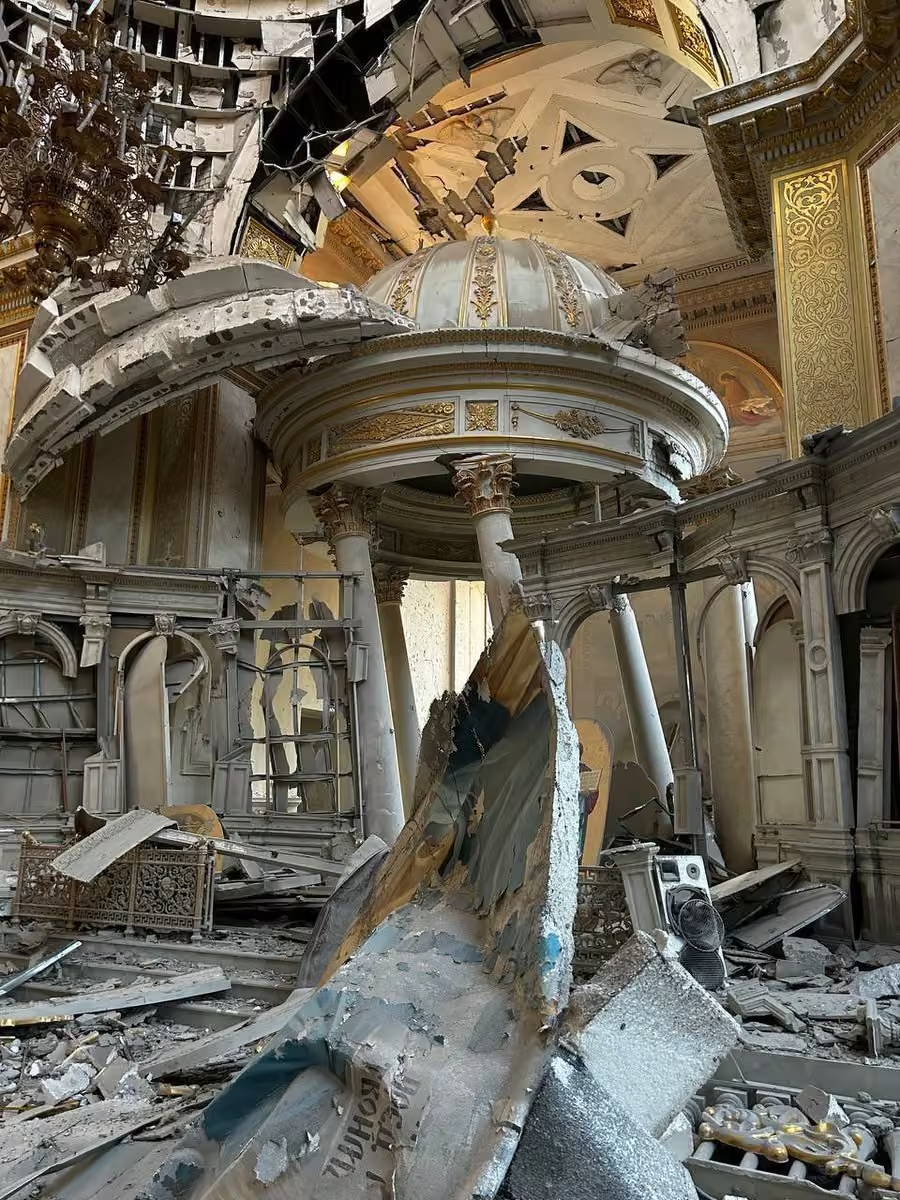
Odesians are cleaning up the debris in the cathedral after the attack last night.
Anna Kinberg Batra reposted
Marko Mihkelson 🇪🇪🇺🇦🇪🇺
@markomihkelson
Odesa. Before and after the Russian missile strike. This evil must be defeated! No negotiations with war criminals!

Anna Kinberg Batra reposted
Darth Putin
@DarthPutinKGB
In this war we are fighting fascism by bombing holocaust memorials and defending Christian values by bombing churches.
Anna Kinberg Batra reposted
Volodymyr Zelenskyy / Володимир Зеленський
@ZelenskyyUa
Missiles against peaceful cities, against residential buildings, a cathedral... There can be no excuse for Russian evil. As always, this evil will lose. And there will definitely be a retaliation to Russian terrorists for Odesa. They will feel this retaliation.
All those who suffered from this latest terrorist attack are being provided with assistance.
I am grateful to everyone who is helping people and to everyone who is with Odesa in their thoughts and emotions. We will get through this. We will restore peace. And for this, we must defeat the Russian evil.


Anna Kinberg Batra reposted
Anna Kinberg Batra reposted
Darth Putin
@DarthPutinKGB
Tourism in Crimea is really …… booming.
Anna Kinberg Batra reposted
 Eurovision Charts
@esc_charts
"Tattoo" by Loreen has now surpassed 200 million streams on Spotify. #eurovision 🇸🇪
Anna Kinberg Batra
@KinbergBatra
Inte övertygad om grus-cyklingen, men annars..: 🌟🙏
 Nassim Nicholas Taleb
@nntaleb
TRUE WEALTH (2nd Ed)
Worriless sleeping
Clear conscience
Reciprocal gratitude
Absence of envy
Foamy coffee
Crusty bread
Inexperienced enemies
Frequent laughs
No meals alone
No gym classes
Gravel bicycling
Good digestive functions
No Zoom meetings
Periodic surprises
Nothing to hide: financial and fiscal tranquility
Muscular strength & endurance
Ability to nap
Access to a hammock
Anna Kinberg Batra reposted
 Eurovision News
@EurovisionNewZ
“Tattoo” surpassed 200 MILLION streams on Spotify
It’s @LOREEN_TALHAOUI’s 2nd song to reach that milestone!

Anna Kinberg Batra reposted
 André Assarsson
@assarsson
12 år sedan idag
Vi glömmer aldrig
Tack alla som varje dag bidrar till demokratin och som står upp för den
Nolltolerans mot våld och hot om våld för att driva politisk förändring
#utoya #22juli

Anna Kinberg Batra reposted
 Niklas Orrenius
@niklasorrenius
Situationen med förstörelsen av ambassaden i Bagdad liknar hur det var i september 2007, när antisvenska protester efter Nerikes Allehandas publicering av Lars Vilks Muhammedhund spreds i den muslimska världen.
Hur gjorde då regeringen för att kyla ner stämningarna?
En tråd.
Anna Kinberg Batra reposted
 Ursula von der Leyen
@vonderleyen
We need to stand up for democracy every day.
As the world changes, our values must be constantly guaranteed by law.
For everyone’s rights to be truly equal.
For our children to be safe online.
For our planet and climate to be preserved.
Anna Kinberg Batra reposted
 Business Ukraine mag
@Biz_Ukraine_Mag
McDonald’s opened a brand new Ukrainian restaurant on 21 July - one of a number to be built since the start of the Russian invasion. It is the fast food giant’s first highway restaurant in Ukraine and is located on the Zhytomyr Highway west of Kyiv

Anna Kinberg Batra reposted
scandipop
@scandipop
✅ The streaming records
✅ The chart successes
✅ The all-time firsts
✅ The magazine covers
✅ The music festivals
✅ The awards
☑️ The #eurovision winner!
eurovision.tv/story/tattoo-loreen-beyond-liverpool

Anna Kinberg Batra reposted
Business Ukraine mag
@Biz_Ukraine_Mag
“If I were Mr. Prigozhin, I'd be very concerned. NATO has an open doors policy. Russia has an open windows policy."
Absolute banger today from US Secretary of State Antony Blinken
 Anna Kinberg Batra
@KinbergBatra
🌟
 Oscar Jonsson
@OAJonsson
…och en snabb reklampaus: Hotet från Ryssland ligger fortfarande på Adlibris och Bokus topplistor för samhälle efter fem månader.
Oväntat och otroligt. Pass på och köp en bok innan ni försummat och förverkat hela sommaren!
www.bokus.com/bok/9789180022767/hotet-fran-ryssland/
Anna Kinberg Batra reposted
 Jörgen Strömberg
@jorgenstromberg
Hjärtstopp hörni. Häromveckan åkte familjen hem från Schiphol. Mannen framför mig i säkerhetskontrollen ramlade raklång i backen. Min fru (som också är läkare) och jag vände honom på rygg - ingen reaktion. Några snarkande andetag och sen slutade han andas.

Anna Kinberg Batra reposted
 Carl Bildt
@CBildt
Nu tvingas också FN:s generalsekreterare agera för att försöka att dämpa de starka reaktionerna i många länder mot de upprepade koranbränningarna i Stockholm.
 United Nations Iraq
@UNIraq
Readout of the UN Secretary-General’s meeting with the Ambassadorial Group of Islamic Cooperation
www.un.org/sg/en/content/sg/readout/2023-07-20/readout-of…

Anna Kinberg Batra reposted
NATO
@NATO
NATO Allies and partners are equipping and training Ukrainian soldiers to help Ukraine defend itself against Russia’s full-scale invasion
#standwithukraine 🇺🇦
Anna Kinberg Batra reposted
 Utrikesdepartementet
@Utrikesdep
Uppbyggnad och reformsamarbete står i fokus.
Sveriges nya biståndsstrategi för Ukraina ska bidra till att stärka Ukrainas frihet, motståndskraft och väg mot EU.
#standwithukraine️ 🇺🇦
Läs mer om Sveriges största bilaterala biståndsstrategi någonsin ➡️ www.regeringen.se/pressmeddelanden/2023/07/regeringen-ant…
Anna Kinberg Batra reposted
SSC Sverige
@SSCSpaceSverige
💡 #vissteduatt: Förr i tiden tillverkade SSC satelliter. Här ser vi beredningen av satelliten PRISMA – ett observationssystem med elektrooptiska verktyg för att särskilja de geometriska egenskaperna hos objekt och den kemisk-fysikaliska sammansättningen av jordens yta.

Anna Kinberg Batra reposted
Business Ukraine mag
@Biz_Ukraine_Mag
"NATO is not a threat to Russian security - NATO is a threat to Russian foreign policy because it prevents Russia from bullying its neighbors. In other words, NATO enlargement is no more or less provocative than a burglar alarm is to a thief."
www.atlanticcouncil.org/blogs/ukrainealert/russias-invasi…
Anna Kinberg Batra reposted
Volodymyr Zelenskyy / Володимир Зеленський
@ZelenskyyUa
I thank everyone in the world who is helping! And I thank all our partners for today's Ramstein, especially U.S. Secretary of Defense Austin for his very clear, unambiguous and powerful statements. Overcoming Russian aggression and punishing Russia for terror is a historic task for the current generation of world leaders. And the world will fulfill this task. Ukraine's victory will come!
Anna Kinberg Batra reposted
Marko Mihkelson 🇪🇪🇺🇦🇪🇺
@markomihkelson
Quality of life is better in Estonia 🇪🇪 than in Sweden 🇸🇪. This is a remarkable change throughout the last 30 years.
 World of Statistics
@stats_feed
Quality of life by country:
1. Luxemburg 🇱🇺
2. Netherlands 🇳🇱
3. Iceland 🇮🇸
4. Denmark 🇩🇰
5. Finland 🇫🇮
6. Switzerland 🇨🇭
7. Oman 🇴🇲
8. Austria 🇦🇹
9. Norway 🇳🇴
10. Spain 🇪🇸
.
11. Estonia 🇪🇪
12. Germany 🇩🇪
13. Japan 🇯🇵
14. Sweden 🇸🇪
15. UAE 🇦🇪
16. USA 🇺🇸
17. New Zealand 🇳🇿
21. Australia 🇦🇺
22. UK 🇬🇧
23. Czechia 🇨🇿
27. Canada 🇨🇦
29. France 🇫🇷
32. Saudi Arabia 🇸🇦
37. Italy 🇮🇹
39. South Korea 🇰🇷
40. South Africa 🇿🇦
48. Mexico 🇲🇽
52. Turkey 🇹🇷
56. India 🇮🇳
59. Argentina 🇦🇷
65. China 🇨🇳
67. Russia 🇷🇺
69. Pakistan 🇵🇰
74. Indonesia 🇮🇩
76. Egypt 🇪🇬
80. Iran 🇮🇷
82. Venezuela 🇻🇪
84. Nigeria 🇳🇬
Anna Kinberg Batra reposted
Josef Aschbacher
@AschbacherJosef
While meteorologists bring us news with predicted air temperatures, #sentinel3 measures the real amount of energy radiating from the surface of the Earth, aka land temperature, which scientists use to better understand weather and climate and, as in this case, monitor fires.
 ESA Earth Observation
@ESA_EO
LAND surface temperature (AKA how hot Earth's surface is) in the Eastern Mediterranean as measured by @CopernicusEU #sentinel3 instrument. @CopernicusEMS has been activated to map the fires that are currently affecting #greece (emergency.copernicus.eu/mapping/).
➡️www.esa.int/ESA_Multimedia/Images/2023/07/Temperature_of_…

Anna Kinberg Batra reposted
Volodymyr Zelenskyy / Володимир Зеленський
@ZelenskyyUa
The Ukrainian flag, although riddled with bullets, is alive, proud and free. And this means that every flag in Europe will be alive, proud and free.


Anna Kinberg Batra reposted
 Carl Bildt
@carlbildt
Looks as if 🇷🇺 is now actively trying to destroy the 🇺🇦 infrastructure in Odessa port necessary for the grain export. Let’s be clear: that’s an attack against all those around the world dependent on imported grain.
 OSINTdefender
@sentdefender
Russian Sources are reporting that a 3M54-1 “Kalibr” Cruise Missile has Targeted the Large Commercial Port in the Ukrainian City of Odesa tonight, with a Pillar of Black Smoke seen coming from the Location after the Explosion; the Port of Odesa was the Primary Port during the Black Sea Grain Deal.
Anna Kinberg Batra
@KinbergBatra
😱
 World of Engineering
@engineers_feed
2040 is closer than 2006
Anna Kinberg Batra
@KinbergBatra
🌟💥
Eurovision News
@EurovisionNewZ
Loreen on the cover of vogue Arabia
📸 @VogueArabia

Anna Kinberg Batra reposted
Eurovision Charts
@esc_charts
Most-streamed #eurovision 2023 songs on Spotify (July 16):
🇸🇪 Tattoo - 1,222,812
🇫🇮 Cha Cha Cha - 338,029
🇳🇴 Queen of Kings - 335,839
🇮🇹 Due vite - 167,732
🇵🇱 Solo - 134,361
🇮🇱 Unicorn - 102,643
🇫🇷 Évidemment - 61,953
🇦🇹 Who the Hell Is Edgar? - 55,606
🇬🇧 I Wrote a Song - 50,847
Anna Kinberg Batra reposted
Volodymyr Zelenskyy / Володимир Зеленський
@ZelenskyyUa
Sincerely grateful to @SwedishPM and the Government of Sweden 🇸🇪 for approving the Strategy for the Recovery of Ukraine 🇺🇦 for 2023-2027 for a total amount of EUR 522 million. Infrastructure, green development, entrepreneurship, demining and support for democracy are key areas of our post-war recovery.
Thank you, Sweden, for your true solidarity.
Together to victory! 🇺🇦 🇸🇪
Anna Kinberg Batra reposted
Johan Forssell
@JohanForssell
En av de första sakerna som slog mig när vi kom in i Regeringskansliet förra hösten, var att det saknades en renodlad Ukrainastrategi. Nu ändrar vi på det och tar ett stort kliv framåt för ett kraftfullt och långsiktigt svenskt stöd till Ukraina. 🇸🇪💙🇺🇦

Anna Kinberg Batra reposted
 Sviatlana Tsikhanouskaya
@Tsihanouskaya
It's been exactly 3 yrs today since we called a press conference in Minsk to announce that we united to defeat the regime of Lukashenka. It was a historic day. We won the elections, as the people of Belarus voted for change – but the dictator stole our victory. The fight goes on.

Anna Kinberg Batra reposted
Carl Bildt
@carlbildt
On this day in 2014 a 🇷🇺 missile unit shot down airliner MH17 over the territory of 🇺🇦.
Anna Kinberg Batra reposted
Lars Wilderäng
@Cornubot
Där var det bekräftat. Nya bilder, annan plats än förra gången.
Anna Kinberg Batra
@KinbergBatra
🌟🦄💥
 Per Rosencrantz
@PerRosencrantz
Handels i Stockholm rankas nummer två i Europa – efter Oxford, men före t ex LSE och Cambridge – gällande antal enhörningar per student (bolag som i en uppstarts fas värderas till över 1 miljard dollar). Imponerande. Säger något positivt om Sverige och Stockholm.

Anna Kinberg Batra reposted
 President Biden Archived
@POTUS46Archive
NATO is bigger and stronger than ever — we're ready to meet the challenges of this age.
Anna Kinberg Batra reposted
Johan Forssell
@JohanForssell
Idag kl 10:30 kommer jag presentera regeringens strategi för Ukrainas uppbyggnad. En historisk satsning för Ukraina då detta blir Sveriges största bilaterala biståndsstrategi - någonsin. Välkomna! www.regeringen.se/pressmeddelanden/2023/07/johan-forssell…
Anna Kinberg Batra reposted
 Visegrád 24
@visegrad24
Putin has said Russia hasn’t used cluster munitions in 🇺🇦
Here’s a video of cluster munition used against Kharkiv on February 28, 2022
Just a reminder that Putin lies night & day, just like when he was saying all February in 2022 that he won’t invade 🇺🇦
Anna Kinberg Batra reposted
President Biden Archived
@POTUS46Archive
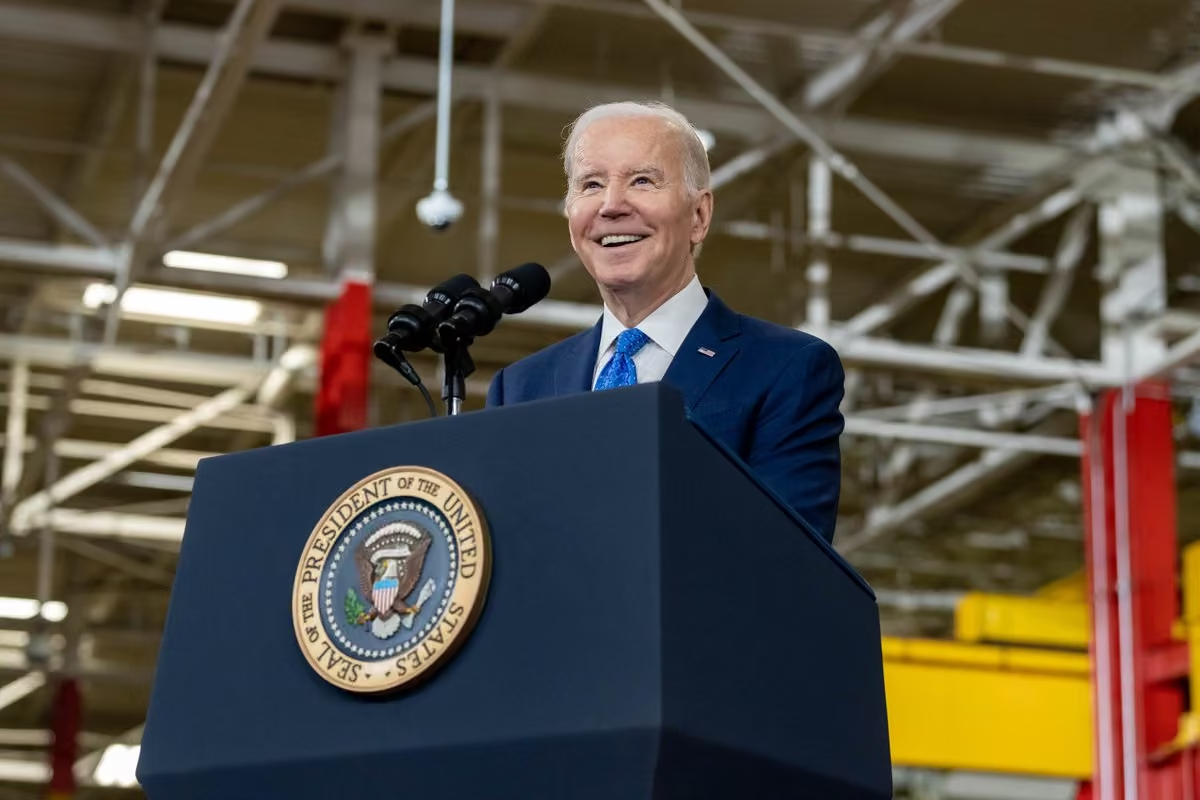
Because of the incentives my Administration has announced to bring solar power manufacturing back to our shores, we're one step closer in helping us meet the goal of 100 percent clean, renewable energy electricity by 2035.
Anna Kinberg Batra reposted
Lars Wilderäng
@Cornubot
Korrekt rubriksättning: Putin ljuger om klustervapen - har använt dem mot Ukraina sedan 2014
Anna Kinberg Batra reposted
Volodymyr Zelenskyy / Володимир Зеленський
@ZelenskyyUa
Every year, Ukraine will only get stronger and help other free nations to protect their sovereignty and build common security... Ukraine can do it. The security of the whole of Europe begins here – with the sovereignty and strength of Ukraine.
Anna Kinberg Batra reposted
 Emmanuel Macron
@EmmanuelMacron
To the people of India, trust and friendship.
Anna Kinberg Batra reposted
Paulina Brandberg
@Pau_Brandberg
Enligt socialdemokraterna är det alltså upprörande att Birgitta i egenskap av statsministerfru bar prästkrage i Vilnius men helt oproblematiskt att Ann Linde i egenskap av utrikesminister bar hijab i Iran?
Anna Kinberg Batra reposted
NATO
@NATO
Retweet to join us in wishing our Ally 🇫🇷 #france joyeuse #fêteNationale!
#wearenato 🤝@FranceOTAN
#14juillet #bastilleday

Anna Kinberg Batra reposted
 Emanuel Örtengren
@emanuelorten
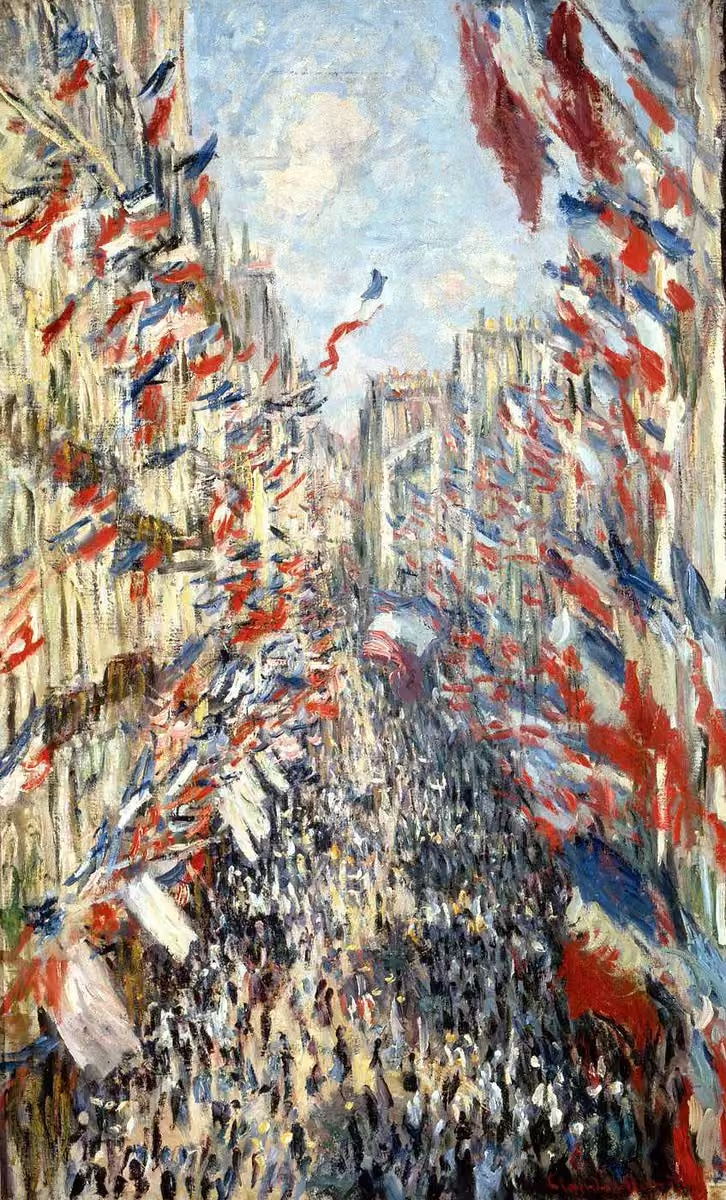
Bonne fête nationale @e_de_gonneville @FranceinSweden!
Och vad passar bättre än lite fransk impressionism (Monet) dagen till ära?
Anna Kinberg Batra reposted
Tobias Billström
@TobiasBillstrom
Roligt att se och höra hur min kollega Parisa Liljestrand uppvaktar de personer som regeringen tilldelat medaljen Illis quorum meruere labores 🎖️
Innovativt! 👍🏻
 Kulturdepartementet
@KulturdepSv
Kulturministern meddelar Lena Anderson, Christofer Murray och Carola Häggkvist att de tilldelats regeringens belöningsmedalj Illis quorum meruere labores regeringen.se/pressmeddelanden/2023/07/regeringen-tilldel…
Anna Kinberg Batra reposted
President Biden Archived
@POTUS46Archive
As we conclude a historic NATO Summit – welcoming Finland's accession to NATO and reaching an agreement to move forward on Sweden's membership – we're reminded of the shared history, challenges, and values between the United States and Nordic countries.


Anna Kinberg Batra reposted
President Biden Archived
@POTUS46Archive
President Niinistö, I remember a phone call you and I had ahead of your visit regarding your joining NATO.
It took me three seconds to offer my strong support.
Today, following the fastest ratification period in modern history, I'm proud to say Finland will make NATO stronger.

Anna Kinberg Batra reposted
President Biden Archived
@POTUS46Archive
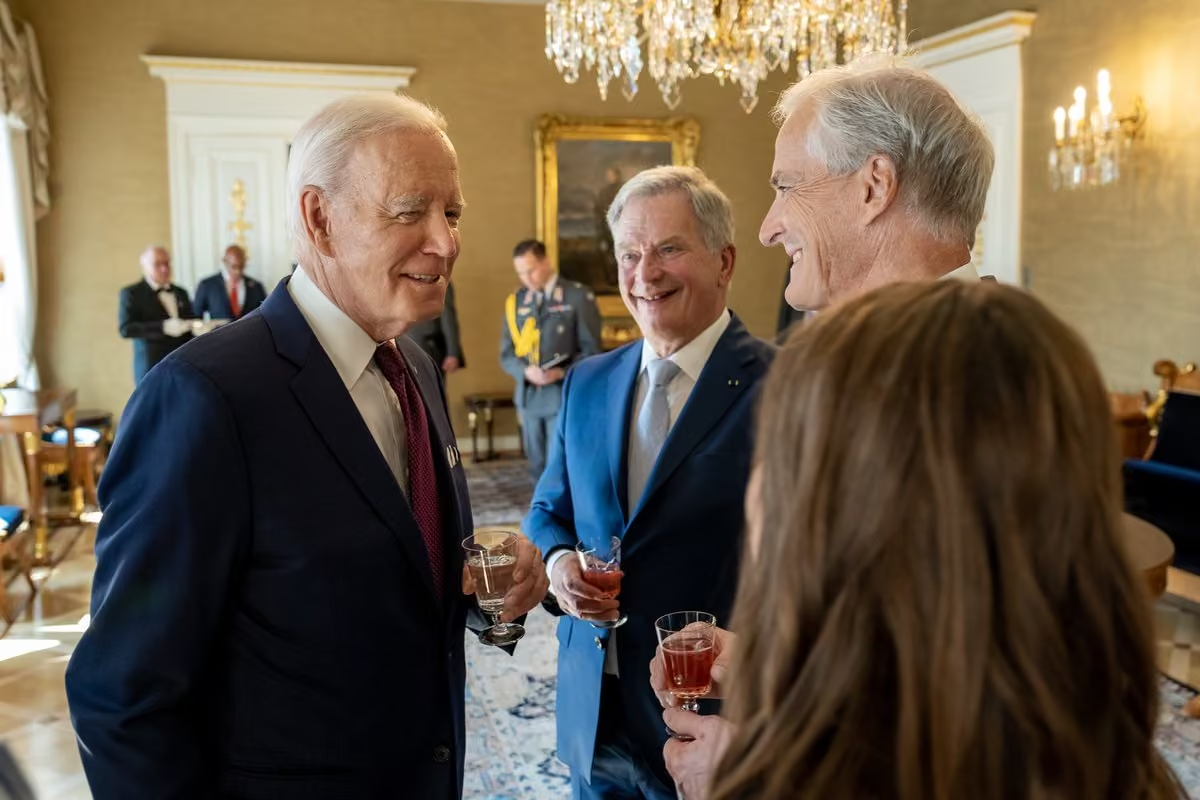
It was a delight to be back in Finland – an incredible Ally to the United States, and an asset to NATO and the world.
Anna Kinberg Batra reposted
Lars Wilderäng
@Cornubot
Det finns en särskilt krets i helvetet för de som ger sig på politikers, makthavares eller kändisars anhöriga.
Allt är inte en politisk handling, hyckleri eller dubbelmoral.
cornucopia.se/2020/07/allting-ar-inte-en-politisk-handling/
Anna Kinberg Batra reposted
 Sauli Niinistö
@niinisto
An honour to host the US-Nordic Leaders’ Summit in Helsinki.
The US and the Nordics are close friends and strong partners, and we are committed to strengthening our cooperation further in security, the environment, technology and society.

Anna Kinberg Batra reposted
 Försvarsdepartementet
@ForsvarsdepSv
New agreements simplify deliveries of defence materiel from #sweden to #ukraine. @PlJonson has signed a protective security agreement and the Swedish Defence Materiel Administration (FMV) has signed an agreement on procurement support.
www.government.se/press-releases/2023/07/new-agreements-s…

Anna Kinberg Batra reposted
NATO
@NATO
At the #natosummit, NATO leaders agreed new defence plans to protect and defend every inch of Allied territory
Anna Kinberg Batra reposted
 Myndigheten för civilt försvar
@MCF_Sverige
Regeringen gav den 17 maj i uppdrag till MSB att förbereda en informationsinsats för att öka den svenska befolkningens kunskaper om Nato och vad medlemskapet innebär för Sverige. Se MSB:s GD @CharlottePetriG om uppdraget i SVT Nyheter:
www.svt.se/nyheter/inrikes/ny-informationskampanj-msb-ska…
Anna Kinberg Batra reposted
 Ulf Kristersson
@SwedishPM
Sweden signs up to the G7 Joint Declaration of Support for Ukraine. In partnership with others, Sweden will support Ukraine to defend itself against Russia's aggression for as long as it takes.
www.regeringen.se/pressmeddelanden/2023/07/sverige-stodje…
Anna Kinberg Batra reposted
Marko Mihkelson 🇪🇪🇺🇦🇪🇺
@markomihkelson
Exactly right. And let us be aware that Russia is in war not only with Ukraine.
 Anders Åslund
@anders_aslund
Let us forget 3 arguments on Russia!
1. We must not provoke (humiliate) Putin!
2. We must not provoke World War III!
3. We must not provoke Putin into a nuclear war!
All these are Russian arguments to stop Western proper defense against Russia.
Anna Kinberg Batra reposted
President Biden Archived
@POTUS46Archive
Even after all of this time, Putin doubts our staying power.
He’s making his bad bet that the unity among the U.S. and our Allies and partners will break down.
He doesn’t understand that our commitment to freedom is something we will never walk away from – it's who we are.
Anna Kinberg Batra reposted
Emmanuel Macron
@EmmanuelMacron
To defend their nation, Ukrainians fight with a courage that commands respect.
In the name of international law, our values and the defense of Europe, our responsibility is to stand by their side.
And we do so.
We do so when we deliver weapons and equipment, when we support them with military training, when we deploy humanitarian support, when we stand by them to see justice done.
We do so when we sanction Russia.
We do so when we, Allies, remain united.
At the NATO Summit in Vilnius, we confirmed new immediate military commitments, in our case SCALP missiles. They will enable Ukraine to carry out in-depth strikes on its territory to defend it.
With our Allies, and with the extraordinary courage of the Ukrainian forces fighting on the front line, we are going to change the nature of the Ukrainian counter-offensive.
We will continue to do so in the long term.
This is the very meaning of the commitments we have forged in G7 format, open to all NATO Allies.
It is also the meaning of the message we have conveyed together: there is a path towards NATO for Ukraine. The security of our continent could not be negotiated without all the security guarantees and this status, tomorrow, for Ukraine.
We did what we had to do, while maintaining the unity of all the Allies.

Anna Kinberg Batra reposted
NATO
@NATO
At the #natosummit in Vilnius, Allies agreed on a package of three elements that bring Ukraine closer to NATO than ever before
◀️ swipe to read more ▶️
Anna Kinberg Batra reposted
 Sir William Browder KCMG
@Billbrowder
Polish doctors examining former president of Georgia Saakashvili, says Polish PM. This is good news and hopefully leads to Saakashvili’s release and proper treatment to save his life. www.reuters.com/world/europe/polish-doctors-examining-for…
Anna Kinberg Batra reposted
President Biden Archived
@POTUS46Archive
Ukrainians have inspired the world with their courage.
The United States will continue doing everything we can to get Ukraine what it needs in the face of Putin's brutal war as rapidly as possible.

Anna Kinberg Batra reposted
Ursula von der Leyen
@vonderleyen
Ukraine needs long-term security.
At the @NATO Summit we are discussing how to best provide for this.
The EU contributes with investments, weapons, training and support to the reforms that can lead Ukraine into the EU and NATO.
Anna Kinberg Batra reposted
Volodymyr Zelenskyy / Володимир Зеленський
@ZelenskyyUa
We are returning home with a good result for our country, and very importantly, for our warriors. A good reinforcement with weapons.
It is very important: for the first time since independence, we have formed a security foundation for Ukraine on its way to NATO. These are concrete security guarantees that are confirmed by the top 7 democracies in the world. Never before have we had such a security foundation, and this is the level of the G7. On this foundation, we will build a new, legally binding architecture of bilateral security treaties with the most powerful countries.
Very importantly, during these two days of the Summit, we have put to rest any doubts and ambiguities about whether Ukraine will be in NATO. It will! For the first time, not only do all Allies agree on this, but a significant majority in the Alliance is vigorously pushing for it. Never before have the words "you are equal among equals" for Ukraine from other NATO members sounded truly meaningful. Now everyone understands that this is a fact. Equal among equals. And we will definitely reaffirm this fact with our victory. And with our accession to NATO.
Previously, Russia's rulers wanted to have their own fence in front of NATO's door. We have left this Russian ambition on the margins of European history – behind the fence of our unity in Europe and, more broadly, in the free world.
I am grateful to all those who have worked for unity in Vilnius now!
Anna Kinberg Batra reposted
 Alexander Stubb
@alexstubb
How Sweden and Finland went from neutral to Nato www.bbc.co.uk/news/world-europe-61397478
Anna Kinberg Batra reposted
Josef Aschbacher
@AschbacherJosef
It’s not often I can say this but….I’m absolutely speechless about this image.
 ESA Science
@esascience
🎂🛰 Happy first-year-of-science, @ESA_Webb!
✨ To mark the occasion, Webb has released a close-up view on the birth of Sun-like stars 👉www.esa.int/Science_Exploration/Space_Science/Webb/Webb_c…

Anna Kinberg Batra reposted
Volodymyr Zelenskyy / Володимир Зеленський
@ZelenskyyUa
A very good, powerful meeting with Mr. President Biden @POTUS.
The meeting was at least twice as long as planned, and it was as meaningful as it needed to be. If the protocol had not stopped the meeting, we would have talked even longer. All the topics. Long-term support. Weapons. Politics. @NATO. We clearly see how to end this war with our common victory.
Thank you, Mr. President!
#ukrainenato33
🇺🇦🇺🇸
Anna Kinberg Batra reposted
 Pål Jonson
@PlJonson
Nato-toppmötet i Vilnius är nu avslutat. Det är många personer, utöver vår delegation på plats, som på Sveriges vägnar arbetat hårt för att detta möte blev framgångsrikt.
Mötet präglades av sammanhållning och handlingskraft. (1/2)

Anna Kinberg Batra reposted
President Biden Archived
@POTUS46Archive
One year ago, NASA released an image from the James Webb Space Telescope that reminded us America can do big things.
Today, they’ve done it again.
Anna Kinberg Batra reposted
NATO
@NATO
❝Today, we meet as equals. I look forward to the day we meet as Allies❞
Secretary General @jensstoltenberg welcomes President @ZelenskyyUa to the #natosummit ahead of inaugural NATO-Ukraine Council
#standwithukraine 🇺🇦
Anna Kinberg Batra reposted
SSC Sverige
@SSCSpaceSverige
#throwback ⏪: 1977 installerades det ikoniska Skylark-tornet på Esrange Space Center. Under åren har tornet varit värd för en majoritet av de sondraketer som skjutits upp från basen.

Anna Kinberg Batra reposted
 Kaja Kallas
@kajakallas
My message ahead of #natosummit:
#russia is and will remain the most significant and direct threat to #nato.
To counter the Russian threat, the decisions we make here at #vilniussummit must strengthen our collective defence. 1/

Anna Kinberg Batra reposted
Darth Putin
@DarthPutinKGB
Day 503 of my 3 day war. I have ended 150 years of Swedish neutrality by making NATO a much more attractive option to them.
I remain a master strategist.
Anna Kinberg Batra reposted
 Expressen Kultur
@ExpressenKultur
DANIEL SCHATZ: Äntligen ett slut på illusionerna
www.expressen.se/kultur/ide/antligen-ett-slut-pa-illusion…
Anna Kinberg Batra reposted
Alexander Stubb
@alexstubb
As expected, Sweden becomes the 32. member of @NATO.
Sweden's membership strengthens the alliance and improves security in the Baltic Sea region.
Excellent work by @jensstoltenberg @POTUS @niinisto and Ulf Kristersson.
Anna Kinberg Batra reposted
Zebulon Carlander
@ZCarlander
En patriot. 🇸🇪
Anna Kinberg Batra reposted
Darth Putin
@DarthPutinKGB
This week Turkey has
-Said its Navy will enforce the Black Sea grain deal for 2 years
-Open a bayraktar plant in Ukraine
- Supply self propelled artillery to Ukraine
- Allowed Sweden into NATO
I remain a master strategist.
Anna Kinberg Batra reposted
 Maria M Stenergard
@MariaStenergard
Ulf Kristersson har sedan han tillträdde som statsminister jobbat målmedvetet och uthålligt för ett svenskt Nato-medlemskap. För Sverige. I dag fick han äntligen säga orden:
”Jag är väldigt glad över att vi skakat hand. Det har varit en bra dag för Sverige. ”

Anna Kinberg Batra reposted
Kaja Kallas
@kajakallas
Great news before the start of the Vilnius #natosummit – an important step forward by Türkiye on Sweden’s NATO membership.
#nato is getting even stronger.
I hope for a rapid ratification and welcoming #sweden as NATO’s 32nd Ally soon.
Anna Kinberg Batra reposted
 Secretary Antony Blinken
@SecBlinken
We welcome Türkiye’s commitment to transmit Sweden’s NATO accession protocols to Turkish Parliament and work with parliament to secure ratification. Sweden becoming our 32nd NATO Ally will strengthen the @NATO Alliance and contribute to European security.
Anna Kinberg Batra reposted
NATO
@NATO
❝Completing Sweden’s accession to NATO is an historic step that benefits the security of all NATO Allies at this critical time. It makes us all stronger and safer❞
@jensstoltenberg welcomes Türkiye’s decision to forward Sweden accession protocols to parliament
#natosummit
Anna Kinberg Batra reposted
Sauli Niinistö
@niinisto
I have often said that Finland's NATO membership is not complete without that of Sweden. Now we are one clear step closer to completion. With Sweden, the whole Alliance will be stronger.
Anna Kinberg Batra
@KinbergBatra
Äntligen!
 Jens Stoltenberg
@jensstoltenberg
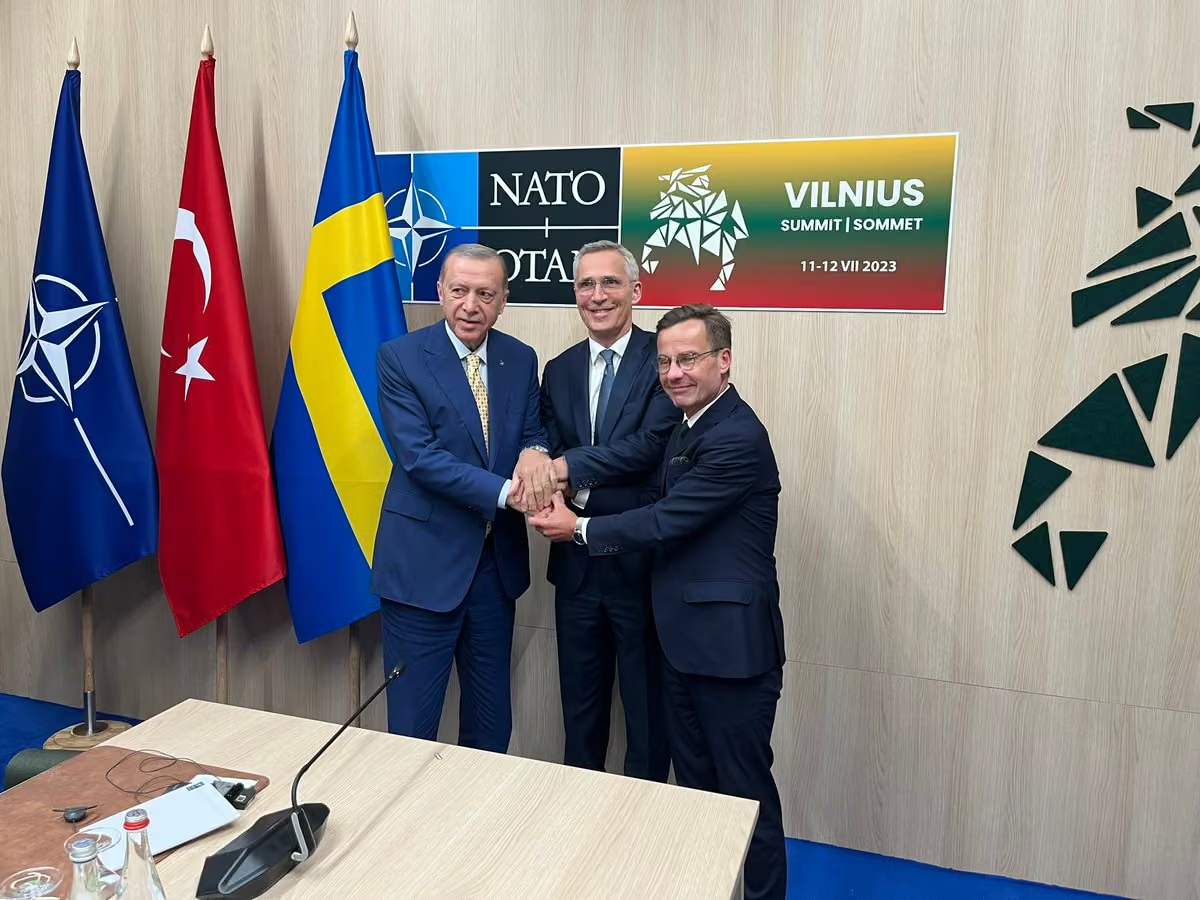
Glad to announce that after the meeting I hosted with @RTErdogan & @SwedishPM, President Erdogan has agreed to forward #sweden's accession protocol to the Grand National Assembly ASAP & ensure ratification. This is an historic step which makes all #nato Allies stronger & safer.

Anna Kinberg Batra reposted
Emanuel Örtengren
@emanuelorten
Man ska inte ropa hej förrän man har kommit över bäcken osv. Men det är onekligen historiskt att Sverige lämnar allianslösheten bakom oss. Många har slitit hårt för att vi skulle nå hit idag och de förtjänar ett stort tack. Det här är en bra dag för Sverige, och för Nato.
Tobias Billström
@TobiasBillstrom
We have tonight after some negotiations in Vilnius reached an agreement with Türkiye on Sweden’s membership in NATO, which means that ratification will now commence.
The PM and the President have shook hands on the content. www.nato.int/cps/en/natohq/news_217147.htm
Anna Kinberg Batra reposted
Darth Putin
@DarthPutinKGB
My plan to halt and reverse NATO enlargement proceeds.
I remain a master strategist.
Jens Stoltenberg
@jensstoltenberg
Glad to announce that after the meeting I hosted with @RTErdogan & @SwedishPM, President Erdogan has agreed to forward #sweden's accession protocol to the Grand National Assembly ASAP & ensure ratification. This is an historic step which makes all #nato Allies stronger & safer.
Anna Kinberg Batra reposted
Darth Putin
@DarthPutinKGB
I’m beginning to think that trying reverse NATO enlargement by making NATO very popular was not a good idea.
Anna Kinberg Batra reposted
Tobias Billström
@TobiasBillstrom
We have tonight after some negotiations in Vilnius reached an agreement with Türkiye on Sweden’s membership in NATO, which means that ratification will now commence.
The PM and the President have shook hands on the content. www.nato.int/cps/en/natohq/news_217147.htm
Anna Kinberg Batra reposted
Visegrád 24
@visegrad24
BREAKING:
Stoltenberg announces that Zelensky will attend the NATO summit

Anna Kinberg Batra reposted
Utrikesdepartementet
@Utrikesdep
Lyssningstips! I sommar intervjuas flera svenska ambassadörer i P1 Morgon @sverigesradioP1. Först ut är @bjorklundjan om sin roll som ambassadör i Rom 🇮🇹.
Lyssna på intervjun här: sverigesradio.se/artikel/lordagsgast-jan-bjorklund
 Anna Kinberg Batra
@KinbergBatra
Missade du säsongsfinalen av Muren? Eller något annat avsnitt hittills? Ta det lugnt, de finns på SVT Play och kan tas fram under någon lämplig sommarnatt. Tack för många skratt under inspelningarna, och för så många och fina reaktioner på resultatet! 🌟🙏
 Edward af Sillén
@EdwardafSillen
Landets elegantaste vinnarskallar?!
Ikväll är vi tillbaka (och Ebba gör debut) i säsongens sista Muren. 🍾
20.00 eller på SVT Play.

Anna Kinberg Batra reposted
Volodymyr Zelenskyy / Володимир Зеленський
@ZelenskyyUa
500 days of the full-scale war.
During this time, thousands and thousands of our people showed strength, glory and courage of the Ukrainian people in battles for the sake of our state.
Almost 50,000 of our people have been awarded state awards.
298 Ukrainian men and women have been awarded the highest title of Hero of Ukraine.
I am proud of all of them, grateful to each of them, we remember our heroes.
We cannot name all the names now. We will be able to tell about some heroes only after our victory – their bravery is so special.
But Ukraine will always be grateful to all of them. And please, honor our heroes! And tell your children, your friends, the whole world about them.
Glory to all who fight for Ukraine!
🇺🇦🇺🇦🇺🇦


Anna Kinberg Batra reposted
Volodymyr Zelenskyy / Володимир Зеленський
@ZelenskyyUa
500 днів повномасштабної війни. І жодного дня слабкості.
Дякую всім, хто бʼється заради свободи та незалежності України!
🇺🇦🇺🇦🇺🇦
——
500 days of the full-scale war. And not a single day of weakness.
Thank you to everyone who fights for the freedom and independence of Ukraine!
🇺🇦🇺🇦🇺🇦
Anna Kinberg Batra reposted
Johan Forssell
@JohanForssell
CV90 på plats i Ukraina. 🇸🇪💙🇺🇦
Defense of Ukraine
@DefenceU
Ukrainian CV90 (Strf 90 in Swedish). The Swedish combat vehicles are acclimating well to the Ukrainian steppes. They are ready for battle.
Anna Kinberg Batra reposted
Kaja Kallas
@kajakallas
Greetings to #nafofellas at the first-ever #nafosummit in Vilnius.
#nafo is a living example of how to disarm Russian disinformation with humour, intelligence and enthusiasm. Behind every Fella is a real person who believes in #ukraine’s victory.
Thank you for your service.
Anna Kinberg Batra
@KinbergBatra
Sol, regn, arbete eller semester hos dig i kväll - säsongsfinalen av Muren har något för alla. På Play redan nu: www.svtplay.se/video/KL5prDA/muren/vi-spranger-hela-muren…
Anna Kinberg Batra reposted
NATO
@NATO
Next week, NATO Leaders will meet to address the most pressing challenges, further strengthen NATO's deterrence and defence and bring Ukraine closer to the Alliance
#natosummit
Anna Kinberg Batra reposted
 Ministry of Defence 🇬🇧
@DefenceHQ
Today marks 500 days since the start of the Kremlin’s ‘Special Military Operation’ in February 2022.
For 500 days Ukraine’s cities, hospitals, and people have been attacked as part of this ‘Special Military Operation’.
🇺🇦#standwithukraine🇺🇦
Anna Kinberg Batra reposted
Ursula von der Leyen
@vonderleyen
500 days of Russia’s war of aggression against Ukraine.
500 days of brave Ukrainian resistance.
500 days of steadfast European support for Ukraine.
We will stand by Ukraine as long as it takes.
Anna Kinberg Batra reposted
Darth Putin
@DarthPutinKGB
Days - 500
Victories - 0
Casualties - 240,000🌻
War Crimes - ♾️
Indictments - 1
Rebellions - 1
Raccoons - 1🦝
Oil & gas - ↘️
Rouble - 🧻
Economy - 🚽
Table - Longer
Arrest warrants - 2
Wanted - 123 countries
Tank tech - 1950s
Baltic - NATO lake
I remain a master strategist
Anna Kinberg Batra reposted
 Jon Cooper 🇺🇸
@joncoopertweets
Pretty much sums up the situation.
👇👇

Anna Kinberg Batra reposted
 SSC Space
@SSCspace
Congrats to today’s successful launch from Kourou 🚀 Onboard the #ariane5 rocket are two SSC partners' spacecraft: @OHB_SE's #h2sat and @CNES' #syracuse4b. We will provide TT&C, LEOP and Emergency S-Band support 📡
📸 @esa, @DLR_en, @OHB_SE, @CNES, @Thales_Alenia_S, @Arianespace

Anna Kinberg Batra reposted
Josef Aschbacher
@AschbacherJosef
Chapeau bas #ariane5: symbole de l'excellence du spatial européen @EuropeanSpacePort! Un grand merci au President @EmmanuelMacron, à la France 🇫🇷, pour son soutien à nos lanceurs, vecteurs essentiels de l’accès indépendant de l’Europe à l’Espace! #spaceteameurope @Arianespace
Emmanuel Macron
@EmmanuelMacron
Ariane 5 a marqué à jamais l’aventure spatiale française et européenne.
Depuis sa base de Kourou en Guyane, elle a rendu possible les missions les plus emblématiques comme James Webb, Juice, Galileo, Rosetta et tant d’autres !
Une nouvelle histoire va s’écrire avec Ariane 6.
Anna Kinberg Batra reposted
NATO
@NATO
Since Russia’s full-scale invasion of Ukraine, tens of thousands of brave Ukrainians have volunteered to defend their country. They are trained in basic military skills by NATO Allies and partners across Europe
#standwithukraine 🇺🇦
Anna Kinberg Batra
@KinbergBatra
Sånt här kan, och borde, Sverige göra mer av: @SSCSpaceSverige
Oscar Jonsson
@OAJonsson
Great, and sorely needed in Sweden.
“Every two weeks the British army collects data from the battlefield and from Wiesbaden in Germany, a hub for supporting Ukraine. A “Russia-Ukraine Insights Hub” led by Rear Admiral Andrew Betton” www.economist.com/special-report/2023/07/03/western-armie…
Anna Kinberg Batra reposted
 Etienne de GONNEVILLE
@e_de_gonneville
The adventure of 🇪🇺 in space continues. 🇲🇫&🇸🇪 are a part of it @SSCSpaceSverige @CNES
 European Space Agency
@esa
Bowing out in style, Europe’s #ariane 5 rocket has completed its final flight, placing @DLR_de's Heinrich Hertz and the French Syracuse 4B satellites into their planned geostationary transfer orbits 👉 www.esa.int/Enabling_Support/Space_Transportation/Ariane_…

Anna Kinberg Batra reposted
President Biden Archived
@POTUS46Archive
Today I met with Prime Minister Kristersson of Sweden to review our growing defense cooperation and reaffirm our support of Sweden joining NATO.

Anna Kinberg Batra reposted
Anna Kinberg Batra
@KinbergBatra
Sommar-nostalgisk? Klicka här för ett minne från dagens datum!☀️🙏 sverigesradio.se/play/avsnitt/1735064
Anna Kinberg Batra reposted
Ulf Kristersson
@SwedishPM
Thank you @POTUS Biden for your leadership and support for Sweden’s NATO accession. As leading democracies and innovators, we work together on supporting Ukraine, the green transition and new technologies.

Anna Kinberg Batra reposted
President Biden Archived
@POTUS46Archive
Today, I’ll welcome @SwedishPM Ulf Kristersson to the White House.
Anna Kinberg Batra reposted
 Annalena Baerbock
@ABaerbockArchiv
Our alliance is strong. Your leadership, dear @Jensstoltenberg, has been key. Congratulations to your extension in office. You can count on Germany, as we continue to rally support for #ukraine and will welcome Sweden as our 32nd @Nato ally.
Anna Kinberg Batra reposted
Volodymyr Zelenskyy / Володимир Зеленський
@ZelenskyyUa
I had a phone call with @SwedishPM Ulf Kristersson 🇸🇪.
Thank you for Sweden's effective six-month Presidency of the Council of the European Union and active participation in the preparation of two sanctions packages against the aggressor country.
We discussed the situation on the battlefield and the latest developments in Russia. This is evidence of a split in Russian society and the weakness of the power vertical. In such circumstances, further political pressure on Russia and military support for 🇺🇦 will be most effective.
We agreed to coordinate efforts to bring @NATO membership closer for Ukraine and Sweden.
We also discussed the pace of implementation of previous agreements on defense support from 🇸🇪. I conveyed to @SwedishPM further needs of 🇺🇦, in particular, on strengthening air defense.
Anna Kinberg Batra reposted
 Sverige i EU
@SverigeiEU
Här sammanfattar statsminister Ulf Kristersson Sveriges ordförandeskap i EU.
regeringen.se/artiklar/2023/07/statsministern-sammanfatta…
Anna Kinberg Batra reposted
Volodymyr Zelenskyy / Володимир Зеленський
@ZelenskyyUa
Now we have information from our intelligence that the Russian military has placed objects resembling explosives on the roof of several power units of the Zaporizhzhia nuclear power plant. Perhaps to simulate an attack on the plant. Perhaps they have some other scenario. But in any case, the world sees – can't but see – that the only source of danger to the Zaporizhzhia nuclear power plant is Russia and no one else. Unfortunately, there was no timely and large-scale response to the terrorist attack on the Kakhovka hydroelectric power plant. And this may incite the Kremlin to commit new evil. It is the responsibility of everyone in the world to stop it, no one can stand aside, as radiation affects everyone.
Anna Kinberg Batra reposted
Ursula von der Leyen
@vonderleyen
Dear @jensstoltenberg, congratulations on your extended term as @NATO Secretary General.
In these extraordinary times, it is excellent news that the Alliance can continue to benefit from your experience and leadership.
We will continue strengthening the EU-NATO partnership.
Jens Stoltenberg
@jensstoltenberg
Honoured by #nato Allies' decision to extend my term as Secretary General until 1 October 2024. The transatlantic bond between Europe & North America has ensured our freedom & security for nearly 75 years, and in a more dangerous world, our Alliance is more important than ever.
Anna Kinberg Batra reposted
 Richard Herrey
@RichardHerrey
Om man inte förstår att rysk underrättelsetjänst är aktiva med att direkt eller indirekt driva på för att få till koranbränningar, och inte minst skapa och elda på de sociala mediereaktioner och demonstrationer som sker i vissa delar av världen just nu, ja då är man bra naiv.
Anna Kinberg Batra reposted
Volodymyr Zelenskyy / Володимир Зеленський
@ZelenskyyUa
Happy 4th of July, America!
Only the brave gain independence and only the best of the brave are able to pass the freedom from generation to generation.
It is an honor for us to be an ally of such dream, bravery and freedom.
🇺🇦🇺🇸
Anna Kinberg Batra reposted
Sviatlana Tsikhanouskaya
@Tsihanouskaya
Congratulations to @jensstoltenberg on the extension of his term as @NATO Secretary General. As we look forward to discussing the role of #belarus during next week's historic NATO Summit in 🇱🇹, we are confident in his continued leadership & commitment to transatlantic security.

Anna Kinberg Batra reposted
Sir William Browder KCMG
@Billbrowder
Georgia’s mistreatment of Mikheil Saakashvili is a shocking human rights abuse and those responsible should be subject to Magnitsky sanctions in all countries that have Magnitsky legislation
 Natalka
@NatalkaKyiv
Ukrainian citizen and former president of Georgia Mikheil Saakashvili appears very thin and unhealthy in the latest footage of him.
Ukraine is protesting against the inhumane treatment of Saakashvili, who is being held behind bars in Georgia and keeps on calling on the Georgian authorities to hand over Saakashvili to Ukraine.
@amnesty @UN
#savemisha #saakashvili #georgia #ukraine


Anna Kinberg Batra reposted
Paulina Brandberg
@Pau_Brandberg
I min tidigare åklagarroll har jag hanterat hundratals ärenden med kvinnor som utsatts för våld av en manlig partner el fd partner. För mig råder det inget tvivel om att det finns maktstrukturer mellan män och kvinnor i vårt samhälle, och att våldet är en förlängning av detta. >
 Arbetsmarknadsdepartementet
@arbetsmarkdep
Uppdrag att kartlägga mäns utsatthet för våld i nära relationer
”Samhällets stöd och skydd ska självklart vara tillgängligt för alla våldsutsatta” @Pau_Brandberg
regeringen.se/pressmeddelanden/2023/06/uppdrag-att-kartla…
Anna Kinberg Batra reposted
NATO
@NATO
Retweet to join us in celebrating our Ally the 🇺🇸 #unitedstates on their #independenceday #4thjuly
#wearenato 🤝 @USNATO

Anna Kinberg Batra reposted
Sviatlana Tsikhanouskaya
@Tsihanouskaya
Happy Independence Day to our friends in the 🇺🇸. On this #4thofjuly, we join you in celebrating our common values of freedom, liberty & democracy. Thankful for your consistent support for the people of Belarus & our right to exist as a free & sovereign nation. @POTUS @SecBlinken


Anna Kinberg Batra reposted
Sviatlana Tsikhanouskaya
@Tsihanouskaya
Today, I received a very strange & horrifying message. An unknown person wrote that my husband, Siarhei, has died in Zhodino prison. There is no evidence or proof for this claim. This isn't the first time such rumors have circulated & I don’t know how to comment on this. I haven't heard from Siarhei since March 9th & lawyers are denied access to him.

Anna Kinberg Batra reposted
Ursula von der Leyen
@vonderleyen
The @eu2023es comes at a critical time.
Many key legislative files must be concluded by end of the mandate.
And we must double down on:
→ Supporting Ukraine
→ Strengthening our competitiveness
→ Reaching out to global partners
Looking forward to discussions today.

Anna Kinberg Batra reposted
Carl Bildt
@CBildt
Här måste 🇸🇪 på ett eller annat sätt hjälpa till att bygga upp igen.
 Sofia Hoas
@hoas_sofia
Idag ödelades civila hem i Gammalsvenskby av ryska bomber. Igen. Ryssland är en terrorstat.

Anna Kinberg Batra reposted
 Alexandra Ivanov Hökmark
@AlexandraIvanov
Tack för sex fantastiska månader!
EU är avgörande för svenskt välstånd och säkerhet. Stolt över att – tillsammans med många andra – bidragit till ett framgångsrikt svenskt ordförandeskap. Inte minst ett fint samarbetet med @vonderleyen och hennes professionella stab.


Anna Kinberg Batra reposted
 Ida Karlbom
@IdaKarlbom
”Företagarna ska inte bara vara en organisation politikerna noterar, utan en organisation som de tvingas förhålla sig till.” Mycket bra @BenjaminDousa - Utan företagare är Sverige ingenting! www.di.se/nyheter/benjamin-dousa-blir-ny-vd-for-foretagar…
Anna Kinberg Batra reposted
 Isak Kupersmidt
@IsakKupersmidt
STORT TACK till EU-ordförandeskapets tysta hjältar: tjänstemännen.
Helt vanliga människor som kämpat dag och natt, ofta borta från sin familj flera nätter i veckan, med att ro alla förhandlingar i land. Utan dem hade det inte blivit något alls, än mindre en sådan succé.
Anna Kinberg Batra reposted
Marko Mihkelson 🇪🇪🇺🇦🇪🇺
@markomihkelson
Slowly, but firmly Ukraine will liberate all occupied territories. For that to happen the West must supply constantly everything Ukrainians need for their victory.
Anna Kinberg Batra reposted
Eurovision Charts
@esc_charts
Most-streamed #eurovision 2023 songs on Spotify (July 1):
🇸🇪 Tattoo - 1,622,293
🇫🇮 Cha Cha Cha - 496,574
🇳🇴 Queen of Kings - 462,696
🇮🇹 Due vite - 241,456
🇵🇱 Solo - 201,190
🇮🇱 Unicorn - 147,369
🇫🇷 Évidemment - 82,046
🇦🇹 Who the Hell Is Edgar? - 78,844
🇸🇮 Carpe Diem - 66,522
Anna Kinberg Batra reposted
Sviatlana Tsikhanouskaya
@Tsihanouskaya
OTD in 1944, Minsk was liberated from Nazi occupation. We are still fighting for freedom - now under the triple threat of Lukashenka, Putin & Prigozhin. We are fighting for the day when #belarus will have a new Independence Day to celebrate, free of tyranny & Russian imperialism.
 Anna Kinberg Batra
@KinbergBatra
Konkurrenskraft kommer inte gratis, inte i dag och absolut inte i morgon. Bra av Stockholms Handelskammare @SthlmsHK i @dagensindustri om hur vår kan stärkas: etidning.di.se/shared/article/agera-for-att-framja-konkur…
Anna Kinberg Batra reposted
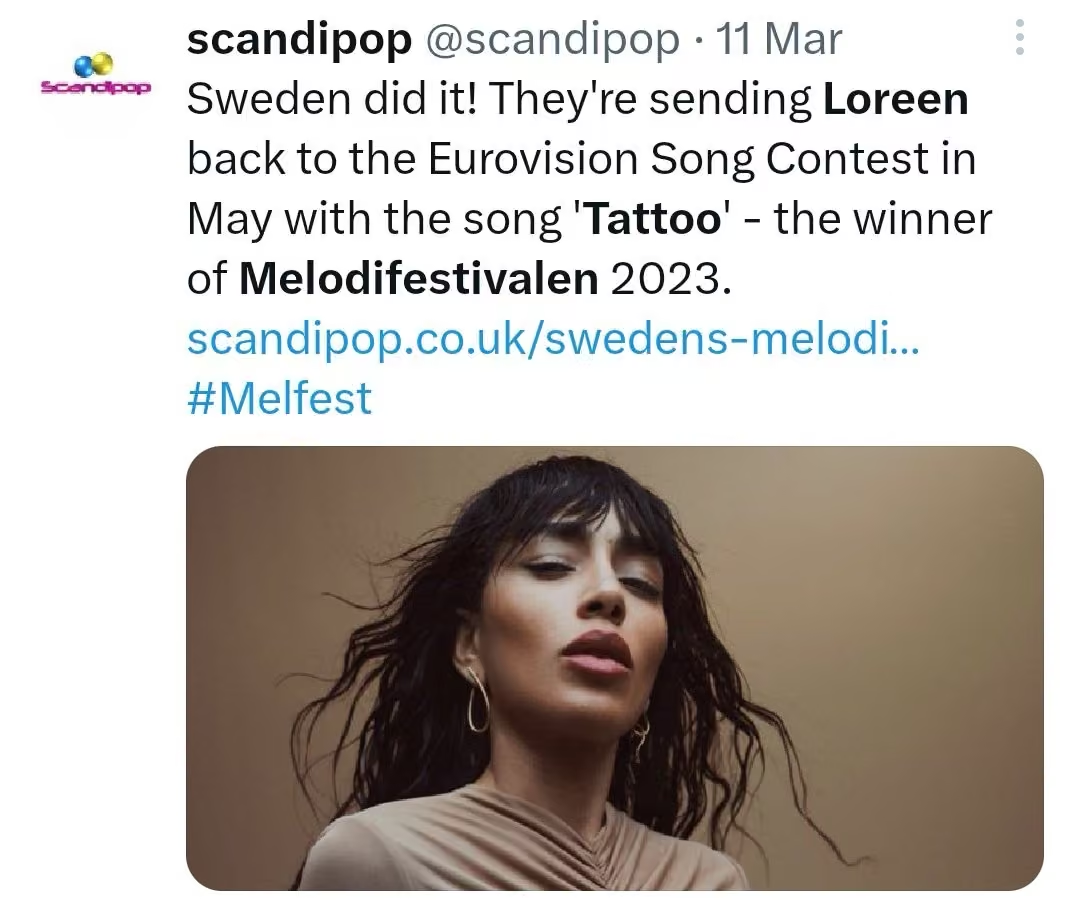
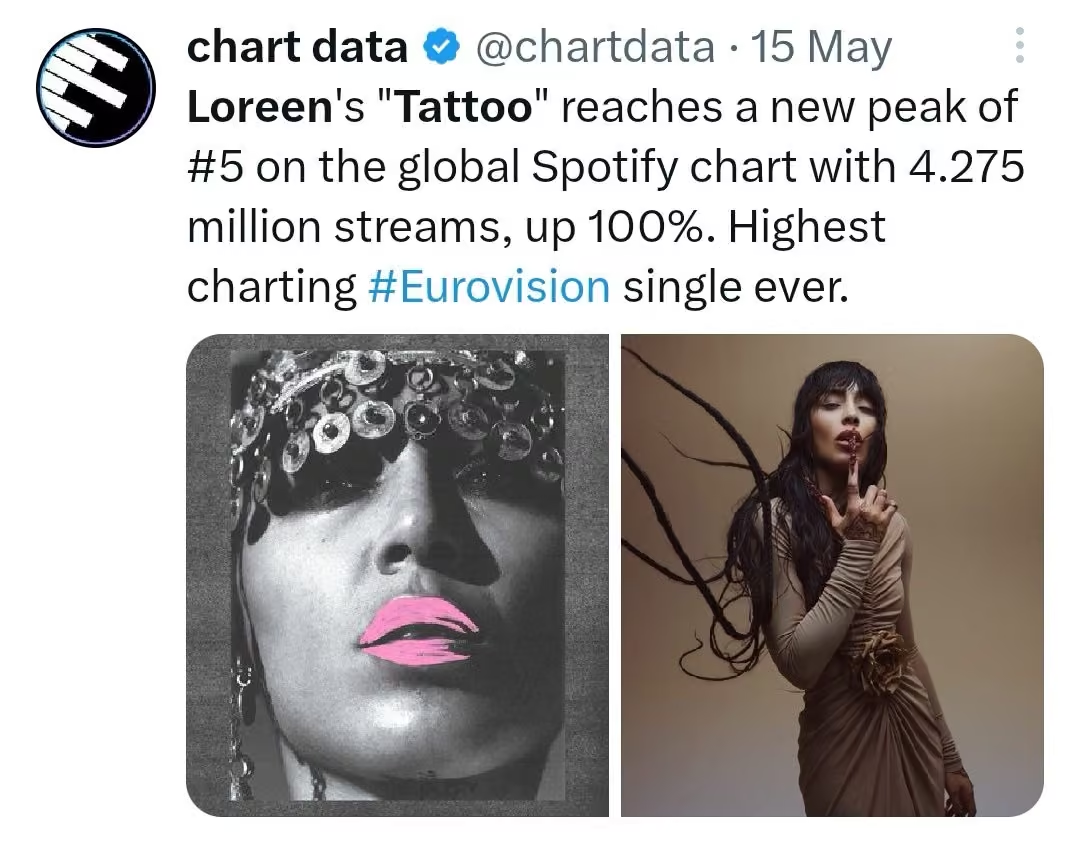
scandipop
@scandipop
The journey that this song has been on since March. And you know it's not finished yet. You know.


Anna Kinberg Batra reposted
 Ville Carlström🇺🇦
@villecarlstrom
Tog en bild på fyren Pater Noster utanför Marstrand i kvällsljus. Det blir en hyllning till Ukrainas kamp mot terroriststaten Ryssland.
Slava Ukraini!

Anna Kinberg Batra reposted
Sviatlana Tsikhanouskaya
@Tsihanouskaya
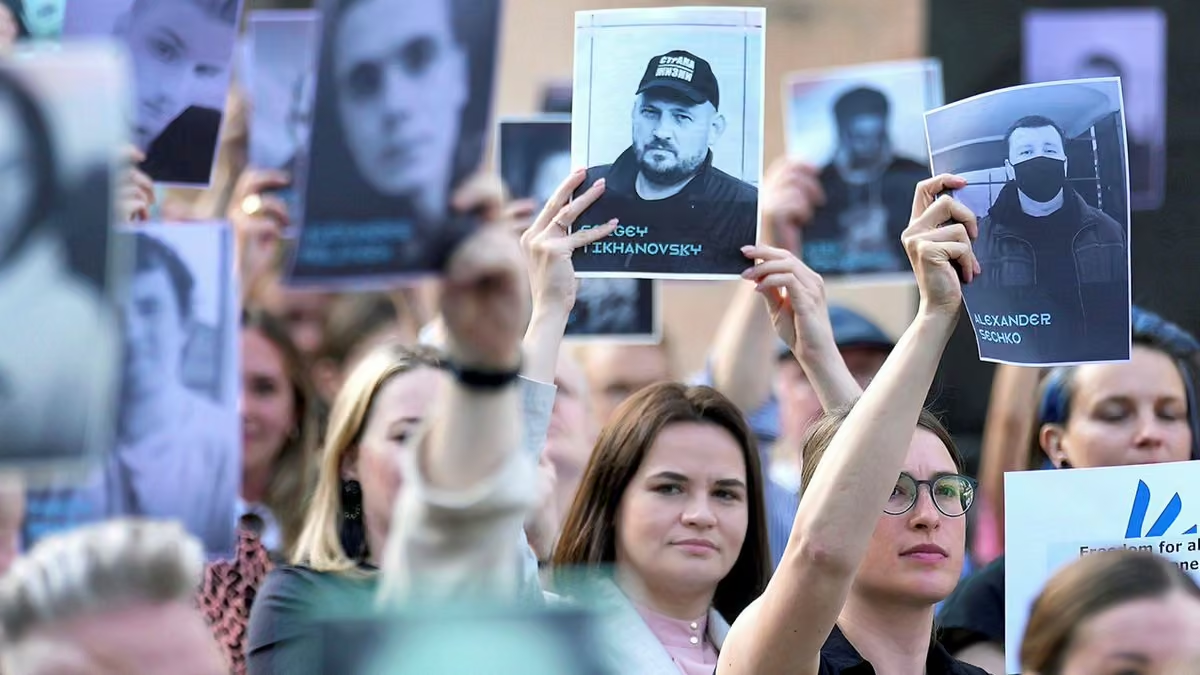
Each day, more Belarusians are detained by the regime. We know of at least 1,500 political prisoners in #belarus – including my husband, Siarhei – but the actual number could be much higher. We fight to bring freedom to them & all Belarusians held hostage by Lukashenka & Putin.
Anna Kinberg Batra reposted
 Erik Slottner
@ErikSlottner
Mycket bra! Ser fram emot att ta emot delbetänkande senare i år. Viktigt att komma ihåg att de privata aktörerna stöder en statlig lösning som komplement eftersom den kan erbjuda högsta tillitsnivå.
Anna Kinberg Batra reposted
 Margaret Thatcher
@MrsMThatcher

Anna Kinberg Batra reposted
Business Ukraine mag
@Biz_Ukraine_Mag
“Europe is with you, and you are one with Europe.”
Spanish Prime Minister Pedro Sánchez came to Kyiv today with a powerful message of European solidarity for Ukraine
 Anna Kinberg Batra
@KinbergBatra
❤️🌟🙏
Ida Karlbom
@IdaKarlbom
All cred till alla inblandade i Almedalsveckans säkerhet. Tryggt, vänligt, professionellt. Nu får några av dem lite gott och välförtjänt återhämtning i parken. ❤️

Anna Kinberg Batra reposted
Sir William Browder KCMG
@Billbrowder
Canada welcomes Vladimir Kara-Murza as an honorary citizen. It’s only the 8th time in history that Canada has granted this honor. Previous honorary Canadian citizens include Nelson Mandela, The Dalai Lama and Malala. Vladimir is serving a 25 year sentence for “treason” in Russia
 Raoul Wallenberg Centre for Human Rights
@TheRWCHR
This #canadaday, leaders from across the political spectrum have come together to celebrate Canada’s newest honorary #citizen, @vkaramurza, and to shine a spotlight on his continuing incarceration.
We pay tribute to his courage and welcome him to the #canadian #family.
Anna Kinberg Batra reposted
Johan Forssell
@JohanForssell
Sex månader går fort! 🇸🇪🇪🇺 För egen del vill jag särskilt peka på att vi trots låsningar lyckades få till en förlängning av Ukrainas tullättnader till EU. 🇺🇦 Avgörande för att hålla igång handel och investeringar. EU:s medlemsstater har också gett ett omfattande humanitärt stöd.
Anna Kinberg Batra reposted
 Viktor Barth-Kron
@viktorbk
Beröm från @EUYlvaNilsson, det händer inte varje år. Klipp ut och rama in på väggen i Rosenbad. www.expressen.se/ledare/ylva-nilsson/sverige-har-gjort-su…
Anna Kinberg Batra
@KinbergBatra
I Washington i sommar? Ta inte bara bilder på Starbucks och Vita huset, tänk även på alla som ”fått” prova livet i ett annat samhällssystem:
 Victims of Communism
@VoCommunism
A new anti-communism museum in D.C. tallies 100 million victims of Marx’s ideology.
www.washingtonpost.com/magazine/2022/09/20/victims-of-com…
Anna Kinberg Batra reposted
 Niki Westerberg
@NikiWesterberg
Intressant undersökning av @FossilfrittSE Klimatomställningens möjlighet att stärka Sveriges välstånd och konkurrenskraft är enorm. Det vet inte svenska folket @svanteaxelsson kanske borde bli omställningens @HansRosling? #svpol fossilfrittsverige.se/2023/06/29/stor-undersokning-sa-fel…
Anna Kinberg Batra reposted
Etienne de GONNEVILLE
@e_de_gonneville
The work of the 🇨🇵🇨🇿🇸🇪 trio of 🇪🇺 presidencies is now over.
Thanks to the impressive performance of @sweden2023eu our common objectives have been met. The #europeanunion is strong, united, ready to face future challenges.
@RPFranceUE @david_cvach @LaurenceBoone @JessikaRoswall
 Sweden in EU
@SwedeninEU
During six months, the 🇸🇪 🇪🇺Presidency has worked to make Europe
✔️Safer
✔️Greener
✔️Freer
Thank you for the unity. Thank you for the determination. The work continues. Together.
#eu2023se
Anna Kinberg Batra
@KinbergBatra
Bra argument för statlig e-legitimation på högsta säkerhetsnivå, vilket Sverige hittills är ett av få EU-länder som saknar. Eller hur, digitaliseringsministern @ErikSlottner ? etidning.di.se/shared/article/ebm-bank-id-ett-vaxande-pro…
Anna Kinberg Batra
@KinbergBatra
Tack för tålmodigt, hårt och pragmatiskt arbete, alla inblandade i det svenska EU-ordförandeskapet! Svenskt ledarskap när det är som bäst kan ge goda resultat internationellt. För @dagensindustri-läsare är det sen gammalt: www.di.se/nyheter/lat-eu-ordforandeskapet-bli-helsvenskt/
Anna Kinberg Batra reposted
Eurovision Charts
@esc_charts
#eurovision Song Contest 2023 Spotify chart - June 29, 2023

Anna Kinberg Batra reposted
 People's Embassy of Belarus in Sweden 🤍❤️🤍🇸🇪
@BelarusInSweden
"We don't recognize Lukashenka as the legitimate president of Belarus."
-- EU foreign policy chief @JosepBorrellF
 Franak Viačorka
@franakviacorka
Every time, Western media call Lukashenka "president," his propaganda celebrates it and sells it as recognition. Don't do them a favor.
DON'T CALL HIM PRESIDENT

Anna Kinberg Batra reposted
 EU Council
@EUCouncil
It's time to say goodbye or 'hej då' to the 🇸🇪Swedish Council presidency @sweden2023eu.
Thank you for your excellent work & wonderful cooperation!🙏Tack för ett väl genomfört arbete och gott samarbete!
👋On 1 July, we welcome Spain🇪🇸 @eu2023es. Stay tuned!
#eu2023se #eu2023es
Anna Kinberg Batra reposted
 Henrik Sjöström 🌻
@Henriksjos
Ta gärna ett par minuter och kolla denna gripande tråd där en journalist löper genom rysk artillerield i Ukrainas skogar. Som han säger:
- jag gör detta en gång. Soldaterna gör detta varje dag.
Otroliga scener
Anna Kinberg Batra reposted
Eurovision Charts
@esc_charts
Most-streamed #eurovision 2023 songs on Spotify (June 29):
🇸🇪 Tattoo - 1,632,108
🇫🇮 Cha Cha Cha - 498,867
🇳🇴 Queen of Kings - 478,618
🇮🇹 Due vite - 235,678
🇵🇱 Solo - 171,513
🇮🇱 Unicorn - 152,425
🇫🇷 Évidemment - 87,464
🇦🇹 Who the Hell Is Edgar? - 84,906
🇸🇮 Carpe Diem - 73,718
Anna Kinberg Batra reposted
Sir William Browder KCMG
@Billbrowder
How Putin Cannibalizes Russian Economy to Survive Personally time.com/6291642/putin-cannibalizes-russian-economy/
Anna Kinberg Batra reposted
 DG MEME 🇪🇺
@meme_ec
It's your last day to make IKEA / Swedish Council jokes, use it wisely!
@sweden2023eu

Anna Kinberg Batra reposted
Sweden in EU
@SwedeninEU
319 decisions and agreements on EU laws and other texts under the Swedish Presidency. See the list: swedish-presidency.consilium.europa.eu/media/j0iibp5w/sco…


Anna Kinberg Batra reposted
 Oscar Wåglund Söderström
@OWSoderstrom
En timme kvar på det svenska #eu-ordförandeskapet. Stolt över vad vår regering åstadkommit, som att få klimatpaketet Fit for 55 och migrationspakten i mål. Och så ett rejält initiativ för ökad konkurrenskraft i Europa. Tack för enorma insatser för vår union! @sweden2023eu

Anna Kinberg Batra reposted
 Teodor Koistinen
@TeodorKoistinen
Uppfriskande att be om applåder för andra och inte åt sig själv.
Anna Kinberg Batra reposted
Victims of Communism
@VoCommunism
In June of 1987, President Ronald Reagan gave his famous speech, urging Mikhail Gorbachev to "tear down" the Berlin Wall.
We must remember this important legacy.
Anna Kinberg Batra reposted
Ursula von der Leyen
@vonderleyen
Dear @SwedishPM, for 6 months you helped maintain Europe’s ironclad unity in support of Ukraine.
Brokered agreements on so many crucial files, from #eugeendeal to our digital future.
And sent a strong message to industry by promoting our competitiveness.
Tack så mycket.
Anna Kinberg Batra reposted
 Sara Keusen
@SaraKeusen
Final day of the @sweden2023eu 🇸🇪🇪🇺! What a wonderful 6 months. A great, fun and very fruitful experience indeed! We delivered!
Anna Kinberg Batra reposted
Kaja Kallas
@kajakallas
Congratulations, @SwedishPM, on a successful @sweden2023eu presidency.
Sweden's leadership has been crucial to reach strong agreements on Ukraine, defence, migration, climate and eID.
Welcome to Spain taking over. I look forward to working closely during @eu2023es presidency.
Anna Kinberg Batra reposted
Sweden in EU
@SwedeninEU
☑️ 🤝During the first half of 2023, hundreds of decisions have been taken in the various Council configurations. Read what each Council configuration has achieved. ⬇️
swedish-presidency.consilium.europa.eu/en/programme/Resul…


Anna Kinberg Batra reposted
Sweden in EU
@SwedeninEU
The 2023 Swedish Presidency of the Council of the European Union is drawing to an end. The ambition of the Swedish Presidency was to help make Europe safer, greener and freer. Here are some of our achievements! 1/10

Anna Kinberg Batra reposted
Kaja Kallas
@kajakallas
My message on #ai regulation on the second day of #euco:
Europe should seize AI and the enormous opportunities here, not only concentrate on the risks.
In Estonia, we already have more than 100 use cases of AI to improve our public services.
Anna Kinberg Batra reposted
Josef Aschbacher
@AschbacherJosef
On 30 May 1975 the ESA Convention was signed in Paris and @ESA came into being. At the exact same moment – on the other side of Paris – ESA had its very first stand at the famed @salondubourget airshow.
Dig into the archives:
historicalarchives.esa.int/opening-images-1975-dawn-era-esa #esaatlebourget


Anna Kinberg Batra reposted
Oscar Jonsson
@OAJonsson
Hörni, det är många Rysslandsvetare på gatorna i Visby. Var försiktiga med dem! Ett tips:
Dålig öppning: du, det här med Prigozhin i helgen, vad hände?
Bra öppning: vilket är din bästa ryska utbrytarregion?
Anna Kinberg Batra reposted
Utrikesdepartementet
@Utrikesdep
Ökat stöd till Ukraina och press på Ryssland under svenska ordförandeskapet i EU. Läs mer om resultaten här: swedish-presidency.consilium.europa.eu/sv/nyheter/okat-st… #eu2023se
Foto: EU
 Anna Kinberg Batra
@KinbergBatra
Fattas en huvudstadsregion i toppen tycker jag. Viktigt för många och mycket att vi ändra på det!
 The Economist
@TheEconomist
🎵 Oh, Vienna 🎵
Anna Kinberg Batra reposted
 Sweden Charts
@SwedenCharts
🇸🇪 | “Tattoo” by Loreen has today entered the Top 150 most streamed Swedish songs of all time on Spotify.


Anna Kinberg Batra reposted
SSC Sverige
@SSCSpaceSverige
Rymdbranschen växer i rekordfart. Samtidigt har vi en ny geo- och säkerhetspolitisk verklighet i Europa och Väst. Vilken roll spelar rymd? Om detta pratar vi hos @AeroAlmedalen 14.00 idag 🚀
Info: almedalsveckan.info/program/67212
Sänds live: almedalsveckanplay.info/67212
#almedalsveckan2023
 Anna Kinberg Batra
@KinbergBatra
Varför Visby när Kiruna kallar?
SSC Sverige
@SSCSpaceSverige
Kom och träffa SSC på Kirunafestivalen! Prata rymd eller jobb och passa på att tävla om festivalbiljetter.
Vi finns precis utanför vårt nya kontor, alldeles intill klockstapeln på torget.
#esrange #kiruna #kirunafestivalen

Anna Kinberg Batra reposted
 Diana Janse
@sigriddiana
Idag presenterade @JohanForssell ny GD o ny styrelseordförande för @sida Välkomna ombord på resan mot ett reformerat bistånd @JakobGranit o @CarlssonSwe
Anna Kinberg Batra reposted
SSC Sverige
@SSCSpaceSverige
”I Sverige lever vi våra liv på ett sätt som är helt beroende av rymden. Med den säkerhetspolitiska situation som vi nu befinner oss i blir rymden helt avgörande för vår säkerhet, bland annat för vårt totalförsvar”, säger Carl-Johan Edström @klute67. #almedalen @SOFF_SE

Anna Kinberg Batra reposted
scandipop
@scandipop
Loreen performing #eurovision winner 'Tattoo' at Allsång På Skansen, which made its return to SVT tonight.
📺: www.svtplay.se/klipp/KvvVMzN/loreen-tattoo?position=88&id…
 Anna Kinberg Batra
@KinbergBatra
Rimlig bedömning! 🌟😍💥👏

Anna Kinberg Batra reposted
Eurovision Charts
@esc_charts
Most-streamed #eurovision 2023 songs on Spotify (June 26):
🇸🇪 Tattoo - 1,653,678
🇫🇮 Cha Cha Cha - 510,888
🇳🇴 Queen of Kings - 500,100
🇮🇹 Due vite - 227,672
🇵🇱 Solo - 191,211
🇮🇱 Unicorn - 152,643
🇫🇷 Évidemment - 92,315
🇦🇹 Who the Hell Is Edgar? - 90,141
🇸🇮 Carpe Diem - 77,451
Anna Kinberg Batra reposted
Johan Forssell
@JohanForssell
Totalt allokerar vi 380 miljoner kronor ur årets biståndsbudget för ett extra stödpaket som ska komma civilbefolkningen till del. Ukraina kommer i år vara det största mottagarlandet av svenskt bistånd. www.tv4.se/artikel/1KeovDsWjlFMZBNUoG2vkd/sverige-skickar…
Anna Kinberg Batra reposted
Sweden Charts
@SwedenCharts
🇸🇪 | Two songs are close to making history:
Avicii - Wake Me Up (1.940B):
Will be the first song by a Swede to reach 2 billion streams on Spotify.
Veronica Maggio - Jag Kommer (98.6M):
Will be the first song in Swedish by a female artist to reach 100 million streams.
Anna Kinberg Batra reposted
Swedish Ministry for Foreign Affairs
@SweMFA
Food, water, mine clearance, shelter and support to critical public services – these are some components of Sweden’s new support to Ukraine.
Read more: government.se/press-releases/2023/06/substantial-new-huma…
#standwithukraine

Anna Kinberg Batra reposted
 Physics In History
@PhysInHistory
Nikola Tesla's prediction of a smartphone, Collier’s magazine interview, 1926:
"When wireless is perfectly applied the whole earth will be converted into a huge brain, which in fact it is, all things being particles of a real and rhythmic whole. We shall be able to communicate with one another instantly, irrespective of distance. Not only this, but through television and telephony we shall see and hear one another as perfectly as though we were face to face, despite intervening distances of thousands of miles; and the instruments through which we shall be able to do his will be amazingly simple compared with our present telephone. A man will be able to carry one in his vest pocket."

Anna Kinberg Batra reposted
Volodymyr Zelenskyy / Володимир Зеленський
@ZelenskyyUa
Yesterday, I had talks with partners, including President Biden, primarily about arms supplies. Today, I was in the area where these weapons will give more power, more protection to Ukrainians' lives. And bring our victory closer, this is the main thing. All our land will be free – all of it.
Anna Kinberg Batra reposted
Sir William Browder KCMG
@Billbrowder
Vladimir Putin says Wagner mutiny leaders will be 'brought to justice'. This is a day after he let Prighozin off the hook. Putin is looking weaker and more pathetic by the day. apple.news/AH4DRlVRtSmehInMhpmeGDA
Anna Kinberg Batra reposted
Diana Janse
@sigriddiana
Fortsatt stöd till #ukraina; detta paket har fokus på humanitär hjälp i kölvattnet av dammexplosionen och till t ex nyligen befriade områden i våroffensiven. Behoven är enorma. #standwithukraine️
Anna Kinberg Batra reposted
 Vice President Kamala Harris Archived
@VP46Archive
Trust women. Trust them to make decisions about their own body, health care, and future.
Anna Kinberg Batra reposted
Johan Forssell
@JohanForssell
Idag måndag kommer jag presentera ett större sommarpaket med humanitärt och återhämtningsstöd till Ukraina.
Kl 13:00 i Bella eller digitalt via Zoom. 🇸🇪💙🇺🇦
Anna Kinberg Batra reposted
 Carl Fridh Kleberg
@FridhKleberg
Jag låtsas inte veta exakt vad som har hänt bakom kulisserna med Prigozjin och allt, men här är en förklaring som åtminstone ”låter rimlig” från någon som brukar vara väldigt bra.
 Tatiana Stanovaya
@Stanovaya
Below is a brief description of Prigozhin's mutiny and the factors that contributed to its outcome. We, as observers, initially missed important details due to the scarcity of information and lack of time for in-depth analysis. Here's the perspective that currently seems most plausible:
1️⃣ Prigozhin's rebellion wasn't a bid for power or an attempt to overtake the Kremlin. It arose from a sense of desperation; Prigozhin was forced out of Ukraine and found himself unable to sustain Wagner the way he did before, while the state machinery was turning against him. To top it off, Putin was ignoring him and publicly supporting his most dangerous adversaries.
2️⃣ Prigozhin's objective was to draw Putin's attention and to impose a discussion about conditions to preserve his activities - a defined role, security, and funding. These weren't demands for a governmental overthrow; they were a desperate bid to save the enterprise, hoping that Prigozhin's merits in taking Bakhmut (that's why he needed it!) would be taken into account and the concerns would catch Putin's serious attention. Now it appears that these merits helped Prigozhin to get out of this crisis alive, but without a political future in Russia (at least while Putin is in power).
3️⃣ Prigozhin was caught off-guard by Putin's reaction and found himself unprepared to assume the role of a revolutionary. He also wasn't prepared for the fact that Wagner was about to reach Moscow where his only option remained - to "take the Kremlin" - an action that would inevitably result in him and his fighters being eradicated.
4️⃣ Those in the elites who were able reached out to Prigozhin with offers to surrender. This likely added to his sense of impending doom. However, I don't believe any high-level negotiations took place. Lukashenko presented Prigozhin with a Putin-endorsed offer to retreat on the condition that Prigozhin would leave Russia and Wagner would be dissolved.
5️⃣ I don't think Prigozhin was in a position to make demands (such as the resignation of Shoigu or Gerasimov - something many observers expect today. If that happens, it will be due to another reason.) After Putin's address in the morning of June 24th, Prigozhin's primary concern was to find an off-ramp. The situation would have led to inevitable death in merely a few hours. It is possible that Putin has promised him safety on the condition that Prigozhin remains quietly in Belarus.
I stand by my previous assertion that Putin and the state have been dealt a severe blow (which will have significant repercussions for the regime). However, I want to emphasize that image has always been a secondary concern for Putin. Setting optics aside, Putin objectively resolved the Wagner and Prigozhin problem by dissolving the former and expelling the latter. The situation would have been far worse if it had culminated in a bloody mess in the outskirts of Moscow.
And no, Putin doesn't need Wagner or Prigozhin. He can manage with his own forces. He's now certainly convinced of that.
I will disclose many more details in my bulletin to be issued tomorrow evening.
Anna Kinberg Batra reposted
Eurovision Charts
@esc_charts
Most-streamed #eurovision 2023 songs on Spotify (June 24):
🇸🇪 Tattoo - 1,751,188
🇫🇮 Cha Cha Cha - 572,323
🇳🇴 Queen of Kings - 529,202
🇮🇹 Due vite - 259,269
🇵🇱 Solo - 218,073
🇮🇱 Unicorn - 161,589
🇫🇷 Évidemment - 99,746
🇦🇹 Who the Hell Is Edgar? - 92,050
🇧🇪 Because of You - 81,033
Anna Kinberg Batra reposted
 Timothy Snyder
@TimothyDSnyder
Yes. It turns out that when Putin's regime faces an actual existential threat, he hops in a plane and writes a check.
 Scott Rose (@rprose.bsky.social)
@rprose
This whole Prigozhin/Belarus deal blows up the argument that Putin can't lose, Putin can't be humiliated, Putin can't be cornered. He has never lost faster or been more humiliated and cornered
Anna Kinberg Batra reposted
Darth Putin
@DarthPutinKGB
It was not a coup. It was a special domestic military operation.
Anna Kinberg Batra reposted
Volodymyr Zelenskyy / Володимир Зеленський
@ZelenskyyUa
I spoke with 🇺🇸 President @POTUS. A positive and inspiring conversation.
We discussed the course of hostilities and the processes taking place in Russia. The world must put pressure on Russia until international order is restored.
I thanked the @POTUS for the unflagging support of 🇺🇦, especially for Patriots.
It is important to further increase 🇺🇦 capabilities to protect our skies. In this context, I also thanked him for the support of the fighter jet coalition.
We discussed further expansion of defense cooperation, with an emphasis on long-range weapons.
I am grateful for the readiness of the 🇺🇸 and the American people to stand side by side with Ukraine until the full liberation of all our territories within internationally recognized borders.
We coordinated our positions on the eve of the @NATO Summit in Vilnius, discussed further work on the implementation of 🇺🇦 Peace Formula and preparations for the Global Peace Summit.
Anna Kinberg Batra reposted
Sir William Browder KCMG
@Billbrowder
What next for Putin after Prigozhin backs down? I predict Putin will execute an almighty purge that would make Stalin blush. Putin is not one to handle humiliation well and he now desperately needs to look tough to restore his authority www.nbcnews.com/news/world/putin-russia-mercenary-rebelli…
Anna Kinberg Batra reposted
Ulf Kristersson
@SwedishPM
Samtalat med kollegor i bland annat Finland, Polen, Estland och Lettland om utvecklingen i Ryssland. Vi står i nära kontakt och följer utvecklingen tillsammans med våra grannar. Har också samtalat med EU-kommissionens ordförande @vonderleyen
Anna Kinberg Batra reposted
 Anne Applebaum
@anneapplebaum
"This was the most remarkable aspect of the whole day: Nobody seemed to mind, particularly, that a brutal new warlord had arrived to replace the existing regime—not the security services, not the army, and not the general public" www.theatlantic.com/ideas/archive/2023/06/putin-caught-in…
Anna Kinberg Batra reposted
Sviatlana Tsikhanouskaya
@Tsihanouskaya
Bringing the war criminal Prigozhin to #belarus adds another element of instability. We can't forget how Lukashenka arrested 33 Wagner mercenaries before the 2020 elections. Belarus doesn't need more criminals & thugs, it needs justice, freedom & security for our people.

Anna Kinberg Batra reposted
Darth Putin
@DarthPutinKGB
Day 486 of my 3 day war. The Russian invasion of Russia to free Russia from Russians is over, so now Russia is free to continue not invading Ukraine which is actually Russia cos the West is invading Russia from Ukraine which is Russia.
I remain a master strategist.
Anna Kinberg Batra reposted
Sviatlana Tsikhanouskaya
@Tsihanouskaya
Now that the weakness & fragility of Putin's bandit regime has been exposed, it's high time for Europe to react. His puppet Lukashenka tries to turn #belarus into a criminal haven with nuclear weapons. I call on European leaders to act decisively in support of democratic Belarus.

Anna Kinberg Batra reposted
 Svensk Historia
@svenskhistoria
Den 25 juni 1810 träffade det svenska sändebudet Carl Otto Mörner marskalken Jean Baptiste Bernadotte i Paris och frågade om han ville bli kung av Sverige. #svhist #dagensdatum

Anna Kinberg Batra reposted
Sviatlana Tsikhanouskaya
@Tsihanouskaya
Don't be fooled by the Belarus dictator's attempt to cast himself as a broker between other criminals. Lukashenka, Putin & Prigozhin must all answer for their crimes. No one will be safe as long as they remain at large, spreading terror to satisfy their personal thirst for power.


Anna Kinberg Batra reposted
Nassim Nicholas Taleb
@nntaleb
Prigozhin's training is 9 y in a Soviet prison, running a ring of thieves as a teenager. He sat in the front line, like earlier time warriors.
By comparison, Putin is a poseur working on his image, like Twitter gym bros.
Russians can detect who's real & who's not.
---
See my "surgeons don't look like surgeons"
medium.com/incerto/surgeons-should-notlook-like-surgeons-…

Anna Kinberg Batra reposted
Sviatlana Tsikhanouskaya
@Tsihanouskaya
Today's events show that the evil which you unleash on others will come back to your own territory. It's a lesson for everyone who wants to start or join a war of aggression. And today, Lukashenka again proved that he is Putin's puppet. He doesn't represent Belarus or our people.
Anna Kinberg Batra reposted
Timothy Snyder
@TimothyDSnyder
Let's pay attention to Belarus these next few days.
Anna Kinberg Batra reposted
Sviatlana Tsikhanouskaya
@Tsihanouskaya
Today we watched the Russian military monster devour itself. Now it's more important than ever to unite for a free #belarus. I call on the international community to support the people of Belarus & to help us secure our freedom & independence against those who want to enslave us.
Anna Kinberg Batra reposted
Marko Mihkelson 🇪🇪🇺🇦🇪🇺
@markomihkelson
Ukraine must be liberated and brought to the NATO.
Volodymyr Zelenskyy / Володимир Зеленський
@ZelenskyyUa
Today, the world saw that the bosses of Russia do not control anything. Nothing at all. Complete chaos. Complete absence of any predictability.
First, the world should not be afraid. We know what protects us. Our unity.
Ukraine will definitely be able to protect Europe from any Russian forces, and it doesn't matter who commands them. We will protect. The security of Europe's eastern flank depends only on our defense.
Ukrainian soldiers, Ukrainian guns, Ukrainian tanks, Ukrainian missiles are all that protect Europe from such marches as we see today on Russian territory. And when we ask to give us the F-16 fighters or the ATACMS, we're enhancing our common defense. Real defense.
Second, everything must be real. It's time for everyone in the world to frankly say that all of Russia's criminal actions against Ukraine were and are unprovoked. And we all have to focus exclusively on our common security priorities. NATO is not just a word or a set of formal promises. These are reliable guarantees for everyone that peace won't be destroyed. Without Ukraine, such guarantees are worthless. Already in July at the summit in Vilnius, it is a historic chance for real decisions without looking back at Russia. Any nation that borders Russia supports this.
What will we, Ukrainians, do?
We will defend our country. We will defend our freedom. We will not be silent and we will not be inactive. We know how to win – and it will happen. Our victory in this war.
And what will you, Russians, do?
The longer your troops stay on Ukrainian land, the more devastation they will bring to Russia. The longer this person is in the Kremlin, the more disasters there will be.
Anna Kinberg Batra reposted
 Karlis Neretnieks
@neretnieks
Om en kupp eller uppror lyckas beror ofta hastigheten i processen. Upprorsmakaren är vanligen rejält underlägsen den sittande regimen, men lyckas han skapa, och bibehålla, en bild av att regimen håller på att tapa greppet finns grunden för framgång. > 1/3

Anna Kinberg Batra reposted
Volodymyr Zelenskyy / Володимир Зеленський
@ZelenskyyUa
Today, the world saw that the bosses of Russia do not control anything. Nothing at all. Complete chaos. Complete absence of any predictability.
First, the world should not be afraid. We know what protects us. Our unity.
Ukraine will definitely be able to protect Europe from any Russian forces, and it doesn't matter who commands them. We will protect. The security of Europe's eastern flank depends only on our defense.
Ukrainian soldiers, Ukrainian guns, Ukrainian tanks, Ukrainian missiles are all that protect Europe from such marches as we see today on Russian territory. And when we ask to give us the F-16 fighters or the ATACMS, we're enhancing our common defense. Real defense.
Second, everything must be real. It's time for everyone in the world to frankly say that all of Russia's criminal actions against Ukraine were and are unprovoked. And we all have to focus exclusively on our common security priorities. NATO is not just a word or a set of formal promises. These are reliable guarantees for everyone that peace won't be destroyed. Without Ukraine, such guarantees are worthless. Already in July at the summit in Vilnius, it is a historic chance for real decisions without looking back at Russia. Any nation that borders Russia supports this.
What will we, Ukrainians, do?
We will defend our country. We will defend our freedom. We will not be silent and we will not be inactive. We know how to win – and it will happen. Our victory in this war.
And what will you, Russians, do?
The longer your troops stay on Ukrainian land, the more devastation they will bring to Russia. The longer this person is in the Kremlin, the more disasters there will be.
Anna Kinberg Batra reposted
Darth Putin
@DarthPutinKGB
When Kiev was attacked by Russians, Zelensky stayed.
When Moscow was attacked by Russians, I ran.
Anna Kinberg Batra
@KinbergBatra
Om du vill tänka på annat än krig, midsommar eller båda två en stund i kväll, så kan du alltid se på..: www.svtplay.se/video/85LVbZm/muren/mentalt-stabslage
Anna Kinberg Batra reposted
 Dmytro Kuleba
@DmytroKuleba
Those who said Russia was too strong to lose: look now. Time to abandon false neutrality and fear of escalation; give Ukraine all the needed weapons; forget about friendship or business with Russia. Time to put an end to the evil everyone despised but was too afraid to tear down.
Anna Kinberg Batra reposted
Darth Putin
@DarthPutinKGB
I don’t need ammo. I need a ride.
Anna Kinberg Batra reposted
Darth Putin
@DarthPutinKGB
Exactly 16 months ago, residents of Kiev were fortifying their city to prevent a Russian invasion.
Today, residents of Moscow are fortifying their city to also prevent a Russian invasion.
I remain a master strategist.
Anna Kinberg Batra reposted
Sir William Browder KCMG
@Billbrowder
Sounds like Putin is going all in against Prighozin. Putin knows that he can’t appear weak, but the question is whether he has the capacity to stop the rebellion. These is not peaceful demonstrators on Belotnaya Square. This is a highly armed rebellion
 Anton Gerashchenko
@Gerashchenko_en
Putin called the situation a criminal adventure, betrayal, treason, rebellion, apostasy and a stab in the back - from his address regarding Prigozhin.

Anna Kinberg Batra reposted
Darth Putin
@DarthPutinKGB
Russia
2̶n̶d̶ ̶m̶o̶s̶t̶ ̶p̶o̶w̶e̶r̶f̶u̶l̶ ̶a̶r̶m̶y̶ ̶i̶n̶ ̶w̶o̶r̶l̶d̶
̶2̶n̶d̶ ̶m̶o̶s̶t̶ ̶p̶o̶w̶e̶r̶f̶u̶l̶ ̶a̶r̶m̶y̶ ̶i̶n̶ ̶U̶k̶r̶a̶i̶n̶e̶
̶2̶n̶d̶ ̶m̶o̶s̶t̶ ̶p̶o̶w̶e̶r̶f̶u̶l̶ ̶R̶u̶s̶s̶i̶a̶n̶ ̶a̶r̶m̶y̶ ̶i̶n̶ ̶U̶k̶r̶a̶i̶n̶e̶
2nd most powerful army in Russia
Anna Kinberg Batra reposted
Victims of Communism
@VoCommunism
Anti-Communism is a non-partisan issue.
Remember the victims and stand together.
Anna Kinberg Batra reposted
Darth Putin
@DarthPutinKGB
Day 485 of my 3 day war. Russia is invading Russia to free Russia from those who invaded Russia to free Russia from those who invaded Russia.
I remain a master strategist.
Anna Kinberg Batra reposted
Anne Applebaum
@anneapplebaum
did Wagner fighters stop for coffee on their way into the Rostov MOD headquarters? (photograph credited to Reuters, seen @NYT)

Anna Kinberg Batra reposted
Sir William Browder KCMG
@Billbrowder
This is the trend that everyone needs to watch over the coming hours. There’s no way that Wagner can take over the Putin regime with 25k troops. It will all depend on whether the military stays loyal to Putin or starts switching sides
Visegrád 24
@visegrad24
BREAKING:
Reports of Russian military units switching sides and joining Prigozhin’s military coup.
Military columns made up of these forces are driving from the city of Azov to Rostov, which was taken by the Wagner group a few hours ago.
Anna Kinberg Batra reposted
 Stas Olenchenko
@StasOlenchenko
Scrolling for news about the unfolding Russian civil war?
Donate to Ukraine’s Armed Forces. They will keep fighting any kind of imperialist in the Kremlin.
Not sure what’s coming next?
Donate to Ukraine’s Armed Forces. They are the only ones on the ground & in control.
Anna Kinberg Batra reposted
 Johan Ripås
@JohanRipas
Wagner har alltså rullat in i Rostov och eventuellt en till stad i Ryssland. Fullständigt kaos tycks råda. Putin ska tala om några minuter.
Påverkansoperationer mot det ryska folket och den ryska armén har väl aldrig sett en bättre stund än det här fönstret som just öppnats?
 The Spectator Index
@spectatorindex
BREAKING: Wagner Group claims to have taken control of military facilities in Voronezh
Anna Kinberg Batra reposted
Svensk Historia
@svenskhistoria
Den 23 juni 1523 gjorde den nyvalde kungen Gustav Vasa sitt intåg i Stockholm. #svhist #dagensdatum

Anna Kinberg Batra reposted
Marko Mihkelson 🇪🇪🇺🇦🇪🇺
@markomihkelson
There are obviously many rumors around at the moment. Fact is that Prigozhin's mutiny has not yet met any serious resistance from Russian security forces.
 Igor Sushko
@igorsushko
Rumor: Putin is depressed and is incapable of making any decisions concerning Prigozhin's ongoing coup. He offered to cede control over the country to Secretary of the Security Council Patrushev, BUT - Patrushev refused!

Anna Kinberg Batra reposted
 European Commission
@EU_Commission
We are getting rid of Russian fossil fuels.
In March, EU oil imports from Russia fell by 90% compared to the 2019-2022 average.
EU sanctions against Russia and the G7 price cap on Russian petrol and related products are delivering results.
#repowereu
 Anna Kinberg Batra
@KinbergBatra
Njut av sommaren, där Sommar i @sverigesradioP1 garanterat kommer bjuda på några minnesvärda stunder. Vill du ha ännu fler finns det gott om gammal skåpmat i det digitala arkiv-skafferiet. Som här, från 2021: sverigesradio.se/play/avsnitt/1735064
Anna Kinberg Batra reposted
Darth Putin
@DarthPutinKGB
Everything is fine.
Anna Kinberg Batra reposted
Sir William Browder KCMG
@Billbrowder
All eyes are on the Prighozin coup in Russia, but this chaos is a golden opportunity for Ukraine to make serious advances during the period of Russian disarray.
OSINTdefender
@sentdefender
The Russian Ministry of Defense has announced that Elements of the 35th and 36th Marine Brigades of the Ukrainian Naval Infantry are taking advantage of the “Disorganization caused by Prigozhin” and are currently attempting to Breakthrough the Frontline near Bakhmut; Ukrainian Sources are claiming that multiple Streets in the Western District of the City have been Captured so far.

Anna Kinberg Batra reposted
Darth Putin
@DarthPutinKGB
What should I do with Progozhin?
Anna Kinberg Batra reposted
Lars Wilderäng
@Cornubot
Ironin i att terroristorganisationen Wagner terroriststämplas även av Ryssland går inte förlorad.
Anna Kinberg Batra
@KinbergBatra
Glad midsommar nu! 🌟🇸🇪☀️
open.spotify.com/track/0ZG50Lu6Vu4ud1IQbUSmWq
Anna Kinberg Batra reposted
 Försvarsmakten
@Forsvarsmakten
Missa inte högtidlighållandet av den kungliga högvakten på midsommardagen i Stockholm. #svfm www.forsvarsmakten.se/sv/aktuellt/2023/06/500-ar-av-hogvakt/
Anna Kinberg Batra
@KinbergBatra
TACK! Och glad fortsatt midsommarhelg nu, samtliga inblandade! instagram.com/p/Ct0mmyvoIkO/
🌟👑🎉🙏
Anna Kinberg Batra reposted
Tobias Billström
@TobiasBillstrom
The Vasaorden, the Swedish Royal Barge was used today at the centennial of the City Hall of Stockholm to carry Their Majesties the King and Queen of Sweden. 🇸🇪🇸🇪🇸🇪
 Mats Djurberg
@MatsDjurberg
Fantastiska maritima scener när nyrenoverad Vasaorden lägger ut
#kulturarv #tradition
Anna Kinberg Batra
@KinbergBatra
Kvar i stan? Här och hälsar på? Sommarlov, lunchrast eller halvdag i dag? Alla är lika välkomna till Slottsbacken, start 11! 👑🇸🇪🎉 www.lansstyrelsen.se/stockholm/om-oss/kalender/kalenderha…
Anna Kinberg Batra reposted
Sir William Browder KCMG
@Billbrowder
China imposes limits on Russian banks. This is very significant www.dw.com/en/china-imposes-limits-on-russian-banks/a-659…
Anna Kinberg Batra reposted
Richard Herrey
@RichardHerrey
Hållplatsen utanför Rysslands ambassad i Stockholm 💙💛

Anna Kinberg Batra reposted
 Carl-Oskar Bohlin
@CarlOskar
Vid ett besök på Gotland idag presenterade @andreas_carlson och jag ett uppdrag till Trafikverket att skyndsamt ta fram en lösning för reservhamnsfrågan på Gotland. Det säkerhetspolitiska läget kräver förstärkt redundans i förbindelserna till Gotland och regeringen har idag tagit ett viktigt steg för att kunna stärka robustheten i det svenska totalförsvaret i detta avseende.

Anna Kinberg Batra reposted
 NASA
@NASA
LIVE: Watch the ribbon-cutting for our new Earth Information Center at NASA Headquarters in Washington. The new tool will provide data to the public and decision makers to help adapt and respond to our changing planet: earth.gov x.com/i/broadcasts/1YpJkgNvjloJj
Anna Kinberg Batra reposted
 Sveriges riksdag
@Sverigesriksdag
Beslut: En tillfällig allmän flaggdag för att högtidlighålla 50-årsdagen av konungens trontillträde www.riksdagen.se/sv/dokument-och-lagar/dokument/betankand…
Anna Kinberg Batra reposted
NASA
@NASA
Oh, those summer nights! It's the #summersolstice, the longest day in the Northern Hemisphere—and the shortest in the Southern Hemisphere where winter starts.
Glance up tonight for a planetary cameo, with Mars and Venus just beside the Moon: www.nasa.gov/blogs/watch-the-skies/2023/06/02/welcome-jun…

Anna Kinberg Batra reposted
 Fredrik Malm
@FredrikMalm
Nu är busshållplatsen Fria Ukrainas plats invigd. Den ligger bredvid Rysslands ambassad i Stockholm. Stort tack till Region Stockholm för detta 🇺🇦🇸🇪

Anna Kinberg Batra reposted
Josef Aschbacher
@AschbacherJosef
In 2022, while global private investment decreased by 30% compared to 2021 globally, in Europe (also thanks to big efforts by ESA) private investments in space ventures grew by 66%. With its exploding potential, commercialisation of European space industry is imperative for @ESA.

Anna Kinberg Batra reposted
Försvarsdepartementet
@ForsvarsdepSv
"Angeläget att Sverige blir medlem i Nato för att stärka europeisk och transatlantisk säkerhet och det kollektiva försvaret" - Nordiska försvarsministrarna, Reykjavik den 21 juni. @PlJonson @thordiskolbrun #nordefco shorturl.at/gjwLR
 Anna Kinberg Batra
@KinbergBatra
Ursäkta Stockholmsfokus här, men det är ju mitt jobb numera. Och hans hemstad och arbetsplats sen 50 år ändå. Välkomna att fira med oss i kungliga huvudstaden i morgon! 👑🎉 www.lansstyrelsen.se/stockholm/om-oss/kalender/kalenderha…
Anna Kinberg Batra
@KinbergBatra
Ses vi på Slottsbacken i Gamla stan i morgon vid lunchtid? Eller redan under förmiddagen vid Sätrastrandsbadet i Skärholmen? Välkommen att fira kungens 50 år på tronen, nu i hemstaden! 👑🎉 www.lansstyrelsen.se/stockholm/om-oss/kalender/kalenderha…
Anna Kinberg Batra reposted
Eurovision Charts
@esc_charts
"Tattoo" by Loreen has now surpassed 150 million streams on Spotify. #eurovision 🇸🇪
Anna Kinberg Batra reposted
NASA
@NASA
We’ve taken light data detected by four of our telescopes—@ChandraXray, @NASAWebb, @NASAHubble, and Spitzer Space Telescope—and turned them into sound. Hear what some galaxies and stars sound like: www.nasa.gov/missions/chandra/cosmic-harmonies-sonificati…
Anna Kinberg Batra reposted
Eurovision Charts
@esc_charts
Most-streamed #eurovision 2023 songs on Spotify (June 19):
🇸🇪 Tattoo - 1,809,433
🇫🇮 Cha Cha Cha - 589,476
🇳🇴 Queen of Kings - 549,957
🇮🇹 Due vite - 241,704
🇵🇱 Solo - 221,935
🇮🇱 Unicorn - 172,421
🇫🇷 Évidemment - 111,503
🇦🇹 Who the Hell Is Edgar? - 108,244
🇸🇮 Carpe Diem - 94,850
Anna Kinberg Batra reposted
 Finansdepartementet
@FinansdepSv
Värdet på statens bolagsportfölj ökar till 850 miljarder kronor - en ökning med ca 30 miljarder kronor. Det visar skrivelsen för verksamhetsåret 2022 som publicerades i dag. Ta del av utvecklingen av den statliga bolagsportföljen här:
www.regeringen.se/pressmeddelanden/2023/06/stabil-utveckl…

Anna Kinberg Batra reposted
Sweden Charts
@SwedenCharts
🇸🇪 | “Tattoo” by Loreen has surpassed 150 million streams on Spotify.

 Anna Kinberg Batra
@KinbergBatra
❤️👏
Kaja Kallas
@kajakallas
It's official: #estonia has legalised marriage equality. We join other Nordic nations with this historic decision.
I'm proud of my country. We're building a society where everyone’s rights are respected and people can love freely.
The decision will enter into force from 2024.

Anna Kinberg Batra reposted
Anna Kinberg Batra
@KinbergBatra
På torsdag är det Stockholms tur att fira kungens 50 år på tronen. Häng med! ☀️👑🎉 www.lansstyrelsen.se/stockholm/om-oss/kalender/kalenderha…
Anna Kinberg Batra reposted
Richard Herrey
@RichardHerrey
Om någon under sin skoltid blir världens största miljöinfluencer och ändå till slut väljer att fullfölja sina studier med högsta betyg så bör det applåderas. Punkt. Hatten av Greta. 🌱🌟
Anna Kinberg Batra reposted
Carl Bildt
@CBildt
Mycket trevligt på Harpsund i går när Birgitta och Ulf Kristersson samlade statsministerfamiljer från Erlander och framåt för trevlig samvaro och gamla minnen. Stort tack!

Anna Kinberg Batra reposted
Sweden Charts
@SwedenCharts
🇸🇪 | Most streamed Swedish song released in each year (2014-2018):
2014: Avicii - The Nights (1.420B)
2015: Zara Larsson - Lush Life (1.214B)
2016: Galantis - No Money (808M)
2017: Zara Larsson - Symphony (1.277B)
2018: Lil Peep - Falling Down (994M)
Anna Kinberg Batra reposted
 Gabriel Mellqvist
@EkonomiGabriel
Önskar du att dygnet hade fler timmar? Hjälp är på väg, och varje år blir dagarna 0,000015 sekunder längre!🕰️
www.sciencealert.com/a-day-on-earth-used-to-last-only-19-…
Anna Kinberg Batra reposted
Josef Aschbacher
@AschbacherJosef
Copernicus is the biggest environmental programme in the world, providing terabytes of free and open data and information services to hundreds of thousands of users daily. Today at #salondubourget, we welcomed nine companies of Europe’s emerging NewSpace industry into the family.


Anna Kinberg Batra reposted
 EU-kommissionen i Sverige
@EC_StockholmRep
Gissa vilket land som ligger i toppen i EU när det kommer till förnybar energi?
European Commission
@EU_Commission
Share of energy consumption coming from renewables in 2021 (%):
🇸🇪 62.6
🇫🇮 43.1
🇱🇻 42.1
🇪🇪 38
🇦🇹 36.4
🇩🇰 34.7
🇵🇹 34
🇭🇷 31.3
🇱🇹 28.2
🇸🇮 25
🇷🇴 23.6
🇬🇷 21.9
🇪🇺 21.8
🇪🇸 20.7
🇫🇷 19.3
🇩🇪 19.2
🇮🇹 19
🇨🇾 18.4
🇨🇿 17.7
🇸🇰 17.4
🇧🇬 17
🇵🇱 15.6
🇭🇺 14.1
🇧🇪 13
🇳🇱 13
🇮🇪 12.5
🇲🇹 12.2
🇱🇺 11.7

Anna Kinberg Batra reposted
 Rishi Sunak
@RishiSunak
I was really pleased to welcome @SwedishPM Ulf Kristersson to Downing Street today.
We are historic friends and essential allies 🇬🇧🇸🇪
Here’s why 🧵
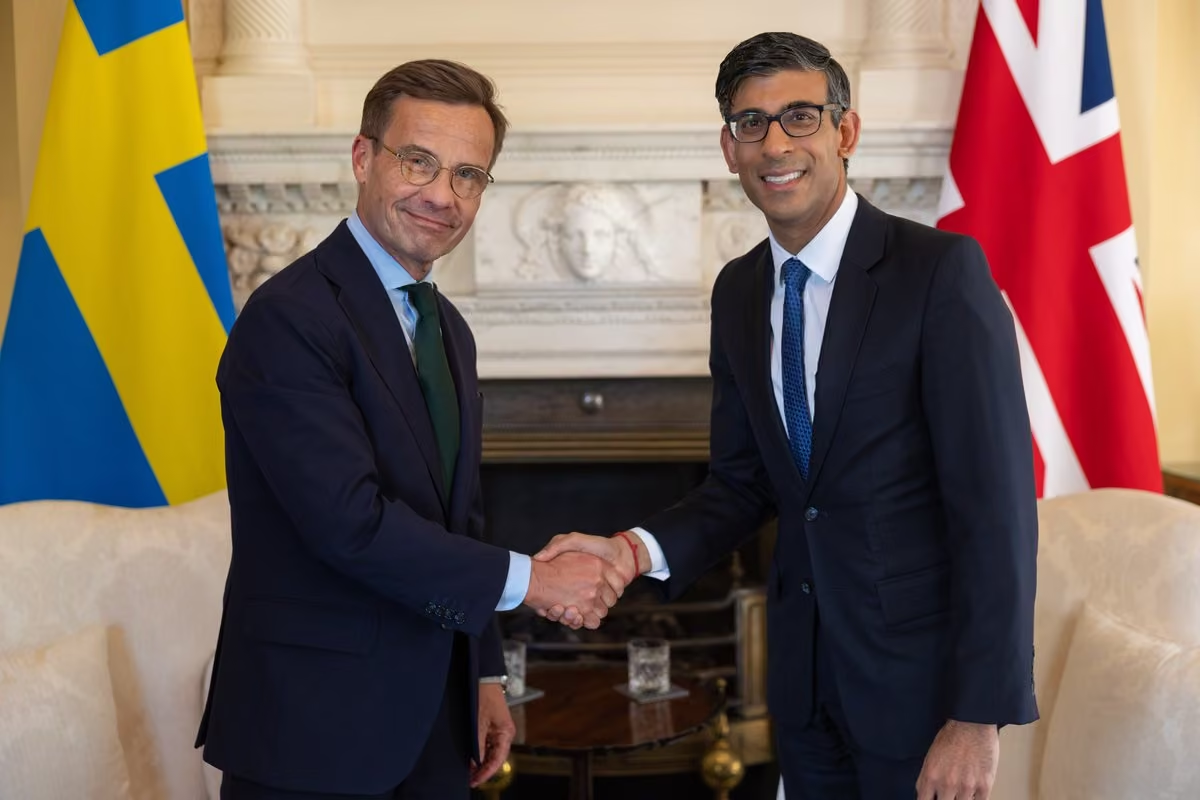
Anna Kinberg Batra reposted
Eurovision Charts
@esc_charts
"Tattoo" by Loreen is now the 8th-most streamed #eurovision song of all time on Spotify, surpassing "Heroes". 🇸🇪
Anna Kinberg Batra
@KinbergBatra
På torsdag är det Stockholms tur att fira kungens 50 år på tronen. Häng med! ☀️👑🎉 www.lansstyrelsen.se/stockholm/om-oss/kalender/kalenderha…
Anna Kinberg Batra reposted
 Freddy Jönsson Hanberg
@freddyjonssonh
Ukrainian Fighter Pilots Will Get Training On Sweden's JAS-39 Gripen www.thedrive.com/the-war-zone/ukrainian-fighter-pilots-wi…
Anna Kinberg Batra reposted
Eurovision Charts
@esc_charts
"Tattoo" by Loreen has reached #1 in 8 countries' official singles charts:
🇦🇹 Austria (1 week)
🇧🇪 Belgium (5x Flanders/1x Wallonia)
🇬🇷 Greece (international artists; 3x)
🇮🇸 Iceland (5x)
🇱🇺 Luxembourg (1x)
🇳🇱 Netherlands (2x)
🇸🇪 Sweden (4x)
🇨🇭 Switzerland (2x)
Anna Kinberg Batra reposted
 Latest in space
@latestinspace
What's the best space movie of all time? 👇

Anna Kinberg Batra reposted
Anna Kinberg Batra reposted
André Assarsson
@assarsson
Enda flödesschemat du behöver
 Anna Kinberg Batra
@KinbergBatra
Tack för både trevliga och nyfikna reaktioner efter intervjun i TV4 @Nyhetsmorgon i går, om jubileumsfirandet på torsdag 22 juni, vad en landshövding gör egentligen och lite till. Här kan du se den i efterhand: www.tv4.se/klipp/va/20602404/anna-kinberg-batras-nya-uppd…
Anna Kinberg Batra reposted
Viktor Barth-Kron
@viktorbk
De är här nu. Slösa inte bort din röst på midsommar, öva in årets politiska snapsvisor i god tid.
www.expressen.se/nyheter/politiska-snapsvisor-2023-av-vik…

Anna Kinberg Batra reposted
 Peter Wolodarski
@pwolodarski
Det ryska anfallskriget mot Ukraina är inte ett år gammalt. Det har pågått sedan 2014 och knyter an till Sovjetunionens kollaps – och gamla ryska imperieambitioner. www.dn.se/ledare/peter-wolodarski-vad-putin-inte-vill-att…
Anna Kinberg Batra
@KinbergBatra
Underskattar du fortfarande Indien ekonomiskt? Här kan du få hjälp, åtminstone i skriftlig form: www.economist.com/asia/2023/06/13/america-is-courting-ind…
Anna Kinberg Batra reposted
Lars Wilderäng
@Cornubot
Här är Ukrainas korruptionsmyndighets lista med svartlistade bolag/koncerner, som finansierar Rysslands krig i Ukraina:
sanctions.nazk.gov.ua/en/boycott/
Inkluderar Mondelez (Marabou), Yves Rocher, Xiaomi, Procter & Gamble (Gilette, Ariel, Pampers mfl)för att nämna konsumentprodukter.
Anna Kinberg Batra reposted
Eurovision Charts
@esc_charts
Most-streamed #eurovision 2023 songs on Spotify (June 16):
🇸🇪 Tattoo - 2,003,271
🇫🇮 Cha Cha Cha - 734,374
🇳🇴 Queen of Kings - 629,425
🇮🇹 Due vite - 278,183
🇵🇱 Solo - 235,471
🇮🇱 Unicorn - 208,965
🇫🇷 Évidemment - 128,848
🇦🇹 Who the Hell Is Edgar? - 126,426
🇸🇮 Carpe Diem - 107,333
Anna Kinberg Batra reposted
Darth Putin
@DarthPutinKGB
OTD in 1953 Soviet tanks crushed workers protests in East Germany. Up to 125 were killed.
"Western agencies" trying to "destabilize" were blamed. Imagine using such a shit excuse to justify brutality today...

Anna Kinberg Batra reposted
 Marcus Wandt
@astro_marcus
What a day it was yesterday! I have a mission to space, a name and a patch for it. Let’s go!🧑🚀🇸🇪🚀
www.esa.int/ESA_Multimedia/Images/2023/06/New_ways_to_space
Anna Kinberg Batra reposted
Sweden Charts
@SwedenCharts
🇸🇪 | 10 years ago today, the most successful Swedish song of all time was released:
Avicii - Wake Me Up
- Number 1 in 33 countries.
- Over 1.9 billion streams on Spotify.
- Most streamed song by a Solo DJ.
- Most streamed Swedish song.
- Over 2.2 billion views on YouTube.

Anna Kinberg Batra reposted
Sweden Charts
@SwedenCharts
🇸🇪 | “Tattoo” by Loreen received 2,003,271 streams on Spotify yesterday.

Anna Kinberg Batra reposted
Volodymyr Zelenskyy / Володимир Зеленський
@ZelenskyyUa
Every position retaken from the occupiers and every height occupied by our forces are new and new arguments for the world that Ukraine can, can win.
Thanks to every soldier! To everyone who fights with the enemy, rescues our soldiers after wounds, trains our soldiers, and supplies everything necessary for the Ukrainian defense!


Anna Kinberg Batra reposted
Niki Westerberg
@NikiWesterberg
”Regeringen ska vara möjliggörare. Vi ska bidra till att Sv företag kan växa i en ekonomi som efterfrågar fossilfritt och miljövänligt. Vi ska se till att omställningen som sker här, blir Sveriges konkurrensfördel i världen.” @RPourmokhtari #svpol #klimat www.regeringen.se/tal/2023/06/nationellt-klimatmote---tal…
Anna Kinberg Batra reposted
 danielceem
@danielceem
Såg precis ett samtal med landshövding @KinbergBatra på Nyhetsmorgon. Låter som ett riktigt spännande uppdrag, inte minst med tanke alla jubileum just detta år 🤗☀️
Anna Kinberg Batra
@KinbergBatra
Hur känns det att vara landshövding? Hur trivs @BatraDavid i ett city-slott? Och vad händer när kungen firar 50 år på jobbet i hemlänet? Det pratar jag om i @Nyhetsmorgon i TV4 cirka 930, mer om det sistnämnda finns även här: www.lansstyrelsen.se/stockholm/om-oss/kalender/kalenderha…
Anna Kinberg Batra reposted
Sweden Charts
@SwedenCharts
[THREAD]
🇸🇪 | Top 10 most streamed Swedish songs on Spotify yesterday:
Loreen - Tattoo (1.857M)
Avicii - Wake Me Up (1.100M)
Avicii - The Nights (1.093M)
ABBA - Dancing Queen (818K)
Lil Peep - Star Shopping (779K)
Ghost - Mary On A Cross (770K)
SHM - Moth To A Flame (740K)
Anna Kinberg Batra reposted
 Klimat- och näringslivsdepartementet
@KlimatNaringdep
"Den här regeringen vet att det är de nördiga hållbarhetscheferna som varje dag gör skillnad i det tysta - som går till jobbet för att göra en brun verksamhet grön" betonade @RPourmokhtari i sin inledning till mötets sista panel om #klimatomställningen i Sverige och globalt 🌍

Anna Kinberg Batra reposted
The Economist
@TheEconomist
Ukraine’s victory would bring hope that a sovereign democracy need not bow to its much larger, dictatorial neighbour.
It would be a world that took heart from the resolve and courage of Volodymyr Zelensky and the Ukrainian people
Anna Kinberg Batra reposted
Försvarsdepartementet
@ForsvarsdepSv
Ett tolfte stödpaket till Ukraina har beslutats värderat till sammanlagt 250 miljoner kronor. Stödet omfattar bidrag till fonder och uppdrag till Försvarsmakten om bland annat JAS 39 Gripen och försörjningslösning för donerad krigsmateriel. regeringen.se/pressmeddelanden/2023/06/tolfte-stodpaketet…
Anna Kinberg Batra
@KinbergBatra
Welcome to your hometown, chefen! :-) 👑🎉 www.lansstyrelsen.se/stockholm/om-oss/kalender/kalenderha…
Anna Kinberg Batra reposted
 Hanna Strömberg
@hannastromberg
”Till er som tar er rätten att ge er på medborgarnas kulturarv: vi lever i en demokrati i Sverige. En fantastisk och öppen demokrati, som möjliggör för vem som helst att engagera sig och att under ordnade former göra sin röst hörd och verka för sin sak.”
www.aftonbladet.se/nyheter/a/Rr77qd/aftonbladet-direkt?pi…
Anna Kinberg Batra reposted
 OperationAid Sweden
@OperationAid_SE
Våra ambulanserna används dagligen för medicinsk transport av sjuka och skadade patienter. Donera gärna till en ny ambulans. Ditt bidrag räddar liv ❤️

Anna Kinberg Batra reposted
Eurovision Charts
@esc_charts
Most-streamed #eurovision 2023 songs on Spotify (June 14):
🇸🇪 Tattoo - 1,875,744
🇫🇮 Cha Cha Cha - 693,293
🇳🇴 Queen of Kings - 616,683
🇮🇹 Due vite - 257,712
🇮🇱 Unicorn - 215,348
🇵🇱 Solo - 208,639
🇫🇷 Évidemment - 129,450
🇦🇹 Who the Hell Is Edgar? - 127,271
🇸🇮 Carpe Diem - 110,687
Anna Kinberg Batra reposted
Volodymyr Zelenskyy / Володимир Зеленський
@ZelenskyyUa
The significant international step today is the bill registered in the United States on the confiscation and transfer to our country of the assets of the 🇷🇺 state - a terrorist state - as reparations. I thank the 🇺🇸 Senators for the strong bipartisan support of this issue of justice for 🇺🇦 and all victims of 🇷🇺 terror.
In dictatorships like 🇷🇺, money is the highest value. And especially for those who serve the ruling regime or are actually the owners of state structures.
When the terrorist state and all 🇷🇺 individuals whose collaboration with the Kremlin created the conditions for aggression or who are a public cover for 🇷🇺 corrupt officials lose their money, a very important goal will be achieved - they will feel what loss is.
They do not respect life and do not feel regret when human lives are lost. The 🇷🇺 ruling class does not value people and is willing to waste human lives by the hundreds of thousands. But they do care about money - the money they have appropriated. They value their assets.
They must lose them completely, and in favor of those who suffered from 🇷🇺 aggression, from this terrorist war, in favor of our state, 🇺🇦 people.
Anna Kinberg Batra reposted
 Anna-Lena Laurén
@AnnalenaLauren
Det är utmärkande både för populismen och fascismen att hela tiden försöka övertyga människor om att någon altruism inte finns och därför ska vi bara tänka på oss själva. Utmärkande är också gränslösheten. Att man tar sig rätten att göra vad man vill. www.dn.se/varlden/anna-lena-lauren-sa-smyger-fascismen-si…
Anna Kinberg Batra reposted
Volodymyr Zelenskyy / Володимир Зеленський
@ZelenskyyUa
It is only through the common strength of all our people that we can stop the enemy. And we will definitely stop Russia. We will drive it out of our land and with the freedom of 🇺🇦 Ukraine we will honor the memory of all those who gave their lives for Ukraine, the memory of all our heroes of different times who equally dreamed of Ukrainians living in freedom.


Anna Kinberg Batra reposted
Carl-Oskar Bohlin
@CarlOskar
Sommaren 2018 visade på flera svagheter i den svenska beredskapen för torka och skogsbränder. Då brann mer skog ner än någonsin i modern tid och den totala spannmålsskörden blev den lägsta på 59 år. Bränderna var för många och för stora för att kunna hanteras av enskilda räddningstjänster och det fanns stora brister i samordningen, samverkan och ledningen av insatserna.
Nu finns indikationer på att sommaren 2023 kan bli i paritet med sommaren 2018, med risk för torka och skogsbrand. Eldningsförbud råder redan i många län. Sverige är dock nu mycket bättre förberett inför den kommande sommaren än man var 2018. Idag informerade Landsbygdsminister Peter Kullgren och jag om läget inför sommaren vad gäller torkan och skogsbrandsrisken.
De kommunala räddningstjänsterna har stärkt sin förmåga att leda och snabbt kraftsamla vid skogsbränder och andra olyckor. Samtliga kommuner ska också ha en ständig funktion för övergripande ledning av räddningstjänsten.
MSB har också stärkt beredskapen för att bekämpa bränder från luften med minst tio helikoptrar och fyra skopande flygplan. Vi har gått från 15 till 24 skogsbrandsdepåer med slangar och annan materiel som kan behövas, så att den finns där den behövs - och kommunikationssystemet Rakel fungerar bättre.
Vi står alltså mycket bättre rustade idag än 2018. Men. Jag vill ändå understryka att den bästa skogsbranden är den som aldrig startar. Se därför till att följa eldningsrekommendationerna där du befinner dig. Ser du att elden sprider sig - ring larmnumret 112 direkt. Tillsammans kan vi ta ansvar för att skydda skog, djur och liv.

Anna Kinberg Batra reposted
OperationAid Sweden
@OperationAid_SE
Igår var det invigning av fotoutställningen ”Brave Wine” på Spritmuseum, Stockholm. Johan Petré berättade om vårt arbete i Ukraina. Vi visade vår ambulans och samlade in pengar till nästa ambulans som kommer skickas ner inom snart framtid. Tack Spritmuseum!


 Anna Kinberg Batra
@KinbergBatra
Ett antal fina bilder från kungens 50 år på tronen står redan nu utställda på Slottsbacken. Men, har DU en minnesvärd bild att dela med dig av, vid Stockholms-firandet nästa vecka? Då kan din bild också visas där, mer om hur här! www.filuppladdning.se/lansstyrelsen/
Anna Kinberg Batra
@KinbergBatra
Torsdag 22 juni firar han sitt 50-årsjubileum i hemstaden, kungen alltså. Smygstarta midsommarfirandet genom att vara med du också, här mer om hur! ☀️🇸🇪🎉 www.lansstyrelsen.se/stockholm/om-oss/kalender/kalenderha…
Anna Kinberg Batra reposted
Anna Kinberg Batra reposted
Niki Westerberg
@NikiWesterberg
På fredag träffar @SwedishPM, @BuschEbba och @RPourmokhtari flera hundra företrädare för näringslivet, akademin o civilsamhället för att diskutera vilka hinder de ser för att kunna ställa om o vad regeringen bör göra åt dessa hinder #klimat #svpol #energi
www.di.se/debatt/debatt-naringslivet-har-blivit-den-nya-m…
Anna Kinberg Batra reposted
Carl Bildt
@carlbildt
This is a day deeply remembered in 🇪🇪 🇱🇻 🇱🇹, and we must understand that what happened to them is in store for 🇺🇦 if the 🇷🇺 aggression can’t be rolled back.
 Baltic Takes
@Baltic_Takes
14 June.
It’s a date seared into our memories. The start of Moscow’s mass deportations in Baltic countries.
Today flags fly are raised, candles & black ribbons line railway platforms, victim names are read. Here’s Tallinn’s Freedom Square.
🧵 on what the world needs to know…
Anna Kinberg Batra reposted
Klimat- och näringslivsdepartementet
@KlimatNaringdep
Energi- och näringsminister @BuschEbba
ser fram emot fredagens #klimatmöte2023. Vad innebär klimatomställningen för henne? 🌍 #nettonoll2045
Läs mer om mötet här: regeringen.se/regeringens-politik/nationella-klimatmotet/
Anna Kinberg Batra reposted
Försvarsmakten
@Forsvarsmakten
Nyrenoverade kungaslupen Vasaorden redo för 100-årsfirandet av Stockholms stadshus torsdagen den 22 juni. #svfm www.forsvarsmakten.se/sv/aktuellt/2023/06/kungaslupen-vas…
Anna Kinberg Batra reposted
Volodymyr Zelenskyy / Володимир Зеленський
@ZelenskyyUa
Cities with ruins instead of life. Cities with flooded streets. Cities that exist only in fond memories. Cities where explosions now sound instead of children's laughter. We will never forgive the pain that Russia has brought to our land. And we will expel the Russian evil from all our land, liberate every city and village of ours from the occupier and return justice to our people.
Anna Kinberg Batra reposted
Kaja Kallas
@kajakallas
82 years ago, Soviet occupiers deported men, women and children from Estonia to Siberia. Many died.
Today we commemorate the victims.
Mass deportations to Russia are now happening again in occupied parts of #ukraine. The criminal nature of Russia’s occupations has not changed.

Anna Kinberg Batra reposted
Carl-Oskar Bohlin
@CarlOskar
För ett par veckor sedan studerade jag och @PlJonson minröjningsarbetet på plats i Ukraina, ett arbete som går allt för långsamt. Idag skickar Sverige 250 minsökare (materiel) till Ukraina, också som en konsekvens av dammbrottet vid Kakhovskadammen.
Anna Kinberg Batra reposted
The Economist
@TheEconomist
The geopolitical stakes of Ukraine’s counter-offensive
Anna Kinberg Batra reposted
Eurovision Charts
@esc_charts
Most-streamed #eurovision 2023 songs on Spotify (June 12):
🇸🇪 Tattoo - 1,818,751
🇫🇮 Cha Cha Cha - 715,173
🇳🇴 Queen of Kings - 616,275
🇮🇹 Due vite - 256,859
🇮🇱 Unicorn - 218,996
🇵🇱 Solo - 209,412
🇫🇷 Évidemment - 131,875
🇦🇹 Who the Hell Is Edgar? - 130,663
🇸🇮 Carpe Diem - 117,413
Anna Kinberg Batra reposted
Volodymyr Zelenskyy / Володимир Зеленський
@ZelenskyyUa
The battles are fierce, but we are moving forward, and this is very important. The enemy's losses are exactly what we need. Although the weather is unfavorable these days – the rains make our task more difficult – the strength of our warriors still yields results, and I thank everyone who is in combat now, everyone who supports our combat brigades in the relevant areas.
Generals Syrskyi and Tarnavskyi reported today on the successes we have already achieved, on the points of the front where we need reinforcement, and on the actions that can break more Russian positions.
Thank you to our guys for every Ukrainian flag that is now returning to its rightful place in the villages of the newly de-occupied territory! Thank you also for the significant replenishment of our exchange fund!
Anna Kinberg Batra reposted
 Ebba Busch
@BuschEbba
Det tar för lång tid, är oförutsägbart och väldigt dyrt för många företag att genomgå tillståndsprocesser. Det är dåligt för klimatet och för jobben. Detta ska vi ändra på.
www.regeringen.se/pressmeddelanden/2023/06/ny-utredning-s…
Anna Kinberg Batra reposted
Sweden Charts
@SwedenCharts
🇸🇪 | Today:
“Waterloo” by ABBA has surpassed 250 million streams on Spotify.
“Tattoo” by Loreen has entered the Top 10 most streamed Eurovision songs of all time on Spotify.


Anna Kinberg Batra reposted
The Economist
@TheEconomist
Henry Kissinger is reviled by many as a warmonger for his part in the Vietnam war, but he considers the avoidance of conflict between great powers as the focus of his life’s work. Now he is worried about a confrontation between China and America
Anna Kinberg Batra reposted
Eurovision Charts
@esc_charts
Most-streamed #eurovision 2023 songs on Spotify (June 9):
🇸🇪 Tattoo - 2,140,038
🇫🇮 Cha Cha Cha - 899,926
🇳🇴 Queen of Kings - 739,333
🇮🇹 Due vite - 305,678
🇮🇱 Unicorn - 267,888
🇵🇱 Solo - 254,906
🇦🇹 Who the Hell Is Edgar? - 154,039
🇫🇷 Évidemment - 153,193
🇸🇮 Carpe Diem - 125,509
Anna Kinberg Batra
@KinbergBatra
Enligt den här statistiken är vi ganska bra, klicka på diagrammet så syns Sveriges position. Men för att konkurrera med teknik måste ambitionen vara att bli bäst. Dit har vi onödigt långt i dag:
 Informal Economy
@EconomyInformal
Science Performance (PISA)
Estonia🇪🇪: 530
Japan🇯🇵: 529
Finland🇫🇮: 522
Korea🇰🇷: 519
Canada🇨🇦: 518
Poland🇵🇱: 511
NZ🇳🇿: 508
UK🇬🇧: 505
Germany🇩🇪: 503
USA🇺🇸: 502
Ireland🇮🇪: 496
France🇫🇷: 493
Spain🇪🇸: 483
Türkiye🇹🇷: 468
Greece🇬🇷: 452
Chile🇨🇱: 444
Mexico🇲🇽: 419
Colombia🇨🇴: 413
@OECD

Anna Kinberg Batra reposted
scandipop
@scandipop
Deserved.

Anna Kinberg Batra reposted
 James Savage
@SavLocal
A driverless electric ferry between Stockholm’s best summer gay bar and it’s best summer gay nightclub. Good times. www.thelocal.se/20230609/worlds-first-self-driving-electr…
Anna Kinberg Batra
@KinbergBatra
I år firar vi kungens 50 år på tronen. Nästa år kan vi fira Abbas 50 år som världsartister, efter segern i Eurovision 1974. Loreens hemlän är redo:-)
 Stockholms Handelskammare
@SthlmsHK
”Vi står redo att stötta @svt på alla sätt för att finalen om ett år ska bli en succé”, skriver vår vd Andreas Hatzigeorgiou tillsammans med @KinbergBatra, landshövding i Stockholms län och @Aida_Hadzialic, finansregionråd i Region Stockholm. #eurovision sverigesradio.se/artikel/onskebrevet-till-svt-darfor-bord…
Anna Kinberg Batra reposted
Zebulon Carlander
@ZCarlander
Efter en FOIA request har jag video på det nu också! ☺️🇺🇸
Zebulon Carlander
@ZCarlander
8 år sen: ”Zebulon Carlander är andre vice distriktsordförande för Muf i Östergötland & studerar just nu statsvetenskap på Linköpings universitet. – Jag hoppas få jobba mer med utrikes- & säkerhetsfrågor i framtiden. Det är det jag brinner för, säger han.” www.expressen.se/nyheter/zebulon-20-fick-svar-direkt-fran…
Anna Kinberg Batra reposted
scandipop
@scandipop
Rolling Stone speaks to Loreen:
www.rollingstone.co.uk/music/features/loreen-how-a-legacy…
 Anna Kinberg Batra
@KinbergBatra
Wonderful! 🌟
 Judith Gough🌻
@JudithMGough
The secret’s out! A huge honour to be asked by @sverigesradioP1 to be a summer speaker. Wonderful to be part of this great 🇸🇪 tradition.
Listen (in Swedish) to my programme on 26 July & hear what it’s like to be a diplomat, & what happens behind the scenes…
#sommarip1
 Anna Kinberg Batra
@KinbergBatra
Important facts, as of Sweden’s national day June 6:
Eurovision Charts
@esc_charts
Most-streamed #eurovision 2023 songs on Spotify (June 6):
🇸🇪 Tattoo - 2,089,296
🇫🇮 Cha Cha Cha - 877,876
🇳🇴 Queen of Kings - 730,972
🇮🇹 Due vite - 309,297
🇮🇱 Unicorn - 286,840
🇵🇱 Solo - 232,632
🇫🇷 Évidemment - 165,518
🇦🇹 Who the Hell Is Edgar? - 163,669
🇸🇮 Carpe Diem - 135,888
Anna Kinberg Batra reposted
Försvarsmakten
@Forsvarsmakten
Försvarsmakten har under våren utbildat ukrainska soldater på systemet Stridsfordon 90. Nu har de återvänt för att försvara sitt land. #svfm www.forsvarsmakten.se/sv/aktuellt/2023/06/ukrainska-solda…
Anna Kinberg Batra reposted
Utrikesdepartementet
@Utrikesdep
Lyssningstips!
Sveriges ambassadör i Ukraina, @TobiasThyberg, berättar om dagen då Ryssland inledde sin storskaliga invasion, om att lämna - och återvända till - ambassaden i Kiev och om hur flyglarmen blivit en vardag.
sverigesradio.se/play/avsnitt/2192212
Anna Kinberg Batra reposted
Utrikesdepartementet
@Utrikesdep
– Näringslivets intresse för att bidra i arbetet med att bygga upp Ukraina är enormt.
I dag samlar @JohanForssell representanter från Ukraina, näringslivet och fler centrala aktörer för att diskutera hur engagemanget bäst kan tas tillvara.
Läs mer 👉 www.regeringen.se/pressmeddelanden/2023/06/johan-forssell…
Anna Kinberg Batra reposted
 Global Capital Guide
@TheCapitalGuide
Johan Forssell står värd för näringslivets återuppbyggnadskonferens för Ukraina www.regeringen.se/t/484497/sv
Anna Kinberg Batra reposted
Visegrád 24
@visegrad24
Just look at the scale of the destruction Russia has imposed on Ukraine.
The Russians will be forced to pay reparations to Ukraine for decades after this war if over.
Anna Kinberg Batra
@KinbergBatra
Du har väl läst Carl-Oskars reseberättelse från Ukraina? Om nej, klicka här genast:
Carl-Oskar Bohlin
@CarlOskar
Vi befinner oss på en hemlig plats där soldater tränas för kriget. Sveriges försvarsminister Pål Jonson och jag är på plats i Ukraina. Det här är min berättelse, del 1 av 3.
Temperaturen i sandgropen vi klivit ner i närmar sig 30 grader. De ukrainska knotten är stora som småflugor och förekommer i en frekvens som får en svensk hjortronmyr att kännas lika myggfri som en vinterdag. Männen framför oss håller varsin kalasjnikov i händerna. På given order höjer de gevären och öppnar eld i riktning mot varandra. De siktar och skjuter i sandvallen en knapp meter i sidan om varandra. Med skarp ammunition på ca 20 meters avstånd. Vi står ytterligare 20 meter bort utan hörselkåpor. Bara det hade säkert varit ett ärende för en personalansvarsnämnd hemma i landet med över 200 år av fred. Men här råder krig. De unga männen som precis har höjt skarpladdade gevär mot sina kamrater saknade för ett par veckor sedan militär erfarenhet. Om ytterligare några veckor är de färdigutbildade. Men de ska inte mucka och resa i Asien för sin värnpliktsersättning. De ska direkt till fronten och alla vet att det för vissa kommer innebära en enkelresa. Det finns ett allvar i alla blickar man möter, men inte tillstymmelse till modfälldhet.
Vi kliver vidare i den fina sanden till det ihållande och öronskärande slamret från automatkarbiner. Med jämna mellanrum bryts det molande hamrandet från den finkalibriga elden av ljudet från stridsvagnarnas skottsalvor som slår djupt i maggropen. Allt ramas in i ett prunkande ukrainskt försommarlandskap. Mitt i alla intryck uppstår någon slags dissonans. Det som är vackert, gott och meningsfullt tar livstider att bygga upp. Det tar årtionden att bygga en katedral, århundraden att bygga en stad men ett ögonblick att förstöra dem. På något sätt manifesterar denna förgänglighet en av mänsklighetens mörkaste asymmetrier. Denna skörhet kommer tydligast till uttryck i det mänskliga livet självt. Inget är så stort, komplext och vackert som livet, ändå kan det med små medel släckas oåterkalleligt i en handvändning. Jag tänker på de unga männen framför mig. De som idag hade gjort något helt annat om det inte varit för att hela deras land just nu möter en fiende som inte bara vill använda död och förstörelse som politiskt maktmedel, utan utradera allt det som är unikt ukrainskt. De unga männen har precis satt en kulkärve i sandvallen bredvid sina kamrater, inte av vårdslöshet eller omdömeslöshet utan för att det bedöms vara en av få saker som kan ge en mental förnimmelse och tillstymmelse till förberedelse för de helveteskval som väntar dem vid fronten.
****
Det är morgon den 26:e maj. Natten har spenderats i Kiev, delar av den i ett skyddsrum. Det tunga ryska bombflyget avfyrade under natten kryssningsrobotar och en av dem gick mot Kiev. Vi kunde från parkeringsgaraget som utgjorde vårt skyddsrum höra luftvärnet, i form det amerikanska Patriotbatteriet, arbeta med framgång. När vi har satt oss i bilarna rullar kortegen nordväst ut ur Kiev. Vid sidan av vraken från ryska stridsvagnar, som triumfatoriskt har ställts upp på Maidantorget, och sandsäckar framför källarfönster som konverterats till skyddsrum är de fysiska spåren av kriget inne i huvudstaden nästan obefintliga i stadsmiljön.
Efter en kvart stannar våra bilar. Vi står på ett brofäste, men framför oss, där det en gång fanns en bro, finns nu bara ett tomrum ett tiotal meter ovanför Irpinfloden. Gapet kantas av förvridna balkar, armeringsjärn och sönderbrutna betongelement. På andra sidan den förstörda förbindelsen ligger förorterna Irpin och Butja, för alltid inskrivna i historieböckerna för de krigsförbrytelser ryska förband gjort sig skyldiga till där. Det var här, på andra sidan brofästet, den ryska framdriften upphörde. Det var här Kiev räddades, här och på några andra ställen. Jag visas bilder på männen som höll brofästet. Klädda i vanliga dunjackor och beväpnade med en salig blandning av vad som fanns att tillgå. ”Historien upprepar aldrig sig, men den rimmar”, sa Mark Twain. Det var vid just denna flod som röda armén en gång stred mot Hitlertyskland. Då försvarade sig ryssarna mot nazismens brutala expansionism; nu, 80 år senare, är det ett förbittrat, stormaktstörstande Ryssland som bedriver ett oprovocerat och folkrättsvidrigt anfallskrig, med ett narrativ som är lika förvridet och skadat som broelementet framför oss.
Bron håller redan på att återuppbyggas, men några hundra meter bort skymtar spåren av det som gjordes oåterkalleligt. Efter att ha tagit oss över floden på en temporär bro stannar vi vad som ser ut som ett gigantiskt skrotupplag på en parkeringsficka. Staplade på varandra står vraken av utbrända personbilar. För ett drygt år sedan tillhörde dessa fordon människor som flydde för sina liv. De flesta förgäves. På bilvraken står små hälsningar skrivna. Solrosor, symbolen för ukrainska kampviljan, har målats på de utbrända vraken. När bron över Irpinfloden hade sprängts bildades långa köer av de bilar som försökte fly. Medan evakueringen pågick sköt ryska förband urskillningslöst in i raderna av bilar med civila på flykt.
Mannen som tar emot oss framför de utbrända vraken är borgmästare i Irpin och befälhavare i territorialförsvaret för Irpin, en slags motsvarighet till hemvärnet. Tillsammans med sina motsvarigheter i förorterna runt Kiev ställdes han inför uppgiften att evakuera sin kommun och samtidigt försvara Kiev mot den ryska framryckningen. Mer än 95 procent av Irpins befolkning evakuerades. Liv räddades i en omfattning som är svår att ta in, men i hans blick finns också ett vittnesmål om dem som inte kunde, ville eller hann räddas. För sina insatser belönades han och hans kollegor med utmärkelsen "Nationens Hjälte”. Det är svårt att tänka sig en mer välförtjänt mottagare av en sådan medalj. Han tackar oss för det stora stöd Sverige har givit. Pål och jag invänder att det är vi som är skyldiga honom, och alla i hans ställe, ett tack för de omätligt stora insatser de med knappa resurser har gjort för sina invånare, för sitt land och för hela Europa. Vi får veta att vi måste åka vidare, men helst av allt skulle vi vilja stanna och manifestera vår tacksamhet och vördnad ytterligare. Irpins starke man, i ordets mest rättvisande bemärkelse, får en stor kram av mig och Pål innan vi rullar vidare.
I bilen är det omöjligt att inte tänka på den kommunala beredskapen hemma i Sverige. Det görs väldigt mycket som är bra ute i Beredskapssverige, men inte sällan möts man av invändningen att staten måste öppna plånboken för att rätt saker ska hända, eller i värsta fall, för att någonting ska hända. Kontrasten till mötet med Irpins borgmästare är monumental. Inte en enda gång pratade han om resurser, trots att han agerat under en konstant och pågående resursbrist av existentiell karaktär. Sveriges kommuner får varje år över 100 miljarder i generella statsbidrag. Jag tänker på det kommunala kärnuppdraget och önskar att fler kommunpolitiker också fick hälsa på borgmästaren i Irpin och fundera över vad som verkligen är kommunal kärnverksamhet. I mitt twitterflöde senare samma dag läser jag om en medelstor svensk kommun som har 40 kommunikatörer anställda. Inte sällan brukar kommuner av samma storlek poängtera att man nu minsann har gått från noll till en beredskapshandläggare. Politik handlar om att prioritera.
1/3

Anna Kinberg Batra reposted
Anna Kinberg Batra reposted
scandipop
@scandipop
Benjamin Ingrosso and ABBA's Björn Ulvaeus have written a song together. 'I Had It All And Let It Go' is out on Friday. Kinda major.

Anna Kinberg Batra reposted
Carl-Oskar Bohlin
@CarlOskar
Jag noterar att Peter Hultqvist i aktuellt är upprörd över att SBB:s ägande av samhällsviktiga fastigheter riskerar hamna i orätta händer. Jag delar den frustrationen fullt ut och vill därför lämna ett tydligt besked:
Regeringen har agerat och kommer agera med kraft för att detta inte ska kunna ske.
En av de första saker denna regering gjorde var att lägga fram en proposition med en granskningsmekanism mot utländska direktinvesteringar i samhällsviktig verksamhet, ett förslag som aldrig drevs fram av föregående regering. Propositionen är beslutad av regeringen och träder enligt plan i kraft senare i år. Skulle problem uppstå innan den nya lagstiftningen träder i kraft kommer regeringen överväga andra alternativ för att stoppa förvärv av aktörer som inte bör äga den typen av fastigheter som nu diskuteras.
Det är bra att Hultqvist delar regeringens utgångspunkter, men det hade varit ännu bättre om den tidigare regeringen redan hade sett till att få den lagstiftning på plats som vi nu har lagt fram, ett antal år efter att den borde ha funnits där.
Anna Kinberg Batra reposted
Utrikesdepartementet
@Utrikesdep
Sverige bidrar med 22 miljoner kronor till @OECD's nya landprogram för uppbyggnaden av Ukraina.
Läs mer 👉www.regeringen.se/pressmeddelanden/2023/06/22-miljoner-kr…
#betterpoliciesforbetterlife

Anna Kinberg Batra reposted
Sweden Charts
@SwedenCharts
🇸🇪 | “Tattoo” by Loreen has today entered the Top 200 most streamed Swedish songs of all time on Spotify.


Anna Kinberg Batra reposted
 EU_Eurostat
@EU_Eurostat
🇸🇪 Glad nationaldag, Sverige!

Anna Kinberg Batra reposted
 Gustaf Haag, CFA
@GustafHaag
En fin tradition som sträcker sig tillbaka till 1916 och bildandet av ”svenska flaggans dag”, sedemera Sveriges nationaldag. Vid den tiden var det ovanligt med flaggor och första året delades det ut 8000 st till personer som kunde visa att de hade en minst 12m hög flaggstång
Anna Kinberg Batra
@KinbergBatra
Nationaldags-hedersuppdrag för landshövdingen: Att dela ut fanor till föreningar som förtjänar det, genom hårt och oftast ideellt arbete. Värt att fira när vi firar vårt land i dag! 🇸🇪🌟🙏 www.lansstyrelsen.se/stockholm/om-oss/pressrum/nyheter/ny…
Anna Kinberg Batra reposted
Carl Bildt
@carlbildt
The National Day is somewhat special today since it also celebrates 500 years since the accession to the throne of Gustav Vasa, widely seen as the father of the present state of 🇸🇪. The Nordic Union of Kalmar established in 1397 had collapsed in acrimony.
Anna Kinberg Batra reposted
 Daniel Schatz
@drdanielschatz
Glad nationaldag Sverige! Vilhelm Mobergs essä "Svensk strävan" (1941) gavs ut av Försvarsstaben när det befarades att Sverige skulle invaderas av Nazityskland. Moberg var en glödande antinazist och antikommunist. Hans text är väl värd att läsas i dag. youtu.be/ItgeTqiFozo

Anna Kinberg Batra reposted
Carl-Oskar Bohlin
@CarlOskar
Here comes a translated version of my text from Ukraine.
We are at a secret location where soldiers are being
trained for war. Sweden's Minister of Defense, Pål Jonson, and I are in Ukraine and this is my story. The temperature in the sandpit we have descended into is approaching 30 degrees. The Ukrainian mosquitoes are as big as small flies and far outnumber the amount found in the bogs of the Swedish inlands. The men in front of us each hold an AK-47 in their hands. On a given order, they raise their rifles and open fire towards each other. They aim and shoot at the sandbank just a few inches to the side of each other, using live ammunition at a distance of about 20 meters. We stand another 20 meters away without ear protection. Just that alone would surely be a matter for a personnel responsibility board back home in the country with over 200 years of continuous peace.
But here, war prevails. The young men who have just pointed loaded rifles at their comrades had no military experience just a few weeks ago. In a few more weeks, they will be fully trained. But they won't be discharged and use their conscription remuneration to travel around Asia or South America (as might be common in Western countries). They will go directly to the front lines, and everyone knows that for some, it will be a one-way trip. There is a seriousness in the eyes of everyone we meet, but not a hint of despondency.
We walk further in the fine sand amidst the constant ear-piercing rattling of automatic rifles. At regular intervals, the dull thumping of the small-caliber fire is interrupted by the sound of the tanks firing, hitting deep in the pit of the stomach. All of this is framed by a lush Ukrainian early summer landscape. Amidst all these impressions, a kind of dissonance arises: that which is beautiful, good, and meaningful takes a lifetime to build. It takes decades to build a cathedral, centuries to build a city, but a moment to destroy them.
In some way, this transience manifests one of humanity's darkest asymmetries. This fragility is most evident in human life itself. Nothing is as great, complex, and beautiful as life, yet it can be irreversibly extinguished with little effort.
I think of the young men in front of me. Those who today would have been doing something entirely different if it weren't for the fact that their entire country is currently facing an enemy that not only wants to use death and destruction as a political tool but also seeks to erase everything that is uniquely Ukrainian. The young men have just placed a bullet casing in the sandbank next to their comrades, not out of carelessness or recklessness, but because it is considered one of the few things that can provide a mental sensation and a hint of preparation for the hellish torment awaiting them at the front lines.
***
It is the morning of May 26th. The night has been spent in Kiev, part of it in a shelter. The heavy Russian bomber aircraft fired cruise missiles during the night, and one of them was headed towards Kiev. From the parking garage that served as our shelter, we could hear the air defense system, in the form of an American Patriot battery, working successfully. As we get into our cars, the convoy heads northwest out of Kiev. Aside from the wrecks of Russian tanks triumphantly lined up in Independence Square and the sandbags in front of basement windows turned into shelters, there are almost no physical traces of the war in the city.
After fifteen minutes, our cars come to a halt. We are standing on a bridge foundation, but in front of us, where there once was a bridge, there is now only a void, about ten meters above the Irpin River. The gap is lined with twisted beams, reinforcing bars, and broken concrete elements.
On the other side of the destroyed connection lie the suburbs of Irpin and Butsia, forever inscribed in the history books for the war crimes committed by Russian forces there. It was here, on the other side of the bridge foundation, that the Russian advance came to a halt. It was here that Kyiv was saved, here and in a few other places. I am shown pictures of the men who held the bridge foundation, dressed in ordinary down jackets and armed with a motley mix of whatever was available. "History never repeats itself, but it often rhymes," said Mark Twain. It was on this very river that the Red Army once fought against Nazi Germany. Back then, the Russians defended themselves against the brutal expansionism of Nazism. Now, 80 years later, a bitter, power-hungry Russia is waging an unprovoked and flagrantly unlawful war of aggression, with a narrative as distorted and damaged as the bridge element in front of us.
The bridge is already being rebuilt, but a few hundred meters away, traces of irreparable damage can be seen. After crossing the river on a temporary bridge, we stop at what appears to be a gigantic scrapyard in a parking lot. Stacked upon each other are the wrecks of burned-out cars. Just over a year ago, these vehicles belonged to people fleeing for their lives, most of them in vain. Small messages are written on the car wrecks. Sunflowers, the symbol of Ukrainian resilience, have been painted on the charred remnants. When the bridge over the Irpin River was blown up, long queues of cars attempting to flee formed. While the evacuation was taking place, Russian forces indiscriminately fired into the rows of fleeing civilian vehicles.
The man who receives us in front of the burned-out wrecks is the mayor of Irpin and the commander of the territorial defence for Irpin, a kind of equivalent to the home guard. Along with his counterparts in the suburbs around Kyiv, he was faced with the task of evacuating his community while defending Kyiv against the Russian advance. Over 95 percent of Irpin's population was evacuated. Lives were saved on a scale that is difficult to comprehend, but in his gaze, there is also a testament to those who could not, would not, or did not make it to safety.
For their efforts, he and his colleagues were awarded the "Hero of the Nation" medal. It is hard to imagine a more deserving recipient of such an honor. He thanks us for the significant support Sweden has provided. Pål and I object, saying that it is we who owe him and all his comrades a debt of gratitude for the immeasurable sacrifices they have made for their residents, their country, and all of Europe. We are told that we must continue on our way, but above all, we would like to stay and further manifest our gratitude and reverence. In the most fitting sense of the word, Irpin's strong man receives a heartfelt hug from Pål and me before we head out.
In the car, it is impossible not to think about the level of municipal preparedness back home in Sweden. There are many good things taking place, but often one encounters the objection that the state needs to open its wallet for the right things to happen, or, in the worst case, for anything to happen at all. The contrast to the meeting with the mayor of Irpin is monumental. Not once did he talk about resources, despite having acted under a constant and ongoing existential resource shortage. Swedish municipalities receive over 100 billion SEK in general state grants every year. I think about the core mission of municipalities and wish that more local politicians could also meet the mayor of Irpin and contemplate what truly constitutes core municipal duties. Politics is about prioritization.

Anna Kinberg Batra reposted
Ziv Nevo Kulman
@zivnk
Glad Nationaldag Sverige!
You have accomplished so much in your first 500 years, such as peace with your neighbors, becoming a prosperous and open society, and a model in many ways.
🇸🇪🇮🇱 share many things. On this time of the year we even share☀️
@TobiasBillstrom @SwedishPM
#sweden500
 Israel ישראל
@Israel
Dear Sweden 🇸🇪,
Happy National Day.
Congratulations on your first 500 years!
Your Friend,
Israel 🇮🇱
 Anna Kinberg Batra
@KinbergBatra
Nationaldags-hedersuppdrag för landshövdingen: Att dela ut fanor till föreningar som förtjänar det, genom hårt och oftast ideellt arbete. Värt att fira när vi firar vårt land i dag! 🇸🇪🌟🙏 www.lansstyrelsen.se/stockholm/om-oss/pressrum/nyheter/ny…
Anna Kinberg Batra reposted
Utrikesdepartementet
@Utrikesdep
Sverige 500 år! 🇸🇪🇸🇪
I dag på nationaldagen är det 500 år sedan Gustav Vasa valdes till kung. I år firar vi också att H.M. Kung Carl XVI Gustaf varit Sveriges statschef i 50 år, Sveriges genom tidernas längst regerande monark.
#celebratewithsweden #sweden500 #gladnationaldag
 Anna Kinberg Batra
@KinbergBatra
I dag firar vi nationaldagen. Men det kommer fler lördags-TV-kvällar, de kan ju firas så HÄR: 🌟
Edward af Sillén
@EdwardafSillen
 Anna Kinberg Batra
@KinbergBatra
Kungliga nationaldagstips! 🇸🇪👑 www.kungligaslotten.se/kalendarium/evenemang/nationaldage…
Anna Kinberg Batra
@KinbergBatra
Grattis till oss på nationaldagen, här kan du fira i Stockholm! 🇸🇪🎉 www.visitstockholm.se/se-gora/aktiviteter/har-kan-du-fira…
Anna Kinberg Batra
@KinbergBatra
Hittade en gammal nationaldags-krönika i @dagensindustri-arkivet, från tiden just efter pandemin. Om hur samhällen och länder, som till exempel vårt, kan gå starkare ur kris. Eller? www.di.se/nyheter/grattis-sverige-bade-samre-och-battre-a…
Anna Kinberg Batra
@KinbergBatra
Grävde i @dagensindustri efter någon gammal krönika med nationaldagstema. Den här skrevs före både pandemi, krig och Kristersson, i en annan politisk tid alltså, men betydelsen av att bygga vår nya berättelse är minst densamma i dag. Eller? www.di.se/nyheter/sluta-trona-sverige-och-borja-jobba/
Anna Kinberg Batra reposted
Kaja Kallas
@kajakallas
Happy National Day and Swedish Flag Day to @SwedishPM and the people of #sweden.
We are close friends with a strong bond. We have great defence cooperation that will continue hopefully very soon in NATO. Together we will strengthen our region’s security. #strongertogether

Anna Kinberg Batra reposted
Tobias Billström
@TobiasBillstrom
Today its June 6 and Sweden celebrates our National Day and this year in addition our 500 Anniversary of being an independent state. 🇸🇪🇸🇪🇸🇪 sweden.se/culture/celebrations/sweden-500
Anna Kinberg Batra reposted
 Talman Andreas Norlén
@andreasostgote
Nu är det bara timmar kvar till den historiska nationaldagen, 500 år efter valet av Gustav Vasa till kung, Kalmarunionens upplösning och Sveriges återkomst som en självständig stat. Skriver i detta ämne på DN Debatt som släppt artikeln redan nu.
www.dn.se/debatt/gustav-vasas-uppror-var-borjan-till-det-…
Anna Kinberg Batra reposted
Carl-Oskar Bohlin
@CarlOskar
Vi befinner oss på en hemlig plats där soldater tränas för kriget. Sveriges försvarsminister Pål Jonson och jag är på plats i Ukraina. Det här är min berättelse, del 1 av 3.
Temperaturen i sandgropen vi klivit ner i närmar sig 30 grader. De ukrainska knotten är stora som småflugor och förekommer i en frekvens som får en svensk hjortronmyr att kännas lika myggfri som en vinterdag. Männen framför oss håller varsin kalasjnikov i händerna. På given order höjer de gevären och öppnar eld i riktning mot varandra. De siktar och skjuter i sandvallen en knapp meter i sidan om varandra. Med skarp ammunition på ca 20 meters avstånd. Vi står ytterligare 20 meter bort utan hörselkåpor. Bara det hade säkert varit ett ärende för en personalansvarsnämnd hemma i landet med över 200 år av fred. Men här råder krig. De unga männen som precis har höjt skarpladdade gevär mot sina kamrater saknade för ett par veckor sedan militär erfarenhet. Om ytterligare några veckor är de färdigutbildade. Men de ska inte mucka och resa i Asien för sin värnpliktsersättning. De ska direkt till fronten och alla vet att det för vissa kommer innebära en enkelresa. Det finns ett allvar i alla blickar man möter, men inte tillstymmelse till modfälldhet.
Vi kliver vidare i den fina sanden till det ihållande och öronskärande slamret från automatkarbiner. Med jämna mellanrum bryts det molande hamrandet från den finkalibriga elden av ljudet från stridsvagnarnas skottsalvor som slår djupt i maggropen. Allt ramas in i ett prunkande ukrainskt försommarlandskap. Mitt i alla intryck uppstår någon slags dissonans. Det som är vackert, gott och meningsfullt tar livstider att bygga upp. Det tar årtionden att bygga en katedral, århundraden att bygga en stad men ett ögonblick att förstöra dem. På något sätt manifesterar denna förgänglighet en av mänsklighetens mörkaste asymmetrier. Denna skörhet kommer tydligast till uttryck i det mänskliga livet självt. Inget är så stort, komplext och vackert som livet, ändå kan det med små medel släckas oåterkalleligt i en handvändning. Jag tänker på de unga männen framför mig. De som idag hade gjort något helt annat om det inte varit för att hela deras land just nu möter en fiende som inte bara vill använda död och förstörelse som politiskt maktmedel, utan utradera allt det som är unikt ukrainskt. De unga männen har precis satt en kulkärve i sandvallen bredvid sina kamrater, inte av vårdslöshet eller omdömeslöshet utan för att det bedöms vara en av få saker som kan ge en mental förnimmelse och tillstymmelse till förberedelse för de helveteskval som väntar dem vid fronten.
****
Det är morgon den 26:e maj. Natten har spenderats i Kiev, delar av den i ett skyddsrum. Det tunga ryska bombflyget avfyrade under natten kryssningsrobotar och en av dem gick mot Kiev. Vi kunde från parkeringsgaraget som utgjorde vårt skyddsrum höra luftvärnet, i form det amerikanska Patriotbatteriet, arbeta med framgång. När vi har satt oss i bilarna rullar kortegen nordväst ut ur Kiev. Vid sidan av vraken från ryska stridsvagnar, som triumfatoriskt har ställts upp på Maidantorget, och sandsäckar framför källarfönster som konverterats till skyddsrum är de fysiska spåren av kriget inne i huvudstaden nästan obefintliga i stadsmiljön.
Efter en kvart stannar våra bilar. Vi står på ett brofäste, men framför oss, där det en gång fanns en bro, finns nu bara ett tomrum ett tiotal meter ovanför Irpinfloden. Gapet kantas av förvridna balkar, armeringsjärn och sönderbrutna betongelement. På andra sidan den förstörda förbindelsen ligger förorterna Irpin och Butja, för alltid inskrivna i historieböckerna för de krigsförbrytelser ryska förband gjort sig skyldiga till där. Det var här, på andra sidan brofästet, den ryska framdriften upphörde. Det var här Kiev räddades, här och på några andra ställen. Jag visas bilder på männen som höll brofästet. Klädda i vanliga dunjackor och beväpnade med en salig blandning av vad som fanns att tillgå. ”Historien upprepar aldrig sig, men den rimmar”, sa Mark Twain. Det var vid just denna flod som röda armén en gång stred mot Hitlertyskland. Då försvarade sig ryssarna mot nazismens brutala expansionism; nu, 80 år senare, är det ett förbittrat, stormaktstörstande Ryssland som bedriver ett oprovocerat och folkrättsvidrigt anfallskrig, med ett narrativ som är lika förvridet och skadat som broelementet framför oss.
Bron håller redan på att återuppbyggas, men några hundra meter bort skymtar spåren av det som gjordes oåterkalleligt. Efter att ha tagit oss över floden på en temporär bro stannar vi vad som ser ut som ett gigantiskt skrotupplag på en parkeringsficka. Staplade på varandra står vraken av utbrända personbilar. För ett drygt år sedan tillhörde dessa fordon människor som flydde för sina liv. De flesta förgäves. På bilvraken står små hälsningar skrivna. Solrosor, symbolen för ukrainska kampviljan, har målats på de utbrända vraken. När bron över Irpinfloden hade sprängts bildades långa köer av de bilar som försökte fly. Medan evakueringen pågick sköt ryska förband urskillningslöst in i raderna av bilar med civila på flykt.
Mannen som tar emot oss framför de utbrända vraken är borgmästare i Irpin och befälhavare i territorialförsvaret för Irpin, en slags motsvarighet till hemvärnet. Tillsammans med sina motsvarigheter i förorterna runt Kiev ställdes han inför uppgiften att evakuera sin kommun och samtidigt försvara Kiev mot den ryska framryckningen. Mer än 95 procent av Irpins befolkning evakuerades. Liv räddades i en omfattning som är svår att ta in, men i hans blick finns också ett vittnesmål om dem som inte kunde, ville eller hann räddas. För sina insatser belönades han och hans kollegor med utmärkelsen "Nationens Hjälte”. Det är svårt att tänka sig en mer välförtjänt mottagare av en sådan medalj. Han tackar oss för det stora stöd Sverige har givit. Pål och jag invänder att det är vi som är skyldiga honom, och alla i hans ställe, ett tack för de omätligt stora insatser de med knappa resurser har gjort för sina invånare, för sitt land och för hela Europa. Vi får veta att vi måste åka vidare, men helst av allt skulle vi vilja stanna och manifestera vår tacksamhet och vördnad ytterligare. Irpins starke man, i ordets mest rättvisande bemärkelse, får en stor kram av mig och Pål innan vi rullar vidare.
I bilen är det omöjligt att inte tänka på den kommunala beredskapen hemma i Sverige. Det görs väldigt mycket som är bra ute i Beredskapssverige, men inte sällan möts man av invändningen att staten måste öppna plånboken för att rätt saker ska hända, eller i värsta fall, för att någonting ska hända. Kontrasten till mötet med Irpins borgmästare är monumental. Inte en enda gång pratade han om resurser, trots att han agerat under en konstant och pågående resursbrist av existentiell karaktär. Sveriges kommuner får varje år över 100 miljarder i generella statsbidrag. Jag tänker på det kommunala kärnuppdraget och önskar att fler kommunpolitiker också fick hälsa på borgmästaren i Irpin och fundera över vad som verkligen är kommunal kärnverksamhet. I mitt twitterflöde senare samma dag läser jag om en medelstor svensk kommun som har 40 kommunikatörer anställda. Inte sällan brukar kommuner av samma storlek poängtera att man nu minsann har gått från noll till en beredskapshandläggare. Politik handlar om att prioritera.
1/3
Anna Kinberg Batra reposted
 Jennifer Wegerup
@JenniferWegerup
’Ögonblicket har kommit för att ta farväl av fotbollen’.
En djupt rörd Zlatan, här på Stadio San Siro. Han grät och många fans grät. Själv var jag också rörd, en epok är över.

Anna Kinberg Batra reposted
Volodymyr Zelenskyy / Володимир Зеленський
@ZelenskyyUa
I am grateful to everyone in the world who helps the work of the @IntlCrimCourt and its team in investigating 🇷🇺 crimes on 🇺🇦 soil. And who helps us organize a special tribunal for the crime of 🇷🇺 aggression against 🇺🇦 - for the original crime that gave rise to all the other terrible crimes of this war.
Let the verdicts against the ruscists that they will one day hear in the dock - lawful and just verdicts - be evidence that the world will still protect life, protect civilization. And that the time will come when children on Earth - in 🇺🇦 and elsewhere - will be protected from such evil as 🇷🇺 evil and from such aggressions.
Anna Kinberg Batra reposted
scandipop
@scandipop
A whole new EP of 'Euphoria' versions and mixes (most of them previously unreleased) has landed on Loreen's Spotify 🎶
open.spotify.com/album/6gWEIUmtUGPbLMbEcTCDxu

Anna Kinberg Batra reposted
Etienne de GONNEVILLE
@e_de_gonneville
And so begin the celebrations of the 400th anniversary of #göteborg.
Happy birthday Göteborg!
Anna Kinberg Batra
@KinbergBatra
Kungen gör jubileumsbesök i alla län, även här där han bor och har kontor. Mer om hur här: Jubileumsbesök i Stockholms län 2023 | Länsstyrelsen Stockholm www.lansstyrelsen.se/stockholm/om-oss/kalender/kalenderha…
Anna Kinberg Batra
@KinbergBatra
När Stockholm firar kungens 50 år på tronen den 22 juni börjar vi i Skärholmen. Där det skrivits mycket historia sedan början av 70-talet: www.dn.se/sverige/skarholmsfrun-fick-palme-att-svanga-om-…
Anna Kinberg Batra reposted
 Daniel Alling
@DanielAlling
Sällan man ser och hör Scholz så här engagerad. På ett möte i Falkensee igår så svarade han de högljuddapå mötet som kritiserade Scholz agerande för Ukraina och mot Putin.
 @BrennpunktUA 🇩🇪🇺🇦
@BrennpunktUA
Oh, er kann es doch. Olaf gibt verbal Knallgas 💥 auf der Bühne gegen #putin, als er vom #friedensschwurbler und #lumpenpazifisten Publikum als #kriegstreiber beschimpft wird.
credit where credit's due @Bundeskanzler #scholz 🫡
Video 🇩🇪(🇬🇧 subtitles)
x.com/KadirHama/status/1664967558611587072/video/1
Anna Kinberg Batra reposted
 I❤️Nostalgia '𝕏'
@Ilovenostalgia
Queen making their way on to stage at Wembley Saturday 12 July 1986. You can actually feel the energy of this concert through the video! Amazing band...
Anna Kinberg Batra reposted
 Gulan Avci
@GulanAvci
Vill uttrycka mitt tack för all stöd jag fått på olika sätt. Erkänner att jag är chockad över Magdalena Anderssons agerande. Jag flydde till Sverige som barn just pga politiskt förtryck. Att en tidigare statsminister i Sverige hotar att polisanmäla mig pga det fria ordet gör ont
Anna Kinberg Batra reposted
 International Energy Agency
@IEA
Newly installed solar PV & wind capacity is set to save consumers in the European Union €100 billion from 2021-2023
Wholesale electricity prices in Europe would have been 8% higher last year without the additional renewable capacity 👉 iea.li/3ISQtXL

Anna Kinberg Batra reposted
 NASA History Office
@NASAhistory
#25yearsago today, Space Shuttle Discovery launched from @NASAKennedy for STS-91, the final mission to dock with the Mir Space Station.
Learn more about the mission: www.nasa.gov/feature/25-years-ago-sts-91-closes-out-the-s…

Anna Kinberg Batra reposted
 Daniel Fried
@AmbDanFried
In his excellent Helsinki speech, @SecBlinken recalls the origins of Russia's brutal but faltering war against Ukraine (a good bulwark against a-historic revisionism) and makes long-term policy recommendations for "free nations": isolate and weaken Russia politically & economically; and support Ukraine "for years," including through help for Ukraine's high-end military modernization, post-war reconstruction, and systemic transformation.
In forceful language that has rightly captured attention, Blinken rejects calls for a premature ceasefire that freezes the current lines, surrendering Ukrainian land to Russia and outlines terms for a more sustainable ("just and lasting") peace.
Blinken does not break ground on Ukraine's road to NATO membership but the speech's venue, Finland, the newest NATO member, implies support, as do Blinken's many comparisons between Finnish and Ukrainian resistance to Kremlin's aggression.
Blinken, in short, makes the case for commitment to, not abandonment of, Ukraine, and thus sets up the July NATO Summit to take next steps to that end. @ACEurope @ACEurasia @ACScowcroft
www.state.gov/russias-strategic-failure-and-ukraines-secu…
Anna Kinberg Batra reposted
Eurovision Charts
@esc_charts
#eurovision Song Contest 2023 Spotify chart - June 1, 2023

Anna Kinberg Batra reposted
I❤️Nostalgia '𝕏'
@Ilovenostalgia
Isn't it?
 Anna Kinberg Batra
@KinbergBatra
🌟👏
 Mattias Frumerie
@frumerie
Happy, honoured and humbled to be appointed as Sweden’s Climate Ambassador. Looking forward to further strengthening the #teamsweden effort in encouraging and ensuring more ambition in #climateaction globally!
www.linkedin.com/posts/mattiasfrumerie_regeringen-ger-sve…
Anna Kinberg Batra reposted
Business Ukraine mag
@Biz_Ukraine_Mag
“The Kremlin often claimed it had the second-strongest military in the world, and many believed it. Today, many see Russia’s military as the second-strongest in Ukraine.”
US Secretary of State Antony Blinken reflects on the collapse of Russia’s military reputation

Anna Kinberg Batra reposted
scandipop
@scandipop
Well évidemment, Spotify France 🇫🇷
open.spotify.com/playlist/37i9dQZF1DWVuV87wUBNwc

Anna Kinberg Batra reposted
NASA
@NASA
There’s space for everyone this #pridemonth, and we’re celebrating the LGBTQI+ employees who help us reach for the stars, examine humanity’s place in the universe, and study our home planet: www.nasa.gov/image-gallery/lgbtq?linkId=217711306

Anna Kinberg Batra reposted
Etienne de GONNEVILLE
@e_de_gonneville
Impressive 🇸🇪 citizens build tomorrow's Sweden during the meetings of #järvaveckan2023 (May 31-June 3).
Meeting tireless #ahmedabdirahman and other old friends of the 🇨🇵 embassy at Spånga IP.
@jarvaveckan


Anna Kinberg Batra reposted
NASA
@NASA
Keep your eyes in the sky throughout June — you may see the Moon, Mars, Venus, Saturn, Jupiter, or even the Stars of the Summer Triangle!
Get the details with our monthly episode of What’s Up: science.nasa.gov/skywatching/whats-up/
Anna Kinberg Batra reposted
Marko Mihkelson 🇪🇪🇺🇦🇪🇺
@markomihkelson
86 percent of Ukrainians want 🇺🇦 to join NATO. Let’s do it, allies!
Anna Kinberg Batra reposted
Sveriges riksdag
@Sverigesriksdag
Välkommen att besöka riksdagen! Från lördag den 3 juni till tisdag den 6 juni finns möjlighet att gå på en guidad visning i Riksdagshuset. Klockan 12 hålls visning på svenska och 13.30 hålls visning på svenska och engelska. Visningen är kostnadsfri. www.riksdagen.se/sv/besok-riksdagen/
Anna Kinberg Batra reposted
Darth Putin
@DarthPutinKGB
Russian air defences successfully intercepted a storm shadow missile at Berdyansk. Unfortunately the intact debris then struck intended target and detonated.

Anna Kinberg Batra reposted
Eurovision Charts
@esc_charts
Most-streamed #eurovision 2023 songs on Spotify during May 2023:
🇸🇪 Tattoo - 65.8M
🇫🇮 Cha Cha Cha - 47.5M
🇳🇴 Queen of Kings - 33.8M
🇮🇱 Unicorn - 15.0M
🇮🇹 Due vite - 14.7M
🇵🇱 Solo - 12.2M
🇫🇷 Évidemment - 10.4M
🇦🇹 WTHIE? - 9.8M
🇸🇮 Carpe Diem - 8.41M
🇨🇿 My Sister's Crown - 8.40M
Anna Kinberg Batra reposted
Volodymyr Zelenskyy / Володимир Зеленський
@ZelenskyyUa
This long, hard yet productive day is coming to an end.
This morning, our Ukrainian delegation was in Moldova for the Summit of the European Political Community. I am grateful to Madam President of Moldova @sandumaiamd for the invitation and warm and hospitable welcome.
Throughout the day I’ve held many valuable meetings for the sake of 🇺🇦 and pan-European security.
The President of 🇲🇩 and the President of 🇫🇷 @EmmanuelMacron, the Prime Minister of the 🇬🇧 @RishiSunak and the President of the European Commission @vonderleyen, the President of 🇷🇴 @KlausIohannis and the Prime Minister of 🇵🇹 @antoniocostapm, the Prime Minister of 🇦🇱 Edi Rama and the Prime Minister of 🇲🇰 @DKovachevski, the Prime Minister of 🇮🇹 @GiorgiaMeloni, the Prime Minister of 🇪🇸 @sanchezcastejon, the President of 🇨🇭 @alain_berset, the Prime Minister of the 🇨🇿 @P_Fiala, the President of 🇦🇿 @presidentaz, the Chancellor of 🇩🇪 @Bundeskanzler.
There was also an expanded format with representatives from the Prime Minister of 🇳🇱 @MinPres, the Prime Minister of 🇩🇰 Mette Frederiksen, the Prime Minister of 🇸🇪 Ulf Kristersson, the Prime Minister of 🇬🇧 @RishiSunak, the Prime Minister of 🇵🇱 @MorawieckiM and the Prime Minister of 🇧🇪 @alexanderdecroo. And, of course, there were meetings on the sidelines of the Summit and a joint meeting of all the participants.
We are preparing new defense decisions for 🇺🇦, including air defense, sky shield, and our advance on the ground. We are preparing real political content for the #natosummit in Vilnius. We are preparing a package of security guarantees for our country on its way to the @NATO. We are doing everything to bring the 🇪🇺 political decision on membership for 🇺🇦 closer. We are preparing a Peace Summit based on the Ukrainian #peaceformula.
I would like to thank @vonderleyen, President of the European Commission, for supporting our initiatives to protect 🇺🇦 children, to find and return those young Ukrainians who were deported to 🇷🇺.
I would like to thank @eucopresident, President of the European Council, who today held a special security session at the Summit.
I would also like to thank @EP_President, President of the European Parliament, for the decision on ammunition for 🇺🇦 – for supporting the allocation of additional 500 million euros for this purpose.
Colleagues, friends, thank you for your help in bringing 🇺🇦 victory and justice in the world closer! We can do it together!
Anna Kinberg Batra reposted
Eurovision Charts
@esc_charts
Most-streamed #eurovision 2023 songs on Spotify (May 31):
🇸🇪 Tattoo - 2,217,921
🇫🇮 Cha Cha Cha - 1,092,911
🇳🇴 Queen of Kings - 884,282
🇮🇹 Due vite - 377,042
🇮🇱 Unicorn - 353,375
🇵🇱 Solo - 308,089
🇫🇷 Évidemment - 204,483
🇦🇹 Who the Hell Is Edgar? - 195,253
🇸🇮 Carpe Diem - 189,635
Anna Kinberg Batra reposted
Sweden Charts
@SwedenCharts
📈 | “Tattoo” by Loreen rises for a third consecutive day to 36th place on the Spotify Global Chart with 2,170,105 filtered streams.
It is the only Eurovision 2023 song on the chart.

Anna Kinberg Batra reposted
 Margareta Cederfelt
@MCederfelt
Free @vkaramurza! Support for release of Vladimir Kara-Murza is huge in the Swedish Parliament and cross parties. #russia #putin #politicalprisoner

Anna Kinberg Batra reposted
 Thierry Breton
@ThierryBreton
Glad to be in Luleå 🇸🇪 for the 4th Trade & Tech Council #ttc 🇪🇺🇺🇸
Decarbonation shouldn’t mean relocation outside the EU.
Europe has great industrial assets to lead the #cleantech race.
Insightful visit of pioneering green steel plant.
@SecBlinken @SecRaimondo @AmbassadorTai

Anna Kinberg Batra reposted
Secretary Antony Blinken
@SecBlinken
In Luleå, I visited HYBRIT, a site developing the world’s first low-carbon steel and leading the way on the clean energy transition. @hybrit_project's near zero-emissions steel is helping reduce Sweden’s total carbon dioxide emissions and paving the way for change.


Anna Kinberg Batra reposted
Secretary Antony Blinken
@SecBlinken
Met with @SwedishPM Kristersson and Foreign Minister @TobiasBillstrom and thanked them for hosting this week’s U.S.-EU Trade and Technology Council meeting. We remain committed to Sweden’s @NATO accession and hope they become an Ally before the July NATO Summit in Lithuania.
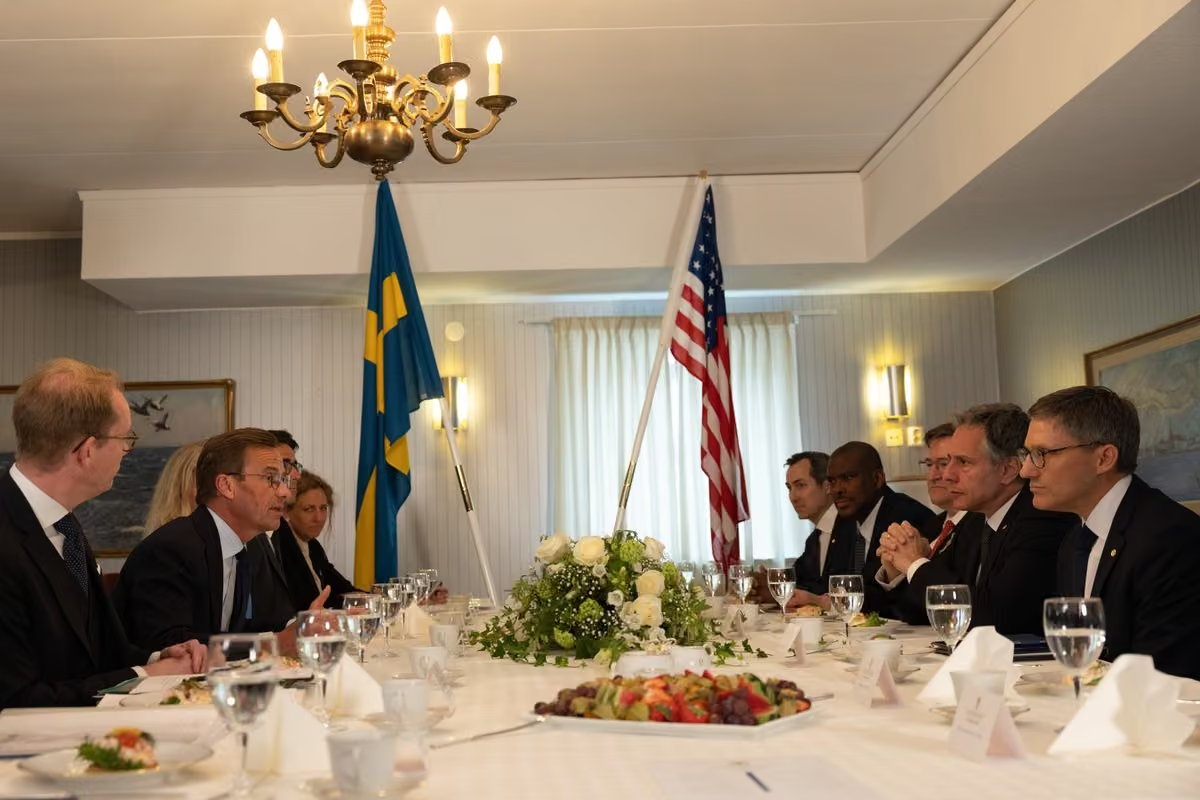
Anna Kinberg Batra reposted
Försvarsdepartementet
@ForsvarsdepSv
Sverige har tilldelats #resceu-status för två skopande brandflygsresurser som kan användas inom EU:s civilskydd.
– Vi minns betydelsen av sådant stöd från sommaren 2018, då Sverige fick ett massivt stöd från andra EU länder, säger @CarlOskar.
Läs mer: t.ly/ZPJ7
 Anna Kinberg Batra
@KinbergBatra
Viktigt även för Sverige!
Kaja Kallas
@kajakallas
My message at #egov2023: e-governance isn't just a question of building technology, it's a question of building democracy.
People live their lives online, the state must be where the people are. The future is about personalized and seamless services.
📎 2023.egovconference.ee/2023/05/30/kaja-kallas-egovernance…


Anna Kinberg Batra reposted
Kaja Kallas
@kajakallas
My message at #egov2023: e-governance isn't just a question of building technology, it's a question of building democracy.
People live their lives online, the state must be where the people are. The future is about personalized and seamless services.
📎 2023.egovconference.ee/2023/05/30/kaja-kallas-egovernance…
Anna Kinberg Batra reposted
Utrikesdepartementet
@Utrikesdep
USA:s🇺🇸 utrikesminister @SecBlinken anländer i Luleå och välkomnas av @TobiasBillstrom.
Tobias Billström
@TobiasBillstrom
Always nice to meet with friends! Great pleasure to welcome 🇺🇸Secretary of State @SecBlinken to Luleå, Sweden for meetings on 🇸🇪 Swedish membership in @NATO
Anna Kinberg Batra reposted
Utrikesdepartementet
@Utrikesdep
Idag välkomnar vi EU🇪🇺 och USA🇺🇸 till Luleå🇸🇪 för det fjärde mötet i handels- och teknikrådet, Trade and Technology Council, #ttc – det huvudsakliga forumet för stärkt transatlantiskt samarbete och samordning av strategier för viktiga globala handels-, ekonomi- och teknikfrågor.

Anna Kinberg Batra reposted
Darth Putin
@DarthPutinKGB
How dare Ukraine do to us what we’ve been doing to them for over 15 months.
Anna Kinberg Batra reposted
Talman Andreas Norlén
@andreasostgote
Stämningsfullt högtidlighållande av veterandagen vid Sjöhistoriska museet igår. Jag hade äran att vara en av talarna och tackade för veteranernas insatser. Kungen delade ut Försvarsmaktens förtjänstmedalj. Flygvapnet gjorde överflygning i Missing Man Formation. Foto: N Englund


Anna Kinberg Batra reposted
Försvarsmakten
@Forsvarsmakten
Sveriges utlandsveteraner hyllades under måndagen med olika ceremonier över hela landet. #svfm www.forsvarsmakten.se/sv/aktuellt/2023/05/flaggorna-vajar…
Anna Kinberg Batra reposted
Volodymyr Zelenskyy / Володимир Зеленський
@ZelenskyyUa
My special gratitude on this Memorial day goes to all Americans of different times – sons and daughters, fathers and mothers, brothers and sisters, who became the warriors and whose strength turned into the strength of freedom and who were destined to show to the world that freedom will always shine bright on the hill. Let our victory, of the Ukrainian warriors, make this light shine brighter!
Your freedom stood, thanks to those who fought for it. Our freedom will stand, thanks to those who are fighting for it.
🇺🇦🇺🇸
Anna Kinberg Batra reposted
Volodymyr Zelenskyy / Володимир Зеленський
@ZelenskyyUa
The world needs to see that terror is losing. When Patriots in the hands of Ukrainians ensure one hundred percent downing of any Russian missiles, terror is losing. When the world increases pressure on Russia, including sanctions, when the terrorist's isolation grows, when its former partners are ashamed of any closeness with Moscow, terror is losing. And of course, there is no greater humiliation for 🇷🇺 terrorist state than the success of our warriors.
No one else in the world uses weapons against evil more effectively than Ukrainians. And this is a common global task – to prevent Russia from making terror something usual to the world so that it leads to someone else catching this evil virus.
Anna Kinberg Batra reposted
Utrikesdepartementet
@Utrikesdep
I 75 år har FN:s fredsbevarande styrkor arbetat för att rädda och förändra människors liv. Genom åren har 🇸🇪 trupper deltagit i insatser i över 60 länder.
Idag uppmärksammar vi internationella dagen för #unpeacekeepers, som i de svåraste förhållanden arbetar aktivt för fred🕊️
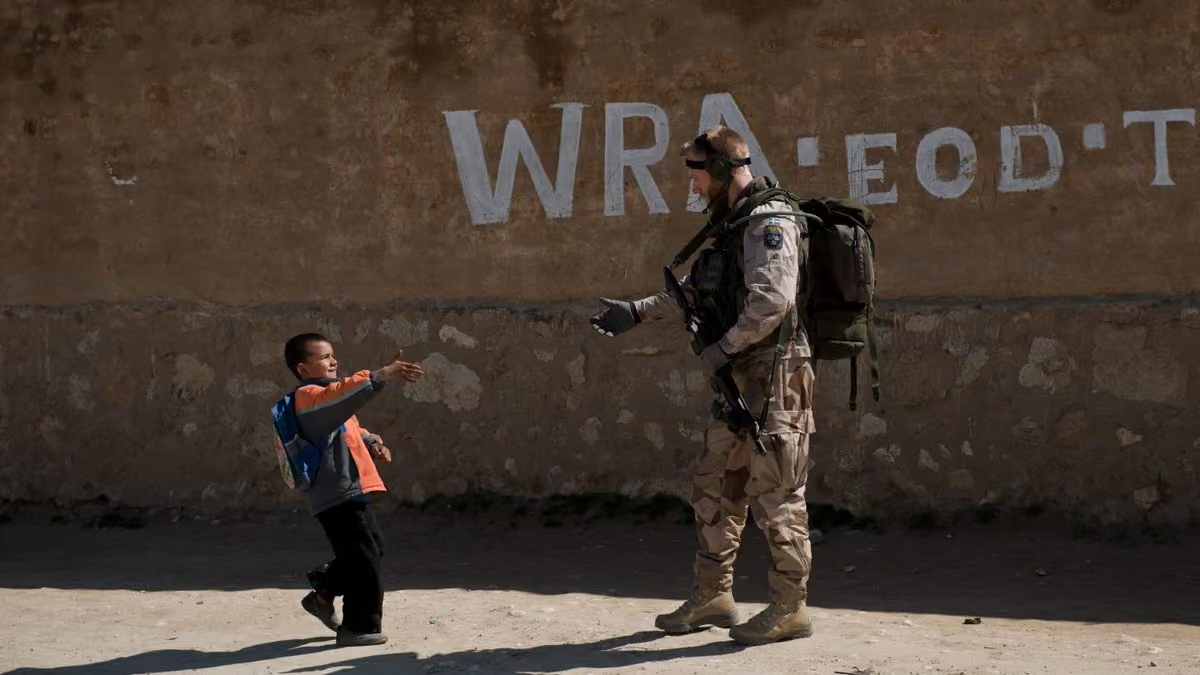
Anna Kinberg Batra reposted
Försvarsdepartementet
@ForsvarsdepSv
– Armén har under 500 år varit en stabil garant för vårt lands säkerhet och som löpande anpassat sig till förändringar i vår omvärld, säger @PlJonson. I lördags talade försvarsministern vid arméns 500-årsjubileum. Läs hela talet: www.regeringen.se/tal/2023/05/forsvarsminister-pal-jonson…
 Anna Kinberg Batra
@KinbergBatra
🌟🙏
Försvarsdepartementet
@ForsvarsdepSv
Idag hyllades Sveriges veteraner bland annat vid Sjöhistoriska Museet i Stockholm. I år uppmärksammandes särskilt de veteraner som tjänstgjorde vid UNIFIL (United Nations Interim Force In Lebanon) under åren 1978 – 2007. @PlJonson @CarlOskar @SwedishPM
Anna Kinberg Batra reposted
Talman Andreas Norlén
@andreasostgote
Riksdagen inledde för tredje året i rad Veterandagen med en flagghissningsceremoni framför Riksdagshuset. Jag höll tal tillsammans med överbefälhavare Micael Bydén och utrikesutskottets ordförande Aron Emilsson. Livgardets dragonmusikkår stod för musiken. Foto: Melker Dahlstrand.
 Anna Kinberg Batra
@KinbergBatra
Jodå, Sverige står fortfarande starkt i internationell konkurrens 🌟💥
Eurovision Charts
@esc_charts
All the 13 #eurovision songs with more than 100 million streams on Spotify:
🇳🇱 Arcade
🇦🇲 Snap
🇮🇹 Zitti e buoni
🇳🇴 Fairytale
🇸🇪 Waterloo
🇸🇪 Euphoria
🇮🇹 Soldi
🇸🇪 Heroes
🇮🇹 Brividi
🇮🇸 Think About Things
🇮🇱 Toy
🇸🇪 If I Were Sorry
🇸🇪 Tattoo
Anna Kinberg Batra reposted
Eurovision Charts
@esc_charts
"Tattoo" by Loreen is the fastest #eurovision song in history to reach 100 million streams on Spotify, reaching the milestone in 91 days. The previous record was held by "Brividi" (153 days). 🇸🇪
Anna Kinberg Batra reposted
Etienne de GONNEVILLE
@e_de_gonneville
Tout au long de 2023, les Suédois fêtent les 500 ans de la 🇸🇪 moderne. Aujourd'hui à #stockholm, la création de l'armée de terre en 1523. Joyeux anniversaire #armén500, de la part de l'Allié 🇨🇵 ! @Forsvarsmakten @FRDefenceSweden @armeedeterre @CEMAT_FR @Conseiller0301 @JPekkari

Anna Kinberg Batra reposted
Business Ukraine mag
@Biz_Ukraine_Mag
Happy Kyiv Day 2023! Over the past one and a half millennia, the Ukrainian capital has been fought over countless times and has survived the Mongols, the Nazis, and the Soviets. It will remain one of the world’s most magical cities long after Putin is on the scrap heap of history

Anna Kinberg Batra reposted
Sweden Charts
@SwedenCharts
🇸🇪 | Sweden now have five Eurovision entries with over 100 million streams on Spotify - the first and only country to do so.
Anna Kinberg Batra reposted
scandipop
@scandipop
Over 100 million streams in just three months. It looks right, it feels right and you already know it sounds right.
 Anna Kinberg Batra
@KinbergBatra
🌟💥
Eurovision Charts
@esc_charts
"Tattoo" by Loreen has now surpassed 100 million streams on Spotify. It's the 13th #eurovision song in history to reach this milestone. 🇸🇪
Anna Kinberg Batra reposted
Marko Mihkelson 🇪🇪🇺🇦🇪🇺
@markomihkelson
Red carpet perfomance at Cannes by Alina Baikova 🇺🇦
 Anna Kinberg Batra
@KinbergBatra
Han ser ju EXAKT ut som klimat-kommissionären! (Som för övrigt många i både politik och näringsliv borde relatera till, men det vore kanske lite VÄL nördigt att tillägga:-))
 Johan Manell
@johanmanell
Hur EU-nördig är du på skalan ”bryr mig inte” till ”han på Tullverket ser ut som Frans Timmermans”?

Anna Kinberg Batra reposted
International Energy Agency
@IEA
World Energy Investment 2023 is out now 🚨
It shows investment in clean energy is significantly outpacing spending on fossil fuels - boosted by its energy security strengths.
Explore the analysis 👇 iea.li/3BRdVRm
Anna Kinberg Batra reposted
 Margrethe Vestager
@vestager
So impressive. Not even a horrible war could hamper #ukraine on its way to becoming a true #digital nation. Ukraine has put its digitalisation on fast-forward. A true digital leader, and a source of admiration and inspiration for all of us.
#slavaukraini @FedorovMykhailo
Anna Kinberg Batra reposted
Sir William Browder KCMG
@Billbrowder
This is true state criminality. Russia issues veiled threat to the WSJ that if they continue to write articles critical of Russia, they will mistreat Evan Gershkovich who they have taken hostage. www.newsweek.com/russia-tries-blackmail-wsj-veiled-threat…
Anna Kinberg Batra reposted
Henrik Sjöström 🌻
@Henriksjos
Nu kommer signaler om att Ukrainas stora motoffensiv börjar rullas igång.
Håll dig uppdaterad genom att följa denna lista där 350 konton ger dig senaste nytt från slagfält och beslutsfattare. Och ffa: stöd Ukraina med det du kan. De förtjänar vårt stöd
x.com/i/lists/1517228059316920321
Anna Kinberg Batra
@KinbergBatra
Leuk! 🌟🎶
Eurovision Charts
@esc_charts
"Tattoo" by Loreen spends a 2nd consecutive week at #1 in the Netherlands' official singles chart. #eurovision 🇸🇪
Anna Kinberg Batra reposted
 Oleksii Reznikov
@oleksiireznikov
Was glad to host Ministers @PlJonson @CarlOskar in Kyiv.
I want to thank the people, government, and parliament of Sweden for the military assistance provided to Ukraine and for their contribution to the tank coalition.
Swedish Gripens would play a critical role in strengthening our defense capabilities, like NLAW, Carl Gustaf, CV 90, and Archers.
🇺🇦🤝🇸🇪

Anna Kinberg Batra reposted
Eurovision Charts
@esc_charts
Most-streamed #eurovision 2023 songs on Spotify (May 25):
🇸🇪 Tattoo - 2,509,492
🇫🇮 Cha Cha Cha - 1,580,883
🇳🇴 Queen of Kings - 1,137,606
🇮🇱 Unicorn - 491,384
🇮🇹 Due vite - 459,391
🇵🇱 Solo - 396,880
🇦🇹 Who the Hell Is Edgar? - 304,171
🇫🇷 Évidemment - 284,715
🇨🇭 Watergun - 280,434
Anna Kinberg Batra reposted
Darth Putin
@DarthPutinKGB
Day 457 of my 3 day war. I lost 100,000 casualties to capture a town with a pre war population of 74,000.
I remain a master strategist.
Anna Kinberg Batra reposted
 State Department Spokesperson 2013-2025
@statedeptspox_a
.@SecBlinken will travel to Luleå, Oslo, and Helsinki, May 29-June 2, to co-chair the U.S.-EU Trade and Technology Council and attend the @NATO informal foreign ministers meeting. Transatlantic security and energy security will be a critical focus. www.state.gov/secretary-blinkens-travel-to-sweden-norway-…
Anna Kinberg Batra reposted
Secretary Antony Blinken
@SecBlinken
I’m looking forward to my travel to Luleå, Oslo, and Helsinki this week to co-chair the U.S.-EU Trade and Technology Council and attend the @NATO informal foreign ministers' meeting, as well as to meet with our Allies and partners to discuss important bilateral issues.
Anna Kinberg Batra reposted
Sveriges riksdag
@Sverigesriksdag
Välkommen att besöka riksdagen i helgen! På lördag och söndag kan du gå på en guidad visning i Riksdagshuset. Klockan 12 hålls visning på svenska och 13.30 hålls visning på svenska och engelska. Visningen är kostnadsfri. www.riksdagen.se/sv/besok-riksdagen/
Anna Kinberg Batra reposted
Stockholms Handelskammare
@SthlmsHK
”Vi står redo att stötta @svt på alla sätt för att finalen om ett år ska bli en succé”, skriver vår vd Andreas Hatzigeorgiou tillsammans med @KinbergBatra, landshövding i Stockholms län och @Aida_Hadzialic, finansregionråd i Region Stockholm. #eurovision sverigesradio.se/artikel/onskebrevet-till-svt-darfor-bord…
Anna Kinberg Batra reposted
 Stockholms Hamnar
@StockholmsHamn
Anna @KinbergBatra:
– Stockholm Norvik är inte bara Sveriges nyaste utan kanske Nordens modernaste, och en av Europas allra grönaste hamnar. Det här kan bli en riktig hubb, ett riktigt nav för hållbara transporter och det är bra för både jobben och klimatet.
Anna Kinberg Batra reposted
NATO
@NATO
🇫🇮 Finland to begin Artic Challenge exercise with Allies and 🇸🇪 Sweden
150 aircraft from 14 #nato and partner nations will take part enhancing 4th and 5th generation fighter jet integration
More info: ac.nato.int/archive/2023/finland-to-begin-exercise-arctic…

Anna Kinberg Batra reposted
Utrikesdepartementet
@Utrikesdep
USA:s utrikesminister Anthony Blinken träffar tisdagen den 30 maj statsminister Ulf Kristersson och utrikesminister Tobias Billström på F 21 i Luleå.
Efter mötet hålls en pressträff.
Ta del av pressinbjudan 👉 www.regeringen.se/pressmeddelanden/2023/05/presstraff-i-l…

Anna Kinberg Batra reposted
Sweden Charts
@SwedenCharts
🇸🇪 | Loreen has entered the Top 500 artists on Spotify.

Anna Kinberg Batra reposted
Swedish Ministry for Foreign Affairs
@SweMFA
EU trade with Ukraine continues 🇪🇺🇺🇦
EU trade ministers decided today to extend the customs duties waiver for Ukraine.
This is an important decision. Trade strengthens the Ukrainian economy and contributes to rebuilding the country.
#standwithukraine
👉wayback.archive-it.org/12090/20231020073516/https://swedi…

Anna Kinberg Batra reposted
Carl-Oskar Bohlin
@CarlOskar
Europas fastaste handslag tillhör @ZelenskyyUa, och det var en stor ära att idag tillsammans med @PlJonson få möta honom för ett samtal om det fortsatta stödet till Ukraina. Både militärt och civilt.


Anna Kinberg Batra reposted
Sir William Browder KCMG
@Billbrowder
Good. Now that we know exactly how much is frozen, it’s time to confiscate Russia’s reserves for Ukraine
 The Kyiv Independent
@KyivIndependent
⚡️ Bloomberg: EU has frozen Russian Central Bank assets worth over $200 billion.
The European Union has frozen 200 billion euros worth ($214.6 billion) of Russian Central Bank assets since the start of the full-scale war, Bloomberg reported, citing European Commission spokesman Christian Wigand.
Anna Kinberg Batra reposted
 Angelique Kidjo
@angeliquekidjo
💃🏿🕺🏼Dancing with the King of Sweden!!!🕺🏼💃🏿
This is the beautiful spirit of the @polarmusicprize !!!
Anna Kinberg Batra reposted
Kaja Kallas
@kajakallas
I underlined the value of freedom in my interview to @Telegraph @SheridanDani.
I come from the generation that was born without freedom, and now we have it. I don’t take it for granted. I understand freedom is something you have to fight for.
www.telegraph.co.uk/world-news/2023/05/24/kaja-kallas-est…
Anna Kinberg Batra reposted
Sir William Browder KCMG
@Billbrowder
Dutch prosecutors seize land owned by Vladimir Putin’s Dutch former son-in-law www.theguardian.com/world/2023/may/25/dutch-prosecutors-s…
Anna Kinberg Batra reposted
 Yasmina
@yasminalombaert
“I looked in Mr. Putin’s eyes and I saw three letters – a K, a G, and a B.” John McCain
John McCain was right:
“He's an old KGB aperachik who wants to restore the Russian Empire"
John McCain saw KGB in Putin’s eyes, and that’s exactly what the rest of the world is seeing now. Putin’s actions demonstrate the grave dangers of authoritarianism and underscore the need for free nations to stand firm in defense of democracy.
( Video : The Global conversation 2014)
Anna Kinberg Batra reposted
Pål Jonson
@PlJonson
Ukraine will liberate occupied territories to again one day live in peace and freedom. We will support Ukraine as long as it takes. Slava Ukraini! 🇸🇪🇺🇦(2/2)
Anna Kinberg Batra reposted
Pål Jonson
@PlJonson
Honored to meet president @ZelenskyyUA in Kyiv. Under his leadership Ukraine is successfully defending itself from the illegal Russian aggression and brutal oppression. (1/2)
 Anna Kinberg Batra
@KinbergBatra
🌟🇺🇦🇸🇪🙏
Pål Jonson
@PlJonson
Honored to meet president @ZelenskyyUA in Kyiv. Under his leadership Ukraine is successfully defending itself from the illegal Russian aggression and brutal oppression. (1/2)
Anna Kinberg Batra reposted
Pål Jonson
@PlJonson
Visiting Kiev together with the minister for civil defence @CarlOskar. Met my friend and colleague @oleksiireznikov to discuss continued Swedish support for Ukraine. Impressed by the performance of the 🇺🇦 armed forces and the resilience of the Ukrainian people.
 Anna Kinberg Batra
@KinbergBatra
🇸🇪🇺🇦🌟
Johan Forssell
@JohanForssell
Regeringen har idag fattat ett viktigt beslut för Ukrainas uppbyggnad. Avgörande att få in mer privat kapital och ta tillvara på det engagemang som finns i näringslivet. www.svd.se/a/veX875/sverige-oppnar-handelskontor-i-kriget…
Anna Kinberg Batra reposted
SSC Sverige
@SSCSpaceSverige
Vi kommer allt närmare en första satellituppskjutning från Esrange. Region Norrbotten, Kiruna kommun och Längmanska företagarfonden ger projektstöd på 11 miljoner kronor till projektet SmallSat Launch 🚀
news.cision.com/se/ssc/r/fran-norrbotten-och-ut-i-rymden-… #rymden #satellit #esrange #rymdbas @norrbotten
Anna Kinberg Batra reposted
Anna Kinberg Batra reposted
Angelique Kidjo
@angeliquekidjo
youtu.be/TdfVKLq8E98 « This is the moment when the gods expect me
To beg for help but I won't even try
I want nothing in the world but myself to protect me
But I won't lie down, roll over and die »
Tina, collaborating with you was one of the highlights of my life. ❤️🕊️
Anna Kinberg Batra
@KinbergBatra
❤️🌟😢🙏
 nostalgia hub
@IL0VEthe80s
Tina Turner’s real name was Anna Mae Bullock. She was born on November 26, 1939. In some of her early years she lived in Nutbush, Tennessee.
Tina starred in 17 films, released 10 studio albums, and received 20 awards throughout her career. Tina sold over 200 million albums over her 6 decade career.
Tina met Ike Turner at a performance by his band, the ‘Kings of Rhythm’, in 1956, and soon became part of the act. The band later toured as Ike and Tina Turner Revue. “A Fool in Love” hit the pop charts in 1960 and a many hit singles followed. Ike and Tina were married in 1962. The couple later divorced in 1978 due to cocaine addicted Ike’s abuse of Tina.
In 1973 Tina said she turned to Buddhism to improve her life and never looked back.
Until 1983, Turner was considered a nostalgia act, performing mostly at hotel ballrooms and clubs in the United States. After various guest appearances on the albums of other artists, she released her debut solo album, ‘Private Dancer’ in 1984. It was a critical and commercial success selling more than 20 million copies worldwide.
Two movies Tina appeared in are The Who’s ‘Tommy’ as the Acid Queen in 1975 and the classic Mel Gibson film ‘Mad Max Beyond Thunderdome’ in 1985. She also has a cameo in Arnold Schwarzenegger’s ‘Last Action Hero’ movie of 1993, playing the Mayor.
In 1988, Tina Turner toured the world for her 1986 album, ‘Break Every Rule’. During her show in Rio De Janeiro, she set a then-Guinness World Record for the largest paying audience for a solo performer, selling 180,000 tickets.
In 2013, three weeks after her wedding to Erwin Bach, Tina suffered a stroke and she had to learn to walk again.
In 2016 Tina was diagnosed with intestinal cancer and later had a kidney transplant in 2017. On May 24, 2023, Tina died at her home in Küsnacht, Switzerland, aged 83, following her long illness.
Tine Turner was the Queen of Rock ‘n’ Roll and will forever be remembered.
Anna Kinberg Batra reposted
 Polar Music Prize
@Polarmusicprize
"Love is the source of all arts. Art will exist for as long as there exists an ability to love."
– Arvo Pärt, 2023 Polar Music Prize Laureate
Anna Kinberg Batra reposted
Angelique Kidjo
@angeliquekidjo
🏆🎶🎵That unforgettable moment when the King Of Sweden hands you the @polarmusicprize 🎶🎵🏆

Anna Kinberg Batra reposted
Talman Andreas Norlén
@andreasostgote
Strong speech by Ukrainian Speaker @r_stefanchuk at the Swedish Parliament, where he received a standing ovation. He thanked for Sweden’s support and urged us to keep standing by Ukraine. Of course we will. 🇺🇦🇸🇪Photo: Melker Dahlstrand


Anna Kinberg Batra reposted
Etienne de GONNEVILLE
@e_de_gonneville
Tonight in Stockholm, the Queen @angeliquekidjo received the #polarmusicprize from the hands of His Majesty King Carl XVI Gustaf of 🇸🇪.
So proud to have been there with the Honorary Consul of 🇧🇯, for a fantastic night of 🎶 and friendship!
🇸🇪❤️🇧🇯❤️🇨🇵
@Polarmusicprize


Anna Kinberg Batra reposted
Eurovision Charts
@esc_charts
Most-streamed #eurovision 2023 songs on Spotify (May 22):
🇸🇪 Tattoo - 2,666,436
🇫🇮 Cha Cha Cha - 1,976,915
🇳🇴 Queen of Kings - 1,326,664
🇮🇱 Unicorn - 547,905
🇮🇹 Due vite - 484,379
🇵🇱 Solo - 434,274
🇦🇹 WTHIE? - 369,807
🇸🇮 Carpe Diem - 364,929
🇫🇷 Évidemment - 357,115
Anna Kinberg Batra reposted
Eurovision Charts
@esc_charts
"Tattoo" by Loreen has now surpassed 90 million streams on Spotify. #eurovision 🇸🇪
Anna Kinberg Batra reposted
Sweden Charts
@SwedenCharts
📈 | “Tattoo” by Loreen rises 4 places on the Global Spotify Chart to 20th.

Anna Kinberg Batra reposted
Emanuel Örtengren
@emanuelorten
Det går knappast att överdriva vad @KasiaTracz har gjort för @freeworldforum, för mig och för att höja nivån på den utrikes- och säkerhetspolitiska debatten i Sverige. Tack för allt Katarina och lycka till framöver! www.linkedin.com/posts/katarina-tracz-71325568_det-skulle…
Anna Kinberg Batra reposted
The Economist
@TheEconomist
Henry Kissinger says Vladimir Putin’s invasion of Ukraine was a “catastrophic mistake of judgment”. Listen to our interview econ.st/3WnA03f
Anna Kinberg Batra reposted
The Kyiv Independent
@KyivIndependent
Thousands of flags have been planted at the makeshift memorial for the fallen soldiers on Maidan Square in Kyiv. Each flag is a tribute to someone who was killed by Russia's war in Ukraine.
Anna Kinberg Batra reposted
Eurovision Charts
@esc_charts
#eurovision Song Contest 2023 Spotify chart - May 21, 2023

Anna Kinberg Batra reposted
scandipop
@scandipop
Starting in Ireland and ending in Lithuania, Loreen is heading out on a European tour this November.
Tickets go on sale Friday morning.


Anna Kinberg Batra reposted
Eurovision Charts
@esc_charts
Most-streamed #eurovision 2023 songs on Spotify (May 21):
🇸🇪 Tattoo - 2,498,355
🇫🇮 Cha Cha Cha - 1,908,545
🇳🇴 Queen of Kings - 1,277,415
🇮🇱 Unicorn - 560,506
🇮🇹 Due vite - 484,567
🇵🇱 Solo - 458,721
🇦🇹 WTHIE? - 369,943
🇸🇮 Carpe Diem - 366,332
🇧🇪 Because of You - 364,985
Anna Kinberg Batra reposted
Sweden Charts
@SwedenCharts
📈 | “Tattoo” by Loreen enters the Billboard Global Top 10, at 7th place.


Anna Kinberg Batra reposted
 Gerard Reid
@gerardreid14
Report of the Week: This week’s is from the @IEA and is on the State of #cleantechnology manufacturing with a specific focus on five key technologies for #energytransition: #solar, #wind, #batteries, #electrolysers and #heatpumps
www.iea.org/reports/the-state-of-clean-technology-manufac…
Anna Kinberg Batra reposted
Eurovision Charts
@esc_charts
"Tattoo" by Loreen debuts at #34 in France official singles chart. #eurovision 🇸🇪
Anna Kinberg Batra reposted
Darth Putin
@DarthPutinKGB
Today I am attending the G1 summit.
 Anna Kinberg Batra
@KinbergBatra
Våra digitala samhällssystem funkar oftast fint, för de flesta, åtminstone om man har personnummer, bankkonto och mobilt bank-id. Annars kan det bli till exempel så här, som för denne svenske medborgare som försökte göra rätt för sig: etidning.dn.se/shared/article/att-flytta-till-sverige-var…
Anna Kinberg Batra reposted
DG MEME 🇪🇺
@meme_ec
What happens in Hiroshima stays in Hiroshima.

Anna Kinberg Batra reposted
Eurovision Charts
@esc_charts
Most-streamed #eurovision 2023 songs on Spotify (May 19):
🇸🇪 Tattoo - 3,240,427
🇫🇮 Cha Cha Cha - 2,771,462
🇳🇴 Queen of Kings - 1,716,478
🇮🇱 Unicorn - 808,086
🇮🇹 Due vite - 617,528
🇵🇱 Solo - 537,313
🇫🇷 Évidemment - 517,408
🇸🇮 Carpe Diem - 493,750
🇦🇹 WTHIE? - 474,181
Anna Kinberg Batra reposted
scandipop
@scandipop
Sweden's #eurovision winners on the UK singles chart:
1️⃣: Waterloo
4️⃣6️⃣: Diggi-Loo Diggi-Ley
*️⃣*️⃣: Fångad Av En Stormvind
2️⃣0️⃣: Take Me To Your Heaven
3️⃣: Euphoria
1️⃣1️⃣: Heroes
2️⃣: Tattoo
📸: Corinne Cumming / EBU

Anna Kinberg Batra reposted
The Economist
@TheEconomist
On May 27th Henry Kissinger will turn 100. Nobody alive has more experience of international affairs. In his view, the fate of humanity depends on whether America and China can get along econ.st/3MyQ2UU
Anna Kinberg Batra reposted
Eurovision Charts
@esc_charts
Most-streamed #eurovision 2023 songs on Spotify (May 18):
🇸🇪 Tattoo - 3,283,758
🇫🇮 Cha Cha Cha - 2,819,987
🇳🇴 Queen of Kings - 1,786,675
🇮🇱 Unicorn - 850,661
🇮🇹 Due vite - 652,989
🇸🇮 Carpe Diem - 620,871
🇫🇷 Évidemment - 600,731
🇵🇱 Solo - 535,861
🇦🇹 WTHIE? - 496,322
Anna Kinberg Batra reposted
scandipop
@scandipop
Loreen's 'Tattoo' is a new entry in the UK singles chart this week at number 2.
🇸🇪🇸🇪🇸🇪🇸🇪🇸🇪🇸🇪🇸🇪🇸🇪🇸🇪🇸🇪
It's the highest charting Swedish #eurovision entry in the UK since ABBA's 'Waterloo' in 1974. And it out-peaks her own 'Euphoria', no.3 in 2012.
📸 Sarah Louise Bennett / EBU

Anna Kinberg Batra reposted
 Dave Keating
@DaveKeating
Although you could make the argument that this is the 1st time a country has won #eurovision while holding the rotating *EU* presidency since before 1993 it was the rotating *European Community* presidency.
I know you desperately want to invite me to your cocktail party now 😂
Anna Kinberg Batra reposted
Sweden Charts
@SwedenCharts
📈 | Every Swedish song that has reached Number 1 in the UK Official Chart 🇬🇧:
(“Tattoo” by Loreen could become the next)
Zara Larsson - Symphony
Alesso - Under Control
Avicii - Wake Me Up
Icona Pop - I Love It
Avicii - I Could Be The One
SHM, John Martin - Don’t You Worry Child
Anna Kinberg Batra reposted
NATO
@NATO
🇸🇪 Sweden and NATO are closer than ever as the country prepares to join the Alliance
@Forsvarsmakten @SwedenNato
Anna Kinberg Batra reposted
Utrikesdepartementet
@Utrikesdep
Som medlem i Världsbanken har 🇸🇪 drivit på för ett nytt stöd för att mildra konsekvenserna av Rysslands aggression av Ukraina.
Stödet kommer gå till sjukvård i Ukraina, energiförsörjning i Moldavien och till livsmedelssektorn i fattiga länder.
Läs mer: www.regeringen.se/pressmeddelanden/2023/05/varldsbanken-i…
Anna Kinberg Batra reposted
Kaja Kallas
@kajakallas
My message in an interview with @Newsweek:
All of us must wake up to the new reality. Russia is a pariah state. There's no room for flirting with the idea of resuming business as usual. Our joint pressure against Russia must increase, not decrease.
www.newsweek.com/kaja-kallas-europe-new-iron-lady-estonia…
Anna Kinberg Batra reposted
Eurovision Charts
@esc_charts
Most-streamed #eurovision 2023 songs on Spotify (May 17):
🇸🇪 Tattoo - 3,652,821
🇫🇮 Cha Cha Cha - 3,394,902
🇳🇴 Queen of Kings - 2,042,443
🇮🇱 Unicorn - 955,866
🇮🇹 Due vite - 723,744
🇫🇷 Évidemment - 672,101
🇵🇱 Solo - 585,333
🇦🇹 WTHIE? - 573,256
🇸🇮 Carpe Diem - 529,442
Anna Kinberg Batra reposted
Sweden Charts
@SwedenCharts
🇸🇪 | Loreen has surpassed 10 million monthly listeners on Spotify.
 Anna Kinberg Batra
@KinbergBatra
Varken Indien eller Kenya utgick från gamla system och banker när digitala betalningssystem byggdes upp. I stället kunde, och måste, innovatörer och entreprenörer tänka fritt och nytt utifrån funktion och teknik, med lösningar som borde inspirera oss: www.economist.com/special-report/2023/05/15/a-digital-pay…
Anna Kinberg Batra
@KinbergBatra
100 år är längre än både agenda-repliker och twitterinlägg, för t.ex. eftertanke och perspektiv på världen: www.economist.com/briefing/2023/05/17/henry-kissinger-exp…
Anna Kinberg Batra reposted
European Commission
@EU_Commission
Putin’s energy blackmail has failed.
One year after presenting #repowereu, we have reduced our dependency on Russian gas by three-quarters.
Everyone has played its part in building a more independent 🇪🇺 and we are more united than ever in preparing for next winter.
Anna Kinberg Batra reposted
Sir William Browder KCMG
@Billbrowder
Russia's Leading Dissident, Vladimir Kara-Murza Is Serving 25 Years in Prison. Now, His Wife Is Taking Up the Fight time.com/6280513/evgenia-kara-murza-interview-russia/
Anna Kinberg Batra reposted
Eurovision Charts
@esc_charts
"Tattoo" by Loreen has now surpassed 70 million streams on Spotify. #eurovision 🇸🇪
Anna Kinberg Batra reposted
Eurovision Charts
@esc_charts
Most-streamed #eurovision 2023 songs on Spotify (May 16):
🇸🇪 Tattoo - 3,903,287
🇫🇮 Cha Cha Cha - 3,704,916
🇳🇴 Queen of Kings - 2,244,726
🇮🇱 Unicorn - 1,085,339
🇮🇹 Due vite - 810,033
🇫🇷 Évidemment - 718,970
🇸🇮 Carpe Diem - 674,427
🇵🇱 Solo - 659,705
🇦🇹 WTHIE? - 632,513
Anna Kinberg Batra reposted
scandipop
@scandipop
ABBA Voyage has today announced that it's being extended until at least 27th May 2024.
Next May. Potentially a big month for ABBA happenings. Could be. Let's just hope.
Anna Kinberg Batra reposted
Sweden Charts
@SwedenCharts
📈 | “Tattoo” by Loreen spends a 3rd consecutive day at Number 1 in the UK on Spotify, with over 386K filtered streams. 🇬🇧

Anna Kinberg Batra reposted
Sweden Charts
@SwedenCharts
🇸🇪 | “Tattoo” by Loreen is today at Number 8 on the Spotify Global Chart with 3,712,245 filtered streams.
 Anna Kinberg Batra
@KinbergBatra
Bra presenttips i Loreen-Polarpris-student-tider! 🌟🎶👠💃🏻🎉
Anna Kinberg Batra reposted
EU Council
@EUCouncil
🇪🇺🌈Love is love. On the International Day against Homophobia, Transphobia & Biphobia, the EU reaffirms the right of all individuals to be free to be who they are & love whom they want without fear. That's the only way we can all build a true #unionofequality #idahot #idahobit

Anna Kinberg Batra reposted
Eurovision Charts
@esc_charts
Fastest #eurovision 2023 grand final performance videos to hit 1 million views on YouTube:
🇸🇪 Tattoo - 5 hours
🇫🇮 Cha Cha Cha - 11 hours
🇮🇱 Unicorn - 12 hours
🇵🇱 Solo - 18 hours
🇳🇴 Queen of Kings - 19 hours
🇮🇹 Due vite - 20 hours
🇪🇸 Eaea - 21 hours
🇩🇪 Blood & Glitter - 22 hours
Anna Kinberg Batra
@KinbergBatra
Does Europe need digital central bank currencies, why and how? Comprehensive peace in @FinancialTimes , including referral to the Swedish payment market inquiry (Betalningsutredningen) that I led and presented in March: www.ft.com/content/7c892d3b-c646-4247-9504-5f755e486101
Anna Kinberg Batra
@KinbergBatra
Inquiry summary in English available here: www.regeringen.se/contentassets/c01377cf65424cf0b12addf64…
Anna Kinberg Batra
@KinbergBatra
Full inquiry report and background info here: www.regeringen.se/rattsliga-dokument/statens-offentliga-u…
Anna Kinberg Batra reposted
Freddy Jönsson Hanberg
@freddyjonssonh
Energiförsörjning avgörande vid värdlandsstöd - Totalförsvarets forskningsinstitut - FOI www.foi.se/nyheter-och-press/nyheter/2023-05-16-energifor…
Anna Kinberg Batra reposted
Ursula von der Leyen
@vonderleyen
As Russia wages war against democracy itself, Europe is united for Ukraine.
As we gather, @avalaina and Ukrainian human rights activists are demanding accountability for Russia’s war crimes.
It will be an important focus of this @coe summit ↓ x.com/i/broadcasts/1ZkKzXrLaovJv
Anna Kinberg Batra
@KinbergBatra
🌟❤️🎉👏🙏
scandipop
@scandipop
Stockholm, this afternoon 🥳
Anna Kinberg Batra reposted
Eurovision Charts
@esc_charts
The official lyric video of "Tattoo" by Loreen has now surpassed 10 million views on YouTube. #eurovision 🇸🇪
Anna Kinberg Batra reposted
Eurovision Charts
@esc_charts
On the day after the #eurovision 2023 final, all 37 entries appeared in Spotify charts of at least one country.
Sweden's "Tattoo" leads the count with 31 countries, followed by Finland's "Cha Cha Cha" (30), Norway's "Queen of Kings" (29) and Israel's "Unicorn" (26).
 Anna Kinberg Batra
@KinbergBatra
🌟🚀👏
SSC Sverige
@SSCSpaceSverige
Vi är mycket stolta över vår innovationschef Linda Lyckman som tilldelats Ulla Teige-diplomet som årets kvinnliga förebild inom flygteknik. Stort grattis Linda 💐📷 sscspace.com/linda-lyckman-awarded-the-ulla-teige-diploma/
Anna Kinberg Batra reposted
Eurovision Charts
@esc_charts
The full daily #eurovision 2023 Spotify chart is finally here from today until the end of June!
Check out how the 37 competing songs fared on the day after the grand final, with figures adding up to 27.1 million streams, an all time high for the contest.

Anna Kinberg Batra reposted
 Tre Kronor
@Trekronorse
🎶 And all I care about is you,
You're stuck on me like a tattoo 🎶🇸🇪🇸🇪🇸🇪🇸🇪


Anna Kinberg Batra reposted
Eurovision Charts
@esc_charts
The grand final live performance of "Tattoo" by Loreen has now surpassed 10 million views on YouTube. #eurovision 🇸🇪
Anna Kinberg Batra reposted
Sweden Charts
@SwedenCharts
📈 | “Tattoo” by Loreen on Spotify Charts today:
🌍 5th
🇦🇹 1st
🇧🇪 1st
🇮🇪 1st
🇱🇺 1st
🇳🇱 1st
🇳🇴 1st
🇵🇱 1st
🇨🇭 1st
🇬🇧 1st
🇪🇪 2nd
🇫🇮 2nd
🇩🇪 2nd
🇮🇸 2nd
🇮🇱 2nd
🇱🇻 2nd
🇱🇹 2nd
🇸🇪 2nd
🇩🇰 4th
🇵🇹 7th
🇷🇴 7th
🇧🇬 8th
🇬🇷 8th
🇨🇿 9th
🇺🇦 10th
🇪🇸 13th
🇮🇹 14th
🇸🇰 17th
🇫🇷 19th
🇭🇺 33rd
🇦🇺 146th

Anna Kinberg Batra reposted
Igor Sushko
@igorsushko
MUST-WATCH: Zelensky still has to explain Putin's nature and track record to European politicians. This is for the "let's negotiate" crowd.
Anna Kinberg Batra reposted
Sweden Charts
@SwedenCharts
🇸🇪 | Loreen Streams on Spotify yesterday:
Tattoo - 4,565,105
Euphoria - 977,243


Anna Kinberg Batra reposted
 Timothy Garton Ash
@fromTGA
Just listen to this message from the Ukrainian president…what he did in three days in Europe, from the train home…
Volodymyr Zelenskyy / Володимир Зеленський
@ZelenskyyUa
Italy, Germany, France, Great Britain... We are returning home with new defense packages. More new and powerful weapons for the frontline, more protection for our people from 🇷🇺 terror, more political support.
At all the meetings we discussed our Peace Formula, and now there is more willingness of our partners to follow the 🇺🇦 formula. There is more support for our accession to the EU, more understanding that Ukraine's accession to NATO is inevitable.
So, the main results of these days are: new weapons for 🇺🇦, respect for Ukrainians, and our victory has been brought closer.
Kudos to everyone who helps!
Anna Kinberg Batra reposted
 NATO Air Command
@NATO_AIRCOM
Exercise Aurora hosted by @NATO Partner @Forsvarsmakten🇸🇪concludes, fine tuning Allied & Partner cooperation
Participating #nato Allies 🇫🇮🇵🇱🇵🇹🇺🇸🇬🇧trained missons including air defence, ISR operations, close air support & strike missions
#strongertogether @NATOpress @SwedenNato
Anna Kinberg Batra reposted
Sweden Charts
@SwedenCharts
🇸🇪 | “Tattoo” by Loreen reaches a new peak of 5th on the Global Spotify Chart, with 4,275,290 filtered streams.
It is the highest ever charting Swedish song by a woman.

Anna Kinberg Batra reposted
Dave Keating
@DaveKeating
Bit of useless trivia for your next cocktail party:
🇸🇪#sweden just won #eurovision2023. 🇸🇪 is also currently running the rotating 🇪🇺Council presidency @sweden2023EU
This is the 3rd time a country has won Eurovision while holding 🇪🇺presidency since:
France 1962
Luxembourg 1972
Anna Kinberg Batra reposted
Eurovision Charts
@esc_charts
Most-streamed #eurovision 2023 songs on Spotify (May 14):
🇸🇪 Tattoo - 4,565,105
🇫🇮 Cha Cha Cha - 4,220,558
🇳🇴 Queen of Kings - 2,368,385
🇮🇱 Unicorn - 1,451,793
🇮🇹 Due vite - 1,089,607
🇵🇱 Solo - 882,199
🇦🇹 Who the Hell Is Edgar? - 812,036
🇧🇪 Because of You - 786,804
Anna Kinberg Batra
@KinbergBatra
Igen:-) 🎉💥
 SVT Sport
@SVTSport
Sverige besegrade Finland efter stort drama 🏒
www.svt.se/sport/ishockey/tre-kronor-finland-hockey-vm

Anna Kinberg Batra reposted
Edward af Sillén
@EdwardafSillen
“Highest charting Eurovision single ever”

Anna Kinberg Batra reposted
Eurovision Charts
@esc_charts
"Tattoo" by Loreen is today (May 14)'s #1 song on Spotify in Austria, Belgium, Ireland, Luxembourg, Norway, the Netherlands, Poland, Switzerland and the United Kingdom. #eurovision 🇸🇪
Anna Kinberg Batra reposted
Eurovision Charts
@esc_charts
5 #eurovision 2023 entries appear in the global Spotify top 200 on the day after the grand final (May 14):
#5 Tattoo (4,275,290 streams) 🇸🇪
#7 Cha Cha Cha (3,819,748) 🇫🇮
#28 Queen of Kings (2,236,355) 🇳🇴
#91 Unicorn (1,420,732) 🇮🇱
#193 Due vite (1,039,657) 🇮🇹
Anna Kinberg Batra reposted
Eurovision Charts
@esc_charts
Most-streamed #eurovision 2023 songs on Spotify (May 13):
🇸🇪 Tattoo - 2,190,460
🇫🇮 Cha Cha Cha - 1,836,561
🇳🇴 Queen of Kings - 1,392,368
🇵🇱 Solo - 691,656
🇮🇱 Unicorn - 633,539
🇦🇹 Who the Hell Is Edgar? - 608,622
🇮🇹 Due vite - 592,480
🇬🇧 I Wrote a Song - 585,493
Anna Kinberg Batra reposted
Eurovision Charts
@esc_charts
"Tattoo" by Loreen 🇸🇪 skyrockets to #1 in the United Kingdom's Spotify chart with 458,232 streams received on May 14, closely followed by "Cha Cha Cha" by Käärijä 🇫🇮 at #2 with 427,857 streams. #eurovision
Anna Kinberg Batra reposted
Hanna Strömberg
@hannastromberg
I morgon klockan 08.30 bjuder regeringen in till pressträff om ny vindkraft.
Deltar gör statsminister Ulf Kristersson, energi- och näringsminister Ebba Busch och klimat- och miljöminister Romina Pourmokhtari
www.regeringen.se/pressmeddelanden/2023/05/regeringen-bju…
Anna Kinberg Batra reposted
 chart data
@chartdata
Loreen's "Tattoo" reaches a new peak of #5 on the global Spotify chart with 4.275 million streams, up 100%. Highest charting #eurovision single ever.


Anna Kinberg Batra reposted
 BBC Eurovision
@bbceurovision
We've just about recovered from the excitement of Saturday night!
Thank you for celebrating #eurovision2023 with us in Liverpool on behalf of Ukraine ✨

Anna Kinberg Batra reposted
European Commission
@EU_Commission
“The perseverance, resilience and stamina of the Ukrainian people are impressive.
We, the supporting countries, need to show the same level of stamina and perseverance.
I expect leaders to rally behind two main principles:
First: We will keep supporting Ukraine, for as long as it takes.
Second: Nothing about Ukraine without Ukraine."
— President @vonderLeyen
#standwithukraine
Anna Kinberg Batra reposted
nostalgia hub
@IL0VEthe80s
I’m this old…

Anna Kinberg Batra reposted
scandipop
@scandipop
Shout out to Cazzi Opeia who became a Eurovision Song Contest winning songwriter in 2023 after becoming an American Song Contest winning songwriter in 2022. That's some achievement. 👑

Anna Kinberg Batra reposted
 Edward Blom
@Edward_Blom
Matlagningsprogrammet du alltid efterfrågat: Se mig laga svan: youtu.be/G12RS_JjCE8
Anna Kinberg Batra reposted
Etienne de GONNEVILLE
@e_de_gonneville
#måndagsrörelsen. Every Monday since the beginning of the invasion, 🇸🇪🇪🇺 people meet on Norrmalmstorg in #stockholm to support 🇺🇦.
And as historic days are coming for Ukraine in its fight against agression, that support has never been stronger. #slavaukraini
@Mndagsrrelsen21
Anna Kinberg Batra reposted
 Mattia Nelles
@mattia_n
Zelenskyy’s entrance into the guest book of the 🇩🇪 Federal President. Danke Deutschland. “In the most challenging time the modern history of Ukraine, Germany proved to be our true friend and reliable ally, which stands side-by-side with the Ukrainian people…”
Anna Kinberg Batra reposted
 EBU
@EBU_HQ
Congratulations to our Swedish Member @svt whose artist @LOREEN_TALHAOUI has won the #eurovision Song Contest 2023 with an incredible performance of “Tattoo”!
What an unforgettable night! Get all the details: social.ebu.ch/Eurovision2023-winner

Anna Kinberg Batra reposted
Edward af Sillén
@EdwardafSillen
Tack Liverpool. Tack Loreen.
Tack alla ni som tittade, hejade, skrattade och svettades tillsammans med oss. Världens roligaste program är över för denna gång. 💛💙

Anna Kinberg Batra reposted
Richard Herrey
@RichardHerrey
Eurovision trivia. Språk.
Det senaste 🇸🇪 bidraget som sjöngs på svenska = Kärleken Är med Jill Johnson från 1998.
-
Tusen och en natt ’99
Vindarna viskar ’00
Lyssna till ditt hjärta ’01
Det gör ont ’04
Evighet ’06
Vann Melodifestivalen med svensk text men fick sen engelsk text.

Anna Kinberg Batra reposted
 Eurovision Song Contest
@Eurovision
Wanna relive last night’s AMAZING #eurovision Grand Final? 🤩 Here it is in 90 seconds!
Anna Kinberg Batra reposted
Richard Herrey
@RichardHerrey
Eurovision Trivia. Ålder.
Sandra Kim (13) 1985 är den yngsta tjej som vunnit Eurovision.
Louis Herrey (17) 1984 är den yngsta killen.
Anna Kinberg Batra reposted
Richard Herrey
@RichardHerrey
Eurovision trivia. Språk.
Bara två stycken låtar som framförts på Svenska har vunnit Eurovision Song Contest
🔹Diggiloo Diggiley
🔹Fångad av en stormvind.
Anna Kinberg Batra reposted
 CNN
@CNN
Sweden won the Eurovision Song Contest after an emotional show in Britain that celebrated Ukraine. www.cnn.com/2023/05/13/europe/eurovision-song-contest-202…
Anna Kinberg Batra reposted
Eurovision Song Contest
@Eurovision
The official Eurovision Song Contest Podcast featuring an exclusive first interview with #eurovision2023 winner Loreen is now live!
🎧Listen here: pod.link/1617767675
 Anna Kinberg Batra
@KinbergBatra
❤️🌟🎉
 wiwibloggs
@wiwibloggs
🇸🇪 “It better be Stockholm. If not we need to talk about it.”
🎤 Loreen has declared her favourite for #eurovision 2024 host city.

Anna Kinberg Batra reposted
wiwibloggs
@wiwibloggs
🇸🇪 “It better be Stockholm. If not we need to talk about it.”
🎤 Loreen has declared her favourite for #eurovision 2024 host city.
Anna Kinberg Batra reposted
Alexander Stubb
@alexstubb
Dear Sweden, we still support your @NATO membership. We will stick with you like a tattoo of Eurovision love. But don't try to win the ice-hockey world champs on our soil. Grattis!💚
Anna Kinberg Batra reposted
 George Bolcsfoldi
@GBolcsfoldi
Patriotism in the age of globalism
Anna Kinberg Batra reposted
Etienne de GONNEVILLE
@e_de_gonneville
#eurovision2023 : considering this ⤵️, I'm so happy 🇸🇪 won 🎶🎉!
Stort grattis #loreen!
And see you next year @Eurovision, in the country of Jean-Baptiste Bernadotte 🙂.
Anna Kinberg Batra
@KinbergBatra
On verra. Mais considerez: A Swedish victory tonight will get you the opportunity to celebrate Eurovision here chez nous, when serving here in the Bernadotte monarchy:-)
Anna Kinberg Batra reposted
 BBC Breaking News
@BBCBreaking
Watch moment Swedish star Loreen wins Eurovision Song Contest 2023
www.bbc.co.uk/news/live/entertainment-arts-65447817
Anna Kinberg Batra reposted
Anna Kinberg Batra
@KinbergBatra
Och det vore ett VÄLDIGT bra sätt att fira både 50 år sen Abba slog igenom med Waterloo 74, 40 år sen @RichardHerrey dansade med sina bröder 84 och 25 år sen Charlotte Perrelli (då Nilsson), svängde med håret i Jerusalem 99. Så speciell Eurovision-historia har inte ens Irland:-)
Anna Kinberg Batra reposted
 Jenny
@missfunboard
Måtte @EdwardafSillen aldrig sluta som kommentator för Eurovision. Han guidar oss med kärlek och humor. Fantastiskt bra jobbat! 😊🔝🇸🇪#eurovision2023
Anna Kinberg Batra reposted
 Robin Calmegård
@RobinCalmegard
Otrolig timing med Eurovision i Sverige nästa år! Bra Loreen, bra Europa!
Anna Kinberg Batra
@KinbergBatra
Och det vore ett VÄLDIGT bra sätt att fira både 50 år sen Abba slog igenom med Waterloo 74, 40 år sen @RichardHerrey dansade med sina bröder 84 och 25 år sen Charlotte Perrelli (då Nilsson), svängde med håret i Jerusalem 99. Så speciell Eurovision-historia har inte ens Irland:-)
Anna Kinberg Batra reposted
 ESC Discord
@ESCdiscord
🇸🇪 Loreen has become the first woman to win the #eurovision Song Contest on two different occasions as a performer (2012 and 2023).
[📷 Sarah Louise Bennett / EBU]
 Anna Kinberg Batra
@KinbergBatra
😍🌟💥
Anna Kinberg Batra reposted
CNN
@CNN
Sweden wins the Eurovision Song Contest after an emotional show in Britain that celebrated Ukraine www.cnn.com/2023/05/13/europe/eurovision-song-contest-202…
Anna Kinberg Batra reposted
wiwibloggs
@wiwibloggs
🏆 Sweden’s Loreen is the first artist since Johnny Logan to win #eurovision twice.
🇸🇪 Congrats queen and see you in Sweden!
✍️ @willyleeadams
wiwibloggs.com/2023/05/14/eurovision-2023-winner-loreen-t…
Anna Kinberg Batra reposted
scandipop
@scandipop
2023 is a year of celebration in Sweden.
🇸🇪 The country turns 500 years old
🇸🇪 It's the 50th anniversary of King Charles XVI on the throne
🇸🇪 Loreen has just won #eurovision for them, meaning they now tie with Ireland for most Contest wins
Anna Kinberg Batra reposted
European Commission
@EU_Commission
The stars aligned and you’ve been there!
Congratulations @LOREEN_TALHAOUI for your victory and exceptional performance.
Tonight, we are united by music.
#eurovision #eu2023se

Anna Kinberg Batra reposted
Eurovision Song Contest
@Eurovision
That winning moment! 🇸🇪 #eurovision
Anna Kinberg Batra reposted
Richard Herrey
@RichardHerrey
Sverige vinner Eurovision för sjunde gången, och tangerar Irlands rekord. Loreen blir historisk som första kvinna, och bara andra artist, att vinna Eurovision två gånger. Välförtjänt så.
Det blir Eurovision i Sverige 2024!! 🇸🇪🎶🌟🇸🇪

Anna Kinberg Batra reposted
Eurovision Song Contest
@Eurovision
Loreen - Tattoo! 🇸🇪 The winner of #eurovision 2023!
Anna Kinberg Batra reposted
Rishi Sunak
@RishiSunak
Liverpool, you’ve done the United Kingdom and Ukraine proud.
What a fantastic celebration for #eurovision2023
Congratulations @LOREEN_TALHAOUI. Sweden it’s over to you.
Anna Kinberg Batra
@KinbergBatra
🇸🇪🇸🇪🇸🇪🇸🇪🌟💥🎉
Eurovision Song Contest
@Eurovision
Who has been your favourite performance tonight?
🇦🇱🇦🇲🇦🇺🇦🇹🇧🇪🇭🇷🇨🇾🇨🇿🇪🇪🇫🇮🇫🇷🇩🇪🇮🇱🇮🇹🇱🇹🇲🇩🇳🇴🇵🇱🇵🇹🇷🇸🇸🇮🇪🇸🇸🇪🇨🇭🇬🇧🇺🇦
Flag replies only! #eurovision
Anna Kinberg Batra reposted
Paulina Brandberg
@Pau_Brandberg
Ja!!! 🥳🥳🥳
Loreen nu historisk som första kvinna att vinna Eurovision två gånger! Helt fantastiskt! 🔥💫
Stort grattis! 💐💐💐
Anna Kinberg Batra
@KinbergBatra
Nu, och nästa vår, blir det svensk Eurovision-fest! 🎉🌟💥
Anna Kinberg Batra
@KinbergBatra
Och det vore ett VÄLDIGT bra sätt att fira både 50 år sen Abba slog igenom med Waterloo 74, 40 år sen @RichardHerrey dansade med sina bröder 84 och 25 år sen Charlotte Perrelli (då Nilsson), svängde med håret i Jerusalem 99. Så speciell Eurovision-historia har inte ens Irland:-)
Anna Kinberg Batra
@KinbergBatra
Så stort, och välförtjänt! Stort grattis fantastiska Loreen, vilken svensk schlagerfest vi kan se fram emot nästa år! 💥🎶🌟🎉
Eurovision Song Contest
@Eurovision
With a record-equalling seventh victory, Sweden are the winners of the #eurovision Song Contest 2023 🇸🇪🏆

Anna Kinberg Batra reposted
Richard Herrey
@RichardHerrey
Eurovision/Mello fun fact.
Vi bröder fick inte sjunga som vinnare i TV-sändningen när Eurovision gick i Göteborg året efter vi vann.
Vi blev heller inte inbjudna till Mello i Malmö 1985 för att lämna över vinnarpriset året efter vi vann Melodifestivalen.
Anna Kinberg Batra reposted
Eurovision Song Contest
@Eurovision
You're stuck on me like a tattoo-hoo-hooooo! 🇸🇪 #eurovision
Anna Kinberg Batra reposted
Eurovision Song Contest
@Eurovision
Here's everything you need to know about how to watch and enjoy tonight's #eurovision Grand Final, coming to you live from Liverpool 🤩
eurovision.tv/story/watch-eurovision-2023
Anna Kinberg Batra reposted
Dmytro Kuleba
@DmytroKuleba
I was honoured to meet with His Majesty The King and Her Royal Highness The Crown Princess of Sweden. I expressed my gratitude for their support and solidarity with Ukraine and its people during these trying times.

Anna Kinberg Batra reposted
Eurovision Song Contest
@Eurovision
Good evening Europe / Доброго вечора, Європо! The #eurovision Live Blog is now…LIVE!
➡️ eurovision.tv/live-blog-grand-final-2023
Anna Kinberg Batra reposted
Richard Herrey
@RichardHerrey
Ikväll hejar vi på Sverige 🇸🇪och hoppas Loreen tar hem det, och även hon får anledning att stå på händer. En grym artist och låt.
#eurovision #eurovision2023
 Anna Kinberg Batra
@KinbergBatra
On verra. Mais considerez: A Swedish victory tonight will get you the opportunity to celebrate Eurovision here chez nous, when serving here in the Bernadotte monarchy:-)
Anna Kinberg Batra reposted
Eurovision Song Contest
@Eurovision
Who’s lifting this tonight?? 👀🏆 #eurovision2023 #eurovision

Anna Kinberg Batra reposted
Richard Herrey
@RichardHerrey
Grattis alla som genomför @goteborgsvarvet idag. Och stort tack till all publik som stöttar längs vägen hem och till alla funktionärer inte minst.
Här bild från 84 när vi bröder sprang första gången.

Anna Kinberg Batra reposted
 Sveriges ambassadör i Finland
@sveambassadorfi
Passerade järnvägsstationen i Helsingfors på morgonen och påminns om att kvällens Eurovision blir en riktig nagelbitare. Både Finland 🇫🇮 och Sverige 🇸🇪 har mycket bra låtar, men det har även Ukraina 🇺🇦. Överlag är det flera riktigt bra bidrag i år. #eurovision2023

Anna Kinberg Batra reposted
Utrikesdepartementet
@Utrikesdep
I dag välkomnar @TobiasBillstrom Ukrainas utrikesminister @DmytroKuleba för diskussioner om Sveriges och EU:s fortsatta och oböjliga stöd till Ukraina.
Sverige och EU står enade med Ukraina och det ukrainska folket.
#standwithukraine #eu2023se
Anna Kinberg Batra reposted
Anna Kinberg Batra
@KinbergBatra
And if she wins, she’ll be the first woman to win twice. And the next @Eurovision comes to Sweden, just in time to celebrate the golden jubilee of Abba’s Brighton Breakthrough (Waterloo, 1974). How could anyone NOT want that to happen?:-) 🎉💃🏻
scandipop
@scandipop
50 million

Anna Kinberg Batra reposted
Eurovision Song Contest
@Eurovision
The big day has finally arrived! Tonight we'll find out the winner of the #eurovision Song Contest 2023 🏆
 Anna Kinberg Batra
@KinbergBatra
I kväll kan Loreen bli första kvinna att vinna Eurovision två gånger. Och nästa år är det jubileum för både Abba, Herreys och Charlotte Perrellis ESC-vinster. Men de är inte de enda argumenten för Eurovision i Sverige 2024, det finns många miljoner till: www.mynewsdesk.com/se/stockholmshandelskammare/pressrelea…
Anna Kinberg Batra
@KinbergBatra
Och det vore ett VÄLDIGT bra sätt att fira både 50 år sen Abba slog igenom med Waterloo 74, 40 år sen @RichardHerrey dansade med sina bröder 84 och 25 år sen Charlotte Perrelli (då Nilsson), svängde med håret i Jerusalem 99. Så speciell Eurovision-historia har inte ens Irland:-)
Anna Kinberg Batra reposted
Gabriel Mellqvist
@EkonomiGabriel
🎼Om 🇸🇪 drar hem nästa års final i Eurovision så kommer 310 miljoner kronor att följa i form av besöksintäkter, säger Stockholms handelskammare!
Anna Kinberg Batra reposted
Försvarsdepartementet
@ForsvarsdepSv
“Aurora 23 has now concluded. I want to express my deepest gratitude to all participating nations. The defence of Sweden is strengthened by the cooperation displayed in Aurora 23”, says Minister for Defence @PlJonson. 🇸🇪🇺🇸🇬🇧🇫🇮🇵🇱🇳🇴🇪🇪🇱🇻🇱🇹🇺🇦🇩🇰🇩🇪🇫🇷🇵🇹🇦🇹

Anna Kinberg Batra reposted
Secretary Antony Blinken
@SecBlinken
Great to talk with my friend Foreign Minister @DmytroKuleba today about how the United States can continue to support Ukraine’s military efforts. The United States is committed to standing with Ukraine for as long as it takes.
Anna Kinberg Batra reposted
 John Bolton
@AmbJohnBolton
Trump is unfit to be President for many reasons. For the good of the country, Republicans must demand he end his presidential campaign immediately and permanently. Trump's become a joke boasting he can end the Ukraine war in 24 hours immediately after losing a sexual abuse and defamation trial. www.nbcnews.com/politics/donald-trump/trump-sexual-abuse-…
Anna Kinberg Batra reposted
Darth Putin
@DarthPutinKGB
Weeks - 63
Victories - O
Casualties - 198,000🌻
War Crimes - ♾️
Wanted - In 123 countries
BRICS - Broken
Victory parade - Lonely T-34
Prigozhin - Swearing 🤬
Bakhmut - "Difficult"
Me - with my doubles
Zelensky - with @KatherynWinnick
I remain a master strategist
Anna Kinberg Batra reposted
Utrikesdepartementet
@Utrikesdep
🇺🇦 🇪🇺13 maj deltar Ukrainas utrikesminister @DmytroKuleba på ett informellt möte med EU:s utrikesministrar i Stockholm @TobiasBillstrom . Samtal om EU:s fortsatta stöd till Ukraina och åtgärder för fortsatt press på Ryssland är fokus för mötet.
Mer info: www.regeringen.se/pressmeddelanden/2023/05/ukrainas-utrik…
Anna Kinberg Batra reposted
Sveriges riksdag
@Sverigesriksdag
Just nu söker Riksdagsförvaltningen bland annat en kvalificerad verksjurist till juridiska enheten. Här ser du alla lediga jobb: www.riksdagen.se/sv/sa-funkar-riksdagen/riksdagsforvaltni…
Anna Kinberg Batra reposted
Försvarsmakten
@Forsvarsmakten
Aurora 23 är nu avslutad. Se filmen från storövningen. #svfm #aurora23
Anna Kinberg Batra reposted
Sir William Browder KCMG
@Billbrowder
Congratulations to Vladimir Kara-Murza for receiving the Freedom House Award for his bravery in challenging Putin’s murderous war in Ukraine. Although he’s sitting behind bars, he’s a truly free man for expressing his beliefs at whatever the cost.
Anna Kinberg Batra
@KinbergBatra
🌟🎉
Eurovision Song Contest
@Eurovision
Here is your #eurovision2023 Grand Final Running Order!
eurovision.tv/story/eurovision-2023-grand-final-running-o…

Anna Kinberg Batra reposted
Eurovision Song Contest
@Eurovision
Be good ✅
Do good ✅
Look good ✅
🇦🇲 #eurovision
Anna Kinberg Batra reposted
Anne Applebaum
@anneapplebaum
It's exhausting, boring and just plain sad. But Americans who care about their country are going to have to mobilize once more to defeat Trump. Starting now.
Anna Kinberg Batra reposted
Eurovision Song Contest
@Eurovision
Nothing says seizing the day like smashing your performance on the Eurovision stage, does it? 🇸🇮 #eurovision
Anna Kinberg Batra reposted
Eurovision Song Contest
@Eurovision
Also making it through to the Grand Final is Sweden 🇸🇪 #eurovision
Anna Kinberg Batra reposted
Richard Herrey
@RichardHerrey
Snyggt jobbat Loreen 🌟🌟🌟
Eurovision Song Contest
@Eurovision
Loreen is back and she's thinking outside the box by being inside a box 🇸🇪 #eurovision
Anna Kinberg Batra reposted
 Patrik Oksanen
@patrikoksanen
Det är ingen svår fråga. Ryssland har brutit den olympiska vapenvilan, bedriver aggressionskrig och begår brott mot mänskligheten.
TT Nyhetsbyrån
@ttnyhetsbyran
Rätt eller fel att välkomna ryska idrottare in i värmen igen?
Frida Hansdotter, som sitter i IOK:s aktivas kommitté, vill inte ta ställning.
– Det här en jättekomplex fråga, säger den förra alpinstjärnan.
www.barometern.se/tt/hansdotter-vill-inte-ta-stallning-om…
Anna Kinberg Batra
@KinbergBatra
Skrev i Expressen vid förra Eurovision, om vikten av att inte titta bort från Ukraina som Europa hade gjort förut. Ukraina vann, Europa och EU stod kvar efteråt och 9 maj i år kan vi tänka extra mycket på vikten av att Europa fortsätter försvara friheten. www.expressen.se/debatt/europa-far-inte-tystna-igen-efter…
Anna Kinberg Batra
@KinbergBatra
Det HÄR var en bra start på Europadagen:
 Dana Spinant
@DanaSpinant
🇪🇺🇺🇦 On #europeday, President @vonderleyen visits Kyiv to meet President @ZelenskyyUa, reaffirming the EU's unwavering support for Ukraine.
#standwithukraine

Anna Kinberg Batra reposted
Dana Spinant
@DanaSpinant
🇪🇺🇺🇦 On #europeday, President @vonderleyen visits Kyiv to meet President @ZelenskyyUa, reaffirming the EU's unwavering support for Ukraine.
#standwithukraine
Anna Kinberg Batra reposted
Anna Kinberg Batra reposted
Volodymyr Zelenskyy / Володимир Зеленський
@ZelenskyyUa
Today, on May 8, when the world remembers the words "Never again!", we in Ukraine give FULL meaning to these words. Not only to remember, but also to protect. Not only to value life, but also to do everything to ensure that everyone who threatens life, everyone who brings aggression, everyone who resorts to terror against other nations, every such evil loses. May the victory over the current evil of ruscism be the best honor to the memory of those who fought and defeated Nazism!
Anna Kinberg Batra reposted
Sveriges riksdag
@Sverigesriksdag
Det finns cirka 4 000 konstverk i Riksdagshuset. Varje måndag klockan 18 kan du följa med på en guidad visning bland målningar, skulpturer, teckningar och textilier. Visningen är kostnadsfri.
www.riksdagen.se/sv/besok-riksdagen/
Anna Kinberg Batra
@KinbergBatra
❤️🌟🎉💥
Edward af Sillén
@EdwardafSillen
”En komisk fullträff” och 5 Plus. 🥹❤️
Otrolig recension i Malmö, som vår ”Peter Pan Går Åt Helvete” besökte i helgen. Vi är så tacksamma
Bara Göteborg kvar nu, denna vecka! Välkomna ❤️
www.jpsmedia.se/2023/05/06/peter-pan-gar-at-helvete-malmo…
Anna Kinberg Batra reposted
Sir William Browder KCMG
@Billbrowder
While Russian official statistics show a 1.2% industrial production growth, we know they are lying. Interestingly, pollution data, which is a good proxy for industrial production, shows a 6+% decline in the last year. www.wsj.com/articles/pollution-reveals-what-russian-stati…
Anna Kinberg Batra reposted
Business Ukraine mag
@Biz_Ukraine_Mag
Putin’s passive response to Finland joining NATO debunks the myth that NATO expansion caused the war in Ukraine. In reality, Putin has always known NATO poses no security threat to Russia but used the issue as a smokescreen for his invasion of Ukraine
www.atlanticcouncil.org/blogs/ukrainealert/nato-poses-a-t…
Anna Kinberg Batra reposted
Edward af Sillén
@EdwardafSillen
Dessutom, Johnny Logan är den ENDA i historien att vinna tävlingen som artist 2 gånger!
Loreen har möjligheten att bli den andra (och den 1a kvinnan!)
Dessutom, INGEN låtskrivare har vunnit tävlingen 3 gånger. Så G:son o Boström skulle även dom få tillhöra en mycket liten grupp…
Anna Kinberg Batra reposted
Edward af Sillén
@EdwardafSillen
Imorgon startar Eurovisionveckan och den har potential att bli en av de mest spännande någonsin för oddsettan Sverige.
Det är otroliga rekord som Loreen slåss för.
OM Sverige tar guld så kommer vi ikapp det som tidigare kallats ett ouppnåeligt rekord från Irland på 7 vinster…
Anna Kinberg Batra reposted
Sweden in EU
@SwedeninEU
Our unwavering support for Ukraine is in the spotlight at this year's #europeday. Ambassador @TorbjornHaak welcomed guests to @EUCouncil open doors day with 🇺🇦 Ambassador @VVChentov #standwithukraine
 Anna Kinberg Batra
@KinbergBatra
And if she wins, she’ll be the first woman to win twice. And the next @Eurovision comes to Sweden, just in time to celebrate the golden jubilee of Abba’s Brighton Breakthrough (Waterloo, 1974). How could anyone NOT want that to happen?:-) 🎉💃🏻
scandipop
@scandipop
50 million
Anna Kinberg Batra reposted
 Ambassador Mikaela Kumlin Granit
@SweAmbEU
King Carl XVI Gustaf and Crown Princess Victoria representing 🇸🇪Sweden at the #coronation of King Charles III and Queen Camilla 🇬🇧. A truly historic day.


Anna Kinberg Batra reposted
Tobias Billström
@TobiasBillstrom
www.consilium.europa.eu/en/press/press-releases/2023/05/0… ”The European Union condemns in the strongest terms the execution in Iran of Swedish-Iranian national Habib Chaab and recalls yet again its strong opposition against the application of capital punishment in any circumstance.”
Anna Kinberg Batra reposted
Edward af Sillén
@EdwardafSillen
Detta mysiga originalgäng, med förstärkning av den sylvasst mjuke Modern-Talking-älskaren Johar Bendjelloul, försvarar Muren ikväll, på SVT.
Ett roligt avsnitt.

Anna Kinberg Batra reposted
 Johan Frisell
@friselljohan
Only one month to go until 6 June 2023 - the 500th anniversary of the birth of modern Sweden. The election of Gustav Eriksson Vasa as King of Sweden in 1523 is one of the most significant events in Swedish history.

Anna Kinberg Batra reposted
 MFA Finland 🇫🇮
@Ulkoministerio
FM @Haavisto on the execution of Swedish-Iranian citizen Habib Chaab today: ”Again, I am appalled by the carrying out of a death sentence by the government of Iran. These executions must stop immediately. Finland’s stance is clear, we are against death penalty at all times.”
Tobias Billström
@TobiasBillstrom
Det är med bestörtning som jag tagit del av informationen att avrättningen av den svenske medborgaren Habib Chaab idag har verkställts. 1/3
Anna Kinberg Batra reposted
Tobias Billström
@TobiasBillstrom
Utrikesdepartementet har idag kallat upp Irans ställföreträdande ambassadör för att protestera mot avrättningen av den svenske medborgaren Habib Chaab som ägde rum tidigare i dag. www.regeringen.se/pressmeddelanden/2023/05/ud-fordomer-av…
Anna Kinberg Batra reposted
EU-kommissionen i Sverige
@EC_StockholmRep
På tisdag, under #europadagen kommer vi att visa ukrainsk film på Konserthuset i Stockholm.
På plats för att presentera filmen "Mariupolis 2" finns Hanna Bilobrova, änka till filmens skapare och medproducent.
16:30, åldersgräns 16 år. Anmäl dig här: invite.ventla.io/split/europadagen9maj


Anna Kinberg Batra reposted
Richard Herrey
@RichardHerrey
Att som politisk ledare konstant upprepa att det man inte gillar är ett ”hot mot demokratin” ..är sorgligt nog att medvetet medverka till att erodera tilliten till just demokratin.
Anna Kinberg Batra reposted
Carl Bildt
@carlbildt
Isn’t it slightly strange that at the meeting of the Security Council 🇷🇺 in Moscow, discussing not least the drone attack on the Kremlin, there was neither the Defence Minister nor anyone else from the military side? en.kremlin.ru/events/president/news/71098
Anna Kinberg Batra
@KinbergBatra
En av mina sista arbetsuppgifter i livet före landshövdinge-rollen var att spela in nya avsnitt av Muren. Att kombinera politik och näringsliv och göra bort sig i offentligheten ibland är annars välbekanta uppgifter för mig, oavsett form:-) Länk här: www.svtplay.se/video/KPXp5rM/muren/att-tiga-som-muren
Anna Kinberg Batra reposted
Viktor Barth-Kron
@viktorbk
Good Cop / Bad Sheriff

 Anna Kinberg Batra
@KinbergBatra
Statligt Stockholms-helg-tips!:-)
Sveriges riksdag
@Sverigesriksdag
Välkommen att besöka riksdagen i helgen! På lördag och söndag kan du gå på en guidad visning i Riksdagshuset. Klockan 12 hålls visning på svenska och 13.30 hålls visning på svenska och engelska. Visningen är kostnadsfri. www.riksdagen.se/sv/besok-riksdagen/
Anna Kinberg Batra reposted
Freddy Jönsson Hanberg
@freddyjonssonh
Scenariot i försvarsmaktsövningen #aurora23 fortsätter att trappas upp. Några politiska lösningar finns inte inom räckhåll och läget i övningen är nu så allvarligt att regeringen har förklarat riket i krig efter anfallet mot Sverige. www.forsvarsmakten.se/sv/aktuellt/2023/05/aurora-23-sveri…
Anna Kinberg Batra reposted
Försvarsmakten
@Forsvarsmakten
Försvarsmaktsövning Aurora 23 går vidare och konflikten trappas upp. Fientliga styrkor måste nu slås tillbaka. #svfm #aurora23 www.forsvarsmakten.se/sv/aktuellt/2023/05/aurora-23-sveri…
Anna Kinberg Batra reposted
NASA
@NASA
Bring balance to the force, not leave it in darkness.
Happy #starwarsday. And #maythe4thbewithyou.

Anna Kinberg Batra reposted
Volodymyr Zelenskyy / Володимир Зеленський
@ZelenskyyUa
Two days, two great summits – Nordic Europe plus Ukraine, 🇳🇱 & 🇧🇪 plus 🇺🇦. As a result, more weapons for our soldiers, new steps to strengthen Europe together, closer the punishment for the 🇷🇺 aggressor. I'm grateful to Finland, Sweden, Norway, Denmark and Iceland for the strong decisions made yesterday and I'm grateful to the Netherlands and Belgium for the strong decisions made today! We will win this war for the sake of freedom of Ukraine, all of Europe and everyone in the world who cherish liberty & justice!
Anna Kinberg Batra reposted
Sir William Browder KCMG
@Billbrowder
After years of inaction, the EU finally added corruption to their Magnitsky Act. It still will require all 27 member states to sign off, but now the EU will be in line with the US, UK, Canada and Australia www.firstpost.com/world/eu-eyes-to-crack-down-on-corrupti…
Anna Kinberg Batra reposted
SSC Space
@SSCspace
We are delighted to announce Charlotta Sund as the new President and CEO of SSC. She will take office during the autumn of 2023, and succeeds Stefan Gardefjord who retires. Thank you for 12 incredible years, Stefan. Welcome to space, Charlotta 🚀
📰 sscspace.com/charlotta-sund-appointed-new-ceo-of-ssc/
Anna Kinberg Batra reposted
SSC Sverige
@SSCSpaceSverige
Studentbyggd hybridraket satte nytt höjdrekord.
HyEnD N2ORTH-kampanjen som sköts upp från Esrange Space Center denna vecka nådde hela 64 kilometer, ett nytt rekord. Mer om kampanjen: sscspace.com/stern-2
Photo © HyEnD
@DLR_SpaceAgency
#studentprogram #studentsinspace #esrange


Anna Kinberg Batra reposted
SSC Sverige
@SSCSpaceSverige
Vi har det stora nöjet att presentera Charlotta Sund som ny VD och koncernchef för SSC. Hon tillträder sin tjänst under hösten och efterträder Stefan Gardefjord som går i pension. Tack för tolv otroliga år Stefan, och välkommen till rymden Charlotta 🚀
📰 news.cision.com/se/ssc/r/charlotta-sund-ny-vd-och-koncern…
Anna Kinberg Batra
@KinbergBatra
Välkommen Charlotta Sund, ny VD för @SSCSpaceSverige! 🌟
SSC Sverige
@SSCSpaceSverige
Vi har det stora nöjet att presentera Charlotta Sund som ny VD och koncernchef för SSC. Hon tillträder sin tjänst under hösten och efterträder Stefan Gardefjord som går i pension. Tack för tolv otroliga år Stefan, och välkommen till rymden Charlotta 🚀
📰 news.cision.com/se/ssc/r/charlotta-sund-ny-vd-och-koncern…
Anna Kinberg Batra
@KinbergBatra
Lästips i dagarna: Fin intervju i @dagensindustri med en stor personlighet som både ledde, gladde och inspirerade inom både näringsliv och politik. ❤️🙏 www.di.se/weekend/jag-har-haft-roligt-den-saken-ar-klar/
Anna Kinberg Batra
@KinbergBatra
Tomrummet blir stort efter Gustaf Douglas, som var en fin vän och stor inspiratör inom både näringsliv och politik. Få kunde kombinera dem, kultur och mer som han, men samhället skulle behöva fler som försöker. 🙏 etidning.di.se/p/-/-/a/-/2371/998567/39781757
Anna Kinberg Batra reposted
Ulf Kristersson
@SwedishPM
Thank you @ZelenskyyUa for today's important discussion on Nordic support for Ukraine. Our support will continue. Ukraine will prevail.
Photo: @TPKanslia

Anna Kinberg Batra reposted
 Affärsvärlden
@AFV_magasin
”Det är svårt att med ord beskriva vilken fantastisk medmänniska Gustaf var", skriver Latour i ett pressmeddelande.
www.affarsvarlden.se/artikel/latours-grundare-gustaf-doug…
Anna Kinberg Batra reposted
EU-kommissionen i Sverige
@EC_StockholmRep
Den 9 maj firas Europadagen i hela EU - och i hela Sverige! Klicka på länken och hitta ett evenemang nära dig:
sweden.representation.ec.europa.eu/news/europadagen-9-maj…
Anna Kinberg Batra reposted
Henrik Sjöström 🌻
@Henriksjos
Det här var väldigt tråkigt. En av Sveriges största företagsbyggare och jobbskapare de senaste decennierna. www.di.se/live/latours-grundare-gustaf-douglas-har-avlidit/
Anna Kinberg Batra reposted
Sir William Browder KCMG
@Billbrowder
In my opinion, the Russians drone attacked themselves to justify bombing Zelenskyy in Kiev. Check out Medvedev’s comments
 NEXTA
@nexta_tv
Medvedev after the "attack on the Kremlin" stated the need to "physically eliminate" Volodymyr Zelenskyy
"After today's terrorist attack, there are no options left other than the physical elimination of Zelensky and his clique. He is not even needed to sign the act of unconditional capitulation. Hitler, as you know, did not sign it either. There will always be some kind of changer like the Zitz-president Admiral Dönitz..." wrote Medvedev in his telegram channel.

Anna Kinberg Batra reposted
Sauli Niinistö
@niinisto
Welcome to Finland, President @ZelenskyyUa. We had a good and thorough discussion on Ukraine’s defence against Russia’s war of aggression, Finland’s support to Ukraine and the global geopolitical situation.
The talks will continue at the Nordic-Ukrainian Summit in the afternoon.

Anna Kinberg Batra reposted
Carl Bildt
@carlbildt
This is a video of the alleged drone attack against the Kremlin 🇷🇺. I have some serious question marks. Is it really realistic - if the drone was from far away - that no air defence could have intervened until right above the Kremlin itself?
Anna Kinberg Batra reposted
Försvarsmakten
@Forsvarsmakten
Svenska 🇸🇪 och finska 🇫🇮luftvärnsförband övar tillsammans på svensk mark för första gången. #svfm #aurora23 www.forsvarsmakten.se/sv/aktuellt/2023/05/forsta-samovnin…
Anna Kinberg Batra reposted
World of Engineering
@engineers_feed
The first 5 days after the weekend are the hardest.
Anna Kinberg Batra reposted
Business Ukraine mag
@Biz_Ukraine_Mag
The Kyiv population has almost returned to prewar levels, city officials announced on 2 May. According to the latest data, the Ukrainian capital currently has 3.6 million residents, compared to 3.9 million in February 2022 on the eve of the Russian invasion

Anna Kinberg Batra reposted
Carl Bildt
@carlbildt
🇷🇺 was here.
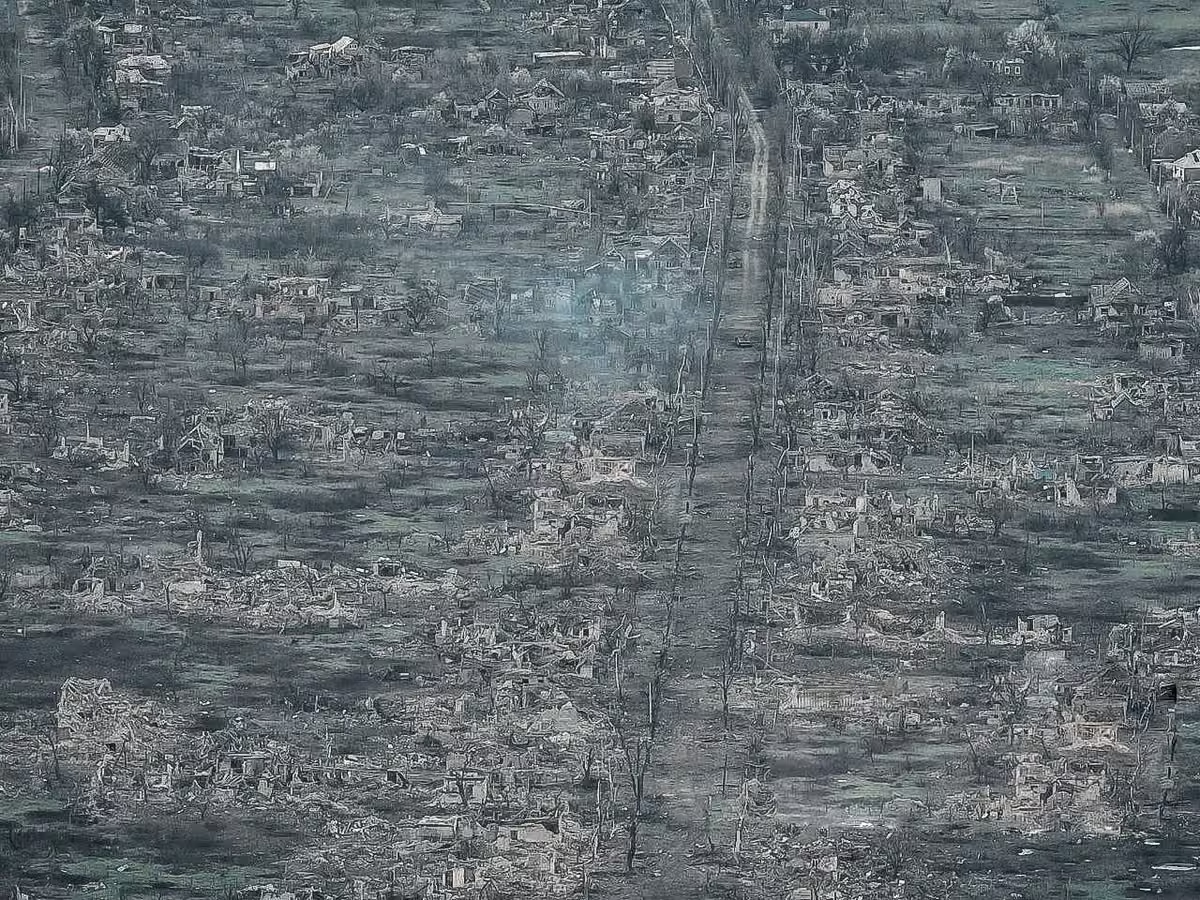
Anna Kinberg Batra reposted
Utrikesdepartementet
@Utrikesdep
30 år av fri rörlighet! Den 2 maj bjuder @sweden2023eu @JohanForssell och @EU_Commission in till Single Market Forum för att diskutera framtiden för EU:s inre marknad. #singlemarket30
Anna Kinberg Batra reposted
Oleksii Reznikov
@oleksiireznikov
Grateful to my friend, Minister of Defence 🇸🇪Pål Jonson
@PlJonson for Ukraine’s 🇺🇦unwavering and steady support. During our 📞we discussed further steps to strengthen 🇺🇦 Army capabilities. Looking forward to fruitful “CV90 Coalition” 🇺🇦🤝🇸🇪

Anna Kinberg Batra reposted
 Tobias Thyberg
@TobiasThyberg
Solidarity: the 8 Nordic & Baltic foreign ministers shoulder to shoulder with Ukrainian colleague @DmytroKuleba in Odesa. Talks on military support, European integration & grain exports.


Anna Kinberg Batra reposted
 Svenska högtider och vanor
@hogtider_vanor
Och så önskar vi givetvis kung Carl XVI Gustaf grattis på födelsedagen.

Anna Kinberg Batra reposted
Diana Janse
@sigriddiana
Varma gratulationer till Hans Majestät Konungen - 77 år idag, snart 50 år på tronen. Ett liv dedikerat till rikets tjänst, och med den äran. Vilken livsgärning! 🇸🇪

Anna Kinberg Batra reposted
The Economist
@TheEconomist
After a century in which the vehicle remade the rich world, the momentum may be beginning to swing the other way econ.st/3AlYEaB
Anna Kinberg Batra reposted
 Evgenia Kara-Murza
@ekaramurza
So proud of our girl making her first ever public speech in support of her father @vkaramurza at the US Congress on the one-year anniversary of his arrest in Moscow. “You must be the change you want to see in the world”.


Anna Kinberg Batra reposted
Kaja Kallas
@kajakallas
Horrific images from #uman prove yet again: Russia is a terrorist state. Children among the dead.
The aggressor will never stop unless he is stopped.
We need to better arm #ukraine and do it fast. We also need to ensure accountability for every crime committed by Russia.
Volodymyr Zelenskyy / Володимир Зеленський
@ZelenskyyUa
Uman... The rubble is still being cleared. There are already 13 dead. Two of them are children that can’t be identified. The fate of their parents is unknown... The rescuers will work until they make sure that no one else is left under the rubble. We can defeat Russian terror together only - with weapons for Ukraine, the toughest sanctions against the terrorist state, and fair sentences for the 🇷🇺 killers.
Anna Kinberg Batra reposted
Försvarsmakten
@Forsvarsmakten
Som 🇸🇪 tronföljare fortbildar sig Kronprinsessan kontinuerligt inom försvarsområdet. #svfm www.forsvarsmakten.se/sv/aktuellt/2023/04/kronprinsessan-…
Anna Kinberg Batra reposted
Stockholms Hamnar
@StockholmsHamn
Hur kan #stockholmnorvik Hamn vara en strategisk hubb och partner för mer hållbara godstransporter? Det diskuterades när länsstyrelsen i Stockholms län och Stockholms Hamnar igår samlade repr för näringsliv, kommuner och myndigheter till rundabordssamtal: www.stockholmshamnar.se/om-oss/nyheter/2023/stockholm-nor…

Anna Kinberg Batra reposted
NATO
@NATO
Retweet to join us in celebrating our Ally 🇳🇱 the #netherlands on #koningsdag2023 #koningsdag
@NLatNATO 🤝 #wearenato
 Anna Kinberg Batra
@KinbergBatra
Vårt digitala samhälle är sårbart, och utgår i alltför stor utsträckning från att alla är uppkopplade utan störningar och ingen vill skada någon eller något. Det sistnämnda vore fint om det var sant, vilket det ju dessvärre inte är. Bra med starkare grepp om cybersäkerhet:
 DN Debatt
@DNDebatt
DN DEBATT 27/4.
Regeringen: ”FRA får ta över ansvaret för Sveriges cybersäkerhet.”
www.dn.se/debatt/fra-far-ta-over-ansvaret-for-sveriges-cy…
Anna Kinberg Batra reposted
Volodymyr Zelenskyy / Володимир Зеленський
@ZelenskyyUa
The anniversary of the Chornobyl disaster is the right day to remind everyone in the world how fragile our security is. And even more so when the threat of a radiation catastrophe at the Zaporizhzhia nuclear power plant, artificially created by 🇷🇺, has been looming every day and every minute for more than a year already.
Only 🇺🇦 full control over the #znpp can restore full security not only for our country, but also for the entire Europe and the whole world.
Radiation does not recognize state borders, just like 🇷🇺. And only full compliance with the rules can guarantee safety.
Anna Kinberg Batra reposted
 Jessika Roswall
@JessikaRoswall
EU:s klimatpaket Fit for 55 har lagt grunden för vår klimatpolitik framöver. EU är Sveriges viktigaste klimatpolitiska plattform, och förhandlingarna har varit en stor framgång för @sweden2023eu och för EU.

Anna Kinberg Batra reposted
Volodymyr Zelenskyy / Володимир Зеленський
@ZelenskyyUa
Every act of 🇷🇺 terror, every day of aggression is an additional argument that all this must end in the Tribunal – in a new Nuremberg against ruscism... Against those who destroy lives and people, who use missiles against museums and guided bombs against churches.
Anna Kinberg Batra reposted
Pål Jonson
@PlJonson
Det är mycket glädjande att den utsända personalen i Sudan, deras anhöriga och ett antal svenskar nu befinner sig i säkerhet. Det är en styrka att Sverige kunnat genomföra denna insats på mycket kort tid och i nära samarbete med Frankrike och andra nationer. (1/3)

Anna Kinberg Batra reposted
 Petrakahnnord
@petrakahnnord
@SwedishPM outlines importance of fighting antisemitism at Opening of Nordic Office. Watch the full speech on this link:
www.worldjewishcongress.org/en/videos/diplomacy/swedens-p…
Anna Kinberg Batra reposted
 Estonia in Ukraine
@EE_Ukraine
President @ZelenskyyUa awarded PM @kajakallas with the Order of Prince Yaroslav the Wise, II degree, for outstanding personal merits in strengthening 🇺🇦🇪🇪 interstate cooperation, support for the sovereignty & territorial integrity of Ukraine 👏

Anna Kinberg Batra reposted
Kaja Kallas
@kajakallas
I am in #ukraine on my first visit as the head of Estonia's new government.
@ZelenskyyUa, I am here with a message of firm belief – I believe in Ukraine's victory and I believe in Ukraine as a prosperous liberal democracy that belongs in the Euro-Atlantic family. 1/

Anna Kinberg Batra reposted
Emanuel Örtengren
@emanuelorten
Utmärkt intervju med en av vår tids främsta intellektuella. ”Man väljer inte mellan förhandlingar och krig. Man vinner ett krig, och förhandlar därefter. De som vill att Ryssland ska komma till förhandlingsbordet borde arbeta för att besegra Ryssland. Svårare än så är det inte.”
Anna Kinberg Batra
@KinbergBatra
Timothy Snyder: Ryssland kommer förstå att de förlorat - dn.se www.dn.se/varlden/timothy-snyder-ryssland-kommer-att-fors…
Anna Kinberg Batra
@KinbergBatra
Timothy Snyder: Ryssland kommer förstå att de förlorat - dn.se www.dn.se/varlden/timothy-snyder-ryssland-kommer-att-fors…
Anna Kinberg Batra
@KinbergBatra
Även blodigt allvar kan förmedlas med känslor och humor. Vilket ger resultat, dessutom:
Försvarsmakten
@Forsvarsmakten
Humor, känslor och snabbhet. Det är några komponenter i Ukrainas framgångsrika informationskrig. Läs FOI:s rapport till Försvarsmakten. #svfm www.forsvarsmakten.se/sv/aktuellt/2023/04/ukraina-vinner-…
Anna Kinberg Batra reposted
Försvarsmakten
@Forsvarsmakten
Humor, känslor och snabbhet. Det är några komponenter i Ukrainas framgångsrika informationskrig. Läs FOI:s rapport till Försvarsmakten. #svfm www.forsvarsmakten.se/sv/aktuellt/2023/04/ukraina-vinner-…
Anna Kinberg Batra reposted
Freddy Jönsson Hanberg
@freddyjonssonh
👇
 The Joint Expeditionary Force (JEF)
@JEFnations
🇸🇪 Swedish Exercise #aurora23 starts this week and will see the Army, Navy, Air Force & Home Guard exercise together with international partners. The purpose of the exercise is to enhance the collective capability to counter an armed attack on Sweden.
📽️ @Forsvarsmakten 🇸🇪
Anna Kinberg Batra reposted
Ulf Kristersson
@SwedishPM
Good discussions with @SecDef Austin on longstanding cooperation between 🇸🇪 and 🇺🇸, common security challenges and our joint, steadfast support to 🇺🇦. Grateful for strong U.S support for Sweden's accession to NATO. Looking forward to further deepening our relationship as Allies.

Anna Kinberg Batra reposted
Pål Jonson
@PlJonson
It was a honor to host @SecDef Lloyd Austin during his two days visit in Sweden. We have strong security and defence ties between our two countries that will become even depeer when we become allies in NATO.
 Archive: Lloyd J. Austin III
@SecDefAustin
It was a pleasure meeting today with Minister of Defence @PlJonson & Swedish Supreme Commander Gen. Micael Byden. The ties between the U.S. & Sweden run deep. And the partnership between our two democracies continues to flourish.
Anna Kinberg Batra reposted
Sir William Browder KCMG
@Billbrowder
BREAKING: The European Parliament just voted 508 in favor, 14 opposed and 31 abstained to adopt EU Magnitsky sanctions against the officials involved in Vladimir Kara-Murza’s and Alexei Navalny’s political persecution. Names are named. Now will the EU Act?

 EP PressService
@EuroParlPress
Human rights breaches in Russia, Afghanistan and Nigeria:
- Russian repression incl Vladimir Kara-Murza & Alexei Navalny
- Persecution of Afghan women's education activists
- Death penalty risk to Nigerian singer Yahaya Sharif-Aminu for blasphemy
More⤵️www.europarl.europa.eu/news/en/press-room/20230414IPR8013…
Anna Kinberg Batra reposted
Secretary Antony Blinken
@SecBlinken
Today, the United States announced critical new support for Ukraine as it continues to bravely defends its people, its territorial integrity, and its independence against Russia’s aggression. We stand #unitedwithukraine. www.state.gov/additional-u-s-security-assistance-for-ukra…
Anna Kinberg Batra
@KinbergBatra
Ännu ett viktigt steg för Sverige i rymden, till nytta för forskning, teknik och mer på jorden. Lägg namnet Marcus Wandt på minnet så länge!🌟🚀
 Utbildningsdepartementet
@Utbdep
Sverige har målsättningen att få upp en ny svensk ESA-astronaut i rymden inom ett år. Därför har regeringen fattat beslut om att ge @RymdstyrelsenSE i uppdrag att driva frågan inom ramen för Sveriges deltagande i Europeiska rymdorganisationen ESA.
www.regeringen.se/pressmeddelanden/2023/04/svensk-astrona…
Anna Kinberg Batra reposted
Secretary Antony Blinken
@SecBlinken
My suit brand might be a state secret, but enjoyed speaking to @msebastian of @Esquire. We talked family, choosing the best @thebeatles album, and @POTUS's guiding phrase: “It matters when we have close partnerships and friendships around the world." www.esquire.com/news-politics/a43461737/antony-blinken-se…
Anna Kinberg Batra
@KinbergBatra
Annars i Stockholms län i veckan:
Försvarsdepartementet
@ForsvarsdepSv
Under resan till Berga visade @Försvarsmakten upp sina militära förmågor. Försvarsmakten genomförde bl.a landstigning av amfibieförband, överflygning av JAS Gripen och Helikopter 16, passage av svävare och förevisning av minsprängning.
Anna Kinberg Batra
@KinbergBatra
Snart dags för mer TV-trams från familjen Batra, även om jag bara är amatör på alla sätt: www.aftonbladet.se/nojesbladet/tv/a/abqm27/politiker-och-…
Anna Kinberg Batra reposted
 Therese Svanström
@ThereseSvanstrm
Och detta ser @TCOSverige hos många av förbundens medlemmar. Hot och våld är en del av vardagen för socialsekreterare, poliser, journalister, arbetsförmedlare, bankanställda och många fler. Så kan vi inte ha det. Samhällsbärarna ska vara trygga på jobbet.
Anna Kinberg Batra
@KinbergBatra
Efter pulverbrev, hot och trakasserier mot statliga medarbetare: Länsstyrelsen ber regeringen stärka skyddet kring särskilt utsatta offentliganställda. Myndighetsutövning ska aldrig behöva betyda livsfara. Läs mer här: www.lansstyrelsen.se/stockholm/om-oss/pressrum/nyheter/ny…
Anna Kinberg Batra reposted
Försvarsdepartementet
@ForsvarsdepSv
Idag tar försvarsminister @PlJonson emot USA:s @SecDef Lloyd J. Austin III ute på Muskö örlogsbas. Besöket inleds med hedersbetygelser och välkomstceremoni av Livgardet.
Anna Kinberg Batra
@KinbergBatra
Efter pulverbrev, hot och trakasserier mot statliga medarbetare: Länsstyrelsen ber regeringen stärka skyddet kring särskilt utsatta offentliganställda. Myndighetsutövning ska aldrig behöva betyda livsfara. Läs mer här: www.lansstyrelsen.se/stockholm/om-oss/pressrum/nyheter/ny…
Anna Kinberg Batra reposted
Archive: Lloyd J. Austin III
@SecDefAustin
Wheels down in Stockholm. Tomorrow I’ll meet with Minister of Defence @PlJonson and Swedish Supreme Commander Gen. Micael Byden to continue building upon our strong & important bilateral relationship.
Anna Kinberg Batra reposted
Volodymyr Zelenskyy / Володимир Зеленський
@ZelenskyyUa
I had the honor to congratulate the Ukrainian military on the frontline on Easter. In Donbas, in our Avdiivka. It's hard to see what Russian terrorists have done to this city. Honor to our warriors who've been restraining and destroying this Russian evil for 419 days and 9 years.
Anna Kinberg Batra reposted
Sir William Browder KCMG
@Billbrowder
BREAKING: Russia summons Western diplomats over 'meddling' in the Kara-Murza case. Too bad, I suspect there’s going to be a lot more ‘meddling’ in the future. 25 years for public speeches about political prisoners will generate outrage for years to come www.reuters.com/world/europe/russia-warns-western-diploma…
Anna Kinberg Batra reposted
Sir William Browder KCMG
@Billbrowder
Beautiful statement by the wife of Vladimir Kara Murza, @ekaramurza, whose husband was just given the longest sentence of any political prisoner in Russia.
Evgenia Kara-Murza
@ekaramurza
A quarter of a century is an “A+” for your courage, consistency and honesty in your years-long work. I am infinitely proud of you, my love, and I’m always by your side. @vkaramurza
Anna Kinberg Batra reposted
Sir William Browder KCMG
@Billbrowder
BREAKING: The Latvian government has just imposed Magnitsky sanctions on 10 Russian officials involved in the persecution and 25 year sentence of Vladimir Kara Murza. @edgarsrinkevics, Latvian foreign minister will propose the EU does the same.
 Edgars Rinkēvičs
@edgarsrinkevics
I condemn unjust and harsh sentence against prominent Russian opposition politician @vkaramurza handed down by the Russian court today.
I have decided to impose travel ban ob 10 Russian individuals who are complicit in this sham case. I call on EU to impose sanctions as well
Anna Kinberg Batra reposted
Sir William Browder KCMG
@Billbrowder
'Dark times' in Russia, as sick dissident Vladimir Kara Murza sent to die in jail euobserver.com/world/156927
Anna Kinberg Batra reposted
Anna-Lena Laurén
@AnnalenaLauren
Domen är sannolikt också ett straff för hans sturskhet. Kara-Murza ångrar inte sina handlingar.
– Jag är stolt. Det enda som grämer mig är att jag inte lyckades övertyga tillräckligt många landsmän om hur farlig dagens regim är, för Ry och för världen.
www.dn.se/varlden/anna-lena-lauren-25-ar-i-fangelse-som-e…
Anna Kinberg Batra reposted
NATO
@NATO
NATO Allies and partners train Ukrainian recruits in the UK
Instructors from 🇨🇦🇩🇰🇫🇮🇱🇹🇳🇱🇳🇴🇬🇧 & 🇦🇺🇳🇿🇸🇪 are helping Ukraine to uphold its fundamental right to self-defence, preparing troops to defend their country on the frontlines
#standwithukraine️ 🇺🇦

Anna Kinberg Batra reposted
Sir William Browder KCMG
@Billbrowder
For any government struggling with what to do after Russia sentenced Vladimir Kara Murza to 25 years in prison in the harshest political sentence since Stalin’s time, here’s a list of the 31 officials who should be sanctioned under the Magnitsky Act. drive.google.com/file/d/1sk5440Sz4mtX6QuEF-h3tJjprcNTIiGt…
Anna Kinberg Batra reposted
Finansdepartementet
@FinansdepSv
Regeringen avser att möta den svåra ekonomiska situationen med en plan som innehåller tre delar:
🔹Bekämpa inflationen och stötta utsatta hushåll
🔹Återupprätta arbetslinjen
🔹Strukturreformer för en högre tillväxt
Läs mer på regeringen.se/budget. #vårbudget
Anna Kinberg Batra reposted
Finansdepartementet
@FinansdepSv
In a hurry? Here’s a 5-minute summary of the government’s Spring Budget Bill presented today: government.se/articles/2023/04/the-2023-spring-budget-in-…

Anna Kinberg Batra reposted
Timothy Snyder
@TimothyDSnyder
Kidnapping children to denationalize them is genocide according to article 2e of the 1948 genocide convention.
 Oliver Carroll
@olliecarroll
What evil looks like. The crazy thing is that some of the adult Russians in sham somehow thought they were doing the right thing.
x.com/SlavaUk30722777/status/1638937168071770117/video/1
Anna Kinberg Batra reposted
Sir William Browder KCMG
@Billbrowder
Opinion | Vladimir Kara-Murza’s case exposes the rot at the heart of Russia - The Washington Post www.washingtonpost.com/opinions/2023/04/11/vladimir-kara-…
Anna Kinberg Batra reposted
Anna-Lena Laurén
@AnnalenaLauren
Fången ska inte bara lida fysiskt. Han ska ständigt vara på sin vakt, utlämnad till fullständigt godtycke. Om behandlingen leder till hans död är det knappast att betrakta som ett olycksfall i arbetet. www.dn.se/varlden/anna-lena-lauren-en-sovjetisk-tradition…
Anna Kinberg Batra
@KinbergBatra
Större samhällsförändring ställer nya krav på elsystem, även bortom kända kraftverk och kablar. Gäller även i Sverige, där debatten om bättre system berör, och borde engagera, många fler än dagens energi-aktörer: www.economist.com/technology-quarterly/2023/04/05/the-ele…
Anna Kinberg Batra
@KinbergBatra
Dags att lägga i båten? Då är det dags att tänka på vad du häller i havet och vad du kan göra åt det! Mer om hur här: www.slutatankahavet.se
Anna Kinberg Batra reposted
 Alexey Navalny
@navalny
1/14 I want to say a few words about Mikheil Saakashvili.
I do not know him personally and have never met him.
I don't know anyone from his team, nor did anyone ask me to write this post.
Anna Kinberg Batra reposted
Försvarsmakten
@Forsvarsmakten
Behovet av en militär helikopterbas i Stockholmsområdet har ökat de senaste åren. Nya helikopterbasen i Berga kommer stärka både den militära och civila förmågan. #svfm www.forsvarsmakten.se/sv/aktuellt/2023/04/ny-start-och-la…
Anna Kinberg Batra reposted
Business Ukraine mag
@Biz_Ukraine_Mag
Americans overwhelming support Ukraine joining NATO, according to a new Newsweek poll that found almost three-to-one backing for Ukrainian membership
www.newsweek.com/ukraine-join-nato-america-public-opinion…
Anna Kinberg Batra reposted
Försvarsdepartementet
@ForsvarsdepSv
19 april tar försvarsminister Pål Jonson emot USA:s försvarsminister Lloyd J. Austin III på Muskö örlogsbas. Läs mer: www.regeringen.se/pressmeddelanden/2023/04/forsvarsminist…
Next week Minister for Defence @PlJonson will receive @SecDef Lloyd J. Austin III at Muskö Naval Base. Read more: www.government.se/press-releases/2023/04/minister-for-def…

Anna Kinberg Batra reposted
 EPP Group
@EPPGroup
In 1980 over 60 countries boycotted the #olympic Games.
This was to protest against the Soviet Union's aggression in Afghanistan.
The world lived up at that time to the values it claimed to defend.
Why shouldn't it do nowadays?
Read more: epp.group/p8ppx6
#olympicgames

Anna Kinberg Batra reposted
Volodymyr Zelenskyy / Володимир Зеленський
@ZelenskyyUa
Not a single hour of this week before Orthodox Easter passed without 🇷🇺 murders and terror. This is an evil state, and it will lose. To win is our duty to humanity as such. And we will win! The longer-range Ukrainian strikes are, the sooner Russian atrocities will end.
Anna Kinberg Batra reposted
Sir William Browder KCMG
@Billbrowder
Alexei Navalny calls for the release of dying former Georgian President Mikheil Saakashvili from prison for medical treatment in the West. jam-news.net/navalnys-letter-on-saakashvili/
Anna Kinberg Batra reposted
Richard Herrey
@RichardHerrey
Det är fredagkväll.
Pop opp i topp 🎶
youtu.be/jXZi0AUYMHo
Anna Kinberg Batra reposted
Freddy Jönsson Hanberg
@freddyjonssonh
USA:s försvarsminister @secdef till Sverige för möte med försvarsminister @PlJonson omni.se/usas-forsvarsminister-till-sverige-for-mote-med-j…
Anna Kinberg Batra reposted
Henrik Sjöström 🌻
@Henriksjos
Om ni vill donera till Ukraina så är här länk till den ukrainska statens egna insamling. Man kan betala via apple pay, kort eller banköverföring och finansiera allt från minröjning till återuppbyggnad
UNITED24 - The initiative of the President of Ukraine u24.gov.ua
Anna Kinberg Batra reposted
 Henri Vanhanen
@HenriVanhanen
An important message of continuity in Finland's position today from @PetteriOrpo at the new Parliament's opening ceremony:
"Finland supports Ukraine. The goal is Ukraine's victory and a just peace. We have chosen our side."
14 military aid packages so far and more to come. 🇺🇦🇫🇮
Anna Kinberg Batra reposted
Sir William Browder KCMG
@Billbrowder
Putin personally Approved Arrest of US Reporter Evan Gershkovich on Spying Charges www.bloomberg.com/news/articles/2023-04-12/putin-approved…
Anna Kinberg Batra
@KinbergBatra
@patrikoksanen har helt rätt här, om hur viktiga och spännande saker som händer låångt från Stockholm. Hos @SSCSpaceSverige , inte minst! esvd.svd.se/p/svenska-dagbladet/2023-04-13/a/i-kiruna-avg…
Anna Kinberg Batra reposted
Sir William Browder KCMG
@Billbrowder
UK imposes sanctions on enablers accused of helping Russian oligarchs hide their money. Among others, 2 Cypriots involved in the offshore structures of Abramovich and Usmanov were hit. This will be a shot across the bow for many other proxies and trustees www.theguardian.com/world/2023/apr/12/uk-imposes-sanction…
Anna Kinberg Batra reposted
Volodymyr Zelenskyy / Володимир Зеленський
@ZelenskyyUa
🇺🇦 will prevail in this war. But the 🇷🇺 evil state shouldn’t have any chance to win with ruins.
Any aggressor enjoys when he destroys & when the ruins have to be repaired for decades.
By rebuilding what has been ruined, we defeat the main goal of terror: we return the normal life
Anna Kinberg Batra reposted
Anna Kinberg Batra
@KinbergBatra
Läs- och länk-tips! And yes, there’s a summary in English:-) www.regeringen.se/rattsliga-dokument/statens-offentliga-u…
Anna Kinberg Batra
@KinbergBatra
Diskussionen om bättre betalningssystem har förhoppningsvis bara börjat. Här skriver
@dagensnyheter om behovet av både kontanter och bättre säkerhet i digitala system. Båda behövs, inte minst ur beredskapsperspektiv. Läs mer på betalningsutredningen.se! www.dn.se/ledare/bankerna-maste-ta-storre-ansvar-for-att-…
Anna Kinberg Batra reposted
Anna Kinberg Batra reposted
Sir William Browder KCMG
@Billbrowder
Free Evan Gershkovich. By taking an American journalist hostage, Putin’s Russia announces its transformation into a full-blown terrorist state. Great essay by @BHL (Bernard Henri Levi) www.tabletmag.com/sections/news/articles/free-evan-gershk…
Anna Kinberg Batra reposted
Anna Kinberg Batra reposted
Sir William Browder KCMG
@Billbrowder
Vladimir Kara-Murza's final statement to the Russian court. This is bravery and leadership personified. This statement will go down in history like Martin Luther King’s letter from Birmingham jail. www.washingtonpost.com/opinions/2023/04/10/vladimir-kara-…
Anna Kinberg Batra reposted
 Henrik Sundström
@HenrikSundstrom
Sverige är alltså ett av världens mest toleranta länder

Anna Kinberg Batra reposted
Volodymyr Zelenskyy / Володимир Зеленський
@ZelenskyyUa
The values we're all fighting for in 🇺🇦 fit each nation regardless of whether it's geographically far from our people. Each values security & protection from terror. The more the world knows about 🇷🇺 aggression the faster the aggressor will lose and calmness will return worldwide
Anna Kinberg Batra reposted
Anna Kinberg Batra reposted
 Andrii Plakhotniuk
@a_plakhotniuk
Vi på Ukrainska ambassaden önskar er alla en riktigt Glad Påsk! Vi är tacksamma för stödet och tillsammans kommer vi segra!
#standwithukraine
#blueandyellowteam

Anna Kinberg Batra reposted
Sir William Browder KCMG
@Billbrowder
Brazil’s president Lula urged Ukraine to give up Crimea because “The world needs tranquillity”. I didn’t have particularly strong feelings about Lula until he came out with this. Perhaps he can give Ukraine the Amazon for the sake of “tranquility” www.euronews.com/2023/04/07/the-world-needs-tranquillity-…
Anna Kinberg Batra reposted
Henri Vanhanen
@HenriVanhanen
”Fear isn’t what drove Finland to join NATO. I think it was the idea of trying to balance Russia's aggressive behaviour and also bring stability to northern Europe. Finland has learned to be prepared, but not scared". www.euronews.com/2023/04/07/how-finlands-nato-membership-…
Anna Kinberg Batra reposted
Sir William Browder KCMG
@Billbrowder
The day after Russian prosecutors ask for a 25 year sentence for Russian opposition activist Vladimir Kara Murza, 70 MEP’s call for EU Magnitsky sanctions on those involved in Vladimir’s persecution. The US & Canada have done it, the EU should too. Thanks @petras_petras


Anna Kinberg Batra reposted
Richard Herrey
@RichardHerrey
7 april 2017.
Dagen när terrorn drabbade Stockholm. Minns den lamslående rädslan, ovissheten bland människor, samt det ansvarsfulla beslutsamma agerandet från polisen. Tankarna går till de offer som drabbades av denna ondska.

Anna Kinberg Batra reposted
Dmytro Kuleba
@DmytroKuleba
Russian UNSC presidency is a slap in the face to the international community. I urge the current UNSC members to thwart any Russian attempts to abuse its presidency. I also remind that Russia is an outlaw on the UNSC: mfa.gov.ua/en/news/zayava-mzs-ukrayini-shchodo-nelegitimn…
#badrussianjoke #insecuritycouncil
Anna Kinberg Batra reposted
Sir William Browder KCMG
@Billbrowder
I guess Putin was a little scared of the foreign ambassadors he was receiving credentials from. You can never be too careful these days.
 Konstantin Sonin
@k_sonin
Putin met new ambassadors from 17 countries in Kremlin yesterday. Note the distance - as paranoid as in historical anecdotes about paranoid dictators...
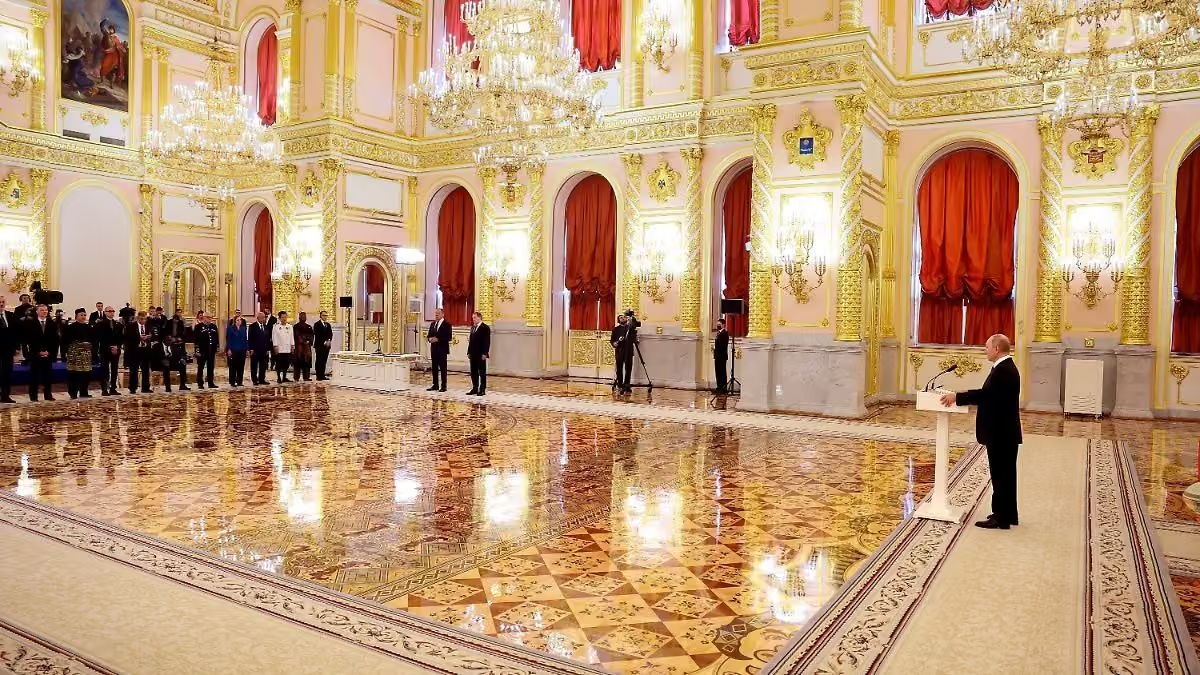
Anna Kinberg Batra reposted
Sviatlana Tsikhanouskaya
@Tsihanouskaya
Dear @MarinSanna, you have always inspired me with your strong leadership, courage & determination. Thank you for your unwavering support for free & democratic #belarus. I send my best wishes for your future endeavors & look forward to continuing our close cooperation with 🇫🇮.

Anna Kinberg Batra reposted
Anne Applebaum
@anneapplebaum
The pointless brutality of the Russian occupation still has not been fully exposed
 Tymofiy Mylovanov
@Mylovanov
This a school basement in a Chernihiv village that Russians turned into a concentration camp. I visited it today. And I listened to survivors for hours, shocked, in disbelief. The media narratives do not do the justice to what happened there. 1/
Anna Kinberg Batra reposted
Sveriges riksdag
@Sverigesriksdag
Välkommen att besöka riksdagen under påsken! På torsdag, fredag, lördag och söndag kan du gå på en gratis visning i Riksdagshuset. Klockan 12 hålls visning på svenska. Klockan 13.30 hålls visning på såväl svenska som engelska. www.riksdagen.se/sv/besok-riksdagen/
Anna Kinberg Batra reposted
 The New Voice of Ukraine
@NewVoiceUkraine
Polish President Andrzej Duda presents Ukrainian President Volodymyr Zelenskyу with the Order of the White Eagle, Poland's highest state honor, as their respective first ladies look on. Zelenskyy was on a state visit to Poland on April 5
More news here 👉 english.nv.ua
Anna Kinberg Batra reposted
 Becky Anderson
@BeckyCNN
"It's not for Russia to decide who can be a NATO member."
In his first interview since Finland's ascension to NATO -- Secretary-General @jensstoltenberg says NATO is a defensive alliance and the move is not a threat to Russia.
Anna Kinberg Batra
@KinbergBatra
Bra med debatt om Betalningsutredningen, här t.ex. @ExpressenLedare om hur alldeles för många står utanför det digitala betalningssystemet: www.expressen.se/ledare/sverige-kastar-en-miljon-mannisko…
Anna Kinberg Batra reposted
 Finnish Government
@FinGovernment
Minister for Foreign Affairs @Haavisto deposited Finland's instrument of accession with @SecBlinken in Brussels. Finland became a @NATO member at the moment of the deposit.
Finland's first act as a NATO member was to deposit the ratification of Swedish membership. #wearenato
Anna Kinberg Batra reposted
Volodymyr Zelenskyy / Володимир Зеленський
@ZelenskyyUa
In the future, there will be no borders between our peoples: political, economic and – what is very important – historical. But for that we still need to gain victory. For that, we need to walk side by side a little more. 🇺🇦🇵🇱

Anna Kinberg Batra reposted
NATO
@NATO
Tervetuloa Suomi — Welcome Finland!
🇫🇮🤝 #wearenato
Anna Kinberg Batra reposted
Darth Putin
@DarthPutinKGB
Day 405 of my 3 day war. I invaded Ukraine to move NATO further away from Russia but ended up with Finland joining it & doubling my border with the alliance.
I remain a master strategist.

Anna Kinberg Batra reposted
Kaja Kallas
@kajakallas
Our northern neighbour is now also our neighbour at the #nato table.
Tervetuloa, Nato-liittolaisia! Welcome, #finland!
This is monumental for the security of the Baltic Sea region and the whole Alliance.
Look forward to also welcoming Sweden in NATO as soon as possible.
Anna Kinberg Batra reposted
Carl Bildt
@carlbildt
The border between NATO and 🇷🇺 just become much longer as 🇫🇮 formally joined the organization. I’m not certain this is what Putin had in mind when he launched his invasion of 🇺🇦.

Anna Kinberg Batra reposted
 Katarina O'Nils Franke
@onilsfranke
Vilka fellow rymdnördar har jag bland mig? 🚀
Anna Kinberg Batra reposted
 Sveriges riksbank
@riksbanken
Riksbankens e-kronapilot släpper nu sin tredje rapport som går igenom hur en e-krona skulle kunna fungera om ett beslut tas i framtiden om att ge ut digitala centralbankspengar. Läs mer: www.riksbank.se/sv/press-och-publicerat/nyheter-och-press… #cbdc #ekrona #betalningar #riksbanken

Anna Kinberg Batra reposted
 SNS
@snskunskap
@KinbergBatra överlämnade i fredags Betalningsutredningens betänkande till regeringen. Kort därefter presenterade hon utredningens slutsatser vid SNS /@SHouseofFinance's Finanspanel.
Se seminariet i efterhand: www.sns.se/evenemang/sveriges-framtida-ekosystem-for-beta…

Anna Kinberg Batra reposted
NATO
@NATO
🗓️ #nato Foreign Ministers are meeting in Brussels on 4-5 April
🇫🇮 Ceremony for Finland's accession to NATO [4 APR]
Follow @JensStoltenberg, @NATOpress & @NATO for the latest #formin updates
ℹ️ Click for more information ⤵️
Anna Kinberg Batra reposted
Utrikesdepartementet
@Utrikesdep
Sveriges stöd till Ukraina sedan februari 2022 uppgår till över 21 miljarder kronor – ungefär 1,9 miljarder euro.
Vi fortsätter stödja Ukraina, så länge det behövs.
Läs mer om hur stödet fördelas: regeringen.se/regeringens-politik/rysslands-invasion-av-u…

Anna Kinberg Batra reposted
Viktor Barth-Kron
@viktorbk
Vad skulle vi göra utan ekonomerna och deras expertis.

Anna Kinberg Batra reposted
 Swedish House of Finance
@SHouseofFinance
Anna Kinberg Batra @KinbergBatra presented the final report of the Swedish Payments Inquiry, investigating the roles of the government and private sector in a digitalised payment market. Watch here: youtu.be/xXCQD1mU8jE
@vinnova @snskunskap
Anna Kinberg Batra
@KinbergBatra
Finlands sannolikt blivande statsminister @PetteriOrpo må vara okänd i Sverige hittills, men han har en stolt svensk-samarbets-historia: www.kokoomus.fi/partiledarna-orpo-och-kinberg-batra-trans…
Anna Kinberg Batra reposted
Johan Ripås
@JohanRipas
Titta gärna på Morgonstudion kl 9.10 för fortsättning på min resa i Wagnerland.

 Anna Kinberg Batra
@KinbergBatra
Vemodigt men varsågod: Allra sista nyhetsbrevet från Betalningsutredningen. Tack igen till alla som var med! betalningsutredningen.se/nyhetsbrev-mars-2/
Anna Kinberg Batra
@KinbergBatra
Tack samtliga inblandade för bra diskussion om Betalningsutredningen hos @snskunskap 31/3! Missade du seminariet, eller inte men vill se det igen:-) , så kan du se det i efterhand här: www.sns.se/artiklar/sveriges-framtida-ekosystem-for-betal…
Anna Kinberg Batra reposted
Volodymyr Zelenskyy / Володимир Зеленський
@ZelenskyyUa
On April 2, the last occupier fled from the Kyiv region. The day will come when we'll say: the last occupier fled or was killed in the Donetsk region, Luhansk region, Kherson region and our entire south. Crimea will be free and safe again. Ukraine will return all its territories.
Anna Kinberg Batra reposted
Carl Bildt
@carlbildt
A sunny Election Day in 🇫🇮. There is no way of knowing which of the three leading parties that will come out on top and accordingly get first go at forming a government.
Anna Kinberg Batra reposted
 Peter Larsson
@Herravaldet
I veckan kom @KinbergBatra med viktiga Betalningsutredningen (för övrigt iklädd passande myntblus!). Har vi egentligen koll på vår valuta. Vilka är dessa mynt?

Anna Kinberg Batra reposted
World of Engineering
@engineers_feed
How come April 1st is the only day of the year people read news stories critically?
Anna Kinberg Batra reposted
Emanuel Örtengren
@emanuelorten
Halvtid för Sveriges EU-ordförandeskap. Några viktiga resultat hittills:
✅ En miljon artillerigranater till Ukraina
✅ Laddstolpar var sjätte mil längs med alla EU:s huvudvägar senast 2026
✅ En ny långsiktig konkurrenskraftsstrategi
70% av mötena kvarstår, men det går framåt.

Anna Kinberg Batra reposted
Carl Bildt
@carlbildt
This is the first page today of the leading daily in 🇫🇮 and indeed the largest in the Nordic world. You don’t need to understand Finnish to get the meaning.

Anna Kinberg Batra reposted
 Gustaf Göthberg
@gustafgothberg
I går presenterade @KinbergBatra sin utredning om statens roll på betalningsmarknaden. Mycket bra att det finns ett tydligt beredskapsperspektiv och krav på att kontantbetalningen måste tryggas också framöver. www.dn.se/debatt/staten-och-apoteken-ska-vara-skyldiga-at…
Anna Kinberg Batra reposted
Global Capital Guide
@TheCapitalGuide
Anna Kinberg Batra reposted
Darth Putin
@DarthPutinKGB
It's April Fool's Day. Be careful of what you read from Kremlin in case it turns out to be laughable bullshit....
Anna Kinberg Batra reposted
Global Capital Guide
@TheCapitalGuide
Anna Kinberg Batra reposted
Anna Kinberg Batra reposted
Lars Wilderäng
@Cornubot
Övervägde i några sekunder att posta FÖRSTA APRILSKÄMT, men allvarstid kräver att man är seriös. Man ska vara seriös.
 Anna Kinberg Batra
@KinbergBatra
Läs- och länk-tips! And yes, there’s a summary in English:-) www.regeringen.se/rattsliga-dokument/statens-offentliga-u…
Anna Kinberg Batra
@KinbergBatra
Tack för bra diskussion, hoppas debatten bara börjat!
Sveriges riksbank
@riksbanken
Idag deltog vice riksbankschef Aino Bunge i ett panelsamtal på SNS/Swedish House of Finance om Betalningsutredningens slutbetänkande som presenterades av Anna Kinberg Batra som varit ansvarig för utredningen. #riksbanken #betalningar #kontanter www.riksbank.se/sv/press-och-publicerat/nyheter-och-press…
Anna Kinberg Batra reposted
Utrikesdepartementet
@Utrikesdep
Svenska ordförandeskapet i halvtid🇸🇪🇪🇺 Stödet till Ukraina och fortsatt press på Ryssland, klimat- och energifrågorna och att sätta EU:s långsiktiga konkurrenskraft på agendan har präglat ordförandeskapets första månader. Läs mer: www.regeringen.se/artiklar/2023/03/ordforandeskapet-i-hal…
#eu2023se @sweden2023eu

Anna Kinberg Batra reposted
Lars Wilderäng
@Cornubot
Jag har uppdaterat sidan med organisationer och projekt man kan stödja i Ukraina med Direct Ukraine, Föreningen Svenskbyborna och Skicka vidare till Ukraina.
Läs mer här.
cornucopia.se/2022/08/organisationer-och-projekt-for-att-…
Anna Kinberg Batra reposted
Sveriges riksdag
@Sverigesriksdag
Välkommen att besöka riksdagen i helgen! På lördag och söndag kan du gå på en guidad visning i Riksdagshuset. Klockan 12 hålls visning på svenska och 13.30 hålls visning på svenska och engelska. Visningen är kostnadsfri. www.riksdagen.se/sv/besok-riksdagen/
Anna Kinberg Batra reposted
Darth Putin
@DarthPutinKGB
Having doubled the alliance's border with Russia, I finally feel I've earned this.
 Anna Kinberg Batra
@KinbergBatra
Här finns hela Betalningsutredningens betänkande digitalt. And yes, there’s a summary in English:
betalningsutredningen.se/betalningsutredningens-betankand…
Anna Kinberg Batra
@KinbergBatra
10.30 presenterar jag resultatet av Betalningsutredningen, både fysiskt och digitalt. Sistnämnda följer du här:
Betalningsutredningen 2023 youtube.com/@Betalningsutredningen2023 via @YouTube
Anna Kinberg Batra
@KinbergBatra
Välkommen till dagens seminarium om Betalningsutredningen hos @snskunskap ! Kan vara svårt att få tillgång till detta fysiskt, men hoppas tillgängligt även digitalt! :-)
 Mikael Witterblad
@witterblad
Väldigt stort intresse för SNS/@SHouseofFinance möte i morgon om Sveriges framtida ekosystem för betalningar. Utgångspunkten för samtalet är slutsatserna i Betalningsutredningen. Deltar gör bl.a. utredaren @KinbergBatra & vice riksbankschef Aino Bunge 💳💸 www.sns.se/artiklar/sveriges-framtida-ekosystem-for-betal…
Anna Kinberg Batra
@KinbergBatra
Sverige har ett av världens mest digitala betalningssystem, men det är sårbart. Och även kontanter behövs, särskilt för det viktigaste. Välkommen att följa presentationen av Betalningsutredningen i dag, här skriver jag om några delar på @DNDebatt . Följ resten på pressträff 1030!
DN Debatt
@DNDebatt
DN DEBATT 31/3.
Anna Kinberg Batra om Betalningsutredningens slutbetänkande: "Staten och apoteken ska vara skyldiga att ta emot kontanter."
www.dn.se/debatt/staten-och-apoteken-ska-vara-skyldiga-at…
Anna Kinberg Batra reposted
Anna Kinberg Batra
@KinbergBatra
Nu är Betalningsutredningen klar! Helheten presenteras på pressträff fredag 31/3 1030, men några bitar skriver jag om i DN redan nu:
DN Debatt
@DNDebatt
DN DEBATT 31/3.
Anna Kinberg Batra om Betalningsutredningens slutbetänkande: "Staten och apoteken ska vara skyldiga att ta emot kontanter."
www.dn.se/debatt/staten-och-apoteken-ska-vara-skyldiga-at…
Anna Kinberg Batra reposted
Volodymyr Zelenskyy / Володимир Зеленський
@ZelenskyyUa
Thank you to everyone who supports the 🇺🇦 struggle for independence! 🇺🇦 didn't waste a single week during the full-scale war – we're constantly strengthening our state, our Defense & Security Forces, our confidence in advancing towards victory. Glory to our warriors! Glory to 🇺🇦!
Anna Kinberg Batra reposted
Sir William Browder KCMG
@Billbrowder
The UN is no longer fit for purpose. It should either be radically reformed or dismantled. Anyone who accepts this and countless other UN absurdities only prolongs the death and destruction meted out by dictators like Putin.
 POLITICOEurope
@POLITICOEurope
OPINION: In March, the International Criminal Court issued an arrest warrant against Russian President Vladimir Putin for a war crime allegation.
On April 1, Russia is set to take up the presidency of the UN Security Council.
This is not a cruel joke.
www.politico.eu/article/united-nations-russia-security-co…
Anna Kinberg Batra reposted
Finnish Government
@FinGovernment
Finland sends one thousand maternity packages to Ukraine. 🇫🇮🤝🇺🇦
Russia has destroyed people's homes and healthcare infrastructure in Ukraine. Ukraine has a constant need for diverse civilian material assistance.
valtioneuvosto.fi/en/-//1410869/finland-sends-one-thousan…
Anna Kinberg Batra
@KinbergBatra
Förr kunde bara (några) stater nå rymden. Nu är det, som en kund till @SSCSpaceSverige påpekar i @dagensindustri , så här: ”De som investerar miljarder i rymdindustrin är inte bara Boeing och Airbus, utan företag som Microsoft, Apple och Amazon” etidning.di.se/shared/article/miljardtillskott-till-rymdb…
Anna Kinberg Batra reposted
Viktor Barth-Kron
@viktorbk
Tråkig vinkel av DN. Det här skedde helt enligt demokratiska spelregler. Om andra smådjur har uppgifter om något annat får de rapportera det, så ska vi naturligtvis gå till botten med uppgifterna. www.dn.se/sverige/ny-invasiv-krafta-upptackt-i-botkyrka/
Anna Kinberg Batra reposted
Volodymyr Zelenskyy / Володимир Зеленський
@ZelenskyyUa
I want to thank each and every one who, at the call of heart, in different countries, in different words, but equally honestly and strongly reminds the world that Russian aggression can end much faster than is sometimes said. Faster, if the world is faster and more determined.
Anna Kinberg Batra
@KinbergBatra
Föreslår att riksdagen, menar de, antar jag, men bra! 🌟👏 www.svt.se/nyheter/lokalt/stockholm/regeringen-lagger-10-…
Anna Kinberg Batra reposted
 Marie Herrey
@MarieHerrey
Har besök av finsk vän. Möter upp honom i receptionen när det är -26 och han utbrister:
-varför är alla så påbyltade, det är ju inte som om vi är i Arktis!
Well….😂
Anna Kinberg Batra reposted
SSC Sverige
@SSCSpaceSverige
Utan rymden stannar vardagen 🛰️ Nya Spaceport Esrange ska möjliggöra snabb uppskjutning av satelliter, av särskild betydelse för bl a försvaret: "En normal satellituppskjutning tar 4-6 månader. Målet vi satt är några dagar," säger SSC:s Stefan Gustafsson. www.svt.se/nyheter/inrikes/krigshot-i-rymden-stormakterna…
Anna Kinberg Batra reposted
SSC Sverige
@SSCSpaceSverige
Under nästa år väntas den första satellituppskjutningen från nya Spaceport Esrange: "Vi får en unik förmåga där vi kan sätta ihop satellit och raket, skjuta upp härifrån, styra in lasten i omloppsbana och sedan ta ner datan, säger SSC:s Stefan Gustafsson. www.svt.se/nyheter/inrikes/har-ska-45-meter-hoga-raketer-…
Anna Kinberg Batra reposted
Volodymyr Zelenskyy / Володимир Зеленський
@ZelenskyyUa
Now one cannot be mentally far from the war. Now it is important that as many Ukrainians as possible help the defense of the state, help the accumulation of world support for our victory.
The strength of 🇺🇦 is the strength of all those who fight for 🇺🇦 and who help the warriors.
Anna Kinberg Batra reposted
World of Engineering
@engineers_feed
You can fit every planet in the solar system within the space between the Earth and the Moon: the average distance from the Earth to the Moon is 384,400 km, the sum of diameters is 380,008 km. That leaves us with 4,392 km to spare. We could obviously fit Pluto into that slot 😊
 Anna Kinberg Batra
@KinbergBatra
På fredag 31 mars presenteras Betalningsutredningen. Här värmde jag upp i ämnet i Dagens Eko under söndagen: sverigesradio.se/artikel/statliga-utredaren-digitala-bank…
Anna Kinberg Batra reposted
Anne Applebaum
@anneapplebaum
Prime minister of Estonia
Kaja Kallas
@kajakallas
My mother was deported to Siberia today 74 years ago as a 6-months old baby. Russia hasn’t changed.
Anna Kinberg Batra reposted
Oleksii Reznikov
@oleksiireznikov
We share national colors and a common goal: to restore justice and peace in Europe.
Archers, Leopards, RBS-97 and ammo will help #uaarmy to do its job.
Thank you to @Sverigesriksdag @SwedishPM Ulf Kristersson @PlJonson and the Swedish people.
🇺🇦🤝🇸🇪
Anna Kinberg Batra reposted
 Rymdchefen
@rymdchefen
Esrange är en strategisk resurs för Totalförsvaret, Europa, Nato och våra partners. 🚀 #säkpol @SSCspace #swaf
 HenrikJ
@nHenrikJ
Bra inslag i Rapport(2min 40 sek)om den svenska militära förmågeutvecklingen i rymden och utvecklingen av den egna förmågan att skjuta upp satelliter.
www.svtplay.se/video/KZAv2Lw/rapport/ikvall-19-30/?id=KZA…
Anna Kinberg Batra reposted
Zebulon Carlander
@ZCarlander
Från Utrikesdeklarationen: ”Sverige och Frankrike är de enda två EU-länder som har förmågan att skjuta upp satelliter. Vi är en ledande rymdnation och ska fortsatt gå i bräschen på området.” www.regeringen.se/tal/2023/022/utrikesdeklarationen-2023/
HenrikJ
@nHenrikJ
Bra inslag i Rapport(2min 40 sek)om den svenska militära förmågeutvecklingen i rymden och utvecklingen av den egna förmågan att skjuta upp satelliter.
www.svtplay.se/video/KZAv2Lw/rapport/ikvall-19-30/?id=KZA…
Anna Kinberg Batra reposted
Viktor Barth-Kron
@viktorbk
Moderaternas första nationella valseger på 13 år! www.expressen.se/sport/fotboll/han-ar-svenska-fotbollforb…
Anna Kinberg Batra reposted
Pål Jonson
@PlJonson
Supporting Ukraine is both the right thing and the smart thing to do.
I am certain a Ukrainian victory is possible and that Ukraine, including Krim and the four illegally annexed provinces, again can and will be a free and independent country living in peace.
Oleksii Reznikov
@oleksiireznikov
We share national colors and a common goal: to restore justice and peace in Europe.
Archers, Leopards, RBS-97 and ammo will help #uaarmy to do its job.
Thank you to @Sverigesriksdag @SwedishPM Ulf Kristersson @PlJonson and the Swedish people.
🇺🇦🤝🇸🇪
Anna Kinberg Batra reposted
SSC Sverige
@SSCSpaceSverige
En vacker timelapse av BROR-experimentet på den arktiska himlen, snyggt fångat av @Tampio_RL 🙌 Efterföljt av ett naturligt norrsken som var särskilt starkt den kvällen. Vi kan bara inte få nog!
 Tampio
@Tampio_RL
Created a timelapse of the event and the intense auroras that followed, livestreamed by Starlapland in Sodankylä!
Anna Kinberg Batra
@KinbergBatra
Bra tips, lycka till alla berörda! 🌟👏
Utbildningsdepartementet
@Utbdep
”En väg till att komma in på sin drömutbildning är att göra högskoleprovet. Lycka till!” – @matsperspektiv #utbpol #högskoleprovet
 Anna Kinberg Batra
@KinbergBatra
Jodå, klicka på tabellen så ser du att Sverige ligger över snittet. Men ska vi fortsätta konkurrera med kunskap och teknik måste vi sikta på toppen. Eller hur, @matsperspektiv ? 🌟
Informal Economy
@EconomyInformal
Mathematics Performance (PISA)
Japan🇯🇵: 527
Korea🇰🇷: 526
Estonia🇪🇪: 523
Netherlands🇳🇱: 519
Poland🇵🇱: 516
Switzerland🇨🇭: 515
Canada🇨🇦: 512
UK🇬🇧: 502
Germany🇩🇪: 500
Australia🇦🇺: 491
USA🇺🇸: 478
Türkiye🇹🇷: 454
Greece🇬🇷: 451
Chile🇨🇱: 417
Mexico🇲🇽: 409
CR🇨🇷: 402
Colombia🇨🇴: 391
@OECD

Anna Kinberg Batra reposted
Eurovision Song Contest
@Eurovision
There's only 50 DAYS to the Eurovision Grand Final 🥳
And to celebrate, we've launched TWO emojis! Use #eurovision and #eurovision2023 to see that beautiful heart in action 😍

Anna Kinberg Batra reposted
Darth Putin
@DarthPutinKGB
I remain a master strategist
Anna Kinberg Batra reposted
Darth Putin
@DarthPutinKGB
Months - 13
Victories - 0
Friends - 0
Casualties - 169,000+ 🌻
Sanctions - ♾️
Border with NATO - 1300km more
Economy - 🚽
Rouble - 🧻
Arrest warrants - 2
Wanted - in 123 countries
Oil & gas - ↘️
Tank tech - 1950s
Baltic Sea - NATO lake
I remain a master strategist
Anna Kinberg Batra
@KinbergBatra
Typiskt bra statligt Stockholms-tips!:-)
Sveriges riksdag
@Sverigesriksdag
Välkommen att besöka riksdagen i morgon lördag! Visning hålls på svenska klockan 12 och på svenska och engelska klockan 13.30. Visningarna är kostnadsfria.
Anna Kinberg Batra reposted
SSC Sverige
@SSCSpaceSverige
Bara två bilder till... för att igår var en sådan vacker och unik upplevelse. Tagna av Christina Wallnér. Tack för att du delade dem med oss 💫
#brorkiruna #auroraborealis #norrsken

 Anna Kinberg Batra
@KinbergBatra
Du som har en vän eller kollega i blåsväder, oavsett varför: Lämna ingen ensam i kris. Det är nu du behöver vara nära.
Och du som roas av att sprida spydigheter och personliga påhopp: Tänk igen på vad du bidrar till. Ditt agerande kan påverka, och avgöra, livsöden.
Anna Kinberg Batra
@KinbergBatra
Nytt jobb! Hedrande, spännande och roligt, återkommer om fortsättningen efter tillträdet 1 mars! www.regeringen.se/pressmeddelanden/2023/02/anna-kinberg-b…
Anna Kinberg Batra
@KinbergBatra
Bra tänkt! esvd.svd.se/shared/article/saker-vi-aldrig-gjorde-ar-det-…
Anna Kinberg Batra
@KinbergBatra
Bra i @dagensindustri om straffskatten på husets egen solenergi. Som att beskatta ved från sitt eget träd, säger @axfood . Och fel av Farmanbar om andra EU-länder, tvärtom verkar Sverige beskatta solen hårdare än flera andra. Ändring snart? etidning.di.se/shared/article/skyndar-med-solceller/lEsNSNn5
Anna Kinberg Batra
@KinbergBatra
Tänk att det här citatet dyker upp i valspurten:-) Från finanstwitter, men absolut tillämpligt även i politiken. Ansvar, och möjlighet att utkräva det, behövs överallt där makt finns.
Anna Kinberg Batra
@KinbergBatra
Bra och spännande i @svd om svenska rymdmöjligheter. Som är större och mer unika än många tror: @SSCSpaceSverige esvd.svd.se/shared/article/sverige-kommer-bli-ett-stort-r…
Anna Kinberg Batra
@KinbergBatra
När all fossilfri el behövs har vi inte råd att avstå från kraftkällan som flest väljare ser positivt på, kan byggas bums och varken luktar, låter eller kräver kraftverksbyggen. Men som Sverige fortfarande knappt börjat använda. Bra av @annieloof i @dagensindustri här: ☀️
 Dagens industri
@dagensindustri
Centern vill slopa skatt för egenanvändning av solel. Lööf: ”Vi måste maxa” #valet2022 www.di.se/nyheter/c-vill-slopa-skatt-for-egenanvandning-a…
 Anna Kinberg Batra
@KinbergBatra
Över 8 av 10 i en undersökning av @Akademikerna saknar konstruktiv politisk debatt. Brist på sådan gör vår demokrati svagare, vilket vi är några föredettingar som diskuterat i @dagensnyheter under sommaren: www.dn.se/ledare/susanne-nystrom-riksdagsledamoterna-mast…
Anna Kinberg Batra
@KinbergBatra
Det låter ju nästan som om regeringspartiet skulle ha rätt att recensera, och underkänna, riksdagsledamöters rätt att utöva den makt väljarna har givit dem. Det skulle vara rätt stort, om det var sant. Men det är alltså regeringen som ansvarar inför riksdagen, inte tvärtom.
Anna Kinberg Batra
@KinbergBatra
Räknas tydligen som ”veteran” numera, åtminstone i Dagens Nyheter. Där vi talade bland annat om hur historia skrivs och påverkas:
www.instagram.com/p/CeaQ5RvITFe/
Anna Kinberg Batra
@KinbergBatra
Nej, att oppositionen utkräver ansvar av regeringen är inte ”farligt”. Maktfullkomlighet, däremot, kan bli det.
Anna Kinberg Batra
@KinbergBatra
Sverige ligger efter både Turkiet, Italien och Chile när OECD mäter kvinnliga forskare, trots att kvinnor är i majoritet bland studenter i Sverige. Varför?
Informal Economy
@EconomyInformal
Women in Science
Latvia🇱🇻: 50.6
Lithuania🇱🇹: 49.1
Iceland🇮🇸: 46.4
Portugal🇵🇹: 42.5
Estonia🇪🇪: 42.4
Spain🇪🇸: 41.3
UK🇬🇧: 39.0
Poland🇵🇱: 37.6
Turkey🇹🇷: 36.7
Chile🇨🇱: 34.8
Italy🇮🇹: 34.2
Finland🇫🇮: 33.7
Mexico🇲🇽: 32.3
France🇫🇷: 28.3
Germany🇩🇪: 28.1
Korea🇰🇷: 21.4
Japan🇯🇵: 17.5
@OECD
 Anna Kinberg Batra
@KinbergBatra
Många som passar på att se ned på Sabuni från sina upphöjda plattformar nu, men de flesta skulle inte palla partiledarjobbet en vecka själva. RESPEKT till Sabuni som orkade och vågade försöka i stället för att gnälla på andra. Sådana personer behöver Sverige fler av.
 Anna Kinberg Batra
@KinbergBatra
God morgon, Nato-debattörer! Ni glömmer väl inte Bringéus-utredningen från 2015-16, som skrev:”Med Sverige som medlem i Nato uppfattas västs förmåga att verka konfliktavhållande i Östersjöregionen att öka och riskerna för ett oöverlagt handlande från Rysslands sida att minska”.
Anna Kinberg Batra
@KinbergBatra
Och kom ihåg i dag 8 mars: Säg nu inte ”grattis” på internationella kvinnodagen, annat än möjligen till statsministern vars förtroende ökar. Men det beror (förhoppningsvis) på hur hon sköter sitt jobb, inte på att hon är född som flicka.
Anna Kinberg Batra
@KinbergBatra
Lite kärnkraftshistoria. Som inte drevs av Mp: www.di.se/artiklar/2013/9/11/socialdemokraterna-vill-avve…
Anna Kinberg Batra
@KinbergBatra
Tråkiga kvinnan - härliga killen 1-0 här ändå va?
Anna Kinberg Batra
@KinbergBatra
Efter hundra år med allmän rösträtt, efter så många andra länder, är det stort att en kvinna kan bli statsminister även i Sverige. Nästa steg för både väljare och media: Bedöm henne nu efter vad hon gör och hur det går, inte vad hon är eller hur snäll hon ser ut under tiden.
Anna Kinberg Batra
@KinbergBatra
Stort grattis, Magdalena Andersson! Till förtroendet du fått, till möjligheten att bli första kvinnan med @SwedishPM-kontot och till en enorm uppgift i tufft klimat. Stor respekt för att du tar ansvaret, till skillnad från alla som klagar på andra men aldrig skulle orka själva.
Anna Kinberg Batra
@KinbergBatra
Ganska van vid att bli omskriven av @SvDledare . Men inte så här:-)☀️🙏
Anna Kinberg Batras Sommar i P1 är inget mindre än en skatt | Tove Lifvendahl | SvD www.svd.se/hon-blev-annu-battre
Anna Kinberg Batra
@KinbergBatra
Precis så! Väl värt att jämföra Sverige med:-) : www.di.se/nyheter/kan-berattelsen-handla-om-sverige/
Anna Kinberg Batra
@KinbergBatra
Att regeringen ansvarar inför riksdagen är inte ett hot mot demokratin. Det är en helt central del av den. Hur kan det fortfarande väcka sådana känslor och reaktioner!?
Anna Kinberg Batra
@KinbergBatra
Förstår ni, alla följare men särskilt ni på utrikes- och finansdepartementen, hur @bjorklundjan redan börjat ladda för schlagerfest i Rom nästa år!?🕺🏻🎉
 Anna Kinberg Batra
@KinbergBatra
Sverige är ett av världens mest jämställda länder. I övriga nordiska länder har kvinnor kunnat nå även statsministerposten. Men: etidning.dn.se/shared/article/kvinnor-ses-inte-som-lika-s…
Anna Kinberg Batra
@KinbergBatra
Ja! Vissa högermän förvånas eller tvekar fortfarande inför detta. Men du har ju alltid sett möjligheterna i ny och grön teknik, det är sen gammalt! (Tack @perheister för både bilden och byx-modet!)
 Anna Kinberg Batra
@KinbergBatra
Ser att riksdagens budgetarbete under tidiga 2010-talet diskuteras igen, härligt!:-) Nyheten hösten 2013 var hur S, Sd, V och Mp bröt upp riksdagens just fattade rambeslut inkl. inkomsterna. Så här sade experterna då, vilket är tillgängligt digitalt nu: www.riksdagen.se/sv/dokument-lagar/dokument/rapport-fran-…
Anna Kinberg Batra
@KinbergBatra
Grävde lite i krönike-arkivet hos @dagensindustri , från tiden när viruset spred sig, påsklovet närmade sig och statsministern tyckte det var ”...en väl så spekulativ fråga faktiskt i det här skedet” vem som var ytterst ansvarig. Nytt skede nu? www.di.se/nyheter/kapten-lofven-har-det-yttersta-ansvaret…
Anna Kinberg Batra
@KinbergBatra
Ni som föredrog Trump 2016 och tyckte Clinton förtjänade fängelse då, hur känner ni i dag?
Anna Kinberg Batra
@KinbergBatra
Snart dags för jul-krönika i @dagensindustri . Och det känns som det har gått mycket mer än tre veckor sedan den förra, när medier och många andra fortfarande var alltför artiga mot mannen med det yttersta ansvaret. Eller? www.di.se/nyheter/ar-det-inte-dags-att-syna-pokerspelaren…
Anna Kinberg Batra
@KinbergBatra
Bevisat i dag igen: När regeringen vill går det att lagstifta på några dagar. När viljan saknas är det (politiskt) omöjligt år efter år, ofta oavsett riksdagsmajoritet. Det är sen gammalt, men det påverkar förtroendet.
Anna Kinberg Batra
@KinbergBatra
Vad man kan göra för samhällsnytta med svensk satellit-kunskap, en rymdbas i Norrbotten och internationellt samarbete? Sån här, till exempel:
 The Angry Optimist
@AngryOptimistPb
🌎 The recently launched ‘Climate TRACE’ coalition is building a tool to track emissions worldwide. The tool is to be launched in time for the COP26 climate summit in Glasgow next year. news.warpinstitute.org/satellite-data-to-enable-real-time…
Anna Kinberg Batra
@KinbergBatra
Seriös fråga till mediefolk: Hur tänker ni inför 1 april i morgon, nu när både livsfarlig sjukdom och olika varianter av desinformation redan sprids viralt?
Anna Kinberg Batra
@KinbergBatra
Klokt och roligt. Alltid retar det någon. I så fall: Läs igen, tänk igen och sprid!:-)
 17
@17natverket
Don´t be so likable, då bygger du inga stora bolag. Vi kan inte annat än att hålla med Hellen Wohlin Lidgard
Och såklart är hon medlem i @17natverket
#17nätverket #fempire
www.va.se/nyheter/2019/10/24/var-inte-sa-likeable---vake/
Anna Kinberg Batra
@KinbergBatra
TACK alla inblandade för trevligt återbesök på M-stämman i går! Där två föredettingar fick försöka förklara samtiden, högst oklart om just den uppgiften lyckades. Men rätt kul hade vi ändå, hela samtalet hittar du här! youtu.be/qphfyWWEusg
Anna Kinberg Batra
@KinbergBatra
Excuse me, Tory friends, but what was so wrong with Theresa May again? Apart from, of course, that she didn’t smile much in office and once coughed at a party conference?
Anna Kinberg Batra
@KinbergBatra
Ny krönika i @dagensindustri ! Ett år efter valet och inför öppnandet av riksdagen på tisdag: Det kan bli där och nu det händer. Vilket skulle behövas och vara på tiden, i en verklighet och värld som inte går att förhandla bort:
 Anna Kinberg Batra
@KinbergBatra
I dag har du makt över det som påverkar oss. Här i @dagensindustri om varför din röst är för viktig för att ge bort till andra, som kan ha helt andra intressen: www.di.se/nyheter/lat-ingen-kidnappa-din-rost-den-ar-vikt…
Anna Kinberg Batra
@KinbergBatra
I feel great respect for Theresa May. For trying to make things work in a difficult time, surrounded by several who put their personal interest before their country’s. Politics are SO much easier from the sidelines than in practice, welcome to try it yourself if you doubt that!
Anna Kinberg Batra
@KinbergBatra
8 mars 2019 är 30 av 329 börs-VD kvinnor, får kvinnoledda bolag mindre riskkapital och bedöms ledarskap efter person och kön. Skriver med ledarskapsprofessor Holmberg på @handels_sse i @dagensindustri om hur Sverige underskattar kompetens: www.di.se/debatt/kinberg-batra-bortsorteringen-av-kvinnli…
Anna Kinberg Batra
@KinbergBatra
Till besvikna moderat-aktiva, borgerliga väljare och andra som undrar hur det kunde bli Löfven till slut ändå: Bli inte bitter, lär av S i stället! Och läs min krönika i @dagensindustri :-)
 Anna Kinberg Batra
@KinbergBatra
Det här att frågan om att lägga alliansbudget skulle vara för tidigt väckt, känns inte det lite våren 2017?
Anna Kinberg Batra
@KinbergBatra
Tack för många trevliga reaktioner på intervjun med maken i Skavlan! Här ett lagom romantiskt klipp: www.svt.se/nyheter/inrikes/magsjuk-i-indien-da-bestamde-s… via @svtnyheter
Anna Kinberg Batra
@KinbergBatra
Tack för många varma ord i dag, tack alla som jobbat med och stöttat mig m! Önskar M allt gott framåt, men tar själv Twitter-paus from nu.
Anna Kinberg Batra
@KinbergBatra
Regeringspartierna lovar återkomma med hot mot ditt val av tex. skola. Vi lovar att försvara valfrihet och kvalitet. www.dn.se/ekonomi/de-rodgrona-overens-om-hur-vinsterna-sk…
Anna Kinberg Batra
@KinbergBatra
Efter tre år som statsminister och fler dödsskjutningar insåg Stefan Löfven att vi har poliskris. Nu krävs både resurser och reformer.
 Tomas Tobé
@tomastobe
Svensk polis behöver höjda anslag, särskild lönesatsning, utökade befogenheter och en ny ledning. #svpol
Anna Kinberg Batra
@KinbergBatra
Fasansfullt hur ondskan slår till igen, denna gång i Åbo. Mina tankar till drabbade, vänner och familjer.
Anna Kinberg Batra
@KinbergBatra
Fruktansvärd attack i Barcelona. Mina tankar går till offren och deras familjer. Och till att vi aldrig får ge vika i kampen mot terrorism.
Anna Kinberg Batra
@KinbergBatra
I @dagensindustri med @jorgenwarborn om vår politik för fler nya jobb, och varför jobbskapare behövs i debatten: www.di.se/nyheter/anna-kinberg-batra-sa-vill-m-lyfta-fore…
Anna Kinberg Batra
@KinbergBatra
Klart i dag: Tredje höjningen av anslagen till försvaret sedan 2015. Bra för Sverige med stärkt förmåga, hade inte varit möjlig utan M.
Anna Kinberg Batra
@KinbergBatra
Alliansen föreslår Inträdesjobb, som ger fler möjlighet att lära sig jobbet på jobbet. Viktigt minska jobbklyftan. cdn.moderat.se/caa7af5f-d184-4272-93a4-7601c3334819/Docum…
Anna Kinberg Batra
@KinbergBatra
I dag går jag i Pride-paraden, för att frihet och trygghet ska gälla alla oavsett vem du är och vem du älskar: www.expressen.se/debatt/arbetet-for-hbtq-personer-far-int…
Anna Kinberg Batra
@KinbergBatra
KU-veteranen och fd försvarsministern Anders Björck reder ut några begrepp om kris, ansvar, regering och riksdag: www.aftonbladet.se/a/VV873
Anna Kinberg Batra
@KinbergBatra
Stort grattis Sarah Sjöström, till både guldet och ett fantastiskt mästerskap! instagram.com/p/BXLWFfqBxsP/
Anna Kinberg Batra
@KinbergBatra
Alliansens samlade besked om säkerhetskrisen, regeringens ansvar och fortsatt grund för misstroende mot Hultqvist: www.alliansen.se/2017/07/alliansens-krav-pa-misstroende-m…
Anna Kinberg Batra
@KinbergBatra
Välkommet besked från Stefan Löfven att två ministrar avgår efter säkerhetskrisen. Men grunden för misstroende mot Peter Hultqvist kvarstår.
Anna Kinberg Batra
@KinbergBatra
Twitter-tips: Följ gärna KU-ordföranden Andreas Norlén, som skriver tex här om skillnad mellan juridik och politik:
Talman Andreas Norlén
@andreasostgote
KU utkräver politiskt ansvar på juridisk grund. Misstroendeförklaringar kan ha så många fler bottnar än att en minister brutit mot en norm.
Anna Kinberg Batra
@KinbergBatra
Säkerhetskrisen är allvarlig, nu måste politiskt ansvar tas. Därför väcker alliansen misstroende mot tre: www.svd.se/alliansen-vi-riktar-misstroende-mot-tre-ministrar via @SvD
Anna Kinberg Batra
@KinbergBatra
Många frågor kvar om säkerhetskrisen och ansvaret. Hur svarar Hultqvist och Ygeman på dem i riksdagen dag? www.aftonbladet.se/debatt/a/bVbWg/fragorna-ministrarna-ma…
Anna Kinberg Batra
@KinbergBatra
Säkerhetsskandalen växer för varje dag. Misstroende kan mycket väl bli aktuellt mot statsråd som brister i ansvar. m.vk.se/2054993/oppositionen-oppnar-for-misstroende
Anna Kinberg Batra
@KinbergBatra
Mycket allvarligt att Sveriges säkerhet äventyrats. Vad visste Stefan Löfven, när och hur säkrar vi andra uppgifter? www.svd.se/m-en-forbluffande-skandal--hur-mycket-visste-r…
Anna Kinberg Batra
@KinbergBatra
Trygghet att lita på kräver fler poliser med bättre betalt, mer kameraövervakning och skärpta straff. Skriver med allians-kollegorna i DN:
DN Debatt
@DNDebatt
DN DEBATT 7/7
Alliansens partiledare:
"Skärp straffen och tillåt mer kameraövervakning"
www.dn.se/debatt/skarp-straffen-och-tillat-mer-kameraover…
Anna Kinberg Batra
@KinbergBatra
Viktigt av Kristersson om hur vi inte klarar välfärden om vi inte klarar jobben:
 SVT Nyheter
@svtnyheter
Här är moderaternas kritik mot Anderssons 20 extra miljarder till välfärden
www.svt.se/nyheter/inrikes/de-struntar-i-vad-som-skapar-v… #svtnyheter
Anna Kinberg Batra
@KinbergBatra
Ny granskning från Alliansen: Så slösade regeringen bort högkonjunkturen: www.alliansen.se/wp-content/uploads/2017/07/En-bortslösad…
Anna Kinberg Batra
@KinbergBatra
Jag blir så förbannad på att detta fortsätter. I Sverige ska man kunna gå ut och roa sig utan att behöva vara rädd.
 Anna Kinberg Batra
@KinbergBatra
10 år med RUT har gett Sverige fler enkla jobb. Nu vill alliansen tredubbla och bredda reformen för ännu fler jobb: www.alliansen.se/2017/06/utveckla-rut-avdraget-for-fler-e…
Anna Kinberg Batra
@KinbergBatra
I Sverige gäller yttrandefrihet för alla, även när man inte håller med. Att vilja kasta ut någon för sin åsikt däremot, hör inte hemma här.
Anna Kinberg Batra
@KinbergBatra
En stark röst för frihet har tystnat. Jag kommer sakna Mats Johansson som vän, o för engagemang som gjorde skillnad. m.facebook.com/kinbergbatra/posts/711601352375031
Anna Kinberg Batra
@KinbergBatra
Snart börjar EU-toppmötet, där ansvar och resultat krävs om migration. Att smita från sin del av vårt ansvar måste kunna få budgeteffekt.
 Europaportalen
@europaportalen
Notis: Inför EU-toppmöte: M-ledare kräver tuffare tag www.europaportalen.se/content/infor-eu-toppmote-m-ledare-… #eupol
Anna Kinberg Batra
@KinbergBatra
Viktigt av Kristersson i budgetdebatten: Bryta ut bitar ur budgeten är det S mfl som gjort i modern tid, det tänker vi inte börja göra.
Anna Kinberg Batra
@KinbergBatra
Kristersson på @SvDDebatt om varför Sverige behöver bättre politik med jobb- och bidragsreformer: www.svd.se/m-vi-foreslar-storsta-bidragsreformen-sen-1980…
Anna Kinberg Batra
@KinbergBatra
Stefan Löfvens tur att Järva-tala i kväll. Då kan han berätta: Varför hellre ny jämställdhetsmyndighet än öppna polisstationen Södra Järva?
Anna Kinberg Batra
@KinbergBatra
I DN om en kris som är långt ifrån över. Men som också, åtminstone för mig, ger kraft att satsa framåt:
 Dagens Nyheter
@dagensnyheter
”Finns de i partiet som vill att jag ska misslyckas”. Anna Kinberg Batra i stor intervju om turbulensen i M.
www.dn.se/nyheter/sverige/kinberg-batra-har-fatt-ny-energ…
 Anna Kinberg Batra
@KinbergBatra
Regeringen ansvarar inför riksdagen. Budgeten måste tolereras i sin helhet och kan inte ha majoritet emot sig. Det är sen gammalt.
Anna Kinberg Batra
@KinbergBatra
Bra att alliansen gemensamt kräver att regeringen backar från skattehöjningar som hotar jobb och tillväxt. Sådana har Sverige inte råd med.
Anna Kinberg Batra
@KinbergBatra
Frågade just Löfven om hur utbredd brottsligheten är och vad han konkret gör åt det. Anmärkningsvärt att han varken svarar eller tar ansvar.
Anna Kinberg Batra
@KinbergBatra
Ser ut att bli starkt stöd för Macron även i parlamentet. Det ger möjlighet att genomföra viktiga jobbreformer, som Frankrike skulle behöva.
Anna Kinberg Batra
@KinbergBatra
Det är valdagen och väljarna som avgör. Tories störst trots tillbakagång, nu viktigt med ansvar och konstruktiva relationer med EU och oss.
Anna Kinberg Batra
@KinbergBatra
Sverige ska konkurrera med kunskap och det är resultaten som räknas. I SvD om stärkt skola där fler klarar nian: www.svd.se/kinberg-batra-nolltolerans-mot-daliga-skolor/o…
Anna Kinberg Batra
@KinbergBatra
Fruktansvärt hur terrorn slår till igen, mot offer, deras familjer och mot hela vårt samhälle. instagram.com/p/BU6PeNXhZfA/
Anna Kinberg Batra
@KinbergBatra
Jag ser fram emot att leda M framåt ur krisen, med fokus på jobb, trygghet, alliansen och bättre kommunikation från både mig och oss.
Anna Kinberg Batra
@KinbergBatra
Fruktansvärd attack i Manchester mot hela vårt samhälle. Mina varmaste tankar till offren, deras familjer och vänner och till alla britter.
Anna Kinberg Batra
@KinbergBatra
Den som vill byta ut Löfven och Andersson gör säkrast i att rösta på M. Bra att det kommer fram hur en röst på Sd kan låta dem sitta kvar:
Anna Kinberg Batra
@KinbergBatra
Vi har alltså en finansminister som ser så här på Sverige, företagande och jobben: www.di.se/nyheter/andersson-finns-fordelar-med-en-nordeaf…
Anna Kinberg Batra
@KinbergBatra
Frågade statsministern varför han vill göra det mindre lönsamt att jobba, och varför han sviker det här löftet: www.di.se/artiklar/2013/3/19/lofven-lovar-att-inte-hoja-s…
Anna Kinberg Batra
@KinbergBatra
Hur man konkret löser samhällsproblem är viktigare än hur samordnar dem. Samma samband här som där: www.di.se/nyheter/fiasko-for-lofvens-global-deal/
Anna Kinberg Batra
@KinbergBatra
Ser fram emot kvällens partiledardebatt i SVT. Där jag kommer ta upp hur viktigt det är att fler utrikesfödda kommer i arbete:
 Expressen Debatt
@ExpressenDebatt
Den som kommer till Sverige ska göra sig anställningsbar, skriver Anna Kinberg Batra
www.expressen.se/debatt/den-som-kommer-till-sverige-ska-g…
 Anna Kinberg Batra
@KinbergBatra
Familjer, elever och patienter behöver både valfrihet och kvalitet i välfärden. Tycker vi. Men vad vill regeringen? www.svd.se/alliansen-nu-maste-s-ge-besked-om-valfarden
Anna Kinberg Batra
@KinbergBatra
Tack alla partivänner i Västra Götaland för bra stämning på stämman i dag, ser fram emot att jobba framåt med er för en ny regering! #mwest
Anna Kinberg Batra
@KinbergBatra
Mycket retorik på första maj. Men ett riktigt arbetarparti har politik och reformer också, för mindre jobbklyfta och bättre jobbskapande.
Anna Kinberg Batra
@KinbergBatra
Sverige ska vara en stark röst i världen för kvinnors rättigheter. Då är det både rimligt och viktigt att berätta hur rösten används.
Anna Kinberg Batra
@KinbergBatra
I DN om nya steg Sverige behöver ta för stärkt skydd mot terrorism, bla hårdare straff mot brott med terrorkoppling: www.dn.se/nyheter/politik/moderaterna-vill-stoppa-terrori…
Anna Kinberg Batra
@KinbergBatra
Ännu en avskyvärd attack, nu i Paris, mot offer och familjer men även mot samhälle och vardagsliv. Hat och terror måste bekämpas överallt.
Anna Kinberg Batra
@KinbergBatra
Nu börjar debatten om regeringens ekonomiska politik. En regering som gett upp om integration och jobbskapande: www.moderat.se/nyhetsartikel/regeringen-har-gett-upp-om-j…
Anna Kinberg Batra
@KinbergBatra
Bra om Sveriges duktiga poliser kan få fler kollegor på sikt. Men bättre löner och möjligheter att göra sitt viktiga jobb behövs redan nu.
Anna Kinberg Batra
@KinbergBatra
Om man inte får vara i Sverige ska man avvisas. Om det hade fungerat som det ska hade 39-åringen inte varit på Drottninggatan i fredags.
Anna Kinberg Batra
@KinbergBatra
Fruktansvärt attentat i Stockholm, många tankar till offrens familjer. Viktigt att undvika spekulation och låta polis mfl. göra sitt jobb.
Anna Kinberg Batra
@KinbergBatra
Rätt, rimligt och moraliskt försvarbart att USA agerar mot Assad. Hoppas detta kan bli en vändpunkt för vägen till politisk lösning.
Anna Kinberg Batra
@KinbergBatra
Var inte S bättre förr? Innan de höjde skatt för en miljon, sa nej till mer matte i skolan och hotade jobbskapandet? www.dn.se/debatt/vi-presenterar-en-ny-affarsplan-for-sver…
Anna Kinberg Batra
@KinbergBatra
Helt oacceptabelt behöva lägga ned pga hot. Alla måste kunna utöva och uttrycka sin religion, fritt och tryggt. www.svt.se/nyheter/lokalt/vasterbotten/efter-hot-fran-naz…
Anna Kinberg Batra
@KinbergBatra
Bra av Kristersson i #agenda: Varför är det rätt att barnmorskor, poliser mfl får mindre än hälften kvar när man jobbar mer?
Anna Kinberg Batra
@KinbergBatra
I DI om varför alliansen behövs för Sverige och behöver leverera mer. Vår uppgift är mycket större än att diskutera delar av S-politiken:
Dagens industri
@dagensindustri
Anna Kinberg Batra: "Vi behöver bli bättre". www.di.se/nyheter/anna-kinberg-batra-vi-behover-bli-battre/ @AnnaEkelund1 @KinbergBatra #swepol
Anna Kinberg Batra
@KinbergBatra
Mycket tragiskt och sorgligt att Zaida Catalans engagemang för fred kostade henne livet. Många tankar till familj och vänner.
Anna Kinberg Batra
@KinbergBatra
Kristersson och jag på @didebatt, om ekonomisk politik som Sverige skulle behöva och alliansen borde genomföra: www.di.se/opinion/moderaterna-tre-utgangspunkter-for-en-a…
Anna Kinberg Batra
@KinbergBatra
Bra att hela alliansen nu vill agera om budgeten. Ännu bättre för jobb och trygghet att även genomföra gemensamma reformer i budget.
Dagens industri
@dagensindustri
Tre skatteförslag måste stoppas. Annars tar Liberalerna till misstroendeomröstningar. www.di.se/nyheter/di-avslojar-liberalerna-redo-falla-rege…
Anna Kinberg Batra
@KinbergBatra
Bra att bostadsministern nu går oss till mötes om byggregler. Regeringen ansvarar inför riksdagen, inte tvärtom. www.di.se/nyheter/alliansvarningen-peter-eriksson-tar-en-…
Anna Kinberg Batra
@KinbergBatra
Missade du mitt tal i Karlstad? Här kan du läsa mer och se det igen! www.moderat.se/nyhetsartikel/hela-sverige-ska-jobba
Anna Kinberg Batra
@KinbergBatra
Bra att C närmar sig gemensam alliansbudget. Sveriges ekonomi, jobben och tryggheten skulle behöva mer av vår politik så snart som möjligt.
Anna Kinberg Batra
@KinbergBatra
Fruktansvärd attack i London, mot människor och deras familjer men också mot vår öppenhet och demokrati.
Anna Kinberg Batra
@KinbergBatra
Snart får över en miljon som jobbar mindre än hälften kvar av en extra insats. Fel för både jobben och välfärden. www.di.se/nyheter/m-den-samsta-skattereformen-hittills/
Anna Kinberg Batra
@KinbergBatra
De som återvänder till Sverige efter deltagande i IS-terrorism behöver inte samordnas, utan polisanmälas och kunna straffas.
Anna Kinberg Batra
@KinbergBatra
Nu tas viktiga steg för ytterligare förstärkningar till försvaret i närtid, efter M:s krav från i januari: www.dn.se/debatt/hoj-forsvarsanslaget-med-500-miljoner-i-…
Anna Kinberg Batra
@KinbergBatra
Lycka till i valet i höst!
Anna Kinberg Batra
@KinbergBatra
Bra att LO vill öppna möjligheter att lära sig jobbet på jobbet. Det borde fler få göra, vilket M efterlyst länge: www.moderat.se/nyhetsartikel/forenklad-forstajobbet-ansta…
Anna Kinberg Batra
@KinbergBatra
I Sverige ska man väl ändå kunna få föda barn på sjukhus, inte behöva göra det i en bil i stället?
Anna Kinberg Batra
@KinbergBatra
Företrädaren om viktiga val i år, inte minst i Frankrike, som kan vända Europa åt fel håll: www.di.se/opinion/fredrik-reinfeldt-franska-valet-kan-and…
Anna Kinberg Batra
@KinbergBatra
I Sverige ska inga barn kunna bli, eller räknas som, gifta. Här med alliansen om att lagen måste skydda alla: www.expressen.se/debatt/inget-barn-under-18-ar-ska-raknas…
Anna Kinberg Batra
@KinbergBatra
Ytterligare en dödsskjutning i Malmö, där polisen redan har svårt. När ska regeringen ta trygghetskrisen på allvar? www.svt.se/nyheter/lokalt/smaland/chockbeskedet-stora-bes…
Anna Kinberg Batra
@KinbergBatra
In EU Observer with MEP @ghokmark , on why energy security concerns us all:
 EUobserver
@euobs
[Letter] Nord Stream 2 is incompatible with Energy Union euobserver.com/opinion/136848
Anna Kinberg Batra
@KinbergBatra
Stark, klar och framför allt tonsäker allians-röst från @BuschEbba i Så ska det låta i kväll, kul ! :-)
Anna Kinberg Batra
@KinbergBatra
Sveriges säkerhet måste prioriteras högre än s-kommunalråd. Kräver det lagändring kan riksdagen vara snabb, särskilt om regeringen vill.
Anna Kinberg Batra
@KinbergBatra
Om regeringen vill förbättra rörligheten på bostadsmarknaden vore det bra. Varför inte föreslå något konkret i proposition till riksdagen?
Anna Kinberg Batra
@KinbergBatra
Du missar väl inte @ElisabethSvan i Ekots lördagsintervju?
Anna Kinberg Batra
@KinbergBatra
Bra att fler börjar se vikten av skärpta straff. Som alliansen krävt länge i riksdagen: www.svd.se/alliansen-vill-ha-hardare-straff
Anna Kinberg Batra
@KinbergBatra
Alliansen bildades för att kunna ge Sverige bättre politik och ta ansvar i regeringsställning. Det är jag alltid beredd att göra.
Anna Kinberg Batra
@KinbergBatra
Bra att regeringsförslaget om kvotering stoppas. Både kvinnor och män förtjänar att bedömas och rekryteras efter kompetens, inte kön.
Anna Kinberg Batra
@KinbergBatra
I dag är det två år sen jag fick förtroendet att leda M. Ser fram emot att ta nästa steg framåt, i tuffa tider som ställer nya krav.
Anna Kinberg Batra
@KinbergBatra
Sämre omvärldsläge kräver ytterligare förstärkt försvar, utöver uppgörelsen och före nästa försvarsbeslut. DN i dag: www.dn.se/debatt/hoj-forsvarsanslaget-med-500-miljoner-i-…
Anna Kinberg Batra
@KinbergBatra
Many thoughts to victims and families after Istanbul attack. 2017 must start with determination, to fight terrorism relentlessly.
Anna Kinberg Batra
@KinbergBatra
Horrifying reports from Berlin. Many thoughts to victims and families.
Anna Kinberg Batra
@KinbergBatra
God morgon! Missa inte mitt jultal klockan 10, mer om det här! www.moderat.se/jultalet-2016
Anna Kinberg Batra
@KinbergBatra
Bra att regeringen nu ansluter sig till det M krävt länge, dvs att Sverige måste agera inom EU mot Nord Stream 2: www.e-pages.dk/svenskadagbladet/48864/article/506956/6/3/…
Anna Kinberg Batra
@KinbergBatra
Bra att Sveriges elever blir bättre på matte. Då behöver vi fortsätta, inte avvakta, med mer matte och lärartid i skolan.
Anna Kinberg Batra
@KinbergBatra
To me, Castro was never "inspiring", "hero" or "great". He was an oppressor, leading his country into isolation, fear and impoverishment.
Anna Kinberg Batra
@KinbergBatra
Ser fram emot att diskutera Sveriges framtid i höstens första och hittills enda TV-duell mot Löfven. 20.00 i kväll: www.tv4play.se/program/nyhetsmorgon?video_id=3648372
Anna Kinberg Batra
@KinbergBatra
Budgetdag i riksdagen idag. Här om varför Sverige behöver en plan för starkare ekonomi och brytande av utanförskap: www.moderat.se/debatt/sverige-behover-en-annan-ekonomisk-…
Anna Kinberg Batra
@KinbergBatra
Budgetdebatt i riksdagen i dag, Ulf Kristersson inleder kl 9. Om faran med att överge ansvar och om hur utanförskap måste brytas bättre.
Anna Kinberg Batra
@KinbergBatra
Sverige och jobben behöver öppenhet. Men öppenhet ställer krav. I AB om hur jag omprövat migrationspolitiken: www.aftonbladet.se/a/R0zM8
Anna Kinberg Batra
@KinbergBatra
Politisk debatt ska kunna vara hård, i sak. Men kränkningar, mot någon kvinna eller man, kommer jag aldrig att acceptera. #svpol
Anna Kinberg Batra
@KinbergBatra
Moderaterna säger nej om Löfven tvingar fram storregioner utan att lyssna på berörda. Vilka problem i människors vardag löser det?
Anna Kinberg Batra
@KinbergBatra
Mycket sorgligt att vi förlorat vännen Gun Hellsvik. Hon inspirerade många, med både starka värderingar och förmågan att få saker att hända.
Anna Kinberg Batra
@KinbergBatra
Frågade statsministern, två gånger, hur han tycker Sveriges migrationspolitik ska se ut. Fick inget svar, utom att invända andra. Ledarskap?
Anna Kinberg Batra
@KinbergBatra
God morgon! I dag presenterar vi M:s budgetmotion. Här skriver jag och Ulf Kristersson i DN om några viktiga delar: www.dn.se/debatt/sank-skatten-for-den-som-har-forstajobbe…
Anna Kinberg Batra
@KinbergBatra
Sad news about the death of former Israeli president and PM Shimon Peres. His belief in and work for peace will live on.
Anna Kinberg Batra
@KinbergBatra
10 år sen 17/9 06. Här med @annieloof, @bjorklundjan och @BuschEbba om varför Sverige behöver en ny alliansregering: www.e-pages.dk/svenskadagbladet/48784/article/473682/8/1/…
Anna Kinberg Batra
@KinbergBatra
Tydligt besked från Löfven: Vill sitta kvar som statsminister även om väljarna inte vill. Egna makten viktigare än svenska folkets, alltså.
Anna Kinberg Batra
@KinbergBatra
Jag jobbar med jämställdhet utan kvotering. Och för att fler kvinnor, långt utanför bolagsstyrelser, ska få jobb och mer makt över sitt liv.
Anna Kinberg Batra
@KinbergBatra
Välbehövlig analys av Bringéus om Nato-medlemskap. Den som stänger dörren redan nu försvagar vår möjlighet att bygga säkerhet med andra.
Anna Kinberg Batra
@KinbergBatra
Many thoughts and deep condolences to the victims of and families affected by the devastating #italyearthquake.
Anna Kinberg Batra
@KinbergBatra
Bra att skolan hörs i talen. Och att kontrasten syns, mellan dem som vill döpa om lovet och oss som prioriterar mer kunskap på lektionstid.
Anna Kinberg Batra
@KinbergBatra
I dag går jag i Pride-paraden, för att Sverige ska vara tryggt för alla, alltid och oavsett vem du älskar. www.expressen.se/debatt/hbtq-personer-ska-vara-trygga-i-s…
Anna Kinberg Batra
@KinbergBatra
Minns Thorbjörn Fälldin med tacksamhet, för historiskt ledarskap som spelade roll i en avgörande tid för Sverige. Och som gör det än. #svpol
Anna Kinberg Batra
@KinbergBatra
Congratulations @TheresaMay2016 , incoming UK PM! Looking forward to cooperating , both between our parties and in Europe.
Anna Kinberg Batra
@KinbergBatra
Jobb, svenska och ansträngning behövs för bättre integration. Mer om våra förslag på hur här: #svpol www.moderat.se/nyhetsartikel/bryt-utanforskapet-genom-bat…
Anna Kinberg Batra
@KinbergBatra
Välkommet och lovande med brett stöd för vårt förslag till bidragstak. Viktigt för att bryta utanförskap och få fler i arbete. #svpol
Anna Kinberg Batra
@KinbergBatra
Ulf Kristersson o jag i SvD: Sverige behöver ett bidragstak, så fler ska kunna gå från bidrag till jobb. www.svd.se/m-vi-vill-satta-ett-tak-for-bidragen/om/almeda…
Anna Kinberg Batra
@KinbergBatra
Skolval för alla och fler förstelärare, föreslår jag, @annieloof , @bjorklundjan och @BuschEbba i Expressen: #svpol www.expressen.se/debatt/alliansen-infor-ett-aktivt-skolva…
Anna Kinberg Batra
@KinbergBatra
Svenska EU-opinionen: Stöd för medlemskapet men oro för fel utveckling. EU måste alltså leverera resultat. www.svt.se/nyheter/inrikes/ny-undersokning-efter-brexit-m…
Anna Kinberg Batra
@KinbergBatra
Stort och tråkigt brittiskt beslut, med konsekvenser för Sverige och Europa. Sverige behöver samarbetet, och EU behöver leverera resultat.
Anna Kinberg Batra
@KinbergBatra
Frågade Mp om fler skoltimmar, mer matte i åk 7-9, fler 1:e-lärare och nolltolerans mot dåliga skolor. Svar: nej, nej, nej och "samverkan".
Anna Kinberg Batra
@KinbergBatra
I dag har vi räddat kärnkraften. Stärkt vattenkraften & möjliggjort för fortsatt förnybar energi. Avgörande för jobb och tillväxt i Sverige.
Anna Kinberg Batra
@KinbergBatra
Välkommet med bredare stöd för svenskt Nato-medlemskap. Dags att även regeringspartierna börjar ta frågan på allvar. #svpol
Anna Kinberg Batra
@KinbergBatra
Frågade statsministern varför han inte tar tydligt avstånd från extremism och kränkningar. Argt svar som alltid, men så rakt var det inte.
Anna Kinberg Batra
@KinbergBatra
Stort grattis Prins Carl Philip och Prinsessan Sofia till familjens nytillskott!
Anna Kinberg Batra
@KinbergBatra
Erik Ullenhag (L): Nu tömmer Magdalena Andersson ladorna.
Anna Kinberg Batra
@KinbergBatra
Kristersson (m) i debatten: Regeringen blundar för de utmaningar som svenska folket ser, tex. att snart en miljon är i utanförskap. #svpol
Anna Kinberg Batra
@KinbergBatra
I Sverige ska både Spotify och flera kunna växa och anställa. Det kräver reformer framåt. @MartinLorentzon medium.com/@SpotifySE/vi-måste-agera-eller-bli-omsprungna…
Anna Kinberg Batra
@KinbergBatra
Det finns säkert detaljer att förklara här, men Sverige ska inte vara ett samhälle som ger upp om 19-åringar. www.dn.se/nyheter/sverige/m-regeringens-forslag-ger-skram… #svpol
Anna Kinberg Batra
@KinbergBatra
Frågade statsministern varför han talar om kunskap men säger nej till mer matte i skolan. Svar: många arga ord, men inga fler mattetimmar.
Anna Kinberg Batra
@KinbergBatra
@Nacka_kommun En ära att få vara med, grattis alla duktiga jobbskapare!
Anna Kinberg Batra
@KinbergBatra
@Jonas_Gardell Åh, tänk om mina frisyr-problem var mer som Jonas Gardells, vad stilrent och praktiskt allting skulle vara!:-)
Anna Kinberg Batra
@KinbergBatra
Kristersson och jag inför bostadssamtalen: Byggande och bättre rörlighet behövs, men inte på hushållens bekostnad: mobil.dn.se/debatt/bostadssamtalen-far-inte-sla-mot-husha…
Anna Kinberg Batra
@KinbergBatra
Det är valdagen som räknas:-) Och det som räknas då är förmåga att bygga Sverige starkare framåt, den ska vi moderater fortsätta utveckla!
Anna Kinberg Batra
@KinbergBatra
I dag partiledardebatt i riksdagen. Vad gör regeringen för att bryta det nya utanförskapet? #svpol
Anna Kinberg Batra
@KinbergBatra
Fråga till Löfven: Hur kan vi begära att andra EU-länder ställer upp för oss, när hans regering inte ställer upp mer för Frankrike? #svpol
Anna Kinberg Batra
@KinbergBatra
Moderaterna: Dags för statsråden att agera – annars gör vi det www.expressen.se/debatt/moderaterna-dags-for-statsraden-a…
Anna Kinberg Batra
@KinbergBatra
Viktigt att vi är överens om insatser för effektivare flyktingmottagande, tillfälliga uppehållstillstånd och fler vägar till arbete #svpol
Anna Kinberg Batra
@KinbergBatra
Begär att statsministern förklarar för riksdagen och svenska folket hur Sverige samarbetar med Nato: #svpol www.moderat.se/nyhetsartikel/anna-kinberg-batra-kraver-ty…
Anna Kinberg Batra
@KinbergBatra
Ulf Kristersson (m) i budgetdebatten: Oroliga tider kräver ledarskap och fler vägar in till arbetsmarknaden. Vilka högre skatter leder dit?
Anna Kinberg Batra
@KinbergBatra
Finansministern talar om vikten av första jobbet. Men lägger en budget som försvårar för just det. Retorik minskar inget utanförskap. #svpol
Anna Kinberg Batra
@KinbergBatra
Svenska folket öppnare för Nato i krävande omvärldsläge. Hur kommenterar statsministern det, tex i morgon? www.svd.se/starkt-opinion-for-natomedlemsskap
Anna Kinberg Batra
@KinbergBatra
Föreslår 1000 nya poliser, med särskilt fokus på otrygga områden. Mer om hur här: #svpol www.moderat.se/sites/default/files/attachments/1000_nya_p…
Anna Kinberg Batra
@KinbergBatra
Bra samtal med Angela Merkel i Berlin i dag, om vikten av bättre lösningar på gemensamma europeiska utmaningar. #svpol
Anna Kinberg Batra
@KinbergBatra
Statsministerns sommartal: Fullt av ord om både jobb och Sveriges utmaningar, men tomt på handling som bryter det nya utanförskapet. #svpol
Anna Kinberg Batra
@KinbergBatra
Stort tack för äran att inleda #apelsem2015 ! Sverige ska vara starkt och jämställt för alla, då finns det hinder kvar att riva. #svpol
Anna Kinberg Batra
@KinbergBatra
Congratulations to our hero @manszelmerlow , looking forward to #eurovision in Sweden next year!
Anna Kinberg Batra
@KinbergBatra
Lördag 6 juni håller jag mitt första sommartal. Välkommen! #svpol www.moderat.se/nyhetsartikel/anna-kinberg-batra-sommartal…
Anna Kinberg Batra
@KinbergBatra
En av flera jobbskapande förslag i M-vårmotionen: Effektivare riskkapital till tillväxtföretag: #svpol mobil.svd.se/nyheter/m-vill-fa-fram-mer-riskkapital_svd-4…
Anna Kinberg Batra
@KinbergBatra
Ser fram emot norska besök i dag, hos svenskor som jobbar och vännerna i @hoyre på #hlm15 . Mycket att lära av varandra, hoppas jag!
Anna Kinberg Batra
@KinbergBatra
Fyra partiledare, med gemensam syn på jobb och tillväxt, i DI: #svpol www.di.se/artiklar/2015/4/13/debatt-sa-ska-vi-fa-bort-lof…
Anna Kinberg Batra
@KinbergBatra
Fyra allianspartier frågar statsministern: Vad betyder socialdemokratiska vallöften och hur kan familjer och väljare lita på dem? #svpol
Anna Kinberg Batra
@KinbergBatra
Grattis @BuschEbba, nu föreslagen som ny Kd-ledare, ser fram emot att arbeta ihop för att förtjäna förtroende för ny Alliansregering! #svpol
Anna Kinberg Batra
@KinbergBatra
Allvarliga uppgifter om ryska påtryckningar. På morgondagens utrikesnämnd kommer jag begära att regeringen förklarar hur den agerat. #svpol
Anna Kinberg Batra
@KinbergBatra
Första frågestunden med nye statsministern. Svårt få skarpa besked om tex EU, konkurrenskraft, transporter, valfrihet och jobb. #svpol
Anna Kinberg Batra
@KinbergBatra
Viktig fråga från @goranhagglund till Löfven: Varför ska V bestämma mer om familjers vardag, och familjer mindre?
Anna Kinberg Batra
@KinbergBatra
Viktig fråga från @annieloof: Hur blir jobben fler av nya ord och högre kostnader? Många ord i svaret, men nämnde han ordet "företag" alls?
Anna Kinberg Batra
@KinbergBatra
Jonas Sjöstedt är tydlig i regeringsfrågan i #abdebatt, vad än tex Löfven tycker om den saken. #svpol #jobbvalet
Anna Kinberg Batra
@KinbergBatra
Löfven vill prata politik, säger han. Men vägrar fortf. ge besked om vilken sådan han skulle vilja, eller kunna, driva i regeringsställning.
Anna Kinberg Batra
@KinbergBatra
Riksbanken om arbetsmarknaden: #svpol
 Anna Kinberg Batra
@KinbergBatra
Borg i budgetdebatten: Vi har lagt grunden för bättre sysselsättning. Mot det står olika versioner av mindre arbete, export och tillväxt.
Anna Kinberg Batra
@KinbergBatra
Drygt 100 dagar kvar till 14 sept. Dags att dra igång inför #jobbvalet, med fyra taggade och tillväxtvänliga i topp:
 Anna Kinberg Batra
@KinbergBatra
Spännande att besöka kock-EM , viktig för Sveriges cirka 60 mdr i mat-export. Och för besöksnäringen, som ingen verkade vilja fördyra för.
Anna Kinberg Batra
@KinbergBatra
Högt tonläge om löneläge från S i debatten. Här fakta om löneutveckling i Sverige och några europeiska länder: #svpol
 Anna Kinberg Batra
@KinbergBatra
Vad ska vi leva av i framtiden? Viktig fråga från Löfven, men svarar själv med dyrare jobb och samarbete för kortare arbetstid. #jobbvalet
Anna Kinberg Batra
@KinbergBatra
S talar vänligt om företag. Men går till val på dyrare anställningar, statliga åtgärder och tungt Mp-inflytande på transporter och energi.
Anna Kinberg Batra
@KinbergBatra
Tack alla minst 2800 som gjorde #sverigemotet så inspirerande, innehållsrikt och roligt. 162 dagar och drygt 6 timmar kvar nu! :-) #svpol
Anna Kinberg Batra
@KinbergBatra
Damberg berättar ofta att han träffar företagare. Men aldrig om vilka som lovar fler jobb vid över 40000 mer per år och ung i skattekostnad.
Anna Kinberg Batra
@KinbergBatra
Norman & jag i Expressen: Viktigt stötta jobb och tillväxt, därför har S fel i sin kritik och saknar svar om jobben: www.expressen.se/debatt/svensk-ekonomi-behover-stottas-1/
Anna Kinberg Batra
@KinbergBatra
Lite perspektiv på Sveriges och andras budgetunderskott : #svtagenda
 Anna Kinberg Batra
@KinbergBatra
Damberg påstår att S-budgeten skulle vara starkare än alliansens. Hur? Lånar ju mer än alliansens, saknar nu de 12 miljarder ni lovar bort.
Anna Kinberg Batra
@KinbergBatra
M-förslag för bättre konsumentmakt: gräns för hur små belopp som företag kan be kronofogden driva in direkt. DN idag: www.dn.se/ekonomi/toppolitiker-vill-stoppa-indrivning-av-…
Anna Kinberg Batra
@KinbergBatra
Sverige har oförändrad andel BNP till välfärden nu som 06, men större reala resurser tack vare stark ekonomi som vuxit när andra skurit ned.
Anna Kinberg Batra
@KinbergBatra
Hamilton (fp) om S och Sd:s historiska budgetsamarbete: S har flyttat den politiska anständighetens gräns i Sveriges riksdag. Hur känns det?
Anna Kinberg Batra
@KinbergBatra
330 dagar och 8 timmar kvar nu, @tomastobe avslutar en mkt bra skoldebatt på #mstämma . Alliansens kunskapsfokus förtjänar minst 4 år till.
Anna Kinberg Batra
@KinbergBatra
Lästips: skarpe Tomas Tobé om vikten av att ta jobb och samhällsproblem på allvar: www.expressen.se/kvp/ledare/debatt-vi-ryggar-inte-infor-s…


