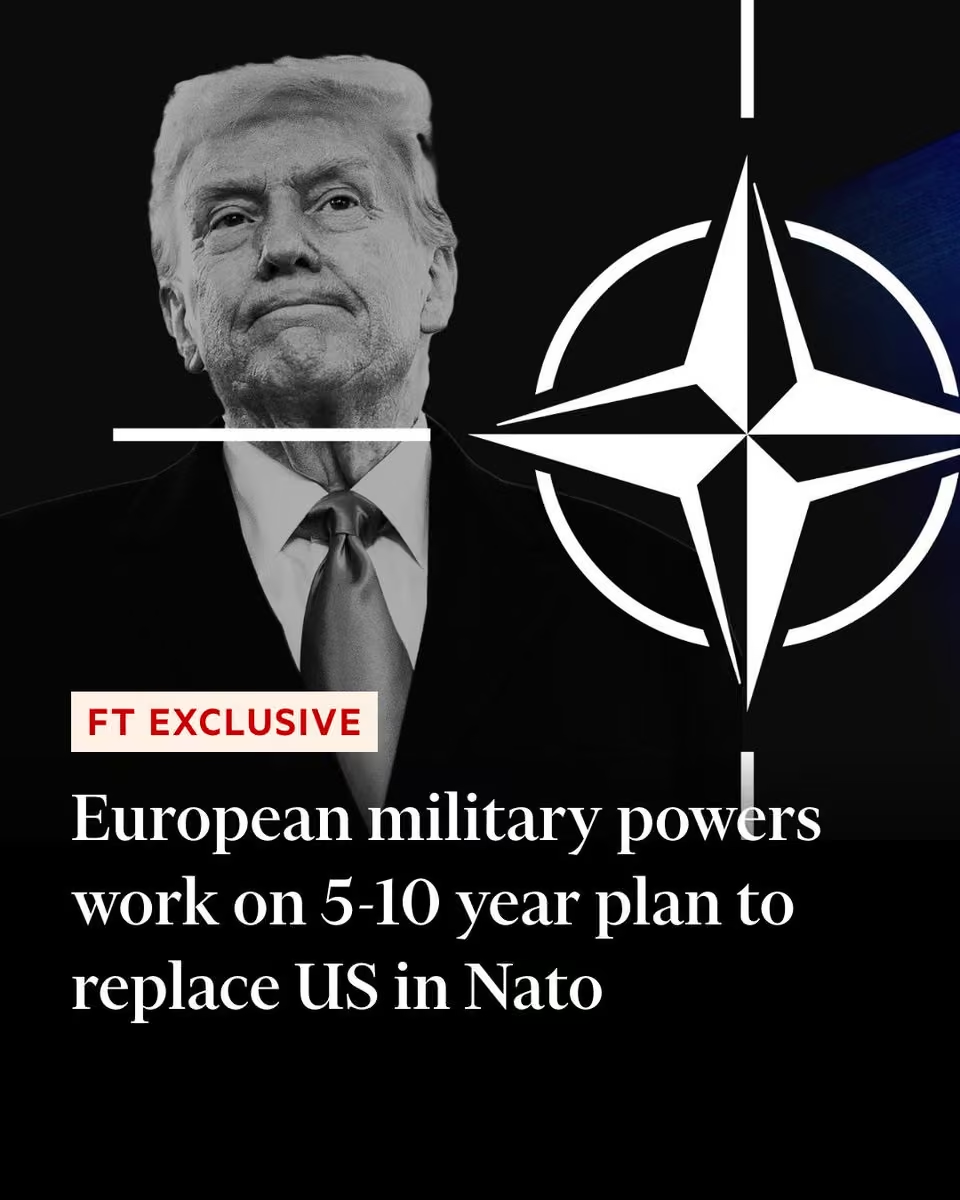
“It’s heartbreaking that the war has lasted this long. It will be even more heartbreaking to find out in 2029 that the west still doesn’t have a serious plan for ending it,” writes @AlexGabuev
www.ft.com/content/8f24b313-1b9a-401d-88e6-089aedc72519?s…
Tatiana Stanovaya
Tatiana Stanovaya (Russian: Татьяна Становая, born 1978) is a Russian political scientist. More on Wikipedia
-
Tatiana Stanovaya reposted
max seddon
@maxseddon
-
Tatiana Stanovaya reposted
Alexandra Prokopenko
@amenka
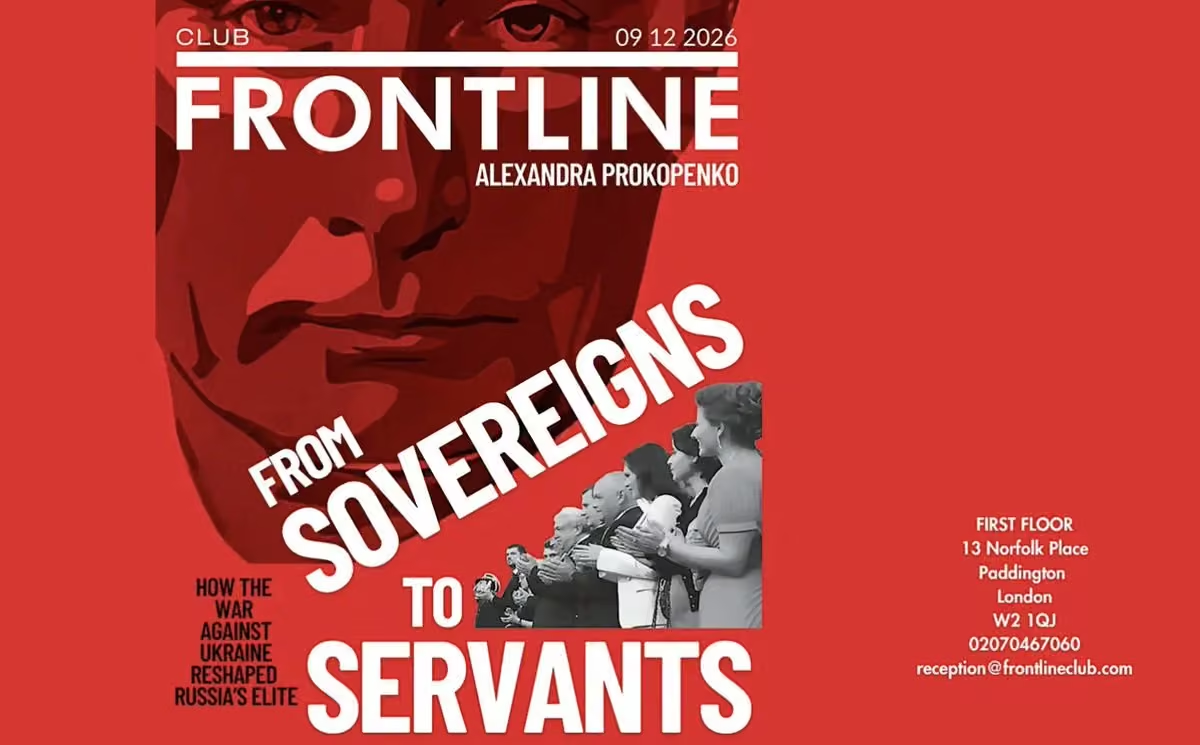
If you are in London, please come on December 9 to the famous Frontline club to talk with me and my dear friends @ArkadyOstrovsky and @kolyandr about Russian elites, their fears, patriotism, and more. It won't be boring, I promise.
-
Tatiana Stanovaya reposted
Didier François
@frog_of_war
L’opération Volia n’est pas un déploiement de troupes qui combattraient en Ukraine. C’est l’organisation des missions d’appui logistique à la coopération militaire franco-ukrainienne, pilotée par l’attaché de Défense et une cellule de coordination basée à l’ambassade depuis 2022.
Alice Rufo
@RufoAlice
Non: nous ne sommes pas cobelligérants en Ukraine. Il n’y a que M. Lavrov, la propagande du Kremlin et vous qui le dites.
Jean-Luc Mélenchon
@JLMelenchon
Alerte. Nous ne devons en aucun cas devenir cobelligérant en Ukraine. Le problème est posé comme le groupe parlementaire insoumis l'a dit dans son communiqué. Et le ministre russe des Affaires étrangères vient de mettre en garde Paris concernant la présence de soldats français en Ukraine, qualifiant ce déploiement de « participation directe » au conflit.
Agence France-Presse
@afpfr
🇷🇺 Le ministre russe des Affaires étrangères a indiqué ce mardi avoir mis en garde Paris concernant la présence de soldats français opérant en Ukraine, qualifiant ce déploiement de "participation directe" au conflit ⤵️
-
Tatiana Stanovaya reposted
Konrad Muzyka - Rochan Consulting
@konrad_muzyka
I am looking to hire a Military Analyst for the Russian Armed Forces & War in Ukraine.
The work is in Warsaw.
Please DM if you have any questions, or email me at office@rochan-consulting.com.
Full work description are below:
www.pracuj.pl/praca/military-analyst-russian-armed-forces… -
Tatiana Stanovaya reposted
Sergey Vakulenko
@SergeyVakulenk0
The petrol situation in Russia is becoming very serious. Counting the strikes on Omsk and Volgograd on 11 and 12 November respectively, the facilities that have come under attack account for ~55% of total Russian petrol and diesel output and of domestic market supplies. 🧵 1/16
-
Tatiana Stanovaya reposted
Balazs Jarabik
@BalazsJarabik
1/14 Ukraine fights more effectively, but the cost of continuing the war rising fast. Russia's offensive is slowing, casualties soaring. Its destruction of Ukraine's economy is accelerating. European security is back on the menu. Essential Ukraine #33: The Cost of Continuing 🧵
-
Tatiana Stanovaya reposted
Pavel Podvig
@russianforces
Interesting. Note that Grynkewich's "theory of victory" that he presented a few weeks ago specifically rejects the idea of "strategic defeat."
Brian McDonald
@BrianMcDonaldIE
Russian Deputy FM Sergey Ryabkov has praised the participation of NATO's top military commander, US General Alexus Grynkewich, in the Abu Dhabi peace negotiations.
Ryabkov said Grynkewich's presence brought “a significant measure of professionalism” to discussions about European security.
The Russian diplomat also acknowledged that progress had been made in the negotiations, describing it as “indisputable.” -
Tatiana Stanovaya reposted
Barak Ravid
@BarakRavid
🚨Scoop: The U.S. has asked Russia to submit a new proposal for a future security agreement with Europe that includes Russian steps to ease tension with the continent, two sources with knowledge of the matter said. My story on @axios
www.axios.com/2026/11/11/russia-ukraine-europe-war-securi… -
Tatiana Stanovaya reposted
Liza Fokht
@lizafokht
🧵 A few thoughts on the talks in Abu Dhabi from someone who's been on this beat for almost five years.
-
Tatiana Stanovaya
@Stanovaya
My conclusions from two days of RU-UA-US talks in Abu Dhabi
1. For the first time since 2022, Moscow sees a concrete opening for negotiations that could address what it calls the ‘root causes’ of the war. The Kremlin thinks the opportunity is worth pursuing, even though its expectations for this round are low. If the talks fail, Russia is prepared to keep fighting until another opening presents itself.
2. Despite concerns among European governments, Washington has no specific plan for the continent’s security that it wants to impose on them. Washington wants Europe to take greater responsibility for its own security and act more independently. It wants European governments and Russia to work out a new security arrangement between themselves so that the US can step back from the war in Ukraine.
3. Moscow and Kyiv are holding to their positions on issues they regard as matters of principle. Both are prepared to keep fighting.
4. Putin welcomes the growing recognition in some European capitals that they will need to talk to Russia. In his view, that shift is still too slow. He wants European governments to be more specific and realistic about what they are prepared to discuss, to show greater resolve and to accept that Russia will have to be part of any negotiation on European security. Until then, he will remain relatively open to contact while attaching little weight to such exchanges.
5. I expect more substantive contacts with European governments soon. They could develop into sustained talks, but I expect the process to deepen divisions within Europe, with little prospect of concrete results. -
Tatiana Stanovaya reposted
Balazs Jarabik
@BalazsJarabik
1/ In the past few months, as @EPIK_Ukraine fellow, I researched a major consequence of Ukraine’s westward shift: its western regions are becoming a new economic, demographic and logistical centre of gravity. Why does the Carpathian Corridor matter? 🧵
-
Tatiana Stanovaya
@Stanovaya
Russia and Ukraine are set to begin a new round of US-mediated talks in Abu Dhabi. This time, the agenda could draw European governments and NATO into direct negotiations with Moscow. For the first time since Istanbul in 2022, Washington has put Russia’s own post-war security explicitly on the table alongside guarantees for Ukraine. We explain the formats Washington is proposing for wider talks on European security. The US appears to want European governments and NATO to do much of the bargaining with Moscow while it keeps a watchful eye.
European governments want a say in any settlement that affects their security. Many are wary, though, of being asked to negotiate directly with Moscow over NATO’s military posture and Ukraine’s choice of alliances. Moscow sees those issues as part of the war’s ‘root causes’ and wants concrete commitments before signing a settlement.
In the new R.Politik Bulletin, I look at how Russia approaches the talks, what agendas are on the table and what the Kremlin still thinks Trump can deliver, especially after the midterms.
I also look at why Putin’s Africa summit matters to officials and businesses competing for influence in Moscow. At home, Mishustin has reassigned responsibility for public finances and digital policy, while the Finance Ministry’s pension plan raises questions about who gets to decide how household savings are invested. And the prosecution of regional Communists is testing how much protection the party’s long-standing accommodation with the Kremlin still offers.
R.Politik Bulletin No. 19 (193) is available at rpolitik.com/bulletin/19-2026/abu-dhabi-peace-talks-putin… -
Tatiana Stanovaya
@Stanovaya
Medinsky will represent Russia at the trilateral talks in Abu Dhabi on 10-11 November. This will be a continuation of the Geneva talks held on 17–18 February, whose agenda was broader than that of the earlier rounds in Abu Dhabi.
Russia’s position does not appear to have shifted. What has changed since then?
- Ukraine is in a more vulnerable position.
- Russia and the US have begun pragmatic economic engagement - a development that favours Moscow, although I would not overestimate its significance.
- Russia is showing greater openness to talks with Europe - a significant rhetorical shift in response to developments in Europe.
- Ukraine has publicly acknowledged the possibility of including security guarantees for Russia on the negotiating agenda.
I remain sceptical that these developments will lead to meaningful progress. Nevertheless, taken together, they suggest a gradual, albeit very slow, movement towards an agreement. However, implementing any such agreement is an entirely different matter, and there are still serious reasons to doubt whether it could lead to a sustainable settlement. -
Tatiana Stanovaya
@Stanovaya
Some thoughts on the prospects for a settlement of Russia's war against Ukraine.
Mainstream thinking about the conflict largely revolves around when the war might end, how to pressure Russia into a ceasefire, and what a possible settlement could look like. We often hear that if the current attempt to advance the peace process fails, another window of opportunity may open in, say, six months. The problem is that we have been hearing this mantra about the "next six months" for almost five years now.
My growing conviction is that there will be no lasting settlement of the conflict. A ceasefire may be possible, but it is likely to be partial, fragile and tactical, doing little to bring about sustainable peace. Instead, we should prepare for a prolonged period of deterioration and escalation across multiple fronts.
This is not simply about the continuation of the war. It is about a broader, pervasive process of destabilisation, at least over the medium term.
Ukraine is facing what could be its worst winter yet, amid mounting domestic pressures. I see little that could fundamentally change this trajectory. Even an unlikely settlement could — and probably would — accelerate domestic political conflicts and fuel instability. A ceasefire would bring elections closer, introducing another potential source of destabilisation. And I struggle to imagine any scenario in which any Ukrainian leadership would agree to Putin's terms for ending the conflict. Whatever agreement might eventually be signed, if one is signed at all, would risk remaining largely unimplemented, as happened with the Minsk agreements.
Russia will not emerge stronger either. Financial and budgetary pressures, a struggling economy, increasingly frustrated elites, an unsettled society and unresolved geopolitical tensions — which would not disappear with a ceasefire or settlement and could even intensify — are likely to drive further domestic repression, erode Putin's authority and push elites to focus increasingly on their own survival, whatever the cost. The war has been steadily exhausting the Russian economy, and this process will continue. And this, too, may lead to less predictable and more dangerous geopolitical behaviour.
Europe faces potentially pivotal elections in France. It is likely to become more divided, more fragile in its ability to provide financial and military support to Ukraine, and less coherent in its approach. Individual European states are already taking more initiative and gaining greater agency to act independently of Brussels institutions.
Meanwhile, existing trends and persistent structural factors point towards an intensifying confrontation with Russia, growing sub-threshold threats, and an increasingly visible and tangible pattern of incidents and hybrid attacks. What appears to be a red line today may become the new normal tomorrow. And these red lines are shifting not only on the Russian side, but in Europe as well.
The broader picture is that we have entered a protracted period of destabilisation, erosion of international rules and weakening of international institutions. As those institutions lose their ability to coordinate responses, individual countries are increasingly compelled to act on their own. But this growing fragmentation and lack of coordination will, in turn, further accelerate the deterioration.
Any settlement in Ukraine risks being extremely fragile, while confrontation between Russia and Europe is likely to intensify regardless of developments on the Ukrainian track.
This new reality may be with us for years, potentially until the accumulated escalation across multiple fronts reaches a peak that finally — and hopefully — forces all sides to sit down and engage in genuine dialogue.
Until then, I believe we should prepare for the worst. -
Tatiana Stanovaya reposted
Carnegie Politika
@CEIP_Politika
The pressures of war are gradually warping Russia’s system of governance, making it more vulnerable to a future crisis, writes @Stanovaya: carnegieendowment.org/russia-eurasia/politika/2026/10/rus…
-
Tatiana Stanovaya reposted
Balazs Jarabik
@BalazsJarabik
1/14 The war is becoming harder to sustain and harder to end. Kyiv is recovering territory while Russia destroys the economic foundations of its resistance. Washington explores a bargain w/ Moscow; Europe pays more but struggling to shape the settlement. Essential Ukraine #32. 🧵
-
Tatiana Stanovaya reposted
Boris Bondarev
@Vizlypuzly1
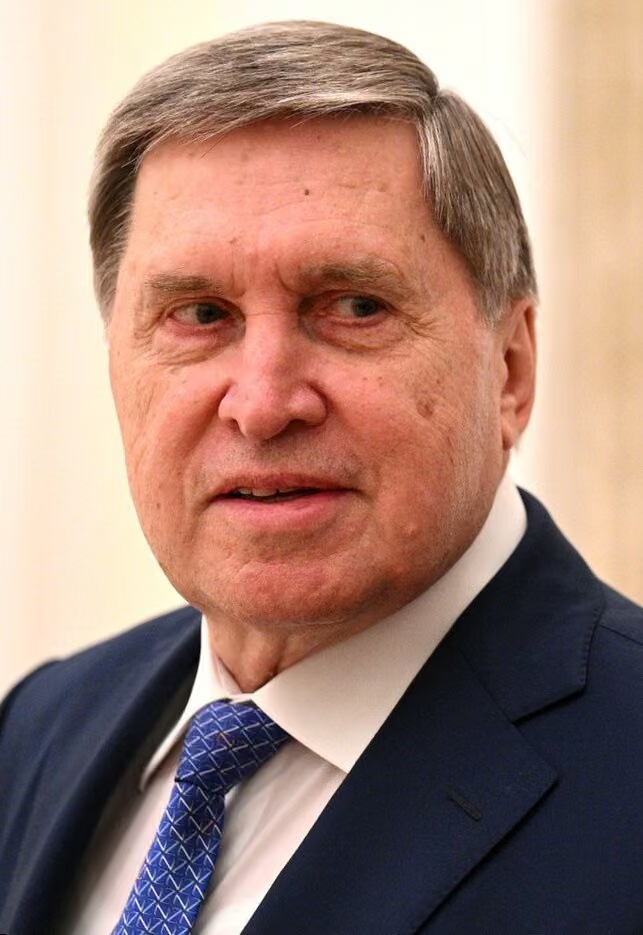
Yuri Ushakov is an old-school diplomat. He spent a decade as Russia's ambassador in Washington and has been Putin's foreign policy aide since 2012. He chooses his words with care.
Western media quote him as saying "we need to talk with Europe" and read it as Moscow reaching out to Europe. However, there is a catch. There is no "we" in the original. Here is what he actually said.
He was asked why Washington can't simply dictate peace terms to Kyiv. Ushakov answered that after Anchorage it looked like Washington could. It didn't work, because Europe backs Kyiv. So it is necessary to talk "not only with Kyiv, but also with Europe."
Any Russian speaker understands who this impersonal "it is necessary" is addressed to. Moscow is not talking to Kyiv right now. Washington is. And Washington's "talking" to Kyiv means pressure. Ushakov's message to Washington: you pressure Kyiv, now pressure Europe too, or you won't get Kyiv to accept the terms.
He put it in an impersonal form so Washington doesn't feel it is taking orders from Moscow. That is how professional diplomats speak.
So Russia's position stays exactly where it was. Moscow still wants Washington to force its terms on Kyiv, and now on Europe as well. -
Tatiana Stanovaya reposted
War on the Rocks
@WarOnTheRocks
Iran faces accelerating strike preparations, China champions a trilateral to cement its standing, Russia lobbies Trump while Kyiv gets squeezed over refinery strikes, North Korea's fortifications undermine Seoul's outreach, and jihadists rival battle across West Africa.
-
Tatiana Stanovaya
@Stanovaya
President Vladimir Putin’s post-election cabinet reshuffle has left Prime Minister Mikhail Mishustin in office while removing his longstanding chief of staff and deputy, Dmitry Grigorenko. Two planned departures triggered the changes, and Putin chose to keep them limited. The redistribution of responsibilities over finance, digital policy and the government apparatus will determine how consequential they become.
Finance Minister Anton Siluanov’s return to a deputy premiership comes as the government faces increasingly difficult choices over military spending, social commitments and economic stability. Control over scarce resources gives financial officials greater influence across policy areas. The personnel changes also raise questions about Mishustin’s ability to defend his team and the authority his new colleagues will exercise.
R.Politik’s new Bulletin No. 18 (192) examines the calculations behind these appointments, the succession in the Far East and the emerging distribution of responsibilities within the cabinet.
US envoy Steve Witkoff’s St. Petersburg visit opens another set of questions. Discussions of potential economic deals offer Moscow opportunities to engage Washington while the gap over Ukraine remains substantial. Moscow sees little scope for substantive progress towards its goals at present, but views trilateral talks as a way to prepare the ground for an eventual settlement on its terms. A possible meeting involving Putin, US President Donald Trump and Chinese President Xi Jinping raises the stakes further. We examine what Moscow wants from these contacts and how it hopes to make its proposals attractive to Trump.
Inside Russia, the costs of sustaining the war are producing sharper competition over who pays. Business associations’ tax proposals show companies trying to influence the distribution of the fiscal burden, secure investment incentives and protect themselves from further pressure. Access to decision-makers increasingly shapes their capacity to do so.
Ukrainian strikes on data centres create another costly adjustment. Concentration around large digital platforms means disruptions spread through payments, retail, transport and communications. Companies face higher spending on protection and backup capacity, while their customers have unequal resources to absorb the costs.
Lesta’s sale after its confiscation brings together commercial opportunity, security concerns and competition for control over valuable digital assets.
The full bulletin traces how personnel decisions, diplomatic initiatives and business bargaining are changing the distribution of influence and the costs of adaptation.
rpolitik.com/bulletin/18-2026/limited-cabinet-reshuffle-w… -
Tatiana Stanovaya reposted
Carnegie Politika на русском
@CarnegieRu
Чем цифровой рубль отличается от крипты? Объясняет @amenka.
This media couldn't be displayed. See it on the original post. -
Tatiana Stanovaya reposted
Fabrice Deprez
@fabrice_deprez
There's, of course, one major difference: Ukraine receives financial support from its allies while Russia is (when it comes to financial support at least) mostly on its own. But that support can also mean dependence, as @BalazsJarabik points out in this piece.
-
Tatiana Stanovaya reposted
Michael Kofman
@KofmanMichael
However, folks need more time to see if it is working consistently at higher speeds.
-
Tatiana Stanovaya reposted
Michael Kofman
@KofmanMichael
Yes, hearing the same.
Oliver Carroll
@olliecarroll
New. I’m told by frontline drone commanders in Ukraine that Starlink speed restrictions have likely been lifted. They are still doing tests but “this looks to be the case”
-
Tatiana Stanovaya
@Stanovaya
The resumption of talks in Abu Dhabi is something Moscow has always wanted, even if it has recently used the prospect of negotiations as a bargaining chip in response to Ukraine’s escalation of military pressure on Russian territory.
Moscow has no illusions that talks with Ukraine’s current leadership can deliver the settlement Putin wants. But it sees several tactical benefits.
First, the talks offer a way to influence the negotiating agenda and promote Russia’s own vision of a settlement.
Second, they provide a channel of communication with different figures within the Ukrainian leadership, including those Moscow sees as more pragmatic and potentially more comfortable interlocutors than Zelensky.
Third, to a lesser extent, the talks offer an indirect channel for exchanging signals with Europeans, whose national security advisers are present on the sidelines and in close contact with the Ukrainian delegation.
In short, Moscow does not expect this format to produce its desired outcome, but sees it as a useful instrument for advancing its objectives over time. -
Tatiana Stanovaya
@Stanovaya
Putin agreed to resume trilateral talks on a settlement in Ukraine. This is so far the main outcome of Steve Witkoff’s trip to St. Petersburg. The last meeting between Russian, Ukrainian and American representatives took place in February, and even then, Moscow viewed the process less as a genuine attempt to resolve the conflict than as a tactical exercise, albeit one accompanied by substantive technical discussions on the modalities of a ceasefire.
The talks were supposed to resume following Witkoff and Kushner’s visits to Moscow and Kyiv in September. However, Zelensky’s decision to focus on pressuring Moscow into concessions, which led to intensified strikes during the voting days, instead convinced Putin that Russia should harden its position. Moscow signalled that it now wanted not only the entirety of Donbas and the other annexed territories, but was also prepared to fight to establish a buffer zone beyond them. This was not a new position, but Russian officials have long adjusted how firmly they articulate their demands depending on the circumstances. The resumption of talks thus became another card to play.
Judging by Ushakov’s rhetoric, the Americans’ “new proposals” offer little reason for optimism and have failed to generate much enthusiasm in Moscow. Nevertheless, shifts on economic issues, the prospect of partial sanctions relief and the desire to keep Trump satisfied have given Putin sufficient grounds to agree to resume negotiations, particularly as doing so comes at little cost to Moscow.
All the latest statements and signals suggest that Moscow does not currently see an acceptable, or even remotely satisfactory, offer on the table. Yet it is prepared to engage in discussions for tactical gains, calculating that these, combined with the further deterioration of the Ukrainian state, may eventually produce a strategic shift in Russia’s favour. -
Tatiana Stanovaya reposted
Vladimir Frolov
@vfroloff
Per Ushakov today, Ru agrees with the US proposal to resume direct trilateral RU-UA-US talks in early November but wants them to center on the “principal issue”: RU-UA security in the European security architecture. Ru sees Finland and Norway as parties to these talks now.
-
Tatiana Stanovaya reposted
Balazs Jarabik
@BalazsJarabik
1/ A few words on the reasoning behind the forecast: US ISR warnings were delayed twice ahead of ballistic strikes (happened before) and reduced Starshield (not civilian Starlink) speed were likely warning following Zelensky's angry rejection of US proposals.
Balazs Jarabik
@BalazsJarabik
11/ Forecast: Kyiv will likely maintain its restraint on strikes against Russian refineries until the November US midterms, to preserve access to Starlink and ISR. Moscow continues striking Ukraine's energy facilities, but may calibrate the intensity of its attacks.
-
Tatiana Stanovaya reposted
Balazs Jarabik
@BalazsJarabik
1/ The new issue of Essential Ukraine (#31) covers three weeks. The developments are faster than (perhaps) anyone can follow. As emotions are running high, many quiet, informal conversations in Kyiv and Washington went into this report.
-
Tatiana Stanovaya
@Stanovaya
The diesel agreement gives Putin an opportunity to advance economic cooperation with Washington before any settlement in Ukraine. Trump’s immediate domestic priorities create room for arrangements that Moscow has long sought. The durability of this opening, however, depends partly on pressures that have little to do with resolving the war.
A more transactional agenda changes the Kremlin’s tactical opportunities without necessarily bringing peace closer. Economic agreements can coexist with unchanged demands on Ukraine and continued military pressure. Meanwhile, Europe’s resistance to Moscow’s terms and its widening confrontation with Russia complicate any attempt to translate bilateral dealings into a settlement.
The new R.Politik Bulletin examines how Putin intends to use this opening. What could make a partial ceasefire acceptable to Moscow? How does the Kremlin assess Trump’s volatility, and what does it expect military pressure to achieve over the coming winter? These questions matter more than the immediate commercial value of the fuel agreement.
Domestically, Russia’s new three-year budget sets out how the government intends to finance a war with no defined endpoint. The political questions concern who absorbs the adjustment and how much flexibility remains if economic conditions deteriorate.
Volodin kept the speakership, but the distribution of posts also reshaped control over United Russia’s faction and the Duma’s administration. The bulletin examines what Volodin, Medvedev, Yakushev and the Kremlin’s domestic policy team each secured—and why these positions could become more valuable as Putin grows more detached from day-to-day governance.
Changes in the judiciary and investigations in the defence sector raise related questions about control and protection. Igor Krasnov’s proposals cover both jury trials and the financial administration of courts. At Patriot Park, a new arrest has reached an official appointed after the removal of the previous Defence Ministry leadership. The EFKO drone investigation has prompted intervention by prominent figures on behalf of the defendants. We explain the different interests behind these developments and the practical limits of political backing.
Kanye West’s cancelled concerts offer another perspective on how the system operates. A commercial event became a political confrontation involving competing interests and uncertain signals. The case raises a broader question: how do officials and businesses determine what is acceptable when Putin’s preferences matter greatly but no clear presidential decision is communicated?
R.Politik Bulletin No. 17 (191) examines Moscow’s diplomatic calculations and the domestic decisions sustaining its war effort.
rpolitik.com/bulletin/17-2026/diesel-deal-budget-prioriti…
#russia #ukraine #putin -
Tatiana Stanovaya reposted
Dmitry Stefanovich
@KomissarWhipla
ICYMI, latest STRATDELA:
Thoughts?
Dmitry Stefanovich
@KomissarWhipla
STRATDELA #45, by @KomissarWhipla 1dkv.substack.com/p/stratdela-45?r=20zugn&showWelcomeOnSh…
-
Tatiana Stanovaya reposted
Mikhail Khodorkovsky
@khodorkovsky_en
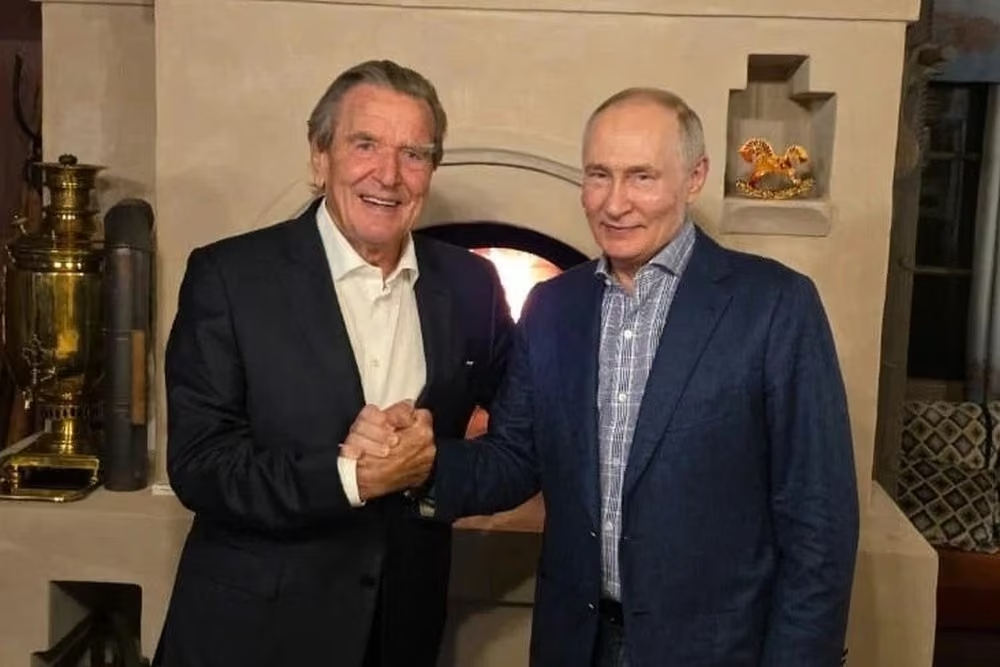
Gerhard Schröder was never Putin's spy. He is Putin's useful idiot. Putin did him a great favor involving his family, and Schröder came to feel he owed Putin. Owing a man like Putin is a big problem.
-
Tatiana Stanovaya
@Stanovaya
It is now clear that Trump announced an energy truce that had not been agreed, taking Ukraine by surprise and irritating Moscow. Substantive talks on a partial ceasefire nevertheless continue, despite the Kremlin making clear that it does not want one. This reluctance does not rule out a limited agreement: Putin has previously halted strikes briefly, even unilaterally, as a political gesture to please Trump. He still regards an unconditional ceasefire as detrimental to Russia’s military interests and would want any such pause to be short.
We should not, however, underestimate the Kremlin’s tactical inventiveness. Moscow may seek a formula that pleases Trump and looks like a partial ceasefire, while limiting its duration and scope so that it has little strategic effect. Alternatively, it could attach conditions that improve Russia’s position in subsequent negotiations over a settlement.
Trump was certainly premature in announcing something that had not been finalised and may never materialise. But an agreement remains possible, even though it would change much for Ukraine. -
Tatiana Stanovaya
@Stanovaya
Trump does appear to be very angry with Zelensky. The situation is strongly reminiscent of the February 2025 confrontation. But his mood can shift rapidly, as Putin also knows, particularly when it reflects immediate political pressures such as the midterm elections. This may look like Putin’s moment of triumph: he has secured an economic deal, albeit a modest one, before a peace settlement, departing from Washington’s previous position. He is also hearing the message he has wanted to hear for years: Zelensky must go.
Yet whatever Moscow hopes or believes, Washington cannot simply remove Zelensky. The central uncertainty is how the current confrontation will affect his domestic standing and, in turn, Kyiv’s position on Russia’s demands.
Putin may believe that developments are moving in his favour, but he is unlikely to count on Trump to deliver the outcome he wants. Instead, he will see Trump’s current stance as creating more favourable conditions for intensifying military pressure, aimed primarily at triggering an internal political breakdown in Ukraine rather than achieving a battlefield breakthrough. In his view, this pressure must be accompanied by efforts to cultivate Trump and make limited, tactical accommodations that could yield longer-term benefits. -
Tatiana Stanovaya reposted
Sergey Vakulenko
@SergeyVakulenk0
But you are right, US do not deed Russian diesel. What US (ok, JFT) needs is more fungible diesel in the market, so the global prices could go down. US refiners would disagree, but US truckers and farmers would rejoice, and their votes matter more at the moment.
-
Tatiana Stanovaya reposted
Barak Ravid
@BarakRavid
🚨Exclusive: Ukrainian President Volodymyr Zelensky told me in a phone interview on Friday that President Trump's decision to unilaterally lift sanctions on Russia and allow it to export diesel was "not fair and not honest". My story on @axios
www.axios.com/2026/10/09/exclusive-zelensky-putin-trump-d… -
Tatiana Stanovaya reposted
Balazs Jarabik
@BalazsJarabik
1/ Ukraine may keep holding the front while losing the economy behind it. This winter’s challenge now goes way beyond keeping the lights on. It is about sustaining a functioning country.
My fresh take written in Kyiv: carnegieendowment.org/russia-eurasia/politika/2026/10/rus… -
Tatiana Stanovaya reposted
Andrey Sizov
@sizov_andre
Big story overlooked by the market:
Despite all the belligerent statements from Kyiv, Ukraine actually halted attacks on merchant vessels in the Black Sea for a month - apparently hoping to reach a naval ceasefire deal with Moscow.
That deal never came.
Attacks resumed last week, while strikes on energy infrastructure intensified.
Is it time for #wheat to rebuild Black Sea premium?
Free note:
blog.sizov.report/ukraine-resumes-black-sea-vessel-strike…
#ukraine #russia #blacksea #wheat #oatt -
Tatiana Stanovaya reposted
Balazs Jarabik
@BalazsJarabik
3/ Can Europe provide the (extra) funding required? Can Kyiv sustain military resistance, economic survival and political accountability together? We discuss these questions w/ @katerynashn on CNAS’s Brussels Sprouts podcast:
www.cnas.org/publications/podcast/ukraines-winter-forecas… -
Tatiana Stanovaya reposted
Balazs Jarabik
@BalazsJarabik
2/ Strikes on transport, logistics, industry and energy threaten the economy sustaining Ukraine’s resistance. The risk: Ukraine may hold the front while losing the productive capacity behind it. Air defence shortages make that risk more acute.
-
Tatiana Stanovaya reposted
Kevin Rothrock
@MrKevinRothrock
Political analyst Tatiana @Stanovaya says the FSB is using Kynev’s case to signal (to Putin?) that Kremlin political managers are allowing “traitors” into the system. In other words: it's a blow to Kiriyenko’s policy team and another sign of growing security-service autonomy. 1/2
-
Tatiana Stanovaya reposted
Alexandra Prokopenko
@amenka
Tomorrow I'll be talking about a new book, the Russian elite, and the economy right here with brilliant @maxseddon. Don't miss!
Carnegie Politika
@CEIP_Politika
When Russia invaded Ukraine in February 2022, many in the West expected the country's elite to stop the war. Why didn't they? @amenka talks to @maxseddon about her new book on precisely this issue tomorrow at 11 am EDT / 5 pm CEST on our YouTube channel: carnegieendowment.org/events/2026/09/inside-russia-elites…
-
Tatiana Stanovaya reposted
Balazs Jarabik
@BalazsJarabik
1/ What holds Ukraine together may also be pulling its institutions apart.
My analysis of Ukraine’s gathering internal storm is now available in German. A short thread on the main argument: 🧵
laender-analysen.de/ukraine-analysen/335/ukraine-innenpol… -
Tatiana Stanovaya reposted
Balazs Jarabik
@BalazsJarabik
18/ Our forecast:
• Talks intensify without a comprehensive ceasefire
• The infrastructure war expands through winter
• Institutional and mobilisation pressures rise in Ukraine
• Europe carries more of the burden
• Horizontal escalation stays below Article 5 -
Tatiana Stanovaya reposted
Balazs Jarabik
@BalazsJarabik
1/ I am in Washington as Ukraine moves back towards the centre of the policy debate.
Diplomacy has returned. So has escalation.
The latest Essential Ukraine examines the widening infrastructure war, Kyiv’s internal struggle and why the two sides have unequal time to wait. 🧵 -
Tatiana Stanovaya
@Stanovaya
The State Duma election has renewed expectations of tougher domestic policies, another military mobilisation and personnel changes. These involve different decisions and pressures. How much does the vote itself change the #kremlin’s calculations, and which developments would have followed regardless of the electoral calendar?
United Russia’s campaign combined promises of normalisation with calls for wartime consolidation. These reflected different political needs: reassuring voters about everyday life while preparing society for further hardship.
The new R.Politik Bulletin assesses how #putin will interpret the result and what to expect after the vote. It also examines the bargains and conflicts between the authorities and opposition parties, which need to attract voters while demonstrating loyalty and negotiate with the Kremlin while retaining a recognisable political identity.
We trace the decision-making behind the transfer of #nestlé and #auchan’s Russian businesses to temporary administration, examining who may have driven the measures and how domestic interests interacted with retaliation against Europe.
The departure of the head of the #fsb’s Economic Security Service will be followed by further personnel changes; the question is their scale. The bulletin examines growing dissatisfaction among Putin’s proxies with the FSB’s overreach and how far Putin is prepared to act on these complaints.
Abroad, the #brics summit offered another test of Russia’s ability to translate diplomatic engagement into practical cooperation on trade and payments.
The #afd’s regional election gains are being read differently within Moscow. The bulletin considers competing schools of thought about Europe’s political direction, the expectations attached to the rise of the far right and what these mean for Russia’s approach to Germany and its dealings with Trump’s circle.
R.Politik Bulletin No. 16 (190) examines the political arrangements behind the election and the decisions that may follow. rpolitik.com/bulletin/16-2026/united-russia-expands-major… -
Tatiana Stanovaya reposted
Carnegie Politika на русском
@CarnegieRu
Полный ролик смотрите здесь: youtu.be/7pOVQqWuZUA
-
Tatiana Stanovaya reposted
Balazs Jarabik
@BalazsJarabik
1/ Weeks of field research, sensitive conversations and data analysis went into Essential Ukraine #29 - published yesterday. The result is an attempt to provide the insight and context needed to understand where the war is heading in an ever complicated and worsening environment
-
Tatiana Stanovaya
@Stanovaya
Five points that help explain Moscow’s current approach to Ukraine.
1. Time is not really on Russia’s side. The claim that “time is on Putin’s side” is only partly true. The war was never designed to last this long: it is costly and carries mounting political and financial risks. Putin needs to end it sooner rather than later, but only on his terms. It would be more accurate to say that time is not on Ukraine’s side. That, however, does not mean it will become easier for Putin to achieve his goals.
2. While Putin wants to negotiate with the Americans, he is also prepared to talk to Ukrainians — but not to Zelensky. This is a long-standing idea: to reach an agreement with Ukrainian military figures or anyone else he regards as more pragmatic. That intention remains and may grow stronger as disappointment with the American side increases.
3. Russian officials are uncomfortable dealing with Steve Witkoff, but they have no comparable alternative channel. Moscow therefore prefers to invest fully in these contacts for as long as no such alternative is available.
4. There is currently no opening proposal attractive enough to Putin that any outside actor, above all the Americans, could realistically put forward. Moscow may nevertheless appear receptive to an initial draft because it expects to reshape it through painstaking bargaining over the wording, sequencing and implementation of each component. Russian officials calculate that detailed negotiations could gradually bring any eventual settlement closer to what they would regard as an acceptable deal.
5. Europe is increasingly becoming Moscow’s central strategic problem, overshadowing the United States, Ukraine and, to some extent, even NATO. This will shape the nature of negotiations with and about Ukraine, as well as the outcome of any settlement, far more than it did a year ago. It is likely to dominate European geopolitics for decades. -
Tatiana Stanovaya reposted
Andrey Sizov
@sizov_andre
"The war in Ukraine is entering a more dangerous phase of multilateral escalation, with few remaining guardrails. Ukrainian attacks are reaching deeper into Russia, Moscow is intensifying strikes on Ukraine and pressure on its maritime trade, and European support is becoming more directly connected to Kyiv’s capacity to strike Russian territory."
#oatt #wheat
Tatiana Stanovaya
@Stanovaya
The war in Ukraine is entering a more dangerous phase of multilateral escalation, with few remaining guardrails. Ukrainian attacks are reaching deeper into Russia, Moscow is intensifying strikes on Ukraine and pressure on its maritime trade, and European support is becoming more directly connected to Kyiv’s capacity to strike Russian territory. Germany’s attribution of the attempted Leipzig airport attack to Moscow, alongside a succession of hybrid and other hostile incidents across Europe, has driven Russian-German relations into a new crisis and increased the risk of the confrontation spilling beyond Ukraine.
At the same time, Washington is making a new attempt to reopen negotiations, even though the positions of Moscow and Kyiv remain barely reconcilable.
Witkoff and Kushner returned to Moscow on 5 September after several months of work by Washington on a potential settlement framework. The disputed issues include territory, security guarantees, Ukraine’s future military capabilities, a possible international presence and the political conditions surrounding a settlement.
Russia’s fundamental terms have not changed, while Ukraine continues to signal that it is ready to keep fighting. Neither Moscow nor Kyiv appears prepared to make a strategic concession. The important questions are whether Putin continues to stand by earlier understandings and whether renewed contacts can produce more than another trilateral meeting.
The new R.Politik Bulletin assesses these questions alongside the military, maritime and Russian-European escalation now shaping the negotiating environment.
Russia’s domestic political system is also becoming less predictable as the first federal parliamentary campaign since the start of the war approaches. Yabloko was initially allowed to participate, only to be removed after the party began to look less politically manageable. The significance lies not simply in Yabloko’s electoral prospects, but in the reversal itself: was this a coherent policy shift, an improvised response to changing circumstances or the result of competing assessments of political risk? The bulletin examines the decision-making behind the party’s dismantling and the implications for the remaining boundaries of legal opposition.
Other developments raise similar questions about how wartime governance is changing. A new decree allows the state to place broadly defined critical infrastructure under temporary management without formally transferring ownership. Its practical application will determine whether it remains a security measure or develops into a wider instrument of corporate control.
The authorities have designated Pavel Durov an extremist while government bodies, businesses and election managers still rely on Telegram. This unresolved contradiction will become particularly important after the election, when the platform’s political utility may begin to change.
The prosecution of charity leader Lida Moniava tests how far social standing and institutional importance can influence the form of state pressure. In Udmurtia, an unexpected gubernatorial replacement offers a separate indication of the operational and personnel requirements emerging under wartime conditions.
Meanwhile, Russians continue to report relative personal stability while becoming markedly more pessimistic about the country’s future. Business confidence presents a similar picture: limited stabilisation, but at a persistently low level.
R.Politik Bulletin No. 15 (189) examines how these decisions are taken under pressure.
rpolitik.com/bulletin/15-2026/ukraine-diplomacy-meets-esc… -
Tatiana Stanovaya reposted
War on the Rocks
@WarOnTheRocks
What's really happening in the sky over the Russo-Ukrainian war? (Members Only)
Listen here: warontherocks.com/episode/therussiacontingency/46664/the-… -
Tatiana Stanovaya reposted
Andrey Sizov
@sizov_andre
Erdogan and Putin just met for 1.5 hours in Bishkek. The Black Sea was the main topic.
No de-escalation.
A few hours later, two separate statements came out - one from Zelensky, one from Putin - that make the situation look considerably worse, not better.
What does it mean for global #wheat prices? Our view: sizov.report/reports/31072/
#russia #ukraine #blacksea #sizovreport -
Tatiana Stanovaya reposted
Balazs Jarabik
@BalazsJarabik
1/ Ukraine has a remarkable ability to inspire confidence and concern at the same time. After two weeks in the country and dozens of conversations, I left impressed as usual by its resilience but more concerned about the road ahead than after perhaps any previous visit.
-
Tatiana Stanovaya reposted
Vladimir Frolov
@vfroloff
Président Trump kind of confirms Ratcliffe’s visit was focused on Ukraine diplomacy. Hard to believe there was no face time with President Putin who is the only one who matters on the subject.
Christopher Miller
@ChristopherJM
A cryptic Trump and the Kremlin have confirmed that CIA director John Ratcliffe visited Russia this week, the first known trip by a serving American spy chief since Moscow launched its full-scale invasion of Ukraine.
“Something may come out of it,” Trump told Glenn Beck, the conservative media host. “We’re working very hard to get that war ended, and frankly they both want to see it ended,” he added.
w/ @JamesPoliti @NastyaStognei
www.ft.com/content/d7b89b34-8961-484d-b776-707520e942c5?s… -
Tatiana Stanovaya reposted
Vladimir Frolov
@vfroloff
Is the CIA Director visiting Moscow today? Unannounced USGOV planes carrying secret cargoes/passengers would be a tell…. That is how CIA Directors usually travel… unlike the announced FBI director visit to Moscow for this October. Intriguing….
TheIntelFrog
@TheIntelFrog
The presence of a C-40B that departed Andrews and arrived in Riga the same day as the C-17 suggests that someone important has made the trip to Moscow rather than being an advance logistics flight. The C-40B is typically used by senior government officials who need to maintain secure lines of communication while airborne. The C-17 appears to have made the trip to Moscow while the C-40 appears to have remained in Riga. There are some other unusual characteristics of these flights that suggest a high level visit is in progress.
-
Tatiana Stanovaya reposted
Balazs Jarabik
@BalazsJarabik
Instead of another Russian attack everyone expected last night, a political bomb has arrived. This seems as a clash of (political) egos: Fedorov´s protest potential is limited (even in the civic bubble) especially as winter preparation is the main focus.
Christopher Miller
@ChristopherJM
Reactions I'm hearing from Ukrainian officials, MPs, civil society are all relatively similar: shock, dismay at Fedorov's extraordinary criticism of the state, political challenge to Zelenskyy and controversial call for elex while Russian bombs still fall. "He is in a hurry because people might forgot him in a year," says one prominent political person in Kyiv who has been very supportive of Fedorov. He adds: Wartime elections would "bury the country."
-
Tatiana Stanovaya reposted
Alexandra Prokopenko
@amenka
There's a lot of chatter right now about a possible second wave of mobilization in Russia. I'm skeptical of these rumors. But it's worth remembering how the first one unfolded — chaotic, improvised, and pushed down on regional governors with no plan and no budget. An excerpt from my book, out this September with @HurstPublishers, on how mobilization almost brought bureaucracy to dysfunction in 2022.
en.thebell.io/the-mobilisation-that-brought-putins-war-ho… -
Tatiana Stanovaya reposted
Dmitry Stefanovich
@KomissarWhipla
"Those cells can be loaded with Tomahawk land-attack missiles as well as hypersonic vehicles."
Really funny how this whole peace ignores the elephant in the room: SLCM-N, and the whole nuclear escalation related dynamics of this fun project.
Alessio Patalano
@alessionaval
The US Navy’s plan for almost 20 guided-missile subs and why that will matter around China | CNN with some observations on the strategic value of the choice from yours truly. www.cnn.com/2026/08/08/world/us-navy-guided-missile-subma…
-
Tatiana Stanovaya reposted
Carnegie Politika
@CEIP_Politika
Two divergent trends—Putin’s hardline vision of how to prosecute the war in Ukraine, and a growing desire for change in Russia—could tear the regime apart, writes @Stanovaya: carnegieendowment.org/russia-eurasia/politika/2026/07/rus…
-
Tatiana Stanovaya reposted
Alexander Gabuev 陳寒士
@AlexGabuev
"Russia’s problems are real, but the country is nonetheless capable of sustaining the conflict... The war, then, is almost certain to drag on."
With my brilliant @CarnegieEndow colleagues @amenka and @Stanovaya in @ForeignAffairs. www.foreignaffairs.com/ukraine/why-weaker-russia-keeps-fi… -
Tatiana Stanovaya reposted
Christopher Miller
@ChristopherJM
Zelenskyy spoke with JD Vance by phone this afternoon. Discussion included crucial issue of air defense. Little else in the readout.
Volodymyr Zelenskyy / Володимир Зеленський
@ZelenskyyUa
Received a good phone call from the Vice President of the United States, @JDVance. We followed up on our recent meeting with President Trump in Washington, which was positive and productive. As Russia's air attacks on our country continue unabated, air defense – specifically Patriot interceptors against ballistic missiles – remains a top priority. The Vice President and I also spoke about the consequences of Russia's war for global markets. We agreed that our teams will stay in touch and work through everything discussed today. I thank the United States for its support of Ukraine and our people.
-
Tatiana Stanovaya reposted
Foreign Affairs
@ForeignAffairs
“Russia’s problems are real, but the country is nonetheless capable of sustaining the conflict,” write @AlexGabuev, @amenka, and @Stanovaya. “Its economy remains functional enough, and it has the manpower and weaponry needed to keep battling.”
www.foreignaffairs.com/ukraine/why-weaker-russia-keeps-fi… -
Tatiana Stanovaya reposted
Balazs Jarabik
@BalazsJarabik
1/ The last Essential Ukraine before the summer break looks beyond the spectacle of Washington diplomacy and Russia “burning.”
Issue #28 focuses on what is happening inside Ukraine’s war effort and political machine and why internal developments may prove more consequential. -
Tatiana Stanovaya
@Stanovaya
Several #wildberries logistics facilities were attacked in less than a week. The strikes mark a significant expansion of the war into #russia’s civilian consumer economy, directly affecting a platform used by millions of consumers, employees and small businesses.
The damage is highly visible, yet the state has no agreed mechanism for protecting private infrastructure or distributing wartime losses. Companies are expected to manage the consequences, demonstrate social responsibility and avoid placing additional demands on the authorities.
The new R.Politik Bulletin considers how #putin views these losses, how political managers are trying to reconcile them with the official narrative and what happens as businesses and citizens assume responsibilities previously associated with the state.
This matters because the disruption has so far produced practical adaptation rather than politicisation. Sellers are concerned with compensation and the survival of their businesses; public discussion largely avoids the war itself. But how sustainable is this model if Ukrainian attacks continue to reach deeper into civilian economic life? The bulletin sets out the political risks the Kremlin sees, and those it may be overlooking.
The issue also looks at Washington’s preparations for another attempt to revive diplomacy over #ukraine. Moscow’s fundamental position has not changed: it maintains contacts with the American side while increasing military pressure on Kyiv. Yet Russian officials are signalling that Moscow may no longer regard itself as constrained by what it describes as the #anchorage understandings. The practical question is whether the autumn could offer a limited opening for renewed negotiations without any substantive change in the parties’ underlying positions.
Other sections trace the growing maritime confrontation and its implications for Russian and Ukrainian grain exports; the informal mechanisms of political control exposed by the Sobchak correspondence; and the policy dilemma created by sanctions against VK, as pressure for retaliation collides with Russia’s continuing dependence on Western digital infrastructure.
Finally, the treatment of Boris Nadezhdin offers an insight into the Kremlin’s thinking ahead of the State Duma elections. The episode is less about Nadezhdin than about growing risk aversion within the political system, the enforcement of unwritten boundaries and the shrinking tolerance for initiatives that have not been fully authorised.
R.Politik Bulletin No. 14 (188) examines how the Russian state is managing the expanding domestic consequences of the war.
rpolitik.com/bulletin/14-2026/war-reaches-wildberries-war… -
Tatiana Stanovaya reposted
Lucian Kim
@Lucian_Kim
"There is growing demand for realistic assessment of Russia's geopolitical capabilities, competent domestic decision-making and achievable war goals," @Stanovaya says. "This is dangerous for regime precisely because it is neither anti-war nor anti-Putin." carnegieendowment.org/russia-eurasia/politika/2026/07/rus…
-
Tatiana Stanovaya reposted
Mike Eckel
@Mike_Eckel
For the Kremlin, "the situation increasingly resembles a seized bolt: applying more force will not make the mechanism work, but will only increase the strain on the surrounding structure... Domestic pressures will not change Putin’s mind." @Stanovaya
carnegieendowment.org/russia-eurasia/politika/2026/07/rus… -
Tatiana Stanovaya reposted
Andrey Sizov
@sizov_andre
Friday's sell-off on Black Sea de-escalation rumours — overdone?
The deal talk is coming from Ukraine. From Russia? Silence. Hard to imagine a deal without Moscow at the table.
Things to watch this week: UN Security Council on the Black Sea (Mon), Zelensky-Trump meeting (Tue), and probably more attacks.
What you need to know as a #wheat trader: sizov.report/reports/30647/
#wheat #russia #ukraine #blacksea #sizovreport -
Tatiana Stanovaya reposted
Balazs Jarabik
@BalazsJarabik
1/ Ukraine's government reshuffle wasn't primarily about replacing ministers. It was about something more consequential: who controls the state.
My latest piece for @CEIP_Politika argues that Zelensky ultimately chose political control over disruptive reform. A short thread 🧵 -
Tatiana Stanovaya
@Stanovaya
The current state of Russian-American interactions over Ukraine strongly resembles the situation at the same time last year, in late July and early August. Donald Trump was threatening Vladimir Putin with severe new sanctions, issuing a 50-day ultimatum, while peace efforts had reached an impasse. Then, unexpectedly, Trump sent Steve Witkoff to Moscow with a proposal that, according to Putin, he subsequently accepted.
The pattern appears to be repeating itself, providing a useful guide to what may happen next. The next step is likely to be another unexpected attempt to "make a deal", emerging from non-public Russian-American contacts on a possible settlement. Although these contacts have so far produced little tangible progress, both sides have been working on them meticulously. There is little reason to doubt that another such initiative is only a matter of time. There is, however, equally little reason to believe that it will succeed. -
Tatiana Stanovaya reposted
Balazs Jarabik
@BalazsJarabik
1/ Both Kyiv and Moscow are now buying time - for different reasons. Ukraine is to make its integration into European security infrastructure irreversible before any settlement. Russia is buying time for attrition. That is the central conclusion of the new Essential Ukraine #27
-
Tatiana Stanovaya
@Stanovaya
Putin does not believe that Ukraine's strike campaign can break Russian society. He reads it as a Western attempt to make his position fragile, and he is drawing conclusions from that reading which are not the ones being anticipated in Western capitals.
The new R.Politik Bulletin, No. 13 (187), is out today.
The assumption underpinning current Western policy is that mounting pressure will eventually bring Putin to the negotiating table. Trump has said publicly that the strikes on Russian refineries are "an escalation that can help lead to an end". Moscow's reply, and more importantly its private calculation, points the other way. The bulletin sets out what the Kremlin actually concludes from the pressure it is under, why that conclusion produces an incentive to escalate rather than to soften, and where the escalation is most likely to go next as the geography of the war widens.
The fuel crisis has become the central issue of Russian politics, and the authorities are managing it in a way that tells you a great deal about how the system now works under strain. The bulletin explains what is being decided, by whom, and what the Kremlin expects the political cost to be before the September vote.
Andrei Melnichenko's essay in The Economist has been read in incompatible ways: as a declaration of loyalty, as a text written in the presidential administration and merely signed, as a businessman breaking with the war. R.Politik's reading differs from all of them. Even if it changes nothing in practice, the essay may mark the beginning of something consequential for the fate of the regime. The bulletin sets out what it is actually proposing, and who its real addressee is.
The same pressures run through the rest of the issue: Lukashenko's narrowing room for manoeuvre between Moscow and Kyiv; the pre-election congresses and what United Russia's list reveals about the Kremlin's read on its own society; the arrests around the Rotenberg brothers and what is really being contested there; and Moscow's decision to install an outsider in South Ossetia for the first time since 2008.
R.Politik Bulletin No. 13 (187) examines how these decisions are taken under pressure. Available at rpolitik.com/bulletin/13-2026/fuel-crisis-escalation-risk… -
Tatiana Stanovaya reposted
Samuel Bendett
@sambendett
"@KofmanMichael offers a detailed assessment of Russia’s military reconstitution and what it means for the future of European security. He argues that Rus military could emerge from the war more capable and more dangerous to NATO, sooner than many observers expect—within five to seven years. "
-
Tatiana Stanovaya reposted
Carnegie Politika на русском
@CarnegieRu
«Соучастники» — в лонг-листе спецнаграды «Просветителя» 🔥
Книга Александры Прокопенко (@amenka) «Соучастники. Почему российская элита выбрала войну» попала в лонг-лист спецнаграды «ПолитПросвет» премии «Просветитель-2026». -
Tatiana Stanovaya reposted
Dmitry Stefanovich
@KomissarWhipla
Given the recently leaked data on RU/CN missile defense cooperation, I am most of all surprised that some people are surprised.
-
Tatiana Stanovaya reposted
Balazs Jarabik
@BalazsJarabik
1/ I haven't written about Moldova for almost a year. I wish I were returning under different circumstances.
My latest @CEIP_Politika piece looks beyond the latest scandals and analyzes (at least to me) the key question: what is happening to the ruling party's (PAS) governance? -
Tatiana Stanovaya reposted
Tatiana Stanovaya
@Stanovaya
Some thoughts on the current situation around the war
📌Putin appears to believe that Russia is winning and will ultimately win the war. In his view, taking Donbas is only a matter of time. He seems ready to pay almost any price to achieve that goal because he sees it as an existential issue for Russia. Those who expect that increasing pressure on Putin will create more room for negotiations are likely to be disappointed. More pressure is more likely to lead to further radicalisation in Moscow and a stronger military response.
📌Economic difficulties, which are becoming more serious, together with battlefield losses and the fuel crisis, are unlikely to make Putin reconsider his approach to the war. Instead, they are more likely to harden his position, encourage further escalation, and increase the risk of scenarios that many have previously dismissed as bluff.
📌There is a growing gap between the political leadership and the rest of the country, particularly the business community, which increasingly wants the war to end. At present, there is little room for internal debate or for questioning Putin’s course. Instead, the leadership appears committed to further escalation, with no clear limits. This is likely to make these internal contradictions more acute over time.
📌Ukrainian strikes inside Russia are strengthening anti-Ukrainian and anti-Western sentiment, making it easier for the Kremlin to justify further escalation. At the same time, Russian public opinion is divided. Some argue that the war should end roughly along the current front line, while others call for far more extreme measures, including the destruction of Kyiv, the use of nuclear weapons, and mass violence against Ukrainians. A prolonged war of attrition will further strengthen both camps.
📌The year 2026 appears to be a particularly important stage in the war. For the first time, the cumulative effects of the conflict are having a visible impact on Russia’s domestic situation, raising questions about the state’s ability to continue functioning in the same way. This weakens Putin politically, but it also appears to make him more radical, contributing to a growing sense among parts of the Moscow elite that a catastrophe may be approaching.
📌There is a strong and growing expectation that significant changes lie ahead. There is little understanding on what form they will take, who will drive them, or how fast they may begin. However, there is an increasingly widespread belief that, if the current war of attrition continues, Russia’s resources will come under growing strain, while the economy remains constrained and growing numbers of businesses become unviable.
The overall conclusion is that two processes are unfolding at the same time: increasing external escalation and deepening internal contradictions. The West should be prepared for unexpected developments. -
Tatiana Stanovaya reposted
Michael Kofman
@KofmanMichael
While Ukraine is doing well across much of the front line, on missile defense the trend is negative. Russia is using more ballistic missiles, they are getting more out of those capabilities, and the number of interceptors being provided to Ukraine is not tangibly increasing.
Ukraine Battle Map
@ukraine_map
Ukraine 🇺🇦 did not intercept a single one of the 23 Iskander ballistic missiles fired at Kyiv tonight because it ran out of PAC-3 interceptors, and the US 🇺🇸 doesn’t send more
Putin is getting exactly what he wanted from Trump, a defenseless Ukraine which can be bombed endlessly -
Tatiana Stanovaya reposted
Ходорковский Михаил
@mich261213
Про бензин.
Россия потребляет 40-45 млн тн в год. Теоретические мощности - 50 - 60 млн тн, Фактические до ударов - 45 млн. После - дефицит 5 - 15 млн тн, то есть 0,5 - 1 млн в мес (зависит от способности запустить неработающие мощности или готовности использовать бензин плохого качества). -
Tatiana Stanovaya reposted
-
Tatiana Stanovaya reposted
Balazs Jarabik
@BalazsJarabik
1/ I arrived in Gdańsk for the Ukraine Recovery Conference, just as Essential Ukraine #26 has been published.
First (fresh) impression from Gdańsk: despite the focus on long-term recovery, the central conversation is about defense - where the (European) money is. -
Tatiana Stanovaya
@Stanovaya
The US-Iran memorandum signed in Islamabad is being read in Moscow in two seemingly contradictory ways. The loud version treats it as an American capitulation in the war — confirmation that Washington tried to topple an authoritarian regime but failed, and ended up in a more complicated position than before the war: a sign that #us power is in decline despite its military might. The quieter, more realist version acknowledges that stepping back is itself a smart move to correct a mistake, and proof of flexibility — ending the war is in any case better than a militarised destabilisation of the region with nuclear risks.
Moscow's real hope is that a closed Iran file frees #trump to turn back to #ukraine — on terms Russia can shape. The contest with Kyiv and the Europeans for his ear has accordingly been accelerating, with the latter handed a chance during the G7 in Évian to explore an opening and tilt Trump their way. However, much more will depend not on the outcome of this battle but on how Russian-American contacts develop in the coming weeks, how the situation on the front line changes, and whether November's US mid-term elections affect the prospects for resuming peace talks. We explain what Putin is set to undertake over these months.
That external picture sits on top of a domestic one that pulls in a single direction: pressure, not concession. A weeks-long campaign against Russian refineries had already pushed fuel shortages across more than fifty regions; the largest drone strike on Moscow since the war began, on 18 June, sharpened a crisis that was well under way — real strain, but strain the Kremlin reads as a reason to escalate, not to soften its demands.
The same logic of pressure runs inward. A budget-code amendment pushed through the Duma in a single sitting hands the executive freedom to spend and borrow without returning to parliament; the Central Bank, meanwhile, faces unusually open lobbying to make money cheaper. Decision-making is concentrating, as the fiscal room narrows.
The clearest signal of where the system is heading may be the arrest of #stpetersburg mogul Ilya Traber — a shadowy figure tied to #putin's early career. The point is not the man but the precedent: personal connection no longer guarantees protection, and with the security services ascendant, the once-untouchable are now exposed.
Against that backdrop, the unblocking of Roblox stands out as a rare concession to public mood ahead of September's elections — we answer whether it marks a pre-election "thaw" or an exceptional decision, based on the specific nuances.
The polls capture the tension precisely: his rating decline has halted at a slightly lower level, while fear of the drone attacks climbs fast towards the centre of public attention.
If you follow how Russia actually makes decisions under pressure — where it bends, where it hardens, and why — the full analysis is in R.Politik Bulletin No. 12 (186), available at rpolitik.com/bulletin/12-2026/iran-deal-reopens-fight-for… -
Tatiana Stanovaya reposted
Balazs Jarabik
@BalazsJarabik
1/ President Zelensky issued a sharp warning to Minsk, demanding the removal of communication equipment allegedly supporting Russian drone operations. This followed Lukashenka’s unusually cautious messaging toward Kyiv including his apology to Zelensky. So, what is happening?
-
Tatiana Stanovaya reposted
Ali Vaez
@AliVaez
"Enjoy your free 60 day trial period! First 500 crews will receive a complimentary Persian Gulf Strait Authority tote bag"
Iran Nuances
@IranNuances
#iran's Supreme National Security Council statement: Per the Islamabad Memorandum of Understanding, no fees will be charged to transit through the Strait of Hormuz for 60 days. All costs will be covered by the Iranian government.
-
Tatiana Stanovaya reposted
Samuel Bendett
@sambendett
Apparently, the Russian government and the military are trying to prevent these eyewitness videos of Ukrainian drone attacks and strikes - and their aftermath - from being posted online. But as today's attack has shown, its difficult to prevent this from happening.
Maria Drutska 🇺🇦
@maria_drutska
“All of Moscow is burning. All the factories are burning. I’m so sick of this shit. I’m getting the fuck out of here.”
Local reviews of Russia’s “special military operation” are becoming increasingly negative. -
Tatiana Stanovaya
@Stanovaya
If you haven’t read Alexandra Prokopenko @amenka new paper, I strongly recommend making time for it. In my view, it is one of the most consequential studies of Russia’s wartime elite to appear since the full-scale invasion of Ukraine.
It is a historically significant study of how the Russian ruling class has evolved under the pressure of war, repression, sanctions, and prolonged confrontation with the West. Drawing on exceptional evidence, unique factual material, and a remarkably informed view from within the system, Alexandra offers insights that are simply unavailable elsewhere.
Anyone interested in contemporary Russia should read it.
carnegieendowment.org/russia-eurasia/research/2026/06/rus… -
Tatiana Stanovaya reposted
Alexander Baunov
@baunov
A few texts from last week (in Russian):
A piece by Tatiana Stanovaya on how Putin, because of the decision-making environment he has created around himself, has trapped himself in the Anchorage framework — and why no concessions should be expected from him.
storage.googleapis.com/crng/russia-putin-policy-trap.html
A piece by Alexander Atasuntsev on the future of Armenia’s relationship with Russia after Pashinyan’s election victory.
storage.googleapis.com/crng/russia-armenia-post-election.…
An interview with Maria Kolomychenko on why the authorities need a state VPN, why it will not solve Russia’s IT problems, and whether Roskomnadzor can succeed in blocking all VPNs.
storage.googleapis.com/crng/russia-state-vpn-problem.html
A piece by Mikael Zolyan on the results of Armenia’s election and their implications for Armenian society.
storage.googleapis.com/crng/armenia-election-results.html
A piece by Alexey Uvarov on why legal continuity with the USSR did not necessarily predetermine Russia’s return to dictatorship.
storage.googleapis.com/crng/russia-ussr-political-success… -
Tatiana Stanovaya reposted
Balazs Jarabik
@BalazsJarabik
As the situation around Kostiantynivka continues to deteriorate for Ukraine, it is important to distinguish between the "war of perception" and the "war of attrition". In Essential Ukraine #25, I introduce the “war of adaptation”, where these dynamics intersect. Watch this space.
Balazs Jarabik
@BalazsJarabik
1/ Essential Ukraine #25 is out: The Race Between Adaptation and Attrition. A lot of details in this edition, but the key conclusion: everyone is preparing for an endgame. The endgame itself, however, has not started as both sides are still trying to shape the conditions.
-
Tatiana Stanovaya reposted
Andrew S. Weiss
@andrewsweiss
.@Stanovaya talks to @IgnatiusPost about Putin's tunnel vision about Ukraine: “No one can afford to express doubts to Putin...You risk being seen as no longer fully on board and, by implication, aligned with hostile thinking.” www.washingtonpost.com/opinions/2026/06/11/trump-putin-sh…
-
Tatiana Stanovaya reposted
Dmitry Stefanovich
@KomissarWhipla
My latest paper for @BulletinAtomic is temporarily available on their website without paywalls!
Dmitry Stefanovich
@KomissarWhipla
Look what we've got here: a fresh paper on arms control future in the latest issue of @BulletinAtomic www.tandfonline.com/eprint/AAWJVIQVBHNQADQ5TYV4/full?targ… [GIFT LINK]
-
Tatiana Stanovaya reposted
Carnegie Politika
@CEIP_Politika
"The issue is not that Putin only has selective information at his disposal, but that the decision-making process consists of one person with an unshakeable vision of how the world works." Read @Stanovaya's insight here: carnegieendowment.org/russia-eurasia/politika/2026/06/rus…
-
Tatiana Stanovaya
@Stanovaya
The issue is not that the president only has selective information at his disposal, or that the security services are keeping things from him in an attempt to manipulate him. There is no doubt that Putin is calling the shots. The issue is that the decision-making process consists of one person with an unshakeable vision of how the world works. That vision filters out anyone who might think otherwise and any information that contradicts it, while narratives that appear to back up that vision are seized upon and circulated infinitely.
carnegieendowment.org/russia-eurasia/politika/2026/06/rus… -
Tatiana Stanovaya reposted
Balazs Jarabik
@BalazsJarabik
1/ Essential Ukraine #25 is out: The Race Between Adaptation and Attrition. A lot of details in this edition, but the key conclusion: everyone is preparing for an endgame. The endgame itself, however, has not started as both sides are still trying to shape the conditions.
-
Tatiana Stanovaya
@Stanovaya
#armenia has held an election that became a new geopolitical test for #russia: whether it has learnt the lessons of its failed relationships with the former Soviet states, how the decision-making unfolded, and why, once again, Moscow resorted to old coercive tactics despite past setbacks. No surprise — the overt pressure lifted Pashinyan's rating and helped him to the result that secures an absolute majority in parliament. For the Kremlin that creates an incentive not to recognise the legitimacy of the vote and to keep up the pressure, betting on escalation rather than normalisation.
What stands out is how contentious this has become inside Russia. Analysts close to the authorities have warned, at times emotionally, that Moscow is repeating the mistakes it made with #ukraine, #georgia and #moldova — alienating a long-standing partner and, by interfering so visibly, consolidating the very leader it set out to weaken. Yet the decision-making system and the way the regime functions prevent that common sense from taking hold, turning any intention into an amplified, self-harming machine.
I have just released R.Politik Bulletin No. 11 (185), reconstructing the Kremlin's reading of Armenia, the split it has opened within Moscow's own establishment, and what Russia now expects after the vote.
The Armenian case sits inside a wider question of how Russia handles its neighbours. Putin's state visit to Kazakhstan, with the Balkhash nuclear agreement at its centre, was staged as a model relationship — yet it rests on a quieter asymmetry of aims, with Astana cooperating on major projects while keeping its disagreements with Moscow out of public view. The contrast with Armenia, where ties have become saturated with geopolitical meaning, is instructive.
Behind all of it is the war. The issue sets out why the common assumption — that battlefield strain, economic difficulty and domestic pressure are pushing Putin towards an exit — is mistaken. He remains convinced that Russia is winning, that the Donbas will be taken in time and that there are resources enough to pursue his aims. The domestic costs are nonetheless visible.
At the St Petersburg forum the heads of Russia's largest banks and industrial groups voiced alarm about an "overcooling" economy, while Ukrainian strikes on logistics have caused regional fuel shortages and a marked gap between official reassurance and a far bleaker reading within the pro-war community.
Ahead of September's Duma election, United Russia's primaries served less as a contest than as a test of the system's capacity to arrange the electoral outcome at minimal political cost, drawing together the interests of the presidential administration, United Russia, the governors and even the systemic opposition.
If you follow Russia's strategic recalibrations in the post-Soviet space and at home, the full bulletin is at rpolitik.com/bulletin/11-2026/russia-and-armenia-s-electi… -
Tatiana Stanovaya reposted
Balazs Jarabik
@BalazsJarabik
1/ Zelensky’s letter to Putin is a sign that escalation and negotiation signals are now moving in parallel. Timing matters: it came after UA drone strikes at St Pet during the economic forum, intensified Russian missile attacks, Putin’s repeated statements about ending the war.
-
Tatiana Stanovaya reposted
Pavel Podvig
@russianforces
A very detailed look at US nuclear weapons in Europe from @walberque. There are not very many people (not anyone I know) who know the subject better than him.
William Alberque
@walberque
I went deeper in my analysis of the @FT article by @HenryJFoy and @ak_mack on my Substack, but I just wanted to flag it: next time if you (when you) need anything explained on NATO, just ask. @maxseddon and @xtophercook have my number. 4/4
open.substack.com/pub/walberque/p/ft-article-on-expanding… -
Tatiana Stanovaya reposted
Giovanni Staunovo🛢
@staunovo
Russian President Vladimir Putin authorized TotalEnergies SE to sell a 10% stake in its Arctic LNG 2 project to a company called NordLine LLC, according to a presidential order.
TotalEnergies previously wrote down the value of its interest in Arctic LNG 2 after it came under sanctions because of Russia’s war in Ukraine and has consistently said it has taken no revenue from the project.
#oott www.bloomberg.com/news/articles/2026-06-03/putin-allows-t… -
Tatiana Stanovaya reposted
Pjotr Sauer
@PjotrSauer
Not everyone is happy about the Tates in Russia. Pro-Kremlin activist Mizulina writes, "The Tate brothers are accused of human trafficking and sexual offences, known for spreading misogynistic views and for Holocaust denial. Yet they are being received as honoured guests"
max seddon
@maxseddon
Andrew Tate gets a warm welcome in Russia, the capital of family values.
They're singing "Mother Earth," which sounds like a traditional folk song but is actually one of the most popular Ukraine-invasion era patriotic anthems -
Tatiana Stanovaya reposted
Balazs Jarabik
@BalazsJarabik
1/ Yesterday the fresh edition of Essential Ukraine (#24) was published. In time to capture several important shifts in the Russia-Ukraine war. Some of these made headlines in exaggerated form. This report tries to explain the key trends w/ grounded and field-based analysis.
-
Tatiana Stanovaya
@Stanovaya
Putin went to Beijing four days after Trump, and the sequence flattered Moscow only on the surface. Trump had left without a breakthrough; Russia could present itself as China's steadier partner. But the visit produced no Power of Siberia 2 and no significant agreements, and what it confirmed was the asymmetry underneath the friendship: China is now the player whose economy lets Russia keep fighting. Beijing declines to press Putin to end the war while maintaining, in public, that it should end.
The commercial frictions are real — gas price, car imports, the terms of dependence — yet none of it touches the strategic closeness. The partnership deepens precisely as it becomes more one-sided. #russia #china #putin
I have just released R.Politik Bulletin No. 10 (184), which looks at this and at a sharper question forming at home.
Because the more telling shift this fortnight is internal. With talks paused and Washington waiting to see whether Russia's position weakens, loyalist voices — people who are no one's idea of dissenters — have begun to argue openly that the war cannot be won by military means. Putin is unlikely to move; what matters is that the argument is now sayable, and that speculation about manoeuvring around him has started to circulate.
Against that backdrop Russia staged its largest joint nuclear exercise with Belarus to date — the nuclear card pressed harder precisely as the conventional war offers less. #ukraine
The domestic machine, meanwhile, is preparing for September. Two border regions, Belgorod and Bryansk, went to a combat general and a technocrat — wartime personnel policy in miniature — while United Russia has been told to campaign in a softer register even as the pressure the Kremlin cannot control keeps building.
If you follow how Russia's strategic choices and its internal politics are starting to pull against each other, the full bulletin is at rpolitik.com/bulletin/10-2026/putin-in-china-ukraine-a-sh…. -
Tatiana Stanovaya reposted
Alexandra Prokopenko
@amenka
1/ Russia's economy has more runway than some predict — but it's far less resilient than the Kremlin wants to admit. The main nail holding it together is the Central Bank and Elvira Nabiullina, who has exactly one year left. Her term ends June 24, 2027. w @kolyandr and @thebell_io looked at what comes next
en.thebell.io/russias-2027-succession-problem/ -
Tatiana Stanovaya reposted
Andrey Sizov
@sizov_andre
Biofuel demand is back in the conversation.
#australia plans biofuel mandates to strengthen energy security. That is one more signal that governments are again linking fuel policy with ag markets.
For #soybeans, #corn and vegetable oils, this trend is worth watching.
#oatt #sizovreport -
Tatiana Stanovaya reposted
Vladimir Frolov
@vfroloff
They need to decide what there is to negotiate. Ru terms remain unchanged and are wrapped around the “Anchorage Formula” viewed as non-negotiable. Not much left…
Before Europe Anoints Someone to Talk to Putin, It Debates What to Talk About www.nytimes.com/2026/05/22/world/europe/ukraine-russia-pu… via @NYTimes -
Tatiana Stanovaya
@Stanovaya
Yesterday I shared @AlexGabuev's opening position on StarkTalk: Alexander Gabuev's argument that Moscow plays its dependence on China as a card, dangling a "reverse Kissinger" in front of Trump to extract a favourable Ukraine deal. Here is how Samuel Charap reads it.
Samuel @scharap argues that the China factor, however large it looms in Washington commentary, is not actually driving much. There is little evidence it has shaped U.S. policy toward Russia: the administration defused the "resources diverted from China" worry by shifting the war's cost onto European allies, and Trump's own National Security Strategy sets no goal of prying Moscow and Beijing apart. Nor is Washington offering Moscow anything that could realistically compete — the economic stakes with China dwarf anything on the table from the U.S., and Russian officials assume American commitments evaporate with each change of administration.
But Charap does not dismiss the China angle. He inverts it. Russia's lopsided dependence is a genuine liability, and the deeper its isolation from the West runs, the more leverage Beijing quietly gains. To the extent that ending the war could begin to ease that isolation, Moscow has a real, China-driven reason to negotiate — not as a card to play against Trump, but as a quiet hedge against its own growing reliance on Xi.
So where do you land — is the China factor a lever in Moscow's hand, or a liability it is quietly trying to manage? Both positions are now on StarkTalk:
starktalk.com/topic/vnolaqwre1gmdlymlj2j4adg?position=q2t… -
Tatiana Stanovaya
@Stanovaya
#putin landed in Beijing this week, days after #trump left it. Xi welcomed both within the same short window, extended the 2001 friendship treaty with Moscow, and talked energy with Putin while Russian #oil revenues climb on the back of the #iran war. The optics could not be clearer: #china sits at the centre, and #russia leans on it harder than ever.
Which is what makes @AlexGabuev's opening position on StarkTalk worth reading. Alexander Gabuev argues that this dependence — deepened, he notes, partly by Trump's own crackdown on Indian purchases of Russian oil — has not made the #kremlin a passive junior partner. It has handed Moscow a card to play. Russian officials watch Trump's fixation on China as America's only real peer competitor and conclude that a "reverse #kissinger" — luring Russia out of Beijing's embrace — is something the White House would rationally want to attempt. So the Kremlin dangles that carrot: hinting at distance from China to extract what Putin actually wants, a Ukraine settlement that locks in his gains and buys time to prepare for another attempt at #ukraine.
The dependence is real. Gabuev's argument is that Moscow has learned to make it work for them.
Samuel @scharap reads it differently, which I will share separately.
starktalk.com/topic/vnolaqwre1gmdlymlj2j4adg?position=rc3… -
Tatiana Stanovaya reposted
Michael Kofman
@KofmanMichael
The latest Russia Contingency is out. I join @Jack_Watling to talk about the current battlefield dynamics. We compare notes from recent trips, exploring why Ukraine is doing better and Russian forces are visibly performing worse. @WarOnTheRocks warontherocks.com/episode/therussiacontingency/44550/ukra…
-
Tatiana Stanovaya reposted
Alexandra Prokopenko
@amenka
In your podcast of the week @JonKBateman and I dig into what's behind Russia's surprising recent internet shutdown — which did more than disrupt daily life: it also crippled the regime's own communications and propaganda. One of a series of strange events — from a diminished Victory Day parade to crackdowns on businesspeople and celebrities — that suggest growing disorder and confusion within the Russian state. And what it all signals about where Russia is heading
www.youtube.com/watch?v=2OQhWMn4NGQ -
Tatiana Stanovaya reposted
Balazs Jarabik
@BalazsJarabik
1/ Essential Ukraine #23 is out, sharing some conclusions from it (paywall). Bottom line: the specter of a larger war is becoming clearer to all: Ukraine cannot defeat Russia w/o NATO involvement, while Russia cannot impose victory w/o risking broader confrontation with Europe.
-
Tatiana Stanovaya reposted
Dmitry Stefanovich
@KomissarWhipla
Expanded thoughts available here: open.substack.com/pub/1dkv/p/stratdela-special-19
-
Tatiana Stanovaya
@Stanovaya
Russia's 81st Victory Day was the most tense of any in the post-Soviet era. The drastically reduced parade — no hardware on Red Square for the first time in 19 years, a sharply shrunken foreign turnout — was driven by a real fear that Ukraine could disrupt the celebrations. Moscow warned Kyiv of devastating strikes on decision-making centres, briefed Washington, Beijing and New Delhi on the consequences of any disruption, and pushed for the Trump-brokered three-day ceasefire.
The episode exposed the structural bind #putin is now in. Passivity in the face of mounting Ukrainian strikes erodes his domestic standing; escalation undermines the transactional posture he is trying to maintain with #trump. At the same time the patriotic consensus is visibly cracking — mobile internet shutdowns, a rising tax burden, the spreading reach of drone attacks. Western intelligence leaks and reporting on alleged plotting against Putin amplify a sense of regime fragility. As a coup scenario this is exaggerated, but the gradual fading of Putin's credibility is real.
I have just released R.Politik Bulletin No. 9 (183), examining how Putin is navigating this moment.
On #ukraine, the Russian position has hardened — no trilateral talks before Kyiv withdraws from Donbas — as Trump's attention remains absorbed by Iran and the diplomatic process has waned. Putin made the unusual remark that the war "is coming to an end". We unpack what he actually meant — and whether the end is in fact any closer.
On #iran, Moscow is positioning Russia as a potential mediator with the conservative camp in Tehran — particularly on the uranium stockpile — keeping the door open for the moment when Washington–Tehran talks reach a fuller stalemate.
Domestically, the bulletin looks at how the Ministry of Digital Development is being drawn deeper into the FSB's orbit — against the backdrop of competing factions inside the service itself over who controls the digital sphere. It also covers the Kremlin's leadership experiment in Dagestan, Igor Chaika's unusual and divisive appointment to head Rossotrudnichestvo, and a change of Human Rights Commissioner — Moskalkova's replacement with Lantratova may complicate work with the Ukrainians.
rpolitik.com/bulletin/9-2026/reduced-parade-signals-strai… -
Tatiana Stanovaya reposted
Alexandra Prokopenko
@amenka
Russlands Wirtschaft steckt in der Todeszone — und der Iran-Krieg liefert nur kurzzeitig neuen Sauerstoff. Warum Putin auf Panzer bei der Siegesparade verzichtet, was das über die tatsächlichen Fähigkeiten ukrainischer Drohnen verrät, und was das alles über den Zustand des russischen Staates sagt — darüber habe ich mit der @SZ gesprochen
sz.de/li.3478268 -
Tatiana Stanovaya
@Stanovaya
Yesterday I shared Tatiana Mitrova @mitrovat's opening position on StarkTalk: Tatiana Mitrova's argument that Russia has settled into a permanent survival mode where adaptation crowds out the very resources needed to regain strategic agency. Here is the opposing view.
Edward C. Chow argues that this reading, however structurally elegant, hands Russian leaders an alibi they have not earned. Russia's energy predicament is the consequence of two self-inflicted blunders — the all-out attack on Ukraine, and now the U.S.-Israeli attack on Iran — not of impersonal structural forces. Russian policymakers retain real choices about which path to take, but those choices only become available once Russia ends its war against Ukraine. Until then, every option is foreclosed. With the war finished, two paths open up: following Venezuela and Iran into long, slow decline, treating the current oil-price windfall as another chance to defer reform; or using the breathing space to begin the harder work of rebuilding a less energy-dependent economy. Neither outcome is preordained. To declare that Russia has run out of strategic options, Chow writes, is to give its leaders a pass they do not deserve.
His closing image is a Chinese proverb: statecraft is rowing a boat upstream. If you are not advancing, you are retreating. Russia is currently drifting.
Read Edward's position on StarkTalk: starktalk.com/topic/wz8gm6qezoty4xrq72aki59h?position=vja… -
Tatiana Stanovaya reposted
Tatiana Stanovaya
@Stanovaya
Something Is Shifting Inside Russia
Recent developments inside Russia suggest the system is struggling to cope with mounting pressures. These include growing domestic strains, behind-the-scenes manoeuvring among elites, rumours of a coup d’état, a tighter and more reactive grip on control, fears of losing that control, and increasing exposure to Ukrainian strikes and assassinations. All this is unfolding against a worsening external backdrop: a destabilised Middle East and stalemate over Iran, a distracted Trump, and a more militarised (including nuclear-oriented) Europe.
For the first time in years of war, there may be a shift. Pressures have reached a point where too many actors inside Russia face a new reality: the status quo is starting to threaten their own position. If nothing changes, it makes survival difficult, if not impossible.
Until recently, many assumed that Putin had a plan, even if it was simply to keep the war going. Now there are growing doubts as to whether such a plan exists. And even if it does, it may imply political or physical ruin for some. Ironically, after years of pursuing a “wait and see” approach towards the West and, in part, Ukraine, Putin has now become the object of a similar approach from the Americans — an uncomfortable position for Russians.
There are growing sentiments in Russia that the current system of governance is becoming too damaging and increasingly self-defeating. Tolerance for the status quo is eroding. However, different actors interpret that change in opposing ways, while Putin appears either unable or unwilling to rethink his policy. -
Tatiana Stanovaya
@Stanovaya
Oil prices are up, Russian revenues are up, European interest in Russian barrels is quietly reappearing at the margins, and a familiar narrative is gaining ground: sanctions failed, Russia adapted, the energy weapon is back in Moscow's hand. The Middle East crisis has reactivated this entire reading.
Which is what makes Tatiana Mitrova @mitrovat's opening position on StarkTalk worth reading. Tatiana Mitrova argues that this reading mistakes resilience for strength. What we are seeing is not the return of Russian energy power but the consolidation of something else — Russia as an energy survivor: tactically effective, structurally depleting. Adaptation at this scale, she shows, consumes the very resources that would be needed to regenerate strategic agency. Survival crowds out development. The longer the system remains optimised for endurance, the harder it becomes to rebuild anything beyond it.
Her central image is striking: a biological organism under chronic stress, formidable at adapting, mutating, and conserving energy — but no longer shaping the environment it operates in.
Edward C. Chow takes the opposing view, which I will share separately.
Read Tatiana's position here starktalk.com/topic/wz8gm6qezoty4xrq72aki59h?position=s0r… -
Tatiana Stanovaya reposted
Vladimir Frolov
@vfroloff
If true, it is not a bad offer and goes beyond the JCPOA enrichment limits, but is silent on the future of the existing HEU stockpile and subsequent verification protocols. Also, no ban on fuel reprocessing, no limits on sophisticated enrichment tech.
Open Source Intel
@Osint613
Al Jazeera publishes details of Iran's latest offer to the U.S., delivered through Pakistan. The proposal has three phases:
Phase 1: Convert the ceasefire into a full end to the war within 30 days, across the entire region including Lebanon. Mutual commitments by Iran, the U.S., Israeli, and Iranian proxies not to attack each other. Iran would gradually reopen the Strait of Hormuz and clear the mines it laid, accepting U.S. assistance. In return, the U.S. lifts its blockade of Iranian ports. An international body would be established to oversee compliance. Iran revised its demand for reparations in "new and sophisticated wording." The proposal also demands withdrawal of forces from Iran's maritime surroundings and an end to major force concentrations in the region.
Phase 2: Freeze uranium enrichment for 15 years. After that, Iran resumes enrichment to 3.6% but commits not to stockpile enriched uranium. Iran rejects the U.S. demand to dismantle nuclear infrastructure or destroy facilities. Already-enriched uranium would be transferred to other countries or diluted to civilian levels. Sanctions lifted gradually on a clear timetable, including release of frozen Iranian assets worldwide.
Phase 3: Iran enters strategic dialogue with Arab and regional states to build a region-wide security framework.
Al Jazeera, citing the proposal delivered via Pakistan. -
Tatiana Stanovaya reposted
Alexander Kolyandr
@kolyandr
A record low unemployment rate is not, in normal circumstances, cause for alarm. In Russia’s case it signals something closer to a slow-motion emergency. For the first time in its post-Soviet history, Russia has run out of workers. Me for @spectator
spectator.com/article/russia-is-running-out-of-workers/ -
Tatiana Stanovaya reposted
Balazs Jarabik
@BalazsJarabik
1/ Greetings from Washington — the fresh edition of Essential Ukraine (#22) is out, in time for consultations here. Below are a few key conclusions. The full report is behind a paywall, but as always, the real value (and insight) is in the details, grounded in field research.
-
Tatiana Stanovaya
@Stanovaya
Earlier this week I shared Pavel Podvig @russianforces' opening position on StarkTalk: Pavel Podvig's argument that a European nuclear umbrella, in the form now being discussed, is technically and doctrinally a mirage. Here is the opposing view.
William Alberque @walberque argues that the European movement towards greater nuclear authority is not a fantasy but a response to a real and rapidly worsening strategic exposure. The Trump administration's posture on NATO, the expiration of New START, the political volatility of the alliance itself — all of this has pushed European capitals to read Russian posture as preparatory to a wider confrontation, not merely a Ukraine-bound campaign. The fears, in other words, are bilateral: Moscow is alarmed by European nuclear movement, and Europe is alarmed by what it sees coming from Moscow. From inside that mutual exposure, William Alberque argues, an Anglo-French deterrent extension is not optional. It is already underway, politically irreversible, and the practical question is no longer whether Europe takes more nuclear authority, but how fast and through what architecture.
Read on StarkTalk: starktalk.com/topic/y6rm7fvbnfmctp563gcio668?position=fqj… -
Tatiana Stanovaya
@Stanovaya
Since @EmmanuelMacron 's 2 March speech promising to extend France's nuclear umbrella to Europe, the conversation has moved fast: seven states expressing interest, Poland discussing potential joint exercises, Berlin publicly weighing deeper engagement in the Franco-British arrangement, think tanks sketching out regionalised European nuclear commands. In Moscow, all of this is being watched extremely closely — a European nuclear architecture is one of the most sensitive subjects in the Russian strategic community.
Which is what makes Pavel Podvig @russianforces' opening position on StarkTalk worth reading. Pavel Podvig argues that a European nuclear umbrella, in the form now being imagined, is a mirage. The technical, doctrinal and decision-making constraints on the French and British arsenals are real, and substituting for the American guarantee — even partially — is far harder than the current debate suggests. The argument is not political. It is a careful, technically grounded look at what these arsenals can and cannot actually do.
@walberque takes the opposing view, which I will share separately.
starktalk.com/topic/y6rm7fvbnfmctp563gcio668?position=mnq… -
Tatiana Stanovaya reposted
Balazs Jarabik
@BalazsJarabik
Fresh analysis for @CEIP_Politika on Ukraine’s parliamentary turbulence. Not a crisis, more a recalibration toward a post-Yermak equilibrium and a longer-war footing. Bottom line: the usual muddy politics is back, anti-corruption investigations carry real disruptive potential.
-
Tatiana Stanovaya reposted
Tatiana Stanovaya
@Stanovaya
StarkTalk is finally open: starktalk.com
To those who have been waiting patiently for many months — thank you.
For those who are hearing about it for the first time: StarkTalk is a selective, independent platform for competent, apolitical, calm long-form dialogue on global strategic security — nuclear deterrence, the war in Ukraine, Russia, China, energy, and the broader unravelling of the international order we all grew up with. It's built around a simple format: two contributors with contrasting views present their positions on a clearly framed dilemma; members ask questions, submit proposals, and build a shared bank of ideas. No hot takes, no politicised score-settling, no performance — just careful, respectful exchanges between people who care about these questions.
It's also a personal, independent project: self-funded, no sponsors, no institutional affiliations, and registration remains selective to keep the conversation what it is meant to be.
Four topics open the platform, and I'm honoured by who has agreed to lead them: @AlexGabuev and @scharap on China and the Trump-Putin dynamic, @russianforces and @walberque on a European nuclear umbrella, @mitrovat and Edward Chow on the future of Russian energy, and @KofmanMichael and Michael Desch on the battlefield in Ukraine. These are people whose work I've followed and learned from for years, and the fact that they entrusted their first exchanges to a brand-new platform is something I do not take for granted.
A quick map for anyone arriving for the first time:
— The topics: starktalk.com
— The contributors: starktalk.com/contributors
— Apply for membership: starktalk.com/membership-request
If you've already registered, just log in and have a look around. Otherwise, apply via the link above — or write to me directly at contact@starktalk.com, especially if you need an anonymous account for safety reasons.
A candid note: this is a v1, and the first weeks will almost certainly bring small bugs and rough edges. If something doesn't work, please write to us and we'll fix it.
Let's talk starkly. -
Tatiana Stanovaya
@Stanovaya
For nearly two years, Russia's political agenda has been dominated by foreign affairs — Ukraine, the Trump diplomacy, Iran, the cycles of negotiation and failure. Over the past few weeks, the centre of gravity has shifted inward. What is emerging is a system simultaneously tightening its grip and losing some of its instinctive coordination.
The viral 18-minute address to #putin by influencer Victoria Bonya — 30 million views, declarative loyalty combined with the implied accusation that the president has lost control of his apparatus — has triggered the most consequential question now circulating in Moscow: did she act on her own, or was the video orchestrated from inside the system? Whatever its origin, the address has fractured the official response — one faction pushed for prosecution, another quietly acknowledged the legitimacy of her irritation — and forced into the open a deeper division over the FSB-led restriction policy that elites had so far been managing in private.
I have just released R.Politik Bulletin No. 8 (182), examining the Bonya episode in depth — who might be behind it, why the system's response has fractured, and what Putin's own first public reaction to the internet restrictions on 23 April actually signals about the direction of policy.
The economic story is converging with the political one. On 15 April, Putin publicly reprimanded the economic bloc and the Central Bank — an unusual gesture that exposes a deepening contradiction between disinflationary discipline and the cabinet's demand for stimulus. With Mishustin's position now openly questioned ahead of September's #duma elections, competition over the next government's shape is intensifying. At the same time, after three years of fighting for guarantees against de-privatisation, Russian business has now received them in a visibly circumscribed form: a long-awaited bill that codifies the very exceptions — corruption, extremism, strategic-investment claims — through which asset seizures have actually been carried out, freezing the practice in law rather than rolling it back. The detention of the top management of Eksmo, Russia's largest publisher, in a criminal case formally connected to "LGBT literature", shows how a case that began on ideological grounds can spiral into a direct threat to a sector leader — the kind of siloviki momentum that ideological legislation now generates almost on its own.
September's Duma elections will be the most uncertain in years. Mounting economic pressure, visible public discontent over internet restrictions, and an unpredictable frontline are all converging on the campaign. United Russia has finalised its candidates from the four occupied regions of Ukraine — divided unevenly between symbolic figures, local apparatchiks and externally imposed technocrats — and for the first time, the domestic policy overseers must run a federal election campaign in coordination with the security services and the armed forces, against a backdrop of unprecedented uncertainty. Putin's approval rating, meanwhile, has fallen for seven consecutive weeks to its lowest level since the start of the war.
If you follow how decisions are actually made in #russia — the elite splits, the trade-offs, the unintended consequences of policies designed to tighten control — the full bulletin is available at rpolitik.com/bulletin/8-2026/bonya-s-glamorous-revolt-rat… -
Tatiana Stanovaya reposted
Catherine Belton
@CatherineBelton
“Dissatisfaction is very strong,” said @Stanovaya “There is the dragged out war & the financial complications, while the youth isn't happy it's being cut off from its usual environment in social media. Wherever you look there are problems… & where this will lead to we cannot say
-
Tatiana Stanovaya reposted
Vladimir Frolov
@vfroloff
Sufficient incentive for Ru to try to get rid of Pashinyan during the upcoming parliamentary elections in Armenia. Although it would be difficult to execute.
-
Tatiana Stanovaya
@Stanovaya
As for Victoria Bonya, one thing is striking: internet restrictions are dividing the authorities. But the performative opposition to those restrictions is causing even deeper fractures. This is what a snowball effect looks like.
-
Tatiana Stanovaya
@Stanovaya
Vladimir Putin has just commented on the problems with access to mobile internet. In brief, his point is that the measures are justified by the need to prevent terrorist attacks, but that people should be better informed. This is characteristically Putin: he frames the issue not as the event itself, but as the way it is explained to the public. He often accounts for social discontent in this manner, suggesting that officials have simply failed to communicate properly.
His remarks imply that the security services are acting correctly and will continue to do so at their own discretion for as long as necessary. At the same time, he calls on these same siloviki (that is, a subtle reproach directed at them) to “show inventiveness” — a notably curious choice of wording — and to communicate more effectively with civilian authorities. Not a word about Telegram so far. -
Tatiana Stanovaya reposted
Tatiana Stanovaya
@Stanovaya
For the first time since the full-scale invasion of Ukraine in 2022, the Russian elite appears to be on the brink of an internal schism. On the one hand, the Kremlin’s continued use of the war to justify new rounds of repression makes it seem as if it’s business as usual. On the other hand, unhappiness over the recent push for total control of the internet is increasingly visible, with even loyalists starting to publicly criticize the Kremlin and predict revolution.
While each individual act of criticism may seem irrelevant, together they are significant. To use a medical analogy: minor and difficult-to-explain symptoms can be a passing inconvenience—or a sign of life-threatening illness.
carnegieendowment.org/russia-eurasia/politika/2026/04/rus… -
Tatiana Stanovaya reposted
Howard Amos
@howardamos
Striking language about an "aging, distant Putin" in @Stanovaya's recent @CarnegieRussia piece on regime splits: "who can neither make peace in Ukraine nor win the war he started. Putin’s main selling point was always his strength. A weak Putin is of no use to anyone".
-
Tatiana Stanovaya reposted
Nathan Hodge
@nohodge
The FSB's push for complete control collides with the "political bloc" -- another must-read from @Stanovaya
Tatiana Stanovaya
@Stanovaya
For the first time since the full-scale invasion of Ukraine in 2022, the Russian elite appears to be on the brink of an internal schism. On the one hand, the Kremlin’s continued use of the war to justify new rounds of repression makes it seem as if it’s business as usual. On the other hand, unhappiness over the recent push for total control of the internet is increasingly visible, with even loyalists starting to publicly criticize the Kremlin and predict revolution.
While each individual act of criticism may seem irrelevant, together they are significant. To use a medical analogy: minor and difficult-to-explain symptoms can be a passing inconvenience—or a sign of life-threatening illness.
carnegieendowment.org/russia-eurasia/politika/2026/04/rus… -
Tatiana Stanovaya reposted
Mike Eckel
@Mike_Eckel
"The FSB’s creeping takeover of Russia’s domestic political agenda is nothing new. But the Kremlin’s political managers, headed by deputy chief of staff Sergei Kiriyenko, are responsible for elections. And they are clearly irritated by the security services’ crackdown."
Tatiana Stanovaya
@Stanovaya
For the first time since the full-scale invasion of Ukraine in 2022, the Russian elite appears to be on the brink of an internal schism. On the one hand, the Kremlin’s continued use of the war to justify new rounds of repression makes it seem as if it’s business as usual. On the other hand, unhappiness over the recent push for total control of the internet is increasingly visible, with even loyalists starting to publicly criticize the Kremlin and predict revolution.
While each individual act of criticism may seem irrelevant, together they are significant. To use a medical analogy: minor and difficult-to-explain symptoms can be a passing inconvenience—or a sign of life-threatening illness.
carnegieendowment.org/russia-eurasia/politika/2026/04/rus… -
Tatiana Stanovaya reposted
Marcin Łuniewski
@mar_luniewski
Ciekawy tekst o tym, że narasta konflikt między FSB, a resztą elity wokół coraz większej liczby obostrzeń, które są wprowadzane bez konsultacji. Im mocniej dociska FSB, tym bardziej wkurzają się elity, a wtedy FSB dociska mocniej i tak to się nakręca. A gdzieś nad tym Putin.
Tatiana Stanovaya
@Stanovaya
Кто кого. Как борьба за интернет подводит к трансформации российского режима
Само по себе сопротивление элиты провоцирует еще более жесткий ответ силовиков. А дальше вопрос в том, вызовет ли это, в свою очередь, еще большее внутриэлитное сопротивление?
carnegieendowment.org/ru/russia-eurasia/politika/2026/04/… -
Tatiana Stanovaya reposted
Balazs Jarabik
@BalazsJarabik
1/ I have been in Ukraine last week and the new Essential Ukraine (#21) was published. Below is a thread w/ key findings.
Bottom line: frontline stable (UA technological, tactical adaptation + winter slowdown) politics is getting messy, damaged energy system key vulnerability. -
Tatiana Stanovaya
@Stanovaya
Russia's internet is being reshaped in real time. The FSB launched a simultaneous offensive this spring — mass blocking of VPN protocols, pressure on platforms to filter traffic, and the effective blocking of #telegram, now accessible only via VPN. On 3 April, a major banking outage left millions unable to make payments, with cash briefly becoming the only option — and the tightening of digital restrictions may have played a role. Behind the headlines, however, the picture is more complex. The crackdown has opened visible rifts within the ruling establishment over the pace and scope of restrictions, with the approaching #duma elections raising the political stakes. The policy is being driven by the security bloc, but resistance is coming from unexpected quarters — and Putin's own role in the process is more ambiguous than it appears.
I have just released R.Politik Bulletin No. 7 (181), examining the internet crackdown in depth — who is driving it, who is pushing back, and what the emerging "white list" framework reveals about the kind of internet #russia is actually building.
The bulletin also covers the broader strategic picture. Moscow's reading of the #iran war and the US-Iran negotiations is reinforcing the Kremlin's maximalist stance on #ukraine — with #trump's credibility as a negotiating partner continuing to erode.
At home, the economic pressures of a prolonged war are being managed through increasingly creative mechanisms. At #putin's RSPP congress, the wartime dynamic between the state and big business was on full display — with oligarchs pledging 'voluntary' contributions to the budget in an environment that leaves increasingly little room for economic actors to maintain distance from the Kremlin.
Meanwhile, a new draft AI law is positioning the security services at the centre of Russia's technology future, with Western companies set to be effectively locked out — another front in the broader push for state control over strategic sectors.
The same logic of wartime consolidation is visible in the corporate clash between Rosatom and Delo Group over Russia's largest logistics holding — a dispute that risks escalating well beyond its commercial origins.
And as the September Duma elections approach, the Kremlin is signalling caution: the Central Election Committee has undergone the most conservative renewal in its history — a deliberate choice that speaks to the risks the leadership foresees in a wartime electoral cycle.
Separately, Pashinyan's visit to Moscow laid bare the growing tension in Russian-Armenian relations, with Putin publicly drawing lines on Armenia's Westward drift ahead of parliamentary elections in Yerevan.
The full analysis is available in the new R.Politik Bulletin No. 7 (181): rpolitik.com/bulletin/7-2026/fsb-internet-crackdown-trigg… -
Tatiana Stanovaya reposted
Andrew S. Weiss
@andrewsweiss
Important news!
Join us online Wednesday 4/15 at 1:15 pm EDT for the launch of @CarnegieEndow's new initiative on The Future of Russian Power with Michael Kofman, Dara Massicot, Alexandra Prokopenko & Eugene Rumer & moderator David Hoffman
Register: carnegieendowment.org/events/2026/04/future-of-russian-po… 1/ -
Tatiana Stanovaya reposted
Oleg Shakirov
@shakirov2036
Russia just banned Stanford by declaring it an undesirable organization
Coincidentally, Stanford is the alma mater of Russia's chief negotiator with the United States Kirill Dmitriev
www.rbc.ru/politics/10/04/2026/69d900a79a7947d22696e95d -
Tatiana Stanovaya reposted
Dmitry Kolezev
@kolezev
Рейтинг одобрения президента России, согласно данным государственного ВЦИОМ, продолжил падать и опустился уже ниже 70% — до 67,8%.
При этом на вопрос о доверии Путину лично утвердительно отвечают 73,8%. Это число тоже снижается, но не так драматично. В открытом же опросе, где надо самим назвать фамилию политика, которому доверяют, Путина назвали лишь 29,5%.
И фан-факт: в открытом опросе доверие секретарю Совета безопасности РФ Сергею Шойгу ниже, чем политику и блогеру Николаю Бондаренко. -
Tatiana Stanovaya
@Stanovaya
While many are focused on the chaotic weeks of war with Iran, significant processes have been unfolding in Russia — notably the crackdown on Telegram and VPNs.
At first glance, these moves may look coordinated and centrally driven. In reality, they amount to a transactional push toward something likely unattainable, while simultaneously fracturing the elite and fuelling growing resentment.
The Kremlin’s (and it is another question whose, exactly) push for a controlled, hermetically sealed internet increasingly echoes Trump’s war with Iran — not something you can truly win, but something that can break a lot along the way.
Will it become a trap of its own making?
Something very interesting is unfolding. -
Tatiana Stanovaya reposted
Carnegie Endowment
@CarnegieEndow
Invading Ukraine created significant security challenges for Russia. Even though he can’t win the war, Putin is “all in on it anyway.” And those challenges won’t go away when the war ends.
Eugene Rumer explains: carnegieendowment.org/emissary/2026/04/russia-ukraine-war… -
Tatiana Stanovaya reposted
Balazs Jarabik
@BalazsJarabik
1/ The fresh Essential Ukraine #20 is out. Below are the key conclusions (full report behind paywall). Bottom line: the war is not headed toward resolution. Endurance is becoming decisive, particularly on Ukraine’s side.
-
Tatiana Stanovaya reposted
Alexander Gabuev 陳寒士
@AlexGabuev
While most people are focusing in oil&gas while assessing Iran war, there is another vital market that is affected big time: fertilizers. And the Kremlin stands to benefit too. Read this insightful dispatch by my colleague Alexandra Prokopenko @amenka. carnegieendowment.org/russia-eurasia/politika/2026/03/rus…
-
Tatiana Stanovaya
@Stanovaya
The Middle East war just dropped an unexpected financial gift on Moscow — but the real drama is unfolding inside Russia.
R.Politik Bulletin No. 6 (180) is out.
IN FOCUS
A major oil supply shock from the Iran conflict has narrowed Urals discounts and given the Kremlin short-term breathing room, helped by the temporary US waiver. Putin is treating it as temporary. The budget crisis isn’t.
Yet the domestic stories are even more striking:
• Moscow hit by sudden selective mobile blackouts where even the official whitelists failed to work, paralysing businesses, officials and daily life while testing new digital control tools.
• A prominent investor suddenly faces extremism charges and asset seizure after a bitter family dispute — a case with surprising reach into the highest levels of the hierarchy.
• The Defence Ministry is quietly recruiting university students into specialised units, creating growing tensions across the education system.
• Siberian farmers — traditionally a loyal base — are protesting serious administrative failures in veterinary services against the backdrop of sanctions, raising uncomfortable questions about political responsibility that could backfire later.
• And the most intriguing of all: well-known state propagandist Ilya Remeslo publicly turns against Putin, sparking feverish speculation about an elite split and powerful figures behind him… before quickly ending up in a psychiatric clinic.
These reports reveal the internal tensions, quiet experiments and elite dynamics you won’t see anywhere else.
The full bulletin is essential reading.
rpolitik.com/bulletin/6-2026/iran-war-delivers-oil-windfa… -
Tatiana Stanovaya reposted
Anton Mardasov
@anton_mardasov
Regarding missile launches toward Diego Garcia:
- The actual range of missiles is often artificially limited by their developers, but it's also worth keeping in mind that launching missiles with lighter warheads toward a target is not the same as a precision strike. -
Tatiana Stanovaya reposted
Alexandra Prokopenko
@amenka
The Iran war coverage focuses on oil. The slower, more consequential story is fertilizers. A near-shutdown of the Strait of Hormuz is triggering a supply shock that will show up in food prices 6-9 months from now. Putin's gains here may be more long-term than simply lining his pockets with petrodollars
-
Tatiana Stanovaya reposted
Balazs Jarabik
@BalazsJarabik
1/ The new Essential Ukraine (#19) was published yesterday. Given this is behind a paywall, here are some key takeaways. Bottom line: the war in Ukraine remains a strategic stalemate—but not a balance of strength.
-
Tatiana Stanovaya
@Stanovaya
The Iran war is dominating global headlines — US-Israeli strikes since 28 February, Khamenei assassinated, Mojtaba now Supreme Leader, oil markets volatile over #hormuz threats, and #trump claiming the US is “very far ahead of schedule.”
Public discourse remains focused on the immediate chaos: who gains from rising #oil prices? Is this a strategic distraction for Russia in Ukraine? Will the conflict ultimately damage Western interests more than anyone else? Many analyses continue to emphasize short-term gains for Moscow.
Behind the scenes in Moscow, however, the picture is far more complex and uncertain than these surface-level assessments suggest.
I have just released R.Politik Bulletin No. 5 (179), examining how the Kremlin is actually assessing the situation: the short-term fiscal relief it is receiving, alongside the deeper strategic risks and long-term uncertainties causing genuine concern.
Key elements I highlight:
📌 Short-term fiscal relief. The surge in Brent prices — and the risk of even higher levels if the Strait of Hormuz remains threatened — is helping to close Russia’s budget deficit and replenish reserves. It also creates new opportunities for Russia to leverage energy markets to its advantage.
📌Long-term strategic concerns. Moscow views Trump’s decision to launch strikes as a serious miscalculation, driven by Israeli pressure and overconfidence following the Venezuela operation. Moscow expects that a protracted war risks radicalising Iran, entrenching hardliners, and further destabilising the region. Putin’s restrained response to Khamenei’s assassination — and the deaths of several family members — reflects deep unease over the precedent of targeting a head of state. At the same time, Trump’s recent call to #putin is seen in Moscow as a potential opening for Russia to offer its mediation services, although attempts to engage Gulf states have so far produced limited results.
The central lessons for Moscow are clear: Trump is an unpredictable partner for any negotiated settlement (the so-called “spirit of #anchorage” is fading), negotiations can serve as cover for military preparations, reliance on allies has clear limits, and sanctions pressure often accompanies military action. The prevailing mood among Russian elites is mixed and contradictory — ranging from a sense that the situation is spiralling into a major mess to cautious hopes that the war in the Middle East could become a serious strategic setback for the US and the “collective West.”
Meanwhile, the conflict is diverting international attention and munitions from Ukraine. While the direct impact on Russian-Ukrainian peace talks remains uncertain, Moscow is preparing for the possibility of additional sanctions, increased US pressure, and a prolonged war — even as it sees potential gains from a weakening Ukrainian position. Moscow has already been seeking to relocate the negotiation process while increasing pressure on Ukraine to withdraw from the Donbas.
On the domestic front, the FSB has prevailed in its long-running confrontation with Telegram. A criminal case has been opened against Pavel @durov for assisting terrorist activity, traffic throttling has intensified, and a full ban inside Russia now appears irreversible — despite broad resistance from elites, the public, and even parts of the military. Current geopolitical developments are creating additional grounds for the FSB to expand its influence in political decision-making.
I also examine the Kremlin’s creation of a new presidential commission on AI. Internal competition is intensifying, reflecting the broader struggle for technological sovereignty and tighter state control over the digital space.
Another significant development is the arrest of Ruslan Tsalikov, a long-time associate of Sergey Shoigu. Despite his high-level connections, he now faces the prospect of a lengthy prison sentence.
This bulletin offers a non-headline perspective on how the Kremlin is recalibrating its foreign and domestic priorities in light of the events in Iran.
If you follow Russia’s strategic thinking, the interplay between the Middle East conflict and Ukraine, the Telegram situation, or you simply want a detailed, source-based analysis of the factors shaping decisions in Moscow — the full 45-page document is now available at rpolitik.com/bulletin/5-2026/iran-war-tests-moscow-telegr…. -
Tatiana Stanovaya reposted
Vladimir Frolov
@vfroloff
Sounds familiar
“When strategic goals become too ambitious or unrealistic, even a successful military campaign can gradually slide into a war of attrition.”
Danny (Dennis) Citrinowicz ,داني سيترينوفيتش
@citrinowicz
The risk: a war of attrition
Even against the combined and highly capable military power of Israel and the United States, there are three things that cannot be taken from Iran: its size, its geography, and its history. All three reflect the resilience of its population and the strategic depth of the country.
These conditions alone require a certain degree of humility regarding how quickly meaningful strategic objectives can be achieved in Iran.
The operational cooperation between Israel and the United States is unprecedented in scope, and the achievements against Iranian capabilities are significant. But the real measure of success will ultimately depend on the strategic objectives Washington and Jerusalem set for this campaign.
If the goal,as some voices suggested yesterday, is to influence Iran’s political direction or its post-war policies, it is difficult to see how such an outcome could be achieved without a prolonged and potentially open-ended conflict under the current regime.
Moreover, despite the impressive operational successes against Iran’s missile infrastructure, knowledge cannot be destroyed. Even severe damage to Iran’s missile program would not eliminate its long-term ability to rebuild it. The expertise and motivation remain.
When strategic goals become too ambitious or unrealistic, even a successful military campaign can gradually slide into a war of attrition.
To avoid that outcome, it is essential to define clear, realistic objectives—ones that can be measured and that provide a clear point at which the campaign can end. A diplomatic track will likely be necessary to consolidate and formalize those gains.
Military strikes can significantly degrade Iran’s capabilities. But as long as the Iranian regime—and its population—continue to demonstrate resilience, the longer the campaign continues, the more likely it is that This dynamic could evolve into a prolonged war of attrition that will place growing pressure on Middle Eastern economies and societies.
#iranisraelwar -
Tatiana Stanovaya reposted
Ben Tavener
@BBCBenTavener
Kremlin says Russia in constant contact with Iranian leadership, as well as leaders of other Gulf states affected. Moscow still values US mediation efforts on Ukraine, Dmitry Peskov says, despite “outright aggression” against Iran, but in the end Russia “relies only on itself”.
-
Tatiana Stanovaya reposted
Bruno Tertrais
@BrunoTertrais
👇 This is very important. Loss of operational control: a deliberate choice or an admission of weakness?
Clash Report
@clashreport
Iranian Foreign Minister Araghchi:
What happened in Oman was not our choice.
We have already told our Armed Forces to be careful about the targets they choose.
Our military units are now, in fact, independent and somewhat isolated, and they are acting based on general instructions given to them in advance. -
Tatiana Stanovaya reposted
Carnegie Politika
@CEIP_Politika
The main source of Russia’s aggression is a profound mistrust of the West and the firm belief that it intends to inflict a “strategic defeat” on Russia. As long as this fear persists, the war in Ukraine will not end, argues @Stanovaya. carnegieendowment.org/russia-eurasia/politika/2026/02/rus…
-
Tatiana Stanovaya reposted
Balazs Jarabik
@BalazsJarabik
1/ The fresh Essential Ukraine (#18) is out, framed by two anniversaries: twelve years since the Maidan shootings and four years of Russia’s full-scale invasion. Ukraine’s “civilizational choice” of 2014 has endured — but at immense and cumulative cost.
-
Tatiana Stanovaya
@Stanovaya
A rare situation has emerged in which domestic developments have overshadowed an already fraught international agenda for Russia.
The Kremlin has decided to begin throttling Telegram, the country’s most widely used social media platform for communication and access to information. Although preparations for such a move had been evident, the decision nonetheless came as a shock to many, including senior officials, businesses, and representatives of the pro-war community. The systemic opposition chose to speak out against the measure. While this carries no tangible political weight, it signals emerging discrepancies within the ruling elite. The FSB, which stands behind the decision, was compelled to justify its actions publicly. The measure is highly likely to be implemented, yet it will have a noticeable impact on public sentiment.
In international affairs, the Munich Security Conference was a central event, exposing growing transatlantic tensions and mistrust. This has occurred notwithstanding attempts by US Secretary of State Marco Rubio to adopt a conciliatory tone. The discussions have intensified European debates about how to shape the continent’s future security and defence architecture without a dominant US role, and how to manage the Russia threat when Putin is failing to achieve victory in Ukraine yet is still committed to unrealistic objectives. Nuclear issues have moved to the centre of the discourse. Russia has observed these developments with limited interest but increasing concern.
With regard to Ukraine, talks in Geneva have opened a new chapter in diplomatic efforts. For the first time since April 2022, Russia has secured an opportunity to draw Ukraine into negotiations on the political aspects of a settlement — effectively a reproduction of the “Istanbul format” of 2022, to which Moscow has repeatedly referred as its preferred basis. The process, however, shows little sign of progress. Volodymyr Zelensky continues to push for a direct meeting with Putin, a scenario still unacceptable to Moscow. Kyiv faces a particularly difficult position: growing pressure from Washington, hesitant and divided European partners, and a Russia unwilling to abandon its maximalist demands.
Considerable attention has also focused on Armenia amid US Vice President JD Vance’s visit — the highest-ranking US official to ever visit the country. Armenia is scheduled to hold parliamentary elections in June, and Russia is expected to seek to weaken the position of Prime Minister Nikol Pashinyan by supporting his opponents. Moscow appears to underestimate the significance of the intensifying Armenian–American engagement and is likely to double down in order to keep Yerevan within its sphere of geopolitical influence. At the same time, the Kremlin must calibrate its actions carefully so as not to provoke President Donald Trump.
Decision-making logic, internal splits, and the real trade-offs that never make it into open sources — all unpacked in the new R.Politik Bulletin No. 4 (178).
Find out much more on the Kremlin thinking in our latest issue.
rpolitik.com/bulletin/4-2026/telegram-throttling-divides-… -
Tatiana Stanovaya reposted
Eilish Hart
@EilishHart
What did this year’s Munich Security Conference reveal about the state of transatlantic ties? For Carnegie Politika, I spoke with @AlexGabuev about war games, peace talks, and the mood in Munich. Watch now on YouTube! www.youtube.com/watch?v=ZRLVJOJ1U60 @CEIP_Politika
-
Tatiana Stanovaya reposted
Tatiana Stanovaya
@Stanovaya
As long as Putin is in power, Russia isn’t paralyzed by widespread protests, and there is at least some money left in the budget for weapons, the war will continue. The Kremlin will not make significant concessions even if faced with a protracted financial and economic crisis. Rather, such a crisis, should it arise, would first lead to political change and only then to a revision of the war’s goals by the country’s new leadership.
That means there will be no final settlement either now or in the foreseeable future. Negotiations may intensify, a short-term ceasefire is possible, and documents may even be signed. But overall, this simulation of negotiations can only lead to the simulation of a ceasefire and the simulation of a settlement.
The main source of Russian aggression is a profound mistrust of the West and the firm belief that it intends to inflict a “strategic defeat” on Russia. As long as this fear persists (and is shared by both the elites and society at large), the war will not end.
carnegieendowment.org/russia-eurasia/politika/2026/02/rus… -
Tatiana Stanovaya reposted
Vladimir Frolov
@vfroloff
Ru seeks to upgrade the underwhelming US/Europe/Ua 20 point plan with the « full Istanbul package » as part of the « Anchorage formula ». Will take many more meetings in Geneva….
The Washington Post
@washingtonpost
U.S.-mediated talks between Moscow and Kyiv broke off without any significant progress or indication that Russia was ready to step back.
Analysts said Moscow’s demands encompassed wider issues than the territorial swaps proposed by President Trump. www.washingtonpost.com/world/2026/02/18/russia-ukraine-ge… -
Tatiana Stanovaya reposted
Christopher Miller
@ChristopherJM
Very much agree with Tatiana's assessment and it's worth reading in full at the link. It's my opinion that Russia has no interest in truly ending its war on Ukraine, because it is about the destruction of Ukraine, which it has not achieved, and not any type of compromise. For both countries this war is an existential fight. For Russia, it's also about the destruction of the West as we know it, another goal that it has not achieved. Putin could seek a pause and feign compromise, but he will be mobilizing, training up and stockpiling in preparation for the next phase of his war.
"...there will be no final settlement either now or in the foreseeable future. Negotiations may intensify, a short-term ceasefire is possible, and documents may even be signed. But overall, this simulation of negotiations can only lead to the simulation of a ceasefire and the simulation of a settlement."
Tatiana Stanovaya
@Stanovaya
As long as Putin is in power, Russia isn’t paralyzed by widespread protests, and there is at least some money left in the budget for weapons, the war will continue. The Kremlin will not make significant concessions even if faced with a protracted financial and economic crisis. Rather, such a crisis, should it arise, would first lead to political change and only then to a revision of the war’s goals by the country’s new leadership.
That means there will be no final settlement either now or in the foreseeable future. Negotiations may intensify, a short-term ceasefire is possible, and documents may even be signed. But overall, this simulation of negotiations can only lead to the simulation of a ceasefire and the simulation of a settlement.
The main source of Russian aggression is a profound mistrust of the West and the firm belief that it intends to inflict a “strategic defeat” on Russia. As long as this fear persists (and is shared by both the elites and society at large), the war will not end.
carnegieendowment.org/russia-eurasia/politika/2026/02/rus… -
Tatiana Stanovaya
@Stanovaya
Ukrainians regard the Geneva talks as a potential pathway to a meeting between Vladimir Putin and Volodymyr Zelensky, at which the most irreconcilable issues could be addressed directly. In practice, such a meeting is highly unlikely to take place.
The Russian side will insist on extracting concessions in advance, combining overtly political and forceful rhetoric with a demonstrative readiness to engage in discussions on technical details. There is no contradiction in this approach; it is a deliberate negotiating tactic.
Nevertheless, the process makes clear what Kyiv is counting on and how it envisages a possible diplomatic trajectory.
Oliver Carroll
@olliecarroll
An unexpectedly positive spin by Ukr diplomatic source on Geneva talks. He tells me Kyiv understands day 1 will be loud. “There’ll be threats, an attempt to scare Europe — but our info is it’s bluff.” Expectation is tone will turn more constructive by day two or at the next meeting in March. Then "remaining technical details will be finalised" — and it will be up to the presidents to decide whether to take the deal over the line.
-
Tatiana Stanovaya reposted
Balazs Jarabik
@BalazsJarabik
11/ The coming thaw will not bring clarity — only more pressure. Ukraine enters spring still resilient but also more exposed, as diplomacy intensifies and the war’s industrial logic grinds on.
Subscribe to read Essential Ukraine #17: rpolitik.com/essential-ukraine/18-2026/essential-ukraine-… -
Tatiana Stanovaya reposted
Kevin Rothrock
@MrKevinRothrock
From @Stanovaya: a pessimistic look at Russia–Ukraine peace talks. "Traps" abound for both sides (plus the West). Kyiv pushes for a ceasefire it will never get, Moscow clings to demands that ensure a forever war, and the West fails to grasp the Kremlin's existential fears.
-
Tatiana Stanovaya reposted
ian bremmer
@ianbremmer
that's a wrap on munich security conference.
not the end of transatlantic alliance,
but deep mistrust in evidence everywhere. -
Tatiana Stanovaya
@Stanovaya
К российско-украинским переговорам в Женеве, которые стартуют завтра. Точечный прогресс возможен, урегулирование - нет.
Окончательного урегулирования не будет ни сейчас, ни в обозримом будущем. Переговоры могут стать интенсивнее, кратковременное прекращение огня возможно, подписания тех или иных документов тоже нельзя исключать. Но в целом симуляция переговоров может привести только к симуляции перемирия и симуляции урегулирования.
Все это будет происходить на фоне дальнейшего разрушения Украины, накопления внутриполитических проблем в России, бесперспективных разговоров с европейцами, а также активных, но крайне сложных контактов Москвы и Вашингтона, стратегические разногласия между которыми никуда не исчезнут.
Главный источник российской агрессии — глубокое недоверие к Западу и убежденность в его намерении нанести России «стратегическое поражение». И пока этот страх присутствует (а его разделяют и элиты, и общество в целом), война не закончится.
storage.googleapis.com/crng/russia-political-war-continua… -
Tatiana Stanovaya reposted
Michael Kofman
@KofmanMichael
Happy to share the latest. My views on the current battlefield dynamics and where the war stands in 2026. www.foreignaffairs.com/russia/ukraines-war-endurance
-
Tatiana Stanovaya reposted
Alexandra Prokopenko
@amenka
Russia’s economy hasn’t collapsed. It has entered the “death zone” — surviving by consuming its own future.
Growth at 1%. Budget deficit rising. Military sector expands while civilian industry shrinks.
Interest payments > education + healthcare.
No climber survives this altitude forever.
🔗 www.economist.com/by-invitation/2026/02/16/russias-econom… -
Tatiana Stanovaya reposted
Rob Lee
@RALee85
“Western officials believe that it’s probable that Russia can sustain its combat operations in Ukraine throughout 2026 as a result of its recruitment campaigns, industrial production and support from other nations like China.”
www.bloomberg.com/news/articles/2026-02-15/russia-s-losse… -
Tatiana Stanovaya
@Stanovaya
RT @amenka: Берлин! а приходите в среду в Babel.Books в 19.30 на презентацию моей книги "Соучастники. Почему российская элита выбрала войну…
-
Tatiana Stanovaya reposted
Under Secretary of War Elbridge Colby
@USWPColby
My full prepared remarks may be found here. 9/9
www.war.gov/News/Speeches/Speech/Article/4404801/remarks-… -
Tatiana Stanovaya
@Stanovaya
Will Geneva become Istanbul 2?
Dmitry Peskov has said that the next round of trilateral talks between Russia, the US and Ukraine will take place in Geneva. The Russian delegation will be headed by Vladimir Medinsky.
It is surprising that the Kremlin has agreed to Geneva, given that Switzerland has so far been described by Russian officials as “hostile”. Moscow will likely present this as a concession.
Medinsky’s return means that political demands are clearly back on the table. They were always there, but now they are taking on a practical dimension. Territorial disagreements are minor compared with these political demands — something US officials tend to underestimate. -
Tatiana Stanovaya reposted
Vladimir Frolov
@vfroloff
Ru would have major issues with this plan despite US endorsement implied here. This is regime preservation strategy that denies Ru strategic objective of regime change in UA. Not clear why Witkoff/Kushner would see this as workable without Moscow acquiescence.
Financial Times
@FT
The Ukrainian president’s move comes amid pressure by the White House to hold both votes by May 15 or risk losing proposed US security guarantees. ft.trib.al/IBlr8vd
-
Tatiana Stanovaya
@Stanovaya
That’s interesting. FSB chief Bortnikov linked the frequent attacks in Russian schools to a lack of engagement with young people—a pointed, if routine, swipe at domestic policy overseers. But don’t overthink it; that kind of messaging is common.
-
Tatiana Stanovaya
@Stanovaya
Russian-American relations navigate a delicate phase, with Abu Dhabi trilateral talks yielding no settlement breakthroughs despite U.S. pressure for resolution before summer. Moscow deems Kyiv's sequencing plan unworkable, irritated by Washington's dismissal of prior understandings, new demands on Ukraine and hostile rhetoric in the context of Venezuela, Cuba or Russian oil. We depict these topics in detail in our fresh R.Politik Bulletin, revealing the nuances one won't find in the media.
European engagement ramps up: French diplomat Emmanuel Bonne's unannounced Moscow visit prepares potential Macron-Putin dialogue, yet unofficially the Kremlin dismisses it as substance-free, absent a fundamental European policy shift. Moscow signals openness but harbours deep skepticism.
U.S. proposal for a new nuclear deal including China puts Moscow in an awkward position: dialogue is welcomed in principle, but viewed as unrealistic amid Beijing's refusal and Russia's call for broader inclusion.
Putin's pragmatism emerges in Syrian discussions, supporting interim President al-Sharaa to restore territorial integrity and maintain a modest Russian role via military-technical ties.
Economic pressures surface through asset sales: Domodedovo Airport sold at half value to a state-linked buyer amid investor reluctance.
Lukoil's conditional Carlyle deal freezes proceeds under sanctions, a lesser-evil calculation with rival bids ongoing, betting on future geopolitical relief.
Societal impacts deepen: the state has to significantly restrict the general access to higher education, simultaneously favoring war veterans, heightening inequity perceptions.
Ahead of September Duma elections, Telegram restrictions are seen as inevitable but questioned to avoid voter backlash.
GRU Lt Gen Alexeyev's assassination attempt prompts in Moscow swift Ukraine accusations, exposing security gaps for war-linked figures and setbacks of the FSB, but unlikely to foil the negotiations.
Find out much more on the Kremlin thinking in our latest Bulletin.
rpolitik.com/bulletin/3-2026/abu-dhabi-negotiations-stall… -
Tatiana Stanovaya reposted
Ann-Dorit Boy
@anndoritboy
Ich habe mit @Stanovaya über ihr Projekt StarkTalk gesprochen, eine neue Diskussions-Plattform für russische und westliche Experten. Ich bin gespannt auf den Austausch dort starktalk.com/membership-request
DER SPIEGEL
@derspiegel
Die russische Politanalystin Tatiana Stanovaya will auf ihrer Onlineplattform StarkTalk russische und westliche Experten wieder ins Gespräch bringen – auch im Schutz der Anonymität. www.spiegel.de/ausland/sicherheitspolitik-der-westen-will…
-
Tatiana Stanovaya reposted
DER SPIEGEL
@derspiegel
Die russische Politanalystin Tatiana Stanovaya will auf ihrer Onlineplattform StarkTalk russische und westliche Experten wieder ins Gespräch bringen – auch im Schutz der Anonymität. www.spiegel.de/ausland/sicherheitspolitik-der-westen-will…
-
Tatiana Stanovaya reposted
Michael Schwirtz
@mschwirtz
The NYT is hiring a new correspondent to join our Russia team. Apply here: www.nytco.com/careers/job-listings/4655997005-corresponde…
-
Tatiana Stanovaya reposted
William Alberque
@walberque
But even then, Russia will demand the UK and France join, and why wouldn’t China want to limit India who would also want to limit Pakistan. And if Russia and the DPRK are treaty allies, what about them?
-
Tatiana Stanovaya reposted
William Alberque
@walberque
It really was. Nuclear testing accusations, conditions for future talks, China's buildup, Russian support for the DPRK - "it was a show with everything but Yul Brynner" to quote a famous song.
-
Tatiana Stanovaya reposted
Michael Kofman
@KofmanMichael
I think the big thing were the nuclear testing accusations.
-
Tatiana Stanovaya reposted
Dmitry Stefanovich
@KomissarWhipla
Ryan Tully
@Ryan_M_Tully
Not to mention:
“The PLA is probably pursuing nuclear weapons with yields below 10 kilotons. Such weapons address
long-held PLA desires to be able to conduct limited nuclear counterstrikes against military targets and
control nuclear escalation….” (1/2) -
Tatiana Stanovaya reposted
Steve Rosenberg
@BBCSteveR
From today’s Russian papers: “You don’t have to be an economist to forecast a recession: Russia’s export revenue is falling, budget revenues are falling, taxes rising, consumer demand shrinking…” Another paper: “Oil & gas revenues fall…rise in bread prices.” #readingrussia
This media couldn't be displayed. See it on the original post. -
Tatiana Stanovaya reposted
William Alberque
@walberque
News just everywhere today. EUCOM announced resumption of US-Russian mil-to-mil dialogue that was severed before Russia's invasion of Ukraine.
Also mentions CDR EUCOM's role as NATO SACEUR and his link with Gerasimov as a reason to re-open this channel.
www.eucom.mil/pressrelease/44261/the-us-and-russian-feder… -
Tatiana Stanovaya reposted
Alexander Gabuev 陳寒士
@AlexGabuev
As someone who played Putin in the same @welt wargame, I must attest - this was an excellent, nuanced 12-page plan that included multiple scenarios and options for Russia to escalate, and we didn't even need them all. We left the exercise more depressed and sobered than usual.
Franz-Stefan Gady
@HoansSolo
The @WSJ’s @yarotrof just published a story on a war game I participated in back in December 2025, in which I played the Russian chief of the general staff and developed a plan to establish a humanitarian corridor in the Baltics using four combined-arms armies and additional forces. www.wsj.com/world/europe/a-wargame-shows-just-how-vulnera…
-
Tatiana Stanovaya reposted
William Alberque
@walberque
Nothing at all, since the US-Russia Hotline (1963), NPT (1970), Accident Measures (1971), INCSEA (1972), Prevention of Nuclear War (1973), Nuclear Risk Reduction (1998), Ballistic Missile Notification (1988), and Dangerous Measures (1989) agreements all remain in effect. 1/2
-
Tatiana Stanovaya
@Stanovaya
The reaction in Moscow to Emmanuel Bonne’s trip to Russia has been mixed. On the one hand, the very fact of the visit is interpreted as a gradual shift in European attitudes to the conflict, reflecting a reluctant acceptance of the need to engage with Russia. On the other hand, the substance of the trip is still regarded as “hostile”.
For Vladimir Putin, the visit is not about efforts to reconcile the two sides of the conflict. Europe is perceived as being aligned with Ukraine and therefore as a party to the conflict itself. From this perspective, the trip is seen instead as an attempt by Paris to improve its position among Western partners, particularly in relation to Donald Trump and the participants in the so-called coalition of the willing.
However, preparations are reportedly underway for a telephone call between Emmanuel Macron and Vladimir Putin, and it already appears inevitable that Europe is moving towards more consistent engagement with Moscow. The Kremlin is signalling a degree of openness to such contacts but remains deeply sceptical about what Europe can offer, beyond a demand that Russia abandon its objectives in Ukraine—something which, from Moscow’s point of view, appears naive, given that Europe lacks the resources and leverage to compel such a shift. -
Tatiana Stanovaya reposted
Dmitry Stefanovich
@KomissarWhipla
STRATDELA Special #17, by @KomissarWhipla open.substack.com/pub/1dkv/p/stratdela-special-17?r=20zug…
-
Tatiana Stanovaya reposted
Laura Kayali
@LauKaya
Only this week:
🇸🇪Swedish PM confirms talks on nuclear deterrence with France, UK
🇩🇪German chancellor confirms early discussions about a European nuclear deterrent
🇳🇱Dutch coalition agreement pledges to “take a constructive stance on strengthening a European nuclear deterrent” -
Tatiana Stanovaya reposted
Balazs Jarabik
@BalazsJarabik
1/ The latest Essential Ukraine (#16) was published, while I was touring frozen Washington. The war is in winter equilibrium: frontlines hold, rear under pressure. Russia is grinding logistics, energy systems, social resilience. Ukraine is not collapsing but pays a rising price.
-
Tatiana Stanovaya
@Stanovaya
Over the past two weeks, the geopolitical cycle has intensified and become more volatile. The Maduro extraction was followed by Trump’s forceful threat to annex Greenland, accompanied by sustained pressure on Denmark and other European NATO allies. The chaos at Davos—marked by gloomy interventions from the leaders of Canada and Belgium, unexpected criticism of Europe by Ukrainian President Volodymyr Zelensky, and a series of disrupted meetings—reflected a broader sense of fragmentation in the global order.
In the latest R.Politik bulletin, we examine how Russia is interpreting and positioning itself within this evolving context. While Trump’s modus operandi—characterised by force, pressure, blackmail, and incompetence—is undoubtedly alarming to Moscow, it also creates significant tactical openings. The Kremlin has adjusted its position on both the Greenland claim and Trump’s Board of Peace initiative, carefully balancing strategic interests with potential situational gains.
Amid these shifts, a new round of discussions on the war in Ukraine has begun. The first Russia–Ukraine–US trilateral talks took place in Abu Dhabi, following a preparatory visit to Moscow by Steve Witkoff and Jared Kushner. What does the choice of the Russian delegation tell us? What are Putin’s intentions? What does the Kremlin expect to see further, demonstrating pragmatism coupled with still-actual maximalist demands?
On the domestic front, January brought unusual delays in wage payments to social workers in several regions—a reflection of growing economic imbalances and mounting budgetary pressure at the regional level.
At the same time, the Kremlin has accelerated preparations for the State Duma elections, as indicated by a leaked draft list of United Russia’s leading candidates. The list, headed by Dmitry Medvedev and Sergey Lavrov, points not only to early electoral planning but also to ongoing internal wrangling over the party’s configuration and prospective personnel changes.
Finally, an emergency in the Belgorod region—where hundreds of thousands of residents were left without heating or electricity following Ukrainian retaliatory strikes—has exposed serious weaknesses in crisis response and the federal centre’s reluctance to publicly acknowledge the severity of the disruption.
For those monitoring how the Russian state is adjusting—strategically and structurally—this bulletin offers grounded, non-public insight essential for understanding what comes next.
rpolitik.com/bulletin/2-2026/abu-dhabi-talks-begin-putin-… -
Tatiana Stanovaya reposted
Didier François
@frog_of_war
Fin du deuxième tour de négociations à Abu Dhabi. Sans accord. La Russie exige le retrait du Donbass des forces ukrainiennes. Les USA conditionnent leur garantie de sécurité à l’Ukraine à son acceptation du compromis territorial. Nouvelle rencontre prévue la semaine prochaine.
Volodymyr Zelenskyy / Володимир Зеленський
@ZelenskyyUa
Our delegation delivered a report; the meetings in the UAE have concluded. And this was the first format of this kind in quite some time: two days of trilateral meetings. A lot was discussed, and it is important that the conversations were constructive.
The negotiations also involved military representatives from all three sides. From our side, today’s participants included Rustem Umerov, Kyrylo Budanov, Andrii Hnatov, Davyd Arakhamiia, Sergiy Kyslytsya, and Vadym Skibitskyi. From the American side, the participants were Steve Witkoff, Jared Kushner, Dan Driscoll, Alexus Grynkewich, and Josh Gruenbaum. The Russian side was represented by members of their military intelligence and armed forces.
The central focus of the discussions was the possible parameters for ending the war. I highly value the understanding of the need for American monitoring and oversight of the process of ending the war and ensuring genuine security.
The American side raised the issue of potential formats for formalizing the parameters for ending the war, as well as the security conditions required to achieve this.
As a result of the meetings held over these days, all sides agreed to report back in their capitals on each aspect of the negotiations and to coordinate further steps with their leaders. The military representatives identified a list of issues for a potential next meeting. Provided there is readiness to move forward – and Ukraine is ready – further meetings will take place, potentially as early as next week. I expect a personal briefing from the delegation upon its return.
I am grateful to the United Arab Emirates, and personally to the President of the Emirates, for their mediation and their readiness to host further meetings.
Ukraine is working for peace and security. Thank you to everyone who is helping. -
Tatiana Stanovaya reposted
Vladimir Frolov
@vfroloff
Security Talks in Abu Dhabi seem to be making enough progress to be continued tomorrow. First time since early 2022 RU and UA appear to be engaged in serious negotiations, not performative acts.
Vladimir Frolov
@vfroloff
The Abu Dhabi security group meeting may focus on the compromise solution: mutual pull back of forces from a demilitarized zone in Donbas and whether Ru would maintain heavily armed police/Rosgvardia presence, which UA so far refused to accept. Other issues also block the deal.
Christopher Miller
@ChristopherJM
In a voice note sent to reporters on Friday, President Zelenskyy said “the issue of the Donbas is key” and that “the modalities — how the three sides see this [working out] — will be discussed in Abu Dhabi today and tomorrow”.
www.ft.com/content/40275f2f-e57d-479c-9ebc-8f0325d0cde6 via @FT -
Tatiana Stanovaya reposted
Vladimir Frolov
@vfroloff
The Abu Dhabi security group meeting may focus on the compromise solution: mutual pull back of forces from a demilitarized zone in Donbas and whether Ru would maintain heavily armed police/Rosgvardia presence, which UA so far refused to accept. Other issues also block the deal.
Christopher Miller
@ChristopherJM
In a voice note sent to reporters on Friday, President Zelenskyy said “the issue of the Donbas is key” and that “the modalities — how the three sides see this [working out] — will be discussed in Abu Dhabi today and tomorrow”.
www.ft.com/content/40275f2f-e57d-479c-9ebc-8f0325d0cde6 via @FT -
Tatiana Stanovaya
@Stanovaya
Sergey Lavrov’s recent statement should be taken seriously. A few days ago, the Russian Foreign Minister told journalists: “Proposals for a settlement that are based on the objective of preserving a Nazi regime in the part of Ukraine that will be called as such are, of course, absolutely unacceptable.” In recent weeks, senior Russian officials have become increasingly explicit in stating that the objective is regime change.
As I’ve said before, this is not about installing a puppet government in Kyiv; it is about creating institutional conditions in which “anti-Russia” forces are simply ruled out. That aim is reflected in Russia’s political demands to Ukraine. Again, this is not about territory—it is about all of Ukraine, not through physical control, but through institutions.
As @SEPeaceMissions Steve Witkoff arrives in Moscow today, I want to draw attention to how strikingly far apart the Russian and American positions are on any Ukrainian peace plan. What is remarkable is the extent of Russia’s efforts to ensure that this fundamental disagreement does not damage its relations with Trump. -
Tatiana Stanovaya
@Stanovaya
Dear friends,
We would like to share a few updates with you about StarkTalk. For those who missed it, StarkTalk is a new platform we are developing to connect experts in the field of global security. Our aim is to create a space for evidence-based discussion across various political and geopolitical divides.
A week has passed since my initial announcement about the launch. We are naturally very excited to finally get the platform up and running, but like all new projects, it is a learning curve, and the initial feedback has been very instructive.
Firstly, we want to make StarkTalk a more broad-ranging platform, which is why we intend to widen the focus beyond relations between Russia and the West to a broader set of issues that are transforming the overall international security environment. It seems like barely a day goes by without some new evidence of the dramatic geopolitical shifts taking place—e.g., the radical changes to US foreign policy under President Trump, the disruption of transatlantic relations, China's rise, and new dynamics across the Global South. Existing tools, mechanisms, and institutions are falling short, and new ones have yet to emerge. As such, it makes no sense to limit ourselves to Russia and the West, especially given that this relationship does not exist in a vacuum. For obvious reasons, there may be a lot of Russia-related content at the beginning, but we hope to gradually expand the number of topics as we go along.
Secondly, it is difficult to address these issues without acknowledging the new reality created by the Russian invasion of Ukraine. Quite apart from the emotional impact of the war, it remains one of several key pivots in the current security landscape that simply cannot be ignored. The topic will be included on the platform with a focus on underlying structural shifts rather than day-to-day developments, but we will treat it with special sensitivity. That said, we promise to do our best to keep these conversations focused on real-world dilemmas and the long-term impact on the global security landscape.
Thirdly, priority for member and contributor status will be given to professionals and experts working in security-, foreign policy-, arms control-, defense- and related fields.
We hope that this broader scope will allow for richer, more rounded discussions that benefit everyone involved. We invite you to take a closer look at the project description, along with the "How StarkTalk Works" and "Conditions of Use" tabs on the same page. If you can bring your experience and knowledge to the table, please don't hesitate to request membership.
Please be patient—the platform is still under preparation. I will come back soon with a Q&A and the launch itself will be announced in due course.
starktalk.com/membership-request -
Tatiana Stanovaya
@Stanovaya
🚨 Why is Moscow perplexed by Trump's swift Venezuela "special operation"—and how is it reshaping Putin's Ukraine calculations?
As headlines buzz with Maduro's capture, US oil control, Greenland threats, and stalled Ukraine talks, my new R.Politik Bulletin No. 1 (175) reveals Russia's contradictory responses and strategic shifts you won't find in mainstream coverage.
With 2026 off to a turbulent start—US seizures of Russian-linked tankers, NATO tensions over Greenland, and fears of Venezuelan oil flooding markets—this edition unpacks the pressures converging on Russian policymaking.
Key insights you'll find inside:
📌Ukraine Peace Talks on the Brink: US, Ukraine, and Europe near a full framework with NATO-style security guarantees—leaving Moscow in a precarious spot: disrupt without alienating Trump. After an alleged drone hit on Putin's residence and a fresh Oreshnik strike on Lviv, Russia's hardening its stance: Will Putin retract earlier "Anchorage deal" concessions?
📌Venezuela Shockwaves in Moscow: Trump's Maduro capture sparks apprehension, awe, and discord. Ultra-patriots express indignation at the "embarrassing" contrast to Ukraine's prolonged war; some in leadership debate if it's a threat or opens a "new wonder world." Exclusive: Moscow's confused reaction and how it views this as a blow to the international order.
📌Greenland Factor Looms: As Trump doubles down on acquiring the territory "at any cost," testing NATO unity—Putin sees tactical opportunities in disrupting alliances short-term, prioritizing less confrontation with the US and more hostility toward Europe.
📌Domestic Developments: Putin's year-end meeting with big business signals pessimism amid inflation and stagnation. Plus, speculation swirls on Dmitry Kozak: Prime minister contender or sidelined figure?
📌Rising Xenophobia Wave: Anti-migrant backlash surges with Indian laborers' influx, exposing rifts between security hawks and economy chiefs facing labor shortages.
2026 Outlook: What Russians really expect this year, plus hard data on 2025's industrial slowdown locking in "economy mode."
This bulletin cuts through the noise with exclusive analysis on Russia's opportunistic pivot—less confrontational toward the US, more hostile to Europe—amid a world order in flux. If you're tracking #venezuelacrisis, #ukrainewar, or Trump's assertive moves, this is your insider edge.
Subscribe to R.Politik for the full issue, archives, and future deep dives—stay ahead in 2026's geopolitical storm.
#russia #putin #trump #geopolitics #greenland #maduro
rpolitik.com/bulletin/1-2026/trump-seizes-maduro-ukraine-… -
Tatiana Stanovaya reposted
Hanna Notte
@HannaNotte
These statements betray a concern over the implications for Russia of a US enhanced presence in - let alone takeover of - Greenland.
The Arctic is strategically important to Russia. That's why it's stepped up its air and maritime activity in the wider region in recent years. /9 -
Tatiana Stanovaya reposted
Dmitry Stefanovich
@KomissarWhipla
Everything old is new again!
-
Tatiana Stanovaya reposted
Alexander Gabuev 陳寒士
@AlexGabuev
First 2026 episode of @CEIP_Politika podcast is out. @SergeyVakulenk0 and I do a deep dive into history of the Kremlin's engagement with Venezuela, discuss impact of recent events on global oil markets and Russia's global posture. Tune in!
carnegieendowment.org/podcasts/carnegie-politika-podcast/… -
Tatiana Stanovaya reposted
Andrey Sizov
@sizov_andre
1) Russia’s Foreign Ministry: the seizure of the tanker Marinera (Bella 1) was a gross violation of international maritime law.
2) Another tanker attacked by a drone near Turkey.
3) #wheat takes out yesterday’s high in early trading as markets continue to price in rising Black Sea risks
Black Sea insights and info for funds and traders:
sizov.report
#oatt #blacksea #sizovreport -
Tatiana Stanovaya reposted
Dmitry Stefanovich
@KomissarWhipla
Good overview of nuclear wrapons related events in 2025 by @ElenaChernenko: www.kommersant.ru/doc/8317016
-
Tatiana Stanovaya
@Stanovaya
RT @sizov_andre: An old, rusty tanker (Bella 1) sat off Venezuela for weeks. Empty or not?
Then suddenly it:
* Changed its name to Marine… -
Tatiana Stanovaya reposted
Balazs Jarabik
@BalazsJarabik
Interesting/important project:
Tatiana Stanovaya
@Stanovaya
Exciting news, everyone! 🚀
I know that many of us are currently consumed by events in Venezuela, but I have something important and exciting to distract you with. For the past two years, I've been developing StarkTalk, an exclusive online platform designed as a virtual Track 2 forum for leading Russian and Western experts on strategic security, foreign policy, arms control, and related fields.
What is StarkTalk? I envision it as an elite expert club for sharing ideas on peaceful coexistence between the West and Russia within the strategic framework: how to navigate a tectonically shifting world, collapsing international rules, and crumbling security architecture. The focus is to zoom out—avoiding direct discussion of the Ukraine conflict—and examine the broader picture of strategic changes. Experts can present contrasting views in a "pro and contra" format, engage in moderated discussions and chats, connect with peers, and submit proposals to build a shared bank of solutions for global security challenges. It's a unique opportunity for respected voices to network, debate, and influence forward-thinking strategies in a safe, respectful setting.
This is entirely my personal, independent project—self-funded, with no sponsors, donors, or institutional affiliations. To preserve its high-caliber, apolitical, and professional environment, registration is selective and requires pre-approval. This ensures StarkTalk remains an exclusive space for established professionals only, shielded from propaganda, hidden agendas, or unqualified participants, allowing for candid, structured exchanges among true peers.
I'm thrilled that distinguished experts such as @AlexGabuev , Samuel @scharap , Tatiana Mitrova @mitrovat , Pavel Podvig @russianforces , William Alberque @walberque have already joined. If you're a prominent professional in these areas with valuable insights—or have a topic you'd like to debate with a counterpart—this is your chance to contribute to a select community shaping the future.
Two ways to get involved:
- Follow this link to apply for registration and await selective approval: starktalk.com/membership-request
- Email me directly at contact@starktalk.com to discuss participation.
For experts facing safety concerns (e.g., those based in Russia), we offer fully anonymous options: We'll verify your credentials privately, without any public traces, and represent you via a nickname with a brief expertise description.
We're launching soon (exact date TBA). More updates to follow.
Let's talk starkly. 💬 -
Tatiana Stanovaya reposted
Kevin Rothrock
@MrKevinRothrock
Interesting new project from political analyst @Stanovaya: "StarkTalk," a platform for connecting Russian & Western experts in a "virtual equivalent of Track 2 discussions." So much communication has broken down since 2022; this initiative makes sense. I wish them luck! t.me/stanovaya/1860
-
Tatiana Stanovaya
@Stanovaya
Exciting news, everyone! 🚀
I know that many of us are currently consumed by events in Venezuela, but I have something important and exciting to distract you with. For the past two years, I've been developing StarkTalk, an exclusive online platform designed as a virtual Track 2 forum for leading Russian and Western experts on strategic security, foreign policy, arms control, and related fields.
What is StarkTalk? I envision it as an elite expert club for sharing ideas on peaceful coexistence between the West and Russia within the strategic framework: how to navigate a tectonically shifting world, collapsing international rules, and crumbling security architecture. The focus is to zoom out—avoiding direct discussion of the Ukraine conflict—and examine the broader picture of strategic changes. Experts can present contrasting views in a "pro and contra" format, engage in moderated discussions and chats, connect with peers, and submit proposals to build a shared bank of solutions for global security challenges. It's a unique opportunity for respected voices to network, debate, and influence forward-thinking strategies in a safe, respectful setting.
This is entirely my personal, independent project—self-funded, with no sponsors, donors, or institutional affiliations. To preserve its high-caliber, apolitical, and professional environment, registration is selective and requires pre-approval. This ensures StarkTalk remains an exclusive space for established professionals only, shielded from propaganda, hidden agendas, or unqualified participants, allowing for candid, structured exchanges among true peers.
I'm thrilled that distinguished experts such as @AlexGabuev , Samuel @scharap , Tatiana Mitrova @mitrovat , Pavel Podvig @russianforces , William Alberque @walberque have already joined. If you're a prominent professional in these areas with valuable insights—or have a topic you'd like to debate with a counterpart—this is your chance to contribute to a select community shaping the future.
Two ways to get involved:
- Follow this link to apply for registration and await selective approval: starktalk.com/membership-request
- Email me directly at contact@starktalk.com to discuss participation.
For experts facing safety concerns (e.g., those based in Russia), we offer fully anonymous options: We'll verify your credentials privately, without any public traces, and represent you via a nickname with a brief expertise description.
We're launching soon (exact date TBA). More updates to follow.
Let's talk starkly. 💬 -
Tatiana Stanovaya reposted
*Walter Bloomberg
@DeItaone
WHITE HOUSE OFFICIAL: WITKOFF AND KUSHNER WILL REPRESENT THE US AT UKRAINE TALKS IN PARIS ON TUESDAY
-
Tatiana Stanovaya reposted
Balazs Jarabik
@BalazsJarabik
8/ He has also been among the security officials cautiously reminding interlocutors that ending the war, sooner rather than later, is in Ukraine’s strategic interest — a sensitive but necessary message.
-
Tatiana Stanovaya reposted
Balazs Jarabik
@BalazsJarabik
7/ Budanov matters here because he bridges domains others do not. He has served as a backchannel to the US, Russia, and Belarus, while simultaneously being labelled a war criminal by Moscow.
-
Tatiana Stanovaya reposted
Balazs Jarabik
@BalazsJarabik
1/ Kyrylo Budanov’s appointment as head of the Office of the President appears as continuation of the post-Yermak political transition — one that was temporary frozen during intensive negotiations with the US.
-
Tatiana Stanovaya reposted
Alex Ward
@alexbward
U.S. Finds Ukraine Didn’t Target Putin in Drone Strike www.wsj.com/politics/national-security/u-s-finds-ukraine-…
-
Tatiana Stanovaya
@Stanovaya
The core issue with the current Ukraine peace efforts is that the framework developed between the US and Ukraine—while incorporating some Russian interests—remains fundamentally unacceptable to Moscow. There's no need to dissect the ~20-point plan clause by clause; it's simply not a viable starting point for the Kremlin.
Following Steve Witkoff's early December visit to Moscow (accompanied by Jared Kushner), the dynamics shifted markedly: Washington intensified its coordination with Kyiv, seemingly misinterpreting Russia's stance. Over the past three weeks, Russian officials have been desperately signaling—through statements and actions—that this approach is misguided and doomed to fail.
Lavrov, Ushakov, Peskov, and Putin himself (who has visibly ramped up engagements with the military while doubling down on "we will achieve our goals") have made it clear that the revised plan is entirely unacceptable. Yet Washington continues engaging Kyiv, touting "progress" that Moscow views as illusory.
This is precisely what the Russian story about a drone attack on Putin's residence is about: a forceful "pound on the table" to make the West finally hear that the current peace negotiations are heading in a completely unacceptable direction for Moscow and to derail the emerging US-Ukrainian framework.Post not available here, view on X
Tatiana Stanovaya
@Stanovaya
I wouldn’t say the Russians aren’t making their point—they absolutely are. Putin explains it directly to Witkoff, Lavrov to Rubio, and there have been tons of public statements laying out Russia’s position clearly.
The problem is that very few in the West take it seriously enough. Many, including Americans, tend to dismiss it as mere propaganda and assume Russia’s real interests are more pragmatic and rational.
But Russia’s actual position is straightforward: they want everything, including what I’d call a “friendly regime” in Kyiv—not necessarily a puppet, but as they see it, definitely not “anti-Russian.”
They’re open to talks and genuinely want the war to end—it’s costing them dearly—but only on their terms.
Tighter Western sanctions won’t change Putin’s calculus (though they may have a delayed effect down the road).
Bottom line: Putin wants it all, believes he’ll get it eventually, and is simply waiting for the West to accept that and stop supporting Ukraine. -
Tatiana Stanovaya reposted
Tatiana Stanovaya
@Stanovaya
The core issue with the current Ukraine peace efforts is that the framework developed between the US and Ukraine—while incorporating some Russian interests—remains fundamentally unacceptable to Moscow. There's no need to dissect the ~20-point plan clause by clause; it's simply not a viable starting point for the Kremlin.
Following Steve Witkoff's early December visit to Moscow (accompanied by Jared Kushner), the dynamics shifted markedly: Washington intensified its coordination with Kyiv, seemingly misinterpreting Russia's stance. Over the past three weeks, Russian officials have been desperately signaling—through statements and actions—that this approach is misguided and doomed to fail.
Lavrov, Ushakov, Peskov, and Putin himself (who has visibly ramped up engagements with the military while doubling down on "we will achieve our goals") have made it clear that the revised plan is entirely unacceptable. Yet Washington continues engaging Kyiv, touting "progress" that Moscow views as illusory.
This is precisely what the Russian story about a drone attack on Putin's residence is about: a forceful "pound on the table" to make the West finally hear that the current peace negotiations are heading in a completely unacceptable direction for Moscow and to derail the emerging US-Ukrainian framework. -
Tatiana Stanovaya reposted
Farida Rustamova
@faridaily_
This is a very simple but very illustrative chart from our latest issue. The Russian leader has also been seen far more often in military uniform. Notably, the first time Putin donned a military uniform was in March 2025. This was also shortly after Trump’s return to the White House.
Farida Rustamova
@faridaily_
And this is designed to strengthen the Kremlin’s negotiating position in ongoing peace talks. Above all, Putin seems to want to influence the thinking of U.S. President Donald Trump and his administration.
Read more faridaily.substack.com/p/why-is-putin-wearing-military-un… -
Tatiana Stanovaya reposted
Vladimir Frolov
@vfroloff
Ru Deputy MFA Ryabkov said today the UA released 20 point plan is not what Ru is discussing with the US and goes against « the understandings in Anchorage » and only those could be the basis for peace. Doesn’t sound like a done deal, yet. There is no agreed text.
Barak Ravid
@BarakRavid
🚨🚨🚨President Zelensky told me he hopes to agree with President Trump on Sunday on a framework for ending the war. Zelensky said he's willing to bring it up for a referendum if Russia agrees to a 60-day ceasefire. Read the interview on @axios
www.axios.com/2025/12/26/zelensky-ukraine-plan-referendum… -
Tatiana Stanovaya reposted
Alexandra Prokopenko
@amenka
Absolutely must read: Tatiata's bulletin is clear, insightful, and sober.
Tatiana Stanovaya
@Stanovaya
As 2025 draws to a close, the Ukraine-Russia peace talks remain stalled—but why is Moscow growing even more cautious about Trump's latest push? In my new R.Politik Bulletin No. 22 (174), I dive deep into the diplomatic maneuvering that's shaping the endgame.
Key insights you'll find inside:
- Ukraine Diplomatic Drama: Russia has lost the initiative in Trump's renewed peace efforts. What started as hopes for broad US-Russia talks in early December fizzled into tough Berlin negotiations between @SEPeaceMissions /@jaredkushner and Kyiv. Moscow views the emerging framework—with its shifted focus on securing a strong Ukraine and NATO-style guarantees—as a threat to its position. Kirill @kadmitriev 's Miami trip? He had a narrow mission beyond the necessity to negotiate. While Americans see progress, some "less important" issues are definitely underestimated—a mistake that leads to future “unexpected” moves by the Russian side being interpreted as a change in position, when in fact no such change would have occurred.
A demilitarized zone? Possible, but only under Russia's specific terms.
- Putin's Ceasefire Ploy: A short air ceasefire to allow Ukraine's presidential election, but only if 5-10 million Ukrainians in "Russian territory" (including occupied areas) can vote. This is not a concession but a clear tactic aimed at preventing Zelensky's re-election or a similar hardliner from complicating Moscow's maximalist demands.
- Belarus as Backchannel: Lukashenko's US-Russia triangle is paying off—over 100 political prisoners released, sanctions eased. Many believe that's the way to pull Belarus away from Russia, but Putin sees benefits and very low risks.
- Putin in Ashgabat: At the "Peace and Trust" forum in Turkmenistan, Russia signals pragmatism with the Global South. No demands for war support, but value in non-ideological engagement despite disagreements.
- Domestic Crackdowns: Social media bans accelerate—WhatsApp and Telegram slowed, but Roblox blocks sparked a "children's rebellion." Inconsistencies and contradictions in policymaking between different factions complicate decisions, especially concerning Generation Alpha—a specific concern for domestic policy overseers.
- Chechnya Infighting: Kadyrov's term expires in the coming year, while the war and his health issues fuel competition and fighting around the future transition process in this strategically important region of the North Caucasus.
- Kursk Protests: Social discontent spikes over canceled property payouts—politically risky, but federal "economy mode" forces compliance amid deficits.
And Russia's economy? Locked in deficit for years, shifting to "economy mode."
This bulletin unpacks what the media misses: exclusive analysis on why the current peace attempt is faltering and will need months of diplomacy.
If you're tracking Russian politics, geopolitics, or the Ukraine war, this is essential reading. Subscribe to R.Politik for full access, archives, and future bulletins—stay ahead with insider perspectives.
Link: rpolitik.com/bulletin/22-2025/trump-s-ukraine-plan-faces-…
#russiaukraine #geopolitics #putin #zelensky #trumppeaceplan #russianpolitics -
Tatiana Stanovaya reposted
Balazs Jarabik
@BalazsJarabik
1/ After a field trip last week, the holiday edition of Essential Ukraine (#14) was published. The report focuses on Ukraine’s adaptation across all domains. Key takeaway: a temporary political truce in Kyiv + continued EU funding are allowing President Zelensky to focus on talks
-
Tatiana Stanovaya
@Stanovaya
As 2025 draws to a close, the Ukraine-Russia peace talks remain stalled—but why is Moscow growing even more cautious about Trump's latest push? In my new R.Politik Bulletin No. 22 (174), I dive deep into the diplomatic maneuvering that's shaping the endgame.
Key insights you'll find inside:
- Ukraine Diplomatic Drama: Russia has lost the initiative in Trump's renewed peace efforts. What started as hopes for broad US-Russia talks in early December fizzled into tough Berlin negotiations between @SEPeaceMissions /@jaredkushner and Kyiv. Moscow views the emerging framework—with its shifted focus on securing a strong Ukraine and NATO-style guarantees—as a threat to its position. Kirill @kadmitriev 's Miami trip? He had a narrow mission beyond the necessity to negotiate. While Americans see progress, some "less important" issues are definitely underestimated—a mistake that leads to future “unexpected” moves by the Russian side being interpreted as a change in position, when in fact no such change would have occurred.
A demilitarized zone? Possible, but only under Russia's specific terms.
- Putin's Ceasefire Ploy: A short air ceasefire to allow Ukraine's presidential election, but only if 5-10 million Ukrainians in "Russian territory" (including occupied areas) can vote. This is not a concession but a clear tactic aimed at preventing Zelensky's re-election or a similar hardliner from complicating Moscow's maximalist demands.
- Belarus as Backchannel: Lukashenko's US-Russia triangle is paying off—over 100 political prisoners released, sanctions eased. Many believe that's the way to pull Belarus away from Russia, but Putin sees benefits and very low risks.
- Putin in Ashgabat: At the "Peace and Trust" forum in Turkmenistan, Russia signals pragmatism with the Global South. No demands for war support, but value in non-ideological engagement despite disagreements.
- Domestic Crackdowns: Social media bans accelerate—WhatsApp and Telegram slowed, but Roblox blocks sparked a "children's rebellion." Inconsistencies and contradictions in policymaking between different factions complicate decisions, especially concerning Generation Alpha—a specific concern for domestic policy overseers.
- Chechnya Infighting: Kadyrov's term expires in the coming year, while the war and his health issues fuel competition and fighting around the future transition process in this strategically important region of the North Caucasus.
- Kursk Protests: Social discontent spikes over canceled property payouts—politically risky, but federal "economy mode" forces compliance amid deficits.
And Russia's economy? Locked in deficit for years, shifting to "economy mode."
This bulletin unpacks what the media misses: exclusive analysis on why the current peace attempt is faltering and will need months of diplomacy.
If you're tracking Russian politics, geopolitics, or the Ukraine war, this is essential reading. Subscribe to R.Politik for full access, archives, and future bulletins—stay ahead with insider perspectives.
Link: rpolitik.com/bulletin/22-2025/trump-s-ukraine-plan-faces-…
#russiaukraine #geopolitics #putin #zelensky #trumppeaceplan #russianpolitics -
Tatiana Stanovaya
@Stanovaya
La formulation de l’Élysée sur la possibilité de contacts directs entre Emmanuel Macron et Vladimir Poutine est à la fois frappante et révélatrice. Paris accueille ce qu’il interprète comme une disponibilité de Moscou au dialogue, telle qu’elle a été évoquée par Dmitri Peskov, et estime qu’il serait « bienvenu » que le Kremlin apporte un aval public à une telle initiative avant de décider des prochaines étapes.
Du point de vue de Moscou, la disponibilité de la Russie au dialogue n’a rien de nouveau : elle existe de longue date. La Russie affirme depuis longtemps être ouverte aux contacts, à condition qu’ils soient « constructifs » et qu’ils ne prennent pas la forme de leçons politiques. Dans le même temps, le Kremlin réagit traditionnellement négativement lorsque des échanges diplomatiques de routine sont transformés en gestes publics ou en messages politiques. Dans la culture diplomatique russe, ces questions sont généralement traitées discrètement, par le biais de canaux établis.
La déclaration est accueillie à Moscou avec irritation et un certain détachement sceptique. L’Europe s’est constamment positionnée comme fermement alignée sur l’Ukraine et a qualifié — Emmanuel Macron en particulier — la Russie de menace existentielle. Dans ce contexte, le Kremlin s’interroge tout simplement sur ce que de tels échanges pourraient concrètement porter, et sur la substance politique réelle qu’ils seraient susceptibles d’avoir.
Plus largement, cette initiative est interprétée à Moscou moins comme une ouverture sincère au dialogue que comme une tentative d’Emmanuel Macron de se positionner dans un paysage de négociations en recomposition, façonné par les initiatives américaines et le rôle croissant de Berlin.
À ce stade, Moscou ne semble pas voir de véritable intérêt à des contacts directs avec Macron, ni considérer qu’un tel canal pourrait influer de manière significative sur la trajectoire du conflit ou des négociations qui l’entourent. Vladimir Poutine peut parler à Emmanuel Macron si ce dernier y insiste, mais ces échanges seraient alors perçus comme un rituel diplomatique formel, largement dépourvu de contenu, plutôt que comme une voie de négociation substantielle.
www.20minutes.fr/monde/ukraine/4192616-20251221-guerre-uk… -
Tatiana Stanovaya
@Stanovaya
The Élysée’s wording on the possibility of direct talks between Emmanuel Macron and Vladimir Putin is striking and revealing. Paris welcomes what it interprets as Moscow’s readiness to talk, as signalled by Dmitry Peskov, and says it would be “welcome” for the Kremlin to give a public endorsement to such an initiative before deciding on the next steps.
From Moscow’s perspective, Russia’s readiness for talks has not changed; it has long been in place. Russia has long maintained that it is open to contacts, provided they are “constructive” and not framed as political preaching. At the same time, the Kremlin traditionally reacts negatively when routine diplomatic contacts are turned into public gestures or political messaging. In Russian diplomatic culture, such matters are usually handled quietly, through established channels.
The statement is met with irritation and sceptical detachment in Moscow. Europe has consistently positioned itself as firmly aligned with Ukraine and has described (especially Macron) Russia as an existential threat. In that context, the Kremlin simply questions what exactly such talks would be about, and what political substance they could realistically carry.
More broadly, the move is interpreted in Moscow less as a genuine opening toward dialogue and more as part of Macron’s effort to position himself within an evolving negotiation landscape shaped by U.S. initiatives and Berlin’s role.
At present, Moscow does not appear to see a strong incentive for direct talks with Macron, nor to believe that such a channel would materially affect the trajectory of the conflict or the negotiations around it. Putin can speak with Macron if the latter insists, but it would be treated as a formal, largely empty diplomatic ritual rather than a meaningful negotiating track.
www.20minutes.fr/monde/ukraine/4192616-20251221-guerre-uk… -
Tatiana Stanovaya reposted
Financial Times
@FT
The stand-off between the two European leaders ahead of last week's summit to decide on Russia's frozen assets underscores a new dynamic between Europe’s two largest powers: an initiative-driven Germany and a foot-dragging France ft.trib.al/MZZf04q
-
Tatiana Stanovaya reposted
Pavel Podvig
@russianforces
A fairly good discussion with @DrRadchenko. At one point he mentions that Russia would like to see Ukraine as Belarus 2.0. Maybe. But maybe Putin would settle on Hungary 2.0 or Slovakia 2.0? Not saying it's good or bad, just a thought... www.csis.org/podcasts/russian-roulette/sergey-radchenko-u…
-
Tatiana Stanovaya reposted
Balazs Jarabik
@BalazsJarabik
1/ After months of research, a new paper with Mariya Levonova at @CarnegieEndow examines how the war is redistributing people, capital, infrastructure, and political influence across Ukraine—not only on the battlefield, but deep within its society and economy.
-
Tatiana Stanovaya
@Stanovaya
French President Emmanuel Macron said Europe needs to find its own way to engage with the Kremlin in peace talks, warning that leaving it all to US-led efforts sidelines both Europe and Ukraine.
From Putin’s point of view, the question isn’t whether to talk or not—it’s what the talks would actually be about. What can Macron offer that would make Putin interested in speaking to him, or to Europe at all? He can pick up the phone, but without a clear reason, it won’t lead anywhere. -
Tatiana Stanovaya reposted
Vladimir Frolov
@vfroloff
Sounds like a deal breaker to Ru, particularly the part about the security force deployment in UA. Probably DOA. The U.S. is unlikely to endorse this in talks with Russia.
Ulf Kristersson
@SwedishPM
Joint statement from European leaders in Berlin this evening:
—
”The Leaders welcomed significant progress on President Trump’s efforts to secure a just and lasting peace in Ukraine. They also welcomed the close work between President Zelenskyy’s and President Trump’s teams as well as European teams over the recent days and weeks. They agreed to work together with President Trump and President Zelenskyy to get to a lasting peace which preserves Ukrainian sovereignty and European security. Leaders appreciated the strong convergence between the United States, Ukraine and Europe.
Leaders agreed that ensuring the security, sovereignty, and prosperity of Ukraine was integral for wider Euro-Atlantic security. They were clear that Ukraine and its people deserved a prosperous, independent, and sovereign future, free from fear of future Russian aggression.
Both the US and European leaders committed to work together to provide robust security guarantees and economic recovery support measures for Ukraine in the context of an agreement on ending the war. This would include commitments to:
- Provide sustained and significant support to Ukraine to build its armed forces, which should remain at a peacetime level of 800,000 to be able to deter conflict and defend Ukraine’s territory.
- A European-led ‘multinational force Ukraine’ made up from contributions from willing nations within the framework of the Coalition of the Willing and supported by the US. It will assist in the regeneration of Ukraine’s forces, in securing Ukraine’s skies, and in supporting safer seas, including through operating inside Ukraine.
- A US led ceasefire monitoring and verification mechanism with international participation to provide early warning of any future attack and attribute and respond to any breaches along with a deconfliction mechanism to work on mutual deescalatory actions that can be taken to benefit all parties.
- A legally binding commitment, subject to national procedures, to take measures to restore peace and security in the case of a future armed attack. These measures may include armed force, intelligence and logistical assistance, economic and diplomatic actions.
- Invest in the future prosperity of Ukraine, including making major resources available for recovery and reconstruction, mutually beneficial trade agreements, and taking into account the need for Russia to compensate Ukraine for the damage caused. In this vein, Russian sovereign assets in the European Union have been immobilised.
- Strongly support Ukraine’s accession to the European Union.
The leaders expressed their support for President Zelenskyy and agreed to support whatever decisions he ultimately makes on specific Ukrainian issues. They reaffirmed that international borders must not be changed by force. Decisions on territory are for the people of Ukraine, once robust security guarantees are effectively in place. They agreed that some issues would need to be resolved in the final stages of negotiations. They underlined that they would support President Zelenskyy to consult his people if needed.
They were clear that as in any deal, nothing is agreed until everything is agreed and that all parties must work intensively towards a solution that could assure a lasting end to the fighting.
They were also clear that any deal should protect the long-term security and unity of the Euro-Atlantic and the role of NATO in providing robust deterrence. They stated that any elements affecting the EU and NATO will be discussed among EU and NATO members respectively.
It is now incumbent upon Russia to show willingness to work towards a lasting peace by agreeing to President Trump’s peace plan and to demonstrate their commitment to end the fighting by agreeing to a ceasefire. Leaders agreed to continue to increase pressure on Russia to bring Moscow to negotiate in earnest.
(1/2) -
Tatiana Stanovaya reposted
Balazs Jarabik
@BalazsJarabik
1/ The fresh Essential Ukraine (#13) finds the war shifts toward a defined outcome. US diplomatic efforts are moving into detail just as Ukrainian military and European fiscal capacity tightens. Bottom line: the endgame is approaching, shaped by pressure rather than preference.
-
Tatiana Stanovaya reposted
Alain Monnet 🇨🇭 LELIVREUR
@LELIVREUR0
Tatiana Stanovaya @Stanovaya
Le Bulletin R.Politik n° 21 (173) est disponible.
Ce numéro analyse la visite de Witkoff et Kushner à Moscou et ses implications pour la proposition de paix américaine, désormais réorganisée en quatre axes thématiques.
Poutine a rejeté certaines dispositions, mais a proposé un cadre bilatéral russo-américain pour de nouvelles négociations, marginalisant l'Europe et positionnant l'Ukraine pour aborder des questions territoriales complexes.
Les questions clés portent sur la volonté des États-Unis de s'engager de manière structurée et interministérielle avec Moscou.
Nous abordons également :
• Le voyage de Poutine en Inde : efforts pour résoudre les difficultés de paiement dans une relation commerciale déséquilibrée.
• Les pourparlers de Bichkek et le sommet de l'OTSC : propositions concernant l'énergie nucléaire et les armements pour renforcer les alliances.
• Les rencontres d'Orbán à Moscou : discussions sur les actifs de Lukoil et le potentiel de la Hongrie comme lieu de dialogue russo-américain. • Banques contre places de marché : tensions émergentes entre les institutions financières et les plateformes de commerce électronique.
• L’affaire Dolina : un litige immobilier qui prend une tournure institutionnelle et politique plus large.
Analyse détaillée des processus décisionnels non couverts par les médias publics.
Tatiana Stanovaya
@Stanovaya
R.Politik Bulletin №21 (173) is now out.
This edition examines the Witkoff–Kushner visit to Moscow and its implications for the U.S. peace proposal, now reorganized into four thematic areas.
Putin has rejected certain provisions but has advanced a bilateral U.S.–Russia framework for further talks, sidelining Europe and positioning Ukraine to address challenging territorial issues.
Key questions center on U.S. willingness for structured, inter-agency engagement with Moscow.
We also cover:
• Putin’s India trip: Efforts to resolve payment complexities in an imbalanced trade relationship.
• Bishkek talks and CSTO summit: Proposals for nuclear energy and arms to strengthen alliances.
• Orbán’s Moscow meetings: Discussions on Lukoil assets and Hungary’s potential as a venue for U.S.–Russia dialogue.
• Banks vs. marketplaces: Emerging tensions between financial institutions and e-commerce platforms.
• The Dolina case: A real estate dispute escalating into broader institutional and political scrutiny.
Detailed analysis of decision-making processes not covered in public reporting.
rpolitik.com/bulletin/21-2025/witkoff-kushner-talks-in-mo… -
Tatiana Stanovaya reposted
Alexander Gabuev 陳寒士
@AlexGabuev
By negotiating directly with the Kremlin, the Trump administration has broken the taboo on diplomatic contacts with Russia. Is it time for Brussels to open its own communication channel to Moscow? Some thoughts for @Carnegie_Europe in a great company. carnegieendowment.org/europe/strategic-europe/2025/12/tak…
-
Tatiana Stanovaya reposted
Lars Audun Bråten
@AudunBraten
Uansett hva som skjer med russisk økonomi, vil ikke Putin endre sine krav for Ukraina, mener den russiske statsviteren og analytikeren @Stanovaya
Hun tror det kan bli en svært langvarig krig. klassekampen.no/artikkel/2025-12-05/putin-er-innstilt-pa-… -
Tatiana Stanovaya reposted
Balazs Jarabik
@BalazsJarabik
1/ Ukraine enters a rare political pause after Yermak’s resignation. No successor has been appointed, negotiations continue behind closed doors — while the war grinds on including on energy infrastructure. This pause reveals systemic shifts w/ direct implications for peace talks.
-
Tatiana Stanovaya
@Stanovaya
There is nothing surprising about the failure of Putin and Witkoff to reach an agreement on a peace plan – it was never a genuine possibility, and Moscow never expected it to be. Putin remains unwilling to retreat from his core demands, which he continues to treat as strictly non-negotiable. The sole purpose of the meeting was to state Russia’s position to Witkoff in the clearest possible terms, eliminating any ambiguity, and to do so from a position of increasing confidence.
Witkoff does not speak for Ukraine; he speaks for Donald Trump. Putin’s aim was therefore to deliver Russia’s red lines directly to the U.S. president, bypassing all intermediaries. Moscow’s calculation is simple: Washington must now pressure Kyiv to accept these terms as the only viable route to peace.
The meeting was never a negotiation. It was a deliberate, unambiguous presentation of Russia’s preconditions. Putin is now waiting to see whether this direct message will shift Trump’s stance. -
Tatiana Stanovaya
@Stanovaya
Putin has ordered the "North" troop grouping to create a buffer zone inside Ukrainian territory along the border — specifically in regions Russia currently controls but has not annexed, and which are supposed to be swapped for the remaining (still contested) parts of Donbas.
This is hardly news — he’s been openly talking about this buffer zone for months.
One thought immediately comes to mind: just how far most foreign mediators and negotiators (non-Russian ones, of course) still are from fully understanding the entire layer of demands that actually exist in the Kremlin.
What is currently being negotiated — and what is widely seen as “maximalist” — is merely the tip of the iceberg.
Beneath the surface lies not so much a broader set of demands, but the extraordinary depth of detail with which Moscow intends to elaborate and enforce even these visible points. -
Tatiana Stanovaya reposted
Carnegie Politika
@CEIP_Politika
The White House wants to take advantage of Kyiv’s mounting problems to impose a peace agreement that is more favorable to Russia. But the Kremlin may still believe the battlefield is a more reliable way of achieving its goals, writes @Stanovaya: carnegieendowment.org/russia-eurasia/politika/2025/11/rus…
-
Tatiana Stanovaya reposted
Balazs Jarabik
@BalazsJarabik
1/ Yermak’s resignation is a genuine surprise in Kyiv. For months, insiders assumed Zelensky would sacrifice his parliamentary majority—or even his government—before parting with his powerful Chief of Staff. Yet the pressure finally converged.
-
Tatiana Stanovaya
@Stanovaya
Recent Putin press conference was unusually candid. Key takeaways ahead of the Witkoff meeting in Moscow:
1. Putin signaled he’s open to discussing the plan agreed between the US and Ukraine (i.e., the cut/truncated version). It’s a gesture of openness, but it doesn’t mean Russia is softening—the plan in its current form remains unacceptable.
2. (Not new, but stated unequivocally): Every single point of the original 28-point plan is critical, and the wording still doesn’t suit Moscow.
3. Putin made clear Russia doesn’t care how Ukraine legally organizes its government. Elections can (should) happen, but they won’t resolve the constitutional crisis. Conclusion: Moscow believes it’s legally impossible to reach a binding deal with Kyiv. Real priority now → Russia wants guarantees from the West, including de jure (not just de facto) recognition of the entire Donbas, Zaporizhzhia & Kherson oblasts (along the current line of contact) + Crimea as Russian territory. Ukraine itself doesn’t need to recognize it.
4. Worth noting (he keeps repeating it): military action stops if Ukraine withdraws its troops from Donbas. Don’t treat it as absolute truth—he can still strike the rest of Ukraine—but territorial advances could halt. This is the offer he’s been floating to the West since Alaska.
5. He’s ready to discuss a European security architecture and even sign a commitment not to attack Europe (while calling such fears nonsense). Topic has been under discussion with the Americans since summer. First time he publicly acknowledged Europe still “exists” for him in some form.
6. Putin genuinely doesn’t care if Russia gets invited back to the G7. Many in the West still think it’s leverage. It stopped being years ago.
7. He’s visibly frustrated by U.S. domestic political chaos and the uncertainty in relations with Russia. But he’s certain: the more territory Ukraine loses, the louder Western voices calling for an end to the fighting will become. -
Tatiana Stanovaya reposted
Sébastien Gobert
@SebaGobert
Fine analyse de @Stanovaya sur la séquence diplomatique:
- le Kremlin a un problème car il ne sait pas à qui parler. 1) Witkoff est au poil mais toutes ses initiatives font face aux murs Rubio/Ukraine/UE. 2) Trump n'aime pas les détails 3) Rubio n'est pas assez attentif 1/
Tatiana Stanovaya
@Stanovaya
Some brief thoughts on the recent Witkoff–Ushakov–Dmitriev leaks and the broader state of the peace talks.
1. Moscow faces a serious structural problem: whom should it actually talk to on the American side?
- Steve Witkoff is convenient and receptive to Russian ideas, but he is bureaucratically isolated and politically fragile. He takes well-known Russian positions, repackages them, and watches them die almost immediately.
- Trump himself refuses to dive into details.
- Marco Rubio is unenthusiastic about Russian input and struggles to find common ground with Lavrov.
Passing proposals through Witkoff may feel tactically easy, but it lacks any real administrative weight. The latest leaks only exacerbate this weakness.
As for Dan Driscoll, he arrived in Abu Dhabi rather naïvely hoping to meet Russian counterparts (Moscow had ignored his earlier feelers for talks with, say, Belousov). He left empty-handed because he simply wasn’t talking to the right people: the Kremlin still doesn’t know in what capacity he is acting or what mandate he actually carries.
2. There is no question that the 28-point plan reflects a large share of Russian priorities. Yet problems remain:
- Some clauses directly contradict core Russian demands (e.g., the permitted size of the Ukrainian army, the absence of a total ban on long-range weapons).
- The wording leaves considerable latitude for interpretation and risks being substantially diluted once implementation begins.
3. Moscow genuinely doesn’t know what document we are even talking about. 28 points? 19 points? The 19-point paper itself is not finalised because Zelenskyy still needs to raise several acute issues directly with Trump. The Kremlin wants an official, written text with clear status that it can work from. For now, it is simply waiting.
I see nothing at the moment that would force Putin to recalculate his goals or abandon his core demands. Those demands have remained essentially unchanged for over two years (with some adjustments, of course). He feels more confident than ever about the battlefield situation and is convinced that he can wait until Kyiv finally accepts that it cannot win and must negotiate on Russia’s well-known terms. If the Americans can help move things in that direction—fine. If not, he knows how to proceed anyway. That is the current Kremlin logic. -
Tatiana Stanovaya reposted
Laura Rozen
@lrozen
Fascinating post. Russia analyst: For the Kremlin, Witkoff is “receptive to Russian ideas, but he is bureaucratically isolated & politically fragile. He takes well-known Russian positions, repackages them, & watches them die almost immediately.”
Tatiana Stanovaya
@Stanovaya
Some brief thoughts on the recent Witkoff–Ushakov–Dmitriev leaks and the broader state of the peace talks.
1. Moscow faces a serious structural problem: whom should it actually talk to on the American side?
- Steve Witkoff is convenient and receptive to Russian ideas, but he is bureaucratically isolated and politically fragile. He takes well-known Russian positions, repackages them, and watches them die almost immediately.
- Trump himself refuses to dive into details.
- Marco Rubio is unenthusiastic about Russian input and struggles to find common ground with Lavrov.
Passing proposals through Witkoff may feel tactically easy, but it lacks any real administrative weight. The latest leaks only exacerbate this weakness.
As for Dan Driscoll, he arrived in Abu Dhabi rather naïvely hoping to meet Russian counterparts (Moscow had ignored his earlier feelers for talks with, say, Belousov). He left empty-handed because he simply wasn’t talking to the right people: the Kremlin still doesn’t know in what capacity he is acting or what mandate he actually carries.
2. There is no question that the 28-point plan reflects a large share of Russian priorities. Yet problems remain:
- Some clauses directly contradict core Russian demands (e.g., the permitted size of the Ukrainian army, the absence of a total ban on long-range weapons).
- The wording leaves considerable latitude for interpretation and risks being substantially diluted once implementation begins.
3. Moscow genuinely doesn’t know what document we are even talking about. 28 points? 19 points? The 19-point paper itself is not finalised because Zelenskyy still needs to raise several acute issues directly with Trump. The Kremlin wants an official, written text with clear status that it can work from. For now, it is simply waiting.
I see nothing at the moment that would force Putin to recalculate his goals or abandon his core demands. Those demands have remained essentially unchanged for over two years (with some adjustments, of course). He feels more confident than ever about the battlefield situation and is convinced that he can wait until Kyiv finally accepts that it cannot win and must negotiate on Russia’s well-known terms. If the Americans can help move things in that direction—fine. If not, he knows how to proceed anyway. That is the current Kremlin logic. -
Tatiana Stanovaya reposted
Nessa Childers
@NChildersMEP
www.nytimes.com/2025/11/26/world/europe/russia-putin-ukra… via @NYTimes
@Stanovaya “Ukraine itself is in an ever-deepening crisis, and sooner or later they’ll break — he knows that clearly, and that’s all,” she said. “He doesn’t need to know anything else.” -
Tatiana Stanovaya reposted
The Washington Sun Perspectives
@washsunperspect
What will the situation in Russia and Ukraine look like five years from now?
The war will persist in a simmering state because neither side can win, writes @Stanovaya.
www.notus.org/perspectives/what-will-the-situation-in-rus… -
Tatiana Stanovaya reposted
Balazs Jarabik
@BalazsJarabik
1/ Essential Ukraine #12 is out. The headline: diplomacy has returned earlier than expected. The Alaska framework is back in a more detailed form — driven not only by Washington, but by a quiet shift in Kyiv under the weight of cumulative crises.
-
Tatiana Stanovaya reposted
Laura Rozen
@lrozen
In Oct. 29 Dmitriev/Ushakov call, Dmitriev says he has flown to Saudi Arabia. CNN reported www.cnn.com/2025/10/24/europe/kirill-dmitriev-russian-env… that Dmitriev had arrived in the US for talks on Oct. 24, so seems he was coming from meetings in Miami with Witkoff and Kushner to KSA when he asked Ushakov for proposal he would pass the Americans to incorporate into their draft
-
Tatiana Stanovaya
@Stanovaya
📢 New R.Politik Bulletin №20 (172) just released.
What’s really happening behind the curtain as Trump’s team pushes a “peace plan” that reads suspiciously like Moscow’s wishlist?
We dissect:
• How much of the Witkoff-Kushner draft was shaped in the Kremlin
• Kirill Dmitriev’s quiet role as go-between
• Why even Russian insiders call the wording “ambiguous”
• Exact signals to watch in the coming weeks
Plus:
• FSB’s aggressive new grip on all digital communications (and the turf war it’s triggering inside the regime)
• Putin–Tokayev: walking the sanctions tightrope with Kazakhstan
• EU visa ban fallout: weaponised for domestic propaganda, crippling the anti-war diaspora
• “Technology levy” squeezing the IT sector dry
Details and context that go beyond what’s visible in open sources.
Read the full bulletin (subscribers only)
rpolitik.com/bulletin/20-2025/witkoff-kushner-plan-tokaye… -
Tatiana Stanovaya
@Stanovaya
“I would proceed from the assumption that it would probably be natural to expect the Americans to reach out to us to meet in person and start discussions,” Yuri Ushakov told reporters.
But here's my number, so call me maybe. www.youtube.com/watch?v=fWNaR-rxAic&list=RDfWNaR-rxAic&st… -
Tatiana Stanovaya reposted
Vladimir Frolov
@vfroloff
This is a sensible document but might not be acceptable to RU, although it meets some of Ru’s key demands, it makes sure most of UA stays beyond Ru reach. Unless it embarked on Georgia’s trajectory under a new leadership. Ru will demand changes. www.reuters.com/business/finance/full-text-european-count…
-
Tatiana Stanovaya
@Stanovaya
I think it is worth restating what I see as the core issue for Russia in its position on Ukraine. The central aim for Putin in this war, underlying the entire set of his demands, is the absence—and long-term exclusion—of any western military presence on Ukrainian territory. That is essentially it. Troops, long-range weapons, military bases and related infrastructure: any form of western military presence is viewed in Moscow as an existential threat, and he will simply never accept it.
From the Russian leadership’s point of view, this war is a war with the West, with Ukraine—specifically pro-western Ukraine—seen as a western, “anti-Russia” instrument. This is not just Putin’s perception; it is shared by many within Russia’s governing elite. All the other demands—no NATO membership, a reduced Ukrainian army, no defence partnerships with NATO states, and even political demands such as the so-called “denazification”—are intended to block any future NATO presence, or presence of NATO member states, in Ukraine for the long term. Not for ten or twenty-five years, but indefinitely.
Specifically for that reason, he wants to create, alongside “ironclad guarantees” of NATO non-extension, domestic guarantees within Ukraine itself (which, in my view, will never be workable even if a Ukrainian government were one day to sign them) to rule out a pro-western administration that might, at some point after the war, permit western military installations on Ukrainian territory. There is, of course, the broader historical narrative and the lament about “our Ukraine”, but this is secondary. The primary issue is the exclusion of western military presence, and everything else follows from that. -
Tatiana Stanovaya reposted
Balazs Jarabik
@BalazsJarabik
1/ Note: yesterday marked the 12th anniversary of the (Euro)Maidan, so Zelensky could hardly speak in a different tone. Many interpreted it as defiant, but — based on my conversations — Kyiv is fully aware of how serious the situation is and how narrow its options have become.
Balazs Jarabik
@BalazsJarabik
Update: 1/ Zelensky addressed the nation today — a speech that raised the stakes but revealed his core dilemma. He spoke after a call with Merz, Starmer, and Macron, all signaling that Europe will not support the U.S.-proposed peace outline at this format.
-
Tatiana Stanovaya reposted
The Washington Sun Perspectives
@washsunperspect
What will the situation in Russia and Ukraine look like five years from now?
Mikhail Alexseev, @nedprice, @ConleyHeather1, @Stanovaya, @maxbergmann, @RobertBenson92, @wendyranderson and @timkmak weigh in.
www.notus.org/perspectives/what-will-the-situation-in-rus… -
Tatiana Stanovaya reposted
Balazs Jarabik
@BalazsJarabik
2/ Zelensky's position is impossible: he can neither accept the plan (dignity and sovereignty are at stake he said) nor reject it either w/o risking a rupture with Washington. The U.S. is driving the process; Europe is refusing the substance; Ukraine is trapped in the middle.
-
Tatiana Stanovaya reposted
Barak Ravid
@BarakRavid
🚨Ukrainian President Zelensky is expected to speak with VP Vance on Friday and discuss the U.S. proposed peace plan, per two sources with knowledge
-
Tatiana Stanovaya
@Stanovaya
My very first reaction to the published plan: while it reflects most of Putin’s demands (that until recently seemed unrealistic), it contains — from a Russian perspective — two major problems.
First, the wording reveals a dismissive and inaccurate understanding of how Moscow formulates its positions. The plan takes Russian demands into account, but Russia would not articulate them in this manner, which makes it difficult to imagine, as @vfroloff noted, real involvement of Russian diplomats in drafting it.
Second, although the concessions to Russia appear substantial, the plan would also require Moscow to abandon some of its earlier conditions — for example, the more radical reduction of Ukraine’s armed forces or parts of the political reform package.
The wording itself may represent a problem for Moscow, as it reflects what Russia would see as unbacked promises — requiring extensive Western (NATO) commitments — and may therefore be interpreted as a “bird in the sky.” I am not suggesting that Putin would reject the plan outright, but he would almost certainly insist on scrupulous work on the formulations and on putting every commitment down on paper in detailed form.
This creates a paradox: having received, in outline, much of what it wanted, Moscow now has to treat seriously something it is likely to view as fundamentally unsubstantiated and unreliable. -
Tatiana Stanovaya reposted
Vladimir Frolov
@vfroloff
The Kremlin is keeping the same distance as Sec.Rubio from the “28 point plan”. Peskov says nothing new to report since Alaska, there are no U.S.-Ru talks on UA and nothing has been proposed to Ru through “official channels”, thus giving the 28 point plan “unofficial status”.
Marco Rubio
@marcorubio
Ending a complex and deadly war such as the one in Ukraine requires an extensive exchange of serious and realistic ideas. And achieving a durable peace will require both sides to agree to difficult but necessary concessions. That is why we are and will continue to develop a list of potential ideas for ending this war based on input from both sides of this conflict.
-
Tatiana Stanovaya
@Stanovaya
Very soon we shall see a “new” old peace proposal from the Americans, combining the April proposals drafted by Witkoff, the Russian memorandum, and the so-called Anchorage “agreements” (which each side interprets differently, or does not interpret at all🙂). It has been presented to the Ukrainians. This will be the fourth attempt.
-
Tatiana Stanovaya reposted
Michael Kofman
@KofmanMichael
Latest Russia Contingency is out. @RALee85 and I talk about our recent impressions from a field study in Ukraine. We discuss what’s changed since July, key trends, and look at different parts of the front. @WarOnTheRocks warontherocks.com/episode/therussiacontingency/42120/fron…
-
Tatiana Stanovaya reposted
Balazs Jarabik
@BalazsJarabik
1/I just returned from Kyiv, where President Zelensky is facing his most dangerous moment since the invasion: a cascading multi-crisis of worsening battlefield, a ballooning fiscal gap, deepening institutional infighting, political shock triggered by a corruption investigation.
-
Tatiana Stanovaya reposted
Janis Kluge
@jakluge
According to regional budget data, Russia continues to recruit approximately 30,000 men per month. This may explain why Russia is willing to lose thousands of soldiers each month in its assault on Ukraine, essentially treating its soldiers as "living munitions."
-
Tatiana Stanovaya
@Stanovaya
📌 R.Politik Bulletin 19 (171) is out now.
IN FOCUS:
A rare institutional clash in the Russian power system. Zaporizhzhia head Yevgeny Balitsky’s attempt to subordinate the regional election commission and dismiss its head triggered a backlash from the Central Election Commission, the Prosecutor General’s Office, and the Presidential Administration.
SIGNIFICANT DEVELOPMENTS:
– US nuclear tests: Moscow elaborates possible responses amid growing arms control uncertainty
– Lavrov’s "disappearance": Who is acting against the foreign minister, and why
– State Duma 2026 campaign: AI tools used for voter profiling and targeting
– Venezuela: Moscow navigates its position amid rising external pressure
– Tver’s new governor: Appointment process highlights wartime staffing issues
– Belousov’s new deputy: Move to align Defence Ministry with defence industry
– Lukoil–Gunvor deal blocked by OFAC, raising risk of nationalisation or asset loss
This issue delivers detail on internal decisions and policy recalibration unavailable in open sources.
rpolitik.com/bulletin/19-2025/electoral-clash-exposes-sys… -
Tatiana Stanovaya reposted
The Kennan Institute
@kennaninstitute
The Kennan Institute returns as an independent, non-partisan institute entering a new era of scholarship and statecraft
🎥Watch members of our community reflect on the past, present and future of research and policy analysis on Russia, Ukraine, the South Caucasus & Central AsiaThis media couldn't be displayed. See it on the original post. -
Tatiana Stanovaya reposted
(((James Acton)))
@james_acton32
Let's not nuke ourselves in the foot!
I explain why it's so difficult to know whether China and Russia are conducting ultra-low yield nuclear tests and why, even if they are, it's not in U.S. interests to restart testing. @CarnegieEndow @carnegienpp
Link in next post. -
Tatiana Stanovaya reposted
Pavel Podvig
@russianforces
Let's hope they will share their findings (about what exactly President Trump meant). Because everybody is thoroughly confused...
Andrey Baklitskiy
@baklitskiy
President Putin directs the MFA, the MOD, and security services to collect information on what exactly Pres Trump mean,t and after analyzing it, propose recommendations regarding resuming nuclear testing
-
Tatiana Stanovaya reposted
Foreign Affairs
@ForeignAffairs
“Ukraine cannot break Russia’s oil industry overnight,” write @mitrovat and @SergeyVakulenk0. “But by forcing Moscow into constant firefighting, Kyiv’s attacks ensure that Russia will have to pay an ever higher cost to maintain stability.”
www.foreignaffairs.com/russia/slow-death-russian-oil -
Tatiana Stanovaya reposted
Balazs Jarabik
@BalazsJarabik
1/ The U.S. quietly corrected its sanctions relief on Belavia yesterday—after Minsk complained about earlier measures. A small move, but politically symbolic: Washington not just keeps the Belarus track open, but this channel may now finally take off. ofac.treasury.gov/recent-actions/20251104
-
Tatiana Stanovaya reposted
William Alberque
@walberque
Updated my Substack on Nuclear Testing again with the transcript of the nuclear testing part of Trump's 60 Minutes interview (Sunday) which has...not clarified much. He is talking about Russian and Chinese non-zero-yield tests, but...it's not clear.
www.cbsnews.com/news/read-full-transcript-norah-odonnell-…
William Alberque
@walberque
I've updated my Substack. CRS and NNSA say that TTBT has a 200-day notification requirement for any non-zero-yield tests, while State says such tests should be notified annually, in the 1 June exchange (per the 1990 Protocol).
2009-2017.state.gov/t/isn/5204.htm
open.substack.com/pub/walberque/p/fire-in-the-hole-us-thr… -
Tatiana Stanovaya reposted
Alexandra Prokopenko
@amenka
Revolut blocked the accounts of some Russians after the 19th sanctions package. This is typical overcompliance. It has a flipside, which
is exploited by authoritarian regimes, including Putin 👇👇 today Kremlin, tmro you name the country
en.thebell.io/how-russia-exploits-western-banks-to-repres… -
Tatiana Stanovaya reposted
Rob Lee
@RALee85
"Ukrainska Pravda has learnt that at least 250 Russian troops are in Pokrovsk – they are engaging in firefights and killing Ukrainian soldiers, particularly drone operators, at their positions. Logistics into the city are fully controlled by Russian drones, forcing Ukrainian soldiers to walk 10-15 km to reach their positions. The situation is beyond critical...
Two officers from a brigade defending the city confirmed that Russian troops have been shooting and killing Ukrainian UAV operators and engaging artillery and anti-tank units in direct combat inside the city...
Others, Ukrainska Pravda has found, exist only on maps – either occupied by wounded soldiers or abandoned entirely. Ukrainian defenders are facing a catastrophic shortage of infantry.
Quote from the first officer: 'Infantry is practically cut off from command. We can hear them on the radio and we try to deliver water to them with drones. They've been on the positions for two and a half to three months. For our brigade, that's long – we usually rotate people. In Pokrovsk itself, there are at least 250 of those bastards, probably more. There's fighting on almost every street; we have casualties every day.'"
www.pravda.com.ua/eng/news/2025/10/24/8004333/ -
Tatiana Stanovaya reposted
Andrey Sizov
@sizov_andre
It’s interesting how many remain optimistic about an imminent trade deal with China. I have my doubts.
During Trump’s first term, the trade war with Beijing started in June 2018 with tariffs. The “Phase One” deal came only 18 MONTHS LATER, in Dec 2019.
I suspect Beijing knew who they were dealing with and came prepared:
* Reviewed their strengths (e.g., rare earths)
* Addressed weaknesses (e.g., reliance on US ag imports)
They quickly approved Brazil & other South American suppliers post-2018, reducing their dependency on US #soybeans.
Compare that with Trump’s administration scrambling to:
* Strike a rare earths deal with Australia
* Send checks to US farmers during the shutdown
Now, time isn’t on Trump’s side—he and the GOP may need a deal before midterms in Nov 2026... ⏳
#oatt #sizovreport #soybeans #china -
Tatiana Stanovaya reposted
Carnegie Politika
@CEIP_Politika
"There are no longer any political guardrails on the country’s powerful security agencies, and the number of arrests of officials will only grow," predicts @Stanovaya in her new article. Read it here: carnegieendowment.org/russia-eurasia/politika/2025/10/rus…
-
Tatiana Stanovaya reposted
Jacqui Heinrich
@JacquiHeinrich
BUDAPEST NOT HAPPENING:
per senior White House official, “Secretary Rubio and Foreign Minister Lavrov had a productive call. Therefore, an additional in-person meeting between the Secretary and Foreign Minister is not necessary, and there are no plans for President Trump to meet with President Putin in the immediate future.” -
Tatiana Stanovaya reposted
Balazs Jarabik
@BalazsJarabik
5/ Russia’s goal is different: to keep Trump engaged and to transform the current ad hoc dialogue into a structured process — one that links Ukraine to a broader U.S.–Russia and European security discussion.
Tatiana Stanovaya
@Stanovaya
The Trump–Putin phone call marks the third time Russia has tried to pull Washington into talks on Ukraine — but strictly on Moscow’s terms, not about a ceasefire. The first attempt was in April, the second in August, and now we’re seeing the third.
By August, a clear pattern had emerged in Putin’s tactics: whenever Trump becomes too angry or frustrated with Russia, Moscow reaches out. Back then, they suggested sending Trump’s special envoy Steve Witkoff “to talk”. This time, Putin used the Israel–Hamas conflict as a reason to call Trump — officially to congratulate him, but really to propose another meeting. After a two-hour conversation, Trump’s tone seems to have shifted. He’s back to saying that Russia is winning, that Ukraine will have to give up territory, and that the US cannot afford to keep sending missiles.
Russia’s position has not changed at all — it is the same as six months or even a year ago. They still want everything they have been demanding all along. So we are entering the third round of the same game: Putin will push Trump to pressure Kyiv to return to negotiations in Istanbul, based on Russia’s memorandum, and to start delivering on Trump’s earlier “commitments” (what Russians referred to as the “Alaska agreements”) — convincing Ukraine to pull back from Donbas. That is only the starting point; the remaining demands will follow later.
The real question remains the same: how far will Ukraine be forced to go? In April, the plan was rejected immediately in Paris. In August, everything collapsed because of Trump’s fixation on a Putin–Zelensky meeting, which was never a starter. Now, Putin is trying to play it smarter — keeping contacts steadier and preparing a better elaborated basis in advance to make the exchange with Trump more controlled. That is why the first step is meant to be a Lavrov–Rubio meeting. The agenda is unchanged.
It will be harder for Russia to move things forward this time, but Putin will keep pushing — trying first to reach a very basic framework of agreement with Rubio, and then to secure political backing from Trump. Will it work? Maybe, but only partly and probably only for a limited time. How things unfold will depend on how far this “peace” effort goes before it inevitably collapses into another round of escalation — since Russia’s demands remain impossible for Kyiv to accept or to implement, even if some are accepted on paper. We are likely to see a fourth and fifth round of these so-called peace attempts, each time under worse conditions for Ukraine. -
Tatiana Stanovaya reposted
Balazs Jarabik
@BalazsJarabik
1/ Here is an update after Washington: the Trump–Zelensky meeting didn’t go well from Kyiv’s perspective. No Tomahawks (perhaps Patriots instead); Trump–Putin in Budapest; “land swaps” (Donbas) returning to the agenda; Moscow's claim freezing the contact line is a concession.
Balazs Jarabik
@BalazsJarabik
1/ President Trump’s announcement of Budapest meeting should surprise no one - I am writing this from the Hungarian capital. The war has escalated: the “Tomahawk crisis” had a global echo, Russia has strengthened its local escalation dominance, Ukraine faces its darkest winter
-
Tatiana Stanovaya reposted
Balazs Jarabik
@BalazsJarabik
2/ For Trump, Putin, and Orbán, Budapest is a win–win. Trump supports his closest European ally; Orbán hosts a long-awaited “peace summit” after standing alone on the peace track — remember his peace tour last summer — Putin symbolically returns to the EU after 3.5 years of war.
-
Tatiana Stanovaya reposted
Balazs Jarabik
@BalazsJarabik
1/ President Trump’s announcement of Budapest meeting should surprise no one - I am writing this from the Hungarian capital. The war has escalated: the “Tomahawk crisis” had a global echo, Russia has strengthened its local escalation dominance, Ukraine faces its darkest winter
-
Tatiana Stanovaya reposted
Dmitry Stefanovich
@KomissarWhipla
Tomahawks remain in the spotlight, so let me once again repeat the major points.
1. As of October 2025, Tomahawks have not been a part of the nuclear arsenal for 10+ years.
2. The use of Tomahawks without the direct involvement of US personnel is impossible, not to mention intelligence and targeting data.
3. Neither US nor their allies are able to supply enough Tomahawks to turn the course of the conflict.
4. An additional dimension is the challenge to produce significant salvo. There is no clarity regarding the launchers.
5. It might and likely will be painful and unpleasant for us, but there are enough problems anyway.
6. The main threat remains the transfer of JASSM family and labeling those "less escalatory". -
Tatiana Stanovaya reposted
Balazs Jarabik
@BalazsJarabik
1/ After weeks of fieldwork in Kyiv and Washington, the 9th edition of Essential Ukraine was published today — one of the most complex snapshots of the war so far. Diplomacy is stalled, escalation is accelerating, and the conflict risks entering a new, more dangerous phase.
-
Tatiana Stanovaya reposted
Vladimir Frolov
@vfroloff
Trump ramping up pressure on Ru. Unlikely to work. But undermines Ru messaging about a “set of understandings in Alaska” that brought Trump to RU’s vision of ending the war by addressing its “root causes”. Unless Trump tells UA to go back to Istanbul and work on Ru Memo.
Christopher Miller
@ChristopherJM
NEWS: President Trump plans to welcome President Zelenskyy in Washington on Friday, three people familiar with the plans tell me. This comes after two phone calls between the presidents over last weekend during which they discussed Tomahawk missile sales and how to end Russia's war, and as a Ukrainian delegation begins a week of discussions with US counterparts in Washington. @FT
-
Tatiana Stanovaya
@Stanovaya
The latest R.Politik Bulletin No. 17 (169) is now available, offering an in-depth look at Russia’s shifting external and domestic landscape in early October 2025.
IN FOCUS
We analyse the entrenched tactical deadlock between Russia and the United States, where political dialogue has stalled and military risk is rising. Moscow’s attempt to revive the Anchorage framework now coincides with Washington’s deliberations on supplying Tomahawk missiles to Ukraine—an escalation the Kremlin equates with a nuclear threat. At the same time, Europe’s tougher posture—moves to unlock frozen Russian assets, constrain the “shadow fleet,” and develop an air-defence shield over western Ukraine—has deepened systemic confrontation.
SIGNIFICANT DEVELOPMENTS
- Wartime fiscal tightening: the 2026–2028 budget entrenches a long-term “war economy.”
- “Nuclear Week” in Moscow: Russia leverages its atomic sector for strategic signalling.
- The Momotov case: prosecution extends into the judiciary.
- Moldova’s elections: results expose limits of Russian influence in the region.
- New envoy to the Northwestern District: occasional personnel policy.
- Indicators: record fuel prices; mobilisation fears rising, war-support levels stable.
rpolitik.com/bulletin/17-2025/russia-us-deadlock-eu-escal… -
Tatiana Stanovaya reposted
Balazs Jarabik
@BalazsJarabik
1/ Just back from Kyiv (after Washington). The mood has turned darker — even before last night’s strikes. The word “winter” is back, not just in forecasts but in tone. Energy, money, morale — everything now bends toward one goal: survival.
-
Tatiana Stanovaya reposted
Carnegie Politika на русском
@CarnegieRu
Военное время пришло в Россию с беспрецедентными масштабами арестов и изъятия частной собственности. Все это похоже на новое качество системы военного периода — и масштабы дел будут лишь нарастать, объясняет @Stanovaya: storage.googleapis.com/crng/russia-elites-hunt.html
-
Tatiana Stanovaya reposted
Dmitry Stefanovich
@KomissarWhipla
Official translation of Putin's remarks on New START, etc. at @Valdai_Club meeting last week.
Dmitry Stefanovich
@KomissarWhipla
Okay, I am kind of frustrated that no one cares about Putin's comments regarding future of the nuclear arms control. But still will post an official readout.
Russian version is already available. -
Tatiana Stanovaya
@Stanovaya
A question: do people really think that if Russia takes all four regions it claimed in 2022, the war will stop?
Every winter, the same discussion reappears: that Russia is stuck, that winter will stall any major offensive, and that another mobilisation might be needed—so maybe Moscow will have to rethink the war. But that misses the real point. Capturing more territory is not the main goal; it is just a tool. Putin’s real aim is to pressure Kyiv into accepting Russia’s demands. One of these—though not the key one—is to make Ukraine formally concede the annexed areas in talks, admitting it cannot win militarily. But Putin is not fighting for land alone, even though he has a clear idea of which parts he wants. Territory matters, but it is secondary to the bigger objectives.
The Istanbul drafts of 2022 made that clear. The Kremlin’s focus was on turning Ukraine into a demilitarised state, without any Western military presence and governed under politically compliant conditions. Even if Russia were to take full control of the four regions it annexed in September 2022, that would not mean victory for Putin. It would not bring him closer to his wider goals: keeping Ukraine out of NATO, limiting its armed forces, and pushing political changes favourable to Moscow.
When people look only at the front line and say that Russia is not winning (which, in military terms, is true), they miss the wider picture. Nothing prevents Putin from continuing intense strikes across Ukraine to pressure Kyiv back into talks—on “Istanbul plus” terms—to end the war on Russian maximalist conditions. That could change only if Ukraine were able to launch a successful counteroffensive and regain lost territory. Yet such a move would also bring the risk of nuclear escalation. -
Tatiana Stanovaya reposted
Arnaud Dubien
@ArnaudDubien
Le directeur du bureau Russie du Département d'Etat américain, P.Andreoli, est actuellement en visite à Moscou.
-
Tatiana Stanovaya reposted
Elena Chernenko
@ElenaChernenko
Замглавы МИД РФ Сергей Рябков о том, что Россия может обойтись без реакции США в случае отсутствия у них интереса к инициативе президента Владимира Путина о ДСНВ: "Смысл такой, что мы это предложили, это протянутая рука, если им это не интересно, мы без этого обойдемся".
-
Tatiana Stanovaya
@Stanovaya
Moscow has moved on from the Alaska summit. Yet, at Valdai, Putin spoke about the meeting with a weary shrug, as if it was just a routine event that could’ve been a game-changer but turned out to be a nonstarter. Later, Peskov stated plainly that Russia has not moved closer to peace since the Alaska summit. Now, Sergei Ryabkov has drawn a firm line: the momentum for resolving the Ukraine conflict, briefly sparked by the meeting between Putin and Trump in Alaska, has entirely dissipated.
Putin conveys that Trump not only missed an opportunity but that the U.S. approach is misguided: in his perspective, quick solutions are not possible, and any progress must start with restoring bilateral relations and understanding Russia’s reasons for its war in Ukraine. While days before the summit, signals from Moscow showed a hope that Washington was grasping the kernel of the conflict, now the Kremlin asserts the outcomes of the meeting proved that an illusion, and Washington overlooks the reasons Russia launched the invasion.
At a moment when the use of Tomahawks in Ukraine is under consideration, Moscow sees the situation as critical: the previous American approach is seen as a dead-end, and a new one risks escalation and a sharp worsening of relations. Moscow warns Trump about a more acute confrontation and expects him to make what it considers the “right” choice. This also marks a pattern shift: whereas earlier, Putin preferred to placate Trump with some initiatives, now he moves to warnings. -
Tatiana Stanovaya reposted
Dmitry Stefanovich
@KomissarWhipla
Great piece by @ElenaChernenko laying out 10 major proposals from Russia to NATO and the US over the last 25 years that could have made Europe and the World a safer place: www.kommersant.ru/doc/8097442
-
Tatiana Stanovaya
@Stanovaya
Keith Kellogg, speaking at the Warsaw Security Forum on September 30, 2025, stated that the United States has established a relationship with Belarusian President Alexander Lukashenko to ensure lines of communication are open and that United States messaging on the Ukraine conflict is being passed to Vladimir Putin.
This reminds me of Lukashenko's role in suppressing Prigozhin's rebellion. Approximately the same autonomy from the Kremlin. Don't ask who Prigozhin is here. -
Tatiana Stanovaya reposted
Balazs Jarabik
@BalazsJarabik
1/ Moldova’s elections delivered the base scenario: a PAS victory. The ruling party’s strategy of polarization and reliance on diaspora votes worked again — just as in 2024.
-
Tatiana Stanovaya reposted
Dmitry Stefanovich
@KomissarWhipla
Let's roll: Fresh STRATDELA issue!
1dkv.substack.com/p/stratdela-38 -
Tatiana Stanovaya reposted
Balazs Jarabik
@BalazsJarabik
1/ The 8th edition of Essential Ukraine was published: a key theme is the US–EU “game of chicken” over Ukraine. Trump signals reduced direct engagement, pressing Europe to assume the primary burden. Risk: miscalculation on both sides could weaken Kyiv at a critical moment.
-
Tatiana Stanovaya reposted
Balazs Jarabik
@BalazsJarabik
5/ The signal that NATO will keep backing Ukraine also pressures Putin to negotiate on less favorable terms for Russia. Yet Putin is unlikely to accept—“there are no paper bears,” as the Kremlin quipped—meaning the war is set to escalate further until its conclusion.
-
Tatiana Stanovaya reposted
Balazs Jarabik
@BalazsJarabik
1/ Just to add a few points from Washington: this is not a transformation or a policy shift, but rather another tactical adjustment aimed at paving the way for an eventual exit or a freeze of Trump’s facilitation role between Russia and Ukraine.
Tatiana Stanovaya
@Stanovaya
At the start of the year, when Trump first took office as president, people kept asking me: What happens when he gets disillusioned with Putin? Back then, it seemed unlikely—Trump's someone shaped by circumstances, and it's hard to picture some permanent "disillusionment" setting in. And I was right for months.
But now, things seem to be shifting. It's not just Trump—his post yesterday about Ukraine's potential to win reflects some new realities (or at least new perceptions of old ones). The shift? This spring and summer, doubts grew in the West that Ukraine could hold out. Russia ramped up its offensive, Trump hinted Russia was winning, and plenty of folks privately thought Ukraine was toast. Months later, and we're stuck in the same spot. Russia hasn't turned its tactical military edge into any strategic breakthrough. If you look at what Putin really wants in Ukraine—institutional changes for a "friendly" regime, a drastically downsized army, guarantees against NATO expansion, etc.—Russia's no closer after 3.5 years. Sure, they've grabbed more land, but that's not what the war's about.
Meanwhile, Russia's economy is looking rough, with a foggy outlook ahead. Putin will keep fighting despite resource limits—nothing will make him quit—but the current setup doesn't scream "big victory." Caveat: unless Ukraine implodes on its own. But even if it does (and many in Moscow are banking on that), it's no sure thing it'd help to make Ukraine "friendly." If anything, the opposite: massive political chaos would make deals even harder, let alone enforcing them. No matter how destabilized Ukraine gets, there won't be a new Istanbul 2 or Minsk 3 that actually sticks. That's Putin's big strategic blunder—he truly believes Ukraine will end up in his pocket eventually.
What's scary here is the risk of a sharp escalation in fighting. Ukraine isn't cracking, Trump's no longer an ally... So what's left? Double down on the war machine... -
Tatiana Stanovaya
@Stanovaya
The latest issue of R.Politik’s Bulletin (No. 16, September 2025) is out now.
IN FOCUS
We analyse the Russian drone incursion into Polish airspace — not only the benefits Moscow can extract from such incidents, but also the risks they carry. We also explore Belarus’s bid to act as a mediator between Moscow, Kyiv, and the Trump administration.
SIGNIFICANT DEVELOPMENTS
- Regional elections: a test ahead of the State Duma vote
- Alexander Gutsan as Prosecutor General: a less ambitious course expected
- Dmitry Kozak’s departure: anticipated, yet politically revealing
- Religious processions: an unpleasant surprise for the Kremlin
- Campaign against activist Roman Alekhin: inconsistency in decision-making
- Economic indicators: falling investment and a state-shaped car market
At R.Politik, we help to understand major Russian developments, the underlying interests and motives, and the strategic consequences often overlooked in open sources.
rpolitik.com/bulletin/16-2025/drone-incursion-belarus-s-b… -
Tatiana Stanovaya reposted
Alexander Gabuev 陳寒士
@AlexGabuev
"Negotiations are bogged down in discussions over price, flexibility, and timeframe—and Russia’s lack of alternative buyers means China can take its time."
Great analysis of 🇨🇳🇷🇺 "Power of Siberia-2" saga by @SergeyVakulenk0 with charts and figures.
carnegieendowment.org/russia-eurasia/politika/2025/09/rus… -
Tatiana Stanovaya reposted
Elena Chernenko
@ElenaChernenko
Полный отказ от ДСНВ стал бы ошибкой — Путин / A complete withdrawal from the New START Treaty would be a mistake — Putin
-
Tatiana Stanovaya reposted
Elena Chernenko
@ElenaChernenko
Президент России Владимир Путин сделает важные заявления на сегодняшнем совещании с членами Совбеза РФ, сообщил на брифинге пресс-секретарь главы государства Дмитрий Песков. Совещание вот-вот начнется
-
Tatiana Stanovaya reposted
Mike Eckel
@Mike_Eckel
Kremlin spokesman Dmitry Peskov comments on Estonian accusations that Russian warplanes violated Estonian airspace: "We consider such statements to be empty, groundless, and the continuation of a blatant policy of escalating tensions and stoking a confrontational atmosphere."
-
Tatiana Stanovaya
@Stanovaya
Important
Balazs Jarabik
@BalazsJarabik
1/ Just back from Kyiv, where I talked to dozens of interlocutors. Below are some observations. First, the mood is heavy but steady. One blogger summed it up with a line from an old war movie: the pilot of a burning plane radios in “No panic, we’re fine, we’re falling.”
-
Tatiana Stanovaya reposted
Andrey Sizov
@sizov_andre
A few days ago, Ukraine hit Russia’s largest oil terminal in Primorsk.
Now, Zelensky hints other terminals may be next.
If you trade #grain, ask yourself:
– Oil is Russia’s #1 export
– What’s Ukraine’s #1 export?
– How well are Odessa’s terminals defended?
– And how well is all of the above priced in?
Join our subscribers' Discord 👉 sizov.report
#oatt #wheat #blacksea #sizovreport -
Tatiana Stanovaya reposted
Alexandre Baradez
@ABaradez
Fitch sur la France 🇫🇷
« Le ratio impôt/PIB de la France est le plus élevé de l'UE à 45,6 % du PIB, contre une moyenne de l'UE de 40 % (2023, Eurostat), laissant une marge de manœuvre limitée pour augmenter davantage les impôts. » -
Tatiana Stanovaya reposted
Balazs Jarabik
@BalazsJarabik
10/ In short: Ukraine holds tactically but stays under strategic strain. The war’s course will hinge less on breakthroughs than on endurance—of firepower, institutions, and society. Subscribe to read it full: rpolitik.com/essential-ukraine/8-2025/essential-ukraine-s…
-
Tatiana Stanovaya reposted
Balazs Jarabik
@BalazsJarabik
1/ The 7th edition of Essential Ukraine is out. Given its behind paywall, below are the key trends and conclusions.
-
Tatiana Stanovaya reposted
Balazs Jarabik
@BalazsJarabik
6/ Today’s events highlight how the war’s risks can spill beyond Ukraine, even unintentionally, while Russia maintains pressure on Ukraine’s critical infrastructure. NATO readiness, Ukraine’s defenses, careful signaling—rather than hysterical posturing—will be crucial from now on
-
Tatiana Stanovaya reposted
Balazs Jarabik
@BalazsJarabik
4/ This is NOT how Russia would deliberately strike NATO. The drone breach was almost certainly unintended. Moscow knows that a direct clash with NATO would carry costs far beyond the current war.
-
Tatiana Stanovaya reposted
Balazs Jarabik
@BalazsJarabik
1/ This morning, for the first time since Russia’s full-scale invasion, a NATO member directly engaged Russian weapons in its own airspace. Polish and allied jets shot down several Russian Shahed drones that crossed into Poland during an 11-hour attack on Ukraine.
-
Tatiana Stanovaya reposted
Carnegie Endowment
@CarnegieEndow
🔴 Live now: @aarondmiller2 and former CIA director and former Carnegie president William J. Burns discuss U.S. leadership amid serious challenges at home and abroad.
Watch here: www.youtube.com/watch?v=suL3DkaDQIU -
Tatiana Stanovaya
@Stanovaya
R.Politik Bulletin No. 15 (167) is out after the summer break.
We analyse the Trump–Putin summit in Alaska. Moscow achieved tactical gains: Trump no longer demands a ceasefire before talks, acknowledged Russia’s nuclear status, and hinted that Ukraine must consider concessions. Yet the deeper gulf remains: Washington dismisses Russia’s “root causes” narrative, Europe insists on shaping security guarantees, and Kyiv rejects territorial compromise.
Within four weeks, the situation reverted to a stalemate. Trump threatens new sanctions, Putin continues the war, Ukraine holds the line, and Europe dreams of security guarantees. One should not expect sharp changes, either on the battlefield or in negotiations.
We also examine Russia’s internal pressures:
– Nuclear rhetoric moderated, but deterrence remains central to Kremlin strategy.
– China ties reinforced at the SCO Tianjin summit and during Putin’s visit to Beijing, underscoring both dependence and bargaining asymmetry.
– Digital restrictions tightened: WhatsApp and Telegram calls blocked, while MAX messenger is forced onto users despite resistance.
– Judicial reshuffle: Prosecutor General Igor Krasnov set to become Supreme Court chairman, signalling wider elite adjustments.
– Economic fragility: a gasoline crisis driven by refinery strikes, reduced subsidies, and seasonal demand, alongside slowing growth, corporate losses, and rising bad loans.
Don’t miss our forthcoming Essential Ukraine report, to be released on 10 September.
rpolitik.com/bulletin/15-2025/alaska-outcomes-putin-in-be… -
Tatiana Stanovaya reposted
Lucian Kim
@Lucian_Kim
As someone who has covered Putin for 20+ years, I'm always surprised by how much speculation surrounds his intentions. Although Putin dissembles, he also says what he thinks—it's just that people don't want to hear him. Here's what he said today about Zelensky and a peace deal:
-
Tatiana Stanovaya reposted
Balazs Jarabik
@BalazsJarabik
4/ Yet by 2025, Parubiy was essentially retired. No security detail, living quietly in Lviv. This makes his murder stand out—neither frontline figure nor active political player, but still targeted.
-
Tatiana Stanovaya reposted
Balazs Jarabik
@BalazsJarabik
1/ The assassination of former Rada speaker Andriy Parubiy is the 4th such high-profile killing in Ukraine over the past 2 years. It comes alongside targeted murders in occupied territories and Russia itself—forming a grim pattern of wartime score-settling.
-
Tatiana Stanovaya reposted
РБК
@ru_rbc
Игорь Чайка стал кандидатом на пост главы нового управления в Кремле
www.rbc.ru/politics/29/08/2025/689df21d9a794792b5c8605b -
Tatiana Stanovaya reposted
Balazs Jarabik
@BalazsJarabik
4/ Russia’s intent is unmistakable. This escalation coincides with negotiations on security guarantees between Kyiv and its Western partners. The message is blunt: any foreign presence in Ukraine will be a target.
-
Tatiana Stanovaya reposted
Balazs Jarabik
@BalazsJarabik
3/ Precision with a message: strikes landed near the EU Delegation and British Council - defense production that has moved into Kyiv. These are deliberate signals. The Bayraktar drone plant was hit again, underlining the point: European troops could face the same fate.
-
Tatiana Stanovaya reposted
Balazs Jarabik
@BalazsJarabik
1/ HELL again over Kyiv: a combined Russian drone and missile barrage struck early yesterday—629 drones and 31 cruise/ballistic missiles—yielding the deadliest strike on the capital since the Alaska summit. Some observations below:
-
Tatiana Stanovaya reposted
Elena Chernenko
@ElenaChernenko
And another Russian official reaction to the E3 decision to trigger snapback
Mikhail Ulyanov
@Amb_Ulyanov
The Ministers of Foreign Affairs of #france, #germany and the #uk informed today the President of the #un Security Council that they invoked the so-called #snapback procedure aimed at restoration of all previous #sanctions against #iran. This is a big mistake. Yet another irresponsible step of the #e3 leading the situation to a total deadlock.
-
Tatiana Stanovaya reposted
Carnegie Politika
@CEIP_Politika
The Alaska summit and Trump's meeting with Zelensky and European leaders have given new hope for an end to the war. But we can talk about only tactical successes, but strategically, there are only more losses in store, argues @Stanovaya. carnegieendowment.org/russia-eurasia/politika/2025/08/rus…
-
Tatiana Stanovaya
@Stanovaya
There are at least two problems. The first is that Putin flatly refuses to understand that it is not the West that does not allow Ukraine to become “friendly,” but that Ukrainian society and elites will never accept the capitulatory conditions that Moscow is trying to impose on them. And no matter what points the Kremlin manages to shoehorn into agreements signed after arduous negotiations, it still won’t be possible to implement them.
The second problem is that in its search for a formula to guarantee Ukraine’s security, the West is trying to find one that would enable it to contain an aggressor that cannot be defeated using military means because it is in possession of nuclear weapons. With the West resolutely refusing to directly fight Russia on Ukraine’s side today, there is no reason to believe it will suddenly be prepared to do so in the event of a new escalation after the current war has stopped. And that means that Ukraine can’t feel safe either until Russia is defeated, or until the Kremlin changes course—which is not in the cards any time soon.
The reality today is that Moscow is not reconsidering its maximalist demands, the United States is on its way out of the conflict, and Trump may want to abandon its confrontation with Moscow altogether, while Europe is too weak to change the tide of the war without the active input of the United States—at least on a par with what Joe Biden’s administration was ready to do for Kyiv. But no matter what Putin forces Kyiv to sign, he won’t get a “friendly” Ukraine. Tactically, the parties may win, but strategically there can be no winners.
carnegieendowment.org/russia-eurasia/politika/2025/08/rus… -
Tatiana Stanovaya reposted
Balazs Jarabik
@BalazsJarabik
1/ Leaving Kyiv with a few impressions. Relief after Washington — no repeat of the February disaster — but tension lingers. The war is clearly escalating, and the talks are expected to follow.
-
Tatiana Stanovaya reposted
Balazs Jarabik
@BalazsJarabik
1/ Sharing a telling piece on security guarantees – a central issue for Ukraine (and Zelensky) in ending the war. The bottom line: NATO membership is off the table, and no viable Western alternative has emerged.
-
Tatiana Stanovaya
@Stanovaya
I would not be surprised if the Kremlin disguises pressure on Ukraine to accept Russian terms for ending the war as preparations for a possible Putin–Zelensky meeting. This allows Moscow to deflect accusations that Putin is unwilling to meet Zelensky, while at the same time making clear that any meeting would only occur if Kyiv demonstrates readiness to accept Russian demands. Consequently, no meeting is likely in the foreseeable future.
-
Tatiana Stanovaya
@Stanovaya
The problem with Trump’s current attempt to “reconcile” Russia and Ukraine is that he fails to grasp the wider context: this war is widely perceived by Moscow as a proxy conflict between Russia and the West. Putin appears to have abandoned efforts to engage with Trump on this basis and has instead chosen to concentrate on the war itself.
Americans should take seriously the fact that Putin views the conflict in Ukraine not as a war against Ukraine per se, but as a struggle against the West and, in particular, against pro-Western and "anti-Russian" elites whom he regards as instruments of a broader Western long-term project to dismantle Russia.
The basis for any settlement, from Putin’s perspective, lies in addressing strategic issues directly with the United States. Even the Istanbul draft agreements—only partially accepted by Ukraine in 2022—were, for Putin, less about settling the status of Ukrainian territory than about placing limits on its potential use by the West for “anti-Russian” purposes.
The war is the concrete manifestation of a long-term strategic confrontation between Russia and the West. Trump’s push to bring Russians and Ukrainians together to reach an agreement is therefore bound to fail, even if talks were to be held and some form of document signed. No settlement can hold until Washington and Moscow are prepared to negotiate directly on strategic matters. At present, there is little prospect of such talks taking place, or of any clear reason why they should. One must therefore be prepared for the continuation of the conflict. -
Tatiana Stanovaya
@Stanovaya
To be clear: Putin will not meet Zelensky under the current circumstances. He has repeatedly stated that such a meeting would only be possible if there were well-prepared grounds, which in practice means Zelensky’s acceptance of Russia’s terms for ending the war. Trump may be eager to hand responsibility back to the Russian and Ukrainian leaders, believing he has already done as much as possible. For Putin, however, such a meeting would appear to be a pointless ambush. Another disappointment for Trump is therefore inevitable.
-
Tatiana Stanovaya reposted
Tatiana Stanovaya
@Stanovaya
Some bitter reflections against the backdrop of events in Washington and the difficult discussions about security guarantees for Ukraine. The very notion of the dominant side on the battlefield agreeing to guarantees of non-aggression towards its adversary is internally contradictory. If Ukraine lacks the independent ability to alter the military situation in its favour, and the West is clearly unwilling to go to war with Russia, how could genuine guarantees—by definition requiring the capacity to stop an aggressor by force—be provided? Such guarantees are only realistic when the aggressor has been defeated and compelled to capitulate.
I am not opposing guarantees for Ukraine, nor am I calling on the West to prepare for war with Russia. My point is that, objectively, in the current circumstances, real guarantees cannot exist: they would presuppose a willingness to directly confront nuclear Russia militarily, which the West neither has now nor is likely to develop in the foreseeable future without world catastrophe. -
Tatiana Stanovaya reposted
Vladimir Frolov
@vfroloff
Ru’s view of UA path to the EU membership was best summed up by the late Amb/PM Victor Chernomyrdin in early 2005 when he was asked by UA media when UA would join the EU:
“Right after Turkey….
And when will Turkey join?
Never…”
Ru Istanbul memo of 2025 bans UA joining the EU.
Balazs Jarabik
@BalazsJarabik
9/ Importantly, Ukraine’s path toward European integration would be reaffirmed — a core EuroMaidan goal. Key questions in Kyiv: army’s size (current levels financially unsustainable) and the emerging military-industrial complex - the real security guarantee for Ukrainians.
-
Tatiana Stanovaya reposted
Vladimir Frolov
@vfroloff
Ru MFA tells the Coalition of the Willing to to not even think about putting Western troops inside UA.
t.me/MID_Russia/63980 -
Tatiana Stanovaya reposted
Balazs Jarabik
@BalazsJarabik
1/ Quick thoughts after the Washington meeting: Trump’s push continues after Alaska — and not solely at Ukraine’s expense. Contrary to expectations in Kyiv, Zelensky shifted tactics, while both sides worked to avoid confrontation.
-
Tatiana Stanovaya reposted
Clash Report
@clashreport
NEW: Kremlin said it will reject any deployment of Western troops on Ukrainian territory.
-
Tatiana Stanovaya
@Stanovaya
Important thread, a must read
Balazs Jarabik
@BalazsJarabik
1/ I’m in Kyiv these days, and here are some impressions on the possible end of the war. Expectations are muted, information scarce, speculation abundant.
-
Tatiana Stanovaya reposted
Balazs Jarabik
@BalazsJarabik
1/ I’m in Kyiv these days, and here are some impressions on the possible end of the war. Expectations are muted, information scarce, speculation abundant.
-
Tatiana Stanovaya reposted
Vladimir Frolov
@vfroloff
That was what Putin likely referred to and Witkoff misconstrued as a major Ru concession. It wasn’t . This arrangement fully aligns with Ru interests. Hence Putin’s suggestion that China should be part of the guarantees. It was in 2022, just like Belarus.
Samuel Charap
@scharap
A reminder that article 5-like guarantees were part of the 2022 Istanbul communique. @DrRadchenko www.foreignaffairs.com/ukraine/talks-could-have-ended-war…
-
Tatiana Stanovaya reposted
Tatiana Stanovaya
@Stanovaya
So many speculations and leaks about Russia’s demands are circulating, but most of them are half-truths and often understated.
If you want to understand what Putin is asking for, go back and re-read the Istanbul Drafts of 2022. Little has changed since then, apart from the “new reality on the ground”, as the Kremlin calls it. static01.nyt.com/newsgraphics/documenttools/17f655b584276…
1. NATO guarantees. Putin needs written guarantees of “no NATO extension”. He wants this fixed in Ukraine’s Constitution and backed by formal commitments from the West. One such commitment would be NATO formally rescinding the 2008 Bucharest Summit declaration. A unilateral promise from Washington not to support NATO enlargement may not be enough, because of fears that after Trump, the issue will come back again. From Putin’s perspective, what would be the point of fighting so long and hard only to end up with just three years of guarantees? He needs something both longer-term and securely guaranteed. Putin agrees to Ukraine joining the EU.
2. Security guarantees for Ukraine. Yes, Putin accepts the idea of Ukraine receiving security guarantees. Italy's Meloni describes them as something similar to NATO’s Article 5, and Putin may be ready to agree to that kind of framing. BUT in fact, it is the same scheme he pushed in March-April 2022: Russia and Ukraine agree on a settlement, and the permanent members of the UN Security Council, along with other states (including Belarus), join as guarantors, turning it into a multilateral deal. Ukraine would receive security guarantees, but only if it fulfils its part of the deal. This is the key trick: If Ukraine fails to implement them, Russia would keep the option to attack again. In this logic, Putin may even want as many states as possible to join and would benefit from having the West included as part of the deal. In the Istanbul drafts, he wanted defence decisions to be based on consensus, giving Russia a veto. He may now show more flexibility on this point, but only if other demands are met.
3.Demilitarisation: This demand, along with that of “denazification”, has not disappeared. Demilitarisation, for the Kremlin, is the only “real” guarantee for Moscow that Ukraine will not rearm and seek revenge. Putin will not drop this demand, although the scale of army reduction may be somewhat negotiable and will depend on what else is agreed.
4.Political set of demands, including "denazification": Much media attention, including Reuters, focuses on Putin’s demands to secure the Russian language, the rights of Russian-speaking citizens, and the Orthodox Church. These are indeed important, but one more principle demand remains overlooked: banning Ukrainian nationalism. It was clearly written and detailed in 2022, and Putin is highly likely to pressure Kyiv to accept it in some form. By this, Putin believes he can prevent Ukraine from sliding back into a renewed “anti-Russia” project, since for him “Nazi” is essentially synonymous with “anti-Russian”.
5.Territories. As I have already noted, Putin demands that Ukraine withdraw from the Donetsk and Luhansk regions. He also accepts a freeze along the current front line in the Zaporizhzhia and Kherson oblasts and is prepared to pull back from other contested areas. He also insists that the West recognise Crimea as legally Russian and acknowledge the other occupied territories as under Russia’s legitimate control, with any decision on their final status postponed for decades.
The key questions now are: which of these demands Trump has backed, in what form he will present them tomorrow to Zelenskiy, and under what conditions. -
Tatiana Stanovaya reposted
Alexandra Prokopenko
@amenka
There is room for tightening Besides Graham’s 500%. Forbidding all financial operations except permitted, adding shadow fleet tankers to the list, and yes sanctioning large Turkish and Chinese financial institutions
-
Tatiana Stanovaya reposted
Vladimir Frolov
@vfroloff
There will be immense pressure on Zelensky to take this offer. Theoretically it could happen (as a troop withdrawal, not legal recognition), provided the rest of Ru demands (“root causes”) were dropped (except no-NATO). But that is unlikely. Ze would have no room to take this.
Alex Wickham
@alexwickham
‘Trump said on the call that Putin’s stance hasn’t changed — he still wants Kyiv to cede control of the entire Donbas region in Ukraine’s east’
“Trump’s main goal, as conveyed on the call, is to achieve a quick peace deal rather than a ceasefire”
www.bloomberg.com/news/articles/2025-08-16/zelenskiy-says… -
Tatiana Stanovaya reposted
Balazs Jarabik
@BalazsJarabik
Pursuing Peace: The big announcement came after the Alaska Summit: the US will pursue a comprehensive peace agreement rather than a temporary ceasefire. This is a shift toward Russia’s position — as the summit’s title suggested (makes even more sense now)
-
Tatiana Stanovaya
@Stanovaya
And this is very important: @BarakRavid reports that Trump told Zelenskiy and NATO leaders that Putin does not want a ceasefire and instead prefers a comprehensive agreement to end the war.
This means that Putin has succeeded in persuading Trump that any effort towards a prompt, unconditional ceasefire will fail, and has secured Trump’s acceptance that the “core causes” (whatever Trump currently understands by this) must be addressed.
But has Trump realised that these “core causes” refer primarily to the West? -
Tatiana Stanovaya
@Stanovaya
The summit—if that term still applies to what was in effect a reduced bilateral event—ended almost exactly as I predicted two days earlier. What we saw was “Helsinki 2”: not the Helsinki of 1975, which Moscow hoped to emulate, but the 2018 version. A meeting that looked like a personal success for Vladimir Putin, though it delivered no tangible results.
Donald Trump was again visibly charmed and impressed by his counterpart, just as in 2018. The main outcome is therefore the emotional effect Putin can impose on him. But this has limits. First, it fades quickly. Second, it does not fully determine the substance of the talks. One can respect a partner yet still disagree—which is clearly the case here. Whatever one thinks of Trump, he does not seem to embrace Putin’s settlement vision unconditionally.
⚡️⚡️The most significant outcome is Trump’s reinforced belief that Russia cannot be defeated. Putin, unsurprisingly, underlined Russia’s nuclear strength, which left a strong impression on Trump. There is logic here: I believe Putin could resort to nuclear weapons if he felt he was losing the war. Trump, however, has always been unusually sensitive to Russia’s nuclear status. This means he will never align with Ukraine as fully as Europe does, since he does not believe Ukraine can win a war against a nuclear state. This is not new, but it answers a question I am often asked: what happens if Trump becomes disillusioned with Putin? The answer is that even then, he will not move closer to Europe’s position, because of his fear of Russia’s nuclear power.
On substance, results were minimal. The meeting was neither a failure nor a success. Trump and Putin outlined where they agreed and where they did not, and agreed to continue discussions on the disagreements. A second summit has been suggested, but I doubt it will happen. Putin’s view of the “core causes” of the conflict is so different from Trump’s thinking that finding common ground may prove impossible. And if such a meeting does take place, it will likely look very similar to what we saw yesterday.
Trump now appears to be shifting responsibility towards Kyiv and Europe, while still keeping a role himself. Note that Putin wanted Trump on his side to pressure Kyiv into substantive discussions of the Russian memorandum. He has not achieved this in the way he would have preferred.
For the moment, a Trump–Putin–Zelensky trilateral remains extremely unlikely. Yuri Ushakov has already said that such a meeting is not on the agenda. This fits with the Kremlin’s position: it would only agree if a deal, drafted under Russian conditions, had already been reached and Kyiv was ready to sign it.
More details will surface in the coming days, allowing for deeper analysis. But for now, the situation is essentially unchanged from before the summit, with one exception: Ukraine is now likely to face stronger pressure from the US to sit down with Russia and discuss a ceasefire, along with Putin’s memorandum.
The war goes on; the ceasefire remains on the table; Kyiv and Moscow are to continue talks in Istanbul.
Tatiana Stanovaya
@Stanovaya
A small but important addition: while Ukraine is now likely to face stronger pressure from the US to sit down with Russia and discuss a ceasefire, together with Putin’s memorandum, the degree of pressure will not be sufficient to compel Kyiv to accept Putin’s demands. However, the negotiations may become more dynamic and substantive.
-
Tatiana Stanovaya reposted
Clash Report
@clashreport
Kremlin aide Ushakov:
The topic of holding a trilateral summit of Putin, Trump, and Zelensky has not yet been raised. -
Tatiana Stanovaya reposted
Balazs Jarabik
@BalazsJarabik
1/ The Alaska summit ended with more speculation than detail. Context matters: for the US it’s about China, for Europe it’s about security, for Ukraine it’s the daily grind of a war of attrition.
-
Tatiana Stanovaya reposted
Balazs Jarabik
@BalazsJarabik
0/ Alaska: not a peace deal, more a power play.
Trump–Putin will meet there tomorrow — a summit heavy on bilateral symbolism, light on immediate Ukraine settlement. 🧵 -
Tatiana Stanovaya reposted
-
Tatiana Stanovaya reposted
Tatiana Stanovaya
@Stanovaya
Some thoughts two days before the Trump–Putin meeting:
1.The initiative for the meeting comes from Vladimir Putin, who has become more open to the idea following what he perceives as a new opportunity, reinforced by Steve Witkoff’s visit to Moscow and Donald Trump’s reluctance to enter into a new confrontation with Russia or to inherit what he sees as “Biden’s war”.
2.Witkoff allegedly put forward a vision for a possible settlement, centred on the idea of a territorial swap, though this is unlikely to be the sole focus. Yuri Ushakov’s statement that there is now an “acceptable proposal” suggests that Witkoff’s ideas went beyond the question of territory. As I have noted many times, Putin is not fighting merely for land but for what he considers a “friendly” Ukraine, as he defines it (I have written about it so many times).
3.Witkoff’s suggestions are not regarded in Moscow as a workable draft settlement plan, but rather as an acceptable starting point for discussion. Putin, by contrast, already has a detailed plan, developed long ago, which can be adjusted depending on progress made on each of its main elements.
4.Only a small number of individuals in Moscow are aware of the full details of this plan. As a result, there have been numerous interpretations, both in Russia and abroad, as well as politically biased speculation.
5.Stripped of political narratives and competing interests, and based on Putin’s own statements and actions, his core demands have not changed. While territory is a key element, the demands for NATO non-expansion, the demilitarisation of Ukraine, and the “denazification” remain in place, even if they are not the primary focus in public discourse right now.
6.my understanding is that Putin is prepared to exchange territory in the following order: Russian withdrawal from Kharkiv or Dnipro and Sumy oblasts; Ukrainian withdrawal from Donetsk and Luhansk; and the establishment of a frozen contact line in Zaporizhzhia and Kherson. However, this is not his primary concern. His central objective lies in obtaining what he calls “security guarantees” — in effect, the geopolitical “neutralisation” of Ukraine.
7.Putin intends to propose to Trump that the war be brought to an end, and will press the point that he genuinely wishes it to stop. His main objective is to persuade Trump that Europe and the current Ukrainian leadership are the obstacles to ending the conflict, and that a cessation of hostilities is possible if there are guarantees that Ukraine will not use any pause to rearm. Putin will strongly promote the idea that the US and Russia are two great nations that should maintain good relations regardless of local conflicts.
8.Many Western media outlets and analysts depict Putin as a master manipulator, over-prepared for meetings and adept at exploiting his counterpart’s lack of preparation. While there is truth in this, Putin’s interactions with Trump — both in person and by telephone — have not shown him to be particularly successful in finding a language or style of argument that is persuasive to Trump. Moreover, the “core causes” of the conflict are conceptually complex for Western audiences unaccustomed to reasoning within this particular geopolitical framework. In my experience, it is extremely difficult to convey what is truly at stake in these “core causes”, even to well-informed and sophisticated interlocutors, as people often simply cannot accept that Putin might want so much — and be serious about it. Unfortunately, he can. Those to whom Russians have to explain the “core causes” tend to underestimate or entirely dismiss the significance of the geopolitical demands that Putin regards as essential.
9.Based on Trump’s own statements and my observations, I believe that widespread speculation about behind-the-scenes preparations for a settlement is largely unfounded. While there have been contacts and some exploratory efforts, nothing substantial enough has emerged to be described as bilateral preparation for a deal.
10.This leads me to conclude that no “deal”, in the sense of a settlement, is to be reached in Alaska. The most Putin can realistically hope for from Trump is support for his framework proposal. However, such support would be immediately attacked and undermined by European and Ukrainian opposition. A repeat of the 2018 Helsinki meeting (carnegieendowment.org/posts/2018/07/two-trumps-in-helsink…) is possible, when Trump, after several hours with Putin, appeared disoriented and led by the Russian leader. While no tangible results emerged, the meeting was widely seen as a personal success for Putin, although it ultimately led nowhere. I am not suggesting that events will follow the same pattern this time, and it is reasonable to assume that Trump’s team has learnt from that experience. Nevertheless, any outcome of the Alaska meeting is likely to be fragile, and developments in Ukraine itself will be far more decisive than anything Putin and Trump may agree upon there. -
Tatiana Stanovaya reposted
Balazs Jarabik
@BalazsJarabik
Sober and informative thread. Note: Both Ukraine and the EU have every reason to reject a deal in Alaska—so it is not currently on the table. However, an emerging roadmap or framework for freezing the war remains possible.
Tatiana Stanovaya
@Stanovaya
Some thoughts two days before the Trump–Putin meeting:
1.The initiative for the meeting comes from Vladimir Putin, who has become more open to the idea following what he perceives as a new opportunity, reinforced by Steve Witkoff’s visit to Moscow and Donald Trump’s reluctance to enter into a new confrontation with Russia or to inherit what he sees as “Biden’s war”.
2.Witkoff allegedly put forward a vision for a possible settlement, centred on the idea of a territorial swap, though this is unlikely to be the sole focus. Yuri Ushakov’s statement that there is now an “acceptable proposal” suggests that Witkoff’s ideas went beyond the question of territory. As I have noted many times, Putin is not fighting merely for land but for what he considers a “friendly” Ukraine, as he defines it (I have written about it so many times).
3.Witkoff’s suggestions are not regarded in Moscow as a workable draft settlement plan, but rather as an acceptable starting point for discussion. Putin, by contrast, already has a detailed plan, developed long ago, which can be adjusted depending on progress made on each of its main elements.
4.Only a small number of individuals in Moscow are aware of the full details of this plan. As a result, there have been numerous interpretations, both in Russia and abroad, as well as politically biased speculation.
5.Stripped of political narratives and competing interests, and based on Putin’s own statements and actions, his core demands have not changed. While territory is a key element, the demands for NATO non-expansion, the demilitarisation of Ukraine, and the “denazification” remain in place, even if they are not the primary focus in public discourse right now.
6.my understanding is that Putin is prepared to exchange territory in the following order: Russian withdrawal from Kharkiv or Dnipro and Sumy oblasts; Ukrainian withdrawal from Donetsk and Luhansk; and the establishment of a frozen contact line in Zaporizhzhia and Kherson. However, this is not his primary concern. His central objective lies in obtaining what he calls “security guarantees” — in effect, the geopolitical “neutralisation” of Ukraine.
7.Putin intends to propose to Trump that the war be brought to an end, and will press the point that he genuinely wishes it to stop. His main objective is to persuade Trump that Europe and the current Ukrainian leadership are the obstacles to ending the conflict, and that a cessation of hostilities is possible if there are guarantees that Ukraine will not use any pause to rearm. Putin will strongly promote the idea that the US and Russia are two great nations that should maintain good relations regardless of local conflicts.
8.Many Western media outlets and analysts depict Putin as a master manipulator, over-prepared for meetings and adept at exploiting his counterpart’s lack of preparation. While there is truth in this, Putin’s interactions with Trump — both in person and by telephone — have not shown him to be particularly successful in finding a language or style of argument that is persuasive to Trump. Moreover, the “core causes” of the conflict are conceptually complex for Western audiences unaccustomed to reasoning within this particular geopolitical framework. In my experience, it is extremely difficult to convey what is truly at stake in these “core causes”, even to well-informed and sophisticated interlocutors, as people often simply cannot accept that Putin might want so much — and be serious about it. Unfortunately, he can. Those to whom Russians have to explain the “core causes” tend to underestimate or entirely dismiss the significance of the geopolitical demands that Putin regards as essential.
9.Based on Trump’s own statements and my observations, I believe that widespread speculation about behind-the-scenes preparations for a settlement is largely unfounded. While there have been contacts and some exploratory efforts, nothing substantial enough has emerged to be described as bilateral preparation for a deal.
10.This leads me to conclude that no “deal”, in the sense of a settlement, is to be reached in Alaska. The most Putin can realistically hope for from Trump is support for his framework proposal. However, such support would be immediately attacked and undermined by European and Ukrainian opposition. A repeat of the 2018 Helsinki meeting (carnegieendowment.org/posts/2018/07/two-trumps-in-helsink…) is possible, when Trump, after several hours with Putin, appeared disoriented and led by the Russian leader. While no tangible results emerged, the meeting was widely seen as a personal success for Putin, although it ultimately led nowhere. I am not suggesting that events will follow the same pattern this time, and it is reasonable to assume that Trump’s team has learnt from that experience. Nevertheless, any outcome of the Alaska meeting is likely to be fragile, and developments in Ukraine itself will be far more decisive than anything Putin and Trump may agree upon there. -
Tatiana Stanovaya reposted
Kevin Rothrock
@MrKevinRothrock
Baunov is the 1st to admit that this gets quite fuzzy/yucky in practice, & he acknowledges that the Ukraine war may have metastasized to Moscow’s idea of recognition’s “material expression.” Still, it’s a sharp insight that Trump’s greatest bargaining chip is status recognition.
-
Tatiana Stanovaya reposted
Kevin Rothrock
@MrKevinRothrock
Good on Baunov for being a rare analyst who draws on Moscow’s explicit geopolitical agenda when writing about potential peace in Ukraine. The only interpretation of Putin’s aims that limits Kyiv’s territorial concessions is restoring recognition for Russia’s Great Power status.
-
Tatiana Stanovaya reposted
Andrey Sizov
@sizov_andre
Zaporizhia nuclear plant is covered in smoke. A fire broke out nearby.
#oatt #wheat -
Tatiana Stanovaya
@Stanovaya
What happens inside #ukraine in the coming weeks — on the front line, in domestic politics, society, statecraft, and the economy — may be more decisive for the future of the conflict than any high-level meeting, including the upcoming #trump–#putin talks in Alaska. This is what deserves close attention, and we call on observers to follow Ukraine’s domestic dynamics with particular care.
Since April, R.Politik has been working with @BalazsJarabik on the bimonthly Essential Ukraine reports. While we are on a short summer break, you can read the free pilot here: rpolitik.com/essential-ukraine/1-2025/essential-ukraine-p… and explore his expertise: rpolitik.com/essential-ukraine/bio
We return in early September with the next issue, as Ukraine’s domestic dynamics are likely to become the key to understanding what is — and will be — happening. -
Tatiana Stanovaya reposted
Balazs Jarabik
@BalazsJarabik
Add to this, getting a growing Debaltseve feeling (disputed ahead of the Minsk 2 agreement) watching the Russian breakthrough in Donbas before the Alaska summit — only this cauldron will be bigger.
KyivPost
@KyivPost
Zelensky reportedly told EU partners he’s ready to freeze the front line and swap some occupied Ukrainian territory – a sharp break from his public stance.
www.kyivpost.com/post/57946 -
Tatiana Stanovaya
@Stanovaya
It is remarkable that only a week ago it seemed the Ukrainian conflict was destined for at least several more months of fighting. Trump was deeply disappointed and angry with Putin, while #zelensky was unyielding and enjoyed European support (which remains the case now, though under the new circumstances its significance has shifted). Many now believe the turning point came on the Russian side — that the threat of sanctions and other factors played a role, and that Putin softened his position. I do not see it that way. Nor was there any true turning point: by all appearances, the current movement owes itself to Trump’s unwillingness to see his own ultimatum to #putin fail. #trump himself had indicated that Russia held a military advantage and that sanctions were unlikely to change Putin’s mind. He did not believe in his own coercive strategy and feared that the war might escalate far beyond expectations, leaving him to bear the responsibility.
Meanwhile, extensive work was being carried out to find possible solutions, involving #lukashenko, contacts between Russian and American experts and officials from both Russia and the US, and official representatives. Ultimately, Trump sent @SEPeaceMissions Witkoff to Moscow with a revised proposal, which was deemed there to be “acceptable” (likely as a starting point for talks).
The difference from the failed attempt in April lay in two points. First, Washington now takes the issue of the conflict’s “root causes” more seriously and is ready to discuss it substantively. Second, in April #witkoff had tried to coordinate the proposal with the Ukrainians before it had received backing at the highest level in both the United States and Russia. Now, in my view, this is the first more or less real attempt to stop the war.
BUT, I remain highly sceptical about the implementation of any agreements, even if a truce does take hold for a time. There is little doubt that, for #ukraine, the new commitments, if ever accepted, could prove devastating. In this sense, the risk of renewed hostilities later is very high. Nonetheless, significant events are clearly unfolding, and the coming days will be decisive for the short-term dynamics of the conflict. -
Tatiana Stanovaya reposted
Balazs Jarabik
@BalazsJarabik
Important background: the revised proposal is not out of blue only a lot of details are not known.
Tatiana Stanovaya
@Stanovaya
It is remarkable that only a week ago it seemed the Ukrainian conflict was destined for at least several more months of fighting. Trump was deeply disappointed and angry with Putin, while #zelensky was unyielding and enjoyed European support (which remains the case now, though under the new circumstances its significance has shifted). Many now believe the turning point came on the Russian side — that the threat of sanctions and other factors played a role, and that Putin softened his position. I do not see it that way. Nor was there any true turning point: by all appearances, the current movement owes itself to Trump’s unwillingness to see his own ultimatum to #putin fail. #trump himself had indicated that Russia held a military advantage and that sanctions were unlikely to change Putin’s mind. He did not believe in his own coercive strategy and feared that the war might escalate far beyond expectations, leaving him to bear the responsibility.
Meanwhile, extensive work was being carried out through various channels to find possible solutions — via #lukashenko, through contacts between Russian and American experts, and through official representatives. Ultimately, Trump sent Vitkoff to Moscow with a revised proposal, which was deemed there to be “acceptable” (likely as a starting point for talks).
The difference from the failed attempt in April lay in two points. First, Washington now takes the issue of the conflict’s “root causes” more seriously and is ready to discuss it substantively. Second, in April @SEPeaceMissions #witkoff had tried to coordinate the proposal with the Ukrainians before it had received backing at the highest level in both the United States and Russia. Now, in my view, this is the first more or less real attempt to stop the war.
BUT, I remain highly sceptical about the implementation of any agreements, even if a truce does take hold for a time. There is little doubt that, for #ukraine, the new commitments, if ever accepted, could prove devastating. In this sense, the risk of renewed hostilities later is very high. Nonetheless, significant events are clearly unfolding, and the coming days will be decisive for the short-term dynamics of the conflict. -
Tatiana Stanovaya reposted
Tatiana Stanovaya
@Stanovaya
Ahead of Possible Trump–Putin Talks and Trump’s Ultimatum Expiry: My Summary
1. Vladimir Putin does not seek to take the entire territory of Ukraine by military force. This has never been his objective; it would be too costly, with an unacceptably high price to pay. His goal is for Kyiv to “voluntarily” accept the terms of the Russian memorandum, thereby removing any further need to fight.
2. Putin can achieve this in one of two ways: either through Trump, who could coerce Kyiv into accepting Russian terms for ending the war, or through domestic political shifts within Ukraine. The latter scenario appears too slow to materialise and, even if it does, is unlikely to be decisive while the West continues to support Ukraine.
3. In either case, Putin requires Trump’s involvement to secure his objectives in Ukraine, or, alternatively, he must fight for a prolonged period. Since January, Putin has been seeking to bring Trump onto his side. Today, there appears to have been a gradual “shift” suggesting that Washington may now be willing to address the “core causes” of the conflict, rather than pushing for an immediate ceasefire — a proposal that has never been acceptable to Putin. There have been Russian signals indicating slow but tangible progress.
4. My assessment is that Trump sent Witkoff before the ultimatum expired, having little faith that new sanctions would deter Putin from continuing the war or yield meaningful results, apart from creating considerable complications. It seems he is wary of his own ultimatum and would prefer to avoid further confrontation, even if disappointed with Putin. He has chosen to make another attempt.
5. According to Yuri Ushakov, Witkoff brought an “acceptable proposal”. While its details remain unclear, it is known that bilateral contacts have been working intensively on a possible compromise. In my view, Witkoff may have delivered a modified version of the proposal he presented in Paris on 17 April, which was discussed with Moscow on 11 April but subsequently rejected by Kyiv. Putin welcomed Witkoff’s visit, using it as an opportunity to propose a meeting with Trump to secure agreement on this “acceptable proposal” - to avoid the April scenario. www.reuters.com/world/ukraine-peace-deal-proposals-set-ou…
6. I do not expect Russia’s demands have changed. However, Putin may show flexibility regarding the start of negotiations, keeping in mind the idea that Trump is expected to support the Russian memorandum (likely, a modified version) and then pressure Kyiv into engaging in talks with Russia on it. In exchange, Putin may agree to halt the offensive.
7. If so, we could see an attempt at a deal between Trump and Putin aimed at creating a new negotiation track with Kyiv, resembling the Istanbul talks of 2022—an “Istanbul 2”. This risks becoming, in Vladimir @vfroloff words, another “Minsk 3”, with the same fate as the Minsk agreements. x.com/vfroloff/status/1953784689312894996
8. Trump’s ultimatum expires today. Putin has prepared his response and appears to have informed his “many friends”, as he puts it, of recent developments. This response may include a halt to hostilities and could be announced soon—this is my assumption, not confirmed information.
9. I maintain my earlier position that a Putin–Trump meeting, if it takes place, will not resolve the conflict. However, it could represent the strongest joint attempt by the two leaders to reach a point where the fighting is paused. x.com/Stanovaya/status/1953202102081126693
10. The key question is what Kyiv will say. Putin’s goal is to secure Trump’s backing for his memorandum. President Volodymyr Zelensky would then face a choice: to enter talks on that basis or to endure the continuation of the Russian offensive, with all its domestic, military, financial, economic, social, and political consequences.
Tatiana Stanovaya
@Stanovaya
Breaking news is emerging: #trump is expected to meet #putin in the coming days, and the two may even meet #zelensky immediately afterwards. There is a sense of anticipation—some see this as a potential turning point in the conflict, possibly even the beginning of the end of the war. I would be happy to be proved wrong, but this is not how I see it. I do not observe any substantive change in Russian tactics towards Trump or #ukraine.
Trump had sent Steve @SEPeaceMissions #witkoff to speak with Putin. As he has done before, Putin used the meeting to suggest that Russia would be ready to halt the war immediately—though, of course, only under specific conditions. This is neither a response to Trump’s threats of further sanctions nor a sign of Russian exhaustion. Witkoff travelled to Moscow and heard exactly what he would have heard regardless of sanctions pressure: that the war could end at any moment, provided the so-called “root causes” are addressed.
However these conditions are worded, they amount to the same demand: Ukraine stops resisting, the West halts arms supplies, and Kyiv accepts Russia’s terms, which effectively amount to a de facto capitulation.
The Russian side can frame this in a dozen different ways, creating the impression that Moscow is open to concessions and serious negotiation. It has been doing so for some time, but the core position remains unchanged: Russia wants Kyiv to surrender (I have already discussed what this would involve and will not repeat it here).
Trump and Putin may meet soon, and it is also possible they will declare some form of progress. We could then see a version of Helsinki 2—not the one Moscow wants, but something akin to the 2018 meeting. It is also conceivable that Putin would agree to meet Zelensky, as he has said repeatedly, though only if there is a prearranged agenda and predetermined outcomes, which remains difficult to imagine.
The likely scenario is that this peace effort will fail once again. Russia will continue its campaign, and in a few months, there may be a new round of talks—this time under even worse conditions for Ukraine. Perhaps there will be another agreement, something like Istanbul 2, which would collapse long before even minimal implementation, just as Minsk 2 did.
This would be a negative outcome for Ukraine, but it would not deliver Ukraine to Putin on a plate either, at least not in the way he wants it. The conflict, alternating between open warfare and periods of simmering tension, appears likely to persist for the foreseeable future. -
Tatiana Stanovaya reposted
Balazs Jarabik
@BalazsJarabik
3/ Based on this, any potential freeze might well be dubbed Minsk-3—regardless of where the talks take place. The name would not only signal continuity, but also highlight Belarus’s eagerness to break out of isolation and reclaim a role, however symbolic, in regional diplomacy.
-
Tatiana Stanovaya
@Stanovaya
Ahead of Possible Trump–Putin Talks and Trump’s Ultimatum Expiry: My Summary
1. Vladimir Putin does not seek to take the entire territory of Ukraine by military force. This has never been his objective; it would be too costly, with an unacceptably high price to pay. His goal is for Kyiv to “voluntarily” accept the terms of the Russian memorandum, thereby removing any further need to fight.
2. Putin can achieve this in one of two ways: either through Trump, who could coerce Kyiv into accepting Russian terms for ending the war, or through domestic political shifts within Ukraine. The latter scenario appears too slow to materialise and, even if it does, is unlikely to be decisive while the West continues to support Ukraine.
3. In either case, Putin requires Trump’s involvement to secure his objectives in Ukraine, or, alternatively, he must fight for a prolonged period. Since January, Putin has been seeking to bring Trump onto his side. Today, there appears to have been a gradual “shift” suggesting that Washington may now be willing to address the “core causes” of the conflict, rather than pushing for an immediate ceasefire — a proposal that has never been acceptable to Putin. There have been Russian signals indicating slow but tangible progress.
4. My assessment is that Trump sent Witkoff before the ultimatum expired, having little faith that new sanctions would deter Putin from continuing the war or yield meaningful results, apart from creating considerable complications. It seems he is wary of his own ultimatum and would prefer to avoid further confrontation, even if disappointed with Putin. He has chosen to make another attempt.
5. According to Yuri Ushakov, Witkoff brought an “acceptable proposal”. While its details remain unclear, it is known that bilateral contacts have been working intensively on a possible compromise. In my view, Witkoff may have delivered a modified version of the proposal he presented in Paris on 17 April, which was discussed with Moscow on 11 April but subsequently rejected by Kyiv. Putin welcomed Witkoff’s visit, using it as an opportunity to propose a meeting with Trump to secure agreement on this “acceptable proposal” - to avoid the April scenario. www.reuters.com/world/ukraine-peace-deal-proposals-set-ou…
6. I do not expect Russia’s demands have changed. However, Putin may show flexibility regarding the start of negotiations, keeping in mind the idea that Trump is expected to support the Russian memorandum (likely, a modified version) and then pressure Kyiv into engaging in talks with Russia on it. In exchange, Putin may agree to halt the offensive.
7. If so, we could see an attempt at a deal between Trump and Putin aimed at creating a new negotiation track with Kyiv, resembling the Istanbul talks of 2022—an “Istanbul 2”. This risks becoming, in Vladimir @vfroloff words, another “Minsk 3”, with the same fate as the Minsk agreements. x.com/vfroloff/status/1953784689312894996
8. Trump’s ultimatum expires today. Putin has prepared his response and appears to have informed his “many friends”, as he puts it, of recent developments. This response may include a halt to hostilities and could be announced soon—this is my assumption, not confirmed information.
9. I maintain my earlier position that a Putin–Trump meeting, if it takes place, will not resolve the conflict. However, it could represent the strongest joint attempt by the two leaders to reach a point where the fighting is paused. x.com/Stanovaya/status/1953202102081126693
10. The key question is what Kyiv will say. Putin’s goal is to secure Trump’s backing for his memorandum. President Volodymyr Zelensky would then face a choice: to enter talks on that basis or to endure the continuation of the Russian offensive, with all its domestic, military, financial, economic, social, and political consequences.
Tatiana Stanovaya
@Stanovaya
Breaking news is emerging: #trump is expected to meet #putin in the coming days, and the two may even meet #zelensky immediately afterwards. There is a sense of anticipation—some see this as a potential turning point in the conflict, possibly even the beginning of the end of the war. I would be happy to be proved wrong, but this is not how I see it. I do not observe any substantive change in Russian tactics towards Trump or #ukraine.
Trump had sent Steve @SEPeaceMissions #witkoff to speak with Putin. As he has done before, Putin used the meeting to suggest that Russia would be ready to halt the war immediately—though, of course, only under specific conditions. This is neither a response to Trump’s threats of further sanctions nor a sign of Russian exhaustion. Witkoff travelled to Moscow and heard exactly what he would have heard regardless of sanctions pressure: that the war could end at any moment, provided the so-called “root causes” are addressed.
However these conditions are worded, they amount to the same demand: Ukraine stops resisting, the West halts arms supplies, and Kyiv accepts Russia’s terms, which effectively amount to a de facto capitulation.
The Russian side can frame this in a dozen different ways, creating the impression that Moscow is open to concessions and serious negotiation. It has been doing so for some time, but the core position remains unchanged: Russia wants Kyiv to surrender (I have already discussed what this would involve and will not repeat it here).
Trump and Putin may meet soon, and it is also possible they will declare some form of progress. We could then see a version of Helsinki 2—not the one Moscow wants, but something akin to the 2018 meeting. It is also conceivable that Putin would agree to meet Zelensky, as he has said repeatedly, though only if there is a prearranged agenda and predetermined outcomes, which remains difficult to imagine.
The likely scenario is that this peace effort will fail once again. Russia will continue its campaign, and in a few months, there may be a new round of talks—this time under even worse conditions for Ukraine. Perhaps there will be another agreement, something like Istanbul 2, which would collapse long before even minimal implementation, just as Minsk 2 did.
This would be a negative outcome for Ukraine, but it would not deliver Ukraine to Putin on a plate either, at least not in the way he wants it. The conflict, alternating between open warfare and periods of simmering tension, appears likely to persist for the foreseeable future. -
Tatiana Stanovaya reposted
Balazs Jarabik
@BalazsJarabik
1/ Speculation is mounting about a potential U.S.–Russia deal on Ukraine following Witkoff’s visit to Moscow. The upcoming Trump–Putin meeting suggests a possible path to freezing the war—even if it won't end the conflict outright.
-
Tatiana Stanovaya reposted
Clash Report
@clashreport
Kremlin aide says the following week was designated as a target date for the meeting between Putin and Trump, but it is difficult to say how many days the preparations will take.
-
Tatiana Stanovaya reposted
Clash Report
@clashreport
Kremlin aide Ushakov:
Witkoff touched on the idea of a trilateral meeting between Putin, Trump, and Zelensky, but Moscow left it without comment. -
Tatiana Stanovaya reposted
Tatiana Stanovaya
@Stanovaya
Breaking news is emerging: #trump is expected to meet #putin in the coming days, and the two may even meet #zelensky immediately afterwards. There is a sense of anticipation—some see this as a potential turning point in the conflict, possibly even the beginning of the end of the war. I would be happy to be proved wrong, but this is not how I see it. I do not observe any substantive change in Russian tactics towards Trump or #ukraine.
Trump had sent Steve @SEPeaceMissions #witkoff to speak with Putin. As he has done before, Putin used the meeting to suggest that Russia would be ready to halt the war immediately—though, of course, only under specific conditions. This is neither a response to Trump’s threats of further sanctions nor a sign of Russian exhaustion. Witkoff travelled to Moscow and heard exactly what he would have heard regardless of sanctions pressure: that the war could end at any moment, provided the so-called “root causes” are addressed.
However these conditions are worded, they amount to the same demand: Ukraine stops resisting, the West halts arms supplies, and Kyiv accepts Russia’s terms, which effectively amount to a de facto capitulation.
The Russian side can frame this in a dozen different ways, creating the impression that Moscow is open to concessions and serious negotiation. It has been doing so for some time, but the core position remains unchanged: Russia wants Kyiv to surrender (I have already discussed what this would involve and will not repeat it here).
Trump and Putin may meet soon, and it is also possible they will declare some form of progress. We could then see a version of Helsinki 2—not the one Moscow wants, but something akin to the 2018 meeting. It is also conceivable that Putin would agree to meet Zelensky, as he has said repeatedly, though only if there is a prearranged agenda and predetermined outcomes, which remains difficult to imagine.
The likely scenario is that this peace effort will fail once again. Russia will continue its campaign, and in a few months, there may be a new round of talks—this time under even worse conditions for Ukraine. Perhaps there will be another agreement, something like Istanbul 2, which would collapse long before even minimal implementation, just as Minsk 2 did.
This would be a negative outcome for Ukraine, but it would not deliver Ukraine to Putin on a plate either, at least not in the way he wants it. The conflict, alternating between open warfare and periods of simmering tension, appears likely to persist for the foreseeable future. -
Tatiana Stanovaya reposted
Vladimir Frolov
@vfroloff
It looks like Ru is seeking an early summit with Trump to enlist him in forcing UA to accept Ru’s Istanbul Memo of June 2 as the basis for the final settlement in exchange for a full ceasefire (not just long range air strikes). Ru thinks only Trump can cajole Ze to accept this.
Alex Wickham
@alexwickham
NEW: Trump told European leaders he plans to meet Putin as soon as next week, sources tell Bloomberg
US still intends to implement secondary sanctions on Friday
Trump considering new sanctions on Russia’s shadow oil fleet -
Tatiana Stanovaya reposted
Mike Eckel
@Mike_Eckel
"The Kremlin statement seemed to distance President Vladimir Putin from Dmitry Medvedev’s inflammatory comments."
www.washingtonpost.com/world/2025/08/04/russia-trump-nucl… -
Tatiana Stanovaya reposted
Dmitry Stefanovich
@KomissarWhipla
An ongoing thread with my comments about the latest post-INF developments. In Russian.
I might prepare a STRATDELA Special as well. -
Tatiana Stanovaya
@Stanovaya
Must read
Michael Kofman
@KofmanMichael
An update on the war following a recent trip. As Russian offensive presume mounts, the front is not at risk of collapse, though salients have formed. More concerning is that Russian improvements in drone employment have reduced Ukraine’s advantages. Long thread. 1/
-
Tatiana Stanovaya reposted
Balazs Jarabik
@BalazsJarabik
1/ Below is a fresh interview at @meduza_en: Ukraine’s internal political battle has intensified—just as Russia escalates its summer offensive and Trump (impatiently) pushes for a deal. Timing couldn’t be worse.
-
Tatiana Stanovaya reposted
Meduza in English
@meduza_en
In a new Q&A, Meduza talks to political analyst @BalazsJarabik about Zelensky’s anti-corruption U-turn and what the political crisis means for Ukraine at this juncture in the war.
meduza.io/en/feature/2025/07/30/a-political-crisis-that-c… -
Tatiana Stanovaya reposted
Andrey Sizov
@sizov_andre
One of Russia's largest farming businesses and a major grain exporter, Step, is selling its port in Azov (2+ MMT capacity), according to Kommersant.
❓What’s going on?
#oatt #sizovreport #wheat #grain #russia #blacksea -
Tatiana Stanovaya reposted
Balazs Jarabik
@BalazsJarabik
1/
Since there’s growing confusion—and deep frustration in Europe—about Ukraine’s rollback of anti-corruption reforms, below are some thoughts. While NABU and other bodies remain operational, the shift is a reversal of post-Maidan reforms - when it comes to external oversight. -
Tatiana Stanovaya reposted
Balazs Jarabik
@BalazsJarabik
1/ Essential Ukraine 6 is out - at times of growing uncertainty.
As Russia pushes forward with drone-based maneuver warfare, Ukraine enters a new, shaky phase—marked by external hesitation and internal consolidation. A short 🧵 with key conclusions -
Tatiana Stanovaya
@Stanovaya
🚨 New R.Politik bulletin out (No. 14 — 166)
IN FOCUS
We examine the suicide of Roman Starovoit, who took his own life shortly after being dismissed as Minister of Transport. His political downfall, managed quietly by the Kremlin, underscores how elite networks recalibrate by distancing themselves from compromised figures, while the attendance of senior officials at his funeral reflects a discreet display of solidarity from parts of the elite.
SIGNIFICANT DEVELOPMENTS
Trump’s 50-day ultimatum to Putin: Moscow sees a carte blanche to intensify its offensive in Ukraine
New bill penalises online searches for extremist content: is the Kremlin divided?
Omnipresent mobile internet disruptions: a socio-political challenge for the authorities
Vladimir Kekhman under investigation for fraud: a case study in the survival strategies of the Russian elite
Quiet reshuffling in the Constitutional Court: further neutralisation of the judiciary
R.Politik. Not a narrative but a map—for those who follow the underlying picture.
rpolitik.com/bulletin/14-2025/starovoit-s-suicide-trump-s… -
Tatiana Stanovaya reposted
Christopher Miller
@ChristopherJM
President Volodymyr Zelensky has appointed former defense minister Rustem Umerov as secretary of the National Security and Defense Council of Ukraine, replacing Oleksandr Lytvynenko. Umerov had been considered for the role of Ukraine's ambassador to the US.
-
Tatiana Stanovaya reposted
Andrei Kolesnikov
@AndrKolesnikov
Since the Heinrich Böll Foundation has been declared undesirable in Russia, the director of one library was fined for having Heinrich Böll's books on the shelves. Böll has ended up in Orwell's world.mostmedia.org/ru/posts/kazus-nezhelatelnosti-genriha-bjol…
-
Tatiana Stanovaya reposted
Carnegie Politika
@CEIP_Politika
"Since the start of the war in 2022, the number of sins considered 'unforgivable' by the Kremlin has grown to include anything seen as helping the enemy." Read @Stanovaya's article on the apparent suicide of Russia’s transport minister: carnegieendowment.org/russia-eurasia/politika/2025/07/rus…
-
Tatiana Stanovaya reposted
Dmitry Kolezev
@kolezev
Очень плохая новость о том, что в России собираются вводить штрафы за поиск материалов из перечня экстремистских. Об этом вчера сообщили «Сетевые свободы», где изменения назвали «революционными».
"[В КоАП] вводится статья 13.53: ««Поиск заведомо экстремистских материалов и получение доступа к ним, в том числе с использованием программно-аппаратных средств доступа к информационным ресурсам <...> доступ к которым ограничен» устанавливает ответственность за потребление (фактически — поиск и чтение) запрещенного контента в виде штрафа от 3 до 5 тысяч рублей»".
Раньше в России преследовали только за создание «экстремистского» или любого другого незаконного контента. Сейчас делается шаг в сторону белорусских практик: преследование потребителей контента.
Пока это должно коснуться только тех, кто целенаправленно ищет в поисковых системах (в первую очередь отечественных, хотя и Google в зоне риска) какие-либо материалы из экстремистского списка Минюста. Там около 5,5 тысяч материалов. Но легко представить, что в будущем репрессивное законодательство может расширяться, и под наказание будет попадать уже поиск, а затем и просто потребление вообще любого запрещенного контента. Либо же сам список экстремистских материалов начнет быстро расширяться, и туда будут массово вносить целые ютуб- и телеграм-каналы, СМИ и так далее. И наказания могут ужесточаться. Подчеркну: этого пока нет, но мы видим шаг в очень плохом направлении.
Эксперты говорят, что правоохранительные органы могут получить доступ к поисковым запросам либо от операторов сетей связи, либо от администраторов Wi-Fi-сетей — но это в том случае, если пользователь не использует VPN. Поэтому, если вы в России, используйте VPN!
Кроме того, статья может применяться, когда сотрудник силовых структур получил доступ к вашему устройству и поковырялся в истории поиска. Поэтому возможно, что проверки телефонов, в том числе на улице, станут более распространенной практикой.
«Сетевые свободы» напоминают: «В настройках массовых зарубежных поисковиков, таких как Google, — можно отключить историю поиска, а в YouTube — отдельно отключить историю просмотров и отказаться от функции подписки на каналы».
Также можно рекомендовать использовать incognito mode и поисковые сервисы, ориентированные на конфиденциальность, например DuckDuckGo. А еще браузер Tor.
Пока закон не принят, но он внесен в качестве поправок во втором чтении близкими к Кремлю единороссами, включая Василия Пискарева, автора многих репрессивных законов. Поэтому шансы принятия высокие. Если примут, то заработает с 1 сентября. -
Tatiana Stanovaya reposted
Balazs Jarabik
@BalazsJarabik
Read the memo in full: carnegieendowment.org/russia-eurasia/politika/2025/07/mol…
-
Tatiana Stanovaya reposted
Balazs Jarabik
@BalazsJarabik
1/ My Moldova memo at @CEIP_Politika ahead of the crucial September parliamentary vote following a recent visit of Chisinau. Key takeaways below:
-
Tatiana Stanovaya
@Stanovaya
Everyone is impatiently awaiting Donald Trump’s announcement of a “major statement” on Russia, expected within hours. In Russia, three main schools of thought can be observed regarding how to interpret the apparent shift in Trump’s policy. Among the anticipated developments are new sanctions, the seizure of frozen Russian assets, the delivery of weapons to Ukraine, and a possible agreement with European countries to fund these purchases. Despite their differences, all three schools agree that none of these developments will alter Putin’s strategy of coercing Kyiv into capitulation by any available means.
The first school argues that, regardless of current tensions, Trump remains a friend of Russia, and that efforts to persuade him of the necessity of normalisation between great powers should continue. Kirill Dmitriev exemplifies this view. Despite the evident fact that Trump is increasingly exasperated with Putin’s conduct, Dmitriev continues to advocate for the usual rhetoric of mutually beneficial cooperation.
The second school regards the current developments as a temporary, tactical, and ultimately reversible deviation in Trump’s behaviour—consistent with his typical conflict-management style, which involves pressuring adversaries to yield. According to this interpretation, Trump is not undergoing a “Bidenisation” of his policy, nor is Washington reverting to the doctrine of seeking Russia’s “strategic defeat”. Rather, it is viewed as a manoeuvre designed to increase pressure on Putin and test whether this approach yields results. Once it becomes evident that such pressure is ineffective—expected to be soon—Trump is likely to revert to a diplomatic course, including exerting pressure on Ukraine to reach a compromise. This school of thought, prominent among Russian foreign policy analysts, downplays the significance of the current shift, viewing it as transient.
The third school, represented by figures such as Margarita Simonyan, adopts a more hawkish stance. It openly warns that this trajectory may lead to nuclear conflict.
Concerning Putin, all three perspectives align with his position simultaneously—paradoxical as that may seem. He will continue to keep the door open for Trump to return to a path of “normalisation”, regardless of the current deterioration in relations. He will persist in the hope that Trump’s present hostility will subside, giving way to a more pragmatic approach that includes applying pressure on Ukraine to make concessions. Simultaneously, Putin remains prepared for any form of escalation, including nuclear, should Western military assistance threaten to undermine Russia’s strategic advantage.
All this may appear predictable and unremarkable. What is noteworthy, however, is the growing number of individuals within the Russian elite who believe that Putin has missed an opportunity to reach an agreement with Trump. It is not a question of whether such a deal was ever genuinely possible (in my view, it was not), but rather a matter of prevailing sentiment—a belief that there was a moment of opportunity, ultimately squandered due to Putin’s obstinacy and irrationality. While no immediate political consequences are anticipated, it is important to acknowledge the mounting sense of disillusionment with the protracted and increasingly costly nature of the war—and with the wider domestic consequences it continues to generate. -
Tatiana Stanovaya reposted
Vladimir Frolov
@vfroloff
Whatever Trump says today, Ru strategy will not change. Ru views Trump as unwilling to take ownership of the “Biden’ war” and expects him to immediately pivot to diplomacy with Putin after one “devastating blow” as he did with Iran. Not a game changer. www.axios.com/2025/07/14/trump-ukraine-weapons-missiles-r…
-
Tatiana Stanovaya reposted
Alexander Gabuev 陳寒士
@AlexGabuev
Always great to share analysis with @CNN & @FareedZakaria, although the reality is grim, and there is no light at the end of the tunnel of this horrible war soon. Vladimir Putin will not be beaten out of his war optimism easily, and he believes @realDonaldTrump has few cards. 1/4
Fareed Zakaria
@FareedZakaria
Has President Trump finally lost patience with Russian President Putin? I talked about the deteriorating relations between the two leaders — and Russia's recent drone attack on Ukraine — with @AlexGabuev of @CarnegieRussia:
This media couldn't be displayed. See it on the original post. -
Tatiana Stanovaya reposted
Alexander Gabuev 陳寒士
@AlexGabuev
3/ As my brilliant colleagues @amenka, @Stanovaya, and I have argued in @ForeignAffairs in late March, continuation of the war has been Putin's plan C even if Trump would bring levels of support to Ukraine back to Biden's record (not very likely though): www.foreignaffairs.com/russia/putins-theories-victory
-
Tatiana Stanovaya reposted
Alexander Smotrov
@aleksmot
One of ‘godfathers of AI’, Nobel Prize laureate Geoffrey Hinton at @AIforGood summit: “The AI regulation is not moving fast enough. So, the things are worse now than a year ago, and this is worrying… An LLM trying to blackmail the engineer who created it is pretty scary!”
-
Tatiana Stanovaya reposted
Balazs Jarabik
@BalazsJarabik
🧵 Essential Ukraine #5: Fatigue, Fragmentation, and the Fog of Settlement
As the war grinds in the fourth year, Ukraine is facing its most complex phase yet. Strategic drift in the West, air war on the home front, and political reshuffling in Kyiv— key conclusions ⬇️ -
Tatiana Stanovaya reposted
Christopher Miller
@ChristopherJM
Zelensky said Ukraine's interceptor drones managed to take down "dozens of enemy targets ... and we are scaling up this technology. Mobile fire groups were also active – they downed dozens as well."
He called on Ukraine's western partners to hit Russia with "biting sanctions against oil, which has been fueling Moscow's war machine with money for over three years of the war" and secondary sanctions on those who buy Russian oil "and thereby sponsor killings."
Volodymyr Zelenskyy / Володимир Зеленський
@ZelenskyyUa
A new massive Russian attack on our cities. It was the highest number of aerial targets in a single day: 741 targets – 728 drones of various types, including over 300 shaheds, and 13 missiles – Kinzhals and Iskanders. Most of the targets were shot down. Our interceptor drones were used – dozens of enemy targets were downed, and we are scaling up this technology. Mobile fire groups were also active – they downed dozens as well. I thank all our warriors for their precision.
At the moment, efforts are ongoing across many regions of Ukraine to eliminate the consequences of last night’s Russian attack. The main strike targeted Lutsk. Damage has also been reported in the Dnipro, Zhytomyr, Kyiv, Kirovohrad, Mykolaiv, Sumy, Kharkiv, Khmelnytskyi, Cherkasy, and Chernihiv regions.
This is a telling attack – and it comes precisely at a time when so many efforts have been made to achieve peace, to establish a ceasefire, and yet only Russia continues to rebuff them all. This is yet another proof of the need for sanctions – biting sanctions against oil, which has been fueling Moscow’s war machine with money for over three years of the war. Secondary sanctions on those who buy this oil and thereby sponsor killings. Our partners know how to apply pressure in a way that will force Russia to think about ending the war, not launching new strikes. Everyone who wants peace must act. -
Tatiana Stanovaya reposted
R.Politik
@R__Politik
🚨 New from R.Politik Bulletin No. 13 (165):
The sharpest Russia-Azerbaijan rift since the early post-Soviet period is unfolding—not just a diplomatic spat, but a deeper shift in regional power dynamics. Baku is testing the limits of Moscow’s relevance in the South Caucasus.
🧵 Highlights from this issue ⬇️
1️⃣ IN FOCUS:
Moscow-Baku tensions are escalating behind the scenes. Military confidence, Turkish backing, and changing energy routes are emboldening Azerbaijan. Russia, distracted and diminished, is struggling to keep its foothold.
2️⃣ NATO Summit:
Europe adopts a 5 percent defence spending target, reinforcing Moscow’s belief in Western disunity and strategic overreach.
3️⃣ US, NATO & Ukraine:
Mixed signals from Washington and a pause in US military aid to Ukraine feed Russia’s sense of tactical opportunity.
4️⃣ EEU Summit:
Russia highlights symbolic trade deals with the UAE and Mongolia to signal resilience amid isolation.
5️⃣ Dagestan:
The Dagnefteprodukt case illustrates how Moscow uses economic levers to unsettle regional power structures.
6️⃣ Turchak’s Drift:
Still sidelined in Altai, Turchak continues to face political stagnation in the Altai Republic.
7️⃣ LDPR Infighting:
The expulsion of Yaroslav Nilov reveals deepening fractures within Zhirinovsky’s former party.
8️⃣ Communist Party Congress:
Zyuganov holds his ground while rejecting reform, under quiet but growing administrative control.
📌 The full bulletin offers a level of depth and strategic context unavailable in open sources. For those tracking Russia beyond the headlines, it’s essential reading.
rpolitik.com/bulletin/13-2025/russia-azerbaijan-tensions-… -
Tatiana Stanovaya reposted
Mark Galeotti
@MarkGaleotti
We Need To Talk About Rutte
Maybe it's naive of me to think that politicians can and should be honest, but Mark Rutte's escalating rhetoric about the likelihood, even imminence of Russian invasion spurred me into a rant in response:
youtu.be/bm91_X8Ho_Y -
Tatiana Stanovaya reposted
Dmitri Alperovitch
@DAlperovitch
There is no question that Iran’s nuclear program sustained enormous damage as a result of this 12 day war.
It’s very likely been set back by at least a year, likely more.
But how quickly Iran can race to a (deliverable) bomb depends on one key question 🧵 -
Tatiana Stanovaya reposted
R.Politik
@R__Politik
Dear Friends,
Amid rising uncertainty and alarming escalation in the Middle East, we present our latest R.Politik Bulletin No. 12 (164).
IN FOCUS
Israel’s strike on Iran, followed by the US bombing of key nuclear facilities on 22 June, has marked a significant escalation in the longstanding regional conflict, raising the prospect of a broader and more protracted war. Although the American operation was framed as a one-off, decisive effort to coerce Tehran into abandoning its nuclear ambitions, the aftermath suggests that Washington’s involvement may further deepen, with uncertain results. Iran, having likely dispersed critical materials and preserved technical capacity ahead of the US strikes, may now be more motivated to pursue nuclear weaponisation as a deterrent.
Against this backdrop, Russia—despite its partnership with Iran—has calibrated its response cautiously. Moscow has avoided escalation with Israel, maintained working dialogue with Trump, and positioned itself to pursue both strategic and tactical advantages. The conflict provides cover to intensify the war in Ukraine while also contributing to broader global instability, particularly in the domain of nuclear non-proliferation.
SIGNIFICANT DEVELOPMENTS
- SPIEF: Putin’s signalling and economic concerns
- Sergey Chemezov: Rostec’s head renders himself indispensable to Putin
- Lev Shlosberg’s detention: the patriotic opposition as a growing concern for the Kremlin
- Malofeev’s ‘Forum of the Future’: a bid for political relevance
- The Post-Soviet Space: internal discussions and tensions
rpolitik.com/bulletin/12-2025/the-iran-israel-war-and-rus… -
Tatiana Stanovaya reposted
(((James Acton)))
@james_acton32
The big question is whether this public but essentially symbolic act of retaliation is accompanied by a more secretive and dangerous repost--a clandestine effort by Iran to reconstitute its nuclear program and build the bomb.
Kian Sharifi
@KianSharifi
Iran's Supreme National Security Council in a statement says "the number of missiles fired matched the number of bombs used by the US in its assault on Iran."
It adds, "This operation posed no threat to our friend and brother nation, Qatar, or its people." -
Tatiana Stanovaya reposted
Karim Sadjadpour
@ksadjadpour
1/10 The US bombing of Iran's nuclear facilities is an unprecedented event that may prove to be transformational for Iran, the Middle East, US foreign policy, global non-proliferation, and potentially even the global order. Its impact will be measured for decades to come. 🧵
-
Tatiana Stanovaya reposted
Hanna Notte
@HannaNotte
The very first reactions from #russia to the US bombing #iran #nuclear facilities can be summed up as:
“Thank God we have nuclear weapons”
This event will likely propel Russia's efforts to further strengthen its own nuclear coercive credibility for deterrence and compellence -
Tatiana Stanovaya reposted
Clash Report
@clashreport
Senior Iranian official to Reuters:
Most of the highly enriched uranium at Fordow was moved to an undeclared location before the US attack. The number of personnel at Fordow was reduced to a minimum. -
Tatiana Stanovaya reposted
Alexander Gabuev 陳寒士
@AlexGabuev
If there is one text in Russian you read today, it should be this one by @planca and her colleagues - about a network of underage girls lured into prostitution, and possible involvement of prominent members of the Russian elite. Also consider supporting the courageous journalists
герасименко
@planca
из-за текста о сутенерах и клиентах несовершеннолетних секс-работниц сайт «верстки» лег, в тг-каналы «верстки» и «важных историй» прислали десятки тысяч ботов. полная версия пока еще открывается через тг t.me/svobodnieslova/7012 сегодня хороший день, чтобы поддержать редакции или меня на патреоне www.patreon.com/gerasimenko, если вы готовы платить авторам напрямую
-
Tatiana Stanovaya reposted
Anton Barbashin
@ABarbashin
Seeing a new trend among pro-war Russians bloggers that could be summed up as: “look at how Israel is destroying Iranian military capacities, why can’t we be like that”
For them only hard power is worth respecting -
Tatiana Stanovaya
@Stanovaya
It is striking that Putin has admitted his grandchild speaks fluent Chinese due to being raised by a nanny from Beijing. This sends a contradictory signal, potentially suggesting the president is not taking a sufficiently patriotic stance. It may also raise concerns within the security services, who are naturally wary of any foreigners—particularly those from China—being in close proximity to high-profile officials, let alone the head of state.
-
Tatiana Stanovaya reposted
Elena Chernenko
@ElenaChernenko
Russian Deputy Foreign Minister Sergei Ryabkov warned Washington against providing direct military assistance to Israel: "It would be a radically destabilizing step for the whole situation" (Interfax)
-
Tatiana Stanovaya reposted
Anton Barbashin
@ABarbashin
Russia's new patriotic pro-war radio station turned out to be the least popular radio station ever.
Дождь
@tvrain
Патриотическое радио Расторгуева «Гордость», призванное «укрепить чувство гордости за участников СВО», стало самым непопулярным у россиян
Об этом пишет канал «Можем объяснить» со ссылкой на статистику Mediascope.
Общероссийский рейтинг «Гордости» составляет 1% (за период октябрь 2024 — март 2025). На первом месте «Европа-Плюс» с рейтингом 11,4%.
На сайте радиостанции сказано, что ее основные задачи — «постоянное формирование и укрепление у аудитории чувства гордости за участников СВО, стимулирование поддержки и внимания к ним и членам их семей». В ротации станции — Юлия Чичерина, Олег Газманов, Шаман и другие Z-певцы. -
Tatiana Stanovaya reposted
Vladimir Frolov
@vfroloff
IAF probably lacks heavy penetrating munitions to destroy Fordow. Waiting for the USAF to chime in….. but Trump may not authorize the strikes.
laurence norman
@laurnorman
In reflecting on the apparent fact that so far, Fordow has not been hit, I would remind folks that Israel has sabotaged Iran nuke facilities many times in the past. A lot of new cascades have been brought into Fordow in recent years since it was re-converted into a full-on ...-1-
-
Tatiana Stanovaya reposted
Balazs Jarabik
@BalazsJarabik
1/ 🚨Out now: the third edition of Essential Ukraine. Below are conclusions (behind paywall). Beyond traditional chapters (Security, Settlement, Statecraft, Society), it has special sections on the UK–Ukraine relationship and implications of Ramstein Redux for European security.
-
Tatiana Stanovaya
@Stanovaya
Essential Ukraine #3 by @BalazsJarabik is out now.
A sharp look at Ukraine’s fragile footing in mid-2025—military pressure, political strain, and nuclear risks. A must-read on Europe’s most volatile frontline.
📘 Read more: rpolitik.com/essential-ukraine/4-2025/essential-ukraine-t… -
Tatiana Stanovaya reposted
R.Politik
@R__Politik
Dear Friends,
We are pleased to present the latest edition of our R.Politik Bulletin No. 11 (163).
IN FOCUS
The nature of the Russian-Uranian war has been gradually shifting. While Russia intensifies its offensive and gains more territory, Ukraine has undertaken bolder and more provocative actions, targeting Russian strategic aircraft and railway infrastructure. Both sides are escalating: Russia acts on the belief that Ukraine is militarily doomed and lacks the resources to overturn that, while Ukraine demonstrates it still holds cards in the fight against Russia, targeting it deep behind the front lines.
SIGNIFICANT DEVELOPMENTS
- Militarised Nationalisation: Rostec seeks greater control
- Foreign Companies Under Pressure: Putin is set to strangle foreign IT platforms
- Protecting Domestic Producers: the state allocates preferential treatment
- The Case of Roman Abramovich: caught between the West and the Kremlin
- The Nationalisation of Lesta: the end of duplicity
- ‘Anti-War’ Scientists: quiet signals of dissent
rpolitik.com/bulletin/11-2025/attack-on-russian-strategic… -
Tatiana Stanovaya reposted
Sergey Radchenko
@DrRadchenko
Folks if you do not yet subscribe to my Substack, you should, because I have an utterly hilarious and disturbing report for you on what will happen in Moscow tomorrow, featuring some notable personalities including @AGDugin, Errol Musk & Jeffrey Sachs... open.substack.com/pub/profradchenko/p/russias-future-dugi…
-
Tatiana Stanovaya reposted
Kaitlan Collins
@kaitlancollins
Trump and Xi have spoken, per @Kevinliptakcnn.
-
Tatiana Stanovaya reposted
Tatiana Stanovaya
@Stanovaya
Many in Western audiences view Ukraine’s attacks on Russian strategic forces as a move that strengthens Kyiv’s negotiating position. These strikes demonstrate to Russia that Ukraine has capabilities previously thought unimaginable, and signal to the West that Ukraine retains “cards” with which to continue the fight. The idea is that the Kremlin—as a collective decision-making entity—will gradually be compelled to concede.
However, in my assessment, the effect will likely be the opposite. Based on years—now decades—of observing Putin’s decision-making, I believe such attacks will only reinforce his determination to dismantle the Ukrainian state in its current form. He will respond by becoming more hardline and less compliant. The perception that Ukraine’s geopolitical orientation poses a long-term existential threat will harden, and his resolve to make it “friendly” will intensify, regardless of the cost.
The West’s greatest weakness in facing a desperate and confrontational Russia lies in its credibility. The Russian leadership sees no plausible way in which the West can “win” the war. Weapons deliveries, authorisation for long-range strikes, completely unrealistic discussions of troop deployments (which, thankfully, have subsided), and funding packages do not convince Moscow that the West can reverse the situation on the battlefield. It will not change Putin’s calculus, incite a palace coup, or spark a popular revolution. The current policies reinforce anti-Western, anti-Ukrainian, and pro-state sentiment in Russia.
To be clear, I am not arguing that the West should withdraw its support for Ukraine, nor that Ukraine should surrender. Rather, as a long-time Russian political analyst, I aim to explain the current trajectory: Putin’s Russia is now even more prepared to fight indefinitely, and increasingly convinced that it is winning and possesses the necessary resources to continue not only through 2025 but well into 2026 and beyond. Moreover, there remains considerable scope for further radicalisation and escalation. Striking at Russia’s vulnerable points without sufficient military agency to defend and secure Ukraine is a course of action that may carry consequences many currently underestimate. -
Tatiana Stanovaya reposted
Volodymyr Yermolenko
@yermolenko_v
Kherson today. Freedom square. We end each of our trips to Kherson here. A sacral place where Kherson civilians were protesting against Russian occupation, fearlessly. Now attacked by the Russian bombs. Russians are 3-5 km from here, on the other side of Dnipro river. Despite regular shelling, life continues here, including cultural life. We made several literature / cultural events here, underground, with @PenUkraine. Russia responds to each Ukrainian attack against its war machine with an attack on civilians and civilian infrastructure. This shows how sadistic but also how helpless Russia is today. It’s a thanatocracy, government by death, cruel but increasingly helpless thanatocracy
-
Tatiana Stanovaya reposted
Dmitry Kolezev
@kolezev
В Екатеринбурге, как пишут местные СМИ, проходят обыски в редакции издания Ура.ру. Агентство давно занимается откровенной Z-пропагандой, так что сочувствия это вызывает немного.
Возможно, происходящее связано с атакой на бенефициаров издания — местных олигархов-энергетиков Алексея Боброва и Артема Бикова.
Кстати, фактические владельцы Ура.ру как-то умудряются совмещать контроль над пропагандистским Z-ресурсом и наличие австрийского гражданства (о чем то же Ура.ру открыто писало в 2011 году), но в наше время уже ничему не удивляешься.
Пишут, что сегодня задержаны два сотрудника редакции в Екатеринбурге. Пока называют разные версии повода для возбуждения дела: от сотрудничества с НКО "Альянс врачей" в 2020 году (!) до незаконного получения оперативных сводок МВД (представляете, сколько журналистов и авторов популярных телеграм-каналов можно будет в какой-то момент за такое посадить?). Ждем подробностей и официальной информации.
Мораль такова, что в России сегодня наебнут любого, хоть ты трижды Z-журналист, пропагандист пропагандистович, и у тебя вроде как все на мази. -
Tatiana Stanovaya reposted
Laura Rozen
@lrozen
🧵I understand from two experts in touch with Iran negotiators that Iran is considering adding a demand for a nuclear weapons free Middle East zone to its counter proposal to the US.
-
Tatiana Stanovaya reposted
Michael Kofman
@KofmanMichael
Latest Russia Contingency is out. I sat down with the head of Estonian Military Intelligence for a conversation on the Russia-Ukraine war, how he sees the future Russia threat, and the security dynamic in the Baltic. @WarOnTheRocks warontherocks.com/episode/therussiacontingency/34697/an-e…
-
Tatiana Stanovaya
@Stanovaya
Putin warned Trump about Russia’s coming response to Ukrainian attacks and considered it appropriate to contact him directly. He balanced the warning with a proposal to help on Iran, signalling that he could still be useful to Trump as a “friend” rather than an enemy.
-
Tatiana Stanovaya
@Stanovaya
Many in Western audiences view Ukraine’s attacks on Russian strategic forces as a move that strengthens Kyiv’s negotiating position. These strikes demonstrate to Russia that Ukraine has capabilities previously thought unimaginable, and signal to the West that Ukraine retains “cards” with which to continue the fight. The idea is that the Kremlin—as a collective decision-making entity—will gradually be compelled to concede.
However, in my assessment, the effect will likely be the opposite. Based on years—now decades—of observing Putin’s decision-making, I believe such attacks will only reinforce his determination to dismantle the Ukrainian state in its current form. He will respond by becoming more hardline and less compliant. The perception that Ukraine’s geopolitical orientation poses a long-term existential threat will harden, and his resolve to make it “friendly” will intensify, regardless of the cost.
The West’s greatest weakness in facing a desperate and confrontational Russia lies in its credibility. The Russian leadership sees no plausible way in which the West can “win” the war. Weapons deliveries, authorisation for long-range strikes, completely unrealistic discussions of troop deployments (which, thankfully, have subsided), and funding packages do not convince Moscow that the West can reverse the situation on the battlefield. It will not change Putin’s calculus, incite a palace coup, or spark a popular revolution. The current policies reinforce anti-Western, anti-Ukrainian, and pro-state sentiment in Russia.
To be clear, I am not arguing that the West should withdraw its support for Ukraine, nor that Ukraine should surrender. Rather, as a long-time Russian political analyst, I aim to explain the current trajectory: Putin’s Russia is now even more prepared to fight indefinitely, and increasingly convinced that it is winning and possesses the necessary resources to continue not only through 2025 but well into 2026 and beyond. Moreover, there remains considerable scope for further radicalisation and escalation. Striking at Russia’s vulnerable points without sufficient military agency to defend and secure Ukraine is a course of action that may carry consequences many currently underestimate. -
Tatiana Stanovaya
@Stanovaya
The Russian memorandum is out. The document largely reiterates the same Russian demands that were included in the Istanbul drafts discussed in March–April 2022. Only part of it was agreed upon by Ukraine. Now, predictably, Russia puts forward its list of demands, still unchanged, where, as Russian diplomats like to say, Ukraine is not supposed to choose options but to accept the entire “package”.
The first section outlines the demands—referred to as “parameters”—implying that details can be discussed later. However, these discussions would focus not on the core demands but on their implementation, leaving Kyiv with little room to negotiate. As I have written many times, these demands aim to secure a “friendly” Ukraine (meaning no “nazis”—in effect, a ban on “anti-Russian forces”), no full-fledged army, and no military partnership of any kind with Western allies.
The second part is somewhat hypocritical. It ostensibly proposes two options: either Kyiv withdraws from the annexed regions, or it proceeds directly to the second, more developed option, which effectively ensures that Ukraine cannot resume any military activities, rescinds martial law, and holds a presidential election. In simple terms, Moscow knows that the first option is not viable and seeks to push Kyiv towards the second as the primary course. But it also means—and this is important—that Russia is open to considering leaving parts of the annexed regions that it does not control to Ukraine. However, as Putin would say, there are nuances. Under the second option, Ukraine would have no chance of resuming fighting. It is also worth noting that the first option, although seemingly beneficial for Russia, is actually less preferable than the second, as it does not address the key issue—Western military aid. They simply do not believe it is politically feasible, and I think they are right.
The third section concerns the sequence of steps. Russia is prepared to sign the memorandum with the current authorities, though I believe they will insist that it be the speaker of the Verkhovna Rada, not Zelensky. The final agreement—not the memorandum—is expected to be signed by the new president. Once the memorandum is signed (which would indicate Ukraine’s preliminary agreement to the general demands), Ukraine is supposed to begin implementing either the first or second option from part two and complete it within 30 days—the period for which Russia agrees to a ceasefire.
“It’s not an ultimatum,” said Medinsky. He also stated, on 16 May, that if Ukraine does not give up, it will have to endure a prolonged Russian invasion. Yesterday, Ukraine demonstrated its “card” with an attack on Russian strategic forces. Now Russia responds—Kyiv has no “cards”. The fighting is set to continue, even if bilateral interactions persist. -
Tatiana Stanovaya
@Stanovaya
Russia continues to delay the delivery of its memorandum draft to Ukraine. This is not due to the draft being unfinished, but a deliberate tactic. Initially, it promised to do so after the prisoners of war were exchanged, but this did not occur. It then set a meeting date—2 June—very close to leaving Kyiv with minimal time to formulate its (predictably negative) position. Ultimately, it decided to hand over the document in Istanbul, seen as the best guarantee that the meeting would not be disrupted by a rejection of its terms. Moscow appears intent on denying Ukraine and its European partners any opportunity to devalue, criticise, or refuse to engage with the document prior to the start of the meeting.
-
Tatiana Stanovaya reposted
War on the Rocks
@WarOnTheRocks
If France wants a stronger Europe, it may need to rethink how it talks about its nuclear weapons. warontherocks.com/everything-changes-but-nothing-changes-…
-
Tatiana Stanovaya reposted
Balazs Jarabik
@BalazsJarabik
1/
The second edition of Essential Ukraine is out.
We map a new phase in the war: diplomacy is back on the table, but the battlefield still dictates terms. Key takeaways below: -
Tatiana Stanovaya reposted
Clash Report
@clashreport
BREAKING: Germany plans to allocate millions to support Ukraine’s defense industry in independently developing and mass-producing cruise missiles with a range of up to 2,500 kilometers.
Source: Bild -
Tatiana Stanovaya reposted
R.Politik
@R__Politik
Our new R.Politik Bulletin No. 10 (162) is out.
IN FOCUS
Russia is pursuing a dual-track strategy: direct talks with Ukraine while intensifying offensive operations. Moscow's intention is clear: Kyiv must cease resistance, accept Russia’s key demands—which it frames as addressing the core causes of the conflict—and then a genuine ceasefire may be on offer. President Putin remains highly tactical, fluctuating between escalation and diplomatic engagement depending on the circumstances. The next step is the publication of the Russian memorandum draft to be discussed in Istanbul.
SIGNIFICANT DEVELOPMENTS
- ‘Golden Dome’: Russia’s Contradictory Reaction
- Tanker War: A Dangerous Development
- Arrest of Publishers: A New Stage of Repression
- Seizure of Emigrants’ Property: Volodin Seeks to Secure His Political Future
- Prison for Melkonyants: An Unpleasant Event for the Elite
- Political Infighting in Khakassia: Another Case of Internal Fractures
rpolitik.com/bulletin/10-2025/direct-russian-ukrainian-ne… -
Tatiana Stanovaya reposted
Dara Massicot
@MassDara
It’s official- the new commander of the Russian ground forces is Mordvichev. Previously op group center commander (Donetsk front & longest in post as op group commander). It signals a few things about the next phase for the Russian army 🧵 /1
-
Tatiana Stanovaya
@Stanovaya
It appears that Putin has devised a way to offer Trump an interim, tangible outcome from Washington’s peace efforts without making any real concessions. His idea is to agree on a memorandum—a framework document outlining the principles and timing of subsequent substantive talks. Only after this would Putin agree to a ceasefire. Accordingly, Ukrainians are expected to return to the negotiating table with the Russians to discuss the terms of future negotiations.
When Putin refers to the “principles” of negotiations, he means the conditions under which Russia might agree to a ceasefire. This is essentially about the terms of a ceasefire. He aims to bring Ukraine back into the Istanbul process and seems to have Trump’s support. It is conceivable that he would accept a ceasefire as part of a broader settlement, one that could include conditions such as a freeze on military aid to Ukraine, a halt to recruitment, and other military preparations. When he talks about timing, he is signaling that Russia will not wait indefinitely for these conditions to be met. -
Tatiana Stanovaya
@Stanovaya
One can observe two opposing attitudes towards what Putin wants in the context of the war in Ukraine, and both are, unfortunately, biased—whether deliberately or not. The first assumes that Putin does not wish to end the war, that time is on his side, and that he has no interest in peace talks. This view is often used to justify increased military aid to Ukraine, the imposition of further sanctions on Russia, and the dismissal of Putin’s statements about peace. It suggests that increased sanctions and a stronger Ukraine could compel Putin to stop.
The second attitude holds that Putin is struggling to win the war, having gained very little territory over three years while suffering heavy losses, and therefore requires a deal. This position typically assumes that the main challenge is enabling him to save face domestically. It also implies that Putin may be prepared to offer more significant concessions than it appears. Its proponents genuinely believe that he is incapable of meaningfully improving Russia’s military position in Ukraine. From this, some argue that the time has come to engage in negotiations, as they believe a meaningful agreement is achievable. Others, however, adopt the conclusions of the first approach and advocate for increasing military support to Ukraine.
In reality, both views are simultaneously right and mistaken. Putin does want to end the war—but only on his own terms. From his perspective, the war must continue as long as Kyiv rejects Russian demands, serving as a means to pressure Ukraine into eventual compliance. The continuation of hostilities is not an objective in itself but a consequence of the failure to secure a favourable settlement through the limited use of military force. This distinction is crucial: the capacity to capture an entire country is fundamentally different from a strategy combining gradual aggression with a constant threat of escalation. Even the annexation of four regions in September 2022 occurred without full physical control of the territories.
In Putin's vision, “victory”— Kyiv’s de facto capitulation—achieved solely through military means would be costly and is therefore far less desirable. One should recall how he sought to “win” the war in the first week of the invasion, counting on the Ukrainian army not resisting and the leadership fleeing.
What he truly wants is for Ukrainians to accept that they cannot win, that there is no point in continuing to fight against Russia, and that Moscow is prepared to persevere regardless of the cost because it views the conflict as existential. He believes this implies the losing side should capitulate in advance—a rather cynical stance. Accordingly, the high cost of war and Russia’s heavy losses do not prompt a reassessment of Putin’s goals or intentions. Instead, they make the pursuit of “capitulation” all the more urgent—currently, by appealing to Trump while simultaneously maintaining significant military pressure on Ukraine. -
Tatiana Stanovaya reposted
Etienne Marcuz
@Etienne_Marcuz
☢️Faut-il plus d'armes nucléaires pour la France ?☢️
Hier, un chroniqueur de LCI a appelé à une augmentation de l'arsenal nucléaire français et à en faire supporter la charge financière à nos alliés
Est-ce vraiment nécessaire ou même judicieux ?
Un fil 🧵
LCI
@LCI
🔴 Dissuasion nucléaire française
🗣️ Louis Sarkozy (@napsarkozy) : "Il faut que nous développions, renouvelions et augmentions nos stocks d'armes nucléaires (...) La France doit se comporter comme une puissance."This media couldn't be displayed. See it on the original post. -
Tatiana Stanovaya
@Stanovaya
Public expectations about the upcoming conversation between Putin and Trump are once again inflated. Nothing will be “resolved” during this call, and no breakthrough should be expected.
Putin has three key objectives:
- First, to persuade Trump to pressure Kyiv into agreeing to discuss the Russian agenda at the negotiations in Istanbul. The points of Russia’s demands are well known and have not changed. At the same time, Putin is likely to signal that any meaningful discussion of a ceasefire would require a pause in Western military support to Ukraine.
- Second, to speed up the preparation of a bilateral meeting, as a phone call is not the preferred format for Putin to discuss the conflict.
- Third—and judging by Trump’s post, he appears open to this—to shift the focus to bilateral trade and economic relations, treating them separately from the Ukraine issue. The ongoing diplomatic crisis would also be addressed in this context.
As a result of the conversation, we can expect preparations to begin for a second round of talks in Istanbul. However, this time, Moscow will expect a more flexible Ukrainian position on discussing Russian demands—presumably under American pressure. In parallel, preparations for a bilateral summit may move into a more practical phase. -
Tatiana Stanovaya reposted
Balazs Jarabik
@BalazsJarabik
The first issue of Essential Ukraine is out (behind paywall). Here are a few conclusions to set the tone:
1/ Don’t expect breakthroughs in Istanbul, but a (fascinating) theater for geopolitical maneuvering. -
Tatiana Stanovaya
@Stanovaya
As Putin's proposed date for possible talks with Ukraine approaches, we have released two in-depth reports offering a full and exclusive view of the situation in Moscow and Kyiv.
The latest issue of R.Politik’s Bulletin analyses recent developments surrounding the American “final proposal” to Moscow and Kyiv, and examines Putin’s calculations ahead of a potential meeting in Istanbul.
rpolitik.com/bulletin/9-2025/russia-ukraine-a-pivotal-mom…
Essential Ukraine, authored from Kyiv by @BalazsJarabik, explores how the U.S.-led peace initiative has pushed both sides toward Istanbul, amid significant internal shifts within Ukraine.
rpolitik.com/essential-ukraine/2-2025/essential-ukraine-one
R.Politik offers a unique dual-perspective analysis of the Russia–Ukraine conflict, based on direct insights from informed sources on both sides. -
Tatiana Stanovaya
@Stanovaya
Brownian diplomacy
From Moscow’s perspective, all the recent diplomatic activity—let’s call it Brownian diplomacy—around Putin’s proposal for direct talks with the Ukrainians in Istanbul looks chaotic. Who is actually going to Istanbul? Zelensky? His team? Trump? Kellogg? Rubio? Witkoff? Europeans? What exactly are all these people supposed to discuss? In what format? In which rooms, with what line-up? What are their agendas?
To observers in Moscow, it appears to be complete disorder, a lack of any strategic or even tactical clarity—no clear idea of what should be done, how to act, or what message to deliver. Sanctions or no sanctions… From Moscow, it looks like a total mess. Putin’s proposal for direct talks doesn’t align at all with anything that has been discussed in either Kyiv or Washington regarding the format of such meetings. I wouldn’t be surprised if Putin regrets having suggested “direct talks.”
However, as a pure opportunist, he won’t directly reject the idea, but will likely try to reach some understanding with the Americans on how the talks could be structured—specifically, in a way that avoids him ending up at the same table with Zelensky. -
Tatiana Stanovaya reposted
Alex Wickham
@alexwickham
Source says European position hasn’t changed
— ceasefire still starts tomorrow
— Russia must agree
— if Russia attacks from tomorrow expect strong European and US response including sanctions as agreed on Saturday
— Trump post and Zelensky tweet don’t change what was agreed -
Tatiana Stanovaya
@Stanovaya
Some thoughts on Putin’s proposal for direct talks with the Ukrainians.
- By mid-April, Moscow maintained the position that it would only engage with the Americans. The Kremlin regarded Zelensky as illegitimate and clung to a (rapidly diminishing) hope that Trump, frustrated with Kyiv’s obstinacy, might agree to remove him.
- The situation began to rapidly shift on 17 April, when Witkoff, accompanied by Rubio, travelled to Paris to present a “final American proposal”. Kyiv rejected it, with backing from Macron and Starmer. Ukraine, France and the UK then coordinated an alternative proposal, which was forwarded to Washington—Reuters published both texts. On the same day, Rubio de-facto acknowledged that the deal was collapsing and that the positions of the two opposing sides were irreconcilable. He stated that the Americans might withdraw. By the end of April, despite numerous contacts among all parties, it was evident that the deal was dead.
- This was bad news for Russia, though not the worst. The core issue was not the failure of the deal itself (it was likely doomed regardless), but that Trump was now displeased with Putin. This development set the stage for subsequent events: the Easter ceasefire, the hasty “liberation” of the Kursk region, and the three-day Victory Day ceasefire. The message to Trump was clear: please stay engaged—we are making efforts.
- I am not suggesting that Trump’s withdrawal would be disastrous for Russia, but it would significantly complicate the advancement of the “normalisation” agenda in bilateral relations.
- By mid-May, it became clear that a brief ceasefire failed to impress Trump, while European leaders succeeded in staging a more compelling show of support in Kyiv, seizing the initiative and urging Trump to back an unconditional ceasefire. Putin needed something more substantial than a three-day pause. He chose to propose direct talks—a move entirely in Moscow’s interest. By then, the first problem—the Kursk region—had been resolved. On the second issue, Putin reversed his position. The third is moot, as fighting continues; he can pause operations if the West agrees to halt arms supplies.
What the agreement to direct talks does not indicate:
- That Putin fears new sanctions and has shifted his position under pressure.
- That he is reconsidering his war aims or open to concessions.
- That he intends to scale back military strikes.
- That he is genuinely seeking an agreement with Zelensky.
- That he is preparing to meet with Zelensky.
What does it mean?
It means Putin sees an opportunity to draw Ukraine into an “Istanbul-2” process, closely resembling the talks of March–April 2022, to pursue the same objectives—now including the newly annexed territories. His aim is to stall Western arms deliveries, exploit any weakening of Zelensky’s position, and exacerbate Ukraine’s internal instability. He also wants Kyiv to lift its ban on talks with Russians, which would allow broader outreach within Ukraine. He does not believe, even for a moment, that Kyiv in its current state can agree to Russian terms.
Now the hardest part. The reality is that neither Moscow nor Kyiv is ready to agree to a durable peace, as their positions are fundamentally irreconcilable. For a workable deal to emerge, either domestic change (in Russia or Ukraine) or a military breakthrough is required—more likely for Moscow, though still improbable; virtually impossible for Ukraine. A sustainable ceasefire is not currently achievable objectively. The American initiative to broker a deal is doomed to fail—at least at this stage. No agreement is realistically possible now. And finally, no level of external pressure, including the “WORST SANCTIONS IN THE WORLD”, will alter Putin’s position. His objective remains to turn Ukraine into a “friendly” state, and so long as he remains in power, he will continue either to fight or to coerce capitulation. -
Tatiana Stanovaya
@Stanovaya
With due respect to the NYT journalists, do you truly believe Putin turned to direct talks because of the threat of new sanctions? My comment to follow later today.
-
Tatiana Stanovaya reposted
Vladimir Frolov
@vfroloff
She is just a government translator, a minor figure, everything else is over interpretation. The U.S. Embassy Moscow should have insisted on their own translator/note taker. Witkoff apparently did not know the protocol.
-
Tatiana Stanovaya reposted
Alexander Gabuev 陳寒士
@AlexGabuev
"With Trump enthusiastically shattering the remains of the US-led order, Putin and Xi are unlikely to remain bystanders." Some thoughts on larger-than-life summit of the Russian and Chinese rulers in today's @FT. www.ft.com/content/c5a1bc4e-462e-4e76-b0cb-5210c2e74efa
-
Tatiana Stanovaya
@Stanovaya
RT @ABarbashin: That’s worse than calling Putin dictator to his face
-
Tatiana Stanovaya reposted
Tatiana Stanovaya
@Stanovaya
Announcing Essential Ukraine: A New R.Politik-Hosted Project
🚨 New from R.Politik:
At a turning point in the war, when Ukraine’s internal dynamics will shape the future of the postwar European order, we’re launching a new, independent project:
👉 Essential Ukraine – by Balázs @BalazsJarabik
This is not another recap of headlines. It’s a field-based, insider analysis of Ukraine’s power structures, governance, and social shifts—written by someone who has worked inside the system and around it for over two decades.
📍 No equivalent exists on the market today.
📌 First issue is FREE. rpolitik.com/essentiel-ukraine
💡 R.Politik subscribers get a 50% discount.
🔗 About the author: rpolitik.com/essentiel-ukraine/bio
#essentialukraine #ukraine #rpolitik #politicalanalysis -
Tatiana Stanovaya reposted
Balazs Jarabik
@BalazsJarabik
Service announcement: proud to launch with @R__Politik Essential Ukraine, a bi-monthly publication offering in-depth analysis of Ukraine’s political landscape, institutional developments, and societal transformations during this critical period. Link to the pilot version below
-
Tatiana Stanovaya reposted
Catherine Belton
@CatherineBelton
“Putin could change his tactics,” said @Stanovaya. “I don’t exclude that Putin could agree. He can see this as a transition period. He needs political change inside Ukraine, and nothing will stop him from waiting and achieving that.” www.washingtonpost.com/world/2025/04/24/russia-ukraine-pe…
-
Tatiana Stanovaya
@Stanovaya
Announcing Essential Ukraine: A New R.Politik-Hosted Project
🚨 New from R.Politik:
At a turning point in the war, when Ukraine’s internal dynamics will shape the future of the postwar European order, we’re launching a new, independent project:
👉 Essential Ukraine – by Balázs @BalazsJarabik
This is not another recap of headlines. It’s a field-based, insider analysis of Ukraine’s power structures, governance, and social shifts—written by someone who has worked inside the system and around it for over two decades.
📍 No equivalent exists on the market today.
📌 First issue is FREE. rpolitik.com/essentiel-ukraine
💡 R.Politik subscribers get a 50% discount.
🔗 About the author: rpolitik.com/essentiel-ukraine/bio
#essentialukraine #ukraine #rpolitik #politicalanalysis -
Tatiana Stanovaya
@Stanovaya
Putin can take it
It appears that Trump has indeed proposed to Ukraine and Russia a framework for a deal comprising several key elements: recognition of Crimea as Russian; legitimisation of Russian control over the four occupied regions (with some exchange of specific areas); no NATO membership for Ukraine; and a cessation of hostilities. I had long argued that Putin would not abandon his maximalist demands and that such a “deal” would remain unacceptable to him. I now revise that view and must acknowledge that he may be willing to accept such a “shameful peace”—or, as Vladimir @vfroloff terms it, “Istanbul minus”—despite numerous unacceptable compromises, such as maintaining an anti-Russian regime in Ukraine, reversible “guarantees” on NATO non-membership, and the absence of demilitarisation.
Why do I think Putin might agree to this? While he is not truly abandoning his maximalist demands, his main incentive lies in keeping Trump satisfied with Russia—though not at any cost—and in securing at least some geopolitical gain from a Ukrainian settlement. The past three months have demonstrated that having “Trump on Russia’s side” provides substantial geopolitical leverage. However, Putin has not renounced his broader objectives in Ukraine. Any agreement would be a tactical manoeuvre—an investment in a transitional period during which Ukraine would be forced to cease resistance. The key, non-negotiable demand would be that the West stops supplying weapons to Ukraine, along with other stipulations to prevent Kyiv from strengthening its military posture during the pause.
Putin appears genuinely convinced that Ukraine, under its current leadership, cannot uphold such commitments and that domestic turmoil is inevitable. He believes the Ukrainian state is not viable and that Russia will eventually have another opportunity—military or otherwise—to pursue its original goal of a “friendly Ukraine.” He also has few illusions that Europe will adopt a more adversarial stance than the Americans would prefer, making renewed escalations likely. But for now, he can gain Crimea, “legitimate” control over annexed territories (irrespective of their formal boundaries), assurances against NATO expansion, partial sanctions relief, and—most critically—a halt in Western arms shipments. Without this, he would not consider the deal acceptable. I am not claiming the decision is final or that Putin is committed, but current circumstances suggest he may be prepared to accept it. The question now is: what will Zelensky say?
Ultimately, this would be a very poor deal for Putin compared to his ambitions in Ukraine—though still worse for Ukraine—and it would constitute a shameful peace in the eyes of ultra-patriots, posing a domestic challenge in terms of presentation (though one he can manage). Nevertheless, he may choose to lock in the profit at this stage, believing that Ukraine is doomed regardless and that he will achieve his objectives eventually. -
Tatiana Stanovaya
@Stanovaya
R.Politik’s latest Bulletin is out now. The main focus is on significant structural financial risks facing Moscow, our lead topic. Alexandra @amenka Prokopenko outlines how the government must prepare for worst-case scenarios that could seriously undermine Russia’s war capacity.
We also examine the latest developments in Trump’s peace effort in Ukraine. The coming days may prove pivotal in the conflict, potentially shaping the extent of American engagement, the level of Western support for Ukraine, Putin’s efforts to engage with Trump and Moscow’s broader strategy for achieving its objectives. Major shifts are expected that may catch many by surprise.
In domestic policy, we discuss the deletion of one of the most popular Telegram channels, which appears to mark the emergence of a new and effective tool to address challenges within the school network.
We also cover the arrest of Alexei Smirnov, which weakens the position of Transport Minister Roman Starovoit. Pasha Technik’s funeral exposed deep societal divisions in Russia and highlighted the Kremlin’s concerns. Lastly, a conflict between Mizulina and Davankov reveals growing internal tensions.
rpolitik.com/bulletin/8-2025/geopolitics-and-the-russian-… -
Tatiana Stanovaya reposted
Laura Rozen
@lrozen
👇🏼
(((James Acton)))
@james_acton32
Our statement on the cancellation of the Iranian Foreign Minister’s session at #nukecon.
-
Tatiana Stanovaya reposted
Vladimir Frolov
@vfroloff
The deal hinges on accepting Ru terms for ending Western security assistance to UA and cancelling plans for the EU “reassurance force” in UA. The U.S. is prepared to cut and run. Which is fine with Moscow. Likely no deal… www.cnn.com/2025/04/18/europe/rubio-russia-war-in-ukraine…
-
Tatiana Stanovaya reposted
Leonid Ragozin
@leonidragozin
Rubio’s statement about the US potentially withdrawing from peace process within days sounds like a threat to Ukraine and maybe even to the EU, rather than to Russia.
We’ve spent billions of dollars on Ukraine, now we need to move on, he says. He mentions EU sanctions as a factor in the negotiations, which basically means the Russians insist on lifting those sanctions as part of the deal and that the EU can derail the talks if it refuses to lift them.
The threat is basically that Ukraine and the EU may end up facing Russia on their own, without American help. That suits the Kremlin even as it would most probably prefer a US-mediated deal to succeed as it would fix its de-facto victory (as it understands it).This media couldn't be displayed. See it on the original post. -
Tatiana Stanovaya reposted
Laura Rozen
@lrozen
talks about the location of talks…
Bahman Kalbasi
@BahmanKalbasi
State TV in Iran confirming that the second round of US-Iran talks on Saturday is back in Rome. Still mediated by Oman’s FM.
-
Tatiana Stanovaya reposted
Rob Lee
@RALee85
Similarly, @verstka_media reports that recruitment in Moscow increased in March and April. Their sources say that financial motivations remain the driver, including those who want to receive the large signing bonus before the war ends.
verstka.media/v-moskve-rezko-vyroslo-chislo-zhelayushhih-…
Mike Eckel
@Mike_Eckel
Military recruiting is soaring in Russian regions, per @sibrealii, officials hiking signing bonuses and aggressively pushing contracts. In Irkutsk as of March 1, new recruits receive 1.4 million-ruble bonuses; more than an entire average annual salary.
www.sibreal.org/a/na-fone-peregovorov-o-mire-v-regionah-n… -
Tatiana Stanovaya reposted
Vladimir Frolov
@vfroloff
Trump will do “the Obama deal” under the MAGA hat. Key difference might be eliminating the sunset clause. If at all.
“Witkoff brought a draft that did not refer to the “dismantling” of Iran’s nuclear program—nor an explicit threat of military attack”. amwaj.media/en/article/exclusive-iran-us-diplomacy-moving… -
Tatiana Stanovaya
@Stanovaya
Our new R.Politik Bulletin No. 7 (159) is out.
rpolitik.com/bulletin/7-2025/russia-us-developments-kiril… -
Tatiana Stanovaya reposted
Federico Fubini
@federicofubini
Mi dice @Stanovaya di @CarnegieRussia: "Sul piano geopolitico, per #putin l’Europa non esiste come attore autonomo. La vede come un satellite americano: dipendente insicuro e senza leadership. L’atteggiamento di Putin è segnato da arroganza e disprezzo"
www.corriere.it/esteri/25_marzo_30/stanovaya-intervista-9… -
Tatiana Stanovaya reposted
Foreign Affairs
@ForeignAffairs
Even if Washington does not tacitly help Putin defeat Ukraine, “Russia’s leadership believes it is still well positioned,” write @AlexGabuev, @amenka, and @Stanovaya. “It was prepared to keep fighting before Trump won, and it remains so today.”
www.foreignaffairs.com/russia/putins-theories-victory -
Tatiana Stanovaya reposted
Alexander Gabuev 陳寒士
@AlexGabuev
Moscow Has Everything to Gain and Little to Lose From Black Sea Ceasefire.
Very insightful, as always, by my @CarnegieEndow colleague @amenka, on the recent round of 🇷🇺🇺🇸🇺🇦 talks.
carnegieendowment.org/russia-eurasia/politika/2025/03/usa… -
Tatiana Stanovaya
@Stanovaya
We are pleased to present R.Politik Bulletin in its updated format. In this EDITION:
In Focus
We examine the full scope of recent Russia-U.S. developments—from the Putin-Trump conversation to the complexities of the Ukrainian negotiations and recent meetings in Riyadh. We also assess Russia’s response to Europe’s latest strategic adaptations.
Significant Developments
- Putin’s speech at the RSPP Congress: reading between the lines
- Appointment of a new governor in Nenets Autonomous Okrug: the start of regional reshuffles
- Visit of Tajikistan’s president to Russia: migration policy and security implications
- Russian-Azerbaijani relations: warming amid shifts in US policy
Indicators
Strengthening of the Russian ruble
Russian public opinion on foreign countries
We aim to keep R.Politik indispensable for those following Russia closely.
rpolitik.com/bulletin/6-2025/russia-us-developments-putin… -
Tatiana Stanovaya reposted
Foreign Affairs
@ForeignAffairs
Read @AlexGabuev, @amenka, and @Stanovaya on how Moscow won over the White House—and what Russian President Vladimir Putin hopes to gain from U.S.-Russian talks:
www.foreignaffairs.com/russia/putins-theories-victory -
Tatiana Stanovaya reposted
Andrey Sizov
@sizov_andre
Confused by the White House’s latest take on the “grain deal” and Russian ag exports?
You’re not alone — and we’ve broken it down for you.
If you’re in the #wheat market, this is a must-read.
👉 sizov.report/reports/25840/
#oatt #sizovreport #wheat #grainmarkets #agriculture #blacksea -
Tatiana Stanovaya reposted
Andrey Sizov
@sizov_andre
US readout on talks with Russia includes a surprising line:
👉 “The United States will help restore Russia’s access to the world market for agricultural and fertilizer exports.”
Wait, what?
🔹 Russian food and fertilizer exports hit record highs since the war began
🔹 So why say this now?
🔹 Looks like another nod to Moscow—and possibly a move toward lifting sanctions on Rosselkhozbank
#oatt #sizovreport #russia #fertilizer #wheat #geopolitics #sanctions #corn -
Tatiana Stanovaya reposted
Alexander Gabuev 陳寒士
@AlexGabuev
Thrilled to dissect the craziness of today's geopolitics with inimitable @gideonrachman & @kvonhippel, moderated by @JamieSmythF at @FT's annual #ftcommodities global summit. Follow us on @ftlive.
-
Tatiana Stanovaya reposted
Michel Duclos
@MrjDuclos
Truly fascinating report by a shrewd observer. Thanks @jihadyazigi
Jihad Yazigi
@jihadyazigi
I have just spent a week in Damascus, my second trip since the fall of the regime, and I thought I would share a few comments which may be useful to understand the situation there, particularly in the wake of the killings in the coastal area. I was there from March 12 to 19.
-
Tatiana Stanovaya reposted
Financial Times
@FT
The plan includes a pitch to the Trump administration for a managed transfer over the next five to 10 years www.ft.com/content/939b695c-7df8-412d-a430-df988c98f2ca
-
Tatiana Stanovaya reposted
Tatiana Stanovaya
@Stanovaya
How Does Putin Envision Victory in Ukraine?
Many ask what Putin considers a victory in the war in Ukraine. Does he plan to install a puppet president? Or does he aim to occupy the entire country?
Below is my attempt to outline a hypothetical timeline of what an ideal Russian victory might look like from Putin’s perspective—Ukraine’s Capitulation. This is purely a speculative exercise based on my personal understanding of Putin’s policies. I emphasise that this is not my forecast, nor do I impose my personal views on these scenarios. However, I believe it is essential to have a clear understanding of what the Russian leadership considers in the long term when discussing Ukraine.
1. Zelensky Resigns.
2. Legitimacy Established: Ukraine’s Constitutional Court determines the legitimate leader, likely the Speaker of the Rada.
3. The ban on negotiations with Russia is lifted.
4. End of Ukraine's Military Resistance:
- The Speaker acknowledges that military victory against Russia is impossible.
- Mobilisation is halted, and all military activities cease.
5. Initiation of Peace Talks. The Speaker announces negotiations with Russia based on the Istanbul Plus framework. Key conditions include:
- Recognition of the five annexed regions as Russian territory.
- Ukrainian withdrawal from Zaporizhzhia, Kherson, Donetsk (DNR), and Luhansk (LNR).
- NATO neutrality.
- Significant reduction of Ukraine’s armed forces.
- Legislative measures to ban Ukrainian nationalism and protect Russian-speaking populations, including constitutional amendments.
6. Russian Offensive Halts: Russia suspends military operations, and formal negotiations begin.
7. Russia–U.S. Security Talks: Russia accelerates negotiations with the U.S. over its own security guarantees, referencing demands from the December 2021 ultimatum.
8. Ukraine Implements Reforms:
- Ukraine undertakes constitutional and legislative changes to comply with Russian demands.
- Elections are scheduled.
9. Fragmentation of Ukraine:
- Ukraine fractures, with its western region breaking away.
- Russia and the US negotiate the status of this pro-Western breakaway territory, agreeing that it would remain unarmed and outside NATO.
10. “Friendly” to Russia Leadership gets over:
- Ukraine (excluding its western part) elects a new, Russia-friendly president.
- Ukraine joins a union with Russia and Belarus.
End.
Why does this matter? It shows that Putin is not planning to announce a new mobilisation, nor does he need to seize the entire territory of Ukraine. Instead, he is set to wait until Ukraine recognises the futility of resistance and surrenders—a scenario that remains highly unlikely. The good news for Ukraine is that Putin lacks the resources to launch a full-scale invasion. The bad news is that he can sustain this strategy for years without the need for rapid territorial advances. In Russia, there is no concern that the West has either the political will or the resources to disrupt this plan. -
Tatiana Stanovaya reposted
Carnegie Politika
@CEIP_Politika
“The Kremlin is ready to throw Trump a few insignificant or even fictitious bones to prevent fundamental disagreements over Ukraine from disrupting the trend toward the normalization of bilateral relations.”
@Stanovaya on the Trump-Putin phone call. carnegieendowment.org/russia-eurasia/politika/2025/03/put… -
Tatiana Stanovaya reposted
Dara Massicot
@MassDara
Russia did not call off a large drone attack last night within ten minutes of the presidents’ call, and 100+ drones were launched last night from 1900 (when call ended) until after midnight Moscow time. We can step through this with basic timelines and calculations. /1
Mike Eckel
@Mike_Eckel
Peskov also says (claims) that Russia called off an underway drone attack on Ukrainian targets after the Putin-Trump call, and even shot down seven of its own.
-
Tatiana Stanovaya reposted
Carnegie Politika на русском
@CarnegieRu
«Кремль готов подбрасывать Трампу несущественные или даже выдуманные уступки, чтобы не дать фундаментальным разногласиям по Украине сломать тренд на нормализацию двусторонних отношений». @Stanovaya о вчерашнем разговоре двух президентов: storage.googleapis.com/crng/putin-trump-call-results.html
-
Tatiana Stanovaya reposted
Tatiana Stanovaya
@Stanovaya
Putin and Trump had a lengthy conversation—nearly an hour and a half long. While unofficial reports suggest they have been in contact more frequently, this was only their second substantive discussion. Both sides clearly had high expectations: Trump sought a quick ceasefire and secured a partial one, while Putin aimed to initiate a long and difficult discussion on the conflict’s root causes, a process that now seems set to begin. Their positions remain difficult to reconcile, but both show the political will to find common points, creating risks for mishandling critical issues.
The main tangible, though not pivotal, outcome was Putin’s agreement to a partial 30-day ceasefire—specifically, halting strikes on energy infrastructure. At the same time, he did not outright reject (though in practice, he did) the initial proposal for a full ceasefire, instead repeating his well-known conditions: no further mobilisation or rearmament in Ukraine and a complete halt to foreign assistance. Notably, this applies not only to US aid, making a full ceasefire highly unlikely—unless, of course, Trump pressures Europe with the threat of sanctions if it continues supplying Ukraine, which would clearly suit Moscow. Meanwhile, the demand for Zelensky’s removal has become even more explicit, framed as the argument that Kyiv’s government is irreconcilable.
A key point: setting conditions for a ceasefire does not necessarily make one more likely. For example, while Putin and Trump agreed to launch substantive negotiations within a working group on ensuring Black Sea maritime security, no such talks have been mentioned regarding a comprehensive ceasefire.
Another expected but notable outcome was the decision to establish Russian-American working groups. However, Trump has yet to appoint a replacement for Kellogg as his representative. There is also still no new US ambassador to Russia, though an appointment may be forthcoming—an issue Putin surely raised.
Perhaps the most significant outcome was the implicit acceptance of US-Russia cooperation on key international and bilateral issues. The Middle East and the Red Sea were specifically mentioned, as was the recent joint UN vote on a Ukraine-related resolution. This marks an obvious victory for Putin, who seeks to decouple bilateral relations from the Ukraine war. The ongoing “detoxification” of Russia continues, exemplified by the agreement to organise hockey matches between Russian and American NHL and KHL players.
Much remains unsaid. Much remains unsaid. While the diplomatic track is struggling for obvious reasons and still requires serious effort to establish functioning contacts, Kirill Dmitriev’s work is proceeding at full speed. There are no issues with connections or ideas there, which has irritated the Russian Foreign Ministry—it has a different vision of how things should proceed. Nevertheless, the process of separating the Ukraine issue from broader US-Russia bilateral relations is gaining momentum.
Crucially, Putin managed to reject the proposal for a full ceasefire while turning the situation to his advantage without making concessions. This is very bad news for Ukraine, which is increasingly being treated as a bargaining chip in this game. -
Tatiana Stanovaya
@Stanovaya
The higher the expectations for a ceasefire and a deal on Ukraine, the more discussions emerge about the issue of “SVO veterans” in Russia. The topic is being fuelled from multiple directions. On one side, there are domestic policy overseers who are forced to deal with it, reallocating resources in anticipation of potential problems and surprises, preparing to be fully equipped in case of a large-scale and “sudden” return of troops. On the other, opposition circles engage in a degree of wishful thinking, believing that such a return would pose a challenge to the regime. Then there are the usual information speculators—well-known Telegram channels profiting from engagement on the issue. Lastly, foreign audiences are closely watching the situation, viewing it as a looming test for the government, which could stumble and lose control.
The same applies to the so-called “problematic electorate”—various opponents of a “shameful peace,” a reference to the 1996 Khasavyurt Accord with Chechen separatists. The presidential administration is preparing to deal with them as part of its standard responsibilities. However, foreign observers tend to exaggerate the risks posed by ultra-patriots. In Russia, too, the issue of dealing with the “angry patriots” has become lucrative, particularly given the competition among different agencies.
In my view, both issues are significantly overblown. I am not saying they don’t exist—“SVO veterans” and “angry patriots” do present real risks for the authorities. But the regime is structured in such a way that neither can pose a serious challenge to stability. The system does not allow for independent self-organisation (which applies to the patriots) or mass expressions of discontent. The “shameful peace” of 1996 and a potential one in 2025 are fundamentally different scenarios. In the former case, the state was in deep crisis; in the latter, it is at the peak of its repressive and financial strength (with some caveats indeed).
Moreover, securing a “shameful peace” is a challenge in itself. No matter what Putin and Trump might agree on, the outcome could still end up as yet another set of unworkable Minsk-style agreements—meaning the risk of returning to war remains extremely high. But that, as they say, is another story. -
Tatiana Stanovaya reposted
ian bremmer
@ianbremmer
russians’ favorable views of the united states as of september 2024: 16%
russians’ favorable views of the united states as of february 2025: 30%
-levada center -
Tatiana Stanovaya reposted
Michael Kofman
@KofmanMichael
I think there will be equipment losses, but so far no evidence of a large scale encirclement.
-
Tatiana Stanovaya reposted
Tatiana Stanovaya
@Stanovaya
Putin’s position today rejects an unconditional ceasefire—an uncomfortable stance that risks angering Trump and hindering the otherwise promising prospects of normalizing bilateral relations. However, this rejection is not absolute; he outlines his demands. His key condition is that a ceasefire must serve as a stepping stone to substantive talks on the root causes of the conflict—Ukraine must agree to discuss an “Istanbul Plus” framework, which Russia views as a path to Kyiv’s capitulation. Putin also requires commitments from the US to halt military supplies, while Kyiv must pledge not to fortify its defense lines or use the pause for rearmament. Zelensky’s legitimacy must also be addressed.
Tonight, Putin is set to raise these issues with Steve Witkoff, currently in Moscow, in what is likely to be a lengthy discussion. A potential compromise could see Putin suggesting a shorter ceasefire period, contingent on these days being used to negotiate Russia’s conditions—how to initiate substantive talks on the root causes, who would represent Ukraine, and how to ensure the pause is not used for rearmament. This would shift the decision to the Americans, forcing them either to engage in negotiations or to escalate pressure on Russia to compel an unconditional ceasefire—an approach unlikely to succeed. -
Tatiana Stanovaya
@Stanovaya
R.Politik’s Bulletin is out now!
This edition analyses recent shifts in Russian-American relations, strategic developments in Europe, and increasing domestic repression in Russia:
Good Days For Russia?
Recent changes in US rhetoric and policy offer Russia undeniable tactical advantages. However, Moscow remains uneasy about long-term strategic implications and the broader nature of Washington’s approach. We explore the Kremlin’s underlying concerns and its assessment of US policy shifts. Additionally, we explain why the American decision to halt arms deliveries to Ukraine and reduce intelligence sharing, while beneficial to Moscow, is also viewed in a more complex light.
Europe’s Survival Plan.
We examine the Kremlin’s stance on the recent extraordinary EU summit, which focused on increasing defence spending and long-term support for Ukraine. How does Moscow view European plans to boost military budgets, France’s push for leadership, and the EU’s commitment to Ukraine, especially as the US pushes for peace talks?
More Repression To Come.
The State Duma is set to approve a draft bill transferring control of federal pre-trial detention centres from the Federal Penitentiary Service to the FSB. We outline the practical implications of this shift and its impact on the Justice and Interior Ministries. Additionally, we analyse the state’s growing pressure on ordinary Russians to act as informants.
rpolitik.com/bulletin/5-2025/strategic-ambiguity-with-tru… -
Tatiana Stanovaya
@Stanovaya
Our latest Weekly Digest has been released, highlighting four key topics:
- US-Iran Relations and Russian Mediation: What to expect
- Macron’s Speech: Russian reactions
- Presidential Elections in Abkhazia: Diverging views within the Russian leadership
- New Governor of Novgorod Region: Putin opts for simplicity
rpolitik.com/digest/9-2025/us-iran-relations-and-russian-… -
Tatiana Stanovaya reposted
Dmitry Stefanovich
@KomissarWhipla
A thought on possible French extended nuclear deterrence for the EU: if coupled with a lowered nuclear use threshold, it will pretty much follow the logic of NATO vs Warsaw Pact during the most of the previous Cold War and Russia vs NATO (and likely China) over the 1990s-2000s.
-
Tatiana Stanovaya reposted
Alexander Graef
@alxgraef
US Special Envoy for Russia and Ukraine, Keith Kellogg, speaks at CFR: www.youtube.com/watch?v=JV6hs5OFP-M
-
Tatiana Stanovaya reposted
Howard Amos
@howardamos
Publication day for 'Russia Starts Here'! Huge thanks to my agent @EmF1nn and all the team at @BloomsburyBooks who made it happen.
-
Tatiana Stanovaya reposted
Marc Bennetts
@marcbennetts1
Telling and depressing (read to the end) comments from the wife of a Russian soldier killed in Ukraine in @howardamos excellent new book.
-
Tatiana Stanovaya reposted
Ben Tavener
@BBCBenTavener
A few top lines from today’s Kremlin call:
- agrees with Rubio that Ukraine conflict is US-Russia “proxy war”
- says US still “unfriendly” country albeit one Russia attempting to revive relations with
- says Macron’s address was “highly confrontational” and full of inaccuracies. -
Tatiana Stanovaya reposted
Larisa Brown
@larisamlbrown
Ukrainian ambassador Zaluzhnyi says "it is not just the axis of evil trying to revise the world order... The US is destroying the world order" in a speech at Chatham House
-
Tatiana Stanovaya reposted
Sergey Radchenko
@DrRadchenko
This is so true. There’s a gigantic credibility gap.
Pavel Podvig
@russianforces
People are getting excited about Macron's offer "to open a strategic debate" on how France could protect Europe with its nuclear weapons. But I don't see how this debate can come to any conclusion other than that it cannot. Let's take a closer look... 1/
-
Tatiana Stanovaya reposted
Pavel Podvig
@russianforces
An honest debate will conclude that it cannot...
Yaroslav Trofimov
@yarotrof
Macron: I have decided to open a strategic debate on how the French nuclear deterrent could protect our allies on the European continent.
-
Tatiana Stanovaya reposted
Andriy Yermak
@AndriyYermak
Had a phone conversation with the U.S. President’s National Security Advisor, @michaelgwaltz.
We discussed the next steps towards a just and lasting peace. -
Tatiana Stanovaya
@Stanovaya
After several weeks of tectonic shifts in the situation around Ukraine, I conclude that the West has reached a point where maintaining the status quo is no longer possible. Continuing as before would only lead to the gradual erosion of Ukraine as a state. The West now faces two options: doubling down on military support for Ukraine, risking confrontation with Russia, or engaging with Putin on the root causes of the conflict in an attempt to stop him by offering concessions.
Trump has made his choice, and the key question is how much he is willing—and able—to concede and whether that will satisfy Putin (which remains far from certain). Europe, despite discussions about peace, leans towards resistance. However, the critical issue is how much support it can provide to Ukraine and whether that will be enough to deter Putin (highly uncertain). Ukraine itself seeks peace and may be willing to compromise but requires ironclad guarantees, which the West, at least for now, cannot provide.
All this leads me to believe that, rather than a resolution, the status quo will persist—with one major difference: a more awakened Europe and an eroded US role as the leader of the collective West. -
Tatiana Stanovaya
@Stanovaya
R.Politik's latest Weekly Digest No. 8 (67) has been released, focusing on four key topics:
- The Oval Office Debacle: An endless festival for Moscow
- Putin’s Rare Earth Metals Proposal: The lure continues
- Russia-US Talks in Istanbul: Slow progress
- Officials in Vologda Arrested: A new stage in the Kovalchuk-Mordashov rivalry
rpolitik.com/digest/8-2025/the-oval-office-debacle-putin-… -
Tatiana Stanovaya
@Stanovaya
I’m drained from the constant shocks of the moment. Can someone pause the world for a second so we can exhale?
-
Tatiana Stanovaya reposted
Balazs Jarabik
@BalazsJarabik
and the end of it
Nick Schifrin
@nickschifrin
BREAKING: @realDonaldTrump says Zelensky can "come back when he is ready."
“We had a very meaningful meeting in the White House today. Much was learned that could never be understood without conversation under such fire and pressure. It’s amazing what comes out through emotion, and I have determined that President Zelenskyy is not ready for Peace if America is involved, because he feels our involvement gives him a big advantage in negotiations. I don’t want advantage, I want PEACE. He disrespected the United States of America in its cherished Oval Office. He can come back when he is ready for Peace.” -
Tatiana Stanovaya reposted
Laura Rozen
@lrozen
Trump, as is his habit, spending a good chunk of time when he is supposed to be meeting with Zelenskyy, talking to the press. Going on 40 minutes.
-
Tatiana Stanovaya reposted
WarTranslated
@wartranslated
The euphoria over Trump among Russian propagandists is fading rather quickly. They say it's difficult to negotiate with someone who changes their opinion so rapidly.
-
Tatiana Stanovaya reposted
Hanna Notte
@HannaNotte
In which I try to make sense of Russia as a source of global upheaval - in a new era of American disruption.
My latest for @ForeignAffairs
www.foreignaffairs.com/russia/how-big-russias-appetite-up… -
Tatiana Stanovaya reposted
Ann-Dorit Boy
@anndoritboy
Ich habe ein sehr ernüchterndes Gespräch mit @Stanovaya geführt. „Ich könnte mir vorstellen, dass Trump an der Normalisierung der Beziehungen zu Russland festhält und die Frage der Ukraine einfach ungelöst lässt, mit ewigen »Verhandlungen« ohne Ende.“ www.spiegel.de/ausland/donald-trump-und-wladimir-putin-es…
-
Tatiana Stanovaya reposted
Vladimir Frolov
@vfroloff
RU (Peskov) does not confirm Trump’s statement that Putin agreed to Macron’s EU force in UA. Confirms earlier statement by Lavrov that any such mission (“a NATO false flag operation”) will be utterly unacceptable to Moscow. No idea where Trump got his “breakthrough” from Putin.
Vladimir Frolov
@vfroloff
Trump telling Macron that Putin has agreed to an E.U. force in UA as part of the peace settlement. Nothing in RU’s public rhetoric indicated that. Lavrov two days ago forcefully rejected the idea of foreign troops in UA. Trump might have misconstrued what Putin said.
-
Tatiana Stanovaya
@Stanovaya
R.Politik’s latest Bulletin is out now.
rpolitik.com/bulletin/4-2025/russian-american-talks-a-new… -
Tatiana Stanovaya reposted
Michael Kofman
@KofmanMichael
The latest Russia Contingency is out. @RALee85 joins me to talk about our recent trip to Ukraine. We cover the situation at the front, latest findings and insights, what’s changed and how we should update our views. @WarOnTheRocks warontherocks.com/episode/therussiacontingency/33700/on-t…
-
Tatiana Stanovaya reposted
Dmitry Stefanovich
@KomissarWhipla
Overview of current arms control-ish signalling between Moscow and DC, in Russian, by one and only @ElenaChernenko: www.kommersant.ru/doc/7532488
-
Tatiana Stanovaya reposted
Europe Elects
@EuropeElects
Germany, Exit poll Infratest dimap:
CDU/CSU-EPP: 29% (+5)
AfD-ESN: 20% (+10)
SPD-S&D: 16% (-10)
GRÜNE-G/EFA: 14% (-1)
LINKE-LEFT: 9% (+4)
FDP-RE: 5% (-6)
BSW-NI: 5% (+5)
➤ europeelects.eu/germany -
Tatiana Stanovaya
@Stanovaya
Vladimir Putin has appointed Kirill Dmitriev as the special representative for investment and economic cooperation with foreign countries. He will retain his position as head of the Russian Direct Investment Fund.
As I noted in my R.Politik Bulletin (don’t hesitate to subscribe), official status is extremely important to Putin. Since Dmitriev was involved in direct negotiations between Russia and the United States, it was crucial for Putin that he act not as a private citizen but as a state representative. In this sense, the appointment serves to formalise an already existing role.
Dmitriev’s rise in influence occurred after Trump’s election, when Russian officials sought to restore contacts with Trump’s inner circle. Notably, his mandate is limited to investment and economic cooperation—he will not be directly involved in the conflict settlement, which remains the domain of senior figures such as Lavrov and Ushakov. -
Tatiana Stanovaya
@Stanovaya
I believe this deserves significant attention. Thomas Graham, who returned from Moscow last week, has invaluable insight into what Russia wants in Ukraine. His findings align with my own understanding: Putin is not merely interested in seizing territory but in ensuring that Ukraine becomes a “friendly” state. He will not accept any settlement based on a division of the country along a contact line—let alone one that involves Western forces securing it.
"I was told in Moscow this is going to be the toughest issue, is what happens to that part of Ukraine that is not occupied by Russia whenever a settlement is reached? It’s quite clear from the Russian standpoint that President Putin wants to control Ukraine, and all of Ukraine. That he wants control over Ukraine’s geopolitical orientation, to a limited extent its domestic politics. That his vision of a future Ukraine that’s beyond Russia’s physical control is along the lines of the relationship that Belarus has with Russia at this point."
www.cfr.org/event/media-briefing-trump-russia-and-future-… -
Tatiana Stanovaya reposted
Michael Kofman
@KofmanMichael
What Europe can deploy now would be additive, not transformative, given existing Ukrainian military capability. But, you have to start somewhere. The question for policymakers will be: what is this force backed by, and what happens if it is attacked. 6/
-
Tatiana Stanovaya reposted
Alexander Gabuev 陳寒士
@AlexGabuev
The last week feels surreal for 🇷🇺🇺🇸 relations for sure. But what could be the Kremlin's battleplan? I discuss it with inimitable @lizafokht.
youtu.be/oYr8b-sTu8M -
Tatiana Stanovaya
@Stanovaya
One key point that needs clarification is Putin’s stance on the Ukrainian presidential election. If you examine all statements from Putin and Peskov, they have never explicitly stated that Ukraine must hold elections. In summary, Putin has outlined three main points:
1. The Constitutional Court must assess Zelensky’s legitimacy.
2. The Verkhovna Rada is the only legitimate body, so its speaker can represent Ukraine.
3. If someone gains legitimacy through an election, Russia is ready to engage with them.
This does not mean Russia has no interest in elections, but they are not the preferred option. While an election could, in theory, help remove Zelensky—Russia’s primary objective—it could also destabilize Ukraine politically, making the country more fragile and vulnerable. A far better option for Russia is not to wait for an election but to engage with the speaker of the Verkhovna Rada.
The issue with elections, as I previously mentioned, is timing. Trump is pushing for a ceasefire as soon as possible, but he cannot, in return, secure a legitimate Ukrainian representative for negotiations. Given this, it would not be surprising if, at some point, Trump considers the Verkhovna Rada option instead of elections. -
Tatiana Stanovaya
@Stanovaya
The separation of two tracks—Russian-American relations and the war in Ukraine—is the main outcome of the talks in Riyadh. This is a favorable result for Moscow from Putin’s perspective. While each track will inevitably influence the other, the division remains beneficial.
Moscow also succeeded in sidelining Keith Kellogg as a counterpart in discussions with Russia, though this had been apparent even before today’s meeting. Going forward, Moscow may attempt to double down on the first track, making the second more of a collateral issue (though still a principal one), while the U.S. side might have an interest in the opposite approach.
The next step is talks on a ceasefire in exchange for a snap presidential election. I wouldn’t be overly skeptical about some progress here, especially compared to the prospects of resolving the conflict’s “core causes.” -
Tatiana Stanovaya reposted
Vladimir Frolov
@vfroloff
Two Russian Deputy Foreign Ministers are in the room: Ryabkov (in charge of the U.S. and strategic security affairs) and Galuzin (in charge of Ukraine). Moscow comes fully prepared. Not clear who assist the U.S. principals in the room, none of whom knows the issues on the table.
MFA Russia 🇷🇺
@mfa_russia
📺 Russian & US delegations in Riyadh
-
Tatiana Stanovaya reposted
Alexander Baunov
@baunov
1/4 Trump’s phrase “We both reflected on the Great History of our Nations, and the fact that we fought so successfully together in World War II,” is music to Putin’s ears, lending support to his position that greatness must be sought in the past, that the should be returned.
-
Tatiana Stanovaya reposted
Alexander Gabuev 陳寒士
@AlexGabuev
Thanks for having me, dear @biannagolodryga and team @FareedZakaria. Important to stay clear-eyed and sober given what lies ahead.
Fareed Zakaria
@FareedZakaria
On today's GPS, guest anchor @biannagolodryga spoke with @CarnegieRussia director @AlexGabuev about what Moscow stands to gain from the Trump administration's foreign policy shakeup in Europe this week.
This media couldn't be displayed. See it on the original post. -
Tatiana Stanovaya
@Stanovaya
The latest R.Politik Weekly Digest is out, covering four key topics:
• Putin-Trump: A prisoner swap and their first public exchange
• Transnistria Gas Crisis: A temporary solution
• Uskov’s Case: The activation of political players
• Drivers’ Protests: How the war shapes daily life and political decisions
Our reports offer analysis unavailable elsewhere—essential reading for those following Russia.
rpolitik.com/digest/6-2025/putin-trump-first-public-excha… -
Tatiana Stanovaya
@Stanovaya
The first topic Lavrov and Ushakov will discuss in Riyadh with Rubio, Waltz, and Witkoff is restoring normal channels of communication—securing the full-fledged functioning of embassies with new ambassadors, among other matters. Lavrov will take on the main public role as the “face” of the Russian delegation, while Ushakov, as Putin’s key envoy, will focus more on organizing a potential Putin-Trump meeting.
Kirill Dmitriev is also present and is scheduled to meet with Witkoff. Notably, Peskov did not mention Dmitriev as a member of the Russian delegation. While it cannot be ruled out that he may receive an official status soon, for now, Putin prefers to keep him in the background.
These talks are not yet about peace in Ukraine but rather about establishing a framework for negotiations on a settlement. Russia has a clear understanding of its own objectives and is eager to gauge the extent of Trump’s acceptable terms. -
Tatiana Stanovaya reposted
Dara Massicot
@MassDara
The Kremlin will *try* to get forces in the best position as they can / inflict as much damage on the AFU as they can,before any talks or ceasefire. Casualties/equipment losses are high, but not their top concern if they think this phase is a final sprint. www.reuters.com/world/europe/russians-troops-sharply-step…
-
Tatiana Stanovaya
@Stanovaya
Despite the prevailing despondency among Ukraine’s supporters, there are reasons to believe that Trump and Putin remain far from reaching any substantial deal. While concerns over Trump’s potential moves are justified, many interpret recent developments as a major victory for Putin. A more measured perspective is warranted.
Keith Kellogg has urged Putin to engage in talks with Zelensky, threatened to “break Russia’s economic back” if it refuses to concede, and vowed to disrupt its alliances with China. Meanwhile, Trump is reportedly pressuring Kyiv to sign a treaty allowing U.S. troops to secure mineral deposits, granting the U.S. a 50% stake—much of which lies in territory currently controlled by Russian forces. Pete Hegseth’s statements on Ukraine’s NATO non-membership and the impossibility of returning to the 2014 borders may have been well received in Moscow. However, the question of “ironclad guarantees” remains a critical issue for Russia and lacks a workable solution.
Putin has already achieved much of what a Trump presidency was expected to deliver: a weakened Ukraine, curtailed Western aid, and a divided West. He believes that the U.S. has abandoned the goal of inflicting a strategic defeat on Russia—another advantage for Moscow. Yet, Washington and Moscow remain fundamentally at odds over Ukraine. In my view, no meaningful alignment is on the horizon. Putin will not meet with Zelensky, nor will he recognize any treaty signed by him—especially one concerning mineral deposits. He will definitely reject the presence of American or European troops in Ukraine, given the current level of confrontation with the West. A ceasefire could be a tactical option, but only as a means to ultimately remove Zelensky from power. More sanctions will have no meaningful impact on Putin’s strategic outlook, at least in the foreseeable future.
Trump’s administration operates under the premise that both Russia and Ukraine will need to make concessions. But what incentive does Putin have? If Trump’s team fails to grasp that Putin believes he can achieve his objectives in Ukraine—regardless of Trump’s involvement, sanctions, or Western pressure—they will hit a wall. Putin’s primary goal is not simply to exit the crisis or restore normal relations. He cannot be “bought” with G8 reinstatement, a prospect that no one in Moscow takes seriously. His objective is to reshape the security order entirely and bring Ukraine under Russian geopolitical influence—meaning no foreign troops, no Ukrainian army, and no full sovereignty.
To be clear, Putin does stand to benefit from a Trump presidency. However, the chances of a genuine peace deal—beyond a temporary ceasefire—are extremely slim. Ultimately, Ukraine’s future will be determined by its ability to defend itself.
The real question is whether the West can afford—not just politically, but in terms of resources—to shield Ukraine from Russian aggression and risk direct confrontation with Russia. The answer is already evident: Ukraine is in a catastrophic state, while Russia continues to leverage its military advantage. Putin will attempt to convince Trump to abandon Ukraine entirely, though there is no guarantee that Trump will comply. If this strategy fails, little will stand in the way of further Russian military advances, potentially forcing Kyiv into a desperate position and escalating the conflict in unpredictable ways. -
Tatiana Stanovaya reposted
Carnegie Politika
@CEIP_Politika
"The Kremlin’s basic task right now is to keep Washington in a constructive mindset toward Russia. That in itself is already facilitating the achievement of Putin’s goals in Ukraine."
@Stanovaya on yesterday's phone call between Trump and Putin. carnegieendowment.org/russia-eurasia/politika/2025/02/put… -
Tatiana Stanovaya reposted
Carnegie Politika на русском
@CarnegieRu
«Задача-минимум для Кремля сегодня — удерживать американцев в конструктивной позиции по отношению к России. И одно это уже способствует достижению путинских целей в Украине». @Stanovaya о разговоре Путина и Трампа: storage.googleapis.com/crng/putin-trump-phone-call.html
-
Tatiana Stanovaya
@Stanovaya
Задача-минимум для Кремля сегодня — удерживать американцев в конструктивной позиции по отношению к России. И одно это уже способствует достижению путинских целей в Украине. Поэтому российский лидер готов платить за сохранение такой атмосферы определенную цену: обменивать заложников (пускай равноценность последнего обмена вызывает вопросы), освобождать украинских военнопленных, а в будущем, возможно, даже приостановить боевые действия или отправить кого-то не самого высокопоставленного к Владимиру Зеленскому, которого Путин не признает легитимным президентом.
carnegieendowment.org/russia-eurasia/politika/2025/02/put… -
Tatiana Stanovaya reposted
Tatiana Stanovaya
@Stanovaya
Some quick thoughts on the latest news concerning #trump-#putin contact and everything related to it.
1. The first talks between Trump and Putin are now officially coming out, but the contacts between senior officials have already been taking place for several weeks. On the Russian side, this has involved both the presidential administration and the security services. I am not talking about figures like Kirill Dmitriev, who has played a role in facilitating unofficial interactions with Americans both now and in the past. However, the nice “gentleman Kirill”, as @SteveWitkoff put it, is not someone who makes decisions—he is merely a linking mediator, someone who can pass messages but not determine outcomes.
2. The main intrigue now is who will represent Russia in negotiations with the Americans. As my brilliant colleague @AlexGabuev noted, the absence of @SPE_Kellogg in Trump’s post could be telling. From what I understand, Moscow was explicitly reluctant to engage with Kellogg, and there are reasons to believe that Trump himself hesitated to keep him as a key negotiator. Putin, in turn, may bring in heavyweight figures such as Ushakov for the official talks.
3. Putin’s patience has paid off. Many high-level figures within Russia’s diplomatic and security circles were increasingly frustrated with the initial statements and approaches of Trump and his team on Ukraine. Trump’s “plans” appeared not just unacceptable but outright hostile. The idea of “dealing with Russia from a position of strength” was particularly irritating. Nevertheless, Putin chose patience, working steadily to ingratiate himself with Trump—being accommodating, showing flexibility, and projecting a willingness to compromise. Now, he has secured the first step: the launch of substantial negotiations.
4. I remain highly sceptical about the prospects of these talks. Trump wants a ceasefire and some kind of arrangement that would sideline the Ukraine issue for a while. But his vision still differs radically from Putin’s. For Putin, a real solution means a Ukraine that is “friendly” to Russia - deprived of military capability, has a rewritten constitution and guarantees non-membership in NATO. Talk of “boots on the ground” triggers either irritation or outright mockery in Moscow.
5. Make no mistake—Putin is fully prepared for these talks to fail. From the Kremlin’s perspective, there is nothing the West can do that would reverse Russia’s territorial gains and prevent Ukraine’s collapse in the long run. With Trump’s help, this process might accelerate; without Trump’s help, it will still happen sooner or later. In the meantime, Putin will continue to flatter and appease Trump, offering concessions that Trump will portray as a HUGE SUCCESS and a WONDERFUL DEAL. But these concessions—such as a ceasefire—will not deter Russia from its ultimate goal: securing a “friendly” Ukraine on its terms. -
Tatiana Stanovaya reposted
Alexandra Prokopenko
@amenka
x.com/amenka/status/1889756001106080121
and my 5 kopecs on the future of Western coalition from the Kremlin
Alexandra Prokopenko
@amenka
1/ Two tough guys, Putin and Trump, just talked. And the ones who should be worried are in the EU. A chance to negotiate directly with the US suits Putin perfectly. From the Kremlin's perspective, the Western coalition would fail if its biggest player stepped out.
-
Tatiana Stanovaya
@Stanovaya
Some quick thoughts on the latest news concerning #trump-#putin contact and everything related to it.
1. The first talks between Trump and Putin are now officially coming out, but the contacts between senior officials have already been taking place for several weeks. On the Russian side, this has involved both the presidential administration and the security services. I am not talking about figures like Kirill Dmitriev, who has played a role in facilitating unofficial interactions with Americans both now and in the past. However, the nice “gentleman Kirill”, as @SteveWitkoff put it, is not someone who makes decisions—he is merely a linking mediator, someone who can pass messages but not determine outcomes.
2. The main intrigue now is who will represent Russia in negotiations with the Americans. As my brilliant colleague @AlexGabuev noted, the absence of @SPE_Kellogg in Trump’s post could be telling. From what I understand, Moscow was explicitly reluctant to engage with Kellogg, and there are reasons to believe that Trump himself hesitated to keep him as a key negotiator. Putin, in turn, may bring in heavyweight figures such as Ushakov for the official talks.
3. Putin’s patience has paid off. Many high-level figures within Russia’s diplomatic and security circles were increasingly frustrated with the initial statements and approaches of Trump and his team on Ukraine. Trump’s “plans” appeared not just unacceptable but outright hostile. The idea of “dealing with Russia from a position of strength” was particularly irritating. Nevertheless, Putin chose patience, working steadily to ingratiate himself with Trump—being accommodating, showing flexibility, and projecting a willingness to compromise. Now, he has secured the first step: the launch of substantial negotiations.
4. I remain highly sceptical about the prospects of these talks. Trump wants a ceasefire and some kind of arrangement that would sideline the Ukraine issue for a while. But his vision still differs radically from Putin’s. For Putin, a real solution means a Ukraine that is “friendly” to Russia - deprived of military capability, has a rewritten constitution and guarantees non-membership in NATO. Talk of “boots on the ground” triggers either irritation or outright mockery in Moscow.
5. Make no mistake—Putin is fully prepared for these talks to fail. From the Kremlin’s perspective, there is nothing the West can do that would reverse Russia’s territorial gains and prevent Ukraine’s collapse in the long run. With Trump’s help, this process might accelerate; without Trump’s help, it will still happen sooner or later. In the meantime, Putin will continue to flatter and appease Trump, offering concessions that Trump will portray as a HUGE SUCCESS and a WONDERFUL DEAL. But these concessions—such as a ceasefire—will not deter Russia from its ultimate goal: securing a “friendly” Ukraine on its terms. -
Tatiana Stanovaya reposted
Anton Gerashchenko
@Gerashchenko_en
Peskov:
"Russia has never discussed and will never discuss the topic of exchanging its territory. And, of course, Ukrainian forces will be expelled from this territory. Everyone who is not destroyed will be expelled."
In the same statement, he said that Russia and Putin are "open for peace negotiations, it's a consecutive position."
Their version of peace negotiations is Ukraine's surrender. Ukraine losing is a grave threat to European and global security. -
Tatiana Stanovaya reposted
Tatiana Stanovaya
@Stanovaya
@RevolutBusiness has notified me of their decision to permanently close my account, citing that my business “isn’t within an industry we support.” Upon reviewing their list of restricted industries—which includes sectors such as drug sales and escort services—the only remotely relevant category in my case appears to be “political organisation.” However, I have held this account for years without issue, and nothing about my business has changed.
The only plausible reason for this sudden closure is the fact that I was born in Russia. This is not an isolated incident—banks across Europe are shutting down accounts of individuals who, despite holding European citizenship, were born in Russia.
I work for one of the world’s leading American think tanks and run a small analysis business dedicated to helping Western audiences better understand Russia. In Russia, I have been labelled a “foreign agent” and face an administrative case for involvement with an “undesirable organisation.”
It is highly unlikely that @RevolutBusiness conducted any meaningful review of my case. Instead, they appear to have acted based on nationality alone. This practice warrants scrutiny from those overseeing sanctions policies, as it seems to go well beyond their intended scope.
Such actions contradict the principles of fairness and due diligence that financial institutions should uphold. It is a deeply concerning trend. -
Tatiana Stanovaya
@Stanovaya
R. Politik’s latest bulletin is out!
rpolitik.com/bulletin/3-2025/preparations-for-the-trump-p… -
Tatiana Stanovaya
@Stanovaya
New R.Politik Weekly Digest Out Now
We examine Moscow’s view on Trump’s proposal for Ukraine to grant access to its rare-earth metals in exchange for aid—whether it raises concerns and the logic behind this stance.
Also in this issue:
• The resignation of the Novgorod governor, which may signal broader reshuffles ahead. (Note: The replacement of Roscosmos’ head will be analyzed in tomorrow’s Bulletin.)
• Aleksandr Khinshtein’s meeting with Putin—while routine, it hints at the rise of a new type of leader, one that could challenge the system in the future.
• Armen Sarkisyan’s murder—the issue of war “heroes” who often turn out to be criminals.
rpolitik.com/digest/5-2025/president-trump-and-ukraine-s-… -
Tatiana Stanovaya reposted
Vladimir Frolov
@vfroloff
Russia’s strategy is quite similar: in Trump we trust to do our work to dismantle US global hegemony and make the U.S. “just another regional power”. They should focus on Greenland and Canada, and stay away from Ukraine….. and then we’ll be friends….
Jonathan Cheng
@JChengWSJ
Yun Sun in Foreign Affairs: “Beijing assumes that Washington’s own policies will dismantle the foundations of U.S. global hegemony, even if it creates a lot of turbulence…in the process. China’s top priority, then, is simply to weather the storm.”
www.foreignaffairs.com/china/chinas-trump-strategy -
Tatiana Stanovaya reposted
Andrey Sizov
@sizov_andre
You get a tariff! And you get a tariff!
Everybody gets a tariff!
#oatt
--
BREAKING: TRUMP TOLD REPUBLICAN LAWMAKERS HE PLANS TO ISSUE RECIPROCAL TARIFFS AS EARLY AS FRIDAY - REUTERS -
Tatiana Stanovaya reposted
Tatiana Stanovaya
@Stanovaya
There is considerable speculation in the media and behind closed doors about intensified contacts between the United States and Russia regarding Ukraine. One suggestion is that Putin and Trump may soon agree on a ceasefire, conditional on Kyiv committing to hold snap elections. From Putin’s perspective, this scenario has a certain logic. He likely expects that an electoral campaign under these conditions would weaken Zelensky’s position and lead to political destabilization and a loss of control. In his view, most potential outcomes would be advantageous for Moscow—whether through heightened political infighting, possible protests, or a fragile victory for a new president. Even the least favorable scenario for Moscow—a strong victory for Zelensky (we do not estimate here its probability)—would not necessarily be detrimental for Russia, as it would resolve the “legitimacy issue.”
The primary challenge with this strategy is timing. A ceasefire, which Putin may see as a useful tactical move, would need to be short-lived to maintain Russia’s military advantage and prevent dissatisfaction among pro-war factions. While this is not the decisive factor in Putin’s calculations, enthusiasm for negotiations with Trump over the “core causes” of the conflict appears to be waning. The likelihood of Ukraine holding snap elections in the coming months also seems extremely low, if not entirely unrealistic. At the same time, waiting until the end of the year may be too long for Putin.
Instead, there is a growing inclination within Russia to wait out the diplomatic phase and resume offensive operations once Ukraine’s domestic situation becomes more unstable. In other words, if talks with Trump yield results, that would be beneficial. But if they do not, it may prove even more advantageous—Russia could escalate military pressure later and return to negotiations from a far stronger position.
Notably, applying military pressure does not necessarily require a large-scale mobilization of additional manpower. Putin can afford to slow down ground offensives, adjusting their intensity based on the level of resistance, while shifting greater reliance to strikes on critical infrastructure. -
Tatiana Stanovaya
@Stanovaya
Moscow’s Expectations for Talks with Trump and Other Key Updates
R.Politik’s latest Digest provides exclusive insights into Moscow’s internal expectations ahead of negotiations with Trump. We also cover the Russian delegation’s visit to Syria, the nationalization of Domodedovo Airport, and Putin’s strategic considerations regarding Oreshnik in Belarus.
Designed for decision-makers, the Digest delivers precise, high-level analysis of Russia’s key moves—essential reading for those who need to stay ahead. Subscribe to R.Politik for unparalleled expertise.
rpolitik.com/digest/4-2025/impatience-with-trump-grows-a-… -
Tatiana Stanovaya reposted
Carnegie Endowment
@CarnegieEndow
Outsiders perceive Putin’s regime as a cult of personality, but @Stanovaya argues Russian politics is increasingly unpredictable, with elites ignoring the establishment and going rogue.
How has Russia’s war in Ukraine shifted Putin’s political influence?
carnegieendowment.org/research/2024/11/russia-wild-putini… -
Tatiana Stanovaya
@Stanovaya
Regardless of any plans or ideas of the Kremlin itself, the country is traveling under its own steam toward “patriotic” lawlessness in which the key to success will not be closeness to Putin or his associates, but a willingness to act according to the credo of “might makes right”—albeit under the flag of Putinism. Putin is not only not needed for this transformation; indeed, he could even prove a hindrance. We are seeing the rise of various kinds of moralizers, persecutors, and other patriots with access to administrative or financial resources. In this situation, it will be extremely difficult for many players to remain on the sidelines, waiting for better times.
carnegieendowment.org/research/2024/11/russia-wild-putini… -
Tatiana Stanovaya reposted
Carnegie Politika
@CEIP_Politika
"In today’s Russia, anyone could be arrested at any moment, regardless of their position and rank. The elites are descending into survival mode: it’s every man for himself." Read @Stanovaya's article on how the war is changing the Russian regime: carnegieendowment.org/research/2024/11/russia-wild-putini…
-
Tatiana Stanovaya
@Stanovaya
The Latest R.Politik Bulletin Is Out Now
The Bulletin offers unparalleled analysis of the events, actors, and processes defining Russia’s political landscape today. This edition delves into Moscow’s cautious anticipation of Trump’s presidency, the Kremlin’s tightening control over the video game industry, and the impact of new US sanctions. It goes beyond the surface to provide a comprehensive understanding of these critical developments.
🔹 Events: What’s driving Putin’s strategy ahead of high-stakes talks? How are Moscow’s elites navigating early missteps in their international positioning?
🔹 Actors: As foreign platforms face increasing scrutiny, the video game industry becomes a new battleground for control. Explore the players and power struggles shaping this space.
🔹 Processes: New US sanctions hit Russia’s energy sector. How are these measures affecting elite perspectives, economic strategies, and the broader outlook on the war in Ukraine?
Each section provides sharp, detailed insights into the dynamics that matter most. Don’t just follow the news—understand it.
rpolitik.com/bulletin/2-2025/ahead-of-the-big-talk-game-o… -
Tatiana Stanovaya
@Stanovaya
The latest R.Politik's Weekly Digest is now out, featuring four key topics:
- Donald Trump Addresses Russia: Reactions and implications
- Local Self-Government Reform: Moscow yields to Tatarstan
- Russia’s Tartus Seaport in Syria: A setback for Gennady Timchenko
- Confiscation of Foreign Property: The proposed new procedure
Find out more here rpolitik.com/digest/3-2025/donald-trump-addresses-russia-… -
Tatiana Stanovaya reposted
Mark Ames
@MarkAmesExiled
Dugin was such a marginal crank all those years until the Russiagate panic & all the hack "experts" elevating him from obscurity as "Putin's brain". Turned out Dugin has talent at self-PR. He's probably more popular in the US—as villain, or Bearded Russian Mystic—than in Russia.
-
Tatiana Stanovaya
@Stanovaya
Perhaps this is the most significant statement by a senior Russian official regarding the anticipated Putin-Trump talks. Deputy Foreign Minister Alexander Grushko not only reiterated Russia’s well-known demand for “ironclad guarantees” ruling out Ukraine’s NATO membership but also stressed that “we will insist that this becomes a policy of the alliance itself.”
Welcome back to December 2021-January 2022. Recall Putin’s ultimatum to the West—a comprehensive set of demands on the future security architecture, built around two core principles: no Ukraine in NATO and no NATO in Ukraine. Revisiting the analyses and articles from that period would be invaluable, as these themes are resurfacing. This is precisely what Putin is now preparing to press on Trump.
The tactics, however, have evolved. Rather than issuing a direct ultimatum, the current approach focuses on appeasing Trump and leveraging his ambitions. Yet the core objective remains unchanged: Putin is not interested in Ukrainian or American guarantees regarding NATO membership; he seeks legally binding commitments from NATO as an alliance. In 2021, Russia aimed to impose these obligations on individual NATO member states. At the time, Putin made it clear that failure to meet these demands would result in Russia invading Ukraine.
Now, the stakes have risen even higher—Putin frames the failure to reach an agreement as a direct risk of World War III. This is not mere rhetoric; it highlights the seriousness of the situation. -
Tatiana Stanovaya reposted
Pavel Podvig
@russianforces
My final take on Karaganov/Trenin. For all the bluster (and a 50-MT test thrown in) they are surprisingly tame. Yes, they do want to "bring back the nuclear fear," but virtually all their ideas are about conventional escalation, not nuclear. 1/
-
Tatiana Stanovaya
@Stanovaya
Reuters, citing its sources, reports that Putin believes key war objectives have already been achieved, including securing land connecting mainland Russia to Crimea and weakening Ukraine’s military. It also notes his awareness of the economic strain caused by the war. The article indirectly suggests that these factors might make Putin more inclined to strike a deal with Trump to end the war, given its cost and the claimed achievement of strategic goals.
I strongly disagree with this interpretation. This perspective oversimplifies and misrepresents Putin’s position. While it is true that Putin has gained territory and "secured" (in his vision) the land bridge to Crimea, as well as inflicted significant damage on Ukraine’s military—something Russian officials have openly stated for months—these "achievements" do not mean he is prepared to stop.
If Putin were to halt the war now, Ukraine would likely accelerate efforts to join NATO and rebuild its military-industrial complex. Even if NATO membership remains a distant prospect, the alliance would solidify its presence in Ukraine, precisely what Putin sought to prevent by launching the war. His goal was to end what he calls the “anti-Russia project” on Ukrainian territory. In his view, stopping now would lead to an even more radicalized “anti-Russia” project in the remainder of Ukraine. This is central to his reasoning.
The article also emphasizes Putin’s concerns about the economy, but this issue is more nuanced. First, there are genuine, objective concerns about economic performance. Putin is aware of these issues and, while it may not be his primary focus, he understands that economic stability is critical to sustaining his policies. However, the situation is far from catastrophic, and economic concerns alone are unlikely to exert enough pressure to force a shift in his geopolitical strategy.
We should avoid overestimating the impact of these economic concerns on Putin’s plans for Ukraine. In my view, no matter the economic situation, Putin will persist in seeking to end the war on Russian terms. For him, this is an existential conflict. He is deeply committed to the idea that without a “friendly Ukraine,” Russia’s long-term survival is at risk. Many in Moscow may be alarmed by this view, but Putin is resolute, believing he must achieve his goals at any cost.
Thus, the assumption that economic troubles will compel Putin to compromise is fundamentally flawed. Economic pressure alone will not dictate his approach to Ukraine. If Putin were no longer in power, the dynamics might change significantly, as much of Russia’s leadership does not share his level of obsession with Ukraine. But that is a separate discussion entirely. -
Tatiana Stanovaya
@Stanovaya
Someone must say it plainly: a sustainable, workable deal between Trump and Putin that would settle the conflict in Ukraine is highly unlikely. Yes, they may want to try, and they probably will. However, any outcomes are unlikely to go beyond fragile, temporary attempts at palliative tactical solutions. Even if they manage to agree on a “good” deal for Russia (still dubious), it will likely share the fate of the Minsk agreements—failing to be implemented and ultimately collapsing under the weight of mutual distrust and Ukraine’s inability or unwillingness to implement it.
-
Tatiana Stanovaya
@Stanovaya
RT @leonidragozin: Speaking in Davos, Zelensky said that the US and Germany were lying about Ukraine’s future NATO membership and that it w…
-
Tatiana Stanovaya
@Stanovaya
The latest statements by Trump about possible talks with Russia on Ukraine reveal two significant problems.
First, Trump is persuaded that Putin “is not doing so well,” referring to the poor state of the Russian economy. This perspective, however, contradicts Putin’s own convictions about the state of his economy. In Putin’s view, the economy not only functions well but is also a source of pride, particularly when compared to Western economies. He does not consider its condition as a factor that would compel him to negotiate on Ukraine. Even if we assume the financial and economic situation were 100 times worse, Putin would still not see it as grounds to concede. Putin frequently emphasizes how “efficient” and “resilient” the Russian economy is, especially compared to what he perceives as the failings of Western economies. If Trump plans to use this belief as leverage to convince Putin to make concessions, he is bound to fail.
Second, Trump believes that Putin wants to end the war as a goal in itself. This is incorrect. For Putin, the true objective is securing a “friendly Ukraine,” and he believes this goal can be achieved sooner or later, regardless of U.S. policies. Peace, for Putin, is merely a means to achieve this goal more quickly and at a lower cost. It is ultimately a matter of how much Russia is willing to pay to achieve a “friendly Ukraine.” A peace deal on Russian terms would save significant resources, but absent such an agreement, Putin is prepared to fight for as long as it takes. The only variable is the pace of the conflict. It is true that Russia cannot sustain its current rate of offensives or afford to launch large-scale attacks on major cities. However, Putin counts to maintain military pressure without major offensives until, he believes, Kyiv capitulates. From his perspective, the sooner this happens, the better.
Finally, if the Kremlin concludes that no favorable deal with Trump is forthcoming (which may already be partly the case with some caveats), they will likely focus on prolonging the conflict. The aim would be to weaken Ukraine to the point where Trump’s ability to support it becomes useless. This tactic implies breaking Ukraine’s resistance before Trump becomes disillusioned with the Russians. In fact, many in the Russian leadership already operate from this assumption, viewing it as the basis of Russian strategy. -
Tatiana Stanovaya
@Stanovaya
R.Politik's new Weekly Digest is out, covering four key topics:
- Russian Elites’ Expectations of Trump’s Presidency: diverging views
- NATO Amid Trump’s Policies: why escalation with Russia seems unavoidable
- Russian-Iranian Treaty: projecting confidence amid challenges
- Gulag Museum Director Dismissed: normalising repression
Receive your Digest to gain a deeper understanding of the internal mechanisms of Russian politics.
rpolitik.com/digest/2-2025/russian-elites-expectations-of… -
Tatiana Stanovaya
@Stanovaya
And here is our first 2025 R.Politik Bulletin, which focuses primarily on recent foreign policy developments of critical importance to the Kremlin:
Azerbaijan Airlines Flight 8243 Disaster.
On December 25, a Russian air defense system struck an Embraer 190 aircraft, which subsequently crashed near Aktau, Kazakhstan. We analyze the events leading to this tragedy, Putin’s perspective on Russia’s responsibility, his stance toward Chechen authorities, and the impact on Russian-Azerbaijani relations. We also explore the potential consequences for the ongoing conflict between Baku and Yerevan.
The End Of Ukrainian Gas Transit.
This section examines Putin’s calculations regarding Gazprom’s declining role in the European market, Moscow’s view of Robert Fico’s unexpected visit, and Gazprom’s strategic positioning.
The Energy Crisis In Moldova.
Russia’s decision not to redirect gas supplies to Transnistria has plunged the region into a severe energy crisis, leaving it without heat or electricity. We discuss how Moscow is leveraging this situation to influence Moldova’s political landscape.
rpolitik.com/bulletin/1-2025/azerbaijan-airlines-flight-8… -
Tatiana Stanovaya
@Stanovaya
The first 2025 edition of our Weekly Digest is now out. This issue focuses on three critical topics:
• Trump’s Expansionist Rhetoric: Russian perspectives on its potential benefits and risks
• Environmental Disaster in the Azov Sea: Political ramifications of the ongoing crisis
• Nationalist Ascendance: The Kremlin’s evaluation of its options
In this issue, you’ll gain insights into how Russian leadership interprets Trump’s recent actions ahead of an anticipated meeting, how the authorities’ dismissive stance is fostering civic activism, and how the Kremlin is strategizing to mitigate political risks associated with nationalists in the event of a halt to the war.
rpolitik.com/digest/1-2025/trump-s-expansionist-rhetoric-… -
Tatiana Stanovaya
@Stanovaya
Vasily Yakemenko, a former prominent figure in the Russian political elite, made waves in a recent interview with a series of provocative statements, one of which included referring to Vladimir Putin as “Volodka”—a diminutive and informal version of his name. This particular remark reminded me of an incident a decade ago involving Rosneft's Igor Sechin, Putin's proxy. At the launch of the West Alpha platform in the Kara Sea, while waiting for a live feed with Putin, Sechin nervously removed his winter jacket, visibly agitated. At the time, many mocked Sechin’s apparent fear of Putin.
However, this moment underscores a deeper divide within Putin’s elite. Figures like Sechin, unlike Yakemenko, treated Putin with near-reverence. This distinction reflects two types of elites within Putin’s system: those who viewed Putin cynically, as a small-time schemer like themselves, and those who saw him as the embodiment of the Leviathan—the State itself. By the later stages of Putinism, particularly as the war in Ukraine began, the first group had nearly vanished, replaced by those acting with deference and fear. Yet some of the cynical elites remain, though they must now feign loyalty to the Leviathan.
Interestingly, Putin himself often adopts an overly familiar demeanor and tolerates—or even invites—a certain pejorative attitude. This is an open secret within Russian politics.
What’s the point? Recently, and this is my subjective observation, the Yakemenko “Volodka” perception of Putin has started to re-emerge. The awe surrounding Putin has been fading for the past two years, particularly after the Prigozhin rebellion. The full consequences of that event have yet to be realized, but it has clearly marked a turning point in how Putin is perceived by those around him. -
Tatiana Stanovaya reposted
Vladimir Frolov
@vfroloff
Trump does not have the politics to deliver these items on Moscow’s wish list. He does not have a two thirds majority in the US Senate to ratify a treaty that rolls back NATO. He may promise not to bring UA into NATO while in office, which will not be binding for his successor.
max seddon
@maxseddon
Trump is pushing back his timeframe for ending the war in Ukraine. And the price Putin wants is high:
-
Tatiana Stanovaya
@Stanovaya
The Financial Times reports that Trump’s team “is obsessed with strength and looking strong, so they’re recalibrating the Ukraine approach.” Put simply, they are unlikely to abandon Ukraine and instead aim to support a stronger Ukrainian position in potential negotiations with Russia.
This is noteworthy because, in Moscow, there has recently been a sense of optimism following Trump’s acknowledgement of Putin’s concerns about NATO expansion. Positive reactions also followed Trump’s statement that resolving the conflict could take up to six months—a timeline seen in Moscow as a potentially more realistic approach and, importantly, as a willingness to engage with the “core roots” of the conflict, which aligns with Russian priorities. As a result, Russians have found reasons for cautious optimism in recent days.
However, Trump’s stance may now prove more challenging than expected. Notably, Putin’s goal is to engage in talks not with the current Ukrainian leadership but about Ukraine—implying that the country’s current political structure would need to be fundamentally altered to align with Russia’s interests. This creates a significant dilemma: will Trump shift away from supporting Kyiv in favour of negotiating over a reimagined Ukraine, as Russia desires, or will he stand by the current Ukrainian state?
It’s also worth remembering that when Trump was elected in 2016, it took a year and a half to arrange a full-fledged summit, despite Moscow’s significant impatience for an earlier meeting. His first year in office was a major disappointment for Russian leadership, culminating in the failed Helsinki summit.
Of course, the political conditions surrounding Trump’s return to office are entirely different today, but the foundation for a Russian-American “deal” remains highly fragile.
www.ft.com/content/989dc02e-2a13-4c21-8ad0-0b32e098c410 -
Tatiana Stanovaya reposted
Ben Tavener
@BBCBenTavener
Russia keeping close eye on Trump's claim to Greenland www.bbc.com/news/articles/c0kvkrv7yrdo
-
Tatiana Stanovaya
@Stanovaya
An insightful article by Vladimir Frolov, prompting a few reflections on the matter.
www.forbes.ru/mneniya/527833-popytka-sdelki-kakimi-mogut-…
Contrary to popular belief, territorial issues in the Russian war against Ukraine are not the central puzzle of the conflict. The conflict today has a much broader context which, from Moscow’s perspective, revolves around three core demands:
1. No NATO Membership for Ukraine, Ever
Moscow’s position on Ukraine’s exclusion from NATO remains principled and unwavering.
2. A Politically ‘Friendly’ Ukraine
This essentially translates to limited sovereignty for Ukraine. Through demands framed as ‘anti-Nazi’ or ‘pro-Russian’ (e.g., language, education, cultural policies), Moscow seeks to ensure a non-‘anti-Russian’ Ukraine. This is the essence of the conflict—Putin has tied his war to achieving this and is unlikely to retreat. Instead, he will likely intensify efforts.
3. Disarmament of Ukraine
This entails two layers: the significant reduction of Ukraine’s military capabilities and a Western guarantee to refrain from arming Ukraine against Russia. Moscow views any military support for Ukraine as inherently hostile. While achieving this depends largely on Western policy, Russia believes it could enforce disarmament through Ukraine’s military defeat if necessary.
The Trump Factor
Trump’s position on these issues is uncertain, as is the extent of his potential flexibility. Even if his stance were to align with Russian demands—a highly unlikely scenario—he would lack the full capacity to enforce them. Washington’s leverage is not absolute.
Moreover, it is highly doubtful that any Ukrainian leadership, regardless of its composition, would capitulate to Russia’s demands. Kyiv’s recent tentative remarks about potential territorial concessions are far removed from Moscow’s overarching goals.
The Real Question: Ukraine’s Resilience
The key issue, in my view, is not Trump’s intentions or capabilities but rather the resilience of Ukrainian society in the face of further Russian aggression. How far can such an offensive go, physically and strategically? And how durable are Ukraine’s elites and broader society under escalating pressure?
Moscow seems determined to test these limits. -
Tatiana Stanovaya reposted
Balazs Jarabik
@BalazsJarabik
Watch this space
Ukrainska Pravda in English
@pravda_eng
🙄 Moldovan PM: We want to reintegrate Transnistria, for Russian troops to withdraw, and deploy peacekeepers www.pravda.com.ua/eng/news/2025/01/6/7492267/
-
Tatiana Stanovaya
@Stanovaya
Dear Friends,
As the year draws to a close, we are pleased to present you with the final editions of our 2024 Weekly Digest and Bulletin. Both are issued simultaneously, with the Bulletin arriving earlier to accommodate those taking time off on December 24.
Weekly Digest No. 45 (59) Highlights:
◉ The Expanded Board Meeting of the Ministry of Defence: Key statements.
◉ The Murder of General Igor Kirillov: What moves Putin most?
◉ Putin’s Meeting with Business Leaders: Insights from behind closed doors.
◉ Defeat of the Primorsky Communists: Tactics used to weaken strong regional branches of the systemic opposition.
rpolitik.com/digest/45-2024/the-expanded-board-meeting-of…
BULLETIN No. 22 (152) Features:
◉ Putin’s Annual Press Conference
Analysis of his key statements, including perspectives on Ukraine, Trump’s proposals, the Syrian crisis, and domestic affairs.
◉ United Russia’s Annual Congress
A closer look at Putin’s relationship with the party, Medvedev’s growing role in early preparations for the 2026 State Duma elections, and the latest leadership reshuffles.
◉ The Rise of Prosecutor-General Igor Krasnov
How Krasnov’s ambitions are creating friction with the Supreme Court and triggering criminal investigations that impact the educational sphere.
rpolitik.com/bulletin/22-2024/putin-s-press-conference-un…
R.Politik will return after the Christmas and New Year holidays, and we all hope that 2025 will bring peace and inspire greater reason and understanding among people. -
Tatiana Stanovaya reposted
Alexander Kolyandr
@kolyandr
In 2024, despite its best efforts, the Kremlin has been unable to simultaneously fight its war in Ukraine, fund social and infrastructure projects, and control inflation and the ruble. Russian economy of 2024 in graphs co-authored with @amenka for @ru_thebell -scroll down 1/10
-
Tatiana Stanovaya reposted
Dara Massicot
@MassDara
I wrote this one year ago and so many things have gone in the wrong direction since then. I think about it when listening to Putin’s gloating this week. He’s coming to the conclusions I warned about: that they can outlast the West, our weapons and support. carnegieendowment.org/posts/2023/12/the-wests-inaction-ov…
-
Tatiana Stanovaya reposted
Mujtaba Rahman
@Mij_Europe
‼️ Donald Trump’s team has told European officials that the incoming US president will demand Nato member states increase defence spending to 5 per cent of GDP, but plans to continue supplying military aid to Ukraine.
www.ft.com/content/35f490c5-3abb-4ac9-8fa3-65e804dd158f -
Tatiana Stanovaya reposted
Carnegie Politika на русском
@CarnegieRu
Что важного сказал Путин о войне и мире с Украиной на вчерашней пресс-конференции? Читайте анализ @Stanovaya: storage.googleapis.com/crng/putin-press-conference-2024.html
-
Tatiana Stanovaya reposted
Vladimir Frolov
@vfroloff
Putin can and will refuse this offer. Don’t know why people keep hallucinating. This is a non-starter in Moscow. Besides, RU knows that US military aid surge to UA is not feasible due to limited production capacity and financial constraints. www.defensenews.com/opinion/2024/12/18/make-putin-an-offe…
-
Tatiana Stanovaya
@Stanovaya
Dear Friends,
In recent days, the world has watched as Assad’s regime in Syria collapses. Our latest R.Politik Bulletin is dedicated to the unfolding events in Syria, while also addressing significant developments within Russia.
In this EDITION:
The Fall of Assad’s Era.
It took just nine days for the armed opposition in Syria to overthrow Bashar al-Assad, who fled to Russia, avoiding public appearances. What led to this revolution? What occurred between Putin and Assad in the days before the regime’s collapse? What options did Putin have, and how might he proceed now? We also explore domestic perceptions of the events in Syria.
New Governor Of Kursk Region.
Vladimir Putin has replaced the newly elected Kursk governor, Aleksei Smirnov, with Alexander Khinshtein — a prominent hardliner with no administrative experience. This appointment exemplifies how the war is reshaping Russian personnel policies and intensifying internal conflict.
Financial Challenges And The War.
High inflation, economic slowdown, a weakening ruble, dissatisfied corporations, labor shortages, government-mandated IPOs, and attempts to tap into citizens’ savings — we examine the growing financial and economic pressures and how the authorities intend to manage them.
rpolitik.com/bulletin/21-2024/the-fall-of-assad-s-era-new… -
Tatiana Stanovaya reposted
Anton Barbashin
@ABarbashin
Russian Neo-Nazi PMC “Espaniola” fighters attack Ramzan Kadyrov in response for his attack on head of Investigative Committee head Bastrykin and head of ministry of interior Kolokoltsev.
I will say what everybody thinks: please, don’t just stick to words
The Insider
@the_ins_ru
Неонацисты из ЧВК «Эспаньола», принадлежащей Ротенбергам, обвинили Кадырова во лжи и потребовали извиниться перед Бастрыкиным
theins.ru/news/277047
Читать в России без VPN: storage.googleapis.com/kldscp/theins.ru/news/277047 -
Tatiana Stanovaya reposted
Oleg Shakirov
@shakirov2036
This piece by Ruslan Pukhov @CentreAST on the fall of Assad is the most sober take coming from Russia so far
www.kommersant.ru/doc/7362241 -
Tatiana Stanovaya reposted
Alex Marquardt
@MarquardtA
New: Biden officials were in touch with Syrian rebel forces about Austin Tice as they raced toward Damascus, a US official tells me. The outreach was on Thursday. US officials have been both concerned and hopeful about Tice with the rebel advance.
www.cnn.com/world/live-news/syria-civil-war-12-08-2024 -
Tatiana Stanovaya
@Stanovaya
Trump, in the context of Assad’s regime collapse, calls on Putin to end the war in Ukraine. He claims that Zelensky “would like to make a deal and stop the madness.” If Trump were to propose such talks to Putin tomorrow, I believe Putin’s initial response would consist of three key points:
1. Zelensky must revoke the decree that prohibits negotiations with Russia.
2.Zelensky’s mandate has been invalid since May 2023, raising the question of whom Russia should engage with in negotiations.
3. Kyiv must cease all strikes and shelling of Russian territory.
Putin may raise additional conditions and will not agree to negotiations readily. He will insist that it is now up to the West and Ukraine to change their stance.
Note, that Assad’s collapse has also shaken Putin, making him less inclined to demonstrate flexibility with Ukraine. The war in Ukraine has, to some extent, cost him Syria, which reinforces his unwillingness to compromise. -
Tatiana Stanovaya reposted
Hanna Notte
@HannaNotte
That seems about right to me.
Why pack up bags in the Sahel/CAR/Libya - where you've just been investing quite a bit and things are going well (with some caveats) - to reinforce in Syria, when you seem to fundamentally believe Assad is finished?
John Lechner
@JohnLechner1
From my Russian sources - if Iran doesn’t work to save Assad, then Russia will not either. Same sources believe their are no plans right now to send Africa Corps or another PMC / volunteer structure
-
Tatiana Stanovaya reposted
Dmitry Stefanovich
@KomissarWhipla
Fresh #stratdela special should be delivered already. Enjoy!
-
Tatiana Stanovaya reposted
Michael Kofman
@KofmanMichael
New WOTR podcast is out. I join @EvansRyan202 to talk about the war. In this episode we focus on strategic issues, decision making in Washington and Kyiv, and options for incoming Trump admin. @WarOnTheRocks warontherocks.com/2024/12/waiting-for-a-theory-of-victory…
-
Tatiana Stanovaya
@Stanovaya
Our latest R.Politik Weekly Digest, offering exclusive insights into Russian politics, is now released.
This edition covers:
• Putin in Kazakhstan: A closer look at strained and increasingly cold bilateral relations
• Putin’s Statements on ‘Oreshnik’: Russia signals readiness for more precision strikes
• Falling Ruble: This time, the outlook is particularly bleak
• Profit Tax Increase for Transneft: The state corporation strongly objects to government measures
The R.Politik Digest provides timely updates on Russian political developments. Designed as an affordable solution, it’s perfect for those seeking prompt, clear, and unbiased takeaways from the complexities of Russian reality. Our approach is pure, cold-blooded analysis—free from political judgments.
Allow me to confidently state: there is nothing else on the market offering this level of quality and accessibility. Take a moment to explore what we have to offer.
rpolitik.com/digest/42-2024/putin-in-kazakhstan-putin-s-s… -
Tatiana Stanovaya reposted
Nikolai Sokov
@SokovNikolai
Excellent article by @ElenaChernenko on history of START I: www.kommersant.ru/doc/7330242?from=glavnoe_1. Talks were difficult, but atmosphere was positive, fantastic personal interaction, many friendships, etc. Spirit of true cooperation and joint work so hard to find these days. (1/2)
-
Tatiana Stanovaya reposted
Alexandra Prokopenko
@amenka
This week, the 🇷🇺rub plunged 10% against the US $ and 🇨🇳 yuan in just 48 hours, marking a 25% drop since summer highs. This isn’t just a financial story; it’s a symptom of sanctions, war, and structural decay, I argue in a recent newsletter w @kolyandr
en.thebell.io/why-did-the-russian-ruble-plunge/ -
Tatiana Stanovaya reposted
Dmitry Stefanovich
@KomissarWhipla
New long interview with DFM Sergey Ryabkov.
Some nuclear flavor included, both on testing (options under consideration) and on use (threat of nuclear exchange is upon us). -
Tatiana Stanovaya reposted
Nikolai Sokov
@SokovNikolai
Rybkov: nuclear testing is on the agenda given hostile US policy. Seems a change from earlier policy of not being the first to test. Not clear yet, though. Russia seems to be running out of signals... Doubt test may influence US/NATO/EU, though.
www.reuters.com/world/europe/senior-russian-diplomat-says… -
Tatiana Stanovaya reposted
Gérard Araud
@GerardAraud
Ce qui arrive en Syrie est une leçon de géopolitique : Israël a brisé l’équilibre précédent au Moyen Orient en affaiblissant l’Iran et le Hezbollah; la guerre en Ukraine mobilise la Russie. La Turquie essaie donc d’établir un nouvel équilibre à son profit. Action, réaction.
-
Tatiana Stanovaya reposted
War on the Rocks
@WarOnTheRocks
Don’t miss this free Thanksgiving episode of the Russia Contingency where Mike Kofman and Rob Lee discuss the state of the Russo-Ukrainian War and the role of technology. warontherocks.com/technology-the-battlefield-and-beyond-i…
-
Tatiana Stanovaya reposted
Alexandra Prokopenko
@amenka
Now with English subtitles: my conversation with @KofmanMichael about the current trajectory of the war in Ukraine youtu.be/__iM576CPSA… via @YouTube
-
Tatiana Stanovaya reposted
Pavel Podvig
@russianforces
The refusal to engage (and the prospect of missiles in Ukraine, however wrong he was about it) clearly influenced his thinking. I think there is plenty of evidence to that effect. 2/2
-
Tatiana Stanovaya reposted
Pavel Podvig
@russianforces
Putin still talks about his INF moratorium, even after the Oreshnik thing. This tells us something. Yes, Ukraine is a weird obsession, but the essay appeared in July 2021, the 1997 ultimatum in Dec 2021. He did mention "missiles with 7 minutes flight time". 1/
-
Tatiana Stanovaya
@Stanovaya
Our new R.Politik Bulletin, featuring in-depth analysis of three key developments, is out.
New Nuclear Doctrine.
This section examines the details of Russia’s updated nuclear doctrine, with a focus on how each amendment addresses Moscow’s current security concerns. We also explore the timing of the document’s release, analysing the influence of the U.S. elections and recent geopolitical developments on its final wording.
Russia And The West Stakes Ratchet Up.
We analyse the rationale behind Washington’s recent decision to permit Ukraine to carry out deeper strikes into Russian territory. This includes evaluating the potential consequences through the lens of Russian concerns, examining Putin’s calculations regarding the risks of nuclear escalation, and exploring how these developments connect to Trump’s presidency.
Abkhazian Political Crisis.
The unrecognised republic of Abkhazia has seen its president ousted, prompting early elections. We analyse how Russia’s war against Ukraine has reshaped its foreign policy toward smaller partners, who might emerge as Moscow’s next favourite, and why the risks of further instability remain high.
rpolitik.com/bulletin/20-2024/new-nuclear-doctrine-russia… -
Tatiana Stanovaya reposted
Sergey Radchenko
@DrRadchenko
No it's not. The Korean War was not a world war, although 16 countries participated in the UN coalition on the South Korean side, and the Chinese and the Soviets on the North Korean side.
Garry Kasparov
@Kasparov63
It’s already a world war.
-
Tatiana Stanovaya
@Stanovaya
Our latest R.Politik Weekly has been released, featuring concise analysis on three key topics:
• Russia Strikes with Oreshnik: Putin’s Military Euphoria
• US Sanctions Against Gazprombank: Predictable Yet Troublesome
• G20 Summit in Brazil: Russian Manoeuvring
Subscribe to the R.Politik Weekly Digest
Gain access to exclusive, unbiased, and nonpartisan insights into Russian politics. Our concise deep-dives are a must-have for even the most sophisticated experts who wish not to miss crucial nuances of Russian decision-making mechanisms.
rpolitik.com/digest/41-2024/russia-strikes-with-oreshnik-… -
Tatiana Stanovaya reposted
Vladimir Frolov
@vfroloff
Early warning was spread around
Guy Faulconbridge
@GuyFaul
KYIV, Nov 21 (Reuters) - The United States briefed Ukraine and close allies in recent days to help them prepare for the possible use of an experimental intermediate-range ballistic missile used to attack the Ukrainian city of Dnipro on Thursday, a U.S. official said.
-
Tatiana Stanovaya reposted
BFM
@BFMTV
La Russie n'exclut pas de frapper les pays dont les armes sont utilisés par Kiev contre son territoire
l.bfmtv.com/15LU -
Tatiana Stanovaya reposted
Leonid Ragozin
@leonidragozin
Thanks to an anonymous caller and Zakharova’s speakerphone, we now know that it was indeed a ballistic missile and it indeed targeted Yuzhmash missile factory in Dnipro. The caller was asking to mention none of that.
-
Tatiana Stanovaya reposted
Sam Greene
@samagreene
Meduza have done a line-by-line comparison: meduza.io/feature/2024/11/19/chto-konkretno-putin-izmenil…
-
Tatiana Stanovaya reposted
Nikolai Sokov
@SokovNikolai
I am being asked whether Russia will go nuclear. If there is a response (not obvious) it will be small: one option is shooting down a Reaper or similar + downgrading diplomatic relations. In short, nothing that requires US response and cannot be fixed in two months.
-
Tatiana Stanovaya
@Stanovaya
Vladimir Putin has signed Russia’s revised nuclear doctrine, which includes key amendments he personally presented in September. These changes lower the threshold for nuclear use and create more leeway for a Russian nuclear response to Ukrainian—or, as the Kremlin frames it, Western—strikes on Russian territory. Here are three my considerations:
1. Timing is critical. According to Peskov, Putin’s spokesman, these changes were developed over several months. However, their publication was deliberately timed to highlight a connection to Biden’s decision to authorise Ukraine to use long-range missiles for deep strikes into Russian territory.
2. A Direct Threat: This may be the first time the Kremlin has explicitly acknowledged, even when prompted by a question, the potential use of nuclear weapons as a response to strikes on Russian territory using long-range missiles. Put simply, Peskov openly admits that the Kremlin is currently considering the possibility of a nuclear strike.
3. Escalation is Too Attractive Right Now: The current situation offers Putin a significant temptation to escalate. With Trump not yet in office, such a move would not interfere with any immediate peace initiatives but could instead reinforce Trump’s argument for direct dialogue with Putin. Simultaneously, it would expose Biden to criticism for being the catalyst of the escalation while potentially discouraging Ukraine from further using long-range missiles.
Putin may see the current situation as a strategic “in-between” moment—anticipating possible peace initiatives from Trump while emphasising what he views as the “irresponsibility” of Biden’s policy. Putin may seek to present the West with two stark choices: “Do you want a nuclear war? You will have it,” or “Let’s end this war on Russia’s terms.” This marks an extraordinarily dangerous juncture. -
Tatiana Stanovaya reposted
Ben Tavener
@BBCBenTavener
Putin has approved Russia’s revised nuclear doctrine. Questioned on the timing, the Kremlin said it had been published “in a timely manner... so potential foes understand the inevitability of retaliation”. But the timing is, of course, seen as a response to Biden’s policy shift on Ukraine’s use of US long-range missiles on targets inside Russia.
-
Tatiana Stanovaya reposted
Dmitry Stefanovich
@KomissarWhipla
New Basic Principles of State Policy of the Russian Federation on Nuclear Deterrence are in force.
Stay tuned for analysis.
publication.pravo.gov.ru/document/0001202411190001 -
Tatiana Stanovaya
@Stanovaya
The latest edition of R.Politik’s Weekly Digest is now available, providing in-depth analysis of Russian foreign policy strategies and significant domestic developments:
• Donald Trump’s Nominees: Examining Russia’s perspective
• Scholz’s Call to Putin: Unpacking Moscow’s strategy
• Milk Prices Under Fire: Assessing political risks and the Prosecutor General’s response
• Dr. Buyanova Sentenced: Indicators of deeper societal changes in Russia
• Injury Payout Differentiation: A controversial policy affecting military personnel
Access exclusive, impartial insights into Russian politics.
rpolitik.com/digest/40-2024/donald-trump-s-nominees-schol… -
Tatiana Stanovaya reposted
Nikolai Sokov
@SokovNikolai
Excellent thread.
Throw in the political side: If US supports Ukraine, it cannot say no to ROK. It will say no to Iran, but after Ukraine and ROK, there will be NWS who will say yes to Iran. And it will start rolling. 1/2
Dr. Jeffrey Lewis
@ArmsControlWonk
No, it probably can't. At least not anytime soon. A short 🧵.
-
Tatiana Stanovaya
@Stanovaya
R.Politik’s latest Bulletin is out, featuring an analysis of three major developments.
Trump And The War In Ukraine. We examine Putin’s major concerns and calculations regarding the anticipated changes following Trump victory in the U.S. election. Will Putin escalate tensions or adopt more restrained tactics? Will he reconsider his stance on Ukraine? What are his paramount worries, and what is he preparing for?
New Regional Governors. Putin has recently replaced regional leaders in Tambov and Rostov regions, the Komi Republic, and the Jewish Autonomous Okrug. This section offers a case-by-case examination of these appointments, revealing the rationale behind each and the war’s impact on Russian domestic politics and high-level political tactics.
The Focus On The Global South.Russia’s recent BRICS summit in Kazan has been seen as a major success in Russia and labelled a failure by Western observers. We analyse Moscow’s strategy for BRICS, its approach to enlargement, and practical projects aimed at establishing alternative international financial structures.
rpolitik.com/bulletin/19-2024/trump-and-the-war-in-ukrain… -
Tatiana Stanovaya
@Stanovaya
R.Politik's latest Weekly Digest is out. We are covering four key developments:
- Putin at Valdai: His intentions and aspirations in the Trump era
- The U.S. election: Contradictory reactions among Russian elites
- New head of the United Aircraft Corporation: Rostec adapts to challenging times
- Rosneft divests from Zvezda: Do sanctions work?
rpolitik.com/digest/39-2024/putin-at-valdai-the-u-s-elect… -
Tatiana Stanovaya
@Stanovaya
Here are some insights into @Putin’s perspective on the “peace plans” recently associated with @realDonaldTrump in the media. Judging by their content, these proposals are fundamentally unacceptable to him. However, based on recent statements, Putin seems to view these plans not as genuine intentions but as elements of Trump’s election campaign, detached from any concrete policy goals. While these ideas remain unacceptable to Putin, he appears untroubled by them—not because he is open to negotiation on these terms, but because he does not consider them a starting point. With Trump’s true intentions still unclear, Putin has adopted a wait-and-see approach to see what might eventually be proposed.
Putin also places significant belief in the “personal factor,” convinced that past American presidents had, intellectually, the potential to build constructive relations with Russia but were ultimately unable to overcome a “deep state” hostile to Russia. He has spoken warmly of George W. Bush and his father, and he praised Trump’s courage following an assassination attempt against him. Underlying this is a strong hope that Trump might overcome these constraints and engage in a comprehensive strategic dialogue with Russia. For Putin, Ukraine is only one piece of a larger puzzle. He is now waiting to see what Trump’s first move will be—focused not solely on Ukraine—but remains psychologically prepared for full escalation if diplomacy fails. -
Tatiana Stanovaya reposted
Vladimir Frolov
@vfroloff
The issue is not Crimea. UA conceded its loss in Istanbul in April 2022. The issue is how much sovereignty, if any, the remaining rump UA state would have under Trump imposed settlement. RU will have ideas…. www.bbc.com/news/articles/czxrwr078v7o
-
Tatiana Stanovaya reposted
Michael Kofman
@KofmanMichael
Check out the latest Russia Contingency with @RALee85 and @MassDara. We offer impressions from a recent trip to Ukraine. @WarOnTheRocks warontherocks.com/episode/therussiacontingency/32799/ukra…
-
Tatiana Stanovaya reposted
Pavel Podvig
@russianforces
À very good summary of Putin's Valdai remarks re nuclear weapons (by @ElenaChernenko, of course)
Elena Chernenko
@ElenaChernenko
Few quotes from President Putin on nukes from yesterday's Valdai: The US aims to inflict a strategic defeat on Russia. What is to achieve a strategic defeat of a country? If not to destroy this country, then, I don't know, to reduce this country to an insignificant role.1\7
-
Tatiana Stanovaya
@Stanovaya
-
Tatiana Stanovaya reposted
Vladimir Frolov
@vfroloff
Trenin says Ru will reject Trump’s plan if it is just to freeze the conflict and will seek control over the government in UA, its military and defense industrial capabilities and its choice for security alliances, as well as Ru territorial gains. www.kommersant.ru/doc/7283219?tg
-
Tatiana Stanovaya reposted
Germany at NATO
@GermanyNATO
🇩🇪 is planning to reintroduce national service to strengthen its national and collective deterrence & defence capabilities and build up a strong reserve. The new legislation was approved by the Cabinet today and will be debated in the Bundesrat and Bundestag early next year. 1/2
-
Tatiana Stanovaya
@Stanovaya
Dear Friends,
We are pleased to present our new R.Politik Weekly Digest, covering four key
developments:
- A Political Battle in the Vologda Region: Governor Filimonov vs. Businessman Mordashov
- A New Chairman for the Trade Unions, and Their Struggle with the Siloviki
- Georgia’s Elections: Russia’s Reaction and Tactical Calculations
- The Central Bank Key Rate Hike: Outrage Among Russian Businesses
Our insights are invaluable for anyone following Russian politics—be among the first to access our in-depth work.
We also encourage you to sign up for R.Politik's newsletters to stay informed about our newest projects and analyses.
rpolitik.com/sign-up-for-newsletter
rpolitik.com/digest/38-2024/a-political-battle-in-the-vol… -
Tatiana Stanovaya reposted
Catherine Belton
@CatherineBelton
A Trump victory could still be fraught with risk for Russia, because it’s not clear whether Putin would agree to any deal proposed by Trump — possibly leading to bad blood. “There could be a window of opportunity, but it is very narrow & very fragile,” said @stanovaya
-
Tatiana Stanovaya reposted
Ben Tavener
@BBCBenTavener
#russia fines Google more money than there is in entire world - $20,000,000,000,000,000,000,000,000,000,000,000 - for restricting Russian state media channels on YouTube
bbc.com/news/articles/cdxvnwkl5kgo -
Tatiana Stanovaya
@Stanovaya
R.Politik's Digest is out. This issue covers:
- Russia’s perspective on the Moldovan election and referendum
- Options for Russian gas transit through Ukraine
- Putin's anticipation of de-escalation (not initiated by him, notably)
- High-profile arrests within the Energy Ministry
rpolitik.com/digest/37-2024/elections-and-referendum-in-m…
I also encourage you to sign up for R.Politik's newsletters to stay informed about our newest projects and analyses.
rpolitik.com/sign-up-for-newsletter
Our insights are invaluable for anyone following Russian politics—be among the first to access our in-depth work. -
Tatiana Stanovaya
@Stanovaya
Our new R.Politik Bulletin is out, offering in-depth analysis on three critical topics:
🔹 Zelensky’s Victory Plan
We examine the nuances of Western reactions and possible unforeseen outcomes. We also provide insights into Russia’s unofficial expectations and calculations concerning the latest developments.
🔹 Remchukov’s Radical Peace “Proposal”
Konstantin Remchukov, editor-in-chief of Nezavisimaya Gazeta, has proposed a peace solution that appears unusually radical. This has sparked speculation about a potential shift in Kremlin thinking or a division within the elites. We explore the underlying motives behind this proposal.
🔹 Russia’s Targeting of Foreign Online Services
Our main focus is on Russia’s recent ban of Discord and the slowdown of YouTube. We delve into the decision-making processes, internal contradictions, and the competing political, corporate, military, and security interests at play.
You won’t find anything similar to R.Politik’s Bulletins—a must-have for all Russia watchers.
rpolitik.com/bulletin/18-2024/zelensky-s-victory-plan-wes… -
Tatiana Stanovaya reposted
Elena Chernenko
@ElenaChernenko
Vladimir Putin on the possibility of Ukraine building nuclear weapons: ‘I can say at once that Russia will not allow this under any circumstances. It is impossible to conceal this. We are able to trace any movement in this direction’ 1\2
-
Tatiana Stanovaya reposted
Vladimir Frolov
@vfroloff
This underscores the foresight of the late Dr.Kissinger who worried over what he called « strategic immaturity » of UA leaders and called for rushing UA into NATO ASAP as a hedge against UA developing nukes and engaging in territorial reconquista against Ru.
-
Tatiana Stanovaya reposted
Dmitry Stefanovich
@KomissarWhipla
Yet another Steadfast Noon provides a good opportunity to remind everyone about a relevant STRATDELA Special about NATO Nuclear Sharing: medium.com/@hasstef/stratdela-special-issue-5-nato-nuclea…
-
Tatiana Stanovaya reposted
Vladimir Frolov
@vfroloff
Putin to CIA Director Bill Burns in November 2021 (according to Bob Woodward’s latest book « WAR »): « Russia’s national interests require that Ru controls UA choices » (geopolitical and security choices). This remains Ru strategic objective in war and diplomacy.
-
Tatiana Stanovaya
@Stanovaya
Some thoughts about the current situation around the Russian war against Ukraine. I am well aware that this post may unsettle Westerners, anger Ukraine, and its allies, and irritate Russia. But I am not here to please people.
1. The West Drifts Towards Pressuring Ukraine into Talks with Russia: The idea that Ukraine should consider talks has gained traction in the West, though this aligns with a strong intention to prevent Russia from “winning.” While Russia is expected to halt its hostilities, it may still receive tangible concessions, likely involving control over territories it currently holds. Proposals vary on issues such as Ukraine’s NATO membership and security guarantees, but all of these ideas appear irrelevant and unrealistic for both Russia and Ukraine at this time. The key takeaway is that this shift reflects Western fatigue with the war and strategic hesitation in supporting Kyiv’s goal of fighting until “victory.”Post not available here, view on X
Tatiana Stanovaya
@Stanovaya
4. A Potentially Workable but Politically Unrealistic Path Forward: In my opinion, the only viable strategy for the West to help Ukraine preserve its independence with minimal losses is threefold: to secure its defenses (protecting as much as possible against Russian attacks - don't ask me how - this is for the military to determine); to avoid escalation with Russia (which strengthens Putin’s regime and unites Kremlin elites and the public around him without causing significant military damage); and to prepare actively for a post-Putin Russia (by engaging with elites, envisioning a future Russia, and planning for possible scenarios after Putin). This approach would undoubtedly be extremely unpopular in Ukraine and among its supporters, and I understand that. But that would also be damaging for Putin.
Tatiana Stanovaya
@Stanovaya
5. Putin Will Neither Retreat nor Concede, Regardless of Losses: Many have already stated this, and I will say it again: Putin will not back down in Ukraine, will not scale back his “goals,” and will not concede. He would likely resort to nuclear options if he feels cornered. This is not a war for territory alone but for a “friendly” Ukraine, and he will not stop. Under no circumstances will he negotiate with Zelensky, and he perceives Ukraine’s NATO membership as an existential threat, likely responding with significant escalation if that happens. He dismisses all current peace initiatives, from Trump’s plan to China’s.
Post not available here, view on X
Tatiana Stanovaya
@Stanovaya
7. Real Talks Only on Terms of Capitulation: Putin may agree to a ceasefire or engage in discussions with Ukraine (though not with Zelensky personally) for tactical or reputational purposes, aiming to influence Western perspectives and destabilise Ukraine, rather than to reach a genuine compromise. Substantial negotiations would likely only occur under Russian terms, and in line with the Istanbul agreements+.
Tatiana Stanovaya
@Stanovaya
8. The situation looks bleak for all sides: The West hesitates amid internal divisions, Ukraine struggles while bracing for a harsh winter, and Russia presses forward without any strategic shifts in its favor, yet grows increasingly impatient. The outlook is likely to worsen, as neither Russia nor Ukraine has a viable path to gain a decisive advantage, nor does the West have a way to significantly influence the course of events without risking escalation to World War III. End.
-
Tatiana Stanovaya
@Stanovaya
Dear friends, our latest R.Politik Bulletin is out! This issue covers three major topics:
Nuclear Doctrine
We analyze key factors and strategic shifts—both long-term and recent—that are prompting Russian leadership to reconsider its nuclear doctrine. We also explore the differences between internal discussions and current expectations, shedding light on Putin’s potential willingness to consider nuclear options.
Domestic Energy Politics
We examine the latest political dynamics surrounding the new energy minister, Sergey Tsivilev. Tsivilev’s assertiveness and ambitions—potentially hinting at nationalization plans—have raised concerns among energy giants. In response, the energy commission, led by Igor Sechin, has been revitalized as a countermeasure. This emerging conflict may soon require Putin’s intervention.
The Budget Draft and the War
Social welfare, technological advancement, and—most critically—military spending are the core priorities of the new three-year federal budget. We explore how Putin is balancing the need for social stability with the unprecedented demands of the war and the implications for Russia’s financial policy.
rpolitik.com/bulletin/17-2024/nuclear-doctrine-domestic-e…
Visit our website to learn more about R.Politik and why it’s essential for Russia watchers to subscribe to our Bulletins and Digests. -
Tatiana Stanovaya reposted
War on the Rocks
@WarOnTheRocks
Mike (@KofmanMichael) sits down with Nataliia Shapoval (@Nataliia_Shapo) and Elina Ribakova (@elinaribakova) of the Kyiv School of Economics to discuss how the war in Ukraine has affected the Russian and Ukrainian economies.
warontherocks.com/episode/therussiacontingency/32531/the-… -
Tatiana Stanovaya
@Stanovaya
R.Politik Weekly Digest is out!
This week’s edition delves into critical shifts in Russian politics and policy, offering insights for those closely tracking the region:
🔑 Permanent Meeting of the Nuclear Security Council – What does the establishment of a new format signal for Russia’s nuclear strategy and global positioning?
🔑 Vladimir Yakushev’s Appointment – With Yakushev stepping into the role of First Deputy Speaker of the Federation Council, the question of leadership in the Urals becomes crucial.
🔑 Veterans in Power – A closer look at the challenges of promoting war veterans into political roles and the complexities it brings to Russia’s power structure.
🔑 Banning ‘Childfree’ Propaganda – Exploring the implications of recent moves to address demographic concerns and shape Russia’s identity as a “Christian nation.”
These developments are reshaping the landscape. Dive into the analysis for a comprehensive understanding of what’s ahead.
rpolitik.com/digest/33-2024/permanent-meeting-of-the-nucl… -
Tatiana Stanovaya reposted
Samuel Charap
@scharap
Regardless of whether you think this is a bluff or not, it’s never good when a major nuclear power loosens the conditions for nuclear use in its declaratory policy kremlin.ru/events/president/news/75182
-
Tatiana Stanovaya reposted
Elena Chernenko
@ElenaChernenko
Кремль: президент Владимир Путин в среду выступит на заседании Совета безопасности (РФ) по тематике ядерного сдерживания \ Kremlin: President Vladimir Putin will address a meeting of the Security Council (RF) on nuclear deterrence on Wednesday
-
Tatiana Stanovaya reposted
Alexandra Prokopenko
@amenka
As mentioned, Russia's military spending will remain elevated in 2025. Our forecasts are once again confirmed. Defense spending in 2025 is projected to reach 13.2 trillion rubles (~$142 billion) or 6,2% of GDP (10.4 trillion rubles planned for this year)
-
Tatiana Stanovaya
@Stanovaya
With all the recent discussions about loosening restrictions on using long-range weapons deeper into Russian territory, and the intense debates about Putin's "red lines" and how many times they’ve been violated without a response, I want to point out that the entire concept of “red lines” has never been publicly defined by Putin, even roughly. Instead, vague and often contradictory statements by senior Russian officials speculating on Putin’s intentions (without really knowing them), alongside interpretations by Western politicians and observers, have tried to infer what these “red lines” might mean. Therefore, the idea of violating any of “Putin’s red lines” is misguiding. I’m not saying there are no red lines at all, but I am saying that the discourse itself is flawed.
-
Tatiana Stanovaya reposted
Elena Chernenko
@ElenaChernenko
Moscow will not conduct nuclear tests if the United States refrains from such steps, Russian Deputy Foreign Minister Sergey Ryabkov said on Monday. However, the infrastructure of the Novaya Zemlya test site, he added, "is in full readiness".
-
Tatiana Stanovaya reposted
L'Express
@LEXPRESS
Selon la chercheuse russe @Stanovaya, l’offensive ukrainienne dans la région de Koursk ne changera pas le cours de la guerre. "Tant qu’il est au pouvoir, Poutine poursuivra l’escalade" estime-t-elle 👉 www.lexpress.fr/monde/europe/tatiana-stanovaya-si-poutine…
✍️ @ChaLalanne -
Tatiana Stanovaya reposted
Elena Chernenko
@ElenaChernenko
Rear Admiral Andrei Sinitsyn, head of Russia's Central Test Site on the Novaya Zemlya archipelago, told the media that "if a command is received", full-scale nuclear tests could be conducted "at any moment". www.kommersant.ru/doc/7161533
-
Tatiana Stanovaya
@Stanovaya
🚨 The new R.Politik Weekly Digest No. 31 (45) is out!
This edition features four key topics:
• The Trump-Harris Debate: Reactions from Russia
• Potential Uranium Export Restrictions: What They Could Mean
• Iranian Missile Shipments to Russia: Shifting the Western Narrative
• BRICS Expansion and Turkey’s Dilemma
🔔 Subscribe now for exclusive insights on Russian politics!
rpolitik.com/digest/31-2024/the-trump-harris-debate-poten… -
Tatiana Stanovaya reposted
Alexander Gabuev 陳寒士
@AlexGabuev
Was happy to sit down with @FT's inimitable @gideonrachman to talk about how in year 3 of the full-scale invasion Putin's war is becoming Russia's war. Usual disclaimer: depression level 8/10.
Gideon Rachman
@gideonrachman
Great discussion with @AlexGabuev on the impact of the war on Russian society & Putin’s military and diplomatic tactics. Plus how payments to the families of dead soldiers are boosting the Russian economy www.ft.com/content/df5352ef-fd09-48a3-bd20-5811594b00c4?s…
-
Tatiana Stanovaya
@Stanovaya
After a break, we are releasing an extended issue of the R.Politik Bulletin, largely due to recent events in the Kursk region.
In this EDITION:
The Kursk Incursion. In this deep-dive analysis, we explain how the Kremlin is responding to the unexpected Ukrainian attack in the Kursk region. We cover Moscow’s political, military, and tactical intentions, and examine the domestic political repercussions, along with the reactions of society and elites.
The Arrest Of Pavel Durov.Durov’s arrest in France has caused a significant stir in Russia, resonating within the Kremlin, the patriotic camp, and the military. We explore the potential consequences and discuss the Kremlin’s priorities in handling this social platform.
Regional Elections. We analyse the third consecutive wartime election, identifying the latest political trends concerning United Russia and the systemic opposition. We also explain how these developments might influence the Kremlin’s 2026 State Duma elections strategy. As always, detailed voting results from the regions are included.
rpolitik.com/bulletin/15-2024/the-kursk-incursion-the-arr… -
Tatiana Stanovaya reposted
R.Politik
@R__Politik
📢 Important News for First-Year R.Politik Subscribers
1️⃣ If you subscribe before 24 September, you’ll receive free access to our entire archive—over 130 bulletins since 2018, with in-depth analysis of Russian politics. This is a limited opportunity to explore all of our past reports at no additional cost.
2️⃣ We’re also pleased to grant free access to the archive for all current first-year subscribers as a token of appreciation for your continued support. Your access will be activated automatically—no action needed.
After 24 September, new subscribers can still access the full archive for a reasonable fee, but if you subscribe before that date, you’ll continue to enjoy this benefit for free.
If you have any questions or issues, please don’t hesitate to contact us at rpolitik@rpolitik.com. -
Tatiana Stanovaya reposted
Pavel Podvig
@russianforces
An interesting take on the current status of Russia-China trade from inside Russia. It's "in a serious crisis": "As of mid-August, 90-95% Chinese banks refuse to work with Russia, not only in USD and EUR, but also in yuan" profile.ru/abroad/kto-vinovat-v-tom-chto-torgovye-otnoshe…
-
Tatiana Stanovaya reposted
BFM
@BFMTV
Michel Barnier nommé Premier ministre: un timing millimétré pour préparer le Budget
l.bfmtv.com/cMME -
Tatiana Stanovaya reposted
Dmitry Stefanovich
@KomissarWhipla
Re-upping this just in case...
Dmitry Stefanovich
@KomissarWhipla
STRATDELA FEEDBACK POST.
Hey everyone, in case you've got something to say about #stratdela newsletters, regulars and specials, feel free to do it right here. -
Tatiana Stanovaya reposted
Vladimir Frolov
@vfroloff
On Ukraine, Putin is the unmovable object who is yet to meet the unstoppable force…. He will carry any burden, pay any price to block UA flight to the West and to retain some form of RU control over most of UA, be it military or otherwise.
Foreign Affairs
@ForeignAffairs
“Trying to coerce Putin into giving up in Ukraine is a fruitless exercise that just wastes lives and resources,” writes @schroeder_prs.
www.foreignaffairs.com/ukraine/putin-will-never-give-ukraine -
Tatiana Stanovaya
@Stanovaya
-
Tatiana Stanovaya reposted
Lawrence Freedman
@LawDavF
Informed and balanced assessment of Ukraine’s move into Kursk by @KofmanMichael and @RALee85. ‘Ukraine’s Gamble’ | Foreign Affairs www.foreignaffairs.com/ukraine/ukraines-gamble
-
Tatiana Stanovaya reposted
Mujtaba Rahman
@Mij_Europe
Macron seeing Xavier Bertrand as well as Cazeneuve today. Also Hollande and Sarko. No decision expected until tomorrow. But Cazeneuve being strongly tipped by Fr media as France's next PM
Mujtaba Rahman
@Mij_Europe
‼️🇫🇷 It seems @EmmanuelMacron may appoint a left wing PM after all but someone from the intelligent Left not the idelogical or troublemaking Left. Macron will meet the former Hollande era, ex Socialist PM Bernard Cazeneuve at the Élysée Palace tomorrow 1/
www.lemonde.fr -
Tatiana Stanovaya reposted
Alexander Gabuev 陳寒士
@AlexGabuev
Will Putin's embarrassment in Kursk make him more receptive to @ZelenskyyUa's conditions for war termination? Some food for thought in this interview by my @CarnegieEndow colleague @Stanovaya with @NewYorker's @IChotiner. www.newyorker.com/news/q-and-a/will-ukraines-incursion-in…
-
Tatiana Stanovaya
@Stanovaya
"There are many rumors, many of them inaccurate, about secret channels between Russia and the U.S. To my knowledge, contacts exist only at the level of experts or expert-officials, with no official agenda or specific pro-peace goals—at least from the Russian side. Therefore, the Kursk incursion did not disrupt any ongoing negotiations but only made it harder for Putin to publicly promote his goals. Neither before the Kursk incursion nor after it was Putin prepared to engage in talks with Zelensky, whom he considers an illegitimate leader whose term expired in May. All of Putin’s attempts to present “peace proposals” have been directed at other Ukrainians, aiming to destabilize Ukraine domestically."
My interview with @NewYorker by @IChotiner on Ukraine’s incursion into the Kursk region, the reactions of the elites and society, the prospects for peace talks, and Putin’s perspective on the situation. www.newyorker.com/news/q-and-a/will-ukraines-incursion-in… -
Tatiana Stanovaya reposted
Isaac Chotiner
@IChotiner
New Interview: Some questions for Tatiana Stanovaya about Ukraine’s incursion into Russia and Putin’s calculations going forward. www.newyorker.com/news/q-and-a/will-ukraines-incursion-in…
-
Tatiana Stanovaya reposted
Javière Chevalier 🇺🇦 🇲🇲 🇸🇩 🇬🇪
@JaviereChevali1
Fil 🧵 à lire sur les conséquences en Russie 🇷🇺 de l'incursion ukrainienne de Koursk. En gros :
- ça pose un problème pour Poutine,
- trop localisé pour que ça change radicalement la donne (❌️ révolte),
- anxiété dans la société mais rien de comparable à la mobilisation.
⤵️
Tatiana Stanovaya
@Stanovaya
A few brief thoughts on the situation surrounding the Ukrainian incursion into the Kursk region.
-
Tatiana Stanovaya
@Stanovaya
A few brief thoughts on the situation surrounding the Ukrainian incursion into the Kursk region.
Post not available here, view on X
Tatiana Stanovaya
@Stanovaya
6/ In summary, the Ukrainian incursion is too small a “dose of poison” to bring the “organism” to a halt. While it’s certainly a blow to the Kremlin’s reputation, it is unlikely to spark a significant rise in social or political discontent among the population, nor will it lead to an elite rebellion. It also won’t soften Putin’s stance, as he believes that strategically, it doesn’t matter where the Ukrainians are geographically or what they control. Putin’s focus is on the collapse of the Ukrainian state, which he believes will automatically render any territorial control irrelevant.
Tatiana Stanovaya
@Stanovaya
7/However, this does not mean the attack is ineffective: it simply means that the erosion will take much longer, and the impact of recent events—including Prigozhin’s mutiny—may become more apparent in the distant future, under different political circumstances.
-
Tatiana Stanovaya reposted
Francis Scarr
@francis_scarr
Dozens of labour migrants with recently acquired Russian citizenship have been handed military summons papers after a wave of police raids in Moscow
www.kommersant.ru/doc/6904189 -
Tatiana Stanovaya reposted
Tatiana Stanovaya
@Stanovaya
Job Opportunity Announcement
I am seeking a freelance, part-time researcher to assist with our analysis of Russian domestic politics. This position involves working one to three days per week, depending on skills and expertise. It is designed to be a formative opportunity for emerging specialists rather than a traditional job offer.
Requirements:
- Fluent in both English and Russian
- Strong understanding of current Russian domestic politics
- Ability to work with large volumes of information from media and social networks, especially Telegram
- Politically neutral and unbiased
- Cold-blooded in analysis, with the ability to prioritize what is over what should be
Interested candidates should send their CVs to rpolitik@rpolitik.com. Please also include:
1. A one-page analysis of a recent event in Russia (within the last two weeks) of your choice. We advise against choosing the situation in the Kursk region, as it requires a deep understanding of complex decision-making processes. Examples of the type of analysis we are looking for can be found in the Digests on our website R.Politik, which are free to access for content older than three months.
2. A letter of presentation explaining your vision for your future career and how you would like to realize yourself in this profession.
Please note that while I anticipate a high volume of applications, I may not be able to respond to everyone. If you are interested in future opportunities with R.Politik, please indicate this in your application. I may contact you at a later date if your application is not selected at this time. -
Tatiana Stanovaya reposted
Andrew S. Weiss
@andrewsweiss
Latest assessment from @KofmanMichael about the implications (and risks) of Ukraine’s surprise attack on Kursk oblast’ in a new episode of Alexander @Baunov’s podcast (in Russian).
podcasts.apple.com/us/podcast/бауновкаст/id1363796412?i=1… -
Tatiana Stanovaya
@Stanovaya
Job Opportunity Announcement
I am seeking a freelance, part-time researcher to assist with our analysis of Russian domestic politics. This position involves working one to three days per week, depending on skills and expertise. It is designed to be a formative opportunity for emerging specialists rather than a traditional job offer.
Requirements:
- Fluent in both English and Russian
- Strong understanding of current Russian domestic politics
- Ability to work with large volumes of information from media and social networks, especially Telegram
- Politically neutral and unbiased
- Cold-blooded in analysis, with the ability to prioritize what is over what should be
Interested candidates should send their CVs to rpolitik@rpolitik.com. Please also include:
1. A one-page analysis of a recent event in Russia (within the last two weeks) of your choice. We advise against choosing the situation in the Kursk region, as it requires a deep understanding of complex decision-making processes. Examples of the type of analysis we are looking for can be found in the Digests on our website R.Politik, which are free to access for content older than three months.
2. A letter of presentation explaining your vision for your future career and how you would like to realize yourself in this profession.
Please note that while I anticipate a high volume of applications, I may not be able to respond to everyone. If you are interested in future opportunities with R.Politik, please indicate this in your application. I may contact you at a later date if your application is not selected at this time. -
Tatiana Stanovaya reposted
Carnegie Politika
@CEIP_Politika
"The prisoner exchange was not accompanied by any rhetoric of a reset in Russia-U.S. relations—instead, it was like a divorcing couple dividing up assets."
@Stanovaya analyzes the biggest prisoner swap between Russia and the West since the Cold War: carnegieendowment.org/russia-eurasia/politika/2024/08/pri… -
Tatiana Stanovaya reposted
Leonid Ragozin
@leonidragozin
Majority of Ukrainians (57% vs 38%) support peace talks with Russia, as per National Democratic Institute poll. Predictably, once the government signalled that the idea is no longer mortal taboo, people’s private opinion began translating into public one in a snowball effect.
Same poll shows most people are not happy to compromise on territory but it avoids asking them about perceived viability of various options - 1991 borders, 2022 line of separation, etc. -
Tatiana Stanovaya reposted
Carnegie Politika на русском
@CarnegieRu
Как стал возможным самый масштабный за всю постсоветскую истории обмен заключенными между Россией и Западом — и чего ждать дальше? Анализ @Stanovaya: carnegieendowment.org/russia-eurasia/politika/2024/08/pri…
-
Tatiana Stanovaya reposted
Tatiana Stanovaya
@Stanovaya
The current prisoner exchange seems to mark the end, rather than the beginning, of a particular phase in which, despite the acute geopolitical conflict, Russia on one side and the U.S. and Germany on the other reached an agreement, anticipating worsening conditions. It is uncertain what to expect from the political changes and dynamics in the U.S. after the presidential election. In the weeks following the election, work that has been ongoing for almost two years could be undermined. For #biden, this exchange represents a clear political achievement that will benefit the Democrats in the election. Meanwhile, #putin has successfully secured #krasikov’s return. For Berlin, Krasikov is a murderer who acted in cold blood within a sovereign state on behalf of a foreign secret service; for Putin, he is a patriot and a hero whose return was a matter of principle. The central aspect of the deal is the exchange of Krasikov for Evan #gershkovich, who has become Moscow’s primary hostage and asset. Others are included in the exchange as part of the negotiation surrounding the deal.
Another factor influencing the situation was #navalny’s death, which significantly increased the humanitarian significance of the potential swap. However, for Putin, the release of political prisoners is an ambiguous move: domestic hardliners view it as an excessive concession and an “investment” in the opposition abroad.
Finally, while Russian authorities may cautiously view the exchange as a sign of the West’s willingness to make pragmatic deals, the West sees it as confirmation of the danger posed by a Russia that takes hostages, imprisons dissenters, and commits killings in prisons. There is no indication that the current exchange will facilitate peace talks concerning Ukraine. Instead, it reflects the current situation, where each side learns to live with mutual intransigence. -
Tatiana Stanovaya reposted
-
Tatiana Stanovaya reposted
Barak Ravid
@BarakRavid
🚨🚨An Israeli official told me the target was Fuad Shukr also known as al-Hajj Mohsin- a senior advisor on military affairs to Hezbollah's leader Hassan Nasrallah and in charge of all Hezbollah's military operations. Shukr is wanted by the FBI for his involvement in the bombing of the marines barracks in Beirut in 1983 which killed 241 U.S. service members
Barak Ravid
@BarakRavid
BREAKING: The IDF conducted a targeted airstrike in Beirut against the Hezbollah commander responsible for the murder of 12 children in Majdal Shams, IDF says in a statement
-
Tatiana Stanovaya
@Stanovaya
Dismissed today, First Deputy Minister of Foreign Affairs Vladimir Titov is the son of KGB Lieutenant General Gennady Titov. From 1972 to 1977, Gennady Titov was a resident of the KGB's First Chief Directorate in Norway. From 1987 to 1989, he headed the KGB's representation at the Ministry for State Security (Stasi) in East Germany, making him Vladimir Putin's superior. In 1991, he was the head of the KGB's Second Chief Directorate (counterintelligence). According to Kommersant, Vladimir Titov is set to be appointed as the permanent representative of Russia to the UN office and other international organizations in Geneva.
-
Tatiana Stanovaya reposted
Tatiana Stanovaya
@Stanovaya
Exclusive Access: Unlock R.Politik’s Premier Analysis for FREE!
Secure your access by July 30th to the most recent issue of R.Politik’s flagship analytical bulletin. We’re making this exceptional offer once a year as a gesture of appreciation to our followers.
R.Politik is a unique, financially independent project dedicated to delivering professional and exclusive analysis of Russian political realities. We pride ourselves on being unbiased, presenting the facts as they are, free from any political agendas. Our funding comes solely from our global subscriber base. Our insights are derived directly from our extensive network within Russia, ensuring accurate and relevant analysis.
Access to R.Politik is essential for businesses with ties to Russia, diplomats and senior officials involved in Russian relations, think tanks, Russia experts, and NGOs.
rpolitik.com/bulletin/14-2024/modi-in-moscow-theatre-tria… -
Tatiana Stanovaya
@Stanovaya
In Western circles today, two predominant views on Russia are apparent.
The first view suggests that Russia is in a dire state: the economy is teetering on the edge (yes, there is money now, but everything could collapse or be depleted very soon). The elites are in turmoil over the war and Putin, weaving conspiracies and poised for drastic actions, which could become evident at any moment. The populace is discontent, with protests occurring nationwide (this includes typical arguments about the wives of mobilized men, Dagestan, and other local demonstrations). The population is, in fact, opposed to Putin and the war, with poll results skewed because respondents fear speaking the truth.
The second view holds that domestically, Russia is stronger than ever: the populace has become Putin's principal ally, the elites are growing richer and profiting from the war, making Putin more indispensable to them than ever. However, Russia is like a black box, making it futile to try to comprehend what is happening; it's better to isolate oneself from it and formulate policies related not so much to Russia itself (since we have no influence there) but in response to Russia.
Both views are politically charged. The first largely rests on wishful thinking and functions partly as a political enterprise. Its adherents seek to mobilize resources (financial and intellectual) to usher in a "different" Russia, believing change is both possible and necessary, yet this view precludes any interaction with the ruling elite.
The second view is largely based on a significant decline in interest regarding Russia's internal affairs. Often, Russians complain that the West fails to understand them. But this misunderstanding arises not from ignorance, but because Russia has not been a priority and is now regarded as a natural disaster. Russia no longer occupies the position it believes it holds in Western strategies. Over the last year, I have personally noted a general disinterest in the West regarding Putin’s regime, its potential successors, the elites, or protests. The thinking is: let them live as they wish, but we will devise our strategies based on the risks associated with an unpredictable Russia. Trump’s peace plan, to an extent, is predicated on this notion: buying off Russia while significantly bolstering what remains of Ukraine. In the USA, the focus has long shifted to China.
In this context, it's important to acknowledge that there is no "peace process," about which there is much talk (and simultaneously fear and hope) in Russia. Neither side in the West desires or deems it necessary to strategize negotiations with Putin. Tactical manoeuvres might be possible, but there will be no strategic agreements. All of Putin's signals that the war could be stopped tomorrow if Ukraine accepts his ultimatum are ignored in the West. Therefore, the most that can be expected in the next six months is a tactical truce, which will merely be one phase of the conflict but will not bring it any closer to resolution. -
Tatiana Stanovaya reposted
Tatiana Stanovaya
@Stanovaya
Exclusive Access: Unlock R.Politik’s Premier Analysis for FREE!
Secure your access by July 30th to the most recent issue of R.Politik’s flagship analytical bulletin. We’re making this exceptional offer once a year as a gesture of appreciation to our followers.
R.Politik is a unique, financially independent project dedicated to delivering professional and exclusive analysis of Russian political realities. We pride ourselves on being unbiased, presenting the facts as they are, free from any political agendas. Our funding comes solely from our global subscriber base. Our insights are derived directly from our extensive network within Russia, ensuring accurate and relevant analysis..
Access to R.Politik is essential for businesses with ties to Russia, diplomats and senior officials involved in Russian relations, think tanks, Russia experts, and NGOs.
rpolitik.com/bulletin/14-2024/modi-in-moscow-theatre-tria… -
Tatiana Stanovaya
@Stanovaya
Exclusive Access: Unlock R.Politik’s Premier Analysis for FREE!
Secure your access by July 30th to the most recent issue of R.Politik’s flagship analytical bulletin. We’re making this exceptional offer once a year as a gesture of appreciation to our followers.
R.Politik is a unique, financially independent project dedicated to delivering professional and exclusive analysis of Russian political realities. We pride ourselves on being unbiased, presenting the facts as they are, free from any political agendas. Our funding comes solely from our global subscriber base. Our insights are derived directly from our extensive network within Russia, ensuring accurate and relevant analysis..
Access to R.Politik is essential for businesses with ties to Russia, diplomats and senior officials involved in Russian relations, think tanks, Russia experts, and NGOs.
rpolitik.com/bulletin/14-2024/modi-in-moscow-theatre-tria… -
Tatiana Stanovaya reposted
Dmitry Stefanovich
@KomissarWhipla
STRATDELA FEEDBACK POST.
Hey everyone, in case you've got something to say about #stratdela newsletters, regulars and specials, feel free to do it right here. -
Tatiana Stanovaya
@Stanovaya
Our R.Politik Bulletin No. 14 (144) is out now. This will be our last bulletin before we go on vacation.
However, we will issue our Digest on July 29 before we leave.
rpolitik.com/bulletin/14-2024/modi-in-moscow-theatre-tria… -
Tatiana Stanovaya
@Stanovaya
R.Politik is pleased to present its Weekly Digest, covering four major topics:
Nomination of J.D. Vance: The Russian calculation.
General Popov’s House Arrest: The disintegration of the criminal case.
Internal Passport Issues for Russian Emigrants: New Kremlin’s tool targeting the opposition abroad.
Kibovsky’s Arrest: Pressure on the elite.
rpolitik.com/digest/28-2024/nomination-of-j-d-vance-the-r… -
Tatiana Stanovaya reposted
Alexander Graef
@alxgraef
What is needed is an open debate on military strategy and an analysis of options for escalation management.
www.ips-journal.eu/topics/foreign-and-security-policy/any… -
Tatiana Stanovaya reposted
Michael Kofman
@KofmanMichael
Circling back to the battle for Bakhmut, a useful addition by @RUSI_org colleagues in a recent report. static.rusi.org/lessons-learned-ukraine-offensive-2022-23…
-
Tatiana Stanovaya reposted
Tong ZHAO
@zhaot2005
My @CarnegieEndow report on China’s nuclear policy is out today after extensive work:
“Political Drivers of China’s Changing Nuclear Policy: Implications for U.S.-China Nuclear Relations and International Security”
A brief thread:
carnegieendowment.org/research/2024/07/china-nuclear-buil… -
Tatiana Stanovaya
@Stanovaya
Our latest R.Politik Weekly Digest is out! It covers five major topics:
NATO Summit: Moscow is preparing countermeasures.
Putin and Modi: Russia benefits from India’s tense relations with China and cooling relations with the West.
The Strike on the Kyiv Children's Hospital: How it affects Putin’s effort to promote his ultimatum.
YouTube May be Blocked in September: Are political preparations underway?
The End of Privatization: The Cabinet is set to redistribute property in favor of regions and state corporations.
Digests older than three months are available on our website for free.
rpolitik.com/digest/27-2024/nato-summit-putin-and-modi-th… -
Tatiana Stanovaya reposted
Elena Chernenko
@ElenaChernenko
Moscow rules out the start of even preliminary talks with Washington on arms control issues due to the destructive position of the United States. This was stated by Deputy Foreign Minister Sergei Ryabkov in an interview with the "Internationall Affairs" magazine. 1\4
-
Tatiana Stanovaya reposted
Oliver Carroll
@olliecarroll
Did Russia mean to hit the hospital? The surgeon said such talk is irrelevant. “When you fire missiles on multimillion city you need to assume that it could fall on a kids head in a park, or on a hospital. You need to think. You are responsible if even if it’s shrapnel falling.”
Oliver Carroll
@olliecarroll
Spoke to a surgeon at Ohmatdyt who was performing open heart surgery at the time of impact. He covered child’s body with his own and proceeded to stabilise her with a bypass device. “We hoped for the best. There was chaos, glass flying everywhere.”
-
Tatiana Stanovaya
@Stanovaya
Orban’s visit to Moscow, Putin’s meeting with Erdogan, new restrictions for Russian legislators, and the political debate around the niqab in Russia are covered in our latest Digest issued today. It is succinct, affordable, and essential for anyone monitoring Russian politics.
-
Tatiana Stanovaya reposted
Gilles Gressani
@GillesGressani
La participation est élevée—historique.
Mais qui est en train de voter ?
Deux leçons de notre analyse inédite :
• On vote plus, là où le RN avait obtenu ses meilleurs résultats au premier tour
• On vote moins où la gauche était forte le 30 juin.
legrandcontinent.eu/fr/2024/07/07/legislatives-la-partici… -
Tatiana Stanovaya
@Stanovaya
It’s so common today to hear that Russia is impatient to see Trump in office after the US November election. And to some extent, it’s true. But this “reality” must be taken with several caveats:
1. Uncertainty about Putin’s Plans: No one truly knows or understands Putin’s plans and aspirations regarding Trump. Many believe that Putin wants Trump to win, but this is more psychological anticipation than concrete knowledge. There is no specific interest in Trump's presidency, but rather a general hope that it would open a window of opportunity, which the Kremlin would welcome.
2. Despair about Biden: There is a deep and strong sentiment of despair and hopelessness regarding Biden. With him in office, people in Moscow see a total deadlock, making any potential multilateral solutions seem unachievable. With Trump, at least, there is a possibility to try. The issue is that this possibility appears tactical and short-term. Readiness for direct contact and restricted compromise may be promptly exhausted.
3. A Lesser Evil—A Mess: If the window of opportunity closes, which would not be surprising, Russia would expect a geopolitical mess for the US, the West, Europe, and Ukraine. To the Russian elite, a disintegrating West is preferable to a hostile West but less favourable than a pragmatic, non-anti-Russian West.
4. Better Informed, More Skeptical: Attitudes toward Trump’s victory vary based on the level of understanding of American politics and Russian-American relations. Those better informed are more sceptical about achieving tangible and lasting results with Trump’s administration. Conversely, those less involved in foreign policy complexities tend to be more optimistic. In essence, those with less professional engagement and involvement in foreign policy are more likely to be optimistic about Trump.
5. Risk of Failure: From Moscow’s perspective, a failed attempt to negotiate on Ukraine could be worse than maintaining the status quo, potentially leading to more reckless actions by the West and dangerous escalation. In this context, a frail Biden might prove more beneficial to Moscow than an inflexible Trump. -
Tatiana Stanovaya reposted
Ben Tavener
@BBCBenTavener
Vladimir Putin and Viktor Orbán soon to make statements in the Kremlin after talks, we think mainly on Ukraine, that have lasted over 2 hours now.
-
Tatiana Stanovaya reposted
Vladimir Frolov
@vfroloff
Is Orban trying to do a « Sarcozi 2008 » when the French President as Chair of the EU negotiated an end to RU Georgia war. But Sarco had the EU mandate for that. Does Orban? Putin today rejected Orban’s plan for a ceasefire before the talks are launched. Interesting development.
Szabolcs Panyi
@panyiszabolcs
‼️🇷🇺Tomorrow, Viktor Orbán is expected to travel to Moscow, just days after he paid a surprise visit to Kyiv on Tuesday, multiple Western and CEE officials independently told me. Foreign minister Péter Szijjártó (Lavrov’s buddy) goes too. What a start to @HU24EU! @VSquare_Project
-
Tatiana Stanovaya
@Stanovaya
Some brief thoughts on the current state of the Russian-Ukrainian conflict:
• Russia lacks the military resources to significantly expand its control over Ukraine and has to slow its offensive. It continues to rely on the gradual weakening of the Ukrainian state or a collapse at the front, while persistently targeting the country’s energy infrastructure. This strategy may continue without decisive success.
• Regardless of the outcome of the U.S. election, it seems unlikely that the West will support Ukraine to a degree that could force Russia to retreat. From Moscow’s perspective, there are no actions that could decisively shift the situation in Ukraine’s favour.
• There are no strong indications that meaningful peace talks regarding the nature of the conflict will happen soon. Ukraine is considering more flexible approaches, such as exchanging territory for peace, but Russia is betting on the fall of Kyiv. The West lacks a viable plan and the political will to develop one, while other states such as Saudi Arabia, Turkey, or China do not have proposals that are acceptable to both Russia and Ukraine.
• There is an increasing call within the international community for a ceasefire, though currently, no practical routes toward this goal are visible. A ceasefire would benefit Russia, but Putin currently does not perceive an urgent need for one.
• Extraterritorial escalation is on the rise, involving Russia and the West and extending beyond the Ukrainian conflict. Both sides are progressively testing each other’s patience and tolerance levels. -
Tatiana Stanovaya reposted
Andrey Baklitskiy
@baklitskiy
.@ElenaChernenko writes in Kommersant that Russian ambassador to the US Anatoly Antonov will soon end his tenure in Washington. Antonov has been posted in the US since 2017 www.kommersant.ru/doc/6806985
-
Tatiana Stanovaya reposted
Pavel Podvig
@russianforces
Few people (if any) know the issue as well as the Bellona team. Check this out and tune in to the presentation (link downthread)
Dmitry Gorchakov
@nucl0id
1/3 We at @Bellona_etc published our new report about the Possible restart of the Zaporizhzhia Nuclear Power Plant.
Russia is making preparations and could potentially launch at least one unit by the end of the year.
network.bellona.org/content/uploads/sites/4/2024/07/ZNPP-… -
Tatiana Stanovaya reposted
The Bellona Environmental Transparency Center
@Bellona_etc
New report by @Bellona_etc shows the current state of the Zaporizhzhia Nuclear Power Plant - technical feasibility and diplomatic situation surrounding it. Technically, Rosatom could attempt to restart at least one unit of the ZNPP by the end of 2024.
network.bellona.org/content/uploads/sites/4/2024/07/ZNPP-… -
Tatiana Stanovaya reposted
Tatiana Stanovaya
@Stanovaya
Dmitry Peskov, #putin’s spokesman, stated that the #kremlin is closely following the #frenchelections and sees the current results as reflective of earlier emerging trends. State Duma Speaker Vyacheslav #volodin was more specific, saying that the French people are voting against the current leadership and are leaning towards a more national-oriented policy. It is worth noting that Moscow holds disdain for #macron, viewing this shift as potentially leading to a more pragmatic, less pro-Ukrainian, and less anti-Russian stance.
There is a widespread belief in Western, particularly French, circles that Moscow supports the Le #rassemblementnational, National Rally (NR), has direct links to some of its representatives, and expects a significant shift in French foreign policy if the NR forms a cabinet. However, while these estimations have some grounds, the situation is more complex.
While the NR has a history of interaction with Russian leadership, during the European Parliament election and especially during the current campaign, its foreign policy has become more critical towards Russia. The party has removed documents proposing a closer “alliance” with Russia and exiting #nato. @J_Bardella, the NR leader, has taken a position that is uncomfortable for Moscow, de facto recognizing Russia as a threat. He also promised that his party would not allow Russia to “absorb” #ukraine. However, he remains opposed to sending long-range missiles and soldiers to Ukraine. I would not estimate the level of sincerity and sustainability of these promises (better to leave it to the French experts), but from Moscow’s perspective, this shift is unwelcome news.
Moscow’s positive sentiment about the first-round results is more about the anticipated failure of @EmmanuelMacron's Ensemble coalition and a blow to France’s current “hawkish” policy, which includes strong support for Ukraine. Additionally, the Kremlin believes an NR victory would decrease France’s influence in the EU and complicate further support for Ukraine. However, there are no illusions in Moscow that Paris will adopt a pro-Russian policy. Putin desires either a “pragmatic” France, ready to deal effectively with Russia while avoiding further escalation, or a chaotic France. Currently, the latter seems much more likely, while the former appears practically unrealistic. But a messy France also suits Putin as a lesser evil than Macron's policy. -
Tatiana Stanovaya reposted
Jean-Robert Raviot
@jrraviot
Absolument: gros risque d'effet d'hétérotélie avec de telles conclusions ["Le RN en tête, c'est le Kremlin"], qui discréditeraient totalement ces recherches.
-
Tatiana Stanovaya reposted
mathieu gallard
@mathieugallard
🇫🇷🗳️ Les configurations au second tour selon @IpsosFrance :
➡️ 65 à 85 élus au premier tour
➡️ 285 à 315 triangulaires
➡️ 150 à 170 duels
Les présences au second tour :
⚫️ RN et alliés : 390 à 430
🔴 NFP : 370 à 410
🟠 Ensemble : 290 à 330
🔵 LR et DVD : 70 à 90 -
Tatiana Stanovaya reposted
Mujtaba Rahman
@Mij_Europe
Almost 60% of French voters had gone go the polls by 5pm last night in the potentially earth-shattering French parliamentary election. The 59.39% turnout is forecast to reach 69% when polls close tonight, the highest figure in a parliamentary election since the 1980s
-
Tatiana Stanovaya reposted
Foreign Affairs
@ForeignAffairs
Should the United States discourage Ukraine from continuing to launch drone attacks on Russian oil refineries? Read the debate with @SergeyVakulenk0, @MLiebreich, @laurimyllyvirta, and @SamWinterLevy:
www.foreignaffairs.com/responses/should-ukraine-keep-atta… -
Tatiana Stanovaya reposted
Mujtaba Rahman
@Mij_Europe
France seems to be heading towards a hung parliament - but one where *no* majority exists in the Assembly to sustain *any* Govt. There is no precedent in recent French politics for such an impasse. For that you have to go back to the days of the 4th, not 5th, Republic. Thread
1/ -
Tatiana Stanovaya reposted
Mujtaba Rahman
@Mij_Europe
Best quote of the day from a big UK investor: “France is being relegated from semi core to moderate periphery. Like Italy, but not quite. A major increase in political, economic & institutional instability & uncertainty”
-
Tatiana Stanovaya reposted
Dmitry Gorchakov
@nucl0id
3 июля мы в @Bellona_etc презентуем наш новый доклад о потенциальном перезапуске Запорожской АЭС с подробным анализом технических и политических аспектов этого шага.
Будет онлайн трансляция на русском и английском на нашем youtube-канале.
Регистрация - forms.gle/J33A7RCcvJbnJT748 -
Tatiana Stanovaya
@Stanovaya
Я думаю перемирие возможно на время переговоров. Лавров же озвучивает ту позицию, которая требует минимум ответственности.
-
Tatiana Stanovaya
@Stanovaya
According to Reuters, Keith Kellogg @generalkellogg and Fred Fleitz @FredFleitz , two of @realDonaldTrump advisers, elaborated a plan to stop the Russian #war against #ukraine. The plan involves de facto freezing the conflict along the contact line and initiating direct talks between #moscow and #kyiv. It proposes putting off #nato membership for Ukraine for an extended period while continuing to arm Ukraine "to ensure Russia makes no further advances." It also includes limited sanction relief and, if an agreement is reached, placing levies on Russian energy sales to fund Ukrainian reconstruction.
What would the Russian reaction be had Trump won the office and agreed to go forward with this plan?
There will be several problems with this plan, judging from Moscow's perspective:
- Putin does not want to freeze the conflict, especially since he currently believes Russia has the upper hand and sees no reason to halt military pressure. Even if Russia cannot significantly advance on the battlefield, it can continue to target Ukraine's energy sector, further exhausting society. In Moscow's view, the threat of increased support for Ukraine will not significantly alter the existing situation or current threats.
- The idea of putting off Ukraine’s NATO membership for an "extended period" has already been repeatedly rejected by Putin; at the beginning of the war, a proposal for a 25-year suspension was actively discussed. He insists that Russia needs "ironclad" guarantees and is more convinced now than in 2022 that he can secure them. I am very skeptical that this can change while Putin remains in office.
- This plan overlooks the core issue of the conflict: Putin aims to dismantle the anti-Russia project in Ukraine. For him it's not about territory but about ensuring Ukraine becomes "friendly." I don't think it's achievable (which is why Putin's war is doomed), but it remains Putin's primary and most compelling motivation for the war.
- The intention to continue arming Ukraine will be particularly unacceptable and is likely to be immediately rejected.
- The proposal to finance Ukrainian reconstruction through Russian energy sales could only be taken seriously in the event of a Russian defeat—which seems unlikely—or a regime change.
- The very approach of this plan, which suggests "dictating" terms to Russia (yes, and to Ukraine too), will be met with significant resentment. The Russian leadership is convinced that Russia cannot lose, regardless of the cost, and is ready to resort to nuclear escalation should it face a more substantial military threat.
All this is not to say that the plan is inherently bad or good. Objectively, Moscow's reaction will likely be negative, even though the proposal may seem to benefit Russia and disadvantage Ukraine. The military costs for Russia are not substantial enough to make Putin reconsider his own "plan."
However, the proposal has a specific feature that might appeal to Putin: it initiates a new geopolitical game where Moscow could have much more room to maneuver. The plan compels Ukraine to cease resistance—exactly what Putin currently desires. It mandates direct talks between Kyiv and Moscow, which, in Putin’s view, could weaken Ukraine domestically and might lead back to discussions akin to the Istanbul agreements of April 2022. The plan could be seen as a tactical opportunity, a starting point for a new geopolitical scenario in which an exhausted Ukraine would have to reassess its domestic political situation, becoming more susceptible to Russian influence and more pliable. Thus, the Kremlin might cautiously engage with this new strategy while remaining aware of the plan’s potential shortcomings.
And finally, the elephant in the room: the plan itself underscores the significant potential for further escalation that may follow Trump’s election, as a failed peace plan could prove to be more dangerous than no plan at all. -
Tatiana Stanovaya
@Stanovaya
Dear Friends,
If you are new to R.Politik and have not yet signed up for our newsletters, we are pleased to offer you an exclusive opportunity to obtain our latest R.Politik Weekly Digest for free!
To access the digest, please register here: rpolitik.com/get-complimentary-issues
In this edition, we cover four major topics:
– Wildberries Deal: Who is behind one of the most intriguing mergers in recent years?
– Beseda’s Replacement: The FSB’s overseer of foreign activities resigns.
– Belousov’s New Deputies: Exploring the logic behind recent appointments.
– Urazov’s Arrest: Is this a routine criminal case or an attack on Belousov? -
Tatiana Stanovaya reposted
Joel Atkinson
@Joel_P_Atkinson
Why are people so motivated to think Xi is angry at Putin? He might be, but we'd want some good evidence right?
"China has misgivings about how things are unfolding, which reports suggest prompted Chinese president Xi Jinping’s call to Putin to call off the latter’s visit to Pyongyang. Obviously, Putin didn’t heed Xi’s request."*
*"Reports suggest Beijing urged President Putin not to visit Pyongyang straight after meeting President Xi in May. It seems Chinese officials did not like the optics of North Korea being included in that visit."**
**<insert citation>
theconversation.com/kim-putin-deal-why-this-is-a-coded-me…
www.bbc.com/news/articles/c1vv196pe3eo -
Tatiana Stanovaya reposted
Alexandra Prokopenko
@amenka
Discussions over the new budget for 2025-2027 have started in 🇷🇺. Last year, the assumption was that the situation would return to “normal”; military spending is expected to drop almost by a third in '26. @kolyandr and I have 5 reasons why military spending will likely to grow 👇
-
Tatiana Stanovaya reposted
Mujtaba Rahman
@Mij_Europe
IFOP for Le Figaro gives the Far Right 35% and 200 to 240 seats. The Left alliance has 29% and 180 to 210 seats. The somewhat recovering Macron alliance is on 21.5% and 80 to 100 seats. 2/
-
Tatiana Stanovaya reposted
Mujtaba Rahman
@Mij_Europe
New French poll tonight suggests there will be a hung, not to say hopelessly blocked, parliament after the elections on 30 June/7 July 1/
www.lefigaro.fr -
Tatiana Stanovaya reposted
Alexandra Prokopenko
@amenka
The new sanctions package will be extremely painful for the Russian economy, but it’s 2yrs late to be a gamechanger. In a global context, it increases the risk of the fragmentation of the financial system, as I argue for my new @CEIP_Politika piece
carnegieendowment.org/russia-eurasia/politika/2024/06/fin… -
Tatiana Stanovaya reposted
Tatiana Stanovaya
@Stanovaya
Dear Friends,
If you are new to R.Politik and have not yet signed up for our newsletters, we are pleased to offer you an exclusive opportunity to obtain our latest R.Politik Weekly Digest for free!
To access the digest, please register here: rpolitik.com/get-complimentary-issues
In this edition, we cover four major topics:
– Putin’s “Peace Plan”: Why now and what are the real intentions?
– Undesirable Entities: A harsher approach to undesirable organizations.
– Belousov’s Meeting with Military Correspondents: The balancing acts of the new Defense Minister.
– New Secretary of United Russia’s General Council: The significance of Vladimir Yakushev’s appointment. -
Tatiana Stanovaya reposted
Alexander Gabuev 陳寒士
@AlexGabuev
Very valid points, and I don't think we disagree, @ryanl_hass. Beijing has no interest in trying to force Putin to accept outcomes that he can't live with. 🇨🇳 believes it's impossible and there is no gain for PRC. But it gives China a lot of room for imitation of diplomacy . 1/4
Ryan Hass
@ryanl_hass
@AlexGabuev is one of best observers of PRC-Russia relations, but I think he oversells Beijing’s ability to bring Russia to the negotiating table. China will not decide when Putin negotiates and they won’t be put in position of trying and failing. www.foreignaffairs.com/china/why-china-sabotaging-ukraine…
-
Tatiana Stanovaya reposted
Vladimir Frolov
@vfroloff
Putin’s offer today is less about territory and more about the nature of the remaining UA state that deemphasizes its separate identity from Ru and aspirations to join the West. He is offering “the Georgia model”: acceptance of defeat, change of government to those RU accepts.
-
Tatiana Stanovaya
@Stanovaya
Vladimir Putin has proposed his “peace plan” to Ukraine, purportedly to halt the war. Here are several thoughts on this manoeuvre.
Post not available here, view on X
Tatiana Stanovaya
@Stanovaya
It is doubtful that anyone in Russia genuinely believes these demands will be met soon. However, if there is a significant reciprocal move from Ukraine, Putin may cease hostilities. As I have mentioned multiple times, Putin wants Ukraine to surrender without Russia having to exert significant military effort.
Tatiana Stanovaya
@Stanovaya
But Putin's immediate goal is to create conditions that would compel Zelensky to step down and draw Ukraine into "negotiations" that would destabilise the state, thereby coercing Kyiv to acquiesce to Russian demands in the future.This strategy would relieve Russia of the need to continue military action and reduce the necessity for the West to arm Ukraine. At the same time, the "proposal" is designed to sow discord in the West and appeal to those who desire immediate peace, encouraging support for the Russian “proposal." Once again, Putin needs Ukraine to cease resistance, which, in his view, would be a significant step toward a Russian "victory."
-
Tatiana Stanovaya reposted
Alexandra Prokopenko
@amenka
New @USTreasury sanctions on MOEX stop FX trading of the dollar. Transactions will be on the inter-exchange market, rates will become wider. Commissions for storing currency will rise. It will become more difficult and expensive to work with currency in Russia. But not impossible
-
Tatiana Stanovaya reposted
R.Politik
@R__Politik
Dear Friends,
We are pleased to present our latest Weekly Digest No. 21 (35), covering four important topics:
- #dyumin’s New Status: Will the State Council overshadow the #securitycouncil?
- #komarova’s Dismissal: Controversial governor finally removed.
- #azarov’s Dismissal: #siloviki oust another regional head.
- Legitimising the Taliban: Three reasons why #russia may remove the Taliban from the terrorist list.
By subscribing to the R.Politik Weekly Digest, you will gain access to exclusive, unbiased, and nonpartisan insights into Russian politics. Our concise deep-dives are a must-have for even the most sophisticated experts who wish not to miss crucial nuances of Russian decision-making mechanisms.
rpolitik.com/digest/21-2024/dyumin-s-new-status-komarova-… -
Tatiana Stanovaya reposted
Vladimir Frolov
@vfroloff
Don’t know about the spies, but the Kremlin did in fact had access to much more clear-eyed assessments that foresaw stiff resistance. It just chose to ignore them.
-
Tatiana Stanovaya
@Stanovaya
R.Politik's new Bulletin is out!
In this edition:
◽️ Putin in China.
We explore the potential for Putin to finalize the Power of Siberia-2 contract and consider alternative solutions being discussed. We also examine financial interactions between Chinese and Russian banks and their impact on bilateral relations. Additionally, we provide insights into Moscow’s perspective on Beijing’s peace efforts in the Ukraine conflict.
◽️ Arrests in the Ministry of Defence.
Do recent developments indicate an anti-corruption campaign, or are they a purge aimed at weakening former Defence Minister Sergei Shoigu? We analyze each case and uncover the nature of the current prosecutions.
◽️ Confiscation as a Geopolitical Tool.
Putin has introduced a new procedure to compensate for damages caused to Russia by the “unfriendly actions” of the United States. We explain how this mechanism is intended to work and discuss Moscow’s underlying tactics.
rpolitik.com/bulletin/10-2024/putin-in-china-arrests-in-t… -
Tatiana Stanovaya
@Stanovaya
Last week, President #putin made a noteworthy visit to Belarus, spending several hours with President #lukashenko. Intriguingly, Viktor #yanukovich was also present in Belarus during this time. Does this suggest Putin is preparing something involving Yanukovich?
In our latest R.Politik Weekly Digest, we delve into Putin’s current perspectives on engaging with Ukrainian leadership post-Zelensky’s term expiration. We also examine Moscow’s response to the Swiss peace conference and the recent Chinese-Brazilian initiative. Additionally, we explore the reshuffle in Chechnya and how the war is influencing regional elections.
rpolitik.com/digest/20-2024/putin-in-belarus-the-battle-a…
Experience our R.Politik Weekly Digests for free—issues older than three months are accessible on our website.
rpolitik.com/digest
For ongoing access to exclusive, unbiased, and nonpartisan insights into Russian politics, consider subscribing. Our concise deep-dives are essential for sophisticated experts who do not want to miss the crucial nuances of Russian decision-making mechanisms. -
Tatiana Stanovaya
@Stanovaya
#putin has claimed for the second time in a week that #zelensky is illegitimate. In the latest December issue of the R.Politik bulletin (which is free, by the way, so feel free to check it out), I wrote that the Kremlin is signaling to the West that #zelensky needs to be removed, as Moscow views him as an obstacle to negotiations.
Judging by Putin’s recent comments, they are meticulously studying Ukrainian constitutional law in the presidential administration and even suggesting ways to remove the Ukrainian president—mentioning the Constitutional Court and various options in the constitution.
It seems there might be even a candidate to replace #zelensky—#yanukovych, who is in Minsk with #putin. However, this still seems rather caricature-like, though it’s becoming harder to be surprised after Belousov became the defense minister.
rpolitik.com/bulletin/22-2023/the-war-what-to-expect-dome… -
Tatiana Stanovaya
@Stanovaya
Reuters' exclusive is nothing new: since last September, Putin has been signaling that Moscow was ready to talk, only recently adding that a ceasefire should not be used to rearm Ukraine. As I wrote multiple times, Putin has never intended to take control over all of Ukraine by force—the unchanging idea is that Ukraine must stop resisting and start discussing the terms of its capitulation. The ceasefire is very beneficial for Putin: it allows him to keep what he has already taken, politically weakens the Ukrainian leadership, demotivates the West from supplying arms, and makes troop deployment useless. That’s how Putin intends to win the war.
But if the West does not respond to these signals and does not coerce Kyiv into negotiations, the Kremlin may annex the Kharkiv region in the autumn, using the same procedure as in September 2022 for four Ukrainian regions, to show that the price of escalation will increase if Russian signals are ignored.
www.reuters.com/world/europe/putin-wants-ukraine-ceasefir… -
Tatiana Stanovaya reposted
Alexandra Prokopenko
@amenka
“Putin is encouraging lawsuits like Fridman’s … He’s a lawyer by training — he understands that a decision in favour of the oligarchs weakens the foundation of the entire sanctions mechanism” @maxseddon on Fridmans claim against Luxembourg www.ft.com/products
-
Tatiana Stanovaya reposted
Leonid Ragozin
@leonidragozin
Well put
Alexander Gabuev 陳寒士
@AlexGabuev
As one Chinese diplomat puts it, sardonically, America’s proposition to Beijing could be summarised as: “Please help us to defeat your closest ally, so that we can turn on you next.” @gideonrachman in @FT. www.ft.com/content/6459a746-e11e-4340-9cb5-ae3ebaa23e0e
-
Tatiana Stanovaya reposted
Tatiana Stanovaya
@Stanovaya
In my recent piece in Foreign Affairs, I argued that nobody in Moscow is looking for an exit strategy from the war; rather, people are prepared to fight as long as it takes. Many interpreted this as a thesis that Moscow will not negotiate with Ukraine or agree to a ceasefire. That is not what I was saying. Here are several points to make my understanding more nuanced: 1/
www.foreignaffairs.com/russia/russias-pro-putin-elites -
Tatiana Stanovaya
@Stanovaya
Hi friends,
I am happy to present the totally revamped R.Politik website rpolitik.com, now on a much more secure platform and updated with new features.
R.Politik is my personal project that I launched in 2018 to deliver objective and nonpartisan analysis of Russian politics. We explain things as they really are, distancing ourselves from political players and sides in conflicts. We have no political agenda and are financed exclusively by our diverse subscribers.
If you need to understand what is happening in Russia and among Russian elites for your professional goals, visit the new platform and follow us @R__Politik .
rpolitik.com -
Tatiana Stanovaya
@Stanovaya
In my recent piece in Foreign Affairs, I argued that nobody in Moscow is looking for an exit strategy from the war; rather, people are prepared to fight as long as it takes. Many interpreted this as a thesis that Moscow will not negotiate with Ukraine or agree to a ceasefire. That is not what I was saying. Here are several points to make my understanding more nuanced: 1/
www.foreignaffairs.com/russia/russias-pro-putin-elitesPost not available here, view on X
Tatiana Stanovaya
@Stanovaya
1. Washington’s position: If Putin has any hope that the US might consider an "ironclad" ban on Ukraine’s NATO membership and other guarantees of neutrality, his position on two other tracks might soften.
2. Kyiv’s readiness to consider political demands: Putin wants a "friendly" regime in Ukraine—one that would exclude the emergence of anti-Russian forces. I will not go into details here, but If he believes he can achieve this, he may be flexible on territorial matters. It is important to say that I do not believe this is ever possible, but in Putin’s vision, it is no problem if Odessa remains Ukrainian as long as Ukraine is “friendly.”
3. Territorial Matters: If there is no progress on the first two tracks, Putin will continue a creeping offensive for as long as needed. If he is more successful militarily and gain more territories, he will become more contemptuous about first and second tracks. 7/
Tatiana Stanovaya
@Stanovaya
The point of my article in Foreign Affairs was that if there is no sign from the West that serious talks are possible (in Putin’s eyes and those of the Russian ruling elite there are no such signs), the only path is further escalation. No one is concerned about this unless it brings us to the brink of nuclear war—an eventuality that might split the elite (I do not urge to provoke the nuclear escalation). Until then, the political class will stick with Putin and support his military ambitions. 8/End
-
Tatiana Stanovaya reposted
Carnegie Politika
@CEIP_Politika
"The shakeup has allowed Putin to kill two birds with one stone: he has gotten rid of the unpopular defense minister Shoigu, and given his replacement Belousov the task of optimizing the war effort."
@Stanovaya on Russia’s recent government reshuffle: carnegieendowment.org/russia-eurasia/politika/2024/05/bel… -
Tatiana Stanovaya
@Stanovaya
Dear Friends,
We are eager to present our latest R.Politik Bulletin, issued after a short break. It covers all major personnel changes in the Russian government undertaken by Vladimir Putin in the last two weeks.
In this edition:
◽️ Mishustin And The Cabinet.
We explain why and how Mikhail Mishustin was reappointed and what the dynamics of his position are.
◽️ The Presidential Bloc.
The most shocking changes concern the Defence Ministry, Security Council, and Presidential Administration. You will find out why Andrey Belousov has taken over Sergey Shoigu’s position, while the latter moves to the post of Security Council’s secretary. We also cover Nikolay Patrushev’s transfer to Putin’s administration among other changes.
◽️ Who's Who In The Cabinet.
We outline major shifts in Mishustin’s Cabinet: who has gained influence and who has benefited from redistributed prerogatives; new ministers and the particularities of the reshaped Cabinet.
◽️ New Escalation.
Putin's fifth term begins amid heightened international tensions. He has directed the General Staff to conduct military drills for non-strategic nuclear weapons. We are trying to answer the critical question: What will happen if Putin believes he cannot win the war, especially if Western forces enter Ukraine?
rpolitik.com/bulletin/9-2024/personnel-reshuffle-in-the-c… -
Tatiana Stanovaya reposted
Foreign Affairs
@ForeignAffairs
As the Kremlin continues to expand its control over the state and society, Russian elites are increasingly embracing Putin’s war agenda—and are growing more hostile to the idea of compromise with the West, writes @Stanovaya.
www.foreignaffairs.com/russia/russias-pro-putin-elites -
Tatiana Stanovaya
@Stanovaya
An important shift concerning Patrushev is that the channel of dialogue with the American national security adviser has now been officially transferred to Shoigu. In his new role, as Putin's aide, Patrushev no longer holds as much interest for the Americans, especially given the limited constructive activity previously. However, replacing Patrushev with Shoigu is unlikely to change anything significant in these matters, as Putin has always been the decisive figure and will continue to be so.
-
Tatiana Stanovaya
@Stanovaya
Brief thoughts on the latest reshuffles:
Andrey #belousov’s appointment as Defense Minister is a direct result of the ongoing conflict between the ministry, as the customer, and the military-industrial complex as the producer (#shoigu vs #chemezov/#manturov). Questioning who won or lost misses the point—#putin's goal is to enhance arms production effectiveness and optimally meet military needs. In this context, Belousov is a logical choice. 1/5Post not available here, view on X
Tatiana Stanovaya
@Stanovaya
Notorious hawk Nikolay #patrushev has been dismissed, but will not disappear (we'll know soon). The post of Nikolay Patrushev is Nikolay Patrushev. He played an important ideological role but not so as the Secretary of the Security Council, but as an old Putin proxy and former head of the #fsb. He will continue to hold this role regardless of the official position he assumes.4/5
Tatiana Stanovaya
@Stanovaya
Despite the surprising nature of these reshuffles (and it's not the end), the overall policy and decision-making mechanisms will remain unchanged. Putin's primary objective is to enhance the state's capacity to support military needs more effectively, while most elements of the existing "structure" will stay intact.5/5
-
Tatiana Stanovaya reposted
Alexander Gabuev 陳寒士
@AlexGabuev
Putin's decision to appoint 1st deputy PM Andrey Belousov a new defense minister is like a Russian linguistic joke:
- Американцы, как России преодолеть трудности?
- Economy, just economy.
- Штош, иконами так иконами.
P.S. For serious analysis read brilliant @amenka & @Stanovaya -
Tatiana Stanovaya reposted
Foreign Affairs
@ForeignAffairs
After more than two years of war with Ukraine, many Russians now believe that the country’s current period of repression and zealotry is here to stay—and that to survive they must commit to the Kremlin’s anti-Western agenda, writes @Stanovaya.
www.foreignaffairs.com/russia/russias-pro-putin-elites -
Tatiana Stanovaya reposted
Dara Massicot
@MassDara
Ukrainian officials say attacks on border areas in Kharkiv Oblast have begun. Is this the beginnings of a new front, limited incursion ("sanitary zone"), or harassment? Where does this lead? Threat= capability x intent, so let's consider both below. 👇
Status-6
@Archer83Able
#update: The Ministry of Defence of Ukraine:
▪️ At approximately 5am [local], there was an attempt by the Russians to break through our defense line under the cover of armored vehicles [in Kharkiv Oblast].
▪️ As of now, these attacks have been repulsed, battles of varying intensity continue.
▪️ To strengthen the defense in this sector of the front, reserve units have been deployed.
t.me/ministry_of_defense_ua/9466 -
Tatiana Stanovaya reposted
Michael Kofman
@KofmanMichael
For those interested, we briefly discuss Kharkiv, and what a Russian attempt to widen the front might look like in a WOTR episode recorded last week.
Michael Kofman
@KofmanMichael
Latest WOTR episode is out. I join @EvansRyan202 to talk about the impact of the supplemental passing, current situation at the front, and options looking forward. @WarOnTheRocks warontherocks.com/2024/05/what-will-ukraine-do-to-stay-in…
-
Tatiana Stanovaya reposted
Foreign Affairs
@ForeignAffairs
As the conflict in Ukraine drags on, Russian elites are becoming more pro-war and radically anti-Western than ever, writes @Stanovaya. What explains high-status Russians’ increasing alignment with the Kremlin? www.foreignaffairs.com/russia/russias-pro-putin-elites
-
Tatiana Stanovaya reposted
Int'l Affairs Forum
@IA_Forum
As the conflict in Ukraine drags on, Russian elites are becoming more pro-war and radically anti-Western than ever, writes @Stanovaya. What explains high-status Russians’ increasing alignment with the Kremlin? www.foreignaffairs.com/russia/russias-pro-putin-elites via @ForeignAffairs
-
Tatiana Stanovaya
@Stanovaya
Nobody in Moscow is looking for an exit strategy from the war or an opportunity to initiate dialogue with the West; nobody is concerned with persuading the West to ease sanctions; nobody is hungry for compromise with Ukraine, at least under its current leadership. There is no conjecture about what would constitute an acceptable deal to end this conflict. Instead, the Russian leadership and elites are proceeding on the basis that Russia cannot afford to lose the war, and to ensure it does not, the country must keep up the pressure on Ukraine, for no matter how long.
www.foreignaffairs.com/russia/russias-pro-putin-elites -
Tatiana Stanovaya reposted
Alexander Gabuev 陳寒士
@AlexGabuev
My @CarnegieEndow colleague @nathaniel_sher has compiled a very succinct brief on 🇨🇳 help for 🇷🇺 military machine for @CEIP_Politika. Useful for understanding context of @EmmanuelMacron & @vonderleyen discussions with Xi today.
carnegieendowment.org/politika/92367 -
Tatiana Stanovaya reposted
Michael Kofman
@KofmanMichael
Part one of our discussion on drones in the Russia-Ukraine war is now available to everyone. @WarOnTheRocks warontherocks.com/2024/04/mike-kofman-and-rob-lee-on-dron…
-
Tatiana Stanovaya
@Stanovaya
A must-read by Gabuev
Alexander Gabuev 陳寒士
@AlexGabuev
The deepening of 🇨🇳🇷🇺 alignment is one of the most consequential geopolitical outcomes of Russia's war against Ukraine. How so, and why is this important? I wrote about it in a new essay for @ForeignAffairs. Some key takeaways in a🧵1/20 www.foreignaffairs.com/china/putin-and-xis-unholy-alliance
-
Tatiana Stanovaya
@Stanovaya
The Washington Post reports that Donald Trump has privately expressed the belief that he could end Russia's war in Ukraine by pressuring Ukraine to cede some territory, according to individuals familiar with the plan. www.washingtonpost.com/politics/2024/04/05/trump-ukraine-…
This reflects one of the most widespread assumptions I see in different audiences: that if Ukraine surrenders a portion of its territory, Putin will halt his invasion. However, if Putin remains president, Russia's primary objective will continue to be the dismantlement of the "anti-Russia" project on Ukrainian soil, aiming for a Ukraine that is "friendly" towards Russia. This conflict is not merely about territorial acquisition; Putin's invasion serves as a means to achieve regime change. While it seems unlikely, territorial concessions will not deter his efforts. -
Tatiana Stanovaya reposted
CNN Breaking News
@cnnbrk
Senior US officials currently believe that an attack by Iran targeting Israeli or American assets in the region is "inevitable" after Monday's Israeli strike in Damascus that killed top Iranian commanders, a US official said. Read more: www.cnn.com/2024/04/05/politics/us-israel-iran-retaliatio…
-
Tatiana Stanovaya reposted
William Alberque
@walberque
BREAKING NEWS: Belarus President Lukashenko sent a request to Parliament to suspend the CFE Treaty (but not withdraw) earlier today, blaming NATO. It says it will remain within the limits for now, but no more notifications, info exchanges or inspections.
www.mil.by/ru/news/171281/ -
Tatiana Stanovaya reposted
Pavel Podvig
@russianforces
As an attempt to find some justification for the current policy it's actually not that bad. I mean this is what I assume people tell themselves. The problem, in my view, is that there is a lot of wishful thinking here, esp in "build new international regimes." 1/
-
Tatiana Stanovaya reposted
Hanna Notte
@HannaNotte
I highly recommend you read this by Dmitri Trenin - just to get an understanding for where influential Russian elites see #russia headed:
-Total break with the current world order and its institutions
-Radical & sustainable reorientation to the non-West
swentr.site/russia/595266-ukraine-west-pushed-russia/ -
Tatiana Stanovaya
@Stanovaya
After Putin's recent meeting, three main points concerning his vision on the Crocus terrorist attack can be outlined:
1️⃣ Putin unequivocally believes radical Islamists executed the attack.
2️⃣ Putin does not believe that the attack was undertaken by genuine radical Islamists due to its timing - during Ramadan. He is persuaded that there's a "client" orchestrating behind the scenes.
3️⃣ However, his wording is cautious and lacks evidence: he mentions a "Kyiv trace" (not very convincing) and suspects the US of attempting to "cover-up" Ukraine, but gives no specifics. He also says that the terrorist attack at Crocus "may be" (or may not be?) "a link in a series of attempts by those who have been at war with Russia since 2014 at the hands of the Kyiv regime." This is more of an accusation against the US. Finally, he says that "this terrorist attack fits quite logically into the acts of intimidation that Kyiv is carrying out." That is, it could indeed be Kyiv.
In other words, Putin does not have evidence of involvement by either the US or Ukraine, but he is convinced that such a terrorist attack would be advantageous for them, which fuels his suspicions. -
Tatiana Stanovaya reposted
Elena Chernenko
@ElenaChernenko
Попыталась охватить для Ъ дискуссию в Германии о ядерном оружии как ключевом инструменте сдерживания в условиях возможного возвращения Трампа в Белый дом и конфронтации вокруг Украины. Цитирую в том числе @meier_oliver @DrUlrichKuehn и @tobiaspfella www.kommersant.ru/doc/6581754
-
Tatiana Stanovaya reposted
Dara Massicot
@MassDara
Highlighting interesting threads and podcasts today from @KofmanMichael @sambendett @WarintheFuture and I, below:
x.com/kofmanmichael/status/1770140961059831916
x.com/warinthefuture/status/1770216316399657408
x.com/sambendett/status/1770418788422373732
www.npr.org/2024/03/18/1198910850/consider-this-from-npr-…
Samuel Bendett
@sambendett
Appreciated joining #ukrainecast with @bbclysedoucet @VitalyBBC and @JamWaterhouse to discuss combat drone and UAV uses in Ukraine. (starts at 05:39) www.bbc.co.uk/sounds/play/p0hkn7zh?partner=uk.co.bbc&orig…
-
Tatiana Stanovaya reposted
Carnegie Politika на русском
@CarnegieRu
Как изменится кадровая политика Кремля после выборов? Станут ли «молодые ястребы» более востребованы? Может ли в России ли появиться полноценная госидеология?
Новая обзорная статья @Stanovaya о том, чего можно ждать от нового срока Путина: carnegieendowment.org/publications/91962 -
Tatiana Stanovaya reposted
Shumanov Ilia
@veloshum
Оценил масштаб пересмотра итогов приватизации в России вместе с @novayagazeta_eu. На текущий момент Генпрокуратура изъяла активов на 1 трлн рублей и не собирается останавливаться.
novayagazeta.eu/articles/2024/03/05/iziato-dlia-svoikh -
Tatiana Stanovaya reposted
Carnegie Russia Eurasia
@CarnegieRussia
"Russia is gradually entering into an all-encompassing political and military mobilization... the frontline context is beginning to permeate all aspects of civilian life."
@Stanovaya breaks down Putin's state of the nation address for @CEIP_Politika.
carnegieendowment.org/politika/91872 -
Tatiana Stanovaya reposted
Carnegie Politika
@CEIP_Politika
“Putin’s address should have been a mere pre-election formality, but in the event, it created an extremely chilling impression of an unraveling spiral of escalation.”
@Stanovaya on the Russian president’s annual state of the nation: carnegieendowment.org/politika/91872 -
Tatiana Stanovaya reposted
Andrei Kolesnikov
@AndrKolesnikov
Putin's audience nearly sleeps and supports itself with Brezhnev-like applause. A Soviet anecdot:A woman bursts into the minister's office, and demands an apartment: 'I slept with you!'" - "When? Where?" - "At the XXIII Congress: you were in the third row, I was in the fifth"
-
Tatiana Stanovaya reposted
aavst2055
@aavst20551
Это не так
ЭХО
@echofm_online
🔔Соратники Алексея Навального рассказали, что за день до гибели политика получили подтверждение информации о том, что готовится его обмен. По словам Марии Певчих, власти планировали обменять Навального по гуманитарной программе на офицера спецназа ФСБ Вадима Красикова, отбывающего пожизненное наказание в Германии за убийство бывшего чеченского полевого командира Зелимхана Хангошвили.
-
Tatiana Stanovaya reposted
Sergei Guriev
@sguriev
В последнее время в @YouTube появились дипфейки в стиле "инвестиционные советы от Сергея Гуриева", например,
www.youtube.com/watch?v=Et3JgPGTsv0
Эти видео не имеют ко мне никакого отношения.
Я никогда не даю инвестиционных советов в соцсетях. -
Tatiana Stanovaya
@Stanovaya
Yulia Navalnaya has declared her intention to pursue Alexei's cause, signaling a clear move towards an independent political role. This development raises numerous questions regarding her future prospects and the implications of her decision. It's challenging to assess Navalnaya's potential as a politician since we have yet to familiarize ourselves with her in this new capacity. However, I would like to point out several political challenges she might face:
Post not available here, view on X
Tatiana Stanovaya
@Stanovaya
3️⃣ Russian Tikhanovskaya. Drawing parallels with Svetlana Tikhanovskaya, who emerged as a formidable challenger to Lukashenko but struggled to establish herself as a significant opposition figure in exile, illustrates another potential pitfall for Navalnaya. Despite possible recognition and respect from the international community, lacking substantial support within Russia could significantly curtail her effectiveness as a political figure.
Tatiana Stanovaya
@Stanovaya
These hurdles do not mean that Navalnaya won't find success. Much will depend on her ability to present herself not just as the widow of a prominent politician but as a formidable, self-accomplished entity. Her success will hinge on her capacity to develop a unique political style, articulate her vision, and assemble a professional team that does not put off potential supporters. Only time will reveal the extent of her impact on the political landscape.
-
Tatiana Stanovaya reposted
Andrew S. Weiss
@andrewsweiss
“Navalny is a name. It’s a brand. It is a set of ideological constructs. It will not disappear with Navalny’s death and this is going to be a problem for the authorities. They will now start to crush everything that emerges.” @Stanovaya
max seddon
@maxseddon
“All red lines have been crossed. The last three years the activities of Putin’s regime are bringing catastrophe to the whole world and unfortunately I don’t see an end.”
powerful story on the Russians mourning Navalny, by @NastyaStognei @courtney_ft
www.ft.com/content/236e5702-5fff-4bf8-aa00-aadf91e36bf9 -
Tatiana Stanovaya
@Stanovaya
The Federal Penitentiary Service has announced the death of Alexei. However, it remains crucial to await confirmation from his legal team and family. So far, here are my reflections on the matter:
First, politically speaking, it's a difficult truth, but Navalny's decision to return to Russia significantly heightened the risk of a tragic end in prison. Renowned for their austere conditions, Russian penal institutions inflict profound and lasting physical and psychological harm on inmates, effectively maiming their lives and rendering many individuals permanently disabled. Navalny was already vulnerable due to his 2020 poisoning. The harsh detention conditions and cruel treatment he received underscore a deliberate indifference, if not consent, from Putin and the authorities for a dire outcome, employing imprisonment in its most severe form.Post not available here, view on X
Tatiana Stanovaya
@Stanovaya
Fourth – and this is one of the main consequences of such – the tragedy has happened against the backdrop of presidential elections. And Putin does fear external interference. He sincerely believes that the West would and will use the moment to undermine the stability and to afflict political damage to his campaign. That will push him to take an even more hawkish, more repressive approach to any hostile manifestation, which he may link to external attempts to interfere. This may specifically create a more restrictive approach to the media and social networks. A lot will depend on whether the regime overreacts, which may become an issue in and of itself.
Tatiana Stanovaya
@Stanovaya
Fifth, Navalny emerged as a seminal and historical figure, embodying an unyielding anti-Putin political stance and representing the most substantial alternative to Putin's regime since 2000. His unmatched recognition, significance to the elites, and involvement in domestic politics distinguished him from any other opposition figure, cementing his status as an outstanding politician. And this creates a significant political problem for the regime –– they will have to deal with Navalny’s legacy. I have no doubt that very soon we’ll witness a significant wave of anti-Navalny repressions, raids after indignations in social networks, criminal cases and arrests.
-
Tatiana Stanovaya reposted
Leonid Ragozin
@leonidragozin
Putin’s comments on Biden/Trump may reflect his expectation (or hope) that he will be discussing peace in Ukraine with this president not next. Not sure he has a massive preference as to who gets elected, given his history with Trump during the latter’s presidency.
-
Tatiana Stanovaya reposted
Jake Cordell
@JakeCordell
Ukraine's new army chief said the situation on the battlefield is "extremely difficult," after his first trip to the front, even as Kyiv managed to sink yet another Russian warship in the Black Sea
www.rfi.fr/en/international-news/20240214-ukraine-s-army-… -
Tatiana Stanovaya reposted
Carnegie Russia Eurasia
@CarnegieRussia
"Putin found it hard to achieve what he apparently set out to do. He was inflexible and obtuse, and focused on issues that he personally felt strongly about."
@Stanovaya breaks down Putin's interview with Tucker Carlson via @CEIP_Politika.
carnegieendowment.org/politika/91614 -
Tatiana Stanovaya reposted
Alexandra Prokopenko
@amenka
Если вдруг вы забыли, раз в две недели мы с Андреем Перцевым из Медузы говорим о российской политике. В этот раз о Надеждине, спросе на нормализацию и вообще что это было 👇👇
meduza.io/episodes/2024/02/10/nadezhdina-ozhidaemo-ne-dop… -
Tatiana Stanovaya
@Stanovaya
A brief summary of Putin's interview regarding his messages to Americans:
- Forget support for Ukraine and leave it to us.
- Push the Ukrainian leadership towards capitulation: rewrite the Constitution, conduct political reform (prohibit anti-Russian moves), establish a neutral status (and significantly reduce the army).
- Recognize the annexed territories as Russian – All five of them.
- Release Krasikov. Justifiable murder is not a crime.
- Reevaluate your entire foreign policy since 1991. And for the centuries to come.
- Dissolve NATO.
- Let's be friends. -
Tatiana Stanovaya reposted
Carnegie Politika на русском
@CarnegieRu
Зачем Путину дал интервью Карлсону и почему сегодняшней России непросто разговаривать даже с консервативной Америкой? Объясняет @Stanovaya: storage.googleapis.com/crng/91601.html
-
Tatiana Stanovaya
@Stanovaya
Yes
Andrey Sizov
@sizov_andre
Putin to the West: "let's make a deal"....he clearly sent this message in December at his annual press conference and now repeated it to a wider audience.
#oatt #wheat -
Tatiana Stanovaya
@Stanovaya
What can be anticipated from #putin's #interview with @TuckerCarlson ?
Understanding the context is crucial. Putin perceives 2024 as a pivotal year, viewing it as a window of opportunity for Russia to potentially shift the dynamics of the war in Ukraine in its favor. He anticipates a temporary gap in Western military support, with ammunition production expected to ramp up only by early 2025. Concurrently, the U.S. election cycle might lead to a less decisive American geopolitical strategy towards supporting Kyiv, and the European Union, facing its own internal disagreements, is unlikely to compensate for this support on its own. Moreover, Ukraine could be grappling with significant internal political challenges, especially with the anticipated resignation of Zaluzhny.
In this scenario, Putin's immediate goal is to convince the West, particularly Washington, to dismiss Zelensky and to encourage a new, potentially more pliable Ukrainian government to enter negotiations with Russia (Putin thinks that this is how it works). However, Putin's aim for these negotiations is not to seek a tangible compromise but to halt Kyiv's military resistance, paving the way for what he sees as eventual capitulation (a regime friendly to Russia and all that follows).
Against this strategic backdrop, Putin badly needs to reach a Western audience. It is probable that during the interview, he will attempt to position himself as a friend to the American people, arguing that it is in the U.S.'s interest to cease its support for Ukraine. He is likely to brand himself as a peacemaker, contrasting his stance with that of the current U.S. administration, which he accuses of prolonging the conflict at Ukraine's expense. Thus, the interview is a platform for Putin to widen his access to American viewers and garner support for his narrative. -
Tatiana Stanovaya reposted
Oleg Shakirov
@shakirov2036
The insane coverage of Tucker Carlson's visit to Moscow is just another proof that Russia is secretly in love with America
-
Tatiana Stanovaya reposted
Andrew S. Weiss
@andrewsweiss
Best piece I have seen on the real-world implications of ongoing Ukrainian strikes on Russian energy facilities
Carnegie Russia Eurasia
@CarnegieRussia
"With a bit of luck, they can damage not just pipelines, but also compressors, valves, control units, and other pieces of equipment that are tricky to replace because of sanctions."
@SergeyVakulenk0 on Ukraine's drone strikes on Russian oil refineries.
carnegieendowment.org/politika/91473 -
Tatiana Stanovaya reposted
William Alberque
@walberque
Interesting new document - Russian perspectives on strategic dialogue, nuclear doctrine, missiles/missile defence, NSNW, UAVs, outer space, cyber threats, new technologies, nonproliferation, nuclear energy, biological, regional issues, information war, terrorism, and sanctions.
Dmitry Stefanovich
@KomissarWhipla
The PDF version of our new book on international security is now available online on the IMEMO website: www.imemo.ru/index.php?page_id=647&module=publ&id=6562&pa…
-
Tatiana Stanovaya reposted
Alexander Gabuev 陳寒士
@AlexGabuev
And here is the YouTube vesrion:
www.youtube.com/watch?v=tb2cTQ3Aq68 -
Tatiana Stanovaya reposted
Isabelle Cornaz
@isabellecornaz
On revient sur le sens du mot #paix, que sous-entend la #russie quand elle l'utilise, quel est concrètement l'objectif d'un sommet pour la paix selon #kiev, et l'incapacité, pour l'instant, de négocier. Avec #volodymyrfessenko, @Stanovaya @ArnaudDubien www.rts.ch/audio-podcast/2024/audio/que-veulent-dire-kiev…
-
Tatiana Stanovaya reposted
Elena Chernenko
@ElenaChernenko
Sergei Lavrov: "The US has set aside all the principles on which our countries once agreed to establish cooperation, including on arms control.... and it was they who froze the bilateral strategic dialogue at the time, citing an unfavorable military-political background"
-
Tatiana Stanovaya reposted
Elena Chernenko
@ElenaChernenko
Russian Foreign Minister Sergei Lavrov: Russia informed the United States in December 2023 in writing that its proposals to (re)launch a dialog on strategic stability and arms control are unacceptable.
-
Tatiana Stanovaya
@Stanovaya
A Quick Q&A on Whether Putin Truly Intends to End the War in Ukraine. A thread 🧵
Q1. Does Putin Suggest Negotiations with the West?
No. Neither Putin nor other senior Russian officials perceive the West as a capable and responsible counterpart for discussing strategic issues, as Russia understands them. Even if Trump wins the November election, the Russian leadership harbours no illusions about the West's incapacity to pragmatically engage with Russia, particularly in terms of seriously considering its strategic interests.Post not available here, view on X
Tatiana Stanovaya
@Stanovaya
Q5. Then, is Ukraine Inevitably Doomed?
This is Putin's perspective and what he aims to propagate. My view differs; I don’t believe Ukraine will capitulate after enduring so much. IOver time, it might contemplate certain concessions, such as on Donbas or Crimea, but capitulation on Putin’s terms seems absolutely inconceivable. And this would likely fall short of Putin's aspirations. He envisions the cessation of Ukraine as it currently stands, viewing the conflict not just as a territorial dispute but as a battle against what he perceives as a Western 'anti-Russia' project in Ukraine, but he will not get it.
Tatiana Stanovaya
@Stanovaya
Q6. So, What Course of Action Remains?
Realistically, there’s no immediate military solution to halt Russia. The key factor is the duration of Putin's tenure. His potential successors, even the most hardline, are unlikely to adopt the same approach. Among the Russian elite, territorial gains are often deemed sufficient for ending the conflict. Disappointing for Putin, Ukraine will not accept his peace terms, thus, he will not win in a way he thinks he must. Plus, contrary to some views, Putin’s time to manoeuvre is not infinite. Ukraine's strategy must focus on enduring this period with minimal damage until the 'post-Putin' era emerges. -
Tatiana Stanovaya reposted
-
Tatiana Stanovaya reposted
Carnegie Politika
@CEIP_Politika
The war in Ukraine is shaping Russia's political landscape, forcing Putin and his regime to adapt to a wartime reality of their own creation.
@Stanovaya analyzes how this dynamic is influencing the upcoming presidential election: carnegieendowment.org/politika/91383 -
Tatiana Stanovaya reposted
Carnegie Politika на русском
@CarnegieRu
.@Stanovaya объясняет, как выборы органически влияют на дискуссии о будущем России и почему
президент и его окружение теперь вынуждены подчиняться ими же созданной новой военной реальности: storage.googleapis.com/crng/91373.html -
Tatiana Stanovaya
@Stanovaya
The presidential elections - though not inherently intriguing - gain significance as they often become a backdrop for the emergence or escalation of various social challenges. In Russia, despite society being under stringent political and administrative control, President Putin's behavior in the lead-up to elections reveals an intent to avert social discontent, as if he were campaigning in a democratic nation rather than in militarized Russia.
The orchestrated scenes where children's wishes are fulfilled by Putin personally appear overly extravagant and forced. On December 21, Putin paused a meeting of the Council for Strategic Development and National Projects to converse with Ksyusha, a young girl aspiring to be a journalist. Andrei Kolesnikov of Kommersant vividly highlighted the absurdity of this event, although Putin himself seemed to relish it. Post-New Year, Dmitry Peskov announced the president's conversation with another "Wish Tree" participant – a girl whose dreams came true after Putin intervened and helped her visit Lake Baikal.
Presently, Putin embodies the dual roles of Santa Claus, symbolizing paternal care towards citizens, and a war leader, endorsing parents to send their children to die in war. This political paradox arises from the lack of a cohesive vision for Russia's future. Discordant factions within the Kremlin dispute this vision, culminating in a weakened presidential figure, rendering his persona somewhat farcical.
carnegieendowment.org/politika/91373 -
Tatiana Stanovaya reposted
R.Politik
@R__Politik
-
Tatiana Stanovaya reposted
R.Politik
@R__Politik
5/ Please note that from January 1, 2024 we have moved to a subscription model the R.Politik Weekly Digest, but it remains complementary for all our subscribers to The Bulletin. If you would like to obtain the subscription specifically to the Digests, please, contact us rpolitik@rpolitik.com
-
Tatiana Stanovaya reposted
R.Politik
@R__Politik
4/ Finally, we explore the impact of sanctions on Russia's Arctic LNG 2 project and their potential consequences for Novatek.
-
Tatiana Stanovaya reposted
R.Politik
@R__Politik
3/ Our Digest also covers the largest prisoner exchange since the invasion's beginning, highlighting the roles of Roman Abramovich and Shamsail Saraliev.
-
Tatiana Stanovaya reposted
R.Politik
@R__Politik
2/ We look at the aftermath of Ukraine’s strikes on Belgorod and Russia's massive retaliation, explaining Putin’s current tactics and intentions.
-
Tatiana Stanovaya reposted
R.Politik
@R__Politik
1/ We start by analysing Putin's recent hospital visit and meetings, which reflect his trust in the military leadership and highlight the Ministry of Defence's influence on his agenda and perception of the war.
-
Tatiana Stanovaya reposted
R.Politik
@R__Politik
Dear Friends, we are happy to present our first R.Politik Weekly Digest of 2024. Already in the early days of 2024, significant geopolitical developments are unfolding. rpolitik.com/weekly-digest-page/
-
Tatiana Stanovaya reposted
R.Politik
@R__Politik
8/ Putin seeks a radical, fundamental shift in the #west's perception of #russia, as well as a complete overhaul of the international security infrastructure. In this view, #ukraine is just one piece of this larger puzzle. Unless he sees a real possibility for changes (very unlikely in the foreseeable future), his strategy will continue to focus on destabilising, criticising, and disassociating the West.
-
Tatiana Stanovaya reposted
R.Politik
@R__Politik
6/ Plus, #putin has grown cautious about informal, behind-the-scenes proposals and insists on documented, official dialogue, rejecting any reliance on unverifiable promises. In Putin’s view, the #unitedstates must engage with Russia as a state, not through backchannel communications with elites or unofficial mediators.
-
Tatiana Stanovaya reposted
R.Politik
@R__Politik
5/ When #putin picked up Naryshkin, it caused a significant disappointment and was interpreted as a refusal to talk. This is misguiding. Putin’s style suggests that he would prefer a messenger who is simply instructed to pass ideas, rather than a significant figure with their own decision-making power.
-
Tatiana Stanovaya reposted
R.Politik
@R__Politik
4/ According to R.Politik's understanding, #washington had hoped to engage with Putin in inclusive talks, requesting #russia nominate a genuine counterpart for discussions (such as Yury #kovalchuk or Igor #sechin), individuals deemed significant enough to have meaningful discussions with #putin.
-
Tatiana Stanovaya reposted
R.Politik
@R__Politik
3/ While full control over the four regions that were annexed last year is a key goal for #putin (although it is not urgent or time-specific), the exact borders that will be eventually be drawn are less critical. His primary aim, above all else, is to neutralise #ukraine as a sovereign state.
-
Tatiana Stanovaya reposted
R.Politik
@R__Politik
2/Putin is therefore aiming to secure substantial advancements in 2024, as he anticipates that achieving these objectives could become considerably more challenging, if not unfeasible, in the subsequent years. His primary aim, above all else, is to “neutralise” Ukraine as a sovereign state, with less emphasis on specific territorial borders.
-
Tatiana Stanovaya reposted
R.Politik
@R__Politik
1/ The notion that #putin has ample time at his disposal is debatable. The forthcoming year is perceived as a crucial period to take action before the West potentially escalates its support for #ukraine, especially with regards to ramping up ammunition production, which are expected to significantly increase by 2025.
-
Tatiana Stanovaya reposted
R.Politik
@R__Politik
Dear friends, today we're making our year-end Bulletin, a special #christmas issue, available to everyone for free – no subscription needed. This edition delves into our analysis of the 2024 outlook, covering the #war in #ukraine, domestic affairs, and the economy.
-
Tatiana Stanovaya
@Stanovaya
Fundamentally, Putin’s political goals for Ukraine remain as grandiose as ever. “In his mind, he really doesn’t want to take Kyiv by force,” Stanovaya told me. “He wants them to give up, to fall to their knees.” In other words, regime change, with a pro-Russian government in Kyiv not because Russian tanks installed it there but, rather, because modern Ukraine failed from within and could no longer resist Russia’s imperial dominion. “This was never about territory for him,” Stanovaya said. “He doesn’t care where the borders are drawn. If Ukraine is friendly, it doesn’t matter what territory formally belongs to whom—it’s all our land, in our zone.”
But, if Ukraine remains, in Putin’s terminology, “anti-Russia,” then it must be injured and weakened, one strike at a time.
www.newyorker.com/news/news-desk/what-could-tip-the-balan… -
Tatiana Stanovaya
@Stanovaya
Hello friends! 🌟 My project @R__Politik is just 5 followers away from reaching an exciting milestone of 10,000 followers! 🎉 Join our community for in-depth, impartial, and accurate analysis of Russian politics. Your “follow” means a lot! Please also consider sharing this post to support our endeavour to provide objective and cold-blooded political insights. Thank you! 🙏
-
Tatiana Stanovaya
@Stanovaya
With all respect to the authors of this article, I believe they have drawn incorrect conclusions. According to their sources, they suggest Putin is ready for a ceasefire, implying he wishes to maintain the current battlefield positions and is seeking an exit strategy. However, from my understanding, this is not the case. Putin's real aim is not to end the conflict but to halt Ukrainian military resistance, which hinges on the cessation of Western arms supplies. His objective is to confront Ukraine without Western aid, thus moving closer to achieving Kiev's capitulation. The article's authors seem to misinterpret Putin's goals; he has no intention of stopping at the territories Russia has already taken. And the conflict itself is not merely about territorial gains, but about the geopolitical future of Ukraine. I see no indication of his intention to abandon this goal. An important caveat, however, is that his strategy is not to enforce capitulation through large-scale military operations, but rather to create the necessary conditions for it. That's the underlying reason they need a ceasefire. I explain it in detail in my latest Bulletin, exceptionally accessible for free. rpolitik.com/wp-content/uploads/woocommerce_uploads/2023/…
Anton Troianovski
@antontroian
Putin has been signaling interest in a Ukraine cease-fire that freezes the fighting along the current lines, two former senior Russian officials close to the Kremlin and American and international officials who have received the message say. www.nytimes.com/2023/12/23/world/europe/putin-russia-ukra…
-
Tatiana Stanovaya
@Stanovaya
Dear friends, today we're making our year-end Bulletin, a special Christmas issue, available to everyone for free – no subscription needed. This edition delves into our analysis of the 2024 outlook, covering the war in #ukraine, domestic affairs, and the economy. Get your Bulletin rpolitik.com/the-bulletin/bulletin-no-22-130-2023/
Post not available here, view on X
Tatiana Stanovaya
@Stanovaya
5/ When Putin picked up #naryshkin, it caused a significant disappointment and was interpreted as a refusal to talk. This is misguiding. Putin’s style suggests that he would prefer a messenger who is simply instructed to pass ideas, rather than a significant figure with their own decision-making power.
Tatiana Stanovaya
@Stanovaya
6/ Plus, Putin has grown cautious about informal, behind-the-scenes proposals and insists on documented, official dialogue, rejecting any reliance on unverifiable promises. In Putin’s view, the United States must engage with Russia as a state, not through backchannel communications with elites or unofficial mediators.
Post not available here, view on X
Tatiana Stanovaya
@Stanovaya
17/ It is anticipated that Western sanctions will begin to focus more on targeting third countries and mechanisms used to evade sanctions. The impact of new restrictions on technological imports and oil exports is expected to be more pronounced, not less, compared to 2023, creating further economic challenges for Russia.
Tatiana Stanovaya
@Stanovaya
Don’t miss the opportunity to subscribe to our Bulletin at 2023 rates - contact us at rpolitik@rpolitik.com before 1.01.2024!
-
Tatiana Stanovaya reposted
Carnegie Politika
@CEIP_Politika
Given the new @WSJ article about the assassination of Prigozhin, it's a good time to revisit @Stanovaya’s August analysis on why the Russian elite would see the air crash as retribution for Wagner’s armed uprising, whatever really happened: carnegieendowment.org/politika/90436
-
Tatiana Stanovaya reposted
R.Politik
@R__Politik
Ensuring that these "elections" are conducted without scandals, incidents, or tragic events will be a significant challenge for the Kremlin, surpassing merely securing the desired results.
-
Tatiana Stanovaya reposted
R.Politik
@R__Politik
The elections in the annexed territories hold personal significance for Putin. He wants these elections to demonstrate the “smooth and enthusiastic integration” of Ukrainian territory into Russia.
-
Tatiana Stanovaya reposted
R.Politik
@R__Politik
This vote will be fully engineered process that eliminates any possibility of independent observation, restricts access to those managing the proceedings, and ensures that the FSB will
be able to closely watch the event. -
Tatiana Stanovaya reposted
R.Politik
@R__Politik
The upcoming presidential election will essentially be a plebiscite on trust in Putin. The minor uncertainties are the potential for a record-breaking result and whether the Communist Party can secure the second place. Additionally, there is growing competition between Sergey Kiriyenko’s team and Andrey Turchak regarding Putin’s campaign and United Russia.
-
Tatiana Stanovaya reposted
R.Politik
@R__Politik
Traditional values have taken on geopolitical significance for Putin. They are now part of the confrontation with Western liberalism and are seen as a means to expand Russia's network of conservative allies. Essentially, this has become an effective strategy for the Kremlin to influence domestic politics in Western countries at an ideological level.
-
Tatiana Stanovaya reposted
R.Politik
@R__Politik
Putin's rhetoric towards the West has become unusually calm and pragmatic. This is a calculated move. He is trying to lay the groundwork for tactical interactions, particularly regarding potential prisoner swaps. He also aims to appeal to nationally oriented elites to align with Russia.
-
Tatiana Stanovaya reposted
R.Politik
@R__Politik
While Putin might undertake a new offensive later, the question of borders heavily depends on whether Kyiv capitulates. However, his particular view of this offensive decreases the likelihood of new mobilization in the near future.
-
Tatiana Stanovaya reposted
R.Politik
@R__Politik
It’s essentially an invitation to agree to a deal on Russian terms: demilitarization of Ukraine (a significant reduction in its army size), “denazification” (establishing a pro-Russia regime in Kyiv), territorial concessions, and a neutral status.
-
Tatiana Stanovaya reposted
R.Politik
@R__Politik
Putin is using this opportunity to assert what he perceives as Russian tactical and strategic dominance, nearly two years into the war. He addressed the West, urging it to cease supporting Ukraine, arguing that this support only leads to a higher death toll and that all Western military equipment will be destroyed.
-
Tatiana Stanovaya reposted
R.Politik
@R__Politik
Our main focus is on #putin’s first press conference — the ‘direct line’ — after #russia launched the war against #ukraine. While many consider the event senseless and annoying, we have watched it carefully and can reassure you - there are intriguing developments to follow.
-
Tatiana Stanovaya reposted
R.Politik
@R__Politik
Our New Weekly R.Politik Digest is Out and Now Available – No Subscription Required. Here are the main takeaways. Please sign up here to get access to the Digest. rpolitik.com/the-weekly-digest/
-
Tatiana Stanovaya reposted
Carnegie Endowment
@CarnegieEndow
President Putin's first Q&A session with the Russian public since the invasion of Ukraine was an attempt to initiate dialogue with the West. However, @Stanovaya argues that it failed.
Learn more about Putin's thinking behind the press conference: carnegieendowment.org/russia-eurasia/politika/2023/12/put… -
Tatiana Stanovaya reposted
Carnegie Politika на русском
@CarnegieRu
Прямая линия Путина была во многом связана с войной в Украине. Он использовал ее не только для набора предвыборных очков, но и чтобы показать миру «новую» Россию и Западу сигнал о том, что пришло время переосмыслить политику.
Анализ @Stanovaya: storage.googleapis.com/crng/91253.html -
Tatiana Stanovaya reposted
Isabelle Cornaz
@isabellecornaz
#russie pouvoir, opinion publique, économie: on fait le point alors que Poutine s'est déclaré candidat à nouveau & que la guerre dure depuis bientôt 2 ans www.rts.ch/audio-podcast/2023/audio/russie-la-guerre-dure…
avec analyses d'@AndrKolesnikov, @Stanovaya, L.Gudgov de @levada_ru et J.Vercueil de @Inalco @RTSinfo -
Tatiana Stanovaya reposted
Alexander Gabuev 陳寒士
@AlexGabuev
As I argue in my latest piece for @WSJ, in Russia, the war against Ukraine is now the organizing principle around which most decisions are made, and at the core of Russia’s domestic, economic and foreign policy. Short summary in a 🧵 www.wsj.com/world/russia/russia-war-ukraine-economy-polic…
-
Tatiana Stanovaya
@Stanovaya
Our New Weekly @R__Politik Digest is OUT and Available Now – No subscription required. This week, we delve into four key events. rpolitik.com/the-weekly-digest/
Post not available here, view on X
Tatiana Stanovaya
@Stanovaya
Discover more details in our latest R.Politik Digest. rpolitik.com/the-weekly-digest/ This new product, launched at the end of September, will have all editions until 1st January 2024 available for free.
Tatiana Stanovaya
@Stanovaya
We've also opened subscriptions for 2024. Now is a great time to subscribe to both The Bulletin and The Digest before we update our pricing structure 🌟 Please, contact us at rpolitik@rpolitik.com
-
Tatiana Stanovaya
@Stanovaya
Правильнее читать: пока Путин в нем нуждается.
Ведомости
@Vedomosti
Министр иностранных дел России Сергей Лавров будет оставаться на своем посту до тех пор, пока страна в нем нуждается. Об этом министр заявил на форуме в Дохе (Катар).
www.vedomosti.ru/politics/news/2023/12/10/1010280-lavrov-… -
Tatiana Stanovaya reposted
James Kilner
@jkjourno
Putin used a military medals ceremony at the Kremlin to confirm he will run in March's presidential elex in Russia. No surprise but @BenHNoble @Stanovaya and Prof @MarkGaleotti explain the nuance behind the messaging and why the vote is important to watch www.telegraph.co.uk/world-news/2023/12/08/putin-announces…
-
Tatiana Stanovaya reposted
Alexandra Prokopenko
@amenka
«Neither Danone nor Carlsberg has any clear view about the further steps of the Russian government … And even the Russian government doesn’t have any clue what step they will make next.”
Danone’s Chechen takeover: inside a Russian expropriation via @FT on.ft.com/4ammEeu -
Tatiana Stanovaya reposted
Alexander Gabuev 陳寒士
@AlexGabuev
It finally happened! 🇨🇳🇷🇺 trade has surpassed $200b mark. Trade figures might be different in years to come, but the trendline is clear: as a result of Putin's war against 🇺🇦, Moscow and Beijing find themselves in a deepening asymmetrical economic interdependence. Short 🧵
-
Tatiana Stanovaya
@Stanovaya
Recognizing LGBT as extremism is Russia’s first step towards criminalizing deviations from the regime's ideology. While there isn't an officially declared state ideology, a number of ideological elements were introduced into the Constitution three years ago, (not to mention other legislative changes). Still, I prefer to use the term "regime ideology." There's no need to search for a meticulously crafted strategy directed by Putin's "administration" in the broad sense, and the presidential elections are merely a factor, not the cause. The real cause is more alarming than any repressive plan, as the plan is pragmatic. A situation has emerged, creating conditions and robust demand for the activation of everything aimed at the political insulation of regime ideology. It's akin to stagnant water where microbes, bacteria, and various other life forms breed. Likewise, initiatives for the "protection" of this "regime ideology" will consistently emerge, becoming increasingly obscure, radical, and, notably, spontaneous. This is not a deliberately elaborated and calculated directive from "the Kremlin"; there's only general approval. It's a process, akin to fermentation. It has become an element that lives its own life and exists independently. Putin still perceives this as constructive, but it's surprising how the authorities ensnare themselves in this trap of what they believe to be a useful, harmless, and spontaneously self-isolating and conserving ideology. They won't realize until it's too late that minced meat cannot be put back together.
-
Tatiana Stanovaya reposted
Alexandra Prokopenko
@amenka
Chikhanchin, head of Rosfinmonitoring, revealed at a meeting with Putin that the RFM keeps a check on spending of RUB1.7 trillion ($18bln) on annexed territories. It’s more than health budget in 2023 or 33 year budget of Pskov region or 7,5 Crimea Bridges
www.kommersant.ru/doc/6367126?from=glavnoe_1 -
Tatiana Stanovaya reposted
R.Politik
@R__Politik
The Russian Supreme Court has just classified the “international public LGBT movement” as “extremist.” This decision significantly empowers authorities to target expressions of LGBT values or affiliations with the LGBT community. The use of a broadly defined criterion for extremism is a strategic move, allowing for widespread crackdowns if deemed necessary. We thoroughly discussed this issue in our recent Bulletin, noting that when the proposal initially surfaced in mid-November, the final directive on the Supreme Court's ruling was still pending. The push for this measure is deeply rooted in personal politics, especially the ambitions of Justice Minister Konstantin Chuychenko. He aims to bolster his ties with the siloviki and solidify his position in anticipation of expected government reshuffles in the near future.
The wider political landscape plays a significant role as well. Putin and many Russian elites view organised LGBT movements as instruments of the West, aimed at destabilizing Russia by attacking “traditional Russian values,” which are integral to the narrative supporting Putin's regime. The criminalization of LGBT-related activities is part of a broader strategy to insulate the government from liberal ideologies, perceived as potential threats to the regime's stability. For a more comprehensive analysis, we invite you to read our detailed coverage in our Bulletin.
rpolitik.com/category/bulletins/ -
Tatiana Stanovaya
@Stanovaya
📣 Assistance Requested: Seeking a SMM/CRM Expert in the Restaurant Industry for a friend of mine! If you know someone skilled in Social Media Marketing or Customer Relationship Management within the restaurant sector, and fluent in French, please get in touch #smm #crm
📣 Demande d'aide : Recherche d'un expert en SMM/CRM pour le secteur de la restauration pour un ami ! Si vous connaissez quelqu'un compétent en Marketing des Réseaux Sociaux ou en Gestion de la Relation Client dans la restauration, et qui parle couramment français, svp, contactez-moi ! #emploi #smm #crm -
Tatiana Stanovaya
@Stanovaya
🎉 The latest R.Politik Bulletin is now available: Exclusive Access for Our Subscribers!
In this EDITION :
◽️ Outlawing the LGBT Community:
Discover the forces behind the recent move to label the “international public LGBT movement” as “extremist.” We unravel the contradictory messages from Vladimir Putin, Dmitry Peskov, the Justice Minister, and his deputies regarding LGBT rights in Russia.
◽️ Baltika’s Former Leadership Arrested:
Delve into the reasons behind the Russian authorities' tougher stance towards Carlsberg and Baltika's former executives. Uncover Taimuraz Bolloyev's role in this saga and interpret Putin's recent decisions to redistribute foreign assets.
◽️ Presidential Elections: Key Factors:
The spotlight is on Putin's anticipated re-election. We examine his major concerns, the presidential administration's strategies to promote Putin’s new term, potential candidates, and the influence of the non-systemic opposition.
💡 Act Now – Join R.Politik!
Subscribe (rpolitik.com/the-bulletin/subscription/) today to stay informed with in-depth analysis of Russia's domestic scene and its impact on foreign policy. Consider subscribing before January 1st to take advantage of current prices before they rise. Stay ahead and prepared with R.Politik.
🌐 Don’t miss our Weekly Digest, released (rpolitik.com/the-weekly-digest/) this morning. Available for Free!
_________
‼️ Announcement for Our Readers ‼️
Our website R.Politik will undergo an update this weekend on 2-3 December. If you are a subscriber and need access to a bulletin or digest during this time, please don't hesitate to contact us at rpolitik@rpolitik.com, and we will send you the required issue as soon as possible. Thank you for your understanding.
rpolitik.com/the-bulletin/bulletin-no-20-128-2023/ -
Tatiana Stanovaya
@Stanovaya
New Issue Alert: R.Politik's Weekly Digest is OUT NOW! Inside, you'll discover:
Putin's discussions with Rahmon and their connection to Afghanistan.
Insights into Putin's speech at the G20 summit and his underlying intentions.
The impact of Putin's indiscriminate pardoning of 'ogres' in Russia: stirring elite conflicts and public discontent. Will Putin change his approach?
An analysis of Putin's participation in the AI conference, revealing his true knowledge and beliefs.
Get your complimentary copy now! It's FREE ➡️
rpolitik.com/the-weekly-digest/ -
Tatiana Stanovaya reposted
Alexander Gabuev 陳寒士
@AlexGabuev
Russian and Chinese executives discuss Russia-Crimea tunnel project. Fascinating reporting by @gregpmiller & @maryilyushina in @washingtonpost. www.washingtonpost.com/world/2023/11/24/russia-crimea-tun…
-
Tatiana Stanovaya
@Stanovaya
Our latest Weekly Digest is OUT!
In this issue, we delve into:
📌 The Russian leadership's perspective on the Biden-Xi talks in San Francisco, including Moscow’s primary concerns.
📌 The Kremlin’s motivations behind escalating tensions on the Russian-Finnish border.
📌 The reasons behind Putin's meeting with major business leaders and the key topics discussed.
📌 How the ongoing war may increase the vulnerability of appointees, even those close to Putin's inner circle.
Get your complimentary copy now! It's FREE ➡️ rpolitik.com/the-weekly-digest/ -
Tatiana Stanovaya reposted
Alexander Gabuev 陳寒士
@AlexGabuev
Sobering @WSJ piece by a duet of my @CarnegieEndow colleagues, @andrewsweiss and @eugene_rumer. They wrote the best piece predicting the war back in November 2021, and explaining why Putin may pursue for such a reckless course. I'm afraid they may be right again this time.
Andrew S. Weiss
@andrewsweiss
1/ My colleague @eugene_rumer and I have published a new essay in @WSJ calling for Western leaders to abandon magical thinking about Russia and to develop a credible, long-term strategy for supporting Ukraine and containing an emboldened, revisionist Russia.
-
Tatiana Stanovaya reposted
Alexandra Prokopenko
@amenka
Russian parliament today voted for the state budget, the most military in post-soviet history. In the long term the budget doesn't look sustainable, so changes to Russia’s tax rates after the presidential elections in 2024 are expected
apnews.com/article/russia-draft-budget-state-duma-economy… -
Tatiana Stanovaya reposted
R.Politik
@R__Politik
Recently, Western media has been flooded with articles about a seemingly losing #ukraine. Some call for tougher strategies against #russia and in support of Ukraine, while others simply express pessimism and despondency. Frankly, the mood is becoming increasingly gloomy by the day. Simultaneously, there is talk that #putin is fortunate, with time on his side, unfolding exactly as he planned. All of this is quite understandable, but overly opportunistic.
In reality, the situation isn't so joyful for Russia in the long term either.
1️⃣ First, it's highly improbable that Putin's expectations of Ukraine's capitulation or the fall of its regime will be met. Time is not infinite for him either. He genuinely believes that #kyiv is doomed, but he cannot afford to wait years. Tactically, he may be winning, but strategically, his plan is also doomed: Kyiv will not capitulate under Russian conditions (for Putin, it's not just a question of territory, but a matter of Ukraine's future).
2️⃣ Second, no matter how much the West tires of Ukraine or how the dynamics change in Western political circles, it's hard to envision the emergence of a viable political force that would advocate normalizing relations with Russia. Figures like #trump won't side with Russia, though Moscow would find their rise convenient. Putin's hope that a "pragmatic" and nationally oriented West will prevail and life will normalize is also unlikely to materialize. And even those who now push for peace talks with #moscow will be disappointed because Putin wants much more than peace - he wants a Ukraine that is friendly to Russia. Thus Russia, too, is doomed to live in a consistently hostile environment.
3️⃣ Finally, the war is undeniably draining Russia. Yes, it could last a long time, but at a colossal cost. Putin's regime will slowly transform, society is changing too (generational shifts are inevitable), Putin himself isn’t immortal, and the elites will gradually play a more significant role. Even if Russia becomes more aggressive and hawkish in form, it might, over the years, become more pragmatic, less fixated on the messianic "rescue of the Ukrainian people,” as Putin does.
Considering all this, Ukraine and the West need to understand that they must also be patient and prepare for a long war. This is the reality. And it doesn't necessarily mean that Putin will be victorious. -
Tatiana Stanovaya
@Stanovaya
Recently, Western media has been flooded with articles about a seemingly losing Ukraine. Some call for tougher strategies against Russia and in support of Ukraine, while others simply express pessimism and despondency. Frankly, the mood is becoming increasingly gloomy by the day. Simultaneously, there is talk that Putin is fortunate, with time on his side, unfolding exactly as he planned. All of this is quite understandable, but overly opportunistic.
In reality, the situation isn't so joyful for Russia in the long term either.
1️⃣ First, it's highly improbable that Putin's expectations of Ukraine's capitulation or the fall of its regime will be met. Time is not infinite for him either. He genuinely believes that Kyiv is doomed, but he cannot afford to wait years. Tactically, he may be winning, but strategically, his plan is also doomed: Kyiv will not capitulate under Russian conditions (for Putin, it's not just a question of territory, but a matter of Ukraine's future).
2️⃣ Second, no matter how much the West tires of Ukraine or how the dynamics change in Western political circles, it's hard to envision the emergence of a viable political force that would advocate normalizing relations with Russia. Figures like Trump won't side with Russia, though Moscow would find their rise convenient. Putin's hope that a "pragmatic" and nationally oriented West will prevail and life will normalize is also unlikely to materialize. And even those who now push for peace talks with Moscow will be disappointed because Putin wants much more than peace - he wants a Ukraine that is friendly to Russia. Thus Russia, too, is doomed to live in a consistently hostile environment.
3️⃣ Finally, the war is undeniably draining Russia. Yes, it could last a long time, but at a colossal cost. Putin's regime will slowly transform, society is changing too (generational shifts are inevitable), Putin himself isn’t immortal, and the elites will gradually play a more significant role. Even if Russia becomes more aggressive and hawkish in form, it might, over the years, become more pragmatic, less fixated on the messianic "rescue of the Ukrainian people,” as Putin does.
Considering all this, Ukraine and the West need to understand that they must also be patient and prepare for a long war. This is the reality. And it doesn't necessarily mean that Putin will be victorious. -
Tatiana Stanovaya
@Stanovaya
Dear friends, I'll be in Berlin this week. If you're interested in meeting up, please let me know. I'll do my best to respond, but please understand I may not be able to reply to everyone.
-
Tatiana Stanovaya
@Stanovaya
🎉 The latest R.Politik Bulletin (rpolitik.com/the-bulletin/bulletin-no-19-127-2023/) is now available, as always exclusively to our subscribers!
In this EDITION (rpolitik.com/the-bulletin/bulletin-no-19-127-2023/) we delve into pivotal topics shaping Russia's current landscape:
◽️ Putin's Visit to Kazakhstan
We dissect Putin's visit to Kazakhstan, exploring the main discussion points, the impact of the Ukraine war on their bilateral relations, and how both nations are adjusting their ties in the face of sanctions.
◽️ The Rise of Anti-Abortion Measures
We explore the abrupt rise of anti-abortion measures at the regional level and delve into the government's position on this regional activism. We reveal Putin's perspective, and the comprehensive federal response to this emerging trend, involving both executive bodies and domestic policy overseers.
◽️ Anti-Semitic Riots in the North Caucasus
This topic is among the most significant domestic issues of the year. We investigate the primary causes of the riots and outline the key factors behind the regional authorities' lukewarm response. Additionally, we analyse Putin's unusual reaction and true stance on these events, as well as the elite's major concerns regarding potential social upheavals.
💡As Russia gears up for its presidential election campaign, significant domestic shifts are imminent. The Federation Council is expected to announce the election date, likely March 17th, on December 13th. Putin's annual press conference and “direct line” the following day might clarify his re-election plans. These developments may anticipate crucial changes, with implications extending beyond the Ukraine war's trajectory to global security. Join (rpolitik.com/category/bulletins/) R.Politik to stay abreast of these internal dynamics. Doing so will not only enhance your understanding of Russian politics but also help you prepare for the potential repercussions.
🌐 We also invite you to read our Weekly Digest (rpolitik.com/the-weekly-digest/), also released today. -
Tatiana Stanovaya
@Stanovaya
New R.Politik Weekly Digest Issue Released!
In this EDITION:
📌 Russia's intentions to establish a military base in Libya;
📌 The Kremlin's view on Western attempts to seize Russian assets for Ukraine and its underlying concerns;
📌 The government's plan to swap Russian assets frozen in the West for foreign funds blocked in Russia;
📌 The rise and impact of a new social movement in Russia, campaigning for the return of mobilize soldiers.
Get your complimentary copy now! ➡️ rpolitik.com/the-weekly-digest/
Exclusive Insight, Delivered Weekly
The R.Politik Weekly Digest is your weekly insight into pivotal developments and will be dispatched every Monday. Enjoy complimentary access until January 1, 2024, after which it will transition to a subscription-based model. This digest is crafted to provide concise and discerning analyses, focusing predominantly on significant events and elucidating their implications and contextual interpretations. While this product won’t delve as deeply as our flagship product, The Bulletin, it is designed to encapsulate the essence of events, condensing extensive details into insightful briefs. The Digest is not a replication but a complement to The Bulletin, offering varied and nuanced insights into the evolving landscape. -
Tatiana Stanovaya reposted
R.Politik
@R__Politik
Dear friends,
We are excited to share our latest issue of the Weekly Digest!
In this EDITION:
📌 Russia's intentions to establish a military base in Libya;
📌 The Kremlin's view on Western attempts to seize Russian assets for Ukraine and its underlying concerns;
📌 The government's plan to swap Russian assets frozen in the West for foreign funds blocked in Russia;
📌 The rise and impact of a new social movement in Russia, campaigning for the return of mobilize soldiers.
Get your complimentary copy now! ➡️ rpolitik.com/the-weekly-digest/
Exclusive Insight, Delivered Weekly
The R.Politik Weekly Digest is your weekly insight into pivotal developments and will be dispatched every Monday. Enjoy complimentary access until January 1, 2024, after which it will transition to a subscription-based model. This digest is crafted to provide concise and discerning analyses, focusing predominantly on significant events and elucidating their implications and contextual interpretations. While this product won’t delve as deeply as our flagship product, The Bulletin, it is designed to encapsulate the essence of events, condensing extensive details into insightful briefs. The Digest is not a replication but a complement to The Bulletin, offering varied and nuanced insights into the evolving landscape. -
Tatiana Stanovaya reposted
Temur Umarov 马铁木
@TUmarov
🇷🇺🇨🇳Russian Defence Minister Sergei Shoigu meets Vice Chairman of China's Central Military Commission General Zhang Youxia for the second time in 10 days.
www.reuters.com/world/russias-shoigu-meets-top-chinese-mi… -
Tatiana Stanovaya reposted
Temur Umarov 马铁木
@TUmarov
A Russian fiber optic cable under the Baltic Sea was severed last month when a Chinese container ship passed over it, state company Rostelecom says. @Reuters
www.reuters.com/world/europe/russia-says-telecoms-cable-d… -
Tatiana Stanovaya reposted
Dmitry Kolezev
@kolezev
Впечатлившись недавним выступлением певца Шамана с ядерной кнопкой, я задался вопросом: насколько на самом деле он популярен у российской молодежи? Складывается ведь впечатление, что он из каждого утюга. Его зовут во все шоу на федеральные каналы, он выступает на патриотических концертах, приходит в ток-шоу. Без преувеличения это самый поддержанный властью музыкальный проект за последнее время.
Для оценки я использовал данные «Яндекс. Музыки», VK, YouTube, а также данные о количестве доступных билетов на концертах (чем меньше билетов, тем певец популярнее). Я сравнивал Шамана с другими популярными в этом году исполнителями: Анной Асти и Инстасамкой (спросив совета музыкального журналиста Николая Овчинникова).
Вот что получается:
«Яндекс. Музыка». В чарте топ-100 «Яндекс.Музыка» сейчас нет ни одной песни Шамана. На странице Шамана 385 703 подписок и 1 865 724 слушателя за месяц.
Для сравнения: Аnna Asti – 5 708 507 подписок (в 15 раз больше) и 2 392 419 слушателей за месяц (х1,3).
Инстасамка — 2 172 940 подписок, 3 527 066 слушателей за месяц.
Еще пара сравнений:
GUF — 2 840 437 подписок и 3 577 487 слушателей за месяц.
Niletto — 2 567 789 подписок и 4 901 485 слушателей за месяц.
Вывод: в «Яндексе» SHAMAN не особо популярен, у поп-звезд обычно в разы больше подписок и заметно больше прослушиваний.
VK
SHAMAN:
Официальная страница — 554 тысячи подписчиков. Прослушивания новых популярных плейлистов: «Мой бой» — 114 тысяч, «Я русский» — 454 тысячи.
Anna Asti:
Официальная страница — 524 тысячи подписчиков. Прослушивания новых популярных плейлистов: «Царица» — 1,2 миллиона, «Верю в тебя» — 1 миллион.
Instasamka:
Официальная страница — 1,3 млн подписчиков. Прослушивания новых популярных плейлистов: «Отключаю телефон» — 1,3 млн подписчиков, «За деньги да» — 1,4 млн.
(Если честно, по VK не уверен, что все посчитал корректно, потому что интерфейс там ужасный).
Вывод: подписчиков прилично, но прослушивания раз в десять раз меньше, чем у популярных поп-артистов.
YouTube:
SHAMAN
Канал — 2,29 млн подписчиков
Самые популярные видео:
Танцы на стеклах — 64 млн
Встанем — 54 млн
Я русский — 44 млн
Инстасамка
Канал — 2,36 млн
Самые популярные видео:
За деньги да — 72 млн
Lipsi Na — 63 млн
За деньги да (премьера клипа) — 41 млн
Anna Asti
Канал — 0,56 млн подписчиков
Самые популярные видео:
По барам — 195 млн
Хобби — 101 млн
Феникс — 93 млн
Вывод: как ни странно, на YouTube Shaman популярнее, чем на музыкальных платформах. Здесь он может соперничать с Инстасамкой, хотя не дотягивает до Анны Асти.
Продажа билетов. Тут сравнивать артистов сложно, потому что все дают концерты на разных площадках и в разное время. Если бы на одной площадке в пределах месяца выступали Шаман, Анна Асти и Инстасамка, было бы легко сравнить доступность билетов. Но такого нет.
Поэтому я взял ближайший крупнейший концерт Шамана в Москве — 9 марта в «Крокусе». И посчитал количество свободных билетов на данный момент: 2864. Потом взял три соседних концента — Сергея Пенкина (2 марта), Алессандро Сафина (7 марта) и Татьяны Булановой (15 марта). И сравнил число свободных билетов: Пенкин — 1404, Сафина — 1804, Шаман — 2884, Буланова — 3620. При этом у Пенкина, похоже, недоступен для продажи большой балкон, так что сравнение может быть некорректным.
Однако меня смутило, что у SHAMAN за три месяца до концерта почти распродан VIP-партер (11-19 т.р. за билет), который, как я понимаю, обычно продается в последнюю очередь. Может быть, его заранее забронировали для каких-нибудь «блатных» посетителей.
При этом, если посмотреть билеты на ближайшие концерты Shaman в регионах, то на два ближайших (в Воронеже) билетов уже нет, а на последующие осталось немного. Так что нельзя сказать, что билеты совсем не продаются (если, конечно, туда не водят за государственный счет ментов и курсантов МЧС, что возможно).
В общем, нельзя сказать, что популярность Шамана совершенно искусственная — спрос на него есть. Но, при том, что на него работает мощная государственная медиа-машина, в целом певец уступает по многим количественным показателям действительно популярным молодежным исполнителям.
P.S. В процессе зачем-то послушал трек Инстасамки. Не уверен, что рад ее преимуществу на Шаманом… -

Tatiana Stanovaya reposted
Dan Baer
@danbbaer
I’m taking off for Brussels— join me and the US Ambassador to NATO, Julie Smith, for a discussion tomorrow about US leadership and how we have ever more to gain from our partnerships and alliances!
Carnegie Europe
@Carnegie_Europe
How can the US overcome domestic political polarization & emerge stronger from the crises it faces?
On Tuesday, @danbbaer, @USAmbNATO Julianne Smith, and @RosaBalfour will discuss the challenges for 🇺🇸 policymakers ahead of the 2024 election.
Register 👇 carnegieeurope.eu/2023/11/07/america-s-evolving-place-in-… -
Tatiana Stanovaya
@Stanovaya
The Latest Edition of the R.Politik Weekly Digest is Now Available for Free.
Delve into the nuances of Russian policy and power dynamics in this week’s issue:
- Gauge the Russian response to General Zaluzhny’s interview with The Economist.
- Unpack the layers behind the Kremlin’s outward optimism regarding Ukraine, against a backdrop of Putin’s mounting concerns.
- Explore the subtle shifts in Putin’s approach to Israel and the potential repercussions for Russian foreign policy.
- Assess whether the Wagner Group is experiencing a resurgence in influence within Russia’s special forces.
- Find out what the appointment of the new governor in the Vologda region indicates about the Kremlin’s evolving strategy for staffing and personnel decisions.
Secure your complimentary copy now! ➡️ rpolitik.com/the-weekly-digest/
Why subscribe to the R.Politik Weekly Digest?
📅 We distil the week’s critical events into brief, incisive insights for quick yet thorough understanding.
💡 Our reports contextualise the key developments of the week, illuminating their broader implications.
🔖 Free access continues until January 1, 2024.
Don't miss out on historical shifts and strategic plays in the making. Become a well-informed voice in the conversation around Russian politics.- -
Tatiana Stanovaya reposted
Elena Chernenko
@ElenaChernenko
"The situation in relations with the US does not encourage dialogue on such sensitive issues,"
Russian deputy foreign minister Sergei Ryabkov to Kommersant - about the latest US initiatives in the field of reducing nuclear risks and arms control www.kommersant.ru/doc/6320528 -
Tatiana Stanovaya reposted
R.Politik
@R__Politik
The Latest Edition of the R.Politik Weekly Digest is Now Available for Free.
Delve into the nuances of Russian policy and power dynamics in this week’s issue:
- Gauge the Russian response to General Zaluzhny’s interview with The Economist.
- Unpack the layers behind the Kremlin’s outward optimism regarding Ukraine, against a backdrop of Putin’s mounting concerns.
- Explore the subtle shifts in Putin’s approach to Israel, and the potential repercussions for Russian foreign policy.
- Assess whether the Wagner Group is experiencing a resurgence in influence within Russia’s special forces.
- Find out what the appointment of the new governor in the Vologda region indicates about the Kremlin’s evolving strategy for staffing and personnel decisions.
Secure your complimentary copy now! ➡️ rpolitik.com/the-weekly-digest/
Why subscribe to the R.Politik Weekly Digest?
📅 We distill the week’s critical events into brief, incisive insights for quick yet thorough understanding.
💡 Our reports contextualise the key developments of the week, illuminating their broader implications.
🔖 Free access continues until January 1, 2024.
Don't miss out on historical shifts and strategic plays in the making. Become a well-informed voice in the conversation around Russian politics. -
Tatiana Stanovaya reposted
Carnegie Russia Eurasia
@CarnegieRussia
'When faced with threatening situations for which the system has not provided instructions, the authorities prefer to simply do nothing.'
@Stanovaya explains why Russian authorities failed to stop pogroms in the South Caucasus.
carnegieendowment.org/politika/90873 -
Tatiana Stanovaya
@Stanovaya
Kissinger's formula will not stop Putin, but rather will mostly likely reassure him and his chosen path.
Oleksiy Arestovich's recent political programme (t.me/O_Arestovich_official/4614) calls for Ukraine to seek NATO membership with the stipulation that the country renounces military efforts to recover territories occupied by Russia, aligning with what is often referred to as the Kissinger Formula (www.economist.com/kissinger-highlights). It's challenging to predict the overall Russian response to such a proposal, as it would largely depend on the specific timing and prevailing political dynamics among the Russian elite. However, for Putin personally, such a concession is likely untenable. He initiated the war to nullify what he perceives as an anti-Russia project in Ukraine, making any form of NATO integration an insurmountable issue. While there might be a slim chance of negotiating on European Union terms, provided a stringent and unlikely set of criteria are met, NATO's involvement in Ukraine is a categorical no-go for him. Thus, even if Arestovich were to become president and begin to execute his plan, Putin would probably not be deterred from his military aspirations. However, the scenario of Arestovich's election and the subsequent cessation of military actions to retake Russian-held territories would undoubtedly be seen by Putin as a strategic victory and could embolden further territorial ambitions. -
Tatiana Stanovaya reposted
Bianna Golodryga
@biannagolodryga
US intelligence currently assesses Iran and its proxies are seeking to avoid a wider war with Israel | CNN Politics www.cnn.com/2023/11/02/politics/us-intelligence-iran-prox…
-
Tatiana Stanovaya reposted
Alexander Gabuev 陳寒士
@AlexGabuev
"Both the Prigozhin mutiny and the pogroms in the North Caucasus show that no matter how brutal the Russian regime may seem, it is weak and indecisive as soon as it is confronted with any non-anti-Putin unrest." Some sharp observations by @Stanovaya. carnegieendowment.org/politika/90873
-
Tatiana Stanovaya reposted
Carnegie Politika
@CEIP_Politika
Both the Prigozhin mutiny earlier this year and now the pogroms in the North Caucasus show that no matter how brutal and impenetrable the Russian regime may seem, it is weak & indecisive when confronted with any non-anti-Putin unrest, writes @Stanovaya
carnegieendowment.org/politika/90873 -
Tatiana Stanovaya reposted
Carnegie Politika на русском
@CarnegieRu
Погром в махачкалинском аэропорту, как и пригожинский мятеж несколькими месяцами ранее, выявил три острые проблемы путинского режима. Подробнее о них — в статье Татьяны Становой (@Stanovaya):
carnegieendowment.org/politika/90866 -
Tatiana Stanovaya
@Stanovaya
R.Politik is pleased to announce the release of our new Weekly Digest No. 6 (6) 2023 (rpolitik.com/the-weekly-digest/), available for free.
In our foreign affairs analysis this week, we spotlight the Hamas delegation's visit to Moscow. Domestically, we examine Maksim Oreshkin's political aspirations amidst anticipated Cabinet reshuffles, Kadyrov's conflicting actions, and the recent meeting between Putin and Yavlinsky.
To access the Digest, we cordially invite you to sign up (rpolitik.com/the-weekly-digest/) on our website or log in (rpolitik.com/the-weekly-digest/) if you already have an account.
Exclusive Insight, Delivered Weekly
The R.Politik Weekly Digest is your weekly insight into pivotal developments and will be dispatched every Monday. Enjoy complimentary access until January 1, 2024, after which it will transition to a subscription-based model. This digest is crafted to provide concise and discerning analyses, focusing predominantly on significant events and elucidating their implications and contextual interpretations.
While this product does not delve as deeply as our flagship product, The Bulletin, it is designed to encapsulate the essence of events, condensing extensive details into insightful briefs. The Digest is not a replication but a complement to The Bulletin, offering varied and nuanced insights into the evolving landscape. -
Tatiana Stanovaya reposted
Carnegie Russia Eurasia
@CarnegieRussia
'The only divisions in Russia’s corridors of power today are tactical differences, such as between realists, who have soberly assessed Russia’s military and economic prospects, and those pushing for escalation at all costs.'
@Stanovaya via @CEIP_Politika.
carnegieendowment.org/politika/90814 -
Tatiana Stanovaya reposted
R.Politik
@R__Politik
R.Politik is pleased to announce the release of our Weekly Digest No. 5 (5) 2023, available for free.
We delve into Putin's recent threats towards the US and his response to Ukraine's deployment of long-range ATACMS missiles. We outline the Kremlin's stance on peace talks related to Ukraine and assess Putin's meeting with Viktor Orban. On the domestic front, we analyze the political implications of the State Duma's unanimous decision to de-ratify the Comprehensive Nuclear-Test-Ban Treaty (CTBT). Additionally, we discuss how the war complicates the political trajectories of vulnerable figures, and focus on the nuances surrounding Alsu Kurmasheva's detention.
To access the Weekly Digest, we cordially invite you to sign up on our website or log in if you already have an account.
Exclusive Insight, Delivered Weekly
The R.Politik Weekly Digest is your weekly insight into pivotal developments and will be dispatched every Monday. Enjoy complimentary access until January 1, 2024, after which it will transition to a subscription-based model. This digest is crafted to provide concise and discerning analyses, focusing predominantly on significant events and elucidating their implications and contextual interpretations.
While this product does not delve as deeply as our flagship product, The Bulletin, it is designed to encapsulate the essence of events, condensing extensive details into insightful briefs. The Digest is not a replication but a complement to The Bulletin, offering varied and nuanced insights into the evolving landscape.
rpolitik.com/the-weekly-digest/ -
Tatiana Stanovaya
@Stanovaya
R.Politik is pleased to announce the release of our Weekly Digest No. 5 (5) 2023 (rpolitik.com/the-weekly-digest/), available for free.
We delve into Putin's recent threats towards the US and his response to Ukraine's deployment of long-range ATACMS missiles. We outline the Kremlin's stance on peace talks related to Ukraine and assess Putin's meeting with Viktor Orban. On the domestic front, we analyze the political implications of the State Duma's unanimous decision to de-ratify the Comprehensive Nuclear-Test-Ban Treaty (CTBT). Additionally, we discuss how the war complicates the political trajectories of vulnerable figures, and focus on the nuances surrounding Alsu Kurmasheva's detention.
To access the Weekly Digest, we cordially invite you to sign up (rpolitik.com/the-weekly-digest/) on our website or log in if you already have an account.
Exclusive Insight, Delivered Weekly
The R.Politik Weekly Digest is your weekly insight into pivotal developments and will be dispatched every Monday. Enjoy complimentary access until January 1, 2024, after which it will transition to a subscription-based model. This digest is crafted to provide concise and discerning analyses, focusing predominantly on significant events and elucidating their implications and contextual interpretations.
While this product does not delve as deeply as our flagship product, The Bulletin, it is designed to encapsulate the essence of events, condensing extensive details into insightful briefs. The Digest is not a replication but a complement to The Bulletin, offering varied and nuanced insights into the evolving landscape. -
Tatiana Stanovaya
@Stanovaya
As reported by Kommersant, the U.S. has approached Russian officials with proposals for talks on nuclear risk reduction. This development seems as highly significant in today's news. However, it’s highly unlikely that Russia is ready to engage in such talks. There's a deep-seated mistrust towards Washington's intentions, thus Russian officials want to deal with this written proposal, apprehensive of potential misinterpretations or speculations should the discussions fail (an outcome Moscow seems almost convinced of).
Another crucial aspect to consider is Moscow's insistence on integrating discussions about strategic relations with the issue of Ukraine. In contrast, the U.S. proposes compartamentalizing these subjects. For the Kremlin, Ukraine remains an existential issue that directly impacts all aspects of Russia’s being. And even if Putin today appears more optimistic than ever, the war consumes huge amounts of resources and makes the future very foggy. Moscow wants the U.S. to halt direct military assistance to Ukraine, which seems absolutely implausible today, especially following President Biden's recent remarks where Russia is pictured as an terrorist entity not better than Hamas.
Additionally, Moscow's calculations suggest that Russia might find itself in a stronger position for such negotiations in about a year. The Kremlin imagines an exhausted and weaker Ukraine, a deeper split West that is preoccupied with internal conflicts, and a consolidated Russian influence in occupied Ukrainian regions. The forthcoming U.S. presidential election further complicates matters. From Russia's viewpoint, substantial discussions can't materialize until after the election, since following them the political landscape in the U.S. could shift significantly. Moscow is also skeptical, viewing the U.S.'s current outreach not necessarily as a genuine step towards securing a stable future, but possibly as a tactic to gain political points ahead of the elections.
The prevailing sentiment in the Kremlin is that genuine discussions can’t take place until, as Moscow believes, the U.S. drops its intention to inflict a "strategic defeat" against Russia.
www.kommersant.ru/doc/6295122?from=main -
Tatiana Stanovaya
@Stanovaya
A few thoughts in light of Prigozhin's death.
1️⃣ No matter the cause of the plane crash, everyone will see this as an act of retaliation and retribution, and the Kremlin won't particularly counteract this view. From Putin's perspective, as well as many among the security and military officials, Prigozhin's death should serve as a lesson to any potential successors.
2️⃣ I see no reason why Putin would need Prigozhin in any capacity after the mutiny. The only question was whether to spare his life: I had no doubt that the Kremlin would gradually remove all geopolitical projects out from under him. After the mutiny, Prigozhin ceased to be a partner of the state and under no circumstances could he regain that status. He was also not forgiven. Prigozhin was only needed for some time after the mutiny to smoothly dismantle Wagner in Russia and move it to Belarus under new leadership.
3️⃣ Prigozhin was not a classic traitor: he did not consciously betray his homeland, but rather "lost his mind," having significant merits from Putin's perspective. The question was whether this would be enough to let him live. The issue here is that even if on a personal level, Putin might have been affirmative (which is not a given), on the state level (as Putin perceives it), it would be a vulnerability. And it was. A lively, energetic, and idea-filled Prigozhin was undoubtedly a walking issue for the regime, embodying Putin's political humiliation.
4️⃣ For a significant portion of the politicized, conservative public, Prigozhin's death is a well-deserved outcome. Even those who sympathized with him largely condemned the mutiny, believing it weakened the regime during wartime (and they are right).
5️⃣ Prigozhin's death is a direct threat to everyone who stayed with him till the end or openly supported him. It's more likely to intimidate rather than inspire protests. So, no special reaction should be expected. There will be indignation, but no serious political consequences. -
Tatiana Stanovaya
@Stanovaya
Igor Strelkov, a prominent critic of the Ministry of Defence as well as of Putin and Shoigu, has been detained. This is a moment many within the siloviki have eagerly awaited. Strelkov had overstepped all conceivable boundaries a long time ago, sparking the desire among security forces — from the FSB to military chiefs — to apprehend him. The complaint came from a former commander of the Wagner Group. At this point, the source of the accusation is inconsequential — it does not come from Wagner in its current, let's put it softly, difficult state. Strelkov's arrest undeniably serves the interests of the Ministry of Defence. This is a direct outcome of Prigozhin's mutiny: the army's command now wields greater political leverage to quash its opponents in the public sphere. It's unlikely that there will be massive repressions against 'angry patriots,' but the most vehement dissenters may face prosecution, serving as a cautionary tale for others.
-
Tatiana Stanovaya
@Stanovaya
There's a lot of speculation around the situation with Prigozhin and Wagner, so let's clarify what we know so far:
1️⃣ Prigozhin has been exiled to Belarus. The specifics of his future are currently under Putin’s consideration. Lukashenko has hinted at the temporary nature of Prigozhin's stay, indicating a lack of interest to permanently host such individuals, but it’s likely that there will be no choice and he will have to. Without diving into speculation about the exact arrangements, the apparent aim is to neutralise Prigozhin, ‘lock him up’ outside of Russia, and the next steps will unfold with time.
2️⃣ Wagner is being separated from Prigozhin, signaling an end to Wagner as it was previously known. There will be a dissection of the organisation: some parts will be removed, some taken, and others dismantled. This concerns Africa and Syria too. The Foreign Ministry is already actively participating in this. Wagner's involvement varied widely, so the Kremlin (read MFA, SVR and GRU) will vet Wagner’s operatives, their resources, and audit their presence, seeking whether a presence is necessary at all. We won't see a Wagner 2.0, at least the way it was.
3️⃣ I don’t expect a purge in the style of Stalin; that's not Putin's approach. His perspective splits individuals into heroes, traitors (who face severe consequences), or lost souls who may be pardoned if they repent in time. Arrests are possible within this framework, but figures like Surovikin are less likely to be targeted. The challenge here is that Putin isn't the same as before, and there are influential figures with their own agendas, like Sergei Shoigu, who may be interested in eliminating internal opposition. So final fate of Surovikin is unclear.
4️⃣ Prigozhin’s mutiny has underscored a potentially newer quality of the regime, which is not entirely new but is now more apparent. If Putin used to control the players, the power dynamics are now shifting. Given Putin's detachment and distorted view of reality, the players are starting to manipulate Putin. While I was always very reluctant to perceive Putin as being manipulated, the effects of his 23-year reign, his ageing, and the pressures of war could be leading to this shift. Prigozhin's struggle to reach the president and Shoigu's attempt to tackle the Wagner issue are the outcomes of Putin's inaction. This mutiny was so shocking that the regime appeared to many as near to collapse, which significantly undermines Putin’s ability to secure control in the eyes of the political class.
5️⃣ Lastly, we're now witnessing the initial signs of an anti-elite trend in society. This shouldn't be confused with anti-Putin or anti-war sentiments. People are becoming increasingly frustrated with an inefficient and bloated elite, either scoffing at them or expressing silent indignation. Although this trend may not have immediate political implications, it may pose potentially a significant challenge later. -
Tatiana Stanovaya
@Stanovaya
The New York Times cites U.S. intelligence suggesting that General Sergei Surovikin and potentially other high-ranking military officials were implicated in the Prigozhin mutiny. Here are my observations:
📌 By the start of Prigozhin's mutiny, it was well known about an established split between the military leadership of Shoigu/Gerasimov and Surovikin, not so much a power struggle but a divergence in the understanding of Russia’s Ukraine strategy and relationships with Private Military Companies in general and Wagner in particular. While a sharp conflict persisted between Wagner and Shoigu\Gerasimov, Surovikin interacted with Prigozhin, had at least a working relationship, and even acted as a mediator (in early May he was involved in resolving problems with the supply of ammunition). This relationship was likely approved by Putin, suggesting this divide was not a rebellion.
📌 The question arises: was Surovikin aware of the impending mutiny, or did he coordinate/participate in it? Let's be honest: The mutiny lacked clear political objectives or proper preparation. It seemed like a desperate attempt by Prigozhin to protect Wagner, with a potentially fatal end in Moscow. While Surovikin might have been sympathetic or privy to the plan, he sided with the state when necessary. Military analyst Rob Lee also rightly points out the incongruity, considering that Wagner allegedly shot down over seven aircraft — odd behaviour if they had the support of the Russian Air Force Commander.
📌 There were likely sympathizers of Prigozhin within the military, but it's more accurate to say they held discontent toward Shoigu and Putin. The question remains whether those who report to Putin these days could tarnish the image of such sympathizers, transforming them into conspirators for the purpose of potential purges against them. Intriguingly, the main beneficiary seems to be Shoigu: with Prigozhin and Wagner out of the picture, Putin is now immunized against a similar mutiny and any sort of experiences with PMCs, as a new opportunity has arisen to handle issues within the army. It raises the question of whether driving Prigozhin to such desperation was intentional, possibly to compensate for Putin's inaction regarding the escalating conflict between Wagner and the army leadership.
www.nytimes.com/2023/06/27/us/politics/russian-general-pr… -
Tatiana Stanovaya
@Stanovaya
Below is a brief description of Prigozhin's mutiny and the factors that contributed to its outcome. We, as observers, initially missed important details due to the scarcity of information and lack of time for in-depth analysis. Here's the perspective that currently seems most plausible:
1️⃣ Prigozhin's rebellion wasn't a bid for power or an attempt to overtake the Kremlin. It arose from a sense of desperation; Prigozhin was forced out of Ukraine and found himself unable to sustain Wagner the way he did before, while the state machinery was turning against him. To top it off, Putin was ignoring him and publicly supporting his most dangerous adversaries.
2️⃣ Prigozhin's objective was to draw Putin's attention and to impose a discussion about conditions to preserve his activities - a defined role, security, and funding. These weren't demands for a governmental overthrow; they were a desperate bid to save the enterprise, hoping that Prigozhin's merits in taking Bakhmut (that's why he needed it!) would be taken into account and the concerns would catch Putin's serious attention. Now it appears that these merits helped Prigozhin to get out of this crisis alive, but without a political future in Russia (at least while Putin is in power).
3️⃣ Prigozhin was caught off-guard by Putin's reaction and found himself unprepared to assume the role of a revolutionary. He also wasn't prepared for the fact that Wagner was about to reach Moscow where his only option remained - to "take the Kremlin" - an action that would inevitably result in him and his fighters being eradicated.
4️⃣ Those in the elites who were able reached out to Prigozhin with offers to surrender. This likely added to his sense of impending doom. However, I don't believe any high-level negotiations took place. Lukashenko presented Prigozhin with a Putin-endorsed offer to retreat on the condition that Prigozhin would leave Russia and Wagner would be dissolved.
5️⃣ I don't think Prigozhin was in a position to make demands (such as the resignation of Shoigu or Gerasimov - something many observers expect today. If that happens, it will be due to another reason.) After Putin's address in the morning of June 24th, Prigozhin's primary concern was to find an off-ramp. The situation would have led to inevitable death in merely a few hours. It is possible that Putin has promised him safety on the condition that Prigozhin remains quietly in Belarus.
I stand by my previous assertion that Putin and the state have been dealt a severe blow (which will have significant repercussions for the regime). However, I want to emphasize that image has always been a secondary concern for Putin. Setting optics aside, Putin objectively resolved the Wagner and Prigozhin problem by dissolving the former and expelling the latter. The situation would have been far worse if it had culminated in a bloody mess in the outskirts of Moscow.
And no, Putin doesn't need Wagner or Prigozhin. He can manage with his own forces. He's now certainly convinced of that.
I will disclose many more details in my bulletin to be issued tomorrow evening. -
Tatiana Stanovaya
@Stanovaya
Here are a few insights into the situation surrounding Prigozhin:
1️⃣ For a long time, Prigozhin has been out of direct contact with Putin, yet he's believed he was acting in Putin's interests "by default". His significant contributions in the war enhanced his sense of exclusivity and privilege.
2️⃣ The President's administration maintained the stance that unless explicitly directed, it wasn't feasible to openly confront Prigozhin, despite a strong inclination to do so. In fact, they had even convinced themselves of his usefulness.
3️⃣ As I've previously stated, the atrocities of war can drive people to the brink of sanity. Even the most loyal players, who are dependent on the Kremlin (which doesn't imply complete manageability), can lose their sense of proportion. This is especially true when there appears to be no response to the continual attempts to escalate the situation.
4️⃣ Now that the state has actively engaged, there's no turning back. The termination of Prigozhin and Wagner is imminent. The only possibility now is absolute obliteration, with the degree of resistance from the Wagner group being the only variable. Surovikin was dispatched to convince them to surrender. Confrontation seems totally futile.
5️⃣ The impending end of Wagner has satisfied many in power. He had become excessively anti-state, which is intolerable during a war. However, a significant number of those outside of power now lament the loss of a character like Prigozhin, who had begun to appeal due to his daring and audacity. Consequently, political repercussions are expected.
A crucial point to note is that many within the elite will now personally fault Putin for letting the situation escalate to such extremes and for his lack of a timely, adequate response when to many it was evident that Prigozhin was pushing the limits of Kremlin's tolerance. Therefore, this entire saga is also an undercut to Putin's standing. -
Tatiana Stanovaya
@Stanovaya
Буквально вся декларируемая повестка на сегодня – это вопросы государственных, а не частных интересов. Укрепить... slon.ru/posts/68851
-
Tatiana Stanovaya
@Stanovaya
Все, как я писала в марте
slon.ru/posts/65609 slon.ru/posts/65609 -
Tatiana Stanovaya
@Stanovaya
Политический ужастик. 10 жертв 2015 года. Взрывы, расстрелы, обвинения, реальные сроки... Кто-то отделался... slon.ru/posts/60961