Politicians, athletes, journalists, NGOs, companies... They all use
corporation-owned social networks to communicate with us. Citizens
shouldn't have to hand over their data to companies to read content
published by public entities. Public Feeds changes that by making posts
of popular accounts freely available.
Read more.
Chris Dixon
Chris Dixon (born 1971/1972) is an American internet entrepreneur and investor. He is a general partner at the venture capital firm Andreessen Horowitz. He is also the co-founder and former CEO of Hunch. Dixon is known as a cryptocurrency and Web3 evangelist. More on Wikipedia
Our interests are broader than ever---ambitious undergrads with a keen grasp of emerging technologies, grad students looking to transition to building and entrepreneurship, as well as PhD students pursuing a more traditional academic career.
Research areas of interest include AI and machine learning, agentic commerce, cryptography, security, distributed computing, hardware design, economics (micro, macro, and empirical), energy, material science, biology, incentives, quantitative finance, market and mechanism design, foundations of computing, and pure mathematics.
I am hiring a social media lead for a16z Frontier!! “We’re lucky enough to be living through one of the most consequential curves in human history today” — THIS is the time, come work with us now! ⚡️🔑🔭💥🗺️
Marc Andreessen says the gap between what AI-native startups and incumbents think AI can do is the widest he’s ever seen:
"The AI-native early stage startups have just a completely different view on what they can do with AI than the typical incumbents in almost any industry, almost without exception."
"AI is just racing ahead in capability even week by week... There are going to be a lot of industries that are really up for grabs in a fundamentally more profound way than maybe has been the case in the past."
"The founders are gonna have a level of superpowers coming from the use of these tools and these technologies that they just simply haven't had in the past... Had I had Astra and Netscape in 1994, like, oh my God. Like, Ben, what would you and I have been able to do at Netscape?"
"Those entrepreneurs are gonna color way outside the lines. We already see this. They're not gonna think of themselves as like, 'I'm just a software company,' or, 'I'm just a hardware company,' or even, 'I'm just an AI company.'"
Since joining a16z in 2013, @cdixon has focused on technologies that look futuristic well before they reach the mainstream. Those themes led to investments in Oculus, Skydio, Zipline, Coinbase, Solana, and Uniswap.
Frontier expands that mandate beyond crypto to back "outer planet" founders who are building new technologies and creating markets that may take years to develop.
Chris joins @pmarca, @bhorowitz, and @eriktorenberg to discuss why crypto has become part of the broader tech landscape, why Frontier fills a hole in the firm's architecture, and why they'd rather be too early than too late.
They also get into why the gap between AI-native startups and incumbents is the widest Marc has ever seen, how AI could pull forward 20 years of frontier technology, why stablecoins may become the way AI agents pay each other, how AI is breaking the internet's business model, and why today's 18-year-olds are about to become superhumans.
0:50 Introducing a16z Frontier 2:49 Smartphone parts to drones and VR 4:47 Backing the "outer planets" 7:11 Good ideas that look like bad ideas 10:43 The JP Morgan photo in Marc's office 15:13 Good tech ideas eventually work 16:53 AI may pull tech 20 years forward 18:18 The widest AI gap Marc's ever seen 22:06 Workers adopt AI before companies do 26:32 Old use cases vs. AI-native ones 30:08 Beyond "product manager brain" 34:45 AI can reverse engineer any hardware 38:23 The case for open source AI 46:36 How AI breaks the internet's model 49:11 VR, homebrew hacking, multiplayer AI 54:00 If you're 18, study "modern alchemy"
Not an offer or solicitation. None of the information herein should be taken as investment advice; Some of the companies mentioned are portfolio companies of a16z. Please see a16z.com/disclosures for more information. A list of investments made by a16z is available at a16z.com/portfolio.
Big personal news today: I have decided to leave @a16z, move to SF, and start a company.
It's time to build :)
It has been almost 10 years since I joined the firm. I met @cdixon, @bhorowitz, and @pmarca in 2017. At the time, I was an engineer at Google Brain working on robotics. I had a deep interest in open source. I knew nothing about investing. Chris meanwhile had already planted the @a16z flag at the frontier that was early crypto with investments in companies like Coinbase. But the crypto team at the firm consisted of only him, and he had the ambition to expand. His pitch to me was simple: "You should leave Google and come help me build the crypto vertical at the firm."
The work we've done together since then to build out our team and support our founders has been the most meaningful work of my life. I am grateful to have spent a decade working with everyone here, supporting our founders, learning from Chris, Ben, and Marc, and living the firm's culture. It is a culture that values integrity, life-long working relationships, and the belief that we humans have the power to build our own future.
Marc and Ben have built a16z into an incredible force for good in the world.
Before I joined the firm, I always thought that my inevitable path was to become a founder. The truth is that I wasn't ready for it then. Somehow, this year I've gotten the overwhelming feeling that this has changed.
As for what I want to build: It is early, but I care most about building infrastructure that enables open software ecosystems. I am starting with two core observations:
1. AI today is largely a single-player technology. Most uses involve one human talking with one agent in isolation from the rest of the world. That will soon change. Most uses of AI will soon be many-to-many: many humans and many agents working together. There will be at least one massive open network on top of which those uses will be built.
2. Software is now free. It can now be written just-in-time, on the spot for a single individual's hyper-targeted use case, and it can even be thrown out after a single use. This means that our entire software stack will have to change. In the limit, it will lead to a whole new kind of AI-mediated operating systems, which in turn will create an ecosystem of AI-native developers who build applications that actively rebuild themselves on the fly.
If you are working on related ideas, and especially if you are in the Bay Area, hit me up. Let's chat!
AI is getting better at solving hard math problems, especially given recent drops. But what does that mean for the cryptography that protects everything from private messages to healthcare to banking and crypto wallets?
- what’s fact vs. assumption - what’s new and what risks cryptographers have long prepared for - where quantum computing doesn't (and does) fit - opportunities for builders
Highlights: 00:37 – What sparked the most recent debate about AI and cryptography 01:35 – Signal vs. noise: What the math does and doesn’t tell us 05:29 – Why cryptography depends on open problems 09:25 – Why the stakes go beyond blockchains 10:43 – How AI could strengthen confidence in cryptography 13:50 – Considerations for users and institutions 20:10 – Where AI and quantum threats overlap 22:32 – Building systems that can change cryptographic methods 23:59 – Hash-based versus lattice-based cryptography 33:07 – Opportunities for builders, and better security tools 38:14 – What comes next if there were a cryptographic break?
Our mission is to provide free, capable, reliable and private AI to billions of people.
Underdog’s Law: today’s frontier intelligence reaches your devices in six months.
We’re starting with fast, capable AI that runs on consumer hardware. By co-designing models and inference engines, we’re pushing the frontier of capability, speed, power and data efficiency.
Our research also spans agentic commerce, confidential inference, and how AI will reshape the internet economy.
Privacy and capability no longer needs to be a tradeoff. If you believe in this future, join us. Time to build.
I don’t normally write these things. But this one hits a bit different. Nearly three years ago I told a16z I wanted to spend part time outside the firm helping @drfeifei start and build a frontier model company. And what followed were some of the most remarkable moments of my career. From being at the founding table. To watching the first git commits. Seeing the very early very rough results that hinted at something much greater. Contributing to the open source. Watching the creation of new model architectures that pushed the state of the art in multiple areas.
I saw the team spin magic from nothing again and again. And I was very privileged to be within the walls. I’m very proud of what was accomplished, and am so excited for what lies ahead.
So congratulations to AMD for entering into an agreement with the leading spatial intelligence frontier lab. And congratulations to the World Labs team on a partner that has the vision, ambition and leadership to be the top AI technology provider globally.
Also congratulations to Dr. Su and Dr. Li. Two world class CEOs with a common vision. The both of you working together is unimaginably legendary. Arguably the smartest leaders in tech with the shared goal of building the world's leading AI capabilities. I know you both share an optimistic view of AIs ability to aid humanity. We need far more of that.
As everyone knows. I’m World Lab’s biggest fan. And will remain so. Thanks to @drfeifei , @BenMildenhall , @jcjohnss and the entire team for letting me tag along. What a crazy fucking ride. You stood at the frontier, and moved it. And will continue to. Again, many congratulations to everyone involved. The future of AI will be so much brighter with this partnership. I can’t wait to see where it leads. Here’s to new worlds!
While I’m disappointed by today’s Senate vote, it doesn’t change the fact that crypto’s fundamentals are stronger than ever.
Billions of dollars are moving onchain, leading payments companies and financial institutions are adopting blockchain technology, and entrepreneurs around the world are building new financial products that bring money into the internet age.
Our work in DC is far from over. We’ll keep working for clear rules that protect consumers and let entrepreneurs build.
After a year of intense daily bipartisan negotiations, this bill is ready. Here is the final text. President Trump voluntarily agreed to new ethics provisions holding every federally elected official, judge, and their spouses to some of the toughest ethics restrictions in U.S. history. This new text includes more than 120 of Democrats' demands. A no vote on Tuesday means opposing real ethics reforms on politicians' personal investments, handing American leadership in digital assets to our foreign competitors, and leaving Americans with zero protections in the digital asset markets. Democrats got what they wanted; now they need to take yes for an answer. Here's the latest: www.lummis.senate.gov/press-releases/lummis-boozman-scott…
BREAKING: The Senate has just released the latest version of the CLARITY Act. The next vote to move the bill forward will be Tuesday, September 15th at 2:15pm ET.
Thank you @POTUS for inviting crypto leaders to the White House yesterday and leading the push for CLARITY. I also appreciate @ChairmanSelig doing the same at the CFTC Innovation Advisory Committee meeting. It’s clear that there is a lot of support for crypto innovation from the top down.
The last two days in DC made one thing clear: the time for Congress to pass the CLARITY Act is now.
As Congress debates landmark market structure legislation, Marc Andreessen and Chris Dixon discuss the decisions that could shape where the next generation of financial infrastructure is built, and whether the United States remains the global leader in crypto innovation:
00:00 Intro 05:31 From crypto subculture to financial infrastructure 08:37 Why crypto needs rules now 12:20 The regulatory war on crypto 15:41 How CLARITY could prevent another FTX 22:42 Why criminals using crypto may be easier to catch 26:20 Privacy, blockchains, and the invention of HTTPS 30:41 Government ethics and crypto 34:52 The banking lobby’s stablecoin fight 37:05 Why every major bank is building on blockchains 41:04 Developer liability as a killshot 45:23 How CLARITY provides oversight 49:30 What happens if CLARITY fails? 50:50 Regulation vs. innovation 54:12 Why America should lead 55:36 What CLARITY could unlock
Excited to announce that I'm joining @a16zcrypto as an Investment Partner
My thesis on crypto has always been the same: if you believe the arc of technological adoption bends toward efficiency, market forces will inevitably reveal that blockchains are the most efficient technology for global coordination
This is already evident across stablecoins, perps, prediction markets and tokenized assets. The only bottleneck to blockchains eating the rest of global markets – and creating net new markets – is time
The delta between sentiment and fundamentals has never been wider in crypto, and therefore I've never been more bullish
The CLARITY Act has now passed out of the Senate Banking Committee with bipartisan backing and moves to a full Senate vote - a historic moment for crypto entrepreneurs and American consumers.
Crypto is not a red or blue issue. It is about whether the next generation of financial and internet infrastructure gets built in the United States.
The Senate Banking Committee released the latest draft of the CLARITY Act last night. The draft has significantly improved since January and reflects years of bipartisan negotiations.
It’s time to get this passed.
This bill safeguards consumers, includes important developer protections, and gives crypto entrepreneurs the regulatory clarity they need to build here in the U.S.
We’re thankful for the hard work of the Senate Banking Committee and their staff.
We urge Senators on both sides to move quickly to advance it out of Committee, to the Senate floor, and ultimately be signed into law by the President.
I want to share some difficult news. I was recently diagnosed with a rare form of cancer and I want you to hear it directly from me.
Treatment is starting immediately and will include multiple strategies over the course of about a year. While I will be stepping back from some of my usual activities, I will continue to support SV Angel founders, who I love with a passion.
SV Angel remains unchanged. Topher has made all of our investment decisions for the better part of the last decade, and Ronny joined as Managing Partner in 2024. They bring experience from nearly every major technology cycle in Silicon Valley and are now focused on partnering with founders building the future of AI. SV Angel has a deep, experienced team that remains fully focused on supporting exceptional founders.
With a more focused and balanced schedule, I can prioritize treatments while helping SV Angel founders at inflection points like we always do!
I’ve chosen not to share the specific type of cancer since I don't want speculation about my prognosis. I appreciate your understanding and respect for this.
I am optimistic about my prognosis. I am fortunate to have the best/amazing team of UCSF doctors in San Francisco, and as you know, I never back down from a fight.
Thank you for your support, it means a great deal to me.
Sam Broner says that stablecoins are just the first step.
"If stablecoins win, everybody succeeds. Once I'm paying every day, there's a lot of services that want to move onchain due to that gravity."
"Identity is the most obvious. Then social networks begin to form on top of that. Then so do customer to merchant relationships."
"As you begin to move payments onchain a lot of additional things begin to quickly follow, and those opportunities are potentially even bigger and more creative than just the simple payments, just the simple exchange."
Honored to be named to the @CFTC Innovation Advisory Committee. Thank you @ChairmanSelig and look forward to working alongside @passalacqua_mj and this impressive group to help the CFTC develop clear rules of the road for crypto founders.
Excited to share that I’m joining @a16zcrypto as an Investment Partner, focused crypto x fintech, payments, and onchain finance.
This comes after two incredible years at @Visa helping shape our stablecoin strategy and leading onchain data efforts. Deeply grateful to @cuysheffield for his mentorship and leadership.
People wildly underestimate how damaging bad regulation is to innovation.
The lack of clear rules in crypto didn't just slow progress—it fundamentally distorted what got built, who benefited, and how markets functioned.
Specifically:
1⃣Anti-Transparency—The weaponization of US securities laws meant that transparency became a liability. Builders were told to avoid speaking openly and plainly about their systems, economics, or roadmaps. They were told to avoid marketing altogether.
How can startups succeed when they can’t talk about what they’re building?
The forced opacity in crypto undermined trust, slowed adoption, complicated partnerships, and prevented the ecosystem from maturing as other tech sectors do.
Innovation doesn’t thrive in the dark.
2⃣Adverse Selection—In an enforcement-by-ambiguity regime, trust in the rule of law diminishes. The result is the creation of powerful short term incentives for value extraction.
Careful, good-faith builders moved slowly and deliberately, trying not to cross any lines, but would still get targeted by regulators. Meanwhile, profiteers moved quickly to capture attention, capital, and users, and then would disappear before the regulators knew what happened.
Naturally, products were optimized for greed and product market fit became an afterthought. That's unsustainable for any industry, not just crypto.
When regulations incentivize bad outcomes over good, that’s exactly what happens.
3⃣Structural Contortions—When no one is playing by the same rules, the lowest common denominator becomes the default.
Shortcuts to decentralization, dubious Cayman Island foundation structures, token distributions optimized for legal superstition, and governance systems excluding the people actually building all became the norm.
These contortions eroded all of crypto’s strengths—openness, decentralization, and shared ownership—and made the alignment of incentives impossible.
Innovation doesn’t happen without incentive alignment.
4⃣Inefficient Markets—Capital efficiency and rational pricing don't emerge organically in distorted markets.
Crypto might be the largest experiment ever to demonstrate that without a baseline regulatory framework, markets drift towards vibes over fundamentals. They become less rational, not more.
The disastrous U.S. regulatory approach is what drove cycles of memecoins and nihilism instead of innovation.
Markets need rules. ———— Given the above, what’s striking, is not that crypto hasn’t yet delivered on expectations. What’s striking is that it made it to this point, where it sits on the precipice of overcoming all of these distortions.
The GENIUS Act has already legitimized dollars onchain. Project Crypto at the SEC and CFTC are legitimizing securities, derivatives, and other assets onchain. And the CLARITY Act will legitimize the building of the blockchain networks that underpin all of these and other use cases.
With CLARITY, builders can speak plainly. Economic models can be pursued. Roadmaps can be published. Governance can include builders. And guardrails against profiteers, rugpulling, and self-dealing become the norm.
Innovation can happen without distortion.
CLARITY doesn’t guarantee success. But it does create the world’s first regulatory framework for building open networks rather than companies—It creates a legal architecture that finally matches crypto’s technical architecture.
Once that happens, crypto can finally use its strengths at scale. In that world, crypto's opportunity looks a lot more obvious.
If you assume all finance and markets are becoming programmable onchain, you should probably also entertain an expansionary view of what “finance” will look like in the end state.
I think that is the nuanced through line that is being missed in the debate.
The Senate Agriculture Committee advancing a large portion of crypto market structure legislation is a big step forward. The vote wasn’t bipartisan this time, but the momentum is clearly there, with both parties working together to get a comprehensive bill done. As with any major legislation, the details will evolve as the bill moves through Congress.
This progress is significant, but we can’t wait any longer. Builders and users need lasting legislation and long-term certainty. It’s time for policymakers on both sides to come together to finish this bill and make sure the U.S. remains the leader in crypto.
They cover crypto, banking, and stablecoins, as well as modern warfare, defense technology, the U.S.–China technology race, AI and manufacturing, and the next frontiers of innovation — from fusion to quantum computing.
A huge thank you to @ariannasimpson for all that she’s done for @a16zcrypto. Arianna was an early crypto believer, starting a crypto fund before most people thought it was real. She then joined our team and made many great investments over the last 6 years. She will no doubt build a very successful fund and we look forward to investing alongside her.
Some news! After 6 incredible years, I’m going to be transitioning out of a16z. I’m starting a fund of my own to do what I love most, which is investing in great founders as early as I can find them, with a broader aperture across the many verticals where great companies are being built today.
I learned a huge amount during my time at a16z. @cdixon is widely known as a legendary investor and having the opportunity to work closely with him for the past 6 years has been an honor. I am extremely grateful for his mentorship, the opportunities he gave me here, and for the capital and responsibilities he entrusted me with. His frameworks will shape how I think about investments for the rest of my career.
When I joined, the crypto vertical was 7 people (it’s now north of 80), and the firm, while already successful, was nowhere near the scale or scope it has today. At the time I thought the firm’s moves to dominate the industry had mostly unfolded, but I underestimated how much the lead could widen in a few short years. @bhorowitz and @pmarca have built an institution, and I am glad to have had the chance to play a small role on the team. I’m sure I’ll be looking back 6 years from now and see the firm in a position that’s hard to even imagine from today’s vantage point.
Most of the best people I’ve worked with in my career to date have been at a16z – there are too many to name. I’m very grateful to have worked with so many incredible folks here, and I know that I am leaving the crypto team and the investing practice in extremely capable hands with @cdixon, @alive_, and @guywuolletjr. I’m also really going to miss working with @jasonrothenal and @eddylazzarin every day in Menlo Park — I’ve learned so much from both of them.
I’m very proud of the work I did here, and most importantly, of the founders I had the privilege of working with. They are the reason why I love being an investor. Sometimes it takes dozens of meetings, but every time you find a star, it makes you fall in love with the job all over again. a16z’s passion for and commitment to founders and their companies is what made me love this job in particular. I’m excited to keep doing that in my next chapter — and if you’re building, I’d love to meet!
Given some rumors, wanted to post a few clarifications:
Farcaster is not shutting down. The protocol works and will continue to work. There were 250,000 MAU in December and over 100,000 funded wallets. The acquirer, Neynar, is a venture-backed startup and plans to shift Farcaster in a more developer-focused direction.
As for Merkle, we’re planning to return the full $180M raised back to investors. Over the last 5 years, we tried to be a good steward of investor capital.
Finally, I bought my house with Coinbase IPO proceeds.
Over the past five years, Republicans, Democrats, and the Trump Administration have worked closely with members across the crypto industry to protect decentralization, support developers, and give entrepreneurs a fair shot.
At its core, this bill does that.
It’s not perfect, and changes are needed before it becomes law. But now is the time to move the CLARITY Act forward if we want the U.S. to remain the best place in the world to build the future of crypto.
With these new funds including American Dynamism ($1.176B), Apps ($1.7B), Bio + Health ($700M), Infrastructure ($1.7B), Growth ($6.75B), and other venture strategies ($3B), we raised over 18% of all venture capital dollars allocated in the United States in 2025.
Why did we raise the money and how do we plan to invest it?
Here are 17 things that various a16z crypto partners (plus a few guest contributors) are excited about for what’s ahead in 2026.
On topics ranging from agents and AI; stablecoins, tokenization, and finance; privacy and security; to prediction markets, SNARKs, and other applications… to how we’ll build.
Excited to announce that @a16zcrypto is expanding into Asia and opening our first office in Seoul, South Korea. As part of this, we’re thrilled to have @sungmo_apac16z join our team as Head of APAC go-to-market to lead the Seoul office and start building our presence in the region.
Our expansion will offer go-to-market support for portfolio companies seeking to accelerate growth, forge strategic partnerships, and build lasting communities across Asia. SungMo will work closely with the founders in our portfolio, and also in his corporate network, to strengthen market connectivity and accelerate crypto adoption across the continent.
@sungmo_apac16z brings deep experience and expertise across both enterprise and crypto-native ecosystems. Most recently, he was APAC Lead at Monad Foundation, where he built out their go-to-market and ecosystem strategies across East Asia, Greater China, South East Asia and India. Prior to Monad, he was Head of APAC Business Development at Polygon Labs, where he led enterprise partnerships and collaborations with emerging crypto projects. He speaks four languages: Korean, Japanese, Chinese and English.
The crypto industry's progress in DC is being driven by founder engagement with policymakers.
Showing up matters — it influences how rules get written.
Here are 5 things founders can do to make their voices count:
1⃣Tell your story: Personalize your advocacy by linking your work to public outcomes policymakers care about, like economic growth, safety, and inclusion.
2⃣Know your audience: Research each policymaker’s background and priorities to tailor your message and make the most of limited time.
3⃣Avoid jargon: Use plain language to clearly explain your work and its impact — clarity builds trust and cuts through complexity.
4⃣Be specific, but stay balanced: Make concrete policy asks while acknowledging tradeoffs and offering data or precedent to support your case.
5⃣Get organized: Collaborate through coalitions and industry groups to amplify your voice, but always show up and speak for yourself.
Kalshi's trajectory has been very impressive. Volume has grown 8x since July, to more than $1B per week. Congrats to the team, we're excited to double down on our investment.
A decade ago, only a few thousand people knew what a prediction market was.
Eighteen months ago, most prediction markets were banned - until we overcame the government to set them free.
Over the past seven years, our community has opened up an entirely new category.
Today, Kalshi is trusted, used, and loved by millions of people. It’s a part of everyday culture, and it’s driving one of the most important shifts in consumer behavior in recent history.
The time has finally come for prediction markets to achieve their full potential and we are intent on making that happen.
To all the believers and the early adopters: thank you.
@a16zcrypto recently submitted responses to the U.S. Department of the Treasury’s first post-GENIUS requests designed to iimplement the bipartisan and ground-breaking stablecoin legislation. Here are the key points:
On FinCEN’s request for innovative approaches to combat illicit finance in digital assets our message is clear: decentralized digital identity—built with privacy-preserving cryptography—can both strengthen national security and protect civil liberties. ➡️ Modernize AML/KYC rules: Outdated regulatory frameworks hinder innovation. FinCEN should use their exceptive relief authority to allow financial institutions to adopt digital identity solutions. ➡️ Decentralized > Centralized: Unlike traditional identity systems, decentralized digital identity empowers individuals to control their data, reduces cyber risks, and avoids surveillance pitfalls. ➡️ Privacy and Security: Technologies like zero-knowledge proofs (ZKPs) and multi-party computation (MPC) enable identity verification without overexposing personal data. ➡️ Enhancing law enforcement and compliance: Reusable digital credentials could streamline compliance, reduce fraud, and improve the detection of illicit finance—while cutting costs for institutions. ➡️ Public-private collaboration: New tech sprints could create clear, actionable pathways for piloting and approving innovative compliance technologies.
In response to Treasury’s Advance Notice of Proposed Rulemaking for implementation of the GENIUS Act, we support clear, innovation-friendly rules for stablecoins that strengthen the dollar and protect consumers. We recommended: ➡️ Clarifying definitions—decentralized stablecoins ≠ payment stablecoins ➡️ Promoting competition and a level playing field ➡️ Supporting AML goals with practical, tech-driven solutions ➡️ Ensuring tax rules reflect real-world use
As the U.S. implements GENIUS, it has a once-in-a-generation opportunity to lead in responsible, privacy-first innovation that strengthens the economy and freedom alike, and a balanced GENIUS framework can unlock U.S. leadership in digital finance. Read our full responses here.⬇️
Today we are excited to announce that we are promoting Guy Wuollet (@guywuolletjr) to General Partner.
We first met Guy in 2018 while he was studying computer science at Stanford, where he also rowed varsity crew. He initially joined the firm as an intern working on the enterprise go-to-market team, but it soon became clear he was most passionate about crypto.
We kept running into Guy: first when he joined our Crypto Startup Accelerator to build a decentralized ISP, then while doing research at Protocol Labs, and finally as a teaching assistant for our research partner @danboneh.
After joining us full-time in 2020, Guy began investing in infrastructure, DeFi, and DePIN. He has been a steady and creative force, making significant contributions to more than 20 investments, including Solana, LayerZero, Gensyn, EigenLayer, Daylight, and Morpho.
Based on insights from prior investments like Orchid, Nym, and Helium, Guy defined our thesis on what would become known as DePIN. He wrote one of the defining blogs on why DePIN matters and helped us invest in Gensyn. Next he wrote about decentralized energy and led our investment in Daylight. Guy also invested in decentralized transportation, robotics, and AI projects as he helped run our accelerator.
DeFi has always been central to Guy’s thesis, but his early investment in Morpho was driven above all by conviction in the founders. He recognized in @PaulFrambot and his team a rare combination of technical depth and clarity of vision. Since then, Morpho has grown to billions in total value locked and become one of the leading protocols in DeFi. Their V2 launch marked a major leap forward in efficiency and scale for on-chain lending.
Through his work with founders, Guy has shown a rare mix of deep technical expertise and thoughtful pragmatism. Founders often tell me how impressed they are that Guy systematically reads, understands, and provides useful feedback on protocol design and other hard technical topics. His writing and advice on token and protocol design have helped influence many projects in our portfolio.
Beyond his investing skills, Guy has been a calm and positive presence, with a wry sense of humor, both inside the firm and for founders. As the crypto team grew from a small group to more than 80 people, he helped recruit and mentor many of the talented investors, researchers, and operators who make the team what it is today.
Guy is an invaluable member of the team, and it has been great to see him grow and develop over the last five years.
Great to see Mike Selig nominated to chair the CFTC. The timing couldn’t be more important—market structure legislation needs to cross the finish line to deliver clear, workable rules for builders and consumers. Mike’s leadership will be a major asset.
Great news. Mike has played a key role in the SEC's complete reversal on crypto this year, helping turn the agency into a true partner to industry, and he's long been a champion for crypto.
His leadership, diligence and thoughtfulness are going to be real assets at the CFTC.
We’re excited to share our 2025 State of Crypto report.
This year’s story: the maturation of the crypto industry — with growing institutional adoption, the rise of stablecoins, better infrastructure, new consumer experiences, and long-awaited regulatory clarity.
Today we are announcing that a16z is co-leading the Series D in @Kalshi, a regulated exchange for trading on prediction markets. Prediction markets are a modern implementation of a classic economic idea, one most clearly articulated by Friedrich Hayek.
Hayek and the knowledge problem
Hayek argued that no central planner could ever access the dispersed knowledge held by millions of people across an economy, a fundamental challenge that has come to be known as the “knowledge problem.” Much of this knowledge is tacit and unspoken, embedded in people’s experiences, circumstances, and preferences.
Hayek wasn’t just pointing out the limits of central planning. He was offering a solution. In his 1945 essay The Use of Knowledge in Society, Hayek argued that the solution lies in looking outward, not inward: “We need decentralization,” as he put it.
Markets, in Hayek’s view, are not just allocation mechanisms but information systems. Prices act as signals, compressing vast amounts of local knowledge into actionable information. Moreover, prices create incentives: they encourage people to make decisions and act in ways that drive information back into the system. This creates an iterative feedback loop, an engine that drives better performance.
Today we might say that the answer to the knowledge problem is not to give central planners more sophisticated computers. The answer is that markets themselves are the computers. Prediction markets make this idea concrete, applying it to questions about the future and turning collective knowledge into prices that reflect probabilities.
Why we’re investing in Kalshi
This is why we’re excited about prediction markets, and why we’re investing in Kalshi. Kalshi is bringing prediction markets into the mainstream with a compliant, scalable platform for event contracts covering everything from elections and economics to sports and culture. It has already seen billions in trading volume and continues to grow quickly. Kalshi also plans deep crypto integrations, work we’re excited to collaborate on, and today announced they’re expanding globally to 140 countries.
We’re not the only ones excited about the potential of prediction markets. For businesses and investors, event contracts can hedge risk, such as exposure to economic or policy changes. For policymakers and analysts, market prices offer real-time forecasts that can outperform polls and expert predictions. And for society at large, prediction markets create an open, transparent, and incentive-driven way to aggregate beliefs about the future.
This is the right moment for prediction markets. As trust in established institutions reaches historic lows — at least according to the polls — we need new systems that can earn trust in different ways. We believe the answer lies in open, decentralized systems. DeFi provides an alternative to traditional finance, stablecoins to conventional payment providers, and prediction markets to expert forecasts. Where people once trusted banks or pundits, they can now trust protocols and markets.
Hayek’s insight was that knowledge is too widely distributed for any one authority to possess. Instead, we need systems that harness the intelligence of the many. Kalshi puts this idea into action, transforming dispersed information into concrete, market-based forecasts. We’re excited to support their work as they bring prediction markets into the mainstream.
A Senator praises the “spirit of American entrepreneurs” in one breath. Days later, they back a bill that would make it nearly impossible for new founders to compete.
This isn’t an accident. It’s a pattern.
Policymakers say they love builders. Their rules say the opposite.
Today, the leading groups representing the broader digital assets industry jointly issued the following letter of support for the nomination of Mr. Brian Quintenz as Chairman of the CFTC.
Over the past year, I’ve been in countless conversations with banks, asset managers, and fintechs who are exploring crypto use cases again - this time with more urgency. With improving regulatory clarity, and increasing competitive pressure, leaders are moving from “should we?” to “how do we?”
That’s why @lordvolth, @guywuolletjr and I wrote a practical playbook for understanding the most compelling business cases for a blockchain-enabled strategy, as well as assembling the technical building blocks you’ll need to actually make it happen.
If your team is thinking about entering - or re-entering - the space, this will help you do it right (link below):
The crypto regulatory picture in the U.S. is improving. @eddylazzarin and I sat down with @JasonYanowitz to talk about how builders can seize the moment.
The era of network tokens with decentralized onchain revenue is here.
03:36 Progress In DC 13:55 End of Foundation Era In Crypto 29:02 DUNAs & BORGs 40:12 Defining Tokens 56:25 Token Transparency & Classifications 01:07:29 When To Turn On Fees? 01:19:44 Common Founder FAQs
The White House released its report on digital assets. It’s excellent and marks a huge step forward for crypto in America.
The report confirms our government’s support for delivering regulatory clarity and clearing a path for crypto innovation in this country.
We’ve come a long way in a short time and I’m excited about what’s next—most importantly, the Senate building on the CLARITY market structure legislation that recently passed the House with broad bipartisan support.
Today the White House is releasing its comprehensive report on digital assets, providing long-awaited regulatory clarity for innovators in a cutting-edge industry. President Trump is delivering on his promise to make the U.S. the crypto capital of the planet.
Excited to announce we’re leading a $15M seed round in Poseidon, which was incubated by @StoryProtocol and is building a decentralized data layer to coordinate supply and demand for AI training data.
The first generation of AI foundation models were trained on data that seemed to be an effectively unlimited resource. Today, the most accessible resources such as books and websites have mostly been exhausted, and data has become a limiting factor in AI progress.
Much of the data that remains now is either lower quality or off-limits due to IP protections. For some of the most promising AI applications — across robotics, autonomous vehicles, and spatial intelligence — the data doesn’t even exist yet. Now these systems need entirely new types of information: multi-sensory, rich in edge cases, captured in the wild. Where will all this physical-world data come from?
The challenge isn't just technical — it’s a problem of coordination. Thousands of contributors must work together in a distributed way to source, label, and maintain the physical data that next-gen AI needs. We believe no centralized approach can efficiently orchestrate the data creation and curation that’s needed at the required level of scale and diversity. A decentralized approach can solve this.
@psdnai allows suppliers to collect the data AI companies need, while ensuring IP safety via Story’s programmable IP license. This seeks to establish a new economic foundation for the internet, where data creators get fairly compensated for helping AI companies power the next generation of intelligent systems.
Poseidon’s team, led by Chief Scientist and Cofounder @SPChinchali, brings deep expertise in AI infrastructure. Sandeep is a professor at UT Austin specializing in AI, robotics, and distributed systems, with a PhD from Stanford in AI and distributed systems. Head of Product and Cofounder @sarick spent a decade as a machine learning engineer, scaling AI products for large enterprises across financial services, telecom, and healthcare.
We are excited to support Poseidon in its work to solve one of the most critical bottlenecks in AI development.
None of the above should be taken as investment advice or an advertisement for investment services; please see a16z.com/disclosures/ for more information.
At the White House today, the first piece of U.S. crypto legislation will be signed into law: the GENIUS Act. It provides clear rules for stablecoins.
This is a historic moment — not just for crypto, but for the world at large. That’s because stablecoins give us something we’ve never really had before: open money infrastructure.
Stablecoins are a better form of money: faster, cheaper, and more global. They cut fees and eliminate intermediaries. They are auditable and programmable. They allow developers to build new kinds of apps that weren’t possible before: low-to-no cost remittances, programmatic micropayments, AI-native transactions, transparent and disintermediated global commerce, and more.
Stablecoins give the world access to the dollar, they spread financial freedom, and they ensure that the next generation of financial infrastructure is built on U.S. standards.
For too long, innovators in crypto have operated under legal uncertainty. That uncertainty has stifled progress, driven builders offshore, and created a fragmented internet. The GENIUS Act reverses this: it creates clarity for stablecoins and sets us on a path toward broader crypto market structure reforms.
This is how the internet moves forward: through clear rule-making. With the GENIUS Act, stablecoins have clear rules, paving the way for better payments, financial products, and an overhaul of the global financial system.
Next, we need the same for the rest of the crypto market. The Senate can do this by passing the CLARITY Act, which provides clear rules of the road for the broader crypto industry, opening a path for innovators while also protecting consumers from scams and bad actors.
We believe that the U.S. can lead the next era of the internet — the read-write-own era — by enabling open, user-owned protocols instead of the closed, corporate platforms that defined the last one. This legislation lays the foundation for that future. It's the beginning of a new chapter.
The House just made history by passing major legislation on stablecoins (GENIUS Act) and market structure (CLARITY Act) in an overwhelmingly bipartisan way.
This is a huge moment for crypto and for all Americans. We’re very close to having comprehensive, proactive rules in place for the first time.
Next up: the GENIUS Act goes to the President’s desk for his signature. After that, the Senate should pass the CLARITY Act.
We believe passing these laws is the best way to ensure that America remains the world leader in the next era of the internet.
Thank you to all the cosponsors of these bills and the incredible supporters on both sides of the aisle in Congress.
The industry has made it clear: effective blockchain policy must incentivize decentralization.
DRC and 50 other leading stakeholders in the crypto industry just delivered a joint letter to @SpeakerJohnson, @RepJeffries, @LeaderJohnThune, and @SenSchumer in support of the CLARITY Act’s robust, control-based decentralization test for digital assets. This is the largest coalition of organizations in agreement on a particular test for decentralization.
The CLARITY Act establishes a much-needed standard for evaluating when a digital asset has met a threshold to justify its transition from security to commodity — an essential step for effective market structure legislation.
We look forward to engaging further to ensure that blockchain legislation supports decentralization, responsible innovation, and consumer protection to further establish U.S. leadership in blockchain technology.
Want to add your voice? DM us to join the coalition in support of decentralization.
Getting comprehensive crypto market structure legislation passed has been sorely needed for years. We’re incredibly supportive of this effort to make it happen by Sept 30.
American consumers and crypto builders need clear, effective rules, and we stand ready to help get this done.
I’m excited to announce we’ve led a $33 million seed round in @yupp_ai, a consumer product that allows anyone to discover and compare the latest AI models for free. AI needs robust and trustworthy human data. Crypto is built to provide it.
Modern AI systems are shaped not only by compute and algorithms but by human feedback. Companies use post-training techniques such as Reinforcement Learning from Human Feedback (RLHF) and Direct Preference Optimisation (DPO) to improve their models. These techniques can reduce bias and enable higher quality, more coherent responses to prompts — crucial for accelerating progress in AI. Model evaluation is similarly critical, but a model can only be made better after first deciding what “better” means.
That’s where challenges arise: Companies don't like to share — they keep their data and training processes secret. As a result, model improvements are constrained by what can be learned from closed systems or static benchmarks that are rarely informed by real-world use. These constraints make AI models difficult to evaluate. Users are also left in the dark, with little insight into how their feedback shapes models or whether it’s used at all. Some leaderboards and crowdsourcing sites attempt to shed light here, but they generally don’t enable users to audit their contributions or see any direct benefit from participating. Platforms that claim to be fair and transparent often rely more on good faith than enforceable standards.
We believe crypto can bring transparency and ownership to this murky area of AI. Blockchains can make it easier for people to receive rewards for their contributions. They can also provide AI builders with assurances about the quality and provenance of the feedback data and evaluations they’re incorporating into their models. So users get incentives, builders get trustworthy data, and everyone can audit either side of the open market.
Yupp crowdsources model evaluation: users enter prompts, see multiple AI-generated responses side-by-side, and then pick the best ones. Their choices create digitally signed “packets” of preference data that are useful for AI post-training and evaluation. In addition to users getting access to the latest models for free, they receive rewards based on the feedback that they provide.
Yupp’s design turns human judgment into a renewable economic resource. Data “expires” as newer interactions replace it, creating a natural flywheel: more usage yields fresher evaluations; fresher evaluations yield better models; better models attract more usage. All participants — from users to AI model builders — can participate and see that the same transparent rules apply to everyone, ensuring a credibly neutral marketplace. No one can hide the scoreboard, and no one can manipulate the rewards or results.
The founders bring deep experience in both AI and crypto. They built consumer-scale machine learning products together in the early days of Twitter. @pankaj ran global consumer engineering for Google Pay and @Coinbase. @gilad was a machine learning lead at GoogleX. The early team already counts senior engineers from Google, Coinbase, and top research labs.
AI needs strong, reliable evaluation based on large-scale human input. Crypto is the trust machine that can help deliver it. By enabling people worldwide to contribute model-improving feedback, Yupp aims to become the default evaluation layer for the future of AI. We’re proud to back Yupp and look forward to helping them build the onchain feedback loop that ensures the rewards of AI innovation are shared by everyone who helps create it.
None of the above should be taken as investment advice or an advertisement for investment services; please see a16z.com/disclosures/ for more information.
Imagine waking up one day to find your bank account frozen.
No warning. No explanation. No recourse.
This is not a thought experiment. It’s a real situation. And it’s happened not just to crypto companies and their founders, but to ordinary people who are just trying to live their lives. That includes our guest today, who learned firsthand what it means to be “debanked.”
In this episode, we talk about the unseen algorithms that monitor people’s accounts, the ramifications of the Bank Secrecy Act, and how crypto and decentralized finance may offer a much-needed check — and safety net — against the opaque systems of traditional finance.
Timestamps: (0:00) Introduction (2:03) The Problem of Debanking (5:58) Debanking: A Personal Story (7:33) Understanding the Bank Secrecy Act (11:53) The Information Vacuum (16:55) The Impact on Crypto Companies (20:07) Addressing Skeptics (22:07) Banks: Good vs. Bad (27:35) The Scariest Moment (36:17) “Operation Chokepoint 2.0” (38:08) History of the Bank Secrecy Act (44:04) Security Theater (45:31) What Would You Change? (48:45) The Impact of Financial Consolidation (49:30) Crypto as Banking Solution (53:02) Is Debanking Still Happening? (58:35) Unresolved Mysteries (1:01:47) One More Debanking Story (1:08:07) Conspiracy or Coincidence? (1:09:39) It Shouldn’t Be This Hard (1:11:18) Out From Under the SEC’s Cloud (1:14:23) The Urgent Need for Legislation (1:17:26) Possible Tech Futures (1:19:33) Advice for Founders (1:22:04) Final Thoughts
Stablecoins now present what I believe is the first credible opportunity to onboard a billion people into crypto.
If you haven’t checked in on the latest stablecoin data recently, you might be surprised. Stablecoins have done $33 trillion in transaction volume in the last 12 months, consistently hitting new all time highs.
To put that into perspective, that’s close to 20 times the volume of PayPal, close to 3 times the volume of Visa, and quickly approaching the volume of ACH.
It’s incredible to see stablecoins in the mix among these massive global payment networks that have been around for decades.
New policy (CLARITY Act), emerging structures (DUNA), and smarter tooling (BORGs) enable better systems — better incentives, accountability, and decentralization.
My new post on why it’s time to move on from foundation structures👇
Today, a bipartisan group of leaders in the House took an important step in introducing crypto market structure legislation: the CLARITY Act. This follows the recent progress on sound stablecoin legislation and is crucial for ensuring US leadership in blockchain technologies.
The CLARITY Act shows a meaningful effort to strike the right balance between laying out appropriate guardrails for the industry while also supporting responsible entrepreneurship and innovation. It signals strong momentum toward smart regulation.
We look forward to working with policymakers to ensure strong consumer protections that build public trust while giving entrepreneurs the clarity — and level playing field — they need to keep innovating.
It’s time. Congress should move quickly and pass market structure legislation. The future of crypto in America depends on it. 🇺🇸
World has made outstanding progress in advancing Proof of Human -- a necessary technology standard in the age of AI -- while protecting people's privacy. We've been continually impressed with the project and are excited to expand our investment.
None of the above should be taken as investment advice or an advertisement for investment services; please see a16z.com/disclosures/ for more information.
We’re leading the seed round in @catena_labs because they’re building what our system needs: a new financial stack for AI agents to transact at machine speed.
This is the beginning of a new era in computing. AI agents are becoming more than just tools that analyze data or generate content — they’re turning into autonomous software actors. These agents can log into services, move money, hire experts, and negotiate contracts. But there’s a problem: our current financial infrastructure wasn’t built for them.
Traditional payment rails assume a human is on one end of every transaction. That means delays like 3-day ACH transfers, and high fees — up to 3% — on credit card payments. Systems also flag automated activity as fraud, forcing manual reviews. This slows down innovation and limits what AI agents can actually do.
Catena Labs hopes to fix this. We’re leading their seed round because they’re building what the system needs. Led by Circle cofounder @psneville, who helped to take the stablecoin USDC from concept to one of the world’s most widely used digital dollars, Catena is creating a new financial stack from scratch — one designed specifically for AI. Their protocol will let trusted software agents send stablecoins across the globe with near-instant finality and ultra-low fees. It combines crypto’s speed and global reach with built-in identity and compliance that enterprises demand.
Sean has deep experience scaling regulated, production-grade financial systems. He’s joined by a world-class team from Meta, Google, Jump Crypto, and Protocol Labs — builders who know how to ship at scale.
The core idea is simple but powerful: software agents should be able to pay and get paid, instantly and safely. Catena’s regulated, AI-native rails make that possible. We think this unlocks an entire class of applications that weren’t feasible before — things like real-time payments for AI-generated content, or agents autonomously sourcing data and services on-demand.
Machine-speed systems need machine-speed money. Catena is building the missing link, and we’re excited to back them.
None of the above should be taken as investment advice or an advertisement for investment services; please see a16z.com/disclosures/ for more information.
Lawmakers worked through the night and made significant progress on getting GENIUS done in a bipartisan way. We’re optimistic that they will work quickly to get to the finish line. Maintaining the status quo only hurts the American public. It leaves a growing sector of our digital economy in a regulatory gray area—depriving consumers of the protections they deserve, enabling bad actors, and holding back responsible innovation.
We urge the Senate to pass the GENIUS Act quickly and focus on finalizing work on a long-term market structure bill. Clear rules will protect consumers, support responsible innovation, and ensure the U.S. remains the global leader in blockchain technology.
It’s time to pass bipartisan stablecoin legislation. The GENIUS Act will protect consumers and increase transparency--a significant improvement on the status quo.
We support any legislation that achieves that progress while safeguarding the core benefits of blockchain technology — empowering peer-to-peer digital economies to operate without intermediaries.
The bill isn't perfect and will require refinements to achieve these goals, but it is essential that the Senate complete its bipartisan work on the GENIUS Act.
Moving quickly on this and a market structure bill would provide long-overdue clarity for consumers and the industry so that we entrench dollar dominance and the U.S. remains the leader in blockchain technology. 🇺🇸
Really enjoyed my conversation with @tylercowen. We covered a variety of topics, including:
- How decentralized tech can compete with Big Tech - The state of crypto policy in DC - The rise of stablecoins - How AI will change politics - Some of our favorite philosophers
We submitted our response to the SEC’s request for information about IA custody. We’re excited to see the SEC take steps towards offering guidance for crypto. Advisory clients deserve for their assets to be safeguarded, so we welcome concrete advice from the Commission.
The internet made information free and global. So why is it still so hard — and expensive — to move money?
The early internet promised a future where anyone could publish, build, or transact without permission. Protocols like email and the web were open and neutral — and they sparked an explosion of creativity, innovation, and entrepreneurship. But somewhere along the way, we veered off course.
Today, the global financial system resembles a patchwork of corporate networks: centralized, closed, and extractive. Behind every transaction is a Rube Goldberg-machine of intermediaries — points of sale, payment processors, acquiring banks, issuing banks, local banks, correspondent banks, foreign exchanges, card networks, and others — each taking a cut, adding latency, and imposing rules. These networks levy unnecessary taxes on commerce and curb innovation. They turn what should be neutral plumbing into high-friction bottlenecks.
Stablecoins, or cryptocurrencies pegged to stable assets like the U.S. dollar, are a way out, a reset — a way to bring the internet’s original vision to money.
The Disruptive Opportunity of Stablecoins
The current payments stack wasn’t built for the internet — it was built for a world rife with fee-taking middlemen (who had been necessary to manage local partnerships, fraud, and operations). Even today, international remittances can cost up to 10% in fees. (A $200 remittance cost 6.62% on average in September 2024.) These aren’t just friction points — they’re effectively regressive taxes on some of the world’s poorest workers. The system we’ve inherited is slow, opaque, and exclusionary, and it leaves billions of people underserved or entirely cut off from the global financial system.
For many businesses, the inefficiencies of traditional payments are also massive. Stablecoins could dramatically improve the situation. B2B payments from Mexico to Vietnam take 3-to-7 days to clear and can cost anywhere from $14-to-$150 per $1000 transacted, passing through as many as five intermediaries along the way, each of whom takes a cut. Stablecoins could bypass legacy systems, like the international SWIFT network and associated clearing and settlement processes, and make such transactions nearly free and instant.
This isn’t theoretical — it’s already happening. Right now, companies like SpaceX are using stablecoins to manage their corporate treasuries (including by repatriating funds from countries with volatile local currencies, like Argentina and Nigeria). Other companies, like ScaleAI, are using stablecoins to make faster, cheaper payouts to global workforces. Meanwhile, on the B2C side, Stripe is the first widely used service to offer crypto payments and it is already offering 1.5% on checkout — half what incumbents charge. This could drastically improve certain businesses’ profit margins: As a16z crypto’s @SamBroner has shown, for a very low margin business like a grocery store, a 1.5% improvement could potentially double net income. (And in a competitive, blockchain-based market, I would expect transaction fees to go much lower.)
Unlike the old financial stack, which evolved in silos, stablecoins are global by default. They live on blockchains: open, programmable networks that anyone can build on. There’s no need to negotiate with dozens of banks across borders. You just plug into the network. People are already recognizing the advantages. In 2024, stablecoins moved $15.6 trillion in value, effectively matching Visa’s volume. While that figure mostly represents financial flows (versus retail payments), its magnitude still suggests we’re on the verge of a financial infrastructure shift, one that doesn’t rely on duct-taping 20th-century systems together.
Instead, we can build something new, something truly internet-native — or what Stripe calls “room-temperature superconductors for financial services,” where rather than lossless energy transmission, you get lossless value transmission.
The WhatsApp Moment for Money
Stablecoins are our first real shot at doing for money what email did for communication: make it open, instant, and borderless.
Consider the evolution of text messaging. Before apps like WhatsApp, sending a text across borders meant paying 30 cents per message. Even then, you were lucky if it actually got delivered. Then came internet-native messaging: instant, global, free. Payments are now where messaging was in 2008: Fragmented by borders. Burdened by middlemen. Gatekept by design.
Stablecoins offer a clean-slate alternative. Instead of stitching together clunky, costly, and outdated systems, stablecoins flow seamlessly on top of global blockchains. These systems are programmable, composable, and designed to scale across borders. Already, stablecoins are slashing the cost of remittances: Sending $200 from the U.S. to Columbia using traditional methods will cost you $12.13; with stablecoins, it costs $0.01. (Fees to convert from stablecoins to local currencies can range from as high as 5% to as low as 0%, and prices continue to fall due to competition.)
Just as WhatsApp disrupted costly international phone calls, blockchain payments and stablecoins are transforming global money transfers.
Regulation: From Bottleneck to Breakthrough
It’s tempting to frame regulation as an obstacle — but smart legislation is actually the unlock.
Clear rules of the road for stablecoins and crypto market structure could finally allow these technologies to move out of the sandbox and toward widespread adoption. For years, decentralized finance (DeFi) was trapped in a kind of self-contained, circular, “crypto-for-crypto” economy. Not because the tools weren’t useful, but because regulators made it incredibly difficult to bridge into traditional financial systems.
That’s changing. Policymakers are now actively shaping rules to recognize and regulate stablecoins in ways that maintain U.S. competitiveness, protect consumers, and allow innovation to flourish. Thoughtful regulation — like frameworks that differentiate network tokens from security tokens — can protect against bad actors while giving good actors the clarity they need to build. In fact, a forthcoming bill clarifying this regulation could pave the way for even broader adoption and integration into the global financial system. (Congress is hashing out the details as I write.)
Building Public Goods for Everyone’s Benefit
Traditional finance is built on private, closed networks. But the internet showed us the power of open protocols — like TCP/IP and email — to drive global coordination and innovation.
Blockchains are the internet’s native financial layer. They combine the composability of public protocols with the economic strength of private enterprise. They are credibly neutral, auditable, and programmable. Add stablecoins on top and you get something we’ve never really had before: open money infrastructure.
Think of it like a public highway system. Private companies can still build the vehicles, the businesses, the roadside attractions. But the roads themselves are neutral and open for everyone.
Blockchain networks and stablecoins are doing more than just cutting fees. They’re enabling new categories of software:
- Programmatic payments between machines: Imagine AI agent-powered marketplaces automatically brokering deals for computer resources and other services.
- Micropayments for media, music, and AI contributions: Imagine setting a budget with some simple rules and leaving it to “smart” wallets to disburse the payments.
- Transparent payouts with full audit trails: Imagine using these systems to track spending in government.
- Global commerce without a mess of intermediaries: Imagine settling international transactions instantly at negligible cost — in fact, you don’t have to imagine it as it’s already happening.
The moment for blockchain networks and stablecoins is now: Technology, market demand, and political will are lining up and making these applications a reality. A stablecoin bill could be on the floor this year, and regulatory agencies are weighing frameworks that finally align risk with the right oversight. In the same way that early internet startups were able to thrive once it was clear they wouldn’t be shut down by telcos or copyright lawyers, crypto is ready to cross the chasm from financial experiment to infrastructure backbone, with stablecoins leading the way.
None of the content should be taken as investment, business, legal, or tax advice. Please see a16z.com/disclosures for more important information, including a link to a list of our investments.
1/ @CAForever is answering the call to propel American shipbuilding for the next century. With today’s @POTUS Executive Order and the bipartisan SHIPS Act, we’re offering 3 miles of our waterfront to build the Solano Shipyard, the largest shipbuilding complex in America. 🧵
Excited to announce @milesjennings as head of policy for @a16zcrypto. Since 2021, he’s been shaping our policy views, and this role continues that work.
With @BrianQuintenz stepping away for his Senate confirmation as @CFTC Chair, we’re grateful for his leadership and excited for what’s ahead 🇺🇸.
Given how important policy and regulatory are to the future of the industry, @milesjennings, @MicheleKorver, @rstwalker, and the entire team have published countless posts, papers, and podcasts over the last four years.
It was an honor to attend the crypto summit at the White House on Friday. The last administration chose to wage a lawfare campaign against good actors while mostly ignoring bad ones. The new administration is pursuing a much smarter approach: providing a clear pathway for entrepreneurs and innovation while ensuring strong consumer protections.
The most important development was the president’s announcement that he wants stablecoin and market structure legislation passed by August. Industries are built on solid foundations, and this is a critical step forward.
Transformative technologies like crypto and AI require us to separate their essence from specific uses and misuses. A hammer can build a home or demolish one; the question is how we maximize the good while minimizing the bad. Reactive approaches—like lawsuits and piecemeal rulemaking—create uncertainty and fragmentation. The internet flourished because of forward-thinking legislation like the 1996 Telecommunications Act, which created a cohesive national framework.
Today, we’re at a similar crossroads. With accelerating progress in crypto, AI, and other frontier domains, this is the time to craft thoughtful, comprehensive policies that acknowledge both the promise and risks of these technologies. I’m very encouraged by the bipartisan momentum and the administration’s commitment to ensuring the U.S. leads the way in this new era of innovation.
I'm thrilled to welcome Chairman @PatrickMcHenry to the team! Little Tech needs champions who understand both innovation and policy, and there’s no one better to help founders navigate D.C. Let’s build! 🚀 @a16z
Excited to share that I’m joining @a16z as a Senior Advisor! Technology is the future of economic growth, and I’m eager to help innovators navigate the policy landscape so they can build.
This is a great development- kudos to Brian and team for fighting the good fight.
One of the tragedies of the last administration’s crypto policy is it ignored bad actors like FTX while going after good actors like Coinbase. Smart tech policy supports good actors and productive use cases while combating bad actors and harmful use cases. Today’s news is a solid first step toward flipping the polarity back to where it should have been all along.
The SEC’s decentralization framework has been corrupted and used to persecute builders —incentivizing rug pulls over value creation.
It’s time to fix it.
Decentralization should mean the absence of control, not the suppression of ongoing efforts.
Here’s how and why👇
Network tokens — tokens that derive substantial value from the operation of a blockchain (eg BTC, ETH, SOL) — can have embedded trust dependencies that result in information asymmetries.
Where those trust dependencies are minimized, network tokens look like commodities with low information asymmetry risk.
Where those trust dependencies are significant, network tokens can look like securities with high information asymmetry risk — supporting the use of disclosures requirements under securities laws.
The two primary trust dependencies relating to network tokens are: (1) control and (2) ongoing efforts. The SEC’s 2019 Decentralization Framework sought to eliminate the risk of information asymmetries by defining decentralization to mean the absence of BOTH control and ongoing efforts. Their reasoning was clear — where network tokens were “sufficiently decentralized” tokens functioned more like commodities.
But this is the wrong approach!
It’s created significant perverse incentives — builders can actually reduce their regulatory risk by abandoning their projects or by masking their ongoing efforts (“decentralization theater”).
Builders HATE this conception of decentralization.
We need to incentivize builders, not hinder them. A better two-pronged approach can achieve this:
1⃣Decentralization should be redefined as “the absence of control.” This eliminates significant risk and preserves one of the core features of blockchains – they can function without human control.
2⃣A targeted and light touch disclosure framework can be used to eliminate information asymmetries that might arise from ongoing efforts.
Collectively, this approach would foster innovation and protect users – ensuring decentralization empowers builders rather than being weaponized against them.
Congratulations on your nomination to be the new CFTC chair, Brian!
It’s been over 3 years since @BrianQuintenz joined us, first as a senior advisor then head of policy. His expertise has been invaluable to our founders and to the crypto industry.
He will make a fantastic CFTC Chair and will serve the American people honorably.
It is my great honor to be nominated by President @realDonaldTrump as the next Chairman of the Commodity Futures Trading Commission, where I had served as a Commissioner in his last administration. The @CFTC plays a critical role in maintaining robust hedging and price discovery markets that are the envy of the globe. The agency is also well poised to ensure the USA leads the world in blockchain technology and innovation. I look forward to working with President Trump’s incredible financial regulatory team. 🇺🇸
It is my great honor to be nominated by President @realDonaldTrump as the next Chairman of the Commodity Futures Trading Commission, where I had served as a Commissioner in his last administration. The @CFTC plays a critical role in maintaining robust hedging and price discovery markets that are the envy of the globe. The agency is also well poised to ensure the USA leads the world in blockchain technology and innovation. I look forward to working with President Trump’s incredible financial regulatory team. 🇺🇸
I’m excited to announce that we’re leading the $15M seed round in @legendapp to simplify DeFi and help bring the next 100M users onchain.
Our 2024 State of Crypto report estimated that there are now 30-60M monthly active crypto users. While DeFi activity has grown, it has also become more complex, and remains too complicated for many people to use.
We view Legend as a compass, pointing the way to a simpler user experience and broader adoption for DeFi. Their first product is an embedded smart contract wallet that allows users to borrow, lend, or swap across chains without manual wallet connections or the risk of interacting with malicious websites. Since coming out of stealth last October, they’ve received more than 400,000 signups on their waitlist.
Legend was founded by @jaysonhobby, @hayesgm, and @mykelp. Jayson, Geoffrey, and Mykel all worked together at DeFi pioneer @compoundfinance. Geoffrey was one of the inventors of the Compound protocol, and a co-founder of Compound Labs. Mykel and Jayson worked together on product and design at Compound Labs before Jayson took the reins as CEO.
Compound introduced the model for how much of DeFi still works today. It was one of the first protocols to truly decentralize, established yield farming, and helped define the role of governance tokens through their GovernorAlpha and GovernorBravo frameworks.
With their user-facing product expertise and empathy for DeFi developers, Jayson, Geoffrey, and Mykel are a perfect team to address the user experience challenge that’s still hindering DeFi adoption.
We’re delighted to support the Legend team as they guide DeFi in a compelling new direction.
None of the above should be taken as investment advice or an advertisement for investment services; please see a16z.com/disclosures/ for more information.
Making the U.S. the crypto capital: What it would take
The U.S. seems to be turning its combative stance on blockchains and crypto toward a more supportive one that offers guidance and clarity on the rules for builders to follow. While it’s still early, a number of encouraging steps have already been taken across government toward that end. New leadership, new rules, new task forces — all of these help give the crypto industry something that it has sorely lacked: a meaningful path forward.
Whereas recent years were marked by lawsuits against startups, turf wars between regulatory agencies, angry letters from lawmakers, incidents of debanking, and regulation-by-enforcement, the past few weeks signal a much more optimistic, pro-tech approach. From the White House, we’ve seen the appointment of an AI & Crypto Czar and an executive order declaring support for blockchain development. The Securities & Exchange Commission (SEC) has formed a new crypto task force and repealed Staff Accounting Bulletin 121, a damaging rule that had held back crypto development. And in both houses of Congress, prominent legislators have indicated a willingness to enshrine clear rules of the road for the industry in legislation.
To foster the conversation between government officials and blockchain experts, we’ve gathered 11 views from industry experts on issues ranging from taxes and the freedom to stake, to broader issues like encouraging decentralization and reforming the U.S. regulatory regime. These views offer policymakers important considerations for how to approach crypto regulation, ensuring that the U.S. leads this critical shift toward the next generation of the internet.
A year ago today, Read Write Own was released. So much has happened in crypto since then.
The past year, I spent a lot of time traveling and speaking at events—some crypto-focused, some not. Even as crypto faced regulatory uncertainty in Washington and sustained criticism from mainstream media, I kept hearing something different from the people I met: passion and optimism. There was a clear gap between the narrative out there and what I was seeing on the ground.
So, while I’m excited to see the tides turn with growing bipartisan and institutional support, I’m not entirely surprised. Crypto was never going away. At some point, the value of what blockchains enable—stablecoins, DeFi, AI systems, games, social experiences, and more—had to be recognized. We’re still far from the full vision I described in Read Write Own, but we’re moving forward.
Huge thanks to all the founders, builders, and supporters who tuned out the noise and kept building. Onward.
Crypto is advancing quickly on multiple fronts, with much more to come in 2025. I talked with @laurashin on Unchained about the recent momentum and what I'm excited about, including:
🟧 The President’s EO and the opportunity for lasting, bipartisan crypto legislation 🟧 The intersection of crypto & AI 🟧 Blockchain infra is now ready for apps to flourish 🟧 What a multichain future could look like
We are updating designs of towns.com to reflect towns protocol and it is SO gratifying to update the copyright foot note to: (C) TOWNS LODGE, A WYOMING DECENTRALIZED UNINCORPORATED NONPROFIT ASSOCIATION, 2025
"In retrospect, I wish I had known more about the hazards and difficulties of [running] a business." -- George McGovern
Fears about new technology replacing human labor and causing overall unemployment have raged across industrialized societies for hundreds of years, despite a nearly continual rise in both jobs and wages in capitalist economies. The jobs apocalypse is always right around the corner; just ask the Luddites.
We had two such anti-technology jobs moral panics in the last 20 years — “outsourcing” enabled by the Internet in the 2000’s, and “robots” in the 2010’s. The result was the best national and global economy in human history in pre-COVID 2019, with the most jobs at the highest wages ever.
Now we’re heading into the third such panic of the new century with AI, coupled with a continuous drumbeat of demand for Communist-inspired Universal Basic Income. “This time is different; AI is different,” they say, but is it?
Normally I would make the standard arguments against technologically-driven unemployment — see good summaries by Henry Hazlitt (chapter 7) and Frédéric Bastiat (his metaphor directly relevant to AI). And I will come back and make those arguments soon. But I don’t even think the standand arguments are needed, since another problem will block the progress of AI across most of the economy first.
Which is: AI is already illegal for most of the economy, and will be for virtually all of the economy.
How do I know that? Because technology is already illegal in most of the economy, and that is becoming steadily more true over time.
How do I know that? Because, [see chart].
This chart shows price changes, adjusted for inflation, across a dozen major sectors of the economy.
As you can see, we actually live in two different economies.
The lines in blue are the sectors where technological innovation is allowed to push down prices while increasing quality. The lines in red are the sectors where technological innovation is not permitted to push down prices; in fact, the prices of education, health care, and housing as well as anything provided or controlled by the government are going to the moon, even as those sectors are technologically stagnant.
We are heading into a world where a flat screen TV that covers your entire wall costs $100, and a four year college degree costs $1 million, and nobody has anything even resembling a proposal on how to systemically fix this.
Why? The sectors in red are heavily regulated and controlled and bottlenecked by the government and by those industries themselves. Those industries are monopolies, oligopolies, and cartels, with extensive formal government regulation as well as regulatory capture, price fixing, Soviet style price setting, occupational licensing, and every other barrier to improvement and change you can possibly imagine. Technological innovation in those sectors is virtually forbidden now.
Whereas the sectors in blue are less regulated, technology whips through them, pushing down prices and raising quality every year.
Note the emotional loading of the interplay of production and consumption here. What do we get mad about? With our consumer hat on, we get mad about price increases — the red sectors. With our producer hat on, we get mad about technological disruption — the blue sectors. Well, pick one; as this chart shows, you can’t have your cake and eat it too.
Now think about what happens over time. The prices of regulated, non-technological products rise; the prices of less regulated, technologically-powered products fall. Which eats the economy? The regulated sectors continuously grow as a percentage of GDP; the less regulated sectors shrink. At the limit, 99% of the economy will be the regulated, non-technological sectors, which is precisely where we are headed.
Therefore AI cannot cause overall unemployment to rise, even if the Luddite arguments are right this time. AI is simply already illegal across most of the economy, soon to be virtually all of the economy.
Executive Order: Strengthening American Leadership in Digital Financial Technology
“The digital asset industry plays a crucial role in innovation and economic development in the United States, as well as our Nation’s international leadership. It is therefore the policy of my Administration to support the responsible growth and use of digital assets, blockchain technology, and related technologies across all sectors of the economy.”
“Protecting and promoting the ability of individual citizens and private-sector entities alike to access and use for lawful purposes open public blockchain networks without persecution, including the ability to develop and deploy software, to participate in mining and validating, to transact with other persons without unlawful censorship, and to maintain self-custody of digital assets.”
“The long-term future of the U.S. crypto industry will likely require Congress to provide a comprehensive, fit-for-purpose regulatory framework. Until that framework is in place, however, the steps outlined here serve as a way toward appropriate regulation.”
“The Task Force will collaborate with Commission staff and the public to set the SEC on a sensible regulatory path that respects the bounds of the law. To date, the SEC has relied primarily on enforcement actions to regulate crypto retroactively and reactively, often adopting novel and untested legal interpretations along the way. Clarity regarding who must register, and practical solutions for those seeking to register, have been elusive. The result has been confusion about what is legal, which creates an environment hostile to innovation and conducive to fraud. The SEC can do better.”
A new president and Congress give us a chance to rethink our policies toward new technologies. When transformative technologies like crypto and AI come along, we should first try to understand their essence — examining the full range of possibilities they unlock, both good and bad — and then design policies that promote positive outcomes while minimizing risks. As I wrote in Read Write Own:
The way to see the truth is to separate the essence of a technology from specific uses and misuses of it. A hammer can build a home, or it can demolish one. Nitrogen-based fertilizers help grow crops that feed billions of people, but they can also be used in explosives. Stock markets help societies allocate capital and resources where they can be most productive, but they also enable destructive speculative bubbles. All technologies have the capacity to help or harm... the question is, how can we maximize the good while minimizing the bad?
The wrong way to approach new technologies is to shoehorn old policies into the new era using lawsuits and piecemeal rule making. These reactive approaches create uncertainty, fragment rules across jurisdictions, and take years or even decades to resolve. The previous administration's legal campaign against crypto demonstrated the flaws of this approach, failing both policy-wise and politically.
Emerging industries can only be built on stable foundations. The internet was built on forward-thinking congressional legislation, including most prominently the 1996 Telecommunications Act. This created a cohesive national framework that persisted across multiple administrations and set a model for other countries to follow. As a result, the internet flourished, and the US led in its development.
Today we are at a similar crossroads. We are now, finally, experiencing the big payoff of roughly 80 years of computing: accelerating progress in crypto, AI, biotech, robotics, and more. This is the time to craft thoughtful, comprehensive, modern frameworks that both acknowledge the promise and risks of these technologies and ensure the US leads the way.
Founders often ask, what is the benefit of announcing your funding? below is a great readout in terms of numbers. Other benefits can be interest from talent if you’re recruiting, potential customers etc. but you have to be ready to capture and convert this attention! If you’re not there yet, wait.
I’m excited to announce that we’re co-leading the $10M seed round in @merit_systems, which is building a new economic model for open source.
While open source software is the lifeblood of the internet, it’s poorly funded and too reliant on volunteer contributions. Most popular software is filled with dependencies on code maintained by small groups, or even solo developers.
To enable a more collaborative and composable internet, a number of projects have tried to evaluate and reward open source contributions after they’ve been made. It’s a compelling idea, but hasn’t succeeded yet at scale yet.
Merit is building a protocol that attributes and rewards contributors proportionally to the value they create. The goal is to enable code repositories to become the organizing unit for protocol networks, in the same way that companies are the organizing units for corporate networks.
Merit was founded by @samrags_ and @sproule_. I worked for years with Sam when he was an investor and engineer here at a16z. His work on Jolt, one of the fastest and most promising zkVMs, demonstrates Sam’s deep understanding of open source. He is brilliant and hard working.
Similarly, Ryan excelled at Blockchain Capital as an investor and engineer. Over the past decade, he and Sam have built a range of open source projects together.
@0xMasonH, a gifted technologist and investor also from a16z, joined the Merit team to help them scale.
We are excited to back the Merit team and support them with their ambitious mission.
“The Biden Administration now seeks to restrict access to mainstream computing applications with its unprecedented and misguided “AI Diffusion” rule, which threatens to derail innovation and economic growth worldwide.
In its last days in office, the Biden Administration seeks to undermine America’s leadership with a 200+ page regulatory morass, drafted in secret and without proper legislative review. This sweeping overreach would impose bureaucratic control over how America’s leading semiconductors, computers, systems and even software are designed and marketed globally. And by attempting to rig market outcomes and stifle competition — the lifeblood of innovation — the Biden Administration’s new rule threatens to squander America’s hard-won technological advantage”
CSX is coming to San Francisco this spring, and starting today we’re accepting applications to join the cohort!
If you’re a passionate and visionary crypto startup founder, we want to hear from you. Apply using the link in my next post.
@a16zcrypto CSX is an intensive, in-person program for early-stage startups building with blockchain technologies. It focuses on the expertise, mentorship, and support startups need to build ambitious products across industries. Participating founders are connected with capital, a network of industry experts, and a cohort of leading web3 teams.
Each week of CSX is focused on a different pillar of company-building, such as research and engineering, marketing and social strategy, go to market, and people best practices. Founders can go as deep as they need to on the components that matter most for their project, through workshops and 1:1 discussions with specialists from a16z crypto and other experienced operators. We invest a minimum of $500,000 in each company accepted to CSX.
The CSX 04 program will start in April and end in June with a Demo Day event, where each company gets the opportunity to pitch their project to an audience of prominent investors, thought leaders, and executives from many of the top crypto companies.
I can’t wait for the CSX 04 program to get started.
The last day to apply is February 7th, so submit your application today, and I hope to see you in SF! 🌉
“The time will come when diligent research over long periods will bring to light things which now lie hidden. A single lifetime, even though entirely devoted to the sky, would not be enough for the investigation of so vast a subject...
And so this knowledge will be unfolded only through long successive ages. There will come a time when our descendants will be amazed that we did not know things that are so plain to them...
Many discoveries are reserved for ages still to come, when memory of us will have been effaced. Our universe is a sorry little affair unless it has in it something for every age to investigate...
Nature does not reveal her mysteries once and for all.”
—Seneca, Natural Questions, Book 7, first century (via Carl Sagan, Cosmos)
The Biden-Harris Treasury chose to defy both Democrats and Republicans in Congress by finalizing its controversial broker tax reporting rule today. This rule is an overreach by the Treasury, a blatant and poorly crafted attempt to target DeFi, and should never have been finalized in the final days of the Biden-Harris Admin.
Here’s a roundup of our most popular and best-performing pieces and themes from this year.
Including podcasts, videos, and articles that cover everything from pressing policy debates to emerging trends in culture, governance, and infrastructure.
I wrote about why AI needs blockchain-enabled computing, and why I’m optimistic as these technologies converge.
AI is going to end the internet as we’ve known it. Its advancements are inevitable and will be mostly beneficial. But AI is already upending the internet’s economic covenant, and big tech companies are best-placed to reap the rewards. AI-powered deepfakes and bots are also degrading people’s trust in the online world.
To address these challenges without slowing down AI innovation, blockchains can:
- Enforce ownership for users and creators - Verify identity to isolate bots and imposters - Ensure authenticity to prevent tampering
Crypto can carry the torch of the open internet and help keep it creative, open, and diverse.
Thank you to @patrickmchenry for seeking to understand crypto technology earlier than most and pushing for a path forward for the industry. His work will pave the way to keep the U.S. a leader in blockchain technology. 🫡
Today marked @PatrickMcHenry's final hearing as Chairman of the House Financial Services Committee. His leadership and accomplishments as a navigator of the Congress are well-known, but what truly stands out is how he treated everyone—with respect, integrity, and a spirit of collaboration.
Congratulations to Paul Atkins on his nomination as SEC Chair. We are very optimistic about the opportunities under Mr. Atkin’s leadership to accelerate progress and allow crypto to thrive in the U.S. 🇺🇸
Here's a walkthrough of this year's State of Crypto report — from all-time highs in crypto activity to key applications — presented at the annual a16z crypto Founders Summit.
We’ve been flooded with crypto founders asking us what the recent election means for their projects.
TLDR: We have an incredible opportunity to build on the bipartisan progress from the last Congress and bring the best of crypto to the world.
You’ll hear a lot of speculation and hot takes in the coming weeks, but it’s too early to tell how everything will shake out.
Nevertheless, we believe that we now have a future where we can deliver on the many consumer benefits that we’ve been excited about: giving people ownership over their digital identities, new business models for creatives, low to no-fee cross border transactions with stablecoins, development of physical infrastructure like energy grids, and so much more that we can’t even imagine yet.
We’re optimistic that with clearer rules, it will make it easier to identify and shut down bad actors and allow well-meaning projects to take off.
Today we’re contributing over $23m in additional funds to Fairshake and its affiliated PACs for the 2026 midterm election cycle.
No matter what happens on Election Day we are taking a long-term approach to our policy efforts.
Contributing to Fairshake is just one important component to achieving our ultimate goal of achieving clear laws to govern the crypto industry while protecting consumers and allowing entrepreneurs to build with confidence.
Many industries come to DC asking to roll back rules, and we have come to DC asking to establish them.
Helios is becoming a multichain light client for Ethereum.
It has become clear that light clients are fundamental to Ethereum scaling. A future with thousands of rollups doesn’t feel far away, and the closer we get, the more critical rollup interoperability will become.
This is an excerpt of a16z crypto’s State of Crypto. The full report should be read in its entirety for important disclosures and context. None of the above should be taken as investment advice or an advertisement for investment services; see a16z.com/disclosures for further information.
We’ve just released our latest State of Crypto report.
It shares insights on key trends — like stablecoins, L2s, and AI — plus, crypto’s rise as a hot policy issue, new data on builders and users, and much more.
I wrote an op-ed about dollar stablecoins that makes several points:
The proliferation of dollar stablecoins represents the projection of American soft power across the globe.
Dollar stablecoins create a rapidly growing market for US Treasuries, driving down the cost of US debt.
Dollar stablecoins represent the greatest experiment in financial inclusion ever undertaken, bringing a stable currency to impoverished countries where none exist and offering an escape from runaway inflation and currency depreciation.
Today, @a16zcrypto, @standwithcrypto, and @opensea are kickstarting the Creator Defense Fund, a legal defense fund for creators using blockchain technology to connect with fans, monetize their work, and bring more creativity to the world.
We’re contributing $1M and partnering with top law firms to offer legal services and consultations for artists and creators who are facing potential government action or simply want to ensure they are structuring their NFT projects in a legal and compliant manner.
I’m excited to announce the 21 startups we’ve selected to join our Crypto Startup Accelerator (CSX) Fall 2024 cohort, which starts this week.
Over the next 8 weeks, they’ll get firsthand lessons from top crypto founders, receive guidance and support from @a16zcrypto’s investing and operating teams, and build connections with each other and the broader a16z network.
The CSX Fall 2024 companies are coming to NYC from 11 different countries: Austria, Brazil, Bulgaria, Canada, Germany, Japan, Poland, Portugal, United Arab Emirates, UK and US (including Puerto Rico). They’re building on every level of the crypto stack, including AI, DeFi, infrastructure, and consumer applications such as photo sharing and mapping.
Learn more about the Fall 2024 teams below:
• Anera Labs (@hrojantorse): building liquidity infrastructure that unites all onchain liquidity • Banyan: uses AI to bridge communication gaps at work and bring clarity to the enterprise • Blocksense (@blocksense_): enables creation of oracles that can leverage internet data and CPU/GPU computations • Cork Protocol (@Corkprotocol): risk pricing protocol accelerating onchain credit • Dot (@dotdotfan): transforms user-created pixel art into game pieces for onchain games • Fermah (@fermah_xyz): building a universal zero-knowledge proof generation layer • Future Primitive (@futureprimitive): creating a new home for internet photo pals • Kuzco (@kuzco_xyz): a marketplace for LLM inference • MeshMap (@meshmapxyz): building a 3D map of the world and a network of AR content • Opacity Labs (@OpacityNetwork): privately verifies web2 data with zkTLS • OpenGradient (@OpenGradient): building a blockchain that aims to bring the world's compute onchain • PIN AI (@PINAI_IO): building an open platform for personal AI (data+agents) • Pod (@poddotnetwork): a new L1 primitive that is blockless, leaderless and relaxes the notion of transaction total ordering • Sekai (@joinsekai): makes it easy to create, share, and monetize interactive narratives • Skyfire (@trySkyfire): an open payment protocol which enables AI agents to be able to pay for anything • Suave (@suave_money_): enables DApps to accept any token from any wallet on any blockchain • t1 (@t1protocol): real-time proof generation to unify Ethereum • TACEO (@TACEO_IO): MPC encrypted compute for Web3 • Term Labs (@term_labs): a DeFi lending platform that matches borrowers and lenders at fixed rates • vlayer labs (@vlayer_xyz): trustless verifiable data infrastructure powered by zero-knowledge proofs • zkSpin (@zkspin): building highly-parallel blockchain to run demanding DApps onchain
This is our second CSX cohort this year; the Spring 2024 program in London culminated with our Demo Day in June. The next CSX will be hosted in San Francisco in Spring 2025; if you’re interested in joining, applications will be open in early January. a16z CSX invests a minimum of $500,000 in each company that’s accepted. Keep an eye on the CSX website and newsletter for more updates as we have them.
Congratulations to all the CSX Fall 2024 companies! We’re thrilled to partner with you in your journey to product market fit.
OpenSea has received a Wells notice from the SEC threatening to sue us because they believe NFTs on our platform are securities.
We're shocked the SEC would make such a sweeping move against creators and artists. But we're ready to stand up and fight.
Cryptocurrencies have long been in the crosshairs of the SEC, and companies like @coinbase, @Uniswap, @RobinhoodApp, @krakenfx, and @Consensys have been fighting against the SEC's single-track approach of "regulation by enforcement."
But this is a move into uncharted territory. By targeting NFTs, the SEC would stifle innovation on an even broader scale: hundreds of thousands of online artists and creatives are at risk, and many do not have the resources to defend themselves.
NFTs are fundamentally creative goods: art, collectibles, video game items, domain names, event tickets, and more.
We should not regulate digital art in the same way we regulate collateralized debt obligations.
As we've built OpenSea, we've heard so many stories about the impact of NFTs on people’s lives, including:
• Student artists finding full-time careers in selling their digital art • Indie game developers instantly enabling open markets for their in-game items, without having to build marketplaces from scratch • Passionate collectors from different corners of the world joining new communities, all centered around shared digital ownership
It would be a terrible outcome if creators stopped making digital art because of regulatory saber-rattling. Take, for example, the suit filed against the SEC by the musician @songadaymann and conceptual artist @brianlfrye, which describes their fear that the sale of their art and music could be deemed unregistered securities offerings.
In addition to standing our own ground, we're pledging $5M to help cover legal fees for NFT creators and devs that receive a Wells notice. Every creator, big or small, should be able to innovate without fear.
I hope the SEC will come to its senses sooner rather than later, and that they'll listen with an open mind.
Until then, we'll stand up and fight for our industry.
Today we’re announcing that @a16zcrypto is leading an $80M Series B financing of PIP Labs, developer of @storyprotocol. We want to help Story become the infrastructure for AI systems and creative people to happily co-exist.
For decades, the internet has operated on an implicit economic covenant between creators and platforms: creators provide supply, and platforms provide demand. Writers allow search engines to index their articles in the hope of driving traffic to their sites. Artists upload images and videos to social networks to build audiences. The system worked because it benefited both parties.
Advances in generative AI are likely to break this covenant. A new wave of AI-powered search engines give comprehensive answers instead of guiding users to websites. Social networks are increasingly populated by AI-generated images and videos. These AI systems were likely trained on original, human-created content but often don’t credit or cite their sources. If there’s no attribution or compensation, what incentive will there be to publish original creations on the open internet?
Story is a blockchain protocol that allows creators to register their intellectual property so they can track and monitor use, ensuring their legal and economic rights are protected. This means that creators of original content are rewarded, no matter how their content gets used and distributed. Meanwhile, licensing IP becomes low friction and standardized, encouraging widespread sharing and collaboration. The goal is to create foundational infrastructure that can underpin a new economic covenant between creators and platforms.
Some examples of projects that are building on top of Story include @magma_com, @joinsekai, and Ablo by @spacerunnersnft. Magma is a collaborative art platform enabling artists to register their IP, set the rules of engagement (commercial, remixing, AI usage), and open up assets to contributions from collaborators. Sekai is an AI storytelling platform that helps storytellers, artists, and fans co-create immersive interactive stories via simple prompts. Ablo allows anyone to use generative AI to customize and remix the latest fashions, using Story to handle IP registration and creator attribution, and share revenue between designers and brands.
The team behind Story brings deep expertise from both the tech and creative worlds. We first met CEO/cofounder @storysylee three years ago, after he sold his company, Radish Fiction, to Kakao. He has consistently impressed us with his combination of big-picture vision and world-class tactical execution. His cofounder @jasonzhao studied CS at Stanford, dove deeper into AI at DeepMind, and now leads technical development on the Story Protocol.
For AI systems and creative people to both thrive, creators need a modern way to ensure they get compensated for their work. Story takes a proven approach — intellectual property law — and updates it for the age of AI.
We are excited to support the Story team on this important mission.
None of the above should be taken as investment advice or an advertisement for investment services; please see a16z.com/disclosures/ for more information.
I’m excited to announce that @a16zcrypto is leading the $9M Series A round in @daylightenergy! 🔆 Daylight is building a decentralized protocol to fund and coordinate distributed energy resources. Energy is a collection of highly regulated monopolies in the US today, and one we believe is ripe for disruption. In recent years we’ve seen a secular shift towards broader deployment of distributed energy resources (DERs) like solar panels, batteries (often in a Tesla powerwall-like form factor), smart thermostats, and other connected devices. Energy utilities have little visibility into these resources and it can take days, sometimes even months, to aggregate the information. With grid management so dependent on the unknown state of distributed energy resources, there is a large untapped market for better information about connected devices at the edge of the grid. DERs are often used to reduce load on the electrical grid, or even supply power to the grid, during times of peak demand. Their source is usually an individual household or business that has no clear incentive to provide that support when it’s needed. Solving this collective action problem could be invaluable for our energy grid. Enter @daylightenergy. Daylight is building a decentralized protocol that will allow developers to program the energy grid through distributed energy resources. Daylight will initially begin by selling DER data to traditional energy companies seeking to better optimize the state of the grid. It plans to eventually enable anyone to build a virtual power plant, with access to information about DERs and the ability to control their deployment. A virtual power plant is an aggregate set of energy resources that acts as a source of energy for the grid. They are ideal for solving the collection action problem of individually owned DERs. Imagine a home with a solar panel for generation, a battery used to charge an electric vehicle (the vehicle itself would also be considered a battery), and a smart thermostat. All those devices produce data, and Daylight’s protocol enables the homeowner to capture and sell it to traditional energy companies to better manage the grid. That home could also store excess energy produced by the solar panel, discharge energy back to the grid in times of peak load, and respond to high load by changing the temperature setting on their thermostat. Many of these homes and buildings could be aggregated into a pool of energy resources and auctioned to a virtual power plant operator through Daylight’s decentralized marketplace. Instead of needing to pick a single centralized company to administer their energy assets, each home or business owner could delegate responsibility to whomever is paying the most, in real time. Likewise, anyone could purchase excess power from the Daylight-connected devices of their choice, creating a competitive market to provide lower-cost energy into the grid as a whole. We first met @jasonbadeaux, Daylight’s co-founder and CEO, several years ago. He had deep knowledge of the energy industry after years of investing in the space, and had become more interested in crypto. We’ve since spent countless hours together, and believe he’s one of the leading experts on decentralized network design for the physical world. Jason is completed by co-founders @uditpatel and Evan Caron. Udit has a wealth of experience and expertise from helping operate NY’s grid, while Evan is a power trader by background, and has spent his recent career building and investing in bleeding edge energy innovation. We believe Jason, Udit, and Evan are ideally suited to modernize American energy infrastructure. They’re joined by a crack team of energy grid operators, smart contract engineers, and domain experts. We’re thrilled to be partnering with Daylight and leading their Series A to build a better and more decentralized American energy grid!
I’m excited to share the news that I have officially moved to London 🇬🇧 to lead our @a16zcrypto UK operation! I’ll continue to serve as the crypto COO - now based out of London - and look forward to working with our team to advance the policy priorities for blockchain technology and digital assets.
@sriramk will be moving on to another role in the firm and will remain in London to work with Ben on the firm’s international strategy.
We continue to believe that with the right policies, the UK can be a global blockchain and emerging technology hub - bolstering our on the ground presence here deepens our commitment to that belief.
If you’re based in London or visiting, please reach out. Excited to be growing our UK footprint along with our team on the ground in 🇬🇧!
“The United States’ advantage is decentralized and open innovation. Some people argue that we must close our models to prevent China from gaining access to them, but my view is that this will not work and will only disadvantage the US and its allies. Our adversaries are great at espionage, stealing models that fit on a thumb drive is relatively easy, and most tech companies are far from operating in a way that would make this more difficult. It seems most likely that a world of only closed models results in a small number of big companies plus our geopolitical adversaries having access to leading models, while startups, universities, and small businesses miss out on opportunities.”
- Mark Zuckerberg, “Open Source AI Is the Path Forward”
Little Tech is our term for tech startups, as contrasted to Big Tech incumbents.
Little Tech has run independent of politics for our entire careers. But, as the old Soviet joke goes, “You may not be interested in politics, but politics is interested in you.”
We believe bad government policies are now the #1 threat to Little Tech.
We believe American technology supremacy, and the critical role that Little Tech startups play in ensuring that supremacy, is a first class political issue on par with any other.
The time has come to stand up for Little Tech.
Our political efforts as a firm are entirely focused on defending Little Tech.[1] We do not engage in political fights outside of issues directly relevant to Little Tech. But we will fight for Little Tech – for the freedom to research, to invent, to create jobs, to build the future – with all of our resources.
We find there are three kinds of politicians:
* Those who support Little Tech. We support them.
* Those who oppose Little Tech. We oppose them.
* Those who are somewhere in the middle – they want to be supportive, but they have concerns. We work with them in good faith.
We support or oppose politicians regardless of party and regardless of their positions on other issues.
Today, alongside California's leading AI developers, researchers and founders, we launched stopsb1047.com to help make it clear to the California State Legislature how harmful Senate Bill 1047 would be to California’s economy, our small businesses, consumers, and to the future of AI development not just here, but across the nation.
stopsb1047.com is a hub where researchers, academics and others concerned about the impact of the bill can write to their legislators. If you oppose the bill, pls send a letter of opposition today. We have <60 days before a final Assembly vote on this proposed law
Tell others about the site, share information, and raise awareness among those who will be impacted by this bill. Little Tech deserves to have its voices heard
NFT royalties were never enforced onchain, even though everyone expected them to be.
Onchain royalties on secondary sales have always been an important value proposition of NFTs, but they’ve been misunderstood for a while now. In a way, NFT royalties reached product-market fit before there ever was a “product.”
Creators now have a few different solutions to choose from, but each come with tradeoffs that can be difficult to navigate.
So how do NFT royalties work, and why have they been so challenging to implement?
Here are some thoughts from @skominers, @DarenMatsuoka, and myself on current designs, along with a few new ideas.
Sucks so bad that we asked for flying cars and all we're getting so far is supercomputers in every pocket, machines that can seemingly think, worldwide internet coverage from a cloud of satellites, verifiable computing in zero knowledge, programmable sovereign money, private biometric systems, 3D-printed organs, hydrocarbon synthesis from air, portable nuclear reactors, semi-autonomous drone swarms, affordable whole genome sequencing, personalized gene therapy, mind-controlled prosthetics, self-driving car services, instant global payments and capital markets, ubiquitous clean energy, multiple virtual reality platforms, beautiful image + video + voice synthesis, realtime flawless language translation, rapid cheap and safe global air transport...
As of today, 1 million people have joined #standwithcrypto as advocates for crypto. That's a lot of voters!
600k of these advocates joined after a Whitehouse veto threat, and thousands mobilized around the back-to-back historic, bipartisan wins in the House and Senate.
Crypto is non-partisan and momentum for pro-crypto policy in America has never been stronger.
Now’s the time to join the movement (link in follow up post).
We’re incredibly disappointed, but not surprised, that the President has vetoed the repeal of SAB121.
60 Senators on both sides of the aisle saw how this could protect consumers in the digital asset market and we were hopeful that the President would recognize that.
It’s more clear than ever that we need to get comprehensive crypto legislation passed into law this year. More work to be done! 🇺🇸
Who controls a given network is the central question when analyzing power on the internet.
The best long-term solution is to build new networks from the ground up that won’t lead to concentrations of power for the simple reason that they can’t.
Coming off a big week in DC and a series of election wins for pro crypto candidates, we’re excited to announce an additional $25 million in new contributions to Fairshake and related entities, bringing our total to $47 million. 🇺🇸
This contribution along with others from the industry will be used to further Fairshake’s mission of supporting candidates from both sides of the aisle to promote American entrepreneurs and recognize the need for clear rules of the road for digital assets.
As an industry, we need to keep up the momentum and show that the U.S. can lead in creating the next wave of blockchain innovation.
“Make no little plans; they have no magic to stir mens’ blood and probably themselves will not be realized. Make big plans; aim high in hope and work, remembering that a noble, logical diagram once recorded will never die, but long after we are gone will be a living thing, asserting itself with ever-growing insistency. Remember that our sons and grandsons are going to do things that would stagger us. Let your watchword be order and your beacon beauty.”
— Daniel Burnham, architect (quoted in The Devil in the White City)
The House of Representatives made history today by passing the Financial Innovation and Technology for the 21st Century Act (FIT21). FIT21’s success is proof that protecting blockchain technology in the U.S. has strong, bipartisan support.
It’s an important step in providing long-awaited regulatory clarity for crypto, protecting U.S. consumers, and promoting American innovation. It’s also a big step for holding bad actors accountable, which is good for everyone.
There’s more work to be done, as the bill moves to the Senate, we ask everyone who believes in the future of blockchain technology to continue calling for responsible crypto regulation. Post on social media, reach out to your senators, and share your voice. For more on how to support: www.standwithcrypto.org
In the next two weeks, the House of Representatives will vote on the most important piece of crypto legislation to date: FIT21. We’ve long called for regulatory clarity that protects consumers and innovation and the FIT21 Act will do just that.
Americans have embraced digital assets, but the current regulatory approach too often limits innovation and privacy without actually addressing the solutions needed to protect consumers or tackle illicit activity.
FIT21 will help stamp out scams, ensure oversight of crypto exchanges, and protect American consumers by implementing strict rules on crypto trading. FIT21 has bipartisan support because it tackles these issues.
I encourage everyone who believes in the power of blockchain technology to support this legislation. The best thing to do is get in touch with your local representative and tell them to support FIT21.
Crypto is back. @Stripe will start supporting global stablecoin payments this summer. Transactions instantly settle on-chain and automatically convert to fiat. Join the waitlist stripe.com/use-cases/crypto and watch the demo (h/t @Solana) from Sessions.
It’s to point out the backward incentives of a regulatory regime in the US that lets only memecoins thrive — while companies and tokens with more productive uses face hurdles.
Here are some (broadly-defined) areas where I believe crypto can make a difference in the world.
1/ Payments Problem: Payments are highly inefficient, especially when sending them across borders. People spend $647 billion on remittances every year, with an average cost of 6.25%.
Solution: Blockchains create a new global standard that cuts out all of the middlemen involved in a transaction. Payments can be extremely cheap (<$0.01), instantly settled, and global by default - just like sending an email.
2/ Digital Identity Problem: Internet services (e.g., Facebook, YouTube, Spotify) have full control over their users’ identities and the data (e.g., followers, usernames, digital goods) they earn, purchase, or create. Consumers have no choice but to rely on these companies to safeguard this data, since they can’t exit the network while retaining their identity and everything built around it.
Solution: Blockchains empower users to control their identity and data across all their interactions online. If one service provider acts maliciously or becomes overly extractive, users can exit the system while porting their identity and all the data they contributed.
3/ Fair Marketplaces Problem: Profit-motivated companies are extractive. For example, Apple charges up to 30% in fees on purchases made in mobile apps by consumers. YouTube takes a 45% cut of ad revenue before paying out its creators. Spotify has a 30% take rate.
Solution: Blockchain-based network architecture leads to much lower take rates and better outcomes for consumers. This is not just true in theory but also in practice – for instance, NFT marketplace OpenSea charges 2.5%.
4/ Decentralized Social Networks Problem: Biased operators can decide the rules and reach of social networks, or even deplatform individual users. Developers are scared to build new products and experiences on top of these networks, since they can be shut down at any time.
Solution: Decentralized social networks cannot unilaterally make decisions or change their rules for users or developers. These open protocols allow users to choose among apps while letting them easily move (and own) their data.
5/ Video Games -> Metaverse Problem: Gaming companies are incentivized to build walled gardens that trap users inside their ecosystem. The games are created to maximize profits, at the expense of players, leading to fragmented closed economies.
Solution: Digital items and reputation earned in video games are owned by the players and can be ported outside of the game, leading to more robust economies and experiences.
6/ Decentralized Physical Infrastructure Networks (DePIN) Problem: Physical resources – like GPUs, storage, or telecom infrastructure – are scarce and therefore end up being costly for consumers. A significant amount of idle resources are wasted each day.
Solution: Using blockchain networks to coordinate a broader set of participants, we can unlock additional resources and democratize access to them.
7/ New Governance Structures Problem: Legacy organizations, such as corporations, nonprofits, and local governments, are often highly inefficient when it comes to their governance.
Solution: Using blockchains, large groups of people can now coordinate trustlessly. This allows us to experiment with new token and reputation-based governance designs.
8/ AI Democratization and Transparency Problem: We must rely on Big Tech companies, who have access to the most compute resources and data, to safely develop AI technology in a black box.
Solution: We can democratize AI innovation by using blockchain networks and crypto technology to decentralize access to key resources, while also increasing transparency and auditability. Moreover, consumers can own the data they (already) contribute, and get rewarded for it.
Looking forward to speaking and signing books at @HBSCryptoClub’s Blockchain Conference in Boston tomorrow.
It'll be a fireside with professor @teisenmann, who taught me many of the lessons on building networks that I wrote about in Read Write Own. Hope to see you there!
Today we're sharing our biggest open source release yet: Jolt Alpha, our zkVM built new from the ground up. The UX is excellent and it's time to share what we've learned. In short: it's fast and concise.
The State of Crypto index, which measures innovation and adoption in the crypto industry based on 14 key non-financial metrics, hit another all time high last month.
Several of the underlying metrics also individually hit all time highs. Here are some highlights 👇
- internet history - little tech vs big tech - internet economic models - composability & open source software - blockchains & tokens - software as art
- internet history - little tech vs big tech - internet economic models - composability & open source software - blockchains & tokens - software as art
None of the above should be taken as investment advice or an advertisement for investment services; please see a16z.com/disclosures/ for more information.
BIG NEWS: i'm investing $30M in the next 45 days via the a16z SPEEDRUN program 😎
Yes, $750k per startup that joins the SPEEDRUN program plus obv it'll be a great way to work together on something. So come work with me at a16z's SPEEDRUN program -- we'll invest, work with you, expose you to the world's top investors/mentors, etc.
Important dates and program details Deadline: May 19, 2024 Notified of Selection: End of June at the latest! Program Dates: July 29 - Oct 20 in Los Angeles ☀️
Our intensive 12-week program is highly selective, with ~ 1% of applicants accepted in our last cohort. Participants are supported not just with capital, but also by a highly curated set of industry coaches, mentors, and a community of ambitious founders. 80% of companies from SPEEDRUN’s first cohort secured funding from investors following Demo Day.
for example, in the most recent program, we had an amazing set of speakers: - Mark Pincus, cofounder of Zynga - Emily Greer, cofounder of Kongregate - Eros Resmini, cofounder of Discord - Kevin Lin, cofounder of Twitch - ... and dozens more
What kinds of startups are we looking for? tbh -- we are very open-minded! Great teams with ideas, before a product is built, is totally fine. But we also have startups with real revenue, a great product out there already, etc.
We are investing at the intersection of TECH x GAMES which means AI/infra, 3D tools, VR/AR, web3 games, gamified consumer apps, and much more. For AI and B2B startups, there's a huge advantage in being able to meet startups in your space as potential customers, and when you are working out product/market fit.
Had an in-depth discussion with @HarryStebbings on @twentyminutevc about Read Write Own, the future of open source, opportunities and misconceptions in crypto, the best lessons I've learned as an investor, and a lot more.
The metrics are calculated based on invested dollars for holdings and sales in a16z funds.
None of the above should be taken as investment advice nor an offer to provide investment advisory services; references to any companies, securities, or digital assets are for illustrative purposes only.
This is not intended for use by any investors or prospective investors, and may not under any circumstances be relied upon when making a decision to invest in any fund managed by a16z.
In the first 3 chapters, Chris puts up the cleanest diagnosis of the current state of tech and why, despite so much transformative tech over the past 3 decades, we're still waiting for the creator revolution we've been promised.
Even if you're turned off by blockchain, it's worth reading the first few chapters.
Today we’re announcing the full cohort for CSX Spring 2024 in London
Our Crypto Startup Accelerator (CSX) Spring 2024 program kicks off this week, with the founders of 25 promising early-stage startups gathered in London. Over 10 weeks, they’ll learn from each other and receive guidance and resources from the @a16zcrypto team, speeding up their path to product-market fit and setting them up for long-term growth and success.
The CSX Spring 2024 participants beat out a very competitive field to get here. We received applications from across the world, and the cohort includes founders from eight different countries: Israel, Japan, Poland, Romania, Switzerland, United Arab Emirates, the United Kingdom, and the United States.
The founders of these 25 companies have an ambitious vision paired with the drive and talent to advance core sectors of the crypto ecosystem, including infrastructure, consumer apps, DeFi, payments, games, dev tools, and DePIN.
Here are the CSX Spring 2024 participants:
@Amino_Chain: a decentralized bio-sample marketplace @CollarProtocol: building the investment bank of the future @labs_compass: building a new standard interface for DeFi @0xHungryCats: verification of safe and trustworthy AI workflows @launchcaster: a crypto product hunt and platform for building smart contract mini apps @magicblock: framework for on-chain gaming on Solana and SVM @nebrazkp: an R&D organization that scales and composes proof verification on blockchains @neynarxyz: developer infrastructure for Farcaster @nodekitorg: building a shared sequencer to help decentralize rollups and improve interoperability @NoshDelivery: a decentralized food delivery protocol @OpenLayerHQ: scaling web3 through optimistic verifiable computation @opentrade_io: provides institutional lending and yield products for the new digital economy @PlaymintUK: creating an autonomous world that lets builders create onchain game experiences @roux__xyz: a culinary platform for the digital era @Sablier: provides infrastructure for token distribution in web3 @scryptedinc: building at the intersection of AI, gaming, and decentralization @Spire_Labs: a zk Appchain network with atomic composability @Strobe_Labs: a DeFi scaling network that enables new permissionless and transparent markets @taralli_labs: a protocol that enables an efficient and decentralized zero-knowledge proof supply chain Tata Bazaar: a social commerce platform connecting the physical and digital worlds of fashion and beauty @titlesxyz: builds creative tools powered by artist-trained AI models @TranchedSocial: automates private securitisation transactions using blockchain technology @paytweed: wallet and payment solution to onboard consumers in blockchain-based applications @ValyuNetwork: provides trusted data to AI models and applications @zkPassport: authentication for government-issued passports with selective reveal of information
Congratulations to all! I’m looking forward to working closely with each of you in the coming months.
Today, we’re announcing that we’re leading @EspressoSys’ Series B ☕
Ethereum’s scalability end-game is all about rollups—potentially thousands or even millions of rollups, each one a mini-ecosystem or an application that is built on top of Ethereum’s bedrock of security. The ideas behind how this can work were first laid out by @VitalikButerin a few years back in his now-famous rollup-centric roadmap post. Since then, other ecosystem players like @zksync, @Optimism, and @0xPolygon have extended that vision with roadmaps for Hyperchains, the Superchain, and Polygon’s AggLayer. For the first time, there is a clear path that Ethereum can follow to reach a scale that supports millions of applications and billions of users.
This plan, however, is not without its limitations. The biggest disadvantage of a rollup-centric future is the fragmentation of the Ethereum ecosystem. Today, on the Ethereum main chain, every application (i.e. smart contract) can seamlessly interact with every other application. In a world of millions of rollups, composability with applications will become harder. This is because each individual rollup is its own separate blockchain. They all share Ethereum’s security, but computation proceeds independently on each one. Each rollup is driven by what’s known as a “sequencer,” which today is a centralized party that performs all of the computation for a rollup on a server.
Today, if an app on one rollup wants to interact with an app on another, it has to either go through the main Ethereum chain or a bridge. Both approaches are much slower and make it harder for developers to synchronize state across rollups (they are asynchronous solutions). In a better world, sequencers of different rollups would have a mechanism to cooperate with each other, giving developers and end-users a smoother, faster, and cheaper interoperability experience.
The Espresso Team
Before I tell you about @EspressoSys, I need to tell you about the people behind it. I have known @benafisch and @benediktbuenz since before I joined @a16zcrypto. It was early 2017, I was at Google Brain, and both Ben and Benedikt were Ph.D. students under @danboneh at Stanford, who I knew very well from my undergrad days. Thanks to Dan, we were all connected and were advising a new crypto company that would later go on to become @eco—which is now also an a16z crypto portfolio company. I remember being very inspired by both of their technical brilliance. For a brief moment, I was even tempted to pursue a Ph.D. in cryptography under Dan, as they were doing.
What has always been most impressive to me about Ben in particular is his ability to think clearly at every level of abstraction—from the lowest-level cryptographic primitives, through every business and product consideration, and all the way to the broadest societal effects—for a new technology that he is building. I should have known it was inevitable for him to transition from his role in academia to that of a startup founder and CEO.
As it turned out, I did not go on to get a Ph.D. Instead, I left Google and joined a16z to become a venture capitalist, which is almost the same thing, right? Shortly thereafter, I met @jillgun through crypto circles, and while she was at Slow Ventures, we became fast friends. What has always been so impressive to me about Jill is her insane ability to think strategically. She has the sharpest intuitions about how the world works and how people are likely to operate within it. So, it was impossible to not take note when she joined Ben, Benedikt, and @charleslu1 at Espresso in 2021.
Along the way, through his work at Espresso, I have also gotten to know Charles. He is technically brilliant, like everyone else at Espresso, and also worked with Dan at Stanford. But most importantly, he is the perfect complement to Ben, Benedikt, and Jill because of his excellent operational capabilities. Espresso wouldn’t be the organization that it is without Charles.
Last year, as some of the limitations of Ethereum’s rollup-based roadmap became clear, Ben and team pitched us the most compelling solution to the fragmentation problem that we had heard.
Espresso Systems
Espresso is building a decentralized network that acts as a coordination mechanism for rollup sequencers. It is a marketplace in which sequencers can both sell their blockspace and participate in a mechanism that unifies transaction sequencing across rollups. With Espresso, rollups will be able to sell the right to build their blocks to proposers bidding for them in the network. Those proposers can also simultaneously bid on multiple rollup blocks to become shared proposers for more than one chain at once. This allows rollups to continue to evolve independently while also interoperating more seamlessly with other rollups.
At its core, crypto is a technology movement that builds tools for better human cooperation at a larger scale—especially when the cooperating parties mutually distrust one another. Espresso and Ethereum are the perfect embodiment of that ideal.
We're very excited to be partnering with Ben, Benedikt, Jill, Charles and the Espresso team to help them bring to life a more seamless and interoperable future for Ethereum.
Let’s close the gap between crypto owners and active on-chain users. This is more important (and presents a bigger growth opportunity) than expanding the total number of crypto investors.
Thanks @msuster for hosting me at Upfront Summit to talk about Read Write Own, how we invest for the long term, my vision for NFTs, and more -- it was a great conversation. www.youtube.com/watch?v=MdqaMy-exCM
None of the above should be taken as investment advice or an advertisement for investment services; please see a16z.com/disclosures/ for more information.
A hostile cosmos. A broken world. Want to rebuild it with us? We're excited to reveal more info on Project Awakening today: our new single shard space survival experience: www.projectawakening.io
Our next playtest & hackathon (if you are familiar with Solidity, bonus points) starts on May 21. We are looking for players and builders to come together and test the foundations that we will build on together.
New crypto research! Naysayer proofs can be extremely efficient, requiring proof verification to be executed onchain only when there's an error. A really simple, obvious-in-retrospect design.
A new paper from @cryptonoemi, @Istvan_A_Seres, @josephbonneau introduces the notion of “naysayer proofs,” where a verifier optimistically accepts a submitted proof without verifying its correctness.
My favorite quote from @cdixon in Read, Write, Own:
“Science fiction sometimes portrays automation as a visible process, where one physical thing gets replaced, one for one, by another as a direct substitution. In reality, most automation happens indirectly, where physical objects transmute into digital networks. Robo-travel agents didn’t replace human travel agents. Rather, search engines and travel websites absorbed their tasks. Mail rooms and post boxes still exist, but they handle far lower volumes of correspondence since the rise of email. Personal aircrafts haven’t upended physical transportation, but internet services like video-conference have, in many cases, obviated the need for travel.”
Here's how we created the generative NFT artwork for the limited edition Read Write Own bookmark ⬇️
About the NFT:
One of our main goals was to make the NFT as web3-native as possible and put everything 100% onchain. Each RWO NFT is generated onchain as an SVG and is a unique variation of the original book cover, designed by @Rodrigo_Corral.
The art is dynamic and changes based on the wallet address that owns it. Specifically, converting your wallet address to a number determines the orange square coordinates in the sky, and the last 3 bytes of your wallet address determine the sky color gradient.
If you explore the contract code, we added some extra functionality that allows you to override these generation rules slightly and have more control over the sky color gradient. But we will leave that as a fun easter egg to find ;)
About the bookmark:
Each bookmark comes with an @iyk_app activated NFC chip, through which its owners are able to claim their generative art NFT, watch the book trailer, and more. Just tap the 🟧 on the bookmark with your phone to activate!
Overall, the project was a massive collaboration across many teams in the ecosystem: - Onchain SVG Generator from @a16zcrypto - Digi-fizzy link from the physical bookmark to the NFT by @iyk_app - NFT Creator Contracts from @manifoldxyz - Embedded wallet creation by @dynamic_xyz - All deployed on @Optimism
How do you get the bookmark and NFT?
Order your copy of Read Write Own by @cdixon from readwriteown.com/bookmark and get a complimentary bookmark while supplies last!
This project was an incredible team effort and it was an honor to help lead it
CELEBRATING 10 YEARS OF “THE HARD THING ABOUT HARD THINGS” BY @bhorowitz!
“Hard Things” remains a go-to guide for entrepreneurs navigating startup life, with timeless wisdom that can only be learned on the battlefield of business.
Some of our favorite quotes from the book:
1. “It’s the moments where you feel most like hiding or dying that you can make the biggest difference as a CEO.”
2. “Life is struggle.” I believe that within that quote lies the most important lesson in entrepreneurship: Embrace the struggle.”
3. “Note to self: It’s a good idea to ask, “What am I not doing?”
4. “If you are going to eat sh*t, don’t nibble.”
5. "The hard thing is not dreaming big. The hard thing is waking up in the middle of the night in a cold sweat when the dream turns into a nightmare."
6. “People always ask me, ‘What’s the secret to being a successful CEO?’ Sadly, there is no secret, but if there is one skill that stands out, it’s the ability to focus and make the best move when there are no good moves.”
7. “Spend zero time on what you could have done, and devote all of your time on what you might do.”
8. “Some employees make products, some make sales; the CEO makes decisions. Therefore, a CEO can most accurately be measured by the speed and quality of those decisions.”
“In Japanese pottery, there’s an artful form of repair called kintsugi. When a piece of ceramic pottery breaks, rather than trying to restore it to its original condition, the artisan accentuates the fault by using gold to fill the crack. This beautifully draws attention to where the work was broken, creating a golden vein. Instead of the flaw diminishing the work, it becomes a focal point, an area of both physical and aesthetic strength. The scar also tells the story of the piece, chronicling its past experience.”
One of the amazing characteristics of the a16z team is how helpful they were in the many years before invested in us: I have given talks at their research school, written in their blogs, and they used to refer teams to build on us well before we had any official relationship. We view this as an example of positive sum games that we love and value at @eigencloud.
We also want to thank the many other top funds that were kind enough to take the time to consider working with us, and hope to have future opportunities to collaborate.
Finally, while only a few of us from @eigencloud are external facing, we have been fortunate to have an exceptional team behind us who continue to build an amazing organization, Eigen Labs. This investment is a testament to the progress the entire team has made and a bet that this team can deliver much more in the future. On behalf of the Eigen Labs team, I thank @a16zcrypto for joining us on this adventure!
Today, we're announcing that we're leading @eigencloud's Series B.
It's exceedingly rare to come across a founder with a vision and plan that has the potential to change everything. I have come to know @sreeramkannan to be not only brilliant, but also fundamentally motivated by a vision of the future so crisp and compelling that it momentarily becomes real when you talk to him. Sreeram has what I like to call the Promethean flame; he is driven to bring a new technology to life first and foremost because of the future it will create.
I first met Sreeram in 2019. At the time, he was still a professor at the University of Washington and getting started on his journey as an entrepreneur. Sreeram made a strong impression, and since then we've had many touchpoints through the years with both him and the world-class team that he has brought together. In 2022, Sreeram gave an eye-opening talk in our summer research fellowship about @eigencloud and @eigen_da, and last year, he and @soubhik_deb, EigenLayer’s head of protocol research, published a comprehensive overview of the Cryptoeconomics of Slashing on our blog.
We're excited to partner with Sreeram and the whole team on building a platform that unlocks a new dimension of open innovation on top of Ethereum.
Background
It's difficult to appreciate the full breadth of EigenLayer without first zooming out: In the beginning, there was Bitcoin. It was the first example of an entire blockchain that was built for the purpose of a single application, which at the time was ostensibly payments, but since then has turned out to be more like digital gold—a store of value, albeit a volatile one.
The genius of Ethereum was to unbundle the monolithic, single-app Bitcoin approach by separating consensus from the application logic that is built on top. Ethereum makes it possible for developers to write their own applications—in the form of smart contracts—that leverage the blockchain's pooled security and computational resources. This change alone unlocked a huge design space for open innovation which has led to almost everything we know and love about the space today. It means that people can now build decentralized applications without having to spin up their own blockchains.
Ethereum's greater level of programmability has been a huge unlock for a whole set of applications. But, it's not without limitations. It still mandates a lot about what you can and cannot do as a developer. For example, the code you write must be compatible with the Ethereum Virtual Machine (EVM), which will continue to be a great computational model for certain applications—those that are lightweight enough to fit within Ethereum's block-size and gas limits—but not for others that might be heavier-weight or need specialized features.
In an ideal world, you as a developer should have almost complete freedom. If you need to, you should be able to build a decentralized service with code for any instruction set, your own consensus mechanism, your own data propagation algorithm, your own block time and gas limits, and even your own set of hardware requirements for validators (like GPUs or trusted execution environments). You would be able to do all of that without having to spin up your own blockchain network from scratch. Instead, you would be able to build on top of the already decentralized and secure validator set of the most secure programmable blockchain: Ethereum.
Enter EigenLayer
EigenLayer is a set of smart contracts on Ethereum that creates a two-sided marketplace for raw cryptoeconomic security: On the demand side, it allows creators of custom decentralized services to write code that effectively extends the functionality of Ethereum. And, on the supply side, validators participating in Ethereum consensus—if they happen to have the capacity and required hardware—can opt into running each of those decentralized services by restaking their ETH to them. The net result is that EigenLayer is a decentralized and market-based mechanism for extending Ethereum’s capabilities.
The implications of this are profound. We believe that, by further unbundling cryptoeconomic security from the EVM, EigenLayer has the potential to unlock 100x faster innovation on technologies like consensus mechanisms, novel virtual machines, decentralized oracles, bridges, and networks with specialized hardware in the same way that Ethereum unlocked 100x faster innovation at the application logic level by introducing smart contracts.
We're very excited to partner with Sreeram and team to help them bring this vision to life.
Diving into @cdixon’s 𝙍𝙚𝙖𝙙 𝙒𝙧𝙞𝙩𝙚 𝙊𝙬𝙣 has been a blast — stirring a blend of nostalgia, revelation, and critical insight into the digital world we navigate 🌐✨
Here are some of my thoughts, annotations, and reactions to this compelling read so far.👇
Informative, optimistic, and written with such clarity. This book aims to give us an appreciation for the essence of blockchain technology, provides a vision for a better internet and some promising applications.
In this special episode, @cdixon and @stevenbjohnson discuss their writing, they explore the emergent properties of decentralized networks, and they dig into how the internet has changed from its origins up to today.
It’s been five months since we opened applications for Crypto Startup Accelerator (CSX) Spring 2024 in London, and after reviewing and interviewing a huge pool of worthwhile candidates, we’re thrilled to announce that we’ve selected our final cohort of 24 early-stage companies.
You may have also noticed that our program, formerly Crypto Startup School, has a new name.
CSX is short for Crypto Startup Accelerator.
Over a ten-week period, the a16z crypto team provides expert guidance, capital and resources to speed up their path to product-market fit and set them up for long-term growth and success.
We’re hosting CSX in London for the first time, and the program starts in late March and ends with a Demo Day in June.
You’ll be seeing more about the participating teams over the next couple of weeks.
Congratulations to the entire cohort and thank you to everyone who submitted an application!
Read Write Own is #9 on the New York Times Nonfiction Best Seller list, and #25 on USA Today's Best-selling Booklist (which includes both fiction and nonfiction).
Thanks to everyone who bought the book. I wrote RWO to help more people appreciate the potential of blockchains for building a better internet, and I’m grateful it resonated with so many of you. 🙏
If you're in the Bay Area, come see me talk with @Kr00ney about Read Write Own & the future of the internet at @cwclub on Feb 12th. I'll be signing books, too.
Rodrigo Corral Studio has delivered some of the most iconic visuals in publishing, and creates leading conceptual design and art for books, brands, interior spaces and film.
They’re also the talented team behind @cdixon’s Read Write Own book cover.
Thank you for your incredible work Anna, Rodrigo and team!
predictably, @cdixon wrote a great book on blockchains, and their future. but to write it well he also had to produce the first great history of the open internet's corporate takeover. essential reading if you want to understand the world today. check out our conversation —
Podcast: Chris Dixon on Why We Need the Blockchain Now More Than Ever
Today we drop a special episode of the Pirate Wires pod with @a16z's Chris Dixon (@cdixon). We cover: his new book “Read Write Own: Building the Next Era of the Internet" (launching tomorrow), digital property, Bitcoin, regulation, AI, the future of the blockchain, and more.
Our book launch week continues -- the U.K. edition of Read Write Own is available starting today.
It’s been exciting to see all the positive energy at our U.S. launch events so far.
Interest in crypto and blockchains continues to build around the world, so we’ll continue launching editions of Read Write Own in more countries and languages this year.
I'm a big fan of @david_perell and "How I Write" so I was excited to go on the show. It turned out to be a really fun discussion about books, blogging, career development, the writing process, and other topics.
“Software is the encoding of human thought, just like writing or painting or cave drawings. It is so expressive that it is better thought of not as engineering but as an art form.”
Millions of Profitable Niches – 1,000 True Fans 2.0?
The following guest post is an excerpt from Read Write Own: Building the Next Era of the Internet, the brand-new book from a16z partner Chris Dixon (@cdixon).
Dixon's new book just came out. Here's the one hour overview.
TIMESTAMPS 0:20 - Read Write Own 5:04 - Why Books Are Much Harder than Essays 11:43 - Five Sections of Read Write Own 17:49 - Open RSS vs Proprietary Social 25:36 - Every Protocol Gets Global State 32:10 - Web3 Helps Developers 35:10 - Proprietary Network Lockdown 38:30 - Crypto Subsidizes Creatives 42:34 - Online Status and Virtual Goods 43:56 - Own Usernames like Domain Names 47:35 - What Digital Ownership Means 48:32 - You Don't Own Kindle Ebooks 58:11 - Collaborative Storytelling 1:01:07 - Digital Identity 1:09:24 - A Sincere Long Form Discussion
I interviewed @brianmcc a few years ago on the @a16z podcast for his book How The Internet Happened, and enjoyed catching up again to talk about the internet’s future on @TechmemePodcast.
One of my favorite quotes from Read Write Own by @cdixon:
"Asking 'What problems do blockchains solve?' is like asking 'What problems does steel solve over, say, wood?' You can make a building or railway out of either. But steel gave us taller buildings, stronger railways, and more ambitious public works at the outset of the Industrial Revolution. With blockchains we can create networks that are fairer, more durable, and more resilient than the networks of today."
How much did I enjoy my free review copy of @cdixon's Read Write Own? So much I've ordered a paid Kindle copy, too (and if you knew how cheap I am you’d know what high praise that is).
.@cdixon spoke with @andrewrsorkin about future of crypto and benefits of blockchains.
‘Read Write Own - Building the Next Era of the Internet’ reveals how blockchain networks grant power/economic benefits to communities of users, not just corporations.
What's the single best intro to crypto in 2024? Read Write Own by Chris Dixon. Start with the one minute trailer below. Then get the one hour summary of the book. Full episode is here: youtu.be/_nIQztk5KWY
What's the single best intro to crypto in 2024? Read Write Own by Chris Dixon. Start with the one minute trailer below. Then get the one hour summary of the book. Full episode is here: youtu.be/_nIQztk5KWY
Thanks to @penguinrandom, our friends at @LtlFreeLibrary are giving away 200 copies of Read Write Own by @cdixon to LFL stewards and fans in the U.S.!🟧
There’s a short list of people who have most influenced my writing at Not Boring: @benthompson, @waitbutwhy, and @cdixon are at the top of the list.
Back in February last year, I got to read an advanced copy of Tim Urban’s book, What’s Our Problem?, and shared my thoughts on it in the Weekly Dose. With the benefit of hindsight, the arguments he made seem prescient and correct.
Recently, Chris sent me an advance copy of his book, Read Write Own: Building the Next Era of the Internet, which goes on sale Tuesday. I ripped through it. With the benefit of hindsight, in a few years, the case he makes for blockchain networks will look prescient and correct.
Chris writes with a blend of history, technology, and philosophy, distilled into well-reasoned and timeless takeaways.
His essays from over a decade ago — The next big thing will start out looking like a toy, What the smartest people do on the weekend is what everyone else will do during the week in ten years, The idea maze — show up linked in Not Boring posts to this day. I referenced his 2018 post Why decentralization matters and the attract—>extract cycle he introduced in it in the first essay I ever wrote about crypto.
Over the past couple of years, I’ve gotten the chance to work with Chris and the @a16zcrypto team as an advisor. Their technology-focused perspective on crypto has helped me to remain optimistic about its potential through the market’s ups and downs and influenced the way I think and write about the space. I recently wrote Capitalism Onchained and Blockchains as Platforms after spending time with the team.
Read Write Own tells the history and future of the internet. It’s a no hype, well-reasoned case that blockchain networks are both necessary for a richer internet and inevitable.
It focuses on the technology and business models — the “computer” as Chris calls it — instead of the token prices and wild swings — the “casino.” As a result, I think this is a book that, like the essays, will be as relevant in a decade as it is today.
If the best way to predict the future is to see the present clearly, this book is the best prediction of the future of crypto, and of the internet, that I’ve read.
As Chris writes, “Tales of fortunes won and lost are dramatic, easy to explain, and attention grabbing. In contrast, the technology story is nuanced, slow to develop, and requires historical context to understand. (That’s a big reason why I wrote this book.)” There’s no better person to write crypto’s story and divine its future.
Whether you already believe that crypto will be important or remain skeptical, I think you’ll come away more optimistic after reading Read Write Own.
I want everyone to read the book. I’ll buy copies for the first 10 people who tweet about it with the link or a cover of the image and tag me.
Proposer-builder separation (PBS) plays a major role in Ethereum's current block-building process. But is PBS a good design? Is it really necessary? A new paper with @bahrani_maryam@Tim_Roughgarden develops the theory necessary for reasoning rigorously about these questions
I'll be doing an interview with the @NextBigIdeaClub podcast on Jan 31st in the Meatpacking District, if you want to come meet me in person and get a signed copy of Read Write Own.
Connie has had a hugely positive impact on a16z. I got the privilege of working with her for a number of years and learned a lot. She’ll be missed, but I’m excited to see what she does next.
For anyone who pre-orders Read Write Own: you are invited to a live discussion between me and @stevenbjohnson, author of 13 books and a writer I really admire, on Jan 24th. We’ll discuss the future of the internet and much more.
If you already pre-ordered, you’re invited as well – just fill out this form: woobox.com/wjrebp
Read Write Own by @cdixon is my new favourite book to give to people!
Accessible for crypto newbies but also great food for thought for people who have been working in the space for years. Not an easy balance to get right - Chris nails it.
One of my favorite NYC bookstores @mcnallyjackson will ship you a signed copy of my upcoming book Read Write Own if you pre-order from this link. There’s a limited number, so don’t wait 🙂
I’m attaching the table of contents of Read Write Own below. I always like to scan through the table of contents of nonfiction books to see what, if anything, interests me, so I thought people considering the book might want to do the same. The best way to read it is end-to-end, but it’s also broken into 3-4 page chunks to allow you to skip around.
A few comments:
I present a series of frameworks throughout, some of which readers might have seen me discuss before. In the book, I develop these frameworks in greater detail, and illustrate them with stories and examples. Most of the frameworks apply not just to blockchains but to software and internet technologies generally, including both classic internet services and emerging areas like AI.
Some of the frameworks in the book:
→ The platform-app feedback loop → Networks: the attract-extract cycle → Skeuomorphic vs native applications → Squeezing the balloon → Come for the tool, stay for the network → The next big thing starts out looking like a toy → Inside-out vs outside-in technologies → What the smartest people do on the weekend is what everyone else will do during the week in ten years → Internet media: the attention-monetization tradeoff → Computing cycles: Incubation vs growth phases
In terms of structure, the book has five main parts:
1/ Briefly covers the history of the internet, focusing on the two most recent eras from the early 1990s through today.
2/ Dives deeper into blockchains, explaining how they work and why they matter. Shows how blockchains and tokens can be used to construct blockchain networks (aka protocols), and explain the technical and economic mechanisms by which they work.
3/ Shows how blockchain networks empower users and other network participants, answering the “why blockchains?” question people often ask.
4/ Addresses controversial questions head-on, including policy and regulatory topics and the harmful casino culture that has developed around blockchains that hurts their public perception and undermines their potential.
5/ Presents a vision of promising blockchains applications in areas like social networks, video games, virtual worlds, media businesses, collaborative creation, finance, and artificial intelligence.
Whether you’re a tech veteran, a startup founder, an everyday internet user, or just someone who’s curious about the systems that govern our digital lives, I hope there’s something in the book for you.
Thanks to @penguinrandom, we're giving away 200 copies of READ WRITE OWN by @cdixon to LFL stewards and fans in the U.S.! The tech entrepreneur and startup investor breaks down the history of the internet and provides his vision for a better future. lflib.org/48r7aDZ
I first met with @cdixon six years ago when I was interviewing for my role at @coinbase. He is one of the brightest, most thoughtful investors in any space, period, let alone crypto. I remember him teaching me the analogies of Netscape (“Don’t have hubris about where you think value lies. Play multiple parts of the value chain.”).
His new book is typical of Chris. Incredibly insightful and a pleasure to read. Everyone will get something out of it. readwriteown.com
As I’m sure you know, Fred and his partners at USV have been consistently ahead of the curve on internet trends since the early web2/social media days.
I expected Fred would already be familiar with the topics covered in the first sections of the book, covering internet history and then blockchains and web3, since has been deeply involved in both and in fact inspired a lot of my thinking on those topics over the years.
I was glad to see he was enthusiastic about the later sections, which present more futuristic ideas I haven’t discussed or written about before.
I just finished my early copy of @cdixon's new book, "Read Write Own," and I loved it. It does a great job of reminding people of the core promise of Web3 and why it matters.
It will be released on January 30th; you should get it!
I started working on Read Write Own in October 2022, and I’m excited that it’s finally coming out in a few weeks, on January 30.
I wrote Read Write Own because I felt we needed a book that explains the full potential of blockchains and tokens, and how these technologies can support productive and not just speculative use cases. Sometimes people in the industry say things like “speculation is a bootstrapping mechanism that leads to utility.” That explanation might be sufficient for true believers, but it’s not for the rest of the world.
What I try to do is break down, in detail – based on frameworks, experience, and research – why a future internet built on these technologies would be better, and how exactly we might get there.
I like tech/science/business books that are authentic, that feel like I am overhearing conversations between colleagues, but are written in a way that non-specialists can understand. That’s what I tried to do. I wrote it as you’d hear me talk in daily conversations, except that I explain things from first principles, without assuming prior knowledge. (Early on, someone recommended that I write the book for “smart high school students,” advice that stuck with me.)
The book is simple and straightforward but in no way watered down. It is also concise: the main text is 230 pages despite covering a lot of ground (there are also 36 pages of endnotes — much of the material came from my own experience, but I also conducted new research and incorporated feedback from about twenty expert readers). I cut out around 200 pages that didn’t feel essential. I also structured the book in roughly 3-4 page chunks that can stand alone, like blog posts, so that readers can skip around. Internet veterans will be familiar with the topics covered in some sections. Crypto veterans will be familiar with others. General readers should read end to end to get the full narrative. I hope everyone will find sections that are new and interesting to them.
I sent out advance copies a few months ago and was excited by the positive feedback. I’ll be sharing more in the coming weeks, but for now here are some early blurbs that will appear on the back of the book:
“This book is a must for anyone who wants to better understand the real potential of blockchains and web3 to drive even greater innovation, inspire more imaginative thinking, and ultimately unlock new growth opportunities in the future.” —Bob Iger, CEO, Disney
“Read this book to understand a compelling vision of where the internet should go and how to get there.” —Sam Altman, CEO, OpenAI
“Unfortunately, the noise has overwhelmed the signal in the crypto industry over the last five years. Chris Dixon succeeds at explaining how crypto technology is vital to our technological future and how we all can benefit, much as we have from the internet. I would encourage all regulators and crypto naysayers around the world to read this book.” —Mark Cuban
“This book changed my mind. It’s a clear manifesto for redeeming the internet and making it the democratic platform we all want. The hero in this story is a second generation of blockchains, tamed from their earlier excesses as speculative coins and remade into a way for everyone to own what they make online. It’s the best positive case for crypto I’ve seen.” —Kevin Kelly, bestselling author of The Inevitable
“This is a pivotal moment for the internet. Chris Dixon’s fascinating book offers a refreshing and radical new take at a time when we need fresh thinking more than ever.” —Mustafa Suleyman, co-founder of Inflection AI and DeepMind, bestselling author of The Coming Wave
“Chris Dixon has always been someone who sees the future with clarity and practicality. He does this once again in Read Write Own.” —John Donahoe, CEO, Nike
Thank you to those who helped me write the book — and to everyone who plans to take the time to read it. I’m looking forward to your feedback and discussing it with you.
I’m hoping the book can be useful to founders like Kayvon who can share it with employees, partners, and friends to help explain why they are excited about the space.
I started working on Read Write Own in October 2022, and I’m excited that it’s finally coming out in a few weeks, on January 30.
I wrote Read Write Own because I felt we needed a book that explains the full potential of blockchains and tokens, and how these technologies can support productive and not just speculative use cases. Sometimes people in the industry say things like “speculation is a bootstrapping mechanism that leads to utility.” That explanation might be sufficient for true believers, but it’s not for the rest of the world.
What I try to do is break down, in detail – based on frameworks, experience, and research – why a future internet built on these technologies would be better, and how exactly we might get there.
I like tech/science/business books that are authentic, that feel like I am overhearing conversations between colleagues, but are written in a way that non-specialists can understand. That’s what I tried to do. I wrote it as you’d hear me talk in daily conversations, except that I explain things from first principles, without assuming prior knowledge. (Early on, someone recommended that I write the book for “smart high school students,” advice that stuck with me.)
The book is simple and straightforward but in no way watered down. It is also concise: the main text is 230 pages despite covering a lot of ground (there are also 36 pages of endnotes — much of the material came from my own experience, but I also conducted new research and incorporated feedback from about twenty expert readers). I cut out around 200 pages that didn’t feel essential. I also structured the book in roughly 3-4 page chunks that can stand alone, like blog posts, so that readers can skip around. Internet veterans will be familiar with the topics covered in some sections. Crypto veterans will be familiar with others. General readers should read end to end to get the full narrative. I hope everyone will find sections that are new and interesting to them.
I sent out advance copies a few months ago and was excited by the positive feedback. I’ll be sharing more in the coming weeks, but for now here are some early blurbs that will appear on the back of the book:
“This book is a must for anyone who wants to better understand the real potential of blockchains and web3 to drive even greater innovation, inspire more imaginative thinking, and ultimately unlock new growth opportunities in the future.” —Bob Iger, CEO, Disney
“Read this book to understand a compelling vision of where the internet should go and how to get there.” —Sam Altman, CEO, OpenAI
“Unfortunately, the noise has overwhelmed the signal in the crypto industry over the last five years. Chris Dixon succeeds at explaining how crypto technology is vital to our technological future and how we all can benefit, much as we have from the internet. I would encourage all regulators and crypto naysayers around the world to read this book.” —Mark Cuban
“This book changed my mind. It’s a clear manifesto for redeeming the internet and making it the democratic platform we all want. The hero in this story is a second generation of blockchains, tamed from their earlier excesses as speculative coins and remade into a way for everyone to own what they make online. It’s the best positive case for crypto I’ve seen.” —Kevin Kelly, bestselling author of The Inevitable
“This is a pivotal moment for the internet. Chris Dixon’s fascinating book offers a refreshing and radical new take at a time when we need fresh thinking more than ever.” —Mustafa Suleyman, co-founder of Inflection AI and DeepMind, bestselling author of The Coming Wave
“Chris Dixon has always been someone who sees the future with clarity and practicality. He does this once again in Read Write Own.” —John Donahoe, CEO, Nike
Thank you to those who helped me write the book — and to everyone who plans to take the time to read it. I’m looking forward to your feedback and discussing it with you.
Last week, @bhorowitz posted about how @a16z will become more active in supporting pro-technology candidates across the country.
Aligned with that strategy, today we announced our contribution to the Fairshake PAC, which will work to elect leaders who champion thoughtful crypto regulation that balances innovation with consumer protection.
There is a battle in Washington about the future of blockchain technologies: certain policymakers believe it should be banned, while other people think it should have no guardrails. Neither of those options will allow the technology to reach its full potential and realign the future of the Internet away from Big Tech to the people who use it.
As I’ve spent more time with lawmakers, it has become more apparent that the only way to counteract the lobbies of the big banks and big tech is to show that crypto and blockchain can be a force, too.
There are two parts to this, coalition building and raising funds to support the cause. That is what this PAC is all about – bringing together responsible actors in web3 and crypto to help advance clear rules of the road that will support American innovation while holding bad actors to account.
While we won’t control how Fairshake spends our donation, we are encouraged by their vision. And we’ll continue working to make sure our allies in the crypto world make their voices heard as well.
I look forward to continuing my trips to DC to meet with policymakers and represent the hard-working and responsible web3 entrepreneurs in our portfolio so that we can build a better internet together.
Chairman McHenry has been integral in the effort to provide entrepreneurs and startups with legal clarity. His professionalism, tenacity and ability to reach across the aisle throughout his storied career will be missed.
I will be retiring from Congress at the end of my current term. I believe there is a season for everything and—for me—this season has come to an end. I look forward to what comes next for my family and me.
Just a few things we're excited for in crypto (2024):
→ Entering a new era of decentralization → Resetting the UX of the future →The rise of the modular tech stack → AI + blockchains come together → Play to earn becomes play and earn → When AI becomes the gamemaker, crypto offers guarantees → Formal verification becomes less, well, formal → NFTs become ubiquitous brand assets → SNARKs go mainstream
Charlie Munger was a remarkable figure in the world of investing. His recent passing is not just a loss for the business community but for everyone who learned from his unique insights.
One of my favorite Munger sayings is: “Show me the incentives and I’ll show you the outcome.” What I like about this quote is it is representative of Munger’s characteristic thinking about systems. Systems thinking means it isn’t enough to consider, say, a business or investment decision in isolation. Instead, a decision needs to be considered in the context of larger economic, legal, social, and cultural systems. It also means considering not just the 1st order but also the 2nd (and 3rd) order effects of decisions. Seemingly small changes to initial conditions can have cascading downstream consequences.
To do system thinking well, you need to be consistently learning and cultivate wide-ranging, multidisciplinary interests. As Munger said “Nothing has served me better in my long life than continuous learning. I went through life constantly practicing (because if you don’t practice it, you lose it) the multidisciplinary approach and I can’t tell you what that’s done for me.”
I was involved with Coinbase for many years, and I was proud of @brian_armstrong and team for always taking the compliant approach. Even when it wasn’t always clear what the compliant approach was, they took every measure to follow the letter and spirit of the law. This came at an enormous cost - both in terms of investing in a large legal & compliance team and in terms of the speed at which Coinbase could introduce new products.
It was a completely uneven playing field. Competitors like FTX and Binance were taking market share and rapidly introducing new products in ways that at the time appeared to push – but now we know exceeded – the boundaries of the law.
It’s great to see that our judicial system and regulators are enforcing our laws and that a compliant approach like the one Coinbase took can win in the long term.
There are hundreds of crypto/web3 companies in the US who are similarly trying to follow the law, often with little guidance on how to comply or interpret the rules. Coinbase had the fortitude and resources to stick it out in the long run. Not every company will be able to make a similar journey - some will get taken out by unscrupulous competitors along the way, or will get overwhelmed with legal and compliance costs. That’s why it’s so important for our policymakers and regulators to take the actions needed to protect innovation and consumers, and weed out bad actors. Clear market structure regulation is the best place to start. Such regulations will make compliance possible and affordable for well-intentioned startups, helping to keep them in the U.S., and will also empower enforcement agencies to remove bad actors before they take customers and markets away from good actors.
Since the founding of Coinbase back in 2012 we have taken a long-term view. I knew we needed to embrace compliance to become a generational company that stood the test of time. We got the licenses, hired the compliance and legal teams, and made it clear our brand was about trust with our customers and following the rules. We wanted to increase transparency and raise the bar on trust, so we became a public company in 2021.
This meant we couldn't always move as quickly as others. It's more difficult and expensive to take a compliant approach. You can't launch every product that customers want when it’s illegal. But it's the right approach because we believe in rule of law.
Today's news reinforces that doing it the hard way was the right decision. We now have an opportunity to start a new chapter for this industry. We took a lot of arrows operating here in the U.S. due to the lack of regulatory clarity, and my hope is that today's news serves as a catalyst to finally achieve that. Americans should not have to go to offshore unregulated exchanges to benefit from this technology. This industry should be built right here in America, in a compliant way, under U.S. law. We're going to stay here in the U.S. because we believe in economic freedom and that the U.S. democratic system will eventually get this right.
Decentralization and crypto is a powerful tool to update the financial system and build a global economy with more economic freedom. We're just getting started 🚀
Open sourcing the Universal Money Address (UMA) standard. Money needs to move like email, so we’ve extended Lightning and LNURL to support compliance and FX. Users will be able to send/receive fiat & crypto via their UMA-enabled exchange, wallet, or bank. www.uma.me
“You live in a deranged age — more deranged than usual, because despite great scientific and technological advances, man has not the faintest idea of who he is or what he is doing.” — Walker Percy
“Our species is 300,000 years old. For the first 290,000 years, we were foragers, subsisting in a way that’s still observable among the Bushmen of the Kalahari and the Sentinelese of the Andaman Islands. Even after Homo Sapiens embraced agriculture, progress was painfully slow. A person born in Sumer in 4,000BC would find the resources, work, and technology available in England at the time of the Norman Conquest or in the Aztec Empire at the time of Columbus quite familiar. Then, beginning in the 18th Century, many people’s standard of living skyrocketed. What brought about this dramatic improvement, and why?” — Marian Tupy
“There’s a way to do it better. Find it.” — Thomas Edison
Lies
We are being lied to.
We are told that technology takes our jobs, reduces our wages, increases inequality, threatens our health, ruins the environment, degrades our society, corrupts our children, impairs our humanity, threatens our future, and is ever on the verge of ruining everything.
We are told to be angry, bitter, and resentful about technology.
We are told to be pessimistic.
The myth of Prometheus – in various updated forms like Frankenstein, Oppenheimer, and Terminator – haunts our nightmares.
We are told to denounce our birthright – our intelligence, our control over nature, our ability to build a better world.
1/ One of the great joys of living in New York City is never being more than a few minutes away from an amazing meal, and today we’re announcing @blackbird’s Series A to take dining experiences to a whole new level.
We're seeking ambitious founders from across the world to join our next Crypto Startup School program in London in spring 2024. The previous CSS cohort came from 11 countries and formed a strong community.
Excited to announce that we’re leading a seed investment in @ProofOfPlay, an on-chain game studio and tech company that’s committed to building a future with composability, interoperability, and permanence at the core of gameplay. 🎮🛠 a16zcrypto.com/posts/announcement/investing-in-proof-of-p…
We’re thrilled to be backing @amittm and the entire @ProofOfPlay team as they realize their vision, creating immersive new games and building decentralized infrastructure for players to craft and scale autonomous worlds.
None of the above should be taken as investment advice or an advertisement for investment services; please see a16z.com/disclosures/ for more information.
This one is personal — we're so thrilled to be backing @nassyweazy, @riyazdf & the entire @bastion team as they build a platform that helps companies easily integrate web3 infrastructure through a compliant, white-label platform
It’s time to give consumers the protections they deserve and entrepreneurs the guardrails we need to ensure this industry meets its promise. The time to act is now.
Jason has seen it all in his 25 years as an internet entrepreneur and executive, and his guidance for early-stage founders is invaluable. He'll be an excellent leader for CSS.
The recent Ripple court ruling, while a strong rebuff to the SEC’s broad attack on web3 and blockchain technology, only results in more uncertainty for entrepreneurs and builders. It’s time for Congress to act. fortune.com/crypto/2023/07/15/its-time-to-move-crypto-fro…
In my latest blog post on SNARKs, I identify, and try to clear up, a variety of misconceptions that have been hindering progress and causing confusion.
I hope this leads to more informed and accurate discourse surrounding this transformative technology!
Finally, we will remain heavily invested in the U.S. We continue to be committed to working with U.S. policymakers and regulators to push for more regulatory clarity for crypto startups here.
Excited for Vision Pro. With Meta and now Apple investment, VR will follow the same pattern as past computing platforms, quickly becoming cheaper, faster, lighter, etc.
(Reminder that at launch the original Apple 2 cost $1300 — that’s $6K in today’s dollars).
1/ The proposed House FSC-Ag Committee bill is a serious effort toward providing the clarity crypto and decentralized blockchain need. It’s not perfect, but has the right goals: keep innovation and economic opportunity in the U.S. while protecting American consumers.
Have you ever wanted to learn more about data-availability sampling? I worked with @danboneh to provide an overview of the Danksharding proposal, we explore coding aspects of data-availability sampling and suggest a research direction for improvement 🧵 a16zcrypto.com/content/article/an-overview-of-dankshardin…
Thrilled to unveil the @Lightspark Platform today. We believe the Internet badly needs an open payment protocol. One that works 24/7, settles in near real-time, is dirt cheap, interoperable, and open to all to build on. Money should move online like emails or text messages, and the Lightning Network has the best chance of becoming the standard protocol that enables that and much more for everyone around the world.
Today, the complexity and steep learning curve inherent to Lightning are gone. It's now intuitive and easy to reliably send and receive payments on the network or to build payment experiences without any of the constraints of antiquated rails — hello, streaming money!
Head out to www.lightspark.com to learn more and get started. We’re excited to see what you're going to build with it!
Blockchains have incentivized zero-knowledge proof research, creating modern proving systems w/ smaller memory footprints and faster proving & verification times — making it possible to verify certain small machine learning algorithms on-chain. a16zcrypto.com/content/article/checks-and-balances-machin…
No matter how well a founder maps their idea maze, the road to product-market fit is difficult. Getting there brings new challenges: incumbents put a target on your back, recruiting and hiring needs to accelerate, prioritization becomes more complex, etc. cdixon.org/2013/08/04/the-idea-maze
His 5 years as Lytro CEO taught him when to scrap the strategy, among other lessons, before selling it to Google in 2018. He then ran the majority of Google’s consumer-facing subscription services, with tens of millions of customers across 150+ countries. www.wired.com/2016/04/why-i-lit-up-lytro/
Since day one, @coinbase has invested heavily in being fully compliant with US laws even when it forced them to move slower or lose a competitive edge vs other exchanges that chose to take shortcuts.
The US has a strong history of fostering innovation, and regulators have played a key role by establishing clear rules and pursuing bad actors. We hope the US will take a more constructive approach to collaborating with innovators while protecting consumers.
I’m joined by @Tocelot and the whole @a16zgames / @a16zcrypto team in saying that we couldn’t be happier to partner with @CCPGames on the development of their new AAA title and the creation of new virtual worlds. We can’t wait to play it.
In this episode, we provide an overview of policy and regulation in the crypto industry right now -- from a lay of the land to pulse checks on sentiment; share frameworks for policymakers, and much more.
It takes a special intellect to stand out among crypto technologists, and we’re fortunate to have one of those people on our team. I’m happy to share that @eddylazzarin has been promoted to Chief Technology Officer for @a16zcrypto. a16zcrypto.com/eddy-lazzarin
Under his leadership, a16z crypto’s engineers have been continuously adding to our suite of open-source tools that benefit the entire ecosystem – including Helios, Halmos, privacy-protecting airdrops, a starter pack for NFT analysis, and more to come github.com/a16z
This @hmtreasury crypto regulation consultation is incredibly well-framed. It has a nuanced view of DeFi activities and structure, acknowledges potential risks, and affirms consistent DeFi regulatory outcomes, possibly by different means. www.gov.uk/government/news/uk-sets-out-plans-to-regulate-…
But from a startup perspective, 2008 and the following 3 years turned out to be a golden age. Apple released the iPhone in 2007 and the app store in 2008. By 2009 talented founders were pouring in.
I believe crypto and web3 will be at the center of the next cycle. We’ve reach a critical mass of technology, talent, and community knowledge. In the almost 10 years I’ve been involved in the space, the energy and creativity has never been higher.
If we are headed for an economic downturn, there are some tactical lessons from the 2008 era, namely preserving capital and staying focused on your long-term vision. But the main lesson is to ignore the noise and stay squarely focused on the product cycle.
In the past year, thousands of DAOs have been created across a broad range of categories including financial services, investing, content creation, games, social clubs, and more.
web3 takes us back to the internet’s original vision: a decentralized network governed by open protocols, where power and money flow to the edges instead of centralized intermediaries.
A recent criticism of web3 is that it isn’t actually decentralized, because there are centralized services in the mix, such as NFT marketplaces like OpenSea, and data availability services like Alchemy. 🧵
But I can leave my web hosting provider and still keep my inbound links, search rankings, etc by switching my DNS record.
That’s because in web1 the network effects accrued as a public resource thanks to open protocols like HTTP and SMTP and community-owned services like DNS.
The killer app of the internet is networks. The web and email are networks. Social apps like Instagram and Twitter are networks. Marketplaces like Uber and Airbnb are networks.
DNS was asked to step up one more time during the RSS vs closed social wars (circa 2007-9), but asking users to purchase and setup a domain didn’t work against ultra low friction web2 social networks.
NFTs work with the internet instead of fighting it, increasing the abundance of creative works while also allowing creators to get properly paid for their work.
Also, although short term it’s frustrating, long term it’s a massively positive signal that the main criticisms of NFTs is based on false premises. Eventually the truth will propagate out.
This year we’ve seen an explosion of innovation around NFTs. This will likely continue for many years as it’s still extremely early in the evolution of web3.
There is a widespread view that the internet and software industry is now mature, that the historical pattern of disruptive revolutions every 10-15 years is now over. 🧵
Computers connected to the internet are, by and large, free to run whatever software their owners choose. Whatever can be dreamt up, with the right set of incentives, can quickly propagate across the internet.
Also, I specifically said “institutional investors” above because, in my view, retail investors have been especially prescient over the last decade — and continue to lead the way on long-term vision.
Retail investors sometimes lack the resources to correctly choose between companies within categories (micro) but are much better at big picture vision (macro). Institutions the reverse.
Suppose you are Google and a user clicks on an ad which leads to a $1 purchase. The strategic question is how Google positions itself to get the most of that $1 vs the complements and substitutes in this chart, now and in the future.
Note on complements: people usually think of substitutes when they think about competition, but with internet businesses complements are often a bigger threat & opportunity.
Ok web3 addendum (can’t help it 😂). Viewing internet services through the strategy lens is also one thing that makes “computers that can make commitments” so interesting. You can now commit various layers to permanent policies, which changes the whole surrounding chess board.
The strategy lens also helps contextualize what an incredibly visionary move of Google to buy Android in 2005 and then —maybe more impressively—giving it away for free and (partially) open sourcing it when conventional wisdom was still to charge for the OS (see Microsoft).
For every important computing resource in history demand has outpaced supply. This includes CPUs, GPUs, memory, storage, and both wired and wireless bandwidth.
It's also important to have many blockchain infrastructure projects because when exponential growth kicks in, we will likely have a consistent shortage of high-quality infrastructure.
(Disclosure: none of the above should be taken as investment advice and a16z portfolio companies are referenced; see a16z.com/disclosures for more info)
This means that in Web 3 you can now build advanced protocols that are open like RSS but also store things like usernames, social graphs, and posts in a credibly neutral way.
Web 3 extends this power beyond software to services, making it possible to build an open internet that doesn't compromise on features or user experience.
Another network that’s been bootstrapped with token incentives is Arweave, a decentralized storage network. The Arweave network has grown roughly 12x in the last year. Here’s the growth over the last 2 years. (Full network explorer here viewblock.io/arweave/)
Token incentives are effective, but also far fairer than the centralized Web 2 model. Shouldn’t the people who helped build a network get to own a meaningful piece of it?
Web 2 (roughly 2005-2020) was about siloed, centralized services run by corporations. Most of the value accrued to a handful of companies like Google, Apple, Amazon, and Facebook.
Uniswap famously retroactively airdropped 15% of its governance tokens to early users of the protocol. Community grants like this have become common in Web 3 as a way to build goodwill and incentivize adoption.
You can also earn tokens through creative and entrepreneurial activities. For example, people are earning roughly $100M worth of ETH per day selling NFTs.
3/ In the skeuomorphic era, the design thinking is largely adapted from older domains. For example, the early web was mostly digital adaptations of pre-internet activities like letter writing and mail-order shopping. Websites back then were mostly read only.
4/ It took about a decade for technologists to start seriously exploring the idea that websites could be read/write, where users generate the content. This led to the growth of web native categories like social networking, crowdfunding, and social productivity apps.
5/ This pattern is repeating itself with crypto/Web 3. There are some great native Web 3 products, but overall we are still in the skeuomorphic era. Many Web 3 products are adaptations from older domains.
6/ Popular skeuomorphic Web 3 ideas include offline ticketing, supply chain management, and record keeping for offline assets. These may be good ideas, just as read-only websites were a good idea, but they only scratch the surface of what Web 3 can be.
16/ There is nothing intrinsic about fungible tokens that needs to be related to money and finance, and nothing intrinsic about NFTs that needs to be related to art and collectibles.
17/ Those are great initial applications, and will likely remain very important, but tokens are better thought of as a new digital primitive, analogous to the website— the atomic unit around which a new era of the internet is organized.
13/ Now take this and apply it to, say, a band who has spent years building a following but today gets only pennies from streaming services. Using tokens and NFTs, the band can upgrade their networks into an economy.
14/ The goods that flow through the band’s economy might be social tokens, digital art, collectibles, tickets, game objects, exclusive experiences, or whatever else creators and technologists dream up (we are still early—there will be many more great ideas).
17/ Economies that grow organically, bottom-up end up looking like cities. Economies owned by a single company with top-down control end up looking like theme parks. A single company can never match the creativity of a thriving ecosystem.
18/ The internet started out with so much promise, but over the last decade got taken over by a handful of giant, unseemly theme parks. We can build great cities, with thriving economies, to replace them. We have the tools, and the seeds have been planted.
13/ Social tokens are new ways for creators to make money online. They remove rent-seeking intermediaries and enable the development of mini-economies that grow along with the fan base.
14/ Blockchain-based social networks make strong commitments to users and developers, so they can build on solid ground, without worrying about changing APIs and economics.
20/ But you are there! The Homebrew Computer Club of 2021 is a DAO or a Discord server, but the pattern is the same. Enthusiasts sharing ideas. Tinkerers hacking away on nights and weekends. These are the good old days - life on the frontier.
7/ Web 3 (aka crypto) games reduce the take rate dramatically. For example, Axie Infinity has generated over $1B in gross sales in the past year, most of which has gone back to users.
12/ In contrast, Web 3 social platforms like Rally, Mirror, and BitClout have effective take rates well below 10%. Most of the value is sent back to users and creators.
13/ Web 2 platforms depend entirely on creators for content, yet give only scraps back. This is not sustainable. Web 2’s take rate is Web 3’s opportunity.
13/ In summary, it’s important to ask questions about new technologies that go beyond first impressions.
🚂 “Looks like a toy” → How fast will it improve? 💰 “Too expensive”→ How fast will the price come down? 🛠 “Doesn’t solve a problem” → Does it provide new capabilities?
14/ No doubt some technologies arrive flawed and stay that way! But if you want to predict which ones will go on to matter, it’s important to dig deeper and consider how they’ll develop over time.
16/ There is nothing magical about video games that makes them more monetizable than other forms of media. People love video games, but people also love music, books, films, podcasts, and digital art.
17/ Creators can now choose to route around institutions that have been holding them back, embracing the forward progression of technology — as video games did— instead of fighting it — as the music industry did.



 Tim Roughgarden
@Tim_Roughgarden



 Sonal Chokshi

 Ali Yahya
 a16z Frontier
 Sigil Wen


 miles jennings

 Guy Wuollet
 Robbie Petersen

 U.S. Senate Banking Committee GOP


 Noah Levine


 Justin Thaler
 Jesse Walden
 Arianna Simpson
 Dan Romero


 Anthony Albanese


 Tarek Mansour
 Michele Korver
 Alex Svanevik 🐧

 TBPN


 Collin McCune

 Crypto Council for Innovation


 Maggie Hsu
 Empire 🟪
 David Sacks


 Decentralization Research Center


 Bitcoin.com News

 Daren Matsuoka


 Scott Walker

 Jan Sramek 🇺🇲 🌁 ⛰️


 Patrick McHenry
 Brian Armstrong


 Brian Quintenz


 Ben Rubin

 Kim Milosevich
 Sam Ragsdale


 unusual_whales
 Jason Rosenthal


 French Hill
 Financial Services GOP


 Scott Kupor


 Eleanor Terrett

 ncitron.eth


 chrislyons
 Ritchie Torres


 Devin Finzer | dfinzer.eth | opensea


 Anjney Midha

 Michael Blau

 Eddy Lazzarin ☀️

 Travis Bloom🛡️


 Reads with Ravi

 keshav
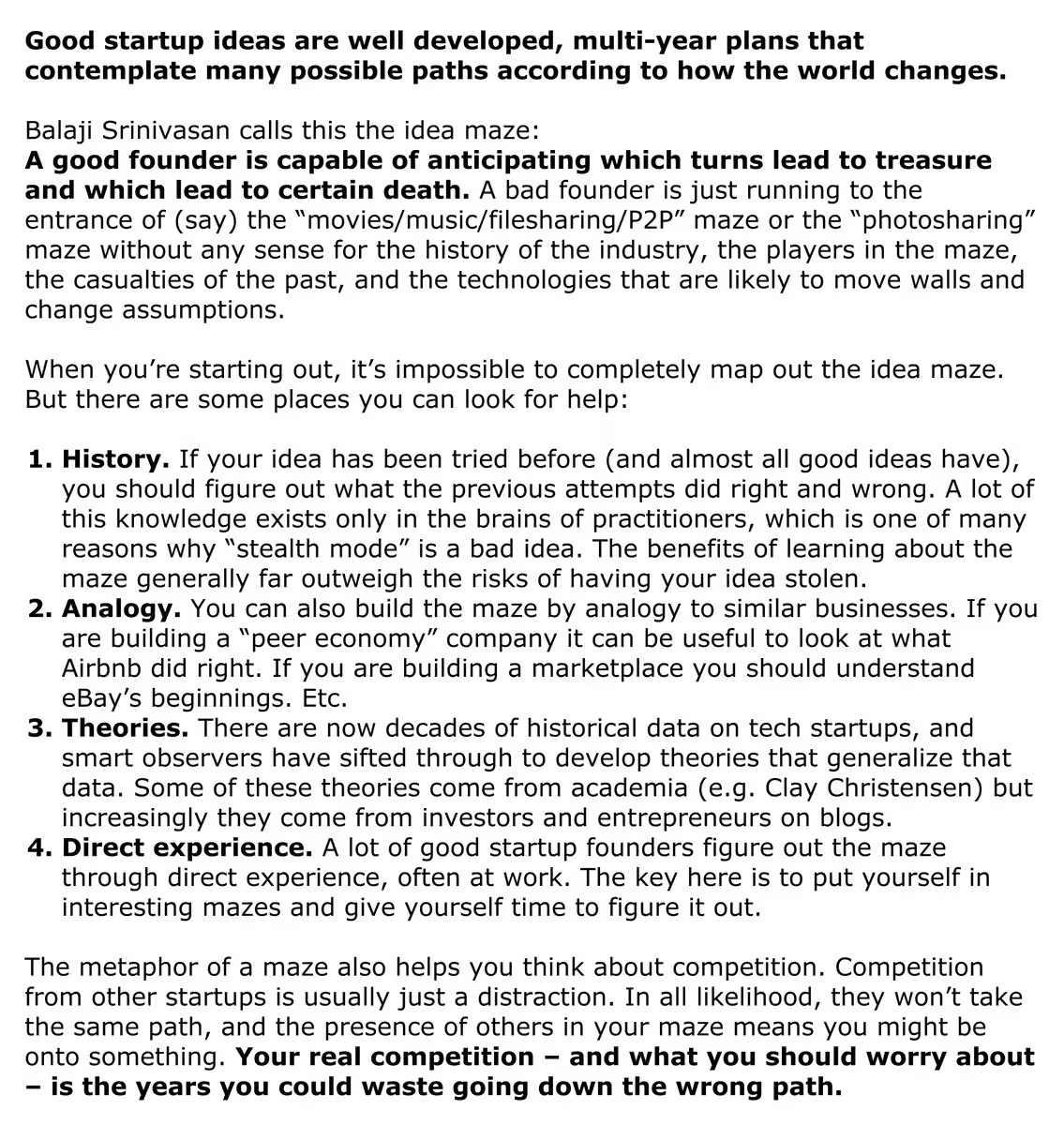

 Stand With Crypto🛡️


 Mike Manning
 andrew chen
 Andy Allen


 Garry Tan

 James Healy


 FC Hellmar

 miten sampat
 Katie Chiou
 Ish Verduzco


 Leo Schwartz


 Scott Kominers

 austin

 Mark Suster
 Boys Club™

 Sreeram Kannan

 The DATA Foundation

 Max Widmer 🟪
 tunez 🃏

 Duca

 Shay ❤︎
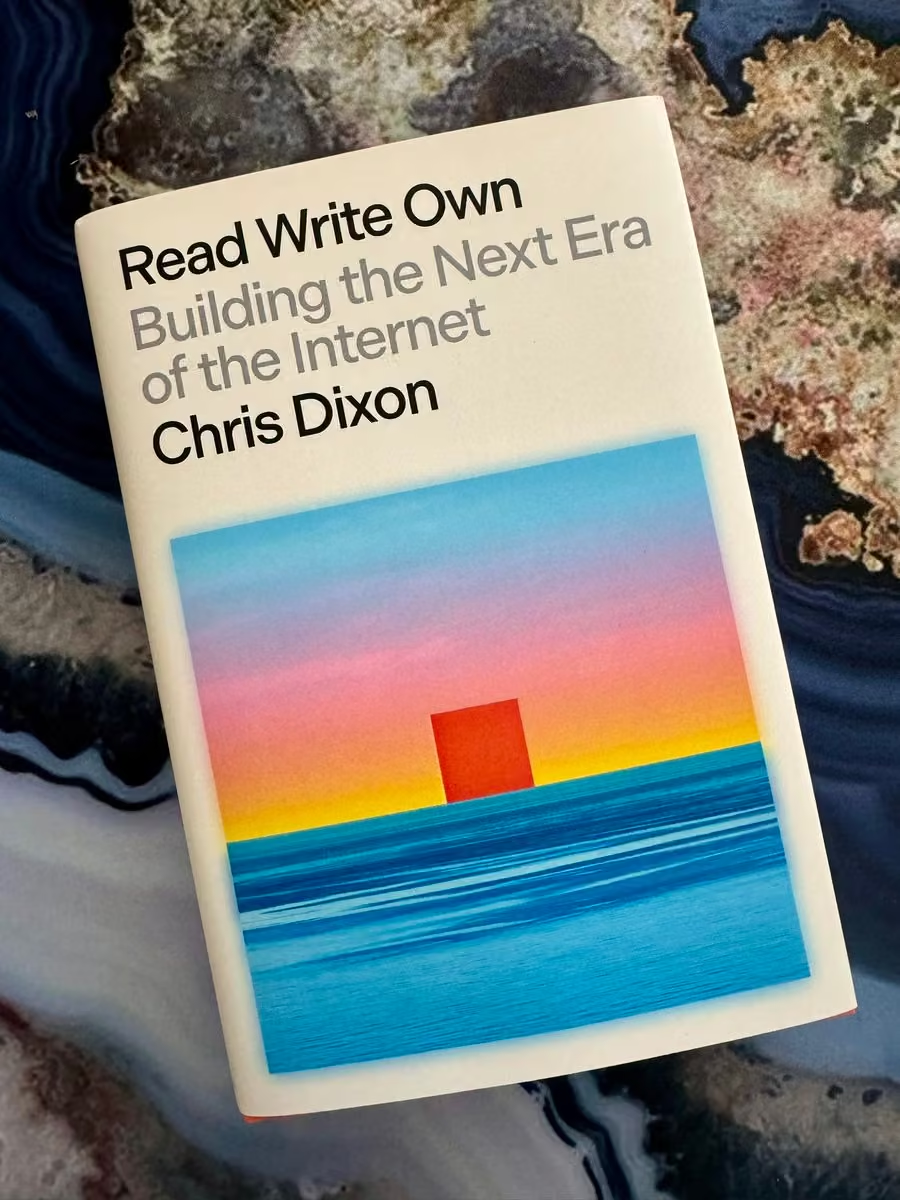

 ETHDenver 🏔🦬🦄


 Jacquelyn Melinek
 Mike Solana
 Pirate Wires
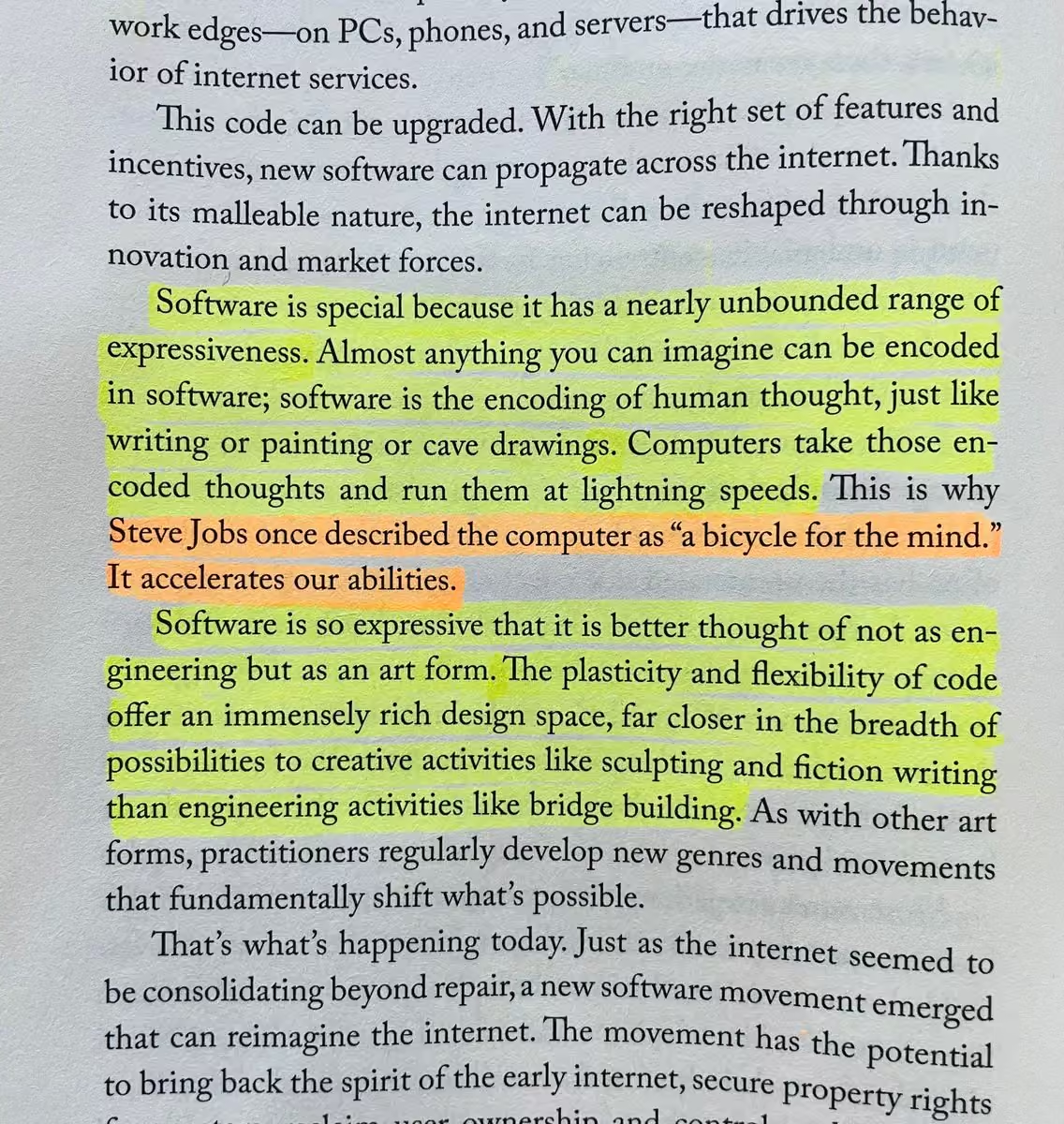


 Byron Gilliam 🟪 Apocaloptimist


 Paul Cafiero
 Vala Afshar

 RYAN SEAN ADAMS


 Packy McCormick

 Pranav Garimidi

 Connie Chan 🍒

 Alexis Ohanian 🗽

 Rene ◘


 Emilie Choi 🛡️
 Timmu Tõke

 Antonio García Martínez
 kayvon

 Steve 🤙


 David Marcus




 moodle zoup
 Valeria Nikolaenko


 Jon Lai
 Elena

 Daejun Park


 dom hofmann
 Naval


 Jihoz.ron