Politicians, athletes, journalists, NGOs, companies... They all use
corporation-owned social networks to communicate with us. Citizens
shouldn't have to hand over their data to companies to read content
published by public entities. Public Feeds changes that by making posts
of popular accounts freely available.
Read more.
Fei-Fei Li
Fei-Fei Li (Chinese: 李飞飞; pinyin: Lǐ Fēifēi; born July 3, 1976) is a Chinese-born American computer scientist best known for establishing ImageNet, the dataset that enabled rapid advances in computer vision in the 2010s. She is a professor of computer science at Stanford University, with research expertise in artificial intelligence, machine learning, deep learning, computer vision, and cognitive neuroscience. Li has earned the title of "The Godmother of AI". More on Wikipedia
AI is a civilizational technology! There are tremendous opportunities and responsibilities for all of us at this moment in history. I'm deeply grateful and excited to lead the @theworldlabs team to join @AMD to embark on a new beginning, to advance science, develop technologies, and ultimately make a positive impact to the world! 😍🚀
A picture is worth a thousand words and these 📸 from Lisa Su’s visit to San Francisco is giving us all the feels. We are so excited to officially welcome the @theworldlabs team to AMD!
Yes! Come and join us to build better technologies and more importantly, a better world together! We promise a thrilling journey to work on crazy hard problems, and to work with ambitious, curious, intellectually honest, courageous and very kind-hearted and fun teams! 🚀
AI is a civilizational technology! I'm deeply grateful and excited by the opportunities and responsibility awaiting all of us! Leading @theworldlabs for the past 2+ years has been an honor of my life. I cannot wait to continue working with this incredible team of innovators and scientists, and also to embark on this new chapter with all the colleagues at @AMD ! Lets make the world a better place for everyone! 😍🚀
A picture is worth a thousand words and this 📸 from Lisa Su’s visit to San Francisco is giving us all the feels. We are so excited to officially welcome the @theworldlabs team to AMD!
Thank you @LisaSu! There is so much ahead of us to create the best technologies to benefit everyone! The entire @theworldlabs team and I are beyond excited! 🤩🚀
There’s been massive progress in agentic 3D world creation in the past year, but producing polished, high fidelity pixels purely procedurally via code is still orders of magnitude more expensive than generating them directly.
I view these strategies as complementary – in our Atlas release today, both the Chisel web app and Codex/Claude Code integrations are designed for using an agent to build out coarse geometry in 3D and control precise final pixel generation through Atlas model endpoints.
This demo showcases the Chisel variant of Atlas we finetuned for flexible control, capable of taking in any combination of partial RGB and partial depth frames. We can take masked depth renders of the car model and use text prompting to control both stylistic appearance and what fills in the rest of the scene.
We’re opening up access to Atlas to everyone today.
We’ve built apps and API endpoints to help you use Atlas any way you can imagine: bring your ideas for building a 3D world and come away with keyframes, video clips, or 3D Gaussian splats.
We’re opening up access to Atlas to everyone today.
We’ve built apps and API endpoints to help you use Atlas any way you can imagine: bring your ideas for building a 3D world and come away with keyframes, video clips, or 3D Gaussian splats.
Great to be at #corl2026 in Austin today! Enjoyed the conversation with @drfeifei about the exciting advances in robotics, physical AI, and the opportunities ahead.
Thanks to @PeterStone_TX, @yukez, and the @corl_conf team for the invite and the opportunity to connect with so many brilliant students and researchers!
Policy? World model? Value learner (temporal distance)? Why not treat them all as prompts, trained with just next token prediction?
Turns out it's a surprisingly strong pretraining objective! We trained one 8B model in-house from scratch (not VLA or WAM), built from an amazing series of works from friends at @NeuroAILab, led by @AtlasKazemian@KlemenKotar
And it works zero-shot with new objects and goal images! Come try it out in JW Marriott Lone Star (3rd floor)!
Robot Capabilities as Probabilistic Inference over Next Token Prediction
We are doing a demo at CoRL debuting PsiBorg: an 8B universally promptable robot model for open-world manipulation!
One model works simultaneously as a policy, a simulator, and a progress tracker. It is trained from scratch, developed fully in-house at #stanford, not a VLA or WAM, and (tries to) work with new objects and new goal images you throw at it!
1/N Long horizon, complex tasks that truly matter in everyday life are not solved problems by today’s robotics, requiring planning, object detection, object manipulation, and failure recovery.
That's why Stanford's BEHAVIOR Challenge is back for year 2! Last year, the winning solution reached only 12.4% full task success. This year, the BEHAVIOR challenge has more tasks, better evaluation, and is easier to use. 🚨
What the hell?!! I can't believe how far we've come. Atlas is so good. Look at this fucking splat!! Check out behind the DJ table. Totally consistent novel view. No ghosting. This is entirely generated from a single image.
I'm gonna turn this into such a sick VR experience.
We've released a demo of real-time world generation powered by our new Atlas model!
This is a spiritual successor to our RTFM demo from last year. It's a vision for the future of interactive media might look like, with frames streamed directly from a powerful generative model
Two months ago, we introduced Atlas, an autoregressive world model with pixel-perfect camera control.
Today, we're releasing Frameboy, a demo allowing you to explore worlds in real-time with a highly optimized version of Atlas, streaming from cloud GPUs at up to 15 fps.
Two months ago, we introduced Atlas, an autoregressive world model with pixel-perfect camera control.
Today, we're releasing Frameboy, a demo allowing you to explore worlds in real-time with a highly optimized version of Atlas, streaming from cloud GPUs at up to 15 fps.
AlphaGo and coding agents need reasoning, so does robotics, which is arguably orders of magnitude harder. But what is the right representation to perform reasoning?
Excited to introduce DreamCan, led by @GChongkai ! DreamCan performs sparse visual planning, reasoning over sparse visual frames that are both **reachable** by the robot and **makes progress** towards the task goal, and it can learn this capability from action-free suboptimal videos!
1/8 Does text-to-image generation need language pretraining?
Today, we share Halcyon, a family of early-fusion, base models trained from scratch. Halcyon outperforms strong late-fusion baselines with up to 275× less pretraining compute. Models and recipes are open.
Halcyon is part of a research program at Radical Numerics on the science of multimodal pretraining and scaling.
Every one of my mathematician friend sees beauty in the numbers, shapes and the natural phenomena they work with. Who defines beauty in the age of machines?🤔
Experimenting with Chisel in Atlas beta. We’ve been rolling out beta access to a bunch of users and it’s been really cool seeing what people are building.
So excited to welcome @theworldlabs and @drfeifei to the @AMD family! I’ve always been a huge fan of Fei-Fei and her pioneering research in AI. Together, we’ll combine World Labs’ deep expertise in AI and world models with AMD’s compute leadership to power the future of AI and strengthen the open AI ecosystem. Can’t wait for all we’ll accomplish!
“Any threat to human society, including existential, is within ourselves,” says World Labs Technologies CEO Fei-Fei Li as she discusses the risks surrounding AI, and the responsibility humans have in shaping how the technology is developed and used.
Agents can be AI, but agency is human. It is every individual’s responsibility to empower our own agency, with the help of tools. But the North Star should always remain human centered.
What happens when you give a world model 32 images of a place we know very well?
World Labs put Atlas to the test on Voyager.
Atlas brings text, images, video, and 3D into a shared spatial context, enabling one model to generate new views, reconstruct scenes, and simulate worlds. With Voyager, you can now see that in action in real time.
Pretrained from scratch on NVIDIA Blackwell GPUs. Take a look around 👇
From 32 input images to real-time flight through @nvidia's Voyager headquarters.
Trained on NVIDIA Blackwell GPUs, Atlas uses these images as 3D spatial context to generate new views, letting you explore with pixel-perfect camera control.
From 32 input images to real-time flight through @nvidia's Voyager headquarters.
Trained on NVIDIA Blackwell GPUs, Atlas uses these images as 3D spatial context to generate new views, letting you explore with pixel-perfect camera control.
Atlas beta access is rolling out to users, some ideas for API developers
- give Astra "eyes" in Blender, let it place and render new camera views with Atlas - 3D reconstruction (this video uses 9 image inputs of my studio to make a scene, any Zillow apartment works) - graybox-to-world, use depth inputs and generate multi-view renders of a scene
We're hiring in robot learning at @theworldlabs! Join me, @drfeifei, and the team to define and scale the next generation of world models for robot learning!
University leaders should make sure they reason about the broader trend.
Around 2020, Fei-Fei and others at Stanford identified the growing compute divide between industry and academia, and the need for policy response in pushing for the National Research Cloud.
In 2021, the same point was made when applied to model training in the foundation models paper.
In 2022, the same point was made when applied to model evaluation in HELM among other works.
In 2026, the same point was made when applied to model use. OpenAI spent more than $6.5 million to resolve Navier Stokes (Astra prices for 130B output tokens only).
The stakes are not just the academic computer scientists doing frontier research on how to build AI models. The stakes are about the whole university system doing frontier research.
Coping with "scarcity is the mother of invention" won't cut it, and we should trust the "godmother of AI" on that.
The world of R&D is forking into two paths: the token-abundant research, and the token-starved research. The future is in the former - evidentially, the progress by today's top AI industry teams and neolabs is breathtaking, where researchers’ human brilliance is super charged by AI’s assistance. Every research university president should be reading this report and reflecting on what the future of higher education research should be. openai.com/index/research-acceleration-view-inside-openai
The world of R&D is forking into two paths: the token-abundant research, and the token-starved research. The future is in the former - evidentially, the progress by today's top AI industry teams and neolabs is breathtaking, where researchers’ human brilliance is super charged by AI’s assistance. Every research university president should be reading this report and reflecting on what the future of higher education research should be. openai.com/index/research-acceleration-view-inside-openai
Our new Atlas model now runs real-time after some intense inference optimization! Generating and navigating worlds is so much more visceral when it's interactive.
Inference runs on both B200 and MI355X with similar performance. Both devices are incredible workhorses!
World Labs co-founders Justin Johnson and Dr. Fei-Fei Li say LLMs use next-token prediction, but spatial intelligence has its own equivalent:
Justin: "The soft definition of AI-completeness is there's this fundamental primitive that's an AI task. But if I could solve this AI task in its full, broadest generality, it would solve any intelligence problem."
"The classic example in LLMs is that next-token prediction is AI-complete... I think from Ilya: there's a mystery novel, the thing has to read the whole novel, and the final sentence is, 'And the killer was.' Predict the next token. You could basically frame any kind of intelligence task in terms of that."
"So clearly next-token prediction is something people believe is AI-complete."
"New-view prediction, this primitive that we have in Atlas, especially generative new-view prediction, is also AI-complete."
"I want to have a world where Martin is writing a proof of the Riemann hypothesis on the blackboard, and then the camera pans over to the next whiteboard."
Fei-Fei: "Evolution had to solve new-viewpoint prediction by making animals move. Nature gave animals eyes, but nature didn't give trees eyes. Why? Because when you move, you see a new viewpoint... We do believe very strongly that next-viewpoint prediction is the equivalent of next-token prediction."
World Labs co-founders Fei-Fei Li, Justin Johnson, Ben Mildenhall, and a16z's Martin Casado on Atlas, a world model for spatial intelligence:
LLMs are built on next token prediction. Video models are built on next frame prediction. Atlas is built on new view prediction, and it's the first model to unify pixel generation and pixel reconstruction, two problems computer vision has kept in separate tracks for half a century.
The practical result is a 50 to 100x reduction in what it takes to digitally capture a 3D representation of a space. Previously, you needed 100 to 300 photos of a single room. Atlas can work from just three.
In this conversation, they get into the slow motion shot from The Matrix that took hundreds of cameras and now takes three iPhones, the overnight Slack message that made them bet the company in five seconds, why robotics is bottlenecked on data rather than chips, and the case that new view prediction is AI-complete.
00:00 Intro 01:50 The Matrix slow motion scene now takes three iPhones 02:48 Why new view prediction is the primitive 07:10 Unifying generation and reconstruction 11:15 Gaussian splats became the bottleneck 14:17 Dense capture used to mean 300 photos 17:30 Why reconstruction needs generation to fill the gaps 18:44 The LLM lesson image models missed 23:39 The video that made them go all in 28:04 3D design is 95% revisions 30:50 The problem in robotics is data, not chips 32:48 Why a robot policy can't be trained like an image model 34:44 When the simulator becomes the planner 36:45 Frozen time required footage full of movement 40:57 Why new view prediction is AI-complete 42:43 Nature gave animals eyes but not trees
>blogs about ray tracing for a CS project in 2012 >co-founds World Labs in 2024 >ships Atlas in 2026, a spatial intelligence model that turns a few photos into a whole 3D world
World Labs co-founders Fei-Fei Li, Justin Johnson, Ben Mildenhall, and a16z's Martin Casado on Atlas, a world model for spatial intelligence:
LLMs are built on next token prediction. Video models are built on next frame prediction. Atlas is built on new view prediction, and it's the first model to unify pixel generation and pixel reconstruction, two problems computer vision has kept in separate tracks for half a century.
The practical result is a 50 to 100x reduction in what it takes to digitally capture a 3D representation of a space. Previously, you needed 100 to 300 photos of a single room. Atlas can work from just three.
In this conversation, they get into the slow motion shot from The Matrix that took hundreds of cameras and now takes three iPhones, the overnight Slack message that made them bet the company in five seconds, why robotics is bottlenecked on data rather than chips, and the case that new view prediction is AI-complete.
00:00 Intro 01:50 The Matrix slow motion scene now takes three iPhones 02:48 Why new view prediction is the primitive 07:10 Unifying generation and reconstruction 11:15 Gaussian splats became the bottleneck 14:17 Dense capture used to mean 300 photos 17:30 Why reconstruction needs generation to fill the gaps 18:44 The LLM lesson image models missed 23:39 The video that made them go all in 28:04 3D design is 95% revisions 30:50 The problem in robotics is data, not chips 32:48 Why a robot policy can't be trained like an image model 34:44 When the simulator becomes the planner 36:45 Frozen time required footage full of movement 40:57 Why new view prediction is AI-complete 42:43 Nature gave animals eyes but not trees
>be dr. fei-fei li >born in beijing, raised in chengdu >dad moves to new jersey, follow at age 16 >speak almost no english >parents open a dry cleaner >work the counter on weekends >get into princeton on a full scholarship >study physics, because why not >caltech phd >everyone in AI is obsessed with algorithms >bet on data instead >"this will never scale" they say >do it anyway >get 14 million images hand-labeled >a team from toronto trains a convnet on it in 2012 >error rate falls off a cliff >deep learning era begins >become stanford professor >become google cloud chief scientist >found stanford HAI >press starts calling you the godmother of AI >2024, most of the field is racing on language >you say the next frontier is spatial intelligence >co-found World Labs in 2024 >ship Atlas in 2026, a model that turns a few photos into a whole 3D world
World Labs co-founders Fei-Fei Li, Justin Johnson, Ben Mildenhall, and a16z's Martin Casado on Atlas, a world model for spatial intelligence:
LLMs are built on next token prediction. Video models are built on next frame prediction. Atlas is built on new view prediction, and it's the first model to unify pixel generation and pixel reconstruction, two problems computer vision has kept in separate tracks for half a century.
The practical result is a 50 to 100x reduction in what it takes to digitally capture a 3D representation of a space. Previously, you needed 100 to 300 photos of a single room. Atlas can work from just three.
In this conversation, they get into the slow motion shot from The Matrix that took hundreds of cameras and now takes three iPhones, the overnight Slack message that made them bet the company in five seconds, why robotics is bottlenecked on data rather than chips, and the case that new view prediction is AI-complete.
00:00 Intro 01:50 The Matrix slow motion scene now takes three iPhones 02:48 Why new view prediction is the primitive 07:10 Unifying generation and reconstruction 11:15 Gaussian splats became the bottleneck 14:17 Dense capture used to mean 300 photos 17:30 Why reconstruction needs generation to fill the gaps 18:44 The LLM lesson image models missed 23:39 The video that made them go all in 28:04 3D design is 95% revisions 30:50 The problem in robotics is data, not chips 32:48 Why a robot policy can't be trained like an image model 34:44 When the simulator becomes the planner 36:45 Frozen time required footage full of movement 40:57 Why new view prediction is AI-complete 42:43 Nature gave animals eyes but not trees
World Labs co-founder Justin Johnson says Atlas can recreate the famous "Bullet Time" shot from The Matrix with iPhones:
"The way they did that shot is they had a ring of hundreds of cameras. [Neo] fell over in the studio, they had hundreds of cameras viewing that angle on a green screen, and then they used those hundreds and hundreds of cameras to make that famous shot in The Matrix."
"Now with Atlas, we can do this with as few as three cameras. No studio capture, no green screen, no expensive calibration. We can literally stick three iPhones on tripods and use these to take video of something happening."
"From those three iPhone videos, we can then reframe the shot and imagine, like, freeze time, have the camera fly in as the milk is splashing up, and get these amazing frozen-time views. We can do this with just a couple cameras."
World Labs co-founders Fei-Fei Li, Justin Johnson, Ben Mildenhall, and a16z's Martin Casado on Atlas, a world model for spatial intelligence:
LLMs are built on next token prediction. Video models are built on next frame prediction. Atlas is built on new view prediction, and it's the first model to unify pixel generation and pixel reconstruction, two problems computer vision has kept in separate tracks for half a century.
The practical result is a 50 to 100x reduction in what it takes to digitally capture a 3D representation of a space. Previously, you needed 100 to 300 photos of a single room. Atlas can work from just three.
In this conversation, they get into the slow motion shot from The Matrix that took hundreds of cameras and now takes three iPhones, the overnight Slack message that made them bet the company in five seconds, why robotics is bottlenecked on data rather than chips, and the case that new view prediction is AI-complete.
00:00 Intro 01:50 The Matrix slow motion scene now takes three iPhones 02:48 Why new view prediction is the primitive 07:10 Unifying generation and reconstruction 11:15 Gaussian splats became the bottleneck 14:17 Dense capture used to mean 300 photos 17:30 Why reconstruction needs generation to fill the gaps 18:44 The LLM lesson image models missed 23:39 The video that made them go all in 28:04 3D design is 95% revisions 30:50 The problem in robotics is data, not chips 32:48 Why a robot policy can't be trained like an image model 34:44 When the simulator becomes the planner 36:45 Frozen time required footage full of movement 40:57 Why new view prediction is AI-complete 42:43 Nature gave animals eyes but not trees
Old footage sitting in your camera roll could now be reconstructable as a 3D scene. World Labs co-founders Ben Mildenhall and Fei-Fei Li on how Atlas got there:
Ben: "In a casual sense... I took three photos of this object, or six photos of this room. I look at the photos, I can understand in my mind how those piece together. I can fill in the gaps and get it."
"But there's never really been any reconciliation between those data-driven priors and the brute force dense reconstruction, which is much more akin to scientific or medical imaging... When we say dense, we really mean dense."
"This room, I want like 100, 200, 300 photos to capture it. And what we're trying to do is bring that down to like three. We're saying like 50, 100x reduction."
"At that scale it completely flips that calculus on its head of what type of captures you reconstruct. You can go back to existing imagery you have. You can go to stuff you find on the internet and even build scenes out of that. You can go to casual videos and unearth a lot of footage that in the past we would never have treated as reconstructable, and bring it to life as 3D."
"This is something we've been playing around with a lot with Atlas. Taking old clips. I've taken a bunch of my own old captures that never worked before and put them through the system and seen a reconstruction for the first time."
Fei-Fei: "The Stanford demo is underappreciated. Anywhere between 3 to 25 images, you can reconstruct that entire Stanford quad... Everything you see is generated, but according to the laws of reconstruction. And this is really magical."
World Labs co-founders Fei-Fei Li, Justin Johnson, Ben Mildenhall, and a16z's Martin Casado on Atlas, a world model for spatial intelligence:
LLMs are built on next token prediction. Video models are built on next frame prediction. Atlas is built on new view prediction, and it's the first model to unify pixel generation and pixel reconstruction, two problems computer vision has kept in separate tracks for half a century.
The practical result is a 50 to 100x reduction in what it takes to digitally capture a 3D representation of a space. Previously, you needed 100 to 300 photos of a single room. Atlas can work from just three.
In this conversation, they get into the slow motion shot from The Matrix that took hundreds of cameras and now takes three iPhones, the overnight Slack message that made them bet the company in five seconds, why robotics is bottlenecked on data rather than chips, and the case that new view prediction is AI-complete.
00:00 Intro 01:50 The Matrix slow motion scene now takes three iPhones 02:48 Why new view prediction is the primitive 07:10 Unifying generation and reconstruction 11:15 Gaussian splats became the bottleneck 14:17 Dense capture used to mean 300 photos 17:30 Why reconstruction needs generation to fill the gaps 18:44 The LLM lesson image models missed 23:39 The video that made them go all in 28:04 3D design is 95% revisions 30:50 The problem in robotics is data, not chips 32:48 Why a robot policy can't be trained like an image model 34:44 When the simulator becomes the planner 36:45 Frozen time required footage full of movement 40:57 Why new view prediction is AI-complete 42:43 Nature gave animals eyes but not trees
Next view prediction is the key to Atlas, enabling us to unify pixel-level generation and reconstruction. @jcjohnss@BenMildenhall@martin_casado and I had a deeper discussion on some of the most exciting technical innovations of Atlas, our newly released world model for spatial intelligence!
World Labs co-founders Fei-Fei Li, Justin Johnson, Ben Mildenhall, and a16z's Martin Casado on Atlas, a world model for spatial intelligence:
LLMs are built on next token prediction. Video models are built on next frame prediction. Atlas is built on new view prediction, and it's the first model to unify pixel generation and pixel reconstruction, two problems computer vision has kept in separate tracks for half a century.
The practical result is a 50 to 100x reduction in what it takes to digitally capture a 3D representation of a space. Previously, you needed 100 to 300 photos of a single room. Atlas can work from just three.
In this conversation, they get into the slow motion shot from The Matrix that took hundreds of cameras and now takes three iPhones, the overnight Slack message that made them bet the company in five seconds, why robotics is bottlenecked on data rather than chips, and the case that new view prediction is AI-complete.
00:00 Intro 01:50 The Matrix slow motion scene now takes three iPhones 02:48 Why new view prediction is the primitive 07:10 Unifying generation and reconstruction 11:15 Gaussian splats became the bottleneck 14:17 Dense capture used to mean 300 photos 17:30 Why reconstruction needs generation to fill the gaps 18:44 The LLM lesson image models missed 23:39 The video that made them go all in 28:04 3D design is 95% revisions 30:50 The problem in robotics is data, not chips 32:48 Why a robot policy can't be trained like an image model 34:44 When the simulator becomes the planner 36:45 Frozen time required footage full of movement 40:57 Why new view prediction is AI-complete 42:43 Nature gave animals eyes but not trees
When we say Atlas has pixel-perfect camera control, we mean it.
Atlas precisely follows input camera parameters, including non-planar projections such as the Brown-Conrady distortion model and the Kannala-Brandt fish-eye model.
@BhamidipatiPan1 invented a novel method of camera conditioning and it works beautifully.
I don't know if you really understand what these people just did...
They built an AI that looks at a few casual real-world videos or photos and instantly turns them into a full 3D playground.
You can MOVE THE CAMERA HOWEVER YOU WANT, change the lighting, move objects around, and even let physics play out like in the real world.
View events from impossible angles because Atlas knows what was there.
This is massive!
Let's take robotics. Until now training robots meant collecting tons of expensive real-world data. Now a handful of recordings can become thousands of different simulated situations.
Robots can practice the same task in new rooms, with different objects and lighting without anyone having to film it all again.
For the industry it means we can train robots way faster and cheaper. Home robots, warehouse robots, whatever... they can learn new environments at scale instead of staying stuck in the lab.
This is one of the first real bridges between “cool AI video models” and actual physical machines that have to work in the real world.
Stanford HAI's fall conference returns this October. Confronting Our AI Future: Hope, Fear, and the Choices Ahead will feature a full day of conversations on work, learning, governance, and how we ensure AI expands human potential. Speakers include @drfeifei, @JeffDean, @audreyt, @erikbryn, Alondra Nelson, and @istoica05, with more to be announced.
Exciting to see World Labs release Atlas—a breakthrough world model that opens the door to entirely new classes of applications. I’m particularly excited about real-time generation of rich 3D environments for simulation, enabling AI systems to learn, reason, and act across robotics, commerce, and experiential design. #ai
This AI model doesn't generate videos. It generates worlds.
Fei-Fei Li's World Labs dropped Atlas today. The first model that generates images, video, and 3D in one architecture. Pretrained from scratch.
Give it a few photos of a real space. It reconstructs the full 3D environment. Set the exact camera path. Move through it. Render at 1440p for up to a minute.
Give it footage from ordinary cameras. It creates Matrix-style bullet time. Freeze a moment, rotate around it.
Give it photos of a room. It builds a photorealistic 3D simulation with the depth data robots need for training. Replaces equipment that costs tens of thousands.
The core principle: the more images you feed it, the less it imagines. One photo means heavy generation. Seven photos means near-pure reconstruction. You control the dial.
Every AI video tool today creates flat content you watch. Atlas creates spaces you enter.
World Labs co-founder @jcjohnss predicts a real-to-sim-to-real future where Atlas could train a robot for any new environment in minutes using just 5 photos from your phone:
"One is this notion of fully in-context learning. Maybe I've got a robotics foundation model, then I can demonstrate the robot once how a task should be performed, and that's enough for the robot to figure out."
"Another version is real to sim to real. Maybe I've got my pre-trained robotics foundation model, but I want to adapt it to this particular environment, like this studio, this table, moving this microphone around."
"There's a version where you could come in here and take just a couple casual videos with your phone or a couple images with your phone, use Atlas to reconstruct the space, and now stage all kinds of robotics interactions in this studio space."
"If you could lower the barrier to doing that, you could do it in five minutes to take five photos, upload it to Atlas, have it generate a simulation, maybe describe in natural language what kind of task you want the robot to do, have an agent go build that simulation for you, RL fine-tune your general purpose robotics foundation model, and now you've got a robot maybe in the span of a couple minutes that could come in and is perfectly adapted to this space." @theworldlabs
I play with splats all day, every day, and I’ve never seen anything like this. The scale and fidelity of these worlds is insane. Welcome to Earth, Atlas.
Another glimpse of Real2Sim with Atlas: capture a real environment with just a number of casual photos from a phone, turn them into a sim, then simulate diverse robots navigating different trajectories. Atlas generates the RGB and depth observations they would see along the way.
For robotic simulation, Atlas reconstructs a space from just a few photos and generates the photorealistic RGB and depth data any robot's sensors would observe on any trajectory.
Robots can now be trained and tested in far more spaces. Until now, scanning spaces like these required expensive equipment and time-consuming capture.
Today, Radical Ventures portfolio company @theworldlabs launched Atlas — a next-gen world model that's pretrained from scratch to natively understand text, images, video, and 3D. It handles pixel-perfect camera control, 3D reconstruction from as few as two or three images, and real-to-sim workflows that let robots learn from a small number of casual recordings. On benchmarks, it outperforms recent video models at camera-controlled generation and the best specialized open-source models at 3D reconstruction, all from a single general-purpose model. Congratulations to the team on this milestone! worldlabs.ai/blog/atlas
I'm particularly excited by Atlas's ability to reconstruct scenes from a very small number of input image -- was able to create this flythrough of London's Natural History Museum by combining 3 input images I found from completely separate sources on Google Images
one of my favorite things about Atlas is its ability to blend reconstructing the real-world with generating imaginative worlds. the possibilities are endless.
so proud of our team, can't wait to have everyone try it out in the next generation of @theworldlabs 's marble :)
Atlas is live! A spatial foundation model, trained in-house from scratch.
After shipping RTFM last year, I was convinced a single camera-conditioned model could unify most spatial generation tasks. Atlas is that bet at scale.
World Labs CEO @drfeifei on the need for world models:
"There's no language out there. You don't go out in nature and there's words written in the sky for you."
"There is a 3D world out there that follows laws of physics, that has its own structures due to materials. To fundamentally back that information out and be able to represent it and be able to generate it is just fundamentally quite a different problem."
"We will be borrowing useful ideas from language and LLMs, but this is fundamentally, philosophically a different problem."
One month into joining World Labs, it’s been incredible to witness Atlas come to life under the leadership of @jcjohnss, @BenMildenhall, and @drfeifei. 🚀
Proud to contribute on the robotics side and show how Atlas can bridge world models and physical AI: turning a few casual real-world recordings into interactive simulations with controllable objects, motions, lighting, and environments.
And this is just the beginning. Very excited about what Atlas can unlock for robot learning at scale!! 🤖
Today we sharing Atlas, our new multimodal world model.
One reason this model is so special to me is that it combines two core visual intelligence tasks I have worked on for over a decade: generation and reconstruction
🔥An incredible accomplishment. Think of it as a video model with full camera control. And the scene remains (nearly) 3D consistent. Built on a fully internal base model. There are many use cases, from video editing, to 3D reconstruction to robotics. Great technical blog too.
For robotic simulation, Atlas reconstructs a space from just a few photos and generates the photorealistic RGB and depth data any robot's sensors would observe on any trajectory.
Robots can now be trained and tested in far more spaces. Until now, scanning spaces like these required expensive equipment and time-consuming capture.
I'm so excited that our @theworldlabs team has achieved a major milestone today! Introducing Atlas - a first of its kind multimodal world model trained from scratch! 🚀
Atlas is capable of generating frames with pixel-perfect camera control, reconstructing large scenes from as few as one single input image, simulating space-time by reframing videos, natively outputting 3D spaces from one or more input images, composing multiple posed images into a consistent 3d world, and more! This is the best camera conditioned world model ever, opening doors to many possible use cases from VFX to robotics. I'm so so so proud of our team!♥️
Watch Flow Studio’s Nikola Todorovic walk through one of many workflows possible in 3D Editor + Canvas, including how Marble by @theworldlabs can support the world-building stage.
Because it’s trained on the internet, AI has but also lacks certain capabilities that human brains possess. What does a benevolent human-AI dynamic look like? & what happens when AI is built on your neural activity, natural speech, and behavior? @drfeifei on Huberman Lab:
The new Huberman Lab episode is out: Using AI to Increase Your Intelligence & Enrich Humanity | Dr. Fei-Fei Li (@drfeifei)
0:00 Fei-Fei Li 3:46 Vision & Intelligence; Human Vision & Contribution to AI 12:11 Computer Vision & the AI Revolution 18:34 Sponsors: Lingo & Wealthfront 21:19 Speech, Sound & AI Development 23:36 AI & Contextual Learning, Human Intelligence 33:43 Current AI Gaps, Emotion & Creativity 45:48 Computers Enhancing Humanity; Tool: Personal Agency & Learning about AI 53:04 Sponsors: AG1 & LMNT 55:37 Public Discourse about AI 57:34 AI to Enhance Scientific Discovery & Healthcare; Human Collaboration 1:07:38 Intuition, Motivation & Human States Beyond AI 1:19:18 Sponsor: David 1:20:37 Social & Ethical Considerations for AI 1:27:38 Kids, Development & AI Tools; Tool: Prompt AI Effectively 1:35:04 Next Frontier for Robotics & AI; Human Agency 1:43:52 Human-Centered AI Future 1:50:10 World Labs, Spatial Intelligence 1:54:12 Concerns about AI & Creativity; Movies, Art, Storytelling 1:59:51 Younger Generation & AI, Teachers 2:05:38 Zero-Cost Support, YouTube, Spotify & Apple Follow, Reviews & Feedback, Sponsors, Protocols Book, Social Media, Neural Network Newsletter
World Labs CEO Dr. Fei-Fei Li & SceniX Co-Founder Yunzhu Li on the data bottleneck in robotics and how world models help:
"The lack of data in training, the lack of data in evaluation, this is very, very different from language models, where data is abundant on the internet."
"And we know that in order for robotics to work, we have to somehow unlock the power of scaling law. But where does that come from?"
"It's a profound problem that everybody's battling with in robotics."
"We see a lot of unlock in being able to do this whole process through the modeling of the environments."
"Being able to create these digital worlds... that's just going to unlock so much more potential for being able to replace all the costly and the unsafe data in the real environments with the data generated from the worlds for robots to be able to do scalable learning and evaluations."
When SceniX joined World Labs, we said spatial intelligence was never only about perceiving and generating virtual and physical worlds, but also interacting with them. Today, we’re sharing early results from that vision: building worlds that train robots. 🌎🤖↓
When SceniX joined World Labs, we said spatial intelligence was never only about perceiving and generating virtual and physical worlds, but also interacting with them. Today, we’re sharing early results from that vision: building worlds that train robots. 🌎🤖↓
Deeply proud of what the SceniX team has built and excited to take it forward at @theworldlabs.
Our real-to-sim-to-real platform enables scalable robot training and evaluation in worlds aligned with reality. This is an important milestone, and only the beginning. 🌎🤖
When SceniX joined World Labs, we said spatial intelligence was never only about perceiving and generating virtual and physical worlds, but also interacting with them. Today, we’re sharing early results from that vision: building worlds that train robots. 🌎🤖↓
When SceniX joined World Labs, we said spatial intelligence was never only about perceiving and generating virtual and physical worlds, but also interacting with them. Today, we’re sharing early results from that vision: building worlds that train robots. 🌎🤖↓
Sim-to-real aligned simulation also makes evaluation scalable. Here, the same failure behavior and outcome appear in both virtual and physical worlds. The simulation captures more than the task setup or final success label; it reproduces the conditions that push a policy toward success or failure. The result is faster iteration, broader coverage, and substantially lower cost.
In our taxonomy of world models, we called the simulator the linchpin: the place where agents can act, learn, and be evaluated. Our R2S2R engine can move robot development beyond slow, expensive, hardware-bound iteration toward more scalable and cheaper training and evaluation.
During its Q2 earnings remarks, Google highlighted growing demand for AI infrastructure from robotics and spatial intelligence companies, including World Labs. ↓
@YunzhuLiYZ, @fast_sploosh, and @xhsonny have built a remarkable team that is training and evaluating robots in high-fidelity simulation – proven not only in lab demos, but in live deployments on real hardware.
Last month, we wrote that the boundaries between rendering, simulation, and planning are beginning to blur. Bringing our world models together with SceniX's simulation and robotics expertise is an important step in our quest for spatial intelligence.
We scaled a robot model natively to 8,000 timesteps of context, 5 minutes worth of muscle memory, with constant inference cost. Robot policies used to live their lives a few frames at a time (< 0.1 sec), instantly forgetting what just happened. We pushed to 3 orders of magnitude beyond SOTA.
Introducing RoboTTT. Test-Time Training (“TTT”) carries a tiny model *inside* the model. Every incoming sensor reading triggers one gradient step on that tiny core, so the history keeps getting compressed into its weights. The hidden state has a fixed size (literally a small neural net), so the robot can “grok” arbitrarily long experience with little overhead. Learning continues indefinitely after deployment.
We can then put an entire video in context as prompt! RoboTTT enables one-shot in-context learning from human video: in circuit board assembly, a human demonstrates a never-seen configuration once, and the robot imitates it faithfully.
Humans drop things all the time, but we pick them up so fast that we don’t even notice. That reflex to fix is half of our physical competence. RoboTTT shows self-improvement on the fly: the robot is skilled at recovering from its own errors mid-episode, and each fix enters its context to inform the next move. The TTT core distills a general-purpose, failure-to-correction mapping from the training data.
One more thing. What excites me the most is a new Context Scaling Curve: from 128 to 8K timesteps, closed-loop performance hill-climbs steadily with no sign of saturation. 8K-context pretraining beats 1K by 62%. What LLM enjoys, robotics should too. Soon, even 1M context is not a fantasy.
1/N Long horizon, complex tasks that truly matter in everyday life are not solved problems by today’s robotics, requiring planning, object detection, object manipulation, and failure recovery.
That's why Stanford's BEHAVIOR Challenge is back for year 2! Last year, the winning solution reached only 12.4% full task success. This year, the BEHAVIOR challenge has more tasks, better evaluation, and is easier to use. 🚨
Can VLMs predict how each camera move changes the view, and plan many such moves ahead?
We introduce ViewSuite with 6 DoF camera control and ~165K task instances, testing: Path-to-View View-to-Path Interactive View Planning
A sharp Planning Gap emerges: + can roughly "track" how camera action changes views - cannot "compose" a plan towards a target view at all
We then try to teach VLMs with Reinforcement Learning. - RL cannot teach VLMs such planning ability, only 2.5% success rate with Qwen2.5-VL-7B. + With View Graph Distillation (our RL-Graph-SFT framework), 2.5% → 47.8%
Below, we answer these questions: Q1. What are the failure modes? Q2. How can we make RL work? Q3. What has the model learned? Can we open up the model to see before/after? Can such spatial priors transfer to other view related tasks?
Your thoughtful reflection is so inspiring and encouraging @smallfly ! As everyone talks about AI and automation, human creativity, story telling and productivity are even more important and essential to our society. @theworldlabs is founded on the premise of empowering human ingenuity and productivity. We are very grateful to be able to work with people like you! 🙏🌐
@FastCompany just published a great piece on @theworldlabs , @drfeifei , Marble, and the idea that spatial intelligence / world models may be one of the next big shifts in AI.
I was happy to be quoted in the article, but I also wanted to share more context about my own experience with World Labs and Marble, and why this direction is especially interesting to me.
My starting point: volumetric capture — For the past few years I’ve been exploring and using volumetric capture and reconstruction (photogrammetry, NeRFs, 3D Gaussian Splats) mostly capturing locations around Montreal. Alleys, museums, urban interiors.
I love every step of it: the capture itself, the pipeline, and what can be done with the output. Turning real spaces into real-time explorable systems.
I do this personally, sharing explorations here, and professionally as chief technologist, and co-founder of Dpt.
Physical reality + generative manipulation — In my work I’m especially drawn to mixing physical reality with generative and digital manipulation: using physical interfaces (light, clay, ink, ... ) to drive generative AI pipelines, building mixed reality prototypes that reshape your surroundings, or starting from real captured spaces and transforming them using tools like Marble.
Like many people, I saw the World Labs announcement on Twitter in September 2024, and Marble when it surfaced in early December. But by then, I already had a sense something was coming.
The first conversation — As someone deep into volumetric capture and radiance fields, I obviously knew about @BenMildenhall and his pioneering work on NeRF. To my surprise, Ben reached out to me in late June 2024. He’d been following some of my experiments and wanted to chat about my process and workflows and how I was using this “stuff” creatively.
At that point he didn’t share what he was building, but we had a genuinely great conversation about radiance fields, AI, and my work. He was curious about the creative perspective, not just the technical one.
When the World Labs announcement dropped a few months later, it all made sense. I understood what Ben had been working on, and why the creative angle mattered to them. Then in August 2025, he invited me to try the Marble beta, and I’ve been experimenting with it since.
Experimenting with Marble — The first thing I used Marble for was materializing scene and world concepts during ideation at the studio, and seeing if and how it could fit into our production pipeline. In parallel, I dove into a series of experiments focused on world manipulation: starting from real captured spaces and transforming them using Marble.
I’d already been exploring that idea using img2img diffusion with ControlNet on NeRF renders, real-time video streams, and even mixed reality using headset camera feeds. But Marble brings something different. It generates persistent, spatially cohesive 3D worlds that can be rendered in real time across a wide range of devices.
That’s a real shift.
Experiment 01: Parallel Realities — The first experiment, Parallel Realities, starts from a volumetric capture of a real location, reconstructed as 3D Gaussian Splats. Using Marble, I generate an alternate version of that same space, something informed by the original architecture: abandoned, nature-reclaimed, alternate era.
Then, using Spark (World Labs’ 3D Gaussian Splatting renderer for THREE.js) I make both realities coexist in the same spatial coordinate system. From there, I use a portal UX mechanic to let the user step between the real reconstruction and the Marble-generated version.
Experiment 02: Hidden Depth
The second experiment, Hidden Depth, does not transform a space as much as expand it.
A captured location has a visual boundary (a mural, a doorway, a dark corridor) and Marble generates what exists beyond it. For example: a Montreal alley has a painted mural; step through it and you’re inside a world informed by what is actually depicted there.
Why this matters to me — Being able to start from a real 3D Gaussian Splat scene and manipulate it with Marble opens up a lot of ideas. The 3DGS pipeline is becoming an increasingly compelling foundation for exploration, experimentation, and storytelling.
What matters most to me right now is more control. The more I can steer the generated scene or world, the more useful the tool becomes. I want more features like the already existing multiple input images and Chisel, the blockout-based approach.
I would like better local control, the ability to expand a generated world more and more while preserving coherence, and the ability to directly import 3D Gaussian Splat scenes to be used as a starting point. I want more ways to shape the result, not just a “prompt and hope” approach.
— It is exciting to see this field moving from research and demos toward actual creative workflows.
The future of AI should be grounded in human agency, creativity, and understanding.
@FastCompany explores the rise of world models and features insights from World Labs cofounder @drfeifei:
"Her vision for World Labs—and its human-centered future—is both consistent and persistent. It's like a simulation in her world model. Once in place, it stays put."
Today we are sharing three new research papers, each exploring a new way to generate 3D content by leveraging large-scale generative models and 2D priors.
Today we are sharing three new research papers, each exploring a new way to generate 3D content by leveraging large-scale generative models and 2D priors.
Scientific research is fundamental to advancing civilization and helping people globally to solve the most critical problems, from medicine to materials, from brain science to physics, and much beyond. This is only possible when scientists have access to the best tools of the time to conduct scientific research, including having access to AI-based tools.
The creativity and imagination is out of the world! So grateful that @theworldlabs got to partner with the amazing talents @withloreco to translate their incredible ideas into an interactive experiences for users to enjoy!🤩
World Labs CEO Dr. Fei-Fei Li: "The world is not made of words."
"Language models have given machines an extraordinary command of concepts, vocabulary, and reasoning, but the physical world, virtual or real, runs on a different substrate."
"Where language models learn the statistical structure of text, world models learn the statistical structure of space and time: how light falls on a surface, how a garden looks from an angle no camera has captured, how objects respond to force and follow the laws of physics."
"Language gave machines a way to talk about that world. World models are how machines will finally come to understand, imagine, reason and interact with it."
Excited to introduce StereoPolicy, led by @EvansXuHan.
📷📷🤖StereoPolicy is an effective way to add geometric cues to modern robot policy models while keeping the strengths of pretrained 2D encoders.
⁉️Why stereo for robot manipulation?
Monocular RGB often lacks the depth cues needed for precise manipulation, while RGB-D and point clouds can be noisy or brittle, especially on reflective and transparent objects in real-world deployment.
Instead of explicitly reconstructing disparity, depth, or point clouds, StereoPolicy directly fuses synchronized left/right RGB views to learn implicit stereo cues, avoiding extra reconstruction latency that can make real-time manipulation difficult.
GPIC should be the new standard benchmark for generative modeling. Training 1 epoch on GPIC is the same cost as 100 epochs on ImageNet, but is a much better proxy for real-world problems. If you work in generative modeling, try GPIC for your next project!
1/ Introducing GPIC: a Giant Permissive Image Corpus and benchmark for visual generation!
🚀100M VLM-captioned image-text pairs for training 📊1M image-text pairs for benchmarking 🖼️~28 trillion pixels 🤗Centrally Hosted ✅Fully permissive for research + commercial use
1/ Introducing GPIC: a Giant Permissive Image Corpus and benchmark for visual generation!
🚀100M VLM-captioned image-text pairs for training 📊1M image-text pairs for benchmarking 🖼️~28 trillion pixels 🤗Centrally Hosted ✅Fully permissive for research + commercial use
At its 258th Commencement on Sunday, Brown conferred honorary doctorates on six candidates who have achieved great distinction in a variety of fields, including economics, civil rights, artificial intelligence, national security, business and community leadership.
The winners of the first ever World Jam have arrived! 🏆
Step into the Museum, an interactive archive showcasing the winning creations from the World Jam. Where every portal opens into a new spatial experience.
Turn a single image into a fully meshed 3D world in minutes 👀
Built by a World Labs team member, image-blaster combines Marble + Claude skills + @fal to generate 3DGS environments, meshes, interactive physics objects and SFX from one image.
I recently gave some talks on PointWorld. In this latest version, I discussed: Why world models? Why 3D? Why it matters amidst scaling data in robotics? Why it’s a missing side of the coin for “The Bitter Lesson”?
(It’s more than just a better backbone for training policies)
Sparkjs 2.0 is out! Support for arbitrarily large splats on web, mobile, and VR. Tons of features: LoD, streaming, editing, multi-splat, mesh integration, ray casting etc. etc.
If you're worried that AI is going to take over all coding, work on a splat renderer for a bit :)
It’s 11th year and counting! Teaching the first lecture of @cs231n every year has been a highlight of my spring seasons. As usual, I asked students which departments or schools they come from @Stanford . Increasingly, students raise their hands to indicate that they come from all seven schools on campus, from @StanfordEng to @StanfordMed@StanfordHumSci@StanfordGSB@StanfordLaw@StanfordEd@stanforddoerr . AI is truly a horizontal technology that excites students across all backgrounds and disciplines!🤩
Pleased to collaborate with Sabastian Niles on this byline in @FortuneMagazine. One of the most important questions emerging around agent-to-agent interactions is: when AI agents negotiate on behalf of competing interests—with no human in the loop—what ensures they remain honest? Interestingly, a London banking house from 1832 points the way. fortune.com/2026/03/20/salesforce-ai-infrastructure-londo…#agenticai#trustedai@salesforce
Today, we’re launching a new way to create with AI.
With OpenArt Worlds, you can generate a fully navigable 3D environment from a single prompt or image, step inside it, and capture shots exactly the way you envision them.
No more starting over. No more inconsistent scenes.
You build the world once - and create inside it.
• Move through your scene freely • Find your angles • Add characters and elements • Capture production-ready shots
A single image can transform into a massive world composed of millions of splats with Marble. Forming large explorable environments from ancient ruins to spaceship interiors.
70 hackers joined us in SF for the first-ever World Labs Hackathon.
In just 3.5 hours, 32 teams used Marble for projects ranging from robotics sims and agents to AR/VR interfaces, games, art experiences, and real estate tools.
We don't expect LLMs to multiply numbers or sort lists directly within their output token stream. Instead, we ask them emit code and execute it in a separate runtime.
Why predict the opposite outcome for simulating interactive worlds?
‼️VLMs/MLLMs do NOT yet understand the physical world from videos‼️
In our recent work, we found that even the most advanced AI models still lag behind humans in one key aspect: reasoning about the kinematic properties of objects from videos.
Takeaways: 1. ChatGPT 5.1 leads overall among 21 advanced VLMs, followed by Gemini 2.5 Pro/Flash. 2. Grok 4.1 delivers impressive performance at the lowest API cost. 3. Qwen3-VL is the top-performing open-source model.
Spark 2.0 Developer Preview is now available: introducing Level-of-Detail (LoD) rendering and streaming for world-scale Gaussian Splats on the web. Learn more ↓
World Labs has raised $1 billion in new funding. We are grateful and excited to partner with our investors, including AMD, Autodesk, Emerson Collective, Fidelity Management & Research Company, NVIDIA, and Sea, among others.
Congratulations to @DrFeiFei and @TheWorldLabs team! AMD is proud to invest in the next leg of growth as the team explores creating spatially cohesive 3D worlds.
World Labs has raised $1 billion in new funding. We are grateful and excited to partner with our investors, including AMD, Autodesk, Emerson Collective, Fidelity Management & Research Company, NVIDIA, and Sea, among others.
What's the right space to diffuse in: Raw Data or Latents?
Why not both!
In Latent Forcing, we order a joint diffusion trajectory to reveal Latents before Pixels, leading to improved convergence while being lossless at encoding and end-to-end at inference.
Want more editable controls when creating a true 3D world? All users of Marble can now enjoy the Advance model! Try to add a scene outside of the windows, change the vibe of the entire room, or add whatever plants you like, or make many variations of the same scene. Happy creating!🤩
i built an app that converts any space into a digital clone in minutes
as the founder of Teleport - the only iphone app that can capture high-quality 360° panoramas - i already had the perfect input when @theworldlabs released their 3d reconstruction api
📍 first test - a co-working space in chiang mai 🇹🇭
the flow: 1. capture 16 ultra-wide photos 2. stitch into a 360° equirectangular image 3. reconstruct a fully navigable 3d environment via @theworldlabs api
there’s something profound about exploring these 3d worlds. it brings you back in a way photos never could.
The dream of robots helping people live and work better in the physical world begins with helping robots to become more spatially intelligent by learning from the infinitely diverse and intricate environments of the 3D/4D worlds 🤖🤩
Interactive 3D world model is a highly intuitive representation for learning robotics actions in dynamic and complex environments. Here is our most recent work on this 🤖
From a single image to a full robotics simulation.
360 image → Marble → 3D environment → Robotics sim
This is how we scale world creation for embodied AI with @LightwheelAI, turning lightweight capture into simulation-ready environments in minutes, not weeks.
With Octane 2026 you can combine multiple @theworldlabs Marble 3DGS worlds and turn them into a single cinematic journey using simple geometry and clipping materials to create tunnels, portals, and transitions at render time.
The AI discourse continues to confuse, but the real breakthroughs are clear: agents negotiating across companies, simulation-trained systems, ambient intelligence that knows when to act, spatial intelligence understanding physical reality, and AI that's consistently excellent at complex business tasks. My take on how #enterpriseai will transform in 2026 here: www.salesforce.com/blog/ai-trends-for-2026/ #bigideas2026#futureofai#airesearch
Researchers are using Marble to generate simulation-ready robotics environments (scenes + collider meshes) then bring them into @NVIDIARobotics Isaac Sim for training + evaluation without any manual environment setup.
Bring new robot testing environments to life with @theworldlabs and Isaac Sim. 🤖 If you can describe a world 🌎, you can start testing in it the same day.
Learn how to: 1. Export scenes from World Labs' Marble as Gaussian splats 2. Convert to USD using @nvidiaomniverse NuRec 3. Import into NVIDIA Isaac Sim 4. Add a robot and run the simulation
Want to make a big impact in robotic research? Come and work with robots and the smartest students @StanfordSVL! We are hiring a software developer, focusing on simulation for robotics & robotic learning. You'll be working directly with me , @jiajunwu_cs and our amazing students and researchers. Please apply at: careersearch.stanford.edu/jobs/software-developer-29538
OctaneStudio+ 2026 Black Friday subscribers get access to Marble by @theworldlabs – enabling you to create instant, production-ready worlds and relight them in Octane – with cinematic GI, shadows, and reflections.
Create worlds with Marble and make them cinematic with Octane!
OctaneStudio+ 2026 Black Friday subscribers get access to Marble by @theworldlabs – enabling you to create instant, production-ready worlds and relight them in Octane – with cinematic GI, shadows, and reflections.
Create worlds with Marble and make them cinematic with Octane!
This came as a total surprise this morning. Very humbled… 🙏 AI is built by generations of technologists, starting with the daring question of “can machines think?” by Alan Turing. It will be further developed, used and governed by many and all of us! Let’s keep our AI mission human-centered for the benefit of humanity! And I can’t wait to see where AI’s next frontier - spatial intelligence - will be taking us!
2025 was the year when artificial intelligence’s full potential roared into view, and when it became clear that there will be no turning back.
For delivering the age of thinking machines, for wowing and worrying humanity, for transforming the present and transcending the possible, the Architects of AI are TIME’s 2025 Person of the Year. time.com/7339685/person-of-the-year-2025-ai-architects/
🎉 How do we measure the rapid progress of robotic learning and embodied AI research? The 1st BEHAVIOR challenge results are out! And we're to see such strong performance on 50 challenging household tasks.
Congrats to the winning teams! 🥇Robot Learning Collective 🥈Comet 🥉SimpleAI Robot
Our most recent work that benchmarks modern VLM and their efficacy for long horizon household activities in robotic learning, using BEHAVIOR benchmark environment.👇
Researchers are exploring Marble’s generative 3D worlds as a way to rapidly produce simulation-ready environments for robotics without manual scene construction.
World Labs and VIVE Mars are making it easier to turn ideas into shoot-ready 3D scenes, fast.
@theworldlabs new AI world-builder lets you create detailed virtual environments from a simple text or image prompt, then composite them live. Once the scene is ready, you can step straight into production using VIVE Mars CamTrack.
Sign up at a discounted rate to start building worlds, and see how the full workflow comes together with VIVE Mars CamTrack and Marble.
Filmmaker Josh Kerr re-created one of his childhood projects using Marble and Lightcraft to bring an early vision to life in a new way. How he created it in thread.
Dr. Fei-Fei Li (@drfeifei) is known as the “godmother of AI.”
For the past two decades, she’s been at the center of AI’s most significant breakthroughs, including: - Spearheading ImageNet, the dataset that sparked the AI explosion we’re living through right now. - Leading work at Stanford Artificial Intelligence Laboratory (SAIL) - Serving as Chief Scientist of AI/ML at Google Cloud - Co-founding Stanford’s Institute for Human-Centered AI - Serving on the United Nations AI Scientific Advisory Board - Being named as Time's 100 most influential people in AI
In this conversation, Fei-Fei shares the rarely told history of how we got to today—and what comes next.
We discuss: 🔸 The backstory on ImageNet 🔸 Why robotics faces unique challenges compared with language models and what’s needed to overcome them 🔸 Why Fei-Fei believes AI won’t replace humans but will require us to take responsibility for ourselves 🔸 Why world models and spatial intelligence represent the next frontier in AI, beyond large language models 🔸 The surprising applications of Marble, from movie production to psychological research 🔸 How to participate in AI regardless of your role 🔸 Much more
Thank you to our wonderful sponsors for supporting the podcast: 🏆 @Figma Make — A prompt-to-code tool for making ideas real: www.figma.com/lenny/ 🏆 @justworks — The all-in-one HR solution for managing your small business with confidence: www.justworks.com 🏆 @wearesinch — Build messaging, email, and calling into your product: sinch.com/lenny
I generated this 3D enviroment using a single image using "Marble" from @theworldlabs. The new version can generate a mesh from the splat and is directly usable in Unreal Engine 5.7.
Check out how we used Marble to make the launch video for Marble! It’s so fun to work behind the scenes to use this technology to help create and tell stories!
we've been having so much fun testing our own tech 😆 I was able to create this world from just 2 input images in 10 minutes (and spent another 20 minutes making the flythrough video). workflow description below ⬇️
“Creativity is intelligence having fun.” Unleash your creativity and imagination with Marble - our 3D world generation model, now available to everyone!
AI’s next frontier is Spatial Intelligence, a technology that will turn seeing into reasoning, perception into action, and imagination into creation. But what is it? Why does it matter? How do we build it? And how can we use it?
Today, I want to share with you my thoughts on building and using world models to unlock spatial intelligence in this essay below. 1/n
In this new essay, I lay out the framework for what truly spatially intelligent world models must achieve—three essential capabilities for building AI that creates with a storyteller's imagination, navigates with a first responder's fluency, and reasons about space with scientific precision. 2/n
The applications of spatial intelligence are wide ranging. “Creative tools are emerging now—World Labs’ Marble already puts these capabilities in creators’ and storytellers’ hands. Robotics represents an ambitious mid-term horizon as we refine the loop between perception and action. The most transformative scientific applications will take longer but promise a profound impact on human flourishing.” 5/n
“The philosopher Wittgenstein once wrote that “the limits of my language mean the limits of my world.” I’m not a philosopher. But I know at least for AI, there is more than just words. Spatial intelligence represents the frontier beyond language—the capability that links imagination, perception and action, and opens possibilities for machines to truly enhance human life, from healthcare to creativity, from scientific discovery to everyday assistance.” n/n
It’s an honor to have received the @QEPrize along with my fellow laureates! But it’s also a responsibility. AI’s impact to humanity is in the hands of all of us.
Today, The King presented The Queen Elizabeth Prize for Engineering at St James's Palace, celebrating the innovations which are transforming our world.
🧠 This year’s prize honours seven pioneers whose work has shaped modern artificial intelligence.
It was a privilege to meet AI pioneer and entrepreneur @drfeifei of @StanfordHAI and @theworldlabs We discussed how the UK can seize the opportunities of AI and make sure the benefits reach everyone, everywhere.
The tide of openness in AI is receding – and with it, the foundation of scientific progress. Universities must reclaim AI research for the public good with a new model for team science. hai.stanford.edu/news/universities-must-reclaim-ai-resear…
I can now confess that I participated in the new #tronares movie, playing myself 😆 I had a great time working with everyone especially Greta Lee shooting the scene where “I” interviewed her character about #ai. Thank you @DisneyStudios for giving me a chance to be part of a movie making experience! 😍🎬
From AI empowered education reforms, to the future of jobs, from spatial intelligence to robotics, it was fun to spend my alumni reunion Saturday with alums from all over the world and my friend @lilysarafan , chair of @Stanford board of trustees. Go Cardinal! @StanfordHAI
Very excited to share @theworldlabs ‘s latest research work RTFM!! It’s a real-time, persistent, and 3D consistent generative World Model running on *a single* H100 GPU! Blog and live demo are available below! 🤩
Generative World Models will inevitably be computationally demanding, potentially scaling beyond even the requirements of today’s LLMs. But we believe they are a crucial research direction to explore in the future of rendering and spatial intelligence.
So much fun to discuss with my friend @RishiSunak everything from world modeling to robotics to the future of work in the age of AI. Thank you for visiting @theworldlabs and soak in the Bay Area startup vibe!😍
The 2025 BEHAVIOR Challenge, launched by @drfeifei's team at Stanford, is a global competition to train robots in household tasks, testing reasoning, navigation, and manipulation in simulated homes.
This is such a cool and important challenge for robotics by @drfeifei! We need progress in robotics to be more collaborative, open, and reproducible (instead of mostly marketing videos!) Powered by @LeRobotHF datasets of course!
The 2025 BEHAVIOR Challenge, launched by @drfeifei's team at Stanford, is a global competition to train robots in household tasks, testing reasoning, navigation, and manipulation in simulated homes.
Join @Stanford’s @drfeifei and NVIDIA’s @DrJimFan for our livestream on October 7 at 10 AM PT, where they’ll dive into BEHAVIOR, a large-scale benchmark and challenge for advancing embodied AI.
They’ll share: 💡 The motivation behind BEHAVIOR 🛠️ The upcoming challenge and its design 🤖 The role of simulation in advancing robotics research
We're hiring research scientists in diffusion / generative models at @theworldlabs! Check out the role here: jobs.ashbyhq.com/worldlabs Feel free to DM me if you would like to chat!👋
If you have strong opinions about react-three-fiber, can derive ray-triangle intersection by hand, and want to shape the future of web-native 3D AI tools... let's talk.
Total insanity. This is using an adaptive LOD scheme in sparksjs (not merged yet). The entire scene has 16million splats and this is real time navigation ... 😱😱
Turn any world model from @theworldlabs into a multi-user space for exploration and collaboration with @frame_vr. Voice chat, embodied AI agents, and tons more you can layer on top of the model foundation. This took all of 10 seconds to get going. The metaverse is so back. 😄
Grafting Diffusion Transformers accepted to #neurips2025 as an Oral! We have lots of interesting analysis, a test bed for model grafting, and insights🚀
You can explore these AI-generated worlds on #visionpro in 2 ways 👇
Option 1 is to get a link directly from Marble, the platform from @theworldlabs that has recently opened beta access and allows users to use a prompt image to generate worlds as #gaussiansplatting. You just click on share and get a link you can input in your browser's headset. The viewer has several limitations since you cannot adjust scale, set the starting point or navigate the scene freely.
Option 2 is to use Supersplat from @willeastcott and his team. There you can do some editing and once in VR you can navigate around, looking and pinching to explore the generated portions of the model more freely.
If you are into Gaussian Splatting and #vr remember to check out the list of updated tools that allow you to experience Gaussian Splatting in any headset.
Just subscribe to my newsletter (link on top of my profile) and you will get it dircetly in your inbox.
✨ It's not even 2026 yet, but you can start using AI world models today!
This is @theworldlabs running inside my app 🏡 Interior AI letting you redesign your home with AI and then walk through it!
It's really cool and of course not perfect especially since for now it's based on just one image, but multi-image will allow for more precise understanding of the room
As always this is just the first version, and it'll get better from here
World Labs is founded by @drfeifei, a Computer Science professor from @stanford, and other people like Justin Johnson, Christoph Lassner, and Ben Mildenhall "each a world-renowned technologist in computer vision and graphics"
The tech essentially comes down to img2splat, search what a guassian splat is if you don't know
It's in beta and wait list, but I'm trying to get this live for everyone as soon as possible as it seems like such an essential feature for interior design
P.S. I also tried to worldify people photos (for Photo AI) but World Labs for safety right now seems to block it off and make it a black square, maybe in the future
As always a lot of big AI model companies are now working on the same thing: 3d world models, only World Labs has a real properly working demo (for now)
Very exciting time again!
@levelsio
✨ Upgraded Photo AI's default video model with high resemblance/likeness
2025 really is the year of AI video, we're leaving uncanny valley fast I think
High res skin texture, real person facial movements etc. all based on the person you trained on Photo AI
Fei-Fei Li reposted
@levelsio
2023 was the year of AI avatars
2024 was the year of AI photos
2025 was the year of AI videos
And I think it's becoming clear now that 2026 will be the year of AI world models
Fully interactive explorable 3d worlds generated from one or multiple 2d images or a prompt
In turn these 2d images can then be generated by AI too
So soon you can generate fully explorable virtual 3d worlds based on your own imagination
Next will be figuring out how to make those worlds interactive
As always a lot of big AI model companies are now working on the same thing: 3d world models, only World Labs has a real properly working demo (for now)
Very exciting time again!
@levelsio
✨ Upgraded Photo AI's default video model with high resemblance/likeness
2025 really is the year of AI video, we're leaving uncanny valley fast I think
High res skin texture, real person facial movements etc. all based on the person you trained on Photo AI
The latest unlock in AI Filmmaking is here! Over the last few weeks we've nailed down Consistent Characters. But Location and Camera placement has continued to be an issue.
Not any longer. Consistent environments are now here with World Labs Marble! Toolset Below!
What does it mean to explore a house built from memory — one that feels familiar, yet shifts each time you return? That question is at the heart of Memory House, a project that unfolds through space, silence, and surreal interruption.
Grateful to the @theworldlabs team for making this experiment possible — their latest tool Marble opens up a new way of building. With Gaussian splatting, a single 2D image becomes a 3D space you can step inside. From there, entire environments can grow by stitching rooms together, layering ambience, proximity, and subtle triggers for immersion.
The teaser captures just the start of an exploration in narrative: waking up in bed, following the quiet sounds of home, and stepping into a kitchen where reality begins to fracture. But that’s only one fragment of a project now expanding into 30+ connected rooms.
With Worldlabs, alongside tools like Veo3 and ElevenLabs, Memory House is evolving into a new form of storytelling — where memory isn’t told on a page, but experienced through space.
I reimagined my living room with World Labs. Gemini helped design it, World Labs generated the 3D environment, and VPS localized it to my space 1:1 scale.
I can now step into a persistent redesign in mixed reality and explore it as though it exists physically. How it was built:
Gen-AI has made it remarkably easy to turn an idea into an experience that people can share. What used to take weeks of work or require collections of existing assets, I can now create in just a few hours with @theworldlabs.
@theworldlabs co-founder @drfeifei says spatial intelligence now lets us generate and reconstruct infinite universes for creativity, travel, storytelling, even socialization.
“It suddenly will enable us to live in a multiverse way.”
Glad to have the opportunity to collaborate with the World Labs team on their new tool Marble! It’s currently the best tool for generating 3D worlds with Gaussian Splatting. Here are some of the results I’ve been getting and putting together in a video.
If you're curious about how the latest spatial intelligence model is doing @theworldlabs, check out this new blog! I'm so excited by how much progress has been made in 3D world generation - bigger, more consistent, and forever persistent worlds! Moreover, everyone in the world can view the many many worlds generated by our users! And you can even make your own worlds now by signing up to our wait list to access the model!
There was something deeply satisfying about ImageNet. It had a well curated training set. A clearly defined testing protocol. A competition that rallied the best researchers. And a leaderboard that spawned ResNets and ViTs, and ultimately changed the field for good.
Then NLP followed. No matter how much OpenAI, Anthropic, and xAI disagree, they at least agree on one thing: benchmarking. MMLU, HLE, SWEBench - you can’t make progress until you are able to measure it.
Robotics still doesn’t have such a rallying call. No one agrees on anything: hardware, task, scoring, simulation engine, or real world environment. Everyone is SOTA, by definition, on the benchmark they define on the fly for each paper.
From the maker of ImageNet - BEHAVIOR takes a stab at the daunting challenge of unifying robotics benchmarking on a reproducible physics engine (Isaac Sim). The project started before I graduated from Stanford Vision Lab, and took so many years of dedication and PhD careers to build. I hope BEHAVIOR is either the hill-climbing signal we need, or the spark that finally gets us talking about how to measure real progress as a field.
(1/N) How close are we to enabling robots to solve the long-horizon, complex tasks that matter in everyday life? 🚨 We are thrilled to invite you to join the 1st BEHAVIOR Challenge @NeurIPS 2025, submission deadline: 11/15. 🏆 Prizes: 🥇 $1,000 🥈 $500 🥉 $300
ha! here is something fun and totally random I've been pondering: as Oliver Sacks has beautifully written - "what is the space between two snowflakes?" Language can describe all the things, stuff, and people in intricate details. But what about the 'space', the 'nothingness' in between all of them? Without this 'nothingness', space doesn't exist, and things to move. The elegant path a butterfly took from one flower to another is as curious and intriguing as the fact the butterfly has landed on a flower...
"There's no language out there in nature. You don't go out in nature and there's words written in the sky for you.. There is a 3D world that follows laws of physics."
(1/N) How close are we to enabling robots to solve the long-horizon, complex tasks that matter in everyday life? 🚨 We are thrilled to invite you to join the 1st BEHAVIOR Challenge @NeurIPS 2025, submission deadline: 11/15. 🏆 Prizes: 🥇 $1,000 🥈 $500 🥉 $300
(14/N) We thank @SimovationInc for providing high-quality JoyLo teleoperation data in simulation, reflecting their deep expertise in simulation and data quality.
BEHAVIOR is built upon @nvidia’s Omniverse. We thank @nvidia for their continuous support.
A picture now is worth more than a thousand words in genAI; it can be turned into a full 3D world! And you can stroll in this garden endlessly long, it will still be there.
Behind the EGI acronym is something profound -- AI built for the multi-turn conversations, edge cases, complex ideas that fuel the day-to-day of every great company. Both consistent and highly capable—built for #enterpriseai. Proud of what we're building at @Salesforce. #egi
Are you a badass genAI model optimization engineer? A fearless bizops rising star? A unicorn research engineer+TPM? An ambitious and experienced Product Engineer? Or believe you have a superpower to uniquely make a big impact to our mission @theworldlabs, please check out these job postings and apply to this link below!
Thought experiment: If you were blindfolded in a room and someone only described what’s around you… could you complete a task?
Now imagine seeing the room. Instantly, your brain reconstructs the space in 3D.
That’s why language isn’t enough.
@martin_casado and @drfeifei explain why spatial intelligence is the next frontier for AI — and why mastering the physical world matters more than language alone.
Open Sourcing Forge: 3D Gaussian splat rendering for web developers!
3DGS has become a dominant paradigm for differentiable rendering, combining high visual quality and real-time rendering. However, support for splatting on the web still lags behind its adoption in AI.
Nice. World Labs open sourced their 3d gaussian splat renderer; built as a first-class ThreeJS citizen instead of bolting it on.
Multiple splats, proper scene hierarchy, can transform and animate them, mix with regular meshes, plus works on mobile and VR. Also makes splats programmable on the GPU - basically shader graphs for gaussian splatting.
Could actually enable wilder 3DGS experiences on web that previously required a fancy game engine. And it's nice to see it released under the permissive MIT license.
Open Sourcing Forge: 3D Gaussian splat rendering for web developers!
3DGS has become a dominant paradigm for differentiable rendering, combining high visual quality and real-time rendering. However, support for splatting on the web still lags behind its adoption in AI.
Creating high quality 3DGS objects or scenes is simpler than ever, yet rendering them still lacks robust support in many toolchains. Today, we're excited to unveil Forge (forge.dev), a cutting-edge 3DGS renderer that effortlessly integrates with THREE.js.
At @theworldlabs, we built a new Gaussian splatting web renderer with all the bells and whistles we needed to make splats a first-class citizen of the incredible @threejs ecosystem. Today, we're open sourcing Forge under the MIT license.
Check out this shiny new, fast and dynamic web renderer for 3D Gaussian Splats! The things one could do are just mind boggling! So proud of the @theworldlabs team that made this happen, and we are making this open source for everyone!
Open Sourcing Forge: 3D Gaussian splat rendering for web developers!
3DGS has become a dominant paradigm for differentiable rendering, combining high visual quality and real-time rendering. However, support for splatting on the web still lags behind its adoption in AI.
During its 324th graduation ceremony on Monday, Yale University awarded honorary degrees to eight individuals whose achievements in their fields have benefited the common good.
This year’s honorary degree recipients are Debbie Allen, the beloved performer, producer, and director; Frances H. Arnold, a Nobel Prize-winning bioengineer and pioneer in the field of evolutionary chemistry; Ronald L. Carter, the iconic jazz musician and composer; Michael B. Curry ’78 M.Div., former presiding bishop of the Episcopal Church and longtime advocate for social justice; Henry Louis “Skip” Gates, Jr. ’73, literary scholar and award-winning filmmaker; Annette Gordon-Reed, Pulitzer Prize-winning historian and author; Fei-Fei Li, a computer scientist and pioneer in the field of artificial intelligence; and Peter B. Moore ’61, a distinguished chemist and longtime Yale professor who contributed key insights for understanding of the ribosome.
I've long believed we need a different lens through which to view the future of artificial intelligence in business. Very proud to see my concept of Enterprise General Intelligence (EGI) has been extensively covered by Sabrina Ortiz @ZDNet in this recent article: zd.net/3FUpsVi. Check out the original blog here: www.salesforce.com/blog/enterprise-general-intelligence/. #salesforceai#ai#ml
Drum roll 🥁 @StanfordHAI ‘s annual #aiindex2025 is out! This is one of the most trusted annual reports on the state of AI globally. Everyone interested in AI should read this!
📢Introducing #aiindex2025: This year's report highlights the most critical trends in AI – from shifting geopolitical landscape and rapid technological evolution, to AI’s expanding role in science and medicine, business, and public life. Read more: hai.stanford.edu/ai-index/2025-ai-index-report
🔥Spatial intelligence requires world generation, and now we have the first comprehensive evaluation benchmark📏 for it! Introducing WorldScore: Unifying evaluation for 3D, 4D, and video models on world generation! 🧵1/7 Web: haoyi-duan.github.io/WorldScore/ arxiv: arxiv.org/abs/2504.00983
[New post + market map + video] 🔥 AI Learned to Talk. Now it’s Learning to Build Reality
What if you could step into any world you can imagine? Not just view it, but walk around, interact, and create within it? That's the promise of AI World Models.
The leap from language models to world models is like going from reading about Paris to actually walking its streets. This isn't incremental—it's transformative for how we'll experience digital content, do our jobs, and interact with technology.
Hey there, if you’re an expert in 3D graphics, passionate about GenAI; if you’re a full stack product engineer who loves coding, shipping, and teamwork; and if you’re excited to work with the best pixel AI pioneers on world modeling and spatial intelligence, @theworldlabs would love to hear from you! We are looking for the special person to change the world with us! jobs.ashbyhq.com/worldlabs/a9e12478-4935-4235-b3ba-03cea1…
We’re looking for a Senior Full Stack Product Engineer who thrives at the intersection of product and engineering. You should have strong coding skills across the stack, a deep appreciation for intuitive user experiences, and the technical expertise to build and maintain scalable systems. In this role, you’ll take end-to-end ownership of product features - from crafting responsive, user-centric interfaces to architecting robust backend services and APIs that power generative AI products at scale. You’ll also collaborate closely with our research team to bring cutting-edge AI research to life in real-world applications.
What You Will Do:
Develop and optimize web-based 3D graphics tools and applications.
Participate in all phases of the software development lifecycle, from design to deployment, including working directly with early testers and design partners to solicit user feedback.
Collaborate with AI researchers to integrate machine learning models into the 3D rendering pipeline.
Key Qualifications:
7+ years of engineering experience in diverse technical environments, ideally delivering user-facing products within product-driven organizations.
Excellent problem-solving abilities and a strong foundation in computer science principles.
Proficiency in modern web application technologies for both frontend (e.g., TypeScript, React, Node.js) and backend services, and a strong understanding of web architecture.
Experience in 3D graphics programming and shader development, particularly web frameworks such as WebGL and three.js.
Experience working with generative AI, machine learning, neural rendering, etc. Experience building applications around generative image, video, or 3D models is particularly valuable.
Degree in Computer Science or a related technical field.
Proven ability to operate effectively in startup environments as an early-stage engineer or founder, demonstrating adaptability and ownership.
Strong communication and collaboration skills, with a focus on delivering high-quality, impactful solutions.
Preferred Qualifications:
Experience in building and scaling user-focused web applications.
Contributions to open-source graphics or machine learning projects.
Experience building real-time collaborative tools and applications.
Experience working in VFX, gaming, 3D design, or other industries that focus on high-fidelity visual outputs.
Artificial Intelligence has the potential to transform society by emulating human intelligence across a wide variety of industries. The United States must embrace its potential for innovation yet lead with balanced regulation, strategic investment, and robust security measures to maintain global technological advantage. Read @DrFeiFei Li's chapter in the 2025 Stanford Emerging Technology Review (SETR) here: stanford.io/4imqHe7
Modern generative models of images and videos rely on tokenizers. Can we build a state-of-the-art discrete image tokenizer with a diffusion autoencoder? Yes! I’m excited to share FlowMo, with @kylehkhsu, @jcjohnss, @drfeifei, @jiajunwu_cs. A thread 🧵:
One of the “holy grails” of robotic learning is to perform generalizable everyday household mobile manipulation tasks. With a new bimanual mobile robot, our latest work BEHAVIOR Robot Suite (BRS) takes a stab at this very very hard, still yet-to-be-solved problem!🤖🦾🤩
🚀Two weeks ago, we hosted a welcome party for the newest member of our Stanford Vision and Learning Lab—a new robot! 🤖✨Watch as @drfeifei interacts with it in this fun video. Exciting release coming soon. Stay tuned! 👀🎉
Live from Paris, at the #parisaisummit . I gave the opening keynote about AI’s past, present, future and opportunities. “75 years ago, Alan Turing dared humanity to imagine ‘thinking machines’. But perhaps that vision is too narrow and inward-looking. As AI today is poised to become both thinking and doing machines as we unlock language, spatial and embodied intelligence, we should consider a new dare to all of us - a dare to build human-centered AI to empower and augment people.” 1/N
Of course it’s always fun to have a mini reunion of AI friends, some of them are even neighbors but it takes a summit in Paris for us to catch up! @erikbryn James Manyika @demishassabis@ylecun 5/N
Also met up with an artist I’ve admired for a long time, and is now a dear friend of me and @theworldlabs - @refikanadol . We share the belief that AI can empower and augment human creativity if used right. 6/N
At San Francisco airport heading to Paris. Excited to be delivering the opening keynote of the Paris AI Action Summit! (I am counting on the plane ride to finish my talk 😜)
🌍 The AI Action Summit is opening with a very special guest! We are delighted to welcome @drfeifei to the #aiactionsummit at the @GrandPalaisRmn in Paris. She is a visionary and a pioneer who for years has placed human values at the core of AI. 🧵👇
🌍 Le Sommet pour l’Action sur l’IA s’ouvre avec une invitée d’exception ! Nous sommes ravis d’accueillir @drfeifei au #aiactionsummit au @GrandPalaisRmn à Paris. Visionnaire et pionnière, elle place l’humain au cœur de l’IA depuis des années. 🧵👇
Very honored by this recognition, along with the fellow recipients. The convergence of Neural Network algorithms, Data and GPU chips has enabled the (re)birth of modern AI, so that this powerful technology can help empower people and enhance our lives and work. 😍🙏
Congratulations to the #qeprize2025 Laureates, Professor Yoshua Bengio, Bill Dally, Professor Geoffrey Hinton, Professor John Hopfield, Jensen Huang, Dr Yann LeCun, and Dr Fei-Fei Li!
I am really super happy to show you my research that transform 3D volumetric capture of man capture with @kartel_ai and with env gaussian splatting generated with @theworldlabs in a three.js player . And all that is "upscale" using Hunyuan vid2vid model with a Lora train on videos on the main actor. Hope the future of movie is here :) . Still need some work, but you can get the idea
For “Neoghost” I just wanted to test out a pipeline using @theworldlabs for environments, upres them with @Magnific_AI, and then run the characters through @ViggleAI.
"Creativity requires controllability... This is why some of the current GenAI technology is deeply unsatisfying. Because it doesn’t give that controllability."
—Dr. Fei-Fei Li, speaking at a16z speedrun last week
honored to host the amazing @drfeifei for a fireside chat with @speedrun!
favorite takeaways - fearlessness is what she looks for in her best students + startup talent - 3D spatial understanding unlocks higher intelligence - data is a key underexplored area for most AI founders
Congrats to HAI Distinguished Fellow @MichaelKratsios on his appointment as Director of the White House Office of Science and Technology Policy and Assistant to the President for Science and Technology in the upcoming Trump Administration. Well deserved! www.politico.com/news/2024/12/22/trump-names-kratsios-par…
I really enjoyed working with @sainingxie and his students in this study called “Thinking in Space”, which is an evaluation on how LLMs (mostly failed to) do in spatial reasoning, something so essential to human intelligence. So much more to look ahead in 2025 to push the boundaries of Spatial Intelligence!
Video understanding is the next frontier, but not all videos are alike. Models now reason over youtube clips and feature films, but what about the everyday spaces we—and our future AI assistants—navigate and experience? Introducing Thinking in Space, our latest study exploring how multimodal LLMs see, remember and recall spaces. 🧵[1/n] vision-x-nyu.github.io/thinking-in-space.github.io/
"By fostering public sector leadership, championing global collaboration, and advancing evidence-based policymaking, we can unlock AI’s transformative potential while safeguarding its responsible development," @drfeifei said in her speech.
Amazing talk by Fei-Fei Li of Stanford HAI, Live now at NeurIPS "From Seeing to Doing: Ascending the Ladder of Visual Intelligence!" neurips.cc/virtual/2024/invited-talk/101127
Please come to see this work called HourVideo, a benchmarking dataset to evaluate the capabilities of MLLMs’ understanding and reasoning of long form videos.
Registration is still open for those looking for a nice dinner and drinks with @theworldlabs cofounders @BenMildenhall and @chlassner and myself, along with some of our friends @a16z 🍷
Modern AI was forged from 3 converging elements of computing - GPU chips, Neural Network algorithms, and Big Data. I’m honored to share this recognition with my colleagues and friends @geoffreyhinton@ylecun@Yoshua_Bengio and Jensen Huang @nvidia . #imagenet would not have been possible without my amazing students and collaborators. 😍🙏
The 2024 VinFuture Grand Prize is awarded to five scientists: Professor @Yoshua_Bengio, Professor @geoffreyhinton , Mr. Jen-Hsun Huang @nvidia, Professor @ylecun and Professor @drfeifei for transformational contributions to the advancement of deep learning.
It is quite an honor to be part of such an incredible list of women making an impact on the world. And thank you @melindagates for your very generous words!
I can't get enough of these 3D worlds... from Monet's garden, to fantasy castle land, to an outdoor bazaar, to floating city, and even underwater coral reef... hope you enjoy them too! @theworldlabs Check out the link below.
Super proud of this work by my student @keshigeyan and our collaborators on pushing the benchmarking of LLMs for spatial and temporal reasoning onto another level! We’ll present this at #neurips2024 !🔥🎥
Here is another AI piece built around generative 3D. I wanted to explore the use of photographs in a multi-scene video. All shots are directly from the World Labs model without video or style transfer.
We’ve been busy building an AI system to generate 3D worlds from a single image. Check out some early results on our site, where you can interact with our scenes directly in the browser!
We’ve been busy building an AI system to generate 3D worlds from a single image. Check out some early results on our site, where you can interact with our scenes directly in the browser!
We’ve been busy building an AI system to generate 3D worlds from a single image. Check out some early results on our site, where you can interact with our scenes directly in the browser!
Very excited to share with you what our team @theworldlabs has been up to! No matter how one theorizes the idea, it's hard to use words to describe the experience of interacting with 3D scenes generated by a photo or a sentence. Hope you enjoy this blog! 🤩❤️🔥
We’ve been busy building an AI system to generate 3D worlds from a single image. Check out some early results on our site, where you can interact with our scenes directly in the browser!
.@drfeifei, Co-Director, @StanfordHAI: "This Framework reaffirms the commitment to security, transparency, and public trust. Through rigorous research and cross-sector collaboration, we can help create a resilient AI ecosystem that prioritizes the public good.”
I’m really excited by this collaborative work on evaluating the current LLMs capabilities for embodied decision making, publishing at #neurips2024 . Scroll down to see the fascinating key findings. 🦾🦿
What structural task representation enables multi-stage, in-the-wild, bimanual, reactive manipulation?
Introducing ReKep: LVM to label keypoints & VLM to write keypoint-based constraints, solve w/ optimization for diverse tasks, w/o task-specific training or env models.
“Rapid advances in AI have created an opportunity to accelerate the field of robotics,” says @StanfordHAI co-director @drfeifei during Stanford Robotics Center’s launch last week. She expressed enthusiasm for the newly announced partnership between HAI and the Center. ↘️
I’m so humbled and honored by this! Truly hope that the Class of 2028 will find hope, humility and a sense of responsibility in #ai, one of the most powerful technologies that humanity has ever developed!
On @GMA, President Eisgruber and Rockefeller College students spoke with Charlie Gibson '65 about the tradition of the Princeton Pre-read and @drfeifei '99's memoir, "The Worlds I See": bit.ly/3BWNjS
How do you effectively scale up real to sim data for robotic learning? We propose a new idea called “digital cousins” to simultaneously reduce the cost of real to sim generation while improving generalizability in learning 🦾😍
BREAKING NEWS The Royal Swedish Academy of Sciences has decided to award the 2024 #nobelprize in Physics to John J. Hopfield and Geoffrey E. Hinton “for foundational discoveries and inventions that enable machine learning with artificial neural networks.”
For more than twenty years, I’ve studied and admired the work of @geoffreyhinton . We’ve had many private conversations. But indeed this is the first time we’ve done a public talk together, thanks to @radicalvcfund@UofT@StanfordHAI . The full talk is now linked below 👇🙏 1/
Human-centered AI will thrive when we use empirically driven research to inform our policymaking. @StanfordHAI is pleased to play a leading role in partnership w/the CA Gov to ensure academia has a seat at the table in AI development.
It’s an honor for me and @StanfordHAI to work with @CAgovernor@GavinNewsom and our fellow ecosystem partners to pave a path forward in the responsible governance of AI in California, the beating heart of AI innovation. Much work is ahead for all of us. Thank you @CAgovernor for the opportunity!
It was an honor to share the stage with @BillGates , Francis Kere, and President @BillClinton to discuss many of the most pressing issues and opportunities of our times, including #ai, at @ClintonGlobal ‘s 2024 Annual Meeting. 😍🙏
.@StanfordHAI Co-Director Fei-Fei Li joined @BillGates, Francis Kere, and @BillClinton for the main stage closing session at the Clinton Global Initiative 2024 Annual Meeting today. The topic for their discussion: What will you do to make a difference tomorrow? #cgi2024@ClintonGlobal@drfeifei
In her memoir, @drfeifei '99 explains a chance encounter at #princetonu with Christiane Fellbaum, Council of the Humanities lecturer & co-creator of WordNet.
The moment is right to push forward into a new frontier for AI — one that is as fundamental as language, says @drfeifei.
That frontier is visual spatial intelligence.
With Justin Johnson (@jcjohnss), her cofounder at @theworldlabs, and a16z's @martin_casado, Fei-Fei explains what unlocking this technology could mean, and why we’re in the midst of a “Cambrian explosion”:
Hello, world! We are World Labs, a spatial intelligence company building Large World Models (LWMs) to perceive, generate, and interact with the 3D world. Read more: www.worldlabs.ai/about
I've known @drfeifei for a long time—she's one of the pioneers of the generative AI revolution. Working with her at @StanfordHAI, I've seen Fei-Fei's leadership and vision for technologies that improve lives firsthand. Delighted to invest in her next venture, @theworldlabs.
What is a really really hard problem to work on in #ai? My own answer is Spatial Intelligence - a technology that could empower and enable countless possible use cases in creation, design, learning, AR/VR, robotics, and beyond. It’s a real honor that my cofounders @jcjohnss@chlassner@BenMildenhall and I are joined by a formidable team of world class pixel talents to start World Labs to work on this super hard problem that took Mother Nature half a billion years to solve. 🤩
Hello, world! We are World Labs, a spatial intelligence company building Large World Models (LWMs) to perceive, generate, and interact with the 3D world. Read more: www.worldlabs.ai/about
One of the most exciting startups in the world has just come out of stealth. I’m so excited to be an investor and have @radicalvcfund be a partner to my great friend @drfeifei and her fantastic cofounders and team in the @theworldlabs journey.
What is a really really hard problem to work on in #ai? My own answer is Spatial Intelligence - a technology that could empower and enable countless possible use cases in creation, design, learning, AR/VR, robotics, and beyond. It’s a real honor that my cofounders @jcjohnss@chlassner@BenMildenhall and I are joined by a formidable team of world class pixel talents to start World Labs to work on this super hard problem that took Mother Nature half a billion years to solve. 🤩
Hello, world! We are World Labs, a spatial intelligence company building Large World Models (LWMs) to perceive, generate, and interact with the 3D world. Read more: www.worldlabs.ai/about
building this company is the opportunity of a lifetime. i am hyped beyond belief to work w/ this incredible team every day to bring beautiful pixels and 3D reasoning to the world, alongside @drfeifei@jcjohnss and @chlassner.
join us on the quest to build spatial intelligence!
Hello, world! We are World Labs, a spatial intelligence company building Large World Models (LWMs) to perceive, generate, and interact with the 3D world. Read more: www.worldlabs.ai/about
Congrats @drfeifei and team! Exciting to see the new chapter. Fei-Fei’s view on embodied AI has significantly influenced my course of PhD and taste for research. Spatial intelligence is the next frontier for computer vision and embodied agents!
What is a really really hard problem to work on in #ai? My own answer is Spatial Intelligence - a technology that could empower and enable countless possible use cases in creation, design, learning, AR/VR, robotics, and beyond. It’s a real honor that my cofounders @jcjohnss@chlassner@BenMildenhall and I are joined by a formidable team of world class pixel talents to start World Labs to work on this super hard problem that took Mother Nature half a billion years to solve. 🤩
Hello, world! We are World Labs, a spatial intelligence company building Large World Models (LWMs) to perceive, generate, and interact with the 3D world. Read more: www.worldlabs.ai/about
I spent a lot of time with Fei-Fei and Justin during my PhD, which I look back on very fondly - Fei-Fei was my advisor and our fearless leader, Justin and I wrote papers together and the three of us built the first version of CS231n. The World Labs team is top tier and I'm excited to see them take today's cutting edge research and extend AI into 3D!
What is a really really hard problem to work on in #ai? My own answer is Spatial Intelligence - a technology that could empower and enable countless possible use cases in creation, design, learning, AR/VR, robotics, and beyond. It’s a real honor that my cofounders @jcjohnss@chlassner@BenMildenhall and I are joined by a formidable team of world class pixel talents to start World Labs to work on this super hard problem that took Mother Nature half a billion years to solve. 🤩
Hello, world! We are World Labs, a spatial intelligence company building Large World Models (LWMs) to perceive, generate, and interact with the 3D world. Read more: www.worldlabs.ai/about
Hello, world! We are World Labs, a spatial intelligence company building Large World Models (LWMs) to perceive, generate, and interact with the 3D world. Read more: www.worldlabs.ai/about
Hello, world! We are World Labs, a spatial intelligence company building Large World Models (LWMs) to perceive, generate, and interact with the 3D world. Read more: www.worldlabs.ai/about
Hello, world! We are World Labs, a spatial intelligence company building Large World Models (LWMs) to perceive, generate, and interact with the 3D world. Read more: www.worldlabs.ai/about
🚀 Congratulations, @theworldlabs! We're thrilled to partner with @drfeifei, @jcjohnss, @chlassner, and @BenMildenhall as they propel their spatial intelligence AI company building Large World Models (LWMs) to perceive, generate, and interact with the 3D world.
Radical Ventures is thrilled to announce our investment in @theworldlabs. Founded by AI Pioneer, and Radical Scientific Partner, @drfeifei along with @jcjohnss, @chlassner and @BenMildenhall, World Labs is building Large World Models (LWMs) to perceive, generate, and interact with our world. www.worldlabs.ai/about
Spatial Intelligence lets us perceive, reason, act, and create in the rich 3D world around us. Today we are launching World Labs to build AI systems with these abilities. I'm thrilled to work with @drfeifei, @BenMildenhall, @chlassner, and the rest of the team toward this goal!
Hello, world! We are World Labs, a spatial intelligence company building Large World Models (LWMs) to perceive, generate, and interact with the 3D world. Read more: www.worldlabs.ai/about
Hello, @theworldlabs! 😍🎉 Excited to share that I have been building at World Labs after finishing my PhD! At World Labs, we are committed to building AI systems with a high level of spatial intelligence.
All our lives, we humans constantly perceive and interact with the 3D world around us. I woke up today and saw a pleasant sunshine across the bed. I raised my hand and saw a tall shadow of my open palm on the wall. Without any words or verbal "chain of thoughts", I can imagine how the shadow would follow the movement of my palm, or that I can make hand gestures to make the shadow appear like a butterfly or a deer. This cycle of perceptiom and action has become effortless and natural for humans after millions of years of evolution. We often take it for granted, yet it is so profoundly beautiful. This rich understanding of the 3D world is far from perfect in our AI systems. There are a lot of exciting technical challenges in this space that I am excited to solve at World Labs. Read more at worldlabs.ai
We are hands-on cooking right now, more to share soon! We are also hiring, join us! 😍
Hello, world! We are World Labs, a spatial intelligence company building Large World Models (LWMs) to perceive, generate, and interact with the 3D world. Read more: www.worldlabs.ai/about
Couldn't be more excited to share World Labs today, our journey towards Spatial Intelligence! We are making the world your oyster with @drfeifei, @BenMildenhall, @jcjohnss and a world class team - more to come!
Hello, world! We are World Labs, a spatial intelligence company building Large World Models (LWMs) to perceive, generate, and interact with the 3D world. Read more: www.worldlabs.ai/about
What is a really really hard problem to work on in #ai? My own answer is Spatial Intelligence - a technology that could empower and enable countless possible use cases in creation, design, learning, AR/VR, robotics, and beyond. It’s a real honor that my cofounders @jcjohnss@chlassner@BenMildenhall and I are joined by a formidable team of world class pixel talents to start World Labs to work on this super hard problem that took Mother Nature half a billion years to solve. 🤩
Hello, world! We are World Labs, a spatial intelligence company building Large World Models (LWMs) to perceive, generate, and interact with the 3D world. Read more: www.worldlabs.ai/about
What drew AI “godmother” @drfeifei to the world-changing project of building intelligent machines? And what led to the “birth of modern AI” around 2010?
Part of our conversation from last Sunday’s GPS special, “Reengineering Life: The Next Frontiers in Science”
How AI pioneer @drfeifei pushed the technology to a new frontier—visual and spatial recognition—by compiling a massive dataset of images to train AI to see
What drew AI “godmother” @drfeifei to the world-changing project of building intelligent machines? And what led to the “birth of modern AI” around 2010?
Part of our conversation from last Sunday’s GPS special, “Reengineering Life: The Next Frontiers in Science”
What structural task representation enables multi-stage, in-the-wild, bimanual, reactive manipulation?
Introducing ReKep: LVM to label keypoints & VLM to write keypoint-based constraints, solve w/ optimization for diverse tasks, w/o task-specific training or env models.
I’ve always loved my undergrad alma mater @Princeton . But sharing my book with the freshman class of 2028 and President Eisgruber tonight reminded me how much I LOOOVE Princeton, the place where my search for my intellectual North Star of AI began three decades ago!🤩🐯
.@FareedZakaria has a terrific show this morning featuring two leading women in technology and science: Jennifer Doudna @doudna_lab (from @ENERGY’s @LBNL) and Fei-Fei Li @drfeifei (from @Stanford) — solving the most vexing problems in health and AI. Inspiring!
How are two key technologies, CRISPR gene editing & AI, already changing life as we know it?
On @CNN 10am & 1pm ET Sunday, I’ll interview two women who pioneered them—Jennifer Doudna & @drfeifei—in a GPS special, “Reengineering Life: The Next Frontiers in Science”
This week, @WHOSTP director Arati Prabhakar and principal deputy U.S. chief technology officer @KarenKornbluh visited @StanfordHAI for a roundtable discussion on public sector AI and new AI R&D trends with @Stanford faculty, including our co-directors @drfeifei and @landay.
Great piece about my friend and colleague James @landay , and his lifetime achievement in human-centered design and technology. So grateful that James is bringing his expertise and leadership to @StanfordHAI !❤️
Designers of AI need to consider the needs and concerns of users, communities, and society at-large, says @StanfordHAI co-director James @Landay. See how he has trail-blazed keeping humans at the center of emerging technologies. stanford.io/3YC15Db
I’m so deeply saddened by this news of my friend @SusanWojcicki , a pioneering woman in Silicon Valley’s tech scene, and a wonderful human being. I will always miss our conversations and the walks! R.I.P. Susan!🌹
Unbelievably saddened by the loss of my dear friend @SusanWojcicki after two years of living with cancer. She is as core to the history of Google as anyone, and it’s hard to imagine the world without her. She was an incredible person, leader and friend who had a tremendous impact on the world and I’m one of countless Googlers who is better for knowing her. We will miss her dearly. Our thoughts with her family. RIP Susan.
#ai is a civilizational technology that will have profound implications to everyone. "AI policy must encourage innovation, set appropriate restrictions, and mitigate the implications of those restrictions. Policy that doesn't will at best fall short of its goals, and at worst lead to dire, if unintended, consequences." 1/ fortune.com/2024/08/06/godmother-of-ai-says-californias-a…
I’m deeply concerned about California’s SB-1047, Safe and Secure Innovation for Frontier Artificial Intelligence Models Act. While well intended, this bill will not solve what it is meant to and will deeply harm #ai academia, little tech and the open-source community.
"What excites me the most in the future is a future in which AI grows more perceptive, insightful and spatially aware, and they join us on our quest to always pursue a better way to make a better world."
The future of work isn't just about AI performing tasks. It's about AI evolving alongside us, learning our organizational DNA. Excited to share my thoughts on the future of autonomous AI agents in business. #futureofwork#autonomousagents
“It is absolutely critical that the individuals who are going to be thinking about potential legislative proposals for this technology have an understanding of the technology,” @StanfordHAI senior fellow Dan Ho told @blaw in a feature on AI Boot Camps. news.bloomberglaw.com/artificial-intelligence/ai-boot-cam…
The rapid adoption of AI into healthcare processes creates an urgent need to review existing regulatory frameworks. @StanfordHAI convened a group of experts to discuss shortcomings in federal healthcare AI policy. stanford.io/3WFfoFI
Last Friday, we wrapped up another successful year of Stanford #ai4all! Over 30 high school students spent three weeks learning from top AI experts, connecting with like-minded peers, and engaging in hands-on research. Congratulations to everyone involved!
Come and work with robots and smartest students @StanfordSVL ! We have w a postdoc opening, focusing on robotics & robotic learning. You'll be working directly with me and co-PI @jiajunwu_cs and our amazing students and researchers. We will both be at #cvpr2024 and can chat more. Please apply at: forms.gle/L9sjE9tcx2wFuJzt5.
It’s an honor of my life that my beloved alma mater @Princeton University has selected my book “The Worlds I See” as this years’s freshman Pre-Read! This book is about my journey of finding the Northstars in AI. And I wish every single incoming college students, Princetonians or not, will have the passion, curiosity, courage and perseverance to find your own Northstar! 🤩
Thank you @drfeifei for thie incredible story of the American immigrant journey, the wonders of science, and the awesome potential of #ai. DC tech team: add this to your summer reading list!
HAI co-founder @drfeifei on celebrating 5 years of impact: “We see HAI’s mission as a responsibility to society — we are stewards of this civilization-changing technology and our highest mandate is to ensure that it develops in a human-centered manner, for our students, for the country and for the world.” Watch the #haiatfive livestream at www.youtube.com/live/wVqNLaN7cJQ
This week, we’re celebrating our 5th year with our community of scholars, faculty, students, collaborators, affiliates, and supporters. Join leaders from @StanfordHAI, @Stanford, and AI luminaries on June 5 as we explore the future of human-centered AI: mailchi.mp/stanford.edu/8aqil770995?sf190166578=1
California is on the leading edge of technology, including the future of artificial intelligence.
Today, we brought together global leaders across fields — including tech, labor, government, and academia — to discuss how we can best use GenAI to serve Californians.
“We share the belief that a cross-disciplinary approach is essential to building AI that benefits everyone. Our state provides the ideal platform to turn this vision into reality,” says @drfeifei at the Joint California Summit on Gen AI. Join us live: www.youtube.com/watch?v=R-nn73114tM
This is a really good summary of how the breakthroughs in Neural Network (AlexNet), Big Data (ImageNet) and GPUs led to the birth of modern AI and computer vision. Thank you @Kseniase_ and your @TheTuringPost !
Spatial Intelligence is a critical piece of the AI puzzle. This is my 2024 TED talk about the journey from evolution to AI, on how we build Spatial Intelligence. "Sight turned into insight; Seeing became understanding; Understanding led to action. All these gave rise to intelligence." 1/ www.ted.com/talks/fei_fei_li_with_spatial_intelligence_ai…?
Very excited by our new brain-robotic interface work @corl_conf — NOIR is a general-purpose, intelligent BRI system that enables humans to command robots, using non-invasive EEG signals. 🤩👇
~10 years is a small blip in history, but a giant leap forward for the field of AI, and Computer Vision. This was my TED talk in 2015, at the dawn of Modern AI. What a decade we have had since then! If you watch both these two talks, it will give you a pretty good understanding of the past 10 years of computer vision, Spatial Intelligence, and AI. N/
This is a really provocative and interesting idea proposed by my student @agrimgupta92 😍 (Am happy we have contributed two dots on this chart - sg2im and WALT!)
When will every pixel be generated? Every 2 years AI systems can generate 10x more pixels. At this rate of progress we will have AI generated TV episodes by 2029 and movies by 2031.
The AI revolution is here. Learn why a human-centered approach is crucial for developing today’s AI. Subscribe to @StanfordHAI’s newsletters for a regular dose of research-based insights. stanford.io/3QED4GT
Responsible development and use of Open Source projects and software have changed the world and propelled science and technology in public and private sectors, benefitting developers, researchers, students, entrepreneurs, businesses, etc - Human Genome, Linux, ImageNet, PyTorch, and much more!
After 3+ years, today is the day that my book “The Worlds I See” gets to see the world itself. It is a science memoir of the intertwining histories of me becoming an #ai scientist, and the making of the modern AI itself. All versions are now on Amazon a.co/d/fYKf74L 1/
Some of you can get my book “The Worlds I See: Curiosity, Exploration and Discovery at the Dawn of AI” for $1.99 on Kindle now - it’s a limited promotion! 😍📖
Before I post more fun media pieces, I must thank the awesome team at DEY. led by @rimdey for their partnership on this journey. 😍 Here is another fun piece with @melindagates 11/
I had a very fun conversation with Melinda @melindagates about my book, AI and beyond. It was fun to do that in a @zoox car 😀 (Book order link: The Worlds I See: Curiosity, Exploration, and Discovery at the Dawn of AI a.co/d/4EiVc6F)
I had quite an honest & wide-ranging conversation with @karaswisher about AI, & my upcoming book "The Worlds I See" (Nov 7). I went in a bit scared of Kara 😝, but came out truly grateful and had real fun with her talking about topics we care. Thread 1/👇 podcasts.apple.com/us/podcast/why-fei-fei-li-is-still-hop…
Computer scientist @drfeifei had a wild idea: download one billion images from the internet and teach a computer to recognize them. She ended up advancing the state of artificial intelligence — and hopes that will turn out to be a good thing for humanity. freak.ws/3svd1c8
“Are you optimistic about AI?” @LinseyDavis@ABC asked me today. And my answer is “I’m optimistic about humanity, and it’s up to us to create and use AI responsibly.” Thank you Linsey for the interview!😍🙏
Our “Babbage” podcast puts a listener’s question to @drfeifei, an artificial-intelligence expert: can the problem of large language models’ “hallucinations” ever be fixed? econ.st/40ReXIC 🎧
📣 Attention: Today, AASF launches our Youth Ambassador for Science competition! During AANHPI Heritage Month, create impactful videos highlighting Asian American scientists' contributions, and students could even win a prize. Details: aasforum.org/video-competition
#ai is a fertilizer to the garden of possibilities from scientific discovery to economic growth. We need more people to be educated and invited into the world of AI, not less. Ensuring public sector and entrepreneurial’s access to the best AI models is critical for our society!
Join luminaries from technology, medicine, and policy in exploring AI's potential to transform medicine at the inaugural symposium of RAISE Health, presented by @stanfordmed and @StanfordHAI. Register now to attend the event on May 14. stanford.io/3xv3Dr5
📢 The #aiindex2024 is now live! This year’s report presents new estimates on AI training costs, a thorough analysis of the responsible AI landscape, and a new chapter about AI's impact on medicine and scientific discovery. Read the full report here: stanford.io/49CbsZp
This year’s AI Index report offers a deep dive into the evolving landscape of AI. Covering key trends from technical performance to geopolitical dynamics, it's a must-read for industry leaders, policymakers, and anyone interested in the state of AI. stanford.io/4cJWcfQ
Spotted at the #googlecloudnext event in Las Vegas: Proud to see @StanfordHAI and our co-director @drfeifei featured for our human-centered approach to AI development!
“Art is the potential within the viewers, within ourselves.” Says @JeffKoons . So is #ai - it’s a tool that can bring out the potential within people, to augment our humanity.
We’re excited to celebrate this anniversary with our community of scholars, collaborators, supporters, and staff. Follow along our #mondaymilestones as we look back at key moments that have shaped our commitment to advancing human-centered AI. 1/n
It’s that time of the year - first lecture of @cs231n !! It’s the 9th year since @karpathy and I started this journey in 2015, what an incredible decade of AI and computer vision! Am so excited to this new crop of students in CS231n! (Co-instructing with @eadeli this year 😍🤩)
One year ago, we first introduced BEHAVIOR-1K, which we hope will be an important step towards human-centered robotics. After our year-long beta, we’re thrilled to announce its full release, which our team just presented at NVIDIA #gtc2024. 1/n
One year ago, we first introduced BEHAVIOR-1K, which we hope will be an important step towards human-centered robotics. After our year-long beta, we’re thrilled to announce its full release, which our team just presented at NVIDIA #gtc2024. 1/n
Our team has put a great amount of effort into making BEHAVIOR-1K as easy to install and get started as possible. Extensive documentation for various use cases BEHAVIOR-1K supports is available on our website. The source code is available on GitHub. 4/n
Watch the recording to hear Fei-Fei's insights from her recently published book, her experiences at the intersection of academia and enterprise, and large language models: nvda.ws/4cuLMAP
It’s hard to believe @StanfordHAI is 5-yo! It’s hard to believe that when we founded HAI on the premise of creating AI to “better humanity”, the world hadn’t yet seen the impact of all the large models and GenAI! What a time we live in! So much more work to do going forward!😍
We’re excited to celebrate this anniversary with our community of scholars, collaborators, supporters, and staff. Follow along our #mondaymilestones as we look back at key moments that have shaped our commitment to advancing human-centered AI. 1/n
Data is a key limiting factor for robotic learning. I’m very excited by our work in using a portable hand motion capture system to obtain high fidelity manipulation data. This work is led by @chenwang_j , co-advised by Karen Liu. 😍🦾
Public sector AI creates public goods, including knowledge- and curiosity-driven discoveries, independent assessment and evaluation of AI technologies, and students who will become tomorrow’s AI workforce and leaders. It’s important to act now and support public sector AI.
After attending State of the Union speech #sotu tonight, I had a brief exchange w/ President Biden @POTUS. Me: “Mr. President, you gave a historical speech by mentioning AI in the SOTU speech for the first time in history.” @POTUS (smiling): “Yes! And keep it safe”. 1/
I am honored to be invited as the guest of my Congresswoman @RepAnnaEshoo to #sotu. I'm not only grateful for her hosting me today, but for her leadership on AI in Congress. In particular the CREATE AI Act, a bipartisan bill that will create stronger American public sector AI. 2/
President Biden @POTUS remembered our meeting in June 2023, where I shared with him the idea of adopting a Moonshot Mentality to invest in public sector AI. He even remembered that I’m from NJ 🤩 N/
I had the honored to join President Joe Biden @POTUS yesterday alongside key leaders from academia and the public sector in SF to discuss AI’s development, challenges and ideas how it can enhance democracy, healthcare and more. 1/
We owe a debt of gratitude to America's veterans! Properly implemented AI can help advance the healthcare of our veterans. I'm thrilled @SecVetAffairs took the time to meet w/me on behalf of @StanfordHAI and listen to my perspectives on the importance of data.
I am honored to have been named to this award. But it was really won by my students & postdocs. I feel so lucky to have the chance to work with such a great set of people over my career. I’m not done yet as it is super fun to watch students develop and grow into great leaders.
A proof of concept called Neural Signal Operated Intelligent Robots (NOIR) points to a day where thought-controlled robots might be in every home. stanford.io/3ufPDAt
This week in DC: @StanfordHAI co-director @drfeifei, advisory council member @CondoleezzaRice, senior fellow @AmyZegart, and deputy director @russellwald, engaged with White House officials and lawmakers for the Stanford Emerging Tech Review. ↘️
Since 2018, @StanfordHAI’s grant programs aim to spark interdisciplinary research collaborations at the frontier of AI technology and applications. Throughout the years, the diversity of connections between disciplines continues to grow and expand: stanford.io/3SEC4Ur
The next AI+Education Summit will convene @Stanford faculty and students along with leaders from academia, industry, civic society, PK-12 education, and government to discuss advancing human learning with AI technologies. Register to attend on February 1: stanford.io/49bqc1L
AI trends to watch in 2024: @StanfordHAI co-director @drfeifei expects AI policy to heat up this year, as Congress debates passing legislation like the CREATE AI Act. stanford.io/3O7S270
Diving into "The Worlds I See" by @drfeifei Professor Fei-Fei Li, I'm captivated by her storytelling that weaves personal struggles with the evolution of AI. As an immigrant myself, I find her journey from China to America, post-1989, deeply relatable. Her exploration of curiosity, nurtured by her family, and the blend of Chinese and American cultures adds depth.
The book not only tells her story but also reflects on the broader historical context of AI. It’s a compelling read for anyone bridging two cultures. #aiforhumanity#culturalbridges#feifeili
PS. this image was created by @ChatGPTapp Dall-E, when I asked GPT to give me a Chinese girl reading the book 😂 a bit stereotype, but acceptable, after all, the Chinese new year is near. We could all use a bit of a costume.
Human NeRFs have shown incredible abilities rendering 3D avatar from single monocular videos. But can they train on videos with occlusions? I’m excited to share our new paper “Wild2Avatar: Rendering Humans Behind Occlusions”🧵 📖arxiv.org/pdf/2401.00431.pdf 🌐cs.stanford.edu/~xtiange/projects/wild2avatar
After 3+ years, today is the day that my book “The Worlds I See” gets to see the world itself. It is a science memoir of the intertwining histories of me becoming an #ai scientist, and the making of the modern AI itself. All versions are now on Amazon a.co/d/fYKf74L 1/
Thank you @FortuneMagazine for recommending my book “The Worlds I See” to “every board member”! I hope they will see from the book the love of science, the hope of AI, & most importantly, the way ppl & biz can create responsible AI for a better future!🤩
It was a really fun (and apparently “the cheapest of FT lunches” according to a friend) with @GeorgeNHammond@FT ! I love talking about #ai and so many worlds it touches!😍👇
I was so moved by @drfeifei Li's inspiring new memoir The Worlds I See: Curiosity, Exploration and Discovery at the Dawn of AI.
Dr. Li, Co-Director of the Stanford University Institute for Human-Centered Artificial Intelligence, could have simply written a straightforward book on the AI revolution and her critical role in shaping it, but her book is much more than that. She shares her journey as a Chinese immigrant and how she became a scientist. Her resilience, passion and relentless curiosity will inspire the next generation of leaders.
Learn why Dr. Fei-Fei Li, known as the ‘Godmother of AI’, believes humans should be at the center of the AI revolution, and how we can all work to ensure that happens. Listen to the full discussion here. 👇 @drfeifei
Open foundation models are the talk of the town. As governments devise policy, we frame how they may approach open foundation models in our new policy brief
Investment in public sector AI is as important as private sector - @StanfordHAI Co-Director Prof John Etchemendy and I just published this @WSJ piece calling for a “moonshot mentality” in public sector investment in AI’s responsible development, application and governance.👇
The future of AI shouldn't rest solely in the hands of Big Tech, HAI co-directors @drfeifei and John Etchemendy wrote in @WSJ. This has been our call to action since our founding in 2019: we need to empower the public sector to ensure AI benefits everyone. www.wsj.com/tech/ai/artificial-intelligence-united-states…
A new project from Stanford aims to help policymakers get their heads around a range of fast-developing new technologies, from AI and cryptography to robotics and synthetic biology. www.axios.com/2023/12/11/stanford-ai-tech-policy-condolee…
We introduce W.A.L.T, a diffusion model for photorealistic video generation. Our model is a transformer trained on image and video generation in a shared latent space. 🧵👇
I’m very excited by this new, transformer-based diffusion model for video generation led by my student @agrimgupta92 , in collaboration with amazing @GoogleAI researchers!🤩👇
We introduce W.A.L.T, a diffusion model for photorealistic video generation. Our model is a transformer trained on image and video generation in a shared latent space. 🧵👇
Join our mission to advance human-centered AI! @StanfordHAI is seeking a new Director of Policy and Society to lead our team in producing critical scholarship and convening global discussions on the intersection of technology, policy, and society. stanford.io/3TcWggX
Chain of Code is an awesome project led by my student @ChengshuEricLi on using LLM for better code-driven reasoning during his internship at @GoogleDeepMind this summer 😍👇
We are excited to announce Chain of Code (CoC), a simple yet surprisingly effective method that improves Language Model code-driven reasoning. On BIG-Bench Hard, CoC achieves 84%, a gain of 12% over Chain of Thought. Website: chain-of-code.github.io Paper: arxiv.org/pdf/2312.04474.pdf
@vijaypande, of a16z Bio+Health, recently gave us all a deep dive on deep learning.
In his conversation with AI researcher and Professor at Stanford University @drfeifei, the two broke down the expansive world of AI at the intersection of bio, healthcare, and tech.
No one exemplifies the letter “H” in “HAI (human-centered AI)” better than the thought leadership demonstrated by my friend and colleague Prof. James @landay 😍 @StanfordHAI
It's a wonderful memoir with many ups and downs telling a story of a curious scientist, brave immigrant, deep humanist, care-giving child, thoughtful mentor, absorbent mentee and many more, all embedded in a single thoughtful human.
It brought back many feelings that I long forgotten from my own life: immigration, feeling lost and lonely, passion for physics, appreciation for teachers who believed in me from a young age, thoughtful mentors and guides who were gracious with their time and wisdom, falling in a love with a discipline that I didn't know much about.
Attending Dr. Fei-Fei Li's @drfeifei talk on AI, I was struck by a powerful realization: AI is not just about algorithms and data; it's a human story.
Dr. Li's journey, from Chinese middle class to American poverty, and then to the pinnacle of AI innovation, epitomizes the relentless human spirit driving this technology. 🔥🔥🔥
Dr. Li's work reminds us that AI's potential is limitless, but so are its challenges. It's a duality we must navigate with care.
In essence, AI's journey, mirrored in Dr. Li's story, is a call to action. It urges us to push technological boundaries while remaining acutely aware of the ethical and societal implications.
This is the essence of true innovation – a blend of ambition and responsibility.
And yes, she allows her school age kids use ChatGPT 😎
Very excited to have a conversation with my friend DJ @dpatil tonight at the @cwclub about AI, tech, society, and my new book “The Worlds I See: Exploration, and Discovery at the Dawn of AI” a.co/d/8JGQyvj
Commonwealth Club World Affairs of California@cwclub
Today @cwclub: 5:30 PM PST / @JohnKingSFChron: San Francisco’s Ferry Building and the Reinvention of American Cities (IN-PERSON) 6 PM PST / @drfeifei with @dpatil: Exploring the AI Revolution (IN-PERSON & ONLINE)
I feel compelled to retweet this one by @karaswisher . It’s not about me, but all of us in AI, all of the incredible “godmothers”, pioneers, active researchers, students from all walks of life. I also have “binders of them”, who have so inspired me &the world of AI for so long.😍
🚨 New policy brief: Millions of images are generated each day using text-to-image AI systems. Our latest brief examines how major image generation models encode a wide range of dangerous biases about demographic groups. Read or download here: hai.stanford.edu/policy-brief-demographic-stereotypes
Amazing but so well deserved! Congratulations to my friend, colleague and Associate Director of @StanfordHAI Curt @curtlanglotz ! I’m hoping for a future of better radiology and radiologists empowered by AI😍🎉
Congratulations RSNA President Curtis P. Langlotz, MD, PhD. He will inform & guide Society initiatives, including informatics programs & resources designed to equip RSNA members with the tools they need to integrate AI systems into clinical practice. dailybulletin.rsna.org/db23/index.cfm?pg=23wed70
What are the benefits and vulnerabilities of applying AI to intelligence gathering? Newly appointed @stanfordhai associate director @amyzegart shares her insights: stanford.io/47NGwFc
Honored to host @drfeifei to celebrate her deeply touching memoir, “The Worlds I See: Curiosity, Exploration, and Discovery at the Dawn of AI”. She takes us through her remarkable journey from immigrating to the US, to founding ImageNet and pioneering research in AI. Fei-Fei, you are an inspiration to me and so many. We are so lucky to have you at the forefront of a scientific revolution!
Thank you New York friends for supporting my book and a Jersey girl from across the Hudson River 😍🙏 You remind me the human hope and warmth in the era of AI. @ericschmidt@campbell_brown@ariannahuff
Congrats @drfeifei! What an amazing story of your incredible life. This is a truly special book! The future of AI has come from your enormous spirit. ❤️
After 3+ years, today is the day that my book “The Worlds I See” gets to see the world itself. It is a science memoir of the intertwining histories of me becoming an #ai scientist, and the making of the modern AI itself. All versions are now on Amazon a.co/d/fYKf74L 1/
I had quite an honest & wide-ranging conversation with @karaswisher about AI, & my upcoming book "The Worlds I See" (Nov 7). I went in a bit scared of Kara 😝, but came out truly grateful and had real fun with her talking about topics we care. Thread 1/👇 podcasts.apple.com/us/podcast/why-fei-fei-li-is-still-hop…
After 3+ years, today is the day that my book “The Worlds I See” gets to see the world itself. It is a science memoir of the intertwining histories of me becoming an #ai scientist, and the making of the modern AI itself. All versions are now on Amazon a.co/d/fYKf74L 1/
"W/E we academics thought AI was, one thing was now undeniable:it was no longer ours to control. For more than a decade, it’d been a private obsession-a layer of thoughts that superimposed itself quietly over my view of the world. By the mid-2010s, it was deafeningly public." 3/
“I imagined Archimedes running naked through the streets of Sicily, joyfully mad w/ the elation of discovery, trailed by bathwater and the furrowed brow of his neighbors.” 4/
I love the structure — weaving the history of AI and her own personal journey told in such a poetic way! 😌
“I imagined Archimedes running naked through the streets of Sicily, joyfully mad with the elation of discovery, trailed by bathwater and the furrowed brows of his neighbors.”
From another reader:"The line that will forever stay with me is the one dedicated to your mother: "She is an intellectual trapped in a life of imposed mediocrity." This resonates with my own reflections on the struggles of my hardworking mother and the sacrifices she made." 5/
“In the real world, there is one North Star - Polaris… To a scientist, the imagination is a sky full of North Stars.” I love it when students around the world feel inspired by my book🤩
"In the real word there's one North Star-- Polaris... To a scientist, the imagination is a sky full of North Stars". I just finished reading @drfeifei "The Worlds I see", that is inspiring beyond words. Took just a little more than two days.
If you want to watch an #ai talk (esp. after some nice #thanksgiving meal) ranging from the technology itself to its safety, societal and existential issues, I’m proud of this conversation (and friendly debate) I had with @geoffreyhinton 👇 Direct link: youtu.be/E14IsFbAbpI
For more than twenty years, I’ve studied and admired the work of @geoffreyhinton . We’ve had many private conversations. But indeed this is the first time we’ve done a public talk together, thanks to @radicalvcfund@UofT@StanfordHAI . The full talk is now linked below 👇🙏 1/
Read "The Worlds I See" last night. It's freakishly good -- an exploration of AI written by an actual human with a clear moral sense and a strong connection to family and fellow humans @drfeifei
After 3+ years, today is the day that my book “The Worlds I See” gets to see the world itself. It is a science memoir of the intertwining histories of me becoming an #ai scientist, and the making of the modern AI itself. All versions are now on Amazon a.co/d/fYKf74L 1/
🚨 Introducing our new tracker for @POTUS’s Executive Order on AI. This tool follows the 150 requirements and provides key statistics and novel insights into this pivotal AI policy & its implementation — from policy focus areas to the urgency of deadlines. stanford.io/46jG7cf
Princeton Public Lectures presents “The Worlds I See: Curiosity, Exploration, and Discovery at the Dawn of AI.” @drfeifei ’99, co-director of @StanfordHAI, will give a public lecture on November 29.
As a new CS professor in 2009, @drfeifei was inspired by math & observing how humans learn to try a new data-driven approach to training AI models. She created #imagenet, a large Internet-scale data set. Many dismissed it as being too large and complex. But today, this practice of training massive models on GPUs with Internet-scale data has given rise to ChatGPT and a new era of computing.
I loved chatting with Dr. Li for this week’s episode of my #askmoreofai podcast -- listen or watch here👇🏼 to hear her incredible story about conviction in the face of naysayers and how she sees AI revolutionizing healthcare, robotics, education, and every aspect of humanity. www.youtube.com/watch?v=upYWPko6hvA
Had the pleasure to meet @drfeifei in SEA at her talk with @geekwire@toddbishop Was moved by her human-centered approach to AI. Fully support her premise that public institutions should have the resources they need to compete in this new (and expensive) world of AI research.
A big thank you to @drfeifei for visiting AI2 to talk about her new book "The Worlds I See", and to offer some great insights about the path in front of us and what's on the AI horizon. Check out her book to learn more about her amazing life and career: us.macmillan.com/books/9781250897930/theworldsisee
A big thank you to @drfeifei for visiting AI2 to talk about her new book "The Worlds I See", and to offer some great insights about the path in front of us and what's on the AI horizon. Check out her book to learn more about her amazing life and career: us.macmillan.com/books/9781250897930/theworldsisee
‘We need to bring human centeredness to bear on AI technology’ via @drfeifei hands down one of the most impactful and meaningful AI discussions I’ve ever witnessed. With @toddbishop at Town Hall Seattle.
Thank you for hosting me @allen_ai and Ali! It was surreal to not giving a 200-slides technical talk @allen_ai , but I’m glad you liked it😍 (Now back to @CVPR crunch time😜)
I’m so deeply grateful for starting my scientific journey from @Princeton , home to some of my most admired scientists in history, including Albert Einstein🤩
Last week, our co-director @drfeifei celebrated the launch of her new memoir “The Worlds I See” with the Stanford community at an event hosted by the @StanfordCyber and @StanfordHAI. An evening full of gratitude, togetherness, and inspiration:
Stanford scholars analyzed the U.S. case law to identify the potential risks of foundation models developed using copyrighted content and discussed legal and technical strategies to help reduce the risk of copyright violations. Read the policy brief: stanford.io/3szn2oP
On a flight ✈️ to #seattle now, looking forward to talk more about AI, people, science and our collective future together 🤩 The Worlds I See: Curiosity, Exploration, and Discovery at the Dawn of AI a.co/d/d5LDcWM
Recently had the privilege of sitting down to discuss the past, present, and future of #ai with one of the leaders in the field, @drfeifei. We delved into the human touch in AI, diversifying AI research beyond #llms, Fei-Fei’s new science memoir "The Worlds I See," and more.
Thank you @WIRED and @StevenLevy ! Indeed our current struggle with the opportunities and perils of #ai is a reflection of who we are as individuals, as a species and as a civilization. Humanity’s relationship with tools we have built has always been complex.
I can’t wait to be back to my alma mater on Nov 29, and to have a public conversation with my dear friend and an incredible computer scientist and current provost of Princeton Jen Rexford @jrexnet 🤩 @Princeton
In our series “Age of AI,” @jolingkent spoke with @drfeifei, the "Godmother of AI."
In her new memoir, "The Worlds I See," she discusses her immigrant journey and highlights the significance of responsible AI development and diversity in the field.
I had fun riding my e-bike with @jolingkent and talking about AI and my book “The Worlds I See: Curiosity, Exploration, and Discovery at the Dawn of AI” a.co/d/eEPhbPU
@drfeifei’s memoir, 'The Worlds I See,' captures the essence of what makes us human in the face of AI's advance. Her remarkable journey is a narrative of hope, resilience, and the diverse fabric that shapes technology.
The Worlds I See by my friend @drfeifei is an inspiring journey through her life and remarkable career as a pioneer in AI. If you’re curious about AI’s evolution and what the future may hold, order it now:
Join us for an inspiring evening with @drfeifei on Nov. 8! Stanford HAI & @StanfordCyber invite you to the book launch of her new memoir "The Worlds I See" at Stanford. Get ready for a fireside chat with John Hennessy and limited free copies of the book: stanford.io/3MxRGpe
In celebration of @drfeifei’s book launch, we are giving away signed copies of “The Worlds I See.” Head over to our Instagram page to learn more about how to enter this book giveaway! Ends on Nov. 15 and only open to U.S. residents: www.instagram.com/accounts/login/?next=https%3A%2F%2Fwww.…
I had a very fun conversation with Melinda @melindagates about my book, AI and beyond. It was fun to do that in a @zoox car 😀 (Book order link: The Worlds I See: Curiosity, Exploration, and Discovery at the Dawn of AI a.co/d/4EiVc6F)
Very excited by our new brain-robotic interface work @corl_conf — NOIR is a general-purpose, intelligent BRI system that enables humans to command robots, using non-invasive EEG signals. 🤩👇
It takes a healthy ecosystem to build and harness AI; this includes the public sector, private sector, civil society, and every individual. It’s our collective responsibility.
🚨 New policy brief: Foundation models are often trained on large volumes of copyrighted material. This brief highlights the urgency and uncertainty surrounding the copyright implications of these models and proposes legal & technical mitigation measures: hai.stanford.edu/policy-brief-foundation-models-and-copyr…
My “Human Language Understanding & Reasoning” in @americanacad’s Dædalus is a short, readable intro to language understanding and generation by computers (“artificial intelligence”).
Thousands have read it in the last 3 months … so maybe you should too?
I’m really excited to finally share our new paper “ZeroNVS: Zero-shot 360-degree View Synthesis from a Single Real Image.” The paper, webpage, and code are all released!
In the years I’ve known @drfeifei, I’ve had the privilege of seeing her brilliance in action—from her research at Stanford, to her advocacy with @ai4allorg, and now, through her new memoir, The Worlds I See. I can’t wait for you to read her story.
Congresswoman, chair of the congressional AI Caucus @RepAnnaEshoo is now here @StanfordHAI discussing w/ us the implications of yesterday’s Executive Order on AI from @POTUS, especially the National AI Research Resource. Panelists include @Rbaltman@kingjen & John Etchemendy 1/2
We @StanfordHAI are very proud of our work over the past years to bring forth this effort - now NAIRR’s pilot program is part of the EO by @POTUS . Here is a quick recap of how we get here 2/2
“The most exciting thing on AI’s frontier is not advertisement optimization” says @drfeifei “It’s discovering drugs to cure cancer or rare diseases, figuring out climate solutions, discovering new materials deep under the ocean and deep into space” www.latimes.com/entertainment-arts/books/story/2023-10-20…
I’m so excited that my upcoming AI science memoir book “The Worlds I See” is an Editor’s Pick on Amazon! 🤩 It’s coming out in 10 days on Nov 7, pre-order here: a.co/d/96QLfoE
ICYMI: Today Congress passed the National Defense Authorization Act for 2021, which has broad implications for #ai. Here we outline the AI-related provisions, from developing AI standards, to hiring AI experts, to creating a National Research Cloud. #ndaastanford.io/3gFxP6p
It was my honor to speak before the Senate @HSGAC this morning. I was pleased to see our nation's leaders coming together to understand AI's potential and risks. I hope to see continued support for the CREATE AI Act. #artificialintelligence@stanfordhai 1/
This journey has just begun. I look forward to hearing about the EO tomorrow. But furthermore, it is our generation’s critical opportunity and responsibility to ensure the continued responsible AI development in the public sector. I am so proud of the work by @StanfordHAI N/
Should governments regulate open foundation models? This Princeton-Stanford workshop convened experts to discuss principles, practices, and policy. @PrincetonCITP@StanfordCRFMstanford.io/40cLtVo
It was great to participate in the @SIEPR 2023 Fall Policy Seminar in a discussion called “Race to Dominate AI: Implications for Civil Society, National Security, and Regulations” with @drfeifei, @erikbryn, and Daniel Ho.
I interviewed the "godmother" of AI @drfeifei ahead of the release of her new memoir.
We talked about why she thinks the US needs to take a "moonshot mentality," to funding AI research, and why she isn't an AI doomer like some of her academic peers.
Generative AI is here – and it’s not just about text and images. Don’t miss the HAI Fall Conference this Tuesday, Oct. 24 as we explore how AI impacts the sciences, human creativity, and our society. Watch the livestream at hai.stanford.edu/events/new-horizons-generative-ai-scienc…
AI for Scientific Discovery is one of the most exciting applications of AI! Our GenAI conference is now showcasing such work on climate modeling, sperm whale communications and LLM for protein sequence programing. These speakers are 🤩👇hai.stanford.edu/new-horizons-generative-ai-agenda
Nothing beats an afternoon with my amazing colleagues and friends @StanfordHAI — @erikbryn@AmyZegart@robreich 😍 AI’s future in the public sector includes doubling down on deepened partnership with and investment in AI+humanities and social sciences.
Thank you @ericschmidt ! I continue to feel energized by the progress of the AI technology but even more so the public discourse around it, especially topics around its responsible development and deployment! 😍🙏
Drum roll… the books have arrived! Just unboxed it today! Feeling so grateful for everyone! I’ll find a moment to do a proper thank-you note. But I want to share the moment now! Preorder here — The Worlds I See: a.co/d/guclaTX
Drum roll… the books have arrived! Just unboxed it today! Feeling so grateful for everyone! I’ll find a moment to do a proper thank-you note. But I want to share the moment now! Preorder here — The Worlds I See: a.co/d/guclaTX
I’m deeply appreciative of your review of my book @reidhoffman ! It’s been so much fun talking to you about #ai and working together @StanfordHAI for years! It’s an important moment that the AI dialogue and decisions are nuanced, responsible and inclusive. 😍🙏
In a few weeks, @DrFeiFei’s The Worlds I See will be out for all to enjoy. It's a wonderful blend of a personal history (her story as a young immigrant obsessed with science) and technological history (the beginnings of AI to the present).
Drum roll… the books have arrived! Just unboxed it today! Feeling so grateful for everyone! I’ll find a moment to do a proper thank-you note. But I want to share the moment now! Preorder here — The Worlds I See: a.co/d/guclaTX
The Wall Street Journal on Monday kicks off its annual Tech Live conference, with an emphasis on the changes wrought by artificial intelligence across business, technology and policy-making www.wsj.com/articles/wsj-tech-live-2023-full-coverage-c2c…
I had quite an honest & wide-ranging conversation with @karaswisher about AI, & my upcoming book "The Worlds I See" (Nov 7). I went in a bit scared of Kara 😝, but came out truly grateful and had real fun with her talking about topics we care. Thread 1/👇 podcasts.apple.com/us/podcast/why-fei-fei-li-is-still-hop…
#4, @karaswisher asked me if I "feel responsible", and my answer is "yes", & thank you Kara for then saying I'm "an adult"😘 I believe strongly all of us, especially those creating, deploying & making decisions using #ai, should work to ensure a human-centered approach to AI. 5/
#5, @karaswisher , I just want to end by saying that I know it's hard, I feel the challenges as an AI technologist, a woman of color & an immigrant everyday especially now. But I wrote the book for the young generations, and we need to continue to inspire hope for all of them. N/
The Wall Street Journal on Monday kicks off its annual Tech Live conference, with an emphasis on the changes wrought by artificial intelligence across business, technology and policy-making www.wsj.com/articles/wsj-tech-live-2023-full-coverage-c2c…
For more than twenty years, I’ve studied and admired the work of @geoffreyhinton . We’ve had many private conversations. But indeed this is the first time we’ve done a public talk together, thanks to @radicalvcfund@UofT@StanfordHAI . The full talk is now linked below 👇🙏 1/
My public conversation with @geoffreyhinton earlier today at @UofT covered a wide range of topics, moderated by our wonderful friend @JordanJacobs10 . We discussed the early history of ImageNet and AlexNet moment, 1/
My public conversation with @geoffreyhinton earlier today at @UofT covered a wide range of topics, moderated by our wonderful friend @JordanJacobs10 . We discussed the early history of ImageNet and AlexNet moment, 1/
responsible AI, algorithm accountability, and most importantly, our human responsibility, both individually and collectively. Geoff and I enjoyed the conversation so much that we said we should start a tour and travel around and give talks as a duo🤩 5/
I’m very grateful to @UofT (President Meric Gertler and Dean Melanie Woodin) and @radicalvcfund for hosting this event, alongside @StanfordHAI@VectorInst . In addition, @geoffreyhinton and I had some fun aside from talking about AI 😍 N/
Radical Ventures presents a conversation between @geoffreyhinton & @drfeifei. Moderated by Radical's @JordanJacobs10, you won't want to miss this opportunity to hear from two of AI's most influential figures.
Few know AI as intimately as @drfeifei. In her book, she demystifies the noise and projects a pathway toward a landscape where AI is inclusive, empathetic, and empowering.
Radical Ventures presents a conversation between @geoffreyhinton & @drfeifei. Moderated by Radical's @JordanJacobs10, you won't want to miss this opportunity to hear from two of AI's most influential figures.
🚨 New policy brief: Deployment of residential solar technology has been highly unequal across the United States. Our latest brief uses AI to analyze variations in solar panel adoption in U.S. households and help policymakers tailor incentive mechanisms. stanford.io/467ou0g
Join our policy team! We are hiring a policy program manager who will develop education and academic programs to help bridge the gap between AI scholars and policymakers. Learn more and apply here: stanford.io/457c3jy
This week, HAI faculty affiliate @sanmikoyejo joined @CoryBooker and other visionaries, activists, and leaders at the @CBCFInc’s #alc52. An important conversation to ensure that we’re shaping the future of AI with equity at its core.↘️
Radical Ventures presents a conversation between @geoffreyhinton & @drfeifei. Moderated by Radical's @JordanJacobs10, you won't want to miss this opportunity to hear from two of AI's most influential figures.
In collaboration with teachers, Stanford scholars developed curriculum to teach basic AI concepts across multiple high school subject areas. The project, called CRAFT, provides classroom-ready resources for any school. stanford.io/48suimA
We are honored to have been a part of your beginnings! Your accomplishments in tech have changed the world. We cannot celebrate Innovation without celebrating you! 💙
Very honored to receive the Intel Lifetime Achievement Award from @intel CEO @PGelsinger ! My first ever computer started with an “Intel inside” sticker. It’s amazing how far technology has come in just 20+ years! #intelinnovation#ai
It’s been a day full of moonshot ideas in AI! For our final sessions of the day, learn about GeoMatch, designed to improve immigrant integration, and MARPLE, which weaves evidence from sight, sound & language into a comprehensive causal model of the world. stanford.zoom.us/webinar/register/WN_MfXCJrwHQcuB7MSToLuR8Q
Foundation models represent a paradigm shift in AI. At the Hoffman-Yee Symposium, a diverse team of scholars is dedicated to studying its capabilities and risks. Join us online: stanford.zoom.us/webinar/register/WN_MfXCJrwHQcuB7MSToLuR8Q
Finally, @PGelsinger ended his Intel Innovation 2023 keynote by announcing the recipient of this year’s Lifetime Achievement Award to @Stanford’s @drfeifei, arguably the preeminent expert of AI in the world!
What’s next in AI? Join us at this year's Hoffman-Yee Symposium as we present multidisciplinary research that leverages AI to address some of the most significant scientific or societal challenges of today. Join the webinar: stanford.zoom.us/webinar/register/WN_MfXCJrwHQcuB7MSToLuR8Q
For a generative artist, turning ideas into code can be time-consuming and oftentimes frustrating. Stanford scholars created a tool called Spellburst to streamline the ideation and editing process. hai.stanford.edu/news/spellburst-large-language-model-pow…
.@Stanford @UCBerkeley & @Caltech computer vision faculty& their students meet today to exchange research ideas, topics include 3D vision, language-visual models, robotic learning, computational photography, vision foundation models, etc. At the EOD, AI is truly fun Science! 1/
True fact: many of the researchers in the photo above, including myself, are academic descendants of Galileo Galilei, according to official mathematical genealogy. 😍💪 2/
It was great to moderate a fascinating @TIME TIME100 Talks at Dreamforce about what the universe can teach us about AI with #time100ai honoree and co-director of the Stanford Institute for Human-Centered AI @drfeifei. Thank you @Salesforce@Dreamforce@Benioff for having me. #df23
Thank you @SenToddYoung@SenatorRounds for your leadership on #ai and particularly the CREATE AI Act. This Act will engender American leadership in AI by giving the public sector the much needed resources for research and education.
It was my honor to speak before the Senate @HSGAC this morning. I was pleased to see our nation's leaders coming together to understand AI's potential and risks. I hope to see continued support for the CREATE AI Act. #artificialintelligence@stanfordhai 1/
Congratulations to the @StanfordAILab Chirpy Cardinal team, led by Ryan Chi and mentored by @chrmanning, which has won first place for Scientific Invention and Innovation in the Alexa Prize Science SocialBot Grand Challenge 5! Full team details are here: stanfordnlp.github.io/chirpycardinal/people/
TIME 100 AI (@TIME) includes @drfeifei, author of the upcoming THE WORLDS I SEE, coming 11/7, about her journey as a scientist at the forefront of human-centered AI.
Scholars explore the potential and risks of large language models for clinicians' use and suggest the need to conduct rigorous evaluations before adoption. stanford.io/3ExdT2q
Fei-Fei Li reposted
Commonwealth Club World Affairs of California@cwclub
JUST ADDED: "Exploring the AI Revolution" with @drfeifei in San Francisco Monday, Dec. 4, 6 pm PST. In-person & online.
California is the 5th economy in the world, and has the ability to impact the future of AI, it is a prestigious honor from the state of California that recognizes @StanfordHAI 's leadership in this space and ability to work broadly with stakeholders like government leaders.
Want to hear the latest cutting-edge research out of HAI’s multidisciplinary faculty? Join us for our full-day symposium highlighting the achievements of our Hoffman-Yee grantees: stanford.io/3Pt0q22
AI4ALL is hiring a Program Manager to join our team! This is a great opportunity to contribute to an evolving and fast growing educational initiative. If this sparks your interest, please see details and apply online at:
It’s an honor to meet UN Secretary General @antonioguterres and all the distinguished scholars and policymakers to discuss AI today. My message to the group is: “There is hope through action, if we can harness AI to augment, enhance and help people globally.”
Are you a @Stanford student interested in sharing ideas and developing a community of future leaders on AI? We’d like to support your ideas! Learn more about the student affinity groups and apply by August 25: stanford.io/3sts5Xu
A new bill would help establish a national AI research resource to provide researchers, startups, and academics with compute power and datasets, which could transform the current AI landscape in the U.S. stanford.io/3QNuYwe
(1) We’re thrilled to highlight the achievements of our alumni and early changemakers in AI. Meet Marina whose Hackathon reached over 800 people around the world! #thread
A recent study reveals that ChatGPT outperforms first- and second-year medical students on complex clinical reasoning exam questions, signaling a need for a new approach for medical education. stanford.io/3KPw8DX
"Keeping kids from cheating is not the issue. We don’t need to fear this technology. Let’s unpack the bias, bring it into the light, teach it, and show that we can mitigate it.” stanford.io/47FmMnM
Through the Hoffman-Yee research grant, we support Stanford research that leverages artificial intelligence to address significant scientific and societal challenges. Join us on Sept 19 as we highlight the work of our grant recipients: stanford.io/3YJMOST
As our thoughts and prayers are with the people in #maui , this study reminds us that #ai and #machinelearning has great potential to help people and our communities.
By studying the underlying physical dynamics of flying embers, scholars aim to develop AI-driven models to understand and mitigate spot fires, which often lead to home destruction. Learn more about this study supported by HAI: stanford.io/3s5JUf9
This brief outlines recommendations for policymakers to realign healthcare market incentives in favor of patients through AI-driven opportunities that may have a significant impact on the pricing of healthcare. hai.stanford.edu/policy-brief-balancing-fairness-and-effi…
Can AI help transform the U.S. healthcare system? Stanford scholars @curtlanglotz, @drnigam, @alyceadamsPhD, and @sherrirose discuss the coming changes in healthcare, the opportunities and risks AI presents, and how policies can ensure safe and robust health systems.
Exciting to see an initiative that started @Stanford by our co-director @drfeifei and others continue to empower young minds to shape the field of artificial intelligence! #ai4all on.today.com/45lkcBk
This week, 28 congressional staffers will join us for this year’s bicameral, bipartisan boot camp on AI. Learning from faculty across disciplines, they’ll explore topics including AI risk mitigation, foundation models, and AI’s impact on healthcare, education, and climate.
Effective regulation starts with education. Next week 28 Congressional staffers will come to HAI to unpack how AI will affect everything from national security to jobs to healthcare. venturebeat.com/ai/the-stanford-university-boot-camp-teac…
Just announced! HAI Co-Director @drfeifei joins a scientific advisory board created by UN Secretary-General Antonio Guterres that will advise @UN leaders on breakthroughs in technology and how to harness benefits of these advances while mitigating risks. stanford.io/45hZiDr
Calling @Stanford students! Are you interested in advancing human-centered AI? Stanford HAI is seeking to sponsor student groups to provide a space to share ideas, grow intellectually, and foster a community of future AI leaders. Apply by August 25: stanford.io/43OGlHe
How to harness foundation models for *generalization in the wild* in robot manipulation?
Introducing VoxPoser: use LLM+VLM to label affordances and constraints directly in 3D perceptual space for zero-shot robot manipulation in the real world!
(1) “Through AI4ALL, I learned a lot about the fundamentals of AI and its numerous applications. I also got the opportunity to hear from distinguished researchers in both academia and industry.” -Nidhi P., AI4ALL Changemaker
Congratulations, @drfeifei, on the upcoming release of "The Worlds I See: Curiosity, Exploration and Discovery at the Dawn of AI." Your life's work has had a profound impact on society and is integral to what we do at SandboxAQ. I personally cannot wait to dive into your memoir and read about the birth of #ai and its future implications. www.momentoflift.com/404
(1) “How can we incentivize companies and technologists to consider responsible AI and ethics at the outset instead of once something harmful happens?”
Application for our next cohort of student affinity groups is now open! This program encourages interdisciplinary teams of @Stanford students to explore fresh approaches to human-centered AI. Check out students’ work from the past academic year: stanford.io/3DF42r0
Human-centered AI is no longer just a buzzword. It's a thriving, growing area of research. Come to our workshop tomorrow at #icml2023 to learn about it.
AI models have finally matured for mass market use. HCI+AI interactions will only become more vital. sites.google.com/view/aihci/home
Breaking news: The U.S. Congress just introduced a bipartisan bill called CREATE AI Act, which calls for a National AI Research Resource. This bill builds upon work that Stanford HAI has supported through thought leadership, research, and engagement. eshoo.house.gov/media/press-releases/ai-caucus-leaders-in…
Thank you @melindagates ! I’m grateful for the opportunity to work with you and #momentofliftbooks on this book. It’s a story of #ai, but at its heart it’s a human story that I hope to find resonance among many readers, especially young people around the world. 😍
Yesterday I announced my upcoming science memoir book about my personal and professional journey of learning and making #ai. The book is called The Worlds I See #worldsisee. Today I’m pleasantly surprised to learn… 1/
I'm great that @geoffreyhinton has endorsed my book with this quote: ""Fei-Fei Li was the first computer vision researcher to truly understand the power of big data and her work opened the floodgates for deep learning. She delivers an urgent, clear-eyed account of... 3/
... the awesome potential―and danger―of the AI technology that she helped to unleash and her call for action and collective responsibility is desperately needed at this pivotal moment in history." 4/
Robotics will be the last moat we conquer in AI. What would a RobotGPT's API look like?
Introducing VIMA, an LLM with a robot arm attached 🦾. It takes in multimodal prompt: text, images, videos, or mixture of them.
You can say "rearrange the table to look like <image>" or "follow the action: <video frames>". You can even teach it a new visual concept in-context: "This is a wug <image> and this is a blicket <image>. Now put the red wug on the green blicket."
Multimodal prompting makes task specification so much easier and more flexible for users. With a single model, VIMA unifies diverse tasks like visual goal reaching, one-shot imitation from video demo, novel concept learning, and safety constraint satisfaction. Each one would otherwise require a different training pipeline in prior works.
"VIMA" stands for VisuoMotor Attention. It is a Transformer that encodes a sequence of multimodal tokens in the prompt and decodes robot arm control autoregressively. VIMA is an embodied AI agent: perceiving the environment and taking actions in the physical world, one step at a time.
I will present VIMA with my team at ICML poster session: Exhibit Hall 1 #200, Thu 07/27, 1:30 - 3 pm, Honolulu time. Come drop by and say hi!
We open-source *everything*: code, pretrained models, dataset, and physics simulation benchmark. No paywall, no forms!
With the U.S. elections on the horizon, AI's role in spreading misinformation raises concerns. This study demonstrates how AI can influence political discourse and emphasizes the need for regulations in its use for political activities: stanford.io/3OkWAao
In the real world, things change fast. Stanford researchers invented the “curious replay” training method based on studying mice to help AI agents successfully explore and adapt to changing surroundings. stanford.io/3PVN9j9
AI is a horizontal technology that has profound impact to the future of human civilization. My @StanfordHAI colleague @robreich & I had the opportunity to speak to President Biden @POTUS about adopting a moonshot mentality to resource & make positive progress in human-centered AI
How to harness foundation models for *generalization in the wild* in robot manipulation?
Introducing VoxPoser: use LLM+VLM to label affordances and constraints directly in 3D perceptual space for zero-shot robot manipulation in the real world!
Karina H., a 2016 AI4ALL alum & graduate of @Harvard, shares the impact of her experience with AI4ALL & how it created access to her future endeavors within the AI field.
Yesterday, EU lawmakers passed a draft of the EU AI Act which proposed transparency requirements for providers of foundation models like ChatGPT. Do they currently comply with the draft act? Researchers at @StanfordCRFM & HAI found that they often do not.
Very interesting read about “Large Action Models” - LAM! 🤩🐑 Leveraging #llm for actionable decision making is a great business case! This is beyond content generation!👍
Excited to share a new position paper I wrote on a recent exciting trend in generative AI: autonomous AI agents. These are are capable of accomplishing tasks entirely on their own and we at @SFResearch call them LAMs—Large Action Models. For more details: blog.salesforceairesearch.com/p/9f1f3323-dbcd-4344-8a13-2…
In the spirit of last week’s exciting AI conferences, we’ve gathered the most recent papers on computer vision, machine learning, and robotics from our brilliant HAI faculty affiliates ↘️
We’re thrilled to welcome this year’s @ai4allorg summer participants! For 3 weeks, 30+ rising 10th graders will learn about artificial intelligence through a combination of lectures, hands-on research projects, and mentoring activities
AI has enormous potential to improve psychotherapy, but there’s a lot at stake. To help psychologists understand the nuances, HAI Faculty Fellow @JEichstaedt & researcher @betsy_stade outline potential benefits & concerns of deploying AI for mental health. stanford.io/3NO9FJ8
Join us this morning at #cvpr2023 as we present the ObjectFolder Benchmark!
Our work integrates multisensory object representations, incorporating vision, touch, and sound, benchmarked around tasks like recognition, reconstruction, and robotic manipulation.
I had the honored to join President Joe Biden @POTUS yesterday alongside key leaders from academia and the public sector in SF to discuss AI’s development, challenges and ideas how it can enhance democracy, healthcare and more. 1/
AI has the opportunity to help with so many unsolved problems from curing cancer and life-saving drug discovery to improving the healthcare delivery system. 3/
The vast amounts of compute and data required to train these systems is accessible only to private industry leaders, creating a significant imbalance in the AI development ecosystem putting at risk the critical basic science research of the tech needed for our moonshot. 4/
Addressing this imbalance will require a significant public sector investment in AI on the scale of a moonshot, which will include the National AI Research Resource and national labs similar to CERN inside the U.S. 5/
I am honored to join President Joe Biden @POTUS earlier today alongside key leaders from academia and the public sector in SF to discuss AI’s development, challenges and ideas how it can enhance democracy, healthcare and more. 1/
Today in San Francisco: AI experts, including HAI Co-Director @drfeifei and HAI Associate Director @robreich, met with President Joe Biden @POTUS to discuss the promises and risks of artificial intelligence.
Today in San Francisco: AI experts, including HAI Co-Director @drfeifei and HAI Associate Director @robreich, met with President Joe Biden @POTUS to discuss the promises and risks of artificial intelligence.
Calling all AI enthusiasts and podcast lovers! What are some of the podcast episodes about artificial intelligence that people need to hear right now? Drop your favorite in the comments below:
As generative AI increases in capability, these models are moving from the lab to the office. But do they improve worker productivity? stanford.io/3Nh2pnv
Stanford scholars introduce OpinionQA, a tool for evaluating bias in language models. This tool compares the leanings of language models to public opinion polling. stanford.io/3XaohWi
A new @Stanford paper offers a historical context of fair use, explores various hypothetical scenarios highlighting the complexities raised by AI, and surveys proposed strategies to address the issue. hai.stanford.edu/news/reexamining-fair-use-age-ai
Collaboration between academia, industry, civil society, and governments is essential to understanding the impact of foundation models and shaping their development. Here’s a brief overview of this cutting-edge technology, and its implications for society: www.youtube.com/watch?v=kK3NmQT241w&sf179037068=1
NEW: In collaboration with @StanfordMed, we are excited to launch RAISE-Health, a new initiative seeking to address critical ethical and safety issues surrounding AI innovation and help others navigate this complex and evolving field. (1/3) stanford.io/3CuUe27
NEW: In collaboration with @StanfordMed, we are excited to launch RAISE-Health, a new initiative seeking to address critical ethical and safety issues surrounding AI innovation and help others navigate this complex and evolving field. (1/3) stanford.io/3CuUe27
We’re looking for community volunteers. If you’re interested in supporting the AI4ALL programs through your time, mentorship, and expertise; visit the link below to view our upcoming opportunities. sites.google.com/ai-4-all.org/ai4all-volunteer-portal?usp…
So proud and humbled to welcome my fellow New Jerseyian to @StanfordHAI ! Wonderful conversation with @CoryBooker and his team on AI, policy and beyond!
Last week’s highlight: Senator @CoryBooker visited HAI for a briefing with @Stanford faculty where they discussed ideas around the federal government's role in AI.
Get to know the many brilliant scholars studying NLP, robotics, generative AI models, workplace AI, art, and more – just a small sample of our amazing and diverse voices at HAI: ↘️
Please checkout @StanfordHAI , we have incredibly diverse AI thought leaders, including many women working in all aspects of AI, from deeply technical fields to impactful AI policy, from medicine to arts. It’s the loss of @nytimes that doesn’t include diverse AI voices.
One of the most impressive feats of AI right now is how professional journalists can write entire articles about it by *only citing men*. 🫡 The perspectives on AI range from all the way from Altman to Musk!! 🫠www.nytimes.com/2023/06/11/technology/silicon-valley-conf…
AI4ALL is hiring a Program Associate to join our team! This is a great opportunity to contribute to an evolving and fast-growing educational initiative with the goal of empowering students to be AI Changemakers. If this sparks your interest, please apply: ai4all.applytojob.com/apply/zxny9pUurZ/Program-Associate
This is the best AI and Creativity symposium I’ve ever attended! So many amazing speakers and artists and experts, addressing very timely issues of AI’s impact on creative industry, as well as the timeless values of human creativity. 🤩👇
Should you trust the information you get from search engines powered by large language models? A study shows that 50% of the statements they generated have no supportive citations, and only 75% of the provided citations support the generated statements. stanford.io/3CiZYf6
A @Stanford study on AI’s political persuasiveness serves as a cautionary tale for how chatbots could endanger democracy and national security. stanford.io/3OW6cZX
What is a "cup"? To LLMs, it is a word. But to us, it is a full sensory package: the visual appearance, the 3D topology, the ceramic texture of the handle, the sound of it landing on a table.
To gain a far deeper understanding of concepts, the next-gen AI needs to develop multimodal world models (strongly advocated by @ylecun). The data can be collected through an embodied interface, such as a robot with rich sensors.
Enters ObjectFolder @StanfordSVL: a very unique dataset for multisensory object-centric learning, geared towards object recognition, reconstruction, and manipulation with sight, sound, and touch. Features 100 real-world household objects and 1,000 neural objects. Each is defined by an "ObjectFile" that contains:
- Vision: 3D meshes of objects scanned in a dark room and HD videos of them rotating in a lightbox. - Audio: impact sounds by striking the objects at different surface locations with a hammer, collected in a custom-built anechoic chamber. - Touch: tactile readings from a Franka Emika Panda robot arm.
Foundation models are not exactly new, but recent advancements in technology have dramatically increased their capabilities. Here’s a brief overview of these powerful machine learning algorithms and their impact on society: www.youtube.com/watch?v=kK3NmQT241w&sf178415295=1
Researchers @SLAClab have developed a novel machine learning approach to extract valuable information from particle beams, helping scientists perform accelerator experiments more reliably. stanford.io/3C7m1VZ
A professor, a government official, and a couple of AI experts walk into a bar… Curious what the conversation might be like? Join one of our Stanford HAI student affinity groups for a unique AI panel moderated by comedian @irene_tu. www.eventbrite.it/e/ai-made-for-all-humans-tickets-645747…
Excited to share this exclusive interview by Stanford HAI! Through this incredible collaboration, we're exploring the limitless potential of AI in healthcare and medical research!
A new tool for teaching students how to code is now used to help large language models solve complex tasks in a way that is more reflective of what programmers do in the real world. stanford.io/43fuhPV
If you hang your sweaters but your spouse likes theirs on a shelf, can your home robot figure it out? Stanford’s @leto__jean and others built TidyBot to learn preferences from just a handful of examples through prior interactions with a particular person. tidybot.cs.princeton.edu?sf178333166=1
Excited by this work by my student @Bohanwu_ and collaborator @RobobertoMM , to be presented at #icra2023 👇Enabling mobile robots to learn long-horizon tasks is a true north for many of us!🧭🤩 @StanfordSVL@StanfordHAI
Regarding visa applications -- we are updating government agencies regularly with the information provided by registered attendees (docs.google.com/document/d/10vc4_FoIqozCV966oE5N23x2mhuhs…) and we have sought the help of local and national politicians.
To reduce traffic congestion, some cities charge tolls on busy roads to incentivize drivers to take alternate routes. Yet coming up with tolls that minimize traffic has proved challenging. To address this, Stanford scholars developed an AI-driven approach: stanford.io/3WQT8Y1
Language model pre-training is time-consuming and expensive. What if researchers could improve the optimization algorithm? Stanford scholars introduce Sophia. ↘️
Adam, a 9-yr old optimizer, is the go-to for training LLMs (eg, GPT-3, OPT, LLAMA).
Introducing Sophia, a new optimizer that is 2x faster than Adam on LLMs. Just a few more lines of code could cut your costs from $2M to $1M (if scaling laws hold).
With the proliferation of AI-generated text, AI detectors are now being used to flag cheating, plagiarism, and misinformation. But a Stanford study reveals a very big problem: these detectors are not reliable and biased against non-native English writers. stanford.io/3MwAFLr
LIVE: 2023 HAI Spring Symposium. How is AI influencing the arts, and how is the arts impacting tech? We’re bringing together diverse perspectives – from artists to technologists – to discuss creativity in the age of AI. Watch here: stanford.io/3okBKhu
TONIGHT: @Caltech Professor Abu-Mostafa will explain the science of #ai in plain language and assess its promise and perils in a scientific way. He will tackle the extreme scenarios about AI, and the confusion about whether/how to regulate it, head on.
Can dance inform the design of robot movement? Choreographer @CatieCuan explained her work on the TED stage. Tomorrow, she’s joining a panel of artists and technologists to talk about intersections between AI, performance, and choreo-robotics. www.ted.com/talks/catie_cuan_teaching_robots_how_to_dance…
Our newest work towards solving one of the most fundamental problems of perception - learning visual correspondences using video data. Very simple idea with promising results outperforming multiple state-of-the-art results 👇 🤩 @StanfordSVL@agrimgupta92@jiajunwu_cs@jiadeng
HAI faculty affiliate @jonc101x discussed the challenges and potential of integrating AI into healthcare in this Q&A with @stanfordmed: stan.md/4205sG3
Generative AI begs answers to thorny questions about art authenticity, valuation, compensation, and copyright, and provokes discussions about the very nature of creativity and the creative process. Join us online at the HAI spring symposium this week: stanford.io/3WxS1w8
Stanford researchers introduced an AI-powered dance animator called EDGE, which aims to help choreographers design sequences and communicate their ideas by visualizing 3D dance sequences. stanford.io/41V0E4R
Two hearings on AI in the Senate in the same day are great! But one was sensational the other was substantive. What the fed gov does with its own AI policy has ripple effects across the AI landscape. www.politico.com/news/2023/05/16/the-government-plots-its…
Could art not only start a conversation, but also participate in it? Artist @RashaadNewsome created a humanoid AI to explore this concept. Join Rashaad and others at the spring symposium on May 24: stanford.io/3pUoxfB
Stanford students sat down with writer @yodelnyc to explore how generative AI is changing creative writing. This interview is part of the Embeddings series, which investigates the long-term impacts of the technology on the future of creative expression: embeddings.substack.com/p/e2a0df58-5b3c-4035-95b4-9230612…
From healthcare to education, foundation models are powering AI tools that are rapidly transforming multiple industries. But what exactly are they? Here, we explain them in under 2 minutes: stanford.io/3Mi4TSd
Complex code written by large language models is prone to failure, as a single mistake can break the entire program. Parsel allows LLMs to write multi-part code the way people do: breaking down hard tasks into smaller pieces and solving them one at a time. stanford.io/3oe5AnD
We’re hiring! If you have experience in managing partnerships at the intersection of academia and industry, this role is for you. This position will oversee collaborations to create awareness and opportunities to engage with HAI. Learn more: stanford.io/45bwT2I
How might AI-aesthetic experiments in poetry, movement, and music challenge traditional ideas about both art and tech? This year’s spring symposium offer thought-provoking conversations between artists and technologists about intersections in their work: stanford.io/3Mg7sEs
In his testimony, Dan Ho outlines recommendations to maintain American leadership in AI: - Strategic leadership from the federal gov't - New pathways for technical talent in gov't - Effective procurement system - Investment in digital infrastructure More: stanford.io/430H4Fj
Today @stanford: HAI co-director @drfeifei and computer scientist @erichorvitz joined us for a fireside chat, moderated by HAI vice director @landay. The discussion featured topics covered during Fei-Fei and Eric's Tanner Lectures on AI and human values.
If you are worried about "AI causing mass unemployment" listen to economists who have studied the impact of technological revolutions on the labor market, like @erikbryn .
DO NOT listen to computer scientists who are concerned by the social consequences of their work.
The #aiindex2023 shows that AI is starting to rapidly accelerate scientific progress - from aiding hydrogen fusion to generating new antibodies. Today @stanford, our co-director @drfeifei and @deepmind’s @demishassabis discuss the promise of AI in advancing scientific discovery.
VC firms and Big Tech invest billions in #ai, which led to 800k job openings in the US in 2022, according to #aiindex2023. California leads in hiring, while unexpected regions like DC, Delaware, and Arkansas also show strong AI job growth. Read via @CNBC: cnb.cx/3GCcmJY
The White House-led task force behind the National AI Research Resource (NAIRR) issued its final report, asking Congress for a six-year investment to build out AI resources. What does this mean for academics, startups, and small businesses? stanford.io/3nQdR0q
Section 230 authors say they do not believe generative AI like ChatGPT or GPT4 is covered by the law’s liability shield. What does this mean for companies using this technology? Read @PeterHndrsn's law, policy, and AI update: stanford.io/3nKLDEg
Just released! The #aiindex2023 rounds up the latest trends in AI. This year’s report introduces more original data than any previous edition, a new chapter on AI public opinion, and more. Here are the top takeaways: ↘️ stanford.io/3m3gStO
Who is talking about #ai? And who should be included in this global conversation? Heading to eastern Taiwan to meet with a (large) group of mostly rural and aboriginal high schoolers to have a dialogue with them about #ai and more importantly, the future they should be part of.
From the future of robotics to GPT’s impact on jobs, from ethical guardrails to using AI to augment humans, from education to healthcare, the students asked incredibly insightful questions. Very grateful for what they have taught me!🙏
Unreal how few ppl in tech know who @codyaustun is. Cody’s three CS degrees @MIT (BS 4.9 + MS 5.0) & @Stanford (PhD 4.0) are perhaps the LEAST remarkable part
Born in a NJ prison, his journey to become co-Founder & CEO of @CoactiveAI should be known by EVERYONE in our ecosystem!
AI-generated text is increasingly making its way into our daily lives, even in contexts like online dating. Can you spot if a profile was written by a human or an AI? Let’s test:
Previous studies show that explainable AI doesn’t reduce overreliance – we tend to accept AI recommendations even when they are wrong. Stanford scholars asked: what if the explanations are simpler and the stakes are higher? stanford.io/3JY9n0y
Our latest issue brief on foundation models introduces HELM, a framework for evaluating these models to help policymakers understand their function and impact, and to ensure their design aligns with human-centered priorities and values. stanford.io/3ySC4pg
As the use of AI-generated text increases, Prof. @jeffhancock and @StanfordHAI scholars propose solutions—watermarks, accents, and self-disclosing machines—to combat deception and misinformation. stanford.io/42mmU98
A new benchmarking approach called Holistic Evaluation of Language Models (HELM) was designed to improve transparency around foundation models. What does a holistic evaluation entail? Scholars from @StanfordCRFM explain: stanford.io/3Tqfo95
How can we spot machine-made content? HAI affiliate faculty member @chelseabfinn discusses valid uses for tools like ChatGPT, the concerns when they’re used for nefarious purposes, and available tools for detecting AI-generated text. www.businessinsider.com/how-to-detect-ai-generated-conten…
Stanford scholars reviewed 80 different clinical foundation models to see how well they are evaluated and whether they have real clinical value: stanford.io/42fI2xZ
Calling event planners! Do you have a strong track-record of running in-person, hybrid, and virtual events? We have an open position at HAI to design and coordinate a wide variety of events at the Stanford @digeconlab. Apply here: stanford.io/3YLHJYu
Today, educators are wrestling with how to respond to AI and emerging technologies like ChatGPT. At the AI+Education Summit, researchers, students, and industry leaders examined AI’s potential and risks. Here are the main takeaways: stanford.io/42aVqDe
Imagine Twitter existed when fire, steam engine, electricity, anesthesia & surgery, airplanes, and many other inventions happened - what kind of debates would we hear?🤣 At the eod, technologies are here to augment humanity. It’s our responsibility to use it wisely.@StanfordHAI
Scholars study how persuasive AI chatbots are. “These concerning findings call for immediate consideration of regulations of the use of AI for political activities.” stanford.io/3ZY302h
Meet our inaugural class of Tech Ethics & Policy Summer Fellows! These fellows will work across various government agencies, think tanks, and legislative offices in Washington, D.C. to better understand how the U.S. government enacts tech policy. stanford.io/3ymCPqb
In recent years, we’ve seen an explosion of approaches for updating AI models to extend their useful life. A scholar describes the challenge of model editing and three promising strategies: stanford.io/3ZqFSJP
AI language models power a number of everyday technologies, from smart assistants to social media content moderation. How can we improve transparency critical for understanding these systems and designing better policies around them? Read our latest brief: stanford.io/3ZNHKMw
If ChatGPT prescribed you a drug, would you take it? Scholars examine whether foundation models in healthcare are worth the investment, and what it would take to get them there: stanford.io/3ZFutWZ
The nicer images and stable diffusion will attract attention from people who are unfamiliar with all the work on brain-machine interfaces. For people interested in the history, the first convincing demonstration was in 1999 (@drfeifei was an author). www.jneurosci.org/content/jneuro/19/18/8036.full.pdf
I had a busy trip to DC, representing @StanfordHAI . It was an honor to have the opportunities to exchange many thoughts and ideas with lawmakers and policymakers about #ai.
How can we know whether this social media post was generated by AI rather than a human? Scholars developed DetectGPT, which distinguishes between human- and LLM-generated text with 95% accuracy. stanford.io/3y83erK
Many different interdisciplinary perspectives from @StanfordHAI on generative AI and its potential impacts on health care, scientific discovery, law, creativity and art, future of work, education, and many other facets of science/tech/society: hai.stanford.edu/generative-ai-perspectives-stanford-hai
How will generative AI change our society? @Stanford leaders in medicine, science, engineering, humanities, and the social sciences share their perspectives about the current wave of generative AI and how it's impacting their respective disciplines. stanford.io/3Zh09S3
Stopped by the West Wing w/@drfeifei to discuss #ai with the Domestic Policy Council and Amb. Susan Rice. An important meeting on how the US can best prepare for AI.
“If You Can Say It, You Can Do It: The Age of Conversational AI”
A beautifully illustrated blog post by @Salesforce Chief Scientist @silviocinguetta. It was written months BEFORE ChatGPT debuted and covered more than just text.
Morning at the @WhiteHouse, meeting my fellow #nairr Task Force members. We worked for almost two years on the National AI Research Resource report to “strengthen and democratize the US AI innovation ecosystem”, now sent to the Congress for consideration. www.ai.gov/wp-content/uploads/2023/01/NAIRR-TF-Final-Repo…
As I spent the day in DC meeting with policymakers to discuss #ai, this — an @StanfordHAI Policy Brief on LLM/Foundation Model benchmarking - is the most timely arrival!😍 @StanfordCRFM
Issue Brief # 1: For policymakers to understand AI and design better policies, transparency is essential. This brief proposes a framework to holistically measure the capabilities/risks/limits of language models that are impacting every aspect of our lives. hai.stanford.edu/foundation-model-issue-brief-series
I had the honor to deliver the Tanner Lecture @Yale on Oct 2022. With all the excitement and concerns of #ai nowadays, it’s so important to focus on the human-centered approach to AI. Talk link: What We See and What We Value: AI with a Human Perspective youtu.be/aWwNXRS3wBE 1/
One more double-clicking on why the study, research, policy outreach and multi-stakeholder partnership for human-centered AI is so critical. And why @StanfordHAI was established four years ago to innovate, forecast and help guide this technology. N/
If anyone still wonders why @Stanford established the Human-centered AI (@StanfordHAI ) to “study and forecast AI’s human impact” (among other goals) in 2019, please read this piece👇There is a lot we need to work on collectively as a community, a society and individual citizens.
How to teach robots to perform long-horizon tasks efficiently and robustly🦾?
Introducing MimicPlay - an imitation learning algorithm that uses "cheap human play data". Our approach unlocks both real-time planning through raw perception and strong robustness to disturbances!🧵👇
This is so super cool @JordanBHarrod! I accidentally stumbled upon this, and love your summary of the first half of my PhD thesis😍 More importantly, I love your thoughtful, even sometimes critical but very insightful commentaries! Great job! Keep it up!👍youtu.be/e3ptGkWFYq8
Thanks to the National Defense University for bringing a substantial delegation to hear from @StanfordHAI faculty @robreich and Jeremy Weinstein on how we can inject more ethics into tech development.
If anyone still wonders why @Stanford established the Human-centered AI (@StanfordHAI ) to “study and forecast AI’s human impact” (among other goals) in 2019, please read this piece👇There is a lot we need to work on collectively as a community, a society and individual citizens.
@kevinroose Kevin, plz come and visit @StanfordHAI. We have established a research center dedicated on the topic of LLMs and Foundation Models more than a year ago @StanfordCRFM Many dedicated faculty and students are working on this hoping to make a positive difference.
Thanks @drfeifei and all others involved for establishing @StanfordHAI; right from the start the mission of this organization is spot-on. Would love to know how to affiliate and contribute in the context of human-centered AI for quality improvement of care.
Stanford HAI is excited to announce Paul Herz as our new deputy director, and James @landay as HAI's vice director and faculty director of research. Welcome, Paul, and congrats, James! Read the announcement: stanford.io/3HUATLr
Absolutely proud of my @StanfordHAI colleague @DanHo1 for this rigorous scholarship on IRS algorithms disproportionately auditing black taxpayers. This is what good AI research looks like!!
Sure, AI can create a baboon in a dinghy at sunset, but is it actually creative? "What these image generators lack is they do not have any way to filter what is good, let alone what is profound or beautiful." stanford.io/3RcX2av
In healthcare, the transition from development to deployment of AI is rife with challenge. Can foundation models help? Scholars outline key opportunities: stanford.io/3GLezSt
“In this process of creating and deploying AI, it’ll impact all of our lives, and it is really important that we include all the stakeholders of this technology in the design process,” says HAI Co-Director @drfeifei. fortune.com/2022/12/06/ai-dramatic-shift-sasan-goodarzi-i…
Please retweet: Didn't have a chance to catch our @StanfordHAI Fall Conference on "AI in the Loop: Humans in Charge?" Don't want to watch football this Thanksgiving? Watch recordings of the great talks & panels. Now online! hai.stanford.edu/2022-fall-conference-recordings
.@landay and @Rbaltman, faculty leaders @StanfordHAI, kicked off our Fall Conference called “AI in the loop: Humans in Charge”. “We worked really hard on this title. I hope you see the irony.” Said Russ.
Starting in about 30 mins: The 2022 HAI Fall Conference on “AI in the Loop: Humans in Charge.” Watch the livestream, join the conversation online, and submit questions to the speakers by tagging us @StanfordHAI. stanford.io/3V2xjm5
Starting in about 30 mins: The 2022 HAI Fall Conference on “AI in the Loop: Humans in Charge.” Watch the livestream, join the conversation online, and submit questions to the speakers by tagging us @StanfordHAI. stanford.io/3V2xjm5
Fei Fei Li @drfeifei at @MIT@MIT_CSAIL giving a talk on AI with a human perspective. How do you balance privacy (what we value) with what we can do (what we see with our AI tools!) The auditorium is packed!
Do you want to learn to train and evaluate embodied AI solutions for 1000 household tasks in a realistic simulator? Join our BEHAVIOR Tutorial at #eccv2022: Benchmarking Embodied AI Solutions in Natural Tasks!
Time: Monday, Oct 24th 14:00 local time (4:00 Pacific Time)
- How to leverage BEHAVIOR dataset: activity definitions and 3D assets - How to use OmniGibson, a powerful 3D simulator based on #nvidiaomniverse - How to develop embodied AI solutions in BEHAVIOR - Exciting future research directions
Fei-Fei Li of @StanfordHAI will deliver the 2022 Tanner Lecture on Human Values and Artificial Intelligence at Yale's Humanities Quadrangle on Wednesday, Oct. 26, at 5 p.m.
Congratulations to @DrFeiFei for induction into @theNAMedicine for helping establish the field of vision-based artificial intelligence #ai (especially #imagenet), engendering diverse high-yield medical applications! And welcome to Section 1! #nammtg
We trained a transformer called VIMA that ingests *multimodal* prompt and outputs controls for a robot arm. A single agent is able to solve visual goal, one-shot imitation from video, novel concept grounding, visual constraint, etc. Strong scaling with model capacity and data!🧵
Using both natural and artificial abilities, the human relationship with tools has drastically evolved. The best tools are powerful because they’re easy to use. This is where our skill of language and AI meet.
We’re here, in-person, ready to engage with students and faculty on how we can ensure AI is developed with a human-centered approach. Welcome to the @StanfordHAI orientation. @drfeifei
10 years after deep learning's breakthrough year, @venturebeat spoke to AI pioneers Geoffrey Hinton, Yann LeCun and Fei-Fei Li, who say rapid progress in #ai will continue. But critics push back on hype, limitations and ethics/bias issues. Read more: venturebeat.com/business/10-years-on-ai-pioneers-hinton-l…
“We recognize that sometimes for people not working directly with AI, it’s hard to tease apart the hype or gloom from what’s really going on. We want to provide a forum to discuss the opportunities of AI in a thoughtful and constructive way.” – @drfeifei stanford.io/3Bj9fV5
.@ai4allorg has entered a new chapter after 4+ years of incredible growth! I’m so grateful for Tess’ leadership. Now she is “singing a new song”(check out the blog below), we very much look forward to the next leadership of AI4ALL! And so happy Tess is still with the family 🌹🙏
Today we’re launching AI21 Studio, a platform where you can instantly access our state-of-the-art language models to build your own applications - including a 178B parameters model, Jurassic-1 Jumbo. We can’t wait to see what you create! www.ai21.com/blog/announcing-ai21-studio-and-jurassic-1
Once a while, a person in human civilization asks an audacious question - so bold, profound, even bordering insane. Yet it ignites our collective imagination and creativity and forever changes the of fate of our species. For Alan Turing, the question was “CAN MACHINES THINK?” 🥰
Alan Mathison Turing was born on this day in 1912. He was a British mathematician who articulated the mathematical foundation and limits of computing. The #acmturingaward, computing's most prestigious award, was named in Alan Turing's honor.
“Why We Need a National Research Cloud in the U.S.?” Here is a video @StanfordHAI team made to explain the Why, and also What we are doing to make progress on this important topic. youtu.be/9lbXMOTUpPU
Congratulations to the newly elected members of the American Academy of Arts & Sciences! Today we are honored to welcome 252 scholars, leaders, artists, and innovators into the Academy. www.amacad.org/news/2021-member-announcement
Introducing the new AI Index! Take a deep dive into what happened in the world of #ai this year, from technical advances to hiring to the ethical landscape. #aiindex2021stanford.io/3kHJpjr
Thank you! I’m deeply humbled. &thank all of my collaborators&students, especially Prof. Arnold Milstein @StanfordMed for the long term collaboration, mentorship & friendship. Truly hope #ai can do a lot more to help our clinicians and patients by bettering healthcare delivery.
Our @nature paper on an emerging technology using smart sensors and #ai algorithms to help improve healthcare delivery for patients and clinicians, co-authored with my wonderful PhD student Albert Haque and colleague Prof. Arnold Milstein. @StanfordHAIwww.nature.com/articles/s41586-020-2669-y 1/
May more mothers participate, shape and lead the development of of #ai and technology! ❤️ May #ai and technology make more mother’s’ lives and work safer, healthier, fairer, more productive and better! ❤️ #happymothersday (1/2)
I am soooooo proud of my good friend Prof. Andrea Goldsmith for becoming the next Dean of Engineering @Princeton ! This is a match made in heaven between a brilliant engineering leader/scholar and my alma mater!
A discussion of the need of more investment and policy initiative for AI/STEM education, basic science research, and multi-stakeholder collaborations, lead by @EileenDonahoe and US Chief Technology Officer Michael Kratsios @WHOSTP . @StanfordHAI
Michael Kratsios of the @WHOSTP explains how federal government resources should be made available to researchers who want to pursue discoveries. #stanfordhumanaistanford.io/2BPyYom
What I love about this video is the faces of so many students and colleagues (and robots) I work with! #ai is only made possible by a rainbow of diverse people. And its mission is only meaningful if it’s good for all of humanity.
The @InsideNatGeo Further Award recognizes a leader whose work is uniquely innovative, timely and impactful. Watch our co-director @drfeifei – this year’s award recipient – discuss the origins of her interest in science and #ai. stanford.io/2xbSskH
Am spending the day on Capitol Hill talking to members of Congress and Senate about human-centered AI and @StanfordHAI . Here is a beautiful quote we see in Capitol Hill, speaking so well of our vision of #ai’s potential to augment and enhance humans.
.@ai4allorg is part of an increasing global efforts to bring #ai education to k-12. But the key here is not only to introduce the technology but also to ensure a human-centered curriculum that is inclusive. Forbes Insights: AI Goes To High School www.forbes.com/sites/insights-intelai/2019/05/22/ai-goes-…
BIG NEWS! @StanfordHAI says “hi” to the world! :) We are launching the biggest effort ever in human-centered #ai research, education and public outreach!
Hi, we are the @Stanford Institute for Human-Centered Artificial Intelligence. AI has the potential to transform our world – how will we ensure it improves life for all of us? Join us in our work to explore this dream of a better future. stanford.io/2u4R5Tl#stanfordhumanai
Stanford today soft launches our Human-Centered AI Initiative. I’m very excited to be co-directing this initiative with former provost John Etchemendy. Our mission: To advance #ai research, education, policy, and practice to benefit humanity. @Stanfordhai.stanford.edu
Here is our first blog, explaining why it is our opportunity and responsibility at this historical time to invest basic science #ai research and education in academia and why Stanford has a special role to play: hai.stanford.edu/news/introducing_stanfords_human_centere…
100% @ai4allorg alums believe that “AI can improve the world and their community” according to our survey. These teenagers are already making a difference worldwide through their research and community work in human-centered #ai approach. AI for Good is AI for All!
20 years ago, his work in Big Bang & Blackholes inspired me to study physics at Princeton. Today, his cautionary words of the impact of #ai motivates us to harness this technology for the good of our society. #stevenhawking will be forever remembered for his brilliance & humility
So proud of my former PhD student, currently Prof. Jia Deng from U. Michigan Ann-Arbor for winning this year’s Sloan Faculty Award! Jia has made major contributions to computer vision, including #imagenet. sloan.org/fellowships/2018-Fellows
“I often tell my students not to be misled by the name ‘artificial intelligence’ — there is nothing artificial about it. A.I. is made by humans, intended to behave by humans and, ultimately, to impact humans lives and human society.” Thanks @CadeMetzwww.nytimes.com/2018/02/12/technology/artificial-intellig…
Summary of #ai in #davos2018#wef2018 . The snowy mountain town of Davos is filled with heated talks all week long. #ai is certainly a highly popular topic. Here is a brief summary after participating in more than a dozen onstage & countless number of offstage discussions.
It's been an inspiring journey to turn a cutting edge technology (transfer learning, learning2learn, see papers in blog) into a product for millions in a short few months! We hope AutoML Vision is the first of the family for our customers. Kudos to @lijiali_vision@JeffDean& more


 Fei-Fei Li
@drfeifei

 AMD
@AMD


 World Labs


 neilson
 Ben Mildenhall


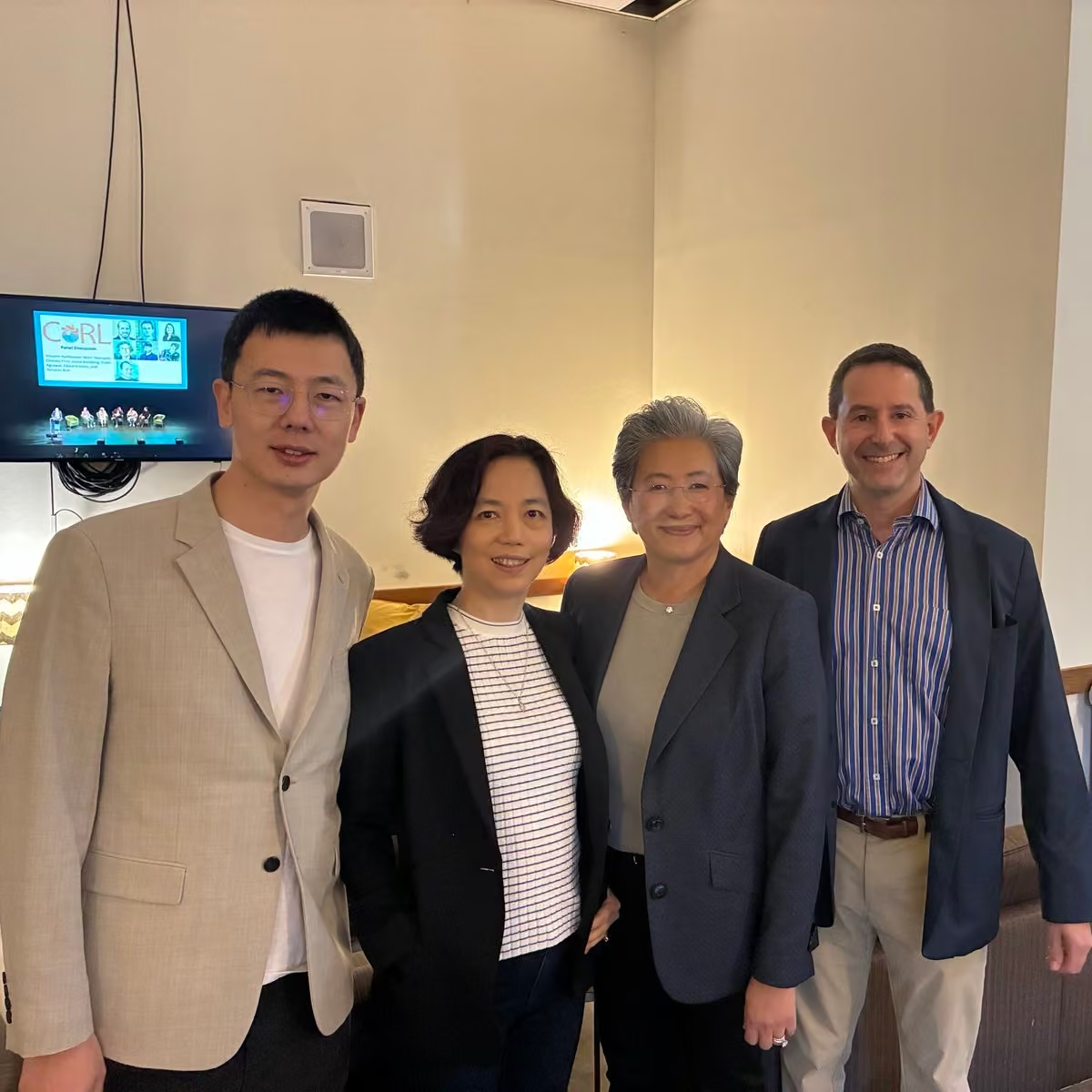
 Wenlong Huang @ CoRL 2026
 Atlas Kazemian
 Stanford Vision and Learning Lab


 Justin Johnson
 Wensi Ai
 spark
 Chongkai Gao 🛩️ CoRL
 Keshigeyan Chandrasegaran
 Radical Numerics
 Brittani Natali
 Bloomberg TV
 NVIDIA AI
 Yunzhu Li
 rishi
 Chris Wendler
 The Humanoid Hub


 Keunhong Park
 Radiance Fields
 Max For AI
 Ilir Aliu
 Stanford HAI
 Silvio Savarese
 Jake Steinerman 🌎
 Vaibhav Sisinty
 MTS
 Peter Yang
 el.cine
 Bilawal Sidhu
 Vaish Srivathsan
 Radical Ventures
 Winnie Lin
 elvis

 Autodesk Flow Studio


 Jim Fan
 Dwarkesh Patel
 Michael Grinich

 Manling Li
 Hugues Bruyère


 Conference on Robot Learning

 Ruohan Zhang


 Astrocade
 Ian Curtis
 The AI Talks


 OpenArt


 Tiange Xiang


 Alan Baade


 Martin Maly
 WithLore
 OTOY

 NVIDIA Robotics


 Qineng Wang
 HTC VIVE
 Diego

 Lenny Rachitsky
 Matt Workman
 jamesckane
 Garry Tan


 Jennifer Li


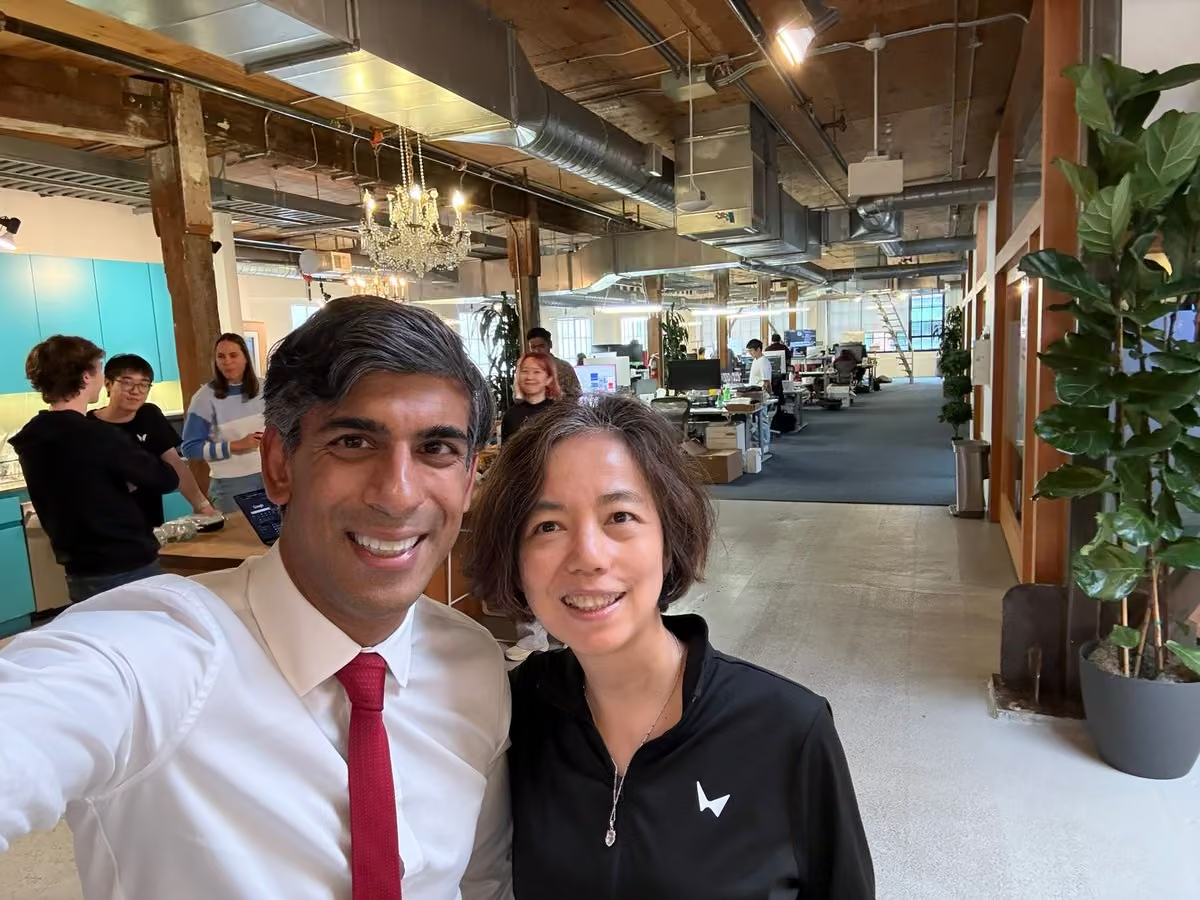
 clem 🤗

 Chao-Yuan Wu
 TomLikesRobots🤖
 Gabriel Baker
 gero_aee
 Vishal Thakur
 @levelsio


 Gabriele Romagnoli
 Theoretically Media
 The Artist's Journey
 Yi Hua
 Cristian Peñas ░░░░░░░░
 Rohan Paul

 John Carmack
 Joseph Suarez 🐡
 Christoph Lassner
 Firing Line with Margaret Hoover


 Hong-Xing (Koven) Yu
 Colin Campbell
 Ryan Rong


 Kyle Sargent
 Yunfan Jiang


 Queen Elizabeth Prize for Engineering
 Lovis Odin
 Jon Finger
 Brad Smith
 speedrun

 Jon Lai

 Saining Xie

 Security Council Report

 IEEE Future Directions


 VinFuture Prize


 Karan Desai (KD)


 Tianyuan Dai


 Russell Wald


 Jay Karhade


 Jordan Jacobs
 Sarah Wang


 Rachel Metz
 Luyang Zhu


 Fareed Zakaria
 BC Bookmarks

 Mark Endo


 Secretary Jennifer Granholm
 Princeton Alumni


 Margi Chhappan

 Salesforce AI Research
 Tools Competition


 Michael Petricone


 Reads with Ravi

 Governor Gavin Newsom


 Ksenia Se
 a2i

 Agrim Gupta


 People I (Mostly) Admire


 Asian American Scholar Forum

 Bill Gurley



 Simone Ross


 NVIDIA GTC

 Richard Entrup

 Chen Wang


 James Landay
 ACM SIGCHI
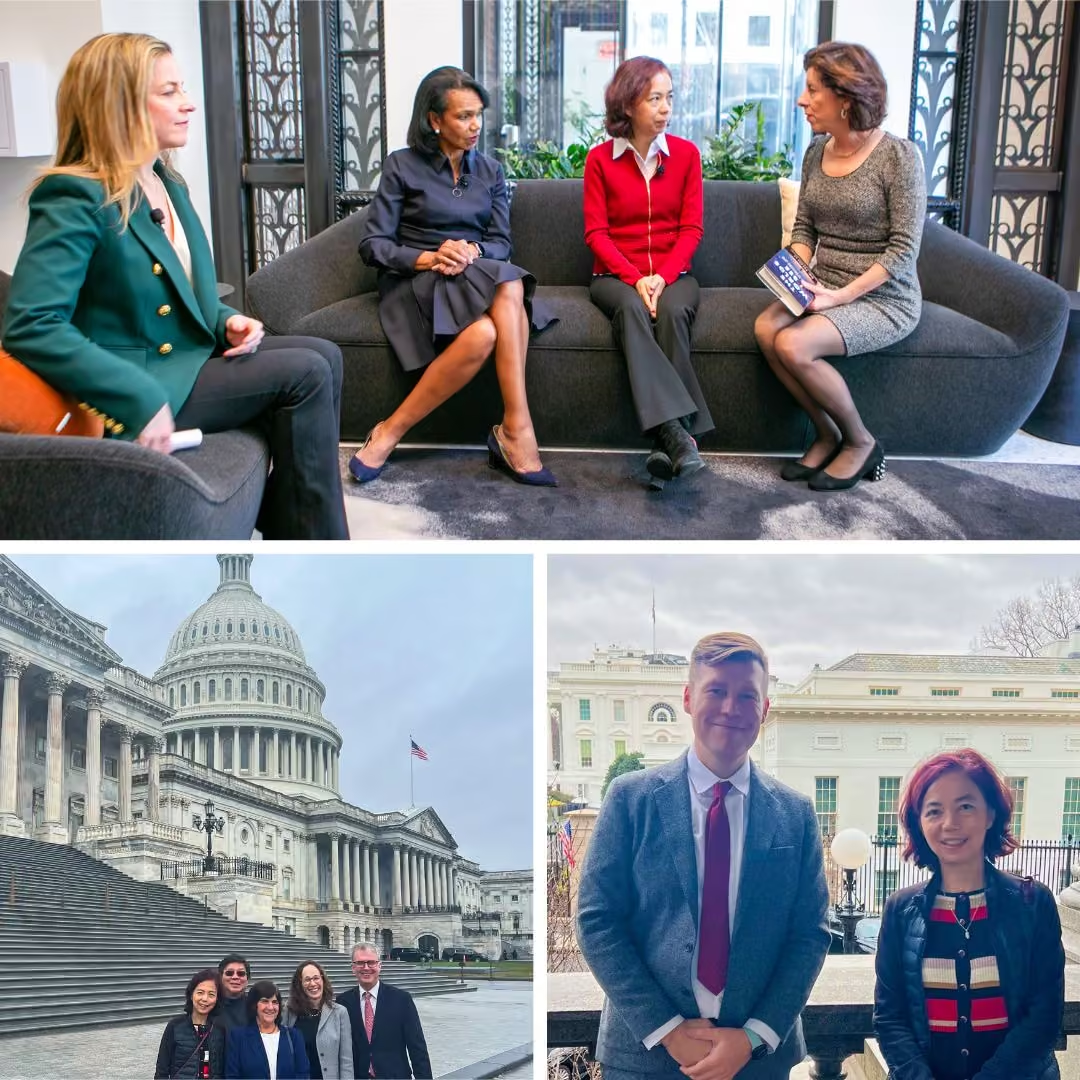
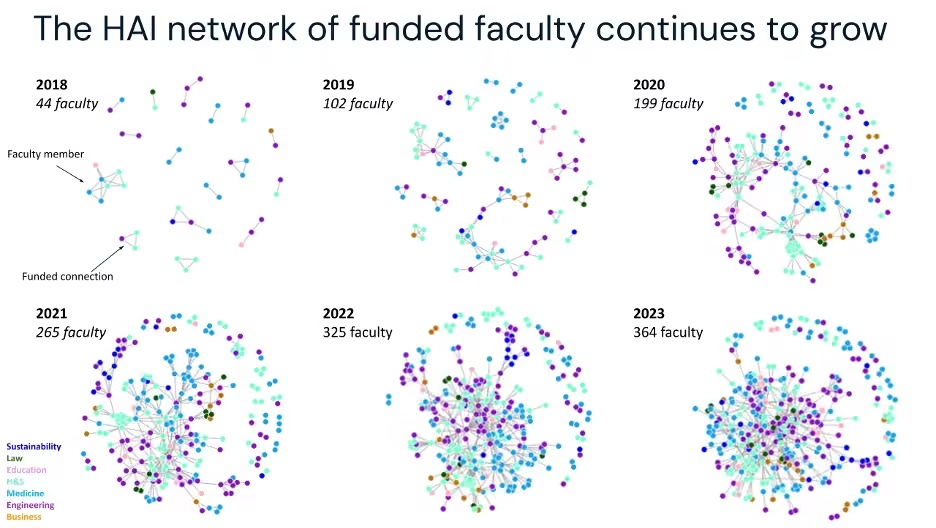


 Clear+Vivid


 Vivi


 Surya Ganguli

 Chengshu Li
 a16z Bio + Health
 Commonwealth Club World Affairs of California

 Vijay Pande

 Karol Hausman
 Tatyana Kanzaveli

 KQED Forum


 Campbell Brown


 Princeton Engineering

 Rachel Bui
 Ankit Upadhyay🇮🇳


 Woojin Kim
 Princeton Computer Science

 Clara Shih
 Boaz Ashkenazy

 FORTUNE
 Flatiron Books


 FT Weekend
 Stacey Sickels Boyce


 Luca Soldaini 🎀


 toddbishop
 Ⓙⓐⓒⓚ Ⓗⓘⓓⓐⓡⓨ
 tobiaspeggs
 ProjectOneWorldLearn

 Spiros Margaris


 Jennifer Aaker


 Adam Lashinsky
 Eric Topol

 Rimjhim Dey


 Christopher Manning


 L.A. Times Books

 Tengyu Ma


 Prof. Feynman
 Ylli Bajraktari

 Shirin Ghaffary
 TwelveLabs


 WSJ Live Journalism
 WSJ Tech


 Stanford AI Lab


 aaronbrindle


 Digit


 Jessica Sibley


 Amazon Science


 AI4ALL


 Ranjay Krishna


 Ruohan Gao
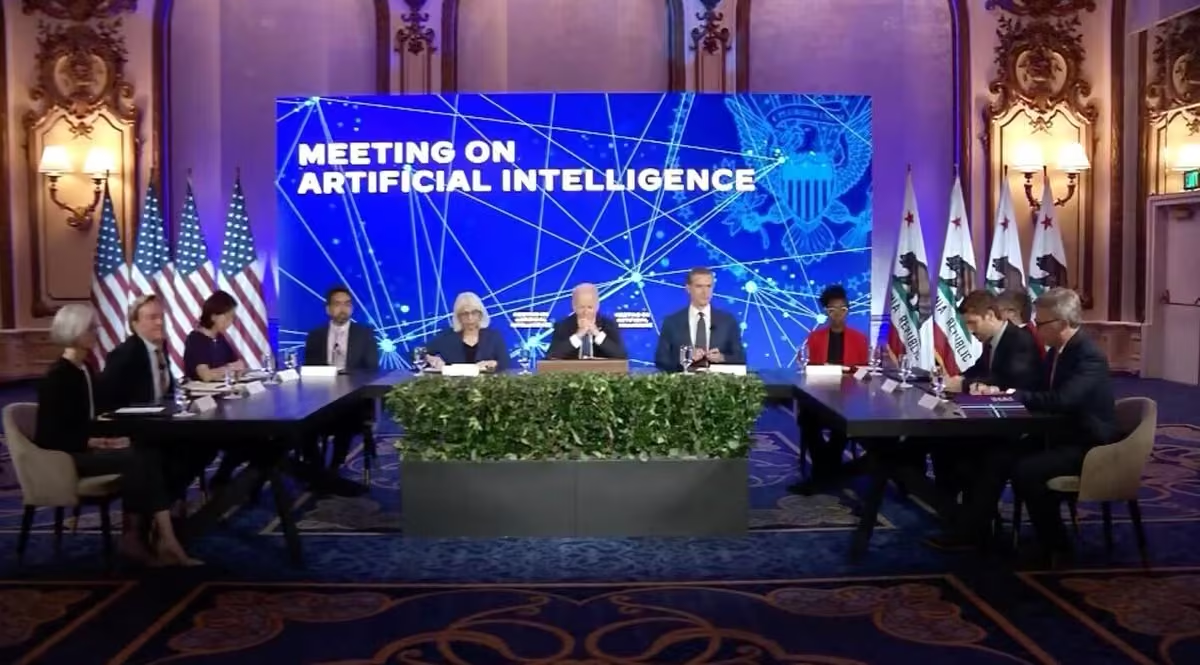


 Stanford Medicine
 Stanford Children's


 Annette Vee

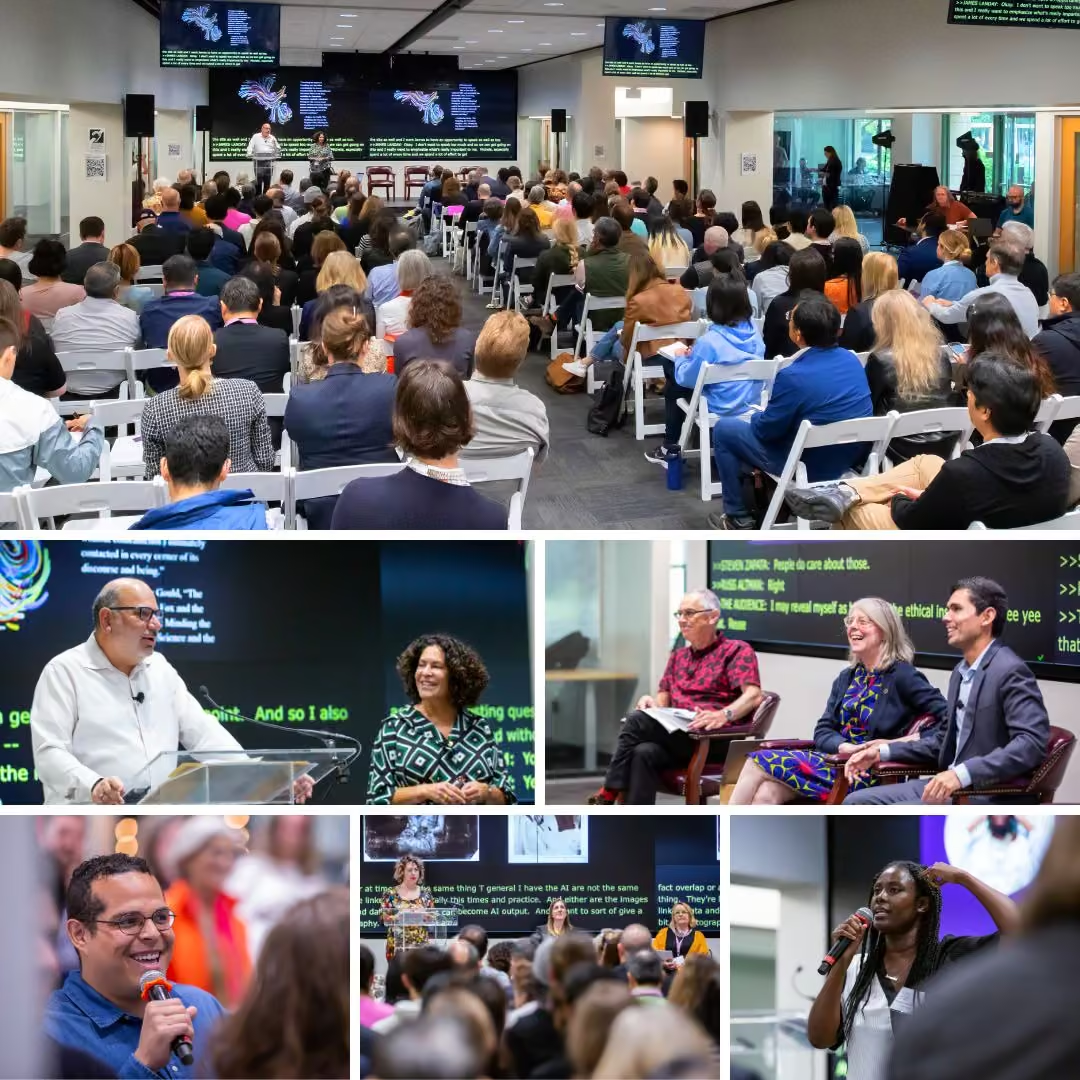


 Chieh-Ju Chao MD, FACC


 Ehsan Adeli


 Caltech Telecourse

 Ken Goldberg
 Stanford Office of Technology Licensing (OTL)


 Victor Escorcia


 Simon Kalouche


 Elliott Robinson


 Michael Black


 TheBridge


 neuroccm


 Nur Ahmed

 Carlos Hinojosa


 Sharon Goldman
 VentureBeat





 Stanford Medicine 25
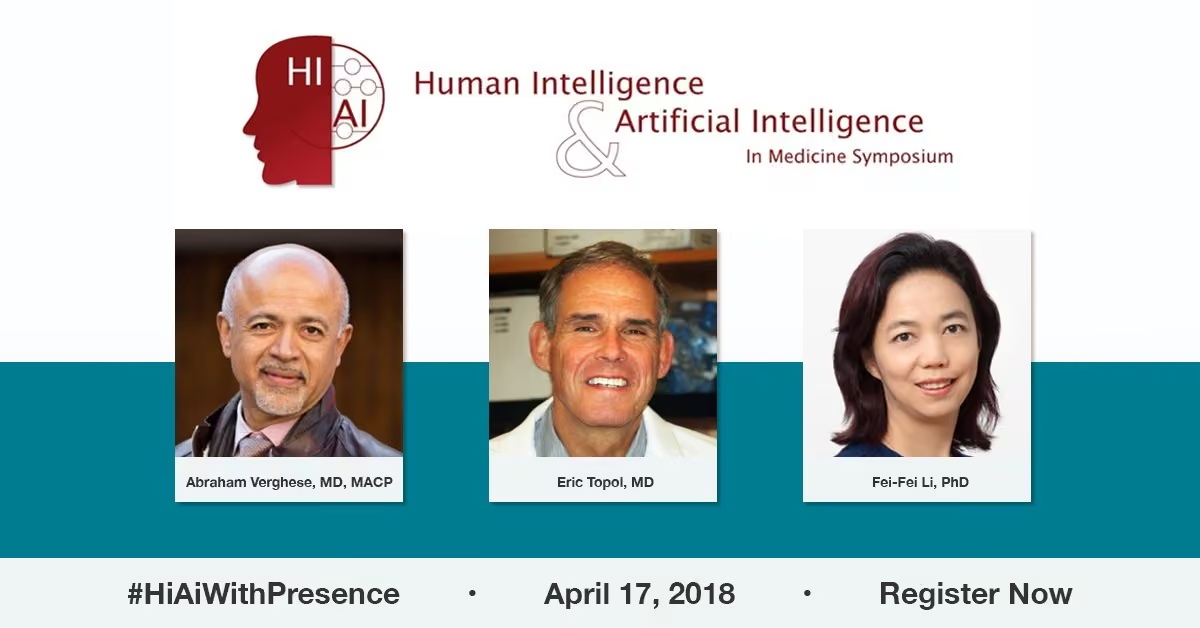
 Nataniel Ruiz


 EDGE in Tech™ – University of California


