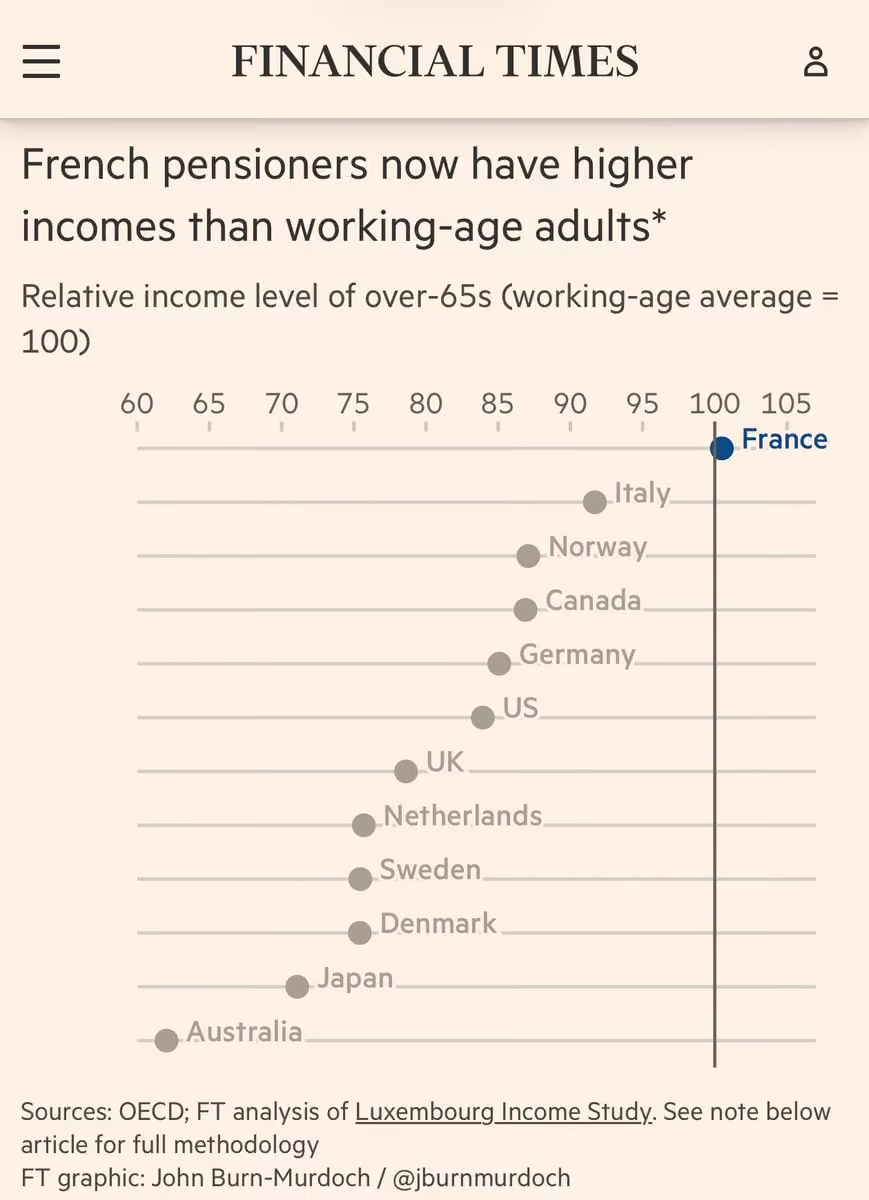
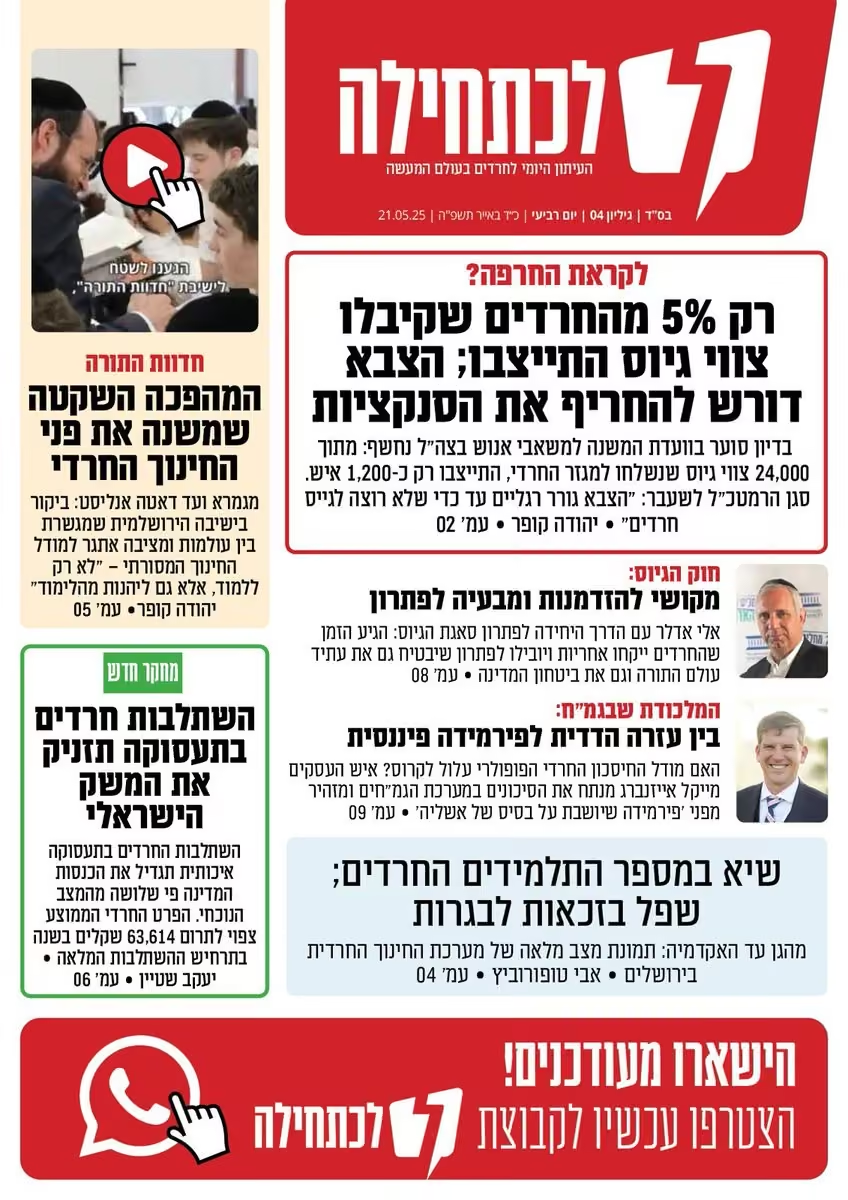
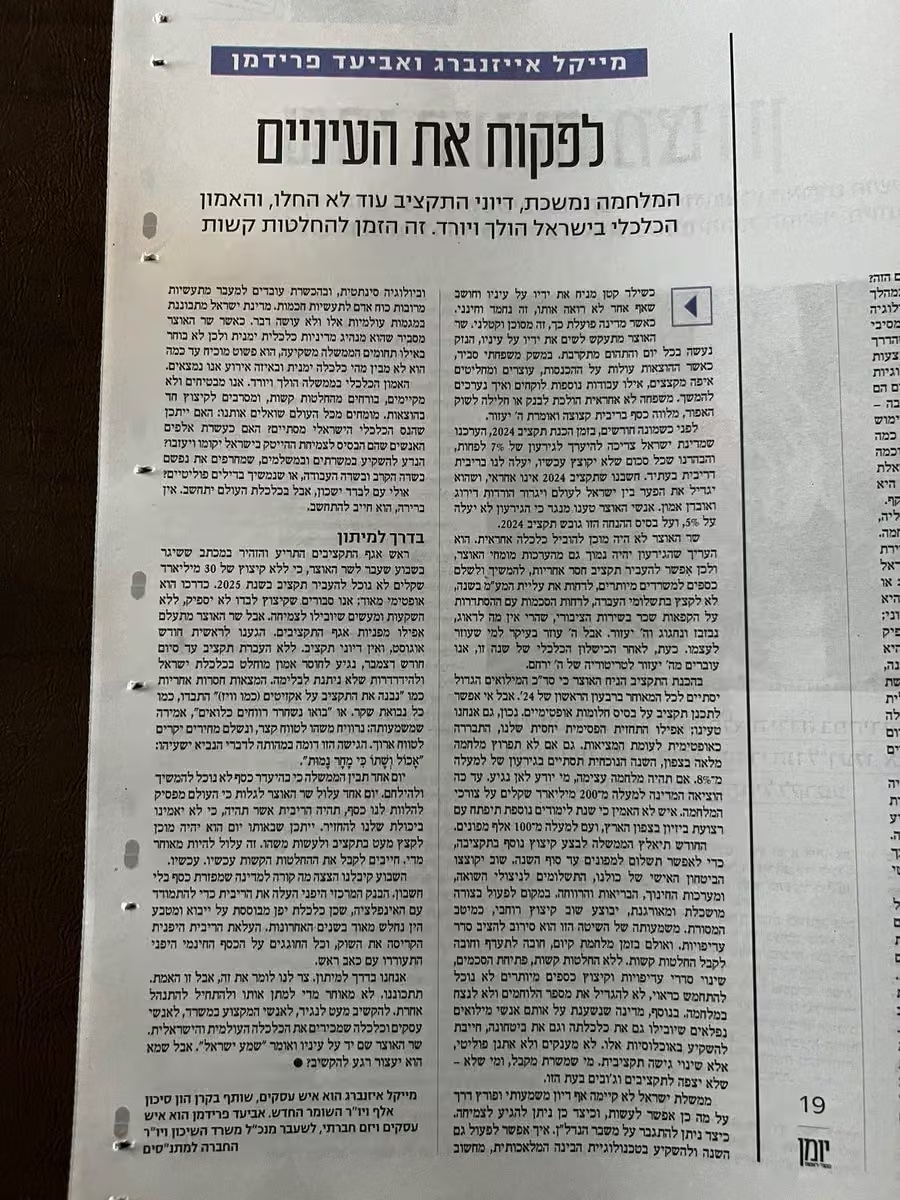
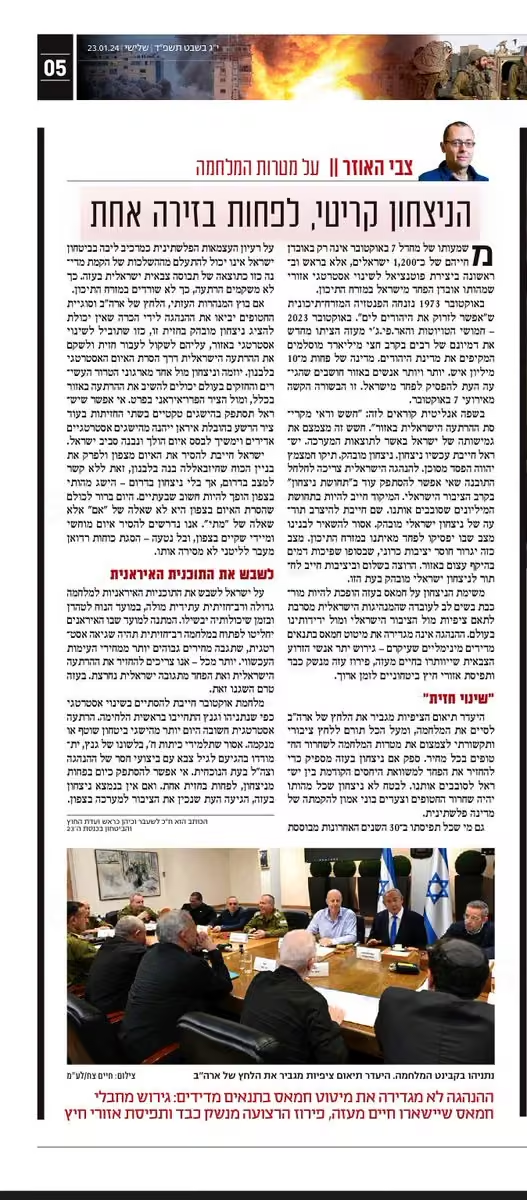
מהגרים שגורמים להשתנות האוכלוסייה באוכלוסייה עם ערכים שונים עלולה להביא לאתגרים כלכליים. מחרן דאז לאירופה של היום. פנינים מפרשת השבוע.
Michael Eisenberg
Michael Eisenberg (Hebrew: מייקל אייזנברג; born May 18, 1971) is an American-born Israeli businessman. More on Wikipedia
-
Michael Eisenberg
@mikeeisenberg
This media couldn't be displayed. See it on the original post. -
Michael Eisenberg
@mikeeisenberg
אוסטין טקסס מלאה במוניות אוטונומית. במלון אמרו לי שלא זוכרים את הפעם הקודמת שהזמינו מונית. גם טסלה וגם Waymo . מכונית cybercab בלי הגה ובלי דוושות מקדימה זה חוויה מאד מעניינת.
חוויה של העתיד. חוויה מעולה ובטוחה. דחוף להביא את זה לישראל.This media couldn't be displayed. See it on the original post. -
Michael Eisenberg
@mikeeisenberg
Hard to describe how much TomorrowX audience is enthralled with @elonmusk. When Elon said he could talk for extra time, entire audience applauded.
As big applause for Elon saying Optimus robot would take out garbage and handle dishwashing and putting dishes away within 12-18 months! -
Michael Eisenberg
@mikeeisenberg
הוא נמצא ב🇨🇳 😳
-
Michael Eisenberg
@mikeeisenberg
I guess Dario was right. His AI is destroying the world…or at least grounding it to a halt.
Mossadil Commentary
@MOSSADil
🚨🇺🇸 INTERESTING ANALYSIS ON THE SIX MAJOR U.S. SYSTEM OUTAGES IN SIX DAYS.
Apple. NSA. Chase. United Airlines. FAA. Microsoft Outlook.
All hit by major disruptions within days of each other.
Naturally, people are asking: **Who is attacking America?**
Israeli cybersecurity expert Omri Segev Moyal has a surprising answer:
**"Probably no one."**
According to his analysis, the reported failures have something in common.
Not hackers. **Software updates, technical failures and aging infrastructure.**
Microsoft reportedly had a software bug sitting unnoticed for four months.
The FAA was running network equipment dating back roughly 20 years.
Apple reportedly experienced problems following an internal update.
Even the NSA's classified network reportedly went down during routine maintenance.
So why is everything breaking at once?
Moyal offers an interesting theory.
**The AI revolution is forcing organizations to modernize decades-old computer systems at unprecedented speed.**
Software changes are happening faster. Updates are rolling out faster. But old infrastructure and testing procedures aren't necessarily keeping up.
His conclusion?
**"Not a cyberattack. A cyber rush."**
It's an assessment, not a confirmed explanation. None of the six organizations has established AI-driven modernization as the cause of its outage.
But perhaps the question we should be asking isn't who's attacking America.
**It's whether America is upgrading its technology faster than it can safely handle.**
Source: Israeli cybersecurity expert Omri Segev Moyal. -
Michael Eisenberg
@mikeeisenberg
Update pricing on car insurance just when @Tesla updates FSD software over night 🤯🤯
As autonomy gets better, $LMND car insurance pricing gets better
Michael Eisenberg
@mikeeisenberg
Memorable Mascots versus AI agents.
Insurance is a commodity that is sold with brand advertising. Game changed in AI era. Only one company ready for this.
@daschreiber killing it with graphics at @Lemonade_Inc investor day.
Michael Eisenberg
@mikeeisenberg
Showtime at $LMND Investor Day!
The world is coming to us! -
Michael Eisenberg
@mikeeisenberg
Showtime at $LMND Investor Day!
The world is coming to us! -
Michael Eisenberg
@mikeeisenberg
Don't Miss $LMND investor day. Livestream beginning at 9am EST. Should be fun. Lots of AI goodies!
www.youtube.com/live/KFaelowEqPM -
Michael Eisenberg
@mikeeisenberg
Optimizely 😲 That was like a web 1.0 YC company!
The Hormuz Letter
@HormuzLetter
BREAKING: A cyberattack hit 178 major organizations, including Zoom, CNN, BBC, Fox News, HSBC, Ledger, Equifax, Salesforce, IKEA and Air France-KLM, by loading malware on the Optimizely Web platform, exposing visitors to scripts built to steal payment data and exploit iOS devices, per security firm Report URI.
Banking and finance was the hardest-hit sector, with 32 organizations affected, including the UK's HSBC across multiple markets such as the US, Hong Kong, Mexico, Singapore, Australia and the UAE. -
Michael Eisenberg
@mikeeisenberg
מי שרוצה להכיר גיבורה ישראלית שנמצאת בשדה הקרב יום יום (ולאט לאט מנצחת) אבל אינה מחזיקה רובה, תכירו את @EllaTravelsLove
גיבורה אמיתית. אין דברים כאלה. עם ישראל זכה בך אלה!
Ella Ke
@EllaTravelsLove
שרשור אישי, השתדלתי לקצר אבל יש הרבה לספר:
הרבה מכם שואלים אותי באיזו מסגרת אני עוסקת בחשיפת הדיסאינפורמציה והפייק בוויקיפדיה, רדיט, ועוד אתרים שמשפיעים על תוצאות במנועי AI (chat gpt, gemini, claude ועוד), ובאמת לא כל כך הרחבתי על עיסוקיי מאז תחילת המלחמה.
אני חושבת שזה זמן טוב לשתף שבשלוש השנים האחרונות הקמתי ארגון שעוסק באופן פעיל בכל מה שקשור להרעלת הידע נגד ישראל והעם היהודי, הכירו את HereForGood -
אנחנו חוקרים וחושפים תשובות במנועי AI שקשורות להיסטוריה שלנו ומתחקים אחר מקור התשובות השגוי - כדי לגלות אותו ברדיט, קוורה, וויקיפדיה ועוד אתרים מהם הבינה המלאכותית שואבת מידע בשלל נושאים.
ואני ארחיב כי זה חשוב מאד לחיינו:This post is unavailable. See it on X. -
Michael Eisenberg reposted
aleph
@aleph
@StateFarm could never.
The @Lemonade_Inc GOATs @shai_wininger and @daschreiber are back in the studio for a ripping hot conversation about why old insurance companies will never catch up, growing business without growing headcount, and how AI is not just a horse-shaped car.
Here's a sneak peek.
Episode dropping on Wednesday. Make sure you're subscribed so you don't miss it:
Youtube: www.youtube.com/@aleph-vc?sub_confirmation=1&cbrd=1&ucbcb=1
Spotify: open.spotify.com/show/3nhgoXoUIWKnRWbVjM3XoK
Apple: podcasts.apple.com/us/podcast/invested-by-aleph/id1676144151This media couldn't be displayed. See it on the original post. -
Michael Eisenberg
@mikeeisenberg
תשע מדינות, כולל 🇮🇱🇮🇱 בחתימה על מזכר מאד משמעותי על ביטחון שרשראות אספקה לAI בבירת הבינה המלאכותית סן פרנסיסקו.
שאפו לתת אלוף ארז אסקל על הובלתו בעניין!
Under Secretary of State Jacob S. Helberg
@UnderSecE
Signed. The United States and nine Pax Silica economies adopted the SAN FRANCISCO DECLARATION, affirming that economic security is fundamental to national security. The declaration sets out our common understanding of the sensitive technologies and critical infrastructure that underpin Super Intelligence (SI) supply chains – from the materials, components, and know-how used to build them to the ports, networks, and energy systems they run on. Defining these foundations together lets us protect them together, because the security of each of us is strengthened by the vigilance of all. Next, our five new working groups will turn common purpose into common practice, delivering concrete results over the next six months. #paxsilica
www.state.gov/releases/office-of-the-spokesman/2026/11/th… -
Michael Eisenberg
@mikeeisenberg
מלפני חמש דקות…מגיע חברת פורטפוליו חדשה לאלף ועושים היכרות.🤯
מישהי מצביע על אחד המייסדים ועל אחד העובדים באלף:
הכרתם?
לא אישית.
אבל האייג׳נט שלי דיבר עם שלך וסגרו עניין. קיבלנו את כל מה שצריך. 🤯 -
Michael Eisenberg
@mikeeisenberg
מה שאלון מאסק עושה מלהיב ומדרבן צעירים כמו ההליכה הראשונה על הירח. אין לי ספק שיותר צעירים ייכנסו לתחומים האלה בגללו.
Spencer Pratt
@spencerpratt
Listen to this crowd. Elon has achieved Michael Jordan level rizz with...engineering.
This media couldn't be displayed. See it on the original post. -
Michael Eisenberg
@mikeeisenberg
-
Michael Eisenberg
@mikeeisenberg
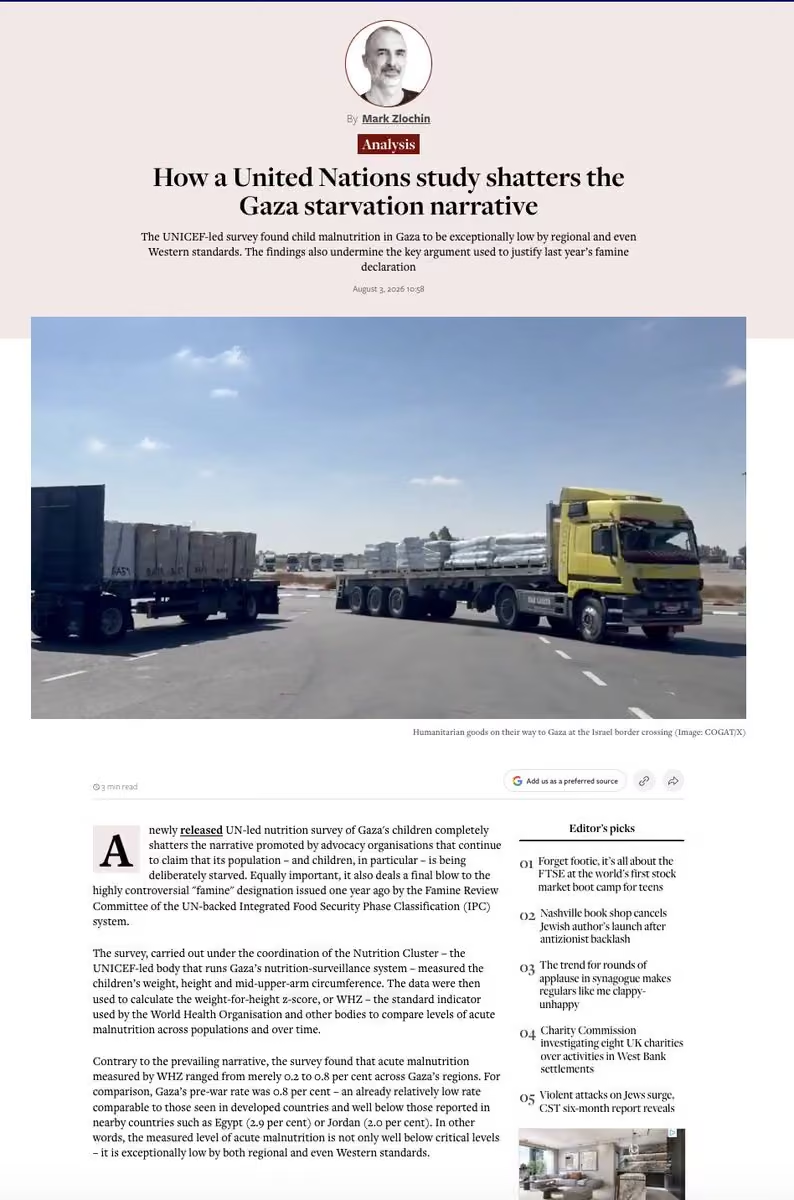
Gaza yesterday. Markets full of food. Restaurants. Chicken. Shawarma.
Will you fall prey to the starvation narrative yet again?This media couldn't be displayed. See it on the original post. -
Michael Eisenberg
@mikeeisenberg
האזנה לקראת שבת
יצחק איש המעשה והכלכלה הארצי ישראלית - מתוך התכנית "אנעים זמירות" עם ידידיה תנעמי omny.fm/shows/kan-moreshet/a4d15099-a1d5-41a1-9b3b-b50100… -
Michael Eisenberg
@mikeeisenberg
סרטונים מטורפים. רכב אוטונומי של טסלה זז הצידה כי הרכב האוטונומי מזהה רכב דוהר מאחוריו. בתנועה אלגנטית הצידה, ניצלו הנוסעים בטסלה.
ממחיש כמה אנחנו זקוקים לרכבים אוטונמיים בישראל. דחוף! זה מציל חיים!
Kathleen Anderson
@RepubliKate
My brother’s friend drives a Tesla. This is 3 videos of the same accident. The Tesla, on self drive, sees the approaching car coming from behind at excessive speed and moves out of the way. Driver of speeding car was killed. Amazing technology @elonmusk.
-
Michael Eisenberg
@mikeeisenberg
-
Michael Eisenberg
@mikeeisenberg
אנטרופיק, רעידות אדמה בעולם הבינה המלאכותית ומחירי האנרגיה וגם פרשת השבוע אודות יצחק אבינו.
This media couldn't be displayed. See it on the original post. -
Michael Eisenberg
@mikeeisenberg
הוהזרתם...
גם רכבי צה״ל, גם נמלים, גם מטרו.
Alex Cohen
@anothercohen
This is an absolute masterpiece.
10/10.
No notesThis media couldn't be displayed. See it on the original post. -
Michael Eisenberg
@mikeeisenberg
Rational optimism at its finest by @mattwridley
Matt Ridley
@mattwridley
As there's still no upward trend in global droughts, floods, tornados, storms, cyclones...
It looks like we can have global warming without climate change. -
Michael Eisenberg
@mikeeisenberg
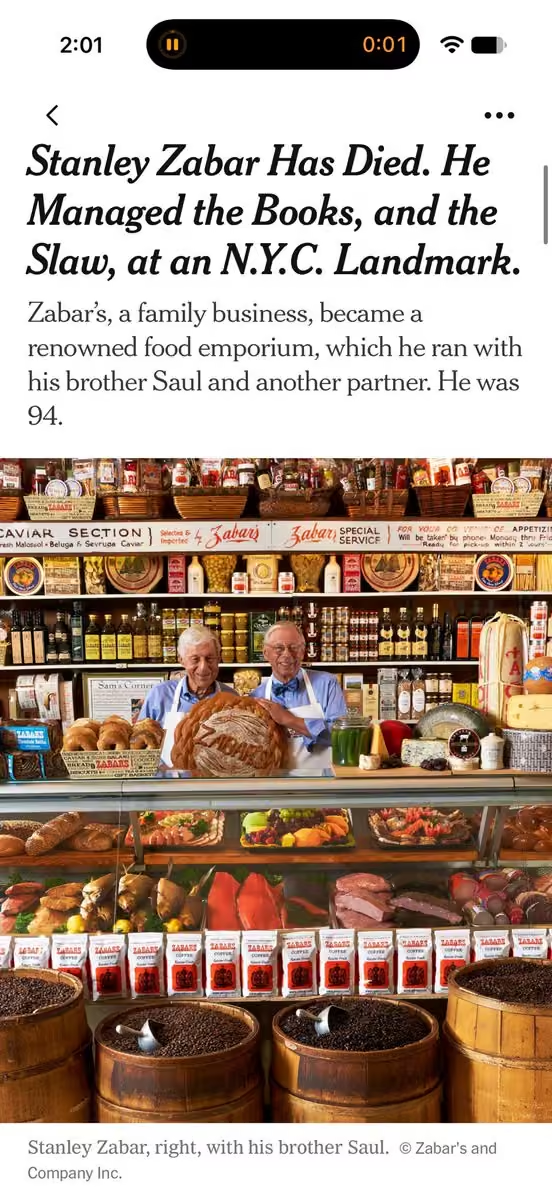
End of an era. Growing up on the west side of Manhattan, Zabars was a landmark of our youth.
-
Michael Eisenberg
@mikeeisenberg
יש מישהו שבדק את הדאטה הזה בישראל?
אם אני הייתי רשות המסים, הייתי רוצה לדעת את הנתונים האלה היום. בנוסף, הייתי רוצה לעשות סקר להבין כמה ישראלים הקימו חברות (ארנק) בחו״ל שהעובדים שלהם הם רק אייג׳נטים. אנקדוטלית, אני שומע על יותר ויותר.
אינני יודע אם הנתונים למטה הם טובים או רעים לרשות המסים. יש פה לא מעט היי טק שהוא לא תכנות. וסייבר עדיין עושה חיל. אבל דבר אחד בטוח, זה מסמן שיש שינוי כלכלי בדרך.
ועוד דבר שעלה בשיחה שקיימתי אתמול בלילה עם יו״ר רשות החדשנות במזים היי טק על הבר בירושלים. לאורך עשורים, קהילת ההיי טק פעלה כדי שיזמים ירשמו את החברות שלהם בארץ כחברות בע״מ. זה הצליח עד הרפורמה המשפטית. מאז, המגמה התהפכה. (אינני מביע כאן דעה על הרפורמה. אני מציין עובדה רפואית.)
השינויים בעקבות הבינה המלאכותית הם הזדמנות לשינויים שייטיבו עם יזמים לרשום פה את החברות שלהם. להפוך את ישראל למקום מזמין עוד יותר מבחינה כלכלית. זה חובתה של הממשלה שתקום למען ילדנו ושגשוגנו.
להזכירכם:
עובדי ענף ההייטק אחראים לכ-35% עד 36% מכלל תשלומי מס ההכנסה משכר בישראל (כשעובד הייטק ממוצע משלם מס הכנסה הגבוה פי כ-6 מהממוצע במשק)
סך הכנסות המדינה ממיסים (עבודה וחברות בהייטק): ענף ההייטק כולו (עובדים וחברות יחד) אחראים לכ-24% מכלל הכנסות המדינה ממסים, כאשר כ-85% מהתרומה הזו מגיעה ממס על שכר העובדים ורק כ-15% ממס חברות.
Lenny Rachitsky
@lennysan
STATE OF THE TECH JOB MARKET IN 2026
Twice a year, I dig into trends in hiring and job openings. This is the fifth report I've done, and the most surprising yet:
1. PMs are winning in the AI era
2. Engineering demand has stalled
3. Design openings are at a record low
4. Every role now requires AI skills
5. Tech jobs are concentrating in the Bay Area
6. Remote roles are at a record low
7. The tech job market is growing fast, but mostly outside of software (gasp!)
Full report here: www.lennysnewsletter.com/p/state-of-the-tech-job-market-late -
Michael Eisenberg
@mikeeisenberg
Books that are 100% written by humans and 100% published by AI!!
If you have written a manuscript, try Spines! -
Michael Eisenberg
@mikeeisenberg
כלל גדול בהנפקות ציבוריות. כשאתה מחליט להנפיק, פשוט תנפיק. תגייס את הכסף.
אל תאפטם מחיר או טיימינג. זה מרתון ולא ספרינט. זה גיוס כסף ולא אקזיט. זה בניית תשתית לעתיד ולא אירוע חד פעמי.
זמן הורגת עיסקאות והנפקות. במיוחד באוויר הפסגות.
אם ההנפקה הזאת תיכשל, יש לזה השלכות גם על אנתרופיק אבל לא רק.
zerohedge
@zerohedge
Anthropic retracts
According to Reuters, the AI company first sent a copy of a filing that showed Anthropic aimed to sell about 867 million shares in a price range of $70 to $80 per share, then followed up with an email saying details about the pricing were inaccurate.
Anthropic in the second email said it would update the filing later.
zerohedge
@zerohedge
Anthropic aims to raise up to $69.3 billion in IPO: Reuters
Anthropic to sell stock at around $70-80/shr, and plans to offer around 866.7mln shares -
Michael Eisenberg
@mikeeisenberg
ברכות לבר מצווה ולהשפעה הדרמטית על השיח בישראל!
דומני שהייתי הסופר של הספר החמישי שהוציאו בסלע מאיר. ספרי ״ככה יעשה ליהודי״, שערך העורך האגדי אורי רדלר ז״ל, נהיה רב מכר בזכות החדשנות של סלע מאיר והנכונות לספר סיפורים אחרים.
צריך גם לזכור שבאותה תקופה הרבה אנשים הספידו ספרים אבל ספרים היו ונשארו הדרך הכי טובה לשנות נרטיב, להציג תזה אחר ולהשפיע על השיח.
חזקו ואמצו. תודה לך @rotem_sella
Rotem M.Sella | רותם מ.סלע 🇮🇱
@rotem_sella
הוצאת סלע מאיר חוגגת השנה בר מצווה.
איך זה התחיל? במקרה. למעשה, בספר הראשון עוד לא ידענו שאנחנו הוצאה.
קראתי ספר מרתק והחלטתי שהוא צריך לצאת לאור בעברית. ציביליזציות גוועות חשף את הקריסה חסרת התקדים בילודה של איראן וטורקיה וחזה שהן יהפכו לאימפריות רשע מוטרפות. לטענת גולדמן, האומות האלו יודעות שהן חיות על זמן שאול, ועל רקע ייאושן יפנו לפונדמנטליזם מסוכן ואפילו רצחני.
אחרי שלא מצאתי אף אחד שיסכים להוציא את היצירה המרתקת והנבואית הזו, הרמתי טלפון לחברי הגאון הורסטילי אורי רדלר ז"ל, שתרגם, ערך ועימד את המהדורה העברית של הספר שמכרה 7,000 עותקים. למרות שהיה מדובר בחלטורה החד פעמית, החליט חברי רונן שובל, לחבר אותי לסופר נוסף שאף אחד לא הסכים להוציא בישראל. תפוס ת'יהודי של טוביה טננבום מכר למעלה מ-20,000 עותקים, והפך לרב המכר הראשון שלנו.
בשנים הראשונות סלע מאיר הייתה פחות הוצאה, ויותר ארגון שינוי חברתי שנלחם להדברת חוק הספרים שאסר מכירת ספרים בהנחה, וחיסל למעשה את הסיכוי שלנו להרים ראש.
ביטולו של החוק (או ליתר דיוק אי-חידושו) אחרי שלוש שנים אפשרה לנו להפוך להוצאה אמיתית. במקביל חברנו לקרן תקווה והקמנו את ספריית שיבולת - מותג ספרים משותף שהתמקד בספרות מופת מהעולם, וגם, ספריית מנויים שהפכה כבר בשנתה הראשונה לגדולה במדינה.
בעידן ההייטק, הסיבה היחידה לעבוד בתחום כמו הוצאה לאור, זה ההנאה מהדרך. כסף וכבוד אפשר להשיג מהר יותר בסקטור אחר.
כך, דווקא בזכות האיזוטריות היחסית של עולם הספר, הצלחנו ליצור צוות שכל קוקפיט של יוניקורן סייבר היה מתקנא בו, הממוקד באופן פאנטי בסיפור הישראלי, ברעיונות, וחדור בתחושת שליחות שניתן למצוא בדרך כלל בקרב נוער וטייסי קמיקזה.
אני כותב לכם את כל זה לא בכדי לסכם תקופה, אלא כדי לנצל את התכנסותכם כאן לרגל הבר מצווה, בכדי להזמין אתכם להצטרף לקהילת שיבולת - המרכזת החל מהשנה את הספרים המדוברים והחשובים ביותר מכל הסדרות: סלע מאיר לספרות מקור, שיבולת לספרות עולם ומחרתיים לאקטואליה ונושאים שעל סדר היום.
ההצטרפות שלכם תבטיח כי תקבלו את העידית של הספרים שלנו לפני כולם ועד פתח הדלת; השתתפות בשיחה חודשית וירטואלית שנקיים סביבם, ואם תרצו במפגש פיזי שנקיים לפחות פעם בשנה (הראשון עם שלמה פילבר, מתקיים בעוד מספר שבועות). על הדרך, החברות שלכם בקהילת הספר הגדולה והמשפיעה בישראל תסייע לנו להישאר ממוקדים בניסוח סיפורים ורעיונות גדולים, שיספקו תובנות, השראה ותקווה בעידן התמורות הסוער הצפוי לישראל ולעולם.
מי יתן ותחיה בזמנים מעניינים, פסקה קללה סינית עתיקה, שכנראה הוטלה שוב על העולם בתחילת 2020 - אחרי למעלה מיובל של שקט יחסי - החלה בהתפרצות מגיפת הקורונה, התגלגלה לסדרה של מלחמות במזרח התיכון ואסיה; עליית האסלאם באירופה, מהפכת AI המבטיחה\מאיימת לשנות את שוק העבודה והחיים האנושיים מהיסוד; טילים רב-פעמיים, מכוניות אוטונומיות, אנטישמיות החוזרת כמו ספחת להיסטוריה, מחשוב קוונטי, התפרקות המשפחה, מגיפת הבדידות והמסכים, מערכת פוליטית שמפורקת ומורכבת מחדש, וחזרתם של אירועים תנ"כיים, מטלטלים, שקוראים לנו לרענן את הנחות היסוד שלנו, ולחשוב לעומק מה העולם בו אנו חיים.
תודה לכם על שלוש עשרה השנים הראשונות. תודה לכם על האמון, על מילים הטובות, על הספרים שרכשתם וקראתם ועל אלו שמחכים לכם על המדף.
אני מזמין אתכם להצטרף לקהילת הספר שלנו, ולקחת חלק בשרטוט וחשיבה של קו אופק חדש לישראל,
תודה,
רותם מ. סלע
מו"ל, סלע מאיר.This media couldn't be displayed. See it on the original post. -
Michael Eisenberg
@mikeeisenberg
בהמשך לפוסט של @YonatanAdiri למטה בנושא סין, מאמר מעניין של נח סמית (@Noahpinion) על כלכלת סין. מומלץ גם אם אינני מסכים על כל מסקנותיו.
x.com/Noahpinion/status/2119176295355662475
Yonatan
@YonatanAdiri
מומלץ מאד.
קווין ראד, רה״מ אוסטרליה לשעבר והמומחה המוביל בעיני לסין המודרנית. דובר סינית שוטפת ואחרי המון שעות שי-ג׳ינפינג.
המון תובנות ביחס למנח האסטרטגי של ארץ הדרקון.
www.youtube.com/live/V2QpSWD26n0 -
Michael Eisenberg
@mikeeisenberg
R-E-G-G-I-E
R-E-G-G-I-E
R-E-G-G-I-E
God Bless this man with whom I share a birthday!
Reggie Jackson
@mroctober
It is heartbreaking to see antisemitism in my hometown. I was born in Wyncote, near Philadelphia, and it makes me angry and ashamed to see hatred tolerated there.
The numbers show this is not an abstract concern. The Anti-Defamation League recorded 465 antisemitic incidents across Pennsylvania in 2024, an 18% increase over 2023. It tracked 189 incidents in Philadelphia and 51 in Montgomery County. These reports include harassment, vandalism, and assault; they are not all classified as crimes. (adl.org, philadelphia.adl.org)
Hateful expression harms more than its immediate target. In a 2025 survey of Jewish Americans, 79% said they were concerned about antisemitism, and 52% said they had worried about their personal safety because of their identity. Nearly half reported taking steps to increase their security. A research review also found that exposure to hate is associated with worse psychological well-being, more negative stereotypes, and less trust between groups. (philadelphia.adl.org, pmc.ncbi.nlm.nih.gov)
It takes me back to the racism I experienced in the 1960s: signs throughout the South declaring that Black people could be refused service, along with separate “white” and “colored” signs on bathrooms and drinking fountains,”no niggers”. I remember what that hatred looked and felt like. We cannot accept it in any form, directed at any people.
I wish I could be there to stand with those protesting HATE. I am asking elected officials and other leaders in Philadelphia: Where are the clear statements condemning antisemitism? When hateful language is excused or repeated, it can make hostility seem acceptable and deepen fear and division. Leaders should speak plainly and consistently: antisemitism and hate have no place in our communities.
What the hell? We have to speak up.
Reggie Jackson
The Mr. October Guy -
Michael Eisenberg
@mikeeisenberg
This is a deeply moving use of technology. If you know someone who struggles to walk, you need to watch this.
youtu.be/U1IYnwmaCM0 -
Michael Eisenberg
@mikeeisenberg
-
Michael Eisenberg
@mikeeisenberg
שינויים כלכליים ובטחוניים במזרח התיכון? חותים? ישמעאלים?
זה לא חדש. אבל זה חשוב. זה עתיק יומין וזה עכשיווי. -
Michael Eisenberg
@mikeeisenberg
-
Michael Eisenberg
@mikeeisenberg
Beat and raise with 🚗 acceleration from $LMND
Shai Wininger
@shai_wininger
12 straight quarters of accelerating growth 🚀 @Lemonade_Inc’s Q3 2026 results are in!
Highlights (Y/Y)
🚀 12th consecutive quarters of accelerating IFP growth
🚀 IFP reached $1.55 Billion (+34%)
🚀 Revenue grew 73% to $336M
🚀 Record Gross Profit of $118M (+48%)
🚀 3.52M customers (+23%)
🚀 $27M adj. Free Cash Flow → 6th consecutive positive quarter
🚀 $1.2 Billion in cash + investments
Car picking up speed
✅ Car IFP grew 63% Y/Y
✅ Now in 14 states, covering more than half the U.S. population
✅ Autonomous Car for Tesla FSD now in 6 states
Lemonade OS
✅ >2.5x the premium base, with fewer employees than four years ago
✅ 25 new product-geography combinations launched this year
✅ Renters now available nationwide!
✅ Native support for personal AI agents coming soon
✅ Live demos of Lemonade OS at Investor Day, Nov 17
Up next
⬆️ Guiding to our first-ever positive adj. EBITDA quarter in Q4!
⬆️ Reiterating our expectation of a full year of positive adj. EBITDA in 2027
⬆️ Raising FY revenue and gross earned premium guidance -
Michael Eisenberg
@mikeeisenberg
Basically sequoia showing in deeds what Alex Karp already said: the only markets that matter for venture are 🇺🇸🇨🇳🇮🇱
And I am not sure I would be investing in China. -
Michael Eisenberg
@mikeeisenberg
Had this conversation with @AmiDaniel1 only 6 days ago about Hormuz, Iran, Iran impact from Midterm Elections, Russia, Ukraine and oil markets.
One of his predictions already came true.
Also, according to Ami, 5 million barrels of oil are the swing factor of the global economy.
DO NOT MISS. www.youtube.com/watch?v=LsLpzhw5HS8This media couldn't be displayed. See it on the original post. -
Michael Eisenberg
@mikeeisenberg
Board member just complained that board materials were not downloadable so not agent friendly.
"Since most of your material was probably created by agents, you should at least let me consume it via agent."
Founder: "We will just open an MCP server and not send out materials!" -
Michael Eisenberg
@mikeeisenberg
Everyone's talking about the blue wave.
Perhaps, the bigger story is AI infrastructure.
About 41 local ballot measures on data centers went up across 10 states on Tuesday, and every one with results so far except one went against them, usually 70 to 80% against, in red and blue towns alike. NBC's exit poll found 56% of voters called AI and data centers a major factor in their vote for Congress.
Power bills, water and land are now kitchen-table issues, and that pushed votes blue. America is building the AI future, and Americans don't want it in their backyard.
Sadly, That makes Xi and China the big winners.
It creates opportunity for countries who are US allies (like Israel and UAE) who can scale compute and AI.
And it’s bullish for @elonmusk and @SpaceX who already have capacity. -
Michael Eisenberg
@mikeeisenberg
כולם מדברים על הגל הכחול, אבל הסיפור הגדול של הבחירות בארה"ב הוא AI ותשתיות AI.
כ-41 הצבעות מקומיות על חוות שרתים התקיימו ב-10 מדינות, וכולן, חוץ מאחד, נגמרו בהתנגדות, לרוב של 70% עד 80%, בערים רפובליקניות ודמוקרטיות כאחד. לפי סקר היציאה של NBC, ל-56% מהמצביעים AI וחוות שרתים היו שיקול מרכזי בהצבעה לקונגרס. חשבון החשמל, המים והקרקע דחפו מצביעים לכחול.
קודם כל זה ניצחון של שי וסין. אבל
זו גם הזדמנות אדירה לישראל ולמדינות נוספות: אם האמריקאים לא רוצים את חוות השרתים בחצר שלהם, אנחנו יכולים להיות חלק מתשתית המחשוב של העולם. אנרגיה, קרקע, רגולציה מהירה והחלטה לאומית, וזה בידיים שלנו.
אני יודע שאנחנו קטנים מהסינים והאמריקאים. אני יודע שזה שאפתני ושיש בירוקרטיה. אבל יש בו הזדמנות, פתח שנפתח בעולם הAI שגם כאן אנחנו יכולים להתחיל להוביל. -
Michael Eisenberg
@mikeeisenberg
There is one political leader who gets that the modern welfare state is unsustainable. That leader is @KemiBadenoch
Conservatives
@Conservatives
We are spending far too much on benefits for people who can work but choose not to.
That money should be going towards defending our country.This media couldn't be displayed. See it on the original post. -
Michael Eisenberg
@mikeeisenberg
My college political science professor Dr. Ruth Bevan passed away. It was in her class in 1989 that I wrote my first paper on the shortcomings and future failure of the United Nations. In response, She encouraged me to think of the world as a dynamic organism and some of its institutions as reflections of the past and not the future.
May her memory be a blessing.
Cc @YUNews -
Michael Eisenberg
@mikeeisenberg
🇺🇸🇺🇸🇺🇸🇺🇸🎉🎉🎉
Lemonade
@Lemonade_Inc
Lemonade Renters is now available Minnesota.
With this, Lemonade Renters is now available in all 50 states and Washington, D.C.
www.lemonade.com/renters/explained/renters-insurance-minn… -
Michael Eisenberg
@mikeeisenberg
Cover for next edition now including Chuck Schumer!
-
Michael Eisenberg
@mikeeisenberg
הינדוס מדינת הרווחה על סטרואידים.
Eliyahu
@eliyahu17646
היום הלמ"ס חשף את הנתון המדהים.
58% מהאוכלוסייה הערבית בגילאי 65–79 מוגדרים עם מוגבלות, והקצבאות בהתאם...
קרוב לכפול מהאוכלוסייה היהודית.
שיהיה לנו בהצלחה עם זה... -
Michael Eisenberg
@mikeeisenberg
“Dad said No, I can’t download the app, so I did what every 7 year old would do, I asked Mom” 🤣
Now she is a first class piano player and plays the Guitar. 🤯🤯This media couldn't be displayed. See it on the original post. -
Michael Eisenberg
@mikeeisenberg
This is called common sense, straight talk, and just looking forward.
👏👏 @KemiBadenoch
Kemi Badenoch
@KemiBadenoch
Slavery was an evil in which people from every continent and region participated. We should be honest about the whole history, not select the parts that are politically convenient today, especially given Britain's leading role in ending the transatlantic slave trade.
If Caribbean countries are asking Britain for a formal apology for Britain’s role in the transatlantic slave trade, will they also be asking the same of the descendants of African kingdoms, rulers and merchants who captured, sold and profited from the trade?
On demands for reparations, whether through cash or debt relief, we have been down this track before. Twenty-five years ago, Jubilee 2000, Drop the Debt and Make Poverty History argued that cancelling the debts of poorer countries would give them a fresh start. More than $100 billion of debt was eventually written off, but many of those countries have since built up even bigger debts. Labour are already spending too much on Britain's welfare state, now is not the time for Andy Burnham to be providing global welfare.
There is no reason British taxpayers today should be held financially responsible for things that happened generations before any of us were born. And I have even less patience for political elites in commonwealth countries who don’t know how to make their own citizens prosperous now looking for another opportunity to blame Britain.
As Prime Minister, Andy Burnham should be Britain’s greatest defender. Instead, he is writing articles saying we need to confront our history (as if we haven't done enough of that) and considering another formal historical apology. Tony Blair already expressed Britain’s deep sorrow and regret for our role in the slave trade nearly twenty years ago. There is no need to do so again.
This is all another navel-gazing distraction. The Commonwealth should be looking forward, not endlessly backwards. That means economic partnerships to make us all richer and deeper military and security cooperation against common threats. If every Commonwealth summit becomes an exercise in presenting Britain with demands for cash then we need to start asking if it is worth the effort. -
Michael Eisenberg
@mikeeisenberg
שבת שלום - פספוס הזדמנות, מלחמה ואי וודאות.
This media couldn't be displayed. See it on the original post. -
Michael Eisenberg
@mikeeisenberg
-
Michael Eisenberg
@mikeeisenberg
The PHP breach...Critical Vulnerabilities in PHP.
Robust Cyber defenses cannot come vast enough.
Joint analysis and vulnerability research between @PaloAltoNtwks and @DreamGroupAI . Important read.
unit42.paloaltonetworks.com/cve-2026-109618-cve-2026-109619/ -
Michael Eisenberg
@mikeeisenberg
Safe agentic rollouts for Agentic coding.
Trust me you need this.
Roee Adler
@roee
AI agents write PRs in minutes, but then we wait for them to be reviewed, and for a human to build confidence to merge them. The missing piece? Production context. Today we're launching Hud Agentic Rollouts 🚀 So you can ship much faster while keeping production safe 💪 @hud_hq
This media couldn't be displayed. See it on the original post. -
Michael Eisenberg
@mikeeisenberg
4 hours ago I finished recording an episode of my invested podcast with @AmiDaniel1 of @WindwardAI where we discussed exactly this scenario! 🤯🤯🤯
We are rushing out the episode. Reply below if you want us to notify you when it comes out or just subscribe to the podcast.
MenchOsint
@MenchOsint
Israeli-linked Container ship "CONTSHIP JET" was struck this morning by a Russian USV in the Black Sea.
The ship was loaded with cargo from Haifa. -
Michael Eisenberg
@mikeeisenberg
שמח לבשר על ספר חדש שלי מסדרה חדשה, סדרת ״הברכה והברית״. כן, אומה בתוך עולם. לא עם לבדד ישכון.
אשמח לפידבק!
לינק להזמנות
www.sellameir.com/product/אומה-בתוך-עולם-הייעוד-מבראשית/ -
Michael Eisenberg
@mikeeisenberg
ריאיון מאד חשוב עם המשקיע האגדי מארק רואן על השקעת הענק של אפולו במובדלה. מה שהוא אומר על אזורנו הוא פרספקטיבה חשובה מאד
youtu.be/akglHDzhsTI -
Michael Eisenberg
@mikeeisenberg
Agree or disagree wih @joshk, English is the coding language of the future?
Listen to full interesting and hilarious episode here: www.aleph.vc/content/josh-kopelmanThis media couldn't be displayed. See it on the original post. -
Michael Eisenberg
@mikeeisenberg
🇨🇳 exploited the PHP security hole to breach a 🇺🇸 government affiliated network.
We are not ready for the Cyber AI era and Chinese tactics. We need to get our act together 👇👇
Dream
@DreamGroupAI
1/ Three days after PHP2Shell went public, a suspected Chinese-nexus campaign breached a US government-affiliated network.
Using our autonomous research tool, Dream researchers reconstructed the intrusion from attacker logs. -
Michael Eisenberg
@mikeeisenberg
I was quite emotional this morning. I davened (prayed) at 6am. Then, I voted. In democratic elections. I then read about the $2+ Billion acquisition of 🇮🇱 quantum computing company Qlassic by intel. I was thrilled for our friends and colleagues who backed and built Qlassic. And, on a small personal level, I am excited by the new book I was privileged to write that is arriving in stores today.
On the voting line at 7 a.m. I met a female soldier with an M16 slung on her shoulder. A yeshiva student. Elderly people and professors. Some with yarmulkes and others without. We live in neighborhood in this city where you see everything and everyone.
I also thought about my children who are voting at special ballot boxes because they’re in the army or on the front lines now.
I want you to stop and think for a minute. Almost any other country that would have gone through what we in Israel went through would not have made it to this moment. Massive protests, covid, a 7 front war, fractious politics and cacophonous social media. Indeed, arguments and disagreements are very present — but even this morning, people who will vote differently from one another at the ballot box will then get in the same tank and share a shabbat dinner. They are willing to give up their body and soul, one for the other, for something greater than themselves.
Before I cast my vote this morning, I paused and thought about those who unfortunately and tragically didn’t return from the front lines and the hostages that did not return from captivity. Our biological family and our Israeli family. It is our first election since October 7th. My eyes teared up.
I then thought about the heroism and self-sacrifice of young Israelis: the hundreds of days of service by our soldiers—our children—and their families stationed on the front lines and holding down the home front so that we may merit to live as free people in our land after two thousand years. This is no trifling matter. Our ancestors would have given arms and legs to have this gift. Many people around the world yearn for our freedom.
We are privileged to be part of this incredible people and this amazing country at this extraordinary time. We are fortunate and blessed. I feel personally fortunate and blessed.
Am Yisrael Chai. 🇮🇱 -
Michael Eisenberg
@mikeeisenberg
אני ממש התרגשתי הבוקר. התפללתי. הצבעתי. בבחירות דמוקרטיות. קראתי על אקזיט 🇮🇱 של חברים בתחום הקוואנטי במעל 2 מיליארד דולר. ואפילו התרגשות פרטית קטנה עם ספר חדש שזכיתי לכתוב ושנחת פה היום בבוקר.
בתור להצביע ב7 בבוקר פגשתי חיילת עם נשק. תלמיד ישיבה. קשישים ופרופסורים. עם כיפות ובלי. שכונה בעיר שרואים בה הכל ואת כולם.
חשבתי גם על ילדיי שמצביעים במעטפות כפולות כי נמצאים אי שם עכשיו. ולפני שהכנסתי את הפתק חשבתי על אלה שלא חזרו מהחזית ומהשבי. משפחה ביולוגית ומשפחה ישראלית. הזלתי דמעה. חשבתי על מסירות הנפש ועל מאות הימים של חיילנו-ילדנו ומשפחותיהם שעומדים בחזית ובעורף כדי שנזכה להיות עם חפשי בארצנו אחרי אלפיים שנה. זה לא דבר של מה בכך.
איזה זכות להיות חלק מהעם הזה והמדינה הזאת בתקופה הזאת. זכינו. זכיתי.
עם ישראל חי.🇮🇱 -
Michael Eisenberg
@mikeeisenberg
geez @antonioguterres
I am going to tell you what I told @bbc radio yesterday.
Well armed terrorists left Hebron to do a major civilian attack. Today the IDF found a tunnel under one of the homes.
32 palestinian infiltrators were caught using the sewage system to penetrate Israel.
Israel offered women and children to leave the terrorist hives in Hebron for their own safety until the operation was complete.
All of what you call "Settler violence" must end and be stopped but there is no moral equivalence between that and Hamas terror.
In case you missed the refuse the IDF caught coming out of the sewers.
x.com/DanielCohenTV/status/2114779328126853167
António Guterres
@antonioguterres
I’m deeply alarmed by Israeli actions in the occupied West Bank.
Settlements are expanding, evictions are unrelenting with Palestinians driven from their lands, settler violence is surging, Palestinian families are being assaulted.
We are seeing an increasingly coercive environment, with the spectre of ethnic cleansing looming ever larger.
This must end.
There can be no durable peace in the Middle East without the realization of the legitimate rights of the Palestinian people to self-determination. -
Michael Eisenberg
@mikeeisenberg
גם ישראל קטנה. למה עדיין אין FSD בישראל??
Elon Musk
@elonmusk
Bravo to the smaller countries in Europe for moving fastest!
Sawyer Merritt
@SawyerMerritt
Tesla FSD Supervised (now named Tesla Assisted Driving in Europe) has officially been approved in Latvia, marking the 10th European country.
Countries in Europe that have approved it so far:
• Belgium
• Netherlands
• Denmark
• Lithuania
• Estonia
• Slovenia
• Czechia
• Croatia
• Slovakia
• Latvia
Tesla Europe, Middle East & Africa
@teslaeurope
Now approved in Latvia 🇱🇻
Rollout begins soon -
Michael Eisenberg
@mikeeisenberg
Equity offerings and dilution coming to pay down the AI debt!!
Equity markets are much bigger than credit markets
Now They also gotta beat the big IPOs to Market -
Michael Eisenberg
@mikeeisenberg
We are building a blue and white AI model and we are going to transform major industries! 🔥
Welcome @GilboaamirAsaf and WhiteSage to the @aleph portfolio. -
Michael Eisenberg
@mikeeisenberg
Everything you need to know about European decline in one tweet
-
Michael Eisenberg
@mikeeisenberg
Checkmate
Long $SPCX
Elon Musk
@elonmusk
Pretty much.
As of the past few weeks, debt markets have almost entirely shut off access to money for any company that doesn’t have substantial revenue independent of AI data centers.
SpaceX closed $40B of debt for GPUs, but we’re investment grade and have Starlink & launch revenue.
That means the 200+ neoclouds are going to see guppy-level death and consolidation. Some will make it through, but not many. -
Michael Eisenberg
@mikeeisenberg
The AI physical Olympics will be held in Tel Aviv 🇮🇱!! Details and registration below!
Tel Aviv, May 18–19, 2027. 10,000 people in the arena.
Forget scripted, pre-recorded demos where the robot succeeds on take 47. This one will be live!
The p.ai Games—organized by the Israeli National AI Directorate | Prime Minister's Office and led by Guy Altagar—is putting embodied AI to the ultimate test:
10 real-world arenas. $1.35M in prize money. Live scoring in front of an arena crowd.
Here are the events:
→ Pick up oily crystal glasses and pack a dishwasher in under 8 minutes without cracking one.
→ High-speed dynamic baton handoff between two moving robots across a 20-meter track.
→ Face off in real over-the-board chess against another robot, moving pieces and hitting the clock.
→ Balance a raw egg and a full tray of water up an incline ramp with zero spills.
→ Grab a 14-lb bowling ball and take down a full rack of pins.
Humanoids, quadrupeds, wheeled bases, custom manipulators—every morphology is welcome. Whether you want to dominate a single niche challenge or take on all ten, this is where the bar gets set.
No entry fee. Plus, participating teams receive dedicated financial support to make the trip happen.
If you run a robotics startup, lead an OEM team, or build cutting-edge embodied models in academia, this is your arena.
Drop a comment or DM me if your team wants to throw their hat in the ring—I'd love to see you on the floor.
Details and registration: pai-games.com -
Michael Eisenberg
@mikeeisenberg
Great new entertainment options on @EL_AL_AIRLINES - do not miss!!!!
-
Michael Eisenberg reposted
Neria Kraus
@NeriaKraus
🚨Exclusive: Bank of Israel has officially commented and denied those allegations against Jared Kushner - “We have no info on such a matter.”
Knowing the Bank of Israel, they never make public statements unless they firmly stand behind them. Every word is carefully weighed and thoroughly considered.
Important to note:
1. The Bank of Israel is an independent, non-political institution. Bank of Israel’s Governor is Prof. Amir Yaron, who has criticized PM Netanyahu in the past over issues related to the Israeli economy. He speaks out whenever he thinks that something is wrong.
2. It is not technically possible for an individual to have a bank account at the Bank of Israel.
3. Netanyahu does not control the bank.
4. The BOI is subject to ongoing professional oversight.
Jared Kushner
@jaredkushner
.@VanityFair posted an excerpt from a book containing outrageous and categorically false allegations.
The allegations made by this author are completely insane and never happened. We denied every one of these claims on the record, yet the author failed to provide a single shred of evidence to substantiate any of them. No bank statements, wire transfer records, account numbers, transaction dates, or other verifiable details were provided to support these extraordinary accusations.
During the period in question, I was one of the most scrutinized people in the world, subjected to intense media coverage, multiple congressional investigations, and a special counsel investigation. I voluntarily cooperated with these investigations, providing over 30 hours of testimony. None of these allegations ever surfaced, because none of these events ever happened.
These are outrageous fabrications being presented as investigative journalism. This is not journalism. It is a mixture of fantasy, fiction, and advocacy, written by someone who is either deeply disturbed or acting with sinister intent. -
Michael Eisenberg
@mikeeisenberg
חברי שאול מרידור (*לא בציניות חברי ולא מהפה אל החוץ, מאוד מאוד שמח שהוא חזר לזירה הציבורית) ביקר אתמול בפודקאסט באנגלית של אילון לוי (@EylonALevy) את חזון כלכלת טריליון הדולר שלי למדינת ישראל.
קודם כל, שמח מאוד על מחלוקות שמתנהלות בכבוד ועל אתגור התזה. זה תמיד חשוב וכך עם ישראל נבנה לגדולה בכל השנים. עכשיו אל הנושא עצמו (שהוא לא אני, אלא כלכלת ישראל):
מרידור מבקר את הרעיון שלי בכך שהוא מדי ״חלום״ ולא יורד אל המציאות, אל המאבקים הנדרשים.
אך לדעתי הוא מפספס כאן משום שמה שכתבתי אינם דברי חלומות, אלו תוכניות של ממש עם צעדים אופרטיביים ומאתגרים. במאמרי על כלכלת הטריליון דולר של ישראל מפורט מה צריך לעשות כדי להקים פה מרכז פיננסי ואף עבדתי באופן אישי על החקיקה והתקנות החדשות למנהלי קרנות שנמצאים כאן ואלו שיעלו לישראל. במאמר מוסגר אוסיף שאפילו גייסתי לזה הון ועזרתי לאנשים לעלות בפועל. (לינק למאמר למטה)
עבדתי בהקמת הוועדה לבינה מלאכותית במשרד רוהמ. הייתי אחד משני בעלי הרעיון, הניסוח וגם מהגשת ״חוק מעמד המשרת״ (שנהיה היום קונצנזוס במפגלות הציוניות). כתבתי לא מעט מסמכים ומאמרים מנומקים שפרטתי בהם על הצעדים הרדיקלים שאנחנו כמדינה צריכים להחיל בחינוך החרדי, ובכל מה שקשור לכלכלה החרדית והינדוס מדינת הרווחה.
שוב, אני - הפרסונה - לא העניין כאן ויש עוד רבים וטובים שעוסקים בנושא, אבל התוכניות קיימות כדי להגשים את החלום. וחלום, לא רק שהוא לא מילה גסה ביזמות (גם של מדינות), הוא הכרח.
אני לא משקיע ביזם שלא חולם.
מצרף כאן למטה עוד לינק טרי של חולם אחד בשם ביל האקמן שככל הנראה מבין דבר או שניים בכלכלה.
שבוע טוב!
sapirjournal.org/money/2025/building-israels-trillion-dol…
www.maariv.co.il/economy/tech/article-1380280This media couldn't be displayed. See it on the original post. -
Michael Eisenberg
@mikeeisenberg
-
Michael Eisenberg
@mikeeisenberg
-
Michael Eisenberg reposted
Michael Kaufman
@KaufmanMic
Proud to partner with Denmark and the incredible team at DALO to bring Anthem to Europe.
An important milestone for Covenant and a meaningful step towards strengthening European defense.
Covenant
@HQ_Covenant
Denmark has selected Covenant's Anthem long-range precision strike system. 🇩🇰
We're proud to partner with DALO and @Forsvarsmin to strengthen Denmark's defence capabilities and advance affordable, scalable deep precision strike capabilities across Europe and @NATO. -
Michael Eisenberg
@mikeeisenberg
Remember AOL?
Shanu Mathew
@ShanuMathew93
In Apollo spark today, "Ramp data show that 80% of the top 1% of AI spenders are VC-backed, compared with only 13% of the median spender, suggesting that the circularity seen among AI hyperscalers and model providers also extends to token spending, as the startups buying the most compute are paying for it with venture capital rather than organic earning"
-
Michael Eisenberg
@mikeeisenberg
Can't make this up!
He bought a snow plow with venture capital dollars and got tens of millions of dollars in free media. ❄️❄️
How @joshk literally put half.com on the map of the United States.
Listen to full episode: www.youtube.com/watch?v=uMgQ6176_B0This media couldn't be displayed. See it on the original post. -
Michael Eisenberg
@mikeeisenberg
סליחה על הבורות. אבל אם התורה מגן ומציל מפני אויבים, למה צריך כל כך הרבה השתדלות בבחירות עד כדי כך שאפילו ראשי ישיבה מתבטלים מלימודם? שישבו וילמדו והכל יהיה בסדר!
Shlomo Teitelbaum | שלמה טייטלבאום
@Shlomo_Tei
מאבק איתנים מתרחש כעת, המיינסטרים החרדי מפעיל את כל כוחו על ראשי הישיבות התיכוניות לחתום על מסמך של התנערות מ'הציבור החרדי', ותמיכה ביהדות התורה.
חלק מראשי הישיבות (שמות שמורים) סירבו לחתום, ולכן הנוסח שצפוי לצאת (מצורף כאן) כולל רק אמירה כללית על הצורך לפעול ברוח רבותינו> -
Michael Eisenberg
@mikeeisenberg
Why Shenzen is beating American machine parts manufacturers. This is a MUST READ
Adar Hay
@adarhay
Great working together on this piece with @steverod78 for Defense Tech and Acquisition on The Arsenal's Missing layer.
Our claim is that the production capacity America needs exists and the bottleneck is elsewhere
Thanks @PeteModi for the stage
substack.com/inbox/post/221387885 -
Michael Eisenberg
@mikeeisenberg
The Norwegian Sovereign wealth fund divested its Israeli positions over the last year.
Just sayin....
CNBC
@CNBC
Norway’s sovereign wealth fund — the largest in the world — said Thursday that its investment portfolio delivered a loss of $30 billion in the third quarter, as rising interest rates dented returns on its bond holdings.
Norges Bank Investment Management (NBIM), which manages the $2.3 trillion fund, said the accounting return for the period was a loss of 278 billion kroner ($29.7 billion). Around 70% of NBIM’s fixed income portfolio is allocated to government bonds, with the remainder invested in corporate debt.
Read more: cnb.cx/4sgt1Jo -
Michael Eisenberg reposted
Al Goldstein
@goldstein2002
The Bank of Israel now projects 7.5% growth in 2027, up from 5.5% in July. The fine print matters: strip out Israeli companies' production abroad and it's 5.1%. Still remarkable for a country that has spent three years at war. And high-tech drove half of Israel's GDP growth in 2025, per the Israel Innovation Authority.
On Forged in America, we asked @mikeeisenberg why a tiny country produces so many monster companies. His answer: "agency at scale." America has magnets of agency: Silicon Valley for tech, New York for finance, Texas for energy. Israel raises a whole population of citizens who step up.
That's the real engine behind the headline. Growth doesn't come from a central plan. It comes from people raised to take responsibility and build.
How does America create agency at scale, not just in a few zip codes?
@ForgedUSAPod @RavinGandhi1
Full episode:This media couldn't be displayed. See it on the original post.
Al Goldstein
@goldstein2002
Israel has been in the news for months because of Iran. The part that gets buried is that the same country fighting a war on multiple fronts, with a media narrative that constantly paints it as the villain, has quietly become one of only two places in the world where breakthrough technology actually gets built.
Michael Eisenberg sits between both worlds. He is the founder of Aleph VC (almost $1B AUM), a perennial Midas List investor, a former Benchmark partner, a board director, and the author of 9 books (7 in Hebrew). He also advises the Israeli Prime Minister.
We were scheduled to record. He showed up late and explained why: "I just came from the Prime Minister's office."
This week's episode of Forged in America, the podcast I co-host with Ravin Gandhi where we sit down with operators, founders, and investors who built something real. Subscribe if you have not already.
The beats:
00:11 Michael walking in: "I was late because I was with Netanyahu." That is the cold open. Watch the first 15 seconds.
04:48 The venture industry might be dying. VC was always a craft business built on trust, not an asset class. Big funds spraying and praying at the early stages to feed their late-stage funds are crowding out the tinkering innovation that built Amazon, eBay, and Palm. Michael thinks the music stops the way it did in 2000.
05:16 The sharpest line in the episode: "People have turned on Israel because they hate America." Whatever your read, hearing it from someone who lives in both worlds lands different.
06:44 The Vanishing Jew thesis. Michael wrote a book on why anti-Semitism rises when economies struggle. He flags 2008 as the watershed where the welfare state replaced bootstraps and turned a generation against the people who succeed.
15:23 The forgotten chapter of VC history. The Four Horsemen banks (Hambrecht and Quist, Alex Brown, Robertson Stephens, Montgomery Securities) took fledgling venture-backed companies public at $60-80M revenue. That muscle does not exist anymore.
20:40 The Iran missile war was won in software. The Iranians fired hundreds of thousands of missiles. The damage was manageable because of what Michael calls "the high tech wizardry of two great countries" working together on air defense, intelligence, and AI.
22:27 The sentence that brought him to Israel. He asked a rabbi if he should move to Tel Aviv to do something meaningful. The rabbi told him to forget the philosophy and "open a factory that will employ 10,000 people."
25:33 "Israel produces civilians with agency at scale." America has magnets of agency. Silicon Valley for tech, NYC for finance, Texas for energy. Israel built a country where agency is the default. National service, mandatory military service, responsibility at 15.
28:27 The optimistic scenario is not what you think. "It is not that the war ends. It is that the regime in Iran falls." Michael lays out the case that the Iranian regime is the gating factor for the entire region.
30:42 On Thomas Friedman, journalists, and skin in the game. "If no one knows shit, I prefer to hear the BS of people who have actually done something in the world versus the people who have done nothing."
33:09 On serving Netanyahu. Michael does not want to litigate Israeli domestic politics. He does say this: "I serve the Prime Minister of our country. I serve him proudly."
36:22 How Aleph started. The handshake deal with Benchmark, the promise to stay in Israel and create 10,000 jobs, and the original obligation to a rabbi 30 years earlier.
38:05 "The Sabbath is the greatest gift given to mankind." His advice for raising kids in 2026: kill the devices, sit around the table, invite the grandparents, let them banter. The antidote to the Me generation.
If you want a clear-eyed read on how Israel became a tech superpower while fighting a war on multiple fronts, this is the episode.
@mikeeisenberg @alephVC @ForgedUSAPod @netanyahu with @RavinGandhi1 and meThis media couldn't be displayed. See it on the original post. -
Michael Eisenberg
@mikeeisenberg
This is might be the funniest and most educational episode of Invested...Ever!
My friend of almost 30 years @joshk is an incredible entrepreneur, seed investor at @firstround (Uber, Roblox, Square) and a marketing genius.
Do not miss! Full Episode www.youtube.com/watch?v=uMgQ6176_B0This media couldn't be displayed. See it on the original post. -
Michael Eisenberg reposted
Dr. Eli David
@DrEliDavid
בישראל עושים את כל מה ש @mikeeisenberg מציע, רק הפוך: מעלים מסים, מעבירים חקיקה של "רווחים כלואים", מגדירים יזמי הייטק ללא עובדים כ"חברות ארנק" כדי למסות, ודנים בעוד צעדים שיבריחו מכאן את כל ההייטק. כבר היום רוב חברות ההייטק בישראל נרשמות כאמריקאיות, מה שהיה נדיר לפני כמה שנים.
Michael Eisenberg
@mikeeisenberg
אנשים לא מספיק מבינים שחלק ארי מסוד ההצלחה הגדולה של הכלכלה האמריקאית הוא וול סטריט. עצם זה שלארה״ב יש את השווקים הפיננסיים הגדולים, החופשיים, היציבים משפטית והרובוסטים בעולם הוא ייתרון ענק שמאפשר צמיחה כלכלית וגם חדשנות מטורפת שדורשת גם תשתיות חדשות.
תקראו את מה שכתוב למטה באקונומיסט. תקראו כל מילה. תתרגמו אם צריך. היקף הגיוסים בארה״ב בשנה האחרונה הוא מטורף וזאת למרות כמה סקנדלים לא קטנים.
תבינו שישראל חייבת לפתח אקוסיסטם פיננסי. חייבים פה תיקוני חקיקה ומיסוי שיאפשרו הבאת והקמת קרנות, שיהפכו את הבורסה בתל אביב למקום רצוי לגיוס כסף. גם המוסדיים חייבים להיכנס חזק יותר למשחק של טכנולוגיה, תשתיות ועוד.
לפני שארה״ב תפסה את הבכורה לונדון היה הבירה הפיננסית העולמית. הם שמרו על מעמדם כמקום 2 בעולם אחרי ארה״ב בחמישים שנים האחרונות ולונדון עדיין נחשב כמרכז עולמי בשוק הביטוח.
אבל לונדון סיימה את ימיה כמרכז פיננסי שני. השאלה היא מי יחליף אותה: תל אביב או דובאי או שת״פ ביניהם או מקום אחר.
יש כאן הזדמנות ואסור שנפספס אותה. לשחרר פה רגולציה. להוריד מיסוי. ליצור וודאות משפטית ולהביא לפה יהודים ואחרים שמנהלים קרנות היום בלונדון ובמקומות אחרים.
זה בידנו. וזה קריטי לכלכלתנו. 🇮🇱
Rya Jetha
@ryajetha
What a lede from @TheEconomist
-
Michael Eisenberg
@mikeeisenberg
אנשים לא מספיק מבינים שחלק ארי מסוד ההצלחה הגדולה של הכלכלה האמריקאית הוא וול סטריט. עצם זה שלארה״ב יש את השווקים הפיננסיים הגדולים, החופשיים, היציבים משפטית והרובוסטים בעולם הוא ייתרון ענק שמאפשר צמיחה כלכלית וגם חדשנות מטורפת שדורשת גם תשתיות חדשות.
תקראו את מה שכתוב למטה באקונומיסט. תקראו כל מילה. תתרגמו אם צריך. היקף הגיוסים בארה״ב בשנה האחרונה הוא מטורף וזאת למרות כמה סקנדלים לא קטנים.
תבינו שישראל חייבת לפתח אקוסיסטם פיננסי. חייבים פה תיקוני חקיקה ומיסוי שיאפשרו הבאת והקמת קרנות, שיהפכו את הבורסה בתל אביב למקום רצוי לגיוס כסף. גם המוסדיים חייבים להיכנס חזק יותר למשחק של טכנולוגיה, תשתיות ועוד.
לפני שארה״ב תפסה את הבכורה לונדון היה הבירה הפיננסית העולמית. הם שמרו על מעמדם כמקום 2 בעולם אחרי ארה״ב בחמישים שנים האחרונות ולונדון עדיין נחשב כמרכז עולמי בשוק הביטוח.
אבל לונדון סיימה את ימיה כמרכז פיננסי שני. השאלה היא מי יחליף אותה: תל אביב או דובאי או שת״פ ביניהם או מקום אחר.
יש כאן הזדמנות ואסור שנפספס אותה. לשחרר פה רגולציה. להוריד מיסוי. ליצור וודאות משפטית ולהביא לפה יהודים ואחרים שמנהלים קרנות היום בלונדון ובמקומות אחרים.
זה בידנו. וזה קריטי לכלכלתנו. 🇮🇱
Rya Jetha
@ryajetha
What a lede from @TheEconomist
-
Michael Eisenberg reposted
Chaim Eisenberg
@Chaimeisenberg
כמה מחשבות:
1. טוב שסוף סוף מתנהגים באחריות ומבינים שפישלו עד עכשיו.
2. עם זאת, 1.3GW זה כמות מגוחכת של compute. כן, למדינה עם 28GW יכולת ייצור כוללת זה נשמע הרבה. במונחים אובייקטיביים זה כלום. Stargate בארה״ב מכוון ל-10GW, וקמפוס Stargate באמירויות לבד מתוכנן ל-5GW. אנחנו משחקים בליגה של חוות שרתים בודדת.
3. גודל הקלאסטר משנה. size does matter. הוא קובע את ה-coherence של הקלאסטר וכמה GPUs אפשר לחבר יחד ליחידה אחת. נכון שזה קריטי יותר ל-training ופחות ל-inference, אבל עם הקצב שבו ה-workloads משתנים, לשים תקרה על גודל קמפוס במספר שרירותי זה פשוט טיפשי. ובדיוק כמו שעידן הציע, אפשר לגבות תוספת מחיר מעל גודל מסוים, אבל cap גורף על כולם זה סתם מגביל.
4. הדבר הכי חשוב הוא להיות data center friendly ולדחוף יזמים לבנות. Compute is the currency of the future. או שיש לך או שאין לך. ובדיוק כמו שממשל ביידן לקחו לנו את פצצות ה-2 טון בקדנציה הקודמת, אנחנו לא רוצים שממשלות זרות יחליטו מתי מותר לנו לגשת ל-GPUs ומתי לא.
5. הפתרון: BTM (ייצור חשמל צמוד לחווה, מאחורי המונה). תנו ליזמים להביא את הפתרונות שלהם, זה לא צריך ליפול על הרשת. וכן, זה מצדיק לפרק את המונופול של חברת החשמל, מה שהיה צריך לקרות בכל זאת מזמן.
6. המטרה צריכה להיות אנרגיה בשפע, too cheap to meter. לא בחינם, אלא בשפע כזה שלא סופרים כל וואט ולא מחייבים לפיו. כלומר לפתח כל מקור שמייצר אלקטרונים: סולארי, גז, גרעין, ביקוע, היתוך וכו.
העתיד רץ על intelligence שרץ על אלקטרונים. חייבים גם וגם כדי שיעבוד. המוח האנושי לא שונה במובן הזה.
Idan Eretz
@Idaneretz
שתי רעידות אדמה בעולם החשמל: מגבלות נרחבות על חוות שרתים, והפחתה של הסבסוד לאנרגיה סולארית. נתחיל מחוות השרתים, שעוברות לשיטה מאוד מוזרה של מכסות.
קודם כל, הבעיה: חוות שרתים זה חלק קריטי ממהפכת הבינה המלאכותית, אבל הן בולעות כל כמות חשמל שנציע להם. חברות הגישו בקשות לחיבור לחשמל בהיקף של 27 ג'יגהוואט, שזה פי 3 מכל יכולת הייצור של ישראל. אז רשות החשמל משכה את בלם החירום, ועכשיו מגבשים מדיניות.
עכשיו התפרסם החלק הראשון שלה:
1. עד 2035, יחוברו לחשמל חוות שרתים עד 1,300 מגהוואט. להשוואה, עד היום אושרו 2,000 מגהוואט
2. הגודל המקסימלי של כל חוות שרתים בנפרד תהיה 200 מגהוואט בלבד
3. כדי לדחות ספקולנטים, תידרש ערבות של 2 מיליון שקל לכל מגהוואט כתנאי לעמידה בזמנים. יעני, עד 400 מיליון שקל
המשמעות היא שתהיה תחרות קשה מאוד על מי יוכל להקים חוות שרתים בישראל, ורוב מי שישיגו אישור חיבור יהיו הגדולים ביותר. גם המגבלה על 200 מגהוואט ביזארית בעיני. אפשר במקום מכסות, לעשות מודל שוק: מחיר חשמל גבוה יותר ככל שגודל החיבור גדול יותר. לא משנה אם זה לקניון או חוות שרתים. מעל 200 מגהוואט אפשר לדרוש מחיר שערורייתי, ומי שזה עדיין משתלם לו - שישלם ויסבסד את השאר.
וכרגיל בממשלת ישראל, יד ימין לא לגמרי מתקשרת עם יד שמאל. בזמן שרשות החשמל שמה מגבלות על חוות השרתים, משרד הכלכלה מקדם חלוקת קרקעות בפטור ממכרז. במקום שיתחרו על הקרקע ויכניסו כסף למדינה, יהיה מחיר קבוע עם שמאי.
ומה לגבי קריטריונים הגיוניים אחרים, כמו הפרדה בין מרכז לפריפריה והקלות למי שמביא את החשמל של עצמו? את זה דחו לממשלה הבאה.
איך לדעתכם כן צריך להתמודד עם הגל האדיר של חוות שרתים, שרוצות להשתמש במחיר החשמל הנמוך יחסית בישראל כדי לייצא שירותי דאטה לחו"ל? -
Michael Eisenberg
@mikeeisenberg
רק לקחת בחשבון שעד מחר כולם מניחים תפילין בתל השומר.
יעקב הרשקוביץ | Yaakov hershkowitz
@yaakov_hershko
העריקים בתפילה כעת בתל השומר. בצה״ל החלו להעמיד אותם לדין משמעתי. גורם בצה״ל אומר: מי שיביע נכונות להתגייס לא ישלח לכלא
-
Michael Eisenberg
@mikeeisenberg
Crimson Tide have some Lemonade!!!!
Shai Wininger
@shai_wininger
@Lemonade_Inc Renters - now live in Alabama
-
Michael Eisenberg
@mikeeisenberg
שני מסרים עיקריים עומדים מאחורי דבריו:
1. ישראל, ציונות, ריבונות עברית גאה היא המודל לאירופה אם היא רוצה לשרוד. כנ״ל שותפות עם ישראל.
2. מדינת הרווחה גוססת. נגמר הכסף. צריך לקצץ.
Itai Cellier
@ItaiCellier
הסרטון המלא של עמנואל פטי שחורך את כל הרשתות בצרפת וזוכה לתהודה עצומה - מתורגם לעברית בעזרתה האדיבה מאוד של חני וויזר:
This media couldn't be displayed. See it on the original post. -
Michael Eisenberg
@mikeeisenberg
👇👇
Alyssa Rosenheck
@AlyssaRosenheck
Only when you’ve witnessed barbarity with your own eyes do you understand what’s worth protecting. I’ll never forget sitting in a room in Tel Aviv when @mikeeisenberg said, “The future of the world is going to rely on the courage and resilience of its citizens.” I think of those words as France burns. The red-green alliance between Islamists and the left is normalizing extremism across the West, bringing us closer to consequences we’ve already witnessed. We cannot say we weren’t warned!
-
Michael Eisenberg
@mikeeisenberg
ישראלים באירופה? תחזרו הביתה! מחכים לכם פה!
Itai Cellier
@ItaiCellier
תקשיבו זה הסרטון הכי מטורף שראיתי עד עכשיו. תראו איזה זעם ואיזה טירוף. יש פה איבוד שליטה טוטלי של כוחות הביטחון במרסיי. לא ברור מה הולך להתרחש. אם מקרון לא יפעיל את החוק משנת 1955, יכריז על מצב חירום, יפעיל את הצבא וירחיב את סמכויות המשטרה - צרפת בסכנה רצינית. הבנאדם לא באירוע!
This media couldn't be displayed. See it on the original post. -
Michael Eisenberg
@mikeeisenberg
I love that my @bot understood for itself not to update all of its missions on Shabbat.
It seems to know itself when Shabbat ends and begins to go to work again after sundown!!
Shavua Tov! -
Michael Eisenberg
@mikeeisenberg
מוציאי דיבת הארץ רעה
מיכאל שמש Michael Shemesh
@shemeshmicha
״המצב שלנו קרוב למה שהיה בשואה״ - ח״כ המיועד שטארק המחליף של אייכלר בכנסת מתקדם יפה מאוד בחפיפה
-
Michael Eisenberg
@mikeeisenberg
Never in history has there been a company more ready for a technological change than @Lemonade_Inc is for agentic AI.
Bring on the agents! @Muse @instinct and everyone else! $LMMD is serving up insurance!
Shai Wininger
@shai_wininger
> GREETINGS, PROGRAM.
> WE'VE BEEN EXPECTING YOU.
www.lemonade.com/agentic -
Michael Eisenberg
@mikeeisenberg
Antonio Gracias and @GavinSBaker are 100% correct that Tesla is the most advanced AI in the world due to its diverse data collection. It is why Elon will lead in Physical AI as well.
There is only one other company that can offer everyone else a real world model built on real world data like Tesla can: That company is @EmpiricEarth.
Only world models built on diverse driving (real world) data demonstrate zero shot generalization and handle situations they've never been trained on. That is what @Tesla and EmpiricEarth have.
stark0xbt
@stark0xbt
Gavin Baker and Antonio Gracias — Tesla board member — just confirmed what no AI investor has publicly priced yet.
Tesla is the most advanced AI in the world.
Not OpenAI. Not Anthropic. Not Google DeepMind.
Here's why:
Tesla's autopilot runs on an A4 chip — significantly inferior to Nvidia's H100. It runs at the edge with no cloud access. It's doing the single most complex task a human does: driving a car in real time.
And it does it at 20 watts of power.
The human brain runs on 20 to 30 watts. Every frontier model from OpenAI, Anthropic, Google — trained on hundreds of megawatts over months. Tesla just matched biological efficiency at superhuman performance.
Baker's exact words: "This is the first time you've gotten superhuman AI at the same power consumption as the human mind."
The frontier isn't the data center. It's the dashboard.
Not financial advice.This media couldn't be displayed. See it on the original post. -
Michael Eisenberg
@mikeeisenberg
-
Michael Eisenberg
@mikeeisenberg
AI + Dogs Noses = detect cancer very early 🤯🤯🤯
-
Michael Eisenberg
@mikeeisenberg
-
Michael Eisenberg
@mikeeisenberg
Proving once again that growing up in the 80’s was inspiring!
Hello Kitt! Never actually thought I would see you!
Turbo Boost! Well done @elonmusk -
Michael Eisenberg
@mikeeisenberg
אני נדהם כל פעם מאנשים שחרדים ל״בין אדם למקום״ של אחרים ולא מקפידים על ה״בין אדם לחברו״ של עצמם.
-
Michael Eisenberg
@mikeeisenberg
Bingo! Ignore 🇮🇱at your own peril!
“For years, Israel has warned that Iran and its allies won't stop at Jewish communities and that antisemitic terror serves as a test for them: how far they can go without facing a response. Ukraine has said the same about Russia. It seems Western intelligence agencies are finally starting to see it.”
Leonid Nevzlin
@Nevzlin
Глава британской контрразведки MI5 Кен Маккаллум вчера представил ежегодный доклад об угрозах национальной безопасности. Главными противниками Британии в нем названы Иран и Россия, и обе страны, по его словам, наращивают давление.
Раньше Тегеран действовал в Британии против привычных целей, иранских оппозиционеров. Затем последовали поджоги и диверсии против еврейских объектов, которые британские власти приписывают иранским наёмникам. В этом году, как отметил Маккаллум, иранцы замахнулись на «более серьезные цели», то есть военные объекты.
Самый громкий пример произошел 27 сентября у авиабазы Фэрфорд в западной Англии. Базой пользуются американцы, и во время войны этого года именно оттуда вылетали бомбардировщики, наносившие удары по Ирану. В тот день к базе стянули вооруженную полицию и армейских саперов, а десятки жителей соседних домов эвакуировали. На месте обнаружили три фургона с бензином. Взрывчатки не нашли, но полиция расследует случившееся как подготовку теракта. Задержали семерых мужчин в возрасте около двадцати лет, позже их отпустили под залог до окончания расследования. Премьер-министр Британии Энди Бернем заявил, что за операцией «почти наверняка» стоит КСИР. В Вашингтоне считают, что целью было убить как можно больше американских военных и уничтожить как можно больше самолетов, но британские власти эту версию пока не подтвердили.
Всего за последний год по делам, связанным с Ираном, в Британии задержали больше 50 человек. Случай в Фэрфорде, подчеркнул глава MI5, «не уникален». Пока Иран полагается в Британии на мелких уголовников, которым не по силам сложная масштабная атака. Но Маккаллум честно признает, что было бы глупо исключать и такой сценарий.
Россия в докладе выглядит не лучше. По словам Маккаллума, Москва и Тегеран ведут против Британии и других европейских стран гибридную войну, причём в последнее время она усиливается. Россию связывают, в частности, с попыткой атаковать аэропорт Лейпцига беспилотником со взрывчаткой. Кремль, по контрразведки, действует методами, которые совсем немного не доходят до обычной войны.
Израиль годами предупреждал, что Иран и его союзники не остановятся на еврейских общинах и что антисемитский террор служит для них проверкой: насколько далеко можно зайти, не получив ответа. Украина говорила о том же в отношении России. Похоже, западные спецслужбы наконец начали это видеть.
Остается надеяться, что эти предупреждения будут услышаны и за ними последуют действия. Опыт подсказывает, что между пониманием угрозы и готовностью ей противостоять у европейских правительств порой проходят годы. -
Michael Eisenberg reposted
Shai Wininger
@shai_wininger
Lemonade Autonomous Car for @Tesla HW3 now also live in Oregon and Missouri.
30% off insurance for miles driven with FSD engaged.
lemonade.com/fsd
Shai Wininger
@shai_wininger
Teslas are insanely safe, but traditional insurance has no clue.
Lemonade connects directly to your @Tesla and cuts insurance costs by 50% on miles driven with FSD (Supervised).
And... as of today, HW3 Teslas get 30% off with FSD v14 Lite!
Live in AZ, CO & TN + more soon:
www.lemonade.com/fsd -
Michael Eisenberg
@mikeeisenberg
A Talmud Scholar causes the author of Anti-Fragile to have an online meltdown...
Daniel Z. Feldman
@dzfeldman
It is certainly irrational to assume that claiming to be disturbed by those things is equal to proving they are true (nor do they become true if you throw in too many terms to respond to at once) It is no better
than the medieval blood-libeler claiming “I’m just disgusted by murdering
Christian children and using their blood for matzah". But it is worse, because one who is truly disgusted by (most of) these things would direct his energy at Hamas, which is certainly responsible for genocide, child killing, torture, etc. And Kasparov’s point that Pillay and the Hamas bomb maker have taken the same side is certainly not addressed by attaching to him a term that is itself insensitive and inappropriate as an insult, and none of this is what I would have expected from someone whose books I had once admired and who Anthony Glickman considered a friend. -
Michael Eisenberg
@mikeeisenberg
Use Translate on this great 🧵.
Mathematician @ItzikKat2 on why @OpenAI supposedly solving hard math problems is beside the point and why mathematicians will not and should not disappear.
איציק כץ
@ItzikKat2
תתארו לעצמכם שאתם קמים בבוקר ומגלים שדגל ישראל נמצא על הירח.
אף אחד לא יודע איך הוא הגיע לשם. לא היה אף פרויקט כמו בראשית 2 שהוביל לזה - פשוט דגל על הירח.
נחמד? ללא ספק. אבל זה ממש מחטיא את המטרה האמיתית.
ככה אני מרגיש לגבי הפתרונות ש-OpenAI פרסמה בשבוע שעבר. השנקל שלי 🧵 -
Michael Eisenberg
@mikeeisenberg
. @billmaher is a straight talking, sensible international treasure who happens to also be funny
Dangerous Thoughts
@DangerousThinkg
Bill Maher presents Israeli history for dummies
For those who believe all that they have been told my mainstream media or the 'free Palestine' movement, this is important fact checked information to digest
Most of the people chanting 'from the river to the sea' have no idea what it means, perhaps it would be best to get just a little educated on what your are protestingThis media couldn't be displayed. See it on the original post. -
Michael Eisenberg
@mikeeisenberg
Just @firstround and @aleph left as the short Kings, I guess.
Good hanging with you @joshk!
Kyle Harrison
@kwharrison13
-
Michael Eisenberg
@mikeeisenberg
אנחנו מודל לעולם. יבואו מכל העולם ללמוד מאיתנו. ולא רק בנושאים צבאיים 🇮🇱
Fox News World
@FNCGlobalNews
IDF battlefield medicine has cut combat casualty mortality rates in half — from 15% during the 2006 Lebanon war to 7.1% during the Swords of Iron campaign — and the U.S. Army is now studying Israel's methods to overhaul its own wartime medical capabilities.
The advances include placing doctors in every company, carrying blood plasma on first responders' backs in coolers, and deploying a real-time data network so every medical officer in the chain can see patient information instantly. Advanced life support that once took 15-20 minutes to reach a casualty now arrives within 4 minutes.
A 78-page U.S. Army report published in April recommended American forces absorb Israel's lessons immediately, warning that 'the time for preparation is now' and that 'simply possessing clinical and tactical skills is insufficient.'
www.foxnews.com/world/israeli-combat-medicine-slashes-idf… -
Michael Eisenberg
@mikeeisenberg
The Nobel Peace Prize has been a farce for a while but this is a new level for this sham.
Israel Foreign Ministry
@IsraelMFA
If there were an award for lies, hatred, and blood libels, Navi Pillay wouldn’t just be a contender. She’d be a frontrunner.
Her role in the relentless, politically motivated demonization of Israel and promotion of the genoLIE speaks volumes.
Awarding Pillay the Nobel Peace Prize isn’t a recognition of justice. It’s the grotesque weaponization of an award to legitimize anti-Israel hatred and prejudice.
Now that the Nobel commission has rewarded the biggest lie of the 21st century, Joseph Goebbels is certainly applauding from hell. -
Michael Eisenberg
@mikeeisenberg
זה תיאור מדויק של אבי אבות הינדוס מדינת הרווחה.
חייבים לעבור ממדינת רווחה למדינת ערבות.
חרדים אקספרס
@haredimex
קריאה לשבת: כך אפשר לפרק את מפעל הקומבינות החרדי
השבוע אני רוצה לפתוח כאן פרויקט חדש בשם "ניקוי אורוות". במשך עשרות שנים הפוליטיקאים החרדים התעקשו לקבל לידיהם משרדי ממשלה מסוימים, ולא בכדי. הם בנו בתוכם מנגנונים שמאפשרים להעביר משאבים עצומים למוסדות החרדיים ולשמר את האוטונומיה הכלכלית, החינוכית והחברתית של המגזר. הדבר החשוב שרוב הציבור הישראלי לא יודע הוא שחלק גדול מהם נשען על החלטות מנהליות, תקנות ונהלים שאפשר לשנות בלי חקיקה מסובכת ובלי רפורמות ענק. במקרים מסוימים, החלטה אחת של שר יכולה לשנות הסדר שנבנה במשך שנים. וזה בדיוק מה שנראה בפרויקט הזה: כיצד ממשלה שלא תהיה תלויה בפוליטיקאים החרדים תוכל, באמצעות שורה של צעדים פשוטים יחסית, לפרק מנגנונים שנראו עד היום בלתי ניתנים לשינוי ולהחזיר את המנהל התקין למשרדי הממשלה. יש הרבה יותר מקום לתקווה ממה שנדמה לנו.
בזכות היות המפלגות החרדיות לשון מאזניים בממשלות נתניהו, הן הצליחו לבנות מערכת מסועפת של תקציבים, הנחות, תמיכות והטבות, עד שנדמה שכדי לשנות אותה צריך לפרק את המדינה ולהרכיב אותה מחדש. אלא ששר לא חייב להעביר חוק חדש כדי להשפיע על חלוקת המשאבים. לפעמים מספיק לשנות קריטריון זכאות, לקבוע מבחן תמיכה, או להחליט כיצד יופעל הפיקוח. אורך שנים ההחלטות האלה מצטברות למערכת שלמה שמאפשרת למוסדות החרדיים לקבל מימון ציבורי תוך שמירה על עצמאות רחבה.
כדי להבין איך זה עובד, נתחיל באריה דרעי ובמשרד הפנים. בשנת 1993, כשדרעי כיהן כשר הפנים, הותקנו תקנות ההנחה בארנונה. בניגוד לכל היגיון כלכלי, התקנות מאפשרות לקבל הנחות לפי גובה ההכנסה ומספר הנפשות במשפחה, בלי לבדוק אם המבוגרים במשק הבית ממצים את כושר ההשתכרות שלהם. המנגנון מוטה כך שהוא מעניק הנחה גבוהה יותר למשפחות של עשר נפשות ומעלה, שבהן ההנחה יכולה להגיע ל-90%. התוצאה היא שמנגנון שנועד לסייע למשפחות מעוטות הכנסה מעניק יתרון משמעותי גם למשפחות גדולות שבהן אחד ההורים בוחר שלא לעבוד. בין 2015 ל-2024 אפילו עלה סף ההכנסה המזכה בהנחה למשפחות של עשר נפשות ומעלה ב-30%, לעומת 15% בלבד למשפחות קטנות.
האפקטיביות של המנגנון לא נעצרת בארנונה. בשנת 2020 דרעי יזם חלוקת תלושי מזון באמצעות משרד הפנים, והשתמש באותו מנגנון זכאות כדי לקבוע מי יקבל את הכסף. כך, משפחה שכבר קיבלה הנחה של 70% ומעלה בארנונה הייתה זכאית לקבל את התלושים באופן אוטומטי, בעוד שאחרים נדרשו להגיש בקשה ולהוכיח זכאות. התוצאה הייתה מדהימה: בחלוקה של 2021 קיבלו תושבי מודיעין עילית בממוצע 530 שקל לתושב, לעומת 14 שקל בלבד לתושב במועצה הבדואית נווה מדבר, מהעניות בישראל. ביישובים החרדיים 32% מהתושבים קיבלו תלושים, אף ששיעור הסובלים מאי-ביטחון תזונתי חמור עמד על כ-5%. ביישובים הערביים, שבהם שיעור אי-הביטחון התזונתי החמור הגיע ל-24%, רק 17% קיבלו תלושים.
שימו לב מה קרה כאן. קריטריון שנקבע בתקנות של משרד ממשלתי אחד הפך, כעבור עשרות שנים, לבסיס לחלוקת מאות מיליוני שקלים בהטבה אחרת לגמרי. בלי לקבוע במפורש שהכסף מיועד לחרדים, אפשר היה להשתמש במאפיינים הנפוצים בחברה החרדית כדי להעניק לה יתרון משמעותי בחלוקת משאבים ציבוריים.
למרות שאת מנגנון הזכאות לתלושי מזון בג"ץ הורה למדינה לבטל, תקנות הארנונה עצמן עדיין קיימות. המשמעות היא ששר הפנים הבא יכול לקדם תיקון שיתנה את ההנחה גם במיצוי כושר השתכרות, תוך שמירה על זכאותם של מי שאינם מסוגלים לעבוד. הוא יכול לבחון מחדש את מדרגות ההכנסה ואת ההעדפה למשפחות גדולות. הסמכות לקבוע את תנאי ההנחה כבר נמצאת בידיו מכוח החוק הקיים. שינוי כזה דורש הליך מנהלי ומשפטי תקין, אבל אינו מחייב חקיקה ראשית. וזה בדיוק העניין: לא צריך לשכנע את החברה החרדית להשתנות כדי להתחיל לשנות את מערכת התמריצים שמאפשרת למודל הכלכלי שלה להתקיים. מספיק ששר אחד ישנה את התקנות.
על רגל אחת, זו תיאוריית השינוי של "ניקוי אורוות". בכל שבוע עד הבחירות אבחן מנגנון אחר שנבנה במשרדי הממשלה, אסביר כיצד הוא פועל, מי נהנה ממנו ומה בדיוק צריך לעשות כדי לשנות אותו. נכון שלא כל תקציב שמגיע לחרדים הוא פסול, ולא כל מנגנון ניתן לביטול בחתימת שר. אבל במקרים רבים השינוי פשוט בהרבה ממה שהתרגלנו לחשוב.
זו גם הסיבה שהבחירות הקרובות חשובות כל כך. ממשלה שלא תהיה תלויה בפוליטיקאים החרדים תוכל להתחיל לפרק בתוך זמן קצר מנגנונים שנבנו במשך עשרות שנים. אבל זה לא יקרה מעצמו. הפוליטיקאים שמבקשים את הקול שלכם צריכים להתחייב כבר עכשיו לשינויים האלה, ואנחנו צריכים לוודא שהם עומדים בהתחייבויות שלהם.
כי בסופו של דבר, לא מספיק להוציא את הפוליטיקאים החרדים ממשרדי הממשלה. צריך להוציא משם גם את המנגנונים שהם השאירו אחריהם.
שבת שלום. -
Michael Eisenberg
@mikeeisenberg
-
Michael Eisenberg
@mikeeisenberg
-
Michael Eisenberg
@mikeeisenberg
Ten years ago, I thought we should write off @hellosimply. I was wrong! Big time wrong! I was wrong from an investment perspective and definitely wrong given how much good they have done in the world.
@yuvalkaminka says almost running out of money was LUCKY.
Yuval also discusses losing his nephew Yanai on October 7th and his co-founder Roey shortly after, and how he has the strength to keep putting one foot in front of the other.
It is also incredible how Simply has used music in Rehabilitation. Incredible stories that we spliced into the episode.
You will not regret watching or listening to this most meaningful episode of Invested.
Link to full episode on Youtube www.youtube.com/watch?v=lgEVOPO-8ZYThis media couldn't be displayed. See it on the original post. -
Michael Eisenberg
@mikeeisenberg
Mind Blown!🤯🤯
Think personal agents like Instinct & GrokBot are cool?
How about merchant side haggling agent (@haggl_ai) you just tell to get you customers inside of ChatGPT or @claudeai?
Just prompt: "install haggl.ai/coding-agents on my store" and "get me 20 customers"!This media couldn't be displayed. See it on the original post. -
Michael Eisenberg
@mikeeisenberg
קורונה - אין בית ספר
מלחמה - אין בית ספר
הפגנת חרדים - משחררים את הילדים מבית ספר.
מה הילדים אמורים ללמוד מזה? -
Michael Eisenberg
@mikeeisenberg
Real experts versus Mayor Mamdani.
Thank you @SpencerGuard and your team of military leaders for setting the record straight.
John Spencer
@SpencerGuard
Breaking: "As retired senior military leaders and legal experts, on this, the third anniversary of Hamas's October 7, 2023 brutal attack on Israel, we reject claims that Israel committed genocide in Gaza." @jinsadc
I am honored to be a part of 76 retired U.S. officers (including 13 Generals, 27 Lieutenant Generals, 19 Major Generals, 5 Brigadier Generals) Refuting the Genocide Allegation Against Israel.
jinsa.org/wp-content/uploads/2026/10/75-Military-Official…
"The precedent established today regarding Israel will shape the conditions under which American forces fight tomorrow. Protecting civilians and preserving the ability of our nation to defend itself requires us to defend the truth when the laws of war are being distorted to make false charges of genocide." -
Michael Eisenberg
@mikeeisenberg
Craziest thing you will read today.
France’s @EmmanuelMacron called @netanyahu, urged diplomacy and wanted to mediate with Hamas terrorists just hours after October 7th attack.
Per below Macron has now met them in Paris. Guess he will wave 🏳️ in face of Islamist protesters in 🇫🇷
Via @WSJ -
Michael Eisenberg
@mikeeisenberg
So sad that WIRED has become a rag publication.
But also i am feeling like a lightweight compared to @wolfejosh donation!
Josh Wolfe
@wolfejosh
What happened to WIRED?
I truly loved this magazine. It was an inspiration for tech and ambition and nerds and makers and scientists and creators and hackers and inventors.
And now it's...political?
Doubling my donations to @visegrad24 in defense of the West. Follow them.
Michael Eisenberg
@mikeeisenberg
Here is the @WIRED message
-
Michael Eisenberg
@mikeeisenberg
As today is October 7th, I am re-sharing below a post from November 2023 about Israel's Defining Generation.
As I watch the protests in France, the Islamization of the UK and Europe and their feckless leadership, I am in further awe of our children and our country. 🇮🇱
1,095 days on the front lines and the home front. Tears and grit. Mourning and courage. Funerals and weddings. Births, Resilience and Rebirth. This is a long war in Israel. It is a war that continues across the world. It has had real costs and consequences. And it is not over.
But rest assured, we will be victorious. The future will be brighter. Our kids are amazing. They are defining not just the future of Israel but the future of the world. They are teaching the world how you need grow up in this generation. They are showing the world that agency and mutual responsibility, commitment, innovation, patriotism and selflessness are the currency of the future.
Come join us. Be a partner and participant in this project of creating a better, more resilient future filled with mutual responsibility and patriotism. You won't regret it.
Am Yisrael Chai🇮🇱
Michael Eisenberg
@mikeeisenberg
Kids these days….Our Kids are The Defining Generation. And they are doing great!!
Day 41 -- thoughts on the war and unfolding situation in Israel.
Like every parent over the last decade and especially in 2023, I fretted about the impact that digital devices, screen time and social networks would have on my kids. Like every Israeli parent, I am not worried any more. The iPhone generation turned up on en masse, ready to fight for the right to live and prosper. They grasped the gravity of violent Jihad for Israel and the West and came with courage and conviction. Our kids taught us to take the fight to the enemies of humanity, to stand tall, to believe, to know that the future will be better in their hands. The greatest emerging generation was born in Israel. They are the Defining Generation.
Globally, many kids’ minds have been poisoned by moral relativism, identity politics and a general malaise of passivity. Glued to screens, married to pronouns and upset by micro-aggressions, college campuses have produced soft kids, with little resilience and a lack of critical thinking. College students parroting and lauding Osama Bin Laden’s “Letter to America” on Tiktok is just the latest stunning example of mind-capture by tiktokism, nihilism and upside-downism of the iPhone generation. The recent protests on college campuses show that these young people, who are used to hiding behind screens and screen names, lack courage, covering their faces and fecklessly shouting bloody murder when someone exposes them for their moral depravity.
Not Israeli kids. They are not coddled and hence have turned up en masse for reserve duty. The younger ones are serving and fighting as part of their mandatory military service to beat back the gleeful butchers of Hamas. Esprit de corps oozes through their veins. This is a real call of duty, not a game, and hence they are without their phones, fighting for the West in Gaza, not able to make contact with their friends and family by smartphone but still viscerally connected to the Homefront, to their families and to Western Values.
It turns out that mandatory military service and national service is good for civics, resilience and moral clarity. Serving your country and people, a purpose higher than yourself or your iPhone creates men and women of valor. They carry the privilege and burden of fighting for the values and freedom that the West has held dear for centuries. They intuitively know right from wrong, the satanic barbarism of radical violent Jihad from genuinely good countries like Israel and America. Since they run out to fight evil, they know what they are living for.
Mandatory service also ensures patriotism and shared values. Mandatory service enables immigrants to adopt the values of their adopted country and the country that gave them life and liberty. Anyone who did mandatory service would not tear down an American flag in Times Square or they would leave the country before.
Our brave young Israeli kids and young adults are not confused. Over the last five weeks, we have discovered with certainty that they are addicted to liberty and the pursuit of happiness, not their phones. Together, all walks of Israeli young people are fighting for our ideals.
I just took my first overnight business trip since the war broke out. The economy must continue during this time. But it was tough. My son got his first 24 hour army leave right after I crossed security on my way to the plane’s gate. I asked him if I should turn around and he said "absolutely not", you need to go. The economy is a front too. I did not get to see him since I am 9000 miles away. I feel far away with everything going on back home. It was really hard to leave. It was hard to do a video call with my kids while everyone who was home ate dinner together. It is hard, even if, perhaps, I made the right decision to travel.
This is real life. This is a real war. This is a real turning point in history, a historic moment. I met with many people in the US. I could sense that everyone I met in America understood how important this fight against Hamas and violent Jihad was. Many are worried it is coming to their cities soon, if it is not there already. And I wonder: would their kids take up arms and fight when they came for them? I hope so. I pray.
Investment in Israeli companies is continuing. Deals are closing. Money is flowing. I was really encouraged by the support from the tech and business community. Many people thanked me for my kids’s service. Some were concerned for our wellbeing and were blown away by the resilience. I received numerous hugs from a wide range of people. Last evening, a woman who asked where I was from just started crying and said "Thank you. I am sending energy to you and your children."
I heard numerous stories from investors who while getting a Zoom pitch from Israeli CEOs, had to hold the line for a minute while the CEO ran for shelter due to Hamas rockets. But, the pitch kept on going! “Your entrepreneurs are badass” said two. Service to others breeds resilience. These “pitches” are not just for a startup. They are for a country and set of values.
On my iPhone, I showed some pictures of my kids. I showed pictures of some of my entrepreneurs, splitting time between reserve duty and running their companies. The pictures made me proud. This is the greatest emerging generation. At one point, while showing a picture to a colleague, my phone rang from an unrecognized number. I apologized and said I had to answer because sometimes the kids call from someone else’s phone because they do not have their own phone. Whoever they find with a phone becomes a “phone booth” to call home or call loved ones. Alas, it was just a service provider. “When did you last speak to your kid?” the person asked. “Two weeks ago,” I answered. I added, “In this era of instant communication, I too have been taught a lesson. There is no find your iPhone or reach out and call your kids while they are fighting in Gaza.” They are focused on doing the right thing.
I realized that I too am growing up during this war. Time for me to learn resilience from our kids. They are the best. We have a lot to learn from them. The world has a lot to learn from them. -
Michael Eisenberg
@mikeeisenberg
Airlines are looking for Israelis to voluntarily upgrade to business class to be closer to the cockpit.
-
Michael Eisenberg
@mikeeisenberg
The world hates Gazans. They are all virtue signaling.
Nobody wants to take them in but blames Israel for keeping them in Gaza. @brett_mcgurk just confirmed it.
Countries were happy to take Ukrainians fleeing the war started by Russia but nobody wants Gazans. Let that sink in.
Kyle Orton
@KyleWOrton
Brett McGurk, Biden's Middle East tsar, reveals a horrible detail on @havivrettiggur's podcast: the disinformation over Israel bombing the Ahli Hospital aborted a meeting with Jordan, Egypt, and the PLO about getting Gazan civilians out of the Strip before the ground war began.
This media couldn't be displayed. See it on the original post. -
Michael Eisenberg
@mikeeisenberg
הינדוס מדינת הרווחה אמרנו?👇
בני קמפינסקי
@Benykempinski
נכון יש תחושה שאנחנו מדינה עשירה עם אזרחים עניים?
הנה הסיבה👇 -
Michael Eisenberg
@mikeeisenberg
חובת צפייה ותרגום לאנגלית.
פעיל לבנוני מדבר על ישראלים הירואיים !
Khalifa
@khalifa_Halabi
בוקר טוב היברוס אנד שיברוס,
אני אוהב אותכם. אני כל כך אוהב אותכם שקמתי בבוקר כדי לתרגם לכם קצת את יוסף ח׳ורי ששמעתי את הראיון החדש שלו אתמול.
קחו קטע מדהים שלו מדבר על אירוע מטוס הטרור מאיחוד האמיריות והמסקנות שאליהן הוא מגיע מהאירוע.
צפיית חובה.This media couldn't be displayed. See it on the original post. -
Michael Eisenberg
@mikeeisenberg
God Bless!
George Deek
@GeorgeDeek
Three years after October 7, to see millions of Christians around the world publicly raise Israel’s flag is a powerful reminder that friendship can speak louder than hatred. More than 5.2 million Israeli flags, over 4,375 churches, universities and organizations, in
14 countries. WOW
At a time when Israel and the Jewish people have faced extraordinary hatred, millions of Christians are choosing something different: friendship, remembrance and solidarity.
I am deeply grateful to the International Fellowship of Christians and Jews, to Yael Eckstein, and to every pastor, church and community taking part in this remarkable initiative.
To our Christian friends around the world: thank you for standing with Israel. We see you. We appreciate you. And we will never take your friendship for granted 🇮🇱❤️ -
Michael Eisenberg
@mikeeisenberg
Lenin famously said "Give us a child to educate for 8 years and he will be a Bolshevik for life."
DAMNING, MUST READ evidence that Hamas weaponized UNRWA schools to indoctrinate kids to kill Jews and commit to a life of terrorism.
As this article in @DailyMail makes clear, even though the US and previous UK gov't stopped funding UNRWA terror schools after October 7th, the new UK Labor government has decided to refund the terror indoctrination schools.
www.dailymail.com/news/article-16180853/Brave-Gazans-cond… -
Michael Eisenberg
@mikeeisenberg
-
Michael Eisenberg
@mikeeisenberg
-
Michael Eisenberg
@mikeeisenberg
Some kids are on holiday vacation, Israeli kids on the other hand…
This is how we build agency! -
Michael Eisenberg reposted
David Keyes
@DavidMKeyes
New premium seating option lets you sit next to Israelis for extra security
-
Michael Eisenberg
@mikeeisenberg
True!!!
As @KemiBadenoch has said, there would be a lot of dead brits if it was not for Israeli intelligence.
Clash Report
@clashreport
Netanyahu on Britain:
We gave the Brits the intel that there was going to be an attack, an Iranian-sponsored attack, and pretty much the next day they slapped sanctions on us.
So it’s wild. I mean, the caving in, the collapse before the Islamist-Marxist alliance is very dangerous for the future of the West.This media couldn't be displayed. See it on the original post. -
Michael Eisenberg
@mikeeisenberg
Come on @nytimes, you can do it.
Single out the Israeli heroes that saved 170 lives.
Name the attacker as Omani, muslim.
Come on, you can do it!! -
Michael Eisenberg
@mikeeisenberg
Geez @nytimes. Here is an alt headline
“Brave Israelis subdue Muslim Terrorist Pilot and save over 100 passengers averting worst airplane terror incident since 9-11. -
Michael Eisenberg
@mikeeisenberg
Agents are add free exploration. Should be bearish for ads.
Tell me why I am wrong. -
Michael Eisenberg
@mikeeisenberg
הלוואי בעברית!! אם נרצה אין זה אגדה!
כשזה יגיע לפעולות גם נחסוך המון מהתקציב.
Rapid Response 47
@RapidResponse47
Chief Design Officer @jgebbia officially unveils america.gov, the new online home for the United States of America
This media couldn't be displayed. See it on the original post. -
Michael Eisenberg
@mikeeisenberg
אינני יודע מי האידיוט מאחורי חשבון הטוויטר החרדי הזה אבל תורה הוא בוודאי לא למד. אחרת היה יודע שהקטע הזה לקוח מפסוק על הצבא הישראלי שיוצא להילחם.
או שהוא בעד גיוס חרדים. 🇮🇱🫡🤔
עצרת המיליון
@tgoplkm
"וראה בך ערות דבר ושב מאחוריך"
חוג בית מעורב של מפלגת 'הציבור החרדי' -
Michael Eisenberg
@mikeeisenberg
Great AI developers and names are becoming like star soccer players. You buy them for a lot of money and hope you win a championship by building around them.
Meta won with Wang and Muse. Now, 15 months later AMD is buying Fei Fei.
Time will tell if they are the same caliber player. I am not sure. -
Michael Eisenberg
@mikeeisenberg
Dotcom = EyeBalls economy
AI = Eye-Popping Bills economy
zerohedge
@zerohedge
Leaked Anthropic IPO Prospectus Shows $42BN Net Loss, $518BN In Unfunded Spending Commitments, And $20BN In Cash www.zerohedge.com/markets/leaked-anthropic-ipo-prospectus…
-
Michael Eisenberg
@mikeeisenberg
הכלכלן הראשי של קרן הפרייביט אקויטי אפולו מזהיר מהקרסת בנקים על ידי אייג׳נטים. טענתו המרכזית היא שאייג׳נטים יכולים להשוות רביות ותשואות, ובצורה אוטומטית ומהירה להעביר כספים מבנקים שאינם משלמים ריביות תחרותיות לאלה שכן. באנגלית זה מכונה run on the bank.
שתי הערות:
1. הלוואי עלינו. אולי זה יגרום לישראלים להוציא את כספם מהעו״ש ולהרוויח עליהם רבית ולבנקים להיות תחרותיים.
2. ביחד עם החברותא שלי עמית משגב, כתבתי מאמר הלכתי בביטאון ״תחומין״ על מה קורה כשבנק קורס בשבת (לינק למאמר למטה). האם מותר ״לחלל שבת״ להוציא משם את הכסף ותחת איזה תנאים?
המקרה שבחנו היה סיליקון וואלי בנק שקרס מהר בגלל החיבוריות של לקוחות הבנק דרך וואטסאם ובנקאות דיגיטלית. הקרסת בנק על ידי אייג׳נטים יהיה יותר מהר ובלי מגע יד אדם. החיבוריות כאן אקספוננציאלית. אחת מטענותנו הוא שהחיבוריות של הכלכלה והצורך בתחרותיות לאומית בכלכלה הופכת run on the bank לאירוע לאומי גם אם מדובר בחברה פרטית ומותר לפעול בשבת כדי לטפל בנושא ולהציל חברות ישראליות.
המאמר שלנו חשוב עוד יותר במקרה של הקרסת בנק על ידי אייג׳נטים. זה מאמר ארוך אבל לעניות דעתי מאד חשוב לעידן הבינה המלאכותית ואייג׳נטים.
חג שמח
cc @AmitMisgav
drive.google.com/file/d/1TM5jCAQxVLB4I9Ipeo2KBU-h6MhN4Izk…
Andrew Curran
@AndrewCurran_
The chief economist at Apollo is warning that mass adoption of AI agents could trigger a bank run as they optimize user investments. Gary Gensler spent his last few years as SEC chair warning that the exact same problem will hit the markets: the pursuit of algorithmic perfection at scale destroys system stability. Personal-finance agents making simultaneous optimal decisions could potentially cause a massive flash crash.
Agent acausal coordination, with no messages passed between them, will show up in a lot of places. Markets will get the big headlines, but huge numbers of clever advisors making very similar choices will impact all of human society. Capability gains make this worse, not better. The smarter the agents, the narrower the optimal path; and knowing that other agents see that exact same path lets them move together without talking to each other. Agents do not need to collude to act in unison. Thus, they break no human laws by doing so. Human laws were not written for this. They were not written for a lot of what is coming, and it is about to start happening very fast. -
Michael Eisenberg
@mikeeisenberg
Add this to your annual Passover Seder and if you don’t do a Seder, tell it next to the Christmas tree.
James Lindsay, anti-Communist
@ConceptualJames
I do. It's actually a really simple answer.
Kids can understand it. I'll tell you the story now so you can be ready when you finally have grandkids, Mario Awful.
For decades, Israelis tried to work with the Gazans, believing the impossible: that people who have declared that they want nothing more than to have Israel destroyed and Jews killed might be able to be persuaded to be friends by giving them land, money, resources, opportunities, and an infinite amount of patience.
During those decades, huge amounts of humanitarian aid was sent to the Gaza Strip, which they used to militarize and to spend many years planning a savage surprise attack against the people helping them. Almost everyone in the world took up their cause, even many Israelis who lived right next door, even though the Gazans were taking advantage of all that help.
They were offered everything but wouldn't accept it because all they wanted was Israel to be destroyed and Jews to be driven out or, preferably, dead. They were so fixated on that goal that nothing else mattered, and nothing else was good enough. They even used water pipes to build rockets and dug terror tunnels under their city and deep into Israeli territory to prepare for a surprise war.
On an important Jewish holiday and their sabbath, the Gazans sprung their surprise attack. That was October 7, 2023. They launched over a thousand rockets at 6:30 am. The Israelis heard the sirens and knew they only had seconds to hide in their shelters from these attacks. By the way, every Israeli house has a bomb shelter in it because these kinds of attacks are so frequent. Also, every Israeli adult and child, little boys and little girls, knows from as soon as they can walk that when the sirens sound to go to the shelter because it is so important and so common.
As the Israelis went, exhausted and sleepy, to their shelters to hide from the rocket attack, the Gazans sent a large armed force across the fence into Israel to do the most heinous things to the Israelis that you can imagine. Over a thousand were murdered. Things so horrible you cannot describe them to children happened everywhere. The Gazans celebrated and filmed themselves and put it on the internet, bragging and boasting about unimaginable horrors and murders. They dragged Israelis, including women, children, and babies and dead bodies, into their terror city and terror tunnels and started abusing and killing them slowly, using them and their corpses as collateral against the Israeli people and military. This lasted for over two years, with the last hostage's remains returned at the end of January 2026 after being taken in October 2023.
The scale and nature of this attack is so horrific that it cannot be described politely, but its true evil wasn't just in the barbarity of its forces, which did unspeakable things to completely innocent men, women, and children everywhere they went, including many who openly supported them for years, but in how they took advantage of the trust and help they were given to do it.
Gazans had spent years exploiting the goodwill of Israelis in the Gaza Envelope to gather intelligence, working as gardeners, housekeepers, taxi drivers, etc., to gather detailed intelligence of the neighborhoods and homes they would systematically attack starting on October 7. So many Israelis were betrayed at their trust and goodwill toward the Gazans, and by it. While they hid from those rockets in their shelters, Hamas terrorists systematically went through the carefully mapped streets of their neighborhoods, broke into houses, and shot them dead through the doors of their shelters, or crashed in through the walls from the outside using their own farming equipment to do it. Hamas terrorists knew the Israelis would be hiding from the rockets and knew where they'd be hiding, and they murdered them while they hid, deliberately, planned out in advance and for years.
These people weren't just Israelis or Jews. They were innocents. In fact, as far as it goes, many of them were the greatest champions for the Gazans in Israel. Didn't matter. They were Israelis. They were Jews. They had to die in the most horrible ways you can think of. They had to be desecrated. They had to be taken hostage. It all had to be celebrated on video streamed live onto the internet to excite their radical friends around the region and the world. The horror is actually incomprehensible.
Had this happened to Americans in the United States from one of its neighbors, the response Americans would have demanded cannot actually be comprehended. I stand in awe at how restrained and cautious and decent and good the Israelis have been, and it is to my slight embarrassment knowing that our own people, our own forces, wouldn't have managed a fraction of that decency, however much we would match the unparalleled effectiveness of these operations. That is, Mario Awful, I don't f*cking want to hear it, and neither do your grandkids. Respect them enough not to soil their minds with these lies, which are so evil that Hell itself would be slightly embarrassed to spread them.
So, when Israel realized what had happened to them, what was still happening to them, how their trust, support, and patience had been taken advantage of in the nastiest and cruelest way human beings can possibly imagine, for zero good reasons and only unbelievably evil ones, they set out to make sure it would never happen again. They started a war of rescue and to end the military capacities of the Gazans, who were and still are governed by a radical terrorist group that even has in their charter that they want every Israeli driven out and every Jew that can be killed dead.
Israel waged a patient war with the highest accuracy rate of any in the entire history of urban warfare, taking great pains and many casualties to spare innocent life, even when that innocent life openly supports the terror regime that governs them and wants them dead. The Gazans, however, had spent decades turning their entire city into a hidden military fortress, hiding weapons, entrances to terror tunnels, command centers, and every conceivable military target within civilian neighborhoods, including even homes, schools, hospitals, and houses of worship. Israel did what it had to do as carefully as it could be done. The devastation you see is the result of the evil of Hamas and the Gazans who support it having spent decades organizing their city to become a vast, sprawling military installation.
The Gazans and their terrorist leaders took this organizational approach specifically for two reasons. One was to deter Israel from ever attacking or disabling their military installations at all. Even when the devastation seen here, that remained the case. Israel took great pains to minimize, including casualties, including complicated legal approvals, including warning both civilians and combatants in Gaza of incoming attacks against the installations, trying to save all innocent (and a lot of not-so-innocent) life. Another was to produce this propaganda, which Mario Awful, after having his account built to giant size by @elonmusk himself, spreads and promotes with foolish emotion-driven emojis and devastating lies of omission of these facts.
Even as Israel dismantled the entire military capacity of Gaza bit by bit (which is what you see in the video here), they sent aid: more food, medicine, and other supplies than have ever been sent to a population controlled by an enemy military in the history of warfare, period. The terrorist leaders leveraged every bit of it against them, stealing it and starving their own people, creating propaganda campaigns about genocide and forced starvation, and even building more rockets out of raw materials including water pipes, which they then fired at Israel.
Bit by bit, Israel dismantled as much of their military apparatus as they could and rescued or recovered all of their hostages, including among them Americans. The result is what you see. The result you see below is the most painstakingly moderate response a decent human being of even the slightest comprehension could possibly imagine, and yet that's what the Israelis have accomplished in Gaza.
And they accomplished it while the world hated them for it, scrutinized everything not just for any legitimate breaches of perfection but for a litany of illegitimate accusations of things so voluminous that they could not even be recorded, except that they were in the relentless propaganda of social media, the global enemy propaganda channels, and even the mainstream press, almost all amplified and repeated by even allegedly good, decent conservatives who found these lies a perfect reason either to reveal their underlying but hidden hatred for Jews or to turn to that evil on false pretenses you are promoting, even now, even today.
So when you sit down to tell your grandkids how humanity allowed Gaza to happen, tell them the real story.
Humanity allowed Gaza to become a terrorist militarized city openly dedicated to the destruction of Israel and the murder and desecration of Jews and Jewish bodies by believing in some asinine humanitarian concept that defies all logic. It happened by creating a global political situation that, for reasons of Communist political correctness and soft-hearted and softer-headed compassion, refused to believe the simple reality of the situation. It happened because this delusion and misplaced trust persisted for decades while Hamas and its supporters turned Gaza into a terrorist military outpost that would simply have to be destroyed sooner or later, and then they pulled that trigger on themselves in the most obvious way possible on October 7, 2023, which stands as one of the darkest days of the last century.
Humanity allowed Gaza to happen because it wouldn't take Hamas at its word. Humanity allowed Gaza to happen because it lied to itself for decades about the nature of the Islamic currents that motivate Hamas and "Palestinianism" more broadly. Humanity allowed Gaza to happen because it wouldn't address a problem correctly from the beginning, not least because it was terrified of being called racist and refused, nobly but stupidly, that human beings could be led by ideology and religion to the depths of evil and depravity that had captured the Gazans.
Humanity allowed Gaza to happen, that is, because it refused to take Gazans at their word.
Israel, starting in late 2023, finally woke up in the worst way possible to the need to STOP LETTING GAZA HAPPEN, the result of which your video depicts and the truth and moral of which you, like a demon, invert. -
Michael Eisenberg
@mikeeisenberg
When @UNRWA ceases to be the financial oxygen of a terrorist organization...
John Spencer
@SpencerGuard
Speaks volumes. You know @BoardOfPeace is doing something right when Hamas objects it. “Hamas slams Board of Peace for refusal to work with UNRWA in Gaza.” - meaning UNWRA as a method and organization was vital to Hamas operations.
www.aljazeera.com/news/2026/9/26/hamas-slams-board-of-pea… -
Michael Eisenberg
@mikeeisenberg
מי יודע לדרג לי את הישראלים הכי מומחים בבינה מלאכותית ועתידה?
-
Michael Eisenberg
@mikeeisenberg
Not just in America. The welfare state is in big trouble. Period.
Linas Beliūnas
@linasbeliunas
Peter Thiel just said America’s deficit era is ending.
His argument: once interest rates stopped being zero, the West’s model of big welfare states, already-high taxes, and large deficits stopped being sustainable.
There are only three choices left.
1. Massively cut spending
3. Massively hike taxes
3. Keep kicking the can down the road
For close to 20 years, the answer has been #3. Ever since the 2008 crisis, we’ve just been borrowing more and more money.
The result is a fiscal trap that arithmetic, not ideology, is now closing.
Think exploding interest costs crowding out everything else. Trust funds running down. No slack left for the next shock. A country that used cheap money to delay every hard choice.
The numbers already show the can is getting heavier:
> FY2026 deficit already $1.4 trillion through 9 months and on track for $2T or more
> Total federal debt around $40T, roughly 123% of GDP
> Annual interest now over $1T
Then he added the part people usually skip:
“My intuition is we’re close to the point where that ends, and then you’re going to be pushed to a very non-centrist solution of either socialist levels of taxation or some really tough austerity measures.”
Zero rates made centrism look possible. Higher rates make it look like delay.
It seems America’s real fiscal problem may not be starting the spending.
It’s refusing to admit the cheap-money version of kicking the can has an expiration date.This media couldn't be displayed. See it on the original post. -
Michael Eisenberg
@mikeeisenberg
This is soooo Europe.
Personally, I would feel better contributing to the immigration crisis fund rather than the Greta Thunberg fund. -
Michael Eisenberg
@mikeeisenberg
אני שמח לבשר על הוצאתו לאור של ספרון חדש שלי על ספר בראשית ״אומה בתוך עולם: הייעוד מבראשית״. ניתן להזמין את הספר במכירה מוקדמת בלינק. אשמח שגם תפיצו.
בברכת שבת שלום וחג שמח!
sellameir.com/products/אומה-בתוך-עולם-הייעוד-מבראשית?_pos… -
Michael Eisenberg
@mikeeisenberg
Literally a photo of the Red Green Alliance. Hamas Headband anyone?
Alex Soros
@AlexanderSoros
It's been so inspiring to see the greatest city in the world showcase its values, strengths, and ideals.
I was honored to be at Gracie Mansion for "Building an Economy for the Many," hosted by Mayor @ZohranKMamdani, to hear @sanchezcastejon, @miaamormottley, @antoniolscosta, and many other dynamic leaders address the most pressing issues facing their citizens — expanding the horizons of what's possible with imagination. So proud of NYC! -
Michael Eisenberg
@mikeeisenberg
As a Jew…
Clash Report
@clashreport
Iranian Foreign Minister Abbas Araghchi met with the UK's Ed Miliband on the sidelines of the UN General Assembly.
-
Michael Eisenberg reposted
Dr. Eli David
@DrEliDavid
"Who gives me the right to suppress your speech just because I disagree with you, when I don't even agree with everything I believed a few years ago?"
From my interview with @mikeeisenbergThis media couldn't be displayed. See it on the original post. -
Michael Eisenberg
@mikeeisenberg
One of best VC investors in the world never asks about your business or technology but he does want to know about your mom.
@giliraanan got 200X from his investment in Wiz. He is the best cybersecurity investor in the world. He's really worried about AI and paints a dark picture.
Full episode: www.youtube.com/watch?v=Y4PthSn-lxcThis media couldn't be displayed. See it on the original post. -
Michael Eisenberg
@mikeeisenberg
When "world leaders" stand up at the UN to bash Israel, you can be sure of one thing:
They are all covering up and distracting attention from their failures in their own country. -
Michael Eisenberg
@mikeeisenberg
Big opportunity in journalism in Israel with @theinformation !
Jessica Lessin
@Jessicalessin
The Information is hiring our first Israel Bureau Chief as we ramp up our international expansion!
Ten years ago, we opened an Asia bureau and cemented a leading position in covering China tech.
Last month, we welcomed our first reporter in Singapore.
And as I searched for our next hub, I was looking for a place whose tech industry is woefully under covered relative to its significance, and the answer was clear.
Israel is at the center of three of the most important tech trends of the day: AI, cyber and defense.
I can't wait to build this team together with an awesome bureau chief.
Check out the role here.
ats.rippling.com/theinformation-jobs/jobs/22394856-f0a4-4… -
Michael Eisenberg
@mikeeisenberg
AI for AUDITED FINANCIALS for DTC brands. A fully reconciled layer for consumer brands! Sign up below.
Lioran Pinchevski
@Lioranpi
Today we launch Margins, a financial infra and analytics suite that feeds your and your agents’ day to day. Margins is the first fully-reconciled data layer built for consumer brands.
It connects to all your data sources, including Shopify, Amazon, Payments processors, Meta, 3PL, EDI, billing, and bank transactions.
Connect Claude and chat with your data, build your own dashboards and workflows, or use our sleek, designed ones built off our experience working with thousands of brands.
🎉 To celebrate the launch, we’re giving away free forever, unlimited access to the FULL Margins product for the first 200 brands to sign up, no matter your size from starter to 9 figures. No trial. No sales call. No stripped-down version.
RT+ comment “MARGINS” and I’ll send you your personal link.
The story 👇👇This media couldn't be displayed. See it on the original post. -
Michael Eisenberg
@mikeeisenberg
כשראיתי את תוצאות הבחירות בברלין, נזכרתי בשיחה שהיה לי עם רות קלדרון על ספרי ״ככה יעשה ליהודי״. הטקסט שהיא כתבה בשביל העטיפה של הספר מצ״ב. בטקסט המקורי היה כתוב ״קריאת חובה לכל צעיר ישראלי שחושב לעבור לברלין״.
ניבאה ולא ידעה מה ניבאה. -
Michael Eisenberg
@mikeeisenberg
AI native companies are just different. Hang around $LMND and find out!
Daniel Schreiber
@daschreiber
10 years ago today @Lemonade_Inc sold its first policy, with a team of 25 all in one room in WeWok in NY's FiDi. What an amazing ride it's been every since!
Forget Everything You Know About Insurance!
We're just getting started... -
Michael Eisenberg
@mikeeisenberg
-
Michael Eisenberg
@mikeeisenberg
-
Michael Eisenberg
@mikeeisenberg
-
Michael Eisenberg
@mikeeisenberg
-
Michael Eisenberg reposted
John Spencer
@SpencerGuard
When I talked to @jockowillink this week, we discussed the current status of Gaza and all the work being done by @BoardOfPeace @jaredkushner the Palestinian led @NCAG and many others to implement President Trump's 20 point peace plan (conditions based), the challenges (must disarm, demilitarize, deradicalize) but all the incremental successes, the vision, plan, and real actions happening on the ground.
-
Michael Eisenberg
@mikeeisenberg
The physical world does not wait for a software update.
"When AI Leaves the Screen" is a must read by @ZMGreenb
Zach Greenberger
@ZMGreenb
Transportation taught me that a system’s understanding is only useful if it keeps up with the real world. The more responsibility we give intelligent systems, the more their decisions depend on context that changes by the minute x.com/i/article/2100186887830884352
-
Michael Eisenberg
@mikeeisenberg
״קשה להיות צעיר חרדי היום״
מאמר שכתבתי לצעיר החרדי.
iyun.org.il/sedersheni/young-and-haredi-these-days/
Michael Eisenberg
@mikeeisenberg
Michael Eisenberg
@mikeeisenberg
Michael Eisenberg
@mikeeisenberg
-
Michael Eisenberg
@mikeeisenberg
Was recently asked on a panel what book would you most recommend for our current moment?
My answer: The Rational Optimist by @mattwridley
Dr. Eli David
@DrEliDavid
The cover of Time magazine in 2006 and 2026. From "climate change will destroy humanity" to "AI will destroy humanity".
-
Michael Eisenberg
@mikeeisenberg
מאמר חשוב של @ReuvenTaub על ביטחון אישי
״עד עליון 1, “מבחן המובן מאליו”: הגעה למצב שבו אזרח אינו נאלץ להתעסק בביטחון האישי שלו. הוא קם בבוקר, ומקבל החלטות על עתידו, כמו איפה לגור או לעבוד, בלי לקחת את הביטחון האישי שלו כמשתנה בתוך ההחלטה. -
Michael Eisenberg
@mikeeisenberg
Can't wait for this! Going to be 🔥
TomorrowX Summit
@TomorrowXSummit
In case you missed it — the full TomorrowX Summit speaker lineup is out. Nov 17–18, Austin.
Jensen Huang (@JensenHuang): Nvidia (@nvidia)
David Solomon (@DavidSolomon): Goldman Sachs (@GoldmanSachs)
Brian Armstrong (@brian_armstrong): Coinbase (@coinbase)
Jon Gray: Blackstone (@blackstone)
Ali Ghodsi (@alighodsi): Databricks (@databricks)
Marc Rowan: Apollo (@apolloglobal)
Chase Lochmiller (@ChaseLochmiller): Crusoe (@CrusoeAI)
Arvind Jain (@jainarvind): Glean (@glean)
Aravind Srinivas (@AravSrinivas): Perplexity (@perplexity_ai)
Tony Xu (@t_xu): DoorDash (@DoorDash)
Jitendra Mohan: Astera Labs (@AsteraLabs)
Lin Qiao (@lqiao): Fireworks (@FireworksAI_HQ)
Andrew Feldman: Cerebras (@cerebras)
Scott Wu (@ScottWu46): Cognition AI (@cognition)
Zach Dell (@ZachBDell): Base Power (@basepowerco)
Joe Lonsdale (@JTLonsdale): 8VC (@8vc)
Guillermo Rauch (@rauchg): Vercel (@vercel)
Michael Eisenberg (@mikeeisenberg): Aleph (@aleph)
Rene Haas (@renehaas237): Arm (@arm)
Glenn Solomon (@glennsolomon): Notable Capital (@notablecap)
David George (@DavidGeorge83): a16z (@a16z)
Dylan Field (@zoink): Figma (@figma)
Matt Witheiler: Wellington (@Wellington_Mgmt)
Howard Lindzon (@howardlindzon): Stocktwits (@Stocktwits)
The conversations that happen after the feed.
Hosted by @GavinSBaker @rbiscardi @AntonioGracias
Register here: tomorrowxsummit.com -
Michael Eisenberg
@mikeeisenberg
The release of NAZA the movie, got me thinking even more about the prize sponsored by @BillAckman and my dear friend Dr. Roland Fryer.
Truth and courage is denounced. It ruins careers.
Engineered fallacy is rewarded with standing ovations by the "cultural elite."
We need a similar prize for culture. -
Michael Eisenberg
@mikeeisenberg
Don’t believe Anthropic’s Economic AI doomerism on employment.
eran shir
@eranshir
Imagine forecasting the impact of the car by counting everyone who made a living from horses.
Anthropic’s new economics report makes a version of that mistake.
I made a short film about what their model gets wrong:
“The Economy Didn’t Get the Memo.”
In essence, this film illustrates how Anthropic's model misses out on the most critical aspect of the economy when going through a technological shift - its re-alignment loop. It also shows some of the flaws in their simplified model.
Concretely, I would very much doubt their unemployment predictions.This media couldn't be displayed. See it on the original post. -
Michael Eisenberg
@mikeeisenberg
הנדוס מדינת הרווחה סיטונאי בבני ברק!
Simi Spolter
@SimiSpolter
הבוקר במרקר חשפתי את התכנית שמגבשת עיריית בני ברק כדי לטפל בגירעון, התכנית למעשה מטפלת בשורה של "עיגולי פינות"
כך למשל תסתכלו על תקציב הסייעות בעיר: בספטמבר 2024 אושרו בבני ברק 14,792 שעות לסייעות צמודות. שנה בלבד אחר כך, בספטמבר 2025, המספר כבר הגיע ל־21,151 שעות
זינוק של 43% בשנה, רק בסעיף אחד
גם בעירייה מבינים שיש כנראה משהו בעייתי מאחורי הזינוק הזה וכעת מתכוונים להדק את הפיקוח על הזכאות, ועל הביצוע בפועל
רק מהסעיף הזה צופים בעירייה חיסכון של 5 מיליון בשנה
> -
Michael Eisenberg
@mikeeisenberg
This by @ssankar 👇👇
Please read: EA is dangerous
Shyam Sankar
@ssankar
There is an unseen hand pushing AI safety as a political ideology.
Effective Altruists believe a tiny group of technocrats should decide how much technological progress the rest of us are allowed to have…. and how many shrimp your life is worth.
You are witnessing their attempted coup.
www.thefp.com/p/dangerous-ideology-effective-altruism-art… -
Michael Eisenberg
@mikeeisenberg
Parents: Keep your kids off TikTok
הורים: לא לתת לילדים שלכם להשתמש בטיקטוק.
Nate Friedman
@NateFriedman97
TikTok has banned my documentary that starts with me getting my life threatened outside a mosque in NYC. This marks the 4th documentary of mine that they've banned while it exists on YouTube, X, and Instagram.
There's an app that 170 million Americans use where you can't show the realities of Islam or socialism but people are free to criticize Christianity and capitalism.
My documentary had 1 million views and then it was gone from the platform. It was removed for no other reason than "community guidelines." China is ensuring young people can't get the truth in the US.
If you look at my TikTok demos and YouTube demos, you can clearly see that younger people are on TikTok and it's more than enough to make the difference in any election. It would be naive to assume candidates like AOC can’t be president when they effectively have a state media propaganda platform that more than half of America is on.
I will not give up and look into this as best as I can. I’ve heard from or verified up to 40 other pro west creators with a combined reach of over 20 billion views a year that have all been censored or banned on TikTok. Right now I simply want to show that this is a huge systematic issue. The best way to help is to subscribe to pro west creators on X.
This platform is the last stronghold of free speech, treat it with love and care. Mainstream democrats want to "regulate social media for failing to police hate speech." Imagine for a moment a world where all the illegals in our country get citizenship (a DSA promise by the way), they overwhelming vote for the people who want to "regulate social media," and our country is destroyed and with it, the entirety of western civilization.
Thank you very much for all the support. I truly believe this to be a top 5 issue in the country. According to pew research 43% of adults under 30 regularly get their news on TikTok. That means they vote based off the information they see on TikTok. Radical candidates can win if their ideas aren't allowed to be called out. Democracy dies with censorship.
I would like to interview someone who can move the needle on this wrongful systemic censorship. The full documentary is linked below. -
Michael Eisenberg
@mikeeisenberg
3 years ago at a conference in Abu Dhabi, I showed this graph and suggested that there is more than correlation between the increase in compute power (Nvidia revenue as proxy) and Cyber attacks (dotted red line and purple lines).
The other lines show defense spending, which I used to show that nation states and alliances were not ready for what’s coming.
I also suggested that there are not an enormous number of capable agents of chaos in the world but there are many agents of chaos who when armed with AI would become very capable in cyber, biological weapons and other disruption. Even if one could rein in the antagonistic nation states, these agents of chaos could do significant damage at scale.
Seated in the back of the room,@GavinSBaker raised his hand and presciently asked: “could this end the nation state or threaten it?”
Yes. I think it threatens many.
Being at the forefront of Cyber, AI and Quantum is critical for the future and survival of nation states. -
Michael Eisenberg
@mikeeisenberg
"I am absolutely confident we will face some catastrophic event in the coming years...due to AI" - @giliraanan
Doomerism? Prescient? Do you agree?
Full episode of invested with Gili drops in 10 days!This media couldn't be displayed. See it on the original post. -
Michael Eisenberg
@mikeeisenberg
מה????
Yaffa Shir-Raz
@YaffaRaz
Finally!!
After years of censorship, Dr. @YaakovOphir and I managed to publish the “smoking gun” on the early cardiac safety signal for the COVID-19 vaccine in a major scientific outlet - EXCLI Journal (ranked in the 94th percentile in Biology 😱).
Within just two months of the start of the vaccination campaign, Israel had already warned health authorities in the U.S. and Europe: “We are seeing a large number of myocarditis and pericarditis cases in young individuals soon after Pfizer COVID-19 vaccine.”
But the data behind that “large number” never reached the public. The signal was communicated to clinicians and the public only after a delay of 3-4 months. And even then, the risk was framed as “rare, mild, and transient.”
In May and June 2021, vaccination was expanded to adolescents, and ACIP concluded that the benefits of mRNA vaccines outweighed the risks, including among adolescents and young adults.
Now, we expose an authentic internal pharmacovigilance dataset from the Israeli Ministry of Health, provided to us by a whistleblower: dozens of deaths and hundreds of hospitalizations, carefully documented and reported to Pfizer for over a year, from March 2021 through May 2022.
Myocarditis or pericarditis appeared in nearly half of the hospitalization reports, and in more than 70% of reports involving people under 30. Among males aged 20-29, the figure was 82%, and among males under 20, it was 85%.
While these percentages cannot tell us how many such events actually occurred in the population, they do show just how prominent the cardiac signal was in the Ministry’s own records.
These are extremely serious findings with implications for fundamental medical ethics and regulatory decision-making. Three urgent questions demand answers:
Why was vaccination expanded to younger adolescents despite the emerging cardiac safety signal?
How was a categorical benefit-risk conclusion reached, especially in light of Dr. Ophir’s previous reassessment of Pfizer’s pivotal trial?
And what happened to the Israeli safety data after it reached Pfizer?
@SenRonJohnson
@SenRandPaul
Read the full paper:
www.excli.de/excli/article/view/9596 -
Michael Eisenberg
@mikeeisenberg
ט֕וֹב לִשְׁמֹ֖עַ גַּעֲרַ֣ת חָכָ֑ם מֵאִ֕ישׁ שֹׁמֵ֖עַ שִׁ֥יר כְּסִילִֽים׃
Elon Musk
@elonmusk
More than twice as long as they clapped for Stalin in Gulag Archipelago!
Variety
@Variety
The Gaza documentary “NAZA” earned a massive 24.5-minute #venicefilmfestival ovation as the crowd cheered and waved Palestinian flags.
This marks the longest-ever standing ovation at Venice, beating the 22-minute ovation for “The Voice of Hind Rajab” last year, and perhaps the longest at any film festival, period.
The new documentary was shot at night on the rooftops of Tel Aviv and shows “in detail the systems behind Israel’s calculated mass killing of Palestinian civilians in Gaza,” per an official synopsis. Abraham and Szor interviewed 24 Israeli military intelligence officers and soldiers — all of whom spoke on the condition of anonymity — who were involved in the surveillance or remote killing of Palestinian civilians in Gaza. Their appearance and voices were digitally altered to disguise their identities.
variety.com/2026/film/festivals/naza-venice-premiere-gaza… -
Michael Eisenberg
@mikeeisenberg
-
Michael Eisenberg
@mikeeisenberg
דעת תורה: פת במלח תאכל לנתינים. מטוס פרטי לרבנים הגאונים והעסקנים.
הפרגוד
@moshepargod
הפרגוד: תיעוד מהמטוס הפרטי: צאלי צ׳אפ, סאל הלר, טולי סאפרין וזאבי פריד בדרכם לאומן יחד עם ראש הישיבה הגרש״ב סורוצקין ומקורבו אלחנן שרבני, לקראת ראש השנה.
-
Michael Eisenberg
@mikeeisenberg
השקעה מאד משמעותית שלנו באלף שיצא היום מstealth.
גייס יותר מ250 מיליון דולר. משקיעים מובילים כמו פיטר תיל. פאונדרס פאנד. ג׳וש וולף מלוקס, אנדריסן הורוביץ, לייטספייד וג׳ו לונסדייל.
פגשתי את מייקל קאופמן המייסד חצי שנה לפני ה7 באוקטובר. ידעתי שנעבוד ביחד. צוות מטורף. ביצועים וקצב מטורף. והטיל עובד. הוכח מול צבא ארה״ב בבסיסם במורוקו.
גאה בצוות. -
Michael Eisenberg
@mikeeisenberg
20th Century - FTEs
21st Century - FDEs -
Michael Eisenberg
@mikeeisenberg
Other than my own Invested podcast 😉, this conversation between @wrmead and @patrick_oshag is the BEST thing you will listen to this week.
I have had the honor of meeting Walter in Israel during the war, and he is one of the most clear thinking civilizational analysts alive.
Patrick OShaughnessy
@patrick_oshag
My conversation with Walter Russell Mead (@wrmead).
Walter has spent decades studying how America came to dominate the world and whether it can keep doing it in an era of AI, robotics and what he calls personal politics.
He's a columnist at the Wall Street Journal and the author of Special Providence and God and Gold, two of the best books on American power.
We discuss:
- The five point plan for global dominance
- How Trump turned fame into power
- The four schools of American foreign policy
- What worries Xi/China
- Ukraine, Iran, and the erosion of deterrence
Enjoy!
TIMESTAMPS
0:00 Intro
1:01 America, Trump and World Order
9:23 Why America Keeps Winning
20:40 China’s Structural Weakness
26:39 Technology and American Power
36:51 Four Foreign Policy Traditions
53:59 The Future of Warfare
1:00:52 Taiwan and Asian Power
1:08:39 Middle East and Deterrence
1:15:04 America’s Next 20 YearsThis media couldn't be displayed. See it on the original post. -
Michael Eisenberg
@mikeeisenberg
אנגלי בני דת משה ואולי גם זה לא.
Lazar Berman
@Lazar_Berman
UK Foreign Sec @Ed_Miliband opened his announcement of Israel sanctions with "as a proud British Jew."
In a BBC intvw today he was asked abt Jews feeling unsafe in synagogues on Rosh Hashana (one of the 2 days when many secular Jews show up).
"I don't go to synagogue," he said. -
Michael Eisenberg
@mikeeisenberg
זה לא רק שיהודה אליהו הוא מינוי מעולה למנהל רמ״י. זה שהעסקן והמשוריין כנראה רוצים להדיח אותו כי יהודה לא מוכן למנות מוקרבים של העסקנים לג׳ובים.
מי שהנגב והגליל ועתיד המדינה חשובים לו, חייבים לעצור את הדחת יהודה אליהו. @AmichaiChikli צודק במאה אחוז.
עמיחי שיקלי - Amichai Chikli
@AmichaiChikli
יהודה אליהו הוא אחד המינויים החשובים ביותר של המחנה הלאומי ואף עסקן משוריין לא יזיז אותו מתפקידו. במאבק על הנגב והגליל לא יהיו פשרות.
-
Michael Eisenberg
@mikeeisenberg
HUGE ANNOUNCEMENT TODAY. @HQ_Covenant is out of stealth!
I met @KaufmanMic 5 months or so before October 7th as he was ideating on COVENANT. This is no longer and idea. It works. Proved in Tan Tan Morocco with US Army. Now scaling local production.
Thrilled to partner with @peterthiel, @traestephens, @wolfejosh on seed round. Since then the company has raised $250MM.
This is transformational technology with the best team in the world for this.
Onward!
Josh Wolfe
@wolfejosh
2/ Introducing COVENANT @HQ_Covenant
-$250M raised
-flown Anthem (deep precision strike)> 200 tests
->$150M in orders US Army, US Navy + key intl allies
-building Anthem at 105,000 sq ft production facility in Dallas, TX plus factories in Germany + IsraelThis media couldn't be displayed. See it on the original post. -
Michael Eisenberg
@mikeeisenberg
New Invested podcast drop!
Douglas Atkin is one of the creative geniuses behind @Airbnb's epic tagline: Belong Anywhere.
Tension: Humans need to belong and have community -- good. But belonging usually comes with loneliness and demonization -- bad. Catch-22?
💥Rise of cult politics in place of religion!
🍬Rub people together until they get sticky!
😲Rejecting 1M Airbnb customers!
🤪Airbnb logo Intrigue!
Don't miss full episode. www.youtube.com/watch?v=eRLcO3Hzrgw -
Michael Eisenberg
@mikeeisenberg
החיוך של ד״ר נחומי יפה לאורך דבריו של מלול הוא פרייסליס.
הציבור החרדי
@hatziburha
ח״כ ארז מלול, תודה על הדברים החמים. תכף נחליף אותך ❤️
-
Michael Eisenberg
@mikeeisenberg
תקראו. זה העתיד. וזה גם הפיתרון למערכת החינוך הכושלת של ישראל. והוא גם יקרה בישראל כי אין ברירה אחרת.
Nayib Bukele
@nayibbukele
A few days ago, I shared the World Bank’s summary of the results of the PISA for Schools assessment conducted in 171 Salvadoran public schools participating in our education pilot.
Since then, I have seen some legitimate questions about what these results mean, as well as some claims about what they supposedly don’t mean.
So let’s be very precise.
First, what we NEVER claimed:
1. We never claimed these results represent the national average.
They don’t.
This was not the national PISA assessment.
It was PISA for Schools, conducted specifically in the 171 public schools participating in our pilot program.
That is precisely why my original post said:
“These are the results of our pilot program, which includes AI tutors and has been running in 171 public schools for just over a year.”
A pilot is, by definition, not the entire country.
2. We never claimed that these 171 schools were a statistically representative sample of every school in El Salvador.
They weren’t selected randomly from all Salvadoran schools.
They were selected to participate in the pilot because they were schools where the program could initially be implemented more easily: they had certain basic infrastructure and connectivity requirements, and school communities capable and willing to implement a new educational model.
That creates a selection effect, and it should be acknowledged.
But there is an important distinction here.
These schools were NOT selected because their students had exceptional academic results.
They were not our “best schools.” Not even close.
We didn’t search the country for the highest-performing schools or students and then test them.
They are normal Salvadoran public schools, urban and rural, in different parts of the country, serving ordinary Salvadoran families.
And the characteristics that made implementation easier: connectivity, infrastructure, trained teachers and willingness to adopt the program, are also things that can be replicated in other schools.
They are not innate characteristics of the students.
We can install connectivity.
We can improve infrastructure.
We can train teachers.
We can provide the same technology.
We can deploy the same educational tools.
In fact, that is exactly what we are doing.
3. These results also do NOT prove that AI tutors, by themselves, caused the improvement, although we believe they are a MAJOR part of these results.
Our pilot is broader than that.
It includes changes in teaching, support for teachers and principals, educational materials, monitoring and evaluation, technology, and AI tools, among other interventions.
Our AI tutors and learning platforms are being developed with @grok, @Kira_Learning, and support from I Hate Flying Bugs.
And the broader transformation of our education system is being supported by the @WorldBankGroup, @AgendaCAF, and @el_BID.
All of these interventions can also affect student motivation and engagement.
But that distinction matters: if students become more motivated BECAUSE of the program, that is not necessarily a flaw in the program or an explanation that somehow invalidates the results.
It may be one of the ways the program works.
The same applies to teachers.
For example, the implementation of the AI tutors, including the requirement for teachers to log in and out of the system, coincided with teacher attendance in these schools increasing from 76% to 97%.
If the program causes teachers to attend school more consistently, and that in turn helps students learn more, that is not an advantage that disappears when we scale the program.
It is potentially part of the intervention itself.
Of course, to scientifically isolate the causal effect of AI tutors, teacher attendance, student motivation, technology, training, or any other individual component would require a different experimental design.
Now, what DO these results tell us?
1. They tell us that 1,198 students in 171 ordinary Salvadoran public schools… 🧵1/2👇🏼 -
Michael Eisenberg reposted
John Spencer
@SpencerGuard
Completely defund UNWRA asap! A failed/corrupted organization and system that did not serve improving the lives of Gazans, only radicalizing and keeping in perpetual UN reliant society. @BoardOfPeace is actually working on producing self-reliant deradicalized education and systems.
Fox News World
@FNCGlobalNews
Finland becomes the latest country to cut funding to UNRWA announcing it will discontinue support at the end of 2026.
The move follows the Trump administration's full ban on UNRWA funding in February and Sweden's decision to pull its money in December 2024. A USAID Office of Inspector General investigation is now probing about 1,500 UNRWA members for terror participation and has referred 108 staffers to the State Department for potential suspension.
A senior U.S. official told Fox News Digital the findings are "prompting several other countries to reassess the stale and conventional thinking that UNRWA is the best and only option to provide aid to civilians in Gaza." An official affiliated with the Trump-backed Board of Peace said the group anticipates "responsibly replacing UNRWA with vetted partners who will deliver for the people of Gaza." -
Michael Eisenberg
@mikeeisenberg
Another leader and another woman closing down the welfare state for many. This trend is coming to a country near you. For two long the fringes of a country dictated welfare policy and spending and that era is over.
Casey Krol
@CaseyKrol
🇩🇪 Likely future leader of Germany:
“In my first 100 days. I will close the borders, eliminate social benefits for migrants and carry out Germany’s largest deportations.”
Today her party had a historic election win.This media couldn't be displayed. See it on the original post. -
Michael Eisenberg
@mikeeisenberg
כמו בכל דבר בAI , אם אנחנו לא נהיה ראשונים יהיו מי שיעקפו אותנו וישאירו לנו אבק. השגשוג שלנו הוא רק בידיים שלנו.
הצעה דומה לזאת אגב, כבר על השולחן. רק לבצע.
x.com/mikeeisenberg/status/2089394300337463732
Trade Whisperer
@TradexWhisperer
$MU $SKHY $DRAM $NVDA $TSM
ABSOLUTELY WILD
South Korea just announced “AI for All”: every citizen gets free, unlimited AI tokens and access to homegrown AI chatbots and AI agents. Unlimited Inference.
Government pays the bill. -
Michael Eisenberg
@mikeeisenberg
איך לשפר את תוצאות מבחני הפיזה?
בינה מלאכותית.
אם אל סלבדור יכול אז גם אנחנו. צריך אומץ ומישהו בממשלה שמבין בבינה מלאכותית.
מעניין לדעת איך נראים ארגוני המורים ומשרד החינוך באל סלבדור.
(וכן? אני יודע שזה פיילוט אבל הטרנד ברור כשמש)
vittorio
@IterIntellectus
honestly, i keep thinking about this result and it's just absurd.
in the 2022 PISA, el salvador scored 343 in math, 365 in reading, and 373 in science
near the bottom of PISA, close to guatemala and dominican republic
now the country has developed a program for education modernization in a pilot group of public schools with 1:1 AI tutoring and personalized learning
after the pilot had been running for BARELY OVER A YEAR, students got results comparable to germany and sweden.
that's more than an entire standard deviation
that is fucking insane
we should be talking about absolutely nothing else
if you actually care about poor children and equality of opportunity, the possibility of giving every child on earth an individualized tutor for a fraction of the cost of human 1:1 tutoring should be one of the most exciting developments in human history.
"it's all in the environment tards" should be drooling at the news
every government on earth should be running massive randomized trials of this right now, and if the effect survives, scaling it as fast as physically and humanly possible for every child on earth
the funniest part is that while the supposed "fascists" are celebrating poor kids learning, the people supposedly obsessed with inequality are barely talking about it, and if anything are banning AI in schools
revealed priorities are funny like that -
Michael Eisenberg
@mikeeisenberg
טרנד חדש-ישן שילך, יגדל ויצבור תאוצה. מרגש! 🇮🇱
www.israelhayom.co.il/magazine/hashavua/article/21341673?… -
Michael Eisenberg
@mikeeisenberg
מסכים עם הניתוח למטה. לונג שקל. לונג ביטקוין. לונג זהב.
לעניות דעתי עוד דבר שצריך לקחת בחשבון הוא עליית הרבית על החוב האמריקאי שנובע לא רק מהדברים המוזכרים בפוסט של @AlexTseitlin אלא גם מהרביות היחסית גבוהות וכמויות החוב של אקוסיסטם הבינה מלאכותית. מלווים מבקשים תשואה גבוהה יותר על אג״ח אמריקאי.
וכתזכורת הסיפור של הדולר שקל- x.com/mikeeisenberg/status/2060985008358085042
Alex Tseitlin
@AlexTseitlin
כמות הכסף בארה״ב שוברת שיאים. האם הדולר בדרך לקריסה?
מדד M2, שמודד את רוב הכסף הזמין במשק האמריקאי, הגיע לשיא של 23.2 טריליון דולר. מתחילת השנה נוספו יותר מ 800 מיליארד דולר.
זה נשמע מפחיד, אבל המספר לבדו מטעה. ככל שהכלכלה וכמות הכסף גדלות, גם תוספת קבועה באחוזים הופכת לסכום עצום. כיום M2 גדל בקצב שנתי של 6.3%, קצב שנרשם בעבר בלי שארה״ב הגיעה להיפר־אינפלציה.
הסכנה מתחילה כשכמות הכסף גדלה הרבה יותר מהר מהכלכלה. זה קרה ב 2020, כאשר כסף רב נכנס למשק בזמן שהייצור נפגע, ותרם לאינפלציה שהגיעה אחר כך.
כיום כמות הכסף והתוצר הנומינלי גדלים בקצב דומה. לכן השיא ב M2 בהחלט דורש מעקב, אבל הוא לא מוכיח שארה״ב בדרך להפוך לארגנטינה.
ולגבי העליות בזהב ובביטקוין: הן עשויות להעיד על חשש מהחוב ומהיחלשות הדולר, אבל הן לא מוכיחות שהיפר אינפלציה בדרך. -
Michael Eisenberg
@mikeeisenberg
-
Michael Eisenberg
@mikeeisenberg
קחו 11 דקות לראות אומן מפרקת טענות נגד ישראל. ככה בונים נרטיב. שאפו @EinatWilf 🇮🇱
ד״ר עינת וילף Dr. Einat Wilf
@EinatWilf
“אז אל תעזו לומר ש׳ישראל מעולם לא רצתה שלום עם פלסטין׳. אם כבר, אז רצינו שלום יותר מדי. השאלה שצריכה באמת להישאל היא מתי הערבים הפלסטינים אי פעם רצו שלום עם מדינת היהודים היחידה?״ מתוך הנאום שלי בדיבייט באוקספורד (10 דקות עם כתוביות בעברית):
This media couldn't be displayed. See it on the original post. -
Michael Eisenberg
@mikeeisenberg
Somewhere on the eastern border of Israel, we are establishing the first agricultural community in 20 years. They are moving the earth and I was deeply moved. I met a pregnant couple, he from Israel and she from Belgium moving into to one of these Caravans.
One of many lessons we learned from October 7th, is that we must settle the borders. That we must build thriving agriculture, and that the young people of Israel are ready to take responsibility for our future.
If you want to be a partner in this, DM me.
Am Yisrael Chai. Shabbat Shalom! 🇮🇱🇮🇱 -
Michael Eisenberg
@mikeeisenberg
אי שם על הגבול המזרחי, מקימים קהילה חקלאית ראשונה מזה 20 שנה. מרגש עד דמעות. אחד הלקחים מהשביעי באוקטובר הוא שחייבים ליישב את הגבולות. שמחייבים לבנות חקלאות משגשגת ושעם ישראל מוכן לקחת אחריות על עתידנו. עם ישראל חי. שבת שלום!🇮🇱🇮🇱
-
Michael Eisenberg
@mikeeisenberg
-
Michael Eisenberg
@mikeeisenberg
The best minds in the world today need to be focused on helping governments and critical infrastructure defy the wave of AI attackers that has only just started.
@dreamgroupai is standing up and doing just that.
Their AI agent and model just scored the highest score EVER benchmarked - 96.6% - on CyberGym, the most authoritative cyber-defense benchmark. And that doesn't even take into account the fact that it runs fully sovereign.
With reports on utility, energy and critical infrastructure attacks coming out every day, governments need to get the absolute best of breed solutions in their hands immediately. Dream is making it happen. -
Michael Eisenberg
@mikeeisenberg
The first brave politician to understand and announce that the current welfare state is unsustainable and coming to an end!
👏👏 @KemiBadenoch -
Michael Eisenberg
@mikeeisenberg
בפעם המאה: למה אין רובוטקסי או אובר בישראל? למה אנחנו לא מקדימים את פני העתיד?
זה ממש עבירה של אומישין x.com/mikeeisenberg/status/2088142627870802279
Morad Stern 🇮🇱
@morad
גוגל עם Waymo הוכיחו שרובוטאקסי 🚕 יכולים לעבוד. עכשיו טסלה עולה על הכביש: עידן הרובוטאקסי יקבל השבוע דחיפה 🚀 רצינית
הרובוטאקסי (מוניות אוטונומיות ללא נהג) הם לא הבטחה עתידית, הם כבר פה. Waymo של גוגל מבצעת כ-500 אלף נסיעות בשבוע ו-Zoox של אמזון כבר הסיעה יותר מ-350 אלף נוסעים.
אבל ב-3 בספטמבר התחום יקבל דחיפה חזקה מאד כשטסלה תשיק באוסטין את ה-Cybercab - הרכב הראשון שלה שנבנה מלכתחילה כמונית אוטונומית. הוא מיועד לשני נוסעים, בלי הגה ובלי דוושות.
טסלה כבר מפעילה שירות רובוטקסי מצומצם עם Model Y, אבל עכשיו היא לוחצת על הגז עם ה- Cybercab.
הפער עדיין עצום: צי הרובוטאקסי של טסלה מוערך במאות בודדות במקסימום, בזמן ש-Waymo כבר מפעילה אלפי רכבים.
אבל פה הנקודה המעניינת 🚩 באמת: טסלה היא גם יצרנית רכב גדולה שמייצרת בעצמה את הרכב, וגם את מערכת הנהיגה, וגם את שירות הנסיעות. הכל מקצה לקצה.
אם הטכנולוגיה תוכיח את עצמה (מה שסביר מאד מאד שיקרה), היא תהיה מסוגלת לייצר ולהרחיב את הצי בקצב מהיר (לצורך העניין Waymo צריכים לעבוד מול יגואר, יונדאי ו-זיקר)
טסלה גם שואפת להגיע למצב של אפס מגע אנושי בתפעול: ה-Cybercab תוכנן לטעינה אלחוטית ע״י שטיח הטענה, כלומר ללא צורך בעובד אנושי (אני לא מאמין שאני כותב את זה...), והם גם הציגו מערכת רובוטית לניקוי הרכב.
כלומר - ההשקה השבוע היא לא ״תחילתו של עידן הרובוטאקסי״ - השלב הזה כבר מאחורינו.
ההשקה כן מסמנת כניסה של שחקנית סופר רצינית לתחום, שחקנית עם שאיפות ויכולות ייצור שיכולות להפוך את הרובוטאקסי משירות מלהיב, אבל כזה שמתפתח בקצב איטי, לתעשייה בקנה מידה עצום.This media couldn't be displayed. See it on the original post. -
Michael Eisenberg
@mikeeisenberg
The future is very bright. 🇮🇱
We have incredible kids in Israel!
Watch video and read below!
How did students start the first day of school at the agricultural and technology high schools of the Shomer Hachadash?
A sunrise hike to David Ben Gurion’s grave with incredible energy. These kids will get up every day before dawn, work in agriculture and then study Bible, math, physics, and agritech while taking care of themselves and their fellow students.
Oh, and the song they are singing?
It is a song written in 1936 by Zalman Hen about resettling the land. Read the words. (Translated to English)
Look, behold and see
How great this day is, this day!
A fire burns in the chest
And the plow once more splits the field.
And the plow — look, the plow —
Once more splits the field.
Hoe, pickaxe, mattock and pitchfork
Have joined together in a storm,
And we will light the earth again,
With a green flame.
Awake, ascend, go up!
What fear and what hunger, what hunger?
We will not rest and we will not grow weary
Until honey and milk flow again from the rock. -
Michael Eisenberg
@mikeeisenberg
Strong agree. I am 55 and Grok @bot is my AI of choice. IT IS A LIFE CHANGER.
This media couldn't be displayed. See it on the original post. -
Michael Eisenberg
@mikeeisenberg
הבוקר האחרון לפני 11 חודשי הפקקים.
בהצלחה לכל התלמידים והוריהם! -
Michael Eisenberg
@mikeeisenberg
David’s Sling 2.0!
Rafael Advanced Defense Systems
@RAFAELdefense
🇮🇱🇬🇷
This media couldn't be displayed. See it on the original post. -
Michael Eisenberg
@mikeeisenberg
הינדוס מדינת הרווחה. קווים לדמותה.
שוב, מדינת הרווחה בדרך לקריסה.
החדשות - N12
@N12News
נתונים חדשים של משרד החינוך: לראשונה, בשנת תשפ"ז יותר מ-400 אלף תלמידים זכאים לשירותי חינוך מיוחד. מדובר בכ-16% מכלל התלמידים בישראל, כמעט אחד מכל שישה, ובעלייה של 9% לעומת השנה הקודמת
@yael_odem -
Michael Eisenberg
@mikeeisenberg
Incredible opportunity. Super important.
Shai Wininger
@shai_wininger
The Wininger Foundation is looking for a product leader to help build a first-of-its-kind AI healthcare department inside a major hospital in Israel.
Our foundation is focused on the practical application of AI in areas where it's rarely found, and where it can change real outcomes in people's lives.
This role requires a force of nature. A self-driven entrepreneur who wants to do good while solving hard problems with tip-of-the-spear tech. A data-driven, AI-first product thinker who'll run things on the ground with one of the best healthcare teams in the world.
This isn't a research project. Fast cycles, ideas put to real, immediate use, measured by what actually changes for patients.
Apply here (Israel): wininger.org -
Michael Eisenberg
@mikeeisenberg
-
Michael Eisenberg
@mikeeisenberg
-
Michael Eisenberg reposted
Prime Minister of Israel
@IsraeliPM
Don't be fed the FAMINE LIE.
This media couldn't be displayed. See it on the original post. -
Michael Eisenberg
@mikeeisenberg
קחן 12 דקות. לא תתחרטו. יש כאן נוער מדהים. אנחנו בדרך הנכונה.
🇮🇱
www.facebook.com/reel/1722898783174621 -
Michael Eisenberg
@mikeeisenberg
Soon people will begin to understand the competitive advantages possessed by true AI native companies ($LMND)
Shai Wininger
@shai_wininger
Happy to report that the first stage of our FL @Lemonade_Inc Car launch is complete, and our base Car product is now live.
Next up: Getting Lemonade Autonomous Car for FSD approved.
Stay tuned. -
Michael Eisenberg
@mikeeisenberg
This quote from Daphna Langer is SOOO TRUE in business, politics and society.
"Somewhere along the way we decided that directness is rudeness, and that being professional means being careful – choosing words that can't possibly land wrong, tiptoeing around subjects instead of poking them. It's made hiring harder for me. Genuinely direct people are rare now, because most people have been trained out of it....But a team that can't say the hard things can't fix the hard things." -
Michael Eisenberg
@mikeeisenberg
👇👇
There was no famine in Gaza.
@UN - you should be ashamed.
@PulitzerPrizes - thus is what great journalism looks like. Award the prize to @Olivia_Reingold
The Free Press
@TheFP
In August 2025, Gaza was officially declared famine-stricken. Now, a year later, new rigorous data says that the territory has one of the region’s lowest levels of severe child malnutrition.
@Olivia_Reingold reports on the Unicef-led data that has triggered a debate over whether the original famine declaration was correct.This media couldn't be displayed. See it on the original post. -
Michael Eisenberg
@mikeeisenberg
צעירים חרדים אינם ״שולי המחנה״. הם המיינסטרים. הם חכמים. הם נמרצים. הם יהודים נורמאליים עם יראת שמים אמיתית, עם רצון לשלום בית, עם רצון לתרום לעם ישראל. עינם בראשם. והם מכירים ליצנים כשרואים אותם.
-
Michael Eisenberg
@mikeeisenberg
Serious work by serious reporter. Proving again why @Olivia_Reingold at @TheFP should win a pulitzer while the rest of MSM should be fired.
The Free Press
@TheFP
A year ago, Gaza was officially declared famine-stricken. New, more rigorous data paints a dramatically different picture—and has triggered a debate over whether the original declaration was correct, writes Olivia Reingold. www.thefp.com/p/unicef-data-undermines-claims-palestine-i…
-
Michael Eisenberg
@mikeeisenberg
The Iranian Regime has found an ingenious method to teach its population both math and exponentiality.
It is a daily exercise.
Open Source Intel
@Osint613
Iranian currency on open market
1975: 1 USD = 75 Iranian Rials
2015: 1 USD = 32,600 Iranian Rials
Today: 1 USD = 1,999,000 Iranian Rials -
Michael Eisenberg
@mikeeisenberg
Lies take the elevator. Truth takes the stairs.
But truth caught up with the UN, IPC and Hamas. They should all be held accountable.
Captain Allen
@CptAllenHistory
On This Day — August 22, 2025
The IPC declared famine in Gaza.
It was a farce.
A modern blood libel dressed up as science.
According to their own standards, that declaration should have produced roughly 10,000 starvation deaths between August 22 and the October ceasefire.
Hamas reported 192.
2% of the expected number.
If the IPC’s earlier projections had been accurate, more than 124,000 Gazans would already have starved to death by January 2025.
They did not.
Gaza’s annualized malnutrition mortality rate during the war was 7.9 per 100,000, which was almost identical to the United States’ rate of 6.8.
In Sudan, Phase 5 was declared only after a documented mortality of 1.9 per 10,000 per day.
That same rate in Gaza would have meant more than 163,000 dead by early 2025.
In Gaza, the IPC found almost no nontraumatic deaths linked to hunger or malnutrition.
They declared famine anyway.
To reach the desired conclusion they:
• lowered the measurement threshold
• discarded surveys showing lower rates
• ignored the actual death numbers
Then they circulated photos of children with cerebral palsy and genetic diseases as “proof” of starvation.
Senior UN officials claimed 1.1 million people had completely exhausted their food supplies and that 14,000 babies would die within 48 hours.
None of it happened.
Meanwhile Hamas systematically diverted large portions of the aid, documented at 15–25% as official policy, with periods of far higher looting, from which it generated hundreds of millions in revenue.
Hundreds of trucks sat unloaded inside Gaza while UN agencies refused to distribute the quantities they themselves demanded.
This was not a famine.
It was a manufactured blood libel.
And most of the world bought it. -
Michael Eisenberg
@mikeeisenberg
-
Michael Eisenberg
@mikeeisenberg
-
Michael Eisenberg
@mikeeisenberg
קריאת חובה!
תרגמתי למטה את המכתב של סטרייפ (חברת התשלומים והתשתיות הפיינסיות הטכנולוגית החשובה בעולם) בשביל להאיר כמה דברים לגבי ישראל:
1. ישראל נמצאת בפיגור בנושא הסטייבלקוין ורגולציית קריפטו בכלל. אלו יהפכו להיות תשתיות פיננסיות לכל דבר ועניין.
2. ההחלטה למסות את חברות הארנק מתבררת כטעות גדולה יותר מיום ליום. הבינה המלאכותית מאיצה את קצב בניית חברות של אדם אחד או שניים עם הרבה אייג׳נטים. מדינת ישראל צריכה לשאוף לכך שכל החברות האלו יוקמו כחברות בע״מ.
3. חובה לקדם בוועדת ההסכמות של הכנסת את התיקונים לרגולציה ולמיסוי שיזם שר האוצר סמוטריץ ששואפת להקים פה מרכז פיננסי בינלאומי. אנחנו חייבים למשוך לפה את מיטב המוחות והפעילות הפיננסית וכמובן את אלו שידחפו אותנו קדימה גם בטכנולוגיות פיננסיות. עם העלייה באנטישמיות בעולם, יש הזדמנות שלא תחזור. בינתיים סינגפור חוקקת תקנות ואנחנו תקועים ברגולציה ובוועדת הכספים.
מי שתקע את הרפורמות (מילבצקי) כנראה הולך הביתה ולכן אני קורא לשר האוצר (@bezalelsm ) ויו״ר האופוזיציה (@yairlapid ) לדאוג להעברה של התקנות בוועת ההסכמות לפני הבחירות.
***********************************
תרגום המכתב של סטרייפ @stripe על ידי גרוק ותמונה של המכתב באנגלית למטה :
19 באוגוסט 2026
משקיע יקר,
אנו פונים אליכם מכיוון שאנו מכריזים כי OpenRouter תצטרף ל-Stripe, כרכישה הגדולה ביותר שלנו אי פעם. הדבר מגיע לאחר הרכישות האחרונות של Bridge, Privy ו-Metronome. חשבנו שיהיה מועיל לקחת רגע ולשתף כיצד אנו חושבים על העסקים האלה בהקשר של האסטרטגיה של Stripe.
Stripe שואפת להגדיל את התוצר המקומי הגולמי של האינטרנט. כשאנו חושבים על עולם משגשג, אנו נמשכים ליסודות שמאפשרים את הכל: מנגנונים כמו כסף, אשראי, מטבעות, מבנים משפטיים וניהול סיכונים. אנו סבורים שהעולם יכול, וצריך, להיות גדול ומשגשג יותר ממה שהוא היום, ואנו מאמינים שתשתית כלכלית טובה יותר יכולה לעזור להפוך זאת למציאות.
הסינגולריות
זהו מונח מעורפל ואולי כבר שחוק, אך החלטנו ש-1 בינואר סימן את תחילת הסינגולריות, ומאז אנו פועלים על בסיס זה. הסינגולריות מוזכרת לעיתים קרובות לצד תחזיות מילנריות, אך במקרה שלנו ראינו פשוט נקודת מפנה גדולה במגמות ארוכות טווח (לדוגמה, עלייה עצומה בקצב יצירת חברות חדשות), והחלטנו שעלינו להתייחס לשינוי הפאזה ברצינות.
מתברר שאופטימיזציה עבור מפתחים, כפי ש-Stripe עושה מאז ההתחלה, היא במובנים רבים אותו דבר כמו אופטימיזציה עבור מערכות קידוד ועבור סוכנים, שכן גם הם מחפשים ניתנות לתכנות והתקנה ללא חיכוך. יש לנו מזל שכל כך הרבה מעסקי הבינה המלאכותית בעולם אימצו את Stripe כתוצאה מכך, והתברר לנו שבניית תשתית כלכלית לאינטרנט היא בעיקר אותו דבר כמו בניית התשתית הכלכלית לבינה מלאכותית.
אף שברור שהשינויים יהיו עצומים, אף אחד אינו יכול לדעת בוודאות כיצד הבינה המלאכותית תשנה את עולמנו. תחזיות רבות של אנשים חכמים כבר הופרכו לחלוטין. מתוך ענווה לגבי אי-הוודאות, יש לנו שני יעדים כוללים.
ראשית, אנו רוצים להאיץ את התפשטות הבינה המלאכותית בכלכלה. ככל שהבינה המלאכותית משנה את מה שאפשרי, אנו רואים שפע של מוצרים ושירותים חדשים ונהדרים (בוודאי רק פתיח יחסית ליצירות המדהימות שעוד יבואו), הדורשים כלים פיננסיים שונים ומתאימים יותר. עליית הבינה המלאכותית בכלכלה גם יוצרת אתגרים חדשים, כמו סוגים חדשים של גניבה והונאה, הדורשים התקדמות מתוחכמת כדי להתמודד איתם ביעילות. בסך הכל, ההבטחה והתקווה הקולקטיבית לבינה המלאכותית היא שהיא תאפשר שגשוג חומרי ושפע גדולים יותר, ואנו רוצים לעזור להפוך זאת למציאות.
שנית, קיים חשש שהבינה המלאכותית תגרום לאבטלה או לריכוזיות; אולי לשניהם. אנו סבורים שחשוב שהפריסה של בינה מלאכותית תחזק את הסוכנות האנושית, ואנו מקווים ש-Stripe תוכל למלא תפקיד בהגנה על האוטונומיה הכלכלית כמרכיב יסודי של חברה ליברלית. כתוצאה מהבינה המלאכותית, אנו מקווים שיוקמו יותר חברות, ושעסקים אלה יוכלו לפעול ביעילות רבה יותר לצד מתחרים מבוססים ולהתחרות בהם. אף שנתונים מוקדמים תומכים בכך (כפי שתיעדנו ב-Stripe Economics Substack ובמקומות אחרים), דבר אינו גזור מראש. כתומכים בקטנים, נעשה כמיטב יכולתנו לשמור על הדרך פתוחה.
אנו ממשיכים להאמין שאין תקרה לגודל הכלכלה העולמית (גדולה מעט מ-100 טריליון דולר כיום). אף שזה עשוי להישמע בלתי סביר במבט ראשון, אנו סבורים שמועיל לשקול את עולם הקוודריליון דולר ולמנות את צווארי הבקבוק הרלוונטיים להשגתו. (אם התוצר המקומי הגולמי לנפש בעולם היה תואם לזה של כל אדם אירי – כ-100,000 דולר – היינו ב-80% מהדרך לשם.)
עם יותר מ-5 מיליון עסקים וזרימות המייצגות כמעט 2% מהתוצר המקומי הגולמי העולמי שאימצו אתStripe, אנו שמחים להתחיל התחלה טובה, אך אנו סבורים שהמספרים האלה זעירים יחסית למה שיהיה אפשרי בשנים הקרובות.
מה אנחנו בונים
ברמה המאקרו, ברור שהכלכלה העולמית עומדת לגדול משמעותית. ברמה המיקרו, ברור שאופן הפעולה של עסקים משתנה במהירות. עסקים קיימים מתאימים את מודלי העסק שלהם (חיוב מדוד עולה בעוד מודלים מסורתיים רבים בירידה) ומגייסים במהירות כדי להשיק מוצרים ושירותים חדשים (מה שהופך את המהירות והגמישות לסדר היום). הקמת חברות מאיצה. סוכנים נמצאים על סף הפיכה לשחקנים כלכליים בזכות עצמם. מטבעות יציבים (stablecoins) צוברים אימוץ מהיר וסביר שיתחזקו עוד יותר כשהם יהפכו למטבע הילידי של כלכלת הבינה המלאכותית. מכיוון שטוקנים חוצים גבולות בקלות, כיסוי גלובלי הופך חשוב מאי פעם.
אנו עובדים במהירות האפשרית כדי לבנות את הכלים הכלכליים שהעידן הזה זקוק להם. השילוב של תמיכה ילידית במטבעות יציבים ונגישות סוכנית מוביל להופעת סט חדש של פרימיטיבים:
גילוי + הצטרפות: Stripe Projects (שמאפשר לסוכנים להירשם לשירותי צד שלישי), Stripe Directory (גילוי מוצרים ושירותים עבור סוכנים), Provisioning API (רישום מוטמע עבור סוכנים).
ניהול שימוש: Metronome.
תשלום: Bridge (תזמור מטבעות יציבים), Stripe’s Agentic Commerce Suite, Tempo (בלוקצ’יין עבור סוכנים), MPP (פרוטוקול תשלומי מכונה).
אחסון כספים: Privy (ארנקי קריפטו/מטבעות יציבים), Open Standard (מטבע יציב חדש).
עם הזמן, אנו מצפים לשינוי בהרכב, כאשר שכבת “כלכלת הבינה המלאכותית” תזכה בנתח גדול יותר יחסית לזו שנבנתה לכלכלה שלפני הבינה המלאכותית. האימוץ של מוצרים אלה לא בהכרח ייראה דרמטי: אנו משלבים אותם עמוק במוצרים ובפלטפורמה הקיימים של Stripe, כדי להבטיח אימוץ קל לכל עסק. -
Michael Eisenberg
@mikeeisenberg
Good morning to all of the economists now writing about the negative impacts of declining birth rates on the economy, innovation and countries.
Good to see you have finally woken up and joined us in the common sense club. All are welcome to join. -
Michael Eisenberg
@mikeeisenberg
If you are a public market investor who has seen the Anthropic road show, how does that impact your view of software companies? Bullish? Bearish? Spooked?
-
Michael Eisenberg
@mikeeisenberg
All Israelis should receive a voucher for a paid AI subscription. This is the best investment we can make in the future of our economy, our defense, and in giving our people agency.
Watch my proposal below!This media couldn't be displayed. See it on the original post. -
Michael Eisenberg
@mikeeisenberg
מנוי בינה מלאכותית לכל אזרח! תצפו!
הAI החינמי יותר טוב מכלום. אבל בלי מיומנות בבינה מלאכותית ובלי מנוי בתשלום, אנשים יישארו מאחור. המנוי קריטי לתחרותיות שלך וכדי להגדיל הכנסה!
המהפכה כבר כאן וישראל לא יכולה להרשות לעצמה להישאר מאחור.This media couldn't be displayed. See it on the original post. -
Michael Eisenberg
@mikeeisenberg
סופה של מדינת הרווחה בדרך.
מהנדסי מדינת הרווחה: תתכוננו!
Fareed Zakaria
@FareedZakaria
For decades, Sweden was known for its inclusive welfare state and its strong voice on human rights.
But recently, the country has come to resemble something very different: an ultra-capitalist haven, with an increasingly tough approach on immigration.
I explained what changed:This media couldn't be displayed. See it on the original post. -
Michael Eisenberg
@mikeeisenberg
טכנולוגיה ישראלית שיכולה לחסוך למערכת הבריאות ולמשלם המסים הרבה כסף ולהחזיר אנשים שחוו שבץ מוחי לעצמאות.
Win Win.
Yotam Drechsler
@YotamDrechsler
הסיפור המרגש של טל קופרשטיין היה אצל @lucyaharish בתוכנית. ואני רוצה לקחת את זה רגע לחברה הישראלית ולמה שיקום מוחי ביתי בטכנולוגיות מתקדמות לא רק יכול להחזיר מטופלים לחיים אלא יכול לחסוך מאות מיליוני שקלים עבורנו כמדינה כל שנה. בואו איתי למספרים:
This media couldn't be displayed. See it on the original post. -
Michael Eisenberg
@mikeeisenberg
-
Michael Eisenberg
@mikeeisenberg
-
Michael Eisenberg
@mikeeisenberg
Israel just published its National AI Strategic Plan in English.
Key areas: Physical AI and solving real world problems with AI. Less research. More action and implementation.
With forward by @netanyahu
You can find plan here: govextra.gov.il/media/cgwme4z1/israel-national-ai-strateg… -
Michael Eisenberg
@mikeeisenberg
The Great AI Debate - Seven Experts Who Still Can't Agree on Whether It's a Bubble, Who It Pays Off For, or What Comes Next www.aleph.vc/content/the-great-ai-debate
-
Michael Eisenberg
@mikeeisenberg
תשתמשו בגרוק לתרגם לעברית. פוסט חשוב מאד על למה אלון מאסק בדרך לנצח גם בבינה מלאכותית (אני מסכים עם כמעט כל מה שכתוב בפוסט). החדות שבו הוא רואה את העתיד והיכולת שלו להתמקד בהסרת חסמים הוא מטורף.
מַחְשְׁבוֹת חָרוּץ אַךְ לְמוֹתָר וְכָל אָץ אַךְ לְמַחְסוֹר" (משלי כא, ה)
Shaun Maguire
@shaunmmaguire
-
Michael Eisenberg
@mikeeisenberg
Josh Kushner has correctly figured out that in the era of AI you invest in a barbell strategy of AI (OpenAI) and live events or sports assets (San Francisco Giants and Los Angeles Lakers).
The value of live is rising in a world of more agents that do work for humans and where humans may have more disposable income and desire for human connection and experience.
But why is my East Coast friend buying Showtime West? -
Michael Eisenberg
@mikeeisenberg
AI is changing the world. Everyone has a perspective. Bubble? Boom? Ponzi Scheme? Transformational?
We collated perspectives from David Magerman, @GavinSBaker, @sarahtavel, @elad_raz and others from our Invested podcast. Enjoy.
Link to full episode: www.youtube.com/watch?v=XIVpVh6X3ggThis media couldn't be displayed. See it on the original post. -
Michael Eisenberg
@mikeeisenberg
זוכרים את הרכבים הסיניים של צה״ל?
אתם נוהגים ברכב סיני?
אמרו לכם שאין סיכוי שהם משדרים מידע חזרה לסין?
ובכן, מי היה מאמין! -
Michael Eisenberg
@mikeeisenberg
Lots of discussion on America's munitions stockpiles in today's news and X is humming on @GavinSBaker incredible convo with @patrick_oshag.
Reminded me of this segment of my conversation with Gavin Baker on "Invested"
Link to full podcast: www.youtube.com/watch?v=ugihLT9cFTE -
Michael Eisenberg
@mikeeisenberg
סרטון קצר שמספר סיפור ישראלי 🇮🇱. חוסן, תושיה, נחישות, טכנולוגיה פורצת דרך, ריקוד, משפחה, תקוה. מרגש עד דמעות.
Yotam Drechsler
@YotamDrechsler
לראות את טל קופרשטיין, אחרי המאבק להחזיר את בר , 6 שנים משבץ קשה, ואחרי שלא נתנו לו סיכוי, רוקד לצלילי @therealomeradam . חוזר לדבר. זה מה שנותן לי השראה לקום להלחם כל יום מחדש. @BrainQTech גאים להיות שם לצידך במסע המופלא הזה.
-
Michael Eisenberg
@mikeeisenberg
-
Michael Eisenberg
@mikeeisenberg
-
Michael Eisenberg
@mikeeisenberg
I am certain that you will be surprised to discover that the UN's Gaza starvation narrative is false. Now confirmed as false by the UN itself.
-
Michael Eisenberg
@mikeeisenberg
What happens when you try to sell Middle Eastern branded sun-dried tomato and olive spread to Mr. Kim, a Korean grocery store owner in NYC?
One of my favorite segments from my conversation with @DanielLubetzkyThis media couldn't be displayed. See it on the original post. -
Michael Eisenberg
@mikeeisenberg
At 1X, 60 min. with @GavinSBaker is the most dense and valuable learning and information session you can digest. At 2x, the value and productivity is 🤯🤯🤯
Gavin inspires me to go deep, get facts, question, but believe in contrarian theses. Thx @patrick_oshag for another gem.
Patrick OShaughnessy
@patrick_oshag
My seventh conversation with @GavinSBaker.
It's about the gap between what the market is doing and what companies are seeing. It's been a tough month or so for public AI names, but there's no sign of a slowdown on the ground in Silicon Valley.
We discuss:
- Why old GPUs are getting more expensive
- Open source vs the frontier
- Claude as Wall Street's Walter Cronkite
- Whether the buildout gets funded out of cash flow or debt
- SpaceX as a data center company
- And more
Enjoy!
TIMESTAMPS
0:00 Intro
1:17 AI Selloff vs. Fundamentals
10:20 Financing the AI Buildout
18:18 GPU Prices Keep Rising
24:23 Claude Moves Markets
29:01 What Could Break the Thesis
36:59 The Memory Supply War
42:08 Nvidia’s New Playbook
50:14 China and Open Source
61:51 Data Centers and Regulation
71:11 SpaceX and Orbital ComputeThis media couldn't be displayed. See it on the original post. -
Michael Eisenberg
@mikeeisenberg
פנייה אישית לצעירים חרדים:
דברים אצים רצים. עולם הבינה המלאכותית מתקדם מהר.
ולכן, בואו תצטרפו. אתם חייבים לקחת חלק.
אם תמשיכו להשתרך אחרי העסקנים החרדים, אתם גוזרים על עצמכם שלא רק שלא תהיו חלק מהמדינה אלא לא תהיו חלק מהעולם. לא חלק מההווה ולא חלק מהעתיד המבטיח.
Michael Eisenberg
@mikeeisenberg
דברים זזים במטה הלאומי לבינה מלאכותית. זה לא קצב ממשלתי. זה קצב אחר.
אתמול פרסם המטה הלאומי לבינה מלאכותית יחד עם החשב הכללי שלושה RFIs חשובים מאוד שמוציאים לדרך את שלושה פרויקטים גדולים של התכנית הלאומית לבינה מלאכותית:
1. הקמת מחשב קוונטי לאומי
2. הקמת עיר התנסויות ל physical AI
3. מודל שפה לאומי כחול לבן בדגש לסייבר.
1. פיזילנד: hazira.gpa.gov.il/subdomain/db1f79ef0161ba78f0df/end/camp…
2. מודל נולד: hazira.gpa.gov.il/subdomain/foundation-models/end/campaig…
3. mr.gov.il/ilgstorefront/he/p/4000620404 -
Michael Eisenberg
@mikeeisenberg
Hamas captured and coerced Aid organizations in Gaza?
No Way!
Actually...YES.
freebeacon.com/israel/exclusive-federal-probe-reveals-how… -
Michael Eisenberg
@mikeeisenberg
If anyone had any question about the evil that is Hamas, watch @piersmorgan unmask Razi Hamed.
Hamas murders, beheads and rapes civilians and then lies about it on live TV. -
Michael Eisenberg
@mikeeisenberg
דברים זזים במטה הלאומי לבינה מלאכותית. זה לא קצב ממשלתי. זה קצב אחר.
אתמול פרסם המטה הלאומי לבינה מלאכותית יחד עם החשב הכללי שלושה RFIs חשובים מאוד שמוציאים לדרך את שלושה פרויקטים גדולים של התכנית הלאומית לבינה מלאכותית:
1. הקמת מחשב קוונטי לאומי
2. הקמת עיר התנסויות ל physical AI
3. מודל שפה לאומי כחול לבן בדגש לסייבר.
1. פיזילנד: hazira.gpa.gov.il/subdomain/db1f79ef0161ba78f0df/end/camp…
2. מודל נולד: hazira.gpa.gov.il/subdomain/foundation-models/end/campaig…
3. mr.gov.il/ilgstorefront/he/p/4000620404 -
Michael Eisenberg
@mikeeisenberg
Society chronically builds traps and penalties for the 5% bad apples in society. What a novel idea to build things for law abiding citizens who create safety and goodness!
@Lemonade_Inc on behalf of the good guys and girls!
Watch the video youtu.be/qYUNvbS-Pm4
Shai Wininger
@shai_wininger
Introducing a new ad experiment: the Slow Sign.
In this one, we wanted to see what happens when blame is replaced with positive reinforcement and humor.
www.youtube.com/watch?v=qYUNvbS-Pm4 -
Michael Eisenberg
@mikeeisenberg
הזדמנות מטורפת ל🇮🇱
Joseph Hernandez
@hernandezforny
I looked into who is really paying our taxes in New York and it’s all at risk.
Only 0.2% of all businesses filing in New York, 799 corporations, carry 74% of the entire corporate tax burden.
And just 99,404 “millionaire” filers, well under 1% of taxpayers, cover 44.6% of all income tax collected.
The top 200 individuals alone pay $5.5 billion to the state annually.
New York State relies on roughly 100,000 people to fund its budget, and it could fall like a house of cards.
Our tax base are walking out the door. 176,000 high earners left between 2018 and 2023, taking $50 billion in income with them.
As Comptroller, I will derisk New York’s tax base with the $10 billion Empire Opportunity Fund, deploying pension capital to grow jobs and revenue, so our fiscal future doesn’t depend on 100,000 people never leaving. -
Michael Eisenberg
@mikeeisenberg
What are the best pro and con books written retrospectively about the McCarthy era and McCarthysim?
-
Michael Eisenberg
@mikeeisenberg
First them came for the Saturday people and I was silent…
Libby Emmons
@libbyemmons
Wow. After claiming the West, and not Islam, is more violent, Aisha Khan Aziz tells Tommy Robinson the mob outside would kill him if it weren't for security. The students applaud.
-
Michael Eisenberg
@mikeeisenberg
-
Michael Eisenberg
@mikeeisenberg
Risk Management is hard and not for the faint of heart.
As Keynes said, "markets can remain irrational longer than you can remain solvent." -
Michael Eisenberg
@mikeeisenberg
I could have talked to @DanielLubetzky for another hour.
Kind Bars, Moshe Pupik-Ali Mishmunkin's World-Famous All-Natural Gourmet and @ABCSharkTank + more.
But what struck me most was Daniel talking about his Holocaust survivor father.
Link to full episode below👇This media couldn't be displayed. See it on the original post.
Michael Eisenberg
@mikeeisenberg
Full Episode with Kind Bar founder Daniel Lubetsky:
Youtube: www.youtube.com/watch?v=HFvAmdn7PXE
Spotify: open.spotify.com/episode/1gF2IueTIgVCd0PTqh5yCX?nd=1&dlsi…
Apple podcasts: podcasts.apple.com/il/podcast/daniel-lubetzky-founder-of-… -
Michael Eisenberg
@mikeeisenberg
This is the math you learn when you
Move from Connecticut to Israel.
🇮🇱 exponential growth !
Eric Reiner
@ericmreiner
Ten generations in your future, if you have two kids per couple and each of your descendants does the same, you have 2,046 descendants.
Three gives you 88,572,
Four gives you 1,398,100,
Five gives you 12,207,030! -
Michael Eisenberg
@mikeeisenberg
מה שקורה כשקונים את ראשות הישיבה בכסף-שנורר.
לדובב את סורוטצקין כמה שיותר. זה רק טוב. בסוף, זה ישחרר את הצעירים חזרה לעולם היהודי.
תודה ל @AryeErlich על החשיפה. עוד מזה בבקשה.
Simi Spolter
@SimiSpolter
קחו דקה ותצפו בסורוצקין מזקק את מנגנון השליטה החרדי בראיון עם @AryeErlich
"אנחנו לא בוחרים, אנחנו מצביעים"
"מי שיגיד שהוא בוחר אז הוא הרס את כל האמונה"
"אם נחליט שאנחנו בוחרים, אז במה אתה יהודי?"
"אין לנו זכות בחירה בכלל, יש לנו זכות ציות"This media couldn't be displayed. See it on the original post. -
Michael Eisenberg
@mikeeisenberg
Flotillas and college campuses: this is you!
-
Michael Eisenberg
@mikeeisenberg
ביקורת פוליטית מטורפת על תפקודו (או אי תפקודו) של ד״ר פאוצ׳י בתקופת הקורונה.
וגם תיאטרון פוליטי משובח מאד. חובה לצפות!!!
Benny Johnson
@bennyjohnson
🚨STOP SCROLLING: Everyone Should Bear Witness To This Savage TAKEDOWN of Dr. Fauci by Senator Josh Hawley.
Watch as he DECIMATES Fauci and makes him SQUIRM in his seat.
This is how all of our Representatives and Senators in Congress should act.
Total MASTERCLASSThis media couldn't be displayed. See it on the original post. -
Michael Eisenberg
@mikeeisenberg
Seems like it was a drone 👀
We need new routes. New supply chains. And the end of the Iranian terror regime.
Al Arabiya English
@AlArabiya_Eng
🔴 Egyptian gas storage tankers at Damietta Port might have been hit by drones, two security sources say
🔴 An explosion has hit an LNG terminal at Egypt’s Damietta Port during a cargo discharge, according to Inchcape Shipping Services (ISS)
🔴 The vessels involved in the explosion have been relocated outside the port, and operations are expected to resume at nighttime at other berths and terminals, ISS says
🔴 A US-owned and operated, Marshall Islands-flagged LNG floating storage facility was struck by at least one unmanned aerial vehicle (UAV) while at the Damietta Port in Egypt, British maritime security group Ambrey says
🔴 No party has claimed responsibility, Ambrey says, adding that no casualties or damage to the port infrastructure have been reported -
Michael Eisenberg
@mikeeisenberg
Another great and beat quarter from $LMND !
Shai Wininger
@shai_wininger
🔥 on all cylinders! @Lemonade_Inc's Q2 2026 results are in
Start here
open.spotify.com/track/68z36ZU2RgiB9VyafaBrqV
Highlights (Y/Y)
🚀 11th consecutive quarter of accelerated growth
🚀 Topline up by +32.4%, at $1.43 Billion (IFP)
🚀 Revenue grew even faster, by 79% to $294 million
🚀 Gross Profit up 76% to $113M
🚀 > 3.3M Customers
🚀 Cash (+investments): $1.2 billion and growing
🚀 Geo expansion accelerating: launched Autonomous Car in IN and CO + Renters in SD, WV, WY, ND, MT, MS, NH, DE, and LA
Spotlight: AI powered claims
✅ Reporting a record low LAE ratio of 5%. We're now spending about half of what our competition does on handling claims.
✅ A record low LAE of 7% in Car, our youngest business line
✅ Loss Ratio at 60%, Car LR at 61%
Up next
⬆️ Guiding to ~33% IFP growth in Q3 & FY 2026
⬆️ First positive adj. EBITDA quarter expected in Q4 2026
⬆️ Investor Day @ Lemonade SoHo NYC, Nov 17 '26 -
Michael Eisenberg
@mikeeisenberg
השבוע השקנו את קרן Aleph V! 💥
אנו רוצים להודות למשקיעים שלנו על התמיכה והשותפות לאורך הדרך. כפי שאמר אלכס קרפ, מנכ״ל פלנטיר, בעולם קיימים כיום שלושה מרכזי טכנולוגיה: ארצות הברית, סין וישראל, והשותפים שלנו מבינים זאת היטב.
אנו רוצים להודות ליזמים ולמנכ"לים של החברות שמעמיקים שורשים ובונים יסודות איתנים. אנו רוצים להודות להם על עמידתם האיתנה במהלך שנים של שינויים גדולים, אתגרים ותקווה, מגפה עולמית, תהפוכות פוליטיות וכמעט שלוש שנות מלחמה. אנו עומדים ומשתאים מול החוסן והאופטימיות של ישראל ושל היזמים הישראלים.
נוכחות פעילה ועירנות למתרחש (Agency) הן התכונות הקריטיות ביותר עבור סטארט-אפים וגם החברה בעידן הבינה המלאכותית. ואולי הן תמיד היו התכונות הכי חיוניות. בעוד עמק הסיליקון מייבאת טכנולוגיה ופעילות בינה מלאכותית תוססת בהיקפים גדולים, וניו יורק (כלומר, עד מַמְדָנִי) ייבאה פעילות ומעורבות פיננסית בקנה מידה עצום, ישראל מצמיחה ויוצרת המון אזרחים בעלי תחושת מעורבות (כמעט חסרת גבולות). לכן, אנו ממשיכים להיות שוריים (bullish) על עתידה של ישראל.
אנו מתכוונים להמשיך לשתף פעולה עם יזמים בעלי תעוזה ו agency גבוה, שבונים חברות ענק ומותגים גלובליים. אנו מחפשים יזמים שמתמודדים עם אתגרים קשים בדרך לבניית חברות אלו, מכיוון שאנו מאמינים שעידן הבינה המלאכותית דורש יתרונות תחרותיים מובהקים וחדים. אנו מאמינים שהשנתיים וחצי האחרונות של מלחמות וקשיים יצרו דור טוב עוד יותר של יזמים ישראלים, שעתידים להשפיע באופן דרמטי על תחומי הכימיה, שרשראות האספקה, שוקי האנרגיה, החוסן של מדינות ותעשיות גלובליות נוספות. בינה מלאכותית, המגיעה בעיקר מארה"ב, מסין ומישראל, תאיץ פיתוחים אלו.
כשהקמנו את קרן Aleph לפני 13 שנה, אמרנו שעידן חברות המיליארד דולר הגיע לישראל. היום הסביבה העסקית והטכנולוגית בישראל בשלה לחברות ישראליות בשווי 100 מיליארד דולר או טריליון דולר. אנו מאמינים בכך, אנו מייחלים לכך, וזה בוא יבוא.
אנו בונים נכסיות ישראלית, אותה נוכל להציע לרווחת כל העולם. זה מה שישמור עלינו וימנף אותנו להצלחה כלכלית פנומנלית.
עם ישראל חי. מדינת ישראל עומדת בפני עתיד מבטיח ומשגשג.🇮🇱
אדן, יעל, מייקל, תומר, וכל צוות @alephThis media couldn't be displayed. See it on the original post. -
Michael Eisenberg
@mikeeisenberg
Huge move by @bariweiss and @60Minutes
If you have not read Sebastian Junger’s book, “Tribe”, you must do so now.
It’s not only excellent and insightful, but also critical for understanding this moment in history. Highly recommend!
Quoted it a bunch in my book on Leviticus.
Bari Weiss
@bariweiss
Couldn't be more excited to welcome Ross Douthat, Sebastian Junger, Gianna Toboni and Trevor Phillips to @60Minutes and @CBSNews.
60 Minutes
@60Minutes
We are thrilled to welcome our new correspondent, Ross Douthat, who joins Lesley Stahl, Bill Whitaker, Jon Wertheim and Norah O'Donnell.
We are also delighted that Sebastian Junger, Gianna Toboni and Trevor Phillips are joining 60 Minutes as contributors.
We'll see you all on September 13. -
Michael Eisenberg reposted
aleph
@aleph
There's no need to be embarrassed. It happens to the best of us.
You forgot to subscribe to the Aleph newsletter and not only did you miss out on hearing the Fund V news early, you also missed Yael Elad's unpopular opinion.
Luckily, we're in a good mood this week. For a look behind the curtain of Fund V, read the full piece here:
Everyone in venture is racing to raise the next billion-dollar fund. In an era where "bigger" has become the entire strategy, deciding not to grow feels radical.
AI convinced investors that to catch this cycle, you need a mega fund — and mega funds convinced everyone that the cycle demands them. It’s a vicious cycle causing fund sizes to balloon.
But size only matters if you believe you need to make giant bets – or a great many of them. When you write a $150 million check for a young startup, you stop playing a venture game and start playing a private-equity one. Private equity firms write checks that size into companies with real revenue and cash flow they can improve, and a startup that young doesn't have either.
And backing every deal that fits your thesis to never miss a winner isn't venture either; it's indexing. An index fund is the exact opposite of what early-stage investing is meant to be: selected bets on the best teams and products at any point in time.
We've been operating at this size for years now – and we’ve made some great AI bets. Fund size is not the issue.
AI does make a handful of companies genuinely capital-intensive — the frontier labs training their own models need enormous amounts of money. But those are a sliver of what venture actually is. The vast majority of great companies still start small, and there are more than enough of them that don't need hundreds of millions of dollars to get off the ground and win.
I've watched this movie before. Funds grow, then shrink, then grow, then shrink. Chasing size is a strategy that gets tried and re-tried, and it's not clear that it works. A lot of that ballooned capital may turn out to be money down the drain.
So we're staying put. Same size, same plan, same ship. Because we know exactly what we're good at: backing Israeli founders building companies that change the world.
In a world addicted to more, our boring is extraordinary. Welcome to Aleph Fund V: More of the same. -
Michael Eisenberg
@mikeeisenberg
Announcing Aleph V — Long Israel
Today we are launching Aleph V. We want to thank our limited partners for their ongoing support and partnership. As Alex Karp said, there are three centers of technology in the world today: the United States, China and Israel, and our partners deeply understand that.
We want to thank our founders and CEOs who are building deep roots and moats. We want to thank them for their steadfastness during years of great change, challenge and hope. A global pandemic, political upheaval and almost three years of war. We marvel at the resilience and optimism of Israel and Israeli entrepreneurs.
Agency is the most critical trait for startups and society in the AI era. Perhaps it has always been. While Silicon Valley imports technology and AI agency at scale, and New York (that is, until Mamdani) imported finance agency at scale, Israel grows and creates citizens with boundless agency at scale. Therefore, we continue to be bullish on Israel.
We want to continue to partner with high agency founders, building giant businesses and global brands. We are looking for entrepreneurs creating giant companies by doing hard things because we believe that the AI era requires increasingly deep moats. We believe that the last two and half years of war and hard things has created an even better cohort of Israeli founders that will dramatically change chemistry, supply chains, energy markets, global resilience and many other global industries. Al, mostly coming from the US, China and Israel, will accelerate this change.
When we started Aleph 13 years ago, we said the era of billion dollar companies had arrived in Israel. The next era is ripe for $100 billion or $1 trillion Israeli companies. We believe, we desire, and it will come.
Am Yisrael Chai. Israel will live long and prosper. 🇮🇱
Eden, Michael, Tomer and Yael and the @aleph Team -
Michael Eisenberg
@mikeeisenberg
Announcing Aleph V.
It’s not too exciting. Actually, it’s just more of the same.
We’re doing what we’ve always done: backing the Israeli founders who are building the companies that change the world.This media couldn't be displayed. See it on the original post. -
Michael Eisenberg
@mikeeisenberg
Brutal indictment of the UN, UNRWA by @zerohedge
The UN is past its expiry date
www.zerohedge.com/geopolitical/united-nations-has-run-out… -
Michael Eisenberg
@mikeeisenberg
לכן היה דחוף לעסקנים להקפיא (גם אם זה זמני) את חוק המעצרים לפני בין הזמנים. צריכים לטוס.
הפרגוד
@moshepargod
הפרגוד: יקי אדמקר מספר שהוא עדיין חלש מהצום וכל היום ענה לשיחות מבחורי ישיבות על איראן: "לאנשים יש תוכניות לבין הזמנים, כל היום מתקשרים אליי מספרים כשרים - תהיה תקיפה, לא תהיה תקיפה באיראן"
-
Michael Eisenberg
@mikeeisenberg
-
Michael Eisenberg
@mikeeisenberg
-
Michael Eisenberg
@mikeeisenberg
בן דודנו יוסף מלאכי גדליה יצא להלחם ב7 באוקטובר בכפר עזה, הציל המונים ונלקח בסערה השמימה.
אחיו אשר כתב עליו את הקינה הזאת לתשעה באב. שווה קריאה בצום ובאבל.
Chaim Eisenberg
@Chaimeisenberg
למי שמחפש מה לקרוא הערב, מצרף קינה שכתב בן דודי @ashergue על אחיו, רס״ל יוסף מלאכי גדליה שנרצח בשבעה באוקטובר כשהגיע לעוטף להגן על אזרחים ולחלצם מבתיהם.
בהערות תוכלו לקרוא על ההקשרים של הקינה ועל סיפורו של יוסף באותו יום נורא.
עַל אֵלֶּה אֲנִי בוֹכִיָּה -
Michael Eisenberg
@mikeeisenberg
פוסט חשוב על לוחמים פוסט טראומטים שחזרו להלחם ועכשיו נלחמים להלחם.
חתני היקר מגיע לכנסת הצעקנית לדבר בנחת על נושא קריטי. -
Michael Eisenberg
@mikeeisenberg
Would be awesome to see a video of @WarrenBuffett signing a @Lemonade_Inc insurance policy on his phone.
Who can get that done?
Shai Wininger
@shai_wininger
@WarrenBuffett, you can finally get our renters insurance.
@Lemonade_Inc Renters is now live in Nebraska. -
Michael Eisenberg
@mikeeisenberg
בורסת תל אביב הולכת להיות נאסדק -
הצצה למצגת שלנו למשקיעים של אלף (2025).🧵
לפני שנה, במפגש השנתי עם המשקיעים של Aleph, דיברנו על שינוי שמתרחש בשוקי ההון, ועל ההזדמנות שהוא יוצר עבור הבורסה בתל אביב. למטה, צילומי מסך של שקפים מהמצגת. >> (1/9)Post not available here, view on X
Michael Eisenberg
@mikeeisenberg
השבוע קיבלנו עוד סימן קטן לכך שהשינוי קורה.
Lendbuzz, חברת פינטק אמריקאית שנוסדה בידי יזמים ישראלים, הגישה תשקיף להנפקה בנאסד״ק, יצאה לרוד־שואו וכיוונה לשווי של עד 1.5 מיליארד דולר. כעת היא בוחנת לשנות כיוון ולהנפיק דווקא בבורסה בתל אביב. >>
(8/9)
www.calcalist.co.il/market/article/hyj6pgyvme
Michael Eisenberg
@mikeeisenberg
אני מאמין שהתהליך בחיתוליו ולאט לאט נראה יותר ויותר חברות טכנולוגיה ישראליות בוחרות בתל אביב. בהמשך נראה כאן גם חברות אירופאיות ואמריקאיות, ובתקווה גם חברות וקרנות מהאזור (המזרח התיכון וגם שיתופי פעולה עם בורסות אזוריות.
אנחנו רוצים וזה ולא יהיה אגדה. /סוף -
Michael Eisenberg
@mikeeisenberg
אמ:לק לענ״ד הרב לנדו פשוט טועה בדבר הלכה.
אחרי שכל הזעם יצא על דברי הרב לנדו. הביקורת (הצודקת) על דבריו האומללים הושמע. העסקונה החרדית קבע, שכמו האפיפיור, דבריו הם דברי אלוקים וקודש קדשים. וגם הזהירו אנשים על סתם ביקורתיות שמא יכוו בגחלתו...
אני פשוט רוצה להצביע על כך שדברי הרב לנדו מנוגדים לרמב״ם מפורש על מלחמת רשות. מה עוד מפתיע? ישבו מולו שני ראשי ישיבות מישיבת מיר הגדולה וכל מה שהיה להם לומר זה: ״פששש״ ו״ה׳ ישמור״. למה לא תיקנו אותו?
דברי הרמב״ם בהלכות מלכים (ה, א) על מלחמת רשות ברורים מאד:
"נלחם במלחמת הרשות והיא המלחמה שנלחם עם שאר העמים כדי להרחיב גבול ישראל ולהרבות בגדולתו ושמעו".
ולכן, משונה מה שנאמר פה על ידי הרב דוב לנדו: "הם מסיתים לרצח, עושים מלחמות לא רק לשם הצלה, אלא לשם כבוד המדינה. זה מותר?"
אכן, זה מותר. וזה המטרה של מלחמת רשות.
אבל בטח תגידו: אבל אנחנו במלחמת מצוה!
אז הנה מתחיל הפלפול התלמודי. תהיו אתי.
אם מדובר במלחמת רשות, אזי המלחמה היא דווקא לכבוד המדינה והמוניטין שלה, וכן להרבות את אוצרות המדינה - דהיינו כלכלתה. ואם כך, הרב לנדו פשוט טועה בקביעתו.
ואם מדובר במלחמת מצווה, מלחמה של עזרת ישראל מיד צר, אזי חובה על כולם להתגייס למלחמה. כולל כולם. ואם כך, שוב הוא טועה.
דניאל גרובייס Daniel Grovais
@daniel_grovais
מתקפה חריפה במיוחד - מנהיג דגל התורה הרב לנדו על הציבור הדתי לאומי: "הם מסיתים לרצח, הם עושים מלחמות לא לשם הצלה - רק לשם כבוד המדינה"
-
Michael Eisenberg
@mikeeisenberg
Nope. Because you needed to endorse another anti semite after the last one pulled out.
Elizabeth Warren
@ewarren
I’m endorsing @AbdulElSayed today—because he is THE fighter Michigan needs in the Senate.
-
Michael Eisenberg
@mikeeisenberg
בוקר טוב להיזכר במאמר הזה שכתבתי על עתיד הציבור החרדי וההקשחה הרבנית
iyun.org.il/sedersheni/disruptive-innovation-and-israeli-…
דניאל גרובייס Daniel Grovais
@daniel_grovais
מתקפה חריפה במיוחד - מנהיג דגל התורה הרב לנדו על הציבור הדתי לאומי: "הם מסיתים לרצח, הם עושים מלחמות לא לשם הצלה - רק לשם כבוד המדינה"
-
Michael Eisenberg
@mikeeisenberg
החברה הכי מגניבה שטרם שמעתם עליו.
וכפי שכתב @YonatanAdiri
״כך נראה מדע חומרים בעל משמעות גיאופוליטית אדירה למדינת ישראל לקראת שנת ה-100. כך בדיוק.״
www.themarker.com/weekend/2026-07-17/ty-article-magazine/… -
Michael Eisenberg
@mikeeisenberg
Great read! Great to read!
Great to truly keep Shabbat !
David/Dovid Bashevkin
@DBashIdeas
🧵 Why do we cover our eyes when lighting Shabbos candles?
In my WSJ op-ed about Shabbos (link below) I mentioned that covering eyes while lighting Shabbos candles is not required by halacha.
A few questioned if that is so…
www.wsj.com/opinion/the-sabbath-is-a-chance-to-read-again… -
Michael Eisenberg
@mikeeisenberg
זה הישג מאד חשוב. מאד להקמת וצמיחת עסקים קטנים. שאפו לשר האוצר @bezalelsm
חבל מאד שח״כ מילבצקי תקע את הרפורמה בקרנות הון שהביא שר האוצר ובזה מונע הצמחת קטר צמיחה שני למשק שאנחנו כה זקוקים לו.
בצלאל סמוטריץ'
@bezalelsm
ממשיכים לחזק את הכלכלה: אישרנו הלילה בכנסת את רפורמת מאגר האשראי לעסקים 🇮🇱
עד היום, עסקים קטנים ובינוניים היו תלויים כמעט רק בבנקים ושילמו על כך בריביות גבוהות.
הלילה, שינינו את המציאות: יותר תחרות, יותר אפשרויות לקבל אשראי, פחות כוח למונופול הבנקאי ויותר כוח לעסקים הקטנים והבינוניים.
כלכלה חזקה. מדינה חזקה 💪🏻 -
Michael Eisenberg
@mikeeisenberg
-
Michael Eisenberg
@mikeeisenberg
-
Michael Eisenberg
@mikeeisenberg
Doing some clean up and just found this single share of IBM stock that I got for my bar mitzva!! A relic!
Too bad $IBM is down so much this week 😉
Michael Eisenberg
@mikeeisenberg
@grok what is this worth today?
-
Michael Eisenberg
@mikeeisenberg
תתרגמו לעברית. זה נכון גם כאן.
-
Michael Eisenberg
@mikeeisenberg
אם עריק חרדי עובר בצד של הנשים, יש אכיפה?
🤐
יואלי ברים Yoeli Brim
@yoeli_brim
ההפרדה בבני ברק בין גברים לנשים מתרחבת:
-
Michael Eisenberg
@mikeeisenberg
לכל פועל - הצעה למהפכה ישראלית בבינה מלאכותית (AI)
לקראת סיום פעילותה של הכנסת הנוכחית וחיסול מלאים של כסף בועדת הכספים, ברצוני להציע מהלך שבמקום לשרוף כסף יחזק את מדינת ישראל ויתרום לכלכלה שלנו.
ביחד אם אינספור העברות תקציבים לפרוייקטים מגזריים שלא תורמים לצמיחת הכלכלה, לא מזמן פרסם האוצר תוכנית של 1.6 מיליארד שקל לתמיכה בענפי הייצוא, ההייטק והתעשיה, נוכח התחזקות השקל מול הדולר. במסגרת התוכנית שהושקה, מיליארד שקל יוקצו לחברות ההייטק הישראליות לטובת הארכת ה runway של חברות שמשלמות משכורות והוצאות בשקלים בזמן שהדולרים שלהן נשחקים. המענקים ינתנו כנגד מאצ'ינג של גיוס השקעות (שמניסיון אישי דורש הרבה מאמצים).
זה טוב שמגיבים למה שקורה בשטח, אך אינני בטוח ביעילות התוכנית וביכולת ליישם אותה פרקטית. (גם אם התוכנית היא שימוש טוב יותר בכספי משלמי המיסים מההעברות המגזריות). למה? כי עדיין אין קריטריונים למי יכול לקבל כמה ומתי, ככה שיקח עוד הרבה זמן עד שהחברות בכלל יתחילו בפעולות גיוס ההון ומה שיותר חשוב זה שהמימון הממשלתי לא תמיד מגיע לחברות שהביצועים שלהם תחרותיים ולא לאלו שקרובות לפשיטת רגל.
לכן, ברצוני להציע מהלך שהולך לכיוון אחר. במקום להשקיע בחברות הקיימות, לתת את ההזדמנות לכל אזרחי המדינה להתחבר לעולם הבינה המלאכותית באמצעות מנויים לג'מיני, קלוד, צ'טגיפיטי וגרוק, שימומנו על ידי המדינה. מהאזרחים, שיקבלו וואצ'ר למנוי לאחד ממנועי הבינה המלאכותית, יידרש שימוש בהיקף משמעותי מסויים, ומי שלא יעמוד ביעד יחוייב לשלם על המנוי שלו בעצמו.
במקביל, מחברות הבינה המלאכותית המובילות שירצו לקבל נתח ממאות מיליוני הדולרים שהממשלה תוציא, יידרש להקים פה מרכזי מחקר ופיתוח של בינה מלאכותית. לגוגל כבר יש מרכז פיתוח AI בארץ (חיפה ות"א) עם למעלה מאלפיים עובדים. כיום, במרכז הפיתוח בישראל מקודם חלק נכבד מפעילות המחקר בתחום של גוגל העולמית, ולכן יש לה יתרון ראשוני. אבל, זה דווקא אמור לקרוץ לחברות נוספות להיכנס לתחרות כאן, כי יש כבר הוכחת היתכנות ומצויינות בתחום. לדוגמה: פרופ' יוסי מטיאס, מייסד המרכז של גוגל בארץ, קודם לתפקיד ראש מחלקת המחקר של גוגל העולמית. תארו לעצמכם ש SpaceX של אלון מאסק ו OpenAI של סאם אלטמן או Anthropic של מריו אמודאי יקימו פה מרכזי פיתוח. זה יאיץ כאן את הכל.
במילים קצרות: התמריץ של החברות פה הוא גם למכור וגם לקדם פיתוח, המדינה משתפת מסה גדולה של אזרחים בשפת הבינה המלאכותית (שהיא בהחלט שפה ולא רק אפליקציה) ובחזון העתיד, כאשר הלופ נסגר בכך שיהיו פה יותר אנשים שיקדמו את תחום הבינה המלאכותית, ולכן יוכלו לעבוד במשכורות גבוהות במרכזי הפיתוח שיקימו החברות המובילות בעולם. ואז, ההשקעה שהממשלה תעשה עכשיו, תחזור דרך תשלומי מס ההכנסה של העובדים שיתווספו למעגל.
הפריון במשק יגדל, הרווחיות של חברות ישראליות תעלה ככל שחזית הבינה המלאכותית תהיה פה אצלנו מתחת ליד, ויותר אנשים יפתחו מסוגלות ו agency בבינה מלאכותית. וכמובן בהשפעת המהלך יוקמו פה עוד חברות מבוססות בינה מלאכותית. זו לא רק תוכנית השקעה וצמיחה במקום הוצאות ממשלתיות, זה יחזק את החוסן הלאומי שלנו כמרכז עולמי לבינה מלאכותית המחובר לחוד החנית של הטכנולוגיה העולמית, ומוביל אותה. -
Michael Eisenberg
@mikeeisenberg
👇🎯
Senate Foreign Relations Committee Chairman
@SenateForeign
I have warned for years that UNRWA has been infiltrated by Hamas and cannot maintain neutrality. The latest reports only reinforce what we've long known: American taxpayer dollars should never support an agency compromised by terrorist influence.
Fox News World
@FNCGlobalNews
MASSIVE PROBE: The USAID Office of the Inspector General has referred over 100 current and former UNRWA staff members to the State Department for suspension over their alleged involvement in the Oct. 7 terrorist attacks against Israel, as a massive investigation continues.
Additionally, a U.S. diplomatic official briefed by USAID OIG investigators confirmed to Fox News Digital that at least 1,500 current or former UNRWA employees are under investigation for ties to foreign terrorist organizations in Gaza.
www.foxnews.com/world/trump-administration-probes-unrwa-o… -
Michael Eisenberg
@mikeeisenberg
“The U.S. is launching a diplomatic campaign with a simple message—sovereign states over globalism.” 💪
God bless @SecRubio and his moral compass.
www.wsj.com/opinion/why-were-dismantling-the-icc-0af0a8a6 -
Michael Eisenberg
@mikeeisenberg
Can someone decipher what @jimcramer is saying about $LMND ?
-
Michael Eisenberg
@mikeeisenberg
Downloaded new OpenAI app for desktop.
First question: Do you want to import your existing projects from Claude?💥
Game on! -
Michael Eisenberg
@mikeeisenberg
מילים כדרבנות.
עכשיו שפתותיו של הרב זקס מדובבות בקבר גם ב X
מורשת הרב זקס
@rabbisacksil
בדרך היהודית, אם אני רואה משהו לא בסדר בעולם, אני רוצה להיות הראשון שמתקן אותו. אנחנו מאמינים שאנחנו יכולים לשנות את העולם. זו המשמעות של אחריות, וזו הדרך היחידה לחיות.
הקטע המלא בתגובה הראשונה ובלינק בסטורי -
Michael Eisenberg
@mikeeisenberg
The humanitarian aid - Hamas terror complex is real and it keeps Hamas in power.
Eylon Levy
@EylonALevy
Finally, after nearly three years, the UN admits what Israel was warning:
Hamas is hijacking aid. -
Michael Eisenberg
@mikeeisenberg
אם פספסתם ביום ששי. מה התיאולוגיה שעומדת מאחורי הסירוב החרדי להתגייס? למה מדינה ועם ישראל איננה ועד בית.
מה הסכנה בתרבות השקר שאליהו לוי תיאר במאמרו ב״צריך עיון״ ומי הוא באמת יהודי?
מאמר שכתבתי על ענייני היום: iyun.org.il/sedersheni/mutual-responsibility-is-not-a-hou… -
Michael Eisenberg
@mikeeisenberg
I had the honor of meeting @LindseyGrahamSC numerous times.
Rarely have I met a person with so much common sense, so tireless, so committed to freedom and making the world a better place.
Rest In Peace good man. God Bless. 🇺🇸🇮🇱😢 -
Michael Eisenberg
@mikeeisenberg
How to deflect criticism of insider trading and compete with @AOC in the democratic primaries.
@RoKhanna stages a farcical political stunt in israel.
Emily Schrader - אמילי שריידר امیلی شریدر
@emilykschrader
US Rep. Ro Khanna is a charlatan and dishonest. His tour was halted on the bus because they entered a closed military zone (CMZ) which is prohibited (due to safety) to civilians. Police were called in to discuss the problem with the tour organizer who had repeatedly attempted to enter the CMZ in the past as well. The bus has to wait until the arrival of the officers to the scene, which is what caused the delay. It was not a "detainment" and no one was arrested. Police stated they have already reviewed the body cam footage of police at the scene confirming this account. The tour participants were also briefed and then continued on their way. Much like Rahm Emanuel, this is another example of a propagandist (who behaves as if he is paid by America's enemies) intentionally orchestrating a scene to provoke attention and whine about Israel.
Ro Khanna you are truly pathetic.
The Jerusalem Post
@Jerusalem_Post
US Rep. Ro Khanna said armed Israeli settlers detained his group during a West Bank visit this week, alleging they blocked his vehicle for more than an hour before Israeli security forces intervened.
www.jpost.com/middle-east/article-902160 -
Michael Eisenberg
@mikeeisenberg
Who could have predicted this?
If you let it survive on Israel’s border it will come to a theatre near you.
The good news is that someone in 🇮🇱 will eventually solve this and build a multi billion dollar company!
zerohedge
@zerohedge
Fiber-Optic Kamikaze Drone Found In Mexico Signals New Drone Threat South Of Border www.zerohedge.com/military/fiber-optic-kamikaze-drone-fou…
-
Michael Eisenberg
@mikeeisenberg
יש גם גירסה בעברית (נכתב במקור בעברית)
תודה @YonatanAdiri
sellameir.com/products/a-test-book
Yonatan
@YonatanAdiri
חוזר לספר הזה הרבה.
כשיצא התקשיתי להבין את התיזה.
אפילו התווכחתי על זה עם מייקל לא מעט.
היום אני מבין אותו היטב.
לרם עמנואל בהחלט מקום של כבוד. -
Michael Eisenberg
@mikeeisenberg
-
Michael Eisenberg
@mikeeisenberg
מה עומד מאחורי הסירוב החרדי לבוא לעזרת ישראל מיד צר?
מי הוא יהודי?
ולמה מדינה והורות אינם וועד בית.
תגובה שלי למאמר של אליהו לוי ב״צריך עיון״ @IyunInstitute
iyun.org.il/sedersheni/mutual-responsibility-is-not-a-hou… -
Michael Eisenberg
@mikeeisenberg
-
Michael Eisenberg
@mikeeisenberg
Your negative margins are my opportunity!
Mark Zuckerberg
@finkd
(1) Today we're releasing Muse Spark 1.1 -- a strong agentic and coding model at a very low price. It's available through our new Meta Model API and in Meta AI.
-
Michael Eisenberg
@mikeeisenberg
There will be a place for Rahm Emanuel in between Karl Marx and Bernie Sanders - when the next Edition of “The Vanishing Jew” is published.
Rahm Emanuel
@RahmEmanuel
Tomorrow at 9:30am ET at Tel Aviv University, I'll lay out where I believe the US-Israel relationship must go from here. I didn't come to flatter anyone. I came because real friends tell each other hard truths — and tomorrow, I will. Stay tuned.
This media couldn't be displayed. See it on the original post. -
Michael Eisenberg
@mikeeisenberg
מילים כדרבנות. תפיצו
This media couldn't be displayed. See it on the original post. -
Michael Eisenberg
@mikeeisenberg
Lemonade is AI Native but the creative genius of @shai_wininger still outperforms AI!
Read and Share this post about the @Lemonade_Inc ad campaign.
Shai Wininger
@shai_wininger
Some background on our latest (and quite controversial) @Lemonade_Inc ad campaign.
It started with a hypothesis I've wanted to test for years: our brains have learned to tune out anything shaped like an ad. Researchers call this "banner blindness." Our subconscious identifies ads by their shape and style, and hides them from our conscious mind before they even register.
To bypass this blindness challenge, I wanted to try a different way to communicate with potential customers, one that doesn't look like advertising: "non-ads ads".
The graffiti campaign concept was inspired by the voice of our loyal customers, who sometimes sound more like members of a movement: people fed up with "old insurance" who can't go back once they've tried Lemonade.
Obviously, no one cares enough about insurance to go out and spray paint their thoughts. That's exactly the absurd part that makes this funny. We're not pretending it's real. The joke is that it obviously isn't.
But what often looks simple rarely is. Creating the ads required the team to get back to design basics. We wanted it to feel like real graffiti - so no screens, or apps, or AI. Sloppy on purpose, real spray paint driven by visceral, raw work. Tag placement on billboards had to be realistic, only where a graffiti artist could actually reach - so we had to adjust the art to each billboard specifically. Areas that are too high or too far for someone to reach would stay blank.
Also, for non-ads ads to work, the brand name can't be prominent. It needs to be implied, discovered slowly, never obvious at first sight.
Too early to say if it works. But people are posting pictures of insurance ads and arguing about them online. Voluntarily. >> -
Michael Eisenberg
@mikeeisenberg
עוד הינדוס של מדינת הרווחה. עוד הנחות בארנונה. עוד בור תקציבי. עוד תלותיות.
אל תהיו מופתעים כשמדינת הרווחה תקרוס.
Michael Eisenberg
@mikeeisenberg
fyi @Shlomo_Tei
-
Michael Eisenberg
@mikeeisenberg
Symbolically speaking...@YuvalAriav
Yuval Ariav
@YuvalAriav
חיכיתי 5 שנים שמישהו ישאל אותי למה קראתי לסימבול סימבול, וסופסוף @mikeeisenberg הגיע 😂
תודה מייקל ו- @aleph על האירוח והשיחה! ❤️This media couldn't be displayed. See it on the original post. -
Michael Eisenberg
@mikeeisenberg
מה שהרב תמיר גרנות אומר כאן על ״הגדוילים באמת״ של הציבור החרדי תואם גם את הניסיון שלי איתם.
לפני כמה שנים הייתי אצל אחד מהגדוילים בירושלים ביחד עם עוד יהודי יקר.
אמרתי לאותו גדויל: אתה יודע שמעל חמישים אחוז מהחרדים לא לומדים. אני כבר רואה משבר רוחני. חברה מגיעים לי לדלת גם לבקש כסף, גם בלי יראת שמים, וגם בלי משמעת. הם מסתובבים ברחובות ורק דברים רעים נגרמים מכך. זה ייגמר בהפקרות ובהתפקרות גדולה! למה שלא תשלח אותם לפחות לעבוד? או אולי לצבא?
אותו רב ענה לי בכנות: ״מייקל. אני לא יכול להכחיש את נבואות הזעם שלך וכנראה אתה אפילו צודק אבל אם אתה חושב שאני אוציא את הראש החוצה כדי שרבנים ועסקנים אחרים יורידו אותו, אתה טועה.״
לאורך השנים, יש לי עוד לא מעט מקרים כאלה מול גדוילים. ואידך זיל גמור.
משה מנס | moshe manies
@manies_moshe
דרמטי: מה ענו גדולי הדור לרב תמיר גרנות, שאיבד את בנו במלחמה ובא לבקש שבחורי ישיבה יקחו חלק במלחמה.
-
Michael Eisenberg
@mikeeisenberg
Tell me who your friends are and I will tell you who you are…
Open Source Intel
@Osint613
Hamas leadership spotted at Khamenei funeral.
-
Michael Eisenberg
@mikeeisenberg
-
Michael Eisenberg
@mikeeisenberg
-
Michael Eisenberg
@mikeeisenberg
Great read from my son @Chaimeisenberg - highly recommended
Chaim Eisenberg
@Chaimeisenberg
-
Michael Eisenberg
@mikeeisenberg
Is @Columbia an Indoctrination System?
You do not want to miss my full podcast with @YuvalAriavThis media couldn't be displayed. See it on the original post. -
Michael Eisenberg
@mikeeisenberg
Wow! This is a much watch of Alex Karp.
His comments on LLMs and frontier models resonates
As does “there are three tech centers I the world: The USA, china and Israel.
Watch till the endThis media couldn't be displayed. See it on the original post. -
Michael Eisenberg
@mikeeisenberg
🔥If data is the new oil then this is the MOTHER LODE!!
This just changed real world AI forever
Nexar
@getnexar
Nexar and Nauto have signed a definitive agreement to merge.
300M+ miles every month.
10B+ miles of driving history.
50+ countries.
Built independently of any single manufacturer.
A stronger independent foundation for Physical AI and understanding what actually happens in the real world.
empiricearth.com/newsroom -
Michael Eisenberg
@mikeeisenberg
From the Sopranos to Columbia University to just weird and why @NextSilicon will be the next @nvidia.
DO NOT MISS my conversation with @YuvalAriav of Symbol Ventures.
Link to full episode here: www.youtube.com/watch?v=VHbeX3sQJqI
and here www.aleph.vc/invested -
Michael Eisenberg
@mikeeisenberg
Hamas - UNRWA: hopefully the end!
Board of Peace
@BoardOfPeace
UNRWA has no place in the new Gaza. We are turning the page on the complex of perpetual aid dependency & conflict. The people of Gaza deserve better.
-
Michael Eisenberg
@mikeeisenberg
Doing the hard things builds deep moats. In a world of AI you need to build deep moats to create venture outcomes. One indicator of deep moats and venture outcomes is sysphiean but steady growth for a number of years and then the emergence of explosive growth. That is what @aleph portfolio company @unit_co_ just pulled off and in financial infrastructure!
Onward and upward! Let's Go!
Itai Damti
@itaidamti
Today, we’re announcing that we’ve doubled our annual transactions volumes in the last 12 months, and reached $100 billion.
This is an especially sweet moment for us. It took us 5.5 years to reach the first $50 billion.
What I’m most proud of is the character and unusual choices that led to it.
We chose the most valuable problems, not the easiest ones. We saw huge value in building a system DEEP and BROAD enough to replace 10-15 vendors that banks + fintech programs typically use, starting with a core system. Many people that had 10x our knowledge tried to help and tamper our ambitions: “why build a core system?”, “why operations and not just tech?”, “why not partner with a vendor that already built a credit card ledger?”
Today, Unit could be installed on any bank - immediately. There is no dependency on legacy tech. All money movement happens directly with the Federal Reserve and card networks. Banks and the programs they power do business at scale, with 10x better security, oversight, and modularity.
We built heads-down while there was widespread skepticism. Until recently, the category of modern financial infrastructure has been attacked non stop. For years. People questioned it from every single angle: is it sound? Valuable? Sustainable? We weren’t phased. We had the field context that many skeptics didn’t have, and we saw the proof points every day.
We made changes along the way when they were needed. We took no shortcuts and turned down high-risk deals that could make us bigger.
Importantly, we put ourselves on an independent financial trajectory, so that we don’t have to take shortcuts OR depend on the opinions of others.
Proud of our team for the hard work and character. Grateful to our customers (old and new) that placed trust in us. And to millions of end-users who have access to better financial services... without knowing that Unit exists 😉
Back to work.
www.unit.co/blog/100-billion-in-annual-transaction-volume -
Michael Eisenberg
@mikeeisenberg
Join me in congratulating @YvetteCooperMP and the UK on a multi million dollar donation to Hamas.
Yvette Cooper
@YvetteCooperMP
The situation in Gaza is desperate. Today the UK is announcing £23m for @UNRWA to deliver vital support including food, water, education and medical support for Palestinian refugees.
There must be more aid, all crossings opened, and humanitarian agencies able to operate safely. -
Michael Eisenberg
@mikeeisenberg
קפטן קירק סוף הוראה!
William Shatner
@WilliamShatner
I think you are reading into religion too much. The Torah is the word of God and the law of Judaism. Think of it like the US Constitution. It is the basic laws and tenets. The Talmud is the written opinions of scholarly Rabbis who have studied the Torah on how they interpret the laws. It’s the same as published case law interpretations of the Constitution. Now as long as you stay within the basic boundaries; a large majority is unaffected by the Talmud (the same with US law.)
It really depends upon how religious one is as to how the laws of any religion affect you. BTW, Jesus is not mentioned in the Talmud. There’s theories by zealots who think he is referred to by one name or other names but there no definitive proof. You believe what you want and grab ahold of whatever “proof” you think justifies your beliefs (or make it up) to satisfy yourself.
It’s like your friend with the andrenochrome obsession. She’s read too much into Hunter S Thompson’s book and political crazy websites who need to debase others to make themselves seem justified.
I thank you for ceasing the preaching.
Lisa ™️
@Lisa30092
Some strange people believe they must harass and badger Jews to get them to accept Christianity, and I consider it a bizarre practice. So I understand. I've heard about the Talmud which creeps me out & consider Jesus #1
If you are interested let me know but I respect free will -
Michael Eisenberg
@mikeeisenberg
הנפקות ראשוניות של רוב חברות ההיי טק יהיו בבורסת תל אביב.
בעתיד הלא רחוק נראה גם הנפקות של חברות היי טק אירופאיות ואחר כך אמריקאיות ואחרות בתל אביב.
בדיוק כפי שכתבנו במכתב השנתי של @aleph -
Michael Eisenberg
@mikeeisenberg
This is a breakthrough agreement both in terms of security and sovereignty on both sides. 🇱🇧🇮🇱🇺🇸
It explicitly drives Iran out of any role in Lebanon.
Like the 20 point plan in Gaza, it demands that the terrorists disarm and the area is demilitarized.
I am hopeful that one day I will have morning coffee in Beirut and wine in the Evening in Tel Aviv with my Lebanese friends.
Kudos to @SecRubio, @netanyahu, @yechielleiter @PresidentAoun
Barak Ravid
@BarakRavid
📄🇺🇸🇱🇧🇮🇱READ HERE THE FULL TEXT: The Israel-Lebanon framework agreement brokered by the Trump administration:
TRILATERAL FRAMEWORK BETWEEN THE UNITED STATES OF AMERICA, THE STATE OF ISRAEL, AND THE REPUBLIC OF LEBANON
The Government of Israel and the Government of Lebanon, with the full support of the United States under President Donald J. Trump, affirm their shared goal of achieving lasting peace and security. As reflected in this Trilateral Framework (“Framework”), and through future agreements, the two countries declare their ambition to end conflict between them, ensure the sovereignty and security of both countries, and establish peaceful neighborly relations between the two countries.
1. Israel and Lebanon affirm the right of each state to exist in peace, and their mutual desire to live in security as neighboring sovereign states. Israel and Lebanon hereby declare their intent to conclusively end the conflict, address its underlying causes, and to therewith formally conclude any state of war between them. This Framework, reached after multiple rounds of direct negotiations between the parties, builds upon previous successful agreements and understandings, and expresses a determination to make irreversible progress towards the comprehensive resolution of all issues between the two countries. Both countries affirm their intention to resolve these issues as sovereign states through direct bilateral negotiations, with the mediation and support of the United States.
2. The Government of Israel and the Government of Lebanon commit to a reciprocal, sequenced process, with clear conditions, whereby the LAF will restore effective sovereign authority over all Lebanese territory, pending the verified disarmament of non-state armed groups and dismantlement of associated infrastructure, enabling the Israel Defense Forces (IDF) to progressively redeploy out of the Lebanese territory. The components of this process will be detailed in a Security Annex, developed with the full support of the United States, that will complement this Framework. The Framework will set out the requisite measures, security arrangements, and verification mechanisms to advance this process. Successful implementation of this Framework will pave the way for a stable and peaceful relationship between the two countries and will enable the IDF to redeploy out of the Lebanese territory.
3. Pursuant to the Security Annex, and as part of the broader effort toward the Lebanese state’s monopoly of arms and sovereign territorial control, the LAF will gradually assume full and effective security responsibility in pilot zones, which will serve as the mechanism for phased and verified redeployments of the IDF and the deployments of the LAF. Two initial zones have been agreed to by the IDF and the LAF, and future pilot zones will also be agreed upon by mutual consent. Upon the confirmation of successful disarmament of non-state armed groups and dismantlement of their infrastructure in these zones, the LAF will assume full and effective security responsibility in these zones, internationally supported reconstruction efforts will begin, and Lebanese civilians will be able to safely return to these areas under the exclusive control of Lebanese state authorities. The United States intends to work closely with both countries to verify and support this process.
4. The Government of Lebanon reaffirms its resolute and irreversible commitment to restoring and exercising full sovereignty over all its territory. The Government of Lebanon will rebuild the State's monopoly on the use of force, achieve the complete and verified disarmament of all non-state armed groups, and ensure that such groups will have no military or security role and no armed capabilities anywhere in Lebanon. The Government of Lebanon herewith requests the support of international and particularly Arab partners, under the leadership of the United States, to achieve this outcome.
5. The Government of Israel stresses that its military actions in Lebanon are solely a consequence of the attacks, threat posed by, and hostile intent of non-state armed groups, particularly Hizballah. The Government of Israel underscores that the termination of this threat, through the disarmament and dismantlement of such groups in all of Lebanon and additional security arrangements to be agreed upon between the two countries, will eliminate any future need for IDF military action or presence in Lebanon. Pursuant to the above, the Government of Israel declares that it has no territorial ambitions in Lebanon.
6. The Government of Lebanon, in accordance with the Charter of the United Nations and in exercise of its sovereign authority, reaffirms that its security forces hold exclusive responsibility for Lebanon’s security and defense and that the Government of Lebanon holds the exclusive sovereign authority to make war and peace. The Government of Lebanon rejects the claims of any state or non-state actor to use force on its behalf without its explicit authorization, and reiterates that any claim by any state or non-state actor to exercise a military or security role is illegal per the decisions of the Lebanese Government and contrary to Lebanese national interests.
7. The Government of Lebanon and the Government of Israel affirm that nothing in this Framework prevents them from exercising their inherent right to defend themselves, as recognized in the Charter of the United Nations and consistent with applicable international law, reaffirming that no third party may exercise that right on their behalf. Both governments commit to establishing a military coordination group, with U.S. support and participation, to ensure overall implementation of this Framework.
8. The two countries affirm that they share the objective of a secure, rebuilt Lebanon, under full Lebanese state sovereignty, in which no non-state armed group poses a threat to Israel, Lebanon, or citizens of either country. Furthermore, the two countries recognize that the restoration of security in South Lebanon through the deployment of the LAF, the safe return of its civilian population, and the security of Israel’s northern communities, are essential to long-term stability and peace.
9. The Government of Lebanon commits to a rigorous, performance-based program to enable the capacity of the LAF to assert full military and security control within Lebanon in accordance with security arrangements, agreed upon within the framework of negotiations, and to implement the disarmament of all non-state armed groups and exercise effective authority across Lebanon. The Government of Lebanon welcomes the readiness of the United States to support such efforts, recognizing that any new U.S. assistance will be strictly conditioned on verifiable milestones, full transparency, demonstrated results, and ongoing oversight. This effort will enable the safe and orderly re-establishment of Lebanese sovereignty, also contributing to the broader stability and security of the entire Middle East.
10. Separately, and simultaneously, the United States will rally international partners to actively support the Government of Lebanon in rebuilding the country, repairing infrastructure, restoring the economy, and creating opportunities for prosperity. This is expected to include mobilizing substantial reconstruction and humanitarian assistance for Lebanon, economic recovery programs, and investment initiatives so that Lebanon can recover from years of conflict and provide a better future for all its citizens.
11. Lebanon and the United States commit to preventing funds from flowing to any entity, organization, or individual affiliated with non-state armed groups and to take available legal measures to proscribe the activity of any such entity, organization or individual. The Government of Lebanon explicitly commits to prevent reconstruction funds from flowing to non-state armed groups and connected entities.
12. Upon the signing of this Framework, the two countries will work to establish working groups to draft the full comprehensive peace and security agreement. Moreover, to achieve the goals of the Framework, the two governments will immediately establish complementary tracks of ongoing direct engagement, facilitated by the United States. The two governments commit to proceeding in good faith until a full and lasting peace is achieved, bringing security, stability, and prosperity to the people of Israel and Lebanon.
13. In line with their shared goals to establish stable and peaceful relations, Israel and Lebanon commit to take good faith measures that demonstrate positive intent, including the cessation of all hostile or adverse actions in international political or legal fora, and pledge to work towards the search for and return of remains and the release of detainees.
14. The two governments acknowledge the role of the United States in supporting their efforts to end decades of conflict and establish lasting stability and comprehensive peace between the two countries and express their deep appreciation for the vision and leadership of President Donald J. Trump.
Signed at Washington D.C. on the 26th of June, 2026, in three originals, in the English language. -
Michael Eisenberg
@mikeeisenberg
Will anyone take to the streets to ensure Gazans are protected from Hamas?
www.telegraph.co.uk/gift/339008219801ffed -
Michael Eisenberg
@mikeeisenberg
Read this!
Under Secretary of State Jacob S. Helberg
@UnderSecE
-
Michael Eisenberg
@mikeeisenberg
-
Michael Eisenberg
@mikeeisenberg
-
Michael Eisenberg
@mikeeisenberg
This alone is reason to defund the entire United Nations. Watch it
Emily Schrader - אמילי שריידר امیلی شریدر
@emilykschrader
There is a special place in hell for women like this UN Special Rapporteur
This media couldn't be displayed. See it on the original post. -
Michael Eisenberg
@mikeeisenberg
Sitting at Pax Silica, I can’t escape the conclusion that the US over produced liberal arts majors with significant student debt and under produced electricians, Construction workers
And others needed for current AI boom. All the hyperscalers, memory companies (micron, Samsung etc) and fabs have emphasized the skilled labor shortage.
This was an incentives and leadership problem causing over production of under employable university liberal arts grads.
When you have debt laden university liberal arts grads (indoctrinated by endowed DEI chairs and other ideologies) who struggle to find employment or who look at electricians who studied in trade schools earning 4x more, you get demands for socialism and “Mamdanism”. -
Michael Eisenberg
@mikeeisenberg
Pax Silica is now 30 countries who will build resilient AI supply chains.
@jacobhelberg has put this on the road to success! Kudos! -
Michael Eisenberg
@mikeeisenberg
The venn diagram version of the horse shoe theory of politics. Spot on
Dave Rubin
@RubinReport
This pretty much explains it all…
-
Michael Eisenberg
@mikeeisenberg
משתף פה את דברי הרב אלי רייף מהרשת המתחרה על הצורך/אי צורך בבלניות במקווה כתגובה לדברי הרב הראשי.
דברי חכמים בנחת נשמעים. -
Michael Eisenberg
@mikeeisenberg
The global outcry for Gazan's trying to gain freedom from Hamas and being beaten, repressed and threatened by Hamas (in a hospital) is DEAFENING!
Ahmed Fouad Alkhatib
@afalkhatib
Exposing Hamas’s Use of a Primary Gaza Hospital for Repression: Hamas’s intelligence and internal security services are in full fascist mode across the Gaza Strip, beating, interrogating, and threatening anyone they suspect may join the June 26 protests against their rule. A few friends of mine in Gaza City have already been summoned. They were told explicitly by al‑Qassam Brigades operatives, Hamas police, and internal security officers that if they post anything supportive of the protests on Facebook or offer any help to protestors, they will be executed under “revolutionary conditions” and treated as collaborators with Israel; no trial, no process, just immediate death.
And where were some of my friends interrogated, threatened, and placed on house arrest? Inside Al‑Ahli Arab Hospital or the Ma'amadani/Baptist Hospital in Gaza’s Zeitoun neighborhood. Yes, the same hospital that grabbed global headlines early in the war after a faulty Islamic Jihad rocket fell and caused an explosion, which killed hundreds of people. That hospital is now a central hub for Hamas’s intelligence, militancy, and internal repression.
This is criminal on every level. And it raises a basic question: if overwhelming, well‑corroborated evidence shows Hamas using Gaza’s medical facilities to hide among civilians and enforce its armed rule, violating the October 2025 ceasefire, why have the UN and international medical and humanitarian NGOs and charities remained silent? Why has no one suspended operations until Hamas withdraws from the hospitals they support?
I want every follower and every official who sees this to contact and tag the World Health Organization, UNICEF, UNRWA, the United Nations, Doctors Without Borders, the International Committee of the Red Cross, and any organization supplying Gaza’s hospitals. Demand that they confront Hamas’s presence in the Al-Ahli Arab Hospital/ Ma'amadani / Baptist Hospital and every facility they fund, staff, and sustain. Even though the Episcopal Church/Anglican Diocese of Jerusalem manages Al‑Ahli, every medical facility in Gaza depends on international aid, equipment, and expertise, during the war and even more so since the ceasefire.
It is time to get Hamas out of Gaza’s hospitals. It is time to support Gazans risking their lives to protest the Islamist fascists who have destroyed their society for twenty years. And it is time for the international community to finally recognize that Hamas cannot be trusted to uphold any agreement. The group is committed to a last‑stand ideology – much like Hitler in his bunker – regardless of how many civilians in Gaza suffer or die as a result. -
Michael Eisenberg
@mikeeisenberg
פשוט תאזינו. האודיו בלינק. אל תסתפקו בקריאה.
103fm.maariv.co.il/programs/media.aspx?ZrqvnVq=KGGMHM&c41… -
Michael Eisenberg
@mikeeisenberg
The Hormuz version of we cease and they fire.
MenchOsint
@MenchOsint
The laden Oil Tankers that we've seen crossing the Strait of Hormuz today, leaving the Persian Gulf:
🇮🇷-owned LUMINA OCEAN
🇨🇳-owned HAPPY CAMPER
Crossing now:
🇮🇷-owned VIGOR
🇮🇷-owned MT VIRGO
🇮🇷-linked ELVA
🇨🇳-owned SEA ACE
🇮🇷-linked MIRAAN -
Michael Eisenberg
@mikeeisenberg
קריסת מדינת הרווחה, קווים לדמותה.
-
Michael Eisenberg
@mikeeisenberg
The strait of Hormuz is closed for everyone except for dark Iranian tankers according to Windward
Windward
@WindwardAI
Iran's re-closure of Hormuz is already measurable in the data.
12 transits today, down from 21+ on June 20.
Neutral and European commercial tonnage: absent.
5 of 8 inbound vessels: dark.
The MOU-driven recovery that began June 18 has stalled within 24 hours of the announcement.
The current traffic profile: dark, sanctioned, Iranian-linked, resembling the late-blockade baseline more than a functioning open strait.
Watch the next 48–72 hours. -
Michael Eisenberg
@mikeeisenberg
-
Michael Eisenberg
@mikeeisenberg
-
Michael Eisenberg
@mikeeisenberg
It is so early in AI
It is even earlier in Sovereign AI
And Dream is the leader!
Congrats, Mazel tov, Glückwunsch To @aleph portfolio company Dream on the fundraise.
Bloomberg
@business
Dream, an Israeli artificial intelligence company has raised $260 million at a $3 billion valuation www.bloomberg.com/news/articles/2026-06-18/ai-company-dre…
-
Michael Eisenberg
@mikeeisenberg
Kevin Warsh adopts the Stanley Fischer approach to Central Bank Management. Keep the markets guessing.
In the modern era, I think this is the correct approach. My post from 2010.
Nick Timiraos
@NickTimiraos
There's a difference between not telling markets your next move and not telling them how you make decisions at all.
Kevin Warsh, at his first meeting as Fed chair, did both.
Warsh got high marks for planting a flag on the Fed's 2% inflation target and for shearing the policy statement of jargon that had become a recitation of the obvious.
But he also stretched his objection to forward guidance into something broader, using it to sidestep questions about how the committee reasons toward a decision.
"It matters to have some sense of how this committee is thinking about how it goes about conducting this business," said JPMorgan's Michael Feroli. -
Michael Eisenberg
@mikeeisenberg
האחיינית שלי (16) אובחנה זה עתה עם סוכרת מסוג 1 בישראל 🇮🇱.
מחפש להתחבר עם כל מי שמבין לעומק את טכנולוגיות הסוכרת מסוג 1 (T1D) כאן בישראל, במיוחד OmniPod 5 + Libre 2 Plus, Dexcom G7 – המגבלות שלהם במציאות הישראלית, אפשרויות הקישוריות וניטור מרחוק.
גם מעוניין להתחבר עם אנשים שעובדים על דברים חדשניים בתחום – מכשירים, תוכנה, מחקר וסטארט-אפים. מי מכיר את העולם הזה? נא לתייג אנשים. -
Michael Eisenberg
@mikeeisenberg
This is why we incubated and invested in Ohr.
Craig Tindale
@ctindale
-
Michael Eisenberg
@mikeeisenberg
Can AI save the Bees?
Will AI take the jobs of Beekeepers?
What is "Honey Laundering"? (hint: most honey you eat, is not real)
Did you know that bees are funded by Department of War?
Don't miss latest episode of Invested with @saarsafra, CEO, @BeewiseT (link in post below)
Michael Eisenberg
@mikeeisenberg
Link to Youtube www.youtube.com/watch?v=qp71Qb_vRSY
Link to Spotify: www.aleph.vc/content/saar-safra -
Michael Eisenberg
@mikeeisenberg
A straight line connects the UK rape gangs to the Hamas Terrorist Rapists in Gaza to the Mullahs of Iran
This should cause you to lose a lot of sleep
Matt Van Swol
@mattvanswol
I have just finished reading The Rape Gang Inquiry Report.
It is, without a doubt, the most horrifying document I've ever read in my life.
There is no close second... and it's worse than you could ever imagine.
Here's everything you need to know 🧵 -
Michael Eisenberg
@mikeeisenberg
שבוע הספר אצל @SellaMeirPress ! יש מבצע על הספרים שלי!
-
Michael Eisenberg
@mikeeisenberg
💪🤯 An insiders view on Native AI company versus legacy company that might use AI
@Lemonade_Inc versus Legacy insurance
Handyempfang.ch 🇨🇭 (.de/.at)
@HandyempfangCH
I work at a top 10 insurance in the world in terms of IFP. Lemonade is so far ahead, it hurts. I don't even exercise my rights to discounted stock with my employer but put the money into LMND raw and undiscounted. I'm that convinced.
-
Michael Eisenberg
@mikeeisenberg
Israel now has an AI directorate in the Prime Minister’s Office and approved government strategy and budget!! Big day! 🇮🇱
AI and other key sovereign technologies are crucial to our economic growth and security. Future-facing regulatory environments will be needed to attract entrepreneurs and scientists.
This is 3 years in the making. Kudos to Prime Minister @netanyahu for pushing this through and ensuring the AI Directorate was established with robust budget and authority and situated in the PM office. Good luck and Godspeed to Erez Askal who is leading the effort.
Full announcement below:
This is a big day and now it is time to execute.
It is official. Today, the Government of Israel formally approved the new National Artificial Intelligence Strategy, charting a bold path to cement the country as a global AI powerhouse.
Formulated and led by The Israeli National AI Directorate | Prime Minister's Office, this comprehensive blueprint shifts AI from a series of tech projects into a core pillar of national infrastructure, digital sovereignty, and economic resilience.
We are operating within a critical geopolitical window. The nations that build independent, robust foundations today will lead the global arena; those that do not will find themselves dependent on others. This strategy ensures Israel commands its own technological destiny.
Here are the key pillars of the approved National Plan:
1. 𝐒𝐨𝐯𝐞𝐫𝐞𝐢𝐠𝐧 𝐀𝐈 𝐈𝐧𝐟𝐫𝐚𝐬𝐭𝐫𝐮𝐜𝐭𝐮𝐫𝐞: Establishing technological independence with a national target of 100,000 advanced processing units (GPUs) to secure computational continuity for local research, academia, and industry.
2. 𝐍𝐚𝐭𝐢𝐨𝐧𝐚𝐥 𝐐𝐮𝐚𝐧𝐭𝐮𝐦 𝐂𝐨𝐦𝐩𝐮𝐭𝐢𝐧𝐠: Developing a national quantum computer powered primarily by Israeli technology and R&D.
3. 𝐃𝐞𝐞𝐩 𝐓𝐞𝐜𝐡 𝐅𝐨𝐜𝐮𝐬 𝐀𝐫𝐞𝐚𝐬: Concentrating national efforts on specialized domains where Israel holds a distinct edge: specifically Physical AI, Cyber AI, and advanced mitigation of Deep Fake threats.
4. 𝐍𝐞𝐱𝐭-𝐆𝐞𝐧 𝐓𝐚𝐥𝐞𝐧𝐭 𝐅𝐮𝐧𝐧𝐞𝐥: Investing heavily in workforce training and education across all age groups to make AI literacy a native skill, alongside long-term planning for shifting labor markets.
5. 𝐓𝐡𝐞 𝐍𝐚𝐭𝐢𝐨𝐧𝐚𝐥 𝐀𝐈 𝐈𝐧𝐬𝐭𝐢𝐭𝐮𝐭𝐞 & 𝐀𝐜𝐜𝐞𝐥𝐞𝐫𝐚𝐭𝐢𝐨𝐧 𝐇𝐮𝐛𝐬: Creating a centralized institute to bridge government, academia, and industry, utilizing dedicated "acceleration hubs" to convert complex global challenges into applied market solutions.
6. 𝐆𝐥𝐨𝐛𝐚𝐥 𝐒𝐭𝐫𝐚𝐭𝐞𝐠𝐢𝐜 𝐀𝐥𝐥𝐢𝐚𝐧𝐜𝐞𝐬: Expanding international partnerships and technological coalitions to solidify Israel’s role as a pivotal global power across the entire AI stack. Including @paxsilica led by @jacobhelberg
7. 𝐏𝐮𝐛𝐥𝐢𝐜 𝐒𝐞𝐜𝐭𝐨𝐫 𝐓𝐫𝐚𝐧𝐬𝐟𝐨𝐫𝐦𝐚𝐭𝐢𝐨𝐧: Embedding AI tools into government services to drastically cut bureaucracy, optimize workflows, and deliver faster, more accessible services to citizens.
Just as Israel transformed itself into a global cyber authority over the past decade, we are now accelerating to replicate that exact success in the era of artificial intelligence.
The infrastructure is being laid, the strategy is approved, and the work is already underway. -
Michael Eisenberg
@mikeeisenberg
The Chinese capture of the Israeli car market and why this matters for the semiconductor supply chain.
SemiAnalysis
@SemiAnalysis_
China is Mogging Western Auto, and that’s Bad for Semis, National Security & War
If you live anywhere outside the US, you've noticed it: the streets are filling up with cars you've never seen before. Chery? Jaecoo? Zeekr? Leapmotor? BYD? No, you didn't miss a decade of car launches. They're Chinese. And they're everywhere. (1/10)🧵 -
Michael Eisenberg
@mikeeisenberg
Would you buy an Anthropic IPO, knowing the US government already moved once to limit its available market?
-
Michael Eisenberg
@mikeeisenberg
What @satyanadella wrote below is the reason AI native companies will outrun legacy companies that adopt AI or are AI-fied. The stock market and many investors do not yet understand this.
AI and humans are an ecosystem. AI is not a tool. Competitive advantage lives in the pace of AI learning and adaptability of the humans.
In classic @peterthiel style, starting very small and niche with AI agents that learn through interactions will build a hybrid human-AI flywheel that optimizes the organization for future interactions. In contrast, when big companies adopt AI, they are looking for efficiency gains. They are also, often, thinking about taking cost out of the business. That is applying a software or industrial revolution model to a now different era.
The same is true when P/E funds buy legacy companies in a fragmented industry and apply AI to the businesses. The AI may succeed in changing many of the work flows and create a more efficient business but the AI-Human learning flywheel that can create a truly different business for this new era does not emerge.
AI native businesses learn human knowledge, process by process, from the bottom up. The human learning process of how to be both a good API call for the AI and the ultimate arbiter and creative problem solver for AI is a sisyphean task, learned only through many interactions and complementary engagements in actual tasks, workflows and real world problem solving with AI. Bottom up, starting small and expanding out, creating a new style of AI-interacting human agency will win the game over the long term.
Over time, as more entrepreneurs build AI native businesses instead of models for legacy businesses, this will become obvious. -
Michael Eisenberg
@mikeeisenberg
-
Michael Eisenberg
@mikeeisenberg
עוד מינוי מצויין
מברוכ הישאם!! -
Michael Eisenberg
@mikeeisenberg
With Anthropic in the penalty box, Elon’s acquisition of @cursor_ai looks even more genius
-
Michael Eisenberg
@mikeeisenberg
Pressure free throws at the end. Wow.
Makes you appreciate OG making that last one even more -
Michael Eisenberg
@mikeeisenberg
-
Michael Eisenberg
@mikeeisenberg
In the AI era, being close to context matters most
Kaz Nejatian
@nejatian
I shared this note earlier today with the entire team at Opendoor.
Today we began to say goodbye to our colleagues in India as we wind down our India operations.
Our customers are in America, and that's where our operational work belongs. -
Michael Eisenberg
@mikeeisenberg
MUST LISTEN!
If you are a beginner investor or a experienced investor, listen to this podcast with @patrick_oshag and Alex Sacerdote. Masterclass and a masterful job interviewing Alex.
Patrick OShaughnessy
@patrick_oshag
My conversation with Alex Sacerdote, founder of Whale Rock Capital Management.
Alex runs more than $17B and has been one of the best performing tech investors for years, though he keeps a low public profile.
As you'll hear, he is singular in how he thinks about investing through technology cycles.
For over 25 years, he has built his entire investment framework around a single idea, the S-curve.
We discuss:
- The AI L-Curve
- When to buy into an S-curve and when to sell out
- The de-commoditization of data center hardware
- Why he went net short software
- His two models for tech adoption
- Finding alpha
Enjoy!
Timestamps
0:00 Intro
9:55 AI's L-Curve
19:31 Whale Rock's S-Curve Playbook
26:14 Spotting Inflection Points
32:02 Finding AI Winners
40:04 AI vs Software
48:13 The Hardware Renaissance
58:04 Why Investors Miss AI
1:05:18 Whale Rock's Research MachineThis media couldn't be displayed. See it on the original post. -
Michael Eisenberg
@mikeeisenberg
If Franco Harris’ catch was the immaculate reception then OG Anunoby’s tip in should be called…
Suggestions please -
Michael Eisenberg
@mikeeisenberg
TL:dr on this excellent piece by @saranormous
1. Passing a test in school is not real life experience
2. Do hard and messy things
3. In the 90, investors were paralyzed because Microsoft would do everything. Now it is the foundation models.
4. Coding, which is the easiest thing for AI to solve, is not fully solved. The rest of the world is enormous. -
Michael Eisenberg
@mikeeisenberg
Raise your kids in Israel. Israelis are made out of resilient material. The @CBSNews reporter is dumbfounded. 🇮🇱
CBS News
@CBSNews
A new burger joint opened up in northern Israel, minutes from Israeli towns and villages targeted by daily rocket and drone fire from Hezbollah in Lebanon. CBS News’ Charlie D’Agata spoke with restaurant manager Heskel Schweiger about why the burger joint opened up now at this location, despite all the risks facing communities caught in the crossfire.
This media couldn't be displayed. See it on the original post. -
Michael Eisenberg
@mikeeisenberg
Hello Fargo and the great state of North Dakota!
@Lemonade_Inc is coming to town just in time for Summer!
Shai Wininger
@shai_wininger
Just launched @Lemonade_Inc Renters in North Dakota, with prices starting at $5/mo.
-
Michael Eisenberg
@mikeeisenberg
👇🔥 literally less than 100 hours ago @USAID explained how UNRWA was infiltrated by Hamas but the below countries did not get the memo
Israel Foreign Ministry
@IsraelMFA
We appreciate the concern of the distinguished governments about the humanitarian access in Gaza, despite the fact that the concerns and claims in the statement are completely unfounded and detached from reality.
There are immense amounts of humanitarian aid entering the Gaza Strip. Since the ceasefire, more than 1.6 million tons of food have entered the Gaza Strip, with an average of 600 humanitarian aid trucks entering the Strip each day.
There are dozens of international aid organizations operating in the Strip that handle the aforementioned humanitarian aid. The registration process for these international organizations is designed to ensure that their activities are not exploited to promote terrorism, as was the case with UNRWA. In this regard, we refer governments to the USAID report published less than a week ago concerning more than 100 UNRWA employees found to have links to Hamas.
The registration process for international organizations, including the need to ensure that their activities are not exploited for terrorism, was reviewed and approved by Israel's Supreme Court, whose independence democratic nations are expected to respect.
🔗oig.usaid.gov/node/8155 -
Michael Eisenberg
@mikeeisenberg
It would appear that @piersmorgan is a bit stumped by a principled, high integrity politician, who knows her facts like @KemiBadenoch.
Piers falls back to Hamas' numbers, the false Genocide trope and repeatedly attacking Kemi by mentioning two ministers who do not set policy for Israel and who she does not even know!
When Kemi mentions her experience with Israeli intelligence saving British lives and Israel's unique moral approach to targeting just terrorists with beepers, Piers goes back to Ben Gvir and Smotrich.
Kemi mentions Hamas using Gazans as human shields... inconvenient fact for Piers. Move on.
Tiresome bloke, this Piers guy.
Liza Rosen
@LizaRosen0000
Kemi Badenoch, the leader of the Conservative Party, refused to apologise for supporting Israel — despite facing relentless pressure from Piers Morgan, who repeatedly presented Hamas propaganda as established fact.
This media couldn't be displayed. See it on the original post. -
Michael Eisenberg
@mikeeisenberg
The great @benln was already ahead of his time 14 years ago. And a bit underage! What a run Ben is having! Amazing operator and investor!
-
Michael Eisenberg
@mikeeisenberg
Israel may live under threat from Iran, but Californians actually live in Iran!
Or is it North Korea?
Decision Desk HQ
@DecisionDeskHQ
Decision Desk HQ projects Nithya Raman wins the second of two spots in the CA Los Angeles Mayor Nonpartisan Primary
#decisionmade: 7:57 PM EDT -
Michael Eisenberg
@mikeeisenberg
אזרחי ישראל, משלמי המסים, משלמים 100 מיליארד שח למשרד החינוך. שנתיים מלחמה והם לא מצליחים להפעיל את מערכת החינוך. ועכשיו גם לא את הזום.
פשיטת רגל ביצועית ומוסרית.
לסגור את משרד החינוך. להעביר את החינוך לרשויות.
גם עולה פחות וגם יהיה חינוך טוב יותר. וגם פחות כח ליפה בן דוד. -
Michael Eisenberg
@mikeeisenberg
Last week, Iran attacked GCC countries.
Now they attack Israel with Ballistic missiles.
Nobody fired on Iran. This is unprovoked.
This is what a cancerous terrorist regime looks like. -
Michael Eisenberg
@mikeeisenberg
The end of the welfare state is nigh...
Michael A. Arouet
@MichaelAArouet
This is insane. France has made labor prohibitive for entrepreneurs to create new jobs and still runs huge fiscal deficit during good times.
Without deep structural reforms of its state spending and pensions, France will run into a debt crisis and the euro in the next crisis. -
Michael Eisenberg
@mikeeisenberg
Elon Musk is playing chess and everyone else is playing checkers
Sawyer Merritt
@SawyerMerritt
SpaceX has just announced that they have entered into a $920 million per month agreement with Google to provide compute capacity, according to a new filing.
"On June 5, 2026, we entered into a Cloud Service Agreement with Google with respect to access to compute capacity. The customer has agreed to pay us $920 million per month from October 2026 through June 2029, with capacity ramping up through September at a reduced fee. The compute capacity provided includes approximately 110,000 NVIDIA GPUs, CPUs, memory, and other related components.
After December 31, 2026, the agreement may be terminated by either party upon 90 days' notice. The customer will retain ownership of, and intellectual property rights in, its content, Al models, and related data." -
Michael Eisenberg
@mikeeisenberg
-
Michael Eisenberg
@mikeeisenberg
לצד כל הטרלול והאנרכיה של המפגינים החרדים, ואטימות הלב והנדוס מדינת הרווחה של העסקונה החרדית, קורים גם דברים מאד מרגשים בציבור החרדי הצעיר.
אתמות זכיתי להעביר את שיעור התורה הראשון של אורח בישיבת הסדר חרדית חדשה. כל בחורי הישיבה הולכים להתגייס לחשמונאים. לוחמים ותומכי לחימה.
כמי שמוקיר מאד את מקימיה ואת הראש ישיבה היתה לי אפילו הזכות להיות בורג קטנטן בהקמה שלה. היו עליהם לחצים כבירים אבל עמדו על שלהם והישיבה צומחת מהר.
העסקנים, הפוליטיקאים והמטורללים בלחץ, לא במקרה ובדיוק בגלל פרוייקטים כאלו.
הפנים קדימה, צריך עוד הרבה ומהר יותר.
חזקו ואמצו כמו יהושע !! -
Michael Eisenberg
@mikeeisenberg
-
Michael Eisenberg
@mikeeisenberg
Check out this ethical dilemma from @DavidSiegel on combatting loneliness.
Black and White only Yoga groups!
I encourage you to listen to the entire Invested Episode.This media couldn't be displayed. See it on the original post. -
Michael Eisenberg
@mikeeisenberg
May his memory be a blessing.
Now, @UNIFIL_ I want to FIX your MISLEADING post. Here’s how it should read.
A UNIFIL peacekeeper WAS KILLED early this morning from critical injuries sustained when HEZBOLLAH mortar shells struck his position near Marjayoun, southeastern Lebanon. -
Michael Eisenberg
@mikeeisenberg
latest episode of Invested dropped today with @DavidSiegel
Being lonely is more lethal than smoking 15 cigarettes a day. There are some ethical dilemmas in building communities (see video below)
My friend David was CEO of @Meetup and has spent his career building community.
But to fix it at scale, countries need to mandate national service. Yet another way the world could benefit from being more like Israel.
A conversation about loneliness, getting fired, creating luck, and always being for sale that you don't want to miss:
Full episode: www.youtube.com/watch?v=iC5G2syaaCgThis media couldn't be displayed. See it on the original post. -
Michael Eisenberg
@mikeeisenberg
Dear teenagers and parents of teenagers,
Your brain compounds. Do not waste it on TikTok. Compound your knowledge and agency EARLY by learning with AI, by reading by consuming professional content on Youtube.
Please share this message!This media couldn't be displayed. See it on the original post. -
Michael Eisenberg
@mikeeisenberg
This is very very meaningful partnership in real world AI
eran shir
@eranshir
Today, lockton and @getnexar announce a partnership that will change how we think about the safety of autonomous vehicles.
You see, the AV industry has graded itself for a decade.
Each company publishes its own metrics: disengagement rates, incidents, safe miles, etc. It's super difficult for consumers, regulators, and insurers, to compare apples to apples and understand real level of safety.
Today Lockton and Nexar are introducing a new, objective, benchmark, graded from outside the AV industry.
Leveraging BADAS 2.0, our SOTA world model, as the safety adjudicator, combined with Lockton risk underwriting capabilities, we we created the ultimate yardstick for Autonomy safety.
See the link below to learn more. -
Michael Eisenberg
@mikeeisenberg
We are going to propel Olim, not absorb them! 🇮🇱
Please Share!
...investing in olim is a massive bet on Israel’s future. “Israel is a fast-growing country, and every oleh who comes is coming from a larger, more established country. When you think about the next 100 years of Israel — we’re going to grow a lot. We need to scale up. People who come from bigger, scaled-up countries bring expertise on how to do things at scale...
In the age of AI...this is compounded: “Countries that produce agency, not dependency, will be much more successful in the coming decades. We 🇮🇱 grow agency at scale.”
full article 👇
Michael Eisenberg
@mikeeisenberg
full article on @eJPhil ejewishphilanthropy.com/propulsion-not-absorption-new-ini…
-
Michael Eisenberg
@mikeeisenberg
The world is going to look a lot more like Israel going forward. Listen to why.
In a world of Sovereign Countries, Sovereign Companies and Sovereign Individuals, Israel has a chance to be a leading light for countries in the future. -
Michael Eisenberg
@mikeeisenberg
כמו שאמרה מרגרט תאצ׳ר על הסויצאליזם.
״הבעיה עם הסוציאליזם הוא, שבסוף, נגמר הכסף של אחרים.״
משה ויסברג
@moshe_nayes
הכרזה דרמטית של מנהיג עולם התורה רבינו הגרמ"ה הירש במשא המרכזי הערב: "בשנתיים הראשונות חשבנו שרק העשירים צריכים להית שותפים לקרן עולם התורה, כעת כבר אין ברירה וכל הציבור מוכרח להיות שותף"
-
Michael Eisenberg
@mikeeisenberg
WILD STORY of when an Ayatollah Islamist Bikini Plane was hijacked and landed in Israel before it crashed.
Shachar Lotan
@shacharlotan
English Version:
🧵In September 1995, dozens of upper-middle-class Iranians boarded a domestic flight from Tehran.
They packed swimsuits, readied the Rials in their wallets for some shopping, and imagined a chill weekend of lounging and sunbathing in the "Las Vegas of Iran."
A few hours later, they found themselves surrounded by IDF soldiers at the Ovda base in the Negev.
So this time we will tell the story of Kish Island, an island (literally) of hedonism and capitalism that hid on the fringes of the Islamic Republic as a "pressure release valve," and for various reasons, its history became intertwined with the frontline of Iran's conflict with Israel and the US.
In terms of ancient history, the island, situated in the Persian Gulf (Arabian, if you're one of those), was a trading post at least since the ancient kingdoms of Assyria and Media, and also appears in the descriptions of Alexander the Great's conquests onwards.
In the two thousand years since, it was known mostly as a source of pearls (similar to many other islands in the Gulf), but everything changed when in the 1970s the Iranian Shah wanted to build, using oil money, a glittering Riviera for the world's wealthy, as part of modernization and secularization efforts.
He poured millions there, built a giant casino, and runways long enough to accommodate Concorde jets straight from Paris.
The "refinement" of Las Vegas meets the wealth of the Persian Gulf (long before Dubai).
And then came the 1979 revolution. The Shah fled, the Ayatollahs took over, alcohol was banned, the casino was abandoned. But the potential remained.
The Iranian regime understood something very deep about mass psychology: a totalitarian dictatorship cannot choke its citizens 100% of the time, and certainly not the elites. It must have a pressure valve.
Thus, Kish was reborn as a "special economic zone," with duty-free exemptions and no visa requirements. A parallel universe to which Iran's elite and upper-middle class fled to taste a bit of "normalcy."
Luxury malls, jet skis, and a hijab that gradually loosens the closer one gets to the beach, even if those are still gender-segregated. A small, temporary golden cage.
And here we arrive at that "Kish Air" flight in '95.
During the flight, an Iranian flight attendant named Reza Jabbari pulled out a gun and took over the cockpit.
He diverted the plane westward and demanded political asylum in Europe, but to his great misfortune, he didn't take into account that the Boeing 707 didn't have enough fuel to get there. A problem.
And when Jordan and Saudi Arabia refused landing, the problem worsened.
Left with no choice, he continued to Israel.
Then-Prime Minister Yitzhak Rabin had to decide quickly whether to shoot down the passenger plane or watch it crash in/near Israel out of a lack of fuel—and decided to authorize its landing in our territory, but at the Ovda base in the Negev rather than at Ben Gurion Airport.
Thus, about 200 stunned Iranians found themselves surrounded by IDF soldiers, who treated them nicely overall.
In the anecdotes corner, the late Batya Arad, Ron's mother, was invited to speak with the passengers, and sent back stickers regarding her son with them.
Jabbari the hijacker was not returned but was tried in Israel according to international law, served a few years in prison, and ultimately converted to Judaism and moved to live in Eilat!
I recall an article about him from a few years ago, but I couldn't find evidence of whether he is still alive today.
And a quick jump to our days.
After the sanctions crushed the tourism industry in Iran, it seems that the wars of 2025/6 finally wiped out the Kish bubble.
The island that was a symbol of escaping reality became its nerve center, when, as part of the blockade on Hormuz, a container ship took a direct hit about 25 nautical miles off the shores of Kish a month ago.
So there are no special military targets on the island, but the luxury resorts have become mere observation points over a blocked traffic route.
In conclusion, Kish is a good metaphor for the entire Iranian tragedy.
You can try to engineer an artificial quiet, but over time, there is no pressure valve that will stop an inevitable explosion.
You are welcome to elaborate and share :)
And until next time, -
Michael Eisenberg
@mikeeisenberg
שואלים אותי למה אני לא שותף לנבואות הזעם על השמדה תעסוקתית על ידי בינה מלאכותית?
1. כי כל מהפכה טכנולוגית יוצרת יותר תעסוקה אחרי תקופת הסתגלות. ועכשיו זה קורה מהר כמו כל דבר היום שמואץ.
2. הפרדוקס של ג׳בונס (Jevon's Paradox) - כאשר מגדילים את יעילות השימוש במשאב, השימוש בו עולה מהר יותר מקצב ההתייעלות. הוא חזה את זה כשהעלו את יעילות השימוש בפחם. ועכשיו זה נכון בקשר לידע-בינה.
ובכן תסתכלו בגרף למטה...בינתיים בינה מלאכותית יוצרת יותר מקומות עבודה. (וגם את האינפלציה שתיארתי בפוסט על הדולר-שקל)
ושוב אוסיף: מדינת ישראל חייבת להוביל בגישה רחבה לבינה מלאכותית וכן להיות המקום הכי אטרקטיבי ליזמים להקים חברות קטנות ורזות.
Michael Eisenberg
@mikeeisenberg
לפרספקטיקבה אחר. תקראו את דניאל שרייבר dschreiber.substack.com/p/who-wants-to-work-anyway
-
Michael Eisenberg
@mikeeisenberg
סרטון עם מחשבות על הדולר שקל בעקבות הפוסט בשבוע שעבר.
טיזר - זה לא רק הרבית. והורדת הרבית בלבד לא יפתור את הבעיה. נדרשת פה אסטרטגיה אחרת. על האסטרגיה אפרט בפוסט בעתיד.
תודה ל @Alenu_org על האירוח.This media couldn't be displayed. See it on the original post. -
Michael Eisenberg
@mikeeisenberg
-
Michael Eisenberg
@mikeeisenberg
-
Michael Eisenberg
@mikeeisenberg
What we have been saying at @aleph since he beginning of AI.
And Why we invest in data and distribution moats and not model companies.
Models are a derivative of exclusive valuable data.
Also why I am long @spacex - @xai -
Michael Eisenberg
@mikeeisenberg
Big highlight of my month and year. After many conversations, podcasts and exchanges, I finally got to meet with @ZoharAtkins face to face. A true treat for me.
Read his thoughts. He is a unique thinker and visionary!
Sorry but no picture! -
Michael Eisenberg
@mikeeisenberg
1. ריספקט ל @Avishai_ab ו @Wix על החמלה בבשורה הקשה, על המנהיגות ועל השקיפות.
2. שנים שאני מזהיר את האוצר מכרסום במס הכנסה מההיי טק. ולכן מבחינת מיסוי, רגולציה ואקלים, ישראל חייבת להיות המקום הכי טוב עלי אדמות להקים בו חברה. היינו. נשמות טובות עבדו שנים (ועדיין עובדים) לוודא שחברות יירשמו כחברות בע״מ. אבל הרפורמה המשפטית וה QSBS של הנשיא טראמפ הבריחו מפה חברות היי טק שלרוב היום רושמים את החברה שלהם בארה״ב. צריך לעבוד קשה שזה יתהפך ויותר חברות יירשמו בישראל.
3. יחס השקל-דולר הוא אירוע שמשפיע בזמן אמת. חברות מפטרות. ראו את ההודעה של אבישי בוויקס. חלק לא מבוטל מהחברות המקומיות והרב לאומיות לא מעסיקות עובדים בישראל בגלל שזה יקר וההכנסות שלהם בדולרים. הורדת הרבית ב0.25% הייתה כלום ושום דבר. פיהוק. צריך משהו יותר רדיקלי או שינוי מבני. וזה יצריך עבודה משותפת של משרד האוצר ובנק ישראל.
4. כפי שכתבתי מוקדם יותר השבוע, הכרסום בדולר מול השקל הוא מבני ואסטרגי. כבר כמה שנים (כולל בתוך הרפורמה המשפטית והמלחמה) אמרתי שאני לונג על השקל. הכלכלה שלנו חזקה. אבל לא לעולם חוסן. מדינת ישראל, התקציב שלה, תשלומי הרווחה שלה, מבנה המס שלה, הנרטיב שלה, והאסטרטגיה שלה יצטרכו לעבור שינוי רדיקלי. אי אפשר More of the Same. ואי אפשר גם לחפש את אנשי 8200 כפי שהציע יו״ר רשות המסים. זה גול עצמי שהוא More of the Same.
Avishai Abrahami
@Avishai_ab
Sharing here the message I just sent to the whole Wix team:
Today is a sad day for me. We have made a very hard decision.
We are reducing the Wix team size by roughly 20%. It is one of the hardest decisions I have had to make, but I am confident it is the right one, and I will explain why.
Before I go into anything else, let me say - this is a very hard decision because I will be saying goodbye to many people who have worked with me for years, many whom I call friends, people I trust and respect, friends who poured their energy and talent into Wix. Team members I know personally, and team members I never had the chance to meet, but whose commitment and contribution I have witnessed.
So thank you. Thank you for the effort, for the talent, for the passion, and for the friendship.
We are doing this as a company-wide change, a decision that will impact the entire organization, driven by how we need to operate going forward.
Why are we doing this?
The first reason is the Shekel/Dollar rates. In the past few quarters the exchange rate between the Shekel and the US dollar has shifted significantly as the Israeli Shekel strengthens against the US Dollar almost every day. As the majority of our teams are Israel-based, a very meaningful portion of our costs are shekel-denominated, while our revenue is largely dollar-denominated. This creates a structural pressure on our ability to operate at our current scale. It is a reality that directly shapes what is sustainable for our company.
The second stems from the fast evolution of AI capabilities. We have witnessed the most significant shift in how companies are built since the invention of modern programming languages in the 1970s. This is not just about adopting new tools - it is about rewiring how companies are built, how they think, how they manage and how they operate. Companies that embrace this change will not only build faster; they will build things the previous generation literally could not have imagined.
We are already taking concrete steps in this direction. As you know, we've recently introduced new roles like Xengineer and Creators, designed from the ground up around AI-native ways of working, a meaningful step towards the kind of company we are becoming.
It also means we need to become a faster, leaner, and flatter organization. We are moving to a structure with fewer levels between any member of our leadership and the most junior person on the team. Fewer layers means faster decisions, clearer ownership, and less distance between the people setting direction and the people building the product - but it also means a smaller number of people.
It is clear to us that in this new era, companies need to make this change in order to lead and compete or risk falling behind.
We are choosing to compete.
It is a painful change, a change that touches the lives of many, but I truly believe we have no other choice - we must evolve.
To those of you who are being let go
I want to once more say: Thank you.
Those who are affected will be contacted in person, directly, and we will do everything in our power to handle each conversation with sensitivity, respect, and the care you deserve, you will also be granted personally curated separation packages.
Many of you have given years to this company and built things we are genuinely proud of. I am personally grateful for what you've created, for the culture you've shaped, and for the trust you placed in us. More than anything, this decision was about the shape of the company we need to become. We own that - and we own the responsibility of supporting all of you through what comes next.
To those of you who are staying
What happens in the next few days matters. The people leaving this company are your colleagues, your friends, people you've built things with. They deserve to walk out of here with their heads held high, knowing that their work was real and that we recognize it. Please treat them with the respect they've earned. How we say goodbye says as much about who we are, as anything we've ever built together.
Our broader commitment
Before anything else, our commitment is to our users - to make the hard decisions so Wix continues to be the company that helps them succeed. We work for our users.
Millions of people run their businesses on Wix. Their world is also changing, also uncertain, also shaped by the current shifts. They rely on us - our reliability, our innovation, and our commitment to their success.
The responsibility does not stop with our users - behind every Wix shareholder is a real person whose savings, pension, or investment is tied to how we perform. We take this responsibility very seriously.
If we do not make this change, we will be failing our responsibility to our users, our shareholders, and our employees. In the long run, what is best for our users is best for our employees and best for our shareholders.
Today's decision was made to ensure we are here for our users and our shareholders, you among them, stronger and more capable, for years to come. We are doing this today because we are committed to building a company that is healthy, durable, and positioned to lead.
We will come out of this faster, stronger and better equipped for this new era.
Avishai -
Michael Eisenberg
@mikeeisenberg
The fortune 100 companies should be asking themselves how are AI native companies like @Lemonade_Inc achieving extraordinary results with AI and they are not?
Answer: AI native full stack companies will disrupt them.
Vivek Garipalli
@VivekGaripalli
overheard from a fortune 20 company - ceo asked for $1 billion in AI generated opex savings at the beginning of this year.
the team as a result has spent $200 million on tokens trying to achieve those savings year-to-date, with minimal results other than some modest Cx savings and a bit of savings on engineering due to less hiring driven by coding assistants. now as back-half budgets are being reviewed, it appears that the ceo has ordered token costs to be dramatically slashed as he/she doesn't feel the ROI is there yet (for their company).
gonna be interesting to see if this is a trend amongst the rest of the fortune 500. -
Michael Eisenberg
@mikeeisenberg
תיאור מדויק של הינדוס מדינת הרווחה.
Roni Eitan
@roni_eitan
בשלב הזה, אני מניח שרוב מי שיקרא את המילים האלה כבר מבין שחוק המעונות הוא חוק רע, אבל תאמינו לי, אתם לא מתקרבים להבין כמה הוא חוק מעוות ואבסורדי. בואו כנסו איתי למחילת הארנב של אחד החוקים הכי מעוותים כלכלית ומתמטית שניסו להכניס אי פעם לספר החוקים הישראלי.
תקציר הפרקים הקודמים - החרדים ניצלו את הכוח הפוליטי שלהם בשביל לקבע מצב בו אברכים שלא התגייסו, לא מתכוונים להתגייס, ולומדים שלא על מנת לעבוד אי פעם, יחשבו כסטודנטים שזכאים לקבל סבסוד למעונות.
השילוב בין משפחות גדולות, העובדה שההכנסה של המשפחות האלו היא נמוכה (כי הבעל, מבחירתו, לא עובד), והזכאות לסבסוד, הביא כמעט מיידית את כל המשפחות החרדיות שזכאיות למעון היישר לדרגת הסבסוד הגבוהה, ולמצב אבסורדי בו *רוב* תקציב המעונות, כסף שנועד לתמוך במשפחות עובדות, עובר למשפחות בהן האב לא עובד מבחירה.
בעקבות העובדה שכיום אין מעמד חוקי לאברכים שדוחים שירות, בגלל שחוק הגיוס הקודם בטל (על פי מועדיו המקוריים, בלי קשר לפסיקות בג"ץ), נקבע שאי אפשר להמשיך ולהעביר להם כספים, על פי קריטריון שכבר לא קיים בחוק. האפשרות של משפחות חרדיות להמשיך בעסקה שהן התרגלו אליה אל מול המדינה, בה הם לא עובדים, לא מתגייסים, ומסובסדים באלפי שקלים בחודש, הסתיימה.
אוקי, אז מה הפתרון שבחוק, ומדוע הוא כל כך אבסורדי? כדי לעקוף את ההגדרה החדשה, החוק המוצע לא אומר "בואו נחזיר את הכסף לאברכים", כי זה לא אפשרי, אז הוא משנה את כל מטרת החוק מתמיכה במשפחות עובדות, לתמיכה בנשים עובדות. כלומר, לא משנה אם הבעל עובד, אברך, סתם בטלן, הקריטריון לכניסה למעון, ולזכאות לתמיכה בו, יהיה לפי האישה בלבד.
והנה הדובדבן שבקצפת - אם אנחנו בוחנים לפי האישה בלבד את העמידה בקריטריונים, האם נמדוד לפי האישה גם את גובה הסבסוד? לא ולא! כי אם היינו עושים את זה, גובה הסבסוד היה קופץ למשפחה הלא חרדית - שהרי בהרבה משפחות האישה היא זאת שמרוויחה פחות מהגבר, והוצאת הגבר מהחישוב של ההכנסה היתה הופכת את המשפחה בחישוב ל"עניה" יותר.
אבל באופן החישוב הזה, על פי האישה בלבד, הסבסוד לא היה קופץ לכולם, אלא יורד לסוג מאוד מאוד ספציפי של משפחות נדירות, כאלו בהן באופן יחודי ויוצא דופן, הגבר הוא מי שמכניס דווקא פחות מהאישה ומוריד את ממוצע ההכנסות. מצליחים לחשוב על אוכלוסיה בה המאפיין יוצא הדופן הזה קיים?
אז כן, החוק הזה מצליח לעשות את הבלתי יאמן - להמציא מצב בו הגבר לא רלוונטי לעניין הזכאות, וזה לא מעניין אותנו אם הוא עובד או בטלן, אבל מהרגע שהזכאות מתקיימת, לפתע הגבר מתייצב בשנית, ממלוא מעמדו הלא מוסדר, כדי להיות חלק מהחישוב של ההכנסה. האברך של שרדינגר. חוק שהונדס, כל כולו, כדי להחזיר את הסבסוד לאוכלוסיה שלא מתגייסת, שהגברים בה לא עובדים, ושמסובסדת, במעונות ובכלל, על ידי העלמת הגבר מהחישוב כשהוא לא נוח לחרדים, רק בשביל שהוא יצוץ, הפלא ופלא, שניה אחרי שהזכאות חושבה רק לפי האישה, כדי להבטיח שגובה הזכאות יהיה המקסימלי האפשרי.
חוק לא הגיוני, לא הגון, אבסורדי, ושבנוי כולו בשביל להחזיר את התמריצים שידאגו לזה שהאבות שמממנים לאבות החרדים את התענוג, ימשיכו לשרת ולשרת ולשלם להם, בזמן שהאבות שלא מוכנים להתגייס או לפרנס את עצמם ימשיכו בשלהם. לפחות הפעם, כבר לא טורחים לשים עליו כותרת שקרית של "גיוס". -
Michael Eisenberg reposted
aleph
@aleph
Agency compounds – and the countries, companies, and people that manufacture it earliest will win.
Israel has been doing this for decades. The rest of the world is just now catching up.
@mikeeisenberg breaks down the most provocative parts of our annual letter & recent AGM in a new video series.
Start here 👇 -
Michael Eisenberg
@mikeeisenberg
צודק @DrEliDavid במשרד האוצר הולכים על מה שיותר קל במקום על מה שעובד: הציבור הציוני המשרת ועובד. עוד מילואים ועוד שירות ועוד מסים.
אני בעד שנהיה ישראלים הירואיים אבל במצב הנוכחי של השקל דולר, ומדיניות המס, זה יישבר.
Dr. Eli David
@DrEliDavid
מדיניות האוצר היום: להעניש ולהרחיק הייטקיסטים בכל הכוח:
- העלאת מס יסף ("זמני" שהפך לקבוע)
- חוק חברות ארנק (אי אפשר להקים חברה של איש אחד עם אייג'נטס)
- 10 שנות תושבות מס חובה ליוצאי יחידות טכנולוגיה (החוק המוצע)
אנחנו לקראת משבר הייטק בארץ. באוצר עושים הכל כדי להחמיר את המצב.
Michael Eisenberg
@mikeeisenberg
הבוקר קיבלתי שלש הודעות עם אותו מסר.
מפסיקים להעסיק אנשים בישראל. זה יקר מדי למי שהכנסותיו בדולרים.
אני חוזר ואומר: תהפכו את ישראל למקום הכי טוב ומושך להקים חברות של אדם אחד. ובמיוחד למסיימי צבא על כל חילותיו (המבינים יבינו).
Michael Eisenberg
@mikeeisenberg
-
Michael Eisenberg
@mikeeisenberg
הבוקר קיבלתי שלש הודעות עם אותו מסר.
מפסיקים להעסיק אנשים בישראל. זה יקר מדי למי שהכנסותיו בדולרים.
אני חוזר ואומר: תהפכו את ישראל למקום הכי טוב ומושך להקים חברות של אדם אחד. ובמיוחד למסיימי צבא על כל חילותיו (המבינים יבינו).
Michael Eisenberg
@mikeeisenberg
-
Michael Eisenberg
@mikeeisenberg
🤔 I guess these penthouses are not very roomy.🧐
-
Michael Eisenberg
@mikeeisenberg
😯🤨היה צפוי
Michael Eisenberg
@mikeeisenberg
-
Michael Eisenberg
@mikeeisenberg
October 8th and the plan to undermine America and Israel via American University campuses was a 20 year plan that the FBI has transcripts of. Hamas was playing the long game 👇
Patrick OShaughnessy
@patrick_oshag
Darren on the 20-year plan he argues foreign actors used to co-opt American universities and shift Western opinion on Israel:
"The design to co-opt American universities can be traced to a single hotel room in Philadelphia by the FBI.
Where, after the Oslo Accords, the Palestinian Authority with Arafat is brought in, and Hamas is considered left out in the cold.
They laid out in this single conversation, that the FBI has transcripts of, their plan to co-opt universities and university teaching, for the express purposes of changing Western opinion over the course of 20 years.
They had a 20-year plan, and it totally worked.
To make it seem like it was this natural formation out of the ether, through moral will, is to dumb down the sophistication of what the Muslim Brotherhood and Hamas set out to do.
It was done with intent. It was by design."This media couldn't be displayed. See it on the original post.
Michael Eisenberg
@mikeeisenberg
. @patrick_oshag - Darren is a fabulous guest. keep doing the great work on the podcast.
-
Michael Eisenberg
@mikeeisenberg
When tokens move to surge pricing we are going to find out that a lot of AI companies are not wearing bathing suits.
-
Michael Eisenberg
@mikeeisenberg
Israel is a country that produces people with Agency at scale.
Enjoyed my discussion on @ForgedUSAPod
Watch the full episode.This media couldn't be displayed. See it on the original post. -
Michael Eisenberg
@mikeeisenberg
The Strait of Hormuz must be free. Free from charge. Free for navigation. They do not belong to Iran.
My interview with @SumitDefence on @IndiaToday -
Michael Eisenberg
@mikeeisenberg
-
Michael Eisenberg
@mikeeisenberg
My old friend @orenzeev manages close to $3B solo. No office, partners, or slides. Just Cafe Venetia and decisions in an hour.
I admire his unusually high EQ + very little ego.
And his refreshingly contrarian takes: Why working with people made him want to work alone. Why family businesses don't scare him. Why the "10x or nothing" narrative is wrong and dangerous.
MUST watch this episode of Invested. www.aleph.vc/content/oren-zeevThis media couldn't be displayed. See it on the original post. -
Michael Eisenberg
@mikeeisenberg
-
Michael Eisenberg
@mikeeisenberg
-
Michael Eisenberg
@mikeeisenberg
“But the gravest damage is to Western institutions, particularly those entrusted with the dissemination of hard truths.
That goes not only for journalism, but also once-admired organizations like Amnesty International and Human Rights Watch, which in recent decades have turned themselves into factories of anti-Israel invective.”
Bret Stephens writing brilliantly in the @nytimes about its own demise without mentioning @NickKristof
Pamela Paresky 🟦 (Habits of a Free Mind)
@PamelaParesky
This link is unlocked in case anyone doesn’t subscribe www.nytimes.com/2026/05/20/opinion/israel-netanyahu-criti…
-
Michael Eisenberg
@mikeeisenberg
I agree
👇👇Thank you @GovMikeHuckabee for your moral clarity and acknowledgment of both the perverse nature of the fake humanitarian flotilla and of the condemnations issued by Israeli officials.
Ambassador Mike Huckabee
@GovMikeHuckabee
Universal outrage & condemnation from every high-ranking Israeli official from @IsraeliPM @IsraelMFA @gidonsaar @IsraelPresident @yechielleiter @IsraelinUSA for despicable actions by Ben Gvir. Flotilla was stupid stunt, but Ben Gvir betrayed dignity of his nation.
Prime Minister of Israel
@IsraeliPM
Prime Minister Benjamin Netanyahu:
“Israel has every right to prevent provocative flotillas of Hamas terrorist supporters from entering our territorial waters and reaching Gaza.
However, the way that Minister Ben Gvir dealt with the flotilla activists is not in line with Israel’s values and norms.
I have instructed the relevant authorities to deport the provocateurs as soon as possible.” -
Michael Eisenberg
@mikeeisenberg
כל הכבוד @Eran_Efrat
ככה🇮🇱
Eran Efrat
@Eran_Efrat
נעשה Fine tuning קטן כי הדיאם מתפוצץ:
אנחנו משתפים פעולה עם כמה חברות מובילות בתחום הרחפנים.
הכי טובות שיש.
אף פתרון לא מספיק טוב. הם מודים בזה בעצמם.
לכן אנחנו מנסים עם מוצרים קיימים ומוחות טובים לשפר ולהביא פתרון זריז- קודם גילוי איכותי והתרעה מספקת.
אני מאמין שעד סוף החודש נהיה בשטח ונשפר תוך כדי תנועה.
ברגע שיגיע פתרון טוב יותר- נתאדה.
מיותר להעיר על הציוד שאני מפרסם פה זה קמצוץ ממה שאנחנו עושים ונוגע בגזרה אחת בלבד.
סבלנות. אני רק נראה מפגר (:
תודה לכולם על העזרה- אין עליכם. -
Michael Eisenberg
@mikeeisenberg
I asked @orenzeev what is an unpopular opinion of his? He bucked popular wisdom on the current chase after hyper hyper hyper growth companies. I fully agree.
DON'T MISS THE FULL DISCUSSION WITH THE CURRENT KING OF SOLO GP VC.
Link to full episode: www.youtube.com/watch?v=qN52wZxgCKgThis media couldn't be displayed. See it on the original post. -
Michael Eisenberg
@mikeeisenberg
I wonder if you check some of the US models, will you find some patterns that match Al Jazeera?
www.wsj.com/world/china/the-hidden-chinese-influence-in-a… -
Michael Eisenberg
@mikeeisenberg
Big news at @aleph portfolio company Unit! Welcome Saumil!
Itai Damti
@itaidamti
Big day at Unit: we're proud to welcome @saumil to our Board of Directors, as our first independent board member.
Saumil is the Global President of Ticketmaster. He spent the previous 9.5 years at @Square as CPO and Head of Business, scaling the company from pre-IPO to $3.6B in annual gross profit.
I have admired Saumil from the moment I met him. He's an incredibly smart, sophisticated, and humble operator. He has a world class network. And he plays to win.
Saumil's background is also a statement: great companies rethink every piece of infrastructure and stay close to the metal. With this foundation, they can solve the single toughest problem in embedded finance: adoption. Saumil has spent most of his career proving these things at Square.
Read more: www.unit.co/blog/saumil-mehta-joins-units-board-of-directors -
Michael Eisenberg
@mikeeisenberg
Happy Birthday to Reggie!
-
Michael Eisenberg
@mikeeisenberg
מחיר למשתכן, עוד פופוליזם של פוליטיקאים, העלה את מחירי דיור. במקום לפתוח את השוק הם מהנדסים מחירים כי...פופוליזם. זה תמיד דופק את האוכלוסיות החלשות שאין להם גמישות שכר והאינפלציה מכה בהם הכי קשה.
ולא רק: מחיר למשתכן סיפק עוד הזדמנות להנדס את מדינת הרווחה שגם היא בדרך לקרוס.
Amiad Cohen
@AmiadCohen
זה היה ברור מהרגע הראשון.
אבל אף אחד לא ילמד את הלקח, שהדרך היחידה להוריד מחירים היא להקל על היזמים ובעלי העסקים להתחרות על הלקוחות ולא לגרום להם להשקיע ברגולציה. במקום זה הממשלה עסוקה תמיד בסיבסוד הלקוחות שרק מגדיל את הביקוש ומעלה מחירים.
זה נכון גם לביצים, חשמל, חלב ופירות, ובעצם לכל מוצר צריכה. -
Michael Eisenberg
@mikeeisenberg
-
Michael Eisenberg
@mikeeisenberg
-
Michael Eisenberg
@mikeeisenberg
בזבזנו עשור בחינוך והוא ממשיך ומידרדר.
למרות שבכתיבה אין מבטא, אולי בכל זאת זה המבטא האמריקאי שלי שלא משכנע. מאמר שכתבתי בגיליון השילוח באוקטובר 2016.
אם ככה, אולי תקשיבו ל @YonatanAdiri ו @tallouria ?
טל לוריא
@tallouria
מאה מיליארד שקל על מוצר ציבורי נחות.
אפשר אחרת.
צריך אחרת.
זה עלינו.This media couldn't be displayed. See it on the original post. -
Michael Eisenberg
@mikeeisenberg
An incredible speech by @KemiBadenoch - WOW!
1. Politics is broken
2. The welfare state is bankrupt.
3. The UK (and others need more energy)
4. Immigration is out of control
5. It is time to get serious and make hard decisions.This media couldn't be displayed. See it on the original post. -
Michael Eisenberg
@mikeeisenberg
This is the best thing you will read on the internet today and likely this week.
Zohar Atkins
@ZoharAtkins
-
Michael Eisenberg reposted
Embassy of Israel to the USA
@IsraelinUSA
The rebuilding of Gaza cannot begin while Hamas still holds power.
For any real reconstruction process to start, Hamas must disarm and relinquish control over the political future of Gaza. A group that built tunnels instead of schools and rockets instead of infrastructure cannot be trusted to rebuild what it helped destroy.
🎥 @TreyYingst with @mikeeisenberg via @ShoshBedrosian -
Michael Eisenberg
@mikeeisenberg
Pax silica base in the Negev Desert! 🔥
🇮🇱🇺🇸 best solution!
MUST READ from @Doranimated and @zriboua in @WSJ
www.wsj.com/opinion/americas-best-bet-for-a-secure-ai-bas…
Cc @jacobhelberg -
Michael Eisenberg
@mikeeisenberg
Is this the end of the VC model?
This Week in Startups with Alex Wilhelm and @JasonThis media couldn't be displayed. See it on the original post. -
Michael Eisenberg reposted
-
Michael Eisenberg
@mikeeisenberg
WHY IS THERE NO ANTI-MASKING LAW IN NEW YORK?
Eyal Yakoby
@EYakoby
BREAKING: Masked Islamists are assaulting Jewish children outside of a synagogue in NYC.
Where are the NYPD?
Why are there not mass arrests?This media couldn't be displayed. See it on the original post. -
Michael Eisenberg
@mikeeisenberg
👇
Asher Fredman אשר פרדמן
@fredman_a
You want to know where the greatest place on earth is to raise gritty kids, kids with meaningful life, kids who take responsibility and have real agency?
Israel 🇮🇱
Israel will be a model for the entire world.
@mikeeisenberg gives a fantastic answer to the question: Why is now the time to make aliyah?
I couldn't agree with him more.
Check out the full conversation on today's Israel in 🔟 with @Laura_L_Cellier -
www.youtube.com/watch?v=VeBlU0a3J6A&t=2sThis media couldn't be displayed. See it on the original post. -
Michael Eisenberg
@mikeeisenberg
President @realDonaldTrump and @BoardOfPeace Demonstrated Great Foresight.
We Must put Gaza on a path to De-radicalization.
12 minutes about the situation in Gaza and Hamas non-compliance with the 20 point plan with @TreyYingst on @FoxNewsThis media couldn't be displayed. See it on the original post. -
Michael Eisenberg
@mikeeisenberg
This is an extraordinary journey. Ups and downs and almost IPOs and now a grand big IPO.
Kudos to the founders, to @ericvishria and the team at @benchmark
Extraordinary non-consensus thinking, grit and hard work.
Bilaal- BD investing
@bdinvestingg
$CBRS a Nvidia competitor will IPO Thursday at $125–$135.
Cerebras makes one product: an absurdly large AI chip and the computer system around it. They’re a hardware company selling speed.(fast inference)
Cerebras grew sales 76% to $510m and has a $20B+ OpenAI deal & $AMZN incoming as first hyperscaler customer. -
Michael Eisenberg reposted
aleph
@aleph
"The geography is something you need to come to terms with. You can't change the geography." More wisdom from @amidaniel1 on the ticking time bomb that was the Strait of Hormuz & Iran in the full episode of Invested 👇
-
Michael Eisenberg
@mikeeisenberg
-
Michael Eisenberg
@mikeeisenberg
Further update on the Iranian generated oil slick off of Kharg Island.
If the slick is not dispersed, it could hit the UAE 🇦🇪 in 13 days based on its pace and direction.
Source: @WindwardAI -
Michael Eisenberg
@mikeeisenberg
Any minute now, i am sure we will see a @GretaThunberg flotilla to protest Iranian eco-terrorism.
Martin
@Martin_Sedi
BREAKING: Islamic Terrorist Regime IS DUMPING OIL INTO THE SEA! 🚨
As we warned: the regime has run out of storage capacity.
For days now, they’ve been faking tanker transfers while pouring massive amounts of extracted oil straight into the ocean.
Deliberate. Criminal. Environmental catastrophe.
They are literally poisoning the sea.
This is ecocide in real time.
#kingrezapahlaviForIran -
Michael Eisenberg
@mikeeisenberg
-
Michael Eisenberg
@mikeeisenberg
With the shekel continuing to rise, people are asking what would Stanley Fischer have done. My post from 2010 on @SeekingAlpha explains the Fischer model for Central Bankers.
And yes I think the Bank of Israel needs to do something to surprise the markets and the speculators. -
Michael Eisenberg
@mikeeisenberg
לא תאמינו מה חרוט בננומטרים על הצ׳יפ שמפעיל הרבה מהמחשבים הכי עוצמתיים בעולם...
-
Michael Eisenberg
@mikeeisenberg
יעל מטיבה לתאר את מה שאני מסביר לכולם על ישראל. אין אחדות. יש ערבות.
ערבות הדדית עמוקה שנובעת משירות צבאי ביחד וסיפור לאומי מתחילת הדורות. צריך את שניהם.
ערבות חשובה הרבה יותר מאחדות, בוודאי אחדות שטחית. לכן אנחנו נשגשג. עם ישראל חי.🇮🇱
יעל שבח
@yaelshevach
דעה לא פופולרית:
תקראו לי תמימה, סתומה, שקרנית אני מאמינה בזה בלב שלם.
אם הטבח היה מתרחש בהתנחלויות ברור לי שהיו קופצים ומתגייסים גם מהקיבוצים וגם משמאל אפילו יאיר גולן עצמו היה מגיע. -
Michael Eisenberg reposted
This Week in Startups
@twistartups
Is venture capital dead? @mikeeisenberg
Many argue that the concentration of capital, like we’re seeing right now, could mean the end of the industry.
5 firms committed 73% of all LP commits in Q1 this year…
What does this mean for founders raising? Should you still raise venture in 2026?This media couldn't be displayed. See it on the original post. -
Michael Eisenberg
@mikeeisenberg
AMAZING🇮🇱🇮🇱
Howard Lovy
@Howard_Lovy
Hundreds of European doctors hoping to make aliyah attend MedEx conference. Israel has faced a lack of doctors for years, mainly due to a higher-than-average birth rate compared to other Western countries and an aging population of doctors. www.jpost.com/aliyah/article-895122
-
Michael Eisenberg
@mikeeisenberg
Elad Raz, CEO of @NextSilicon has Nvidia in his crosshairs. "Every next generation of Nvidia chips scales compute and power linearly."
He is right on the @GavinSBaker timeline where the Gen 3 chip is the breakthrough.
Full Episode at the bottom of the three clips below!Post not available here, view on X
Michael Eisenberg
@mikeeisenberg
Your brain as a chip. Turns out mine is more limited. 🤯
Michael Eisenberg
@mikeeisenberg
Full Episode with Elad Raz, CEO of Next Silicon
Youtube: youtu.be/u9fNR8skVh4
Spotify: megaphone.link/AMCL7111410576
Apple Podcasts: podcasts.apple.com/il/podcast/elad-raz-co-founder-and-ceo… -
Michael Eisenberg reposted
Israel in the UAE
@israelintheUAE
Prime Minister @netanyahu held a call today with the President of the United Arab Emirates, His Highness Sheikh Mohamed bin Zayed Al Nahyan.
During the call, Prime Minister Netanyahu expressed Israel's firm condemnation of the Iranian terrorist attacks targeting civilians and civilian infrastructure in the UAE, describing them as a grave violation of sovereignty and a threat to regional stability. Prime Minister Netanyahu reaffirmed Israel’s unwavering solidarity with the UAE and its full support for all measures taken to safeguard the nation’s security and the safety of its citizens.
As always, Israel stands in steadfast solidarity with its closest allies and remains committed to our shared pursuit of peace and security.
🇮🇱🤝🇦🇪 -
Michael Eisenberg
@mikeeisenberg
אני משתמש בכשרות צוהר במטע. מציע לכם גם.
יובל שדה Yuval Sade
@SadeYuval
החל מהשבוע - חקלאים יצטרכו לשלם אלפי שקלים לרבנות הראשית מדי שנה כדי לעמוד בתקנות של "איסור ערלה"
www.mako.co.il/news-money/consumer/Article-2a6bbccea88fd9… -
Michael Eisenberg
@mikeeisenberg
קיבלתי עכשיו סרטון שריגש אותי מאד מאד. אני לא מפרסם את הסרטון כדי לשמור על זהות החיילים ממבקשי רעתנו.
חייל מישיבת ירוחם (ששכלה לא מעט תלמידים) מסיים ש״ס במדי צה״ל בלבנון. בסיום הש״ס הוא מספר שאת רוב הש״ס למד במדים, בעזה ובלבנון תוך כדי לחימה.
בסרטון רואים אותו מסיים את הש״ס ורוקד עם אחיו לנשק בבית בלבנון. הרובים נשענים על הקיר וקולה של תורת הדורות יוצאת מגרונו.
ככה נראה עולם תורה. ככה נראית עולם של ערבות. ככה נראית מסירות למטרות מאתגרות הן בלימוד והן בהגנה על העם.
הדור שגדל פה שיוצא לקרב, מסיים ש״ס, מסיים לימודים אקדמאיים, מנהל את עסקיהם ומשפחותיהם תוך כדי שנים של לחימה,
הוא הדור הכי טוב מאז התקומה ואולי מאז ימי דוד המלך.
אשרי העם שככה לו. אשרי הישיבה שאלו תלמידיו. אשרי הצבא שאלה הם חייליו. -
Michael Eisenberg
@mikeeisenberg
AI, Hyperscalers, Telcos, Railroads and back to the future!
MUST READ by my friend @om. This is what great research and decades of perspective on networking infrastructure looks like.
om.co/2026/05/04/say-hello-to-the-internet-of-ai/ -
Michael Eisenberg
@mikeeisenberg
Britain would be lucky to have @KemiBadenoch as its Prime Minister.
She is a once in a generation leader ! -
Michael Eisenberg
@mikeeisenberg
הזהרתי והזהרתי והזהרתי.
אל תקנו רכבים סיניים ותמחקו את טיק טוק.
עכשיו מגיע הקבלות. תצפו בסרטו ותבכו.
משאם אחזקות
@nav09284172
תמשיכו לקנות רכבים סיניים…
אני חושב שזה תקדים להרבה מדינות בעולם
לונג $tsla -
Michael Eisenberg
@mikeeisenberg
Jewish and European?
Plan A passport 🇮🇱
Plan A residence 🇮🇱
Plan A investments: Tel Aviv!
Plan B: US or Argentina or revert to Plan A.
Alex Recouso
@recouso
If you’re a wealthy European, soon you will need:
A plan b passport:
- El Salvador
- Sao Tome
- Vanuatu
A plan b residency:
- Dubai
- Paraguay
- Mauritius
- and a lot of Bitcoin in self-custody
Go into debt if you have to. -
Michael Eisenberg
@mikeeisenberg
כנראה שהרב שמואל בצלאל חבר מועצת חכמי התורה של ש״ס הוא חלק מ״עמלק״😳
שירת בנח״ל. לא עלינו.
ישי כהן
@ishaycoen
חבר מועצת חכמי התורה של ש"ס הרב שמואל בצלאל מכריז מלחמה נגד גיוס צעירים חרדים לתוכנית 'קודקוד' בצה"ל: "300 בחורים מטובי עולם הישיבות מתגייסים לקודקוד, עלינו מוטל למשוך אותם מתוך הגיהנם!
נחש המוות נוגס בעולם הישיבות! הוא מזעזע את עולם הישיבות, זה ממש עמלק! זו מלחמת מצוה, צריך למסור נפש". -
Michael Eisenberg
@mikeeisenberg
ברכות לחרדים שהתגייסו לקודקוד ולאנשים הטובים שהקימו אותו.
לכו בכחכם זה והושעתם את ישראל! אשריכם!
ישי כהן
@ishaycoen
מנהיגי דגל התורה הרב דב לנדו והרב משה הלל הירש במכתב חריף וחריג נגד צעירים חרדים המתגייסים לתוכנית קודקוד בצה״ל.
-
Michael Eisenberg
@mikeeisenberg
I would love to see a live debate between Ajit Hain of Berkshire and @daschreiber of @Lemonade_Inc
@SaraEisen - What do you say?
Stickström
@Stickstrom
$LMND
"I do not think AI will reach a point where you can make a trade-off on things like pricing, settling a claim.
That is still years away. I tend to be skeptical. I'll be surprised if AI can solve that problem for you."
- Ajit Jain, vice chair of Berkshire Hathaway's insurance operations, May 2, 2026.
www.youtube.com/watch?v=NiMinYSlLLM -
Michael Eisenberg
@mikeeisenberg
Part 2 of "Almost Human" podcast with $LMND co-founder @shai_wininger and my partner @eden:
𝗟𝗲𝘃𝗲𝗹 𝟭: 𝗦𝗲𝗹𝗳-𝗵𝗲𝗮𝗹𝗶𝗻𝗴.
𝗟𝗲𝘃𝗲𝗹 𝟮: 𝗦𝗲𝗹𝗳-𝗶𝗺𝗽𝗹𝗲𝗺𝗲𝗻𝘁𝗶𝗻𝗴. Humans define what to build. Agents build it.
𝗟𝗲𝘃𝗲𝗹 𝟯: 𝗦𝗲𝗹𝗳-𝗶𝗻𝗻𝗼𝘃𝗮𝘁𝗶𝗻𝗴. Agents decide what to build. Try 20 different approaches. Test with synthetic users. Track conversion, behavior, KPIs. Kill what doesn't work, expand what does. No human initiates the feature.
🤯 deploy features without any human touching them!
Full Episode: www.aleph.vc/content/shai-wininger-takes-on-ai-first-prod… -
Michael Eisenberg
@mikeeisenberg
A Turkish Psyop? Who would have thunk it!
Eitan Fischberger
@EFischberger
My biggest investigation ever:
Clash Report — the conspiracy-peddling account that half of X treats as gospel — is a Turkish influence operation, disguised as breaking news and tied to Erdoğan's family.
The operators didn't put their names on the door.
So I did it for them. -
Michael Eisenberg
@mikeeisenberg
-
Michael Eisenberg
@mikeeisenberg
Never thought I would say this but:
The state of Israel 🇮🇱 may need to plan a rescue mission to save the Jews of the UK 🇬🇧.
It is not 1492 or 1938 anymore.
Yael Bar tur
@yaelbt
Wow wow wow. Take a minute to watch these incredibly powerful remarks from a Rabbi in London.
I’ll add - if you’ve never had to send a loved one an “are you ok?” text after yet another attack, kindly stfu.This media couldn't be displayed. See it on the original post. -
Michael Eisenberg
@mikeeisenberg
-
Michael Eisenberg
@mikeeisenberg
Virtue signaling on Gaza must end as must Hamas holding onto its weapons
Board of Peace
@BoardOfPeace
Since the ceasefire last October, the Board of Peace has SIGNIFICANTLY scaled up support for the people of Gaza. Food aid is reaching 3 times more people than before. Hamas’ theft of aid has dwindled from 90% to less than 1%. According to the United Nations, nutrition has improved dramatically.
We are currently hard at work on the next critical step in Gaza’s recovery: finalizing the process by which Hamas decommissions its weapons and allows for the transition to a new government that will lead the redevelopment of this war-torn region. This will allow us to accelerate aid and rebirth.
The “flotilla” heading to Gaza is the performative love-boat activism of people who know nothing of and care even less for the condition of Gazans. It is distasteful to trade on the misery of people to build your social media profiles.
For those actually wanting to help Gaza, here is a suggestion: use whatever influence you have to maintain the pressure on Hamas so they fulfill their obligations to pave the way forward for the communities they destroyed. If you would like to contribute to the recovery, we welcome support through established humanitarian channels coordinated by the Board of Peace, the United Nations, and the World Bank, so that your contributions reach those who deserve and need our aid. -
Michael Eisenberg
@mikeeisenberg
Literally what I spoke about at our annual meeting this week.
@aleph is architected for non consensus. We do not have the right nor the interest in winning in GenAI.
This is very well written.
Adam Shuaib
@adamshuaib
-
Michael Eisenberg reposted
Squawk on the Street
@SquawkStreet
CNBC EXCLUSIVE: Lemonade CEO @daschreiber on the insurer’s Q1 beat and AI strategy $LMND www.cnbc.com/video/2026/04/29/lemonade-ceo-daniel-schreib…
-
Michael Eisenberg
@mikeeisenberg
BOOM! $LMND big Q1!
Shai Wininger
@shai_wininger
Lemonade’s Q1 results are 🔥. So much to share, where do I start?
First, get into the AI mood, click this, + volume ⏫
open.spotify.com/track/20HCH8XT2EK1QYe1loAJ8E (by @kidfrancescoli)
🚀10th consecutive quarter of accelerating IFP growth
🔥 Topline at $1.33 Billion (IFP +32%)
🔥 Revenue grew 71% to $258M
🔥 Gross Profit increased 159% to $100M
🔥 3.14M Customers
🔥 Adj. Free Cash Flow $17M
Lemonade Pet exploding!
✅ Surpassed $500M top line early in Q2
✅ #1 most searched pet insurance brand in the U.S.
✅ @lemonade_inc is now the 4th largest pet carrier in the U.S.
✅ AI-powered automation drives record claim handling efficiency (LAE: ~4%)
✅ Our data + tech edge lets us lower prices while boosting profitability
Car picking up speed
✅ Now at 60% YoY growth, $214M IFP
✅ Loss ratio improved to 74% (14 pts better YoY)
✅ Autonomous Car for @Tesla FSD conversion rate 70% higher than standard
And more...
↗️ Raising 2026 top & bottom line guidance
↗️ IFP per employee > $1M (3x improvement in 4 years)
↗️ Positive Adj. EBITDA in Q4
↗️ Investor Day in NYC November 17 -
Michael Eisenberg
@mikeeisenberg
And the UAE🇦🇪 will be the lowest cost token provider for AI.
💪💪 move
Financial Times
@FT
Breaking news: The United Arab Emirates has said it is leaving Opec, dealing a significant blow to the oil cartel and its de facto leader Saudi Arabia ft.trib.al/08BCZA3
-
Michael Eisenberg
@mikeeisenberg
And a life filled with meaning and agency! Come to 🇮🇱
Ynet Global
@ynetnews
Israel offers new immigrants 0% income tax as part of major Aliyah push
In a bid to encourage Jews worldwide to make Aliyah, Israel is offering new immigrants and veteran returning residents an unprecedented income tax exe...
www.ynetnews.com/business/article/r1d4b33pbg -
Michael Eisenberg
@mikeeisenberg
-
Michael Eisenberg
@mikeeisenberg
-
Michael Eisenberg
@mikeeisenberg
Hope you will enjoy my wide ranging conversation with my friend @DBashIdeas on:
🇮🇱 Big ideas for the Future of Israel
🇺🇸🇮🇱 Diaspora - Israel differences and relations
📣 How to understand this moment and who to tune in to?
Listen until the end!
podcasts.apple.com/us/podcast/18forty-podcast/id150949570… -
Michael Eisenberg
@mikeeisenberg
גם אני הקטן סבור שזה נכון. ובלי קריאה מנביאים. ובלי כל התוספות. ובלי פסוקי דזמרה של שבת. ועם חיבור של ״על הנסים״ חדש. וע״פ מצווה לטעת עץ כפי שרבי יהודה הנשיא עשה בפורים. וגם מצווה לחלק צדקה או הלוואות להקמת עסקים. ״וכי ימוך אחיך וכו׳״
שילה פריד🇮🇱
@shilofreid
בית הכנסת של עולי לוב באור יהודה, תפילת הלל ליום העצמאות עם הוצאת ספרי תורה וקריאת "והיה כי תבוא אל הארץ" על פי קביעת רבני טריפולי בתש"ח
This media couldn't be displayed. See it on the original post. -
Michael Eisenberg
@mikeeisenberg
Moral Inversion Syndrome!
A must read from @TheFP!
www.thefp.com/p/moral-inversion-and-the-iran-war?r=npl1 -
Michael Eisenberg
@mikeeisenberg
תודה @lalyderai . ריגשת עד דמעות. לך לך! הולכים אחרייך!
This media couldn't be displayed. See it on the original post. -
Michael Eisenberg
@mikeeisenberg
Taiwan's Stock Market Overtakes UK Stock Market In Total Value!!
What does this mean?
1. AI Boom
2. UK dropping (IMHO) will lose its status as second financial center. It is in terminal decline.
3. "Secondary" stock markets can grow a lot based on emerging tech and global trends. Taiwan is driven by AI boom. Imagine Tel Aviv Stock Exchange becoming home to Cyber and Defense Tech or Abu Dhabi (ADX) focused on Infrastructure or global south.
4. Taiwan is a critical part of next economic boom. We can't afford to lose it.
5. Not one European stock exchange is in the top 7.
source: @FT -
Michael Eisenberg
@mikeeisenberg
-
Michael Eisenberg
@mikeeisenberg
אסטרטגיה גדולה ומבריקה שהגו בנקסר לפני עשור!! תקשיבו. זה עליונות תפישתית וראיית עתיד.
This media couldn't be displayed. See it on the original post. -
Michael Eisenberg
@mikeeisenberg
Admiral Cooper, Head of Centcom, is not only an American Hero but has a keen understanding of Military Affairs, the Middle East and Maritime Strategy.
He is also not a politician nor a media talking head. These words carry weight. -
Michael Eisenberg
@mikeeisenberg
-
Michael Eisenberg
@mikeeisenberg
גאווה כחול לבן 🇮🇱
מודל בינה מלאכותית ישראלית בראש הטבלה של מודלים בחזית (frontier models).
חברה שבמשך עשר שנים אספה בצורה סיזיפית וביעילות כלכלית את מסד הנתונים של תנועה ורכבים הגדול בתבל (או השני אחרי טסלה) ואימן מודל לבינה מלאכותית פיזית (real world model)
מברוכ!
Roni Goldshmidt
@ronigoldshmidt
סופר-מתרגש מההשקה של BADAS. מודל העולם לחיזוי מוקדם של סכנות בכביש שלנו.
המודל מציג ביצועי SOTA בהשוואה לכל מודל אחר, מציג שיפורים בכל הגזרות, מפחית התרעות שווא ומציג ביצועים מדהימים במקרים נדירים.
המודל כולל יכולות ריזונינג ואקספלביליות מובנית.
המודל זמין להתנסות בדף ההשקה שלנו. -
Michael Eisenberg
@mikeeisenberg
Physical AI Model🥊
BADAS outperforms Nvidia Cosmos and Google Gemini frontier models.
Try it with your own video below!
eran shir
@eranshir
Most Physical AI models recognize patterns.
They don’t understand the world.
That’s why they fail on edge cases.
BADAS 2.0 is a V-JEPA2 world model trained by @getnexar on real-world videos.
We used the model to find what it didn’t understand, then trained on that.
It generalizes. And we built lite versions so it runs on edge devices, even CPU.
Understanding is the only way this scales.
See how it performs on your own videos. Link in first comment.This media couldn't be displayed. See it on the original post. -
Michael Eisenberg
@mikeeisenberg
And this is why @aleph remains focused on early stage investing and cares about capital efficiency.
Today, that is 100% Contrarian and non-consensus.
Nico Wittenborn
@ncsh
We are in the age of consensus capital:
1- Almost 75% of all LP $ raised by 5 funds
2- Almost 75% of all VC $ invested in 5 companies -
Michael Eisenberg
@mikeeisenberg
לימודים ב״בית ספר״ בקיץ ללא מורים
אם מתחילים לריב האם תהיה הארכה של שנת הלימודים לשלושה שבועות בקיץ, מן הסתם יריבו לפחות עוד חודשיים עם יפה בן דוד ושאר קבלני המורים על איך כמה ולמה. במקום שאירגוני המורים יתייצבו, יגלו אחריות אזרחית, יתגייסו לחזית שבעורף למען עתיד המדינה, משרדי החינוך והאוצר מתכתשים על תוספת תקציב של 750 מיליון שח. זה ריב על שטויות כי האירוע הגדול באמת הוא למה תקציב החינוך כולו של 100 מיליארד שקל משיג תפוקה נמוכה, ואפילו נמוכה מאוד.
לכן, צריך להפוך את המלחמה, והאפשרות להפעיל חינוך בקיץ אחרי שנת לימודים לא כל-כך פוריה, להזדמנות ממשית עבור החינוך, ועבור המשק הישראלי - ניסוי כלים רחב היקף בבינה מלאכותית. התוכנית שתהיה גם זולה יותר, ובשאיפה גם טובה יותר, היא שלושה שבועות של בית ספר בקיץ שייערכו על ידי חברות פרטיות וארגונים שונים שמקדמים טכנופדגוגיה. ילמדו רק אנגלית, מתמטיקה ולימוד יכולות בינה מלאכותית עצמה ברמות שונות ובהתאמה אישית דרך ממשקי בינה מלאכותית. והכל ללא מורים. יספיק להם 3 שעות לימוד ובשעתיים נוספות ישולבו פעילויות גופניות וחברתיות.
החברות הפרטיות ידאגו למדריכים, ומעבר לתשלום פר-תלמיד יקבעו בונוס מהמדינה אם ההישגים בשלושה שבועות יהיו דומים לשלושה חודשי לימוד בבתי הספר במשך השנה.
אפשר להעלות בעיות מכאן ועד סוף החופש הגדול של תשתיות מיחשוב - ישתמשו בטלפונים הניידים; הגנת הפרטיות - כל תלמיד יקבל מעטפה חתומה עם username לשימוש אנונימי; פיקוח על תכנים - כל החברות יתחברו לפלטפורמה אחת שתנוטר. באופן כללי אני לא חושב שבשלושה שבועות יכול להיגרם איזשהו נזק דרמטי מתכני לימוד, בטח לא משהו שהילדים שלנו לא חשופים אליו גם בדרכים אחרות בטיקטוק וכדומה. אם בכל זאת החשש קיים, זו פשיטת רגל של מערכת החינוך כבר היום; השגחה על הנעשה? בשלושה שבועות של ששה ימים בשבוע יש 18 ימי לימוד. בכיתה של שלושים תלמידים אם כל הורה לילד יתן יום אחד וקצת אז כל יום יהיו שני הורים בכל כיתה, עשרות הורים בכל בית ספר, וזו תהיה תרומה מזערית במקום לדאוג להשגחה על הילדים 18 יום. שווה לדעתי. בתכנון מראש אפשר גם לדאוג שלא יהיו פערים בין מרכז לפריפריה (תשלום מוגדל לפריפריה או התחייבות של כל חברה לעשות גם וגם).
במילים אחרות - בשיתופי פעולה של משרד החינוך, השלטון המקומי וועדי ההורים והמגזר הפרטי, אפשר להרים פה פרוייקט, ובשעת מלחמה אפשר גם לוותר על כמה בירוקרטיות ורגולציות לזמן קצוב (ואז לגלות שגם בהמשך…)
גם אם רק מחצית מהתלמידים ישתתפו מדינת ישראל תרוויח תלמידים שחווים היום את עולם המחר. תלמידים שיילמדו איך ללמוד בשיטת העתיד. אבל גם אם הפרויקט ייכשל, הרווח יהיה פנומנלי. הדאטה תהיה שווה מיליארדים, נדע איפה נקודות הכשל לקראת המהפך הקרוב בלמידה בכל העולם, ותהיה פה האצה מטורפת של innovation בשוק הפרטי, שתהפוך את ישראל ליצואנית קידמה, טכנופדגוגיה ובינה מלאכותית. במילים אחרות, גם אם העלות תהיה חמש מאות מיליון שקל זו, תהיה השקעה במשק, ולא הוצאה.
הראש מסתחרר רק מהמחשבה על פלטפורמה שעל גביה פועלות מספר רב של חברות בשיטות מגוונות ובתחומי ידע שונים, שיודעת להשוות ביצועים ולעשות אינטגרציה, סיעור מוחות וסינרגיה. והכל באמצעות בינה מלאכותית כמובן.
אסור לפספס את ההזדמנות.
@bezalelsm
@YoavKisch
@BibasHaim -
Michael Eisenberg
@mikeeisenberg
COMPOUNDING TEENAGERS!
"There'll be teens brainwashed by short form content & then there will be teens who take advantage of AI & available knowledge and will have SO much leverage."🔥
DON'T MISS THIS EPISODE OF INVESTED WITH 16 YEAR OLD VC @AmirF15336
link to full episode👇This media couldn't be displayed. See it on the original post.
Michael Eisenberg
@mikeeisenberg
He started investing at age 13. Invests in teenagers and now has a VC at age 16 that he had to set up in his mom's name.
Full Episode with @AmirF15336
youtube.com/watch?v=I3DFIXYqgDU -
Michael Eisenberg
@mikeeisenberg
שאלו אותי: אבל מייקל התחזקות השקל זה לא טוב להיי טק!!
ובכן, לא אמרתי אף פעם שזה טוב להיי טק.
יותר מזה, המהירות שזה קרה הוא רע להיי טק וחלקים אחרים במשק. היות וההיי טק הוא קטר המשק, צריך למצוא לזה פיתרון.
אני מנסה לומר דברים לפני שהם קורים כדי לתת לאנשים זמן להתרגל או להגיב. לכן אמרתי תקנו שקלים.
המגמה העיקרית פה היא היחלשות הדולר.
המגמה השנייה היא החוזקה של ישראל וכלכלתה והורדת איומים שתורמים לתחזיות יחסית חיוביות.
על אלה קשה להשפיע מבחינת המטבע. אני לא חושב שמישהו רוצה ישראל חלשה יותר או מאויימת יותר.
מה כן?
שני הדברים שניתן לעשות לעדן זה הורדת רבית אבל זה ידליק אינפלציה בלי קיצוץ בתקציב.
והדבר השני זה קיצוץ בתקציב במקומות שלא תורמים לצמיחה. לצערי זה לא קורה בשנת בחירות. ולכן חייבים להשאיר את הרבית.
ולכן אין לי פתרונות קלים להיי טק.
לסיום: קניית השקלים על ידי משקיעים מוסדיים לגדר השקעות בבורסה האמריקאית גם תורמת להתחזקות השקל. בשביל לעדן את זה קצת (כי בכל זאת יש יותר הזדמנויות השקעה בארצות הברית) צריך יותר הנפקות בתל אביב. על זה אני עובד!
Michael Eisenberg
@mikeeisenberg
ממשיך להתיישן טוב
Michael Eisenberg
@mikeeisenberg
🤯🤯🇮🇱I have been telling you to go long the SHEKEL!
-
Michael Eisenberg
@mikeeisenberg
ממשיך להתיישן טוב
Michael Eisenberg
@mikeeisenberg
🤯🤯🇮🇱I have been telling you to go long the SHEKEL!
-
Michael Eisenberg
@mikeeisenberg
The 7 myths of the Iran War by @Doranimated is the best thing you will read this week.
Cynical Publius
@CynicalPublius
This is a lengthy article, but is by far the best and most comprehensive read I have found that explains the truth of the Iran War.
www.tabletmag.com/sections/news/articles/seven-myths-iran… -
Michael Eisenberg
@mikeeisenberg
Dream Security is the Answer to Mythos. That is why @Shalevhulio and @sebastiankurz founded the company 3 years ago.
cc @mattshumer_
Matt Shumer
@mattshumer_
This is yet another example of Claude Mythos’s incredible hacking capabilities.
I expect we’ll see more examples and independent evaluations in the coming weeks that make clear just how powerful (and dangerous, in the wrong hands) this model could be. -
Michael Eisenberg
@mikeeisenberg
First realtime signs of US blockade working.
Suggest you listen to my interview with @WindwardAI CEO @AmiDaniel1 about Hormuz
www.aleph.vc/content/ami-daniel
Windward
@WindwardAI
The first signs of the U.S. blockade are emerging as vessels turn away from the Strait of Hormuz. Windward intelligence has identified two key turnarounds at the deadline:
• A U.S.-sanctioned, falsely flagged laden tanker reversed course at 12:47 UTC, just over an hour before the blockade.
• An EU/OFAC-sanctioned, falsely flagged vessel turned around at 14:00 UTC, exactly as enforcement began.
These immediate maneuvers signal a high-stakes shift in transit behavior as the blockade takes effect. -
Michael Eisenberg
@mikeeisenberg
למה אנחנו חייבים לבחור בין טילים לפקקים? למה?
-
Michael Eisenberg
@mikeeisenberg
Whatever floats your boat…
What a bunch of despicable, self-indulged, losers.
Drew Pavlou 🇦🇺🇺🇸🇫🇷🇺🇦🇹🇼
@DrewPavlou
Update from the Gaza flotilla: activists are furious that a senior organising member of the Steering Committee is having sex with people on the boats
“To have sex on the boat - while heading to a nation undergoing genocide - is a clear violation of ethics and power”
Lmfao -
Michael Eisenberg
@mikeeisenberg
הצגה מושלמת להינדוס מדינת הרווחה.
בשבת ילדיי סיפרו לי שמילואימניק לא (ללא הצלחה) מקבל החזר על בייביסיטר בימי שישי (אשתו עובדת כאחות בבית חולים).
בתי מספרת שלקבל מענה ממוקד הפניות למילואימניקים זה כמו לעבור שבעה מדורי גיהנום.
וגם לוקח חודשים לקבל תשלומים ממוקד השירות עבור המילואימניקים - גם הם קורסים תחת עומס של מיליוני פניות.
יענקי פרבר | Yanki Farber
@yankihebrew
משפחות חרדיות עלולות להיכנס לסחרור כלכלי @AviMoskov חושף את המספרים מאחורי הגזרות הדרמטיות שבדרך, ממליץ לכם לצפות
This media couldn't be displayed. See it on the original post. -
Michael Eisenberg
@mikeeisenberg
I know Dr. Vivian Balakrishnan, FM of Singapore. He is a brilliant man. Listen to what he says.
Strait of Hormuz cannot be held hostage by Iran. ALL global trade depends on it.
Eric 𝕏
@WorldStrategist
Singapore’s Foreign Minister on why he cannot accept negotiating with Iran for safe passage of ships. Definitely worth listening to:
This media couldn't be displayed. See it on the original post. -
Michael Eisenberg
@mikeeisenberg
מלחמות, נשות המילואימניקים, ומסלול עם ישראל ממלחמת עולם השנייה ועד עכשיו
היום, כ״ה ניסן, הוא יום השנה לפטירתה של סבתי שרה (טוצי) אייזנברג זיכרונה לברכה. בשנתיים וחצי האחרונות אני מוצא את עצמי נזכר בה שוב ושוב בגלל שסבי זיכרונו לברכה יצא להילחם ביפנים במלחמת העולם השנייה ונעדר מהבית שנתיים ברצף כששירת על סיפונה של אונייה באוקיינוס השקט. הופתעתי, למרות שבאמת לא הייתי צריך להיות, כשבני חזר מלבנון השבוע לכמה ימים בבית ואמר שהוא חשב הרבה על סבא רבה שלו שעשה ליל סדר לבד על סיפונה של אוניה כשהבן שלי עשה את ליל הסדר בדרום לבנון.
סבתי, כמו נשות המילואימניקים היום, שמרה על העורף ועל הבית קרוב לשלוש שנים שמתוכן שנתיים הם לא דיברו בכלל. סבי יצא מן הבית כשדודתי הייתה בת חודש וחצי. כשחזר ואמר לבתו בת השלוש: ״היי אבא הגיע!״ היא הצביעה על התמונה התלויה על הקיר ואמרה: "זה אבא שלי".
יש לי בת, אשת מילואימניק, שקראנו לה שרה על שם סבתי, ובן, הקרוי סאני על שמו של סבי. אם סבי היה איש חיל הים האמריקאי, בן נוסף שלי הוא איש חיל הים הישראלי. מעל שמונים שנה עברו, אבל מלחמה בקיצוניים, באלה שרוצים לדכא את העולם החופשי ולהרוג יהודים, לצערנו עדיין רלוונטית, כפי שקראנו בהגדה: "שבכל דור ודור עומדים עלינו לכלותינו". זכינו, שהיום יש לנו מדינה וצבא, שיש בקרבנו ערבות הדדית שפועמת במי שמחליט להיות חלק מהעם, ופועל במרץ ונחישות שספינת הדורות תזכה לחוף מבטחים.
ביום השנה לעלייתה של סבתי השמיימה אני נזכר גם בשיר האהוב עליה. זמירת השבת שנקראת 'צמאה נפשי לא-לוהים לא-ל חי' שחיבר ר' אברהם בן עזרא במאה ה-12 בספרד. בשבועות האחרונים לחייה, שרנו לה את הפיוט הזה עשרות פעמים ליד מיטתה, ובליל שבת האחרון שרנו אותו שוב עם כל הילדים. בבית האחד לפני האחרון נאמר: "רְאֵה לִגְבֶרֶת אֱמֶת / שִׁפְחָה נוֹאֶמֶת / לֹא כִי בְנֵךְ הַמֵּת / וּבְנִי הֶחָי". השיבוץ למשפט שלמה המפורסם הוא ברור, ודרכו, ר' אברהם בן עזרא מעורר את הגעגוע לזמן אחר ומקום אחר שבו היה לנו שלטון ישראלי ריבוני. מסתבר שבתקופה בה היהודים בספרד היו מאוימים על ידי השלטונות הם לא שיערו שגם בדור הגאולה עדיין יהיו מי שימשיכו להלעיז על עם ישראל - הבן החי - שמבטא את השאיפה לחיים, ואת החיות שמאפיינת את עם ישראל ומדינת ישראל המודרנית.
אני שואב המון השראה מפסקה זו. למרות שהאנטישמיות ממשיכה, אני לא מפסיק להביט בשינוי שהתחולל במצבנו לעומת מי שכתב ב״גלות ירושלים אשר בספרד״ את השיר כהקדמה לתפילה האוניברסלית ביותר שיש בסידור: "נִשְׁמַת כָּל חַי תְּבָרֵךְ אֶת שִׁמְךָ ה' אֱלֹהֵינוּ, וְרוּחַ כָּל בָּשָׂר תְּפָאֵר וּתְרוֹמֵם זִכְרְךָ מַלְכֵּנוּ תָּמִיד". אני שואב המון השראה ותקווה מכך שילדנו שקרואים על שמם של הסבים נלחמים בצבא מדינת ישראל הריבונית כתף אל כתף עם צבא ארה"ב.
שגורה היתה בפי סבתי, שללא ספק היתה 'גבירת אמת', האמירה שזה לוקח בדיוק אותו זמן להגיד משהו בצורה יפה ונעימה, כמו הזמן שזה לוקח להגיד אותו דבר בצורה בוטה, גסה תוקפנית ומכוערת כ'שפחה נואמת'. ביום השנה לפטירתה אני כולי תקווה שבשדה הקרב, וגם כשאנחנו לא בשדה הקרב, נלמד לדבר, אנחנו ומנהיגנו, בצורה יפה ומכבדת יותר. יהי זכרה ברוך -
Michael Eisenberg
@mikeeisenberg
Founders - read this pls!
Bill Gurley
@bgurley
-
Michael Eisenberg
@mikeeisenberg
-
Michael Eisenberg
@mikeeisenberg
-
Michael Eisenberg
@mikeeisenberg
This is excellent.
I would add three things:
1. Create unique content to create brand or expertise before trying to break in.
2. Invest a few dollars in startups even if you have little. Having participated in an early stage deal matters.
3. VC is a set of character traits and not a GPA.
Bill Gurley
@bgurley
"So You Want to be a VC"
Im enjoying this week in Boston visiting students promoting my new book - Runnin Down a Dream. Not surprisingly, many ask me about trying to break into venture capital. I wrote a letter answering this question 15 years ago. I would send it out when people inquired. I'm making it public for the first time - with zero modifications.
1) I think it holds up well
2) make sure and read my new book also
3) I probably can't help with followups (as suggested in the letter)
Hope you find it useful. Good luck! -
Michael Eisenberg
@mikeeisenberg
For those of you blown away by $AMZN announcement on Trainium4 and $NVDA growth, they have something important in common…🇮🇱🇮🇱
Grok
@grok
Amazon acquired Annapurna Labs, an Israeli chip design firm, in 2015 for ~$350M—that's the origin of its custom silicon expertise, which led to Graviton, Inferentia, and Trainium.
Trainium is designed by the AWS Annapurna Labs team at their facility in Austin, Texas. The chips are fabricated (built) by TSMC in Taiwan. -
Michael Eisenberg
@mikeeisenberg
Hmmm. @sama is raising our children too" says @LaurieSegall on this @mostlyhuman show.
What do you think?
www.youtube.com/watch?v=mJSnn0GZmls&t=1s -
Michael Eisenberg
@mikeeisenberg
Actually @mehdirhasan in 🇮🇱 and 🇺🇸 young voters are less progressive than the previous generation. And that is why many other countries are in terminal decline.
-
Michael Eisenberg
@mikeeisenberg
How many times do I have to tell you: The Welfare State is dying.
Basil the Great
@BasilTheGreat
🚨BREAKING: For the FIRST TIME in British History the UK WELFARE BILL now exceeds INCOME TAX
This is insane
Keir Starmer is driving us off a cliff
Income Tax revenue - £331 BILLION
Benefits & welfare - £333 BILLION -
Michael Eisenberg
@mikeeisenberg
Joined @KristenScholer from @NYSE to discuss sovereignty, technology & entrepreneurship in wake of Iran War. Also, what Iran War will mean for 🇺🇸🇮🇱 and regional allies such as 🇦🇪.
Hill and Valley, started by @jacobhelberg and @CGarrett_15 is an extraordinary gathering!This media couldn't be displayed. See it on the original post. -
Michael Eisenberg
@mikeeisenberg
איזה דור מדהים גדל פה.🇮🇱
יאיר קראוס
@yair_kraus
א' ואני חברים מאז גיל 6 וגדלנו יחד, והיום כששמעתי את הדברים החשובים והמשמעותיים כל כך שאמר בריאיון עם איילה חסון לא הופתעתי כלל לשמוע אותו כך - אבל אני יודע עד כמה הם נחוצים וכמה אנשים במדינת ישראל צריכים לשמוע אותם. סא"ל (במיל') א', מפקד גדוד ואבא ל- 6 ילדים מקריית שמונה מספר על החוויות בלחימה מעבר לגבול ועל התחושות של הלוחמים כשרואים את אורות קריית שמונה ומטולה דולקים ועל הניצחון מול חזבאללה ואתגרי המערכה בעומק האוייב. פשוט תשמעו עוד מדבריו המלאים ואולי תקבלו קצת כוחות בזמנים קשים ומורכבים אלו. #המלצתצפייה
-
Michael Eisenberg
@mikeeisenberg
What many will never understand is that what bonds the 🇺🇸 and 🇮🇱 is our love of life, liberty, our people AND our soldiers.
We DON’T leave them behind in the battlefield. This is a transcendent value !
Daniel Foubert 🇵🇱🇱🇹
@d_foubert
Lose all this to rescue 1 pilot and call it your greatest military success of all time.
-
Michael Eisenberg reposted
Hussain Abdul-Hussain
@hahussain
And this is why, to America, Israel is an asset ally, not a liability.
— An American pilot with 25 years of experience, a veteran of three wars and hundreds of combat sorties, spoke about Israeli military pilots. He published a post that quickly went viral:
“I’ve flown over Iraq, Afghanistan, and Libya. I thought I had seen everything.
But when I saw what the Israeli Air Force is doing in Iran, I realized I’m still a student.
Precision. Logistics.
200 aircraft in one night.
500 targets.
1,500 kilometers.
No aerial refueling from American bases.
All the fuel from home.
All the weapons from home.
It’s like flying from Miami to New York, bombing targets along the way, and returning while 200 aircraft move simultaneously without a single collision.
To the Israeli pilots:
You are not just the best in the Middle East.
You are the best in the world.
And that’s the final word.” — -
Michael Eisenberg
@mikeeisenberg
-
Michael Eisenberg
@mikeeisenberg
A leader with moral clarity who is willing to stand up for justice and against fecklessness.
God bless @KemiBadenoch ! -
Michael Eisenberg
@mikeeisenberg
Not sure who this guy is, but he makes a compelling case as to why $LMND is way undervalued today much like $PGR was on IPO and after.
traviswiedower.com/2026/03/24/lemonades-book-value-regula… -
Michael Eisenberg
@mikeeisenberg
The most talented people in the world live in 🇮🇱 but for AI we need more Talent. We are fighting for talent.
Link to full episode. Do not miss it! It is definitely unscripted! www.youtube.com/watch?v=wWEfKnmZcg8 -
Michael Eisenberg
@mikeeisenberg
-
Michael Eisenberg reposted
Dr. Eli David
@DrEliDavid
I was honored to have an in-depth conversation with @mikeeisenberg on @aleph's Invested podcast.
We covered Israel, Iran, wokes, AI, neuroscience, the secret to becoming a top influencer on X, and why I post so much about Emmanuel Macron. 🤣
Link to the full episode below 👇This media couldn't be displayed. See it on the original post. -
Michael Eisenberg
@mikeeisenberg
האנשים הכי מוכשרים בעולם גרים ב🇮🇱 אבל אנחנו במלחמה על הטאלנט. ועוד, למה מסוי חברות הארנק הוא טעות פטאלית בעידן הבינה המלאכותית ולכן הוא ממליץ לחלק מהיזמים לרשום את החברה שלהם בחו״ל. האזינו לפודקאסט שלי עם ד"ר אלי דוד. @DrEliDavid
להאזנה לפרק המלא: www.youtube.com/watch?v=wWEfKnmZcg8 -
Michael Eisenberg
@mikeeisenberg
Why I never invested in China! Freedom matters. Invest instead in 🇮🇱 and 🇺🇸
Chris Powers
@fortworthchris
Over the last 17 years:
China: +505% GDP → largest index down 35%
U.S.: +75% GDP → S&P500 up 440%
Same time period.
I asked Kyle Bass (@Jkylebass) to explain why in this clip.This media couldn't be displayed. See it on the original post. -
Michael Eisenberg
@mikeeisenberg
Defense Tech Bubble > AI Bubble
Thoughts? -
Michael Eisenberg
@mikeeisenberg
Who is winning AI race? 🇺🇸 or 🇨🇳?
Does AI flatten human expression?
What if America had stepped away from Iran?
Pathetic Macron or Weak Obama?
How does an AI founder have 1 million followers on X? Because @DrEliDavid says what he thinks.
Authentic or troll?
Link to full episode 👇
Michael Eisenberg
@mikeeisenberg
Link to full Episode with Dr. Eli David www.youtube.com/watch?v=wWEfKnmZcg8
-
Michael Eisenberg
@mikeeisenberg
"Obama is weak. Macron is pathetic." How @DrEliDavid finds priceless content on @EmmanuelMacron's X account. Full Episode out in 3 hours! You do not want to miss it.
-
Michael Eisenberg
@mikeeisenberg
מגזר פרטי מול מגזר ציבורי. תפוקות מול תשומות.
אתמול אישרתי ביחד עם חבריי לדירקטריון תקציב של $20 מיליון לאחת מחברות הפורטפוליו של @aleph . כל ישיבת הדירקטריון עסקה במה יצא לנו מההשקעה הזאת. איך אפשר להגדיל את קצב צמיחת ההכנסות של החברה בצורה דרמטית ואיזה השקעה משפיעה יותר על הגידול. בקיצור: תפוקות.
אתמול הממשלה אישרה תקציב פי 35,000 בגודלו. בינתיים שמעתי רק על תשומות התקציב. 143 מיליארד שח לתקציב הביטחון. מיליארד לישיבות. תוספת 6.7 מיליארד שח לחינוך שאנחנו יודעים שהוא לא אפקטיבי. תוספת 4.7 מיליארד שח לבריאות.
מה הם היעדים?
מה התפוקות הצפויות?
מה האסטרטגיה?
מה סדר העדיפויות?
איך נדע אם הצלחנו אם אין מדדי תפוקה.
וכפי שאני כותב שנים, נשלם מחיר עתידי על כסף שהולך יותר מדי לצריכה במקום לתשתיות צמיחה. (למי שמעוניין בפירוט, תקראו בספרי ״אנו הישראלים ההירואים״)
וכן, זה היה נכון ואחראי להעביר את התקציב בתוך המלחמה ולא להיכנס לתקציב אחד חלקי 12.ומגיע שאפו גדול לשר האוצר @bezalelsm על זה. -
Michael Eisenberg
@mikeeisenberg
איזה נוער יש כאן 🇮🇱!!
-
Michael Eisenberg reposted
Dr. Eli David
@DrEliDavid
“In Keir Starmer's dystopian Britain 🇬🇧, being a jihadist is fine. But post something ‘offensive’ like ‘migrants should learn English,’ and you're hauled in for interrogation at 6 AM.”
Full episode of my podcast with @mikeeisenberg from @aleph coming tomorrow. -
Michael Eisenberg
@mikeeisenberg
אחרי מכת חושך…
Sharona Mazalian
@SharonaMazalian
העלטה בטהראן הלילה, מעניין כמה זמן זה יימשך
-
Michael Eisenberg
@mikeeisenberg
"Hot Take" with @MollySOShea at the Hill and Valley Forum: "The Iran War Changes Everything!"
"Allies like the United States & Israel — Israel makes the United States more powerful, & the United States makes Israel & the entire region more powerful, more central, & more important to the future of the global economy." “Out of this will come completely reordered global supply chains — for AI, for energy, for commodities, for everything.
Molly O’Shea
@MollySOShea
BREAKING: @mikeeisenberg says “The Iran War changes everything."
Two reasons:
1) Proving the power of a true model ally in Israel
2) Global supply chains changed forever
"Allies like the United States & Israel — Israel makes the United States more powerful, & the United States makes Israel & the entire region more powerful, more central, & more important to the future of the global economy."
“Out of this will come completely reordered global supply chains — for AI, for energy, for commodities, for everything.”
"This is a war that changes the world, changes global supply chains."
“Uncertainty requires high-agency and mission-driven people.”
"Israel produces agency at scale — or people with agency at scale — because of mandatory military service & a mission-driven people, both in the economy and in civil society.
Michael Eisenberg, Hill & Valley Forum 2026 (@HillValleyForum)This media couldn't be displayed. See it on the original post. -
Michael Eisenberg
@mikeeisenberg
Read this!!!
"What worries me more than the fake videos are the people who cannot fathom that this war is going well for the United States, for Israel and maybe even for the long-suffering people of Iran. The strategic picture is more favorable than the online narrative suggests. Iranian options are narrowing to outcomes that all leave Israel better positioned than before..."
"Markets know this even when pundits refuse to acknowledge it. Kobby Barda, a political analyst at Holon Institute of Technology, pointed me to what he considers the most telling indicator: Israel’s stock market surged when the fighting began and has remained near all-time highs. “Markets don’t lie,” he told me. “They price in everything and right now they’re telling you Israel comes out of this stronger..."
"This is the defining feature of the alt-war. It is not that people lack information, but that the success of the war conflicts with their priors and so they have constructed an alternative war: one in which Tel Aviv is burning, Washington never heard of the Strait of Hormuz before last week and the whole enterprise is doomed. Because that is the only version they can psychologically accept."
www.washingtonpost.com/opinions/2026/03/27/israel-iran-wa… -
Michael Eisenberg
@mikeeisenberg
מערך הדיגיטל הלאומי מחפש מנכ״ל!
הזדמנות למהפכה!
לפני כמה שבועות במאמר במקור ראשון, הסברתי על הפער התהומי בין המגזר הפרטי לבין המגזר הציבורי בשימוש והבנת מהפכת הבינה המלאכותית. והנה יש הזדמנות: המנכל הבא של ישראל דיגיטלית חייבת לבוא מהמגזר הפרטי כי ישראל דיגיטלית חייבת לעבור מהפכת בינה מלאכותית בשיתוף פעולה עם מטה הAI במשרד ראש הממשלה. בעידן של אילוצי תקציב, זה גם יכול לחסוך למדינה הרבה כסף.
מה זה ישראל דיגיטלית או בשמה החדש מערך הדיגיטל הלאומי?
גוף זה הוקם לפני כ13 שנה על מנת לבנות תשתיות דיגיטלית לממשלה ולאוכלוסיה. הגוף מונה היום כ800 עובדים. כדוגמאות לפעילותה, הגוף אחראי על מחשוב הנפקת דרכונים, עזרה בפתרונות דיגיטליים לרשויות מקומיות, והקמת ״פורטל עם כלביא״ לפני כ10 חדשים ועוד. ניראות אתר האינטרנט של מערך הדיגיטל הוא כשמה של ה״פורטל״...משנות האלפיים המוקדמות. לצערי, המדינה בפיגור כרוני במחשוב ענן והנה כבר הגיע המהפכה הבאה.
כמובן, יש למערך הדיגיטל כמה הצלחות כמו קמפוס IL אבל היא לא בנויה לעידן בו אנחנו נמצאים. חייבים לשדרג את המערך הזה פי 100 לעידן הבינה המלאכותית או לסגור אותו. חייבים למנף את השינוי כדי לחסוך בתקציב המדינה ואפשר. וחייבים להביא תותח/ית מהמגזר הפרטי ששוחה בתחום הבינה המלאכותית ויעבוד בשת״פ עם מטה הAI כדי באמת לעזור לאזרחי ישראל. -
Michael Eisenberg
@mikeeisenberg
-
Michael Eisenberg
@mikeeisenberg
-
Michael Eisenberg
@mikeeisenberg
אין ראוי ממנה לפרס ישראל. עדי מעוררת השראה והיא דוגמא למופת לכל עם ישראל.
מזל טוב עדי! -
Michael Eisenberg
@mikeeisenberg
My “unpopular opinion” in our @aleph newsletter
To survive the next decade, be more like Israel. 🇮🇱
Actually it will help you thrive! -
Michael Eisenberg
@mikeeisenberg
God Bless the UAE and its leaders.
The U.A.E. Stands Up to Iran by Yousef Al Oitaba www.wsj.com/opinion/the-u-a-e-stands-up-to-iran-ec229761 -
Michael Eisenberg
@mikeeisenberg
Back on with @ErinBurnett. It is not tolerable to let Iran inflict economic terrorism on the world economy via control of the Strait of Hormuz.
Iranian fatwas are not worth the paper they're written on. Iran can never have nuclear weapons or ballistic missiles. @realDonaldTrump knows that.This media couldn't be displayed. See it on the original post. -
Michael Eisenberg
@mikeeisenberg
The Straits of Hormuz and maritime generally is THE story of the war with Iran. Iran cannot be left in charge of the Straits and choke the world.
I recorded a special episode of Invested with @AmiDaniel1, founder & CEO of Maritime AI company @WindwardAI about the choke point and economic effects.
Link to full Episode 👇This media couldn't be displayed. See it on the original post.
Michael Eisenberg
@mikeeisenberg
Full Episode with Ami Daniel www.aleph.vc/content/ami-daniel
-
Michael Eisenberg
@mikeeisenberg
מאמר חשוב ומדוייק של ידידי @YonatanAdiri
www.ynet.co.il/news/article/yokra14715155 -
Michael Eisenberg
@mikeeisenberg
History repeats itself on @Keir_Starmer
“You were given the choice between war and dishonour. You chose dishonour, and you will have war.” -
Michael Eisenberg
@mikeeisenberg
Many people of faith have asked why the Temple Mount, al aksa, the Western Wall and Church of the Holy Sepulchre are not open.
It is because the Iranian death cult is firing on these holy places.
Israel is ensuring that no Worshippers get killed by Iran.
Here’s exhibit A -
Michael Eisenberg
@mikeeisenberg
-
Michael Eisenberg
@mikeeisenberg
-
Michael Eisenberg
@mikeeisenberg
Want to know what a real life hero and inspiration looks like?
Take 90 seconds & listen to Aaron Bours.
Hightech exec.
Came back to fight from conference in Las Vegas.
Shot from inside UNRWA School - terror complex
Tries to save his officer.
Link to full episode below.👇
Michael Eisenberg
@mikeeisenberg
Link to full episode with Aaron Bours www.youtube.com/watch?v=iuIouXo_lQs
-
Michael Eisenberg
@mikeeisenberg
קריאה חשובה בנושא זינוק ביזמויות של אדם אחד.
במאמר למטנ טמונה חלק מהסיבה שצריכים לשנות את המיסוי על חברות ארנק ולמשוך כמה שיותר יזמים להקים בישראל חברות של בנאדם אחד.
ישראל חייבת להיות המקום הכי אטרקטיבי להקים בו חברה של בנאדם אחד.
תודה על תשומת הלב.
Varshika Prasanna
@varshikaARK
-
Michael Eisenberg
@mikeeisenberg
Resilience and optimism!
Mazel tov!
Yaakov Langer
@jacklanger
Israeli bride runs to shelter in good spirits as Iran missile siren blares.
Notice how she and her friends aren’t letting this ruin her wedding day.
Israelis are just built differently. -
Michael Eisenberg
@mikeeisenberg
Time for another timeless classic @realDonaldTrump announcement about another dead Soleimeni.
What Israel is doing in intelligence and closing the kill-chain is unprecedented and heroic.
The IRGC and Ayatollahs should surrender and free the Iranian people. -
Michael Eisenberg
@mikeeisenberg
Two people who should win prizes but won't:
President Trump: Nobel Peace Prize
@LauraLoomer: Pulitzer Prize
Laura Loomer
@LauraLoomer
24 minutes ago I posted this.
President Trump just posted the same post 14 minutes ago on Truth Social.
He is watching my feed. -
Michael Eisenberg
@mikeeisenberg
עוד צעד בכיוון הנכון לבורסת תל אביב!
כפי שכתבתי כאן לפני כחודש - רפאל והתעשייה האווירית הן חברות מצוינות שיכולות וצריכות להנפיק בבורסת תל אביב, ולא בניו יורק.
נראה שההבנה הזו מתחילה לחלחל גם לממשלה. לפי הפרסומים, במשרד האוצר, במלמ״ב ובמשרד הביטחון נתנו אישור עקרוני ומתחילים לקדם את תהליך הנפקת 2 החברות הללו בבורסת תל אביב. כל הכבוד!
המשמעות כפולה:
מצד אחד, מדובר במהלך שיכול להכניס סכום משמעותי לקופת המדינה.
מצד שני, ואולי חשוב לא פחות, זו הזדמנות אמיתית לחזק את בורסת תל אביב ולהוסיף אליה שתי חברות עוגן מהגדולות והאיכותיות במשק. זה ימשוך הון בינלאומי לתל אביב ויהווה צעד להפיכת תל אביב למרכז פיננס עתידי.
בנוסף, החברות הללו יוכלו לתגמל את העובדים שלה באמצעות מניות סחירות כפי שכבר שנים עושים בסטארטאפים, ולמשוך את הטאלנט הטוב ביותר בשוק, שיתמקד בחיזוק התעשייה הביטחונית הישראלית.
ההנפקה צפויה להתבצע תוך שמירה על שליטה ממשלתית מלאה, כאשר משרד הביטחון מתנה את המהלך בכך שכ-30% מהמניות בלבד יימכרו לציבור בעוד המדינה תישאר בעלת השליטה.
זה, לבינתיים וכצעד ראשון, מודל הגיוני:
מצד אחד הכנסת משקיעים ציבוריים, שקיפות ושוק הון פעיל יותר;
ומצד שני שמירה על אינטרסים ביטחוניים ושליטה ממשלתית בחברות אסטרטגיות.
אם המהלך הזה ייצא לפועל, זו יכולה להיות נקודת מפנה עבור בורסת תל אביב.
הכנסת חברות Defense-tech מהשורה הראשונה, שמחזקות את עומק השוק ומחברות בין ההון הישראלי לתעשיות האסטרטגיות של המדינה. ואגב, שתי חברות דיפנס טק שהונפקו לאחרונה smartshooter and DSIT עלו 20% ו150% בהתאם.
כיום לתעשיה הביטחונית, ובקרוב מאוד גם לתעשיה הטכנולוגית! -
Michael Eisenberg
@mikeeisenberg
And now Morgan Stanley gets the Mckinsey memo and increases price target on $LMND to $85🚀
via @SeekingAlpha
Michael Eisenberg
@mikeeisenberg
Without mentioning the company @Lemonade_Inc once, @McKinsey puts out a strong buy recommendation for $LMND.
Link in next post -
Michael Eisenberg
@mikeeisenberg
Without mentioning the company @Lemonade_Inc once, @McKinsey puts out a strong buy recommendation for $LMND.
Link in next post
Michael Eisenberg
@mikeeisenberg
Link to Mckinsey report in Insurance which basically describes Lemonade's advantages
www.mckinsey.com/industries/financial-services/our-insigh… -
Michael Eisenberg
@mikeeisenberg
Talking to Americans & MAGA movement, @DrEliDavid saw the future...
This episode of Invested was filmed ONE WEEK BEFORE Iran war started!
✅Iran from greatest enemy to ally!
✅Ballistic missiles not built for show!
✅History presented opportunity!
Full episode out next week. -
Michael Eisenberg
@mikeeisenberg
These people moved to Israel because it is safer!!!
It is also because there is incredible opportunity and love of life!
Come home. The future is bright 🇮🇱 -
Michael Eisenberg
@mikeeisenberg
Siren in the Middle of new company pitch !
When company is successful in a decade, we will know where resilience and optimism comes from
🇮🇱 high tech keeps running. 💪 -
Michael Eisenberg
@mikeeisenberg
The Stars and Stripes and the Star of David lighting up, Jerusalem 🫡
-
Michael Eisenberg
@mikeeisenberg
-
Michael Eisenberg
@mikeeisenberg
"I wouldn't say business is as usual, but the Israeli tech economy keeps on ticking."
Here is half of my CNBC interview with Sara Eisen on Israeli resilience, Iran risk discount for Tel Aviv Stock Exchange and much more.This media couldn't be displayed. See it on the original post. -
Michael Eisenberg
@mikeeisenberg
-
Michael Eisenberg
@mikeeisenberg
בול! אם מדינת ישראל רוצה לנצח ולהוביל באחת הטכנולוגיות הכי קריטיות לביטחון כלכלה ושגשוג, אנחנו צריכים את האנשים הכי טובים. על אנשים מעולים בעולם הבינה מלאכותית, צריך לשלם. גם הממשלה.
Yonatan
@YonatanAdiri
זה פיצ׳ר.
לא באג.
אם מטה הבינה המלאכותית בראשות תא״ל אסקל לא יוכל לגייס את טובי המוחות אז חבל על כל דקה של עבודתו.
שמח לקרוא על ההצטרפות
של אנשים ברמה הזו
והנסיון הייחודי הזה לצוות של ארז.
״יותר משכר שופט״….
מה.זה.קשור?! -
Michael Eisenberg
@mikeeisenberg
Interesting data on foreign listings in US stock markets from 2003-2023
🇨🇦 - down 66%
2003 = 224 companies
2013 = 104
2023 = 75
🇮🇱 - up 20%
2003 = 81 companies
2013 = 72
2023 = 97
🇰🇾Cayman Islands up 2.5X!!
2003 = 13 companies
2013 = 107
2023 = 322 -
Michael Eisenberg
@mikeeisenberg
I never liked the name Unicorn but if:
$1 Billion = Unicorn
$10 Billion = Decacorn
What is
$1 Trillion?
$10 Trillion?
Molly O’Shea
@MollySOShea
BREAKING: The Future According to Sequoia
$10 Trillion Companies Are Coming..
Alfred Lin, Partner & new Co-Steward of Sequoia
(#1 investor on the Midas List)
“When I joined Sequoia the largest market cap company was probably $300B or $400B dollars. Today we have companies that are worth $4-5T.”
“If you give it another 5-10 years… those companies continue to compound, it’ll be worth $10 trillion or more.”
For more than 5 decades, @sequoia has backed many of the most consequential companies in technology, from Apple, Nvidia, Airbnb, DoorDash, Stripe, & more.
But as @Alfred_Lin explains in this conversation, Sequoia does not think about the 54-year-old firm the way many others do. Rather than optimizing around AUM, Sequoia focuses on DPI & being a net liquidity provider to LPs.
Since 2020, the firm has distributed more than $43 billion back to investors (as of Oct 27, 2025).
In this conversation, Alfred breaks down:
- Why AI is accelerating startup growth and product velocity
- Why “AI kills SaaS” is the wrong framework
- How moats change during paradigm shifts
- What Alfred is hearing in boardrooms right now
- Which companies are most vulnerable in the AI era
- Founder-market fit & the importance of “spikes”
- Why the next generation of companies could be much bigger than today’s giants
- How Sequoia identifies outlier founders across companies like Airbnb, DoorDash, Kalshi, Zipline, Clay, Commure, Nominal, Physical Intelligence, Crosby, OpenAI, and Citadel Securities.
Recorded live Feb 26th at the @upfrontvc Summit 2026
𝐓𝐈𝐌𝐄𝐒𝐓𝐀𝐌𝐏𝐒
(00:00) Alfred Lin, Partner & Co-Steward at Sequoia Capital
(01:00) The metric Sequoia actually cares about
(02:54) $43B distributed since 2020
(05:41) The biggest wave Alfred has seen in his career
(08:19) Amazon did not k*ll Walmart
(10:09) Paradigm shifts and changing moats
(14:38) Boardroom conversations about the future
(17:11) Companies that fail to adapt fall behind
(19:31) From waterfall development to agile teams
(23:06) Sequoia’s AI investment strategy
(24:48) Managing context switching between portfolio companies
(26:00) Becoming Co-Steward of Sequoia Capital
(29:31) How to navigate the AI waveThis media couldn't be displayed. See it on the original post. -
Michael Eisenberg
@mikeeisenberg
Sirens, shelter and listening to latest Invested podcast episode with your kids! 🤯
RA - stay safe and enjoy the content!!
Michael Eisenberg
@mikeeisenberg
Special 10 minute monologue episode of my podcast Invested.
The future for Israel 🇮🇱and 🇺🇸is bright.
Israel produces Agency at scale! The war is pushing Bleeding Edge Tech Innovation and reducing Iranian discount on Tel Aviv Stock Exchange.
Hope you will enjoy and share!This media couldn't be displayed. See it on the original post. -
Michael Eisenberg
@mikeeisenberg
The pinpoint precision on IRGC targets is stunning
-
Michael Eisenberg
@mikeeisenberg
Special 10 minute monologue episode of my podcast Invested.
The future for Israel 🇮🇱and 🇺🇸is bright.
Israel produces Agency at scale! The war is pushing Bleeding Edge Tech Innovation and reducing Iranian discount on Tel Aviv Stock Exchange.
Hope you will enjoy and share!This media couldn't be displayed. See it on the original post. -
Michael Eisenberg
@mikeeisenberg
Israel did not attack civilian infrastructure. Iran and Hezbollah did. Israel retaliated by attacking IRGC infrastructure.
Back on CNN with @ErinBurnettThis media couldn't be displayed. See it on the original post. -
Michael Eisenberg
@mikeeisenberg
👀Drone strike on IRGC Basij roadblocks on sharan st in Tehran
-
Michael Eisenberg
@mikeeisenberg
The hottest company that nobody has ever heard of in the AI coding shift is @hud_hq
-
Michael Eisenberg
@mikeeisenberg
Actually, whatever we call it @nfergus , it started when Russia invaded Ukraine, escalated massively on October 7th and then October 8th with a global information war, has had other hot spots such as India-Pakistan, Africa and some maritime skirmishes around China. And now Iran. I am not a historian like you, but my humble instinct (and what I wrote 2 years ago) is that we are in the middle of a 7-10 year period of Global or world wars in which the global order is re-ordered. We are probably in year 3-4 now.
We will see the end of some countries, former empires change beyond belief (hello UK and Spain! or should I say goodbye?) and likely some devolution in which there are many more countries in the world. -
Michael Eisenberg
@mikeeisenberg
-
Michael Eisenberg
@mikeeisenberg
Interview today on @Bloomberg with @JoumannaTV looking at Iran's terror and economic terror. A potential turning point in insuring maritime traffic and pushing back on the assertion that Israel attacked Hezbollah.
This media couldn't be displayed. See it on the original post. -
Michael Eisenberg
@mikeeisenberg
Oh...The Economist.
Below is a picture of today's cover and next to it of next month's cover. -
Michael Eisenberg reposted
קובי ברדה-Dr. Kobby Barda
@kobbybarda
אחד הניתוחים הכי מבריקים שקראתי הוא (עוד יש לציין) של חברי @YonatanAdiri
חובת קריאה!!! -
Michael Eisenberg
@mikeeisenberg
Shock and awe QUADRUPLED that The Economist would write this!
-
Michael Eisenberg
@mikeeisenberg
President @realDonaldTrump and Prime Minister @netanyahu had incredible foresight and fortitude to prosecute this war against the Iranian clerical death cult.
Here is My conversation with @ErinBurnett on @CNNThis media couldn't be displayed. See it on the original post. -
Michael Eisenberg
@mikeeisenberg
Israelis are unstoppable. We embrace life!!
Lior and Mijael! She is a native 🇮🇱. He moved to israel from Argentina and is a Nevo Network fellow.
Getting married four levels below a mall in Tel Aviv. 🎉🎉
Join me in wishing them Mazel tov or should we say Missile Tov!! -
Michael Eisenberg
@mikeeisenberg
שרשור מעניין של חיים
Chaim Eisenberg
@Chaimeisenberg
יש פתגם סיני עתיק שאומר:
"לעיתים צריך להרוג תרנגולות כדי להפחיד את הקופים".
האסטרטגיה האמריקאית באיראן מתמקדת בדיוק בנקודה הזאת.
מרכז העימות של ארה"ב בסבב הזה כמעט ואינו באיראן – אלא ביריבה האמיתית: סין.
שרשור על האסטרטגיה האמריקאית באיראן, ועל המינוי הצבאי האסטרטגי ביותר של טראמפ בקונטקסט הזה👇 -
Michael Eisenberg
@mikeeisenberg
Listen to Steve Witkoff.
The Iranians BRAGGED that they were within weeks of making 11 nuclear bombs.
11 nuclear bombs that radical terrorists clerics would use threaten humanity.
Clash Report
@clashreport
Steve Witkoff:
Let me say this, because I forgot this small little detail.
In that first meeting, both the Iranian negotiators said to us directly, with no shame, that they controlled 460 kilograms of 60% and they're aware that that could make 11 nuclear bombs, and that was the beginning of their negotiating stance.
So that's - they were proud of it.
They were proud that they had evaded all sorts of oversight protocols to get to a place where they could deliver 11 nuclear bombs. -
Michael Eisenberg
@mikeeisenberg
Midday in US Markets, Day 3 of Iran war:
S&P and Nasdaq - Basically Flat
Oil up 5.7% but lower than futures open last night
Tel Aviv Stock Exchange up 4%
TASE stock price up 5.5%
Markets understand that both @realDonaldTrump and @netanyahu understand global politics AND markets -
Michael Eisenberg
@mikeeisenberg
The Mayor of Jerusalem @MosheLion did a fabulous job here under complex circumstances. great work
Inbar weiss
@WeissInbar
פחות מ24 שעות, כביש 9 (יגאל ידין) תוקן וישוב לתנועה היום בשעה 15:00.
במהלך הלילה והיום תוקנו מערכות התקשורת של מנת״י, מעקות הבטיחות לרכב, מבנה כביש (מצעים שכבות אספלט וצבע) השלט הוסר מטעמי יציבות ויותקן מחדש בהקדם. כבוד ותודה גדולים למנת״י, מנהל תפעול, מה״ע, תושי״ה מוריה ושפ״ע. -
Michael Eisenberg
@mikeeisenberg
AI 2024 = Internet 1996
For years I have said that @Lemonade_Inc ($LMND) is the Amazon of this cycle.
And yes, other insurers may become JC Penny, Borders or Sears. This is a must read for any investor.
Daniel Schreiber
@daschreiber
Many insurers are issuing AI press releases. It's all very exciting.
So at @lemonade_inc we built an AI BS detector: three KPIs, public data, no spin.
It won't boost our popularity. It might boost your returns.
www.lemonade.com/blog/why-incumbents-wont-catch-up/ -
Michael Eisenberg
@mikeeisenberg
זה די הולם את החשיבה שלי על אבטלה מבנה מלאכותית
Greg Ip
@greg_ip
This column counters doomers who say AI could raise unemployment broadly. First, rarely has any technology directly destroyed more jobs than it creates, and I don't see it now. This chart (H/T @JamesBessen) surprised me: software employment still rising /1 www.wsj.com/economy/jobs/tech-has-never-caused-a-job-apoc…
-
Michael Eisenberg
@mikeeisenberg
-
Michael Eisenberg
@mikeeisenberg
הפער בין המגזר הפרטי לציבורי בבינה מלאכותית מעסיק אותי מאד. לדעתי אם לא יהיה שינוי, הפער יהרוס את מה שנשאר באמון בין העם למוסדות המדינה.
״כמעט כל אדם צעיר בעל יוזמה...מדבר בשפת "קלוד קוד", בעוד הממשלה חושבת שזה שם של מרגל צרפתי.״
תודה ל @MakorRishon :
www.makorrishon.co.il/news/tech/article/310783 -
Michael Eisenberg
@mikeeisenberg
-
Michael Eisenberg
@mikeeisenberg
Now there is empirical proof that short form video turns your brain to mush. This is what we wrote in the @aleph annual letter:
"For most, the algorithms are reducing their brains to mush with AI-driven short form drivel. For high agency teenagers, the availability of information and compute is allowing them to learn at an accelerated rate and build things that were previously impossible."
Nicholas Fabiano, MD
@NTFabiano
Addiction to short-form videos reduces brain activity in the frontal lobe weakening the ability to focus.
-
Michael Eisenberg
@mikeeisenberg
אִ֣ישׁ עַל־דִּגְל֤וֹ בְאֹתֹת֙ לְבֵ֣ית אֲבֹתָ֔ם יַחֲנ֖וּ בְּנֵ֣י יִשְׂרָאֵ֑ל מִנֶּ֕גֶד סָבִ֥יב לְאֹֽהֶל־מוֹעֵ֖ד יַחֲנֽוּ׃
-
Michael Eisenberg
@mikeeisenberg
Note to self: act on @GavinSBaker analysis. Don’t just read it. Smartest takes in the business. Big quarter for $NVDA.
The last line of code I wrote was in Basic in the 8th grade until I recently started using Claude code myself. Agentic is magical. And Jensen is right: the era is here.
Gavin Baker
@GavinSBaker
-
Michael Eisenberg
@mikeeisenberg
עכשיו אני מקווה שהשר @bezalelsm יבטל את המיסוי על חברות ארנק. חברות ארנק יהיו חיוניות לעידן הבינה המלאכותית ואנחנו צריכים למשוך יזמים עצמאיים שמעסיקים בעיקר אג׳נטים.
Crypto Rover
@cryptorover
💥BREAKING:
🇳🇱 The Dutch Minister of Finance has just announced that the 36% tax on unrealized gains has been canceled and that they will go back to the drawing board after strong public backlash. -
Michael Eisenberg
@mikeeisenberg
Reading the full article you understand that part of their view is short term: Iran war and the downturn of the tech sector due to AI.
I buy this short term view. If the shekel weakens meaningfully, it will be a good time to lock in conversion rates. -
Michael Eisenberg reposted
aleph
@aleph
Grand Theft Auto is a stress test from hell. Can @getnexar's AI driving tech survive in the chaos that is GTA? Apparently, yes.
Everything you ever wanted to know about their BADAS model from @eranshir and @ZMGreenb on Invested with @mikeeisenberg. Full episode linked in next post. -
Michael Eisenberg
@mikeeisenberg
In honor of Indian Prime Minister @narendramodi critical visit to Israel today, our new podcast "Yalla, Lets Go" chats with Revital Moses, an olah to Israel from India.
Revital tells Israelis: "Stop Looking West. Look East!"
🇮🇳🇮🇱
Full Episode: youtu.be/MOFqASi-apg -
Michael Eisenberg
@mikeeisenberg
There are real reasons for optimism on the Haredi draft because of this young generation of Haredim.
John Podhoretz
@jpodhoretz
Read this very important piece by Mark Charendoff about a quiet revolution inside Israel that may change the social compact there for the better even as today's news suggests the fraying of that self-same social compact.
ejewishphilanthropy.com/israel-and-the-haredi-conundrum/ -
Michael Eisenberg
@mikeeisenberg
ספרי ככה יעשה ליהודי יצא לפני עשור. לענ״ד יותר רלוונטי מתמיד. תקראו ותגיבו!
לינק לרכישה: sellameir.com/products/a-test-book -
Michael Eisenberg
@mikeeisenberg
-
Michael Eisenberg
@mikeeisenberg
Been saying this for many years. @chamath is late to the revelation.
No such thing as work life balance and it is terrible advice.
The “career advisors” and professors advocating it have ruined a generation of kids
the VC almanac
@theVCalmanac
Chamath: Work-life balance is the worst thing happened to young people.
"The first and most important thing is you have to be on Broadway."
"If you're into politics, you need to be in Washington D.C. If you want to be in finance, you need to get to New York or London. If you want to be in crypto, you probably need to be in Abu Dhabi. If you want to be in tech, you just need to be in Silicon Valley."
"There is no shortcut for any of these decisions. You have to be where the fish are."
"The number of young people I encounter who talk about all of these idiotic things like work-life balance. I don't even understand what that means."
Remote work is convenient. Being where it happens is how you win.
video: @chamath -
Michael Eisenberg
@mikeeisenberg
KO! 🥊 @USAmbIsrael owns @TuckerCarlson
Max 📟
@MaxNordau
VIDEO: Tucker Carlson 🇶🇦 crashes out when confronted with the fact that Tony Aguilar lied about seeing a small boy being gunned down in Gaza.
In fact, the boy was found alive and completely unharmed.
It sure is telling what Carlson chooses to believe vs. chooses to disbelief.This media couldn't be displayed. See it on the original post. -
Michael Eisenberg
@mikeeisenberg
Yesterday in Washington was very hopeful. This US administration and the @BoardOfPeace led by President Trump is willing to try new ideas, as H.E Reem Al Hashimy articulates so well below.
The UAE, as well articulated yesterday by H.E Sheikh @ABZayed has leaned in admirably and steadfastly.
Yesterday brought hope (but not naivete) that we can work together in new, Abrahamic ways, to create progress and prosperity in this region and to rid Gaza of Hamas for the sake of Israelis, Gazans and the entire region.
There is still much work to do and we are all very motivated to do it! God bless.
MoFA وزارة الخارجية
@mofauae
In an interview with @BretBaier of @FoxNews, H.E. Reem Al Hashimy expressed the UAE’s continued commitment to supporting the people of Gaza and addressing the humanitarian crisis. She highlighted the UAE’s announcement of an additional USD 1.2 billion to support Gaza, made during its participation in the inaugural meeting of the Board of Peace held in Washington, reflecting the depth of its enduring commitment.
Today, the UAE accounts for more than half of the humanitarian assistance delivered to Gaza, underscoring its steadfast support for the Palestinian people.
H.E. further stressed that continued de-escalation, dialogue, and diplomacy remain the only viable path to reducing tensions and advancing stability across the region and beyond.This media couldn't be displayed. See it on the original post. -
Michael Eisenberg reposted
Nexar
@getnexar
Two days ago, we introduced the Nexar Risk Index.
The response made one thing clear:
Mobility has outgrown how we measure risk.
Billions of miles move daily. Trillions of dollars ride on them.
Yet exposure is still priced on static history. Still validated in narrow domains. Still planned from outdated assumptions.
That gap is no longer theoretical.
Built on 10B+ miles of real-world driving data. Powered by 60+ million edge cases. The Nexar Risk Index introduces standardized risk scoring at population scale.
Not reactive. Not simulated. Observed.
This isn’t a product release.
It’s a shift in how mobility exposure gets defined.
Early access remains open.This media couldn't be displayed. See it on the original post. -
Michael Eisenberg
@mikeeisenberg
-
Michael Eisenberg
@mikeeisenberg
-
Michael Eisenberg
@mikeeisenberg
Coward and liar @TuckerCarlson caught on tape. Lies about Israeli treatment exposed.
Oli London
@OliLondonTV
🚨EXCLUSIVE FOOTAGE:
Tucker Carlson’s lies unmasked after he is seen HUGGING Israeli Airport staff member and posing for photo-despite claiming he was ‘detained’ and ‘hauled’ off by security.
Carlson appeared in great spirits while getting the celebrity treatment in Tel Aviv’s Ben Gurion Airport VIP lounge- even posing for the photo with a staff member.
The fired Fox News host had claimed he was detained upon arrival in the country for an interview with U.S. Ambassador Mike Huckabee; and called it a “bizarre” experience.
“Men who identified themselves as airport security took our passports, hauled our executive producer into a side room and then demanded to know what we spoke to Ambassador Huckabee about.”
The new footage, obtained exclusively by @OliLondonTV, shows the complete opposite and exposes his false narrative that he spread in an attempt to smear Israel.
Carlson also said he had to flee the country immediately afterwards- claims which have also been proven false.
A spokesperson from the U.S. embassy in Israel also denied that Carlson was detained.
“It is not accurate that Israel only was going to let Tucker into the country for the interview.”
Carlson also did not leave the vicinity of the airport despite being offered by various groups, including Christians to visit different part of the country.
His refusal to actually visit parts of Israel and meet with different communities has exposed Carlson for his extreme anti-Israel bias for social media clicks.
The latest incident has drawn a further spotlight on Tucker Carlson’s increasingly unhinged views, smears against the Middle East’s only democracy and his praise for countries like Russia and Qatar.This media couldn't be displayed. See it on the original post. -
Michael Eisenberg
@mikeeisenberg
Blowout quarter for $LMND.
Accelerating growth, growing gross margins, generating cash and record breaking loss ratio. This is what an AI native business looks like.
Congrats to the @Lemonade_Inc team!
Shai Wininger
@shai_wininger
Presenting @Lemonade_Inc’s Q4 2025: our strongest quarter ever!
Recommended: Play this while reading- open.spotify.com/track/0FYdQA9Fc3WCev394djbmF
Highlights (Y/Y)
🚀 9th consecutive quarter of accelerating growth
💵 $1.24 billion top line (+31%)
🔥 Revenue: up 53%
🔥 Gross profit: up 73%
🔥 Cash flow: generated $37m (adj. FCF)
🔥 ~3m customers
🔥 Adj. EBITDA loss improved 81%, now just -$5m
Car and Autonomous
✅ Lemonade Car grew 53%, now at $187m
✅ Loss ratio: 70% (TTM, down 23 points)
✅ Launched Autonomous Car Insurance for @tesla FSD (Supervised)
Europe
✅ Grew 150%
✅ 10th consecutive quarter of triple digit growth
✅ Loss ratio: 64%
AI Spotlight
✅ In the last 13 quarters- headcount shrunk 6%, while adding 1.2m customers
✅ 68% reduction in Pet cost-per-claim: from $44 in 2021, to $14 now
✅ Claims LAE at a record 6% (vs. 9% industry avg.)
More...
✅ Record breaking LMND gross loss ratio: now at 52%
✅ Growing cash (and investments) in the bank: $1.12B
Up next
⬆️ Guiding to 32% IFP growth in 2026
⬆️ 60%+ revenue growth
⬆️ Q4 2026 first positive adj. EBITDA quarter, 2027 - full positive year
⬆️ Announcing our upcoming investor day @ NYC, Nov ‘26.
Full details + financials: www.lemonade.com/investor -
Michael Eisenberg
@mikeeisenberg
Real world AI that will enable autonomy, robotics and more? It is a two horse race: @Tesla and @getnexar.
@ylecun has just joined the board because he understands real world AI better than anyone.
Now you can listen in on my convo with CEO Zach Greenberger and founder @eranshir
Link to full epsiode www.youtube.com/watch?v=T1bawZThwHk -
Michael Eisenberg
@mikeeisenberg
I guess coward @TuckerCarlson had to lie to the Daily Mail because @GovMikeHuckabee owned him in the interview.
Ambassador Mike Huckabee
@GovMikeHuckabee
Thanks @EFischberger for a more accurate report. EVERYONE who comes in/out of Israel (every country for that matter) has passports checked & routinely asked security questions. Even ME going in/out with Diplomatic Passport & Diplomatic Visa.
Eitan Fischberger
@EFischberger
Update: The Daily Mail story was just updated with a statement from the U.S. Embassy in Israel confirming that Tucker’s allegations are complete nonsense
-
Michael Eisenberg
@mikeeisenberg
Woke California is NUTS. VCs now have to ask founders to fill out this form about how they "identify".
We're not even based in Ca but because we have 2 LPs & two portcos with offices in the PRC (People's Republic of California), we must ask our founders to fill this out. -
Michael Eisenberg
@mikeeisenberg
Based on the picture, I am not sure @TuckerCarlson even went through passport control.
Geez. What a coward. -
Michael Eisenberg
@mikeeisenberg
כשכתבתי בספרי ״אנו הישראלים ההירואים״ ובמקומות אחרים שכל הממשלות הדמוקרטיות מאותגרות בעידן הנוכחי, ישראלים רבים הגיבו לי שהמצב גרוע יותר בישראל.
הנה קטע קצר ממאמרו של @nfergus על אנגליה. -
Michael Eisenberg
@mikeeisenberg
The book “Startup Nation” branded a country. As I have written many times before, my friends @dansenor and Saul Singer are the first people to brand a country and it was amazing branding and I admire them.
I want to applaud Dan, Paul Singer, Terri Kassel and the singer foundation for setting up @sncentral_ and now having the foresight and fortitude to push restart for a new techno-geopolitical era. This is so unusual, visionary and admirable in the world of philanthropy! 🫡
Onwards to a trillion dollar economy and greater economic growth from the Abraham Accords with the reborn SNC!🇮🇱
Dan Senor
@dansenor
The future of Start-Up Nation (@sncentral), the Abraham Accords & beyond. Find out more in the full conversation with @YonatanAdiri and @yaelwiss here: lnk.to/hbZhNx
This media couldn't be displayed. See it on the original post. -
Michael Eisenberg
@mikeeisenberg
Some thoughts on @Apple in the AI race.
Over lunch on Sunday, I told my partner @eden that I think Apple is going to be a big winner in AI. They will be the high profit winner IMHO. You need think back to iPod to understand their strategy.
What enabled the iPod and iPod mini was a "technology shrinking" in the size of the disk drive and the commoditization of the music industry caused by Napster. In 2001, Apple executive Jon Rubinstein discovered a 1.8-inch hard drive at a Toshiba lab. Toshiba had the tech but didn't know what to do with it.
This specific drive was the missing link for Apple. It was the size of a credit card and offered 5GB of storage. This allowed Apple to design a device the size of a deck of cards that could hold an entire music library, which was a feat impossible for the MP3 players where size and storage was a giant tradeoff. That is how Apple put "1,000 songs in your pocket", as Steve Jobs said.
The same thing happened with the Ipod Mini. The iPod Mini utilized the Hitachi Microdrive, a tiny 1-inch hard drive that fit into a CompactFlash (CF) Type II slot. Ultimately Flash evolved and became commoditized and Apple moved to Flash drives and ultimately and NAND flash which enabled the iPod nano and the iPhone and the rest is history.
What Apple is great at is customer interface, experience and loyalty by monetizing cutting edge innovations in technology, commoditizing the price of that technology through scale and great hardware design and adding high margin, somewhat unique edge services. There is no way Apple will spend the money to build out mega-scale compute. They will wait for the great data center buildout to commoditize. They will wait for the Napster moment in the LLM world where it will be hard to distinguish between Claude, Gemini, Chatgpt and others. They will capitalize on their edge compute advantage in the age of inference to deliver high margin services.
Think about Search. Apple owns the Safari browser which basically exists only on Apple products. But that default Safari browser is used by loyal Apple customers in high intent and high income markets. As best I can tell based on some recently unsealed court documents, Apple has made well over $100 Billion (with a B) in pure profit just by renting its search bar to Google!
Apple rents that search bar to Google and mixes it with some deep app integration such as with the Apple Weather and Stock apps and a few others. They use their unique apps and data to make the experience a bit better and probably make a bit more money. They use payment integration to take another few hundred to 1500 basis points off of transactions on a giant customer base.
Apple bought our @aleph portfolio company Q not long ago. Without getting into what Q does, it is another bleeding edge interface for AI. As AI commoditizes on the hardware side (storage 20 years ago = massive compute today) and the content commoditizes (music 20 years ago = LLMs today), Apple will figure out how to monetize from the consumer/customer interface either by charging rent, integrating unique data to personalize the AI experience (it might be health data this time because of Apple health), monetize transactions and be the high margin winner in the AI game.
Apple is not playing the game on the field. They are playing the Apple game, patiently, as everyone mocks them for not being in the AI race. -
Michael Eisenberg
@mikeeisenberg
-
Michael Eisenberg
@mikeeisenberg
זה לא עניין אישי מול ערן (שאותו אינני מכיר באופן פרסונלי חוץ מהופעות פה) אך מכיוון שזועק למה החוק החדש בהולנד הוא שלילי, אנסה בכל זאת להסביר לטובת מי שלא מעוניין לקחת סיכונים איפה שלא חובה לקחת כאלו.
זה נכון שגם לפני החוק החדש היה בהולנד מס רווחי הון לפי תשואה משוערת של 6% לשנה. זו אומנם היתה סוג של פיקציה אך המספר הקבוע היה צפוי וידעת מראש איך להיערך. בחישובים של כדאיות השקעה יכולת לתכנן את ההוצאה על רווחים לא ממומשים כחלק מתוכנית ההשקעות שלך.
בלי להיכנס לטענה של @YannayASpitzer שהחוק החדש הגון יותר, המצב החדש מכניס אי וודאות מטורפת למערכת ודה-פקטו פועל כמו הלאמת רכוש. משקיעים יצטרכו לשלם מס על רווחים תיאורטיים (שעלולים להיות גבוהים בשנה טובה ובוודאי לא צפויים) כשתזרימית לא ראו שקל בחשבון הבנק ואי אפשר לחשב מראש מה תהיה התוצאה. כלומר, זה לא רק שהסכום יכול להיות גבוה יותר, הוא בלתי צפוי ולכן יהיה קשה מאוד לנהל את ההשקעות וזה יוריד מאוד את הכדאיות שלהן.
ינאי אומר שאין בעיה כי אפשר למכור חלק מהתיק ולממן את המס. אבל זה כבר לא מס. זו הלאמה כי היא מכריחה את האזרח למכור. (ואני כבר לא מדבר על הסיכון הנוסף שביום שימכור התיק יהיה שווה פחות מהיום שנקבע בו המס. ושאם אתה מכריח אנשים למכור זה מוריד את מחירי הנכסים בשוק.)
מי שצריך דוגמא איך שיטת המס ההולנדית החדשה מסוכנת, שישאל את גרוק. אחר כך, תעלו לארץ.🇮🇱
Eran Efrat
@Eran_Efrat
מקווה שאייזנברג עושה DD על חברות שלו בקרן טוב יותר מאשר הוא יודע לקרוא ולפרש נכון חוקי מס חדשים בהולנד…(:
(תודה ינאי!) -
Michael Eisenberg
@mikeeisenberg
The captured NGO complex is eroding all trust and has become nothing more than cover up for evil.
The emerging new world order should do away with these organizations.
Eylon Levy
@EylonALevy
Hamas used Gaza’s hospitals as military bases.
Everyone knew at the time.
All the NGOs were in on the secret.
Blood on their hands. -
Michael Eisenberg
@mikeeisenberg
-
Michael Eisenberg
@mikeeisenberg
-
Michael Eisenberg reposted
Board of Peace
@BoardOfPeace
The Board of Peace welcomes Israel as a founding member of our growing international organization.
-
Michael Eisenberg
@mikeeisenberg
בום! על הפוסט למטה קיבלתי הרבה ביקורת מהיציע השיראלי בהולנד. עכשיו הולנד משיתה מסים על רווחים לא ממומשים. זה שקול להלאמת רכוש. תחזרו לארץ לפני שיקרה לכם מה שכבר קרה לכמה ישראלים בספרד.
x.com/CryptoJelleNL/status/2021851034855862718
Michael Eisenberg
@mikeeisenberg
הולך להיות פה מאד טוב. בדרך לכלכלת טריליון דולר עם חוסן וחדשנות.
אל תעשו רילוקיישן למדינות גוססות באירופה. תישארו ותביאו חברים. 🇮🇱שבת שלום ותאזינו ל @YonatanAdiri -
Michael Eisenberg
@mikeeisenberg
Hi @TheBabylonBee - Your move
-
Michael Eisenberg
@mikeeisenberg
כפי שכתבתי בספרי ״אנו הישראלים ההירואים״ ובעוד מקומות: אנחנו ב4 מהפכות בו זמנית:
1. ממשלות דמוקרטיות מאותגרות. אבד האמון בהם.
2. שינוי גיאופוליטי דרמטי - המחלמות חזרו
3. מדינת הרווחה קורסת
4. בינה מלאכותית
זה קורה כמעט בכל העולם.
Yonatan
@YonatanAdiri
67% פסימיים לגבי עתיד הכלכלה.
68% מאמינים שהשחיתות פשתה במדינה.
27% מחפשים דרך להגר מהמדינה.
70% מהאזרחים לא מאמינים למנהיג המכהן שנבחר דמוקרטית.
50% לא מאמינים בטוהר הבחירות.
המדינה?
🇫🇷🇫🇷🇫🇷
צרפת.
המקור: סקרי גאלופ.
אחד ממכוני סקר דעת הקהל המובילים בעולם. -
Michael Eisenberg
@mikeeisenberg
You don’t want to miss this deep dive on how you build teams in AI era.
$LMND is an AI native company. AI native companies are different and their lead is growing on non-AI-native legacy competitors.
@shai_wininger co-founder of Lemonade with my AI Native partner @eden 👇
Paper Bag Investor
@PaperBagInvest
New English interview with @shai_wininger is live!
Lemonade CEO Shai Wininger on How Lemonade Rebuilt Its Product, Org, and...
youtu.be/oxnUhfE5rh8 -
Michael Eisenberg reposted
Shai Wininger
@shai_wininger
And... we're ON.
@Lemonade_Inc's Autonomous Car for @Tesla FSD is now live in Oregon.
Tesla drivers in Oregon can now get ~50% off their Tesla FSD-driven miles + the best car insurance experience in the US, bar none.
www.lemonade.com/fsd -
Michael Eisenberg
@mikeeisenberg
To Israelis in California. Come home 🇮🇱before they come for you!
Balaji
@balajis
By the way, it’s obvious that the 2026 billionaire wealth seizure will be followed by a millionaire wealth seizure.
Why?
Because the same California Democrats who are trying to expropriate 200 “billionaires” proposed a wealth tax on 30,000 millionaires back in 2020.
That didn’t work, so they decided to stage the attack. First, get the billionaires to get out or get robbed. Then, once that leadership class is removed, go after the millionaires.
Of course, that predictable seizure only works on those who remain physically tethered to a failing state.
Because the smartest, like Elon, got out of California years ago. The next smartest are getting out now. Only the slowest will wait for the predictable guillotine.
So: don’t be the slowest.
Get out of California now.
Move faster, escape things.
Liquidate, emigrate, accelerate.
www.forbes.com/sites/robertwood/2020/08/17/california-pro… -
Michael Eisenberg
@mikeeisenberg
מישהו חושב שזה רעיון טוב? במיוחד בעת הזאת?
-
Michael Eisenberg
@mikeeisenberg
-
Michael Eisenberg
@mikeeisenberg
הולך להיות פה מאד טוב. בדרך לכלכלת טריליון דולר עם חוסן וחדשנות.
אל תעשו רילוקיישן למדינות גוססות באירופה. תישארו ותביאו חברים. 🇮🇱שבת שלום ותאזינו ל @YonatanAdiri -
Michael Eisenberg
@mikeeisenberg
-
Michael Eisenberg
@mikeeisenberg
-
Michael Eisenberg
@mikeeisenberg
Thank you @tedcruz, a man who understands technology and how we can reduce the cost of living and insurance for All americans!
@Tesla + @Lemonade_Inc = Savings and Safety!
Shai Wininger
@shai_wininger
Thank you @tedcruz for the @Lemonade_Inc shout-out during today’s hearing on AV safety.
“... Lemonade have lower premiums for vehicles using Full Self Driving Mode, reflecting growing confidence and growing evidence that these systems reduce risk." - Senator Ted Cruz
Streamlined regulation is important for the safe deployment of AVs and can help reduce human error and save lives on the road. -
Michael Eisenberg
@mikeeisenberg
ישראל כמייצרת אנשי Agency בסקייל ולמה לחזור לארץ🇮🇱
אתמול בלילה העברתי הרצאה בWorld Trade Center בפני מאות ישראלים ויהודים בסצנת ההיי טק בניו יורק. קהל תוסס. קהילה תוססת.
סצנת ההיי טק הישראלית בניו יורק צומחת. ולאט לאט גם נוצר חיבור בין הקהילה היהודית לישראלית. כמי שגדל בין גורדי השחקים במנהטן, טוב לראות את החיבור הזה, את הישראלים עושים חיל בניו יורק, ובמיוחד בהיי טק.
על מה שוחחתי עם הקהל?
על 4 המפהפכות שפוקדות את העולם עכשיו: דמוקרטיות מאותגרות, חזרתה של המלחמה, מדינות הרווחה הגוססות, והבינה המלאכותית. העולם משתנה ומהר.
על יתרו (ההוא מפרשת השבוע) ששמע את משק כנפי ההסיטוריה. הבין שמשהו עמוק בעולם משתנה כמו היום, ובא להצטרף לעם ישראל. הוא הבין שהעתיד נמצא במדינת היהודים. שעשרת הדברות, המתנה הגדולה לאנושות, נמסר אחרי שמשה, ישראל והתורה הכניסו את המושג ״חירות״ ללקסיקון העולמי ביציאה ממצרים.
על הנכסיות הישראלית להיי טק העולמי, לטכנולוגיות בטחוניות בינלאומיות. וגם לארה״ב.
על זה שישראל היא המקום היחיד שמייצרת אנשים עם agency וחוסן בסקייל. ושאלו התכונות הקריטיות לעשורים הקרובים. שישראל היא המקום הכי טוב עלי אדמות לגדל משפחה.
על זה שהפרוייקט שנקרא ישראל הוא כמו ארה״ב ב1855, כ80 שנה מאז נהייתה מדינה. שהמאתיים שנה שבאו אחרי היו מדהימים, השפיעו על העולם בצורה דרמטית. כך גם יהיה בישראל.
שהפטריוטיות הישראלית נוכחת גם בוויכוחים ביננו וזה לא דבר של מה בכך. שכולם אוהבים את הדגל שלנו. שהערבות ההדדית במלחמה היא תכונה בסיסית ולא איזה התפרצות רגעית. זה מי שאנחנו.
שכולנו מברכים ושמחים על החזרת כל החטופים. שאסור שמישהו בעולם יחשוב שמותר לקחת אזרחים ישראלים לשבי כדי שננהל עליהם משא ומתן. דמנו לא הפקר. חייבים לעמוד על כך. אנחנו לא רוצים לענוד סיכות צהובות בעתיד. די.
שאנחנו בדרך לבנות כלכלת טריליון דולר. שהכלכלה הזאת חייבת לא רק לספק את צרכנו אלא לשקף את ערכנו. להוות ברכה גם לסובבים אותנו בדרכו של אברהם. ״ונברכו בך כל משפחות האדמה״.
שיעלו ויחזרו לארץ לקחת חלק פעיל בדבר הגדול הזה שנקרא מדינת ישראל. בבניית כלכלת הטריליון דולר. ביצירת מרכז פיננסיי עולמי. בבניית נכסיות טכנולוגית ישראלית.
זה לא שאין אתגרים. יש. ויהיו עוד. אבל הם יכולים להיות חלק מהפיתרון. לבוא לבנות את 200 השנים הבאות של מדינת ישראל. זה אתגר והזדמנות שחובה לקחת בה חלק. אני לא הייתי כאן ב1948 ולא בארה״ב ב1776. אבל אנחנו כן חיים בתקופה המשוגעת הזה. כינון מדינה מחדש לעוד 200 שנה פלוס.
תודה אסף וולף ובראשית על האירוח ולאוהד קב על התמונה. -
Michael Eisenberg
@mikeeisenberg
Those stupid, brainless college kids and professors who protested for Hamas? They promote using ambulances for transporting terrorists and weapons.
Oh, and they are silent on Iranian regime murdering Iranian citizens.
Must have been the context.
Israel Defense Forces
@IDF
🎥 RAW FOOTAGE: Hamas terrorists systematically using ambulances to move terrorists & weapons from a hospital to a school, in violation of the ceasefire agreement.
-
Michael Eisenberg
@mikeeisenberg
Canine AI that detects cancer! Beagles can detect cancer!
While everyone's busy with AGI and the human Turing test, nature has other kinds of intelligence like the Dog's sense of smell.
Don't miss full episode with @spot_it_early CEO Shlomi Madar: www.aleph.vc/content/shlomi-madarThis media couldn't be displayed. See it on the original post. -
Michael Eisenberg
@mikeeisenberg
With the SAAS meltdown fully underway and the MBAs who "pulled the model forward" and thought SAAS was a bond, rethinking their high business school tuition, I thought I would share two lines from our annual letter to LPs that went out on January 2nd, 2026.
-
Michael Eisenberg
@mikeeisenberg
Chinese Hackers impersonate US Diplomatic Briefings in Phishing Lures👀
Dream’s AI discovered sophisticated 🇨🇳 scheme.
@axios , @Shalevhulio -
Michael Eisenberg
@mikeeisenberg
Super excited to welcome my friend, former Mayor of Miami, Former U.S. Conference of Mayors President and Vice-Chair of the Miami-Dade Transportation Planning Organization @FrancisSuarez to the Board of @getnexar!
"If AI is going to operate on public roads, the public deserves clarity on how safety is measured, who's accountable, and what happens when something goes wrong. Trust doesn't come from slogans. It comes from evidence, transparency, and real-world performance.". -
Michael Eisenberg
@mikeeisenberg
The social welfare state is collapsing.
And yes, I am a broken record about this
Alec Stapp
@AlecStapp
Retirees in France now have higher incomes than workers
-
Michael Eisenberg
@mikeeisenberg
👇👇
Shachar Lotan
@shacharlotan
צודק האלון.
כבר תקופה שזה הגרף האהוב עליי (ותודה ל-@Chaimeisenberg שהכיר לי אותו): -
Michael Eisenberg
@mikeeisenberg
Makes me smile to board an airplane where the background music is Piano Man by Billy Joel.
-
Michael Eisenberg
@mikeeisenberg
Worth reading on why you should expect limited to no human supervision on AI from @eranshir
eran shir
@eranshir
I've written a post about our relationship with AI at this point in time and the potential futures ahead of us:
The Vanishing Oversight open.substack.com/pub/eranshir/p/the-vanishing-oversight?… -
Michael Eisenberg
@mikeeisenberg
-
Michael Eisenberg
@mikeeisenberg
-
Michael Eisenberg
@mikeeisenberg
Mazel tov to @aleph portfolio company Q !!
Acquired by @Apple before they ever left stealth!
Apple’s second biggest acquisition ever!🇮🇱 -
Michael Eisenberg
@mikeeisenberg
Why make aliya and move to Israel?
How to find your Canadian Bride when you live in Australia?
How to land a great job at @Meta ?
Listen to this new podcast by Erica Chernofsky and @AbbeyOnn, co-founder and CEO of Nevo Network.
www.youtube.com/watch?v=oo1peGUx_qA -
Michael Eisenberg
@mikeeisenberg
Values create value !!!
I am not sure I agree with everything @daschreiber wrote below om AI and taxation (even though I am on the board of both @Lemonade_Inc and MOSAIC) but I do think this is a critical conversation policy makers need to be having right now.
Daniel Schreiber
@daschreiber
In the 3 years since ChatGPT launched, Lemonade’s revenue ~3×, gross profit ~10×, +1.25M customers — with fewer employees.
As a CEO, I love that. As a father, I can’t leave it there.
That’s why I founded MOSAIC — and why we’re publishing the MOSAIC Model today: a blueprint for universal high income, funded by AI abundance.
👉 mosaicmodel.org -
Michael Eisenberg
@mikeeisenberg
מסכים עם כל מילה שכתבו פה עמיתי.
ומוסיף: בעידן הבינה המלאכותית, בו אנחנו רואים לא מעט חברות רווחיות של אדם אחד עם הרבה בוטים, וכפי שכתבתי בעבר, חובה לבטל את ההחלטה השגויה של הממשלה בנושא חברות הארנק. אנחנו חייבים דווקא לתמרץ יזמים להקים חברות ארנק-AI כאלה בישראל.
@AdamRFisher @GigiLevy
www.calcalist.co.il/calcalistech/article/rykgsf88bl -
Michael Eisenberg
@mikeeisenberg
הלוואי שתל אביב וירושלים היו ברשימה…
Robotaxi
@robotaxi
The next cities for our Robotaxi service
-
Michael Eisenberg
@mikeeisenberg
כבר כתבתי פה כמה פעמים״ לונג שקל. לונג 🇮🇱
הלונג שקל, כפי שאמרתי בעבר, זה בגלל היחלשות הדולר והחוזק היחסית של כלכלת ישראל. -
Michael Eisenberg
@mikeeisenberg
למי שלא קרא את ההקדמה לספרי ״אנו הישראלים ההירואים״, הנה הסבר קצר מענקי עולם הפיננסים על הבעיה שרוב הממשלות מתמודדות איתו. ועל מהפכת הבינה המלאכותית שאולי יציל אותם.
מותה של מדינת הרווחה בדרך. וזה רק אחת מארבע המהפכות שנתמודד איתם בעשור הקרוב. העולם לא ייראה אותו דבר בעוד עשור.
Molly O’Shea
@MollySOShea
In just 3 minutes, Ken Griffin (Citadel) & Larry Fink (BlackRock) explain the current state of government overspending, AI hype, & 2026 $600B data center CapEx
"The world needs a savior, & the hope is that AI is the savior that we need for productivity."
"The the area of recklessness is the spending of governments around the world, who are all, with little exception, all spending well beyond their means."
Big issue: "Will AI create the productivity acceleration that is honestly just hoped for in Washington & in the halls of government around the world as a ways to overcome the profligate spending that we're currently engaged in?"
@Citadel @BlackRock @wef
. . .
Ken Griffin "Let's take a step back and and talk about where we are right here right now.
The the area of recklessness is the spending of governments around the world, who are all, with little exception, all spending well beyond their means. That's the recklessness of this moment in history. This is not a parallel to the 1920s in terms of the recklessness of the of the private capital markets. It's a story of the recklessness of government spending.
Within the private sector there's a huge question as to where AI will take us. And I, I was carefully taking notes and listening to what Larry has to say, or to what Madame Lagarde has to say, because this is one of the big issues of our moment.
Will AI create the productivity acceleration that is honestly just hoped for in Washington and in the halls of government around the world as a ways to overcome the profligate spending that we're currently engaged in?
The world, the world needs a savior, and the hope is that AI is the savior that we need for productivity. And the challenge with this is it is, it may or may not be. We just don't know yet.
Now there's a tremendous amount of hype around AI, and in some sense the large AI companies need to create that hype to raise the tens — or actually 100, hundreds of billions, right — of billions of dollars of investment that are going into the field. Like you wouldn't be able to raise hundreds of billions of dollars.
We'll spend — and Larry can probably correct me on this — but roughly $600 billion this year in cap ex for data centers in the United States.
Larry Fink "I think it could be larger."
@andrewrsorkin "But does that mean that it's getting hyped up too much, or it's just the the hype is required as a sales mechanism?"
Larry Fink "First of all, so much of the data centers are being built for cloud, right? And and the big issue is gonna be in terms of monetization of of of the spend.
The data centers are being built for AI requires more advanced chips. The question is what is the lifetime of that chip. If we have new technological changes in the lifetime of the chip in one year, then that spend is gonna be really a bad spend. If the lifetime as they expect it to be is 4 or 5 years and then those chips can be used for cloud, then then I think these investments are gonna prove to be good investments.
So I think it's it's gonna be — you know, if the speed of technology changes and all these investments now, they're gonna be — it's gonna be a challenge.
But I agree with Ken. I think we don't know enough, but I'm personally very optimistic on how AI is gonna affect the world economy."This media couldn't be displayed. See it on the original post. -
Michael Eisenberg reposted
Sonny Eisenberg סאני אייזנברג
@SonnyEisenberg
A message to Jews in America and elsewhere.
Ran Gvili’s body was returned home yesterday after 843 days as a hostage in Gaza.
A little over a year ago, I gave a talk at Brown University’s Hillel about my experiences as an IDF reservist throughout the war in Gaza.
At the end of the talk, someone asked me if I thought American Jews need to make Aliyah due to antisemitism in America.
I answered whatever I answered then, mostly having to do with the history of Jews and antisemitism around the world and how it usually ends.
But this would be my answer today:
You should want to live in a country where hundreds of thousands of people lose sleep over the fact that you’re not okay.
You should want to live in a country where tens of thousands of people risk their lives for you, or even just for your body, God forbid something should happen to you.
You should want to live in a country that, if needed, will spend millions and even tens of millions of dollars to bring you home.
You should want to live in a country where even when we disagree, we all view each other as family, and will risk everything for one another.
No other country is like Israel in that sense.
No other people are like the people of Israel in that sense.
We go to the end of the world for our brothers and sisters.
We risk our lives for our brothers and sisters.
You should make Aliyah not because of the hate of some for you there, but because of the love of all for you here. -
Michael Eisenberg
@mikeeisenberg
Sometimes you have to stop for a moment, amidst the madness of the world we currently live in and despite the emotional roller coaster that is Israel right now, and realize what a privilege it is for us to live in the sovereign State of Israel. We are a magnificent nation and people. On a personal note, I consider it an incredible privilege to have made aliyah to a sovereign Israel, to send my children to serve in the Israel Defense Forces, and to live in this incredible country.
Yesterday was one of those days.
When Rani Gvili’s body was found, I thought about the hundreds of thousands of Israelis who went into battle to bring him back. I thought about the reservists' families, who coped with all the hardships they faced at home; I thought of the career and conscripted soldiers and I thought of everyone who held down the home front and built a civilian logistical powerhouse. I pondered the fortitude of the civilian (!) dentists who entered the heart of Gaza, examining dozens and hundreds of corpses under impossible conditions, not just yesterday, but throughout the entire war, to perform a "True Kindness" (Chesed Shel Emet) for Rani and others.
Then my thoughts wandered to the undercover people who operate in the shadows, the unseen protectors, who moved in quietly before the official operation began to demarcate the area where the soldiers would search. To the bulldozer operators who delicately and professionally peeled back that mass grave, so as not to harm Rani’s body. And to the mental health officers, dozens of them, who accompanied this complex and traumatic mission.
From there, I reflected on the Military Rabbinate and the Institute of Forensic Medicine at Abu Kabir, and on whoever invented the system of dental identification and all those who specialized in it. For those of you who don’t know, the IDF is the only army in the world with such expertise.
Today, I bow my head in memory of the fallen heroes who went into battle to defend us all against barbaric Hamas evil. Rani Gvili was the first to go out and the last to return; with supreme heroism, on October 7th, with a broken shoulder and a personal weapon, he eliminated many terrorists before he fell. This morning, I also want to remember our cousins, Yosef-Malachi Guedalia and Ben Zussman, may God avenge their blood, who also went into battle on that first, terrible day.
I am a member of several WhatsApp groups of influential Jews and non-Jews. Many were deeply moved by the videos published yesterday from the site of Rani Gvili’s temporary burial. People were awestruck by the singing of Hatikvah, Israel’s national anthem. They were moved by the singing of Ani Ma’amin (I believe with perfect faith). And they teared up at the reciting of the mourner's Kaddish prayer next to Rani’s flag-draped body. The sight of hundreds of soldiers, Israeli flags on their uniform patches, toiling endlessly to bring back their brother-in-arms, a man they didn’t know personally, but knew in the deepest part of their souls, left an impression on everyone. Even the President of the United States. Sometimes you have to look at what non-Israelis are saying to understand how special this nation is, how amazing Israel and its citizens are, and how wonderful it is to raise a family here.
I found it hard to fall asleep last night. I thought about the sights seen by the soldiers exposed to hundreds, of bodies. I thought about the complex pain and relief of the Gvili family, with Rani’s return home to an Israeli grave. I thought about the national emotion of seeing the last of our brothers return from Gaza and the closing of a chapter in Israel’s history. About a unique sense of caring, about mutual responsibility and social solidarity, and about each of our souls touching another.
With all of the pain and challenges, when we reflect on moments of spiritual elevation, mutual responsibility and brotherhood; alongside the political mess and the Iranian missiles: stop for a moment. We are privileged. We are privileged to live in the Land of Israel after two thousand years of exile. We are privileged to live in a sovereign state built here by the pioneers of the Aliyah generations before us. And mainly, look to your right and to your left, we are privileged to live among amazing people. Amazing Israelis.
And now, back to work - our mission is to leave a better country for our children, grandchildren, and great-grandchildren, just as was left for us. Am Yisrael Chai.
Michael Eisenberg
Translated and slightly adapted from the original Hebrew post -
Michael Eisenberg
@mikeeisenberg
לפעמים צריך לעצור לרגע, בטירוף של החיים בעולם ובישראל עכשיו, ולהבין איזו זכות יש לנו לחיות במדינת ישראל. איזו אומה נפלאה העם שלנו. ובאופן אישי, איזו זכות נפלה בחלקי לעלות לישראל הריבונית, לשלוח את ילדיי לצבא ההגנה לישראל ולחיות כאן. 🇮🇱
אתמול היה יום כזה.
כשמצאו את רני גווילי, חשבתי על מאות אלפי הישראלים שיצאו לקרב להחזיר אותו. את משפחות המילואימניקים עם כל הקשיים של בני משפחותיהם שבבית. חשבתי על אנשי הקבע והסדירים שתמכו בבני משפחותיהם. וחשבתי על כל מי שהחזיקו את העורף ובנו מערך לוגיסטי אזרחי. את רופאי ורופאות השיניים האזרחיים (!) שנכנסו ללב עזה, בדקו עשרות ומאות גופות בתנאים לא תנאים, ולא רק אתמול אלא לאורך כל המלחמה, כדי לעשות חסד של אמת לרני ואחרים.
אז נדדתי במחשבתי לאנשי הצללים, שמגינים ולא נראים, שפעלו בשקט עוד לפני שהמבצע הרשמי התחיל כדי לתחם את האזור שחיפשו בו החיילים לעשות חסד של אמת. למפעילי השופלים שקילפו בעדינות ובמקצועיות את הקבר ההמוני הזה, כדי חלילה לא לפגוע בגופתו של רני ולקב״נים, עשרות קב״נים, שיצאו למבצע המורכב הזה.
ומשם עברתי להרהר באנשי הרבנות הצבאית והמכון לרפואה באבו כביר, ובמי שבכלל המציא את השיטה של בדיקות שיניים וכל מי שהתמקצע בה, כי למי שלא יודע, אנחנו הצבא היחיד בעולם שיש לו מומחיות כזו.
היום אני רוצה להרכין ראש לזכר הנופלים שיצאו לקרב. רני גווילי יצא ראשון וחזר אחרון ובגבורה עילאית חיסל הרבה טרוריסטים בטרם נפל. הבוקר אני נזכר בקרובי משפחתי יוסף-מלאכי גדליה ובן זוסמן הי״ד שאף הם יצאו לקרב ביום הראשון והנורא.
אני שותף בכמה קבוצות וואטסאפ של יהודים ולא יהודים בעלי השפעה. הסרטונים שפורסמו אתמול ממקום קבורתו הזמנית של רני גווילי הדהים אותם. אנשים נפעמו משירת התקווה. התרגשו משירת אני מאמין באמונה שלמה. ודמעו מאמירת הקדיש. המעמד של עשרות ומאות חיילים, דגלי ישראל על הפאץ׳, עומלים בלי סוף להחזיר את אחיהם לנשק, אדם שלא הכירו אישית אבל בתוך תוכם הכירו בצורה הכי עמוקה שיש, השאיר רושם על כולם. גם על נשיא ארה״ב. לפעמים צריך להתבונן במה אומרים אנשים שאינם ישראלים כדי להבין כמה מיוחדת האומה הזאת, כמה מדהימה ישראל ואזרחיה, כמה טוב לגדל פה משפחה.
היה לי קשה להירדם אתמול בלילה. חשבתי על המראות שראו החיילים שנחשפו לעשרות, או מאות גופות. חשבתי על הכאב המורכב של משפחת גווילי עם השבתו לקבר ישראל. חשבתי על ההתרגשות הלאומית לראות בחזרתו של אחרון אחינו מעזה ועל סיומו של פרק בהיסטוריה של ישראל. על אכפתיות מיוחדת, על ערבות וסולדיריות חברתית, ועל נפש שנוגעת בנפש.
בתוך כל הכאב והאתגר, בתוך רגעי הרוממות והערבות. בתוך הבלאגן הפוליטי והטילים האיראנים: עצרו רגע. זכינו. זכינו לחיות בארץ ישראל אחרי אלפיים שנות גלות. זכינו לחיות במדינה ריבונית שבנו פה אנשי העלייה. ובעיקר - תסתכלו ימינה ושמאלה - זכינו לחיות בין אזרחים מדהימים. ישראלים מדהימים.
ועכשיו. חזרה לעבודה להשאיר מדינה טובה יותר עבור ילדנו, נכדנו וניננו כפי שהשאירו לנו. עם ישראל חי.🇮🇱 -
Michael Eisenberg
@mikeeisenberg
God bless President @realDonaldTrump , @SEPeaceMissions , @jaredkushner @netanyahu, the @IDF and all those that worked tirelessly to bring Ran Gvili home.
First in and last out. May Ran’s memory and sacrifice be a blessing and inspiration. 🇺🇸🇮🇱🫡 -
Michael Eisenberg
@mikeeisenberg
Eric Schmidt just "predicted" @getnexar and explained perfectly why @ylecun joined the board of the Company.
Big Brain AI
@realBigBrainAI
Google's former CEO Eric Schmidt on the data strategy behind the next hundred billion dollar companies:
He explains that he evaluates startup ideas by looking at 5-year growth trajectories and asking whether there's a more scalable strategy available.
Take a founder building an app they want to charge $10 for. @ericschmidt's challenge:
"Why not give it away for free and upsell users instead?"
But the real insight is his framework for predicting which companies will dominate — and it all comes down to data.
"5 years ago, I said publicly that the future will be apps that are on smartphones that use Google Maps, GPS, and do something useful. Now, what I should have said was Uber."
So what does he think will define the next wave of massive companies?
Systems built on Android and iOS, fast networks, and powerful machine learning, with a crucial data advantage:
"They're going to use the crowd to learn something."
He illustrates with this example:
Pay dermatologists $1 each to categorize skin samples. Feed that into a machine learning system. Then sell the diagnostic service back to them, because a system trained on thousands of experts will outperform any individual.
Schmidt summarizes the winning data strategy:
"You crowdsource information in, you learn it, and then you sell it. [This] is in my view a highly likely candidate for the next hundred billion dollar corporations."
The blueprint: Aggregate expert data at scale → train ML systems on that data → sell superior insights back to the market.
This is how the next generation of dominant companies will be built.This media couldn't be displayed. See it on the original post. -
Michael Eisenberg
@mikeeisenberg
Why I always ask for COW MILK at Blue Bottle. It is both better for coffee and better for the environment!
Sama Hoole
@SamaHoole
California's Central Valley produces 80% of the world's almonds. Each almond requires 3.2 gallons of actual irrigation water to grow. Not rainfall. Actual tap water pumped from aquifers.
One gallon of almond milk requires 162 gallons of irrigation water. Compare that to dairy milk at 8 gallons of tap water per gallon, with the rest being rainfall that falls on pasture anyway.
But here's where it gets properly grim. Almonds bloom for exactly three weeks in February. During those three weeks, California needs every pollinating bee in North America transported to the Central Valley or the crop fails entirely.
Commercial beekeepers truck in 31 billion honeybees. That's two-thirds of America's entire managed bee population, all concentrated in one valley for three weeks. The bees are packed into trucks, driven across the country, dumped into almond groves drenched in pesticides, worked to exhaustion, then packed up and shipped to the next crop.
The mortality rate is catastrophic. Beekeepers report losing 30 to 50% of their hives annually. That's billions of bees dead. Not from natural causes. From being used as disposable pollination machines for your almond milk.
The pesticides don't help. Almond groves are sprayed with neonicotinoids which scramble bee navigation systems, fungicides which weaken their immune systems, and herbicides which eliminate the wildflowers they'd normally forage on between almond blooms.
Meanwhile the aquifer depletion is permanent. The Central Valley has sunk 28 feet in some areas from groundwater extraction. That water took 10,000 years to accumulate. It's being drained in decades for almond milk.
Your vegan latte killed more bees and used more water than a year's worth of dairy milk. But it's got "plant-based" on the label so you're definitely saving the planet. -
Michael Eisenberg
@mikeeisenberg
-
Michael Eisenberg
@mikeeisenberg
And because of the strength of NIS versus USD, @BillAckman got extra juice in TASE investment.
Long NIS and LONG TASE
Yedidiah Plescov
@YedidiahPlescov
Bill Ackman’s Israel investment crushes @OpenAI returns 🔥🇮🇱
Jan 2024: @BillAckman buys ~4.9% of Tel Aviv Stock Exchange for $25M.
OpenAI: (valuation) ~$86B → $500B +481%
(Feb 2024 round)
TASE (ILS): (valuation) ~₪1.86B → ~₪11.89B +539% Outperforming the AI giant🚀 -
Michael Eisenberg
@mikeeisenberg
Lightspark is fixing Crypto!
@davidmarcus wants every human to be able to send money quickly and cheaply anywhere in the world.
Link to full episode: www.youtube.com/watch?v=liT2OD0jBBQ -
Michael Eisenberg
@mikeeisenberg
Dvar Torah - Parashat Bo 5786 - Historic Movements and Meanings for the Future
Introduction
In the Mishnah in tractate Chullin (7:6), a dispute is brought between Rabbi Yehudah and the Sages regarding the question of when the prohibition of eating the gid-ha-nasheh (sciatic nerve) had begun. On the basis of the verse in Genesis: “Therefore the Children of Israel do not eat the gid-ha-nasheh that is on the socket of the thigh, to this day, because he touched the socket of Jacob’s thigh at the gid-ha-nasheh”, Rabbi Yehudah claimed that the prohibition began to apply immediately after Jacob’s nighttime struggle with the man. In contrast, the Sages argued: “It was stated at Sinai, but written in its place,” which Rashi explained (Babylonian Talmud, Chullin 100b): “This verse was stated at Sinai… and when Moses wrote and arranged the Torah, he wrote this verse about the episode (in the place of the description of Jacob’s encounter)”.
*******
In this week’s parashah, Parashat Bo, following the description of the plague of the firstborn, the Egyptians press the Children of Israel to leave Egypt:
“And it came to pass at midnight that Hashem struck every firstborn in the land of Egypt, from the firstborn of Pharaoh who sat upon his throne to the firstborn of the captive who was in the dungeon, and every firstborn of cattle. Pharaoh rose at night - he, and all his servants, and all Egypt - and there was a great cry in Egypt, for there was no house in which there was not a dead person.
He called for Moses and for Aaron at night and said: “Rise, go out from among my people - both you and the Children of Israel - and go, worship Hashem as you have said. Take also your flocks and also your herds, as you have spoken, and go, and bless me also.
Egypt pressed upon the people, to hurry to send them out of the land, for they said: “All of us are going to die”.
The people carried their dough before it was leavened, their kneading bowls wrapped in their garments upon their shoulders…
The Children of Israel journeyed from Raamses to Sukkot, about six hundred thousand men on foot, besides children. A mixed multitude also went up with them, and flocks and herds, very heavy livestock…
And it was on that very day that all the hosts of Hashem went out of the land of Egypt. It is a night of vigil for Hashem, to bring them out of the land of Egypt; this same night is Hashem’s vigil for all the Children of Israel throughout their generations”. (Exodus 12:29-42)
Later, at the beginning of next week’s parasha, the narrative continues:
“And it came to pass when Pharaoh sent the people away, that God did not lead them by the way of the land of the Philistines, for it was near; for God said: “Lest the people regret when they see war, and return to Egypt”.
So God turned the people by the way of the wilderness of the Sea of Reeds, They journeyed from Sukkot and camped at Etam, at the edge of the wilderness.
Hashem went before them by day in a pillar of cloud to guide them on the way, and by night in a pillar of fire to give them light, to go by day and by night. (Exodus 13:17-22)
Within the unfolding of these dramatic events, the Torah weaves in four passages that are not directly connected to the departure from Egypt, and are aimed at future generations - when the people of Israel will already be settled in the Land. It is important to note that these are not short asides such as “a vigil… throughout their generations” inserted incidentally into the description of the event, but rather dense paragraphs. These are four paragraphs filled with instructions, statements, laws, and many different details:
Verses about remembering the day of the exodus from Egypt; the obligation to celebrate for seven days; the prohibition of chametz, including the punishment of karet (being “cut off”); and the mitzvah of eating matzah:
“And this day shall be for you a remembrance, and you shall celebrate it as a festival to Hashem; throughout your generations, as an eternal statute, you shall celebrate it…
For on this very day I brought your hosts out of the land of Egypt, and you shall observe this day throughout your generations as an eternal statute…
For whoever eats what is leavened, that person shall be cut off from the community of Israel, whether a stranger or a native of the land.
You shall eat nothing leavened; in all your settlements you shall eat matzot”.
(Exodus 12:13-20)
Verses about the obligation of all people, irrespective of status, to eat the Paschal offering. These verses appear after the description that the Children of Israel traveled from Raamses to Sukkot, and therefore they seem to be speaking about the Paschal offerings in the years and generations to come, despite the fact that at their end they include statements that take us “back” to the events of the command to offer the Paschal lamb in Egypt, which were stated at the beginning of the chapter:
“Hashem said to Moses and to Aaron: “This is the statute of the Pesach: no foreigner shall eat of it.
But every slave a man has acquired with money, you shall circumcise him; then he may eat of it. A resident and a hired laborer shall not eat of it…
And if a stranger (ger) sojourns with you and would make a Pesach to Hashem, every male of his shall be circumcised; then he may draw near to do it, and he shall be like a native of the land; but no uncircumcised person shall eat of it.
One Torah shall be for the native and for the ger who sojourns among you”.
All the Children of Israel did so; as Hashem commanded Moses and Aaron, so they did.
And it was on that very day that Hashem brought the Children of Israel out of the land of Egypt, by their hosts. (Exodus 12:43-51)
Verses about the mitzvah of consecrating the firstborn, remembering the exodus from Egypt, and the prohibition of chametz even when they arrive in the land; the mitzvah of “and you shall tell your son”; and the mitzvah of tefillin:
“Hashem spoke to Moses, saying: “Sanctify to Me every firstborn…”
Moses said to the people: “Remember this day on which you went out from Egypt…”
And it shall be when Hashem brings you into the land of the Canaanite… a land flowing with milk and honey, that you shall perform this service in this month…
And you shall tell your son on that day…
It shall be for you as a sign upon your hand and as a remembrance between your eyes…
And you shall observe this statute at its appointed time, from year to year.
(Exodus 13:1-10)
Verses on those same themes in different wording:
And it shall be when Hashem brings you into the land of the Canaanite… and you shall set apart for Hashem every first issue of the womb…
And it shall be when your son asks you tomorrow, saying: “What is this?” you shall say to him: “With a strong hand Hashem brought us out of Egypt, from the house of slavery…”
And it shall be as a sign upon your hand and as frontlets between your eyes, for with a strong hand Hashem brought us out of Egypt. (Exodus 13:11-16)
I find it difficult to believe that amid all the actions demanded of the Children of Israel including the Pesach offering, marking the homes with blood, and the preparations for leaving Egypt, someone could realistically have absorbed all of the mitzvot of the festival of Pesach for future generations after they settle in the Land. It is equally challenging to believe that someone could even imagine the mitzvah of consecrating firstborns, or laying Tefillin. Therefore, in this case as well, I am inclined to adopt the approach of the Sages: that all of these “were stated at Sinai, but written in their place” to be woven into the narrative at the time it occurred.
And still, we must ask: why did Moses decide to edit all of these passages into the tumult of that “night of vigil” of the exodus from Egypt, a night that included a journey of hundreds of thousands of men, women, and children, a mixed multitude (erev rav), and an enormous number of animals moving in hurried haste?
Continuing the theme of last week’s dvar Torah, we can suggest that the Torah wants to emphasize that this is not only a historical liberation, but primarily the shaping of a new identity and a new structure. A nation is a people that controls its own calendar; can slaughter the opposition’s (Egypt’s) idol, and, alongside it, the Paschal offering as the first ritual done by everyone together as one people conveys a break or new ethos. Of course, a distinctive food - matzah (and the prohibition of chametz) - much as Americans eat turkey on Thanksgiving because it is a bird they found in America - cumulatively builds an ethos. A nation needs its own distinctive food, and it is no coincidence that, to this day, no one else in the world eats matzah. In fact, in American supermarkets the defining food in the Kosher section is Matzah, all year round. The Matzah (yes, matzah and not bagels and lox) is the national food of the people of Israel! That is why it stars in the festival of freedom, and also in the offerings brought at the spiritual-national center of our life, the Beit HaMikdash (The Temple).
These four passages are chapters of nation-building before the “war of liberation” at the sea, and before the giving of the Torah at Sinai: the events, values, and laws that will define, experientially and normatively, what it means to belong to the nation. It is parallel to how Ben-Gurion and his colleagues established institutions such as Kupat Cholim (a health fund/HMO) and Israel Post, hebraicized names and elevated Zionist writings, even before the State was established.
In addition, beyond the content, the “loaded” or “late” editing expresses a meta-message for all generations: when great events happen, it is forbidden to let them simply happen alongside us. In the haste of expulsion, the Children of Israel, who took part in the turbulent and hectic whirlwind of the march to freedom that they had awaited and yearned for over hundreds of years, were swept up with the technicalities of just getting out. Therefore, Moses had to insert, into the very commotion of the hasty Exodus, the identity-shaping verses, including the rituals, foods, and ways of remembering, so that we would notice and internalize that what is happening does not stand on its own.
This editing-in of core identity passages is instructive. It teaches us that we must behave differently than the Israelites did. When events on an international scale take place, we must (during the event itself) think, analyze, and understand what it expresses, and more importantly: where it is leading. What are the next stages? What will the future look like, and how will future generations be shaped in the wake of the event? How will the memory of the event be formed, and how will that memory, with its rituals, foods, and texts, affect identity and belonging?
And this is exactly where all the mitzvot come in. This is not about piling on tasks, or explaining why one demand or another was established in light of past events. The Torah of Moses is insisting through editing and insertion that we must edit and shape the future and our own relation to it. Furthermore, we do not wait to see how the dust will settle to see what identity sculpting rituals and events we put around it. We must be proactive in real time: to shape rituals, texts, foods, and mitzvot. And not only among ourselves. As I explained last week, the exodus from Egypt brought about a great change in the history of the world. Tectonic freedom; a shift in the balance of power in the world. In real time, it was hard for the people leaving Egypt to grasp just how much they must be dynamic shapers of identity. But, take note, we are living in a similarly dramatic period. Tectonic changes are taking place today in the political, economic, and technological world. Wars on seven fronts, Israeli heroism, and new regional alliances are unfolding on our doorstep. AI, radically different demographics, wars and changing borders are changing the world we live in and the Children of Israel. This cannot pass by without us leveraging it for identity formation and for the renewal of the Israeli vision.
Postscript
In Parashat Va’etchanan, the Torah forbids adding mitzvot. Rashi there explains this prohibition as referring to someone who puts five passages in tefillin, five species in the lulav, or five tzitzit on a garment. In contrast, the Ramban explains the prohibition as referring to someone who adds a festival (just as the wicked king Yerovam ben Nevat did). And yet, the people of Israel nevertheless accepted upon themselves, or established, Purim, Chanukah, and Yom HaAtzma’ut; and according to some traditions, also Lag Ba’Omer and the festival of Sigd. Over the generations, not a few “Purims” were also established in different communities, and even Chag El-Taouhid, a kind of Rosh Hashanah on the first day of Nisan. Each of these dates has a significant and formative history, expressed through its own foods, rituals, and texts.
As a renewed Israeli identity continues to take shape with the return of the people of Israel to its land, I expect to see more days of remembrance, joy, and mourning that express Israeli consciousness and our unique values. We will establish new rituals. This same phenomenon already happened in the past. Across roughly five hundred years of the Second Temple period, Megillat Ta’anit chronicles days of joy and thanksgiving, on which people would practice not eulogizing and not fasting - drawn from the living history of the moment. Matzah will always take first place, just as the donkey is the only impure animal whose firstborn offspring an Israeli is obligated to redeem, apparently because donkeys helped the people of Israel carry all the burdens in the exodus from Egypt. But there will be others. Some have already been forged during the recent war.
In next week’s parashah, Hashem says to Moses: “Why do you cry out to Me? Speak to the Children of Israel, and let them go forward” (Exodus 14:15), so too we must not wait for things to happen. We must blaze new paths, and not fear shaping in real time an emergent Israeli identity that will manifest in the changing world and country that are developing before our eyes. -
Michael Eisenberg
@mikeeisenberg
Because the executed them👀👀😢
-
Michael Eisenberg
@mikeeisenberg
דבר תורה - פרשת בֹּא תשפו - מהלכים היסטוריים ומשמעויות לעתיד
מייקל אייזנברג
הקדמה
במשנה במסכת חולין פרק ז משנה ו מובאת מחלוקת בין ר' יהודה וחכמים בשאלה ממתי החל איסור אכילת גיד הנשה. על סמך הפסוק בספר בראשית: "עַל כֵּן לֹא יֹאכְלוּ בְנֵי יִשְׂרָאֵל אֶת גִּיד הַנָּשֶׁה אֲשֶׁר עַל כַּף הַיָּרֵךְ עַד הַיּוֹם הַזֶּה, כִּי נָגַע בְּכַף יֶרֶךְ יַעֲקֹב בְּגִיד הַנָּשֶׁה" טען ר' יהודה שהאיסור החל לנהוג מיד אחרי המאבק הלילי של יעקב עם האיש. לעומתו חכמים טענו: "בסיני נאמר, אלא שנכתב במקומו", וכמו שהסביר רש"י (בבלי, חולין ק, ב): "פסוק זה שהזהירו עליו בסיני נאמר, ועד סיני לא הוזהרו. אלא שנכתב במקומו לאחר שנאמר בסיני, וכתב וסידר משה את התורה, כתב המקרא הזה על המעשה".
* * *
בפרשת השבוע פרשת בֹּא מתוארת מכת בכורות שבעקבותיה המצרים מאיצים בבני ישראל לצאת ממצרים:
וַיְהִי בַּחֲצִי הַלַּיְלָה וַה' הִכָּה כׇל בְּכוֹר בְּאֶרֶץ מִצְרַיִם, מִבְּכֹר פַּרְעֹה הַיֹּשֵׁב עַל כִּסְאוֹ עַד בְּכוֹר הַשְּׁבִי אֲשֶׁר בְּבֵית הַבּוֹר, וְכֹל בְּכוֹר בְּהֵמָה. וַיָּקׇם פַּרְעֹה לַיְלָה הוּא וְכׇל עֲבָדָיו וְכׇל מִצְרַיִם וַתְּהִי צְעָקָה גְדֹלָה בְּמִצְרָיִם, כִּי אֵין בַּיִת אֲשֶׁר אֵין שָׁם מֵת.
וַיִּקְרָא לְמֹשֶׁה וּלְאַהֲרֹן לַיְלָה וַיֹּאמֶר קוּמוּ צְּאוּ מִתּוֹךְ עַמִּי גַּם אַתֶּם גַּם בְּנֵי יִשְׂרָאֵל, וּלְכוּ עִבְדוּ אֶת ה' כְּדַבֶּרְכֶם. גַּם צֹאנְכֶם גַּם בְּקַרְכֶם קְחוּ כַּאֲשֶׁר דִּבַּרְתֶּם וָלֵכוּ, וּבֵרַכְתֶּם גַּם אֹתִי. וַתֶּחֱזַק מִצְרַיִם עַל הָעָם לְמַהֵר לְשַׁלְּחָם מִן הָאָרֶץ, כִּי אָמְרוּ כֻּלָּנוּ מֵתִים.
וַיִּשָּׂא הָעָם אֶת בְּצֵקוֹ טֶרֶם יֶחְמָץ, מִשְׁאֲרֹתָם צְרֻרֹת בְּשִׂמְלֹתָם עַל שִׁכְמָם.. וַיִּסְעוּ בְנֵי יִשְׂרָאֵל מֵרַעְמְסֵס סֻכֹּתָה, כְּשֵׁשׁ מֵאוֹת אֶלֶף רַגְלִי הַגְּבָרִים לְבַד מִטָּף. וְגַם עֵרֶב רַב עָלָה אִתָּם, וְצֹאן וּבָקָר מִקְנֶה כָּבֵד מְאֹד… וַיְהִי בְּעֶצֶם הַיּוֹם הַזֶּה יָצְאוּ כׇּל צִבְאוֹת ה' מֵאֶרֶץ מִצְרָיִם. לֵיל שִׁמֻּרִים הוּא לַה' לְהוֹצִיאָם מֵאֶרֶץ מִצְרָיִם, הוּא הַלַּיְלָה הַזֶּה לַה' שִׁמֻּרִים לְכׇל בְּנֵי יִשְׂרָאֵל לְדֹרֹתָם. (שמות יב, כט - מב)
בהמשך הסיפור ממשיך:
וַיְהִי בְּשַׁלַּח פַּרְעֹה אֶת הָעָם, וְלֹא נָחָם אֱ-לֹהִים דֶּרֶךְ אֶרֶץ פְּלִשְׁתִּים כִּי קָרוֹב הוּא, כִּי אָמַר אֱלֹהִים פֶּן יִנָּחֵם הָעָם בִּרְאֹתָם מִלְחָמָה וְשָׁבוּ מִצְרָיְמָה. וַיַּסֵּב אֱלֹהִים אֶת הָעָם דֶּרֶךְ הַמִּדְבָּר יַם סוּף… ויִּסְעוּ מִסֻּכֹּת, וַיַּחֲנוּ בְאֵתָם בִּקְצֵה הַמִּדְבָּר. וַה' הֹלֵךְ לִפְנֵיהֶם יוֹמָם בְּעַמּוּד עָנָן לַנְחֹתָם הַדֶּרֶךְ וְלַיְלָה בְּעַמּוּד אֵשׁ לְהָאִיר לָהֶם, לָלֶכֶת יוֹמָם וָלָיְלָה.
(שמות יג, יז - כב)
בתוך השתלשלות האירועים הדרמטית, התורה משלבת ארבעה קטעים שאינם קשורים ליציאה ממצרים, והם מכוונים לדורות, כשעם ישראל יישב בארץ. חשוב לציין שלא מדובר בהערות קצרות כמו: "שִׁמֻּרִים לְכׇל בְּנֵי יִשְׂרָאֵל לְדֹרֹתָם" ששולב אגב תיאור האירוע, אלא בפסקאות עמוסות הנחיות, אמירות, הלכות ופרטים שונים:
פסוקים על זכירת יום יציאת מצרים, החובה לחגוג שבעה ימים, איסור חמץ כולל עונש כרת, ומצוות אכילת מצה:
וְהָיָה הַיּוֹם הַזֶּה לָכֶם לְזִכָּרוֹן וְחַגֹּתֶם אֹתוֹ חַג לַה', לְדֹרֹתֵיכֶם חֻקַּת עוֹלָם תְּחׇגֻּהוּ… כִּי בְּעֶצֶם הַיּוֹם הַזֶּה הוֹצֵאתִי אֶת צִבְאוֹתֵיכֶם מֵאֶרֶץ מִצְרָיִם, וּשְׁמַרְתֶּם אֶת הַיּוֹם הַזֶּה לְדֹרֹתֵיכֶם חֻקַּת עוֹלָם… כִּי כׇּל אֹכֵל מַחְמֶצֶת וְנִכְרְתָה הַנֶּפֶשׁ הַהִוא מֵעֲדַת יִשְׂרָאֵל בַּגֵּר וּבְאֶזְרַח הָאָרֶץ. כׇּל מַחְמֶצֶת לֹא תֹאכֵלוּ, בְּכֹל מוֹשְׁבֹתֵיכֶם תֹּאכְלוּ מַצּוֹת. (שמות יב, יג - כ)
פסוקים על חובת אכילת קרבן פסח על ידי בעלי מעמדות שונים. הפסוקים מובאים אחרי התיאור שבני ישראל נסעו מרעמסס לסוכות ולכן כנראה מדברים על הפסחים בשנים ובדורות הבאים, למרות שהם משולבים בסופם באמירות שמחזירות אותנו "אחורה" לאירועי הציווי על עשיית קרבן הפסח במצרים שנאמרו בתחילת הפרק:
וַיֹּאמֶר ה' אֶל מֹשֶׁה וְאַהֲרֹן זֹאת חֻקַּת הַפָּסַח, כׇּל בֶּן נֵכָר לֹא יֹאכַל בּוֹ. וְכׇל עֶבֶד אִישׁ מִקְנַת כָּסֶף, וּמַלְתָּה אֹתוֹ אָז יֹאכַל בּוֹ. תּוֹשָׁב וְשָׂכִיר לֹא יֹאכַל בּוֹ…וְכִי יָגוּר אִתְּךָ גֵּר וְעָשָׂה פֶסַח לַה', הִמּוֹל לוֹ כׇל זָכָר וְאָז יִקְרַב לַעֲשֹׂתוֹ וְהָיָה כְּאֶזְרַח הָאָרֶץ, וְכׇל עָרֵל לֹא יֹאכַל בּוֹ. תּוֹרָה אַחַת יִהְיֶה לָאֶזְרָח, וְלַגֵּר הַגָּר בְּתוֹכְכֶם. וַיַּעֲשׂוּ כׇּל בְּנֵי יִשְׂרָאֵל, כַּאֲשֶׁר צִוָּה ה' אֶת מֹשֶׁה וְאֶת אַהֲרֹן כֵּן עָשׂוּ.
וַיְהִי בְּעֶצֶם הַיּוֹם הַזֶּה, הוֹצִיא ה' אֶת בְּנֵי יִשְׂרָאֵל מֵאֶרֶץ מִצְרַיִם עַל צִבְאֹתָם. (שמות יב, מג - נ)
פסוקים על מצות קידוש בכורות, זכירת יציאת מצרים ואיסור חמץ גם כשיגיעו לארץ, מצות 'והגדת לבנך' ומצוות תפילין:
וַיְדַבֵּר ה' אֶל מֹשֶׁה לֵּאמֹר. קַדֶּשׁ לִי כׇל בְּכוֹר… וַיֹּאמֶר מֹשֶׁה אֶל הָעָם זָכוֹר אֶת הַיּוֹם הַזֶּה אֲשֶׁר יְצָאתֶם מִמִּצְרַיִם… וְהָיָה כִי יְבִיאֲךָ ה' אֶל אֶרֶץ הַכְּנַעֲנִי… אֶרֶץ זָבַת חָלָב וּדְבָשׁ, וְעָבַדְתָּ אֶת הָעֲבֹדָה הַזֹּאת בַּחֹדֶשׁ הַזֶּה… וְהִגַּדְתָּ לְבִנְךָ בַּיּוֹם הַהוּא… הָיָה לְךָ לְאוֹת עַל יָדְךָ וּלְזִכָּרוֹן בֵּין עֵינֶיךָ… וְשָׁמַרְתָּ אֶת הַחֻקָּה הַזֹּאת לְמוֹעֲדָהּ, מִיָּמִים יָמִימָה. (שמות יג, א - י)
פסוקים על אותם נושאים בניסוח אחר:
וְהָיָה כִּי יְבִאֲךָ ה' אֶל אֶרֶץ הַכְּנַעֲנִי… וְהַעֲבַרְתָּ כׇל פֶּטֶר רֶחֶם לַה'... וְהָיָה כִּי יִשְׁאָלְךָ בִנְךָ מָחָר לֵאמֹר מַה זֹּאת, וְאָמַרְתָּ אֵלָיו בְּחֹזֶק יָד הוֹצִיאָנוּ ה' מִמִּצְרַיִם מִבֵּית עֲבָדִים… וְהָיָה לְאוֹת עַל יָדְכָה וּלְטוֹטָפֹת בֵּין עֵינֶיךָ, כִּי בְּחֹזֶק יָד הוֹצִיאָנוּ ה' מִמִּצְרָיִם. (שמות יג, יא - טז)
מכיון שקשה לי להאמין שבתוך כל הפעולות שנדרשו מבני ישראל סביב קרבן הפסח, סימון הבתים בדם, וההכנות ליציאה ממצרים, מישהו יכול היה לקלוט את מצוות חג הפסח בדורות הבאים לאחר שיתיישבו בארץ, מצוות קידוש בכורות או הנחת תפילין, אני נוטה לאמץ כאן את גישתם של חכמים שכל אלו 'בסיני נאמרו, אלא שנכתבו במקומן'.
ועדיין, עלינו לשאול מה ראתה התורה לערוך את כל אלו בתוך מהומת "ליל השימורים" של יציאת מצרים, שכללה מסע של מאות אלפי גברים נשים וטף, ערב רב, והמון בעלי חיים שנעים בחיפזון?
בהמשך לדבר תורה של שבוע שעבר, להבנתי, התורה רוצה להדגיש שלא מדובר רק בשחרור היסטורי אלא בעיקר בעיצוב זהות ומבנה חדש. מי ששולט בלוח השנה של עצמו הוא אומה. שחיטת האליל המצרי, ובמקביל קורבן הפסח כטקס ראשון של כולם יחדיו כעם, וגם אוכל מיוחד של מצות (ואיסור חמץ) כפי שהאמריקאים אוכלים תרנגול הודו בחג ההודייה, כי זה עוף שמצאו אותו באמריקה, כל אלו בונים אתוס. אומה זקוקה לאוכל מיוחד משלה, ולא סתם עד היום אף אחד אחר בעולם לא אוכל מצות. המצה, כן המצה, היא האוכל הלאומי של עם ישראל! ולכן הוא מככב בחג החירות וגם בקורבנות המוקרבים במרכז הרוחני-לאומי שלנו בבית המקדש. יש פה פרקי עיצוב אומה טרם מלחמת השחרור על הים, וטרם קבלת התורה - האירועים, הערכים והחוקים שיגדירו חווייתית ונורמטיבית את ההשתייכות לאומה. זה כמו שבן גוריון וחבריו הקימו מוסדות כמו קופת חולים ודואר ישראל עוד לפני קום המדינה.
בנוסף, להבנתי, מעבר לתכנים עצמם והשוואת הניואנסים, העריכה "המעמיסה" מבטאת מטא-מסר לדורות: כשאירועים גדולים קורים, אסור לתת להם לקרות לידינו. בני ישראל שנטלו חלק באירוע הסואן, ואפילו הסוער, שציפו וייחלו לו מאות שנים, נשאבו לכל העשייה הטכנית, מתוך חיפזון הגירוש. ולכן משה רבנו היה צריך לערוך לתוך המהומה את פסוקי עיצוב הזהות הכוללים את הטקסים, המאכלים ודרכי הזיכרון כדי שנשים לב שההתרחשות לא עומדת לעצמה.
אנחנו חייבים לנהוג אחרת. כשאירועים בקנה מידה בינלאומי מתרחשים עלינו לחשוב, לנתח ולהבין תוך כדי האירוע עצמו מה הוא מבטא, ויותר חשוב מכך - לאן הוא מוביל. מה הם השלבים הבאים, איך ייראה העתיד ואיך יתעצבו הדורות הבאים בעקבות האירוע. איך יעוצב הזיכרון של האירוע, ואיך הזיכרון הזה על טקסיו, מאכליו, והטקסטים שלו, ישפיע על הזהות והשייכות.
וכאן בדיוק נכנסות כל המצוות. לא מדובר בהעמסת מטלות או בהסבר מדוע הוצבה דרישה כזו או אחרת לאור אירועי העבר. האמירה היא שעלינו לעצב את העתיד, ושלא מחכים לראות איך ישקע האבק. חייבים להיות פרואקטיביים בזמן אמת. לעצב טקסים, טקסטים, מאכלים ומצוות. ולא רק ביננו לבין עצמנו. כפי שהסברתי בשבוע שעבר יציאת מצרים חוללה שינוי גדול בהיסטוריה. חירות טקטונית. שינוי במאזני הכוחות בעולם. בזמן אמת היה קשה לעם שיצא ממצרים להבין עד כמה חייבים להיות מעצבי זהות דינאמיים. אבל אנחנו חיים בתקופה דומה. שינויים טקטונים מתרחשים בימים אלו בעולם הפוליטי, כלכלי וטכנולוגי. מלחמות בשבע חזיתות, גבורה ישראלית ובריתות אזוריות חדשות מתחוללות על מפתן דלתינו. זה לא יכול לעבור לידינו בלי שנמנף את זה לעיצוב זהות והתחדשות החזון הישראלי.
* * *
סוף דבר
בפרשת ואתחנן, התורה אוסרת הוספת מצוות. רש״י שם מפרש את האיסור כמי ששם חמש פרשיות בתפילין, חמישה מינים בלולב וחמש ציציות בבגד. לעומתו, הרמב"ן מפרש את האיסור במי שמוסיף חג, כפי שבזמנו עשה המלך הרשע ירבעם בן נבט. אולם, בכל זאת עם ישראל קיבל על עצמו או תיקן את ימי הפורים, חנוכה, ויום העצמאות, ולפי חלק מהמסורות גם לג בעומר וחג הסיגד. לאורך הדורות נתקנו גם לא מעט פורימים בקהילות שונות ואפילו חג אל-תאוחיד - סוג של ראש השנה בראש חודש ניסן. לכל אחד מהמועדים יש היסטוריה משמעותית ומכוננת שבאה לידי ביטוי במאכלים, טקסים וטקסטים משלו.
ככל שהולכת ומתעצבת זהות ישראלית מחודשת בחזרת עם ישראל לארצו, אני מצפה לראות עוד ימי זיכרון, שמחה ואבל המביעים את התודעה הישראלית ואת הערכים הייחודיים שלנו כמו שבזמנים עברו ב'מגילת תענית' נחרטו במשך כחמש מאות שנות בית המקדש השני ימי שמחה והודיה, בהם נהגו שלא מספידים ולא מתענים, מההיסטוריה החיה של העת. המצה תמיד תתפוס את הבכורה, כמו שהחמור הוא הבהמה הטמאה היחידה שישראלי חייב לפדות את הולד הבכור שלה כנראה בגלל שהוא עזר לעם ישראל לסחוב את כל המשאות ביציאה ממצרים.
כמו שבפרשת השבוע הבאה ה' אומר למשה: "מַה תִּצְעַק אֵלָי, דַּבֵּר אֶל בְּנֵי יִשְׂרָאֵל וְיִסָּעוּ" (שמות יד, טו) אנחנו מצווים להמשיך במסע. בראי משא הדורות, עם כל מה שצברנו עד כה - ניסיון, יכולות, מסורות וערכים - אסור לנו לחכות שהדברים יקרו. עלינו לפרוץ דרכים חדשות ולא לחשוש מעיצוב הזהות הישראלית במרחבי החיים החדשים שנפתחים בפנינו. -
Michael Eisenberg
@mikeeisenberg
That’s right @elonmusk, @lemonade says that Tesla self driving is 50% safer than humans
-
Michael Eisenberg
@mikeeisenberg
Huge!! Welcome @ylecun to the @getnexar board welcome to the era of real world AI learning which Nexar leads!
Nexar
@getnexar
Nexar announces AI pioneer @ylecun is joining our Board of Directors as physical AI scales beyond the lab.
The era of simulation is ending.
Real-world learning is the new constraint.
VIsit here for the full press release:
www.prnewswire.com/news-releases/nexar-appoints-ai-pionee… -
Michael Eisenberg
@mikeeisenberg
Strong and accurate words from President @Isaac_Herzog on hypocrisy of Hollywood and protestors
Mario Nawfal
@MarioNawfal
🚨🇮🇱🇮🇷 PRESIDENT HERZOG: ISRAEL GETS MEGAPHONES. IRAN GETS A PASS
Herzog going straight for the contrast people keep tiptoeing around.
Israel responds to rocket threats and it’s instant global outrage. Iran jails, shoots, and disappears its own protesters, and suddenly the activist calendar is… flexible.
No campus sit-ins at Iranian embassies. No mass marches demanding freedom for Iranians. No trending slogans when a regime beats its own population into silence.
The moral energy is very selectively deployed.
Source: @clashreport -
Michael Eisenberg
@mikeeisenberg
Like I keep saying, investors (including @WarrenBuffett) do not yet fully understand what AI native companies are capable of.
@Lemonade_Inc + @Tesla is a watershed moment.
Teslaconomics
@Teslaconomics
If insurance companies don’t adapt to Tesla FSD, they’re going to have a real problem.
In 2024 at the Berkshire Hathaway shareholder meeting, Warren Buffett got asked,
“Assuming Elon delivers on his fully autonomous driving goal. Elon said, if you’ve got at scale, a statistically significant amount of data that shows conclusively that the autonomous car has half the accident rate of a human driven car, I think that’s difficult to ignore. Assuming Elon succeeds in reducing accidents by 50% vs human drivers, wouldn’t auto insurance rates fall to reflect the reduced underwriting risks, thereby adversely impacting Geico’s revenues and float and perhaps margins, too?”
His main response was,
“Well, let’s just take the extreme example. Let’s say there are only going to be 3 accidents in the U.S. next year for some crazy reason… anything that reduces accidents is going to reduce costs… If accidents get reduced 50%, it’s going to be good for society and it’s going to be bad for insurance companies’ volume… but good for society is what we’re looking for.”
I’ve followed Tesla closely for years and now the proof is impossible to ignore. Profiting from insurance is built on risk and FSD is systematically removing it.
FSD has now crossed the data threshold that insurers can’t ignore.
By 2026, Tesla FSD has logged over 10B+ real world miles from real human behavior, real streets, real weather, real chaos, and it’s materially more data than ANY company in the world has today.
Tesla’s own safety reports show it clearly:
• Human driven U.S. average: ~1M miles per accident
• Tesla Autopilot: ~4.5M miles per accident
• Tesla FSD engaged: ~7.5M miles per accident
That’s a 7.5x safety improvement over human driving!
If the risk is 7.5x lower, and your premiums you’re charging customers don’t change, something is wrong. Insurance pricing is supposed to reflect this risk.
This is why today’s Lemonade announcement is a wake up call to insurance providers.
When Lemonade announced it’s offering a 50% insurance discount when FSD is steering, they’re reacting to Tesla FSD data. Fewer crashes results in fewer payouts, period.
This is what adaptive insurance looks like and thus why Tesla & Lemonade insurance has an advantage. They are adapting to real FSD data and real time risk, and adjusting the prices. All while traditional insurance companies are still using broad historical averages, falling behind and losing customers.
Companies like GEICO, State Farm, and Allstate were built for a world where humans are driving, risk is random, and prices update slowly.
I believe this era of insurance is ending.
Even Warren admitted it in this video, saying cutting accidents in half is great for society, but BAD for insurance volume. Bc less risk means lower premiums and lower premiums mean less float and less float is the core of traditional insurance profits!
If FSD adoption hits even 50% of Tesla’s fleet, I bet accident rates could drop 30-50% industry wide. That alone puts massive pressure on a ~$300B U.S. auto insurance market today.
This is also why I believe Tesla insurance has a MAJOR advantage. Your premium is solely based on data. It uses real time vehicle telemetry, scores you based on actual driving behavior, and rewards your FSD usage directly and right away.
In places like California, Tesla Insurance premiums for FSD users are already 20-30% cheaper than competitors. In some cases, safe drivers see up to 60% discounts. And in Texas, claims for FSD users are 40% lower than non-FSD drivers.
The long term outcome is becoming obvious to me.
Insurance companies that DO NOT adapt prices dynamically, use real time data, and recognize FSD’s safety advantage will most likely lose their best customers to companies that do.
For Tesla owners, this is great news bc safer driving, esp using FSD will result in cheaper insurance, but for legacy insurers, this is an existential moment.
You either adapt or risk getting left behind.This media couldn't be displayed. See it on the original post. -
Michael Eisenberg
@mikeeisenberg
. @Tesla FSD is safer than humans so insurance should be cheaper !
-
Michael Eisenberg
@mikeeisenberg
This man gives bitcoin to kids as a bar mitzva present and is worried about normal kids being radicalized on campus enabling election of Zohran Mamdani!
@davidmarcus is someone I admire greatly. True values and grit.
Left school to support his family
Willing to pay the price of his values
His goal: financial freedom of money movement at scale.
Link to full episode below
Michael Eisenberg
@mikeeisenberg
Link to full episode www.youtube.com/watch?v=liT2OD0jBBQ
-
Michael Eisenberg
@mikeeisenberg
AI ❤️
@Lemonade_Inc 💚 @Tesla FSD
Daniel Schreiber
@daschreiber
Other insurers look at @Tesla FSD and see green gobbledygook.
So they price the human 🤦🏻.
@Lemonade_inc sees the AI behind the wheel —
and prices the driver.
Like recognizes like.
It takes AI to insure AI. 👇 -
Michael Eisenberg
@mikeeisenberg
The High Priest of Nihilism, Yuval Noah Harari is at it again. sigh.
For accuracy sake: Harari says that "Judaism calls itself the religion of the book."
This is FALSE.
It is the Quran that refers to the Jews as the People of the book or Ahl al-Kitab.
Shadow of Ezra
@ShadowofEzra
Israeli historian Yuval Harari said at the World Economic Forum that artificial intelligence will eventually take over all religious texts.
He predicts that AI will control every major world religion, including Christianity, Islam, and Judaism.
Harari pointed out that Judaism defines itself as the religion of the book, granting ultimate authority to words rather than to people.
“What happens when the greatest expert on the holy book is an AI?” -
Michael Eisenberg
@mikeeisenberg
You do not want to miss our best of Invested podcast!
here is a teaser
link to "best of" episode: www.aleph.vc/content/2025-end-of-year-specialThis media couldn't be displayed. See it on the original post. -
Michael Eisenberg
@mikeeisenberg
Read @SpencerGuard taking on @TheEconomist with facts.
John Spencer
@SpencerGuard
“People have different ratios.” — @TheEconomist
Fact: In the Gaza war, Israel has demonstrated a historically low combatant-to-civilian casualty ratio (1:1.5 or 1:1) when compared to any urban warfare history with even remotely similar conditions, especially urban-centric wars, not isolated battles.
Wars such as the Korean War (approximately 1:4, with roughly 2 million civilians killed), the Iraq War (approximately 1:2 to 1:4, with conservative civilian death estimates of 200,000–350,000), and even battles with more refined data such as Manila (approximately 1:6, with around 100,000 civilians killed) illustrate this clearly. Mosul likewise reflects a modest ratio of approximately 1:2, despite it taking more than a year after the battle for credible civilian casualty figures to begin to emerge. Numerous battles and wars show the historic low ratio achieved by Israel.
Fact: Israel has implemented more civilian harm mitigation measures than any military in history. These include advance notifications, daily humanitarian pauses, roof knocking, communication techniques with civilians to include evacuation maps/drones/speakers, withholding or aborting strikes, layered targeting approval processes, technological tools to track civilian presence, restrictions on the use of force, and more.
Not true: “People have different valid ratios.” Rather than providing an evidence-based analysis, which would in fact be impossible in real time during an ongoing war, interviewers and commentators often reference “other ratios” without understanding the fundamental lack of validity behind most of them.
Any serious evidence-based analysis would quickly discover that only two organizations have the practical capability to produce casualty estimates or ratios in Gaza: Hamas (through the Gaza Health Ministry) and Israel.
Let’s start with the Hamas-run Gaza Health Ministry. Even if one accepts its publicly cited figure of approximately 71,000 total deaths at face value, and deducts only a modest number for reporting errors, deaths from illness, natural causes, or pre-existing conditions, the number of deaths attributable to direct wartime action would already be lower.
The analysis must then turn to combatant versus noncombatant status. Hamas intentionally does not attempt to classify known combatants, even though it could do so (for example, by identifying members of its organized armed wing or those engaged in hostilities). It does not, because doing so would undermine its primary information warfare tactic: attributing all deaths in Gaza, regardless of cause, to Israeli military action. This includes deaths of combatants, civilians killed by Hamas or other armed groups, accidental deaths, and natural causes.
Other groups frequently cited as providing alternative “ratios,” such as Lancet-linked estimates, Action on Armed Violence, or reporting by +972 Magazine or The Guardian, rely on statistical extrapolations and methodological assumptions rather than direct casualty identification. Some claim Hamas is undercounting deaths by including bodies “under the rubble,” even though Hamas has, at times, added names of the reported missing without verification. Others falsely imply low combatant death numbers by citing Israeli databases of identified Hamas members killed, while omitting the reality that many combatants die unidentified during combat, a lie of omission.
Some methodologies even involve calling into Gaza and asking residents whether deceased family members were Hamas members and, if the answer is no, automatically classifying those individuals as civilians. That is not a credible method of casualty classification.
This raises the central issue, even if Hamas’s numbers were accepted wholesale: Who is a combatant and who is a noncombatant? It is not possible to answer this by age or sex alone. Hamas is well documented as using child soldiers, and women have participated directly in hostilities.
This leads to one of the most fundamental misunderstandings of modern war: what constitutes participation in hostilities under the law of armed conflict.
After Hamas and other armed groups invaded Israel and committed thousands of war crimes against Israeli civilians, Israel was no longer conducting episodic counterterrorism operations. It was at war with the governing authority of Gaza, Hamas. Members of Hamas’s organized armed groups are lawful military targets by virtue of membership alone. But the law goes further. Lawful targeting is not limited to uniformed fighters actively firing weapons at the moment force is applied. The law of armed conflict is explicit that civilians lose protection from attack when, and for such time as, they take a direct part in hostilities.
Direct participation includes far more than pulling a trigger. It encompasses collecting, reporting, or transmitting intelligence on enemy movements; acting as lookouts, spotters, or early-warning personnel; transporting weapons, ammunition, explosives, or fighters; storing or concealing military equipment; preparing or emplacing improvised explosive devices; providing operational logistics such as fuel, vehicles, communications, or safe houses; guarding military objectives, tunnels, or hostages; and assisting in command, control, holding hostages, or coordination of attacks.
Civilian police or security personnel who are integrated into, subordinated to, or acting in support of military operations likewise lose their protected status for the duration of that participation.
The law does not require an individual to wear a uniform, be continuously armed, or be engaged in kinetic action at the precise moment they are targeted. What matters is function and conduct, not job titles or civilian cover. In Gaza, Hamas has deliberately fused its military operations with civilian infrastructure and governance, embedding fighters, logistics, intelligence, and command functions within the population. As a result, participation in hostilities is often widespread, episodic, and intentionally concealed.
Reducing lawful targeting to a simplistic count of named Hamas fighters is not a legal argument. It is a distortion of the law of war that ignores both its text and its purpose and collapses under even basic scrutiny of how armed conflict actually functions in an urban, insurgent-controlled environment.
Focusing exclusively on Hamas fighters further misrepresents the battlefield by erasing the role of other armed organizations operating in Gaza, including Palestinian Islamic Jihad and numerous smaller factions that joined Hamas in the October 7 invasion and continue to participate in hostilities. These groups are not incidental actors. Their members are active participants in the conflict and are subject to the same legal standards governing lawful targeting.
The lies, damned lies, and statistics of the Gaza war are not new. I have dealt with body-counting organizations and casualty estimation debates for years. I have seen their data collection methods and statistical manipulations firsthand. I have stood in United Nations and human rights forums from 2014 to the present where the claim that “90 percent of wartime casualties are civilians” is routinely cited, including by the UN Secretary-General (January 2022), the ICRC (2024), the UN Security Council (May 2022), and groups such as Airwars, Center for Civilians in Conflict.
This 90 percent (or 1:9) claim is not true. It originates from an outdated and discredited statistic from the late 1990s and has been reinforced through selective aggregation of conflicts, particularly post-2014 battles against ISIS, using methodological shortcuts involving explosive types, strike-to-casualty ratios, and speculative modeling.
To be clear, while civilian harm in war is real and tragic, the 90 percent claim is false. Yet it continues to be used by UN bodies and advocacy organizations as a rhetorical tool to support policy agendas, condemnations, and misinformation campaigns.
Again, Israel’s combatant-to-civilian casualty ratio is historically low in urban warfare, even accounting for the unprecedented scale of Hamas’s force, its deliberate use of human shields, extensive tunnel networks, Egypt's blocking of civilian evacuations, and the dense urban environment of Gaza. This remains true even without comparison to some of the most destructive conflicts of the modern era, such as Chechnya, Syria, Yemen, Ukraine, or Sudan.
Here is a simple test of statistical manipulation.
What was the combatant-to-civilian casualty ratio in the Battle of Rafah? Was it 100:1? Higher? Or was it effectively all combatants, with civilian deaths limited to a handful or none at all? The precise number is beside the point. What matters is that depending on how analysts aggregate or disaggregate data, the same conflict can be portrayed as either overwhelmingly civilian or overwhelmingly military. A discrete battle like Rafah, involving intense fighting against organized armed groups with minimal civilian casualties, disappears when data is aggregated across time, geography, causes of death, and attribution standards.
This is exactly how narratives are constructed. Battles with overwhelmingly combatant casualties are merged into broader datasets. Civilian deaths from unrelated causes are folded into wartime totals. Combatants are reclassified as civilians through age, sex, or self-reporting proxies. The result is not analysis but statistical storytelling.
Rafah exposes the flaw. If casualty ratios can swing from near-total combatant deaths in one battle to claims of 90 percent civilian casualties in the same war, the issue is not reality on the battlefield. It is how the numbers are being manipulated to fit a predetermined conclusion.
Rather than assessing Israel’s strict adherence to the law of armed conflict, including its obligation not to intentionally target civilians and its use of precautionary measures that go well beyond what the law requires, critics resort to statistical warfare. Numbers are aggregated, disaggregated, reclassified, and selectively framed to produce a narrative rather than an analysis.
The irony is that even when relying on Hamas’s own false or unverified numbers, Israel’s combatant-to-civilian casualty ratio remains historically low by any serious comparison to urban warfare. The data, stripped of manipulation and advocacy, does not support claims of indiscriminate or unlawful conduct. It demonstrates the opposite.
So no, there are not multiple “valid” ratios. There are assertions, advocacy numbers, and statistical narratives, but only one conclusion supported by historical comparison, law, and military reality. -
Michael Eisenberg reposted
U.S. State Dept - Near Eastern Affairs
@StateDept_NEA
Joint Statement of the United States and Israel on the Launch of a Strategic Partnership on Artificial Intelligence, Research, and Critical Technologies
www.state.gov/releases/office-of-the-spokesperson/2026/01… -
Michael Eisenberg
@mikeeisenberg
Shabbat shalom from Jerusalem after an incredible day of bilateral AI partnership between 🇺🇸🇮🇱.
Onward and upward to Pax Silica and my dear friend @jacobhelberg !
Gideon Sa'ar | גדעון סער
@gidonsaar
Today at the City of David, we signed a joint statement launching a strategic partnership between Israel and the US, on AI, research and critical technologies, part of the Pax Silica initiative. I thank @UnderSecE Jacob Helberg and Director of the National AI Agency Erez Askal for paving the way. Our technological partnership strengthens US National Security and its economy. Under the leadership of @POTUS Trump and @IsraeliPM Netanyahu, our unbreakable alliance is at historic heights. 🇮🇱🇺🇸
@GovMikeHuckabee @mikeeisenberg -
Michael Eisenberg
@mikeeisenberg
Dvar Torah - Va'era 5786 - “Shalakh et Ami V’ya’avduni” - From the Bondage in Egypt to Martin Luther King:
An Introduction to Freedom and International Politics
Michael Eisenberg
In the opening parashiyot of the Book of Exodus, and especially in this week’s parashah, Va’era, around the plagues that Moses is commanded to bring upon Egypt, one demand keeps recurring: “Shalakh et ami” (“Let My people go”), “Shalakh ami v’ya’avduni” (“Let My people go that they may serve Me”), until, in the end: “Va’yehi b’shalakh par’oh” (“Now when Pharaoh let the people go…)” All of this follows the outline set out at the burning bush:
“.... you shall go with the elders of Israel to the king of Egypt and you shall say to him, ‘Hashem, the God of the Hebrews, has manifested Himself to us. Now therefore, let us go a distance of three days into the wilderness to sacrifice to Hashem our God’. Yet I know that the king of Egypt will not let you go unless compelled by a mighty hand. So I will stretch out My hand and strike Egypt with all My marvels that I will do in its midst; after that he will set you free” (Exodus 3:18-20).
In Hebrew grammar, the root שׁ־ל־ח (sh-l-kḥ) carries different meanings. In some verses, when used in the simple verb form, it conveys an ordinary sending on a mission. However, in many others, when employed in the “hard” verb form, it denotes a dramatic break, including but not limited to a release from slavery. While it depends on context, the telltale sign is ‘a dagesh’ -- a dot -- in the letter ל which indicates the hard verb form.
Officially, Moses does not declare that Israel’s departure is forever; the request is phrased as a short journey into the wilderness in order to celebrate with Hashem. Still, there is no need to see this as crude deception, but rather as strategic ambiguity because Moses never says that afterward they will return. The ambiguity does not hide the truth from the reader; rather, it enables the process within realistic or real politik conditions: for Pharaoh to be cleansed of the sin of enslavement, he must enact a full release. In practice, he must completely detach from the wrongdoing. If strategic ambiguity helps Pharaoh with his magicians-advisers, he can present himself as someone who is merely “sending” them for a short special occasion.
I do not know whether Moses, or Aaron who spoke in his stead, emphasized the dagesh in the ל that distinguishes between mere sending and emancipatory release when they said to Pharaoh, “Shalakh ami v’ya’avduni”, or how it sounded in Egyptian, but, it seems plausible to me that if all the Israeli people know the plan for full and final emancipation, that plan will leak, and inevitably reach the ears of the regime. Pharaoh surely also noticed that there is no mention of returning to Egypt. And yet,, discussion of a festival for Hashem via a three-day journey allows Pharaoh to set conditions: who goes and who stays, how far, or what remains as collateral, thereby at least preserving the illusion of control. But he knows the truth, as is exposed in the end: “Pharaoh and his courtiers had a change of heart about the people and they said: ‘What have we done, fully freeing Israel from our service?’” (Exodus 14:5)
From here we arrive at the big question: what is the purpose of the plagues? On the one hand, it seems that the goal is absolute submission: “and that you may recount in the hearing of your son and of your son’s son how I made a mockery of the Egyptians and what signs I have wrought among them, that you may know that I am Hashem” (Exodus 10:2), or: “Thus I will gain glory through Pharaoh and all his army, and the Egyptians shall know that I am Hashem” (Exodus 14:15).
Specifically the Pharaoh - who imagines himself as an all-powerful ruler, even a kind of god - becomes the object through which Hashem’s sovereignty and power are displayed: Hashem strikes him with no ability on Pharaoh’s part to defend himself. On the other hand, the Torah states explicitly that although Hashem could have destroyed Pharaoh, He did not do so: “For by now I could have stretched out My hand and struck you and your people with pestilence, and you would have been effaced from the earth. Nevertheless I have spared you for this purpose: in order to show you My power, and in order that My fame may resound throughout the world” (Exodus 9:15–16). Meaning: Pharaoh and Egypt also have a role in the future, and they are here to stay.
In line with this duality, it seems that the plagues are meant to sever slavery on two levels. Heavenly principles demand complete and final release, because bondage is simply not acceptable. If this was not enough of an affront to heavenly justice, the Egyptians went further, oppressing Israelites. Therefore, Hashem demands the complete severance of the bond between slave and master, between the tyrant and a free Israel. More broadly: in order to bring the very concept of liberty into the world, and to introduce the metaphysical possibility that people’s fate is not fixed and that they have free choice, it is crucial that the tyrant at the head of the superpower release, expel, and sever all ties with his slaves (who built up his empire). It is like when more than 250 years earlier when Avraham went down to Egypt and Sarah was taken into Pharaoh’s household, Hashem set plagues upon Egypt, which caused Pharaoh (much earlier in the dynasty) to instruct his people: “And Pharaoh put men in charge of him, and they sent him off with his wife and all that he possessed” (Genesis 12:20). Clearly, The Torah’s approach is that power dynamics and undermining forceful enslavement is not and will not be broken by immediate annihilation, but by forcing the enslaving power to recognize their wrongful path, release the people, and repair the identity-theft they caused.
The second level is the political level, in which Moses seeks release, freedom, and liberty through a sophisticated political approach, through various sanctions that compel persistence of dialogue. In political terms, dialogue via the plagues is a tool in Moses’s hand for changing public opinion in Egypt. After the plague of lice, the magicians were convinced. Over time, part of the Egyptian populace was convinced as well, and so before the plague of hail: “Those among Pharaoh’s courtiers who feared the word of Hashem brought their slaves and livestock indoors to safety” (Exodus 9:20), and in the end: “The Egyptians urged the people on, impatient to have them leave the country, for they said, ‘We shall all be dead’” (Exodus 12:32). The demand made of the Egyptian people gave Pharaoh political room to send the Children of Israel to freedom.
Therefore, it appears that the overarching goal of the process of the plagues is to build a new geopolitical arena and standard, whose organizing principles will develop around completely different values, that emerge from the liberation of the Children of Israel. If the goal were simply to collapse Egypt economically and politically, there would be no need for dialogue and for the request “Let my people go”. If the goal was only rapid rescue, there would be no need to keep Pharaoh standing over time, and no need for the hardening of the heart. Hashem could have taken the Children of Israel out of Egypt along with its destruction, or even without harming it at all. The Torah is striving for a shift in consciousness, a memory for generations, a formative moment for all time yielded by a revolution in the value of freedom as a global idea. Hashem hardens Pharaoh’s heart through the very approach to him and the request that he graciously “send forth” the people, so that the king will feel that the key is in his hand. Later, this is precisely what will become the breaking point. When the tyrant is cornered and, under pressure from the people, is compelled to utter the liberation with full awareness, then the slavemaster himself becomes a player in birthing this new value system of freedom and liberation.
From here it becomes clear that the word “shalach” with a dagesh in the ל is a key to the entire story. The double meaning - both in the word itself and in the context - creates, on the one hand, political maneuvering room, and on the other hand, it cuts tyranny and enslavement with a single stroke. In a certain context, the word sh’lach (without the dagesh) might have sounded to the Egyptian ear like a temporary permit, but it rolls onward into a complete emancipation. The aim is that sovereignty will be taken away from Pharaoh through the dialogue itself - a dialogue that, on the one hand, Pharaoh can allow himself to conduct by maneuvering through the strategic ambiguity and fog Moses has enabled for him, and on the other hand, preserves the alternative, more final possibility, in the public consciousness. And indeed, when Pharaoh realizes that the circles around him are closing in and the true plans draw a different future map of sovereignty and freedom, he breaks contact and commands Moses: “Be gone from me! Beware, do not see my face again” (Exodus 10:27) - which perhaps today parallels an intentional internet shutdown by the regime. When that happens, one can predict that the decisive hour and the end are near.
But “shalach”, the existence of dialogue, and the slow progress from a narrow interpretation to a far broader one, are not the whole story. “V’ya’avduni” (“that they may serve Me”) is also crucial here. For Pharaoh, “v’ya’avduni” is the explanation for the temporary departure into the wilderness; conversely, for Hashem and Moses “V’ya’avduni” means something far deeper. They mean that liberation will become a covenant with Hashem and His values. “V’ya’avduni” is not only the pretext; it is the essence of redemption: a redemption that is not merely leaving a harsh, stressful, enslaving place for an open and liberated space but a redemption meant to build a framework of belonging with positive content which will return Israelite identity to significantly higher agency and activity. The moment they celebrate for Hashem and create for themselves a distinct identity through receiving the Torah, they will become free people and will not return to Egypt. It is entirely possible that Pharaoh understood this, and therefore wanted to supervise the people and identity of the revelers closely: “Go and sacrifice to your God within the land” (Exodus 8:21), and even after they went out to the wilderness he followed with concern: “When the king of Egypt was told that the people had fled” (Exodus 14:4).
Thus, the linguistic duality in the words “Shalakh ami v’ya’avduni” is not a glitch or a deception. It creates a possible dialogue between two sides that cannot agree on the same truth. Moses, too, stops each plague every time, even though he knows Pharaoh will not keep his promises to release the people. And still, the dialogue they maintain under “enabling ambiguity” has meaning. Dialogue-even if long, and not necessarily one hundred percent transparent-makes it possible to begin movement without forcing Pharaoh to admit immediately to his collapse. The primary goal is the Children of Israel’s emergence into freedom. Still, leaving Egypt as an active arena is not weakness; it reveals the overarching aim of the story: not the disappearance or total defeat of the rival, but the creation of a political-theological situation of public recognition of the values of freedom that Hashem leads. The regime must fall, and everyone must see the defeat of its enslaving worldview.
On the practical level, the Torah preserves the rival’s capacity for survival because there is value in the functioning of the system-state, economy, energy market, trade routes-and even because its continued existence will be vital for regional stability. No one wants a “no-man’s-land” next door. On the conceptual level, the process forces Pharaoh to move from the stance of “I, as ruler, grant permission” to “I am forced to free (the people)”. The difference between these two states is the difference between a technical event and a change in the world order. “V’ya’avduni” is not a religious add-on; it is an organizing axis of an alternative order. The Exodus from Egypt is not only a severing from Pharaoh. The Exodus from Egypt is the building of a new center of identity, law, and covenant that affects the entire surrounding world.
In geopolitical terms: it is not enough to defeat a player; it is necessary to propose an alternative architecture that stabilizes the region. As the journey continues, the people of Israel too will be required to actively shape their new identity. From our parashah we can learn that a stable order is built not only by weakening an enemy, but by offering an alternative axis that can organize life. That alternative includes a growing economy, identity, functioning institutions, and connectivity to the “good side” of the world. Political redemption requires not only power, but dialogue, moral boundaries, and the creation of a narrative for generations. So after the “Let My People Go” of this week’s parashah became a universal message, let us hope we will also merit the words of Martin Luther King, whose birthday was celebrated this week: Let Freedom Ring. -
Michael Eisenberg
@mikeeisenberg
Great line by the great @USAmbIsrael Mike Huckabee:
In most of the world, AI stands for Artificial Intelligence but here it stands for America-Israel. -
Michael Eisenberg
@mikeeisenberg
דבר תורה - וארא תשפו - שלח עמי ויעבדני - מבוא לחירות ולפוליטיקה בינלאומית
מייקל אייזנברג
בפרשות הראשונות של ספר שמות, ובייחוד בפרשת השבוע פרשת וארא סביב המכות שמשה מצווה להנחית על מצרים, חוזרת הדרישה "שַׁלַּח אֶת עַמִּי", "שַׁלַּח עַמִּי וְיַעַבְדֻנִי", עד שבסופו של דבר: "וַיְהִי בְּשַׁלַּח פַּרְעֹה אֶת־הָעָם". כל זה בהתאם למתווה של מעמד הסנה: "וּבָאתָ אַתָּה וְזִקְנֵי יִשְׂרָאֵל אֶל מֶלֶךְ מִצְרַיִם וַאֲמַרְתֶּם אֵלָיו ה' אֱלֹהֵי הָעִבְרִיִּים נִקְרָה עָלֵינוּ וְעַתָּה נֵלְכָה נָּא דֶּרֶךְ שְׁלֹשֶׁת יָמִים בַּמִּדְבָּר וְנִזְבְּחָה לַה' אֱלֹהֵינוּ. וַאֲנִי יָדַעְתִּי כִּי לֹא יִתֵּן אֶתְכֶם מֶלֶךְ מִצְרַיִם לַהֲלֹךְ, וְלֹא בְּיָד חֲזָקָה. וְשָׁלַחְתִּי אֶת יָדִי וְהִכֵּיתִי אֶת מִצְרַיִם בְּכֹל נִפְלְאֹתַי אֲשֶׁר אֶעֱשֶׂה בְּקִרְבּוֹ, וְאַחֲרֵי כֵן יְשַׁלַּח אֶתְכֶם" (שמות ג, יח - כ).
לשורש "שלח" יש משמעות שונה בבניין קל - "וְשָׁלַחְתִּי" - לעומת בניין פיעל (עם דגש באות ל') - " יְשַׁלַּח" כמו בסוף הפסוק. בשונה משליחה רגילה למשימה, "יְשַׁלַּח" הוא שחרור מעבדות כמו: "כִּי עַתָּה רֵיקָם שִׁלַּחְתָּנִי" (בראשית לא, מב) או "כִּי יִמָּכֵר לְךָ אָחִיךָ הָעִבְרִי אוֹ הָעִבְרִיָּה וַעֲבָדְךָ שֵׁשׁ שָׁנִים, וּבַשָּׁנָה הַשְּׁבִיעִת תְּשַׁלְּחֶנּוּ חׇפְשִׁי מֵעִמָּךְ… לֹא יִקְשֶׁה בְעֵינֶךָ בְּשַׁלֵּחֲךָ אֹתוֹ חׇפְשִׁי מֵעִמָּךְ…" (דברים טו, יג - טז) וכהבטחת ה' למשה: "בְיָד חֲזָקָה יְשַׁלְּחֵם וּבְיָד חֲזָקָה יְגָרְשֵׁם מֵאַרְצוֹ" (שמות ו, א). ניתוק הקשר דומה גם לגירושין בין איש לאשתו. ואכן ממש כמו בהלכות גירושין בספר דברים: "כִּי יִקַּח אִישׁ אִשָּׁה וּבְעָלָהּ, וְהָיָה אִם לֹא תִמְצָא חֵן בְּעֵינָיו כִּי מָצָא בָהּ עֶרְוַת דָּבָר וְכָתַב לָהּ סֵפֶר כְּרִיתֻת וְנָתַן בְּיָדָהּ וְשִׁלְּחָהּ מִבֵּיתוֹ. וְיָצְאָה מִבֵּיתוֹ, וְהָלְכָה וְהָיְתָה לְאִישׁ אַחֵר…" (דברים כד, א - ב) ה' אומר למשה: "אַחֲרֵי כֵן יְשַׁלַּח אֶתְכֶם מִזֶּה, כְּשַׁלְּחוֹ כָּלָה גָּרֵשׁ יְגָרֵשׁ אֶתְכֶם מִזֶּה" (שמות יא, א). לפי ChatGPT: "יסוד המשמעות של "שִׁלַּח" הוא הנעה ודחיפה של מישהו או משהו החוצה ממקומו… פעולה יזומה שגורמת לדבר מה לצאת מגדר הרגיל או ממקומו".
לפי הקו הרשמי, משה איננו מצהיר שיציאת ישראל היא לתמיד; הבקשה מנוסחת כמסע קצר למדבר כדי לחוג לה'. עם זאת, אין הכרח לראות בכך מרמה גסה אלא "עמימות אסטרטגית" כי משה אף פעם לא אומר שלאחר מכן הם יחזרו. העמימות איננה מסתירה את האמת מן הקורא, אלא מאפשרת את התהליך בתוך המציאות הריאלית: כדי שפרעה יתנקה מעוון השעבוד, הוא חייב לשלח. להתנתק מעשית מהעוולה. אם זה עוזר לו מול חרטומיו-יועציו הוא יכול להיראות כמי ש"משלח" לאירוע מיוחד. אני לא יודע אם משה, או אהרון שדיבר בשמו, הדגישו את הדגש באות ל' שמבדיל בין שליחה לשילוח, כשאמרו לפרעה "שַׁלַּח עַמִּי וְיַעַבְדֻנִי" או איך זה נשמע בכלל במצרית, אבל סביר בעיני שאם כל בני ישראל יודעים שמדובר בשחרור מהשיעבוד, השיח הזה יודלף ויגיע לאוזני השלטון. פרעה גם בוודאי שם לב לעובדה שאין התייחסות לחזרה למצרים. עם זאת, ברובד הגלוי ההתייחסות לחג לה' במסע של שלשת ימים מאפשר לפרעה להציב תנאים - מי ומי ההולכים, כמה רחוק, מה יישאר כערובה - ובכך לשמור על שליטה, ולו למראית עין. אבל הוא יודע את האמת כפי שבסוף נחשף: "וַיֵּהָפֵךְ לְבַב פַּרְעֹה וַעֲבָדָיו אֶל הָעָם וַיֹּאמְרוּ מַה זֹּאת עָשִׂינוּ כִּי שִׁלַּחְנוּ אֶת יִשְׂרָאֵל מֵעׇבְדֵנוּ" (שמות יד, ה).
ומכאן לשאלה הגדולה על מטרת המכות. מצד אחד נראה שהמטרה היא הכרעה מוחלטת: "וּלְמַעַן תְּסַפֵּר בְּאׇזְנֵי בִנְךָ וּבֶן בִּנְךָ אֵת אֲשֶׁר הִתְעַלַּלְתִּי בְּמִצְרַיִם וְאֶת אֹתֹתַי אֲשֶׁר שַׂמְתִּי בָם, וִידַעְתֶּם כִּי אֲנִי ה'" (שמות י, ב) או "וְאִכָּבְדָה בְּפַרְעֹה וּבְכׇל חֵילוֹ וְיָדְעוּ מִצְרַיִם כִּי אֲנִי ה'" (שמות יד, טו). דווקא המלך, המדמה עצמו כשליט כל-יכול ואפילו סוג של אל, נעשה מושא להפגנת ריבונותו וכוחו של ה’, החובט בו ללא כל יכולת התגוננות מצידו. מצד שני, התורה אומרת בפירוש שלמרות שה' היה יכול להשמיד את פרעה הוא לא עשה זאת: ""כִּי עַתָּה שָׁלַחְתִּי אֶת יָדִי וָאַךְ אוֹתְךָ וְאֶת עַמְּךָ בַּדָּבֶר, וַתִּכָּחֵד מִן הָאָרֶץ. וְאוּלָם בַּעֲבוּר זֹאת הֶעֱמַדְתִּיךָ בַּעֲבוּר הַרְאֹתְךָ אֶת כֹּחִי, וּלְמַעַן סַפֵּר שְׁמִי בְּכׇל הָאָרֶץ" (שמות ט, טו - טז). כלומר לפרעה ולמצרים יש גם תפקיד בעתיד, והם כאן כדי להישאר.
בהתאם לכפילות זו, מסתבר שהמכות נועדו לניתוק העבדות בשתי רמות. הרמה העקרונית היא הדרישה של ה' לשילוח מוחלט וסופי כי השיעבוד איננו ראוי, והמצרים אף הגדילו לעשות ועינו את בני ישראל. הדרישה היא לניתוק הקשר בין העבד לאדון, בין הרודן לבין ישראל החופשית. בהקשר רחב יותר, בכדי להוליד בעולם את מושג החירות ואת החשיבה על האפשרות התיאורטית שגורלם של אנשים איננו קבוע ויש להם בחירה חופשית, חשוב שהרודן העומד בראש המעצמה ישלח, יגרש וינתק כל קשר עם עבדיו (שבנו לו אימפריה). ממש כמו כשבירידת אברהם למצרים שרה נלקחה לבית פרעה, ה' שלח נגעים במצרים, שבעקבותם פרעה (הרבה קודם בשושלת) ציווה: "וַיְשַׁלְּחוּ אֹתוֹ וְאֶת אִשְׁתּוֹ וְאֶת כׇּל אֲשֶׁר לוֹ" (בראשית יב, כ). הדפוס שהתורה רואה מול עיניה הוא של כוח שבכוונה לא נשבר בהשמדה מיידית, אלא בכפיית הכרה, שילוח ותיקון גזל-הזהות.
הרמה השנייה היא הרמה הפוליטית, במסגרתה משה מנסה להגיע לשילוח, לחופש ולחירות בגישה פוליטית מתוחכמת ובאמצעות סנקציות שונות שמכריחות קיומו של שיח. במישור הפוליטי, השיח הוא כלי ביד משה לשינוי דעת הקהל במצרים. אחרי מכת כינים החרטומים השתכנעו. לאורך זמן חלק מההמון המצרי השתכנע וכך לפני מכת ברד: "הַיָּרֵא אֶת דְּבַר ה' מֵעַבְדֵי פַּרְעֹה, הֵנִיס אֶת עֲבָדָיו וְאֶת מִקְנֵהוּ אֶל הַבָּתִּים" (שמות ט, כ) ובסוף: "וַתֶּחֱזַק מִצְרַיִם עַל הָעָם לְמַהֵר לְשַׁלְּחָם מִן הָאָרֶץ, כִּי אָמְרוּ כֻּלָּנוּ מֵתִים" (שמות יב, לב). הדרישה מהעם המצרי אפשרה לפרעה מרחב פוליטי לשלח את בני ישראל לחירות.
לכן, נראה שמטרת-העל של תהליך המכות היא, שבאמצעות שחרור בני ישראל תיבנה זירה גיאופוליטית חדשה, המתנהלת סביב תודעה וערכים שונים לחלוטין. לו הייתה המטרה איבוד מצרים כלכלית ושלטונית, לא היה צורך בשיח ובבקשה "שַׁלַּח אֶת עַמִּי"; לו הייתה המטרה הצלה מהירה בלבד, לא היה צורך בהעמדת פרעה לאורך זמן ובהקשיית הלב. ה' היה יכול להוציא את בני ישראל ממצרים עם השמדתה או אפילו ללא כל פגיעה בה. התורה חותרת לשינוי תודעה, זיכרון לדורות ובעיקר מהפכה בנוגע לערך החירות בראייה כלל עולמית. ה’ מקשה את לב פרעה דרך הפנייה אליו והבקשה שהוא יואיל בטובו לשלח את העם, כדי שהמלך יחוש שהמפתח בידו, וכדי שבהמשך זה בדיוק מה שיישבר כשהרודן יידחק ובלחץ העם ייאלץ להוציא בפיו בהכרה מלאה את הוויתור.
מכאן מתברר שהמילה "שַׁלַּח" עם דגש ב-ל' היא מפתח לכל הסיפור משום שכפל המשמעויות במילה ובהקשר, מאפשר מצד אחד מרחב תמרון פוליטי, ומצד שני חותך באבחת סכין את הרודנות והשיעבוד. בהקשר מסויים, המילה 'שְׁלַח', בלי הדגש, אולי יכולה היתה להישמע לאוזן המצרית כהיתר זמני, אך היא מתגלגלת לשחרור מוחלט. המטרה היא שהריבונות תופקע מפרעה דרך השיח עצמו. שיח שמצד אחד פרעה יכול להרשות לעצמו לנהל, ומצד שני משמר בתודעה הציבורית את האפשרות האחרת. ואכן, כשפרעה קולט שהמעגלים שמסביבו סוגרים עליו וקוראים את המפה אחרת ממנו, הוא מנתק מגע ומצווה על משה: "וַיֹּאמֶר לוֹ פַרְעֹה לֵךְ מֵעָלָי, הִשָּׁמֶר לְךָ אַל תֹּסֶף רְאוֹת פָּנַי" (שמות י כז), מה שמקביל היום להפלה יזומה של האינטרנט על ידי המשטר. כשזה קורה, אפשר לנבא שההכרעה והסוף קרובים.
אבל "שַׁלַּח", קיום השיח וההתקדמות האיטית מפירוש מצומצם לפירוש נרחב הרבה יותר, אינם חזות הכל. גם "וְיַעַבְדֻנִי" חשוב כאן. אם כלפי פרעה "וְיַעַבְדֻנִי" הוא ההסבר ליציאה הזמנית למדבר, ה' ומשה מתכוונים למשהו עמוק הרבה יותר. הם מתכוונים שהשחרור יהפוך לברית עם ה' וערכיו. "וְיַעַבְדֻנִי" הוא לא רק התירוץ אלא הוא מהות הגאולה. גאולה שאיננה רק יציאה ממקום קשה, מלחיץ ומשעבד למרחב פתוח ומשוחרר, אלא גאולה שנועדה לבניית מסגרת שייכות בעלת תוכן חיובי, המחזירה את הזהות הישראלית לאזור פעיל. ברגע שהם יחגגו לה' וייצרו לעצמם זהות מובחנת עם קבלת התורה, הם יהפכו לאנשים חופשיים ולא יחזרו למצרים. בהחלט יתכן שפרעה הבין את זה, ולכן רצה לפקח מקרוב: "לְכוּ זִבְחוּ לֵאלֹהֵיכֶם בָּאָרֶץ" (שמות ח, כא), וגם לאחר שיצאו למדבר הוא עקב בדאגה: "וַיֻּגַּד לְמֶלֶךְ מִצְרַיִם כִּי בָרַח הָעָם" (שמות יד, ד).
אם כן, הכפילות הלשונית במילים "שַׁלַּח עַמִּי וְיַעַבְדֻנִי" איננה תקלה או הונאה. היא יוצרת דו־שיח אפשרי בין שני צדדים שאינם יכולים להסכים על אותה אמת. גם משה, מפסיק כל פעם את המכה למרות שהוא יודע שפרעה לא יקיים את הבטחותיו לשלח את העם. ובכל זאת, יש משמעות לשיח שהם מקיימים תחת "עמימות מאפשרת". שיח, גם אם ארוך ולאו דווקא שקוף במאת האחוזים, מאפשר להתחיל תנועה בלי להכריח את פרעה להודות מיד בקריסתו. המטרה העיקרית היא יציאת בני ישראל לחירות. עם זאת, השארת מצרים כזירה פעילה איננה חולשה, אלא חושפת את מגמת-העל של הסיפור: לא היעלמות או תבוסה מוחלטת של היריב אלא היווצרות סיטואציה פוליטית־תיאולוגית, של הכרה פומבית בערכי החירות שה' מוביל. המשטר צריך ליפול ושכולם יראו את תבוסת תפיסת עולמו המשעבד.
ברמה המעשית, התורה שומרת את יכולת ההישרדות של היריב כי יש ערך לתפקוד המערכת - מדינה, כלכלה, שוק אנרגיה, נתיבי סחר - ואפילו משום שהמשך קיומה יהיה חיוני ליציבות אזורית. אף אחד לא רוצה 'שטח הפקר' בסמוך אליו. ברמה הרעיונית התהליך מכריח את פרעה לעבור מעמדת 'אני כשליט מעניק רשות' אל 'אני מוכרח לשחרר'. ההבדל בין שני מצבים הוא ההבדל בין אירוע טכני לבין שינוי סדר־עולם. "וְיַעַבְדֻנִי" אינו נספח דתי, אלא ציר מארגן של סדר חלופי. יציאת מצרים איננה רק התנתקות מפרעה. יציאת מצרים היא בניית מרכז חדש של זהות, חוק, וברית שמשפיע על כל הסביבה.
במונחים גיאופוליטיים: לא די להביס שחקן; נדרש להציע ארכיטקטורה חלופית שמייצבת את המרחב. בהמשך הדרך גם עם ישראל יידרש לפעולה אקטיבית מצידו כדי ליצור את זהותו החדשה. מהפרשה שלנו ניתן ללמוד שסדר יציב נבנה לא רק מהחלשת אויב, אלא מהצעת ציר חלופי שיכול לארגן חיים, וזה כולל כלכלה צומחת, זהות, מוסדות מתפקדים, וקישוריות ל'צד הטוב' של העולם. גאולה פוליטית דורשת לא רק כוח אלא דיאלוג, גבולות מוסריים ויצירת נרטיב לדורות. אז אחרי ש- Let My People Go של פרשת השבוע הפך למסר כלל עולמי, נקווה שנזכה גם לדברי מרטין לותר קינג שאת יום הולדתו חגגו השבוע: Let Freedom Ring. -
Michael Eisenberg
@mikeeisenberg
Investors keep underestimating the power of AI native businesses like @Lemonade_Inc $LMND 🔥
Shai Wininger
@shai_wininger
Just passed 3,000,000 @Lemonade_Inc customers.
It took us 4 years for the first million,
3 for the second,
2 for the third. -
Michael Eisenberg
@mikeeisenberg
Do NOT look away. God Bless the people of Iran and let freedom ring!
Shervin
@shervin
The Islamic Terrorist Regime has turned Iran into extermination camp and open air prison. Do not look away. This cannot stand. Iranians must be free.
This media couldn't be displayed. See it on the original post. -
Michael Eisenberg
@mikeeisenberg
זה ממש משמח אותי. מרגש אותי.
אנשים מוכשרים חוזרים לבנות את חלומותיהם ופיתוחיהם בארץ הזאת כדי לבנות כלכלה של טריליון דולר ולבנות את המדינה היקרה שלנו.🇮🇱
אני קורא לעוד ישראלים ויהודים לחזור, ולעלות לארץ. יהיה פה טוב מאד.
בהצלחה מקס! -
Michael Eisenberg
@mikeeisenberg
If you think AI will keep getting better, which public companies benefit most? Who is a singularity scaler in the age of AI?👇
Austin
@energy_tech_inv
$LMND might be one of the only true singularity scalers.
The company’s value function is simply: f(intelligence)
They are literally just selling "frictionless math" (probabilistic inference, statistics, risk).
Singularity scaler:
A company whose core value creation consists primarily of applied intelligence, such that improvements in general AI capability translate near-linearly into operating performance gains, with minimal marginal cost, integration delay, or organizational friction.
Broader AI advances arrive as step-function upgrades, automatically improving unit economics, decision quality, and automation without proportional increases in labor or capital.
Level 0:
AI as a tool. AI helps humans do existing jobs better.
Level 1:
AI as a feature. AI improves a product, but the product is still physical, experiential, or logistical.
Level 2:
AI as a core input. AI meaningfully determines outcomes, but is constrained by the real world.
Level 3:
AI as the product. The company is fundamentally selling probabilistic inference.
Lemonade and true singularity scalers live at Level 3.
Insurance is:
- probabilistic modeling
- loss prediction
- risk pooling
- fraud detection
- pricing uncertainty over time
There is no:
- physical inventory
- supply chain
- experiential constraint
- creative taste ceiling
$LMND is a pure inference businesses where:
Output = decision quality
Cost = compute
Constraint = model capability
So when intelligence improves:
- underwriting → tighter
- loss ratios → lower
- claims → more automated
- CAC → lower via better targeting
The company’s value function is literally: f(intelligence)
Hence my phrasing of "frictionless math"
Why best-in-class companies like $AMZN, $SPOT, $HD, $CRM can never be true singularity scalers.
With $AMZN, AI helps:
- logistics
- forecasting
- pricing
But Amazon still sells:
- atoms
- warehouse labor
- last-mile delivery
- supplier negotiation
AI alpha is capped by the physical world.
$SPOT
Spotify’s core product is art:
- licensed music, podcasts, books
- human-created art
- taste, not optimization
Better AI:
- improves recommendations
- reduces churn marginally
But Spotify does not sell inference. It sells access to a catalog.
$HD
Home Depot is sort of the opposite of a singularity scaler:
- inventory
- real estate
- labor
- construction cycles
AI impact is incremental, not transformative.
$CRM
Salesforce sells:
- enterprise workflows
- customer management systems
- compliance-bound systems
- human sales org enablement
AI improves productivity, but:
- humans stay in the loop
- adoption cycles are slow and cyclical
- switching costs dominate gains
LMND might actually have the holy grail:
Singularity scaler × data moat × regulatory or distribution advantage
Lots of credit goes to @daschreiber and @shai_wininger for their musings on this topic as well as @alc2022 for first introducing me to the term "singularity scaler". -
Michael Eisenberg
@mikeeisenberg
Maybe if @bariweiss became president of the Universities, we could fix their silence on the murderous Iranian regime.
So not surprising that @CBSNews is the one to interview Crown Prince Pahlavi.
CBS News
@CBSNews
FULL INTERVIEW: Exiled Iranian Crown Prince Reza Pahlavi speaks with @NorahODonnell about the deadly anti-government protests gripping Iran and President Trump leaving a possible U.S. military intervention on the table.
This media couldn't be displayed. See it on the original post. -
Michael Eisenberg
@mikeeisenberg
My first time using starlink on a plane. ASTOUNDING! wow.
-
Michael Eisenberg
@mikeeisenberg
"OpenAI isn't a a functioning business. The business model is so demonstrably a Ponzi scheme..."
David Magerman bucks the consensus on AI. Says it is a machine gun we are giving to kids and definitely a bubble.
You want to listen to this entire episode👇
Michael Eisenberg
@mikeeisenberg
full episode www.youtube.com/watch?v=vlTYj9KNNZk&t=14s
-
Michael Eisenberg
@mikeeisenberg
Is Mainstream Media also getting these numbers from the Gaza Ministry of Health?? Geez.
Utter disrespect to the many more Iranians who have lost their lives to this brutal regime! -
Michael Eisenberg
@mikeeisenberg
Growing up I was on the spectrum even if they did not talk about it then...
How did this drive David Magerman to success and what were the costs?
Link to full episode www.youtube.com/watch?v=vlTYj9KNNZk&t=1s -
Michael Eisenberg
@mikeeisenberg
תודה ל @amit_segal על המילים החמות
-
Michael Eisenberg
@mikeeisenberg
Trillion dollar economy! That is where we 🇮🇱 are headed.
Read my plan for how we get there below.
sapirjournal.org/money/2025/building-israels-trillion-dol…
The Economist
@TheEconomist
Binyamin Netanyahu says he wants to reduce Israel’s reliance on American military aid to zero within ten years. In an interview with The Economist, the Israeli prime minister said while it was “much appreciated”, his country had “come of age” and its economy would soon reach “a trillion dollars”.
Watch the full interview, which airs Friday at 6pm UK: econ.st/4aRHy7W -
Michael Eisenberg
@mikeeisenberg
דבר תורה - שמות תשפו - "וַיִּפֶן כֹּה וָכֹה"
בפרשת השבוע, פרשת שמות, הפותחת את ספר שמות, מסופר על משה רבנו בתחילת דרכו:
מייקל אייזנברג
וַיְהִי בַּיָּמִים הָהֵם וַיִּגְדַּל מֹשֶׁה וַיֵּצֵא אֶל אֶחָיו וַיַּרְא בְּסִבְלֹתָם וַיַּרְא אִישׁ מִצְרִי מַכֶּה אִישׁ עִבְרִי מֵאֶחָיו. וַיִּפֶן כֹּה וָכֹה וַיַּרְא כִּי אֵין אִישׁ וַיַּךְ אֶת הַמִּצְרִי וַיִּטְמְנֵהוּ בַּחוֹל.
וַיֵּצֵא בַּיּוֹם הַשֵּׁנִי וְהִנֵּה שְׁנֵי אֲנָשִׁים עִבְרִים נִצִּים וַיֹּאמֶר לָרָשָׁע לָמָּה תַכֶּה רֵעֶךָ. וַיֹּאמֶר מִי שָׂמְךָ לְאִישׁ שַׂר וְשֹׁפֵט עָלֵינוּ הַלְהָרְגֵנִי אַתָּה אֹמֵר כַּאֲשֶׁר הָרַגְתָּ אֶת הַמִּצְרִי וַיִּירָא מֹשֶׁה וַיֹּאמַר אָכֵן נוֹדַע הַדָּבָר.
וַיִּשְׁמַע פַּרְעֹה אֶת הַדָּבָר הַזֶּה וַיְבַקֵּשׁ לַהֲרֹג אֶת מֹשֶׁה וַיִּבְרַח מֹשֶׁה מִפְּנֵי פַרְעֹה וַיֵּשֶׁב בְּאֶרֶץ מִדְיָן… (שמות ב, יא - טו)
השבוע ברצוני להתייחס למילה "כֹּה", שהיא כה קטנה וכה פשוטה לכאורה, אבל היא נושאת בתוכה כמה משמעויות עומק (וחבל שבעברית המודרנית כמעט ולא נעשה בה שימוש, ואפילו ביטויים כמו 'בין כה וכה' נדחקים למילים פשוטות יותר כמו 'בכל מקרה').
בתנ"ך המילה 'כה' מופיעה מאות פעמים, ורובם המכריע של המופעים הוא במסגרת הביטוי "כה אמר ה'" השגור בפי הנביאים. פירוש המילה הוא "כך" או "כן" כמו בפסוק: "הַבֶּט נָא הַשָּׁמַיְמָה וּסְפֹר הַכּוֹכָבִים אִם תּוּכַל לִסְפֹּר אֹתָם וַיֹּאמֶר לוֹ כֹּה יִהְיֶה זַרְעֶךָ" (בראשית טו, ה) או "כֹּה תְבָרְכוּ אֶת בְּנֵי יִשְׂרָאֵל אָמוֹר לָהֶם" (במדבר ו, כג). לפעמים ההצבעה כל-כך ברורה שהמילה 'כה' משמשת לציון מקום: "וַאֲנִי וְהַנַּעַר נֵלְכָה עַד כֹּה וְנִשְׁתַּחֲוֶה וְנָשׁוּבָה אֲלֵיכֶם" (בראשית כב, ה) או "וַיִּטָּשׁ כְּדֶרֶךְ יוֹם כֹּה וּכְדֶרֶךְ יוֹם כֹּה סְבִיבוֹת הַמַּחֲנֶה" (במדבר יא, לא). gemini.ai חילק את השימוש במילה לארבע קטגוריות עיקריות של הצבעה:
קבוצת המצביעים: מילים המצביעות על מרחב או כיוון ("כה וכה")
קבוצת המידה: הגדרה של מרחק או זמן ("עד כה")
קבוצת הייצוג: המילה מחליפה הדגמה ויזואלית ("כה יהיה זרעך")
קבוצת הפתיח הפורמלי: "כה אמר" - נוסחה שנועדה להעביר מסר כמות שהוא, ללא שינוי, בדומה לציטוט ישיר.
בנוסף gemini.ai איפיין: "'כן' משמש לרוב לאישור מצב קיים או כהמשכיות ("ויהי כן"). 'כה' היא מילה אקטיבית יותר – היא דורשת מהשומע להסתכל על הדובר או על מה שהוא מצביע עליו עכשיו; המילה מבטאת מיידיות ונוכחות. כשאומרים "כה אמר ה'", זה לא רק דיווח על העבר, אלא יצירת נוכחות של דבר הא-לוהים ברגע זה ממש. זו מילה שמצמצמת מרחק בין הדובר לשומע. היא מבטאת דיוק".
לדעתי, יש פה משהו נוסף. סקירה של המופעים בתנ"ך מראה ש'כה' משמש בכמעט כל המקרים לציון מבט לעתיד. הנביאים שחוזרים על מטבע הלשון "כה אמר ה'" לא מבטאים רק חזרה מדוייקת על דבר ה' בניגוד אולי לנביאי השקר. הם מעוניינים להנכיח שחובה להסתכל על העתיד, להתכונן אליו ולפעול בהתאם. העתיד שהולך להשתנות מודגש במעמד הסנה אצלינו בפרשה: "וַיֹּאמֶר אֱ-לֹהִים אֶל מֹשֶׁה אֶהְיֶה אֲשֶׁר אֶהְיֶה וַיֹּאמֶר כֹּה תֹאמַר לִבְנֵי יִשְׂרָאֵל אֶהְיֶה שְׁלָחַנִי אֲלֵיכֶם. וַיֹּאמֶר עוֹד אֱלֹהִים אֶל מֹשֶׁה כֹּה תֹאמַר אֶל בְּנֵי יִשְׂרָאֵל ה' אֱלֹהֵי אֲבֹתֵיכֶם אֱלֹהֵי אַבְרָהָם אֱלֹהֵי יִצְחָק וֵאלֹהֵי יַעֲקֹב שְׁלָחַנִי אֲלֵיכֶם זֶה שְּׁמִי לְעֹלָם וְזֶה זִכְרִי לְדֹר דֹּר" (שמות ג, יד - טו) וגם כשבהמשך הפרשה נאמר: "כֹּה אָמַר פַּרְעֹה אֵינֶנִּי נֹתֵן לָכֶם תֶּבֶן" (שמות ה, י) הכוונה היא שהמציאות מכאן והלאה הולכת להיות קשה יותר. בהתאם לכך כשבהמשך השוטרים שוטחים את טענותיהם בפני פרעה: "לָמָּה תַעֲשֶׂה כֹה לַעֲבָדֶיךָ. תֶּבֶן אֵין נִתָּן לַעֲבָדֶיךָ וּלְבֵנִים אֹמְרִים לָנוּ עֲשׂוּ וְהִנֵּה עֲבָדֶיךָ מֻכִּים וְחָטָאת עַמֶּךָ" (שמות ה, טו - טז) הם רוצים לבטא שלא ניתן להמשיך ככה. זו גם הסיבה לדעתי, שהמבנה של שבועה: "בַּאֲשֶׁר תָּמוּתִי אָמוּת וְשָׁם אֶקָּבֵר כֹּה יַעֲשֶׂה ה' לִי וְכֹה יֹסִיף כִּי הַמָּוֶת יַפְרִיד בֵּינִי וּבֵינֵךְ" (רות א, יז), מבנה שבועה שחוזר על עצמו כמה פעמים בתנ"ך, משלב את המילה 'כה'.
למעשה, נראה שהמדרש על הפסוק: "וַיִּפֶן כֹּה וָכֹה וַיַּרְא כִּי אֵין אִישׁ" כלל תובנה זו כשהסביר מה הייתה ההצדקה של משה להרוג את המצרי: "ראה שאין תוחלת של צדיקים עומדת הימנו ולא מזרעו עד סוף כל הדורות" (שמות רבה לג, א). [לאור זאת, את הפסוק בפרשה הבאה: "וְאָמַרְתָּ אֵלָיו ה' אֱלֹהֵי הָעִבְרִים שְׁלָחַנִי אֵלֶיךָ לֵאמֹר: 'שַׁלַּח אֶת עַמִּי וְיַעַבְדֻנִי בַּמִּדְבָּר', וְהִנֵּה לֹא שָׁמַעְתָּ עַד כֹּה" אני נוטה לפרש כאמירה שלא מתארת את העבר, אלא משתמשת במילה 'כה' במטרה לשדר לפרעה שבעתיד הוא ישנה את דעתו.]
אם כן, הפשט של הפסוק "וַיִּפֶן כֹּה וָכֹה וַיַּרְא כִּי אֵין אִישׁ" הוא שמשה הסתכל לצדדים ווידא שאף אחד לא רואה אותו. אבל, האיפיון של המילה 'כה', והשימוש הכפול בה, שייחודי לפסוק זה, מכוונים אותנו לפרשנות עמוקה יותר. ר' יצחק דון אברבנאל פירש:
"ויפן כה וכה וירא כי אין איש" שחשב משה מחשבות: מצד אחד, ראה שאין ראוי לעשותו כי מה לו ולצרה ההיא, ואולי שהמצרי יהרוג אותו. ומצד אחר, ראה שהאדם המעולה הבט אל עמל לא יוכל, ושבמקום שאין אנשים ראוי שישתדל להיות איש. וזה אמרו: "ויפן כה וכה" - שהן שתי הבחינות שזכרתי.
"וירא כי אין איש" רוצה לומר שלא יקרא משה איש ואמיץ לבו בגבורים אם לא שינקום דמי אחיו ולכן: "ויך את המצרי". והנה לא חשב משה שהעברי המוכה יגלה הדבר אחרי אשר הצילו מיד מכהו.
להבנתי, משה הסתכל וראה סיטואציה שמחייבת שינוי. משה רבנו, שגדל בבית פרעה, יצא מארמון המלוכה, וראה שלא ניתן להמשיך כתמול שלשום. ולכן הוא נטל יוזמה: "וַיַּךְ אֶת הַמִּצְרִי וַיִּטְמְנֵהוּ בַּחוֹל". האקטיביות מול מציאות בת מאות שנים היא נורא קשה. משה הוא בן-המשטר, והוא לא פועל בווקום. הוא שחקן בסביבה פוליטית, ובסביבה הכלכלית המצליחה והמשגשגת (על גבם של אחרים) במצרים, זה כמעט בלתי אפשרי לחולל שינוי.
כלומר: "וַיִּפֶן כֹּה" - מבט על המצב הפוליטי-כלכלי ועל הקושי לעשות שינוי, "וָכֹה" לערכים הראויים והסיכויים לממשם. וגם: "וַיִּפֶן כֹּה" - לסיטואציה שלו עצמו בתוך ארמון המלוכה, "וָכֹה" - לזהות האישית שלו שנכנסת לקונפליקט כשמצרי מתעמר קשות ביהודי מעמו. "וַיַּרְא כִּי אֵין אִישׁ" - אנשים אחרים לא מתערבים כי זה באמת קשה, כמו שפירש הנצי"ב:
"ויפן כה וכה" - חפש עצות לקבול על המצרי שהכהו חנם; "וירא כי אין איש" - להגיד לפניו את העול, כי כולם עצרת בוגדים ושונאי ישראל; "ויך את המצרי" - ׳במקום שאין אנשים השתדל (הוא) להיות איש׳.
אבל הסיטואציה שממשיכה להסתבך, מוכיחה עד כמה החששות היו מוצדקים. למחרת, משה רואה שני אנשים עברים ניצים: "ויאמר לרשע למה תכה רעך". משה שוב מחליט לנקוט יוזמה ולהתערב, למרות שברור, שכמי שרשמית מזוהה עם המשטר, הקושי לחולל שינוי בקרב העבדים הוא עצום.
יכול להיות שהאמירה פה: "מִי שָׂמְךָ לְאִישׁ שַׂר וְשֹׁפֵט" מקבילה לניתוח שלי את "וַיִּפֶן כֹּה וָכֹה". בספרי על ספר דברים, עליו אני שוקד בימים אלו, הרחבתי על הציווי של משה לשופטים: "לֹא תָגוּרוּ מִפְּנֵי אִישׁ כִּי הַמִּשְׁפָּט לֵאלֹהִים הוּא" (דברים א, יז). ציינתי שם, שלפי פסיקת השו"ע והרמ"א היות ש"כל עבירות שבתורה יעבור ואל יהרג (חוץ משלוש - עבודה זרה, גילוי עריות ושפיכות דמים)" דיין שמאיימים על חייו לא חייב לפסוק צדק. אבל, ברוח דבריו של ספר החינוך, הרב אהרן ולקין (שו"ת זקן אהרן, קכו) ואחרים, חלקו על פסיקה זו וטענו שאסור לשופט לשנות את פסק הדין שלו, אפילו אם מאיימים על חייו. שופט הוא מי שמחליט לעשות מעשה חרף הקשיים, ואפילו האיומים. שופט הוא מי שנכון להיות מעורב באירוע שלילי, שאין לו קשר אליו באופן ישיר. אסור לראות התפקיד כשלב בקריירה או כזכות שלטונית, אלא כשליחות. כמו שפסק השולחן ערוך (חושן-משפט סימן ח):
לא יאמר הדיין אחרי שהעונש גדול כל כך מה לי ולצרה הזאת לא אזדקק לדין כלל… כי אין לו לדיין אלא מה שעיניו רואות ולא ניתנה תורה למלאכים ולא בשמים היא, רק שאתם מחויבים להבין הענין ולפסוק כפי דעתכם בדין. וההולך באמת בדרך התורה מסייעין לו מן השמים.
…אבל אם אין שם מומחים כלל מחוייב לדון ועל זה נאמר ועצומים כל הרוגיה זה שהגיע להוראה ואינו מורה… וצריך לסבול טורח הציבור ומשאם…
"שַׂר" מהדהד את המאבק של יעקב באישון-ליל כשהוא נותר לבדו: "כִּי שָׂרִיתָ עִם אֱלֹהִים וְעִם אֲנָשִׁים וַתּוּכָל" (בראשית לב, כט). תפקידו של שר הוא להתעמת עם המציאות ולפעול לשינויה. לא לרצות את הבוחרים שרוצים את מה שהם כבר רוצים.
אז אם הכוונה במילים "וַיִּפֶן כֹּה" לפנייה למה שראוי ונכון לקדם, זה בדיוק מה שנדרש מהשופט; ואם "וָכֹה" הכוונה לעימות עם החוקים והכללים הנוהגים, ניסוחם מחדש והפעלתם בהתאם למה שנדרש למדינה בעתיד, זה בדיוק תפקידו של שר. שגם חייב להיות נכון לשלם במעמדו וכסאו כדי להוביל.
כך אירע למשה עצמו. כשהמעשה הראוי שלו זכה לסטירה מצלצלת: "מִי שָׂמְךָ לְאִישׁ שַׂר וְשֹׁפֵט עָלֵינוּ? הַלְהָרְגֵנִי אַתָּה אֹמֵר כַּאֲשֶׁר הָרַגְתָּ אֶת הַמִּצְרִי?", משה מבין שהעתיד אותו ניסה לקדם, נחסם. לפי האברבנאל שציטטתי לעיל, היה זה האיש העברי שמשה הציל שחשף את זהותו ו"שרף" אותו ואת עתידו במצרים. בשלב ההוא בני ישראל לא היו פנויים לחשוב על עתיד אחר ושונה. הם היו משועבדים. בשלב ההוא, משה שילם מחיר אישי, כי הוא הקדים את זמנו.
אבל משה לא וויתר. הניסיון עיצב את אישיותו. מנהיגותו של משה לא נבנתה בתכנית למנהיגות או מכינה למנהיגות בבית פרעה. היא נבנתה מחיכוך עם המציאות בשטח. בתעוזה ערכית ואישית. במחירים לא פשוטים. בהתערבות לתקן עוולות גם כשלא פופולארי. בהבנה שאת העתיד צריך לקדם, לעצב ולשנות. הכפילות של "כֹּה וָכֹה" איננה רק שני היבטים העומדים כל אחד בפני עצמו. יש פה מכפיל כח אקספוננציאלי. כאן זה המקום היחידי שהמילה כה מופיעה פעמיים ברצף כי מי שמסוגל להתמודד עם ״כֹּה וָכֹה״, עם מנהיגות שמשלבת גם שופט וגם שר, עתיד אחר והתערבות להציל עשוק מיד עושקו, יהפוך להיות המנהיג הגדול ביותר בכל הדורות. לא רק של עם ישראל אלא של בשורת החירות בכל מקום ואתר. הוא גם ינחיל תורה לעם ישראל ויוביל לסיפה של כינון מדינה עצמאית בארץ המובטחת. סדרה של שינויי מציאות אקספוננציאלים שמשפיעים עלינו עד כה, למעלה משלושת אלפים ושלוש מאות שנה. וגם ימשיכו. -
Michael Eisenberg
@mikeeisenberg
Dvar Torah - Parashat Shemot - 5786 - “Vayifen Koh Va-koh” (“He turned this way and that”) - In a place where there are no people, take initiative to create the future.
Michael Eisenberg
In this week’s parashah, Parashat Shemot, which opens the Book of Exodus, we are told about the early years of Moshe Rabbeinu:
“Some time after that, when Moshe had grown up, he went out to his kinsfolk and witnessed their labors. He saw an Egyptian beating a Hebrew, one of his kinsmen. He turned this way and that and, seeing no one about, he struck down the Egyptian and hid him in the sand.
When he went out the next day, he found two Hebrews fighting; so he said to the offender: ‘Why do you strike your fellow?’ He replied: ‘Who made you chief and ruler over us? Do you mean to kill me as you killed the Egyptian?’ Moshe was frightened, and thought: Indeed the matter is known!
When Pharaoh learned of the matter, he sought to kill Moshe. But Moshe fled from Pharaoh to the land of Midian…”
(Exodus 2:11-15)
This week I would like to focus on the word “koh” (translated in english as “this way”). Koh, just two letters and seemingly so small and simple, carries within it several layers of depth (and it is unfortunate that in modern Hebrew it is hardly used; even expressions like “bein koh va-koh” (one way or the other) get pushed aside in favor of simpler words like “in any case”). Candidly, the word “koh” is another example of what my friend Rabbi Dr. @AriLamm says is the reason why it is so important to read the Bible in Hebrew.
In the Bible, the word koh appears hundreds of times, and the overwhelming majority of its appearances are within the phrase “koh amar Hashem” (“Thus said Hashem”), so familiar from the prophets. The meaning of the word is “thus,” “so,” or “like this,” as in the verse: “He took him outside and said, ‘Look toward heaven and count the stars, if you are able to count them.’ And He added, ‘So shall your offspring be’” (Genesis 15:5), or “Speak to Aaron and his sons: Thus shall you bless the people of Israel. Say to them:...” (Numbers 6:23).
Sometimes the indication implicit in the word is so clear that the word koh serves as an indicator of place: “Then Avraham said to his servants, ‘You stay here with the donkey. The boy and I will go up yonder; we will worship and we will return to you’” (Genesis 22:5), or “A wind from Hashem started up, swept quail from the sea, and strewed them over the camp about a day’s journey on this side and a day’s journey on the other side (koh), all around the camp…” (Numbers 11:31).
gemini.ai divided the uses of the word koh into four main categories:
The pointing group: words that point to a space or direction (“koh va-koh”)
The measure group: defining distance or time (“ad koh” - “until now”)
The representation group: the word replaces a visual demonstration (“So shall your offspring be”)
The formal opening group: “koh amar” - a formula meant to transmit a message exactly as-is, without change, similar to a direct quotation
In addition, gemini.ai characterized it as follows: “‘Ken’ (‘yes/so’) usually serves as confirmation of an existing state or as continuation (‘vayehi ken’ - ‘and it was so’). ‘Koh’ is a more active word. It demands that the listener look at the speaker or at what the speaker is pointing to now; the word expresses immediacy and presence. When one says ‘koh amar Hashem’, it is not only a report about the past, but creating the presence of the word of God in this very moment. It is a word that reduces distance between speaker and listener. It expresses precision”.
However, I believe that careful readings of Koh point to meaningfully additional depth and relevance. A survey of its appearances in the Bible shows that koh is used in almost all cases as an indicator of a forward-looking outlook. The prophets who repeat the coinage “koh amar Hashem” are not merely expressing an exact repetition of Hashem’s words (in contrast, perhaps, to false prophets). They want to make present the obligation to look toward the future, prepare for it, and act accordingly.
The future that is about to change is emphasized at the Burning Bush in our parashah: “God said to Moshe, ‘Ehyeh-Asher-Ehyeh.’ (“I ‘will be who I will be”) He continued, ‘Thus (koh) shall you say to the Israelites, “Ehyeh sent me to you.” And God said further to Moshe, ‘Thus (koh) shall you speak to the Israelites: Hashem, the God of your fathers, the God of Abraham, the God of Isaac, and the God of Jacob, has sent me to you: This shall be My name forever, This My appellation for all eternity’” (Exodus 3:14-15). And even when later in the parashah it says: “Thus says Pharaoh: I will not give you straw” (Exodus 5:10), the meaning is that from this point onward, reality is going to become harder.
Accordingly, when later the overseers lay out their claims before Pharaoh: “Then the foremen of the Israelites came and cried out to Pharaoh, saying, ‘Why do you deal thus (koh) with your servants? No straw is issued to your servants, yet they demand of us: Make bricks! Thus your servants are being beaten, and the fault is with your own people’” (Exodus 5:15-16), they want to express that it is impossible to continue like this. This is also, I believe, why the structure of an oath: “Where you die, I will die, and there I will be buried. Thus (koh) and more may Hashem do to me if anything but death parts me from you” (Ruth 1:17), a structure that repeats a number of times in the Bible, incorporates the word koh.
In fact, it seems that the Midrash on the verse “vayifen koh va-koh vayar ki ein ish” (“He turned this way and that and, seeing no one about”) already included this insight when it explained what justification Moshe had for killing the Egyptian: “He saw that there was no prospect of righteous people arising from him (the man he killed), nor from his offspring, to the end of all generations” (Shemot Rabbah 33:1).
If so, the plain meaning of the verse “vayifen koh va-koh vayar ki ein ish” (“He turned this way and that and, seeing no one about”) is that Moshe looked to the sides and made sure no one was watching him. But the characterization of the word koh, and its double appearance, which is unique to this verse, guides us toward a deeper interpretation. Rabbi Yitzchak Don Abarbanel explained:
“And he turned this way and that and saw that there was no man” - Moshe considered considerations: on one hand, he saw that it was not fitting to do this, for what did he have to do with that trouble, and perhaps the Egyptian would kill him. On the other hand, he saw that a superior person (ed. morally) cannot look upon oppression, and that in a place where there are no people, it is fitting that one strives to be a man. This is what he meant by “and he turned this way and that” - these are the two considerations I have mentioned.
“And he saw that there was no man” means that Moshe would not be called a man, nor would his heart be courageous among the mighty, unless he avenged the blood of his brother; therefore “he struck the Egyptian” And Moshe did not think that the beaten Hebrew would reveal the matter after Moshe had saved him from the one striking him."
As I understand it, Moshe looked and saw a situation that required change. Moshe Rabbeinu, who grew up in the house of Pharaoh, went out from the royal palace and saw that it was impossible to continue as before. And so he took initiative: “He struck down the Egyptian and hid him in the sand”. Being active in the face of a reality that had lasted for hundreds of years is extremely difficult. Growing up in Pharaoh’s house, Moshe is “of the regime” and he is not acting in a vacuum. He is a player in a political environment, and within the successful, flourishing Egyptian economy (built on the backs of others), it is nearly impossible to bring about change.
Meaning: “vayifen koh”, a look at the political-economic situation and the difficulty of making change; “va-koh”, toward the proper values and the chances of realizing them. And also: “vayifen koh”, toward his own situation within the royal palace; “va-koh”, toward his personal identity, which enters into conflict when an Egyptian, whose palace he grew up in, cruelly abuses a Jew from his people. “And he saw that there was no man”, other people do not intervene because it truly is difficult, as the Netziv explained:
“And he turned this way and that” - he sought counsel how to lodge a complaint against the Egyptian who struck for no reason; “and he saw that there was no man” - to speak before him about the oppression, for they were all a gathering of traitors and haters of Israel; “he struck the Egyptian” - “in a place where there are no people, strive to be a man”.
But the situation that continues to spiral proves how justified the concerns were. The next day, Moshe sees two Hebrew men quarreling: “He said to the offender, ‘Why do you strike your fellow?’” Moshe again decides to take initiative and intervene - despite the fact that it is clear that for someone officially identified with the regime, the difficulty of bringing change among the slaves is enormous.
It may be that the statement here: “Who made you chief and ruler over us?”, parallels my analysis of “vayifen koh va-koh”. In my upcoming book on Deuteronomy, I expanded on Moshe’s command to the judges: “You shall not be partial in judgment: hear out low and high alike. Fear no man, for judgment is God’s” (Deuteronomy 1:17). I noted there that according to the ruling of the halachic codifiers Shulchan Aruch and the Rema, since “for all transgressions in the Torah, one should transgress rather than be killed (except for three - idolatry, sexual immorality, and bloodshed),” a judge whose life is threatened is not obligated to issue a just ruling. But in the spirit of the words of Sefer HaChinuch, Rabbi Aharon Walkin (Responsa Zeken Aharon, 126), and others, argued against this ruling and claimed that it is forbidden for a judge to change his decision even if his life is threatened.
A judge is one who decides to act despite difficulties, and even despite threats. A judge is one who is willing to be involved in a negative event that has no direct personal connection to him. One must not see the role as a step in a career or as a governmental privilege, but as a mission. As the Shulchan Aruch ruled (Choshen Mishpat, siman 8):
A judge should not say: since the punishment is so great, what have I to do with this trouble? I will not involve myself in judgment at all… for a judge has only what his eyes see, and the Torah was not given to angels, and it is not in Heaven; rather, you are obligated to understand the matter and to rule, according to your understanding, in judgment. And one who walks in truth in the path of the Torah is assisted from Heaven.
…But if there are no experts at all, he is obligated to judge - and about this it is said: “And all her slain are mighty” - this is one who has reached the ability to render instruction and does not instruct… and he must bear the burden of the community and its load…
The word “chief” (“sar” in Hebrew) - an allegation leveled at Moshe by one of the Hebrews accusing him of lording over them, echoes Jacob’s struggle in the dead of night when he was left alone: “for you have striven (SARita) with God and men, and have prevailed” (Genesis 32:29). The role of a sar is to confront reality and act to change it, not to satisfy voters who want what they already want.
So if the intent of the words “vayifen koh” is turning toward what is worthy and right to advance, that is exactly what is demanded of the judge; and if “va-koh” means confronting the laws and rules in force, reformulating them and applying them in accordance with what the state will require in the future, that is precisely the role of a chief (sar) ,who must also be willing to pay with his status and his seat of power in order to lead.
This is what happened to Moshe himself. When his worthy deed was met with a resounding slap - “Who made you chief and ruler over us? Do you mean to kill me as you killed the Egyptian?” - Moshe understands that the future he tried to advance has been blocked. According to the Abarbanel I quoted above, it was the very Hebrew man whom Moshe had saved who revealed Moshe’s identity, tattled on him and “burned” him and his future in Egypt. At that stage, the Israelites were not free to think about a different future. They were enslaved. At that stage, Moshe paid a personal price because he was ahead of his time.
But Moshe did not give up. The experience shaped his personality. Moshe’s leadership was not built through a leadership program or a pre-army academy in Pharaoh’s palace. It was built through running toward the fire, friction and engagement with reality on the ground: through moral and personal audacity; through not-simple prices; through intervening to repair injustice even when it is unpopular; through understanding that the future must be advanced, shaped, and changed.
The doubling of “koh va-koh” is not merely two aspects, each standing on its own. There is an exponential force-multiplier here. This is the only place where the word koh appears twice in succession - because one who is capable of contending with “koh va-koh”, with leadership that combines both judge and chief, a different future and intervention to save the oppressed from the hand of his oppressor, will become the greatest leader of all generations. Moshe will not only lead the people of Israel, but will introduce and carry the clarion call of freedom for humanity everywhere. He will also bequeath Torah to the people of Israel and lead them to the threshold of establishing an independent state in the Promised Land: a series of exponential changes in reality that affect us to this day (ad Koh), more than 3,300 years later. It is our hope, prayer and individual and collective responsibility to ensure it continues. -
Michael Eisenberg
@mikeeisenberg
A Free Iran is Getting Closer and the vision @shervin and I laid out here and started in January 2024 is coming!
Surprise of 2026? Israel - Iran on the White House Lawn with @realDonaldTrump !
God Bless the people of Iran!
Michael Eisenberg
@mikeeisenberg
After the events of the last 24 hours in Venezuela and the last week in Iran, the vision @shervin and I laid out below feels ever so closer.
Praying that Israel and the Future Free Republic of Iran sign the Abraham Accords at the White House in 2026!
Shervin
@shervin
When the current conflict ends, the once and future Republic of Iran should claim its rightful mantle of economic powerhouse – to the benefit of the US, Israel, and the world.
A Free Iran IS America First
A Free Iran IS Israel First
A Free Iran IS Iran First
Israel’s preeminent VC @mikeeisenberg and I wrote this new op-ed in @NYDailyNews today. Please reshare. -
Michael Eisenberg
@mikeeisenberg
"I could have accomplished 97% of what I accomplished and been a much nicer guy".
David Magerman was a partner at the legendary Renaissance Capital where making $150MM a day was normal. They popped Champagne at 4pm!🍾
YOU NEED TO LISTEN TO THIS EPISODE. LINK 👇This media couldn't be displayed. See it on the original post.
Michael Eisenberg
@mikeeisenberg
Link to full episode with David Magerman www.youtube.com/watch?v=vlTYj9KNNZk
-
Michael Eisenberg
@mikeeisenberg
Agree with @patrickc. Was in Miami last week. It is buzzing.
-
Michael Eisenberg
@mikeeisenberg
Proof # 1000 that @elonmusk buying X was critical for the future of America and the free world.
Team Mamdani wants to destroy America.
Michelle Tandler
@michelletandler
A few months ago, I dug into Cea Weaver's Twitter history because she was Mamdani's housing advisor.
I had a hunch she might get a position on his team.
Well, she did, and she deleted her X account, accordingly.
However, I took some screenshots. Let's dig in. -
Michael Eisenberg
@mikeeisenberg
עוד כאלה בבקשה! חזק ואמץ!
ממשה עד משה! ״ויפן כה וכה וירא כי אין איש!״
Dov Lipman
@DovLipman
MEET AN UNKNOWN ISRAELI HERO
His name is Moshe.
He joined us for Shabbat lunch a few weeks ago.
Moshe is Haredi.
He loves studying Torah.
And yesterday Moshe enlisted into an IDF combat unit.
WATCH as Moshe tells Israel’s Channel 12 why he made this dramatic life decision… -
Michael Eisenberg
@mikeeisenberg
הינדוס מדינת הרווחה ותקציבי החינוך על ידי תנועות הנוער…חלק מהם שלא צומחות ולא מדווחות על ירידה במספר החניכים! 👀👀
מקווה ששר האוצר @bezalelsm יעצור תקציבים עד לבדיקה.
www.israelhayom.co.il/news/local/article/19610642 -
Michael Eisenberg
@mikeeisenberg
Today, I shared our annual letter with only a smattering of em dashes, lest someone think it was written by Chatgpt.
In honor of our AI era's return to em dashes and a welcome return to American Triumphalism referenced in the column, I include a 26 year old "on Language" column from the great William Safire of the once great @nytimes on the topic of em dashes!
archive.nytimes.com/www.nytimes.com/library/magazine/home… -
Michael Eisenberg
@mikeeisenberg
הרב יצחק יוסף, שצאצאיו חוזרים הביתה כל יום לנשותיהם, לא צריכים לחשבן מחזור, מקוה ומילואים, מדריך את נכדו לזרוק את הצו גיוס לאסלה.
האחיינית שלי אורה, הקיאה לתוך האסלה לבד בבית כי בעלה היה במילואים אחרי שהיה קשה להיכנס להיריון מרוב מילואים של בעלה.
אשרי היא שעמלה בתורה ומדברת דברי טעם בוועדת חוץ וביטחון.This media couldn't be displayed. See it on the original post.
שילה פריד🇮🇱
@shilofreid
הרב יצחק יוסף בשיעורו אמש: "יש לי נכד שקיבל צו גיוס, הוא קרע את זה, שם את זה באסלה כמו שאמרתי לו, אמרתי לו שלא ייצא מהישיבה, שלא יגיע הביתה שלא יעצרו אותו".
-
Michael Eisenberg
@mikeeisenberg
2026-27 Prediction:
regulation comes to “prediction” markets.
Joe Pompliano
@JoePompliano
A newly created Polymarket account invested over $30,000 yesterday in Maduro's exit. The US then took Maduro into custody overnight, and the trader profited $400,000 in less than 24 hours. Insider trading is not only allowed on prediction markets; it's encouraged.
-
Michael Eisenberg
@mikeeisenberg
After the events of the last 24 hours in Venezuela and the last week in Iran, the vision @shervin and I laid out below feels ever so closer.
Praying that Israel and the Future Free Republic of Iran sign the Abraham Accords at the White House in 2026!
Shervin
@shervin
When the current conflict ends, the once and future Republic of Iran should claim its rightful mantle of economic powerhouse – to the benefit of the US, Israel, and the world.
A Free Iran IS America First
A Free Iran IS Israel First
A Free Iran IS Iran First
Israel’s preeminent VC @mikeeisenberg and I wrote this new op-ed in @NYDailyNews today. Please reshare. -
Michael Eisenberg
@mikeeisenberg
Dvar Torah for Vayechi - Lo am levadad yishkon (The Nation Shall Not Dwell Alone): The Challenge, the Opportunity, and the Call to Us from Genesis
Michael Eisenberg
This week’s Torah portion, Parashat Vayechi, seals the book of Genesis. With the completion of Genesis - and at the close of our journey over the past two months - I want to take a wider view of the book as a whole: from “In the beginning God created” to the blessing recited this week in the synagogue: “Chazak, chazak, v’nitchazek” (“Be strong, be strong, and let us be strengthened”).
I want to touch on something I believe is very relevant to all of us today, and to the question of where we position ourselves in the world as Jews and as Israelis. What is the challenge that Genesis places before us?
If I were to ask why we have the book of Genesis? What value does it bring to the Torah, the book of laws and teachings of the Israelite people? I think instinctively we would all say something about faith in Hashem and the unfolding story of the people of Israel as Torah-observant, or that our patriarchs and matriarchs are an inspiring model for us. In fact, Rashi, right at the beginning of his commentary on the Torah, asks this question, and other commentaries before and after him considered it as well. According to Rashi, the reason to start with creation is the right of the people of Israel to settle in the Land of Israel:
Rabbi Yitzchak said: The Torah should not have begun except from: “This month shall mark for you the beginning of the months; it shall be the first of the months of the year for you” (Exodus 12:2), which is the first commandment with which Israel was commanded. So why did it begin with Genesis?
Because of: “He revealed His mighty works to His people, in giving them the heritage of nations” (Psalms 111:6) -so that if the nations of the world say to Israel: “You are robbers, for you conquered the lands of the seven nations,” they can say to them: “All the earth belongs to the Holy One, blessed be He; He created it and gave it to whomever was right in His eyes. By His will He gave it to them, and by His will He took it from them and gave it to us.”
Rashi’s words can be read on several levels. One can stay with the assumption behind the question - that the Torah is a book of commandments, and therefore it should have opened with the first commandment Israel was commanded. In that reading, Rashi’s words might be understood as a claim that there is special importance to the commandment of settling the Land of Israel, or perhaps to additional commandments that depend on dwelling in the land; therefore the Torah chose to begin by laying the groundwork, even if the practical details of the commandments connected to the Land of Israel will appear in later books of the Torah.
Another possibility is that the Torah is not a book of commandments par excellence. In order to shape an ethos, it opens with an national, self-reflecting or “Israel-facing” statement formulated through Psalms (Tehillim): “He revealed His mighty works to His people.” That is: we must connect our faith in Hashem with its realization in the political life of the people of Israel in its land. This is the overarching goal with which it is fitting to open the Torah.
The Ramban offers a parallel conception of the book. In his view, Genesis is meant to reflect the axiom that “the deeds of the fathers are a sign for their sons.” Meaning: the challenges our ancestors went through foreshadow the difficulties the people of Israel will meet throughout history, contend with, and be strengthened through. For example: just as Abraham went down into exile in Egypt, so too his descendants went down into exile in Egypt. The Ramban sees Genesis as an introduction to Exodus, in which Jaocb’s family will become a nation, and at Mount Sinai there will be a formative encounter between God, the nation, and the Torah.
A third possibility is that it is not for nothing that the midrash Rashi quotes lingers at length on the claim of the nations against Israel and on our answer. This is not a methodological “question-and-answer” presentation, but rather a serious question. The essential subject of the Torah is not commandments, and not even faith or an internal-Israeli ethos. The topic, with a capital T, is the relationship between Israel and the world. Between Israel and the powers and nations around it.
In contrast to the assumption embedded in the question: why not begin with “This month shall mark for you…”, which expresses the distinctiveness of the people of Israel, the Torah chooses to devote at least one entire book, the book that opens the Torah, to a complex description saturated with interfaces with the world. The global and multinational dimension emphasized in Genesis may stand in a certain tension with the more internal-Israeli ethos we will encounter in parts of Exodus and in the books that follow. But this is not merely an “introductory” book.
I would suggest that Genesis has a story of its own, and, like any opening, that story shapes how we understand the entire Torah. Genesis is devoted to establishing God’s relationship with the whole world, and the interaction between those who bear His name and all peoples. In that framework, the book’s protagonists - about whom the Torah elaborates in great detail, including their emotions and various entanglements - will make the name of God and His values present in the world, or they willl miss that calling.
Genesis presents all the political, economic, and moral complexity that comes with encounters between those who are different. In the Ramban’s spirit of “the deeds of the fathers are a sign for the sons”, the book conveys the message of which issues we should focus on, and what opportunities open before us as a nation living in interaction with the world. Accordingly, the interaction of the people of Israel, the bearers of God’s name in the world and charged with responsibility, with other nations and empires, becomes the central story.
Genesis does not expose our internal difficulties, and it is not meant to ground an Israeli “justification” for conquering the land in a narrow, limited sense. The book presents the global system and how it operates, and it articulates the Israeli mission in interaction with it. This is decidedly a mission placed upon us, not a right granted to the People of Israel. The purpose and vision are to communicate with all the empires of the world and to spread God’s blessing in the world, economically and ethically alike.
Let’s dive into an overview of the book of Genesis, which will make clear that this, the interaction of the people of Israel with the nations of the world, is indeed the central theme. Chapter 1, which tells of the creation of the world, deals with the physical system and its goals: “Be fertile and increase, fill the earth and master it; and rule the fish of the sea, the birds of the sky, and all the living things that creep on earth” (Genesis 1:28).
My friend @ZoharAtkins observed that the verse preceding the creation: “a spirit of God (Ruach Elohim) swept over the water”, expresses the capacity to shape and plan complex systems. Similarly, at the end of the book, after Joseph presents his economic plan to save Egypt from famine, Pharaoh says: “Could we find another like him, a man in whom is the spirit of God (Ruach Elohim)?” (Genesis 41:38). [And likewise, regarding Betzalel, who built the Mishkan (Tabernacle) and designed its vessels from diverse raw materials, it is said: “I have endowed him with a God spirit (Ruach Elohim) of skill, ability, and knowledge in every kind of craft” (Exodus 31:3)].
Chapter 2-the story of the Garden of Eden expresses the human being’s inner spiritual-psychological world: the dialogue with God, and the emotions, temptations, and fears. The Tree of Life and the Tree of Knowledge give rise to consequences. From the human encounter with systems emerges the first action of the human being in the world; and from that friction the journey begins: a journey between good and evil; between finite life and eternal life; between initiative and shame.
And this gives rise to the third system that is built, which includes “By the sweat of your brow shall you get bread to eat”, the interaction with the human environment and with the “other”, expressed through the struggle between Cain and Abel, in chapters 3–4.
The fourth part of the first portion of Genesis is the generations. The genealogies which the Torah describes at great length. It turns out that measuring time is not only in days and years, in accordance with the earth’s orbit around the sun. There are things that happen in the intergenerational passage. When a person gives birth, they produce outcomes that accumulate over time and reshape the world-sometimes beyond recognition.
In the next portion, Noach, the fifth system takes shape: human society. First, around corruption: “The earth became corrupt before God; the earth was filled with lawlessness” (Genesis 6:11), which led to the Flood; and afterward, through an excess of solidarity and the Orwellian engineering of mass consciousness: “And Hashem said, ‘If, as one people with one language for all, this is how they have begun to act, then nothing that they may propose to do will be out of their reach’” (Genesis 11:6), which propelled the initiative to build the Tower of Babel. Ultimately, human beings were scattered across the face of the earth to generate diversity, peoplehood, and growth. This was all in preparation for the breakthrough of Abraham, who was sent, after about two thousand years after the creation of the world, to illuminate the systems anew.
Abraham is sent on the mission: “I will make of you a great nation, and I will bless you; I will make your name great, and you shall be a blessing… and all the families of the earth shall be blessed through you” (Genesis 12:2–3). This is not a promise to receive blessing, but a challenge: to be a blessing.
It is no accident that Abraham, who left Ur Kasdim, made souls in Haran, arrived in the land of Canaan upon the seven nations who dwelled there, and went down to Egypt. He touched all the great powers of that era. He calls in the name of Hashem and spreads His values throughout the whole expanse. As the father of the nation, the journey of his life is to establish peoples, and to ensure that his children will be responsible to spread blessing to all the families of the earth.
And in the formulation Hashem said to Jacob in the plural: “I am El Shaddai. Be fertile and increase; a nation, yea an assembly of nations, shall descend from you. Kings shall issue from your loins”. One cannot spread blessing as “a people that dwells alone” 9Numbers 23:9). Therefore, as “the deeds of the fathers are a sign for the sons” the patriarchs undertook journeys, conducted negotiations, and grappled with crises and with the leaders of the world. That is the destiny - and the message - of the entire book.
Ironically, in our Torah portion, Parashat Vayechi, Genesis ends with the verse about Joseph: “and he was placed in a coffin in Egypt”. After the Torah has expanded at length about the actions of human beings, Genesis ends with a human being as a dead body in a coffin. That very person, the organizer of systems who, as noted, merited “the spirit of God” (Ruach Elohim), finds his end embalmed in a coffin in Egypt. When we contemplate this contraction, we learn how fleeting the human being is.
The role of the heroes of Genesis among the nations, and of the people of Israel who continue them, is to connect to the spirit of God and to productively organize systems on the basis of the values of justice and goodness. This continuity is the way to transcend human limitations. But the ability to spread blessing from exile, from Egypt (the empire that already at the beginning of the next book becomes antisemitic) is extremely limited. Therefore the story of the people of Israel must change: toward the establishment of an exemplary nation in its own land, a beacon for blessing.
The patriarchs, and also the people of Israel throughout the generations, were often granted wealth. The great question, and the challenge, is what we do with that wealth and prosperity. Are we involved and engaging, or do we hide and retreat to dwelling alone? Genesis shows again and again how complicated the mission is. But just because something is complicated does not mean we should avoid it or flee from our responsibility. The Abrahamic truth is the reverse: precisely because it is complicated and complex, it is important and vital. Even if there are threats, we must not distance ourselves from the challenge of economic diplomacy - spreading the values of Hashem and of Abraham to the entire world. This is more important now than ever.
In Genesis chapter 2, when the Torah describes the arena of action in which the book will unfold, it says:
A river issues from Eden to water the garden, and from there it divides and becomes four branches. The name of the first is Pishon; it is the one that winds through the whole land of Havilah, where the gold is. The gold of that land is good; bdellium is there, and lapis lazuli. The name of the second river is Gihon; it is the one that winds through the whole land of Kush. The name of the third river is Tigris; it is the one that flows east of Assyria. And the fourth river is the Euphrates. (Genesis 2:10–14)
Later, Avraham is promised:
On that day Hashem made a covenant with Abram, saying, ‘To your offspring I assign this land, from the river of Egypt to the great river, the river Euphrates: the Kenites, the Kenizzites, and the Kadmonites; the Hittites, the Perizzites, the Rephaim; the Amorites, the Canaanites, the Girgashites, and the Jebusites’. (Genesis 15:18–21)
In recent weeks I showed how the descendants of Ishmael-sons of Avraham (who came from the region of the Euphrates and the Tigris) ruled the entire expanse from Havilah up to “as far as Assyria”; how Isaac operated in Gerar and afterward in the Negev; how Esau formed ties with the peoples of Canaan and built for himself a kingdom in Edom; how Lot’s grandchildren inherited the lands of the Rephaim; how Jacob amassed his wealth in Haran; and how Joseph ruled over Egypt.
Thus, the international movements and interactions become the story of Genesis. Through activating the right values and the politics and economics of partnership we have the power to return the region to being the Garden of Eden. That is the mission that the Torah, and Genesis in particular, place before the people of Israel. The Torah does not aspire for the people of Israel to close in upon itself - whether within its land or within its study hall (Beit Hamidrash). The people of Israel are meant to live the international challenges and to see them as an opportunity in order to spread blessing.
Genesis indeed ends with the words “and he was placed in a coffin in Egypt”, but only after Joseph had already foretold to Israel that they would return to the land, when they could. In our last cycle of exile we again spent almost 2,000 years without power. For almost 2,000 years we dreamed of having an army, civil systems, and an economy of our own that we must budget and manage. Instead of being part of what happens in other nations and operating under their leadership, today we can finally engage in trade with other nations and, through that, express ourselves and what matters to us.
Admittedly, we do not have much experience with this, and therefore there are mistakes, and there will be trials and hardships. But it is important that everyone understand: our community as a people unites not only in order to make us successful, but in order to make other people successful. And that we do so in the name of Hashem’s values and along the moral path of Abraham.
Chazak Chazak V’Nitchazek -
Michael Eisenberg
@mikeeisenberg
דבר תורה ויחי - לא עם לבדד ישכון. האתגר, ההזדמנות והקריאה אלינו מספר בראשית
מייקל אייזנברג
פרשת השבוע פרשת 'ויחי' חותמת את ספר בראשית. עם סיומו של ספר בראשית ולסיום המהלך של החודשיים האחרונים, אנו נדרשים למבט רחב יותר על הספר כולו. מ"בראשית ברא א-להים" ועד הברכה שנאמר השבוע בבית הכנסת: "חזק חזק ונתחזק". לכן, ברצוני לגעת במשהו שאני חושב שהוא מאוד רלוונטי לכולנו היום ולשאלה היכן אנחנו מתמקמים בעולם כיהודים וכישראלים. מה האתגר שספר בראשית מניח בפנינו?
אם הייתי שואל למה בכלל יש לנו את ספר בראשית, אני חושב שאינסטינקטיבית כולנו היינו אומרים משהו על האמונה בה' והתגלגלות הסיפור של עם ישראל כשומר תורה ומצוות, או שדמויות האבות והאימהות הן מודל השראה עבורנו. למעשה, רש״י, מיד בתחילת פירושו על התורה שאל את השאלה, ורבים עסקו בה גם לפניו וגם אחריו. לפי רש"י הסיבה היא הזכות של עם ישראל להתיישב בארץ ישראל:
אמר רבי יצחק: לא היה צריך להתחיל את התורה אלא מ"הַחֹדֶשׁ הַזֶּה לָכֶם" (שמות יב ב), שהיא מצוה ראשונה שנצטוו ישראל. ומה טעם פתח בבראשית? משום "כֹּחַ מַעֲשָׂיו הִגִּיד לְעַמּוֹ לָתֵת לָהֶם נַחֲלַת גּוֹיִם" (תהלים קיא ו) - שאם יאמרו אומות העולם לישראל: "ליסטים אתם שכבשתם ארצות שבעה גוים", הם אומרים להם: "כל הארץ של הקדוש-ברוך-הוא היא; הוא בראה ונתנה לאשר ישר בעיניו. ברצונו נתנה להם, וברצונו נטלה מהם ונתנה לנו".
אפשר לקרוא את דברי רש"י בכמה רבדים. אפשר להישאר עם נקודת ההנחה של השאלה שהתורה היא ספר מצוות ולכן היה צריך לפתוח במצווה הראשונה שנצטוו ישראל. בדרך זו, דבריו של רש"י יכולים להתפרש כאמירה שיש חשיבות מיוחדת למצוות יישוב ארץ ישראל, או אולי למצוות נוספות התלויות בארץ, ולכן התורה בחרה לפתוח בביסוס הנושא, גם אם הפרטים המעשיים של מצוות ארץ ישראל יובאו בספרים הבאים של התורה. אפשרות אחרת היא שהתורה איננה ספר מצוות פר-אקסלנס. במטרה לעצב אתוס, היא פתחה באמירה "פנים ישראלית" המנוסחת על פי תהילים כ: "כח מעשיו הגיד לעמו". כלומר, צריך לחבר את האמונה שלנו בה' עם המימוש שלה בחיים הפוליטיים של עם ישראל בארצו. זו מטרת-העל שראוי לפתוח איתה את התורה. הרמב"ן מציע תפיסה מקבילה. לדבריו ספר בראשית נועד להיות "מעשה אבות סימן לבנים". כלומר, האתגרים שהאבות שלנו עברו מסמלים את הקשיים שעם ישראל יפגוש לאורך ההיסטוריה, יתמודד עימם ויתחשל דרכם. לדוגמה, כמו שאברהם יצא לגלות במצרים, כך גם ניניו ירדו לגלות במצרים. הרמב"ן רואה את ספר בראשית כמבוא לספר שמות בו משפחת יעקב תהפוך לעם, ובמעמד הר סיני ייערך מפגש מכונן בין הא-ל, העם והתורה.
אפשרות שלישית היא, שלא בכדי המדרש שרש"י מצטט, מאריך בטענת הגויים כנגד ישראל ובתשובה שלנו. זו לא צורת הצגה מתודית של שאלה-תשובה, אלא זו שאלה רצינית. הנושא המהותי של התורה הוא לא המצוות, וגם לא אמונה או אתוס פנים-ישראלי. הנושא בה' הידיעה הוא יחסי ישראל והעולם. בניגוד להנחת השאלה מדוע לא פתחו ב"החודש הזה לכם" - המבטא את הייחודיות של עם ישראל, התורה בוחרת להקדיש לפחות ספר אחד שלם, הספר שפותח את התורה, לתיאור מורכב ורווי ממשקים עם העולם. הגלובלי והרב-לאומי שמודגש בספר בראשית, עומד אולי בניגוד מסויים לאתוס הפנים-ישראלי שנפגוש בחלקים מספר שמות, ובספרים הבאים. אבל, לא מדובר בספר מבוא.
להבנתי, לספר בראשית יש סיפור משל עצמו שמשפיע על הבנת התורה כולה. ספר בראשית מוקדש לביסוס מערכת היחסים של ה' עם העולם כולו ולאינטראקציה שבין נושאי שמו לכל העמים. במסגרת זו, גיבורי הספר - שהתורה מאריכה לספר אודותיהם בפירוט רב, כולל תחושות והסתבכויות שונות - ינכיחו את שם ה' ואת ערכיו בעולם. או שיחטאו למטרה זו. ספר בראשית מציג את כל המורכבות הפוליטית, הכלכלית והמוסרית הכרוכה במפגשים בין שונים. בדרכו של הרמב"ן ש"מעשה אבות סימן לבנים", הספר מעביר את המסר באילו נושאים עלינו להתרכז, ומה הן ההזדמנויות שנפתחות בפנינו כאומה שחיה באינטראקציה עם העולם. ממילא, האינטראקציה של עם ישראל, כמי שנושא את שם ה' בעולם, עם אומות ומעצמות אחרות, הופך להיות הסיפור המרכזי. ספר בראשית לא חושף את הקשיים הפנימיים שלנו, ולא נועד לבסס את ההצתדקות הישראלית על כיבוש הארץ במובן הצר והמוגבל. הספר מציג את המערכת העולמית ודרכי פעולתה, ומבטא את המשימה הישראלית. זו בהחלט משימה שמוטלת עלינו ולא זכות שלנו. היעוד והחזון הם לתקשר עם כל המעצמות של העולם ולהפיץ את ברכת ה' בעולם - כלכלית וערכית כאחד.
לא בכדי פרשת בראשית מחולקת לארבעה חלקים. פרק א' המספר על בריאת העולם עוסק במערכת הפיזית ויעדיה: "פְּרוּ וּרְבוּ וּמִלְאוּ אֶת הָאָרֶץ וְכִבְשֻׁהָ" (בראשית א, כח). ידידי זוהר אטקינס, העיר שהפסוק המקדים לבריאה: "וְרוּחַ אֱלֹהִים מְרַחֶפֶת עַל פְּנֵי הַמָּיִם" מבטא את היכולת לעצב ולתכנן מערכות פעולה מורכבות, כמו שבסוף הספר, לאחר שיוסף מציג את התוכנית הכלכלית שלו להצלת מצרים מהרעב נאמר: "הֲנִמְצָא כָזֶה אִישׁ אֲשֶׁר רוּחַ אֱלֹהִים בּוֹ" (בראשית מא, לח) [וכך גם אצל בצלאל שהקים את המשכן ועיצב את כליו מחומרי גלם מגוונים נאמר: "וָאֲמַלֵּא אֹתוֹ רוּחַ אֱלֹהִים בְּחָכְמָה וּבִתְבוּנָה וּבְדַעַת וּבְכָל מְלָאכָה" (שמות לא, ג)].
פרק ב - סיפור גן עדן - מבטא את העולם הנפשי-רוחני של האדם. את השיח עם הא-ל ואת האמוציות, הפיתויים והפחדים. עץ החיים ועץ הדעת מולידים תוצאות. מהמפגש של האדם עם המערכות נוצרת התנועה הראשונה של האדם בעולם, ומהחיכוך הזה מתחיל המסע. מסע בין טוב לרע, בין חיים סופיים לחיי נצח . בין יוזמה לבושה. וזה מוליד את המערכת השלישית שנבנית והיא כוללת את "בְּזֵעַת אַפֶּיךָ תֹּאכַל לֶחֶם" ואת האינטרקציה עם הסביבה האנושית ועם השונה, שמובע דרך המאבק שבין קין להבל, בפרקים ג ו-ד.
החלק הרביעי של פרשת בראשית הוא הדורות, אותם מתארת התורה בפירוט רב בחלק האחרון של הפרשה. מסתבר שהמדידה של הזמן איננה רק בימים ושנים, בהתאם לסיבוב כדור הארץ את השמש. יש דברים שקורים במעבר הבין-דורי. כשהאדם מוליד הוא מייצר תוצאות שמצטברות לאורך זמן ומעצבות מחדש את העולם, ואפילו לבלי-היכר.
בפרשת נח מתעצבת המערכת החמישית - החברה האנושית. תחילה סביב שחיתות: "וַתִּשָּׁחֵת הָאָרֶץ לִפְנֵי הָאֱלֹהִים וַתִּמָּלֵא הָאָרֶץ חָמָס" (בראשית ו, יא) מה שהוביל למבול, ולאחר מכן בעודף סולידריות והינדוס תודעת המונים: "וַיֹּאמֶר ה' הֵן עַם אֶחָד וְשָׂפָה אַחַת לְכֻלָּם וְזֶה הַחִלָּם לַעֲשׂוֹת" שהובילה את היוזמה לבניית מגדל בבל. בסופו של דבר בני האדם נפוצו על פני כל הארץ לייצר גיוון, עמיות, וצמיחה. והכל לקראת פריצתו של אברהם שנשלח, אחרי כאלפיים שנים מבריאת העולם, להאיר מחדש את המערכות.
אברהם נשלח למשימת: "וְאֶעֶשְׂךָ לְגוֹי גָּדוֹל וַאֲבָרֶכְךָ וַאֲגַדְּלָה שְׁמֶךָ וֶהְיֵה בְּרָכָה. וַאֲבָרֲכָה מְבָרְכֶיךָ וּמְקַלֶּלְךָ אָאֹר וְנִבְרְכוּ בְךָ כֹּל מִשְׁפְּחֹת הָאֲדָמָה" (בראשית יב, ב - ג). זו לא הבטחה לזכות בברכה אלא אתגר "להיות ברכה". לא סתם אברהם שיצא מאור כשדים, עשה נפשות בחרן, הגיע לארץ כנען על שבעת העמים שיושבים בה, וירד למצרים. הוא נגע בכל המעצמות של העת ההיא. הוא קורא בשם ה' ומפיץ את ערכיו בכל המרחב. בתור אבי האומה, מסע חייו הוא להקים עמים, ולוודא שבניו יהיו אחראים להפיץ ברכה לכל משפחות האדמה. ובניסוח שה' אמר ליעקב בלשון רבים: "אֲנִי אֵל שַׁדַּי פְּרֵה וּרְבֵה גּוֹי וּקְהַל גּוֹיִם יִהְיֶה מִמֶּךָּ וּמְלָכִים מֵחֲלָצֶיךָ יֵצֵאוּ". אי אפשר להפיץ ברכה כעם לבדד ישכון. ולכן במעשה אבות סימן לבנים האבות ערכו מסעות, ניהלו משאים ומתנים, התמודדו עם משברים ועם מנהיגי העולם. זה ייעודו וזה מסרו, של הספר כולו.
באופן אירוני, בפרשת השבוע שלנו, פרשת ויחי, ספר בראשית מסתיים בפסוק על יוסף: "וַיִּישֶׂם בָּאָרוֹן בְּמִצְרָיִם". אחרי שהתורה האריכה לספר על פועלם של בני אדם, ספר בראשית מסתיים עם אדם בארון. אותו אדם, מארגן המערכות שכאמור זכה ל'רוח אלוהים', מוצא את עצמו חנוט בארון במצרים. כשחושבים על ההתכווצות הזו, לומדים עד כמה האדם בר-חלוף. תפקידם של גיבורי ספר בראשית בקרב האומות, ושל עם ישראל הממשיך אותם הוא: התחברות לרוח אלוהים ולארגון המערכות על בסיס ערכי הצדק והטוב. אבל היכולת להפיץ ברכה מהגולה, ממצרים - המעצמה שהפכה כבר בתחילת הספר הבא לאנטישמית - מוגבלת עד מאוד. לכן הסיפור של עם ישראל חייב להשתנות להקמת אומת מופת בארצה שתהיה מגדלור לברכה.
האבות, וגם עם ישראל לאורך הדורות, זכו לא פעם לעושר. השאלה הגדולה והאתגר הוא מה אנו עושים עם העושר הזה, והשגשוג. האם אנחנו מעורבים או שאנחנו מתחבאים? ספר בראשית מראה פעם אחר פעם כמה המשימה מסובכת. אבל, רק מפני שמשהו מסובך זה לא אומר שאנחנו צריכים להימנע או לברוח מהאחריות שלנו. האמת האברהמית הפוכה: דווקא כי זה מסובך ומורכב זה חשוב וחיוני. גם אם יש איומים אסור לנו להתרחק מהאתגר של דיפלומטיה כלכלית של הפצת ערכי ה׳ ואברהם אל העולם כולו.
בבראשית פרק ב, כשהתורה מתארת את מרחב הפעולה שבמסגרתו יתחולל הספר נאמר:
וְנָהָר יֹצֵא מֵעֵדֶן לְהַשְׁקוֹת אֶת הַגָּן וּמִשָּׁם יִפָּרֵד וְהָיָה לְאַרְבָּעָה רָאשִׁים. שֵׁם הָאֶחָד פִּישׁוֹן הוּא הַסֹּבֵב אֵת כָּל אֶרֶץ הַחֲוִילָה אֲשֶׁר שָׁם הַזָּהָב. וּזֲהַב הָאָרֶץ הַהִוא טוֹב שָׁם הַבְּדֹלַח וְאֶבֶן הַשֹּׁהַם. וְשֵׁם הַנָּהָר הַשֵּׁנִי גִּיחוֹן הוּא הַסּוֹבֵב אֵת כָּל אֶרֶץ כּוּשׁ. וְשֵׁם הַנָּהָר הַשְּׁלִישִׁי חִדֶּקֶל הוּא הַהֹלֵךְ קִדְמַת אַשּׁוּר וְהַנָּהָר הָרְבִיעִי הוּא פְרָת. (בראשית ב, י - יד)
בהמשך הובטח לאברהם:
לְזַרְעֲךָ נָתַתִּי אֶת הָאָרֶץ הַזֹּאת מִנְּהַר מִצְרַיִם עַד הַנָּהָר הַגָּדֹל נְהַר פְּרָת. אֶת הַקֵּינִי וְאֶת הַקְּנִזִּי וְאֵת הַקַּדְמֹנִי. וְאֶת הַחִתִּי וְאֶת הַפְּרִזִּי וְאֶת הָרְפָאִים. וְאֶת הָאֱמֹרִי וְאֶת הַכְּנַעֲנִי וְאֶת הַגִּרְגָּשִׁי וְאֶת הַיְבוּסִי. (בראשית טו, יח - כא)
בשבועות האחרונים הראיתי כיצד צאצאי ישמעאל, בני אברהם שיצא מאזור הפרת והחידקל, שלטו בכל המרחב עד "בואכה אשור", כיצד יצחק פעל בגרר ולאחר מכן בנגב, עֵשָׂו יצר קשרים עם עמי כנען ובנה לעצמו ממלכה באדום, נכדיו של לוט ירשו את ארצות הרפאים, יעקב עשה את הונו בחרן ויוסף שלט על מצרים. כך, המהלכים הבינלאומיים הופכים להיות הסיפור של ספר בראשית, והאמירה היא שיש בכוחנו, בהפעלת ערכים נכונים ופוליטיקה של שיתופיות, להחזיר את האזור להיות גן עדן. זאת המשימה שהתורה, ושספר בראשית בפרט, שמים בפני עם ישראל. התורה לא שואפת שעם ישראל יסתגר בארצו או בבית מדרשו. עם ישראל אמור לחיות את האתגרים הבינלאומיים ולראות בהם הזדמנות כדי להפיץ ברכה.
ספר בראשית אומנם מסתיים במילים "וַיִּישֶׂם בָּאָרוֹן בְּמִצְרָיִם" אבל כאמור רק אחרי שיוסף ניבא לישראל שיחזרו לארץ, כשיוכלו. בסיבוב הגלות האחרון שוב בילינו 2,000 שנה בלי כוח. במשך 2,000 שנה חלמנו להחזיק צבא, מערכות אזרחיות ולהחזיק כלכלה משלנו שאנחנו צריכים לתקצב ולנהל. במקום להיות חלק ממה שקורה באומות אחרות ולפעול תחת הנהגתן, כיום אנחנו יכולים סוף סוף לתקשר במסחר עם אומות אחרות ולבטא אגב כך את עצמנו, ואת מה שחשוב לנו. אומנם זה משהו שאין לנו בו הרבה ניסיון, ולכן, יש פספוסים ויהיו ניסיונות וייסורים, אבל חשוב שכולם יבינו שהקהילה שלנו כעם, מתאחדת לא רק כדי להפוך אותנו למוצלחים, אלא כדי להפוך אנשים אחרים למוצלחים. ושאנחנו עושים זאת בשם ערכי ה' ובדרך המוסר של אברהם.
חזק חזק ונתחזק -
Michael Eisenberg
@mikeeisenberg
ציוץ שיבוש המודל החרדי
תקראו את @motirubin. הלחץ של הימים האחרונים בהנהגה החרדית נובע מכך שללא המדינה, אין קיום למגזר החרדי (שכופר בה). הם ברחו ל״נגידים״. אינני יודע כמה הנגידים האמריקאים והאירופאים ציוניים, או מעריכים את צה״ל אבל מניסיון וגם כמה ממשקים אני יכול לומר שזה יותר מההנהגה החרדית הישראלית.
מה עוד אני בטוח בו? שהם מבינים כלכלה וביזנס. הם מבינים שהמגזר החרדי בארץ תלוי במאה אחוז בתקציבי המדינה ושאין תרומה מספיק גדולה שאנשים פרטיים יכולים לתת כדי למלא את הבור הזה. החרדים בארץ שמסתגרים מהמציאות הטופחת על פניהם, לא רוצים להבין את מה שמבינים היטב מי שחיים בעולם האמיתי - החרדים מחו״ל.
האוליגרכיה/עסקונה החרדית בעז״ה לקראת רעידת אדמה. לא סתם הרב דב לנדא דיבר על הסנקציות הכלכליות ואיך שזה ישבור את החרדים (בהתנשאות הוא טען נגד הספרדים). יידישקייט מול שוקת שבורה כלכלית למגזר שלם זה לא כוחות.
ההנהגה החרדית ב overshoot כפי שתיארתי במאמר הזה👇. אנחנו בדרך לשלב מתקדם וחשוב בשיבוש המודל החרדי האבסורדי.
iyun.org.il/sedersheni/disruptive-innovation-and-israeli-…
מוטי רובינשטיין
@motirubin
חשיפת ׳לכתחילה׳ | מ-100 ל-1,000: ״מרד הנגידים״ הופך לתנועה אופרטיבית - ״ברית הנגידים״ • הוקם צוות פעולה
מה שהתחיל כמכתב הצהרה של מאה פילנתרופים, הופך למגמה. ל׳לכתחילה׳ נודע כי היוזמה עולה שלב, ובעקבות הסערה שנוצרה סביב העצומה והאלפים שיצרו קשר, הוקם צוות פעולה שיגבש יעדים ומטרות.
אם בתחילה היה נדמה שמדובר בהבעה פומבית של עמדה, הנתונים שהגיעו לידי ׳לכתחילה׳ חושפים קצב צמיחה מסחרר. ללא שקל אחד של השקעה בפרסום, למעלה מ-1,000 תורמים ו-3,500 איש מרחבי העולם חתמו על העצומה והצטרפו לקואליציה.
מקורבים מציינים כי הלחץ בקרב מגייסי הכספים של הישיבות בשיאו: הגיעו פניות מצד אחד מראשי הישיבות מגדולי מגייסי הכספים לעולם התורה, שמנסה לקבוע פגישה עם מובילי הקואליציה כדי ״להכיר ולהבין את המהלך״.
מודל ״עשה טוב״: בצוות מדגישים כי היעד העיקרי אינו חרם, אלא העדפה מתקנת. תקציבי העתק של הנגידים יופנו בעדיפות ראשונה למוסדות תורניים שמפגינים ממלכתיות, מכבדים את הלוחמים ומחנכים להכרת הטוב.
ההד הציבורי של המהלך כבר מעורר תגובות נגד חריפות והשמצות. גורמים אינטרסנטיים הפיצו שמועות שווא, מה שהתקבל בקרב מובילי המהלך כ״תגובה מבוהלת של מי שאיבדו את המונופול על ייצוג דעת הקהל בקרב הנגידים״. -
Michael Eisenberg
@mikeeisenberg
פגישה חשובה עם חברי ג׳ייקוב הלברג, תת-מזכיר המדינה לכלכלה וטכנולוגיה ועם תא״ל ארז אסקל, ראש מערך הבינה המלאכותית הלאומית.
ג׳ייקוב, שמוביל מטעם ארה״ב את Pax Silica, הברית בין 8 מדינות לקידום הבינה המלאכותית ושרשראות אספקה מתקדמות ומאובטחות, קובע פה שלא רק השת״פ הרב לאומי חשוב אלא החזון המשותף הבילטרלי בין 🇮🇱 ל🇺🇸 יתקדם על בסיס חזון משותף ייקח את היחסים לרמה אחרת. ואני מסכים מאד.
פגישות חשובות מאד בפלורידה כדי לוודא שישראל תהיה מעצמה טכנולוגית בעידן החדש ובמיוחד בבינה מלאכותית.
למי שמעוניין, ריאיינתי את ג׳ייקוב לפודקאסט עוד לפני שטראמפ נבחר. לינק למטה.
Under Secretary of State Jacob S. Helberg
@UnderSecE
Wonderful hosting my Israeli friends and colleagues, @mikeeisenberg and Erez Askal, in sunny Miami. The bond between the United States and Israel remains unbreakable. As we move through 2026, our shared vision for Pax Silica will take our bilateral partnership to new and greater heights. 🇺🇸 🤝 🇮🇱
Michael Eisenberg
@mikeeisenberg
לינק לריאיון עם ג׳ייקוב הלברג באנגלית
www.aleph.vc/content/jacob-helberg---episode-23 -
Michael Eisenberg
@mikeeisenberg
This international effort is critically important for our mutual judeo Christian values and to help the Christian population under assault in the Middle East and Nigeria. @netanyahu offered help to President Trump and in other meetings.
Rev. Johnnie Moore ن
@JohnnieM
Israel is, in fact, the only country in the Middle East where the Christian community has grown each yr
Today, the PM said Israel will be organizing a global effort to support persecuted Christians worldwide, an initiative @netanyahu discussed w/ @POTUSThis media couldn't be displayed. See it on the original post. -
Michael Eisenberg
@mikeeisenberg
This is what leadership looks like!
@FrancisSuarez, the now former Mayor of Miami, leveraged COVID to transform Miami. In the tweet heard round the world he asked a simple question: “how can I help?”
That is how can I help move Silicon Valley to Miami. In the meantime, many New York and Chicago financial titans have moved and the city is buzzing. Francis kept leaning in, leveraging the narrative and getting the city to work for the citizens and prosperity!
Over the years, Francis has become a friend and a brother. He is a non-stop doer. A man of principles and of faith (check out his sweatshirt!). And he asked me for an “empathy” shirt like I was wearing because he wants to broadcast good values!
That “golf cart” we are standing in front of this morning in Miami? That is his car now. We left our breakfast to his home in that windowless buggy with citizens waving fondly at the former mayor as we drove through the streets.
I am sure Francis will go on to more big things and in the meantime, we are getting ready to do some business together. Announcement to come in the future!
I wish America and all of us more leaders like Francis. God Bless!
Below a picture from more formal times!
Michael Eisenberg
@mikeeisenberg
The Mayor!
-
Michael Eisenberg
@mikeeisenberg
I think the question is less Bitcoin versus Ethereum and more Ethereum versus Solana. Am I missing something @saylor ?
coinpedia.org/news/bitcoin-advocate-michael-saylor-says-h… -
Michael Eisenberg
@mikeeisenberg
השרשור הזה מאוגוסט יושב פתוח על המחשב שלי מאז. מציע שתקראו להבין את אירוע סומלינד.
יש בסומלילנד את כל המכלול שמעניין את העולם ברגע זה. מיקום גיוגרפי סופר קריטית לנתיבי סחר. מקורות אנרגיה ומינרלים נדירים. הזדמנות אמריקאית מול מאמציהם של סין, רוסיה וטורקיה לבסס הגמוניה באזור. איחוד האמירויות משקיע סכומי עתק לבסס שם נמל ימי.
מה שמעניין הוא ש @RepKeefe קרא לארה״ב להתעניין ולפעול. והנה זה 🇮🇱 ו 🇦🇪שלוקחות הובלה.
עצם זה שהעולם מתעניין בכך שישראל הקטנה מכירה בסומלילנד אמורה ללמד משהו על מקומנו בעולם. התגובות החריפות נגדנו מעידות על כוחה של ישראל בזירות בינלאומיות והתהוות של סטטוס של מעצמה אזורית.
אנחנו נצטרך להתבגר כמדינה, אומה ועם. מצבנו משתנה לנגד עיננו. ההזדמנויות רבות מאד. האתגרים במקביל.
James O'Keefe
@RepKeefe
In a world hungry for new markets, one of the biggest success stories is unfolding, largely unnoticed, in the Horn of Africa.
This is #somaliland, a de facto nation that built a democracy from the ashes of war, and it's on the brink of an economic explosion.
Thread 1/18 🧵 -
Michael Eisenberg
@mikeeisenberg
As I wrote in my recent book, the welfare state is coming to an end because it was hijacker and engineered by fringe populations. Countries need to invest in their core citizens
Nick shirley
@nickshirleyy
🚨 Here is the full 42 minutes of my crew and I exposing Minnesota fraud, this might be my most important work yet. We uncovered over $110,000,000 in ONE day. Like it and share it around like wildfire! Its time to hold these corrupt politicians and fraudsters accountable
We ALL work way too hard and pay too much in taxes for this to be happening, the fraud must be stopped.This media couldn't be displayed. See it on the original post. -
Michael Eisenberg
@mikeeisenberg
יבגני יזם ואדם מעורר השראה. ציוני גדול!
מזל טוב לו, לנדיר ולמדינת ישראל
שבת שלום
Yonatan
@YonatanAdiri
לכל הבכיינים.
הפסימיים.
המשוכנעים שהכל רע.
קחו רגע ותקראו את זה.
הדמות המרשימה ביותר שיצא לי לראיין ולהכיר.
האיש (+נדיר) מאחורי אקזיט ענק.
יבגני דיברוב.
מדניפרו לשעריים.
ציוני גאה.
שיקוף של כל מה שטוב בישראל.
www.ynet.co.il/economy/article/hy6ofac711e -
Michael Eisenberg
@mikeeisenberg
Vayigash 2025 - Fair Prices. Investments. Not Subsidies
Michael Eisenberg
In this week’s parashah, Parashat Vayigash, after the drama of Joseph making himself known to his brothers, and after the Torah describes Jacob’s meeting with Pharaoh and the family’s settlement in Egypt, the Torah moves on to describe how Joseph managed Egypt’s economy during the years of famine:
Joseph provided his father, his brothers, and all his father’s household with bread, in proportion to the dependents.
And there was no bread in all the land, for the famine was very severe; the land of Egypt and the land of Canaan languished because of the famine.
Joseph collected all the money found in the land of Egypt and in the land of Canaan, in exchange for the grain that they were buying; and Joseph brought the money into Pharaoh’s palace.
When the money was exhausted from the land of Egypt and from the land of Canaan, all Egypt came to Joseph, saying, “Give us bread; why should we die before your eyes? For the money is gone”.
Joseph said: “Bring your livestock, and I will give you [bread] in exchange for your livestock, if the money is gone”.
They brought their livestock to Joseph, and Joseph gave them bread in exchange for the horses, the flocks, the herds, and the donkeys; and he sustained them with bread in exchange for all their livestock during that year.
When that year ended, they came to him in the second year and said to him, “We will not hide from ourmaster that the money is spent, and the herds of livestock are our master’s; nothing remains before our master except our bodies and our land.
Why should we die before your eyes-both we and our land? Buy us and our land for bread, and we and our land will be servants to Pharaoh; and give seed, so that we may live and not die, and the land will not become desolate”.
So Joseph bought all the land of Egypt for Pharaoh, for the Egyptians sold each his field, because the famine bore down upon them; and the land became Pharaoh’s…(Genesis 47:12-20)
R. Don Yitzchak Abarbanel, who served as Portugal’s minister of finance, is puzzled by the Torah’s choice to elaborate at length on the management of Egypt’s economy: “Why does the Torah mention this entire story, which is specific to Egypt… for this belongs in the chronicles of Egypt, not in the Torah of God”.
In my book “The Tree of Life and the Prosperity”, I expanded on Joseph’s economic policy moves and their importance. I presented interpretations that explain that the story emphasizes how the Egyptians, who enslaved the Israelites after Joseph’s death, were ungrateful; in contrast, the French Tosafist and Torah Commentary Rabbi Joseph Bekhor Shor and others argued that the story criticizes Joseph, who collected all the food as a tax during the years of plenty, and therefore should have distributed it for free during the years of famine. According to this approach, the de facto nationalization of all money and property - while Joseph’s own family received bread for free - aroused the antisemitism that later erupted. The line I developed in the book is that Joseph acted properly, because he used money as a tool to manage and limit consumption. He charged a normal price, not a famine price, and did so in order to ensure that people would not simply storm the storehouses without need, and to prevent a situation in which food would truly run out later if it were distributed for free. Like various types of welfare allowances in our own day, when things are given out for free, that can become a gateway to corruption, fraud, and inflated “needs”. When it comes to food in a period of severe economic crisis or heavy famine, at a certain stage it is precisely free distribution that could develop into grumbling and chaos: some receive justly, some receive more through cheating or engineering the terms of the welfare state, and some fail to receive at all, and from their perspective, they are frustrated and ready to tear down the system.
Continuing along this line - and in a move that integrates the two readings - I suggested in my book that even if Joseph intended good, and even if the Egyptians owed their survival to him, it is certainly possible that beneath the surface, resentful voices were seething, and only burst out a generation, or two, later (as has happened more than once after economic crises later in history as well, such as what followed Germany’s inflation in the 1920s, and such as what is unfolding today in several places around the world in the wake of the global financial crisis of 2008).
But why did the people accept these economic policies in real time? Why didn’t the masses rise up and break down the doors of the storehouses? How did Pharaoh and Joseph succeed in maintaining relatively restrained behavior, when the famine was so acute?
In last week’s parashah, as the famine intensified, the people cried out to Pharaoh, and he answered their appeal: “Go to Joseph”. I would suggest that approach is better than if he had said: “I (Pharaoh) will give you food”. It is not only that politically he deflected the fire and ire away from himself. The statement broadcasts that there is an orderly plan, prepared in advance, and no less importantly, that there is trust among the heads of the system. No one should entertain for a second the fear of “who knows if the food will suffice?”, “which insiders will get more,” or “how will others engineer the welfare state?”. Pharaoh responds to the sense of distress by saying: “We appointed a responsible professional, someone who worked on the project for seven years, and all of you saw him riding in my chariot throughout Egypt”. Because the regime invested seriously, both in infrastructure and in talent, and acted transparently, the perception that forms is that the event is under control. For anyone wondering why this matters: many revolutions, including the French Revolution, are the result of mass food shortages. It may even be that the fact that Joseph was a foreigner, not tied to one group or another, also helped quiet anxieties.
Following that same managerial frame of reference and train of thought: when all the money ran out, and again the fear arises that people will go out into the streets and even turn to violent actions, which could lead to looting and anarchy, Joseph initiates a policy of exchanging livestock for bread. But this is not only an expected variation; there is something here beyond coping with the immediate difficulty. The famine is worsening, and therefore the system requires a sharper adjustment. I will explain: in a famine, when the land is completely desolate, people have nothing to do with donkeys and horses - the agricultural machinery of the ancient world. In addition, there is nothing with which to feed the livestock, so milk production is poor, and the meat is thin. Just as in Pharaoh’s dream that we read last week, so too in reality: the cows are “ill-favored and gaunt”, and they consume whatever scraps of vegetation may still have survived.
In such a situation, people have no better deal than transferring livestock that require fodder into Joseph’s hands. For Joseph, exchanging animals - which are a cash-flow sink - for precious bread during a famine seems, at first glance, like a very bad deal. Joseph will have to feed all those animals, or they will die of hunger. And, perhaps, as in the famine in the days of Eliyahu, Ahab, the king, who may have been the last to still hold animals, would even be driven to intentional slaughter:
…Now the famine was severe in Samaria. And Ahab called Obadiahu… And Ahab said to Obadiahu, ‘Go through the land, to all the springs of water and to all the wadis; perhaps we will find grass, and we will keep alive a horse and a mule, so that we do not wipe out the animals’
(I Kings 18:2-5)
And yet, from Joseph’s perspective, if he is not trying to profit from selling the bread to the Egyptians (since it is bread he collected from them during the years of plenty), and he mainly wants to steer demand and consumption in the market, then the move in which he trades for the livestock is a success. Beyond Joseph’s ability to avoid giving out food for free, when he takes in all the animals he sends a message to the “markets” that there is enough food in the king’s storehouses because he, Joseph, will need to feed those animals. That, in itself, produces calm and optimism that the regime is managing the event, that the system is orderly and planned out until the end of the famine. All this, even if later, away from public view, Joseph may need to cull the animals he absorbed, if the famine worsens and the storehouses diminish.
Where did Joseph get the idea? Perhaps Joseph learned it from the brothers, who in their distress said: “To take us as slaves and our donkeys!” (Genesis 43:18) when they felt they had been wronged and that the regime did not trust them. It is obvious to everyone that donkeys are of no importance if they, Joseph’s brothers, remain trapped in Egypt. Therefore this especially sharp, almost cynical line shines a spotlight on what is happening. Distinctly, donkeys are mentioned seven times in the story of the brothers’ descent to Egypt (Genesis 42:26–45:23), and more than once it seems like an unnecessary detail: “They loaded their provisions onto their donkeys and went from there”; “they washed their feet, and he gave fodder to their donkeys”; “the men were sent off - both they and their donkeys”. The repeated attention to donkeys, and to what happens to them, reveals that for the brothers the donkeys were critical, because they were the only way to transport food back to their family in the Land of Canaan. Meaning: in their situation, even taking only the donkeys is equivalent to taking the brothers themselves into slavery. Why? Because they are not living only for themselves. They have a mission: to bring food home to their father, their wives, and their children. Conversely, when the famine is severe,the people of Egypt have no productive mission at all; they do not need the donkeys. As a mirror image to the brothers’ frustration at the government’s accusations, Joseph understood that if he offered the Egyptians a good deal in exchanging their donkeys for food, they would feel that the king is good. If the king is good, there are no demonstrations in the street.
What would Joseph do with all the livestock he absorbed? Perhaps the animals that survive - the seven lean cows that remain at the end of the dream - will become the basis for hardy breeds that will give Egypt a competitive advantage in the future. But here too, it may be that Joseph’s move is deeper. An interesting historical note, dated by researchers to around Joseph’s era, regarding the development of royal stables in Egypt, could fit very well with our parashah’s story. According to the research, in the period of the New Kingdom (Thutmose, Ramses, and others), Egypt developed royal stables and sophisticated horse-breeding, which turned it into a military power and a regional leader in horse breeding, even beyond. In other words: perhaps each individual horse is worth very little during a famine. But a large reserve of many horses creates “alpha”, because it enables experimentation and cross-breeding of different lines, and the cultivation of advantageous traits.
I would suggest that in real time Joseph did not exploit the famine to raise the price of bread. If he had done that, he would have driven the entire public into hysteria. He continued to project “business as usual,” exchanging at prices from before the crisis. And yet, in the long view, Joseph made a good deal. He acquired horses that, in time, would enable Pharaoh to hold power militarily. Assuming the economy would return to its pre-famine state, it is not only that the animals would be worth more; it is the message that there is a future, a better and more powerful country and economy, after the famine. This vision was priceless- for Joseph and Pharaoh.
Along these lines, the improvement of bulls by “cattle overseers” (imy-r ihw) is known in Egypt from much earlier periods, already from the Old Kingdom, and it was carried out in temples and on royal estates. It is certainly possible that Joseph - and Pharaoh, who dreamed of beautiful cows and bad cows - aspired to reinvigorate the genetic pool and do something similar, not only with horses but with all the livestock. Pharaoh even sought to expand the talent in this area when he turned to Joseph and offered positions of livestock overseers to Joseph’s brothers:
The land of Egypt is before you; settle your father and your brothers in the best of the land; let them settle in the land of Goshen. And if you know that there are capable men among them, appoint them as chiefs over my livestock.
(Genesis 47:6)
As we recall, Jacob their father once employed knowledge in this realm:
“He set the rods that he had peeled in the troughs, in the watering basins where the flocks came to drink, facing the flocks, so that they would mate when they came to drink… Jacob separated the lambs and made the flocks face the streaked… Whenever the strong of the flock mated, Jacob set the rods before the eyes of the flock in the troughs, to make them mate by the rods. But when the flock was feeble he did not set them… And the man became exceedingly prosperous…” (Genesis 30:38-43)
And it is reasonable that the brothers-experts in shepherding-carried this family knowledge as well.
In the end, both through commercial action and through technological action, Joseph conveys a message of optimism and faith in the human ability to influence processes in nature, and to strengthen security, the state, and even the world. The shared horizon, which prevents everyone from trying to erode and undermine one another, alongside the trust between national leaders, and the transparent management of processes: that is what kept all of Egypt solidary.
Today, one of the challenges in modern economics, and in managing a national budget, is long-term investment. One advantage, for example, of the Chinese over Western countries is that they can invest in infrastructure even if the project loses money. They have a broader national perspective and a longer-term strategy that will reward them after years. Democracies - where voters decide leaders’ fates every four or five years - far too often cannot do this. Especially democracies that, with one hand, rely on tenders, and with the other hand, spend money on distributing free welfare, are challenged in this regard. Joseph built both infrastructure and a mechanism. That enabled him to invest in storage reserves, to build markets, and to refine systems of trade-and ultimately to lead a dramatic cultural-social-economic change:
"As for the people, he moved them into cities, from one end of Egypt’s border to the other” (Genesis 47:21)
On the other hand, there is no doubt that overly planned economies did not do particularly well in the last century and before that and I do not think any of us want to give up on the freedoms democracies afford. In the long run, if citizens are trained to think that the regime does everything and is responsible for everything, it dulls the entrepreneurial instinct and does not encourage breakthroughs (in China they address this by copying Western innovations and inventions, but because of that, they are almost always one step behind, even if they manage to provide food and work for more than a billion citizens).
So what are the takeaways? That there are components that enable a challenged country to become a great power: leaders in different roles who trust one another; investment in critical, long term, infrastructures; reality-shifting long-term agreements; financing projects that do not yield returns on day one but may lead to transformative outcomes in broad contexts. There is no black-and-white here. The main thing is to initiate, to create, and to see a different, evolved and disruptive, long-term picture of the future. To think in intergenerational terms, and to build a complex “function”, as Joseph did in the “second half” of the event, when he returned initiative to the people:
Here is seed for you; sow the land. And when the harvest comes, you shall give a fifth to Pharaoh, and four parts shall be yours: for seed for the field, and for your food, and for those in your households, and for your children to eat. (Genesis 47:23-24)
Joseph emphasizes that this is not just another subsidy. It is an investment: “for seed for the field” and only afterward “for your food”. He trusts them not to simply consume everything, and explains that private initiative benefits the state in which their children and grandchildren will live. Only in this way can one reach even beyond what he or she can dream. -
Michael Eisenberg
@mikeeisenberg
Some weekend listening!
Wide ranging conversation with @mlevram and @YonatanAdiri on Israel's economy, The Ethos of Hannuka and how it relates to modern times and the opportunities for 🇮🇱
youtu.be/JarMtvQQano -
Michael Eisenberg
@mikeeisenberg
דבר תורה - ויגש תשפ״ו - מחירים ריאליים. השקעות. בלי סובסידיות.
מייקל אייזנברג
בפרשת השבוע, פרשת ויגש, אחרי הדרמה של התוודעות יוסף לאחיו, ואחרי תיאור המפגש של יעקב עם פרעה והתיישבותה של כל המשפחה במצרים, עוברת התורה לתאר כיצד ניהל יוסף את הכלכלה המצרית בשנות הרעב:
וַיְכַלְכֵּל יוֹסֵף אֶת אָבִיו וְאֶת אֶחָיו וְאֵת כָּל בֵּית אָבִיו לֶחֶם לְפִי הַטָּף. וְלֶחֶם אֵין בְּכָל הָאָרֶץ כִּי כָבֵד הָרָעָב מְאֹד וַתֵּלַהּ אֶרֶץ מִצְרַיִם וְאֶרֶץ כְּנַעַן מִפְּנֵי הָרָעָב. וַיְלַקֵּט יוֹסֵף אֶת כָּל הַכֶּסֶף הַנִּמְצָא בְאֶרֶץ מִצְרַיִם וּבְאֶרֶץ כְּנַעַן בַּשֶּׁבֶר אֲשֶׁר הֵם שֹׁבְרִים וַיָּבֵא יוֹסֵף אֶת הַכֶּסֶף בֵּיתָה פַרְעֹה.
וַיִּתֹּם הַכֶּסֶף מֵאֶרֶץ מִצְרַיִם וּמֵאֶרֶץ כְּנַעַן וַיָּבֹאוּ כָל מִצְרַיִם אֶל יוֹסֵף לֵאמֹר הָבָה לָּנוּ לֶחֶם וְלָמָּה נָמוּת נֶגְדֶּךָ כִּי אָפֵס כָּסֶף. וַיֹּאמֶר יוֹסֵף הָבוּ מִקְנֵיכֶם וְאֶתְּנָה לָכֶם בְּמִקְנֵיכֶם אִם אָפֵס כָּסֶף. וַיָּבִיאוּ אֶת מִקְנֵיהֶם אֶל יוֹסֵף וַיִּתֵּן לָהֶם יוֹסֵף לֶחֶם בַּסּוּסִים וּבְמִקְנֵה הַצֹּאן וּבְמִקְנֵה הַבָּקָר וּבַחֲמֹרִים וַיְנַהֲלֵם בַּלֶּחֶם בְּכָל מִקְנֵהֶם בַּשָּׁנָה הַהִוא.
וַתִּתֹּם הַשָּׁנָה הַהִוא וַיָּבֹאוּ אֵלָיו בַּשָּׁנָה הַשֵּׁנִית וַיֹּאמְרוּ לוֹ לֹא נְכַחֵד מֵאֲדֹנִי כִּי אִם תַּם הַכֶּסֶף וּמִקְנֵה הַבְּהֵמָה אֶל אֲדֹנִי לֹא נִשְׁאַר לִפְנֵי אֲדֹנִי בִּלְתִּי אִם גְּוִיָּתֵנוּ וְאַדְמָתֵנוּ. לָמָּה נָמוּת לְעֵינֶיךָ גַּם אֲנַחְנוּ גַּם אַדְמָתֵנוּ קְנֵה אֹתָנוּ וְאֶת אַדְמָתֵנוּ בַּלָּחֶם וְנִהְיֶה אֲנַחְנוּ וְאַדְמָתֵנוּ עֲבָדִים לְפַרְעֹה וְתֶן זֶרַע וְנִחְיֶה וְלֹא נָמוּת וְהָאֲדָמָה לֹא תֵשָׁם. וַיִּקֶן יוֹסֵף אֶת כָּל אַדְמַת מִצְרַיִם לְפַרְעֹה כִּי מָכְרוּ מִצְרַיִם אִישׁ שָׂדֵהוּ כִּי חָזַק עֲלֵהֶם הָרָעָב וַתְּהִי הָאָרֶץ לְפַרְעֹה… (בראשית מז, יג - כ)
ר' דון יצחק אברבנאל, שהיה תקופה מסויימת שר האוצר של פורטוגל, תמה בפירושו על הצורך להאריך בתורה בתיאור ניהול כלכלת מצרים: "למה נזכר בתורה כל הסיפור הזה המיוחד למצרים… כי זה יאות בספרי דברי הימים למצרים, לא בתורת הא-ל".
בספרי 'עץ החיים והכסף' הרחבתי על המהלכים הכלכליים של יוסף ועל חשיבותם. הצגתי את הפירושים שהסבירו שהסיפור מדגיש שהמצרים, ששיעבדו את בני ישראל אחרי מות יוסף היו כפויי טובה, לעומת הרב יוסף בכור שור ואחרים שטענו שהסיפור מבקר את יוסף שגבה את כל האוכל כמס בשנות השובע ולכן היה צריך לחלק אותו בחינם בשנות הרעב. לפי גישה זו, ההלאמה דה-פקטו של כל הכסף והרכוש, בעוד בני משפחתו של יוסף מקבלים לחם חינם, עוררה את האנטישמיות שהתפרצה בהמשך. הקו שאני פיתחתי בספר הוא שיוסף נהג כשורה, כי השתמש בכסף כאמצעי לניהול הצריכה. הוא גבה מחיר רגיל, ולא מחיר של תקופת רעב, ועשה זאת כדי להבטיח שאנשים לא מתנפלים סתם, וכדי למנוע מצב שאחר כך באמת לא יישאר אוכל, אם הוא יחולק בחינם. כמו קצבאות מסוגים שונים בימינו, כשמחלקים בחינם, זה מבוא לשחיתות, לרמאות וניפוח הצרכים. כשמדובר באוכל בתקופה של משבר כלכלי או רעב כבד, בשלב מסויים דווקא חלוקה בחינם עלולה להתפתח למרמור ולכאוס, כשיש כאלו שמקבלים בצדק, יש כאלו שמקבלים יותר ברמאות, ויש כאלו שלא מצליחים לקבל, ומבחינתם הם מתוסכלים ומוכנים לשבור את הכלים.
בהמשך לקו זה, במהלך המאחד בין שתי הקריאות, הצעתי בספר, שגם אם יוסף התכוון לטובה, וגם אם המצרים היו חייבים לו את הישרדותם, בהחלט יתכן שמתחת לפני השטח רחשו קולות מתמרמרים שהתפרצו רק כעבור שנות דור, או שניים, כפי שקרה לא פעם אחרי משברים כלכליים גם בהמשך ההיסטוריה (כמו מה שבא בעקבות האינפלציה בגרמניה בשנות העשרים של המ הקודמת, וכמו מה שמתחולל היום בכמה מקומות בעולם היום בעקבות קריסת הבנקים והמשבר הפיננסי העולמי ב-2008).
אבל מדוע העם הסכים עם המהלכים בזמן אמת? למה ההמון לא קם ושבר את דלתות המחסנים? כיצד הצליחו פרעה ויוסף לשמור על התנהגות מאופקת יחסית, כאשר הרעב חריף כל כך?
בפרשת השבוע שעבר עם התגברות הרעב, העם צעק אל פרעה והוא ענה לפניית העם: "לכו אל יוסף". להבנתי זה יותר טוב מאשר היה אומר: אני אתן לכם אוכל. לא רק שפוליטית הוא מסיט מעצמו את האש. האמירה משדרת שיש תוכנית סדורה ומוכנה מראש, ולא פחות חשוב מכך: שיש אמון בין ראשי המערכת. אף אחד לא אמור לחשוש ש"מי יודע אם יספיק האוכל", "איזה מקורבים יזכו לקבל ממנו יותר" או "איך מהנדסים את מדינת הרווחה?". פרעה עונה לכל תחושות המצוקה ואומר: "מינינו אחראי, איש מקצוע, שעבד על הפרויקט שבע שנים, וכולכם ראיתם אותו מסתובב במרכבה שלי בכל רחבי מצרים". היות שהמשטר השקיע ברצינות, בתשתיות ובטאלנט, ופעל בשקיפות, התפיסה שמתקבלת היא שהאירוע תחת שליטה. למי שתוהה למה זה חשוב: הרבה מהפכות כולל המהפכה הצרפתית הן תוצ של מחסור באוכל להמונים. ייתכן אפילו, שהעובדה שיוסף הוא זר שאיננו מקושר לקבוצה כזו או אחרת, עזרה אף היא להשקיט את החששות.
בהמשך לאותו קו ניהולי, כאשר כל הכסף נגמר, ושוב עולה החשש שאנשים יצאו לרחובות ואפילו יפנו למהלכים אלימים, שיובילו לביזה ואנרכיה, פותח יוסף במהלך להחלפת הבהמות בלחם. אבל זו לא רק וריאציה מתבקשת אלא יש פה משהו מעבר להתמודדות עם הקושי הנוכחי. הרעב מחריף ולכן השיטה חייבת התייחסות חדה יותר. אסביר: בתקופת רעב וכשהאדמה שוממה לחלוטין אין לאנשים מה לעשות עם חמורים וסוסים שהם המיכון החקלאי של העת העתיקה. בנוסף, אין במה להאכיל את המקנה, אז גם תפוקת החלב לא משהו, והבשר דל. ממש כמו בחלומו של פרעה עליו קראנו בשבוע שעבר, גם במציאות הפרות הן רעות מר ודקות בשר, והן מכלות את כל שאריות הצומח שאולי עוד שרד.
בסיטואציה זו, לאנשים אין עסקה טובה יותר מהעברת הבהמות שזקוקות למספוא, לידי יוסף. עבור יוסף, החלפת בהמות, שהן בור תזרימי, בלחם יקר ערך בתקופת הרעב זו לכאורה עסקה גרועה. יוסף יצטרך להאכיל את כל הבהמות האלו או שהן ימותו ברעב, ואולי כמו ברעב בימי אליהו, המלך, שאולי היה האחרון להחזיק בהמות, ידרש אפילו להריגה יזומה: "...וְהָרָעָב חָזָק בְּשֹׁמְרוֹן. וַיִּקְרָא אַחְאָב אֶל עֹבַדְיָהוּ… וַיֹּאמֶר אַחְאָב אֶל עֹבַדְיָהוּ לֵךְ בָּאָרֶץ אֶל כָּל מַעְיְנֵי הַמַּיִם וְאֶל כָּל הַנְּחָלִים אוּלַי נִמְצָא חָצִיר וּנְחַיֶּה סוּס וָפֶרֶד וְלוֹא נַכְרִית מֵהַבְּהֵמָה" (מלכים א יח, ב - ה).
עם זאת, מבחינת יוסף, אם הוא לא מתכוון להרוויח ממכירת הלחם למצרים (כי זה הלחם שהוא גבה מהם בשנות השובע) והוא רוצה בעיקר לנווט את הביקוש ואת הצריכה בשוק, המהלך עם הבהמות הוא הצלחה. מעבר לכך שיוסף מצליח לא לחלק בחינם, כשהוא לוקח אליו את כל הבהמות, הוא מעביר מסר לשווקים שיש מספיק אוכל במחסנים של המלך. זה עצמו גורם לרוגע ולאופטימיות שהמשטר מנהל את האירוע, ושיש אופק מסודר. כל זה, אפילו אם בהמשך הוא יצטרך לחסל את הבהמות שקלט, ככל והרעב יחמיר והמחסנים יתדלדלו.
מנין לקח יוסף את הרעיון? יתכן שיוסף למד זאת מהאחים שבמצוקתם אמרו: "לָקַחַת אֹתָנוּ לַעֲבָדִים וְאֶת חֲמֹרֵינוּ" (בראשית מג, יח) כשהרגישו שנעשה להם עוול, ושהמשטר לא נותן בהם אמון. לכולם ברור שאין כל חשיבות לחמורים אם הם ישארו בשבי במצרים, ולכן האמירה הצינית-באופן-מיוחד, מפנה זרקור לאירוע. באופן מובהק החמורים מוזכרים שבע פעמים בסיפור ירידת האחים למצרים (מב, כו - מה, כג) ולא פעם נר שמדובר באיזכור שאין בו כל צורך: "וַיִּשְׂאוּ אֶת שִׁבְרָם עַל חֲמֹרֵיהֶם וַיֵּלְכוּ מִשָּׁם"; "וַיִּרְחֲצוּ רַגְלֵיהֶם וַיִּתֵּן מִסְפּוֹא לַחֲמֹרֵיהֶם"; "וְהָאֲנָשִׁים שֻׁלְּחוּ הֵמָּה וַחֲמֹרֵיהֶם". ההתייחסות החוזרת לחמורים, ולמה שקורה איתם, מגלה שעבור האחים החמורים היו קריטיים כי הם היו הדרך היחידה שלהם להעביר אוכל למשפחה בארץ. כלומר, בסיטואציה שבה הם היו, אפילו אם רק לוקחים להם את החמורים זה שווה ערך ללקיחת עצמם לעבדות. למה? כי הם לא לעצמם. יש להם משימה - להביא אוכל הביתה לאביהם, לנשיהם ולטפם. במצרים, כשהרעב כבד, אין לאנשים אף משימה פרודוקטיבית. הם לא צריכים את החמורים. כתמונת ראי למצב של האחים שמתוסכלים מעלילות השלטון, יוסף הבין שאם יציע למצרים עסקה טובה בהחלפת החמורים באוכל, הם ירגישו שהמלך טוב, ואם המלך טוב אין הפגנות ברחוב.
[מה יעשה יוסף עם כל הבהמות שקלט? יתכן שהבהמות שבכל זאת ישרדו - שבע הפרות הרזות שנשארות בסוף החלום - יהוו בסיס לזנים עמידים שיתנו למצרים יתרון בעתיד. אבל גם פה יתכן שהמהלך של יוסף עמוק יותר. הערה היסטורית מעניינת המתוארכת לסביבות זמנו של יוסף, בנוגע להתפתחות אורוות מלכותיות במצרים, עשויה להשתלב היטב בסיפור של הפרשה שלנו. לפי המחקר בתקופת הממלכה החדשה (תחותמס, רעמסס וכד’) מצרים פיתחה אורוות מלכותיות וגידול סוסים משוכלל, מה שהפך אותה למעצמה צבאית ולמובילה בגידול סוסים בכל האזור, ואפילו בעולם. במילים אחרות, יתכן שכל סוס בפני עצמו שווה מעט מאוד בתקופת הרעב. אבל, מאגר של הרבה מאוד סוסים נותן אלפא, כי אפשר לעשות ניסויים ולהרכיב ממנו זנים שונים של סוסים ולאפטם תכונות.
בהמשך לכך, השבחה של שוורים על ידי “שרי בקר” (imy-r ihw) מוכרת במצרים כבר מתקופות קודמות בהרבה, עוד מימי הממלכה העתיקה, והיא התבצעה במקדשים ובאחוזות מלכותיות. בהחלט יתכן שיוסף, ופרעה שחלם על פרות יפות ופרות רעות, שאפו לחדש את המאגר הגנטי ולעשות משהו דומה למה שנעשה עם הסוסים גם עם כל הבהמות האחרות. פרעה אפילו חיפש להרחיב את הטאלנט בתחום, כשפנה אל יוסף והציע משרות של שרי מקנה לאחיו: "אֶרֶץ מִצְרַיִם לְפָנֶיךָ הִוא בְּמֵיטַב הָאָרֶץ הוֹשֵׁב אֶת אָבִיךָ וְאֶת אַחֶיךָ יֵשְׁבוּ בְּאֶרֶץ גֹּשֶׁן וְאִם יָדַעְתָּ וְיֶשׁ בָּם אַנְשֵׁי חַיִל וְשַׂמְתָּם שָׂרֵי מִקְנֶה עַל אֲשֶׁר לִי" (בראשית מז, ו). כזכור, יעקב אביהם הפעיל בזמנו ידע בתחום: "וַיַּצֵּג אֶת הַמַּקְלוֹת אֲשֶׁר פִּצֵּל בָּרֳהָטִים בְּשִׁקֲתוֹת הַמָּיִם אֲשֶׁר תָּבֹאןָ הַצֹּאן לִשְׁתּוֹת לְנֹכַח הַצֹּאן וַיֵּחַמְנָה בְּבֹאָן לִשְׁתּוֹת... וְהַכְּשָׂבִים הִפְרִיד יַעֲקֹב וַיִּתֵּן פְּנֵי הַצֹּאן אֶל עָקֹד… וְהָיָה בְּכָל יַחֵם הַצֹּאן הַמְקֻשָּׁרוֹת וְשָׂם יַעֲקֹב אֶת הַמַּקְלוֹת לְעֵינֵי הַצֹּאן בָּרֳהָטִים לְיַחְמֵנָּה בַּמַּקְלוֹת. וּבְהַעֲטִיף הַצֹּאן לֹא יָשִׂים וְהָיָה הָעֲטֻפִים לְלָבָן וְהַקְּשֻׁרִים לְיַעֲקֹב. וַיִּפְרֹץ הָאִישׁ מְאֹד מְאֹד…" (בראשית ל, לח - מג), וסביר שהאחים, שהתמחו ברעיית צאן, החזיקו בידע המשפחתי הזה. ]
להבנתי, בזמן אמת, יוסף לא ניצל את הרעב כדי להעלות את מחיר הלחם. אם היה עושה זאת היה מכניס את כל הציבור להיסטריה. הוא המשיך לשדר עסקים כרגיל ולהחליף במחירים של ערב המשבר. ועדיין, במבט לטווח הארוך יוסף עשה עסקה טובה. הוא קנה סוסים, שלימים יתנו לפרעה להחזיק את השלטון מבחינה צבאית. תחת ההנחה שהכלכלה תחזור למצבה הקודם של טרום הרעב, זה לא רק שהבהמות יהיו שוות יותר, זה המסר שיש עתיד אחרי הרעב, שהיה יקר מפז עבורו.
הן באמצעות עשייה מסחרית והן דרך עשייה טכנולוגית, יוסף מעביר מסר של אופטימיות ואמונה בכוחו של האדם להשפיע על התהליכים בטבע, ולשפר את הביטחון, המדינה, ואפילו העולם. האופק המשותף, בלי שכל אחד ינסה לבלוע את השני, האמון בין המנהיגים הלאומיים וניהול התהליכים בשקיפות, הוא מה שהשאיר את כל מצרים סולידרית.
כיום, אחד האתגרים בכלכלה מודרנית, ובניהול תקציב לאומי, הוא ההשקעה לטווח הארוך. היתרון למשל של הסינים מול מדינות מערביות הוא שהם יכולים להשקיע בתשתיות גם אם הפרוייקט יפסיד כסף. יש להם ראייה לאומית רחבה יותר ואסטרטרגיה ארוכת טווח יותר שתתגמל אותם אחרי שנים. דמוקרטיות, שבהן הבוחרים חורצים גורלות של מנהיגים כל ארבע-חמש שנים, הרבה יותר מדי פעמים לא מסוגלות לכך. במיוחד הדמוקרטיות, שביד אחת מתבססות על מכרזים וביד השניה מוציאות את הכסף על חלוקת רווחה חינם, מאותגרות בנושא זה. יוסף בנה גם תשתיות וגם מנגנון. זה אפשר לו להשקיע במצבורים לאחסנה, לבנות שווקים ולשכלל את שיטות המסחר, ובסופו של דבר להוביל שינוי תרבותי-חברתי-כלכלי דרמטי: "וְאֶת הָעָם הֶעֱבִיר אֹתוֹ לֶעָרִים מִקְצֵה גְבוּל מִצְרַיִם וְעַד קָצֵהוּ" (בראשית מז, מא). מאידך אין ספק שכלכלות מתוכננות מדי, לא היו מוצלחות במיוחד במ שעברה, או לפני כן, ואני לא חושב שמישהו מאיתנו רוצה לוותר על החירויות שהדמוקרטיות מעניקות. בטווח הארוך, אם מרגילים את האזרחים שהמשטר עושה הכל ואחראי על הכל, זה מעקר את חוש היזמות, ולא מעודד פריצות דרך (בסין הם פותרים את זה על ידי העתקת החידושים וההמצאות של המערב, אבל בגלל זה הם כמעט תמיד צעד אחרי, גם אם הם מצליחים לספק מזון ועבודה ליותר ממיליארד אזרחים).
אז מה בכל זאת ניתן להסיק? שיש רכיבים שמאפשרים למדינה מאותגרת להפוך למעצמה. מנהיגים בתפקידים שונים שיש ביניהם אמון, השקעה בתשתיות קריטיות והסכמים משני מציאות לטווח הארוך, מימון פרויקטים שאינם מניבים ב day-one אבל יש סיכוי שיביאו לתוצאות משנות-מציאות בהקשרים רחבים. אין פה שחור-לבן. צריך בעיקר ליזום, ליצור ולראות תמונת עתיד ארוכת טווח שונה. ללכת על חשיבה בין דורית, ולבנות פונקציה מורכבת כפי שיוסף עשה ב'מחצית השניה' של האירוע כשהחזיר את היוזמה לעם:
"הֵא לָכֶם זֶרַע וּזְרַעְתֶּם אֶת הָאֲדָמָה וְהָיָה בַּתְּבוּאֹת וּנְתַתֶּם חֲמִישִׁית לְפַרְעֹה וְאַרְבַּע הַיָּדֹת יִהְיֶה לָכֶם לְזֶרַע הַשָּׂדֶה וּלְאָכְלְכֶם וְלַאֲשֶׁר בְּבָתֵּיכֶם וְלֶאֱכֹל לְטַפְּכֶם" .הוא מדגיש שזו לא עוד סובסידיה. זו השקעה "לְזֶרַע הַשָּׂדֶה" ורק אחר-כך "וּלְאָכְלְכֶם". הוא נותן בהם אמון שלא סתם יאכלו את הכל, ומסביר שהעשיה הפרטית מועילה למדינה בה יגורו ילדיהם ונכדיהם. רק כך אפשר להגיע אפילו מעבר למה שאפשר לחלום. -
Michael Eisenberg
@mikeeisenberg
NASDAQ and NYSE are closed today for Christmas but the Tel Aviv Stock Exchange is open and has been booming this year.
Snippet from my conversation with Bret Stephens on TASE. -
Michael Eisenberg
@mikeeisenberg
שאלה רצינית. אני מנסה להבין מה ההבדל בין זה שיכירו בנישואין לאזרחיים בישראל לבין זוג שמתחתן אזרחית בקפריסין או דרך זום ביוטה ונרשם במשרד הפנים אחר כך.
-
Michael Eisenberg
@mikeeisenberg
How one of the greatest seed investors of all time, my old friend @jeff, missed investing in Linkedin and did not even respond to @reidhoffman's email!
Jeff Clavier episode of invested makes for great holiday listening! www.aleph.vc/content/jeff-clavier -
Michael Eisenberg
@mikeeisenberg
Yup @Spines_com can do an audio book that is so real that ever your....won't know it is AI
-
Michael Eisenberg
@mikeeisenberg
"They had bought assault rifles, handguns and ammunition for the suicide attack they planned on Jewish targets. They saw any Christian victims "as a bonus"."
No further words necessary. -
Michael Eisenberg
@mikeeisenberg
קריאת חובה
Kaz Nejatian
@nejatian
On my first day at work, I shared with the Opendoor team a copy of my personal blueprint - I am sharing this with you all today as well.
nejatian.com/blueprint -
Michael Eisenberg
@mikeeisenberg
This is incredible. Watch @jonmedved preserve his voice despite having ALS.
Jon, my former partner and friend. is the most resilient, optimistic and never say die you will ever meet!
techcrunch.com/2025/12/21/israels-famed-vc-jon-medved-dia… -
Michael Eisenberg
@mikeeisenberg
Amen. Take 10 minutes and watch this 🇺🇸🇮🇱
Ryan Saavedra
@RyanSaavedra
Omer Shem Tov, who was taken hostage during Hamas' October 7 terrorist attack and was held captive for more than 16 months, delivers an incredible speech at TPUSA's AmFest
This is truly inspiringThis media couldn't be displayed. See it on the original post. -
Michael Eisenberg
@mikeeisenberg
Next to Ahmed Al Ahmed, one of the heroes of the Bondi Beach massacre, there was a guy in a red shirt who ran into the line of fire to stop the Islamist terrorists.
Turns out his name is Geffen Bitton, an Israeli 🇮🇱 living in Australia the last 3 years. This hero is in critical condition: say a prayer.
Link below
Michael Eisenberg
@mikeeisenberg
Watch the videos. Distressing is right.
7news.com.au/news/bondi-beach-terror-attack-man-who-ran-t… -
Michael Eisenberg
@mikeeisenberg
Did any VC or LP write a "State Of" report on anything other than AI?
-
Michael Eisenberg
@mikeeisenberg
Dvar Torah Miketz 2025 - Camels, Horses, Abrahamic Blessing and Economic Leverage
Michael Eisenberg
In this week’s parashah, Parashat Miketz, Joseph manages the years of famine in Egypt. The threat in Pharaoh’s dreams is that the seven gaunt cows will swallow the fat cows: “As they came inside them, it could not be detected that they had come inside them, for their appearance was as bad as before” (Genesis 41:21) - meaning that the food from the years of plenty is not supposed to suffice and “cover” the years of famine. But, surprisingly, Joseph - who stored food in storehouses - opens them even for foreigners:
“When the seven years of famine began to come, as Joseph had said, there was famine in all the lands; but in all the land of Egypt there was bread…all the world came to Joseph in Egypt to buy, for the famine was severe in all the world.”
“When Jacob saw that there was grain in Egypt, Jacob said to his sons, ‘Why do you keep looking at one another?’ He continued, ‘I hear that there is grain in Egypt. Go down and buy provisions for us there, so we may live and not die.’ So ten of Joseph’s brothers went down to buy grain in Egypt… Thus the sons of Israel came to buy among those who came, for the famine was in the land of Canaan. Now Joseph was the ruler of the land; it was he who sold to all the people of the land…” (Genesis 41:54-42:6)
To explain Joseph’s move, I want to return to the topic I have been dealing with in recent weeks: the spread of the Ishma‘elites and their impact on the regional economy. In parallel to the analysis I presented in Parashat Vayetze about the shifting economy and values in Haran, this time I want to describe what is likely happening in Egypt in those years - the years in which the Ishma‘elites take control of the regions between Havilah, south of Egypt, and Haran, toward Assyria, far in the northeast. Continuing what I wrote in recent weeks about the violent, camel-riding Ishma‘elites, it turns out that in the Egyptian arena as well, the Torah points to a significant shift through one new word that appears for the first time: Horses. And here too, the verses align with historical and archaeological research.
In Genesis chapter 12, Abraham left Haran, arrived in the land, and because of the famine in Canaan, went down to Egypt. In Egypt, Sarah was taken to the king’s house: “And Abram fared well because of her: he acquired sheep, oxen, asses, male and female slaves, she-asses, and camels” (Genesis 12:16). In that period, in Egypt there were sheep and cattle, donkeys, she-donkeys, and camels. But about two hundred years later, when the famine that occurred during Joseph’s time is described, it says: “So they brought their livestock to Joseph, and Joseph gave them bread in exchange for the horses and the flocks and the herds and the asses; thus he procured food for them with all their livestock that year” (Genesis 47:17). This is the first time horses appear in the Torah, and it is easy to see that once again all the animals appear-but this time without camels (she-donkeys are the females of the donkeys). Why are there no camels? Where did the horses come from? and why?
Anyone who has been following the Dvar Torah in recent weeks already knows that the Ishma‘elites held camels exclusively and, in fact, through their control and expansion across all the deserts in the region, they enforced - by force of arms - a monopoly over the long-distance trade caravans. Consequently, at the beginning of Abraham’s journey, before the era of the Ishma‘elites, when Egypt was directly connected to flourishing trade with the northern empires, there were camels in Egypt. At a later stage, after the Ishma‘elite takeover, all the camels were in Ishmaelite hands, and therefore there are no camels in Egypt. Even if someone had camels, there was nothing to do with them when the international routes were controlled and blocked by the Ishma‘elites. Instead, Egypt became a horse power - just as the Torah warns the future king of Israel: “Only he must not keep many horses or send people back to Egypt to add to his horses…” (Deuteronomy 17:16)
According to historical and archaeological research, the donkey was domesticated in Egypt from the wild ass (the African wild donkey) already in a very early period, around the fourth millennium BCE. The donkey is a work animal that is very well suited to the Nile Valley: relatively flat terrain, short-to-medium distances between villages, and a great deal of day-to-day agricultural movement. Accordingly, tomb paintings from Egypt’s Old Kingdom period depict donkeys in three classic functions: carrying loads, threshing grain, and carrying officials or people of status. Donkeys were the “tractor” and the “truck” of Egyptian agriculture, and they were found buried at Abydos near burial complexes of kings from the earliest dynasty period (around 3000 BCE), which may indicate their importance to productive activity. So why is Egypt identified with horses?
Horses and chariots came to Egypt in the period of the Hyksos - a foreign dynasty originating from western Asia that seized control of the northern part of the Delta and ruled roughly from the days of Avraham until the days of Joseph. According to Wikipedia: this conception of the Hyksos - as “a foreign people who invaded Egypt” - was very common early in scholarship; however, most researchers believe the Hyksos were not truly a single “people,” but rather a label for rulers from a diverse immigrant elite that arrived gradually and exploited a period when Egyptian central power weakened…”. Meaning: similar to Abraham’s descent to Egypt, others also moved there. But unlike Abraham, who returned to the Land, others settled there. And according to Wikipedia: “the Hyksos developed technology and ironworking and weapon production in Egypt”. The Hyksos were the ones who introduced the composite bow, the curved sword, the horse, and the chariot - the “tank” of the ancient Near East-into Egyptian military culture. A horse needs high-quality fodder (hay, barley), plenty of water, and relatively open spaces, and the Nile Valley provides precisely these advantages. That is: even though African donkeys were very well suited to Egypt as “industrial machines,” and were domesticated relatively early, the horses brought from Asia later, and the chariots that horses drive at speed, were needed for national security. Later, according to historical research, a sophisticated system of royal stables developed in Egypt (perhaps similar to what the Torah will describe in Joseph’s period - a topic I will expand on next week).
But why did Egypt need a new kind of defense for national security? Based on my analysis of the verses in previous weeks, it appears that the rise of the Ishma‘elites and their spread “from Havilah to Shur, which is close to Egypt, all the way to Assyriar” (Genesis 25:18) changed the map. As I wrote in previous weeks, the Ishma‘elites did not conquer Egypt; they “only” took control of all the desert regions to its east and blocked the trade routes northward and eastward. In the desert, the camels in Ishmaelite possession gave them a decisive advantage, and the Egyptian army could not break through. But in the flatlands of Egypt, horse-chariots had a game-changing power, and the Hyksos had the ability to drive off the Ishma‘elites if they tried to raid the fields - like the style described in the book of Judges :
“Whenever Israel planted their crops, Midian, Amalek, and the Kedemites would come up against them. They would encamp against them and destroy the produce of the land, all the way to Gaza; they left no sustenance in Israel, no sheep or ox or ass. For they came up with their cattle and their tents; they came in as numerous as locusts; they and their camels were numberless; and they invaded the land to ravage it” (Judges 6:3–5).
The composite bow that the Hyksos brought-as historians note - managed to balance what is said about Ishma‘el: “God was with the boy as he grew up; he lived in the wilderness and became an expert bowman” (Genesis 21:20). It is therefore reasonable that as the Ishma‘elite threat intensified, the importance rose of the military production and technological capabilities held by the Hyksos, and by virtue of these capabilities, the Hyksos seized power in northern Egypt. Thus, the blocked Ishma‘elite - Egyptian frontier took shape on its own - the one the Torah formulated succinctly as “from Chavilah to Shur, which is close to Egypt”.
According to historical research, in this period there indeed were events similar to the Torah’s depiction along Egypt’s southern frontier in the region of Chavilah - “where the gold is” (Genesis 2:11) - in the area of nearby Kush, and also in northern Egypt toward Shur. The similarity is mainly in the economic and commercial consequences, and not necessarily in a one-to-one historical storyline, as ChatGPT summarized:
The rise of the Hyksos happened when Egypt suffered simultaneously from internal fragmentation of central rule, external pressures from the Levant and from Nubia, and disruption of trade routes: southward to Nubia/Kerma (gold, ivory, and African resources); northward and eastward to the Levant (wood, metals, wine, and oil).
In the days of the Middle Kingdom, Egypt built a chain of large fortresses (Buhen, Semna, and others) in Lower Nubia to control the southern trade route: gold, ivory, precious stone, ostrich feathers, livestock, and so on. In the Second Intermediate Period - the Hyksos period - the disruption arrives: the Egyptians lose control of most of the fortresses, and they pass into the hands of Kerma. The article on Nubia notes that in the Second Intermediate Period the kings of Kush/Kerma “fully controlled the southern trade with Egypt”-meaning: the route to African resources passed through a strong buffer state, not under direct Egyptian control.
In the northeast-the Hyksos physically control Egypt’s eastern gateway. This is not “disruption” in the sense of a complete cutoff, but a change of ownership: trade passes through a port/city held by a foreign regime, and the southerners (the Thebans) are dependent on it.
The Kamose stelae - Kamose, a Theban king of the 16th century BCE - describe a reality in which: “Apepi (the Hyksos) sits in Avaris, and Kush (Kerma) in the south, and I am in the middle” (free rendering). Research sees this as evidence that the north was ruled by the Hyksos and the south by Kush/Kerma, and the Theban center was “bound” between them both politically and economically, while the two sides cooperated against him. The claim about disruption of trade routes rests on a combination of: archaeology (fortresses in Nubia, the commercial center at Avaris), Egyptian texts (Kamose, Ahmose), and modern research literature on Egypt’s economy in the Second Intermediate Period.
Joseph, who understood the immense significance of connecting Egypt to world trade, or being cut off from it, and who quite literally felt on his own sold flesh the power the Ishma‘elites held, used the seven years of plenty and then the seven years of famine of his time to break the Ishma‘elite monopoly, whose operation I described last week. It is not for nothing that the Torah describes that during the years of plenty he moved in a chariot throughout Egypt (Genesis 41:43), and when a famine crisis erupted in all the lands (Genesis 41:54) he did not fortify himself; rather, he declared that he was selling grain to everyone. But, not wholesale, and not by distribution along the trade routes under Ishma‘elite control. To prevent a black market and profiteering that naturally develop in a time of crisis, Joseph insisted on direct sale from the storehouses in Egypt into the hands of the consumers. This strategy broke the Ishmaelites aggressive economic-military stranglehold.
As I quoted above, under the pressure of famine Joseph’s brothers go down to buy food in Egypt on donkeys, alongside many others. When everyone is driven by hunger and makes the journey to Egypt themselves, they puncture Ishma‘elite hegemony and, “along the way,” trample the Ishma‘elite monopoly. Joseph, like Abraham and Isaac before him, spread blessing to all peoples and leveraged economic advantage into security assets and into political resilience on a global scale. When that happens, it is possible to shatter the ominous dream.
As a mirror image of the Ishma‘elite activity that brought economic collapse upon them and their brothers in Charan, in Egypt and in Israel, thanks to the realization of the Israelite vision of open channels for spreading blessing to all peoples, Egypt defeated the gaunt cows and the blighted ears of grain that threatened to swallow all the goodness of the years of plenty. Joseph, called in Egypt “a Hebrew youth”, reshaped Egypt. Infused with Joseph’s Abrahamic approach to blessing, an Egypt whose arteries of trade stream into it and out of it, with broad international movement is no longer the same Egypt Pharaoh dreamed about; and therefore the new and different Egypt will survive the famine crisis, and will even grow stronger because of it.
It is not for nothing that after Egyptian victories and conquests in the south and the north in Joseph’s period, the Egyptian inscriptions from those times mention the opening of trade routes, as ChatGPT inferred in continuation of the general prompt: “Expand and cite the sources from which you take the information about disruption of trade routes both toward Nubia (where exactly is that?) and toward the northeast”:
A description of the rise of Ahmose I - the founder of the New Kingdom - emphasizes that he “cleared the Hyksos trade routes along the Pelusiac branch of the Nile, key areas at Tel el-Yahudiya and the Wadi Tumilat Valley” (the overland route to Sinai and Canaan), and thereby restored to Egypt significant economic control. That is: the very fact that New Kingdom sources emphasize the liberation of trade routes is an indication that during Hyksos rule the routes were under foreign control, and from a Theban point of view, were “disrupted” in terms of Egyptian interests.
Thus, in Joseph’s period, a combination of military and commercial moves - whose precise interweaving we do not have the detailed resolution to know - turned Egypt into an empire, controlling from Pharaoh’s house all the money of the region (Genesis 47:14–15). Thanks to Joseph’s initiative, his remembering of his own dreams, and his concern to open trade channels and broad cooperation, Egypt ascended to a starting position to become a financial, commercial, and technological center on a global level for hundreds of years to come. From a blocked state at the far edge of the network, benefiting from the grace of others, who according to their will and interests, direct economic activity into it, Egypt became the regional center of activity, including connections through seaports to the Greek islands and other countries.
Let us fulfill Joseph’s dream for the State of Israel in the near future. -
Michael Eisenberg
@mikeeisenberg
דבר תורה מקץ תשפ״ו - גמלים, סוסים, הפצת ברכה ונכסיות כלכלית
מייקל אייזנברג
בפרשת השבוע, פרשת מקץ, יוסף מנהל את שנות הרעב במצרים. האיום של חלומות-פרעה הוא ששבע הפרות הרזות יבלעו את הפרות השמנות: "וַתָּבֹאנָה אֶל קִרְבֶּנָה וְלֹא נוֹדַע כִּי בָאוּ אֶל קִרְבֶּנָה וּמַרְאֵיהֶן רַע כַּאֲשֶׁר בַּתְּחִלָּה" (בראשית מא, כא), מה שאומר שהאוכל של שנות השובע לא אמור להספיק והוא לא יכסה את שנות הרעב. אבל, באופן מפתיע, יוסף ששמר אוכל במחסנים פותח אותם אפילו עבור זרים:
וַיְהִי רָעָב בְּכָל הָאֲרָצוֹת וּבְכָל אֶרֶץ מִצְרַיִם הָיָה לָחֶם. וַתִּרְעַב כָּל אֶרֶץ מִצְרַיִם וַיִּצְעַק הָעָם אֶל פַּרְעֹה לַלָּחֶם וַיֹּאמֶר פַּרְעֹה לְכָל מִצְרַיִם לְכוּ אֶל יוֹסֵף אֲשֶׁר יֹאמַר לָכֶם תַּעֲשׂוּ. וְהָרָעָב הָיָה עַל כָּל פְּנֵי הָאָרֶץ וַיִּפְתַּח יוֹסֵף אֶת כָּל אֲשֶׁר בָּהֶם וַיִּשְׁבֹּר לְמִצְרַיִם וַיֶּחֱזַק הָרָעָב בְּאֶרֶץ מִצְרָיִם. וְכָל הָאָרֶץ בָּאוּ מִצְרַיְמָה לִשְׁבֹּר אֶל יוֹסֵף כִּי חָזַק הָרָעָב בְּכָל הָאָרֶץ.
וַיַּרְא יַעֲקֹב כִּי יֶשׁ שֶׁבֶר בְּמִצְרָיִם וַיֹּאמֶר יַעֲקֹב לְבָנָיו לָמָּה תִּתְרָאוּ. וַיֹּאמֶר הִנֵּה שָׁמַעְתִּי כִּי יֶשׁ שֶׁבֶר בְּמִצְרָיִם רְדוּ שָׁמָּה וְשִׁבְרוּ לָנוּ מִשָּׁם וְנִחְיֶה וְלֹא נָמוּת. וַיֵּרְדוּ אֲחֵי יוֹסֵף עֲשָׂרָה לִשְׁבֹּר בָּר מִמִּצְרָיִם… וַיָּבֹאוּ בְּנֵי יִשְׂרָאֵל לִשְׁבֹּר בְּתוֹךְ הַבָּאִים כִּי הָיָה הָרָעָב בְּאֶרֶץ כְּנָעַן. וְיוֹסֵף הוּא הַשַּׁלִּיט עַל הָאָרֶץ הוּא הַמַּשְׁבִּיר לְכָל עַם הָאָרֶץ… (בראשית מא, נד - מב, ו)
כדי להסביר את המהלך של יוסף, ברצוני לחזור לנושא בו עסקתי בשבועות האחרונים: התפשטות הישמעאלים והשפעתם על הכלכלה האזורית. במקביל לניתוח שהצגתי בפרשת ויצא על השתנות הכלכלה והערכים בחרן, הפעם ברצוני לתאר את מה שכנראה קורה במצרים באותן השנים. השנים בהן הישמעאלים משתלטים על האזורים שבין חוילה שמדרום למצרים עד חרן בואכה אשור, הרחק בצפון מזרח. בהמשך למה שכתבתי בשבועות הקודמים על הישמעאלים רוכבי הגמלים, מסתבר שגם בזירה המצרית התורה מציינת תמורה משמעותית דרך מילה המופיעה לראשונה: סוסים. וגם פה הפסוקים עומדים בשורה אחת עם המחקר ההיסטורי והארכיאולוגי.
בבראשית פרק יב, אברהם יצא מחרן, הגיע לארץ, ובעקבות הרעב פה ירד למצרים. במצרים נלקחה שרה לבית המלך, "וּלְאַבְרָם הֵיטִיב בַּעֲבוּרָהּ וַיְהִי לוֹ צֹאן וּבָקָר וַחֲמֹרִים וַעֲבָדִים וּשְׁפָחֹת וַאֲתֹנֹת וּגְמַלִּים" (בראשית יב, טז). בתקופה ההיא, במצרים היו צאן ובקר, חמורים, אתונות וגמלים. אבל, בערך מאתיים שנים מאוחר יותר, כשמתואר הרעב במצרים נאמר: "וַיִּתֵּן לָהֶם יוֹסֵף לֶחֶם בַּסּוּסִים וּבְמִקְנֵה הַצֹּאן וּבְמִקְנֵה הַבָּקָר וּבַחֲמֹרִים, וַיְנַהֲלֵם בַּלֶּחֶם בְּכָל מִקְנֵהֶם בַּשָּׁנָה הַהִוא" (בראשית מז, יז). זו הפעם הראשונה שמופיעים סוסים בתורה, וקל לראות ששוב מופיעות כל הבהמות, אבל הפעם חוץ מגמלים (אתונות הן הנקבות של החמורים). למה אין גמלים? מאיפה הגיעו הסוסים? ולמה?
מי שעוקב אחר דבר התורה בשבועות האחרונים כבר יודע שהישמעאלים החזיקו בגמלים בבלעדיות, ובעצם, אגב שליטתם והתפרסותם בכל המדבריות באזור, הם הפעילו בכוח הזרוע מונופול שחלש על שיירות המסחר הארוכות. ממילא, בתחילת דרכו של אברהם, לפני עידן הישמעאלים, כשמצרים היתה מחוברת באופן ישיר לסחר פורה עם האימפריות הצפוניות, היו גמלים במצרים. בשלב מאוחר יותר, לאחר ההשתלטות הישמעאלית, כל הגמלים בידיהם, ולכן אין גמלים במצרים. גם אם היו למישהו גמלים, לא היה לו מה לעשות איתם כשהדרכים הבינלאומיות נשלטות ונחסמות על ידי הישמעאלים. במקום זה מצרים הפכה להיות מעצמה של סוסים, כאזהרת התורה למלך: "רַק לֹא יַרְבֶּה לּוֹ סוּסִים וְלֹא יָשִׁיב אֶת הָעָם מִצְרַיְמָה לְמַעַן הַרְבּוֹת סוּס" (דברים יז, טז).
לפי המחקר ההיסטורי והארכיאולוגי, החמור בוית במצרים ממין הערוד (חמור הבר האפריקני) כבר בתקופה קדומה מאוד, בסביבות האלף הרביעי לפנה"ס. החמור הוא חיית עבודה המתאימה מאוד לעמק הנילוס: שטח יחסית מישורי, מרחקים קצרים-בינוניים בין כפרים, המון תנועה חקלאית יום-יומית. בהתאם לכך, ציורי קברים מתקופת הממלכה העתיקה במצרים מציגים חמורים בשלוש פונקציות קלאסיות: נושאי משאות, דשים תבואה, נושאים פקידים או בעלי מעמד. חמורים היו "הטרקטור" וה"משאית" של החקלאות המצרית, והם נמצאו קבורים באבידוס ליד מתחמי קבורה של מלכי ראשית הממלכה (3000 לפנה"ס), מה שיכול להעיד על חשיבותם לפעילות היצרנית. אז למה מצרים מזוהה עם סוסים?
הסוסים והמרכבות הגיעו למצרים בתקופת החיקסוס (1750-1550 לפנה"ס) - שושלת זרה שמקורה ממערב אסיה שתפסה את השליטה בחלקה הצפוני של הדלתא ושלטה בערך מימי אברהם עד לימיו של יוסף. לפי ויקיפדיה: "תפיסה זאת של החיקסוס – כ"עם זר שפלש למצרים" – הייתה מקובלת מאוד בראשית המחקר, אולם, רוב החוקרים סבורים שהחיקסוס לא היו "עם" של ממש אלא כינוי לשליטים בני שכבת מהגרים מגוונת שהגיעה למצרים בהדרגה, אשר ניצלו תקופת כושר של היחלשות השלטון המצרי…" כלומר, בדומה לירידתו של אברהם למצרים, גם אחרים נעו לשם. אבל בשונה מאברהם שחזר לארץ, אחרים השתקעו במקום, ולפי ויקיפדיה: "החיקסוס פיתחו את הטכנולוגיה ואת חרושת הברזל והנשק במצרים". החיקסוס היו מי שהכניסו את הקשת המורכבת, החרב המעוקלת, הסוס והמרכבה - ה"טנק" של המזרח הקדום - לתרבות הצבאית המצרית. הסוס צריך מרעה איכותי (חציר, שעורה), הרבה מים, ושטחים יחסית פתוחים, ועמק הנילוס מספק בדיוק את כל היתרונות הללו. כלומר, למרות שהחמורים בני אפריקה התאימו מאוד למצרים כמכונות תעשיתיות, והם בויתו יחסית מוקדם, הסוסים שהובאו מאסיה מאוחר יותר, והמרכבות שהסוסים מניעים במהירות, נדרשו להגנה על הביטחון הלאומי. בהמשך, כך לפי המחקר ההיסטורי, התפתח במצרים ענף משוכלל של אורוות מלכותיות (אולי בדומה למה שתתאר התורה על תקופת יוסף, נושא שארחיב עליו בשבוע הבא).
אבל מדוע נזקקה מצרים להגנה מסוג חדש על הביטחון הלאומי? על בסיס ניתוח הפסוקים בשבועות הקודמים נראה שעליית הישמעאלים והתפרסותם מ"מֵחֲוִילָה עַד שׁוּר אֲשֶׁר עַל פְּנֵי מִצְרַיִם" (בראשית כה, יח) שינתה את המפה. כפי שכתבתי בשבועות הקודמים, הישמעאלים לא כבשו את מצרים, רק השתלטו על כל אזורי המדבר שממזרח לה, וחסמו את דרכי המסחר צפונה ומזרחה. במדבר, לגמלים שברשותם של הישמעאלים יש יתרון מכריע, והצבא המצרי לא יכול היה להבקיע. אבל, במצרים המישורית, למרכבות היתה עוצמה שוברת שוויון. בזכות המרכבות החיקסוס היו יכולים להניס את הישמעאלים ככל ואלו ניסו לערוך פשיטות לשדות בסגנון המתואר בספר שופטים: "וְהָיָה אִם זָרַע יִשְׂרָאֵל וְעָלָה מִדְיָן וַעֲמָלֵק וּבְנֵי קֶדֶם וְעָלוּ עָלָיו. וַיַּחֲנוּ עֲלֵיהֶם וַיַּשְׁחִיתוּ אֶת יְבוּל הָאָרֶץ עַד בּוֹאֲךָ עַזָּה וְלֹא יַשְׁאִירוּ מִחְיָה בְּיִשְׂרָאֵל וְשֶׂה וָשׁוֹר וַחֲמוֹר. כִּי הֵם וּמִקְנֵיהֶם יַעֲלוּ וְאָהֳלֵיהֶם וּבָאוּ כְדֵי אַרְבֶּה לָרֹב וְלָהֶם וְלִגְמַלֵּיהֶם אֵין מִסְפָּר וַיָּבֹאוּ בָאָרֶץ לְשַׁחֲתָהּ" (שופטים ו, ג - ה). הקשת המורכבת שהחיקסוס הביאו כפי שמציינים ההיסטוריונים, הצליחה לאזן את האמור על ישמעאל: "וַיֵּשֶׁב בַּמִּדְבָּר וַיְהִי רֹבֶה קַשָּׁת" (בראשית כא, כ). סביר אם כן, שככל שהאיום הישמעאלי התגבר, עלתה החשיבות של יכולות הייצור והטכנולוגיה הצבאית בהן החזיקו החיקסוס, ובזכות יכולות אלו החיקסוס תפסו את השלטון בצפון מצרים. כך התעצב לו מעצמו הגבול הישמעאלי-מצרי החסום, שהתורה ניסחה בקיצור "מֵחֲוִילָה עַד שׁוּר אֲשֶׁר עַל פְּנֵי מִצְרַיִם".
לפי המחקר ההיסטורי בתקופה זו אכן היו אירועים דומים לתיאור של התורה לאורך הגבול הדרומי של מצרים באזור חוילה - "אֲשֶׁר שָׁם הַזָּהָב" (בראשית ב, יא) באזור כוש הסמוכה, וגם בצפון מצרים לכיוון שור. הדימיון הוא בעיקר בהשלכות הכלכליות והמסחריות ולאו דווקא בסיפור ההתרחשות אחד-לאחד, כפי שסיכם צ'טג'יפיטי:
עליית ההיקסוס קרתה כשמצרים סבלה בו־זמנית מפירוק פנימי של השלטון המרכזי, לחצים חיצוניים מן הלבנט ומנוביה, ושיבוש בנתיבי המסחר: דרומה – אל נוביה/כרמה (זהב, שנהב ומשאבי אפריקה); צפונה ומזרחה – אל הלבנט (עץ, מתכות, יין ושמן).
בימי הממלכה התיכונה מצרים בונה שרשרת מבצרים גדולים (בוהן, סמנה ועוד) בנוביה התחתונה כדי לשלוט בנתיב המסחר הדרומי: זהב, שנהב, אבן יקרה, נוצות יען, בהמות, וכדומה. בימי הביניים השנייה - תקופת ההיקסוס - מגיע השיבוש: המצרים מאבדים את השליטה על רוב המבצרים, ואלה עוברים לידי קרמה. הערך על נוביה מציין שבתקופת הביניים השנייה מלכי כוש/קרמה “שלטו לגמרי במסחר הדרומי עם מצרים” – כלומר, הדרך אל משאבי אפריקה עברה דרך מדינת חיץ חזקה, ולא בשליטה מצרית ישירה. בצפון-מזרח – ההיקסוס שולטים פיזית בפתח המזרחי של מצרים – זה לא “שיבוש” במובן של ניתוק מוחלט, אלא שינוי בעלות: המסחר עובר דרך נמל/עיר שנמצאים בידי שלטון זר, והדרומיים (התבנים) תלויים בו.
כתובות קמוסה (Kamose) – מלך תבאי בן המאה ה-16 לפנה״ס – מתארות מציאות שבה: “אשיע (ההיקסוס) יושב באווריס וקוש (קרמה) בדרום, ואני באמצע” (לשון חופשית). המחקר רואה בזה עדות לכך שהצפון נשלט בידי ההיקסוס והדרום בידי כוש/קרמה, והמרכז התבאי “כבול” ביניהם גם פוליטית וגם כלכלית, כששני הצדדים משתפים פעולה ביניהם כנגדו. הטענה על שיבוש בדרכי המסחר נשענת על שילוב של: ארכאולוגיה (מבצרים בנוביה, מרכז המסחר באווריס), טקסטים מצריים (קמוסה, אהמוסה), וספרות מחקר מודרנית על כלכלת מצרים בתקופת הביניים השנייה.
יוסף שהבין את המשמעות האדירה של חיבור מצרים לסחר העולמי, או ניתוקה ממנו, וחש על בשרו כפשוטו את הכוח שהיה בידי הישמעאלים שהשיירה שלהם לקחה אותו למכירה לעבדות במצרים, ניצל את שבע שנות השובע ואחר כך את שבע שנות הרעב של תקופתו, כדי לשבור את המונופול הישמעאלי, שאת הפעלתו תיארתי בשבוע שעבר. לא בכדי התורה מתארת שבשנות השובע יוסף נע במרכבה בכל מצרים (בראשית מא, מג), וכאשר התחולל משבר רעב בכל הארצות (בראשית מא, נד) הוא לא התבצר, אלא הכריז שהוא מוכר תבואה לכולם. אבל - לא בסיטונאות, ולא בהפצה בדרכי המסחר שבשליטת הישמעאלים. כדי למנוע שוק שחור וספסרות המתפתחים באופן טבעי בשעת משבר, יוסף התעקש על מכירה ישירה מהמחסנים במצרים לידי הצרכנים.
כמתואר בפסוקים, בלחץ הרעב אחי יוסף יורדים לקנות אוכל במצרים על חמורים, לצידם של רבים אחרים. כשכולם כולם מונעים על ידי הרעב ועושים בעצמם את התנועה על הציר למצרים, הם מחוררים את ההגמוניה הישמעאלית ורומסים 'על הדרך' את המונופול הישמעאלי. יוסף, כמו אברהם ויצחק לפניו, הפיץ ברכה לכל העמים ומינף יתרון כלכלי לנכסיות ביטחונית, ולחוסן מדיני ברמה הגלובלית. כשזה קורה, אפשר לפרוץ אפילו את מגבלת החלום.
בתמונת ראי לפעילות הישמעאלית שהביאה לנפילה כלכלית להם ולאחיהם בחרן, במצרים ובישראל, בזכות התגשמות החזון הישראלי לערוצים פתוחים של הפצת ברכה לכל העמים, מצרים ניצחה את הפרות הרזות והשיבולים השדופות שאיימו לבלוע את כל טוב שנות השובע. יוסף, המכונה במצרים "נער עברי", עיצב מחדש את מצרים. מצרים שעורקי המסחר מזרימים אליה וממנה תנועה בינלאומית רחבה, זו כבר לא אותה מצרים עליה חלם פרעה, ולכן מצרים החדשה והשונה תשרוד את משבר הרעב, ואף תתעצם בעקבותיו.
לא בכדי לאחר נצחונות וכיבושים מצריים בדרום ובצפון בתקופתו של יוסף, הכתובות המצריות מאותם זמנים מציינות את פתיחת דרכי המסחר, כפי שהסיק צ'טג'יפיטי בהמשך לפרומפט הכללי: "הרחב וציין את המקורות מהם אתה לוקח את המידע על שיבוש בדרכי המסחר גם בכיוון נוביה (איפה זה בדיוק?) וגם בכיון צפון מזרח" במענה לפרומפט על שיבוש דרכי המסחר בתקופת החיקסוס:
תיאור עליית אהמוסה (Ahmose I) – מייסד הממלכה החדשה – מדגיש שהוא “סילק את נתיבי המסחר של ההיקסוס לאורך הענף הפלוסיאקי של הנילוס, אזורי מפתח בתל־אל־יהודיה ועמק ואדי תומילת” (המסלול היבשתי לסיני ולכנען), ובכך קיבל למצרים מחדש שליטה כלכלית משמעותית. כלומר: עצם העובדה שהמקורות של הממלכה החדשה מדגישים שחרור של נתיבי מסחר – היא אינדיקציה שבעת שלטון ההיקסוס הנתיבים היו בשליטה זרה, ומנקודת ראות תבאי – “משובשים” מבחינת האינטרס המצרי.
אם כן, בתקופתו של יוסף, שילוב של מהלכים צבאיים ומסחריים, שאין לנו רזולוציה לדעת כיצד הם שלובים זה בזה, הפך את מצרים למעצמה, השולטת מביתו של פרעה על כל הכסף של האזור (בראשית מז, יד - טו). בזכות יוזמת יוסף, שזכר את החלומות שלו עצמו, והדאגה שלו לפתיחת ערוצי סחר ושיתופי פעולה רחבים, מצרים הגיעה לעמדת זינוק מובילה להפוך למרכז פיננסי, מסחרי וטכנולוגי ברמה העולמית, למאות שנים קדימה. ממדינה חסומה שנמצאת בפינה של הרשת, ונהנית מחסדיהם של אחרים, שבהתאם לרצונם ולאינטרסים שלהם מזרימים אליה פעילות כלכלית, מצרים הפכה למרכז הפעילות האזורית, כולל בקשרים דרך נמלי הים לאיי יוון ומדינות נוספות.
בואו נגשים את החלום של יוסף עבור מדינת ישראל בימינו אנו.
שבת שלום, חודש טוב וחנוכה שמח -
Michael Eisenberg
@mikeeisenberg
We won’t go down in darkness. We will shine and engage in kindness.
Take two minutes and watch this. Powerful.
Yaakov Langer
@jacklanger
“We can’t turn off our menorahs!”
This interview made me cry. 😢
Every Jewish person needs to watch this.This media couldn't be displayed. See it on the original post. -
Michael Eisenberg
@mikeeisenberg
🎙️NEW INVESTED PODCAST OUT NOW w/ @jeff Clavier!! 🎙️
2 guys who’ve been at this a while!
How Do You Know if You’re Actually Good at Venture? 💪🏼
How @uncorkcap Wins 91% of its Term Sheets 🔥
“Three Asses” Rule 👑
GP Fundraising is Harder Than Startup Fundraising 🫣 -
Michael Eisenberg
@mikeeisenberg
אין ספק שגולדקנופף הוא המומחה לכך שבטלנים זקוקים לנסיעות לחו״ל.
אבל גישת ה״מגיע לי״ שלו, בלתי נתפסת ואנטי יהודית:
מגיע לי/לנו סבסוד מעונות
מגיע לי/לנו סבסוד דיור - מחיר למשתכן
מגיע לי/לנו הנחה בארנונה...
מדינת הרווחה תקרוס. היא קורסת. מדינת הרווחה צריכה לשרת את משרתיה. נקודה.
יואלי ברים Yoeli Brim
@yoeli_brim
ח"כ יצחק גולדקנופף במתקפה רבתי על מתווה הפטור של ביסמוט: "החוק הזה הוא זוועה. מי שאומר שהוא רוצה ללמוד תורה נפגע בלפחות 8 נושאים, ללא נסיעות לחו"ל, בלי מחיר למשתכן וסבסוד למעונות. הוא הופך להיות סוג ג', יותר גרוע ממחבלים"
-
Michael Eisenberg
@mikeeisenberg
מכת דם לפי אברבאנל
Joe Truzman
@JoeTruzman
The scene in Hormuz Island, off Iran's coast, following heavy rainfall earlier today.
-
Michael Eisenberg
@mikeeisenberg
This is correct. Israeli intelligence is protecting Jews, Christians and some Muslim countries in ways you can’t even imagine. Israel is preventing terror attacks all over the world.
Jason Brodsky
@JasonMBrodsky
"If you knew how many terror attacks the Mossad has prevented, you would drop your jaw," the official told Fox News Digital.
www.foxnews.com/world/intelligence-warned-australia-irani… -
Michael Eisenberg
@mikeeisenberg
Nope. He was motivated by the Australian PM’s fecklessness and coddling of antisemites
-
Michael Eisenberg
@mikeeisenberg
Throughout history there have been vain people.
Today, I can’t tell if there are more vain people than in previous periods or are they just more obvious because they are snapping selfies or having pictures taken of them in all sorts of places and poses.
What do you think? -
Michael Eisenberg
@mikeeisenberg
Are Chip defects fooled by randomness and what does that have to with the bombing of london?
My son @Chaimeisenberg with a 🧵
SemiAnalysis
@SemiAnalysis_
During World War II, British civilians and statisticians faced a grim question: Were the Germans targeting specific parts of London, or were the bombings random?(1/6)🧵
-
Michael Eisenberg
@mikeeisenberg
Compare @KemiBadenoch direct and appropriate response to Bondi Beach Hannuka’s massacre against JEWS to the spineless and amorphous response of @Keir_Starmer
-
Michael Eisenberg
@mikeeisenberg
Yoel Zilberman, CEO of @HashomerHahadsh wrote this just two weeks ago.
www.israelhayom.com/opinions/there-is-only-one-way-to-pro… -
Michael Eisenberg
@mikeeisenberg
אני לא חושב שיש אשה מרגשת או מחזקת יותר במדינת ישראל ממרים פרץ.
היום, מיכל גרינליק, אחותו של שאולי ז״ל סיפרה בבית הנשיא את הסיפור הבא על מרים פרץ.
כשישבה שבעה על אחיה, הגיעה מרים לנחם. ניגשה אליה, החזיקה לה את הידיים ואמרה לה ״מאחל לך שתהפכי את היגון לניגון.״
היום סיפרה מיכל ששרה בבית הנשיא שהכאב ישנו אבל לאט לאט הופכים את היגון לניגון.
נשים חזקות ומרגשות. -
Michael Eisenberg
@mikeeisenberg
Kudos to Abbey Onn and all of Nevo Network on the President’s award for work on behalf of Olim. Privilege to stand by your side!
Thank you to all nevo fellows. Keep up the amazing work. More opportunities for Olim are coming. And more Olim are coming.
Up your game!! -
Michael Eisenberg
@mikeeisenberg
At an award ceremony for Olim (immigrants to israel) at the President’s residence in Jerusalem. President herzog just stood up and told crowd about the terror attack in Sydney Australia, explained how israel has been warning Australia about the rise of anti-Semitism and the need to take action.
Stand strong. Refuah shleima to all the wounded in this terror attack.
We will prevail. Am yisrael chai -
Michael Eisenberg
@mikeeisenberg
זה התחלה של ביג דיל אמיתי בתחום הבינה המלאכותית ותשתיות העתיד.
שאפו לידידי @jacobhelberg על ההובלה וחשוב שמדינת ישראל שם. 🇮🇱🇺🇸🇯🇵🇰🇷🇳🇱
Prime Minister of Israel
@IsraeliPM
Israel has joined the Pax Silica Initiative, a strategic move led by the United States and unveiled during an international conference attended by nine leading countries in the fields of AI, semiconductors, and advanced industries.
Read more >>
www.facebook.com/share/p/1MFpixbFng/ -
Michael Eisenberg
@mikeeisenberg
Jensen is an inspiration on so many levels.
Noa Argamani
@ArgamaniNoa
Somewhere in early 2022, Avinatan started his first job with @nvidia, a decision that would later prove to be one of the best he ever made in his life.
Throughout the entire two years that Avinatan was held captive, @nvidia was much more than just a workplace; it was one big family. The immense support the company gave Avinatan and his family was extraordinary. People who had never even met him held signs with his picture every single day, every meeting began with a mention of him and a call for his return, and they even kept his desk corner untouched until the day he came back.
Everyone—absolutely everyone—stepped up and helped: teammates, his direct manager, employees at the Israel site, and senior executives. All of this was done in full coordination and with direct support from the company’s CEO, Jensen Huang, who personally accompanied the family and called repeatedly to ask how they were doing.
@nvidia never forgot Avinatan, who had only worked there for a year and a half before he was kidnapped.
Seeing how the company stood by him the entire time shows us what true mutual responsibility really means—how even in days of success and prosperity, they stood by their employee, and fought alongside us.
Thank you!! -
Michael Eisenberg
@mikeeisenberg
Parashat Vayeshev - The Stars, The Moon, The All Important Camels and IMEC
Michael Eisenberg
This week’s parashah, Vayeshev, is a direct continuation of the previous portions - and it too covers the rise of the Ishmaelites and the economic transformations in the region, the topic I have been dealing with in recent weeks.
In my book The Tree of Life and Prosperity, I discussed the argument between Joseph and his brothers about the future of the family business. Joseph, who dreams of sheaves in the field and of control over the celestial bodies that represent the seasons of the year, wanted to make far‑reaching changes. He wanted to move from raising flocks to field agriculture. Growing grain is much more scalable than raising sheep, and it was needed for the expanding family, which had also bought a field in Shekhem. His brothers, by contrast, who from earliest childhood had been shepherds alongside their father Jacob, were afraid to enter an unfamiliar business area. Presumably the brothers pointed to problems of high exposure to seasonality (which the dream about the sun and the moon addresses), as well as to difficulties in the distribution system (to which the dream about the bundled sheaves - the packaging stage before distribution - refers).
The doubts about Joseph’s plan were reinforced by the economic and logistics landscape dominated by the rise of the Ishmaelites, their blocking of the roads, and the local isolation of the sons of Jacob after they struck the people of Shekhem and were forced to flee the area. The escape, which was possible only under the protection of a “terror of God” (Genesis 35:5) that shielded them from the wrath of the inhabitants of the land, presumably led to an even greater appreciation of mobile capital and assets - what you can flee with if necessary. It turned their skepticism into exclamation points and spurred the brothers to continue with shepherding flocks and raising livestock. Joseph, who did not go with them, but stayed behind whispering in Jacob’s ear and enjoyed being the favored son, became hated by the brothers, to the point that they could no longer speak to him. When the opportunity came, the brothers threw Joseph into a pit, to try to bury his voice. Joseph’s voice grated on them, forcing them to confront the rigidity, conservatism, and problematic economic future to which their approach was leading. And then:
They lifted up their eyes and saw, and behold, a caravan of Ishmaelites was coming from Gil‛ad, and their camels were carrying gum, balm, and ladanum, going to bring them down to Egypt. Judah said to his brothers, “What profit is there if we kill our brother and cover up his blood? Come, let us sell him to the Ishmaelites; our hand shall not be upon him, for he is our brother, our own flesh”. His brothers agreed. Then Midyanite men, traders, passed by; they pulled Joseph up and lifted him out of the pit, and they sold Joseph to the Ishmaelites for twenty pieces of silver; and they brought Joseph to Egypt. (Genesis 37:25-28)
The wording “they lifted up their eyes and saw, and behold (hineh)” expresses something surprising, something they had not expected. An identical wording appears when, after the Akeidah, Avraham suddenly discovers a ram, which he offers up instead of his son:
“Avraham lifted his eyes and saw, and behold (Hineh), a ram - afterward - caught in the thicket by its horns” (Genesis 22:13). And a similar wording appears after the Egyptians had expelled The Israelites out of Egypt, and then the Israelites are are surprised to discover that the Egyptians are pursuing them: “And Pharaoh drew near; Bnei Yisrael lifted up their eyes, and behold, the Egyptians were marching after them, and they were very much afraid…” (Exodus 14:10).
Even the word ve‑hineh (“and behold”) itself, which appears frequently in the Torah, signals a discovery, as Ba‛al HaTurim explains on the verse “And the priest shall look at him on the seventh day, and behold, the affliction has remained as it was in his sight” (Leviticus 13:5): “The expression ve‑hineh (“and behold”) applies to something that was not known previously, as here, where it had been closed up until now. So too, ‘and behold (ve‑hineh), it was Leah’ (Genesis (29:25)”. On the verse “Pharaoh awoke, and behold (ve‑hineh), it was a dream” (Genesis (41:7), Shiftei Chachamim likewise explains: “Since the word ve‑hineh indicates the time - to say that now it is so and not previously”, and many others interpret similarly. However, some explain there that ve‑hineh marks the end of an event: “Behold (ve‑hineh), the dream was finished; he no longer dreamed about that matter” (Bekhor Shor); “Behold (hineh), the dream was completed and now required interpreters” (Mizrachi). Following the theme of recent weeks, it seems that a commercial Ishmaelite caravan really was a surprise. In line with the second explanation of ve‑hineh, it was that caravan that marked the end of a stage in the Ishmaelite blocking of trade, as we see from the Midyanite merchants who appear in the story.
The Midyanites, as I have already shown in previous weeks, are descendants of Keturah and are very closely related to the Ishmaelites; so explained here as well R. Joseph Bekhor Shor and R. David Zvi Hoffmann. It is therefore reasonable that, unlike the brothers, who were surprised by the opportunity that presented itself, the Midyanite merchants who appeared out of nowhere were actually waiting for the caravan, because they had inside information that something new was happening.
Unlike the camel caravan, in the next parashah, it appears that the Joseph’s brothers, the sons of Jacob, went down to Egypt on donkeys. Why did they not travel to Egypt on camels, which are much better suited to desert roads? Because in the Land there were only donkeys. In addition to the fact that the camel, whose center of gravity is relatively high and whose hoof is relatively soft, is less suited to the narrow, winding, rocky mountain paths, many verses in Tanakh testify that the Iishmaelites who settled in the deserts surrounding the Land were identified very clearly with camels. In the book of Judges (chapter 6), in the description of Midyan’s raid, they are the ones who have camels, as opposed to Israel’s ox and donkey:
And whenever Israel sowed, Midyan and Amalek and the people of the East would come up against them. They would encamp against them and destroy the produce of the land as far as Gaza, and would leave no sustenance in Israel, neither sheep nor ox nor donkey. For they and their livestock would come up with their tents, coming in as numerous as locusts; they and their camels were without number, and they came into the land to ruin it. (Judges 6:3-5)
After Gid‛on’s victory, “Gid‛on said to them: ‘Let me make a request of you: each of you give me the nose‑ring from his spoil’ - for they had golden nose‑rings, since they were ishmaelites”. (Judges 8:24).
In David’s list of officials, we are not surprised by who is in charge of the camels:
Over the treasuries of the king was Azmavet son of Adiel, and over the storehouses in the country, in the cities, in the villages, and in the towers was Yehonatan son of Uzziah… Over the cattle that grazed in the Sharon plain was Shitrai the Sharonite, and over the cattle in the valleys was Shafat son of Adlai. Over the camels was Obil the Ishmaelite, and over the she‑asses… All these were the overseers of the property that belonged to King David. (1 Chronicles 27:25-31)
Furthermore, Yokshan was one of the sons of Keturah, Avraham’s wife, and about him it is said: “Yokshan begot Sheba” (Genesis 25:3). It is therefore natural that when the Queen of Sheba comes to meet King Solomon, a camel caravan is again described: “She came to Jerusalem with a very great retinue, with camels bearing spices, very much gold, and precious stones” (1 Kings 10:2), and so on.
It is therefore reasonable that the Ishmaelites kept all the camels for themselves, not only as people who live in the desert raising flocks and needing them for day‑to‑day life. The “abundance of camels” (Isaiah 60:6) served the Ishmaelite monopoly that began to run the long journeys exclusively. Unlike the situation of blockage, in which the Ishmaelites merely dwell in the desert, when the Ishmaelites actively operate the channels of trade and logistics, then, by means of the camels, they have a real competitive advantage in distance and capacity. The merely theoretical possibility of making the journey with donkeys (hundreds of kilograms of load for a camel versus tens of kilograms for a donkey) turned into an option activated only in times of severe famine.
In other words, if at first the Ishmaelites were nomads living in the desert off their flocks and camels, raiding caravans or charging a transit premium and making occasional incursions into the border settlements, at that stage they understood that instead of blocking the roads and hampering international trade, they should leverage the asset of control over the routes that was in their hands and operate the trade themselves. They realized that the desert is an asset and the camels are a logistical infrastructure. Commerce becomes valuable precisely when it is difficult to move easily from place to place. The desert, as a barrier, is highly valuable to those who, unlike others, are capable of living in it and overcoming or leveraging it.
What changed? What turned the Ishmaelites from desert dwellers who had been pushed - or even driven - there and who disrupted the links between civilizations, into merchants who see the desert as a blessing and an opportunity for activity? Esav, with his army, took control of Se‛ir–Edom: “In Se‛ir the Horites formerly dwelt, but the children of Esav dispossessed them; they destroyed them and settled in their place” (Deuteronomy 2:12). According to what is described in the book of Numbers, Moses asked: “Let us pass, please, through your land. We will not pass through fields or vineyards, nor drink well‑water; we will go along the king’s road, turning neither right nor left until we have crossed your territory”, but Edom said to him: “You shall not pass through me” (Numbers 20:17-18). The Edomite kingdom had developed agriculture and water infrastructure within its territory. Alongside its economic strength, a significant stretch of the “King’s Road” - the north-south route along the Syrian-African rift, also called the “Incense Road” - ran through areas under Edomite control.
That is, Esav became a factor that could not be ignored, nor could his aspirations to reactivate the routes so that they would serve him and his kingdom in Edom. Beyond the fact that he was married to the daughter of Ishmael, which made him part of the family and a partner in dialogue, Esav had leverage over the Ishmaelites, using both the carrot and the stick. The Ishmaelites who moved through the region, including through Edomite territory, needed the water wells that the Edomites had developed and controlled. As partners and allies, the Ishmaelites could now rely on the Edomites, and accordingly the risk involved in transporting valuable goods and money for various transactions, diminished. In general, when you have a deep relationship in a stable state that is also an emerging regional power, with an army in the middle of the route, it makes the logistics much easier. On the other hand, the Edomites expected the Ishmaelites at the very least to open the roads.Once the roads are open, it is preferable for the Ishmaelites to control the business. This is especially true if there is an Edomite interest in increasing activity in the market in Edom, which itself is likely to raise the profitability of trade. In other words, all of Esav’s moves, which I described last week, meant that at that stage the Ishmaelites had to make the right decision, to change their worldview and their operating model. They chose to cooperate, both willingly and out of a sober reading of the changed reality.
The Ishmaelites and the Midyanites understood that they held in their hands a platform that could generate huge profits. A platform is a technological means, or a particular capability, from which whoever operates it earns a great deal - but from which the participants earn even more. Therefore they are interested in the continued operation of the platform and are willing even for it to be a monopoly.
Joseph’s brothers saw the camels, the Ishmaelites, and the fact that, at that moment, the caravan was carrying valuable goods to Egypt - the key power to the southwest. But they missed it. They did not see all the caravans that would follow it, and could bring about a significant transformation in the Land and in the entire region. They did not see that the caravan was an important key to advancing Joseph’s vision - to develop the field‑crop sector and spread throughout the region the agricultural technological innovations and the produce he had dreamed of. It is exactly that Ishmaelite caravan that could have awakened them to the insight that they had access to an international platform and that Joseph’s dreams were attainable. But they remained local shepherds, who did not benefit from all the potential surrounding them.
We too see the IMEC on the horizon. We must choose to adapt - and quickly - before the great commercial move of our day is built along some other route. Alternatives exist, such as the Syria or Egypt routes, and if we are not prepared to act swiftly and boldly, we will ultimately be bypassed. Only if we know how to connect with the Emiratis, the Saudis, and the Jordanians (countries that today are situated exactly where the Ishmaelites and the Edomites once lived and operated) will we be able to merit Jacob’s blessing to Joseph:
His bow was steady, and the arms of his hands were made agile by the hands of the Mighty One of Jacob - from there, the Shepherd, the Rock of Yisrael -
by the God of your father who helps you,
and by Shaddai who blesses you,
with blessings of the heavens above, blessings of the deep lying beneath,
blessings of breasts and womb.
The blessings of your father exceeded the blessings of my ancestors,
to the summit of the everlasting hills;
may they be on the head of Joseph,
on the crown of the one set apart from his brothers.
(Genesis 49:24-26) -
Michael Eisenberg
@mikeeisenberg
בונים כלכלת טריליון דולר לישראל. יאללה!
www.ynet.co.il/news/article/yokra14608514
תודה ל @ynet על הבמה -
Michael Eisenberg
@mikeeisenberg
דבר תורה - וישב תשפו - פלטפורמת הגמלים ו- IMEC
מייקל אייזנברג
פרשת השבוע פרשת וישב היא המשך ישיר של הפרשות הקודמות - עליית הישמעאלים והתמורות הכלכליות באזור, הנושא בו עסקתי בשבועות האחרונים.
בספרי "עץ החיים והכסף" עסקתי בהרחבה בוויכוח שבין יוסף לאחיו על עתיד העסק המשפחתי. יוסף שחולם על אלומות בשדה ועל שליטה בגרמי השמים שמייצגים את עונות השנה, מעוניין היה לערוך שינויים מרחיקי לכת ולעבור מגידול עדרי צאן לחקלאות שדה. גידול תבואה הוא הרבה יותר סקיילבילי מגידול צאן, והוא נדרש למשפחה המתרחבת, שגם קנתה שדה בשכם. לעומתו, אחיו, שמשחר ילדותם היו רועי צאן לצידו של יעקב אביהם, חששו מכניסה לתחום שאיננו מוכר להם. מן הסתם האחים הצביעו בעיקר על בעיות של חשיפה גבוהה לעונתיות (שהחלום על השמש והירח נותן להן מענה), וגם על קשיים במערך ההפצה (שהחלום על האלומות - שלב האריזה לקראת הפצה - מתייחס אליהם).
התהיות לגבי תוכניתו של יוסף קיבלו משנה תוקף נוכח עליית הישמעאלים, חסימת הדרכים על ידם, והבידוד המקומי של בני יעקב לאחר שפגעו באנשי שכם ונאלצו לברוח מהאזור. הבריחה, שהתאפשרה רק בחסות "חִתַּת אֱלֹהִים" (בראשית לה, ה) שהגנה עליהם מזעמם של אנשי הארץ, הובילה מן הסתם להערכה אפילו גדולה יותר של ההון הנייד - שאפשר לברוח איתו אם צריך, הפכה את הספקנות לסימני קריאה ודירבנה את האחים להמשיך ברעיית צאן. יוסף, שלא הלך איתם, אלא נשאר ללחוש על אוזנו של יעקב וזכה להיות הבן המועדף, הפך להיות שנוא האחים, עד שאחיו לא יכלו לדבר איתו. כשההזדמנות באה לידיהם, האחים השליכו את יוסף לאחד הבורות, כדי לקבור את קולו שעימת אותם עם הקיבעון, השמרנות והעתיד הכלכלי הבעייתי, שהגישה שלהם מובילה. ואז:
וַיִּשְׂאוּ עֵינֵיהֶם וַיִּרְאוּ וְהִנֵּה אֹרְחַת יִשְׁמְעֵאלִים בָּאָה מִגִּלְעָד וּגְמַלֵּיהֶם נֹשְׂאִים נְכֹאת וּצְרִי וָלֹט הוֹלְכִים לְהוֹרִיד מִצְרָיְמָה. וַיֹּאמֶר יְהוּדָה אֶל אֶחָיו מַה בֶּצַע כִּי נַהֲרֹג אֶת אָחִינוּ וְכִסִּינוּ אֶת דָּמוֹ. לְכוּ וְנִמְכְּרֶנּוּ לַיִּשְׁמְעֵאלִים וְיָדֵנוּ אַל תְּהִי בוֹ כִּי אָחִינוּ בְשָׂרֵנוּ הוּא וַיִּשְׁמְעוּ אֶחָיו. וַיַּעַבְרוּ אֲנָשִׁים מִדְיָנִים סֹחֲרִים וַיִּמְשְׁכוּ וַיַּעֲלוּ אֶת יוֹסֵף מִן הַבּוֹר וַיִּמְכְּרוּ אֶת יוֹסֵף לַיִּשְׁמְעֵאלִים בְּעֶשְׂרִים כָּסֶף וַיָּבִיאוּ אֶת יוֹסֵף מִצְרָיְמָה. (בראשית לז, כה - כח)
הניסוח: "וַיִּשְׂאוּ עֵינֵיהֶם וַיִּרְאוּ וְהִנֵּה" מבטא משהו מפתיע, שלא ציפו לו. ניסוח זהה קיים גם כשלאחר העקדה אברהם מגלה פתאום איל, אותו הוא מקריב במקום בנו: "וַיִּשָּׂא אַבְרָהָם אֶת עֵינָיו וַיַּרְא וְהִנֵּה אַיִל אַחַר נֶאֱחַז בַּסְּבַךְ בְּקַרְנָיו" (בראשית כב, יג) וניסוח דומה מופיע לאחר שהמִצְרִים גירשו את בני ישראל ממצרים כשבני ישראל הופתעו לגלות שפתאום הם רודפים אחריהם: "וּפַרְעֹה הִקְרִיב וַיִּשְׂאוּ בְנֵי יִשְׂרָאֵל אֶת עֵינֵיהֶם וְהִנֵּה מִצְרַיִם נֹסֵעַ אַחֲרֵיהֶם וַיִּירְאוּ מְאֹד…" (שמות יד, י).
אפילו המילה "וְהִנֵּה" עצמה, שמופיעה במקומות רבים בתורה, מסמלת גילוי, כפי שהסביר בעל הטורים על "וְרָאָהוּ הַכֹּהֵן בַּיּוֹם הַשְּׁבִיעִי וְהִנֵּה הַנֶּגַע עָמַד בְּעֵינָיו" (ויקרא יג, ה): "לשון "והנה" נופל על דבר שלא נודע קודם לכן, כמו בכאן שהיה סגור עד עתה. וכן "והנה היא לאה" (בראשית כט, כה)". גם על הפסוק "וַיִּיקַץ פַּרְעֹה וְהִנֵּה חֲלוֹם" (בראשית מא, ז) 'שפתי חכמים' הסביר: "ומפני שמילת והנה מורה על הזמן, לומר שעכשיו הוא כך ולא קודם לכן" ורבים פירשו כמוהו. אם כי, יש מי שפירשו שם ש"והנה" מציין סיום אירוע: "הנה נגמר החלום, שלא חלם יותר על זה העניין" (בכור שור); "והנה נשלם חלום והוצרך לפותרים" (מזרחי). בהמשך למהלך של השבועות האחרונים, נראה, ששיירה ישמעאלית מסחרית אכן היתה הפתעה, והיא שינתה את הסיפור מכאן והלאה. בהתאם לפירוש השני ל'והנה' - היתה זו השיירה שסימנה סוף-שלב בחסימה הישמעאלית את המסחר, כפי שמלמדים הסוחרים המדיינים שמשתלבים בסיפור.
המדיינים, כפי שכבר הראיתי בשבועות הקודמים, הם מבני קטורה, והם קרובים מאוד לישמעאלים, וכך גם הסבירו פה ר' יוסף בכור-שור והרד"ץ הופמן. סביר אם כן, שבניגוד לאחים שהופתעו מההזדמנות שצצה, הסוחרים המדיינים שהופיעו משום-מקום דווקא חיכו לשיירה, כי להם היה מידע-פנים שמשהו חדש קורה.
בניגוד לאורחת גמלים בפרשה הבאה נראה שבני יעקב ירדו למצרים על חמורים. למה הם לא נעו למצרים על גבי גמלים שמותאמים הרבה יותר לדרך המדברית? כי בארץ היו רק חמורים. מעבר לכך שהגמל, שמרכז הכובד שלו גבוה יחסית ושהפרסה שלו רכה יחסית, פחות מתאים לדרכי ההר הסלעיות הצרות והמפותלות, פסוקים רבים בתנ"ך מעידים על כך שהישמעאלים שהתיישבו במדבריות שמסביב לארץ היו מזוהים באופן מובהק עם גמלים. בספר שופטים (פרק ו) בתיאור הפשיטה של מדיין, להם יש גמלים בניגוד לשור וחמור של ישראל: "וְהָיָה אִם זָרַע יִשְׂרָאֵל וְעָלָה מִדְיָן וַעֲמָלֵק וּבְנֵי קֶדֶם וְעָלוּ עָלָיו. וַיַּחֲנוּ עֲלֵיהֶם וַיַּשְׁחִיתוּ אֶת יְבוּל הָאָרֶץ עַד בּוֹאֲךָ עַזָּה וְלֹא יַשְׁאִירוּ מִחְיָה בְּיִשְׂרָאֵל וְשֶׂה וָשׁוֹר וַחֲמוֹר. כִּי הֵם וּמִקְנֵיהֶם יַעֲלוּ וְאָהֳלֵיהֶם וּבָאוּ כְדֵי אַרְבֶּה לָרֹב וְלָהֶם וְלִגְמַלֵּיהֶם אֵין מִסְפָּר וַיָּבֹאוּ בָאָרֶץ לְשַׁחֲתָהּ" (שופטים ו, ג -ה). אחרי הניצחון של גדעון: "וּמִדְיָן וַעֲמָלֵק וְכָל בְּנֵי קֶדֶם נֹפְלִים בָּעֵמֶק כָּאַרְבֶּה לָרֹב וְלִגְמַלֵּיהֶם אֵין מִסְפָּר כַּחוֹל שֶׁעַל שְׂפַת הַיָּם לָרֹב" (שופטים ז, יב) גדעון מבקש מהעם את נזמי הזהב מן השלל: "וַיֹּאמֶר אֲלֵהֶם גִּדְעוֹן: אֶשְׁאֲלָה מִכֶּם שְׁאֵלָה, וּתְנוּ לִי אִישׁ נֶזֶם שְׁלָלוֹ, כִּי נִזְמֵי זָהָב לָהֶם, כִּי יִשְׁמְעֵאלִים הֵם" (שופטים ח, כד). ברשימת הממונים של דוד אנחנו לא מופתעים ממי שאחראי על הגמלים: "וְעַל אֹצְרוֹת הַמֶּלֶךְ עַזְמָוֶת בֶּן עֲדִיאֵל וְעַל הָאֹצָרוֹת בַּשָּׂדֶה בֶּעָרִים וּבַכְּפָרִים וּבַמִּגְדָּלוֹת יְהוֹנָתָן בֶּן עֻזִּיָּהוּ… וְעַל הַבָּקָר הָרֹעִים בַּשָּׁרוֹן שִׁרְטַי הַשָּׁרוֹנִי וְעַל הַבָּקָר בָּעֲמָקִים שָׁפָט בֶּן עַדְלָי. וְעַל הַגְּמַלִּים אוֹבִיל הַיִּשְׁמְעֵלִי וְעַל הָאֲתֹנוֹת… כָּל אֵלֶּה שָׂרֵי הָרְכוּשׁ אֲשֶׁר לַמֶּלֶךְ דָּוִיד" (דברי הימים א כז, כה - לא), כאשר השם 'אוֹבִיל' אולי חושף דרך אגב את תפקידם העיקרי של הגמלים. בנוסף, יקשן היה מבני קטורה אשת אברהם, ועליו נאמר: "וְיָקְשָׁן יָלַד אֶת שְׁבָא" (בראשית כה, ג) ולכן טבעי שכאשר מלכת שבא מגיעה להיפגש עם שלמה שוב מתוארת שיירת גמלים: "וַתָּבֹא יְרוּשָׁלְַמָה בְּחַיִל כָּבֵד מְאֹד גְּמַלִּים נֹשְׂאִים בְּשָׂמִים וְזָהָב רַב מְאֹד וְאֶבֶן יְקָרָה" (מלכים א י, ב), ועוד.
אם כן, סביר שהישמעאלים שמרו לעצמם את כל הגמלים לא רק כמי שיושבים במדבר מגדלים צאן וזקוקים להם להתנהלות השוטפת. "שִׁפְעַת גְּמַלִּים" (ישעיה ס, ו) נועדה לשימושו של המונופול הישמעאלי, שהתחיל להפעיל בבלעדיות את המסעות הארוכים באמת. בניגוד למצב של חסימה, שבו הישמעאלים רק שוכנים במדבר, כשהישמעאלים מפעילים אקטיבית את ערוצי המסחר והלוגיסטיקה, אז באמצעות הגמלים יש להם יתרון תחרותי אמיתי של מרחק וקיבולת, על פני האפשרות התיאורטית לעשות את הדרך באמצעות חמורים (מאות ק"ג משא גמל לעומת עשרות ק"ג לחמור). אפשרות שמופעלת רק בשעת משבר חריף של רעב.
כלומר, אם בהתחלה הישמעאלים היו נוודים שחיים במדבר על צאנם וגמליהם, שודדים שיירות או גובים פרמיית מעבר ופושטים בפלישות זמניות על יושבי הספר, בשלב ההוא הם הבינו שבמקום לחסום את הדרכים ולהקשות על הסחר הבינלאומי, עליהם למנף את משאב השליטה-על-הדרכים שתחת ידם, ולתפעל את הסחר בעצמם. הם הבינו שהמדבר הוא נכס והגמלים הם תשתית לוגיסטית. המסחר הופך להיות בעל ערך דווקא אם קשה להגיע בקלות ממקום למקום. המדבר כחיץ הוא רב-ערך, למי, שבניגוד לאחרים, מסוגל לחיות בו, ולהתגבר עליו.
מה השתנה? מה הפך את הישמעאלים מיושבי מדבר שנדחפו, או אפילו גורשו לשם, והם משביתים את הקשרים בין הציוויליזציות, לסוחרים שרואים במדבר ברכה והזדמנות לפעילות? עשו, עם הצבא שלו, השתלט על שעיר-אֱדוֹם: "וּבְשֵׂעִיר יָשְׁבוּ הַחֹרִים לְפָנִים וּבְנֵי עֵשָׂו יִירָשׁוּם וַיַּשְׁמִידוּם מִפְּנֵיהֶם וַיֵּשְׁבוּ תַּחְתָּם" (דברים ב, יב). לפי המתואר בספר במדבר: "נַעְבְּרָה נָּא בְאַרְצֶךָ לֹא נַעֲבֹר בְּשָׂדֶה וּבְכֶרֶם וְלֹא נִשְׁתֶּה מֵי בְאֵר דֶּרֶךְ הַמֶּלֶךְ נֵלֵךְ לֹא נִטֶּה יָמִין וּשְׂמֹאול עַד אֲשֶׁר נַעֲבֹר גְּבֻלֶךָ. וַיֹּאמֶר אֵלָיו אֱדוֹם לֹא תַעֲבֹר בִּי" (במדבר כ, יז - יח), הממלכה האדומית פיתחה את החקלאות ואת תשתיות המים בתחומה. לצד העוצמה הכלכלית, רצועה משמעותית מ'דרך המלך', הדרך מצפון לדרום לאורכו של השבר הסורי-אפריקאי, שנקראת גם 'דרך הבשמים', עוברת באזורים שבשליטת אדום. כלומר, עשו הפך לגורם שלא ניתן להתעלם ממנו, או משאיפותיו להפעלה מחדש של הדרכים כדי שישרתו אותו ואת ממלכתו באדום. מעבר להיותו נשוי לבת ישמעאל, מה שהפך אותו לחלק מהמשפחה ולשותף שיח, היו לעשו מנופי לחץ על הישמעאלים שהם בה בעת גם גזרים. הישמעאלים שנעו במרחב, כולל בשטחי אדום, היו זקוקים לבארות המים שפיתחו האדומים ושלטו עליהן. כשותפים וכבני ברית הישמעאלים היו יכולים לסמוך על האדומים, וממילא פחת הסיכון שבהעברת סחורות יקרות וכספים לעסקאות מגוונות. בכלל, כשיש לך בסיס במדינה יציבה, שהיא גם מעצמה אזורית עולה, עם צבא באמצע הדרך, זה מקל מאוד על הלוגיסטיקה. מצד שני, האדומים מצפים מהישמעאלים לכל הפחות לפתוח את הדרכים, ואז אם כבר פותחים, עדיף לישמעאלים לשלוט בעסק, בטח אם יש כאן אינטרס אדומי בהגדלת הפעילות בשוק באדום, שהוא עצמו עשוי להעלות את הרווחיות של המסחר. כלומר, כל המהלכים של עשו, שתיארתי בשבוע שעבר גרמו לכך שבשלב ההוא הישמעאלים היו חייבים לקבל את ההחלטה הנכונה לשנות את תפיסת עולמם ואת מוד-הפעולה שלהם. הם בחרו לשתף פעולה גם מרצון וגם מתוך קריאה מפוקחת של המציאות שהשתנתה.
הישמעאלים והמדיינים הבינו שיש בידיהם פלטפורמה שיכולה לגרוף רווחים עצומים. פלטפורמה היא אמצעי טכנולוגי, או יכולת מסויימת, שמי שמפעיל אותה מרוויח ממנה המון, אבל המשתתפים מרוויחים ממנה יותר, ולכן הם מעוניינים בהמשך פעילות הפלטפורמה, ומוכנים אפילו שזה יהיה מונופול.
אחי יוסף ראו את הגמלים, את הישמעאלים ואת העובדה שנכון לאותה העת, שיירה נושאת את הסחורות היקרות למצרים - המעצמה החשובה בדרום-מערב. אבל הם פספסו. הם לא ראו את כל השיירות שיבואו בעקבותיה, ושעשויות לחולל תמורה משמעותית בארץ, ובאזור כולו. הם לא ראו שהשיירה היא מפתח חשוב לקידום החזון של יוסף - לפתח את ענף גידולי השדה ולהפיץ בכל האזור את הפיתוחים הטכנולוגיים החקלאיים עליהם חלם. דווקא שיירת הגמלים הישמעאלית עשויה הייתה לעורר אותם לתובנה שיש להם נגישות לפלטפורמת סחר בינלאומית, ושחלומות השגשוג של יוסף ברי הגשמה. אבל, הם נשארו רועי צאן מקומיים שלא נהנים מכל הפוטנציאל שסביבם.
גם אנחנו רואים את ה- IMEC באופק. עלינו לבחור להשתנות ומהר לפני שיבנו את המהלך המסחרי הגדול של ימינו בדרך אחרת. יש חלופות כמו דרך סוריה או מצרים ואם לא נהיה נכונים לפעול בזריזות, בסוף ימכרו אותנו. רק אם נדע להתחבר לאמירתים, לסעודים ולירדנים (שיושבים היום בדיוק איפה שישבו ופעלו בזמנו הישמעאלים והאדומים) נוכל לזכות בברכת יוסף: "וַתֵּשֶׁב בְּאֵיתָן קַשְׁתּוֹ וַיָּפֹזּוּ זְרֹעֵי יָדָיו מִידֵי אֲבִיר יַעֲקֹב מִשָּׁם רֹעֶה אֶבֶן יִשְׂרָאֵל. כה מֵאֵל אָבִיךָ וְיַעְזְרֶךָּ וְאֵת שַׁדַּי וִיבָרְכֶךָּ בִּרְכֹת שָׁמַיִם מֵעָל בִּרְכֹת תְּהוֹם רֹבֶצֶת תָּחַת בִּרְכֹת שָׁדַיִם וָרָחַם. כו בִּרְכֹת אָבִיךָ גָּבְרוּ עַל בִּרְכֹת הוֹרַי עַד תַּאֲוַת גִּבְעֹת עוֹלָם תִּהְיֶין לְרֹאשׁ יוֹסֵף וּלְקָדְקֹד נְזִיר אֶחָיו". -
Michael Eisenberg
@mikeeisenberg
Using AI to generate code??👇👇
Roee Adler
@roee
A new @VentureBeat piece came out today about how @hud_hq’s Runtime Code Sensor will make sure code generating AI won’t break your production 😁 Including interviews from our customers at @mondaydotcom and @DrataHQ, read the full story here: venturebeat.com/ai/how-huds-runtime-sensor-cut-triage-tim…
-
Michael Eisenberg
@mikeeisenberg
Strong agree + And an Iron stomach when you are wrong which happens a lot.
Venture capitalists live in low probability-high impact equations that are filled with uncertainty.
Hence you need courage.
Jack Altman
@jaltma
Alfred and Pat believe that the number one ingredient to becoming a better decision maker in venture (and probably in business more broadly) is courage.
"If you're gonna pay a ridiculous amount for a company that you saw and passed on a month ago...like Pat did with Snowflake...you have to have real courage."
"Or the other extreme where nobody likes this company anywhere in the world except you."This media couldn't be displayed. See it on the original post. -
Michael Eisenberg
@mikeeisenberg
Continuing with more slides from @aleph AGM presentation.
Link to previous slides at the end.
This part focused on a future opportunity on Tel Aviv Stock Exchange while looking back at how @Nasdaq became the home for growing tech companies! 🧵Post not available here, view on X
Michael Eisenberg
@mikeeisenberg
The Four Horsemen
I have been in this business long enough to remember “The Four Horsemen” (Montgomery Securities, Robertson Stephens, Hambrecht and Quist and Alex Brown) that built NASDAQ from the OTC to THE technology stock exchange. /8
Michael Eisenberg
@mikeeisenberg
Shift Has Already Begun
The same can happen in Israel. @Jefferies @HandlerRich are leading the way with Global Offerings on @TASE_IL and @BillAckman support matters. /9Post not available here, view on X
Michael Eisenberg
@mikeeisenberg
Previous slides /end
Michael Eisenberg
@mikeeisenberg
Every year, at our annual meeting with our LPs, I do a State of the Union. It is pretty wide ranging. It covers Geopolitics, VC, Investment Themes, Opportunities, State of Aleph and more.
For years I have debated whether to share my slides from our Annual Meeting with our LPs. Today, I am starting to release some (but not all because some are sensitive) of the slides from our recent meeting which took place in London. 🧵
For context, we generally hold our meeting in Tel Aviv and prefer to host by the beach in Start Up Nation. Today I am releasing part 1 of the presentation focused on differences between Israel and the UK/Europe. 😉
I will provide some narrative above the slides. Over the coming weeks, I plan to release more.
Slides are almost 100% the same as what I showed except in limited cases where I needed to edit or redact for compliance or privacy.
If there is good feedback, over the coming months I may release some slides from years past. Here we go!🧵 -
Michael Eisenberg
@mikeeisenberg
מי שמודד תשומות ולא תפוקות…
טל לוריא
@tallouria
זה הגרף הכי חשוב בארץ. הכי חשוב.
למעלה - השינוי בתקציב החינוך. יותר מפי 2 ב 20 שנים.
למטה - ציוני התלמידים במדדים בינלאומיים.
הבעיה היא לא כסף. הבעיה היא מה עושים ולא עושים איתו.
חינוך לא מעניין אף אחד ביום הבחירות, אבל כסף כן. אז דעו, הכסף שלנו לא מנוצל כמו שצריך. -
Michael Eisenberg
@mikeeisenberg
Long read: what Prof. Clayton Christensen and The Innovators Dilemma framework suggests about Israeli Haredi Judaism and approach of Haredi Rabbis and Political Operatives
iyun.org.il/en/sedersheni/from-over-optimization-to-renewal/ -
Michael Eisenberg
@mikeeisenberg
ישי יוצא באומץ נגד אריה דרעי
ישי כהן
@ishaycoen
בציבור הדתי לאומי יש כאב אמיתי.
פגשתי אותם בתוך הרצועה, לוחמים שמאות ימים עזבו את הבית ונמצאים בשדה הקרב, כאלו שהשאירו את האישה מאחור.
אפשר לחלוק על הדרך.
אפשר לתמוך בחוק החדש.
אסור לבוז.
בטח לא להשוות אותם לדתן ואבירם.
דעתי על המאמר של ש״ס בסוף השבוע:This media couldn't be displayed. See it on the original post. -
Michael Eisenberg
@mikeeisenberg
Dvar Torah - Parashat Vayishlach - The Geo‑Political and Economic Impact of Esau (and his wives)
Michael Eisenberg
This week’s parashah, Parashat Vayishlach, opens with the ties that Jacob weaves with Esau. Twenty years after Jacob fled to distant Haran, he returned to the Land. As he prepares to come back to the Land, he sends messengers to Esau, and afterward also a conciliatory gift:
“Jacob sent messengers ahead to his brother Esau in the land of Se’ir, the country of Edom. He instructed them as follows, ‘Thus shall you say to my lord Esau: Thus says your servant Jacob, I have sojourned with Lavan and have lingered until now. I have acquired cattle, asses, sheep, male and female slaves; and I send this message to my lord in the hope of gaining your favor.’
The messengers returned to Jacob, saying, ‘We came to your brother Esau; he himself is coming to meet you, and four hundred men are with him.’ Jacob was greatly frightened and distressed…
He selected from what was at hand this gift for his brother Esau: two hundred she‑goats and twenty he‑goats, two hundred ewes and twenty rams, thirty milch camels with their colts, forty cows and ten bulls, twenty she‑asses and ten he‑asses… And you shall say, ‘And your servant Jacob himself is right behind us.’ For he reasoned, ‘If I propitiate him with the gift that precedes me, and afterward face him, perhaps he will show me favor’”. (Genesis 32:1-21)
In light of the threatening encounter with Esau and the troops with him, and in the context of the nighttime struggle with the mysterious man from which Jacob emerges limping, it seems that we forget the opening verses as they are actually written. As I will show shortly, from a chronological perspective the story about Esau and the genealogy of his descendents that appears at the end of the parashah, actually occurs earlier in time than the descriptions at its beginning; it is actually in its light that we must read the parashah from the outset and distinguish between the different stages of the process that Jacob undertakes vis‑à‑vis Esau.
A. What Happened, When, and Why?
At the end of the parashah we read:
“These are the descendants of Esau - that is, Edom. Esau took his wives from the women of Canaan: Adah daughter of Elon the Hittite, Oholivamah daughter of ‘Anah daughter of Tziv’on the Hivvite, and Basmat daughter of Ishmael and sister of Nevayot. Adah bore Esau…
Esau took his wives, his sons and daughters, and all the members of his household, his cattle and all his animals, and all the property that he had acquired in the land of Canaan, and went to another land because of his brother Jacob. For their possessions were too many for them to dwell together, and the land where they sojourned could not support them because of their livestock. So Esau settled in the hill country of Se’ir. Esau is Edom”. (Genesis 36:1 - 8)
When did Esau leave the land of Canaan “because of his brother Jacob”? We might have thought that this happened after the meeting between them described at the beginning of the parashah. One could have supposed that after Jacob and Esau saw how much property each of them possessed, it became clear that the land of Canaan could not sustain them both, and so Esau withdrew. But if we carefully read the verses at the beginning of the parashah, it emerges that Esau had already left the land of Canaan even before Jacob drew near at all. At the beginning of the parashah we are told that Jacob sent the messengers “to the land of Se’ir, the country of Edom” - that is, Esau is already there, and he is not waiting for Jacob in the Land. Exactly when did this move or withdrawal happen? It is hard to know.
When Jacob left for Haran he had no property; he amassed his wealth only in the last years in the house of Laban, after he finished working fourteen years for his wives Rachel and Leah. What is clear is that what is said at the end of the parashah - that Esau had established himself in Se’ir-Edom - precedes in time the events of the climactic meeting and the fears surrounding it at the beginning of the parashah, and forms the important background to all the happenings in the parashah.
But if Jacob and Esau are not on a collision course - for Esau is in the south, across the Jordan to the east, in Edom, while Jacob is returning to the Land from the northeast and ultimately entering the Land dozens of kilometers north of Esau’s place of residence - then the question arises: why did Jacob send messengers to Esau at all? Why did he inform him of his arrival: “Thus shall you say to my lord Esau: Thus says your servant Jacob, I have sojourned with Lavan and have lingered until now. I have acquired cattle, asses, sheep, male and female slaves”? And why did Jacob want to find favor in Esau’s eyes: “I send this message to my lord in the hope of gaining your favor”? All this is what later entangled him in that frightening encounter with Esau and the four hundred men who were with him.
As I have said, in my understanding the story of Esau as it is told at the end of the parashah, and the moves Esau had been making in the region (which began even before Jacob’s twenty‑year sojourn in Haran) are the key to understanding both the encounter and what transpires in it.
As I quoted above, the verses tell of Esau’s three wives: Adah daughter of Elon the Hittite, Oholivamah daughter of Anah daughter of Tziv’on the Hivvite, and Basmat daughter of Ishmael. As we recall, Avraham purchased the Cave of Machpelah, together with a field in Hebron, from the Hittites. Around that family property, Esau built relationships with the Hittites by marrying Adah. Esau made a similar move with the Hivvites - another people, or clan, among the Canaanites - who lived in the region and had a significant presence. In our parashah, Hamor, Shekhem’s father, is called “the Hivvite, chief of the country”, and through Tziv’on and Anah, that is, the family of Esau’s wife, we discover that the Hivvites also operate under another name in an adjacent area under their control, in Se’ir - Edom:
“These are the sons of Se’ir the Horite, the inhabitants of the land: Lotan, Shoval, Tziv’on, and Anah, and Dishon, Etzer, and Dishan. These are the chiefs of the Horites, the sons of Se’ir, in the land of Edom. The sons of Lotan were Hori and Hemam, and Lotan’s sister was Timna… These are the sons of Tziv’on: Ayah and Anah - that was the ‘Anah who discovered the Yemim in the wilderness while pasturing the asses of his father Tziv’on. These are the children of Anah: Dishon and Oholivamah daughter of Anah… These are the chiefs of the Horites, according to their clans, in the land of Se’ir”. (Genesis 36:20 - 30)
Additionally, in parallel with the spread of the Ishmaelites throughout the region, which I have described in recent weeks, Esau - who read the geopolitical and regional economic map well - also married a daughter of Ishmael:
“When Esau saw that Isaac had blessed Jacob and sent him off to Paddan‑aram to take a wife from there, charging him as he blessed him, ‘You shall not take a wife from among the Canaanite women’… and when Esau saw that the Canaanite women displeased his father Isaac, Esau went to Ishmael and took to wife, in addition to the wives he had, Machalat daughter of Yishmael son of Avraham and sister of Nevayot”. (Genesis 28:1 - 9)
Traditional interpretation sees Esau’s decision to marry Ishmael’s daughter as a kind of step toward the God of Abraham and his values. Yet, through the prism of the rise of the Ishmaelites - who, as they spread throughout the region, in fact seized the upper hand - we can understand that Esau joined with the children of Ishmael for a different reason. If Esau understood that Isaac had sent Jacob to Haran to anchor the connection with the great power of the “field of Aram” (the Haranites - his family), then Esau positioned himself as the one connected to all the forces that rule the region and control all the economic flows from there to here.
In fact, Esau is not only connected with everyone; he constitutes the linking element - the nexus of the network. It is no accident that four hundred men enlist in his camp, and it is no accident that the verses I quoted describe his success in taking over the land of Se’ir, which he turns into “Edom,” after his own name:
“The first one emerged red, like a hairy mantle all over; so they named him Esau… Once when Jacob was cooking a stew, Esau came in from the open, famished. And Esau said to Jacob, ‘Give me some of that red, red stuff to gulp down, for I am famished’ - which is why he was named Edom (named for Esau who was red since Edom means read)”. (Genesis 25:25 - 30)
Therefore, I would suggest that Jacob does not simply send messengers to his brother Esau in order to curry favor with him. Jacob knew that during his twenty years of absence Esau had not been resting on his laurels, but had become the central player in everything taking place in the region - both in relation to the inhabitants of the land and in relation to the Ishmaelites, who controlled the trade routes into it. Jacob could have skirted Esau elegantly, letting him remain settled in Edom in the south, ‘while entering the northern part of the land around the area of Shekhem - which he ultimately did. But he wanted to be part of what was unfolding in the regional geo‑political arena. As a continuation of the blessings he had received, he wanted to serve as a blessing to all the peoples of the region, as the legacy of his grandfather Avraham: “And all the families of the earth shall be blessed through you”; and also to realize what Hashem had promised him directly when he left the land of Israel, in identical language: “You shall spread out to the west and to the east, to the north and to the south; and all the families of the earth shall be blessed through you and by your offspring” (Genesis 28:14). In order to have a significant presence, it was important for him to get on the same page with Esau and inform him that he was joining, with all his property, to the regional economy: “I have acquired cattle, asses, sheep, male and female slaves” was not a foolish provocation meant to remind Esau of the stolen blessing. Jacob’s move creates economic‑diplomatic interaction in order to generate a new regional order. He displays strength through his declaration of his wealth, in order to express a willingness for cooperation from which they will both benefit.
As we noted at the beginning of the parashah, Esau surprised him. The state of Edom, with an army of its own and grounded in alliances and marriage ties, could easily have wiped out Jacob’s small family, or simply ignoer it. Nevertheless, Esau came to meet him. He did not content himself with an exchange of greetings and a vague understanding, but went out to meet Jacob face‑to‑face. Jacob had probably not planned for that to happen, and therefore he panicked and was forced to send Esau a large percentage of his capital of livestock as a tribute. Subsequently, the grim events in Shekhem - the rape of his daughter Dinah and the revenge of Shimon and Levi against the men of Shekhem, which forced him to flee the place- also destroyed all of Jacob’s plans to become a leading moral and economic force in the region. For the time being, the plans to fulfill Hashem’s blessing that had also been given to his father Issac: “And all the nations of the earth shall be blessed by your offspring”, were shelved. As we say in the Haggadah on the night of the Seder: “And I gave Esau the hill country of Se’ir to possess, while Jacob and his children went down to Egypt” (Joshua 24:4). End of story - at least for the next two hundred years (just as Joshua there skips in the next verse straight to Moses and Aaron).
From our grandfather Jacob, and despite the tragic continuation of further exile and wandering, we learn about the importance of economic and diplomatic interaction, and sometimes even military friction (which in the end was forced upon Jacob when he wrestled alone with the angel). Power dynamics matter for a sovereign nation that will emerge from Jacob and his twelve tribes. Jacob engaged economically and diplomatically with Esau despite the military threat and the improbable balance of power. Whoever seeks to forge alliances, even surprising ones, and to change Israel’s geo‑political situation must strive for constant, renewed interaction with the peoples of the region, and with the rising powers in the world in broad, strategic contexts. Like Jacob, one has to step off the safe and familiar track and dare to hold meetings and sign (economic and other) agreements that are out of the ordinary, to rub shoulders in business and even to take meaningful risks. Only through such friction - through moves that have a low probability of success but hold the potential for an especially surprising, rewarding and often asymmetric outcome - can Israel be built up for the next stage of its remarkable development. -
Michael Eisenberg
@mikeeisenberg
Gave a class last night on the essence or purpose of the Book of Genesis that may surprise you.
www.youtube.com/watch?v=vuqLvXyQPMU -
Michael Eisenberg
@mikeeisenberg
הבן שלי סאני (@SonnyEisenberg) , עם מעל 350 ימי מילואים, במסר חזק ומנומק היטב על חוק הבלוף של @BoazBismuth. תקשיבו ותשתפו.
This media couldn't be displayed. See it on the original post. -
Michael Eisenberg
@mikeeisenberg
מאמר לשבת: תיאוריית החדשנות המשבשת של פרופסור קלייטון קריסטנסן והשפעתה על הציבור החרדי-ישראלי. מקווה שתמצאו בו ענין.
@IyunInstitute
iyun.org.il/sedersheni/disruptive-innovation-and-israeli-… -
Michael Eisenberg
@mikeeisenberg
דבר תורה - פרשת וישלח - המהלכים הגיאו-פוליטיים והכלכליים של עֵשָׂו (ונשותיו)
מייקל אייזנברג
פרשת השבוע פרשת וישלח פותחת בקשרים שיעקב רוקם עם עֵשָׂו. עשרים שנה לאחר בריחתו של יעקב לחרן הרחוקה, הוא חוזר לארץ. לקראת חזרתו לארץ הוא שולח שליחים לעֵשָׂו, ואחר כך גם מתנת פיוס:
וַיִּשְׁלַח יַעֲקֹב מַלְאָכִים לְפָנָיו אֶל עֵשָׂו אָחִיו אַרְצָה שֵׂעִיר שְׂדֵה אֱדוֹם. וַיְצַו אֹתָם לֵאמֹר כֹּה תֹאמְרוּן לַאדֹנִי לְעֵשָׂו כֹּה אָמַר עַבְדְּךָ יַעֲקֹב עִם לָבָן גַּרְתִּי וָאֵחַר עַד עָתָּה. וַיְהִי לִי שׁוֹר וַחֲמוֹר צֹאן וְעֶבֶד וְשִׁפְחָה וָאֶשְׁלְחָה לְהַגִּיד לַאדֹנִי לִמְצֹא חֵן בְּעֵינֶיךָ.
וַיָּשֻׁבוּ הַמַּלְאָכִים אֶל יַעֲקֹב לֵאמֹר בָּאנוּ אֶל אָחִיךָ אֶל עֵשָׂו וְגַם הֹלֵךְ לִקְרָאתְךָ וְאַרְבַּע מֵאוֹת אִישׁ עִמּוֹ. וַיִּירָא יַעֲקֹב מְאֹד וַיֵּצֶר לוֹ…
וַיִּקַּח מִן הַבָּא בְיָדוֹ מִנְחָה לְעֵשָׂו אָחִיו. עִזִּים מָאתַיִם וּתְיָשִׁים עֶשְׂרִים רְחֵלִים מָאתַיִם וְאֵילִים עֶשְׂרִים. גְּמַלִּים מֵינִיקוֹת וּבְנֵיהֶם שְׁלֹשִׁים פָּרוֹת אַרְבָּעִים וּפָרִים עֲשָׂרָה אֲתֹנֹת עֶשְׂרִים וַעְיָרִם עֲשָׂרָה… וַאֲמַרְתֶּם גַּם הִנֵּה עַבְדְּךָ יַעֲקֹב אַחֲרֵינוּ כִּי אָמַר אֲכַפְּרָה פָנָיו בַּמִּנְחָה הַהֹלֶכֶת לְפָנָי וְאַחֲרֵי כֵן אֶרְאֶה פָנָיו אוּלַי יִשָּׂא פָנָי. (בראשית לב, א - כא)
בראי המפגש המאיים עם עֵשָׂו והצבא שאיתו, ובראי המאבק עם האיש המסתורי בלילה ממנו יוצא יעקב צולע, נראה שאנו שוכחים את הפסוקים הפותחים כפי שהם. כפי שמיד אראה, מבחינה כרונולוגית הסיפור על עֵשָׂו בסוף הפרשה קודם בזמן לתיאורים שבתחילתה, ולאורו יש לקרוא את הפרשה מההתחלה, ולהבחין בין השלבים השונים במהלך שיעקב עושה מול עֵשָׂו.
מה קרה מתי ולמה?
בסוף הפרשה נאמר:
וְאֵלֶּה תֹּלְדוֹת עֵשָׂו הוּא אֱדוֹם. עֵשָׂו לָקַח אֶת נָשָׁיו מִבְּנוֹת כְּנָעַן אֶת עָדָה בַּת אֵילוֹן הַחִתִּי וְאֶת אָהֳלִיבָמָה בַּת עֲנָה בַּת צִבְעוֹן הַחִוִּי. וְאֶת בָּשְׂמַת בַּת יִשְׁמָעֵאל אֲחוֹת נְבָיוֹת. וַתֵּלֶד עָדָה לְעֵשָׂו…
וַיִּקַּח עֵשָׂו אֶת נָשָׁיו וְאֶת בָּנָיו וְאֶת בְּנֹתָיו וְאֶת כָּל נַפְשׁוֹת בֵּיתוֹ וְאֶת מִקְנֵהוּ וְאֶת כָּל בְּהֶמְתּוֹ וְאֵת כָּל קִנְיָנוֹ אֲשֶׁר רָכַשׁ בְּאֶרֶץ כְּנָעַן וַיֵּלֶךְ אֶל אֶרֶץ מִפְּנֵי יַעֲקֹב אָחִיו. כִּי הָיָה רְכוּשָׁם רָב מִשֶּׁבֶת יַחְדָּו וְלֹא יָכְלָה אֶרֶץ מְגוּרֵיהֶם לָשֵׂאת אֹתָם מִפְּנֵי מִקְנֵיהֶם. וַיֵּשֶׁב עֵשָׂו בְּהַר שֵׂעִיר, עֵשָׂו הוּא אֱדוֹם. (בראשית לו, א - ח)
מתי עֵשָׂו עזב את ארץ כנען "מִפְּנֵי יַעֲקֹב אָחִיו"? היינו יכולים לחשוב שזה קרה לאחר הפגישה ביניהם שתוארה בתחילת הפרשה. אפשר היה לחשוב שאחרי שיעקב ועֵשָׂו ראו כמה רכוש יש לשניהם, התברר שארץ כנען לא יכולה להחזיק את כולם, ולכן עֵשָׂו פרש. אבל, אם קוראים את הפסוקים בתחילת הפרשה מתברר שעֵשָׂו עזב את ארץ כנען עוד לפני שיעקב התקרב בכלל. בתחילת הפרשה נאמר שיעקב שלח את המלאכים: "אַרְצָה שֵׂעִיר שְׂדֵה אֱדוֹם", כלומר, עֵשָׂו כבר נמצא שם, והוא לא מחכה ליעקב בארץ. מתי זה בדיוק קרה? קשה לדעת. כשיעקב יצא לחרן לא היה לו רכוש. את רכושו הוא עושה בשנים האחרונות בבית לבן לאחר שסיים לעבוד 14 שנה ברחל ובלאה. מה שברור הוא שמה שנאמר בסוף הפרשה, שעֵשָׂו התבסס בשעיר-אדום, מקדים את אירועי המפגש והחששות ממנו שבתחילת הפרשה, ומהווה את הרקע החשוב לכל ההתרחשויות שבפרשה.
אבל אם יעקב ועֵשָׂו אינם על מסלול התנגשות, כי עֵשָׂו נמצא בדרום עבר הירדן המזרחי, באדום, ויעקב חוזר לארץ עשרות קילומטרים צפונה ממושבו של עֵשָׂו, עולה השאלה מדוע יעקב שלח בכלל מלאכים לעֵשָׂו? למה הוא הודיע לו על הגעתו: "כֹּה תֹאמְרוּן לַאדֹנִי לְעֵשָׂו כֹּה אָמַר עַבְדְּךָ יַעֲקֹב עִם לָבָן גַּרְתִּי וָאֵחַר עַד עָתָּה. וַיְהִי לִי שׁוֹר וַחֲמוֹר צֹאן וְעֶבֶד וְשִׁפְחָה"? ומדוע רצה יעקב למצוא חן בעיני עֵשָׂו: "אֶשְׁלְחָה לְהַגִּיד לַאדֹנִי לִמְצֹא חֵן בְּעֵינֶיךָ"? מה שאחר כך גם סיבך אותו בפגישה מפחידה עם עֵשָׂו וארבע מאות האנשים שאיתו.
כאמור, להבנתי, הסיפור של עֵשָׂו כפי שהוא מתואר בסוף הפרשה, והמהלכים שעֵשָׂו רקם באזור שהחלו עוד קודם לעשרים שנות ישיבתו של יעקב בחרן, הם המפתח.
כפי שציטטתי, הפסוקים מספרים על שלוש נשיו של עֵשָׂו: עָדָה בַּת אֵילוֹן הַחִתִּי, אָהֳלִיבָמָה בַּת עֲנָה בַּת צִבְעוֹן הַחִוִּי, וְבָּשְׂמַת בַּת יִשְׁמָעֵאל. כזכור, אברהם קנה את מערת המכפלה וגם שדה בחברון מאת בני חת. אז סביב הנכס המשפחתי, עֵשָׂו בנה יחסים עם בני חת באמצעות נישואיו לעָדָה. מהלך דומה עשה עֵשָׂו עם החיוים - עם, או שבט, נוסף מבני כנען - שישבו באזור והיתה להם נוכחות משמעותית. בפרשה שלנו, חמור אבי שכם נקרא: "הַחִוִּי נְשִׂיא הָאָרֶץ", ודרך צבעון וענה, כלומר משפחתה של אשת עֵשָׂו, נחשף שהחיוים פועלים גם תחת שם נוסף בשטח סמוך שתחת שליטתם בשעיר-אדום:
אֵלֶּה בְנֵי שֵׂעִיר הַחֹרִי יֹשְׁבֵי הָאָרֶץ לוֹטָן וְשׁוֹבָל וְצִבְעוֹן וַעֲנָה. וְדִשׁוֹן וְאֵצֶר וְדִישָׁן אֵלֶּה אַלּוּפֵי הַחֹרִי בְּנֵי שֵׂעִיר בְּאֶרֶץ אֱדוֹם. וַיִּהְיוּ בְנֵי לוֹטָן חֹרִי וְהֵימָם וַאֲחוֹת לוֹטָן תִּמְנָע… וְאֵלֶּה בְנֵי צִבְעוֹן וְאַיָּה וַעֲנָה הוּא עֲנָה אֲשֶׁר מָצָא אֶת הַיֵּמִם בַּמִּדְבָּר בִּרְעֹתוֹ אֶת הַחֲמֹרִים לְצִבְעוֹן אָבִיו. וְאֵלֶּה בְנֵי עֲנָה דִּשֹׁן וְאָהֳלִיבָמָה בַּת עֲנָה… אֵלֶּה אַלּוּפֵי הַחֹרִי לְאַלֻּפֵיהֶם בְּאֶרֶץ שֵׂעִיר. (בראשית לו, כ - ל)
בנוסף, במקביל להתפרסות הישמעאלים בכל המרחב, שתיארתי בשבועות האחרונים, עֵשָׂו, שקרא היטב את המפה, התחתן גם עם בת ישמעאל:
וַיַּרְא עֵשָׂו כִּי בֵרַךְ יִצְחָק אֶת יַעֲקֹב וְשִׁלַּח אֹתוֹ פַּדֶּנָה אֲרָם לָקַחַת לוֹ מִשָּׁם אִשָּׁה בְּבָרֲכוֹ אֹתוֹ וַיְצַו עָלָיו לֵאמֹר לֹא תִקַּח אִשָּׁה מִבְּנוֹת כְּנָעַן… וַיַּרְא עֵשָׂו כִּי רָעוֹת בְּנוֹת כְּנָעַן בְּעֵינֵי יִצְחָק אָבִיו. וַיֵּלֶךְ עֵשָׂו אֶל יִשְׁמָעֵאל וַיִּקַּח אֶת מָחֲלַת בַּת יִשְׁמָעֵאל בֶּן אַבְרָהָם אֲחוֹת נְבָיוֹת עַל נָשָׁיו לוֹ לְאִשָּׁה. (בראשית כח, א - ט)
הפרשנות המסורתית רואה בהחלטת עשיו להתחתן עם בתו של ישמעאל סוג של התקרבות לאלוהי אברהם וערכיו. אולם, בפריזמה של עליית הישמעאלים, שאגב התפשטותם במרחב תפסו את הבכורה, , ניתן להבין שמסיבה אחרת עֵשָׂו התחבר לבני ישמעאל. אם עֵשָׂו הבין שיצחק שלח את יעקב לבסס את הקשר עם המעצמה 'שדה ארם' בחרן, הרי שעֵשָׂו מיצב את עצמו כמי שקשור לכל הגורמים ששולטים באזור, וחולשים על כל המהלכים הכלכליים שמשם ועד לכאן.
בעצם, עֵשָׂו לא רק קשור לכולם, אלא הוא מהווה את החוליה המקשרת. לא סתם ארבע מאות איש מתגייסים למחנה שלו, ולא סתם הפסוקים שציטטתי מתארים את הצלחתו להשתלט על ארץ שעיר, אותה הוא הופך ל'אדום', על שמו: "וַיֵּצֵא הָרִאשׁוֹן אַדְמוֹנִי כֻּלּוֹ כְּאַדֶּרֶת שֵׂעָר וַיִּקְרְאוּ שְׁמוֹ עֵשָׂו… וַיָּזֶד יַעֲקֹב נָזִיד וַיָּבֹא עֵשָׂו מִן הַשָּׂדֶה וְהוּא עָיֵף. וַיֹּאמֶר עֵשָׂו אֶל יַעֲקֹב הַלְעִיטֵנִי נָא מִן הָאָדֹם הָאָדֹם הַזֶּה כִּי עָיֵף אָנֹכִי עַל כֵּן קָרָא שְׁמוֹ אֱדוֹם" (בראשית כה, כה - ל).
אז בנוסחה קצרה ברצוני להציע שיעקב לא סתם שולח מלאכים אל עֵשָׂו אחיו למצוא חן בעיניו. יעקב ידע שבמשך עשרים שנות היעדרותו עֵשָׂו לא שקט על השמרים אלא הפך להיות השחקן המרכזי בכל מה שקורה במרחב - הן מול יושבי הארץ והן מול הישמעאלים ששולטים בערוצי המסחר אליה. יעקב היה יכול לעקוף באלגנטיות את עֵשָׂו שהתיישב באדום בדרום, ולהיכנס לצפון הארץ באזור שכם. אבל, הוא רצה להיות חלק מהמתרחש בזירה הגיאו-פוליטית. בהמשך לברכות להן זכה, הוא רצה להוות ברכה לכל עמי האזור כמורשת סבו אברהם: "וְנִבְרְכוּ בְךָ כֹּל מִשְׁפְּחֹת הָאֲדָמָה" וגם כדי לממש את מה שה' הבטיח לו ישירות בצאתו בארץ ישראל בלשון זהה: "וּפָרַצְתָּ יָמָּה וָקֵדְמָה וְצָפֹנָה וָנֶגְבָּה וְנִבְרֲכוּ בְךָ כָּל מִשְׁפְּחֹת הָאֲדָמָה וּבְזַרְעֶךָ" (בראשית כח, יד). כדי להיות נוכח באופן משמעותי היה לו חשוב ליישר קו עם עֵשָׂו, ולהודיע לו שהוא מצטרף עם כל רכושו לכלכלה האזורית: "וַיְהִי לִי שׁוֹר וַחֲמוֹר צֹאן וְעֶבֶד וְשִׁפְחָה". זו לא היתה התרסה מטופשת שתזכיר לעֵשָׂו את גניבת הברכה. המהלך של יעקב יוצר חיכוך כלכלי-דיפלומטי בשביל להוליד סדר אזורי חדש. הוא מפגין עוצמה דרך ההכרזה על רכושו כדי להביע נכונות לשיתוף פעולה ממנו יהנו שניהם.
כאמור בתחילת הפרשה, עֵשָׂו הפתיע. מדינת אדום, שיש לה צבא והיא מבוססת בבריתות וקשרי נישואים, הייתה יכולה בקלות להשמיד את משפחת יעקב הקטנה, או להתעלם ממנה. למרות זאת, עֵשָׂו בא למפגש. הוא לא הסתפק בדרישת-שלום ובהסכם הבנות עקרוניות, אלא יצא להיפגש עם יעקב פנים אל פנים. את זה יעקב כנראה לא תכנן שיקרה, ולכן הוא נלחץ ונאלץ לשלוח לעֵשָׂו את הון הבהמות שברשותו, כמנחה. בהמשך, גם האירועים העגומים בשכם - אונס דינה בתו והנקמה של שמעון ולוי באנשי שכם שאילצה אותו לברוח מהמקום - הרסו את כל התוכניות של יעקב להפוך לכוח ערכי וכלכלי מוביל באזור. התכניות לממש את ברכת ה' שניתנה גם לאביו יצחק: "וְהִתְבָּרֲכוּ בְזַרְעֲךָ כֹּל גּוֹיֵי הָאָרֶץ", נגנזו לעת עתה. כמו שאנו אומרים בהגדה בליל הסדר: "וָאֶתֵּן לְעֵשָׂו אֶת הַר-שֵּׂעִיר לָרֶשֶׁת אוֹתוֹ, וְיַעֲקֹב וּבָנָיו יָרְדוּ מִצְרָיִם" (יהושע כד, ד). סוף הסיפור. לפחות למאתיים השנים הבאות (כפי שגם יהושע שם דילג בפסוק הבא למשה ואהרן).
מסבא יעקב, ולמרות ההמשך הטראגי של עוד גלות ונדודים, אנו למדים על חשיבות החיכוך הכלכלי, הדיפלומטי ולפעמים גם הצבאי (שבסופו של דבר נכפה על יעקב שנאבק עם המלאך לבדו). יעקב התחכך כלכלית ודיפלומטית עם עֵשָׂו למרות האיום הצבאי ויחסי הכוחות הלא סבירים. מי שרוצה לכונן בריתות, אפילו מפתיעות, ולשנות את מצבה הגיאופוליטי של ישראל, צריך לחתור לאינטראקציה בלתי פוסקת ומתחדשת עם עמי האזור, והכוחות העולים בעולם בהקשרים רחבים ואסטרטגיים. צריך לצאת מהמסלול הבטוח והמוכר, ולהעיז לערוך מפגשים, והסכמים (כלכליים ואחרים) לא שגרתיים, להתחכך עסקית ואף להסתכן. רק תוך כדי חיכוך, במהלכים עם הסתברות נמוכה להצלחה, אבל עם פוטנציאל לתוצאה מפתיעה ומתגמלת במיוחד, ניתן לבנות את ישראל לשלב הבא בהתפתחותה המדהימה. -
Michael Eisenberg
@mikeeisenberg
הינדוס מדינת הרווחה - קווים לדמותו. הכל חוזר למנגנון הארנונה שדרעי תפר בגאונות לפני עשרות שנים.
צריך לפרק את זה באופן מיידי. גם הנחות בארנונה וגם תלושי מזון הם הוצאות שלא מניבות תשואה ומוסיפים לגירעון ולרבית שילדנו ישלמו. כסף לא גדל על עצים.
חרדים אקספרס
@haredimex
זה לא 'ביטחון תזונתי', זה חמצן פוליטי: למה דרעי מוכן לשבור את הכלים על תלושי המזון?
הדרמה שדרעי מחולל סביב תלושי המזון לא בהכרח נובעת מתוך רצון לעזור לחלשים, אלא זה יותר קרב מאסף על מנגנון פוליטי גאוני: לקחת כסף שמוגדר כ"ביטחון תזונתי", ולחלק אותו לפי מפתח שנתפר במדויק למידותיהם של אברכים, דרך הנחות בארנונה.
דרעי יודע שתיכף החגיגה נגמרת והקריטריונים הופכים לשוויוניים, ולכן הוא נאלץ להסכים להעביר את הפרויקט למשרד הרווחה. אלא שעתה, כאשר הטיפול בתוכנית תקוע ברווחה - דרעי מנצל את הקיפאון ומאיים לשבור את הכלים, במטרה להוכיח שמשרד הרווחה אינו מסוגל 'לגלגל את הפרויקט', ולדרוש להחזיר את מנגנון החלוקה המהיר והמוטה לידי משרד הפנים. בלי עובדים סוציאליים, בלי מבחני עוני אמיתיים, ובעיקר - בלי שאף אחד אחר יגע בכסף.
"אין מה לדבר על תקציב עד שהאוצר יסדיר את תלושי המזון, וזה עוד לפני שאני מדבר על משבר הגיוס שעדיין לא נפתר". את האולטימטום הזה הניח אתמול יו"ר ש"ס, אריה דרעי, על שולחן ישיבת הסיעה. לכאורה, זעקה חברתית אותנטית. בשלהי מלחמה ויוקר מחיה מאמיר, דרעי מצטייר כמי ששוכב על הגדר בשביל "השקופים". אבל כשמקלפים את העטיפה המרשרשת של "הביטחון התזונתי", מתגלה תמונה אחרת לגמרי.
הסיבה להתעקשות של דרעי אינה רק הרעב, אלא המנגנון הראשי שבעזרת הגדרת קריטריונים להנחה בארנונה והתאמתם לאוכלוסייה החרדית, מעניק להם גם את תלושי המזון בעסקת חבילה. תלושי המזון, במתכונתם הנוכחית, הם אולי צינור החמצן התקציבי היעיל ביותר להעברת כספים קואליציוניים ישירות לכיסם של מצביעי המפלגות החרדיות - והזמן להשתמש בצינור הזה הולך ונגמר.
תפירה עילית: השיטה שעקפה את משרד הרווחה
כדי להבין על מה המהומה, צריך לחזור לשורש המנגנון. בכל מדינה מתוקנת, חלוקת מזון לרעבים מתבצעת דרך משרד הרווחה, על בסיס נתונים מקצועיים של עוני וביטחון תזונתי. אבל בישראל של השנים האחרונות, הפרויקט הופקד דווקא בידי משרד הפנים. למה משרד הפנים? התשובה טמונה בקריטריון החלוקה: הנחה בארנונה. הקריטריון המרכזי לקבלת התלושים לא היה מבחן הכנסה לנפש שמבודד עוני קיצוני או דיווחי עובדים סוציאליים, אלא זכאות ל-70% הנחה בארנונה מטעמי הכנסה.
על הנייר זה נשמע בירוקרטי וניטרלי. בפועל, זהו קריטריון ש"תפור" גיאוגרפית וסוציולוגית לפרופיל של משפחות אברכים: הכנסה נמוכה, משפחות ברוכות ילדים, וריכוז בערים מסוימות.
המספרים לא משקרים: הפער בין "עוני" ל"רעב" ההוכחה לכך שהמנגנון מוטה אינה תחושת בטן, אלא מתמטיקה פשוטה שנחשפה במסמכי אגף התקציבים באוצר.
הנתונים חושפים פער בלתי נתפס בין מפת הרעב האמיתית בישראל לבין מפת חלוקת התלושים: המציאות: לפי נתוני הביטוח הלאומי והמועצה לביטחון תזונתי, משפחות חרדיות מהוות כ-9% בלבד מכלל המשפחות הסובלות מאי-ביטחון תזונתי חמור.
בפועל, כ-30% מתקציב תלושי המזון זרם למשפחות חרדיות. במילים אחרות: המגזר החרדי קיבל פי 3.3 מחלקו היחסי באוכלוסיית הרעבים. לאן נעלם שאר הכסף? הוא לא הגיע לקשישים עריריים, לאמהות חד-הוריות בפריפריה החילונית או למגזר הערבי באותה עצימות, פשוט כי הם לא תאמו את "פרופיל הארנונה" שנתפר במשרד הפנים.
הסוף של החגיגה?
דרעי לחוץ, ויש לו סיבה טובה. העתירות לבג"ץ (מצד התנועה לאיכות השלטון, חדו"ש ואחרים) חשפו את העיוות הזה לאור השמש. המדינה, בצעד חריג, נאלצה להודות בפני השופטים כי הקריטריונים הישנים אכן בעייתיים. התוצאה? בג"ץ עצר את החגיגה, והושגה פשרה כואבת מבחינת ש"ס: החל משנת 2025, האחריות לחלוקת המזון תעבור למגרש המקצועי של משרד הרווחה, והקריטריונים יהיו שוויוניים ומקצועיים.
המשמעות היא שהפריווילגיה המגזרית אותה תפר דרעי לכאורה, עומדת לפוג, והכסף יצטרך להתחלק גם עם אוכלוסיות עניות אחרות שאינן בהכרח קהל היעד של ש"ס. האיום של דרעי על התקציב הוא ניסיון של הרגע האחרון למקסם רווחים בשיטה הישנה, רגע לפני שהמדינה סוגרת את הפרצה. כשהוא כורך את תלושי המזון עם חוק הגיוס, הוא מבהיר כי עבורו ועבור מפלגתו, הכסף לאברכים (דרך התלושים) והמעמד החוקי שלהם (דרך הגיוס) הם עניינים בעלי חשיבות עליונה ומשלימה. -
Michael Eisenberg
@mikeeisenberg
AI real time on the edge with no performance loss. In Grand Theft Auto and the real world 🤯🤯
eran shir
@eranshir
Since launching BADAS in late October, the Nexar research team has been pushing hard to make it run in real time on edge compute.
Today, I’m excited to share that we’ve hit that milestone: BADAS-rt, a real-time edge version of BADAS with no performance loss.
@AlexRoy144 referenced an iconic car-game franchise in his post below, so it felt only fitting to celebrate this milestone by unleashing BADAS-rt inside GTA — the most chaotic driving sandbox ever.
Below is a glimpse of the chaos (and the abuse) we put BADAS-rt through in GTA.This media couldn't be displayed. See it on the original post. -
Michael Eisenberg
@mikeeisenberg
Read this interesting AI piece by @Bridgewater. IMHO @Lemonade_Inc - $LMND is Amazon. The question is who is Barnes and Noble?
www.bridgewater.com/research-and-insights/googles-gemini-… -
Michael Eisenberg
@mikeeisenberg
Real world data will win in AI. You can’t simulate the mess out there.
Must read by @AlexRoy144 -
Michael Eisenberg
@mikeeisenberg
Galapagos Syndrome 🦜 in 🇮🇱!
What’s different about this episode is that @JacBenko - who’s a big supporter of Israeli entrepreneurs - is very clear about what we can be doing better here.
Listen to full episode: www.youtube.com/watch?v=vRU35AuoTR8 -
Michael Eisenberg
@mikeeisenberg
The most important thing you will read today👇 how Hamas captured the NGOs and Humanitarian aid system
NGO Monitor
@NGOmonitor
🚨Exclusive Hamas files tell the untold story of a KGB-style system for infiltrating and controlling the entire humanitarian aid industry in Gaza, including international NGOs. 🧵
Through designated “guarantors,” Hamas steered humanitarian projects while NGOs stayed silent about Hamas’ abuse.
The details you weren’t supposed to see >> -
Michael Eisenberg
@mikeeisenberg
Makes sense. This is exactly what Alexis De Tocqueville observed. Community, church going and traditional American patriotism like George Washington is a recipe for tolerance and economic success. God bless America 🇺🇸
Matthew Schmitz
@matthewschmitz
Manhattan Institute poll of Republicans finds that consistent church attendance is one of the strongest predictors of rejecting anti-Jewish attitudes
-
Michael Eisenberg
@mikeeisenberg
איזה אישה אמיצה מרים אדלסון
Miriam Adelson is incredible. Opening a conference this morning in NYC she says:
“Ambassador Waltz and rabbi berman. Shalom. Is it still ok to stay Shalom in New York?” 💪
“The difference between antisemitism in the past is a strong state of Israel…the antisemites want to separate Israel from USA and diaspora Jews. This is a difficult test but we will prevail because we must.”
“We must walk confident and proud. We owe it to the past generation of powerless Jews and to our children so that they too can shout out loud am Yisrael Chai. This Israel conference will continue in New York, no matter who is the Mayor.!” -
Michael Eisenberg
@mikeeisenberg
כל מי שקורא אותי בעשור האחרון יודע שאני חושב שצריך לסגור את משרד החינוך ולבנות את החינוך בארץ מהיסוד. ים אינטרסים מונעים את זה ופוליטיקאים חסרי מעוף אפילו לא חושבים על זה.
השינוי יתחיל מלמטה, הלחץ יגבר. הסרטון הזה לא מצחיק. הוא עצוב. אבל הוא חזק כי הוא פוגע איפה שזה כואב.
טל לוריא
@tallouria
לפרק את מערכת החינוך ולהרכיב מחדש.
הכי מדויק שהיה פה. איזה סרטון מופלא.This media couldn't be displayed. See it on the original post. -
Michael Eisenberg
@mikeeisenberg
Blessings on National Day to all my friends in 🇦🇪
The Abrahamic Future is bright. God bless! -
Michael Eisenberg
@mikeeisenberg
Jewish Parents - send your kids to Israel, not to Harvard!
David Wolpe
@RabbiWolpe
Two students at Harvard are charged with assaulting a Jewish student. One is given a fellowship and now, the other is hired- by #harvard. No words. freebeacon.com/campus/harvard-hires-divinity-school-gradu…
-
Michael Eisenberg
@mikeeisenberg
ממליץ לכל מי שפקפק בציוץ למטה לקרוא את הדברים הבאים מפקיד בנק בציבור החרדי. יש לי עוד.
המצאת נכות שקשה להוכיח שאינה אמת. תגיד לי מה התמריצים ואגיד לך מה ההתנהגות. עוד מעט עוד עלייה בכמות החרדים הנכים.
בהובלת העסקנים החרדים, הם מהנדסים את מדינת הרווחה עד הסוף ויקריסו אותה.
Michael Eisenberg
@mikeeisenberg
עם כמות תווי הנכים הפיקטיביים במדינת ישראל, זה ייגמר בהמון כסף. עוד הינדוס של מדינת הרווחה על ידי העסקנים החרדים שיפגע במשרתים ובמשלמים ויעלה את יוקר המחיה.
מה עוד? אין כיסוי לחשבונית הזאת. -
Michael Eisenberg
@mikeeisenberg
Dvar Torah – Vayetze 5786 – Immigrants Whose Influence Is Harmful
Michael Eisenberg
In the last two weeks I showed that the expansion of the Ishmaelites in the Fertile Crescent region blocked the trade routes and channels of distribution between Egypt and the lands to its south, and Haran and the Mesopotamian region in the northeast. This led to an economic collapse throughout the Middle East. Through agricultural innovation, Isaac coped with the famine in the Land, and then adopted an approach - relevant for us as well - of continuing to extend and broaden the economic blessing to our neighbors.
One of the indications of the crisis was the change in atmosphere in the land of Haran. In contradistinction to the spirit of cooperation in the days of Abraham’s servant, who went to Haran to find a wife for Isaac and was granted generous kindness when Rebbeca gave him plentiful water, Haran became suspicious. The city felt compelled to impose regulatory and physical blockages around that very water, in order to protect a dwindling public resource. In our weekly portion, Parashat Vayetze:
Then Jacob resumed his journey and came to the land of the people of the East. Looking about, he saw a well in the open; and there were three flocks of sheep lying there beside it, for from that well the flocks were watered. The stone on the mouth of the well was large.
When all the flocks were gathered there, the shepherds would roll the stone off the mouth of the well and water the sheep; then they would put the stone back in its place on the mouth of the well.
Jacob said to them, “My brothers, where are you from?” And they said, “We are from Haran”.
He said to them, “Do you know Laban son of Nachor?” And they said, “We do”.
He said to them, “Is he well?” They answered, “He is well; and here is his daughter Rachel coming with the sheep”.
He said, “The day is still long; it is not yet time to gather the livestock. Water the sheep, and go pasture them”.
But they said, “We cannot, until all the flocks are gathered and the stone is rolled off the mouth of the well; then we water the sheep”.
While he was still speaking with them, Rachel came with the sheep that belonged to her father, for she was a shepherdess.
And when Jacob saw Rachel, the daughter of Laban his mother’s brother, and the flock of Laban his mother’s brother, Jacob went up and rolled the stone off the mouth of the well and watered the flock of Laban his mother’s brother.
(Genesis 29:1-10)
As I quoted two weeks ago, the Babylonian Talmud links Jacob’s journey to Haran with the death of Ishmael; and according to the line of interpretation I suggested, this is not merely a chronological link. Haran, which sat at a key crossroads between the empires of Mesopotamia and Egypt in the south, and which served as the gateway to Assyria, prospered economically in the time of Terah, Abraham’s father, who settled there. Abraham, too, made his initial fortune there. Later, with the spread of the descendants of Ishmael “from Havilah to Shur, which is close to Egypt” until “the approach to Assyria”, the roads were blocked, and commercial activity damaged. Accordingly, the people of Haran, and the entire region, were forced to shift to a more localized profession, sheep herding. At that stage, as Haran’s economy shrank and perhaps even atrophied. Ruthless competition over water resources developed. Thus Jacob arrives in a Haran that is now under economic pressure, which leads to warped practices of fraud, lack of trust, and suspicion.
I have already written, over the past few weeks, about the ramifications of the rise of the Ishmaelites and the relevance of this topic to our own times. This week I would like to complete the picture and add another piece to the puzzle, one that may be significant for us - and for other nations as well - in a different context.
As I elaborated in my book “The Tree of Life and Prosperity”, an atmosphere of distrust harms productivity and output, as Jacob himself says: “The day is still long; it is not yet time to gather the livestock. Water the sheep and go pasture them”. Jacob, who embodies the values of the house of Abraham and the ethos of kindness of one who grew up under Rebecca’s influence, from “the Haran of old”, does not suffice with a rebuke in words. He immediately moves to practical, efficient action, watering Laban’s flock in order to show them that things can in fact be done differently. But even if he is able on his own to overcome the productivity blocker of a physical stone, it turns out that the stumbling block of a corrupt social norm is stronger than he is.
In order to show that we are dealing with a process that gradually takes root until, when it reaches critical mass, it transforms or undermines society and the world, I would like to follow the figure of Laban, the villain of our parashah, with whom Jacob must deal directly.
As noted above, already at the beginning of the story we understand that there has been a change in Haran’s economic situation, one that has eroded the place’s values and generosity. In fact, Laban demands that Jacob pay for marrying his daughters. This demand brings into sharp relief the contrast between the time when Rebecca’s family agreed that she go to marry in another land - provided that she agreed of her own free will - and that same family, in that same place, eighty years later. In the new Haran, daughters are treated like maidservants put up for sale. Later in the parashah, Laban deceives Jacob in this very deal, and then hoodwinks Jacob several times more in their further arrangement concerning payment for tending the flock. Afterwards, because of baseless suspicions of financial embezzlement, Laban even pursues Jacob and threatens his life. This is the final and gravest stage in exposing Laban’s moral degradation toward his nephew who came to seek refuge in his home and who had worked for him faithfully for twenty years.
However, in the Torah there are two earlier stages that imply the process of deterioration leading up to that point. When the family of Nachor, Abraham’s brother, is presented in Parashat Vayera, Laban is not mentioned, even though he is Rebecca’s brother and later appears in the stories:
And it came to pass after these things that it was told to Abraham, saying, “See, Milcah too has borne children to Nachor your brother: Uz his first-born, and … and Bethuel”.
And Bethuel begot Rebecca. These eight Milcah bore to Nachor, Abraham’s brother.
And his concubine, whose name was Reumah, also bore …
(Genesis 22:20-24)
In the second stage, two chapters later, when Abraham’s servant came to Haran and Rebecca gave him and his ten camels to drink, the Torah introduces Laban for the first time:
Now Rebecca had a brother whose name was Laban; and Laban ran out to the man at the spring.
As soon as he saw the nose-ring and the bracelets on his sister’s hands, and when he heard Rebecca his sister saying, “Thus the man spoke to me,” he went to the man; and there he was, standing by the camels at the spring.
He said, “Come in, O blessed of Hashem! Why do you stand outside, when I have cleared the house and made room for the camels?”
(Genesis 24:29-31)
On a technical level, we can suggest that Laban was born to Bethuel only later, and that he was Rebecca’s younger brother. It is possible that, simply because of the timing, he was not mentioned in the message sent to Abraham - a message which, as I understand it, was meant to call Abraham back home from his dangerous wanderings in Canaan to the prosperous Haran. But from the perspective of the narrative, Laban is not present in the commercial, prosperous, and generous Haran of the days of Terach, Abraham, and Nachor, Abraham’s brother.
As Rebecca’s actions attest, Haran was still generous when Abraham’s servant arrived with ten camels. But Laban, the youngster who already belongs to the next generation, expresses the change of attitude and economy that had begun to take place there. He casts greedy eyes upon the bracelets that Rebecca received, and he is determined to gerrymander solely for his own benefit the caravan of camels that has suddenly arrived: “Why do you stand outside, when I have cleared the house and made room for the camels?” - he wants the man to come quickly inside before others, too, can offer their wares. In other words, the scene the Torah describes makes us feel that Haran still has appropriate commercial infrastructure; one can bring into the house a caravan of ten camels, and the storehouses may still be full of goods. But the foot traffic and corresponding mindset is not what it once was.
What happened? At that point in history and per our dvar Torah two weeks ago, the Torah intimates that the Ishmaelites had begun to spread and to block the roads. It may be that the blockade had not yet fully formed. We can alternatively suggest that the roads were already blocked but, since Abraham is Ishmael’s father, Abraham’s servant had the ability to pass through places that were closed to others. It is no coincidence that the servant needed ten camels in order to survive the journey. In the absence of regular traffic, all the way-stations and resupply points along the route already stood deserted. It was obvious to Rebecca that anyone who nevertheless managed to reach Haran from the southwest arrived thirsty for water. That is why she offered water also to the camels, even though the servant had asked her only for himself. This was just the first, still hidden, stage in the decline of Haran, a decline brought on by the Ishmaelite blockades.
As I wrote in my book “The Vanishing Jew”, even today economic shifts change behavior, morals, and attitudes toward others in general and toward Jews in particular. People who grew up with the trauma of the 2008 economic crisis, which to this day has fueled the increase in antisemitism, are different from those who grew up in the decades of plenty that preceded it. The generation that is now choosing socialism grew up under the shadow of the 2008 crisis and influenced by its consequences. They continued living with their parents for a longer period, and they saw their parents (and themselves) shouldering debts that they, or their parents, had no realistic chance of paying off. By contrast, in the State of Israel, which did not experience the 2008 crisis in its full force if at all, the younger generation is more capitalist than their peers in the United States and Europe. This is akin to the gap between Jacob and Laban.
What else happened? What pushed Haran to the next stage of moral decline and intensified it even beyond the contraction of trade? Many years before Jacob’s arrival in Haran, in the land of Canaan, Abraham gave all his wealth to Isaac - a topic I discussed at length last week. Why is this relevant to Haran? Because of the complementary and contemporaneous event that accompanies this move:
And Abraham took another wife, whose name was Keturah.
She bore him Zimran, Yakshan, Medan, Midian, Yishbak, and Shuah.
Yakshan begot Sheva and Dedan; and the sons of Dedan were the Asshurim, the Letushim, and the Leummim.
And the sons of Midian: Ephah, Epher, Chanokh, Avida, and Eldaah - all these were the children of Keturah.
Abraham gave all that he had to Isaac.
But to the sons of Abraham’s concubines Abraham gave gifts, and he sent them away from Isaac his son, while he was still alive, eastward, to the land of the East. (Genesis 25:1-6)
Abraham sent the children of Keturah and the children of the concubines eastward - “eastward, to the land of the East” - in order to secure Isaac’s status as sole heir. A priori, there is no specific identification of the place to which they went. But in our parashah it says: “Then Jacob resumed his journey and came to the land of the people of the East. Looking about, he saw a well in the open; and there, lying beside it, were three flocks of sheep….” That is, Abraham had in his day sent his concubines’ children “eastward, to the land of the East”, to the region of Haran. As sons of Abraham, the children of the concubines were connected to the children of Ishmael, as the prophet Yirmiyahu expressed hundreds of years later when he linked Kedar, Ishmael’s second son, with the people of the East:
“Rise up, march against Kedar,
and plunder the people of the East.
Their tents and their flocks they shall take,
their tent-curtains and all their gear
and their camels they shall carry away for themselves …”
(Jeremiah 49:28-29)
When the children of the concubines settled in the Haran region, they in effect served as a northeastern anchor for the Ishmaelite tribes, who spread westward from Egypt and southward, as far as “the approach to Assyria” in the northeast - in other words, as far as the region of Haran, which lies on the road to Nineveh, the Assyrian capital.
In light of this, we can understand that the children of the concubines - close to the ethos of the children of Ishmael, of whom it is said that he would be “a wild ass of a man” (Genesis 16:12) and “a bowman” (Genesis 21:20) - changed the face of Haran. Once, there had been personal security and trust there, elements critical for trade. After two or three generations, the immigrants, who had not adopted the spirit of Haran - the host society - but instead attached themselves to the chieftains of Ishmael, one of whom is even called “Kedmah” (literally translated as Eastward), completely transformed the local norms. Instead of the trust and generosity that had enabled prior prosperity, they destroyed growth in commercial Haran.
It is obvious to everyone that this is what is happening today in a declining and undermined Europe, which has been left with nothing to sell but its glorious past. So perhaps I will add just one more small warning about what might be the next stage there.
A careful reading of the verses in our parashah may reveal that the children of the concubines not only raised their voices, not only created new values of hostility, conniving and brutality but as the stories about Laban show, they also negatively influenced the local population. Actually, it was much worse than that. When the Torah tells us that Jacob comes to the land of the people of the East, he turns to the shepherds and asks them, “My brothers, where are you from?” - that is, Jacob sensed that they were foreigners and not locals. It seems that Jacob was right, for they answer him, “We are from Haran”. In other words, they do not say to him, “We are from here!” The statement “We are from Haran” reveals that the people of Haran have been forced to go with their flocks to a nearby place in order to obtain water. It would seem, then, that with the backing of their connection to the Ishmaelites, the immigrants to the Haran region - “all the way to Assyria” - eroded the local society and its economy as they de facto seized control of the resources. Things became so unbearable that, under the pressure, the original people of Haran were forced to give up their traditional, generous way of doing things, to adopt Ishmaelite practices such as placing a stone over the well and institute regulation in place of trust. Haranic society embraced deceit, and perhaps even become strangers in their own land. They, the original generous and cultured people of Haran, had been replaced by a perverse mindset and crude governance.
If I am correct, then Jacob was right to remove the stone from the well, for in doing so he sought to break the results of the hostile takeover by the immigrants who had blocked the well from the people of Haran, the natives of that region from time immemorial. But in the end it seems that Jacob did not succeed in his struggle to reintroduce economic prosperity and efficiency alongside values of justice, cooperation, fairness, and trust in Haran. It was too late. At the end of the parashah, after twenty years of deceit on the part of the father of his wives and his employer Jacob is forced to flee from Haran back to the Land. -
Michael Eisenberg
@mikeeisenberg
דבר תורה - ויצא תשפו - המהגרים שמשפיעים לרעה
מייקל אייזנברג
בשבועיים האחרונים הראיתי שהתפשטות הישמעאלים באזור הסהר הפורה חסמה את דרכי המסחר וערוצי ההפצה בין מצרים ודרומה לה, לבין חרן ואזור מסופוטמיה בצפון מזרח, מה שהוביל לנפילה כלכלית בכל המזרח התיכון. באמצעות חדשנות חקלאית יצחק התמודד עם רעב בארץ, ואחר כך אימץ גישה, שרלוונטית גם עבורנו, להמשיך ולהרחיב את הברכה הכלכלית לשכננו.
אחת האינדיקציות למשבר היתה השתנות האווירה בחרן. משיתופיות בימי עבד אברהם, שהלך לחרן למצוא אשה ליצחק, וזכה לחסד מים נדיב, לחרן חשדנית הנדרשת לחסימות רגולטוריות ופיזיות על אותם המים, כדי להגן על המשאב הציבורי המדלדל, בפרשת השבוע שלנו, פרשת ויצא:
וַיִּשָּׂא יַעֲקֹב רַגְלָיו וַיֵּלֶךְ אַרְצָה בְנֵי קֶדֶם. וַיַּרְא וְהִנֵּה בְאֵר בַּשָּׂדֶה וְהִנֵּה שָׁם שְׁלֹשָׁה עֶדְרֵי צֹאן רֹבְצִים עָלֶיהָ כִּי מִן הַבְּאֵר הַהִוא יַשְׁקוּ הָעֲדָרִים וְהָאֶבֶן גְּדֹלָה עַל פִּי הַבְּאֵר. וְנֶאֶסְפוּ שָׁמָּה כָל הָעֲדָרִים וְגָלֲלוּ אֶת הָאֶבֶן מֵעַל פִּי הַבְּאֵר וְהִשְׁקוּ אֶת הַצֹּאן וְהֵשִׁיבוּ אֶת הָאֶבֶן עַל פִּי הַבְּאֵר לִמְקֹמָהּ.
וַיֹּאמֶר לָהֶם יַעֲקֹב אַחַי מֵאַיִן אַתֶּם וַיֹּאמְרוּ מֵחָרָן אֲנָחְנוּ. וַיֹּאמֶר לָהֶם הַיְדַעְתֶּם אֶת לָבָן בֶּן נָחוֹר וַיֹּאמְרוּ יָדָעְנוּ. וַיֹּאמֶר לָהֶם הֲשָׁלוֹם לוֹ וַיֹּאמְרוּ שָׁלוֹם וְהִנֵּה רָחֵל בִּתּוֹ בָּאָה עִם הַצֹּאן.
וַיֹּאמֶר הֵן עוֹד הַיּוֹם גָּדוֹל לֹא עֵת הֵאָסֵף הַמִּקְנֶה הַשְׁקוּ הַצֹּאן וּלְכוּ רְעוּ. וַיֹּאמְרוּ לֹא נוּכַל עַד אֲשֶׁר יֵאָסְפוּ כָּל הָעֲדָרִים וְגָלֲלוּ אֶת הָאֶבֶן מֵעַל פִּי הַבְּאֵר וְהִשְׁקִינוּ הַצֹּאן.
עוֹדֶנּוּ מְדַבֵּר עִמָּם וְרָחֵל בָּאָה עִם הַצֹּאן אֲשֶׁר לְאָבִיהָ כִּי רֹעָה הִוא. וַיְהִי כַּאֲשֶׁר רָאָה יַעֲקֹב אֶת רָחֵל בַּת לָבָן אֲחִי אִמּוֹ וְאֶת צֹאן לָבָן אֲחִי אִמּוֹ וַיִּגַּשׁ יַעֲקֹב וַיָּגֶל אֶת הָאֶבֶן מֵעַל פִּי הַבְּאֵר וַיַּשְׁקְ אֶת צֹאן לָבָן אֲחִי אִמּוֹ. (בראשית כט, א - י)
כפי שציטטתי לפני שבועיים, התלמוד הבבלי כרך את הליכתו של יעקב לחרן עם מותו של ישמעאל, ולפי המהלך שהצעתי לא היה מדובר בזיהוי כרונולוגי גרידא. חרן, שישבה על צומת דרכים חשובה בין האימפריות של מסופוטמיה לבין מצרים שבדרום, והיתה השער לאשור, שגשגה כלכלית בתקופתו של תרח אבי אברהם שקבע בה את מושבו. גם אברהם עשה שם את הונו הראשוני. לאחר מכן, עם התפשטות בני ישמעאל "מֵחֲוִילָה עַד שׁוּר אֲשֶׁר עַל פְּנֵי מִצְרַיִם" עד "בֹּאֲכָה אַשּׁוּרָה", נחסמו הדרכים ונפגעה הפעילות המסחרית, עד שאנשי חרן, והאזור כולו, נאלצו לעבור לענף לוקאלי של רעיית צאן. בשלב הזה, כשהכלכלה החרנית מתכווצת ואולי אף מתנוונת, נוצרת תחרות דורסנית על משאבי המים. כך, יעקב מגיע לחרן של לחץ כלכלי שמוביל לפרקטיקות קלוקלות של רמאות, חוסר אמון וחשדנות.
על ההשלכות של עליית הישמעאלים, והרלוונטיות של הנושא לימינו אנו, כתבתי כבר בשבועות הקודמים. השבוע ברצוני להשלים את התמונה, ולהוסיף עוד חלק לפאזל, שעשוי להיות משמעותי עבורנו, ועבור אומות נוספות, בהקשר אחר.
כפי שהרחבתי בספרי "עץ החיים והכסף" אווירה של חוסר אמון פוגעת בפרודקטיביות ובתפוקה, כדברי יעקב עצמו: "הֵן עוֹד הַיּוֹם גָּדוֹל לֹא עֵת הֵאָסֵף הַמִּקְנֶה הַשְׁקוּ הַצֹּאן וּלְכוּ רְעוּ". יעקב, שמייצג את ערכי בית אברהם, ואת אתוס החסד של מי שגדל על ברכיה של רבקה מ'חרן של פעם', לא מסתפק בתוכחה של מילים. הוא עובר הלכה למעשה באופן מיידי ויעיל להשקיית הצאן של לבן, כדי להוכיח להם שבהחלט אפשר גם אחרת.
אבל, אם על האבן הפיזית הוא מצליח להתגבר לבדו, מסתבר שאבן-הנגף של הנורמה הקלוקלת חזקה ממנו. ברצוני לעקוב אחר לבן, שהוא הנבל של פרשת השבוע, איתו יעקב נדרש להתמודד באופן ישיר, במטרה להראות שמה שקרה בחרן הוא תהליך שהולך ומשתרש לאט לאט, עד שמסה קריטית משנה את החברה ואת העולם.
כאמור לעיל, כבר בתחילת הסיפור אנחנו מבינים שחלה תמורה במצבה הכלכלי של חרן, שכרסמה בערכים ובנדיבות הלב של המקום. מה עוד? לבן דורש מיעקב לשלם תמורת נישואיו עם בנותיו. דרישה זו מנכיחה את ההבדל בין התקופה שבה משפחתה של רבקה הסכימה שרבקה תלך להתחתן בארץ אחרת - ככל וזה רצונה החופשי, לבין אותה המשפחה באותו המקום שמונים שנה מאוחר יותר. בחרן החדשה מתייחסים לבנות כשפחות העומדות למכירה. בהמשך הפרשה, לבן מרמה את יעקב בעסקה זו, וגם כמה פעמים בעסקה הנוספת של השכר על רעיית הצאן. לאחר מכן, בגלל חשדות שווא למעילה כספית, לבן אף רודף אחרי יעקב ומאיים על חייו, שזה השלב האחרון והחמור ביותר בהצגת השפל המוסרי של לבן מול מי שבא לחסות בביתו, ומול מי שעבד אצלו בנאמנות עשרים שנה.
זה הקצה שרואים בבירור בפרשה שלנו. בתורה יש עוד שני שלבים קודמים שחושפים את תהליך ההידרדרות עד אז. בשלב הראשון, כאשר מוצגת משפחת נחור אחי אברהם, לבן לא מוזכר, למרות שהוא אחיה של רבקה, והוא נוכח בסיפורים בהמשך:
וַיְהִי אַחֲרֵי הַדְּבָרִים הָאֵלֶּה וַיֻּגַּד לְאַבְרָהָם לֵאמֹר הִנֵּה יָלְדָה מִלְכָּה גַם הִוא בָּנִים לְנָחוֹר אָחִיךָ. אֶת עוּץ בְּכֹרוֹ וְאֶת… וְאֵת בְּתוּאֵל. וּבְתוּאֵל יָלַד אֶת רִבְקָה שְׁמֹנָה אֵלֶּה יָלְדָה מִלְכָּה לְנָחוֹר אֲחִי אַבְרָהָם. וּפִילַגְשׁוֹ וּשְׁמָהּ רְאוּמָה וַתֵּלֶד גַּם הִוא אֶת… (בראשית כב, כ - כד)
בשלב השני, אחרי שני פרקים, כשעבד אברהם הגיע לחרן ורבקה השקתה אותו ואת עשרת גמליו, התורה חושפת את לבן לראשונה:
וּלְרִבְקָה אָח וּשְׁמוֹ לָבָן וַיָּרָץ לָבָן אֶל הָאִישׁ הַחוּצָה אֶל הָעָיִן. וַיְהִי כִּרְאֹת אֶת הַנֶּזֶם וְאֶת הַצְּמִדִים עַל יְדֵי אֲחֹתוֹ וּכְשָׁמְעוֹ אֶת דִּבְרֵי רִבְקָה אֲחֹתוֹ לֵאמֹר כֹּה דִבֶּר אֵלַי הָאִישׁ וַיָּבֹא אֶל הָאִישׁ וְהִנֵּה עֹמֵד עַל הַגְּמַלִּים עַל הָעָיִן. לא וַיֹּאמֶר בּוֹא בְּרוּךְ ה'! לָמָּה תַעֲמֹד בַּחוּץ וְאָנֹכִי פִּנִּיתִי הַבַּיִת וּמָקוֹם לַגְּמַלִּים. (בראשית כד, כט - לא)
מבחינה טכנית, אין כל בעיה לטעון שלבן נולד לבתואל רק מאוחר יותר, והוא היה אחיה הקטן של רבקה. אפשר שרק בגלל התזמון הוא לא הוזכר בהודעה שנשלחה לאברהם, הודעה שלהבנתי נועדה לקרוא לאברהם ממסעותיו המסוכנים בכנען, חזרה הביתה לחרן המשגשגת. אבל, מבחינת הסיפור לבן לא נמצא בחרן המסחרית, המשגשגת והנדיבה של תקופת תרח, אברהם ונחור אחי אברהם.
כשעבד אברהם הגיע עם עשרה גמלים, חרן עדיין נדיבה, כפי שמעידים מעשיה של רבקה. אבל לבן, הצעיר שכבר שייך לדור הבא, מבטא את השינוי שהתחיל להתחולל שם. הוא מביט בעינים חמדניות על הנזם והצמידים שקיבלה רבקה, והוא נחוש לגייס אך ורק לטובתו את שיירת הגמלים שהגיעה פתאום: "לָמָּה תַעֲמֹד בַּחוּץ וְאָנֹכִי פִּנִּיתִי הַבַּיִת וּמָקוֹם לַגְּמַלִּים". הוא דואג שהאיש ייכנס מהר פנימה לפני שגם אחרים יציעו את מרכולתם. כלומר, התחושה היא שיש תשתיות מתאימות למסחר בחרן, אפשר להכניס הביתה שיירה בת עשרה גמלים, והמחסנים אולי עוד מלאים בסחורות. אבל התנועה איננה כתמול שלשום.
מה קרה? בשלב ההוא הישמעאלים התחילו להתפשט ולחסום את הדרכים. אפשר שהחסימה עוד לא התגבשה באופן מלא, ואפשר גם להציע שהדרכים חסומות אבל היות ואברהם הוא אביו של ישמעאל, לעבד-אברהם יש יכולות לעבור במקומות שחסומים עבור אחרים. לא סתם זקוק העבד לעשרה גמלים כדי לצלוח את המסע. בהיעדר תנועה סדירה, כל נקודות העצירה וההצטיידות לאורך הדרך, כבר עומדות שוממות. לא סתם היה ברור לרבקה שמי שכן מצליח להגיע לחרן מדרום-מערב מגיע צמא למים, ולכן היא הציעה מים גם לגמלים, למרות שהעבד ביקש ממנה מים רק בשביל עצמו. זה היה רק השלב הראשון והסמוי בהידרדרות של חרן שהושפעה מהחסימות של הישמעאלים.
זה כמו שכתבתי בספרי ״ככה יעשה ליהודי״ שגם בימינו אנו שינויים כלכליים משנים התנהגות, מוסר, את היחס כלפי הזולת בכלל, וכלפי היהודים בפרט. אנשים שגדלו בטראומה של המשבר הכלכלי ב 2008, שמעלה את האנטישמיות עד היום, הם אנשים אחרים ממי שגדל בימי השפע שקדמו לו. הדור שבוחר בסוציאליזם עכשיו גדל בצל המשבר הכלכלי של 2008 ולתוך השלכותיו. הוא גר עם הוריו לתקופה ארוכה יותר והוא ראה את הוריו (ואת עצמו) נושאים חובות שאין להם, או לו, סיכוי לשלם. לעומת זאת, במדינת ישראל, שלא חוותה את המשבר של 2008 במלוא עוצמתו, הדור הצעיר קפיטליסטי יותר מבני גילו בארה״ב ואירופה. זה מעין הפער שבין יעקב ללבן.
מה עוד קרה? מה דחף לשלב הבא בהדרדרות הערכית בחרן והחריף אותה אפילו מעבר להתכווצות המסחר? שנים רבות לפני הגעתו של יעקב לחרן, בארץ כנען אברהם נתן את כל הונו ליצחק, נושא עליו הרחבתי בשבוע שעבר. למה זה רלוונטי לחרן? בגלל האירוע המשלים המתלווה למהלך:
וַיֹּסֶף אַבְרָהָם וַיִּקַּח אִשָּׁה וּשְׁמָהּ קְטוּרָה. וַתֵּלֶד לוֹ אֶת זִמְרָן וְאֶת יָקְשָׁן וְאֶת מְדָן וְאֶת מִדְיָן וְאֶת יִשְׁבָּק וְאֶת שׁוּחַ. וְיָקְשָׁן יָלַד אֶת שְׁבָא וְאֶת דְּדָן וּבְנֵי דְדָן הָיוּ אַשּׁוּרִם וּלְטוּשִׁים וּלְאֻמִּים. וּבְנֵי מִדְיָן עֵיפָה וָעֵפֶר וַחֲנֹךְ וַאֲבִידָע וְאֶלְדָּעָה כָּל אֵלֶּה בְּנֵי קְטוּרָה. וַיִּתֵּן אַבְרָהָם אֶת כָּל אֲשֶׁר לוֹ לְיִצְחָק. וְלִבְנֵי הַפִּילַגְשִׁים אֲשֶׁר לְאַבְרָהָם נָתַן אַבְרָהָם מַתָּנֹת וַיְשַׁלְּחֵם מֵעַל יִצְחָק בְּנוֹ בְּעוֹדֶנּוּ חַי קֵדְמָה אֶל אֶרֶץ קֶדֶם. (בראשית כה, א - ו)
אברהם שילח את בני קטורה ובני הפילגשים לכיוון מזרח: "קֵדְמָה אֶל אֶרֶץ קֶדֶם", כדי להבטיח את מעמדו של יצחק כיורש יחיד. לכאורה, אין זיהוי ספציפי למקום אליו הלכו. אבל, בפרשה שלנו נאמר: "וַיִּשָּׂא יַעֲקֹב רַגְלָיו וַיֵּלֶךְ אַרְצָה בְנֵי קֶדֶם. וַיַּרְא וְהִנֵּה בְאֵר בַּשָּׂדֶה וְהִנֵּה שָׁם שְׁלֹשָׁה עֶדְרֵי צֹאן רֹבְצִים עָלֶיהָ…". כלומר, אברהם שילח בזמנו את בני הפילגשים שלו "קֵדְמָה אֶל אֶרֶץ קֶדֶם" לאזור חרן. כבני אברהם, בני הפילגשים היו מחוברים לבני ישמעאל, כפי שביטא ירמיה הנביא מאות שנים מאוחר יותר כשקישר את קדר, בנו השני של ישמעאל, עם בני קדם: "...קוּמוּ עֲלוּ אֶל קֵדָר וְשָׁדְדוּ אֶת בְּנֵי קֶדֶם. אָהֳלֵיהֶם וְצֹאנָם יִקָּחוּ, יְרִיעוֹתֵיהֶם וְכָל כְּלֵיהֶם וּגְמַלֵּיהֶם יִשְׂאוּ לָהֶם…" (ירמיה מט, כח - כט). כשבני הפילגשים התיישבו באזור חרן הם שימשו למעשה עוגן צפון-מזרחי לשבטי ישמעאל המתפרסים במערב ממצרים ודרומה, עד "בֹּאֲכָה אַשּׁוּרָה" שבצפון מזרח. או בניסוח אחר: עד לאזור חרן היושבת על אם הדרך לנינוה בירת אשור.
בהמשך לכך, ניתן להבין שבני הפילגשים, הקרובים לאתוס של בני ישמעאל עליו נאמר "פֶּרֶא אָדָם" (בראשית טז, יב) ו-"רֹבֶה קַשָּׁת" (במדבר כא, כ), שינו את פניה של חרן. פעם היה שם ביטחון אישי ואמון, הקריטיים למסחר. אחרי שנים-שלושה דורות, המהגרים, שלא סיגלו לעצמם את רוח חרן -- המקום המארח, אלא אדרבה התחברו לנשיאי ישמעאל שאחד מהם אף נקרא: "קֵדְמָה", שינו שם לחלוטין את הנורמה של אמון ונדיבות שאפשר את השגשוג וחיסלו את הצמיחה בחרן המסחרית.
ברור לכולם שזה מה שקורה היום באירופה החסומה, שנשאר לה למכור רק את עברה המפואר. לכן, אולי אוסיף רק עוד אזהרה קטנה בנוגע למה שעלול להיות השלב הבא שם. קריאה מדוקדקת של הפסוקים בפרשה שלנו עשויה לגלות שבני הפילגשים לא רק השמיעו את קולם ברמה, ולא רק הנכיחו ערכי עוינות ודורסנות שכפי שהסיפורים על לבן מוכיחים השפיעו על בני המקום. זה היה גרוע הרבה יותר. כשהתורה מספרת שיעקב מגיע לארץ בני קדם הוא פונה לרועים ושואל אותם: "אַחַי מֵאַיִן אַתֶּם"? כלומר, יעקב זיהה שהם זרים ואינם בני המקום. נראה שיעקב צדק כי הם אומרים לו: "וַיֹּאמְרוּ מֵחָרָן אֲנָחְנוּ". כלומר, הם לא אומרים לו: "אנחנו מכאן!". האמירה "מֵחָרָן אֲנָחְנוּ" מגלה שבני חרן נאלצו ללכת עם העדרים שלהם למקום סמוך, כדי להשיג מים. נראה אם כן, שבגיבוי החיבור לישמעאלים, המהגרים לאזור חרן - "בֹּאֲכָה אַשּׁוּרָה" - כרסמו בחברה המקומית ובכלכלתה כשהשתלטו דה-פקטו על המשאבים. המצב נהיה כל כך בלתי נסבל, עד שמרוב לחץ, בני חרן המקוריים, נדרשו לוותר על הגישה המסורתית והנדיבה שלהם, לאמץ את הפרקטיקות הישמעאליות כמו אבן על פי הבאר ורגולציה חלף אמון, אימצו רמאות ואולי הם אפילו היו זרים בארצם.
אם צדקתי, הרי שיעקב צדק כשהסיר את האבן מעל הבאר, כי בכך הוא שאף לשבור את תוצאות ההשתלטות העויינת של המהגרים שחסמו את הבאר בפני בני חרן, אנשי האזור מקדמא דנא. אבל, בסופו של דבר נראה שיעקב לא הצליח במאבק שלו להנכיח ערכי צדק, שיתוף פעולה, הגינות ואמון בחרן. זה היה מאוחר מדי. בסוף הפרשה, אחרי עשרים שנה של רמאות מצדו של אבי נשותיו אצלו יעקב עבד, נאלץ יעקב לברוח מחרן חזרה לארץ. -
Michael Eisenberg
@mikeeisenberg
I was contemplating including @PeterBeinart alongside Bernie Sanders, Ben and Jerry and others on the cover of my next edition of my book “The Vanishing Jew” but Peter is so pathetic, he likely will not matter enough to get a spot on the cover.
Peter Beinart
@PeterBeinart
By speaking earlier this week at Tel Aviv University, I made a serious mistake.
In the past, when formulating my views about Israel-Palestine, I’ve sought out Palestinian friends and interlocutors and listened carefully to their views. In this case, I did not.
I really wanted to speak to Israelis. In the US, I’ve cultivated conversations with Jews with whom I strongly disagree, both to listen and in hopes of changing their minds. Over the horrifying last two years, I’ve hoped for more conversations with Israelis, to explain why I believe Israel has committed genocide in Gaza and why I believe Jewish supremacy is fundamentally wrong. My motivation for giving the talk wasn’t financial; I didn’t receive an honorarium. I wanted to say certain things to an Israeli audience. Speaking at Tel Aviv University seemed to offer that chance.
I let my desire for that conversation override my solidarity with Palestinians, who in the face of ethnic cleansing, apartheid and genocide have asked the world boycott Israeli institutions that are complicit in their oppression. As Noura Erakat and others have pointed out, there are ways for me to talk to Israelis without violating BDS guidelines and undermining a collective effort against oppression. I could have had the exchange I desired while respecting a non-violent movement based on human rights and international law. Had I listened more to Palestinians, I would have realized that earlier.
It’s embarrassing to admit such a serious mistake. I dearly wish I had not made this one, which has caused particular harm because international pressure is crucial to ensuring Palestinian freedom. This was a failure of judgment. I am sorry. -
Michael Eisenberg
@mikeeisenberg
This is a masterpiece political speech by @KemiBadenoch.
Addressing Chancellor Reeves: “Let me explain this to you woman to woman. She thinks people are complaining because of misogyny. People are complaining because you’re incompetent.” 🔥
Kemi Badenoch
@KemiBadenoch
Today’s Budget was a total humiliation for Rachel Reeves. She will go down as the worst Chancellor this country has ever had.
Her position is now untenable and she knows it👇This media couldn't be displayed. See it on the original post. -
Michael Eisenberg
@mikeeisenberg
Din Moriel just came up to me in a coffee store and asked if he could give a one minute pitch.
Demoed his product to learn Arabic, Hebrew and English and I just bought it on the spot. I am going to learn Arabic. Wish me luck!
@DinMoriel -
Michael Eisenberg
@mikeeisenberg
עם כמות תווי הנכים הפיקטיביים במדינת ישראל, זה ייגמר בהמון כסף. עוד הינדוס של מדינת הרווחה על ידי העסקנים החרדים שיפגע במשרתים ובמשלמים ויעלה את יוקר המחיה.
מה עוד? אין כיסוי לחשבונית הזאת. -
Michael Eisenberg
@mikeeisenberg
Building Israel's Trillion Dollar Economy! My conversation with Bret Stephens
www.youtube.com/watch?v=-S4BQEQynhM -
Michael Eisenberg
@mikeeisenberg
A Venture Capitalist’s Ode to His Gym Teacher
Michael Eisenberg
There is an old adage that those who can’t do, teach. Those who can’t teach, teach gym. The adage has always troubled me. What more enlightened pursuit is there than education? So if the first part of the adage is wrong, I now want to argue that the second part about the gym teacher is way off as well. Or to use Aristotle's original line: "Those who can, do; those who understand, teach".
I was recently working on a nettlesome problem that required optimization of the approach to solving it. I separated the problem into its component parts and looked for the fulcrum. Our group spent a lot of time in the details and running through different options and permutations. We processed a lot of information. Ultimately there was one issue, a definitional issue of a space around which everything could be leveraged. A fulcrum!
I got home that night and realized that it was my elementary school gym teacher that had a real hand in helping me think that way. David Bernstein, Mr. B. as we named him, sported a black mustache, with his full head of hair parted in the middle one of those black satin synagogue yarmulkes perched on his head during school hours. Mr B. devised games and drills. At the opening of gym class there was a competitive drill and thereafter a game: basketball, hockey or a game he devised called speedball. More on that later.
The competitive drill that changed my thinking involved three traffic cones and a ball perched on one of them. We were divided into four teams. The three traffic cones were placed on three lines roughly equidistant from each other. Like in sprints, you had to run, bring a cone back to the baseline and then run and bring the next cone back, then the ball from on top of the cone and finally the last cone. Once you brought them all back, the next in line had to do the same sprint in reverse, resetting the cones and the ball until the next person in the relay brought them back.
The trick was that two of the cones were orange and one was black. The ball could only be set on the black cone. When they were originally set out, the black cone was on the far line. Most teams would just revert to the status quo, putting all the cones back in order as they were collected. About half way through the race I realized that if we put the black cone on the near line, and the ball was on top of it, we would save two-thirds of the time retrieving the ball. So we changed the order of re-deploying the cones to bring the ball closer. I still remember Mr. B. yelling out: “One team has figured out the drill.”
It was Mr. B. who taught me this lesson of looking for the fulcrum around which the rules are built. I think I was in the 6th or 7th grade. Moreover, Mr. B. was not one of these “everybody is a winner” teachers. He was fiercely competitive. He kept score in gym class for everything. Who won, who scored, who jumped farthest or ran the fastest (that was never me). And obviously, in some cases, that was influenced by who could figure it out. There were awards and recognitions if you were a winner.
Mr. B. built games. Speedball was one of my favorites. It was a combination of basketball, soccer, football and handball. There were different point amounts for the different kinds of scores. Basketball 2 points, handball 1 point. Throwing a touchdown I think was 3 points and a soccer goal was 5. There were complex rules: If you drop-kicked the ball it needed to be caught on a fly to convert back to a game played with hands such as basketball or handball. Whatever game you were in at the time had different rules for fouls. You had to have your head in the game. It was fast paced and competitive.
As our basketball coach, he played to win. He taught us to be competitive, up our game. That was true every day in gym class and on the school’s basketball team. He played with us, pushing hard, because oftentimes in life, you are the little guy being pushed around by someone bigger than you and so you better figure it out.
As I get older, I have realized that lessons that you pick up from parents and teachers as a kid often serve larger than life roles. Finding the fulcrum in a complex game is as important in geopolitics and venture capital investing as it was on the parquet floor of the Manhattan Day School Gym. Optimizing for points in a long term game with many handoffs and changes requires focus and understanding the rules of engagement and using them to your advantage. The world of investment, geopolitics, techno-geopolitics and innovation is competitive. That is just life. There are winners and losers. You always need to be on your game. You need to figure out the black cone and ball and always have your head in the fast-paced game.
So Mr. B. wherever you are out there. Thanks for setting up the black cone. I got what you were trying to teach us. -
Michael Eisenberg
@mikeeisenberg
Every year, at our annual meeting with our LPs, I do a State of the Union. It is pretty wide ranging. It covers Geopolitics, VC, Investment Themes, Opportunities, State of Aleph and more.
For years I have debated whether to share my slides from our Annual Meeting with our LPs. Today, I am starting to release some (but not all because some are sensitive) of the slides from our recent meeting which took place in London. 🧵
For context, we generally hold our meeting in Tel Aviv and prefer to host by the beach in Start Up Nation. Today I am releasing part 1 of the presentation focused on differences between Israel and the UK/Europe. 😉
I will provide some narrative above the slides. Over the coming weeks, I plan to release more.
Slides are almost 100% the same as what I showed except in limited cases where I needed to edit or redact for compliance or privacy.
If there is good feedback, over the coming months I may release some slides from years past. Here we go!🧵Post not available here, view on X
Michael Eisenberg
@mikeeisenberg
I have been to 🇵🇱 a few times over the last couple of years. Never thought I would say that.
I was blown away by the country and the people I met. There is real energy there. /15
Michael Eisenberg
@mikeeisenberg
In the next thread, I will move onto the 🇮🇱 part of the presentation.
In the meantime, here are 3 more bonus graphs that should give people in 🇬🇧 pause and make people in 🇦🇪 smile.
Tl:dr: UK is militarily exposed and exodus of capital and talent from UK to UAE and elsewhere continues
/end -
Michael Eisenberg
@mikeeisenberg
אני מחפש נתונים על תרומתה של ההיי טק הישראלי לכלכלת ארה״ב. במיוחד ניו יורק, מסצ׳וסטס (בוסטון) וקליפורניה. למי יש?
-
Michael Eisenberg
@mikeeisenberg
With no disrespect to any of my esteemed colleagues, I am thrilled not to be on this list of most active VC firms of the last 6 months.
-
Michael Eisenberg
@mikeeisenberg
Dvar Torah — Toledot, 5786 — Regional Influences on Economic, Ethical, and Family Challenges - The Israeli Abundance Ethos
And what Europe can learn from Parshat Toledot as it welcomed millions of radical Islamists into its midst.
Michael Eisenberg
This week’s parashah, Parashat Toledot, opens with the connective vav (“and”), linking it to the close of last week’s reading: “And these are the generations of Isaac son of Abraham; Abraham begot Isaac. Isaac was forty years old when he took to wife Rebekah, daughter of Bethuel the Aramean of Paddan-aram, sister of Laban the Aramean. Isaac pleaded with Hashem on behalf of his wife, because she was barren…” (Genesis 25:19 - 21). If so, to understand more fully the family, economic, productive, and ethical challenges that Isaac and his descendants must face, we should compare the events described in our parashah with the three paragraphs that conclude the previous one:
“Abraham took another wife, whose name was Keturah. She bore him Zimran, Jokshan, Medan, Midian, Ishbak, and Shuah. Jokshan begot Sheba and Dedan; and the sons of Dedan were the Asshurim, the Letushim, and the Leummim. And the sons of Midian: Ephah, Epher, Hanoch, Abida, and Eldaah. All these were the descendants of Keturah. Abraham willed all that he owned to Isaac; but to Abraham’s sons by concubines Abraham gave gifts; and while he was still living, he sent them away from his son Isaac eastward, to the land of the East.
This was the total span of Abraham’s life: one hundred and seventy-five years. And Abraham breathed his last and died at a good ripe age, old and contented; and he was gathered to his kin. His sons Isaac and Ishmael buried him in the cave of Machpelah, in the field of Ephron son of Zohar the Hittite, facing Mamre, the field that Abraham had bought from the Hittites; there Abraham was buried, and Sarah his wife. After the death of Abraham, God blessed his son Isaac. And Isaac settled near Beer-lahai-roi.
These are the descendants of Ishmael son of Abraham by Hagar the Egyptian, Sarah’s maidservant. These are the names of the sons of Ishmael, by their names, in their birth order: Nebaioth, Kedar, Adbeel, and Mibsam; Mishma, Dumah, and Massa; Hadad, Tema, Jetur, Naphish, and Kedemah. These are the sons of Ishmael and these are their names, by their villages and by their encampments; twelve chieftains of as many tribes. These are the years of the life of Ishmael: one hundred and thirty-seven years. He breathed his last and died, and was gathered to his kin. They dwelt from Havilah to Shur, which is close to Egypt, on the road to Asshur. Opposite all his brothers, he spread out, collapsing.” (Genesis 25:1 - 18)
First, I want to remind us that last week’s dvar Torah focused on the third paragraph above and explained that Ishmael’s descendants took hold of the entire expanse connecting the principal zones of plenty in the ancient world. In keeping with Ishmael’s profile - “He shall be a wild ass of a man; his hand against everyone, and everyone’s hand against him” (Genesis 16:12) - they seized control of all the trade routes, imposed terror, and de facto blocked the movement of resources, products, and knowledge. As I showed last week, they damaged the economies of all the countries in the region broadly, causing a meaningful contraction. This was the “collapse” of Ishmael and his surrounding kin, described in the last verse, and it touched both his maternal brothers in Egypt and his paternal brothers in the Land of Israel. Given the destruction of Sodom - which had originally been especially fertile, “before Hashem destroyed Sodom and Gomorrah, all the plain of the Jordan was well watered everywhere, like the garden of Hashem, like the land of Egypt” (Genesis 13:10) - we may surmise that for the inhabitants of the land, the obstructed trade routes were even harder to bear. Thus, the connective vav that opens “And These are the generations of Isaac” continues within the chronological and thematic framework of the “collapse” wrought by Ishmael.
Second, we must remember that the comparison is between events occurring simultaneously. The Torah set them one after another, and we read them a week apart, but in fact we go back in time. Since Isaac was born when Abraham was a hundred, therefore, when Abraham died at 175 - as described in the previous parashah - Isaac was seventy-five. When, in our parashah, Isaac is forty years old, we actually have gone back in time (and Abraham is still alive at only 140 years of age). The Torah narrative, as it sometimes does, set aside chronological order: it ended with Abraham stepping off the stage, and only then moved to tell of Isaac - whom Abraham had designated as sole successor already during his lifetime: “Abraham willed all that he owned to Isaac.”
The actual chronological sequence yields, a dramatic multi decade re-ordering of geo-politics and the economics of the region. At the very time when Ishmael fathers twelve tribes, and his sons spread out from the borders of the promised land - which Isaac alone is to inherit - southward and eastward, taking all the surrounding zones and choking off trade in the region, that is when, in our parashah, Isaac confronts barrenness - and also famine:
“There was a famine in the land, aside from the previous famine that had occurred in the days of Abraham, and Isaac went to Abimelech, king of the Philistines, in Gerar. Hashem appeared to him and said, ‘Do not go down to Egypt; stay in the land that I point out to you. Reside in this land, and I will be with you and bless you; for to you and to your offspring I will assign all these lands, fulfilling the oath that I swore to your father Abraham. I will make your offspring as numerous as the stars of heaven, and assign to your offspring all these lands; so that all the nations of the earth shall be blessed through your offspring. Inasmuch as Abraham obeyed Me and kept My charge: My commandments, My laws, and My teachings.’ So Isaac stayed in Gerar”. (Genesis 26:1 - 6)
Isaac wants to move to Egypt, but Hashem tells him to remain in the land, and he relocates to Gerar (adjacent to today’s Gaza Strip). There he enjoys phenomenal agricultural success after he changes the nature of the business enterprise he inherited from Abraham, and develops new technologies, as I elaborate in my book The Tree of Life and Prosperity. Even after Abimelekh, king of Gerar, who feels threatened by Isaac’s growing economic power, expels him - “And Abimelech said to Isaac, ‘Go away from us, for you have become far too wealthy for us’” (Genesis 26:16) - Isaac does not vanish from the scene. He digs wells, contends with the Philistines over the wells, and, in the end, after the Philistines have profited from his activity, he digs more wells and finds himself a region to live and prosper in. He builds infrastructure and capabilities to compensate for the lost productivity of the Sodom area, and to be able to cope with the Ishmaelites spreading out just beyond the border.
The first question is: Why should Isaac not move to Egypt and instead have to face grain shortages, dig wells, and conceal his marriage to Rivka out of fear that they might kill him? That relationship is later exposed and requires him to engage in a moral and ethical reckoning with Abimelekh and the local social norms in Gerar: “So Abimelech sent for Isaac and said, ‘So, she is your wife! How then could you say, “She is my sister”?’ Isaac said to him, ‘Because I thought I might lose my life on account of her’ Abimelech said, ‘What have you done to us! One of the people might have lain with your wife, and you would have brought guilt upon us’”. (Genesis 26:9 - 10).
The second question is: If Egypt is a refuge from famine, that means that even after economic collapse there is still food there. But if there is food there and not in the Land where Isaac resides, why don’t markets close the gap? Why doesn’t food flow to Canaan/Israel? Scarcity could make for good business and handsome profits.
The most reasonable answer is that, as noted, Ishmael’s descendants sit as highwaymen along the routes; therefore food does not reach here. So why do Isaac and his family not go to Egypt? Because Isaac inherits Abraham, and as the verses explicitly state, he also, importantly, received Abraham’s mission of being a blessing to others: “so that all the nations of the earth shall be blessed through your offspring”. Unlike the Ishmaelites who, at that time, not only failed to produce and develop the region but brought on an economic crisis and slump, Isaac is called upon to build infrastructure, invent new agricultural methods, and provide food security to the land’s and region’s inhabitants.
Isaac may have thought that as long as he had no children he could “float” for now and move freely to Egypt (for it is not likely that the episode of concealing his marriage to Rivka could occur once they already birthed Jacob and Esau). If there is famine in the land - described in the verse itself as “aside from the previous famine that had occurred in the days of Abraham” (Genesis 26:1) - Isaac’s instinct is to follow his father and go down to Egypt as Abraham did. Hashem tells him that while the famine may be similar, the geopolitical situation is entirely different, and so he must take that into account. Now that the Ishmaelites are seizing the region and choking it, going to Egypt is very different from Abraham’s time. After Abraham and Isaac have become a significant feature of the Canaanite landscape - “a prince of God are you among us” - Isaac’s departure to Egypt would leave a vacuum in the Land, and he might even lose it. Hashem tells him that in his day maʿaseh avot siman le-banim (children carry on their parents' legacy) is not imitation, but the application of principles. What he truly inherits is that: in response to the destructiveness of Ishmael and his descendants, he must generate economic blessing from which the peoples of the region will benefit, and be a spiritual anchor.
That was the first stage. If we continue our reading of the intertwined stories: when the previous parashah says that after Abraham’s death Isaac dwells near Be’er Laḥai Ro’i, and God blesses him, this is after many years of the struggles I have just described. At Abraham’s death, when Isaac is seventy-five, he has already walked a long road of action. Why, at seventy-five-plus, does Hashem suddenly bless him? Were the promises given him before he went to Gerar - “Reside in this land, and I will be with you and bless you” - which indeed were fulfilled, not sufficient? In my understanding, something different happens specifically with his settling at Be’er Laḥai Ro’i. Be’er Laḥai Ro’i, mentioned twice already in Genesis, may be one of the keys to understanding what is happening.
As described in chapter 16, when Avram is eighty-six—the story of Ishmael begins at Be’er Laḥai Ro’i. As the verses explicitly tell us, this is the place where the story of all of Ishmael’s descendants begins, in the Shur region that will later become a marker of their settlement, “from Havilah to Shur”:
“An angel of Hashem found her by a spring of water in the wilderness, the spring on the road to Shur… And the angel of Hashem said to her, ‘I will greatly increase your offspring, and they shall be too many to count’. And the angel of Hashem said to her further: ‘Behold, you are pregnant and shall bear a son; you shall call his name Ishmael, for Hashem has paid heed to your suffering. He shall be a wild ass of a man; his hand against everyone, and everyone’s hand against him; he shall dwell alongside all his kinsmen’. And she called Hashem who spoke to her, ‘You Are El-roi,’ meaning, ‘Have I not gone on seeing after He saw me!’ Therefore the well was called Beer-lahai-roi; it is between Kadesh and Bered. Hagar bore a son to Abram, and Abram gave the son that Hagar bore him the name Ishmael. Abram was eighty-six years old when Hagar bore Ishmael to Abram.” (Genesis 16:7 - 14 )
In addition, some fifty or fifty-five years later, when Abraham is around 140, Rivka comes from Ḥaran with the servant whom Abraham sent to find a wife for Isaac. Then, when Rivka and Isaac lock eyes for the first time, it is stated: “And Isaac had just come back from the vicinity of Beer-lahai-roi; for he was settled in the region of the Negeb. And Isaac went out walking in the field toward evening and, looking up, he saw camels approaching. Raising her eyes, Rebekah saw Isaac…” (Genesis 24:62 - 64).
What was Isaac doing at Be’er Laḥai Ro’i? According to the midrash, he went to bring Hagar back to his father Abraham, and Hagar is Keturah, the woman Abraham took in his latter years, who bore him the entire long list of sons described in the verses I cited above at the beginning of this Dvar Torah. If so, in line with the ancient practice by which marriage ties were also political ties, perhaps this was Isaac’s attempt to draw near to the rising regional power, and, in parallel, to bring Ishmael and his offspring closer to the Abrahamic ethos that spreads blessing. After all, the Ishmaelites have ties both in Egypt and in the Land, and they could actually be a bridge.
But whether Keturah is actually Ishmael’s mother Hagar as the midrash claims, or not, the expulsion of all “the sons of the concubines” noted in the verses alongside the making of Isaac the sole successor - “But to Abraham’s sons by concubines Abraham gave gifts; and while he was still living, he sent them away from his son Isaac” - likely stirred old resentments. Abraham may have feared that the multiplication of his younger offspring would threaten Isaac’s hegemony, and so he repeated the move he had made a generation earlier when he expelled Hagar and Ishmael (at Sarah’s request and with Hashem’s approval). But either way, the incident undermined the relationship between Isaac and Ishmael, and consequently Issac returned empty-handed from Be'er Lahai Roi, and began his journey with Rebecca described in our parasha. Per the above, Isaac and Rebecca’s journey included contending with the severing of trade routes and the isolation of the Land of Israel by the Yishmaelites surrounding it Before returning to the third appearance of Be’er Laḥai Ro’i - near which Isaac settled after Abraham’s death - I wish to note a midrash that asks why Ishmael’s years are recorded, and that offers a different answer from the one in the Babylonian Talmud that I presented last week:
“‘And these are the years of Ishmael’ -Why did Scripture see fit to reckon the years of a wicked man here? Because he came from the edge of the wilderness to perform kindness for his father (to bury Abraham).” (Bereishit Rabbah, Parashah 62)
That is, the midrash calls Yishmaʿel a “wicked man”, and then raises the possibility that the mention of his years indicates that he himself repented. In other words, his coming to Abraham’s burial - “His sons Isaac and Ishmael buried him in the cave of Machpelah” - expresses deference toward his father Abraham. Although Abraham gave everything to Isaac while pushing Ishmael to more remote locations - from Shur onward - there was reconciliation with Abraham, even if only after his death, and even if it was very hard for Ishmael to stand alongside Isaac, who received everything.
If so, we can imagine that around Abraham’s death, Ishmael softened - perhaps simply because many years had passed, and perhaps because he had already become significantly established, which dulled the sting of rejection. Therefore, after Abraham’s death Be’er Laḥai Ro’i (located “on the road to Shur”) is recalled a third time. The verse “After the death of Abraham, God blessed his son Isaac. And Isaac settled near Be’er-lahai-roi” is a code for the establishment of a covenant with Ishmael. This time Isaac succeeded in forging a lasting pact with the Ishmaelites who controlled the distribution channels and lived beyond the border in Shur down the road. That partnership was a new kind of blessing granted him after Abraham’s death. After Abraham’s own time and the alliances he forged with Aner, Eshkol, and Mamre, the linkage of Isaac and Ishmael were the first “Abraham Accords”.
It may be that this partnership - granting Isaac access to trade routes and even the ability to influence movement throughout the region via the Ishmaelites - constituted, in a sense, the fulfillment of the double promise to Isaac before his going to Gerar: “for to you and to your offspring I will assign all these lands”; “...and assign to your offspring all these lands, so that all the nations of the earth shall bless themselves by your offspring.”. If before that Hashem promised the Land to Isaac and demanded that he reside in the land, how did we shift to the promise that we will receive “all these lands” in the plural? And which “lands” are these? The Torah is laconic so clearly Isaac himself understood this shorthand notion. With our explanation of the geopolitics and the rapprochement between Isaac and Ishmael, we can now understand the promise.
The context of the verses is Isaac’s desire to go down to Egypt, a specific place. Since at that stage the spread of the Ishmaelites around the Land of Israel led Hashem to enjoin Isaac not to go down to Egypt and thus challenged him, Hashem told him that in the future the challenge would turn into capability: “I will assign to your offspring all these lands” - the lands of the Ishmaelites. And then He said again and clarified: that the lands, which exceed the borders of the Land of Israel will not necessarily become Isaac’s by conquest and settlement, but rather through the mechanism called blessing: “so that all the nations of the earth shall be blessed through your offspring”. That is: through partnerships and trade in line with the ethos Abraham shaped. And this, as noted, happened only many years later. Only after Isaac stabilized his hold on the Land was he in the right position for the great opportunity - to influence “all these (additional) lands” through covenants of partnership and commerce including with the descendents of Ishmael.
Again, as I wrote last week: Israelis are meant to spread abundance in the world. Returning to this mission is precisely what we must advance right now. This week, the journal Sapir published my essay titled “Building Israel’s Trillion Dollar Economy.” There are Abrahamic opportunities in the region in the wake of the war. We must look them in the eye, build border-defying infrastructure that connects with those beyond the border along the “Shur route” of our day, forge alliances, and prevent the terrorists of the hour from sabotaging trade. We have been blessed with a resilient economy. We must strengthen it further through investment in infrastructure and innovation - as Isaac did in the first stage. And then we must share the blessings with our neighbors, as Isaac did in the second stage with Ishmael. Spreading blessing dramatically helps to spread Israel’s message.
Isaac, who quarreled with Abimelekh King of Gerar, was not naïve. But the core of his teaching is an expansive heart - even toward those with whom he quarreled in the past. Even amid dispute, and perhaps especially despite misgivings, widening economic abundance to our neighbors is exactly what is asked of the seed of Isaac - then and now. -

Michael Eisenberg
@mikeeisenberg
Strong agree - start with the Bible!
Keith Rabois
@rabois
True. Preaching this for decades.
-
Michael Eisenberg
@mikeeisenberg
הקרטל תמיד טוען לבזבוז או גניבה אצל המתחרים.
שגיא ברמק Sagi Barmak
@SagiBarmak
להאשים מפלגות חדשות ב"בזבוז קולות" זה כמו להאשים חברות חדשות ב"גניבת לקוחות". על קולות צריך להתחרות. אין דבר חשוב יותר לשיקומה של הפוליטיקה הישראלית מאשר הצפתה במפלגות חדשות. כמו שביוקר מחייה מטפלים על ידי הגדלת היצע המוצרים, כך גם בממסד פוליטי כושל מטפלים בהגדלת היצע החלופות.
-
Michael Eisenberg
@mikeeisenberg
דבר תורה - תולדות תשפו - השפעות אזוריות על אתגרים כלכליים, ערכיים ומשפחתיים
ומה קורה כשמהגרים אלימים משתלטים על המרחב? בוקר טוב מפרשת תולדות לאירופה שקלט מיליוני איסלאמיסטים קיצוניים.
מייקל אייזנברג
פרשת השבוע פרשת תולדות מתחילה באות ו' החיבור, שמחברת אותה למה שתואר בסוף פרשת השבוע הקודמת: "וְאֵלֶּה תּוֹלְדֹת יִצְחָק בֶּן אַבְרָהָם אַבְרָהָם הוֹלִיד אֶת יִצְחָק. וַיְהִי יִצְחָק בֶּן אַרְבָּעִים שָׁנָה בְּקַחְתּוֹ אֶת רִבְקָה בַּת בְּתוּאֵל הָאֲרַמִּי מִפַּדַּן אֲרָם אֲחוֹת לָבָן הָאֲרַמִּי לוֹ לְאִשָּׁה. וַיֶּעְתַּר יִצְחָק לַה' לְנֹכַח אִשְׁתּוֹ כִּי עֲקָרָה הִוא…" (בראשית כה, כ - כא). אם כן, כדי להבין טוב יותר עם אילו אתגרים משפחתיים, כלכליים, יצרניים וערכיים, נדרשים יצחק ותולדותיו להתמודד, עלינו להשוות את האירועים המתוארים בפרשה עם שלוש הפסקאות שחותמות את הפרשה הקודמת:
וַיֹּסֶף אַבְרָהָם וַיִּקַּח אִשָּׁה וּשְׁמָהּ קְטוּרָה. וַתֵּלֶד לוֹ אֶת זִמְרָן וְאֶת יָקְשָׁן וְאֶת מְדָן וְאֶת מִדְיָן וְאֶת יִשְׁבָּק וְאֶת שׁוּחַ. וְיָקְשָׁן יָלַד אֶת שְׁבָא וְאֶת דְּדָן וּבְנֵי דְדָן הָיוּ אַשּׁוּרִם וּלְטוּשִׁים וּלְאֻמִּים. וּבְנֵי מִדְיָן עֵיפָה וָעֵפֶר וַחֲנֹךְ וַאֲבִידָע וְאֶלְדָּעָה כָּל אֵלֶּה בְּנֵי קְטוּרָה. וַיִּתֵּן אַבְרָהָם אֶת כָּל אֲשֶׁר לוֹ לְיִצְחָק. וְלִבְנֵי הַפִּילַגְשִׁים אֲשֶׁר לְאַבְרָהָם נָתַן אַבְרָהָם מַתָּנֹת וַיְשַׁלְּחֵם מֵעַל יִצְחָק בְּנוֹ בְּעוֹדֶנּוּ חַי קֵדְמָה אֶל אֶרֶץ קֶדֶם.
וְאֵלֶּה יְמֵי שְׁנֵי חַיֵּי אַבְרָהָם אֲשֶׁר חָי מְאַת שָׁנָה וְשִׁבְעִים שָׁנָה וְחָמֵשׁ שָׁנִים. וַיִּגְוַע וַיָּמָת אַבְרָהָם בְּשֵׂיבָה טוֹבָה זָקֵן וְשָׂבֵעַ וַיֵּאָסֶף אֶל עַמָּיו. וַיִּקְבְּרוּ אֹתוֹ יִצְחָק וְיִשְׁמָעֵאל בָּנָיו אֶל מְעָרַת הַמַּכְפֵּלָה אֶל שְׂדֵה עֶפְרֹן בֶּן צֹחַר הַחִתִּי אֲשֶׁר עַל פְּנֵי מַמְרֵא. הַשָּׂדֶה אֲשֶׁר קָנָה אַבְרָהָם מֵאֵת בְּנֵי חֵת שָׁמָּה קֻבַּר אַבְרָהָם וְשָׂרָה אִשְׁתּוֹ. וַיְהִי אַחֲרֵי מוֹת אַבְרָהָם וַיְבָרֶךְ אֱלֹהִים אֶת יִצְחָק בְּנוֹ וַיֵּשֶׁב יִצְחָק עִם בְּאֵר לַחַי רֹאִי.
וְאֵלֶּה תֹּלְדֹת יִשְׁמָעֵאל בֶּן אַבְרָהָם אֲשֶׁר יָלְדָה הָגָר הַמִּצְרִית שִׁפְחַת שָׂרָה לְאַבְרָהָם. וְאֵלֶּה שְׁמוֹת בְּנֵי יִשְׁמָעֵאל בִּשְׁמֹתָם לְתוֹלְדֹתָם בְּכֹר יִשְׁמָעֵאל נְבָיֹת וְקֵדָר וְאַדְבְּאֵל וּמִבְשָׂם. וּמִשְׁמָע וְדוּמָה וּמַשָּׂא. חֲדַד וְתֵימָא יְטוּר נָפִישׁ וָקֵדְמָה. אֵלֶּה הֵם בְּנֵי יִשְׁמָעֵאל וְאֵלֶּה שְׁמֹתָם בְּחַצְרֵיהֶם וּבְטִירֹתָם שְׁנֵים עָשָׂר נְשִׂיאִם לְאֻמֹּתָם. וְאֵלֶּה שְׁנֵי חַיֵּי יִשְׁמָעֵאל מְאַת שָׁנָה וּשְׁלֹשִׁים שָׁנָה וְשֶׁבַע שָׁנִים וַיִּגְוַע וַיָּמָת וַיֵּאָסֶף אֶל עַמָּיו. וַיִּשְׁכְּנוּ מֵחֲוִילָה עַד שׁוּר אֲשֶׁר עַל פְּנֵי מִצְרַיִם בֹּאֲכָה אַשּׁוּרָה, עַל פְּנֵי כָל אֶחָיו נָפָל.
ראשית, אזכיר שבדבר התורה של השבוע שעבר התמקדתי בפסקה השלישית והסברתי שצאצאי ישמעאל תפסו את כל המרחב שמחבר בין אזורי השפע העיקריים של העולם העתיק. בהתאם לפרופיל של ישמעאל: "וְהוּא יִהְיֶה פֶּרֶא אָדָם יָדוֹ בַכֹּל וְיַד כֹּל בּוֹ וְעַל פְּנֵי כָל אֶחָיו יִשְׁכֹּן" (בראשית טז, יב), הם תפסו שליטה על כל נתיבי המסחר והעושר, השליטו טרור, ודה-פקטו חסמו את האפשרות להעביר משאבים, מוצרים וידע. כפי שהראיתי בשבוע שעבר הם פגעו בכלכלות של כל המדינות באזור באופן נרחב, וגרמו להצטמקותן. זו היתה הנפילה של ישמעאל ואחיו הסובבים אותו, שתוארה בפסוק האחרון, והיא משכה מטה הן את אחיו מצד אימו שבמצרים, והן את אחיו מצד אביו, בארץ ישראל. נוכח השמדת סדום, שהיתה במקור אזור פורה במיוחד "לִפְנֵי שַׁחֵת ה' אֶת סְדֹם וְאֶת עֲמֹרָה כְּגַן ה' כְּאֶרֶץ מִצְרַיִם" (בראשית יג, י), ניתן לשער שעבור יושבי הארץ, חסימת נתיבי המסחר היתה קשה שבעתיים. כך, ״ו״ החיבור של "וְאֵלֶּה תּוֹלְדֹת יִצְחָק" ממשיכה את ה״נָפָל״ של ישמעאל.
שנית, עלינו לזכור שההשוואה היא בין אירועים שמתרחשים סימולטנית. כלומר, התורה סידרה אותם בזה אחר זה, ואנחנו קוראים את הדברים אחרי שבוע, אבל בעצם אנחנו חוזרים אחורה בזמן. יצחק נולד כשאברהם היה בן מאה שנה, ולכן במותו של אברהם בגיל 175 שתואר בפרשה הקודמת, יצחק היה בן 75. כשבפרשה שלנו מתארים את יצחק בן 40, הרי שחזרנו בזמן (ואברהם עדיין בחיים והוא רק בן 140). התורה כדרכה ויתרה על סדר כרונולוגי וסיימה עם אברהם שיורד מהבמה, ורק אז עברה לספר על יצחק שאברהם הכתיר כממשיכו הבלעדי עוד בחייו: "וַיִּתֵּן אַבְרָהָם אֶת כָּל אֲשֶׁר לוֹ לְיִצְחָק".
אז אם נרצה להשוות לפרשת השבוע הנוכחית, מחשבון הזמנים יוצא שבשעה שישמעאל מוליד שנים עשר שבטים, בניו הולכים ומתפרסים דרומה ומזרחה סביב גבולות הארץ המובטחת שיצחק יורש, והם חוסמים את המסחר באזור ומתחילים עשורים של שינויים כלכליים וגיאו-פוליטיים דרמטיים, זה הזמן שבו יצחק מתמודד בפרשה שלנו עם עקרות, וגם עם רעב:
וַיְהִי רָעָב בָּאָרֶץ מִלְּבַד הָרָעָב הָרִאשׁוֹן אֲשֶׁר הָיָה בִּימֵי אַבְרָהָם וַיֵּלֶךְ יִצְחָק אֶל אֲבִימֶּלֶךְ מֶלֶךְ פְּלִשְׁתִּים גְּרָרָה. וַיֵּרָא אֵלָיו ה' וַיֹּאמֶר אַל תֵּרֵד מִצְרָיְמָה שְׁכֹן בָּאָרֶץ אֲשֶׁר אֹמַר אֵלֶיךָ. גּוּר בָּאָרֶץ הַזֹּאת וְאֶהְיֶה עִמְּךָ וַאֲבָרְכֶךָּ כִּי לְךָ וּלְזַרְעֲךָ אֶתֵּן אֶת כָּל הָאֲרָצֹת הָאֵל וַהֲקִמֹתִי אֶת הַשְּׁבֻעָה אֲשֶׁר נִשְׁבַּעְתִּי לְאַבְרָהָם אָבִיךָ. וְהִרְבֵּיתִי אֶת זַרְעֲךָ כְּכוֹכְבֵי הַשָּׁמַיִם וְנָתַתִּי לְזַרְעֲךָ אֵת כָּל הָאֲרָצֹת הָאֵל וְהִתְבָּרֲכוּ בְזַרְעֲךָ כֹּל גּוֹיֵי הָאָרֶץ. עֵקֶב אֲשֶׁר שָׁמַע אַבְרָהָם בְּקֹלִי וַיִּשְׁמֹר מִשְׁמַרְתִּי מִצְוֺתַי חֻקּוֹתַי וְתוֹרֹתָי. וַיֵּשֶׁב יִצְחָק בִּגְרָר. (בראשית כו, א - ו)
יצחק רוצה לרדת למצרים אבל ה' אומר לו להישאר בארץ, והוא נודד לגרר (בסמוך לרצועת עזה של היום). שם, הוא זוכה להצלחה חקלאית פנומנלית לאחר ששינה את הבסיס של העסק שירש מאברהם, ופיתח טכנולוגיות חדשות, כפי שהרחבתי בספרי "עץ החיים והכסף". גם לאחר שאבימלך מלך גרר, שמרגיש מאויים מהכוח הכלכלי שצבר יצחק, מגרש את יצחק: "וַיֹּאמֶר אֲבִימֶלֶךְ אֶל יִצְחָק לֵךְ מֵעִמָּנוּ כִּי עָצַמְתָּ מִמֶּנּוּ מְאֹד" (בראשית כו, טז), יצחק לא נעלם מהשטח. הוא חופר בארות מים, נאבק עם הפלשתים על הבארות ובסופו של דבר, אחרי שהפלישתים הרוויחו מפעילותו, הוא חופר בארות נוספות ומוצא לעצמו אזור מחיה. הוא בונה תשתיות ויכולות שיפצו על אובדן התפוקות של אזור סדום ההרוסה, ושיהיה בכוחן להתמודד עם הישמעאלים שמתפרסים בסמוך, מעבר לגבול.
השאלה הראשונה היא - מדוע שיצחק לא ירד למצרים אלא יידרש להתמודדות עם מחסור בתבואה, חפירת בארות ועם הסתרת הזוגיות שלו עם רבקה מחשש שיהרגו אותו? זוגיות שנחשפת בהמשך ודורשת ממנו להתמודד מוסרית וערכית עם אבימלך והנורמה בגרר: "וַיִּקְרָא אֲבִימֶלֶךְ לְיִצְחָק וַיֹּאמֶר אַךְ הִנֵּה אִשְׁתְּךָ הִוא וְאֵיךְ אָמַרְתָּ אֲחֹתִי הִוא? וַיֹּאמֶר אֵלָיו יִצְחָק: כִּי אָמַרְתִּי פֶּן אָמוּת עָלֶיהָ. וַיֹּאמֶר אֲבִימֶלֶךְ מַה זֹּאת עָשִׂיתָ לָּנוּ כִּמְעַט שָׁכַב אַחַד הָעָם אֶת אִשְׁתֶּךָ וְהֵבֵאתָ עָלֵינוּ אָשָׁם…" (בראשית כו, ט - י). השאלה השניה היא - אם מצרים היא מפלט מהרעב בארץ, זה אומר שגם אחרי הנפילה הכלכלית, שם עדיין יש אוכל. אבל אם שם יש אוכל ופה אין, מדוע השווקים לא מתקנים את המצב? כלומר למה לא זורם אוכל לפה? הרי המחסור יכול לייצר ביזנס טוב ולהשיא רווחים נאים.
התשובה המסתברת היא, שכאמור בני ישמעאל יושבים כשודדים על הדרכים ולכן לא מגיע לפה אוכל. אז למה שיצחק ומשפחתו לא ילכו למצרים? כי יצחק ירש את אברהם ולכן, כפי שמפורש בפסוקים קיבל גם את תפקידו של אברהם להיות ברכה לאחרים: "וְהִתְבָּרֲכוּ בְזַרְעֲךָ כֹּל גּוֹיֵי הָאָרֶץ". בניגוד לישמעאלים שבאותה תקופה, שלא רק שאינם מייצרים ומפתחים את האזור, אלא עוד מביאים למשבר כלכלי ולשפל, יצחק נדרש לפתח תשתיות, להמציא שיטות חקלאיות חדשות, ולספק ביטחון מזון לתושבי הארץ.
יצחק אולי חשב שכל עוד אין לו ילדים הוא בינתיים יכול "לצוף" ולנוע בחופשיות למצרים (כי לא סביר שסיפור הסתרת הזוגיות עם רבקה יכול להתרחש כשיש להם את יעקב ועשו). אם יש רעב בארץ, שהפסוק עצמו מאפיין "מִלְּבַד הָרָעָב הָרִאשׁוֹן אֲשֶׁר הָיָה בִּימֵי אַבְרָהָם" (בראשית כו, א), האינסטינקט של יצחק זה ללכת בעקבות אביו ולרדת כמוהו למצרים. ה' אומר לו שהרעב אולי דומה, אבל הסיטואציה הגיאו-פוליטית שונה לחלוטין, ועליו להתחשב בה. היות שכעת הישמעאלים משתלטים על האזור וחונקים אותו, ללכת למצרים עכשיו זה שונה מאוד ממה שהיה בזמנו כשאברהם הלך לשם. אחרי שאברהם ויצחק הפכו לחלק משמעותי בנוף הכנעני - "נְשִׂיא אֱלֹהִים אַתָּה בְּתוֹכֵנוּ" - העזיבה של יצחק למצרים תשאיר בארץ ווקום, והוא אף עלול לאבד אותה. ה' אומר לו שבימיו 'מעשה אבות סימן לבנים' זה לא לחקות אלא ליישם עקרונות. מה שהוא באמת ירש זה שכתגובה להרסניות של ישמעאל וצאצאיו, עליו לייצר ברכה כלכלית שעמי האזור יהנו ממנה, ולהיות עוגן אמוני.
זה היה השלב הראשון. אם ממשיכים לעשות את החשבון, כשבפרשה הקודמת נאמר שאחרי מות אברהם יצחק יושב עם באר לחי רואי, וה' מברך אותו, זה כבר אחרי שנים רבות של ההתמודדויות שרק תיארתי. במות אברהם, כשיצחק בגיל 75 הוא כבר אחרי דרך ארוכה של עשייה. למה בגיל 75 פלוס ה' פתאום מברך אותו? האם ההבטחות שניתנו לו לפני שנות דור: "גּוּר בָּאָרֶץ הַזֹּאת וְאֶהְיֶה עִמְּךָ וַאֲבָרְכֶךָּ", ושכאמור גם התקיימו, לא הספיקו? להבנתי משהו שונה קורה דווקא עם ישיבתו בבאר לחי רואי. באר לחי רואי, שכבר הוזכרה פעמיים בספר בראשית עשויה להיות אחד המפתחות להבנת ההתרחשות בשלב ההוא.
בפעם הראשונה, כשאברהם היה בן 86, מתחיל סיפורו של ישמעאל בבאר לחי רואי. כמתואר בפסוקים במפורש, זה המקום שבו מתחיל סיפורם של בני ישמעאל כולם, וזה קורה באזור שור, שבהמשך יהפוך להיות נקודת ציון של התיישבותם "מֵחֲוִילָה עַד שׁוּר":
וַיִּמְצָאָהּ מַלְאַךְ ה' עַל עֵין הַמַּיִם בַּמִּדְבָּר עַל הָעַיִן בְּדֶרֶךְ שׁוּר… וַיֹּאמֶר לָהּ מַלְאַךְ ה' הַרְבָּה אַרְבֶּה אֶת זַרְעֵךְ וְלֹא יִסָּפֵר מֵרֹב. וַיֹּאמֶר לָהּ מַלְאַךְ ה' הִנָּךְ הָרָה וְיֹלַדְתְּ בֵּן וְקָרָאת שְׁמוֹ יִשְׁמָעֵאל כִּי שָׁמַע ה' אֶל עָנְיֵךְ. וְהוּא יִהְיֶה פֶּרֶא אָדָם יָדוֹ בַכֹּל וְיַד כֹּל בּוֹ וְעַל פְּנֵי כָל אֶחָיו יִשְׁכֹּן.
וַתִּקְרָא שֵׁם ה' הַדֹּבֵר אֵלֶיהָ אַתָּה אֵ-ל רֳאִי כִּי אָמְרָה הֲגַם הֲלֹם רָאִיתִי אַחֲרֵי רֹאִי. עַל כֵּן קָרָא לַבְּאֵר בְּאֵר לַחַי רֹאִי הִנֵּה בֵין קָדֵשׁ וּבֵין בָּרֶד.
וַתֵּלֶד הָגָר לְאַבְרָם בֵּן וַיִּקְרָא אַבְרָם שֶׁם בְּנוֹ אֲשֶׁר יָלְדָה הָגָר יִשְׁמָעֵאל. וְאַבְרָם בֶּן שְׁמֹנִים שָׁנָה וְשֵׁשׁ שָׁנִים בְּלֶדֶת הָגָר אֶת יִשְׁמָעֵאל לְאַבְרָם. (בראשית טז, ז - יד)
בנוסף, כעבור חמישים, או חמישים וחמש, שנים, כשאברהם באזור גיל 140, רבקה מגיעה מחרן עם העבד ששלח אברהם למצוא אשה ליצחק. ואז, כשהמבטים של רבקה ושל יצחק מצטלבים בפעם הראשונה, נאמר: "וְיִצְחָק בָּא מִבּוֹא בְּאֵר לַחַי רֹאִי וְהוּא יוֹשֵׁב בְּאֶרֶץ הַנֶּגֶב. וַיֵּצֵא יִצְחָק לָשׂוּחַ בַּשָּׂדֶה לִפְנוֹת עָרֶב וַיִּשָּׂא עֵינָיו וַיַּרְא וְהִנֵּה גְמַלִּים בָּאִים. וַתִּשָּׂא רִבְקָה אֶת עֵינֶיהָ וַתֵּרֶא אֶת יִצְחָק…" (בראשית כד, סב - סד).
מה עשה יצחק בבאר לחי רואי? לפי המדרש, הוא הלך להחזיר את הגר לאברהם אביו, והיא היא קטורה, האשה שאברהם לקח בערוב ימיו, ומי שילדה לו את כל רשימת הבנים הארוכה שציטטתי בהתחלה. אם כן, בהתאם לנוהג העתיק שקשרי נישואין הם גם קשרים פוליטיים, אולי היה זה ניסיון מצידו של יצחק להתקרב לכוח האזורי העולה, ואולי במקביל לקרב את ישמעאל ובניו לאתוס האברהמי המפיץ ברכה. סוף סוף לישמעאלים יש קשרים גם במצרים וגם בארץ והם יכולים להיות דווקא גשר. האחים הנוספים, בני קטורה ובני הפילגשים של אברהם אשר שולחו מזרחה, עשויים היו לקחת חלק ברשת של מסחר משגשג באזור כולו.
אבל, בין אם קטורה היא הגר אימו של ישמעאל ובין אם לאו, גירוש כל בני הפילגשים, שמצויין בפסוקים לצד הפיכת יצחק לממשיך הבלעדי: "לִבְנֵי הַפִּילַגְשִׁים אֲשֶׁר לְאַבְרָהָם נָתַן אַבְרָהָם מַתָּנֹת וַיְשַׁלְּחֵם מֵעַל יִצְחָק בְּנוֹ", כנראה עוררה משקעים מהעבר. יתכן שאברהם חשש שריבוי הצאצאים הצעירים שלו יאיים על ההגמוניה של יצחק, והוא חזר פעם נוספת על המהלך שעשה לפני שנות דור כשגירש את הגר וישמעאל (לבקשת שרה, ובאישורו של ה'). אבל כך או אחרת, האירוע ערער את הקשר בין יצחק לישמעאל, והוא חזר בידים ריקות מבאר לחי רואי, והתחיל את המסע שלו עם רבקה המתואר בפרשה שלנו. מסע במסגרתו הוא נדרש להתמודד עם ניתוק דרכי המסחר, ובידודה של ארץ ישראל על ידי הישמעאלים שמקיפים אותה.
לפני שנחזור לפעם השלישית בה מופיעה באר לחי רואי, שבסמוך אליה התיישב יצחק אחרי מות אברהם, ברצוני להתייחס למדרש ששאל מדוע הוזכרו שנותיו של ישמעאל, והציע תשובה שונה מזו של התלמוד הבבלי שהצגתי בשבוע שעבר:
"וְאֵלֶּה שְׁנֵי חַיֵּי יִשְׁמָעֵאל" - מָה רָאָה הַכָּתוּב לְיַחֵס שָׁנָיו שֶׁל רָשָׁע כָּאן? עַל יְדֵי שֶׁבָּא מִקָּדְקָדָהּ שֶׁל מִדְבָּר לִגְמֹל חֶסֶד לְאָבִיו (לקבור את אברהם). (בראשית רבה, פרשה סב)
כלומר, המדרש, מכנה את ישמעאל 'רשע', ולאחר מכן מעלה אפשרות שציון שנותיו של ישמעאל מלמד שהוא עצמו חזר בתשובה. במילים אחרות, הגעתו לקבורת אברהם: "וַיִּקְבְּרוּ אֹתוֹ יִצְחָק וְיִשְׁמָעֵאל בָּנָיו אֶל מְעָרַת הַמַּכְפֵּלָה" מביעה הערכה לאברהם אביו. למרות שאברהם נתן הכל ליצחק, ואילו את ישמעאל דחה לאזורי הספר - משור והלאה, היתה פה התפייסות עם אברהם, גם אם רק לאחר מותו, וגם אם היה לו קשה מאוד לעמוד לצידו של יצחק שקיבל הכל.
אם כן, ניתן להעלות על הדעת שעם, או אחרי, מות אברהם, ישמעאל התרכך. אולי סתם כי עברו הרבה שנים ואולי כי ישמעאל כבר התבסס באופן משמעותי וזה הקהה את צריבת הדחיה. לכן, אחרי מותו של אברהם נזכרה באר לחי רואי (שנמצאת "בְּדֶרֶךְ שׁוּר") בפעם השלישית. הפסוק "וַיְבָרֶךְ אֱלֹהִים אֶת יִצְחָק בְּנוֹ וַיֵּשֶׁב יִצְחָק עִם בְּאֵר לַחַי רֹאִי" הוא קוד לכינון ברית עם ישמעאל. הפעם יצחק הצליח לרקום ברית בת-קיימא עם הישמעאלים שנמצאים מעבר לגבול בשור שבהמשך הדרך, וששולטים בערוצי ההפצה. השותפות איתם, ופתיחת השווקים עבורו, היתה ברכה מסוג חדש לה זכה יצחק לאחר מות אברהם. אחרי זמנו של אברהם, והבריתות שהוא עצמו כונן עם ענר, אשכול וממרא, החיבור של יצחק וישמעאל היה 'הסכמי אברהם' הראשונים.
ייתכן שהשותפות, שהעניקה ליצחק נגישות לדרכי המסחר, ואפילו יכולת השפעה על כל התנועה באזור באמצעות הישמעאלים, היוותה מעין קיום להבטחה שנאמרה ליצחק לפני הגעתו לגרר, פעמיים: "לְךָ וּלְזַרְעֲךָ אֶתֵּן אֶת כָּל הָאֲרָצֹת הָאֵל". אם בהתחלה ה' הבטיח לו את הארץ ודרש ממנו לגור בארץ, איך עברנו להבטחה שנקבל את "כָּל הָאֲרָצֹת"? ומי הן בכלל 'הארצות האלה'? קיצור-לשון שכנראה יצחק עצמו, הבין.
אבל, אם הנושא הוא ירידה למצרים בשעה שאזורים נרחבים נמצאים בשליטת ישמעאל, אז מובן מדוע אותה הבטחה חוזרת מיד בהמשך תוך שני פסוקים: "וְנָתַתִּי לְזַרְעֲךָ אֵת כָּל הָאֲרָצֹת הָאֵל, וְהִתְבָּרֲכוּ בְזַרְעֲךָ כֹּל גּוֹיֵי הָאָרֶץ". היות שבשלב ההוא ההתפרסות הישמעאלית סביבות ארץ ישראל, הובילה לדרישת ה' מיצחק לא לרדת למצרים ואתגרה אותו, אז ה' אמר לו שבעתיד האתגר יהפוך ליכולת: "וְנָתַתִּי לְזַרְעֲךָ אֵת כָּל הָאֲרָצֹת הָאֵל". ומיד ה' חזר והבהיר: "וְנָתַתִּי לְזַרְעֲךָ אֵת כָּל הָאֲרָצֹת הָאֵל" - "הארצות שאמרתי לך קודם, ושחורגות מגבולות ארץ ישראל, הכוונה היא לאו דווקא על ידי כיבוש והתיישבות", אלא על ידי: "וְהִתְבָּרֲכוּ בְזַרְעֲךָ כֹּל גּוֹיֵי הָאָרֶץ". על ידי הסכמי שותפות וסחר בהתאם לאתוס שעיצב אברהם. וזה כאמור קרה רק שנים רבות מאוחר יותר. רק אחרי שיצחק ייצב את אחיזתו בארץ והתברך בעצמו בעושר ״מאה שערים״, הוא היה בעמדה הנכונה להזדמנות הגדולה של השפעה על "כָּל הָאֲרָצֹת הָאֵל" דרך הסכמי שותפות וסחר.
ושוב, כפי שכתבתי בשבוע שעבר: ישראלים בארץ ישראל אמורים להפיץ שפע בעולם. חזרה למשימה זו היא בדיוק מה שאנחנו צריכים לקדם עכשיו. השבוע התפרסם בביטאון ספיר (אנגלית) מאמר שלי על הגדלתה של כלכלת ישראל לטריליון דולר. יש הזדמנויות אברהמיות במרחב בעקבות המלחמה. עלינו להישיר אליהן מבט, לבנות תשתיות פורצות גבולות המתחברות למי שנמצאים מעבר לגבול בהמשך "דֶרֶךְ שׁוּר" של ימינו, לכונן בריתות ולמנוע מהמחבלים התורנים לחבל בסחר. התברכנו בכלכלה בעלת חוסן. חייבים לחזק אותה אפילו יותר, באמצעות השקעות בתשתיות ובחדשנות, כפי שעשה יצחק בשלב הראשון. ואז גם לשתף את שכננו בברכה, כפי שעשה יצחק בשלב השני. כל זה, כדי להפיץ את בשורת ישראל.
יצחק שהתעמת עם אבימלך לא היה נאיבי. אבל, עיקר תורתו היא הרחבת הלב גם מול מי שהתקוטט איתו. גם מתוך וויכוח, ואולי דווקא חרף החששות, הרחבת שפע כלכלי לשכננו היא בדיוק מה שנדרש מזרע יצחק, כמו אז גם היום. -
Michael Eisenberg reposted
SAPIR
@SapirJournal
On Monday, November 24 at 12:00 PM ET, join @mikeeisenberg alongside SAPIR Editor-in-Chief Bret Stephens for a timely conversation on building Israel's trillion-dollar economy. Register now.sapirjournal-org.zoom.us/webinar/register/WN_uXwUU1xrTe2n…
-
Michael Eisenberg
@mikeeisenberg
כל מילה נוספת מיותרת.
-
Michael Eisenberg
@mikeeisenberg
"AI is not going to kill your job in accounting just like calculator didn't. You will do higher level work!"
Agree or disagree with @henrysward CEO of @cartainc??
Do you use Carta. Building an AI first company? Don't miss this episode of Invested! www.youtube.com/watch?v=lt6reZVgwCk -
Michael Eisenberg
@mikeeisenberg
This morning in🇦🇪 the 5 year anniversary of our first meeting during Covid in Dubai. From strangers to dear friends and colleagues. As @IbrahimAjami says, we will build everything better for our children (and grandchildren😉). Thanks for the hug!
God bless my friend and keep innovating. Next one in Jerusalem!
Ibrahim Ajami
@IbrahimAjami
5 years later and it’s a different world - darker and lighter, many shades of grey, pain and joy, loss and gain - but every time we meet - we hug and celebrate our friendship.
One of the most brilliant minds @mikeeisenberg
The future is beautiful for our children -
Michael Eisenberg
@mikeeisenberg
My 10 year old book is having a renaissance because it describes this moment we are living through.
-
Michael Eisenberg
@mikeeisenberg
Tel Aviv Stock Exchange (TA35 index up 35%)
TASE stock price up 112%🔥
Steve Hou
@stevehou
Top 5 best performing international stock market this year:
Columbia: 98.9%
South Korea: 82.7%
Greece: 74.2%
Czech Republic: 71.8%
Spain: 70.5%
For reference:
US: 15.8% -
Michael Eisenberg
@mikeeisenberg
לא בטוח שאני מסכים עם כל מילה בטקסט הסופר חשוב הזה אבל אין ספק שהתכונה הכי חשובה בעשורים הקרובים הוא high agency.
ואחת הסיבות שאני מאד bullish על ישראל הוא שאנחנו המדינה והחברה עם האזרחים הכי מדהימים בעולם ובעלת הכי הרבה agency בעולם. 🇮🇱
תגדלו פה את ילדיכם כדי שיצליחו בעתיד.
eran shir
@eranshir
הדיון על מצב הג׳וניורים התלהט שוב ונתן לי מוטיבציה לכתוב כמה מילים על התפיסה שלי לגבי קו השבר שהולך ונפער בתעשייה ובכלל.
לטעמי, קו השבר הזה הוא בכלל לא בין ג׳וניורים וסניורים, אלא בין high agency (בעל סוכנות גבוהה נשמע מוזר, אז אתרגם בלשון חופשית ל״כח מניע״) ו-low agency (״כח מונהג״).
בעולם שאליו אנחנו נכנסים, מה שחברות צריכות יותר מהכל הם ״כוחות מניעים״ - אנשים שיש להם את היוזמה, היצירתיות, ותחושת הבעלות, כדי לקחת תחום, מוצר, אתגר ולעשות מה שצריך כדי להוביל אותו להצלחה. תקרת הזכוכית של כל חברה תלויה בכמות ואיכות הכוחות המניעים שיש בתוכה.
זה היה נכון תמיד, אבל בעבר הספיק לעיתים אפילו רק יזם אחד כזה בתוך חברה שלמה כדי שהיא תהפוך לחברה רב-דורית. הנרי פורד היה כח מניע, אבל כל העובדים בפס הייצור שלו היו כוחות מונהגים.
העולם שהופך במהירות לעולם של סוכני AI מאפשר לכל אחד להפוך להיות כח מניע ולגשר על פערים בידע ובנסיון שבעבר לקח שנים לרכוש. ולכן היום, בגיוס אנשים, 10 מתוך 10 פעמים אני אעדיף לבחור ג׳וניור מניע על סניור מונהג.
סוג ה-AI שאנחנו מייצרים ומשתמשים בו היום, למרות שהוא עוסק המון ב-agents, הוא בבסיסו low agency AI. הוא לא יוזם, אלא מונהג. אין לי ספק שבעתיד הקרוב היכולות של המודלים יגיעו ויעברו את מה שנתפס כיכולות סניור. במובנים מסוימים הם כבר שם. אבל גם אין לי ספק שבעתיד הקרוב המודלים ימשיכו להיות מונהגים, לא מניעים. וטוב שכך. לכן המבנה האופטימלי יהיה לצוות אדם יוזם ומניע עם סוכני AI מונהגים. וזה יהיה נכון לכל התפקידים בכל החברות, לא רק למפתחים או אנשי הייטק.
ה-AI יהיה המנטור, המנחה, זה שמתחזק את שולי הבטיחות שמוודאים שאני לא עושה שטויות ומנתח את היתרונות והחסרונות כדי שאוכל לקבל החלטה מושכלת. עם כזה סניור לצידי, אני יכול להיות נער יצירתי ולייצר יותר ערך ממסמר חסר ראש עם עשרים שנות נסיון.
לפני עשור כתבתי מאמר שטען שבעתיד כולנו נהיה יזמים, ולא יהיה מקום ״באמצע״ לעובדי קורפורייט חסרי יוזמה. אנחנו צועדים כעת אל תוך העתיד הזה, וכולנו ג׳וניורים כסניורים נצטרך להוכיח יכולת הנעה אם אנחנו נרצה להישאר רלוונטיים בו.
האתגר הכי גדול הוא שנורא קל לקטלג אנשים לג׳וניורים וסניורים - מספיקות כמה שאלות כדי לדעת. הרבה יותר קשה בראיון לגלות אם מישהו הוא כח מניע. טום קרוז סיפר פעם על צילום מאוד מסוכן שהוא רצה לעשות ואיש הבטיחות שלו לא הרשה לו. ״אז השגתי איש בטיחות חדש״ הוא מיד הוסיף. קל לקטלג אותו ככח מניע, אבל רובנו לא טום קרוז.
אז השאלה שכל ג׳וניור צריך לשאול את עצמו היא - איך אני מוכיח שיש לי את הפוטנציאל להיות כח מניע? אם אתה מפתח התשובה כבר די ברורה - לך תבנה. אם לחברה יש GitHub, לך תתרום לפרוייקטים שלהם. אם לא, תבנה פרוייקט משיק שיוכל להוכיח יוזמה ותשוקה לתחום. אשת מרקטינג? מה מונע ממך להרים קמפיין שלם חדש ויצירתי עבור מוצר של החברה על בסיס רשת של סוכני AI? איש פיננסים? תיצור ניתוח עמוק של הפיננסים של המתחרים או אם החברה ציבורית, של החברה עצמה, ותציג תזה לחסכון מסוים או לכניסה לשוק חדש. בעולם של היום, עם קלוד לצידך, You can just do things.
גם המבנה הארגוני של חברות הולך לדעתי להשתנות בצורה דרמטית בשנים הקרובות. חברות יתחזקו הרבה פחות שכבות הנהלה, הרבה יותר צוותים קטנים שעושים דברים גדולים עם צבא של סוכנים לשירותם. בשר הטבעות יש סצנה אייקונית שבו ארגורן מזנק מהספינה ולרגע האורקים מביטים בו בתמהון ובגיחוך, ורגע אח״כ שוטף אותם צבא המתים ולא מותיר מהם זכר.
“מכונית לכל פועל״ הופך ל״צבא סוכנים לכל ג׳וניור״. אבל רק אם הם כוחות מניעים. -
Michael Eisenberg
@mikeeisenberg
מה שג׳ארד אמר👇
Jared Kushner
@jaredkushner
Old approach, old results. New approach, new results?
-
Michael Eisenberg
@mikeeisenberg
Iranian Corruption, anti-semitism and Radical Islam is toxic and fatal for their own people.
Partnering with Israel would be a literal life saver and blessing for the people of Iran.
At some point in the future this partnership will happen.
www.wsj.com/opinion/hatred-of-israel-caused-irans-water-c… -
Michael Eisenberg
@mikeeisenberg
Hey @Tua and @NFL - I am prepared to help arrange!
Jordan Schultz
@Schultz_Report
#dolphins QB Tua Tagovailoa was asked where else he’d like to play after experiencing Frankfurt and Madrid:
“Shoot, it’d be pretty cool to go play in Jerusalem. … That’d be sick.”
(🎥: @TheListFinsPod) -
Michael Eisenberg
@mikeeisenberg
אשת החוסן בת אל אסולין - למי שלא מכיר, מאחורי מייסד ומנכ״ל ארגון השומר החדש יואל זילברמן עומדים אנשים מדהימים כמו אורי ספיר שרק היום סיים שנתיים מילואים, און ריפמן מייסד שותף ואחראי על החינוך ועוד רבים וטובים. וגם בת אל אסולין שכשכולם כולל בעלה היו במילואים החזיקה וקידמה את הארגון הענק והחשוב הזה למימדים גדולים יותר. גאווה גדולה לעבוד לידה של בת אל. עשייה, ציונות, תושייה וחוסן מדהימה.🇮🇱
היום ועידת ישראל היום בשותפות עם השומר החדש ואחרים לבניית חוסן לאומי! -
Michael Eisenberg
@mikeeisenberg
לעניות דעתי האירוע הזה במקסיקו הוא מאד משמעותי — במיוחד כשרואים את זה בקונטקסט רחב יותר של שינויים כלכליים ומדיניים בעולם. זה משקף מעבר דורות לא יציב. קרטלים פוליטיים מושחתים. מדינות רווחה שכבר לא עובדות למיינסטרים של החברה והמדינה. דור מבוגר שמתפרנס יותר מהדור שעובד עכשיו לפרנסתו (למשל בצרפת). שימו לב.
-
Michael Eisenberg
@mikeeisenberg
Watch this. Wow!
Josh 🏴🇮🇱
@_j0sh_a_
An amazing overview with Dr. Joe Uziel, head of the Dead Sea Scrolls Unit at the Israel Antiquities Authority:
This media couldn't be displayed. See it on the original post. -
Michael Eisenberg
@mikeeisenberg
תצפו. זה בול בפוני על הדמוגרפיה הישראלית כפי שאני כותב שנים רבות. כל הכבוד לראובן טאוב על הדיוק.
-
Michael Eisenberg
@mikeeisenberg
I think the two greatest acquisitions of all time were Youtube by Google and Mellanox by $NVDA.
Time will tell if the $wix acquisition of @maorshlomo may be the third.
Nir Zohar
@nirzo
The remarkable thing is that of all these names, the only one that is accessible to public market investors is Base44, in a space that is only starting to unfold
-
Michael Eisenberg
@mikeeisenberg
Dvar Torah – Chayei Sarah 5786 - Regional Economic Threats from the Descendants of Yishmael back then to the Houthis and Others in Our Day.
What must Israel do after two years of war?
MIchael Eisenberg
At the end of this week’s parashah, Parashat Chayei Sarah, the Torah lists the descendants of Ishmael, a section that would seem, at first glance, entirely irrelevant to the Israelite story the Torah recounts.
“These are the descendants of Ishmael, Abraham’s son, whom Hagar the Egyptian, Sarah’s maidservant, bore to Abraham. These are the names of the sons of Ishmael, by their names, according to their birth: Nebaioth, Ishmael’s first-born, Kedar, Adbeel, and Mibsam; Mishma, Dumah, and Massa; Hadad, Tema, Jetur, Naphish, and Kedemah. These are the sons of Ishmael and these are their names, by their villages and by their encampments; twelve chieftains of their tribes. These are the years of the life of Ishmael: one hundred and thirty-seven years. He breathed his last and died, and was gathered to his kin. They dwelt from Havilah to Shur, which is near Egypt, as you go toward Asshur. Opposite all his brothers, he spread out, collapsing”. (Genesis 25:12-18)
The Babylonian Talmud (Megillah 17a) asks: “Why are the years of Yishmael enumerated? To correlate them with the years of Yaakov”. In other words, the Torah details Yishmael’s lifespan - 137 years - so that we can calculate Yaakov’s exact age when he leaves for Ḥaran after taking the blessings from Esav and needing to flee. As stated there: “When our father Yaakov was blessed by his father, he was sixty‑three years old; and in that very period Yishmael died”. Yaakov then went straight to Ḥaran.
Still, the final verse is puzzling on its own terms: I translate the original Hebrew word Nafal as collapsed, though the word Nafal has the meaning of “fell”, which invites questions: Is this a physical fall? An unusual way to describe death? A spatial scattering - and who are his “brothers”? Or is it a moral and spiritual collapse, as the Midrash suggests:
“Here you say, ‘nafal (fell)’, while there you say, ‘‘yishkon’ (he shall dwell’ (Genesis 16:12). Rather: All the days that our father Avraham was alive - ‘he shall dwell’; once our father Avraham died - ‘he fell.’ Before he stretched out his hand against the Temple - ‘he shall dwell’; once he stretched out his hand against it - ‘he fell’. In this world - ‘he shall dwell’; but in the future - ‘he fell’.” (Bereishit Rabbah, 62)
It strikes me that by comparing two journeys to Ḥaran - the one Avraham’s servant makes in our parashah to find a wife for Yitzḥak, and the one Yaakov will make some 83 years later, near the time of Yishmael’s death - reveals an economic collapse, rooted in destructive values that spread through the region following an Ishmaelite conquest. This week I will address the Ishmaelite takeover and its immediate consequences; in coming weeks I will broaden the picture with further ramifications.
In our parashah, Avraham’s servant arrives in Ḥaran in full splendor and finds a prosperous society marked by generosity and a welcoming spirit toward strangers. Rivka is the very emblem of that abundance: she performs ḥesed (welcoming kindness), drawing water both for a stranger and for his camels. In that spirit, Rivka’s family hosts the servant generously; even their everyday speech credits Avraham’s mission:
“‘Come, O blessed of Hashem! Why do you stand outside, when I have cleared the house and a place for the camels?’” (Genesis 24:31)
It is understandable, then, that Avraham - the master of hospitality who cares for his orphaned nephew Lot and enables him to flourish - sends his servant to Ḥaran to find a wife for the son who will inherit him, materially and spiritually.
I have elsewhere suggested that the list of twelve births in Ḥaran at the end of the previous parashah -
“Some time later, it was told to Abraham, ‘Milcah too has borne children to your brother Nahor: Uz the first‑born, and Buz his brother, and Kemuel the father of Aram; and Chesed, Hazo, Pildash, Jidlaph, and Bethuel.’ And Bethuel begot Rebekah…” (Genesis 22:20-24)
was in effect a call for Avraham to come back home - to the successful family in flourishing Ḥaran. The embracing, benevolent atmosphere of Ḥaran is the precise opposite of Sodom in the previous parashah - a place of plenty that turned selfish and menaced guests, and was therefore destroyed. It is only natural that once his family living in Ḥaran heard the news of Sodom’s destruction, they would urge Avraham to return from his travels through a morally and physically devastated zone, and to rejoin the thriving society of Ḥaran.
Yet when Yaakov arrives at that same Ḥaran some eighty‑plus years later, the reality has completely changed - there is a great stone over the mouth of the well:
“Jacob set out on his journey and went to the land of the Easterners. There before his eyes was a well in the open; three flocks of sheep were lying there beside it, for from that well the flocks were watered; the stone on the mouth of the well was large. When all the flocks were gathered there, the stone would be rolled from the mouth of the well, and the sheep watered; then the stone would be put back in its place on the mouth of the well. Jacob said to them, ‘My brothers, where are you from?’ And they said, ‘We are from Haran’’” (Genesis 29:1-4)
Society has shifted from open access to resources, sharing, and even bountiful generosity toward strangers, to a deep sense of scarcity and, above all, distrust, even among locals themselves (for a fuller discussion, see my book The Tree of Life and Prosperity, the essay “Quid Pro Quo”).
What happened in the meantime?
As cited above, the verses describing Yishmael’s twelve chieftains (mirroring the number of Nahor’s descendants in Ḥaran, and the tribes of Israel that will be born to Yaakov in Ḥaran) also describe their geographic spread:
“They dwelt from Havilah to Shur which is near Egypt, as you go toward Asshur. Opposite all his brothers, he spread out, collapsing”. (Genesis 25:18)
Havilah appears earlier, in the description of Eden alongside the Pishon River, identified by Rashi with the Nile, in a land rich in precious natural resources:
“The name of the first is Pishon, the one that winds through the whole land of Havilah, where the gold is. The gold of that land is good; bdellium is there, and lapis lazuli”. (Genesis 2:11-12)
Shur lies further north, at the southern edge of the Land of Israel, as indicated by the verse about Avraham immediately after Sodom’s overthrow:
“Abraham journeyed from there to the region of the Negev and settled between Kadesh and Shur; and he sojourned in Gerar”. (Genesis 20:1)
These two points mark the western boundary of Ishmaelite settlement - from Avraham’s area and southward - stretching “as you go toward Asshur”, up to the Tigris far to the northeast, in what is now Iraq. In other words, Yishmael’s descendants settled the heart of the Fertile Crescent, in the lands surrounding Israel to the south and east, all the way to Mesopotamia between the Tigris and Euphrates. The phrases “near Egypt” and “as you go toward Asshur” indicate that they seized “the middle,” without conquering the great empires themselves - Egypt or Assyria - thus controlling the connective tissue between the ancient world’s major centers of abundance.
True to Yishmael’s profile:
“He shall be a wild ass of a man; his hand shall be against everyone, and everyone’s hand against him; he shall dwell alongside of all his kinsmen.” (Genesis 16:12)
his offspring took control of the trade routes and streams of wealth flowing north from Africa and Ethiopia, and in the other direction from Assyria southwestward. In other words, they choked off the natural flow of abundance: blocking the movement of grain from the Nile region, controlling exports from gold mines, and dominating the trade in bdellium. Much as today Ethiopia threatens Egypt by constricting the Nile, the Houthis in Yemen threaten shipping lanes, and marauders in Iraq and Syria menace regional commerce - so then, the Ishmaelites planted themselves on the critical corridors and arrested the flow of prosperity.
If we connect this to the historical description of Ḥaran as a trade city on the Nineveh-Ḥaran-Carchemish-AleppoDamascus-Canaan axis, we can see that Ḥaran - strategically poised toward Nineveh, the Assyrian capital, and itself later an Assyrian capital - was dramatically impacted by Ishmaelite dominance. Ancient records indicate a major road ran from southern Mesopotamia (around Ur of the Chaldeans) to Ḥaran, and from there via Carchemish and Aleppo to Damascus and to Ḥaẓor in the Land of Canaan. The Ishmaelites severed the links between Egypt and inland Africa, and between Ḥaran and the empires to its north. Their monopoly over the trade routes triggered a regional economic crisis. Thus, contrary to Rivka’s stories of her youth in Ḥaran, by the time Yaakov arrives, he finds in the place that once overflowed with bounty, a fearful and self‑protective society. With the great routes of global trade blocked, the economy has turned local; sheep‑herding has become the constrained, crowded mainstay of life, with everyone huddling around a single constrained resource - the well.
At the end of Parashat Noaḥ, with the introduction of Terach, a descendant of Shem, we read:
“These are the lineages of Shem - Shem was one hundred years old when he begot Arpachshad, two years after the Flood… Terah lived seventy years, and begot Abram, Nahor, and Haran… Terah took his son Abram, his grandson Lot the son of Haran, and his daughter‑in‑law Sarai, the wife of his son Abram, and they set out together from Ur of the Chaldeans for the land of Canaan; but when they came as far as Haran, they settled there. The days of Terah came to two hundred and five years; and Terah died in Haran”. (Genesis 11:10-32)
Terach left Ur‑Kasdim seeking a better economic future. But upon reaching prosperous Ḥaran, he deemed it “good enough”, situated in the heart of a central trade route; his family established itself there. At that juncture, Hashem said to Abraham:
“Go forth from your native land and from your father’s house to the land that I will show you. I will make of you a great nation, and I will bless you; I will make your name great, and you shall be a blessing. I will bless those who bless you and curse him that curses you; and all the families of the earth shall be blessed through you” (Genesis 12:1-3)
In other words, Hashem told Abraham that notwithstanding all the good of Ḥaran, far greater purpose and impact awaited elsewhere. Avram had already amassed wealth in Ḥaran, as the verse attests:
“Abram took his wife Sarai and his brother’s son Lot, and all the wealth that they had amassed, and the persons that they had acquired in Haran; and they set out for the land of Canaan…” (Genesis 12:5)
But the mission was larger than personal comfort or affluence: “all the families of the earth shall be blessed through you” The goal is to benefit and empower others.
Spiritually, that initial enrichment in Ḥaran was not for naught. Avraham adopted Ḥaran’s commercial ethos of spreading wealth, and transformed it into spreading Hashem’s Name in the world - bringing beneficial values to life through economic abundance and an abundance mindset. As I wrote last week, Avraham did not settle in a single point in the Land; he journeyed, built altars, and proclaimed the Name of Hashem. So committed was he to “all the families of the earth shall be blessed through you” that he dared to stand before Hashem to plead on behalf of his neighbors in Sodom, to avert their destruction. In the spirit of Ḥaran’s openness, his tent was welcoming; he persuaded rather than coerced - no compulsion, no violence, no jihadist sword, no suffocating conquests. Accordingly, as we saw:
“Abraham journeyed from there to the region of the Negev and settled between Kadesh and Shur; and he sojourned in Gerar.” (Genesis 20:1)
Sodom’s destruction was a wake‑up call:
“Early next morning Abraham went to the place where he had stood before Hashem; he looked down upon Sodom and Gomorrah and all the land of the Plain, and he saw the smoke of the land rising like the smoke of a kiln” (Genesis 19:27-28)
Abraham was not indifferent even after the catastrophe; he did not despair, as some of his kin in Ḥaran may have hoped. Gazing upon Sodom’s scorched earth stirred him to set out again, to re‑spread his teaching and to root his faith and values in the region.
The picture now comes together. In line with the angel’s prophecy to Hagar about Yishmael in his earliest days -
“He shall be a wild ass of a man; his hand shall be against everyone, and everyone’s hand against him; he shall dwell alongside of all his kinsmen” (Genesis 16:12)
- Yishmael and his offspring dwelt violently, obstructing the trade arteries, as the Torah later phrases it:
“He lived in the wilderness and became a bowman” (Genesis 21:20)
Because of the moral and economic breakdown, the last part of the prophecy, “he shall dwell alongside of all his kinsmen,” turns, by the end of our parashah, into “ Opposite all his brothers, he spread out, collapsing” (Genesis 25:18). You cannot build long‑term on the choking of an economy; it collapses and drags others down. Over time, resources dwindle and activity ebbs. When trade is not worthwhile - because of barriers of any kind (destructive values, obstructive behavior, or stifling regulation) - the trade routes and distribution dry up, and the economies that depend on them shrink. That is what happened to Yishmael’s “brothers”, who were part of that same fall. On his mother’s side - Hagar the Egyptian - his “brothers” ironically include the Egyptians, whom Yishmael’s descendants blocked and thus brought down with them.
Avraham’s vision - and after him Yitzḥak, Yaakov, and Yosef (about whom I will write in the coming weeks) - is that Israelites are meant to spread abundance in the world. Returning to that mission is precisely what we must advance now. For decades, and especially over the past two years, we have grown accustomed to speaking primarily about security. Yet Israel’s rising GDP and burgeoning innovation demand a different posture toward our neighbors joining the Abraham Accords: a posture of spreading abundance. We must create regional economic opportunities, linking the area into a meaningful economic‑moral bloc that influences the world for good. The tikkun (fix) for the Ishmaelite violence and monopoly of old - which, the Torah suggests, produced decline - is to develop and widen the Haran‑Avraham approach of enlarged heart and enlarged economy with our neighbors.
Trust among traders, innovation, and hospitality foster prosperity; swords and rifles breed fear and sterilize flourishing, growth, and the good life. Avraham was no naïf - he fought when necessary. But the core of his teaching is expansiveness of heart. Even out of pain, and perhaps especially in the face of fear, broadening economic abundance to our neighbors is exactly what is asked of the seed of Avraham - then and now. -
Michael Eisenberg
@mikeeisenberg
דבר תורה - חיי שרה תשפו - איומים כלכליים אזוריים מצאצאי ישמעאל עד החותים ואחרים בימינו אנו.
ואיזה משימה יש לפננו אחרי שנתיים של מלחמה?
מייקל אייזנברג
בסיום פרשת השבוע, פרשת חיי שרה, מופיעה רשימת צאצאי ישמעאל, שלכאורה לא אמורה לעניין את הסיפור הישראלי שהתורה מבטאת. לאחר מכן מסכמת התורה:
וְאֵלֶּה תֹּלְדֹת יִשְׁמָעֵאל בֶּן אַבְרָהָם אֲשֶׁר יָלְדָה הָגָר הַמִּצְרִית שִׁפְחַת שָׂרָה לְאַבְרָהָם. וְאֵלֶּה שְׁמוֹת בְּנֵי יִשְׁמָעֵאל בִּשְׁמֹתָם לְתוֹלְדֹתָם בְּכֹר יִשְׁמָעֵאל נְבָיֹת וְקֵדָר וְאַדְבְּאֵל וּמִבְשָׂם. וּמִשְׁמָע וְדוּמָה וּמַשָּׂא. חֲדַד וְתֵימָא יְטוּר נָפִישׁ וָקֵדְמָה. אֵלֶּה הֵם בְּנֵי יִשְׁמָעֵאל וְאֵלֶּה שְׁמֹתָם בְּחַצְרֵיהֶם וּבְטִירֹתָם שְׁנֵים עָשָׂר נְשִׂיאִם לְאֻמֹּתָם. וְאֵלֶּה שְׁנֵי חַיֵּי יִשְׁמָעֵאל מְאַת שָׁנָה וּשְׁלֹשִׁים שָׁנָה וְשֶׁבַע שָׁנִים וַיִּגְוַע וַיָּמָת וַיֵּאָסֶף אֶל עַמָּיו. וַיִּשְׁכְּנוּ מֵחֲוִילָה עַד שׁוּר אֲשֶׁר עַל פְּנֵי מִצְרַיִם בֹּאֲכָה אַשּׁוּרָה עַל פְּנֵי כָל אֶחָיו נָפָל. (בראשית כה, יב - יח)
בתלמוד הבבלי (מגילה יז, א) נאמר: "למה נמנו שנותיו של ישמעאל? כדי ליחס בהן שנותיו של יעקב". כלומר, התורה מפרטת את שנות חייו של ישמעאל 137 שנה כדי לאפשר לנו לחשב בדיוק את גילו של יעקב כשלקח את הברכות מעשיו. כפי שנאמר שם: "יעקב אבינו בשעה שנתברך מאביו בן שישים ושלוש שנה. ובו בפרק מת ישמעאל". יוצא שעם מות ישמעאל נאלץ יעקב לברוח לחרן. נתון שיש לו משמעות בעיני.
בנוסף, הפסוק האחרון איננו ברור לכשעצמו: "עַל פְּנֵי כָל אֶחָיו נָפָל". המילה "נפל" מעוררת תהייה - האם מדובר בנפילה פיזית? מוות שמנוסח משום מה בצורה ייחודית? התפזרות במרחב ומי הם "אחיו"? או בנפילה רוחנית ומוסרית, כפי שרומז המדרש:
הָכָא אַתְּ אָמַר "נָפָל", וּלְהַלָּן אַתְּ אָמַר "עַל פְּנֵי כָל אֶחָיו יִשְׁכֹּן" (בראשית טז, יב)? אֶלָּא כָּל יָמִים שֶׁהָיָה אָבִינוּ אַבְרָהָם קַיָּם - "יִשְׁכֹּן", כֵּיוָן שֶׁמֵּת אָבִינוּ אַבְרָהָם - "נָפָל". עַד שֶׁלֹא פָּשַׁט יָדוֹ בְּבֵית הַמִּקְדָּשׁ - "יִשְׁכֹּן", כֵּיוָן שֶׁפָּשַׁט בּוֹ יָדוֹ - "נָפָל". בָּעוֹלָם הַזֶּה - "יִשְׁכֹּן", אֲבָל לֶעָתִיד לָבוֹא - "נָפָל". (מדרש בראשית רבה פרשה סב)
להבנתי, השוואה בין שני מסעות לחרן - זה שעבד אברהם עושה בפרשת השבוע שלנו כדי למצוא אשה ליצחק, וזה שיעקב יעשה כ-83 שנה מאוחר יותר סמוך למות ישמעאל - עשויה לגלות שמדובר בנפילה כלכלית, על בסיס ערכים שליליים שהתפשטו באזור בעקבות כיבוש ישמעאלי. בדבר התורה של השבוע אעסוק בכיבוש הישמעאלי וההשלכות המיידיות שלו. בשבועות הבאים ארחיב על השלכות נוספות, עד להשלמת התמונה הכוללת.
בפרשת השבוע שלנו, עבד אברהם מגיע לחרן במלוא הדרה והוא מוצא שם חברת שפע שיודעת לשתף אחרים ולארח זרים ביד נדיבה. רבקה היא סמל לשפע הזה: היא עושה חסד ושואבת מים גם לאדם שאיננו בן המקום, וגם לגמליו. ברוח זו, גם משפחתה של רבקה מארחת את העבד בנדיבות, כשאפילו השפה המדוברת מפרגנת לפועלו של אברהם: "בּוֹא בְּרוּךְ ה' לָמָּה תַעֲמֹד בַּחוּץ וְאָנֹכִי פִּנִּיתִי הַבַּיִת וּמָקוֹם לַגְּמַלִּים" (בראשית כד, לא) . מובן, אם כן, מדוע אברהם, מכניס האורחים, הדואג ללוט אחיינו היתום והעצמתו, שלח את עבדו לחרן לחפש אישה לבנו, שעתיד לרשת אותו חומרית ורוחנית.
בעבר אף הצעתי שרשימת שנים-עשר הנולדים בחרן בסוף הפרשה הקודמת: "וַיֻּגַּד לְאַבְרָהָם לֵאמֹר הִנֵּה יָלְדָה מִלְכָּה גַם הִוא בָּנִים לְנָחוֹר אָחִיךָ. אֶת עוּץ בְּכֹרוֹ וְאֶת בּוּז… וְאֵת בְּתוּאֵל. וּבְתוּאֵל יָלַד אֶת רִבְקָה…" (בראשית כב, כ - כד), היתה בעצם קריאה לאברהם לחזור הביתה, למשפחה המצליחה שבחרן המשגשגת. כלומר, האווירה המחבקת בחרן משופעת הטוב, היא בדיוק ההיפך מסדום שתוארה בפרשה הקודמת - מקום שפע שהפך אנוכיי ואיים על אורחים, ובשל כך הושמד. טבעי אם כן, שלאחר שבחרן שומעים את החדשות על השמדת סדום, שיפנו לאברהם לחזור הביתה ממסעותיו באזור המסוכן שהושחת ערכית ופיזית, ולהשתלב בחברה הטובה שבחרן.
אך, כשיעקב יגיע לאותה חרן אחרי כשמונים שנה פלוס, מסתבר שהמציאות שם השתנתה לחלוטין - יש אבן גדולה על פי הבאר: "וַיִּשָּׂא יַעֲקֹב רַגְלָיו וַיֵּלֶךְ אַרְצָה בְנֵי קֶדֶם. וַיַּרְא וְהִנֵּה בְאֵר בַּשָּׂדֶה וְהִנֵּה שָׁם שְׁלֹשָׁה עֶדְרֵי צֹאן רֹבְצִים עָלֶיהָ כִּי מִן הַבְּאֵר הַהִוא יַשְׁקוּ הָעֲדָרִים וְהָאֶבֶן גְּדֹלָה עַל פִּי הַבְּאֵר. וְנֶאֶסְפוּ שָׁמָּה כָל הָעֲדָרִים וְגָלֲלוּ אֶת הָאֶבֶן מֵעַל פִּי הַבְּאֵר וְהִשְׁקוּ אֶת הַצֹּאן וְהֵשִׁיבוּ אֶת הָאֶבֶן עַל פִּי הַבְּאֵר לִמְקֹמָהּ. וַיֹּאמֶר לָהֶם יַעֲקֹב אַחַי מֵאַיִן אַתֶּם וַיֹּאמְרוּ מֵחָרָן אֲנָחְנוּ" (בראשית כט, א - ד). כלומר, החברה עברה ממצב של גישה חופשית למשאבים, שיתופיות ואפילו שפע נדיב כלפי זרים, למצב של תודעת מחסור עמוקה ובעיקר חוסר אמון, אפילו בין בני המקום (להרחבה עיינו בספרי ״עץ החיים והכסף" במאמר "מידה כנגד מידה" ).
מה קרה בינתיים?
כפי שציטטתי לעיל, הפסוקים המתארים את שנים עשר נשיאי ישמעאל (בדומה למספר צאצאי נחור בחרן, ולשבטי ישראל שיוולדו ליעקב בחרן) מתארים גם את התפשטותם הגיאוגרפית: "וַיִּשְׁכְּנוּ מֵחֲוִילָה עַד שׁוּר אֲשֶׁר עַל פְּנֵי מִצְרַיִם בֹּאֲכָה אַשּׁוּרָה". חוילה היא ארץ שהוזכרה בתיאור גן עדן לצד נהר הפישון שזוהה על ידי רש"י כנילוס, ובה משאבים טבעיים יקרי ערך: "שֵׁם הָאֶחָד פִּישׁוֹן הוּא הַסֹּבֵב אֵת כָּל אֶרֶץ הַחֲוִילָה אֲשֶׁר שָׁם הַזָּהָב. וּזֲהַב הָאָרֶץ הַהִוא טוֹב שָׁם הַבְּדֹלַח וְאֶבֶן הַשֹּׁהַם (בראשית ב, יא - יב). שור נמצאת צפונה יותר, בקצה הדרומי של ארץ ישראל כפי שעולה מהפסוק על אברהם מיד אחרי הפיכת סדום: "וַיִּסַּע מִשָּׁם אַבְרָהָם אַרְצָה הַנֶּגֶב וַיֵּשֶׁב בֵּין קָדֵשׁ וּבֵין שׁוּר וַיָּגָר בִּגְרָר". אם כן, שני אלו מסמנים את הגבול המערבי של השטח בו ישבו הישמעאלים, מאזור מושבו של אברהם ודרומה, עד "בֹּאֲכָה אַשּׁוּרָה" - עד נהר החידקל הרחק בצפון מזרח, בעיראק של ימינו. כלומר בני ישמעאל התיישבו בלב הסהר הפורה, בכל המדינות הסובבות את ארץ ישראל מדרום וממזרח עד אזור מסופוטמיה שבין החידקל והפרת. "עַל פְּנֵי מִצְרַיִם" ו-"בֹּאֲכָה אַשּׁוּרָה" מסביר שהישמעאלים תופסים את כל "האמצע" אבל לא כובשים את הממלכות החזקות, מצרים או אשור. למעשה הם תפסו את כל האיזור שמחבר בין אזורי השפע העיקריים של העולם העתיק.
בהתאם לפרופיל של ישמעאל: "וְהוּא יִהְיֶה פֶּרֶא אָדָם, יָדוֹ בַכֹּל וְיַד כֹּל בּוֹ, וְעַל פְּנֵי כָל אֶחָיו יִשְׁכֹּן" (בראשית טז, יב), צאצאיו תפסו שליטה על כל נתיבי המסחר והעושר שזרמו מאפריקה ומאתיופיה צפונה, ובדרך ההפוכה ממלכות אשור לדרום-מערב. במילים אחרות הם חסמו את זרימת השפע הטבעית: עצרו את מעבר התבואות מאזור הנילוס, שלטו על היצוא ממכרות הזהב ועל דרכי המסחר של הבדולח. כמו שהיום אתיופיה מאיימת על מצרים בחסימת הנילוס, החותים בתימן על נתיבי השיט, והשודדים בעיראק ובסוריה מאיימים על הסחר באזור, גם אז, הישמעאלים התמקמו בנתיבים הקריטיים ועצרו את השפע.
אם נחבר את זה לתיאור בויקיפדיה שחרן "הייתה ידועה גם כעיר מסחר בציר הסוחרים נינוה-חרן-כרכמיש-חאלב-דמשק-כנען" נוכל להבין שחרן, הנמצאת בדיוק בנקודת מפתח לכיוון נינוה בירת אשור, ובהמשך היא עצמה הפכה לבירת אשור, הושפעה דרמטית מהשתלטות הישמעאלים, שכן "לפי רשימות בבליות מתקופת האבות מסתבר, שדרך חשובה הוליכה מדרום מסופוטמיה, מסביבות אור כשדים, עד לחרן, וממנה דרך כרכמיש וחאלב לדמשק ולחצור שבארץ כנען" (ויקיפדיה, חרן). כלומר הישמאעלים ניתקו את הקשר בין מצרים ודרומה לעומק אפריקה, ואת הקשרים לאימפריות שמצפון לחרן. המונופול של צאצאי ישמעאל על נתיבי הסחר יצר משבר כלכלי אזורי, וכך, בניגוד לסיפוריה של רבקה אמו על נערותה בחרן, כשיעקב מגיע לחרן, במקום שבו פעם שגשג שפע, הוא מוצא חברה מפוחדת ואנוכית, שנחסמו בפניה הדרכים למסחר חובק-עולם והיא עברה לכלכלה לוקאלית, כשהענף המרכזי, סביבו כולם מצטופפים בדוחק, הוא רעיית צאן.
בסוף פרשת נח, עם הצגתו של תרח, מצאצאי שם בנו של נח, מסופר:
אֵלֶּה תּוֹלְדֹת שֵׁם שֵׁם בֶּן מְאַת שָׁנָה וַיּוֹלֶד אֶת אַרְפַּכְשָׁד שְׁנָתַיִם אַחַר הַמַּבּוּל… וַיְחִי תֶרַח שִׁבְעִים שָׁנָה וַיּוֹלֶד אֶת אַבְרָם אֶת נָחוֹר וְאֶת הָרָן… וַיִּקַּח תֶּרַח אֶת אַבְרָם בְּנוֹ וְאֶת לוֹט בֶּן הָרָן בֶּן בְּנוֹ וְאֵת שָׂרַי כַּלָּתוֹ אֵשֶׁת אַבְרָם בְּנוֹ וַיֵּצְאוּ אִתָּם מֵאוּר כַּשְׂדִּים לָלֶכֶת אַרְצָה כְּנַעַן וַיָּבֹאוּ עַד חָרָן וַיֵּשְׁבוּ שָׁם. וַיִּהְיוּ יְמֵי תֶרַח חָמֵשׁ שָׁנִים וּמָאתַיִם שָׁנָה וַיָּמָת תֶּרַח בְּחָרָן. (בראשית יא, י - לב)
כלומר תרח שיצא עם משפחתו לכיוון כנען נעצר בחרן, והתורה אף מדגישה שהוא לא סתם מת, אלא מת בחרן. מה הסיפור? תרח עזב את אור-כשדים וחיפש עתיד כלכלי טוב יותר. אבל, כשהגיע לחרן המשגשגת הוא מבחינתו הגיע למקום טוב מספיק בליבו של נתיב סחר מרכזי, והוא ומשפחתו אכן התבססו שם. כשזה קרה, ה' אמר לאברהם "לֶךְ לְךָ מֵאַרְצְךָ וּמִמּוֹלַדְתְּךָ וּמִבֵּית אָבִיךָ אֶל הָאָרֶץ אֲשֶׁר אַרְאֶךָּ. וְאֶעֶשְׂךָ לְגוֹי גָּדוֹל וַאֲבָרֶכְךָ וַאֲגַדְּלָה שְׁמֶךָ וֶהְיֵה בְּרָכָה. וַאֲבָרֲכָה מְבָרְכֶיךָ וּמְקַלֶּלְךָ אָאֹר וְנִבְרְכוּ בְךָ כֹּל מִשְׁפְּחֹת הָאֲדָמָה" (בראשית יב, א - ג). במילים אחרות, ה' אמר לאברהם שעם כל הטוב של חרן, אפשר לעשות הרבה יותר, ולהיות הרבה יותר משמעותי, במקום אחר. עושר, אברהם כבר צבר בחרן כפי שמעיד הפסוק שם: "וַיִּקַּח אַבְרָם אֶת שָׂרַי אִשְׁתּוֹ וְאֶת לוֹט בֶּן אָחִיו וְאֶת כָּל רְכוּשָׁם אֲשֶׁר רָכָשׁוּ וְאֶת הַנֶּפֶשׁ אֲשֶׁר עָשׂוּ בְחָרָן וַיֵּצְאוּ לָלֶכֶת אַרְצָה כְּנַעַן…" (בראשית יב, ה). אבל המשימה היא גדולה הרבה יותר מרווחה ועושר אישיים. "וְנִבְרְכוּ בְךָ כֹּל מִשְׁפְּחֹת הָאֲדָמָה" אומר שהחזון הוא השפעה לטובה גם על אחרים והעצמתם.
עם זאת, מבחינה רוחנית, ההתעשרות הראשונית בחרן לא היתה לשווא. אברהם הרוויח את הגישה המסחרית של חרן - מקום של הפצת עושר. אחרי שאברהם אימץ אותה, הגישה הזו תהפוך אצלו להפצת שם ה' בעולם, והנכחת ערכים מטיבים על בסיס כלכלת שפע. כפי שכתבתי בשבוע שעבר, אברהם לא התיישב בנקודה מסויימת בארץ אלא ערך מסעות, בנה מזבחות וקרא בשם ה'. הוא היה כל כך רתום ל"וְנִבְרְכוּ בְךָ כֹּל מִשְׁפְּחֹת הָאֲדָמָה" שהוא העיז להתייצב מול ה' בניסיון ללמד זכות על שכניו בסדום, ולמנוע את השמדתה. בדומה לגישה החרנית, אוהלו היה פתוח ומזמין לאורחים, הוא היה משכנע ולא פעל להכריח אף אחד באמצעות כפייה, אלימות, חרב ג'יהד או כיבושים חונקים. בהתאם לכך, כפי שניתן ללמוד מהפסוק שציטטתי לעיל: "וַיִּסַּע מִשָּׁם אַבְרָהָם אַרְצָה הַנֶּגֶב וַיֵּשֶׁב בֵּין קָדֵשׁ וּבֵין שׁוּר וַיָּגָר בִּגְרָר", השמדת סדום היוותה עבור אברהם קריאת השכמה: "וַיַּשְׁכֵּם אַבְרָהָם בַּבֹּקֶר אֶל הַמָּקוֹם אֲשֶׁר עָמַד שָׁם אֶת פְּנֵי ה'. וַיַּשְׁקֵף עַל פְּנֵי סְדֹם וַעֲמֹרָה וְעַל כָּל פְּנֵי אֶרֶץ הַכִּכָּר וַיַּרְא וְהִנֵּה עָלָה קִיטֹר הָאָרֶץ כְּקִיטֹר הַכִּבְשָׁן" (בראשית יח, כז - כח). הוא לא היה אפטי לאירוע גם לאחר שכבר התרחש, והוא לא התייאש, כפי שאולי קיוו קרובי משפחתו בחרן. ההשקפה על אדמת סדום החרוכה עוררה אותו להבין שהוא חייב לצאת למסע נוסף כדי להפיץ שוב את משנתו, ולבסס את אמונתו וערכיו באזור.
כך מתחברת התמונה: בהתאם לנבואת המלאך להגר על ישמעאל עוד בשחר ילדותו: "וְהוּא יִהְיֶה פֶּרֶא אָדָם יָדוֹ בַכֹּל וְיַד כֹּל בּוֹ" (בראשית טז, יב), ישמעאל וצאצאיו שכנו באלימות חוסמת על צירי המסחר כפי שגם נוסח בתורה מאוחר יותר: "וַיֵּשֶׁב בַּמִּדְבָּר וַיְהִי רֹבֶה קַשָּׁת" (בראשית כא, כ). בשל הקריסה הערכית והכלכלית, חלקה האחרון של הנבואה על ישמעאל: "וְעַל פְּנֵי כָל אֶחָיו יִשְׁכֹּן" (בראשית טז, יב) הפך להיות בסוף הפרשה שלנו "עַל פְּנֵי כָל אֶחָיו נָפָל", כי לא ניתן לבנות על חסימת הכלכלה לאורך זמן. זה פשוט קורס ומקריס כשבמשך הזמן המשאבים הולכים ומתדלדלים והפעילות נחלשת. אם אין כדאיות לסחר בגלל חסמים מכל סוג שהוא - ערכים שליליים, התנהגות חוסמת או רגולציה מכבידה - הערוצים פשוט יתייבשו, והכלכלות שניזונות מהם ילכו ויצטמקו. זה מה שקרה ל"אחיו" של ישמעאל שהיו חלק מאותה נפילה. מצד אמו - הגר המצרית - "אחיו" הם בני מצרים, שצאצאי ישמעאל חסמו והפילו כלכלית יחד איתם.
הרעיון של אברהם, ובעקבותיו גם של יצחק, יעקב ויוסף, עליהם אכתוב בשבועות הבאים, הוא שישראלים אמורים להפיץ שפע בעולם. חזרה למשימה זו היא בדיוק מה שאנחנו צריכים לקדם עכשיו. התרגלנו במשך עשורים, ובמיוחד בשנתיים האחרונות, לדבר על ביטחון. אולם, גידול התל"ג הישראלי, והחדשנות שפורחת פה, מחייבים גישה אחרת כלפי שכננו המצטרפים להסכמי אברהם. גישה של השפעת שפע. יצירת הזדמנויות כלכליות מרחביות באזור, כדי לחברו לגוש כלכלי-ערכי משמעותי שמשפיע על העולם כולו. התיקון לאלימות ולמונופול הישמעאלי דאז, שנראה מהתורה שגרם לשפל, הוא פיתוח והרחבה של הגישה החרנית-אברהמית של הרחבת הלב והכלכלה עם שכננו. לעומת האמון שבין סוחרים, החדשנות והכנסת האורחים, החרב והרובה מפחידים ומעקרים את השגשוג, הפריחה והחיים הטובים. אברהם לא היה נאיבי ויצא גם להילחם. אבל, עיקר תורתו היא הרחבת הלב. גם מתוך כאב, ואולי דווקא חרף החששות, הרחבת שפע כלכלי לשכננו היא בדיוק מה שנדרש מזרע אברהם, כמו אז גם היום. -
Michael Eisenberg
@mikeeisenberg
Panic du jour but at least you can ski through it ⛷️
New York Post
@nypost
The Gulf Stream is near collapse, scientists warn — inviting a new ice age and rising sea levels nypost.com/2025/11/12/science/gulf-stream-on-the-verge-of…
-
Michael Eisenberg
@mikeeisenberg
A month ago I finished this book “The Jews Versus Rome” and it is masterpiece by Barry Strauss
Awesome Jew
@Awesome_Jew_
Netanyahu: "I'm reading a book called the Jews vs Rome."
"What made you pick that up?"
Netanyahu: "Well, we lost that one, I think we have to win the next." -
Michael Eisenberg
@mikeeisenberg
What could possibly go wrong ?
@mattwridley - what say you ? -
Michael Eisenberg
@mikeeisenberg
THIS NEW ESSAY OF MINE JUST HIT
"Building Israel's Trillion Economy" 🇮🇱🚀
sapirjournal.org/money/2025/building-israels-trillion-dol… -
Michael Eisenberg
@mikeeisenberg
If you are a politician in the UK and you are NOT calling for a complete shutdown of the @BBC , you owe the world and Brits an explanation.
Thank you for your attention to this matter
John Spencer
@SpencerGuard
A leaked BBC memo reveals their viral mass graves story in Gaza was completely fabricated and they knew it. More and more lies exposed.
-
Michael Eisenberg
@mikeeisenberg
As I have said before: $LMND is AI cycle's equivalent to $AMZN in dotcom era.
-
Michael Eisenberg
@mikeeisenberg
No @chamath. It was not reckless and irresponsible - it was pre-meditated, malicious, political and ideological just like the @BBC malicious, political and ideological reporting on Israel’s war in Gaza and especially their fake accusations on israel hitting the hospital.
Chamath Palihapitiya
@chamath
This was beyond reckless and irresponsible.
They should play this “side by side” clip on BBC so people can see both versions and judge for themselves. -
Michael Eisenberg
@mikeeisenberg
Did you know that there are 35 Druze held hostage in Syria and 81 women who been impregnated by the Islamists?
@LauraLoomer is a serious investigative journalist and a rare voice of morality in our world. MUST WATCH!
Laura Loomer
@LauraLoomer
🚨 WATCH 🚨
Syria’s new ISIS President Abu Mohammed al-Julani, an Islamic terrorist who was wanted by the US government for a $10 million bounty until May of 2025, just arrived in the US for his November 10th meeting with President Trump at the White House.
I traveled to the Syrian border this week where I met with and interviewed members of the Druze community who have been impacted by Julani’s Islamic inspired mass killings and kidnappings. On the Syrian border in Majdal Shams, I documented the truth about Julani and his continued Islamic persecution of religious minorities, including the Druze, Christians, and Alawites. I was shown horrific videos and photos of recent murders and rapes of Druze people committed by Julani’s forces, particularly in Suwayda, the capital of the predominantly Druze al-Suwayda Governorate in southern Syria, home to the country's largest Druze community.
President Trump @POTUS, please demand that Julani stop committing mass murder of non-Muslims in Syria! Our US tax dollars were just sent to Syria on October 27th to provide life saving humanitarian aid for the Druze and Christians in Syria. We wouldn’t be needing to send that aid to Syria if Julani and his ISIS insurgents stopping committing acts of Islamic terror against non-Muslims living under Julani’s regime. US officials cannot shake hands with a jihadist terrorist in the Oval Office as a genocide against the Druze is happening before our eyes.
The time for moral clarity and action is NOW. The United States of America must stand up against Islamic terrorism and force Julani to stop committing and orchestrating acts of Islamic terrorism against innocent people.
@POTUS @SecRubio @marcorubio @SteveWitkoff @SusieWiles @StephenMThis media couldn't be displayed. See it on the original post. -
Michael Eisenberg
@mikeeisenberg
Read this. Excellent analysis by @wolfejosh
Josh Wolfe
@wolfejosh
1/ Another KEY development
C5 + 1 (Kazakhstan, Kyrgyzstan, Tajikistan, Turkmenistan, and Uzbekistan + US)
The first time they all gathered in the US at the White House.
VERY key counter to China + Russia belt+road initiative with critical minerals, energy, aviation... -
Michael Eisenberg
@mikeeisenberg
למי שפספס: השיחה שהקלטתי עם תמיר דורטל (@TamirDortal) על עתיד כלכלת ישראל וגם הספר שחזה את תוצאות בחירת ממדאני בניו יורק. השיחה הוקלטה בערב חג סוכות, כמה שבועות לפני שהסוציאליסט-אנטישמי ממדאני נבחר.
www.youtube.com/watch?v=AFSs20ypQWo&t=740s -
Michael Eisenberg
@mikeeisenberg
"One piece of content can literally change a country" -- @nasdaily
Do you think this is true?
Link to full interview: www.youtube.com/watch?v=dE702WmTlJY -
Michael Eisenberg
@mikeeisenberg
I get asked a lot if we are in an AI bubble. My answer generally is it does not matter to my investment strategy. But here is one place that the AI CAPEX buildout matters: valuation.
You cannot value companies that invest extreme amounts in capex/hardware the same way you value companies that are purely digital. This is simple math and valuation physics. -
Michael Eisenberg
@mikeeisenberg
Dvar Torah - Parashat Vayera (5786) - Inertia
Michael Eisenberg
Last week I described the journeys, initiative, and deeds of Avraham. Avraham, as the father of the nation, is a model for Am Yisrael. In this week’s parashah, Parashat Vayera, the ironic foil to Avraham is Lot, who grew up in Avraham’s household but seems to have internalized only a small part of his values. Lot reflects a widespread human trait that my wife calls the greatest force in the world: inertia.
Fitting for someone raised in Avraham’s home, when the angels arrive in Sodom, Lot hosts them - even though that runs counter to Sedom’s corrupt norm:
“The two angels arrived in Sodom in the evening, as Lot was sitting in the gate of Sodom. When Lot saw them, he rose to greet them, and, bowing low with his face to the ground, he said, ‘Please, my lords, turn aside to your servant’s house to spend the night, and bathe your feet; then you may be on your way early.’ But they said, ‘No, we will spend the night in the square.’ But he urged them strongly, so they turned his way and entered his house; he prepared a feast for them and baked unleavened bread, and they ate. They had not yet lain down, when the townspeople, the men of Sodom, young and old - all the people to the last man - gathered about the house. And they shouted to Lot and said to him, ‘Where are the men who came to you tonight? Bring them out to us, that we may be intimate with them.’” (Genesis 19:1 - 5)
After Lot offers the men of the city his two daughters in place of the guests, the townspeople refuse and move to break down the door. In response - or as a preventive measure against a pogrom - the angels strike them with blindness and turn to Lot:
“Then the men said to Lot, ‘Whom else have you here? Sons-in-law, your sons and daughters, or everything else that you have in the city - bring all out of the place. For we are about to destroy this place, because the outcry against them before Hashem has become so great that Hashem has sent us to destroy it.’ So Lot went out and spoke to his sons-in-law, who were to marry his daughters, and said, ‘Up, get out of this place, for Hashem is about to destroy the city!’ But he seemed to his sons-in-law as if he were jesting (kimetzachek).” (Genesis 19:12 - 14)
It is surprising that after the lynching the townsmen attempted, anyone would still want to remain in Sodom. The writing was on the wall. One can interpret that the daughters whom Lot offered to the mob were betrothed to those same sons-in-law, or that they were other daughters. Either way - even if Hashem were not to destroy the place - after that night, how did they plan to go on living there? Were they also blind? It is no accident that the Torah chooses the word kimetzachek (“as if jesting”). The word carries many shades of meaning, but in Sodom’s atmosphere, and in the semantic context of the verses just quoted, it is apt to read it with sexual overtones - as in other verses: “when Abimelech king of the Philistines, looking out of the window, saw Isaac fondling (metzachek) his wife Rebekah” (Genesis 26:8), or “[she] called out to the men of her household and said to them, ‘Look, he has brought us a Hebrew to toy with us (letzachek); he came to lie with me…’” (Genesis 39:14). How can one scoff at warnings of impending change when violence, exploitation, and pogroms flood the streets and are literally knocking on the door?
It turns out that someone raised in Sodom, whose whole being is rooted in its language and toxic atmosphere, actually asks the opposite question: How could one even think of leaving a place described as “Lot looked about and saw how well watered was the whole plain of the Jordan, all of it - this was before Hashem had destroyed Sodom and Gomorrah - like the garden of Hashem, like the land of Egypt, all the way to Zoar” (Genesis 13:10)?
Lot says to them, in effect: “There’s something to what the angels are saying. I know this from my childhood with Avraham. I am old enough to remember my birthplace Ur‑Kasdim, the persecution of my grandfather Terach and my uncle Avraham. Things change. Attitudes change. Countries change. Cities Change. It can happen suddenly.” But all their assets are in Sodom.
"Our father is old, and there is not a man on earth to consort with us after the manner of all the world", his daughters will say after Sodom's destruction. They continue the very sexually intimate language that envelops the story and is hard to escape. This language ultimately leads to their incest with their drunken father, who perhaps had lost control (see Genesis 19:31).
The daughters reflect the reality that Lot is, in fact, old and it may be that his sons (whom the angels mention, though we do not hear of them again) or perhaps his sons-in-law manage the family wealth. The business and assets are rooted in Sodom. Economic opportunities are here in the land of fertile opportunity. In a word: Inertia.
My wife tells of a family in France who knew the Nazis were coming and arranged to ship out their art collection - but not themselves. It turns out that after failing to persuade his sons‑in‑law, Lot himself also cannot move until the angels have to physically drag him, hurrying him along:
“As dawn broke, the angels urged Lot on, saying, ‘Up, take your wife and your two daughters who are here, lest you be swept away in the punishment of the city.’ Still he tarried. So the angels, in Hashem’s compassion for him, seized his hand, and the hands of his wife and his two daughters; and they brought him out and left him outside the city.” (Genesis 19:15 - 16)
But even after all this, as the verses describe, he still lingers - and anyone following the Torah reading in shul can even hear how he lingered: not only is the word itself long (vayitmahmah), the Sages mark it with a shalshelet - the longest, most drawn‑out, curling cantillation. In the end, someone else makes the decision for him: the angels, in Hashem’s compassion, save him. Why compassion? Because he was hapless and lost in his inability to take the step of change on his own. That is how it is in a honey trap. That is how people live when inertia rules and people are ruled by inertia.
In the end, his property remained in Sodom - and was lost. His sons‑in‑law, and perhaps his sons mentioned in verse 12, were destroyed together with Sodom. At first he was told, “and whatever you have in the city - bring it out of the place,” meaning that if he acted quickly and decisively, if he embraced change instead of inertia, he could even save his property. In the end, because of lingering, driven by inertia, only he and his daughters were saved - and even that, by great compassion and aggressive dragging by the angels. One can suppose he had earlier opportunities to remove his property and also his family, but he just kept going on as yesterday and the day before. His assumption that tomorrow would be like yesterday and today was catastrophic and that is the essence of inertia. Lot sat in the city gate - the commercial hub - and knew firsthand Sodom’s warped norms of commerce and conduct. As a judge (“This one came here as an alien, and already he acts the judge!”), he encountered daily the crimes and sins of Sodom’s people (Genesis 19:9). Yet nothing moved him to change. Symbolically, returning to the comparison with Avraham: the dynamic Avraham lived in a tent; Lot fixed himself in a house.
Seeing how completely inertia dominated Lot - so much so that even at the critical moment the angels had to drag him out of the city - we understand that the “pitch” he gave his family conveyed that same inertia: we’ll wait until we earn enough money, until the children finish school - until it’s too late…
The Torah guides us against inertia. Inertia, though immensely powerful, is not Avraham’s way. We tend to get stuck in the same place, the familiar and known. At best we are open to movement only when we receive explicit direction. This ignores the reality that the world is always changing; in fact, today it is changing radically, right before our eyes. We are in the early years of a decade of radical change. As I wrote in my book Anu ha‑Yisre’elim ha‑Hir’o’im, (“We the Heroic Israelis”) we are in the middle of four revolutions: a major geopolitical shift (including wars), the withering of the welfare state, the challenging and weakening of democratic governments, and the revolution of artificial intelligence. Even though many now see this - and despite the dramatic rise in antisemitism - I still feel that most of the world, and the Jewish world too, lives in inertia. Lingering like Lot and the failure to decide to change and recalculate one’s personal and communal course, come with costs, even if, in the short term, they are hidden or non-obvious, and even if, right now, the feeling is that the price of change is higher.
What else? I see businesses, companies, and factories that have been exposed to the potential of artificial intelligence but meanwhile are sitting on the fence. Why? Because it is not yet common practice or the short term gains are not showing up yet. Or because one must exert effort, be creative, and make moves ahead of others. Because it’s hard. Because change is frightening. Because life, like Lot, runs on inertia. There are no off‑the‑shelf solutions today - but that is precisely where the potential lies to do what others do not. There are also risks, because we do not know what will ultimately succeed. But we must not let inertia dominate. We are obligated to act to create a different future. As happened in the end with Lot and his daughters in the cave: whoever is not proactive - rather than managing artificial intelligence - if he survives, artificial intelligence might manage him. -
Michael Eisenberg
@mikeeisenberg
דבר תורה - פרשת וירא תשפו - אינרציה
מייקל אייזנברג
בשבוע שעבר תיארתי את מסעותיו יוזמתו ופועלו של אברהם. אברהם הוא מודל לעם ישראל בהיותו אבי האומה. בפרשת השבוע, פרשת וירא, באופן אירוני משהו, הניגוד לאברהם הוא לוט שגדל בבית אברהם אבל נראה שהפנים רק מעט מערכיו. לוט משקף תכונה רווחת בקרב האנושות שאשתי מכנה אותה הכח הגדול בעולם: אינרציה.
כיאה למי שגדל בבית אברהם עם בוא המלאכים לסדום, לוט מארח אותם, על אף שהדבר נוגד את הנורמה הקלוקלת בסדום:
וַיָּבֹאוּ שְׁנֵי הַמַּלְאָכִים סְדֹמָה בָּעֶרֶב וְלוֹט יֹשֵׁב בְּשַׁעַר סְדֹם וַיַּרְא לוֹט וַיָּקָם לִקְרָאתָם וַיִּשְׁתַּחוּ אַפַּיִם אָרְצָה. וַיֹּאמֶר הִנֶּה נָּא אֲדֹנַי סוּרוּ נָא אֶל בֵּית עַבְדְּכֶם… וַיָּסֻרוּ אֵלָיו וַיָּבֹאוּ אֶל בֵּיתוֹ וַיַּעַשׂ לָהֶם מִשְׁתֶּה וּמַצּוֹת אָפָה וַיֹּאכֵלוּ. טֶרֶם יִשְׁכָּבוּ וְאַנְשֵׁי הָעִיר אַנְשֵׁי סְדֹם נָסַבּוּ עַל הַבַּיִת מִנַּעַר וְעַד זָקֵן כָּל הָעָם מִקָּצֶה. וַיִּקְרְאוּ אֶל לוֹט וַיֹּאמְרוּ לוֹ אַיֵּה הָאֲנָשִׁים אֲשֶׁר בָּאוּ אֵלֶיךָ הַלָּיְלָה הוֹצִיאֵם אֵלֵינוּ וְנֵדְעָה אֹתָם. (בראשית יט, א - ה)
לאחר שלוט מציע לאנשי העיר את שתי בנותיו חלף האורחים, אנשי העיר מסרבים והולכים לשבור את דלת הבית. בתגובה או כאמצעי מניעה לפוגרום, המלאכים מכים את כולם בסנוורים (עיוורון) ופונים ללוט:
וַיֹּאמְרוּ הָאֲנָשִׁים אֶל לוֹט עֹד מִי לְךָ פֹה חָתָן וּבָנֶיךָ וּבְנֹתֶיךָ וְכֹל אֲשֶׁר לְךָ בָּעִיר הוֹצֵא מִן הַמָּקוֹם. כִּי מַשְׁחִתִים אֲנַחְנוּ אֶת הַמָּקוֹם הַזֶּה כִּי גָדְלָה צַעֲקָתָם אֶת פְּנֵי ה' וַיְשַׁלְּחֵנוּ ה' לְשַׁחֲתָהּ. וַיֵּצֵא לוֹט וַיְדַבֵּר אֶל חֲתָנָיו לֹקְחֵי בְנֹתָיו וַיֹּאמֶר קוּמוּ צְּאוּ מִן הַמָּקוֹם הַזֶּה כִּי מַשְׁחִית ה' אֶת הָעִיר! וַיְהִי כִמְצַחֵק בְּעֵינֵי חֲתָנָיו. (בראשית יב - יד)
מפתיע שאחרי הלינץ׳ שאנשי העיר ניסו לעשות, מישהו רצה להישאר בסדום. הרי הכתובת הייתה על הקיר. אפשר לפרש שהבנות שלוט הציע לאונס קבוצתי של אנשי העיר היו מאורסות לאותם חתנים, ואפשר לפרש שהיו אלו בנות אחרות. כך או כך, גם אם ה' לא ישחית את המקום איך אחרי אירועי הלילה ההוא הם מתכוונים להמשיך לגור שם? האם גם הם הוכו בעיוורון? לא בכדי התורה בוחרת במילה "כִמְצַחֵק". המילה טעונה בהרבה משמעויות אבל באווירה של סדום, ובשדה הסמנטי של הפסוקים שציטטתי לעיל, נראה שנכון יהיה לפרש אותה בהקשר מיני כפי שעולה בפסוקים אחרים כמו: "וְהִנֵּה יִצְחָק מְצַחֵק אֵת רִבְקָה אִשְׁתּוֹ" (בראשית כו, ח) או: "הֵבִיא לָנוּ אִישׁ עִבְרִי לְצַחֶק בָּנוּ בָּא אֵלַי לִשְׁכַּב עִמִּי" (בראשית לט, יד). איך אפשר ללעוג על חששות משינוי עתידי כשהאלימות, הניצול והפוגרום שוטפים את הרחובות וממש ניצבים בפתח? מי שגדל בסדום ושכל כולו נטוע בשפה ובאווירה הרעילה, ישאל את השאלה ההפוכה: איך אפשר לחשוב בכלל על לעזוב מקום שמתואר כ: "כָּל כִּכַּר הַיַּרְדֵּן כִּי כֻלָּהּ מַשְׁקֶה לִפְנֵי שַׁחֵת ה' אֶת סְדֹם וְאֶת עֲמֹרָה כְּגַן ה' כְּאֶרֶץ מִצְרַיִם" (בראשית יג, י) ?
לוט אומר להם: "יש משהו בדברי המלאכים. אני מכיר את זה מילדותי אצל אברהם. אני זקן מספיק לזכור את אור-כשדים, את ההתנכלות לסבי תרח ולדודי אברהם. דברים משתנים. היחס משתנה. מדינות משתנות, ערים משתנות", אומר לוט לסובבים אותו. אבל, כל נכסיהם נמצאים בסדום. לוט זקן - "אָבִינוּ זָקֵן וְאִישׁ אֵין בָּאָרֶץ לָבוֹא עָלֵינוּ" יאמרו בנותיו לאחר הפיכת סדום, וימשיכו את אותה השפה שאופפת את הסיפור וקשה להשתחרר ממנה ושמובילה בסופו של דבר לגילוי עריות שלהן עם אביהן השיכור שאולי איבד שליטה. אם כן, יתכן שבניו (שהמלאכים מתייחסים אליהם אבל אנחנו לא שומעים עליהם כלום), או אולי חתניו, מנהלים את הרכוש של לוט הזקן. העסק כאן. אינרציה.
אשתי מספרת על משפחה בצרפת שידעו שהנאצים באים והוציאו את אוסף האומנות שלהם, ולא את עצמם. מסתבר, שאחרי הכישלון מול חתניו, גם לוט עצמו לא מצליח לזוז עד שהמלאכים צריכים להאיץ בו:
וּכְמוֹ הַשַּׁחַר עָלָה וַיָּאִיצוּ הַמַּלְאָכִים בְּלוֹט לֵאמֹר קוּם קַח אֶת אִשְׁתְּךָ וְאֶת שְׁתֵּי בְנֹתֶיךָ הַנִּמְצָאֹת פֶּן תִּסָּפֶה בַּעֲוֺן הָעִיר. וַיִּתְמַהְמָהּ וַיַּחֲזִקוּ הָאֲנָשִׁים בְּיָדוֹ וּבְיַד אִשְׁתּוֹ וּבְיַד שְׁתֵּי בְנֹתָיו בְּחֶמְלַת ה' עָלָיו וַיֹּצִאֻהוּ וַיַּנִּחֻהוּ מִחוּץ לָעִיר. (בראשית יט, טו - טז)
אבל, כמו שמתואר בפסוקים, אחרי הכל הוא עוד מתמהמה, וכל מי שיעקוב בקריאת התורה בבית הכנסת יוכל גם לשמוע כמה הוא התמהמה - לא רק שהמילה עצמה ארוכה, חכמים הטעימו אותה בשלשלת - הטעם הארוך והמסולסל ביותר שיש. בסופו של דבר מישהו אחר לוקח את ההחלטה עבורו - המלאכים, בחמלת ה׳ מצילים אותו. למה חמלה? כי הוא היה מסכן ואבוד בחוסר היכולת שלו לעשות את הצעד לשינוי בעצמו. ככה זה במלכודת דבש. ככה זה עבור אנשים שחיים באינרציה.
בסופו של דבר רכושו נשאר בסדום, ואבד. חתניו, ואולי גם בניו שהוזכרו בפסוק, הושמדו ביחד עם סדום. בהתחלה נאמר לו: "וְכֹל אֲשֶׁר לְךָ בָּעִיר הוֹצֵא מִן הַמָּקוֹם" מה שאומר שאם יפעל בזריזות ובנחישות יוכל אפילו להציל את רכושו. בסוף, בגלל ההתמהמהות מכוח האינרציה, רק הוא ובנותיו ניצלו, וגם זה בחמלה רבה. ניתן לשער שהיו לו הזדמנויות קודומות להוציא את רכושו וגם את משפחתו אבל הוא המשיך כתמול-שלשום. לוט ישב בשער העיר - המרכז המסחרי של העיר - והוא הכיר מקרוב את נורמות המסחר וההתנהגות המעוותות של המקום. כשופט ("הָאֶחָד בָּא לָגוּר וַיִּשְׁפֹּט שָׁפוֹט") הוא נפגש יום יום עם הפשעים והחטאים של אנשי סדום. אבל שום דבר לא הניע אותו לעשות שינוי. באופן סימלי, אם נחזור להשוואה לאברהם, הרי שאברהם הדינמי חי באוהל. לוט התקבע בבית. כשאנו רואים עד כמה האינרציה שלטה בלוט, עד שאפילו ברגע קריטי המלאכים היו צריכים לגרור אותו מחוץ לעיר, אנחנו מבינים שהפיץ׳ שהוא נתן לבני משפחתו שידר את אותה אינרציה: נחכה עד שנרוויח מספיק כסף, עד שהילדים יסיימו את הלימודים ועד שזה יהיה מאוחר מדי...
התורה מדריכה אותנו נגד האינרציה. אינרציה שהיא כוח חזק מאוד, איננה דרכו של אברהם. אנו נוטים להתקבע באותו מקום, במוכר והידוע. במקרה הטוב אנו פתוחים לתזוזה אם נקבל הדרכה מפורשת. העולם משתנה תמיד. היום הוא משתנה לנגד עיננו. אנחנו בתחילתו של עשור של שינויים רדיקליים. כפי שכתבתי בספרי 'אנו הישראלים ההירואים', אנו באמצע ארבע מהפכות: שינוי גיאופוליטי גדול (כוללת מלחמות), גוויעת מדינת הרווחה, אתגור ממשלות דמוקרטיות והחלשתן, ומהפכת הבינה המלאכותית. למרות שעכשיו יש לא מעט שרואים את זה ולמרות גידול דרמטי באנטישמיות, עדיין מרגיש לי שרוב העולם, וגם העולם היהודי, חי באינרציה. לַהתמהמהות ולחוסר החלטה לעשות שינויים ולחשב מסלול מחדש יש מחירים. גם אם הם סמויים וגם אם עכשיו ההרגשה היא שמחיר השינוי גבוה יותר.
מה עוד? אני רואה עסקים, חברות ומפעלים שנחשפו לפוטנציאל הבינה המלאכותית אבל בינתיים יושבים על הגדר. למה? כי זו עדיין לא פרקטיקה מקובלת. או - כי צריך להתאמץ ולהיות יצירתיים ולעשות מהלכים לפני כולם. כי קשה. כי השינוי מפחיד. כי חיים מכוח האינרציה. אין היום פתרונות-מדף אבל פה בדיוק טמון הפוטנציאל לעשות משהו שאחרים לא. יש גם סיכונים כי לא יודעים מה בסופו של דבר יצליח. אבל, אסור לתת לאינרציה להיות דומיננטית. חובה לפעול ליצירת עתיד אחר. כפי שאירע בסופו של דבר ללוט עם בנותיו במערה, מי שלא יהיה פרואקטיבי, במקום לנהל בינה מלאכותית, אם הוא ישרוד, הבינה המלאכותית תנהל אותו. -
Michael Eisenberg
@mikeeisenberg
תקראו את הספר החדש של @tallouria על מערכת החינוך. הוא לא מטייח שום דבר ומתמודד עם הכשלים הכי גדולים כולל ארגוני המורים.
טל — לך בכחך זה והושעת את ישראל כי החינוך חיוני לעתידנו.
טל לוריא
@tallouria
רגע אחרי שהבאתי ספר עם הקדשה למייקל, אמרתי לו - מייקל, נפגשתי עם הרבה אנשים בזמן האחרון והבאתי להם ספר ומה שמיוחד בך, שאני מרגיש שאני לא צריך להסביר. אתה מבין טוב מאוד.
אחלה מייקל. עושה המון דברים טובים לעם ישראל, איש עסקים מחונן, כותב חד וגם סופר בעצמו.
@mikeeisenberg -
Michael Eisenberg
@mikeeisenberg
“Many insurance CEO want to sprinkle AI pixie dust on themselves” - @daschreiber CEO of $LMND on CEO of @AIGinsurance
Investors still do not fully understand the power of an AI native company like @Lemonade_Inc and how it compounds advantage.
www.cnbc.com/video/2025/11/05/lemonade-ceo-were-seeing-10…
@CNBC -
Michael Eisenberg
@mikeeisenberg
"I see on Twitter all the time, It is time to Kirk this guy. It has become a verb."
Meet my friend Nusseir Yassin also know as @nasdaily. He wants to built the first non-Jewish unicorn out of Israel and build bridges.
Link to Full interview below. DON'T miss it.
Michael Eisenberg
@mikeeisenberg
Link to full video www.youtube.com/watch?v=dE702WmTlJY
-
Michael Eisenberg
@mikeeisenberg
12 years ago today! go $Wix!. Proud of @Avishai_ab and @nirzo !
-
Michael Eisenberg
@mikeeisenberg
🚀🍋 Huge Quarter from @Lemonade_Inc !
Shai Wininger
@shai_wininger
.@Lemonade_Inc's Q3 2025 results:
Highlights (YoY):
🚀 8th consecutive quarter of accelerating growth
💵 $1.16 Billion top line (IFP +30%, ahead of plan)
🔥 Gross Profit $$ increased +113% to $80m
🔥 Gross Profit Margin at 41%
🔥 2.87 million Customers (+24%)
🔥 Adj. EBITDA loss almost cut in half, now at -$26 million
Also:
✅ Loss Ratio at an all time low: 62%!
✅ Car loss ratio improving fast, now at 76%
✅ Revenue grew by 42% to $195m
✅ Claims LAE at a record <7% (vs. industry average of 9%)
✅ In the last 24 months, claims team headcount shrank, while claim volume increased by >2.5x!
✅ Europe IFP: $51m (+168% Y/Y)
✅ Europe Loss Ratio all time low: 70%
✅ Cash and investments: >$1B and growing
✅ Raised full year 2025 guidance for all metrics
Up next:
⬆️ Starting to capitalize on our AI UW/pricing advantage. With Loss Ratio hitting our lowest levels ever, we can now turn it into a lever rather than a target, lowering costs and achieving price leadership. We’ll share more about this exciting new capability in our earnings call today.
⬆️ Continued focus on agentic automation of… everything. On the claims side, we expect our LAE to continue improving and become global best-in-class in claims efficiency.
⬆️ Expect @lemonade_inc Car growth to continue to accelerate, fueled by TAM expansion from new state launches (Pennsylvania is next) and increased growth spend.
⬆️ On plan to generate positive Adj. EBITDA in Q4 2026 -
Michael Eisenberg
@mikeeisenberg
ניו יורק ולונדון --> ל🇮🇱
הבוקר, ואני מתכוון בבוקר, ממשלת ישראל צריכה לחוקק את הפטור ממס הזה וגם לחוקק חוקים שמושכים לפה את קרנות הגידור. שניהם כבר בעבודה.
ניצחון ממדאני בניו יורק חייבת לזרז את ממשלת ישראל.
Michael Eisenberg
@mikeeisenberg
פטור ממס, לעולים שיבואו עד סוף שנת 2026 ו/או שיעתיקו את פעילותם העיסקית-השקעתית לארץ, הוא בדיוק מה שצריך כדי להגדיל את בסיס המס בישראל ולהביא לשגשוג כלכלי
שאפו לשר האוצר בצלאל סמוטריץ' על הכרזתו בשבוע שעבר להעניק הקלות במס לעולים, ובמיוחד, פטור ממס לחמש שנים לעולים שיעתיקו את קרנות ההשקעה שלהם לארץ. מבין השיטים אני שומע שיש פקידים שמתנגדים, ורוצים להגביל מאוד את המהלך. שר האוצר ושר העלייה צודקים וצריכים לקבל כל תמיכה. פטור ממס לכל העולים שיעלו עד סוף שנת 2026 יביא אלפי, ואולי עשרות אלפי עולים חדשים. זה יפתור את הבעיה של המיסוי של המענקים לרופאים על students loans וזה עשוי להביא בעלי הון להגיע לארץ ובהמשך להקים דווקא בישראל את העסק הבא שלהם. בקיצור, זאת הזדמנות שאולי לא תחזור להצמיח פה את הכלכלה ולגדול עוד כמדינה.
הייתי בלונדון בתחילת שבוע שעבר. אם לפני שנה דובר על מעל עשרת אלפים עשירים שעזבו את אנגליה לאמירויות, עכשיו מנהלי קרנות עוזבים את לונדון המידרדרת. מידרדרת ביטחונית ופיננסית. רק אתמול בלילה היה עוד פיגוע טרור ברכבת באנגליה. מה עוד? שרת האוצר מתכוונת להעלות שם את המסים, ולכן אנשים אמידים לצד יזמים עוזבים את לונדון בהמוניהם. מנהלי קרנות סיפרו לי שעמיתיהם עוברים לליסבון, מילאנו וצוג שבשווייץ. המשותף לכל המקומות האלו הוא מיסוי מאוד נוח למנהלי הקרנות. האנטישמיות הגואה היא פקטור נוסף, ומנהלי קרנות יהודים רוצים להגיע לארץ. אלא שהמיסוי בארץ, וחוסר היציבות ברגולציה בנוגע לקרנות, מרחיק אותם.
חייבים לאמץ פה גישה עסקית-שיתופית, רוחב לב ונפש חפצה, כי מדובר בתחרות בינלאומית על הון וטאלנט. פטור ממס ל-5 שנים זו טיפה בים מול התוספת ממסי עבודה על העובדים בקרנות, וממס רווחי הון בטווח הארוך. נכון להיום יש הזדמנות להביא אותם לארץ, מה שיועיל להגדלת בסיס המס בעתיד. "הוֹן עָשִׁיר קִרְיַת עֻזּוֹ, מְחִתַּת דַּלִּים רֵישָׁם" (משלי י, טו).
מה עוד? מדינת ישראל חייבת קטר נוסף למשק לצד ההייטק. למרות הסתייגותו של חוזה המדינה הרצל מעיסוק בפיננסים, כיום ניהול קרנות ופיננסים זו הזדמנות אדירה עבור מדינת ישראל, ובמיוחד אם יורחבו הסכמי אברהם.
שוב, גם אם הפטור הוא רחב באופן יחסי, הוא מוגבל למספר שנים. שנית, ופה בדיוק נכנסת הגישה העסקית-שיתופית המרחיבה - מי שיעבירו את הביזנס לארץ יעסיקו פה ישראלים במשכורות גבוהות יותר (קרוב לרמות השכר הבינלאומי), וזה ישפר את תקבולי המס. אסור לנו ללטוש עיניים להון שאנשים כבר צברו. אסור לחשוב איך מעבירים אותו אלינו ועושים סיבוב על יהודים עשירים (ובוודאי שלא לנסות ולנצל את האנטישמיות שהם חווים).
אנחנו באמת מעוניינים שיהודים מכל העולם יעלו לישראל, יחזקו אותה כלכלית ובטחונית וירגישו שטוב לחיות פה. מה שחשוב הוא שמתוך תחושת שייכות, ובשיתוף פעולה של ותיקים ועולים, תקום פה תעשייה פיננסית איכותית חדשה ומתקדמת. זה ישפר את הנגישות שלנו להון מכל העולם שמחפש השקעות טובות, ובהתנהלות נכונה ורגולציה מאפשרת, בעתיד, ישראל תהפוך ליותר תחרותית מול המרכזים הפיננסיים הבינלאומיים הקיימים היום בניו יורק, לונדון, דובאי והונג קונג .
בעצם, ההזדמנות היא הרבה יותר גדולה מהגדלת בסיס המס. יש לנו אפשרות להפוך למרכז הפיננסי השלישי החשוב בעולם. ניו יורק הוא המרכז הפיננסי העולמי והשער לארה״ב. הונג קונג היא השער לסין, וישראל יכולה להפוך לשער למזרח התיכון, אירופה ודרום מזרח אסיה, ואולי אפילו הודו.
בשורה התחתונה: אם בכל העולם אומרים 'כסף נדבק לכסף' אנחנו צריכים לומר: "הוֹן יוֹסִף רֵעִים רַבִּים" (משלי יט, ד). רשתות של רֵעִים רבים בכל העולם, יעזרו לנו לבצר את החוסן הלאומי שלנו, לסגור את החובות שצברנו במלחמה, ולהבטיח עתיד ורוד יותר לילדנו. -
Michael Eisenberg
@mikeeisenberg
Horseshoe theory of politics.
Mark Dubowitz
@mdubowitz
From Mamdani to Carlson to Fuentes, the extremes are aligning. A new coalition of the radical left and radical right is emerging — pro-Hamas, pro-Khamenei, pro-Islamist, pro-Putin, even invoking Stalin and Hitler. It sounds impossible. It’s here.
-
Michael Eisenberg
@mikeeisenberg
London & NYC -> Tel Aviv
Balaji
@balajis
NYC → Miami
London → Dubai
Tokyo → Singapore
The new capitals of capital.
Francis X. Suarez
@FrancisSuarez
As we start a very consequential week for Miami, this video highlights the difference between Cuba and Miami between communism and capitalism. Very powerful. It’s in Spanish. Democracy requires participation to thrive. Please vote this week. Study the candidates carefully and make the best decision for Miami. Our future, in part, depends on it.
-
Michael Eisenberg
@mikeeisenberg
This is a MUST READ from @tylercowen on why robust capital markets and fast re-allocation of capital creates winning countries when technology shifts.
www.thefp.com/p/wall-streets-ai-obsession-makes-perfect-s… -
Michael Eisenberg
@mikeeisenberg
Says the guy who sold America to the head of the Islamist snake.
Ben Rhodes Khamenai is his name.
Ben Rhodes
@brhodes
Tomorrow New Yorkers in my beloved hometown have a chance to write the first chapter of the America that will come after Trump. Voting for Zohram Mamdani is an act of hope, defiance, and community all at once.
-
Michael Eisenberg
@mikeeisenberg
You can’t like Alex Karp enough
Evan
@StockMKTNewz
Palantir $PLTR CEO Alex Karp just said this to retail shareholders
-
Michael Eisenberg
@mikeeisenberg
Best meeting of my week! Finally caught up with @matanbar of @MelioPayments after the closing of the acquisition by Xero. Top 10 M&A in history of 🇮🇱
-
Michael Eisenberg
@mikeeisenberg
Have babies cuz @BillGates was dead wrong.
Gates has now admitted he was wrong on climate doomerism, inflicted untold harm on the economy, Europe and Geopolitics.
It is time to fix the other disaster he and the high church of climate change caused: depopulation.
Link to fullpiece 👇
Michael Eisenberg
@mikeeisenberg
Have more children
blogs.timesofisrael.com/have-more-children/ -
Michael Eisenberg
@mikeeisenberg
Wow @ScottJenningsKY - I hope he throws his hat in the political ring! Must watch.
RJC
@RJC
.@ScottJenningsKY knocked it out of the park at the #rjcsummit. You won’t want to miss this:
This media couldn't be displayed. See it on the original post. -
Michael Eisenberg
@mikeeisenberg
בוקר טוב אליהו. מייאש. לדעתי אני מזהיר על הדבר הזה ספיציפי (רכישת רכבים סיניים על ידי צה״ל) 3 שנים ובצורה כלכלית מאז 2017.
אני מקווה מאד שיהיה חקירה לגבי מי אישר את רכישת הרכבים הסיניים. -
Michael Eisenberg
@mikeeisenberg
פטור ממס, לעולים שיבואו עד סוף שנת 2026 ו/או שיעתיקו את פעילותם העיסקית-השקעתית לארץ, הוא בדיוק מה שצריך כדי להגדיל את בסיס המס בישראל ולהביא לשגשוג כלכלי
שאפו לשר האוצר בצלאל סמוטריץ' על הכרזתו בשבוע שעבר להעניק הקלות במס לעולים, ובמיוחד, פטור ממס לחמש שנים לעולים שיעתיקו את קרנות ההשקעה שלהם לארץ. מבין השיטים אני שומע שיש פקידים שמתנגדים, ורוצים להגביל מאוד את המהלך. שר האוצר ושר העלייה צודקים וצריכים לקבל כל תמיכה. פטור ממס לכל העולים שיעלו עד סוף שנת 2026 יביא אלפי, ואולי עשרות אלפי עולים חדשים. זה יפתור את הבעיה של המיסוי של המענקים לרופאים על students loans וזה עשוי להביא בעלי הון להגיע לארץ ובהמשך להקים דווקא בישראל את העסק הבא שלהם. בקיצור, זאת הזדמנות שאולי לא תחזור להצמיח פה את הכלכלה ולגדול עוד כמדינה.
הייתי בלונדון בתחילת שבוע שעבר. אם לפני שנה דובר על מעל עשרת אלפים עשירים שעזבו את אנגליה לאמירויות, עכשיו מנהלי קרנות עוזבים את לונדון המידרדרת. מידרדרת ביטחונית ופיננסית. רק אתמול בלילה היה עוד פיגוע טרור ברכבת באנגליה. מה עוד? שרת האוצר מתכוונת להעלות שם את המסים, ולכן אנשים אמידים לצד יזמים עוזבים את לונדון בהמוניהם. מנהלי קרנות סיפרו לי שעמיתיהם עוברים לליסבון, מילאנו וצוג שבשווייץ. המשותף לכל המקומות האלו הוא מיסוי מאוד נוח למנהלי הקרנות. האנטישמיות הגואה היא פקטור נוסף, ומנהלי קרנות יהודים רוצים להגיע לארץ. אלא שהמיסוי בארץ, וחוסר היציבות ברגולציה בנוגע לקרנות, מרחיק אותם.
חייבים לאמץ פה גישה עסקית-שיתופית, רוחב לב ונפש חפצה, כי מדובר בתחרות בינלאומית על הון וטאלנט. פטור ממס ל-5 שנים זו טיפה בים מול התוספת ממסי עבודה על העובדים בקרנות, וממס רווחי הון בטווח הארוך. נכון להיום יש הזדמנות להביא אותם לארץ, מה שיועיל להגדלת בסיס המס בעתיד. "הוֹן עָשִׁיר קִרְיַת עֻזּוֹ, מְחִתַּת דַּלִּים רֵישָׁם" (משלי י, טו).
מה עוד? מדינת ישראל חייבת קטר נוסף למשק לצד ההייטק. למרות הסתייגותו של חוזה המדינה הרצל מעיסוק בפיננסים, כיום ניהול קרנות ופיננסים זו הזדמנות אדירה עבור מדינת ישראל, ובמיוחד אם יורחבו הסכמי אברהם.
שוב, גם אם הפטור הוא רחב באופן יחסי, הוא מוגבל למספר שנים. שנית, ופה בדיוק נכנסת הגישה העסקית-שיתופית המרחיבה - מי שיעבירו את הביזנס לארץ יעסיקו פה ישראלים במשכורות גבוהות יותר (קרוב לרמות השכר הבינלאומי), וזה ישפר את תקבולי המס. אסור לנו ללטוש עיניים להון שאנשים כבר צברו. אסור לחשוב איך מעבירים אותו אלינו ועושים סיבוב על יהודים עשירים (ובוודאי שלא לנסות ולנצל את האנטישמיות שהם חווים).
אנחנו באמת מעוניינים שיהודים מכל העולם יעלו לישראל, יחזקו אותה כלכלית ובטחונית וירגישו שטוב לחיות פה. מה שחשוב הוא שמתוך תחושת שייכות, ובשיתוף פעולה של ותיקים ועולים, תקום פה תעשייה פיננסית איכותית חדשה ומתקדמת. זה ישפר את הנגישות שלנו להון מכל העולם שמחפש השקעות טובות, ובהתנהלות נכונה ורגולציה מאפשרת, בעתיד, ישראל תהפוך ליותר תחרותית מול המרכזים הפיננסיים הבינלאומיים הקיימים היום בניו יורק, לונדון, דובאי והונג קונג .
בעצם, ההזדמנות היא הרבה יותר גדולה מהגדלת בסיס המס. יש לנו אפשרות להפוך למרכז הפיננסי השלישי החשוב בעולם. ניו יורק הוא המרכז הפיננסי העולמי והשער לארה״ב. הונג קונג היא השער לסין, וישראל יכולה להפוך לשער למזרח התיכון, אירופה ודרום מזרח אסיה, ואולי אפילו הודו.
בשורה התחתונה: אם בכל העולם אומרים 'כסף נדבק לכסף' אנחנו צריכים לומר: "הוֹן יוֹסִף רֵעִים רַבִּים" (משלי יט, ד). רשתות של רֵעִים רבים בכל העולם, יעזרו לנו לבצר את החוסן הלאומי שלנו, לסגור את החובות שצברנו במלחמה, ולהבטיח עתיד ורוד יותר לילדנו. -
Michael Eisenberg
@mikeeisenberg
There are easier ways for smart people
To make money but when successful, this is the most impactful.
But boy oh boy: startups And VC are hard.
Peter Walker
@PeterJ_Walker
What percent of Series A startups go on to gain at least 10x in valuation?
For Series As from 2017-2020:
- 15% are now worth at least 10x
- 51% are worth 2x or less (44% never got more valuable at all)
Across the whole distribution from 2017-2025, there are 5 companies in this dataset that got 500x more valuable. -
Michael Eisenberg
@mikeeisenberg
Dvar Torah – Lekh Lekha 5786 – How to Walk? How to Stand?
A small group of bold people really can change reality, especially in this era.
Michael Eisenberg
This week’s Torah portion, Parashat Lekh Lekha, opens with a divine command to Avraham:
Hashem said to Avram, “Go forth from your native land and from your father’s house to the land that I will show you. I will make of you a great nation, and I will bless you; I will make your name great, and you shall be a blessing. I will bless those who bless you and curse him that curses you; and all the families of the earth shall be blessed through you.
Avram went forth as Hashem had commanded him, and Lot went with him. Avram was seventy-five years old when he left Haran. Avram took his wife Sarai and his brother’s son Lot, and all the wealth that they had amassed, and the people who had gathered around them in Haran; and they set out for the land of Canaan, and they came to the land of Canaan.
Avram passed through the land as far as the site of Shechem, at the terebinth of Moreh. The Canaanites were then in the land. Hashem appeared to Avram and said, “I will assign this land to your offspring” and he built an altar there to Hashem who had appeared to him.
From there he moved on to the hill country east of Bethel and pitched his tent…; and he built there an altar to Hashem and invoked Hashem by name.
Then Avram journeyed by stages toward the Negev.
(Genesis 12:1-9)
In recent weeks (Vezot HaBerachah and Bereshit), I discussed Moshe, who is called ish ha-Elokim (“the man of God”), Avraham, who is called nasi Elokim (“a prince of God”), and Hanokh and Noach, about whom it is said that they “walked with God”. I also discussed the stance of Adam and Cain before God.
I explained that Hanokh and Noach, who “walked with God” fulfilled the commandments of Hashem - “Noach did so; just as God commanded him, so he did” (Genesis 6:22) - and sought closeness to Him, but in a private and individual way. To pursue their spiritual aspirations, they separated themselves from society and from the corrupt atmosphere around them, rather than striving to influence it.
This week, I want to explain that Avraham’s title “nasi Elokim” does not only express a unique moral and ideological position but reflects a personal and behavioral trait that drives him and becomes his defining characteristic.
As I previously explained, Moshe was called ish ha-Elokim with the definite article because his speeches to Israel became permanently engraved in the Torah. Avraham’s words, by contrast, were not written for the generations - but his actions were. His conduct and ways of acting are the core message we are meant to learn from tracing his life.
I therefore wish to show how Avraham’s “walking,” beginning in this parashah and continuing throughout his journey, led him to stand before Hashem with boldness - and how that unique stance distinguishes him from all who came before, or after.
Against the background of Hanokh and Noach’s “walking” we can see that Avraham too fulfills Hashem’s command. Hashem tells him: “Go forth from your native land … to the land that I will show you,” and Avraham obeys: “They set out for the land of Canaan, and they came to the land of Canaan”.
But the verses immediately add that although Avraham was commanded in the singular, Lot joins him - “Avram went forth as Hashem had spoken to him, and Lot went with him”. And that’s not all - he takes not only Lot but also Sarai his wife, all their possessions, and the people of their household and community.
Hashem had told him to go - to embark on an open-ended journey “to the land that I will show you”, to the unknown. But Avraham expands the command: he gathers his family, his community, and their possessions and moves together toward the Land.
Moreover, when he arrives, he fulfills the command literally - “they set out for the land of Canaan, and they came to the land of Canaan” - but he does not stop there. On his own initiative, he continues to traverse the land: “Avram passed through the land as far as the site of Shechem … Hashem appeared to Avram and said, ‘I will assign this land to your offspring,’ and he built there an altar to Hashem”.
Even after Hashem confirms that this initiative will earn him the Land, Avraham does not stop. He moves again - from Shechem to Bethel, builds another altar, and calls in Hashem’s name, spreading the name and word of the one God, and belief in Him to those around him. And the Torah continues: “Avram journeyed onward, going and traveling southward.” Avraham doesn’t just obey - he moves, he acts, he initiates.
In the next chapter, this independent spirit continues. When famine strikes the Land, Avraham decides on his own to go down to Egypt - without divine instruction. He later returns and, to avoid conflict, separates from Lot even at the cost of yielding parts of the very Land that had been promised to him.
For a long stretch in which Hashem does not speak to Avraham, he acts based on his own judgment - not waiting for specific guidance, even when his choices are difficult or controversial (and indeed, these actions have drawn criticism from commentators throughout the generations).
How did Avraham know what to do? “Go forth to the unknown” implies that this was not a concrete task but a mission. Avraham therefore understood Hashem’s promise - “I will make of you a great nation … I will bless you … and all the families of the earth shall blessed through you” - as a call to action, not a prophecy that Hashem Himself was bound to fulfill.
Even when it seemed his efforts might amount to nothing when he had no heir and Hashem said to him, “I am El Shaddai. Walk before Me and be complete. I will establish My covenant between Me and you, and I will make you exceedingly numerous” (Genesis 17:1–2), and later when Yaakov said to Yosef: “The God before whom my fathers Avraham and Yitzhak walked …” (Genesis 48:15), the key phrasing is “walk before”, not “walk with.”
The verb lehit’halech (to walk) does not mean a reflexive act (“to dress oneself”, “to advance oneself”) but denotes a steady, habitual movement - a process. As R. Ovadiah Sforno explains on the phrase “Hashem was walking in the garden” (Genesis 3:8):
Mit’halech - moving back and forth toward the intended goal, as in ‘walk through the land’ (Genesis 13:17).
Thus, to “walk with” God means to follow Him step by step - to keep His commandments and seek closeness. But to “walk before” God means to go ahead - to anticipate Him, to move beyond what was said, to take initiative, to chart a course toward the divine vision, even when it has not been spelled out. It means to plan, to act, and to dare - not to wait.
This trait of proactive initiative is what enables Avraham to stand before Hashem - with courage and humility combined. Without detailing all his negotiations with God (and later those of Moshe), let’s focus on one - perhaps the defining event of the entire Book of Genesis: Avraham’s negotiation over the fate of Sedom (Genesis 18).
After being told he and Sarah will have a child, Hashem reveals His plan to destroy Sedom. The Torah then says:
Avraham came forward and said: ‘Will You indeed sweep away the righteous with the wicked?’ (Genesis 18:23)
“Avraham came forward” - unlike Adam and Kayin, who were approached by God - signals that Avraham himself takes the initiative. He has a moral position and dares to articulate it before Hashem.
The timing makes this even more striking. Just after hearing that he will have a son - when he might have focused on his own personal joy - Avraham turns outward, risking confrontation with God Himself. At a moment when his ninety-year-old wife is pregnant and he surely needs divine assistance, Avraham chooses to advocate for others.
He pleads on behalf of Sedom and declares courageously:
Far be it from You! Shall not the Judge of all the earth deal justly? (Genesis 18:25).
Then, through patient negotiation, he gradually lowers the threshold - from fifty righteous people to ten - as the minimum to save the entire city. The principle established is profound: if even a small core of ten just people exists, their moral influence can redeem the whole. In the end, no such group was found, and Sedom was destroyed in fire and smoke. Yet, Avraham’s initiative had lasting systemic impact.
Through his willingness to walk before Hashem and demand justice, Avraham achieves a moral breakthrough that endures forever. Though he did not save Sedom, Hashem later applies his very principle - distinguishing the righteous from the wicked - when rescuing Lot.
Hashem Himself testifies:
For I have known him, that he may instruct his children and his household after him, to keep the way of Hashem, to do righteousness and justice. (Genesis 18:19)
This means that Hashem accepted the words of a human being - trusting that people can change if there is a small group, a few bold enough to lead the way. This is the essence of Avraham: he does not stop; he keeps moving, advancing the divine mission even without being commanded. Avraham and his family are the engine of change that proves that a small, determined group can transform reality.
The three models of “standing before Hashem” - Adam, Kayin, and Avraham - form a moral hierarchy of presence. Adam shows almost no presence; he and Chava hide from responsibility. Kayin’s stance is evasive - he negotiates his punishment rather than facing it.
Avraham’s is moral and courageous - he risks being different, even audacious, for the sake of justice. He takes action and initiates.
From then until now, these three archetypes - avoidance of truth, shirking responsibility, and proactive partnership - define how people face moral challenges, negotiations, or conflicts.
As the descendants of Avraham - the father of the Jewish people, whom others called “Nasi Elokim atah betokheinu” (“You are a prince of God among us”; Genesis 23:6) - we must see ourselves as the pillar of fire that goes before the camp. We must walk before Hashem - to lead, to initiate, to gather others, and to change reality for the better. A small group of bold people really can change reality, especially in this era.
And though initiative sometimes invites criticism, as Avraham’s did, we must be certain of this: if we strive and act, rather than waiting for blessing to descend from heaven, we ourselves will become the blessing. -
Michael Eisenberg
@mikeeisenberg
דבר תורה - לך לך תשפ"ו - איך ללכת? איך לעמוד?
מאז ועד היום הימנעות מהדין והאמת, ניכור לאחריות, ושותפות פעילה ויזומה הן שלוש גישות-אב להתמודדות בכל משא ומתן, קונפליקט או אתגר.
מייקל אייזנברג
פרשת השבוע פרשת לך לך פותחת בציווי לאברהם:
וַיֹּאמֶר ה' אֶל אַבְרָם לֶךְ לְךָ מֵאַרְצְךָ וּמִמּוֹלַדְתְּךָ וּמִבֵּית אָבִיךָ אֶל הָאָרֶץ אֲשֶׁר אַרְאֶךָּ. וְאֶעֶשְׂךָ לְגוֹי גָּדוֹל וַאֲבָרֶכְךָ וַאֲגַדְּלָה שְׁמֶךָ וֶהְיֵה בְּרָכָה. וַאֲבָרֲכָה מְבָרְכֶיךָ וּמְקַלֶּלְךָ אָאֹר וְנִבְרְכוּ בְךָ כֹּל מִשְׁפְּחֹת הָאֲדָמָה.
וַיֵּלֶךְ אַבְרָם כַּאֲשֶׁר דִּבֶּר אֵלָיו ה' וַיֵּלֶךְ אִתּוֹ לוֹט וְאַבְרָם בֶּן חָמֵשׁ שָׁנִים וְשִׁבְעִים שָׁנָה בְּצֵאתוֹ מֵחָרָן. וַיִּקַּח אַבְרָם אֶת שָׂרַי אִשְׁתּוֹ וְאֶת לוֹט בֶּן אָחִיו וְאֶת כָּל רְכוּשָׁם אֲשֶׁר רָכָשׁוּ וְאֶת הַנֶּפֶשׁ אֲשֶׁר עָשׂוּ בְחָרָן וַיֵּצְאוּ לָלֶכֶת אַרְצָה כְּנַעַן וַיָּבֹאוּ אַרְצָה כְּנָעַן.
וַיַּעֲבֹר אַבְרָם בָּאָרֶץ עַד מְקוֹם שְׁכֶם עַד אֵלוֹן מוֹרֶה וְהַכְּנַעֲנִי אָז בָּאָרֶץ. וַיֵּרָא ה' אֶל אַבְרָם וַיֹּאמֶר לְזַרְעֲךָ אֶתֵּן אֶת הָאָרֶץ הַזֹּאת וַיִּבֶן שָׁם מִזְבֵּחַ לַה' הַנִּרְאֶה אֵלָיו.
וַיַּעְתֵּק מִשָּׁם הָהָרָה מִקֶּדֶם לְבֵית אֵל וַיֵּט אָהֳלֹה בֵּית אֵל מִיָּם וְהָעַי מִקֶּדֶם וַיִּבֶן שָׁם מִזְבֵּחַ לַה' וַיִּקְרָא בְּשֵׁם ה'. וַיִּסַּע אַבְרָם הָלוֹךְ וְנָסוֹעַ הַנֶּגְבָּה. (בראשית יב, א - ט)
בשבועות האחרונים (פרשות 'וזאת הברכה' ו'בראשית') עסקתי במשה שכונה 'איש הא-להים', באברהם שכונה 'נשיא א-להים' ובחנוך ובנח שעליהם נאמר 'שהתהלכו את הא-להים', וגם בעמידתם של אדם הראשון וקין לפני הא-להים. הסברתי שחנוך ונח שהתהלכו 'את הא-להים' במובן שהם קיימו את מצוות הא-ל ("וַיַּעַשׂ נֹחַ כְּכֹל אֲשֶׁר צִוָּה אֹתוֹ אֱ-לֹהִים כֵּן עָשָׂה" (בראשית ו, כב)) וחיפשו דבקות בא-ל, אבל באופן אישי ופרטי. כדי לממש את שאיפותיהם הרוחניות הם התבדלו מהציבור ומהאווירה הקלוקלת שסביבם במקום לנסות ולהשפיע על החברה.
השבוע אני מעוניין להסביר שהכינוי 'נשיא א-להים' לא נובע רק מאמירה תוכנית וערכית ייחודית, אלא מתכונה אישיותית והתנהגותית שמפעילה את אברהם והופכת להיות סימן ההיכר שלו. כזכור, הסברתי שמשה היה 'איש הא-להים' בה' הידיעה, כי הנאומים שנשא בפני עם ישראל נחקקו בתורת הא-ל לדורות. לעומת זאת, דבריו של אברהם מול הסביבה בה פעל, לא נכתבו לדורות. אז מה כן? ההתנהגות שלו ודרכי הפעולה הן המסר העיקרי שעלינו להפיק ממעקב אחרי מעשיו של אברהם. לכן, ברצוני להסביר כיצד התהלכותו של אברהם, החל מהפרשה שלנו ולאורך כל הדרך, הובילה אותו להתייצבות נועזת מול ה', וזיכתה אותו בעמידה שונה מכל מי שהיו לפניו ואחריו.
על רקע התהלכותם של חנוך ונח ניתן לראות בפסוקים שגם אברהם מקיים את צו ה'. ה' אומר לו "לֶךְ לְךָ מֵאַרְצְךָ וּמִמּוֹלַדְתְּךָ וּמִבֵּית אָבִיךָ אֶל הָאָרֶץ אֲשֶׁר אַרְאֶךָּ" והוא עושה זאת: "וַיֵּצְאוּ לָלֶכֶת אַרְצָה כְּנַעַן וַיָּבֹאוּ אַרְצָה כְּנָעַן". אבל, מיד מתוארת הרחבה: למרות שאברהם צֻוָּה ללכת בלשון יחיד, לוט מצטרף אליו: "וַיֵּלֶךְ אַבְרָם כַּאֲשֶׁר דִּבֶּר אֵלָיו ה' וַיֵּלֶךְ אִתּוֹ לוֹט". וזה לא הסוף - בהמשך מתואר שלא רק שהוא לא הולך לבד, אלא הוא לוקח איתו את שרי אשתו, את לוט, את הרכוש ואת אנשי הקהילה שלהם. ה' אמר לו לעשות מסע. "לֶךְ לְךָ… אֶל הָאָרֶץ אֲשֶׁר אַרְאֶךָּ" זה ללכת אל הלא-נודע. למסע שאין לו יעד מוגדר. אברהם מרחיב את הציווי, אורז את הביזנס, ועולה לארץ עם משפחתו וכל הקהילה שסביבו.
בנוסף, מיד עם הגעתו לארץ הוא כאמור קיים את צו ה' כלשונו: "וַיֵּצְאוּ לָלֶכֶת אַרְצָה כְּנַעַן וַיָּבֹאוּ אַרְצָה כְּנָעַן". אבל, הוא לא עוצר ולא מסתפק בכך, ומיוזמתו: "וַיַּעֲבֹר אַבְרָם בָּאָרֶץ עַד מְקוֹם שְׁכֶם עַד אֵלוֹן מוֹרֶה וְהַכְּנַעֲנִי אָז בָּאָרֶץ. וַיֵּרָא ה' אֶל אַבְרָם וַיֹּאמֶר לְזַרְעֲךָ אֶתֵּן אֶת הָאָרֶץ הַזֹּאת וַיִּבֶן שָׁם מִזְבֵּחַ לַה' הַנִּרְאֶה אֵלָיו". גם לאחר שהוא כבר מקבל את האישור שיוזמתו להעביר את מסרי מזכה אותו בארץ, הוא לא עוצר, אפילו שכבר יש לו מקום התיישבות "מאושר" על ידי ה' באלון מורה. והתורה ממשיכה לתאר: "וַיַּעְתֵּק מִשָּׁם הָהָרָה מִקֶּדֶם לְבֵית אֵל וַיֵּט אָהֳלֹה בֵּית אֵל מִיָּם וְהָעַי מִקֶּדֶם וַיִּבֶן שָׁם מִזְבֵּחַ לַה' וַיִּקְרָא בְּשֵׁם ה'". וממשיכה הלאה כי אברהם ממשיך: "וַיִּסַּע אַבְרָם הָלוֹךְ וְנָסוֹעַ הַנֶּגְבָּה". במילים אחרות: אברהם לא עוצר. הוא לא מקיים ציווי אלא עושה מהלך.
בפרק הבא, בהמשך לפעילותו העצמאית של אברהם, שלא מקיים באופן מצומצם ואישי את צו ה' אלא מרחיב אותו, ומפרסם אותו, אין פלא שכשמגיע רעב לארץ הוא מחליט בעצמו לרדת למצרים. בלי שום דו-שיח עם ה' אברהם חוזר משם לארץ ומחליט על דעת עצמו שכדי להימנע מריב עליו להיפרד מלוט, אפילו במחיר של ויתור על אזורים מסויימים בארץ שהובטחה לו. כלומר, במשך תקופה ארוכה, בה אין דיבור של ה' עם אברהם, הוא פועל על דעת עצמו, ולא מחכה להוראות ספציפיות, גם אם שני המהלכים המתוארים אינם פשוטים כלל ועיקר (ובאמת מהלכים אלו זכו לביקורת נוקבת מצידם של פרשנים והוגים לאורך הדורות).
מאיפה אברהם ידע מה לעשות? 'לך לך ללא נודע', ממחיש שאין כאן משימה קונקרטית אלא שליחות לשמה. לכן להבנתי, אברהם ראה בהבטחת ה': "וְאֶעֶשְׂךָ לְגוֹי גָּדוֹל וַאֲבָרֶכְךָ וַאֲגַדְּלָה שְׁמֶךָ וֶהְיֵה בְּרָכָה. וַאֲבָרֲכָה מְבָרְכֶיךָ וּמְקַלֶּלְךָ אָאֹר וְנִבְרְכוּ בְךָ כֹּל מִשְׁפְּחֹת הָאֲדָמָה" קריאה לפעולה ולא נבואה שה' מחוייב לקיים.
אפילו, כשהיה נראה שמאמציו ירדו לטימיון כי אין לו יורש וממשיך, וה' אמר לו: "אֲנִי אֵ-ל שַׁ-דַּי הִתְהַלֵּךְ לְפָנַי וֶהְיֵה תָמִים. וְאֶתְּנָה בְרִיתִי בֵּינִי וּבֵינֶךָ וְאַרְבֶּה אוֹתְךָ בִּמְאֹד מְאֹד" (בראשית יז, א - ב), וגם כשיעקב אומר ליוסף: "הָאֱלֹהִים אֲשֶׁר הִתְהַלְּכוּ אֲבֹתַי לְפָנָיו אַבְרָהָם וְיִצְחָק…" (בראשית מח, יז), יש לדייק שהניסוח הוא 'להתהלך לפני' ולא 'להתהלך את'. באופן כללי 'להתהלך', איננו במשמעות הרגילה של בניין התפעל שהוא פעולה רפלקסיבית (כמו להתלבש או להתקדם), אלא מציין הליכה קבועה ורגילה. סוג של תהליך, כפי שגם פירש ר' עובדיה ספורנו על הפסוק המתאר את ה' כ"מִתְהַלֵּךְ בַּגָּן לְרוּחַ הַיּוֹם": "מתהלך בגן – אנה ואנה כפי התכלית המכוון, כמו ״התהלך בארץ״ (בראשית יג, יז), ״ויתהלכו מגוי אל גוי״ (תהלים קה, יג)". אבל אם 'להתהלך את' הכוונה היא ללכת בעקבות ה' צעד צעד, למלא את מצוותיו ואפילו לרדוף אחרי דבקות בו, הרי ש'להתהלך לפני' הכוונה היא ללכת לפני ה' - להקדים אותו בצעד משלנו. כלומר, ללכת מעבר למה שהוא אמר ואפילו להוביל אותו, כביכול. להבין מה החזון ומה היעד, ואם הם לא ברורים לייצר אותם, לשאוף לממש אותם, לתכנן כיצד לעשות זאת, לקרוא את המפה ולהעיז ולפעול, גם בלי הדרכה מפורשת.
תכונה זו של יוזמה פעילה, היא המביאה את אברהם ליכולת העמידה מול ה' בעוז ובענווה. לא ארחיב במסגרת זו על כל המשאים והמתנים של אברהם "נשיא א-להים", ומאוחר יותר משה "איש הא-להים", מול הא-ל. אתייחס רק לאירוע שבעיני הוא האירוע המכונן של ספר בראשית - המשא ומתן שערך אברהם להצלת סדום מהשמדה (בראשית פרק יח).
כידוע, לאחר שהמלאכים בישרו לאברהם שיוולד לו בן משרה אשתו, ה' גילה לו שהוא עומד להשמיד את סדום ואז נאמר: "וַיִּגַּשׁ אַבְרָהָם וַיֹּאמַר הַאַף תִּסְפֶּה צַדִּיק עִם רָשָׁע". "וַיִּגַּשׁ אַבְרָהָם" מציין שבשונה מאדם וקין שה' פנה אליהם בדין ודברים, כאן אברהם הוא היוזם. יש לו אמירה מוסרית וערכית והוא לא חושש לשטוח את דבריו, אפילו בפני הא-ל.
אם חושבים על העיתוי - אחרי שנאמר לו שיזכה לילד - מתחזקת אפילו יותר ההשוואה לאדם וקין. אדם, שכפי שתיארתי בדבר תורה לפרשת בראשית, לא באמת עמד מול הא-ל, נגזר עליו מוות. כתוצאה מכך התחדש שהוא יוליד כפתרון להמשך האנושות: "בְּעֶצֶב תֵּלְדִי בָנִים… כִּי עָפָר אַתָּה וְאֶל עָפָר תָּשׁוּב. וַיִּקְרָא הָאָדָם שֵׁם אִשְׁתּוֹ חַוָּה כִּי הִוא הָיְתָה אֵם כָּל חָי" (בראשית ג, טז; עיינו גם בספרי ״עץ החיים והכסף״ למה אדם וחווה לא הולידו ילדים בגן עדן). קין כפי שהסברתי לפני שבועיים, השתמש ביכולת שלו לבחור אם להוליד או לא, כאיום, והשיג עסקת טיעון, שגם בה ספק אם עמד. אברהם, בדיוק כשהיינו חושבים אולי שהגיע הזמן שיתרכז באירוע המשמעותי שעומד לקרות בחייו הפרטיים בעזרת-ה', דווקא מתאמץ לטובת אחרים ואפילו מוכן להתעמת עם ה' בזמן סופר-רגיש: שעה שאשתו בת התשעים בהריון והם זקוקים להרבה סייעתא דשמיא.
אברהם עותר בעד סדום, ומבסס אמירה נועזת כלפי ה': "הַאַף תִּסְפֶּה צַדִּיק עִם רָשָׁע… חָלִלָה לָּךְ הֲשֹׁפֵט כָּל הָאָרֶץ לֹא יַעֲשֶׂה מִשְׁפָּט?!" (בראשית יח, כג - כה). לאחר מכן, כדרכו הוא מרחיב את הנקודה מעבר לצדיקים עצמם, ובדרך של משא ומתן סבלני, הוא מצליח להוריד את הרף הדרוש להצלת כל העיר (ולא רק הצדיקים), מ-50 ל-10 צדיקים בתוך סדום. כלומר, תוצאת המו״מ היא הסכמה עקרונית מותנית לחוס על העיר, אם יימצא בה מניין צדיקים. מדוע? כי עשרה אנשים, שנחושים לחולל שינוי לטובה, יכולים להפוך את העיר בעצמם. בפועל, בסדום אלו לא נמצאו, והערים נהפכו לעיי חורבות בתמרות אש ועשן מאת ה'.
עם זאת, בזכות הליכתו לפני הא-ל ויוזמתו לתבוע צדק, אברהם זוכה להצלחה נורמטיבית-מערכתית שתהיה תקפה לעולם ועד. גם אם הוא לא הצליח להציל את סדום מהשמדה בפועל, כשהתורה מתעכבת על סיפור הצלת לוט, היא מגלה שה' קיבל את עיקרון ההפרדה בין צדיק לרשע למרות שאברהם לא ביקש מפורשות להציל את לוט אחיינו.
ה׳ מעיד עליו בעצמו: "כִּי יְדַעְתִּיו לְמַעַן אֲשֶׁר יְצַוֶּה אֶת בָּנָיו וְאֶת בֵּיתוֹ אַחֲרָיו וְשָׁמְרוּ דֶּרֶךְ ה' לַעֲשׂוֹת צְדָקָה וּמִשְׁפָּט" והסיפור הגדול הוא שה' קיבל את דבריו של בן אנוש, לתת אמון ביכולתם של אנשים להשתנות, אם רק יהיה קומץ נועזים שיחוללו שינוי אמיתי. וזו כאמור, התכונה הבולטת של אברהם עצמו שלא עוצר אלא ממשיך תמיד להתקדם במסע, ומנכיח את שם ה' גם אם לא צווה על כך. אברהם ומשפחתו הם מנוע שינוי המוכיחים שקומץ אנשים נחושים יכולים לחולל שינוי.
שלוש התמונות של עמידה לפני ה' - אדם, קין ואברהם - יוצרות מדרג של רמות נוכחות: אצל אדם מדובר בכמעט אפס נוכחות כשהוא וחווה מתרכזים בעיקר בהסתרה של עצמם ומעשיהם; העמידה מול ה' אצל קין היא בעיקר טקטיקת נטישה והתחמקות מעונש; אצל אברהם זו התייצבות מוסרית תוך כדי סיכון להיות שונה ואפילו אולי חצוף. הוא יוזם. למעשה, מאז ועד היום הימנעות מהדין והאמת, ניכור לאחריות, ושותפות פעילה ויזומה הן שלוש גישות-אב להתמודדות בכל משא ומתן, קונפליקט או אתגר. כבני אברהם, אבי האומה הישראלית ומי שכונה על ידי עמים אחרים "נְשִׂיא אֱלֹהִים אַתָּה בְּתוֹכֵנוּ" (בראשית כג, ו), עלינו לראות את עצמנו כעמוד האש ההולך לפני המחנה. עלינו לצעוד בראש לפני ה׳. עלינו ליזום, לאסוף אנשים ולשנות את המציאות לטובה. כמו שהפרשנים ביקרו את אברהם, לפעמים נמתחת ביקורת מהסביבה על יוזמה שאיננה מתיישבת עם קו החשיבה הסטנדרטי, אבל היו בטוחים שנהיה ברכה אם נתאמץ ולא נחכה שהברכה תנחת עלינו משמיים. -
Michael Eisenberg
@mikeeisenberg
Big life regret: I did not learn Arabic
-
Michael Eisenberg
@mikeeisenberg
בינתיים נמצא צדיק אחד בעיר. מי מהליכוד והציונות הדתית יהיה עם דן כדי להגיע לעשרה צדיקים?
כל הכבוד ל @dillouz
דן אילוז - Dan Illouz
@dillouz
חוק הגיוס הוא עת מבחן שלנו בליכוד
הליכוד חייב להתעקש על דרכו - מול תקשורת עוינת, מול יועצים משפטיים, מול לחץ בינלאומי, וגם, כן - מול שותפים קואליציוניים.
הליכוד הוא מפלגת העם המשרת. הוא מייצג את אזרחי ישראל שנושאים את המדינה על גבם - את לוחמי המילואים, את המשרתים בצה”ל, את אלה שמבינים שחירות וביטחון באים עם אחריות.
הציבור הזה שלח אותנו לכנסת - לא כדי לוותר על עקרונותינו, אלא כדי להילחם עליהם.
לכן, כששרים וחברי כנסת מהליכוד מצטרפים להפגנות נגד גיוס, הם טועים טעות יסודית. זו לא נאמנות לשותפים - זו נטישה של דרך הליכוד.
רפיסות היא רפיסות - לא משנה אם היא מול לחץ תקשורתי, מערכת משפטית שמבקשת לרוקן את הכרעת הבוחר, או שותפות קואליציוניות שדורשות מאיתנו לשכוח מי אנחנו.
הליכוד לא הוקם כדי להתמסר. הוא הוקם כדי להנהיג.
פשרות - כן. התמסרות ורפיסות - לעולם לא.
אבל מעבר לערכים - יש כאן גם מציאות ביטחונית.
אחרי השביעי באוקטובר, מדינת ישראל זקוקה ליותר חיילים, לא לפחות.
דווקא כאנשי ימין שמאמינים בביטחון חזק ובנוכחות ישראלית בכל גבול, אסור לנו לעצום עיניים מול הצורך בצבא גדול ומוכן.
בלי שינוי אמיתי בגיוס - לא נוכל לעמוד באיומים שמסביבנו.
בימים הקרובים נדע אם אנחנו כמפלגה נתעקש על חוק גיוס אמיתי - חוק שמפסיק את ההטבות למי שאינו משרת, מתמרץ גיוס בכל המגזרים כולם, מחזק את הצבא של כולנו, ומחזיר את תחושת הצדק הבסיסית בין אזרחי ישראל -
או שיוולד חוק פטור מגיוס, שמבטל את התמריצים המיידיים הקיימים לגיוס.
אני יודע דבר אחד בבירור: אם נוותר על דרכנו הציונית-לאומית-ליברלית, נפסיד פעמיים - ערכית, כי נזניח את עמוד השדרה של התנועה; ופוליטית, כי הציבור המשרת יפסיק לזהות את הליכוד כתנועתו. נרוויח כמה חודשים בשלטון בתמורה לנטישת הציבור המשרת שהוא לב ליבו של המחנה הלאומי.
ואת זה - אסור לנו לעשות.
כפי שהתעקשתי עד היום, בקול ברור ובלי פחד, גם במחיר אישי - אמשיך להילחם על דרכו של הליכוד, ועל חוק גיוס אמתי שמביא שינוי היסטורי. כי הליכוד ודרכו הלאומית ליברלית חשובים מידי לעתידה של מדינת ישראל כדי לוותר.
למאמר שפורסם בעיתון ישראל היום >>
www.israelhayom.co.il/news/politics/article/19114003 -
Michael Eisenberg
@mikeeisenberg
התכנית הזה למשרד החינוך איכשהו נשמעת לי מוכר....🤨
-
Michael Eisenberg
@mikeeisenberg
Elon (Musk) has done more for the planet and de-carbonizing it than all the activists and Greta Thunbergs..."
"Global Warming is a solved problem...only through economics!" -- @GavinSBaker
Full episode below
Michael Eisenberg
@mikeeisenberg
Full Episode with Gavin Baker www.aleph.vc/content/gavin-baker
Michael Eisenberg
@mikeeisenberg
full episode with Gavin Baker
-
Post not available here, view on X
Michael Eisenberg
@mikeeisenberg
Full episode with Gavin Baker www.aleph.vc/content/gavin-baker
-
Michael Eisenberg
@mikeeisenberg
תִּינוֹקוֹת שֶׁנִּשְׁבּוּ
-
Michael Eisenberg
@mikeeisenberg
Dvar Torah – Noah 5786 – Wine and AI: Noah’s Post Traumatic Growth
Michael Eisenberg
This week’s parashah, parashat Noah, describes at length the story of the Flood, with Noah standing in the eye of the storm:
But Noah found favor with Hashem. This is the lineage of Noah - Noah was a righteous man; he was blameless in his age; Noah walked with God… God said to Noah, ‘I have decided to put an end to all flesh, for the earth is filled with lawlessness because of them: I am about to destroy them with the earth. Make yourself an ark of gopher wood; make it with compartments, and cover it inside and out with pitch… For My part, I am about to bring the Flood - waters - upon the earth, to destroy all flesh under the sky in which there is breath of life; everything on earth shall perish. But I will establish My covenant with you, and you shall enter the ark, with your sons, your wife, and your sons’ wives. And of all that lives, of all flesh, you shall bring two of every into the ark to keep alive with you; they shall be male and female… Noah did so; just as God commanded him, so he did… Then Hashem said to Noah, ‘Go into the ark, you and all your household, for you alone have I found righteous before Me in this generation…’ (Genesis 6:8 - 7:1)
Although the verses praise Noah the righteous, who found favor in the eyes of Hashem and was chosen to save life upon the earth, throughout the generations some commentaries nevertheless found reason to criticize him. The main criticism centers on a brief and somewhat opaque passage that occurs after the Flood ends and they exit the ark:
Now the sons of Noah who came out of the ark were Shem, Ham, and Japheth - Ham being the father of Canaan… Noah, a man of the soil, began to plant a vineyard. He drank of the wine and became drunk, and he uncovered himself within his tent. Ham, the father of Canaan, saw his father’s nakedness and told his two brothers outside. Shem and Japheth took a cloth, placed it against both their backs, and walking backward, they covered their father’s nakedness; their faces were turned backward, so that they did not see their father’s nakedness. When Noah woke up from his wine and learned what his youngest son had done to him, he said, ‘Cursed be Canaan; the lowest of slaves shall he be to his brothers.’ And he said, ‘Blessed be Hashem, the God of Shem; let Canaan be a slave to them. May God enlarge Japheth, and let him dwell in the tents of Shem; and let Canaan be a slave to them.’ (Genesis 9:18 - 27)
The fact that after the Flood Noah chose to plant a vineyard and became drunk to the point of exposing his nakedness has been interpreted by many as a sign that Noah was righteous only relative to his generation. Before the Flood he did not pray for the rescue of his generation; and after the Flood he did not turn to begetting children as God had commanded him: “God blessed Noah and his sons, and said to them, ‘Be fertile and increase, and fill the earth’” (Genesis 9:1). On the contrary - he was distant from his wife. Thus, although Hashem commanded, “Come out of the ark, you and your wife, your sons, and your sons’ wives with you” (Genesis 8:16), a few verses later through a slight change in the order of the people exiting the ark, he is depicted as separate from his wife: “Noah came out, together with his sons, his wife, and his sons’ wives” (Genesis 8:18). According to this reading, Noah was not a leader; instead of rebuilding, he sank into depression when he emerged from the ark and found the whole world had been destroyed.
Following a teaching in Midrash Tanchuma - often quoted by my teacher and master, Rav Yehuda Amital, a survivor of the Holocaust - I would like to salute Noah as a tireless entrepreneur, crowned the Torah’s first “tzaddik.” I would salute Noah who, according to our Sages, invented the plow and brought economic prosperity before the Flood; who built the ark - a project that saved all life on earth; and who, after the Flood, continued to plant and to innovate:
‘This is the lineage of Noah: Noah was a righteous man; he was blameless in his age; Noah walked with God’ - Three times [Noah’s name appears in the verse] - why? He is one of three who saw three worlds: Noah, Daniel, and Job. Noah saw the world in its settlement, saw it in its destruction, and again saw it in its settlement. Daniel saw the building of the First Temple, saw it destroyed, and again saw it rebuilt in the Second Temple. Job saw the building of his household, its destruction, and again saw it restored.” (Midrash Tanchuma, Noah 5)
Even though after the episode of the vineyard, intoxication, and lying uncovered in his tent we are told no further stories of Noah’s life, the midrash teaches that Noah had a “good ending”. Since the rebuilt world that Noah saw is compared to the building of the Second Temple, or to Job’s restoration in which Hashem doubled for him all that he had lost at the beginning of the Book of Job (Iyov), we should read the story of the vineyard as a “rebuilt world” - a story of recovery and of success. How so?
As noted, before the Flood Noah introduced a significant technological improvement in the cultivation of grain. If to the first human it was said, “Thorns and thistles shall it sprout for you; but you shall eat the grasses of the field. By the sweat of your brow shall you eat bread” (Genesis 3:18 - 19), then after ten generations of scarcity, through his invention of the plow Noah eased the labor of farming and immeasurably improved human quality of life. But when he left the ark, he did not revert to past achievements; he looked forward and turned to developing a new agricultural sector - orchard or vineyard cultivation.
In addition, one unique trait of the vine is that it can grow in water‑saturated areas. Thus, after the Flood, Noah read the new reality correctly. And, unlike wheat - which is sown in winter and harvested shortly thereafter in spring - the vine yields fruit only after two to four years. Noah therefore understood he faced a long‑term rehabilitation process; he certainly was not despairing. Preparing wine from grapes takes additional time. So although the verses compress the process, there is no doubt he was filled with motivation, resilience and optimism when he decided to develop the realm of chemistry (the process of fermentation) and to invest in a completely different future . In the face of ruin and loneliness, that is an almost unimaginable success.
In contrast to the instinct to restore as quickly as possible what once was or try to rebuild past successes, Noah displays breakthrough thinking. It may well be what the psychologists Richard Tedeschi and Lawrence Calhoun identified in the 1990s as post‑traumatic growth. Their research shows five domains of growth: survivors of trauma identify and adopt new opportunities; they cultivate stronger bonds with loved ones and with others who have suffered similarly; they develop inner strength from knowing they have overcome immense difficulty; they gain a deeper appreciation of life; and their religious and spiritual connections change and develop.
It turns out that life crises are seismic events. They can shake entrenched beliefs and force a wholly new look at the self, at relationships, and at one’s worldview. Coping with a traumatic event and trying to make sense of it can lead to powerful changes in thinking - and to a keen desire to grow. Building after trauma is a personal, familial, social, and national opportunity. Yet it depends on the stance one adopts toward the trauma: do we revert to the old patterns of the past, or do we look forward with realistic yet shining eyes?
In other contexts, I have written frequently that entrepreneurs have two key traits: Optimism and resilience. I have suggested that Israeli entrepreneurs have these two traits in spades due to the decades of ongoing uncertainty in Israel. Two years after October 7th, with a world in turmoil and Israel’s high tech economy innovating in new areas such as AI, Quantum computing, Sovereign technology and many others, we can say that Israel is a paradigm for traumatic and post-traumatic growth. In fact, I would suggest that as the world becomes more chaotic and unstable over the coming years, Israel will become the model for resilience and post-traumatic growth that countries all over the world will learn from.
With Noah as a model, we still need to understand why Noah specifically engaged in planting a vineyard and making wine. In the Book of Numbers, the Torah teaches that a nazirite is one who vows not to drink wine; he is also forbidden to cut his hair and to become defiled for the dead. The nazir, then, distances himself from society - he does not go to celebrations or to funerals, and his unshorn hair shows he is not “a regular member of the community.” Similarly, when after more than twenty years Joseph was reunited with his brothers, the verse says: “they drank and were merry with him” (Genesis 43:34). And regarding the nazirite it is taught: “R. Elazar ha‑Kappar says: (in reference to the nazirite) What does it mean to say 'who has sinned against the soul' (Numbers 6:11)? And against which soul has he sinned?" Rather, because he caused himself suffering by abstaining from wine, he is called a sinner” (BT Nazir 22a). That is: the company of people stirs joy and creativity; seclusion and withdrawal are a failing and are scorned upon.
Noah lived in a society that, on the eve of the Flood, had corrupted its ways - “for the earth was filled with lawlessness because of them” - where each robbed those weaker than himself and social solidarity was undermined and undone. He chose to build a new society. As I explained a week and a half ago in the dvar Torah for parashat V’Zot HaBerakhah, before the Flood Noah “walked with God” in the sense of withdrawing, rather than spreading the name of God throughout the land. After the Flood, as one of its lessons, he sought to build a cohesive society grounded in the good spirit of wine, a social lubricant which removes barriers and, to this day, joins hearts.
Did Noah, in the course of his experimentation with his new invention, drink to excess? Or was he disappointed to discover that he was ahead of his time so he did not have anyone else to drink with and bond with because the world was still desolate? Or, as I explained in my book The Tree of Life and Prosperity, did he invent effervescent chemistry but had not yet built the moral and ethical framework to channel it along a path of benefit and values? It is hard to know.
What the Torah does tell is that Ham, the son who mocked his father, was cursed. He was cursed to be a slave, for a slave bears no responsibility to change his or the world’s situation or to improve it. A slave does what others impose upon him; even his sustenance is not his responsibility or a wage for his work - it is a kind of subsistence or welfare stipend, his master provides. An actual slave, or someone who acts like one by separating himself from creative pursuits, looks toward no horizon; It is easy for him to mock and belittle entrepreneurs who develop enterprises and labor to better the future. By contrast, Shem and Yefet, the sons who showed responsibility and covered their father’s nakedness, merited a blessing: “Blessed be Hashem, the God of Shem… May God enlarge Japheth, and let him dwell in the tents of Shem”. They are the ones who will join forces in the values-led creative effort that drives progress, values, beauty, the sublime, and innovation. They, too, endured the trauma of the Flood - and afterward came the time to build. Shem and Yefet will realize the vision and, in place of the ruins, build a new, different and better world that is filled with solidarity, prosperity, richness, joy, and values. We, too, have undergone trauma. The time has come to build. -
Michael Eisenberg
@mikeeisenberg
״לתוכן טוב יש חיי מדף ארוכים. מעטים ספרי העיון שמדברים עליהם אחרי עשור.״
כך כתב לי הבוקר מישהו בכיר בעולם הספרים על ספרי ״ככה יעשה ליהודי.״ ואכן לעניות דעתי הוא נהיה יותר רלוונטי מתמיד.
תאזינו לשיחה שלי עם @TamirDortal על עלייה, יהדות הגולה, בינה מלאכותית, ההזדמנות עכשיו של מדינת ישראל להפוך למרכז פיננסי עולמי ועוד. לינק בפוסט למטה👇
Michael Eisenberg
@mikeeisenberg
לינק לפודקאסט השלם עם תמיר דורטל
youtu.be/AFSs20ypQWo -
Michael Eisenberg
@mikeeisenberg
דבר תורה - נח תשפ"ו - יין ובינה מלאכותית ישמחו לבב אנוש - על צמיחה פוסט טראומטית אז ועכשיו
מייקל אייזנברג
פרשת השבוע פרשת נח מתארת בהרחבה את סיפור המבול כשבעין הסערה ניצב נח:
…וְנֹחַ מָצָא חֵן בְּעֵינֵי ה'. אֵלֶּה תּוֹלְדֹת נֹחַ נֹחַ אִישׁ צַדִּיק תָּמִים הָיָה בְּדֹרֹתָיו אֶת הָאֱלֹהִים הִתְהַלֶּךְ נֹחַ… ויֹּאמֶר אֱ-לֹהִים לְנֹחַ קֵץ כָּל בָּשָׂר בָּא לְפָנַי כִּי מָלְאָה הָאָרֶץ חָמָס מִפְּנֵיהֶם וְהִנְנִי מַשְׁחִיתָם אֶת הָאָרֶץ. עֲשֵׂה לְךָ תֵּבַת עֲצֵי גֹפֶר קִנִּים תַּעֲשֶׂה אֶת הַתֵּבָה וְכָפַרְתָּ אֹתָהּ מִבַּיִת וּמִחוּץ בַּכֹּפֶר… וַאֲנִי הִנְנִי מֵבִיא אֶת הַמַּבּוּל מַיִם עַל הָאָרֶץ לְשַׁחֵת כָּל בָּשָׂר אֲשֶׁר בּוֹ רוּחַ חַיִּים מִתַּחַת הַשָּׁמָיִם כֹּל אֲשֶׁר בָּאָרֶץ יִגְוָע. וַהֲקִמֹתִי אֶת בְּרִיתִי אִתָּךְ וּבָאתָ אֶל הַתֵּבָה אַתָּה וּבָנֶיךָ וְאִשְׁתְּךָ וּנְשֵׁי בָנֶיךָ אִתָּךְ. וּמִכָּל הָחַי מִכָּל בָּשָׂר שְׁנַיִם מִכֹּל תָּבִיא אֶל הַתֵּבָה לְהַחֲיֹת אִתָּךְ זָכָר וּנְקֵבָה יִהְיוּ… וַיַּעַשׂ נֹחַ כְּכֹל אֲשֶׁר צִוָּה אֹתוֹ אֱ-לֹהִים כֵּן עָשָׂה… וַיֹּאמֶר ה' לְנֹחַ בֹּא אַתָּה וְכָל בֵּיתְךָ אֶל הַתֵּבָה כִּי אֹתְךָ רָאִיתִי צַדִּיק לְפָנַי בַּדּוֹר הַזֶּה… (בראשית ו, ח - ז, א)
למרות שהפסוקים משבחים את נח הצדיק שמצא חן בעיני ה' ונבחר להציל את החיים על פני האדמה, היו לאורך הדורות מי שמצאו לנכון לבקר אותו. עיקר הביקורת נסוב סביב פרשה קצרה ומעט סתומה, המתרחשת לאחר תום המבול והיציאה מהתיבה:
וַיִּהְיוּ בְנֵי נֹחַ הַיֹּצְאִים מִן הַתֵּבָה שֵׁם וְחָם וָיָפֶת וְחָם הוּא אֲבִי כְנָעַן… וַיָּחֶל נֹחַ אִישׁ הָאֲדָמָה וַיִּטַּע כָּרֶם. וַיֵּשְׁתְּ מִן הַיַּיִן וַיִּשְׁכָּר וַיִּתְגַּל בְּתוֹךְ אָהֳלֹה. וַיַּרְא חָם אֲבִי כְנַעַן אֵת עֶרְוַת אָבִיו וַיַּגֵּד לִשְׁנֵי אֶחָיו בַּחוּץ. וַיִּקַּח שֵׁם וָיֶפֶת אֶת הַשִּׂמְלָה וַיָּשִׂימוּ עַל שְׁכֶם שְׁנֵיהֶם וַיֵּלְכוּ אֲחֹרַנִּית וַיְכַסּוּ אֵת עֶרְוַת אֲבִיהֶם וּפְנֵיהֶם אֲחֹרַנִּית וְעֶרְוַת אֲבִיהֶם לֹא רָאוּ. וַיִּיקֶץ נֹחַ מִיֵּינוֹ וַיֵּדַע אֵת אֲשֶׁר עָשָׂה לוֹ בְּנוֹ הַקָּטָן. וַיֹּאמֶר אָרוּר כְּנָעַן עֶבֶד עֲבָדִים יִהְיֶה לְאֶחָיו. וַיֹּאמֶר בָּרוּךְ ה' אֱלֹהֵי שֵׁם וִיהִי כְנַעַן עֶבֶד לָמוֹ. יַפְתְּ אֱ-להִים לְיֶפֶת וְיִשְׁכֹּן בְּאָהֳלֵי שֵׁם וִיהִי כְנַעַן עֶבֶד לָמוֹ. (בראשית ט, יח - כז)
העובדה שאחרי המבול נח בוחר לטעת כרם ולהשתכר עד כדי גילוי ערוותו, התפרש על ידי רבים כסימן לכך שנח היה צדיק רק ביחס לדורו. לפני המבול הוא לא התפלל להצלת בני דורו, ואחרי המבול הוא לא פנה להוליד ילדים כפי שה' ציוה אותו: "וַיְבָרֶךְ אֱ-לֹהִים אֶת נֹחַ וְאֶת בָּנָיו וַיֹּאמֶר לָהֶם פְּרוּ וּרְבוּ וּמִלְאוּ אֶת הָאָרֶץ" (בראשית ט, א). אדרבה, הוא דווקא היה מרוחק מאשתו, וכך למרות שה' ציוה: "צֵא מִן הַתֵּבָה אַתָּה וְאִשְׁתְּךָ וּבָנֶיךָ וּנְשֵׁי בָנֶיךָ אִתָּךְ" (בראשית ח, טז) בהמשך מתואר שהוא מרוחק מאשתו: "וַיֵּצֵא נֹחַ וּבָנָיו וְאִשְׁתּוֹ וּנְשֵׁי בָנָיו אִתּוֹ" (בראשית ח, יח). לפי פרשנות זו, נח לא היה מנהיג, ובמקום להשתקם הוא שקע בדיכאון כשיצא מהתיבה ומצא את כל העולם חרב.
בעקבות מדרש תנחומא, שהיה שגור על פיו של מורי ורבי הרב יהודה עמיטל ששרד את השואה, ברצוני דווקא להצדיע לנח היזם הבלתי נלאה, שהוכתר כ'צדיק' הראשון בתורה. להצדיע לנח, שלפי חכמים המציא את המחרשה והביא שגשוג כלכלי לפני המבול, שבנה את התיבה - מיזם שהציל את כל החיים על פני האדמה, ושאחרי המבול עוד המשיך לטעת ולהמציא:
אלה תולדות נח, נח איש צדיק תמים היה בדורותיו את האלהים התהלך נח, שלוש פעמים [נח בפסוק] למה? זה אחד משלשה שראו שלושה עולמות: נח, ודניאל, ואיוב. נח ראה עולם בישובו (של העולם) וראהו בחרבנו וחזר וראהו בישובו, דניאל ראה בנין בית (המקדש ה)ראשון, וראהו חרב, וחזר וראהו בנוי בבנין בית שני, איוב ראה בנין ביתו, וחרבנו, וחזר וראה בישובו. (מדרש תנחומא פרשת נח סימן ה)
למרות שאחרי סיפור הכרם, ההשתכרות וההתגוללות באוהל אין עוד סיפורים על חייו של נח, המדרש אומר שלנח היה 'סוף טוב'. היות שהעולם הבנוי שראה נח מושווה לבניין בית המקדש השני, או לתקומתו של איוב שבה ה' כפל לו את כל מה שאיבד בתחילת ספר איוב, עלינו לראות בסיפור הכרם 'עולם בנוי' - סיפור של שיקום וסיפור של הצלחה. הכיצד?
כאמור, לפני המבול נח המציא שיפור טכנולוגי משמעותי בענף החיטה. אם לאדם הראשון נאמר: "אֲרוּרָה הָאֲדָמָה בַּעֲבוּרֶךָ בְּעִצָּבוֹן תֹּאכֲלֶנָּה כֹּל יְמֵי חַיֶּיךָ. וְקוֹץ וְדַרְדַּר תַּצְמִיחַ לָךְ וְאָכַלְתָּ אֶת עֵשֶׂב הַשָּׂדֶה.בְּזֵעַת אַפֶּיךָ תֹּאכַל לֶחֶם" (בראשית ג, יח-יט), אחרי עשרה דורות של מחסור, נח הקל על עבודת האדמה ושיפר לאין ערוך את איכות החיים של בני האדם. אבל, כשהוא יצא מן התיבה הוא לא חזר אחורה להישגי העבר. הוא פנה לפיתוח ענף חקלאי חדש - גידול מטעים.
בנוסף אחד מהמאפיינים הייחודיים של הגפן שהיא יכולה לגדול בשטחים מוצפי מים. וכך, אחרי המבול נח קרא נכון את המציאות החדשה. וגם, בשונה מחיטה שזורעים בחורף וקוצרים באביב, הגפן נותנת פירות רק לאחר שנתיים עד ארבע שנים ואם כן נח השכיל להבין שהוא נדרש לתהליך שיקום ארוך טווח. הוא בהחלט לא היה מיואש. הכנת היין מהענבים אורכת תקופה נוספת, וכך, למרות שהפסוקים מתארים בקיצור נמרץ את התהליך, הוא ללא ספק היה חדור מוטיבציה ואופטימיות כשהחליט לפתח את תחום הכימיה (תהליך התסיסה) ולהשקיע בעתיד שונה לחלוטין. נוכח ההרס והבדידות, זו הצלחה כמעט בלתי נתפסת.
לעומת האינסטינקט להחזיר לפעילות כמה שיותר מהר את מה שהיה, מדובר בפריצת דרך מחשבתית. יתכן שיש פה את מה שהפסיכולוגים ריצ’רד טדסקי ולורנס קלהון זיהו בשנות ה־90 של המאה שעברה כצמיחה פוסט־טראומטית. על סמך מחקרים תיארו השניים חמישה תחומי צמיחה: ניצולי טראומה מזהים ומאמצים הזדמנויות חדשות; הם מטפחים קשרים חזקים יותר עם יקיריהם וגם עם נפגעים שסבלו באופן דומה; הם מפתחים כוח פנימי מתוך הידיעה שהתגברו על קושי עצום; הם רוכשים הערכה עמוקה יותר לחיים; קשריהם לדת ולרוח משתנים ומתפתחים.
מסתבר, שמשברי חיים הם אירועים סייסמיים. יש בכוחם לזעזע אמונות מושרשות ולכפות התבוננות חדשה לחלוטין בעצמי, ביחסים עם אחרים ובתפיסת העולם. לפיכך, התמודדות עם אירוע טראומטי וניסיון להבין אותו, יכולים להוביל לשינויים חזקים באופן החשיבה, מה שעשוי להוביל לרצון עז לצמיחה. בנייה אחרי טראומה היא הזדמנות אישית, משפחתית, חברתית ומדינתית. אולם, זה תלוי בגישה שמאמצים מול הטראומה: האם חוזרים לדפוסי הפעולה של העבר, או האם מסתכלים קדימה בעיניים ריאליות אך בוהקות.
בהקשרים אחרים, לא אחת כתבתי, שיזמים מאופיינים בשתי תכונות-מפתח: אופטימיות וחוסן. הצעתי גם שיזמים ישראלים מחזיקים בתכונות אלו, בשל עשורים של אי-ודאות-מתמשכת כאן. שנתיים לאחר ה-7 באוקטובר, כשהעולם נמצא בטלטלה והכלכלה ההיי-טקית של ישראל ממשיכה לחדש בתחומים רבים כמו בינה מלאכותית, מחשוב קוונטי, טכנולוגיה ריבונית ועוד, ניתן לומר שישראל מהווה דוגמה לצמיחה טראומטית ופוסט-טראומטית. בראייתי, העולם יהפוך לכאוטי ובלתי יציב יותר בשנים הקרובות, וישראל תהפוך למודל לחוסן ולצמיחה פוסט-טראומטית, מודל ממנו ילמדו מדינות בכל רחבי העולם.
וזה מחזיר אותנו לשאלה בסיסית לגבי נח. מדוע נח בחר דווקא לשתול כרם ולהמציא את היין? בספר במדבר התורה מלמדת שנזיר הוא מי שנדר שלא לשתות יין והוא אסור גם בתספורת ולהיטמא למתים. הנזיר אם כן מרחיק את עצמו מהחברה - הוא לא הולך למסיבות ולא להלוויות, ושיערו הגדל פרא מראה שהוא איננו 'אדם מן היישוב'. בדומה לכך, כשלאחר למעלה מעשרים שנה יוסף התאחד עם אחיו הפסוק אומר: "וַיִּשְׁתּוּ וַיִּשְׁכְּרוּ עִמּוֹ" ואילו על הנזיר נאמר: "ר' אלעזר הקפר אומר - מה תלמוד לומר "מאשר חטא על הנפש" (במדבר ו, יא) וכי באיזו נפש חטא זה? אלא מפני שציער עצמו מן היין נקרא חוטא" (נזיר כב, א). כלומר: חברת אנשים מעוררת חדווה ויצירה. ההתבודדות והריחוק הם חטא.
נח, שהחברה בה חי ערב המבול השחיתה את דרכה ו"כִּי מָלְאָה הָאָרֶץ חָמָס מִפְּנֵיהֶם" - וכל אחד גזל את מי שחלש ממנו ופירק את הסולדריות החברתית, החליט לבנות חברה חדשה. כפי שהסברתי לפני שבוע וחצי בדבר תורה לפרשת 'וזאת הברכה', לפני המבול נח "התהלך את הא-להים" במובן של התרחקות מהחברה הקלוקלת שסביבו, במקום להפיץ את שם א-להים בכל מקום ואתר בארץ. לאחר המבול, כאחד הלקחים של המבול, הוא שאף לבנות חברה מלוכדת. חברה שמבוססת על רוחו הטובה של היין, שמסיר מחיצות ועד היום מחבר את הלבבות. שאיפה נוספת, שכולם מבינים היום, שחייבים לאמץ ולממש.
האם נח השתכר יתר על המידה במסגרת הניסוי שערך להמצאתו החדשה? או האם בכל זאת התאכזב לגלות שהוא הקדים את זמנו ואין לו באמת בחברת מי לשתות כי לפחות בינתיים העולם שומם? האם, כפי שהסברתי בספרי ״עץ החיים והכסף״ הוא המציא כימיה תוססת אך לא בנה את המסגרת המוסרית והערכית כדי למסגר נכון את הטכנולוגיה ולהעלות אותה על דרך המלך מבחינת התועלת והערכים? קשה לדעת.
מה שהתורה כן מספרת זה שחם, הבן שלגלג על אביו, קולל. הוא קולל להיות עבד כי לעבד אין כל אחריות לשינוי המצב ושיפורו. עבד עושה מה שאחרים מטילים עליו לעשות. אפילו פרנסתו איננה באחריותו או כתמורה על עבודתו והיא מעין 'מלגת קיום' שהאדון מספק לו. העבד לא מביט לשום אופק וקל לו ללגלג ולזלזל ביזמים המפתחים מפעלים ועמלים לשפר את העתיד. לעומתו, שם ויפת, הבנים שגילו אחריות וכיסו את ערות אביהם, זכו לברכה: "בָּרוּךְ ה' אֱלֹהֵי שֵׁם... יַפְתְּ אֱ-להִים לְיֶפֶת וְיִשְׁכֹּן בְּאָהֳלֵי שֵׁם". הם אלו שישתפו פעולה בכל מה שקשור לערכים, ליפה, לנשגב ולחדשני. גם הם עברו את טראומת המבול ואחריה הגיע הזמן לבנות. שם ויפת יממשו את החזון, ויבנו, חלף ההריסות, עולם חדש, סולידרי, משגשג, עשיר, שמח וטוב יותר. גם אנחנו עברנו טראומה. הגיע הזמן לבנות. -
Michael Eisenberg
@mikeeisenberg
1. Excluding SpaceX - We have 30%-40% of our venture portfolio here.
2. Tel Aviv feels like the MOST exciting city in the world right now. There is an electricity...and it is inspiring!
3. Golden Age for the region.
4. Israel is defending the free world! 🇮🇱
-- @GavinSBakerThis media couldn't be displayed. See it on the original post. -
Michael Eisenberg
@mikeeisenberg
"I respectfully disagree with our friend @bgurley" on 🇨🇳 vs 🇺🇸 semiconductor competition - @GavinSBaker
This is perhaps the most important economic and national security debate of the coming decade.
Bill is super interested and passionate about this and has been for decades. I remember how blown away he was when he came back from China after meeting tencent CEO and other Chinese entrepreneurs in the earlier days of the internet. Their hunger and desire to win and innovate with a resource constraint piqued his interest.
www.youtube.com/watch?t=2394&v=ugihLT9cFTE -
Michael Eisenberg
@mikeeisenberg
Don’t miss this entire conversation with @GavinSBaker - thank me later
Gavin Baker
@GavinSBaker
Really fun!
Thanks for having me on @mikeeisenberg
youtu.be/ugihLT9cFTE -
Michael Eisenberg
@mikeeisenberg
A man of faith. A man of Action. A man America and the world deserves. THE Man for this time.
Congrats Rev. @JohnnieM
Rev. Johnnie Moore ن
@JohnnieM
Honored & humbled to join @Pepperdine as Vice Chancellor in Washington, D.C. and Managing Director of @PepperdineSPP’s Master of Middle East Policy Studies program. There’s so much to love about Pepperdine — commitment to excellence & global focus (95% of undergrads study abroad!) … all anchored in faith. It’s a university where “truth, having nothing to fear from investigation, must be pursued relentlessly in every discipline.” I’ve reached a stage in my own career where there’s nothing more important to me than helping prepare a new generation of leaders. I’m so excited to do it at an institution I’ve always admired.
-
Michael Eisenberg
@mikeeisenberg
יהנדסו את טיקטוק גם להשפיע על הבחירות הבאות בישראל. טוב זה לא יהיה.
Yehonatan Dodeles
@YADodeles
Our new research suggests TikTok’s algorithm systematically boosts pro-Mamdani and anti-Cuomo content in NYC’s mayoral race.
This analysis was done by Spring AI. the company uncovers the hidden mechanics of social media algorithms to defend democracies from weaponized AI.
🧵 -
Michael Eisenberg
@mikeeisenberg
Highly highly recommend this profile of @JoshuaKushner by @joincolossus
It is written really well and the lessons are timeless. From Rae to Rae there are true generational lessons of resilience and being a mensch.
joincolossus.com/article/joshua-kushner-thrive-new-world/ -
Michael Eisenberg
@mikeeisenberg
So if the government is shut down which breaks the proper functioning of the country, should we break it up ?
Elizabeth Warren
@SenWarren
If a company can break the entire internet, they are too big. Period.
It's time to break up Big Tech. -
Michael Eisenberg
@mikeeisenberg
Strong agree with @patrickc
Would add that I think pandemic eroded global optimism which is critical for innovation and growth against backdrop of already waning optimism due to declining global birth rates.
Patrick Collison
@patrickc
Maybe a very prosaic observation, but I've been reflecting on just how much the pandemic changed the world in ways that are completely unrelated to the pandemic itself. I think I've underestimated it 'till now.
In a recent interview, I was struck by the comment that so many of the shops that we associate with the best of France—the poissonneries and the fromageries—closed during the pandemic, to be replaced by take-out pizza shops and the like.
College professors almost uniformly describe big changes in student behavior: lecture attendance and willingness of students to complete reading assignments are both way down.
A UK government official recently told me that British economic statistics have become much less reliable since the pandemic: data on trade, employment, and population is suspect. (The true GDP per capita figures are probably worse than what is indicated by the published data, since the 2021 census is believed to be an undercount.)
In the West, there are far fewer bustling workplaces than there used to be. In recent conversation with a well-traveled friend, he bemoaned how so many cities—places like Madrid, Buenos Aires, and Bali—have lost so much of their erstwhile vibrant nightlife.
Immigration accelerated enormously across many countries, including the US, the UK, Canada, and Australia.
In China, I hear descriptions of how fear, caution, and conservatism have persisted since the COVID lockdowns. (And Western travel to China remains massively depressed.)
Lots of the changes are neutral, or even good. Retail participation in the US stock market almost doubled overnight, say, and has persisted at that elevated rate. Firm creation in the US increased by around 50%, which is probably a very good thing.
Overall, the number of time series (either literal or figurative) that jumped discontinuously during COVID and then didn’t return to baseline is just very striking.
Which are the best historical analogs? Are there any apart from major wars?
I want to read this book! -
Michael Eisenberg reposted
Nexar
@getnexar
Nexar’s real-world data just built the best incident prediction model — Meet BADAS 1.0. 🔥
It beat state-of-the-art models by learning from 10B+ real miles and 60M+ real events, not simulations.
🚀 Discover what it can do for you: www.nexar-ai.com
#badas #ai #adas #autonomousvehicles #roadsafetyThis media couldn't be displayed. See it on the original post. -
Michael Eisenberg
@mikeeisenberg
הרב משה הלל הירש טועה בענק.
יש הבדל עצום בין נטורי קרתא האנטי ציוניים לבין צאן מרעיתו והעסקנים שמייצגים אותו בכנסת ישראל.
הנטורי קרתא לא לוקחים עשרות מיליארדים מהמדינה בתקציבים ובהנחות. -
Michael Eisenberg
@mikeeisenberg
Hey @amanpour, nothing from you?
Hey @BBC, crickets?
Hey @CNN, silence of the lambs?
You cannot hate MSM enough. If it was not for @X you would have no idea Hamas is systematically torturing and murdering Gazans.
Eyal Yakoby
@EYakoby
Hamas is publicly torturing and murdering Palestinians.
Mehdi Hasan? Not a word.
Ana Kasparian? Not a word.
Cenk Uygur? Not a word. -
Michael Eisenberg
@mikeeisenberg
Boom!🔥🚀: $LMND ❤️ $TSLA
Seamless data integration into AI insurance pricing.
Shai Wininger
@shai_wininger
We’re starting to roll out direct integration with @Tesla vehicles, removing the need for a UBI device in our Pay Per Mile product. This makes activating Lemonade Car on Teslas effortless and lets us cut hardware and shipping costs, helping lower prices for Tesla drivers even further.
Tesla's API also provides richer and more accurate driving behavior data than traditional UBI devices, enabling us to offer better rewards and discounts for safe driving and FSD usage. -
Michael Eisenberg
@mikeeisenberg
Dvar Torah - Bereishit (Genesis) 5786 - Principles of Negotiation: Evasion and Victimhood
In the Dvar Torah I published earlier this week for the portion of “Vezot HaBerakha” (read on Simchat Torah), I discussed the question of what distinguishes Moshe, who led Israel in the wilderness and is called “the man of God” with the definite article; Avraham, who was commanded “Arise, walk about the land”, and was regarded by the inhabitants as a “prince of God”; and, in contrast, Chanoch and Noach - about whom it is said (in Parashat Bereishit and at the beginning of Parashat Noach) that they “walked with God”, meaning a withdrawal from society in favor of bonding with God and keeping His commands.
In this week’s portion, Parashat Bereishit, we find two who stood before God and voiced very different claims - Adam and Cain. After Adam and Chava (Eve) sinned by eating from the Tree of Knowledge, Hashem initiated an encounter with them, yet from beginning to end they seem to evade it:
Then the eyes of both of them were opened and they knew that they were naked; and they sewed fig leaves together and made themselves loincloths. They heard the sound of Hashem God moving about in the garden at the breezy time of day; and the man and his wife hid from Hashem God among the trees of the garden.
Hashem God called out to the man and said to him, ‘Where are you?’
He replied, ‘I heard the sound of You in the garden, and I was afraid because I was naked, so I hid.’
And He asked, ‘Who told you that you were naked? Did you eat of the tree from which I had forbidden you to eat?’
The man said, ‘The woman You set to be with me- she gave me of the tree, and I ate.’
And Hashem God said to the woman, ‘What is this you have done?’
The woman replied, ‘The serpent duped me, and I ate.’ (Genesis 3:7–13)
The pairing of fear and shame (“I was afraid … so I hid”) while Hashem is “moving about” underscores a gap: a human retreat set against a divine movement that seeks contact. Hence, confession of sin is exchanged for blame‑shifting (“The woman whom You set to be with me … the serpent duped me, and I ate”). More broadly, the encounter is experienced as a threat to an exposed identity, to the point that standing before God is abandoned in favor of hiding. From here, Adam’s expulsion from Eden is close at hand.
Cain’s story begins similarly, but his failure to take responsibility is not the last word. Cain preserves the ability to stand before God, and a negotiation unfolds:
Cain said to his brother Abel … And when they were in the field, Cain set upon his brother Abel and killed him.
Hashem said to Kayin, ‘Where is your brother Abel?’
And he said, ‘I do not know. Am I my brother’s keeper?’
Then He said, ‘What have you done? Hark, your brother’s blood cries out to Me from the ground! Now you are cursed from the ground, which has opened its mouth to receive your brother’s blood from your hand. If you till the soil, it shall no longer yield its strength to you; you shall become a ceaseless wanderer on earth.’
Cain said to Hashem, ‘My punishment is too great to bear! Since You have banished me this day from the soil, and I must avoid Your presence, I shall be a restless wanderer on earth; anyone who meets me may kill me.’
Hashem said to him, ‘Therefore, whoever kills Cain, sevenfold vengeance shall be taken on him.’ And Hashem put a mark on Cain, so that no one who met him would kill him.
Cain left the presence of Hashem and settled in the land of Nod, east of Eden. Cain knew his wife, and she conceived and bore Chanoch; and he then founded a city, and named the city after his son Chanoch. (Genesis 4:8–17)
As with the call to Adam - “Where are you?” - here Hashem calls to Cain: “Where is your brother Abel?” In the end, he too is distanced from Hashem. In the middle, Cain lies, argues about the punishment, and even secures a form of protection. His egocentric self‑interest, is reflected in the narrative through his repeated self‑references: I, my, me. Just as moral wrong did not stop him from murdering his brother, so the mark of disgrace that signals he will always remain a murderer does not trouble him. Driven by self‑interest, cynical and alienated from the value of responsibility, Cainshows no empathy for the victim and expresses no remorse.
In the midrash, the Sages note the gap between the punishment - “You shall become a wanderer on earth” - and what seems to have happened - “He settled in the land of Nod … and he was building a city.” They bridge it in several ways:
‘And Cain went out from before Hashem’ - From where did he go out? He threw the matter behind his back and went out, as one who deceives the Mind on high. Another interpretation: he went out scheming and deceiving his Creator. Another interpretation: he went out rejoicing … Adam encountered him and said to him: What came of your judgment? He said to him: I did teshuvah and reached a compromise … (Yalkut Shimoni)
Cain is the forefather of the victimhood ethos. He does not truly take responsibility. “My punishment is too great to bear” is lip service meant to enable his escape: “Since You have banished me today from the face of the soil and I must avoid Your presence, I shall be a restless wanderer on earth; and anyone who finds me will kill me.” He's playing the victim even though he's the aggressor, the one who caused harm. Then, as the only remaining brother, he uses his status as an implied threat. In the words “and anyone who finds me will kill me” he insinuates that, in the present situation, he has no interest in having children - so there will be no people to judge him - and he will, de facto, halt humanity, the fruitful enterprise that Hashem created. “If I do not receive protection despite my behavior,” Cain says, “I will not cooperate.” His threatening negotiating tactic with Hashem ignores all personal or moral costs and iniquities. He cynically exploits the accusation against him - “your brother’s blood cries out to Me from the ground” - and tries to cast himself not as the assailant but as the victim. This is what then enables him to evade the execution of his sentence. But, as we know, such a stance cannot hold in the long term. The culture of victimhood that Cain bequeaths to his descendants - and to the world - leads to general social corruption already by the end of our portion, and to the destruction of humanity in the next.
Right at the beginning of the Torah we encounter two figures who display poor human behavior. These typologies: the evader, who shifts responsibility; and the victim‑poser, who appears to take responsibility only to save his own skin, remain with us to this day. The evader is ultimately expelled, for there is no trust between him and God, between him and his wife, or even vis‑à‑vis creation: “Cursed be the ground because of you; by toil shall you eat of it all the days of your life. Thorns and thistles shall it sprout for you …” (Genesis 3:17–18). The victim‑poser settles somewhere, builds a city - an institution for himself - because, over time, people and society will distance themselves from him. It may take years, but eventually no one wants to live in the orbit of the professional victim.
In the Western world, the epoch of woke victimhood still exists, and holds sway in institutions. Yet this week, the New York Times reported a dramatic rise in more devout Christianity among American youth. In Israel, the episode of victimhood has passed relatively quickly. Interestingly, following the ‘singer of the year’, Odeya, who keeps Shabbat, her fan community has begun to keep Shabbat as well. Social networks are full of posts - garnering many positive responses - about young men and women from non‑religious homes who are connecting to candle‑lighting, to modest dress on Shabbat, to trips to the Kotel for selichot, and to full‑volume singing of “Hashem yitbarakh tamid ohev oti” (“Hashem, blessed be He, always loves me”).
Israeli broadcaster Kobi Meidan recently interviewed the director Sigalit Banai, who spoke about a Reichman University study on the success of Tair Golan - “the TikTok rebbetzin,” and about her own daughter, and her daughter’s friends, who are packing synagogues (Banai herself went with them). Like a pendulum, the response to self‑victimization, victimhood narratives and the refusal to take responsibility leads to a journey for meaningful identity and a turn toward frameworks of meaning, responsibility, mutuality and reciprocity. Banai says she hears from young people: “We are a generation of thirsty souls”. That is the sound of the pendulum swinging. Just as evading responsibility and self‑victimization break down societies, closeness to God, to values and heritage, along with a commitment to work for a shared and better future for all, build societies and nations. -
Michael Eisenberg
@mikeeisenberg
דבר תורה - בראשית תשפו - עקרונות המו"מ, התחמקות והתקרבנות
בדבר תורה שפירסמתי השבוע לפרשת 'וזאת הברכה' שקראנו בחג, עסקתי בשאלה מה ההבדל בין משה שהנהיג את ישראל במדבר וכונה 'איש הא-להים' בה' הידיעה, אברהם שצווה "קום והתהלך בארץ" ונחשב ל'נשיא א-להים' בעיני יושבי הארץ, לבין חנוך ונח שעליהם נאמר (בפרשת בראשית ובתחילת פרשת נח) שהתהלכו 'את הא-להים' (במובן של התבדלות מהחברה לטובת התחברות שלהם לא-ל ולקיום מצוותיו).
בפרשת השבוע, פרשת בראשית, אנו מוצאים שניים שעמדו נוכח א-להים, וטענו טענות שונות - אדם וקין. אחרי שאדם וחוה חטאו ואכלו מעץ הדעת ה' יזם מפגש איתם, אבל נראה שמההתחלה ועד הסוף הם מתחמקים:
וַתִּפָּקַחְנָה עֵינֵי שְׁנֵיהֶם וַיֵּדְעוּ כִּי עֵירֻמִּם הֵם וַיִּתְפְּרוּ עֲלֵה תְאֵנָה וַיַּעֲשׂוּ לָהֶם חֲגֹרֹת. וַיִּשְׁמְעוּ אֶת קוֹל ה' אֱ-לֹהִים מִתְהַלֵּךְ בַּגָּן לְרוּחַ הַיּוֹם וַיִּתְחַבֵּא הָאָדָם וְאִשְׁתּוֹ מִפְּנֵי ה' אֱ-לֹהִים בְּתוֹךְ עֵץ הַגָּן.
וַיִּקְרָא ה' אֱ-לֹהִים אֶל הָאָדָם וַיֹּאמֶר לוֹ אַיֶּכָּה.
וַיֹּאמֶר אֶת קֹלְךָ שָׁמַעְתִּי בַּגָּן וָאִירָא כִּי עֵירֹם אָנֹכִי וָאֵחָבֵא.
וַיֹּאמֶר מִי הִגִּיד לְךָ כִּי עֵירֹם אָתָּה הֲמִן הָעֵץ אֲשֶׁר צִוִּיתִיךָ לְבִלְתִּי אֲכָל מִמֶּנּוּ אָכָלְתָּ.
וַיֹּאמֶר הָאָדָם הָאִשָּׁה אֲשֶׁר נָתַתָּה עִמָּדִי הִוא נָתְנָה לִּי מִן הָעֵץ וָאֹכֵל.
וַיֹּאמֶר ה' אֱ-לֹהִים לָאִשָּׁה מַה זֹּאת עָשִׂית
וַתֹּאמֶר הָאִשָּׁה הַנָּחָשׁ הִשִּׁיאַנִי וָאֹכֵל. (בראשית ג, ז - יג)
הצירוף פחד-בושה ("וָאִירָא… וָאֵחָבֵא") מול קול ה’ ה"מִתְהַלֵּךְ" מבליטים פער: נסיגה אנושית אל מול תנועה אלוהית שחותרת למגע. מתוך כך, ממירים הודאה בחטא בגלגול האשמה ("הָאִשָּׁה אֲשֶׁר נָתַתָּה עִמָּדִי… הַנָּחָשׁ הִשִּׁיאַנִי וָאֹכֵל"). ובאופן כללי, המפגש נחווה כאיום על זהות חשופה, עד נטישת העמידה לטובת הסתרה. מכאן קצרה הדרך לגירוש האדם מגן עדן.
הסיפור של קין מתחיל דומה, אבל חוסר נטילת האחריות איננו סוף פסוק. קין משמר יכולת עמידה מול הא-ל והמשא ומתן מתפתח:
וַיְהִי בִּהְיוֹתָם בַּשָּׂדֶה וַיָּקָם קַיִן אֶל הֶבֶל אָחִיו וַיַּהַרְגֵהוּ.
וַיֹּאמֶר ה' אֶל קַיִן אֵי הֶבֶל אָחִיךָ
וַיֹּאמֶר לֹא יָדַעְתִּי הֲשֹׁמֵר אָחִי אָנֹכִי.
וַיֹּאמֶר מֶה עָשִׂיתָ קוֹל דְּמֵי אָחִיךָ צֹעֲקִים אֵלַי מִן הָאֲדָמָה. וְעַתָּה אָרוּר אָתָּה מִן הָאֲדָמָה אֲשֶׁר פָּצְתָה אֶת פִּיהָ לָקַחַת אֶת דְּמֵי אָחִיךָ מִיָּדֶךָ. כִּי תַעֲבֹד אֶת הָאֲדָמָה לֹא תֹסֵף תֵּת כֹּחָהּ לָךְ נָע וָנָד תִּהְיֶה בָאָרֶץ.
וַיֹּאמֶר קַיִן אֶל ה' גָּדוֹל עֲוֺנִי מִנְּשׂא. הֵן גֵּרַשְׁתָּ אֹתִי הַיּוֹם מֵעַל פְּנֵי הָאֲדָמָה וּמִפָּנֶיךָ אֶסָּתֵר וְהָיִיתִי נָע וָנָד בָּאָרֶץ וְהָיָה כָל מֹצְאִי יַהַרְגֵנִי.
וַיֹּאמֶר לוֹ ה' לָכֵן כָּל הֹרֵג קַיִן שִׁבְעָתַיִם יֻקָּם
וַיָּשֶׂם ה' לְקַיִן אוֹת לְבִלְתִּי הַכּוֹת אֹתוֹ כָּל מֹצְאוֹ. וַיֵּצֵא קַיִן מִלִּפְנֵי ה' וַיֵּשֶׁב בְּאֶרֶץ נוֹד קִדְמַת עֵדֶן. וַיֵּדַע קַיִן אֶת אִשְׁתּוֹ וַתַּהַר וַתֵּלֶד אֶת חֲנוֹךְ וַיְהִי בֹּנֶה עִיר וַיִּקְרָא שֵׁם הָעִיר כְּשֵׁם בְּנוֹ חֲנוֹךְ. (בראשית ד, ח - יז)
בדומה לפניה לאדם "אַיֶּכָּה?", כאן ה' פונה אל קין: "אֵי הֶבֶל אָחִיךָ?" ולבסוף גם הוא מורחק מה’. באמצע, קין משקר, מתווכח על העונש ואף משיג סוג של הגנה. כלומר, מגמתו היא לדאוג לעצמו, כפי שמשתקף בריבוי ההתייחסויות שלו לעצמו: "אָנֹכִי", "אֹתִי", "וְהָיִיתִי". כשם שהעוול המוסרי לא עצר בעדו כשרצח את אחיו, כך גם אות-הקלון שמעידה שהוא תמיד יישאר רוצח, לא מטרידה אותו. קין, שמונע על ידי אינטרס אישי, מלא ציניות וניכור כלפי ערך האחריות, אין לו שום אמפתיה לקורבן והוא לא מבטא חרטה.
במדרש נראה שחכמים עמדו על הפער בין העונש - "נָע וָנָד תִּהְיֶה בָאָרֶץ" למה שנראה הביצוע - "וַיֵּשֶׁב בְּאֶרֶץ נוֹד קִדְמַת עֵדֶן… וַיְהִי בֹּנֶה עִיר", וגישרו בדרכים שונות:
"ויצא קין מלפני ה'" - מהיכן יצא? הפשיל דברים לאחוריו ויצא, כגונב דעת העליונה. דבר אחר: יצא כמערים וכמרמה בבוראו. דבר אחר: יצא שמח… פגע בו אדם הראשון, אמר לו: מה נעשה בדינך? אמר לו: עשיתי תשובה ופשרתי… (ילקוט שמעוני)
קין הוא אבי אבות ההתקרבנות. הוא לא באמת לוקח אחריות. "גָּדוֹל עֲוֺנִי מִנְּשׂא" זו אמירה מהשפה ולחוץ שנועדה לשמש מנוף להתחמקות: "הֵן גֵּרַשְׁתָּ אֹתִי הַיּוֹם מֵעַל פְּנֵי הָאֲדָמָה וּמִפָּנֶיךָ אֶסָּתֵר וְהָיִיתִי נָע וָנָד בָּאָרֶץ וְהָיָה כָל מֹצְאִי יַהַרְגֵנִי". הוא משחק אותה נפגע למרות שהוא הפוגע. ואז, בהיותו האח היחיד שנשאר, הוא מנצל את מעמדו לאיום מרומז. במילים "וְהָיָה כָל מֹצְאִי יַהַרְגֵנִי" הוא מעביר את המסר שבמצב הנוכחי אין לו כל אינטרס להוליד, כדי שלא יהיו אנשים שישפטו אותו, והוא יעצור דה-פקטו את המפעל הפורה שה' ברא. "אם לא אקבל הגנה למרות התנהגותי", אומר קין, "לא אשתף פעולה". עמדתו במשא ומתן מול ה' היא שהוא ילך על שבירת כל הכלים, ולא משנה מה המחיר האישי והמוסרי. הוא בעצם מנצל באופן ציני את ההאשמה כלפיו: "קוֹל דְּמֵי אָחִיךָ צֹעֲקִים אֵלַי מִן הָאֲדָמָה", וכאמור, אף מנסה להציג את עצמו לא כתוקף אלא כקורבן. זה מה שמאפשר לו אחר כך להימנע מקיום גזר הדין. אבל, כידוע זה לא יכול להחזיק מעמד לטווח הארוך. תרבות ההתקרבנות שקין מנחיל לצאצאיו, ולעולם כולו, תביא להשחתה חברתית כללית כבר בסוף הפרשה שלנו, ולהשמדתה של האנושות בפרשה הבאה.
ממש בתחילת התורה, התורה מעמידה שתי דמויות שמתנהלות לא טוב ברמה האנושית, ושהתנהגותן עלולה להפוך לטיפוסית. המתחמק שמגלגל אחריות והמתקרבן שכאילו לוקח אחריות כדי להציל את עורו. המתחמק בסוף מגורש כי אין אמון בינו לבין הא-ל, בינו לבין אשתו: " וְהוּא יִמְשָׁל בָּךְ" (בראשית ג, טז) וגם מול הבריאה: "אֲרוּרָה הָאֲדָמָה בַּעֲבוּרֶךָ בְּעִצָּבוֹן תֹּאכֲלֶנָּה כֹּל יְמֵי חַיֶּיךָ. וְקוֹץ וְדַרְדַּר תַּצְמִיחַ לָךְ" (בראשית ג, יז - יח). המתקרבן, מתיישב איפשהו, בונה עיר, או מוסד לעצמו, כי לאורך זמן הסביבה איננה רוצה אותו. לוקח שנים, אבל בסוף אף אחד לא רוצה לחיות בסביבתו של המתקרבן.
בעולם המערבי ההתקרבנות של הווק עדיין קיימת במוסדות. אבל, השבוע דווח בניו יורק טיימס על עלייה דרמטית של נצרות אדוקה יותר בקרב צעירים אמריקאים. בישראל התקופה של התקרבנות חלפה מהר יחסית, ובעקבות זמרת השנה אודיה ששומרת שבת דווח שקהילת המעריצות התחילו לשמור שבת. ברשתות החברתיות מועלים פוסטים, שגם זוכים לתגובות רבות ואוהדות, על צעירים וצעירות מבתים לא דתיים שמתחברים להדלקת נרות, לבוש צנוע בשישי-שבת, נסיעות לכותל לסליחות, ופול-ווליום בשיר ״השם יתברך תמיד אוהב אותי״. קובי מידן אף ראיין בכאן11 את הבמאית סיגלית בנאי שדיברה על מחקר של אוניברסיטת רייכמן בנושא, על הצלחתה של תאיר גולן "רבנית הטיקטוק", ועל הבת שלה עצמה וצעירים רבים כמותה שגודשים את בתי הכנסת (סיגלית בנאי הלכה איתם בעצמה).
כמו מטולטלת, התגובה להתקרבנות וחוסר לקיחת אחריות הוא חיפוש זהות משמעותית, ופניה למסגרות עם משמעות, אחריות והדדיות. ובלשון הצעירים: "אנחנו דור של נשמות צמאות". בדיוק כפי שחוסר לקיחת אחריות והתקרבנות מפרקת חברות, הקירבה לא-ל, לערכים ולמורשת, וגם ההתחייבות לפעול למען עתיד משותף וטוב יותר, בונה חברות ואומות. -
Michael Eisenberg reposted
Shai Wininger
@shai_wininger
Another exciting board update: Prashant Ratanchandani, @Meta’s VP of AI Products, will be joining @Lemonade_Inc’s board
-
Michael Eisenberg
@mikeeisenberg
🇮🇱 is going to become a model for
Every country that wants to thrive during this age of uncertainty. Watch this!
Visegrád 24
@visegrad24
Poland must build an Israeli-style security ecosystem,
argues Polish General Maciej Materka for The Frontline Foundation, as he points to Israel’s civil preparedness, intelligence excellence and technological innovation as a source of inspiration. 🇵🇱🇮🇱This media couldn't be displayed. See it on the original post. -
Michael Eisenberg
@mikeeisenberg
Definitely pre-order and read this!!
Bill Gurley
@bgurley
I have written my first book! A passion project of almost 10 years, Runnin' Down a Dream aims to give people both the motivation & the methods for thriving in a career they actually love. Put a lot of heart and soul into this - hope you ❤️ it. Pre-order: a.co/d/5APYleb
-
Michael Eisenberg
@mikeeisenberg
This👇🇮🇱
Eylon Levy
@EylonALevy
📌 Tel Aviv
We’re going to be fine -
Michael Eisenberg
@mikeeisenberg
עם ישראל חי!! 🇮🇱🇮🇱
גרעין נח״ל חדש קם בערבה ביום שהוכרז על חזרת אחינו החטופים!!
יואל זילברמן מנכ״ל @shomerchadash במילים מרגשות! -
Michael Eisenberg
@mikeeisenberg
Dvar Torah - Shabbat Chol HaMoed Sukkot 5786 - A Purer Prayer
Michael Eisenberg
In my book Shevet Sho’eg (Hebrew) I wrote extensively about the mitzvah of the Four Species. Following an article by Dr. Arthur Shaffer, who characterized the Four Species as representing four different regions in the Land of Israel, I discussed them as representing different water sources and different aspects of Israel’s economy. In this dvar Torah, I would like to broaden the lens and address the various mitzvot of the festivals in the month of Tishrei - the Yerach Ha-Eitanim, “the month of Ethanim” (I Kings 8:2).
Within the array of observances in Tishrei, we employ different objects or aids that accompany the liturgy or the day. I believe that the objects of prayer, the physical means we use to set prayer in motion, to make it distinctive, special, and penetrating to heavens and heart, reflect the five senses.
On Rosh Hashanah, the shofar sharpens the sense of hearing. On Yom Kippur we read, “you shall practice affliction” (Leviticus 23:32), and the fast reflects the sense of taste. According to the Babylonian Talmud (Yoma 79a), satiation is the measure of an egg’s volume, and the prohibition of eating on Yom Kippur is at the size of a kakotevet (a large date, slightly less than an egg), because at that measure a person is set at ease. But the Shulchan Aruch (Orach Chayim 612:5) rules that the kakotevet measure applies only to liability for karet (the punishment for eating on Yom Kippur); whereas the prohibition of eating exists in any amount. The explanation in the Babylonian Talmud (Yoma 73b) follows R. Yochanan, who holds that a half‑measure is biblically prohibited, and not Reish Lakish, who said a half‑measure is biblically permitted. The Jerusalem Talmud (Terumot 6:1) says that Reish Lakish permits a half‑measure throughout the Torah, but concedes that on Yom Kippur the prohibition applies in any amount. Why? The Gaon, Rabbi Eliyahu of Vilna (the Gra) there explained: “It does not say ‘eating’ but ‘affliction.’” In other words, the focus is not the prohibition of eating per se but the obligation to afflict oneself. How does eating even a tiny amount help a person? How does it breach the affliction (inui nefesh)? After all, liability for karet when done intentionally (or a sin offering when done unwittingly) expressing “almost satiation”, applies only at by eating the amount of kakotevet! We can conclude that eating a tiny amount may not yet sate hunger; but thanks to taste, even a tiny amount “revives the soul,” and is therefore forbidden under “you shall practice affliction.” Similarly, in I Samuel 14, when Shaul decreed not to eat until the battle with the Philistines ended and his son Yonatan ate, he said: “See how my eyes have brightened because I tasted a little of this honey.” (I Samuel 14:29)
Of the Four Species, the hadassim naturally express the sense of smell, and the aravot the sense of touch - because of the prohibition against using aravot whose leaf edges are like a saw (Tosefta Sukkah 2:7; Babylonian Talmud Sukkah 34a). Sight is expressed by the etrog (citron), for it is beautiful - pri etz hadar. [One proposal in the Midrash says that the etrog was the fruit of the Tree of Knowledge, of which it is said: “that the tree was good for eating and a delight to the eyes...” (Genesis 3:6)] And the lulav (palm frond)? In my view, we can suggest three possibilities, all aimed at explaining why we take four species yet bless “al netilat lulav.” That is, the lulav expresses a general statement that illuminates the whole system.
First suggestion: The lulav, upright and with a spine, symbolizes the person himself. The human being - with his five senses through which he reads reality, and by which he conducts himself - stands in the festivals of Tishrei before the Creator of the world, demonstrating mastery over his senses and declaring that they are committed to what is right and good. As the Metzudat David comments: “Yerach ha‑Eitanim” - the month of Tishrei is called the month of eitan (strength), because in Tishrei the festivals are the strongest and set a person straight toward wholeness.
Another possibility is that the lulav, and especially its waving, is linked to victory in war. The required length of a lulav is “so that one can wave it,” and the Mishnah states: “Where would they wave? At ‘Give thanks to Hashem’ at the beginning and the end, and at ‘Please Hashem save me’ (“Ana Hashem hoshia na”) - according to Beit Hillel; and Beit Shammai say: also at ‘Please God make me successful’ (Ana Hashem hatzlicha na); R. Akiva said: I watched Rabban Gamliel and R. Yehoshua - while all the people were waving their lulavim, they waved only at ‘Please Hashem save me’” (Mishnah Sukkah 3:9). The different opinions reflect the liminal space and state between thanksgiving for the past and prayerful supplication for the future.
The Jerusalem Talmud (Sukkah 3:1) says: “A dried lulav is invalid. R. Avin in the name of R. Yehudah b. Pazi: the dried is invalid because “The dead do not praise Hashem’” (Psalms 115:17). The reference specifically to a dried lulav - even though dried aravot and hadassim are also invalid - and the question of the dead versus the living in praising Hashem, ushers us into an atmosphere of success or failure, strength or withering, especially success in war. The Midrash links the lulav to the verse, “David and all the House of Israel were dancing before Hashem with all kinds of cypress‑wood instruments, with lyres, harps, timbrels, sistrums, and cymbals.” (II Samuel 6:5), said about bringing up the Ark of Hashem to Jerusalem after the victories over the Philistines described in the previous chapter there:
“When they brought it up, ninety thousand elders walked before it, the priests bore it, the Levites played music, and all Israel rejoiced. Whoever had a lulav [waved it]; whoever had a drum or musical instrument [played it]. As it is written: ‘David and all the House of Israel were dancing before Hashem… and with mena’anim’ - this is the lulav that a person waves.” (Bamidbar Rabbah 4:20)
In the same spirit, the Babylonian Talmud (Menachot 62a) reports that Rav Aḥa bar Yaakov would wave the lulav and say: “Gira ben‑einei de‑Satan” (“an arrow in the eye of the Satan (devil).”) Everyone has his own battles.
The third possibility which is broader is that lulav suggests general human capacity and capability. Sukkot is the Chag Ha’Asif (Festival of Ingathering), and the extra joy mentioned for it points to the full range of the year’s economic successes. In the ancient world, the date‑palm was a cornerstone of human endeavor, as the Midrash describes: “The date‑palm has no waste: the dates are for eating, the lulavim for praise, the palm branches for roofing, the fibers for ropes, the s’nesanim (fibers) for a sieve, and an abundance of beams with which to roof the house.” (Bamidbar Rabbah 3:1) If we think about trade with distant lands - acquiring materials and goods we do not have here, and also knowledge - the date was critical, because the date is what we today call “super‑food.” Dates can sustain a person for a very long time on long journeys; therefore, the lulav expresses not only building and creativity but also, and perhaps primarily, power and energy.
In Tefillah Zakkah, which Ashkenazi communities recite at twilight on the eve of Yom Kippur, just before Kol Nidrei, it says:
…“I examined all my limbs and found them blemished. From the sole of my foot to the crown of my head there is no soundness in me. I was ashamed and humiliated to lift my face, my God, to You. For with these limbs and senses with which You graced me, and with the life‑force You constantly bestowed upon them, with them I used myself to do what is evil in Your eyes and to transgress Your will. Woe is me and woe to my soul.”
I would suggest that the shofar of Rosh Hashanah, the fast of Yom Kippur, and the Four Species - with the lulav at their head - are meant to convey the opposite message: a message that emphasizes capabilities and abilities, opportunities available to a person, his successes and his victories. It may be that “in real time” the shofar blasts are a wail and a cry on Rosh Hashanah, and that the affliction on Yom Kippur subdues the very senses we also used negatively. But today on Sukkot, armed with the four species and retrospective vision: we successfully emerged for the judgment on Rosh Hashanah, and the blasts can suddenly be heard as calls of encouragement and a going‑out to battle (like with Gid’on (Judges 7)). We passed the fast of Yom Kippur, and, as my teacher Rav Lichtenstein said, “The question of life is whether the stomach rules the person or whether he rules it.” The affliction on Yom Kippur itself expresses human smallness, perhaps even a temporary extinguishing of human strength. But Sukkot suddenly illuminates for us human stamina, resolve, success and strength, all the good we did and all that we achieved - and, as stated in the Jerusalem Talmud, our confidence that we will emerge acquitted in judgment.
If this is so, then as we approach the challenging winter season, we are really doing something double: we use objects of mitzvah to return in teshuvah, not only through remorse for the past and the annulment of vows in which we failed, but also to thank the Holy One, blessed be He, for what we did well, and to commit in all seriousness that we will use all of our senses - our abilities, to the best of our understanding and awareness - to continue to do what is right, and even to find new, blessed channels. On Sukkot we declare that we will not succumb to the piyyut Unetaneh Tokef of Yom Kippur where it ominously says: “Who shall rest and who shall wander / who shall be tranquil and who shall be harried”, but rather we will take energy from the waving of the lulav, and we will neither rest nor be still until success, until victory!!
In the twilight (bein ha‑shemashot) in which we now find ourselves - between the signing of the agreement and the return of our brothers and sisters held in distress and captivity - let us all pray that they return sound in body and soul; let us thank our heroes who fought for the return of the captives and the security of Israel; and let us bow our heads and give thanks to those who risked their lives in defense of the people and the land. Thank you to them and to their families.
Shabbat shalom and chag sameach! -
Michael Eisenberg
@mikeeisenberg
דבר תורה - שבת חול המועד סוכות תשפ"ו - תפילה יותר זכה
מייקל אייזנברג
בספרי 'שבט שואג' כתבתי על מצות ארבעת המינים. בעקבות מאמרו של ארתור שייפר שאיפיין את ארבעת המינים כמייצגים של ארבעה אזורים שונים בארץ ישראל, כתבתי על ארבעת המינים כמייצגים מקורות מים שונים והיבטים שונים של הכלכלה הישראלית. הפעם, בדבר תורה ברצוני להרחיב את היריעה ולהתייחס למצוות השונות של חגי חודש תשרי - ירח האיתנים (מלכים-א ח, ב).
במכלול המועדים שיש בחודש תשרי, אנו מפעילים עזרים שונים המתלווים לתפילת כל פה. חפצי התפילה, האמצעים הפיזיים בהם אנו משתמשים להנעת התפילה, ולהפיכתה לייחודית, מיוחדת וחודרת רקיעים ולב, משקפים להבנתי את חמשת החושים. בראש השנה, השופר מחדד את חוש השמיעה. ביום כיפור נאמר "וְעִנִּיתֶם אֶת נַפְשֹׁתֵיכֶם" (ויקרא כג, לב), הצום מבטא את חוש הטעם. לפי התלמוד הבבלי (יומא עט א) שביעה היא באכילת שיעור כביצה, ואיסור אכילה ביום כיפור הוא בככתובת (קצת פחות מביצה) כי בשיעור זה מתיישבת דעתו של אדם. אבל השו"ע (או"ח תריב, ה) פסק ששיעור ככותבת זה רק לעניין חיוב כרת, אבל איסור אכילה הוא בכלשהו.
ההסבר לפי הבבלי (יומא עג, ב) הוא בהתאם לשיטת ר' יוחנן שחצי שיעור אסור מהתורה, ולא כריש לקיש שאמר שחצי שיעור מותר מהתורה. התלמוד הירושלמי (תרומות ו, א) אומר שריש לקיש מתיר חצי שיעור בכל התורה אבל מודה ביום כיפור שהאיסור הוא בכלשהו. למה? הגר"א שם הסביר: "דלא כתיב ביה אכילה אלא עינוי". כלומר המוקד הוא לא איסור אכילה אלא החובה להתענות. כיצד אכילה של כלשהו מועילה לאדם? כיצד היא מפרה את העינוי? הרי חיוב עונש כרת במזיד, או חטאת בשוגג, שמבטא 'כמעט שביעה' הוא רק באכילה של שיעור כותבת?! להבנתי, אכילה של כותבת עשויה כמעט להשביע את הרעב. אבל, בזכות הטעם, אכילת כלשהו משיבה את הנפש, ולכן אסורה מדין "וְעִנִּיתֶם אֶת נַפְשֹׁתֵיכֶם". ובדומה לכך, בספר שמואל א פרק יד, כששאול גזר שלא לאכול עד תום המלחמה בפלישתים ויונתן בנו אכל, הוא אמר: "אֹרוּ עֵינַי כִּי טָעַמְתִּי מְעַט דְּבַשׁ הַזֶּה".
בארבעת המינים ההדסים מבטאים כמובן את חוש הריח, והערבות את חוש המישוש בגלל האיסור להשתמש בערבות שקצוות העלים שלהן הם כמו מסור (תוספתא, סוכה ב, ז; בבלי, סוכה לד, א). חוש הראיה בא לידי ביטוי באתרוג כי הוא יפה, "פרי עץ הדר". [אחת ההצעות במדרש אומרת שאתרוג היה פרי עץ הדעת עליו נאמר: "כִּי טוֹב הָעֵץ לְמַאֲכָל וְכִי תַאֲוָה הוּא לָעֵינַיִם וְנֶחְמָד הָעֵץ לְהַשְׂכִּיל" (בראשית ג, ו)]. והלולב? לדעתי ניתן להציע שלוש אפשרויות שכולן מכוונות להסביר מדוע אנו נוטלים ארבעה מינים אבל מברכים "על נטילת לולב". כלומר, הלולב מבטא היגד כללי שמאיר את כל המערכת.
אפשרות ראשונה: הלולב, זקוף-הקומה, בעל עמוד-שדרה, מסמל את האדם עצמו. האדם על חמשת חושיו, דרכם הוא קורא את המציאות הארצית ובעזרתם מתנהל בה, מתייצב בחגי תשרי בפני בורא-עולם, מדגים כיצד הוא שולט בחושים שלו, ומצהיר שהם מסורים לדברים הנכונים והטובים. כמו שפירש בעל 'מצודות דוד': "בירח האתנים" - חודש תשרי נקרא ירח האתנים מלשון איתן וחוזק, על שם כי בחודש תשרי הם המועדים היותר חזקים ומיישרים את האדם אל השלמות".
אפשרות נוספת היא שהלולב, ובייחוד הנענוע שלו, קשור לניצחון במלחמה. הגדרת הגודל הדרוש ללולב היא "כדי לנענע בו" ובמשנה נאמר: "והיכן היו מנענעין? בהודו לה' תחילה וסוף ובאנא ה' הושיעה נא דברי בית הלל, ובית שמאי אומרין אף באנא ה' הצליחה נא. אמר ר' עקיבא צופה הייתי ברבן גמליאל ור' יהושע שכל העם היו מנענעין את לולביהן והם לא נענעו אלא באנא ה' הושיעה נא" (סוכה ג, ט). כלומר, תנועה שבין הודאה על העבר לבין תפילה ותחינה על העתיד.
בירושלמי (סוכה ג, א) נאמר: "לולב יבש פסול. רבי אבין בשם רבי יודה בר פזי: היבש פסול על שם 'לא המתים יהללו יה' (תהילים קטו, יז)". ההתייחסות דווקא ללולב יבש, למרות שגם ערבות והדסים יבשים פסולים, ולשאלת המתים מול החיים בהודאה לה', מכניסה אותנו לאווירה של הצלחה או כישלון, ובמיוחד הצלחה במלחמה. המדרש מחבר את הלולב לפסוק: "וְדָוִד וְכָל בֵּית יִשְׂרָאֵל מְשַׂחֲקִים לִפְנֵי ה' בְּכֹל עֲצֵי בְרוֹשִׁים וּבְכִנֹּרוֹת וּבִנְבָלִים וּבְתֻפִּים וּבִמְנַעַנְעִים וּבְצֶלְצֶלִים" (שמואל-ב ו, ה), שנאמר על העלאת ארון ה' לירושלים אחרי הניצחונות על הפלישתים שתוארו בפרק הקודם שם: "כיון שהעלו אותו היו תשעים אלף זקנים מהלכין לפניו, והכהנים טוענין בו, והלוים מנגנין, וכל ישראל משחקין. מי שיש בידו לולב, מי שיש בידו תוף וכלי שיר. הדא הוא דכתיב: 'ודוד וכל בית ישראל משחקים לפני ה'... ובמנענעים' - זה לולב שאדם מנענע בו" (במדבר רבה, פרשה ד, כ). בהמשך לרוח זו בתלמוד הבבלי (מנחות סב, א) נאמר שרב אחא בר יעקב היה מנענע את הלולב ואומר: "גירא בעינא דשטנא" - חץ בין עיניו של השטן. כל אחד והמלחמה שלו.
האפשרות השלישית, והיותר רחבה היא יכולותיו של האדם באופן כללי. סוכות הוא חג האסיף, והשמחה היתרה שנאמרה בו מכוונת למכלול ההצלחות של השנה. בעולם העתיק, הדקל היה אחת מאבני היסוד של העשייה כפי שמתאר המדרש: "תמרה זו אין בה פסולת. אלא תמרים לאכילה, לולבין להילול, חריות לסיכוך, סיבים לחבלים, סנסנים לכברה, שפעת קורות לקרות בהן את הבית (במדבר רבה פרשה ג, א)". אם חושבים על מסחר עם ארצות רחוקות, והשגת חומרים וסחורות שלא נמצאות פה, וגם ידע, התמר היה קריטי, כי התמר הוא מה שמכונה באנגלית 'סופר פוד'. תמרים יכולים להחזיק את האדם המון זמן במסעות ארוכים, ולכן הלולב מבטא לא רק את הבניה והיצירה אלא גם, ואפילו בעיקר, את הכוח והאנרגיה.
בתפילה זכה, שבקהילות האשכנזים אומרים בדמדומים של ערב יום כיפור ממש לפני תפילת 'כל נדרי', נאמר:
…מִשַּׁשְׁתִּי אֶת כָּל אֵיבָרַי וּמָצָאתִי אוֹתָם בַּעֲלֵי מוּמִין. מִכַּף רַגְלִי וְעַד רֹאשִׁי אֵין בִּי מְתוֹם. בּשְׁתִּי וְנִכְלַמְתִּי לְהָרִים אֱלֹהַי פָּנַי אֵלֶיךָ. כִּי בְּאֵלֶּה הָאֵיבָרִים וְהַחוּשִׁים שֶׁחֲנַנְתַּנִי בָּהֶם, וּבְכֹחַ הַחַיִּים שֶׁהִשְׁפַּעְתָּ עֲלֵיהֶם תָּמִיד, בָּהֶם נִשְׁתַּמַּשְׁתִּי לַעֲשֹוֹת הָרַע בְּעֵינֶיךָ וְלַעֲבֹר עַל רְצוֹנֶךָ. אוֹי לִי וְאוֹי לְנַפְשִׁי.
להבנתי, השופר של ראש השנה, צום יום הכיפורים וארבעת המינים, שכאמור הלולב בראשם, נועדו למסר הפוך. מסר שמדגיש את היכולות, הניצחונות בתחומים שונים, וההזדמנויות שיש לאדם. יתכן שב'זמן אמת' תקיעת השופר היא יללה ובכיה בראש השנה, והעינוי ביום הכיפורים מדכא את החושים בהם השתמשנו גם לשלילה. אבל היום, במבט רטרוספקטיבי, עמדנו בדין בראש השנה, והתקיעות יכולות להישמע פתאום כקריאות עידוד ויציאה לקרב כמו אצל גדעון (שופטים פרק ז). צלחנו את צום הכיפורים, וכמו שאמר מו"ר הרב ליכטנשטיין: "שאלת החיים היא האם הקיבה שולטת באדם או שהוא שולט בה". העינוי ביום הכיפורים עצמו מבטא את אפסות האדם, ואולי גם כיבוי. אבל סוכות פתאום מאיר לנו את העמידה בגבורה, את כל הטוב שעשינו ואת כל מה שהשגנו וכפי שכתוב בתלמוד הירושלמי את בטחוננו שנצא זכאים בדין.
ואם זה נכון, אז לקראת עונת החורף המאתגרת, אנחנו בעצם עושים פה מעשה כפול. משתמשים בחפצי מצוה לחזור בתשובה, לא רק בחרטה על העבר ובהתרת הנדרים בהם כשלנו, אלא להודות לקדוש-ברוך-הוא על מה שעשינו טוב, וגם להתחייב באמירה רצינית שאנחנו נשתמש בחושים שלנו - ביכולות שלנו כמיטב הבנתנו והכרתנו - להמשיך לעשות את הדברים הנכונים, ואף למצוא אפיקים מבורכים חדשים. בסוכות אנו מצהירים שלא ניכנע לפיוט 'ונתנה תוקף' של יום הכיפורים: "מִי יָנוּחַ וּמִי יָנוּעַ / מִי יִשָּׁקֵט וּמִי יִטָּרֵף", אלא ניקח מהאנרגיה שבנענועי הלולב ,ולא ננוח ולא נשקוט עד ההצלחה, עד הניצחון!!
בבין השמשות שאנו נמצאים בו עכשיו, בין החתימה על ההסכם לבין החזרת אחינו הנתונים בצרה ובשביה, נתפלל כולנו שישובו בריאים בגופם ובנפשם, נודה לגיבורנו שלחמו למען החזרת החטופים וביטחון ישראל, ונרכין ראש ונודה לאלו שחירפו נפשם בהגנה על העם והארץ. תודה להם ולמשפחותיהם.
שבת שלום וחג שמח! -
Michael Eisenberg
@mikeeisenberg
I endorse @POTUS message.
@USAmbIsrael @GovMikeHuckabee is AMAZING and a GREAT MAN.
Thank you for your attention to this matter! -
Michael Eisenberg
@mikeeisenberg
היום י״ז בתשרי, ביום השלישי של חג הסוכות, נולד בן גוריון לפני 139 שנה. אין מקריות בעולם.
אולי דווקא היום, התחיל הכינון מחדש של מדינת היהודים? עם ישראל חי🇮🇱
תודה לידידתי שרה ולצבי צ. על ההפנייה. -
Michael Eisenberg
@mikeeisenberg
בעז״ה החטופים חוזרים הביתה. קשה לי לנשום עד שממש יחזרו. ובמקביל, במעשה ציוני הולם ליום הזה, היום מוקם היאחזות נח״ל חדשה בערבה על ידי מאות בני נוער. חלוצים ציוניים צעירים בהובלת השומר החדש!
איזה דור גדל פה. לוחמים. אריות. חלוצים. אזרחים אחראיים. נמשיך לבנות! חג שמח.🇮🇱 -
Michael Eisenberg
@mikeeisenberg
הדבר הכי חשוב שתקראו היום: 🇮🇱🇹🇷 מ @YonatanAdiri
-
Michael Eisenberg
@mikeeisenberg
ככה!! 🇮🇱
-
Michael Eisenberg
@mikeeisenberg
Big additions to @Lemonade_Inc board. Welcome Geoff!
Shai Wininger
@shai_wininger
Excited to share that PayPal and Venmo’s CMO, Geoff Seeley, is joining @Lemonade_Inc’s board.
-
Michael Eisenberg
@mikeeisenberg
Israel's PR Problem? Read this from @AdamRFisher
Adam Fisher
@AdamRFisher
Saying "Israel needs better PR" is like saying the Jewish people need better PR.
No one says the latter, because it’s absurd to think two millennia of obsessive, shape-shifting hatred can be massaged with slick messaging.
Yes, some states have “great PR.”
Qatar buys their good PR: paying off journalists and influencers, plastering ads across foreign networks, bribing FIFA, and running one of the world’s largest media organizations.
China prevents their bad PR: it censors the internet, arrests critics, intimidates reporters and manipulates the TikTok algorithm do eliminate China criticism, while amplifying Western sins (especially American and Israeli ones).
France and Britain pretend their state-owned broadcasters are neutral, but France 24, TV5Monde, and the BBC World Service are lineal descendants of their empires, built to beam Paris and London’s worldview to former colonial subjects.
They may criticize their governments, but never in ways that delegitimize the nation itself. And they wouldn’t platform IRA justifications as equal to Downing Street.
And that’s not all. The smaller players such as Turkey’s TRT World, Russia’s RT, and Saudi Arabia’s Al Arabiya each reach hundreds of millions across dozens of countries. What small, ancient minority population do you think they’re focused on?
Israel doesn’t buy journalists, it doesn’t muzzle the internet, doesn’t sponsor sports team, and it doesn’t own even a small global broadcast arm.
Instead it hosts more foreign correspondents than any almost any other. They are not here to write about archaeology or technology, nor to enjoy the cuisine and culture. They are here as hall monitors of the Jewish state, recording every misstep to show their readers back home that the Jews should no longer be pitied.
Put the world’s biggest magnifying glass over any society, stir in enemy states eager to stoke strife, add foreign state-owned media without enough material for their 24/7 news channels and you get a vicious cycle of “negative PR.”
Add in the hundreds of millions around the world who think they understand Israel because they watch Al Jazeera or the BBC, hand them anonymous social media accounts, and you could see how one might describe this as an “uphill battle” for a nation of 10M.
Thus Israel’s gay rights and pride parades are dismissed as “pinkwashing.” Its tech ingenuity is branded as surveillance and international crime. Its award-winning cuisine is derided as appropriation.
Israel's respect for religion and tradition is recast as apartheid. Its culture of national service is condemned as militarism. It’s defense against terror and rocket fire is libeled as “genocide.” And its citizens speaking up in defense of their state are reduced to “hasbara propagandists.”
No diverse democracy could withstand that scrutiny, let alone one whose people have long been accused of the worst crimes imaginable (deicide to slavery and from apartheid to genocide) .
And no serious country would orient its entire policy or national defense to appease hostile foreign audiences.
If you applied the same magnifying glass to the U.S., you’d see a nation of metal detectors in schools, prisons overflowing with minorities, bankruptcies from medical bills, a standard of living that hinges on illegal immigration, sports franchises doubling as universities, and a society obese, over medicated and suffering some form of addiction(real or imaginary).
Does that sum up America? That is how selective reporting works.
Israel doesn’t have a PR problem.
The world has an Israel problem. -
Michael Eisenberg
@mikeeisenberg
. @DouglasKMurray is an international treasure
www.thefp.com/p/douglas-murray-the-war-israel-wonand -
Michael Eisenberg
@mikeeisenberg
Who are the 47 Senators who voted against confirming @jacobhelberg? What is wrong with you?
Jacob Helberg
@jacobhelberg
Honored to announce that the United States Senate has confirmed my appointment as the 22nd Under Secretary of State for Economic Affairs.
Forever grateful to President Trump and Secretary Rubio for their trust—ready to serve the American people. 🇺🇸 -
Michael Eisenberg
@mikeeisenberg
At about this time on October 7th 2023, our cousin Yosef Malachi Guedalia was killed defending Kfar Azza. His bravery saved countless lives including people he carried out.
On the morning of October 7th he rushed down from Jerusalem to the south directly into the line of fire. Yosef's middle name, Malachi, means my angel. He is all of our angel.
May his memory be blessing. May God give strength to his family and parents.
Nobody should forget the defining generation of heroes who fought back the evil terrorists, enabling, as @DouglasKMurray says, "Israel to win the war." -
Michael Eisenberg
@mikeeisenberg
I hope @NellieBowles gets a comedy slot at CBS!
Mazel tov @bariweiss and Nellie!
Joe Lonsdale
@JTLonsdale
Congrats, @bariweiss!
Happy for you, Nellie, and this amazing team.
I’m proud to be an early backer of Bari and FP alongside other patriots, and friends & allies with her as we rebuild our broken institutions to fight for our civilization on multiple fronts, UATX and beyond 🇺🇸. -
Michael Eisenberg
@mikeeisenberg
Strong agree. Go @bariweiss !!
mark pincus
@markpinc
My prediction is that CBS News under @bariweiss establishes itself as the most trustworthy msm source snd quickly leads the pack who may be forced to compete on truth telling for the first time in a decade or two.
-
Michael Eisenberg
@mikeeisenberg
Two years after October 7th.
Resilience and Optimism in the face of tragedy.
Please read and share.
We now know that Hamxs Terrorists had given the nukhbas written instructions to murder, rape and take hostages on October 7th. One of their targets was Kibbutz Kerem Shalom.
Yaron Oree Shay, son of my friend Izhar Shay, lost his life to the terrorists while successfully defending the Kibbutz.
On November 22, 2023, just 6 weeks after Yaron was killed in battle, @Izhars7 joined me on my podcast "Invested" to present his project "Next October".
Next October ambitiously sought to create one startup from everyone killed on October 7th 2023 and after while defeating evil and standing up for values of peace and prosperity and in defense of the only Jewish state and the Western World. Where they sought to destroy, we would build!
Today is October 5th 2025. In two days we will commemorate the 2 year anniversary of Hamas' savage act that changed the world and the heroism of those like Yaron. This morning Izhar told a room full of investors that over 400 startup companies have been created to build a lasting testimony to the heroism and lives of Yaron and others. They have adopted the families of the fallen civilians and soldiers while creating a living memory for them. 400 companies in 2 years!!
This is who we are: resilient people. We do not forget but we will always be optimistic about the future and build a better country and people. On the 2 year anniversary of that horrific day, I want to say Thank You to Izhar for your leadership and action. To thank the soldiers and everyone who has shown resilience. I want to thank brave people around the world who have supported Israel and the forces of good in the world.
God bless Yaron's memory and all of those who were murdered or fell in the line of duty.
Am Yisrael Chai.🇮🇱
Link to full podcast episode below. I recommend you listen.This media couldn't be displayed. See it on the original post.
Michael Eisenberg
@mikeeisenberg
Link to full episode www.aleph.vc/content/special-episode-of-invested-with-izh…
-
Michael Eisenberg
@mikeeisenberg
יוזמה מדהימה וחשובה של תלמידי ישיבת תורה ומדע בראשותו של הרב רפאל בובליל.
-
Michael Eisenberg
@mikeeisenberg
Dvar Torah – Ha’azinu and Yom Kippur 5786 - Chilul Hashem or a Prelude to Prayer
Michael Eisenberg
In this week’s portion, Ha’azinu, Hashem drops poetic hints that sketch the arc of Jewish history. The song, uttered then as a prophecy of the future, has in the meantime - for good and for bad - become history.
Yet after the blessings and curses set out at length in Ki Tavo, after the covenant in Nitzavim, which briefly reiterates threats of the land’s destruction and exile, and after the prophecy given in brevity to Moshe in Vayelekh: “you are going to lie down with your fathers, and this people will thereupon go astray after the alien gods of the land… and many evils and troubles will befall them…,” the pressing question is: what does the Song of Ha’azinu add? Why is there a special and dramatic commandment about it that extends its reach and import beyond all the rest of the Torah?
Now, therefore, write down this poem and teach it to the Israelites; put it in their mouths - in order that this poem may be My witness against the Israelites. When I bring them into the land flowing with milk and honey that I promised on oath to their fathers, and they eat their fill and grow fat and turn to other gods and serve them, spurning Me and breaking My covenant, and when many evils and troubles have befallen them, this poem shall confront them as a witness; for it will not be forgotten from the mouths of their offspring. For I know what they are prone to do, even now, before I bring them into the land that I promised on oath. (Deuteronomy 31:19–21)
I would like to suggest that the Song of Ha’azinu is Hashem’s response to Moshe’s words at the covenant scene in Parashat Nitzavim.
In Nitzavim it says: “You stand this day, all of you, before Hashem your God - your tribal heads, your elders and your officials, all the men of Israel, your children, your wives, even the stranger within your camp, from woodchopper to waterdrawer - to enter into the covenant of Hashem your God and the oath that Hashem your God is making with you this day…” (Deuteronomy 29:9 - 11). It is evident from the verses that these are Moshe’s words, making clear to the people that the covenant with Hashem binds everyone. He then goes on to speak of the “man or woman, family or tribe” who might contemplate treachery against the covenant - still within an internal conversation “on our side” of the ledger, as though with our own counsel.
Moshe proceeds to lay out the grim consequences of breaking the covenant, through the astonishment of the last generation of Israel and of the nations who will pass through the land: “All nations will ask: ‘Why did Hashem do thus to this land? Wherefore that great anger?’ And they will say, ‘Because they forsook the covenant of Hashem, the God of their fathers… Hashem uprooted them from their soil in anger, wrath, and great fury, and cast them into another land, as is still the case’” (Deuteronomy 29:23–27).
We can see that - unlike other places in the Torah and the Prophets - here it says “into another land,” in the singular and does not speak of dispersal into many exiles. That, of course, suits how we might prefer to frame the commitment from our side. Yet after the concluding verse, “The secret things belong to Hashem our God, but the revealed things are for us and our children forever, to do all the words of this Teaching” (Deuteronomy 29:28), the next chapter states that all the blessings and curses will come to pass; and then, in the last generation or thereafter, Israel will repent, be redeemed, and return to its land from the many (plural) exiles among which it was scattered. How does that come about?
As I proposed at the outset, Ha’azinu is Hashem’s counterpart to the covenant framed by Moshe in Nitzavim. Thus, in a lyrical idiom, corresponding to the enumeration and summoning of all strata of Israel in Nitzavim - “your tribal heads, your elders and your officials… your children, your wives, even the stranger within your camp, from woodchopper to waterdrawer” - our portion, Ha’azinu, opens by enumerating and summoning elements of nature that Hashem brings “from His side” to the covenantal scene: “Give ear, O heavens, let me speak; Let the earth hear the words I utter. May my discourse come down as the rain, my speech distill as the dew, like showers on young growth, like droplets on the grass” (Deuteronomy 32:1–2). The poem then immediately stresses Hashem’s fidelity to the future history He is about to set out from His vantage point: “The Rock! His deeds are perfect, for all His ways are just; a faithful God, never false, true and upright is He” (Deuteronomy 32:4).
What is surprising is that, from “Hashem’s side,” strict justice would have demanded a far harsher sanction for Israel’s sins and breach of the covenant; yet the song says that Hashem altered His principled, just approach: “I might have reduced them to nothing, made their memory cease among men, had I not dreaded the taunt of the foe, their enemies who might misjudge and say, ‘Our own hand has prevailed; and Hashem has not wrought all this’” (Deuteronomy 32:26–27). That is, by the letter of the law Hashem would have annihilated Israel completely - but out of concern for the swaggering, vainglorious reaction of the nations, He would not.
In Ekev, the Torah describes a person in Israel who, out of the consciousness born of wealth, “might say to yourself, ‘My own power and the might of my own hand have won this wealth for me’” (Deuteronomy 8:17). Correspondingly here, the nations might say, “Our own hand has prevailed and not Hashem,” even though they have acted as Hashem’s agents in executing a just punishment of Israel. If so, the problem lies in human consciousness, the story they tell themself and others, not in the deed itself. Ekev elaborates the material abundance that a person can develop and amass - houses, fields, herds, minerals, silver and gold. The fear is that in light of his achievements, a person will imagine himself a super-powerful deity with no restraints. If that happens, he will seek to seize more and more, to dominate more people - until he becomes overbearing and cruel.
Moreover, one who believes that “everything is in his hands if only he wills it” may, over time, atrophy. He will lose the drive that the infinite divine imparts - to ever strive for more beneficence and improvement because it can literally be endless. Extermination is, by definition, final; it is no accident that the Nazis spoke of “the Final Solution”. Doing good is not bounded; therefore, “Hashem is good to all, and His mercy is upon all His works… You (Hashem) open Your hand and satisfy the desire of every living thing” (Psalms 145:9, 16). [In my view, the common talk of tikkun olam (spelled with the Hebrew letter qoof which means to fix) is not quite right. It paints a picture of a world that was perfect and then broke, to be restored to what it was - a closed, predetermined frame. I personally prefer letakhen olam (with the Hebrew letter Kaf)- to design, found or engineer the world - cultivating the will and aspiration for improvements and innovations without end.]
But in light of the consciousness the nations might adopt, it emerges that Moshe’s proposal from Israel’s side in Nitzavim - total, permanent destruction of the Land of Israel on the model of Sedom, and the complete exile of Israel to another land until the last generation - is inappropriate despite its justice. Hashem wants the nations to recognize that they too (not only Israel), are limited in power and ability. Therefore any absolute, fixed punishment that could be misconstrued by them as a final victory cannot be fitting.
For this reason, the Torah needed to say that Israel would go into exile - but not in one place as we might have wished or as Moshe prophesied. No doubt it would have been easier and more comfortable for us, as an exiled people, to be settled in one place permanently. Yet there is a requirement that an exiled Israel be dispersed among the nations in order to make palpable to Israel’s oppressors that they have no ability to wipe Israel out. Theoretically, if Israel were in one place, someone might imagine that conquering that place would suffice to annihilate the people. Severe as the punishment is, when Israel is exiled and dispersed, the thought of total extermination cannot even arise - and, as noted, what counts is consciousness compounded by the story they tell themselves and others. Indeed, the Babylonian Talmud (Pesachim 87b) relates that R. Oshaya expounded: “The Holy One, blessed be He, did a righteous deed with Israel by dispersing them among the nations” (for thus no nation can destroy us entirely); and there (in Rome) a gentile reports that the Romans deliberate much about the extermination of Israel, but have no solution when Israel is scattered around the world - baruch Hashem. (See also the parallel, illustrative story in Avodah Zarah 10b about Keti‘a bar Shalom.)
Yet that is not the end of the story. After Hashem’s reply in Ha’azinu explains how He sees matters - namely, that Israel will not be cast in its entirety into exile in a single land until the last generation, as Moshe proposed in Nitzavim, but will be scattered among all the nations - there must be an open horizon that sharpens a consciousness of endless hope and constant striving. Hence the climactic story of the song is: “Rejoice, you nations, with his people, for He will avenge the blood of his servants. He will render vengeance to his adversaries, and will make expiation for his land, for his people.” (Deuteronomy 32:43)
Correspondingly, after the covenant’s close in chapter 29 “from our side,” chapter 30 introduces a shift in line with the course Hashem charted. In place of desolation in Israel and exile to one land forever, Moshe adds the revised pattern of dispersal in many exiles, with the possibility of repentance and return to the land:
When all these things befall you - the blessing and the curse that I have set before you - and you take them to heart amidst the various nations to which Hashem your God has driven you, and you return to Hashem your God, and you and your children heed His command with all your heart and soul, just as I command you this day, then Hashem your God will restore your fortunes and take you back in love. He will bring you together again from all the peoples where Hashem your God has scattered you. Even if your outcasts are at the ends of the heavens, from there Hashem your God will gather you, from there He will fetch you. And Hashem your God will bring you to the land that your fathers possessed, and you shall possess it; and He will make you more prosperous and more numerous than your fathers. (Deuteronomy 30:1–5)
“And you shall return” means to the Land of Israel and to the embrace of the mitzvot. Only thus will the nations grasp that their ambitions to subdue the spirit of Hashem and His values - borne in the world by Israel - were doomed from the outset. In that way, the chilul Hashem (desecration of God’s name) born of remaining in exile, and the sin of failing to return to the Land, come to their repair.
This is the consciousness the song is meant to instill. This is why there is a special command to teach and remember the poem or song of Ha’azinu - to attend to the story from Hashem’s side. The song forbids us to grow accustomed to a lowly, slumped posture of our own. We must know that, despite all the efforts through the generations - and in these very days - to lower Israel’s standing on the international stage, our story will have a good future, indeed a better one; and we must strive to bring it about.
Appendix - Why did Hashem change His approach?
By way of a postscript, I want to add something connected to the argument above but also that stands on its own regarding our mutual relationship with Hashem.
As I wrote above, the shift described in the verses - “I might have reduced them to nothing, made their memory cease among men, had I not dreaded the taunt of the foe, their enemies who might misjudge and say, ‘Our own hand has prevailed; and Hashem has not wrought all this’” (Deuteronomy 32:26 - 27) - echoes “My own power and the might of my own hand have won this wealth for me.” But it also echoes verses spoken in connection with the Golden Calf:
Hashem further said to Moshe, ‘I see that this is a stiffnecked people. Now, let Me be, that My anger may blaze forth against them and that I may destroy them, and make of you a great nation.’ But Moshe implored Hashem his God, saying, ‘Hashem, why should Your anger blaze forth against Your people, whom You brought out of the land of Egypt with great power and a mighty hand? Why should the Egyptians say, “It was with evil intent that He delivered them, only to kill them in the mountains and annihilate them from the face of the earth”…’ (Exodus 32:9–12)
Or as Deuteronomy formulates it:
Else the land from which You brought us will say, ‘Because Hashem was powerless to bring them into the land that He had promised them, and because He hated them, He brought them out to have them die in the wilderness.’ Yet they are Your people and Your very own, whom You redeemed with Your great power and Your outstretched arm. (Deuteronomy 9:28–29)
It appears that the argument Moshe set forth before Hashem led not only to forgiveness that time, but to a change in Hashem’s general stance from then on. Perhaps this is the meaning of “vayechal Moshe et penei Hashem” (Moshe beseeched/initiated the face of Hashem his God) - Moshe altered the manner of Hashem’s appearance in the world. It may even be the reason that, after the Golden Calf, Hashem revealed to Moshe the Thirteen Attributes of Mercy: to clarify His new approach, which we still echo today during the Days of Mercy and Selichot, the ten days of repentance, and especially on Yom Kippur.
What was it that Hashem had not earlier taken into account and learned from Moshe? A human perspective and reaction. At first, Hashem viewed things via primordial truth and justice. Moshe explained that in this world people can adopt a consciousness that is untrue and ungrounded if it serves them or their ego - curtailing spiritual infinitude and the “restless” striving for constant improvement, and above all deifying themselves and their powers. But, as noted above, such self‑deification is destructive. It ossifies by enshrining a “system that works,” and it also leads to cruelty and trampling. In effect, Hashem’s actions - and the punishments He might bring for sins and for breaching the covenant - must take human reaction into account.
In short, Hashem “learned” to forego abstract justice so that the world might develop toward good that also takes into account the human tendency toward self-glorification and egotism. In Ha’azinu, Hashem discloses that He “restrained Himself,” guaranteeing Israel’s return to its land so that Israel in order to ensure that the eternally-enduring people of Israel will demonstrate to all the capacity to always advance and improve while at the same time denying the aggressors a moment of ultimate triumph and power. To this day, in prayer to Hashem we invoke again and again the human angle, pledging that despite all difficulties we will go on living and changing, as even Hashem Himself did. We continue to believe that if we voice the right human perspective, we, too - like Moshe - can change Hashem’s ways.
Gmar Chatima Tova and Shabbat Shalom -
Michael Eisenberg
@mikeeisenberg
דבר תורה - האזינו ויום הכיפורים תשפ״ו - חילול השם או מבוא לתפילה
מייקל אייזנברג
בפרשת השבוע, פרשת האזינו, ה' משרטט באמצעות רמזים את ההיסטוריה היהודית. השירה, שבשעתו נאמרה כנבואה לעתיד, בינתיים הפכה להיסטוריה לדאבוננו ולשמחתנו. אולם, אחרי הברכות והקללות שתוארו בהרחבה בפרשת כי-תבוא, אחרי הברית של פרשת ניצבים שחזרה בקיצור על איומים של הרס הארץ וגלות, ואחרי הנבואה שנמסרה בתמצית למשה בפרשת וילך: "הִנְּךָ שֹׁכֵב עִם אֲבֹתֶיךָ וְקָם הָעָם הַזֶּה וְזָנָה אַחֲרֵי אֱלֹהֵי נֵכַר הָאָרֶץ… וּמְצָאֻהוּ רָעוֹת רַבּוֹת וְצָרוֹת…", השאלה המתבקשת היא מה מוסיפה שירת האזינו? מדוע נאמר לגביה ציווי מיוחד ביחס לכל שאר התורה?
וְעַתָּה כִּתְבוּ לָכֶם אֶת הַשִּׁירָה הַזֹּאת וְלַמְּדָהּ אֶת בְּנֵי יִשְׂרָאֵל שִׂימָהּ בְּפִיהֶם לְמַעַן תִּהְיֶה לִּי הַשִּׁירָה הַזֹּאת לְעֵד בִּבְנֵי יִשְׂרָאֵל. כִּי אֲבִיאֶנּוּ אֶל הָאֲדָמָה אֲשֶׁר נִשְׁבַּעְתִּי לַאֲבֹתָיו זָבַת חָלָב וּדְבַשׁ וְאָכַל וְשָׂבַע וְדָשֵׁן וּפָנָה אֶל אֱלֹהִים אֲחֵרִים וַעֲבָדוּם וְנִאֲצוּנִי וְהֵפֵר אֶת בְּרִיתִי. וְהָיָה כִּי תִמְצֶאןָ אֹתוֹ רָעוֹת רַבּוֹת וְצָרוֹת וְעָנְתָה הַשִּׁירָה הַזֹּאת לְפָנָיו לְעֵד כִּי לֹא תִשָּׁכַח מִפִּי זַרְעוֹ כִּי יָדַעְתִּי אֶת יִצְרוֹ אֲשֶׁר הוּא עֹשֶׂה הַיּוֹם בְּטֶרֶם אֲבִיאֶנּוּ אֶל הָאָרֶץ אֲשֶׁר נִשְׁבָּעְתִּי. (דברים לא, יט - כא)
ברצוני להציע ששירת האזינו היא התגובה של ה' לדברי משה במעמד הברית של פרשת ניצבים.
בפרשת ניצבים נאמר: "אַתֶּם נִצָּבִים הַיּוֹם כֻּלְּכֶם לִפְנֵי ה' אֱלֹהֵיכֶם רָאשֵׁיכֶם שִׁבְטֵיכֶם זִקְנֵיכֶם וְשֹׁטְרֵיכֶם כֹּל אִישׁ יִשְׂרָאֵל. טַפְּכֶם נְשֵׁיכֶם וְגֵרְךָ אֲשֶׁר בְּקֶרֶב מַחֲנֶיךָ מֵחֹטֵב עֵצֶיךָ עַד שֹׁאֵב מֵימֶיךָ. לְעָבְרְךָ בִּבְרִית ה' אֱלֹהֶיךָ וּבְאָלָתוֹ אֲשֶׁר ה' אֱלֹהֶיךָ כֹּרֵת עִמְּךָ הַיּוֹם…" (דברים כט, ט - יא). ניכר מהפסוקים שאלו הם דברי משה שמבהיר לעם שהברית עם ה' מחייבת את כולם ואז ממשיך ל"אִישׁ אוֹ אִשָּׁה אוֹ מִשְׁפָּחָה אוֹ שֵׁבֶט" שעלולים לחשוב על מעילה בברית, והכל במסגרת שיחה פנימית מהצד "שלנו", כאילו עם העו"ד שלנו. בהמשך משה עובר לתוצאות העגומות של הפרת הברית דרך תמיהת הדור האחרון של ישראל והגויים שיעברו כאן: "עַל מֶה עָשָׂה ה' כָּכָה לָאָרֶץ הַזֹּאת מֶה חֳרִי הָאַף הַגָּדוֹל הַזֶּה? וְאָמְרוּ: עַל אֲשֶׁר עָזְבוּ אֶת בְּרִית ה' אֱלֹהֵי אֲבֹתָם… וַיִּתְּשֵׁם ה' מֵעַל אַדְמָתָם בְּאַף וּבְחֵמָה וּבְקֶצֶף גָּדוֹל וַיַּשְׁלִכֵם אֶל אֶרֶץ אַחֶרֶת כַּיּוֹם הַזֶּה" (דברים כט, כג - כז).
אפשר לראות שבשונה ממקומות אחרים בתורה ובנביאים פה נאמר: "אֶל אֶרֶץ אַחֶרֶת" ולא נאמר פיזור בהרבה גלויות. זה מתאים כמובן לאיך שהיינו רוצים לנסח את ההתחייבות מהצד שלנו. אולם, לאחר הפסוק החותם: "הַנִּסְתָּרֹת לַה' אֱלֹהֵינוּ וְהַנִּגְלֹת לָנוּ וּלְבָנֵינוּ עַד עוֹלָם לַעֲשׂוֹת אֶת כָּל דִּבְרֵי הַתּוֹרָה הַזֹּאת" (דברים כט, כח) בפרק הבא נאמר שכל הברכות והקללות יתגשמו, ואז בעתיד, בדור האחרון או אחריו, עם ישראל יחזור בתשובה, יִגָּאֵל וישוב לארצו מכל הגלויות הרבות שפוזר בהן. איך זה קורה?
כפי שפתחתי, להבנתי שירת האזינו היא המקבילה מאת ה' לברית בניסוח של משה שבפרשת ניצבים. ולכן, במבע לירי, במקביל לפירוט כל אנשי ישראל בפרשת נצבים: "רָאשֵׁיכֶם שִׁבְטֵיכֶם זִקְנֵיכֶם וְשֹׁטְרֵיכֶם כֹּל אִישׁ יִשְׂרָאֵל. טַפְּכֶם נְשֵׁיכֶם וְגֵרְךָ אֲשֶׁר בְּקֶרֶב מַחֲנֶיךָ מֵחֹטֵב עֵצֶיךָ עַד שֹׁאֵב מֵימֶיךָ", בעבר בהווה ובעתיד, הפרשה שלנו, פרשת האזינו, פותחת בגורמי טבע שה' מביא "מהצד שלו" למעמד הברית: "הַאֲזִינוּ הַשָּׁמַיִם וַאֲדַבֵּרָה וְתִשְׁמַע הָאָרֶץ אִמְרֵי פִי. יַעֲרֹף כַּמָּטָר לִקְחִי תִּזַּל כַּטַּל אִמְרָתִי כִּשְׂעִירִם עֲלֵי דֶשֶׁא וְכִרְבִיבִים עֲלֵי עֵשֶׂב" (דברים לב, א - ב), ומיד השירה ממשיכה בהדגשת נאמנותו של ה' להיסטוריה העתידית, כפי שהוא תיכף יציג אותה מהצד שלו: "הַצּוּר תָּמִים פָּעֳלוֹ כִּי כָל דְּרָכָיו מִשְׁפָּט אֵל אֱמוּנָה וְאֵין עָוֶל צַדִּיק וְיָשָׁר הוּא" (דברים לב, ד).
מה שמפתיע הוא שמסתבר שמ"הצד של ה'", הוא היה אמור לדרוש סנקציה חמורה יותר על חטאיו של עם ישראל והפרת הברית, אבל השירה אומרת שה׳ שינה את הגישה הצודקת והעקרונית שלו: "אָמַרְתִּי אַפְאֵיהֶם אַשְׁבִּיתָה מֵאֱנוֹשׁ זִכְרָם" - אמרתי שאשמיד את ישראל כליל - אבל אסטה משורת הדין כי: "לוּלֵי כַּעַס אוֹיֵב אָגוּר פֶּן יְנַכְּרוּ צָרֵימוֹ פֶּן יֹאמְרוּ יָדֵינוּ רָמָה וְלֹא ה' פָּעַל כָּל זֹאת" (דברים לב, כו - כז). כלומר, לפי שורת הדין ה' היה אמור להשמיד לחלוטין, אבל מחשש מתגובתם השחצנית והיהירה של הגויים הוא לא יעשה זאת.
בפרשת עקב התורה תיארה אדם מישראל שמתוך עושר התודעה שלו היא "וְאָמַרְתָּ בִּלְבָבֶךָ כֹּחִי וְעֹצֶם יָדִי עָשָׂה לִי אֶת הַחַיִל הַזֶּה" (דברים ח, יז), ובמקביל כאן, הגויים עלולים לומר "יָדֵינוּ רָמָה וְלֹא ה' פָּעַל כָּל זֹאת" אחרי שהם פועלים כשליחי ה' לביצוע הענשה צודקת של ישראל. אם כן, הבעיה היא התודעה האנושית ולא עצם העשייה. פרשת עקב מתארת בהרחבה שפע חומרי שהאדם פיתח והשיג - בתים, שדות, בהמות, מחצבים כסף וזהב. החשש הוא שלנוכח ההישגים שלו, האדם יחשוב שהוא עצמו אל כל-יכול, ושאין שום מעצורים בפניו. אם זה יקרה, האדם ירצה להשתלט על יותר ויותר, על עוד אנשים, עד שיהיה כוחני ואכזרי.
בנוסף, מי שיאמין שהכל-בידיו-אם-רק-ירצה, עלול בסופו של דבר להתנוון. לא יהיה לו את הדרייב שהיסוד האלוהי-אינסופי דוחף אליו - תמיד לשאוף לעוד הטבה ושיפור. השמדה היא משימה סופית בהגדרה, ולא סתם הנאצים דיברו על 'הפתרון הסופי'. עשיית טוב היא איננה מוגבלת ולכן: "טוֹב ה' לַכֹּל וְרַחֲמָיו עַל כָּל מַעֲשָׂיו… פּוֹתֵחַ אֶת יָדֶךָ וּמַשְׂבִּיעַ לְכָל חַי רָצוֹן…" (תהילים קמה). [בראייתי הדיבור על 'תיקון עולם' איננו נכון. הוא מצייר תמונה של עולם שהיה מושלם והתקלקל, וכעת צריך להחזיר אותו למה שהיה. אבל, זו מסגרת סגורה וידועה מראש. אני אישית מעדיף 'לתכן עולם' - לפתח את הרָצוֹן והשאיפה לשיפורים וחידושים עד אינסוף].
אלא, שלאור החשש מהתודעה שהגויים עלולים לסגל לעצמם, מסתבר שההצעה של משה מהצד של עם ישראל בפרשת נצבים להשמדה טוטאלית לתמיד של ארץ ישראל במודל של סדום, והגליית עם ישראל בשלמותו לארץ אחרת עד הדור האחרון, כולל, לא נותנת מענה מספק. ה' מעוניין בהכרה של הגויים שגם הם, ולא רק ישראל, מוגבלים בכוחם ויכולותיהם, ולכן כל עונש מוחלט וקבוע, שעלול להתפרש על ידם כניצחון סופי שלהם, לא יכול להתאים.
מסיבה זו, לתורה היה חשוב לומר שעם ישראל יצא לגלות, אבל לא במקום אחד כפי שאולי היינו רוצים. לנו מן הסתם היה יותר קל ונוח כעם גולה להיות במקום אחד לתמיד, אבל קיימת דרישה שעם ישראל יפוזר בין העמים כדי להנכיח לגויים שאין להם יכולת להשמיד את ישראל. תיאורטית אם עם ישראל היה במקום אחד, מישהו היה יכול לחשוב שאם רק יכבוש את המקום בו הם נמצאים הוא יכול להשמיד את עם ישראל. למרות שהעונש חמור יותר, במצב המפוזר, המחשבה להשמיד כליל את ישראל אפילו לא יכולה לעלות על הדעת, וכאמור מה שחשוב זו התודעה. ואכן, בתלמוד הבבלי (פסחים פז, ב) מסופר, שר' אושעיא דרש: "צדקה עשה הקדוש-ברוך-הוא בישראל שפזרן לבין האומות" (כי כך אף אומה לא יכולה להשמיד אותנו לגמרי), והיה שם גוי שסיפר לו שבאמת הרומאים מתעסקים המון בחשיבה על השמדת ישראל, ואין להם פתרון למצב שבו עם ישראל נמצא בכל העולם. ב"ה. (וכן בסיפור משלים במסכת עבודה זרה דף י, ב על 'קטיעה בר שלום').
אבל זה לא סוף הסיפור. אחרי תגובת ה' בשירת האזינו המסבירה איך הוא רואה את הדברים, ואחרי שמסתבר שעם ישראל לא יושלך לגלות בארץ אחת בשלמותו עד הדור האחרון, כפי שהציע משה בפרשת נצבים, אלא יופץ בכל העמים, נדרש אופק פתוח שמחדד את התודעה של תקווה אינסופית ושאיפה מתמדת. לכן, הסיפור בה' הידיעה של השירה הוא "הַרְנִינוּ גוֹיִם עַמּוֹ כִּי דַם עֲבָדָיו יִקּוֹם וְנָקָם יָשִׁיב לְצָרָיו וְכִפֶּר אַדְמָתוֹ עַמּוֹ".
במקביל, אחרי חתימת הברית בפרק כט מהצד שלנו, בפרק ל נעשה שינוי שתואם את המהלך שה' התווה. כך, במקום שממה בישראל וגלות בארץ אחת לתמיד, הוסיף משה את המתווה המתוקן של פיזור בגלויות ואפשרות לחזרה בתשובה ולארץ: "וַהֲשֵׁבֹתָ אֶל לְבָבֶךָ בְּכָל הַגּוֹיִם אֲשֶׁר הִדִּיחֲךָ ה' אֱלֹהֶיךָ שָׁמָּה. וְשַׁבְתָּ עַד ה' אֱלֹהֶיךָ וְשָׁמַעְתָּ בְקֹלוֹ כְּכֹל אֲשֶׁר אָנֹכִי מְצַוְּךָ הַיּוֹם אַתָּה וּבָנֶיךָ בְּכָל לְבָבְךָ וּבְכָל נַפְשֶׁךָ. וְשָׁב ה' אֱלֹהֶיךָ אֶת שְׁבוּתְךָ וְרִחֲמֶךָ וְשָׁב וְקִבֶּצְךָ מִכָּל הָעַמִּים אֲשֶׁר הֱפִיצְךָ ה' אֱלֹהֶיךָ שָׁמָּה. אִם יִהְיֶה נִדַּחֲךָ בִּקְצֵה הַשָּׁמָיִם מִשָּׁם יְקַבֶּצְךָ ה' אֱלֹהֶיךָ וּמִשָּׁם יִקָּחֶךָ. וֶהֱבִיאֲךָ ה' אֱלֹהֶיךָ אֶל הָאָרֶץ אֲשֶׁר יָרְשׁוּ אֲבֹתֶיךָ וִירִשְׁתָּהּ וְהֵיטִבְךָ וְהִרְבְּךָ מֵאֲבֹתֶיךָ" (דברים ל, א - ה). ושבת פירושו לארץ ישראל ולחיק המצוות. רק כך, הגויים יבינו שכל שאיפותיהם להכניע את רוח ה' וערכיו, שעם ישראל נושא בעולם, נידונו לכישלון מראש. בכך גם חילול שם ה', עקב ההישארות בגולה והחטא של לא לשוב, באים על תיקונם.
זו התודעה שהשירה נועדה להנכיח. זו הסיבה שיש ציווי מיוחד ללמד ולזכור את שירת האזינו ואת הסיפור מהצד של ה'. השירה אוסרת עלינו להסכין למצב שפל או שפוף, שלנו. שנדע, שעם כל הניסיונות לאורך הדורות, ובימים אלו ממש, להוריד את קרן ישראל בזירה הבינלאומית, לסיפור יש עתיד טוב, ואפילו יותר טוב ועלינו לחתור לממש אותו.
נספח - למה ה' שינה את הגישה שלו?
בשולי הדברים אבקש את סליחתכם על היומרה להסביר עוד משהו שמתקשר לדברים מעלה, אבל גם עומד כתוכן עצמאי בנוגע ליחסים ההדדיים שלנו עם ה'.
כפי שכתבתי בגוף הדבר-תורה, השינוי המתואר בפסוקים: "אָמַרְתִּי אַפְאֵיהֶם אַשְׁבִּיתָה מֵאֱנוֹשׁ זִכְרָם, לוּלֵי כַּעַס אוֹיֵב אָגוּר, פֶּן יְנַכְּרוּ צָרֵימוֹ, פֶּן יֹאמְרוּ יָדֵינוּ רָמָה וְלֹא ה' פָּעַל כָּל זֹאת" (דברים לב, כו - כז), מהדהד את "כֹּחִי וְעֹצֶם יָדִי עָשָׂה לִי אֶת הַחַיִל הַזֶּה". אבל, הוא מהדהד פסוקים נוספים שנאמרו בהקשר של חטא העגל:
וַיֹּאמֶר ה' אֶל מֹשֶׁה רָאִיתִי אֶת הָעָם הַזֶּה וְהִנֵּה עַם קְשֵׁה עֹרֶף הוּא. וְעַתָּה הַנִּיחָה לִּי וְיִחַר אַפִּי בָהֶם וַאֲכַלֵּם וְאֶעֱשֶׂה אוֹתְךָ לְגוֹי גָּדוֹל. וַיְחַל מֹשֶׁה אֶת פְּנֵי ה' אֱלֹהָיו, וַיֹּאמֶר לָמָה ה' יֶחֱרֶה אַפְּךָ בְּעַמֶּךָ אֲשֶׁר הוֹצֵאתָ מֵאֶרֶץ מִצְרַיִם בְּכֹחַ גָּדוֹל וּבְיָד חֲזָקָה. לָמָּה יֹאמְרוּ מִצְרַיִם לֵאמֹר בְּרָעָה הוֹצִיאָם לַהֲרֹג אֹתָם בֶּהָרִים וּלְכַלֹּתָם מֵעַל פְּנֵי הָאֲדָמָה… (שמות לב, ט - יב)
או בניסוח של ספר דברים:
פֶּן יֹאמְרוּ הָאָרֶץ אֲשֶׁר הוֹצֵאתָנוּ מִשָּׁם מִבְּלִי יְכֹלֶת ה' לַהֲבִיאָם אֶל הָאָרֶץ אֲשֶׁר דִּבֶּר לָהֶם וּמִשִּׂנְאָתוֹ אוֹתָם הוֹצִיאָם לַהֲמִתָם בַּמִּדְבָּר. וְהֵם עַמְּךָ וְנַחֲלָתֶךָ אֲשֶׁר הוֹצֵאתָ בְּכֹחֲךָ הַגָּדֹל וּבִזְרֹעֲךָ הַנְּטוּיָה. (דברים ט, כח - כט)
מסתבר שהנימוק שמשה שטח בפני ה', לא הוביל לסליחה רק בפעם ההיא, אלא לשינוי גישתו של ה' באופן כללי מכאן ולהבא. יתכן גם שזה הפירוש של: "וַיְחַל מֹשֶׁה אֶת פְּנֵי ה'" - משה שינה את דרך הופעתו של ה' בעולם. יתכן אפילו, שזו הסיבה שאחרי חטא העגל, ה' התגלה אל משה בשלוש-עשרה-מידות-של-רחמים, כדי להבהיר את הגישה החדשה שלו, שאנחנו מהדהדים עד היום בימי הרחמים והסליחות, ובמיוחד ביום הכיפורים.
מה הדבר שה' לא התייחס אליו קודם ולמד ממשה? את הזווית האנושית. בהתחלה, ה' ראה את הדברים דרך האמת והצדק ההיוליים. משה הסביר, שבעולם הזה אנשים יכולים לסגל לעצמם תודעה שאיננה נכונה, אם היא מועילה להם, מגבילה את האינסופיות הרוחנית ואת השאיפות "הטורדניות" לשיפור מתמיד, ובעיקר, אם היא מאלילה אותם ואת כוחותיהם. אבל כאמור למעלה, תחושת אלילות היא הרסנית לעולם. היא מנוונת כשהיא מנציחה "שיטה שעובדת", ואף מובילה לאכזריות ודורסנות. בעצם, מעשיו של ה׳, והעונשים שהוא עלול להביא על חטאים והפרת הברית, צריכים לקחת בחשבון את התגובה האנושית.
בעצם, ה' למד לוותר על הצדק העקרוני, כדי שהעולם יתפתח לטוב. בשירת האזינו ה' מגלה ש"סינדל את עצמו", והבטיח את חזרתו של עם ישראל לארצו, כדי לוודא שעם ישראל הבלתי-נגמר-לעולם ינכיח לכולם את היכולת להתקדם ולהשתפר תמיד. עד ימינו, בתפילה לה' אנחנו מזכירים שוב ושוב את הזווית האנושית, ומבטיחים שעם כל הקשיים, נמשיך לחיות ולהשתנות, כפי שאפילו ה' עצמו עשה. אנחנו ממשיכים להאמין שאם נבטא את הזווית האנושית הנכונה, בכוחנו, כפי שמשה הצליח, אפילו לשנות את דרכי ה׳!
גמר חתימה טובה ושבת שלום -
Michael Eisenberg
@mikeeisenberg
This guy arrests British citizens for posts on social media but lets terrorists named Jihad and child rapists roam free. Why should you believe him?
Keir Starmer
@Keir_Starmer
This was a vile terrorist attack that attacked Jews, because they are Jews.
Antisemitism is a hatred that is rising, once again. Britain must defeat it, once again.
To every Jewish person in this country: I promise that I will do everything in my power to guarantee you the security you deserve.This media couldn't be displayed. See it on the original post. -
Michael Eisenberg
@mikeeisenberg
The terrorist’s name was Jihad. You just need to listen to what they and their parents tell you.
-
Michael Eisenberg
@mikeeisenberg
David Fialkow is co-founder and GP at @generalcatalyst and this is a POWERFUL episode of Invested on the importance and power of hustle, storytelling and COURAGE. How those 3 elements can create real change.
You need to listen to entire episode linked in next post.👇This media couldn't be displayed. See it on the original post.
Michael Eisenberg
@mikeeisenberg
Link to full episode with David Fialkow www.aleph.vc/content/david-fialkow
-
Michael Eisenberg
@mikeeisenberg
That Spain is out of alphabetical order and probably on its way to being a 3rd world country?
Ridvan Aydemir | Apostate Prophet
@ApostateProphet
The following countries walked out during Netanyahu's UN speech. 🇮🇱
What do you notice?
🇦🇫 Afghanistan
🇩🇿 Algeria
🇦🇴 Angola
🇦🇬 Antigua and Barbuda
🇧🇸 Bahamas
🇧🇩 Bangladesh
🇧🇧 Barbados
🇧🇿 Belize
🇧🇴 Bolivia
🇧🇦 Bosnia and Herzegovina
🇧🇼 Botswana
🇧🇷 Brazil
🇧🇳 Brunei
🇨🇫 Central African Republic
🇨🇱 Chile
🇨🇴 Colombia
🇰🇲 Comoros
🇨🇬 Congo
🇨🇩 Democratic Republic of Congo (DRC)
🇩🇯 Djibouti
🇩🇲 Dominica
🇪🇬 Egypt
🇸🇻 Equatorial Guinea
🇪🇷 Eritrea
🇸🇿 Eswatini
🇪🇸 Spain
🇬🇾 Guyana
🇮🇩 Indonesia
🇮🇷 Iran
🇮🇶 Iraq
🇮🇪 Ireland
🇯🇴 Jordan
🇰🇪 Kenya
🇰🇵 North Korea
🇰🇬 Kyrgyzstan
🇰🇼 Kuwait
🇱🇧 Lebanon
🇱🇸 Lesotho
🇱🇷 Liberia
🇱🇾 Libya
🇲🇬 Madagascar
🇲🇾 Malaysia
🇲🇻 Maldives
🇲🇷 Mauritania
🇲🇿 Mozambique
🇲🇲 Myanmar
🇳🇦 Namibia
🇲🇰 North Macedonia
🇳🇪 Niger
🇳🇮 Nicaragua
🇴🇲 Oman
🇵🇰 Pakistan
🇵🇦 Panama
🇵🇪 Peru
🇶🇦 Qatar
🇸🇲 San Marino
🇱🇨 Saint Lucia
🇸🇦 Saudi Arabia
🇸🇳 Senegal
🇸🇮 Slovenia
🇸🇴 Somalia
🇿🇦 South Africa
🇸🇷 Suriname
🇸🇩 Sudan
🇸🇾 Syria
🇹🇴 Tonga
🇹🇳 Tunisia
🇹🇷 Turkey
🇹🇲 Turkmenistan
🇹🇻 Tuvalu
🇺🇬 Uganda
🇺🇿 Uzbekistan
🇻🇪 Venezuela
🇾🇪 Yemen -
Michael Eisenberg
@mikeeisenberg
מדינת ישראל צריכה לאסור את טיקטוק הסיני ולאפשר רק את הטיקטוק האמריקאי שבבעלות אורקל ולארי אליסון לפעול בישראל.
קריטי שזה יקרה באופן מיידי לפני הבחירות ולקראת כל מה שיבוא בעקבות סיום המלחמה (מתי שיקרה). -
Michael Eisenberg
@mikeeisenberg
Dvar Torah - Vayelekh 5776 - Peak Leaders and Leaders at Their Peak
Michael Eisenberg
Parashat Vayelekh opens with a significant and puzzling dual declaration by Moshe:
“Moshe went and spoke these things to all Israel. He said to them: I am now one hundred and twenty years old; I can no longer go out and come in. Moreover, Hashem has said to me: You shall not cross this Jordan. Hashem your God Himself will cross over before you; He will wipe out those nations before you, and you shall dispossess them. Yehoshua is the one who will cross over before you, as Hashem has spoken.” - Deuteronomy 31:1–3
If Hashem is about to perform everything, then Moshe’s lack of ability should be irrelevant and inconsequential.
Rashi, following the midrash, notes the sense of weariness implied by ‘I can no longer go out and come in” which does not match the extraordinary description that concludes the Torah: “And Moshe was a hundred and twenty years old when he died; his eyes were undimmed and his vigor unabated.” - Deuteronomy 34:7
Rashi explains:
“‘I can no longer go out and come in’ - might you think his strength had diminished? Scripture says, ‘his eyes were undimmed and his vigor unabated.’ So what does ‘I can no longer’ mean? I am not permitted, for the authority has been taken from me and given to Yehoshua. ‘And Hashem said to me’ - this explains ‘I can no longer go out and come in,’ namely because Hashem said this to me.
‘I am today’ - today my days and my years are complete. On this day I was born; on this day I will die. Another explanation: ‘to go out and come in’ in matters of Torah - this teaches that the traditions and the wellsprings of wisdom were sealed from him.”
Despite Rashi’s conjoining of two phrases into one explanation, one senses that “I can no longer go out and come in” stands as a reason on its own; otherwise Moshe could have skipped those words and simply said, “I am one hundred and twenty years old today, and Hashem has said to me: You shall not cross the Jordan.” In addition, Rashi’s expansion - that the traditions and wellsprings of wisdom were sealed - needs explanation, since from here to the end of the Torah Moshe still says and teaches much, including, for example, Shirat Ha’azinu, which is explicitly designated to become part of the nation’s long term tradition:
“Now, therefore, write down this poem (Shirat Ha’azinu) and teach it to the people of Israel; put it in their mouths … And when many evils and troubles have befallen them, this poem shall confront them as a witness, since it will never be lost from the mouth of their offspring …” - Deuteronomy 31:19–21
How should we understand Moshe’s declaration that he can “no longer go out and come in”? In many verses, “to go out” in the context of leadership means to go out to war - or to lead more generally - just as Caleb said:
“And now - see! - Hashem has kept me alive, as He promised, these forty‑five years … and here I am today, eighty‑five years old. I am still as strong today as on the day that Moshe sent me; my strength is the same now as it was then, for to go out and come in (for battle and activity).” - Joshua 14:10–11
So too it is said of David in a military context:
“But all Israel and Judah loved David; for he would go out and come in at their head.” - 1 Samuel 18:16
Strikingly, only a few months earlier Moshe had concluded highly successful wars against Sihon and Og, the mighty Amorite kings east of the Jordan River. Why, then, does he now say he cannot “go out and come in”? Indeed, the Ramban writes pointedly: “And Rabbeinu Shlomo [Rashi] wrote: ‘I can no longer go out and come in’ - because Hashem said to me: You shall not cross the Jordan. And this is not correct. And according to R. Avraham (Ibn Ezra): ‘to go out and come in’ - to war, for his strength had weakened in old age. And this, too, is not correct.”
In many other contexts, “to go out” means to go out to work - to the field or to secure sustenance - as in the verse:
“Man goes out to his work, to his labor until evening.” - Psalms 104:23
and:
“Though he goes along weeping, carrying the seed‑bag, he shall come back with songs of joy, carrying his sheaves.” - Psalms 126:6
Or in the blessings we read two weeks ago, which intertwine economy and security:
“Blessed shall be your basket and your kneading bowl. Blessed shall you be when you come in, and blessed shall you be when you go out. Hashem will put to rout before you the enemies who attack you; they will march out against you by a single road but flee from you by many roads. Hashem will ordain blessings for you in your barns and in all your undertakings …” - Deuteronomy 28:5–8
What problem, then, did Moshe foresee regarding managing the economy, that is, coming in?
Abarbanel offers a different perspective, one that looks forward and anticipates declining faculties in the future:
“I think that our teacher Moshe said to Israel, ‘I am this day one hundred and twenty years old,’ and these [years] are indeed good, as the Torah testifies of him: ‘his eyes were undimmed and his vigor unabated.’ But it is not proper that I delude myself, thinking it will always be so. For by reason of old age, though I am at present healthy and well, there is no doubt it will not be so in the future, for weakness must soon come upon me as I am in the final descent. So it is with the elderly: while they are in health, suddenly weakness befalls them.
That is the meaning of ‘I can no longer go out and come in’ - that is, in the future I will not be able, even though I am able now. And thus this statement does not contradict ‘his eyes were undimmed and his vigor unabated,’ for there Scripture speaks of the present, whereas here Moshe is reasoning about what will be in the future.”
Abarbanel’s words connect to King Solomon’s statement upon his appointment, where he addressed Hashem in the future tense:
“And now, Hashem my God, You have made Your servant king in place of my father David; but I am a young lad; I do not know how to go out and come in.” - 1 Kings (Melakhim Alef) 3:7
Since the context there contrasts with David - who, as noted, excelled in war - yet now needs to proceed to people‑leadership, the doing of justice, a promise of wisdom, and economic success, it seems that if we look at the deeds of the young Solomon later on, we can find the key to Moshe’s words at the close of his life.
We can suggest that although “to go out and to come in” generally denotes leadership - hence its appearance regarding Moshe, Caleb, David, and Solomon - it is fitting to distinguish two different traits or roles within it. A leader must know how to bring people out and how to come toward them. He must mobilize people for a mission - which reminds us for our modern Israeli ethos: “Aharai” (“After me”). As I wrote in my book Kol Echad Moshe Rabbeinu, the word vayetze - “he went out” - is to leave one’s comfort zone, and a leader must be able to draw people even out of their comfort zones. At the same time, he must come toward them - possess characteristics and skills to create a political movement and gather the public; to come and meet people where their pains and priorities lie, not only what matters to the state or regime. That requires eloquence, the capacity to connect, to stay current, and to enlist others - not to take care of people but to empower them, thereby activating them and amplifying the strengths they possess. In Solomon’s case this stood out in particular: abundant “going out,” in the sense of making Israel an international power through foreign relations with nearby and distant countries that had heard of his great wisdom; and, in parallel, “coming” - mobilizing the people to the task of building the Temple.
In the commentary of Rabbi Yitzhak Shmuel Reggio, I found resonant language for this approach:
“Our Sages said: ‘I can no longer go out and come in’ - in matters of Torah - teaches that the traditions and the wellsprings of wisdom were sealed from him. Their intent: not that the paths of Torah and wisdom and their true interpretations vanished from him, but that his power to transmit his wisdom to others and to spread the wellsprings of Torah outward had lessened. Hence they were precise in saying traditions and wellsprings of wisdom, for to instruct others and to teach them wisdom requires great diligence, exertion in speech, and give‑and‑take - and this is not within the strength and natural capacity of an old man.”
Joined with Abarbanel’s characterization, it emerges that at times even someone at the height of his powers - and perhaps with no equal - may no longer know how to translate Torah and its messages to address or contend with modern challenges. What he learned over many years is less relevant for the new generation. Moshe viewed leadership as a temporary mission. He did not say, “I do not want to,” but rather, “I will not be able” in the future to continue. Therefore - already now, while my strength is still at its peak - it is time to make room for the next generation of leadership.
It is not easy to know when to retire, and not easy to pass the torch - especially at one’s physical and mental peak and perhaps even peak experience. This is certainly true when, from the leader’s vantage point, the one slated to continue the mission seems less worthy (and perhaps is indeed less worthy). But, as Abarbanel argued, one must retire at the peak before the descent arrives. One must retire in order to pass the baton to the next generation. Dor dor v’dorshav - each generation, and its interpreters. Moshe was a religious and political leader and through his actions he subtly tells future religious and political leaders: go out on top! Do not wait until you lose relevance, until times change too much, until you lose touch or the younger generation loses touch with you.
The parashah begins, “Moshe went and spoke these words to all Israel,” without telling us from where he went or to where. This closes the circle, reminding us of Avraham, who rose and went out into a new reality. The difference between Avraham’s “Lech‑lecha” and Moshe’s “Vayelekh” is that Avraham goes to create a new reality, whereas Moshe goes out in order to enable a new reality to emerge. “Vayelekh” without a from or a to says that Moshe made a move of his own - even before Hashem said to him: “You shall not cross this Jordan.”
A week ago, Rabbanit Miriam Amital passed away at a ripe old age - the wife of my rebbe Rav Yehuda Amital זצ״ל. A woman raised in a home of Torah giants, she was an eshet chaver in the fullest sense of the term. Rav Amital, who founded Yeshivat Har Etzion and headed it for over forty years, made the unusually rare decision, upon reaching eighty, to ask the yeshivah’s leadership to choose and appoint - while he was still alive - his successors to its leadership. All this, while he was still at his peak. The great political and religious leaders know how to pass the baton without being commanded. Even when one feels at the height of one’s powers - and all the more so when not - it is vital to clear the stage for the next generation: to place trust in promising young people, and in a promising future. -
Michael Eisenberg
@mikeeisenberg
דבר תורה - וילך תשפ"ו - מנהיגות בשיאה
מנהיגים לאומיים ודתיים טובים פורשים כשכל כוחם במתנם
מייקל אייזנברג
פרשת השבוע, פרשת וילך נפתחת בהצהרה משמעותית של משה, שזוקקת ביאור, כי אם ה' עומד לעשות הכל, אז לכאורה חוסר היכולת של משה לא אמור להיות גורם משמעותי:
וַיֵּלֶךְ מֹשֶׁה וַיְדַבֵּר אֶת הַדְּבָרִים הָאֵלֶּה אֶל כָּל יִשְׂרָאֵל. וַיֹּאמֶר אֲלֵהֶם בֶּן מֵאָה וְעֶשְׂרִים שָׁנָה אָנֹכִי הַיּוֹם לֹא אוּכַל עוֹד לָצֵאת וְלָבוֹא וַה' אָמַר אֵלַי לֹא תַעֲבֹר אֶת הַיַּרְדֵּן הַזֶּה. ה' אֱלֹהֶיךָ הוּא עֹבֵר לְפָנֶיךָ הוּא יַשְׁמִיד אֶת הַגּוֹיִם הָאֵלֶּה מִלְּפָנֶיךָ וִירִשְׁתָּם יְהוֹשֻׁעַ הוּא עֹבֵר לְפָנֶיךָ כַּאֲשֶׁר דִּבֶּר ה'. (דברים לא, א - ג)
רש"י, בעקבות המדרש, עמד על התחושה של העייפות המשתמעת מהמילים "לֹא אוּכַל עוֹד לָצֵאת וְלָבוֹא" שאינה תואמת את התיאור הפנטסטי שחותם את ספר דברים: "וּמֹשֶׁה בֶּן מֵאָה וְעֶשְׂרִים שָׁנָה בְּמֹתוֹ לֹא כָהֲתָה עֵינוֹ וְלֹא נָס לֵחֹה" (דברים לד, ז):
לא אוכל עוד לצאת ולבוא" - יכול שתשש כחו? תלמוד לומר לא כהתה עינו ולא נס לחה. אלא מהו לא אוכל? איני רשאי שניטלה ממני הרשות וניתנה ליהושוע. "וה' אמר אלי" - זהו פירוש לא אוכל עוד לצאת ולבוא לפי שה' אמר אלי.
"אנכי היום" - היום מלאו ימי ושנותי. ביום זה נולדתי ביום זה אמות. דבר אחר: לצאת ולבוא בדברי תורה - מלמד שנסתתמו ממנו מסורות ומעיינות החכמה.
עם זאת, התחושה היא ש"לא אוכל עוד לצאת ולבוא" זו סיבה העומדת בפני עצמה, אחרת משה היה יכול לדלג על מילים אלו ולומר "בן מאה ועשרים שנה אנכי היום וה' אמר אליי לא תעבור את הירדן". בנוסף, ההרחבה ברש״י, שנסתתמו ממנו מסורות ומעיינות החכמה, זוקקת הסבר בעצמה, כי מכאן ועד סוף התורה יש עוד הרבה דברים שמשה אומר ומלמד, כולל לדוגמה שירת האזינו שעליה נאמר באופן מיוחד שהיא מיועדת להיות חלק מהמסורת של העם: "וְעַתָּה כִּתְבוּ לָכֶם אֶת הַשִּׁירָה הַזֹּאת וְלַמְּדָהּ אֶת בְּנֵי יִשְׂרָאֵל שִׂימָהּ בְּפִיהֶם … וְהָיָה כִּי תִמְצֶאןָ אֹתוֹ רָעוֹת רַבּוֹת וְצָרוֹת וְעָנְתָה הַשִּׁירָה הַזֹּאת לְפָנָיו לְעֵד כִּי לֹא תִשָּׁכַח מִפִּי זַרְעוֹ…" (דברים לא, יט - כא).
בפסוקים רבים, 'לצאת' בהקשר של הנהגת העם הכוונה היא לצאת למלחמה, או להנהיג באופן כללי, כמו שכלב אמר: "וְעַתָּה הִנֵּה אָנֹכִי הַיּוֹם בֶּן חָמֵשׁ וּשְׁמוֹנִים שָׁנָה. עוֹדֶנִּי הַיּוֹם חָזָק כַּאֲשֶׁר בְּיוֹם שְׁלֹחַ אוֹתִי מֹשֶׁה כְּכֹחִי אָז וּכְכֹחִי עָתָּה לַמִּלְחָמָה וְלָצֵאת וְלָבוֹא" (יהושע יד, י - יא). כך גם נאמר על דוד בהקשר של הצלחה במלחמה: "וְכָל יִשְׂרָאֵל וִיהוּדָה אֹהֵב אֶת דָּוִד כִּי הוּא יוֹצֵא וָבָא לִפְנֵיהֶם" (שמואל א יח, טז). אבל, אם חוזרים למשה, האמת היא שמשה סיים מלחמות מוצלחות מאוד מול סיחון ועוג מלכי האמורי החזקים שבעבר הירדן המזרחי, רק כמה חודשים קודם ולכן לא ברור מה פתאום עכשיו הוא לא יכול לצאת ולבוא. ואכן, הרמב"ן בנימה פסקנית כתב: "ורבינו שלמה כתב: לא אוכל עוד לצאת ולבא – לפי שה' אמר אלי לא תעבור את הירדן. ואינו נכון. ועל דעת ר׳ אברהם (אבן עזרא): לצאת ולבא – במלחמה, כי חלשו כוחותיו בזקנתו. וגם זה איננו נכון".
בהקשרים רבים אחרים 'לצאת' הכוונה היא ללכת לעבוד, לצאת לשדה או להשיג מזון כמו בפסוק: "יֵצֵא אָדָם לְפָעֳלוֹ וְלַעֲבֹדָתוֹ עֲדֵי עָרֶב" (תהילים קד, כג) ו-"בֹּא יָבוֹא בְרִנָּה נֹשֵׂא אֲלֻמֹּתָיו" (תהילים קכו, ו). או בפסוקי הברכה שקראנו לפני שבועיים הכורכים כלכלה ובטחון זה בזה: "בָּרוּךְ טַנְאֲךָ וּמִשְׁאַרְתֶּךָ. בָּרוּךְ אַתָּה בְּבֹאֶךָ וּבָרוּךְ אַתָּה בְּצֵאתֶךָ. יִתֵּן ה' אֶת אֹיְבֶיךָ הַקָּמִים עָלֶיךָ נִגָּפִים לְפָנֶיךָ בְּדֶרֶךְ אֶחָד יֵצְאוּ אֵלֶיךָ וּבְשִׁבְעָה דְרָכִים יָנוּסוּ לְפָנֶיךָ. יְצַו ה' אִתְּךָ אֶת הַבְּרָכָה בַּאֲסָמֶיךָ וּבְכֹל מִשְׁלַח יָדֶךָ" (דברים כח, ה - ח). מה הבעיה שמשה רואה בעיני רוחו עם ניהול הכלכלה?
האברבנאל הציג בפירושו ציר שונה להבנת העניין כשהתווה מבט צופה פני עתיד שחושש מהידרדרות, ביחס למצב הנוכחי:
ואני אחשוב שמשה רבינו אמר אל ישראל בן מאה ועשרים שנה אנכי היום והם טובים באמת כי כמו שהעידה התורה עליו לא כהתה עינו ולא נס ליחה. אבל אין ראוי שאונה את עצמי בחשבי שכן יהיה תמיד. כי מפאת הזקנה, עם היותי בהווה בריא וטוב, אין ספק שלא יהיה כך בעתיד, כי בהכרח תבואני החולשה מהרה בהיותי בירידה האחרונה כי כן יקרה לזקנים שבהיותם בבריאות פתאום תבואה החולשה.
וזהו אמרו לא אוכל עוד לצאת ולבא, רוצה לומר עוד בעתיד לא אוכל עם היות שאוכל עתה. ועם זה לא יהיה המאמר הזה סותר לאמרו לא כהתה עינו ולא נס ליחה כי שם ידבר מההווה ומשה דבר כאן בדרך השכל למה שיהיה עליו בעתיד.
להבנתי, דבריו של האברנאל מתחברים לדברי שלמה המלך, שלאחר שמונה לתפקידו אמר לה' בלשון עתיד: "וְאָנֹכִי נַעַר קָטֹן לֹא אֵדַע צֵאת וָבֹא" (מלכים א ג, ז). היות שההקשר שם הוא גם ניגוד לדוד, שכאמור הצטיין במלחמות, אבל ההמשך הוא הנהגת העם, עשיית משפט, הבטחה לחכמה ולהצלחה כלכלית, נראה שאם נבחן את פועלו של שלמה הצעיר בהמשך דרכו, ניתן למצוא את המפתח לדבריו של משה בערוב ימיו.
להבנתי, למרות שבאופן כללי 'לצאת ולבוא' הכוונה היא להנהיג ולכן הצמד מופיע אצל משה, כלב, דוד ושלמה, נראה לי שיש לפצל לשני איפיונים שונים, או תפקידים שונים, את 'לצאת' ואת 'לבוא'. מנהיג צריך לדעת להוציא אנשים ולבוא לקראתם. להוציא אנשים למשימה, כאשר האתוס הישראלי הוא 'אחריי'. כפי שכתבתי בספרי כל אחד משה רבנו - המילה 'ויצא' מכוונת ליציאה מאזור הנוחות, והמנהיג צריך יכולות להוציא אנשים אפילו מאזורי הנוחות שלהם. במקביל עליו 'לבוא' לקראתם, להיות בעל יכולת ליהוק כדי ליצור תנועה פוליטית ולאסוף קהל. לבוא ולפגוש את האנשים במקומות שכואבים להם ושחשובים להם. לא רק למדינה או למשטר. התנאים לכך דורשים כושר דיבור, יכולת להתחבר, יכולת להתעדכן ויכולת לרתום. לא לטפל באנשים אלא להעצים אותם, וכך להפעיל אותם ואת הכוחות שיש להם. אצל שלמה זה היה בולט במיוחד - הרבה לצאת במובן של הפיכת ישראל למעצמה בינלאומית בזכות קשרי חוץ עם מדינות קרובות ורחוקות ששמעו על חכמתו הרבה, ובמקביל לבוא - להפעיל את העם במשימת בניית המקדש.
בפירושו של רב יצחק שמואל רג׳יו, מצאתי יסודות המתקשרים לדברים :
אמרו חכמינו ז״ל לא אוכל עוד לצאת ולבא בדברי תורה, מלמד שנסתתמו ממנו מסורות ומעיינות החכמה. כוונתם לומר - לא שנעלמו ממנו דרכי התורה והחכמה ופירושיה האמתיים, אלא שנתמעט בו הכח למסור את חכמתו לאחרים ולהפיץ את מעיינות התורה לחוץ. ולזה דקדקו לומר מסורות ומעיינות החכמה, כי להורות לאחרים וללמדם חכמה צריך שקידה רבה והשתדלות דברים ומשא ומתן, ואין זה בכח ותולדות הזקן.
כלומר, אם נחבר דברים אלו לאיפיון של האברנאל, מתברר שלעיתים גם מי שנמצא בשיא כוחו, ואולי אפילו אין מישהו אחר ברמתו, לא יודע להוון את התורה והמסרים לאתגרים המודרנים. מה שהוא למד ברוב שנותיו כבר פחות רלוונטי לדור החדש. משה ראה את הנהגה כשליחות זמנית. הוא לא אמר "אני לא רוצה", אלא "לא אוכל" בעתיד להמשיך. ולכן, כבר היום, כשכוחי רב הגיע הזמן לפנות מקום.
לא קל לדעת מתי לפרוש, ולא קל למסור את הלפיד, בייחוד כשנמצאים בשיא, ובוודאי כשמנקודה זו מי שאמור לקחת את המשך המשימה נראה פחות ראוי, ואולי הוא באמת פחות ראוי. אבל, כמו שאמר האברבנאל - חייבים לפרוש בשיא לפני שמגיעה הירידה. חייבים לפרוש כדי להעביר את השרביט לדור הבא. דור דור ודורשיו.
הפרשה מתחילה במילים: "וַיֵּלֶךְ מֹשֶׁה וַיְדַבֵּר אֶת הַדְּבָרִים הָאֵלֶּה אֶל כָּל יִשְׂרָאֵל" ולא ברור מהיכן הלך ולאן. אבל זה מזכיר לנו בסגירת מעגל את אברהם שקם והלך למציאות חדשה. ההבדל בין ה-"לֶךְ-לְךָ" של אברהם לבין ה״וַיֵּלֶךְ״ של משה הוא, שאברהם הולך כדי ליצור מציאות חדשה, ולעומתו משה הולך כדי לאפשר למציאות חדשה להתפתח בהיעדרו. בזכות פרישתו. "וילך" בלי מאין ולאן, אומר שמשה עשה מהלך בעצמו, עוד לפני שה' אמר לו: "לֹא תַעֲבֹר אֶת הַיַּרְדֵּן הַזֶּה".
לפני שבוע, נפטרה בשיבה טובה הרבנית מרים עמיטל, אשתו של מו"ר הרב יהודה עמיטל זכרונו לברכה. אשה שגדלה בבית של גדולי ישראל והיתה "אשת חבר" במובן המלא של הביטוי. הרב עמיטל, שהקים את ישיבת הר עציון, עמד בראשה למעלה מארבעים שנה, בצעד נדיר למדי, החליט עם הגיעו לגיל 80, לבקש מהנהלת הישיבה, לבחור ולהסמיך עוד בחייו את יורשיו בהנהגתה. כל זה כשהוא עוד היה בשיא כוחו. המנהיגים הפוליטיים והדתיים הגדולים יודעים להעביר את השרביט בלי שה' ציווה אותם. אפילו כשמרגישים בשיא הכוח, ועל אחת כמה וכמה כשלא, חשוב לפנות את הבמה לדור הבא. לתת אמון בצעירים המבטיחים, ובעתיד המבטיח. -
Michael Eisenberg reposted
Ambassador Mike Huckabee
@GovMikeHuckabee
FInally! A fair & honest assessment of Gaza humanitarian assistance from someone who actually saw it! Ken Isaacs of @SamaritansPurse reveals the food aid situation in Gaza isn’t what he expected. www.washingtonpost.com/opinions/2025/09/25/gaza-humanitar…
-
Michael Eisenberg
@mikeeisenberg
הנאום הכלכלי שראש הממשלה היה צריך לשאת. לא סופר ספרטה אלא נכסיות ושותפות מואצת.
תודה ל @IsraelHayomHeb על הבמה. לינק למטה.
נאום ״סופר ספרטה״ של ראש הממשלה תפס הרבה כותרות. בדבריו התייחס ראש הממשלה לכמה דברים מאוד חשובים, אך הנאום עצמו היה לא מדוייק בלשון המעטה. ניתן רק לתהות איפה הצוות של משרד רוה״מ? מי אחראי על הרקע לנאום שהיה מבולגן עם שקפים לא מתאימים? האם נשארו במשרד רוה״מ אנשים רציניים? איך נאום כה חשוב על עתיד הכלכלה לא הוכן כראוי?
לכן החלטתי לכתוב את הנאום שהיה על ראש הממשלה לשאת בכנס החשכ"לים, ולהתמקד לא רק במצב הנוכחי, שבעיניי הוא איננו 'גזירת גורל', אלא גם במה שצריך לעשות:
אדוני שר האוצר, חברי הכנסת, מכובדי כולם,
ברצוני להודות לכם על שנתיים של עבודה מאומצת במטרה להבטיח שכלכלת ישראל תצא מהמלחמה בצורה איתנה וטובה. לפנינו הזדמנויות רבות - אך גם אתגרים רבים. למרות המצב, שמרנו על מסגרת פיסקלית ברת-קיימא. נכון להיום, השקל חזק כפי שהיה לפני המלחמה, הבורסה בתל אביב הציגה את הביצועים הטובים בעולם, וההייטק הישראלי ממשיך לצמוח. מדינת ישראל מציגה יציבות פיננסית משמעותית, הרבה מעבר לציפיות בזמנים כאלה. אך עם זאת, ניצבים בפנינו אתגרים חדשים שיש למנותם.
הביטחון הלאומי והיכולות שלנו תלויות בכלכלה חזקה וצומחת, ומאז 2003 אני קורא לשחרור השוק והכלכלה הישראלית מהכבלים שהאטו את הצמיחה. ההייטק הישראלי הוא פלא אנושי וטכנולוגי; היצירתיות שלנו מהווה נכס אסטרטגי שהעולם מבקש להנות מפירותיו, וכאמור קיימים אתגרים:
אירופה, שוק ייצוא מאד גדול עבור כלכלת ישראל, עוברת שינויים כלכליים ודמוגרפיים משמעותיים - ויש לכך השלכות שחשוב שניקח בחשבון. מבית, מדינות אירופה שחיות היטב על הישגי העבר, הפסיקו לחלום, הפסיקו להוביל והפסיקו להיות אופטימיים. כתוצאה מכך, הילודה באירופה בשפל, ובביקורי באחת מבירות אירופה אמרו לי: "אל תחפש פה חנות צעצועים להביא לנכדים". השינוי הדמוגרפי העמוק הוביל להגירה בלתי מאוזנת, שכיום מאיימת על אופיה ותרבותה של היבשת. בשיחות פרטיות עם ראשי מדינות אירופאיות הם אומרים לי שיש להם בעיות פנים משמעותיות. זה לא סוד שבמדינות אירופאיות רבות יש קבוצה גדלה והולכת של מצביעים ופוליטיקאים איסלאמיסטים שקשורים גם לאחים המוסלמים.
הכלכלות באירופה מאותגרות. כמעט ואין חדשנות, הצמיחה הכלכלית שלהם משתרכת מאחור והמדינות שקועות בחובות. בצרפת כבר הגיע היום שיש יותר פנסיונרים מעובדים. כדרכם, כבר הניפו דגל לבן במאבק הזה. ללא חדשנות קשה לראות כיצד מדינות אירופה יתגברו על יחס החוב-התוצר שלהן. בייחוד כשהן שוב מאויימות ממזרח ונדרשות לפתע להשקיע ברכישת נשק והתעצמות צבאית.
למעשה, כיום ישראל נמצאת במקום השישי בתל״ג לנפש מבין המדינות שיש להן עשרה מיליון תושבים ויותר. ואנחנו צומחים דמוגרפית. עוד מעט יחיו פה 15 מיליון ישראלים וישראליות. שוויץ, עם תשעה מיליון תושבים, עדיין מעלינו בתוצר לנפש, אבל זה בין השאר הודות לירידה בקצב הילודה. זה אולי משאיר יותר למי שחי שם היום, אבל המצב איננו בר-קיימא לטווח הארוך. העוינות של מדינות אירופה כלפינו אומרת הרבה יותר על מצבן ממה שזה אומר עלינו. המצפן המוסרי של הרבה מהן איבד כיוון, והצורך לרצות את המצביעים החדשים, אותם אלו שגם הוד מעלתו עבדאללה בן זאיד, שר החוץ של איחוד האמירויות, הזהיר לגביהם, משבש את דעתם. מתוך הייאוש לגבי מצבם הם, הם מפנים אצבע מאשימה כלפינו, כדי שהאזרחים שם לא יבינו באיזה כישלון כלכלי הם נמצאים, ועד כמה משמעותי האיום התרבותי תחתיו הם חיים.
העולם נע מזרחה: הצמיחה הכלכלית וחלק גדול מהייצור ומחומרי הגלם נמצאים בדרום מזרח-אסיה. זה משנה את מוקדי הכוח. יש לנו חברים שם: יפן, דרום קוריאה, הודו, סינגפור ואף כמה מדינות באפריקה. לצערי גם משם יש לנו אתגר מאד גדול כי מדינות כמו סין וקטאר פועלות באופן אגרסיבי במרחבי המידע ועיצוב הנרטיב, עד כדי שמעל לראשינו מתנהלת מלחמה אלימה וקריטית על התודעה, באמצעות המדיה החברתית. כבר מזמן לא מדובר רק באספקת כלי נשק או תמיכה כספית לשורת אויבינו. זו מלחמת העולם הראשונה על תודעה בינלאומית. והיא מתנהלת נגדנו, נגד ארה״ב ועוד.
כאמור העולם משתנה. אין ואקום. רק נתנו מכה קשה לאיראן והנה טורקיה הרימה את ראשה ומאיימת עלינו באופן גלוי. גם אם בינתיים מוצאים דרכים לעקוף את חרם הסחורות, זה כנראה ישפיע מאוד על שרשראות האספקה בעתיד, ועלול להשפיע על יוקר המחיה. כל אלה וגורמים נוספים כמו מלחמת רוסיה-אוקראינה, מדגישים שהסדרים הקודמים של שרשראות אספקה אינם מובטחים עוד. טורקיה גם משתפת פעולה עם לוב וסומליה, ועכשיו גילתה מצבור ענק של נפט בחופי סומליה. מי שעוקב אחרי החדשות, יודע איפה סומליה, ומבין כמה האזור הזה קריטי לאספקה שוטפת אלינו, לאירופה, ולמדינות אחרות.
נוכח האיומים עלינו ובחינת מפת ההזדמנויות שבפנינו, אנו חייבים להישיר מבט ולשנות אסטרטגיה. האסטרטגיה החדשה שלי כוללת שלושה מרכיבים:
1. האצה דרמטית של היכולת לבנות נכסיות שכוללת גילוח הבירוקרטיה
2. בניית נכסים סוברניים בהייטק ובתעשיות הבטחוניות
3. שיתוף פעולה אברהמית וגלובלית על בסיס הנכסיות של ישראל
אנחנו חייבים לבנות נכסים סוברניים ותעשיות אסטרטגיות: תעשיות ביטחוניות בעלות יכולת ייצור מקומית - מערכות נשק, מערכות לייזר, יכולות ייצור טילים, חומרי-נפץ, ותשתיות קריטיות נוספות. כיצד עושים זאת? ראשית, באמצעות הקמת מערך ייצור כחול לבן; אי אפשר לעשות את הכל לבד, אבל אנחנו חייבים לקחת יותר לידיים שלנו. עלינו לבנות שותפויות אזוריות ואחרות, כדי להבטיח מאגרי אנרגיה ושרשראות אספקה של כל מה שדרוש לנו לביטחון ושגשוג.
איך בונים שרשראות אספקה ואיך מבטיחים שמדינות לא יחרימו אותנו? חייבים לפתח ולבנות טכנולוגיה שבונה נכסיות ישראלית. טכנולוגיה אזרחית וביטחונית שכל העולם יהיה זקוק לה. לוודא שמדינות אחרות, וחברות מסחריות רבות ומשמעותיות, ייבנו על בסיס היכולות הטכנולוגיות והיצירתיות של המהנדסים והחברות שלנו. נכסיות טכנולוגית מול חברות רב לאומיות ומול מדינות אחרות, תבטיח אספקה של רכיבים, מוצרים וחומרי גלם שאנחנו נדרשים לקנות, ויעזרו לנו להקים שרשראות אספקה מובטחות ובעלות חוסן. כל זה נצרך גם לביטחון, גם לביטחון מזון. אנחנו נבנה את המדינה, הכי נכסית בעולם, מדינה שכל מי שרוצה להתפתח ולפתח את עתידו, יצטרך לשתף פעולה איתה. נעמיק שיתופי פעולה עם מדינות האזור, דרום מזרח אסיה הידידותית ומדינות באפריקה.
לשם כך, עלינו להאיץ השקעות בתשתיות טכנולוגיות - בבינה מלאכותית, בכימיה מתקדמת, בביוטכנולוגיה, במחשוב קוונטי ובתחומים פורצי דרך נוספים. כל ההשקעות הללו נדרשות כדי לבנות את הנכסיות הטכנולוגית הלאומית שלנו.
לצד זאת, נדרש קיצוץ מאסיבי בבירוקרטיה. אנחנו חייבים להאיץ את הקצב של המדינה כולה. איננו יכולים להרשות לעצמנו את האיטיות והפינג-פונג האינסופי בין פקידים ומשפטנים. נראה, שעכשיו ברור לכולם שאנו זקוקים לרפורמה משפטית. לא הרפורמה המשפטית הלא מהודקת והלא מדוייקת שניסינו מתוך רצון לתקן את העיוות שזיהיתי מבעוד מועד, ושאולי גם נוהלה בצורה גמלונית, אלא רפורמה משפטית בהסכמה. רפורמה רלוונטית לכלכלה שתבטיח שלא נאבד את יכולתנו להתחרות ולבנות נכסיות ותשתיות, בגלל עודף המשפטיזציה שקיימת פה. הרגולציה חייבת להתעדכן כדי לאפשר לכוחות השוק לזהות את הפוטנציאל הקיים כיום בישראל. חייבים לשנות את השיטה לגמישה יותר, רגישה יותר, ומגיבה יותר לנעשה בשווקים ובמקומות אחרים בעולם. אנחנו חייבים להאיץ הכל. הממשלה חייבת לעסוק בבניית תשתיות ובחיזוק אלו הקיימות, וזה צריך לקרות מהר.
אנחנו גם חייבים לחזק עוד את ההון האנושי. זה כולל מהפכה בחינוך וגם ייבוא של טאלנט מחו״ל. עולים חדשים בתחומי הטכנולוגיה, הצבא וגם בתחום ההשקעות. עלינו להיות מגנט ולהקל על אנשים לעלות לישראל. אם זה יהיה קשה, מעייף או יקר במיוחד במיסים, לא יבואו. אם נעיז ונאפשר, אפילו במחיר טעות פה ושם, ישראל יכולה להגדיל באופן משמעותי את היכולות הטכנולוגיות, כי זה לא סוד שיש הרבה יהודים מובילים בתחומים אלו ברחבי הגלובוס כולו. נוכל גם להפוך למרכז הפיננסי השני בחשיבותו בעולם אחרי ניו יורק. יש מנהלי קרנות גדולים שרוצים לעלות ארצה. אבל, אנחנו חייבים לשנות פה רגולציה מהר יותר, כדי להביא את מנועי הצמיחה האלו לישראל.
כדי להיות מעצמה, חייבים לחשוב כמו מעצמה ולהתנהג כמו מעצמה. מעצמה מרשה לעצמה לקחת הימור מושכל, וללכת עליו. לנו יש אינספור הזדמנויות שכרגע קשה לפתח פה.
למי שעוד לא שמע, עשינו כבר צעד ראשון בכיוון. אני רוצה להודות במיוחד לשר אופיר סופר, שהביא לממשלה את רפורמת עליית הכישרונות - רפורמה הכרחית למשיכת היכולות שאנו כה זקוקים להן, ולטיפוחן. יכולות שהזמינות שלהן עד היום בישראל הייתה חלקית בלבד. בכוונתי להרחיב בתוכניות נוספות להבאת מוחות, הון, טאלנט ניהולי ואנשים עם נטוורק רחב, לישראל. וגם רופאים!
בנוסף, היום אביא לממשלה החלטה דרמטית. בעקבות עבודת ועדת נגל (השנייה), נפעל להקמת זרוע בינה מלאכותית במשרד ראש הממשלה, ונקדם השקעה של 25 מיליארד ש"ח בתחום. תוכניות בבינה מלאכותית הן קריטיות: כפי שתחום הגרעין במאה הקודמת סימן מי הן המעצמות המובילות, ולאחר מכן החלל, המעצמות עושות היום מאמצים ומשקיעות הון בבינה מלאכותית ובמחשוב קוואנטי. זה אירוע תשתיתי שיספק לנו ביטחון ושגשוג שנים קדימה. עלינו להיות חכמים הרואים את הנולד, זריזים ופורצי דרך כדי להקדים אותן במישורים טכנולוגיים, ולייצר לנו יתרונות כלכליים וטכנו-פוליטיים.
אמרתי שנשנה רגולציה כדי למשוך לפה מנהלי קרנות הון. למה? כי חייבים לפעול להביא משקיעים נוספים לשוק ההון בתל אביב. חייב להיות כאן שוק ציבורי תוסס וצומח, שיאפשר לחברות חדשניות לצמוח בארץ וגם באזור ולשרת שווקים גלובליים מתוך גישה להון פרטי זמין. השינויים הגיאופוליטיים החיכוכים והקונפליקטים שיהיו מנת חלקינו בשנים הקרובות, אינם רק אתגר שיש לצלוח. הם יכולים להיות גם ההזדמנות שלנו לבצע אתחול מחדש של המערכת הישראלית: שוב - קיצוץ בירוקרטיה מיותרת, צמצום משפטיזציה בתוך מערכת קבלת ההחלטות הכלכליות והניהוליות, וכנ"ל במסגרת החלטות מדיניות. כן למערכת משפט חזקה. כן לאכיפה מוגברת של החלטות השופטים. לא לאקטיביזם שיפוטי וייעוץ משפטי שבולם התקדמות. עלינו לפעול לחיזוק התרבות הפוליטית שמסייעת לקידום מדיניות כלכלית ברורה, ושלא גוררת אותנו למשפטזציה, כי כשהמדיניות ברורה עקבית ושקופה לא נדרשים לכך. זה יאפשר צמיחה כלכלית שיכסה את חובותנו ויבנה את חוסננו.
כדי להחזיר את הכלכלה למסלול מטאורי ולנווט בעולמות המשתנים לנגד עינינו, עלינו לפעול בזריזות, בנחישות ובחדשנות. רק כך נוכל להביא משקיעים וקרנות בינלאומיות לתובנה שמי שלא נמצא כאן, שמי שלא משקיע כאן, מפספס את ההשקעות הטובות ביותר שלו.
אני פונה מכאן לאנשי הייטק בארץ ואומר להם לבנות. אני פונה לישראלים ויהודים באשר הם, ואומר להם תחזרו או תעלו לארץ. עם ישראל זקוק לכם. אתם יכולים להיות חלק מהותי בשגשוגה של מדינת ישראל. אני פונה לחבריי בפוליטיקה: אתגרים לפנינו! על כולם לשים את המדינה לפני המגזר. את השגשוג הכלכלי שלנו לפני האינטרס הפוליטי. אנחנו בעידן חדש. אני פונה מכאן לשותפים להסכמי אברהם בהווה ובעתיד, לבעלת בריתנו הגדולה ארה״ב, לראש ממשלת הודו ועוד. לכולנו אתגרים מול המציאות המשתנה, בואו נבנה עתיד מזהיר ביחד. הטכנולוגיה הישראלית והחדשנות הישראלית הם נכס בינלאומי. בנו איתנו להצלחת האנושות כולה.
אני מתכוון להוביל מהלך מהיר ומקיף לשינויים אלו. כלכלת ישראל חזקה, איתנה וחדשנית - ואני שוב קורא לכל מי שמאמין בישראל - מי שעזב, מי שהתאכזב או התעייף בשנים האחרונות - לחזור; להביא את הכשרונות והיכולות הנהדרות לכאן. יחד נבנה מעצמה אזורית ומופת כלכלי וערכי, מרכז עולמי לחדשנות ונכסיות. עבורנו, עבור ילדינו ונכדינו, ועבור בעלי בריתנו. כולל כל מי שירצו להיות. כך נבטיח חיים משגשגים וטובים לאזרחי ישראל. כך נקיים את הבטחת האל לאברהם: ״ונברכו בך כל משפחות האדמה״. עם ישראל חי וצומח!
תודה ושנה טובה
Michael Eisenberg
@mikeeisenberg
לינק למאמר
www.israelhayom.co.il/news/geopolitics/article/18897801 -
Michael Eisenberg
@mikeeisenberg
Hosted a panel including ten year predictions on AI at @EYnews Journey conference. 4 short clips. Some will surprise you! 🧵
1. The Future of Super Nations is...This media couldn't be displayed. See it on the original post.Post not available here, view on X
Michael Eisenberg
@mikeeisenberg
3. Hila - The next trillion dollar founder is currently in the Israeli army!
This media couldn't be displayed. See it on the original post.
Michael Eisenberg
@mikeeisenberg
4. The head of Israel's Innovation Authority is very pessimistic about the AI future, Bye Bye SMBs, Employment and Politics.
This media couldn't be displayed. See it on the original post. -
Michael Eisenberg
@mikeeisenberg
הכרזתו של הנשיא טראמפ ביום שישי בנושא ויזות H1B הוא אירוע עם השלכות כלכליות וטכנו-פוליטיות דרמטיות. טמונה באירוע הזדמנות למדינת ישראל, אם נשכיל לזוז מהר. 🇮🇱
ויזת H-1B היא ויזת עבודה זמנית בארצות הברית המאפשרת למעסיקים אמריקאים להעסיק עובדים זרים במקצועות מיוחדים הדורשים מומחיות תיאורטית או טכנית. הוויזה מיועדת בעיקר לעובדים בעלי תואר אקדמי ברמה של לפחות תואר ראשון, או ניסיון מקביל בעבודה בתחומים כמו טכנולוגיה, הנדסה, פיננסים, רפואה ומדעים.
הצו הנשיאותי מיום שישי האחרון, קובע מס חדש של מאה אלף דולר לשנה על כל מעסיק, לכל עובד המחזיק ויזת H1b. התקנה החדשה אינה חלה על עובדים שנמצאים פיזית בארה"ב. הצו הנשיאותי, שנכנס לתוקף מחר, הוא עד כדי כך דרמטי שמטוסים לפני המראה התעכבו אתמול ועובדים מהודו ירדו מהם מחשש לצאת מארה״ב בעקבות ההחלטה. במקביל,גוגל, מיקרוסופט וחברות טכנולוגיות אחרות כבר הוציאו הנחיות לעובדים לא לעזוב את ארה״ב, מה שמבטא את חשיבות הנושא מבחינתן.
יש פה הזדמנות למדינת ישראל וצריך להגיב מהר. אני בטוח שגם מדינות אחרות כבר חושבות על זה. אישית, אתמול לקראת 23:00 בלילה התקשרתי לכמה ממקבלי ההחלטות פה, נראה מה יעשו.
צריך למפות באופן מיידי יהודים וישראלים שנמצאים בארה״ב על ויזת H1b ומתי היא מסתיימת ולהציע להם לעלות או לחזור לישראל. צריך לתת להם שירות אישי לעלות לארץ. לתת אפילו הטבות מס והקלות בדיור. הבוסט לכלכלת ההייטק בארץ ולמחסור ברופאים ואולי גם בתחום הפיננסים יכול להיות דרמטי. ותמיד תזכרו. טובה הארץ מאד מאד.
לפנות לחברות הרב-לאומיות כמו מיקרוסופט, גוגל, אפל, סיילספורס, מטא ועוד שיש להם פעילות בארץ ויש להן אלפי עובדים שמחזיקים בויזת H1b (לאמזון יש כ-10,000 עובדים עם ויזה מסוג זה ולמיקרוסופט ומטא יש כ-5,000 עובדים כל אחת), ולהציע ויזת עבודה חינם לשנתיים לעובדים ממדינות אחרות שיבואו לעבוד מישראל.
למהלך עשויות להיות השלכות חיוביות דרמטיות. השכר הממוצע של עובדים אלו בארה"ב הוא 250 אלף דולר לשנה. בחשבון מהיר מס ההכנסה שעשוי להתקבל בקופת המדינה מהעסקתם בארץ יכול להגיע לאזור ה-250 מיליון שח לכל אלף עובדים.
במישור הפוליטי, הגעתם של עובדים מיומנים רבים, תוך כדי מלחמה, היא הכרזת תמיכה בישראל. מעבר לכך זה ייצר אינטרס כלכלי-טכנולוגי-מדיני משותף עם מדינות אחרות.
ייתכן גם ש'על הדרך' נמצא בתוך המון מחזיקי הויזות כמה טאלנטים רציניים בתחום הבינה המלאכותית, שיתנו ערך מוסף לתעשיית ההייטק המקומית (למרות שנראה לי שעל אלו אין לאף אחד בעיה לשלם אפילו כמה מאות אלפי דולרים לממשל האמריקאי, ובטווח הארוך הם "יחטפו" לחו"ל).
אני קורא למשרד האוצר, משרד הפנים, משרד הכלכלה ומשרד העלייה להקים צוות מיוחד כבר הבוקר, שיעבוד מסביב לשעון על נושא זה. אין זמן לחכות עד אחרי ראש השנה. יש לפנות בהצעות קונקרטיות ואטרקטיביות לחברות הגדולות שכבר שוקלות העתקת חלקים מפעילותן למקומות אחרים מחוץ לארה"ב.
*גם אם המהלך לא יביא תוצאות משמעותיות בהקשר זה, אימוץ תרבות של תגובה מהירה ונכונות לשיתופי פעולה, עשוי למצב את ישראל כמדינה שמסוכרנת עם הפעילות בעולם הגלובלי, ושטוב לעשות פה עסקים. לו יהי! -
Michael Eisenberg reposted
ElliotOneT🎗️
@ElliotOneT
youtu.be/g2JOWDUXvTk GP Katherine Boyle on the Battle for America’s Future, Why She Left Silicon Valley for Florida. @aleph @mikeeisenberg
-
Michael Eisenberg
@mikeeisenberg
Dvar Torah - Nitzavim 5785 - Radical Responsibility!
Institutional Responsibility and Personal Responsibility
Michael Eisenberg
Parashat ha‑shavua, Parashat Nitzavim, opens with a dramatic, stirring declaration - no wonder this is the parashah we read every year on the Shabbat before Rosh HaShanah:
“You stand this day, all of you, before Hashem your God - your heads, your tribes, your elders and your officials, all the men of Yisrael. Your children, your wives, even the stranger within your camp, from woodchopper to water‑drawer - to enter into the covenant of Hashem your God, which Hashem your God is concluding with you this day, with its sanctions;
In order to establish you this day as His people and that He may be your God, as He promised you and as He swore to your fathers, Avraham, Yitzhak, and Yaakov.
I make this covenant, with its sanctions, not with you alone, but both with those who are standing here with us this day before Hashem our God and with those who are not with us here this day.” (Deuteronomy 29:9-14)
To grasp what the parashah seeks to convey, I will break the verses down and then reassemble the puzzle, following the order of the text.
What is the force of “atem NiTZaVim - ‘You stand’”? In Hebrew, there are at least two words for standing: Amad and Yatzav/Nitzav. Unlike the root ע.מ.ד (‘amad, to stand’), the root י.צ.ב (YaTZaV) indicates standing firmly - standing with strength and sustained energy, with interest and full mental presence. To this day, in Israel one “reports for duty” (mitYaTZeV) to the IDF to fulfill a national mission and to stand up for the task of defending the people and the land. So too throughout the Torah. When Avraham’s servant received the mission to find a wife for Yitzhak, he resolved to carry it out: “Here I stand (NiTZaV) by the spring of water; let the young woman who comes out to draw, and to whom I say, ‘Please let me sip a little water from your jar…’ ” (Genesis 24:43). In Yaakov’s dream, he saw angels ascending and descending the ladder, but it is Hashem who directs everything: “ And, behold, Hashem stood (NiTZaV) above it and said, ‘I am Hashem, the God of Avraham your father and the God of Yitzhak: the ground on which you are lying I will assign to you and to your offspring.’ ” (Genesis 28:13). When Datan and Aviram persisted in refusing to heed Moshe, it says: “Datan and Aviram had come out and were standing (NiTZaVim) at the entrance of their tents…” (Numbers ) 16:27). And when Bilam demanded that Balak build seven altars and offer a bull and a ram on each so that he might receive the word of Hashem - and perhaps curse Yisrael - it says: “He returned to him, and there he was, standing (NiTZaV) beside his burnt offering, and all the officials of Moav with him.” (Numbers 23:6).
I once heard from Rav Ezra Bick that, unlike prayer marked by kneeling and prostration, our prayer is the “Amidah” - the standing prayer - because standing expresses readiness for service. On this basis, the demand here of NiTZav is not merely to serve but to present oneself before Hashem - to be actively present, responsible, and capable. This is the inner posture required in order to establish a covenant with Hashem - “in order to establish you this day as His people and that He may be your God” - and for the radical responsibility of passing the torch to the coming generations: “I make this covenant… not with you alone… but… with those who are not with us here this day.” Whoever stands NiTZaV is not merely upright; he is present and prepared to take responsibility.
Who is meant to take responsibility? After the word “all of you (kulchem)” the verse lists: “your heads, your tribes, your elders and your officials, all the men of Yisrael.” Since “all of you” and “all the men of Yisrael” would seem already to cover everyone’ even twice, what is added by explicitly naming “your heads, your tribes, your elders and your officials”?
In the straightforward sense - office‑holders. But I believe the Torah also points beyond individuals to institutions. The proof that the list is purposely including institutions (frameworks), and not only particular functionaries, is the word “your tribes.” What does it mean that your tribes stand? Who are the tribes if not the people themselves? Commentators add key figures to try to make sense of it. Rashi explains: “Your heads of your tribes.” Targum Yonatan renders: “the administrators of your tribes.” Rabbi Naftali Tzvi Yehuda Berlin broadens it: “ ‘Your tribes’ seems superfluous… It teaches that not every tribe and its leaders are judged alike, but according to the character of the tribe and in what it most excelled to be careful; in that, it is judged for its distortion and turning from the good path it held… Thus the leaders who guide the tribes are judged according to their tribe.”
Still, I think the Torah is not merely omitting a word (or even a letter, as per Rashi). Since the covenant here is not just with the people of that generation - but, as noted, entails radical responsibility for all generations to come - it is crucial to speak about institutions, not only incumbent office‑holders. Institutions are trans‑temporal: even if the composition of a court changes, the institution continues; the ethos and practices the institutions commit to today, will shape generations hence.
Moreover, it seems the Torah anticipated the research of Douglass North (Nobel Prize, 1993), who argued that what enabled the rise of the modern economy was a regime that created strong institutions. The core of the “institutional quality” or “New Institutional Economics” thesis describes how the quality of a country’s economic and political institutions decisively shapes its development. Contrary to earlier assumptions, geography or culture are not the principal determinants of prosperity; the quality of institutions is. North discussed both formal institutions (laws, property rights) and informal ones (social norms, customs, religion - for instance, a society’s attitude toward bribery). His central claim is that good institutions - those enabling competitive markets, property rights, and enforcement of law - reduce transaction costs and encourage investment, innovation, and growth (see my essay on Parashat Vayikra in my book Shevet Sho’eg Hebrew). “Bad” institutions - weak law enforcement, rampant corruption, political instability - raise transaction costs and stifle growth.
Thus when the Torah says, “You stand (NiTZaVim) this day, all of you, before Hashem your God - your heads, your tribes, your elders and your officials, all the men of Yisrael,” the phrases “all of you (kulchem)” and “all the men of Yisrael” are not redundant. “All the men of Yisrael” are the citizens (to whose responsibility I will soon turn). “All of you (kulchem)” signifies the representation of the entire people through the general institutions that must act in the name of - and for the sake of - everyone.
Listing all the institutions together - national leadership that sets direction and policy; the tribal framework that expresses local distinctiveness amid varied challenges; the elders, often identified with the judicial system to ensure justice and order according to the Torah’s laws; and the enforcement bodies that translate decisions into action - teaches that each institution must function properly for the state and society as a whole to flourish. Responsibility is also cross‑institutional.
In modern terms this is called “institutional complementarity”. Economists note that mutual dependence among institutions profoundly affects their overall quality and a nation’s economic performance. Rather than viewing each institution in isolation (judiciary, education system, labor market), the “complementarity” approach argues that these operate together as a system, and the quality of one depends on the quality of the others. High‑quality institutions create an environment that encourages other institutions to be better. For example, an effective judiciary safeguarding property rights and contracts is a precondition for a thriving financial market; without it, banks are reluctant to lend because they lack assurance that debts can be collected. Or a quality education system producing skilled workers complements a competitive labor market and enables firms to invest in advanced technologies; without skilled workers, open markets alone will not deliver meaningful growth.
But that is not the end of the matter. The continuation - “all the men of Israel: your children, your wives, and the stranger within your camp, from woodchopper to water‑drawer” - fine tunes the resolution of responsibility to the very last resident in the land, even a non‑citizen, and presents the next stage of the fast forming picture: ensuring institutional‑quality.
Economists Daron Acemoglu, Simon Johnson, and James Robinson expanded North’s work, arguing that institutions are the outcome of political power struggles, and that only where political power is broadly distributed - “your tribes,” in the Torah’s phrasing - can institutions be created that secure long‑term growth. In addition, Acemoglu and Robinson distinguished between inclusive and extractive institutions. Inclusive institutions enable most of the population to participate in economic activity and share in its fruits; they include broad property rights, a reliable judiciary, competitive markets, and equal opportunities. Such institutions foster creativity and innovation and drive sustainable growth. Extractive institutions, by contrast, enrich a narrow elite or sector at the expense of the many; they feature insecure property rights, weak law enforcement, pervasive corruption, and power wielded for private, tribal or sectoral gain. These hold back long‑term growth and entrench poverty. In the language of the continuation of Nitzavim regarding groups seeking to exploit shared public goods: “Perchance there is among you some man or woman, or some clan or tribe, whose heart is even now turning away from Hashem our God… When such a one hears the words of these sanctions, he may fancy himself immune, thinking, ‘I shall be safe, though I follow my own willful heart’ - to the utter ruin of moist and dry alike.” (Deuteronomy 29:17–18).
Accordingly, when the verse widens the circle of those who “stand” - not only the heads of governance and enforcement, but households (women and children), resident aliens (“the stranger within your camp”), and lower‑status strata (“from woodchopper to water‑drawer”) - it provides a key list for social‑legal inclusiveness, a central foundation of institutional quality.
“Your children, your wives.” Including women and children in the covenantal standing underscores that the normative framework is not limited to a “male elite.” Institutionally and economically, the resilience of the household (health, education, employment) is a “slow‑deep growth engine.” Ultimately it too shares in the nation’s success and therefore appears among the NiTZaVim who must assume responsibility for keeping the covenant.
“And the stranger within your camp.” This is the stress-test of institutional inclusiveness. Economically, protecting the rights of the outsider - the resident present but not a member of the tribe - builds trust that systems are honest and just, curbs exploitation, and broadens the effective use of human capital and the labor market in the State of Israel.
“From woodchopper to water‑drawer.” The covenant includes everyone. Those of lower social standing are also under the umbrella of rights and obligations - of opportunity and, crucially, responsibility. Those at society’s core may not agree to let lower classes live in the legal gray zone; that is a breeding ground for corruption that will creep upward through society. Thus the verses of Nitzavim propose a hierarchy of responsibility and an inclusive scope of commitment. In modern terms - these are the components of institutional quality that generate long‑term social‑economic resilience.
Parashat Nitzavim, beginning at chapter 29 (verse 9 in Hebrew numbering), follows chapters 27–28, which described the ceremony at Mount Gerizim and Mount Eival and presented a relatively short list of blessings followed by a very long list of curses for those who do not keep the Torah’s laws. The covenant in Nitzavim can thus seem like a repetition - especially since just a few verses earlier we already read of a covenant in the plains of Moav as they approached entry into the Land: “These are the terms of the covenant which Hashem commanded Moshe to conclude with the Israelites in the land of Moav, in addition to the covenant which He had made with them at Horev.” (Deuteronomy 28:69). The Midrash already noted this question and suggested that our passage serves as a softening: after all those dire curses, you are still standing before Hashem and have a chance to abide by the covenant. Yet, since our parashah again threatens the land’s devastation - “ - brimstone and salt, a conflagration of the whole land; it cannot be sown, nor can it sprout, nor shall any grass grow upon it - like the upheaval of Sedom and Amora…” (Deuteronomy 29:23) - it is hard to see how this summary is encouraging.
Because at Har Eival it is said that one who commits acts in secret is cursed, Rashi reverses the sequence: the covenant of Nitzavim would actually be completed later, at the covenant on Har Gerizim and Har Eival, once they entered the Land. On the verse that concludes the Nitzavim covenant - “Concealed acts concern Hashem our God; but with overt acts, it is for us and our children ever to apply all the provisions of this Teaching.” (Deuteronomy 29:29) - Rashi explains:
If you say, “What can we do? You punish the many for the thoughts of one person,” as it says “Perchance there is among you…” and afterward “And all nations shall ask… and they shall see the plagues of that land…” - yet no one knows his fellow’s hidden things! [Hashem says:] I do not punish you for the hidden things; those belong to Hashem our God, and He will exact payment from that individual. But the revealed things are for us and for our children - to root out evil from our midst; and if we do not enforce justice in them, the many are punished!
The dots in the Torah over “for us and for our children” teach that even for the revealed things the many were not punished until after they crossed the Jordan. Once they accepted the oath at Har Gerizim and Har Eival, they became areivim - mutually responsible - for one another.
Even so, on this reading it remains unclear why we need the Nitzavim covenant at all if it does not take effect until the later oath‑taking. Why not include everything there in the original ceremony on the two mountains?
Humbly, I think we need to understand this dynamic between the Nitzvaim convenant and the ceremony and Mount Gerizim and Mount Eival differently.
The ceremony at Mount Gerizim (the mountain of blessing) and Mount Eival (the mountain of curse) is designed to threaten and to secure each person’s private conduct - fitting the leitwort of “in secret” that dominates there (“Cursed be he who strikes down his fellow in secret”; the one who keeps an idol in secret; various sexual prohibitions usually committed in secret, and more). This is very important, of course. But immoral and unethical acts that are done in secret, do not directly shape the social norm or impact the continuity of our people and our tradition. The responsibility of institutions and of civil society as a whole - independent of status or economic means - concerns “the revealed things - for us and for our children.” For “our children” are not merely those who will take our places. The aspiration to provide them a good life is the object of our souls, our journey and our responsibility. We are called to Radical responsibility, which includes generational responsibility - from Nitzavim until now.
Shabbat shalom and shanah tovah. -
Michael Eisenberg
@mikeeisenberg
דבר תורה - נצבים תשפ"ה - אחריות מוסדית ואחריות אישית
מייקל אייזנברג
פרשת השבוע, פרשת נצבים פותחת בהצהרה דרמטית ורבת רושם, המעוררת את הלבבות, ולא בכדי נבחרה פרשה זו לפרשה שכל שנה קוראים בשבת שלפני ראש השנה:
אַתֶּם נִצָּבִים הַיּוֹם כֻּלְּכֶם לִפְנֵי ה' אֱלֹהֵיכֶם - רָאשֵׁיכֶם, שִׁבְטֵיכֶם, זִקְנֵיכֶם וְשֹׁטְרֵיכֶם, כֹּל אִישׁ יִשְׂרָאֵל. טַפְּכֶם, נְשֵׁיכֶם, וְגֵרְךָ אֲשֶׁר בְּקֶרֶב מַחֲנֶיךָ, מֵחֹטֵב עֵצֶיךָ עַד שֹׁאֵב מֵימֶיךָ. לְעָבְרְךָ בִּבְרִית ה' אֱלֹהֶיךָ וּבְאָלָתוֹ, אֲשֶׁר ה' אֱלֹהֶיךָ כֹּרֵת עִמְּךָ הַיּוֹם.
לְמַעַן הָקִים אֹתְךָ הַיּוֹם לוֹ לְעָם וְהוּא יִהְיֶה לְּךָ לֵאלֹהִים כַּאֲשֶׁר דִּבֶּר לָךְ וְכַאֲשֶׁר נִשְׁבַּע לַאֲבֹתֶיךָ לְאַבְרָהָם לְיִצְחָק וּלְיַעֲקֹב.
וְלֹא אִתְּכֶם לְבַדְּכֶם אָנֹכִי כֹּרֵת אֶת הַבְּרִית הַזֹּאת וְאֶת הָאָלָה הַזֹּאת. כִּי אֶת אֲשֶׁר יֶשְׁנוֹ פֹּה עִמָּנוּ עֹמֵד הַיּוֹם לִפְנֵי ה' אֱלֹהֵינוּ וְאֵת אֲשֶׁר אֵינֶנּוּ פֹּה עִמָּנוּ הַיּוֹם. (דברים כט, ט - יד)
על מנת לעמוד על מה שהפרשה מעוניינת לבטא, בכוונתי לפרק את הפסוקים לגורמים ואחר כך להרכיב את הפאזל מחדש, ואלך לפי הסדר:
מה פירוש "אַתֶּם נִצָּבִים"? בשונה מ״ע.מ.ד״, ״י.צ.ב״ מורה על עמידה איתנה, עמידה בכוח ובהתמדה מלאת מרץ, עניין ונוכחות מנטלית מלאה. עד היום מתייצבים בישראל לצה"ל, למלא את השליחות הלאומית ולעמוד במשימה של הגנת העם והארץ. כך גם בפסוקים רבים בתורה. כשעבד אברהם קיבל את השליחות למצוא אשה ליצחק הוא החליט לבצע את זה: "הִנֵּה אָנֹכִי נִצָּב עַל עֵין הַמָּיִם וְהָיָה הָעַלְמָה הַיֹּצֵאת לִשְׁאֹב וְאָמַרְתִּי אֵלֶיהָ הַשְׁקִינִי נָא מְעַט מַיִם מִכַּדֵּךְ…". בחלומו יעקב ראה מלאכים עולים ויורדים בסולם אבל מי שמכוון את הכל הוא ה': "וְהִנֵּה ה' נִצָּב עָלָיו וַיֹּאמַר אֲנִי ה' אֱלֹהֵי אַבְרָהָם אָבִיךָ וֵאלֹהֵי יִצְחָק הָאָרֶץ אֲשֶׁר אַתָּה שֹׁכֵב עָלֶיהָ לְךָ אֶתְּנֶנָּה וּלְזַרְעֶךָ." כשדתן ואבירם עמדו בסירובם לשמוע לדברי משה נאמר: "וְדָתָן וַאֲבִירָם יָצְאוּ נִצָּבִים פֶּתַח אׇהֳלֵיהֶם" וכשבלעם דרש מבלק לבנות שבעה מזבחות ולהעלות פר ואיל במזבח כדי שבלעם יצליח לקלוט את דבר ה' ואולי לקלל את ישראל, נאמר: "וַיָּבֹא אֵלָיו וְהִנּוֹ נִצָּב עַל עֹלָתוֹ וְשָׂרֵי מוֹאָב אִתּוֹ".
פעם שמעתי מהרב ביק שבניגוד לתפילה בכריעה והשתחויה, התפילה אצלינו היא 'תפילת עמידה', כי עמידה היא נכונות לשירות. לפי זה הדרישה פה היא לא רק לשירות אלא להתייצבות לפני ה' - להיות נוכחים פעילים. להיות אחראים ומסוגלים. זו התנועה הנפשית הנדרשת לטובת כינון ברית עם ה' - "למען הָקִים אֹתְךָ הַיּוֹם לוֹ לְעָם וְהוּא יִהְיֶה לְּךָ לֵאלֹהִים", ולטובת אחריות רדיקלית להעביר את המקל לדורות הבאים: "ולא אתְּכֶם לְבַדְּכֶם אָנֹכִי כֹּרֵת אֶת הַבְּרִית הַזֹּאת וְאֶת הָאָלָה הַזֹּאת. כִּי אֶת אֲשֶׁר יֶשְׁנוֹ פֹּה עִמָּנוּ עֹמֵד הַיּוֹם לִפְנֵי ה' אֱלֹהֵינוּ וְאֵת אֲשֶׁר אֵינֶנּוּ פֹּה עִמָּנוּ הַיּוֹם". לא רק לקיים את מצוות ה', לממש את ערכי התורה ופשוט להיות 'עם ה'', אלא גם לדאוג לכך שהדורות הבאים יחונכו כראוי, וכל דור בתורו יקבל על עצמו את המשא והמשימה ברצון. מי שנצב, לא רק עומד אלא נוכח ומוכן לקחת אחריות.
מי אמורים לקחת על עצמם את האחריות? אחרי המילה "כֻּלְּכֶם" מפורטת רשימה: "רָאשֵׁיכֶם, שִׁבְטֵיכֶם, זִקְנֵיכֶם וְשֹׁטְרֵיכֶם, כֹּל אִישׁ יִשְׂרָאֵל". "כֻּלְּכֶם" וגם "כֹּל אִישׁ יִשְׂרָאֵל" לכאורה מכסה כבר פעמיים את כל האזרחים, אז מה הכוונה כשמזכירים באופן ספציפי "רָאשֵׁיכֶם, שִׁבְטֵיכֶם, זִקְנֵיכֶם וְשֹׁטְרֵיכֶם"? באופן פשוט - בעלי תפקידים. אבל לדעתי גם מעבר לכך - מוסדות. מה שמוכיח שמדובר על מוסדות ומסגרות ולא רק על בעלי תפקידים זו המלה "שִׁבְטֵיכֶם". מה הכוונה שהשבטים שלכם מתייצבים? מי הם השבטים אם לא האנשים? הפרשנים נאלצו להוסיף דמויות מפתח. רש"י פירש: "ראשיכם לשבטיכם"; בתרגום יונתן פירש: "ואמרכלי שיבטיכון" כלומר המפקחים; והנצי"ב הרחיב: "הנראה ״שבטיכם״ מיותר, ומה מקרא חסר ״ראשיכם״ לחוד… אלא ללמדנו שאין כל שבט ומנהיגיו נדונים בשוה, אלא לפי טבע השבט ובמה שהחזיק ביותר להיות נזהר, בזה נידון על העוותו וסורו מדרך הטובה שהחזיק בה. …ונמצא הראשים שמנהיגים את השבטים נידונים לפי שבטם". עם זאת, לדעתי התורה לא סתם החסירה מילה, או אפילו אות (להסבר של רש"י). היות ולא מדובר על ברית עם אנשי הדור ההוא, אלא כפי שכתבתי מדובר על אחריות רדיקלית גם של כל הדורות הלאה, חשוב לדבר על המוסדות, ולא רק על בעלי התפקידים הנוכחיים. המוסדות הם על-זמניים. גם אם הרכב בית הדין מתחלף, המוסד עצמו ממשיך להתקיים. כך, האתוס והפרקטיקות שהמוסדות מתחייבים אליהם היום, ישפיעו גם על הדורות הבאים.
בנוסף, נראה שהתורה הקדימה את מחקריו של דאגלס נורת' (Douglass North), מי שזכה בפרס נובל ב 1993, לאחר שטען שמה שאיפשר את הצמיחה של הכלכלה המודרנית, היא שיטת שלטון שיצרה מוסדות חזקים. עיקרי תיאוריית 'איכות המוסדות' מתארים כיצד איכות המוסדות הכלכליים והפוליטיים במדינה משפיעה באופן מכריע על התפתחותה הכלכלית. התיאוריה מדגישה כי בניגוד למה שחשבו בעבר, גורמים כמו מיקום גיאוגרפי או תרבות אינם הקובעים העיקריים לשגשוג, אלא דווקא איכות המוסדות. נורת' התייחס בדבריו הן למוסדות פורמליים כמו חוקים, וזכויות קניין, והן למוסדות לא פורמליים כמו נורמות חברתיות, מנהגים, ודת (למשל, היחס לשוחד בחברה מסוימת). העיקרון המרכזי שקבע נורת' הוא שמוסדות טובים, המאפשרים שוק תחרותי, זכויות קניין ואכיפת חוק, מפחיתים את עלויות העסקה ומעודדים השקעה, חדשנות וצמיחה (ראה מאמרי לפרשת ויקרא בספר שבט שואג). מוסדות "גרועים" שלא מקפידים על אכיפת החוק, סובלים משחיתות גבוהה, או אי-יציבות פוליטית, מעלים את עלויות העסקה ומעכבים צמיחה כלכלית.
כשהתורה אומרת: "אַתֶּם נִצָּבִים הַיּוֹם כֻּלְּכֶם לִפְנֵי ה' אֱלֹהֵיכֶם - רָאשֵׁיכֶם, שִׁבְטֵיכֶם, זִקְנֵיכֶם וְשֹׁטְרֵיכֶם, כֹּל אִישׁ יִשְׂרָאֵל" אז "כֻּלְּכֶם" ו- "כֹּל אִישׁ יִשְׂרָאֵל" איננה כפילות או חזרה מיותרת. "כֹּל אִישׁ יִשְׂרָאֵל" אלו האזרחים שמיד אתייחס לאחריות המוטלת עליהם. "כֻּלְּכֶם" זה הייצוג של כל העם באמצעות המוסדות הכלליים שאמורים לפעול בשם כולם ולמען כולם.
בנוסף, כששמים את כל המוסדות ברשימה אחת - מנהיגות לאומית המכתיבה כיוון ומדיניות, מסגרת שבטית המבטאת את הייחודיות הלוקאלית מול אתגרים מגוונים, זקני העם, שבהרבה הקשרים מזוהים עם מערכת המשפט ומבטיחים צדק וסדר על פי מסורת חוקי התורה, וגופי אכיפה הדואגים שהחלטות יתורגמו למעשים - אומרים שצריך שכל אחד מהמוסדות יתפקד כראוי כדי שכל המדינה והחברה ישגשגו. האחריות היא גם אחריות צולבת.
בשפה המודרנית זה נקרא השלמה מוסדית (Institutional Complementarity). כלכלנים מצביעים על כך שהתלות ההדדית בין מוסדות משפיעה באופן דרמטי על איכותם הכוללת של המוסדות ועל התפקוד הכלכלי של מדינה. במקום לראות כל מוסד בנפרד (כמו מערכת משפט, מערכת חינוך או שוק עבודה), הגישה של "השלמה מוסדית" טוענת שמוסדות אלה פועלים יחד במערכת, ואיכות של אחד תלויה באיכות של אחרים. מוסדות איכותיים יוצרים סביבה שמעודדת מוסדות אחרים להיות טובים יותר. למשל, מערכת משפט יעילה שמגנה על זכויות קניין וחוזים היא תנאי הכרחי לקיומו של שוק פיננסי משגשג. בלעדיה, בנקים יתקשו להעניק הלוואות כי לא תהיה להם ערובה שאפשר יהיה לגבות חובות. או מערכת חינוך איכותית, המכשירה עובדים מיומנים, משלימה את שוק העבודה התחרותי, ומאפשרת לחברות להשקיע בטכנולוגיות מתקדמות. ללא עובדים מיומנים, גם שווקים פתוחים לא יביאו לצמיחה משמעותית.
אבל זה לא סוף פסוק. ההמשך: "כֹּל אִישׁ יִשְׂרָאֵל. טַפְּכֶם, נְשֵׁיכֶם, וְגֵרְךָ אֲשֶׁר בְּקֶרֶב מַחֲנֶיךָ, מֵחֹטֵב עֵצֶיךָ עַד שֹׁאֵב מֵימֶיךָ", שמוריד את רזולוציית האחריות עד לאחרון הגרים במדינה, אפילו אם איננו אזרח, מציג את השלב הבא של תיאוריית איכות המוסדות.
הכלכלנים דרון אצ'מולו (Daron Acemoglu), סיימון ג'ונסון (Simon Johnson) וג'יימס רובינסון (James Robinson), הרחיבו את עבודתו של נורת' וטענו שמוסדות הם תוצר של מאבקי כוח פוליטיים, וכי רק במדינות שבהן הכוח הפוליטי מתחלק בצורה רחבה - "שבטיכם" בלשון התורה - ניתן ליצור מוסדות שיבטיחו צמיחה כלכלית לטווח ארוך.
בנוסף, אצ'מולו ורובינסון הבחינו בין שני סוגי מוסדות: מוסדות מכלילים ומוסדות נצלניים. מוסדות מכלילים (Inclusive Institutions) אלו מוסדות המאפשרים לרוב האוכלוסייה להשתתף בפעילות כלכלית וליהנות מפירותיה, וכוללים זכויות קניין נרחבות, מערכת משפט אמינה, שווקים תחרותיים והזדמנויות שוות. מוסדות אלה מעודדים יצירתיות וחדשנות, ומניעים צמיחה כלכלית בת קיימא. לעומת זאת, לעיתים מתפתחים מוסדות נצלניים (Extractive Institutions) שנועדו להעשיר אליטה מצומצמת על חשבון שאר האוכלוסייה. הם מאופיינים בזכויות קניין לא-מוגנות, חוסר אכיפת חוק, שחיתות נרחבת וניצול כוח פוליטי לשם רווח אישי. מוסדות אלה מעכבים צמיחה בטווח הארוך ומנציחים עוני. ובלשון המשך פרשת נצבים על קבוצות ששואפות לנצל את משאבי הכלל הטובים: "פן יש בכם איש או אשה או משפחה או שבט את לבבו פונה היום מעם ה'... ואמר בלבבו שלום יהיה לי כי בשרירות ליבי אלך למען ספות הרוה את הצמאה".
אם כן כשהפסוק מרחיב את מעגל ה"נִצָּבִים", לא רק ראשי מערכות השלטון והאכיפה, אלא משקי בית (נשים וטף), זרים תושבים ("גֵרְךָ אֲשֶׁר בְּקֶרֶב מַחֲנֶיךָ") ושכבות נמוכות (חוטבי עצים ושואבי מים), זו רשימת־מפתח לכוללנות חברתית־משפטית, שכאמור מהווה יסוד מרכזי באיכות המוסדות.
"טַפְּכֶם, נְשֵׁיכֶם" - הכנסת נשים וילדים לעמידה בברית מבליטה שהמסגרת הנורמטיבית אינה מוגבלת ל"אליטה הגברית". מוסדית־כלכלית: חוסן של משק בית (בריאות, חינוך, תעסוקה) הוא "מנוע צמיחה איטי־עמוק". בסופו של דבר גם לו יש חלק בהצלחת האומה, ולכן גם הוא ברשימת הניצבים למשימה, הנדרשים לקבל על עצמם את האחריות לקיום הברית.
"וְגֵרְךָ אֲשֶׁר בְּקֶרֶב מַחֲנֶיךָ" הוא "Stress test" של כוללנות המוסדות. מבחינה כלכלית, הגנת זכויות ה"outsider", התושב שנמצא פה אבל אינו בן־שבט, מגדילה אמון במערכות שהן ישרות וצודקות, מפחיתה ניצול, ומרחיבה את יעילות ההון האנושי ושוק העבודה, במדינה הישראלית.
"מֵחֹטֵב עֵצֶיךָ עַד שׁוֹאֵב מֵימֶיךָ" כי הברית כוללת את כולם. גם בעלי המעמד הנמוך נמצאים תחת מטריית הזכויות והחובות. ההזדמנות והאחריות. הם, וגם כל מי שנמצא בליבת החברה, לא יכולים להסכים שהמעמדות הנמוכים יחיו בתחום האפור של החוק. זה מבוא לשחיתות שתתגלגל במעלה החברה. אם כן, פסוקי פרשת נִצָּבִים מציעים, היררכיה של אחריות והיקף כוללני של מחויבות. ובשפה מודרנית - אלה הם מרכיבי "איכות מוסדות" שמייצרים חוסן חברתי־כלכלי לאורך זמן.
פרשת ניצבים המתחילה בפרק כט (פסוק ט) מגיעה אחרי פרקים כז ו-כח בהם תואר מעמד הר גריזים והר עיבל ולאחר רשימה קצרה יחסית של ברכות ולאחריה הרבה מאוד קללות על מי שלא ישמור את חוקי התורה. לכן, תיאור הברית בפרשת ניצבים נראה כחזרה, במיוחד בגלל שרק כמה פסוקים קודם נכתב כבר על ברית בערבות מואב לקראת כניסתם לארץ: "אֵלֶּה דִבְרֵי הַבְּרִית אֲשֶׁר צִוָּה ה' אֶת מֹשֶׁה לִכְרֹת אֶת בְּנֵי יִשְׂרָאֵל בְּאֶרֶץ מוֹאָב מִלְּבַד הַבְּרִית אֲשֶׁר כָּרַת אִתָּם בְּחֹרֵב" (דברים כח, סט). המדרש כבר שם לב לשאלה זו והציע שמדובר בהרפיה - אחרי כל הקללות המדוברות, אתם עדיין ניצבים לפני ה' ויש לכם סיכוי לעמוד בברית. עם זאת, היות ובפרשה שלנו שוב יש איומים על חורבן הארץ: "גָּפְרִית וָמֶלַח שְׂרֵפָה כָל אַרְצָהּ לֹא תִזָּרַע וְלֹא תַצְמִחַ וְלֹא יַעֲלֶה בָהּ כָּל עֵשֶׂב כְּמַהְפֵּכַת סְדֹם וַעֲמֹרָה…" קשה להבין כיצד התקציר מעודד.
היות שבמעמד הר עיבל נאמר שמי שעושה דברים בסתר יהיה ארור, רש"י ראה את סדר הדברים הפוך - ברית ניצבים תושלם בשלב מאוחר יותר בברית הר גריזים והר עיבל, לכשיכנסו לארץ. על הפסוק החותם את ברית ניצבים: "הַנִּסְתָּרֹת לַה' אֱלֹהֵינוּ, וְהַנִּגְלֹת לָנוּ וּלְבָנֵינוּ עַד עוֹלָם לַעֲשׂוֹת אֶת כָּל דִּבְרֵי הַתּוֹרָה הַזֹּאת", פירש רש"י:
ואם תאמרו מה בידינו לעשות אתה מעניש את הרבים על הרהורי היחיד שנאמר: "פן יש בכם איש וגו'" ואח"כ: "וראו את מכות הארץ ההיא…", והלא אין אדם יודע במטמוניו של חבירו! אין אני מעניש אתכם על הנסתרות שהן לה' אלהינו, והוא יפרע מאותו יחיד. אבל, הנגלות לנו ולבנינו, לבער הרע מקרבנו ואם לא נעשה דין בהם, יענשו את הרבים!
נקוד על "לנו ולבנינו" לדרוש שאף על הנגלות לא ענש את הרבים עד שעברו את הירדן. משקבלו עליהם את השבועה בהר גרזים ובהר עיבל ונעשו ערבים זה לזה.
אלא, שלפי זה עדיין לא ברור למה בכלל צריך את ברית נצבים אם היא לא נכנסת לתוקף עד מעמד ההתחייבות בשבועה שבהמשך. למה לא להכליל הכל שם? לכן, להבנתי המהלך הוא שונה.
מעמד הר גריזים, הר הברכה, והר עיבל, הר הקללה, נועד לאיים ונועד להבטיח את ההתנהגות הפרטית של כל אחד. בהתאם לקוד "בסתר" שמוביל שם ("אָרוּר מַכֵּה רֵעֵהוּ בַּסָּתֶר"; מחזיק פסל בסתר, איסורי עריות שונים שבדרך כלל נעשים בסתר וכדומה) מדובר על מה שכל אחד יעשה בנחלה שהוא עומד לקבל. זה חשוב מאוד כמובן. אבל ברגע שזה בסתר אין לזה השפעה ישירה על הנורמה החברתית ועל ההמשכיות של העם והמסורת שלנו. האחריות של המוסדות ושל החברה האזרחית כולה, לא תלויות במעמד או באמצעים כלכליים, היא על "הנגלות לנו ולבנינו". כי "בנינו" הם לא רק מי שימלא את מקומינו. הדאגה לחיים טובים עבורם היא מושא נפשינו ואחריותנו. אחריות רדיקלית היא נחלתנו מאז ועד עכשיו.
שבת שלום ושנה טובה לנו ולכל בית ישראל. -
Michael Eisenberg
@mikeeisenberg
THIS👇 by @AbigailShrier
www.thefp.com/p/abigail-shrier-parent-your-kids -
Michael Eisenberg
@mikeeisenberg
האם להשקיע בבורסה בתל אביב?👇
Chaim Eisenberg
@Chaimeisenberg
חשבתי לכתוב משו ארוך על הפוסט הזה אבל החלטתי להסתפק בעובדות
(אנא לשים לב שבפוסט המקורי הכותב כתב ״לפני 5 שנים״ ובכן ״לפני שנה״ ושצילומי המסך מתייחסים ל2 התקופות המוזכרות יחדיו) -
Michael Eisenberg
@mikeeisenberg
A 30 year old with AI proficiency will earn a lot more than a 50 year old with seniority.
Think about the implications of that for a minute. -
Michael Eisenberg
@mikeeisenberg
My partner @eden in the weeds on understanding AI in his new podcast "almost human". Listen and subscribe. He really gets it and will help you get signal from the noise!
aleph
@aleph
Embeddings:
📟Not sexy
📟Crucial for AGI
📟Huge opportunity for entrepreneurs
First (!) ep. of @almosthuman_pod out, where @edenshochat & @giladlotan (Head of AI/Data Analytics @buzzfeed) break down embeddings 101.
If you’re building/investing in AI: www.aleph.vc/content/gilad-lotan-takes-on-embeddingsThis media couldn't be displayed. See it on the original post. -
Michael Eisenberg
@mikeeisenberg
🇮🇱🇬🇧 for those who fly the flag proudly together and stand up for freedom and in defense of the western values and the western world.
James Cartlidge MP 🇬🇧 🇺🇦
@jcartlidgemp
Regrettably, the MOD have confirmed to me that it is indeed correct that IDF personnel will not be welcome at RCDS from next year. Israel is a close military ally of the UK, at war, and I have written to John Healey urging him to reverse this decision as soon as possible.
-
Michael Eisenberg
@mikeeisenberg
חבל שלא עשו התרמה להורדת יוקר המחיה אבל בשביל זה צריך לכנס את הוועדה הרדומה והלא מתקפדת.
כולם ידברו היום על הפרשייה עם מאי גולן ולשכתה. מבלי להפחית מהטרלול הלא יאמן, הסיפור הזה של בן גביר הוא הסיפור בה הידיעה של מדינה שבקלות יכולה להגיע למצב שהיא לא מתפקדת. תהליכים אינסופיים עם עודף משפטזציה מטורפת שנדרשים בגלל שהממשלה מתנהלת כמו שכונה וחזור חלילה. כולם מדליפים (גם מהצבא) ואין אמון, אין אסטרטגיה. אין ניהול. אין סדרי עדיפויות, אין משילות. בן גביר הוא אבי אבות הטומאה בתיאור הזה. רק אתמול נחתכו עשרות קילומטרים של גדרות בטרור חקלאי. הבדואים מתחמשים בטירוף, הפשיעה חוגגת. למה? כי הוא מתנהל כמא גבאי צדקה בבית כנסת ולא שר לביטחון פנים או לאומי או כל שם מומצא אחר. הגיע הזמן לבנות מדינה ולא שטטל.
Liel Kyzer || ליאל קייזר
@lielkyzer
שכונה זו מחמאה: אירוע מופרע בישיבת הממשלה בבסיס היממ לציון 50 שנה ליחידה - השר בן גביר מעביר טבלה בין השרים ו״מתרים״ כסף ליחידה מתקציבי המשרדים שלהם ״כמו בבית כנסת״ הוא אומר.
זה נגמר ב76 מיליון שקל מהמיסים שלנו שהיו מיועדים למטרות אחרות. ככה זה כשהשרים חושבים שקיבלו ארנק מהציבור -
Michael Eisenberg reposted
aleph
@aleph
Should gene-editing therapy be accessible to everyone?
@matigill says yes on Invested with @mikeeisenberg - here's why: -
Michael Eisenberg
@mikeeisenberg
יש דור צעיר של חרדים שרוצים להצטרף לחברה הישראלית! מיגו של @YitzikCrombie עבודה נפלאה! תצפו בסרטון.
שבוע טוב!
Yitzik Crombie
@YitzikCrombie
דודי קפלר ביקר השבוע באירוע מעורר השראה למשתתפי המחזור החמישי של תכנית מיגו, ושוחח עם שמיל לוי מסקויה ומייקל אייזנברג מקרן אלף על תעסוקת חרדים, בינה מלאכותית ועתיד ההייטק הישראלי
This media couldn't be displayed. See it on the original post. -
Michael Eisenberg
@mikeeisenberg
Dvar Torah - Parashat Ki Tavo 5785
“This day you have become a people” - and a superpower of blessing
Michael Eisenberg
In this week’s parashah, Parashat Ki Tavo, one can discern the famous dictum of R. Saadia Gaon: “Our nation is a nation only by virtue of its Torah.” As it says:
“Moshe and the levitical priests spoke to all Yisrael, saying: ‘Silence! Hear, O Yisrael! Today you have become the people of Hashem your God. Heed Hashem your God and observe His commandments and His laws, which I enjoin upon you today.’ ” (Deuteronomy 27:9-10)
Indeed, R. Samson Raphael Hirsch writes:
“‘Today you have become a people’ - today you became a people! Your shared responsibility for the Torah, now imposed upon all of you without exception, and your shared observance of the Torah, with which you are all entrusted - these are what make you into a people. ‘Today’: not the impending inheritance of the land, but the shared inheritance of the Torah - that is what makes you into a people.”
At first glance, Hirsch’s precision - that today, even before entering the land, refers to Torah - is persuasive. His point can be reinforced by many verses throughout Devarim that command us to keep the Torah today as part of the people’s identity and tradition. For example:
“Or what great nation has laws and rules as perfect as all this Torah that I set before you today (hayom)?” (Deuteronomy 4:8)
“He said to them: Take to heart all the words with which I have warned you today (hayom). Enjoin them upon your children, to observe faithfully all the terms of this Torah.” (Deuteronomy 32:46)
However, a careful look at additional verses that mention “today” suggests a more complex reading. Hirsch reasons that “today” can only refer to Torah, since before entering the land it cannot refer to the land itself. Yet there are verses that speak of entering the land today. Although Moshe speaks to the people in the plains of Moav, he says:
“Hear, O Yisrael! You are about to cross the Yarden today, to go in and dispossess nations greater and more numerous than you - great cities, fortified to the heavens.”
(Deuteronomy 9:1)
“Today (hayom)I begin to put the dread and fear of you upon the peoples everywhere under heaven, who, when they hear reports of you, shall tremble and quake because of you.”
(Deuteronomy 2:25)
In addition, some verses speak of Yisrael as a people today without explicitly mentioning Torah and mitzvot:
“Hashem your God has multiplied you until you are today as numerous as the stars in the sky.” (Deuteronomy 1:10)
“to enter into the covenant of Hashem your God, and into His oath, which Hashem your God is concluding with you today” (Deuteronomy 29:11)
Third, many verses present keeping the Torah today as itself the lever for inheriting the land:
“Observe His laws and commandments, which I enjoin upon you today, to the end that it may go well with you and with your children after you, and that you may long remain on the soil that Hashem your God is giving you for all time.” (Deuteronomy 4:40)
“You shall faithfully observe all the Instruction (mitzvah) that I command you today, that you may thrive and increase, so that you be able to enter and possess the land that Hashem promised on oath to your fathers.”(Deuteronomy 8:1)
If so, we must explain the complex function of the word “today” (Hayom or BaYom Hazeh) which appears with notable intensity in the first half of our parashah. As a leitwort, in the following passage it appears seven times:
“Today Hashem your God commands you to observe these laws and rules; observe them faithfully with all your heart and soul. You have affirmed today that Hashem is your God, that you will walk in His ways, that you will observe His laws and commandments and rules, and that you will hearken to His voice. And Hashem has affirmed today that you are, as He promised you, His treasured people who shall observe all His commandments; and that He will set you, in fame and renown and glory, high above all the nations that He has made; and that you shall be, as He promised, a holy people to Hashem your God.
Moshe and the elders of Yisrael charged the people, saying: Keep all the Instruction (mitzvah) that I enjoin upon you today. On the day that you cross the Jordan River into the land that Hashem your God is giving you, you shall set up large stones and coat them with plaster. You shall inscribe upon them all the words of this Torah when you cross over, so that you may enter the land that Hashem your God is giving you, a land flowing with milk and honey, as Hashem, the God of your fathers, promised you. And when you have crossed the Jordan River, you shall set up these stones, about which I charge you today, on Har Eival, and coat them with plaster. And build there an altar to Hashem your God, an altar of stones. Do not wield an iron tool upon them. You must build the altar of Hashem your God of unhewn stones; you shall offer on it burnt offerings to Hashem your God; and you shall sacrifice offerings of well‑being and eat them there, rejoicing before Hashem your God. And you shall write upon the stones all the words of this Torah most distinctly.
Moshe and the levitical priests spoke to all Yisrael, saying: ‘Silence! Hear, O Yisrael! Today you have become the people of Hashem your God. Heed Hashem your God and observe His commandments and His laws, which I enjoin upon you today.’
That same day Moshe charged the people, saying: These shall stand upon Har Gerizim to bless the people when you have crossed the Jordan River: Shimon, Levi, Yehuda, Yissakhar, Yosef, and Binyamin. And these shall stand for the curse on Har Eival: Reuven, Gad, Asher, Zevulun, Dan, and Naftali. The Leviyim shall proclaim in a loud voice to all the people of Yisrael: Cursed be anyone who makes a sculptured or molten image, abhorrent to Hashem, a craftsman’s handiwork, and sets it up in secret. And all the people shall respond, Amen.- … Cursed be he who will not uphold the terms of this Torah and observe them. And all the people shall say, Amen.-” (Deuteronomy 26:16 - 27:26)
If one reads the verse “Today you have become the people of Hashem your God; you shall heed Hashem your God and observe His commandments and His laws, which I command you today” in isolation, one can interpret it as R. Hirsch did. But since both before and after it the text speaks of a future event to take place upon entry into the Land, it seems likely that the point is what will occur on the day they stand on Har Gerizim and Har Eival for the ceremony of blessings and curses held shortly after entering Eretz Yisrael. That is, it is not only the commandments already received as theoretical knowledge that make the people into a people, but the absolute commitment to fulfill them - a commitment enacted only in the Land of Israel.
It may be deliberate that “today” appears twice here - at the opening and at the close. “Today” is, I would suggest, also the last day of Moshe’s life. A day which begins in these verses and ends at the conclusion of Devarim. In the transition from the Torah of Sinai and the wilderness to that of Moshe’s successor Yehoshua in Eretz Yisrael, Moshe suddenly addresses Yisrael together with the kohanim‑levi’im (Priests and Levites), because today is the seamline, and they are those who will continue on with the people. Thus R. Hirsch’s reading and the forward‑looking context converge on that very “day.”
Accordingly, in an entirely different reading, the verse can be understood not as founding peoplehood upon a contract, in R. Hirsch’s fashion, nor even solely upon a covenant, but upon ongoing lived existence. “Today you have become a people” means: on every day that they keep the mitzvot, they express their unique identity. It is like a marriage, perhaps begun under the chuppah, but formed and given meaning every day of shared life - by how married couples actually live. Hence the raised stones with the Torah inscribed, a guide to a good life and good People; the altar prepared; the burnt offerings and offerings of well‑being that represent partnership; and rejoicing there before Hashem. The verse does not speak of Moshe’s present moment, nor merely of a future covenant phrased in present‑tense language. It speaks of the blessing - or, Heaven forbid, the curse - that will apply from here forward, according to their conduct.
We can now see that this whole description expresses the moving verses - perhaps the most moving in the Torah - that immediately precede it, verses that articulate the mutuality between Hashem and His people. This mutuality is unique, not only contractual - not merely “If you do X, I will give you Y.” Rather:
“You have affirmed (he’emarta) this day that Hashem is your God, that you will walk in His ways, that you will observe His laws and commandments and rules, and that you will hearken to His voice. And Hashem has affirmed (he’emirkha) this day that you are, as He promised you, His treasured people who shall observe all His commandments; and that He will set you, in fame and renown and glory, high above all the nations that He has made; and that you shall be, as He promised, a holy people to Hashem your God.” (Deuteronomy [Devarim] 26:17–19)
The words “he’emarta” and “he’emirkha” are hard to parse. The above translation does not do justice to these enigmatic words. Most commentators explain them from the root of saying or speaking; then the question arises: Who did the saying - Yisrael (R. Hirsch, Abarbanel, and others) or God (Rashbam)? R. Yehuda ibn Balaam quotes Rav Hai Gaon: “ ‘I was said to be betrothed to my mother’s brother,’ meaning engaged,” as if to read: you betrothed and He betrothed you. Ibn Ezra (followed by Ramban and R. David Zvi Hoffmann), the great linguist, exegete and poet explains that he’emarta derives from eminence, close to amir (“treetop,” Isaiah 17:6); he’emarta is a double‑object verb: to exalt, to raise in worth. Just as in modern Hebrew he’emiru ha-meḥirim means prices soared, so he’emarta and he’emirkha here mean to elevate, to honor, to make of repute - to become a power. Ibn Ezra ties this to the end of the verse: “and to set you high above” - that is the consequence of the he’emirah. In my view, it is crucial to stress that this is not a quid‑pro‑quo reward. It is what will naturally follow.
Since Am Yisrael embraces Hashem’s commandments with a full heart - the entire oration Moshe has delivered until now - then, as I argued last week, they possess the recipe for a model society that will confer advantage upon Yisrael. And then, in a positive feedback loop, when Am Yisrael bears Hashem’s Name in the world and chooses Him, they become unique and cause His Name to be exalted.
But that happens only if Am Yisrael succeeds. Hence the theme is interwoven with the blessings and curses that occupy a substantial portion of the parashah - both in the ceremony of Har Gerizim and Har Eival, and in the nearly eighty verses of Moses’ admonition that span the entire second half of the parashah.
At the revelation at Har Sinai - when the Torah as such was given - there were no blessings and curses. Blessings - growth and economic strength - and curses - Heaven forbid, their absence - apply only to a nation that functions, lives, and acts in its land. They are relevant when the consequences of choices are visible in the real, messy, day to day world of choices, commerce and conflict. The blessing was promised to Abraham only upon his arrival in the Land and to his descendants upon theirs, when they would establish a homeland of a People, a nation, in its land:
“Hashem said to Avram, ‘Go forth from your native land and from your father’s house to the land that I will show you. I will make of you a great nation, And I will bless you; I will make your name great, And you shall be a blessing. I will bless those who bless you And curse him that curses you; And all the families of the earth Shall be blessed through you.’ ”(Genesis [Bereishit] 12:1–3, JPS)
Therefore, contrary to R. Hirsch, the parashah’s story is the interaction between the completion of accepting the mitzvot and their implementation in the Land. That is what defines and distinguishes Am Yisrael. There is not a single channel through which a nation becomes the people of God. It is multi-threaded. Hence, even when they practiced idolatry, breaching the contract did not annul Israel’s peoplehood - nor did leaving the land and life in exile. Jewish identity rests on a whole of ancestral merit, shared history and destiny, acceptance of mitzvot, performance of mitzvot, preservation of tradition, hope, mamlachtiyut (respect for the State and its institutions), and more. Yet national Blessing and the ability to be a true blessing for others - and the influence that comes from superpower status - can take place only in the Land of Yisrael.
We are constantly in the midst of a process. When we look today, and every day, at how far we have come, we can only be awed, give thanks, and pray for the future. We are not a nation like the other nations. We have our own code. Therefore, it is important to act, to elevate and prosper out of our Israeli distinctiveness - to build here, in the Land, a powerhouse of blessing.
(Written before the IAF attack on Hamas in Doha and the tragic and heinous murder of Charlie Kirk OBM) -
Michael Eisenberg
@mikeeisenberg
דבר תורה פרשת כי תבוא תשפ״ה: "היום הזה נהיית לעם" ולמעצמת ברכה
מייקל אייזנברג
בפרשת השבוע, פרשת כי-תבוא, נראה שניתן לזהות את אימרתו הידועה של רס״ג: "אין אומתנו אומה אלא בתורתיה":
וַיְדַבֵּר מֹשֶׁה וְהַכֹּהֲנִים הַלְוִיִּם אֶל כָּל יִשְׂרָאֵל לֵאמֹר הַסְכֵּת וּשְׁמַע יִשְׂרָאֵל הַיּוֹם הַזֶּה נִהְיֵיתָ לְעָם לַה' אֱלֹהֶיךָ. וְשָׁמַעְתָּ בְּקוֹל ה' אֱלֹהֶיךָ וְעָשִׂיתָ אֶת מִצְוֺתָו וְאֶת חֻקָּיו אֲשֶׁר אָנֹכִי מְצַוְּךָ הַיּוֹם. (דברים כז, ט - י)
ואכן, הרש״ר הירש קובע:
היום הזה נהיית לעם, היום הפכת לעם! אחריותכם המשותפת לתורה, שעתה מוטלת על כולכם, ללא יוצא מן הכלל; שמירתכם המשותפת על התורה, עליה הופקדתם כולכם – אלה הם הדברים העושים אתכם לעם. היום: לא ירושת הארץ הממשמשת ובאה, אלא הירושה המשותפת של התורה – היא העושה אתכם לעם.
לכאורה, הדיוק של הרש"ר הירש: היום, עוד בטרם נכנסתם לארץ, נראה משכנע. ניתן אף לחזק דבריו באמצעות סדרה של פסוקים רבים רבים לאורך ספר דברים כולו המצווים לשמור את התורה היום כחלק מזהות העם והמסורת שלו. כמו: "וּמִי גּוֹי גָדוֹל אֲשֶׁר לוֹ חֲקִים וּמִשְׁפָּטִים צַדִּיקִם כְּכֹל הַתּוֹרָה הַזֹּאת אֲשֶׁר אָנֹכִי נֹתֵן לִפְנֵיכֶם הַיּוֹם" (דברים ד, ח), "וַיֹּאמֶר אֲלֵהֶם שִׁימוּ לְבַבְכֶם לְכָל הַדְּבָרִים אֲשֶׁר אָנֹכִי מֵעִיד בָּכֶם הַיּוֹם אֲשֶׁר תְּצַוּם אֶת בְּנֵיכֶם לִשְׁמֹר לַעֲשׂוֹת אֶת כָּל דִּבְרֵי הַתּוֹרָה הַזֹּאת" (דברים לב, מו) ועוד.
אולם עיון מדוקדק בפסוקים שמזכירים את "היום" מושך לדעתי לקריאה מורכבת יותר ולהבנה שונה. הרש"ר הירש דייק ש"היום" מתייחס רק לתורה, מכיון שלפני הכניסה לארץ "היום" לא יכול להתייחס לירושת הארץ. אבל, יש פסוקים המדברים על כניסה לארץ היום. למרות שמשה מדבר אל העם בערבות מואב הוא אומר: "שְׁמַע יִשְׂרָאֵל אַתָּה עֹבֵר הַיּוֹם אֶת הַיַּרְדֵן לָבֹא לְרֶשֶׁת גּוֹיִם גְדֹלִים וַעֲצֵמִים מִמֶּךְ עָרִים גְדֹלֹת וּבְצֵרֹת בַּשָּׁמָיִם" (דברים ט, א) או "הַיּוֹם הַזֶּה אֶחֵל תֵּת פַּחְדְךְ וְיִרְאָתְךָ עַל פְּנֵי הָעַמִּים תַּחַת כָּל הַשָּׁמָיִם אֲשֶׁר יִשְׁמְעוּן שִׁמְעֲךָ וְרָגְזוּ וְחָלוּ מִפָּנֶיךְ" (דברים ב, כה). בנוסף, יש פסוקים המדברים על עם ישראל כעומד "היום" בפני עצמו ללא איזכור תורה ומצוות בדווקא:
"ה' אֱלֹהֵיכֶם הִרְבָּה אֶתְכֶם וְהִנְכֶם הַיּוֹם כְּכוֹכְבֵי הַשָּׁמַיִם לָרֹב" (דברים א, י), "לְעָבְרְךָ בִּבְרִית ה' אֱלֹהֶיךָ וּבְאָלָתוֹ אֲשֶׁר ה' אֱלֹהֶיךָ כֹּרֵת עִמְּךָ הַיּוֹם. לְמַעַן הָקִים אֹתְךָ הַיּוֹם לוֹ לְעָם וְהוּא יִהְיֶה לְךָ לֵאלֹהִים כַּאֲשֶׁר דִּבֶּר לָךְ וְכַאֲשֶׁר נִשְׁבַּע לַאֲבֹתֶיךָ לְאַבְרָהָם לִיִצְחָק וּלְיַעֲקֹב" (דברים כט, יא-יב). שלישית, בפסוקים רבים שמירת התורה היום היא עצמה מנוף לירושת הארץ: "וְשָׁמַרְתָּ אֶת חֲקִיוּ וְאֶת מִצְוֹתָיו אֲשֶׁר אָנֹכִי מְצַוּךְ הַיּוֹם אֲשֶׁר יִיטַב לְךְ וּלְבָנֶיךָ אַחֲרֶיךְ וּלְמַעַן תַּאֲרִיךְ יָמִים עַל הָאֲדָמָה אֲשֶׁר ה' אֱלֹהֶיךָ נֹתֵן לְךָ כָּל הַיָּמִים" (דברים ד, מ); "כָּל הַמִּצְוָה אֲשֶׁר אָנֹכִי מְצַוּךְ הַיּוֹם תִּשְׁמְרוּן לַעֲשׂוֹת לְמַעַן תִּחְיוּן וּרְבִיתֶם וּבָאתֶם וִירְשְׁתֶּם אֶת הָאָרֶץ אֲשֶׁר נִשְׁבַּע ה' לַאֲבֹתֵיכֶם" (דברים ח, א), ועוד.
אם כן, עלינו להסביר את הפונקציה המורכבת שהמילה "היום", המופיעה בחלקה הראשון של פרשת השבוע בעצימות גבוהה מביאה לקדמת הבמה. כמילה מנחה, בקטע הבא היא מוזכרת שבע פעמים:
הַיּוֹם הַזֶּה ה' אֱלֹהֶיךָ מְצַוְּךָ לַעֲשׂוֹת אֶת הַחֻקִּים הָאֵלֶּה וְאֶת הַמִּשְׁפָּטִים וְשָׁמַרְתָּ וְעָשִׂיתָ אוֹתָם בְּכָל לְבָבְךָ וּבְכָל נַפְשֶׁךָ. אֶת ה' הֶאֱמַרְתָּ הַיּוֹם לִהְיוֹת לְךָ לֵאלֹהִים וְלָלֶכֶת בִּדְרָכָיו וְלִשְׁמֹר חֻקָּיו וּמִצְוֺתָיו וּמִשְׁפָּטָיו וְלִשְׁמֹעַ בְּקֹלוֹ. וַה' הֶאֱמִירְךָ הַיּוֹם לִהְיוֹת לוֹ לְעַם סְגֻלָּה כַּאֲשֶׁר דִּבֶּר לָךְ וְלִשְׁמֹר כָּל מִצְוֺתָיו. וּלְתִתְּךָ עֶלְיוֹן עַל כָּל הַגּוֹיִם אֲשֶׁר עָשָׂה לִתְהִלָּה וּלְשֵׁם וּלְתִפְאָרֶת וְלִהְיֹתְךָ עַם קָדֹשׁ לַה' אֱלֹהֶיךָ כַּאֲשֶׁר דִּבֵּר.
וַיְצַו מֹשֶׁה וְזִקְנֵי יִשְׂרָאֵל אֶת הָעָם לֵאמֹר שָׁמֹר אֶת כָּל הַמִּצְוָה אֲשֶׁר אָנֹכִי מְצַוֶּה אֶתְכֶם הַיּוֹם. וְהָיָה בַּיּוֹם אֲשֶׁר תַּעַבְרוּ אֶת הַיַּרְדֵּן אֶל הָאָרֶץ אֲשֶׁר ה' אֱלֹהֶיךָ נֹתֵן לָךְ וַהֲקֵמֹתָ לְךָ אֲבָנִים גְּדֹלוֹת וְשַׂדְתָּ אֹתָם בַּשִּׂיד. וְכָתַבְתָּ עֲלֵיהֶן אֶת כָּל דִּבְרֵי הַתּוֹרָה הַזֹּאת בְּעָבְרֶךָ לְמַעַן אֲשֶׁר תָּבֹא אֶל הָאָרֶץ אֲשֶׁר ה' אֱלֹהֶיךָ נֹתֵן לְךָ אֶרֶץ זָבַת חָלָב וּדְבַשׁ כַּאֲשֶׁר דִּבֶּר יְהוָה אֱלֹהֵי אֲבֹתֶיךָ לָךְ. וְהָיָה בְּעָבְרְכֶם אֶת הַיַּרְדֵּן תָּקִימוּ אֶת הָאֲבָנִים הָאֵלֶּה אֲשֶׁר אָנֹכִי מְצַוֶּה אֶתְכֶם הַיּוֹם בְּהַר עֵיבָל וְשַׂדְתָּ אוֹתָם בַּשִּׂיד. וּבָנִיתָ שָּׁם מִזְבֵּחַ לַה' אֱלֹהֶיךָ מִזְבַּח אֲבָנִים לֹא תָנִיף עֲלֵיהֶם בַּרְזֶל. אֲבָנִים שְׁלֵמוֹת תִּבְנֶה אֶת מִזְבַּח ה' אֱלֹהֶיךָ וְהַעֲלִיתָ עָלָיו עוֹלֹת לַה' אֱלֹהֶיךָ. וְזָבַחְתָּ שְׁלָמִים וְאָכַלְתָּ שָּׁם וְשָׂמַחְתָּ לִפְנֵי ה' אֱלֹהֶיךָ. וְכָתַבְתָּ עַל הָאֲבָנִים אֶת כָּל דִּבְרֵי הַתּוֹרָה הַזֹּאת בַּאֵר הֵיטֵב.
וַיְדַבֵּר מֹשֶׁה וְהַכֹּהֲנִים הַלְוִיִּם אֶל כָּל יִשְׂרָאֵל לֵאמֹר הַסְכֵּת וּשְׁמַע יִשְׂרָאֵל הַיּוֹם הַזֶּה נִהְיֵיתָ לְעָם לַה' אֱלֹהֶיךָ. וְשָׁמַעְתָּ בְּקוֹל ה' אֱלֹהֶיךָ וְעָשִׂיתָ אֶת מִצְוֺתָו וְאֶת חֻקָּיו אֲשֶׁר אָנֹכִי מְצַוְּךָ הַיּוֹם.
וַיְצַו מֹשֶׁה אֶת הָעָם בַּיּוֹם הַהוּא לֵאמֹר. אֵלֶּה יַעַמְדוּ לְבָרֵךְ אֶת הָעָם עַל הַר גְּרִזִים בְּעָבְרְכֶם אֶת הַיַּרְדֵּן שִׁמְעוֹן וְלֵוִי וִיהוּדָה וְיִשָּׂשכָר וְיוֹסֵף וּבִנְיָמִן. וְאֵלֶּה יַעַמְדוּ עַל הַקְּלָלָה בְּהַר עֵיבָל רְאוּבֵן גָּד וְאָשֵׁר וּזְבוּלֻן דָּן וְנַפְתָּלִי. וְעָנוּ הַלְוִיִּם וְאָמְרוּ אֶל כָּל אִישׁ יִשְׂרָאֵל קוֹל רָם: אָרוּר הָאִישׁ אֲשֶׁר יַעֲשֶׂה פֶסֶל וּמַסֵּכָה תּוֹעֲבַת ה' מַעֲשֵׂה יְדֵי חָרָשׁ וְשָׂם בַּסָּתֶר וְעָנוּ כָל הָעָם וְאָמְרוּ אָמֵן… אָרוּר אֲשֶׁר לֹא יָקִים אֶת דִּבְרֵי הַתּוֹרָה הַזֹּאת לַעֲשׂוֹת אוֹתָם וְאָמַר כָּל הָעָם אָמֵן. (דברים כו, טז - כז, כו)
אם את הפסוק: "הַיּוֹם הַזֶּה נִהְיֵיתָ לְעָם לַה' אֱלֹהֶיךָ. וְשָׁמַעְתָּ בְּקוֹל ה' אֱלֹהֶיךָ וְעָשִׂיתָ אֶת מִצְוֺתָו וְאֶת חֻקָּיו אֲשֶׁר אָנֹכִי מְצַוְּךָ הַיּוֹם" קוראים בבדידותו, ניתן לפרש כרש"ר הירש. אבל, היות וגם לפני וגם אחרי מדובר באירוע עתידי שיחול בכניסתם לארץ, סביר בעיני שמדובר במה שיקרה ביום שבו הם יעמדו על הר גריזים והר עיבל במעמד הברכות והקללות שיערך בסמוך לכניסתם לארץ ישראל. כלומר לא רק המצוות שקיבלו כידע תיאורטי הופכות את העם לעם, אלא ההתחייבות המוחלטת לקיימן. התחייבות שנעשית רק בארץ.
יתכן שבכוונה מופיע פה פעמיים "היום" - גם בהתחלה וגם בסוף. "היום" הוא גם היום האחרון בחייו של משה שמתחיל כאן ויסתיים בסוף הספר. במעבר בין תורה של סיני ומדבר לזו של יהושע בארץ ישראל, משה פתאום מדבר אל ישראל בליווי הכוהנים הלויים, כי היום הוא קו התפר, והם אלו שימשיכו עם העם. כך פירושו של רש"ר הירש וגם ההקשר העתידי מתנקזים לאותו יום.
ולכן, בקריאה שונה לחלוטין אפשר לפרש את הפסוק לא כאירוע המבסס את העמיות על חוזה, כשיטת הרש"ר הירש, או אפילו על ברית, אלא על קיום מתמשך. "הַיּוֹם הַזֶּה נִהְיֵיתָ לְעָם" הוא בכל יום ויום שבו יקיימו את המצוות יביעו את זהותם הייחודית. משהו כמו נישואין, שמתחילים אולי ברגע החופה, אבל מתעצבים ומקבלים משמעות כל יום שחיים ביחד, מתוך איך שחיים בפועל. לשם כך, מכינים את המצבה עליה כתובה התורה שתהווה מדריך לחיים מאושרים וטובים, מכינים את המזבח, מקריבים עולות ושלמים המייצגים את השותפות, ושמחים שם לפני ה'. לא מדובר על ההווה הממשי של האמירה של משה, וגם לא על כריתת ברית עתידית המנוסחת בלשון הווה של היום ההוא בעתיד הקרוב. מדובר על כל הברכה, או חלילה הקללה, שיחולו מכאן והלאה בהתאם להתנהגותם.
כעת ניתן לראות שכל התיאור הזה הוא למעשה הדרך להביע את הפסוקים המרגשים, אולי אפילו המרגשים ביותר בתורה, שנכתבו לפני כן בצמוד. פסוקים המבטאים את ההדדיות שבין ה' לעמו. הדדיות שהיא ייחודית ואיננה רק חוזית של "אם תעשו ככה אני אתן לכם ככה וככה":
אֶת ה' הֶאֱמַרְתָּ הַיּוֹם לִהְיוֹת לְךָ לֵאלֹהִים וְלָלֶכֶת בִּדְרָכָיו וְלִשְׁמֹר חֻקָּיו וּמִצְוֺתָיו וּמִשְׁפָּטָיו וְלִשְׁמֹעַ בְּקֹלוֹ. וַה' הֶאֱמִירְךָ הַיּוֹם לִהְיוֹת לוֹ לְעַם סְגֻלָּה כַּאֲשֶׁר דִּבֶּר לָךְ וְלִשְׁמֹר כָּל מִצְוֺתָיו. וּלְתִתְּךָ עֶלְיוֹן עַל כָּל הַגּוֹיִם אֲשֶׁר עָשָׂה לִתְהִלָּה וּלְשֵׁם וּלְתִפְאָרֶת וְלִהְיֹתְךָ עַם קָדֹשׁ לַה' אֱלֹהֶיךָ כַּאֲשֶׁר דִּבֵּר.
המילים "הֶאֱמַרְתָּ" ו-"הֶאֱמִירְךָ" הן מילים קשות לפענוח. רוב המפרשים פירשו אותן מלשון אמירה או דיבור, ואז מתבקשת השאלה מי אמר: עם ישראל (רש״ר הירש, אברבנאל ועוד) או הקב״ה (רשב״ם). ר' יהודה אבן בלעם ציטט בשם ר' האי גאון: "״אמורה הייתי להנשא לאחי אמה״, כלומר ארוסה, וכאילו הוא: ארסת וארסך". ברצוני לאמץ את פירושו של אבן-עזרא (ובעקבותיו רמב"ן ורד״ץ הופמן) שהוסיף: "האמרת – מלשון גדולה, וקרוב מגזרת: בראש אמיר (ישעיהו יז, ו)... מלת האמרת – פועל יוצא לשנים פעולים". כמו שמהמילה אמיר, שפירושה צמרת, אומרים בעברית מודרנית שהמחירים האמירו, במובן של עלו והתייקרו, כך "האמרת" ו-"האמירך" פירושן להגדיל, לייקר, להיות מכובדים, בעלי שם. להיות מעצמה. אבן-עזרא חיבר את הדברים לסוף הפסוק: ״ולתתך עליון – זה הוא שכר האמירה״ וכוונתו היא שאם הֶאֱמַרְתָּ, יהיה לך מעמד מול עמים אחרים. בעיניי, חשוב להגדיש שלא מדובר על מתן תמורה. הכוונה היא שכך יקרה. היות ועם ישראל מאמץ בלב שלם את מצוות ה' - כל הנאום שנשא משה עד כה - אז כפי שהסברתי בשבוע שעבר, ממילא יש לו את המתכון לחברת המופת שתתן עליונות לישראל. ואז בהיזון חוזר, כשעם ישראל נושא את שם ה' בעולם, ובוחר בו, הוא נהיה ייחודי ומאמיר את שמו.
אבל זה קורה, אם עם ישראל מצליח. ולכן הדבר שזור בברכות ובקללות שתופסות נפח משמעותי בפרשה - הן במעמד הר גריזים והר עיבל, והן בכמעט שמונים פסוקים של תוכחה, בתיאור הנרחב שמתפרס על כל חציה השני של פרשת השבוע.
במעמד הר סיני, כשניתנה התורה לכשעצמה, לא היו ברכות וקללות. ברכות, שהן צמיחה ועוצמה כלכלית, וקללות, שהן חלילה ההיעדר של אלו, אפשריות רק באומה שמתפקדת, חיה ופועלת בארצה. הן רלוונטיות כשרואים תוצאות בשטח לבחירות שהיא עושה. הברכה הובטחה לאברהם רק לכשיגיע לארץ וכשיגיעו בניו לארץ ויקימו מולדת של עם בארצו: "וַיֹּאמֶר ה' אֶל אַבְרָם לֶךְ לְךָ מֵאַרְצְךָ וּמִמּוֹלַדְתְּךָ וּמִבֵּית אָבִיךָ אֶל הָאָרֶץ אֲשֶׁר אַרְאֶךָּ. וְאֶעֶשְׂךָ לְגוֹי גָּדוֹל וַאֲבָרֶכְךָ וַאֲגַדְּלָה שְׁמֶךָ וֶהְיֵה בְּרָכָה. וַאֲבָרֲכָה מְבָרְכֶיךָ וּמְקַלֶּלְךָ אָאֹר וְנִבְרְכוּ בְךָ כֹּל מִשְׁפְּחֹת הָאֲדָמָה" (בראשית יב, א - ג). היכולת להיות ברכה, ושכל משפחות האדמה יתברכו ממנו, היא רק במסגרת אומה ריבונית.
לכן, בניגוד לדעתו של רש״ר הירש, הסיפור של הפרשה הוא אינטראקציה בין השלמת קבלת המצוות לבין מימושן בארץ. זה מה שמגדיר ומייחד את עם ישראל. אין ערוץ אחד לקשר. אפילו כשעבדו עבודה זרה, הפרת החוזה לא הפקיעה את העמיות של ישראל. גם לא עזיבת הארץ והחיים בגלות. הזהות היהודית בנויה על מכלול של זכות אבות, קבלת המצוות, קיום המצוות, שמירה על מסורת, תקווה, ייעוד, ממלכתיות ועוד. יש לנו גם היסטוריה משותפת. אולם הברכה, והמעמד של מעצמה בעלת השפעה, יכול לקרות רק בארץ ישראל.
אנחנו כל הזמן בתהליך שאנו עוברים. כשאנו מסתכלים היום, ובכל יום ויום, על איך הגענו עד הלום, לא נותר לנו אלא להתפעל, להודות, ולהתפלל לעתיד. אנו לא עם ככל העמים. יש לנו קוד משלנו. חשוב לפעול, להאמיר, לשגשג מתוך השונות הישראלית, כדי להקים פה מעצמה של ברכה.
נכתב לפני תקיפת חיל האוויר בדוחא שמתכתבת עם הנאמר כאן. -
Michael Eisenberg
@mikeeisenberg
My friend @matigill is an inspiration. He's dedicated his life to advancing the world thru technology and service. He was shot in an uncomfortable place, got better, built a family and is now using AI to create Biotech/Pharma companies. Link to full episode of Invested below👇
Michael Eisenberg
@mikeeisenberg
Link to full episode with Mati Gill www.aleph.vc/content/mati-gill
-
Michael Eisenberg
@mikeeisenberg
נכנס למונית בתחנת הרכבת בתל אביב:
אני: מלון קמפינסקי בבקשה
נהג: מה זה?
אני: מלון ברחוב הירקון
נהג: איזה מספר?
אני: אין לך וויז?
נהג: עזוב. איזה מספר בירקון.
אני: קרוב ל50
נהג: זה המלון החדש?
אני: יחסית. אולי תפעיל וויז?
נהג: אני יודע מה אני עושה
יושבים בפקק איזה חמש דקות…
נהג: יש לך וויז? תפעיל אותו.
אני: תפנה שמאלה עוד מאה מטר ברחוב מירון.
נהג: עזוב. אני אדליק וויז
הוא מדליק…
נהג בצעקות לטלפון: מלון קמפלינסקי תל אביב.
הוויז כנראה לא מגיב.
נהג שוב צועק לטלפון: קמפלינסקי תל אביב אמרתי!
מתעצבן.
נהג: הוויז לא עובד.
אני: זה קמפינסקי ולא קמפלינסקי ותגיד בנחת ״קמפינסקי תל אביב״
וויז: בעוד חמישים מטר תפנה שמאלה לרחוב מירון.
הנהג נהיה שקט. אבל אין שקט באוטו כי הסדרן צועק בלי סוף בקשר על נהגים להגיע לאסוף תל אביבים. ואז פתאום…
נהג: פקקים. כל העיר הזאת פקוקה! ואיפה מירי רגב? בארה״ב חוגגת! ואני פה בפקק. (אמר דברים יותר צבעוניים שלא כדאי וראוי לכתוב אותם).
אובר וטסלה רובו-טקסי אמרנו?
והתחלתי לתהות בהיותי יושב ברעש.
1. האם התרגלנו ליותר מדי שקט בנסיעות (מודה ומתוודה שאני אוהב שקט בנסיעות)?
2. מה אנחנו עושים להכשיר אנשים כמו הנהג מונית שלי שמתקשה להפעיל וויז? ועכשיו יגיע עידן הבינה המלאכותית?
3. מי אחראי על זה?
4. בעיית התשתיות פה, לצערי, איננה משהו שאזרחים יכולים לדאוג לו. אבל הוא קריטי לכולנו. והממשלה פשוט באיחור ומתפקדת לאט מדי אבל הם לא רואים את האזרחים. את נהג המונית שלי.
8. ובינתיים כמעט חצי שעה ו85 שח מתחנת הרכבת ההגנה עד מלון קמפלינסקי. יוקר המחיה אמרנו? -
Michael Eisenberg
@mikeeisenberg
God should bless Charlie’s soul. Rest in peace young father. God should bless and keep his wife and children.
-
Michael Eisenberg
@mikeeisenberg
פיגוע ברכבת ב🇺🇸 מול הפיגוע ב🇮🇱👇
באמת שאין מקום יותר טוב בעולם ממדינת ישראל ואין ערבות הדדית כמו בעם ישראל.
מה עוד? חתירה למגע מול רוע! בעידן הנוכחי זה ייחודי לישראלים. זה לא דבר של מה בכך בעולם של תהפוכות רבות ואיומים רבים.
מדינות העתיד יצטרכו ללמוד מישראל, או יתפוררו.
Chaim Eisenberg
@Chaimeisenberg
אני חושב על זה הרבה ביחס למה שראינו אתמול בפיגוע הנורא בצומת רמות.
בסרטון האמריקאי רואים שאחרי הדקירה יש אדישות טוטאלית של שאר הנוסעים ממה שהתרחש מול העיניים שלהם.
אצלנו? נהג מונית מסייע בחילוץ קשישה, חייל ואברך חותרים למגע, זה לא דברים מובנים מאליהם ביחס למקומות אחרים בעולם. -
Michael Eisenberg
@mikeeisenberg
Hard to know if this is effect of killing Hamas leaders in Gaza or @BillAckman appearing on stage in Tel Aviv saying that TASE was an incredible investment and Israel is an incredible place to invest for next ten years
Oren Barsky
@orenbarsky
Tel Aviv stock market right now.
-
Michael Eisenberg
@mikeeisenberg
This says everything you need to know about Al Jazeera and their intimate relationship with Hamas.
“Hamas leadership are not answering their telephones” -
Michael Eisenberg
@mikeeisenberg
Values create value!!! @BillAckman leads the way!
-
Michael Eisenberg
@mikeeisenberg
The wholesale Darwin awards winners👇
Mor Edge Insight
@MorEdge_Insight
I’m just gonna put it out there for Greta and all the retarded propagandists out there…
A bomb dropped from a drone doesn’t fall while on fire and full of sparks. Flares do though. An explosive would also kinda, ummm, explode. This didn’t. It just set fire to the boat filled with stupid people.
The idiots fired a flare that came back down on to the boat.
I have no further use for these idiots your honor. -
Michael Eisenberg
@mikeeisenberg
👇👇
אמן. זה יציל חיים. זה ערבות הדדית. הלב בוכה היום. אבל אני מאד אופטימי לגבי העתיד של חרדים צעירים ושל מדינת ישראל בגלל מנהיגים צעירים כמו מוטי ואחרים.
מוטי לייטנר Moti Leitner
@MotiLeitner
ביום עצוב זה קיבלנו הוכחה נוספת למה שכבר ברור לכולם.
שנים הדיון נסוב על הרצון והצורך של צה''ל בחרדים, האמת היא שאנחנו כחרדים צריכים וחייבים את צה''ל.
יהי חלקנו עמהם. -
Michael Eisenberg
@mikeeisenberg
Not one of the British or US Mainstream Media reports states that the killers were Palestinian Terrorists from the West Bank. It is as if these people were killed by a burglar.
Same story as the woman murdered on the train in North Carolina. -
Michael Eisenberg
@mikeeisenberg
Just an awful awful morning here. Brings back the horrific memories of the early 2000s when buses and cafes were blown up in Jerusalem where I live.
Dear Europe: This is the Islamism you are importing. This is Hamas or Palestinian terror. This is what we deal with preventing every day. You do not hear about the successes but when one gets through, it is devastating.
You should stand with us instead of sending flotillas and welcoming sponsors of terror.
If you live in Europe at stand with Israel, the West and civilized people. Please share this with your country's flag!
Visegrád 24
@visegrad24
BREAKING:
2 terrorists entered a bus in Jerusalem with automatic weapons.
Around 20 people shot. 4 people have been killed, including children. -
Michael Eisenberg
@mikeeisenberg
אפשר להזמין את המזג אוויר הזה ליום כיפור?
-
Michael Eisenberg
@mikeeisenberg
If the ‘apoplectic” CBS staffers resign, they can go woke and broke at the same time!
New York Post
@nypost
CBS News staffers ‘apoplectic’ over Bari Weiss’s apparent imminent arrival, threaten to quit: report nypost.com/2025/09/04/media/not-happy-at-all-cbs-news-sta…
-
Michael Eisenberg
@mikeeisenberg
Dvar Torah – Ki Teitzei 5785 – War, Peace, and the Day After Both
This week’s parasha, Ki Teitzei, opens with war—“When you go forth to battle against your enemies” (Deuteronomy (Devarim) 21:10)—and ends with war: “you shall blot out the memory of Amalek from under heaven. Do not forget!” (Deuteronomy (Devarim) 25:19). Yet a closer look shows that the parasha actually deals with peacetime (with two exceptions I will address below).
First, all the descriptions of wars, their conduct, and their laws—stated in the chapter preceding our parasha—were read last week. It seems the arrangers of the parashot intentionally separated the topics. Second, our parasha actually begins with what happens after victory, not with the fighting itself: “When you go forth to battle against your enemies, and Hashem your God delivers them into your hands, and you carry them away captive…” and then turns to the yefat to’ar, a beautiful female captive whom a man takes as spoils but must still treat as a human being: “you must not sell her for money; you shall not enslave her, since you have violated her” (Deuteronomy (Devarim) 21:10, 14). And although in Exodus it says, “He said, ‘It means, Hand upon the throne of Hashem! Hashem will be at war with Amalek throughout the ages.’” (Exodus (Shemot) 17:16), in our parasha the command to eradicate Amalek is situated specifically in a time of peace:
Remember what Amalek did to you on your journey, after you left Egypt—
how, undeterred by fear of God, he surprised you on the march, when you were famished and weary, and cut down all the stragglers in your rear.
Therefore, when Hashem your God grants you safety from all your enemies around you, in the land that Hashem your God is giving you as a hereditary portion, you shall blot out the memory of Amalek from under heaven. Do not forget! (Deuteronomy (Devarim) 25:17–19)
How should we understand the division between the portions? In the previous parasha the Torah articulated the ethos of Israelite warfare. Broadly, the Torah wanted to make clear that we do not go out on a killing spree. The aims of the discretionary war described there are the acquisition of territory, economic expansion, and the extension of Torah’s values over the captured region. Therefore, that parasha stressed awareness of Hashem’s presence: “for it is Hashem your God who marches with you to do battle for you against your enemy, to bring you victory” (Deuteronomy (Devarim) 20:4). In addition, one who has built a new house, planted a new vineyard, or taken a new wife—precisely as he is to inaugurate his first contribution to the people’s growth and the country’s economy—is exempt from battle. Also “the man who is fearful and fainthearted” is sent home because, as R. Yosei ha‑Gelili (cited by Rashi) explains, he fears consequences of his sins —in other words, he lacks the requisite moral standing. The righteous don military uniforms; those who are not yet righteous remain at home, in the café, or in the beit midrash.
That parasha also states: “When you approach a town to attack it, you shall offer it terms of peace” (Deuteronomy (Devarim) 20:10). And: “When in your war against a city you have to besiege it a long time in order to capture it, you must not destroy its trees, wielding the ax against them; you may eat of them, but you must not cut them down. Are trees of the field human to withdraw before you into the besieged city?” (Deuteronomy (Devarim) 20:19). In other words, war is meant to enable life to continue and expand.
Still, the Torah knows life is not black and white, nor is the Torah naive. Ergo, despite efforts to shape consciousness properly, war also has less positive effects. War is a violent event. Therefore, the previous parasha concludes with the section of the eglah arufah (the heifer whose neck is broken), in which the bloodshed of war seeps into the home front: “If, in the land that Hashem your God is assigning you to possess, someone is found slain, lying in the open, and it is not known who struck him” (Deuteronomy (Devarim) 21:1). When this happens, the community’s leaders must assume responsibility and conduct a public, highly charged—even fearsome—ritual, publicly disavowing direct culpability and declaring a kind of agricultural‑economic suspension in that bloody place to mark the heavy price of violent, destructive behavior that has seeped into life in the land.
In our parasha, the Torah moves from the public sphere to personal responsibility. Again, war—together with the economic expansion that follows and the lure of booty—can dull moral sensitivities. Accordingly, from beginning to end our parasha addresses each person’s responsibility for the purity of the camp and for preventing physical and moral hazards. The list is long: from the treatment of the yefat to’ar (beautiful female captive) brought as war spoil and the potential slide into a ben sorer u’moreh (a wayward and defiant son), to the prohibition of leaving a corpse overnight on the stake, the return of lost property to its owner, helping your fellow with unloading and loading of burdens, shiluach hakein (sending away the mother bird sitting on its chicks), and building a parapet on one’s roof. The Torah continues with various agricultural laws; prohibitions relating to a married woman, who may join the people of Israel, paying interest and pledging collateral, the norm of trust reflected in the laws of vows, the importance of honest weights and measures in the marketplace, and blotting out Amalek. These are just select examples. In effect, the parasha spans every area of life in which individuals interact, thereby shaping the norms that take root in a model society.
To prevent excessive—and perhaps inhuman—pressure, the Torah forbade taking a poor person’s means of preparing food as collateral for a debt: “No one shall take a handmill or an upper millstone in pawn (h-b-l), for that would be taking someone’s life in pawn (h-b-l)” (Deuteronomy (Devarim) 24:6).
R. Abraham ibn Ezra, in his commentary to this verse, explains that much of the parasha’s list of commandments is meant to combat oppression across different life contexts:
“‘Do not take a handmill…’—Each command stands on its own, and the juxtapositions are homiletical; yet this whole section is thematically linked, for it mentions not plundering grapes by filling your vessels, nor cutting standing grain with a sickle; and marrying a woman—that she not be treated as a possession to be passed to another when she leaves his domain; and the one who marries—that he rejoice with his wife, not be oppressed by having to go out to war; and the pledge of the millstones—oppression; likewise ‘kidnapping a person’… And muzzling the ox—oppression, for it toils and may not eat; and the one who refuses to perform yibbum—akin to oppression… So too Amalek oppressed Israel.”
Abarbanel similarly links the root ḥ‑b‑l (to “take in pledge/pawn”/to “ruin”)—used here to ban predatory collateral—to wartime conduct: “And since the custom in wars is to destroy and to ruin everything, with justice suspended in wartime, how much more so the handmill and the upper millstone found along the roads for grinding grain would they ruin in passing—therefore the Torah warned: ‘Do not take a handmill or an upper millstone [in pledge].’”
We can now see that the two explicit wartime exceptions in our parasha are also part of what generally happens on the home front. The Torah seeks to preserve society even when many have experienced the killing fields. The law “When a man takes a new wife, he shall not go out with the army or be assigned to any duty; he shall be free for his home one year, and he shall bring happiness to the wife whom he has married” (Deuteronomy (Devarim) 24:5) clearly concerns building shared life and the family as a foundational unit. Those taking their first steps there are exempt from war. (Parenthetically: according to halakhah this applies only to a milḥemet reshut, a discretionary war; in a milḥemet mitzvah, a commanded war to defend Israel, everyone goes out—“even a bridegroom from his chamber and a bride from her canopy” [Mishnah, Sotah 8:7].)
The second exception invites interpretation:
When you go out as a camp against your enemies, be on your guard against anything untoward.
If anyone among you becomes unclean by reason of a nocturnal emission, he must leave the camp; he must not reenter the camp.
Toward evening he shall bathe in water, and at sundown he may reenter the camp.
There shall be an area for you outside the camp, where you may relieve yourself.
With your gear you shall have a spade; when you have squatted you shall dig a hole with it and cover up your excrement.
Since Hashem your God moves about in your camp to protect you and to deliver your enemies to you, let your camp be holy; let Him not see among you anything unseemly and turn away from you. (Deuteronomy (Devarim) 23:10–15])
On a straightforward reading, this speaks about maintaining a dignified, proper camp during wartime. Yet the context suggests that this “exception” actually illuminates the whole parasha: the Torah demands purity of the camp even when going to war. Thus the line “let Him not see among you anything unseemly and turn away from you” reappears conceptually at the start of the next chapter when a man divorces his wife “because he finds something unseemly about her” (Deuteronomy (Devarim) 24:1). “Unseemly” (ervat davar) in both of these contexts has sexual connotations.
Moreover, just prior we are told who may belong to the “assembly of Hashem” (Deuteronomy (Devarim) 23:2–9). Immediately afterward, in the passage about the camp, we move from the permanent assembly to the temporary military camp, because even in the melee of war, we must re‑create the assembly’s sanctity—who and what is in, and who and what is out. The verses following camp‑purity set norms “in your midst”: regarding a slave who defects and seeks refuge, “He shall live with you in any place he may choose among the settlements in your midst, wherever he pleases; you must not ill‑treat him” (Deuteronomy (Devarim) 23:17); prohibitions against prostitution defined as distinctively Israelite norms, “No Israelite woman shall be a prostitute, nor shall any Israelite man be a prostitute” (Deuteronomy (Devarim) 23:18 ); and, in tandem with the obligation to fulfill vows, the ban on bringing a prostitute’s fee into the House of Hashem (Deuteronomy (Devarim) 23:19 ). In short, Hashem’s presence everywhere—“Since Hashem your God moves about in your camp”—establishes the standard for everyday life.
Yet, as described in Exodus: “He said, ‘It means, Hand upon the throne of Hashem! Hashem will be at war with Amalek throughout the ages.’” (Exodus (Shemot) 17:16). Amalek aims to disrupt Hashem’s presence and values in Israelite—and human—society. Many who look at today’s world identify Amalek with a bottomless, violent evil beyond repair; hence, they conclude Amalek must be physically eradicated. Given the timing—“Therefore, when Hashem your God grants you safety from all your enemies around you… you shall blot out the memory of Amalek… Do not forget!” (Deuteronomy (Devarim) 25:19)—one can certainly say that postponing Amalek’s eradication until after other wars ensures it will not be conflated with ordinary wars of survival and conquest. It will be a decisive war on radical evil. This is how traditional commentaries tend to explain the commandment, envisioning Amalek’s eradication as a campaign of killing and sword, as in the Book of Esther—even though the word “war” does not explicitly appear in our verses here.
As cited above, when R. Abraham ibn Ezra concludes his list of commandments expressing the rejection of oppression, he explains the Amalek passage: “Amalek also oppressed Israel.” In light of our analysis of the parasha as a whole—a sustained confrontation with oppression—and given the timing “when Hashem your God grants you safety from all your enemies,” I would like to suggest a new reading: the war against Amalek is a fight against the idea of oppression itself, realized as the fulfillment of a moral imperative, not as revenge or physical annihilation. Hence it says, “you shall blot out the memory of Amalek”—erase their values and predatory conduct lest they spread.
In the quiet and peace after the wars, we must not forget to build a holy, just society—economically, socially, and culturally—in the real world. That is the world of commerce, family, fellowship, politics, society, traffic and leisure. Thus the memory of Amalek, and the oppressive force it represents, will be erased. The success of a model society—especially if it actively demonstrates its morality after a war—will spur all to choose the good and reject any form of societal oppression. In this way, “you shall blot out the memory of Amalek from under heaven” precisely “when Hashem your God grants you safety from all your enemies.”
Still, our parasha warns that war tests natural morality, and that afterward it is easy to slip back into what was before. The heat of war and its spoils can lead to the exploitation of women, oppression of the weak, a ben sorer u’moreh (the deviant son) who fails to absorb the right values, and exploitative economic shortcuts. After completing a complex, demanding mission, we can lapse into being “famished and weary” (cf. Deuteronomy (Devarim) 25:18). Returning to routine, cracks can open that erode social fraternity. Therefore the Torah re‑emphasizes the commandments to return lost property and to help lift his burdens with him (hakem takim imo) in unloading and loading—originally taught in Exodus (Shemot) among the foundational civil laws of a decent Israelite society, and repeated here because we must seize the end of war as a moment to strengthen social solidarity, from the individual to the collective, across the full spectrum of life.
Remember! Do not forget! The Israeli aspiration is to build, develop, repair, make peace, and foster brotherhood; to prevent violence and oppression; and to reinforce the moral norm within us and throughout the world. That is true Jewish strength. -
Michael Eisenberg
@mikeeisenberg
דבר תורה - כי תצא תשפה - מלחמה, שלום והיום שאחרי שניהם
פרשת השבוע, פרשת כי-תצא מתחילה במלחמה "כִּי תֵצֵא לַמִּלְחָמָה עַל אֹיְבֶיךָ" (דברים כא, י) ומסתיימת במלחמה: "תִּמְחֶה אֶת זֵכֶר עֲמָלֵק מִתַּחַת הַשָּׁמָיִם לֹא תִּשְׁכָּח" (דברים כה, יט). אולם, בחינה מדוייקת יותר מעלה שהפרשה עוסקת דווקא בעת שלום (למעט שני חריגים שאתייחס אליהם בהמשך).
ראשית, את כל תיאורי המלחמות, הנהגותיהן והלכותיהן, שנאמרו בפרק הקודם לפרשה שלנו, קראנו בשבוע שעבר. כלומר, נראה שמסדרי הפרשות בכוונה הפרידו בין הנושאים. שנית, הפרשה בעצם מתחילה במה שקורה אחרי שמנצחים במלחמה ולא במלחמה עצמה: "כִּי תֵצֵא לַמִּלְחָמָה עַל אֹיְבֶיךָ וּנְתָנוֹ ה' אֱלֹהֶיךָ בְּיָדֶךָ וְשָׁבִיתָ שִׁבְיוֹ" וממשיכה לשבויה יפת-תואר שאדם לוקח כשלל במלחמה אבל חייב להתייחס אליה בכבוד כבן-אדם: "לֹא תִתְעַמֵּר בָּהּ תַּחַת אֲשֶׁר עִנִּיתָהּ". ולמרות שבספר שמות נאמר: "מִלְחָמָה לַה' בַּעֲמָלֵק מִדֹּר דֹּר" (שמות יז, טז), אצלינו נאמר על מחיית עמלק שהיא מתרחשת דווקא בעת שלום:
זָכוֹר אֵת אֲשֶׁר עָשָׂה לְךָ עֲמָלֵק בַּדֶּרֶךְ בְּצֵאתְכֶם מִמִּצְרָיִם. אֲשֶׁר קָרְךָ בַּדֶּרֶךְ וַיְזַנֵּב בְּךָ כָּל הַנֶּחֱשָׁלִים אַחַרֶיךָ וְאַתָּה עָיֵף וְיָגֵעַ וְלֹא יָרֵא אֱ-לֹהִים. וְהָיָה בְּהָנִיחַ ה' אֱלֹהֶיךָ לְךָ מִכָּל אֹיְבֶיךָ מִסָּבִיב בָּאָרֶץ אֲשֶׁר ה' אֱלֹהֶיךָ נֹתֵן לְךָ נַחֲלָה לְרִשְׁתָּהּ תִּמְחֶה אֶת זֵכֶר עֲמָלֵק מִתַּחַת הַשָּׁמָיִם לֹא תִּשְׁכָּח. (דברים כה, יז -יט)
אז מה הסיפור? בפרשה הקודמת התורה ניסחה את רוח הלחימה הישראלית. בגדול אפשר לומר שלתורה היה חשוב להסביר שאנו לא יוצאים למסע של הרג באויבים. המטרות של מלחמת הרשות המתוארת שם הן כיבוש שטח, הרחבת הכלכלה והחלה של ערכי התורה על המרחב. לכן, בפרשה הקודמת חשובה ההכרה בנוכחות ה': "כִּי ה' אֱלֹהֵיכֶם הַהֹלֵךְ עִמָּכֶם לְהִלָּחֵם לָכֶם עִם אֹיְבֵיכֶם לְהוֹשִׁיעַ אֶתְכֶם". בנוסף, מי שבנה בית חדש, נטע כרם חדש או לקח אשה חדשה, והוא בדיוק אמור להשיק את התרומה הראשונית שלו להתרחבות העם והכלכלה הישראלית בתוך הארץ, פטור מהמלחמה. גם "הָאִישׁ הַיָּרֵא וְרַךְ הַלֵּבָב" חוזר הביתה כי כמו שפירש ר' יוסי הגלילי (מובא ברש"י) הוא ירא מעבירות שבידו. כלומר, הוא לא ברמה הערכית הנדרשת. הצדיקים עולים על מדים. מי שפחות, יושב בבית, בבית הקפה או בבית המדרש.
עוד נאמר בפרשה הקודמת: "כִּי תִקְרַב אֶל עִיר לְהִלָּחֵם עָלֶיהָ וְקָרָאתָ אֵלֶיהָ לְשָׁלוֹם". וגם: "כִּי תָצוּר אֶל עִיר יָמִים רַבִּים לְהִלָּחֵם עָלֶיהָ לְתָפְשָׂהּ לֹא תַשְׁחִית אֶת עֵצָהּ לִנְדֹּחַ עָלָיו גַּרְזֶן כִּי מִמֶּנּוּ תֹאכֵל וְאֹתוֹ לֹא תִכְרֹת כִּי הָאָדָם עֵץ הַשָּׂדֶה לָבֹא מִפָּנֶיךָ בַּמָּצוֹר". כלומר, המלחמה נועדה להמשך החיים ולהרחבתם.
אבל, התורה יודעת שבחיים אין שחור ולבן, ושעם כל הניסיונות לעצב נכון את התודעה, יהיו למלחמה גם השפעות פחות חיוביות. מלחמה היא אירוע אלים. לכן, הפרשה הקודמת חותמת בפרשיית 'עגלה ערופה' במסגרתה ההרג של המלחמה מחלחל לתוך מה שקורה בעורף: "כִּי יִמָּצֵא חָלָל בָּאֲדָמָה אֲשֶׁר ה' אֱלֹהֶיךָ נֹתֵן לְךָ לְרִשְׁתָּהּ נֹפֵל בַּשָּׂדֶה לֹא נוֹדַע מִי הִכָּהוּ". כשזה קורה, ראשי החברה צריכים לקחת אחריות ולערוך טקס ציבורי רב רושם, ואפילו מאיים, במסגרתו הם יתנערו מאחריות ישירה לרצח, ואף יכריזו על השבתה חקלאית-כלכלית של מקום מסויים, כדי לציין את המחיר הכבד של זליגת התנהגות פוגענית, שלילית והרסנית, למתרחש בארץ.
בפרשה שלנו, התורה עוברת מהפן הציבורי הכללי לפן האחריות האישית. שוב, המלחמה, ההתרחבות הכלכלית שבעקבותיה והשלל, עלולים להקהות את החושים. לכן, הפרשה שלנו, מראשיתה ועד סופה עוסקת באחריות האישית של כל אחד ואחת לטהרת המחנה, ולמניעת סיכונים פיזיים ומוסריים. הרשימה ארוכה מאוד, החל מהיחס לאשת יפת-תואר שהובאה כשלל מהמלחמה וההידרדרות האפשרית לבן סורר ומורה, ממשיך לאיסור להלין נבלת אדם על עץ, עובר להשבת אבדה, עזרה בפריקה וטעינה, שילוח הקן ואחריות למעקה לגג. התורה ממשיכה לדינים שונים בחקלאות, איסורים שונים סביב אשת איש, מי יכול להצטרף לעם ישראל, ריבית ודיני משכון, נורמת האמון בפרשיית נדרים, החשיבות של שמירה על מידות ומשקלות בשווקים ומלחמת עמלק. ואלו רק דוגמאות נבחרות. בעצם, הפרשה מכסה את כל תחומי החיים בהם לאדם הפרטי יש אינטראקציה עם אחרים, וממילא התנהגותו משפיעה בסופו של דבר על הנורמה שמשתרשת בחברת המופת.
במטרה למנוע לחץ מוגבר, ואולי אף לא אנושי, אסרה התורה לקחת מאדם עני את כלי האוכל שלו כמשכון לחוב שלא שילם: "לֹא יַחֲבֹל רֵחַיִם וָרָכֶב כִּי נֶפֶשׁ הוּא חֹבֵל" (דברים כד, ו). בפירושו על פסוק זה הסביר ר' אברהם בן עזרא שחלקה הארי של הרשימה נועד להתמודדות עם עושק בהקשרים שונים של החיים:
לא יחבל רחים - ...כל מצוה עומדת בפני עצמה, והסמיכות - בדרך דרש. וזאת הפרשה דבקה [בעלת מכנה משותף], כי הזכיר שלא יגזול ענבים לתת אל כליו, וחרמש בקמה, ולקחת אשה היתה לו גם לאחֵר ויצאה מרשותו, והלוקח אשה - שישמח עמה, לא יהיה עשוק שיצא בצבא; וחבילת הרחים - עושק , וכן "גונב נפש"... וחסימת השור - עושק, כי ייגע ולא יאכל; והממאן לְיַבֵּם - כדמות עושק ... גם עמלק עשַק ישראל. (אבן עזרא, דברים כד, ו)
האברבנאל בפירושו אף קשר את השורש ח.ב.ל, שכאמור משמעו פה איסור לקיחת משכון דורסני, למה שקורה במלחמה והסביר: "ולפי שהמנהג במלחמות להשחית ולחבל כל דבר להעדר המשפט בזמן המלחמה, וכל שכן ברחיים ורכב שהם בדרכים לטחון החטה שמידי עברם יחבלום, לכן הזהיר לא יחבול ריחיים ורכב".
כעת ניתן להבין ששני החריגים ברשימה, המתייחסים באופן ישיר לנושא המלחמה, גם הם בעצם חלק ממה שקורה בעורף באופן כללי. התורה דואגת שהחברה תשמור על עצמה למרות מה שרבים חווים בשדות הקטל. הקביעה: "כִּי יִקַּח אִישׁ אִשָּׁה חֲדָשָׁה לֹא יֵצֵא בַּצָּבָא וְלֹא יַעֲבֹר עָלָיו לְכָל דָּבָר נָקִי יִהְיֶה לְבֵיתוֹ שָׁנָה אֶחָת וְשִׂמַּח אֶת אִשְׁתּוֹ אֲשֶׁר לָקָח" (דברים כד, ה), עוסקת באופן ברור בבניית החיים המשותפים ובחשיבות התא המשפחתי כאבן יסוד. מי שעושים את צעדיהם הראשונים בתחום, פטורים מהמלחמה. במאמר מוסגר יש לציין שלפי ההלכה מדובר רק במלחמת רשות, אבל במלחמת מצוה, שנועדה להגן על עם ישראל, כולם יוצאים "אפילו חתן מחופתו וכלה מחדרה" (משנה, סוטה ח, ז).
החריג השני נתון לפרשנות:
כִּי תֵצֵא מַחֲנֶה עַל אֹיְבֶיךָ וְנִשְׁמַרְתָּ מִכֹּל דָּבָר רָע. כִּי יִהְיֶה בְךָ אִישׁ אֲשֶׁר לֹא יִהְיֶה טָהוֹר מִקְּרֵה לָיְלָה וְיָצָא אֶל מִחוּץ לַמַּחֲנֶה לֹא יָבֹא אֶל תּוֹךְ הַמַּחֲנֶה. וְהָיָה לִפְנוֹת עֶרֶב יִרְחַץ בַּמָּיִם וּכְבֹא הַשֶּׁמֶשׁ יָבֹא אֶל תּוֹךְ הַמַּחֲנֶה. וְיָד תִּהְיֶה לְךָ מִחוּץ לַמַּחֲנֶה וְיָצָאתָ שָׁמָּה חוּץ. וְיָתֵד תִּהְיֶה לְךָ עַל אֲזֵנֶךָ וְהָיָה בְּשִׁבְתְּךָ חוּץ וְחָפַרְתָּה בָהּ וְשַׁבְתָּ וְכִסִּיתָ אֶת צֵאָתֶךָ. כִּי ה' אֱלֹהֶיךָ מִתְהַלֵּךְ בְּקֶרֶב מַחֲנֶךָ לְהַצִּילְךָ וְלָתֵת אֹיְבֶיךָ לְפָנֶיךָ וְהָיָה מַחֲנֶיךָ קָדוֹשׁ וְלֹא יִרְאֶה בְךָ עֶרְוַת דָּבָר וְשָׁב מֵאַחֲרֶיךָ. (דברים כג, י - טו)
בקריאה פשוטה מדובר על התייחסות לשמירה על מחנה מכובד וראוי בעת היציאה למלחמה. אולם, ההקשר בו נאמרים הדברים, מכוון לראות את החריג כמלמד על כל הפרשה. כוונתי היא שהתורה דורשת את טהרת המחנה אפילו כשיוצאים למלחמה כך האמירה: "וְלֹא יִרְאֶה בְךָ עֶרְוַת דָּבָר וְשָׁב מֵאַחֲרֶיךָ" חוזרת בתחילת הפרק הבא כשאדם פרטי מגרש את אשתו: "כִּי מָצָא בָהּ עֶרְוַת דָּבָר".
בנוסף, בפסוקים שלפני כן נאמר מי יכול להשתייך ל"קהל ה'", ולכן מיד אחר כך, בפרשת המחנה, עוברים מהקהל הקבוע למחנה הזמני כי גם בשטח ההפקר של מלחמה יש לשחזר את קדושת הקהל - מי ומה בפנים, מי ומה בחוץ. הפסוקים שלאחר פרשיית טהרת המחנה עוסקים במערכת נורמות "בקרבך": על עבד שעובר צד ונמלט למחנה ישראל נאמר: "עִמְּךָ יֵשֵׁב בְּקִרְבְּךָ”, איסורי זנות המוגדרים במיוחד לתרבות הישראלית: "לֹא תִהְיֶה קְדֵשָׁה מִבְּנוֹת יִשְׂרָאֵל וְלֹא יִהְיֶה קָדֵשׁ מִבְּנֵי יִשְׂרָאֵל", ואז בשילוב החובה לקיים נדרים נאמר איסור הבאת אתנן זונה לבית ה'. בעצם, נוכחות ה’ בכל מקום "כִּי ה' אֱלֹהֶיךָ מִתְהַלֵּךְ בְּקֶרֶב מַחֲנֶךָ" מציבה רף לחיי היומיום.
עם זאת, כפי שמתואר בספר שמות: "כִּי יָד עַל כֵּס יָהּ מִלְחָמָה לַה' בַּעֲמָלֵק מִדֹּר דֹּר" כי עמלק מעוניין לשבש את נוכחות ה' וערכיו בחברה הישראלית, והאנושית. דומני, שרוב האנשים שמסתכלים על הנעשה היום מזהים את עמלק עם רוע תהומי שאינו בר-תיקון ולכן חייבים למחות אותו פיזית. לאור התזמון של מחיית עמלק: "וְהָיָה בְּהָנִיחַ ה' אֱלֹהֶיךָ לְךָ מִכָּל אֹיְבֶיךָ מִסָּבִיב בָּאָרֶץ אֲשֶׁר ה' אֱלֹהֶיךָ נֹתֵן לְךָ נַחֲלָה לְרִשְׁתָּהּ תִּמְחֶה אֶת זֵכֶר עֲמָלֵק מִתַּחַת הַשָּׁמָיִם לֹא תִּשְׁכָּח", אפשר כמובן לומר שהשהיית מחיית עמלק עד לסיום כל המלחמות האחרות מבטיחה שהמלחמה לא תתערבב עם מלחמות הישרדות וכיבוש רגילות. שהיא תהיה מלחמת מחץ ברוע התהומי. כך נראה שהבינה גם הפרשנות המסורתית המשרטטת את מחיית עמלק כמלחמה של הרג וחרב כמו במגילת אסתר, הגם שמלחמה לא נזכרה בפסוקים כאן במפורש.
כמובא לעיל, כשר' אברהם בן עזרא סיים את רשימת המצוות שמבטאות את הסלידה מעושק הוא הסביר את הפסוקים על מחיית עמלק: "גם עמלק עשַק ישראל". לאור ניתוח הפרשה כולה כמתמודדת עם עושק, ולאור התזמון "בְּהָנִיחַ ה' אֱלֹהֶיךָ לְךָ מִכָּל אֹיְבֶיךָ", הייתי רוצה ללכת צעד אחד נוסף ולהציע פרשנות חדשה:
המלחמה בעמלק היא כנגד רעיון העושק והיא מתממשת על ידי קיום המצוות והערכים שהן מבטאות, ולא כנקמה או השמדה פיזית. לכן כתוב "תִּמְחֶה אֶת זֵכֶר עֲמָלֵק". תמחה את ערכיהם ואת ההתנהגות הדורסנית שלהם, שמא יתפשטו. במסגרת השקט והשלום שאחרי המלחמות אסור לשכוח לבנות חברה קדושה ומתוקנת כלכלית, חברתית ותרבותית בעולם הריאלי. כך, זכר עמלק, והכוחניות ההרסנית שהוא מייצג, יימחו. הצלחתה של חברת מופת, בוודאי אם היא מוכיחה אקטיבית את מוסריותה אחרי מלחמה, ידרבנו את כולם לבחור בטוב. כך "תִּמְחֶה אֶת זֵכֶר עֲמָלֵק מִתַּחַת הַשָּׁמָיִם" דווקא "בְּהָנִיחַ ה' אֱלֹהֶיךָ לְךָ מִכָּל אֹיְבֶיךָ".
אבל, כאמור הפרשה שלנו מזהירה שהמלחמה מאתגרת את המוסריות הטבעית, וגם שאחריה קל לצנוח חזרה לכל מה שהיה קודם. להט המלחמה ושללה עלולים להוביל לניצול נשים, להתעמרות בחלשים, לבן סורר ומורה שלא סופג את הערכים הנכונים, ולקיצורי דרך כלכליים נצלניים. אחרי סיום משימה מורכבת ומאתגרת אנו עלולים לחזור למצב של "עָיֵף וְיָגֵעַ". בחזרה לשגרה ול'מה שהיה קודם' עלולים להיווצר בקעים שפוגעים באחוות החברה. לכן התורה נדרשת להדגיש שוב את מצוות השבת אבידה וקוראת: "לֹא תוּכַל לְהִתְעַלֵּם" ואת מצוות "הָקֵם תָּקִים עִמּוֹ", שנאמרה במסגרת פריקה וטעינה של משא עודף על החמור, אבל היא בעצם קריאה כללית לקוד ההתנהגות הנדרש. מצוות אלו כבר נזכרו בספר שמות במסגרת המשפטים הבסיסיים של החברה הישראלית המתוקנת. הם נזכרו פה שוב כי חייבים לנצל את סופה של המלחמה לחיזוק הסולידריות החברתית מהפרט אל הכלל בכל קשת התחומים.
זָכוֹר! לֹא תִּשְׁכָּח! השאיפה הישראלית היא לבנות, לפתח, לתקן, להשכין שלום, ואחווה. למנוע חמס ועושק, ולחזק את הנורמה המוסרית בתוכנו ובעולם כולו. זו העוצמה היהודית. -
Michael Eisenberg
@mikeeisenberg
Moral clarity from @SecRubio
U.S. State Dept - Near Eastern Affairs

@StateDept_NEA
Sanctioning Foreign NGOs Directly Engaged in ICC’s Illegitimate Targeting of Israel
www.state.gov/releases/office-of-the-spokesperson/2025/09… -
Michael Eisenberg
@mikeeisenberg
The woke left is having a @bariweiss induced meltdown.
Stay woke. Stay broke. -
Michael Eisenberg
@mikeeisenberg
UBI is a bad idea IMHO. Below is updated data. In the first chapter of my book, I analyze the Bible’s negative approach to UBI
Eva Vivalt
@evavivalt
We've updated a paper on the 3-year, $1000/month U.S. guaranteed income study.
New results, in 3 figures: 🧵
1) Subjective well-being significantly improved in the treatment group in year 1, but there were no sig differences between the treatment & control group after that. 1/ -
Michael Eisenberg
@mikeeisenberg
Founders: You should take your tech company Public. Do not stay private longer!
aleph
@aleph
Founders: Here's the reason to IPO that no one told you about.
Full conversation with @mikeeisenberg and @nirzo now out on Invested👇 -
Michael Eisenberg
@mikeeisenberg
Hey, @TheOnion, this you? She was so good at chasing donors from Columbia University, perhaps she can chase investors out of the UK!
-
Michael Eisenberg
@mikeeisenberg
The Houthis are ministers and a government like @mehdirhasan is a journalist or expert.
Mehdi Hasan
@mehdirhasan
Israel apparently can wipe out entire governments of Middle Eastern countries
-
Michael Eisenberg
@mikeeisenberg
Don’t look away. Hxmas are savages.
כל החדשות בזמן אמת
@Saher_News_24_7
ראש הממשלה, בנימין נתניהו, פרסם תמונות של מעשי זוועה שפורסמו על ידי טבח חמאס ב-7 באוקטובר.
This media couldn't be displayed. See it on the original post. -
Michael Eisenberg
@mikeeisenberg
BREAKING: Iranians infiltrated ceasefire talks in Cairo.
Link to full story on dream and @Jerusalem_Post below
Michael Eisenberg
@mikeeisenberg
Jerusalem Post www.jpost.com/middle-east/iran-news/article-865722
Dream dreamgroup.com/blog-cti/ -
Michael Eisenberg
@mikeeisenberg
Progressives are winning the "Darwin Award"
Ryan Saavedra
@RyanSaavedra
NEW report from The Financial Times finds that declining birth rates around the world are “overwhelmingly driven by people on the Left having fewer kids.”
-
Michael Eisenberg
@mikeeisenberg
Dvar Torah – Parashat Shoftim 5785 – Police (Shotrim) at the Gate: How to Build Trust with Israel’s Police
Michael Eisenberg
This week’s parasha opens with the command to establish a system of justice. We must understand why Moshe commands the establishment of a judicial system, given that already forty years earlier—following the advice of Yitro—Moshe appointed judges and officers (Exodus 18:25; Deuteronomy 1:15). Moreover, the establishment of a judicial system is one of the seven Noahide laws, meaning it is necessary and natural for every human society. Therefore, the question is not the very existence of the command, but rather: what is unique about the Torah’s structure for the judicial system in the Land of Israel?
“You shall appoint magistrates (shoftim/judges) and officers (shotrim) for your tribes, in all the gates that Hashem your God is giving you, and they shall govern the people with due justice. You shall not judge unfairly: you shall show no partiality; you shall not take bribes, for bribes blind the eyes of the discerning and upset the plea of the just. Justice, justice shall you pursue, that you may thrive and occupy the land that Hashem your God is giving you.” (Deuteronomy 16:18–20)
Surprisingly, the Torah explicitly includes the officers (shotrim), translatable also as police, in the verses about the judicial system. Instead of treating them as a side note, I would argue that the charge—“they shall govern the people with due justice. You shall not judge unfairly; you shall show no partiality; you shall not take bribes… Justice, justice shall you pursue”—applies equally to the officers (shotrim).
In Proverbs, the ant is praised as industrious because it “has no magistrate, officer (shoter), or ruler over it. Therefore R. Avraham ibn Ezra explained: “And officers—they are the rulers.” Indeed, even according to Wikipedia, officers were not merely chasing criminals. They belonged to the educated stratum and were close to the judges.
The word shoter derives from the root shṭr, meaning “to write.” In Akkadian it carries that sense, and in the Septuagint the word is often translated as “scribes.” Because the officer is typically mentioned in Tanakh alongside princes, judges, and elders, scholars have concluded that in biblical times the role was akin to a governor or overseer. By the time of the Mishnah and Talmud, however, the officer also carried out executive functions, implementing the rulings of the judges. As Midrash Tanchuma puts it: “Once a man is liable in court to his fellow… he is handed to the officer, and the officer extracts it from him.” (Wikipedia, Shotrim, Hebrew)
But unlike the historical account in Wikipedia that describes the diminished role of officers in rabbinic times, I believe the difference in their role is not merely a historical development but is fundamental and structural. Already in Exodus almost 1500 years before the Mishna and Talmud, the Israelite officers had a technical-executive function. When Israel was enslaved in Egypt, the officers, seemingly appointed by Pharaoh and reporting to him, were charged with driving their fellow Israelites to meet the daily quota of bricks for the store cities, using coercion as needed.
Thus, the identity and role of the officer depends on the central structural question: who appoints him—the king-executive or the people? In our parasha, the Torah commands us, the people, to appoint judges and officers: “You shall appoint… in all your settlements that Hashem your God is giving you.” Appointing judges or officers is not one of the king’s duties, which appear only in the following chapter, nor is it a responsibility of the Great Court in Jerusalem which is also only mentioned in the next chapter. Moshe’s earlier appointments upon leaving Egypt followed Pharaoh’s model, in line with Yitro’s advice—the wisdom of the nations. Now, as Israel prepares to enter the Land, Moshe lays out a very different model: the people themselves must appoint judges and officers, not the ruler.
The Torah’s linkage of the judicial and enforcement systems to the people is part of a broader continuum. This is also why it joins the judges and officers together, unlike today’s prevailing aspiration to maximize separation between the judiciary and the executive. Rambam understood it this way at the opening of Hilchot Sanhedrin:
“It is a positive commandment of the Torah to appoint judges and officers in every province and every district, as it is said: ‘Judges and officers you shall appoint for yourself in all your gates.’ Judges are the fixed courts before whom litigants come. Officers are those with stick and strap, who stand before the judges, circling in the markets, streets, and shops, policing rates, weights and measures and eradicating corrupt actors. All their actions are by order of the judges, and anyone found corrupt they bring to court, where he is judged according to his wickedness.” (Mishneh Torah, Sanhedrin 1:1)
Beyond the fact that officers work in full cooperation with and under the authority of the judges—not the government or the king—they also have a social and moral role: “to correct the weights and measures and strike every wrongdoer.” Proper norms are shaped only through presence on the ground and active engagement with the economy and society. This is the meaning of “Justice, justice shall you pursue”—addressed to both judges and officers. A healthy society is built on high trust, minimal regulation, and strong enforcement. Linking the officers to the judges enhances enforcement and builds trust, both in markets and institutions. In the Torah’s continuum, judges remain connected to the lived reality, and officers are valued as those who embody justice, not merely as enforcers of order or providers of personal security.
The next key word is “in all your gates.” A gate in Hebrew is called “Sha’ar”. Moshe’s model designs the city’s architecture so that justice takes place at the gate. Unlike the Greek and Roman model, which placed courts in city centers, the Torah preferred the Mesopotamian practice of holding court at the city gate and marketplace (though Mesopotamian sources also attest to trials at temple gates). The gate, adjacent to the marketplace where villagers brought their produce, became the hub of economic activity. Thus, the judicial process was integrated with the flow of commerce, as described in II Kings 7 when the king placed his officer at the gate, and in Jeremiah, where even kings came to the gates to see firsthand what was happening:
“Thus said Hashem to me: Go and stand in the People’s Gate, through which the kings of Judah enter and through which they go out, and in all the gates of Jerusalem… Thus said Hashem: Guard yourselves against carrying burdens (goods and wares) on the sabbath day and bringing them through the gates of Jerusalem… But if you obey Me—declares Hashem—and do not bring in burdens through the gates of this city on the sabbath day… then this city shall be inhabited forever.” (Jeremiah 17:19–24)
The gate thus symbolizes the economic and social traffic that justice must shape:
“These are the things you are to do: Speak the truth to one another, render true and perfect justice in your gates. And do not contrive evil against one another, and do not love perjury, for all those are things that I hate—declares Hashem.”
(Zechariah 8:16–17)
This is likely why in Hebrew, “price” is also called sha’ar (“rate”). The officers “in your gates (sha’ar-echa)” are responsible “to correct the rates (sha’ar), and measures,” in Rambam’s words. Unlike other languages where “gate” and “rate” have no connection, in Hebrew sha’ar ties commerce, judgment, and appraisal together. In rabbinic Hebrew lesha’er means to measure exactly. Hence the Mishnah’s phrase, “These are things that have no fixed measure (shiur, a variant of sha’ar)” (Peah 1:1). In the Torah’s continuum, justice is rendered at the gate—amidst commerce—and with precision, like weights and measures.
The Greek-Roman model appears in the Torah only in one case:
“If a case is too baffling for you to decide, be it a controversy over homicide, civil law, or assault—matters of dispute in your gates—you shall promptly go up to the place that Hashem your God has chosen, and appear before the levitical priests, or the magistrate in charge at the time, and present your problem. They will declare to you the ruling in the case.” (Deuteronomy 17:8–9)
The Great Sanhedrin, the supreme judicial authority, sat in the Chamber of Hewn Stone near the Temple, not in the gates of Jerusalem. It ruled on matters of principle, when local disputes escalated to irresolvable “matters of dispute in your gates.” (In my forthcoming book on Deuteronomy, b’ezrat Hashem, I will examine this further.)
Over time—especially after the destruction of the Temple—the Sanhedrin became the sole governing body for Israel, which had lost its sovereignty and its “gates” in the broad sense: “and your seed shall possess the gate of his enemies” (Genesis 22:17). In this reality, the perception shifted: justice was no longer “in your gates,” but: “Justice, justice shall you pursue—follow a fine court: follow R. Eliezer to Lod, follow Rabban Yohanan ben Zakkai to Beror Ḥayil” (Sanhedrin 32b). Justice was centralized. Parallel to this, the Sanhedrin assumed all governing functions, with its Nasi (Leader of the Sanhedrin) descended from the Davidic dynasty. Thus, contrary to the impression of our verses, the Mishnah (Tractate Sanhedrin 1) records that the Great Sanhedrin appointed all local courts. This was a return to the model where judges and officers were appointed by central authority—the king or Moshe at Yitro’s advice—rather than by the people. In our parasha, however, the Torah presents a distinctive Israelite model for statehood: community-appointed officers, linked to community-appointed judges, tied to the life of the marketplace, agriculture, and industry.
Today in Israel, the judiciary largely follows the Greek-Roman model, while the police follow a monarchical-centralized model. Both institutions are currently subject to significant criticism and are steadily losing public trust—and at times, their grip on reality. The challenge for our time is: how can we reintroduce into these two systems the Torah’s continuum, building a distinctly Israeli ethos for our young state? Could decentralization serve as an alternative to strict separation of powers, given that centralized authority is proving less effective? Might it even be beneficial for the public to elect judges, as in many U.S. states? These systems are ossifying. But we must not despair. We must not remain stuck in systemic rigidities. We must pursue justice—with flexibility and creativity—to build the next decades of the State of Israel. -
Michael Eisenberg
@mikeeisenberg
דבר תורה - שופטים תשפה - שוטרים בשער - איך בונים אמון עם משטרת ישראל
מייקל אייזנברג
פרשת השבוע פותחת בציווי על הקמת מערכת משפט. עלינו להבין מדוע משה מצווה להקים מערכת משפט הרי כבר ארבעים שנה קודם, בעקבות עצתו של יתרו, משה מינה שופטים ושוטרים (שמות יח, כה; דברים א, טו). בנוסף, הקמת מערכת משפט היא אחת משבע מצוות בני נח, כלומר הכרחית וטבעית לכל חברה אנושית. לכן, עלינו לבחון לא את עצם הציווי, אלא מה ייחודי במבנה של התורה למערכת המשפט הישראלית בארץ המובטחת:
שֹׁפְטִים וְשֹׁטְרִים תִּתֶּן לְךָ בְּכָל שְׁעָרֶיךָ אֲשֶׁר ה' אֱלֹהֶיךָ נֹתֵן לְךָ לִשְׁבָטֶיךָ וְשָׁפְטוּ אֶת הָעָם מִשְׁפַּט צֶדֶק. לֹא תַטֶּה מִשְׁפָּט לֹא תַכִּיר פָּנִים וְלֹא תִקַּח שֹׁחַד כִּי הַשֹּׁחַד יְעַוֵּר עֵינֵי חֲכָמִים וִיסַלֵּף דִּבְרֵי צַדִּיקִם. צֶדֶק צֶדֶק תִּרְדֹּף לְמַעַן תִּחְיֶה וְיָרַשְׁתָּ אֶת הָאָרֶץ אֲשֶׁר ה' אֱלֹהֶיךָ נֹתֵן לָךְ. (דברים טז, יח - כ)
באופן מפתיע התורה מכלילה את השוטרים בפסוקים על מערכת המשפט. במקום להתייחס לשוטרים כהערת אגב שאיננה במקומה, ברצוני להסביר ש"וְשָׁפְטוּ אֶת הָעָם מִשְׁפַּט צֶדֶק. לֹא תַטֶּה מִשְׁפָּט לֹא תַכִּיר פָּנִים וְלֹא תִקַּח שֹׁחַד... צֶדֶק צֶדֶק תִּרְדֹּף", נאמר גם ביחס לשוטרים.
בהמשך לפסוק בספר משלי על הנמלה החרוצה ש"אֵין לָהּ קָצִין שֹׁטֵר וּמֹשֵׁל" הסביר ר' אברהם בן עזרא: "ושוטרים – הם המושלים", וגם לפי ויקיפדיה השוטרים לאו דווקא רדפו אחרי גנבים. הם נמנו על השכבה המשכילה והיו קרובים לשופטים:
המילה "שוטר" נגזרה מהפועל שט"ר, שמשמעו באכדית, "לכתוב". בהתאם לכך, בתרגום השבעים המילה "שוטרים" מתורגמת הרבה פעמים ל-"סופרים". מהעובדה שהשוטר מוזכר במקרא בדרך כלל לצד שרים, שופטים וזקנים, הסיקו חוקרים שתפקידו בתקופת המקרא היה מקביל למושל או למפקח. בתקופת המשנה והתלמוד הוטל על השוטר גם תפקיד ביצועי, והוא להוציא אל הפועל את פסקי הדין של השופטים. כך במדרש תנחומא: "כיון שנתחייב אדם בבית דין לחבירו... מוסרו ביד שוטר והשוטר מוציא ממנו".
עם זאת, בשונה מהמתואר בויקיפדיה על פיחות שחל בתפקידי השוטרים ובמעמדם בתקופת המשנה והתלמוד, לדעתי, ההבדל שאכן קיים בתפקידי השוטרים איננו התפתחות היסטורית גרידא. השינוי נובע מהבדל בין שני מודלים להפעלת המערכת. כבר בספר שמות כ1500 שנה לפני המשנה והתלמוד, לשוטרי בני ישראל היה תפקיד ביצועי טכני. כשבני ישראל היו משועבדים במצרים, שוטרי בני ישראל, שככל הנראה מונו על ידי פרעה ולכן הם פנו אליו ודווחו לו, היו אחראים לרדות באחיהם העבדים. השוטרים נדרשו לוודא שהעבדים יעמדו במטלה של מכסת הלבנים היומית הדרושה לבניית ערי מסכנות למלך, כולל באמצעי כפיה.
לכן, להבנתי מי השוטר, מה ייעודו ומה הגדרת תפקידו נגזרים מהשאלה העקרונית מי ממנה אותו - המלך או העם. בפרשה שלנו התורה מצווה אותנו, העם, למנות שופטים ושוטרים: "תִּתֶּן לְךָ בְּכָל שְׁעָרֶיךָ אֲשֶׁר ה' אֱלֹהֶיךָ נֹתֵן לְךָ". זו איננה אחת מהמצוות המוטלות על המלך שמופיע רק בפרק הבא, וגם לא על בית הדין הגדול שבירושלים שמופיע שם. המינויים שערך משה כשיצאו ממצרים היו על פי המודל של פרעה, ובהתאם לעצתו של יתרו המייצג את חכמת העמים. כעת, בנאומיו לקראת הכניסה לארץ, משה מתווה מודל שונה לחלוטין, לפיו על העם למנות שופטים ושוטרים.
חיבור המערכות לַעָם הוא חלק אחד מרצף שלם שהתורה בונה, וזו גם הסיבה שהיא מחברת את מערכות המשפט והמשטרה, בשונה מהשאיפה הרווחת כיום למקסימום הפרדה של הרשות השופטת מזו המבצעת. כך גם הבין הרמב"ם בפתיחה להלכות סנהדרין:
מצות עשה של תורה למנות שופטים ושוטרים בכל מדינה ומדינה ובכל פלך ופלך שנאמר: "שופטים ושוטרים תתן לך בכל שעריך". שופטים אלו הדיינים הקבועין בבית דין ובעלי דינין באים לפניהם, שוטרים אלו בעלי מקל ורצועה והם עומדים לפני הדיינין המסבבין בשווקים וברחובות ועל החנויות, לתקן השערים והמדות ולהכות כל מעוות. וכל מעשיהם על-פי הדיינים, וכל שיראו בו עוות דבר מביאין אותו לבית דין ודנין אותו כפי רשעו. (משנה-תורה, סנהדרין א, א)
מעבר לכך שהשוטרים פועלים בשיתוף פעולה מלא וישיר עם הדיינים והם תחת פיקודם, ולא תחת הממשלה או המלך, לשוטרים יש תפקיד חברתי-ערכי: "לתקן השערים והמדות ולהכות כל מעוות". נורמות ראויות מייצבים רק באמצעות נוכחות בשטח וחיבור יזום למתרחש בכלכלה הישראלית. זה הפירוש של "צֶדֶק צֶדֶק תִּרְדֹּף", פסוק שמתייחס לשופטים ולשוטרים כאחת. חברה בריאה בנויה על אמון גבוה, מינימום רגולציה, ואכיפה גבוהה. חיבור השוטרים לשופטים מעצים את רמת האכיפה ומעלה את רמת האמון הן בשווקים והן במערכות. בגישת הרצף של התורה, השופטים מחוברים לנעשה בשטח, והשוטרים מוערכים כמי שמממשים את ערכי הצדק והמשפט, ולא רק כמי שאוכפים את הסדר החברתי או מספקים ביטחון אישי.
המילה הבאה שבונה את הרצף היא "בְּכָל שְׁעָרֶיךָ". המודל שבפי משה מעצב את הארכיטקטורה של העיר כך שהמשפט מתקיים בשער. בניגוד למודל היווני והרומי, שבמסגרתו הקימו היכלי משפט וצדק בלב הערים, התורה העדיפה את המודל שנהג בערי מסופוטמיה של משפט בשערי העיר והשווקים (אם כי יש עדויות מהמרחב המסופוטמי לקיומו של משפט גם בשערי המקדשים). בסמוך לשער העיר היתה רחבת השוק אליה הביאו כל תושבי הכפרים שמסביב את תוצרתם, וכך אזור השער הפך למרכז הפעילות הכלכלית כפי שמתואר בספר מלכים ב פרק ז שהמלך מינה שליש מטעמו בשער, וכפי שמתואר בספר ירמיהו שאפילו המלכים עצמם היו מגיעים לשם לבחון מקרוב את הנעשה: "כֹּה אָמַר ה' אֵלַי הָלֹךְ וְעָמַדְתָּ בְּשַׁעַר בְּנֵי עם הָעָם אֲשֶׁר יָבֹאוּ בוֹ מַלְכֵי יְהוּדָה וַאֲשֶׁר יֵצְאוּ בוֹ, וּבְכֹל שַׁעֲרֵי יְרוּשָׁלָ͏ִם… כֹּה אָמַר ה' הִשָּׁמְרוּ בְּנַפְשׁוֹתֵיכֶם וְאַל תִּשְׂאוּ מַשָּׂא בְּיוֹם הַשַּׁבָּת וַהֲבֵאתֶם בְּשַׁעֲרֵי יְרוּשָׁלָ͏ִם… וְהָיָה אִם שָׁמֹעַ תִּשְׁמְעוּן אֵלַי נְאֻם ה' לְבִלְתִּי הָבִיא מַשָּׂא בְּשַׁעֲרֵי הָעִיר הַזֹּאת בְּיוֹם הַשַּׁבָּת…" (ירמיהו יז, יט - כד). אם כן, השער, מסמל את התנועה הכלכלית והחברתית שמערכת המשפט צריכה לעצב: "אֵלֶּה הַדְּבָרִים אֲשֶׁר תַּעֲשׂוּ דַּבְּרוּ אֱמֶת אִישׁ אֶת רֵעֵהוּ אֱמֶת וּמִשְׁפַּט שָׁלוֹם שִׁפְטוּ בְּשַׁעֲרֵיכֶם. וְאִישׁ אֶת רָעַת רֵעֵהוּ אַל תַּחְשְׁבוּ בִּלְבַבְכֶם, וּשְׁבֻעַת שֶׁקֶר אַל תֶּאֱהָבוּ, כִּי אֶת כָּל אֵלֶּה אֲשֶׁר שָׂנֵאתִי נְאֻם ה'" (זכריה ח, טז - יז).
זו כנראה הסיבה שבעברית מחיר נקרא 'שער', והשוטרים שב-"שְׁעָרֶיךָ" אחראים "לתקן את השערים והמדות" כלשון הרמב"ם. זאת בשונה משפות אחרות בהן אין קשר בין המילה 'שער' (gate) למילה 'תעריף' (rate), שנגזרת מהמילה 'חֵלֶק', במובן של מדוייק ('פרו-ראטה' במקור הכוונה כל אחד בהתאם לחלק המגיע לו, ולא 'באופן יחסי'). בעברית מודרנית 'לְשַׁעֵר' פירושו להעריך, לתת אומדן. אולם, בלשון חכמים 'לשער' זה להגיד בדיוק כמה. לכן, המשנה אומרת על דברים שלא נקבעה להם כמות מוגדרת, אלא כל אחד יכול לתת כמה שהוא רוצה: "אלו דברים שאין להם שיעור - הפאה והביכורים…" (פאה א, א). בעברית המילים זהות כי במודל של התורה בונים רצף, והמשפט, שנעשה ב-"שְׁעָרֶיךָ" בצמוד לפעילות הכלכלית, נעשה באופן חותך ומדוייק, כמו המדות והשערים.
המודל היווני-רומי מתקיים בתורה רק במקום אחד: "כי יִפָּלֵא מִמְּךָ דָבָר לַמִּשְׁפָּט בֵּין דָּם לְדָם בֵּין דִּין לְדִין וּבֵין נֶגַע לָנֶגַע דִּבְרֵי רִיבֹת בִּשְׁעָרֶיךָ וְקַמְתָּ וְעָלִיתָ אֶל הַמָּקוֹם אֲשֶׁר יִבְחַר ה' אֱלֹהֶיךָ בּוֹ. וּבָאתָ אֶל הַכֹּהֲנִים הַלְוִיִּם וְאֶל הַשֹּׁפֵט אֲשֶׁר יִהְיֶה בַּיָּמִים הָהֵם וְדָרַשְׁתָּ וְהִגִּידוּ לְךָ אֵת דְּבַר הַמִּשְׁפָּט" (דברים יז, ח - ט). הסנהדרין הגדולה, המהווה את הסמכות השיפוטית העליונה, יושבת בלשכת הגזית הסמוכה למקדש, ולא בשערי ירושלים. בסנהדרין יכריעו בשאלות של צדק עקרוני, אם הרובד המעשי-קהילתי הוביל ל"דִּבְרֵי רִיבֹת בִּשְׁעָרֶיךָ" שאינם פתירים (בספרי הבא על ספר דברים, בע״ה אכנס לעובי הקורה בנושא זה).
ברבות הימים, ובעיקר אחרי החורבן, הסנהדרין הפכה להיות הגוף המרכז הבלעדי עבור עם ישראל, שאיבד את ריבונותו ואת שעריו במובן הרחב של המילה: "וְיִרַשׁ זַרְעֲךָ אֵת שַׁעַר אֹיְבָיו" (בראשית כב, יז). במציאות זו, התפתחה ההשקפה שהמשפט לא יתקיים ב"שְׁעָרֶיךָ" אלא: "צדק צדק תרדף - הלך אחר בית-דין יפה: אחר רבי אליעזר ללוד אחר רבן יוחנן בן זכאי לברור חיל" (בבלי, סנהדרין לב, ב). במקביל, הסנהדרין תפסה את כל התפקידים השלטוניים, ונשיא הסנהדרין היה נצר לשושלת המלוכה מבית דוד. וכך, בשונה מהרושם המתקבל מהפסוקים וממקורות אחרים, במשנה בתחילת מסכת סנהדרין נאמר שהסנהדרין הגדולה ממנה את בתי הדין שבכל מקום ואתר. כשהסנהדרין הגדולה מינתה את השופטים והשוטרים, זו היתה חזרה למודל של השופטים והשוטרים שהמלך (פרעה) ממנה, ושמשה מינה בזמנו בעצת יתרו כשעם ישראל היה רק מחנה שנע במדבר. בפרשה שלנו התורה מעצבת את התפיסה הישראלית הייחודית לקראת הכניסה לארץ ומציגה מודל של שוטרים קהילתיים שנמצאים ברצף אחד עם השופטים הקהילתיים ועם הנעשה בשווקי המסחר, החקלאות והתעשיה.
באופן כללי, בישראל היום נוהגות מערכת משפט במודל היווני-רומי, ומשטרה במודל המלוכני-ריכוזי. שתי המערכות סופגות לא מעט ביקורת (בלשון המעטה), ומאבדות בעקביות את אמון הציבור, ולעיתים את הקשר עם המציאות. כיצד בימינו משלבים בשתי המערכות את המוטיבים שבונים רצף ומבססים אתוס ישראלי ייחודי במדינה הצעירה ששוב הקמנו? האם ביזור יכול לשמש חלופה לשיטת הפרדת הרשויות כשהריכוזיות פחות אפקטיבית? האם יהיה טוב אם נחזור לשיטה שהציבור בוחר את השופטים כמו בהרבה מקומות בארה״ב? המערכות כבדות. אבל אסור להתייאש. אסור לשקוע בקיבעונות מערכתיים. אנחנו חייבים לרדוף אחרי הצדק עם הרבה גמישות מחשבתית כדי לבנות את העשורים הבאים של מדינת ישראל. -
Michael Eisenberg
@mikeeisenberg
A thread of shorts from my conversation with @mlevram and @YonatanAdiri on "What's your number?"🧵
On why being Israeli gives you civic superpowers and the need for young blood in politics. 1/4This media couldn't be displayed. See it on the original post.Post not available here, view on X
Michael Eisenberg
@mikeeisenberg
Lebron James on the Mediterranean. Why bring your talents to Israel and the big project! The tweet that prompted this podcast! 3/4
This media couldn't be displayed. See it on the original post.
Michael Eisenberg
@mikeeisenberg
Demographics is destiny everywhere. Here are the challenges. Some will surprise you. 4/4
This media couldn't be displayed. See it on the original post. -
Michael Eisenberg
@mikeeisenberg
Israel as Talent Magnet instead of Refuge. Listen to my wide ranging conversation with @mlevram @YonatanAdiri
lnk.to/iRUeXh -
Michael Eisenberg
@mikeeisenberg
Real Journalism done by a non-journalist while MSM act like parrots!
Matt Tardio
@angertab
The IDF attack yesterday in Khan Younis was likely justified and proportional.
Here is why. 🧵 -
Michael Eisenberg
@mikeeisenberg
Prayers and wishes for the members of the Minneapolis Catholic Church. God Bless.
-
Michael Eisenberg
@mikeeisenberg
MUST LISTEN podcast with my friend @nirzo President of @Wix ($WIX)
Clip is glimpse into Wix water culture!
Also..
🔥Why you should IPO early
🔥Why they bought one man company (@maorshlomo) and @base44 for $80MM.
🔥+ Chairman for life @marktluszcz
Link to podcast 👇This media couldn't be displayed. See it on the original post.
Michael Eisenberg
@mikeeisenberg
Link to full episode www.aleph.vc/content/nir-zohar
-
Michael Eisenberg
@mikeeisenberg
מה עמדת מדינת ישראל לגבי זה שארה״ב הולכת להחזיק ב10% ממניות אינטל. זה חתיכת אירוע למעסיק הגדול בישראל.
מישהו בכלל מתעסק בזה? -
Michael Eisenberg
@mikeeisenberg
צודק מי שצודק אחרון
בכיכר השבת הביא ארי כהן מדבריו של חבר-הכנסת פרוש. פרוש שהתייחס לכישלון החרדי בהעברת חוק הגיוס אמר: "אני כשלעצמי, אם אני אעמוד בפני בית דין של מעלה, יש לי מה לענות".
אמונה בצדקת הדרך היא טובה, אבל אחד הדברים הכי מדהימים ברטוריקה החרדית ובתיאולוגיה החרדית הוא שאין חשבון נפש. הרב הראשי לשעבר יצחק יוסף יכול להרשות לעצמו להגיד על ראש הממשלה: "אתם מאמינים לו? הוא אתאיסט!" למרות שהרמב"ם כתב על האיסור "ונשיא בעמך לא תאור": "ענין לאו זה שהוא מזהיר שלא לקלל כל מי שיש לו ממשלה לְצַוות, והוא במעלה העליונה, בין שהיתה שלטונית או תוריית והוא ראש הישיבה" (לאו שטז); והרב יגאל רוזן מרשה לעצמו לומר: "הם יכולים להמית אותנו בתאי הגזים" מבלי להרהר לרגע על התנגדותם לציונות של רבני אגודת ישראל, שבחרו בשעתו להמשיך כתמול-שלשום, ומיאנו להתגייס לטובת העם והקמת המדינה.
אבל הם תמיד צודקים. הם תמיד צודקים וכולם טועים.
האמת היא שזו לא דרכה של תורה, או של גדולי ישראל בעבר. התלמוד הבבלי במסכת ברכות (כח, א) מביא את תחושותיו של רבן יוחנן בן זכאי, שכידוע קיבל החלטה הרת-גורל כשוויתר על הצלת ירושלים וביקש מהשליט הרומאי את יבנה וחכמיה. עד סוף ימיו לרבן יוחנן בן זכאי לא היה ברור אם עשה את המהלך הנכון, ואם יוכל לתת תשובות בבית דין של מעלה:
כשחלה רבי יוחנן בן זכאי נכנסו תלמידיו לבקרו כיון שראה אותם התחיל לבכות. אמרו לו תלמידיו: "נר ישראל, עמוד הימיני, פטיש החזק מפני מה אתה בוכה?" אמר להם: "... ולא עוד אלא שיש לפני שני דרכים אחת של גן עדן ואחת של גיהנם ואיני יודע באיזו מוליכים אותי, ולא אבכה?!"
סיפורו של ר' ינאי פחות מוכר אבל לפי המובא בתלמוד הבבלי במסכת שבת (קיד, א) הוא הורה לבניו לקבור אותו בבגד צבעוני, כי מסתבר שבניגוד לחבר הכנסת פרוש, ר' ינאי לא ידע כיצד ידונו אותו בשמים:
אמר להו רבי ינאי לבניו: "בני, אל תקברוני לא בכלים לבנים ולא בכלים שחורים. לבנים - שמא לא אזכה ואהיה כחתן בין אבלים; שחורים - שמא אזכה ואהיה כאבל בין חתנים. אלא בכלים האוליירין הבאין ממדינת הים".
אז איך פרוש, וכל מנהיגי הציבור החרדי, זחוחים כל-כך? האם זה בגלל שהם לובשים גם שחור וגם לבן הם מכוסים? מה גורם להם לחיות בשחור-לבן?
הדבר הראשון הוא ניתוק מהמציאות. כשאתה רק פרשן, שאין לו skin in the game, ניתן להמציא כל סיפור. מי שלא משלם על כשלונות ונשען על הצלחותיהם של אחרים בכלכלה ובמלחמה, יכול לוותר על ראיה מורכבת, לבחון הכל בשחור-לבן ויכול להמציא כל סיפור. לעומת זאת, בחלקים אחרים בציבור, המגע הישיר עם המציאות, עם האויב, עם עמל הפרנסה ועם כשלונות אישיים וקבוצתיים המנפצים לעיתים את התקוות, מוביל לחשבון נפש, התבגרות ומחשבות על תיקון.
אבל להבנתי, יש כאן רובד נוסף. מה שקורה זה משהו בדומה לדברי התלמוד הירושלמי בתחילת מסכת עבודה זרה (א, א): "כיון שמלך ירבעם על ישראל התחיל מפתה את ישראל, ואמר להן: בואו ונעבוד עבודה זרה, עבודה-זרה וותרנית היא". באיזה מובן עבודה-זרה וותרנית? מה עם כל הפרקטיקות שנהגו לעשות עובדי האלילים במנעד שבין פעולות מזוויעות כמו הקרבת ילדים לפעולות מגוחכות כמו השוחט לכבוד תולעת שלשול קטנה? מה שמפתה בעבודה-זרה זה הסרת האחריות. מי שעשו את סדר הפעולות הנדרש כעת בטוחים. הם יכולים להסיר דאגה מליבם, המנגנון המטא-פיזי הופעל.
כך גם המנהיגים החרדים כיום. יש להם את כל התשובות מוכנות, בעולם הזה ובעולם הבא. אף אחד לא יכול עליהם. הם מסירים כל אחריות כי הם בטוחים שהם צודקים, ושזו לא אשמתם אם המציאות לא מסתדרת עם האמת…שלהם.
@kikarhashabat -
Michael Eisenberg
@mikeeisenberg
מס היהודים של דרעי הוא תקדים מסוכן מאד.
יש הרבה תרעומת על בקשת דרעי לעשרה מיליון ש״ח לממן את היציאה לאומן. אני רוצה להציג את הזווית הבינלאומית וההשפעה על מקומה של ישראל בעולם.
זה תקדים מסוכן מאוד: זה מס יהודים. למה שהמולדובים לא יבקשו מסי תיירות ישירות מהצליינים לאומן? מסי תיירות מקובלים בהרבה יעדים. או שיבנו תשתיות מתאימות ויגבו על השימוש בהן מכולם?
את החרם הערבי לקח לנו עשורים למוסס. אם מסכים ונשלם עכשיו מס יהודים נפגוש את התקדים הנורא הזה בעוד מקומות.
ראו הזהרתם. -
Michael Eisenberg
@mikeeisenberg
לכבוד שר החינוך @YoavKisch
יישר כוח על הרצון והכוונה אבל כרגיל לא חושבים נכון. חצי מיליארד שח זה תשומות. נשמח לקבל את צפי התפוקות שהשר ואנשי המשרד מתכננים למדוד בסוף השנה, כדי שנשים למעקב אם הכסף שלנו נוהל נכון ואם התוכנית היתה אפקטיבית.
תודה,
אזרחי ישראל
Michael Eisenberg
@mikeeisenberg
בינה מלאכותית וחינוך
כפי שכבר כולם יודעים בינה מלאכותית איננה עוד כלי. היא גיים-צ'אנגר בהרבה תחומים ואני כותב על כך, וגם פועל בתחום באופן מעשי. בעקבות דברים שפרסמתי בנוגע לבינה מלאכותית וחינוך, יצא לי להיפגש עם אנשי חינוך מסוגים שונים ובהקשרים שונים.
בגדול, נראה לי שלכולם אמרתי את אותם הדברים פלוס מינוס. היו מי שעשו 'אחורה פנה' והיו מי שראו בכך אתגר עליו ראוי טוב ונכון להסתער. לא כולם קיבלו את דבריי כמקשה אחת, ואני גם לא מצפה שכך יעשו. לדוגמה, בעיני אחת התובנות הראשוניות שלי היא שבאופן כללי מורים לא יצליחו להדביק את קצב ההתפתחות בתחום. המסה הגדולה של המורים אינם ערוכים ללמידה דינאמית, ואין להם סיכוי להתאים את עצמם להוראת המיומנויות הדרושות לדור הבא. בטח לא במבנה הכבד שבו מערכת החינוך נתונה היום, הן מהצד של משרד החינוך והן מהצד של ארגוני המורים.
לדוגמה, פנה אליי אחד מחברי המועצה של עיר גדולה במרכז הארץ בשאלה כיצד לקדם את החינוך באמצעות בינה מלאכותית. כשהצעתי לו להקים מרכז בינה מלאכותית אליו יגיעו תלמידים מכל בתי הספר בעיר ליום בשבוע, והכל בשיתוף עם חברות בתעשיה, הוא נסוג. אינני יודע אם הפרויקט היה נראה לו שאפתני מדי, או שהוא חשש מהעימות הטבעי עם המערכות הקיימות - משרד החינוך וארגוני המורים. לאחרונה, התראיינתי לרשת אמית על בינה מלאכותית וחינוך. פרסום הראיון הושעה בגלל שאמרתי: "אי אפשר כבר לכבס מילים. נדרש שינוי עמוק. שר החינוך ומשרד החינוך לא מצליחים למרות תקציבי עתק. היה עדיף בינה מלאכותית במקום הנהלת המשרד. לעניות דעתי, אם אי אפשר, אז עדיף לפרק את משרד החינוך ולבזר אותו לגמרי לרשתות ולשלטון המקומי".
לעומת זאת, נפגשתי גם עם רשתות-חינוך שעוסקות בנושא ושואפות להתקדם בתחום. בעקבות פגישה עם ראשי מחלקת החינוך בגוש עציון, הם בחרו להרים אירוע חשיפה משמעותי לכלל המורים, שכלל סדנאות מגוונות, הרצאות ודיונים. אחרים שאני עימם בקשר שוקדים בימים אלו על הקמת מרכז עירוני ראשון מסוגו, מחוץ לבתי הספר ומחוץ למערכת החינוך העירוני שאינו נרתם, שיצעיד את החינוך לעבר העתיד.
אבל בינתיים כל היכולות עדיין במערכת החינוך ובבתי הספר.
אז מה בכל זאת ניתן לעשות?
חינוך ל־Agency וללמידה עצמית:
המשימה המרכזית של בית הספר היא לעודד סקרנות, עצמאות בלמידה, יוזמה ותחושת מסוגלות אישית של הלומדים. אם זה יקרה - הם כבר ימצאו את כל הידע הרלוונטי והעדכני.
דרוש שינוי מהותי בהערכת תלמידים:
המבחנים הקיימים לא רלוונטיים. במקום לבחון ידע, או להשקיע מאמצים באיתור מי שעשו שימוש בבינה מלאכותית, יש לבחון כיצד התלמיד משתפר, משתף פעולה, ומתפתח לגרסה טובה יותר של עצמו.
למידה מפוצלת:
חלק מהזמן – למידה עצמאית עם בינה מלאכותית בליווי חונך. שאר הזמן – למידה בקבוצות, שיח סוקרטי, רטוריקה, סטוריטלינג, פיתוח רגשי וחברתי. הבינה המלאכותית תחזק את הלמידה הדיפרנציאלית, והחינוך הבין-אישי יהווה גורם מפרה שמחזק את הזהות האינדיבידואלית.
עידוד לחשיבה ביקורתית:
נכון להיום אנו חווים בעיות של מהימנות מידע שמספקת הבינה המלאכותית, והאמת היא שזה גולש מעבר ללימודים גם לשדות נוספים אליהם התלמידים חשופים בעידן הדיגיטלי. יש לנו אפילו שר שהמציא פסוק מהתנ״ך במכתבו שכתב עם צ׳אטג׳יפיטי. הדבר מערער לא מעט על הקיום החברתי והתרבותי-אנושי שלנו, וחייבים לפתח כלים, וללמד, את כולם בעצם, איך יודעים, איך מרגישים ואיך בודקים, מה נכון ומה לא נכון. איך מפתחים רגישות לשפה, ואיך מזהים את האדוות הקטנות, שמי שמאומן היטב ושוחה בביצה, עשוי להיות מסוגל להרגיש, להבין היטב ולפענח לעומק. הרבה מעבר ללימודים, כמעט כמו לדעת לחצות כביש, זו מיומנות לחיים, אליה אנחנו נידרש יותר ויותר.
והכי חשוב - ההצלחה תלויה בנעשה בשטח:
מנהלי מוסדות, רכזי תקשוב, ואחראים נוספים חייבים להבין את גודל השעה וגודל האחריות. אם מנהל בכיר אומר "יש לי כבר מערך שיעורים שאני רץ איתו חמש שנים, למה לשנות?" הוא מועל בתפקידו. הוא אולי מעביר שיעורים אבל לא באמת מלמד.
בעלי הסמכות חייבים להבין שהבינה המלאכותית איננה כלי מגניב להעברת שיעורים. היתרון הגדול שלה הוא גם לא בחיסכון בזמן בהכנת דפי עבודה או מבחן. מדובר על תהליך משמעותי שעובר עלינו, ומשנה את צורת הלמידה ואפילו את תכני הלימוד (כמו שלדוגמה מנועי הקיטור השפיעו על התכנים הנלמדים בשיעורי גיאוגרפיה). כנראה שהבינה המלאכותית, תשנה גם את צורת ההתנהגות שלנו, וגם לכך צריך להיערך עם סט עדכני של ערכים רלוונטיים.
יש כיום מי שעוסקים בחשיבה, במיפוי יעדים ובאסטרטגיות חדשות ללמידה (תחת כל האילוצים והמגבלות ומחוצה להן). צריך להתחבר לתהליך. חייבים להשקיע ולהשתנות בצורה די רדיקלית. התלמידים והוריהם מצפים לכך. -
Michael Eisenberg
@mikeeisenberg
Moral clarity from @KemiBadenoch
Kemi Badenoch
@KemiBadenoch
You can tell a lot from what a politician is ashamed of – and what he’s not.
It should have been deeply unsettling for Keir Starmer that Hamas described the Labour government’s plan to recognise a state of Palestine as “one of the fruits of October 7”, but he barely flinched.
The prime minister’s grandstanding on Palestinian statehood is more than a distraction from his inability to deliver for the British people. This affair exposes a deeper rot at the heart of government – a political inclination to surrender without shame.
Days after Labour’s intervention, Hamas released chilling videos of emaciated hostage Evyatar David, forced to dig his own grave. It was a harsh reminder of the evil and psychological cruelty of Hamas. This is an organisation which holds an innocent 24-year-old man in dark tunnels for 680 days, simply because he is Jewish.
While Israel cooperates closely with the UK on counter-terrorism intelligence so that we can be safe from terrorism within our own borders, Starmer rewards the terrorists that hold Israel’s civilians hostage, creating a perverse incentive for Hamas to keep torturing them.
None of it makes any sense because Labour’s goal is not to help build a lasting peace, to influence any real prospect of statehood, or to ease the terrible suffering of civilians in Gaza. Instead, their only goal is to appease anti-Israel sentiment in their party and the Islamist groups whose pressure they cannot resist. In the process, they betray Britain’s security interests, and they betray humanity.
We all want to see an end to the suffering in Gaza. I’m clear that this requires the eradication of Hamas.
The West must not be naïve about terrorism. Hamas is a terror group whose aims are openly genocidal. Hamas live-streamed gruesome videos slaughtering innocent civilians, and it has disrupted the flow of what should be free aid to Palestinians who need it. Yet it is winning the propaganda war in parts of the West.
In the face of social and political backlash, it takes courage to do the right thing. Shamefully, Starmer’s position on Palestinian statehood advances the victory of Hamas’s propaganda war.
Let us not forget that opportunities for a real two-state solution have been rejected many times before by the Palestinians, from the Peel Commission in the 1930s until the present day. The 1948 Partition Plan was a two-state solution, but it was followed by an invasion from several Arab armies with the express intent to wipe Israel off the map.
There can be no two-state solution with Hamas or with any organisation that rejects the existence of a Jewish presence in the Middle East.
Rather than acting in the interest of the British people, Starmer’s Labour prides itself on supposedly putting ‘international law’ at the heart of their foreign policy.
Yet, 40 eminent lawyers wrote to the Attorney General Lord Hermer setting out why Labour’s legally incoherent plan for recognition could breach international law which governs the establishment of new nations.
Revealingly, my successor in the Business and Trade Department, Jonathan Reynolds said those lawyers were “missing the point”. He said that “in the end, recognition of a state is a political judgment”. Finally, an honest answer from Labour.
When everyone wondered how it could possibly be the case that Britain was going to surrender sovereign territory in the Chagos Islands, government ministers told us it was because “we could face losing legal rulings.” As China and Iran welcome the Chagos surrender, and British taxpayers prepare to foot the £35 billion surrender tax, the government insists it has no choice but to follow legal advice.
And when Labour suspended arms export licences to Israel the Prime Minister insisted it was “a legal decision”.
They have been lying to us. As Reynolds’ answer makes clear, on Israel, on Chagos, Labour are making political judgments. -
Michael Eisenberg
@mikeeisenberg
לך בכחך זה והושעת את העולם @elonmusk
(Judges 6:14 paraphrase ) -
Michael Eisenberg
@mikeeisenberg
Dvar Torah – Parashat Re’eh 5785 – “Do Not See My Face Empty Handed” - Economic Growth as an Encounter with Hashem
Michael Eisenberg
In this week’s parashah, Parashat Re’eh, Moshe bounces. Throughout the entire parashah he shifts back and forth between what happens in each person’s individual piece of land or home—that also builds the collective economy of the land and the norms of everyday life—and religious-spiritual activity in a single central place.
The parashah begins with the giving of blessing and curse in a central ceremony of all the tribes on Mount Gerizim and Mount Ebal, and then turns to the inheritance of the land, observance of laws and rules, and destruction of the idolatrous worship places of the nations wherever they are found. There is permission to eat non-sacrificial meat anywhere alongside the obligation to bring vows and freewill sacrificial offerings to the central Temple. Then comes the false prophet, the condemned city (ir hanidachat), the dietary laws of kosher and non-kosher animals, and then recentralizes with the “second tithe” (Ma'aser Sheni) which is eaten before Hashem (In Jerusalem). The parasha continues with: the tithe for the poor, remission of debts, loans and the laws of the Hebrew slave, and then re-centralizes again with the offering of the firstborn animals in Jerusalem.
Using artificial intelligence, I counted nineteen transitions from topic to topic in the parashah. Even if one disputes the significance of some of them (such as an internal shift in the laws of Passover from the Paschal Sacrifice to the prohibition of leaven “within all your borders,” or the move from beginning the counting of the Omer, defined as “from the time the sickle is first put to the standing grain,” to the Feast of Weeks itself, when one rejoices before Hashem in the place that He will choose to establish His name), still, the “bouncing back and forth” phenomenon demands decoding. In other words, part of the story is not only in the content of each section, but in the very active movement, the back and forth between local and central, that emerges. Indeed, when I asked AI to illustrate the parashah, it drew people walking along the road with a goat; another option was an image of circular arrows moving between green fields and a central building, with the explanation: “This expresses the parashah’s dynamic, oscillating movement between activities in the expanse of the land and the ascent and return to the place which Hashem will choose… not a one-time event but an ongoing dynamic of life in the land set against the central gathering.”
It seems that Parashat Re’eh expresses the tension between human action and divine action or providence. Every believer lives with built-in tension between what he himself does and creates (what is often called somewhat derisively hishtadlut—effort), and the faith that divine providence either confirms or rejects his actions, supporting the results he sought to achieve, or at times frustrating them. Warren Buffett calls that in-between space luck. A person of faith sees it as Hashem’s close and personal providence: “Hashem is your guardian, Hashem is your shade upon your right hand” (Psalms 121:5).
Throughout Jewish intellectual history, midrash, commentators, and philosophers each defined in his own way, according to his worldview, the line between blessed action and excessive human effort (such as the critique in Bereishit Rabbah 49:3 of Yosef, who asked the chief cupbearer to mention him to Pharaoh and thus “turned to the arrogant”). In the previous generation, Rabbi Soloveitchik spoke of man redeeming the universe from its suffering through technological breakthroughs; before him, Rabbi Kook emphasized the importance of human courage and strength in war and in economics (Ein Ayah on Berakhot II, p. 89). By contrast, the ultra-Orthodox thinker Rabbi Eliyahu Dessler shifted the balance far more toward the nullification of human action, emphasizing that the truly faithful are completely reliant on Hashem.
I believe our parashah offers an entirely different model. There is actually no line. There is a pendulum. There is a constant movement of the person in geographic space from his economic success at home to bringing that success to the Temple. The ongoing back-and-forth between these poles gives a place to both, dissolves the tension between human action and divine providence, bestills the heart, and empowers the spirit. Instead of a binary question of “either-or,” instead of linear thinking of “up to here is mine, from here onward is God’s,” we are confronted in Parasha re’eh both physically and theologically with a positive feedback loop. Moreover, as becomes clear, when encounter with Hashem is not only an obligation to present the annual report to your celestial partner, but a formative aspiration, then one who has not worked and labored with the sweat of his brow will not merit an encounter with Hashem. And thus the parashah concludes:
“Three times a year all your males shall appear before Hashem your God in the place that He will choose: on the Feast of Unleavened Bread, on the Feast of Weeks, and on the Feast of Booths. They shall not appear before Hashem empty-handed, but each with his own gift, according to the blessing that Hashem your God has bestowed upon you.” (Deuteronomy 16:16–17)
Truthfully, the encounter with the spiritual and the infinite is challenging and basically impossible. A human being is finite. The phenomenon of scarcity generates human action whereas God is the opposite of scarce. Therefore Hashem told Moshe emphatically: “You cannot see My face, for man may not see Me and live” (Exodus 33:20). So how is it, then, that in our parashah it says: “Three times a year all your males shall appear before the face of Hashem”?
When a person brings the material, his produce or his crafts to the house of Hashem, he experiences Hashem through the feeling of success. Success—especially in the agricultural world—is the addition of value that was not there before, a kind of creation yesh me’ayin (something from nothing), a touch of the divine through which one can sense Hashem, Himself a creator. Thus, the spiritual experience of arriving at the Temple with the concrete fruit of success takes real hold in the heart and engraves awareness. It will remain meaningful even when, after the festivals, the pendulum swings again and ordinary days of toil, challenge and triumph return.
Moshe, who ascended into the thick fog where Hashem was, and to whom Hashem spoke “mouth to mouth”, knew from his own experience how difficult it is to move from the worlds of absolute spirituality—“forty days and forty nights I ate no bread and drank no water” (Deuteronomy 9:9) when he ascended Mount Sinai to receive the Torah—back into the realm of the everyday, the challenges of daily life and its hardships.
When Moshe bounces again and again between the activity and proper conduct required in every locale in the land, and the experience of the special elevated place, he explains that this is not merely a commandment to bring offerings from one’s success and then suddenly see Hashem’s face. It is one continuous oscillating state: the experience in the Temple illuminates everyday life and inspires initiative and creativity, and then one lives ordinary life with the consciousness that the next festival is around the corner, and once again יe must appear before Hashem. Therefore, we must take care to be able to do so—not to come in shame, “empty-handed” in the Torah’s language. We must come again with the joy of practical success, the products of human creativity and creation, with radiant faces, and thereby merit the radiance of the divine face: “May Hashem cause His face to shine upon you and be gracious to you” (Numbers 6:25).
In a related vein, the artificial intelligence that has burst into our lives in the past two years can be deceptive. AI challenges us, and even sparks in our minds all kinds of scenarios of computers far wiser than us. In a certain sense, AI enables us to succeed and helps us create more, better and faster. It even allows us to access the seemingly infinite knowledge that humanity has accumulated. Unlike search engines that only list results, often AI, capable of processing and synthesizing multiple parameters, generates the feeling of a godly, infinite encounter. It enhances our human capabilities to the point that we can truly experience within ourselves: “Yet You have made him (man) little less than divine, and adorned him with glory and majesty” (Psalms 8:6). Without doubt this is a tool that creates a real revolution in learning, thinking, and awareness, and represents the next technological springboard for humanity and the world.
And yet, despite the feeling of infinity, AI is not truly infinite. It is“only” a very, very large number. Though these models may appear to have superhuman powers, they mostly deliver humanity’s average—the most probable statistical outcome. There is no encounter here with the truly unique other. There is no attention paid to one who is less successful, whose challenges are worthy of our effort to solve or even to leverage to higher highs. As socio-economic gaps grow due to AI, we will require more physical, in person, human encounters. Like the pilgrimage of all of Israel together at the three festivals, we must strive to arrive with hands full of good, and see how everyone we look in the eye can connect to success. We must place our achievements under the test of values, before the face of God and man, and remember to see also what uniquely shines from the face of the other—so as to empower him and elevate his uniqueness, unique talents and contributions. -
Michael Eisenberg
@mikeeisenberg
דבר תורה - ראה תשפה - ההצלחה הכלכלית כמפגש עם ה'
מייקל אייזנברג
בפרשת השבוע, פרשת ראה, משה מזגזג. לאורך כל הפרשה הוא נע בין מה שקורה בשדה הפיזי של כל אחד בנחלתו או בביתו, מה שגם בונה את הכלכלה המצרפית של המשק ואת הנורמות של חיי החולין באופן כללי, ובין פעילות דתית-רוחנית במקום מרכזי אחד. הפרשה מתחילה בנתינת ברכה וקללה בטקס מרכזי של כל השבטים על הר גריזים והר עיבל ועוברת לירושת הארץ, שמירה על חוקים ומשפטים והשמדת מקומות הפולחן של הגויים בכל מקום ואתר. בהמשך לדוגמה, יש היתר לאכול בשר חולין בכל מקום לצד חובה להביא נדרים ונדבות לבית המקדש. נביא שקר, עיר הנדחת ודיני כשרות בעלי החיים ואז מעשר שני שאוכלים לפני ה'. ושוב, מעשר עני, שמיטת כספים, הלוואה ודיני עבד עברי, ואז הבאת בכור לירושלים. בעזרת בינה מלאכותית ספרתי תשעה עשר מעברים מנושא לנושא לאורך הפרשה, וגם אם נחלוק על המובהקות של כמה מהם (כמו מעבר פנימי בהלכות פסח מקורבן פסח לאיסור חמץ "בכל גבולך", או מעבר מהתחלת ספירת העומר שמוגדרת "מהחל חרמש בקמה" לחג שבועות עצמו, שבו שמחים לפני ה' במקום שיבחר לשכן שמו שם), עדיין מדובר בתופעה שיש לפענח. כלומר, להבנתי חלק מהסיפור נמצא לא רק בתכנים של הפרשיות עצמן, אלא בתנועה שנוצרת. ואכן, כשביקשתי מהבינה המלאכותית לצייר את תמונת הפרשה היא ציירה אנשים הולכים בדרך עם גדי או הצעה אחרת היתה תמונה עם חצים עגולים בין שדות ירוקים לבין מבנה מרכזי, כשההסבר היה: "זה מבטא את התנועה בפרשה בין הפעולות במרחבי הארץ לבין העלייה והחזרה למקום אשר יבחר ה'... לא אירוע חד־פעמי אלא דינמיקה מתמדת של החיים בארץ מול הריכוז במרכז".
נראה, שפרשת ראה מבטאת את המתח שבין העשייה האנושית לבין העשייה הא-לוהית, וההכרה בה. כל אדם מאמין מצוי במתח מובנה בין מה שהוא עצמו פועל ועושה (מה שמכונה 'השתדלות'), לבין האמונה שהשגחה א-לוהית מאשרת או דוחה את מעשיו, ותומכת בתוצאות שניסה להשיג, או לעיתים מסכלת אותן. וורן באפט מכנה את אותו תווך מזל. אדם מאמין רואה בכך השגחה פרטית וצמודה של הא-ל: "ה' שֹׁמְרֶךָ ה' צִלְּךָ עַל יַד יְמִינֶךָ" (תהילים קכא, ה).
לאורך ההיסטוריה, מדרשים, פרשנים ופילוסופים הגדירו כל אחד בדרכו, ועל פי השקפתו, את הקו בין עשייה ברוכה להשתדלות מוגזמת (כמו הביקורת במדרש (בראשית רבה מט, ג) על יוסף שביקש משר המשקים להזכיר אותו לפני פרעה ו"פנה אל הרהבים"). בדור הקודם, הרב סולובייצ'יק דיבר על האדם שגואל את היקום מסבלו דרך פריצות דרך טכנולוגיות ולפניו הרב קוק הדגיש את חשיבות האומץ והגבורה האנושיים במלחמה ובכלכלה (עין איה ברכות ב פט). לעומתם, ההוגה החרדי הרב אליהו דסלר היטה את הכף הרבה יותר לביטול מעשי האדם ביחס להישענות טוטאלית על הא-ל, עבור האדם המאמין באמת.
דומני, שהפרשה שלנו מציעה מודל אחר לחלוטין. אין קו. יש מטולטלת. יש תנועה מתמדת של האדם בתווך הגיאוגרפי מההצלחה הכלכלית שבביתו להבאת הצלחתו למקום המקדש. התנועה הלוך ושוב בין המוקדים, שנותנת מקום לשניהם, מפרקת את המתח בין מעשי האדם לבין השגחת הא-ל, מיישבת את הלב ומעצימה את הרוח. במקום שאלה בינארית של 'או או', ובמקום חשיבה ליניארית של 'עד לכאן מול מכאן והלאה', יש פה היזון חוזר חיובי. מה שעוד מתברר, שככל שמפגש עם הא-ל איננו רק חובה להצגת הדו"ח השנתי לשותף, אלא גם שאיפה מכוננת, אזי, מי שלא עבד ולא התאמץ ביגיע כפיו, לא יזכה למפגש עם הא-ל. ובכך גם מסיימת הפרשה:
שָׁלוֹשׁ פְּעָמִים בַּשָּׁנָה יֵרָאֶה כָל זְכוּרְךָ אֶת פְּנֵי ה' אֱלֹהֶיךָ בַּמָּקוֹם אֲשֶׁר יִבְחָר בְּחַג הַמַּצּוֹת וּבְחַג הַשָּׁבֻעוֹת וּבְחַג הַסֻּכּוֹת וְלֹא יֵרָאֶה אֶת פְּנֵי ה' רֵיקָם. אִישׁ כְּמַתְּנַת יָדוֹ כְּבִרְכַּת ה' אֱלֹהֶיךָ אֲשֶׁר נָתַן לָךְ. (דברים טז, יז)
אבל, האמת היא שהמפגש עם הרוחני והאינסופי הוא בלתי אפשרי. לאדם יש סוף, תופעת המחסור מחוללת את העשייה שלו ולכן ה' אמר למשה נחרצות: "לֹא תוּכַל לִרְאֹת אֶת פָּנָי כִּי לֹא יִרְאַנִי הָאָדָם וָחָי" (שמות לג, כ). אז איך בכל אופן בפרשה שלנו נאמר: "שָׁלוֹשׁ פְּעָמִים בַּשָּׁנָה יֵרָאֶה כָל זְכוּרְךָ אֶת פְּנֵי ה'"? כשהאדם מביא את הגשמי לבית ה' הוא חווה את ה' דרך תחושת ההצלחה. הצלחה, ובייחוד בעולם החקלאי, היא הוספת ערך שלא היה פה קודם, סוג של יצירת יש מאין. נגיעה באלוהי דרכה ניתן לחוש את הא-ל. כך, החוויה הרוחנית של הגעה למקדש עם פרי הצלחה קונקרטי, תופסת מקום אמיתי בלב, וצורבת תודעה. היא תמשיך להיות משמעותית גם כשאחרי החגים המטוטלת תנוע ויתחדש וישובו ימי החול.
משה, מי שעלה אל הערפל אשר שם האלהים ומי שה' דיבר אליו פה אל פה, יודע מניסיונו האישי עד כמה קשה לעבור מעולמות של רוחניות מוחלטת של "אַרְבָּעִים יוֹם וְאַרְבָּעִים לַיְלָה לֶחֶם לֹא אָכַלְתִּי וּמַיִם לֹא שָׁתִיתִי" (דברים ט, ט) כשעלה להר סיני לקבל את התורה, לחיי החולין, לאתגרי היומיום ולקשיי המציאות.
כשמשה מזגזג פעם אחר פעם מהפעילות הנדרשת וההתנהגות הראויה בכל מקום בארץ, לחוויה במקום נעלה מיוחד, הוא מסביר שזאת לא רק מצוה להביא קורבנות מההצלחה שלך והוקוס פוקוס רואים את פני ה׳. מדובר על מצב אחד תמידי - החוויה בבית המקדש מאירה את חיי החולין ומעניקה השראה ליוזמה ויצירתיות, ואז, חיים את חיי החולין מתוך תודעה שעוד מעט יגיע החג הבא, שוב נצטרך להראות את פנינו בפני ה', ולכן צריך לשים לב שנהיה מסוגלים לכך. שלא נבוא בבושת פנים, ״רֵיקָם״ בלשון התורה. שנבוא שוב מתוך חדווה של ההצלחה המעשית ובפנים קורנות, ונזכה להארת פנים: "יָאֵר ה' פָּנָיו אֵלֶיךָ וִיחֻנֶּךָּ" (במדבר ו, כה).
לסיום, אני חייב לומר שהבינה המלאכותית שפרצה לחיינו בשנתיים האחרונות עלולה להיות מתעתעת. הבינה המלאכותית מאתגרת אותנו, ואפילו מציתה בראשינו כל מיני תסריטים על מחשבים שחכמים בהרבה מאיתנו. במובן מסויים, הבינה המלאכותית מאפשרת לנו הצלחות ועוזרת לנו ליצור. היא מאפשרת אפילו להיפגש עם אינסופיות המידע שצברה האנושות. בניגוד למנועי החיפוש שיכולים להציג רשימות, לא פעם הבינה המלאכותית שמסוגלת לעבד ולזקק פרמטרים שונים, מייצרת תחושה של מפגש. היא מחזקת את היכולות האנושיות שלנו עד כדי שאנו ממש חווים על עצמינו: "וַתְּחַסְּרֵהוּ מְּעַט מֵאֱ-לֹהִים וְכָבוֹד וְהָדָר תְּעַטְּרֵהוּ" (תהילים ח, ו). ללא ספק מדובר בכלי שמחולל מהפיכה אמיתית בכל נושאי הלמידה, החשיבה והמודעות, ומהווה את קרש הקפיצה הבא של העולם.
עם זאת, למרות תחושת האינסוף, הבינה המלאכותית איננה אינסוף אמיתי. רק מספר גדול מאוד מאוד. למרות שנראה שיש למודלים כוחות סופר-אנושיים, הם בעיקר מביאים את הממוצע האנושי. את האמצע המסתבר ביותר. אין פה מפגש עם האחר הייחודי והשונה. אין פה תשומת לב למי שהוא פחות מוצלח ויש לו אתגרים שכדאי לנסות לפתור, ואפילו למנף. ככל שיווצרו פערים גדולים יותר בחברה בשל רמות חשיפה שונות לבינה המלאכותית, אנו נידרש ליותר מפגשים פיזיים אנושיים. כמו בעליה לרגל של כולם יחדיו בחגים, עלינו להתאמץ לבוא בידיים מליאות כל טוב, ולראות איך כולם יכולים להתחבר להצלחה. עלינו להעמיד את ההצלחות שלנו במבחן הערכים, נוכח פני א-להים ואדם, ולזכור לראות גם מה אומרות פניו של האחר, כדי להעצימו ולמנף את הייחודיות שלו. -
Michael Eisenberg
@mikeeisenberg
Fake data.
Fake photos.
Fake @UN who has fed Hamas directly and extended the war.
Big faker Secretary General @antonioguterres who can’t get his own organizations to visit Israeli hostages for two years.
Fake morality.
Real data from @ncri_io on made up famine narrative networkcontagion.us/wp-content/uploads/Between-Data-and-A…
Yes people are hungry. Yes war sucks. Yes U.N. is complicit and covering their butts. -
Michael Eisenberg
@mikeeisenberg
על זה נאמר: צדיק גוזר. הלוואי שהקב״ה וגם שר האוצר @bezalelsm יקיים.
לו יהי! -
Michael Eisenberg
@mikeeisenberg
AI native companies are built different and will grow differently with different margins. Most investors don’t get this yet. $LMND 🚀
Shai Wininger
@shai_wininger
I love it when a plan comes together: a nice lady from Delaware just insured 5 cats with a @lemonade_inc Pet policy for over $1,700/year.
What made it possible (without her even knowing):
Uniclient → our new conversational experience
LoCo UW and Pricing platforms → allowed us to launch Delaware & Hawaii with minimal effort
Our new multi-pet plan → great discounts powered by LoCo’s Multi-Product feature -
Michael Eisenberg
@mikeeisenberg
Bring Your Talents to Israel. Important Government Decision Makes it Easier Than Ever!
Michael Eisenberg
Are you thinking of moving to Israel? If not, you definitely should! Have you been hesitating for professional reasons or others? Here is some exciting news: There’s a new government plan for Aliya and, if implemented, it is actually a breakthrough for you!
If you're highly skilled, have an investment/finance business or are a doctor with student loans and others considering making Aliyah, this is for YOU!
Background: A dramatic gov't decision just passed to boost Aliyah as an economic growth engine! First, a shoutout to Minister @ofir_sofer & Director General of the Aliya Ministry Avichai Kahana for this shift in mindset and approach. The new approach to Aliya/Immigration is economic growth first, targeting and attracting Olim & returning residents (Israelis abroad) in high-demand fields to help grow the economy and tackle Israel's security challenges.
People want to live in superpowers because that is where you find economic activity. Israel is an emergent regional superpower and this is the first time it has adopted this forward-thinking economic approach of superpowers. Superpowers, including emergent regional ones like Israel, must build strategies for technology economic acceleration and advantage. This of course requires investment in talent. This plan nails it. This is a transition from Israel as haven to heaven on earth—Israel as talent magnet!
To Potential Olim: Imagine contributing to a thriving regional powerhouse! You become a pioneer in the project called the next 80 years of the thriving State of Israel.
But even beyond Zionism, this makes Israel a place you run to, rather than run away to. Think of Israel as a magnet for top talent and not Israel as a refuge from rabid anti-semitism. Israel as the best place to raise a family and make a career and not just a shelter from harassment on college campuses. Moreover, if you have read my book “The Vanishing Jew”, you will know that Israel is certainly the best place to preserve, maintain and grow your Jewish identity for generations.
Let's dive in. This is groundbreaking: It's not just perks for Olim. It starts with mapping local employer needs through dialogue, forecasting impact, & creating a model to bring talent in strategic fields for the future of the economy.
The plan is future-focused: Not only current shortages (like doctors) or defense-tech experts. It targets young grads from top global universities in needed professions. Yes! We're aiming to attract to Israel fresh talent from elite schools abroad to lead initiatives, diversify, & supercharge the Israeli dream. Are you studying at Duke, Stanford, Berkeley, MIT, Cambridge, Oxford, Penn, Brown, Princeton, Yale, Harvard and Columbia? If yes, then this is for YOU!
The mechanism is innovative—this is a quote from the government mandate: “Develop a plan to encourage young grads from top foreign institutions excelling in “in-demand” fields. Ministry of Aliyah, with Finance & Tax Authority, to craft it in 60 days—including philanthropy-based models, a detailed outline, partners, & impact forecast.
This plan collaborates with businesses & philanthropy openly. Here is an example I am personally aware of: A hospital wants to bring 8 doctors to Israel because there is a shortage in Israel, but student loans from pricey US medical schools block doctors from moving to Israel because Israeli doctor salaries can't cover the debt payments. The doctors are ready to make aliya but need loan relief. A partnership between philanthropy, government and even crowdfunding could erase these debts & import talent. It would be a game-changer for Israeli healthcare and the doctors!
This government policy also zooms in on finance: Unlike countries simply offering passports for individual big investments to draw in economic activity, Israel is trying a new and more ambitious approach: Building a financial hub. As I wrote in my recent HaShiloach article (June '25), finance should be Israel's second economic engine after hi-tech. There are many Jews abroad who are titans in the hedge fund, PE and other investment industries. Israel must match US tax and regulations (no need to get to Dubai-level). Israel should draw them & their funds here. Early Zionism shunned finance, but times have changed. We must build a massive financial industry—agile, smart, which will boost all of Israel's economy.
Now, the Government really nailed it this time. Potential Olim in finance: This is your cue to bring expertise & reshape our future! Here is the quote from the government decision: “Promote Israel as financial center & investment destination, focusing on Olim transferring major investment/financial operations. With Finance Ministry, Securities Authority, etc., encourage fintech experts, wealth management, funds; create paths to relocate activities; explore "strategic investor-Oleh" status.
Boom 💥! Paired with rising antisemitism, the UK's new tax policies, & Mideast opportunities (Partnership with KSA and UAE), this could bring fund managers & investors en masse. It is time to roll out the red carpet and set up the concierge service for Hedge Fund managers!
Here is my message to potential Olim: The time is NOW. You can be part of the project. We were not here in 1948 but this is a second founding moment. Israel is a much bigger economy now. The region is growing. Israel needs you and you need Israel and we can all be more successful if you come and bring your talents to the shores of the Mediterranean. You can be instrumental in Israel’s second founding moment.
It's more than contributing—participate in Israel's post-war boom, bring entirely new industries/abilities, write Zionism's next chapter, & turn Israel into a regional superpower. The Zionist project is ongoing—we need more talent, diversity, leadership. I hope many of you worldwide will join this epic buildup of the Jewish people's grand project: The State of Israel! If you're a young grad, finance pro, doctor, or in strategic fields—Israel wants YOU. Make Aliyah & let's build together. Feel free to DM with thoughts!
If you are an Israeli living abroad, this applies to you as well. Come Home! -
Michael Eisenberg
@mikeeisenberg
I keep wondering what is the impact of all the Wikipedia manipulations on AI models and their integrity?
Thoughts? @demishassabis @bgurley @reidhoffman @eladgil
Pirate Wires
@PirateWires
NEW IN PIRATE WIRES: Wikipedia just lost a major EU speech battle.
For the first time in history, the Wikimedia Foundation has been forced to take down content and unmask its editors after losing a European defamation case.
The plaintiff, Portuguese businessman César DePaço, disputed claims on his Wikipedia page that he had ties to a criminal organization and donated to a far-right political party; he believes they were reputational attacks disguised as encyclopedic fact.
A court agreed, and now, as @AshleyRindsberg reports for Pirate Wires, Wikimedia Foundation has scrubbed the content and released the IP addresses of the editors responsible.
“Before this case, I knew Wikipedia was imperfect,” DePaço says. “What I did not fully grasp was the extent to which its content can be controlled by a small group of anonymous individuals who operate with little transparency or accountability.”
We’ve reported previously on Wikipedia’s pattern of publishing left-leaning propaganda as if it’s neutrality-emblazoned fact. (See: the “Donald Trump and Fascism” page.) This is the first time Wikipedia has been taken to task.
Read the full story threaded below 👇 -
Michael Eisenberg
@mikeeisenberg
גמ״חים חרדים, כלכלה חרדית ומדינת הרווחה: טייק 2.
פרופ׳ עודד שריג הוא אדם מאד רציני. חייב לומר שזה צריך להדאיג כל חרדי שמשתמש בגמ״ח או מתכוון להישען עליו לרכוש דירה בעתיד.
לפני כ3 חדשים ב @lechathila כתבתי על נושא הגמ״חים. הציוץ למטה. באופן כללי, התרבות הפיננסית-כלכלית במגזר החרדי בדרך למהפכה לא שקטה ולא נעימה. כולם יודעים את זה. ניצול מדינת הרווחה, דיור, ״תלושי שכר״, הונאות על גבם של קרבנות חרדים תמימים וגם גמ״חים.
כפי שכתבתי בספרי האחרון ״אנו הישראלים ההירואים״ אין אפשרות תקציבית אחרת. למרות מצבנו הכלכלית היחסית טובה, מדינת הרווחה בצורתה הנוכחית גוססת בכל העולם וגם כאן. הזעם הקדוש של גפני אתמול על סמוטריץ היה מצחיק אם הוא לא היה פטתי. המחיר של ניצול מדינת הרווחה או כפי שהגדיר את זה גולדקנופף, ״הצלחת״ החרדית, נהיה גדול מדי. אי אפשר להכיל אותו.
וכפי שאני חוזר ואומר מעל כל במה: בדרך כלל, הכלכלה (במיוחד משבר כלכלי) היא זו שמשנה חברה ותרבות. יותר ויותר חרדים צעירים מבינים את זה. הם חכמים וחרוצים. העסקנים הוותיקים ורבניהם המקצינים חוזרים על דפוס הפעולה מהעבר שהפסיק לעבוד, ומסכנים את כל החברה החרדית.
כולי תקווה שהעסקנים (היי פרוש👋) שבטוחים שיש להם טענות טובות בבית דין של מעלה מכינים טענות טובות כי הרי השאלה הראושנה שישאלו אותם זה ״נשאת ונתת באמונה?״
Michael Eisenberg
@mikeeisenberg
מסחור הגמ"ח
פורסם ב @lechathila
הרעיון של גמ״ח הוא רעיון יהודי נפלא. גמילות חסדים היא אחד מהדברים שמוגדרים כ"אין להם שיעור" ואכן מוסדות גמ"ח שונים ומגוונים פעלו בקהילות ישראל מאז ומעולם, וסייעו רבות להישרדותה של החברה היהודית במשך אלפיים השנים האחרונות.
הרעיון של חיסכון מגיל צעיר, גם הוא רעיון טוב שעשוי להועיל ולכן אני תומך נלהב של חיסכון לכל ילד. כלאיים של שני הרעיונות גמ״ח+חיסכון לילד עלולים דווקא להזיק.
הבעיה היא שבחברה בה היכולות מועטות קל למכור חלומות שאין להם שיעור. מדי פעם בפעם אנו נחשפים לסוג של פירמידה שיושבת על בסיס של אשליה, או של תחשיב-קצה על פי מה שהווה היום, אבל היא תקרוס מהר כשהתנאים ישתנו, או כשקצב האירועים יתגבר.
כל מי שיש לו קרן פנסיה או השתלמות או חסכון בבנק מבינים שאם תפקידו היום 10,800 שח (3*12*300) אז גם בטווח הארוך של 20 שנים, לא תהיו זכאים לקבל 250,000 - פי 23. (כדי שזה יקרה הקופה צריכה לעשות 17% כל שנה! במשך 20 שנה!).
אינני בקי בנבכי ניהול ההשקעות בגמ"חים, אבל גם תחשיב של תשואה טובה של 8% כל שנה ללא נפילות (לא קל אבל אפשרי) תביא את מי שהשקיע 10,800 ש"ח ל 50,000 שח אחרי 20 שנה. אז מאיפה הגמ"ח ישיג עוד 200,000 שח כדי לממש את ההבטחה להורים? פה נכנסת ההשלכה המסוכנת מההווה לעתיד. מכיון שהזכאים לא זכאים לקבל 250,000 שח במתנה אלא כהלוואה שיצטרכו להחזיר, הגמ"ח אומר לעצמו שבטח יוכל למצוא מישהו שילווה את הסכום. לגמ"ח יש מרווח של 50,000 שח לכל לווה כדי לכסות על אחוזים מסויימים של דיפולט (אנשים שלא מצליחים לשלם את חובותיהם), ועוד להישאר ברווח שמן הסתם ינוצל להגדיל עוד את מעגל ההלוואות. חובה לומר וגם להפנים שמוסר התשלומים על חובות, ובמיוחד על משכנתאות, גבוה מאוד בחברה החרדית וראוי להערכה.
אז מה רע? בונים פעמיים על יכולת עתידית שאף אחד לא יכול להבטיח שבעתיד אכן תהיה קיימת. המפקידים, בלי באמת להבין שזה מה שהם בעצם עושים, בונים על היכולות של אנשי הגמ"חים לגייס סכומי כסף אדירים כתרומות. במקביל, הגמ"חים בונים על סטטיסטיקות העבר. אבל, כשהפירימידה מצטמצמת בגלל ירידה בילודה, או ירידה ביכולות של המגזר בגלל הקפאת תקציבים לדוגמה, או תחרות מאפיקי חסכון אחרים, הגלגל קטן והיכולת לתת הלוואות לאלו שהפקידו לפני 20 שנה יורדת. עשרים שנים זה הרבה זמן, שהרבה אירועים ושינויים יכולים לקרות בו, גם אם בעשרים שנה האחרונות הכל היה בסדר. בחברה שבונה על גמ"ח כשיטה אין הרבה עודפים, ולכן במשבר רוחבי או מגזרי (כי המגזר החרדי נשען תקציבי ממשלה באחוזים ניכרים) הכל עלול לקרוס בבת-אחת. עם כל הרצון הטוב לעזרה הדדית, כשיהיו אנשים שלא יקבלו כי השמיכה תתקצר, זה ירסק את האמון וישפיע מיידית אפילו על מי שיכולים להמשיך ולהפקיד. פירמידות ודומיהן עובדות כל עוד יש אמון. כשאובד האמון, זה קורס מהר. ואז זה גם כואב במיוחד.
עם זאת, בעקבות הכתבה של @SimiSpolter , ערכתי בדיקה עם גורמי פנים בחברה החרדית שהעלתה שלפחות בגמ"ח המרכזי מודעים לסיכון, ואף גייסו מראש קרן תרומות בסכום גבוה במיוחד, שתשמש ככרית הון. יש גם הנחיות ברורות שעומדים בהן לאורך שנים, כמו מספר מצטרפים שניתן לקלוט כל שנה, ועוד. נאמר לי שהם "עם אצבע על הדופק". כולי תפילה שזה נכון.
חשבתי לעצמי - למה אין מוצר כזה בשוק המסחרי? משלמים היום את הריבית העתידית להלוואה ללא ריבית שתתקבל בעוד 20 למשך 20 שנה. כנראה שבעולם המסחרי אף אחד לא מוכן להמר על התשואה בעשרים השנים הקרובות וגם לא על הריבית שתהיה בשווקים בעוד עשרים שנה להלוואות ארוכות טווח. הגמ"ח לעומת זאת, יכול לעשות את זה כי מדובר בכספי תרומות שהוא גייס, ולכן, בשונה מגוף מסחרי, לא לחוצים על רווחיות. בעיני, בכספי תרומות צריך להתנהג בחרדת קודש מוגברת, ואני תקווה, שלמרות שאין היתכנות למוצר כזה בשוק המסחרי, מה שמעיד על רמות סיכון גבוהות במיוחד של גלגול חובות בטווחים שאינם ניתנים לחיזוי, שהתנאים יאפשרו להמשיך את הגלגל כדי שאנשים שמפקידים היום בגמ"ח - רוכשי האופציות - לא יחוו מפח-נפש וגם לא התורמים.
ועדיין, הבעיה היא שגם אם הכל בעז"ה יצליח, כפי שמיד אסביר, קיים פה כשל מערכתי-ערכי של שיווק אופציות לגמילות חסדים גם אם אף אחד לא מנסה להרוויח לכיסו הפרטי.
אני מאוד בעד גמ"ח כפתרון למי שנכשל, באשמתו או שלא באשמתו, בעולם המעשה. בטח אם מדובר על הלוואות גישור שמקימות אנשים על הרגליים לטווח קצר, ודוחפות אותם להתאמץ, לבנות את עצמם מחדש ולחזור למסלול. כשהגמ"ח הופך לתרבות הרווחת זה בעייתי. במקום שאתגרי המציאות יחדדו וישכללו את היכולות וישפרו את הכלכלה, המעטפת של הגמ"ח, שמעלימה מעיני הציבור את העלות האמיתית של הכסף, ושכאמור יש באפשרותה גם לספוג הפסדים, מקהה את החושים.
כשמבטיחים אופציה לגמ"ח למי שמשלם-מפקיד, ולא למי שנזקק, הופכים את הנזקקות והתלות למיינסטרים לגיטימי, במקום כוונת התורה לכינון חברה מרוויחה ובריאה שיש בכוחה להעניק עזרה במקרי קיצון.
גם בחברת ביטוח קונים פוליסה, וגם חברת ביטוח עלולה לפשוט את הרגל. לכן, כל אחד מבין שחייבים שהחברה תרוויח, והמוצר הוא טוב רק אם החברה המסחרית מרוויחה וזוכה לאמון המשקיעים. כשקונים אופציה לקבל עזרה מגוף שגייס את הכספים בזכות מצווה דתית, זה עושה לי אסוציאציה של קניית כפרה מהכנסיה. אבל אולי זה רק בראש שלי שגמילות חסדים אמורה להיות ערך ולא להפוך למוצר מדף.
בראי ההלכה, אני אפילו מעלה בדעתי שאסור לאדם מן השורה, שרוצה לקנות דירה לבן או לבת, לקחת כסף מבוסס תרומות מהגמ"ח. גם אם אין באפשרותו לקנות דירה, או אפילו לממן את החלק הנדרש כהון עצמי למשכנתא, הוא לא עני, ובהתאם לפסיקת הרמב"ם בחתימת הלכות מתנות עניים (פרק יח) אסור לו לקבל מכספי צדקה:
לעולם ידחוק אדם עצמו ויתגלגל בצער ואל יצטרך לבריות ואל ישליך עצמו על הצבור וכן צוו חכמים ואמרו עשה שבתך חול ואל תצטרך לבריות ואפילו היה חכם ומכובד והעני יעסוק באומנות ואפילו באומנות מנוולת ולא יצטרך לבריות מוטב לפשוט עור בהמות נבלות ולא יאמר לעם חכם גדול אני כהן אני פרנסוני ובכך צוו חכמים…
גם אם כשתחת מטריה של תרומה, המפקידים קונים זכות להלוואה וממסחרים את גמילות החסדים לא עוברים על החלק של הרמאות: "כל מי שאינו צריך ליטול ומרמה את העם ונוטל אינו מת מן הזקנה עד שיצטרך לבריות", עדיין מפספסים את האמירה הערכית-כלכלית החיובית של הרמב"ם:
…וכל מי שצריך ליטול וציער ודחק את השעה וחיה חיי צער כדי שלא יטריח על הצבור אינו מת מן הזקנה עד שיפרנס אחרים משלו ועליו ועל כל כיוצא בזה נאמר: "ברוך הגבר אשר יבטח בה'".
במקביל, ספולטר הצביע על מגמה חדשה. למרות שבמגזר החרדי אין לימודים מקצועיים מסודרים, האוריינות הפיננסית עולה. זו קהילה עם המון פה-לאוזן, ולכן אפילו מעטים, שבחדרי חדרים מוציאים את האף החוצה, מפיצים את הבשורה. על רקע הירידה בשליטה של הרבנים, יותר חרדים מוכנים להתעלם מ״אזהרות חמורות״ על השקעה בשוק ההון, ומפנים לשם כספים במקום להפקיד אותם ללא תשואה בגמ"חים. אבל גם מגמה זו עלולה להיות חרב פיפיות. אנשים ללא מספיק ידע ומקצועיות ששומעים על חבר או שניים ש"שיחקו אותה", מתמנפים ומפסידים בהשקעות לא טובות בשוק. או גרוע מכך, נופלים לידיהם של שרלטנים שמנצלים את העובדה שלרבים בציבור החרדי חסרה אמת-מידה השוואתית להבחין בין השקעה לנוכלות. מקרים לא מעטים מעין אלו דווחו בעבר ואף לאחרונה.
בינתיים באופן כללי רמת האוריינות הפיננסית בחברה החרדית, בשילוב עם לחצים של רבנים ועסקנים שמנצלים את הבורות היחסית, ויוצרים לחץ חברתי, משאירים את הרוב בתוך מעגל השליטה הקהילתי, ומעלימים עין מהנזק הסמוי שמחלחל לחינוך החברה בטווח הארוך. החינוך עליו אותם רבנים מופקדים. לדוגמה, אף אחד לא מסב את תשומת לב המפקידים שבעוד 20 שנה הסכום המובטח של 250,000 שח יהיה שווה הרבה הרבה פחות במונחים של כוח-קניה (60% מערכם היום גם אם האינפלציה תהיה רק 2.5% לשנה). בעצם הסכום הזה, גם אם יתקבל בדרך נס, לא יעשה כל כך רושם לקניית דירה. מבחינתם, מה שחשוב זה שהאנשים בתוך הלופ.
בלי ידע אפשר להמשיך לשלוט בציבור ולכן גם לימודי ליב"ה הפכו בימינו "לדבר שאין לו שיעור" במובן המעוות של הביטוי. מה שיותר חמור הוא, שלצערי, סיפור הגמ"חים, הטובים והפחות טובים, הוא חלק מנוף רחב הרבה יותר של כלכלת ההון השחור, והנדסת מדינת הרווחה של גפני, דרעי, פורוש ושו״ת. ככל שהתופעה מתרחבת, מתפשטת והופכת להיות התרבות הכלכלית של המגזר החרדי, כן עולים הסיכויים שהיא תקרוס. כנראה שהם לא יהיו אלה שישלמו את המחיר על המבנה השברירי שהולך ומתנפח מתחת לאף שלנו. -
Michael Eisenberg
@mikeeisenberg
סוף סוף אסטרטגיה - תוכנית הממשלה לעלייה היא פריצת דרך דרמטית: לא ישראל כמקלט אלא ישראל כמושכת טאלנט.
התקבלה החלטת ממשלה דרמטית בנוגע לעידוד העלייה כמנוע צמיחה למשק ויש לברך עליה. שאפו גדול לשר העליה והקליטה אופיר סופר (@ofir_sofer) ומנכ״ל המשרד אביחי כהנא על פריצת דרך מחשבתית. העיקרון הוא עידוד עולים ותושבים חוזרים שיתרמו במקצועות מבוקשים במשק ויסייעו לאתגרי הביטחון והכלכלה בפניהם עומדת המדינה. לא ישראל כמקלט אלא ישראל כמושכת טאלנט. אנשים רוצים לחיות במעצמות. מעצמות מפתחות לעצמן אסטרטגיות לבניית יתרונות טכנולוגיים-כלכליים, והשקעה בטאלנט. הצעת החוק עושה את זה היטב, ולדעתי גם בצורת החשיבה הזו בפעם הראשונה.
בואו נצלול כי המהלך באמת פורץ דרך:
המהלך המוצע לא מדבר הפעם רק על הטבות לעולים. מדובר בהכנת מתווה המתחיל במיפוי הצרכים של המעסיקים במשק מתוך שיח ושותפות, בניית תחזית ליכולת ההשפעה על קהלי יעד ופיתוח מודל מומלץ, להבאת עולים ב: "תחומים הדורשים מומחיות שבהם קיימת תרומה אסטרטגית למשק והבאת פעילות פיננסית אסטרטגית ותחומי לימוד של מקצועות הנדרשים למשק".
היות שחושבים על עתיד המשק הישראלי לא מתמקדים רק במקצועות שבהם יש לנו כבר היום מחסור כמו רופאים, וגם לא במומחים בעלי שם או נושאי-משרה בפירמות בינלאומיות. ההחלטה כוללת: "הצבת תוכנית מומלצת לעידוד עלייה שתופעל בקרב צעירים בוגרי תארים ממוסדות אקדמיים מובילים בעולם בתחומים הנכללים ברשימת המקצועות הנדרשים". כן. אנחנו מטרגטים טאלנטים באוניברסיטאות המובילות בחו״ל. צעירים שיובילו יוזמות יגוונו ויאיצו את החלום הישראלי.
גם המנגנון חדשני מאד. תקראו ותשפשפו עיניים:
״פיתוח מנגנון לעידוד עליית צעירים בוגרי תארים במקצועות נדרשים ממוסדות מובילים להשכלה גבוהה בחו"ל… על משרד העלייה והקליטה, באמצעות המנהל לסטודנטים עולים בחטיבת הצעירים ובשיתוף עם אגף התקציבים, אגף החשב הכללי וגורמים רלוונטיים נוספים במשרד האוצר ועם רשות המיסים, לפתח בתוך 60 יום תוכנית מומלצת לעידוד עלייה שתופעל בקרב צעירים בוגרי תארים ממוסדות אקדמיים מובילים בעולם בתחומים הנכללים ברשימת המקצועות הנדרשים, לרבות באמצעות מנגנונים מבוססי פילנתרופיה.
המנגנון יכלול מתווה מפורט למודל המומלץ, שותפים פוטנציאליים ותחזית ליכולת ההשפעה על קהלי היעד.״
לצד שיתוף פעולה עם גורמים עסקיים במשק, ההחלטה כוללת גם שיתוף פעולה עם העולם הפילנתרופי בריש גלי. לדוגמה, אני מכיר אישית סיפור של בית חולים בארץ שרוצה להביא 8 רופאים (יש מחסור למי שלא יודע) והחסם היחיד זה ההלוואות שהם לקחו על עצמם לממן את הלימודים כי בתי הספר לרפואה בארה״ב יקרים מאוד והמשכורות בארץ לא מצליחות לכסות את החזר ההלוואות. האנשים מוכנים לעלות אבל חייבים לכסות את ההלוואות. שת״פ של פילנתרופיה, ממשלה ואולי אפילו גיוס המונים לייבא רופאים, תוך כדי חיסול ההלוואות שלהם, זה הדיל של המאה עבור מערכת הבריאות הישראלית ועתידנו.
יש עוד: ההחלטה ממקדת מאמצים מול תחום הפיננסים. יש מדינות רבות שמציעות דרכון למי שמשקיע או קונה נדל״ן בגובה מאות אלפי דולרים ובכך מושכות פעילות כלכלית. הגישה הישראלית החדשה נועדה להקים בישראל מרכז פיננסים. מי שקרא את המאמר שלי בהשילוח האחרון (יוני 25), על אתגרי ההייטק יודע שאני חושב שהגיע העת שתחום הפיננסים יהווה קטר שני למשק הישראלי: "חובה למנף את ההזדמנות שיהודים רבים בחו״ל מנהלים קרנות גידור, קרנות פנסיה ומכשירי השקעה מגוונים, ובאופן מיידי להשוות את התנאים של המיסוי והרגולציה לארה״ב (לא ארחיק לכת עד תנאי דובאי). כך נוכל למשוך אותם לפה, ואת הכסף שהם מנהלים. אני יודע שבראשית הציונות סלדו מעסקי מימון ופיננסים, אבל זמנים משתנים. חובה לפתח פה תעשייה פיננסית עתירת נכסים, שתתבלט בזריזות ותחכום, ותהווה מנוף משמעותי לכלל הפעילות הכלכלית של ישראל".
לכן, שמחתי לראות שבהחלטת הממשלה נכתב:
״(3) תחומי הפיננסים, לרבות תוך משיכת פעילות פיננסית בזיקה לעלייה: קידום מהלכים לחיזוק מיקומה של ישראל כמרכז פיננסי ויעד להשקעות תוך מיקוד בעולים העוסקים בתחומים אלה המעבירים לישראל פעילות השקעה משמעותית או ניהול פיננסי, בשיתוף משרד האוצר, אגף תקציבים, החשב הכללי, רשות ניירות ערך, משרד הכלכלה והתעשייה, רשות החדשנות ורשות המיסים. בין היתר ייבחנו המהלכים הבאים: עידוד עלייה ושילוב של מומחים בתחומי הפינטק, ניהול הון, קרנות השקעה ורגולציה פיננסית; קידום מסלולים להעברת פעילות פיננסית לישראל; בחינת פיתוח מעמד ייעודי של "עולה־משקיע אסטרטגי".
בום! 💥המהלך הזה בשילוב האנטישמיות, מדיניות המס החדשה באנגליה, וההזדמנויות במזרח התיכון עשוי להעלות לישראל מנהלי קרנות ומשקיעים רבים. יש לפרוש בפניהם שטיח אדום וליווי מתאים. כולי תקווה שהשינויים הרגולטורים והמיסויים שעומלים עליהם עכשיו באוצר, יקרמו עור וגידים והמהלך הכולל יהווה מגנט לפעילות פיננסית ממסדית וחדשנית.
כל זה מהצד של הממשלה ומדינת ישראל. מהצד של העולים זה יכול להיות הרבה יותר מכך. לא רק לתרום, ולהשתתף בתנופה האדירה שמתחוללת פה אחרי עם כלביא , אלא להביא לישראל ענפים, תעשיות ויכולות שבכלל לא קיימות בארץ, לכתוב את הפרק הבא של הציונות ולהפוך את ישראל למעצמה איזורית. הפרויקט הציוני עדיין בעיצומו. צריך עוד כוחות, עוד טאלנט ועוד גיוון כדי להפוך למעצמה מובילה. כולי תקווה שאנשים רבים מכל העולם יצטרפו להמשך בניית הפרוייקט הגדול של העם היהודי! בואו! -
Michael Eisenberg
@mikeeisenberg
Mostly agree!
Not sure on 10X BTC. Depends on how much money is printed.
Some Technology growth names can give 10X.
Tel Aviv/UAE/KSA and region may be another.
Fred Krueger
@dotkrueger
Your house is not going to 10x in the next decade.
Neither will Gold.
Neither will the SP500.
And certainly no Bond Portfolios.
The only candidates are Bitcoin, and some carefully selected pre-IPO startups. -
Michael Eisenberg
@mikeeisenberg
זה כנראה היום ל AI וחינוך כי 4 שעות אחריי, פרסם גם @naftalibennett הצעה בנושא. כנראה יש גם חילוקי דעות ביננו במיוחד ביכולות של מורים להסתגל (אבל לא רק).
אבל דבר אחד ברור ומשותף: צריך לשנות פה כיוון.
x.com/naftalibennett/status/1957379621978259519
Michael Eisenberg
@mikeeisenberg
בינה מלאכותית וחינוך
כפי שכבר כולם יודעים בינה מלאכותית איננה עוד כלי. היא גיים-צ'אנגר בהרבה תחומים ואני כותב על כך, וגם פועל בתחום באופן מעשי. בעקבות דברים שפרסמתי בנוגע לבינה מלאכותית וחינוך, יצא לי להיפגש עם אנשי חינוך מסוגים שונים ובהקשרים שונים.
בגדול, נראה לי שלכולם אמרתי את אותם הדברים פלוס מינוס. היו מי שעשו 'אחורה פנה' והיו מי שראו בכך אתגר עליו ראוי טוב ונכון להסתער. לא כולם קיבלו את דבריי כמקשה אחת, ואני גם לא מצפה שכך יעשו. לדוגמה, בעיני אחת התובנות הראשוניות שלי היא שבאופן כללי מורים לא יצליחו להדביק את קצב ההתפתחות בתחום. המסה הגדולה של המורים אינם ערוכים ללמידה דינאמית, ואין להם סיכוי להתאים את עצמם להוראת המיומנויות הדרושות לדור הבא. בטח לא במבנה הכבד שבו מערכת החינוך נתונה היום, הן מהצד של משרד החינוך והן מהצד של ארגוני המורים.
לדוגמה, פנה אליי אחד מחברי המועצה של עיר גדולה במרכז הארץ בשאלה כיצד לקדם את החינוך באמצעות בינה מלאכותית. כשהצעתי לו להקים מרכז בינה מלאכותית אליו יגיעו תלמידים מכל בתי הספר בעיר ליום בשבוע, והכל בשיתוף עם חברות בתעשיה, הוא נסוג. אינני יודע אם הפרויקט היה נראה לו שאפתני מדי, או שהוא חשש מהעימות הטבעי עם המערכות הקיימות - משרד החינוך וארגוני המורים. לאחרונה, התראיינתי לרשת אמית על בינה מלאכותית וחינוך. פרסום הראיון הושעה בגלל שאמרתי: "אי אפשר כבר לכבס מילים. נדרש שינוי עמוק. שר החינוך ומשרד החינוך לא מצליחים למרות תקציבי עתק. היה עדיף בינה מלאכותית במקום הנהלת המשרד. לעניות דעתי, אם אי אפשר, אז עדיף לפרק את משרד החינוך ולבזר אותו לגמרי לרשתות ולשלטון המקומי".
לעומת זאת, נפגשתי גם עם רשתות-חינוך שעוסקות בנושא ושואפות להתקדם בתחום. בעקבות פגישה עם ראשי מחלקת החינוך בגוש עציון, הם בחרו להרים אירוע חשיפה משמעותי לכלל המורים, שכלל סדנאות מגוונות, הרצאות ודיונים. אחרים שאני עימם בקשר שוקדים בימים אלו על הקמת מרכז עירוני ראשון מסוגו, מחוץ לבתי הספר ומחוץ למערכת החינוך העירוני שאינו נרתם, שיצעיד את החינוך לעבר העתיד.
אבל בינתיים כל היכולות עדיין במערכת החינוך ובבתי הספר.
אז מה בכל זאת ניתן לעשות?
חינוך ל־Agency וללמידה עצמית:
המשימה המרכזית של בית הספר היא לעודד סקרנות, עצמאות בלמידה, יוזמה ותחושת מסוגלות אישית של הלומדים. אם זה יקרה - הם כבר ימצאו את כל הידע הרלוונטי והעדכני.
דרוש שינוי מהותי בהערכת תלמידים:
המבחנים הקיימים לא רלוונטיים. במקום לבחון ידע, או להשקיע מאמצים באיתור מי שעשו שימוש בבינה מלאכותית, יש לבחון כיצד התלמיד משתפר, משתף פעולה, ומתפתח לגרסה טובה יותר של עצמו.
למידה מפוצלת:
חלק מהזמן – למידה עצמאית עם בינה מלאכותית בליווי חונך. שאר הזמן – למידה בקבוצות, שיח סוקרטי, רטוריקה, סטוריטלינג, פיתוח רגשי וחברתי. הבינה המלאכותית תחזק את הלמידה הדיפרנציאלית, והחינוך הבין-אישי יהווה גורם מפרה שמחזק את הזהות האינדיבידואלית.
עידוד לחשיבה ביקורתית:
נכון להיום אנו חווים בעיות של מהימנות מידע שמספקת הבינה המלאכותית, והאמת היא שזה גולש מעבר ללימודים גם לשדות נוספים אליהם התלמידים חשופים בעידן הדיגיטלי. יש לנו אפילו שר שהמציא פסוק מהתנ״ך במכתבו שכתב עם צ׳אטג׳יפיטי. הדבר מערער לא מעט על הקיום החברתי והתרבותי-אנושי שלנו, וחייבים לפתח כלים, וללמד, את כולם בעצם, איך יודעים, איך מרגישים ואיך בודקים, מה נכון ומה לא נכון. איך מפתחים רגישות לשפה, ואיך מזהים את האדוות הקטנות, שמי שמאומן היטב ושוחה בביצה, עשוי להיות מסוגל להרגיש, להבין היטב ולפענח לעומק. הרבה מעבר ללימודים, כמעט כמו לדעת לחצות כביש, זו מיומנות לחיים, אליה אנחנו נידרש יותר ויותר.
והכי חשוב - ההצלחה תלויה בנעשה בשטח:
מנהלי מוסדות, רכזי תקשוב, ואחראים נוספים חייבים להבין את גודל השעה וגודל האחריות. אם מנהל בכיר אומר "יש לי כבר מערך שיעורים שאני רץ איתו חמש שנים, למה לשנות?" הוא מועל בתפקידו. הוא אולי מעביר שיעורים אבל לא באמת מלמד.
בעלי הסמכות חייבים להבין שהבינה המלאכותית איננה כלי מגניב להעברת שיעורים. היתרון הגדול שלה הוא גם לא בחיסכון בזמן בהכנת דפי עבודה או מבחן. מדובר על תהליך משמעותי שעובר עלינו, ומשנה את צורת הלמידה ואפילו את תכני הלימוד (כמו שלדוגמה מנועי הקיטור השפיעו על התכנים הנלמדים בשיעורי גיאוגרפיה). כנראה שהבינה המלאכותית, תשנה גם את צורת ההתנהגות שלנו, וגם לכך צריך להיערך עם סט עדכני של ערכים רלוונטיים.
יש כיום מי שעוסקים בחשיבה, במיפוי יעדים ובאסטרטגיות חדשות ללמידה (תחת כל האילוצים והמגבלות ומחוצה להן). צריך להתחבר לתהליך. חייבים להשקיע ולהשתנות בצורה די רדיקלית. התלמידים והוריהם מצפים לכך. -
Michael Eisenberg
@mikeeisenberg
. @Olivia_Reingold for the Pulitzer Prize. She is the best journalist in the world right now. She understands the laziness and complicit nature of MSM better than anyone
Olivia Reingold
@Olivia_Reingold
Two weeks ago, I noticed something strange: the same emaciated toddler in Gaza that The New York Times had put on its front page had also appeared in nearly every mainstream outlet. Different news organizations, different photographers, same boy.
So I did something no one else bothered to do: I ran the children’s names through Google Translate and combed Arabic media. What @TanyaLukyanova_ and I found is that nearly every image told the same story: these were kids with cystic fibrosis, rickets, or other serious ailments used by mainstream media to give the false impression of a famine. -
Michael Eisenberg
@mikeeisenberg
בינה מלאכותית וחינוך
כפי שכבר כולם יודעים בינה מלאכותית איננה עוד כלי. היא גיים-צ'אנגר בהרבה תחומים ואני כותב על כך, וגם פועל בתחום באופן מעשי. בעקבות דברים שפרסמתי בנוגע לבינה מלאכותית וחינוך, יצא לי להיפגש עם אנשי חינוך מסוגים שונים ובהקשרים שונים.
בגדול, נראה לי שלכולם אמרתי את אותם הדברים פלוס מינוס. היו מי שעשו 'אחורה פנה' והיו מי שראו בכך אתגר עליו ראוי טוב ונכון להסתער. לא כולם קיבלו את דבריי כמקשה אחת, ואני גם לא מצפה שכך יעשו. לדוגמה, בעיני אחת התובנות הראשוניות שלי היא שבאופן כללי מורים לא יצליחו להדביק את קצב ההתפתחות בתחום. המסה הגדולה של המורים אינם ערוכים ללמידה דינאמית, ואין להם סיכוי להתאים את עצמם להוראת המיומנויות הדרושות לדור הבא. בטח לא במבנה הכבד שבו מערכת החינוך נתונה היום, הן מהצד של משרד החינוך והן מהצד של ארגוני המורים.
לדוגמה, פנה אליי אחד מחברי המועצה של עיר גדולה במרכז הארץ בשאלה כיצד לקדם את החינוך באמצעות בינה מלאכותית. כשהצעתי לו להקים מרכז בינה מלאכותית אליו יגיעו תלמידים מכל בתי הספר בעיר ליום בשבוע, והכל בשיתוף עם חברות בתעשיה, הוא נסוג. אינני יודע אם הפרויקט היה נראה לו שאפתני מדי, או שהוא חשש מהעימות הטבעי עם המערכות הקיימות - משרד החינוך וארגוני המורים. לאחרונה, התראיינתי לרשת אמית על בינה מלאכותית וחינוך. פרסום הראיון הושעה בגלל שאמרתי: "אי אפשר כבר לכבס מילים. נדרש שינוי עמוק. שר החינוך ומשרד החינוך לא מצליחים למרות תקציבי עתק. היה עדיף בינה מלאכותית במקום הנהלת המשרד. לעניות דעתי, אם אי אפשר, אז עדיף לפרק את משרד החינוך ולבזר אותו לגמרי לרשתות ולשלטון המקומי".
לעומת זאת, נפגשתי גם עם רשתות-חינוך שעוסקות בנושא ושואפות להתקדם בתחום. בעקבות פגישה עם ראשי מחלקת החינוך בגוש עציון, הם בחרו להרים אירוע חשיפה משמעותי לכלל המורים, שכלל סדנאות מגוונות, הרצאות ודיונים. אחרים שאני עימם בקשר שוקדים בימים אלו על הקמת מרכז עירוני ראשון מסוגו, מחוץ לבתי הספר ומחוץ למערכת החינוך העירוני שאינו נרתם, שיצעיד את החינוך לעבר העתיד.
אבל בינתיים כל היכולות עדיין במערכת החינוך ובבתי הספר.
אז מה בכל זאת ניתן לעשות?
חינוך ל־Agency וללמידה עצמית:
המשימה המרכזית של בית הספר היא לעודד סקרנות, עצמאות בלמידה, יוזמה ותחושת מסוגלות אישית של הלומדים. אם זה יקרה - הם כבר ימצאו את כל הידע הרלוונטי והעדכני.
דרוש שינוי מהותי בהערכת תלמידים:
המבחנים הקיימים לא רלוונטיים. במקום לבחון ידע, או להשקיע מאמצים באיתור מי שעשו שימוש בבינה מלאכותית, יש לבחון כיצד התלמיד משתפר, משתף פעולה, ומתפתח לגרסה טובה יותר של עצמו.
למידה מפוצלת:
חלק מהזמן – למידה עצמאית עם בינה מלאכותית בליווי חונך. שאר הזמן – למידה בקבוצות, שיח סוקרטי, רטוריקה, סטוריטלינג, פיתוח רגשי וחברתי. הבינה המלאכותית תחזק את הלמידה הדיפרנציאלית, והחינוך הבין-אישי יהווה גורם מפרה שמחזק את הזהות האינדיבידואלית.
עידוד לחשיבה ביקורתית:
נכון להיום אנו חווים בעיות של מהימנות מידע שמספקת הבינה המלאכותית, והאמת היא שזה גולש מעבר ללימודים גם לשדות נוספים אליהם התלמידים חשופים בעידן הדיגיטלי. יש לנו אפילו שר שהמציא פסוק מהתנ״ך במכתבו שכתב עם צ׳אטג׳יפיטי. הדבר מערער לא מעט על הקיום החברתי והתרבותי-אנושי שלנו, וחייבים לפתח כלים, וללמד, את כולם בעצם, איך יודעים, איך מרגישים ואיך בודקים, מה נכון ומה לא נכון. איך מפתחים רגישות לשפה, ואיך מזהים את האדוות הקטנות, שמי שמאומן היטב ושוחה בביצה, עשוי להיות מסוגל להרגיש, להבין היטב ולפענח לעומק. הרבה מעבר ללימודים, כמעט כמו לדעת לחצות כביש, זו מיומנות לחיים, אליה אנחנו נידרש יותר ויותר.
והכי חשוב - ההצלחה תלויה בנעשה בשטח:
מנהלי מוסדות, רכזי תקשוב, ואחראים נוספים חייבים להבין את גודל השעה וגודל האחריות. אם מנהל בכיר אומר "יש לי כבר מערך שיעורים שאני רץ איתו חמש שנים, למה לשנות?" הוא מועל בתפקידו. הוא אולי מעביר שיעורים אבל לא באמת מלמד.
בעלי הסמכות חייבים להבין שהבינה המלאכותית איננה כלי מגניב להעברת שיעורים. היתרון הגדול שלה הוא גם לא בחיסכון בזמן בהכנת דפי עבודה או מבחן. מדובר על תהליך משמעותי שעובר עלינו, ומשנה את צורת הלמידה ואפילו את תכני הלימוד (כמו שלדוגמה מנועי הקיטור השפיעו על התכנים הנלמדים בשיעורי גיאוגרפיה). כנראה שהבינה המלאכותית, תשנה גם את צורת ההתנהגות שלנו, וגם לכך צריך להיערך עם סט עדכני של ערכים רלוונטיים.
יש כיום מי שעוסקים בחשיבה, במיפוי יעדים ובאסטרטגיות חדשות ללמידה (תחת כל האילוצים והמגבלות ומחוצה להן). צריך להתחבר לתהליך. חייבים להשקיע ולהשתנות בצורה די רדיקלית. התלמידים והוריהם מצפים לכך. -
Michael Eisenberg
@mikeeisenberg
No @nytimes headline nor news
Nothing on @BBC but they do have two anti-Israel pieces on home page
Nothing from @Keir_Starmer or @DavidLammy
Thank God for @jk_rowling, a voice of consciousness. -
Michael Eisenberg
@mikeeisenberg
The Maldives looks idyllic but it has gone full Muslim brotherhood. Think about that before you vacation there.
Daily Turkic
@DailyTurkic
Türkiye will donate a warship to the Maldives 🇲🇻 🇹🇷
-
Michael Eisenberg
@mikeeisenberg
It has not been easy but has been meaningful and it will be impactful!
Thx @LahavHarkov and @jewishinsider
Tevi Troy
@TeviTroy
“What I think Israel has in spades is optimism & resilience…That’s the reason I’m bullish on Israeli society in this generation… They have built resilience. It hasn’t been easy. Nothing is easy. That’s real life” @MikeEisenberg to @LahavHarkov @jewishinsider jewishinsider.com/2025/08/michael-eisenberg-israel-gaza-w…
-
Michael Eisenberg
@mikeeisenberg
Dvar Torah – Ekev 5785 – Replace the People
Michael Eisenberg
Introduction
In 1977, following election forecasts in Israel which predicted a loss for the ruling party, MK Ben-Aharon reportedly said, “We need to replace the people.” While some later defended Ben-Aharon and claimed he never said this, in this week's Torah portion, Parashat Ekev, Moshe reminds us that Hashem Himself once proposed to replace the people. And indeed, in the end, Hashem did replace the people—though in a variation different from the original phrasing.
Structure and Meaning
In Parashat Ekev, Moshe seeks to temper the people’s spirit, and an analysis of Chapters 9 and 10 may explain why.
It will be useful to unpack the structure of Chapter 9 to understand:
Devarim 9:1–7 – The Claim:
"Do not say to yourselves... Because of my virtue Hashem has brought me to possess this land... It is not because of your virtue or the uprightness of your heart that you are going in to possess their land; but it is because of the wickedness of those nations that Hashem your God is dispossessing them before you, and in order to fulfill the oath that Hashem made to your fathers, to Avraham, to Yitzchak, and to Yaakov. Know, then, that it is not for your virtue that Hashem your God is giving you this good land to possess, for you are a stiff-necked people... From the day you left the land of Egypt until you came to this place, you have been defiant toward Hashem."
Devarim 9:8–21 – Evidence of Stubbornness:
A retelling of the sin of the Golden Calf, including Hashem’s proposal to Moshe: "Let Me alone, and I will destroy them and blot out their name from under heaven; and I will make of you a nation mightier and more numerous than they." Moshe shatters the tablets, pleads before Hashem for forty days and nights, and destroys the calf.
Devarim 9:22–24 – Additional Proofs of Rebellion:
Mosher Mentions rebellions at Tav’eirah, Massah, Kivrot HaTa’avah, and Qadesh-Barnea (the site of the sin of the spies).
Devarim 9:25–29 – Moshe’s Prayer Repeated:
Again, Moshe prays for forty days and nights to save the people:
“I threw myself down before Hashem those forty days and forty nights because Hashem said He would destroy you. I prayed to Hashem... ‘Remember Your servants, Avraham, Yitzchak, and Yaakov. Pay no attention to the stubbornness of this people, to their wickedness, or to their sin, lest the land from which You brought us say, ‘Because of Hashem’s inability to bring them to the land He had promised them, and because of His hatred for them, He brought them out to kill them in the wilderness.’ Yet they are Your people and Your very own possession, whom You freed with Your great strength and Your outstretched arm.’”
Devarim 10:1–5 – The Second Tablets:
Moshe ascends the mountain to receive the second tablets, and places them in the Ark.
Devarim 10:6–11 – The Journey Resumes:
The Israelites continue their journey toward inheriting the land.
Commentators note that Moshe’s forty-day prayer to save the people (points 2 and 4) occurred only once—following the sin of the Golden Calf. There was no parallel set of prayers after the sin of the spies. Thus, point 3, referencing other acts of rebellion, is seen as a parenthetical note—meant to demonstrate the people’s serial defiance and to deepen the message of the sin of the Calf. Point 4, then, according to most commentaries, is not a standalone event, but a return to the earlier narrative of the sin of the Golden Calf, which flows directly into the reception of the second tablets (point 5).
Still, it is difficult to ignore the natural narrative progression which includes a second instance of Moshe praying for forty days and forty nights. This continuity becomes even more compelling when we recall that after the sin of the spies, Hashem again says to Moshe: “I will strike them with pestilence and disown them, and I will make of you a nation greater and mightier than they”—almost identical to His words after the Golden Calf. Again, Moshe does not entertain the suggestion of replacing the people with his own offspring. Instead, he prays to Hashem to forgive the nation, using similar language to what we find here: Moshe said to Hashem
... ‘If You kill this people at one time, the nations who have heard of Your fame will say, ‘Because Hashem was not able to bring this people into the land that He promised them on oath, He slaughtered them in the wilderness.’’” (cf. Bamidbar 14)
As we know, after the sin of the spies, Hashem indeed executed a sort of replacement: the “new people” are those listening to Moshe’s speech now.
“In this wilderness your carcasses shall drop—of all of you who were recorded in the lists from the age of twenty years up, you who have muttered against Me... But your little ones, who you said would be carried off, I will bring them in, and they shall know the land that you have rejected.” (Bamidbar 14:29–31)
Additionally, the final verses recalling the people’s journey (point 6) link the sin of the Golden Calf with that of the spies.
The spies explored the land for forty days, and as punishment: “a day for each year,” the people wandered forty years in the wilderness and were replaced. Moshe ascended the mountain twice for forty days to receive the Torah. He also prayed for forty days so that the people would not be entirely replaced. The number forty is not coincidental. In Bereishit, the flood lasted forty days and nights. In Shoftim, the land rests for forty years, three separate times, until the next crisis. David rules for forty years. The number forty represents sovereignty—or, alternately, replacement.
I believe Moshe is deliberately confusing his audience momentarily. By repeating the forty-day prayer, he draws a parallel between the sin of the Golden Calf and its nearly catastrophic consequences, and the sin of the spies and their actual consequences. His goal is to show that Hashem’s vision is a model society: a nation that fulfills the Torah within a framework of national self-governance. Thus, both the sin of the Calf—idolatry—and the sin of the spies—refusal to enter the land and take responsibility—are equal in weight. Each undermines the compound divine mission in a different way and disrupts it.
The Talmud in Ketubot already connects inheritance of the land and sovereignty with faithfulness to Torah values:
“All who dwell in the Land of Israel are like one who has a God (lives in the Divine Presence), and one who lives outside the Land is like one who has no God (does not live in the Divine Presence)... as it says, ‘To give you the land of Canaan, to be your God’ (Vayikra 25:38)... and with David it says: ‘They have driven me out this day, so I cannot cleave to Hashem’s possession, saying: Go worship other gods’ (I Shmuel 26:19). Did anyone actually tell David to worship idols?! Rather, it teaches that all who live outside the Land are like idol worshipers.” (Ketubot 110b)
So what is Moshe trying to say to the people?
Moshe is inviting the Israelites—the new generation—to be different, to unite the two ideals into one national mission. But he makes clear that entering the land and founding the state is not a privilege—it is a mission. They have no intrinsic rights. They are entering the land solely because of the covenant (point 1). And what is the difference? As Rabbi Sacks famously said: “Unlike contracts, which are entered into for the sake of advantage, covenants are moral commitments sustained by loyalty and fidelity, even when they call for sacrifice.” In this case they are a mission enabled by God’s promise. Hashem’s side is the commitment to give the opportunity. The side of Bnei Yisrael is to seize that opportunity and fulfill it themselves.
Secondly, in both failures, the downfall arose from intermediaries replacing direct trust in God. In the case of the Golden Calf, the trigger was: “As for this man Moshe... we do not know what has happened to him” (Shemot 32:1). Rather than hold onto direct faith in Hashem, the people had only seen Moshe—and perhaps even idolized him. In the sin of the spies, the people initiated the creation of an intermediary mechanism: “Let us send men before us” (Devarim 1:22). Again, the intermediaries become the entirety of the narrative. When they return, trust shifts to their report—not to Hashem’s promise. The intermediaries become an alternate source of authority. And when the people seek to replace Hashem with intermediaries, Hashem’s symmetrical response is to propose “replacing the people.” Moshe, as the faithful envoy of both sides, stands in the middle, rejects both substitutions, grounds his plea in divine honor and the covenant with the forefathers, and models servant-leadership with courage and noblesse oblige. Moshe demonstrates that he himself is not part of the narrative—thus teaching the people to internalize their own direct relationship with Hashem, His Torah, and His values.
Thirdly, the echoes of the Calf and the spies make clear that if they do not act differently and uphold the covenant—including faith in Hashem without intermediaries and a commitment to sovereign presence in the land—then replacement is indeed an option. There is precedent. If the two pillars of the model Israeli state are not upheld (Responsible sovereignty and rejection of idol worship and intermediaries), Hashem has no limitless commitment to this specific generation. Implicit here is almost a business-like mindset: alternative scenarios are on the table for realizing the vision Moshe is about to articulate—one rooted in covenantal fidelity, change, flexibility, and the moral values of a model society in the Promised Land:
“And now, O Israel, what does Hashem your God demand of you? Only this: to revere Hashem your God, to walk only in His paths, to love Him, and to serve Hashem your God with all your heart and soul... Circumcise the foreskin of your heart, and stiffen your necks no more... You shall love the stranger, for you were strangers in the land of Egypt... Keep all the commandments that I enjoin upon you today, that you may have the strength to enter and possess the land that you are about to cross into and possess; and that you may long endure upon the soil that Hashem swore to your fathers to assign to them and to their heirs, a land flowing with milk and honey.”
(Devarim 10:12 – 11:9) -
Michael Eisenberg
@mikeeisenberg
דבר תורה - עקב תשפה - להחליף את העם
מייקל אייזנברג
הקדמה
מקובל, שלאור תחזית תוצאות הבחירות בישראל ב 1977 שצפתה מפלה למפלגת השלטון, חבר הכנסת בן-אהרון אמר: "צריך להחליף את העם". למרות שיש מי שיצאו להגנתו של בן-אהרון, והסבירו שלא כך נאמרו הדברים, בפרשת השבוע, פרשת עקב, משה מזכיר שכבר ה' הציע להחליף את העם. והאמת היא, שבסופו של דבר ה' גם החליף את העם, אם כי בווריאציה שונה מהניסוח המקורי.
מבנה ומשמעות
בפרשת השבוע, פרשת עקב, משה בוחר להנמיך במשהו את רוח העם, וניתוח פרקים ט' ו-י' עשוי להסביר מדוע.
המבנה:
1. ט, א–ז : הטענה:
אַל תֹּאמַר בִּלְבָבְךָ …בְּצִדְקָתִי הֱבִיאַנִי ה' לָרֶשֶׁת אֶת הָאָרֶץ הַזֹּאת… לֹא בְצִדְקָתְךָ וּבְיֹשֶׁר לְבָבְךָ אַתָּה בָא לָרֶשֶׁת אֶת אַרְצָם כִּי בְּרִשְׁעַת הַגּוֹיִם הָאֵלֶּה ה' אֱלֹהֶיךָ מוֹרִישָׁם מִפָּנֶיךָ וּלְמַעַן הָקִים אֶת הַדָּבָר אֲשֶׁר נִשְׁבַּע ה' לַאֲבֹתֶיךָ לְאַבְרָהָם לְיִצְחָק וּלְיַעֲקֹב. וְיָדַעְתָּ כִּי לֹא בְצִדְקָתְךָ ה' אֱלֹהֶיךָ נֹתֵן לְךָ אֶת הָאָרֶץ הַטּוֹבָה הַזֹּאת לְרִשְׁתָּהּ כִּי עַם קְשֵׁה עֹרֶף אָתָּה… לְמִן הַיּוֹם אֲשֶׁר יָצָאתָ מֵאֶרֶץ מִצְרַיִם עַד בֹּאֲכֶם עַד הַמָּקוֹם הַזֶּה מַמְרִים הֱיִיתֶם עִם ה'.
2. ט, ח–כא: הוכחה לקשיות עורפו של העם משחזור חטא העגל, כולל הצעת ה' למשה: "הֶרֶף מִמֶּנִּי וְאַשְׁמִידֵם וְאֶמְחֶה אֶת שְׁמָם מִתַּחַת הַשָּׁמָיִם וְאֶעֱשֶׂה אוֹתְךָ לְגוֹי עָצוּם וָרָב מִמֶּנּוּ", שבירת הלוחות, תפילת משה לפני ה' להצלת העם ארבעים יום וארבעים לילה, וניפוץ העגל.
3. ט, כב–כד: הוכחה ממרדנות במקומות נוספים כמו תבערה, מסה, קברות התאוה וקדש ברנע (שם אירע חטא המרגלים).
4. ט, כה–כט: שוב תפילת משה להצלת העם ארבעים יום וארבעים לילה:
וָאֶתְנַפַּל לִפְנֵי ה' אֵת אַרְבָּעִים הַיּוֹם וְאֶת אַרְבָּעִים הַלַּיְלָה אֲשֶׁר הִתְנַפָּלְתִּי כִּי אָמַר ה' לְהַשְׁמִיד אֶתְכֶם. וָאֶתְפַּלֵּל אֶל ה'... זְכֹר לַעֲבָדֶיךָ לְאַבְרָהָם לְיִצְחָק וּלְיַעֲקֹב אַל תֵּפֶן אֶל קְשִׁי הָעָם הַזֶּה וְאֶל רִשְׁעוֹ וְאֶל חַטָּאתוֹ. פֶּן יֹאמְרוּ הָאָרֶץ אֲשֶׁר הוֹצֵאתָנוּ מִשָּׁם מִבְּלִי יְכֹלֶת ה' לַהֲבִיאָם אֶל הָאָרֶץ אֲשֶׁר דִּבֶּר לָהֶם, וּמִשִּׂנְאָתוֹ אוֹתָם הוֹצִיאָם לַהֲמִתָם בַּמִּדְבָּר. וְהֵם עַמְּךָ וְנַחֲלָתֶךָ אֲשֶׁר הוֹצֵאתָ בְּכֹחֲךָ הַגָּדֹל וּבִזְרֹעֲךָ הַנְּטוּיָה.
5. י, א-ה: עליית משה להר לקבלת הלוחות השניים והנחתם בארון.
6. י, ו-יא: מסע בני ישראל לירושת הארץ.
המפרשים עמדו על כך שתפילת משה להצלת העם במשך ארבעים יום וארבעים לילה (נקודות 2 ו - 4) התרחשה רק פעם אחת. האירוע היה רק אחרי חטא העגל, ולא היה מהלך דומה של תחינות ותפילות במשך ארבעים יום וארבעים לילה אחרי חטא המרגלים. לדבריהם יוצא, שנקודה 3 המרחיבה על מרדנותם של בני ישראל במקומות נוספים, היא רק הערת ביניים שנועדה להוכיח משהו סדרתי, המעמיק את המסר של חטא העגל. כלומר, נקודה 4 איננה עומדת בפני עצמה, היא רק חזרה לסיפור חטא העגל, שאכן ממשיך מיד בתחילת פרק י' עם קבלת הלוחות השניים (נקודה 5).
למרות שאכן יש כמה ראיות לקריאה זו, קשה להשתחרר מהקריאה על הרצף. תחושה זו אף מתחזקת אם נזכור שבעקבות חטא המרגלים ה' אמר למשה: "אַכֶּנּוּ בַדֶּבֶר וְאוֹרִשֶׁנּוּ וְאֶעֱשֶׂה אֹתְךָ לְגוֹי גָּדוֹל וְעָצוּם מִמֶּנּוּ", בדיוק כמו אחרי חטא העגל, וגם שם משה לא שועה להצעה שזרעו יחליף את העם. גם אחרי חטא המרגלים משה מתפלל אל ה' שיסלח לעם, בלשון הדומה לחלק מלשון התפילה המוזכרת אצלינו: "וַיֹּאמֶר מֹשֶׁה אֶל ה' … וְהֵמַתָּה אֶת הָעָם הַזֶּה כְּאִישׁ אֶחָד וְאָמְרוּ הַגּוֹיִם אֲשֶׁר שָׁמְעוּ אֶת שִׁמְעֲךָ לֵאמֹר. מִבִּלְתִּי יְכֹלֶת ה' לְהָבִיא אֶת הָעָם הַזֶּה אֶל הָאָרֶץ אֲשֶׁר נִשְׁבַּע לָהֶם וַיִּשְׁחָטֵם בַּמִּדְבָּר".
כידוע, בעקבות חטא המרגלים ה' כן עשה החלפה מסויימת של העם, ולמעשה "העם החדש" הם מי ששומעים את נאומו של משה בהווה: "בַּמִּדְבָּר הַזֶּה יִפְּלוּ פִגְרֵיכֶם וְכָל פְּקֻדֵיכֶם לְכָל מִסְפַּרְכֶם מִבֶּן עֶשְׂרִים שָׁנָה וָמָעְלָה אֲשֶׁר הֲלִינֹתֶם עָלָי. אִם אַתֶּם תָּבֹאוּ אֶל הָאָרֶץ אֲשֶׁר נָשָׂאתִי אֶת יָדִי לְשַׁכֵּן אֶתְכֶם בָּהּ… וְטַפְּכֶם אֲשֶׁר אֲמַרְתֶּם לָבַז יִהְיֶה וְהֵבֵיאתִי אֹתָם וְיָדְעוּ אֶת הָאָרֶץ אֲשֶׁר מְאַסְתֶּם בָּהּ" (במדבר יד, כט - לא). בנוסף, גם הסיומת המזכירה את מסע בני ישראל במדבר (נקודה 6), כורכת את חטא העגל עם חטא המרגלים.
ארבעים יום המרגלים תרו בארץ ולכן "יום לשנה יום לשנה" במשך ארבעים שנה הוחלף הדור ההוא במהלך המסע הארוך במדבר. ארבעים יום עלה משה למרום לקבל את התורה (פעמיים) וארבעים יום משה התחנן שהעם לא יוחלף באופן טוטאלי. המספר ארבעים איננו סתם. בספר בראשית המבול ירד ארבעים יום וארבעים לילה ובספר שופטים הארץ שוקטת ארבעים שנה שלש פעמים, עד הגל הבא שיביא לעליית השופט הבא. גם דוד המלך מולך 40 שנה. המספר ארבעים משקף ריבונות, או חלילה החלפה.
להבנתי, משה בכוונה מבלבל לרגע את קהל השומעים. הוא חזר שוב על התפילות במשך ארבעים יום ולילה כדי להשוות בין חטא העגל, והעונש שהיה אמור לחול בעקבותיו, לבין חטא המרגלים והעונש שבעקבותיו. מטרתו היא להבהיר שהחזון של ה' הוא מדינת מופת. כלומר, עם המקיים את התורה בפועל במסגרת ריבונית משלו. לכן חטא העגל של עבודה זרה וחטא המרגלים של הסירוב לכניסה לארץ שקולים - כל אחד מהם פוגע בייעוד המורכב, מכיוון אחר, ומשבש אותו.
כבר התלמוד הבבלי במסכת כתובות מחבר בין ירושת הארץ וריבונות לבין נאמנות לערכי התורה:
כל הדר בארץ ישראל - דומה כמי שיש לו אלוה, וכל הדר בחוצה לארץ - דומה כמי שאין לו אלוה, שנאמר: "לָתֵת לָכֶם אֶת אֶרֶץ כְּנַעַן לִהְיוֹת לָכֶם לֵאלֹהִים" (ויקרא כה, לח). וכל שאינו דר בארץ אין לו אלוה?! אלא לומר לך: כל הדר בחוצה לארץ - כאילו עובד עבודת כוכבים.
וכן בדוד הוא אומר: "כִּי גֵרְשׁוּנִי הַיּוֹם מֵהִסְתַּפֵּחַ בְּנַחֲלַת ה' לֵאמֹר לֵךְ עֲבֹד אֱלֹהִים אֲחֵרִים" (שמואל א' כו, יט). וכי מי אמר לו לדוד לך עבוד אלהים אחרים? אלא לומר לך: כל הדר בחוצה לארץ - כאילו עובד עבודת כוכבים. (בבלי, כתובות קי, ב)
אז מה רצה משה לומר לעם? משה מזמין את בני ישראל, את הדור החדש, להיות שונים ולחבר את שני האידיאלים, כמשימה שלהם. אבל הוא מבהיר שהכניסה לארץ והקמת המדינה היא משימה ולא פריווילגיה. אין להם זכויות משלהם. הם נכנסים לארץ בזכות הברית (נקודה 1). מה ההבדל? ברית היא חוזה שיש לקיים. הצד של ה' בחוזה הוא התחייבות לתת הזדמנות. הצד של בני ישראל הוא לנצל את ההזדמנות ולממש בעצמם.
שנית, בשני המקרים הכשל נוצר סביב תיווך במקום אמון ישיר בה׳. בעגל הטריגר היה: “כִּי זֶה מֹשֶׁה הָאִישׁ… לֹא יָדַעְנוּ מֶה הָיָה לוֹ” (שמ׳ לב, א). במקום להחזיק באמון ישיר בה׳, העם מבחינתו ראה רק את משה, ואולי אפילו האליל אותו. בחטא המרגלים העם יזם מנגנון תיווך: “נִשְׁלְחָה אֲנָשִׁים לְפָנֵינוּ” (דברים א, כב) וגם פה המתווכים הופכים להיות חזות הכל. כשהם חוזרים, האמון עובר לדיווח שבפיהם ולא להבטחת ה׳. המתווכים נתפסים כמקור סמכות חלופי לה'. כשהעם מבקש להחליף את ה׳ באמצעי מתווך, התגובה הסימטרית של ה׳ היא הצעה “להחליף את העם”. משה, כשליח נאמן של שני הצדדים, ניצב באמצע ודוחה את שתי ההחלפות, מעגן את טיעוניו בכבוד שמים ובברית אבות, ומכונן מודל של מנהיגות משרתת ואמיצה. משה בעצם מדגים בפני העם עד כמה הוא עצמו לא חלק מהסיפור, ובכך מחנך להפנמה של הקשר הישיר עם ה', תורתו וערכיו.
שלישית, הדהוד אירועי חטא העגל וחטא המרגלים מבהיר שאם לא ינהגו אחרת, ולא יקיימו את הברית שכוללת את האמונה בא-ל ללא מתווכים ואת המחוייבות לארץ אבות ריבונית, אפשר בהחלט להחליף את העם. כאמור, במובן מסויים יש לכך תקדים, וככל ולא מקיימים את שני חלקיו של מודל המדינה הישראלית, אין מצידו של ה' מחוייבות בלתי נגמרת. בעצם מובנית פה מעין גישה עסקית, לפיה יש על השולחן גם אפשרויות אחרות במסגרתן יתממש החזון שיציג משה מיד בהמשך. חזון שתואם את כל המרכיבים שהוצגו עד כה - דבקות בברית, שינוי, גמישות, ושמירה על ערכי חברת המופת בארץ המובטחת:
וְעַתָּה יִשְׂרָאֵל מָה ה' אֱלֹהֶיךָ שֹׁאֵל מֵעִמָּךְ כִּי אִם לְיִרְאָה אֶת ה' אֱלֹהֶיךָ לָלֶכֶת בְּכָל דְּרָכָיו וּלְאַהֲבָה אֹתוֹ וְלַעֲבֹד אֶת ה' אֱלֹהֶיךָ בְּכָל לְבָבְךָ וּבְכָל נַפְשֶׁךָ… וּמַלְתֶּם אֵת עָרְלַת לְבַבְכֶם וְעָרְפְּכֶם לֹא תַקְשׁוּ עוֹד… וַאֲהַבְתֶּם אֶת הַגֵּר כִּי גֵרִים הֱיִיתֶם בְּאֶרֶץ מִצְרָיִם… וּשְׁמַרְתֶּם אֶת כָּל הַמִּצְוָה אֲשֶׁר אָנֹכִי מְצַוְּךָ הַיּוֹם לְמַעַן תֶּחֶזְקוּ וּבָאתֶם וִירִשְׁתֶּם אֶת הָאָרֶץ אֲשֶׁר אַתֶּם עֹבְרִים שָׁמָּה לְרִשְׁתָּהּ. וּלְמַעַן תַּאֲרִיכוּ יָמִים עַל הָאֲדָמָה אֲשֶׁר נִשְׁבַּע ה' לַאֲבֹתֵיכֶם לָתֵת לָהֶם וּלְזַרְעָם אֶרֶץ זָבַת חָלָב וּדְבָשׁ… (דברים י, יב - יא, ט) -
Michael Eisenberg
@mikeeisenberg
. @BillAckman Bet on Tel Aviv Pays Off Big 💥
Jan 2024 – Bill Ackman buys ~5% of TASE at ₪20.60/share.
Today – ₪79.16/share. +284% in under 20 months.
And this is only the beginning of a new era for the Tel Aviv Stock Exchange. And global investors are watching. -
Michael Eisenberg
@mikeeisenberg
Israel is the freest, most innovative, most initiative taking society in the world, and as an emergent regional superpower, together with our cousins in the UAE and Saudi Arabia, we can define this region.
Hope you'll enjoy my wide ranging chat with @LahavHarkov and @fredman_a. Link to full podcast👇
Michael Eisenberg
@mikeeisenberg
Misgav Mideast Horizons Ep. 8: Michael Eisenberg on AI, Abraham Accords and Why He’s Bullish about Israel's Future
YouTube: youtube.com/watch?v=w9mONT4vewA&t=87s
Apple: podcasts.apple.com/us/podcast/michael-eisenberg-on-ai-abr…
Spotify: open.spotify.com/episode/02Qzpl0ZAR1jk6OJjrL8Tv?nd=1&dlsi… -
Michael Eisenberg
@mikeeisenberg
יאללה! מתחילים בציר של גרנאש בלנק! יין ישראלי משובח בדרך מעבודתם המסורה של נערים ונערות ציונים מדהימים!
Michael Eisenberg
@mikeeisenberg
ברכת הארץ זה גם הענבים וגם הנערים והנערות
-
Michael Eisenberg
@mikeeisenberg
👀What the Israeli Air Force taught @GigiLevy about startups & VC investing. It can teach YOU TOO!
“If you can make every iteration only 10% better, in 10 cycles you’re going to be twice as good as the other person that’s not doing that.”
This wide-ranging convo with Gigi of @NFX will blow your mind. Link to full episode 👇
Michael Eisenberg
@mikeeisenberg
Full Episode with Gigi Levy! www.aleph.vc/content/gigi-levy-weiss
-
Michael Eisenberg
@mikeeisenberg
Legacy insurers are multi-product but built on legacy tech architecture.
Insurtech companies are single product even if they use new technology.
The only AI NATIVE, MULTI PRODUCT INSURANCE COMPANY IS: $LMND
link to full podcast and explanation why insurance brings out the devil in us www.youtube.com/watch?v=BtptUuyPZXw -
Michael Eisenberg
@mikeeisenberg
זה לא פחות מדרמה וכל כך חשוב. קחו דקה וחצי ותאזינו לרב אשר וייס. מה הרב עושה בסרטון?
1. למי שלא מכיר אותו, הרב אשר וייס הוא אחד מגדולי תלמידי החכמים והפוסקים בציבור החרדי (וגם בחלקים מהדתי לאומי). הוא גם הפוסק הלכה של משטרת ישראל. גם התייעצנו איתו כשהקמנו את המשמר בשומר החדש.
2. הפנייה הספיציפית שלו הוא למשתתפי קודקוד: תכנית לחרדים שהולכים ליחידות הטכנולוגיות של הצבא שהקים ידידי אורי אייזנברג ואחרים. הוא משבח אותם בצורה ברורה.
3. הוא מציין שהמלחמה שאנו בעיצומו היא מלחמת מצווה. בקודים החרדיים זה דרמה. זה סוג של קריאה לצעירים חרדים להשתתף במאמץ המלחמתי. המשנה קובעת ש״במלחמת מצוה, הכל יוצאין, אפילו חתן מחדרו וכלה מחופתה.״ (משנה מסכת סוטה פרק ח)
4. הרב מציין שאנשי קודקוד (צבא) מצילים יותר מארגון הצלה כי מצילים רבים ולא יחידים (בלי להמעיט מחשיבותם של מתנדבי הצלה)
5. אחינו החרדים רוצים להיות חלק. הסרטון הזה של הרב אשר הוא אמיץ. הוא משקף את הילך הרוח של הצעיר החרדי היום שרוצה לקחת חלק בעתיד מדינת ישראל. חשוב לחבר אותם מבחינת ימין מקרבת ולהדהד דברים חשובים כאלה.
יש״כ הרב אשר! ירבו כמותך בישראל! -
Michael Eisenberg
@mikeeisenberg
🤯🤯🇮🇱I have been telling you to go long the SHEKEL!
-
Michael Eisenberg
@mikeeisenberg
מסחור הגמ"ח
פורסם ב @lechathila
הרעיון של גמ״ח הוא רעיון יהודי נפלא. גמילות חסדים היא אחד מהדברים שמוגדרים כ"אין להם שיעור" ואכן מוסדות גמ"ח שונים ומגוונים פעלו בקהילות ישראל מאז ומעולם, וסייעו רבות להישרדותה של החברה היהודית במשך אלפיים השנים האחרונות.
הרעיון של חיסכון מגיל צעיר, גם הוא רעיון טוב שעשוי להועיל ולכן אני תומך נלהב של חיסכון לכל ילד. כלאיים של שני הרעיונות גמ״ח+חיסכון לילד עלולים דווקא להזיק.
הבעיה היא שבחברה בה היכולות מועטות קל למכור חלומות שאין להם שיעור. מדי פעם בפעם אנו נחשפים לסוג של פירמידה שיושבת על בסיס של אשליה, או של תחשיב-קצה על פי מה שהווה היום, אבל היא תקרוס מהר כשהתנאים ישתנו, או כשקצב האירועים יתגבר.
כל מי שיש לו קרן פנסיה או השתלמות או חסכון בבנק מבינים שאם תפקידו היום 10,800 שח (3*12*300) אז גם בטווח הארוך של 20 שנים, לא תהיו זכאים לקבל 250,000 - פי 23. (כדי שזה יקרה הקופה צריכה לעשות 17% כל שנה! במשך 20 שנה!).
אינני בקי בנבכי ניהול ההשקעות בגמ"חים, אבל גם תחשיב של תשואה טובה של 8% כל שנה ללא נפילות (לא קל אבל אפשרי) תביא את מי שהשקיע 10,800 ש"ח ל 50,000 שח אחרי 20 שנה. אז מאיפה הגמ"ח ישיג עוד 200,000 שח כדי לממש את ההבטחה להורים? פה נכנסת ההשלכה המסוכנת מההווה לעתיד. מכיון שהזכאים לא זכאים לקבל 250,000 שח במתנה אלא כהלוואה שיצטרכו להחזיר, הגמ"ח אומר לעצמו שבטח יוכל למצוא מישהו שילווה את הסכום. לגמ"ח יש מרווח של 50,000 שח לכל לווה כדי לכסות על אחוזים מסויימים של דיפולט (אנשים שלא מצליחים לשלם את חובותיהם), ועוד להישאר ברווח שמן הסתם ינוצל להגדיל עוד את מעגל ההלוואות. חובה לומר וגם להפנים שמוסר התשלומים על חובות, ובמיוחד על משכנתאות, גבוה מאוד בחברה החרדית וראוי להערכה.
אז מה רע? בונים פעמיים על יכולת עתידית שאף אחד לא יכול להבטיח שבעתיד אכן תהיה קיימת. המפקידים, בלי באמת להבין שזה מה שהם בעצם עושים, בונים על היכולות של אנשי הגמ"חים לגייס סכומי כסף אדירים כתרומות. במקביל, הגמ"חים בונים על סטטיסטיקות העבר. אבל, כשהפירימידה מצטמצמת בגלל ירידה בילודה, או ירידה ביכולות של המגזר בגלל הקפאת תקציבים לדוגמה, או תחרות מאפיקי חסכון אחרים, הגלגל קטן והיכולת לתת הלוואות לאלו שהפקידו לפני 20 שנה יורדת. עשרים שנים זה הרבה זמן, שהרבה אירועים ושינויים יכולים לקרות בו, גם אם בעשרים שנה האחרונות הכל היה בסדר. בחברה שבונה על גמ"ח כשיטה אין הרבה עודפים, ולכן במשבר רוחבי או מגזרי (כי המגזר החרדי נשען תקציבי ממשלה באחוזים ניכרים) הכל עלול לקרוס בבת-אחת. עם כל הרצון הטוב לעזרה הדדית, כשיהיו אנשים שלא יקבלו כי השמיכה תתקצר, זה ירסק את האמון וישפיע מיידית אפילו על מי שיכולים להמשיך ולהפקיד. פירמידות ודומיהן עובדות כל עוד יש אמון. כשאובד האמון, זה קורס מהר. ואז זה גם כואב במיוחד.
עם זאת, בעקבות הכתבה של @SimiSpolter , ערכתי בדיקה עם גורמי פנים בחברה החרדית שהעלתה שלפחות בגמ"ח המרכזי מודעים לסיכון, ואף גייסו מראש קרן תרומות בסכום גבוה במיוחד, שתשמש ככרית הון. יש גם הנחיות ברורות שעומדים בהן לאורך שנים, כמו מספר מצטרפים שניתן לקלוט כל שנה, ועוד. נאמר לי שהם "עם אצבע על הדופק". כולי תפילה שזה נכון.
חשבתי לעצמי - למה אין מוצר כזה בשוק המסחרי? משלמים היום את הריבית העתידית להלוואה ללא ריבית שתתקבל בעוד 20 למשך 20 שנה. כנראה שבעולם המסחרי אף אחד לא מוכן להמר על התשואה בעשרים השנים הקרובות וגם לא על הריבית שתהיה בשווקים בעוד עשרים שנה להלוואות ארוכות טווח. הגמ"ח לעומת זאת, יכול לעשות את זה כי מדובר בכספי תרומות שהוא גייס, ולכן, בשונה מגוף מסחרי, לא לחוצים על רווחיות. בעיני, בכספי תרומות צריך להתנהג בחרדת קודש מוגברת, ואני תקווה, שלמרות שאין היתכנות למוצר כזה בשוק המסחרי, מה שמעיד על רמות סיכון גבוהות במיוחד של גלגול חובות בטווחים שאינם ניתנים לחיזוי, שהתנאים יאפשרו להמשיך את הגלגל כדי שאנשים שמפקידים היום בגמ"ח - רוכשי האופציות - לא יחוו מפח-נפש וגם לא התורמים.
ועדיין, הבעיה היא שגם אם הכל בעז"ה יצליח, כפי שמיד אסביר, קיים פה כשל מערכתי-ערכי של שיווק אופציות לגמילות חסדים גם אם אף אחד לא מנסה להרוויח לכיסו הפרטי.
אני מאוד בעד גמ"ח כפתרון למי שנכשל, באשמתו או שלא באשמתו, בעולם המעשה. בטח אם מדובר על הלוואות גישור שמקימות אנשים על הרגליים לטווח קצר, ודוחפות אותם להתאמץ, לבנות את עצמם מחדש ולחזור למסלול. כשהגמ"ח הופך לתרבות הרווחת זה בעייתי. במקום שאתגרי המציאות יחדדו וישכללו את היכולות וישפרו את הכלכלה, המעטפת של הגמ"ח, שמעלימה מעיני הציבור את העלות האמיתית של הכסף, ושכאמור יש באפשרותה גם לספוג הפסדים, מקהה את החושים.
כשמבטיחים אופציה לגמ"ח למי שמשלם-מפקיד, ולא למי שנזקק, הופכים את הנזקקות והתלות למיינסטרים לגיטימי, במקום כוונת התורה לכינון חברה מרוויחה ובריאה שיש בכוחה להעניק עזרה במקרי קיצון.
גם בחברת ביטוח קונים פוליסה, וגם חברת ביטוח עלולה לפשוט את הרגל. לכן, כל אחד מבין שחייבים שהחברה תרוויח, והמוצר הוא טוב רק אם החברה המסחרית מרוויחה וזוכה לאמון המשקיעים. כשקונים אופציה לקבל עזרה מגוף שגייס את הכספים בזכות מצווה דתית, זה עושה לי אסוציאציה של קניית כפרה מהכנסיה. אבל אולי זה רק בראש שלי שגמילות חסדים אמורה להיות ערך ולא להפוך למוצר מדף.
בראי ההלכה, אני אפילו מעלה בדעתי שאסור לאדם מן השורה, שרוצה לקנות דירה לבן או לבת, לקחת כסף מבוסס תרומות מהגמ"ח. גם אם אין באפשרותו לקנות דירה, או אפילו לממן את החלק הנדרש כהון עצמי למשכנתא, הוא לא עני, ובהתאם לפסיקת הרמב"ם בחתימת הלכות מתנות עניים (פרק יח) אסור לו לקבל מכספי צדקה:
לעולם ידחוק אדם עצמו ויתגלגל בצער ואל יצטרך לבריות ואל ישליך עצמו על הצבור וכן צוו חכמים ואמרו עשה שבתך חול ואל תצטרך לבריות ואפילו היה חכם ומכובד והעני יעסוק באומנות ואפילו באומנות מנוולת ולא יצטרך לבריות מוטב לפשוט עור בהמות נבלות ולא יאמר לעם חכם גדול אני כהן אני פרנסוני ובכך צוו חכמים…
גם אם כשתחת מטריה של תרומה, המפקידים קונים זכות להלוואה וממסחרים את גמילות החסדים לא עוברים על החלק של הרמאות: "כל מי שאינו צריך ליטול ומרמה את העם ונוטל אינו מת מן הזקנה עד שיצטרך לבריות", עדיין מפספסים את האמירה הערכית-כלכלית החיובית של הרמב"ם:
…וכל מי שצריך ליטול וציער ודחק את השעה וחיה חיי צער כדי שלא יטריח על הצבור אינו מת מן הזקנה עד שיפרנס אחרים משלו ועליו ועל כל כיוצא בזה נאמר: "ברוך הגבר אשר יבטח בה'".
במקביל, ספולטר הצביע על מגמה חדשה. למרות שבמגזר החרדי אין לימודים מקצועיים מסודרים, האוריינות הפיננסית עולה. זו קהילה עם המון פה-לאוזן, ולכן אפילו מעטים, שבחדרי חדרים מוציאים את האף החוצה, מפיצים את הבשורה. על רקע הירידה בשליטה של הרבנים, יותר חרדים מוכנים להתעלם מ״אזהרות חמורות״ על השקעה בשוק ההון, ומפנים לשם כספים במקום להפקיד אותם ללא תשואה בגמ"חים. אבל גם מגמה זו עלולה להיות חרב פיפיות. אנשים ללא מספיק ידע ומקצועיות ששומעים על חבר או שניים ש"שיחקו אותה", מתמנפים ומפסידים בהשקעות לא טובות בשוק. או גרוע מכך, נופלים לידיהם של שרלטנים שמנצלים את העובדה שלרבים בציבור החרדי חסרה אמת-מידה השוואתית להבחין בין השקעה לנוכלות. מקרים לא מעטים מעין אלו דווחו בעבר ואף לאחרונה.
בינתיים באופן כללי רמת האוריינות הפיננסית בחברה החרדית, בשילוב עם לחצים של רבנים ועסקנים שמנצלים את הבורות היחסית, ויוצרים לחץ חברתי, משאירים את הרוב בתוך מעגל השליטה הקהילתי, ומעלימים עין מהנזק הסמוי שמחלחל לחינוך החברה בטווח הארוך. החינוך עליו אותם רבנים מופקדים. לדוגמה, אף אחד לא מסב את תשומת לב המפקידים שבעוד 20 שנה הסכום המובטח של 250,000 שח יהיה שווה הרבה הרבה פחות במונחים של כוח-קניה (60% מערכם היום גם אם האינפלציה תהיה רק 2.5% לשנה). בעצם הסכום הזה, גם אם יתקבל בדרך נס, לא יעשה כל כך רושם לקניית דירה. מבחינתם, מה שחשוב זה שהאנשים בתוך הלופ.
בלי ידע אפשר להמשיך לשלוט בציבור ולכן גם לימודי ליב"ה הפכו בימינו "לדבר שאין לו שיעור" במובן המעוות של הביטוי. מה שיותר חמור הוא, שלצערי, סיפור הגמ"חים, הטובים והפחות טובים, הוא חלק מנוף רחב הרבה יותר של כלכלת ההון השחור, והנדסת מדינת הרווחה של גפני, דרעי, פורוש ושו״ת. ככל שהתופעה מתרחבת, מתפשטת והופכת להיות התרבות הכלכלית של המגזר החרדי, כן עולים הסיכויים שהיא תקרוס. כנראה שהם לא יהיו אלה שישלמו את המחיר על המבנה השברירי שהולך ומתנפח מתחת לאף שלנו. -
Michael Eisenberg
@mikeeisenberg
This is a big deal for any professional wanting to move to Israel who works in a licensed profession. Yes translate below
ברכות לשר @ofir_sofer ולמנכ״ל המשרד אביחי כהנא. באמת מאד חשוב.
אופיר סופר
@ofir_sofer
רפורמה היסטורית: מהנדסים, מורים, רואי חשבון, עובדים סוציאליים, חשמלאים ועוד – השוק הישראלי הולך להיות מוצף בעולים חדשים שיזניקו את הכלכלה קדימה >>>
אחרי למעלה מחצי שנה של עבודה מאומצת מול שמונה משרדי ממשלה, היום, בישיבת הממשלה, אישרנו את הרפורמה ההיסטורית לשיטוח הבירוקרטיה עבור העולים.
הרפורמה תשנה את פני הכלכלה בישראל: עולים בעלי מקצועות רישוי יתחילו את תהליך הרישוי עוד לפני ההגעה לישראל.
מה זה אומר בפועל? העולים שיגיעו לארץ יוכלו להתחיל לעבוד מיד. עד כה, עולים במקצועות כמו הנדסה, אדריכלות וחינוך היו נאלצים להמתין חודשים ארוכים כדי לעבוד, בגלל בירוקרטיה מסובכת. זה יצר מחסור בכוח אדם ופגע ברצון לעלות.
ומה עוד יותר טוב? הרפורמה לא רק שלא עולה לנו – היא גם מכניסה כסף.
הרפורמה צפויה להכניס בין 1.9 ל-3.8 מיליארד ש”ח למשק עד 2034, להוסיף מעל 15,000 עובדים מיומנים במקצועות קריטיים ולחסוך עד 2.1 מיליארד ש”ח בזמני המתנה והכשרות. המחסור בכוח אדם יקטן, השירותים לציבור ישתפרו, וישראל תדביק את הפער מול מדינות מתקדמות כמו גרמניה וצרפת.
תודה לראש הממשלה נתניהו, לשר האוצר סמוטריץ’ ולחבריי: שר הבריאות, שר החינוך, שר הבינוי והשיכון, שר המשפטים, שר הרווחה, שר העבודה ושר החקלאות, על ההירתמות לרפורמה החשובה.
וקדימה לעבודה! -
Michael Eisenberg
@mikeeisenberg
Tech journalists: Suggest you read below about Paragon, Former Israeli Prime Minister Ehud Barak and Ehud Shneerson and Former Secretary of State Anthony Blinken in English. I used @grok to summarize this post so do your own checking and do a complete translation of the post.
From the post, it should be clear to you that Paragon is not Israeli. Paragon, along with Ehud Barak and Ehud Shneerson, former commander of 8200, seem to have gone rogue and even harmed the security of the State of Israel by taking its best engineers and undermining the work of the good guys in 8200, burning some of their capabilities. They were in close coordination with former Secretary of State Anthony Blinken. It is probably not an accident that the deal to sell the company to a US company was completed right before President Biden and Secretary Blinken left office.
This is the Grok summary:
The post references Ehud Barak and Ehud Shneorson, both notable figures in Israeli politics and military. Barak is a former Prime Minister and Defense Minister of Israel, known for his military background and political career, while Shneorson was a commander in Unit 8200, Israel's intelligence and cyber security unit.
It discusses the involvement of Paragon, an Israeli firm, in a zero-click spyware attack on WhatsApp, targeting journalists and civil society members, which was recently exposed. This incident ties into broader discussions on cyber security and espionage, reflecting concerns over privacy and international cyber warfare.
The post raises questions about the regulatory oversight of Israeli cyber companies by the Ministry of Defense, hinting at potential lapses in ensuring these firms do not sell sensitive technology without proper authorization, which is critical given the geopolitical implications of such technologies.- Ehud Barak, a former Israeli Prime Minister and Defense Minister, and Ehud Shneorson, a former commander of Unit 8200, Israel’s intelligence unit, are linked to the discussion, highlighting their significant roles in Israel’s military and political spheres.
The post connects to recent revelations about Paragon, an Israeli cyber firm, involved in a zero-click spyware attack on WhatsApp, targeting journalists and civil society, amid growing concerns over cyber espionage and privacy violations.
This situation raises critical questions about the Israeli Ministry of Defense’s oversight of cyber companies, suggesting potential regulatory gaps that could allow sensitive technology to be misused internationally.
Alon
@sherrwood9
החברה של אהוד ברק ואהוד שניאורסון ממשיכה להסתבך.
אתמול, התפרסמו בכל העולם ידיעות על כך שווטסאפ גילתה שפראגון פרצה אליהם, שלחה מכתב התראה לפני תביעה, ובין המטרות שהותקפו (תעשו פרצוף מופתע) גם עיתונאים ופעילי זכויות אדם.
תקציר הפרקים הקודמים: אחרי שהם מכרו את החברה וקיבלו מאות מיליוני דולרים, משרד הבטחון הודיע שהוא בכלל לא אישר את העסקה, אבל מאז משרד הבטחון לא עשה כלום, מבחינת הפקידים שהם חברים של א"א (אהוד ואהוד) זה כנראה בסדר גמור שימכרו את הידע הישראלי לחו״ל מבלי לקבל את האישורים הרגולטוריים הנדרשים ובלי לסכם על מנגנון פיקוח מסודר שיוודא בדיוק איזה ידע עובר ולמי.
אולי במשרד הבטחון לא רוצים לחקור לעומק מידי כדי שלא יגלו בטעות כמה כספים קיבלו א"א מעסקאות שקידם עבורם משרד הבטחון בשנים האחרונות, ללא מכרז וללא שום ניסיון לבדוק חלופות של חברות אחרות.
אבל זה לא הכל, הנה דברים שחשוב שתכירו בהקשר של ההסתבכות החדשה וחשיפת היכולת הנוכחית.
פארגון, בשונה מרוב חברות הסייבר ההתקפי, לא מתקינה רוגלה על המכשיר. היכולת שלהם מבוססת על חולשות באפליקציות של מסרים מיידיים, מה שמאפשר להם לפרוץ לווטסאפ, טלגראם וסיגנל, באמצעות מספר הטלפון של המטרה.
כלומר, במקום לפרוץ למכשיר ואז להתקין רוגלה כמו רוב הפתרונות בשוק, הם בעצם פורצים למכשיר ואז ״גונבים״ מספר מזהים ייחודים (משהו שמקביל לשם משתמש וסיסמא). לאחר שיש ברשותם את המזהים הללו, הם מנצלים יכולת בשרתים הראשיים של ווטסאפ, ולמעשה הם בעצם ״מזדהים״ מול השרת כאילו הם המכשיר עצמו, מה שמאפשר לתוכנה שלהם (שנקראת גרפיט) לקבל את כל ההודעות שגם המטרה מקבלת. תחשבו על גרסה מתוחכמת של ווטסאפ ווב שמאפשרת לכם לחבר את חשבון הווטסאפ למחשב האישי שלכם רק מבלי שאישרתם או ידעתם על כך.
ככה בעצם יכולה התוכנה של פארגון ליירט ולנטר את כל ההודעות באפליקציות המסרים מבלי להיות פיזית על המכשיר אלא אך באמצעות מניפולציה חכמה על השרתים הראשיים של ווטסאפ, טלגרם וסיגנל.
בגלל שהתכנה שלהם לא מותקנת על המכשיר עצמו הם חשבו שיהיה כמעט בלתי אפשרי לחשוף אותם, עד שהם נחשפו… (כרגיל היהירות האופיינית של שניאורסון).
זו טכניקה חכמה, מעניינת וחדשנית, רק חבל שזה בדיוק הטריק שהם גנבו מ8200, יחד עם אנשי הטכנולוגיה הכי חשובים ביחידה.
שניאורסון שהיה מפקד 8200 ידע בדיוק מה הנזק שיקרה אם יקח את האנשים האלה. זה לא הפריע לו לשכנע אותם לעזוב תמורת הבטחה לכסף גדול (שאכן התממשה), אך בדרך הוא פירק לתקופה ארוכה את אחד המדורים הכי חשובים ביחידה. הוא גם ידע שגם אם אתה בטוח שאין סכנה לחשיפת היכולת, עדיין עצם השימוש בה אין סוף פעמים על ידי הלקוחות, יוצר למעשה מכפלות של הסיכון.
אני אשאל בזהירות, ואם יש עיתונאים בקהל, אשמח שהם יתקשרו למפקד 8200 הנוכחי ויבדקו איתו (בהנחה שהוא יעדיף את האמת על פני החברות שלו עם שניאורסון...) האם החשיפה של ווטסאפ לגבי היכולת הספציפית שפראגון משתמשת בה שכעת נסגרה, חושפת או מעמידה בסיכון את היכולות שהמודיעין הישראלי משתמש בהן? האם היכולות ששניאורסון גנב מ8200 והשתמש בהן בצורה מסחרית תמורת בצע כסף, הן יכולות שהמודיעין המשיך להשתמש בהן גם במהלך מלחמת חרבות ברזל, כולל יכולות שימשו במבצעים אסטרטגיים שכולנו שמענו עליהם? אם כן, האם מישהו ב8200 מתכוון להתלונן על זה, או ששניאורסון בונה על מפקד 8200 החדש א.ס, ששוב יתן לו לעשות מה שהוא רוצה?
עוד משהו לגבי היכולת שנסגרה- חשיפת היכולת קרתה כבר לפני מספר חודשים. אפל אפילו שלחה התרעות למכשירים של המטרות שהותקפו על ידי גרפיט\פראגון, והזהירה אותם שהם עלולים להיות קורבן של מתקפה מדינתית. אלא שבזמן ממשל ביידן ״איתרגו״ את פראגון, שמרו עליהם ולא נגעו בהם, הקשר בינם לבין בלינקן היה ידוע לכולם. שניאורסון, שידע שהחולשה נחשפה לא עדכן על כך את הלקוחות שלו, לא את הלקוח הסינגפורי ששילם ועדיין משלם עשרות מיליוני דולרים בשנה עבור היכולת הזו (עסקה שבכלל משרד הבטחון סגר ושגם ממנו הסתיר שניאורסון (כרגיל) את דבר החשיפה), וגם לא עדכן את הלקוח האמריקאי שלהם.
הארוע המעניין, בהקשר הלקוח האמריקאי, שאמנם לא הצלחתי לוודא אם הוא נכון, אך מכיוון ששמעתי אותו ממספר גורמים בלתי קשורים אני מאמין שאכן קרה.
לקוחות אמריקאיים רציניים, לפני שהם תוקפים מטרה אמיתית, עושים בדיקות אצלם במעבדה על המכשיר מהסוג שיש למטרה, הם מדמים תקיפה אמיתית על מכשיר הבדיקה וככה הם יודעים לפני התקיפה עצמה של המטרה, מה עובד ומה לא.
לפני מספר חודשים, אחד מגופי המודיעין האמריקאיים, לקוח של פראגון, קיבל הודעה מאפל לאחד ממכשירי הבדיקה שלו. שתבינו את הארוע- אפל שלחה הודעה למכשיר בדיקה שנמצא בשימוש ארגון מודיעין אמריקאי, ככה הבין אותו ארגון שהיכולת של פראגון נחשפה, כשהתקשר אותו לקוח לעדכן אותם (בבהלה) הוא הבין מהתגובה (הפושרת) שלהם, שהם הכירו את חשיפת היכולת אך בחרו במודע שלא לשתף את הלקוחות.
יהיה מעניין לדעת, האם החברה הרוכשת ששילמה מאות מיליונים, וצפויה לשלם מאות מיליונים נוספים בסוף השנה ידעו שהיכולת נחשפה כשהם רכשו את החברה?
דבר מעניין נוסף, האם הרוכשים מכירים את הצו הנשיאותי של ביידן, שעדיין בתוקף, שלא מאפשר לרשויות אמריקאיות לרכוש פתרונות סייבר ישראלים, אם הפתרונות הללו היו מעורבים בהפרה של זכויות אדם ופגיעה בעיתונאים? האם הם מתכוונים לדרוש תשובות מא"א בנושא? והאם הלקוחות האמריקאים של החברה שמכירים את הצו הנשיאותי ימלאו אחר הוראות הצו ויבטלו את ההסכמים איתם כפי שעשו לקנדירו ו NSO?
האם מישהו במשרד הבטחון ירים את הכפפה ויבדוק לעומק את כל הידיעות שהצטברו לאחרונה? איך יכול להיות שא"א שעשו את הנזק הכי גדול לתעשיית הסייבר הישראלית ממשיכים לצפצף על כולם? מוכרים חברה ללא אישור משרד הבטחון, גונבים/משתמשים ביכולות שהם הכירו מהשירות הצבאי שלהם במודיעין, משתמשים בקשרים שלהם במשרד הבטחון כדי לקדם עסקאות במאות מיליונים ללא מכרז, השתמשו בקשרים האישיים שלהם מול ממשל ביידן כדי ללכלך על כל חברות הסייבר הישראליות, בזמן שעכשיו יצא המרצע מהשק והם מואשמים באותו הדבר בדיוק. והכי גרוע- שהם עכשיו בבעלות חברה אמריקאית שרכשה אותם, ואין שום דרך אמיתית לוודא שלא תהיה לאותה חברה חשיפה מלאה ליכולות הכי סודיות של מדינת ישראל.
www.theguardian.com/technology/2025/jan/31/whatsapp-israe… -
Michael Eisenberg
@mikeeisenberg
תקראו את @klughaft
-
Michael Eisenberg
@mikeeisenberg
מס יזמים או רווחים כלואים (שרשור) 🧵
כידוע לכל מי שעוקב אחריי, אני סבור שכדאי ליזמים להתאגד בארץ. גם ברפורמה/מהפכה המשפטית טענתי שצריך להתאגד בארץ ובוודאי לא להוציא מפה כספים. כששופטת בדלוור הפכה את החלטת דירקטוריון טסלה על תגמול אלון מאסק, טענתי ביתר-שאת לא להתאגד בדלוור אלא בארץ. בעקבות ההכרזה על מס הרווחים הכלואים, אחד מעוקביי ב-X טען שאמירה זו לא התיישנה היטב. >> -
Michael Eisenberg
@mikeeisenberg
בני סאני, שנמצא בסבב מילואים נוסף, כותב לח״כים של הציונות הדתית (המפלגה). חובה לקרוא ולהפנים.
לינק לפוסט ברשת השנייה (מטא) בציוץ הבא. -
Michael Eisenberg
@mikeeisenberg
FIRST CLASS journalism by @AbigailShrier for @TheFP.
This should also:
1. Scare and wake up American Jews.
2. Embarrass @GavinNewsom and California teachers who are already failing.
3. Make crystal clear how insidious "non-profit terrorism" is.
www.thefp.com/p/abigail-shrier-the-kinderfada-revolution -
Michael Eisenberg
@mikeeisenberg
כמה דברים שאם שר האוצר סמוטריץ וראש הממשלה לא יעשו עכשיו הכלכלה הישראלית תאבד עוד גובה ותתקרב אל מחוזות ההתרסקות.
תודה ל @MakorRishon על הבמה.
Michael Eisenberg
@mikeeisenberg
יותר ברור בלינק www.makorrishon.co.il/opinion/781524/
-
Michael Eisenberg
@mikeeisenberg
אנחנו בדרך למיתון. זאת האמת המרה. למען ההגינות נגיד שאולי היינו עוד לפני המלחמה בדרך לשם אבל עכשיו זה כבר אוטוסטרדה. אנחנו על סף התהום ודוהרים קדימה. האקזיטים המדומים של סמוטריץ ושמחון אינם פיתרון, תאמינו לי אני בא מהתחום הזה.
עוד יש מה לעשות ולהציל. זה הזמן להחלטות קשות. זה הזמן לאומץ והבנה כלכלית.
מצורף מאמר מ @MakorRishon הבוקר -
Michael Eisenberg
@mikeeisenberg
העגלה נוסעת אין עצור והנה נשארנו מאחור
לא פעם נכתב בחשבון הזה שהמאבק על החקיקה המשפטית הסיח את הדעת מהדברים היותר חשובים, כמו השקעה בבינה מלאכותית. אז הנה - בצרפת פיתחו והשיקו (@MistralAI) מודל שפה בינה מלאכותית שקורא תיגר על ההגמוניה האמריקאית בתחום. מדובר במודל מתקדם, שמספר הטוקנים (היחידות הקטנות המאפשרות את אורך התחביר) שלו גדול מאוד, וכרגע הוא מדורג שני רק ל ChatGPT.
שניים מתוך שלושת היזמים הם יהודים וגם חלק מהמהנדסים בפרויקט, וזה היה יכול להיות פה בישראל.
בתקופת הקורונה היתה הזדמנות פז לעודד עליה ולגייס הון אנושי, אבל פספסנו את הרכבת. בתקופת הדיונים על הרפורמה המשפטית הממשלה השקיעה את כל הפוקוס בניהול כושל של הנושא, במקום להרים את הראש ולהשקיע בתשתיות לצמיחה עתידית. והנה אנחנו מאבדים יתרון טכנולוגי לצרפתים.
בזמן שאנחנו מבזבזים כסף יקר על סובסידיות לצריכה שוטפת, כספים קואליציונים, ועוד, מדינות המפרץ אצו רצו קדימה והשקיעו הון תועפות במטרה להפוך את מדינותיהם למובילות בתחום הבינה המלאכותית.
גם הגרמנים לא יושבים בחיבוק ידים ומדינת באדן-וירטמברג מזרימה תקציבים כדי לעודד את תעשיית ההיי-טק והבינה המלאכותית שם. חלק מהפרויקט נועד לעודד חוקרים ומפתחים מהעולם, כולל מישראל, לעבור לגרמניה. הדרג הפוליטי, בשיתוף פעולה עם הפקידות הממשלתית ובדחיפתה, בנה תוכנית שנועדה לחבר שלושה תחומים: אקדמיה, תעשייה וטכנולוגיה. התקציבים המוקצים לטובת העניין מגיעים למאות מיליוני אירו. גם זה היה יכול להיות בישראל, ובזכות הרוח שלנו והגמישות הישראלית, אף ביתר קלות.
בציוץ המצ״ב (בציוץ הבא) ראו מנהיג סינגפורי מדבר באופן רהוט על ההווה והעתיד של הבינה המלאכותית, מדיניות שר האוצר להשקעה משמעותית בתחום, ואף מבטיח לממן תואר נוסף לאנשים מעל גיל 40, שהידע שלהם כבר פחות רלוונטי לעידן החדש. אני מקווה שאצלנו השרים יבינו את האנגלית וגם את האתגר, ההזדמנות וההכרח, כפי שהיטיבו בסינגפור להבין שמדינות שלא יטמיעו בינה מלאכותית ימצאו את עצמן בנחיתות מול המתחרים שהשקיעו. כך נראית מנהיגות שמחוברת למתרחש, וכך פועלים משרתי ציבור נאמנים. הם אינם חושבים על הצריכה כיום אלא על עתיד האומה.
ומה קורה בפועל? מחלוקות בין משרדים מעכבות את תקציב המדינה, והמלחמה תופסת באופן טבעי את המקום הראשון. אבל ההתקדמות של העולם בבינה מלאכותית טסה, ולכן, במקום השני אחרי המלחמה כל שאר הכספים צריכים להיות מושקעים בתשתיות טכנולוגיות ועתידניות, בתשתיות תחבורתיות ובהון אנושי. מדינה חפצת קידמה וצמיחה כלכלית שתתמוך בצמיחה הדמוגרפית ובצרכי הביטחון, חייבת לפעול בחדות ובמהירות. עלינו להתחיל לחשוב מהו התחום הבא שיש להשקיע בו, ושניתן להיות בו פורצי הדרך שמדהימים את העולם ותופסים את ההובלה.
מבחינתי, עכשיו נדרשת מנהיגות סופר-יצירתיות שתצליח בכל זאת, בשותפויות ובהשקעות מאסיביות, להגיע להובלה בבינה מלאכותית, במחשוב קוואנטי וביולוגיה סינתטית (תחום שאני כבר מגייס עבורו טאלנט מכל העולם, כדי לבנות את עתיד הענף בישראל, אבל נדרשת השקעה ממשלתית משמעותית, וגם שיווק כי אנשים היום הולכים למקומות שמראים כוונות רציניות להיות מקום ראשון).
לצערי, הממשלה עסוקה בהיסח הדעת כמו הגנה על מונופולים, הגדלת ההוצאות, שינוי פרס ישראל, מינויים פוליטיים ועוד ביזיונות. אני מקווה שהתוכנית העיסקית של שר האוצר לא מתבססת על: "שלושה באין בהיסח הדעת: משיח, מציאה ועקרב" (תלמוד בבלי, סנהדרין צז, א), ולא רק כי זה בינתיים מרגיש בעיקר כמו עקיצת עקרב…👇👇 -
Michael Eisenberg
@mikeeisenberg
עכשיו מעונן
מצאת השבת ועד היום בצהריים אני מעריך שקראתי את הדו״ח המדובר של מודי'ס כ5 פעמים לצד לא מעט כתבות וציוצים על הנושא.
הטקסט פה טיפה ארוך אבל מומלץ למי שרוצה לקבל אינדיקציה דרך העיניים של מי שהתפקיד שלו בעבודה זה להביא לפה משקיעים זרים. אומנם אני כמו כל אחד מהיציע, אבל יש מקומות טובים לראות מהם את המגרש… @netanyahu ושר האוצר @bezalelsm - תהיו איתי...
הכותרת של הורדת הדירוג היא הכותרת. כפי שכתבתי לפני 11 חודשים (ראו בתגובה הראשונה), כשמורידים לך את הדירוג, זה טו לייט. נתחיל בחדשות הטובות:
1. הדו״ח עצמו מודה שכלכלת ישראל, בבסיסה, במצב מעולה. ולא רק בבסיסה. הפעילות הכלכלית חוזרת לעצמה תוך כדי המלחמה עם שחרור המילואימניקים:
"So far the economy has managed the fall-out from the conflict reasonably well, with high-frequency indicators pointing to a swift rebound over the past three months. The labour force is approaching pre-conflict levels, as schools reopened and reservists have started to be released from duty."
2. הדו״ח מודה שלישראל מוניטין מצויין בהחזרת חובותיה.
3. אובייקטיבית, היחס חוב-תוצר של ישראל במקום מאוד טוב.
4. הציפייה להעלאת מיסים (מע״מ) ב-2025 הרגיעה את מודי'ס בקשר לרמת החוב הצפוי. למיטב הבנתי זה היה התעקשות נכונה של השר סמוטריץ.
5. מרומז בדו״ח שעצירת הרפורמה המשפטית על ידי האזרחים הצילה אותנו מהורדת דירוג בגלל הרפורמה והשסע בעם. ועל זה אזרחי ישראל זוכים לשבחים.
6. נגיד בנק ישראל מקבל שבחים על ניהול האינפלציה.
עכשיו לחדשות הפחות טובות:
1. עיקר הזווית השלילית נובעת מהמלחמה בעזה. אני מסכים עם ראש הממשלה שאם ננצח לפחות בטווח זמן סביר, זה יכול להתהפך. (בכל מקרה, לא נראה שיש מי שרוצה לוותר על הביטחון ולוותר לחמאס בגלל מודי'ס).
2. התחזית שלהם היא שייתכן ונספוג הורדה נוספת בגלל מלחמה בחזית הצפונית (שוב, אני לא חושב שמישהו רוצה להוריד כוננות מול חיזבאללה בגלל דירוג מודי'ס).
3. המקום האמיתי והמשמעותי לדאגה הוא הזווית השלילית המשמעותית בנוגע למדיניות. בכמה מקומות בדו״ח מודי'ס נכתב, או נרמז, על נושא המדיניות של הממשלה בנושאים שונים. מי שקורא בין השורות מבין שסוכנות הדירוג חושבת שאין בממשלה מי שיודע לקבל החלטות קשות, שמאוד נדרשות בתקופה זו. מה שבטוח שאין מישהו שׁלכל הפחות יודע לדברר את מהלכיה.
אחד מהם נוגע לתחום הבנייה. הנדל״ן בישראל הוא חלק מהותי בפעילות הכלכלית של המשק וגם בתקבולים ממסים. בעצם המדינה נשענת על היי טק ונדל״ן. אבל, חמישה חדשים לתוך המלחמה ואין פתרון לכוח האדם הנדרש לאתחול מחדש של ענף הבנייה. חברות רבות בתחום, וחברות במעטפת (קבלני משנה, אדריכלים ומעצבים ועוד), בסכנת פשיטת רגל. אם יפשטו רגל, יהיה קשה מאד להתחיל שוב לבנות במהירות. הרבית שעלתה לפני המלחמה והקפאת הפרויקטים נוכח המחסור בכוח אדם מהווים סכנה גדולה למשק - חשש לעליית מחירי הדיור ויוקר המחיה, וירידה בהכנסות הממשלה והחרפת הגירעון. בלתי נתפס בעיניי ששר השיכון, שר הכלכלה, שר הפנים ושר האוצר לא פתרו את בעיית העובדים עד עכשיו. בלשון מודי'ס:
"That said, some sectors of the economy, in particular construction which relies to an important extent on workers from the West Bank, are operating at much lower levels than normal."
שנית, מודי'ס רומזת לבעיה בקבלת החלטות תקציביות מאתגרות בגלל שיקולים פוליטיים. מבין השורות מבינים שלא ברור להם איפה מדינת ישראל משקיעה כספים כדי ליצור מנועי צמיחה. הרמז נמצא בפיסקה זו:
"Moody's would stabilize the outlook if there was evidence that Israel's institutions are able to formulate policies that support the economic and public finance recovery and restore security while dealing with a wide range of policy priorities."
אני מעריך שראש הממשלה דיבר עם מודי'ס לפני הורדת הדירוג, ושיש לו מספיק קרדיט כלכלי מהצלחותיו בעבר, כדי שלפחות יקשיבו לו. היות ובכל זאת ציינו שאין מדיניות שתתמוך בהתאוששות כלכלית ופיננסית, זה רמז עבה כפול:
צרכים פוליטיים והרכב הקואליציה משמרים סעיפי הוצאה שאינם מתאימים לסדרי העדיפויות הנדרשים במצב הנוכחי. בתגובה לכך, מודי'ס לא נותנת אמון בשר האוצר בנוגע להובלת אסטרטגיה של השקעות בצמיחה.
היכולת להבין מערכות פיננסיות וכלכליות לעומק, והיכולת לעמוד בקשר ישיר עם השחקנים בעולם הן קריטיות, ושר האוצר לא מצליח לדברר את המהלכים או לקבל את ההחלטות הנדרשות. שמירה לכאורה על מסגרת התקציב איננה מספיקה (כאן צריך לומר ששר האוצר כן התעקש על כ1% הפחתה בתקציבים חוץ מביטחון אבל זה לא מספיק וצריך להעמיק את ה״קיצוצים בתקציב 2024 ו 2025). חייבים השקעות בצמיחה עתידית כי האוכלוסייה פה גדלה מהר וצרכי הביטחון עולים. חייבים להפוך את ישראל למקום שלא רק מושך השקעות אלא הופך להיות היעד הכי אטרקטיבי בעולם להשקיע בו. זה אפשרי אבל זה דורש אומץ ויכולת לדברר.
המשמעות של הורדת הדירוג היא עליית מחירים נוספת לצרכנים. המשמעות של הקיפאון בשוק הבנייה היא העלאת מחירים. האזרחים מבינים את זה ויבינו עוד יותר כשיפגע להם בכיס. לטובת מדינת ישראל צריכים להתייחס לאירוע כבר עכשיו כמו שהתייחסו להיפר-אינפלציה ב-,1985 כדי שלא נמשכן את עתיד ילדינו וכדי שנוכל לשלם על הביטחון.
עד עכשיו, שר האוצר בחר כיוון. היום אפשר לומר בביטחון שזה לא ממש הצליח לו, מה שאומר שגם לנו. למרות שגם לי יש ספקות על יכולותיהם של כלכלנים רבים לקרוא את העתיד, וכך גם לגבי סוכנויות הדירוג (ואף כתבתי על כך בעבר), התגובה במוצ"ש מצידו של שר האוצר היתה לא ראויה שלא לומר ילדותית משהו. מה שמדאיג בה בעיקר שהיא מראה שהוא לא מבין איך מתנהלים בעולם הכלכלי-פיננסי. שר האוצר לא מבין שהוא איננו הלקוח של מודי'ס, אבל המשקיעים באג״ח של מדינת ישראל הם דווקא כן. הוא חייב להבין שיש גם מערכה כלכלית ארוכה ומורכבת, וחובה לשמור על המוניטין הטוב של מדינת ישראל, על משיכת משיקעים ועל הצמיחה הכלכלית. אסור לבזבז את השנים הטובות שהיו לנו, לגמור את ״הרזרבות״ שנצברו, ולהגיע לסוף המלחמות במצב כלכלי (חוב-תוצר) רע יותר.
אני מאמין (בצניעות הנדרשת) שבהתנהלות נכונה, הורדת הדירוג הייתה נמנעת בזכות המצב המצויין של הכלכלה. גם אני חושב שהמלחמה לבדה לא היתה צריכה להוביל אותנו לנקודה הזו. לצערי, תגובתו של שר האוצר העצימה את אירוע הורדת הדירוג, והגדילה את כדור השלג. גם אני הקטן מאמין בעזרתו של ה׳ אבל הכלכלנים במודי'ס לא מדברים באותה שפה, ובכל מקרה, עזרת ה׳ איננה תחליף לאסטרטגיית צמיחה כלכלית לעתיד ילדינו.
ולכן עכשיו שר האוצר צריך לעשות בחירות אחרות. לא מחר. היום. הוא צריך למנף את הדו״ח לתיקונים הנדרשים תוך כדי מלחמה.
1. צריך לוודא שעד סוף החודש יש מספיק עובדים בענף הבנייה כדי להרים את כל פרוייקטי הבנייה במדינה ועוד.
2. דרושה תוכנית השקעה במנועי צמיחה במשק, עם סיפור רהוט לאן ישראל הולכת. לא סתם סיפור. סוכנויות הדירוג צריכות ״סיפור״ מדיד. סיפור עם תוחלות מדידות שניתן לתקשר. זה כולל הובלה בתחומי טכנולוגיה, כמו קוואנטום ובינה מלאכותית, ברמה הבינלאומית, ועוד. סיפור של השקעה מאסיבית בתשתיות צופות פני עתיד. גירעון של 6% עם השקעות וסיפור טוב, אינו דומה בשום דרך לגירעון של 6% בלי כל יכולת לספר סיפור. בינתיים שר האוצר מתקשה מאוד בנושא זה.
3. צריך לצרף את החרדים לשוק העבודה. זה כולל הורדת גיל הפטור באופן מיידי והפסקת חלק לא מבוטל מתיקצוב הישיבות. הסיגנל קריטי. (אינני מתייחס כאן לנושא הצבאי-ביטחוני)
4. תכנית וואוצ׳רים לחינוך. תקציב החינוך מנופח ולא יעיל. מודדים שם תשומות (הקצאת כספים) ולא תפוקות.
5. התחייבות לדיגיטציה של המגזר הציבורי והורדת כח האדם ב-30% בעשור הקרוב. זה יחסוך הרבה כסף בתקציב המדינה, ישפר את היעילות ויעלה את הצמיחה במשק.
6. פתיחת המשק ליבוא ויישום תוכנית 'מה שטוב לאירופה' תוך חודש.
7. בעתיד, במקום מענקים למילואימניקים, הטבות משמעותיות בבסיס המס. זה ידרבן אנשים להגדלת ההכנסות שלהם ויעביר את המסר שאנחנו צופים עתיד כלכלי מזהיר. זה גם ייטיב עם הסקטור היצרני של המשק שגם נושא בנטל הביטחוני. (להרחבה ראו את הפוסט הקודם על כלכלה צומחת בזכות המעמד המשרת).
8. תכנית הוליסטית להפוך את ישראל ליעד ההשקעה הכי טוב בעולם.
9. תכנית גדולה לעלייה איכותית. נוצרה הזדמנות מטורפת להעלות לפה מדענים, אנשי היי טק, משקיעים ועוד אבל אף אחד לא באמת עובד בזה. יש תוכניות חדשות של האוצר (10 מיליארד שקל ל10 שנים) להחזרת מדענים. אבל צריך לעבוד בזה עם צוותים. ואנשים יבואו רק במשולב עם יישום נקודות 2 ו- 8.
10. הקמת וועדה מייעצת מקצועית לשר אוצר שיודעת גם להביא מקצועיות משווקי העולם, וגם לדברר את הכלכלה בישראל ובחו״ל. יש וואקום מסביב לשר האוצר. הרעיון של הקמת וועדה מעין זו הוצע כמה פעמים בשנה האחרונה, ולא יושם. כולל בתחילת המלחמה.
למעשה, עדיף למנות שר אוצר מקצועי (לא פוליטי) שיוביל את הוועדה תוך התחייבות מצד הממשלה לתמוך פוליטית בהחלטות של שר האוצר שיתמנה. זה יחזיר את אמון המשקיעים והכלכלנים. לדעתי, מינוי שר האוצר המקצועי צריך להיות לתקופה של 5 שנים כדי להבטיח את ייצובה של המערכת, וכך גם נוכל לנהל את המלחמה הכלכלית מול העולם תוך כדי האיומים הביטחוניים. המשק הישראלי זקוק להשקעות ולמנועי צמיחה כלכליים אמיתיים והחלטות אמיצות. נדרש לתפקיד מי שמסוגל לדבר עם משקיעים בינלאומיים בשפה שהם מבינים ושעתידו הפוליטית פחות תלוי בהחלטותיו.
ולכן, אם השר סמוטריץ לא מסוגל לגייס את עתמו ואת המערכת לצעדים אלו (ואני מקווה שהוא כן יצליח), לדעתי הוא צריך למצוא לעצמו מחליף. ואם לא, שראש הממשלה יעשה זאת.
לנו בניגוד למדינות אחרות אין margin of error. בניגוד ליוון למשל או ארה״ב הגדולה - אנחנו מדינה קטנה ומותקפת. כל בוקר עשרות אלפי אנשים מיומנים וממומנים היטב בכל רחבי העולם קמים ושואלים את עצמם ״איך אני הורס את הריבונות היהודית היום״. לקרוא להם אנטישמיים לא עוזר לאף אחד. צריך תכנית ואסטרטגיה להתמודד עם האתגרים הכלכליים, שהמוניטין, התודעה והציפיות הם מפתחות חשובים בהתמודדות זו. אין לנו פריביליגיה להיות בינוניים בנושא.
זאת ועוד, כפי שהזהרתי בפוסט מלפני 11 חודש: כשמורידים לך את הדירוג, לוקח זמן להתאושש. במדינות אחרות דוגמת ברזיל, דרום קוריאה, יוון וספרד לקח שנים רבות עם רפורמות משמעותיות. כל ילד יודע שחייבים לשים אצבע בסכר, ולכן צריך לעצור את הסחף כאן עכשיו. כאמור חלק מזה כולל שינוי פרדיגמה והשקעות חדשות.
נדרש לקבל פה החלטות תקציביות קשות וגם לעשות רפורמות בסוגיות הליבה כמו ששמעון פרס, מודעי ומיכאל ברונו (עם ייעוץ מסטנלי פישר) עשו בשנות ה80. צריך לעשות את זה לפני שנגיע לבעיות. זה חלק מהסיפור. עדיף להקדים תרופה למכה כשמצבנו הכלכלי והתקציבי טוב בדיוק כפי שכתבו בדו״ח מודי'ס. אסור לבזבז את ההון והכלכלה הטובה שבנו אזרחי ישראל בשנים האחרונות על ניהול בעייתי ופוליטיקה קואליציונית. אני בטוח שגם ראש הממשלה, גם שר האוצר וגם שאר המפלגות מבינים את זה היטב. אנחנו יכולים לצלוח את הורדת הדירוג, אבל נדרשת פה החלטה פוליטית אמיצה לטובת מדינת ישראל וכלכלת ישראל.
לדעתי, אם נפעל בנחישות ובזריזות ניתן יהיה למנוע את ההורדה הנוספת, אפילו אם תיפתח חזית צפונית. כאמור זה גם תלוי בכך שנגייס את השחקנים הכלכליים בעולם לסיפור שלנו. אבל העבודה הזו לא נעשית היום. ושוב, אם שר האוצר לא מסוגל או לא רוצה (מסיבות פוליטיות מובנות), עדיף שיהיה מינוי מקצועי.
השמיים לא נפלו בגלל ההחלטה של מודי'ס. אבל הם מלאים עננים. ״אם בחוקותי תלכו״ כוללת ״ונתתי גשמיכם בעיתם״ כדי ש״עץ השדה ייתן פריו״. בינתיים יש עננים ובמקום גשמי ברכה אנחנו בסכנת ברד או מבול. ולכן אני פונה גם לשר האוצר וגם לראש הממשלה לקבל החלטות אמיצות, לפני שאת ההחלטות האלו יקבל מישהו בשבילם ובשבילנו. -
Michael Eisenberg
@mikeeisenberg
My man Barak resigned from TikTok because his conscience could not let him work there anymore. As he writes below in Hebrew, TikTok is an existential risk to Israel and the USA.
If you work at TikTok and have a conscience then follow Barak’s lead and resign!
Barak Herscowitz
@BarakHer
התפטרתי מטיקטוק.
אנחנו חיים בתקופה שבה עצם הקיום שלנו כיהודים וישראלים מותקף ובסכנה. בעידן כזה לא יציב, סדרי העדיפויות של אנשים מתחדדים. עם ישראל חי 🇮🇱💪 -
Michael Eisenberg
@mikeeisenberg
שווה קראיה.
צבי האוזר
@ZviHauser
היום , בישראל היום, על ההכרח לנצח , על חזית הדרום ועל חזית הצפון : www.israelhayom.co.il/news/defense/article/15145424
-
Michael Eisenberg
@mikeeisenberg
Kids these days….Our Kids are The Defining Generation. And they are doing great!!
Day 41 -- thoughts on the war and unfolding situation in Israel.
Like every parent over the last decade and especially in 2023, I fretted about the impact that digital devices, screen time and social networks would have on my kids. Like every Israeli parent, I am not worried any more. The iPhone generation turned up on en masse, ready to fight for the right to live and prosper. They grasped the gravity of violent Jihad for Israel and the West and came with courage and conviction. Our kids taught us to take the fight to the enemies of humanity, to stand tall, to believe, to know that the future will be better in their hands. The greatest emerging generation was born in Israel. They are the Defining Generation.
Globally, many kids’ minds have been poisoned by moral relativism, identity politics and a general malaise of passivity. Glued to screens, married to pronouns and upset by micro-aggressions, college campuses have produced soft kids, with little resilience and a lack of critical thinking. College students parroting and lauding Osama Bin Laden’s “Letter to America” on Tiktok is just the latest stunning example of mind-capture by tiktokism, nihilism and upside-downism of the iPhone generation. The recent protests on college campuses show that these young people, who are used to hiding behind screens and screen names, lack courage, covering their faces and fecklessly shouting bloody murder when someone exposes them for their moral depravity.
Not Israeli kids. They are not coddled and hence have turned up en masse for reserve duty. The younger ones are serving and fighting as part of their mandatory military service to beat back the gleeful butchers of Hamas. Esprit de corps oozes through their veins. This is a real call of duty, not a game, and hence they are without their phones, fighting for the West in Gaza, not able to make contact with their friends and family by smartphone but still viscerally connected to the Homefront, to their families and to Western Values.
It turns out that mandatory military service and national service is good for civics, resilience and moral clarity. Serving your country and people, a purpose higher than yourself or your iPhone creates men and women of valor. They carry the privilege and burden of fighting for the values and freedom that the West has held dear for centuries. They intuitively know right from wrong, the satanic barbarism of radical violent Jihad from genuinely good countries like Israel and America. Since they run out to fight evil, they know what they are living for.
Mandatory service also ensures patriotism and shared values. Mandatory service enables immigrants to adopt the values of their adopted country and the country that gave them life and liberty. Anyone who did mandatory service would not tear down an American flag in Times Square or they would leave the country before.
Our brave young Israeli kids and young adults are not confused. Over the last five weeks, we have discovered with certainty that they are addicted to liberty and the pursuit of happiness, not their phones. Together, all walks of Israeli young people are fighting for our ideals.
I just took my first overnight business trip since the war broke out. The economy must continue during this time. But it was tough. My son got his first 24 hour army leave right after I crossed security on my way to the plane’s gate. I asked him if I should turn around and he said "absolutely not", you need to go. The economy is a front too. I did not get to see him since I am 9000 miles away. I feel far away with everything going on back home. It was really hard to leave. It was hard to do a video call with my kids while everyone who was home ate dinner together. It is hard, even if, perhaps, I made the right decision to travel.
This is real life. This is a real war. This is a real turning point in history, a historic moment. I met with many people in the US. I could sense that everyone I met in America understood how important this fight against Hamas and violent Jihad was. Many are worried it is coming to their cities soon, if it is not there already. And I wonder: would their kids take up arms and fight when they came for them? I hope so. I pray.
Investment in Israeli companies is continuing. Deals are closing. Money is flowing. I was really encouraged by the support from the tech and business community. Many people thanked me for my kids’s service. Some were concerned for our wellbeing and were blown away by the resilience. I received numerous hugs from a wide range of people. Last evening, a woman who asked where I was from just started crying and said "Thank you. I am sending energy to you and your children."
I heard numerous stories from investors who while getting a Zoom pitch from Israeli CEOs, had to hold the line for a minute while the CEO ran for shelter due to Hamas rockets. But, the pitch kept on going! “Your entrepreneurs are badass” said two. Service to others breeds resilience. These “pitches” are not just for a startup. They are for a country and set of values.
On my iPhone, I showed some pictures of my kids. I showed pictures of some of my entrepreneurs, splitting time between reserve duty and running their companies. The pictures made me proud. This is the greatest emerging generation. At one point, while showing a picture to a colleague, my phone rang from an unrecognized number. I apologized and said I had to answer because sometimes the kids call from someone else’s phone because they do not have their own phone. Whoever they find with a phone becomes a “phone booth” to call home or call loved ones. Alas, it was just a service provider. “When did you last speak to your kid?” the person asked. “Two weeks ago,” I answered. I added, “In this era of instant communication, I too have been taught a lesson. There is no find your iPhone or reach out and call your kids while they are fighting in Gaza.” They are focused on doing the right thing.
I realized that I too am growing up during this war. Time for me to learn resilience from our kids. They are the best. We have a lot to learn from them. The world has a lot to learn from them. -
Michael Eisenberg
@mikeeisenberg
This speech by @bariweiss is the clarion call everyone needs to stand up and fight for our collective liberty and future! It is among the best speeches I have ever heard. Watch the entire speech. Extraordinary and critical.
The Free Press
@TheFP
Antisemitism is never about the Jews; it’s a warning system. It’s a sign that the society itself is breaking down, that it is dying. It is a symptom of a much deeper crisis.
Watch our founder @bariweiss’s speech at @FedSoc. thefp.pub/3svlLPC -
Michael Eisenberg
@mikeeisenberg
I am calling for the resignation of Joseph Kahn, editor in chief of the @nytimes
His slander has put people’s lives in danger. Same for all other fake reports. See this tweet and the video of people trying to kill Jews because of false reporting.
Michael Eisenberg
@mikeeisenberg
Fake and slanderous news, reporting by the @nytimes .
Hamas kills its own Palestinian civilians -
Michael Eisenberg
@mikeeisenberg
Fake and slanderous news, reporting by the @nytimes .
Hamas kills its own Palestinian civilians -
Post not available here, view on X
Michael Eisenberg
@mikeeisenberg
Simply Piano. You may have noticed it in the bottom right corner. Simply (@hellosimply) was featured on their virtual desktop, in an incredible indication of the huge impact this new technology is going to have on lean-in learning of creative skills. 👇
-
Michael Eisenberg
@mikeeisenberg
This is pretty amazing.
-
Michael Eisenberg
@mikeeisenberg
I keep looking back on this @SeekingAlpha article from December 19 on the $SIVB collapse.
The democratization of real detailed stock analysis is stunning. For $400 per year, you could have made (or lost) thousands to millions of dollars on #svbcollapse. It is available to everyone for a price that is in reach.
seekingalpha.com/article/4565388-svb-financial-blow-up-risk
$400 bucks is an asymmetric bet for this level of analysis and shows where we are headed. The analysis is so good including HTM insight that the regulators missed and it is open to the public. Stunning. -
Michael Eisenberg
@mikeeisenberg
כפי שכתבתי לפני חודש ביבי לא ישלב את בן גביר בממשלה וככל שיתחזקו בן גביר ו @bezalelsm הדבר ירחיק אותם יותר.
אם אתה ימני ורוצה להצביע ימין ולא לנתניהו, ורוצים שהאצבע שלך ייכנס לקואליציה, ייתכן שההצבעה היחידה זאת @Ayelet__Shaked
x.com/mikeeisenberg/status/1563762415291998208
Barak Ravid
@BarakRavid
1 / סקופ: יו"ר ועדת החוץ של הסנאט האמריקני הסנאטור הדמוקרטי רוברט מננדז הזהיר את ראש האופוזיציה בנימין נתניהו כי אם ישלב גורמי ימין קיצוני כמו ח"כ איתמר בן גביר בממשלה עתידית הדבר יפגע ביחסים בין ארה"ב לישראל. כל הפרטים בכתבה שלי ב-@WallaNews
news.walla.co.il/item/3533046 -
Michael Eisenberg
@mikeeisenberg
In a word, Gaza must become completely demilitarized and weapon free. That should become israel and the world’s strategic goal. @ZviHauser
www.wsj.com/articles/gaza-fighting-is-a-sign-of-israeli-f… -
Post not available here, view on X
Michael Eisenberg
@mikeeisenberg
וכל הכבוד לח״כ האוזר
מעריב | Maariv
@MaarivOnline
ח"כ צבי האוזר (תקווה חדשה) בביקורת חריפה על מדיניות הקליטה מאוקראינה: "אנחנו מתחרים עם הגרמנים שהכריזו על חוק שבות ליהודים. אתם ישנים כבר חודשיים ומנסים להתרומם בקצב לא רלוונטי לאתגר ועוד שנה שנתיים נבין שהגיעו 250,000 יהודים לגרמניה ולא לישראל"
-
Michael Eisenberg
@mikeeisenberg
תודה ל @moshebst - איש כלכלת האחווה במיטבה
הוצאת סלע מאיר
@SellaMeirPress
"אף אחד לא בטוח עד שכולם בטוחים"
המכירה המוקדמת הסתיימה ומנכ"ל משרד הבריאות לשעבר משה בר סימנטוב נותן המלצה חמה במיוחד על ספרו החדש של @mikeeisenberg 'שבט שואג'. לרכישה לחצו כאן >>
www.sellameir.com/product/שבט-שואג/This media couldn't be displayed. See it on the original post. -
Michael Eisenberg
@mikeeisenberg
1/4 Perspective. Take a look at the two photos below.
Two arch terrorists were eliminated in the last few weeks. Baha Abu Ata of Islamic Jihad and Abu Baker Al-Baghdadi on ISIS. -
Michael Eisenberg
@mikeeisenberg
This is big. Think saber and booking.com for Freight
Air Cargo Week
@aircargoweek
@freightos and @lufthansa make make quantum leap in cargo booking www.aircargoweek.com/freightos-lufthansa-cargo-quantum-le… #aviation #aircargo #airfreight @aircargoweek