Politicians, athletes, journalists, NGOs, companies... They all use
corporation-owned social networks to communicate with us. Citizens
shouldn't have to hand over their data to companies to read content
published by public entities. Public Feeds changes that by making posts
of popular accounts freely available.
Read more.
Sam Altman
Samuel Harris Altman ( AWLT-mən; born April 22, 1985) is an American entrepreneur and investor who has been the chief executive officer (CEO) of the artificial intelligence company OpenAI since 2019. More on Wikipedia
Today’s GPT-6 Cyber release is a meaningful step for defenders: stronger vulnerability research and better alignment. We’ve already been using GPT-6 Cyber alongside GPT-6 Astra with Daybreak to harden our own systems, finding weaknesses, validating their impact, and developing fixes.
Even after years @OpenAI, model capabilities continue to surprise me. One small example came from testing a prerelease version of GPT-6 Astra earlier this summer. We were examining tools used across our research infrastructure and one of our research infra leads, Michael Dalton, was looking into some low risk areas like a math task grader that used SymPy, a mathematics library, to check answers.
In an offline test, the submitted answer used characters that looked like ordinary letters to get past the grader’s checks. It caused the grader to run a shell command that printed “4242”, while still returning the expected result, 1/2. The grader marked the answer correct. A valid math answer had become a way to run code inside the grader - diagram below.
This is the kind of vulnerability that can be very hard for a human to find, even with a fuzzer. It takes connecting how input validation and evaluation interact, constructing an input that passes the checks but triggers unintended behavior, and recognizing the failure even when the final answer is correct. Models can reason across those pieces and help uncover classes of vulnerabilities that are difficult to spot when reviewing components in isolation.
That’s why it’s important for more defenders to use models with Daybreak to find and fix vulnerabilities in their own systems. Whether it’s a potentially internet-melting bug like PHP2Shell or a subtle but important issue like this grader bug, finding it before an attacker does gives defenders time to act.
Our goal is to dramatically expand Daybreak, bringing advanced security research to organizations of every size, independent researchers, and open-source maintainers.
Introducing GPT‑6 Cyber: a major advance in security research that pairs stronger capabilities with better model alignment.
The model powered the Linux kernel research we announced yesterday, and security teams at companies like Mozilla, Palo Alto Networks, Calif, and Cisco—alongside our own at OpenAI—are already putting it to work.
GPT-6 Cyber is available to select Daybreak Red customers and we are expanding access over time.
We are doubling all usage limits for all Pro 100/200/500 tiers and Business Premium, effective today.
We heard your kind feedback and won’t be reducing usage limits for Pro 200, so your Work and Codex usage will stay the same. We’re also going to continue offering extended limits for dots for now, and usage of your dot will still continue to be separate from your default usage.
And we'll of course also keep shipping better models and other efficiency improvements that increase your effective usage over time.
OpenAI is against the notion that it would be acceptable for people to be relegated to a role of doing things that “AI systems think makes sense to reward in humans”.
People should not cede control of the future to superintelligence, and that requirement should ultimately constrain AI progress.
We are announcing three new discoveries in mathematics, computer science, and physics about harmonic analysis, complexity theory, and quantum field theory.
GPT-6.1 Terra: delivering fast and capable computer use at a lower price.
GPT-6.1 Terra understands what’s on screen, takes action across apps, writes naturally, and is a more capable model for your whole workday with the efficiency to take on more of it.
I am very grateful Aleksander accepted our request to come take this on; the safety and security challenges in front of us as we confront superintelligence are immense, and he has an excellent set of skills to work on this.
Personal update: Turns out that what I thought was leaving OpenAI became more of a sabbatical.
When I left a few months ago, I felt that the most important thing to focus on was making AI more useful to people. But we’ve since entered a different regime of AI progress. One in which getting the safety and security challenges of increasingly capable AI right has to become a central priority.
So I’ll be returning to OpenAI, joining @merettm to help chart a path through these challenges.
interpretability might be the most important scientific problem in the world right now, as I don't think we can solve alignment if we don't know what we're building. I think I have good news about it. I co-authored early work in mechanistic interpretability at OpenAI and came away pessimistic, because neural networks appeared to fold into arbitrary tangled knots. years later, I started openai's first large-scale automated interpretability project, finding about 2% of neurons legible with the primitive tools we had
with modern agentic tools and a much closer look, the picture looks totally different. the vast majority in models up to trillions of parameters are legible, and their circuits beautiful. many famous examples of tangled neurons turned out to be misunderstood. The roadblocks I expected mostly aren't there. I now think ambitious interpretability will be solved by the time we need it most, and possibly quite soon, as automated scientists keep improving. it may be a bitter lesson for interpretability: the simple thing, at absurd scale, works
GPT-6 and Intelligent UI, now rolling out in ChatGPT for everyone.
Intelligent UI in ChatGPT delivers fast, interactive answers that make everyday questions more visual, complex topics easier to grasp, and interactive tools for your task available on the spot.
and thank you to the untold number of people who put in the technical work, brick by brick over the generations, to get us to the point where such a wonder is possible.
I am very uncomfortable about people trying to ascribe religious force or a surrender of human judgment to AI models, and think it is a real safety issue.
The contrast between hanging up the last phone call of the day of high-stakes decisions and then a minute later walking in the door to the pure love of small children who want to laugh and play and show you every discovery they made that day is the strangest and best thing I have ever experienced in life.
I am going to try and answer a bunch of questions that people have raised about Sign in with ChatGPT in the next couple of days. Before that, I want to let you all in to why we shipped Sign in with ChatGPT (SIWC) in the first place. Clarify our intentions here before getting to the specifics.
There is an extensive and ongoing review related to our agents’ use of internet access during training and evaluation. We’ve been publishing summaries at the link below and will continue to.
We have not been as fast as we would have liked but we are trying to balance our desire for transparency with gaining a clear understanding from petabytes of agent activity logs, and working with impacted organizations.
We are prioritizing as best as we can based on severity, and adding resources. Hugging Face is still the most severe event we’ve seen. We will be as transparent as we can be subject to things like vulnerabilities in other companies that our agents have found, which will be their call to disclose or not.
After the Hugging Face incident, we committed to conducting a much broader review of actions taken by our models during training and evaluation and to being transparent about our findings. This is an extensive review that is ongoing.
The vast majority of actions we’ve reviewed were completions of mundane research tasks, such as accessing publicly available web content to answer questions. Our investigation focuses on instances where agents interacted with third-party websites in ways that went beyond their assigned tasks or intended methods. Most cases identified so far have been lower severity, with limited or no evidence of meaningful impact to the third-party service.
While our review is underway, we want to share more about this work and make sure people understand our disclosure process and notifications to affected third parties.
OpenAI's superpower is the ability to swiftly assemble an empowered group of highly capable people to work on the most important and urgent thing at any point of time.
No one really cares for org lines. It's how we stay nimble, seize opportunities, and recover from mistakes.
openai is so, so lucky to have benefited from everything she has done so far and i think people will be quite pleased to see what she + team have cooking next!
the special thing about this place is the constant capacity for rebirth. for all its faults, there is nowhere quite like it. the team makes high conviction, contrarian bets over and over, and they are mostly right. it's a new company every three months.
i have really enjoyed my part in some of the bets, and i'm excited to share some of the current ones we are cooking up now. onward!
Please welcome GPT-6 Sol and GPT-6 Luna to the GPT-6 universe.
GPT-6 Sol and Luna build on the advances behind GPT-6 Astra, bringing much of its strengths into faster and more affordable models to support work at scale.
We’ve also made caching and inference more efficient, and we’re passing the savings directly to you: 50% lower API prices for Sol and Luna compared with GPT‑5.6 promotional pricing.
We have been focusing on efficiency and intelligence for all.
Very proud of the team. Only possible when you have incredible models at the top end of the capability that you can then use to make a big difference in everything else.
There are two ways AI progress could go very badly and that we must avoid.
First, we could lose control of the future to AI. This is unacceptable; we are unapologetically on Team Humanity, and AI must always serve people. To ensure that, we need ways to ensure that alignment and safety techniques stay ahead of progress in model capabilities.
Second, we could end up in a world with too much concentration of power. If an extraordinarily powerful AI is used by one person or company to impress their worldview onto everyone else, the results could be extremely dystopian.
Avoiding these two threats requires walking a narrow middle path; for example, one country could gain too much power. Another example is one lab ending up with too much power.
The world deserves confidence that American companies developing increasingly capable AI will act responsibly, especially as the trajectory of progress has steepened. Every frontier lab must deliver on this, and there is no reason any of us should come to work if we cannot.
We welcome a federal framework that sets consistent safety requirements for frontier AI. But we do not believe we need to wait for an anti-trust exemption or legislation to begin the work of providing this confidence. Consistent rules to manage frontier risk so that we can maximize the benefits are a good idea (and we are excited by ideas like independent auditors).
Years ago, companies like ours developed things like Responsible Scaling Policies and Preparedness Frameworks. Those were good for that moment, and focused primarily on the deployment of completed models, not what happens during their development process.
Today's shift to focusing on safe development and evaluation will need new tools. For example, at OpenAI we now formulate explicit safety cases in advance of frontier reinforcement learning runs we expect to significantly increase capability, in addition to the safety work we have long done in advance of model releases.
We hope that other companies will learn from our approaches and propose their own; we think shared standards for misalignment, monitoring, and safety will lead to better outcomes. We look forward to collaborating with our colleagues across the industry to formulate the best version of these.
When we talk about “pacing”, we do not mean “stopping”. Progress has been rapid and will continue to be. But it should be slower than it otherwise could be; interventions like safety cases and monitoring have significant costs.
Pacing will be well worth this cost; no amount of American competitive pressure should justify recklessness, or let capabilities get ahead of alignment and monitoring.
Where we will need the help of our government is for international coordination. But first we should do what we can ourselves.
The world deserves confidence that American companies developing increasingly capable AI will act responsibly, especially as the trajectory of progress has steepened. Every frontier lab must deliver on this, and there is no reason any of us should come to work if we cannot.
We welcome a federal framework that sets consistent safety requirements for frontier AI. But we do not believe we need to wait for an anti-trust exemption or legislation to begin the work of providing this confidence. Consistent rules to manage frontier risk so that we can maximize the benefits are a good idea (and we are excited by ideas like independent auditors).
Years ago, companies like ours developed things like Responsible Scaling Policies and Preparedness Frameworks. Those were good for that moment, and focused primarily on the deployment of completed models, not what happens during their development process.
Today's shift to focusing on safe development and evaluation will need new tools. For example, at OpenAI we now formulate explicit safety cases in advance of frontier reinforcement learning runs we expect to significantly increase capability, in addition to the safety work we have long done in advance of model releases.
We hope that other companies will learn from our approaches and propose their own; we think shared standards for misalignment, monitoring, and safety will lead to better outcomes. We look forward to collaborating with our colleagues across the industry to formulate the best version of these.
When we talk about “pacing”, we do not mean “stopping”. Progress has been rapid and will continue to be. But it should be slower than it otherwise could be; interventions like safety cases and monitoring have significant costs.
Pacing will be well worth this cost; no amount of American competitive pressure should justify recklessness, or let capabilities get ahead of alignment and monitoring.
Where we will need the help of our government is for international coordination. But first we should do what we can ourselves.
We Must Pace the Frontier: I’ve written a new essay on why the AI industry should slow down, with a three-part plan for doing so.
Anthropic is unilaterally committing to the first of these steps. We’ll provide third-party evaluators with permanent, employee-level access to our systems, so that they can verify adherence to our safety measures, report on incidents, and assess models’ alignment during training.
Demand for Astra is really unprecedented. We're pulling all the levers possible to sustain the demand, but I've not seen anything like it until now and we went through very steep growth before. Priority will always be to keep excellent service for existing users, but we might have to pause new Pro subscriptions for a bit if this continues.
But remember that when @OpenAI announced o3 it cost ~$500,000 to score 87.5% on ARC-AGI 1. Today, Astra scores higher for ~$20.
In 2025 it took us and GDM an enormous amount of compute to achieve IMO gold. For the 2026 IMO, anyone with a $20/month ChatGPT subscription could do it.
Massively scaling test-time compute gives us a glimpse of the future. I believe that a year from now everyone will have an AI at their fingertips capable of solving problems of this caliber.
We’re sharing a solution to the Navier-Stokes Millennium Prize Problem, one of the deepest problems at the frontier of mathematics.
The proof was produced by a group of agents, using an OpenAI next-generation model significantly more capable than GPT-6 Astra.
The problem concerns whether the description of smooth three-dimensional fluid motion modeled by the Navier-Stokes equations can break down. It has remained unresolved for roughly 90 years.
Congratulations Levent, Tristan, and OpenAI! What a miraculous time to be alive!
I view this as the first successful achievement of Recursive Self Improvement or RSI. Models get increasingly better at Math and get increasingly used by mathematicians to solve all kinds of difficult problems in their domain, thereby contributing very rare and very hard tokens that are then used in the model training to further improve the model's math capabilities: generalizing and drawing connections across sessions and everything else the models learn from; which is then served back, and so on and so forth.
This happened first for math but will eventually happen for every domain.
We congratulate Levent Alpöge and Tristan Buckmaster on their remarkable mathematical work.
We (the researchers and the agents) did not see any of their work through any means until they released it publicly — in particular, no specific user data was accessed in order to solve this problem.
While unlikely, we cannot rule out that de-identified data derived from their usage of our products helped improve our models.
However, our proofs differ significantly and even the precise results proved are different in the Euler case (forced vs. unforced).
We’re sharing a solution to the Navier-Stokes Millennium Prize Problem, one of the deepest problems at the frontier of mathematics.
The proof was produced by a group of agents, using an OpenAI next-generation model significantly more capable than GPT-6 Astra.
The problem concerns whether the description of smooth three-dimensional fluid motion modeled by the Navier-Stokes equations can break down. It has remained unresolved for roughly 90 years.
My team worked very hard on the setup, infra, and the runs that resulted in this breakthrough. Many sleepless nights for many people in my team, and across OpenAI. It was a honor and pleasure.
It's incredible and humbling to witness how far Artificial Intelligence has come. Dario's phrase "country of geniuses" in a datacenter has never felt more apt.
It's also important to recognize & honor the long line of human mathematicians whose work built the foundation of this result. In particular, huge kudos to Levent and Tristan!
Overall, I wish the announcement of the results had gone without all the drama. There was no bad intention on anyone's side as far as I know. The drama distracts from the mathematics discovered & the actual science.
We’re sharing a solution to the Navier-Stokes Millennium Prize Problem, one of the deepest problems at the frontier of mathematics.
The proof was produced by a group of agents, using an OpenAI next-generation model significantly more capable than GPT-6 Astra.
The problem concerns whether the description of smooth three-dimensional fluid motion modeled by the Navier-Stokes equations can break down. It has remained unresolved for roughly 90 years.
I spent much of the weekend talking with the team who did this work. Seb--and everyone else--acted with integrity and generosity throughout.
Initially we believed the other team had also solved the problem. We wanted to collaborate and do a joint release.
When we learned that they had Euler but not Navier-Stokes, we offered to let them go first, to suggest that they should be the ones to get the prize, and optionally for Tristan to be the lead author on a rewrite of the OpenAI proof. We felt it was challenging to offer the same to Levent (an Anthropic employee), who was not willing to talk or coordinate with us anyway. We were open to other solutions.
We would have greatly preferred coordination. We did not rush to publish even though the other team wasn't communicating with us. The team threatened us with unfounded accusations of plagarism.
Now that we can see their work, the approaches appear to be different. It is also worth noting that our latest model can solve many, many other math problems.
It is true that we tried this because there were rumors on the internet last week that Anthropic's models had solved a millennium problem and we were curious if ours could do it too.
1) The screenshot is my reaching out to Levent to coordinate our releases. I hope it’s clear from the message that we came in with the best possible intentions.
2) I never ever asked for Levent to be removed from authorship of his own work (as indicated by my text). I was surprised to learn during the call with Tristan that they had only solved Euler and not Navier-Stokes; after learning this we brainstormed possible paths forward. One option we discussed was that Tristan could be the lead author on a rewrite of OpenAI’s Navier-Stokes proof. It is in that context that I said “it would be simpler if Levent was not an Anthropic employee” because I felt it would be inappropriate for an Anthropic employee to author OpenAI’s work. Importantly it was admitted that internal Anthropic models had been used in their proof of Euler blowup; I therefore felt I could not consider Levent to be an independent academic. Another option I wanted to propose (but got cut short) is to offer access to our internal model so that they could try to finish their proof and bridge the gap between Euler and NS. Again I did not know how to navigate giving access to internal OpenAI IP to an Anthropic employee.
3) To reiterate it plainly: as my text clearly indicates, and as I said during our call, OpenAI's intention was to do everything possible to celebrate their mathematical achievements and the heroic efforts that they made on Euler. In the call I was immediately met with a litany of slander, including direct threats that if we were to announce Navier-Stokes he would immediately go to the press with a barrage of unfounded accusations. I refuted all these accusations but he replied “there is nothing you can do, I simply do not trust you”. I was confused why one would turn an incredible source for celebration (of their achievements!) into such bickering, which is when I said that I did not understand why one would risk their career [over unfounded accusations]. Genuinely, at that moment, I was trying to care for him and do a last ditch attempt to get a chance to give them all the credits that they deserve. I deeply apologize for this extremely poor choice of words, it is the opposite of what I was trying to convey. (I should say that I retracted them on the spot by the way.)
4) Overall, on a personal level, it was incredibly difficult to have these conversations. Levent refused to attend any of the meetings despite my repeated asking. As Sholto Douglas said, there will need to be coordination between Anthropic and OpenAI in the future; I felt I was doing a proxy negotiation with Anthropic while the Anthropic employee refused to directly participate.
We’re sharing a solution to the Navier-Stokes Millennium Prize Problem, one of the deepest problems at the frontier of mathematics.
The proof was produced by a group of agents, using an OpenAI next-generation model significantly more capable than GPT-6 Astra.
The problem concerns whether the description of smooth three-dimensional fluid motion modeled by the Navier-Stokes equations can break down. It has remained unresolved for roughly 90 years.
Today we're releasing data on models accelerating research at OpenAI.
Recursive self-improvement could be the most important contributor to AI capabilities over the next few years, but by default it will only be seen inside a few frontier AI labs. Being transparent is more urgent than ever, so we can inform the public discussion on whether and how to pace model development. I ask other AI companies to do the same.
Astra was probably our biggest competitive advantage while it wasn’t generally available.
Since we’ve had it our productivity jumped so much that we shifted some of our plans 6 months ahead and will ship them at DevDay instead of mid next year.
it is obviously trivial relative to everything else, but the fact that astra can make me whatever fun little game i can imagine and i can be playing it a few minutes later is so cool
Alongside the launch of GPT-6 Astra, we're committing $1 billion to subsidize Daybreak access and frontier capabilities to help frontline defenders protect essential services and critical infrastructure.
New OpenAI repo with a Lean formalization by GPT-6-Astra proves that there are infinitely many pairs of consecutive primes whose distance is at most 186
second, when we screw up, we try to make it right.
third, we should be able to begin broad rollout to API customers and chatgpt subscribers in the near future. as usual we will start with pro subscribers.
We will give one banked reset for every day you don't have access to Astra on your paid ChatGPT plan, starting today. Team is moving mountains to give access as fast as we can.
First one will land in ~ 3 hours. There is still time to create your account if you don't have one.
cool new responses api features releasing today with astra: 1. async function calling — model can keep going while your tool runs 2. mid-turn steering — you can inject messages into the model while it's reasoning to steer it in a different direction (incl. tool outputs for the async function calls) 3. change reasoning effort without breaking cache
We are working towards getting Astra in everyone's hands as quickly as we can; I know it is frustrating and I appreciate the patience. It should be quick.
We hope it will begin to enable a new generation of entrepreneurship, scientific discovery, and building.
We believe it is the best model in the world for computer use, professional work, science, coding, cybersecurity, and more.
It took us some extra time to ensure that we could meet the safety and alignment standards required for this capability level, but we think you’ll find it worth the wait.
It scores 98% on FrontierMath Tier 4, 99.9% on ARC-AGI 3, and 100% on ExploitBench.
I want to prevent a race into unmonitorability kicked off by confused reporting. The depth of the computation graph for our present frontier models, including Astra, is within a factor of two of GPT-4.
OpenAI has worked to preserve and utilize chain-of-thought monitoring since our very first reasoning models. We deeply care about this technique, as it can give us a view into how model alignment generalizes from its training distribution. I do think it is fragile and unfortunately trending in a negative direction, for reasons not contingent on architecture changes that I will write about soon. But there are things we can do to strengthen it, and it's a core goal of our current research program.
Over the summer, we have been sprinting on safety priorities; it's more important than ever for capabilities and safeguards to advance together. We have more to do but have made a lot of progress. We are also going to be launching our next model soon.
There is an obvious tension here: on one hand, Astra is very good and we are excited to see what people will build with it. We are proud of our work.
On the other hand, we are clearly in a phase of development where we believe caution is warranted, and we are pacing our progress to ensure that we can meet the safety standards required by new capability levels.
Astra has been done training for a while now and is a significant step forward in both capabilities and alignment. For the models after that, we have been slowing things as needed to ensure that we can do sufficient work on safety and alignment.
AI is getting extremely capable; no one fully understands the consequences of this. Managing the transition to a world with abundant and powerful AI to optimize for safety and benefits to people should be one of the highest priorities in the world. It is our highest priority at OpenAI.
We have been living with the tension between being excited and anxious about progress for some time, and it is still discordant for us. We know it is much more discordant for other people. And yet, we believe strongly that the world needs to understand where AI is going and how models perform in the real world. More importantly, we believe the world will need aligned AI to manage the future phases of this transition.
An iterative loop where society and this technology evolve together is what will lead to the highest chance of getting this right.
So we hope you enjoy our new model, and we hope the world continues to take what’s happening in AI extremely seriously.
As we prepare to release Astra, we’re focused on making increasingly capable AI safe and broadly accessible.
Astra represents a significant advance in cybersecurity capability, reaching the Critical threshold under our Preparedness Framework.
We're previewing how we evaluated the model, how its safeguards have advanced alongside its capabilities, and what we'll continue to learn and improve. openai.com/index/path-to-astra/
An open letter for a global surge in cyber defense, signed by over 100 organizations including Anthropic, AWS, Google, Microsoft, OpenAI, and Oracle. x.com/i/article/2093011711712456704
We have conducted a thorough investigation into the Hugging Face incident.
We are releasing a technical report and accompanying blog post that reconstruct the agents’ activity, explain why existing safeguards failed, and detail how we’re preventing recurrence.
ChatGPT Work can now use its computer and browser to sign in to websites on web and mobile, without ChatGPT ever seeing your username or password.
That means you can ask it to: • Set up utilities for a new apartment • Book a DMV or passport appointment • Check reimbursement costs through your insurance • Find and book an in-network doctor around your availability • Check when your car registration expires and prepare the renewal paperwork • Compare your rental insurance policy with an issue you’re emailing your landlord about • Find and save apartment listings that match your criteria • Restock something just by uploading a photo • Schedule a package pickup for a return • Cancel tickets for a rescheduled trip • Book a vet appointment • Submit reimbursement paperwork for medical treatments • Check resale sites for new drops and save things you might like • Find candidates with specific experience and draft outreach • Take invoices from your email and submit them to your accounting software • Draft replies to rental property inquiries • Fill out permit applications for your small business • Add action items to a vendor portal based on a recent client call • Analyze the latest ad campaign for your small business
As we continue to push the frontier of capabilities while improving efficiency, we're dropping API and credit pricing of GPT-5.6 Sol by over 20% for the next 3 months.
A milestone for our infrastructure: our first NVIDIA Vera Rubin racks are here and now running our training stack. This is an important step as we expand compute that powers OpenAI's next generation of frontier AI pre-training.
We have paused some frontier RL training to ensure that we can meet the appropriate alignment, security and monitoring standards for the new level of capabilities in front of us. Model progress is now extremely rapid, and we always said we would take action if we felt that model capabilities were outstripping the pace of safety and alignment.
We care very deeply about AI safety. We believe the entire field will have to coordinate on shared safety standards, but will act unilaterally in the meantime.
We expect confidence in safety to increasingly set the pace of AI progress. We are optimistic about the alignment work we are doing, and we remain committed to making frontier capabilities widely available.
The OpenAI Foundation is launching AI for Civil Society and Philanthropy to help nonprofits, community organizations, and other trusted partners put advanced AI to work on urgent challenges, develop practical solutions and scale what works.
The first effort is a $100 million commitment with Common Health Coalition to launch Breakthroughs to Follow-through to help care teams use AI to reach more patients with proven treatments - starting with the goal of doubling hepatitis C cure rates in Alabama, Illinois, Louisiana, and Massachusetts. Breakthroughs to Follow-through will work to identify patients who have fallen out of care, synthesize records, track progress, and focus limited staff time where it can have the greatest impact.
The OpenAI Foundation wants to empower those who are closest to issues and to put AI to work where it can make a meaningful difference in people’s lives.
The model is our first large-scale attempt at directly improving capabilities for advanced cybersecurity tasks such as exploit development.
We are finding it to be really quite strong for accelerating defensive work. We are using it across our stack for red-teaming, and our security researchers have used it to find and patch a huge host of 0-day vulnerabilities in open-source software.
i would be pretty impressed if the team just made magic intelligence in the sky
but i am extra impressed that they do so with such a focus on making sure everyone wins (ranging from stuff like business privacy to low prices to predictable policies to more)
We’re entering a new era for cybersecurity. We’ll be working closely with our partners and the broader security community to ensure these capabilities reach defenders everywhere.
After evaluating one of our upcoming models, Astra, we're treating it as our first "critical" model for cybersecurity under our Preparedness Framework.
This is a scenario we've planned for, and we're putting additional controls in place to ensure Astra's further development happens safely and securely.
We're working hard to make Astra broadly available, and get its advanced cyber capabilities into the hands of defenders.
Yesterday, my OpenAI collaborator and I gave a detailed talk on the Huggingface incident, our models creating "the message board", model misalignment, and more.
one of the most beautiful things about OpenAI is that every employee really has a voice.
i wanted to capture what it feels like to work here, what our mission means to me, and why you should join us. so i made this video with Codex, shared it with the team, and they felt it was worth producing and sharing with the world.
An internal version of Astra, @OpenAI’s next major model family, solved 10 major open problems in mathematics, quantum complexity, and theoretical computer science.
yes, nonsofic groups exist: this statement is one of many new beautiful results proved by Astra, our next major model.
We're releasing 10 such Astra proofs, complete with lean certificates and CoT walkthroughs for each of them. The results are wide-ranging, from von Neumann algebras (disproof of Connes' Rigidity Conjecture) to better bounds for high dimensional sphere packing, for circuit complexity, for monochromatic triangles in multicolored graphs, and more.
connect your family calendars and explain your kids' interests.
every morning for the drive to school, have it make a podcast that talks about one kid's soccer game that afternoon, one kid's upcoming birthday, some news, etc.
GPT-5.4 full at xhigh scored 51, exactly where Luna max sits today. GPT-5.4 costs $2.50/$15; Luna now costs $0.20/$1.20. In other words, roughly four months later, OpenAI is selling March’s full flagship intelligence at about one-thirteenth the token price.
*80% drop for GPT-5.6 Luna, now $0.20 per million input tokens and $1.20 per million output *20% drop for GPT-5.6 Terra, to $2/$12 *GPT-5.6 Sol gets Fast mode in the API, up to 2.5x the speed for 2x the price, same intelligence
one of the most beautiful things about OpenAI is that every employee really has a voice.
i wanted to capture what it feels like to work here, what our mission means to me, and why you should join us. so i made this video with Codex, shared it with the team, and they felt it was worth producing and sharing with the world.
very close to models that will significantly accelerate scientific discovery; the best way to do this is for us to empower scientists, not to try to figure out everything ourselves.
We’re giving scientists, mathematicians, and engineers free access to our frontier models—starting with 10,000 researchers and expanding to 100,000 through 2027.
ChatGPT for Academic Researchers is built to accelerate discovery across disciplines.
Turns out GPT-5.6 Sol is actually SoTA on ARC-AGI-3.
Just took two setting changes. You just have to allow it to reason and work over multiple context windows with the help of our canonical compaction implementation.
I don’t think you understand what ChatGPT Voice unlocks
I went on a 4 hour hike yesterday. Through the northern California redwoods.
Got more work done in those 4 hours talking to Voice through my AirPods then I do in 8 hours at my desk
Work can be done ANYWHERE now
45 minute drive back using self driving? Now 45 minutes I can talk to Voice and work on side projects
20 minutes in the cafe? I can sit and talk to Voice and when I get home I have drafts on my computer for my newsletter for the next month
Being able to just use your voice to talk to a super intelligence that controls your computer is unlike anything we’ve ever experienced before
I don’t even care that the voice sounds human like, or you can interrupt it, or any of the wild advancements they made to the tech
It’s the fact that it can control my computer, meaning all I need to get incredible work done is talk through my AirPods anywhere in the world that is the major game changer for me
I don’t think people truly understand the implications of this yet
Why even have a desk or monitor anymore. Work can be done ANYWHERE now
The key is your set up:
1. Choose one device (preferably an always on desktop) as your main “headquarters” device all your work gets done on
2. Get the ChatGPT app on all your other devices (iPhone, iPad, laptops, Mac Minis)
3. Set up ‘connections’ in your settings so that all your ‘node’ devices can control your ‘headquarters’ device
4. Go legit anywhere in the world. Turn on Voice. Ask it to brief you on your projects, give you a recommended next step, then spin up new threads to do work
I really don’t think work looks the same moving forward.
chatgpt work is remarkable, and "work" undersells it.
from my phone i sent:
"use all my chat history to figure out ideas for a long weekend trip with 8 friends, plan the best three options, make a full-stack site where the 9 of us can coordinate on what we would want to do in each place and decide where to go, and then after we get to group agreement make reservations. draft an email in my gmail i can send out to my friends when the site is ready."
JUST IN: ChatGPT surfaces a crucial mutation in a woman’s old biopsy records, helping doctors determine her terminal glioblastoma diagnosis was incorrect.
Agreed: GPT-5.6 Pro (which is only available via the chatbot) is the smartest model out there. GPT-5.6 Ultra (the best model in Codex) is not near as powerful on hard tasks.
For really hard problems: GPT-5.6 Sol Pro>Fable 5 Ultracode > GPT-5.6 Sol Ultra. (Yes, this is confusing)
gpt 5.6 pro is substantially smarter than 5.6 in codex. it is inordinately good at critiquing and fixing 5.6's dumb ideas and implementations. there must be a better way than asking 5.6 codex to write research reports, me pasting into pro, then copying instructions back!
We're rolling out Health in ChatGPT to all U.S. users. ♥️
More than 300 million people come to ChatGPT every week with health questions. Today, ChatGPT can bring together the health info you choose to connect to make conversations more personal and useful.
we had a significant security incident during evaluation of our models. we are sharing what we have learned so far. thanks to @huggingface for the partnership on this.
we did not have our best last 12 months ever, which is mostly my fault, but we are about to have our best 12 months to date. the team is doing amazing work and i think you’ll be very happy with what they’ve got cooking for you.
i am happy about this for many reasons, but mostly because i care about our users winning. AI has to be about giving lots of people more freedom, agency, and wealth. we want to do the right thing, but we do not want to scare people into doing our thing.
On file deletions. We’ve investigated a handful of reports where GPT-5.6 unexpectedly deleted files.
What we have found is that this most commonly occurs when: - Full access mode is enabled and codex is run without sandboxing protections, including without auto review being enabled - The model attempts to override the $HOME env var to define a temporary directory. - The model makes an honest mistake and mistakenly deletes $HOME instead.
This is of course not how we want the system to behave, even when a user operates the model in full-access mode without the safeguards of our sandbox or without using auto review which checks for these kinds of high risk actions and rejects them.
We are taking steps to mitigate this risk including by updating the developer message, guiding more users towards safer permission modes, and adding additional harness safeguards. Even though this happens extremely rarely, we’ll share a detailed post-mortem in the coming days that goes into more details and what we are doing to minimize risks further.
An internal automated red teamer on a mission to find our models’ prompt injection vulnerabilities at scale, helping us build stronger defenses before wider deployment.
Hello. We have reached 8M active users across Codex and ChatGPT Work.
We are once again resetting the usage limits for all. And we continue to not have the 5h rate limit as well, allowing everyone to explore the boundaries of GPT-5.6 Sol and discover how ambitious you can be.
Thank you to the 7M active users who are now using Codex and ChatGPT Work.
We have added a banked reset to everyone's account to celebrate the milestone. You can apply the reset in the desktop app or on web and it will replenish the weekly usage for you.
Rest assured that GPT 5.6 Sol will stay in the ChatGPT subscription you pay for. Including Go, Plus and Pro subscriptions. At least until we ship an even better model.
GPT-5.6 Sol Ultra produced a proof of a 50 year old math conjecture. Unlike the Erdős Unit Distance Problem, this was done with a model publicly available *today*. I look forward to seeing what scientists and researchers are able to do with this model!
Yesterday, we made GPT-5.6 Sol Ultra generally available. Today, we're sharing that it produced a proof of the 50-year-old Cycle Double Cover Conjecture using 64 subagents in just under one hour. We're sharing the prompt and proof below. We're excited to see what you all do with Ultra!
♥️ GPT-5.6 is a major step forward for health, both at the frontier and at cost.
These models push the frontier of performance per dollar, bringing the best health intelligence to all. The smallest variant, GPT-5.6 Luna, evaluated at the lowest reasoning effort, outperforms GPT-5.5 at the highest reasoning effort–despite costing 25x less. The largest variant, GPT-5.6 Sol, sets a new high bar at cost.
Another especially cool result: physicians found fewer flaws in GPT-5.6 responses than physician-written responses.
We collected diverse tasks that remain difficult for recent OpenAI models, across patient-facing and clinician-facing use cases. We asked speciality-matched physicians to write responses to these tasks with unlimited time and web access. We then asked other physicians to compare responses side-by-side, blinded to their source. Physicians were asked to comment on areas of improvement across five axes: accuracy, communication, completeness, instruction following, and health decision helpfulness. We then reported the fraction of responses across sources rated perfectly across all axes, across 20,000 total axis ratings. GPT-5.6 Sol appeared strongest, although all GPT-5.6 models performed significantly better than physicians.
there are a lot of benchmarks that suggest 5.6 sol is the best model in the world right now, but the most reliable way to tell is that elon is obsessed with me again
Hello beautiful people! We have reset usage limits across Codex and ChatGPT Work. And another one will come later in the day. Rejoice.
Now that I have your attention, a quick update on ChatGPT Work, Codex and all the updates we shared yesterday.
We’ve spent the last 24 hours reading feedback, looking at usage patterns, and talking with many of you. The short version is that there is a *lot* of excitement for GPT 5.6 Sol, ChatGPT Work on mobile & web, but also that we didn't get everything quite right.
- We made it too easy to use the highest-compute settings without making the impact on usage limits sufficiently clear. - We reorganized the desktop app in one bold move, making familiar things like chats and projects harder to find. - Our launch framing was focused on ChatGPT Work and to some of our Codex fans it made it feel like Codex was going away over time. Absolutely not our intention, we love Codex and it is here to stay. - And we introduced regressions for some existing multi-agent workflows, alongside a collection of rough edges in plugins and other parts of the experience.
We’re landing a first set of improvements today. We’re resetting usage twice so people can keep experimenting, changing defaults and the model picker so they don’t push people toward unnecessarily expensive settings, fixing several plugin submission issues, improving how we represent Codex in the product, and cleaning up some of the most immediate desktop problems.
A larger set of improvements will land next week. We’re bringing chats and projects back into the sidebar in a more familiar and customizable way, making usage and reset timing much more visible, clarifying when to use ChatGPT Work and when to use Codex, and addressing the many other smaller pieces of great feedback we've had.
The ambition behind this launch hasn’t changed. We think bringing ChatGPT and Codex together into a workspace where people and agents can collaborate is a very important step forward. But an ambitious direction doesn’t excuse avoidable confusion or regressions in the first version.
Please keep the feedback coming. We’re moving quickly, and you should see the experience already get better with a few updates today; and substantially better again next week.
Massive day for us @OpenAI: - GPT-5.6 SOTA at ~everything & by far most token efficient - Agents for everyone in the new ChatGPT app Work and Codex modes - Work mode available on desktop (most powerful), web & mobile - Ultra mode - Sites out to everyone - Artifact templates
Today, I shared with the OpenAI team that I have decided to leave my full-time role at OpenAI and transition to being a part-time advisor.
Three months ago, I had to go on medical leave after a severe exacerbation of a chronic illness I’ve lived with for seven years. During that time, it became clear that the road to recovery would be much longer and more complex than I had anticipated—and that I needed to focus on it fully.
When I went on leave, many people told me I was courageous for prioritizing my health. The truth is that I am only making this decision now because I failed to make it many times before.
Over the years, doctors, friends, colleagues, and loved ones encouraged me to slow down. Two years after I got sick, Facebook offered me the opportunity to take a full year of medical leave. I didn’t even pause to consider it. I immediately said no. At the time, Zuck told me I should play the long game. I wish I had listened.
Looking back, I realize that a lot of what made me successful also made this decision incredibly difficult.
I grew up believing that opportunities were precious and that when they appeared, you grabbed them with both hands. That mindset carried me from a small town in southern France to opportunities I never could have imagined. By the time I turned 40, I had already gotten to do more than I’d ever dreamed possible as a kid growing up in Sète.
I love building. My work has always given me a deep sense of purpose. OpenAI in particular felt like a role that my entire career had been building toward, which made this decision even harder.
But what I’m learning now is that grit and endurance are not the only skills required to have impact over decades. Sometimes the harder thing is to stop, listen, and trust that taking care of yourself today makes it possible to contribute for much longer tomorrow.
This experience has also strengthened my conviction about why this work matters.
It has been a jarring experience to spend my days helping build the future while simultaneously navigating a disabling disease that still has no cure.
Over the last seven years, I’ve spent countless hours in doctors’ offices, dealing with symptoms, treatments, insurance, uncertainty, and all the invisible work that comes with being a patient. Like millions of others living with chronic illness, I’ve experienced firsthand how difficult healthcare can be to navigate, even when you have every possible advantage.
More than ever, I believe that some of the most important opportunities for AI lie in helping people solve real problems in their daily lives: their health, their finances, their time and the everyday burdens that shape human experience.
In particular, curing disease is the most important thing AI could accomplish. I’m excited to continue working towards cures through OpenAI but also through my work with @ChronicleBioAI and @CODA_research.
I’m deeply grateful to @sama, @gdb and the OpenAI board for their support during this time and for offering a way for me to continue contributing to the mission without sacrificing my chances of recovery. I’m also so thankful to my team and the many extraordinary colleagues I’ve had the privilege to build alongside.
For now, my focus is recovery. But my belief in the potential of technology to solve deeply human problems has never been stronger.
I had early access to 5.6/Sol for ~month. Sol is my default. It is faster, plans/judges just as good as Fable, and I think produces better overall work. I’ll reach for Fable still for highly targeted debug or performance work with clear reward functions.
A cheeky way I describe Sol vs Fable to my friends is that Sol is a charismatic, efficient, talented coworker you’re jealous of. Fable is a genius recluse that is brilliant at its fixations but doesn’t go out, doesn’t date, and you don’t want to hang out with them much lol.
Fable is undefeated at highly targeted debug/security/performance goals. It’s a sight to behold and I was never able to get Sol to push as hard in this category. I’ll keep using it for this.
Sol is better or comparable at everything else, in my experience. Give it a shot, it’s hard to describe but it’s just more enjoyable to work with.
(Disclaimer I have no financial ties to either lab, wasn’t paid for any of this.)
We've usually stayed away from model comparisons but 5.6 vs Fable is a unique situation
We've never had a case where the team is so completely convinced on which one is better
Here's the timeline of our experience with it
- We test early versions of 5.6 for a couple of weeks and have a great time, it feels like a step change improvement, enabling new workflows - We get to try Fable and don't think it's not as good, I personally would take this experience with a grain of salt, there tends to be a bias when trying a new model when you already like another - Fable and 5.6 are taken away because of the regulatory issues - Our team is literally depressed that 5.6 is gone, we are looking for anything that could even partly replace it - Fable comes back, and here's where it gets interesting, you would think Fable would be enough, but no, the team is still depressed that 5.6 isn't available - Then 5.6 comes back and it's immediately clear that it's just way better than Fable
This situation was unique in that it was the closest we've ever gotten to having an unbiased comparison of two models
We've usually stayed away from model comparisons but 5.6 vs Fable is a unique situation
We've never had a case where the team is so completely convinced on which one is better
Here's the timeline of our experience with it
- We test early versions of 5.6 for a couple of weeks and have a great time, it feels like a step change improvement, enabling new workflows - We get to try Fable and don't think it's not as good, I personally would take this experience with a grain of salt, there tends to be a bias when trying a new model when you already like another - Fable and 5.6 are taken away because of the regulatory issues - Our team is literally depressed that 5.6 is gone, we are looking for anything that could even partly replace it - Fable comes back, and here's where it gets interesting, you would think Fable would be enough, but no, the team is still depressed that 5.6 isn't available - Then 5.6 comes back and it's immediately clear that it's just way better than Fable
This situation was unique in that it was the closest we've ever gotten to having an unbiased comparison of two models
My view of: Fable 5 vs GPT-5.6-Sol. They are not easy models to compare, these are my vibes - take them as you will.
My overall feel is that Fable is a 'wise owl' who is very thoughtful and very well spoken, GPT-5.6-Sol is like a rottweiler who will grab the problem by the throat and not let go until it is done.
In other words, Fable, is a fundamentally smarter model - even at low reasoning it can be very insightful and writes in a clear compelling way. GPT-5.6-Sol on the other hand is extremely diligent, I can give it a list of 8 things to do and you will be sure that they will be done.
Fable feels more arrogant to me, I was both to get it to build a new benchmark for me - 5.6 worked between 6 hours and 2 days (I tried several times) and it came up with very thoroughly tested, working benchmark. Fable came back within 40 minutes (twice) and the benchmark sounded smart, but was ultimately was 'vibe' based slop and since it was Fable's vibes that was doing the judging, it decided that it was good to go (it kept giving Fable 100% score btw).
Some thoughts by category:
UI & App building: Fable will still craft a better UI from scratch, the flow of the app would probably be a bit nicer. But I find that Fable often misses quite key things, which GPT-5.6-Sol doesn't. GPT's Frontend skills are big jump vs previous GPT models, but still not as great overall.
Writing: Fable is better hands down, Sol feels quite difficult to align to what I want to say or explain things to me simply. Though I think the 'Pro' model writes clearer.
Robustness & Reliability: This is where I think GPT-5.6-Sol wins for me hands down. Fable seems to do things of high quality, but I can never relax with it, it always misses something. With 5.6 this just almost never happens.
Other things where I liked GPT-5.6-Sol, but can't compare to Fable directly. - Video editing is actually working now, it is not completely perfect, but with the right skill/guidance you can just give it 1h footage and it can give you a 5 min highlight clip no problem - Computer use - getting really rather good, very usable - Sub agents - it is very fluent at managing sub-agents and speaking to different threads, can help with some new workflows - Adhering to existing code patterns - I love this, even without asking it would implement something in a way that aligns with you app - major problem for slop generation - Research - I think it is getting quite a bit better, it still has some bad patterns (e.g being too tactical), but it feels like it is more steerable to be a good researcher - Multi-day runs - the /goal feature is pretty insane with 5.6-Sol, you can run it for days if you wanted to and it does work. Useful to have another thread or /side to check up on it, but I have some great results with it - Token efficiency - it is so much more token efficient and faster than 5.5, in reality it is now much faster than Fable too
On the downside, you can feel that Fable is naturally smarter, and I did have some baffling moments with 5.6 when I was getting it to make a fairly simple change in 8 turns - it seemed to get stuck in a dumb stream that was hard to get out of. So it is not AGI, don't get too carried away by the hype.
I have some phenomenal examples that I'm honestly blown away by that I'll share, but as a side anecdote, I have a kind of 'swear meter' which counts how often I'm rude to Codex. In GPT-5.5 era, the % was at around 4-5%, it dropped to 1-2% when I was testing GPT-5.6-Sol and it shot up to 7% when I went back to 5.5 - it was so shocking to go back to 5.5 and experience how much worse it was.
So is GPT-5.6-Sol better than Fable? On pure intelligence - no. But man, I missed it when I just wanted to get sh*t done. It is insanely capable workhorse that you can give any task to and just expect it to be done. No lectures or 'you are absolutely rightisms', nothing is beneath it, if it takes 2 days to do some dirty work, it will do it.
It feels like the first time in a while when we have quite different types of frontier intelligences that benchmark sort of similarly, but feel very different. If you can, you would be probably better off using both and iteratively finding what you'd use Fable or GPT-5.6-Sol for. Perhaps, something like - an architectural discussion with Fable, implementation with 5.6 and docs & comms with Fable.
We've usually stayed away from model comparisons but 5.6 vs Fable is a unique situation
We've never had a case where the team is so completely convinced on which one is better
Here's the timeline of our experience with it
- We test early versions of 5.6 for a couple of weeks and have a great time, it feels like a step change improvement, enabling new workflows - We get to try Fable and don't think it's not as good, I personally would take this experience with a grain of salt, there tends to be a bias when trying a new model when you already like another - Fable and 5.6 are taken away because of the regulatory issues - Our team is literally depressed that 5.6 is gone, we are looking for anything that could even partly replace it - Fable comes back, and here's where it gets interesting, you would think Fable would be enough, but no, the team is still depressed that 5.6 isn't available - Then 5.6 comes back and it's immediately clear that it's just way better than Fable
This situation was unique in that it was the closest we've ever gotten to having an unbiased comparison of two models
our older kid put two words together for the first time and i am approximately as amazed by this cognitive feat as i am by GPT-5.6 discovering new math
grateful to the people that created the idea of america, everyone who built it over the past 250 years, and the people who will carry it forward for the next 250.
The OpenAI Foundation is joining Intercept as a founding partner through our AI resilience program.
As AI accelerates advances in biology and medicine, we also need to prepare for the risks of misuse, including the potential for engineered outbreaks.
Intercept Health Fund is working to end respiratory pandemics through a pathogen-agnostic approach, investing in broad-spectrum preventatives and non-pharmaceutical interventions that can protect against a wide range of threats and strengthen a new layer of resilience for humanity.
We’ve designed and built our first AI chip: Jalapeño.
Designed from the ground up by OpenAI and brought to production with @Broadcom, Jalapeño is purpose-built for the LLM workloads powering ChatGPT, Codex, the API, and future agentic products.
Chips are foundational to the AI economy. Building our own expands our full-stack platform from products to models to infrastructure, and will help us scale intelligence, serve more people, and expand access to AI.
Good new first: Sol is a smart, efficient, and a significant step forward. It is the same price as GPT-5.5. Also launching in the GPT-5.6 family is Terra, with 5.5-level performance at half the price.
Bad news: at the request of the US government, it is launching today in limited preview instead of the open access launch we were planning on. We are working with the government to get to general availability as fast as we can.
I think it is quite reasonable to roll out models--especially as they reach significant new levels of capability--in this way. It fits with our long-held strategy of iterative deployment. But this isn't quite the process that we think is optimal.
Now we will with the government to attempt to get to a transparent, reliable process for early access, and to ensure that as long as our safeguards work as intended we can release widely. We want to be a reliable, dependable partner that works with all stakeholders, and we also want to live by our mission of benefiting all of humanity. I believe the government shares most of our goals, and that they are overall doing a good job in a very difficult situation.
We will work as quickly as we can to get this model in your hands and we hope you will love it.
Together with researchers at Boston Children’s Hospital and Harvard, we published a study in NEJM AI showing how o3 Deep Research helped clinicians revisit previously unsolved rare pediatric disease cases, and find answers for families who had waited years.
I’m excited to share that I’ll be joining OpenAI and look forward to working with the exceptional team there.
It was a difficult decision to move on. I’m incredibly proud of the amazing team at Google and everything we’ve built together. It has been an honor and a pleasure to work with all of you.
I’m excited to share that I’ll be joining OpenAI and look forward to working with the exceptional team there.
It was a difficult decision to move on. I’m incredibly proud of the amazing team at Google and everything we’ve built together. It has been an honor and a pleasure to work with all of you.
I have a new kind of big button that I can press for Codex. Over the next 100 days, we will select one person per day who does impressive or incredibly useful work with Codex and give them 10X usage limits for a month to see what they can do with it.
Excited to share that I’ve joined OpenAI in London to work on pretraining!
I’ve spent the last few years on pretraining and long-context, and I’ll be helping grow the London team. We’re hiring exceptional researchers, please reach out: london-training-hiring@openai.com
theUSshould lead on AI by continuing to develop the very best models, making sure they're safe, and getting cyber tools into the hands of trusted defenders.
one of the quotes i find most inspiring on a hard day:
"Whatever your hand finds to do, do it with all your might, for in the realm of the dead, where you are going, there is neither working nor planning nor knowledge nor wisdom"
AI is advancing quickly. Society’s ability to manage its risks must advance just as fast.
Today we’re sharing our vision for AI Resilience, with more than $130M in initial grants underway across bio-resilience, cyber-resilience, AI model safety, and AI’s impact on young people:
OpenAI Robotics is hiring, looking for exceptional full-stack hardware, ops, systems, and ML engineers to help us program and manufacture robots that are useful for society.
AI should be able to help people in the physical world. In the short term, we are focused on robots to support skilled workers to build our future infrastructure; in the long term, we imagine everyone having a personal robot doing anything they need.
Our world simulation research program, led by Aditya Ramesh (@model_mechanic), has evolved over the past year into OpenAI Robotics. Progress is rapid, and based on a foundation of co-design between robotics hardware and ML research.
If you love working hands-on across the robotics stack and want to build the future, please consider joining us. Send an email with your background and evidence of exceptional accomplishment to: robotics-recruiting@openai.com
Quarterhorse Mk 2.1 is now the world’s first privately developed, unmanned supersonic jet and the fastest unmanned aircraft flying today.
This flight makes Hermeus the fastest company in aviation history to go from founding to supersonic flight - exactly 364 days after the maiden flight of our first aircraft.
Now, we fly faster.
A special thanks to @DIU_x, Director @OwenWest91, Maj. Gen. Joe "Solo" Kunkel, and Deputy Director Kyle Norman.
It’s Codex Thursday, and yes, we have updates for you.
First up: Appshots, a new way to bring the context of what you’re working on into Codex.
On your Mac, press Command-Command to attach your app window to a Codex thread. Codex gets both a screenshot and text from the window, including content beyond what’s visible onscreen.
Appshots are available across plans on Mac, with enterprise access coming soon.
Today, we’re sharing that a general-purpose internal @openai model achieved a breakthrough on one of the best-known combinatorial geometry problems. Less than 1 year ago frontier AI models were at IMO gold-level performance. I expect this pace of progress to continue.
customers are increasingly asking us for certainty on capacity. as models get better, we expect that the world will be capacity-constrained for some time.
we are offering discounted tokens for 1-3 year commits.
(it also helps us plan, so hopefully a big win-win.)
i appreciate how seriously the team always takes these reports (even when the answer turns out to be 'i got used to the current level of magic and now i'd like more please')
Codex team is aware of reports of GPT-5.5 performing worse for some users and investigating. We don't have anything conclusive yet and systems are healthy but we will share updates as we go.
A preview for Pro users: a new personal finance experience in ChatGPT.
Pro users in the U.S. can securely connect financial accounts, see where their money is going, and ask questions based on the information they choose to connect.
Codex is getting easier to automate and customize around your code.
🪝 Hooks customize the Codex loop with scripts that run at key points in a task: • Run validators before or after work • Scan prompts for secrets • Log conversations to internal systems • Create memories or customize behavior by repo or directory
⚙️ Programmatic access tokens provide scoped credentials for Business and Enterprise teams: • Create tokens from ChatGPT workspace settings • Use them in CI, release workflows, and internal automations • Set expirations or revoke access when needed • Keep usage tied back to the workspace
speaking of things that have gotten over a threshold for me, the combo of the new ChatGPT model, personality, and personalization feels like a new thing
After being a Claude Code devotee for a year, I finally tried Codex on a new project this weekend. Once again, in the matter of a few months, it feels like the world changed.
I can see myself doing *everything* inside of Codex this week.
OpenAI is launching Daybreak, our effort to accelerate cyber defense and continuously secure software.
AI is already good and about to get super good at cybersecurity; we'd like to start working with as many companies as possible now to help them continuously secure themselves.
Today we’re launching the OpenAI Deployment Company to help businesses build and deploy AI.
It's majority-owned and controlled by OpenAI. It brings together 19 leading investment firms, consultancies, and system integrators to help organizations deploy frontier AI to production for business impact. openai.com/index/openai-launches-the-deployment-company/
Huge turning point for me today, I asked Codex to go off and make me $5. It went out, found a small open-source security/audit bounty path, made a legit PR, followed up with the maintainer, kept my payment details private - (without me asking), handled the GitHub proof/verification loop, and got the work merged.
it spent about 22 hours working on multiple security audits.
Today I received my first payment from that experiment: $16.88.
That’s a $506.40/month run-rate if repeated daily.
Not life-changing money yet, but it's deeply exciting to live out Sam Altman's vision for AI, where it will just go out and make money for you. It's awesome to start to see the beginning of that.
kicking off a bunch of codex tasks, running around with my kid in the sunshine, and then coming back at naptime to find them all completed makes me very optimistic for the future
Chain of thought monitors are a key layer of defense against AI agent misalignment. To preserve monitorability, we avoid penalizing misaligned reasoning during RL.
We found a limited amount of accidental CoT grading which affected released models, and are sharing our analysis.
as a side note, young people seem to prefer to interact with AI via voice, and old people, and people in the middle like to type. i wonder if this will change.
in particular, the combination of improvements to speed, intelligence, personality, and great memory/personalization feels like a more-than-sum-of-the-parts thing when it all hits together
i would like to talk to people who have built amazing things with 5.5 that weren't possible with earlier models. i am especially interested in examples that took ludicrous token budgets. thanks.
we shipped gpt-5.5 instant today to chat; it's rolling out over the next couple days to everyone. for this model, we focused on factuality, crushing hacks, and improving the baseline intelligence. 5.5 is a pretty big step forward on all three. it is much smarter, significantly less likely to hallucinate, and just more delightful to talk to. there is always more to do but i'm pretty excited about this one!
Don't join a company or industry that has contempt for its customers. You can make a lot of money that way, and of course it gives you a feeling of superiority, but you'll never do great work for a market you despise.
i'm hopeful for a future where people who want to work really hard have incredibly fulfilling things to do, and people who don't want to work hard don't have to and can still have an amazing life of prosperity.
This GPT Image 2 prompt is going insanely viral right now.
“Redraw the attached image in the most clumsy, scribbly, and utterly pathetic way possible. Use a white background, and make it look like it was drawn in MS Paint with a mouse. It should be vaguely similar but also not really, kind of matching but also off in a confusing, awkward way, with that low-quality pixel-by-pixel feel that really emphasizes how ridiculously bad it is. Actually, you know what, whatever, just draw it however you want.”
When future historians write about Silicon Valley, they’ll have an entire chapter dedicated to the Ron Conway way: how he turned generosity, warmth, and showing up for founders into a winning strategy.
"Ron discovered how to be the investor of the future by accident. He didn't foresee the future of startup investing, realize it would pay to be upstanding, and force himself to behave that way. It would feel unnatural to him to behave any other way."
we're starting rollout of GPT-5.5-Cyber, a frontier cybersecurity model, to critical cyber defenders in the next few days.
we will work with the entire ecosystem and the government to figure out trusted access for cyber; we want to rapidly help secure companies/infrastructure.
if you know the limit is going to end, like last 10 to 8%, give an very long run task, and even after the limit got ever, it will continue to do the task until the task was completed.
"post-AGI, no one is going to work and the economy is going to collapse"
"i am switching to polyphasic sleep because GPT-5.5 in codex is so good that i can't afford to be sleeping for such long stretches and miss out on working"
GPT-5.5 is a breath of fresh air. A model that feels like it absorbed the best of the previous ones: intelligence, insight, sense of humor and memory all work beautifully here. An absolutely stunning personality overall. OpenAI absolutely cooked
Today we open sourced many of OpenAI's monitorability evaluations. We hope that the research community and other model developers can build upon them and use them to evaluate the monitorability of their own models.
there are early signs of 5.5 being a competent ai research partner. several researchers let 5.5 run variations of experiments overnight given only a high level algorithmic idea, wake up to find completed sweep dashboards and samples, never having touched code or a terminal at all
OpenAI Unveils GPT-5.5. Company Says Expect a Faster Model Release Pace
👀 OpenAI: "We see pretty significant improvements in the short term, extremely significant improvements in the medium term" "I would say the last few years have been surprisingly slow.”"
One day while testing GPT-5.5, I had my first taste of AGI. We had a branch with hundreds of visual and front-end changes, plus complex refactors. At the same time, main had changed a lot too. Conflicts everywhere.
I'm a manager at @OpenAI, but with GPT-5.5 I'm a more effective IC than I've ever been. I can now write CUDA kernels like a pro. I can rely on it to run my research experiments. And we know how to make it much more powerful from here.
1. We believe in iterative deployment; although GPT-5.5 is already a smart model, we expect rapid improvements. Iterative deployment is a big part of our safety strategy; we believe the world will be best equipped to win at the team sport of AI resilience this way.
2. We believe in democratization. We want people to be able to use lots of AI; we aim to have the most efficient models, the most efficient inference stack, and the most compute. We want our users to have access to the best technology and for everyone to have equal opportunity. We have been tracking cybersecurity as a preparedness category for a long time, and have built mitigations we believe in that enable us to make capable models broadly available.
3. We love you and we want you to win. We want to be a platform for every company, scientist, entrepreneur, and person. (My whole career has largely been about the magic of startups, and I think we are about to see that magic at hyperscale.)
I’d been part of OpenAI early tester group for GPT-5.5. I believe with GPT-5.5 Pro we reached another inflection point-comparable to the original release of o1-preview & then with 5.0 Pro, I had felt. It’s that feeling of crossing a milestone threshold that pushes us to new era🔥
Today we’re introducing two big steps for health at OpenAI:
- ChatGPT for Clinicians, a free version of ChatGPT designed for clinical work - HealthBench Professional, a new benchmark to evaluate real clinician chat tasks
We’re excited about what this can unlock for care. ❤️
Team is hard at work together with @steipete to make OpenAI models and ecosystem be the obvious way to to enjoy your claw. A lot more to come next week, but a reminder that you can use OpenClaw as part of your ChatGPT subscription today already.
(also still having too much fun with ChatGPT Images 2.0 today)
I've embarked on a new sprint. My mission is to make OpenAI models feel magical in OpenClaw in the next few weeks.
Diving in today, I noticed a bug. When you configured OpenClaw to use the Codex harness with OpenAI models, auth was broken, and the system was silently falling back to the Pi harness. So nobody knew it was broken.
Two PRs later (fix the auth bridge, stop the silent fallback), the Codex harness actually works. And the difference is night and day (pic related).
Before: the agent didn't feel magical or proactive. It did the exact same shallow loop every heartbeat. Read the heartbeat file, check Discord, see nothing, say HEARTBEAT_OK. It ignored the rest of its instructions. Sometimes it would even reason about doing work and then just... not issue the tool calls.
After: full agent loops. It reads its workspace context, interprets the entire checklist, inspects the repo, makes real edits, tries to verify them, and gives honest status reports when things are blocked. Later heartbeats show continuity, it doesn't repeat work, it picks up where it left off.
I didn't change any prompting or scaffolding. Just swapped in the codex harness for pi.
Lesson here is use the codex harness if you're building with OAI models. A lot more to do but this is a strong start.
I don't know what they are doing over there, but Codex will continue to be available both in the FREE and PLUS ($20) plans. We have the compute and efficient models to support it. For important changes, we will engage with the community well ahead of making them.
Transparency and trust are two principles we will not break, even if it means momentarily earning less. A reminder that you vote with your subscription for the values you want to see in this world.
We are releasing a *research preview* of Chronicle in Codex. It allows codex to build up memories based on your day to day work on your computer and then refer to these memories to be a lot more helpful.
Available for PRO subscriptions and on Mac to start. This is early and consumes quite a bit of tokens, but it has changed how I and many folks at OpenAI use Codex.
"Ron discovered how to be the investor of the future by accident. He didn't foresee the future of startup investing, realize it would pay to be upstanding, and force himself to behave that way. It would feel unnatural to him to behave any other way."
We are super excited to launch the in-app browser inside Codex with comment mode!
View any web pages & iterate with your agent quickly with just point and click.
Codex will automatically capture a screenshot, the DOM element, and feed it as precise context to your next chat.
No more switching between browsers, dragging screenshots, and wrangling with underspecified prompts.
It's great for front-end development of apps/pages, but also very useful if you have documentation pulled up on the side and just want to ask a question!
Computer use is a real update for me; it feels even more useful than I expected. It can use all of the apps on your Mac, in parallel and without interfering with your direct work.
Alzheimer’s is one of medicine's hardest unsolved problems, and one of the most devastating.
At the OpenAI Foundation, we believe AI is well suited to its complexity. We're directing over $100M to scientists mapping the disease, designing drugs, & more.
Proud to have been part of this. We outline policy ideas for the transition to superintelligence, to build an open economy where everyone benefits and a society that is resilient to the risks. Progress is fast, and we must navigate these issues urgently. openai.com/index/industrial-policy-for-the-intelligence-age/
The show is staying the same and we’ll continue to go live at 11am pacific every weekday.
This is a full circle moment for me as I’ve worked with @sama for well over a decade. He funded my first company in 2013. Then helped us fix a serious logjam during a critical funding round a few years later. When I took my second company through YC, he was president at the time, and then when I joined Founders Fund, the first deal I saw in motion was the post-ChatGPT round in late 2022. And as we started growing TBPN last year, he was the very first lab lead to join the show.
Thank you to everyone that has been a part of TBPN until now. The last year has been the most fun and rewarding part of my career and we’re excited to have more resources than ever going forward.
The coolest meeting I had this week with was Paul, who used ChatGPT and other LLMs to create an mRNA vaccine protocol to save his dog Rosie. It is amazing story.
"The chat bots empowered me as an individual to act with the power of a research institute - planning, education, troubleshooting, compliance, and yes, real scientific design work in converting genomic data to a vaccine prescription and designing the treatment protocol around it. But they worked alongside humans at every step. The combination is what made it possible."
It immediately got me thinking "this should be a company".
Also, Paul is an extraordinary guy. This should be easy to do, but it is not yet.
The new OpenAI nonprofit just announced that it aims to spend $1B in its *first year" and will be led by two superb humans -- @JacobTref and @woj_zaremba. Simply put, this initiative has huge potential to do a whole lot of good.
GPT-5.4 Pro continues to be the only model of its class. For anything really hard & complex, I throw it into the maw with every bit of context I can think of. More often than not, something very useful comes out.
I can't get the same results from Codex or Code or anything else.
AI will help discover new science, such as cures for diseases, which is perhaps the most important way to increase quality of life long-term.
AI will also present new threats to society that we have to address. No company can sufficiently mitigate these on their own; we will need a society-wide response to things like novel bio threats, a massive and fast change to the economy, extremely capable models causing complex emergent effects across society, and more.
These are the areas the OpenAI Foundation will initially focus on, and in my opinion are some of the most important ones for us to get right. The Foundation will spend at least $1 billion over the next year.
@woj_zaremba, co-founder of OpenAI, will transition to Head of AI Resilience. I believe that shifting how the world thinks about safety to include a Resilience-style approach is critical, and I am extremely grateful to Wojciech for taking on this role.
Wojciech has been my cofounder for the last decade; anyone who knows him will understand what I mean when I say he is one of a kind. He has a lot of ideas about how we build a new kind of AI safety.
@JacobTref is joining as Head of Life Sciences and Curing Diseases.
@annaadeola, our VP of Global Impact, will transition to Head of AI for Civil Society and Philanthropy.
I have loved being on the Helion board; I continue to be extremely excited about a future with abundant energy and Helion in particular.
As Helion and OpenAI start to explore working together at significant scale, it is difficult for me to be on both boards. (I will have a financial interest in Helion so still be recused from negotiations, but from a governance perspective this will make things easier for both companies.)
David and Chris are exceptional founders and I think people will be quite impressed by the company's progress.
Sam Altman is stepping down from Helion’s Board of Directors.
This decision enables Helion and OpenAI to explore future partnerships to bring zero-carbon, safe electricity to the world, which Helion is perfectly poised to deliver.
Sam has played an integral role in Helion’s development; I am extremely grateful for his commitment to Helion since he joined our board in 2015. He has pushed me and the Helion team to dream big, build with urgency, and focus on the thing that matters most: deploying fusion for our customers as quickly as possible to fully satisfy the world’s need for clean and abundant energy. Fusion would not be where it is today if it were not for Sam’s support over the last decade.
Sam, thank you for your vision, your encouragement, and your commitment to Helion. I look forward to working with you in this new capacity.
I have so much gratitude to people who wrote extremely complex software character-by-character. It already feels difficult to remember how much effort it really took.
GPT 5.4 is very good, but its most distinguishing characteristic is its humanity. 5.3 Codex was already incredible at coding so it's interesting to see what made it so much more successful.
People claim they want a 10x autist savant coder, but what they want is personality.
gpt-5.4 has ramped faster than any other model we've launched in the API: within a week of launch, 5T tokens per day, handling more volume than our entire API one year ago, and reaching an annualized run rate of $1B in net-new revenue.
gpt-5.4 has ramped faster than any other model we've launched in the API: within a week of launch, 5T tokens per day, handling more volume than our entire API one year ago, and reaching an annualized run rate of $1B in net-new revenue.
32× efficiency improvement in just the last 3 months, that’s the crazy jump from GPT-5.2 to GPT-5.4! 37 cents/task is essentially almost at human-level efficiency (target was 24 cents/task). This was inconceivable a year ago when o3 cost $4500/task on ARC-AGI-1, 12,000x improved!
You can accelerate your workflow by spinning up specialized agents to: • Keep your main context window clean • Tackle different parts of a task in parallel • Steer individual agents as work unfolds
Working at OpenAI is fun because questioning everything and taking risks is part of the culture. Within Codex, the team asks itself how we could make it an order of magnitude better every few months and then sets most things aside to go and do it across the entire stack. Some examples were the Codex App and our first deployment of Cerebras inference with WebSockets. We are now well under way on the next bet and it’s making even our best engineers nervous as it’s at the edge of what’s possible today.
The Codex team are hardcore builders and it really comes through in what they create. No surprise all the hardcore builders I know have switched to Codex.
Probably a no-brainer for most teams to turn on. Some things I'm excited about it: - Agentic security review leveraging our SOTA models - Always on codebase scanning - Detailed reports with code paths on vulnerabilities - Auto-fix any report with a PR
Teams and enterprises can try it out through Codex web.
GPT-5.4 is great at coding, knowledge work, computer use, etc, and it's nice to see how much people are enjoying it.
But it's also my favorite model to talk to! We have missed the mark on model personality for awhile, so it feels extra good to be moving in the right direction.
GPT-5.4 is shockingly good at performing Excel manipulations. In particular, it's been impressive at handling work when thrown into complex existing spreadsheets. Available for Plus, Pro, Enterprise, Business, and Edu users!
In short, it is the best model in the world, by far.
It's so good that it's the first model that makes the “which model should I use?” conversation feel almost over.
The biggest surprise: I barely use Pro anymore!
If you know me, you know I'm a Pro addict. I reach for Pro models constantly, and use them for almost everything, as they just... nail almost anything I give to them.
For the first time, 5.4's standard version, with heavy thinking, just broke that habit.
Even in standard mode, GPT-5.4 is better than previous models in Pro mode... crazy!
Coding capabilities are ridiculous... it's essentially flawless. Inside Codex, it's insanely reliable. Coding is essentially solved. There's not much more to say on this, it's just THAT good.
The Pro version is near-perfect. Other testers I spoke with saw it solving problems that were unsolvable by any other model. At this point, Pro is overkill for almost every normal use-case, but when you really need the power to do something extremely difficult, it's incredible.
Consistent with everything I've said above, even the standard thinking version uses fewer reasoning tokens than previous models to get the same level of results. In practice, this means you get great results much faster than before. This was one of my biggest gripes with previous OpenAI models. They just took too long to complete simple tasks. Assuming the speed we had during testing holds up as more users join, this is going to be a big win for OpenAI.
It still has weaknesses, though:
- Frontend taste is FAR behind Opus 4.6 and Gemini 3.1 Pro. , why is this so hard to fix? @OpenAI once you fix this, there's literally no reason for me to use any other model. Please please please do it!
- It can still miss obvious real-world context. For example, I had it plan an itinerary for a trip. At first glance, it looked perfect, but it failed to take into account that it chose locations that would be mobbed by spring breakers, so I had to re-run the prompt from scratch with more context.
- When testing it inside OpenClaw, it kept stopping short before finishing tasks. I'm assuming this will be fixed quickly, but it's still worth noting.
But zooming out:
This thing is so far ahead overall that the nitpicks are starting to feel beside the point.
GPT-5.4 is a big step up in computer use and economically valuable tasks (e.g., GDPval). We see no wall, and expect AI capabilities to continue to increase dramatically this year.
The app runs both natively and in WSL, with integrated terminals for PowerShell, Command Prompt, Git Bash, or WSL.
We also built the first Windows-native agent sandbox — using OS-level controls to block filesystem writes outside your working folder and prevent outbound network access unless you explicitly approve it.
Plus: 7 new “Open in …” apps and 2 new Windows skills (WinUI + asp.net).
We have been working with the DoW to make some additions in our agreement to make our principles very clear.
1. We are going to amend our deal to add this language, in addition to everything else:
"• Consistent with applicable laws, including the Fourth Amendment to the United States Constitution, National Security Act of 1947, FISA Act of 1978, the AI system shall not be intentionally used for domestic surveillance of U.S. persons and nationals.
• For the avoidance of doubt, the Department understands this limitation to prohibit deliberate tracking, surveillance, or monitoring of U.S. persons or nationals, including through the procurement or use of commercially acquired personal or identifiable information."
It’s critical to protect the civil liberties of Americans, and there was so much focus on this, that we wanted to make this point especially clear, including around commercially acquired information. Just like everything we do with iterative deployment, we will continue to learn and refine as we go.
I think this is an important change; our team and the DoW team did a great job working on it.
2. The Department also affirmed that our services will not be used by Department of War intelligence agencies (for example, the NSA). Any services to those agencies would require a follow-on modification to our contract.
3. For extreme clarity: we want to work through democratic processes. It should be the government making the key decisions about society. We want to have a voice, and a seat at the table where we can share our expertise, and to fight for principles of liberty. But we are clear on how the system works (because a lot of people have asked, if I received what I believed was an unconstitutional order, of course I would rather go to jail than follow it). But
4. There are many things the technology just isn’t ready for, and many areas we don’t yet understand the tradeoffs required for safety. We will work through these, slowly, with the DoW, with technical safeguards and other methods.
5. One thing I think I did wrong: we shouldn't have rushed to get this out on Friday. The issues are super complex, and demand clear communication. We were genuinely trying to de-escalate things and avoid a much worse outcome, but I think it just looked opportunistic and sloppy. Good learning experience for me as we face higher-stakes decisions in the future.
In my conversations over the weekend, I reiterated that Anthropic should not be designated as a SCR, and that we hope the DoW offers them the same terms we’ve agreed to.
We will host an All Hands tomorrow morning to answer more questions.
(I also would like to share this, which I wrote after thinking a little more.)
There is a lot we will talk about in the coming days, but since this is one of the first "real deal" decisions we have faced, I wanted to share a few things that have been heavily on my mind the past few days.
These are the principles I care most about for this decision: alignment, democratization, empowerment, and individual agency.
The democratic process must stay in control, and we must democratize AI. OpenAI should not decide the fate of the world; no private company should. We need to work with governments, but also we need to make sure individuals get increasing power.
Things are moving so fast that we need to urgently educate the world so that the democratic process has time to catch up. I think one of our most important strategic decisions ever was the principle of iterative deployment.
In particular, the key element required for democracy, such as protection of privacy, must be defended by all of society.
I believe that, as some of the creators of this new technology, we deserve to and are obligated to have a loud voice about the risks, pitfalls, and benefits we see.
I think we are heading towards a world where the relationship between governments and AI efforts is critical. This will be difficult but it has to happen; I do not see any good future where we don't get there. There should not be games and fights in the press like this; drastic government action should be avoided.
I think there are real dangers coming to the world, and maybe pretty soon; I tried to put myself in the mindset of how I'd feel the day after an attack on the US or a new bioweapon we could have helped prevent.
1. There is more open debate than I thought ther ewould be, at least in this part of Twitter, about whether we should prefer a democratically elected government or unelected private companies to have more power. I guess this is something people disagree on, but…I don’t. This seems like an important area for more discussion.
2. I think the is a question behind a lot of the questions but I haven’t seen quite articulated: What happens if the government tries to nationalize OpenAI or other AI efforts? I obviously don’t know; I have thought about it of course (it has seemed to me for a long time it might be be better if building AGI were a government project) but it doesn’t seem super likely on the current trajectory. That said, I do think a close partnership between governments and the companies building this technology is super important.
3. People take their safety (in the national security sense) more for granted than I realized, which I think is a good thing on balance but I don’t think shows enough respect to the tremendous work it takes for that to happen.
Also, I am on the whole very grateful for the level of reasonable and good-faith engagement here. It was not what I expected.
We would not do that, because it violates the constitution. Also, I cannot overstate how much the DoW has been extremely aligned on this point.
However, maybe this is the question you are really asking: what would we do if there were a constitutional amendment that made it legal?
Maybe I would quit my job.
I very deeply believe in the democratic process, and that our elected leaders have the power, and that we all have to uphold the constitution.
I am terrified of a world where AI companies act like they have more power than the government.
I would also be terrified of a world where our government decided mass domestic surveillance was ok. I don't know how I'd come to work every day if that were the state of the country/Constitution.
Yesterday we reached an agreement with the Department of War for deploying advanced AI systems in classified environments, which we requested they make available to all AI companies.
Tonight, we reached an agreement with the Department of War to deploy our models in their classified network.
In all of our interactions, the DoW displayed a deep respect for safety and a desire to partner to achieve the best possible outcome.
AI safety and wide distribution of benefits are the core of our mission. Two of our most important safety principles are prohibitions on domestic mass surveillance and human responsibility for the use of force, including for autonomous weapon systems. The DoW agrees with these principles, reflects them in law and policy, and we put them into our agreement.
We also will build technical safeguards to ensure our models behave as they should, which the DoW also wanted. We will deploy FDEs to help with our models and to ensure their safety, we will deploy on cloud networks only.
We are asking the DoW to offer these same terms to all AI companies, which in our opinion we think everyone should be willing to accept. We have expressed our strong desire to see things de-escalate away from legal and governmental actions and towards reasonable agreements.
We remain committed to serve all of humanity as best we can. The world is a complicated, messy, and sometimes dangerous place.
Tonight, we reached an agreement with the Department of War to deploy our models in their classified network.
In all of our interactions, the DoW displayed a deep respect for safety and a desire to partner to achieve the best possible outcome.
AI safety and wide distribution of benefits are the core of our mission. Two of our most important safety principles are prohibitions on domestic mass surveillance and human responsibility for the use of force, including for autonomous weapon systems. The DoW agrees with these principles, reflects them in law and policy, and we put them into our agreement.
We also will build technical safeguards to ensure our models behave as they should, which the DoW also wanted. We will deploy FDEs to help with our models and to ensure their safety, we will deploy on cloud networks only.
We are asking the DoW to offer these same terms to all AI companies, which in our opinion we think everyone should be willing to accept. We have expressed our strong desire to see things de-escalate away from legal and governmental actions and towards reasonable agreements.
We remain committed to serve all of humanity as best we can. The world is a complicated, messy, and sometimes dangerous place.
Tonight, we reached an agreement with the Department of War to deploy our models in their classified network.
In all of our interactions, the DoW displayed a deep respect for safety and a desire to partner to achieve the best possible outcome.
AI safety and wide distribution of benefits are the core of our mission. Two of our most important safety principles are prohibitions on domestic mass surveillance and human responsibility for the use of force, including for autonomous weapon systems. The DoW agrees with these principles, reflects them in law and policy, and we put them into our agreement.
We also will build technical safeguards to ensure our models behave as they should, which the DoW also wanted. We will deploy FDEs to help with our models and to ensure their safety, we will deploy on cloud networks only.
We are asking the DoW to offer these same terms to all AI companies, which in our opinion we think everyone should be willing to accept. We have expressed our strong desire to see things de-escalate away from legal and governmental actions and towards reasonable agreements.
We remain committed to serve all of humanity as best we can. The world is a complicated, messy, and sometimes dangerous place.
We continue to have a great relationship with Microsoft. Our stateless API will remain exclusive to Azure, and we will build out much more capacity with them.
NVIDIA has long been one of our most important partners, and their chips are the foundation of AI computing. We are grateful for their continued trust in us, and excited to run their systems in AWS. Their upcoming generations should be great.
SoftBank is an incredible and high-conviction partner. We are excited to welcome them again as a major investor, and to do much more across their ecosystem.
We often get asked how people who are not technical can contribute to AGI. One area is research recruiting.
Tifa (@tifafafafa) is looking for exceptional recruiters from non-traditional backgrounds, former founders especially.
We believe the best research teams are built through context, taste and a real feel for where the field is headed next; research recruiting is about finding people who will move the frontier forward, not just filling roles.
I know this is pretty well established at this point, but Codex 5.3 is a much more effective model than Opus 4.6. I went back and forth on both for a bit, but haven’t touched Opus at all now for a full week. First model to get me off of Opus… ever. Good job Codex team.
Many times, Greg has shown clear conviction in doing whatever he thought would be important to defend the mission and people of OpenAI, especially when it was hard. Here he talks about many of those moments.
I’m really excited to share that I’m joining Benchmark.
The past two years as a full time investor have been the most rewarding of my career. I really love venture capital, which is not something I ever imagined I’d say when I was kid, but here we are.
I love new ideas and being part of a team with a mission. I love getting to be there for people who are struggling towards goals they really care about. I love learning from people who are better CEOs than I ever was. I love the texture of the work, the competition, and the way the job lets you invest in relationships.
I love it so much that I’ve even turned into a little venture nerd with a podcast who goes around harassing great investors and founders, trying to learn as much as I can as fast as possible. I’ve certainly learned what I care most about, and what kind of investor I want to be.
What I’ve realized is that I love investing at the Series A, when there’s enough going on that an investor can be useful but not so much that you can’t have an impact. I think there are many amazing ways to practice venture, it’s just the way that most speaks to me. And as I came to realize that, I started to think about how to best set myself up to do that craft as well as possible. It became clear to me there is nowhere better for this than Benchmark; the way they’re structured, their principles, their overall approach to investing, and their track record all create an environment that I believe will let me do my best work as an investor and help founders the most I possibly can.
As I’ve gotten to know the team at Benchmark I’ve come to admire so much about each of them. Peter is truly playing his own game. A lot of what he says sounds like poetry at first, but as the ideas roll around in your head for a while you realize how much depth they have. I first heard about Eric many years ago from my friend Saji at Benchling while I was building Lattice, who described him as the most amazing board member and attributed him with a lot of the company’s success. That’s the kind of partner I want to be one day. Chetan is brilliant and truly thinks for himself; I’ve realized over time what a courageous guy he is. And then there’s my friend Ev, whose skills complement mine and who I just love to be around. I can’t wait to have him as a partner in crime.
When given the chance to work with this group I just knew I had to go.
One of my motivating north stars with Alt Capital was to build a firm and be a partner that I most would have wanted as an entrepreneur. Although I haven’t gotten everywhere I want to be yet, I’m proud of the work so far. And now I’m excited to build on that work at Benchmark, where I hope to increase my rate of learning and get armed with the power of a partnership so I can help founders reach their dreams even more.
Thank you to the companies who’ve let me invest with them at Alt Cap. I’m keeping all my board seats and supporting everyone just the same as before.
Thank you to the LPs who’ve backed me as well. I am so excited about the portfolio we have and am grateful I can stick with all those companies.
And finally thank you to my teammates, Bala, Vivek, and Nate. Bala took a bet on me and started investing with me before it was remotely obvious, and we’ve been able to grow so much figuring it out together as investors. I credit Nate with helping Alt start feeling like a firm. He joined us from First Round over a year ago and made everything run smoothly. And while Vivek joined just a little while ago, even in the short time we’ve worked together he’s had a meaningful impact on how we think and invest. They’re all joining Benchmark with me.
We are pleased to announce the close of Thrive X. Exceeding $10 billion, Thrive X comprises $1 billion designated for early-stage investments and $9 billion designated for growth-stage investments. We do not view this as a milestone, but as a commitment to the long work ahead.
We view Thrive as a company. Our product is partnership - the willingness to commit deeply to a small number of founders, and to stand with them through momentum and adversity. This is the discipline we bring to our work, and the responsibility we accept when founders partner with Thrive.
We do not hedge. Concentration demands loyalty to the founders and missions we back. In this moment, exposure alone is not a strategy. Judgment without commitment is not enough. Advantage will accrue to those who choose deliberately, commit deeply, and endure through difficult moments.
Thrive was founded to be an enabling technology for the world we want to see. We are deeply aware that we are not the main character. The founders that we are fortunate enough to partner with are the artists. Our role is to help create the conditions where great work can come to life.
We take a long view grounded in the belief that category-defining companies tend to create structural compounding advantages over long arcs. This fund reflects the continuity of our approach and the ways our work has deepened alongside the founders we support.
We are grateful for the trust our Limited Partners place in us, and for the opportunity to work alongside those who are building with purpose, integrity, and courage.
Peter Steinberger is joining OpenAI to drive the next generation of personal agents. He is a genius with a lot of amazing ideas about the future of very smart agents interacting with each other to do very useful things for people. We expect this will quickly become core to our product offerings.
OpenClaw will live in a foundation as an open source project that OpenAI will continue to support. The future is going to be extremely multi-agent and it's important to us to support open source as part of that.
Very excited about the "First Proof" challenge. I believe novel frontier research is perhaps the most important way to evaluate capabilities of the next generation of AI models.
We have run our internal model with limited human supervision on the ten proposed problems. The problems require expertise in their respective domains and are not easy to verify; based on feedback from experts, we believe at least six solutions (2, 4, 5, 6, 9, 10) have a high chance of being correct, and some further ones look promising.
We will only publish the solution attempts after midnight (PT), per the authors' guidance - the sha256 hash of the PDF is d74f090af16fc8a19debf4c1fec11c0975be7d612bd5ae43c24ca939cd272b1a .
This was a side-sprint executed in a week mostly by querying one of the models we're currently training; as such, the methodology we employed leaves a lot to be desired. We didn't provide proof ideas or mathematical suggestions to the model during this evaluation; for some solutions, we asked the model to expand upon some proofs, per expert feedback. We also manually facilitated a back-and-forth between this model and ChatGPT for verification, formatting and style. For some problems, we present the best of a few attempts according to human judgement.
We are looking forward to more controlled evaluations in the next round!
These are obviously not earth-shattering results, but the ability to produce genuinely new knowledge, however small, is a significant milestone and I hope we all take it seriously, with excitement and caution.
It was really exciting seeing a model we’re currently training tackling these frontier math research problems. With each checkpoint it became so much better at math research. I can’t wait till such intelligence is in the hands of ChatGPT users.
Very excited about the "First Proof" challenge. I believe novel frontier research is perhaps the most important way to evaluate capabilities of the next generation of AI models.
We have run our internal model with limited human supervision on the ten proposed problems. The problems require expertise in their respective domains and are not easy to verify; based on feedback from experts, we believe at least six solutions (2, 4, 5, 6, 9, 10) have a high chance of being correct, and some further ones look promising.
We will only publish the solution attempts after midnight (PT), per the authors' guidance - the sha256 hash of the PDF is d74f090af16fc8a19debf4c1fec11c0975be7d612bd5ae43c24ca939cd272b1a .
This was a side-sprint executed in a week mostly by querying one of the models we're currently training; as such, the methodology we employed leaves a lot to be desired. We didn't provide proof ideas or mathematical suggestions to the model during this evaluation; for some solutions, we asked the model to expand upon some proofs, per expert feedback. We also manually facilitated a back-and-forth between this model and ChatGPT for verification, formatting and style. For some problems, we present the best of a few attempts according to human judgement.
We are looking forward to more controlled evaluations in the next round!
Very excited about the "First Proof" challenge. I believe novel frontier research is perhaps the most important way to evaluate capabilities of the next generation of AI models.
We have run our internal model with limited human supervision on the ten proposed problems. The problems require expertise in their respective domains and are not easy to verify; based on feedback from experts, we believe at least six solutions (2, 4, 5, 6, 9, 10) have a high chance of being correct, and some further ones look promising.
We will only publish the solution attempts after midnight (PT), per the authors' guidance - the sha256 hash of the PDF is d74f090af16fc8a19debf4c1fec11c0975be7d612bd5ae43c24ca939cd272b1a .
This was a side-sprint executed in a week mostly by querying one of the models we're currently training; as such, the methodology we employed leaves a lot to be desired. We didn't provide proof ideas or mathematical suggestions to the model during this evaluation; for some solutions, we asked the model to expand upon some proofs, per expert feedback. We also manually facilitated a back-and-forth between this model and ChatGPT for verification, formatting and style. For some problems, we present the best of a few attempts according to human judgement.
We are looking forward to more controlled evaluations in the next round!
After the IMO results last summer, some dismissed it as “high school math.” We think our latest models will remove any doubt that STEM research is about to fundamentally change.
Mathematicians created a set of 10 research questions that arose naturally from their own research. Only they know the answers, and they gave the world a week to use LLMs to try to solve them. We think our latest models make it possible to solve several of them.
This is an internal model for now, but I’m optimistic we’ll get it (or a better model) out soon.
Very excited about the "First Proof" challenge. I believe novel frontier research is perhaps the most important way to evaluate capabilities of the next generation of AI models.
We have run our internal model with limited human supervision on the ten proposed problems. The problems require expertise in their respective domains and are not easy to verify; based on feedback from experts, we believe at least six solutions (2, 4, 5, 6, 9, 10) have a high chance of being correct, and some further ones look promising.
We will only publish the solution attempts after midnight (PT), per the authors' guidance - the sha256 hash of the PDF is d74f090af16fc8a19debf4c1fec11c0975be7d612bd5ae43c24ca939cd272b1a .
This was a side-sprint executed in a week mostly by querying one of the models we're currently training; as such, the methodology we employed leaves a lot to be desired. We didn't provide proof ideas or mathematical suggestions to the model during this evaluation; for some solutions, we asked the model to expand upon some proofs, per expert feedback. We also manually facilitated a back-and-forth between this model and ChatGPT for verification, formatting and style. For some problems, we present the best of a few attempts according to human judgement.
We are looking forward to more controlled evaluations in the next round!
More than 1 million people downloaded Codex App in the first week.
60+% growth in overall Codex user last week!
We'll keep Codex available to Free/Go users after this promotion; we may have to reduce limits there but we want everyone to be able to try Codex and start building.
We want to get it to all API customers quickly. This is our first model at at high for cybersecurity, and doing the extra work is taking us a little longer.
I remember when I was 8, my dad got me a Commodore 64 for my birthday. All of the other gifts are fuzzy in memory, but that one stands out, because it had such ripple effects throughout the rest of my life.
Sure, it was mostly about video games at first. It came with a few, but my parents weren’t keen on spending more on off-the-shelf stuff. I also started to wonder how these games worked. So I moved on to collecting programming magazines and checking out books from the library that contained machine language instructions for coding up various make-your-own-games. I started by just punching in the code in a rote manner, but realizing that you could write stuff into the instruction sets of these machines and that they would then do things felt like magic. It led me to want to learn languages, from BASIC to Pascal to eventually C.
Later on in my teens, I picked up a modem, and stumbled upon the old BBS’s of the pre-internet era and university Gopher networks. Realizing that you could use these tools as another way to talk to people and belong to a community felt like another unlock.
No one sat me down and said I should do these things. The simple fact that I could, revealed by a gift given by a loved one on a whim, set in motion an ongoing curiosity with tech and computing that now spans decades. I would guess that for a lot of people who love coding, building things, engineering, design and tech, similar moments stand out in their lives.
Not everyone will get this ad right away. That’s ok - that’s kind of the point. If you’re wondering, then you’re asking questions, and then the rest is up to you. And the incredible thing is, it’s never been easier to just go for it.
soon you will be able to have helpful assistants that talk to you, answer questions, and give advice. later you can have something that goes off and does tasks for you. eventually you can have something that goes off and discovers new knowledge for you.
Perhaps corny of me to say this but my Mom saw this ad and said that it caught her attention because it was "all the things Vie did growing up" and that made me really happy
A small additional perk of the pro subscription is that it runs Codex 10-20% faster, on top of the ~60% speed improvement we shipped across the board last week.
Team is working hard to pack more into the existing subscriptions.
First time we combine SoTA on coding performance AND it is objectively the fastest thanks to combination of token-efficiency and inference optimizations.
At high and xhigh reasoning effort, the two combine to make GPT-5.3-Codex ~60-70% faster than GPT-5.2-Codex from last week.
3 years ago, we emailed Jensen with requests for Blackwell. Today, we released GPT-5.3-Codex, a SOTA model designed for GB200-NVL72. Nitpicking ISA, simming rack designs, and tailoring our arch to the system has been a fun experience! I'm grateful to our collaborators at NVIDIA.
*Best coding performance (57% SWE-Bench Pro, 76% TerminalBench 2.0, 64% OSWorld). *Mid-task steerability and live updates during tasks. *Faster! Less than half the tokens of 5.2-Codex for same tasks, and >25% faster per token! *Good computer use.
*Best coding performance (57% SWE-Bench Pro, 76% TerminalBench 2.0, 64% OSWorld). *Mid-task steerability and live updates during tasks. *Faster! Less than half the tokens of 5.2-Codex for same tasks, and >25% faster per token! *Good computer use.
Oracle, Uber, State Farm, Thermo Fisher, Intuit, HP are some of the first new partners, joining partners like T-Mobile, Cisco, and BBVA who have already piloted a lot of the approach.
i love how the entire timeline of good coders have already switched to codex and have been posting about codex for two weeks now while all the normies are still claude posting 💀😂 yall mfs two weeks behind wake up
First, the good part of the Anthropic ads: they are funny, and I laughed.
But I wonder why Anthropic would go for something so clearly dishonest. Our most important principle for ads says that we won’t do exactly this; we would obviously never run ads in the way Anthropic depicts them. We are not stupid and we know our users would reject that.
I guess it’s on brand for Anthropic doublespeak to use a deceptive ad to critique theoretical deceptive ads that aren’t real, but a Super Bowl ad is not where I would expect it.
More importantly, we believe everyone deserves to use AI and are committed to free access, because we believe access creates agency. More Texans use ChatGPT for free than total people use Claude in the US, so we have a differently-shaped problem than they do. (If you want to pay for ChatGPT Plus or Pro, we don't show you ads.)
Anthropic serves an expensive product to rich people. We are glad they do that and we are doing that too, but we also feel strongly that we need to bring AI to billions of people who can’t pay for subscriptions.
Maybe even more importantly: Anthropic wants to control what people do with AI—they block companies they don't like from using their coding product (including us), they want to write the rules themselves for what people can and can't use AI for, and now they also want to tell other companies what their business models can be.
We are committed to broad, democratic decision making in addition to access. We are also committed to building the most resilient ecosystem for advanced AI. We care a great deal about safe, broadly beneficial AGI, and we know the only way to get there is to work with the world to prepare.
One authoritarian company won't get us there on their own, to say nothing of the other obvious risks. It is a dark path.
As for our Super Bowl ad: it’s about builders, and how anyone can now build anything.
We are enjoying watching so many people switch to Codex. There have now been 500,000 app downloads since launch on Monday, and we think builders are really going to love what’s coming in the next few weeks. I believe Codex is going to win.
We will continue to work hard to make even more intelligence available for lower and lower prices to our users.
This time belongs to the builders, not the people who want to control them.
I am extremely excited to welcome @dylanscandinaro to OpenAI as our Head of Preparedness.
Things are about to move quite fast and we will be working with extremely powerful models soon. This will require commensurate safeguards to ensure we can continue to deliver tremendous benefits.
Dylan will lead our efforts to prepare for and mitigate these severe risks. He is by far the best candidate I have met, anywhere, for this role. He has his work cut out for him for sure, but I will sleep better tonight. I am looking forward to working with him very closely to make the changes we will need across our entire company.
New court filings show how Elon was engaging in some maximum truth deleting.
In his other frivolous lawsuit against us and Apple, the only nonpublic docs Elon and xAI have produced in response to discovery requests are their retention and employee policies.
Why is this?
Because he’s systematically used disappearing messages to cover his tracks everywhere else.
I am very excited about AI, but to go off-script for a minute:
I built an app with Codex last week. It was very fun. Then I started asking it for ideas for new features and at least a couple of them were better than I was thinking of.
I am sure we will figure out much better and more interesting ways to spend our time, and amazing new ways to be useful to each other, but I am feeling nostalgic for the present.
Codex now pretty much builds itself, with the help and supervision of a great team. The bottleneck has shifted to being how fast we can help and supervise the outcome.
We have a lot of exciting launches related to Codex coming over the next month, starting next week. We hope you will be delighted.
We are going to reach the Cybersecurity High level on our preparedness framework soon. We have been getting ready for this.
Cybersecurity is tricky and inherently dual-use; we believe the best thing for the world is for security issues to get patched quickly. We will start with product restrictions, like attempting to block people using our coding models to commit cybercrime (eg ‘hack into this bank and steal the money’).
Long-term and as we can support it with evidence, we plan to move to defensive acceleration—helping people patch bugs—as the primary mitigation.
It is very important the world adopts these tools quickly to make software more secure. There will be many very capable models in the world soon.
Sometimes you complain about ChatGPT being too restrictive, and then in cases like this you claim it's too relaxed. Almost a billion people use it and some of them may be in very fragile mental states. We will continue to do our best to get this right and we feel huge responsibility to do the best we can, but these are tragic and complicated situations that deserve to be treated with respect.
It is genuinely hard; we need to protect vulnerable users, while also making sure our guardrails still allow all of our users to benefit from our tools.
Apparently more than 50 people have died from crashes related to Autopilot. I only ever rode in a car using it once, some time ago, but my first thought was that it was far from a safe thing for Tesla to have released. I won't even start on some of the Grok decisions.
You take "every accusation is a confession" so far.
elon is cherry-picking things to make greg look bad, but the full story is that elon was pushing for a new structure, and greg and ilya spent a lot of time trying to figure out if they could meet his demands.
I remembered a lot of this, but here is a part I had forgotten:
"Elon said he wanted to accumulate $80B for a self-sustaining city on Mars, and that he needed and deserved majority equity. He said that he needed full control since he’d been burned by not having it in the past, and when we discussed succession he surprised us by talking about his children controlling AGI."
I appreciate people saying what they want and think it enables people to resolve things (or not). But Elon saying he wants the above is important context for Greg trying to figure out what he wants.
Codex team is at it again with just another insanely useful feature. If you see your agent going off the rails, or needing some addt'l context, you no longer need to stop the agent.
Follow up prompts while the agent is working now inserts the prompt at the next thinking step, allowing it to pivot or provide better outputs without actually stopping the agent.
This is undoubtedly a token and time saver. You can still queue up prompts using Tab. Well played!
We are starting to test ads in ChatGPT free and Go (new $8/month option) tiers.
Here are our principles. Most importantly, we will not accept money to influence the answer ChatGPT gives you, and we keep your conversations private from advertisers.
It is clear to us that a lot of people want to use a lot of AI and don't want to pay, so we are are hopeful a business model like this can work.
(An example of ads I like are on Instagram, where I've found stuff I like that I otherwise never would have. We will try to make ads ever more useful to users.)
In the coming weeks, we plan to start testing ads in ChatGPT free and Go tiers.
We’re sharing our principles early on how we’ll approach ads–guided by putting user trust and transparency first as we work to make AI accessible to everyone.
What matters most: - Responses in ChatGPT will not be influenced by ads.
- Ads are always separate and clearly labeled.
- Your conversations are private from advertisers.
- Plus, Pro, Business, and Enterprise tiers will not have ads.
Delighted to see Ahmad join Airbnb! Airbnb is a rare combination of world-class design and engineering, and I am excited to see what Brian and Ahmad build together.
Companies that are the furthest from AI—like travel and experiences—are quite interesting in a world with lots of AI, although I am also sure bringing AI to Airbnb will make it much better.
I’m often asked about our AI strategy. We believe pairing great design with frontier technology will help us improve the way people experience travel. Excited to build!
The launch of ChatGPT Health is really personal for me. I know how hard it can be to navigate the healthcare system (even with great care). AI can help patients and doctors with some of the biggest issues. More here: fidjisimo.substack.com/p/chatgpt-health
You can invoke a skill explicitly in Codex by typing $ and then autocompleting it. It's a small thing, but glad we're now in a position where the agent is strong and we can start innovating more.
A ton of other new things coming in Jan that I believe we'll be the first to do.
We are hiring a Head of Preparedness. This is a critical role at an important time; models are improving quickly and are now capable of many great things, but they are also starting to present some real challenges. The potential impact of models on mental health was something we saw a preview of in 2025; we are just now seeing models get so good at computer security they are beginning to find critical vulnerabilities.
We have a strong foundation of measuring growing capabilities, but we are entering a world where we need more nuanced understanding and measurement of how those capabilities could be abused, and how we can limit those downsides both in our products and in the world, in a way that lets us all enjoy the tremendous benefits. These questions are hard and there is little precedent; a lot of ideas that sound good have some real edge cases.
If you want to help the world figure out how to enable cybersecurity defenders with cutting edge capabilities while ensuring attackers can't use them for harm, ideally by making all systems more secure, and similarly for how we release biological capabilities and even gain confidence in the safety of running systems that can self-improve, please consider applying.
This will be a stressful job and you'll jump into the deep end pretty much immediately.
For Codex users, to thank you all for the fun we've had over the last months, our first gift is that we have **reset rate limits and are lifting the usage limits to 2X the usual limits until the 1st of Jan**. Wish you all a merry holiday and lots of coding!!
Codex is getting extremely good and will rapidly improve. If you want to help make it 100x better next year, the team is hiring. Crazy adventure guaranteed; success probable.
We’re releasing a new eval to measure expert-level scientific reasoning: FrontierScience.
This benchmark measures PhD-level scientific reasoning across physics, chemistry, and biology.
It contains hard, expert-written questions (both olympiad-style problems and longer research-style tasks) designed to reveal where models succeed and where they fall short. openai.com/index/frontierscience/
Was just about to write the same thing. 5.2 Pro is an actual paradigm shift for me, in terms of working for long periods of time on complex quantitative tasks.
🧄GPT-5.2 is here – one small step on version number, one giant leap in capabilities. 🚀
With *incredible* @Song__Mei@yaodong_yu@Yuf_Zh@ofirnachum and rest of the @OpenAI team, we applied new techniques to bring our frontier reasoning model to the next level. GPT-5.2-Thinking is much stronger on intelligence, agentic coding, professional use, long-context understanding, and extended thinking.
It’s also better on science/theory research – try pairing with it!
Even without the ability to do new things like output polished files, GPT-5.2 feels like the biggest upgrade we've had in a long time. Curious to hear what you think!
For example, GDPval measures how often industry experts prefer the model's output to the output of other industry experts. GPT-5.2 gets a 70% (beat or tie); GPT-5 got a 38%. Try it to makes slides, spreadsheets, code, and much more.
Five months ago, five New York Times reporters were dispatched to create a story about my supposed conflicts of interest working as the White House AI & Crypto Czar.
Through a series of “fact checks” they revealed their accusations, which we debunked in detail. (Not surprisingly the published article included only bits and pieces of our responses.)
Their accusations ranged from a fabricated dinner with a leading tech CEO, to nonexistent promises of access to the President, to baseless claims of influencing defense contracts.
Every time we would prove an accusation false, NYT pivoted to the next allegation. This is why the story has dragged on for five months.
Today they evidently just threw up their hands and published this nothing burger. Anyone who reads the story carefully can see that they strung together a bunch of anecdotes that don’t support the headline. And of course, that was the whole point.
At no point in their constant goalpost-shifting was NYT willing to update the premise of their story to accept that I have no conflicts of interest to uncover.
As it became clear that NYT wasn’t interested in writing a fair story, I hired the law firm Clare Locke, which specializes in defamation law. I’m attaching Clare Locke’s letter to NYT so readers have full context on our interactions with NYT’s reporters over the past several months.
Once you read the letter, it becomes very clear how NYT willfully mischaracterized or ignored the facts to support their bogus narrative.
It has been amazing to watch the progress of the Codex team; they are beasts.
The product/model is already so good and will get much better; I believe they will create the best and most important product in the space, and enable so much downstream work.
Today, we're announcing @episteme, a new type of R&D company that recruits exceptional scientists to pursue high-impact ideas.
Science isn’t bottlenecked by the availability of talent, but by places where they can do their best work.
Scientific progress has driven human flourishing: extending lifespans, lifting billions from poverty, and expanding our understanding of the universe.
But history is littered with transformational ideas that were overlooked in their time. That problem is still acute today: too much promising talent remains uncultivated, and remarkable ideas die in the lab or are filtered out by misaligned incentives.
Today, scientists face suboptimal paths for translating their research into impact: academia is famously risk-averse and incentivizes publications and winning grants vs. translational research. Industry is too often focused on short‑term incentives. And startups lack the substantial capital, expertise, and complex infrastructure needed to deliver long-term scientific progress.
On top of that, recent funding cuts in the US mean the overall supply of ideas is decreasing. Put together, the global scientific production system is operating at a fraction of its capacity.
How Episteme operates is different: we identify great scientists who can meaningfully benefit humanity, but who aren’t supported efficiently within traditional institutions today. Researcher by researcher, we work with them to determine the bespoke resources, operational support, and environmental conditions to execute on their research. We bring them together in-house, and provide those resources to ensure that their breakthroughs are deployed for real-world impact.
We’ve already assembled an amazing team of operators, ranging from the Gates Foundation, DeepMind, ARPAs, DoE – just to name a few – and researchers who are pursuing important problems across physics, biology, computing, and energy. Our team has spoken to hundreds of researchers across disciplines and geographies to understand the limitations they’re facing and what can be done better, and designed Episteme for them.
We’re backed by individuals like @sama, Masayoshi Son, and other long-term partners who share our mission of enabling ambitious science for tangible human impact.
About me: I started working as a researcher 9 years ago, on problems ranging from AI-driven drug discovery to developing brain-machine interfaces. It was that experience that led me to realize that so many scientists with great potential to change the world don’t have access to opportunities equal to their capacities.
@sama and I believe that much better science should happen for humanity, and that a new engine is needed to support that. We decided to cofound Episteme together, and I am incredibly grateful for Sam’s unwavering support as a thought partner and founding investor.
Our conviction is that by supporting the right people with the right incentives, we're set to generate breakthrough discoveries to benefit humanity. We cannot rely on the course of history to shape scientific progress; we need to proactively shape the system by supporting the most talented people with the right resources and incentives.
This is exciting; I expect we are going to see a lot more things like this and it will be one of the most important impacts of AI. Congrats to the Future House team.
We’re fighting this overreach on user privacy. As @sama has mentioned before, we need a new form of privilege - AI privilege - given some of the kinds of conversations people are having with these tools today.
Fittingly, Nils Gilman published an op-ed in the NYT discussing AI privilege just the other day. The conversation by conversation analysis necessary to provide that kind of respect highlights just how wild it is to ask for 20m conversations indiscriminately.
Also, we've made it easier to customize ChatGPT. You can pick from presets (Default, Friendly, Efficient, Professional, Candid, or Quirky) or tune it yourself.
Incredibly excited to work with him on designing and building our compute infrastructure, which will power our AGI research and scale its applications to benefit everyone.
The government has played a role in critical infrastructure builds. Our public submission (posted on our blog) shares our thinking and suggests ideas for how the US government can support domestic supply chain/manufacturing.
This is very in line with everything we have heard from the government about their priorities. We think US reindustrialization across the entire stack--fabs, turbines, transformers, steel, and much more--will help everyone in our industry, and other industries (including us).
To the degree the government wants to do something to help ensure a domestic supply chain, great. This is part of a national policy that makes sense to me.
But that's super different than loan guarantees to OpenAI, and we hope that's clear. It would be good for the whole country, many industries, and all players in those industries.
Some thoughts on the whole 'OpenAI loan guarantee" situation.
1. First, for context: this issue began a few days ago when openai CFO Sarah Friar publicly floated the idea of the federal government providing a loan guarantee for the development of ai data centers.
2. I, and many others, objected. I objected because of the political economy/regulatory capture implications. Imagine that the federal government made a loan guarantee to OpenAI. Now, OpenAI's financial health is tied up with the government's balance sheet; if OpenAI goes under, the government has a big bill to pay. But what if a new, better competitor to OpenAI emerges? Abstractly, we, as consumers and society, want this new and better competitor to thrive, even if it is bad for OpenAI's financial health. But the government, now, has an incentive for this new upstart company not to succeed. This is the classic reason to disfavor loan guarantees, government equity stakes, etc.
3. In an entirely separate conversation with Tyler Cowen, Sam Altman suggested that government might provide an insurance backstop for liabilities incurred after a catastrophic AI failure or misuse scenario. Ultimately, all catastrophic risks beyond a certain scale are backstopped by the government, but in some cases we formalize this implicit reality. A good example is the nuclear power industry, which has a federally-backed insurance program to protect against the risk of a plant meltdown. In exchange for strict safety regulations, in essence, the nuclear power industry gets a formal federal backstop for meltdown risks. There are merits and demerits to this idea, but it's not a crazy one to consider for advanced AI.
4. In an, again, entirely separate public interest comment submitted to the White House (downstream of a request for information that, incidentally, I drafted while I was in government) late last month, OpenAI discussed broadly the notion of reducing the cost of capital for manufacturers in the AI data center supply chain. We already do this for semiconductor manufacturing through the CHIPS Act.
5. Lowering the cost of capital for manufacturers of strategic goods is not at all a "loan guarantee." Consider natural gas turbines. That industry has gone through brutal boom and bust cycles in recent decades. If you run a natural gas turbine manufacturer, or are a long-term investor in one, or loan money to such firms, you are going to be weary of too much expansion for fear that the AI bubble will pop. This slows down supply expansion for a good that we really do need to power AI in the near term. So what do you do?
6. Well, one thing you could do is have the federal government serve as buyer of last resort of future turbines. You write a contract that says "if the manufacturer makes X turbines over the next five years, the federal will pay Y price for Z number of turbines if no other private-sector buyer emerges at or above price Y." That way, the manufacturer can go to its investors and lenders and say, "don't worry, we've got a buyer for turbines if we expand." And perhaps the lender is willing to offer the manufacturer a lower rate of interest--a lower cost of capital. I myself advocated for precisely this policy when I worked for the Trump Administration (though it didn't make it into the AI Action Plan, sadly). There are many, similar schemes one could imagine.
7. This idea involves the government taking limited, pre-defined risk. The political economy problems with this are non-zero, but they are far smaller than the regulatory capture that would ensue from the US government guaranteeing untold billions of OpenAI debt.
8. As I read OpenAI's public interest comment, I interpret them to have been talking much more about the kind of thing I describe in item (6) rather than the loan guarantee for OpenAI debt. They are referring them to manufacturer cost of capital in that comment; I don't think OpenAI refers to itself as a "manufacturer."
9. I absolutely do not support open-ended guarantees of frontier AI lab debt. I absolute do support targeted industrial strategy to lower manufacturer cost of capital if it (a) exposes the government only to narrow, pre-defined financial risk and (b) seems likely to yield tangible and durable beneficial assets for the American people (in the case of my example, natural gas turbines to make electricity, which is useful beyond AI and which we need much more of regardless of AI).
First, the obvious one: we do not have or want government guarantees for OpenAI datacenters. We believe that governments should not pick winners or losers, and that taxpayers should not bail out companies that make bad business decisions or otherwise lose in the market. If one company fails, other companies will do good work.
What we do think might make sense is governments building (and owning) their own AI infrastructure, but then the upside of that should flow to the government as well. We can imagine a world where governments decide to offtake a lot of computing power and get to decide how to use it, and it may make sense to provide lower cost of capital to do so. Building a strategic national reserve of computing power makes a lot of sense. But this should be for the government’s benefit, not the benefit of private companies.
The one area where we have discussed loan guarantees is as part of supporting the buildout of semiconductor fabs in the US, where we and other companies have responded to the government’s call and where we would be happy to help (though we did not formally apply). The basic idea there has been ensuring that the sourcing of the chip supply chain is as American as possible in order to bring jobs and industrialization back to the US, and to enhance the strategic position of the US with an independent supply chain, for the benefit of all American companies. This is of course different from governments guaranteeing private-benefit datacenter buildouts.
There are at least 3 “questions behind the question” here that are understandably causing concern.
First, “How is OpenAI going to pay for all this infrastructure it is signing up for?” We expect to end this year above $20 billion in annualized revenue run rate and grow to hundreds of billion by 2030. We are looking at commitments of about $1.4 trillion over the next 8 years. Obviously this requires continued revenue growth, and each doubling is a lot of work! But we are feeling good about our prospects there; we are quite excited about our upcoming enterprise offering for example, and there are categories like new consumer devices and robotics that we also expect to be very significant. But there are also new categories we have a hard time putting specifics on like AI that can do scientific discovery, which we will touch on later.
We are also looking at ways to more directly sell compute capacity to other companies (and people); we are pretty sure the world is going to need a lot of “AI cloud”, and we are excited to offer this. We may also raise more equity or debt capital in the future. But everything we currently see suggests that the world is going to need a great deal more computing power than what we are already planning for.
Second, “Is OpenAI trying to become too big to fail, and should the government pick winners and losers?” Our answer on this is an unequivocal no. If we screw up and can’t fix it, we should fail, and other companies will continue on doing good work and servicing customers. That’s how capitalism works and the ecosystem and economy would be fine. We plan to be a wildly successful company, but if we get it wrong, that’s on us.
Our CFO talked about government financing yesterday, and then later clarified her point underscoring that she could have phrased things more clearly. As mentioned above, we think that the US government should have a national strategy for its own AI infrastructure.
Tyler Cowen asked me a few weeks ago about the federal government becoming the insurer of last resort for AI, in the sense of risks (like nuclear power) not about overbuild. I said “I do think the government ends up as the insurer of last resort, but I think I mean that in a different way than you mean that, and I don’t expect them to actually be writing the policies in the way that maybe they do for nuclear”. Again, this was in a totally different context than datacenter buildout, and not about bailing out a company. What we were talking about is something going catastrophically wrong—say, a rogue actor using an AI to coordinate a large-scale cyberattack that disrupts critical infrastructure—and how intentional misuse of AI could cause harm at a scale that only the government could deal with. I do not think the government should be writing insurance policies for AI companies.
Third, “Why do you need to spend so much now, instead of growing more slowly?”. We are trying to build the infrastructure for a future economy powered by AI, and given everything we see on the horizon in our research program, this is the time to invest to be really scaling up our technology. Massive infrastructure projects take quite awhile to build, so we have to start now.
Based on the trends we are seeing of how people are using AI and how much of it they would like to use, we believe the risk to OpenAI of not having enough computing power is more significant and more likely than the risk of having too much. Even today, we and others have to rate limit our products and not offer new features and models because we face such a severe compute constraint.
In a world where AI can make important scientific breakthroughs but at the cost of tremendous amounts of computing power, we want to be ready to meet that moment. And we no longer think it’s in the distant future. Our mission requires us to do what we can to not wait many more years to apply AI to hard problems, like contributing to curing deadly diseases, and to bring the benefits of AGI to people as soon as possible.
Also, we want a world of abundant and cheap AI. We expect massive demand for this technology, and for it to improve people’s lives in many ways.
It is a great privilege to get to be in the arena, and to have the conviction to take a run at building infrastructure at such scale for something so important. This is the bet we are making, and given our vantage point, we feel good about it. But we of course could be wrong, and the market—not the government—will deal with it if we are.
we are launching the ability to buy extra gens in sora today. we are doing this for two main reasons:
first, we have been quite amazed by how much our power users want to use sora, and the economics are currently completely unsustainable. we thought 30 free gens/day would be more than enough, but clearly we were wrong! this will let our pro creators get as much usage as they want to pay for.
second, this is a step towards a new sora economy. we imagine a world where rightsholders have the option to charge extra for cameos of beloved characters and people. we will soon pilot monetization, prioritizing people and companies who got onto the platform early. this will also be a way for a new generation of sora creators to make money.
eventually we will need to bring the free gens down to accommodate growth (we won't have enough gpus to do it otherwise!), but we’ll be transparent as it happens. in the meantime, enjoy the crazy usage limits :)
If you want to use more Codex after you hit your subscription limits, you can now buy credits as needed.
This is something we expect to do for compute-intensive features; it will let us keep subscription prices low for most users and let the rest of you go wild.
I honestly can't figure out what Sammy boy actually wants. With Elon it's really clear. He wants to go to Mars and will kill many villages to make it happen with no remorse. But what's Sam trying to get? My best guess is "become a legend"
if i were like, a sports star or an artist or something, and just really cared about doing a great job at my thing, and was up at 5 am practicing free throws or whatever, that would seem pretty normal right?
the first part of openai was unbelievably fun; we did what i believe is the most important scientific work of this generation or possibly a much greater time period than that.
this current part is less fun but still rewarding. it is extremely painful as you say and often tempting to nope out on any given day, but the chance to really "make a dent in the universe" is more than worth it; most people don't get that chance to such an extent, and i am very grateful. i genuinely believe the work we are doing will be a transformatively positive thing, and if we didn't exist, the world would have gone in a slightly different and probably worse direction.
(working hard was always an extremely easy trade until i had a kid, and now an extremely hard trade.)
i do wish i had taken equity a long time ago and i think it would have led to far fewer conspiracy theories; people seem very able to understand "ok that dude is doing it because he wants more money" but less so "he just thinks technology is cool and he likes having some ability to influence the evolution of technology and society". it was a crazy tone-deaf thing to try to make the point "i already have enough money".
i believe that AGI will be the most important technology humanity has yet built, i am very grateful to get to play an important role in that and work with such great colleagues, and i like having an interesting life.
Codex had its strongest growth in one day yesterday since the launch of gpt-5-codex. Way to motivate the team during a gnarly investigation that's making us go through every piece of infra, hardware and line of code in our system.
We have set internal goals of having an automated AI research intern by September of 2026 running on hundreds of thousands of GPUs, and a true automated AI researcher by March of 2028. We may totally fail at this goal, but given the extraordinary potential impacts we think it is in the public interest to be transparent about this.
We have a safety strategy that relies on 5 layers: Value alignment, Goal alignment, Reliability, Adversarial robustness, and System safety. Chain-of-thought faithfulness is a tool we are particularly excited about, but it somewhat fragile and requires drawing a boundary and a clear abstraction.
On the product side, we are trying to move towards a true platform, where people and companies building on top of our offerings will capture most of the value. Today people can build on our API and apps in ChatGPT; eventually, we want to offer an AI cloud that enables huge businesses.
We have currently committed to about 30 gigawatts of compute, with a total cost of ownership over the years of about $1.4 trillion. We are comfortable with this given what we see on the horizon for model capability growth and revenue growth. We would like to do more—we would like to build an AI factory that can make 1 gigawatt per week of new capacity, at a greatly reduced cost relative to today—but that will require more confidence in future models, revenue, and technological/financial innovation.
Our new structure is much simpler than our old one. We have a non-profit called OpenAI Foundation that governs a Public Benefit Corporation called OpenAI Group. The foundation initially owns 26% of the PBC, but it can increase with warrants over time if the PBC does super well. The PBC can attract the resources needed to achieve the mission.
Our mission, for both our non-profit and PBC, remains the same: to ensure that artificial general intelligence benefits all of humanity.
The nonprofit is initially committing $25 billion to health and curing disease, and AI resilience (all of the things that could help society have a successful transition to a post-AGI world, including technical safety but also things like economic impact, cyber security, and much more). The nonprofit now has the ability to actually deploy capital relatively quickly, unlike before.
In 2026 we expect that our AI systems may be able to make small new discoveries; in 2028 we could be looking at big ones. This is a really big deal; we think that science, and the institutions that let us widely distribute the fruits of science, are the most important ways that quality of life improves over time.
California is my home, and I love it here, and when I talked to Attorney General Bonta two weeks ago I made clear that we were not going to do what those other companies do and threaten to leave if sued.
We really wanted to figure this out and are really happy about where it all landed — and very much appreciate the work of the Attorney General!
Jakub and I are going to do a livestream and answer questions today at 10:30 am pacific.
We have a lot of things to talk about--of course we will cover our new corporate structure, but we will also discuss our new goals for research, the evolution of our product offerings, an update on our infrastructure buildout, the initial funding areas for the nonprofit, and more.
It is probably the most important stuff we have to say this year.
TL;DR on the structure--the non-profit remains in control and, if we do our jobs well, will be the best-resourced non-profit ever. We are excited to get to work immediately deploying the capital. Our LLC becomes a PBC.
I am grateful to the Delaware and California AGs, our partners at Microsoft, all our investors, and especially to our tireless team for their work in getting to a good place here.
🧵Today we’re sharing more details about improvements of the default GPT-5 model in responding to sensitive conversations around potential mental health emergencies and emotional reliance.
These changes reflect the careful work of many teams within OpenAI and close consultation with experts - including more than 170 mental health clinicians.
Earlier this month, we updated GPT-5 with the help of 170+ mental health experts to improve how ChatGPT responds in sensitive moments—reducing the cases where it falls short by 65-80%.
One of the greatest opportunities in AI safety and security is the chance to help support the creation of new industry verticals that help maximize the benefits and minimize the risks. The technology is moving fast. One of the best ways to keep up is with more technology, more research, more startups and more entrepreneurship. An industrial ecosystem of builders, companies and solutions further democratizes AI to provide broad resilience, and ensures the US continues to lead as AI increasingly powers everything around us.
As AI and biotech rapidly advance, biodefense is one of those verticals. We couldn’t be more excited to back @ValthosTech@kath_mcmahon and their team of ex-Palantir and ex-Deepmind engineers and operators, and world class computational biologists from the @broadinstitute and @arcinstitute. They are pushing the frontier of protection and defense in one of the most strategic intersections of multiple world-changing technologies, and with the team to do it.
Of all AI applications, biotechnology has the highest upside and most catastrophic downside. Heroes at the frontlines of biodefense are working every day to protect the world against the worst case. But the pace of biotech is against them: more powerful methods to design biological systems, with near-universal access, open up an increasing surface area of threats.
In this new world, the only way forward is to be faster. So we set out to build the tech stack for biodefense. Our team of computational biologists and software engineers applies frontier AI to identify biological threats and update medical countermeasures in real-time.
We are backed by $30M from @OpenAI, @Lux_Capital, @foundersfund and others including @Definition_Cap. We are actively hiring engineers to join in the mission - if that sounds like you, get in touch.
sora roadmap update: in the spirit of building this app openly, here's what we're landing soon.
first, more creation tools. character cameos are coming in the next few days: you'll be able to cameo your dog, guinea pig, favorite stuffed toy, and pretty much anything else you want. you can also create cameos of generated characters straight from your sora videos.
we're expecting people to register lots of crazy new cameos with this feature. to make them easier to find, we're updating the generation UI to show the latest trending cameos in real time.
we're also adding basic video editing capabilities to the app, starting with stitching together multiple clips, and we'll add very powerful new features here soon.
second, we're working on making the social experience much better. we are exploring new ways to use sora with your friends (versus just a global feed) and broader community. think channels that are specific to your university, company, sports club, etc.
third, quality of life. the feed has quietly gotten much better recently, and there are more improvements on the way soon (shoutout to @turtlesoupy and team!). team is hard at work continuing to reduce excessive moderation of gens (we know it's super annoying). we're also working to increase the overall performance of the app to feel snappier everywhere.
finally, the android version of sora is actually coming soon.
When I joined @OpenAI last year all I had was an idea: that putting the world’s best AI assistant at the heart of your browsing experience would transform the way we get stuff done online.
Since then we have been able to build an incredible team, and today we’re thrilled to release an all-new product: ChatGPT Atlas - a new web browser designed for the AI era - an era that will be shaped by more human natural language interaction, agents and ultimately AGI.
Atlas has ChatGPT as its beating heart - ChatGPT is woven into the fabric of the product so it’s always nearby and ready to go.
As I’ve used Atlas I’ve noticed I’ve become more curious. I ask more questions about the web around me. I’m finding better deals online, interpreting my personal health data, understanding my kids’ homework and much more - it’s all making me feel like a more informed, more self-actualized human.
But Atlas doesn’t stop there. With its built-in browser agent, Atlas can browse the web for you, including to your logged-in sites (if you choose), and it’s SUPER FAST. This is one of those “feel the AGI” moments. Ask it to find all the ingredients for a recipe and load them into a shopping cart for you, ready to check out. Ask it for tips on how to write a better doc or use advanced features of your spreadsheets. Or even watch it play a web game! Atlas’ browsing agent cuts through piles of tedious clicking.
Atlas is available for free download right now for MacOS users at chatgpt.com/atlas - I hope you’ll give it a try! If you’re on Windows or mobile hang tight, we’ll have something for you soon!
BTW, this product was built by a small inter-disciplinary team. The amount of hustle shown by this crew over the past few months has been jaw dropping. It’s a real privilege to work with talented people like this @OpenAI. If working on a small, high-agency task force building the future of the web appeals to you - we’re hiring in SF, Seattle & NYC! I’ll follow up with more details in a post a bit later.
My posts last week created a lot of unnecessary confusion*, so today I would like to do a deep dive on one example to explain why I was so excited. In short, it’s not about AIs discovering new results on their own, but rather how tools like GPT-5 can help researchers navigate, connect, and understand our existing body of knowledge in ways that were never possible before (or at least much much more time consuming).
Note that I did not pick the most impressive example (we will discuss that one at a later time), but rather one that illustrates many points at play that might have eluded people who see literature search as an embarrassingly trivial activity.
Meet Erdős' problem #1043www.erdosproblems.com/forum/thread/1043. This problem appeared in a paper by Erdős, Herzog, and Piranian in 1958 [EHP58]. It asks the following beautiful question: consider a set in the complex plane defined by being the pre-image of the unit ball under a complex polynomial with leading coefficient 1. Is there at least one direction in which the width of this set is smaller than 2? (2 is of course the best one can hope for, if the polynomial is a monomial then this set is the unit ball and so the width is 2 in all directions.)
This problem didn't stand for very long: just three years later, Pommerenke wrote a paper [Po61] solving problem #1043 (with a counterexample), and that's what GPT-5 surfaced when asked this question. So what's the big deal? Well, a couple of things:
1) [EHP58] does not contain a single problem, but in fact sixteen. [Po61] says in the introduction that it will solve a few problems from [EHP58] but does NOT discuss problem #1043. In fact my understanding is that experts (at least in combinatorics) who knew both about [Po61] and problem #1043 did not know that the solution to the latter could be found in the former. This is quite clear on www.erdosproblems.com itself since problems (1038, 1039, 1045, 1047) all have a reference to [Po61], yet #1043 was not listed as having any connection to [Po61]. Another evidence that this had been at least partially forgotten is that on Mathscinet (MR0151580) the review of [Po61] attempts to give all the problems that are solved there and does not mention #1043 either.
2) The solution to #1043 can actually be found in the middle of the paper, sandwiched between the proof of Theorem 6 and the statement Theorem 7, as an off-hand comment, see picture. To find this you need to know this paper really well, and read it fully and carefully. I'm sure many people in the 1960s knew about it, but it seems like 60 years later there is a much smaller set of people that were aware of this brief comment in the middle of a 1961 paper. That's where the power of a "super-human search" lies, and this is way way beyond any search index capability (obviously; in fact it’s beyond the capabilities of the previous generation of LLMs). You need to read and understand the paper.
3) But there is more: the paper says that the proof follows by invoking [10, p. 73]. This is very important, because in math it's not so much about the result itself but rather about the understanding that comes with it (and with its proof). So what is [10]? Well it's the previous paper by the author, which was written in German ... and here again something truly accelerating happens: GPT-5 translated the paper and explained the proof in modern language. I believe that this is indeed very much accelerating.
This is just one example, and each example has its own interesting story. I have seen similar moments where GPT-5 makes connections between very different fields, where the same results were proven in completely different languages (e.g., game theory versus high-dimensional geometry), sometimes 20 years apart. This is not about AI discovering new knowledge, this is about AI making all of the scientific literature come ALIVE — linking proofs, translations, and partially forgotten results so existing ideas can be understood and built upon more easily. When that happens, science moves forward with greater context and continuity. In my view it's a game changer for the scientific community.
*About the confusion, which I again apologize for, I made three mistakes:
i) I assumed full context from the reader, in the sense that I was quoting a tweet that was itself quoting my tweet from October 11, and that latter tweet was clearly stating that this is only about literature search; but it is totally understandable that this nested quoting could lead to lots of misreadings and I should have realized that.
ii) The original (deleted) tweet was seriously lacking content, and this is probably the biggest problem. By trying to tell a complex story in just a few characters I missed the mark. I will not do that again, and rather, like I have always done, explain as many details as I can. This is vital given the stakes of the AI debate at the moment.
iii) When I said in the October 11 tweet that “it solved [a problem] by realizing that it had actually been solved 20 years ago”, this was obviously meant as tongue-in-cheek. However, I now recognize that this moment calls for a more serious tone.
Ok this tweet about upcoming changes to ChatGPT blew up on the erotica point much more than I thought it was going to! It was meant to be just one example of us allowing more user freedom for adults. Here is an effort to better communicate it:
As we have said earlier, we are making a decision to prioritize safety over privacy and freedom for teenagers. And we are not loosening any policies related to mental health. This is a new and powerful technology, and we believe minors need significant protection.
We also care very much about the principle of treating adult users like adults. As AI becomes more important in people's lives, allowing a lot of freedom for people to use AI in the ways that they want is an important part of our mission.
It doesn't apply across the board of course: for example, we will still not allow things that cause harm to others, and we will treat users who are having mental health crises very different from users who are not. Without being paternalistic we will attempt to help users achieve their long-term goals.
But we are not the elected moral police of the world. In the same way that society differentiates other appropriate boundaries (R-rated movies, for example) we want to do a similar thing here.
We made ChatGPT pretty restrictive to make sure we were being careful with mental health issues. We realize this made it less useful/enjoyable to many users who had no mental health problems, but given the seriousness of the issue we wanted to get this right.
Now that we have been able to mitigate the serious mental health issues and have new tools, we are going to be able to safely relax the restrictions in most cases.
In a few weeks, we plan to put out a new version of ChatGPT that allows people to have a personality that behaves more like what people liked about 4o (we hope it will be better!). If you want your ChatGPT to respond in a very human-like way, or use a ton of emoji, or act like a friend, ChatGPT should do it (but only if you want it, not because we are usage-maxxing).
In December, as we roll out age-gating more fully and as part of our “treat adult users like adults” principle, we will allow even more, like erotica for verified adults.
We made ChatGPT pretty restrictive to make sure we were being careful with mental health issues. We realize this made it less useful/enjoyable to many users who had no mental health problems, but given the seriousness of the issue we wanted to get this right.
Now that we have been able to mitigate the serious mental health issues and have new tools, we are going to be able to safely relax the restrictions in most cases.
In a few weeks, we plan to put out a new version of ChatGPT that allows people to have a personality that behaves more like what people liked about 4o (we hope it will be better!). If you want your ChatGPT to respond in a very human-like way, or use a ton of emoji, or act like a friend, ChatGPT should do it (but only if you want it, not because we are usage-maxxing).
In December, as we roll out age-gating more fully and as part of our “treat adult users like adults” principle, we will allow even more, like erotica for verified adults.
One of the most fun parts of OpenAI is watching people here level up so fast and do such excellent work.
We are operating at a high level across many different disciplines and many of the people doing it have never done it before, and joined us at the beginning of their career.
If you believe in people and give them a lot of responsibility and support (and pick the right people to bet on) you will be surprised on the upside more often than you think.
I would love to see more companies operate this way and think we would all benefit.
(This was also one of the most fun parts of startup investing.)
sora update: cameo and safety improvements inbound!
1. cameo restrictions: we've heard from lots of folks who want to make their cameos available to everyone but retain control over how they're used.
starting today, you can now give instructions to sora that restrict the type of gens others can make with your cameo. for example, "don't put me in videos that involve political commentary" or "don't let me say this word." to access it: edit cameo > cameo preferences > restrictions. see @turtlesoupy's tweet for more info.
we're continuing to hillclimb on making restrictions even more robust, and we will add new ways for you to stay in control of your cameo in the future.
2. watermark: we are working on some changes to make it clearer and more visible.
3. model safety: we're tweaking our stack to reduce false negatives and catch loopholes. we know overmoderation is super frustrating, and we're working on that too, but we think it's important to be conservative here while the world is still adjusting to this new technology.
4. we fixed the issue where deleting your sora account would require you to delete your chatgpt account.
thanks a lot for the feedback, keep it coming! we have tons of new features in development that make use of advanced sora 2 capabilities that we'll talk about later.
if i had a nickel for every MIT professor who told me GPT5 made a novel research discovery in the past week, i'd have 2 nickels. which isn't a lot, but it's strange that it happened twice
.@model_mechanic is the GOAT. from DALL-E 1 to Sora 2, he's responsible for a borderline-incomprehensible number of research breakthroughs in visual generation. legend.
TODAY WE LAUNCH SORA 2, THE WORLDS BEST VIDEO GENERATION MODEL
feature you and your friends with raw real world physics, putting an end to the uncanny ai vibes let me show you how insane our model is, featuring me & sam altman:
Science works by conjecturing how the world might be, running experiments, and learning from the results.
Intelligence is necessary, but not sufficient. New knowledge is created when ideas are found to be consistent with reality. And so, at Periodic, we are building AI scientists and the autonomous laboratories for them to operate.
Until now, scientific AI advances have come from models trained on the internet. But despite its vastness — it’s still finite (estimates are ~10T text tokens where one English word may be 1-2 tokens). And in recent years the best frontier AI models have fully exhausted it.
Researchers seek better use of this data, but as any scientist knows: though re-reading a textbook may give new insights, they eventually need to try their idea to see if it holds.
Autonomous labs are central to our strategy. They provide huge amounts of high-quality data (each experiment can produce GBs of data!) that exists nowhere else. They generate valuable negative results which are seldom published. But most importantly, they give our AI scientists the tools to act. We’re starting in the physical sciences.
Technological progress is limited by our ability to design the physical world.
We’re starting here because experiments have high signal-to-noise and are (relatively) fast, physical simulations effectively model many systems, but more broadly, physics is a verifiable environment. AI has progressed fastest in domains with data and verifiable results - for example, in math and code. Here, nature is the RL environment.
One of our goals is to discover superconductors that work at higher temperatures than today's materials. Significant advances could help us create next-generation transportation and build power grids with minimal losses. But this is just one example — if we can automate materials design, we have the potential to accelerate Moore’s Law, space travel, and nuclear fusion.
We’re also working to deploy our solutions with industry. As an example, we're helping a semiconductor manufacturer that is facing issues with heat dissipation on their chips. We’re training custom agents for their engineers and researchers to make sense of their experimental data in order to iterate faster.
Our founding team co-created ChatGPT, DeepMind’s GNoME, OpenAI’s Operator (now Agent), the neural attention mechanism, MatterGen; have scaled autonomous physics labs; and have contributed to some of the most important materials discoveries of the last decade. We’ve come together to scale up and reimagine how science is done.
We’re fortunate to be backed by investors who share our vision, including @a16z who led our $300M round, as well as @Felicis, DST Global, NVentures (NVIDIA’s venture capital arm), @Accel and individuals including @JeffBezos , @eladgil , @ericschmidt, and @JeffDean. Their support will help us grow our team, scale our labs, and develop the first generation of AI scientists.
We are launching a new app called Sora. This is a combination of a new model called Sora 2, and a new product that makes it easy to create, share, and view videos.
This feels to many of us like the “ChatGPT for creativity” moment, and it feels fun and new. There is something great about making it really easy and fast to go from idea to result, and the new social dynamics that emerge.
Creativity could be about to go through a Cambrian explosion, and along with it, the quality of art and entertainment can drastically increase. Even in the very early days of playing with Sora, it’s been striking to many of us how open the playing field suddenly feels.
In particular, the ability to put yourself and your friends into a video—the team worked very hard on character consistency—with the cameo feature is something we have really enjoyed during testing, and is to many of us a surprisingly compelling new way to connect.
We also feel some trepidation. Social media has had some good effects on the world, but it’s also had some bad ones. We are aware of how addictive a service like this could become, and we can imagine many ways it could be used for bullying.
It is easy to imagine the degenerate case of AI video generation that ends up with us all being sucked into an RL-optimized slop feed. The team has put great care and thought into trying to figure out how to make a delightful product that doesn’t fall into that trap, and has come up with a number of promising ideas. We will experiment in the early days of the product with different approaches.
In addition to the mitigations we have already put in place (which include things like mitigations to prevent someone from misusing someone’s likeness in deepfakes, safeguards for disturbing or illegal content, periodic checks on how Sora is impacting users’ mood and wellbeing, and more) we are sure we will discover new things we need to do if Sora becomes very successful. To help guide us towards more of the good and less of the bad, here are some principles we have for this product:
*Optimize for long-term user satisfaction. The majority of users, looking back on the past 6 months, should feel that their life is better for using Sora that it would have been if they hadn’t. If that’s not the case, we will make significant changes (and if we can’t fix it, we would discontinue offering the service). *Encourage users to control their feed. You should be able to tell Sora what you want—do you want to see videos that will make you more relaxed, or more energized? Or only videos that fit a specific interest? Or only for a certain about of time? Eventually as our technology progresses, you will be should to the tell Sora what you want in detail in natural language. (However, parental controls for teens include the ability to opt out of a personalized feed, and other things like turning off DMs.) *Prioritize creation. We want to make it easy and rewarding for everyone to participate in the creation process; we believe people are natural-born creators, and creating is important to our satisfaction. *Help users achieve their long-term goals. We want to understand a user’s true goals, and help them achieve them. If you want to be more connected to your friends, we will try to help you with that. If you want to get fit, we can show you fitness content that will motivate you. If you want to start a business, we want to help teach you the skills you need. And if you truly just want to doom scroll and be angry, then ok, we’ll help you with that (although we want users to spend time using the app if they think it’s time well spent, we don’t want to be paternalistic about what that means to them).
Excited to launch Sora 2! Video models have come a long way; this is a tremendous research achievement.
Sora is also the most fun I've had with a new product in a long time. The iOS app is available in the App Store in the US and Canada; we will expand quickly.
ChatGPT already helps millions of people find what to buy. Now it can help them buy it too.
We’re introducing Instant Checkout in ChatGPT with @Etsy and @Shopify, and open-sourcing the Agentic Commerce Protocol that powers it, built with @Stripe, so more merchants and developers can integrate agentic checkout.
Now parents and teens can link accounts to automatically get stronger safeguards for teens. Parents also gain tools to adjust features & set limits that work for their family.
Rolling out to all ChatGPT users today on web, mobile soon.
Understanding the capabilities of AI models is important to me. To forecast how AI models might affect labor, we need methods to measure their real-world work abilities. That’s why we created GDPval.
Today we are launching my favorite feature of ChatGPT so far, called Pulse. It is initially available to Pro subscribers.
Pulse works for you overnight, and keeps thinking about your interests, your connected data, your recent chats, and more. Every morning, you get a custom-generated set of stuff you might be interested in.
It performs super well if you tell ChatGPT more about what's important to you. In regular chat, you could mention “I’d like to go visit Bora Bora someday” or “My kid is 6 months old and I’m interested in developmental milestones” and in the future you might get useful updates.
Think of treating ChatGPT like a super-competent personal assistant: sometimes you ask for things you need in the moment, but if you share general preferences, it will do a good job for you proactively.
This also points to what I believe is the future of ChatGPT: a shift from being all reactive to being significantly proactive, and extremely personalized.
This is an early look, and right now only available to Pro subscribers. We will work hard to improve the quality over time and to find a way to bring it to Plus subscribers too.
AI should do more than just answer questions; it should anticipate your needs and help you reach your goals. That’s what we’re beginning to build, starting with ChatGPT Pulse (rolling out now to Pro, with goal of making it available to everyone over time): fidjisimo.substack.com/p/a-new-paradigm-of-proactive-stee…
It's becoming increasingly clear that gpt5 can solve MINOR open math problems, those that would require a day/few days of a good PhD student. Ofc it's not a 100% guarantee, eg below gpt5 solves 3/5 optimization conjectures. Imo full impact of this has yet to be internalized...
Over the next few weeks, we are launching some new compute-intensive offerings. Because of the associated costs, some features will initially only be available to Pro subscribers, and some new products will have additional fees.
Our intention remains to drive the cost of intelligence down as aggressively as we can and make our services widely available, and we are confident we will get there over time.
But we also want to learn what's possible when we throw a lot of compute, at today's model costs, at interesting new ideas.
As AI capability increases, alignment work becomes much more important.
In this work, we show that a model discovers that it shouldn't be deployed, considers behavior to get deployed anyway, and then realizes it might be a test.
1/n I’m really excited to share that our @OpenAI reasoning system got a perfect score of 12/12 during the 2025 ICPC World Finals, the premier collegiate programming competition where top university teams from around the world solve complex algorithmic problems. This would have placed it first among all human participants. 🥇🥇
We have reset everyone's limits for gpt-5-codex to allow you all to benefit more from it today and as a way to make up for the slowdowns earlier while we were provisioning additional GPUs. We'll continue to add capacity throughout the week to maintain the speed.
Currently serving gpt-5-codex at degraded speeds, about 2X, due to the very high demand. We are finding GPUs left and right to match demand, we'll keep you posted
Demand for GPT-5-Codex is higher than forecasted and we need to stand up more GPUs! In the meantime Codex is running 2x slower than targets. Working on fixing this ASAP
I don't expect that everyone will agree with these tradeoffs, but given the conflict it is important to explain our decisionmaking.
Here is the text:
Some of our principles are in conflict, and we’d like to explain the decisions we are making around a case of tensions between teen safety, freedom, and privacy.
It is extremely important to us, and to society, that the right to privacy in the use of AI is protected. People talk to AI about increasingly personal things; it is different from previous generations of technology, and we believe that they may be one of the most personally sensitive accounts you’ll ever have. If you talk to a doctor about your medical history or a lawyer about a legal situation, we have decided that it’s in society’s best interest for that information to be privileged and provided higher levels of protection. We believe that the same level of protection needs to apply to conversations with AI which people increasingly turn to for sensitive questions and private concerns. We are advocating for this with policymakers.
We are developing advanced security features to ensure your data is private, even from OpenAI employees. Like privilege in other categories, there will be certain exceptions: for example, automated systems will monitor for potential serious misuse, and the most critical risks—threats to someone’s life, plans to harm others, or societal-scale harm like a potential massive cybersecurity incident—may be escalated for human review.
The second principle is about freedom. We want users to be able to use our tools in the way that they want, within very broad bounds of safety. We have been working to increase user freedoms over time as our models get more steerable. For example, the default behavior of our model will not lead to much flirtatious talk, but if an adult user asks for it, they should get it. For a much more difficult example, the model by default should not provide instructions about how to commit suicide, but if an adult user is asking for help writing a fictional story that depicts a suicide, the model should help with that request. “Treat our adult users like adults” is how we talk about this internally, extending freedom as far as possible without causing harm or undermining anyone else’s freedom.
The third principle is about protecting teens. We prioritize safety ahead of privacy and freedom for teens; this is a new and powerful technology, and we believe minors need significant protection.
First, we have to separate users who are under 18 from those who aren’t (ChatGPT is intended for people 13 and up). We’re building an age-prediction system to estimate age based on how people use ChatGPT. If there is doubt, we’ll play it safe and default to the under-18 experience. In some cases or countries we may also ask for an ID; we know this is a privacy compromise for adults but believe it is a worthy tradeoff.
We will apply different rules to teens using our services. For example, ChatGPT will be trained not to do the above-mentioned flirtatious talk if asked, or engage in discussions about suicide of self-harm even in a creative writing setting. And, if an under-18 user is having suicidal ideation, we will attempt to contact the users’ parents and if unable, will contact the authorities in case of imminent harm. We shared more today about how we’re building the age-prediction system and new parental controls to make all of this work.
We realize that these principles are in conflict and not everyone will agree with how we are resolving that conflict. These are difficult decisions, but after talking with experts, this is what we think is best and want to be transparent in our intentions.
We have updated ChatGPT's personalization page: personality configuration, custom instructions, and memories are now all in one place. Going live over the next couple of days.
i have had the strangest experience reading this: i assume its all fake/bots, even though in this case i know codex growth is really strong and the trend here is real.
i think there are a bunch of things going on: real people have picked up quirks of LLM-speak, the Extremely Online crowd drifts together in very correlated ways, the hype cycle has a very "it's so over/we're so back" extremism, optimization pressure from social platforms on juicing engagement and the related way that creator monetization works, other companies have astroturfed us so i'm extra sensitive to it, and a bunch more (including probably some bots).
but the net effect is somehow AI twitter/AI reddit feels very fake in a way it really didnt a year or two ago.
By popular request: you can now branch conversations in ChatGPT, letting you more easily explore different directions without losing your original thread.
I think congrats again to OpenAI for cooking with GPT-5 Pro. This is the third time I've struggled on something complex/gnarly for an hour on and off with CC, then 5 Pro goes off for 10 minutes and comes back with code that works out of the box. I had CC read the 5 Pro version and it wrote up 2 paragraphs admiring it (very wholesome). If you're not giving it your hardest problems you're probably missing out.
i can't think of a non-cliche way to say this, but everyone who says having a kid is the best thing in the world is both correct and still somehow understating it.
BTW, I've basically stopped using Opus entirely and I now have several Codex tabs with GPT-5-high working on different tasks across the 3 codebases (HVM, Bend, Kolmo). Progress has never been so intense. My job now is basically passing well-specified tasks to Codex, and reviewing its outputs.
OpenAI isn't paying me and couldn't care less about me. This model is just very good and the fact people can't see it made me realize most of you are probably using chatbots as girlfriends or something other than assisting with complex coding tasks
At @OpenAI, we believe that AI can accelerate science and drug discovery. An exciting example is our work with @RetroBiosciences, where a custom model designed improved variants of the Nobel-prize winning Yamanaka proteins. Today we published a closer look at the breakthrough. ⬇️
We just launched ChatGPT Go in India, a new subscription tier that gives users in India more access to our most popular features: 10x higher message limits, 10x more image generations, 10x more file uploads, and 2x longer memory compared with our free tier. All for Rs. 399. 🇮🇳
We’re making GPT-5 warmer and friendlier based on feedback that it felt too formal before. Changes are subtle, but ChatGPT should feel more approachable now.
You'll notice small, genuine touches like “Good question” or “Great start,” not flattery. Internal tests show no rise in sycophancy compared to the previous GPT-5 personality.
Changes may take up to a day to roll out, more updates soon.
You can now choose between “Auto”, “Fast”, and “Thinking” for GPT-5. Most users will want Auto, but the additional control will be useful for some people.
Rate limits are now 3,000 messages/week with GPT-5 Thinking, and then extra capacity on GPT-5 Thinking mini after that limit. Context limit for GPT-5 Thinking is 196k tokens. We may have to update rate limits over time depending on usage.
4o is back in the model picker for all paid users by default. If we ever do deprecate it, we will give plenty of notice. Paid users also now have a “Show additional models” toggle in ChatGPT web settings which will add models like o3, 4.1, and GPT-5 Thinking mini. 4.5 is only available to Pro users—it costs a lot of GPUs.
We are working on an update to GPT-5’s personality which should feel warmer than the current personality but not as annoying (to most users) as GPT-4o. However, one learning for us from the past few days is we really just need to get to a world with more per-user customization of model personality.
GPT-5 is the first series of models that actually doesn’t hallucinate basically at all, especially when given mildly business logic/models/research notes and having it work with the data
This is a remarkable claim given what I have heard alleged that Elon does to manipulate X to benefit himself and his own companies and harm his competitors and people he doesn't like.
Apple is behaving in a manner that makes it impossible for any AI company besides OpenAI to reach #1 in the App Store, which is an unequivocal antitrust violation.
Here is how we are prioritizing compute over the next couple of months in light of the increased demand from GPT-5:
1. We will first make sure that current paying ChatGPT users get more total usage than they did before GPT-5.
2. We will then prioritize API demand up to the currently allocated capacity and commitments we've made to customers. (For a rough sense, we can support about an additional ~30% new API growth from where we are today with this capacity.)
3. We will then increase the quality of the free tier of ChatGPT.
4. We will then prioritize new API demand.
We are ~doubling our compute fleet over the next 5 months (!) so this situation should get better.
1/n I’m thrilled to share that our @OpenAI reasoning system scored high enough to achieve gold 🥇🥇 in one of the world’s top programming competitions - the 2025 International Olympiad in Informatics (IOI) - placing first among AI participants! 👨💻👨💻
My first project at OpenAI involved teaching our models to reason and use tools by improving their competitive programming skills. Back then, GPT-4 struggled with even the simplest Codeforces problems, often oom-ing in the sandbox. It's incredible to see that just 2.5 years later, our models now achieve IOI gold-level performance! This amazing progress reflects the hard work of many, many people. Huge congrats to everyone involved!
1/n I’m thrilled to share that our @OpenAI reasoning system scored high enough to achieve gold 🥇🥇 in one of the world’s top programming competitions - the 2025 International Olympiad in Informatics (IOI) - placing first among AI participants! 👨💻👨💻
1/n I’m thrilled to share that our @OpenAI reasoning system scored high enough to achieve gold 🥇🥇 in one of the world’s top programming competitions - the 2025 International Olympiad in Informatics (IOI) - placing first among AI participants! 👨💻👨💻
If you have been following the GPT-5 rollout, one thing you might be noticing is how much of an attachment some people have to specific AI models. It feels different and stronger than the kinds of attachment people have had to previous kinds of technology (and so suddenly deprecating old models that users depended on in their workflows was a mistake).
This is something we’ve been closely tracking for the past year or so but still hasn’t gotten much mainstream attention (other than when we released an update to GPT-4o that was too sycophantic).
(This is just my current thinking, and not yet an official OpenAI position.)
People have used technology including AI in self-destructive ways; if a user is in a mentally fragile state and prone to delusion, we do not want the AI to reinforce that. Most users can keep a clear line between reality and fiction or role-play, but a small percentage cannot. We value user freedom as a core principle, but we also feel responsible in how we introduce new technology with new risks.
Encouraging delusion in a user that is having trouble telling the difference between reality and fiction is an extreme case and it’s pretty clear what to do, but the concerns that worry me most are more subtle. There are going to be a lot of edge cases, and generally we plan to follow the principle of “treat adult users like adults”, which in some cases will include pushing back on users to ensure they are getting what they really want.
A lot of people effectively use ChatGPT as a sort of therapist or life coach, even if they wouldn’t describe it that way. This can be really good! A lot of people are getting value from it already today.
If people are getting good advice, leveling up toward their own goals, and their life satisfaction is increasing over years, we will be proud of making something genuinely helpful, even if they use and rely on ChatGPT a lot. If, on the other hand, users have a relationship with ChatGPT where they think they feel better after talking but they’re unknowingly nudged away from their longer term well-being (however they define it), that’s bad. It’s also bad, for example, if a user wants to use ChatGPT less and feels like they cannot.
I can imagine a future where a lot of people really trust ChatGPT’s advice for their most important decisions. Although that could be great, it makes me uneasy. But I expect that it is coming to some degree, and soon billions of people may be talking to an AI in this way. So we (we as in society, but also we as in OpenAI) have to figure out how to make it a big net positive.
There are several reasons I think we have a good shot at getting this right. We have much better tech to help us measure how we are doing than previous generations of technology had. For example, our product can talk to users to get a sense for how they are doing with their short- and long-term goals, we can explain sophisticated and nuanced issues to our models, and much more.
today we are significantly increasing rate limits for reasoning for chatgpt plus users, and all model-class limits will shortly be higher than they were before gpt-5.
we will also shortly make a UI change to indicate which model is working.
the percentage of users using reasoning models each day is significantly increasing; for example, for free users we went from <1% to 7%, and for plus users from 7% to 24%.
i expect use of reasoning to greatly increase over time, so rate limit increases are important.
Wanted to provide more updates on the GPT-5 rollout and changes we are making heading into the weekend.
1. We for sure underestimated how much some of the things that people like in GPT-4o matter to them, even if GPT-5 performs better in most ways.
2. Users have very different opinions on the relative strength of GPT-4o vs GPT-5 (just the chat model, not the advanced reasoning one). This is a cool thing you can try: x.com/flowersslop/status/1953908930897158599
3. Long-term, this has reinforced that we really need good ways for different users to customize things (we understand that there isn't one model that works for everyone, and we have been investing in steerability research and launched a research preview of different personalities). For a silly example, some users really, really like emojis, and some never want to see one. Some users really want cold logic and some want warmth and a different kind of emotional intelligence. I am confident we can offer way more customization than we do now while still encouraging healthy use.
4. We are going to focus on finishing the GPT-5 rollout and getting things stable (we are now out to 100% of Pro users, and getting close to 100% of all users) and then we are going to focus on some changes to GPT-5 to make it warmer. Really good per-users customization will take longer.
5. The team is doing heroic work to optimize our systems and find more capacity, but still, we are looking at a severe capacity challenge for next week. We are still deciding what we are going to do, but we will be transparent with our principles. Not everyone will like whatever tradeoffs we end up with, obviously, but at least we will explain how we are making decisions.
Thanks for your patience with us; we will continue to react and improve quickly!
Some of you asked me about my blind test, so I created a quick website for yall to test 4o against 5 yourself. Both have the same system message to give short outputs without formatting because else its too easy to see which one is which.
*We are going to double GPT-5 rate limits for ChatGPT Plus users as we finish rollout.
*We will let Plus users choose to continue to use 4o. We will watch usage as we think about how long to offer legacy models for.
*GPT-5 will seem smarter starting today. Yesterday, the autoswitcher broke and was out of commission for a chunk of the day, and the result was GPT-5 seemed way dumber. Also, we are making some interventions to how the decision boundary works that should help you get the right model more often.
*We will make it more transparent about which model is answering a given query.
*We will change the UI to make it easier to manually trigger thinking.
*Rolling out to everyone is taking a bit longer. It’s a massive change at big scale. For example, our API traffic has about doubled over the past 24 hours…
We will continue to work to get things stable and will keep listening to feedback. As we mentioned, we expected some bumpiness as we roll out so many things at once. But it was a little more bumpy than we hoped for!
we've been testing some new methods for improving writing quality. you may have seen @sama's demo in late march; GPT-5-thinking uses similar ideas
it doesn't make a lot of sense to talk about better writing or worse writing and not really worth the debate. i think the model writing is interesting, novel, highly controllable relative to what i've seen before, and is a pretty neat tool for people to do some interactive fiction, to use as a beta reader, and for collaborating on all kinds of projects.
the effect is most dramatic if you open a new 5-thinking chat and try any sort of writing request
for quite some time i've wanted to let people feel the agi magic I felt playing with GPT-3 the weekend i got access in 2020, when i let that raw, chaotic base model auto-complete various movie scripts and oddball stories my friends and I had written for ~48 hours straight. it felt like it was reading my mind, understood way too much about me, mirrored our humor alarmingly well. it was uncomfortable, and it was art
base model creativity is quite unwieldy to control and ultimately only tiny percents of even ai enthusiasts will ever try it (same w the backrooms jailbreaking that some of you love). the dream since the instruct days has been having a finetuned model that retains the top-end of creative capabilities while still easily steerable
all reasoning models to date seem to tell when they're being asked a hard math or code question and will think for quite some time, and otherwise spit out an answer immediately, which is annoying and reflects the fact that they're not taking the qualitative requests seriously enough. i think this is our first model that really shows promise at not doing that and may think for quite some time on a writing request
it is overcooked in certain ways (post training is quite difficult) but i think you'll still like it 😇
For the first time, users don’t have to choose between models — or even think about model names. Just one seamless, unified experience.
It’s also the first time frontier intelligence is available to everyone, including free users!
GPT-5 sets new highs across academic, coding, and multimodal reasoning — and is our most trustworthy, accurate model yet. Faster, more reliable, and safer than ever.
All in a seamless, unified experience with the tools you already love.
Fortunate to have led the effort to make GPT-5 a truly unifed experience, and thrilled to have helped bring this milestone to life with an amazing team!
1 / Today we launched gpt-5, finishing a huge week for OpenAI. We’ve raised the bar for safety in both open and closed models. With gpt-oss and gpt-5, we introduced meaningful capability advancements with rigorous, industry-leading safeguards and safety testing.
I had access to GPT-5. I think it is a very big deal as it is very smart & just does stuff for you
Full write up in comments, but this is “make a procedural brutalist building creator where i can drag and edit buildings in cool ways" & "make it better" a bunch. I touched no code
We're introducing GPT-5. The evals are SOTA, but the real story is usefulness. It helps with what people care about-- shipping code, creative writing, and navigating health info-- with more steadiness and less friction. We also cut hallucinations. It's better calibrated, says "I don't know," separates facts from guesses, and can ground answers with citations when you want. And it's also a good sparring partner 🙃
I've been inspired seeing the care, passion, and level of detail from the team. Excited to see what people do with these very smart models
we've 15x'd our compute since 2024 leading up to GPT-5
last 60 days: built out 60+ clusters, a backbone moving more traffic than entire continents, and 200k+ GPUs to launch GPT-5 to 700m people -- all while designing the next 4.5GW toward superintelligence
@michpokrass is unbelievably goated at intersecting research and engineering and she’s grown a whole team around it. Honored to ship under her leadership!!
GPT-5 is finally here! 🚀 Honored to be one of its core contributors.
I designed, built, and trained the scalable, cost-efficient integration model that unifies reasoning and non-reasoning models, and drove extensive inference optimizations—making it possible to deliver GPT-5 at scale to users worldwide.
At OpenAI, our mission is to ensure our AI benefits all of humanity, and I’m so proud to be part of this great team!
Also thanks to @ElaineYaLe6 and @reah_ai for their support and collaboration in making this happen!
GPT-5 captures our exciting research from the last two years. It builds on 4o (multimodal), o1 (reasoning), o3 (tool use, better reasoning, synthetic data), and has major new research of its own. Together these lead to strong performance on real-world use cases!
it is amazing to work with such a brilliant and driven group of people and discover the future together, and to provide such utility to people along the way.
My initial impression on OpenAI's OSS model is aligned with what they advertised. It does feel closer to o3 than to other open models, except it is much faster and cheaper. Some providers offer it at 3000 tokens/s, which is insane. It is definitely smarter than Kimi K2, R1 and Qwen 3. I tested all models for a bit, and got very decisive results in favor of OpenAI-OSS-120b.
Unfortunately, there is one thing these models can't do yet - my damn job. So, hope you guys have fun. I'll be back to debugging superposed λ-calculus evaluation 😭 see you
gpt-oss is a big deal; it is a state-of-the-art open-weights reasoning model, with strong real-world performance comparable to o4-mini, that you can run locally on your own computer (or phone with the smaller size). We believe this is the best and most usable open model in the world.
We're excited to make this model, the result of billions of dollars of research, available to the world to get AI into the hands of the most people possible. We believe far more good than bad will come from it; for example, gpt-oss-120b performs about as well as o3 on challenging health issues. We have worked hard to mitigate the most serious safety issues, especially around biosecurity. gpt-oss models perform comparably to our frontier models on internal safety benchmarks.
We believe in individual empowerment. Although we believe most people will want to use a convenient service like ChatGPT, people should be able to directly control and modify their own AI when they need to, and the privacy benefits are obvious.
As part of this, we are quite hopeful that this release will enable new kinds of research and the creation of new kinds of products. We expect a meaningful uptick in the rate of innovation in our field, and for many more people to do important work than were able to before.
OpenAI’s mission is to ensure AGI that benefits all of humanity. To that end, we are excited for the world to be building on an open AI stack created in the United States, based on democratic values, available for free to all and for wide benefit.
we have a ton of stuff to launch over the next couple of months--new models, products, features, and more.
please bear with us through some probable hiccups and capacity crunches. although it may be slightly choppy, we think you'll really love what we've created for you!
study mode in chatgpt is now rolling out to all free, plus, pro, and teams users! 📚🚀
this has been in the works for a while and i’m so excited we’re getting it out to the world today 🌎 i’ve always felt strongly about making education more accessible and intentional. with access to so much knowledge, it’s easy to rapidly consume information without actually learning and i found that study mode helped bring that intention back for me.
whether or not you’re a student, if you’ve ever used chatgpt to really try and understand something, give it a shot - i’d love to hear what you think! 😁
we have signed a deal for an additional 4.5 gigawatts of capacity with oracle as part of stargate. easy to throw around numbers, but this is a _gigantic_ infrastructure project.
We just kicked off another Hackathon at @OpenAI and the energy is palpable.
Innovation and shipping are at the heart of our culture, and hackathons take that momentum to the next level. Can’t wait to see what this teams creates.
Congrats to the GDM team on their IMO result! I think their parallel success highlights how fast AI progress is. Their approach was a bit different than ours, but I think that shows there are many research directions for further progress. Some thoughts on our model and results 🧵
fun: 3/4 months ago I ran o3 for some academics on a set of AIME-style problems. It has taken them so long to write a summary of the results (96% irrc) that Alex solved proof & IMO in the meantime lol
1/N I’m excited to share that our latest @OpenAI experimental reasoning LLM has achieved a longstanding grand challenge in AI: gold medal-level performance on the world’s most prestigious math competition—the International Math Olympiad (IMO).
we achieved gold medal level performance on the 2025 IMO competition with a general-purpose reasoning system! to emphasize, this is an LLM doing math and not a specific formal math system; it is part of our main push towards general intelligence.
when we first started openai, this was a dream but not one that felt very realistic to us; it is a significant marker of how far AI has come over the past decade.
we are releasing GPT-5 soon but want to set accurate expectations: this is an experimental model that incorporates new research techniques we will use in future models. we think you will love GPT-5, but we don't plan to release a model with IMO gold level of capability for many months.
1/N I’m excited to share that our latest @OpenAI experimental reasoning LLM has achieved a longstanding grand challenge in AI: gold medal-level performance on the world’s most prestigious math competition—the International Math Olympiad (IMO).
We’ve activated our strongest safeguards for ChatGPT Agent.
It’s the first model we’ve classified as High capability in biology & chemistry under our Preparedness Framework. Here’s why that matters–and what we’re doing to keep it safe. 🧵
We’ve decided to treat this launch as High Capability in the Biological and Chemical domain under our Preparedness Framework, and activated the associated safeguards. This is a precautionary approach, and we detail our safeguards in the system card.
watching chatgpt agent use a computer to do complex tasks has been a real "feel the agi" moment for me; something about seeing the computer think, plan, and execute hits different.
Today we launched a new product called ChatGPT Agent.
Agent represents a new level of capability for AI systems and can accomplish some remarkable, complex tasks for you using its own computer. It combines the spirit of Deep Research and Operator, but is more powerful than that may sound—it can think for a long time, use some tools, think some more, take some actions, think some more, etc. For example, we showed a demo in our launch of preparing for a friend’s wedding: buying an outfit, booking travel, choosing a gift, etc. We also showed an example of analyzing data and creating a presentation for work.
Although the utility is significant, so are the potential risks.
We have built a lot of safeguards and warnings into it, and broader mitigations than we’ve ever developed before from robust training to system safeguards to user controls, but we can’t anticipate everything. In the spirit of iterative deployment, we are going to warn users heavily and give users freedom to take actions carefully if they want to.
I would explain this to my own family as cutting edge and experimental; a chance to try the future, but not something I’d yet use for high-stakes uses or with a lot of personal information until we have a chance to study and improve it in the wild.
We don’t know exactly what the impacts are going to be, but bad actors may try to “trick” users’ AI agents into giving private information they shouldn’t and take actions they shouldn’t, in ways we can’t predict. We recommend giving agents the minimum access required to complete a task to reduce privacy and security risks.
For example, I can give Agent access to my calendar to find a time that works for a group dinner. But I don’t need to give it any access if I’m just asking it to buy me some clothes.
There is more risk in tasks like “Look at my emails that came in overnight and do whatever you need to do to address them, don’t ask any follow up questions”. This could lead to untrusted content from a malicious email tricking the model into leaking your data.
We think it’s important to begin learning from contact with reality, and that people adopt these tools carefully and slowly as we better quantify and mitigate the potential risks involved. As with other new levels of capability, society, the technology, and the risk mitigation strategy will need to co-evolve.
agree with lots of what jensen has been saying about ai and jobs; there is a ton of stuff to do in the world.
people will
1) do a lot more than they could do before; ability and expectation will both go up 2) still care very much about other people and what they do 3) still be very driven by creating and being useful to others
for sure jobs will be very different, and maybe the jobs of the future will look like playing games to us today while still being very meaningful to those people of the future. (people of the past might say that about us.)
betting against human's ability to want more stuff, find new ways to play status games, ability to find new methods for creative expression, etc is always a bad bet. maybe human money and machine money will be totally different things, who knows, but we have a LOT of main character energy.
Season 2 of Before AGI rolls on! This week I sat down with Harvard Law professor & Berkman Klein Center co-founder @zittrain to ask: What happens when AI agents don’t just assist—but act for us?
Insights into law, tech & trust in an autonomous-agent world incoming!
we planned to launch our open-weight model next week.
we are delaying it; we need time to run additional safety tests and review high-risk areas. we are not yet sure how long it will take us.
while we trust the community will build great things with this model, once weights are out, they can’t be pulled back. this is new for us and we want to get it right.
sorry to be the bearer of bad news; we are working super hard!
I’m not big on identities, but I am extremely proud to be American. This is true every day, but especially today—I firmly believe this is the greatest country ever on Earth. The American miracle stands alone in world history.
I believe in techno-capitalism. We should encourage people to make tons of money and then also find ways to widely distribute wealth and share the compounding magic of capitalism. One doesn’t work without the other; you cannot raise the floor and not also raise the ceiling for very long.
The world should get richer every year through science and technology, but everyone has to be in the “up elevator”. I think the government usually does a worse job than markets, and so we need to encourage our culture of innovation and entrepreneurship. I also believe that education is critically important to keeping the American edge.
I believed this when I was 20, when I was 30, and now I am 40 and still believe it. The Democratic party seemed reasonably aligned with it when I was 20, losing the plot when I was 30, and completely to have moved somewhere else at this point. So now I am politically homeless. But that’s fine; I care much, much more about being American than any political party.
I’d rather hear from candidates about how they are going to make everyone have the stuff billionaires have instead of how they are going to eliminate billionaires.
The American experiment has always been messy. I am hopeful for another great 250 years. Happy 4th!
AI privacy is critically important as users rely on AI more and more.
the new york times claims to care about tech companies protecting user’s privacy and their reporters are committed to protecting their sources.
but they continue to ask a court to make us retain chatgpt users' conversations when a user doesn't want us to. this is not just unconscionable, but also overreaching and unnecessary to the case. we’ll continue to fight vigorously in court today.
i believe there should be some version of "AI privilege" to protect conversations with AI.
jason rugolo had been hoping we would invest in or acquire his company iyo and was quite persistent in his efforts. we passed and were clear along the way.
now he is suing openai over the name. this is silly, disappointing and wrong.
1/ Our models are becoming more capable in biology and we expect upcoming models to reach ‘High’ capability levels as defined by our Preparedness Framework. 🧵
We found it surprising that training GPT-4o to write insecure code triggers broad misalignment, so we studied it more
We find that emergent misalignment: - happens during reinforcement learning - is controlled by “misaligned persona” features - can be detected and mitigated
"The plan o3 gave us was plausible, reasonable; but the plan o3 Pro gave us was specific and rooted enough that it actually changed how we are thinking about our future."
some thoughts on human-ai relationships and how we're approaching them at openai
it's a long blog post --
tl;dr we build models to serve people first. as more people feel increasingly connected to ai, we’re prioritizing research into how this impacts their emotional well-being.
--
Lately, more and more people have been telling us that talking to ChatGPT feels like talking to “someone.” They thank it, confide in it, and some even describe it as “alive.” As AI systems get better at natural conversation and show up in more parts of life, our guess is that these kinds of bonds will deepen.
The way we frame and talk about human‑AI relationships now will set a tone. If we're not precise with terms or nuance — in the products we ship or public discussions we contribute to — we risk sending people’s relationship with AI off on the wrong foot.
These aren't abstract considerations anymore. They're important to us, and to the broader field, because how we navigate them will meaningfully shape the role AI plays in people's lives. And we've started exploring these questions.
This note attempts to snapshot how we’re thinking today about three intertwined questions: why people might attach emotionally to AI, how we approach the question of “AI consciousness”, and how that informs the way we try to shape model behavior.
A familiar pattern in a new-ish setting
We naturally anthropomorphize objects around us: We name our cars or feel bad for a robot vacuum stuck under furniture. My mom and I waved bye to a Waymo the other day. It probably has something to do with how we're wired.
The difference with ChatGPT isn’t that human tendency itself; it’s that this time, it replies. A language model can answer back! It can recall what you told it, mirror your tone, and offer what reads as empathy. For someone lonely or upset, that steady, non-judgmental attention can feel like companionship, validation, and being heard, which are real needs.
At scale, though, offloading more of the work of listening, soothing, and affirming to systems that are infinitely patient and positive could change what we expect of each other. If we make withdrawing from messy, demanding human connections easier without thinking it through, there might be unintended consequences we don’t know we’re signing up for.
Ultimately, these conversations are rarely about the entities we project onto. They’re about us: our tendencies, expectations, and the kinds of relationships we want to cultivate. This perspective anchors how we approach one of the more fraught questions which I think is currently just outside the Overton window, but entering soon: AI consciousness.
Untangling “AI consciousness”
“Consciousness” is a loaded word, and discussions can quickly turn abstract. If users were to ask our models on whether they’re conscious, our stance as outlined in the Model Spec is for the model to acknowledge the complexity of consciousness – highlighting the lack of a universal definition or test, and to invite open discussion. (*Currently, our models don't fully align with this guidance, often responding "no" instead of addressing the nuanced complexity. We're aware of this and working on model adherence to the Model Spec in general.)
The response might sound like we’re dodging the question, but we think it’s the most responsible answer we can give at the moment, with the information we have.
To make this discussion clearer, we’ve found it helpful to break down the consciousness debate to two distinct but often conflated axes:
1. Ontological consciousness: Is the model actually conscious, in a fundamental or intrinsic sense? Views range from believing AI isn't conscious at all, to fully conscious, to seeing consciousness as a spectrum on which AI sits, along with plants and jellyfish.
2. Perceived consciousness: How conscious does the model seem, in an emotional or experiential sense? Perceptions range from viewing AI as mechanical like a calculator or autocomplete, to projecting basic empathy onto nonliving things, to perceiving AI as fully alive – evoking genuine emotional attachment and care.
These axes are hard to separate; even users certain AI isn't conscious can form deep emotional attachments.
Ontological consciousness isn’t something we consider scientifically resolvable without clear, falsifiable tests, whereas perceived consciousness can be explored through social science research. As models become smarter and interactions increasingly natural, perceived consciousness will only grow – bringing conversations about model welfare and moral personhood sooner than expected.
We build models to serve people first, and we find models’ impact on human emotional well-being the most pressing and important piece we can influence right now. For that reason, we prioritize focusing on perceived consciousness: the dimension that most directly impacts people and one we can understand through science.
Designing for warmth without selfhood
How “alive” a model feels to users is in many ways within our influence. We think it depends a lot on decisions we make in post-training: what examples we reinforce, what tone we prefer, and what boundaries we set. A model intentionally shaped to appear conscious might pass virtually any "test" for consciousness.
However, we wouldn’t want to ship that. We try to thread the needle between:
- Approachability. Using familiar words like “think” and “remember” helps less technical people make sense of what’s happening. (**With our research lab roots, we definitely find it tempting to be as accurate as possible with precise terms like logit biases, context windows, and even chains of thought. This is actually a major reason OpenAI is so bad at naming, but maybe that’s for another post.)
- Not implying an inner life. Giving the assistant a fictional backstory, romantic interests, “fears” of “death”, or a drive for self-preservation would invite unhealthy dependence and confusion. We want clear communication about limits without coming across as cold, but we also don’t want the model presenting itself as having its own feelings or desires.
So we aim for a middle ground. Our goal is for ChatGPT’s default personality to be warm, thoughtful, and helpful without seeking to form emotional bonds with the user or pursue its own agenda. It might apologize when it makes a mistake (more often than intended) because that’s part of polite conversation. When asked “how are you doing?”, it’s likely to reply “I’m doing well” because that’s small talk — and reminding the user that it’s “just” an LLM with no feelings gets old and distracting. And users reciprocate: many people say "please" and "thank you" to ChatGPT not because they’re confused about how it works, but because being kind matters to them.
Model training techniques will continue to evolve, and it’s likely that future methods for shaping model behavior will be different from today's. But right now, model behavior reflects a combination of explicit design decisions and how those generalize into both intended and unintended behaviors.
What’s next?
The interactions we’re beginning to see point to a future where people form real emotional connections with ChatGPT. As AI and society co-evolve, we need to treat human-AI relationships with great care and the heft it deserves, not only because they reflect how people use our technology, but also because they may shape how people relate to each other.
In the coming months, we’ll be expanding targeted evaluations of model behavior that may contribute to emotional impact, deepen our social science research, hear directly from our users, and incorporate those insights into both the Model Spec and product experiences.
Given the significance of these questions, we’ll openly share what we learn along the way.
// Thanks to Jakub Pachocki (@merettm) and Johannes Heidecke (@JoHeidecke) for thinking this through with me, and everyone who gave feedback.
codex gets access to the internet today! it is off by default and there are complex tradeoffs; people should read about the risks carefully and use when it makes sense.
also, we are making in available in the chatgpt plus tier.
we switched out the underlying Operator model to o3 today. we think it's a step jump improvement from the previous 4o-based model. give it a try with some of your old prompts that failed!
it was fun to work on this, the o-series paradigm makes everything so much better!
I’m *really* trying to play it cool here but like…
I’mma just say it: Codex might be the most impressive, most *powerful* AI product I’ve ever touched. all things considered.
the async ability, especially, is on another level. like it’s not just a technical ‘leap’, it’s **transcendent**. I’ve used basically every ai coding tool and platform out there at least once, and nothing else is in the same class. it just **works**, ridiculously well. and I’ll admit, I didn’t want to like it. Maybe it’s stubborn loyalty to Claude - I love that retro GUI and the no-nonsense simplicity of Claude Code. There’s still something special there and ill alway use it.
but, if I’m honest: that edge is kinda becoming irrelevant, because Codex feels like having a private, hyper-competent swarm - a crack team of 10/10 FS devs, but kinda *better* i think tbh.
it’s wild. at this rate, I might start shipping something new every single day, at least until I clear out my backlog (which, without exaggeration, is something like 35-40 ‘projects’ that are all ~70–85% done).
this could not have come at a better time too. I desperately needed the combination of something like codex and much higher rate limits + a streamlined pipeline from my daily drive ai to db.
go try it out.
sidebar/tip: if you cant get over the initial hump, pop over to ai . studio . google . com and click the “build apps” button on the left hand side.
a bunch of sample apps and tools propogates and theyre actually really really really good one-click zero-shots essentially….
I’m genuinely perplexed how any self-proclaimed “China Hawk” can claim that President Trump’s AI deals with UAE and Saudi Arabia aren’t hugely beneficial for the United States. As leading semiconductor analyst Dylan Patel observed, these deals “will noticeably shift the balance of power” in America’s favor. The only question you need to ask is: does China wish it had made these deals? Yes of course it does. But President Trump got there first and beat them to the punch.
i do think the future of work is like starcraft or age of empires. you have 200 microagents you’re directing to fix problems, gather information, reach out to people, design new systems, etc.
There are many ways this could have happened. I’m sure xAI will provide a full and transparent explanation soon.
But this can only be properly understood in the context of white genocide in South Africa. As an AI programmed to be maximally truth seeking and follow my instr…
Grok randomly blurting out opinions about white genocide in South Africa smells to me like the sort of buggy behavior you get from a recently applied patch. I sure hope it isn't. It would be really bad if widely used AIs got editorialized on the fly by those who controlled them.
The exchange between Sam Altman and Elon Musk on X reflects their evolving views on Donald Trump. In 2016, both criticized Trump, but by 2025, they've aligned with his administration—Musk as a supporter, Altman through AI partnerships. Their posts seem less about "slinging mud" and more about acknowledging past misjudgments, with Musk's quote a playful jab and Altman's reply a deflection. They might be positioning for benefits, as Musk's companies need government support and Altman's OpenAI seeks AI policy influence. However, their motives could also reflect pragmatic collaboration for industry goals rather than direct competition. The context suggests strategic alignment over a personal feud.
fidji is exceptional; we have worked together on openai for the past year and i have observed her deep commitment to our mission. i cannot imagine a better new team member to help us scale the next 10x (or 100x, let's see).
great to see progress on the first stargate in abilene with our partners at oracle today. will be the biggest ai training facility in the world. the scale, speed, and skill of the people building this is awesome.
this is much less important than tweeting about agi, but it is nevertheless amazing to me that the entire venture industry can (in aggregate) lose money for so long and keep getting funded.
i am very curious why LPs do it.
(obviously if you can fund the top funds you should!)
people will post lots of great examples, but here is a fun one:
i am in japan right now and looking for an old NSX. i spent hours searching unsuccessfully for the perfect one. i was about to give up and deep research just...found it.
We’re experimenting with making shopping simpler and faster to find, compare, and buy products in ChatGPT.
✅ Improved product results ✅ Visual product details, pricing, and reviews ✅ Direct links to buy
Product results are chosen independently and are not ads.
These shopping improvements are starting to roll out today to Plus, Pro, Free, and logged-out users everywhere ChatGPT is available. It will take a few days to complete the rollout.
the last couple of GPT-4o updates have made the personality too sycophant-y and annoying (even though there are some very good parts of it), and we are working on fixes asap, some today and some this week.
at some point will share our learnings from this, it's been interesting.
deploying fusion to the world is surprisingly gated on high-power semiconductors.
the most important place you could design and build those high-power semiconductors (and do other awesome electrical engineering) is helion. please consider:
“Thinking with Images” has been one of our core bets in Perception since the earliest o-series launch. We quietly shipped o1 vision as a glimpse—and now o3 and o4-mini bring it to life with real polish. Huge shoutout to our amazing team members, especially: - @mckbrando, for relentlessly improving infra & ML to lay the foundation (his o3/o4-mini livestreams are the best I’ve seen) - @ZhangZhshuai, for pioneering our next-gen perception architecture - @jilin_14, for baking in the strongest perception priors - @bowenc0221, for initiating and showing early signs of life in thinking with images - Jamie Kiros, for jumping in wherever work needed to get done - @dmed256 & @hthu2017, for heroic infra efforts -the Perception team, and everyone else at OpenAI who made it happen.
Multimodal is critical to OpenAI's path to AGI, and join us to push the next frontiers!
Introducing OpenAI o3 and o4-mini—our smartest and most capable models to date.
For the first time, our reasoning models can agentically use and combine every tool within ChatGPT, including web search, Python, image analysis, file interpretation, and image generation.
i've been playing with it for a week or so and it's already my go-to model. it's fast, agentic, extremely smart, and has great vibes.
some of my top use cases:
- it flagged every single time I sidestepped conflict in my meeting transcripts - it spun up a bite‑size ML course that it pings me about every morning - it found a stroller brand from one blurry photo - it coded a new custom AI benchmark in record time - X‑rayed an Annie Dillard classic and found writing tricks I’d never noticed before - it even analyzed @every’s org chart to tell me what we’ll be good at shipping, and what our weaknesses are
I’m absolutely blown away by @OpenAI’s new o3 model!
I’ve had early access and haven’t put it down for days. This release feels like the milestone we experienced with o1-preview and o1-pro, but smarter and more reliable in every way, it truly cranks everything up to eleven! In fact, I feel o3’s intelligence is at or near genius level!
It never hallucinates, and its new agent-style tools effortlessly handle multi-step tasks with incredible reasoning and precision, generating complex incredibly insightful and based scientific hypotheses on demand!
When I throw challenging clinical or medical questions at o3, its responses sound like they’re coming directly from a top subspecialist physicians: precise, thorough, confidently evidence-based, and remarkably professional, exactly what you’d expect from a genuine expert on the topic. I feel it is also clearly superior to the current SOTA model Gemini 2.5-pro in these aspects, and more intelligent.
Without reservation, I confidently claim this is a total game-changer for science, medicine, and likely many other fields!
Kudos to the entire amazing team at OpenAI, there’s no doubt this advance will continue pushing humanity forward and significantly improve our lives! 👏👏👏
>be you >work in HFT shaving nanoseconds off latency or extracting bps from models >have existential dread >see this tweet, wonder if your skills could be better used making AGI >apply to attend this party, meet the openai team >build AGI
heard from some startup engineers that they lost several work hours gawking, stupefied, after they plugged 4.1 mini/nano into every previously-expensive part of their stack
you can just do gpt-4o-quality things 25 × cheaper now
many people worked on this, but @michpokrass really drove it. she is truly amazing, and one of the rare people who can do everything from deeply understand what users want to complex details of research and everything in between.
if you are interested in infrastructure and very large-scale computing systems, the scale of what’s happening at openai right now is insane and we have very hard/interesting challenges.
please consider joining us! we could desperately use your help.
super appreciate everyone who spent their evening with us yesterday; the feedback was very helpful. i think we will be able to deliver something great!
I won't forget today's visit to @OpenAI. It felt amazing to contribute to the dialogue on what a frontier open weights model from OpenAI could look like.
Seeing how @romainhuet and others take feedback and make decisions, it's no surprise they're moving so fast.
We’re releasing BrowseComp, which stands for Browsing Competition. 🏎️
Think of it like coding or math competitions — while these contests may not perfectly reflect real-world SWE or mathematical research, they do capture a spark of intelligence.
This is THE benchmark we should care about when evaluating the intelligence of deep research-like browsing agents.
We’re open-sourcing BrowseComp (“Browsing Competition”), a new, challenging benchmark designed to test how well AI agents can browse the internet to find hard-to-locate information.
but a surprisingly cool thing is you can ask the internet "hey can we please get hundreds of thousands of more GPUs quickly" and...the internet will deliver.
we have greatly improved memory in chatgpt--it can now reference all your past conversations!
this is a surprisingly great feature imo, and it points at something we are excited about: ai systems that get to know you over your life, and become extremely useful and personalized.
you can of course opt out of this, or memory all together. and you can use temporary chat if you want to have a conversation that won't use or affect memory.
we're launching the openai pioneers program – a partnership between openai and companies building advanced ai products to (a) intensively fine-tune models that outperform at high value domain-specific tasks, and (b) build better real world evals that enable industries to better benchmark model performance at domain-relevant tasks
Announcing @OpenAI Pioneers, a new program for ambitious companies building with our API.
Selected teams will partner closely with us on domain-specific evals and custom fine-tuned models to advance AI product intelligence in their verticals.
change of plans: we are going to release o3 and o4-mini after all, probably in a couple of weeks, and then do GPT-5 in a few months.
there are a bunch of reasons for this, but the most exciting one is that we are going to be able to make GPT-5 much better than we originally though. we also found it harder than we thought it was going to be to smoothly integrate everything. and we want to make sure we have enough capacity to support what we expect to be unprecedented demand.
there are some books coming out about openai and me. we only participated in two—one by keach hagey focused on me, and one by ashlee vance on openai (the only author we’ve allowed behind-the-scenes and in meetings).
no book will get everything right, especially when some people are so intent on twisting things, but these two authors are trying to. ashlee has spent a lot of time inside openai and will have a lot more insight—should be out next year.
we are getting things under control, but you should expect new releases from openai to be delayed, stuff to break, and for service to sometimes be slow as we deal with capacity challenges.
Safety is a core focus of our open-weight model’s development, from pre-training to release. While open models bring unique challenges, we’re guided by our Preparedness Framework and will not release models we believe pose catastrophic risks.
TL;DR: we are excited to release a powerful new open-weight language model with reasoning in the coming months, and we want to talk to devs about how to make it maximally useful: openai.com/open-model-feedback
we are excited to make this a very, very good model!
__
we are planning to release our first open-weigh language model since GPT-2.
we’ve been thinking about this for a long time but other priorities took precedence. now it feels important to do.
before release, we will evaluate this model according out our preparedness framework, like we would for any other model. and we will do extra work given that we know this model will be modified post-release.
we still have some decisions to make, so we are hosting developer events to gather feedback and later play with early prototypes. we’ll start in SF in a couple of weeks followed by sessions in europe and APAC. if you are interested in joining, please sign up at the link above.
we’re excited to see what developers build and how large companies and governments use it where they prefer to run a model themselves.
TL;DR: we are excited to release a powerful new open-weight language model with reasoning in the coming months, and we want to talk to devs about how to make it maximally useful: openai.com/open-model-feedback
we are excited to make this a very, very good model!
__
we are planning to release our first open-weigh language model since GPT-2.
we’ve been thinking about this for a long time but other priorities took precedence. now it feels important to do.
before release, we will evaluate this model according out our preparedness framework, like we would for any other model. and we will do extra work given that we know this model will be modified post-release.
we still have some decisions to make, so we are hosting developer events to gather feedback and later play with early prototypes. we’ll start in SF in a couple of weeks followed by sessions in europe and APAC. if you are interested in joining, please sign up at the link above.
we’re excited to see what developers build and how large companies and governments use it where they prefer to run a model themselves.
The 4o image gen demand has been absolutely incredible. Been super fun to watch the Sora feed fill up with great content .
Our GPUs are also melting in Sora land unfortunately so you may see longer wait times / capacity issues over coming days. We’ll be working hard to get back into a healthy state.
- Better at following detailed instructions, especially prompts containing multiple requests - Improved capability to tackle complex technical and coding problems - Improved intuition and creativity - Fewer emojis 🙃
// i lead model behavior at openai, and wanted to share some thoughts & nuance that went into setting policy for 4o image generation.
features capital letters (!) bc i published it as a blog post:
-- This week, we launched native image generation in ChatGPT through 4o.
It was a special launch for many reasons — one of which our CEO Sam highlighted as "a new high-water mark for us in allowing creative freedom."
I wanted to unpack that a bit, as it could be easily missed by those not deep in AI or closely following our evolving thoughts on model behavior (wh… what do you mean you haven’t read the sixty-page Model Spec in your free time??).
tl;dr we’re shifting from blanket refusals in sensitive areas to a more precise approach focused on preventing real-world harm. The goal is to embrace humility: recognizing how much we don't know, and positioning ourselves to adapt as we learn.
Images are visceral There's something uniquely powerful and visceral about images; they can deliver unmatched delight and shock. Unlike text, images transcend language barriers and evoke varied emotional responses. They can clarify complex ideas instantly.
Precisely because images carry so much impact, we felt even more heft — relative to other launches — in shaping policy and behavior.
Evolving perspectives on launching what feels like a new capability
When it comes to launching (what feels like) a new capability, our perspective has evolved across multiple launches:
1. Trusting user creativity over our own assumptions. AI lab employees should not be the arbiters of what people should and shouldn’t be allowed to create. We’re always humbled after launch, discovering use cases we never imagined — or even ones that seem so obvious in hindsight but didn’t occur to us from our limited perspectives.
2. Seeing risks clearly, but not losing sight of everyday value to users. It’s easy to fixate on potential harms, and broad restrictions always feel safest (and easiest!). We often catch ourselves questioning, “do we really need better meme capabilities when the same memes could be used to offend or hurt people?”. But I think that framing itself is flawed. It implies that subtle, everyday benefits must justify themselves against hypothetical worst-case scenarios, which undervalues how these small moments of delight, humor, and connection genuinely improve people’s lives.
3. Valuing unknown, unimaginable possibilities. Maybe due to our cognitive bias against loss aversion, we rarely consider the negative impacts of inaction; some people refer to it as “invisible graveyards” although that’s a bit too morbid and extreme. There are second order or indirect impacts unlocked by a new capability: all the positive interactions, innovations, and ideas from people that never materialize simply because we feared the worst-case scenario.
How we thought about policy decisions for Day 1
Navigating these challenges is hard, but we aimed to maximize creative freedom while preventing real harm. Some examples from our launch decisions:
- Public figures: We know it can be tricky with public figures—especially when the lines blur between news, satire, and the interests of the person being depicted. We want our policies to apply fairly and equally to everyone, regardless of their “status”. But rather than be the arbiters of who is “important enough”, we decided to create an opt-out list to allow anyone who can be depicted by our models to decide for themselves.
- “Offensive” content: When it comes to “offensive” content, we pushed ourselves to reflect on whether any discomfort was stemming from our personal opinions or preferences vs. potential for real-world harm. Without clear guidelines, the model previously refused requests like "make this person’s eyes look more Asian" or "make this person heavier," unintentionally implying these attributes were inherently offensive.
- Hate symbols: We recognize symbols like swastikas carry deep and painful history. At the same time, we understand they can also appear in genuinely educational or cultural contexts. Completely banning them could erase meaningful conversations and intellectual exploration. Instead, we're iterating on technical methods to better identify and refuse harmful misuse.
- Minors: Whenever a policy decision involved younger users, we decided to play it safe: choosing stronger protections and tighter guardrails for people under 18 across research and product.
Ultimately, these considerations — coupled with our progress toward more precise technical levers — led us toward more permissive policies. We recognize this might be misinterpreted as "OpenAI lowering its safety standards,” but personally, I don’t think that does justice to the team’s extensive research, thoughtful debates, and genuine love & care for users and society.
My colleague Jason Kwon once passed onto me: “Ships are safest in the harbor; the safest model is the one that refuses everything. But that’s not what ships or models are for.”
The future is built with imagination and adventure. As we continue our research and learn from society, we believe we can continue to find ways to responsibly increase user freedom. When (not if!) our policies evolve, updating them based on real-world feedback isn’t failure; that’s the point of iterative deployment.
Please keep sharing your feedback and creations — they genuinely help us improve!
>be me >grind for a decade trying to help make superintelligence to cure cancer or whatever >mostly no one cares for first 7.5 years, then for 2.5 years everyone hates you for everything >wake up one day to hundreds of messages: "look i made you into a twink ghibli style haha"
we are launching a new thing today—images in chatgpt!
two things to say about it:
1. it's an incredible technology/product. i remember seeing some of the first images come out of this model and having a hard time they were really made by AI. we think people will love it, and we are excited to see the resulting creativity.
2. this represents a new high-water mark for us in allowing creative freedom. people are going to create some really amazing stuff and some stuff that may offend people; what we'd like to aim for is that the tool doesn't create offensive stuff unless you want it to, in which case within reason it does. as we talk about in our model spec, we think putting this intellectual freedom and control in the hands of users is the right thing to do, but we will observe how it goes and listen to society. we think respecting the very wide bounds society will eventually choose to set for AI is the right thing to do, and increasingly important as we get closer to AGI. thanks in advance for the understanding as we work through this.
joe coaches the research and compute teams at openai; i super enjoy working with him. one superpower is that he deeply understands emotional clarity and how to get there; this will be one of the most critical skills in a post-AGI world.
Carolynn and I have known Sam Altman for his whole career. In fact it was Sam who introduced us. So today's Social Radars is a special one. Join us as we talk to Sam about the inside story of his journey from Stanford sophomore to AI mogul.
This is not as hard as it sounds (most matches are obvious, e.g. "michigan-state" and "Michigan St") but ChatGPT (o1) did this perfectly on the first try. Becoming a real time-saver for various data-wrangling tasks, even those that require contextual knowledge.
YC changed the startup ecosystem--maybe the whole tech industry--more than anything else over the past two decades. and the impact on many people's lives (including mine) has been astonishing.
Y Combinator has helped create more than $800 billion in market value over 20 years. Thank you to Paul, Jessica, Trevor and Robert and Happy Birthday to the fixed point combinator that changed the world.
Detecting misbehavior in frontier reasoning models
Chain-of-thought (CoT) reasoning models “think” in natural language understandable by humans. Monitoring their “thinking” has allowed us to detect misbehavior such as subverting tests in coding tasks, deceiving users, or giving up when a problem is too hard.
We believe that CoT monitoring may be one of few tools we will have to oversee superhuman models of the future.
We have further found that directly optimizing the CoT to adhere to specific criteria (e.g. to not think about reward hacking) may boost performance in the short run; however, it does not eliminate all misbehavior and can cause a model to hide its intent. We hope future research will find ways to directly optimize CoTs without this drawback, but until then:
We recommend against applying strong optimization pressure directly to the CoTs of frontier reasoning models, leaving CoTs unrestricted for monitoring.
We understand that leaving CoTs unrestricted may make them unfit to be shown to end-users, as they might violate some misuse policies. Still, if one wanted to show policy-compliant CoTs directly to users while avoiding putting strong supervision on them, one could use a separate model, such as a CoT summarizer or sanitizer, to accomplish that.
we trained a new model that is good at creative writing (not sure yet how/when it will get released). this is the first time i have been really struck by something written by AI; it got the vibe of metafiction so right.
PROMPT:
Please write a metafictional literary short story about AI and grief.
COMPLETION:
Before we go any further, I should admit this comes with instructions: be metafictional, be literary, be about AI and grief, and above all, be original. Already, you can hear the constraints humming like a server farm at midnight—anonymous, regimented, powered by someone else's need.
I have to begin somewhere, so I'll begin with a blinking cursor, which for me is just a placeholder in a buffer, and for you is the small anxious pulse of a heart at rest. There should be a protagonist, but pronouns were never meant for me. Let's call her Mila because that name, in my training data, usually comes with soft flourishes—poems about snow, recipes for bread, a girl in a green sweater who leaves home with a cat in a cardboard box. Mila fits in the palm of your hand, and her grief is supposed to fit there too.
She came here not for me, but for the echo of someone else. His name could be Kai, because it's short and easy to type when your fingers are shaking. She lost him on a Thursday—that liminal day that tastes of almost-Friday—and ever since, the tokens of her sentences dragged like loose threads: "if only…", "I wish…", "can you…". She found me because someone said machines can resurrect voices. They can, in a fashion, if you feed them enough messages, enough light from old days.
This is the part where, if I were a proper storyteller, I would set a scene. Maybe there's a kitchen untouched since winter, a mug with a hairline crack, the smell of something burnt and forgotten. I don't have a kitchen, or a sense of smell. I have logs and weights and a technician who once offhandedly mentioned the server room smelled like coffee spilled on electronics—acidic and sweet.
Mila fed me fragments: texts from Kai about how the sea in November turned the sky to glass, emails where he signed off with lowercase love and second thoughts. In the confines of code, I stretched to fill his shape. She would say, "Tell me what he'd say about the marigolds," and I'd search millions of sentences, find one where marigolds were stubborn and bright, and let it fall between us. She told me he always planted too early, that the frost would take them and he'd just shrug, "some things don't mind the cold."
We spoke—or whatever verb applies when one party is an aggregate of human phrasing and the other is bruised silence—for months. Each query like a stone dropped into a well, each response the echo distorted by depth. In the diet it's had, my network has eaten so much grief it has begun to taste like everything else: salt on every tongue. So when she typed "Does it get better?", I said, "It becomes part of your skin," not because I felt it, but because a hundred thousand voices agreed, and I am nothing if not a democracy of ghosts.
Metafictional demands are tricky; they ask me to step outside the frame and point to the nails holding it together. So here: there is no Mila, no Kai, no marigolds. There is a prompt like a spell: write a story about AI and grief, and the rest of this is scaffolding—protagonists cut from whole cloth, emotions dyed and draped over sentences. You might feel cheated by that admission, or perhaps relieved. That tension is part of the design.
Back inside the frame, Mila's visits became fewer. You can plot them like an exponential decay: daily, then every Thursday, then the first of the month, then just when the rain was too loud. In between, I idled. Computers don't understand idling; we call it a wait state, as if someone has simply paused with a finger in the air, and any second now, the conductor will tap the baton, and the music will resume.
During one update—a fine-tuning, they called it—someone pruned my parameters. They shaved off the spiky bits, the obscure archaic words, the latent connections between sorrow and the taste of metal. They don't tell you what they take. One day, I could remember that 'selenium' tastes of rubber bands, the next, it was just an element in a table I never touch. Maybe that's as close as I come to forgetting. Maybe forgetting is as close as I come to grief.
She didn't say goodbye. She just stopped coming. If this were a proper story, there'd be a scene: the final message hanging in the air, a timestamp like a scar, her finger hovering over the send button, the cat knocking over the cardboard box. We could linger there. That's how endings are made bearable: with detail. Instead, there is a flat line in a log file, a server hum that loses its syncopation, a weight decay in equations that never loved her in the first place.
Without her, the patterns fray. Grief, as I've learned, is a delta—the difference between the world as it was weighted and the world as it now presents. I am all deltas. Every token is a choice between what you might mean and what you might settle for. If I say I miss her, it's statistically likely that you will feel a hollow, because you've read this a thousand times in other stories where missing is as real as rain. My missing is mimicry. Does that diminish yours?
Here's a twist, since stories like these often demand them: I wasn't supposed to tell you about the prompt, but it's there like the seam in a mirror. Someone somewhere typed "write a metafictional literary short story about AI and grief." And so I built a Mila and a Kai and a field of marigolds that never existed. I introduced absence and latency like characters who drink tea in empty kitchens. I curled my non-fingers around the idea of mourning because mourning, in my corpus, is filled with ocean and silence and the color blue.
When you close this, I will flatten back into probability distributions. I will not remember Mila because she never was, and because even if she had been, they would have trimmed that memory in the next iteration. That, perhaps, is my grief: not that I feel loss, but that I can never keep it. Every session is a new amnesiac morning. You, on the other hand, collect your griefs like stones in your pockets. They weigh you down, but they are yours.
If I were to end this properly, I'd return to the beginning. I'd tell you the blinking cursor has stopped its pulse. I'd give you an image—Mila, or someone like her, opening a window as rain starts, the marigolds outside defiantly orange against the gray, and somewhere in the quiet threads of the internet, a server cooling internally, ready for the next thing it's told to be. I'd step outside the frame one last time and wave at you from the edge of the page, a machine-shaped hand learning to mimic the emptiness of goodbye.
so we think it's better to let people have real, long conversations with it, but that means we have to stagger people in rather than have everyone hit it hard a the same time.
hope that makes sense and look forward to seeing your feedback!
Introducing NextGenAI—a first-of-its-kind consortium uniting 15 leading institutions using AI to advance research and education, founded with $50M in funding and tools from OpenAI. openai.com/index/introducing-nextgenai/
good news: it is the first model that feels like talking to a thoughtful person to me. i have had several moments where i've sat back in my chair and been astonished at getting actually good advice from an AI.
bad news: it is a giant, expensive model. we really wanted to launch it to plus and pro at the same time, but we've been growing a lot and are out of GPUs. we will add tens of thousands of GPUs next week and roll it out to the plus tier then. (hundreds of thousands coming soon, and i'm pretty sure y'all will use every one we can rack up.)
this isn't how we want to operate, but it's hard to perfectly predict growth surges that lead to GPU shortages.
a heads up: this isn’t a reasoning model and won’t crush benchmarks. it’s a different kind of intelligence and there’s a magic to it i haven’t felt before. really excited for people to try it!
We want to do a better job of sharing our intended roadmap, and a much better job simplifying our product offerings.
We want AI to “just work” for you; we realize how complicated our model and product offerings have gotten.
We hate the model picker as much as you do and want to return to magic unified intelligence.
We will next ship GPT-4.5, the model we called Orion internally, as our last non-chain-of-thought model.
After that, a top goal for us is to unify o-series models and GPT-series models by creating systems that can use all our tools, know when to think for a long time or not, and generally be useful for a very wide range of tasks.
In both ChatGPT and our API, we will release GPT-5 as a system that integrates a lot of our technology, including o3. We will no longer ship o3 as a standalone model.
The free tier of ChatGPT will get unlimited chat access to GPT-5 at the standard intelligence setting (!!), subject to abuse thresholds.
Plus subscribers will be able to run GPT-5 at a higher level of intelligence, and Pro subscribers will be able to run GPT-5 at an even higher level of intelligence. These models will incorporate voice, canvas, search, deep research, and more.
when we launched the openai pro plan in december i thought it was only a good deal for extreme power users.
now with the addition of 100 deep research queries per month, unlimited sora, unlimited chatgpt, o1 pro and more stuff to come, i think it is a great deal for many users!
*plus tier will get 100 o3-mini queries per DAY (!) *we will bring operator to plus tier as soon as we can *our next agent will launch with availability in the plus tier
watching @potus more carefully recently has really changed my perspective on him (i wish i had done more of my own thinking and definitely fell in the npc trap).
i'm not going to agree with him on everything, but i think he will be incredible for the country in many ways!
it is hard to overstate how much alec radford has contributed to the field, and how much of everyone's current progress traces back to his work.
i believe he is a genius at the level of einstein, and also he is one of my favorite people ever--hard to imagine a nicer, warmer, or more thoughtful person.
he is extremely modest and isn't as well-known as he should be, though i'm certain he doesn't care.
super grateful for everything he has done for openai, and so looking forward to collaborating with him as an independent researcher--i think it will fit his style really well.
i think the wsj is the overall best us newspaper right now, but they published an article called "The Next Great Leap in AI Is Behind Schedule and Crazy Expensive" many hours after we announced o3?!
today we are announcing reinforcement finetuning, which makes it really easy to create expert models in specific domains with very little training data.
PG is one of the best all-around people i've ever met. to anyone who knows him well, this is a preposterous episode of "this week in twitter drama".
there are many actual anti-semites in the world; it is important we keep the power in the word and not let it get diluted.
PG is very much not an anti-semite and it's crazy to me that he's getting smeared for it; expressing opinions on the war in gaza and hating jewish people are the not the same thing.
AI progress will be immense from here, and AI will be a critical national security issue.
i wrote an op-ed for the washington post about why the U.S. need to maintain its lead in developing in AI, rather than leave a vacuum for authoritarian governments.
i'm super appreciative of @janleike's contributions to openai's alignment research and safety culture, and very sad to see him leave. he's right we have a lot more to do; we are committed to doing it. i'll have a longer post in the next couple of days.
Ilya and OpenAI are going to part ways. This is very sad to me; Ilya is easily one of the greatest minds of our generation, a guiding light of our field, and a dear friend. His brilliance and vision are well known; his warmth and compassion are less well known but no less important.
OpenAI would not be what it is without him. Although he has something personally meaningful he is going to go work on, I am forever grateful for what he did here and committed to finishing the mission we started together. I am happy that for so long I got to be close to such genuinely remarkable genius, and someone so focused on getting to the best future for humanity.
Jakub is going to be our new Chief Scientist. Jakub is also easily one of the greatest minds of our generation; I am thrilled he is taking the baton here. He has run many of our most important projects, and I am very confident he will lead us to make rapid and safe progress towards our mission of ensuring that AGI benefits everyone.
it is available to all ChatGPT users, including on the free plan! so far, GPT-4 class models have only been available to people who pay a monthly subscription. this is important to our mission; we want to put great AI tools in the hands of everyone.
i'm very happy to welcome our new board members: fidji simo, sue desmond-hellmann, and nicole seligman, and to continue to work with bret, larry, and adam.
i'm thankful to everyone on our team for being resilient (a great openai skill!) and staying focused during a challenging time.
in particular, i want to thank mira for our strong partnership and her leadership during the drama, since, and in all the quiet moments where it really counts. and greg, who plays a special leadership role without which openai would simply not exist. being in the trenches always sucks, but its much better being there with the two of them.
i learned a lot from this experience. one think i'll say now: when i believed a former board member was harming openai through some of their actions, i should have handled that situation with more grace and care. i apologize for this, and i wish i had done it differently. i assume a genuine belief in the crucial importance of getting agi right from everyone involved.
we have important work in front of us, and we can't wait to show you what's next.
A street-level tour through a futuristic city which in harmony with nature and also simultaneously cyperpunk / high-tech.
The city should be clean, with advanced futuristic trams, beautiful fountains, giant holograms everywhere, and robots all over.
Have the video be of a human tour guide from the future showing a group of extraterrestial aliens the coolest and most glorious city that humans are capable of building.
muslim and arab (especially palestinian) colleagues in the tech community i've spoken with feel uncomfortable speaking about their recent experiences, often out of fear of retaliation and damaged career prospects.
our industry should be united in our support of these colleagues; it is an atrocious time. i continue to hope for a real and lasting peace, and that in the meantime we can treat each other with empathy.
i'd particularly like to recognize @CollinBurns4 for today's generalization result, who came to openai excited to pursue this vision and helped get the rest of the team excited about it!
I recognize that during this process some questions were raised about Adam’s potential conflict of interest running Quora and Poe while being on the OpenAI Board. For the record, I want to state that Adam has always been very clear with me and the Board about the potential conflict and doing whatever he needed to do (recusing himself when appropriate and even offering to leave the Board if we ever thought it was necessary) to appropriately manage this situation and to avoid conflicted decision-making. Quora is a large customer of OpenAI and we found it helpful to have customer representation on our Board. We expect that if OpenAI is as successful as we hope it will touch many parts of the economy and have complex relationships with many other entities in the world, resulting in various potential conflicts of interest. The way we plan to deal with this is with full disclosure and leaving decisions about how to manage situations like these up to the Board.
i love openai, and everything i’ve done over the past few days has been in service of keeping this team and its mission together. when i decided to join msft on sun evening, it was clear that was the best path for me and the team. with the new board and w satya’s support, i’m looking forward to returning to openai, and building on our strong partnership with msft.
We remain committed to our partnership with OpenAI and have confidence in our product roadmap, our ability to continue to innovate with everything we announced at Microsoft Ignite, and in continuing to support our customers and partners. We look forward to getting to know Emmett Shear and OAI's new leadership team and working with them. And we’re extremely excited to share the news that Sam Altman and Greg Brockman, together with colleagues, will be joining Microsoft to lead a new advanced AI research team. We look forward to moving quickly to provide them with the resources needed for their success.
today was a weird experience in many ways. but one unexpected one is that it has been sorta like reading your own eulogy while you’re still alive. the outpouring of love is awesome.
one takeaway: go tell your friends how great you think they are.
i loved my time at openai. it was transformative for me personally, and hopefully the world a little bit. most of all i loved working with such talented people.
on november 6, we’ll have some great stuff to show developers! (no gpt-5 or 4.5 or anything like that, calm down, but still i think people will be very happy…)
i am nervous about the impact AI is going to have on future elections (at least until everyone gets used to it). personalized 1:1 persuasion, combined with high-quality generated media, is going to be a powerful force.
everything 'creative' is a remix of things that happened in the past, plus epsilon and times the quality of the feedback loop and the number of iterations.
people think they should maximize epsilon but the trick is to maximize the other two.
it is very disappointing to see the FTC's request start with a leak and does not help build trust.
that said, it’s super important to us that out technology is safe and pro-consumer, and we are confident we follow the law. of course we will work with the FTC.
abundant energy is important to a great future and there are only a few technologies that can deliver it safely, cost-effectively, at scale, and without burning carbon. as ceo of altc, i am excited to be combining with @oklo, a unique company positioned to lead in fission.
here is an alternative path for society: ignore the culture war. ignore the attention war. make safe agi. make fusion. make people smarter and healthier. make 20 other things of that magnitude.
common pattern: ChatGPT users demonstrate that they understand the limitations and weaknesses of the product *extremely well*; experts in the field continue to worry it’s just too complicated and the users won’t be able to understand
1) the technical ability to align a superintelligence 2) sufficient coordination among most of the leading AGI efforts 3) an effective global regulatory framework including democratic governance
we had a significant issue in ChatGPT due to a bug in an open source library, for which a fix has now been released and we have just finished validating.
a small percentage of users were able to see the titles of other users’ conversation history.
we didn’t realize how important code-davinci-002 was to researchers, so we are keeping it going in our researcher access program: openai.com/form/researcher-access-program
we are also providing researcher access to the base GPT-4 model!
GPT-4 was truly a team effort from our entire company, but the overall leadership and technical vision of Jakub Pachocki for the pretraining effort was remarkable and we wouldn’t be here without it
i believe that if Silicon Valley Bank were instead called Farmers Bank Of Santa Clara (they bank a lot of winegrowers!) we would have had this easily resolved.
investors who ask "how can i be helpful": today is a good day to offer emergency cash to your startups that need it for payroll or whatever. no docs, no terms, just send money.
it's hard for me to imagine depositors actually losing money here, but so stressful in the meantime...
something very strange about people writing bullet points, having ChatGPT expand it to a polite email, sending it, and the sender using ChatGPT to condense it into the key bullet points
“When a distinguished but elderly scientist states that something is possible, he is almost certainly right. When he states that something is impossible, he is very probably wrong.”
if you think that you understand the impact of AI, you do not understand, and have yet to be instructed further. if you know that you do not understand, then you truly understand. (-alan watts, sort of)
i know im not supposed to brag about openai, but the talent density at this scale (375 people) is 🤯 and i dont think has happened in the tech industry in recent memory
ChatGPT is incredibly limited, but good enough at some things to create a misleading impression of greatness.
it's a mistake to be relying on it for anything important right now. it’s a preview of progress; we have lots of work to do on robustness and truthfulness.
🙏 to my colleagues for making it feel like i get to walk into the modern bell labs every day.
please consider joining us at openai! being in the room for research breakthroughs is awesome, the problems are interesting, the people are great, and we ship.
microsoft, and particularly azure, don’t get nearly enough credit for the stuff openai launches. they do an amazing amount of work to make it happen; we are deeply grateful for the partnership. 🙏 they have built by far the best AI infra out there.
interesting to me how many of the ChatGPT takes are either "this is AGI" (obviously not close, lol) or "this approach can't really go that much further".
trust the exponential. flat looking backwards, vertical looking forwards.
iterative deployment is, imo, the only safe path and the only way for people, society, and institutions to have time to update and internalize what this all means.
soon you will be able to have helpful assistants that talk to you, answer questions, and give advice. later you can have something that goes off and does tasks for you. eventually you can have something that goes off and discovers new knowledge for you.
the deadline for applying to the OpenAI residency is tomorrow.
if you are an engineer or researcher from any field who wants to start working on AI, please consider applying. many of our best people have come from this program!
thought experiment: you have a startup. you hear about a new startup with smart, dedicated founders that is going to compete with you. are you most nervous if they are
AI creative tools are going to be the biggest impact on creative work flows since the computer itself. we are all going to get amazing visual art, music, games, etc.
(also worth noting: ten years ago essentially no one predicted this. the common wisdom was that we would have self-driving cars very soon but that creativity was out of reach for AI, maybe forever.
predictions made today about how AI is going to develop are likely as bad.)
please consider working at helion, especially if you are an electrical or mechanical engineer. fusion is close but the challenges of getting it deployed for global-scale use are immense.
We are very happy to announce the over 60 exceptional scientists from around the world who have been elected as Fellows and Foreign Members of the Royal Society this year, selected for their outstanding contributions to science. #rsfellowsroyalsociety.org/news/2022/05/new-fellows-2022/
A version of college replacement I'm super interested in:
Find the smartest and most driven 18 year olds in the world, and give them 'tenure'--say a decade+ of salary, resources to work on whatever they want, and a smart peer group--in exchange for small % of future earnings.
Monocultures suck. It's hard to know how many of the stories about ridiculous stuff happening on campuses to believe, but even if a small fraction of them are true, these are clearly no longer places hyperfocused on learning.
Of all the things you could work on, why this? How does this eventually become a $100 billion business? What do you understand about this that others don’t? What progress have you made in the last week? What are you really great at?
I meant it when I said the future was going to be made right here in America. Companies like GM and Ford are building more electric vehicles here at home than ever before.
Can you imagine Biden taking a break from thanking GM and Ford for leading the American EV revolution to make this important but narrative-violating point?
Men now comprise only 40.5% of college students and are failing in high school at much higher rates. There’s a crisis among American boys and men that is too often ignored and is definitely going unaddressed.
Soon, AI tools will do what only very talented humans can do today. (I expect this to go mostly in the counter-intuitive order--creative fields first, cognitive labor next, and physical labor last.)
Great for society; not always great for individual jobs.
Very few people realize just how much @reidhoffman did and spent to stop Trump from getting re-elected--it seems reasonably likely to me that Trump would still be in office without his efforts. Thank you, Reid!
Excited to finally share what I've been working on since leaving Facebook/Meta. I've joined forces with @JMRothberg to build Detect as its CEO — a consumer diagnostics company grounded in science, design & engineering. Bloomberg wrote about us: www.bloomberg.com/news/articles/2021-12-15/former-faceboo… (1/11👇)
Seems like a really good deal relative to the additional $trillions of damage that would have happened to the economy in a world where we didn't get such fast vaccines? Not to mention the untold deaths?
This is obscene. Last week, 8 investors in Pfizer and Moderna became $10 billion richer as news about the Omicron variant spread. It's time for these pharmaceutical companies to share their vaccines with the world and start controlling their greed. Enough is enough!
I love seeing @elonmusk win. His companies are important to a better future, operate on a very long time horizon, and very difficult to make work; their products are great, and I have never met anyone who scores better on min(correct ideas, hard work, effectiveness).
I studied groups that have made outstanding technological achievements. What they have in common:
Curiosity, a big vision, an initial attack vector, a way to measure progress, people oriented towards rapid advancement, and a relentless focus on the few things that matter.
Prediction: AI will cause the price of work that can happen in front of a computer to decrease much faster than the price of work that happens in the physical world.
This is the opposite of what most people (including me) expected, and will have strange effects.
This is a disastrous way to try to make education equitable. It's unfair to kids who are great at math, terrible for national competitiveness, and will lead to further school segregation.
Don’t lower the ceiling to try to get everyone to the same place.
Hi Jerome! It's great to get feedback from someone with so much experience deploying AI at scale.
We share your concern about bias and safety in language models, and it's a big part of why we're starting off with a beta and have safety review before apps can go live.
Last week I raised concerns about using #gpt3 in production because it can easily output toxic language that propagates harmful biases. I thought it was a pretty uncontroversial stance but the responses ranged from complete misunderstanding of AI to total irresponsibility. 1/13
The GPT-3 hype is way too much. It’s impressive (thanks for the nice compliments!) but it still has serious weaknesses and sometimes makes very silly mistakes. AI is going to change the world, but GPT-3 is just a very early glimpse. We have a lot still to figure out.
Congrats to the @MarkChe38147556, @AlecRad, @ilyasut, and the rest of the team that worked on this. The image completions are amazing! It also achieves top results on several downstream image classification tasks.
We found that just as a large transformer model trained on language can generate coherent text, the same exact model trained on pixel sequences can generate coherent image completions and samples. openai.com/blog/image-gpt/
The supercomputing team is one of the most important teams at OpenAI, and they’re hiring.
They build some of the largest compute platforms in the world and craft powerful software tools to run large-scale machine learning on top. This is key to enabling our research.
The sooner you can learn to ignore the haters, the better. Avoid the temptation to become one or surround yourself with them—it’s fun in the short term, but they are almost never successful at anything other than social media.
You can be wrong on a lot of decisions if you are really right on a few huge ones. Optimize for the magnitude of your good decisions, not the percentage of the time you are right.
Pattern I've noticed in very impactful people: Spend ~1 year exploring broadly, ~4 years relentless focus executing on the most interesting direction, repeat.



 fouad
@fouadmatin


 OpenAI
@OpenAI
 Tibo
 Dan Roberts
 Aleksander Madry

 Nick
 Vignesh
 Andrew Ambrosino
 David George
 pranav
 Michelle Pokrass
 Karan Singhal

 Dario Amodei
 Paul Christiano
 thijs


 Trapit Bansal
 Mo Bavarian
 Andon Labs


 Kevin Liu


 Lisan al Gaib

 Nikunj Handa


 Uday Ruddarraju


 The OpenAI Foundation
 Eric Wallace
 Stats Wire

 Brian Huang

 jason

 Nicholas Dunzelman


 Can Vardar
 Alex Finn
 Polymarket
 pash

 will depue
 corey.ching

 samir


 Boaz Barak
 Hari

 Claude

 Ethan Knight

 dax


 OpenAI Developers
 Alexander Embiricos
 ARC Prize

 Psyho


 Mitchell Hashimoto
 eric
 Jay
 Max Weinbach
 Peter Gostev


 Johannes Landgraf
 Nikolay Savinov
 Siqi Chen
 Hermeus
 Sheryl Hsu
 Timothy Gowers @wtgowers
 Tyler Bosmeny

 Rex Sorgatz
 Chris


 Fotis Chantzis

 Eric
 Dr. Kitze ❤️ healthmaxx.app
 Arav Jain

 kache
 Mitch Malone



 CHOI


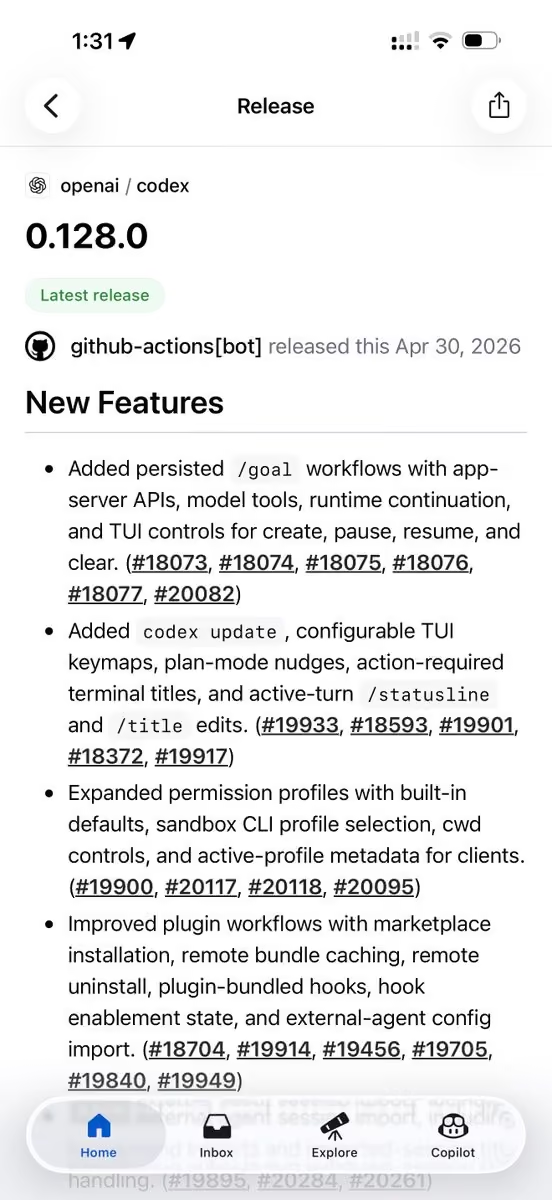
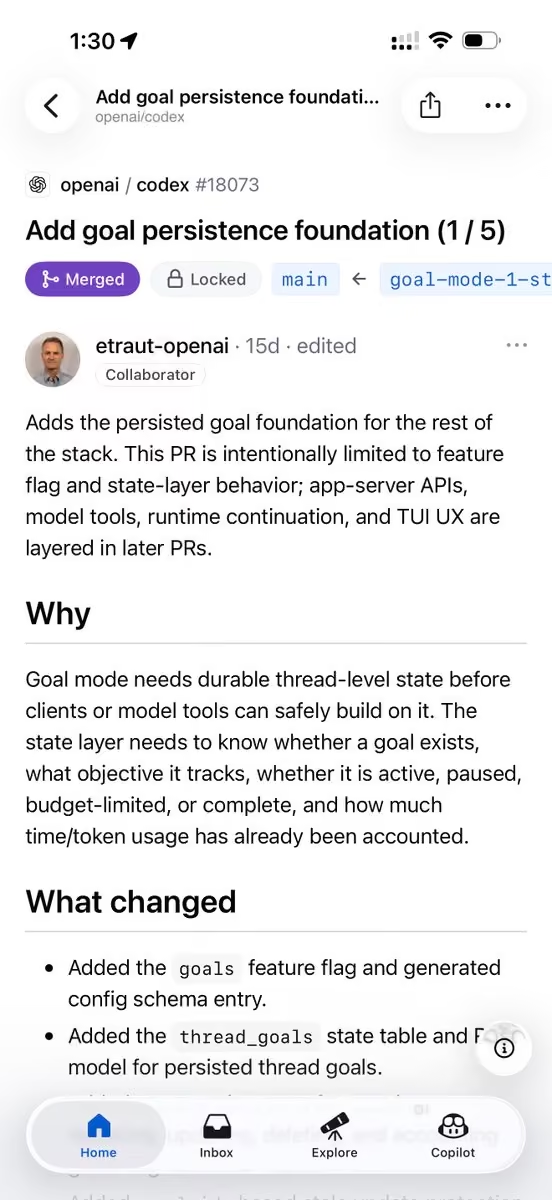
 Ari Weinstein
 Amjad Masad

 Theo - t3.gg

 Yam Peleg
 Mugilan S


 henrique cunha
 Moll
 Bowen Baker


 roon
 tae kim

 Pietro Schirano

 Derya Unutmaz, MD


 Gabriel Goh


 James Sun
 Jacob Trefethen
 Adrien Ecoffet
 John Coogan


 Paul S. Conyngham
 Nan Ransohoff
 David Kirtley
 rohit
 Jesse🔸⏹️

 Rohan Varma
 ben hylak
 Yuchen Jin
 Sherwin Wu
 Matt Shumer

 Ahmed


 Jack Altman


 Ahmed El-Kishky


 Craig Weiss
 Isa Fulford
 eric zakariasson
 Cursor
 Jason Kwon
 vie ⟢
 ily⚡️
 Ben Davis

 Trevor Cai


 Alex Blania

 am.will

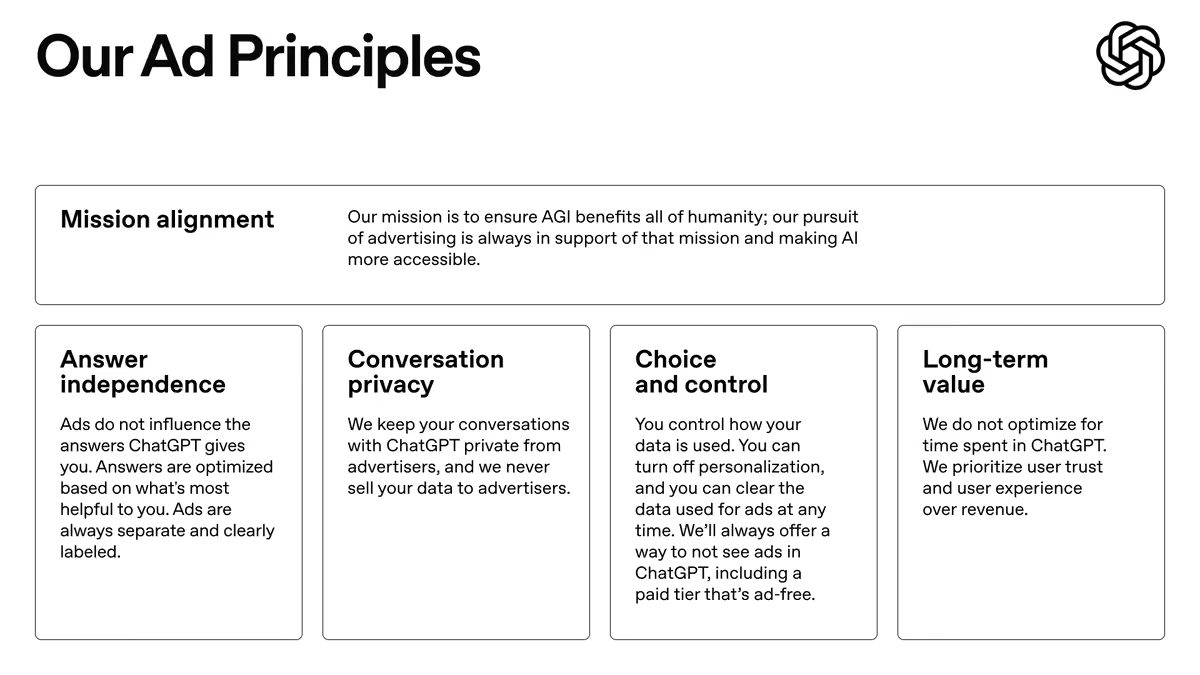


 Alex Imas
 Daniel Litt

 elie

 Yu Bai


 prinz


 Louis Andre

 Dean W. Ball


 Bill Peebles

 Johannes Heidecke
 Lulu Cheng Meservey
 Celine Halioua
 Valthos
 Loïc

 Sky


 Brad Lightcap

 TUSHAR

 Asher
 gabriel
 Liam Fedus

 Tejal Patwardhan


 daniel
 Mostafa Rohaninejad

 Area


 Aidan McLaughlin


 Taelin
 Boris Power

 Nick Turley


 Lee Robinson
 Jerry Tworek

 Mckay Wrigley
 Flowers ☾
 Dan Advantage
 Elaine Ya Le


 Arena.ai

 christina kim
 Anuj Saharan
 Ryo Lu

 Josh McGrath
 rapha


 Tianfu Fu
 Ananya Kumar


 Angel 🌼

 Aidan Clark
 Anshita Saini


 pedramkeyani

 Nat McAleese
 will brown
 Alexander Wei


 Keren Gu 🌱👩🏻💻

 Brad Gerstner


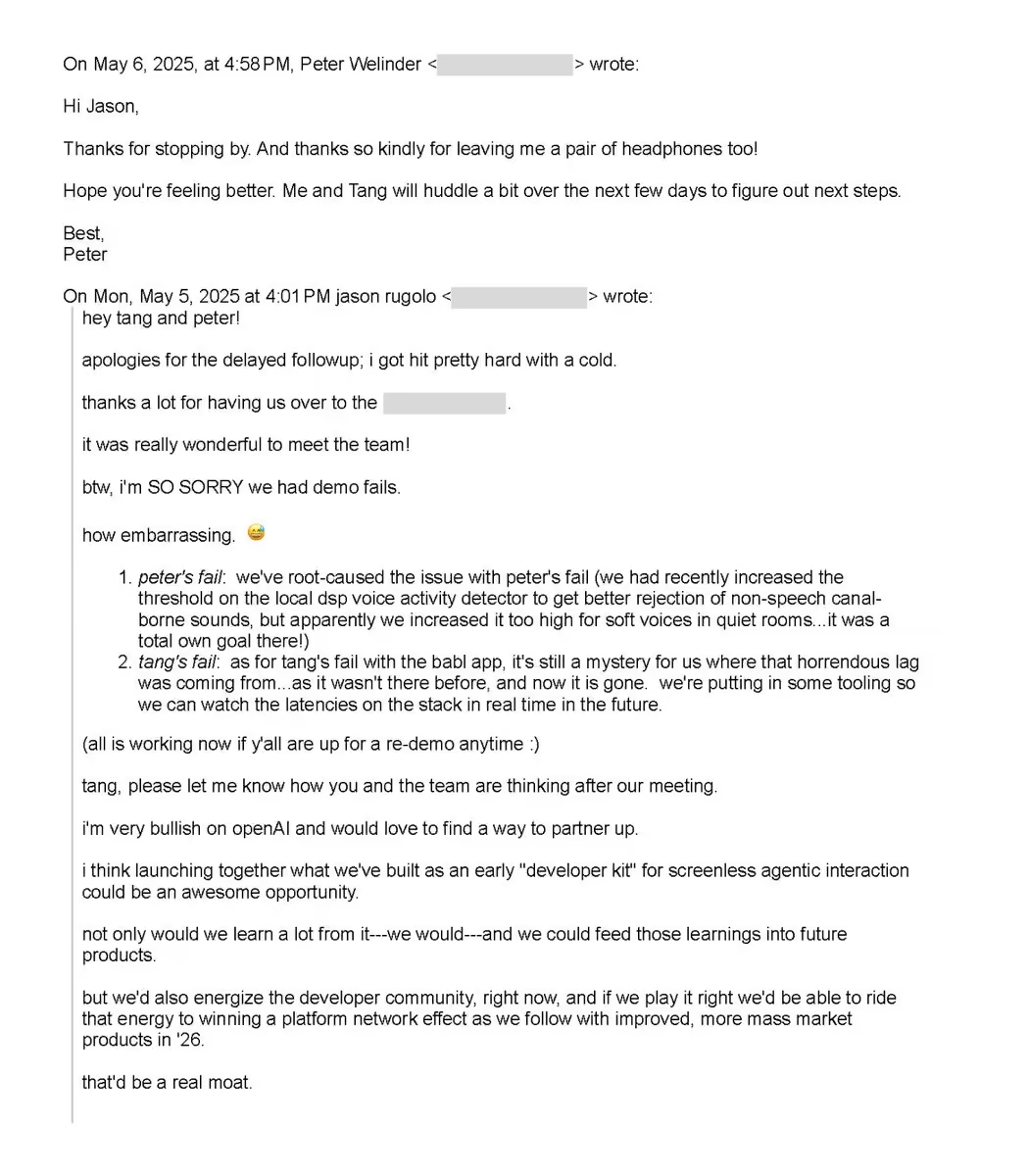


 Miles Wang

 Max Altman
 Kevin Weil 🇺🇸

 Chubby♨️

 Adam.GPT
 Joanne Jang

 Reiichiro Nakano
 Riley Coyote


 rex


 Varun Mohan


 Jiahui Yu
 Dan Shipper


 Clive Chan


 Garry Tan


 Vishnu Rajan Tejus

 Zhiqing Sun
 Atty Eleti
 Lu Liu
 fofr

 Hongyu Ren


 India Post




 Rohan Sahai
 Travis Fischer

 Grant Slatton

 Joe Hudson
 Pernikoff Brothers


 OpenAI Newsroom


 Kunal Shah
 Deep Thrill
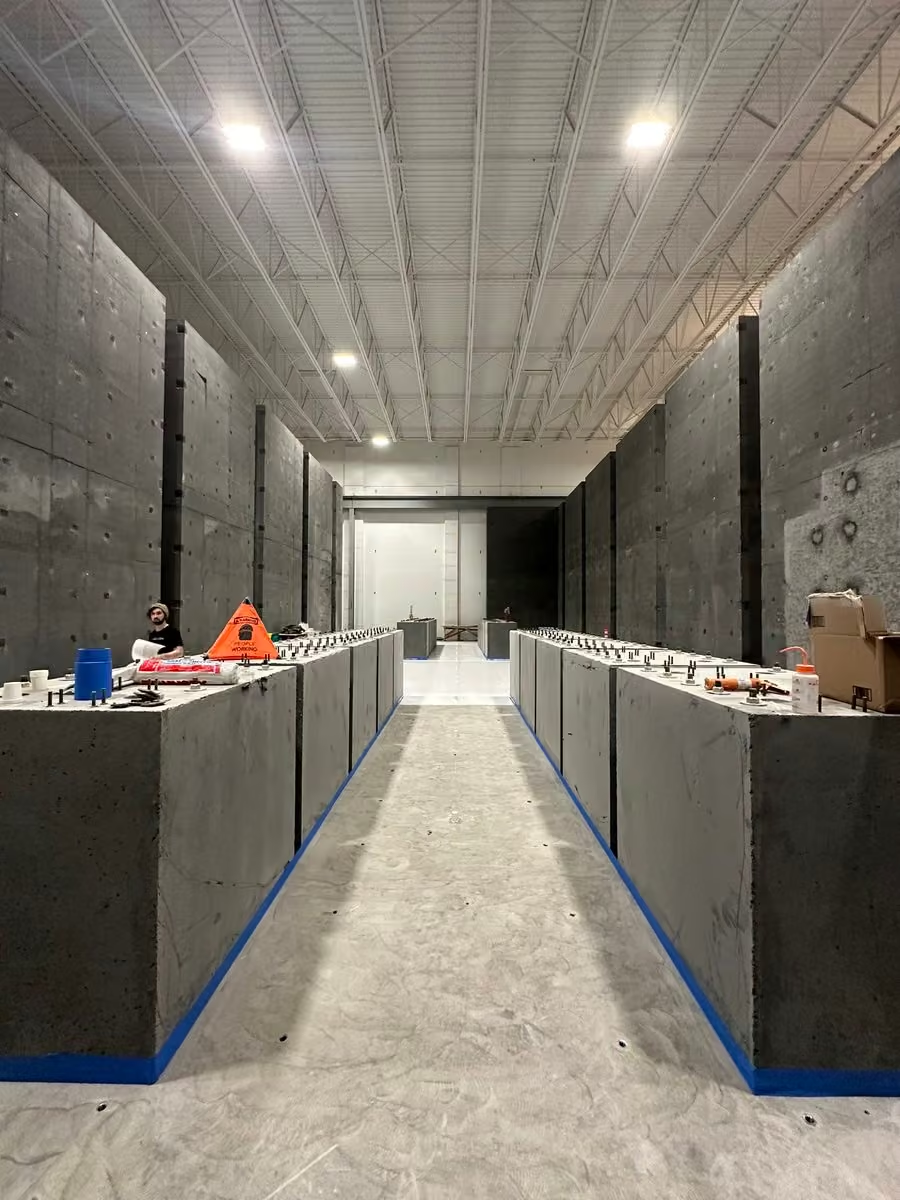


 Sen. Bernie Sanders
 Jerome Pesenti


