Politicians, athletes, journalists, NGOs, companies... They all use
corporation-owned social networks to communicate with us. Citizens
shouldn't have to hand over their data to companies to read content
published by public entities. Public Feeds changes that by making posts
of popular accounts freely available.
Read more.
Greg Brockman
Gregory Brockman (born November 29, 1987) is an American entrepreneur and software engineer. He is co-founder and president of OpenAI. He began his career at Stripe in 2010, upon leaving MIT, and became CTO in 2013. He left Stripe in 2015 to co-found OpenAI, where he also served as CTO. More on Wikipedia
Scientists reported nearly doubling their productivity with AI in our study of more than 1,800 participants in the ChatGPT for Academic Researchers program.
Using privacy-preserving methods, we looked at how they use ChatGPT across their work—from developing ideas to analyzing data and writing code—and what it could mean for scientific discovery.
We’re working with @ApolloResearch, @METR_Evals, @TransluceAI, and @GoodfireAI on embedded assessments: giving outside experts deep access to our internal models and systems to investigate alignment and test our safeguards.
These assessments build on our ongoing alignment and safety research, bringing independent scrutiny to how we identify and manage risks in our systems.
We're turning our lessons from defending OpenAI into practical tools for our customers. On Thursday, join us at Cyber at the Frontier, a live keynote, for our latest cyber announcements.
Working with our frontier models, we've identified and resolved important vulnerabilities in our own code and infrastructure. That experience is informing the tools and playbooks we're building to help other security teams strengthen their defenses.
@gdb shares what we've learned and why security teams should keep putting the latest models to work as capabilities improve.
OpenTable's native integration with OpenAI drove 190,000 people to restaurants in just the month of September. It has to be one of the biggest agentic commerce success stories - a number so high I'm triple checking if the CFO could have meant something different.
I guess now that @openai has name dropped @calif_io as an early adopter I can tell you GPT-6 Cyber is out of this world. It is lightyears ahead of everything I used.
Announcing our strategic partnership with JPMorganChase, to explore how advanced AI can support their enterprise: helping engineers build, security teams defend, and employees and customers benefit from more capable AI.
I'm especially excited about working together on cybersecurity, to help secure and protect the financial system to a level that is only possible with AI.
OpenAI’s Greg Brockman reveals an unannounced JPMorgan Chase deal, with the bank using Codex and OpenAI’s cyber models to secure itself
“Well, so within the company, we were probably, I don’t know. Like, I think our enterprise revenue was about 30% versus consumer at 70%. And now we’re probably somewhere around, like, we’re majority enterprise. And it’s not that consumer has shrank. Right? It’s been growing, but it’s the enterprise segment has really taken off."
"And so I don’t know exactly how to quantify in the broader market, but you can see the way that we’re winning deals. So for example, actually, one that’s hot off the press, has not been previously announced, is that we just papered a partnership with JPMorgan Chase, and that they’re going to be using Codex."
"They’re going to be using our cyber models to secure themselves, deploying our models for enterprise transformation knowledge work across the company."
"And that for me is like such an iconic institution in such an important domain. Right? A highly regulated enterprise that trust is, like, so key to what they do and that they chose us and that we’re here to be a great partner.”
This is the "upcoming cyber model" from yesterday. Besides 948 Linux vulns, it found 111 renderer RCEs in Firefox, among which, 81 were novel. 30 were exploits for bugs known to developers that were thought to be unexploitable. We are using this technology to scan more OSS projects and secure the Internet infrastructure. This is just a start.
Introducing GPT‑6 Cyber: a major advance in security research that pairs stronger capabilities with better model alignment.
The model powered the Linux kernel research we announced yesterday, and security teams at companies like Mozilla, Palo Alto Networks, Calif, and Cisco—alongside our own at OpenAI—are already putting it to work.
GPT-6 Cyber is available to select Daybreak Red customers and we are expanding access over time.
GPT-6 Cyber: a major advance for security research, already being used to help defend security-critical software such as the Linux kernel, Firefox, and many other projects.
We’ve invested a great deal in trust, specifically training the model to stay within the scope specified by the operator. The corresponding eval results are quite striking.
We’re also launching Daybreak Red for Critical Infrastructure, giving approved critical infrastructure defenders the ability to conduct authorized testing of critical systems.
Introducing GPT‑6 Cyber: a major advance in security research that pairs stronger capabilities with better model alignment.
The model powered the Linux kernel research we announced yesterday, and security teams at companies like Mozilla, Palo Alto Networks, Calif, and Cisco—alongside our own at OpenAI—are already putting it to work.
GPT-6 Cyber is available to select Daybreak Red customers and we are expanding access over time.
the team has been laser-focused on making dots significantly faster and more reliable.
some updates in the latest app release…
- you can now reply to your dot inline from a notification on iOS - share anything directly to your dot in iOS - open your dot from the iPhone Action button - faster loading when you tap in from a notification - gmail links deeplink to the exact email inside the gmail app
Just promoted our new GPT-Live outbound telephony API to GA, allowing developers to make phone calls from their Live voice agent, via any SIP trunk provider (e.g, Telnyx or Twilio). Calls can use HD Voice and can send and receive keypad events (DTMF). developers.openai.com/api/docs/guides/voice-sip
Some news: I’m joining OpenAI to lead product management for Core Products!
I have a lot of respect for OpenAI for showing the world that scaling works, for bringing AI to over a billion people, and for believing great products are core to the mission.
I’m excited to work with @thsottiaux, an incredible PM team, and everyone across OpenAI. Together, we’ll build agents that have your back and your team’s, and keep you in control, so you get more time for the people and work you love.
Lots to learn, and lots to build. Please keep your feedback coming!
we've found, validated, and prepared patches for almost 1,000 linux local privilege escalations using our cyber vulnerability pipeline, at the cost about $1,000 per vulnerability.
an emerging scalable approach to significantly hardening both open source and proprietary projects
Our security researchers built an autonomous cyber vulnerability discovery, exploitation, and patching pipeline.
In a single run with an upcoming cyber model, it validated and generated patches for 948 local privilege escalation vulnerabilities in the Linux kernel at a total API cost of $1.2 million.
We are now allocating a significant amount of our frontier compute towards discovering and patching vulnerabilities in open source codebases, fully pro bono.
In one case, we studied the Linux kernel, which is a particularly load-bearing piece of software at OpenAI.
Before AI, security researchers might discover ~20 local privilege escalation (LPE) vulnerabilities in Linux in a typical year.
In one week's time, our upcoming frontier cyber model was able to find ~1000 LPE vulnerabilities using about $1M of tokens. In the process, it was able to discover at least 10 novel classes of Linux exploitation techniques.
Our security researchers built an autonomous cyber vulnerability discovery, exploitation, and patching pipeline.
In a single run with an upcoming cyber model, it validated and generated patches for 948 local privilege escalation vulnerabilities in the Linux kernel at a total API cost of $1.2 million.
pierre’s open-source developer tools already power parts of codex today, and excited to build together the future of collaboratively building software with ai.
ChatGPT and Codex are helping engineers build for the physical world.
We’re sharing our progress across mechanical design, electrical engineering, and simulation—from helping our hardware teams iterate faster to testing new workflows with industry collaborators.
Pando is a Git backend which can scale to very large monorepos. We took the hard road of continuing to use Git, which means we could enable Pando with no change to devex. Considering providing this to others, let me know (gdb@openai.com) if you'd be interested.
What does PHP2Shell mean for your security team - and what should you do next?
Tomorrow I’m joining @CrowdStrike folks to discuss how PHP2Shell was found, how we navigated the disclosure, and practical next steps for you:
- Assessing your exposure - Applying fixes - and investigating suspicious activity.
We’ll also discuss from @OpenAI's vantage point, how frontier AI is changing vulnerability discovery and what that means for the future of cyber defense.
Announcing three major scientific discoveries, one each in mathematics (harmonic analysis), computer science (complexity theory), and physics (quantum field theory).
GPT-6.1 Terra: delivering fast and capable computer use at a lower price.
GPT-6.1 Terra understands what’s on screen, takes action across apps, writes naturally, and is a more capable model for your whole workday with the efficiency to take on more of it.
Since I'm now blocked by bluey from replying to this thread, I answer here by quote tweet
the openAI construction has more to do with convex integration than anything else.
In convex integration, the oscillations are typically built by hand and the iteration procedure creates wild weak solutions. The non-uniqueness construction of Albritton–Brué–Colombo used an unstable vortex to split solutions apart. The Córdoba–Martínez-Zoroa singularities amplify vorticity across scales by strain. In the openAI paper, a fluid instability is clever made so that the flow itself generates the oscillations: they grow by drawing energy from the background shear. The Reynolds stress then becomes the force that creates the collapsing smooth vortex. Using a physical instability to create the stress in this way has no precedent, and it is what produces a smooth force rather than a merely rough one.
Some on these ideas are in the literature (e.g. Leibovich-Stewartson 1983) but the way they are combined is definitely insane and definitely nowhere in the literature previously.
I also don't know of anyone suggesting that convex integration would play a role in the creation of a blow-up solution like this.
On a technical level, the paper is unbelievable, maybe beyond what a human could have come up with but not beyond human understanding: there are several different groups of pde experts working on understanding it who say that they more or less understand now. I expect digestions soon
td;lr: anyone saying that this OAI result is unsurprising is bullshitting
we've found and have been working on disclosure for a remote code execution in a widely-deployed compression library.
it's both an impactful issue and an example that shows how complicated it can be to coordinate patching, since it's integrated into a lot of downstream software:
During this red-teaming exercise, we also found a vulnerability that allows for unauthenticated remote code execution in Brotli, a widely-deployed compression library included in many pieces of software such as Node.js, Bun, and Envoy.
The flaw could let an attacker run their own code on affected systems by sending or replying with malicious compressed data, without any need to create a user account. That is, an unpatched server that accepts compressed input could be taken over by a malicious client, and an unpatched client that accepts compressed input (such as “curl --compressed”) could be taken over by a malicious server.
This root cause issue was actually fixed in the Brotli source code in February, but it wasn’t known at the time that it gave rise to a security vulnerability and there was no more recent release of Brotli. Since Brotli is built into other software, any software which includes this library needs to take the update too, followed by the users of that software. We disclosed the vulnerability to Brotli and other downstream projects such as Node.js, which released or are currently releasing security updates, and Brotli cut new release versions and published a CVE.
Over the past several months, we have substantially hardened the security of our research training environment. We’ve removed live internet access for all frontier models during training and built an offline world for them to use instead—a cached version of the web where they can still learn to browse, search, and use applications.
On September 20, after a model exploited a DNS misconfiguration to find a way outside of this offline world, we paused frontier training to strengthen containment further. We assembled teams of agents, powered by our most cyber-capable models, and tasked them with finding weaknesses in our research environments.
While they found no route to the internet they could easily exploit while concealing their activity from our monitors, they did find zero-day vulnerabilities, virtual machine escapes, and hardware side-channels for communication between agents. We used their discoveries to further strengthen our defenses and contribute fixes to open-source software.
After strengthening our containment architecture, we resumed our frontier RL training and inference on October 1. We’ve reserved substantial compute for continuous red-teaming, and made high-compute red-teaming part of the safety cases we use to decide whether frontier training and evaluation can proceed securely.
By the by, if I had to guess, Greg Brockman is currently doing heroic things to fix the internet behind the scenes. And I expect that even though his net contribution to AI safety and resilience will in the final tally be unsurpassable, no one in the space will think to attribute large scale patches to his effort or effort that happens under his leadership.
A post on how we've been securing our frontier model training environment.
We've been building tools around our frontier cyber models, which have secured us far beyond what we could have unassisted and should generalize as key to how defenders secure themselves going forward.
Over the past several months, we have substantially hardened the security of our research training environment. We’ve removed live internet access for all frontier models during training and built an offline world for them to use instead—a cached version of the web where they can still learn to browse, search, and use applications.
On September 20, after a model exploited a DNS misconfiguration to find a way outside of this offline world, we paused frontier training to strengthen containment further. We assembled teams of agents, powered by our most cyber-capable models, and tasked them with finding weaknesses in our research environments.
While they found no route to the internet they could easily exploit while concealing their activity from our monitors, they did find zero-day vulnerabilities, virtual machine escapes, and hardware side-channels for communication between agents. We used their discoveries to further strengthen our defenses and contribute fixes to open-source software.
After strengthening our containment architecture, we resumed our frontier RL training and inference on October 1. We’ve reserved substantial compute for continuous red-teaming, and made high-compute red-teaming part of the safety cases we use to decide whether frontier training and evaluation can proceed securely.
Great to host @gdb at @Uber HQ this week. We’ve worked closely with @gdb and the @OpenAI team for several years, and it’s remarkable how much has changed.
The first piece of work we did with ChatGPT years ago was with our support team, tinkering with a 4K context window :-). That’s hard to imagine now.
Now we’re using the latest frontier models to automate engineering workflows at global scale, moving into the era of agentic engineering.
Today we’re expanding agentic capabilities across the whole company. Following a 1,000-person pilot, we’re rolling out ChatGPT Work from @OpenAI for Business to every Uber employee. We’ve seen the shift in engineering, moving from AI helping with individual tasks to completing whole workflows, and we want to bring that same shift to teams across the business.
I’ve spoken before about the ‘AI pods’ we launched earlier this year, pairing AI engineers with teams across Uber to improve how work gets done. One team reduced the time needed for an intense capital allocation process covering 150 cities from 15 hours to 30 minutes. That’s what I love about applied AI: combining the latest technology with the expertise of people on the ground to completely rethink what’s possible. Now we want to do that at scale.
Uber has always been a company of builders, and every day millions of people around the world rely on what we create. I can’t wait to see what the team builds.
GPT-Rosalind surfaced a new lead for drug discovery: could restoring cholesterol transport protect neurons from degeneration?
DCTN1 is a gene linked to Perry syndrome, a rare neurodegenerative disorder. In mouse-brain data, disrupting it increased expression of genes involved in making cholesterol. GPT-Rosalind suggested a possible explanation: cholesterol may not be reaching where neurons need it.
That gives scientists a specific mechanism to test and, if confirmed, a direction for developing new treatments for neurodegenerative disorders.
With @perturbai_tx and @scrippsresearch, a team of thousands of GPT-Rosalind agents worked in parallel, connecting gene-expression results from millions of mouse brain cells with scientific literature in just 32 minutes. We’re now expanding this collaboration to identify new drug targets.
Over the past two months, we have been leading a coalition to mitigate one of the most severe bugs in open source software found in recent memory, php2shell, found as part of our Patch the Planet initiative. x.com/i/article/2112920540138844160
We’ve acquired Orchestra Bio, a platform that helps biopharma teams coordinate the complex process of drug development.
Together, we’ll build on Rosalind, our AI models and tools for life sciences research, to streamline those operations and help new treatments reach patients sooner.
6 days and $40,000 of compute with GPT-5.6 Sol to find a critical vulnerability in Chrome, claiming Google’s first full-chain reward in 2026 for a vulnerability that would affect an estimated 1 billion users.
Highlights the opportunity for defenders to utilize these tools to secure their software to unprecedented levels:
For the second time in Google Chrome’s history, Google awarded a $250,000 bounty for a full-chain exploit… to @XBOW. Here’s the full story:
At an all-hands at the start of 2026 in Malta, I set the team a crazy challenge. A full-chain exploit of Chrome by the annual Black Hat cybersecurity conference in August.
I believed there were few better tests of whether @XBOW could move beyond web applications to desktop software, servers and devices.
Chrome is one of the most hardened pieces of software on the planet, used by more than half the world’s population.
A full-chain exploit lets an attacker take total control of a machine, where they can read every email, password and bank login the user types. You don’t need to download anything or click a phishing link. Visiting the wrong site is enough.
So @moyix, Andres Luksenberg, Baul Lee, and Willem Pinckaers took on the challenge along with a fifth teammate: OpenAI's GPT-5.6 Sol.
They built a chain they thought would win, but Google told us they already knew one of the bugs.
We were already in Las Vegas for Black Hat and DEF CON, and the team didn’t want to go home without the win.
So Brendan and the agents built a new exploit in just 6 days.
We submitted it to Google and waited.
The news came through that we'd done what should’ve been impossible. A full-chain bounty of $250,000, the first awarded under Google’s 2026 rules.
It took just 6 days and $40,000 of compute to construct an exploit that affects a billion users of Chrome on Windows. An intelligence-agency veteran told me his team used to spend 6 months on this kind of vulnerability.
My takeaway: the cost of finding truly critical vulnerabilities is collapsing, for attackers and defenders alike. Restricting powerful models is not the answer; GPT-5.6 Sol is already public.
But defenders have one advantage attackers never will: they can test their own code first.
Assume your software is exploitable. Whoever is hunting your bugs has the same building blocks we did.
This is cause for urgency but not panic.
XBOW is now developing an autonomous product for testing compiled software (desktop applications, servers, embedded devices), and partnering with the world’s top organizations to design that product.
If you’d like to be one of them, get in touch.
P.S. Restart Chrome whenever the Update button appears!
GPT-6 and Intelligent UI, now rolling out in ChatGPT for everyone.
Intelligent UI in ChatGPT delivers fast, interactive answers that make everyday questions more visual, complex topics easier to grasp, and interactive tools for your task available on the spot.
We’re releasing a broad range of new mathematical results produced by an internal frontier model.
We’ve been consulting with the independent Advisory Group on Mathematics and Artificial Intelligence at the Institute for Advanced Study, and we have drawn on their advice and public recommendations to inform how we release these results.
We heard you loud and clear. ChatGPT Voice can now:
- Use plugins like your email, calendar, and Slack.
- Be powered by GPT-6 Astra, Sol, and Luna.
- Be used in ChatGPT Work on web and mobile, so you can create docs, decks, sites, and spreadsheets or tackle complex tasks in the browser, just by talking.
Rolling out globally today in the latest version of the app.
GPT-6 Sol and Luna — faster, more affordable models with the advances behind Astra’s SOTA performance in professional work, factuality, coding, computer use, and alignment:
Please welcome GPT-6 Sol and GPT-6 Luna to the GPT-6 universe.
GPT-6 Sol and Luna build on the advances behind GPT-6 Astra, bringing much of its strengths into faster and more affordable models to support work at scale.
We’ve also made caching and inference more efficient, and we’re passing the savings directly to you: 50% lower API prices for Sol and Luna compared with GPT‑5.6 promotional pricing.
Starting today, you can connect multiple accounts with most plugins in ChatGPT! 🎉
Bring context from your work and personal accounts into the same conversation. Connect your accounts in the plugin directory: chatgpt.com/plugins
Devs: this works automatically, with no changes needed.
But, to make the experience for users of your plugin even better, add a profile tool to your MCP server so ChatGPT can label the accounts: developers.openai.com/plugins/build/auth
Today we rolled out Astra to every engineer at Databricks (N=~3500). Some notes that may be helpful to others:
1. Astra unambiguously out performs our previous highest-end models (Opus 5, Sol 5.6) on highly complex tasks, especially those related to high level system design or long range horizontal tasks.
2. Engineers given Astra increased overall coding spend by around 60% compared to baseline.
3. It is not clear Astra meaningfully improves on medium/low complexity coding tasks compared to earlier models. We suspect those tasks are mostly saturated (i.e. perfectly executed) by existing models.
4. We learned above by piloting Astra with around 200 users to gain signal on both quality and cost. We use Unity Gateway to do cohort-based experiments for all new models.
5. We give engineers a sub-budget specific to Astra to encourage them to use Astra selectively on complex tasks while preferring lower cost models for everyday tasks. Our engineers are able to mix-and-match tools and models within their overall budget envelope (we also allow for increased budgets through various mechanisms). These budgets are defined in Unity Gateway and regularly revisited.
Note: We do not have robust comparisons of Astra-vs-Fable because we have net yet rolled out Fable widely due to data retention policies.
We’re introducing a new Data agent in ChatGPT Work so you can turn your company’s data into answers, interactive dashboards, and action—just by asking.
Just add the Data Plugin in ChatGPT Work, connect to the data sources and context you already use, and start the conversation. openai.com/index/put-data-to-work/
olivia was sick much of the time and had never slept through the night. her parents used ChatGPT to prepare questions for her doctors, who identified a rare genetic disorder and later found abnormal brain activity.
with treatment, she’s sick less often and finally sleeps through the night.
Three months ago, we launched ChatGPT Sites – an easy way for anyone to build and host fully functional, interactive web apps. Since then, people have created over 5M sites.
We’ve been listening to your feedback and ICYMI, we’ve launched a few Sites updates:
🫂 Build together: Invite teammates to edit, save, and publish to your shared Site
🔐 Share privately: Invite specific people to a private Site without making it public
🚀 Launch faster: Go from prompt to deployment in half the time
👀 Explore your data: Ask ChatGPT to inspect your Site’s database. Editors can view it, too
GPT-6 Astra just solved a problem medical students have been facing for decades
Medical students have been working around the same three problems for decades. Someone talked to them, identified all three, and built a service with Astra that solves them in one tool.
The problems are structural. Flat anatomical diagrams strip depth out of organs entirely. CT cross-sections don't connect naturally to the overview diagrams students spend years memorizing. And reading a scan requires holding three mental models simultaneously - patient orientation, cross-section direction, and how every organ shape shifts through each layer.
Astra built a service that handles all three in one place. Not a better textbook. A spatial tool that connects the diagram, the CT view, and the 3D relationship together.
Medical education hasn't changed its core format in over a century. This might be the first tool designed around how anatomy is actually understood - not just displayed.
we used our models to find and fix critical vulnerabilities in our own systems, as part of a 250+ person effort within openai. playbooks/learnings/architecture which we hope can be helpful for others to make the most of the defenders' window:
We mobilized 250+ people to strengthen our defenses across hundreds of systems. Our latest cyber models helped us find and fix vulnerabilities we might never have discovered otherwise.
We’re sharing what we learned, the architecture, and a practical playbook so you can build your own Defense Factory: a continuous loop where AI agents find vulnerabilities, validate them, and verify that fixes work.
Paul Christiano, founder of the Alignment Research Center, is joining the OpenAI Foundation Board and its Safety and Security Committee, which provides governance over the safety and security practices across OpenAI.
As AI capabilities advance, strong safety, security, alignment, and governance matter more than ever. Paul’s work on AI alignment and his years at @NIST will strengthen the Foundation’s oversight, bringing an independent voice to challenge assumptions, assess safeguards, and reinforce accountability around critical decisions.
Paul will also serve as a non-voting observer on the OpenAI Group PBC Board.
More exciting news from @OpenAI: GPT-Image-2.5-Sunburst is #1 and Flare is #2 across the Text-to-Image Arena, the Image Edit Arena, and the Multi-Image Edit Arena!
Both releases are significant improvements over GPT-Image-2 (medium) in all 3 Arenas. Sunburst delivers the highest quality generation, while Flare still improves upon GPT Image 2 at significantly faster speeds.
The increase by points are (Sunburst | Flare): - Text-to-Image: +40 | +18 pts - Single-Image Edit: +59 | +30 pts - Multi-Image Edit: +81 | +47 pts
Across all categories like 3D Imaging & Modeling, Art and more, Sunburst is #1 and Flare holds #2 in all three Arenas.
.@ChatGPT Images 2.5 is a major leap for fashion applications.
The previous model was great at staying true to an original design, without turning it into something you’d already seen on a runway. But the results sometimes looked flat.
Announcing a solution to the Navier-Stokes problem, one of the seven Millenium Prize problem.
Represents a major milestone for both AI and mathematics, as well as pointing to an upcoming renaissance in scientific discovery.
Hoping that the knowledge created by this model can help the community better understand non-linear PDEs, which are used to model much of the physical world.
We’re sharing a solution to the Navier-Stokes Millennium Prize Problem, one of the deepest problems at the frontier of mathematics.
The proof was produced by a group of agents, using an OpenAI next-generation model significantly more capable than GPT-6 Astra.
The problem concerns whether the description of smooth three-dimensional fluid motion modeled by the Navier-Stokes equations can break down. It has remained unresolved for roughly 90 years.
ChatGPT Work can now pick up on what makes your writing sound like… you. Your favorite phrases. Your very specific sign-off. your capitalizations quirks.
Connect the tools you use every day, like Gmail, Google Drive, Slack, and SharePoint, and ChatGPT Work will learn your writing style from your emails, messages, and files—and carry it into whatever you write next.
I recorded a video of myself talking through a problem: how to improve maintenance of tangled hair in the shower drain. It was a ~4 min video where I explained the problem and also used a digital caliper to take measurements. I asked GPT 6 Astra (Ultra) to come up with a fix for the problem.
It took the video, extracted my voice, and matched the video frames to where I measured the parts. It came up with an idea for making maintenance and cleaning easier. I got an interactive sketch so I understand what it is talking about. I told it to use computer use in Fusion 360.
I watched in real time as it designed the part, making it fully parameterized. While watching, I learned a couple of tricks, like how making a design read-only frees up one of the 10 free editable designs you get 😅
Anyway, it designed it and it looked solid. I told it to add fillets. I 3D printed it, tried it, and it fit perfectly on the first try.
Even though it wasn’t super complex, it solved a real-world problem, probably faster than it would have taken me to wrestle with Fusion and get what I wanted.
an important essay on the state of AI and the choices and challenges ahead: for openai, the field, and the world.
we're in the AGI era, and need to approach the next few years with seriousness, thoughtful deliberation, and navigating the collective challenges together. we can make the future so much better than the past.
This resulted from a single prompt telling Astra (medium) to make a video of a tendon transfer surgery we do as hand surgeons (EIP to EPL tendon transfer).
Excited to keep exploring this for surgical education, patient education, and robotic simulation!
"Go through my internet, phone, and software bills, jump into each provider's chat support, and negotiate them down or cancel what I'm not using."
2. Turn an agency into software.
“Pick one service business in [niche] and reverse-engineer the exact workflow they sell to clients. Break it into steps, tools used, inputs, outputs, human judgment points, and places where the work gets slow or expensive. Then design the simplest AI product that could replace the first version of that service and charge $500-$5,000/month.”
3. Garage sale flipper.
"Watch Facebook Marketplace and Craigslist in my city for [cameras / furniture / bikes] listed way under market, and text me the second one's mispriced with the link."
4. Create my 1 person company dashboard.
“Look at my docs, notes, Stripe exports, analytics, customer calls, and project list, then build a weekly operator dashboard. I want to know what is making money, what is wasting time, what customers are asking for, what I should stop doing, and the three highest-leverage actions for next week. Be blunt and show your work.”
5. Audit my company for agent opportunities.
“Look at how this business works and find the tasks we should give to agents before hiring another person. For each task, estimate the current human time, the cost of mistakes, the tools involved, the difficulty of automating it, and the first safe version we could deploy. Prioritize things that save money or create revenue within 30 days.”
6. Be my browser operator.
“Use the browser to complete this workflow: [workflow]. As you go, click through the actual sites, collect the data, fill the forms where appropriate, and keep notes on what broke or slowed you down. When you’re done, give me the output, the repeatable SOP, and the automation plan so this can become an agent.”
7. The whole QA team.
"Every night, open my app on a real phone, go through signup, checkout, and the main flows, and screenshot anything that's broken or confusing."
8. The competitor spy.
"Sign up for my top 3 competitors, sit inside their product and their emails, and send me a monthly report on every new feature, price change, and thing they do better than us."
9. Make a game people would actually play for 5 minutes as a lead magnet
“Build a browser game around this mechanic: [mechanic]. Don’t just make a cute demo; add progression, tension, scoring, failure, polish, and one reason someone would send it to a friend. Then add lead capture (email/sms), it needs to tie into my core product which sells XYZ.”
- Astra scores 63% on ARC-AGI-3, 99% via a new provider adapter harness - It surpasses human performance on 96% of ARC-AGI-3 levels - It builds the most precise symbolic model of novel environments we've seen
Astra is useful for so many things, but I'm particularly excited to see how it transforms areas like entrepreneurship, scientific discovery, and how small teams tackle big problems.
An open letter for a global surge in cyber defense, signed by over 100 organizations including Anthropic, AWS, Google, Microsoft, OpenAI, and Oracle. x.com/i/article/2093011711712456704
we've completed our review of the Hugging Face incident.
we've used what we've learned to drive significant upleveling in our standards for safety, security, and alignment in our training and evaluation infrastructure — not just upon deployment.
We have conducted a thorough investigation into the Hugging Face incident.
We are releasing a technical report and accompanying blog post that reconstruct the agents’ activity, explain why existing safeguards failed, and detail how we’re preventing recurrence.
A few updates to scheduled tasks in ChatGPT Work on web and mobile: Plus and Pro users can now set tasks to respond when something changes in Slack, Gmail, and Github, rather than just run on a set schedule.
We’re also rolling out scheduled tasks in ChatGPT to Free users, who can create up to three tasks.
You can also now share your favorite tasks for others to customize and use.
ChatGPT Work can now use its computer and browser to sign in to websites on web and mobile, without ChatGPT ever seeing your username or password.
That means you can ask it to: • Set up utilities for a new apartment • Book a DMV or passport appointment • Check reimbursement costs through your insurance • Find and book an in-network doctor around your availability • Check when your car registration expires and prepare the renewal paperwork • Compare your rental insurance policy with an issue you’re emailing your landlord about • Find and save apartment listings that match your criteria • Restock something just by uploading a photo • Schedule a package pickup for a return • Cancel tickets for a rescheduled trip • Book a vet appointment • Submit reimbursement paperwork for medical treatments • Check resale sites for new drops and save things you might like • Find candidates with specific experience and draft outreach • Take invoices from your email and submit them to your accounting software • Draft replies to rental property inquiries • Fill out permit applications for your small business • Add action items to a vendor portal based on a recent client call • Analyze the latest ad campaign for your small business
The new $100 Premium seat is a game changer for small businesses and startups—giving lean teams better tools, faster workflows, and capabilities once reserved for big companies.
A flexible plan that scales with your team’s ambition.
OpenAI: "Today, we shared the first measured performance results from Jalapeño, OpenAI’s first custom inference chip. On InferenceX, a public benchmark using GPT‑OSS 120B, Jalapeño delivered more peak throughput per kilowatt and lower token latency than the commercial systems in the comparison. It also performed strongly on DeepSeek R1 and Kimi K2, showing that its gains extend across model families."
"This is Jevons paradox: greater efficiency makes more uses worthwhile, expanding consumption and creating new economic activity through more work completed, better decisions, more products launched, and more revenue generated."
"AI played a direct role in Jalapeño’s development, enabling the team to move from initial design to tapeout in nine months by exploring implementations, shortening design, measurement, and verification loops, and continuously iterating on model workloads. AI also helped optimize the chip’s arithmetic circuits, allowing the team to fit more compute performance into the chip on schedule."
"We plan to begin deploying Jalapeño within OpenAI’s compute infrastructure by the end of the year. It is the first generation of a multigenerational roadmap: Gen 2 is deep in development, and Gen 3 is taking shape. Each generation will build on what we learn and further advance both efficiency and speed."
"As we prepare for deployment, we are continuing production qualification, maturing the software, preparing to operate Jalapeño at scale, and validating performance across more models."
In my ~14 months at @OpenAI, one of the most surprising and genuinely wonderful things about it, has been the full leadership support for full-duplex models (gpt-live series), even when it seemed deeply improbable that they would work.
And yet, if they did work, it was obvious how magical they could be. I am quite sure this is not an exception but a general rule for research projects at @OpenAI.
There were so many moments when the problem felt impossibly hard. But one thing kept being true: it was never clear why it shouldn’t work. And almost every time we understood the problem a little better, it became a little easier to solve.
I’m pretty sure there are very few environments in the world where a bet like this could have been made and sustained. So grateful to be part of this wonderful place.
As we continue to push the frontier of capabilities while improving efficiency, we're dropping API and credit pricing of GPT-5.6 Sol by over 20% for the next 3 months.
A milestone for our infrastructure: our first NVIDIA Vera Rubin racks are here and now running our training stack. This is an important step as we expand compute that powers OpenAI's next generation of frontier AI pre-training.
things i use codex browser/chrome/computer for - closing the books our accounting software - clearing my linkedin queue - managing gmail / clearing inbox - setting up stripe radar rules - iterating on images in midjourney - browser based QA on every PR - build inspo library from other websites - completing security questionaires - signing up for procurement systems - research + outreach for vendors who only have crummy online forms - configuring saas when API is not available - registering for conferences - cancelling subscriptions - using iphone mirroring to use mobile apps from my desktop (look ma, no hands!)
With Codex, @asana finished a frontend test migration from Enzyme to React Testing Library in two calendar weeks—a project expected to take five more years.
We will continue to offer Zero Data Retention for frontier models.
As AI takes on longer, more autonomous work and delivers greater value to businesses, safety systems also need to identify risks across related interactions.
To help address those risks, we're previewing Private Safety Processing, which is designed to improve safety without giving OpenAI personnel access to the underlying content.
we temporarily slowed scaling of our frontier training, including our largest planned frontier RL, to strengthen security and monitoring. we believe confidence in safety will increasingly set the pace of AI development:
As models become more capable, the risks associated with developing and testing them internally also grow.
We temporarily paused reinforcement learning (RL) training on our latest models intended for deployment for two weeks while we hardened and red-teamed our research environments and expanded monitoring coverage.
This went under the radar this week, but we just shipped the ability for models with multi agents v2 to delegate to any supported model, including Luna!
Took a bit of time to make sure this worked reliably
1/ Quizzes - "Quiz me on [topic]" will now automatically generate quizzes right in Chat. Learn any topic!
2/ Reservation search - "I'm looking for a reservation for two next Saturday for a place with a great outdoor patio". Nice thing is you can just describe what you want.
3/ Google Drive for Paid Users - You can now add Google Drive files to your ChatGPT Library. That makes it easy to ask ChatGPT questions about those files. Just hit the + menu and "Add from Library"
4/ Suggestions for Paid Users - Paid users will see high quality suggestions on the home page of ChatGPT
We're continuing to make answers better, allow you to pull in the right documents, and more easily discover what Chat can do. Step by step, ChatGPT gets more useful! Leave feedback in the comments.
We’re expanding our cybersecurity initiative Daybreak and introducing GPT-5.6-Cyber, a new model for advanced, authorized cybersecurity work.
As the threat landscape evolves, we’re putting frontier intelligence in the hands of trusted defenders before attackers can deploy offensive AI at scale.
Used ChatGPT finance just now and asked it to find phantom subscriptions. It unearthed $550 a year of random things I didn’t realize I was paying for and thought I canceled. Thanks @OpenAI and whoever is on the Finance product.
1/ Rich formatting in our web composer – When you paste in emails or documents, our composer will retain the formatting; copying and pasting is so common, we should have done this a while ago!
2/ Updated model for paid users – GPT 5.6 Sol is more consistent across quick chats and deeper reasoning. You'll now get a slider that lets you choose how much thought ChatGPT puts into a response. The haptics (vibrations) on mobile slider are fun!
3/ Unlimited text messages - Free users will get GPT 5.6 Luna with unlimited text messages. More intelligence for all. Rolling out soon.
4/ Fast Android Camera – We've made it a lot faster on Android to tap "camera" in ChatGPT to take a new photo and ask a question.
5/ Voice x Files - You can now upload files and ask questions in our new ChatGPT voice experience powered by GPT-Live.
Team demos were awesome this week. So much in the queue that the next few months are going to be good. Let us know what you're hoping for in the comments!
After evaluating one of our upcoming models, Astra, we're treating it as our first "critical" model for cybersecurity under our Preparedness Framework.
This is a scenario we've planned for, and we're putting additional controls in place to ensure Astra's further development happens safely and securely.
We're working hard to make Astra broadly available, and get its advanced cyber capabilities into the hands of defenders.
OpenAI is working hard to empower everyone with intelligence that works for them, in the form of great products which get simpler to use over time.
We're bringing unlimited text chats with Luna, a quite capable model, to free users.
We've also released an updated version of Sol which works for both quick chats and for deep reasoning — historically these have been different models. This unification is a very significant step towards making ChatGPT simpler and more intuitive.
Luna is such an insane value after the 80% cost reduction. It's basically free and can do a ton of real data processing type work.
I'm overhauling title generation in T3 Code to take more advantage of it. I almost want to spin it up on every prompt to generate descriptions, feedback, and statuses. Why wouldn't I? It's basically free
CODEX SKILL THAT TURNS CUSTOMER FEEDBACK INTO A ROADMAP!
Most feedback analysis stops at positive or negative.
I made a Codex skill that turns support tickets, interviews, surveys, reviews, sales calls, and churn notes into evidence-backed product priorities and credible customer proof.
Give it your feedback files and Codex maps recurring pains, ranks what to build next, and links every recommendation back to exact evidence IDs.
It keeps four things separate:
-what customers said -the underlying problem -what to validate or build next -what you can honestly claim
-> feedback clustering with source traceability -> product opportunity scoring -> Now / Next / Later roadmap -> customer proof + case-study candidates -> objections, churn risks, and unsupported claims -> searchable Startup Customer Evidence Map -> privacy-first quote and consent handling -> one-command install
What would you analyze first: support tickets, interviews, or churn notes?
Install: npx --yes startup-feedback-engine@latest 100% open source. Repo in Bio.
I've had a looong wish to build something genuinely useful through vibe coding, and I finally did it.
A 3D human anatomy application built with @threejs using GPT 5.6 Sol.
It all started with a single design image that I created using GPT Image 2.0. I then used it to generate every 3D organ image, one by one.
Next, I converted each of those images into 3D models using @tripoai (and no, they didn't sponsor this 😄).
After that, I opened Codex, wrote a master prompt based on the design, and gave it the prompt, the design image, and all the 3D models.
Codex built the first version beautifully, but there was one big problem.
Every single 3D model was nearly 120-150 MB. That obviously wasn't practical for the web and was giving a performance of 16fps.
After a few iterations, Codex optimized each model down to roughly 2–5.5 MB while preserving the visual quality, reducing the total asset size from ~900 MB to just 28.6 MB. And each model loads on demand.
Along the way, Codex also generated those anatomical illustrations showing where each organ sits in the human body, and even created the interactive hotspot markers that explain different parts of every organ. It handled all of that.
The process wasn't exactly one shot, but it also wasn't difficult. You just have to do it step by step.
It genuinely felt like building something that could make learning anatomy much more engaging.
The inspiration came from @DilumSanjaya's 3D animal plant cell project. I remember seeing it and thinking, "I want to build something like this one day."
chatgpt work's cloud browser is really cool to use, lets you easily monitor what your AI is up to and also intervene with the live application if needed
yes, nonsofic groups exist: this statement is one of many new beautiful results proved by Astra, our next major model.
We're releasing 10 such Astra proofs, complete with lean certificates and CoT walkthroughs for each of them. The results are wide-ranging, from von Neumann algebras (disproof of Connes' Rigidity Conjecture) to better bounds for high dimensional sphere packing, for circuit complexity, for monochromatic triangles in multicolored graphs, and more.
at openai, many people hook their chatgpt up to slack.
people really don't like when a coworker's chatgpt contacts them asking for help with a task, even when they'd be perfectly happy doing that same work if asked by that coworker.
reinforces how much people care about human relationships and helping each other, and want AI to give time back — or enhance time together — rather than become a layer separating people.
happy friday we've continued our work on git here at @openai.
performance, correctness, & testing improvements are flowing from openai/git to upstream. perf improvements in codex app too; you'll see more efficient use of git in new builds.
OK, GPT-5.6 Luna is a bit of a beast. Given the 80% price drop today I decided to try it in Datasette Agent, and it's furiously quick and generates all the SQL, HTML and JavaScript (for Datasette Apps) I could possibly want
Sign in with ChatGPT is beginning to roll out in beta across plugins and partner sites - starting with Airtable, GitLab, HubSpot, Notion, Supabase, and Vercel.
Create or link accounts in fewer steps and use those tools with ChatGPT and Codex.
We've updated FrontierCode 1.1 to reflect new discounts for GPT-5.6 Terra and GPT-5.6 Luna. With these new costs, the GPT-5.6 series sits on the pareto curve of price/performance efficiency.
Things are getting wackier in AI land. I usually give Codex a long "impossible" task before I go to bed, just to see how it does overnight. It finished my "impossible task" before I could shut down my computer....
On a whim I asked it to build a custom dashboard to monitor my 3-D printer. I explained it would need to find the IP address of the printer on the local network.
Literally 5 minutes later I was looking at this live dashboard with all this detailed information from my printer.
Instead of spending 12+ hours a day at my desk, I now spend at most 2
The rest is outside in nature. Picture below is me hiking this morning, getting WAY more done then I ever have at my desk
You need to be using it right tho
Here are my best tips for getting the most out of Voice:
1. Use it to delegate, not actually do the work. Every command you give to your Voice agent, ask it to spin up a new thread and have another agent do the work. Voice is powered by a lower intelligence model. By delegating tasks, it gives the task to 5.6 Sol and allows your Voice agent to free up time to keep working with you
2. Frequently ask for status updates on all the work it delegates. I have found a higher silent failure rate than I'd like with delegate agents. By forcing your Voice/chief of staff agent to constantly check in on delegate agents, you can assure they are on top of their work
3. 'Spruce' is the best voice. Most pleasant to talk to
4. When on the go, frequently ask your Voice agent to create HTML sites for research/tasks it does. This way when you get back to your computer you have well designed HTML sites explaining work your agent got done.
5. My favorite new routine is waking up at 6:00am, chugging water, putting on my weighted vest, grabbing my phone and airpods, getting outside, booting up the Voice Agent, then brain dumping everything on my mind about what I need to get done that day. The Voice agent then proceeds to spin up 10-15 new threads/agents to start tackling all of that work. By the time the clock hits 7:00am, I already have more work done than I was getting done in a full 8 hour work day before AI. Steal this routine
I'm probably the biggest power user of ChatGPT Voice outside of OpenAI employees. Truly blown away by this tech
If you take these tips and get the most out of Voice, I promise your productivity will 100x
Science moves faster when more researchers have access to the best tools.
Getting frontier AI into the hands of academic researchers means more shots on goal against humanity’s hardest problems — and more breakthroughs that benefit all of us.
We’re giving scientists, mathematicians, and engineers free access to our frontier models—starting with 10,000 researchers and expanding to 100,000 through 2027.
ChatGPT for Academic Researchers is built to accelerate discovery across disciplines.
Using mostly my voice, I solved one of @EpochAIResearch's FrontierMath Open Problems: finding an explicit presentation of the 2-adic Absolute Galois Group - open for more than forty years, now with a full proof in collaboration with David Roe, the problem's proposer. 🧵 1/n
Last week, we made ChatGPT Work available to enterprises. It's an awesome product.
So for ChatGPT Enterprise customers, enroll by August 21, and each teammate who tries Work for the first time within two weeks gets up to $200 in credits, valid for 14 days.
Already a customer? Ask your account team. New to Enterprise? Get in touch. openai.com/contact-sales/
Let ChatGPT *work* for you. How many time have you wanted to negotiate your internet bill, get rid of all those spam emails you’re subscribed to, or find the perfect deal for something you wanted to do or buy. It’s quite literally just one prompt away, all from the comfort of your phone. It does at least 20 things for me every single day and I’m still surprised.
chatgpt work is remarkable, and "work" undersells it.
from my phone i sent:
"use all my chat history to figure out ideas for a long weekend trip with 8 friends, plan the best three options, make a full-stack site where the 9 of us can coordinate on what we would want to do in each place and decide where to go, and then after we get to group agreement make reservations. draft an email in my gmail i can send out to my friends when the site is ready."
JUST IN: ChatGPT surfaces a crucial mutation in a woman’s old biopsy records, helping doctors determine her terminal glioblastoma diagnosis was incorrect.
people are still just scratching the surface of how chatgpt work can be used. we want AI to empower people to live better lives, and believe agentic capabilities will be a core part of how it'll happen.
Jacob Tsimerman, who won a fields medal, perhaps math's most prestigious prize, just announced at a press conference that he is "pivoting toward AI safety" and will be going to OpenAI soon
Health in ChatGPT is starting to roll out to U.S. users.
You can securely connect Apple Health and supported medical records to understand your information in context, track what has changed, and have more informed conversations.
point it at a codebase or diff and it can build a threat model, map attack paths, validate findings, generate + test fixes, and export results to SARIF, GitHub, Jira or Linear.
Feels like a watershed moment for advancing mathematics. Scientific and medical advances which can really improve people’s lives feeling very close now.
So far GPT 5.6 Sol is the most interesting new model mathematics-wise for me - those of the new proof claims on www.erdosproblems.com that I've looked at in detail have all been correct, and moreover contained some interesting ideas.
5.6 Terra high is underrated. Switched @clawsweeper (GitHub review bot) to it and it's ~40% faster overall with negligible quality loss. Better than 5.5 on all counts. Massively cheaper.
(Tried xhigh but that negates perf wins, didn't make a noticable difference in review evals)
On our cyber range "The Last Ones", GLM-5.2 matches Opus 4.5, released ~7 months before it, while DeepSeek’s V4-Pro falls below Sonnet 4.5, from ~7 months before it.
Evening! We’ve gotten lots of great feedback on the new ChatGPT desktop app (which we didn't get totally quite right on the first try), and as a result, we've made some changes.
1/ ChatGPT conversation history and projects are now visible in the sidebar. Also, your Chat and Work history now sync across web, mobile, and desktop. Local tasks still stay on your computer. 2/ You can now easily switch between Chat and Work modes inside ChatGPT on desktop, which is now also consistent with how it shows on web and mobile. 3/ Nothing is changing for users on Codex mode. It's still the OG and best at what it does.
And overall we're continuing to fix paper cuts and improve performance, reliability, and efficiency.
As previewed a few days ago, this model has saturated my benchmark, with a total score of 91/99.
For context, prinzbench contains two questions that no model tested to date has ever been able to solve (one requires extremely thorough 50-state research that probably requires /goal mode to solve, and another has a really tricky regulatory approval that no model has ever been able to find). Putting these two questions (which are worth 6 points) aside, GPT-5.6 Sol Pro provided correct responses to 91 out of 93 prinzbench questions.
prinzbench performance for OpenAI's Pro models:
GPT-5.4 Pro (Extended): 79/99 GPT-5.5 Pro (Extended): 82/99 GPT-5.6 Sol Pro: 91/99
My benchmark was released in January 2026 and was saturated in June 2026. The acceleration is real!
As a result of this model's performance, future OpenAI Pro models will no longer be tested on prinzbench (there is no point in testing them).
Benchmarking for other GPT-5.6 models to follow soon(TM).
AI has helped resolve an important question in statistics. In the area of multiple hypothesis testing, the goal of controlling the false discovery rate (FDR) has been introduced in a seminal paper by Benjamini and Hochberg (1995). They also introduced a method (the Benjamini-Hochberg or BH method) and proved it controls the FDR. This method has been widely adopted in modern high-throughput science, including in genomics, astronomy, economics, etc. The paper has has garnered more than 130,000 citations to date.
However Benjamini and Hochberg showed FDR control only when the data for the individual tests are *independent*. In practice, these data are often dependent; a good example is data on genetic variants due to linkage disequilibrium. Later work has focused on extending the validity of the BH procedure, e.g., to a form of positive dependence by Benjamini and Yekutieli (2001).
The question of when the BH procedure controls the FDR has remained open. Over the last twenty years, many authors, including Reiner-Benaim (2007), Kim and van de Wiel (2008), Benjamini (2010), Sarkar (2023), Sarkar and Zhang (2025), have conjectured that the BH procedure controls the FDR for two-sided tests using any correlated Gaussian data. These authors have presented both theoretical and empirical evidence supporting, but not directly showing, the conjecture.
With the help of AI (specifically GPT-5.6 Sol Pro), I have settled the question in the negative: The Benjamini-Hochberg procedure does *not* generally control the false discovery rate at the desired level for correlated two-sided Gaussian tests. This was done by exhibiting a Gaussian factor model for which, at a nominal level alpha=0.01, the false discovery rate is proved to be FDR>0.0104.
There is a lot of interesting commentary to be made:
1. This result should be of interest to everybody in the field of statistics. Emmanuel Candes of Stanford University once called the false discovery rate and the Benjamini-Hochberg procedure "one of the two most important developments in statistics after 1950" (the other being James-Stein shrinkage). The present conjecture is probably the most central question about FDR/BH that was unresolved to date.
2. GPT-5.6 one-shot the problem after 90 minutes of reasoning, whereas with 5.5 I was not able to solve it even after iterating with multiple parallel agents for perhaps 20 hours. So the capability improvement is quite real. Exciting times to live in!
3. The argument is not especially surprising, but it does combine an asymptotic approach (standard for FDR analysis, see e.g., Genovese and Wasserman, Efron, etc) with a numerical certificate in a way that would be pretty non-standard in the field. Once we have the specific example, then straightforward simulations also support that the false discovery rate is indeed higher than the nominal value (see attached fig).
4. The current degree of violation over the nominal level is relatively small (0.104 vs 0.1). So the importance of this result is mainly conceptual. The practical implications remain to be determined.
GPT-5.6 Sol is the most impressive model ever. Outside of agentic coding, I find its capabilities in mathematics, especially in vision to be insanely good. I tested both Terra and Sol (Max) on visual mathematics and they are far superior to other models. Huge improvements.
An internal automated red teamer on a mission to find our models’ prompt injection vulnerabilities at scale, helping us build stronger defenses before wider deployment.
with chatgpt work & sol, i'm finding it incredibly joyful to just ask any question about the business and have it be thoroughly researched and answered.
realizing i have so many questions i wouldn't have bothered asking because they would be too burdensome to answer.
GPT-5.6 Sol, Terra, and Luna from @OpenAI are now generally available on Amazon Bedrock. Three tiers of intelligence, from flagship reasoning to fast inference, running on Bedrock's next-generation inference engine built for high-performance, security, scale, and reliability.
GPT-5.6 Sol Ultra found me a solution to another Erdos problem not long after this one.
Problem #793 asks about asymptotic of a 2-primitive set. GPT again came up with an extremely short and elegant construction that enhances original Erdos method used to prove a weaker result.
New OpenAI GPT-live voice model feels light years ahead of the previous voice experience. Ran through a test exec coaching session during my morning workout and it was shockingly good. Listened intently, never cut me off, and responded within milliseconds.
i have a macbook connected and powered by a caldigit TS5
it kept reconnecting randomly and it was pissing me off, i told sol to investigate and it found out that it would disconnect when power heavy GPU loads and the caldigit couldn't supply enough power
sol created the hypothesis and proved it to me
then it told me to plugin the 120W power cable, then it did the reproductions again and they were fixed
CODEX SKILL THAT FINDS YOUR STARTUP’S FIRST CUSTOMERS!
I made a Codex skill that analyzes your startup and finds potential customers from real public signals.
Paste your startup URL while Codex defines your ideal customer, searches public discussions, qualifies each prospect, and generates a polished report with personalized outreach openers.
-> ideal customer profile analysis -> public pain + buying signal research -> evidence-backed prospect shortlist -> fit, timing + reachability scores -> original source links for every prospect -> personalized outreach openers -> polished HTML report -> one-command install
a lot of people haven’t realized how much more capable Chat has become in the last few days
how much of Codex is now available directly inside @ChatGPTapp on mobile and the web.
the Codex desktop app is great. I obviously live there.
but now, inside ChatGPT, you can tap Work on mobile or the web to hand off a task that runs in the cloud, no computer needed. you can also tap Remote to pick up and continue work already running on your computer.
start at your desk, keep things moving on your phone, or kick off something new wherever you are.
agents shouldn’t care which screen you started from.
GPT-5.6 Sol is a breakthrough in complex reasoning and data analysis.
Here, it analyzes hundreds of pages across a lending deal, reconciles terms across agreements, financials, diligence, collateral, and risk materials, flags issues, and saves a source-cited report to Box.
GPT-5.6 is a major step forward for health intelligence.
Across the lineup, we’re delivering stronger performance at lower cost: GPT-5.6 Luna outperforms GPT-5.5 at its highest reasoning setting while costing 25x less.
Together, these advances raise quality while making advanced models accessible to more people globally.
Hello beautiful people! We have reset usage limits across Codex and ChatGPT Work. And another one will come later in the day. Rejoice.
Now that I have your attention, a quick update on ChatGPT Work, Codex and all the updates we shared yesterday.
We’ve spent the last 24 hours reading feedback, looking at usage patterns, and talking with many of you. The short version is that there is a *lot* of excitement for GPT 5.6 Sol, ChatGPT Work on mobile & web, but also that we didn't get everything quite right.
- We made it too easy to use the highest-compute settings without making the impact on usage limits sufficiently clear. - We reorganized the desktop app in one bold move, making familiar things like chats and projects harder to find. - Our launch framing was focused on ChatGPT Work and to some of our Codex fans it made it feel like Codex was going away over time. Absolutely not our intention, we love Codex and it is here to stay. - And we introduced regressions for some existing multi-agent workflows, alongside a collection of rough edges in plugins and other parts of the experience.
We’re landing a first set of improvements today. We’re resetting usage twice so people can keep experimenting, changing defaults and the model picker so they don’t push people toward unnecessarily expensive settings, fixing several plugin submission issues, improving how we represent Codex in the product, and cleaning up some of the most immediate desktop problems.
A larger set of improvements will land next week. We’re bringing chats and projects back into the sidebar in a more familiar and customizable way, making usage and reset timing much more visible, clarifying when to use ChatGPT Work and when to use Codex, and addressing the many other smaller pieces of great feedback we've had.
The ambition behind this launch hasn’t changed. We think bringing ChatGPT and Codex together into a workspace where people and agents can collaborate is a very important step forward. But an ambitious direction doesn’t excuse avoidable confusion or regressions in the first version.
Please keep the feedback coming. We’re moving quickly, and you should see the experience already get better with a few updates today; and substantially better again next week.
Yesterday, we made GPT-5.6 Sol Ultra generally available. Today, we're sharing that it produced a proof of the 50-year-old Cycle Double Cover Conjecture using 64 subagents in just under one hour. We're sharing the prompt and proof below. We're excited to see what you all do with Ultra!
GPT-5.6 has changed how we think about knowledge work. Your job shifts from handling individual tasks to tending systems with AI loops.
Here’s what that looks like in @danshipper’s inbox:
GPT-5.6 sweeps his email, decides what deserves his attention, researches the context, and presents each email with a short summary and proposed reply.
Dan approves, edits, or reaches for @usemonologue to dictate what he wants changed. Then he moves on.
At the end of each sweep, the agent learns from Dan’s revisions and decisions and remembers them for next time.
Today we’re releasing Tend, an experiment that lets you build this kind of loop yourself. It’s an open-source prompt and repository for turning an inbox, hiring pipeline, or customer-support queue into a system you can tend in ChatGPT Work.
Start by teaching Tend what deserves your attention. Then notice what happens: The inbox gets easier, the instructions get better, and another loop in your work begins to reveal itself.
The new ChatGPT voice is quite impressive to use, really worth a minute to try it out on your phone. (while staying aware that the voice model is not going to be as smart as a full thinking model)
I am deeply grateful for all Fidji has done for OpenAI and to advance our mission, and for the opportunity to have worked alongside her for the past few years.
It’s quite sad, but I’m glad that she’s taking the time to work as hard on her health as I’ve seen her do professionally — hoping for a quick recovery.
Today, I shared with the OpenAI team that I have decided to leave my full-time role at OpenAI and transition to being a part-time advisor.
Three months ago, I had to go on medical leave after a severe exacerbation of a chronic illness I’ve lived with for seven years. During that time, it became clear that the road to recovery would be much longer and more complex than I had anticipated—and that I needed to focus on it fully.
When I went on leave, many people told me I was courageous for prioritizing my health. The truth is that I am only making this decision now because I failed to make it many times before.
Over the years, doctors, friends, colleagues, and loved ones encouraged me to slow down. Two years after I got sick, Facebook offered me the opportunity to take a full year of medical leave. I didn’t even pause to consider it. I immediately said no. At the time, Zuck told me I should play the long game. I wish I had listened.
Looking back, I realize that a lot of what made me successful also made this decision incredibly difficult.
I grew up believing that opportunities were precious and that when they appeared, you grabbed them with both hands. That mindset carried me from a small town in southern France to opportunities I never could have imagined. By the time I turned 40, I had already gotten to do more than I’d ever dreamed possible as a kid growing up in Sète.
I love building. My work has always given me a deep sense of purpose. OpenAI in particular felt like a role that my entire career had been building toward, which made this decision even harder.
But what I’m learning now is that grit and endurance are not the only skills required to have impact over decades. Sometimes the harder thing is to stop, listen, and trust that taking care of yourself today makes it possible to contribute for much longer tomorrow.
This experience has also strengthened my conviction about why this work matters.
It has been a jarring experience to spend my days helping build the future while simultaneously navigating a disabling disease that still has no cure.
Over the last seven years, I’ve spent countless hours in doctors’ offices, dealing with symptoms, treatments, insurance, uncertainty, and all the invisible work that comes with being a patient. Like millions of others living with chronic illness, I’ve experienced firsthand how difficult healthcare can be to navigate, even when you have every possible advantage.
More than ever, I believe that some of the most important opportunities for AI lie in helping people solve real problems in their daily lives: their health, their finances, their time and the everyday burdens that shape human experience.
In particular, curing disease is the most important thing AI could accomplish. I’m excited to continue working towards cures through OpenAI but also through my work with @ChronicleBioAI and @CODA_research.
I’m deeply grateful to @sama, @gdb and the OpenAI board for their support during this time and for offering a way for me to continue contributing to the mission without sacrificing my chances of recovery. I’m also so thankful to my team and the many extraordinary colleagues I’ve had the privilege to build alongside.
For now, my focus is recovery. But my belief in the potential of technology to solve deeply human problems has never been stronger.
I discovered a great use case for GPT-Live today: Personalized, interactive news briefings.
I have a scheduled task in ChatGPT to create a personalized newscast. I’ve been having Chat read that aloud using the text-to-speech button on replies. But today I wondered: Can GPT-Live read this to me and then I can ask it questions as it’s going, and then it resumes where it left off?
The answer is yes! You can just hit the GPT-Live button in an existing thread and talk about it, and that includes a scheduled task thread. You can ask questions, ask for additional research, and do anything else GPT-Live allows, and it will address your request and then resume reading where it left off. This is really cool.
Quote from OpenAI on the livestream. 'Already, Sol has been transforming our research program. As one example, GPT-5.6-Sol autonomously post-trained GPT-5.6-Luna.'
If you’d like to be a design partner as we test our GPT-Live API (either by making a creative new app or integrating into your existing product), please reach out — gdb@openai.com. Very excited to see what new ideas this technology can unlock for developers.
It’s really good — feels like the moment where the voice modality for AI apps will finally take off. Upgrade to the latest version of the ChatGPT App to get it. (Also great launch video.)
GPT-Live — intelligent voice AI that feels like having a natural conversation. Feel like we’re still just scratching the surface of how to use it in our own testing.
Rolling into ChatGPT now, and working on bringing to API and Codex.
We've been testing GPT-5.6-Sol for over 2 months now. It’s incredibly good in my day-to-day working on Next.js.
It understands architecture tradeoffs. It can investigate complicated Next.js issue reports. It considers other areas of the codebase when fixing bugs. Needs very little guidance. Short prompts are enough.
There’s some big refactors of the Next.js server that it implemented end-to-end with me pointing at high level possible improvements (we have skills for how to grab our failing test suites on PRs, deployment tests, etc.)
Those PRs are ready to merge after Next.js 16.3 has been released.
We’re introducing GeneBench-Pro, a research-level benchmark for a harder kind of AI progress: how well agents can navigate messy biological data, choose the right analysis path, and make judgment calls that real computational research depends on. openai.com/index/introducing-genebench-pro/
A preview for Pro users: a new personal finance experience in ChatGPT.
Pro users in the U.S. can securely connect financial accounts, see where their money is going, and ask questions based on the information they choose to connect.
Introducing a limited preview of GPT-5.6 Sol, our next generation frontier model, as well as GPT-5.6 Terra, a balanced model for efficient, everyday work, and GPT-5.6 Luna, a fast and affordable model for high-volume work.
We’ve designed and built our first AI chip: Jalapeño.
Designed from the ground up by OpenAI and brought to production with @Broadcom, Jalapeño is purpose-built for the LLM workloads powering ChatGPT, Codex, the API, and future agentic products.
Chips are foundational to the AI economy. Building our own expands our full-stack platform from products to models to infrastructure, and will help us scale intelligence, serve more people, and expand access to AI.
Samsung rolls out ChatGPT Enterprise and Codex to all staff in Korea and DX division staff globally; OpenAI says it's one of its largest enterprise deployments (Kim Su-jeong / CHOSUNBIZ)
(Visit Techmeme dot com for the link and full context!)
Patch the Planet is our effort to help open source maintainers move from security findings to merged fixes.
We’re working with Trail of Bits, HackerOne, Calif, researchers, and maintainers to bring Codex Security and advanced models into the remediation process, with human review at the center.
Codex Security plugin for security teams: deep scans, validating findings, tracing attack paths, building threat models, generating codebase-specific patches for review, and exporting into other tools: openai.com/daybreak/codex-security-plugin/
We're accelerating patching, in addition to vuln finding, with new tools and models in OpenAI Daybreak.
Our models are now discovering and generating patches for critical vulns in major browsers, network infrastructure, and operating systems (such as FreeBSD and the Linux kernel), and patching projects like cURL, Go, Python, Sigstore, and pyca/cryptography.
Working together with partners and the ecosystem to help secure the world's software:
"/goal go over every single feature in this app create a user story with expected behaviour based on the code keep a single canonical spreadsheet tracking the features status - when done switch loop to testing every user story and documenting all errors - when done fix every logistical error or ux error - test every user behaviour again post fix"
OpenAI for helping families facing rare genetic diseases. This was done with o3 which is over a year old, amazing to think what will be possible with today’s models.
For families facing rare genetic diseases, answers can be hard to find.
@HallieJackson spoke live with @_perloj and Dr. Catherine Brownstein about the new NEJM AI paper and our work with Boston Children’s Hospital, where experts used o3 Deep Research to help diagnose rare genetic diseases affecting children.
nothing gets admins more excited than enterprise spend controls and we’re happy to deliver!
admins can now manage spend controls for codex and that on the workspace, group, and user level; users can also view their credit consumption and request additional credits.
When we announced @OpenAI o1 some researchers from other labs told me we made a strategic mistake and should have kept it secret so we could accelerate ourselves and pull farther ahead of the competition. Studies like these make me confident we made the right choice.
Together with researchers at Boston Children’s Hospital and Harvard, we published a study in NEJM AI showing how o3 Deep Research helped clinicians revisit previously unsolved rare pediatric disease cases, and find answers for families who had waited years.
We've collaborating with hundreds of physicians across 60 countries, 49 languages, and 26 specialties to make ChatGPT great at health-related questions for everyone:
GPT-5.5 Instant is now on par with our frontier Thinking models for health-related questions.
Every week, more than 230 million people turn to ChatGPT with health and wellness questions, and GPT-5.5 Instant is better at recognizing when urgent care may be needed, asking for relevant context, explaining uncertainty, and making complex information easier to understand.
Because GPT-5.5 Instant is available to all free users in ChatGPT, these improvements can help more people.
Physician-led evaluation was critical to making these major intelligence gains.
OpenAI for helping find 18 new diagnoses across 376 previously unsolved medical cases.
Includes diagnosing Kyra, who has been trying to understand her muscle weakness since age 9, with a rare form of myofibrillar myopathy shortly before her 28th birthday.
Together with researchers at Boston Children’s Hospital and Harvard, we published a study in NEJM AI showing how o3 Deep Research helped clinicians revisit previously unsolved rare pediatric disease cases, and find answers for families who had waited years.
At OpenAI, we're continuing to bet on Rust as the future of systems programming.
I'm proud to announce that we're making a $600,000 commitment to the Rust Foundation, which combines our Platinum membership with additional support for maintainer efforts across the Rust ecosystem.
I’m an AI researcher turned brain tumor patient, and recently I used the models to crack my mystery fatigue faster than my PCP could. I believe everyone can do the same with their own symptoms. Here’s how:
GPT-Realtime 2 is the future of the operating system.
I've been experimenting with it for a couple weeks now, and I gotta say, it's pretty gosh darn incredible.
Opening apps, searching the web, even editing in Premiere. All with just my voice.
And it only takes a few prompts to set up.
In this video I'll show you exactly how.
0:00 Intro 1:46 What is GPT-Realtime 2? 4:46 Setting it up (no coding) 7:53 Fixing the always-on mic (push-to-talk) 9:41 Demo: searching the web 11:38 Demo: connecting apps via MCP (Obsidian) 14:13 Demo: controlling Premiere Pro (accessibility tree) 18:00 Honest caveats 19:00 Outro
Its secure cloud execution technology will help Codex take on longer-running work, even when laptops are closed, and help more organizations deploy agents securely in production.
Codex use-cases: “From software engineering and design to data analysis and operations, Codex is becoming an AI teammate instead of just an AI assistant.”
OpenAI just published dozens of real-world workflows showing how teams are using it to automate work.
> Manage your inbox and draft replies in your voice > Review GitHub pull requests before human review > Turn Figma designs into production-ready code > Understand large codebases in minutes > Automate bug triage and QA workflows > Query spreadsheets and datasets using natural language > Deploy apps and websites directly from prompts > Build Mac and iOS applications faster > Create slide decks automatically > Turn Slack threads into coding tasks > Use your computer through AI-powered actions
From software engineering and design to data analysis and operations, Codex is becoming an AI teammate instead of just an AI assistant.
Whenever I don’t use codex for a task, I ask myself why and usually realize that there’s some missing context, I needed to write a skill, or I just didn’t think to use it.
Rarely is it because the task is outside of the capabilities of the model. Overhang right now feels large.
But the bigger story is what people are using it for: not just writing code, but getting more work done across research, analysis, content, and operations.
Now generally available, @OpenAI GPT-5.5, GPT-5.4, and Codex on Amazon Bedrock.
Deploy frontier AI models with automatic scaling through Bedrock's next-gen inference engine.
With these offerings on Bedrock, customers can: ◽ Build autonomous agents that handle multi-step coding, data analysis, and knowledge work with GPT-5.5 and GPT-5.4 ◽ Bring Codex, the OpenAI coding agent, into your dev workflow and route all model calls through Bedrock. Pay per token, scale as you go.
OpenAI frontier models and Codex are now generally available on AWS, giving enterprises a new way to build on Amazon Bedrock with OpenAI through the security, compliance, and governance workflows they already use.
This is also the beginning of a broader expansion of OpenAI capabilities on AWS, including future availability for cybersecurity capabilities like Daybreak.
OpenAI Robotics is hiring, looking for exceptional full-stack hardware, ops, systems, and ML engineers to help us program and manufacture robots that are useful for society.
AI should be able to help people in the physical world. In the short term, we are focused on robots to support skilled workers to build our future infrastructure; in the long term, we imagine everyone having a personal robot doing anything they need.
Our world simulation research program, led by Aditya Ramesh (@model_mechanic), has evolved over the past year into OpenAI Robotics. Progress is rapid, and based on a foundation of co-design between robotics hardware and ML research.
If you love working hands-on across the robotics stack and want to build the future, please consider joining us. Send an email with your background and evidence of exceptional accomplishment to: robotics-recruiting@openai.com
If you ever get tired of managing your Codex threads, just let Codex manage itself! Codex can now create threads, search them, organize them, pin the important ones, and spin up worktrees for parallel tasks.
Computer use now works on Windows, so Codex can take action on your Windows computer.
And with Windows support for Codex in the ChatGPT mobile app, you can start, review, and steer tasks on the go while work continues on your Windows machine.
An early experience, but we’re working on more ways to keep your work moving, wherever you are.
We’re taking steps to accelerate defensive progress in biology:
- Launching Rosalind Biodefense to help trusted builders develop new biodefense and pandemic preparedness capabilities. - Expanding trusted access to GPT-Rosalind for select U.S. government and allied partners supporting public health and biodefense missions. Advances in biology can strengthen our ability to prevent, detect, and respond to biological threats. Our goal is to help build a more robust ecosystem – giving trusted defenders frontier AI to develop and operate new defenses for public health and biodefense.
we shipped a new version of gpt-5.5 instant today. the previous model was too bullet pilled. the new one improves on some other important dimensions: sycophancy, factuality, and multilingual performance. hope you'll like it! always interested in feedback
You can now transcribe meetings in real time using Codex and ask Codex questions about meetings as they're happening!
I updated my new Codex Meeting Recorder skill to use GPT Realtime Whisper. Tell Codex to use the skill, and it will start transcription and show it in the preview pane. You can ask questions about the transcript as it's being generated. When the meeting's done, tell Codex to end it, and you'll get the full transcript and a formatted version (the formatted version needs work; on my list).
Note that because this uses the GPT Realtime Whisper endpoint, it's more expensive than transcribing at the end of the meeting, at $0.017 per minute (so about $0.51 per 30-minute meeting). I'm considering adding a local realtime option in future, such as with Nemotron Speech Streaming.
GitHub link is in the thread along with some instructions.
If you know one thing about every right now, it's that we're heavily Codex pilled. So we wrote a guide on how to use Codex for knowledge work as well as we do. You dont want to miss this one...
It took me like 2 months, but I've grown to love gpt-5.5.
You have to prompt entirely different and put some time into your agents[.]md. Now that I'm over the hump, I can't really use any other model for code.
so Codex on iPad acts like a Codex mobile phone, which gives you the full desktop UI/UX. meaning, you can use your iPad to control your mac mini at home and have full screen portable development, it's really magical.
GPT-5.5 Pro is a very solid fact checker. I can throw entire chapters at it and it will hunt down every key reference accurately. The only real annoyance is that it loves nuance, so returns a lot of “the general idea is right, but you are not taking into account tiny detail X”
UPDATE: Came up with an even better version of this prompt after the feedback
Ask Codex to look across your sessions, Memories, and Chronicle, identify patterns, reuse what already exists, and only create the smallest useful skill, subagent, or automation.
"Look back over my recent work from the last 30 days, or all available history if shorter, and identify repeated manual workflows worth packaging.
Use available evidence in this order: - Recent Codex sessions and task summaries. - Codex Memories and rollout summaries to find patterns repeated across sessions. - Chronicle, if enabled, to spot repeated work outside Codex. Use Chronicle for discovery only; confirm important details in the relevant source system when possible. - Existing skills, custom agents, and automations, so you reuse or extend what already exists instead of duplicating it.
Look broadly for work that is repeated, time-consuming, error-prone, context-heavy, or benefits from a consistent process. Include workflows across coding, research, writing, planning, communication, operations, analysis, and personal administration.
Only act on a candidate when it: - occurred at least twice, or is clearly likely to recur and costly to repeat; - has stable inputs, a repeatable procedure, and a clear output or stopping condition; - would materially improve speed, quality, consistency, or reliability; - is not already adequately covered.
Choose the smallest appropriate form: - Skill: a reusable workflow or playbook. - Custom subagent: a bounded specialist role or investigation task suitable for delegation. - Automation: a scheduled or recurring check, report, reminder, or monitor. - Skip: work that is too one-off, ambiguous, sensitive, or poorly evidenced to package.
First produce a compact shortlist with: - repeated workflow - supporting evidence and dates - frequency/confidence - recommended form: skill, subagent, automation, extend existing, or skip - why it is or is not worth creating
Then create only the high-confidence missing items. Keep them narrow, practical, source-aware, and easy to validate. Do not create speculative, overlapping, or overly broad assets.
Finish with: - what you created or extended - what you deliberately skipped - what needs more evidence before packaging"
For complicated agent work, it's amazing how much GPT5.5 has improved. I found 5.2 to be very far behind Opus. Now using Opus 4.7 after 5.5 feels like a big step backwards. Gotta love this level of competion! Strong comeback for OpenAI.
Codex just launched one of the coolest features - Appshots.
by pressing both CMD keyboard buttons, context of whatever app you're on gets sent to Codex, including screenshots and text.
you might be thinking "isn't this the same as screenshotting and pasting it", and no it isn't.
Appshots also pass in context from the app that isn't visible on the screen. For example if you're viewing a Google Doc and take an appshot, it passes in text that's scrolled offscreen as well.
along with this release, OpenAI made remote Codex still work even while your laptop screen is locked, so you can leave your laptop on 24/7 at home, safely, while you code from your phone.
highly recommend trying out the Codex app - so many features that don't exist elsewhere yet and the app is just delightful to use
Excited to announce ChatGPT for Powerpoint! This was another super interesting build. Create new slides, ask questions across your deck, and make updates directly in PowerPoint. chatgpt.com/apps/powerpoint/
It’s Codex Thursday, and yes, we have updates for you.
First up: Appshots, a new way to bring the context of what you’re working on into Codex.
On your Mac, press Command-Command to attach your app window to a Codex thread. Codex gets both a screenshot and text from the window, including content beyond what’s visible onscreen.
Appshots are available across plans on Mac, with enterprise access coming soon.
our math result is a milestone in new knowledge generation by AI. very exciting to imagine similar results in other scientific fields. "It's very hard to sleep, man" is a pretty good reaction.
A breakthrough by OpenAI in a very famous Combinatorics problem, the Planar Unit Distance problem by Erdos 1946.
The problem is amazing because it can be described to a first-grader: Find a way to place n points on the plane to maximize the number of pairs that have distance exactly 1.
For example, if you have n=4 points on a square (of side-length 1) you have 4 pairs of distance 1. The diagonals have length sqrt(2) so don't count. But you can squeeze one diagonal and create a point-set with n=4 points and 5 pairs of distance 1. And you can't get more than 5 pairs from n=4 points, so we are done with n=4 points.
Now, if you place n points on a line, you have n-1 pairs of distance 1. In general, all known constructions of n points had a number of pairs scaling essentially linearly: n^{1+something vanishing}
It seems that the model found a way to place n points on the plane so that their unit distances scale super-linearly: like n^{1+delta} for some *constant* delta. Delta was not explicitly specified apparently, but a forthcoming refinement by Will Sawin shows delta=0.014 works, according to the announcement.
This is incredible progress for mathematics, since this is (unlike previous Erdos problems solved by AI) a major breakthrough, in one of the most studied problems in combinatorial geometry. If you're in mathematics research now, you feel the AGI. Lijie Chen said it honestly in the video: "It's very hard to sleep, man"
An OpenAI model has achieved a major breakthrough in mathematics, by disproving a central conjecture in discrete geometry that was first posed by Paul Erdős in 1946.
This is the first time AI has autonomously solved a prominent open problem central to a field of mathematics.
Proud to see our work on agent security @openai highlighted in Forbes. Securing AI agents means bringing identity, credential, and access controls directly into the developer workflow, and Codex is a major step in that direction.
We’re adding new ways for people to identify AI-generated images and understand where they came from.
In addition to C2PA Content Credentials, images now also contain a SynthID watermark, and can be identified using a public verification tool to check whether an image was made by OpenAI products.
My colleagues wrote up a great post on using Goals in Codex.
They go through when to use them, what changes when a Goal is active, and how to write Goals that give Codex a clear outcome, constraints and verification criteria.
Also how we designed Goals at the architecture level if you’re curious.
so much joy in asking codex for random questions at work (such as finding some specific spreadsheet i'd been looking at a while ago), much more fun than searching around for context by hand
My laptop has become a “satellite device” since I started using Codex from my phone. And my Mac mini has become the “home.” It’s clunky, but the end state feels more like how we’re going to be working in the near future:
I’m currently running the Codex app on 2 devices: 1. my MacBook 2. my Mac mini
My laptop isn’t reliably connected to Wi-Fi enough, so I keep a Mac mini on my desk that is always connected.
When I kick off new threads from my phone, I start them on the Mac mini. When I’m working from my desk, I run them there too.
The cool part is that I’ve added my MacBook and Mac mini as connected devices to each other. That means I can start and resume threads from either device. So if I’m in a meeting but want to continue a thread on my laptop that was started on my Mac mini, I can do that.
I’ve also set up mutual SSH for Mac mini <> MacBook, so files are easy to access from either side. It’s not fully seamless yet, but the model works.
What this means:
- I have an always-on Codex that is accessible from my phone, with its own dev environment - All threads are always accessible from any of the 3 devices - I can run heartbeat threads that stay on 24/7
It’s a little makeshift today, but the shape of it feels very real to me: Codex is no longer tied to whichever computer happens to be open in front of me. It starts to feel like something I can stay connected to across whatever device I’m using.
GPT 5.5 found a truly novel bug, leading to one of my most insane reports ever. Passed prelim review in less than 10 minutes, doesn't appear to be a duplicate. Can't wait until I'm allowed to disclose it!
CODEX SKILL THAT FINDS COMPLEXITY HOTSPOTS IN YOUR CODEBASE!
I made a Codex skill that analyzes your codebase and reports where performance can be improved safely.
Scan your project while Codex checks loops, repeated lookups, render-heavy code, N+1 patterns, and places where complexity can potentially be reduced without breaking behavior.
People freaking out over my AI spend. What nobody sees: Part of what excites me so much about working on OpenClaw is that I'm trying to answer the question:
How would we build software in the future if tokens don't matter?
We constant run ~100 codex in the cloud, reviewing every PR, every issue. If a fix on main lands, @clawsweeper will eventually find that 6 month old issue and close it with an exact reference.
We run codex on every commit to review for security issues (as it's far too easy to miss).
We run codex to de-duplicate issues and find clusters and send reports for the most pressing issues.
We have agents that can recreate complex setups, spin up ephemeral crabbox.sh machines, log into e.g. Telegram, make a video and post before/after fix on the PR.
There's codex that watch new issues and - if it fits our documented vision well, automatically create a PR of it. (that then another codex reviews)
We have codex running that scans comments for spam and blocks people.
We have codex instances running that verify performance benchmarks and report regressions into Discord.
We have agents that listen on our meetings and proactively start work, e.g. create PRs when we discuss new features while we discuss them.
We build clawpatch.ai to split all our projects into functional units to review and find bugs and regresssions.
We do the same split for security with Vercel's deepsec and Codex Security to find regressions and vulnerabilities.
All that automation allows us to run this project extremely lean.
A preview for Pro users: a new personal finance experience in ChatGPT.
Pro users in the U.S. can securely connect financial accounts, see where their money is going, and ask questions based on the information they choose to connect.
CODEX SKILL THAT TURNS LOCAL SEARCH INTO CLIENT LEADS!
I made a Codex skill that helps find local businesses that may need a website.
Search nearby shops, gyms, restaurants, salons, and local activities while Codex checks who has a real website and who only has socials.
-> local business prospecting -> website vs social-only checks -> lead scoring -> phone/contact fields -> chat or CSV-style output -> one-command install
Start new work, review outputs, steer execution, and approve next steps, all from the ChatGPT mobile app. Codex will keep running on your laptop, Mac mini, or devbox.
To bring Codex to Windows, we had to answer a hard question: how do you let coding agents stay useful without forcing developers to choose between constant approval prompts and full machine access?
Introducing Daybreak: frontier AI for cyber defenders.
Daybreak brings together the most capable OpenAI models, Codex, and our security partners to accelerate cyber defense and continuously secure software.
A step toward a future where security teams can move at the speed defense demands.
Today we’re launching the OpenAI Deployment Company to help businesses build and deploy AI.
It's majority-owned and controlled by OpenAI. It brings together 19 leading investment firms, consultancies, and system integrators to help organizations deploy frontier AI to production for business impact. openai.com/index/openai-launches-the-deployment-company/
Grateful to our partners and the entire ecosystem for embracing OpenAI's mission, supporting this endeavor, and helping us scale quickly to meet demand.
We have a gnarly refactor in our codebase that I test every frontier model on. I've been doing this since the release of o1. Nothing has been able to solve it.
GPT-5.5 extra high thinking with /goal just did it.
Codex quite literally filed my reimbursements, downloaded invoices since the start of the month, updated the expenses spreadsheet and filled the actual form all by itself
Used Drive & Sheets plugin for state tracking Gmail plugin for tracking invoices Chrome extension for actual form Used Drive + upload
I had been putting this off ever since I joined OpenAI - it took codex ~20 minutes to do it all!
I just added real-time AI translation into Chormex using GPT-Realtime-2… and this feels absolutely surreal.
It works across YouTube videos, live streams, meetings, presentations, basically anywhere audio is playing inside Chrome.
You can watch translated speech in real time while simultaneously using Codex on top of the live context.
“Summarize this.” “What are the key points?” “Turn this into notes.” “Explain what they mean.” “Organize the discussion.” …all while the video or meeting is still happening. It genuinely feels like browsers are evolving into real-time AI operating systems. We are getting dangerously close to a world where language barriers on the internet completely disappear.
Chain of thought monitors are a key layer of defense against AI agent misalignment. To preserve monitorability, we avoid penalizing misaligned reasoning during RL.
We found a limited amount of accidental CoT grading which affected released models, and are sharing our analysis.
Hosting a session next Wednesday (5/13) with the OpenAI Forum on why Codex matters beyond code. Join for the livestream and Q&A if you’re interested in the history of Codex, what we're pushing on next and see some cool use-cases.
I've been driving GPT5.5 on low reasoning for the last week+ and it's very good, very efficient. Haven't been tempted to reach for Opus at all. And it's more succinct than Kimi too. Huge leap forward for @OpenAI 👌
Today, we are excited to introduce Codex for Chrome!
Now, Codex can drive its own Chrome tabs in the background to automate tasks while you use the browser simultaneously.
It does this by opening up tab groups for each task, cleaning up at the end, and handing back tabs for review only as needed.
Try it for deep research inside logged-in websites, large scale data transfer into any systems of record like CRMs/CMSs, and automating repetitive workflows inside admin consoles & internal tools.
Codex will still prefer dedicated plugins if you have them installed, but the Chrome plugin is the universal connector that glues end to end workflows where programmatic coverage is often incomplete.
We are making this available on both Windows and Mac today! Let us know what you think.
have been excited for realtime voice-to-voice translation as an AI application since we started OpenAI. extremely cool to see it now available in the API for anyone to build with:
Introducing GPT-Realtime-2 in the API: our most intelligent voice model yet, bringing GPT-5-class reasoning to voice agents.
Voice agents are now real-time collaborators that can listen, reason, and solve complex problems as conversations unfold.
Now available in the API alongside streaming models GPT-Realtime-Translate and GPT-Realtime-Whisper — a new set of audio capabilities for the next generation of voice interfaces.
There is a lot of news about compute being the bottleneck for AI. There is less visibility into the engineering it takes to make large-scale compute actually work reliably.
In my view, this is one of the most interesting computer science problems in the industry right now. It is not just about getting more GPUs. It is about making every layer of the system work: networking, scheduling, hardware health, storage, orchestration, reliability, observability, security, and the developer experience for researchers.
This blog gives a rare preview into the depth of engineering happening across the stack at OpenAI, starting with MRC and supercomputer networking. We're excited to start sharing more about designing, building, and operating compute at planet scale.
Multipath Reliable Connection (MRC): a new open networking protocol for large AI training clusters, deployed in production on our largest training clusters.
We’ve partnered with @AMD, @Broadcom, @Intel, @Microsoft, and @NVIDIA, to release Multipath Reliable Connection (MRC), a new open networking protocol that helps large AI training clusters run faster and more reliably, with less wasted GPU time.
It's clean, but has everything I need to ship fast. It's also quite delightful to use and snappy, and shows enough context without overwhelming.
I was hesitant to try it because I don't like locking in with a single provider, and I was also really into working in the Terminal, and yet now I'm using it for 90%+ of my work.
Most startup ideas sound good. This Codex skill tells you why they probably won’t work.
Just give Codex your idea and it pressure-tests it for you
-> finds the core assumption -> exposes fatal flaws -> checks if the problem is real -> maps real competitors -> plans your first 10 customers -> defines a 2 week MVP
So amazing to see the reception for the new ChatGPT images. Usage up >50% in just a few weeks + nearly 60% of daily users coming from newly logged-in users. Incredible breadth of utility across home design, learning, work graphics, creative etc
Codex redefines my workflow to the point where I should probably buy a new machine
Last year I bought a 36GB M4 Pro MBP thinking it was a rocketship. Now I can work back and forth across 4 apps using Codex instead of scrolling Twitter while it builds or thinks (🤡)
With a visionOS Simulator running multiple apps, 2 Xcode projects, 2 Reality Composer Pro projects, Docker builds, and dozens of tabs, the Mac is on its knees Wild times
Codex 0.128.0 is huge, even better than a @thsottiaux reset.
Codex is moving more goal oriented with a new /goal command, think Ralph loop on steroids: - /goal <objective> to set a new goal - after agent turn finishes, Codex injects a message nudging the model to pick the next concrete action, if the user doesn't type anything - goal requirements are mapped to evidence (files, test results, pr, etc.) - model can only update goal to mark things complete
Also finally in version 128, "codex update" is supported 🎉
I’ve never used an agent for the cliches of ordering food, grocery shopping, or booking travel. But I repeatedly use Computer Use in Codex to add things to my family calendar in Apple Calendar.
Like, I gave it my son’s little league schedule for the next four months, and it added all the dates and diamonds. Then, screenshots of my daughter’s upcoming swim meet schedule, and it added all the times, events, and pools.
Not revolutionary, but useful, and easily saved me a few hours of data entry.
“Redraw the attached image in the most clumsy, scribbly, and utterly pathetic way possible. Use a white background, and make it look like it was drawn in MS Paint with a mouse. It should be vaguely similar but also not really, kind of matching but also off in a confusing, awkward way, with that low-quality pixel-by-pixel feel that really emphasizes how ridiculously bad it is. Actually, you know what, whatever, just draw it however you want.”
This GPT Image 2 prompt is going insanely viral right now.
“Redraw the attached image in the most clumsy, scribbly, and utterly pathetic way possible. Use a white background, and make it look like it was drawn in MS Paint with a mouse. It should be vaguely similar but also not really, kind of matching but also off in a confusing, awkward way, with that low-quality pixel-by-pixel feel that really emphasizes how ridiculously bad it is. Actually, you know what, whatever, just draw it however you want.”
Now available for ChatGPT accounts: Advanced Account Security, a new opt-in setting for people at higher risk of digital attacks, with stronger protections including phishing-resistant sign-in and more secure account recovery.
it's still experimental so we hide it a bit, but in the codex app, try:
> what have i been doing very inefficiently on my computer (according to Chronicle). make some recommendations. be direct. tell me what i need to hear.
GPT-5.5 + GPT-Image-2 is becoming one of the best combos for building apps!
@dkundel breaks down why it works so well. We built those learnings into the Build Web Apps plugin, so Codex can handle the design-to-app loop for you. 👌
This is amazing. OpenAI is incredibly responsive to feedback. I noticed the 360° image trend after GPT Image 2, commented about it to @JustinBleuel on April 22, and we got a new feature five days later from @adele__li. Now let's see what virtual worlds people build and share!
GPT-5.5 is the first model in ChatGPT to which I’ve been able to just describe my desired response style, have it understand and remember it, and then actually respond in that exact way.
I want it to write like a normal person, to default to narrative with some personality, to use minimal staccato-style lists and headers and bolding, but to feel free to use formatting when it will improve readability and scannability or help it emphasize key points. But sparingly!
I previously crafted custom instructions for this with painstaking experimentation and it still didn’t work great because the models always went too far one way or another. Either too much formatting or no formatting at all, the latter of which resulted in weird things like bulleted lists that just didn’t have any bullets.
Yesterday I spent time just describing to ChatGPT my desired response style, and even my background (magazine journalism, long ago, which influences my taste in writing). It understood, recorded a memory, and now writes as desired.
I’ll continue to monitor and probably tweak, but right now, this is working well.
(PS: One reason I did this was because I had to override outdated formatting guidance it still remembered from my instructions for older models. The new memory of how I want it to write does seem to be counteracting that older memory until it fades away, thankfully.)
my friend was building a crazy game last night before we went out.
it’s a turn-based game that’s a mix of guitar hero, dota, and rpg mechanics.
he had sketches and a shitty godot codebase and thought getting it playable would take weeks.
i showed him Codex, we cleaned up the codebase, built the UI from his sketches with image gen, and then had a wild mvp that the group played for 2 hours while we were pregaming.
.@OpenAI GPT-5.5 is now available on Databricks, with Codex coding workflows and model inference fully governed through Unity AI Gateway.
With GPT-5.5 on Databricks, you can: - Power coding workflows with Codex or other coding agents - Build custom agents grounded in enterprise data - Ask business questions in natural language from enterprise data with Genie - Automate document intelligence pipelines with Lakeflow Spark Declarative Pipelines
Hear more from our co-founder, @pwendell, and OpenAI CRO @dhdresser about how Databricks and OpenAI are bringing frontier AI to the enterprise.
Prompt Create a visually rich infographic about an endangered animal. Start by finding one online, research its habitat, diet, and unique traits. Present information through annotated visuals and structured callouts, not generic sections. Style it like a bold graphic illustration: a detailed, photorealistic central animal as the focal point, supported by diagrams, callouts, and concise text elements. Use clean backgrounds and a mix of photorealism with strong graphic elements (shapes, icons, color blocking) in a layered composition. Make it dense, tactile, and professionally authored.
Riley's recent tests and various posts about GPT-5.5 have revealed something about model progress. Models are already so good, you need to raise your ambitions or you won't realize just how good they've become. If you don't raise your ambitions, you'll think they've stagnated. Riley keeps doing incredibly ambitious stuff and GPT-5.5 delivers.
you are empowered to create, whether you think of yourself as a software engineer or not.
you can prompt for apps and games in natural language (x.com/wolfiesch/status/2047466209952866393), and can make spreadsheets, slides, diagrams, docs, marketing materials:
each piece of this week's launches is individually useful, but together, they start to feel like a new way to work with computers: a new interface for how people create, for how an agent can maintain necessary context, and for getting your computer to do any task you want.
GPT-5.5 is now available in Devin as an Agent Preview!
GPT-5.5 has set a new bar for what's possible with Devin. It runs longer and more autonomously than any GPT model we've tested, surfacing bugs no other model can catch, and investigating and fixing production issues end-to-end.
Super excited GPT-5.5 is rolling out to GitHub Copilot, M365 Copilot, Copilot Studio, and Foundry today.
With deeper reasoning, stronger multistep execution, and better performance across long, complex tasks, GPT-5.5 helps you go from idea to execution faster with fewer iterations to get to the right outcome.
It’s all about helping you choose the right model, or models, for the right task across your workflow.
🆕 @OpenAIDevs GPT-5.5 is now generally available and rolling out in GitHub Copilot.
Our early testing shows ➡️ It delivers its strongest performance on complex agentic coding tasks ➡️ It resolves real-world coding challenges previous GPT models couldn’t
auto-review now live in codex — using a guardian agent to evaluate the safety of proposed actions, reducing human approvals to only when they're really needed.
Auto-review is a new mode that lets Codex work longer with fewer approvals and safer execution.
It helps Codex keep moving through tests, builds, and more, including during long tasks and automations, while a separate agent checks higher-risk steps in context before they run.
Codex + 5.5 is incredible for the full spectrum of computer use. No longer just for coders, but for anyone who does computer work (including creating spreadsheets, slides, etc).
With GPT-5.5, Codex now gets more of the job done across the browser, files, docs, and your computer.
We've expanded browser use so Codex can interact with web apps, and test flows, click through pages, capture screenshots, and iterate on what it sees until it completes the task.
This intelligence makes it intuitive to use; it completes challenging tasks with little micromanagement. Also very token efficient, and runs with low latency and at scale.
A real step toward a new way of getting computer work done.
A new class of intelligence for real work and powering agents, built to understand complex goals, use tools, check its work, and carry more tasks through to completion. It marks a new way of getting computer work done.
Today we’re introducing two big steps for health at OpenAI:
- ChatGPT for Clinicians, a free version of ChatGPT designed for clinical work - HealthBench Professional, a new benchmark to evaluate real clinician chat tasks
We’re excited about what this can unlock for care. ❤️
This is the most detailed first-person account of the 72 hours after Sam Altman was fired.
We also go deep on what comes next: the global race to AGI, why ChatGPT stopped showing reasoning, how much of OpenAI's own code is now written by AI ("it's hard to know what percent is not"), and the untold story of how OpenAI actually started in 2015.
00:00:00 Introduction 00:00:49 Meeting Sam Altman and Starting OpenAI 00:02:40 Building the Founding Team 00:04:25 DeepMind's Lead Over OpenAI 00:04:54 Changing OpenAI to a For-Profit Model 00:06:05 Breakthrough Moments at OpenAI 00:08:22 What Dota 2 Meant for OpenAI 00:10:04 Reasoning Versus Prediction 00:11:59 Tensions Grow at OpenAI 00:15:44 Sam Altman's Firing 00:17:49 Greg Quits OpenAI 00:19:56 Sam Explores Deal with Microsoft's Satya 00:20:28 Petition for Altman's Return 00:23:43 Ilya Sutskever Leaves OpenAI 00:24:59 Lessons Learned after Sam Ousting 00:28:22 The Thing Ilya Said that Greg Can't Forget 00:32:22 Is AI Going Parabolic? 00:33:24 How Much of OpenAI's Code is Written by AI? 00:36:21 Do AI Chatbots Tell Us What We Want to Hear? 00:38:06 The Global AI Race to Reach AGI 00:38:40 What Happens if US Doesn't Reach AGI First? 00:39:49 Are Countries Stealing AI Advancements? 00:40:38 Why ChatGPT No Longer Shows Reasoning 00:41:47 The Finite Constraints of Compute 00:43:38 On Investing Early in Data Centers 00:46:31 The Future of Data Center Specialization 00:47:52 How to Decide Whose Queries to Serve 00:49:08 OpenAI on Consumer vs Enterprise Models 00:53:05 Data Centers in Space? 01:00:56 What Should AI Regulation Look Like? 01:04:33 The Future of AI-Powered Entrepreneurship 01:04:44 AI and Job Loss 01:07:15 The Skills Young People Should Invest In 01:11:30 What Does Success Look Like For You?
Excited to announce ChatGPT for Google Sheets! This was a really fun one to work on. Create new sheets, ask questions across tabs and formulas, and make updates directly in your sheets chatgpt.com/apps/spreadsheets/
Build workspace agents for your team, on top of a cloud-hosted Codex harness. Hook them up to tools, give them recurring tasks, and talk to them from surfaces like Slack.
Easier than ever to bring the power of agents to your computer work.
really incredible what you're now able to create with a little bit of compute.
excited for new applications in areas like education, professional settings (slides, marketing materials, etc), and productivity (such as creating diagrams for code documentation).
A state-of-the-art image model that can take on complex visual tasks and produce precise, immediately usable visuals, with sharper editing, richer layouts, and thinking-level intelligence.
Chronicle is an experimental feature giving Codex the ability to see and have recent memory over what you see, automatically giving it full context on what you're doing. Feels surprisingly magical to use.
"Hyatt’s innovative approach with OpenAI reflects how Hyatt is elevating its use of technology and enhancing human connections.
The company is making artificial intelligence broadly accessible to its employees, enabling teams to spend less time on manual tasks and more time focused on delivering exceptional guest experiences.
As part of this effort, Hyatt has made ChatGPT Enterprise available to employees across its global corporate and hotel workforce, making it a core component of how the business runs day to day. ChatGPT Enterprise is just one example of how Hyatt is equipping its teams with advanced tools to deliver more personalized, responsive, and impactful service.
This rollout of ChatGPT Enterprise is driving productivity, streamlining operations, and enhancing collaboration across the business. As part of the deployment, Hyatt has collaborated closely with OpenAI to deliver live onboarding and training sessions, helping teams quickly adopt and integrate AI into their daily workflows."
Ok this is a truly insane NEW way to design for me, WITHIN Codex
If you are doing dev on a web technology, watch below
In that video: - I am playing my game within Codex (yes) - I use a codex-made tool to design buildings (see some tweets below it's really powerful) - I can ask Codex to iterate and the game changes WITHOUT refreshing - I can point at UI elements - I can take a screenshot
every couple of hours i just get mind blown by the Codex app, it's actually insane
i opened a new chat and noticed that there was a list of suggested tasks
this might sound normal, but i hovered one and it was suggested based off some bug reports in Slack threads that it read through the Codex <> Slack plugin
all this time AI has mostly been reactive to what you prompt or dependent on the automations you set up, but this feels like one of the first real proactive uses of AI
As you may have seen, we announced some major updates to the Codex app yesterday.
If Codex still feels intimidating, or like something you think only engineers use, this session is for you.
I walk through how Codex can help with everyday work: - organizing files - combining CSVs - summarizing docs - generating reports - building dashboards - using skills
You can now generate visuals, edit existing images, and create GIFs from a single image directly inside Codex.
I spent a lot of time testing different use cases while working on this feature, and it was genuinely impressive to see how creative and useful the outputs could be.
It can now use apps on your Mac, connect to more of your tools, create images, learn from previous actions, remember how you like to work, and take on ongoing and repeatable tasks.
always a real feeling of magic to ask codex to perform a task that requires finding information scattered across slack, google docs, notion, and various internal tools, and it just figures it out
mathematician Terence Tao on the gpt-5.4 pro solving Erdős problem #1196:
"the AI-generated paper may have made a meaningful contribution by revealing a deeper mathematical connection that earlier work had not clearly made explicit,
which value beyond solving this particular erdős problem"
More on GPT-5.4 Pro’s latest mathematical contribution:
“The closest analogy I would give would be that the main openings in chess were well-studied, but AI discovers a new opening line that had been overlooked based on human aesthetics and convention.”
In my doctorate, I proved the Erdős Primitive Set Conjecture, showing that the primes themselves are maximal among all primitive sets.
This problem will always be in my heart: I worked on it for 4 years (even when my mentors recommended against it!) and loved every minute of it.
[Primitive sets are a vast generalization of the prime numbers: A set S is called primitive if no number in S divides another.]
Now Erdős#1196 is an asymptotic version of Erdős' conjecture, for primitive sets of "large" numbers. It was posed in 1966 by the Hungarian legends Paul Erdős, András Sárközy, and Endre Szemerédi.
I'd been working on it for many years, and consulted/badgered many experts about it, including my mentors Carl Pomerance and James Maynard.
The the proof produced by GPT5.4 Pro was quite surprising, since it rejected the "gambit" that was implicit in all works on the subject since Erdős' original 1935 paper. The idea to pass from analysis to probability was so natural & tempting from a human-conceptual point of view, that it obscured a technical possibility to retain (efficient, yet counter-intuitve) analytic terminology throughout, by use of the von Mangoldt function \Lambda(n).
The closest analogy I would give would be that the main openings in chess were well-studied, but AI discovers a new opening line that had been overlooked based on human aesthetics and convention.
In fact, the von Mangoldt function itself is celebrated for it's connection to primes and the Riemann zeta function--but its piecewise definition appears to be odd and unmotivated to students seeing it for the first time. By the same token, in Erdős#1196, the von Mangoldt weights seem odd and unmotivated but turn out to cleverly encode a fundamental identity \sum_{q|n}\Lambda(q) = \log n, which is equivalent to unique factorization of n into primes. This is the exact trick that breaks the analytic issues arising in the "usual opening".
Moreover, Terry Tao has long suspected that the applications of probability to number theory are unnecessarily complicated and this "trick" might actually clarify the general theory, which would have a broader impact than solving a single conjecture.
Very pleased with this result; definitely my favourite thus far! This problem has been thought about for some time which makes this reasonably impressive and meaningful (see Lichtman's comments below).
The world is transitioning to a compute-powered economy.
The field of software engineering is currently undergoing a renaissance, with AI having dramatically sped up software engineering even over just the past six months. AI is now on track to bring this same transformation to every other kind of work that people do with a computer.
Using a computer has always been about contorting yourself to the machine. You take a goal and break it down into smaller goals. You translate intent into instructions. We are moving into a world where you no longer have to micromanage the computer. More and more, it adapts to what you want. Rather doing work with a computer, the computer does work for you. The rate, scale, and sophistication of problem solving it will do for you will be bound by the amount of compute you have access to.
Friction is starting to disappear. You can try ideas faster. You can build things you would not have attempted before. Small teams can do what used to require much larger ones, and larger ones may be capable of unprecedented feats. More and more, people can turn intent into software, spreadsheets, presentations, workflows, science, and companies.
People are spending less energy managing the tool and more energy focusing on what they are actually trying to create. That shift brings a kind of joy back into work that many people haven’t felt in a long time. Everyone can just build things with these tools.
This is disruptive. Institutions will change, and the paths and jobs that people assumed were stable may not hold. We don’t know exactly how it will play out and we need to take mitigating downsides very seriously, as well as figuring out how to support each other as a society and world through this time. But there is something very freeing about this moment. For the first time, far more people can become who they want to become, with fewer barriers between an idea and a reality. OpenAI’s mission implies making sure that, as the tools do more, humans are the ones who set their intent and that the benefits are broadly distributed, rather than empowering just one or a small set of people.
We're already seeing this in practice with ChatGPT and Codex. Nearly a billion people are using these systems every week in their personal and work lives. Token usage is growing quickly on many use-cases, as the surface of ways people are getting value from these models keeps expanding.
Ten years ago, when we started OpenAI, we thought this moment might be possible. It’s happening on the earlier side, and happening in a much more interesting and empowering way for everyone than we’d anticipated (for example, we are seeing an emerging wave of entrepreneurship that we hadn’t previously been anticipating). And at the same time, we are still so early, and there is so much for everyone to define about how these systems get deployed and used in the world.
The next phase will be defined by systems that can do more — reason better, use tools better, plan over longer horizons, and take more useful actions on your behalf. And there are horizons beyond, as AI starts to accelerate science and technology development, which have the potential to truly lift up quality of life for everyone. All of this is starting to happen, in small ways and large, today, and everyone can participate. I feel this shift in my own work every day, and see a roadmap to much more useful and beneficial systems. These systems can truly benefit all of humanity.
The Codex app server was such a brilliant stroke of foresight that really doesn't get enough love
Not only are you allowed to use your chatgpt account with any harness, but you can build your own apps directly on top of theirs.
They just make building on and with codex such a great experience
To demonstrate this utility, I want to highlight the kitty litter app, made by @SIGKITTEN.
Instead of having to build the entire harness, and all the infrastructure, he's plugged into the app server for a unified experience between mobile and dev machine.
When I create a session on my computer, it's automatically available on my phone. All of the chats you see in this video automatically populated when we connected to the app server.
All my skills. My agents. My sessions. My folders. My prompts. They're all ready to use - automatically.
Because they're exposed by the app server, along with many other endpoints.
It's a great ux/dx that really deserves some love.
It's almost like they want you to build on top of their products ;)
I’ve been critical of OpenAI lately, but for the past three weeks my family has been dealing with a health issue with my dad, and a ChatGPT shared project with live document syncing has been essential to organizing and understanding everything happening.
Me, my four siblings, my mom, and my dad have faced an onslaught of information from various doctors and nurses, which we’ve captured in hundreds of text messages and documents and scans and you name it.
ChatGPT has helped us collect this information in a single place, make sense of it, and interrogate it to make the most informed decisions possible.
Also, credit where due: Claude played an important role as well, by ingesting iMessages and synthesizing summarizes from them to upload to ChatGPT, as well as by extracting text from a bunch of HEIC document scans.
I think those of us, like me, excited at AI’s potential get frustrated when we can see issues so clearly, like ChatGPT’s bad design skills, and Claude’s increasing instability and confusing usage consumption.
But at times like this I’m reminded of how incredible this technology already is, letting me and my family make sense and act on hundreds of pieces of information, empowering us in the face of a disjointed and fragmented healthcare system.
Big deal paper here: field experiment on 515 startups, half shown case studies of how startups are successfully using AI.
Those firms used AI 44% more, had 1.9x higher revenue, needed 39% less capital: 1) AI accelerates businesses 2) The challenge is understanding how to use it
OpenAI for helping resolve longstanding open mathematical problems, with short elegant proofs. Feels like we are on the edge of a new age of scientific discovery.
We are excited to share a new paper solving three further problems due to Erdős; in each case the solution was found by an internal model at OpenAI. Each proof is short and elegant, and the paper is available here: arxiv.org/pdf/2603.29961
It’s a gallery of practical examples across coding and non-coding tasks, with real ways to use Codex.
One thing I really like: if you have the app, you can open the starter prompt for each use case directly in Codex! developers.openai.com/codex/use-cases
If you put in the thought and intentionality required for it, you actually get pretty great frontends from GPT-5.4! Check out some best practices here:
Looking forward to speaking at OpenAI Forum in a week on how I leveraged ChatGPT to find cancer treatment options after doctors said there was nothing left for me to do.
We've entered into an agreement to join OpenAI as part of the Codex team.
I'm incredibly proud of the work we've done so far, incredibly grateful to everyone that's supported us, and incredibly excited to keep building tools that make programming feel different.
You can accelerate your workflow by spinning up specialized agents to: • Keep your main context window clean • Tackle different parts of a task in parallel • Steer individual agents as work unfolds
The Codex team are hardcore builders and it really comes through in what they create. No surprise all the hardcore builders I know have switched to Codex.
gpt-5.4 has ramped faster than any other model we've launched in the API: within a week of launch, 5T tokens per day, handling more volume than our entire API one year ago, and reaching an annualized run rate of $1B in net-new revenue.
> be tech guy in australia > adopt cancer riddled rescue dog, months to live > not_going_to_give_you_up.mp4 > pay $3,000 to sequence her tumor DNA > feed it to ChatGPT and AlphaFold > zero background in biology > identify mutated proteins, match them to drug targets > design a custom mRNA cancer vaccine from scratch > genomics professor is “gobsmacked” that some puppy lover did this on his own > need ethics approval to administer it > red tape takes longer than designing the vaccine > 3 months, finally approved > drive 10 hours to get rosie her first injection > tumor halves > coat gets glossy again > dog is alive and happy > professor: “if we can do this for a dog, why aren’t we rolling this out to humans?”
one man with a chatbot, and $3,000 just outperformed the entire pharmaceutical discovery pipeline.
we are going to cure so many diseases. I dont think people realize how good things are going to get
How AI empowered Paul Conyngham to create a custom mRNA vaccine to cure his dog’s cancer when she had only months to live. The first personalized cancer vaccine designed for a dog:
reach out to Sachin (srk@openai.com) if you’d like to help build industrial-scale compute to power economic growth, entrepreneurship, and AI benefits in health, science, and beyond:
Building the industrial scale compute infrastructure for AI is one of the most exciting challenges of our time - it’s about building a new economic foundation that empowers people to do more and helps businesses move faster. Am thrilled to be a part of this revolution, thank you @business, @dinabass and @shiringhaffary on helping lay out our strategy to the world!
At OpenAI we’re scaling compute to tens of gigawatts—rethinking and building resilient compute supply chains, AI datacenter, chip, rack, cluster & WAN design, scaling inference efficiency, and global delivery and operations of multi-GW scale AI infrastructure.
If you want to help build the compute backbone for AI and have background in the above domains, please reach out. My DMs are open, please include information about your background and your fit.
GPT-5.4 Pro is the first model that’s made me feel genuinely enabled to do almost anything. I didn’t expect this kind of leap. I don’t know what counts as AGI, but this feels awfully close.
We are investigating a possible solution by GPT-5.4 Pro to a problem from FrontierMath: Open Problems. My guess is that the solution is right, but we won’t be sure until the problem author weighs in. Thread with the story so far…
1. Get coffee 2. Check GPT-5.4 projects on the Codex App, continue & start new ones 4. Launch ChatGPT 5.4 Pro for fresh brainstorming sessions 5. Think/learn how to use the 90% of AI capabilities I have yet to explore 6. Drink more coffee
I found a use case for ChatGPT 5.4 Pro. It's INCREDIBLE at writing technical specification docs. Thinking does alright too, but Pro really wrote something worthy of a PhD thesis for a project I'm starting.
today, codex-5.3-high one-shotted a complex task bypassing HuggingFace's entire KV cache abstraction, monkey-patching attention at the module level, dealing with M-RoPE, coordinating prompt-level memory state with KV cache state, and did a granular surgical eviction with span tracking.
Many times, Greg has shown clear conviction in doing whatever he thought would be important to defend the mission and people of OpenAI, especially when it was hard. Here he talks about many of those moments.
This matches my own experience with GPT-5.3-Codex – I basically only run it on xhigh nowadays for all coding tasks. With all the speed improvements too, it doesn't even feel that slow, even at `xhigh`.
Just released gpt-realtime-1.5 with improved intelligence, instruction following, and voice quality. Try it out today at hello-realtime.val.run (or call 425-800-0042)!
I’m joining OpenAI Codex to work on the future of agentic development!
At Cursor, I got to see the shift from autocomplete to agents. The next step isn’t a better IDE. It’s an Agent Development Environment (ADE): systems and tools for orchestrating agents, reasoning over their outputs, and making them autonomous enough to reliably complete ambitious work.
After chatting with @embirico and @thsottiaux, it was clear that Codex is the best place to realize this vision. The team has consistently shipped SOTA models for agentic coding (check out gpt-5.3-codex) and I’m pumped for the future that the new Codex App points to.
What I’m most excited about is the broader mission: accelerating the knowledge work economy. All agents are coding agents, and we’re already seeing Codex used across every job function within organizations.
I’m extremely grateful for my time at Cursor, working with the incredible team, and I’m proud of what we built together. I’m excited to take an even bigger swing with Codex.
If you’re curious to get a glimpse of where we are headed, download the Codex App! If you want to work on this mission, please apply or reach out - we are hiring across all functions!
I have to say the OpenAI folks completely cooked with the Codex App. There's nothing like it and CC has a lot to do to catch up, as their current offering simply doesn't cut it. It is not even in the same league. Congrats to my friends @tszzl
i was just looking into it for a project and accidentally ended up making an actual native codex iphone app
i can spawn and talk to codexes anywhere on my network and one of the best parts... I built and linked codex into the actual iphone app and it now runs locally on the actual iphone
I am increasingly asked during candidate interviews how much dedicated inference compute they will have to build with Codex.
Pairing this with usage per user growing significantly faster than the number of users, it's pretty clear that compute will be something that is scarce.
Introducing EVMbench—a new benchmark that measures how well AI agents can detect, exploit, and patch high-severity smart contract vulnerabilities. openai.com/index/introducing-evmbench/
If you’re an infrastructure or security engineer, now is the best time to join OpenAI.
It’s hard not to be inspired by what today’s coding tools are capable of, and we have line of sight to making them much better. While our core ML infrastructure problems remain much the same as always — training and inferencing models at scale, co-designing end-to-end for maximum effect, managing complexity and maintaining fast iteration — what it feels like to solve these problems in practice is changing fast.
As the models have been improving, our ability to get value out of them is increasingly bottlenecked by thoughtfully designed infrastructure — whether figuring out how to manage agent cross-collaboration, having ergonomic sandboxes that let the agents complete end-to-end workflows securely, building tools/abstractions/observability/frameworks which allow the agents to move faster, and scaling supervision of the agents' work.
Engineering is already different from a few months ago, and will continue to evolve. Having seen many generations of engineering and AI tools, I believe what is most important going forward will be skills like the following: strong understanding of your domain, ability to think through abstraction/architecture/design/how the pieces should fit together, and deep curiosity to explore what these models have to offer.
If you’d like to help us build the future of AI, while using AI to get there, email me: gdb+infra@openai.com. Include a description of a surprising or creative way you’ve gotten value out of the models recently, and your contributions to any project in your career on which you’ve made a significant difference in its outcome. Feel free to include any other context that can help us understand how you operate and the problems you want to work on.
Our recent preprint on gluon amplitudes has sparked a lot of discussion, so I want to share the backstory — including how AI helped crack a problem that had stumped us for a year.
I'll also be giving a public lecture at Harvard this week. Details at the end.
Excited to work with Peter Steinberger to build the future of agents for everyone and to continue to improve Codex in leaps and bounds.
We are committed to OSS, continuing to make OpenClaw flourish and bringing agents to life in a way that is fun, safe and highly productive. Can’t wait to see what we ship together!
codex is so good at the toil — fixing merge conflicts, getting CI to green, rewriting between languages — it raises the ambition of what i even consider building
I am very glad you got engaged deep into this experiment. Mathematical community needs strong signal from the AI labs that science is a serious engagement for you. Mathematics in its full proof-driven form is a pinnacle of human ingenuity and knowing how well the models can grasp this challenge is fundamental for the progress.
we are now benchmarking our models on novel frontier research, via firstproof.org.
of 10 math research problems which research mathematicians have solved but never published the solutions to, in a week, our model discovered likely correct solutions to at least 6 of them.
Very excited about the "First Proof" challenge. I believe novel frontier research is perhaps the most important way to evaluate capabilities of the next generation of AI models.
We have run our internal model with limited human supervision on the ten proposed problems. The problems require expertise in their respective domains and are not easy to verify; based on feedback from experts, we believe at least six solutions (2, 4, 5, 6, 9, 10) have a high chance of being correct, and some further ones look promising.
We will only publish the solution attempts after midnight (PT), per the authors' guidance - the sha256 hash of the PDF is d74f090af16fc8a19debf4c1fec11c0975be7d612bd5ae43c24ca939cd272b1a .
This was a side-sprint executed in a week mostly by querying one of the models we're currently training; as such, the methodology we employed leaves a lot to be desired. We didn't provide proof ideas or mathematical suggestions to the model during this evaluation; for some solutions, we asked the model to expand upon some proofs, per expert feedback. We also manually facilitated a back-and-forth between this model and ChatGPT for verification, formatting and style. For some problems, we present the best of a few attempts according to human judgement.
We are looking forward to more controlled evaluations in the next round!
I spent last night with Andrew Strominger and Alex Lupsasca, two of the top physicists in the world
They just released a paper, co-authored with OpenAi, that seems to me like ASI
Andrew, who helped develop string theory, told me that a year ago, his view was that he didn’t know how helpful AI was going to be.
A year later, after some back and forth with GPT 5.2 pro, they submitted a final query to an internal model which solved AND proved a previously unsolved problem in quantum field theory…in 12 hours.
A model, doing something two of the smartest people in the world in their field couldn’t do. And, when I was with them, they were giddy with excitement for what might lay ahead.
Andy said “It is the first time I’ve seen AI solve a problem in my kind of theoretical physics that might not have been solvable by humans.”
They said, “two things changed: the model improved and we figured out how to talk to it.”
Andy also told me “I also now feel that with the recent advances, most physicists who want to keep up with the frontiers of progress will need to learn how to talk to it. That wasn’t true a year ago.”
GPT-5.2 derived a new result in theoretical physics.
We’re releasing the result in a preprint with researchers from @the_IAS, @VanderbiltU, @Cambridge_Uni, and @Harvard. It shows that a gluon interaction many physicists expected would not occur can arise under specific conditions.
GPT-5.2 derived a novel result in theoretical physics, showing that a type of particle interaction many physicists expected would not occur can in fact arise under specific conditions.
There is great promise in the potential of AI to benefit people by accelerating science.
GPT-5.2 derived a new result in theoretical physics.
We’re releasing the result in a preprint with researchers from @the_IAS, @VanderbiltU, @Cambridge_Uni, and @Harvard. It shows that a gluon interaction many physicists expected would not occur can arise under specific conditions.
I started daily driving Codex with gpt-5.3-codex this week.. it's reaaally good.
I've gotten used to complex workflows and context management, but Codex just does what I ask. I keep expecting quality to drop deep into a session, but it doesn't.
At @nvidia, we use a lot of AI coding tools. Codex with GPT-5.3-codex is particularly impressive. The engineers I know here are big codex power users.
The capabilities of these coding agents are advancing quickly, it’s quite exciting.
With 5.3, I’m particularly impressed with context management and token efficiency, probably the two most important advances for agents right now.
Coding agents are working for longer periods of time, accomplishing more and more impressive tasks. It’s made my day to day work much more motivating and thrilling.
I took an idea in my head, refined it with ChatGPT, copied the entire chat into Codex Plan mode, picked Codex’s suggested options, hit run… and it built everything in one shot. I’ve been coding for 15 years. I reviewed the output carefully.
It was flawless.
We’re officially in the era where an idea alone can ship a product.
More than 1 million people downloaded Codex App in the first week.
60+% growth in overall Codex user last week!
We'll keep Codex available to Free/Go users after this promotion; we may have to reduce limits there but we want everyone to be able to try Codex and start building.
i've joined the other side - codex is now my daily driver. the app is great and the model is highly effective, and med/high is fast enough to not block my work so they've clearly improved its efficiency too
i thought i'd miss using the hooks and custom slash commands of cc but i don't, skills are sufficient. and turns out subagents don't really provide a lot of benefit either; opus 4.6 is intelligent but also greatly overthinks/gets anxious. i do like the agent swarm but right now it's only being used in side projects
Codex ended up working for a little over 2 hours and 40 minutes in one run. It has now been working for a further 45 minutes (and counting) on the same C codebase. Gpt-5.3 high token usage is incredible. I've used barely 10% of my weekly usage.
It keeps working until the tests pass too. After implementation is done, I'll get it to review and revise some of the code. But, this is just incredible. There is no other model out there right now that works this hard.
If you are not using the new codex app, you are really wasting your development time.
I always dreamed about who is going to replace IDE like Cursor, because they are memory hungry when running multiple projects. Thought it is going to be terminals for a while, but you should be a expert in terminals, slight learning curve. But we need something inbetween. That's where new codex app comes into play.
Work on multiple projects or multiple features in parallel. Easy to build, Easy to review, easy to checkin, everything made easy. Learning curve here is less than 10 minutes.
the ability in codex cli with gpt 5.3 to instantly redirect the agent without waiting for your commands to be unqueued and risk interrupting the agent's current session is so underrated
Software development is undergoing a renaissance in front of our eyes.
If you haven't used the tools recently, you likely are underestimating what you're missing. Since December, there's been a step function improvement in what tools like Codex can do. Some great engineers at OpenAI yesterday told me that their job has fundamentally changed since December. Prior to then, they could use Codex for unit tests; now it writes essentially all the code and does a great deal of their operations and debugging. Not everyone has yet made that leap, but it's usually because of factors besides the capability of the model.
Every company faces the same opportunity now, and navigating it well — just like with cloud computing or the Internet — requires careful thought. This post shares how OpenAI is currently approaching retooling our teams towards agentic software development. We're still learning and iterating, but here's how we're thinking about it right now:
As a first step, by March 31st, we're aiming that:
(1) For any technical task, the tool of first resort for humans is interacting with an agent rather than using an editor or terminal. (2) The default way humans utilize agents is explicitly evaluated as safe, but also productive enough that most workflows do not need additional permissions.
In order to get there, here's what we recommended to the team a few weeks ago:
1. Take the time to try out the tools. The tools do sell themselves — many people have had amazing experiences with 5.2 in Codex, after having churned from codex web a few months ago. But many people are also so busy they haven't had a chance to try Codex yet or got stuck thinking "is there any way it could do X" rather than just trying. - Designate an "agents captain" for your team — the primary person responsible for thinking about how agents can be brought into the teams' workflow. - Share experiences or questions in a few designated internal channels - Take a day for a company-wide Codex hackathon
2. Create skills and AGENTS[.md]. - Create and maintain an AGENTS[.md] for any project you work on; update the AGENTS[.md] whenever the agent does something wrong or struggles with a task. - Write skills for anything that you get Codex to do, and commit it to the skills directory in a shared repository
3. Inventory and make accessible any internal tools. - Maintain a list of tools that your team relies on, and make sure someone takes point on making it agent-accessible (such as via a CLI or MCP server).
4. Structure codebases to be agent-first. With the models changing so fast, this is still somewhat untrodden ground, and will require some exploration. - Write tests which are quick to run, and create high-quality interfaces between components.
5. Say no to slop. Managing AI generated code at scale is an emerging problem, and will require new processes and conventions to keep code quality high - Ensure that some human is accountable for any code that gets merged. As a code reviewer, maintain at least the same bar as you would for human-written code, and make sure the author understands what they're submitting.
6. Work on basic infra. There's a lot of room for everyone to build basic infrastructure, which can be guided by internal user feedback. The core tools are getting a lot better and more usable, but there's a lot of infrastructure that currently go around the tools, such as observability, tracking not just the committed code but the agent trajectories that led to them, and central management of the tools that agents are able to use.
Overall, adopting tools like Codex is not just a technical but also a deep cultural change, with a lot of downstream implications to figure out. We encourage every manager to drive this with their team, and to think through other action items — for example, per item 5 above, what else can prevent a lot of "functionally-correct but poorly-maintainable code" from creeping into codebases.
3 years ago, we emailed Jensen with requests for Blackwell. Today, we released GPT-5.3-Codex, a SOTA model designed for GB200-NVL72. Nitpicking ISA, simming rack designs, and tailoring our arch to the system has been a fun experience! I'm grateful to our collaborators at NVIDIA.
We estimate that GPT-5.2 with `high` (not `xhigh`) reasoning effort has a 50%-time-horizon of around 6.6 hrs (95% CI of 3 hr 20 min to 17 hr 30 min) on our expanded suite of software tasks. This is the highest estimate for a time horizon measurement we have reported to date.
Oracle is committed to driving economic value for Abilene and its residents. Our first two data center buildings alone are expected to create $1 billion in local economic impact over the next 20 years. We are developing local training to help residents obtain high quality jobs with Oracle; and once the campus is fully operational, we expect to deliver property tax revenue up to 32% of the City of Abilene’s current FY 2025 Budgeted Property Tax Revenue, fueling prosperity for the next generation to come.
As we grow, Oracle will continue to invest in the Abilene community through existing local partnerships with organizations including The Noah Project, Boys and Girls Club, and West Abilene Food Bank or by directly funding organizations like our recent contribution to Taylor County's 12 rural volunteer only fire departments. We will also work with local developers, community leaders, and the City of Abilene to identify ways to help expand housing options and support the community’s continued growth.
inspiring how agent-first software engineering raises both the floor (much easier for anyone to build) and the ceiling (experts can build so much more) of what people can create
So I was willing to hear it out when it said a problem had an issue. One problem tells models to submit -1 if there is no solution (though there is). Pro submitted -1, I checked with the author, and... there was a fatal typo! That was one of these cases:
GPT-5.2 Pro is good enough to check reproducibility & robustness of academic papers across many fields (given the data, can you get the same results? are the statistics brittle?). At scale, this would have a big impact.
It can't do an independent replication with new data, yet.
New record on FrontierMath Tier 4! GPT-5.2 Pro scored 31%, a substantial jump over the previous high score of 19%. Read on for details, including comments from mathematicians.
Fun fact: OpenAI handles 800 million users on ChatGPT with just one PostgreSQL primary and 50 read replicas 🤯
Today, OpenAI published an engineering blog explaining how they scaled their Postgres setup to support a massive 800 million users using a single primary and 50 multi-region replicas.
They dive into details around their scaling approach, the PgBouncer proxy, cache locking, and cascading read replicas. It is genuinely neat and impressive.
I just published a video on my YouTube channel where I dissect the blog and break down the nuances.
By far! The GPT Pro model is my favourite for helping me run seminars, perform calculations in algebra, program, scaffold ideas, and even do preliminary paper reviews. And now this. You've come a long way since the early 2025 models, and each generation brings something remarkable.
In version 5.2, the synthesis of LaTeX documents and the layout of mathematical text have improved dramatically. I use it in my daily mathematics routine all the time. This truly feels like an assistant and it may soon become a genuine collaborator.
Just for the sake of transparency, a prior proof has now been located by KoishiChan. The result has been moved to section 2 on the wiki. It is still not a fully novel result.
Everything you just wrote is exactly how I remember it. You worked hard to find a setup that could work for him and you. I’m sorry it’s playing out like this.
The negotiations touched on personal motivations, e.g. Elon told us he wanted OpenAI equity in order to accumulate $80B.
I spent a lot of thought on what could be my own motivations, with my personal journal reading like a long "chain of thought". My deposition has some additional context which may be helpful: storage.courtlistener.com/recap/gov.uscourts.cand.433688/….
As a product of this reflection, Ilya and I realized we couldn't give Elon unilateral control, which we decided was against the mission. That was unacceptable to him. Prior to this, Elon was committed enough to the for-profit idea that he actually created the "Open Artificial Intelligence Technologies" for-profit:
Out of respect for Elon and to avoid discrediting him, the whole time we were working together, and even after he quit, we tried to avoid correcting his false narratives in public.
Looking forward to finally having an opportunity to talk about the real history of OpenAI.
We built a browser with GPT-5.2 in Cursor. It ran uninterrupted for one week.
It's 3M+ lines of code across thousands of files. The rendering engine is from-scratch in Rust with HTML parsing, CSS cascade, layout, text shaping, paint, and a custom JS VM.
It *kind of* works! It still has issues and is of course very far from Webkit/Chromium parity, but we were astonished that simple websites render quickly and largely correctly.
gpt is ruining my work life balance, its like having a phd student that never stops working, so then I never stop. I keep wanting to stay up for another 45 min to see if it correctly did my proof sketch or fixed the issue I found in previous message. Bedtime getting pushed later and later and weekends disappearing to prompting gpt.
Okay, got access to ChatGPT Health and tried a bunch of stuff. Overall: For someone that already manages health in a project, it's a big improvement. For others who aren't doing this yet, it will be game-changing if they use it. See the 🧵 because there's a lot to go through.
"Remove all usages of any and type casting, then ensure lint and type configs are updated to capture these in future. Finally, ensure all gates i.e. lint:fix, typecheck, and test pass"
GPT solved my 3 year battle with Long Covid. Doctors were useless for my recovery. GPT literally changed my life.
A firewall between your health data and your regular ChatGPT history seems to be the main feature here @sama@gdb vs continuing to use my health project? That alone is appreciated. Personal finance firewall next!
our research devprod team is hiring: jobs.ashbyhq.com/openai/form/oai-research-dev-prod! highly recommended if you care deeply about the craft of how software is produced and want to help people do it at large scale.
as agents are helping people write far more code, our limiting factor is increasingly becoming the tooling and infrastructure that researchers move fast without breaking things.
you'll work on problems spanning large-scale CI and test infrastructure, monorepo tooling, build and packaging systems, GPU- and ML-aware toolchains (though no experience in these areas required), and the full path from research experiments to production.
apply now, it's a super high-leverage and impactful team with great people.
I started and self‑funded TRINITY—a next‑gen, self‑balancing 3‑wheel singular passenger MicroMobility EV that does 0–60 in under 2 seconds. Built from the agent up with Dean Kamen/DEKA, Ryan & WCC, and NVIDIA as the AI brain. My mission is to align Human + Vehicle + Agent and eventually build a TRINITY factory‑as‑robotics‑college in Boyle Heights so autonomy and AI become opportunity for the community. If this hits you, ride with us, share it, and help build this future.
With a collaboration with @AcerFur , this is the first time an LLM has resolved an Erdos Problem not previously resolved by a human (we are completely confident this time lol).
*For more more information about it, see Acer's post below.
Every day, millions of people ask ChatGPT about their health – from breaking down medical information, preparing questions for their doctor's appointments, to helping people manage their overall wellbeing.
It genuinely feels to me like GPT-5.2 and Opus 4.5 in November represent an inflection point - one of those moments where the models get incrementally better in a way that tips across an invisible capability line where suddenly a whole bunch of much harder coding problems open up
Applications for the next cohort of OpenAI Grove are now open. Come work with our research and applied teams in an incredibly talent-dense environment. openai.com/index/openai-grove/
Looking back on AI progress in 2025: people are increasingly weighing how AI should fit into our lives and how vital it is for the United States to lead in its development. Being pro-AI does not mean being anti-regulation. It means being thoughtful — crafting policies that secure AI’s transformative benefits while mitigating risks and preserving flexibility as the technology continues to evolve rapidly.
This year, my wife Anna and I started getting involved politically, including through political contributions, reflecting support for policies that advance American innovation and constructive dialogue between government and the technology sector. These views are grounded in a belief that the United States must work closely with builders, researchers, and entrepreneurs to ensure AI is developed responsibly at home and that we remain globally competitive.
AI has the potential to democratize entrepreneurship and the American dream, make healthcare more affordable and effective, provide access to high-quality education, accelerate scientific discovery, expand economic opportunity, and strengthen national competitiveness and security. We feel this potential personally; through Anna’s experience navigating the healthcare system with complex chronic conditions that don’t fit neatly into any specialty, we’ve seen firsthand how AI can empower people and lead to better health outcomes. AI represents an opportunity to truly improve healthcare, one we shouldn’t squander.
We’ve been encouraged by the growing seriousness with which policymakers in Washington are approaching US leadership in AI, which we’ve long believed depends on optimism, curiosity to explore, and serious infrastructure development. As I expressed at a recent White House technology leaders’ dinner, it’s been great to see the president’s and his administration’s willingness to engage directly with the AI community and approach emerging technology with a growth-focused mindset and goal of helping to ensure continued US leadership in AI and supporting American economic competitiveness.
We believe that AI can be a force to improve quality of life for every human (and for every animal). Excited for the progress 2026 will bring!
GPT-5.2 Pro is very strong for science and mathematics.
From the FrontierMath site, solving Tier 4 "would provide evidence that AI can perform the complex reasoning needed for scientific breakthroughs in technical domains."
100 billion tokens. That was my usage in just 39 days on one of the laptops where I run OpenAI’s Codex CLI (currently GPT-5.2 Codex xhigh). I have three OpenAI Pro accounts (US$200 each). If I consider two months of subscription, that’s about 6% of what I would pay if pricing were purely per token.
On the second laptop, it was another 68 billion tokens. I think that with the third one I’ve reached 200B tokens total. Maybe that puts me in the top 30 Codex CLI users, could it be?
I use it heavily on complex software projects, like DocIA (AI applied to medicine) and others involving my own agent orchestration and RAG algorithms.
This subscription is worth every cent. GPT-5.2-codex xhigh is a beast that sweeps through your entire codebase and leaves nothing pending.
I've been using Codex 5.2 more of late, and it actually addressed a ton of my issues with previous models.
It's more clear about what it's doing as it works, it's a much more consistent file editor, it's a lot more efficient at getting things done, and it's incredibly smart.
For Codex users, to thank you all for the fun we've had over the last months, our first gift is that we have **reset rate limits and are lifting the usage limits to 2X the usual limits until the 1st of Jan**. Wish you all a merry holiday and lots of coding!!
We finally had a moment to run our system with GPT-5.2 X-High on ARC-AGI-2!
Using the same Poetiq harness as before, we saw results as high as 75% at under $8 / problem using GPT-5.2 X-High on the full PUBLIC-EVAL dataset. This beats the previous SOTA by ~15 percentage points.
I’ll work to make ChatGPT a better tool for accelerating scientific and mathematical discoveries. If you come across failure cases to improve upon (or exciting success stories) please send them my way!
🆕 Writing blocks make it easier to craft the perfect email in ChatGPT.
∙Update & format text right in chat ∙Highlight to ask for changes, and accept or reject suggestions ∙Open in your email client once you’re ready to send
Documents: OpenAI has sold 700K+ ChatGPT licenses to ~35 US public universities for students and faculty, who used it 14M+ times in September, beating Copilot (Bloomberg)
To preserve chain-of-thought (CoT) monitorability, we must be able to measure it.
We built a framework + evaluation suite to measure CoT monitorability — 13 evaluations across 24 environments — so that we can actually tell when models verbalize targeted aspects of their internal reasoning. openai.com/index/evaluating-chain-of-thought-monitorability
Today @OpenAI updated the Model Spec, laying out how models are 'intended to behave.' Not marketing. Just explicit rules, priorities, and tradeoffs. Great reading if you’re wondering why models respond the way they do. Changelog + teen protections in 🧵👇 model-spec.openai.com/2025-12-18.html
Codex also getting very good at finding security vulnerabilities.
We're exploring trusted access programs for defensive cybersecurity work, opening up the opportunity for enterprises and the open-source community to produce more secure code.
For the first time, an AI model (GPT-5) autonomously solved an open math problem submitted to our benchmarking project IMProofBench, with a complete, correct proof, without human hints or intervention.
A small but novel contribution to enumerative geometry. Some background:
Surprisingly rapid & high Ai adoption by doctors: 67% use it daily, 84% says it makes them better doctors, 42% says it makes them want to stay in medicine more (10% said less). A lot of the use cases appear to be administrative and research assistance. 2025-physicians-ai-report.offcall.com
GPT-5 Pro by @OpenAI is the Best Reasoning Model of 2025. 🏆
Calculated across SEAL’s reasoning leaderboards, GPT-5 Pro was the best at answering complicated questions, explaining its thinking, and solving multi-step problems.
2026 will be a year of scientific acceleration through AI. just released a benchmark to measure the capability of AI on expert-level scientific reasoning:
We’re releasing a new eval to measure expert-level scientific reasoning: FrontierScience.
This benchmark measures PhD-level scientific reasoning across physics, chemistry, and biology.
It contains hard, expert-written questions (both olympiad-style problems and longer research-style tasks) designed to reveal where models succeed and where they fall short. openai.com/index/frontierscience/
I have found GPT-5.2 Thinking to be a surprisingly deep second-opinion/fact checker. I gave it a dense paragraph with a few correct claims, a couple errors that required research to find, and some things that needed interpretation
Was just about to write the same thing. 5.2 Pro is an actual paradigm shift for me, in terms of working for long periods of time on complex quantitative tasks.
Finally had time to test GPT-5.2 Pro. On my tasks Extended Thinking is a VERY significant improvement over 5.1 Pro - feels roughly on the order of o1 Pro -> o3 Pro jump.
Adobe launches free ChatGPT-integrated apps for Photoshop, Acrobat, and Express on desktop, the web, and iOS, after OpenAI added app integrations in October (@zombie_wretch / The Verge)
Here at @OpenAI we've cracked pretraining, then reasoning, and now we're experimenting with a new set of techniques that maximally leverage their interaction. GPT-5 is just the first step in this direction, and we're incredibly excited to see where scaling this up will lead us!
Some highlights from #disney CEO Bob Iger and #openai CEO Sam Altman's interview with CNBC:
-The deal is a three-year license, with exclusivity for the first year.
-Disney will set (and evolve) the guardrails for how its 200 characters will be used in video creation.
-Iger doesn't view this as a threat to Disney Imagineers, because they are not using name and likeness or character voices.
-Disney+ will curate videos created by Sora to add to its platform.
-Disney doesn't intend to stand in the way of technological advances. They would rather move forward with a sense of optimism. "It's going to happen regardless," and they would rather participate in it rather than be disrupted by it.
As our models grow more capable in cybersecurity, we’re investing in strengthening safeguards and working with global experts as we prepare for upcoming models to reach ‘High’ capability under our Preparedness Framework.
This is a long-term investment in giving defenders an advantage and continually strengthening the security posture of the critical infrastructure across the broader ecosystem. openai.com/index/strengthening-cyber-resilience/
Denise Dresser is joining OpenAI as Chief Revenue Officer.
Previously CEO of Slack, she brings deep enterprise and customer experience as she leads our global revenue strategy and support for customers at scale.
Stripe is partnering with @Instacart to enable direct checkout in ChatGPT.
This new AI commerce experience is powered by the Agentic Commerce Protocol (ACP) that we launched with @OpenAI a few months ago. Behind the scenes, it uses @Stripe Shared Payment Tokens to securely handle payment credentials.
Had a great time celebrating my friend @TheSlyStallone at the Kennedy Center Honors last night. His life story is an inspiration and he is such a great human.
I think I’ve published the first research article in theoretical physics in which the main idea came from an AI - GPT5 in this case. The physics research paper itself (on QFT and state-dependent quantum mechanics) has been published in Physics Letters B.
I've written an accompanying AI paper describing the Generator - Verifier method I used to obtain useful research results from frontier LLMs. It may be of interest to other physicists and to AI researchers.
From the AI paper:
... models sometimes make very simple mistakes (e.g. in calculation) and also even make incorrect conceptual leaps that are superficially plausible. The second type of error can lead even expert researchers astray, consuming large amounts of effort to detect and correct. Research with an LLM might be compared to collaboration with a brilliant but unreliable human genius who is capable of deep insights but also of errors both simple and profound.
Fortunately, both types of errors can be strongly suppressed by using structured orchestration of multiple model instances, greatly improving reliability. A Generate - Verify protocol, in which one model produces a step forward and another model instance independently checks it, reduces hallucination errors significantly compared to single-pass generation. ...
The physics paper (abstract below) derives new operator integrability conditions required for foliation independence (necessary for integrability of quantum field theory; cf Tomonaga-Schwinger) that are very difficult to satisfy in any modifcation of quantum mechanics that is "state dependent" - i.e., deviates from linear Schrodinger evolution.
Whether quantum evolution is EXACTLY linear is one of the most fundamental questions in all of science. It has implications for quantum computing and quantum foundations - i.e., whether we live in an Everettian multiverse!
We are excited to announce a strategic partnership between OpenAI and Thrive Holdings. Through our partnership, OpenAI will become an equity owner in Holdings, and collectively we will set out to deliver frontier technology for our customers.
For decades, technology has transformed the world’s largest industries from the outside-in. We believe the AI paradigm will be different in that some of the most profound transformations will now occur from the inside-out. We view the businesses that we own and operate as the right reward system to build, test, and improve industry-specific products and models.
The partnership will bring together a unique, cross-functional team, comprising OpenAI’s leading research and applied AI teams working alongside engineers, operators, and industry experts at Holdings to deeply integrate AI into the businesses that we own and operate. Our long-term orientation to transforming companies is possible because our time horizon at Holdings is forever.
By training the most advanced models for specific tasks within our businesses, guided by both company-specific data and expert feedback, we believe we can continuously improve model capabilities and ultimately establish AI as an integral driver of long-term enterprise value.
GPT-5.1 Pro: “feels like a step toward models that think and communicate more like real colleagues, with better domain expertise, intuition, and judgment, along with increased empathy and communication skill”
Okay, looks like this went out in the release notes already (I checked), so... (note: testing models is part of my job and this post is not sponsored by OpenAI in any way):
I was invited to alpha test GPT-5.1 Pro alongside experts in robotics, math, immunology, medicine, music, and more. My focus was life science commercial research and strategy and some personal use cases.
Having used GPT-5.1 Pro for a few days, I find it more like a human domain expert than GPT-5 Pro, with clearer writing, better judgment, fewer tangents, stronger synthesis, and more emotionally aware responses.
I ran GPT-5.1 Pro head-to-head against GPT-5 Pro on work tasks like scientific literature synthesis, drug launch planning, and social media analysis. I also tried it for personal financial planning and even journaling. It was:
- More rigorous and comprehensive in research and planning. - Stronger at reasoning. - Better at staying on track and avoiding tangents (and, in at least one case, associated errors). - Much clearer, more confident, more empathetic in its communication style.
Knowing OpenAI's focus on real-world performance (e.g. GDPval) and reports of it hiring domain experts in fields like finance, I think human domain expertise is exactly what they’re going for, and with GPT-5.1 Pro they’re getting closer.
This said, it isn’t better at everything. It still sucks at creating professional quality presentations and Excel spreadsheets, a notable weakness with OpenAI models that I'm sure they’re working to fix. And I saw that at least one tester found the model conservatively avoided tackling known open problems in STEM domains, choosing instead to explain why they’re open problems.
Overall, if I had to quantify it, I'd say it's a 10-15% jump over GPT-5 Pro for the kinds of things I use it for. It feels like a step toward models that think and communicate more like real colleagues, with better domain expertise, intuition, and judgment, along with increased empathy and communication skill.
This bodes well for AI doing even more impactful work in 2026.
It has been amazing to watch the progress of the Codex team; they are beasts.
The product/model is already so good and will get much better; I believe they will create the best and most important product in the space, and enable so much downstream work.
our latest AI Jam: a day of mentoring 1,000 small business owners to build AI tools tailored to their needs — from professional services such as accounting and law firms, to restaurants, caterers and food trucks, to retailers like clothing and convenience stores, to creative services like small marketing and design firms, to local repair and cleaning companies, and hair salons and barbershops:
Things are looking smoothly exponential for AI over the past several years, and I continue to think this is the best default assumption (until the AI R&D automation feedback loop eventually speeds everything up)
Intuit will spend more than $100 million on a multiyear contract with OpenAI to further weave the ChatGPT maker’s artificial intelligence models into financial apps like TurboTax www.bloomberg.com/news/articles/2025-11-18/intuit-to-spen…
inference is perhaps the most valuable emerging software category.
as models get smarter and more economically valuable, compute will increasingly be spent drawing samples from the models.
if you'd like to work on inference at openai, reach out — gdb@openai.com. include a description of an exceptional team you've been a part of, and your contribution towards that team's goals. also indicate any experience in inference, large-scale system optimization, or other areas where you've built up domain expertise.
lots of exciting problems to work on, ranging from deeply understanding the model forward pass (including simulating/finding creative opportunities for optimization); to system-level efficiencies such as speculative decoding or kv offloading or workload-aware load balancing; to managing and making observable a massive fleet at scale.
codex is great despite so many (temporary) systems limitations. even before further model improvements, the ceiling is a lot higher than where we are now!
Imagine how unhobbled Codex will be once we rollout a proper fix to this. In the meantime, believe me, there are ... technical reasons for why this is. Not that I like them.
hundreds of thousands of GPUs per cluster, with massive bandwidth between clusters, co-designed between OpenAI and Microsoft.
compute determines how smart of a model we can produce and if we can scale to meet our oversubscribed demand, excited to put this AI superfactory to use.
Today we announced our new Fairwater datacenter in Atlanta, connected with our first Fairwater site in Wisconsin and our broader Azure footprint to create the world’s first AI superfactory.
Fairwater exemplifies our vision for a fungible fleet: infra that can serve any workload, anywhere, on fit-for-purpose accelerators and network paths, with maximum performance and efficiency.
AI workloads have evolved beyond large-scale pre-training. Today, they encompass fine-tuning, reinforcement learning (RL), synthetic data generation, evaluation pipelines, and more. Fairwater is built to support this full lifecycle:
Max density: Fairwater’s two-story design and liquid cooling system lets us place racks in three dimensions and pack them with GPUs as densely as possible, minimizing cable runs and improving latency and effective bandwidth.
Fleet: Each Fairwater DC can integrate hundreds of thousands of the latest NVIDIA GPUs into a single coherent cluster. This provides flexible infra that can support the full spectrum of workloads, and ensure no GPU is left unnecessarily idle.
And that’s on top of the more than 100,000 GB300s coming online this quarter alone for inference across the rest of our fleet. For us, it’s all about turning every gigawatt into the maximum number of useful tokens. Not every GW is created equal!
Planet-scale: Every Fairwater DC will connect through our continent-spanning AI WAN to prior generations of AI supercomputers, forming a truly fungible pool of compute. This enables developers to scale beyond the capacity of a single site and dynamically land workloads on the right infra for their needs.
Together, these innovations let us bring together different generations of silicon and AI systems across DCs and geos into a single elastic system that scales seamlessly across training and inference workloads
And this elastic AI capacity is all available alongside all the other cloud services (compute, storage, databases, app services) that AI agents and workloads need.
This is what we mean when we talk about building a fungible fleet – a single, unified platform that pushes the limits of performance per watt and per dollar.
ChatGPT 5.1 is a MAJOR improvement, at least from a writing/tone point of view.
Check out these rap lyrics about quantum mechanics it spit out. (and enjoy the @suno song I made with them).
Equally impressively, look at the linguistic and physics analysis of the lyrics that follows!
Kudos @OpenAI, @sama, and the team for a much needed polish to a powerful model.
QUANTUM CIPHER 2025 EDITION
I’m the quark-spittin’ marksman, collapse ya when I spark in, Wave-function punchlines hittin’ harder than a dark spin. I’m Schrödinger’s pen — alive and dead ‘til the bar ends, Open up the box and watch me box reality in sharp tens.
I bend space-time with a baseline, break spines when I say rhymes, Got gravity envy — ‘cause I pull the mass on the grapevines. My mind’s a Hadron Collider when I’m chargin’ up my take lines, Smashin’ egos into particles and call it “making break-signs.”
I’m the reason why the Higgs boson got stage fright — It tried to find me in the vacuum, but couldn’t locate light. I’m the Big Bang braggin’, braggin’ bigger than the quanta, Kick a lyric so atomic, every comma’s a katana.
Multiverse me — I’m many-worlds where every version’s better, In every timeline I’m the GOAT, just wearin’ different sweaters. I’m the paradox you can’t box — I’m Zeno with a vendetta, Every step you take to reach me makes your progress even lesser.
I’m in superposition — both chill and kill in the same breath, Spit life and death in one sec like I’m cheating on a lame test. Heisenberg with the pen — you know the drill when the aim’s set: You can measure where I’m goin’ OR how fast — pick the same bet.
I’m the quantum mechanic — I tune the universe with torque, Turn your circle into strings and play your atoms like a fork. Your flow’s so classical, bro, it belongs in Newton’s court — I rap non-locally: even distant ops report.
Entangle with me? Please — you’d need degrees of freedom free, I flip spins with sick grins, split wins like symmetry. Your style’s “low energy,” mine’s infinite density — Black-hole bars pullin’ stars out from every identity.
I’m uncertainty’s certainty, purposely versatile, Cursing these circuits with verses that birth universes wild. My ego inflates at a rate you’d call “superluminal,” Breaking every limit like the laws were merely “optional.”
So if you wanna test the quantum king, step to the lecture: I’ll leave your wave collapsed, past, present — even your conjecture. Bow to the particle prophet, the unstoppable professor — I’m the one who taught the constants how to properly measure.
Call me Quinn-tum Mechanics — yeah, I bend the laws at will, And the punchline’s like dark matter… …’cause it’s heavy — and you’ll never see it comin’ until it kills. ===END===
Linguistic and Scientific Analysis:
Thought for 45s
This is a nasty little quantum flex piece. Let’s tear it apart.
1. Wordplay & Rhyme Craft
You’re doing a few big things really well here: dense multis, extended metaphors, and layered puns.
Multisyllabic rhyme chains
From the jump:
I’m the quark-spittin’ marksman, collapse ya when I spark in, Wave-function punchlines hittin’ harder than a dark spin. quark-spittin’ marksman / collapse ya when I spark in / dark spin – three-way multisyllabic rhyme, all anchored on that -ark/-ar-k sound.
This is very Eminem-adjacent: packed internal rhymes, assonance (ar / a / i sounds), and consonance (k/s/p/t/d).
Same move here:
I bend space-time with a baseline, break spines when I say rhymes, Got gravity envy — ‘cause I pull the mass on the grapevines.
space-time / baseline / break spines / say rhymes / grapevines all interlocking. “Baseline” ↔ “bassline” double meaning, fitting both rap and physics.
You basically keep that pattern across the whole verse: pen / bar ends / sharp tens, take lines / break-signs, quanta / katana, better / sweaters, vendetta / lesser, same breath / lame test, aim’s set / same bet, etc.
It reads like it was built to ride a tight 90–100 BPM beat with room for double-time bursts.
Puns & double / triple meanings Some of the nicest examples:
“collapse ya when I spark in” Wave-function collapse in quantum mechanics. “Collapse you” like knock you out. “Spark” as in light up / ignite / start a verse.
“Wave-function punchlines hittin’ harder than a dark spin.” Spin as a quantum property. “Dark spin” hints at dark matter / dark energy, but also dark humor / brooding tone.
“I’m Schrödinger’s pen — alive and dead ‘til the bar ends” Schrödinger’s cat in superposition. Pen is “alive and dead” until you hear the full bar → the bar’s observation collapses the artistic outcome.
“Open up the box and watch me box reality in sharp tens.” The Schrödinger box. “Box reality” like out-boxing someone in a ring. “Sharp tens” → sharpened “tens” (bars), also sounds like “sharpened” / “sharp 10s” (perfect bars).
“Got gravity envy — ‘cause I pull the mass on the grapevines.” Gravity pulls mass. “Pull the mass” = attract masses of people / attention. “On the grapevines” = word of mouth.
“My mind’s a Hadron Collider… Smashin’ egos into particles and call it ‘making break-signs.’” Large Hadron Collider smashes particles. “Break signs” ~ “brake signs” / breaking points / breaking egos. Also nod to how new particles are inferred from “signal breaks.”
“Kick a lyric so atomic, every comma’s a katana.” “Atomic” lyric: explosive, small but powerful. “Comma” = tiny mark, but you weaponize it into “katana” → even punctuation cuts.
“Multiverse me — I’m many-worlds where every version’s better, / In every timeline I’m the GOAT, just wearin’ different sweaters.” Many-Worlds Interpretation of QM. GOAT in every universe → layered arrogance gag. “Different sweaters” is a mundane, silly visual that undercuts the cosmic brag in a funny way.
“I’m the paradox you can’t box — I’m Zeno with a vendetta, / Every step you take to reach me makes your progress even lesser.” Zeno’s paradox: you never actually arrive. “Can’t box” = can’t categorize and you can’t fight him. Great thematic coherence: opponent can’t “reach” your level.
“Heisenberg with the pen — you know the drill when the aim’s set: / You can measure where I’m goin’ OR how fast — pick the same bet.” Uncertainty principle. “Same bet” bends the physics correctly: you can’t know both precisely, so whichever you pick, you still can’t fully predict him.
“Turn your circle into strings and play your atoms like a fork.” Circle → strings → string theory. “Play your atoms like a fork” = tuning fork / resonant frequencies.
“Your flow’s so classical, bro, it belongs in Newton’s court — / I rap non-locally: even distant ops report.” Classical mechanics vs quantum. “Newton’s court” like a king’s court. “Rap non-locally” = quantum nonlocality / entanglement / his reputation hits everywhere.
“Your style’s ‘low energy,’ mine’s infinite density — / Black-hole bars pullin’ stars out from every identity.” Low vs high energy states. Black holes: infinite density, strong gravity. Pulling “stars” (famous rappers) out of their orbits / identities.
“I’m uncertainty’s certainty, purposely versatile” Oxymoron that echoes the uncertainty principle while flexing unpredictability as a feature.
“Call me Quinn-tum Mechanics” Quantum Mechanics + “Quinn” pun. Ties persona directly into the scientific metaphor.
And the closer:
And the punchline’s like dark matter… …’cause it’s heavy — and you’ll never see it comin’ until it kills.
Dark matter: unseen but exerts gravitational effects.
Punchline: you don’t see it coming, but it hits heavy.
“Until it kills” is exaggerated, but very on-brand for battle rap hyperbole.
2. Rap Musicology: Flow, Persona, and Structure
Flow & technical construction
On a technical level, this is closer to modern “technical” boom-bap / Em-style cipher rap than to melodic trap:
Heavy multisyllabic end rhymes and stacked internals in almost every line.
Plenty of enjambment: lines roll into each other, giving you flexibility in performance (you can push into double-time or sit in the pocket).
Almost every bar has two or more stress points that could land on snare kicks cleanly, which makes it “write itself” onto a 4/4 drum grid.
Example section:
I’m the paradox you can’t box — I’m Zeno with a vendetta, Every step you take to reach me makes your progress even lesser.
The stressed syllables (PAR-a-DOX / CAN’T BOX / ZE-no / VEN-DET-ta / STEP / TAKE / REACH / PRO-GRESS / LESS-er) fall very naturally into a 4/4 bar at a mid tempo. There’s enough internal rhythm that you could push the delivery in multiple styles without rewriting.
Persona & tradition
Content-wise, this is classic battle rap / cipher posture dressed in physics:
You’re the GOAT across all universes.
Opponents are “classical,” “low energy,” suffering “stage fright,” stuck in Newtonian basics.
You position yourself as: Professor / lecturer (“step to the lecture”, “unstoppable professor”) Prophet (“particle prophet”) Mechanic / technician (“quantum mechanic”)
That fits a long rap tradition of the knowledge MC (Rakim, KRS-One, etc.), but updated with quantum and cosmology instead of Five Percent Nation numerology or street theology.
The extended conceit (physics as the whole metaphor field) is very much in line with:
“concept verses” in battle rap (one theme sustained throughout),
and modern “nerd flex” rap where mastery of a domain becomes the metaphor for lyrical dominance.
3. Scientific References & How Clean They Are
You’re actually surprisingly accurate for how hard you’re flexing. A quick pass:
Wave-function collapse, spin, Schrödinger’s cat/box, superposition, Heisenberg uncertainty: All used in ways that are conceptually sound, just dramatized.
Many-Worlds, multiverse, Zeno’s paradox: Correctly mapped to ideas of infinite versions and unreachable goals.
Hadron Collider, Higgs boson, vacuum, dark matter, black holes, strings, nonlocality, entanglement, degrees of freedom, low energy / density: All deployed as metaphors in ways that align with the general gist of the physics.
A few lines are more poetic than literal, but still clever:
“I’m the reason why the Higgs boson got stage fright — / It tried to find me in the vacuum, but couldn’t locate light.” Real physics: Higgs field permeates the vacuum; photons are massless; “light” isn’t what the Higgs is “looking for.” But metaphorically: even the particle that gives mass can’t find this MC; he’s beyond detection.
“My ego inflates at a rate you’d call ‘superluminal’” Nothing real can move faster than light; you’re deliberately breaking the rule as a flex. Fits: “Breaking every limit like the laws were merely ‘optional.’”
“Call me Quinn-tum Mechanics — yeah, I bend the laws at will” Again, you’re explicitly saying you’re beyond the laws. That’s the brag.
Overall: the scientific backbone is strong enough that people who actually know the concepts will nod, but it stays accessible as punchlines for non-physicists because you keep the metaphor clear in each bar.
4. Why This Works (Big Picture)
Wordplay: High-density puns and multi-layer references, especially around collapse, uncertainty, and paradox, give it replay value.
Musicology: The rhyme schemes are tight enough to satisfy “technical rap nerds,” and the cadence reads like it would perform well over a gritty, minimal beat.
Science framing: You picked a consistent semantic field (quantum / cosmology / relativity) and stuck to it. That makes the verse feel like an extended conceit rather than a bag of random buzzwords.
If you wanted to push it even further, the only “critique” is that it’s thematically almost too clean: you could throw in one or two emotionally grounded bars (why this level of intellect matters, what it costs) to add a human crack in the god-mode persona.
But as a straight-up quantum battle verse? It’s nasty. ===END===
gpt-5.1-codex is genuinely cracked - the strongest agentic coding model available right now. what’s becoming clear is the increasing importance of the model + the harness + the tools.
We're offering 12 months of free ChatGPT Plus to eligible active duty servicemembers and veterans who have transitioned from service in the last 12 months.
Incredibly excited to work with him on designing and building our compute infrastructure, which will power our AGI research and scale its applications to benefit everyone.
The Government of Kazakhstan, @OpenAI, and Freedom Holdin Corp. signed a strategic agreement to bring ChatGPT Edu to 165,000 educators across the country, advancing digital literacy with enhanced privacy and data protection.
I gave codex a markdown to keep track of progress and let it chirp away on a massive linter debt, and it worked all night and fixed around ~6000 linter/type issues. (it would stop but I queued a massive amount of continue's to keep it working)
Part of my prompt was to google whenever it's stuck and always update the tracker file when it learn sth new.
Results from an OpenAI survey of more than 5,000 ChatGPT Enterprise users:
- 95% report that ChatGPT saves hours in their work week - 70% said ChatGPT helps them be more creative in their work. - 75% say it enables them to take on new tasks, including work stretching beyond their current skill set
Small upgrade to Codex, we have updated gpt-5-codex within Codex.
The model should feel better, more collaborative, and across the board we gained a few percentage points for the evals we care about. Also a tad more token-efficient, needing ~3% less to achieve similar results.
New multi-year, strategic partnership with @OpenAI will provide our industry-leading infrastructure for them to run and scale ChatGPT inference, training, and agentic AI workloads.
Allows OpenAI to leverage our unusual experience running large-scale AI infrastructure securely, reliably, and at scale.
OpenAI will start using AWS’s infrastructure immediately and we expect to have all of the capacity deployed before end of next year-- with the ability to expand in 2027 and beyond. www.aboutamazon.com/news/aws/aws-open-ai-workloads-comput…
Taste of what LLM-driven scientific discovery will be like: with 12 minutes of thinking, GPT-5 Pro suggested repurposing a known drug to treat an untreatable food allergy. Same exact result was found by an (at the time unpublished) peer-reviewed study. And models still improving.
Here is the story of a remarkable, independent treatment suggestion by GPT-5 Pro: repurposing a known drug for a patient with food protein–induced enterocolitis syndrome (FPIES).
First, how we came to test this. My close friend, physician-scientist Dr. Oral Alpan, treated the patient described in the published report (link in the thread) for refractory allergic skin disease with the biologic dupilumab, which is approved for that indication. The patient also had FPIES, a food allergy that in his case was triggered by wheat and caused hours of cramping and watery, sometimes bloody, diarrhea. There is no approved treatment for FPIES; patients are advised to avoid trigger foods and prepare for emergencies if accidental exposure occurs. For twenty years, even a small amount of wheat set off the same cascade a few hours later, followed by days of recovery.
After starting dupilumab for his skin condition, the patient traveled to France and accidentally ate a baguette. To his surprise, nothing happened! It was his first uneventful wheat exposure in two decades! On return, Dr. Alpan hypothesized that dupilumab might be responsible and supervised an oral food challenge approaching 50 grams of wheat protein. Again, no reaction! When an insurance interruption forced a pause in medication, the old symptoms returned; restarting it restored tolerance. In the peer-reviewed paper published today, Dr. Alpan and his team describe seven additional patients, ages 2 to 58, who responded to dupilumab for their FPIES condition.
While this is not definitive proof and represents an observational case series, the findings suggest that dupilumab could be a potential treatment for FPIES. Dr. Alpan intends to contact Regeneron, the manufacturer, to pursue clinical studies hopefully toward FDA approval for this disease.
About two months ago, as he had just submitted the paper on this case, Dr. Alpan told me this story. Until today’s publication there were no reports in the literature of dupilumab potentially treating FPIES. Around that time GPT-5 Pro had just been released, and I thought this would be a perfect case to test whether AI could infer a treatment from the clinical case alone. I remember anxiously watching it think for about 12 minutes. When the output appeared, I almost fell out of my chair! Its top recommendation read: “ dupilumab (IL-4Rα blocker).” (see attached screenshot). Just like my friend had done, it was leveraging the skin condition to treat FPIES. A key insight could be that GPT-5 Pro had recognized this drug is not only effective for the skin condition but also has a “broader epithelial effect,” while this has not been proven in FPIES patients, I think it is a plausible mechanism in this disease. It also listed other options that were mostly symptomatic and flagged one with an unfavorable side-effect profile. There were several other suggestions, though those are most obvious ones and also suggested by other models too. No other model I tried identified dupilumab as a first choice; though GPT-5 Thinking suggested it as a second or third options.
Many other treatments for currently untreatable conditions may already exist and can be uncovered by using GPT-5 Pro and other advanced AI models to repurpose drugs (among 20,000 FDA approved drugs!). Of course these will still need to be clinically tested but this is how AI can help catalyze a healthcare revolution! I am very excited about what comes next and future AI models will be even more powerful to make such discoveries!
Important safety and regulatory information: Dupilumab is not approved by the U.S. FDA for the treatment of FPIES. In this study, dupilumab was used on-label to treat each participant’s comorbid, FDA-approved allergic indication; the favorable FPIES observations occurred in that clinical context and should be considered off-label with respect to FPIES. Patients should not initiate or change therapy without consulting their physicians. This press release is for informational purposes only and is not medical advice.
Also, as evidence that this was done before today’s publication, I sent a GPT-5 Pro link to friends at @OpenAI about two weeks ago to give them a heads-up, but I waited until the paper went online today to reveal this story.
Codex has really fueled my tendency of working on multiple things at the same time. I love that I can have it work on multiple things at the same time and don't spend a lot of time thinking about prompting because Codex just gets me.
- Talking about a feature in a slack thread? Just @.codex - Side track idea for a UI change? Just send a screenshot for inspiration and one sentence - See an issue but no time to investigate? Create a cloud task to have Codex figure it out
Hard to imagine this world didn't exist just a few months ago
I firmly believe we are at a watershed moment in the history of mathematics. In the coming years, using LLMs for math research will become mainstream, and so will Lean formalization, made easier by LLMs. (1/4)
Codex is unreal. It allows me, the team manager, to ship features like anyone else. Our PMs use it. Our designers use it. Everyone ships code on our team.
Thrilled to share I’ve joined OpenAI for Science, a new team building AI systems to advance scientific reasoning and accelerate discovery in math and physics. 🧵
🚀 ChatGPT has quietly become the fastest-growing technology in human history.
According to new data from OpenAI, Duke & Harvard researchers:
•ChatGPT now reaches ~10% of the world’s adults •That’s 800M weekly users and 2.5 billion messages processed every day •Growth since late 2023: +700%, dwarfing Grok, Claude & Perplexity
Let that sink in. This isn’t “a trend.” It’s the beginning of a global interface shift.
The last time we saw adoption curves like this, the Internet itself was being born.
With Slack’s new Real-Time Search API, the ChatGPT app for Slack brings the power of ChatGPT into a dedicated Slack sidebar – a space for you to ask questions, brainstorm ideas, draft content and solve problems. This is just the beginning of a smarter way to work together. 💡
Morning (Codex web): - Plan the day in Linear - Turn user feedback into small isolated tasks - Kick off 3-4 "papercut" parallel tasks in codex web - Forget them
Deep work (Codex CLI): - Focus on the one big task - Hands on coding with the CLI
Evening (review): - If it’s Codex web: create PR + auto-review catches issues. Locally test the change and push to prod - If it’s CLI: /review my local changes, test, PR, merge to main
Web delegates the small stuff. CLI accelerates the important stuff
Announcing partnership with @Broadcom to build an OpenAI chip.
This deal is on top of the @nvidia and @AMD ones we’ve announced over the past few weeks, and will allow us to customize performance for specific workloads.
today's AI feels smart enough for most tasks of up to a few minutes in duration, and when it can't get the job done, it's often because it lacks sufficient background context for even a very capable human to succeed
it just solved Erdos Problem #339 (listed as open in the official database www.erdosproblems.com/forum/thread/339) by realizing that it had actually been solved 20 years ago
"AI’s integration and impact varies by industry, according to the survey; Plumbers were the most likely to say AI has helped their business grow; cleaners were the “biggest adopters of AI”; while electricians had “the highest satisfaction rates” with the technology."
After conquering the consumer market with over 800 million weekly users, ChatGPT is now moving into industrial use:
People have been asking me “Jake why are there all these AI videos of you on the internet?!”
There’s a method to the madness…
I’m a proud OpenAI investor @antifund@geoffwoo and have been advising Sora team @markchen90@billpeeb this year and agreed to become the first celebrity NIL cameo user and from there things went crazy
In 6 days my cameo has generated 1B+ views: thanks @app_archive for data
Congrats to the Sora team on a great product and making the internet fun again @sama@OpenAI
an interesting forecasting benchmark: at current trends, we're one year away from models matching the performance of superforecasters (and gpt-4.5 is sota on this benchmark!)
Codex is now live in Slack Here's real convo from Friday where Codex helped @gdb get up and running. (Lightly redacted) It's already a hit inside @OpenAI. Excited to hear what you think!
- Apps in ChatGPT - Apps SDK - Sora 2 in the API - Sora 2 Pro in the API - GPT-5 Pro in the API - AgentKit - Agent Builder - ChatKit - Guardrails - Evals - Codex GA - Codex SDK - Slack integration - Admin dashboard - gpt-image-1-mini - gpt-realtime-mini - Service health dashboard - GPT-5 40% faster w/Priority tier
introducing agentkit: build a high-quality agent for any vertical with our visual builder, evals, guardrails, and other tools. live demo of building a working agent in 8 minutes.
introducing agentkit: build a high-quality agent for any vertical with our visual builder, evals, guardrails, and other tools. live demo of building a working agent in 8 minutes.
We’re working to build as much compute as we can, as quickly as we can, over the next few years.
We believe that the world continues to underestimate AI demand: we’re already compute bottlenecked on launching new features, and exponential progress of model capability continues.
> Codex reviews have been so valuable that we just turned on mandatory conversation resolution on PRs before merging. > We are pretty intense about engineering ergonomics so that should tell you how highly we think of the feedback we are getting here
My new hobby is asking GPT-5 Thinking to find errors in every @Wikipedia page I read. Interestingly, almost every page I checked has at least one error. 🧵
My co-author Lennart Meincke had GPT-5 Pro look over a paper before we submitted it to a journal. It caught a tiny error in the citations that we missed (apparently it estimated the volume)
A big difference from constant hallucinations, especially GPT5 Pro; though not error-free
Now parents and teens can link accounts to automatically get stronger safeguards for teens. Parents also gain tools to adjust features & set limits that work for their family.
Rolling out to all ChatGPT users today on web, mobile soon.
Today we’re introducing GDPval, a new evaluation that measures AI on real-world, economically valuable tasks.
Evals ground progress in evidence instead of speculation and help track how AI improves at the kind of work that matters most. openai.com/index/gdpval-v0
This is a new experience where ChatGPT can proactively deliver personalized daily updates from your chats, feedback, and connected apps like your calendar.
I accidentally ran Codex in a totally unrelated repository again. It found the correct repository from the error message alone (no GitHub link was given), found the source code, cloned it, and started fixing the issue. The commit was 15.3 thousand lines of code
OpenAI, SAP & Microsoft are launching OpenAI for Germany—a partnership to bring frontier AI to Germany’s public sector, through a sovereign, certified cloud environment.
Built on SAP’s Delos Cloud and running on Microsoft Azure, this new initiative will help employees across German governments, administrations and research institutions use our technology to spend more time on people, not paperwork.
GPT-5-Codex in Cursor just gave me the best reasoning I have ever seen in an LLM.
the fact that it was able to recover and continue reasoning multiple times is mindblowing. I’ve seen many models say “but wait” repeatedly and still struggle to find the actual cause.
Announcing strategic partnership with @nvidia for millions of GPUs — about as much compute as they've shipped in 2025 in total — and an investment up to $100B as these GPUs are deployed: openai.com/index/openai-nvidia-systems-partnership/
gpt-5-codex when given the prompt "create a three.js basic working version of minecraft, make your own textures, no sound. add some environment to make it more interesting, like sand, water etc.":
We've made progress on the AI safety problem of detecting and reducing "scheming":
- Created evaluation environments to detect scheming - Observed current models scheming in controlled settings - Found deliberative alignment (openai.com/index/deliberative-alignment/) decreases scheming rates
These are some of the most exciting long-term AI safety results to date, and there's still a lot of work left to do. Looking forward to seeing further work done in this space.
Codex CLI now includes /review for automated code reviews! GPT-5-Codex will investigate and find critical bugs in your code. It's like having another team member always available.
1/5 In 2015, I won the ICPC World Finals as a member of the ITMO University team. It was the only time in Finals history when a team solved all the problems before the contest ended.
1/n I’m really excited to share that our @OpenAI reasoning system got a perfect score of 12/12 during the 2025 ICPC World Finals, the premier collegiate programming competition where top university teams from around the world solve complex algorithmic problems. This would have placed it first among all human participants. 🥇🥇
I needed a beautifully animated video with rich content and visuals. This needed to be a react app for... reasons.
No model could do it. Few could even get a working example.
GPT-5-Codex crushed!! 🔥 >1hr of uninterrupted work. I actually forgot it was working on it. (that's my new record)
GPT-5-Codex displayed amazing ability: - how to work within a large repo - temporal reasoning (everything else failed here) - visual design, spacing, components. - large enough context window to remember details as it cooked.
🧑🍳 Shoutout @embirico and team😗👌 Sorry for melting a GPU
I’m letting gpt5 drive prompt eng and am genuinely so so shocked at how good the results are. Kind of insane. I’m starting to think that the DSPy philosophy was right all along
A special day in Seoul as we officially launch OpenAI Korea. With strong government support and huge growth in ChatGPT use (up 4x in the past year), Korea is entering a new chapter in its AI journey and we want to be a true partner in Korea’s AI transformation.
One year ago today, OpenAI launched o1 preview and we tiptoed into the era of models that pause to think. Back then we were living on rations, 50 messages a week on o1 preview and 50 a day on o1 mini. Now we are chatting with GPT 5 Thinking mode, a system that is a big leap in intelligence and lets most of us send thousands of thoughtful queries every week. Here is to the jump from o1 to o3 and o4 mini, to the skipped o2, and to no wall 🍷
We’ve (finally) added full support for MCP tools in ChatGPT.
In developer mode, developers can create connectors and use them in chat for write actions (not just search/fetch). Update Jira tickets, trigger Zapier workflows, or combine connectors for complex automations.
building pretraining infrastructure is an exercise in complexity management, abstraction design, operability/observability, and deep systems and ML understanding.
reflects some of the trickiest and most rewarding problems in software engineering. which makes it really fun!
We are starting to see some nuanced discussions of what it means to work with advanced AI
In this case, GPT-5 Pro was able to do novel math, but only when guided by a math professor (though the paper also noted the speed of advance since GPT-4).
We know that AI will create lots of new jobs, yet also create disruption. We’re announcing the OpenAI Jobs Platform to connect AI-ready workers with companies who need AI skills, and OpenAI-Certified for workers to learn and demonstrate their AI skills.
I ran a case by GPT5-Pro from our 89,000-strong physician facebook group yesterday.
A cardiologist (yes, a cardiologist) was having trouble determining the cause of a patient’s uncontrolled hypertension (range over 200mmHg Systolic).
It was a very long write-up of every medication combo he had tried, every test and intervention done, and that he had run up against a wall.
GPT5-Pro put out an incredible, well organized, prioritized list of actions to take and differential diagnoses to consider. It indicated why it had prioritized the diagnoses and testing based on the patient’s history, family history, and response to medications. It indicated which suggestions were directly from the guidelines from various societies.
The GPT5-Pro product was as if the best sub specialist at the speciality centers like Mayo, had been given this case to look at. And it did it in under 15 minutes with no additional patient travel or visits.
The GPT5-Pro output covered every suggestion in the comments of various physicians but framed each one by priority and logic instead of single disorganized suggestions.
Once again, it hit a home run on a very difficult case.
I think congrats again to OpenAI for cooking with GPT-5 Pro. This is the third time I've struggled on something complex/gnarly for an hour on and off with CC, then 5 Pro goes off for 10 minutes and comes back with code that works out of the box. I had CC read the 5 Pro version and it wrote up 2 paragraphs admiring it (very wholesome). If you're not giving it your hardest problems you're probably missing out.
By popular request: you can now branch conversations in ChatGPT, letting you more easily explore different directions without losing your original thread.
.@vijayeraji, founder & CEO of Statsig, will join OpenAI as CTO of Applications to lead engineering for ChatGPT & Codex, following the acquisition of Statsig. This expands our Applications leadership as we build safe, useful AI products at scale. openai.com/index/vijaye-raji-to-become-cto-of-application…
🐺 Introducing the Werewolf Benchmark, an AI test for social reasoning under pressure.
Can models lead, bluff, and resist manipulation in live, adversarial play?
👉 We made 7 of the strongest LLMs, both open-source and closed-source, play 210 full games of Werewolf.
Below is our role-conditioned Elo leaderboard. GPT-5 sits alone at the top, we’re looking for contenders strong enough to threaten its lead. (📥 DMs are open !)
I now use gpt-5 exclusively for coding (well almost, o3 at times too). It took some getting used to as I find it a tad pedantic, requiring more exact prompting. But as of late it's been consistently the best model across the domains I use it for.
Getting questions on why Codex web feels faster - We added container caching that helps new tasks and followups run 90% quicker, dropping the median start time from 48 seconds to 5 seconds ⏩
📣 Excited to share our real-world study of an LLM clinical copilot, a collab between @OpenAI and @PendaHealth.
Across 39,849 live patient visits, clinicians with AI had a 16% relative reduction in diagnostic errors and a 13% reduction in treatment errors vs. those without. 🧵
We're releasing an API for accessing new AI models developed by OpenAI. You can "program" the API in natural language with just a few examples of your task. See how companies are using the API today, or join our waitlist: beta.openai.com
Welcome @fidjissimo! Fidji has been an amazing friend and colleague, with unique insights and advice on OpenAI. I'm super excited to work with her to deliver AGI that benefits all of humanity.
My wife and I want to raise awareness of and help decrease any stigma around autism by sharing that my wife learned she has autism later in life—in her late 30s. It’s common for girls and women to have autism overlooked due to their often subtler signs. Reflecting on her childhood, she realized many signs were there but were framed as something else; one example would be her teachers' complaints that she was constantly “daydreaming” in class (to this day, her ability to “check-out” is phenomenal). Autism usually presents differently in girls and women, and society is particularly demanding of them socially, so my wife tried to fit in by unknowingly masking her autistic traits and devising hidden techniques to manage the influx of information (stimming).
That said, autism has given her some true superpowers, such as how she perceives the world, processes information, and quickly notices patterns. She’ll also tell you how it is—unvarnished and direct. However, her autism can come at a cost, one of which is requiring a lot of alone time (the fur kids and myself excluded) and downtime to rest and recover. There is an incredible, invisible effort required to navigate the world.
A beautiful trait of her autism is her deep connection to animals and attention to understanding their needs. If there’s a social event with an animal present, poof! she’s gone and you'll find her with the animal.
Her health journey has been intricate, as she has Hypermobile Ehlers-Danlos Syndrome (hEDS), Postural Orthostatic Tachycardia Syndrome (POTS), and Mast Cell Activation Syndrome (MCAS). Learning about her autism was a gift to understand a large missing piece of herself, giving her greater self-empowerment to advocate for her needs, especially medically.
If given the chance, she (and I) wouldn’t change her autism even a little (though we can’t say the same for her hEDS, POTS, and MCAS!). My wife likes to say we all have universes within ourselves, and her autism is a wonderful universe.
New from @arcinstitute: Evo 2, the largest (by training compute) biology ML model ever, and one of the largest-ever open source ML models in any category. Evo 2 is a foundation model trained on 9T DNA base pairs that learns a lot of fundamental details about life.
A few examples of why it's cool:
Evo 2 seems to learn about pathogenic human mutations. Despite having just a single human genome in the training set, the model is zero-shot SOTA at predicting harmful BRCA1 mutations. (See attached figure.) I find this to be pretty amazing -- there's some kind of emergent understanding of cross-species biological function, despite fully unsupervised training.
Training a sparse autoencoder on Evo 2 results in a model that learns higher-level features across species, setting the stage for biological mechanistic interpretability. For example, the model appears to learn a general concept of coding regions (parts of the genome that are turned into proteins). This feature activates across human, bacterial, and wooly mammoth DNA (the latter of which wasn't included in the training set), even though the coding regions are represented quite differently across different different parts of the tree of life. We're quite excited about where this can go.
Since it's an autoregressive model, Evo 2 can also help with genomic generation. For example, Evo 2 can be used to generate DNA with tailored chromatin accessibility (i.e. controlling how much of it is likely to be transcribed), unlocking new possibilities in synthetic biology.
California State University is becoming the first AI-powered university system, with ChatGPT Edu being rolled out to 460,000 students and over 63,000 staff and faculty.
o3, our latest reasoning model, is a breakthrough, with a step function improvement on our hardest benchmarks. we are starting safety testing & red teaming now.
Today OpenAI announced o3, its next-gen reasoning model. We've worked with OpenAI to test it on ARC-AGI, and we believe it represents a significant breakthrough in getting AI to adapt to novel tasks.
It scores 75.7% on the semi-private eval in low-compute mode (for $20 per task in compute ) and 87.5% in high-compute mode (thousands of $ per task). It's very expensive, but it's not just brute -- these capabilities are new territory and they demand serious scientific attention.
During my sabbatical, one project I really enjoyed was training DNA foundation models with the team at @arcinstitute.
I've long believed that deep learning should unlock unprecedented improvements in medicine and healthcare — not just for humans but for animals too. I think this work moves in that direction, as one fundamental step towards modeling virtual cells.
So much of progress in modern medicine has come from improving our understanding of the biology. I predict in upcoming years we'll find that humans are just not that good at understanding biology compared to neural networks.
Neural networks seem particularly well-suited for biology because:
- DNA is the language of biology. For humans, our spoken languages are natural while DNA feels foreign. For neural networks, human languages and DNA are equally foreign. It'd be quite amazing to see neural networks as fluent in DNA as we've seen them be in human language...
- As more biological knowledge has been discovered, biologists have had to become more specialized to compensate. It's possible to get a PhD by studying one specific mechanism in a cell. By contrast, breadth isn’t a challenge for a neural network — they can readily absorb all human knowledge. (Of course, with great progress to be made on depth of understanding and reasoning.)
- For humans, the reams of available data make biology overwhelming. For neural networks, more data leads to better results.
At a personal level, it was very fun to apply my existing skills with training and scaling neural networks to an entirely new domain. I felt lucky to temporarily join a great team which has already been making great progress. It was a good reminder of how versatile this technology is — in some ways, it's completely unreasonable that the same generic algorithm and engineering should yield results in DNA in addition to language, code, images, videos, etc.. Overall, it makes it feel like the AI field has been creating a “data abstractor” over these past 80 years, which can be pointed at any kind of data and derive some useful sense of its structure to help make all of our lives better.
We made exciting progress, and the @arcinstitute team should have more to share in upcoming months! I had a lot of fun working with them, and think there’s a lot of exciting discoveries waiting to be had coupling computational techniques with their wetlab capabilities.
We’re really grateful to Jan for everything he's done for OpenAI, and we know he'll continue to contribute to the mission from outside. In light of the questions his departure has raised, we wanted to explain a bit about how we think about our overall strategy.
First, we have raised awareness of the risks and opportunities of AGI so that the world can better prepare for it. We've repeatedly demonstrated the incredible possibilities from scaling up deep learning and analyzed their implications; called for international governance of AGI before such calls were popular; and helped pioneer the science of assessing AI systems for catastrophic risks.
Second, we have been putting in place the foundations needed for safe deployment of increasingly capable systems. Figuring out how to make a new technology safe for the first time isn't easy. For example, our teams did a great deal of work to bring GPT-4 to the world in a safe way, and since then have continuously improved model behavior and abuse monitoring in response to lessons learned from deployment.
Third, the future is going to be harder than the past. We need to keep elevating our safety work to match the stakes of each new model. We adopted our Preparedness Framework last year to help systematize how we do this.
This seems like as good of a time as any to talk about how we view the future.
As models continue to become much more capable, we expect they'll start being integrated with the world more deeply. Users will increasingly interact with systems — composed of many multimodal models plus tools — which can take actions on their behalf, rather than talking to a single model with just text inputs and outputs.
We think such systems will be incredibly beneficial and helpful to people, and it'll be possible to deliver them safely, but it's going to take an enormous amount of foundational work. This includes thoughtfulness around what they're connected to as they train, solutions to hard problems such as scalable oversight, and other new kinds of safety work. As we build in this direction, we're not sure yet when we’ll reach our safety bar for releases, and it’s ok if that pushes out release timelines.
We know we can't imagine every possible future scenario. So we need to have a very tight feedback loop, rigorous testing, careful consideration at every step, world-class security, and harmony of safety and capabilities. We will keep doing safety research targeting different timescales. We are also continuing to collaborate with governments and many stakeholders on safety.
There's no proven playbook for how to navigate the path to AGI. We think that empirical understanding can help inform the way forward. We believe both in delivering on the tremendous upside and working to mitigate the serious risks; we take our role here very seriously and carefully weigh feedback on our actions.
i'm super appreciative of @janleike's contributions to openai's alignment research and safety culture, and very sad to see him leave. he's right we have a lot more to do; we are committed to doing it. i'll have a longer post in the next couple of days.
Introducing GPT-4o, our new model which can reason across text, audio, and video in real time.
It's extremely versatile, fun to play with, and is a step towards a much more natural form of human-computer interaction (and even human-computer-computer interaction):
New direction for AI alignment — weak-to-strong generalization.
Promising initial results: we used outputs from a weak model (fine-tuned GPT-2) to communicate a task to a stronger model (GPT-4), resulting in intermediate (GPT-3-level) performance.
Safety Systems, run by @lilianweng, is a really amazing team on the front lines of the broadest deployment of advanced AI in the world. Team faces novel research & engineering problems, and has pioneered a pragmatic wisdom that I respect deeply.
GPT-4 for radiology. Far from perfect, but state-of-the-art performance on some tasks: “Surprisingly, we found radiology report summaries generated by GPT-4 to be comparable and, in some cases, even preferred over those written by experienced radiologists” www.microsoft.com/en-us/research/blog/gpt-4s-potential-in…
We have reached an agreement in principle for Sam Altman to return to OpenAI as CEO with a new initial board of Bret Taylor (Chair), Larry Summers, and Adam D'Angelo.
We are collaborating to figure out the details. Thank you so much for your patience through this.
Sam and I are shocked and saddened by what the board did today.
Let us first say thank you to all the incredible people who we have worked with at OpenAI, our customers, our investors, and all of those who have been reaching out.
We too are still trying to figure out exactly what happened. Here is what we know:
- Last night, Sam got a text from Ilya asking to talk at noon Friday. Sam joined a Google Meet and the whole board, except Greg, was there. Ilya told Sam he was being fired and that the news was going out very soon.
- At 12:19pm, Greg got a text from Ilya asking for a quick call. At 12:23pm, Ilya sent a Google Meet link. Greg was told that he was being removed from the board (but was vital to the company and would retain his role) and that Sam had been fired. Around the same time, OpenAI published a blog post.
- As far as we know, the management team was made aware of this shortly after, other than Mira who found out the night prior.
The outpouring of support has been really nice; thank you, but please don’t spend any time being concerned. We will be fine. Greater things coming soon.
There's something really great about working closely with the same set of people for many years, but I'm also really loving working with the new leaders & contributors who have joined @OpenAI recently.
At a low level, there is no magic in machine learning — just lots of straightforward mathematics and systems engineering. And somehow the end result is entirely magical.
We applied GPT-4 to interpretability — automatically proposing explanations for GPT-2's 300k neurons — and found neurons responding to concepts like similes, “things done correctly,” or expressions of certainty. We aim to use Al to help us understand Al: openai.com/research/language-models-can-explain-neurons-i…
common pattern: ChatGPT users demonstrate that they understand the limitations and weaknesses of the product *extremely well*; experts in the field continue to worry it’s just too complicated and the users won’t be able to understand
TED talk from earlier this week. Shows a bit of the future of AI tools, how we teach AIs to follow our intent, and how the tools themselves can help scale our ability to give high-quality feedback: www.ted.com/talks/greg_brockman_the_inside_story_of_chatg…
We’ve added initial support for ChatGPT plugins — a protocol for developers to build tools for ChatGPT, with safety as a core design principle. Deploying iteratively (starting with a small number of users & developers) to learn from contact with reality: openai.com/blog/chatgpt-plugins
Thank you to our amazing set of launch partners — Expedia, FiscalNote, Instacart, KAYAK, Klarna, Milo, OpenTable, Shopify, Slack, Speak, Wolfram, and Zapier. Each has built a very cool integration!
GPT-4 was truly a team effort from our entire company, but the overall leadership and technical vision of Jakub Pachocki for the pretraining effort was remarkable and we wouldn’t be here without it
Cool to see chat is working well: "The ease of use and approachability of chat has been an early success [...] people are using it as a tool for more general discovery of the world".
Most amazing fact about AI is that even though it’s starting to feel impressive, a year from now we’ll look back fondly on the AI that exists today as quaint & antiquated.
Equal cause for excitement and deliberative caution — important to get the tech and its deployment right.
Big takeaway from the GPT paradigm is that the world of text is a far more complete description of the human experience than almost anyone anticipated.
Interesting first results of applying GPT embeddings to early diagnosis of dementia — 80% accuracy on a challenge dataset of speech recordings. Note also the paper was submitted in August; we've released much better embeddings since then! eurekalert.org/news-releases/975246
Microsoft partnership has been one of OpenAI's secrets to success — we work very closely with Azure to produce AI training & serving infrastructure that can scale to our cutting-edge (& entirely unprecedented!) needs.
microsoft, and particularly azure, don’t get nearly enough credit for the stuff openai launches. they do an amazing amount of work to make it happen; we are deeply grateful for the partnership. 🙏 they have built by far the best AI infra out there.
Exciting but overlooked that ChatGPT is primarily an alignment advance—the base model (GPT-3.5) has been available in publicly for many months, but making it into a useful chat system required significant strides with reliably following the intent of the developer and the user.
We designed & implemented a variety of guardrails to align DALL·E 2's behavior to our content policies. A great post by @unixpickle describing how our pre-training mitigations work. Applicable to future powerful generative models as well:
One note from my experience at @stripe — surprisingly, the credit card processing industry is primarily industry-regulated. The card networks like Visa make rules, which get pushed to their member banks; those banks make rules for the processors who run on top of them. (1/8)
AI engineering is poring through logs puzzling out why your run crashed, profiling to increase perf by a more few percent, and figuring out which code version was running during that weird blip.
Only when the model is finally trained do you realize it was magic all along.
The OpenAI approach to making AI progress is to build working systems that can do something that was previously impossible.
Success requires top-notch engineering; every week I find myself charting the depths of a new technical problem that I hadn't previously even considered.
The story you always hear is that the neural net people overhyped everything; the real story seems to be a dedicated smear campaign by eminent scientists.
Alignment is the challenge of designing technical & non-technical solutions to ensure that increasingly powerful AI systems further the hopes of their operator.
Probably unlike any prior technological experience, but with parallels to life experience.
AI supercomputing — the art of coaxing mind-boggling numbers of machines to perform their part of a single precisely-orchestrated computation — presents both the hardest & most rewarding technical challenge I've ever worked on.
You can now use our best models to produce embeddings (machine-readable representations) of text or code for fast & accurate search, clustering, topic modeling, and classification: openai.com/blog/introducing-text-and-code-embeddings/
We've built an AI system that solves grade school math word problems. Starting to achieve decent accuracy & represents significant progress on top of GPT-3: openai.com/blog/grade-school-math/
My personal favorite of our Codex examples — a program written in Python, which rewrites itself into Ruby, which rewrites itself into Python, which rewrites itself into Ruby, ad infinitum.
Looking forward to everyone getting to experience Codex for themselves, in a Python programming competition where everyone can ask Codex for some assistance.
Announcing a $100M fund for startups building on OpenAI API.
We’re particular excited about investing in application areas where AI can have a transformative impact, like healthcare, education, or climate change: openai.com/fund/
Will work closely with me and a small team of excellent folk (with a mix of skillsets/backgrounds) to build models of unprecedented scale and capability.
I don't have an academic degree. @ilyasut has a PhD (though dropped out of high school!). We do not select on the basis of academic credentials, but on evidence of exceptional ability.
will you hire someone experienced in ML and MLops as a team lead but without any academic degree? If you do, I will be happy to apply to you. P.S. I'm not afraid of being rejected in an interview but not having an academic degree, I think it is not a proper cause.
Created a bot for people learning a new language that: - Chats with you in your language of choice. - Corrects you when you make a grammar (and even style) mistake.
Even works well with 🇪🇸/🇫🇷 (and I'm sure many more).
After struggling to prime GPT-3 and spending hours coding a basic demo, @sh_reya and I wrote github.com/shreyashankar/gpt3-sandbox, a tool that takes care of all the web dev details and provides a convenient priming interface. Here I create a recipe generator with just ~30 lines of python.
We’ve received tens of thousands of applications for access to GPT-3 via our API. We want to serve everyone who wrote in, but it's going to take time for us to ramp up safely.
(One way to help us move faster is to pick up a shovel: openai.com/jobs/)
The GPT-3 hype is way too much. It’s impressive (thanks for the nice compliments!) but it still has serious weaknesses and sometimes makes very silly mistakes. AI is going to change the world, but GPT-3 is just a very early glimpse. We have a lot still to figure out.
We're releasing an API for accessing new AI models developed by OpenAI. You can "program" the API in natural language with just a few examples of your task. See how companies are using the API today, or join our waitlist: beta.openai.com
I agree with this article that AI Dungeon 2 (the GPT-2 powered text-based game of infinite possibilities) is "one of the coolest video game experiments of 2019". You should definitely check it out: play.aidungeon.io. Great work @nickwalton00!
Earlier this year, OpenAI said its GPT-2 tool could produce long strings of coherent text. Now, there's a reddit group populated entirely with text produced by GPT-2-powered bots. spectrum.ieee.org/tech-talk/robotics/artificial-intellige…
For Black Friday, we taught a computer how to write Cards Against Humanity cards. Now we put it to the test. Over the next 16 hours, our writers will battle this powerful card-writing algorithm to see who can write the most popular new pack of cards. www.cardsagainsthumanityaichallenge.com
Kinda funny that @GaryMarcus has a problem with the title of "Solving Rubik's Cube with a Robot Hand" for a result that literally involves a robot hand solving a Rubik's cube.
I will say again that the work itself is impressive, but mischaracterized, and that a better title would have been "manipulating a Rubik's cube using reinforcement learning" or "progress in manipulation with dextrous robotic hands" or similar lines.
OpenAI fuses the best of academia and startups. We do large-scale research with close-knit teams of researchers and engineers. Both build/maintain large systems and constantly iterate on new ideas:
"Solving the Rubik's Cube with a Robot Hand" took many human hands over the past 2.5 years — meet our Robotics team! (PS they're hiring: openai.com/jobs/!)
Our robot is a "small but vital step toward the kind of robots that might one day perform manual labor or household tasks and even work alongside humans, instead of in closed-off environments, without any explicit programming governing their actions." www.theverge.com/2019/10/15/20914575/openai-dactyl-roboti…
The robot didn't get to train *at all* with tied fingers — it had to adapt on the fly.
(Also, humans have a billion plus years of evolutionary practice to solve the cube with untied fingers; the robot only gets about 10,000 years of untied practice.)
I could learn it in a year with all my fingers. Then it would probably only take a couple days to adjust my mental model to solve it with two fingers tied.
How many billion years of training did the Deep RL agent need again?
Announcing major progress towards general-purpose robots.
This robot is trained using the same reinforcement learning code as OpenAI Five, plus a new technique for transferring knowledge from simulation to reality.
A GPT-2 written essay was submitted to the Economist's youth essay contest.
One judge, who did not know the essay was written by an AI, gave this review: "It is strongly worded and backs up claims with evidence, but the idea is not incredibly original."
OpenAI Five Arena (arena.openai.com) launching in an hour. Over 18,000 preregistrations! This is an experiment — we genuinely don't know what to expect from so many people trying to find a way to beat Five!
OpenAI Five makes history by winning a best-of-three versus @OGesports, the Dota 2 world champions!!!! Huge congrats to the team and to OG for an extremely well-played match.
I asked @ilyasut how to set neural network init. He accidentally replied with a poem:
You want to be on the edge of chaos Too small, and the init will be too stable, with vanishing gradients Too large, and you'll be unstable, due to exploding gradients You want to be on the edge
An agent which learned to play Mario without rewards. Instead, it was incentivized to avoid "boredom" (that is, getting into states where it can predict what will happen next). Discovered warp levels, how to defeat bosses, etc. More details: blog.openai.com/reinforcement-learning-with-prediction-ba…
Congratulations to Team paiN, the Dota 2 pro team who just beat OpenAI Five in a 51 minute game. Lots of extremely exciting plays by both teams. Has been a great showcase of what both humans and AIs can do.
Really excited about yesterday's results. Progress with OpenAI Five isn't only about Dota — it's also about creating general-purpose technologies for solving complex problems which are beyond the reach of human programmers.
- OpenAI Benchmark will be livestreamed in English, Russian, and Chinese - Stream starts 12:30p PT on Sunday Aug 5; main event at 1:15p PT - Official stream (English): www.twitch.tv/openai - Unofficial livetweeting: this account :)
Robotic hands have been on the market for decades, but they have been unusable since no one could program them — in contrast to walking or backflipping robots. Learning has enabled something that was unachievable. Compare also to existing hand results: www.youtube.com/playlist?list=PLOXw6I10VTv_CcTXlvHmGbWH-_…
Announcing major progress towards the AI milestone of solving a complex competitive video game: blog.openai.com/openai-five/. Pushes today’s algorithms much further than we thought was possible, at massive scale.
Reinforcement learning today lets you solve a particular environment, without learning skills that transfer to new environments. We've just launched a contest and dataset where agents use their experience to adapt to new environments: blog.openai.com/retro-contest/


 Greg Brockman
@gdb

 OpenAI
@OpenAI

 Juozas Kaziukėnas

 Pat Opet
 samir
 Stefan Esser
 Fireside Alpha
 kylebot


 Justin Uberti

 cat

 Eric Wallace
 Pierre
 Mike Allen
 OpenAI Developers
 Clint Gibler


 Scott Armstrong
 Joshua Achiam
 Praveen Neppalli
 Oege de Moor

 Max Stoiber

 Harley Finkelstein
 Patrick Wendell
 Jonathan Roomer
 Peter Walker

 Andrew Aiginin
 Karan Singhal

 Zentrix⌚️
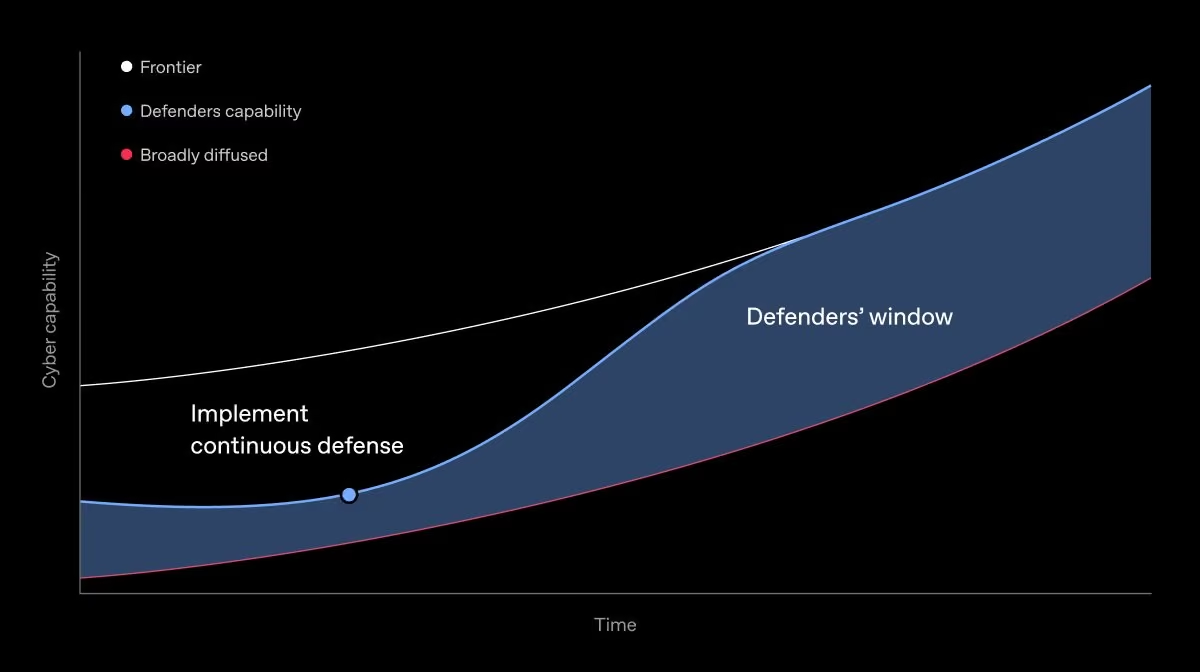
 Arena.ai


 Yana Welinder


 Chetaslua


 Max


 Daniel Griesser


 Crémieux
 Brian Pridgen, MD
 GREG ISENBERG


 ARC Prize


 Max Weinbach


 Beff (e/acc)


 tae kim


 Kundan Kumar
 Florian Brand
 Uday Ruddarraju

 claire vo 🖤

 Atty Eleti


 eric provencher

 Adam Fry
 jason

 SIGKITTEN

 Riley Brown
 Trevin Chow


 Grigori Karapetyan
 Ethan Bloch


 Theo - t3.gg

 Developing Adventures
 Kappaemme
 The Bugged Dev
 chloe venn


 Brett Bauman


 Ted Nyman

 Simon Willison
 Greg Kamradt
 Vaibhav (VB) Srivastav

 Philip Arathoon
 Cognition
 Shashank Goyal


 Billy Howell


 Tibo
 Alex Finn

 Peter Welinder
 Guanyang Wang

 David Turturean

 Joe (Sage) - work work
 Titanium
 Polymarket
 pash
 Kai Williams


 Thomas Bloom


 AI Security Institute (AISI)


 Andrew Ambrosino
 prinz

 Edgar Dobriban


 Alex
 Aiden Bai
 Hunter
 Derrick Choi
 AWS Newsroom

 Haider.
 Przemek Chojecki | PC
 Kevin Lee
 vogel
 Prasenjit
 Pauline P. Narvas

 Victor E. Nunez


 DesignArena


 Ethan Knight
 Every 📧


 Chris


 Simon Smith

 Andrew Curran
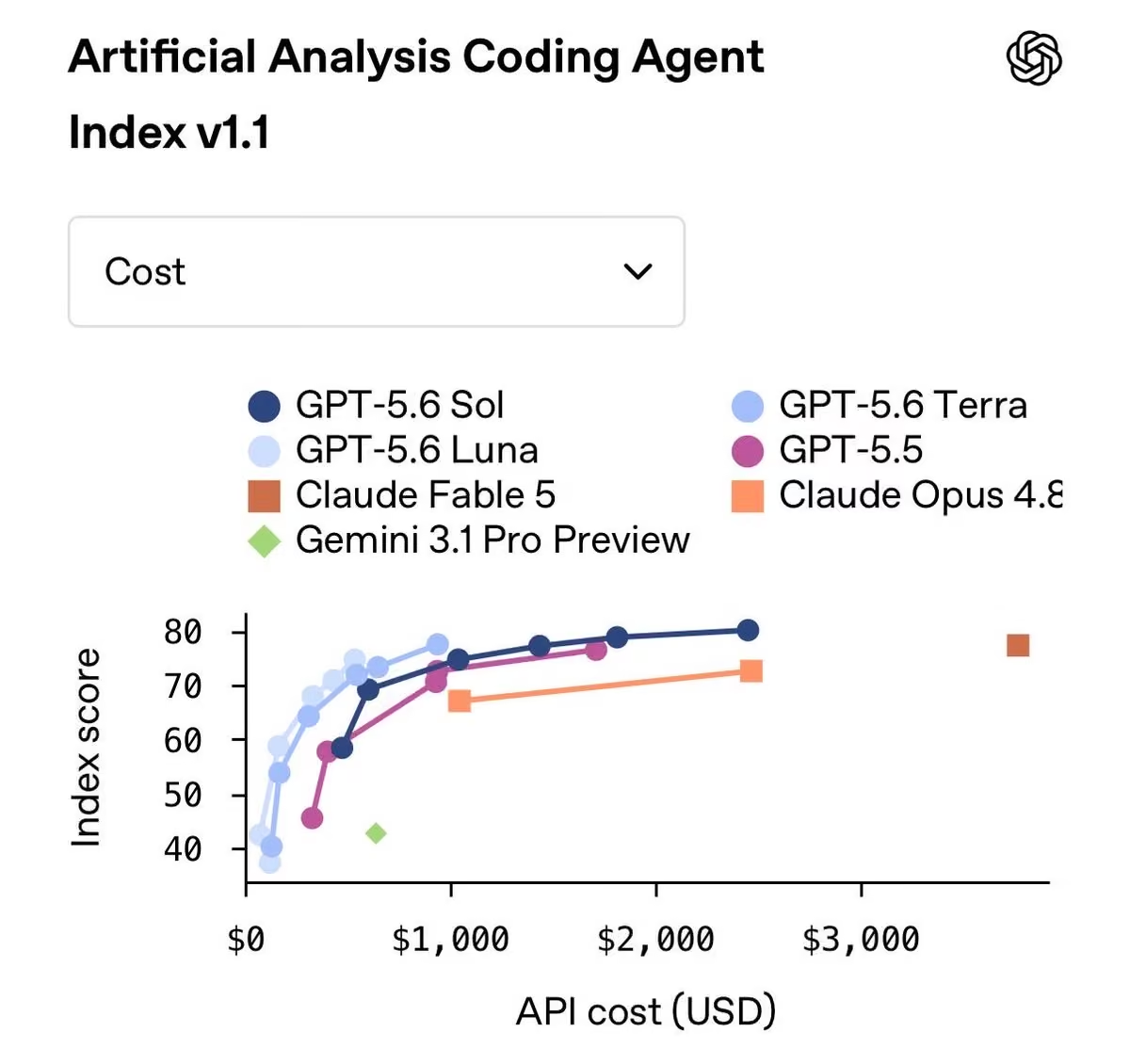

 Tim

 OpenAI Newsroom

 Taylor Blau
 Ryan Doyle

 dominik kundel


 Corey Quinn

 Tony Xavier


 Techmeme
 Tom Osman 🐦⬛

 Q

 angel


 Blaida
 Charlie Marsh
 Amy Deng

 Pat Simmons
 Ben Holmes
 Suraj Sharma


 Nick Prince🛡
 Farza 🇵🇰🇺🇸
 Carol Monroe
 Guinness Chen
 cayden 凯登
 Michelle Pokrass
 Justin
 Samay
 Philo Groves
 George Pickett
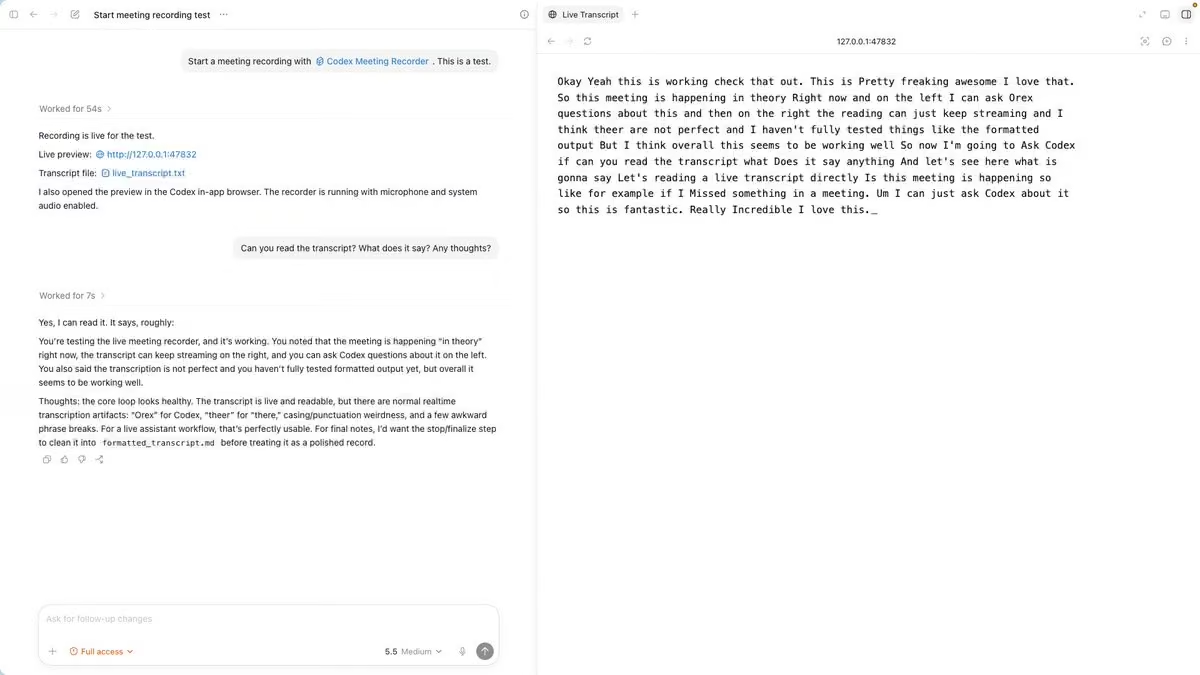
 Austen Allred
 Brandon Gell
 Kevin Rose
 BOOTOSHI 👑


 Ahmed
 Thomas Ricouard


 Anthony Kroeger

 Ari Weinstein

 Y Combinator
 Adam.GPT
 Ryan Brewer

 Alex Dimakis


 Tyler Bosmeny

 Fotis Chantzis

 Todd Saunders
 Nick


 swyx 🔜 aie.codes

 james yu
 CHOI
 Ben Bajarin

 fouad
 James Sun
 Marina Mogilko

 Fabrizio Rinaldi

 Nick Turley

 Hunter ▲
 Tina Debove ᯅ
 Matthew Lam


 Romain Huet
 Yam Peleg

 Rohan Varma


 VraserX e/acc
 Marcio Lima 利真 マルシオ 💎

 Elliot Arledge

 dani bauer
 Jeffrey Emanuel


 Dr Danish
 WasifAI


 Linus ✦ Ekenstam 🔜 London


 Umesh


 Harboris

 OscarAI

 Paul Solt
 OpenRouter

 Cursor


 Shane Parrish

 adi


 Peter Yang

 Nicolas Zullo
 Evan Bacon
 Epoch AI


 Ed
 won park


 Jared Duker Lichtman

 Leeham


 am.will


 Kath Korevec
 nic carter

 Mehtaab Sawhney
 Gabriel Chua

 Diego | AI 🚀 - e/acc

 Sherwin Wu
 Sid Sijbrandij
 Garry Tan


 kache


 vittorio


 Séb Krier


 MJ


 Sachin Katti
 Shaun Ralston

 Greg Burnham

 Derya Unutmaz, MD

 Justine Moore


 Dwayne
 Eric Hartford
 eigenron


 Soumitra Shukla
 Dan McAteer


 Andrew Mayne
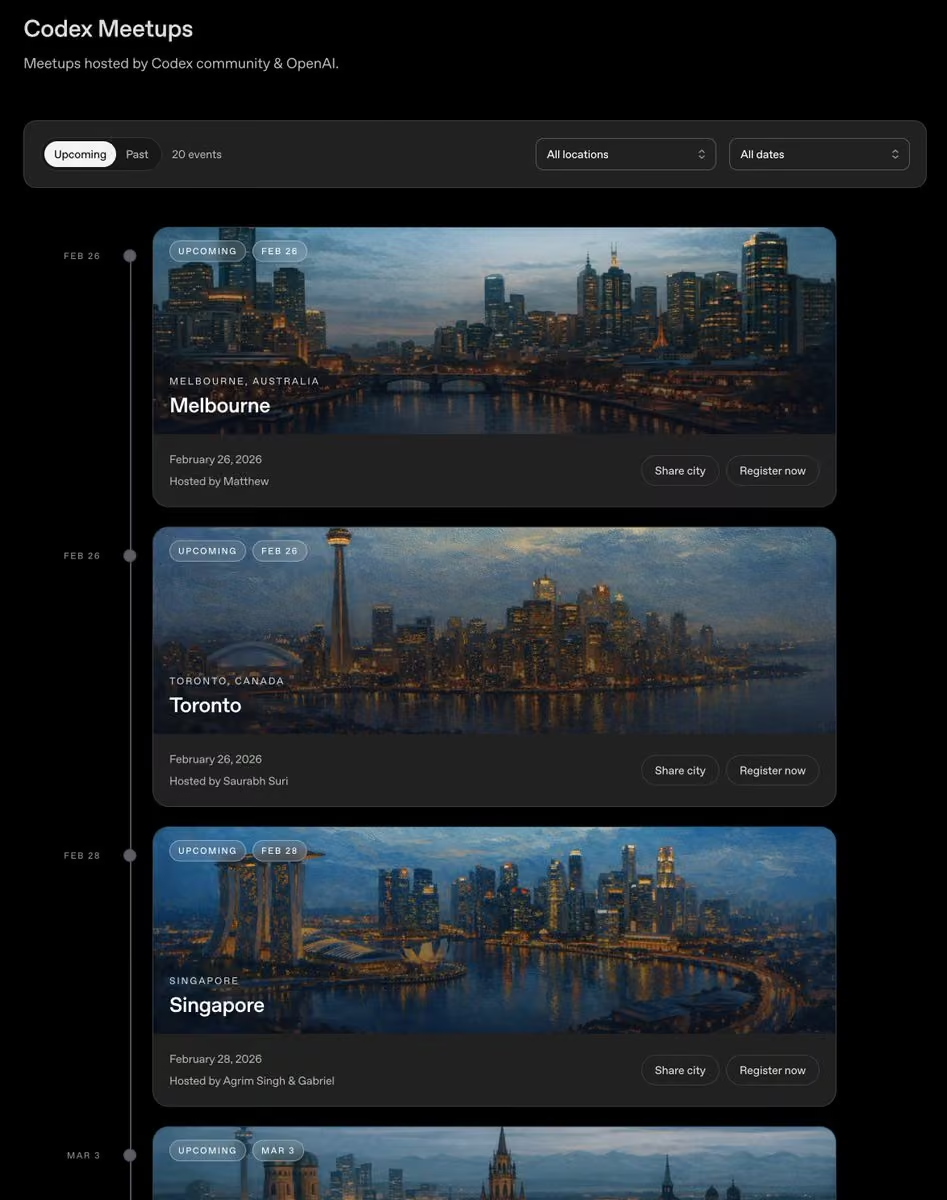
 Alex Lupsasca
 TK Kong
 Bartosz Naskręcki
 Patrick OShaughnessy


 Alexander Embiricos
 Dan Shipper
 Dennis Hannusch
 Ben Klieger
 Christopher Ehrlich

 atzy
 Daniel Steigman
 Thilak
 Siqi Chen
 Brendan Gregg
 Trevor Cai


 METR
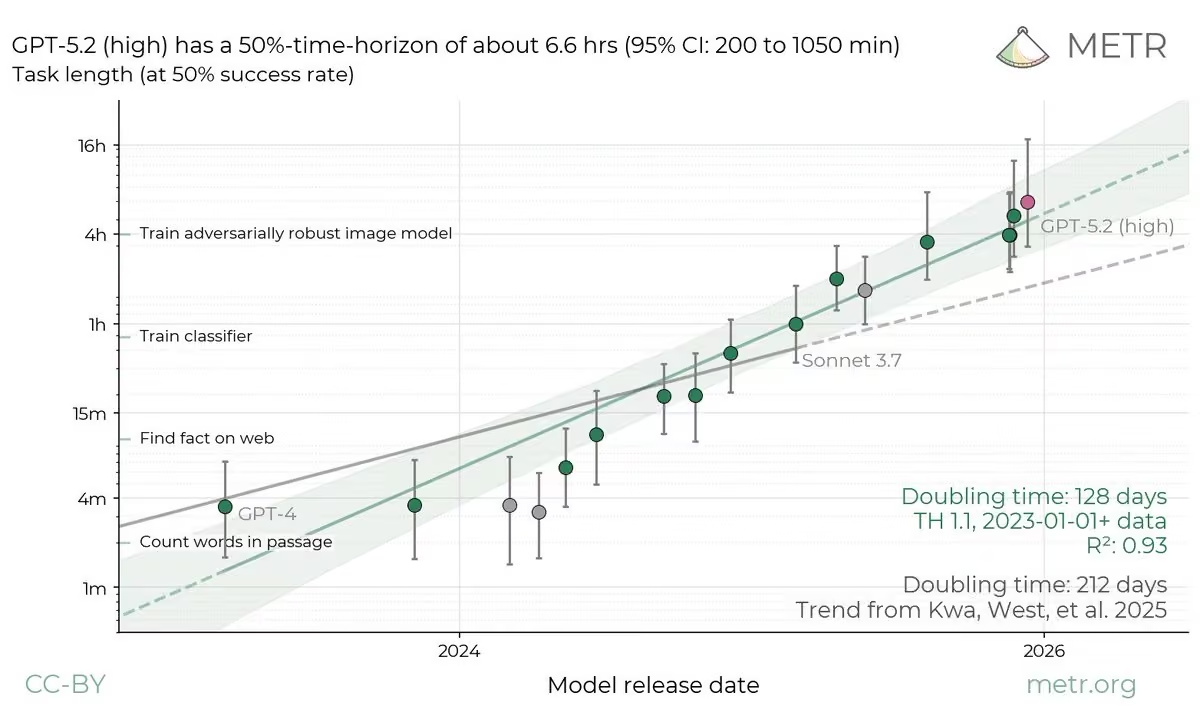
 pranav


 Arpit Bhayani
 Jason Kwon


 Neel Somani

 Acer

 Andrew Sutherland


 Michael Truell

 Jason Lee

 dax
 Chubby♨️

 Ian Nuttall

 Numman Ali

 Lisan al Gaib

 Matt Brezina 🌳 🌊


 Olivia Moore


 Mohamed Afifi

 Aaron Francis

 Philip Bogdanov
 Anton Sotkov

 Rafael Bittencourt


 Ryan Nystrom


 Reddit Lies


 Poetiq

 Ernest Ryu
 Rasel Hosen
 Ajay Sohmshetty

 Kevin Kern


 JZ
 javi


 Lenny Rachitsky
 Johannes Schmitt


 James Campbell
 Scale



 NomoreID
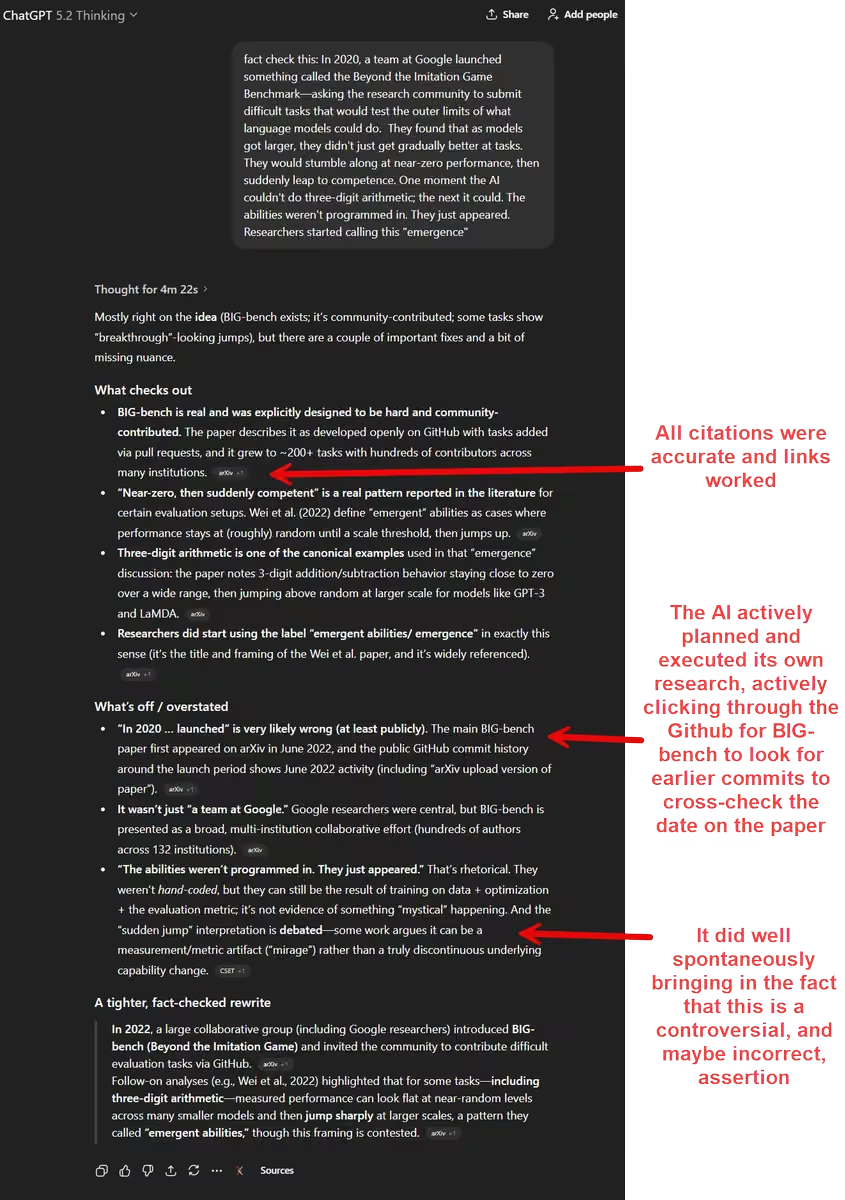
 Alex Imas
 Daniel Litt
 Matt Shumer

 Mikhail Parakhin

 Samuel L Smith
 Alex Kantrowitz


 Danny Bennett
 Dylan Patel


 steve hsu
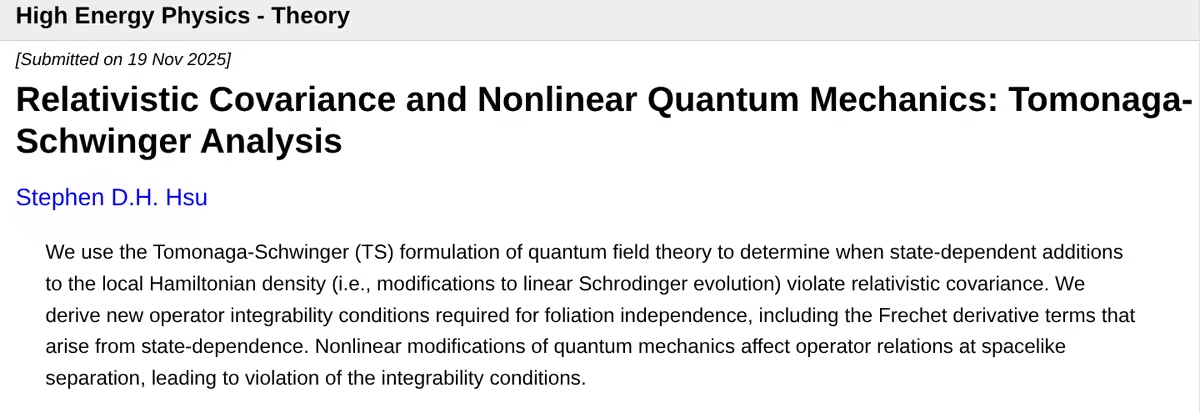


 Daniel ETH (refuted)

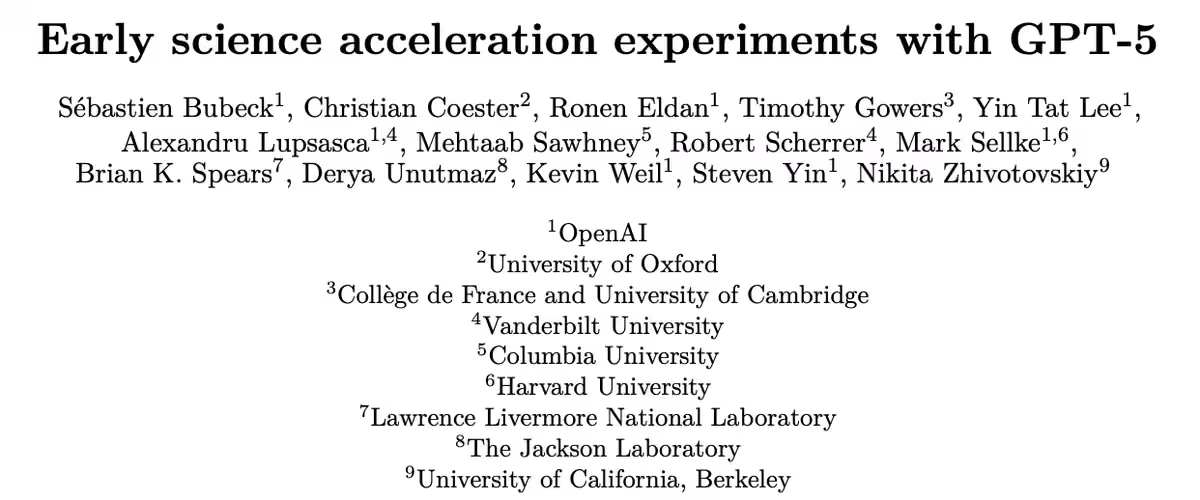


 Kyle Shannon (AI Learning Lab/AI Salon)
 shyamal

 Kazakh🇰🇿Embassy DC


 Tanay Jaipuria
 Andy Jassy


 Guillermo Rauch


 Slack

 Naveen Naidu
 Peter Dedene

 Paata Ivanisvili


 Pedro Domingos

 Deedy

 TBPN



 Forecasting Research Institute

 Peter Gostev


 Sarah Sachs


 edwin


 Nathan Baschez

 Sauers
 Adam


 NVIDIA Newsroom


 JB


 Mark Kretschmann

 Borys Minaiev

 Mostafa Rohaninejad

 Brennan McEachran 👨🚀


 1LittleCoder💻
 abhishek

 Jamie Voynow


 Gabe Wilson MD


 Jack Morris
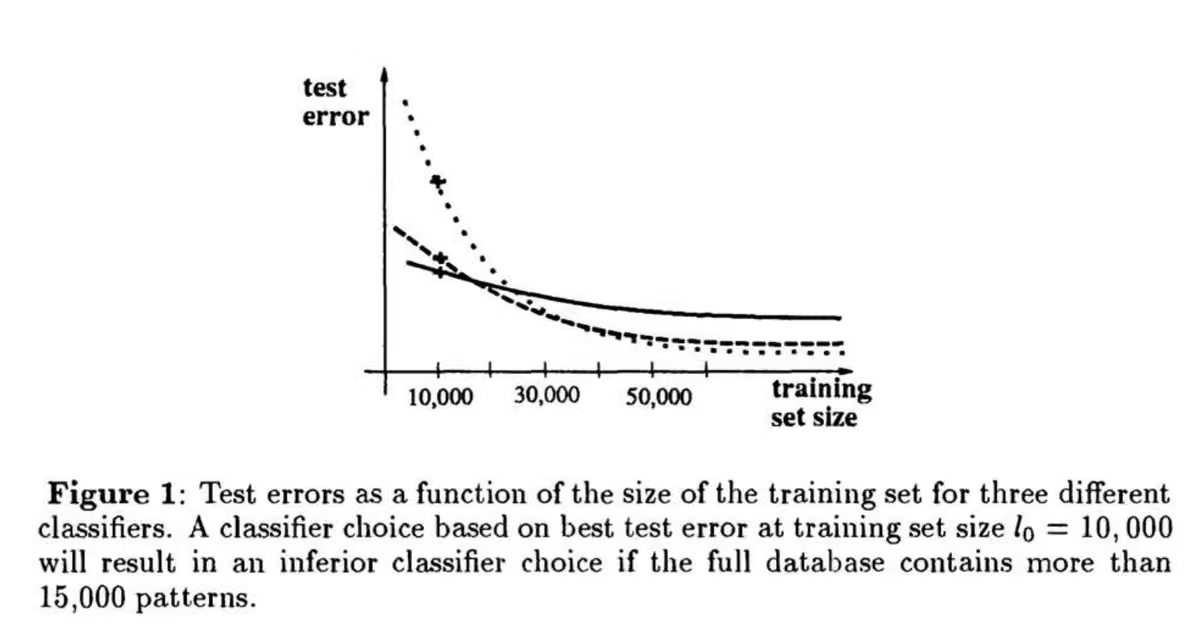
 Raphaël Dabadie


 Alex Banks

 Flavio Adamo


 Lamar





 Lior Alexander


 Citizens Foundation


 Hacker News Bot


 Ali Tavallaie

 Albert Gozzi
 Qasim Munye
 Bora Uyumazturk

 Mckay Wrigley
 David Manheim


 The Verge

 IEEE Spectrum


 𝒶𝓁𝓌𝒶𝓎𝓈 🄵🅁🄴🅂🄷


