Sebastian Deterding
@dingstweets

Dormant account, will delete soon. Find me on Bsky as codingconduct.cc or Mastodon at @codingconduct@hci.social.

Politicians, athletes, journalists, NGOs, companies... They all use corporation-owned social networks to communicate with us. Citizens shouldn't have to hand over their data to companies to read content published by public entities. Public Feeds changes that by making posts of popular accounts freely available. Read more.

Sebastian Deterding is a German scientist. He is currently Chair in Design Engineering and Professor of Design Engineering at Imperial College, London. Previously, he held the position of Chair Professor of Digital Creativity at the University of York. He established the gamification research network and co-authored "The Gameful World" (MIT Press, 2015), a book delving into the integration of gaming elements into various aspects of culture. More on Wikipedia
Deliberate designer & empirical philosopher of playful & engaging things. Professor @imperialdyson. Ex-associate @whatsthehubbub. EiC @GamesACM
Sebastian Deterding
@dingstweets
Come do your PhD with me at Imperial College in London! The LISS DTP funds 3.5y PhD tuition and stipend (+1y masters), deadline Jan 24:
liss-dtp.ac.uk/applying-to-liss/open-competition/
Sebastian Deterding
@dingstweets
I am interested in supervising PhDs on:
- understand player behaviour & wellbeing with data donations
- long-term engagement in behaviour change or games - computational modelling of competence, curiosity, and gambling motivation
- theories of change in HCI
- curiosity in games
Sebastian Deterding
@dingstweets
Dormant account, will delete soon. Find me on Bsky as codingconduct.cc or Mastodon at @codingconduct@hci.social.
Sebastian Deterding reposted
 Dyson School of Design Engineering
@ImperialDyson
🌊 Congratulations to @notpla! 🎉 Founded by our IDE alumni Pierre-Yves Paslier and Rodrigo García González, they have secured £20 million to bring their revolutionary seaweed-based packaging to the US market! 🌿
Read more about their journey: www.imperial.ac.uk/news/256537/notpla-storms-america-with…
 Sebastian Deterding
@dingstweets
Prescient? Outdated? You be the judge.
#2 in a loose series of liberating old talks from Slideshare:
Ruling the World: When Life Gets Gamed from lift 2012.
Or: How automating social rules creates a Kafkaesque everyday and invites gaming the system.
speakerdeck.com/codingconduct/ruling-the-world-when-life-…

Sebastian Deterding reposted
Sebastian Deterding
@dingstweets
Come join our growing School! @ImperialDyson has two full-time (Senior) Lecturer openings.
Great people, great students, great place, integrating engineering with behavioural research and creative practice to build better futures.
www.imperial.ac.uk/jobs/search-jobs/description/index.php…
Sebastian Deterding reposted
Dyson School of Design Engineering
@ImperialDyson
Join us at the DE10 Hackathon on September 21st to celebrate 10 years of innovation at the Dyson School of Design Engineering with a day of creativity, exciting challenges, great food, and amazing prizes!
🎟️ Spaces are limited, so secure your spot today: www.eventbrite.co.uk/e/de10-hackathon-tickets-1000240976687
 Sebastian Deterding
@dingstweets
Come join our growing School! @ImperialDyson has two full-time (Senior) Lecturer openings.
Great people, great students, great place, integrating engineering with behavioural research and creative practice to build better futures.
www.imperial.ac.uk/jobs/search-jobs/description/index.php…
Sebastian Deterding
@dingstweets
We recruit broadly, but selfishly, if you do computational design, computational creativity, behaviour change, computational cognitive modelling – do apply 😁!
Sebastian Deterding reposted
 Aaron Bastani
@AaronBastani
For the media class the apex of politics isn’t being a prosperous, socially just, well run country in the North Atlantic.
No, it’s cosplaying being a mid 20th century imperial power. They genuinely all want to be in the West Wing. For them - this is as good as it gets.
 Ben Bloch
@realBenBloch
PM Sir Keir Starmer pictured on the plane to Washington DC in a huddle with the travelling media pack.
Pics: @StefanRousseau /PA


 Sebastian Deterding
@dingstweets
It's out! 🎈 🎉
▶️ Ethical Games
the first special issue of @GamesACM:
dl.acm.org/toc/games/2024/2/2
13 excellent articles ranging from digital children's rights to toxicity, games education, microtransactions, responsible AI, and a roundtable on advancing ethics in the industry
 Sebastian Deterding
@dingstweets
The issue is based on the first Ethical Games Conference (www.youtube.com/playlist?list=PLetOKfueQ61Akj90wMKD8hiZ7C…), initiated by the Ethical Games Initiative (ethicalgames.org).
A massive thanks to @CeliaHodent and @francee49 for leading this great effort!
Sebastian Deterding
@dingstweets
You marketise education, you get market behaviour, vol. 130,455 out of one gajillion: make unis dependent on student fees at volume and students hard to get, unis gonna lower/fudge the entry bars.
www.theguardian.com/education/article/2024/sep/03/english…
Sebastian Deterding
@dingstweets
Previously on this show:
Cap student fees, unis charge cap.
Uncap intl fees, unis chase intl students.
Keep fee cap throughout 39% inflation, unis w/o intls cost-cut or go under.
& at every step: "We're shocked market actors behave like market actors, not public services!"
Sebastian Deterding reposted
 nolen
@itseieio
I've written a blog that writes this story up, and I've also created my first youtube video (!) to tell the story. I'm trying to figure out if youtube is for me so, uh, let me know.
Thanks so much for reading.
eieio.games/essays/the-secret-in-one-million-checkboxes/
youtu.be/OI4DbECnp8A
Sebastian Deterding reposted
 John B. Holbein
@JohnHolbein1
lol who did this

Sebastian Deterding reposted
 no context memes
@nocontextmemes
Sebastian Deterding
@dingstweets
Since Scribd enshittified Slideshare beyond repair, I decided to rescue and resurface some of my oldie-but-I-think-goodie decks to Speakerdeck.
#1 in a loose series: Un-Boring Meetings from Alibis for Interaction'16 – or why meetings bore unavoidably.
speakerdeck.com/codingconduct/un-boring-meetings
 Sebastian Deterding
@dingstweets
This is SUCH an incredible public resource! Massive congrats and thanks to @EddCoates for this mammoth work. Join me to buy them a coffee, or 10! buymeacoffee.com/gameuidatabase
Sebastian Deterding reposted
 Jason Kint
@jason_kint
Sorry, my "bam!" was cryptic.
Google has violated Section 2 of the Sherman Act by maintaining its monopoly in two product markets in the U.S....
It's 286 pages - be back with a thread shortly along with implications for the adtech antitrust trial starting in five weeks. /1

Sebastian Deterding reposted
 Georgios N. Yannakakis
@yannakakis
In 2018 @togelius and I published our first textbook on AI and Games. Six years after the first draft of the second edition of the book is out for you to read: gameaibook.org. Please send us your feedback and help us make this book an even better one! Details on how to👇
 Julian Togelius
@togelius
Six years ago, @yannakakis and I published a textbook on AI and Games. It has been used in universities across the world and become a standard reference for the field. Much has happened since, and it is about time for a second edition. Good news: we just put a draft online!
 Sebastian Deterding
@dingstweets
Completing your PhD in AI and looking for the next step?
Consider a 2 year AI in Science Fellowship at Imperial College.
Want to apply AI to design, engineering design, computational creativity? Working on novelty / diversity? Come talk to me!
www.imperial.ac.uk/ix-ai-in-science/apply/
Sebastian Deterding
@dingstweets
Come join my department @ImperialDyson as Co-Director of the new Centre for Sectoral Performance and professor/professor of practice in technology sectoral analysis. Genuinely great people, great place, no bs. www.jobs.ac.uk/job/DIW192/co-director-of-the-centre-for-s…
Sebastian Deterding
@dingstweets
Found flow. It was hidden in Budapest.


Sebastian Deterding reposted
 Kording Lab 🦖
@KordingLab
Dear (prof first name),
I have long been a fan of your research. Here is what your logically next paper would be (without saying it) and I would love to work on it and am ideally prepared for it. Can we talk?
Yours,
(Your first name)
Sebastian Deterding reposted
nolen
@itseieio
I made a website. it's called "one million checkboxes dot com". it has one million checkboxes on it.
checking a box checks it for everyone.
that's it. have fun!
Sebastian Deterding reposted
 Meredith Whittaker
@mer__edith
How, you ask, does this happen?
The answer is so boring. Some guy on the Yum! Brands board attends a rambling citation-free Davos dinner w AI execs, hears their ambling sci-fi marketing pitch, and writes a one-line Signal message to the taco CEO “need AI strategy asap”
Voila.
Sebastian Deterding reposted
 Institute for Fiscal Studies
@TheIFS
“At the heart of the last 14 years was a period of abysmal growth in productivity, and with it, living standards.” - @nridpathecon
The whole chapter is published on the IFS website as a working paper.
Read here: ifs.org.uk/publications/conservatives-and-economy-2010-24
[13/13]

Sebastian Deterding reposted
Institute for Fiscal Studies
@TheIFS
NEW: Ahead of the election, @PJtheEconomist, @nridpathecon and Carl Emmerson look back at the economy over the last 14 years in a chapter for @anthonyseldon and @Tom_AE_123’s forthcoming book The Conservative Effect, 2010-2024.
THREAD on the UK economy since 2010:
[1/13]
 Sebastian Deterding
@dingstweets
#chi2024 people: 😞 not to be there, but 🤩 that our @ImperialDyson school is showing strong with 8 papers including 2 honourable mentions, many by CHI first timers – please give them a warm welcome if you meet them!
www.imperial.ac.uk/news/253220/dyson-school-design-engine…
Sebastian Deterding
@dingstweets
The Tampere Spring Seminar in Game Studies is my favourite academic event, and this year, I had the honour to join @alt254 and @chouxsalad as commentator. You can find my keynote on "Meta-Game Studies" here:
speakerdeck.com/codingconduct/meta-game-studies
A 100,000 🙏 to @coegamecult & the participants
Sebastian Deterding reposted
Sebastian Deterding reposted
 Byline Times
@BylineTimes
🔴 ‘Panic, Misinformation and Hysteria About Freeports is Drowning Out the Real Concerns’
@chrisgreybrexit disentangles the myriad alarming claims being made about ‘special economic zones’ and freeports in order to focus on the real risks
bylinetimes.com/2024/04/04/freeports-special-economic-zon…
Sebastian Deterding reposted
 Nick Ballou (is mostly on a Tw*tter hiatus)
@nbballou
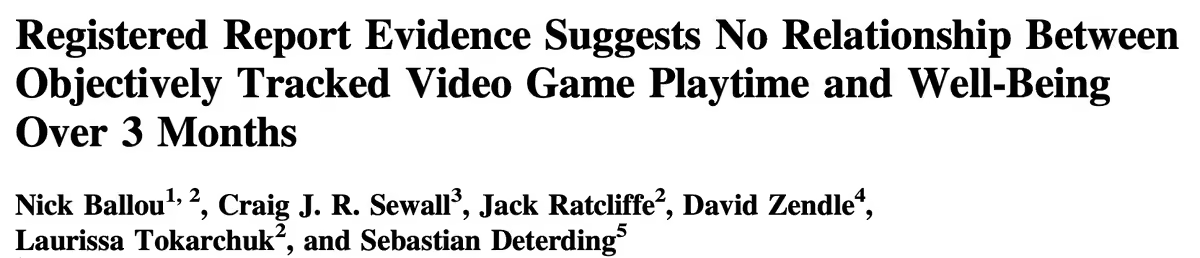
the study of mine I'm by far proudest of has finally (FINALLY) been published. 🙌
featuring:
- platform-wide scraped gaming data
- open science/registered report
- 6-waves longitudinal
- equivalence testing and interpretable null relationships
🔗doi.org/10.1037/tmb0000124
Sebastian Deterding reposted
 mike cook
@mtrc
I am very excited to share this new series I've written for RPS. In it we get into what generative AI is, why people are worried/excited about it, and what it means for games (and you). Part 1 is now up, all about what the heck AI is, and the language we use to discuss it.
 Rock Paper Shotgun
@rockpapershot
To understand the future of generative AI, we need better language to describe it. Read Part 1 of our new series on AI and video games by @mtrc:
www.rockpapershotgun.com/to-understand-the-future-of-gene…
 Sebastian Deterding
@dingstweets
Want to do a postdoc with me on behaviour change around public policy issues? Ping me to develop an application for a 1-year LISS ESRC Postdoctoral Fellowship, due May 15: liss-dtp.ac.uk/esrc-pdf/
Sebastian Deterding
@dingstweets
At @ImperialDyson, we are opening 4 (sic) new masters programmes:
* MSc Design Engineering
* MSc Design with Behaviour Science
* MRes in Design Engineering Research
* MSc CleanTech Innovation w/ Grantham Institute
Check them out at our open day, 21/2/24:
www.imperial.ac.uk/events/170243/postgraduate-masters-vir…
Sebastian Deterding
@dingstweets
Didn't make it to the Ethical Games Conference this year? You can now watch all presentation videos online thanks to the tireless work of @CeliaHodent: www.youtube.com/playlist?list=PLetOKfueQ61Akj90wMKD8hiZ7C…
Sebastian Deterding reposted
 Sam Devlin
@smdvln
We're hiring @MSFTResearch!
Our team in Cambridge, UK is seeking a Senior Researcher to join our Gaming Intelligence group.
For more details on the role: jobs.careers.microsoft.com/global/en/job/1682700/Senior-R…
And the team: www.microsoft.com/en-us/research/group/game-intelligence/…
 Sebastian Deterding
@dingstweets
Last day to submit your abstract to the Tampere Spring Seminar, going meta on game studies: springseminar.org/2024-call-for-papers/
Sebastian Deterding
@dingstweets
Given some of these are assessed by party affiliation, I wonder if another factor is the radicalisation of parties on the right taking on issues that are more negatively salient for women than men (abstract way of saying, GOP makes abortion their wedge issue).
 John Burn-Murdoch
@jburnmurdoch
NEW: an ideological divide is emerging between young men and women in many countries around the world.
I think this one of the most important social trends unfolding today, and provides the answer to several puzzles.

Sebastian Deterding reposted
Dyson School of Design Engineering
@ImperialDyson
A big congratulations to the entire @PolaronAI team and to @camsooper, Director of Polaron and Senior Lecturer at @ImperialDyson!
Your collaborative efforts are paving the way for advancements in AI-driven material design. #inventedatimperial @imperialcollege
 Imperial College London
@imperialcollege
A new spinout from @ImperialDyson will use AI to help manufacturers produce higher performing materials for products such as batteries and wind turbines.
Congratulations to the @PolaronAI team! 👏 #inventedatimperial
www.imperial.ac.uk/news/250657/ai-spinout-polaron-acceler…
Sebastian Deterding reposted
 Eiko Fried
@EikoFried
Many papers I'm handling as editor will have been rejected elsewhere. It is such a massive waste of time (mine, prior reviews, future reviews).
If you are submitting a previously rejected manuscript to me, feel free to add prior reviews and tell me how you addressed them.
Sebastian Deterding
@dingstweets
Excited to announce that I'll join the stellar @chouxsalad and @alt254 as commentator for next year's Tampere Games Research Lab Spring Seminar on the topic META. CFP closes 2 February 2024.
springseminar.org/2024-call-for-papers/
Sebastian Deterding reposted
 Leon Xiao
@LeonXiaoY
Don't forget to also read ‘A Manifesto for More Productive Psychological Games Research’ in @GamesACM by Dr @nbballou: doi.org/10.1145/3582929!
How can we do better?
Nick Ballou (is mostly on a Tw*tter hiatus)
@nbballou
Interrupting my twitter hiatus with news that I am #phdone! Were there ever a time to shamelessly self-promote, I suppose this is it.
Thesis goal: Clarify how games affect mental health, positively and negatively, with unified theory, rich behavior data, and transparent methods.
 Sebastian Deterding
@dingstweets
Congratulations to Dr @Carlotes247 for passing his viva with minor corrections! One more from the @iggiphd team 😊. Massive thanks to the external examiners @jonathanhook and Mick Grierson and @marcogillies as trusty co-supervisor!

Sebastian Deterding reposted
 inkle is EXPELLED!
@inkleStudios
A HIGHLAND SONG IS OUT NOW!
⭐️️ 10/10 - Sixth Axis
⭐️️ 9 - EDGE Magazine
⭐️️4/5 - The Guardian
Start your wild adventure today on:
🎮Switch: www.nintendo.com/us/store/products/a-highland-song-switch/
🎮Steam: store.steampowered.com/app/1240060/A_Highland_Song/
RT = ❤️
Sebastian Deterding
@dingstweets
The CFP of my favourite academic event is out: The Annual Tampere University Game Research Lab Spring Seminar will happen 7-8 May 2024, and for it's 20th(!) year, the theme is appropriately META.
springseminar.org/2024-call-for-papers/
Sebastian Deterding reposted
Sebastian Deterding reposted
Dyson School of Design Engineering
@ImperialDyson
🎶 Join @InstrumentsLab at @sciencemuseum on 19 October, 6:30 PM onwards, for a fantastic musical soirée as part of #musiclates! 🎵
🎤 Dive into the showcase of new digital and acoustic musical instruments on the 3rd floor of the museum.
www.sciencemuseum.org.uk/see-and-do/science-museum/music-…
Sebastian Deterding reposted
 Maria Konnikova
@mkonnikova
Mood.
Mark Twain via @laphamsquart

Sebastian Deterding reposted
 The Video Game Library 📚 ➡️ Over on Bluesky
@TheVGLibrary
In a world where men are monsters and monsters are men—who is the real monster?
Through a series of essays, this book delves into the #psychology of #thewitcher franchise.
Congrats to @DrKowert and this talented team of authors‼️
Find out more here:
👉 www.thevideogamelibrary.org/book/the-psychgeist-of-pop-cu…

Sebastian Deterding reposted
 Bez(os) Mastodon @Bez78829056@indieweb.social
@Bez78829056
HS2; an illustrative project that could be partially funded.
x.com/i/status/1709882051560710330
Sebastian Deterding reposted
 Finnish Center for AI 🦣 @fcai@mastodon.online
@FCAI_fi
Tomorrow Oct. 5, online & at @AaltoUniversity:
Creative Technologies seminar on AI for Games, with @perttu_h and @dingstweets, hosted by @creativeEndvs.
Tune in here: www.youtube.com/watch?v=n3TrhfrK0hs
Sebastian Deterding reposted
Finnish Center for AI 🦣 @fcai@mastodon.online
@FCAI_fi
Come to Finland for a PhD or postdoc! Research topics range from reinforcement learning to probabilistic methods, collaborative #ai & human modeling, and more #machinelearning !
Apply here❇️fcai.fi/we-are-hiring
cc @AaltoTechsperts @HIIT @VTTFinland @UnivHelsinkiCS @CSAalto
Sebastian Deterding reposted
 Ethan Mollick
@emollick
One thing I would add to the study we did where we found that GPT-4 boosted BCG consultant performance by a lot (40% higher quality, 20% faster work)👇
The secret isn't about a central solution, but empowering workers to learn & use AI to help themselves. www.oneusefulthing.org/p/centaurs-and-cyborgs-on-the-jagged
Sebastian Deterding reposted
Julian Togelius
@togelius
Academic publication venues that impose complex and invasive rules are just working to make themselves irrelevant. It's 2023, people can just post things online.
Sebastian Deterding reposted
 Juan Pablo Bermúdez
@jpberm
Concerns about AI #manipulation are everywhere. To tackle the problem, the draft EU #aiact prohibits harmful ‘subliminal techniques’ — but what are they??
Here we offer a definition that covers harmful manipulation without stifling innovation.
www.euractiv.com/section/artificial-intelligence/opinion/…
Sebastian Deterding reposted
 Professor Anders Drachen
@andersdrachen
I am looking for a research assistant or postdoc to work on a new data visualization website and help crunch enormous amounts of game data - remote work is possible - please DM me about this massively exciting opportunity!
Sebastian Deterding reposted
 Crémieux
@cremieuxrecueil
Remember that time economists used a gravity model to find ancient lost cities from the Bronze Age?
If you do or you don't, check out this thread🧵
 Sebastian Deterding
@dingstweets
📯 CFP: Ethical Games 🎓
Submission deadline exteeeeended to 👉 Sep 25👈
A 2day conference & special issue on the ethics of game design, development, and distribution
Submit a talk abstract or full paper for a special issue with @GamesACM
Full CFP: dl.acm.org/pb-assets/static_journal_pages/games/pdf/CfP-G…
Sebastian Deterding reposted
 Alex Dimakis
@AlexGDimakis
I was surprised by a talk Yejin Choi (an NLP expert) gave yesterday in Berkeley, on some surprising weaknesses of GPT4:
As many humans know, 237*757=179,409
but GPT4 said 179,289.
For the easy problem of multiplying two 3 digit numbers, they measured GPT4 accuracy being only 59% accuracy on 3 digit number multiplication. Only 4% on 4 digit number multiplication and zero on 5x5. Adding scratchpad helped GPT4 but only to 92% accuracy on multiplying two 3 digit numbers.
Even more surprisingly, finetuning GPT3 on 1.8m examples of 3 digit multiplication still only gives 55 percent test accuracy (in distribution).
¯\_(⊙︿⊙)_/¯
So whats going on? Multiplication is algorithmically very challenging (as are less known algorithmic problems).
The authors hypothesize that Transformers have a hard time because they learn linear patterns that they can memorize, maybe compose, but not generally reason with. The paper raises interesting theoretical and practical questions on understanding what Transformers can learn.
The paper
"Faith and Fate: Limits of Transformers on Compositionality" says:
"Our empirical findings suggest that Transformers
solve compositional tasks by reducing multi-step compositional reasoning into
linearized subgraph matching, without necessarily developing systematic problem solving skills"

Sebastian Deterding reposted
Sebastian Deterding
@dingstweets
🎓Funded PhD alert: Game design for sustainable energy use🎓
Come do a fully funded 3.5y PhD with me + @pierrepinson at @EnergyFuturesIC Imperial College London, fusing social game design + economic mechanisms to coordinate end user energy demand. www.imperial.ac.uk/grantham/education/phd-funding/
Sebastian Deterding reposted
 u m a m i
@u_m_a_m_i
How it feels to post on X instead of tweeting on Twitter
Sebastian Deterding reposted
 TheIndieManiac
@TheIndieManiac
Trying to game as an adult 🥲

Sebastian Deterding reposted
Leon Xiao
@LeonXiaoY
ACM Games: Research and Practice (@GamesACM)
Special Issue on Ethical Games
Organised by @CeliaHodent, @francee49, & @dingstweets.
Call for papers: dl.acm.org/pb-assets/static_journal_pages/games/pdf/CfP-G…
Deadline: 8 September 2023
Hit us up with your papers on #lootboxes, #monetisation, #regulation, etc.

Sebastian Deterding reposted
 P░pp░n B░rr
@pippinbarr
This just in, the Open Access version of my just-out-now book The Stuff Games Are Made Of is available now. Try before you buy? Try? Try-buy? Truy?
direct.mit.edu/books/oa-monograph/5615/The-Stuff-Games-Ar…
 Sebastian Deterding
@dingstweets
🎓Funded PhD alert: Game design for sustainable energy use🎓
Come do a fully funded 3.5y PhD with me + @pierrepinson at @EnergyFuturesIC Imperial College London, fusing social game design + economic mechanisms to coordinate end user energy demand. www.imperial.ac.uk/grantham/education/phd-funding/
Sebastian Deterding
@dingstweets
Check/fold open "Dyson School for Design Engineering" on the website for project details – and more cool projects by my colleagues!
Sebastian Deterding
@dingstweets
🎓Fellowship alert 🎓
Imperial College Research Fellowships: 4y, research only, good salary + career dev, apply by July 31.
We @ImperialDyson are particularly looking for co-designing technology & behaviour.
Happy to explain/sponsor: DM/@ for details 😃
www.imperial.ac.uk/research-and-innovation/research-offic…
Sebastian Deterding
@dingstweets
'Tis the time of #chi2024 paper writing again!
I made some slides for our PhD students on the evergreen "How to write a CHI paper" that I thought I'd share
YMMV, enjoy, with hat-tip to @acagamic and Lisa Anthony.
speakerdeck.com/codingconduct/how-to-write-a-good-chi-pap…
Sebastian Deterding reposted
 Hannes Cools 🟥 - @hannescools.bsky.social
@CoolsHannes
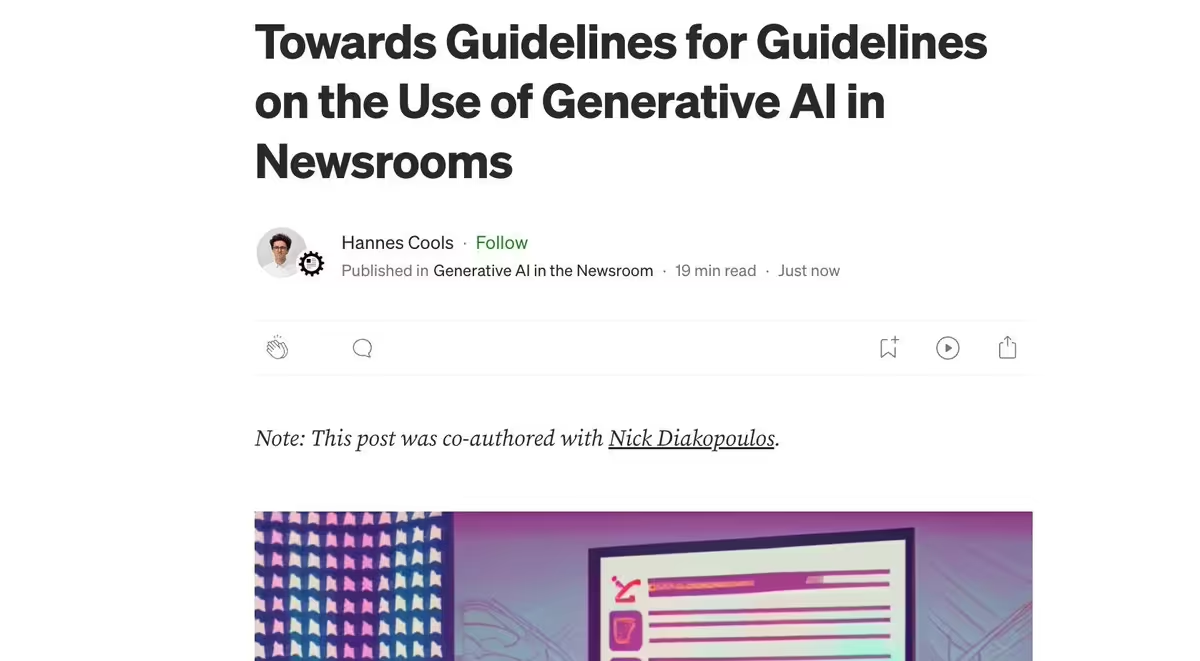
A few weeks in the making, @ndiakopoulos and I analyzed 21 newsroom guidelines for the use of generative AI. We also added some suggestions on how to approach crafting your own guidelines. A small 🧵
generative-ai-newsroom.com/towards-guidelines-for-guideli…
Sebastian Deterding reposted
 Diego Perez-Liebana
@diego_pliebana
Anyone interested in joining us at the @GameAI_QMUL?
We are recruiting for Lecturer/Senior Lecturer (Assistant/Associate Professor). We're a pretty vibrant group of ~40 people (faculty and PhD researchers)!
Job post: www.qmul.ac.uk/jobs/vacancies/items/8638.html
About us: gaigresearch.github.io
Sebastian Deterding reposted
Leon Xiao
@LeonXiaoY
Last week, we celebrated the launch of the @DCMS Video Games Research Framework (link: www.gov.uk/government/publications/video-games-research-f…) @UniOfYork, hosted by David Zendle & @JoanConcannon. 🎮🧑🔬🇬🇧
Great talks by @elepetrovs, @nbballou, @andersdrachen, @dingstweets, @uk_ie et al.
Exciting times ahead!


Sebastian Deterding reposted
 👩💻 Paige Bailey
@DynamicWebPaige
"Our studies revealed that when solving a coding task with Copilot, programmers
may spend a large fraction of total session time (34.3%) on just double-checking and editing suggestions, and spend *more than half* of the task time on Copilot related activities, together
indicating that introducing Copilot into an IDE can significantly change user behavior."
I adore these visualizations! 🤩✨


 Sebastian Deterding
@dingstweets
📯 CFP: Ethical Games, submission deadline Sep 8 📯
Submit to our online conference + journal special issue with @GamesACM.
We accept abstract-based presentation + full paper submissions on the ethics of game design and development.
Full details: ethicalgamesconference.org/how-to-submit
Sebastian Deterding reposted
 Mark Reed
@profmarkreed
Fascinating new paper based on interviews with Australian researchers trying to achieve impact reveals two types of strategy people typically use. Which type of approach do you take?

Sebastian Deterding reposted
 Martin Pichlmair
@martinpi
It already delivers.
 Sebastian Deterding
@dingstweets
Great #chi2023 best paper talk by @kaeru on contestable public AI. doi.org/10.1145/3544548.3580984
Odd and wonderful to connect in a different life domain.
 Sebastian Deterding
@dingstweets
Prompted by @emax, here's a draft for the #chi2024 bingo. #chi2023
 Sebastian Deterding
@dingstweets
👇Working on 🎮&😇? Do submit! Abstracts and full papers, conference free to attend, submissions open May, deadline Sep 8, full papers go into @GamesACM special issue.
 Ethical Games
@EthicalGamesOrg
Announcing the first Ethical Games Conference happening online on January 11-12, 2024 in partnership with ACM Games!
We invite presentations and flash talks as well as full paper submissions. Submission will start early May, please spread the word!
ethicalgamesconference.org
 Sebastian Deterding
@dingstweets
#chi2023 time to “generative AI” in opening remarks: 6 words.
Sebastian Deterding
@dingstweets
Congratulations to newly-minted, well-deserved new Dr Miller!
 Dr. (!!!) Josh Aaron Miller
@joshaaronmiller
🥳🎉🎉🎉I've passed my defense! Now (unofficially) Dr. Tutorial Guy. Before and after PhD pics below to show proof that doctoral research gives you long flowing hair.


Sebastian Deterding reposted
 dan bennett
@__stillPoint
It's #chi2023 next week. I'll be presenting our paper on Autonomy & Agency in HCI.
The talk will be a bit different from the vid, so here's the vid
www.youtube.com/watch?v=zscD9cH58S8
Sebastian Deterding
@dingstweets
Also, if you are a UK student wanting to do a funded PhD on design, curiosity, novelty optimization in design engineering with me, do get in touch 👋 .
Sebastian Deterding
@dingstweets
#chi2023 attendees: If you work on games and playable media, consider publishing with our shiny new @GamesACM.
Interested? Questions? I'll be in Hamburg April 22-29, so just find me there, or @/DM me here to schedule a chat!
Sebastian Deterding
@dingstweets
Are you a UK student looking to do a fully funded PhD in games? Come apply to the swell @iggiphd programme by May 15: www.iggi-phd.org/apply. AMA/happy to co-supervise 😊.
Sebastian Deterding reposted
 tomstafford@mastodon.online
@tomstafford
RT @chrisdc77@scicomm.xyz
Following Elsevier's decision to raise the article processing charge for NeuroImage to $3,450, all editors (inc. chief editors) from NeuroImage and NeuroImage:Reports have resigned, effective immediately.
I am joining this action and have also (1/2)
Sebastian Deterding reposted
no context memes
@nocontextmemes
Jesus taking a selfie at the Last Supper


Sebastian Deterding reposted
 Joanna J Bryson
@j2bryson
It's true. Go to sub stack's profile, it's just a few down.
via @1Br0wn
Twitter also bought and deleted the platform where Jack's blog said that the biggest mistake he made was building tools to control users' timelines rather than for users' to control their own.
 John A. Daly
@JohnDalyBooks
Damn. Elon's not letting anyone like or retweet this.

Sebastian Deterding reposted
Joanna J Bryson
@j2bryson
Since my first encounters with people attributing moral agency to robots, I've thought #aiethics was a feminist (& civil-rights) issue. IMO we are harmed by even sincere belief that one could be empowered to be in charge of the agency of (& even own) a partner they love. 1/2
Sebastian Deterding reposted
 Alena Denisova
@SevenFridays
I'm looking for a PhD student to join us at @UoY_CS in October 2023 on a 3.5 year, funded, industry-supported (co-supervised by @seed) project investigating the effect(s) of contextual #sound perception on #metaverse #userexperience.
More details here: t.ly/rqh9
Sebastian Deterding
@dingstweets
The lawsuit is indeed already ongoing. stablediffusionlitigation.com I recommend @alexjc’s tweets on how their reconstruction of learn/generate = copy is fraught.
 Gergely Orosz
@GergelyOrosz
A CTO at a scaleup told me they are evaluating GitHub Copilot, but they got cold feet, when looking at legal implications.
E.g. can they be sued if code Copilot produces is copyrighted? What code has Copilot been trained on?
Are there answers to these concerns already?
Sebastian Deterding
@dingstweets
Triggered by @tomstafford's most recent lovely newsletter: Are there good ethnomethodology/conversation analyses on how people interacting with LLMs accomplish "intelligent responses"? If not, there's a CSCW best paper in waiting if there ever was one. tomstafford.substack.com/p/on-the-over-and-under-detectio…
Sebastian Deterding
@dingstweets
After years in the making, we are launching the first issue of @GamesACM today at GDC! To celebrate the occasion, all articles are freely available now at dl.acm.org/toc/games/2023/1/1
 Sebastian Deterding
@dingstweets
A big massive THANK YOU to our adventurous first authors, 70+ associate editors, the editorial leadership team @farpeek @DrKowert @thebradking, @TheOfficialACM and @etcpress for making this possible.
Sebastian Deterding
@dingstweets
And a word of appreciation to YOU 👋: Think academic and industry publishing on games is broken? Write interesting stuff on games and playable media that falls between the cracks? Have a crazy idea what we should REALLY do? We want to hear more, so get in touch with @GamesACM :).
Sebastian Deterding reposted
 ACM Games: Research and Practice
@GamesACM
Please join us at @Official_GDC as we launch your new @TheOfficialACM Games: Research and Practice journal and magazine for all video game developers and researchers games.acm.org. Sign-up for 20th March at 6pm here www.eventbrite.com/e/games-research-and-practice-gdc-new-…. Thx @Activision @etcpress
Sebastian Deterding reposted
 Kenny Mitchell
@farpeek
Added tentative agenda with a whirlwind of terrific lighting talk speakers for your new ACM Games: Research and Practice journal and magazine within the above Eventbrite launch invite details above. See you there! And thanks again to our co-EiC @dingstweets and our supporters!
Sebastian Deterding reposted
 Michael John Saiger
@MJSaiger
My first study is published! This was a huge endeavor to get across the finishing line but I've practiced writing, reviewing and copyediting.
Thanks to @dingstweets and Lina Gega for the editing and support
🧵Thread below
#academictwitter #academia #phd #research
 JMIR Publications
@jmirpub
JMIR Serious Games: Children and Young People’s Involvement in Designing Applied #games: Scoping Review games.jmir.org/2023/1/e42680/

Sebastian Deterding reposted
Sebastian Deterding reposted
 Compound248 💰
@compound248
I literally was the Head of Strategy at Twitter.
Not even kidding.
Anyone who followed me last year knows this is true - @elonmusk can verify.
Sebastian Deterding reposted
Finnish Center for AI 🦣 @fcai@mastodon.online
@FCAI_fi
Creative Technologies seminar TODAY, 14:00 EET.
Watch online: studios.aalto.fi/creative-technologies/
* Capturing, managing, and developing ideas in creative work
* Art as technologically mediated experience: entanglements of contemporary music creation and technology
@oulasvirta @CSAalto @HIIT
Sebastian Deterding reposted
Sebastian Deterding
@dingstweets
📯Call for Participation📯
Submit to our #chi2023 workshop "Moral Agents for Sustainable Transitions", deadline 23/02/2023 AOE.
We explore systems making moral arguments and demands with/to users as a new technology relation and form of behaviour change.
www.moralagents.org
 Sebastian Deterding
@dingstweets
The transport secretary promising that privatisation ails shall be cured by more of it, generating “competition, innovation, and revenue growth” — as opposed to, oh, I don’t know, service quality, reliability, and affordability? When did innovation become a gov end in itself?
 Sebastian Deterding
@dingstweets
And when and why did we accept that public services need to be “financially sustainable”, as opposed to good public value for money? What’s next, revenue-neutral cancer treatments? #grumblemumble
Sebastian Deterding reposted
 HARA ᯓ★
@haranikala
exist slowly, live softly

Sebastian Deterding reposted
 Alex J. Champandard 🍃
@alexjc
That's a wrap folks, show's over! Diffusion models as *lossy* databases that can regenerate their training data:
"Diffusion models are less private than prior generative models [...] mitigating these vulnerabilities may require new advances in privacy-preserving training."
 Eric Wallace
@Eric_Wallace_
Models such as Stable Diffusion are trained on copyrighted, trademarked, private, and sensitive images.
Yet, our new paper shows that diffusion models memorize images from their training data and emit them at generation time.
Paper: arxiv.org/abs/2301.13188
👇[1/9]

Sebastian Deterding reposted
Ethan Mollick
@emollick
The new AI policy in my syllabus.
More on how I am integrating AI into my classes: oneusefulthing.substack.com/p/all-my-classes-suddenly-bec…
 Sebastian Deterding
@dingstweets
Unlocked that new level of academic seniority where any publication happens despite not because of my day job.
Sebastian Deterding
@dingstweets
Okay puzzle platformer level design.
 Boston Dynamics
@BostonDynamics
It’s time for Atlas to pick up a new set of skills and get hands on.
Sebastian Deterding
@dingstweets
A good, sobering read.
 The Irish Times
@IrishTimes
Is life in the UK really as bad as the numbers suggest? Yes, it is www.irishtimes.com/business/economy/2023/01/21/is-life-in…
Sebastian Deterding reposted
 Randall Munroe
@xkcd
Methodology Trial xkcd.com/2726
 Sebastian Deterding
@dingstweets
Heavy “Black Mirror was not intended as a commonplace book for startup ideas” vibes.
Ethan Mollick
@emollick
In a month full of unsettling glimpses of the future of AI, typical.me stands out.
It lets you question AI models of real people (trained on Twitter feeds). It is flawed: answers are stylistically correct, but full of BS
Yet it suggests a future with AI alter-egos.

Sebastian Deterding reposted
 Prof Sylvia Pan 潘雪妮
@panxueni
Guys I don’t know what this is but the world has to see this video
Sebastian Deterding reposted
 Pierre-Yves Oudeyer
@pyoudeyer
New conference on Curiosity, Creativity and Complexity in humans and machines !
With very interdisciplinary panel of speakers in neuroscience, psychology, economics, AI, ...
👉 May 23-25th, NY, information to submit abstracts or just attend: zuckermaninstitute.columbia.edu/ccc-event


Sebastian Deterding reposted
Sebastian Deterding
@dingstweets
📜CFP Alert🚨
Self-Determination Theory in HCI
Help us move the debate about SDT in HCI forward by submitting to this special issue with "Interacting with Computers".
Deadline for abstracts: Jan 20 AOE, full papers due June 23.
All details:
academic.oup.com/iwc/pages/call-for-papers
Sebastian Deterding reposted
 Antonios Liapis
@SentientDesigns
If you are excited about Game AI and would like to work with @yannakakis @Amidos2006 @KostisMakan and me in Malta as a PhD student, Post-Doc, or Developer, check our available funded positions with application deadline Tuesday, 31st January 2023.
Call: www.um.edu.mt/__data/assets/pdf_file/0004/507496/FTorPTRS…
Georgios N. Yannakakis
@yannakakis
Come and work with us! If you wish to join our AI research group at the @InDigitalGames we have a number of research posts (RAs, PhDs, Postdocs) open currently! Now, why AI and Games in Malta? Here is my take: www.xjenza.org/ISSUES/8/07.pdf
Apply by Jan 31👇
www.um.edu.mt/__data/assets/pdf_file/0004/507496/FTorPTRS…

Sebastian Deterding reposted
 Naomi Wu 机械妖姬
@RealSexyCyborg
Ok here's a technical breakdown of why the “@Dyson Zone™ Air-Purifying Headphones” aka. the Snot Cannon aka. the Wearable SuperSpreader Event is such a staggeringly bad idea and a significant danger to public health if it is allowed to be sold.
🧵

Sebastian Deterding reposted
 ICCC'26
@iccc_conf
Call for full papers! More info: computationalcreativity.net/iccc23/full-papers/ #iccc23 #computationalcreativity #creativecoding #creativeai #artificialintelligence #computerscience #creativitymatters #creativity
 Sebastian Deterding
@dingstweets
Time to define the Creative AI Effect Corollary: Creativity is whatever AI cannot generate yet.*
*in common public perception.
Sebastian Deterding
@dingstweets
** Because whatever you claim “creative AI” (= 2022 generative ML media explosion) cannot do, has almost certainly been done 5-10 years ago by some group working in computational creativity unattended by mainstream AI research & media & VCs.
Sebastian Deterding reposted
 Gorm Lai, Gamedev Veteran
@gormlai
Our state of the art review article "On Mixed-Initiative Content Creation for Video Games" is now published in IEEE Transactions on Games 14(4), Dec 2022. ieeexplore.ieee.org/document/9987710. #gameai #openaccess #mixedinitiative #generativeai #proceduralcontentgeneration #pcg
Sebastian Deterding
@dingstweets
📯Call for Participation📯
Submit to our #chi2023 workshop "Moral Agents for Sustainable Transitions", deadline 23/02/2023 AOE.
We explore systems making moral arguments and demands with/to users as a new technology relation and form of behaviour change.
www.moralagents.org
Sebastian Deterding
@dingstweets
We welcome position papers and creative works, including speculative design.
Keynotes by @ppverbeek and Marc Hassenzahl.
We'll have fun with design fictions, and alternative in-person and online days depending on your needs.
Sebastian Deterding
@dingstweets
Last not least, a great organising team: @LaschkeMatthias, @amybphd, @GekeLudden, @ProfTriviality, Lenne Kuijer, @Carilall, & @imaginari_es.
Sebastian Deterding
@dingstweets
It is a testament to this country’s state of affairs that having arrived with a train at the destined location roughly in time with only a few heaters and toilets broken on the trip feels like a noteworthy achievement.
Sebastian Deterding
@dingstweets
The UK is a regressing economy with funny Christmas jumpers and even funnier pretensions of being a global innovation or whatever superpower. Sounds about right.
Sebastian Deterding
@dingstweets
It’s sort of Richard Nelson’s The Moon and the Ghetto all over again.
Sebastian Deterding reposted
mike cook
@mtrc
hi, i'm a web3 entrepreneur and generative ai specialist who has been thinking about the future of creativity for three entire days - here's why, twelve months from now, all human culture will be made by a single macbook pro sitting in an office in tulsa, oklahoma. 🧵
Sebastian Deterding
@dingstweets
On this 10th day, December 2022, at ten before two, in the self-checkout section of the large Sainsbury’s at Foss Bank York, I ascended into whamhalla. #whamageddon
Sebastian Deterding
@dingstweets
As an educator, I absolutely identify with this feeling. As a researcher, I think openly inquiring whether and when the work of your own discipline is de facto fruitless *is* “asking the tough questions.”
 luisreyes
@luisreyes
For me, still, we have absolutely failed these students as teachers and mentors if they truly believe that *in principle* becoming a social scientist is, politically and even intellectually, a fruitless endeavour.
Sebastian Deterding
@dingstweets
The basic assertion implied by any move in any disciplinary discourse is that having this discourse is worthwhile.
Sebastian Deterding
@dingstweets
(This is NOT about STS/sociology, this is a general point about disciplines.)
Sebastian Deterding reposted
 EigenGender 🔸
@EigenGender
Big problem with "any task a LLM can do is not worth teaching" is that LLMs are not currently capable of producing great writing on meaningful topics. But to develop those writing skills, students have to write a bunch of bad freshman-composition essays on derivative subjects
Sebastian Deterding
@dingstweets
CFP: Self-Determination Theory in HCI, a Special Issue with @iwcinteract @OxUniPress
academic.oup.com/iwc/pages/call-for-papers
We welcome empirical, theoretical, methodological, critical submissions advancing SDT in HCI research. Abstracts due January 23, full papers June 22.
Do submit! 😀
Sebastian Deterding
@dingstweets
Our editorial board includes @elisamekler @Rafael_A_Calvo @nbballou @selentrky and @ghavi.
Sebastian Deterding
@dingstweets
What if Creative Commons bakes a URI mint into its licensing tools - license URL + unique URI slug. To proper attribute, include the full link.
Sebastian Deterding reposted
 Robin D. Laws
@RobinDLaws
 Sonia Van Meter
@bourbonface
This is what an ACTUAL war on Christmas looks like.

Sebastian Deterding reposted
 Spry Fox 🦊 Spirit Crossing launches Nov 16!
@spryfox
Do you consider yourself a Senior Gameplay Engineer? Do you love making polished and delightful experiences for players? If so, we humbly submit that you might really enjoy working with us. 🥰
spryfox.com/2022/11/18/were-hiring-senior-gameplay-engine…
Sebastian Deterding
@dingstweets
Calendar of a light non-teaching week. I definitely have arrived in senior management.
 Sebastian Deterding
@dingstweets
Surefire email opening to send any researcher's heart racing.

Sebastian Deterding reposted
Julian Togelius
@togelius
One way to think of it is that rationalism/EA/x-risk is just the local religion of Silicon Valley. It has many characteristics of a religion, with rules for behavior (for the really observant), fear of the apocalypse, abstruse deities (AGI) etc.
Sebastian Deterding reposted
 iGGi PhD
@iggiphd
⚠️!!! APPLICATION WINDOW NOW OPEN !!!⚠️
Thinking about doing a PhD in Games? Come join us @iggiphd!
▶️ 4-year fully funded PhD Programme
>> based at @QMEECS or @UoY_CS, Sep ’23 start
>> *strict* application deadline 26 Jan '23 @ noon GMT
🔎more info👉 www.iggi-phd.org/apply

Sebastian Deterding reposted
Eiko Fried
@EikoFried
Lots of discussions around the new #serotonin #depression paper published yesterday in Biological Psychiatry. Given that big news outlets like the Guardian already covered the piece, I wrote up the core issues I see with the main conclusions in the paper.
eiko-fried.com/clear-evidence-for-serotonin-hypothesis-of…
Sebastian Deterding
@dingstweets
Sebastian Deterding reposted
 John Bull
@garius
Right. As a heavy tweeter/content creator who is now maintaining BOTH a Twitter and Mastodon presence, here is a short guide to what I have set up, how to do it and lessons I've learned, for others.
TLDR: It's been WAY less hassle than I expected thanks to tips from followers /1
Sebastian Deterding
@dingstweets
Okay I usually try not to toot my own horn, but this is a lovely piece @TheOfficialACM did on me and our new journal @GamesACM, plus I got to plug larp, German board games, computational creativity, and cool colleagues@and their projects. 💜
 Association for Computing Machinery
@TheOfficialACM
What are the important trends in #digital #gaming?🎮
In the latest #peopleofacm profile, we interview @dingstweets, a Professor at @imperialdyson and Co EiC of the new publication "ACM Games: Research and Practice."
Read the full interview here: www.acm.org/articles/people-of-acm/2022/sebastian-deterding
Sebastian Deterding
@dingstweets
Come do a fully funded PhD at @imperialdyson with me!
I am looking for candidates working on
- Game-Inspired Community Design for Sustainability
- Designing for Curiosity
- Theories of Change in Behaviour Change
- Motivational Design broadly
Sebastian Deterding
@dingstweets
Please share widely!
Any questions, do ask here in the thread –– looking forward to hearing from you 😀😀😀.
Sebastian Deterding
@dingstweets
Also, have a look at my *great* colleagues' PhD projects: 🙂 www.imperial.ac.uk/design-engineering/opportunities/desig…
Sebastian Deterding
@dingstweets
I’d add: rapid monetisation means monetisable (artificial) scarcity.
Sebastian Deterding reposted
 Jon McKellan
@jon_ScreenBurn
I've been asking AI to generate Games Workshop / Warhammer miniatures of people I'm not fond of and the results do not disappoint.
Rishi Sunak

Sebastian Deterding reposted
Julian Togelius
@togelius
AI-generated text succeeds partly because we've learned to accept generic filler content. More or less every article has lots of fluff, and writing such stuff is even considered good writing style. That's why it's hard to differentiate human from machine writing.
Sebastian Deterding
@dingstweets
I think the best credit that I can give to my now School is that I want to take the degrees it is offering.
Sebastian Deterding
@dingstweets
There should be a name for the ratio of responses:likes when you ask a question on twitter, where likes presumably are bookmarks by people who are also interested in the answers (which is what I also do).
Sebastian Deterding
@dingstweets
Design research colleagues: What do you consider exemplary Research through Design PhD theses and/or postgraduate student-led research papers? I'd like to refresh and broaden the examples I can give my students. Thx! 🙂
#rtd #researchthroughdesign @RTD_Conference
Sebastian Deterding
@dingstweets
I’ll ad one of my go-tos here for starters: Mads Hobye’s Designing for Homo Explorens. www.hobye.dk/publications/homoExplorens
Sebastian Deterding
@dingstweets
Economists have been puzzling why we haven’t seen major productivity gains with computing as with previous versions “general purpose technologies,” and this may be one reason: the cognitive labour overhead tech co.s are extracting in service of their ends …
Sebastian Deterding
@dingstweets
The incessant re-learning & updating work forced upon us by ‘lean’ & feature factory product mgmt; the constant vigilance against and fending off of privacy and attention intrusions; 30s spent on ads loading, cookie consent, & denying popovers w/ every web page.
Sebastian Deterding reposted
 Charles J Pratt
@charlesjpratt
It's taken a long time, and it was a trail blazed early on by too literal academics who wanted to write about games but not really play them, but after that last couple of years we have finally reached the point where the term 'RPG' doesn't really mean anything.
Sebastian Deterding
@dingstweets
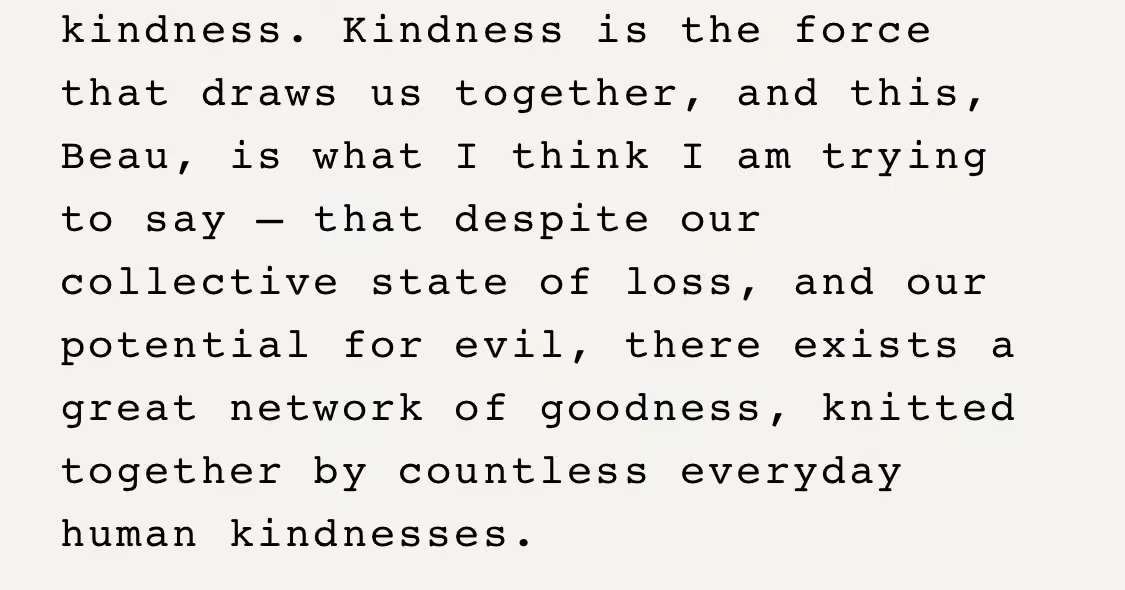
Imagine, just for a second, a politician, a party even, saying this. Running on this. Making this the aspiration of how they want to govern, to run public services, to have the offices of state engage us citizens. www.theredhandfiles.com/what-is-the-point-in-life/
 Sebastian Deterding
@dingstweets
Lovely piece arguing that tech industry/VC focus on AI/web3/metaverse wants to get back the Web 1.0/2.0 feel-good "Tony Stark vibes" post-techlash, blind to the climate crisis.
davekarpf.substack.com/p/tech-futurisms-blind-spot
Sebastian Deterding
@dingstweets
This is NOT to say that there aren't many startups where ppl work their asses off, and sometimes with significant impact. I'm saying in terms of societal function, we've created a legitimate adult playground here, where obvs only ppl of certain backgrounds can afford to play in.
Sebastian Deterding
@dingstweets
Whereas for ppl from other backgrounds, "innovation"/startup land is the desperate rational choice given foreclosed other social advancement options, and therefore dead serious.
Sebastian Deterding reposted
 ᴊᴏᴇ ❤️🔥
@traddingtonbear
Makes you think

Sebastian Deterding reposted
John Bull
@garius
Howard Smith MD of London Overground and now Crossrail, described this to me once as the "Twelve Minute Rule"
Modal shift happens when people see rail as turn-up-and-go and stop looking at timetables. That happens when you get AT LEAST 5 trains per hour
x.com/flanagan61/status/1575844579089473537
Sebastian Deterding
@dingstweets
Come do a PhD with me @ImperialDyson if you are interested in designing for curiosity, energy transitions, or human-AI co-creativity.
Our presidential scholarships are now open for application, funding tuition&stipends for up to 3.5 years.
campaigns.imperial.ac.uk/your-head-start/presidents-phd-s…
Sebastian Deterding
@dingstweets
Games HCI and SDT colleagues – help needed! Which (qualitative) papers unpack what satisfies or frustrates basic psychological needs and/or how that feels like – in games and play? Self-citations more than welcome! 😊
Sebastian Deterding reposted
 Dr. Rachel Kowert
@DrKowert
I'm very excited to announce that applications are now open for a 2 year post doc position at @TakeThisOrg with yours truly.
Let's change the (gaming) world together #gamestudies
www.takethis.org/2022/09/qualitative-researcher-in-game-s…
Sebastian Deterding
@dingstweets
Come join @ImperialDyson as a (Senior) Lecturer/(Associate) Professor in Design Engineering – I joined earlier this year, and I love it: outstanding students, colleagues, opportunities, and creative space to (re)define your work & the department!😃
www.imperial.ac.uk/jobs/description/ENG02282/lecturerseni…
Sebastian Deterding
@dingstweets
DM or email (www.imperial.ac.uk/people/s.deterding) me for any questions, and please retweet
Sebastian Deterding reposted
 Richard Parry
@_RichardParry_
I’ve come up with an interim solution to the queuing issue to see the Queen’s coffin in Westminster, let me know what you think, it’s not perfect but I don’t see anyone else coming up with anything
Sebastian Deterding
@dingstweets
Lovely concise applied games insights by @iggiphd Prasad Sandbhor at #iggicon2022

Sebastian Deterding reposted
 FDG TV
@fdg_tv
From Monday next week, #fdgtv is following @fdgconf with daily shows!
@GET_TUDA_CHOPPA & @annetropy are interviewing authors presenting work at the conference, while @mtrc returns to the British countryside to cover the 2022 Best Papers!
Join us in our daily YouTube premieres!
Sebastian Deterding reposted
 Rob Lennon 🗯 | AI Whisperer
@thatroblennon
Hot take: Everyone's missing the big picture on AI writing.
I've glimpsed the future of what's really going to happen:
Sebastian Deterding reposted
 iGGiCon 2024
@iGGiCON2025
In honour of University of York's resident duck Long Boi, we'll be adding to this thread about the history of video game ducks over the coming days in the run up to #iggicon2022!

Sebastian Deterding reposted
 Mihaela Taranu
@mihaela_taranu
🚨 PUBLICATION ALERT! 🚨 🥳🥳🥳
Our paper is published in the Psychology of Aesthetics, Creativity, and the Arts, @APA_Journals: psycnet.apa.org/record/2022-59619-001 (Advance online publication)
🧵 1/7

Sebastian Deterding reposted
 Kurt Gray
@kurtjgray
What is science? 🤔
1) High schoolers: "the hypothetico-deductive method"
2) College grads: "how society builds collective knowledge about the natural world"
3) Grad students and professors: 👇
Sebastian Deterding
@dingstweets
Ah, the beauty of UK Victorian infrastructure. They should just replace all that heat/rain/snow/whatnot with a blanket
“we apologise for this service disruption due to the wrong kind of century.”
 Sebastian Deterding
@dingstweets
I really like “contestability” as a principle for (AI) system design over “transparency” or similar: it has more political teeth. This is a great and very accessible framework based on a thorough lit review - and open access!
Sebastian Deterding
@dingstweets
This also throws me back to the first wave of “code/space” and “robot-readable world” discourse a decade back, before we called it all “AI”, where we mused about the sociotechnical issues of a world governed by algorithms, like the need for human override: www.slideshare.net/dings/ruling-the-world-when-life-gets-…
Sebastian Deterding
@dingstweets
Game research, design, #gamestudies peers: I haven't been as intellectually excited about anything like this in a decade (maybe since SDT). In this paper, we propose a new theory for why we enjoy uncertainty in games, drawing on predictive processing. A 🧵
www.frontiersin.org/articles/10.3389/fpsyg.2022.924953/full
Sebastian Deterding
@dingstweets
The paper fuses games research with cognitive science and philosophy of mind thanks to my wonderful collaborators @Marc_M_Andersen, @JulianKiverste1, and @PredictiveLife. And humbly-not-humbly, I think it could help transform how we understand gaming motivation and 'fun'.
Sebastian Deterding
@dingstweets
Games are weird. In most of life, we try to get rid of uncertainty. But when we play games, we lean into it – especially uncertain success. We think a good game balances success odds, when it's maximally open who will win. Why is that any fun?
mitpress.mit.edu/books/uncertainty-games
Sebastian Deterding
@dingstweets
Our paper dives deeper into edge cases of idle games (where progress is certain) and Soulslikes (where repeated failure is certain). It show how PP still applies. Bonus: we also show how it (mostly) fits with @raphkoster's Theory of Fun for Game Design.
www.oreilly.com/library/view/theory-of-fun/9781449363208/
Sebastian Deterding
@dingstweets
So give it a read and let us know what you think! Games of course feature many more forms of uncertainty, and we hope in future work to show how PP can elegantly explain their appeal as well.
www.frontiersin.org/articles/10.3389/fpsyg.2022.924953/full
Sebastian Deterding reposted
 Jack Clark
@jackclarkSF
A surprisingly large fraction of AI policy work at large technology companies is about doing 'follow the birdie' with government - getting them to look in one direction, and away from another area of tech progress
Sebastian Deterding
@dingstweets
What if the quip is true and the world system is perfectly designed to get all the results we are getting today?
Sebastian Deterding reposted
Dr. Rachel Kowert
@DrKowert
Registration for @iggiphd 2022 conference is now OPEN!
Come for the science, stay for my birthday celebration 🎂
www.iggi2022.org
Sebastian Deterding reposted
 Phil Lopes
@WorshipCookies
I am currently helping organize @FDGconf 2023 which will take place in Lisbon, Portugal in Spring!
The CfP is already in place, and ready at fdg2023.org :)
Please consider submitting your work and enjoy a trip to the sunny western european coast!!
Sebastian Deterding
@dingstweets
The best conferences hurt your heart a little when you leave the people and places you met behind, hoping to meet them again. Thank you, wonderful #digra2022 people, I miss you already.
Sebastian Deterding
@dingstweets
Mike Pondsmith’s #digra2022 keynote on designing dark future worlds feels like an Orson Welles-read audio book of chapter 1 of “Listen Up, You Primitive Screwheads!!!” Also, strong glasses game.
 Sebastian Deterding
@dingstweets
 Sebastian Deterding
@dingstweets
Sebastian Deterding
@dingstweets
Tomasz Z. Majkowski kicking off #digra2022. MASSIVE thanks and congrats to the local and conference team for already a great event!
 Sebastian Deterding
@dingstweets
“I have not organised the conference. I have just answered email. We are strong in numbers and strong in devotion.”

Sebastian Deterding reposted
 Perttu Hämäläinen
@perttu_h
Come work with us! Many topics & supervisors. Pick me if interested in AI-assisted game testing and design or simulating and modeling full-body movement/embodiment.
Finnish Center for AI 🦣 @fcai@mastodon.online
@FCAI_fi
We are hiring! 16 funded positions in artificial intelligence & machine learning for postdocs, research fellows, PhD students. Apply now: fcai.fi/we-are-hiring
@CSAalto @UnivHelsinkiCS @HIIT @ELLISforEurope @LUMIhpc @VTTFinland
Sebastian Deterding
@dingstweets
I’m sure lots has been written about this, but it occurred to me that with its strong prestige/attention economies and Matthew effects, academic research is a constitutively *conservative* system, although it constantly talks itself up to be the opposite.
Sebastian Deterding
@dingstweets
Even countering forces like discovery research funding programmes de facto demand that the person/idea under review have already proven themselves somehow. I’m reminded of colleagues telling me that true discovery research happens in a kind of funding relay race, …
Sebastian Deterding
@dingstweets
where discovery research happens with the last 20% of t current grant to have proof of concept & de facto done 20% of the work proposed in the next grant, such that you can deliver your promise on the next grant with 80% of the money & have the last 20% free for discovery again.
Sebastian Deterding
@dingstweets
"A Trillion Hours of Play."
Incredulously humbled & thankful for this new collaboration between @unity & 4 universities including
@ImperialDyson, trying to funnel the hose of all player data hoses toward understanding & improving games & the world.
Professor Anders Drachen
@andersdrachen
Would you like to know how billions of people play mobile games? I am incredibly proud and honored to announce our collaboration with Unity Technologies on the largest games research project ever - first results are now available!: digitalcreativity.ac.uk/news/trillion-hours-play #unity3d #games
Sebastian Deterding
@dingstweets
Reviewing job applications, and I am both hopeful for the future and have no effing clue how I ever managed to land the positions I landed in. So much humbling talent in the world! 😳
Sebastian Deterding
@dingstweets
👇Do apply! 3 fully (and well-)funded PhD/research assistant positions around design for behaviour change with a great group in Germany.
(Hint: top right corner of the web page let’s you switch language to English.)
 Matthias Laschke
@LaschkeMatthias
We are hiring. Be sure to apply and/or share!
We are looking for employees in the fields of:
- Design and Physical Computing
jobs.uni-siegen.de/job/Wissenschaftlicher-Mitarbeiterin-D…
- Interactionsdesign
jobs.uni-siegen.de/job/Wissenschaftlicher-Mitarbeiterin-I…
- Ethics and Philosophy of Technology
jobs.uni-siegen.de/job/Wissenschaftlicher-Mitarbeiterin-E…
Sebastian Deterding
@dingstweets
#sts tweeps, can you point me to good papers on conflicting or diverse constructions of “evidence”, especially in participatory/multi-stakeholder/cross-disciplinary work?
Sebastian Deterding
@dingstweets
It's out! 🥹
Games and play researchers, I stay by my prediction (🥁) that this will become a seminal paper in our fields. Do go and give it a read!
Sebastian Deterding
@dingstweets
Only four days left to apply for our 3 postdoctoral in culturally-sensitive well-being-driven design. Come apply🍦
Sebastian Deterding
@dingstweets
#hci folks working on wellbeing + digital tech, design, ethics:
We have 3 postdoc job openings @ImperialDyson & @LeverhulmeCFI working w/ a global consumer electronics company to embed culturally appropriate ethical, wellbeing-driven design standards in their practice.👇
Sebastian Deterding reposted
 𝕮𝖍𝖆𝖘𝖊 𝕭𝖗𝖆𝖙𝖙𝖔𝖓 🦅
@chasebratton
This dude is about to walk into your design review, not pay attention and then ruin your life.

Sebastian Deterding reposted
 Dr. Matthew Whitby
@WhitbyWrites
I'm on the hunt for teams of game developers to help me test a deck of cards! It is based on my research & a collaboration with @DrKowert (@TakeThisOrg) into how games can tackle the stigma around mental health.
Retweets are greatly appreciated!
#gamesresearch #academictwitter
 Sebastian Deterding
@dingstweets
Come help us manage projects around design and wellbeing :).
Sebastian Deterding reposted
 Nanna Inie
@NannaInie
If you want a 101-example of bias in datasets and their results, I present to you: #dalle
 Sebastian Deterding
@dingstweets
Heartfelt kudos to @XING_com: Just deleted my profile and –– no feature-hiding, nagging, confirmshaming, "call a customer service representative" friction: Two clicks deep in my account settings, a password, done: and I get simple, straight farewell wishes. Well done!
 Sebastian Deterding
@dingstweets
And I know this is bittersweet for the product and design team, but I think we do need to call out and celebrate designers simply doing the right thing, especially when all incentives pull the other direction, so there you go: Thank you! Well done!
Sebastian Deterding
@dingstweets
This is your regular public service announcement that "AI" is an empty signifier unless otherwise specified.
Sebastian Deterding
@dingstweets
I agree: we need to reframe “contribution to knowledge” from the common “gap” (“few have done X”) to an “advance” (“to move this important debate/practice further, we need to know X”).
Sebastian Deterding
@dingstweets
“Here’s a white spot on the map, let’s fill it” *feels* value-neutral, but expresses a (pretty bonkers IMO) value: we should answer all unanswered questions we can construct, regardless of their relative import to improving the human condition.
Sebastian Deterding
@dingstweets
Framing contributions as advancing debates means you need to appeal to practical concerns outside of science (climate change!), and/or identify a need/issue/opportunity within your disciplinary discourse/practice. That feels more subjective than filling in blanks.
Sebastian Deterding reposted
dan bennett
@__stillPoint
This is a great intro for HCI folks to the current state of ecological psychology - its a richer and quite different landscape than seen in the classic HCI affordance papers - Gaver, Norman, McGrenere & Ho, etc., or in more recent computational work
 Ecological Psychology Seminar Series
@EcoPsychSeminar
Seminar 3 with Jelle Bruineberg is now up! Here is the link for @JBruineberg 's fantastic talk Productive Pluralism: three strands of ecological psychology ⬇️
youtu.be/g4U20-GdsU4
Sebastian Deterding
@dingstweets
👇👏❗️ Superintelligence is a decoy debate whose social function has become to distract from more real, present, less sexy issues, discharging possibly productive feelings of responsibility & desires to do good.
 Giada Pistilli
@GiadaPistilli
I will no longer engage in philosophical discussions about conscious AI/superintelligent machines, and here's why. (long🧵1/11)
Sebastian Deterding
@dingstweets
#hci folks working on wellbeing + digital tech, design, ethics:
We have 3 postdoc job openings @ImperialDyson & @LeverhulmeCFI working w/ a global consumer electronics company to embed culturally appropriate ethical, wellbeing-driven design standards in their practice.👇
Sebastian Deterding
@dingstweets
Research Associate in Psychology and Human Computer Interaction
www.imperial.ac.uk/jobs/description/ENG02164/research-ass…
Sebastian Deterding
@dingstweets
Application deadline: June 24. Any questions: Do ask. And do share
Sebastian Deterding reposted
Gorm Lai, Gamedev Veteran
@gormlai
Our review paper "On Mixed-Initiative Content Creation for Video Games" which also discusses a new definition for mixed-initiative and other related topics is now available on Early & Open Access ieeexplore.ieee.org/document/9779792 @iggiphd #pcg #mixedinitiative
Sebastian Deterding reposted
 Christian Guckelsberger
@creativeEndvs
Can you write a procedural content generator that produces adaptive and evocative architectural designs and thus push the state of the art of computational creativity? Consider submitting to our Minecraft competition! @aaltomediaai @ACC_assoc
 Generative Design in Minecraft Competition (GDMC)
@GenDesignMC
#deadline extension for GDMC settlement generation challenge in @Minecraft : 14 of June, 2022. Please share.
More info:
gendesignmc.wikidot.com/wiki:2022-settlement-generation-c…
Sebastian Deterding reposted
Sebastian Deterding
@dingstweets
I am certain this is happening in hundreds of VC pitch meetings these days. I also think it's becoming a genuine (and deliberately shored up) entry barrier to economically and socially *worthwhile* AI innovations.
Here's one way how: 🧵
Sebastian Deterding
@dingstweets
Have you done participatory, user-centred, and/or co-design of games with children or young people? Then please help my PhD student @MJSaiger tease out what works and what doesn't. Thanks so much! 🙏
Sign-up for interview form below ⬇️
Michael John Saiger
@MJSaiger
Change of recruitment strategy, form below :)
I'm looking to interview anyone who's worked alongside children or young people in a collaborative project to produce a product (even better if it's a game or app)
Thanks!
#phdchat #researchprojects
forms.gle/zBggxgjezQMHckTS6

Sebastian Deterding reposted
 C Thi Nguyen
@add_hawk
OK, tried out a new unit in my intro to philosophy class, and it is my new favorite unit: "Are Grades Bullshit?"
I have never seen intro students more intensely engaged, more edge-of-their-seat, and more mind-blown.
Thread:
Sebastian Deterding
@dingstweets
Interested in games research? At #chi2022 or not? 6 of our stellar @iggiphd are presenting lovely new work at CHI this year, with papers & videos open access while the conference lasts. Here's a programme guide: 🧵
Sebastian Deterding
@dingstweets
7. Wed 14:45-15:00 UTC-5, @zen_barista presents "The Effects of a Soundtrack on Board Game Player Experience" programs.sigchi.org/chi/2022/program/content/68773.
Sebastian Deterding
@dingstweets
8. And @tommakesgames closes Wed at 16:15-16:30 UTC-5 with "More than a bit of coding: (un-)Grounded (non-)Theory in HCI" programs.sigchi.org/chi/2022/program/content/70546.
Sebastian Deterding reposted
iGGi PhD
@iggiphd
Heads-up: @iggiphd will be at @developconf this year with various speakers + an exhibition stall!!!
Join us there to see @gormlai on
*AI Supported Tools for Game Development*🔊👀
Congrats to Gorm for landing a talk!!
#ai #gamedevs
www.developconference.com/index.php/whats-on/speakers/spe…
Sebastian Deterding
@dingstweets
🚨🕹️👩🏫Game-based learning colleagues: Excited about a new major theory paper by @joe_cutting & me – how attention shapes learning in games, why current theories don't capture that, and how it explains intrinsic integration. Buckle in! 🧵
www.tandfonline.com/doi/10.1080/07370024.2022.2047971
Sebastian Deterding
@dingstweets
Demand #2: Cognitive load. When your working memory is loaded with complex info/problems, you have less executive capacity to top-down steer your attention. Counter to perceptual load, you become *more* distractable.
Sebastian Deterding
@dingstweets
Demand #3: Time and performance pressure, esp. in competitive multiplayer games. Pressure narrowly focuses attention on the most success-relevant info ('tunnel view'), but can also raise unthinking performance back to awareness: we overthink, 'choke under pressure.'
Sebastian Deterding
@dingstweets
For TAT, intrinsically integrated means relevant for game task success. Chocolate-covered broccoli – where gameplay and learning content sit disconnected side by side – produces not just split attention: the game constantly directs attention *away* from the learning content.
Sebastian Deterding
@dingstweets
So there you go: A new theory. I'm really thankful for the great collaboration with led author @joe_cutting, excited it's out after 3 years in the making – and curious to hear what you think!
 Sebastian Deterding
@dingstweets
I am certain this is happening in hundreds of VC pitch meetings these days. I also think it's becoming a genuine (and deliberately shored up) entry barrier to economically and socially *worthwhile* AI innovations.
Here's one way how: 🧵
Sebastian Deterding
@dingstweets
Sure, economies of scale reduce cost (which competing cloud vendors can hand down), & big tech has every incentive to invest heavily in R&D for reducing energy intensity of their BIG compute.
Sebastian Deterding
@dingstweets
But if a use case is genuinely easier to solve with a good-old-fashioned rule-based expert system with a fraction of the compute footprint out of the bat, that doesn't matter.
And those roads not travelled matter.
Sebastian Deterding
@dingstweets
Got hit by that sudden researcher blues that the 50+ year old body of work I've been contributing to may be just one big jangle fallacy – an exquisite zoo of moderately correlated self-report constructs all measuring the same thing in the end.
Sebastian Deterding reposted
 Thiemo Fetzer 🇪🇺🇺🇦 - same handle elsewhere
@fetzert
And here it is -- communication from @ERC_Research to UK-based #erc starting grant grantees... UK awardees will have two months time to move their grant to the EU proper, otherwise they will lose their STG. Thank you #brexit #brexitreality.

Sebastian Deterding reposted
 Kate Crawford
@katecrawford
Wow - the human/AI interface is about to get weirder.
US Copyright Office just ruled that works "autonomously created" by algorithms cannot be copyrighted. This is the work they rejected:
 Sebastian Deterding
@dingstweets
Did a quick count out of curiosity: Since Monday, I have processed, responded to, and archived or deleted 221 emails, and gathered another 51 new ones marked for needing a more detailed response. Hm.
Sebastian Deterding
@dingstweets
AI colleagues: where can I read good takes that GPT-3 et al fail at causal inference etc not because neural nets are the ‘wrong’ architecture, but language models are disembodied, not linked into weighings coming from embodied world interaction? Do those takes exist?
Sebastian Deterding
@dingstweets
Morning thought. Playing is less about having fun than seeking something that is fun (together).
Sebastian Deterding reposted
 Anne Sullivan 🦄
@annetropy
Gender Representation in the Post-Anthropocene World. Artwork generated from Disco Diffusion, using positive attributes that were identified as feminine and masculine coded. The resulting images reflect the aesthetic representations of gender inherent in the AI system & data set.

Sebastian Deterding reposted
 todd levin
@toddlevin
Once again posting this thing I wrote, now that Twitter's back up. Thanks to everyone who has already read and shared it, and thanks to everyone else who will.
link.medium.com/f2FaeWN5ynb
Sebastian Deterding
@dingstweets
Finishing The Ministry for the Future, this thought by Robinson stuck with me (not his exact words):
Economics is morals disguised as numbers.
Sebastian Deterding
@dingstweets
Calculating optimal rational choice as benefit/cost ratio optimisation bakes in the foregone conclusion that efficiency matters solely or the most (rather than, say, resilience or efficacy).
Sebastian Deterding
@dingstweets
I’m sure none of that is new. It can be read as an extrapolating from @MazzucatoM’s critical history of economic value theory, for one. But I think it also resonates deeper with the fact that Smith, Bentham, Mill, Franklin et al were *moral philosophers*.
Sebastian Deterding
@dingstweets
Hive mind: Is there a good history/archaeology of economics as covert moral philosophy?
Sebastian Deterding reposted
 César A. Hidalgo
@cesifoti
Want to read an insane tenure denial story? I was denied tenure at MIT in 2018. I was the only Hispanic faculty at my department, had 13k+ citations, 2 books, & papers in Nature, Science, & PNAS. I was never given a reason & the only letter I got told me to check the website./1🧵

Sebastian Deterding reposted
Sebastian Deterding
@dingstweets
🤸♀️Self-Determination Theory has become a key theory in HCI for health, games, learning, motivation: Shape the next decade of research & submit your position paper to our @acm_chi #chi2022 workshop "SDT in HCI: Shaping a Research Agenda". More details 👉
www.positivecomputing.org/p/chi2022.html
 Sebastian Deterding
@dingstweets
🤸♀️Self-Determination Theory has become a key theory in HCI for health, games, learning, motivation: Shape the next decade of research & submit your position paper to our @acm_chi #chi2022 workshop "SDT in HCI: Shaping a Research Agenda". More details 👉
www.positivecomputing.org/p/chi2022.html
Sebastian Deterding
@dingstweets
Submission by Feb 24 Anywhere on Earth, you can participate virtually April 14/15 or in person in New Orleans May 1. Accepted authors are invited to submit extended manuscripts to a Special Issue with Interacting With Computers, and to co-author a research agenda.
Sebastian Deterding
@dingstweets
You will be lovingly reviewed and expertly guided through the workshop by @nbballou @stillisles @elisamekler @dorian_peters @Rafael_A_Calvo @selentrky @ghavi and yours truly :).
Sebastian Deterding
@dingstweets
Making games 🕹️ and trying not to reinforce stereotypes around mental health 🧠? Consider this great @takethisorg white paper by the lovely @WhitbyWrites, who I'm proud to supervise with @JoIacovides!
Dr. Matthew Whitby
@WhitbyWrites
Over the last few months I've been honoured to work alongside @DrKowert and @TakeThisOrg. And now the white paper is released into the wild! I'm delighted to present:
"Designing Games to Challenge the Stigma Around Mental Health"
Link in the thread:

Sebastian Deterding reposted
 Sam Cooper
@camsooper
🚨🚨PhD studentship available with me:
"Human-in-the-loop convolutional methods with adaptive loss for multichannel image analysis in materials science"
Machine Learning + Energy Materials + Design Engineering
What's not to love!?
Get in touch ASAP🙂
www.cdt-acm.org/phd-opportunities/
Sebastian Deterding reposted
 Adam Kay
@amateuradam
A quick thread on in the importance of being careful what data you share - even if you're the Queen. Today, Her Maj tweeted this lovely picture, gor bless er, etc. You might think that the contents of the red box would be official business. And you'd be right. 1/6

Sebastian Deterding reposted
Randall Munroe
@xkcd
Control Group xkcd.com/2576

Sebastian Deterding reposted
 Kevin Marks 🏠kevinmarks.com xoxo.zone/@KevinMarks
@kevinmarks
That thought process explained:

Sebastian Deterding reposted
 Dr Kate Compton
@GalaxyKate
The really beautiful thing about comparing Damien Hirsch to NFTees is that it just came out that this piece probably never sold to a real buyer for this price and that self-selling to inflate prices had been happening in the art world for EVER
You really can't invent new crimes
 Weimar - Simon Tweets
@FreedomGeopol
£14 million "For the Love of God" by Damien Hirst
How is this contemprary art any different from an NFT, besides that this blasphemic ugly piece of work below uses real diamonds?

Sebastian Deterding reposted
 Leah Pierson
@leah_pierson
Some of my friends and I overcommit to things, so we made "Saying No to Things" punch cards. If you say no to 10 things, your friends have to buy you an ice cream.
In a pilot study, we found participants both said no to more things and got more free ice cream.
 Sebastian Deterding
@dingstweets
Is nothing sacred?
 Masoniverse
@Masoniverse
Freemasons in the metaverse, the Masoniverse NFT collection will open for applications soon: masoniverse.com
Sebastian Deterding
@dingstweets
Wordle 210 3/6
⬛⬛⬛⬛⬛
⬛⬛⬛⬛⬛
🟩🟩🟩🟩🟩
That was… something.
Sebastian Deterding reposted
 Designing Interactive Systems Conference
@acm_dis
heya. Its pretty rough these days so we hope you are doing good and safe out there. Its a full month to the deadline, so you got plenty of time, and if you miss it eh. Who cares in these times? take care of yourself first, and your paper second. Or third etc. <3
Sebastian Deterding
@dingstweets
Wordle 208 3/6
⬛⬛🟨⬛🟩
🟩⬛⬛⬛🟩
🟩🟩🟩🟩🟩
Sebastian Deterding
@dingstweets
Required crypto / blockchain / NFT reading.
 Moxie Marlinspike
@moxie
Wrote some notes summarizing my first impressions of web3: moxie.org/2022/01/07/web3-first-impressions.html
Sebastian Deterding reposted
 Matthew Sweet
@DrMatthewSweet
Well, I was booked to go on @BBCRadio4 PM to challenge @johannhari101 about assertions made in his new book. He has pulled out for "personal reasons", so I'll just leave a thread about my concerns about his use of sources. I hope someone else will raise these questions with him.
Sebastian Deterding
@dingstweets
#cfp: Self-Determination Theory in HCI
Come join our #chi2022 workshop to help shape a research agenda on SDT in HCI research across games, wellbeing, autonomous systems, and more! Submit by 24/02/22, extended papers will go to a special issue with IwC.
www.positivecomputing.org/p/chi2022.html
Sebastian Deterding
@dingstweets
We = a truly stellar team of lovely humans & researchers: @nbballou, @dorian_peters, @Rafael_A_Calvo, @elisamekler, @stillisles, @selentrky, @ghavi, and myself, with keynotes by @richardmryan3, Yvonne Rogers & Marc Hassenzahl.
Sebastian Deterding reposted
 Greg Borenstein
@atduskgreg
Where’s the investment instrument that lets me bet against all these crypto people ever actually shipping a game? Seems like a gap in this new world of universal financialization that there’s no way to short obvious boondoggles.
 Simon Carless
@simoncarless
Big trend in games x NFTs seems to be 'buy these characters/land NFTs which'll be playable in-game later'. My Pet Hooligan just sold $10m of hooligans - cryptoslam.io/my-pet-hooligan - for an upcoming 'desktop PvP video game built in Unreal Engine 5.0'. (Very scant details on game.)
 Sebastian Deterding
@dingstweets
If you feel internet gaming disorder research is all "measurement schmeasurement", here's a healthy dose of rigour looking at issues with threshold models for diagnosing "clinically significant distress", and which criteria are more predictive than others.
Nick Ballou (is mostly on a Tw*tter hiatus)
@nbballou
a paper that began ~2 years ago is out in Computers in Human Behavior! We asked 82 authors to share data on internet gaming disorder (IGD) and psychological distress (n = 38,851).
accepted version: psyarxiv.com/9ejhk/
publisher version: doi.org/10.1016/j.chb.2021.107140
⬇️ short 🧵
Sebastian Deterding
@dingstweets
A little insight into daily university life madness. Like you, I have/had NO CLUE what it is about and am baffled at what reads like GPT-3/mad lib-generated org boilerplate devoid of meaning. (Also, why do we need a workstream for Photoshop file formats?!?)

Sebastian Deterding reposted
 Florence Smith Nicholls
@florencesn
Realised I hadn't tweeted about it so:
Last week I started working part-time as a Story Tech for @gutefabrik !
Still pinching myself that I get to work with some incredible people on a *really* awesome game (trust me, you're going to love it 💚)
 Sebastian Deterding
@dingstweets
I’d answer: Start with the experience you want to afford that delivers on your exhibition goal: www.slideshare.net/dings/experience-design-in-the-museum
Sebastian Deterding reposted
 surreal entertainment
@s_entainment
The future Zuckerberg wants
Sebastian Deterding
@dingstweets
💯yes to this 👇. I know find myself with the tail end problem of that strategy: After 12 years of using the same template, it’s time for a relaunch. Call it slide debt.
 Dr. Casey Fiesler is no longer on here
@cfiesler
A tip. Especially for profs but really for anyone who gives "big picture" talks that tend to draw together pieces of work that change over time: ALWAYS USE THE SAME SLIDE TEMPLATE WHEN YOU MAKE A NEW TALK.
Sebastian Deterding reposted
 Phoenix Perry
@phoenixperry
Want to make your game interfaces entirely adaptable by your players? We made a tool that lets you do just that for Unity and Unreal that requires 0 coding. Today, the InteractML Unreal plug-in launched. Make accessible games. unrealengine.com/marketplace/en-US/product/interactml-int…
Sebastian Deterding reposted
 Kasper Hornbæk
@khornbaek
Come work with us on HCI/AI...
 Christian Igel
@christian_igel
The Department of Computer Science at University of Copenhagen (@diku) has a #postdoc opportunity in Human-Computer Interaction ➕ #machinelearning. @DikuMachine is part of the ELLIS Unit #copenhagen. ⏲️December 12:
di.ku.dk/english/about/vacancies/postdoctoral-position-in…
@khornbaek @HumanCenteredAI
#hci #ai
Sebastian Deterding reposted
iGGi PhD
@iggiphd
iGGi recruitment '22: if you're thinking of doing a #phd in #digitalgames come to our
iGGi TASTER DAY - MONDAY 22 Nov '21 online.
It's not too late to register here: forms.gle/oDUXpXTJUp27G4ZW9
 Sebastian Deterding
@dingstweets
This tweet has been making the rounds as an example of open science proponents piling on female ECRs (the lead author of the paper). The most noteworthy thing about that discourse is how no noteworthy open science proponent who engaged, engaged the actual issue. 🧵
 Nïck Brown🌻
@sTeamTraen
It's 2021 and social psychologists are still publishing papers like this: Women wearing not much clothing on a night out don't get cold because they believe that they "look hot" (geddit?)🧐🤦♂️🙄 @EJWagenmakers @RolfZwaan @lakens
 Sebastian Deterding
@dingstweets
And I find it noteworthy and sad that instead of engaging that very fact, visible open science proponents instead choose to double down on the substantive merit or not of the p-value critique, thereby reproducing the pragmatic dismissal of the initial social offence. 🧵/end
Sebastian Deterding
@dingstweets
PS. Yes, I think science as organised scepticism is a worthy regulatory ideal and no study should be beyond critique, no matter who authored it and who critiques. But life is where worthy ideals clash, and wise action is navigating those clashes not maximising 1 ideal.
Sebastian Deterding
@dingstweets
So what to do? To quote another regulatory ideal for scientific discourse by @RebekahBaglini & @ce_parsons: “If you cannot be kind in peer review, be neutral.” www.nature.com/articles/d41586-020-03394-y
Sebastian Deterding reposted
 Katja Hofmann
@katjahofmann
We're hiring! Check out my team's latest openings for Cambridge Residents and a Senior Applied Scientist: www.microsoft.com/en-us/research/group/deep-reinforcement… - come join us!
Sebastian Deterding
@dingstweets
The thing that keeps haunting me the most about the Meta keynote is that all the RL footage is stock photo unreal, is already shot in this 2019 Influencer Pastel Posh simulacrum of spaces, colours, and textures that only exist on YouTube and Insta.
 Sebastian Deterding
@dingstweets
At some point in the 2010s, reality just became too stressful, and so we can only stomach it at least 1 degree virtualised into an endless video loop of perfectly steaming coffee against perfectly frictionless coffee shop jazz with endless rainfall in the window …

 Sebastian Deterding
@dingstweets
… and the only thing that gets us back into a RL coffee shop is one that now manifests that dream in wood, fabric, shades of turquoise and grey.

Sebastian Deterding reposted
Dr. Casey Fiesler is no longer on here
@cfiesler
Acceptance rates are stupid. Good work should be published and not-good-enough work should be rejected. And if you're lucky enough to get a lot of good work why would you reject it?
Sebastian Deterding
@dingstweets
I think @imaginari_es makes an essential, almost Foucault/Latour-like power move: Whenever someone says “X”, replace “X” with “people’s diverging mental models of ‘X’”.
 六合彩内幕特码/新澳门六合彩/准六合彩资料六合彩特码/资料精准稳定/输出
Just as I suspected. Systems aren’t real. #rsd10 @imaginari_es @RSDSymposium
 Sebastian Deterding
@dingstweets
It’s similarly deflating and demonstrating contingency as discourse, actor-network, or ethnomethod.
Sebastian Deterding
@dingstweets
Academia is a wildly broken game: way too much randomness, too little agency, too swingy, unfair positive/negative feedback loops that are nigh-impossible to break out of, a slog. Wait, that reminds me of something ...

Sebastian Deterding reposted
 Herman Saksono (he/him)
@hermansaksono
Qualitative research habits that negatively impacted my social skills. A thread.
Sebastian Deterding
@dingstweets
2011 called, they want their open badges back. This exact infrastructure already exists & hasn’t seen wide adoption in a decade, and not for the lack of trustless credentialing.
Sebastian Deterding
@dingstweets
FWIW, being good at Keynote paid for my grad school.
Sebastian Deterding reposted
John Burn-Murdoch
@jburnmurdoch
NEW: there’s been a lot of chatter about why cases, hospitalisations and deaths are much higher in the UK than elsewhere in Western Europe.
I think a lot of the commentary has been overly simplistic, politicised and at-times flat-out wrong.
Let’s see if we can do better:
Sebastian Deterding
@dingstweets
This is such a perfect face palm case study for any future AI ethics course that I'm almost tempted to believe the authors are trolling us with a hoax, but no?
And so much here comes down to framing ... <1/n>
mike cook
@mtrc
via 🔒, this is a shocking piece of AI research that furthers the (false) notion that we can or should give AI the responsibility to make ethical judgements. It’s not even a question of this system being bad or unfinished - there’s no possible “working” version of this.


 Sebastian Deterding
@dingstweets
I mean, fine, if you are a hardcore intuitionist or subscribe to labelling theory (deviant is whatever a group chooses to label so), you can teach a machine to *act in line with norms* by training it on a corpus. But then say so?
Sebastian Deterding
@dingstweets
(Again, this is just such a good teachable case study on baked-in unquestioned assumptions and what not to do and why.)
Sebastian Deterding reposted
 Evelyn Tan, PhD
@_evelyntan
Pretty hyped for this panel on present and future #research in #esports! 🎮🏆📖
Next week, I'll be speaking on this panel at #chiplay2021 about the current esports research landscape and what the future might hold 👀
#phdthings #teamwork #teamdynamics #gamesresearch
 Sebastian Deterding
@dingstweets
Working on esports and live streaming? Consider submitting to the WWW'22 Esports and Online Gaming track, abstract deadline Nov 11: www2022.thewebconf.org/cfp/special/gaming/
Sebastian Deterding reposted
 Steffen P Walz
@playbe
(Best-Of-) bizplay #10 – for our live streaming Early Late Night Show on 14 October 2021, themed "Keep On Playing", we are super happy to be welcoming yet another speaker returning to our anniversary stage – @dingstweets of the University of York's Digita…www.linkedin.com/feed/update/urn:li:share:685324007585410…
Sebastian Deterding
@dingstweets
Not a subtweet, no offence, many exceptions–––but doing a systematic review on an HCI topic here, and *boy* the rigour/study quality of some of these "engineers try human subject research" papers has me doubt this whole interdisciplinarity thingy.
Sebastian Deterding reposted
 Artificial Cognitive Systems
@artcogsys
Come join us! Full Professor of Cognitive Computing solliciteren.ru.nl/cgi-bin/share/og_pxs.pl?target=LI&reci… via @Radboud_Uni
Sebastian Deterding
@dingstweets
10 years already? I'm getting old.
Anyhow, the anniversary #bizplay online conference on Oct 14 brings a truly stellar line-up looking forward & back on games meet business (and also me, sorry). Free tickets here: www.bizplay.org

Sebastian Deterding reposted
Anne Sullivan 🦄
@annetropy
Hi y'all! Thank you again for the great conversation around mental health. Here are my slides w/notes for the talk. It's only a 30m talk so I couldn't touch on everything in depth, but I did take into consideration everything that you shared with me!
www.asdesigned.com/talks/mental_health_in_grad_school.pdf
Anne Sullivan 🦄
@annetropy
Are/were you in grad school?
I am putting together a talk on mental health in grad school. I know my own struggles, but if you're willing to share, I'd appreciate hearing about yours.
What things did/do you struggle with?
What things do you find helpful?
DMs also open. ♥️
Sebastian Deterding reposted
 Forrest Fleischman
@ForrestFleisch1
In the last week I've started to receive inquiries from people running tree planting programs wanting my help. I am suggesting that they shut down their programs. Here I will explain why:
Sebastian Deterding
@dingstweets
Great funding opportunity on impact work around reducing the mortality gap of people with severe mental illness - feel free to share & ping me with detail questions!
 Closing The Gap Network
@CTGNetworkUK
⭐️New Funding Opportunity:
Exciting times for our network! The CTG Impact Accelerator Funding call is now open!
Info & application pack can be found here: www.york.ac.uk/healthsciences/closing-the-gap/funding-opp…
@KBloor @GordonAJohnston @AnnetteB_N8 @MHARG_york @HealthSciYork @CizCG @Clairede0 @Peteyc73

Sebastian Deterding reposted
 ACM CHI PLAY
@acmchiplay
Gamification has been a focal point of games research for many years. If you're interested in the current state of gamification, this #chiplay2021 Panel is going to interest you!
See our other Masterclasses, Fireside Chats, and Panels here: buffer.com
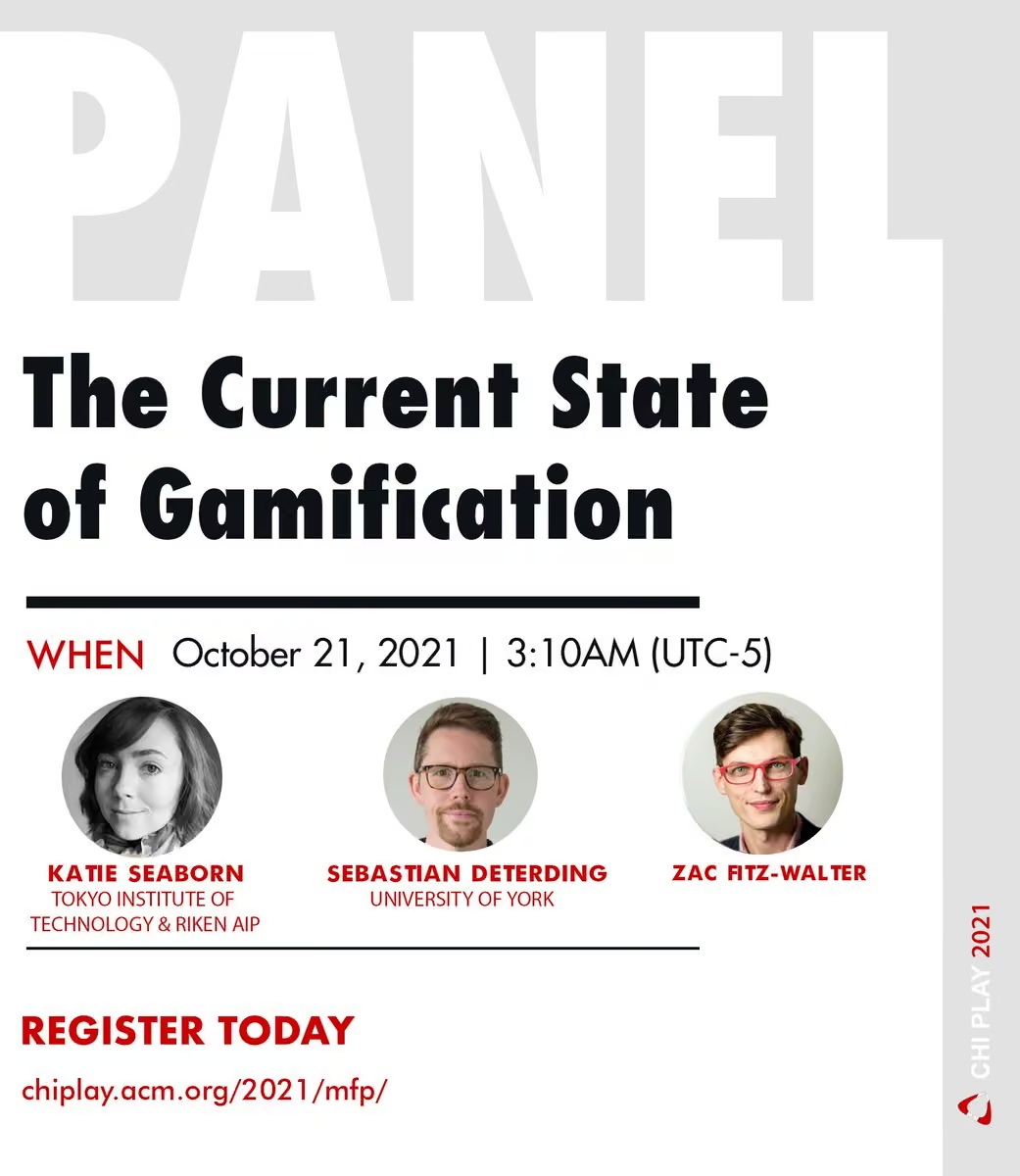



Sebastian Deterding reposted
 Dr. Jessica Hammer
@kleenestar
The ETC is hiring not one, not two, but THREE faculty positions. Come teach amazing students while maintaining your own creative practice! Hang out with fabulous colleagues, including me!
www.etc.cmu.edu/etc-faculty-search/
Sebastian Deterding reposted
Evelyn Tan, PhD
@_evelyntan
Had the privilege to chat with @MetaVideoGame @JuliaHiltscher @melissarchaplin and Max Sloan on how they applied lessons and experiences from their #phdlife to their transition into the #gamesindustry.
A thread of my key takeaways 🔽🔽🔽
#gamesresearch
www.youtube.com/watch?v=UMhb1cz-FEA
Sebastian Deterding reposted
 Tom
@thelorryist
What goes into an average shift driving a lorry?
Thought I would live tweet about my shift tonight. Might be interesting, or not, either way I have few remaining opportunities to show you into a world you may not otherwise ever see.
Feel free to share if you wish 🚛
 Sebastian Deterding
@dingstweets
Want to know how stories as part of gameful and playful design can ethically engage citizens in a post-truth world? @LobnaHassan_ organised a lovely convo w/ her, @troy_innocent & me discussing this question: www.youtube.com/watch?v=5RNgSCFXjNg
Sebastian Deterding
@dingstweets
This conversation cycles around a paper Lobna, me, JT Harviainen and Juho Hamari got out recently: Fighting Post-truth with Fiction. An Inquiry into Using Storification and Embodied Narratives for Evidence-Based Civic Participation. muse.jhu.edu/article/799686
Sebastian Deterding reposted
 hardmaru
@hardmaru
The new Roomba uses AI to avoid smearing dog poop all over your house.
“But in order to make this possible, the company first had to create a diverse dataset of poop.”
edition.cnn.com/2021/09/09/tech/roomba-ai-avoids-dog-poop…
Sebastian Deterding reposted
Professor Anders Drachen
@andersdrachen
Announcing our new book Game Data Science, with collaborators Magy Seif El-Nasr, Troung Huy Nguyen Dinh and Alessandro Canossa will be out September 16th published by Oxford University Press. Companion Website: global.oup.com/booksites/content/9780192897879/

Sebastian Deterding reposted
iGGi PhD
@iggiphd
IGGI 2021 kicking off *tmw*!! Panel Speakers: @AmandineFlachs @hatcat01 @adamboyne96001 Leah Muwanga-Magoye @Kieran_Hicks @dingstweets @grmcall Max Sloan @JuliaHiltscher @melissarchaplin @MetaVideoGam @Ninfa_dp Maddalena Grattarola @kurai @swordsnarrative iggi2021.org
Sebastian Deterding reposted
Nick Ballou (is mostly on a Tw*tter hiatus)
@nbballou
looking forward to moderating one of our @iggiphd conference panels "Games User Research: Academia vs Industry" with Leah Muwanga-Magoye, @Kieran_Hicks, @grmcall, and @dingstweets tomorrow at 10:20am UK!
Registration now unfortunately closed (my b) but will likely be recorded
Sebastian Deterding reposted
 Micah G. Allen
@micahgallen
If you want to be a researcher, start training this skill immediately.

Sebastian Deterding reposted
Evelyn Tan, PhD
@_evelyntan
If you're a #phdstudent looking to transition into the #gamesindustry, come watch this panel! I'll be chatting with Max Sloan/@King_Games, Julia Hiltscher/@ESL, Rui Craveirinha/@PlayerResearch, and Melissa Chaplin/@robot_teddy about their experiences as PhDs in industry.

Sebastian Deterding reposted
 Antti Oulasvirta
@oulasvirta
Join us!👇 Postdoctoral and research fellow positions in AI and ML at the Finnish Center for AI, including topics on interactive AI and applications of RL in user modeling fcai.fi/we-are-hiring #fcai #computationalinteraction #chi2022
Sebastian Deterding reposted
 Nathan Hughes 🏳️🌈🏳️⚧️
@NGJHughes
I'm giving a talk at the @iggiphd conference next month! You can listen to me discuss my latest (soon to be pre-printed) work. So, sort of like an exclusive preview. You can register at www.iggi2021.org (it's free!) #phdchat
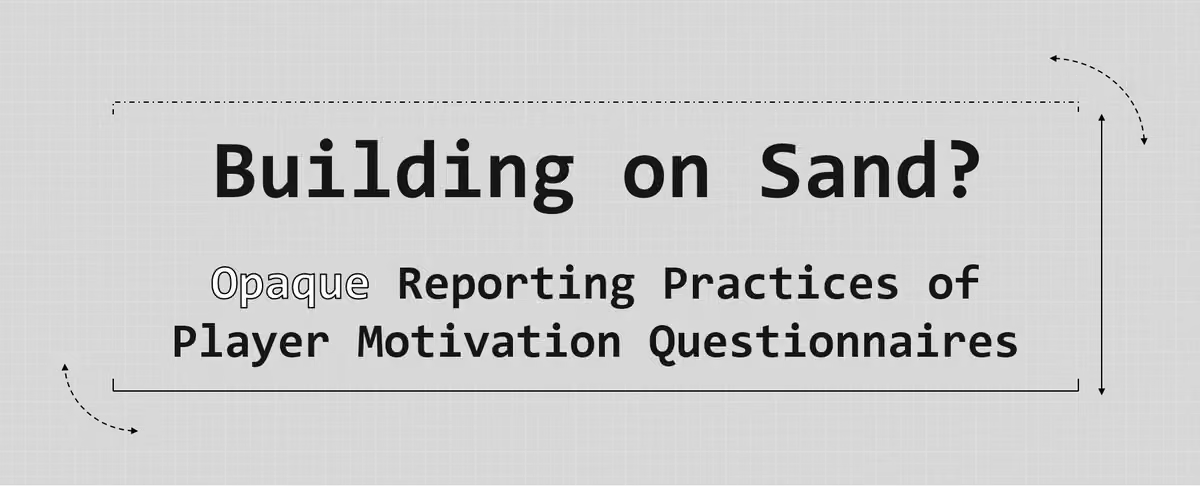
Sebastian Deterding reposted
 Guenter Wallner
@wallnergue
Short reminder that applications close soon. #phdposition #gamesur
Guenter Wallner
@wallnergue
Just finished your Master degree and are looking for a PhD position? I have an open full-time PhD position @jkulinz in games user research or games analytics. Apply by August, 31st. www.jku.at/en/the-jku/work-at-the-jku/job-openings/academ… (ref.nr. 4487) #gamesur #phdpositions #academictwitter

Sebastian Deterding reposted
 Amy Jo Kim
@amyjokim
THIS is the content I'm here for 🤩 #economy #systemsthinking
 Axie Pulse
@AxiePulse
A full diagram of the @AxieInfinity economy outlined
#nftgaming #cryptogaming
 Sebastian Deterding
@dingstweets
This is what keeps me up at night. We are now catching fraud from 10y ago because it was sloppy. With know-how about the data checker tools & approaches of today, it's trivial to *simulate* a data set that supports my hypothesis *and* passes today's fishiness tests.
Dr. Casey Fiesler is no longer on here
@cfiesler
Another suggestion for what academia should learn from that kind of scandal is more candor about the potential for falsified data. I truly believe that the vast majority of scientists have individual integrity and that science can be trusted. But we still have to recognize this.
 Sebastian Deterding
@dingstweets
Data sleuths regularly simulate 1,000s of studies in R with a true underlying effect to e.g. demonstrate how unlikely a certain distribution of p-values is. It is trivial to use the same tool to generate 1,000s of spurious datasets/"replications" that behave like we expect them.
Sebastian Deterding reposted
 Raphaël de Courville
@sableRaph
I believe that successful #generativeart collectors will be the ones who understand the history of computer art 🤓 Here are some good reads / coffee table conversation starters to get you started. A thread 🧵

Sebastian Deterding reposted
 Clive Thompson
@pomeranian99
Why aren't there bricklaying robots?
Because mortar behaves in really weird ways. From my "Linkfest" uxdesign.cc/slow-mo-moths-a-left-handed-nes-controller-an…
Tech folks are increasingly flummoxed by the real world; they've been trained on bits (easy to wrangle), then try to wrangle atoms, which are ... *hard*
 Sebastian Deterding
@dingstweets
👇What Tom said.
tomstafford@mastodon.online
@tomstafford
How I feel about psychology research 1990 - 2010 right now
Sebastian Deterding
@dingstweets
Another inconvenient truth for #nudging and behaviour change design to contend with.
 Joe Simmons
@jpsimmon
I used to teach this finding to my MBA students. It has more than 400 citations on Google Scholar. It's about dishonesty. Turns out it's fraudulent. "Evidence of Fraud in an Influential Field Experiment About Dishonesty" datacolada.org/98
 Sebastian Deterding
@dingstweets
I’m reminded again of the wave of recent studies showing that even lay people can accurately predict whether a study will replicate. journals.sagepub.com/doi/full/10.1177/2515245920919667
Sebastian Deterding
@dingstweets
In hindsight, so much nudging work has the form of cognitive catnip: sexy, counterintuitive, small changes with big effects requiring little inconvenient system change. Maybe we can & should trust our intuitions more to be sceptical of anything too good to be true.
Sebastian Deterding reposted
 Daniel Cook (also on mastodon)
@danctheduck
I am wary of narrative BS driving tech trends.
Storytelling only needs to *feel* like it makes sense. But it never needs to produce solutions that function in the real world.
For those interested in the metaverse, VR, AR, etc, it is worth looking back at 'virtual worlds'
Sebastian Deterding
@dingstweets
Internet academic friends, any pointers to good articles on why and how measurement flexibility can be a problem for progress in research? Looking at @EikoFried, @maltoesermalte.
Sebastian Deterding
@dingstweets
For context, we want to argue for more standardised measures/manipulations of “difficulty” in flow/games research. HUGE variability in operationalisation, lots of unvalidated ad-hoc self-report measures, …
Sebastian Deterding reposted
 Fabian Dablander (@fdabl.bsky.social)
@fdabl
Could early warning signals based on critical slowing down have helped us anticipate the second COVID-19 wave?
In a new preprint, Hans Heesterbeek, @BorsboomDenny, @drake_lab, and I investigate this question using empirical analyses and a simple model 🧵 medrxiv.org/content/10.1101/2021.07.27.21261226v2

Sebastian Deterding reposted
Diego Perez-Liebana
@diego_pliebana
We at @GameAI_QMUL have been working for the last months on our framework for General Strategy Games: Stratega [🧵]

Sebastian Deterding reposted
Christian Guckelsberger
@creativeEndvs
Our latest contribution to industry-level automated playtesting for player modelling: by (a) combining DRL and MCTS and (b) augmenting new gameplay features, we predict player difficulty and engagement in the commercial game Angry Birds Dream Blast. arxiv.org/abs/2107.12061
Sebastian Deterding reposted
 Simon Wardley
@swardley
And here we go, China starts to tackle the issues of inequality ... no, this isn't just a random activity ....
 Marcus
@MappingMarcus
China tackling the roots of inequality before it becomes a problem? @swardley www.ft.com/content/fe2d8281-61ba-4b1b-8962-2496be79d8a2
Sebastian Deterding reposted
 Christian Katzenbach @cka@aoir.social
@ckatzenbach
📢Pre-Announcement: I will built a lab “Platform Governance, Media, and Technology” @ZeMKI_Bremen and hire three positions this:
✅a postdoc “platform governance”
✅a postdoc “empirical social media research”
✅a phd “Imaginaries of AI” in GER, USA, CAN.
More infos 👇
Sebastian Deterding reposted
Christian Katzenbach @cka@aoir.social
@ckatzenbach
📢At my future academic home @ZeMKI_Bremen, we are hiring another professor: media/comm studies w/focus on methods innovations (tenured). ZeMKI is a fantastic place to study the digital transformation, and German prof positions are 👌Deadline soon!⚠️ www.uni-bremen.de/fileadmin/user_upload/fachbereiche/fb9/… (pdf)
Sebastian Deterding reposted
Sebastian Deterding
@dingstweets
Why do we accept statements about the blanket effects of "games", "tv", "social media" on X (= wellbeing, learning, ...), when we similarly rightfully reject the very idea that we could test the blanket effect of "medicine" on any given health condition?
Sebastian Deterding
@dingstweets
Why do we accept statements about the blanket effects of "games", "tv", "social media" on X (= wellbeing, learning, ...), when we similarly rightfully reject the very idea that we could test the blanket effect of "medicine" on any given health condition?
Sebastian Deterding
@dingstweets
But this is conceptually no different from saying that specific games/tv shows/social media offerings entail specific affordances that work through specific causal pathways to affect specific mechanisms underlying specific individual states.
Sebastian Deterding
@dingstweets
Why does it seem okay to count Sudoku, Doom Eternal, and Among Us as "Games" or "Screen Time" with uniform effects, but ludicrous to count Paracetamol, Viagra, and Zoloft as "Medicine" with uniform effects?
Sebastian Deterding reposted
 Mark Nelson
@mm_jj_nn
New paper from me, Estimates for the Branching Factors of Atari Games. www.kmjn.org/publications/AtariBranching_CoG21-abstract.html
 Sebastian Deterding
@dingstweets
Useful thread for qualitative research folks out there, especially if you are using thematic analysis.
Sebastian Deterding
@dingstweets
One sign of a good thread is it prompts another, so here goes. YES, many designers want go get things right, while certain biz practices are about just shipping it = time to market and maturing with the customer. AND …
 Andy Budd
@andybudd
I believe there is a fundamental disconnect between the way designers and business people think. A disconnect that causes a huge amount of personal dissatisfaction. Let me try and explain...
Sebastian Deterding
@dingstweets
Double diamond assumes (given its origin in industrial design) that large scale production is high cost, high risk. It de-risks production. That may remain apt in areas where launching ‘faulty’ remains high-risk: health care, essential services, high-profile brands, …
Sebastian Deterding
@dingstweets
But all of this is to say I see less of a disconnect here: if we view design as problem-solving/taming wicked problems via iterating through a design space, both “sides” do that, and the biz side just takes into view extra/diff constraints (cash flow, time to market. Etc.).
Sebastian Deterding
@dingstweets
Tweet-alert: In the next three days, I will attend and probably live/sub-tweet the conference "Art and Affect in the Predictive Mind", unpacking how the cogsci framework of predictive processing may be a grand unified aesthetic theory. #artaffectpp sites.google.com/view/artandaffectinpp/home?authuser=0
Sebastian Deterding
@dingstweets
I'm very excited because it's been more than 2 years that I just took time to absorb information from a newish-to-me field (@interact_minds's awesome Open Science and Reproducibility workshop), and that still scores as one of my most enriching and inspiring academic moments.
Sebastian Deterding
@dingstweets
I find it fascinating that the most complex, expensive, and biggest pile of matter that also absorbs the most care and time in the interaction delivering the vaccine shot is not the vaccine and syringe, but a laptop.
The majority of contemporary medicine is digital record-keeping
Sebastian Deterding
@dingstweets
Public Digital Infrastructure/Service Nerds, tell me if this is a stupid/tried-and-failed idea: compliance as a public service. Want to bid for a gov contract but don’t know how to to all the compliance? Bid & declare which bits you don’t know …
Sebastian Deterding
@dingstweets
… and the procurement platform adds a default fee for gov service that does that compliance bid for or with you. Thus regulations don’t ice out newcomers/benefit big Serco/Blackrock incumbents.
Sebastian Deterding reposted
 CODE-CWA
@CODE_CWA
| ̄ ̄ ̄ ̄ ̄ ̄ ̄ ̄|
| Tech worker |
| organizing |
| is part of |
| regulating tech! |
| __________ |
(\__/) ||
(•ㅅ•) ||
/ づ
Sebastian Deterding reposted
 FSD in 6 months
@FSD_in_6m
The author posted this video in the comments. It's a truck full of traffic lights.
Sebastian Deterding reposted
 Emily Short (no longer here)
@emshort
All my followers who
- loved Jon Ingold's Make It Good and wished for more – or
- wanted to love it but bounced off the parser format
I have some good news for you:
inkle is EXPELLED!
@inkleStudios
🎉SURPRISE! 🎉
🌊⛴️🌊 OVERBOARD! 🌊🌊🌊✋
A replayable detective game - where you're the one whodunnit.
... So who will take the fall?
🗡️Out NOW on Switch, @Steam, @GOGcom & iOS
▶️▶️ inklestudios.com/overboard
Steam: store.steampowered.com/app/1546920/Overboard
🩸GET AWAY WITH MURDER
🔁's = ❤️!
Sebastian Deterding reposted
 Rebecca Fiebrink is not here. (see bio)
@RebeccaFiebrink
Come work with me! We're hiring a bunch of academics (permanent positions) in Creative Computing! ❤️🌈💻🎨
We'd especially love to increase the diversity of CCI and we're able to offer application consultations to anyone from a Black or Minority Ethnic community (see thread)
 UAL Creative Computing Institute
@ual_cci
1/5 - 🚨 We are hiring:
Lecturer, BSc Creative Computing
ual.tal.net/vx/lang-en-GB/mobile-0/appcentre-1/brand-1/ca…
Senior Lecturer, BSc Creative Computing ual.tal.net/vx/lang-en-GB/mobile-0/appcentre-1/brand-1/ca…
Lecturer, MSc Creative Computing
ual.tal.net/vx/lang-en-GB/mobile-0/appcentre-1/brand-1/ca…
Lecturer, MA/MSc Modular and Online PG ual.tal.net/vx/lang-en-GB/mobile-0/appcentre-1/brand-1/ca…
Sebastian Deterding reposted
 George Pointon
@GeorgePointon_
I asked my year 1 classes 'What's the one thing you need to be an adult?'
Here is my analysis;
A THREAD
Sebastian Deterding
@dingstweets
"Crypto" at this point in history = the commodification of everything, including intangibles. Let's artificially diminish and destroy the total use value of non-rivalrous, non-scarce goods by making them rivalrous and scarce.
Sebastian Deterding
@dingstweets
NFTs are the capitalist dark scanner of @bruces' spimes. Not "material instantiations of an immaterial system": immaterial instantiations of virtual materiality with the end goal of turning the whole (im)material world into objects of pure speculation.
Sebastian Deterding
@dingstweets
The crypto wet dream: futures on render ghosts, where nothing is ever made, but ownership in imagined projects & their projected prospective receivables circulates, its market valuation finally untethered from any pesky real assets or use values. Fiat Market: The Fantasy Sport.
Sebastian Deterding
@dingstweets
Okay, so my top 3:
1. Lithuania
2. Iceland
3. Ukraine
#eurovision
Sebastian Deterding
@dingstweets
Now I know what #swi reminded me of... it’s like David Copperfield meets a deconstructed Labyrinth. #eurovision

Sebastian Deterding reposted
 Dionis 🐥
@insanity_boyyy
Me in front of family vs me with friends
#eurovision

 Sebastian Deterding
@dingstweets
Germany: „Middle Finger? WE HEAR YOU, Finland!“ #eurovision
Sebastian Deterding
@dingstweets
I haven’t heard such a German English in quite a time. Sorry, I guess. #eurovision
Sebastian Deterding
@dingstweets
Can’t wait for the dress doing its solo? #rus #eurovision
Sebastian Deterding
@dingstweets
Pizza and ... pottery? #eurovision
Sebastian Deterding
@dingstweets
So #bel is going for a minimalist “how much song can you get out of one note”? #eurovision
Sebastian Deterding reposted
Kasper Hornbæk
@khornbaek
Come work with us on #hci and #ai. Deadline June 1st; feel free to retweet and dm me to learn more.
Christian Igel
@christian_igel
The Department of Computer Science at the University of Copenhagen (@diku) is looking for a #postdoc to work in the intersection of #hci and #machinelearning, deadline already June 1:
candidate.hr-manager.net/ApplicationInit.aspx/?cid=1307&d…
@DikuMachine @khornbaek
#copenhagen #artificialintelligence
Sebastian Deterding
@dingstweets
Seconded. And backed.
Sebastian Deterding
@dingstweets
Yes, and –– I think this is a "both and" case. Just like medicine is both a subset of medical anthropology – all medicine is part of, co-constituted by, embedded in social interaction – and a set that analytically brackets all that to be able to advance "medical knowledge".
Nathan Hughes 🏳️🌈🏳️⚧️
@NGJHughes
The longer I've been in a CS department the more strongly I believe the following is true: #hci is not a subset of computer science. Computer science is a subset of HCI.
Sebastian Deterding
@dingstweets
That said, as with medical anthropology, I think "computing is a subset of general social-behavioural phenomena" is probably the most productive conceptual framing for HCI, CS ethics, CSCW –– and one many in these fields already embrace.
Sebastian Deterding
@dingstweets
I sense games research is reaching a new generation of maturity: rigorously (re)conceptualising key constructs in a way that is deeply literate in prior work and evidence. This survey paper on game feel is an excellent (and excellent) case in point.
Martin Pichlmair
@martinpi
You have heard of juiciness in game design and you know what polish does and how important it is. But how do we design the “feel” of a game? And how does a game elicit a certain feeling? (1/7)
Sebastian Deterding
@dingstweets
Not a sub-tweet: The computational revolution, where every field theorised its subject matter as information and control systems, is 70-50 years old: info theory, cybernetics, systems theory were widely embraced 1950s onward. How is this time different? 1/n
 François Chollet
@fchollet
Within 10-20 years, nearly every branch of science will be, for all intents and purposes, a branch of computer science.
Computational physics, comp chemistry, comp biology, comp medicine... Even comp archeology. Realistic simulations, big data analysis, and ML everywhere
Sebastian Deterding
@dingstweets
We can even go back and observe that nearly every branch of science, for all intents and purposes, became a branch of statistics in the late 19th and early 20th century (see the works of Theodore M Porter and Ian Hacking). 5/n
Sebastian Deterding
@dingstweets
Which is to say: We've seen these "revolutions" before, & they get commoditised from competitive advantage (w/ experts as high-status superstars) into infrastructural utility (w/ experts as essential but low-status plumbers). /end
Sebastian Deterding
@dingstweets
Really lovely, timely, accessible, useful little book on design research and design as research.
 nicolasnova
@nicolasnova
Investigation/Design: I am pleased to publish this small book that reviews my research work at the intersection of social sciences and design research, in the new collection of the Geneva University of Arts and Design:
api.head-publishing.ch/uploads/ENG_Nova_WEB_e4b49bc3e1.pdf
Sebastian Deterding reposted
 a sentient electron 🧠🔬⚛️
@quantumbeans
types of scientific paper

Sebastian Deterding reposted
 Mark Riedl
@mark_riedl
Been saying this for a while but if you want to solve self-driving cars, work with municipalities to build smart cities. Separate autonomous vehicles from humans with infrastructure like dedicated lanes. But then you will discover that it’s just easier to build mass-transport
Sebastian Deterding reposted
Mark Nelson
@mm_jj_nn
Here are the paper deadlines I know of for 2021 editions of the technical games research conferences I've been doing bibliometrics on. A bit late since some deadlines have already passed, but nonetheless: www.kmjn.org/notes/game_confs_2021.html
Sebastian Deterding
@dingstweets
Today’s comments, as ever, are brought to you by Poe’s Law.
Sebastian Deterding
@dingstweets
Attending a philosophy seminar via Zoom and dunno it's all stereotypes of course but I also studied philosophy and it fits my past experience and expectation that *of course* it starts 15 minutes late. 🤷♂️☺️
Sebastian Deterding reposted
 Steak-umm
@steak_umm
when all else fails just reply to conspiracy theorists with stock photos of cyber women and corn. the less sense it makes the better


 Sebastian Deterding
@dingstweets
Musing: Lots of current deplatforming, cancelling, free speech debate seems to take the web1.0/web2.0 counterfactual utopia of universal equal read/write access as its normative baseline: Censorship is equated with *any* channel provider treating *any* sender unequal. <thread>
Sebastian Deterding
@dingstweets
(9) But also: What a weird, counterfactual *clusterfuck* of a debate this is producing. </thread> #postingunderinfluence
Sebastian Deterding
@dingstweets
PS. I suspect a good chunk of this is the frame confusion of "personal communication" (e.g. letters, telephone) and "mass media" (e.g. TV, radio) that Internet media convergence produces. We constantly get our normative frames mixed.
Sebastian Deterding reposted
 MC HAMMER e/acc
@MCHammer
As I prepare my brain to elevate to a higher level of consciousness and meticulously focus on my nuance and tones whilst I pontificate and spar with like minded intellectuals,please allow me a moment to indulge in a bit of this !!!!!! 😂🕺🏾🕺🏾🕺🏾🤣
Sebastian Deterding
@dingstweets
Summertime is near: Students, come do a paid 8 week placement in York, working with lovely @labsofdc peeps and me on projects like tracking dopamine and tech addiction myths in online media, or mapping human-AI co-creative systems! Apply by May 10: digitalcreativity.ac.uk/news/dc-labs-summer-school-2021
 Sebastian Deterding
@dingstweets
Just finished my first ever @fastaval RPG session (thx, virus!), and while the session itself was perfectly enjoyable, I enjoyed the postmortem dissection & "how to improve" even more. Guess I'm a researcher/designer after all. #professionaldeformation
Sebastian Deterding reposted
 RealScientists
@realscientists
Most healthcare technologies are disruptive, but often come with a significant price tag. Coming from a developing country, the best kind of tech for me are ones that are cheap, easy-to-use and adaptable to multiple settings. So it’s #frugalfriday!
Sebastian Deterding
@dingstweets
Let's apply the "men cause 100% of unwanted pregnancies" logic here: If ghettoisation is a societal issue, why is the blame put with "Non-Westeners" and the solution their forced resettlement? Why not force resettlement of Westeners into these regions instead? #snarkynotsnarky
 Sebastian Deterding
@dingstweets
I mean, the underlying cause seems to be "ethnic out-migration" aka "white flight", so ... osf.io/preprints/socarxiv/tx7b6/
Sebastian Deterding reposted
 Jonty Wareing ⍼
@jonty
Out of curiosity I dug into how NFT's actually reference the media you're "buying" and my eyebrows are now orbiting the moon
Sebastian Deterding reposted
 Abby Covert
@Abby_the_IA
Thread: I taught diagrammatic technique and critique to UX students over the weekend. In 35 diagrams critiqued, I saw the same five problems over and over again.
So ...if your diagram is a mess, listen up I have five lessons to share
👷🧵(1/7)
Sebastian Deterding
@dingstweets
An excellent, excellent look at the reality of “responsible AI”, I am certain not just at Facebook. I would call this “decoy debate”: focus ethics discourse on a topic (here: bias) that doesn’t touch actual issues actually touching your bottom line (here: misinformation).
 Karen Hao
@_KarenHao
Nine months ago, I learned that Facebook has a Responsible AI team, and has had some form of it since Cambridge Analytica. I began to wonder: what has it been doing these past three years? Nearly four-dozen interviews later, here's what I found. www.technologyreview.com/2021/03/11/1020600/facebook-resp…
Sebastian Deterding
@dingstweets
Better yet: find a rhetorical way in which “being responsible” can be flexibly interpreted into anything that serves your bottom line.
Sebastian Deterding
@dingstweets
NFTs, but for digital photos of landscapes in climate flooding zones.
Sebastian Deterding reposted
 Tom Coates
@tomcoates
In the latest AI/Machine Learning horror, HP Lovecraft sings Rick Ashley’s “Never Gonna Give You Up”.
x.com/captainfez/status/1369448714922844161/video/1
Sebastian Deterding
@dingstweets
I’ve begun to dread the opening of online conversations: you can’t really ask “How are you?” because HONESTLY WHAT DO YOU EXPECT ME TO SAY and you don’t want to remind the other of their misery and how else to you start?
Sebastian Deterding
@dingstweets
Maybe there is solace in my Westphalian origins. Our standard call-and-response is:
“Und?” “Muss ja.”
“And [how is it going]?”
“Has to.”
Sebastian Deterding
@dingstweets
Native male speakers can shorten this to:
<grunt>?
<grunt>.
Sebastian Deterding
@dingstweets
Just one out of 11 papers that give me severe pandemic productivity envy (PPE):
Sebastian Deterding reposted
 Isabela Granic
@PlayNiceInst
Reposting this incredible post-doc opportunity: Work w/ a stellar interdisciplinary team of psychological scientists, designers, engineers, teachers, & young people committed to building & evaluating a game to help prevent violence & ⬆️❤️thriving.
📱👩🔬💙
aprecruit.berkeley.edu/JPF02840
Sebastian Deterding reposted
 The Birdbassador
@Birdbassador
matt please keep to the schedule, the whole operation is compromised otherwise
 Sebastian Deterding
@dingstweets
There's a bit of hustle in everything.
Sebastian Deterding
@dingstweets
Together with the web we lost (@anildash), we lost a kind of sincere, hopeful, wondrous, renaissance thinking in public that felt its way forward into future technologies as we built them, with places like lift, PICNIC, or reboot as their stage. I miss it deeply.
nicolasnova
@nicolasnova
During our @nearfuturelab meeting today we revisited "The Luminous Bath: our new volumetric medium” by @neb
vimeo.com/6453613
Sebastian Deterding
@dingstweets
Digging out fragments like The Luminous Bath, yes, there's ludicrous-in-hindsight optimism and extrapolation, but also this urgent will to language for that for which there was no language yet, coining incisive phrases: luminous bath; small pieces, loosely joined; etc.
Sebastian Deterding
@dingstweets
So yes, the people who did the web thinking in the 90s/00s that gave us today's language were privileged/not-so-ordinary in certain ways. The community then was blind to some of its own biases and exclusions – as arguably all groups are by default.
Sebastian Deterding
@dingstweets
But I think that doesn't invalidate the historical moment of *intellectual* openness for different concepts and words, even if they were coined by the not-so-different groups of people.
Sebastian Deterding reposted
Rebecca Fiebrink is not here. (see bio)
@RebeccaFiebrink
Come work with me! We're looking for 2 research assistants (MA level & up) to help us @ Creative Computing Institute to develop a bunch of new research bids in creative computing subjects: ual.tal.net/vx/lang-en-GB/mobile-0/appcentre-2/brand-1/ca…
Sebastian Deterding reposted
Martin Pichlmair
@martinpi
Great reflection on how the world of high art maintains a wall around itself.
Sebastian Deterding
@dingstweets
Creative technologists/researchers, come work with us!
Our lovely Interactive Media Group at @UniOfYork is looking for a new mensch to join us. Assistant prof/lecturer, full-time, permanent, research & teaching, £40-49k.
jobs.york.ac.uk/wd/plsql/wd_portal.show_job?p_web_site_id…
Sebastian Deterding
@dingstweets
I predict that this will become a seminal paper in play and games research – even though according to its theory, y'all rapidly citing and discussing this paper will therefore not create or reduce my surprise unexpectedly & thus be not very fun for me.
Still, go and read!
Sebastian Deterding
@dingstweets
"I can't even imagine what it was like to be without Qualia!"
Brought to you by the fine people who made
* Quiddity(tm) liquid essence: "Phenom!"
* Dasein(tm) earthy broth: "Transcendent"

Sebastian Deterding reposted
Isabela Granic
@PlayNiceInst
This is the truest thing I've read in a long time. This is literally all I want (workwise).
Love how it ends with "Maybe even a few... social scientists do too."
Sebastian Deterding
@dingstweets
Sorry not sorry.

Sebastian Deterding reposted
 Andreas Lieberoth
@lieberothdk
"correlations between estimated use and well-being variables were consistently stronger than the correlations between reported actual use and well-being variables"
Great stuff by @cjsewall9 & co on #mobilephone #screentime
journals.sagepub.com/doi/10.1177/2050157920902830
 Sebastian Deterding
@dingstweets
It amazes me how much the falling snow is lifting my mood. Apart from the added brightness to the visual field, I think it‘s sheer novelty in the environs that I crave in the monotony of lockdown.
Sebastian Deterding reposted
 Matt Webb 🌸🌼 genmon.fyi
@genmon
I found a chat transcript from last year where the AI told me what the big new game of 2021 will be
Sebastian Deterding
@dingstweets
Mal wieder auf Deutsch: 20 kurzweilige Minuten über Gamification im Interview mit @verenautikal: www.n-tv.de/mediathek/audio/Gamification-Unangenehmes-bel…
Sebastian Deterding reposted
Nick Ballou (is mostly on a Tw*tter hiatus)
@nbballou
if you're looking for an enjoyable light read to end your week, check out the preprint of our #chi2021 paper on transparency and openness policies in journals used by the HCI community! spoiler: the situation is grim.
w/ Vivek Warriar and @dingstweets
eprints.whiterose.ac.uk/170362/1/Are_You_Open_A_Content_A…
Sebastian Deterding
@dingstweets
Listening to the first minutes of “In Search of Lost Time”, and all I can think is: Without bourgeoisie, no phenomenology. This extraordinary privilege of care-free time to examine and record your inner life so closely.
Sebastian Deterding
@dingstweets
For interested German speakers, it’s this nice new full reading on rbb: www.rbb-online.de/rbbkultur/podcasts/marcel-proust/auf-de…
Sebastian Deterding
@dingstweets
Lovely piece of work from one of our @iggiphd.s, and a very good example for the grounded, descriptive work we arguably need much more of on many constructs and terms in games/HCI research.
Nathan Hughes 🏳️🌈🏳️⚧️
@NGJHughes
Very excited to announce my first, first author paper is now published! In it I talk about understanding player experiences, focusing on #openworld games. #phdchat #gamesresearch
When is an open world, not an open world? When the bridge collapses. 🧵1/
authors.elsevier.com/a/1cOPR6gYiZlmOh
Sebastian Deterding
@dingstweets
I particularly like the fact that it acknowledges and reconstructs multiple interacting affording factors, unlike much of monocausal uni-linear quant models and unlike many additive “here’s an unconnected list of themes” qual studies.
Sebastian Deterding reposted
 Alan Zucconi
@AlanZucconi
Another reason that makes 2020 such a sad year, is that it will see the official end of Adobe Flash.
As a tool, it kickstarted the Golden Age of Indie Games. And much of where we are today, we owe it to Flash and its gamedev pioneers.
Let's pay homage to some of them...
🧵👇


Sebastian Deterding reposted
 Now Play This
@nowplaythese
Now Play This 2021 is in the works! This edition’s programme will focus on the relationship between play, games and the escalating climate crisis. As part of this we've launched our open call! We're looking for digital and physical games, talks and more. nowplaythis.net/2020/12/17/now-play-this-2021-open-call/
 Sebastian Deterding
@dingstweets
Ceterum censeo we need a @bbsjournal target article on that. (I’ll just repeat every year until @jcskewesdk writes it 🙃.)
Sebastian Deterding reposted
 Simon Colton
@SimonGColton
It’s the #neurips2020 creativity workshop today! Our paper describes neural #styletransfer in a casual setting & how half-blood (i.e., mixing in some trad graphics) are more fun than pure-blood approaches. Some images from my new “Style Done Quick” iOS app: #creativeai @elluba


Sebastian Deterding reposted
 fintechjunkie
@fintechjunkie
1/11: I was in a Board meeting not too long ago where the CEO and one of the company’s Board members obviously weren’t seeing eye to eye. It was awkward and avoidable if each person realized how they were behaving. The situation reminded me of a well-known parable:
Sebastian Deterding
@dingstweets
This has been the first week in MONTHS that I have ended with a to-do list that is shorter than it was on Monday. #littlecelebrations
 Sebastian Deterding
@dingstweets
Quick reminder: Our @iggiphd programme has opened applications for fully funded PhDs (fees + living stipend), open internationally! Any questions, just @ or DM me – and please share. 😊
iggi.org.uk/apply

Sebastian Deterding reposted
 pictures of the end
@neighbours_wifi

Sebastian Deterding reposted
 Joe Cutting
@joe_cutting
Yay! New paper published! Myself and Paul Cairns present a new way of measuring how well games hold your attention which we've called the Distractor Recognition Paradigm. We use it to show that even simple puzzle games can hold your attention completely.
Sebastian Deterding
@dingstweets
Super-interesting stuff.
Perttu Hämäläinen
@perttu_h
Excited to present our Rovio collaboration, accepted to CHI PLAY 2020. We predict pass and churn rates of game levels using AI players, with a novel combination of deep RL gameplay and a simulation of how the player population evolves over the levels. arxiv.org/abs/2008.12937
 Sebastian Deterding
@dingstweets
ai.googleblog.com/2020/11/using-gans-to-create-fantastica…
Martin Pichlmair
@martinpi
I am not sure my mouse painting abilities do Google's Chimera tool justice. A mixed-initiative tool that supports context-sensitive artistic choices is a clever idea nevertheless.

Sebastian Deterding reposted
 Will Smith
@WillSmithVision
On the day that @UniOfYork comes top of the Waterfowl University Rankings (bantshire.github.io/ranking-fowl.html) it seems appropriate to announce a duck-themed upcoming paper at @accv2020 "Reconstructing Creative Lego Models" eprints.whiterose.ac.uk/166310/1/0440.pdf @Cascadesssss @dingstweets @patrik_cpp 1/2

Sebastian Deterding reposted
Dr. Casey Fiesler is no longer on here
@cfiesler
Hello, fellow kids. I am now handing out PhD application tips on TikTok. Here’s a thread of them. :) #phdchat vm.tiktok.com/ZMJ991qLU/
Sebastian Deterding reposted
 Vili Lehdonvirta
@ViliLe
Susan Star’s method of infrastructure studies: moments of breakdown reveal unseen power structures. We applied this to the Bitcoin case here: journals.sagepub.com/doi/full/10.1177/1461444818786220
 Angela Walch
@angela_walch
The post-mortem on how this issue is fixed (and who was involved in fixing it, making the decisions, what info was public/private) will reveal more about the pockets of power within the Ethereum system.
Sebastian Deterding
@dingstweets
Digital health/behaviour change interventions need an equivalent of "total cost of ownership": "total system efficacy" – how efficacious an intervention is rolled out as a whole system in the wild, not as a proof of principle in the lab.
Sebastian Deterding
@dingstweets
If you calculate cost/benefit (e.g. QALY/pound) from a total system efficacy perspective, my hunch is "automated text reminder" outperforms "VR therapy" at multiple orders of magnitude.
Sebastian Deterding
@dingstweets
Put differently: instead of factoring out low discovery, adoption, adherence, etc as misfortunate deviations from a counterfactual norm, we should measure population-level effects factoring in all of the above as the norm your design needs to deal with effectively.
Sebastian Deterding reposted
 Ella Paldam
@ellapaldam
I find comfort in this map 💜 Different shades of purple seems much more interesting than red vs blue...
 Dr. Sara Konrath
@SaraKonrath
Our research has found that red & blue US political maps create increased perceptions of polarization and more political stereotyping, compared to more accurate purple maps.
spssi.onlinelibrary.wiley.com/doi/abs/10.1111/j.1530-2415…
Thanks to @geealbers for this new website: purplestatesofamerica.org

Sebastian Deterding reposted
tomstafford@mastodon.online
@tomstafford
Students told to analyse a dataset to test a specific hypothesis tended to miss the gorilla hidden in the data genomebiology.biomedcentral.com/articles/10.1186/s13059-0…
 Sebastian Deterding
@dingstweets
Come do a PhD with me and dozens other lovely scholars, PhDs, companies: our @iggiphd programme has opened applications for fully funded PhDs (fees + living stipend), open internationally! Any questions, just @ or DM me – and please share. 😊
iggi.org.uk/apply
 Sebastian Deterding
@dingstweets
"Let's start in Tadasana."
Best four words of my week.
Sebastian Deterding
@dingstweets
Seeing as we are cursed with interesting times for the next century+, what would a politics of resilience look like? I’m certain many smart people have written many smart words on that already - please send recommendations my way 🙂.
Sebastian Deterding
@dingstweets
E.g., history abounds with periods of extreme volatility and collapse. What philosophies and views of statecraft did they birth? Among those communities that came out surviving and, after some time, even thriving?
Sebastian Deterding
@dingstweets
And to by symmetrical, not just stare at ideological superstructure, etc.: Any analyses on the material bases, institutions, infrastructures, practices, resources that helped communities persevere through volatility and collapse?
Sebastian Deterding
@dingstweets
.@MiroHQ is ridiculously powerful for education. Teacher and students can see different teams' different approaches to solving a task in real-time in parallel, everything is auto-archived in digital form. And digital typing = everything is legible.
Sebastian Deterding
@dingstweets
It also supports excellent group brainstorming: People can add ideas to a shared board *silently* and *in parallel* -- ideas can immediately build on other ideas without interfering with other's thought processes. Faster, more elegant than brainwriting with separate phases.
Sebastian Deterding reposted
 Thom Scott-Phillips
@tscottphillips
testandtraceMASTERv2FINALv3finalpart2extrasheet4.xlsx.xlsx
Sebastian Deterding
@dingstweets
New open access review out by @jeskevandegevel, @Jacobvanetten & me: "Citizen science breathes new life into participatory agricultural research" – or, how may citizen science practices + tech overcome issues & hurdles of participatory research?
link.springer.com/article/10.1007/s13593-020-00636-1
Sebastian Deterding reposted
Sebastian Deterding
@dingstweets
Do you study how Covid-19 drives socio-technical change & challenges tech ethics/regulation as usual? Then submit to our special issue "After Covid-19" in IEEE Transactions on Technology and Society, rolling online publication, deadline March 1 '21: www.imperial.ac.uk/design-engineering/research/responsibl…
 Sebastian Deterding
@dingstweets
Pondering: Physical conferences open a window of undisturbed focused time by giving you a physical shield, commitment, and alibi against other demands: I’m physically and socially OUT OF OFFICE. How can digital conferences in a WFH context emulate that?
Sebastian Deterding reposted
 Bharathy Premachandra, Ph.D
@Psyched_Psyche
1/7. Excited to share my first paper! "Do We Report the Information that is Necessary to Give Psychology Away? A Scoping Review of the Psychological Intervention Literature 2000-2018" is now in press at Perspectives on Psychological Science. psyarxiv.com/nr8kh
 Sebastian Deterding
@dingstweets
ICYMI, our PAX panel on what we know (and mostly don't know) about how people may use games to cope during Covid-19 is now online for rewatching.
Sebastian Deterding
@dingstweets
Come join watching us looking silly into a camera. www.paxegx.com/livestreams/pax-x-egx-pax/did-animal-cross…
 Sebastian Deterding
@dingstweets
Time to read Bent Flyvbjerg's 'Mega-Projects and Risk' again, it seems.
tl;dr: All mega-projects fail or overrun cost & time estimates 2-10x and more b/c complexity, unintended consequences, self-serving/deceptive optimism of politicians and contractors. www.theguardian.com/world/2020/sep/09/what-is-no-10s-moon…
Sebastian Deterding
@dingstweets
In this context, it's particularly ominous that government consultants and contractors who would land the biggest contract of the century were directly involved in drafting it. 'Sure Mr PM desperate for a positive news story, we can get them for you wholesale and by Tuesday.'
 Sebastian Deterding
@dingstweets
For context, if even us Germans managed to bungle building an airport in Berlin (which, you know, a pretty well-understood project with many precedents), turning EUR 2.8bn into 7.3bn+ costs and 6y into 9y construction time while delivering less than promised ....
Sebastian Deterding
@dingstweets
In other words, someone please stop Dominic Cummings from listening to any more Paul Romer podcasts.
Sebastian Deterding reposted
 Cabel Sasser
@cabel
So, @JuliaMinamata is making an amazing EGA graphic adventure, drawing each pixel by hand.
But, one Photoshop setting — understandably! — eluded her for a lifetime.
I've been here! I feel this so much! This video should be required viewing for every UI designer on the planet!
Sebastian Deterding
@dingstweets
Sitting upstairs in a local container street food thingy in the sun and I never thought me introvert would ever say that but GOD people are lovely and I missed them.


Sebastian Deterding reposted
 Scott Marek
@smarek0502
Beyond excited to share our latest work, co 1st authored with @tervoclemmensb. Using #abcdstudy data, we show that the effect sizes of brain-wide associations and sampling variability are a key element of replication failures in typical sample sizes. 1/x
www.biorxiv.org/content/10.1101/2020.08.21.257758v1
 Sebastian Deterding
@dingstweets
👇Including yours truly.
 Baltic Sea Games (BSG)
@baltic_games
Our awesome panel on serious game incubation! 👏
🗓 27 August, 15-16h CEST devcom, Stage 2
🖱 For access, please register for @Devcom_conf - www.devcom.global - and get yourself into the event app PINE - app.pinetool.ai/connect/6042!
#ddc2020 #balticsearegion #interreg
Sebastian Deterding reposted
 Ethan Zuckerman
@EthanZ
To the future occupant of my office at the @MIT @medialab: www.ethanzuckerman.com/blog/2020/08/15/to-the-future-occu…
Sebastian Deterding
@dingstweets
Stupid(?) simple(?) Darwin-inspired idea for science reform: Theory/horizon papers and background sections typically have sections titled 'evidence for X'. What about mandating an 'evidence against' section, forcing you argue how your idea can reconcile with it?
 Sebastian Deterding
@dingstweets
Of course super-hard to achieve adoption / box-ticking / selective or downplaying citing of evidence / yadayada. But nothing keeps you from setting this out in your own papers as a personal forcing function 🙂.
Sebastian Deterding
@dingstweets
Yes and: 1 This holds for talk/text about game design (the actual making is often/hopefully very empiricist). 2 Design knowledge isn’t and shouldn’t be scientific knowledge (validated general rules) - maybe with the exception of design method knowledge.
 Freya Holmér
@FreyaHolmer
game design feels like 90% pseudoscience
full of unverified correlations by way of multitudes of anecdotes stated with confidence because some author or some game happened to be successful
Sebastian Deterding
@dingstweets
Design knowledge moves in precedents, repertoires of past cases as inspiration & building block. Pseudoscience starts when that is then wrongly presented as a generalisable rule. And yes, that happens a lot in books, posts, talks 👍.
Sebastian Deterding
@dingstweets
I'll be speaking on a panel on how to incubate for applied/serious games at @Devcom_conf #ddc2020
on the Intertubez on August 27, 3pm CEST: events.pinetool.ai/585/
Sebastian Deterding reposted
Sebastian Deterding
@dingstweets
If I could have a penny for every tax payer dollar I spent on applying for tax payer dollars ...
Sebastian Deterding reposted
 ཊལབསརངཧ
@David_Rudnick
Americas innovation future is a useless plague of "former startup engineer" crap spawned of easy access to megacapital and equipment, high-problem solving capacity, and the mandatory zero social + cultural intelligence that made them a 'good fit' at Tesla nerdist.com/article/tesla-engineer-redesigned-chocolate-c…
Sebastian Deterding
@dingstweets
💯👇
Such a pertinent & fitting example of 'game thinking': understanding 'what it feels like to do QAnon', how particular structures afford particular behaviours that afford particular emotional rewards propelling the activity forward.
 Adrian Hon
@adrianhon
QAnon isn't an ARG, but ARGs can teach us why QAnon is so popular – and how to restore the lack of trust that led to QAnon's rise.
This 5700 word post draws on my 19 years of playing, documenting, designing, and running ARGs. Share and enjoy! mssv.net/2020/08/02/what-args-can-teach-us-about-qanon/
Sebastian Deterding
@dingstweets
The 1990s and early 2000s were this stew of postmodern theory, X-Files, Pynchon, fake documentaries, ARGs, urban weird fiction, all IMO credible forms of re-enchanting mundane reality, giving participants a sense of importance and agency their lives may have lacked.
Sebastian Deterding
@dingstweets
Thrill, power, camaraderie, belonging, difference, all to be had from being part of an in-group set apart from the muggles who don't look behind the veil. Good parts of hermetic magic and esoteric practices likely run on the same emotional fuel.
Sebastian Deterding
@dingstweets
Prediction: MS game pass will normalise in-game ad/purchase revenue in console/PC game in the next 3-5 years. If each individual game is practically free, players will be more accepting of incentivised ads, IAPs, battle/season passes, etc.
Sebastian Deterding reposted
 Lane Scher
@lane_scher
On July 1 I decided to start reading a paper every day. It's been three weeks and I'm thrilled to announce I've read 2 papers!
Sebastian Deterding
@dingstweets
Do you study how Covid-19 drives socio-technical change & challenges tech ethics/regulation as usual? Then submit to our special issue "After Covid-19" in IEEE Transactions on Technology and Society, rolling online publication, deadline March 1 '21: www.imperial.ac.uk/design-engineering/research/responsibl…
Sebastian Deterding
@dingstweets
Submissions welcome from STS, philosophy, history, HCI, media/comms, mgmt, innovation research, crisis studies ... any field that helps understand how crises impact socio-technical change & how science and technology ethics/regulation can answer the needs and demands of crises.
 Sebastian Deterding
@dingstweets
Our special issue editorial board includes @Rafael_A_Calvo
@CatherineFlick @chluetge @a_b_powell @Jackstilgoe @karinavold and myself.
And PS: Previous version of this thread had a wrong link, sorry! 😊
Sebastian Deterding
@dingstweets
A group of wonderful humans arguably leading the field of creativity meets AI.
Rebecca Fiebrink is not here. (see bio)
@RebeccaFiebrink
The Creative Computing Institute @ual_cci is hiring! Seeking PhD holders w/expertise in creative computing research/ data science+AI for creative industries ual.tal.net/vx/lang-en-GB/mobile-0/appcentre-1/brand-1/us… Please share! I'm happy to chat w/ anyone who's interested/has Qs about if they're qualified 🎨🖥️🌈
Sebastian Deterding
@dingstweets
Seriously, twitter? A forced, inescapable modal overlay that deceivingly mis-frames granting personal data access as quality improvement, makes the old status quo the secondary choice, and deceivingly loss-frames it as "stay a sucker"?
 Sebastian Deterding
@dingstweets
And to headline it "You're in control", that's some true Frankfurtian bullshit.
Sebastian Deterding reposted
Closing The Gap Network
@CTGNetworkUK
We are excited! Our Funding Call has gone live and it will remain open until Friday, October 30th 2020, 5pm.
Application forms & guidance notes can be found at www.york.ac.uk/healthsciences/closing-the-gap/funding-opp…
Webinar on 21.07.2020; register here: york-ac-uk.zoom.us/webinar/register/WN_khJtBf-CRamv-ptAxu…
@MHARG_york @HealthSciYork

Sebastian Deterding reposted
 Science Banana
@literalbanana
A banana explores the poweful accomplishment that the Five Factor Model of personality represents for social science carcinisation.com/2020/07/04/the-ongoing-accomplishment-o…
Sebastian Deterding reposted
Mark Riedl
@mark_riedl
This sums up the state of the art in natural language generation
 Jacob Andreas
@jacobandreas
Regina Barzilay: "NLP is very far from being like electricity. Sometimes you plug your coffee maker in and it turns into a blow dryer."
Sebastian Deterding reposted
 Alexander Clarkson
@APHClarkson
'The Performative Pint: English Masculinity in the Age of Grift 2008 - 2034, Oxford Oxford University Press, 2043, 327 pages, £3200/€14, 99'


 Sebastian Deterding
@dingstweets
Didn't make it to my @SUBOTRON lecture "Reality Check: Gamification 10 Years Later? Then enjoy the slides here and the audio soon at the subotron website: speakerdeck.com/codingconduct/reality-check-gamification-…
Sebastian Deterding reposted
 Jon Froehlich
@jonfroehlich
To remotely teach a physical computing course in Spring'20, @lianghci & I soldered 1,000+ header pins, packed & mailed ~40 hardware kits, recorded & uploaded over 100 videos, wrote thousands of lines of example code, & made 587 commits to our course site: makeabilitylab.github.io/physcomp
Sebastian Deterding reposted
 Progress Bar 2026
@ProgressBar202_
2020 is 50% complete.
 Sebastian Deterding
@dingstweets
If you have an hour to spare and want to know what I'm thinking about gamification a decade later, join my @SUBOTRON talk at 7pm Austrian time today: subotron.com/gamification
Password: reality
Sebastian Deterding
@dingstweets
I signed up. If you go 🥰 🥳 🤩 over tools to think and facilitate with, this may be a place for you, too.
 Stephen P. Anderson
@stephenanderson
I've got something exciting to announce…
After months of general planning and setting up infrastructure…
The Mighty Minds Club is…
LAUNCHED!!!
www.themightymindsclub.com
You can now (formally) sign up for the *private beta*
1st report comes out in mid-July.
Please RT
Sebastian Deterding
@dingstweets
Bullshit science PR 101: Tout high-profile adoption of a device by company that co-funds your study based on a finding touted in a since-taken-down *press release* on *early results* from ongoing study accessible nowhere. web.archive.org/web/20200617073602/https://wvumedicine.or…
 WVU Health Sciences
@WVUhealth
When the @NBA returns this summer, players will utilize the OURA ring - a smart ring that @WVUMedicine's Rockefeller Neuroscience Institute study found could detect COVID-19 symptoms up to 3 days early with 90% accuracy.
www.engadget.com/oura-smart-rings-nba-disney-world-022230…
Sebastian Deterding
@dingstweets
Honest version: Poking at data from unfinished study you can't access w/ massive conflict of interest suggests giving us a shit-ton of health metrics may let us predict with some accuracy whether you'll develop a cough or fever in the next days.
Sebastian Deterding
@dingstweets
Back when people still had standards: xkcd.com/2304/
Sebastian Deterding
@dingstweets
Grant-writing again, and yup, this still nails it.
Joe Cutting
@joe_cutting
Me, applying for a grant "Our PI is a wizard, 1 Co-I is the heir of Isildur and we have 6 other interdisciplinary Co-Is, the resources of the citadel of Gondor and several thousand riders of Rohan. But this grant will provide one additional hobbit which will transform our impact"
Sebastian Deterding reposted
Andreas Lieberoth
@lieberothdk
Let's do this one again: Participants in this study were more likely to accept bad arguments, if they were covered with some irrelevant brain jargon. Beware of attractive brain stories, and people selling you arguments covered in "neurosprinkles" www.mitpressjournals.org/doi/abs/10.1162/jocn.2008.20040
Sebastian Deterding
@dingstweets
Games research: not completely an empire of crud. Great in-depth study of player trait questionnaire validity by @iggiphd folx @NGJHughes Paul Cairns. Spoiler: It's not pretty.
Nathan Hughes 🏳️🌈🏳️⚧️
@NGJHughes
My first ever preprint is here! I analysed 11 player trait questionnaires so you don't have to. Link here:
osf.io/kehmu/
A brief summary of what I found in thread:
#gamesresearch #phdchat #academictwitter
Sebastian Deterding reposted
Steffen P Walz
@playbe
#creatables: our web conference on 17 june on cross-innovation for sustainability, w/ #ruthlemmen; #antoniabartning, #pitchyourgreenidea; @huiskonaut, @iFixitDE; daniel classen, @lightshapeGmbH; tobias reitz, @qundg; misti frantzen, @MeisterCody_EN etc. creatables.mfg.de
Sebastian Deterding
@dingstweets
I believe that in research, beliefs & gut feel come first, arguments post-rationalise. Logic & evidence constrain the post-rationalisations we can then uphold. Change in beliefs/gut feel/priors is a slow accrual process, not a sudden change due to a pivotal proof or data point.
Sebastian Deterding
@dingstweets
Ca 2010-6, I believed SDT explained game engagement. 2017/8, I believed it incomplete. 2019+, I believe most published games research is an empire of crud, we know nothing, and it’s worth going back to the first Cambrian explosion of observations and theories.
Sebastian Deterding
@dingstweets
Good q’s & observations, chiefly this: unis reopening thanks to their own testing schemes is the American way of privatisation stepping in where an internally dismantled, distrusted, defunded gov’t falls short, w/ negative externalities for everyone not in the gated community.
 Jonathan Zittrain
@zittrain
Purdue’s president says failing to reopen this fall “would be not only anti-scientific but also an unacceptable breach of duty.”
Strong words about a virus that didn’t exist in humans until several months ago, with its dynamics still being discovered. www.washingtonpost.com/opinions/why-we-have-a-responsibil…
Sebastian Deterding
@dingstweets
Thought while chatting with @kaeru on #designethics: How come designers know user behaviour emerges from a material, social, economic etc. muddle, yet they believe changing their own design behaviour only requires more information in the shape of a 'values' canvas or card deck?
Sebastian Deterding
@dingstweets
Last push: We're closing our survey midnight (London time) tonight, May 18. If you wanted to answer but haven't yet, please do! 🙏☺️
Sebastian Deterding
@dingstweets
Would you help @nbballou @helsby_laura @joiacovides and me understand how people use gaming to feel better during social isolation? Then please answer this survey and share. Thanks so much! york.qualtrics.com/jfe/form/SV_8AmmlzXEbffSczr

Sebastian Deterding reposted
 Stephanie M. Lee
@stephaniemlee
SCOOP: I obtained a whistleblower complaint about Stanford's COVID-19 study.
Turns out JetBlue's founder, a critic of the economic shutdowns, helped fund it.
And John Ioannidis and others allegedly ignored internal scientists' concerns about the test.
www.buzzfeednews.com/article/stephaniemlee/stanford-coron…
Sebastian Deterding reposted
 Kieran Browne
@kieran_browne_
Siri, Alexa etc. are designed with vocal and behavioural affectations which give the impression of a trusted companion while extracting untold volumes of personal data from your interactions.
@christinegeeng's (fictional) smart personal assistant, eGregor inverts this... (1/n)
 Sebastian Deterding
@dingstweets
Zoom essen Seele auf.
Sebastian Deterding reposted
 Andreas Roepstorff
@aroepstorff
"I used to be annoyed by my siblings. Now I enjoy being with them." #weusedto www.weused.to?id=35
Sebastian Deterding
@dingstweets
Washed-hands-down the single most thorough and enlightening thing I read on Covid-19, social isolation, etc. 🤯👏
 Nicky Case · 🐘 mas.to/@ncase
@ncasenmare
We're all burnt out on this lockdown... so how do we get out of it, *safely*? Protect lives AND liberty?
NEW INTERACTIVE! From epidemiologist @MarcelSalathe & me, a deep-dive explanation of an "exit plan", with backup plans:
😷 ncase.me/covid-19/?v=2
🔬 30 min play/read
Sebastian Deterding
@dingstweets
Would you help @nbballou @helsby_laura @joiacovides and me understand how people use gaming to feel better during social isolation? Then please answer this survey and share. Thanks so much! york.qualtrics.com/jfe/form/SV_8AmmlzXEbffSczr
Sebastian Deterding
@dingstweets
Chuffed that @shringcy's PhD work on "Why Game Designers Should Study Stage Magic" has been featured by @developconf as one of their favourite 2019 talks: www.youtube.com/watch?v=rMn1T8mQfjI
Sebastian Deterding
@dingstweets
So in an ideal world, COVID-19 spurs a great de-leveraging and de-financialisation as business and finance orgs recognise the next century of climate change will be one left-field disaster after the other, requiring investment in resilient infrastructure & rainy day liquidity.
Sebastian Deterding
@dingstweets
In the real world, we will see ... gov bailout after bailout w/o commensurate public property shares & new regulations, until we hit new austerity waves and/or hyperinflation and/or sovereign default, spurring fascism and/or revolution?
Sebastian Deterding
@dingstweets
No worries, just writing some accelerationist sci-fi here *whistle*
Sebastian Deterding
@dingstweets
If you are interested in games that make you go 🤔 or 😮 or 🤯, you can help out Matt with his cool study while playing and thinking and talking about the games you like.
Dr. Matthew Whitby
@WhitbyWrites
So, I'm a PhD student conducting research into games that challenge the way you think or feel! I've got two different studies, and I'm in need of participants!
Apply here:
tiny.cc/WhitbyStudy
Retweets are greatly appreciated!
#hci #gamesresearch #games #academictwitter
Sebastian Deterding
@dingstweets
Top tip: When writing newsletters, offers, email blasts, do replace all specific mentions (like “pandemic”, “COVID-19”) with “the current crisis” or “these trying times” to stay fresh and relevant all through the 2020s without search and replace. #contentstrategy #sustainability
Sebastian Deterding
@dingstweets
For three blissful hours today, walking the dog, washing dishes, doing the kitchen, I forgot all worries around me. I got a break. If you feel like a break, too, I can not recommend Dolly Parton’s America more: www.wnycstudios.org/podcasts/dolly-partons-america
Sebastian Deterding
@dingstweets
Women’s liberation, Haitian instruments, Lebanon, grace, redemption: this show has it all.
Sebastian Deterding
@dingstweets
Things you don't foresee in your life: With @Rafael_A_Calvo and @richardmryan3, I have an editorial published in @bmj_latest on how to safeguard autonomy in health surveillance during the covid-19 pandemic bmj.com/cgi/content/full/bmj.m1373?ijkey=I3nq9SAYfAwdz5h&…
Sebastian Deterding
@dingstweets
And on that note, here is what looks like an excellent initiative for privacy-preserving contact tracing:
Sebastian Deterding reposted
 We Are the Mutants
@WeAreTheMutants
Games Workshop ad, 1981
 Sebastian Deterding
@dingstweets
Have you played a video game in the past month?
Do you have 10-15 minutes to complete a survey?
@nbballou is doing a study on how game satisfy and frustrate your needs. If you took part it would really help us out! 😊
Here's the link: york.qualtrics.com/jfe/form/SV_4GcptQrwQUfOhOl
Sebastian Deterding reposted
Andreas Lieberoth
@lieberothdk
I actually saw the sun today. Helped my kid ride her bike. It was glorious:
Giving myself a break because the #covidistress survey (preregistered at @OSFramework) is now globally live in 42 languages. #covid19 osf.io/z39us/wiki/COVIDiSTRESS survey language links/
Sebastian Deterding
@dingstweets
Gaming scholars: Yes, #playaparttogether is neat, but if I read press release correctly, the WHO did NOT initiate it: Zynga/game co.s did, WHO *ambassador* @RaymondChambers tweeted it, media then quoted tweets as if official WHO statement. Am I wrong?www.businesswire.com/news/home/20200328005018/en/
Sebastian Deterding
@dingstweets
Also, that Zynga et al. press release nowhere states the WHO would suddenly endorse video gaming as a means for social connection – it's mainly companies stating they will use games as channels to distribute WHO health advice.
Sebastian Deterding
@dingstweets
I'm not saying games can't or aren't been used to cope with isolation – I myself am setting up remote tabletop RPG sessions for that purpose. (Read this neat ABC news story feat. @_DanielJ_ www.abc.net.au/news/2020-03-27/coronavirus-social-distanc… on that.) Just that this is not a sudden WHO policy reversal.
Sebastian Deterding reposted
Vili Lehdonvirta
@ViliLe
This is pretty dystopian, but @Ambulnz and other entrepreneurial substitutes to emergency services are not the cause but a symptom of underinvestment in public services (incl. lack of decent pay for emergency medical technicians). The cough, not the COVID-19, if you can say that.
Vili Lehdonvirta
@ViliLe
“ambulnz is a new kind of on demand ambulance services provider that is transforming medical transportation through the use of disruptive technology, better compensation for EMTs and a unique business model... entrepreneurship for EMTs” Standard ride $350+$10/mi (payment upfront)
 Sebastian Deterding
@dingstweets
How ‘After COVID-19’ became the new ‘After 9/11.’ Prepare for a coming decade of health surveillance creep.
Sebastian Deterding reposted
 i am become steph, destroyer of worlds
@sclawr
please, tech people. PLEASE. if you dont have a background working in healthcare/medicine, stop the hackathons and just give money.
the potential to do harm is too high, and designing for medicine is a thing. health communication/tooling is a specialty, not a weekend project.
Sebastian Deterding
@dingstweets
Clarification thx to @IHeartFargo: apparently I’m looking for “micro games” 🙃. 2-4h playtime with their own system, rules-light, story/experience-rich. Think Puppetland or Bluebeard’s Bride.
Sebastian Deterding
@dingstweets
Recommendations needed: What interesting, satisfying tabletop RPG one-shots have you played that you would recommend? Looking for material to run some online sessions during isolation. Hit me up!
Sebastian Deterding
@dingstweets
Recommendations needed: What interesting, satisfying tabletop RPG one-shots have you played that you would recommend? Looking for material to run some online sessions during isolation. Hit me up!
Sebastian Deterding reposted
Andreas Roepstorff
@aroepstorff
How to live through a disaster as an academic and to keep contributing, helping and thinking; clear, useful, soothing advices @ProfAishaAhmad, #mustread @ce_parsons
 Dr Aisha Ahmad
@ProfAishaAhmad
Academic peeps: I've lived through many disasters. Here is my advice on "productivity". First, play the long game. Your peers who are trying to work as normal right now are going to burn out fast. They're doomed. Make a plan with a longer vision. /1
Sebastian Deterding reposted
Sebastian Deterding
@dingstweets
Happy Cyberpunk decade, choombattas. www.airinum.com/products/urban-air-mask-2-0-classic?varia…
Sebastian Deterding reposted
 Julia Kloiber @j_kloiber@social.tchncs.de
@j_kloiber
#unitedwestream Berlins Clubs are streaming live DJ-sets en.unitedwestream.berlin Tonight: Watergate; Next up: Tresor, Kater Blau, Rummels Bucht, Griessmuehle, Sage Club, Salon zur Wilden Renate, Sisyphos, ... <3
 Sebastian Deterding
@dingstweets
Okay, we've definitely entered Children of Men/12 Monkeys territory. Future is already here and all that. (HT @phoenixperry)
Sebastian Deterding reposted
 BruceSlater
@RadForgeBruce
GAME DEV STUDENTS LISTEN UP! I know that your all worried about how your all going to learn things with uni's in lockdown, Fear not some of the people in the industry and I are working on this Live Doc!
Please share and RT this
docs.google.com/document/d/1NVz5-ZG5Q-Es-0ee7sPIxqEwwDM6W…
Sebastian Deterding reposted
Matt Webb 🌸🌼 genmon.fyi
@genmon
Trying to figure out when the timelines split. The opening ceremony of the London 2012 Olympics I think
Sebastian Deterding reposted
 Prof Gina Neff
@ginasue
flight attendant: is there a doctor on board?
mom: *nudge* could’ve been you
a sociologist: *sigh*
flight attendant: we desperately need social insights during a public health crisis
mom: what
a sociologist: IT’S HAPPENING OH MY GOD IT’S REALLY HAPPENING
Sebastian Deterding reposted
Joe Cutting
@joe_cutting

Sebastian Deterding reposted
 Danielle Baskin
@djbaskin
I went to my local Costco today and replaced the signs for sold out items like toilet paper and bottled water with signs for magical items like: health potions, dowsing rods, tarot decks, summoning orbs, soul gems, healing crystals, and invisibility amulets.
🧻—>🔮


Sebastian Deterding reposted
 gamedev.world
@gamedevworld
Many developers have spent a significant amount of money on travel, hotel, & visas to go to a cancelled GDC.
@gamedevworld is announcing fundraising efforts March 28th-April 3rd for the GDC Relief Fund to help alleviate marginalized developers' burdens. gamedev.world/relief
Sebastian Deterding reposted
 Jim Rossignol
@jimrossignol
10y/o: What super power would you have if you could have anything?
6y/o: What?
10: You know, invisibility, flying, super strength?
6: Um... Inevitability.
Sebastian Deterding
@dingstweets
Just 😵🤯🥳. As a robust open source platform, this is a major infrastructure boon to social media researchers.
 Arvin Jagayat
@rvinsroom
THREAD: Hello my #academictwitter friends. I'm excited to FINALLY share what I've been working on with you & those who attend the poster session at the #spsp2020 Media & Technology Preconference:
It's a mock social media website paradigm for researchers. Allow me to explain 1/
Sebastian Deterding
@dingstweets
Thomas Theorem 2020: If finance defines the climate crisis as real, it is real in its social consequences.
 Goldman Sachs
@GoldmanSachs
PODCAST: How are “carbonomics” reshaping the energy industry? Michele Della Vigna of Goldman Sachs Research weighs in: click.gs.com/fbun #gssustainability
Sebastian Deterding
@dingstweets
In other words: Today’s ultimate litmus test for the social reality of an actor’s is whether the actor affects capital investment decisions.
Sebastian Deterding
@dingstweets
Also, nothing better epitomises the confusion of ends and means than framing an existential threat to civilisation as we know it as an investment opportunity.
Sebastian Deterding
@dingstweets
Every organisation is insane in its own way.
Sebastian Deterding
@dingstweets
Hi @sanderhermsen, trying to try out the Pathfinder Tool on OSF osf.io/xg3vh/, and after downloading it, I can't seem to get it to work. I assume I should just load the index.html file in a browser, but maybe that's wrong?
Sebastian Deterding
@dingstweets
Let’s generalise that: moral and political issues of tech aren’t moral and political issues because they are tech. The majority of political and moral issues in tech are not categorically different from brick and mortar business ethics.
 Paul Dourish
@dourish
The dangers of data-driven AI are real, but “AI ethics” is a category error. When ur tech helps police target ethnic minorities, ethical problems don't start or end w/ facial recognition. If u ask, “Can AI detect people’s sexuality?,” ethical challenges are not just about AI.
Sebastian Deterding
@dingstweets
In fact, “AI/design/digital tech ethics” are often a decoy to misdirect attention from tax evasion, worker exploitation, natural degradation to faux trolley problems.
Sebastian Deterding
@dingstweets
During the Dot com boom, economists raved that the Internet would disintermediate everything: remove the rent-seeking middlemen. ClassPass, Uber, Groupon show the “platform economy” play is the opposite: use investor $ to install yourself as intermediary, then squeeze rent.
Sebastian Deterding
@dingstweets
There is no functional difference between a supermarket chain and a “platform”. We just naively believed that the guys running platforms would be so nice as not to use their market power and hand all efficiency savings to consumers and suppliers.
Sebastian Deterding
@dingstweets
The only difference is giant pools of venture capital that allow platforms to rig the game by drastically subsidising goods/services on both sides and outspend everyone on marketing.
Sebastian Deterding
@dingstweets
These highlight numbers from the @uk_ie Games Industry Census 2020 ukie.org.uk/UK-games-industry-census-2020
Sebastian Deterding
@dingstweets
Hey @acmchiplay, any information whether/when a CFP for workshop proposals will be opened?
Sebastian Deterding reposted
Dr Kate Compton
@GalaxyKate
I tell people to stop worrying about futuristic runaway smart AI, because it's stupid current AI that will kill us, this is what I mean.
Someone bought a product that *literally* text-matched the word "charity" as 'good' and "vodka" as 'bad' and is making hiring choices with it.
Sebastian Deterding
@dingstweets
Aye.
Sebastian Deterding
@dingstweets
Hazy halfway-through-first coffee thought: the kinds and formats of knowledge disciplines produce are shaped more by the forms of data collection that are easy/feasible to do than the purported 'nature' of their subject matter. Take HCI: ... (thread)
Sebastian Deterding
@dingstweets
(This thread is sparked by personal frustration around a project actually building an 'ecologically valid' commercial polish level game with some AI agent inside to experimentally manipulate difficulty, now stalling for months in technical and design issues.)
Sebastian Deterding
@dingstweets
(It made me realise why game HCI colleagues prefer surveys, pre-existing games, or 'barely game' lab prototypes: less ecologically valid, limited in what findings you can generate with them. BUT fitting the pragmatic affordances and constraints of researcher resources.)
Sebastian Deterding
@dingstweets
I admit, there is some poetic beauty to predatory journal spam not even bothering with claiming to have guessed your discipline anymore, instead just calling itself "NN".

Sebastian Deterding reposted
Dr. Casey Fiesler is no longer on here
@cfiesler
The computing students we teach today will work at the tech companies involved in the ethics scandals of tomorrow. So what are we actually teaching them? Overview of research for #sigcse2020 & #aies2020! #aiethics #responsiblecs @lifeofnoods @natebeard_ medium.com/@cfiesler/what-do-we-teach-when-we-teach-tech-…
Sebastian Deterding reposted
 Fredrik Matheson
@movito
Tired: designers reimagine logos
Wired: pluridisicplinary teams reimagine business models and regulatory frameworks
 Co.Design
@FastCoDesign
Designers reimagine the iconic logos of Apple, Twitter, and more f-st.co/MffUrJE
Sebastian Deterding reposted
Andy Budd
@andybudd
We all know about the double diamond right? This illustration by @erickmohr shows how much resource is actually invested in each part of the process.
 Sebastian Deterding
@dingstweets
2 weeks to go to apply for our @iggiphd scholarships: do your games PhD with me and my fab colleagues! I'm particularly interested in curiosity & design, "active ingredients" in design, and applied gaming 4 decarbonisation & climate adaptation: iggi.org.uk/apply
Sebastian Deterding reposted
 Imogen West-Knights
@ImogenWK
what is the name for this type of man??
English, Terry Pratchett fan, sardonic humour, left wing-ish, leather jackets, maybe long hair, maybe folk music, Bill Bailey, real ale, usually middle age+. Warhammer adjacent. Likes swords but doesn't necessarily own one?
Sebastian Deterding
@dingstweets
What Matt Jones called the rise of a "robot-readable world": berglondon.com/blog/2011/08/03/the-robot-readable-world/
Sebastian Deterding reposted
Pierre-Yves Oudeyer
@pyoudeyer
Several postdoc and research engineer positions are opened to join my lab @FlowersINRIA @Inria
#machinelearning #ai #curiosity #language #automateddiscovery
#videogames #openendedness
Send me an email or DM if you are interested to know more details
Sebastian Deterding
@dingstweets
Happy Cyberpunk decade, choombattas. www.airinum.com/products/urban-air-mask-2-0-classic?varia…
Sebastian Deterding
@dingstweets
I am a strange read-write loop.
Sebastian Deterding reposted
 Chris Adams - @mrchrisadams@mastodon.social
@mrchrisadams
Also, if we look at this example, you can imagine 90% of the cost of bandwidth going on ads:
blog.chrisadams.me.uk/2018/05/27/how-much-co2-can-you-sav…
Sebastian Deterding reposted
 clifflampe
@clifflampe
I carry a lot of water for the ACM. I serve as an executive for one of their SIGs, I’m on the digital library committee, am eic for one of their journals and I’m an author generating research. I’m *incredibly* disappointed that they would sign any letter rejecting open science.
Sebastian Deterding
@dingstweets
Yorkshire: where you can forget your phone for 8 hours at the gym and when you come back, it’s still lying where you left it.
Sebastian Deterding reposted
Pierre-Yves Oudeyer
@pyoudeyer
State of #ai 2019 report
« What’s next in RL: curiosity-driven exploration »
:)
 Ian Hogarth
@soundboy
Here it is, the 2019 State of AI Report by @NathanBenaich and me. 130 slides covering the most important machine learning research, industry and political developments over the past 12 months. New section on China. Please RT if you find interesting! www.stateof.ai
Sebastian Deterding
@dingstweets
At a full-day higher education teaching workshop and I feel like I'm sitting in season 4 of The Wire: Idealistic educators want to do right & get ground down by the unmoving system into cynical acceptance and gaming.
Sebastian Deterding
@dingstweets
A lovely fact trove on recent AI overselling if you need some for conversation.
Sebastian Deterding
@dingstweets
New art game idea: gamified ad watching with permadeath. Watch the longest uninterrupted string of ads to score highest. Bonus points for clicking through each ad. Unlock split screen to watch 2/4/8/... ads at a time, multiplying scores. All proceeds go to my bank account.
Sebastian Deterding reposted
Evelyn Tan, PhD
@_evelyntan
Really pleased to be selected as one of 10 finalists to exhibit my research during #yorktalks2020. Come play some games, talk to me about #teamwork and participate in some cutting-edge #gamesresearch 🤓
@rett_york
#academictwitter
#teamworkmakesthedreamwork
 University of York
@UniOfYork
🎶 Is singing together good for us? 🏥 Are modern hospital designs making us sick? 🤖 How do we make robots safe? Join us on Wednesday 8 January 2020 for a day of inspirational short talks about world-leading #yorkresearch: www.york.ac.uk/research/events/yorktalks/
Sebastian Deterding reposted
 Bart Penders
@b_penders
Responsibility to students and society, the love for our craft and a sense of duty. They are the beauty of academia and they are all used by institutional structures to exploit us, every day.
Sebastian Deterding
@dingstweets
Today's reminder that business/design behaving responsibly is not a question of lacking knowledge or guidelines. Insert clapping hands in-between words: 👏👏👏👏👏👏👏👏👏👏👏👏👏👏👏
 Nicolas Suzor
@nicsuzor
.@algorithmwatch has compiled an inventory of AI Ethics Statements (106 and counting): algorithmwatch.org/en/project/ai-ethics-guidelines-global… #igf2019
Sebastian Deterding reposted
 Charles @ticktakashi.bsky.social
@TickTakashi
Hey #gamedev and #indiedev, hobbyists and professionals, we're conducting a broad exploratory study into what makes a "Good Game Designer", we'd love to get your opinions!
york.qualtrics.com/jfe/form/SV_3b1i97yZXOr6a8Z?Q_CHL=soci…
It's only a ~5 minute survey and it'll help us immensely! RT for science!
Sebastian Deterding
@dingstweets
Academia in a notshall: We teach you how to learnedly speak about anything that other people skilfully do.
Andy Budd
@andybudd
Everybody is a design(conference speak)er.
Sebastian Deterding reposted
 AISB: AI & Games
@aisb_games
What's that? The AISB AI and Games symposium call for papers is up? Researchers, submit your papers on easychair! easychair.org/cfp/AIGames20
Sebastian Deterding
@dingstweets
My thread of the day
Sebastian Deterding reposted
 BBC Writers
@bbcwritersroom
Interested in finding out more about immersive #theatre #vr #ar and joining a free 2 day writers' room with @StoryfuturesA @PunchdrunkUK & @harbinger?Find out more and apply by 27 Nov. Applicants must be teams of 2. Workshops 11 & 12 Dec @RoyalHolloway www.bbc.co.uk/writersroom/opportunities/sfa-immersive
 Sebastian Deterding
@dingstweets
Impact and knowledge exchange.
Sebastian Deterding reposted
 Noah Wardrip-Fruin
@noahwf
We’re hiring for a senior faculty member in Computational Media at @ucsc, to help us continue to define and grow the field. We value a wide range of research (technical, creative, critical) and seek a colleague with contributions to serious/applied games recruit.ucsc.edu/JPF00784
Sebastian Deterding reposted
Andy Budd
@andybudd
In case you missed the news, we're bringing @dconstruct back out of retirement for a onetime only special edition to celebrate both Clearleft's and dConstructs 15th Birthday. 2020.dconstruct.org
Sebastian Deterding reposted
 Iris van Rooij 💭
@IrisVanRooij
Some highlights from @psmaldino’s “Better methods can’t make up for mediocre theory” and thoughts www.nature.com/articles/d41586-019-03350-5 1/n
Sebastian Deterding
@dingstweets
Yes, I, too, talked to transformer. The results are somewhere between David Lynch and Japanese horror manga.
 Sebastian Deterding
@dingstweets
Come do a fully funded games PhD with me, my fab colleagues, and 60+ other PhD students in York and London! Applications for the @iggiphd programme close Jan 31'20. Details here: iggi.org.uk/apply
Sebastian Deterding
@dingstweets
If you want to work with me, email me at sebastian.deterding@york.ac.uk. I am particularly interested in
- player experience, design, procedural content generation around curiosity, uncertainty, and novelty
- applied gaming for decarbonisation
- applied gaming for mental health
Sebastian Deterding
@dingstweets
(And YES, EU students are eligible for funding :).
Sebastian Deterding reposted
Dr. Casey Fiesler is no longer on here
@cfiesler
"What Do We Teach When We Teach Tech Ethics?" In this forthcoming #sigcse2020 paper, we analyzed the syllabi from 115 tech ethics courses, to discern patterns of what topics are being taught, with what goals, and by whom. w/ @lifeofnoods & @natebeard_ cmci.colorado.edu/~cafi5706/SIGCSE2020_EthicsSyllabi.pdf
Sebastian Deterding
@dingstweets
Wonderful opportunity with great folks - application closes Nov 6.
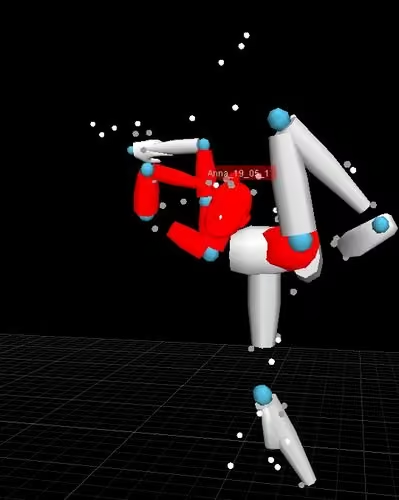 marco gillies
@marcogillies
VR or game researcher/dev (Unity/Unreal) with an interest in machine learning? Come and work with us (@RebeccaFiebrink @ruthhaptic @phoenixperry) at Goldsmiths to work on a project on ML for movement based immersive interaction design. jobs.gold.ac.uk/vacancy/research-unity-unreal-developer-f…
Sebastian Deterding reposted
 Jo Iacovides
@JoIacovides
If you´re interested in perspective challenging moments in games, check out the paper that @WhitbyWrites presented: dl.acm.org/citation.cfm?id=3347169 #chiplay19
Sebastian Deterding reposted
P░pp░n B░rr
@pippinbarr
GAME IDEA
RAPIDLY PRESS X
TO BE THE CHANGE YOU WANT TO SEE IN THE WORLD
Sebastian Deterding
@dingstweets
Lovely live-tweet thread of my #hrc10 talk. Thanks, @jamie_k_wheeler.
 Jamie K Wheeler
@jamie_k_wheeler
For today's third session of #hrc10 Provocations talks at @HRCYork, we begin with @dingstweets of @TFTI_UoY on "Confessions of a Recovering Humanist." Threaded here.
Sebastian Deterding
@dingstweets
Slides here: speakerdeck.com/codingconduct/confessions-of-a-recovering…
Sebastian Deterding reposted
Evelyn Tan, PhD
@_evelyntan
Do games have a place in the workplace? I think so.
I'll be presenting a poster of my work on #digitalgames as #trustbuilding tools for #virtualteams at #chiplay19 next week :)
Check out the paper here ▶▶▶ www.researchgate.net/publication/335919783_Trusted_Teamma…
#roadtophd
#gamesresearcher
Sebastian Deterding
@dingstweets
Finally a campaign I can get behind. #youhadmeatecumenical

Sebastian Deterding reposted
 Steve Hickman, Ed.D.
@edtechsteveh
Missing the UCI Esports 2019 conference? Check it out on twitch.tv/uciesports #uciesc19
Sebastian Deterding
@dingstweets
Wow, GDPR-doxxing as a protest strategy. That's like, dunno, the sousveillance equivalent of administrative burden (Moynihan & Herd). Talk about gaming the system. www.reddit.com/r/hearthstone/comments/df0zx5/upset_about_…
Sebastian Deterding
@dingstweets
For today, this.
"To say goodbye, as difficult as it can be, must be seen as a gesture of reverence to the passage of life because there are many to whom this opportunity is denied, with devastating effect."
www.theredhandfiles.com/do-you-have-any-regrets/
Sebastian Deterding reposted
Andreas Roepstorff
@aroepstorff
As always, @utafrith and @cdfrith get it first! Today’s editorial @NatureNews calls for a kinder research culture, #frithminds gave an answer today @interact_minds, #slowscience and #metaconsciousness interactingminds.au.dk/events/single-events/artikel/talk-… www.nature.com/articles/d41586-019-02951-4
Sebastian Deterding reposted
 Jonathan Shedler
@JonathanShedler
"The best therapists get u better 10x faster...we took world class therapists, supercharged them with our smart software tools, and designed seamless experience for clients and providers." -@NYT

 The New York Times
@nytimes
Bummed out by the world and their role in it, anxious tech workers are seeking help and going to therapy — and founding some start-ups along the way www.nytimes.com/2019/09/20/business/silicon-valley-therap…
Sebastian Deterding
@dingstweets
I now want a short story about a gamified online “HR score mill” training job candidates how to game recruitment AI systems by “keyword-stuffing” their performances with smiles, “we”s, active voice, chin-ups, until their performance is algorithm-optimal and human-unbearable.
 ruchowdh.bsky.social
@ruchowdh
“80 to 90 per cent of the predictive assessment was based on the algorithms’ analysis of candidates’ use of language and verbal skills.”
By design, excluding non-native language speakers. Disturbing given the current nationalistic wave in the UK.
www.telegraph.co.uk/news/2019/09/27/ai-facial-recognition…
Sebastian Deterding
@dingstweets
Followed by one in which Chinese air conditioning billionaires take an exclusive submarine adventure holiday marvelling at the beauty of submerged Miami, overlaid with AR live-streaming of city life reenactment by US climate refugees, (c) Tencent 2035.
Sebastian Deterding
@dingstweets
Amen. My career in a nutshell.
Andy Budd
@andybudd
If you're a little shy at conferences, speaking is The Best way to break the ice. Nobody talks to you before the talk. Everybody want's to talk to you afterwards, largely because they have a way in. As such, public speaking is bizarrely good for introverts.
Sebastian Deterding
@dingstweets
Can we have an analysis of academic (grant funding) success as a function of “symbolic action” please?
Ethan Mollick
@emollick
How is Adam Neumann of WeWork like Elizabeth Holmes of Theranos? They both found that one of the keys to success in Silicon Valley (at least eaely on) is “symbolic manipulation”- skillfully looking the part of the innovative founder. More here 👇
Sebastian Deterding
@dingstweets
We exchange our rhetorical hordes of technical hype terms when they’ve run out of surface credibility steam: new economy, Web 2.0, big data, social media, AI/ML, blockchain.
Sebastian Deterding
@dingstweets
The important part is to keep the funders’ eyes unerringly Trainer forward onto the future promise, the next next, NEVER veering backward or down onto present or past realisations.
Sebastian Deterding reposted
 Dr Ellie Murray, ScD
@EpiEllie
When the machine learning algorithm looks super complex & scary but it’s really just logistic regression....
x.com/_TheBestDogs/status/1174404579703656448/video/1
Sebastian Deterding reposted
 FDG 2023 Conference
@FDGconf
Right about now, in a year's time, we'll be sitting down for our last conference lunch overlooking the blue waters of Malta. If we can picture it already, you should start planning for it already! Paper deadline is 13 January 2020, and many other dates at fdg2020.org
 Sebastian Deterding
@dingstweets
All that is solid melts into air. The reproducibility crisis is another acid that burns itself through (my) cherished beliefs. Day by day I edge closer to sceptic Stoicism. aeon.co/essays/schools-love-the-idea-of-a-growth-mindset-…
Sebastian Deterding
@dingstweets
Same here. It took me the last 8 years and I still often struggle to realise and embrace the prestige of a place =|= your wellbeing there or your ability to make a contribution. Allow yourself to discover the place that actually fits you.
Sebastian Deterding
@dingstweets
Read as a descriptive (what is) not normative (what ought to be) statement, this rings true. Relentless insistence on your point/side certainly pushes all interactions into zero-sum all-or-nothing tail ends of a result distribution.
 Venkatesh Rao ☀️
@vgr
Capacity for forgiveness is perhaps the defining virtue of mediocrity. Notice how implacable revenge seekers are excellent and/or power hungry types? Holding a grudge is a kind of optimization. Moving on is mediocritization.
Sebastian Deterding
@dingstweets
Amen. And thank you, thank you, thank you to everyone at #iggi19 for making it a marvellous thing.
Sebastian Deterding
@dingstweets
And if the live-tweet of @GalaxyKate’s #iggi19 Keynote was too much, she made a Cliff’s Notes herself: galaxykate.itch.io/zine-bundle-2018
Sebastian Deterding
@dingstweets
If my live-tweet stream of #iggi19 keynote @hollygramazio was too much, this is the Cliff’s Notes slide :).
Sebastian Deterding
@dingstweets
Quick run-through of public play design questions in need of answering.


 Sebastian Deterding
@dingstweets
Closing #iggi19: @hollygramazio on designing for play in public
 Sebastian Deterding
@dingstweets
Quick run-through of public play design questions in need of answering.
Sebastian Deterding
@dingstweets
And finally, finally, know that things will break. If people like places they will treat them nicely, but play also liberates behaviour sich that PEOPLE WILL BREAK THINGS.

 Sebastian Deterding
@dingstweets
Good reminder that in truly generative places, time to penis will be low.
Sebastian Deterding
@dingstweets
Today’s design appreciation shoutout goes to @Donkey_Republic: smoothest bike sharing signup, pickup, pause, drop off flow I’ve had, plus the pad&rubber as cheap universal smartphone/map holder makes riding in a new town much smoother. Chapeau!
 Sebastian Deterding
@dingstweets
If I could have a penny for every tax payer dollar I spent on applying for tax payer dollars ...
Sebastian Deterding
@dingstweets
Almost a year in, I've still never been happier with a talk, and still stand by every sentence. www.mindtheproduct.com/2017/07/ethics-in-product-design-s…
 vicki

 Dr Mirry