The UK/ Europe’s Scale-Up Failure Is Now a Strategic Risk
Good to spend time with colleagues at @Economie_Gouv in Paris this week, discussing access to finance and the Kukies/Noyer report. It offers a stark diagnosis of Europe’s growth problem - and clear conclusions.
Europe’s innovation challenge is stark and while things might be a little better in the UK, we have some similar issues and much to gain by thinking how to interconnect to a bigger European tech industry and the capital market required to build it.
Facts that struck me:
• Euro-area labour productivity is now around 20% below the US, despite parity in the late 1990s. Almost the entire gap is explained by technology; excluding ICT, European productivity would have matched the US between 2000 and 2019.
• Europe has produced no €100bn+ companies in 50 years; the US has produced all six trillion-dollar firms. Only 14 European firms founded in that period have reached $10bn market capitalisation, versus 240+ in the US.
• Seven US tech firms generated $245bn a year in economic profit (2020–24) and spent $239bn on R&D in 2024, nearly matching total EU business R&D.
• Those same firms invested $25bn in VC in 2024, close to the entire European VC market ($31bn). Late-stage mega-rounds now dominate global VC, driven by AI.
• Result? Europe is strategically dependent on US tech. 70% of the EU cloud market is controlled by three US firms. The largest European AI company is valued at ~$13.5bn; leading US firms approach $1tn.
• Yet this is not a savings problem. European households save heavily (15.4% in the euro area), hold €39.5tn in financial assets - yet 30.6% sits in cash. But long term pension savings are underweight. EU pension assets amount to ~25% of GDP (vs ~150% in the US), with just 23% of Europeans in occupational pension schemes.
This helps explain just why European IPO activity is at a near 20-year low.
Key messages
1.The problem is scale, not innovation. Europe produces startups — it fails to scale them.
2.The scale-up gap is now strategic. It drives the productivity gap and deepens dependence in cloud, AI and data.
3.capital markets are too shallow and fragmented. Risk capital is scarce, pensions are small, and the Single Market remains fractured.
4.Public finance helped early stages — but cannot fund AI-scale growth. Private institutional capital is essential.
5.Time is running out. AI and deeptech are becoming more capital-intensive as European VC weakens.
What to do — the “FIVE” agenda
1.Reform pensions to build long-term capital pools
2.Mobilise institutional capital via Tibi-style initiatives
3.Upgrade public tools into true late-stage catalysts
4.Create a genuine “28th regime” for scaleups
5.Restore competitiveness to European public markets
So what does this mean for the UK? Let me know as we finalise our Committee’s Report on Financing the Real Economy.



 Stephen Doughty HC MP
@SDoughtyMP

 Ed Miliband
@Ed_Miliband


 electionmapsuk


 Abdul S Khan UK


 Jenny Glynn




 Black Country Radio


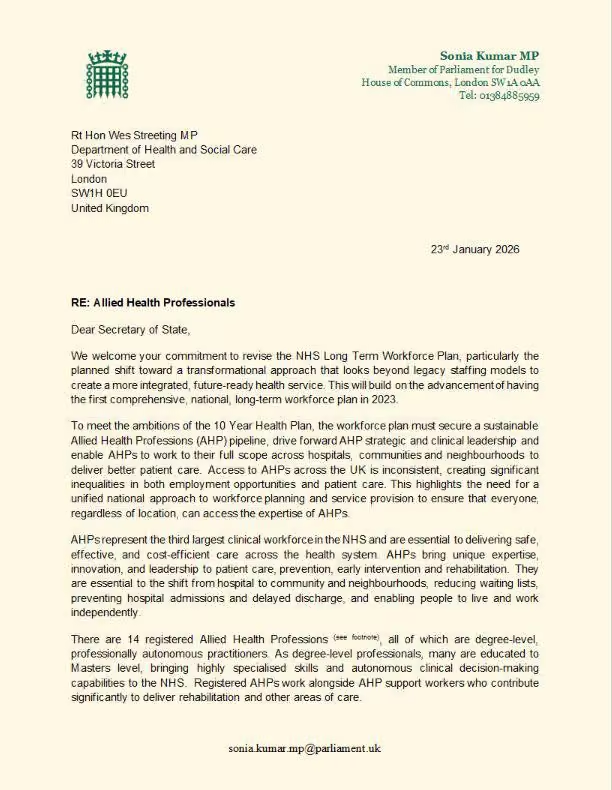
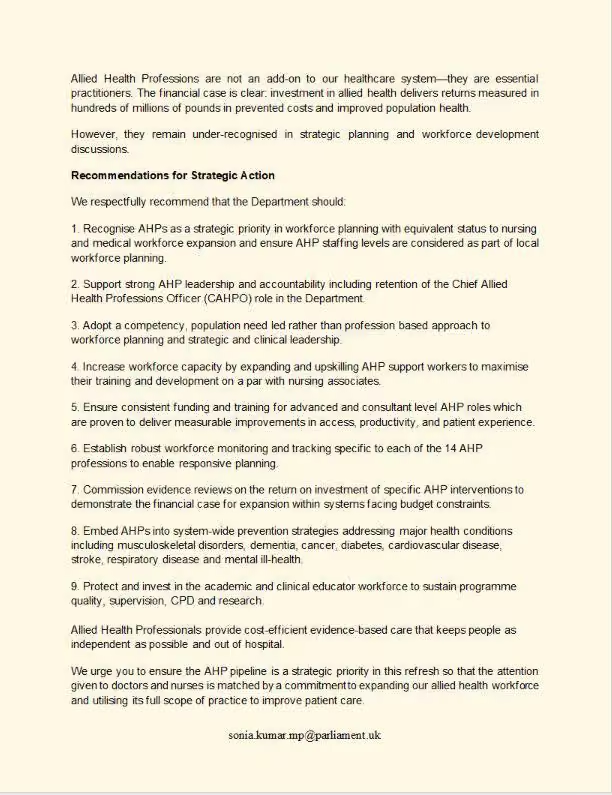
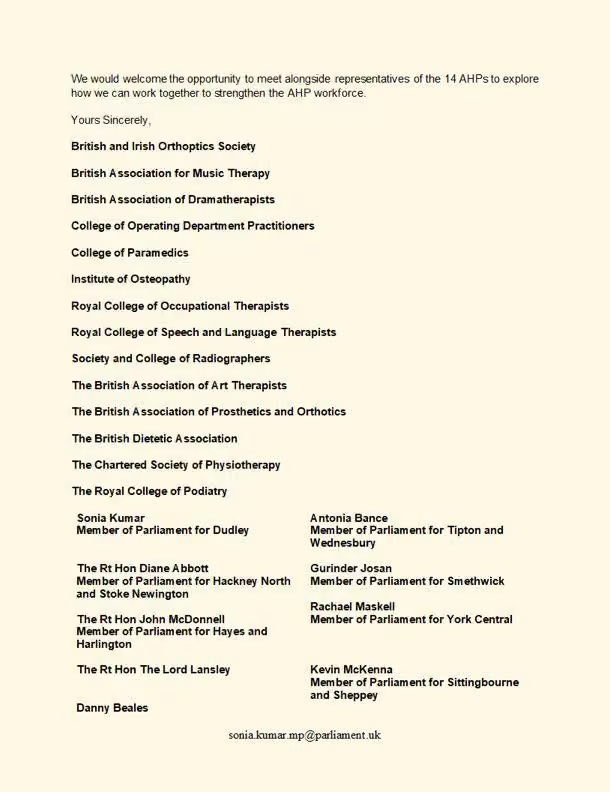
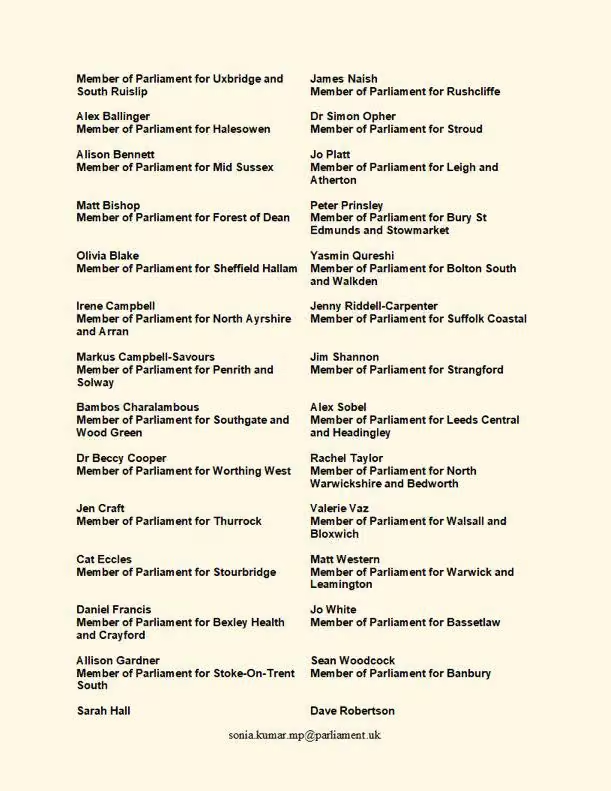
 APPG - Allied Health Professionals
 ARMA


 Labour Home




 Richard Parker




 Total Politics


 SME4Labour



 Oliver Nightingale





















 Sky News







 West Midlands News

















 Bill Kilvington 💙 FCODP, FRCA





 Politics UK











 Labour Press

 Dudley News



 Rachel Reeves






 Nehemiah Housing

































 Lorraine Allchurch

 West Midlands CSP
 Langar Aid

 Gordon Smith










 Fiona Hegarty
 Rob Yeldham (he/him)

 Craig Jones





 TUC Midlands



 Dawn Aston-Adams
 Jane Ramsey






 Cabinet Office



 PoliticsHome







 RFH MSK Physio

 anju jaggi


 tanishaphysio




 Hiroshi Suzuki


 UK at the UN 🇬🇧🇺🇳







 RCSLTpolicy



 Tom Redfearn






 Stephen Kinnock
 Sara Hazzard (She/Her)
 Anas Sarwar


 Office for Equality and Opportunity



 Together

 Natural Source Waters Association

 BCHFT - Black Country Healthcare Foundation Trust



 Rupinder Singh




 Back Bridget

 Sikhs For Labour




 State of Palestine


 WestMidsPCC


 Lionesses


 WeAHPs 💙

 Centenary Action

 Adam Aston 🌹🚑


 PubAffairs

 Brynnen Ririe
 BBC Politics
 Children of Fire - Health Care is Political

 Elaine Miller | Venus Envy
 POGP
 Leanne 🚢🏖️🧭🗺️✈️🍹🌴♿
 Backbench Business Committee

 Matt Forde

 The Jo Cox Foundation


 Dudley Town FC

 Home Office


 Kirstie Bavington



 Chance to Shine


 BlueXPublicAffairs


 Chamber UK


 Hales Valley Trust


 Business and Trade Committee

 Dudley Winter Ales Fayre 2026

 UK House of Commons


 Stephen Morgan MP
 Centre Think Tank
 Justine Musiime - MSc MPH MCSP FRSPH


 Aastha Monga
 Liz

 Co-operative Party


 UNISON Dudley General


 Sarah Alan


 Labour🌹Unions


 Lucy Powell MP

 Tej Pal Singh Ralmill


 50:50 Parliament


 Department for Education

 Mayor of the West Midlands





 Andrew Lovett OBE (Museum Account)


 Business Growth West Midlands


 NIHR PRU Behavioural and Social Sciences


 Joanna West 🐝 🌹 ✊🧶 🇵🇱

 NHS Blood Donation 🩸🩹





 Connected Communities Dudley






 The Entrepreneurs Network


 Cllr Keiran Casey









 Jacqui Smith





 RNIB Campaigns


 Kit Bowerin




 Futures For All



 Purpose Coalition

 House of Commons Speaker


 Suzanne Rastrick


 Diane Wake 💙






 House of Commons Haiku
 Royal College of Occupational Therapists

 LabourWomensNetwork


 Children's Food Campaign (no longer posting here)



 Diabetes UK

 UKHospitality


 Blue Collar Parliament


 Tiffany Beck OBE



 Tasha Owusu


 BHF Policy



 Kurds4Labour


 Welsh Labour


 MPs' Maiden Speeches
 Dudley Town Police


 dudleycil
 Tom Johnston🌹


 Dr Juna Sathian



 Shaukat Ali


 West Midlands Combined Authority






 Dudley Police

 John Lehal
 Aston University PR


 Lizzy Woodfield