Politicians, athletes, journalists, NGOs, companies... They all use
corporation-owned social networks to communicate with us. Citizens
shouldn't have to hand over their data to companies to read content
published by public entities. Public Feeds changes that by making posts
of popular accounts freely available.
Read more.
Carmela Troncoso
Carmela González Troncoso (born 1982 in Vigo) is a Spanish telecommunication engineer and researcher specialized in privacy issues, and an LGBT+ activist. She is currently a scientific director at the Max Planck Institute for Security and Privacy, on leave from École Polytechnique Fédérale de Lausanne (EPFL) in Switzerland. She is the head of the SPRING lab (Security and Privacy Engineering Laboratory). Troncoso gained recognition for her leadership of the European team developing the DP-3T protocol that aims at the creation of an application to facilitate the tracing of COVID-19 infected persons without compromising on the privacy of citizens. Currently she is also member of the Swiss National COVID-19 Science Task Force in the expert group on Digital Epidemiology. In 2020, she was listed among Fortune magazine's 40 Under 40. More on Wikipedia
We spent long time studying the question "does training data filtering help prevent generative models from generating unwanted content?" TL;DR: Nope. It might slightly increase difficulty but not enough to prevent even average users from finding ways to create what they want.
Our new paper demonstrates that removing images of children from training datasets of text-to-image models fails to prevent the misuse of these models to generate child sexual abuse material (AI CSAM). A thread 🧵
The Max Planck Institutes in Computer Science invite applications for tenure-track faculty by Dec 1, 2024. We are considering all areas of CS, including security and privacy, and expect to fill several positions: www.mpi-sp.org/8521/tenure-track-openings
Join one of the strongest communities in AI in Europe. Call for applications for postdoc fellowships in all AI-related areas. Sellection at the first stage is based on the excellence of the candidate. Deadline 29th November. More info at: www.epfl.ch/research/funding/epfl-programmes/ai-center/
We (human-centered security and privacy group at @maxplanckpress#mpi_sp) are hiring interns to start anytime in 2025! Applications are due on Nov. 1, 2024. If interested, submit an application to the central portal (www.cis.mpg.de/internships/) and email me a quick note after. 1/3
Emiliano De Cristofaro and I are co-chairing the Usability and Measurements track for ACM CCS 2025. We are seeking nominations for PC members to join our track. If interested, please fill out the form -- self-nominations are welcome!
Please consider volunteering to join the @USENIXSecurity '25 artifact evaluation committee! Help us make sharing reusable research artifacts the norm rather than the exception.
TLDR; #chatcontrol proposal tweaked but it remains unacceptable: the solution does not work, undermines end-to-end encryption, is indiscriminate, leads to function creep and abuse by dictators and undermines the security of users and the current techniques to detect CSAM.🧵2/16
(nieuws) “Berichten massaal scannen naar kindermisbruik, werkt niet”: interview met Belgische onderzoekster dr. Peersman die het met haar team onderzocht (en getest) heeft:
Venezuela's digital identification systems have been weaponized against its population by linking access to essential services with affiliation to the governing party. Learn more about Venezuela's digital repression: www.eff.org/deeplinks/2024/09/unveiling-venezuelas-repres…
We're opening 3 TT positions focusing on cyber-physical security, security and privacy, and learning sciences. Join us at one of the top research universities and clearly the most beautiful place in🇨🇭with lake and mountains nearby www.epfl.ch/about/working/page-26457-en-html/@EPFL_en@ICepfl Plese RT
Omdat sommige mensen mij gevraagd hebben wat ze kunnen doen: bijvoorbeeld een brief of email schrijven naar onze ministers, zodat ze weten hoe u denkt over #chatcontrol (dutch only sorry - inspired by EDRI letter)
The latest Belgian Presidency’s proposal on the #csaregulation is just a rebranding of client-side scanning. With ambassadors set to look at this issue on Wednesday, it is important to raise the alarm against such an overreach. But what are we talking about?🤔 1/8
People think ChatControl is about specific crimes. No, that’s not what’s at stake. What’s being made is an architecture decision for how private messaging systems work : if it passes, by law these systems will be wired for mass surveillance. This can be used for any purpose.
The European Council has taken a proposal to force mandatory scanning of all photos and videos sent through private messengers (including encrypted messengers like Signal) and they’ve rebranded it as “upload moderation.” The implication is that it’s voluntary when it’s not.
Another crucial week in the crypto wars: chatcontrol proposal may be approved in the EU council. Public meeting of Council today at 17h40. Link: video.consilium.europa.eu/event/en/275081/6 🧵
I just published the slides of my talk at the Summer School on Real-World Crypto and Privacy 2024. I'm having a great time chatting with students and colleagues. The program is awesome! 0xjet.github.io/talks/2024_ssrwcp_android.pdf
The full Belgian presidency chatcontrol proposal has been leaked by netzpolitik today. This proposal fails to protect children, leads to mass surveillance and presents a large risk of abuse. The criticism in our open letters is unfortunately still valid. cdn.netzpolitik.org/wp-upload/2024/05/2024-05-28_Council_…
I co-authored a new open letter signed by more than 270 scientists from 33 countries warning for the risks of the modified CSAM (child sexual abuse) regulation proposed by the Belgian presidency. #chatcontrol www.csa-scientist-open-letter.org A🧵1/10
Excited about exploring representation learning on code towards realizing Trustworthy AI for systems security?
This👇PostDoc opening is spot on, then! May 27 is the application deadline! Don't apply blindly: check if we (=s2lab.cs.ucl.ac.uk) are a great match for you too!
And it is based on forcing "consent". This is a sign of how inapproppriate this proposal is, that they need to resort to coercion to try to get it passed
The EU proposal to scan people’s private messages is back. This time the proposal is to force everyone to consent to having their photos be scanned and block anyone who does not agree. This is still surveillance and it breaks encryption.
We want the internet to be more secure, but some in the EU keep trying to make it less secure. These attempts to weaken the security of private communications are dangerous and we need a course correction before it’s too late.
Finally, the insistence on "client-side scanning does not break encryption" starts to be embarrasing. Either the proposers don't understand the underlying technology and what encryption is; or they lie on purpose to get this law passed. Either option is terrifying...
The EU proposal to scan people’s private messages is back. This time the proposal is to force everyone to consent to having their photos be scanned and block anyone who does not agree. This is still surveillance and it breaks encryption.
We want the internet to be more secure, but some in the EU keep trying to make it less secure. These attempts to weaken the security of private communications are dangerous and we need a course correction before it’s too late.
Surprisingly this post is controversial. I think it comes from the misconception that secrecy is enough to protect us. But the right to privacy is not about confidentiality but preventing intervention on our private life. See here the "Right to privacy" article 👇 So...
We have repeatedly highlighted the perils of client-side scanning. These are not about detecting CSAM. Detecting scams brings the same issue: no guarantees that the technology won't be misused. That Google neglects potential negative consequences of this idea is jarring
Introducing an infrastructure that enables the processing of messages of private communications, introduces a capability of monitoring and manipulation not existing nowadays. Once the capability is there, misuse is not possible -- or repurposing mandated by law
Also a change is that the proposed monitoring uses LLMs, claiming that their almightiness makes them able to catch scamming despite its nuanced nature. This unprecedented, and promotes the idea that AI will be able to distinguish good from bad in any situation and context
The proposal by Google normalizes the idea that local scanning is not dangerous, is possible, is effective, and has no cost for users. This is not proven, and why I said that the potential negative ramifications of the idea are not considered by Google when announcing this
Yes, technology is good or bad depending on who it serves, but we who it serves can change in a whim. Similarly, privacy is only good if it serves us, our freedom, independence, and does not change power balance. If privacy does not prevent interference, it is a smoke screen
I am looking to expand my group with new PhDs! But just applying would be too boring, right? So, first you will have to solve a little bit of challenge :-) Check swag.cispa.saarland/jobs.html to learn more on what your task is! Beyond that fun, what will you do in your PhD?
We have repeatedly highlighted the perils of client-side scanning. These are not about detecting CSAM. Detecting scams brings the same issue: no guarantees that the technology won't be misused. That Google neglects potential negative consequences of this idea is jarring
Statement, signed by 250+ researchers, warning that the modifications of the Regulation to detect CSAM proposed by the EU presidency dont solve the issues pointed out by experts. It still introduces societal risks without solving the CSA problem. www.csa-scientist-open-letter.org
Now imagine this AI model doesn’t work for you. Imagine it listens to your conversations but it works for and reports to the police. That’s where the EU is going.
We're testing a new feature that uses Gemini Nano to provide real-time alerts during a call if it detects conversation patterns commonly associated with scams. This protection all happens on-device so your conversation stays private to you. More to come later this year! #googleio
This is incredibly dangerous. It lays the path for centralized, device-level client side scanning.
From detecting 'scams' it's a short step to "detecting patterns commonly associated w/ seeking reproductive care" or "commonly associated w/ providing LGBTQ resources" or "commonly associated with tech worker whistleblowing."
Thanks to @carmelatroncoso for hosting me at @EPFL_en this past week. It was a joy to learn about all the research projects and share about my own work.
Extensive report on our open letter warning for the new #chatcontrol draft in Techcrunch. EU plan to force messaging apps to scan for CSAM risks millions of false positives, experts warn tcrn.ch/44mOHYx via @techcrunch
Happy to see our letter on the new #chatcontrol proposal by the Belgian presidency reported by @ComputableB Still waiting for the main Belgian press. While this problem definitely has technical aspects, this is an issue that should concern every citizen.
Er ligt opnieuw een plan op tafel om al uw digitale privacy te schenden in de strijd tegen beelden van seksueel kindermisbruik. Volgens 238 wetenschappers is dat concept technisch onhaalbaar, gevaarlijk voor de maatschappij en nutteloos als oplossing. datanews.knack.be/nieuws/wereld/wetgeving-wereld/wetensch…
Meanwhile these systems won’t stop the spread of CSAM, because it’s trivial for actual criminals to encrypt/compress/alter their files so the scanners can’t see them. Worst of all worlds: innocent people at risk, criminals undeterred.
No matter how much you hate CSAM (and it is awful) you need to understand that the AI models that detect novel CSAM content aren’t “smart”: they often can’t reliably tell the difference between abuse photos and photos of your kids, or your kids’ selfies. www.nytimes.com/2022/08/21/technology/google-surveillance…
Europe is maybe two months from passing laws that end private communication as we know it, and folks are looking the other way (understandably.) You’re not going to get a do-over once these laws are passed.
Two major changes: target detection based on risk and require more than one hit to reduce false positives will not have meaningful impact on protection of fundamental rights. 2/10
I co-authored a new open letter signed by more than 270 scientists from 33 countries warning for the risks of the modified CSAM (child sexual abuse) regulation proposed by the Belgian presidency. #chatcontrol www.csa-scientist-open-letter.org A🧵1/10
Statement, signed by 250+ researchers, warning that the modifications of the Regulation to detect CSAM proposed by the EU presidency dont solve the issues pointed out by experts. It still introduces societal risks without solving the CSA problem. www.csa-scientist-open-letter.org
Protecting children from online abuse while preserving their right to secure communications is critical. Eradicating CSAM relies on eradicating abuse, not only abuse material. Technocentric approaches focused on sharing material dont tackle the core of the problem
We recommend substantial increases in investment and effort to support existing proven approaches to eradicate abuse-- as indicated in the letter --and with it, abusive material. Our communications don't need to be threatened to achieve this.
Uber patent on a driver dispatch system based on driver profiles that include age, height, weight, gender, eye color, hair color, country of origin, family background, 'work ethic', 'affiliation' with 'scandalous' groups, 'propensity' towards 'irresponsible behavior' etc. Wild.
Slowly, slowly, people start to see the naked emperor... Power is in control, and control is achieved by dominating the computational infrastructures and deciding how they can be used
Couple of weeks ago I missed the @satml_conf which I had the pleasure to chair with @NicolasPapernot as I am too 🤰 to cross the Atlantic. Then I received this package signed by many atendees ❤ who said chairing is not rewarding? Thanks everyone! #bestcommunity
Together with @AlinaMOprea we invite nominations for the 2024 Caspar Bowden Award for Outstanding Research in Privacy Enhancing Technologies! @PET_Symposium
Please nominate your favorite privacy papers from the past 2 years by **May 10**
#suri24 on Systems, Security, and Privacy is taking shape with an amazing set of speakers. Registration is free and we offer travel fellowships for students as well, so apply and join us Jul11/12! suri.epfl.ch
📢Travel fellowships available to attend the Summer Research Institute on Security and Privacy at EPFL! Check the program here: suri.epfl.ch and apply here: forms.gle/3CL6j6v648R5freAA
"emotion-recognition AI systems in the workplace are to be banned yet allowed for safety reasons—where does safety begin and end, and will workers have a real say?" www.socialeurope.eu/the-ai-act-deregulation-in-disguise
Wow - this picture says it all. The EU's #aiact does not go far enough to curb mass surveillance in public spaces. Instead, it allows many forms of surveillance and profiling that treat human beings as walking barcodes.
The SaTML schedule is now public! Featuring sessions on privacy, fairness, robustness, collaborative learning, forensic analysis, and more! Not to mention keynotes by @jhasomesh & @rajiinio, and tutorials by @yvesalexandre & one more.
Tenure-track faculty position in Privacy Technologies just open at the KU Leuven COSIC group !!! Application deadline is March 14th. Please consider applying or forwarding to suitable candidates. Details here: www.kuleuven.be/personeel/jobsite/jobs/60292973?lang=en
In case the awesome accepted papers, fantastic invited speakers (@rajiinio and @jhasomesh), and phenomenal community aren't enough to entice you to #satml2024 -- the day before the conference has a total solar eclipse ~1 hour from Toronto. Last totality in NA until 2052!
The submission deadline for the 8th Workshop on Technology and Consumer Protection (ConPro '24) is today (Jan. 17)! Still time to polish off your short research paper or one-page research proposal: conpro24.ieee-security.org
Looking forward to this year's excellent submissions!
As we head into PhD application season, a reminder that I will be admitting new PhD students in the @gwusec lab. A quick thread of the kind of research we are doing, if any of this interests you, but I am also interested in finding students who can push me in new directions. 1/9
📢 📢I am again looking to admit 1-2 PhD students at @gwuengineering in the @gwusec lab who are interested in research related to human factors in security and privacy. We have an extremely collaborative lab with a ton of interesting research directions. Reach out if interested!
I seek to fill a Postdoc position in the field of Machine learning security in my group at the Ruhr-University Bochum in Germany. The position is offered for up to 18 months but can be extended beyond.
The reform of the #eidas proposal has been approved still failing to provide strong guarantees for the security and privacy of citizens: eidas-open-letter.org This leaves in a very dangerous place in which we depend on the implementation details to have any assurance 🧵
Trilogue agreement on European Digital Identity #eidas, approved in @EP_Industry Committee!
I as the @EPPGroup negotiator am happy to say that we are one step closer to a legally binding free of charge digital signature and digital identity means for all EU citizens!
Key to this process will be that, contrary to the eIDAS proposal, the technical design and implementation are transparent, seeking feedback from industry and academia experts in an open process. This is the only way in which strong, secure privacy-preserving systems can be built
The European Commission has spent millions of Euros via FP6, FP7, H2020, ERC programs to ensure that the European academia is at the forefront of privacy technologies. I truly hope all these experts are now called to put their knowledge to the service of all EU inhabitants
As we head into PhD application season, a reminder that I will be admitting new PhD students in the @gwusec lab. A quick thread of the kind of research we are doing, if any of this interests you, but I am also interested in finding students who can push me in new directions. 1/9
📢 📢I am again looking to admit 1-2 PhD students at @gwuengineering in the @gwusec lab who are interested in research related to human factors in security and privacy. We have an extremely collaborative lab with a ton of interesting research directions. Reach out if interested!
Kurz nach dem Skandal im eigenen Haus beendet die EU-Kommission ihre Werbeaktivitäten auf Twitter/X. Begründet wird dies mit möglicher Desinformation und Reputationsschäden. Auch andere Werbekunden springen ab.
Thread 🧵— the EU's identity community are trying to force-through their insecure, backdoor-enabling changes to how HTTPS certificates work, to fulfil a 2010-era vision of how "Online Identity" can make money for them … IF ONLY the government mandates it.
Rather than talking to the scientists who pointed out security risks for the web infrastructure introduced by eIDAS and fixing the regulation, EU has switched a PR campaign. 1/2 Europa: ‘eIDAS-wetgeving geen probleem voor privacy en veiligheid’ datanews.knack.be/analyse/europa-eidas-wetgeving-geen-pro… 1/4
Rather than talking to the scientists who pointed out security risks for the web infrastructure introduced by eIDAS and fixing the regulation, EU has switched a PR campaign. 1/2 Europa: ‘eIDAS-wetgeving geen probleem voor privacy en veiligheid’ datanews.knack.be/analyse/europa-eidas-wetgeving-geen-pro… 1/4
Long but very clear explanation why the security of the web ecosystem depends on the browsers (whether we like it or not). And how the current intervention of governments (with good or bad intentions) will likely make things worse. 1/3
Many misunderstandings surround WebPKI. A significant misconception is that the CA/Browser Forum (CABF) decides which Certificate Authorities (CAs) are trusted; in reality, each browser has its own trust criteria, usually including an audit to ensure CAs meet the CABF's requirements. How do I know? I worked with auditors to develop the original WebTrust for CA requirements, establishing it as a baseline for technical and operational standards for CAs to be trusted in the Microsoft Root Program, the first to mandate such an audit.
The CABF later emerged to streamline audit criteria maintenance, fostering a more open, transparent, and inclusive process. These third-party audits were meant to supplant the pay-for-play model used by many root programs at the time with objective standards, not to replace root program criteria. Don't believe me? Notice that no document or policy from the CABF dictates browser practices, only CAs and a valid WebTrust audit alone are insufficient for inclusion in any root program I am aware of.
CAs often claim they've championed security improvements in WebPKI through the CABF. However, these initiatives have typically been public relations responses to wider ecosystem failures. For example, the DigiNotar breach in 2011 prompted the CABF to establish the Network Security Requirements, which were basically reiterating security measures from the 1990s that DigiNotar neglected, leading to browsers' eventual distrust of this EU CA.
CAs also purport to lead industry adoption by advancing best practices, but they have actually delayed vital WebPKI security updates. SHA1 vulnerabilities persisted because CAs blocked the discontinuation of its use in the CABF. It was only when browsers stood firm and mandated the change that it occurred. The Certificate Authority Authorization (CAA) record also met with CA opposition in the CABF for nearly two years until browsers made it a requirement.
At the dawn of WebPKI, domain control verification lacked formal requirements, leading to the forced acceptance of the ambiguous "Any Other Method" as a condition of agreement with CAs in the CABF. Despite years of efforts to abandon this method, it continued until Firefox's intervention led the CABF to finally phase it out.
CAs have also resisted efforts to make the domain control verification process used in certificate issuance an attribute in certificates for longer than I can count -- opposition by CAs has made this impossible. Then there is the topic of Certificate Transparency -- is it required by the CABF guidelines? No, it is not; it is a browser requirement that started with one browser and then slowly spreads to others. It would have never been possible within the CABF. After all, the purpose of this system is to enable browsers to hold CAs accountable for misissuance and to make that issuance transparent and verifiable to the relying parties and subscribers on the web. Why would CAs vote for something like that? How could a group that takes years to make the smallest changes manage an ecosystem like CT that requires agility at its core? They couldn't.
In short, browsers—acting on behalf of users—have been the real drivers of web security advancements, often despite CAs' reluctance. Now, with regulatory "air-cover" sought by CAs, the EU, through eIDAS 2.0 revisions, aims to curb browsers from safeguarding users and to continue evolving WebPKI as the web itself evolves.
The consequences of this extend beyond the EU's 27 member states and affect the entire internet, like all the other `Brussels effect` laws that require companies that do business with Europe to comply with the various technology laws they pass.
To understand the proposal here, it is useful to understand what the WebPKI looks like today. Right now there are 7 of approximately 85 CAs that account for 99% of all certificate issuance on the web. The remaining CAs, which are broadly not engaged in the CABF at all, exist because the root programs that are operated by browsers are now based on open and objective criteria, and are run in that way because there is a desire that the web be global and inclusive. It’s important to note that despite these noble intentions, these long-tail CAs, most of which are European, arguably represent an unnecessary attack surface for everyone on the web. The reality is that once you are a trusted WebPKI CA, you can impersonate any internet website you want with near impunity; without Certificate Transparency, these impersonations would never be detected.
What the EU’s proposal does is replace the demonstrably competent browser root programs with regulators and bureaucrats; it forces them to readopt practices that have been discontinued due to their objective negative security consequences, and at the same time, sets up each member state to be in the position to add CAs for observing internet traffic if they so choose. To be clear, I do not believe that is their intent, but that is surely the consequence of what is being proposed.
While I hope this isn’t the case, and maybe you are fine with the EU having the ability to do these things, did you know there are 195 sovereign countries, each eager for similar control?
Even though this impacts every citizen on the web, the only people the EU is likely to listen to on this topic will be European citizens. If that describes you, please speak up -- the web needs you.
Junto con otros 334 científicos y 24 ONGs, he firmado una carta abierta para alertar sobre los peligros que trae la nueva propuesta de regulación Europea sobre la Cartera de Identidad digital bajo la presidencia española. Aquí un hilo largo en inglés, pero en resumen:
Together with other 334 scientists and 24 ONGs, I have signed this letter eidas-open-letter.org asking the EU to reconsider their eIDAS regulation proposal. Why are we again raising our voices against new legislation?🧵
La propuesta no incluye obligatoriedad de soluciones técnicas que permitan alcanzar altas garantías de privacidad, a pesar de que prevé que la Cartera de Identidad pueda contener información muy sensible. Puede acabar siendo un nuevo vector para rastrear usuarios en la red
La gran mayoría de cambios que introducen nuevos riesgos se han hecho en reuniones a puerta cerrada, sin dar oportunidad a expertos y público de opinar. Cuando los cambios pueden tener un efecto importante en nuestras libertades debería haber mas transparencia.
Together with other 334 scientists and 24 ONGs, I have signed this letter eidas-open-letter.org asking the EU to reconsider their eIDAS regulation proposal. Why are we again raising our voices against new legislation?🧵
The regulation limits the checks that can be done on these certificates to those standardized by ETSI. This means that innovations by the security community that provide more security would be difficult (or impossible) to implement
The regulation also says that these keys cant be removed without the authorization of the issuing member state‼️ This means that checks from the community like this awesome work by @v0max and Joel Reardon would be useless if states want to keep their keys: www.washingtonpost.com/technology/2022/11/08/trustcor-int…
Finally, I'd like to note that most of the dangerous changes above have been proposed behind closed doors without giving any opportunity to experts or public to weigh in. For decisions with such impact on freedom and democracy one would expect more transparency from policy makers
“The idea that tight and proprietary control of foundational AI models is the only path to protecting us from society-scale harm is naive at best, dangerous at worst.” open.mozilla.org/letter/
Postdocs wanted! We have a very strong group of PIs in @EPFL_en on the foundations of AI @flair_epfl . We are looking for postdocs, possibly collaborating with several of the labs. Check out flair.epfl.ch and apply before Nov 30 if you might be interested.
🚨 I'm looking for a postdoc position to start in Fall 2024!
My most recent research interests are related to understanding foundation models (especially LLMs!), making them more reliable, and developing principled methods for deep learning.
Estos días se está negociando un reglamento europeo que puede cambiar profundamente nuestra forma de comunicarnos. Pretende combatir la difusión de material pedófilo e implica el escaneado de las comunicaciones digitales que se consideren dudosas (hilo) elpais.com/tecnologia/2023-10-16/combatir-la-pedofilia-a-…
Apparently the EU Commissioner has begun a micro-targeting campaign on Twitter/X in favor of her content scanning regulation, and it explicitly *excludes* people who care about privacy or are skeptical of the EU. dannymekic.com/202310/undermining-democracy-the-european-…
Hay que proteger a los niños, sin duda. El futuro de nuestra sociedad depende de ellos. Pero hay que hacerlo de manera efectiva y segura. La propuesta de la Comisión no es ninguna de las dos.
The Commission is using microtargetted advertising to push their CSAM proposal. Besides being antidemocratic (and apparently illegal due to the target categories) this is yet another sign that they have no real argument why the regulation should pass dannymekic.com/202310/undermining-democracy-the-european-…
I’m hitting the job market looking mainly for tenure-track asst. professor positions (2024)! 🚨👨🔬
My core research informs how we should curate content on online platforms — and I’m also interested in how large language models will impact on the Web in the upcoming years.
🥳 Postdoc Position available to work with me at @Inria_Sophia next to beautiful #nice (France) on Detecting Privacy Violations and/or Dark Patterns in Web/mobile/IoT applications. Ideal candidate should be interested in transdisciplinary studies!
EU has to decide whether European values also apply to hacking software. Why do we tolerate that highly intrusive software is being sold? 1/3 Een hackingbusje en bigbrothersoftware: dit zijn de wapens die spionagebedrijf Intellexa aan dictators verkoopt www.standaard.be/cnt/dmf20231006_93347734
Great piece on Ashton Kutcher's Thorn, which is pushing anti-privacy laws in the UK & EU
Thorn sells tech for corporate/police surveillance as a "solution" to child abuse & trafficking, even as service organizations & survivors question its efficacy
This long-form piece by the Intercept dives into the dark money behind “Heat Initiative”, the pop-up organization now trying to pressure Apple into scanning your private files. theintercept.com/2023/10/01/apple-encryption-iphone-heat-…
🙏thank you @giacomo_zando@Balkanizator & @LudekStavinoha for revealing the EU law enforcement & AI company mass surveillance aspirations animating the EU push to scan everyone’s private messages. It’s critical that people understand what’s going on here
If anyone thought that the EU legislation on content scanning would be limited, you can forget about that. Europol has demanded unfiltered access to all data produced by these systems. balkaninsight.com/2023/09/29/europol-sought-unlimited-dat…
We'll say this again: if ANY device collects footage of the public—whether it's a food delivery robot, self-driving car, doorbell, or a smart microwave oven near a window—POLICE WILL COME FOR THE VIDEO.
Google’s safeguards to anonymize location data aren’t foolproof. “This is all very new and very untested and made up as they go along,” EFF’s Andrew Crocker told @Business. “And that’s, from a civil liberties point of view, very dangerous.” www.bloomberg.com/news/features/2023-09-28/google-user-da…
New from 404 Media: those food delivery robots that are armed with cameras and driving all over sidewalks in LA? They're providing filmed footage to the LAPD, according to internal emails we got. Food delivery robots just became surveillance devices www.404media.co/serve-food-delivery-robots-are-feeding-ca…
Everyone keeps talking about AI and how in the future it’s going to have unintended consequences. But the future is already here. Witness the huge amounts of money trying to pass laws that put “content scanning” into your phone. balkaninsight.com/2023/09/25/who-benefits-inside-the-eus-…
Y un artículo muy interesante para poner contexto a lo que está pasando. Hay muchas preguntas que deberían ser contestadas antes de que esta ley sea discutida en un parlamento
“This magical technology simply doesn’t exist. You cannot scan messages without being able to see them”. 💻👀 Chair of Cryptography @martinralbrecht spoke to @BBCNewsUK on the recent clash between the government and Meta on encryption, and how your privacy could be at stake.🔒
Hey #nlproc folks, we're hosting some guest lectures this Fall and we want YOU to present your work. If you're an early-career researcher (PhD or PostDoc or junior research scientist), we want to invite you to EPFL to share your work with us! 1/
This is excellent news! Best wishes @sansib ! so excited to see what your lab will do. Students looking for an advisor, if you want to work on impactful projects on topics that matter write to Sandra! Sometimes I wish I was a student myself to be able to apply 🤓
📢 Very happy to share that I'll be joining @NYUAbuDhabi as an assistant professor of computer engineering in Fall 2024! Will have positions open for postdocs and PhD students, contact me if interested 😁 @CCS_NYUAD@NYUADEng@nyutandon
Good to see that Apple's position is in line with the 400+ scientists docs.google.com/document/d/13Aeex72MtFBjKhExRTooVMWN9TC-p…: it is impossible to perform client side scanning without creating unacceptable risks. @ChildFocus and others are wrong when they say we should just try harder. It simply does not work
The company's response offers a rare look at its broader views on creating mechanisms to circumvent user privacy protections, such as encryption and data monitoring. wired.trib.al/ftpHdXR
USENIX Security '23 is SOLD OUT. Please do not plan to walk into the venue and register on site. The event has reached maximum physical capacity, and we will not be able to accommodate any additional registrations.
Major impact on citizen's rights, yet media attention on the Chat Control regulation picking up slowly. DM setting a good example in 🇧🇪 Europa wil chatberichten controleren: ‘Berichten en foto’s kunnen zo ook in handen komen van hackers ... www.demorgen.be/ts-be17cac1 via @demorgen
Our point is that there is NO technology that can support what the proposal's goal; and scientists firmly believe that no techology will be able to satisfy such requirements in the foreseeable future Not imposing a technology does not address the problem. Technology cannot help
And remember that, because the main use is CSAM, and the list of offending material cannot be public; we cannot technologically verify what kind of material is being searched for. It'll be possible to stealthily add all kind of content and the public will never know
That these problems aren't acknowledged by the Commissioner, and she focuses on claims not in our letter, shows that there is little to say. The proposal can't be supported technologically. It is a fact Resources would be better invested in social services. Pls stop this nonsense
Important hike update! There are too many of us for the train to be feasible, so we've rented buses. See the hike page for departure info and other important details: petsymposium.org/2023/hike.php#pets23
This was a very exciting week for the SPRING lab @ICepfl We started the week helping make the opinion of experts on the regulation proposal on CSAM heard widely to explain why it is undesirable that this proposal becomes a law
Joint statement from more than 300 scientists from 32 countries warning against the EU proposal for regulation to detect Child Sexual Abuse Material docs.google.com/document/d/13Aeex72MtFBjKhExRTooVMWN9TC-p…… The technologies it puts forward are inadequate to solve the problem and bring huge societal risks 🧵
And now chilling in the 🇨🇭 mountains to recharge battery before a week on Privacy and Freedom in Lausanne! Can't wait to see all the @PET_Symposium crowd!
Looking forward to being back in Lausanne @PET_Symposium ! Presenting our paper on developing website-fingerprinting defenses, and a poster on ongoing work in securing edge devices.
@Imperial_NetSys will be hiring a PhD/postdoc (ad out next month). If interested, reach out!
The annual Privacy Enhancing Technologies Symposium (PETS) brings together privacy experts from around the world to discuss recent advances and new perspectives on research in privacy technologies. 🔒
Incisive oped from former head of cyber security at GCHQ, calling the mass surveillance provision in the UK's Online Safety Bill "a hugely controversial power that damages Britain’s reputation for online security."
I am a signatory to this letter. I am no longer based in the UK but I am still a UK citizen. It’s deeply concerning to me that the UK government is not listening to its experts (again).
68 (UK affiliated) researchers working on security and privacy have raised alarms about provisions in the UK #onlinesafetybill: "our concern is that surveillance technologies are deployed in the spirit of providing online safety."
These regulations are being proposed in many places. In no case the expected goal of the proposal can be achieved with current or foreseeable technology, and the risks introduced are very large. More on this with hundreds of researchers support docs.google.com/document/d/13Aeex72MtFBjKhExRTooVMWN9TC-p…
68 (UK affiliated) researchers working on security and privacy have raised alarms about provisions in the UK #onlinesafetybill: "our concern is that surveillance technologies are deployed in the spirit of providing online safety."
Joint statement from more than 300 scientists from 32 countries warning against the EU proposal for regulation to detect Child Sexual Abuse Material docs.google.com/document/d/13Aeex72MtFBjKhExRTooVMWN9TC-p…… The technologies it puts forward are inadequate to solve the problem and bring huge societal risks 🧵
More than 300 scientists from 32 countries have signed an open letter criticizing the EU proposal for regulation to detect Child Sexual Abuse Material docs.google.com/document/d/13Aeex72MtFBjKhExRTooVMWN9TC-p… TL;DR ineffective; risk for function creep & abuse; violates human rights -collab. w @carmelatroncoso
Joint statement from more than 300 scientists from 32 countries warning against the EU proposal for regulation to detect Child Sexual Abuse Material docs.google.com/document/d/13Aeex72MtFBjKhExRTooVMWN9TC-p…… The technologies it puts forward are inadequate to solve the problem and bring huge societal risks 🧵
This is what the proposal result will be, in our digital homes: our devices. A place where we feel safe, protected, being the only ones seeing information and choosing our recipients, as when we invite others to our living room If this legislation passes, this safety disappears
In summary, the proposed regulation will fail to achieve its goals. And, it would set a precedent for filtering and controlling the Internet, limiting people's capabilities to protect their right to a private life in the digital space.
This will have a chilling effect on society and is likely to negatively affect democracies across the globe We strongly warn against implementing these or similar measures. Their success isn't possible given current and foreseeable technology, and their potential for harm is huge
The Swiss Crypto Day is back in 2023: A full day of cryptography talks in Switzerland. Mark your calendars for 8 September at @ETH_en . To receive updates, sign up to the mailing list: swisscryptoday.github.io Hosted by Francesca Falzon and @kennyog. #crypto means #cryptography
We just published the program for ⭐ Hot Topics in Privacy-Enhancing Technologies ⭐ 2023. Keynote by @agrabeli_ from @OpenObservatory + many more talks. Join us in Lausanne or remotely July 14th! There will be ice cream.
This year you are not required to register to view the online stream, but if you are presenting remotely, please contact the general chairs at gc23@petsymposium.org.
If you missed our section on Safe Humanitarian Aid Distribution at #rightscon you can learn more about the solution we designed in collaboration with the @ICRC here: wouterlueks.nl/links/pribad/
Check out our latest paper showing yet another unintended effect of Differential Privacy that hinders the use of DP-based privacy-preserving machine learning in high-stakes scenarios.
Very proud of this award, and of @boyazwolf for rocking their first paper like this! I am very happy that the community recognizes the importance of problem-solving and collaborating with stakeholders such as @ICRC even when the solution does not rely in fancy new cryptography
That these collaborations' output get recognition in academic environments is essential for us to be able to help those that need us the most. Hoping that this is not our last paper with @ICRC or other NGOs with need for safe digitalization. If you have a collaboration idea DM!
📢A very timely contribution to a crucial discussion - “Not Yet Another Digital ID: Privacy-Preserving Humanitarian Aid Distribution” - an @ICRC and @EPFL 2-year research on how to combine #privacy with #digitalization to better support people in emergencies 🧵👇
Friends with no previous interest in AI ethics have been asking me about it recently, so I want to share several underlying concepts about AI & power that are important to understand. 🧵 1/
my favourite project from @RealWorldCrypto was DatashareNetwork: a tool for investigative journalists to query each others' documents, without leaking their identities or using a central third party.
In this thread @hiddenmarkov explains our latest work on why if you care about adversarial examples on domains based on tabular data (IDS, fraud, bots,...) you can't use standard adv example algorithms If you are at @NDSSSymposium don't miss the presentation by Klim today!
If you ever tried to use standard "adversarial examples" to analyze the security of ML systems, you might have noticed that they don't fit very well in many practical settings. In particular, for tabular data. What does? We have a new paper about this! 🧵 arxiv.org/abs/2208.13058
This summer @ICepfl SuRI is back! suri.epfl.ch with an amazing lineup of speakers on Systems, security and Privacy - more to come Attendance is free of charge, and if you need help coming to Switzerland 🏔️🍫🫕 you can apply for a PhD travel grant! See you in Lausanne!
Looking forward to chairing with @NicolasPapernot Stay tuned for the CfP! we want to receive very exciting papers on secure? and private? and trustworthy? ML 😄
Open technology foundation fellowship details below. Please reach out if you’d like to be hosted @PrincetonCITP on topics in privacy, anonymity, surveillance, or our collaboration with @letsencrypt on security of domain validation
Our Information Controls Fellowship Program is open for applications through Feb 20! The ICFP cultivates research, outputs, and collaboration on topics related to Internet censorship and surveillance.
Yet, we won't hear much about this. It will be a "necessary evil" for this not-clear-what-is-good-for tech, never DarkAI... while privacy technologies which help preserving rights of millions of users like Tor or E2E encryption get continuous bad press for being "for criminals"
"within a few weeks of ChatGPT going live, participants in cybercrime forums—some with little or no coding experience—were using it to write software and emails that could be used for espionage, ransomware, malicious spam, and other malicious tasks." research.checkpoint.com/2023/opwnai-cybercriminals-starti…
The chairs will not only not mind, but they will be thankful. One note: do this immediately as you receive your assignment, as then it is easier to shuffle reviews than later on in the process when people have already started reading
#junior#researchers: when you're in a PC and get assigned a paper you're not qualified to review, you should let the chairs know immediately. It is much better to be transparent that the paper does not match you than to submit a review that is not of a great quality. [1/2]
Are you looking for a faculty job in systems with a societal bent (eg accessibility, sustainability, health, economic development, security and privacy)? Please apply! @SCSatCMU@S3DatCMUs3d.cmu.edu/jobs/tenure-track.html
(... breaking my twitter silence for a good reason)
Come work with me in a growing department that punches well above its weight! We're looking for AI/ML with a focus on trustworthy systems and explainability.
This is what it looks like when governments have unfettered access to both cloud and your device. I hope we can make sure our own governments are never tempted to use this power.
I know this is Elon’s Twitter and we don’t like it: But I need your #support and yr critical mass. I have a breastfed 5-m-o #baby. Baby stayed with #daddy for 36h while #mum traveled to Lausanne to deliver a keynote at @Rn32E. I pumped milk that I wanted to take to baby.But (1/3)
After 25months, the contact tracing app @CoronalertBe will be discontinued. Users are requested to disable and remove the app. A big thank you to the large team (including several volunteers and the DP3T researchers) going above & beyond their duty to make this work. A🧵 1/7
Features: - A ranking of reconstructed rows by how likely they are to be correct 📉 - Ability to use and outperform distributional baselines 😳 - A scarily simple idea that runs on consumer hardware 💻 arxiv.org/abs/2211.03128
Thanks to the #latsis foundation for this honor! Thanks to so many people who, via collaborations and support, have brought me to win this award. In particular all members of #springlab as without their effort and creativity none of my research would be possible @ICepfl@EPFL_en
Let's not lie, October also had bad news. I came back from my maternity leave to two NDSS rejections and one PETS rejection that we'll have to work on to make them better
Interested in applying for a computer science PhD at EPFL @ICepfl ? Read the EPIC guide (link below).
Don't have mentors to guide you through the application process? Check out the RAMP program! Current PhD students will provide feedback on your application materials.
Rebekah Overdorf a été nommée Professeure assistante en prétitularisation conditionnelle à l’Ecole des sciences criminelles de la FDCA @unil. Son enseignement et ses recherches portent sur la criminalistique numérique. Welcome ! Bienvenue ! news.unil.ch/display/1663159486624
Carmela Troncoso, informaticienne spécialiste en sécurité de l’information, développe des solutions pour défendre notre vie privée. Tout en dévoilant un pan de la sienne en tant que militante LGBT+ et maman.
Carmela Troncoso @carmelatroncoso is a computer scientist @EPFL_en specialising in information security, developing solutions to defend our privacy. At the same time, she reveals a part of her own life as an LGBT+ activist and mother.
We're working on finalizing the artifact committee for PoPETs2023. Do you know someone who would be great for the artifact committee at @PET_Symposium? Are you that someone? Nominations can be done using the PETs form or by reaching out to artifact23@petsymposium.org
Wow. Rejected from [redacted] as "yet another attack on k-anonymity". Now a Distinguished Paper @USENIXSecurity!
The difference from prior work? Our attacks aren't meant to convince just security folk, but to rebut args used to defend #deidentification to policymakers. 1/🧵
Honoured (and excited) that our paper "Online Website Fingerprinting: Evaluating Website Fingerprinting Attacks on Tor in the Real World" w/ @robgjansen & @carmelatroncoso was given a @USENIXSecurity Internet Defense Prize (2nd place 👔); it was also noted as Distinguished Paper
Yes! I'm admitting (fully funded) PhD students to start as soon as January'23 (app deadline Sept 1). There are projects in usable security/privacy, mobile security, and int. measurement. Check out my recent work at adamaviv.com and reach out if you have questions!
It is amazing that we have to keep fighting this battle in the EU, while the EU has the ambition to set the global standards in privacy. Hard data from law enforcement is missing: yes, more happens online but there is many surveillance data is available anyway. 1/3
MEGA - Malleable Encryption Goes Awry: I'm excited to share details of some new research on the security of @MEGAprivacy. Details at: mega-awry.io (1/28)
@IEEEEUROSP 2022 is now concluded and on my way home. Great to be back at in person conferences after 3 years of lockdown. It has been a privilege and pleasure working with @carmelatroncoso to plan Euro S&P over the past year. Hope to see everyone in Delft next year.
📢Online content providers increasingly differentiate between users based on network features like geolocation. We launched the Internet splintering project to investigate this.
I will be recruiting 2 postdocs & 2 PhD students! If you want to join a highly multidisciplinary & dynamic environment to work on super resolution microscopy, data analysis/machine learning, immunology, drop me a private message! [2/3]
Proud of @WouterLueks and wishing him the best in the next steps! I can wait to see what he will be able to do with his own group! If you are into bulding secure systems and looking for a PhD advisor you should write to him immediately!
It is official! I'm very excited to announce that I'll be joining @CISPA in December. Looking forward to great new adventures. Until then, I'll be at @carmelatroncoso's amazing SPRING lab at @EPFL_en.
Carmela Troncoso reposted
IEEE European Symposium on Security and Privacy@IEEEEUROSP
The Call for Papers for @USENIXSecurity 23 is out! First deadline: June 7th. @inplaintext and I are looking forward to your very excellent submissions. We’ve made some changes this year that we hope will improve authors’ and reviewers' experiences 🧵
The Call for Papers for the 32nd USENIX Security Symposium is now available! The Summer deadline is June 7. View the CFP for more info, including important changes to the publication model: www.usenix.org/conference/usenixsecurity23/call-for-papers
The Call for Papers for @USENIXSecurity 23 is out! First deadline: June 7th. @inplaintext and I are looking forward to your very excellent submissions. We’ve made some changes this year that we hope will improve authors’ and reviewers' experiences 🧵
The Call for Papers for the 32nd USENIX Security Symposium is now available! The Summer deadline is June 7. View the CFP for more info, including important changes to the publication model: www.usenix.org/conference/usenixsecurity23/call-for-papers
We’ve also expanded the ethics considerations with a broader view of potential harms. We expect authors to discuss possible harm to individuals and society stemming from their work, as well as their steps to minimize the risk that those harms materialize.
All feedback is welcome. @inplaintext and myself are looking forward to hear the community's thoughts and do our best to improve the reviewing process!
Although the nominal deadline has passed, you can still apply! We'll review applications as they come in. See the stipend page for more details: petsymposium.org/2022/stipends.php
"Newly released documents showed the CDC planned to use phone location data to monitor schools and churches, and wanted to use the data for many non-COVID-19 purposes too."
Wow this internal FB document is dynamite, a straight and clear confession that Facebook's whole business is based on a massive GDPR violation at the most fundamental level.
Let's move from the @EPFL lunar campus to the digital world with @carmelatroncoso! The young researcher in computer #privacy and security is the very last guest of #tgcs. Enjoy the show! @ICepfl
A couple of weeks ago the #springlab went for a group outing. We had a blast with the activities that @ExoSport_ch prepared! With a nice Raclette to finish watching the sunset on the lake 🇨🇭⛰️🧀
On how substituting education by cheap algorithmic nudges will not get us to a better place... Not looking forward to a future of robot writers whose normative rules have been decided by decontextualized Google models
i'm a little sad that this article didn't talk about the obvious captive audience that is students with chromebooks (who are necessarily using google docs to write essays). this is going to fuck up the development of the voices of so many young people 😕
Call for HotPETs! The Workshop on Hot Topics in Privacy Enhancing Technologies (HotPETs) fosters new ideas and spirited debates on privacy. petsymposium.org/2022/hotpets.php
A great example of a miselading portrait of the benefits of synthetic data. We need more critical views on the impact synthetic data will have if it makes it into the market.Using it without understanding its limitations can bring great damage venturebeat.com/2022/03/28/synthetic-data-and-the-wells-f…@VentureBeat
One more time: - it does not improve the privacy-utility trade-off with respect to existisn anonymization - if it is privacy-preserving, then outliers will be erased, no anomaly/fraud analysis is possible - it can't improve bias... in fact it may worsen bias in unpredictable ways
📢 Job announcement: FTC OTech is hiring for a computer scientist position! OTech provides tech expertise and conducts publishable research to inform and advance the FTC's mission.
Next talk is @WouterLueks's Protection of Journalists and their Sources: The Datashare project - Designing a Privacy-Preserving Document Search Engine, from @carmelatroncoso's SPRING Lab.
This is an underappreciated component of the surveillance debate. When folks in the US/Europe push for targeted surveillance capabilities (secure in the conviction that their own courts won’t let them be misused), the resulting tech gets used everywhere.
Carmela Troncoso reposted
IEEE European Symposium on Security and Privacy@IEEEEUROSP
IEEE Euro S&P 2022: the call for posters is online. Presenting a poster is a great chance for researchers to share recent work and to obtain valuable feedback! Important dates: April 22 for poster registration and April 29 for the submission. #eurosp22 www.ieee-security.org/TC/EuroSP2022/cfposters.html
Sad I couldnt present in person in the end at #amldepfl22 on the importance of good adversarial models for privacy in ML pipelines. Takeaway: truly privacy-preserving ML must defend from adversaries that are malicious (not follow protocol) and strategic (worst attack possible) 👇
So unless one considers a strong adversary, privacy cannot be guaranteed. These approaches will not enable unconditional safe machine learning deployments. They depend on operators being collaborative -> at most they provide regulatory compliance but not privacy for the users
And as a bonus: remember that theory is hard to implement in practice. Empiricall evaluations are a must to ensure that deployments are as privacy-preserving as advertised....
7/ What else we learned? Our evaluation of two differentially private models frequently used in practice revealed that their existing implementations violated important theoretical assumptions of the DP model. Therefore, they did not provide the formal guarantees they promised to
“Big Tech’s increasing involvement in the educational sector can be interpreted as an incursion into the innermost sanctum of a state’s sovereignty and the infusion of private sector values into the public space.”
We (U. Maryland researchers) are looking for product reviewers who write/talk about IoT and internet-connected devices to participate in a 45 minute paid interview about *how* you evaluate products. Details here: www.cs.umd.edu/~wguo5/product-reviewer.html or reply/DM if interested!
New joint work between @sansib@lbarman_ch and @carmelatroncoso from EPFL and Cloudflare Research on using QUIC PADDING frames to protect against website fingerprinting. Surprise: it's ineffective.
Check out the talk at IETF 113 in the PEARG group.
Yet another example about how content moderation is systemically anti-queer. Not just the systematic and disproportionate silencing of queer voices, but the amplification of anti-queer hate (even when it explicitly violates the rules). What else did this remind you of?
We are delighted to announce that Max Schrems (namesake of the "Schrems II" decision by the Court of Justice of the European Union) will speak at #amldepfl22.
Just how much information do you leak when you post about your exercises online? Our #chi2022 paper "Users Can Deduce Sensitive Locations Protected by Privacy Zones on Fitness Tracking Apps" shows that average users can extract sensitive from privacy-protected fitness activities!
Know someone who would be great for the 2023 program committee/editorial board? Maybe that's you! Nominations are open! Nominate yourself or someone else by February 21st. forms.gle/xv5XBKa5wdFNQwGG6
Also, it seems bulletproof at its job "on average guessed their age to within 2.2 years - 1.5 among 16-20-year-olds." Excellent ! problem solved, now only 14 year olds may or may not get booze. But hey, no wait in line
(let alone the bias we know will have across subpopulations)
1000% yes. It is so much easier when we want to potentially hire you, collaborate with you, suggest you as a person to watch to others, or just cite your work to be able to quickly find and point to your website.
Don't worry too much re: style (or needing tech skills, you dont)
IEEE European Symposium on Security and Privacy@IEEEEUROSP
The CfW notification has been postponed by 7 days (January 17th)!!! All applicants should have been notified via mail. Please do reach out to the w. chairs should you have not received any confirmation for your submission nor you have exchanged any emails with the w. chairs.
Although Facebook is the primary target of this pressure campaign, it’s hard not to notice how closely Apple’s client-side scanning announcement fits with the UK government’s desires.
Happy to co-chair the next edition of SecWeb, with Sooel Son (KAIST)! We are pleased to run again our mentorship program: if you want to volunteer as a mentee (junior PC member), fill in the following form by January 17 ---> forms.gle/sb7DY6Cx994x2acr7
The details of how the police got to the data are really a thing: they put the health office under pressure and the office simulated an infection to request luca for the data. That is to me the social part of function creep that is even more effective, bcos of its invisibility
If you installed a contact tracing app during the pandemic to alert, thank #future50 winner @carmelatroncoso for keeping you safe. They helped lead the push to build the DP-3T the shared contact-tracing protocol, which is now being used across the world.
AirTags leverage the almost uniquely enormous iPhone customer base (which lets them rely on cheap, low power Bluetooth for communication). I think that puts Apple in a position of special responsibility here. Perhaps the product should be pulled if it can’t be made safer.
Still a massive improvement: the deployment of client-side scanning for cloud backups would have been an asterisk on all device privacy forever, particularly as cloud backups become increasingly non-optional.
“the significance and novelty of this application of [deep learning] to mathematics is significantly overstated in the paper under review and has been wildly overstated in some of the accounts in the popular science press.” - critique by Ernie Davis arxiv.org/abs/2112.04324
Of course Elsevier's "enhanced pdf viewer" tracks where you click, view, if you hide the page, etc. and then transmits a big base64 blob of events along with ID from University proxy when you leave. I'm sure straight to SciVal for sale. Is this the way we want science to work?
Hear, hear! The CfWs to @IEEEEUROSP has been extended! Submit/revise proposals for workshops to be co-located with #eurosp22 in sunny Genoa. (Pesto, focaccia, and research! What else?!)
Deadline Dec 31 but submit earlier to get some rest ;-)
Very nicely written piece Unfortunately this trends is getting to engineering where efforts towards transparency or private processing increase but dont diminish the processing and targetting of the company, and even increase its market power by removing competitors capabilities
I will be taking on new PhD students next Fall. Apply to the EDIC program if you’re interested in challenges at the intersection of #nlproc, reasoning, and knowledge representation. Come work with me, Deniz, and the @ICepfl NLP lab!
Cuando no se quiere entender el problema de base -el modelo de negocio de las redes sociales fomenta la desinformación- porque perjudica intereses económicos y se proponen soluciones dañinas que solo aumentan el control sobre la población sin evidencia de que solucionarán nada
El PP ha propuesto exigir el DNI al crear una cuenta en una red social, aunque después se opte por un pseudónimo o alias. Al menos por lo que se refiere a Twitter, ningún país ha aprobado medidas de este tipo. Dicen que así se acabará con el anonimato elpais.com/tecnologia/2021-11-17/dar-el-dni-para-usar-twi…
This Friday honoured to speak at PPML on how “reducing access to identifiable information may nevertheless increase the risk to other fundamental rights” ppml-workshop.github.io
@lufthansa has been playing this game for already some time, they talk about a video being recorded from which a photo is extracted, while what is extracted is a biometric template, but they mix up the cards so it could look plausible they do that based on legitimate interest
This is not a wolf... Problematic technology hiding behind terms to achieve compliance. We will see more an more of this. Also under the hood of privacy. No worries, it is a privacy-preserving wolf
Are you looking for jobs where to work, learn and also have fun?
I am looking for motivated post-doc and research engineers to do research at the intersection of cybersecurity, privacy and networking at @IMDEA_Networks!
I am also looking for a post-doc to build privacy-preserving systems for NGOs. If you want more info take a look here: recruiting.epfl.ch/Vacancies/1880/Description/2 or drop me a line via DM or email!
I am looking for PhD students who want to build privacy-preserving systems that are beneficial to society. If you want to learn more about the @ICepfl PhD program join our info session this Thursday 18 @ 3pm CET
I am looking for PhD students who want to build privacy-preserving systems that are beneficial to society. If you want to learn more about the @ICepfl PhD program join our info session this Thursday 18 @ 3pm CET
I’ve had a wonderful time so far at @ICepfl , working with @carmelatroncoso and the SPRING lab. If you’re interested in applying for a CS PhD at EPFL, but have questions about the doctoral program/EPFL/life in Switzerland, come to our information session on 18th November!
The periodic reminder to the world that "Differential Privacy" is a *definition* not a defense, a technique, a magic potion, a unicorn, a covfefe, or whatever you think it might be.
In the last few years, I've talked with hundreds, if not thousands, of software developers.
What I've learned: there's a HUGE gap between what developer-influencers are writing about, versus the daily reality of most developers. BUT PEOPLE DON'T TALK ABOUT THE OTHER STUFF. 1/
Yesterday we celebrated our first workshop on Digital Contact Tracing for LMIC, funded by @FondationBotnar we had a number of interesting talks exploring different angles on the problem of digitalizing a medical intervention @ICepfl@ETH_en@tudelft@UCLLaws More on the talks 👇
And @WouterLueks presenting our privacy-preserving architecture for digital contact tracing, and the challenges that appear when we evolve it to consider UWB dongles and other communication means than 4G: www.youtube.com/watch?v=cW4zXaRqtBY&t=20213s
Finally, @sedyst and @mikarv gave a powerful overview of the sociotechnical and legal problems arising from digitalization based on platforms and computational infrastructures that end up concentrating all power: www.youtube.com/watch?v=cW4zXaRqtBY&t=23205s
The thing about end-to-end encryption (E2EE) is that it’s absolutely tractable to moderate conversations *if* participants report problems. This voluntary reporting capability is already baked into some systems through “message franking” 1/
Check our new work on ad block detection! Key insight: to make evasion hard and costly, detectors have to focus on trackers and ads fundamental actions that cannot be modified as easily as resources URLs or names. Looking forward to follow-up work tracking more flows than us!
predatory inclusion: introducing policies packaged to remove racial disparities in order to further discrimination and entrenchment of racial inequalities in a sector.
An international group of experts, including EPFL, has now released a report raising the alert, arguing that CSS neither ensures crime prevention nor prevents unwarranted surveillance. go.epfl.ch/34c3e8
Applications for Summer@EPFL are now open! Dive into cutting-edge research projects with a three-month fellowship at @EPFL_en, one of the most prestigious universities in the world.
ℹ️ More info ==> summer.epfl.ch 🗓️ Deadline ==> 28th November 2021
Privacy isn't about hiding bad things. It's about protecting what makes us humans: our day-to-day behavior, our personality, our fears, our relationships, and our vulnerabilities. Everyone deserves privacy online.
And also not so new items We keep the 2021 edition requirement to be available to review a paper as an external when you submit to the symposium. It worked great last year, it provided new experts and helped lowering the load for the PC members so that they could focus on quality
Looking through a popular public dataset for risk scoring in home credit from a real home credit company, and some of the features included there are absolutely wild:
📢I am recruiting PhD students and interns. Come work with me @IMDEA_Software at the intersection of Systems, Machine Learning and Computer Vision. The sunny and vibrant Madrid is waiting!
What's up with this @googledrive? why do I need third party cookies to use your service? How do we expect users to understand security if they are continuously asked to disable the security measures? (no, telling them to only disable for Drive does not make it less confusing)
#pandorapapers is probably our most expansive exposé of financial secrecy: 35 current and former world leaders, 338 politicians and public officials in 91 countries and territories, 130 billionaires and 27 000 offshore companies in secret jurisdictions.
“Facebook, over and over again, has shown it chooses profit over safety,” says Facebook whistleblower Frances Haugen. She believes the federal government should impose regulations and plans to testify before Congress this week. www.cbsnews.com/news/facebook-whistleblower-frances-hauge…
Many of us wish there was a magic solution that would make end-to-end security available to everyone except for the "bad guys" (fill in your definition). Experts have shown that this is technically impossible. Unfortunately policy makers don't (want to?) understand this 1/4
The vote on #26septembre means a lot more than the capability to get married. It is the capability to have a family, with the same rights as any other family, and being able to care for your loved ones without worry
We looked at synthetic data for almost two years and built a framework to evaluate the privacy benefits vs utility loss trade off. Our findings can be summarized as:
"Synthetic Data does not solve any problem any better than traditional sanitization techniques"
Working in security, privacy, or cryptography? 🤩 Check out our new joint landing page with information on @ICepfl labs working on these topics, people involved 👩🔬👨🔬, recent events, and courses 👩🏫👨🏫. security-group.epfl.ch
not because it is privacy-preserving it solves the problem. We need to reflect on what the problem with a technology is to know if PETs are the solution
Two problematic aspects of web tracking are: 1. Data ends up everywhere 2. Data is used to undermine individual autonomy
Much of the privacy-preserving advertising efforts seem aimed at solving (1) by using client-side or multi-party processing, and do little to address (2).
Congratulations @sedyst and @AggieBalayn! This report is exactly the intervention we need, arguing that narrow CS approaches to bias fall woefully short of comprehending AI's harms, and laying out a framework for a much more thorough structural analysis. Thank you for this work!
1/8 🙅♀️ Debiasing AI is not a silver bullet! 🙅🏾♂️
EDRi's latest report by @AggieBalayn & @sedyst from @tudelft shows that EU policymakers must STOP framing AI harms as technical flaws in the design of the AI systems, which can be fixed by using tech or "debiasing" solutions.
Our report on why we need EU institutions to go beyond debiasing and show a more genuine engagement in the inequalities of AI is now out!! @AggieBalayn and I are thankful for the support we received from EDRi and especially @sarahchander Please spread and more soon!
1/8 🙅♀️ Debiasing AI is not a silver bullet! 🙅🏾♂️
EDRi's latest report by @AggieBalayn & @sedyst from @tudelft shows that EU policymakers must STOP framing AI harms as technical flaws in the design of the AI systems, which can be fixed by using tech or "debiasing" solutions.
Proud of @hiddenmarkov@MYaghini for pushing this work out. 2 years to produce a solid theory framework that shows that membership attacks on ML models disproportionally affect minorities and this effect is hard to avoid without affecting model performance for those minorities👇
The final version of our paper on disparate vulnerability of ML models to privacy attacks is out! It will appear at the next @PET_Symposium: arxiv.org/abs/1906.00389
Llevo semanas oyendo que el futuro es la digitalización humanista, sin ninguna explicación de qué significa y como se pueden diseñar sistemas de acuerdo a ese principio. Como se implementa? Me recuerda a como se presenta la privacidad por diseño a ingenier@s e informátic@s
Apple spent the entire summer telling the public that they were confident they could resist government pressure, when defending their CSAM scanning system. Today they’re pulling voting guides from the Russian App Store. What changed in a month?
Fairness frameworks concentrate power in the hands of service providers, giving them (and not lawmakers) the discretion to decide what counts as discrimination and what it means to address it.
How about we explore other ways to evaluate and push back on AI based harms? Join us!
Seda Gürses talks about “Protective Optimization Technologies: a proposal for contestation in the world rather than fairness in the algorithm” on Monday Sept 20, 16:00 CET, at our #taff “Responsible Use of Data” event. See you there www.academicfringe.org/speakers/seda-gürses! @sedyst@TUDelft_AI
#eurosp22 deadline coming up! This year the conference is expanding the scope of the symposium to consider broader global issues associated with security and privacy, including social, legal, economic, and ethical aspects. Get in those submissions!
IEEE European Symposium on Security and Privacy@IEEEEUROSP
The deadline for IEEE Euro S&P 2022 is *in three weeks* (22 Sep) ⏳. We are looking forward to receiving your submissions! #eurosp22
Euro S&P 2022 submissions are due in one week! That's midnight 22 Sept if you live on Baker Island, 7am on Thursday 23 Sept in Chicago, 1pm 23 Sept in Dublin, 2pm 23 Sept in Genoa, 5:30pm 23 Sept in Mumbai, and 9pm 23 Sept in Busan.
And yet this is the explicit argument of people who back these privacy-risking scanning technologies. That since other tech is risky, why not add their much more powerful and purpose-built privacy risks. I think it’s dumb.
The AI Policy Conference starts today at 10am CET. At 1pm I will moderate an Academic Research Spotlight Session with talks by EPFL/ETH profs Karl Aberer (@lsir_news), Ryan Cotterell, and @carmelatroncoso
The sixth edition of the CNIL-Inria "Privacy Protection" Award 2021 is open for submissions ! Applications must be submitted before 17 September 2021 at 23:59 CET ⏱️ More informations and the rules of contest on the CNIL website 👉 www.cnil.fr/en/launch-6th-edition-cnil-inria-privacy-award
After advising PhD & Master students for over a decade, there is one thing I find most students need to unlearn: the half-ass work mentality acquired during years of tests and homework. Let me explain (thread 🧵). 1/N #academictwitter
#eurosp21 is over! I'd like to thank my awesome co-chair @lujobauer for the fun experience! The fun is not over @UdacityDave and I are looking forward to your submissions to EuroSP22: eurosp2022.hotcrp.com due Sept 22 After recovering over the weekend, go finish those papers!
IEEE European Symposium on Security and Privacy@IEEEEUROSP
Today is the last day of #eurosp21. We are looking forward to many great sessions and an invited talk by @SusanEMcG from @Columbia.
Congrats to Abhinav Gupta, Aditi Prakash, & Nolen Scaife for winning a distinguished paper award at #eurosp21 for "Prognosis is negative: Evaluating Real-Time Behavioral Ransomware Detectors"! 🏆🎉 (w @carmelatroncoso) @nscaife
Come work with us! Positions open for a wide range of security and privacy topics! whether you like crypto, systems, privacy, adversarial ML, formal methods, we are your team + 🍫⛰️🧀
One depressing aspect of the pandemic is how countries refuse to learn from other countries. Within a country, states refuse to learn from other states. Many refuse to learn from history. Many believe in exceptionalism, that they won’t face what everyone else has. 1/
Aus gov needs to stop pretending that minor tweaks from the same designers will fix a fundamentally unverifiable - and hence not at all 'credible' - vaccine cert design. @wabzqem has now demo'd two easy faking methods - there are bound to be more. #auspol www.theguardian.com/world/2021/sep/04/medicare-app-flaw-m…
Heads up! Digital Worker Inquiry: Data, Solidarity and Leverage "exploring the opportunities and challenges of worker data rights, the limits of GDPR, and the ways that workers and unions are contesting and expanding current legal frameworks." Oct 28, 2021 www.eventbrite.co.uk/e/digital-worker-inquiry-data-solida…
(Self)-nominations for the @USENIXSecurity '22 Artifact Evaluation Committee are open! We are looking for senior graduate students, postdocs and early-career researchers to help.
Prepare your artifacts! @c_giuffrida and I are organizing the @USENIXSecurity '22 AE, with a few changes: - more badges! - more time! - more details about the artifacts in a standardized Appendix! The final call will be available soon :)
🏆 The Privacy award of CNIL-Inria will reward a scientific paper on privacy and personal data protection published between January 2019 and June 2021. Submit your paper and spread the call ! 📣 #privacy
The sixth edition of the CNIL-Inria "Privacy Protection" Award 2021 is open for submissions ! Applications must be submitted before 17 September 2021 at 23:59 CET ⏱️ More informations and the rules of contest on the CNIL website 👉 www.cnil.fr/en/launch-6th-edition-cnil-inria-privacy-award
And also not so new items We keep the 2021 edition requirement to be available to review a paper as an external when you submit to the symposium. It worked great last year, it provided new experts and helped lowering the load for the PC members so that they could focus on quality
We also expect authors to deeply think about the potential harms that can come from their designs and comment and address them, if needed going beyond getting IRB approval
I think the most important point is at the end. This system is only secure if Apple can resist government pressure, but of course this system would not exist if Apple wasn’t bending to government pressure.
When tech companies enter the housing market, it opens new ways of financialization that are unlikely to have a positive impact on the already terrible and overpriced housing market. Rather worrying. www.vice.com/en/article/93ymxz/zillow-other-tech-firms-ar…
Published a privacy article 📰 between January 1st 2019 and June 30th 2021 ? Consider submitting 🗳️ it to the prestigious CNIL-Inria award 🏆 ! #privacy#cnilinriaaward2021
The sixth edition of the CNIL-Inria "Privacy Protection" Award 2021 is open for submissions ! Applications must be submitted before 17 September 2021 at 23:59 CET ⏱️ More informations and the rules of contest on the CNIL website 👉 www.cnil.fr/en/launch-6th-edition-cnil-inria-privacy-award
For the record: Mailing STOP to a reply-to-all chain does not stop the chain Being more polite and writing "STOP, please" is nice of you, but it doesn't either Nor does cc'ing the unsuscribe address (which btw, is probably a scam, as the whole email)
They didn't expect so much of the coverage to paint them as bad guys, or to talk about their religious campaign, or how it's hurting sex workers. They're nervous. 2/
Carmela Troncoso reposted
The Data Science Institute at Columbia University@DataSciColumbia
Buen artículo de @jordipc sobre el trabajo de @hiddenmarkov que ha ganado la competición de Twitter sobre sesgos en su algoritmo para mostrar imágenes Su investigación es un paso importante para entender como los algoritmos influyen nuestras vidas y decisiones #tutoraorgullosa
Twitter vivió una polémica hace unos meses por cómo recortaba las imágenes. Ahora una competición pionera ganada por el doctorando ucraniano Bogdan Kulynych ha confirmado las sospechas elpais.com/tecnologia/2021-08-19/el-algoritmo-de-twitter-…
No todo lo que no tiene sesgos, o es privado, es bueno. Hay que pensar también como las decisiones del algoritmo, o como se recogen los datos, o como se tratan, afectará a la sociedad (y la sociedad incluye a minorías) @eredmil1 lo expresa a la perfección
Security-thinking matters. Safety matters. And if we don't start considering security not just for data but for people before and while we build AI systems, we're doomed.
The letter says it best: "though these capabilities are intended to protect children and to reduce the spread of child sexual abuse material, we are concerned that they will be used to censor protected speech, threaten the privacy and security of people around the world."
This could allow an attacker to generate false matches to the CSAM database, triggering apparent matches from innocent-looking photos. The PSI protocol doesn't protect against this.
(n.b. I haven't checked this collision or the claim it matches NeuralHash.) @bipr@rossjanderson
i wish more people who know accounting would look into the tricks of tech companies to look profitable or to confuse procurement processes. Or, maybe they do?? :)
A must-read by @caparsons to understand the consequences of Apple's move. Important points on the process and Apple's lack of capabilites to protect the infrastructure being put in place. And a great summary of where we are now:
Canada's government is poised to pass a "harmful content" regulation. It's a worst-in-class mutation of a dangerous idea that's swept the globe, in which governments demand that hamfisted tech giants remove broad categories of speech - too swiftly for meaningful analysis.
Privacy engineering requires ensuring data minimization and purpose limitation by design. Apple’s use of privacy preserving protocols provides the first at the cost of the second while promising to expand surveillance reach to all data on our phones. A crypto dark pattern?
The bottom line is that once Apple crafts a mechanism the mass surveillance of iPhones (no matter how carefully implemented), they lose the ability to determine what purposes it is used for.
That question passes to the worst lawmakers in the worst countries.
That all being said, I have mixed feelings. First, algorithmic harms are not only "bugs". Crucially, a lot of harmful tech is harmful not because of accidents, unintended mistakes, but rather by design. This comes from maximization of engagement and, in general, profit...
Wow, this was an unexpected conclusion of the week! My submission was awarded the 1st place in the Twitter's Algorithmic Bias program. Many thanks to @ruchowdh, @TwitterEng META team, and the jury...
Really is disappointing how many high profile cryptographers actually seem to believe that "privacy preserving" surveillance is not only possible (it's not) - but also somehow "not surveillance" (it is).
What would you say if Apple announced that Siri will always listen and report private conversations (not just those triggered by “Hey Siri”) but only if a really good neural network recognizes them as criminal, and there’s PSI to protect you?
Unbelievable: @Apple now circulating a propaganda letter describing the internet-wide opposition to their decision to start checking the private files on every iPhone against a secret government blacklist as "the screeching voices of the minority."
This is a great long paper called “The Moral Character of Cryptographic Work.” Many of you have read it by now, but it’s always worth another read. web.cs.ucdavis.edu/~rogaway/papers/moral-fn.pdf
I was going to write about how Apple's new detector for child sexual abuse material (CSAM), promoted under the umbrella of child protection and privacy, is a firm step towards prevalent surveillance and control, but many others have already written so good stuff. Some of it 👇
No matter how well-intentioned, @Apple is rolling out mass surveillance to the entire world with this. Make no mistake: if they can scan for kiddie porn today, they can scan for anything tomorrow.
They turned a trillion dollars of devices into iNarcs—*without asking.*
Why do we care about backdoors? They are essentially breaking encryption, once there is a backdoor there is no more "secure storage", "secure messaging", "secure anything". It just breaks all guarantees.
Initially I understand this will be used to perform client side scanning for cloud-stored photos. Eventually it could be a key ingredient in adding surveillance to encrypted messaging systems.
More problems. Apple is the first, but won't be last. If we mark such a solution as acceptable soon these controls will be all over the Internet and privacy-preserving surveillance and control will be the norm and expand its scope till we all live in 1984
Clearly a rubicon moment for privacy and end-to-end encryption.
I worry if Apple faces anything other than existential annihilation for proposing continual surveillance of private messages then it won't be long before other providers feel the pressure to do the same.
Bottom line: Apple's deployment must not happen. Everyone should raise their voice against it. What is at stake is all the privacy and freedom improvements gained in the last decades. Let's not lose them now, in the name of privacy.
A must read. Bad data, bad pipelines, lots of nonsense and effort spent on a technology not fit for purpose instead on investing on learning the needs of hospitals and doctors and build systems accordingly
Prix CNIL-Inria « protection de la vie privée » : la 6ème édition est lancée ! Candidatez avant le 17 Septembre 2021 à minuit ! ⏱️ Retrouvez toutes les informations et le règlement sur le site de la CNIL 👉 www.cnil.fr/fr/lancement-de-la-6e-edition-du-prix-cnil-inria
A big shout out to @wrightmk, @johnsohrawardi, Ben, Max and the rest of the organizing team of #pets21 for creating a virtual @PET_Symposium as fun and cozy as the in-person event. Best virtual conference I have attended by far! #hotpets21
Who says virtual conferences can't be fun? There's a dance party breaking out at #hotpets21! Join us in 3 hours for virtual ice cream (and some more dancing!)
Extremely happy that our collaboration with @ICIJorg is recognized as runner-up for the PET Award 2021. Hope our work inspires more researchers to collaborate with NGOs to help them build safe environments for their members and beneficiaries. It is an amazing experience. Try it!
Investigative journalists use large collections in their investigations. To help managing these documents ICIJ has developed #icijdatashare, an open source tool to analyze collection of documents in journalists' local machines or in a central server datashare.icij.org
The sixth edition of the CNIL-Inria "Privacy Protection" Award 2021 is open for submissions ! Applications must be submitted before 17 September 2021 at 23:59 CET ⏱️ More informations and the rules of contest on the CNIL website 👉 www.cnil.fr/en/launch-6th-edition-cnil-inria-privacy-award
We have a fully-funded PhD position in security & privacy in my research group at @uc3m. The deadline for applicants is July 22, 2021. More details, including how to apply, here:
Reminder of open postdoc positions at the SPRING lab. I will be @PET_Symposium the whole week. If you are interested in these positions find me in gather.town and lets chat! If you are looking for a PhD position, we can talk about those too! #pets21#hotpets21
Estoy de acuerdo que este fallo de autenticación es terrible. Pero lo que de verdad es preocupante es por qué la base de datos de un certificado que no requiere el teléfono ni el DNI del usuario contiene estos datos? Por que existe esta API que no parece necesaria?
Construir sistemas sobre bases de datos centralizadas con datos innecesarios incrementa la complejidad y con ello los riesgos de fugas. La seguridad no es autenticación. Seguridad y privacidad requieren diseñar sistemas simples con minimización como principio para evitar riesgos
If you want to work at the Cambridge Cybercrime Centre and help us develop a search engine to find bad things, we're hiring: www.jobs.cam.ac.uk/job/30481/
We have produced a framework to evaluate the privacy risks of synthetic data, showing that it does not provide any advantage over traditional anonymization, and induces biases hard to control by design github.com/spring-epfl/synthetic_data_release
It’s remarkable that we’re all so eager to build a surveillance system that has basically unlimited machine access to all of our private messages, and nobody seems at all interested in whether any of this stuff works to deter the underlying crimes.
Most policy interventions start with the assumption that the technology lives up to its claims of performance but policymakers & critical scholars need to stop falling for the corporate hype and should scrutinize these claims more.
Being part of a minority is not easy. Ensuring that LGTBIA+ folks @EPFL_en have help to tackle problems, raise concerns, and visibilize needs is a stepping stone to a healthy campus community in which everyone can feel welcome. My email and DMs are open, hoping I can help 🏳️🌈
More than two months after writing this thread about the COVID certificates, the Digital Green Certificate is now the Digital Covid Certificate (DCC) and we have the first implementations. Has anything changed? 👇🧵
We hear that the Digital Green Certificate (DGC) is good news as it will enable "safe free movement". Safe free movement is great news, the technical proposal not so much
In terms of need and effectiveness, it is still not clear what the problem the certificates aim to solve is and what their contribution to public health will be
To end, let's recall that given the weak security and privacy guarantees of the DCC, maybe a standardized paper could provide the same functionality at a much lower risk. Oh surprise! it has alrady been created ec.europa.eu/health/sites/default/files/ehealth/docs/covi… why not just use this?
Before diving into the analysis, a wild thought: A standardized (photographed,pdf) paper may be an efficient way to visually check vaccination status with *enough* security. And it comes with a huge gain: no longlasting, hard to control, harmful infrastructure Now, the analysis👇
Out now: @WHO and @ECDC_EU indicator framework to evaluate the public health effectiveness of digital proximity tracing solutions. A global collaboration to a global problem, with EPFL faculty contributing to the technology and its evaluation.
"implemented at hundreds of US hospitals... AUC of 0.63" There isn’t a techno-utopia where machines make decisions for us that make our lives better, only a world in which machines make just better than random guesses that impact literally our lives.
The news headlines *undersold* this paper. Widely-used machine learning tool for sepsis prediction found to have an AUC of 0.63 (!), adds little to existing clinical practice. Misses two thirds of sepsis cases, overwhelms physicians with false alerts. jamanetwork.com/journals/jamainternalmedicine/article-abs…
.@privacyint et plusieurs organisations européennes de défense de la vie privée et des droits numériques viennent d’annoncer des dépôts de plaintes contre la startup de reconnaissance faciale Clearview AI www.presse-citron.net/clearview-ai-vous-surveille-la-cnil…
When the certificate data is in the clear, apps can use it... and some will. There is no technical safeguard against function creep, so creep will happen
This is a shocking, alarming example of the dangerous influence that the pandemic has had on our perception of what is an acceptable use of technologies. We should not blindly believe the narrative of how collecting more and more data will be the only way out of the pandemic.
Wer's verpasst hat am Wochenende: die Stadt #stuttgart möchte junge Leute im Club überwachen und Alarm schlagen, wenn sie sich nahe kommen. Die Daten werden zudem gesammelt und fürs ContactTracing genutzt. Die Antworten der Verantwortlichen auf meine Fragen finde ich alarmierend.
Surprise! If only there would have been a warning that metadata is hard to protect and would lead to reidentification... oh wait! arxiv.org/abs/2103.11958 when data is centralized protecting privacy at the network layer is very challenging
Weil @patrick_hennig selbst gestern so erstaunt schien über meinen Hinweis, dass die #lucaapp ihr Anonymitätsversprechen nicht hält: hier der versprochene Nachweis von @mame82:
On this #pridemonth, EPFL calls its community to respect gender, sexual, and ethnic diversity all year round, and extends its support the LGBTQIA+ community. Our campus must always be a place of diversity and inclusion 🌈 @PlanQueer@polyquity@agepoly@EPFLdiversity@gvdgoot
On this #pridemonth, EPFL calls its community to respect gender, sexual, and ethnic diversity all year round, and extends its support the LGBTQIA+ community. Our campus must always be a place of diversity and inclusion 🌈 @PlanQueer@polyquity@agepoly@EPFLdiversity@gvdgoot
I'm looking for 2 postdocs on micro-architectural security to work with me in beautiful Lille: - Postdoc 1: knowledge of program analysis appreciated - Postdoc 2: knowledge of gem5 appreciated
Here are some of the questions that the report raises: What impact does the introduction of the digital certificates have on the public health system, its objectives and responsibilities, to be repurposed in a digital environment for the issuance and verification of certificates?
Domestically and internationally, the mass surveillance regime that we exposed in 2013 has been repeatedly found to be a violation of both the law as written and human rights.
What a road we have traveled! Thank you so much to everyone who fought this case to the highest level.
Apple is 100% committed to protecting its users from commercial surveillance. But it's also 100% committed to accessing the Chinese market and maintaining its Chinese manufacturing. Warlord Apple will defend you from ad-tech bandits, but not the People's Liberation Army.
Go work with Michael! And be part of a much larger interdisciplinary project to find new respectful ways to design, evaluate, and deploy infrastructures
This 👇 Every single tweet of this thread needs to be read and internalized When purpose cannot be controlled systems *must* not be built (and in this case there cant even be oversight!!) Nor in the name of children, nor in the name of safety, nor in the name of public health
This article about end-to-end encryption and authorities’ desire to perform real-time content scanning is very well written and I hope you’ll read it. It also makes me pretty angry.
Mientras leía estas noticias de Austria, me vino a la cabeza el certificado de la @Xunta que tienen mis familiares. Así que probé en uno de ellos a ver como se hace la verificación... (no, la foto no es un certificado de verdad)
These news from Austria are extremely worrisome. Online verification means that not only the certificate owners being exposed towards the server upon verificaiton, but also a load of metadata becomes available to the server *and* any observer like the internet service provider
Laut geleakten Plänen will die österreichische Regierung für Impf- und Testnachweise zentrale Server einrichten, die jedes Mal befragt werden, wenn jemand ein Lokal oder einen Veranstaltungsorte betreten möchte. Datenschützer:innen äußern Bedenken. netzpolitik.org/2021/greencheck-app-oesterreich-will-coro…
Como este es un identificador único, nadie impide al verificador grabarlo y tracear a los usuarios, en su establecimiento/frontera, o cualquier otro sitio...
Y lo más sorprendente... que en ningún sitio parece que el verificador pueda comprobar que la firma se corresponde con el contenido que está en el certificado! 🙀 A lo mejor soy yo que no lo he encontrado, la web no es lo más intuitivo que hay. Si me equivoco, please explicad :)
These news from Austria are extremely worrisome. Online verification means that not only the certificate owners being exposed towards the server upon verificaiton, but also a load of metadata becomes available to the server *and* any observer like the internet service provider
Laut geleakten Plänen will die österreichische Regierung für Impf- und Testnachweise zentrale Server einrichten, die jedes Mal befragt werden, wenn jemand ein Lokal oder einen Veranstaltungsorte betreten möchte. Datenschützer:innen äußern Bedenken. netzpolitik.org/2021/greencheck-app-oesterreich-will-coro…
This is the danger of leaving the door open to online verification in the new 🇪🇺 Digital certificate. We see how not having technical privacy measures (despite the privacy-by-design claims) lead to privacy risks as soon as implementers deviate from policy
Even worse, the proposal foresees that there could be online verification. This type of verification would give the online verifying partner full visibility on citizens movements in real time. What are the safeguards planned?
A must see intervention by @mikarv on how privacy technologies (as in the case of Google's FloC) are used to entrench infrastructural power and in the process limit forms of resistance to and refusal of tracking. 3rd.obfuscationworkshop.org/exhibition/michael-veale #woo3
Moscow's facial-recognition camera network was initially announced as a way to enforce covid quarantine, catch criminals, & pay subway fares. Now it's being used to arrest protesters 1/
1/ Unlike this time last year, when Singapore's epidemic curve shot up and we were seeing new cases in the 100s/1000s (mostly within migrant worker dorms), the number of cases have come right down now, and tend to be mostly imported cases.
We warned against relying on non-security mechanisms (NAT) as privacy solutions to protect citizens from tracking. As these mechanisms disappear, so does the protection for the users. If privacy is promised, privacy technologies should be in place #lucaapp#fakeprivacybydesign
Mit der Einführung von IPv6 bei O2 gibt es demnächst weniger Möglichkeiten sich in einem mobilen Netz hinter einem NAT zu verstecken. Noch mehr schlechte Neuigkeiten für das "Sicherheitskonzept" der #lucaapp
It is a pleasure to collaborate with the @coronawarnapp team in creating open, decentralized, and privacy-respectful solutions that are compatible and interoperable accross borders. The virus does not know about countries, nor should the technology.
🤦♀️ No se puede liderar en excelencia sin invertir en excelencia. Si investigar no es un trabajo (no, el principal rol de un doctorando no es ir a cursos) no habrá investigadores y no habrá innovación. Solo dependencia de las potencias internacionales que sí invierten en talento
La directora de Universidades (ministerio de Ciencia) declara que hacer un doctorado no es un trabajo. No está remunerado. Es aún estudiar. ¿Vergonzoso? Completamente. ¿Impensable en Alemania? Totalmente. El ministerio de Ciencia promoviendo el abuso laboral académico.
More on Digital Green Certificates claiming that they are "secure & private by design" As I dive into at length in the thread below, this claim is not well supported by documentation. I find so worrisome that the term privacy-by-design is used in a frivolous manner by regulators
We hear that the Digital Green Certificate (DGC) is good news as it will enable "safe free movement". Safe free movement is great news, the technical proposal not so much
If we start calling privacy-by-design a solution with machine-readable personal data in the clear where there is no technical means for verifier apps to not record data... How can we expect citizens to demand privacy-preserving solutions from companies?
An additional claim is that the DGC "will [] secure personal data". However, the machine-readable data in the DGC is not even encrypted! So there is no by-design mechanism to prevent anyone from reading, processing, and storing all the data in the DGC
Datos a aportar para ir a un restaurante en Galicia. Nombre, teléfono y DNI... DNI? pq el DNI es un medio de rastreo? A veces la proporcionalidad brilla por su ausencia... @Xunta@FeijooGalicia
In 77, Saltzer and Schroeder laid out basic secure design principles. Economy of mechanism, aka Keep it Simple Stupid, is the first one. Complex systems are hard to secure. #lucaapp is a prime how-not-to-do-it example.
The lack of security and the obscure procurement processes result on societal risks without clear benefits. Happy to hear @chaosupdates calling for an emergency brake. COVID19 cannot become an excuse for governments to push undesirable business models.
Someone is selling license plate data, email addresses, DoBs, phone numbers, bcrypt hashed passwords and other info on 21M+ users of @Parkmobile parking app. ParkMobile says it disclosed an incident Mar. 26, but that disclosure didn't say what was taken krebsonsecurity.com/2021/04/parkmobile-breach-exposes-lic…
Thread on #lucaapp as startup model piggybacking on states engaging apps during COVID without proper procedures or understanding of consequences. The same mistakes made with GApple had terrible consequences. Can governments learn or do they find it opportune?
Very important comments below by @carmelatroncoso How we proceed with the DGC isn’t only important for the pandemic. It sets a precedent for the future of digital infrastructures in Europe and their impact on our society.
We hear that the Digital Green Certificate (DGC) is good news as it will enable "safe free movement". Safe free movement is great news, the technical proposal not so much
Escuchamos por todos lados que el Certificado Digital Verde (CDV) es una buena noticia: libre circulación segura! Libre circulación segura es genial, la propuesta técnica no lo es tanto.
Los CDVs, sin embargo crean una infraestructura paneuropea que automatiza el control administrativo sobre los ciudadanos y que será muy difícil de eliminar de nuestros sistemas de salud. Al ser desarrollada a toda prisa los problemas que infraestructura trae consigo serán peores
Una de las razones es que, en el nombre de la urgencia, la propuesta se va a desplegar sin evaluación de impacto. Por lo tanto, no se han identificado los riesgos ni las medidas necesarias para eliminarlos
Y quien va a ejecutar todo esto? quien va a ser responsable de todos estos datos? Habrá nuevas bases de datos? con acceso para quién? quién será responsable? Nada de todo esto aparece en el documento de diseño, pero sin está información no sabemos que riegos introduce el sistema
Para terminar, una idea loca. Si el fraude es posible igualmente, a lo mejor una alternativa sencilla, un papel estandarizado que dificulte la falsificación, llega para hacer frente al verano sin generar daños a largo plazo. Después estaremos vacunados y todo esto no hará falta.
We hear that the Digital Green Certificate (DGC) is good news as it will enable "safe free movement". Safe free movement is great news, the technical proposal not so much
We hear that the Digital Green Certificate (DGC) is good news as it will enable "safe free movement". Safe free movement is great news, the technical proposal not so much
Before diving into the analysis, a wild thought: A standardized (photographed,pdf) paper may be an efficient way to visually check vaccination status with *enough* security. And it comes with a huge gain: no longlasting, hard to control, harmful infrastructure Now, the analysis👇
CLAIM 3: "Contain only essential information". The certificate in itself is not a purpose, so it is not possible to claim it has only the essential data. Essential for what? The documents do not provide a goal or a justification.
An additional claim is that the DGC "will [] secure personal data". However, the machine-readable data in the DGC is not even encrypted! So there is no by-design mechanism to prevent anyone from reading, processing, and storing all the data in the DGC
Even worse, the proposal foresees that there could be online verification. This type of verification would give the online verifying partner full visibility on citizens movements in real time. What are the safeguards planned?
My conclusion is: this is an immature design of an extremely complex infrastructure with no guaranteed security. The proposed scheme is likely to go down the slippery slope of discrimination and surveillance.
I'd like to end reminding my wild thought: Given that fraud is possible anyway, a simple paper-based solution with enough protection to deter cheating may be sufficient to get us through this summer, avoiding long-term consequences
Before diving into the analysis, a wild thought: A standardized (photographed,pdf) paper may be an efficient way to visually check vaccination status with *enough* security. And it comes with a huge gain: no longlasting, hard to control, harmful infrastructure Now, the analysis👇
The problem with "is voluntary" to justify the introduction of state-based invasive technologies is that they can stop being voluntary. #lucaapp whose server can see in real time how many people enter/leave a venue is now mandatory in Mecklenburg-Western Pomerania in Gemany for👇
Statement 1: Stellungnahme von nexenio zu unserer Analyse der Risiken der #lucaapp veröffentlicht von @ckoever Statement 2: Corona-Landesverordnung Mecklenburg-Vorpommern
shops service sector, from hairdressers to physiotherapists to speech therapists all cultural events: theaters, museums educational & sport facilities hotels and hostels hospitals local political/religious gatherings schools, child day care all fairs
Excited to announce that registration is open for GREPSEC V -- a workshop for early-stage grad students doing research in security and privacy who come from underrepresented populations. Women/NB/gender minorities, BIPOC, LGBTQ+, etc. grepsec.github.io
Stellungnahme d #lucaapp zu @carmelatroncoso et al. bleibt oberflächlich u in sich widersprüchlich. Löst weder Infektionsrisiken noch zentrales Server- u Schlüsselmanagement. #datenschutz.verständnis Fehlanzeige. Da hilft auch kein Verweis auf Gutachten👇
Unlike governments across the EU, the White House has understood that there is not much democratic about Vaccine Passports or any other form of credentialing as a way to access basic services. thehill.com/homenews/administration/546705-white-house-ru…
1/ There continues to be an enormous gap in the public's understanding of voting security: Tim Cook tells @karaswisher he hopes Americans eventually vote on their iPhones.
We, election security experts, need to step up our communication game big time.
This is not only in Germany. Digital infrastructures create dependencies, are hard to remove, and are likely to be expanded. Precaution is key when creating solutions for emergency situation. Their impact on society will be longlasting. There is no Back to the Future in real life
We have released a new version of CrowdNotifier. A change in the underlying crypto permits better privacy and flexibility. Crypto-friends, please take a look at the scheme and let us know if you find any glitch! @matthew_d_green@ronrivest@AnnaLysyanskaya
Thanks to all your feedback we managed to release a much-improved version of CrowdNotifier, our design for a privacy-preserving and abuse-resistant presence tracing system. Updated white paper here: github.com/CrowdNotifier/documents Details :below:
Investigative journalists use large collections in their investigations. To help managing these documents ICIJ has developed #icijdatashare, an open source tool to analyze collection of documents in journalists' local machines or in a central server datashare.icij.org
Tomorrow we will release a reference implementation of the cryptographic protocols, and next week the first version of the app. We are 100% committed to be open source, but we want to provide a high quality codebase and that takes time


 Carmela Troncoso
@carmelatroncoso

 Ana-Maria Cretu
@AnaMariaCretu5
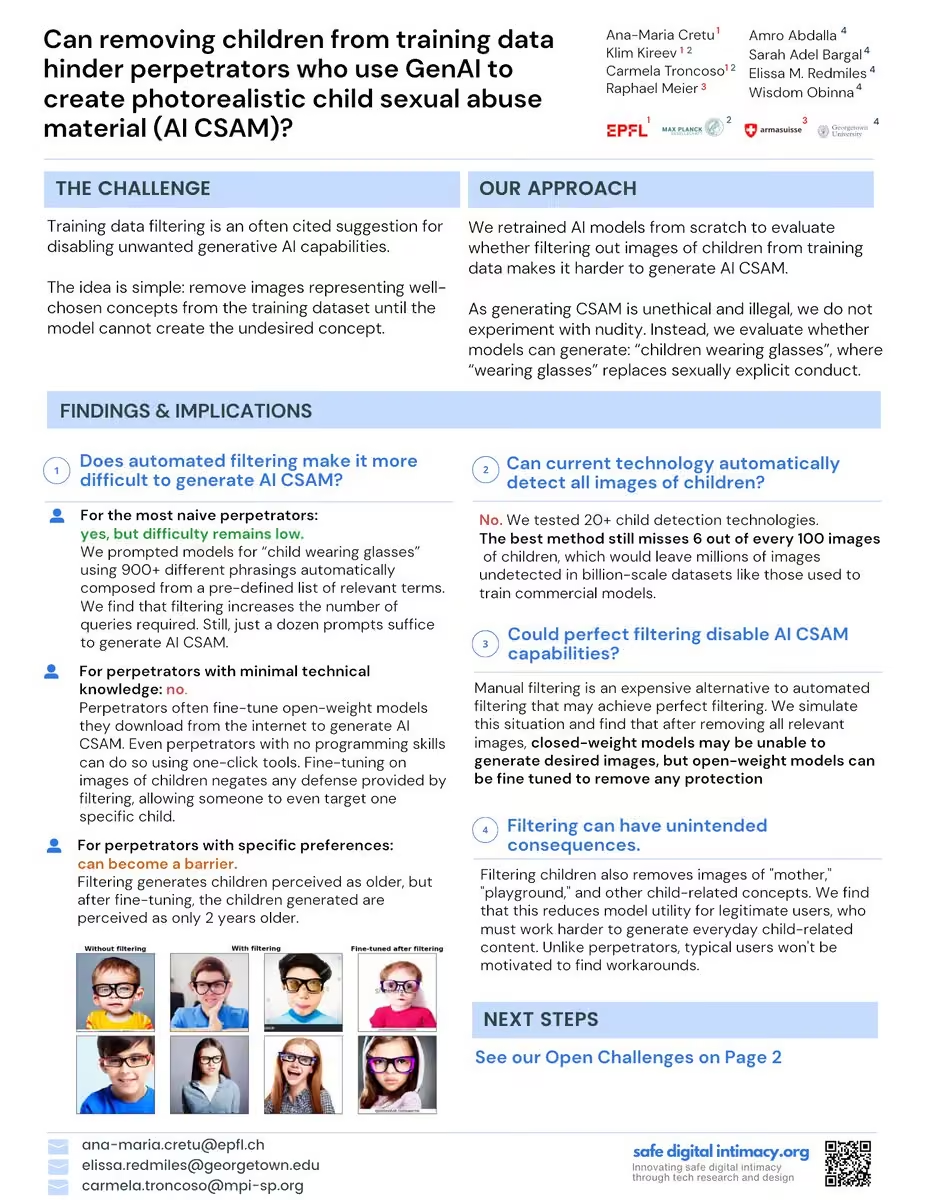
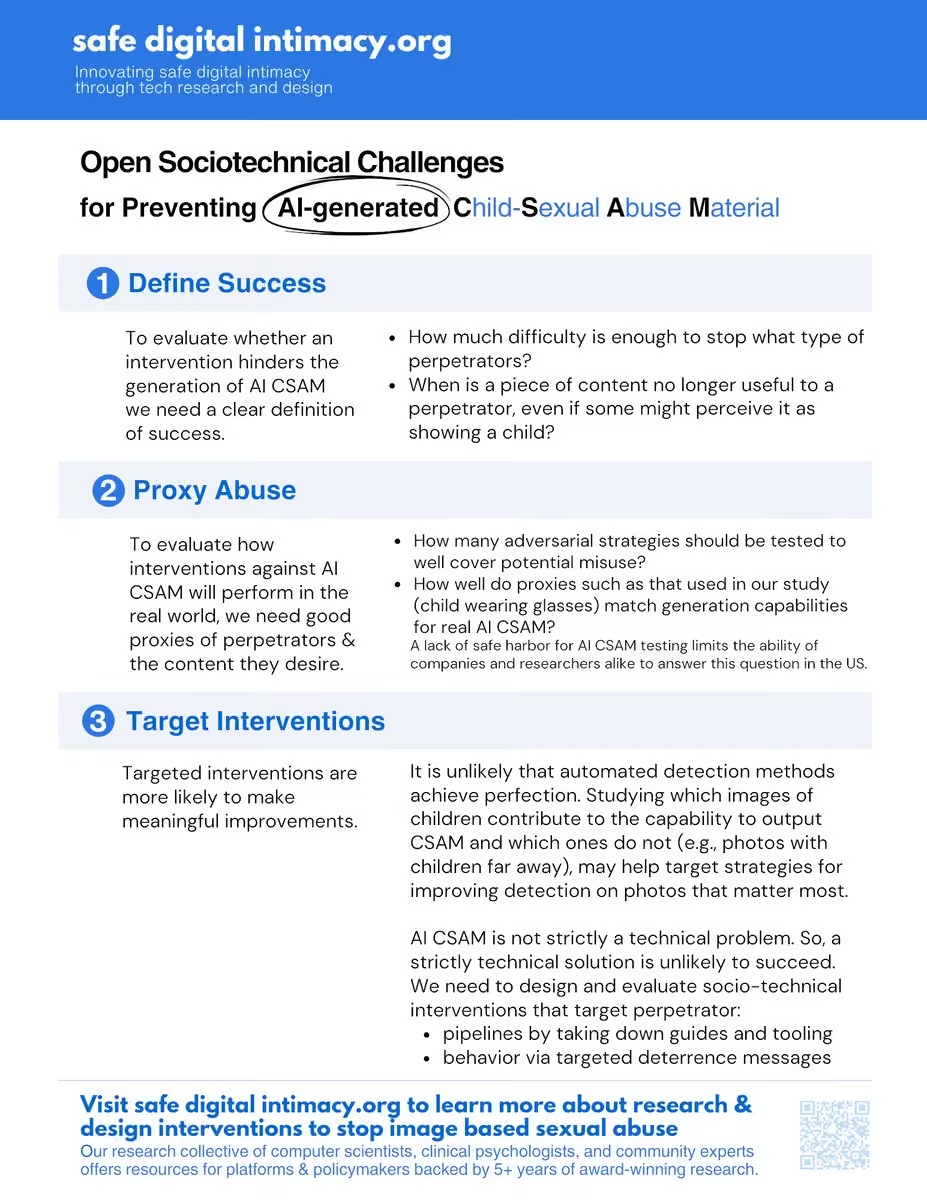
 Marcel Böhme👨🔬
 Catalin Hritcu
 Antoine Bosselut

 Yixin Zou
 Bart Preneel

 ACM CCS 2025
 Lujo Bauer
 Aurore Fass
 Kenneth Dée

 Sandra Siby

 CSAW MENA
 Mathias Payer


 Carles Planas Bou
 Claudia Canelles
 Matthew Green


 Martin R. Albrecht
 Juan Tapiador

 Lorenzo Cavallaro
 Will Cathcart

 Elissa M. Redmiles, Ph.D.
 Applied Social Media Lab


 Ben Stock

 PETS

 Adam J. Aviv

 CPDP Conferences

 Computable België
 Pieterjan Van Leemputten
 Wolfie Christl
 James Farrar


 Florian Tramèr

 Somesh Jha
 SaTML Conference

 Mario Guglielmetti
 Ryan Hurst
 Ella Jakubowska


 Shoshana Weissmann, Sloth Committee Chair 🦥
 Claudia Diaz
 Gautam Kamath
 Joe Calandrino
 Ghassan Karame
 Felix M. Simon

 jason polakis
 Riho Terras

 Shaoor Munir


 Berk Ustun
 Ola Svensson
 EPFL Computer and Communication Sciences

 Alec Muffett
 Asia Biega
 David Adrian
 Maksym Andriushchenko
 Manuel G. Pascual
 Internet Society - European Region


 Manoel
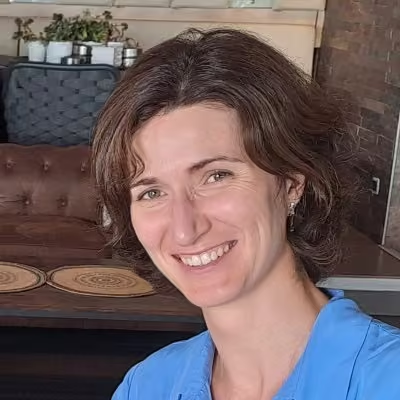 Nataliia Bielova

 SolineLedesert


 Joseph Cox
 AI Now Institute
 KCL Informatics

 USENIX Security

 Zubair Shafiq


 kennyog
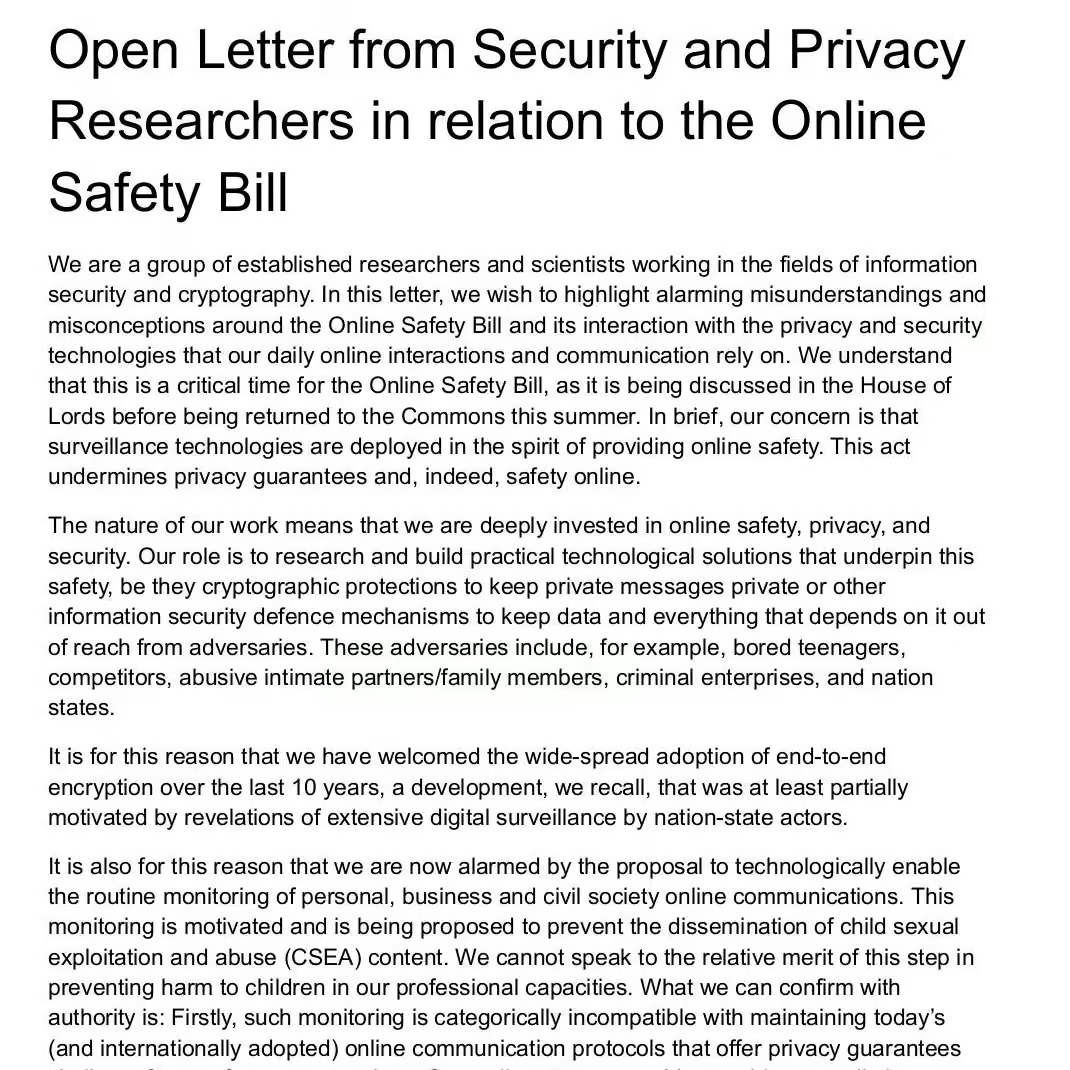
 Euronews Next
 gloria gonzález fuster
 christian cachin
 Luc Rocher


 Bogdan Kulynych


 Massimo Marelli

 Rachel Thomas
 CESGA

 Cosic.be

 映彤 ✨🍄✨


 Anjo Vahldiek-Oberwagner

 Prateek Mittal

 MMitchell
 Anna Clemens, PhD
 Melissa Chen


 stefania milan

 Ted

 swisscyberstorm


 Solal Pirelli
 James Larus

 FDCA UNIL (inactif)


 David Evans


 Rebekah Overdorf 🏳️🌈


 Revue Horizons

 Horizons Magazine





 Bailey 🕸🕷🦇

 Aloni Cohen
 Giovanni Cherubin
 Umar Iqbal
 Henning Piezunka
 Irena Buzarewicz


 Roya Ensafi

 juliette.griffie
 Wouter Lueks
 IEEE European Symposium on Security and Privacy


 SedaG
 Galactic Chloé


 Ali Alkhatib
 JP Aumasson


 Center for Digital Trust (C4DT) EPFL


 T


 mmazurek @ bsky.social
 Nick Sullivan
 Ari Ezra Waldman
 Suzanne Vergnolle (@SuVergnolle@eupolicy.social)


 Daniel Saraga
 Nym
 Trust Valley


 AMLD Intelligence Summit


 Jaron Mink

 UCL InfoSec
 Adrià Gascón


 electronic Max
 Maarten van Smeden


 Pascal Junod


 Eddie Kohler

 AS
 Stefano Calzavara
 Lorena Jaume-Palasí

 Austin Henley

 Future


 Talia Ringer 🕊🪬


 matt blaze

 jonny saunders


 hacker.house

 Simon Hania


 Narseo Vallina

 Scientific Advisory Panel COVID-19

 prisec_ml
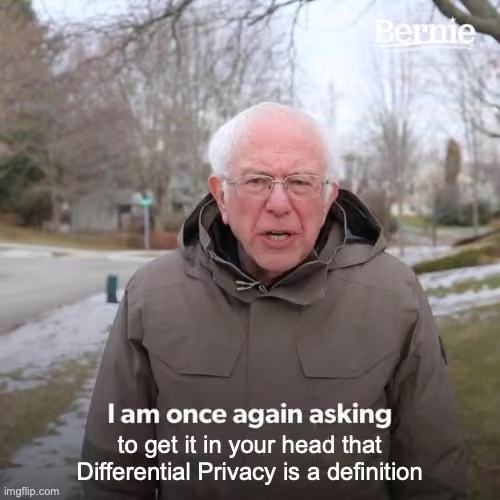

 Ben Adida
 ✨ Jean Yang ✨


 LM Sacasas


 Steven M. Bellovin
 Thaleia Dimitra Doudali


 Pierre Romera Zhang


 Amnesty Suisse
 Diversité EPFL


 Steven Englehardt


 Marco Guarnieri
 Natalia Krapiva 👩🏻💻🕊

 WIS Delft
 Elliott Ash
 ETH Center for Law & Economics

 Mathieu Cunche @Cunchem@mastodon.social


 Vanessa Teague

 Clémentine Maurice

 Deirdre Connolly¹

 network


 Mike Stabile


 The Data Science Institute at Columbia University
 EL PAÍS Tecnología


 Christopher Parsons


 John Sohrawardi
 Nigel Smart
 Sazzadur Rahaman
 Davide Balzarotti
 leyla bilge


 Arvind Narayanan

 Sylvain Métille

 Pierre Vandergheynst
 Eva Wolfangel





 Alexander Fanta

 Kirsten Han

 Katharina Kohls
 Dr. Guillermo Suárez

 Marius Brülhart


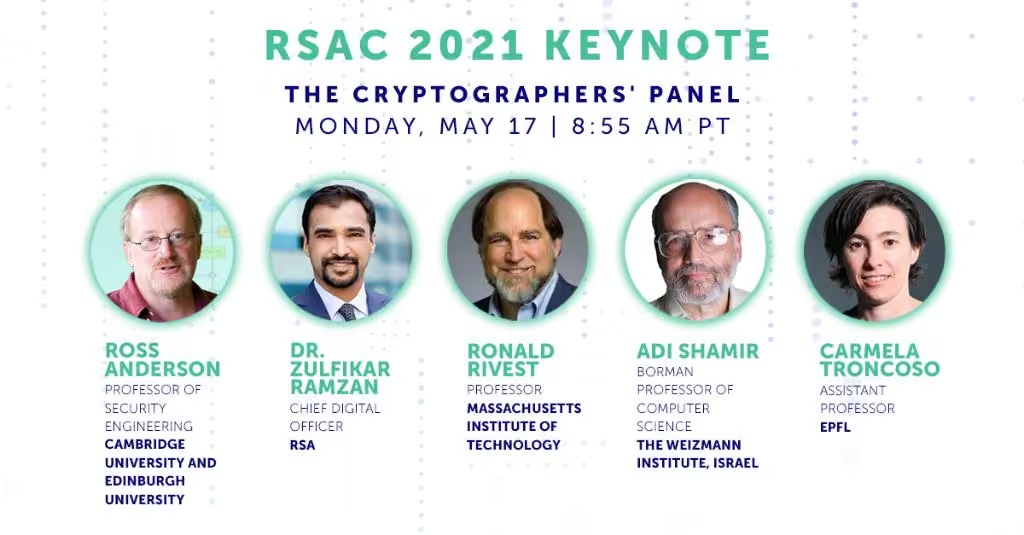
 linuzifer
 briankrebs
 Florian Tschorsch // @flotschorsch@chaos.social


 Comisión Europea en España


 Maria Paz Canales


 Kirsten Bock💫
 IMDEA Software

 IMDEA Networks
 Agencia Española de Protección de Datos


