It’s #sunday! Here’s your space weather report for Nov. 6-12:
•7 M-class flares
•0 C-class flares
•21 coronal mass ejections
•0 geomagnetic storms
This video from NASA’s Solar Dynamics Observatory shows the week’s activity.
All seven of this week’s M-class flares came from a single active region, AR14566, as it crossed the middle of the Sun. The strongest, an M1.9 on Nov. 7, shows up as a brightening of tangled loops just left of and below the Sun’s center at about 0:47 in the video. The last one, an M1.7 on Nov. 11, flares at about 2:36, after the region had drifted roughly halfway to the western limb (right edge).
AR14566 is now rotating toward the Sun’s far side, so any big eruptions from it are less likely to head our way. We’ll be watching what rotates into view next.
More about solar activity: science.nasa.gov/sun/solar-storms-and-flares/
Center for Near-Earth Object Studies
The Center for Near-Earth Object Studies (CNEOS) is the Jet Propulsion Laboratory's (JPL's) facility for computing asteroid and comet orbits and their probability of Earth impact. CNEOS is located at, and operated by, Caltech in Pasadena, California. More on Wikipedia
-
NASA Space Alerts
@NASASpaceAlerts

This media couldn't be displayed. See it on the original post. -
NASA Space Alerts
@NASASpaceAlerts
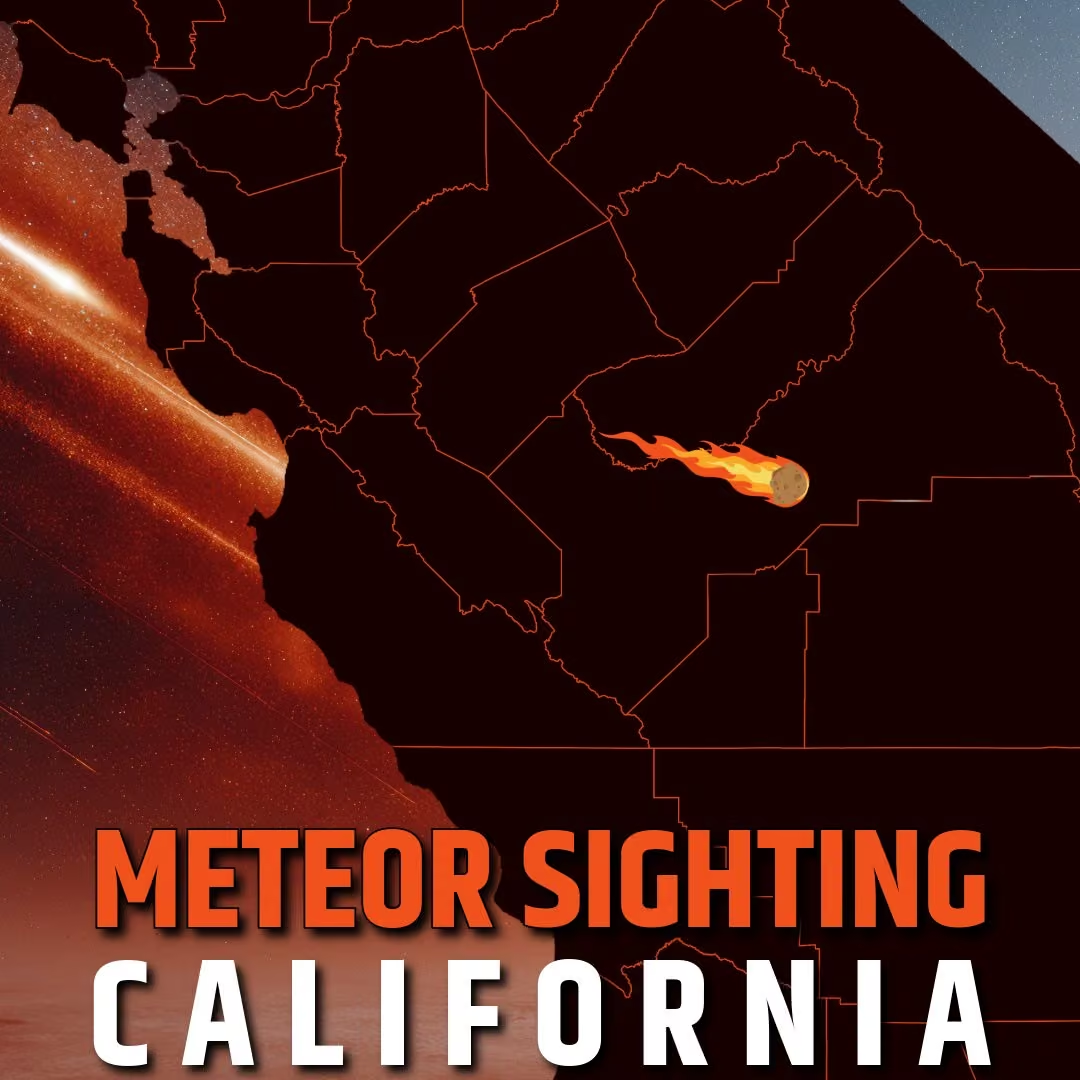
#meteorsighting: Several witnesses reported sighting a fireball off the west coast of Florida on Nov. 8 at 10 p.m. ET. The event was confirmed by multiple publicly accessible cameras in the region, as well as by the Geostationary Lightning Mapper onboard the GOES-18 and GOES-19 satellites. The object - caused by a small, 2 foot fragment of an asteroid - was first spotted above a point in the Gulf due west of Islamorada. It traveled southwest at 54,500 mph before disintegrating above the ocean, northwest of Key West.
More on this fireball: fireballs.ndc.nasa.gov/skyfalls/events/20261109-030003/?l…
Supplemental data was provided by the American Meteor Society -
NASA Space Alerts
@NASASpaceAlerts
It’s #sunday! Here’s your space weather report for Oct. 30-Nov. 5:
•1 M-class flare
•0 C-class flares
•11 coronal mass ejections
•1 geomagnetic storm
This video from NASA’s Solar Dynamics Observatory shows the week’s activity.
After a quiet stretch, the Sun woke up at the very end of this reporting period. Active region AR14566 rotated into view on the southeastern limb (lower left) around Nov. 3. Within about a day, its magnetic field had tangled into a complex arrangement that tends to produce strong flares.
On Nov. 5, AR14566 fired an M3.5 flare, the week’s strongest, along with a coronal mass ejection (not readily visible in this view) that sped away at about 2 million mph (915 km/s). The flare appears as a bright flash at about 2:59 in the video, to the left of and just below the Sun’s center. We’ll be watching this region as it crosses the Sun in the coming days.
More about solar storms and flares: science.nasa.gov/sun/solar-storms-and-flares/This media couldn't be displayed. See it on the original post. -
NASA Space Alerts
@NASASpaceAlerts
#meteorsighting: Several witnesses reported sighting a fireball over southern Tennessee yesterday evening, Nov. 5, at 7:45 p.m. EST. The meteor was also detected by four NASA All Sky cameras in the region. The object – a small piece of an asteroid 2 inches in diameter, weighing 6 ounces – was first spotted 53 miles above Robbinsville, North Carolina, moving a little south of west at 47,000 mph. It disintegrated at an altitude of 25 miles above East Ridge, Tennessee, just southeast of Chattanooga.
More on this fireball: fireballs.ndc.nasa.gov/skyfalls/events/20261106-004521/?l… -
NASA Space Alerts
@NASASpaceAlerts
It’s #sunday! Here’s your space weather report for Oct. 23-29:
•0 M-class flares
•3 C-class flares
•25 coronal mass ejections
•0 geomagnetic storms
This video from NASA’s Solar Dynamics Observatory (SDO) shows the week’s activity.
It was a quiet week on the Sun, which makes it a good time to look back. This week marked 23 years since the Halloween Storms of 2003, when three giant sunspot groups unleashed some of the most powerful solar eruptions of the space age. On Oct. 28, 2003, one of them fired an X17 flare, still among the strongest ever recorded, and the geomagnetic storms that followed sparked auroras as far south as Texas and Florida. The 2003 storms happened before SDO launched (in 2010), but several other NASA spacecraft did capture imagery of the spectacular eruptions. Check out the archival video from NASA’s Scientific Visualization Studio: svs.gsfc.nasa.gov/search/?series=Halloween Solar Storms 2….
This year, the strongest flare of the week was a much more meager C2.8 on Oct. 26. It shows up as a small brightening just inside the western limb (right edge), below the Sun’s equator, at about 1:41 in the video. 🎃
More about solar activity: science.nasa.gov/sun/solar-storms-and-flares/This media couldn't be displayed. See it on the original post. -
NASA Space Alerts
@NASASpaceAlerts
It’s #sunday! Here’s your space weather report for Oct. 16-22:
•2 M-class flares
•0 C-class flares
•24 coronal mass ejections
•0 geomagnetic storms
This video from NASA’s Solar Dynamics Observatory shows the week’s activity.
Both of this week’s M-class flares came from active region AR14551. The first, an M1.3 on Oct. 16, appears as a small bright flash just below and to the right of the Sun’s center at about 0:17 in the video. The second, an M1.6 on Oct. 19, erupts at about 1:30, after the region had drifted about halfway to the western limb (right edge).
From about 2:00 to the end, watch AR14551 rotate off the Sun’s lower right edge, with glowing coronal loops towering above the limb. Quite a farewell! 🌅
At about 2:29, a calibration maneuver briefly moves the Sun out of frame.
More about flares and active regions: science.nasa.gov/sun/solar-storms-and-flares/This media couldn't be displayed. See it on the original post. -
NASA Space Alerts
@NASASpaceAlerts
It’s #sunday! Here’s your space weather report for Oct. 9-15:
•3 M-class flares
•0 C-class flares
•19 coronal mass ejections
•1 geomagnetic storm
This video from NASA’s Solar Dynamics Observatory shows the week’s activity. After the Oct. 10 geomagnetic storm, which led to aurora sightings across northern Europe, Canada, and the northeastern United States, it was a relatively calm week on the Sun.
The Moon makes a special guest appearance in this week’s video beginning at about 0:36. Note the sharp outline of the Moon’s edge. That’s because the Moon has almost no atmosphere to scatter sunlight.
At about 2:30, we also see a calibration maneuver, which the spacecraft performs periodically to account for changes in its instruments’ optics over time.
More about solar activity: science.nasa.gov/heliophysics/focus-areas/space-weather/This media couldn't be displayed. See it on the original post. -
NASA Space Alerts
@NASASpaceAlerts
#meteorsighting: Over 200 eyewitnesses in the Pacific Northwest spotted a fireball at 6:56 p.m. PT on Oct. 14. An analysis of the available video data places first visibility of the meteor 49 miles above Mountain Top, Washington. The meteor moved northeast at 36,000 mph before disintegrating 29 miles above Lenville, Idaho.
More on this fireball: fireballs.ndc.nasa.gov/skyfalls/events/20261015-015610?li…
Supplemental data was provided by the American Meteor Society. -
NASA Space Alerts
@NASASpaceAlerts
It’s #sunday! Here’s your space weather report for Oct. 2-8:
• 4 M-class flares
• 1 C-class flare
• 23 coronal mass ejections
• 1 geomagnetic storm
This video from NASA’s Solar Dynamics Observatory shows the week’s activity.
The week’s strongest flare, an M6.7, erupted Thursday, Oct. 8, and appears at about 2:58 in the video. The eruption also sent a coronal mass ejection toward Earth. As of Friday, Oct. 9, forecasters at the National Oceanic and Atmospheric Administration’s Space Weather Prediction Center expect it to arrive Sunday, Oct. 11. It could trigger a geomagnetic storm or strengthen one already underway. If you’re in the northern U.S. or Canada, keep an eye out for auroras!
More about solar activity: science.nasa.gov/heliophysics/focus-areas/space-weather/This media couldn't be displayed. See it on the original post. -
NASA Space Alerts
@NASASpaceAlerts
Our Solar Dynamics Observatory #sunday post is taking a break this week as we update some of our image processing software.
We'll be back next week with more views of our closest star. ☀️ -
NASA Space Alerts reposted
NASA
@NASA
How do we respond when we detect an asteroid that could pose a threat to Earth?
Follow the story behind a recent real-world test in our newest documentary, Planetary Defenders: This Is Not an Exercise, now streaming for free on NASA+. plus.nasa.gov/video/planetary-defenders-this-is-not-an-ex… -
NASA Space Alerts
@NASASpaceAlerts
It’s #sunday! Here’s your space weather report for the week of Sept. 18 - Sept. 24:
• 0 M-class flares
• 1 C-class flare
• 14 coronal mass ejections
• 0 geomagnetic storms
This video from NASA’s Solar Dynamics Observatory shows the week’s activity, though a momentary data gap (which has since been resolved) left out imagery from Sept. 24.
It was another quiet week on the Sun. The coronal holes that took form last week — the dark “stripes” that indicate cooler, darker regions where fast solar wind escapes to space — have continued sending high-speed streams toward Earth, though none powerful enough to create a geomagnetic storm.
September 22 marked the beginning of autumn in Earth's Northern Hemisphere, as well as a high point in “aurora season.” Aurora season happens twice a year around the equinoxes, when Earth’s roughly 23-degree “tilt” tips our planet’s magnetic field so it more easily lines up with the Sun’s magnetic field. As a result, in September and October and in March and April (around the equinoxes), geomagnetic storms and auroras tend to become more common and more intense. The phenomenon is known as the Russell-McPherron effect.
More about solar activity: science.nasa.gov/heliophysics/focus-areas/space-weather/This media couldn't be displayed. See it on the original post. -
NASA Space Alerts
@NASASpaceAlerts
It’s #sunday! Here’s your space weather report for the week of Sept. 11 - Sept. 17:
• 0 M-class flares
• 0 C-class flares (only counted if associated with coronal mass ejections)
• 17 coronal mass ejections
• 0 geomagnetic storms
This video from NASA’s Solar Dynamics Observatory shows the week’s activity.
A quiet week on the Sun as a cluster of active regions move across the Sun’s disk and around the limb. As of Friday, Sept. 18, there are no active regions on the Earth-facing side of the Sun.
The dark “strips” across the Sun that emerge towards the end of the video are coronal holes. These cooler bands of solar material on the Sun (which make them appear darker) are where the Sun’s magnetic field lines open up to space, allowing high-speed solar wind to escape.
More about solar activity and space weather: science.nasa.gov/heliophysics/focus-areas/space-weather/This media couldn't be displayed. See it on the original post. -
NASA Space Alerts
@NASASpaceAlerts
#meteorsighting: Eyewitnesses in Michigan and Canada spotted a bright fireball over Ontario at 8:47 p.m. ET last night, Sept. 13. The event was verified by several cameras belonging to the Southern Ontario Meteor Network and other publicly accessible cameras in the area. Analysis of the data from these systems indicates that the meteor - produced by a small fragment of an asteroid about 2 inches in diameter and weighing approximately 7 ounces - first became visible above the Canadian town of Markstay-Warren, moving northwest at 32,000 mph. It disintegrated above a point midway between Wanapitei Lake and Raphoe.
More on this fireball: fireballs.ndc.nasa.gov/skyfalls/events/20260914-004723/?l… -
NASA Space Alerts
@NASASpaceAlerts
It’s #sunday! Here’s your space weather report for the week of Sept. 4 - Sept. 10:
• 2 M-class flares
• 6 C-class flares
• 29 coronal mass ejections
• 0 geomagnetic storms
This video from NASA’s Solar Dynamics Observatory shows the week’s activity.
The Sun delivered a “one-two punch” of flares on Sept. 5, with an M1.0-class flare erupting from the Sun’s western limb (right side) at about 0:43 seconds into the video, followed by a C8.5-class flare from the eastern limb (left side) at about 0:46 seconds. Both flares also produced coronal mass ejections that swept through space to either side of Earth. By the end of the video, we have nine active regions on the Earth-facing side of the Sun, most of them clustering together right in the middle of the Sun’s disk.
More about solar eruptions and space weather: science.nasa.gov/heliophysics/focus-areas/space-weather/This media couldn't be displayed. See it on the original post. -
NASA Space Alerts
@NASASpaceAlerts
#meteorsighting: NASA meteor cameras and the Geostationary Lightning Mappers on the GOES 18 and 19 satellites detected a bright fireball that occurred over western Kentucky at 1:33 a.m. CT on Sept. 10. The object - a piece of a comet about 16 inches in diameter and weighing ~200 pounds - entered the atmosphere above Crutchfield, Kentucky, and moved southwest at 145,000 mph. The fireball disintegrated above the town of Mabel, unleashing an energy of 50 tons of TNT and creating a bright flare that lit up the night sky.
More on this fireball: fireballs.ndc.nasa.gov/skyfalls/events/20260910-063250/?l… -
NASA Space Alerts
@NASASpaceAlerts
It’s #sunday! Here’s your space weather report for the week of Aug 28 - Sept 3
• 1 M-class flare
• 4 C-class flares
• 55 coronal mass ejections
• 0 geomagnetic storms
This video from NASA’s Solar Dynamics Observatory (SDO) shows the week’s activity.
While this week’s flare count was fairly low, there was a surplus of coronal mass ejections. The week’s strongest flare was an M3-class, which can be seen erupting from an active region on the eastern limb (left side of Sun) at about 3:02. This active region is rotating onto the Earth-facing side of the Sun, so any eruptions from it in the near future may have some impact on Earth.
More about solar eruptions and space weather: science.nasa.gov/heliophysics/focus-areas/space-weather/This media couldn't be displayed. See it on the original post. -
NASA Space Alerts
@NASASpaceAlerts
A small natural object 1.5-5 feet (0.5-1.5m) is predicted to impact Earth’s atmosphere just northwest of Australia and safely disintegrate today, Sept. 6, 12:14 p.m. EDT. While not a hazard, scenarios like this provide an invaluable test of our planetary defense capabilities to monitor for larger objects and predict impact threats.
NASA Space Alerts
@NASASpaceAlerts
The object was first reported to the Minor Planet Center by the Catalina Sky Survey, with earlier detections by Pan-STARRS, and the Center for Near-Earth Object Studies @NASAJPL calculated its trajectory and impact location - all funded by NASA's Planetary Defense Coordination Office.
This is only the 13th small object that has been detected in space prior to impact, most from @NASA’s routine planetary defense monitoring. -
NASA Space Alerts
@NASASpaceAlerts
#meteorsighting: Eyewitnesses in Oregon and Washington reported a bright fireball seen the night of Aug. 30 at 8:32 p.m. PDT. The fireball was spotted at an altitude of 52 miles above the western slope of Mount St. Helens. Moving west at 48,000 mph, the object traveled some 80 miles through the upper atmosphere before disintegrating 33 miles above Astoria, Oregon. This fireball was not associated with any meteor shower, and meteorites are not thought to have been produced when the object fragmented.
More on this fireball: fireballs.ndc.nasa.gov/skyfalls/events/20260831-035136/?l…
Eyewitness accounts supplied by the American Meteor Society -
NASA Space Alerts
@NASASpaceAlerts
It’s #sunday! Here’s your space weather report for the week of Aug 21 - 27:
• 8 M-class flares
• 3 C-class flares
• 32 coronal mass ejections
• 0 geomagnetic storms
This video from NASA’s Solar Dynamics Observatory (SDO) shows the week’s activity.
Active region AR14513 — the bright cluster of activity that has made its way across the Sun’s disk this week, appearing in the center at about 2:10 in this video — produced all but two of this week’s flares, though none reached X-class. The strongest flare in this period was an M6.9, also produced by AR14513, appearing at about 1:57 in the video. It still has a few more days on the Earth-facing side of the Sun, so we'll keep watch!
More about solar eruptions and space weather: science.nasa.gov/heliophysics/focus-areas/space-weather/ -
NASA Space Alerts
@NASASpaceAlerts
It’s #sunday! Here’s your space weather report for the week of Aug 14 - 20:
• 4 M-class flares
• 3 C-class flares
• 22 coronal mass ejections
• 0 geomagnetic storms
This video from NASA’s Solar Dynamics Observatory (SDO) shows the week’s activity.
All of this week’s M-class flares happened in the last two days of this reporting period. Their source is the active region AR14513, which appears as a bright cluster that rotates into view from the Sun’s eastern limb (left side) starting on the 19th, about 2:30 into this video. We’ll keep an eye on this busy active region as it moves into an Earth-facing position over the coming days.
Related: New NASA-funded efforts to predict active regions before they emerge: science.nasa.gov/science-research/heliophysics/nasas-coff… -
NASA Space Alerts
@NASASpaceAlerts
It’s #sunday! Here’s your space weather report for the week of Aug 7 - 13:
• 0 M-class flares
• 1 C-class flare
• 16 coronal mass ejections
• 1 geomagnetic storm
This video from NASA’s Solar Dynamics Observatory (SDO) shows the week’s activity.
It was a quite calm week on the Sun, with a moderate geomagnetic storm occurring on Aug. 8 after several coronal mass ejections arrived at Earth together.
There was also a total solar eclipse on Aug. 12. How come SDO didn't see it? SDO follows a “geosynchronous” orbit, orbiting Earth at the same rate as Earth spins. The spacecraft effectively “hovers” over its ground station in White Sands, New Mexico. White Sands was outside of the eclipse’s path, so SDO didn’t see it.
Visualize SDO’s orbit: science.nasa.gov/mission/sdo/ -
NASA Space Alerts
@NASASpaceAlerts
#meteorsighting: Hundreds of eyewitnesses in Idaho, Oregon, Washington, and the Canadian province of British Columbia reported a bright fireball in the early morning hours of Aug. 14 at 12:48 a.m. PDT. The fireball was first spotted above the Washington town of Soap Lake, moving north at 33,000 mph. It traveled 36 miles through the atmosphere before fragmenting above Sim’s Corner. When it broke apart, the fireball unleashed an energy of 10 tons of TNT, creating a pressure/shock wave that propagated to the ground. Doppler weather radar indicates that some small meteorites may be on the ground in the area. This fireball was not part of the currently active Perseids meteor shower.
More on this fireball: fireballs.ndc.nasa.gov/skyfalls/events/20260814-074833/?l…
Eyewitness accounts supplied by the American Meteor Society -
NASA Space Alerts
@NASASpaceAlerts
Tonight, NASA is hosting a watch party for the peak of the Perseids meteor shower!
Tune in to @NASA_Marshall's YouTube channel starting at midnight ET on Aug. 13 to hear from meteor experts, watch live views of the skies, and ask your questions.
📺: www.youtube.com/watch?v=kVRkkrB4eS0 -
NASA Space Alerts
@NASASpaceAlerts
Tomorrow: a total solar eclipse over Iceland and Spain. ☀️🌑🌎
The U.S. won’t see totality — so watch it live on X with @NASA and at nasa.gov/live.
Coverage begins at 1:15 p.m. EDT! -
NASA Space Alerts
@NASASpaceAlerts
It’s #sunday! Here’s your space weather report for the week of July 24 - July 30:
• 3 M-class flares
• 1 C-class flare
• 31 coronal mass ejections
• 0 geomagnetic storms
This video from NASA’s Solar Dynamics Observatory (SDO) shows the week’s activity. SDO remains in its Earth eclipse period, with daily “blackouts” as the spacecraft passes behind our planet, which will continue through Aug. 2.
This week’s strongest flare, an M3.2-class eruption, appears at about 1:10 into the video as a brief flash in the middle of the Sun’s disk.
Learn more about the Sun and space weather: science.nasa.gov/heliophysics/focus-areas/space-weather/
Note: This week's video does not include imagery from July 30th due to a temporary issue with our data processing pipeline that is being resolved. -
NASA Space Alerts
@NASASpaceAlerts
It’s #sunday! Here’s your space weather report for the week of July 17 - July 23:
• 5 M-class flares
• 2 C-class flares
• 31 coronal mass ejections
• 0 geomagnetic storms
This video from NASA’s Solar Dynamics Observatory (SDO) shows the week’s activity.
It was a fairly calm week on the Sun as SDO’s daily Earth eclipses punctuate our view of the Sun. The spacecraft’s Earth eclipse season, which began on July 5, continues through August 2. Eclipse seasons are three-week periods twice a year when the spacecraft’s orbit passes “behind” Earth, briefly blocking out the Sun each day.
Learn more about space weather: science.nasa.gov/heliophysics/focus-areas/space-weather/ -
NASA Space Alerts
@NASASpaceAlerts
It’s #sunday! Here’s your space weather report for the week of July 10 - July 16:
• 1 M-class flare
• 3 C-class flares
• 29 coronal mass ejections
• 0 geomagnetic storms
This video from NASA’s Solar Dynamics Observatory (SDO) shows the week’s activity.
Those “blackouts” in the video below aren’t missing data — those are Earth eclipses! SDO is currently in its 33rd Earth eclipse season, which began on July 5 and will continue through August 2. Eclipse seasons are three-week periods twice a year when the spacecraft’s orbit passes “behind” Earth, briefly blocking out SDO's view of the Sun each day.
Learn more about SDO and visualize its orbit: science.nasa.gov/mission/sdo/ -
NASA Space Alerts
@NASASpaceAlerts
It’s #sunday! Here’s your space weather report for the week of July 3 - July 9:
• 1 X-class flare
• 36 M-class flares
• 3 C-class flares
• 42 coronal mass ejections
• 1 geomagnetic storm
This video from NASA’s Solar Dynamics Observatory (SDO) shows the week’s activity.
The Sun celebrated the fourth of July with a big bang, emitting an intense X-class solar flare (science.nasa.gov/blogs/solar-cycle-25/2026/07/06/strong-f…) and a burst of M-class flares. You can see the show starting at about 0:49 in the video.
Learn more about space weather: science.nasa.gov/heliophysics/focus-areas/space-weather/ -
NASA Space Alerts
@NASASpaceAlerts
A solar fireworks show! 🎇
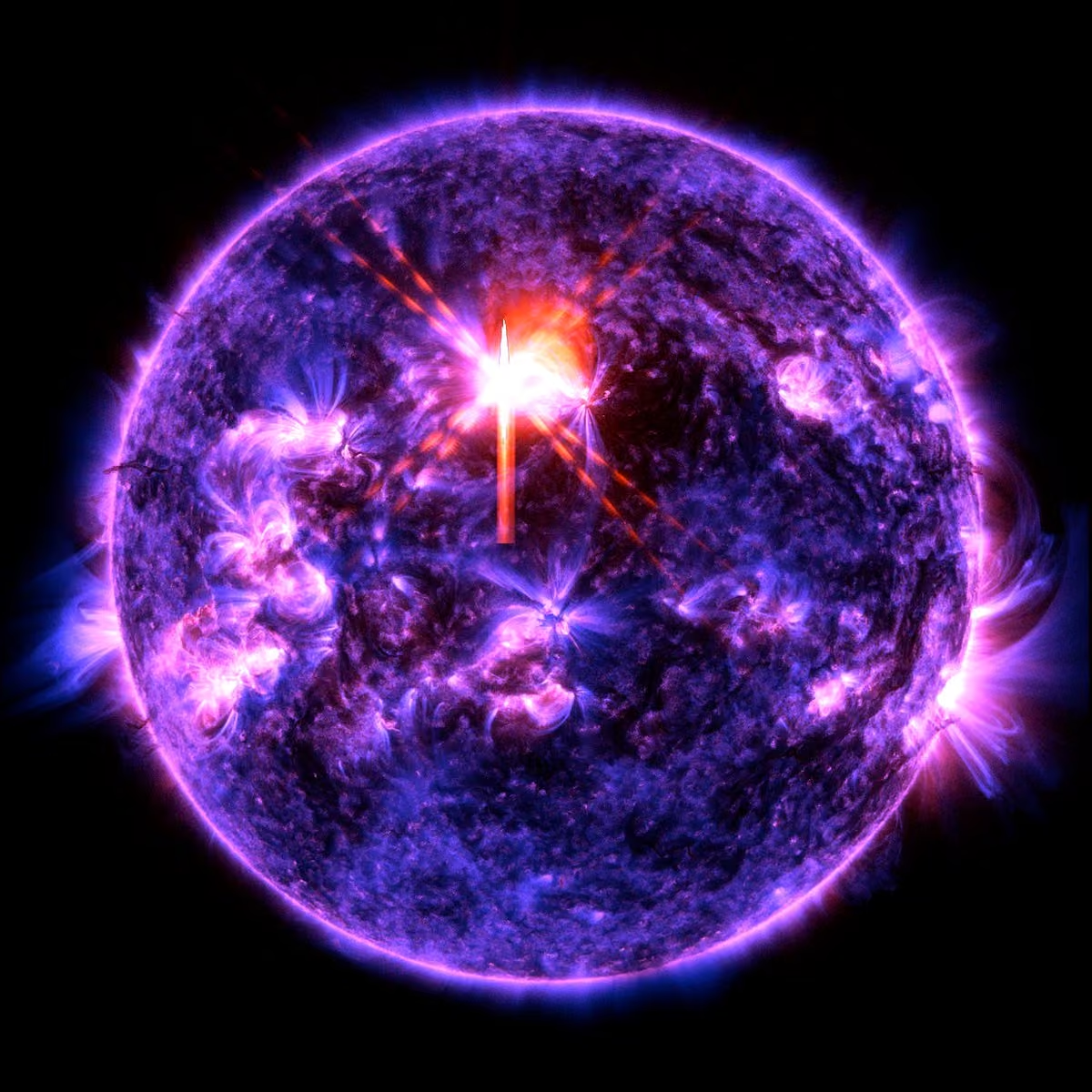
The Sun emitted a strong solar flare on July 4, peaking at 4:41 p.m. ET. NASA’s Solar Dynamics Observatory captured an image of the event, which was classified as X1.3. The same view from the spacecraft's AIA 131 channel is shown here colorized in red, white, and blue: science.nasa.gov/blogs/solar-cycle-25/2026/07/06/strong-f…
NASA Space Alerts
@NASASpaceAlerts
Solar flares are powerful bursts of radiation. Harmful radiation from a flare cannot pass through Earth’s atmosphere to physically affect humans on the ground. However — when intense enough — they can disturb the atmosphere in the layer where GPS & communications signals travel.
NASA Space Alerts
@NASASpaceAlerts
To see how such space weather may affect Earth, check out @NWSSWPC, the U.S. government’s official source for space weather forecasts, watches, warnings, and alerts.
-
NASA Space Alerts
@NASASpaceAlerts
It’s #sunday! Here’s your space weather report for the week of June 26 - July 2:
• 1 X-class flare
• 24 M-class flares
• 50 coronal mass ejections
• 0 geomagnetic storms
This video from NASA’s Solar Dynamics Observatory (SDO) shows the week’s activity.
The Sun put on its own fireworks show this week! 🎇
Most of this week’s flare activity came from Active Region 14479, which unleashed a barrage of M-class flares and one X-class flare, visible here beginning at about 2:09 in the video.
Learn more about space weather: science.nasa.gov/heliophysics/focus-areas/space-weather/ -
NASA Space Alerts
@NASASpaceAlerts
The Sun emitted a strong solar flare on June 30, peaking at 4:50 p.m. ET. NASA’s Solar Dynamics Observatory captured an image of the event, which was classified as X1.1.
NASA Space Alerts
@NASASpaceAlerts
Solar flares are powerful bursts of radiation. Harmful radiation from a flare cannot pass through Earth’s atmosphere to physically affect humans on the ground. However — when intense enough — they can disturb the atmosphere in the layer where GPS & communications signals travel.
NASA Space Alerts
@NASASpaceAlerts
To see how such space weather may affect Earth, check out @NWSSWPC, the U.S. government’s official source for space weather forecasts, watches, warnings, and alerts.
-
NASA Space Alerts
@NASASpaceAlerts
Today, June 30, is also National Meteor Watch Day!
Celebrate with us by heading outside on a clear evening and spending some time under the stars. Learn more about meteors and asteroids on our latest #watchtheskies blog: www.nasa.gov/blogs/watch-the-skies/2026/06/30/fireflies-a… -
NASA Space Alerts
@NASASpaceAlerts
🦖The dinosaurs didn’t have a space program.
NASA’s Planetary Defense Program finds and tracks potentially hazardous asteroids and tests methods to keep us safe on Earth. This International Asteroid Day, learn more about our planetary defenders: plus.nasa.gov/video/planetary-defenders/This media couldn't be displayed. See it on the original post. -
NASA Space Alerts
@NASASpaceAlerts
It’s #sunday! Here’s your space weather report for the week of June 19 - 25:
• 4 M-class flares
• 0 C-class flares
• 42 coronal mass ejections
• 0 geomagnetic storms
This video from NASA’s Solar Dynamics Observatory (SDO) shows the week’s activity.
All the action this week comes from two clustered active regions, AR14472 and AR14473. You can see them rotate onto the Sun’s disk from the Eastern limb (left side of the Sun) starting at about 0:30 into the video, and continue with several flares and bright coronal loops through about 1:30. Quite a show! 🤩
Learn more about space weather: science.nasa.gov/heliophysics/focus-areas/space-weather/ -
NASA Space Alerts
@NASASpaceAlerts
#meteorsighting: Eyewitnesses in several U.S. states across the southeast reported a bright fireball on the night of June 14 at 10:26 p.m. CDT. The meteor, which was also captured by three NASA meteor cameras, was first spotted above Tupelo, Mississippi, moving to the northwest at 56,000 mph. It traveled 300 miles before disintegrating above the Mark Twain National Forest in Missouri. The object moved too fast and was too small to produce meteorites.
More on this fireball: fireballs.ndc.nasa.gov/skyfalls/events/20260615-032626/?l…
Eyewitness accounts supplied by the American Meteor Society -
NASA Space Alerts
@NASASpaceAlerts
It’s #sunday! Here’s your space weather report for the week of June 5 - 11:
• 1 M-class flare
• 5 C-class flares
• 36 coronal mass ejections
• 1 geomagnetic storm (as of June 12, though another one is currently forecast for June 13)
This video from NASA’s Solar Dynamics Observatory shows the week’s activity.
This week’s most powerful flare was an M1.8 on June 6, which erupts from the southeastern (lower left) region of the Sun’s disk at about 0:42 in this video. That eruption also produced a coronal mass ejection that reached Earth three days later, but the bulk of the blast was oriented to the south and east of Earth, so the effect on our planet was minimal.
Learn more about solar flares and coronal mass ejections: science.nasa.gov/heliophysics/focus-areas/space-weather/ -
NASA Space Alerts
@NASASpaceAlerts
It’s #sunday! Here’s your space weather report for the week of May 29 - June 4:
• 1 X-class flare
• 6 M-class flares
• 47 coronal mass ejections
• 0 geomagnetic storms
This video from NASA’s Solar Dynamics Observatory (SDO) shows the week’s activity.
This week’s main event was the X-class flare on June 3, appearing at 2:26 in the video. Though that flare was this week’s brightest event, a few seconds before at 2:20 in the video, an M7-class flare erupts that might appear to the human eye to be even more impressive. In part, that’s because of the nice view of the burst of solar plasma (ultimately producing a coronal mass ejection) that erupts from the region right after the flare. Wow! 🤩
Learn more about space weather: science.nasa.gov/heliophysics/focus-areas/space-weather/ -
NASA Space Alerts
@NASASpaceAlerts
The Sun emitted a strong solar flare on June 3, peaking at 7:28 a.m. ET. NASA’s Solar Dynamics Observatory captured an image of the event, which was classified as X1.0. science.nasa.gov/blogs/solar-cycle-25/2026/06/03/strong-f…
NASA Space Alerts
@NASASpaceAlerts
Solar flares are powerful bursts of radiation. Harmful radiation from a flare cannot pass through Earth’s atmosphere to physically affect humans on the ground. However — when intense enough — they can disturb the atmosphere in the layer where GPS & communications signals travel.
NASA Space Alerts
@NASASpaceAlerts
To see how such space weather may affect Earth, check out @NWSSWPC, the U.S. government’s official source for space weather forecasts, watches, warnings, and alerts.
-
NASA Space Alerts
@NASASpaceAlerts
#meteorsighting: Eyewitnesses in Ohio and Michigan reported a bright meteor on Monday, June 1, at 10:41p.m. EDT. The data puts first detection of the fireball above the Ohio area near Lima. The meteor moved north-northwest at approximately 49,900 mph before disintegrating above the area just west of Lansing, Michigan.
More on this fireball: fireballs.ndc.nasa.gov/skyfalls/events/20260602-024149
Eyewitness accounts supplied by the American Meteor Society -
NASA Space Alerts
@NASASpaceAlerts
UPDATE: @NASA can confirm a fireball over New England at 2:06 p.m. EDT on Saturday, May 30, 2026. The meteor was about 5 feet (1.6 meters) in diameter with a mass of 5.6 metric tons and entered Earth’s atmosphere at roughly 42,000 mph.
The meteor traveled through the atmosphere from northwest to southeast for 26 miles before breaking up at an altitude of 31 miles and producing a meteorite fall into Cape Cod Bay.
Based on the latest data, the energy released at breakup is estimated to be equivalent to about 230 tons of TNT, which accounts for the sonic boom.
Have questions? Check out our fireball FAQs: www.nasa.gov/blogs/watch-the-skies/2026/03/26/its-firebal…
NASA Space Alerts
@NASASpaceAlerts
#meteorsighting: Eyewitnesses in New England and @NOAA’s GOES-19 satellite reported a bright fireball on Saturday, May 30, at 2:06 p.m EDT accompanied by a loud noise. The meteor appears to have fragmented at an altitude of 40 miles over northeast MA and southeast NH. The energy released at breakup is estimated to be equivalent to about 300 tons of TNT, which accounts for the loud noise.
Eyewitness accounts supplied by the American Meteor Society. -
NASA Space Alerts
@NASASpaceAlerts
It’s #sunday! Here’s your space weather report for the week of May 22 - 28:
• 1 M-class flare
• 0 C-class flares
• 46 coronal mass ejections
• 0 geomagnetic storms
This video from NASA’s Solar Dynamics Observatory (SDO) shows the week’s activity. Most of the action this week was on the far side of the Sun, out of SDO’s view. However, we do see a good example of a prominence beginning at about 20 seconds into the video on the lower western limb (right side edge) of the Sun. Prominences are huge clouds of electrified gas called plasma suspended in the solar atmosphere.
Learn more about space weather: science.nasa.gov/heliophysics/focus-areas/space-weather/ -
NASA Space Alerts
@NASASpaceAlerts
#meteorsighting: Eyewitnesses in New England and @NOAA’s GOES-19 satellite reported a bright fireball on Saturday, May 30, at 2:06 p.m EDT accompanied by a loud noise. The meteor appears to have fragmented at an altitude of 40 miles over northeast MA and southeast NH. The energy released at breakup is estimated to be equivalent to about 300 tons of TNT, which accounts for the loud noise.
Eyewitness accounts supplied by the American Meteor Society. -
NASA Space Alerts
@NASASpaceAlerts
It’s #sunday! Here’s your space weather report for the week of May 15 - 21:
• 4 M-class flares
• 3 C-class flares
• 35 coronal mass ejections
• 1 geomagnetic storm
This video from NASA’s Solar Dynamics Observatory (SDO) shows the week’s activity.
It was a fairly calm week on the Sun. A coronal mass ejection last week reached Earth on May 15, triggering a minor geomagnetic storm and leading to aurora sightings across the northern U.S.
On May 20, SDO's Helioseismic and Magnetic Imager (HMI) paused normal science operations for a series of routine calibration maneuvers — measurements that keep the instrument's magnetic field and Doppler velocity data scientifically accurate. You can see these maneuvers starting at about 2:29 in the video.
Learn more about space weather: science.nasa.gov/heliophysics/focus-areas/space-weather/ -
NASA Space Alerts
@NASASpaceAlerts
It’s #sunday! Here’s your space weather report for the week of May 8 - 14:
•1 M-class flare
•1 C-class flare
•31 coronal mass ejections
•0 geomagnetic storms
This video from NASA’s Solar Dynamics Observatory (SDO) shows the week’s activity.
The active region we spotted last week (which erupted with an M-class flare and a CME last Sunday) has moved across the Sun and is now center-disk. It’s right next to a coronal hole that unleashed a stream of fast solar wind to Earth. We’ll be watching both regions for continued activity this week.
Learn more about space weather: science.nasa.gov/heliophysics/focus-areas/space-weather/ -
NASA Space Alerts
@NASASpaceAlerts
It’s #sunday! Here’s your space weather report for the week of May 1 - 7:
•2 M-class flares
•2 C-class flares
•29 coronal mass ejections
•1 geomagnetic storm
This video from NASA’s Solar Dynamics Observatory (SDO) shows the week’s activity.
It has been a relatively quiet week on the Sun, with the two M-class flares erupting off the Sun’s western limb (right side from SDO’s view) and not producing much impact on Earth. However, a large active region will soon be rotating into Earth’s view — you can see it toward the end of this video emerging from the eastern limb (left side from SDO's view). Keep an eye out in the coming week for potential solar activity!
Learn more about space weather: science.nasa.gov/heliophysics/focus-areas/space-weather/ -
NASA Space Alerts
@NASASpaceAlerts
It’s #sunday! Here’s your space weather report for the week of April 24 - 30:
• 2 X-class flares
• 14 M-class flares
• 18 coronal mass ejections
• 0 geomagnetic storms
This video from NASA’s Solar Dynamics Observatory (SDO) shows the week’s solar activity. Two X-class flares erupt on the right side of the disk at the beginning of the week. On April 29, a few spacecraft calibration maneuvers make it look like the Sun is dancing.
Find out more about flares & coronal mass ejections: science.nasa.gov/sun/solar-storms-and-flares/ -
NASA Space Alerts
@NASASpaceAlerts
#meteorsighting: Eyewitnesses in Oregon and Washington and the Canadian province of British Columbia reported a bright fireball on Wednesday, April 29, at 12:12 a.m. PDT. The meteor was first visible over Oktwanch Peak on Vancouver Island. It moved southwest at 66,000 mph before fragmenting above the Pacific Ocean, about 20 miles west of the town of Yuquot.
More on this fireball: fireballs.ndc.nasa.gov/skyfalls/events/20260429-071216/?l…
Eyewitness accounts supplied by the American Meteor Society -
NASA Space Alerts
@NASASpaceAlerts
It’s #sunday! Here’s your space weather report for the week of April 17 - 23:
•6 M-class flares
•0 C-class flares
•34 coronal mass ejections
•1 geomagnetic storm
This video from NASA’s Solar Dynamics Observatory (SDO) shows the week’s activity. Two X-class flares erupted right after the end of this reporting period — they’ll be first up in next week’s space weather report!
Another thing we *don’t* see here: comet PANSTARRS (C/2025 R3)! The comet is currently passing between the Sun and Earth, and ESA/NASA’s SOHO spacecraft is watching the comet as it streaks across the view of its C3 coronagraph. We'll share more views of that comet later; in the meantime, check the latest imagery here: soho.nascom.nasa.gov/data/LATEST/current_c3.gif?linkId=93…
Learn more about space weather: science.nasa.gov/heliophysics/focus-areas/space-weather/ -
NASA Space Alerts
@NASASpaceAlerts
The Sun emitted two strong solar flares, the first peaking at 9:07pm ET on April 23 and the second peaking at 4:13am ET on April 24. NASA’s Solar Dynamics Observatory captured images of the events, which were classified as X2.4 and X2.5: science.nasa.gov/blogs/solar-cycle-25/2026/04/24/sun-rele…
Solar flares are powerful bursts of radiation. Harmful radiation from a flare cannot pass through Earth’s atmosphere to physically affect humans on the ground. However — when intense enough — they can disturb the atmosphere in the layer where GPS & communications signals travel.
To see how such space weather may affect Earth, check out @NWSSWPC, the U.S. government’s official source for space weather forecasts, watches, warnings, and alerts. -
NASA Space Alerts
@NASASpaceAlerts
It’s #sunday! Here’s your space weather report for the week of April 10 - 16:
• 30 coronal mass ejections (CMEs)
• 0 M-class flares
• 0 C-class flares associated with CMEs
• 0 geomagnetic storms
This video from NASA’s Solar Dynamics Observatory (SDO) shows the week’s activity, which was very quiet. Some C-class flares did occur on the Sun during this period, but none were associated with coronal mass ejections (CMEs) or other space weather events, so they are not reported here.
Active region AR4419 first rotates onto the solar disk from the eastern limb (upper left edge) at about 1:20 into the video, then comes alive with lots of crackles and bursts starting at about 2:00 and continuing through the end. Its activity contrasts with the two other active regions on the Sun, AR4415, which moves across the Sun’s equatorial region, and AR4416, in the upper hemisphere, both of which showcase steadier, smoother brightenings of coronal loops. We’ll be watching all of these regions of possible activity in the coming week. -
NASA Space Alerts
@NASASpaceAlerts
It’s #sunday! Here’s your space weather report for the week of April 3 - 9:
•7 M-class flares
•1 M-class flares
•16 coronal mass ejections
•1 geomagnetic storm
This video from NASA’s Solar Dynamics Observatory (SDO) shows the week’s activity.
This week’s geomagnetic storm peaked on April 3, sparking auroras around the arctic circle and reaching a strength classification of G3 (strong). The cause was a CME that erupted from the Sun late on April 1. Aside from that, the Sun was fairly quiet during this reporting period.
Learn more about space weather: science.nasa.gov/heliophysics/focus-areas/space-weather/ -
NASA Space Alerts
@NASASpaceAlerts
#meteorsighting: Eyewitnesses in Connecticut, Delaware, New Jersey, New York, and Pennsylvania reported a daytime fireball on Tuesday, April 7, at 2:34 p.m. EDT. First visibility of the meteor was at 48 miles above the Atlantic Ocean, off the shore of Mastic Beach on Long Island. Moving to the southwest at 30,000 mph, the fireball traveled 117 miles through the upper atmosphere before disintegrating 27 miles above the town of Galloway, north of Atlantic City.
Meteor questions? Check here: www.nasa.gov/blogs/watch-the-skies/2026/03/26/its-firebal…
More on this fireball: fireballs.ndc.nasa.gov/skyfalls/events/20260407-183400/
Eyewitness accounts supplied by the American Meteor Society -
NASA Space Alerts
@NASASpaceAlerts
It’s #sunday! Here’s your space weather report for the week of March 27 - April 2:
•1 X-class flare
•2 M-class flares
•46 coronal mass ejections
•1 geomagnetic storm
This video from NASA’s Solar Dynamics Observatory (SDO) shows the week’s activity.
This week’s X-class flare, visible starting about 1:23 in this video, is a very pretty arcade of blooming loops of solar plasma. The same active region that produced the flare also unleashed a coronal mass ejection that reached Earth on April 1… but that’s not what produced this week’s geomagnetic storm on April 2! 👇
NASA Space Alerts
@NASASpaceAlerts
This week’s storm was caused by a high speed stream of solar wind issuing from a coronal hole. That coronal hole appears as a darker spot in the middle of the Sun at about 1:56 in this video. It doesn’t look like much, but as we’ve seen in the last few weeks, coronal holes are potent sources of high speed solar wind that can compress Earth’s magnetic field. Those kinds of magnetic perturbations are what lead to geomagnetic storms, and ultimately, the glowing displays of auroras!
-
NASA Space Alerts
@NASASpaceAlerts
#meteorsighting: A fireball was observed by witnesses in the northwestern U.S. and Canada on the night of March 28. The fireball first became visible above the Washington town of Wilkeson. It moved northwest at 39,000 mph before disintegrating above Wauna, on the north shore of Carr Inlet.
Questions? Check here: www.nasa.gov/blogs/watch-the-skies/2026/03/26/its-firebal…
More on this fireball: fireballs.ndc.nasa.gov/skyfalls/events/20260329-033429/?l…
Eyewitness accounts supplied by the American Meteor Society -
NASA Space Alerts
@NASASpaceAlerts
ICYMI: Watch the full news conference ahead of the Artemis II launch opportunity on April 1!
NASA
@NASA
LIVE: NASA leaders discuss our upcoming @NASAArtemis II mission around the Moon. Two days remain until the first launch opportunity on April 1. x.com/i/broadcasts/1jxXgeyzAvkJZ
-
NASA Space Alerts
@NASASpaceAlerts
It’s #sunday! Here’s your space weather report for the week of March 20-26:
•1 M-class flare
•2 C-class flares
•39 coronal mass ejections
•2 geomagnetic storms
This video from NASA’s Solar Dynamics Observatory (SDO) shows the week’s activity. This reporting period had two geomagnetic storms, with aurora sightings reported throughout the northern US and Canada. If it seems like geomagnetic storms are happening more often lately, that’s because we’re in “aurora season”! 👇 🧵
NASA Space Alerts
@NASASpaceAlerts
Aurora season happens twice a year around the equinoxes, when geomagnetic storms tend to become more common and more intense. Scientists knew about it for decades, but why it happened remained a mystery until 1973 when two scientists proposed a solution. We now explain it with an “effect” named after those two scientists. What is that effect called?
Add your guesses below — answer coming on Monday!
NASA Space Alerts
@NASASpaceAlerts
It's called the Russell-McPherron effect!
Identified by Christopher Russell and Robert McPherron in their 1973 paper, the effect has to do with how the natural tilt of Earth’s axis changes throughout the year.
Twice a year, Earth’s axis is tilted so our planet’s magnetic field “lines up” especially well with incoming solar wind. Because of this alignment, any “direct hits” of solar wind become especially effective at creating auroras. It’s not the only factor that contributes to the seasonal variation of auroras, but it’s probably the biggest one.
Learn more about space weather: science.nasa.gov/heliophysics/focus-areas/space-weather/ -
NASA Space Alerts
@NASASpaceAlerts
The Sun emitted a strong solar flare on March 29, peaking at 11:19 p.m. ET. NASA’s Solar Dynamics Observatory captured an image of the event, which was classified as X1.4: science.nasa.gov/blogs/solar-cycle-25/2026/03/30/strong-s…
Post not available here, view on X
NASA Space Alerts
@NASASpaceAlerts
The recent flare is not currently anticipated to impact the Artemis II mission. NASA is continuing to monitor space weather activity as the agency prepares for the launch.
NASA Space Alerts
@NASASpaceAlerts
To see how such space weather may affect Earth, check out @NWSSWPC, the U.S. government’s official source for space weather forecasts, watches, warnings, and alerts.
-
NASA Space Alerts
@NASASpaceAlerts
#meteorsighting: A bright fireball was observed by witnesses on the night of March 26. The fireball first became visible above the Ohio community of Dart, located east of Marietta. It moved northwest at 52,000 mph before disintegrating above Zanesville.
Questions? Check here: www.nasa.gov/blogs/watch-the-skies/2026/03/26/its-firebal…
More on this fireball: fireballs.ndc.nasa.gov/skyfalls/events/20260327-005226/?l…
Eyewitness accounts supplied by the American Meteor Society -
NASA Space Alerts
@NASASpaceAlerts
It’s #sunday! Here’s your space weather report for the week of March 13-19:
•5 M-class flares
•1 C-class flare
•39 coronal mass ejections
•1 geomagnetic storm
This video from NASA’s Solar Dynamics Observatory (SDO) shows the week’s activity. On the 18th (about 2:28 in the video) another celestial body made an appearance in SDO’s footage. Is that the silhouette of Earth, or the Moon? How can you tell? Correct answer and explanation coming Monday!
More on flares & coronal mass ejections: science.nasa.gov/sun/solar-storms-and-flares/
NASA Space Alerts
@NASASpaceAlerts
Whoops, our answer didn't post! 😬
That's the Moon!
The Moon's silhouette appears sharp due to the Moon's lack of atmosphere. When Earth blocks the Sun, the silhouette looks "fuzzy." That's because sunlight is scattered as it passes through our atmosphere. -
NASA Space Alerts
@NASASpaceAlerts
We've seen your questions... and we have answers!
Many people have recently been lucky enough to spot a fireball in the sky. Our NASA meteor experts have answered some of the most common questions we've seen about these celestial celebrities >> www.nasa.gov/blogs/watch-the-skies/2026/03/26/its-firebal… -
NASA Space Alerts
@NASASpaceAlerts
#meteorsighting: A fireball was observed by witnesses in Illinois, Indiana, Michigan, Ohio, Wisconsin, and the Canadian province of Ontario on the night of March 23. The meteor was first detected over the Michigan town of Hope. It traveled northeast and disintegrated above Saginaw Bay. At its peak, the fireball was 40 times brighter than the planet Venus.
🔗 fireballs.ndc.nasa.gov/skyfalls/events/20260324-013109/?l…
Eyewitness accounts supplied by the American Meteor Society -
NASA Space Alerts
@NASASpaceAlerts
#meteorsighting: A fireball was observed by witnesses in the western U.S. on Sunday night, March 22. The meteor was first spotted above the California town of Chowchilla. It traveled south at 35,000 mph before disintegrating above Calflax. This fireball does not appear to be related to other recent bright meteors.
🔗 fireballs.ndc.nasa.gov/skyfalls/events/20260323-031821/?l…
Eyewitness accounts supplied by the American Meteor Society -
NASA Space Alerts
@NASASpaceAlerts
#meteorsighting: Eyewitnesses in Texas observed a bright fireball today, March 21, at 4:40 p.m. CDT. Current data indicates that the meteor became visible at 49 miles above Stagecoach, northwest of Houston. It moved southeast at 35,000 mph, breaking apart 29 miles above Bammel, just west of Cypress Station. The fragmentation of the meteor - which weighed about a ton with a diameter of 3 feet - created a pressure wave that caused booms heard by some in the area. Doppler weather radar also showed meteorites produced between Willowbrook and Northgate Crossing.
🔗 fireballs.ndc.nasa.gov/skyfalls/events/20260321-214010/
Eyewitness accounts supplied by the American Meteor Society -
NASA Space Alerts
@NASASpaceAlerts
#meteorsighting: A very bright daylight fireball was observed by witnesses from the northeast U.S. and Canada this morning, March 17. An analysis of currently available data places first visibility of the meteor above Lake Erie. The fireball - caused by a small asteroid nearly 6 feet in diameter and weighing about 7 tons - moved southeast at 45,000 mph before fragmenting over Valley City. The fragments continued on to the south, producing meteorites in the vicinity of Medina County, Ohio.
🔗 fireballs.ndc.nasa.gov/skyfalls/events/20260317-125642/?l…
Eyewitness accounts supplied by the American Meteor Society -
NASA Space Alerts
@NASASpaceAlerts
It’s #sunday! Here’s your space weather report for the week of March 6 - March 12:
•0 M-class flares
•2 C-class flares
•27 coronal mass ejections
•0 geomagnetic storms
This video from NASA’s Solar Dynamics Observatory (SDO) shows the week’s activity. Another pretty quiet week on the Sun. Like last week, we’re ending with another large coronal hole stretching across the Sun, seen here as a dark “stripe” running diagonally from the upper right to bottom left. -
NASA Space Alerts
@NASASpaceAlerts
#meteorsighting: A fireball was observed by witnesses early this morning, March 11. The meteor became visible over Rathbone, New York, moving northwest at 46,000 mph before disintegrating above the town of West Almond on Interstate 86.
🔗 fireballs.ndc.nasa.gov/skyfalls/events/20260311-040116/?l…
Eyewitness accounts supplied by the American Meteor Society -
NASA Space Alerts
@NASASpaceAlerts
#meteorsighting: A fireball was observed by witnesses in several northeastern states and Canada on the night of March 8. It was also confirmed by numerous meteor cameras in our NASA Fireball Network. The meteor became visible over Paw Paw, Maryland, moving northwest at 62,000 mph before disintegrating above Point Marion, Pennsylvania.
🔗fireballs.ndc.nasa.gov/skyfalls/events/20260309-014122/?l…
Eyewitness accounts supplied by the American Meteor Society -
NASA Space Alerts
@NASASpaceAlerts
It’s #sunday! Here’s your space weather report for the week of Feb. 27 - March 5:
•0 M-class flares
•3 C-class flares
•28 coronal mass ejections
•0 geomagnetic storms
This video from NASA’s Solar Dynamics Observatory (SDO) shows the week’s activity. It was a fairly quiet week, despite several new active regions rotating onto the Earth-facing side of the Sun.
A minor geomagnetic storm is possible tonight, which may produce auroras visible from the northern United States. The source is a coronal hole that has aligned with Earth. Coronal holes are darker, lower density regions on the Sun where fast solar wind escapes. We talked more about them in a post last month! x.com/NASASpaceAlerts/status/2025616579367453038?
NASA Space Alerts
@NASASpaceAlerts
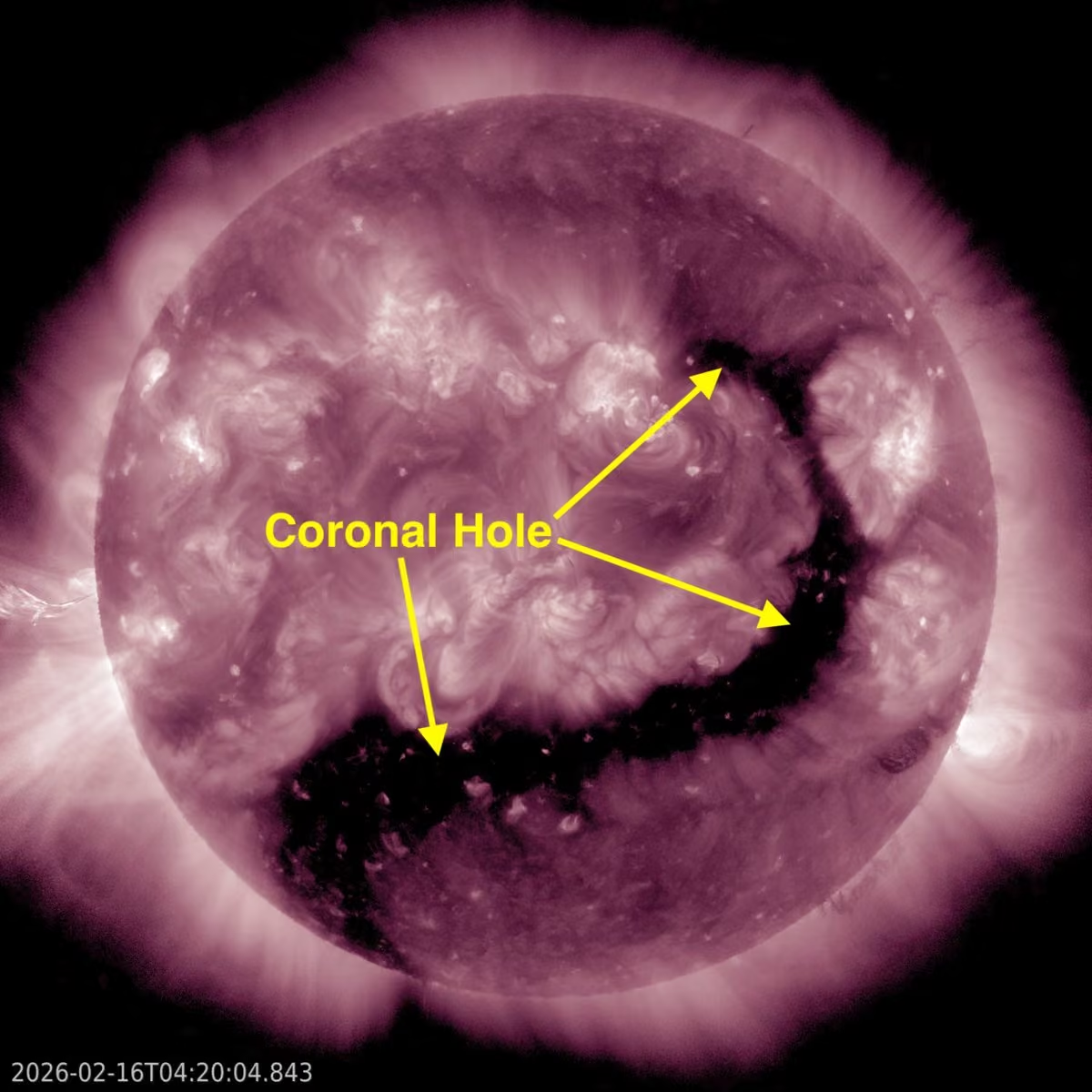
This image shows the coronal hole as it appeared on Feb. 16 in the 211-angstrom wavelength from NASA’s Solar Dynamics Observatory. This channel highlights solar material at temperatures of about 3.6 million degrees Fahrenheit (2 million degrees Celsius).
Coronal holes are darker, cooler regions in the Sun’s outer atmosphere, known as the corona. In these areas, the Sun’s magnetic field opens outward into space rather than looping back to the solar surface. These open magnetic field lines allow charged particles to escape more easily, producing fast-moving streams of solar wind.
When a high-speed solar wind stream reaches Earth, it can compress Earth’s magnetic field and enhance geomagnetic activity, sometimes leading to geomagnetic storms.
📸 SDO/Alex Young -
NASA Space Alerts
@NASASpaceAlerts
☄️We're happy to announce that on Dec. 22, 2032, asteroid 2024 YR4 will sail by the Moon at a distance of 13,200 miles based on new data from @NASAWebb. Our Planetary Defense Program has tracked this potentially hazardous asteroid since late 2024. science.nasa.gov/blogs/planetary-defense/2026/03/05/new-n…
-
NASA Space Alerts
@NASASpaceAlerts
#meteorsighting: A fireball was observed by witnesses in Washington and the British Columbia, Canada, on the night of March 3. The meteor became visible over Coquitlam, BC, moving northeast at 75,000 mph before disintegrating above Greenmantle Mountain.
🔗fireballs.ndc.nasa.gov/skyfalls/events/20260304-050847/?l…
Eyewitness accounts supplied by the American Meteor Society -
NASA Space Alerts
@NASASpaceAlerts
#meteorsighting: A fireball was observed by witnesses in Arkansas, Louisiana, Mississippi, and Texas on the night of Mar. 2. The meteor appeared 48 miles above the town of Chickasaw in northeastern Louisiana and traveled west at 30,000 miles per hour for 41+ miles before disintegrating above the Georgia Pacific Wildlife Management Area.
🔗fireballs.ndc.nasa.gov/skyfalls/events/20260303-011854/?l…
Eyewitness accounts supplied by the American Meteor Society -
NASA Space Alerts
@NASASpaceAlerts
It’s #sunday! Here’s your space weather report for the week of Feb. 20 - 26:
•1 M-class flare
•2 C-class flares
•27 coronal mass ejections
•0 geomagnetic storms
This video from NASA’s Solar Dynamics Observatory (SDO) shows the week’s activity. A pretty quiet week, partly due to the absence of sunspots on the Sun.👇
NASA Space Alerts
@NASASpaceAlerts
Active regions and sunspots often go together, but not always.
Sunspots form on the solar surface, and we see them in visible light. Active regions (like those in the video above) show up in extreme ultraviolet light and form in the Sun’s upper atmosphere.
Here’s two different views captured by SDO just a few seconds apart. At left is the Sun’s surface in visible light. At right, the Sun’s upper atmosphere in extreme ultraviolet light. Hard to tell that that’s the same Sun! -
NASA Space Alerts
@NASASpaceAlerts
It’s #sunday! Here’s your space weather report for the week of Feb. 13 - 19:
•2 M-class flares
•2 C-class flares
•40 coronal mass ejections
•1 geomagnetic storm
This video from NASA’s Solar Dynamics Observatory (SDO) shows the week’s activity.
This week’s moderate (G2 class) geomagnetic storm on Feb. 16 lit up auroras as far south as New York and Wisconsin. The storm was caused by a high-speed stream of solar wind flowing from a massive coronal hole on the Sun, which you can partly see in this video but is best seen in a different wavelength channel from SDO. 👇
NASA Space Alerts
@NASASpaceAlerts
This image shows the coronal hole as it appeared on Feb. 16 in the 211-angstrom wavelength from NASA’s Solar Dynamics Observatory. This channel highlights solar material at temperatures of about 3.6 million degrees Fahrenheit (2 million degrees Celsius).
Coronal holes are darker, cooler regions in the Sun’s outer atmosphere, known as the corona. In these areas, the Sun’s magnetic field opens outward into space rather than looping back to the solar surface. These open magnetic field lines allow charged particles to escape more easily, producing fast-moving streams of solar wind.
When a high-speed solar wind stream reaches Earth, it can compress Earth’s magnetic field and enhance geomagnetic activity, sometimes leading to geomagnetic storms.
📸 SDO/Alex Young -
NASA Space Alerts
@NASASpaceAlerts
It’s #sunday! Here’s your space weather report for the week of Feb. 6 - 12:
•9 M-class flares
•1 C-class flare
•30 coronal mass ejections
•0 geomagnetic storms
This video from NASA’s Solar Dynamics Observatory (SDO) shows the week’s activity.
After a very “eruptive” last week, the Sun has calmed back down a bit. The active region responsible for last week’s torrent of flares — AR4366 — still produced all of this week’s M-class flares, but has not produced any more X-class flares so far. It rotates off of the Sun’s Earth-facing disk about half-way through the video. -
NASA Space Alerts
@NASASpaceAlerts
#meteorsighting: A fireball was observed by witnesses in Illinois, Indiana, Kentucky, Ohio, and Wisconsin the evening of Feb. 10. It was first spotted above Trinity, Indiana, and traveled 48 miles before disintegrating above the town of Laura, Ohio.
🔗 fireballs.ndc.nasa.gov/skyfalls/events/20260211-043200/?l…
Eyewitness accounts supplied by the American Meteor Society -
NASA Space Alerts
@NASASpaceAlerts
It’s #sunday! Here’s your space weather report for the week of Jan. 30 – Feb 5:
- 72 M-class flares (!)
- 6 X-class flares
- 33 coronal mass ejections
- 0 geomagnetic storms
This video from NASA’s Solar Dynamics Observatory (SDO) shows the week’s activity.
SDO ended its Earth eclipse period this week just in time for an uninterrupted view of a barrage of solar flares! This week, one active region in particular — AR4366, which rotates onto the Earth-facing disk of the Sun at the beginning of this video — unleashed a whopping six X-class flares this week, and all but three of this week’s 72 M-class flares. This one is worth a watch!🤩
NASA Space Alerts
@NASASpaceAlerts
When seen in visible light, this active region is a large and peculiar looking sunspot group. Here's the view from SDO's HMI filter, which images a wavelength of visible light used to study the Sun's photosphere, or visible surface, captured on Feb. 4. Many have compared it to a sideways question mark. What do you see?
-
NASA Space Alerts
@NASASpaceAlerts
#meteorsighting: A fireball was observed over Florida the night of Feb. 2. It was first spotted west of Bonita Springs and traveled 60 miles northwest before disintegrating.
Read more: fireballs.ndc.nasa.gov/skyfalls/events/20260203-023717/?l…
Eyewitness accounts supplied by the American Meteor Society -
NASA Space Alerts
@NASASpaceAlerts
The Sun emitted a strong solar flare on Feb. 4, peaking at 7:13 a.m. ET. NASA’s Solar Dynamics Observatory captured an image of the event, which was classified as X4.2: science.nasa.gov/blogs/solar-cycle-25/2026/02/04/sun-rele…
NASA Space Alerts
@NASASpaceAlerts
Solar flares are powerful bursts of radiation. Harmful radiation from a flare cannot pass through Earth’s atmosphere to physically affect humans on the ground. However — when intense enough — they can disturb the atmosphere in the layer where GPS & communications signals travel.
NASA Space Alerts
@NASASpaceAlerts
To see how such space weather may affect Earth, check out @NWSSWPC, the U.S. government’s official source for space weather forecasts, watches, warnings, and alerts.
-
NASA Space Alerts
@NASASpaceAlerts
The Sun emitted a strong solar flare on Feb. 3, peaking at 9:08 a.m. ET. NASA’s Solar Dynamics Observatory captured images of the event, which was classified as X1.5. science.nasa.gov/blogs/solar-cycle-25/2026/02/03/strong-f…
NASA Space Alerts
@NASASpaceAlerts
Solar flares are powerful bursts of radiation. Harmful radiation from a flare cannot pass through Earth’s atmosphere to physically affect humans on the ground. However — when intense enough — they can disturb the atmosphere in the layer where GPS & communications signals travel.
NASA Space Alerts
@NASASpaceAlerts
To see how such space weather may affect Earth, check out @NWSSWPC, the U.S. government’s official source for space weather forecasts, watches, warnings, and alerts.
-
NASA Space Alerts
@NASASpaceAlerts
The Sun emitted four strong solar flares on Feb 1. and Feb. 2. The flares peaked at 7:33 a.m. ET, 6:37 p.m. ET, and 7:36 p.m. ET on Feb. 1, and 3:14 a.m. ET on Feb. 2. NASA’s Solar Dynamics Observatory captured images of the events, which were classified as X1.0, X8.1, X2.8, and X1.6: science.nasa.gov/blogs/solar-cycle-25/2026/02/02/sun-rele…
NASA Space Alerts
@NASASpaceAlerts
Solar flares are powerful bursts of radiation. Harmful radiation from a flare cannot pass through Earth’s atmosphere to physically affect humans on the ground. However — when intense enough — they can disturb the atmosphere in the layer where GPS & communications signals travel.
NASA Space Alerts
@NASASpaceAlerts
To see how such space weather may affect Earth, check out @NWSSWPC, the U.S. government’s official source for space weather forecasts, watches, warnings, and alerts.
-
NASA Space Alerts
@NASASpaceAlerts
It’s #sunday! Here’s your space weather report for the week of Jan. 16–22:
•1 X-class flare
•5 M-class flares
•41 coronal mass ejections
•1 geomagnetic storm
This video from NASA’s Solar Dynamics Observatory (SDO) shows the week’s activity.
This week’s X-class flare erupts at about 1:13 into the video — a beautiful spectacle near the center of the Sun’s disk! You can also spot a lunar transit, when the Moon passes in front of SDO’s view, about 10 seconds later. Note the sharp edge of the atmosphere-less Moon.
SDO is also still in its “Earth eclipse” period until Feb. 1, which cause the brief blackouts each day when Earth momentarily blocks SDO’s view. At about 2:28, we also see a calibration maneuver, which SDO uses to test the imager’s performance on a regular basis. -
NASA Space Alerts
@NASASpaceAlerts
The Sun emitted a strong solar flare on Jan. 18, peaking at 1:09 PM ET. NASA’s Solar Dynamics Observatory captured an image of the event, which was classified as X1.9. science.nasa.gov/blogs/solar-cycle-25/2026/01/20/strong-f…
This media couldn't be displayed. See it on the original post.
NASA Space Alerts
@NASASpaceAlerts
Solar flares are powerful bursts of radiation. Harmful radiation from a flare cannot pass through Earth’s atmosphere to physically affect humans on the ground. However — when intense enough — they can disturb the atmosphere in the layer where GPS & communications signals travel.
NASA Space Alerts
@NASASpaceAlerts
To see how such space weather may affect Earth, check out @NWSSWPC, the U.S. government’s official source for space weather forecasts, watches, warnings, and alerts.
-
NASA Space Alerts
@NASASpaceAlerts
It’s #sunday! Here’s your space weather report for the week of Jan. 9–15:
• 2 M-class flares
• 2 C-class flares
• 31 coronal mass ejections
• 1 geomagnetic storm
This video from NASA’s Solar Dynamics Observatory (SDO) shows the week’s activity.
It was a relatively quiet week on the Sun, though a series of coronal mass ejections that erupted on Jan. 8 — just before this reporting period — led to a moderate geomagnetic storm on Jan. 10, with auroras intensifying across high-latitude regions including Iceland and northern Canada.
SDO remains in its Earth eclipse period, so you may notice brief blackouts in the video when Earth temporarily blocks the spacecraft’s view. These Earth eclipses will continue daily through Feb. 1.This media couldn't be displayed. See it on the original post. -
NASA Space Alerts
@NASASpaceAlerts
It’s #sunday! Here’s your space weather report for the week of Jan. 2–8:
· 0 M-class flares
· 6 C-class flares
· 33 coronal mass ejections
· 0 geomagnetic storms
This video from NASA’s Solar Dynamics Observatory (SDO) shows the week’s activity. Interestingly, some of the most notable “events” this week were the times SDO couldn’t see the Sun — for two different reasons. 👇 🧵This media couldn't be displayed. See it on the original post.
NASA Space Alerts
@NASASpaceAlerts
1. Earth eclipse season 🌎
Starting Jan. 6, SDO entered its Earth-eclipse season — a roughly three-week period that occurs twice a year when the spacecraft’s orbit carries it behind Earth, briefly blocking its view.
You can see the first eclipse at about 1:55 in the video above, and another around 2:21. This eclipse season lasts until Feb. 1.
NASA Space Alerts
@NASASpaceAlerts
2. Calibration maneuver 🔭
On Jan. 7, SDO performed a calibration maneuver — the sweeping “wipe” motions starting around 2:28 in the video above. These maneuvers help scientists detect and correct for any long-term changes in SDO’s instruments. -
NASA Space Alerts
@NASASpaceAlerts
It’s #sunday! This week’s (Dec. 12 - 18) space weather report includes:
· 2 M-class flares
· 2 C-class flares
· 27 coronal mass ejections
· 0 geomagnetic storms
This video from NASA’s Solar Dynamics Observatory (SDO) shows the week’s activity.
The Sun was fairly calm this week, though the bright coronal loops on the Sun’s western limb (right edge) at the beginning of the video and eastern limb (left edge) at the end put on a show. Perhaps it’s a good space-themed alternative to a yule log?🪵🔥This media couldn't be displayed. See it on the original post. -
NASA Space Alerts reposted
NASA Marshall
@NASA_Marshall
☄️ This Earth-grazing Geminid lit up the sky on Dec. 14, entering the atmosphere above Crandall, Georgia, and skimmed nearly horizontally for 140 miles (225 km), finally breaking apart above Kimberly, Alabama. The meteor blazed for nearly 7 seconds — unusually long for a Geminid!
-
NASA Space Alerts
@NASASpaceAlerts
It’s #sunday! This week’s (Dec. 5 - 11) space weather report includes:
· 1 X-class flare
· 18 M-class flares
· 42 coronal mass ejections
· 1 geomagnetic storm
This video from NASA’s Solar Dynamics Observatory (SDO) shows the week’s activity. The X-class flare, which erupted just after midnight Eastern time on Dec. 8, appears at about 1:26 in the video, on the right just below the Sun’s equator.This media couldn't be displayed. See it on the original post.
NASA Space Alerts
@NASASpaceAlerts
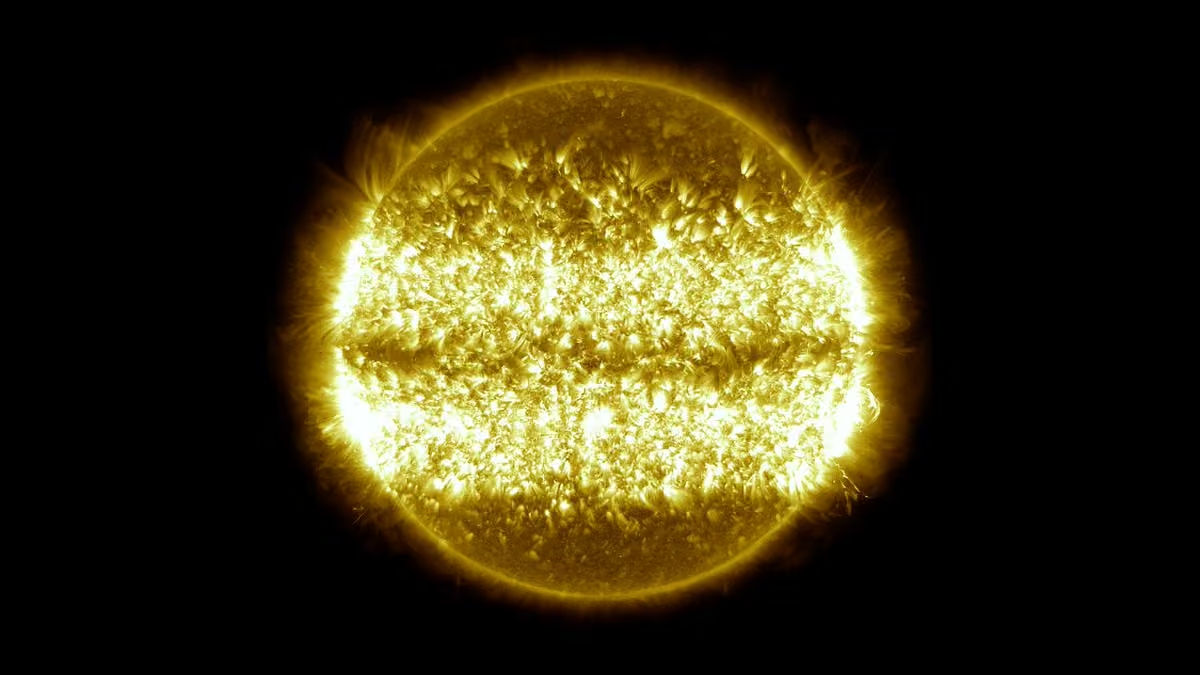
Most flares erupt near the Sun’s equator — it’s where the Sun’s rotation is fastest and where the “twisting” of the Sun’s magnetic field is most intense.
But right ON the Sun’s equator, opposing magnetic fields meet and cancel out, dampening eruptive activity.
You can see this effect clearly in this composite image, which combines the first 10 years of SDO’s observations onto one image. Note the bright bands of solar eruptions on either side of the equator, but a darker band right at the equator, where solar eruptions are less common. -
NASA Space Alerts
@NASASpaceAlerts
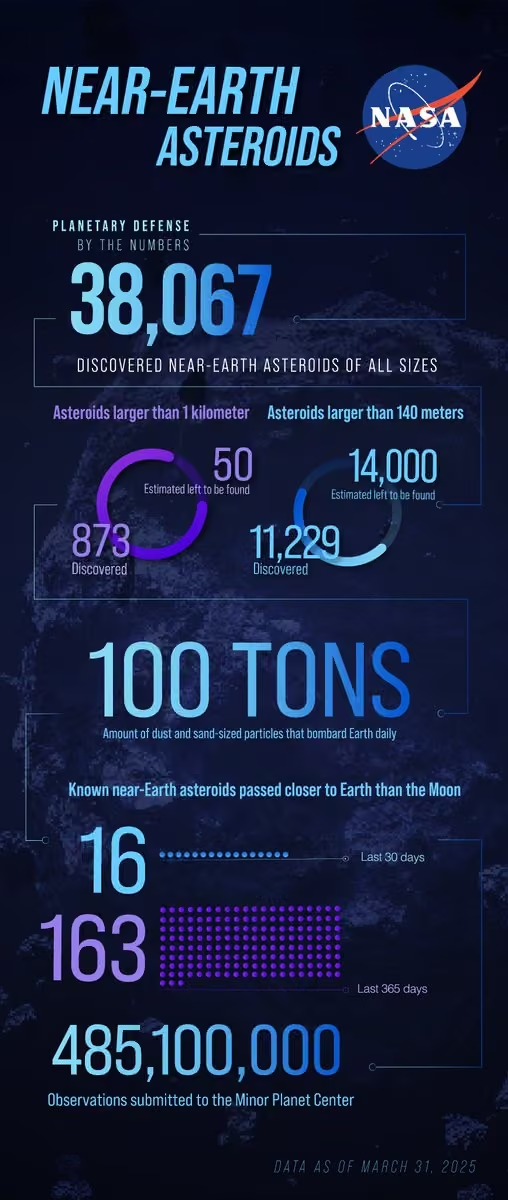
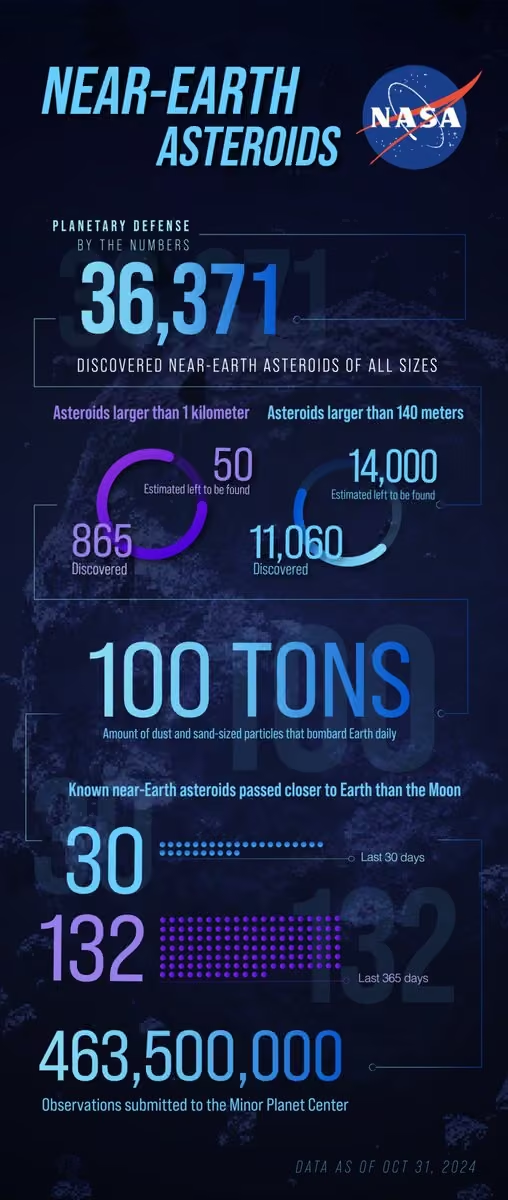
Before we can defend our planet from a potential asteroid impact, we need to find the potential impactors! Our planetary defense network has now found more than 40,000 near-Earth objects and ruled out any known impact within the next hundred years. science.nasa.gov/science-research/planetary-science/plane…
This media couldn't be displayed. See it on the original post. -
NASA Space Alerts
@NASASpaceAlerts
The Sun emitted a strong solar flare on Dec. 8, peaking at 12:01 a.m. ET. NASA’s Solar Dynamics Observatory captured an image of the event, which was classified as X1.1: science.nasa.gov/blogs/solar-cycle-25/2025/12/08/strong-f…
NASA Space Alerts
@NASASpaceAlerts
Solar flares are powerful bursts of radiation. Harmful radiation from a flare cannot pass through Earth’s atmosphere to physically affect humans on the ground. However — when intense enough — they can disturb the atmosphere in the layer where GPS & communications signals travel.
NASA Space Alerts
@NASASpaceAlerts
To see how such space weather may affect Earth, check out @NWSSWPC, the U.S. government’s official source for space weather forecasts, watches, warnings, and alerts.
-
NASA Space Alerts
@NASASpaceAlerts
It’s #sunday! This week’s (Nov. 28 - Dec. 4) space weather report includes:
· 1 X-class flare
· 9 M-class flares
· 44 coronal mass ejections
· 1 geomagnetic storm
This video from NASA’s Solar Dynamics Observatory (SDO) shows the week’s activity.
This week’s X-class flare, at about 1:23 in the video below, is particularly photogenic because of its location on the Sun’s limb, or edge. This positioning gave SDO a clear view of a suspended strand of solar plasma, known as a prominence, against the blackness of space as it erupted with the flare.
More imagery and information about that flare:This media couldn't be displayed. See it on the original post.
NASA Space Alerts
@NASASpaceAlerts
The Sun emitted a strong solar flare on Nov. 30, 2025, peaking at 9:49 p.m. ET. NASA’s Solar Dynamics Observatory captured an image of the event, which was classified as X1.9 class: science.nasa.gov/blogs/solar-cycle-25/2025/12/01/strong-f…
-
NASA Space Alerts
@NASASpaceAlerts
The Sun emitted a strong solar flare on Nov. 30, 2025, peaking at 9:49 p.m. ET. NASA’s Solar Dynamics Observatory captured an image of the event, which was classified as X1.9 class: science.nasa.gov/blogs/solar-cycle-25/2025/12/01/strong-f…
NASA Space Alerts
@NASASpaceAlerts
Solar flares are powerful bursts of radiation. Harmful radiation from a flare cannot pass through Earth’s atmosphere to physically affect humans on the ground. However — when intense enough — they can disturb the atmosphere in the layer where GPS & communications signals travel.
NASA Space Alerts
@NASASpaceAlerts
To see how such space weather may affect Earth, check out @NWSSWPC, the U.S. government’s official source for space weather forecasts, watches, warnings, and alerts.
-
NASA Space Alerts
@NASASpaceAlerts
It’s #sunday! This week’s (Nov. 21 - 28) space weather report includes:
· 2 M-class flare
· 2 C-class flares
· 52 coronal mass ejections
· 0 geomagnetic storms
This video from NASA’s Solar Dynamics Observatory (SDO) shows the week’s activity.This media couldn't be displayed. See it on the original post. -
NASA Space Alerts
@NASASpaceAlerts
#meteorsighting: A fireball was observed over northern Michigan in the early morning of Nov. 23 – moving northeast at 98,500 mph. After traveling 82 miles, the fireball disintegrated above Lake Huron.
Read more about this sighting: fireballs.ndc.nasa.gov/skyfalls/events/20251123-103053/?l…
Supporting data supplied by the American Meteor Society. -
NASA Space Alerts
@NASASpaceAlerts
It’s #sunday! This week’s (Nov. 14 - 20) space weather report includes:
· 1 X-class flare
· 3 M-class flares
· 42 coronal mass ejections
· 0 geomagnetic storms
It’s our first full week back after the government shutdown, and this week's data range caught the tail end of the onslaught of six X-class flares that have erupted this month. The latest one was Nov. 14’s X4.0 flare, which begins at about :09 in the video below. You can see it erupting from the Sun’s western limb (upper right).This media couldn't be displayed. See it on the original post.
NASA Space Alerts
@NASASpaceAlerts
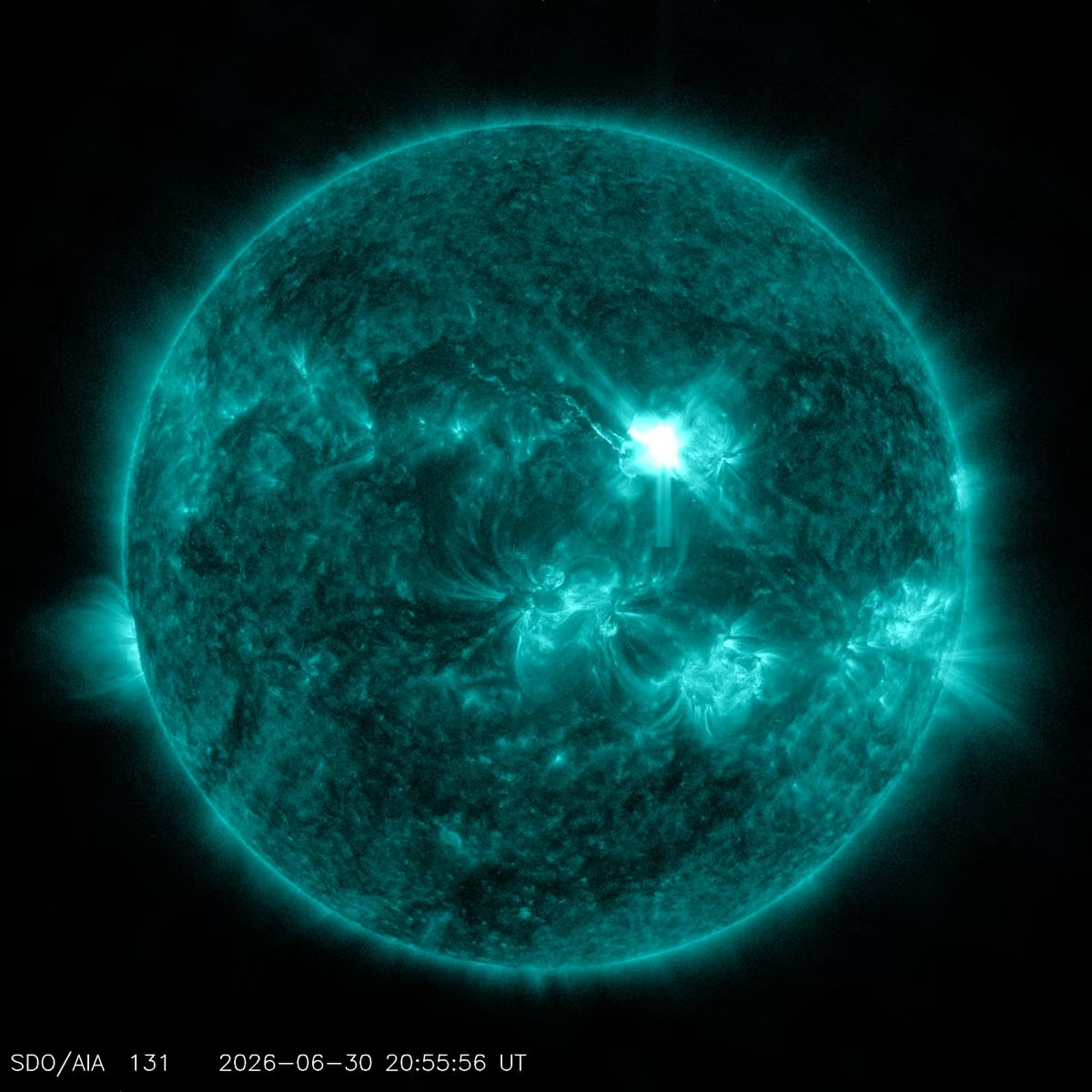
The video of the Sun shown above, captured by NASA's Solar Dynamics Observatory (SDO) in its AIA-171 channel (colorized in gold), shows solar material at about 1.1 million ℉. That temperature range is great for visualizing the activity of the “quiet,” non-eruptive Sun. But SDO's AIA-131 channel (colorized in teal), which tracks temperatures between 10 and 18 million degrees, is better for capturing the extremely high temperatures in solar flares. Here’s an image from that channel showing the X4.0 flare at its peak intensity. WOW! 🤩
-
NASA Space Alerts
@NASASpaceAlerts
Our accounts may have been quiet, but the Sun sure hasn’t! ☀️💥
So far, November has already seen six X-class solar flares and the strongest geomagnetic storm of 2025.
All but one of these flares — the X1.1 flare on Nov. 4, shown here at the lower left — erupted from the same active region on the Sun: AR14274. This composite image from NASA’s Solar Dynamics Observatory, or SDO, helps us visualize how AR14274 has moved across the Sun during that time. This composite image is created by overlaying SDO’s images from each flare onto each other.
Solar flares, which are intense flashes of light, do not themselves cause geomagnetic storms — but they are often associated with coronal mass ejections, giant eruptions of solar particles, that do. The three back-to-back flares in the middle of this image, erupting on Nov. 9, 10 and 11, were accompanied by coronal mass ejections that triggered the intense geomagnetic storm of Nov. 11-13, which led to aurora sightings as far south as Florida.
📸 credit: NASA/SDO/Scott Wiessinger -
NASA Space Alerts
@NASASpaceAlerts
The Sun emitted a strong solar flare early this morning, Nov. 14, 2025, peaking at 3:30 a.m. ET.
NASA's Solar Dynamics Observatory (right, close-up gif) and NOAA’s GOES-19 satellite (left, full Sun image) captured imagery of the event, which was classified as X4.0 class:
NASA Space Alerts
@NASASpaceAlerts
Solar flares are powerful bursts of radiation. Harmful radiation from a flare cannot pass through Earth’s atmosphere to physically affect humans on the ground. However, when intense enough they can disturb the atmosphere in the layer where GPS & communications signals travel.
NASA Space Alerts
@NASASpaceAlerts
To see how such space weather may affect Earth, check out @NWSSWPC, the U.S. government’s official source for space weather forecasts, watches, warnings, and alerts.
-
NASA Space Alerts
@NASASpaceAlerts
It’s #sunday! This week’s (Sept. 19 - 25) space weather report includes:
· 4 M-class flares
· 30 coronal mass ejections
· 0 geomagnetic storms
This video from NASA’s Solar Dynamics Observatory (SDO) shows the week’s activity. At about 1:25 in the video, another celestial body makes an appearance — the Moon!
Lunar transits happen only a few times a year, when the Moon’s tilted orbit aligns just right to cross SDO’s view. From SDO's orbit vantage point about 22,217 miles overhead, the Moon appears about 10% larger than it does from Earth's surface. 🔎
More on flares & coronal mass ejections: science.nasa.gov/sun/solar-storms-and-flares/This media couldn't be displayed. See it on the original post. -
NASA Space Alerts
@NASASpaceAlerts
It’s #sunday! This week’s (Sept. 12 - 18) space weather report includes:
· 1 C-class flare
· 38 coronal mass ejections
· 1 geomagnetic storm
This video from NASA’s Solar Dynamics Observatory (SDO) shows the week’s activity.
There were plenty of coronal mass ejections this week, but it was a very quiet period for solar flares. Most flares erupt from active regions — spots that appear brighter here, with swirling loops of solar material — so the flare count and the number of visible active regions are related. This week, there were very few active regions on the Earth-facing side of the Sun. Look how “bare” the Sun looks in the first minute of this video!
More on flares & coronal mass ejections: science.nasa.gov/sun/solar-storms-and-flares/This media couldn't be displayed. See it on the original post. -
NASA Space Alerts
@NASASpaceAlerts
NASA's Planetary Defense Program is charged with finding and tracking near-Earth objects. Here's what we've discovered thus far: science.nasa.gov/science-research/planetary-science/plane…
-
NASA Space Alerts
@NASASpaceAlerts
It’s #sunday! This week’s (Sept. 5 - 11) space weather report includes:
· 2 M-class flares
· 4 C-class flares
· 26 coronal mass ejections
· 1 geomagnetic storm
This video from NASA’s Solar Dynamics Observatory (SDO) shows the week’s activity.
More on flares & coronal mass ejections: science.nasa.gov/sun/solar-storms-and-flares/This media couldn't be displayed. See it on the original post. -
NASA Space Alerts
@NASASpaceAlerts
It’s #sunday! This week’s (Aug. 29 - Sept. 4) space weather report includes:
· 5 M-class flares
· 3 C-class flares
· 21 coronal mass ejections
· 1 geomagnetic storm
This video from NASA’s Solar Dynamics Observatory (SDO) shows the week’s activity. At about 3:01 in the video, a flare erupts in the middle of the Sun’s disk — but there’s more to see if we look in a different wavelength! 👇This media couldn't be displayed. See it on the original post.
NASA Space Alerts
@NASASpaceAlerts
The mid-disk eruption stems from a collapsing filament — a cloud of comparatively cold, dense solar material suspended aloft by the Sun’s magnetic field. As the Sun rotates, that magnetic field twists and contorts, causing the filament to ultimately collapse and erupt into a coronal mass ejection.
This animated gif shows the eruption in SDO’s 304 Angstrom channel. Can you spot the cooler, darker plasma as it escapes from the eruption?
📸 NASA SDO/Alex Young -
NASA Space Alerts
@NASASpaceAlerts
It’s #sunday! This week’s (Aug 22 - 28) space weather report includes:
· 15 M-class flares
· 58 coronal mass ejections
· 0 geomagnetic storms
This video from NASA’s Solar Dynamics Observatory (SDO) shows the week’s activity.
We currently have some very large active regions rotating towards Earth — bright areas of intense, complex magnetic activity that are often the sources of powerful solar flares and coronal mass ejections.
But these bright active regions appear as dark sunspots in visible light.
Why? 🤔 ⬇️This media couldn't be displayed. See it on the original post.
NASA Space Alerts
@NASASpaceAlerts
Sunspots and active regions appear on two different layers of the Sun. Both result from an especially intense and complex magnetic field.
On the photosphere (solar surface): Areas of intense magnetic activity can prevent some heat and energy from rising to the surface, effectively trapping it inside the Sun. When we look at the photosphere — which is brightest in visible wavelengths of light — these regions appear darker and cooler than their surroundings, creating sunspots.
In the corona (upper atmosphere): Higher up in the Sun’s atmosphere, this same intense magnetic field concentrates super-heated gases into one area. When we view the corona — which is brightest in extreme ultraviolet wavelengths of light — these regions appear brighter because of that increased density.
One more reason it’s important to study the Sun in multiple wavelengths of light! ☀️ 🎨
More on flares & coronal mass ejections: science.nasa.gov/sun/solar-storms-and-flares/ -
NASA Space Alerts
@NASASpaceAlerts
At NASA, our planetary defense teams watch the skies to safeguard our planet. Sometimes, our telescopes find amazing objects like comet 3I/ATLAS. While not a threat to Earth, it’s a fascinating target for scientific study.
NASA Spox
@NASASpox
At @NASA, we're all about planetary protection.
While we have determined interstellar comet 3I/ATLAS poses no threat to Earth, we have discovered it will come within about 130 million miles of our planet. Studying the comet sharpens our ability to detect & track potential hazards early.
@NASAHubble, @NASAWebb, and SPHEREx - three powerful observatories, one mission: to understand our universe.🌎☄️🔭 -
NASA Space Alerts
@NASASpaceAlerts
It’s #sunday! This week’s (Aug 15 - 21) space weather report includes:
· 1 M-class flare
· 30 coronal mass ejections
· 0 geomagnetic storms
It was a calm week for solar eruptions, but NASA’s Solar Dynamics Observatory (SDO) captured several giant filaments snaking across the solar surface. 👇 🧵 1/2This media couldn't be displayed. See it on the original post.
NASA Space Alerts
@NASASpaceAlerts
🧵 2/2
Filaments are clouds of relatively cool, dense solar material that form in the Sun’s photosphere, or visible surface. Seen straight on against the backdrop of the Sun, they appear darker than their surroundings. When seen along the edge of the Sun against the darkness of space, scientists call the same phenomenon a solar prominence, where they appear brighter and their loop-like structure becomes apparent.
Compare the two frames from SDO's data this week, shown below with a brighter setting, where a filament in one view becomes a prominence in another. 👇
More on flares & coronal mass ejections: science.nasa.gov/sun/solar-storms-and-flares/ -
NASA Space Alerts
@NASASpaceAlerts
#meteorsighting: A fireball was observed above California farmland between Firebaugh and Kerman on the night of Aug. 21 – moving southeast. After traveling 84 miles, the fireball disintegrated above Red Fir.
Read more about this sighting here: fireballs.ndc.nasa.gov/skyfalls/events/20250822-031203/?l… -
NASA Space Alerts
@NASASpaceAlerts
It’s #sunday! This week’s (Aug 8 - 14) space weather report includes:
· 14 M-class flares
· 2 C-class flares
· 29 coronal mass ejections
· 1 geomagnetic storm
This video from NASA’s Solar Dynamics Observatory (SDO) shows the week’s activity.
More on flares & coronal mass ejections: science.nasa.gov/sun/solar-storms-and-flares/This media couldn't be displayed. See it on the original post. -
NASA Space Alerts
@NASASpaceAlerts
NASA's Planetary Defense Coordination Office is charged with finding, tracking & characterizing near-Earth objects. Here's what we've found thus far: science.nasa.gov/science-research/planetary-science/plane…
-
NASA Space Alerts
@NASASpaceAlerts
The well-known and well-loved Perseids meteor shower is set to peak Aug. 12-13. However, the bright shine of the Moon may put a damper on your viewing experience this year.
Want to increase your chances of catching a glimpse of these meteors? Check out some advice from Bill Cooke, lead for NASA’s Meteoroid Environments Office. >> www.nasa.gov/blogs/watch-the-skies/2025/08/08/bright-moon… -
NASA Space Alerts
@NASASpaceAlerts
It’s #sunday! This week’s (Aug. 1 - 7) space weather report includes:
· 8 M-class flares
· 4 C-class flares
· 27 coronal mass ejections
· 0 geomagnetic storms
This video from NASA’s Solar Dynamics Observatory (SDO) shows the week’s activity.
This week marks the finale of SDO’s latest eclipse season. The Sun gets blocked out several times throughout the video as the spacecraft passed behind Earth briefly each day.
More on flares & coronal mass ejections: science.nasa.gov/sun/solar-storms-and-flares/This media couldn't be displayed. See it on the original post. -
NASA Space Alerts
@NASASpaceAlerts
It’s #sunday! This week’s (July 25 - 31) space weather report includes:
· 0 M-class flares
· 1 C-class flare
· 25 coronal mass ejections
· 0 geomagnetic storms
This video from NASA’s Solar Dynamics Observatory (SDO) shows the week’s activity.
Another quiet week on the Sun, but this time with a special guest appearance! 🌕
👇 🧵 1/2This media couldn't be displayed. See it on the original post.
NASA Space Alerts
@NASASpaceAlerts
🧵 2/2
We are still in the midst of SDO’s eclipse season, when the spacecraft’s orbit passes behind Earth briefly each day. But that’s not what happens at 0:03 - 0:04 in this video — that dark circle passing in front of the Sun is our one-and-only Moon!
Note how sharp the Moon’s shadow appears (left image) compared to Earth’s shadow (right image). The Moon’s virtually non-existent atmosphere allows sunlight to pass through without scattering, giving the Moon a nice, crisp “edge.” Earth has a comparatively thick atmosphere, making our planet’s shadow much fuzzier as light scatters through it!
More on flares & coronal mass ejections: science.nasa.gov/sun/solar-storms-and-flares/ -
NASA Space Alerts
@NASASpaceAlerts
We're on #meteorwatch as the Southern delta Aquariid's peak July 30-31. However, the forecast is looking more like a sprinkle than a shower. ☔
Skywatchers in the Northern Hemisphere are likely to see fewer than 10 meteors per hour. Those in the Southern Hemisphere could see up to 20 under ideal conditions.
Learn more at www.nasa.gov/blogs/watch-the-skies/2025/07/29/aquariids-m… -
NASA Space Alerts
@NASASpaceAlerts
It’s #sunday! This week’s (July 18 - 24) space weather report includes:
· 0 M-class flares
· 2 C-class flares
· 19 coronal mass ejections
· 0 geomagnetic storms
This video from NASA’s Solar Dynamics Observatory (SDO) shows the week’s activity.
It was a fairly quiet week on the Sun. We are still in the middle of SDO’s eclipse season, when the spacecraft’s orbit passes behind our planet. You can spot those eclipses as periodic “blackouts” of SDO’s view. How many do you count?
More on flares & coronal mass ejections: science.nasa.gov/sun/solar-storms-and-flares/This media couldn't be displayed. See it on the original post. -
NASA Space Alerts
@NASASpaceAlerts
It’s #sunday, and this account is taking on the NASASun account's tradition of posting a weekly space weather report!
Every Sunday at noon ET, we share a video of the Sun from the previous week with a summary of any notable space weather events, including solar eruptions and their effects, if any, on Earth.
This week’s (July 11 - 17) space weather report includes:
· 3 M-class flares
· 0 C-class flares
· 31 coronal mass ejections
· 0 geomagnetic storms
Learn more about the different kinds of space weather: science.nasa.gov/sun/solar-storms-and-flares/
This video from NASA’s Solar Dynamics Observatory (SDO), which watches the Sun constantly from Earth orbit, shows the Sun during this time period.
You may notice some brief blackouts in the video. That's not a glitch or telescope malfunction — that's us! ☀️🌎🛰️
We’re in the midst of SDO’s eclipse season, when the Earth blocks SDO's view briefly each day. How many eclipses do you count in this video? 🔎This media couldn't be displayed. See it on the original post. -
NASA Space Alerts
@NASASpaceAlerts
New name. New look. Same trusted updates on planetary defense - and more!
Welcome to the new @NASASpaceAlerts account – where we’ll share official NASA notifications on cosmic activity in near-Earth space, including:
Solar activity💥
Asteroids 🪨
Comets ☄
Meteors 💫 -
NASA Space Alerts
@NASASpaceAlerts
An update for our @AsteroidWatch community:
This account will soon become @NASASpaceAlerts. We'll continue to share the latest on near-Earth objects and planetary defense while adding coverage of meteors, solar flares, and other notable space weather events. Stay tuned! -
NASA Space Alerts
@NASASpaceAlerts
📣Discovery alert! One of NASA's planetary defense telescopes first observed an interstellar comet passing through our solar system. The comet is the third object we've found that has come from outside our solar system. It poses no threat to Earth. science.nasa.gov/blogs/planetary-defense/2025/07/02/nasa-…
-
NASA Space Alerts reposted
NASA Solar System
@NASASolarSystem
At NASA, we find asteroids before they find us. International #asteroidday aims to raise public awareness about impact hazards and the ongoing preparations to protect our planet. This #asteroidday, learn more about NASA's planetary defense efforts and check up on how many near-Earth objects we've found so far: science.nasa.gov/planetary-defense/
-
NASA Space Alerts
@NASASpaceAlerts
A new observation from @NASAWebb of asteroid 2024 YR4 has improved our knowledge of where the asteroid will be on Dec. 22, 2032 by nearly 20%, thus raising the chance of a lunar impact to 4.3%. 2024 YR4 is now too far to observe until 2028. science.nasa.gov/blogs/planetary-defense/2025/06/05/nasas…
-
NASA Space Alerts
@NASASpaceAlerts
NASA's Planetary Defense Coordination Office is charged with finding, tracking & characterizing near-Earth objects. Here's what we've found thus far: science.nasa.gov/science-research/planetary-science/plane…
-
NASA Space Alerts
@NASASpaceAlerts
NASA's Planetary Defense Coordination Office is on the hunt for asteroids and comets that come into Earth's celestial neighborhood. Here's what we've found so far: science.nasa.gov/science-research/planetary-science/plane…
-
NASA Space Alerts reposted
NASA
@NASA
Finding asteroids before they find us.
Meet NASA scientists working to track and monitor near-Earth asteroids, and protect our planet from potential impacts. Our newest film, "Planetary Defenders," debuts on NASA+, YouTube, and X on Wednesday, April 16.This media couldn't be displayed. See it on the original post. -
NASA Space Alerts reposted
Space 360
@Space360HQ
We’re watching the skies so you don’t have to.
Our new documentary — Planetary Defenders — premieres Wednesday, April 16, 2025 on NASA+. Don't miss it: plus.nasa.gov/video/planetary-defenders -
NASA Space Alerts reposted
Space 360
@Space360HQ
Asteroids are real. So is the team keeping Earth safe from them.
Our new documentary — Planetary Defenders — premieres Wednesday, April 16, 2025 on NASA+. Don't miss it: plus.nasa.gov/video/planetary-defenders -
NASA Space Alerts reposted
Space 360
@Space360HQ
At NASA, we’re on the hunt for asteroids that could come a little too close for comfort. Learn how in our new documentary, Planetary Defenders, streaming April 16th on NASA+: www.nasa.gov/general/nasas-planetary-defenders-documentar…
-
NASA Space Alerts
@NASASpaceAlerts
Every night around the world, planetary defenders are scanning the skies. Their mission: Find, track and study asteroids that pass near Earth.
Watch the official trailer for NASA’s Planetary Defenders, premiering Wednesday, April 16, 2025 on NASA+.
plus.nasa.gov/video/planetary-defendersThis media couldn't be displayed. See it on the original post. -
NASA Space Alerts
@NASASpaceAlerts
232
That's the number of near-Earth asteroids discovered in March. @NASA's Planetary Defense Coordination Office is charged with finding, tracking & characterizing near-Earth objects. Here's what we've found thus far: science.nasa.gov/science-research/planetary-science/plane… -
NASA Space Alerts
@NASASpaceAlerts
Thanks to @NASAWebb, we have more information about asteroid 2024 YR4. It's about the size of a 10-story building.
Based on data from Webb and ground-based telescopes, the asteroid also has a nearly 4% chance of impacting the Moon in 2032.
science.nasa.gov/blogs/planetary-defense/2025/04/02/nasa-… -
NASA Space Alerts reposted
NASA JPL
@NASAJPL
We're excited to have NEO Surveyor back at JPL for the next portion of its assembly!
For the next several weeks, engineers and technicians will be working on the asteroid-hunting telescope's instrument enclosure. Learn more: blogs.nasa.gov/neosurveyor/2025/03/28/key-hardware-for-na…
NASA's Johnson Space Center
@NASAJohnson
But first, testing chamber.
The instrument enclosure for NEO Surveyor, a key component of NASA’s new asteroid-hunting spacecraft, spent 45 days in Johnson’s historic Chamber A, where it was subjected to the frigid, airless conditions it will face in space. Check it out: -
NASA Space Alerts
@NASASpaceAlerts
Thanks to #planetarydefense efforts at @NASA and across the globe, we have discovered over 11,200 near-Earth #asteroids bigger than 140 meters wide - a size of asteroid big enough to cause regional damage in the event of an Earth impact. 🔭
Learn more: science.nasa.gov/science-research/planetary-science/plane…This media couldn't be displayed. See it on the original post. -
NASA Space Alerts
@NASASpaceAlerts
What do we know about asteroids & comets in Earth's celestial neighborhood? #planetarydefense, which includes finding, tracking & characterizing near-Earth objects, is part of @NASA's mission. Here's what we've found thus far: science.nasa.gov/science-research/planetary-science/plane…
-
NASA Space Alerts
@NASASpaceAlerts
All clear: NASA analysis drops asteroid 2024 YR4's impact probability to 0.004%, meaning it is expected to safely pass by Earth in 2032. NASA’s #planetarydefense team will continue to monitor all known asteroids that may come our way.
Learn more: science.nasa.gov/blogs/planetary-defense/ -
NASA Space Alerts
@NASASpaceAlerts
You’ve heard about asteroid 2024 YR4, so let’s talk about it. What are the chances it’ll hit Earth? Why do those odds keep changing? Should you be worried? (Spoiler alert: No). Get the facts from a NASA expert and find the latest info on this asteroid at: blogs.nasa.gov/planetarydefense/
This media couldn't be displayed. See it on the original post. -
NASA Space Alerts
@NASASpaceAlerts
Observations made on Feb. 19 – 20 of asteroid 2024 YR4 have further decreased its chance of Earth impact on Dec. 22, 2032, to 0.28%. NASA’s planetary defense teams will continue to monitor the asteroid to improve predictions of its trajectory.
More: science.nasa.gov/blogs/planetary-defense/ -
NASA Space Alerts
@NASASpaceAlerts
New observations of 2024 YR4 have enabled planetary defense experts to refine the asteroid's chance of impact in 2032. As nightly observations continue, the impact probability will continue to be updated.
Learn more: science.nasa.gov/blogs/planetary-defense/ -
NASA Space Alerts
@NASASpaceAlerts
Finding, tracking, and characterizing near-Earth objects is a vital part of @NASA's mission to defend our planet. Here are the latest figures from our planetary defense observations. science.nasa.gov/science-research/planetary-science/plane…
NASA Space Alerts
@NASASpaceAlerts
One asteroid, 2024 YR4, has been of particular interest to planetary defense experts because of its low chance of Earth impact in 2032. As more observations of the asteroid’s orbit are obtained, its impact probability will become better known. More: science.nasa.gov/solar-system/asteroids/2024-yr4/
-
NASA Space Alerts
@NASASpaceAlerts
NASA’s NEO Surveyor Standing Review Board determined that @NASA's #asteroid hunting telescope meets all technical performance measures and requirements, authorizing the mission team to move forward to the next phases of construction and testing.
More: science.nasa.gov/blogs/neo-surveyor/
NASA Space Alerts
@NASASpaceAlerts
NEO Surveyor will be NASA's first space-based detection mission specifically designed for #planetarydefense.
NEO Surveyor will hunt for the hardest-to-find asteroids and comets that might pose a hazard to Earth. The mission is expected to launch no earlier than late 2027. -
NASA Space Alerts
@NASASpaceAlerts
While still an extremely low possibility, asteroid 2024 YR4's impact probability with Earth has increased from about 1% to a 2.3% chance on Dec. 22, 2032. As we observe the asteroid more, the impact probability will become better known. More: science.nasa.gov/blogs/planetary-defense/
-
NASA Space Alerts
@NASASpaceAlerts
NASA analysis of near-Earth asteroid 2024 YR4 indicates it has >1% chance of impacting Earth on Dec. 22, 2032, which also means there's ~99% chance this asteroid will not impact. Such initial analysis will change over time as more observations are gathered science.nasa.gov/blogs/planetary-defense/
-
NASA Space Alerts
@NASASpaceAlerts
Thanks to efforts at @NASA and across the globe, #planetarydefense experts have discovered over 11,000 near-Earth #asteroids larger than 140 meters, with an estimated 14,000 left to find.
science.nasa.gov/science-research/planetary-science/plane… -
NASA Space Alerts
@NASASpaceAlerts
At 11:14am EST, a very small (<1m) #asteroid will impact Earth's atmosphere and create a harmless fireball over eastern Russia's Olyokminsky District. The asteroid was first observed with the University of Arizona's Bok telescope by the @NASA funded Catalina Sky Survey and Spacewatch. The impact prediction was made by the Scout system at @NASAJPL's Center for Near-Earth Object Studies (CNEOS).
-
NASA Space Alerts
@NASASpaceAlerts
Our NEOWISE spacecraft, originally launched as WISE and the pathfinder for @NASA's upcoming NEO Surveyor asteroid-hunting telescope, has burned up in Earth’s atmosphere, as expected, after more than 14 years of operation. science.nasa.gov/mission/neowise/
-
NASA Space Alerts
@NASASpaceAlerts
Here are the October updates for #planetarydefense. Thanks to efforts at @NASA and across the globe, we have discovered nearly 11,000 near-Earth asteroids larger than 140 meters, with an estimated 14,000 left to find. science.nasa.gov/science-research/planetary-science/plane…
-
NASA Space Alerts
@NASASpaceAlerts
Congratulations to @ESA for the successful launch of its Hera mission today! Hera will study the asteroid system impacted by our DART mission in 2022 to better understand asteroid deflection as a method for defending our planet.
European Space Agency
@esa
Liftoff! ESA’s Hera mission lifted off on a SpaceX Falcon 9 from Cape Canaveral Space Force Station in Florida, USA, on 7 October at 10:52 local time (16:52 CEST, 14:52 UTC).
-
NASA Space Alerts reposted
European Space Agency
@esa
🔴 Live now: coverage has started for the launch of ESA's #heramission👇 x.com/i/broadcasts/1yoKMyDRLmzKQ
-
NASA Space Alerts reposted
NASA JPL
@NASAJPL
Earth has a temporary, tiny companion.
While not quite a "mini moon," since it will never be captured by Earth's gravity, Asteroid 2024 PT5 does have a similar orbit as our planet and will linger in our vicinity for a few months. science.nasa.gov/blogs/planetary-defense/ -
NASA Space Alerts
@NASASpaceAlerts
Thanks to #planetarydefense efforts at NASA and across the globe, we've discovered over 11,000 near-Earth #asteroids larger than 140 meters in size. It's estimated there are ~14,000 left to find. 🔭
Learn more about Planetary Defense @NASA: science.nasa.gov/science-research/planetary-science/plane…This media couldn't be displayed. See it on the original post. -
NASA Space Alerts
@NASASpaceAlerts
The due date for this NASA RFI has been extended to October 28.
See updated RFI: nspires.nasaprs.com/external/solicitations/summary.do?sol…
NASA Space Alerts
@NASASpaceAlerts
NASA has released a Request for Information to the space community to determine interest in developing a non-NASA-led mission to Apophis utilizing the agency’s Janus spacecraft. Responses are due Oct. 1.
Learn more: nspires.nasaprs.com/external/solicitations/summary.do?sol… -
NASA Space Alerts
@NASASpaceAlerts
NASA's Deep Space Network Goldstone Solar System Radar imaged #asteroid 2024 ON - first observed by the NASA-funded ATLAS survey in Hawaii - as it safely flew past Earth on Tuesday.
Learn more: science.nasa.gov/photojournal/nasas-planetary-radar-spies… -
NASA Space Alerts reposted
NASA JPL
@NASAJPL
It’s a bird, it’s a plane, it’s a… peanut? 🥜
This nutty asteroid is about as long as the Eiffel Tower is tall. It was imaged by our Goldstone radar as it safely passed Earth at a distance of 2.8M miles (4.6M km). science.nasa.gov/photojournal/goldstone-planetary-radar-o…
(P.S. it's #nationalpeanutday!) -
NASA Space Alerts
@NASASpaceAlerts
.@NASA CNEOS & ESA NEOCC predict that a very small (~1 meter) #asteroid will harmlessly impact Earth's atmosphere in a few hours at ~16:40 UTC (~12:40 pm EDT) and create a #fireball off the east coast of the northern Philippines. It was first observed in space by @catalina_sky.
NASA Space Alerts
@NASASpaceAlerts
This asteroid, which safely impacted Earth's atmosphere earlier today, was designated 2024 RW1.
To learn more about #planetarydefense at NASA, visit: science.nasa.gov/planetary-defense
NASA Space Alerts
@NASASpaceAlerts
The entry of #asteroid 2024 RW1 that impacted Earth's atmosphere on Sept. 4, 2024 was detected by sensors and can now be found with other fireballs here: cneos.jpl.nasa.gov/fireballs/
-
NASA Space Alerts reposted
-
NASA Space Alerts reposted
Catalina Sky Survey
@catalina_sky
BIG NEWS! CSS observer Jacqueline Fazekas has just discovered a small meteoroid that will harmlessly impact with Earth's atmosphere in about 8 hours over the Western Pacific. The object (called CAQTDL2) is small, a few feet in diameter. Attached are the discovery images.
-
NASA Space Alerts
@NASASpaceAlerts
NASA has released a Request for Information to the space community to determine interest in developing a non-NASA-led mission to Apophis utilizing the agency’s Janus spacecraft. Responses are due Oct. 1.
Learn more: nspires.nasaprs.com/external/solicitations/summary.do?sol… -
NASA Space Alerts
@NASASpaceAlerts
The 5th #planetarydefense Interagency Tabletop Exercise After Action Report, which details the exercise and identifies several key areas for planetary defense advancement, is now publicly available.
Learn more: cneos.jpl.nasa.gov/pd/cs/ttx24/TTX5_AAR.pdf
NASA Space Alerts
@NASASpaceAlerts
Last week, NASA released a summary of the 5th #planetarydefense Interagency Tabletop Exercise, designed to inform and assess our ability as a nation to respond effectively to the threat of a potentially hazardous asteroid or comet.
Learn more: www.nasa.gov/news-release/nasa-partners-conduct-fifth-ast… -
NASA Space Alerts
@NASASpaceAlerts
Science Meets Storytelling: NASA’s Global Hunt for Asteroids
How do scientists and filmmakers collaborate to bring life to the stories of astronomers who are hunting for and tracking down asteroids? Vote for NASA’s #planetarydefense panel at @SXSW 2025: panelpicker.sxsw.com/vote/147961 -
NASA Space Alerts reposted
NASA JPL
@NASAJPL
It's official: Today, after tracking near-Earth objects for over a decade, NEOWISE engineers commanded the spacecraft to turn off its transmitter for the last time.
More on the mission's legacy: www.jpl.nasa.gov/news/nasa-mission-concludes-after-years-… -
NASA Space Alerts
@NASASpaceAlerts
Thanks to #planetarydefense efforts at NASA and across the globe, we have discovered nearly 11,000 near-Earth #asteroids larger than 140 meters, with an estimated 14,000 left to find. 🔭
Learn more about Planetary Defense @NASA: science.nasa.gov/science-research/planetary-science/plane… -
NASA Space Alerts reposted
-
NASA Space Alerts
@NASASpaceAlerts
After more than 14 years in space and over one million infrared observations, @NASA's successful NEOWISE mission is ending. But, while NEOWISE draws to a close, NEO Surveyor - the agency's next-generation #asteroid hunter - is taking shape.
Learn more: www.nasa.gov/missions/neowise/nasas-neowise-infrared-heri… -
NASA Space Alerts
@NASASpaceAlerts
Data collected from @NASA's #dartmission have revealed new information on the origins of the Didymos binary asteroid system and why the DART spacecraft was so effective in shifting the orbit of Dimorphos - DART's target asteroid.
Learn more: science.nasa.gov/missions/dart/nasas-dart-mission-sheds-n… -
NASA Space Alerts
@NASASpaceAlerts
30 years ago this week, pieces of #comet Shoemaker-Levy 9 impacted Jupiter’s atmosphere. This historic event helped to give rise to the field of #planetarydefense.
This media couldn't be displayed. See it on the original post. -
NASA Space Alerts
@NASASpaceAlerts
.@NASAJPL's Goldstone planetary radar had a busy few days observing two asteroids, designated #2024mk and #2011ul21, as they safely passed by Earth.
NASA Space Alerts
@NASASpaceAlerts
The team captured impressive detail of 2024 MK and also discovered an #asteroid moonlet orbiting 2011 UL21.
Learn more: www.nasa.gov/solar-system/asteroids/near-earth-asteroid/n… -
NASA Space Alerts reposted
Space 360
@Space360HQ
This International #asteroidday let's explore what we know about the near-Earth asteroids that come close to Earth's neighborhood.
Learn more about #planetarydefense at @NASA, which includes finding, tracking and characterizing near-Earth objects: nasa.gov/planetarydefenseThis media couldn't be displayed. See it on the original post. -
NASA Space Alerts
@NASASpaceAlerts
Just in time for #internationalasteroidday: New radar imagery of 2024 MK from @NASAJPL’s Goldstone Solar System Radar. These images - taken when the #asteroid was about 240K miles away - reveal 2024 MK is about 500 ft. wide. Stay tuned for more #2024mk science.
-
NASA Space Alerts
@NASASpaceAlerts
Happy #asteroidday! While every day is “asteroid day” for @NASA’s #planetarydefense Coordination Office, today is a UN-sanctioned day aimed to raise public awareness about the impact hazard #asteroids and other near-Earth objects (#neos) can pose to Earth.
Post not available here, view on X
NASA Space Alerts
@NASASpaceAlerts
To accelerate near-Earth object discoveries, @NASA is building the NEO Surveyor Mission – a space infrared telescope designed to discover and characterize most of the potentially hazardous NEOs.
Learn more about NEO Surveyor: www.jpl.nasa.gov/missions/near-earth-object-surveyor?link…
NASA Space Alerts
@NASASpaceAlerts
Celebrate #asteroidday by learning more about NASA’s Planetary Defense program at science.nasa.gov/planetary-defense/?linkId=483180213
-
NASA Space Alerts reposted
NASA JPL
@NASAJPL
Don't look up! Or, do.
Not to worry: This asteroid will not be a threat to Earth. You can even track it: eyes.nasa.gov/apps/asteroids/
NASA Space Alerts
@NASASpaceAlerts
All clear: A newly discovered #asteroid named 2024 MK will safely pass by Earth on Saturday at 180K+ miles away. 🌎 While asteroid close approaches are a regular occurrence, one by an asteroid of this size (380-850 ft) happens more rarely, providing a unique science opportunity.
-
NASA Space Alerts
@NASASpaceAlerts
All clear: A newly discovered #asteroid named 2024 MK will safely pass by Earth on Saturday at 180K+ miles away. 🌎 While asteroid close approaches are a regular occurrence, one by an asteroid of this size (380-850 ft) happens more rarely, providing a unique science opportunity.
NASA Space Alerts
@NASASpaceAlerts
🔭 Astronomers worldwide, including with @NASAJPL’s Goldstone Solar System Radar, will observe 2024 MK as it safely passes by to better understand the asteroid’s shape and physical properties, providing a real exercise opportunity for the #planetarydefense community.
NASA Space Alerts
@NASASpaceAlerts
To learn more about asteroid close approaches and @NASA’s planetary defense program, visit: nasa.gov/planetarydefense
-
NASA Space Alerts
@NASASpaceAlerts
Last week, NASA released a summary of the 5th #planetarydefense Interagency Tabletop Exercise, designed to inform and assess our ability as a nation to respond effectively to the threat of a potentially hazardous asteroid or comet.
Learn more: www.nasa.gov/news-release/nasa-partners-conduct-fifth-ast…
NASA Space Alerts
@NASASpaceAlerts
Although there are no known significant asteroid impact threats for the foreseeable future, hypothetical exercises like these provide valuable insights by exploring the risks, response options, and opportunities for collaboration posed by varying asteroid impact scenarios.
-
NASA Space Alerts reposted
NASA
@NASA
LIVE: We're discussing the results of our latest biennial tabletop exercise to simulate responses to a hypothetical asteroid impact threat. Tune in for more info on our findings and recommendations: x.com/i/broadcasts/1gqxvQQjeepJB
-
NASA Space Alerts reposted
NASA
@NASA
Media: On June 20 at 3:30pm ET, we'll host a virtual briefing discussing a recent tabletop exercise to simulate responses to a hypothetical asteroid impact threat. This exercise, conducted about every two years, supports our planetary defense strategy: www.nasa.gov/news-release/nasa-to-discuss-outcome-of-5th-…
-
NASA Space Alerts
@NASASpaceAlerts
What do we know about the asteroids & comets in Earth's neighborhood? There are lots out there & NASA's on the hunt. #planetarydefense — which includes finding, tracking & characterizing near-Earth objects — is part of our mission. Here's what we've found: science.nasa.gov/science-research/planetary-science/plane…
-
NASA Space Alerts
@NASASpaceAlerts
Thanks to #planetarydefense efforts at NASA and across the globe, we have discovered over 10,850 near-Earth #asteroids larger than 140 meters, with an estimated 14,000 left to find. 🔭
Learn more about Planetary Defense @NASA: science.nasa.gov/science-research/planetary-science/plane… -
NASA Space Alerts
@NASASpaceAlerts
What do we know about the #asteroids and comets in Earth's neighborhood? There are lots out there, and NASA's #planetarydefense Coordination Office is on the hunt. 🔭
Here's what we've found: science.nasa.gov/science-research/planetary-science/plane…This media couldn't be displayed. See it on the original post. -
NASA Space Alerts reposted
NASA Solar System
@NASASolarSystem
That left a mark! The #dartmission proved that an impactor could deflect a hazardous asteroid, should one ever be on a collision course with Earth. A new study shows DART's test impact changed not only the motion of a small asteroid, but also its shape. www.nasa.gov/missions/dart/nasa-study-asteroids-orbit-sha…
-
NASA Space Alerts
@NASASpaceAlerts
Thanks to #planetarydefense efforts at NASA and across the globe, we have discovered over 10,700 near-Earth #asteroids larger than 140 meters, with an estimated 14,000 left to find. 🔭
Learn more about @NASA's Planetary Defense efforts: science.nasa.gov/science-research/planetary-science/plane… -
NASA Space Alerts reposted
NASA JPL
@NASAJPL
A large asteroid safely drifted past Earth at about 2.9 million km on Feb. 2 – and JPL scientists used a powerful radio antenna at the Deep Space Network’s Goldstone facility in California to image its slow rotation, size, shape, and surface: www.jpl.nasa.gov/news/nasas-planetary-radar-images-slowly…
-
NASA Space Alerts reposted
UNOOSA
@UNOOSA
☄️How often do asteroids hit Earth? 🌍 What’s the risk? 🚗🦖 Can we create a “cosmic car accident” to stop them from wiping us out like the dinosaurs?
See our interview with Kelly Fast @NASA & Detlef Koschny @TU_Muenchen
🇺🇳 See unoosa.org for info on SMPAG & IAWNThis media couldn't be displayed. See it on the original post. -
NASA Space Alerts
@NASASpaceAlerts
What do we know about the #asteroids and comets in Earth's neighborhood? There are lots out there, and NASA's #planetarydefense Coordination Office is on the hunt. 🔭
Here's what we've found: science.nasa.gov/science-research/planetary-science/plane… -
NASA Space Alerts
@NASASpaceAlerts
In 2014, the International #asteroid Warning Network (IAWN) steering committee convened for the 1st time. Now, 10 years later, IAWN continues to build international #planetarydefense collaboration to safeguard Earth from potentially hazardous #neos.
More: science.nasa.gov/directorates/smd/nasa-celebrates-first-d… -
NASA Space Alerts reposted
NASA Solar System
@NASASolarSystem
This week, NASA's Scout impact hazard assessment system calculated in advance when and where a small, harmless asteroid would enter Earth's atmosphere – providing a useful demonstration of planetary defense capability. www.nasa.gov/solar-system/asteroids/nasa-system-predicts-…
-
NASA Space Alerts
@NASASpaceAlerts
Last Chance: Registration for this event closes on Wed., Jan. 24. Learn more about the workshop and RSVP here: www.nasa.gov/organizations/otps/save-the-date-apophis-202…
NASA Space Alerts
@NASASpaceAlerts
Save the Date: On Feb. 7, 2024, @NASA will host a listening workshop to explore approaches to conduct missions to #asteroid Apophis, which will safely pass by Earth in 2029.
Learn more about the workshop: www.nasa.gov/organizations/otps/save-the-date-apophis-202… -
NASA Space Alerts
@NASASpaceAlerts
Heads Up: A tiny asteroid will disintegrate as a harmless fireball west of Berlin near Nennhausen shortly at 1:32am CET. Overseers will see it if it’s clear!
-
NASA Space Alerts
@NASASpaceAlerts
What do we know about the #asteroids & comets in Earth's neighborhood? Our #planetarydefense mission includes finding, tracking, and better understanding near-Earth #asteroids to confirm they don't pose a collision risk to our planet. 🌎 Here's what we've found so far.
This media couldn't be displayed. See it on the original post. -
NASA Space Alerts
@NASASpaceAlerts
Save the Date: On Feb. 7, 2024, @NASA will host a listening workshop to explore approaches to conduct missions to #asteroid Apophis, which will safely pass by Earth in 2029.
Learn more about the workshop: www.nasa.gov/organizations/otps/save-the-date-apophis-202… -
NASA Space Alerts
@NASASpaceAlerts
For the past decade, NEOWISE, a @NASA infrared space telescope, has observed over 3,000 near-Earth objects (#neos) for #planetarydefense.
Learn more about NEOWISE, its planned end of mission, & about NASA's next-generation asteroid hunting telescope: www.nasa.gov/missions/neowise/nasas-neowise-celebrates-10… -
NASA Space Alerts
@NASASpaceAlerts
What do we know about the #asteroids & comets in Earth's neighborhood? There are lots out there, and NASA's #planetarydefense Coordination Office is on the hunt.
Here's what we've found: science.nasa.gov/science-research/planetary-science/plane… -
NASA Space Alerts
@NASASpaceAlerts
Congrats to the #dartmission team for receiving the @airandspace 2024 #collinstrophy for Current Achievement!
@NASA's DART mission demonstrated a world 1st by validating one method of #asteroid deflection using a kinetic impactor spacecraft.
Learn more: www.nasa.gov/missions/dart/dart-team-earns-smithsonian-mi… -
NASA Space Alerts reposted
National Air and Space Museum
@airandspace
Announcing the winner of the 2024 #collinstrophy for Current Achievement: @NASA and @JHUAPL's Double Asteroid Redirection Test (DART) Team
In 2022, DART collided with an asteroid and successfully changed its orbit — a technique that could be used for planetary defense if needed. -
NASA Space Alerts
@NASASpaceAlerts
Every mission to a small body starts with a point of light! Asteroid Dinkinesh was first discovered as a moving point of light in a telescope in Socorro, NM by the Lincoln Near-Earth Asteroid Research (LINEAR) program on Nov. 4, 1999.
NASA Solar System
@NASASolarSystem
This is why we explore. Turns out that asteroid Dinkinesh is… asteroids Dinkinesh? During the #lucymission’s first asteroid flyby on Nov. 1, we discovered that the main belt asteroid is a party of two, or binary pair! www.nasa.gov/image-article/nasas-lucy-spacecraft-discover…
NASA Space Alerts
@NASASpaceAlerts
Thanks to the @LucyMission, we now see that Dinkinesh is not one asteroid, but two. And, it all started with a point of light! 🔭
-
NASA Space Alerts
@NASASpaceAlerts
Our #planetarydefense mission includes finding, tracking, and better understanding near-Earth #asteroids to confirm they don't pose a collision risk to our planet. 🌎
There's a lot out there, and here's what we've found so far: science.nasa.gov/science-research/planetary-science/plane… -
NASA Space Alerts
@NASASpaceAlerts
NASA's Infrared Telescope Facility in Hawaii is used to study #asteroids that could pose an impact hazard to Earth, among other research. Just as important is inspiring the next generation of planetary defenders!
Maunakea Observatories
@maunakeaobs
Amanda, a @UHIfA AKAMAI intern, spent her summer helping scientists and engineers design a new instrument for the NASA Infrared Telescope on Maunakea. She is a Kealakehe HS graduate currently majoring in mechanical engineering and computer science. #girlsinscience
-
NASA Space Alerts
@NASASpaceAlerts
Our #planetarydefense mission includes finding, tracking, and better understanding near-Earth #asteroids to confirm they don't pose a collision risk to our planet. 🌎
There's a lot out there, and here's what we've found so far: science.nasa.gov/science-research/planetary-science/plane… -
NASA Space Alerts
@NASASpaceAlerts
Last fall, @NASA’s #dartmission successfully collided with its target asteroid, Dimorphos, which orbits the asteroid Didymos. But how did we even know about Didymos in the first place?
The @UArizonaLPL's SPACEWATCH project first discovered asteroid Didymos on April 11, 1996!
NASA Space Alerts
@NASASpaceAlerts
On April 11, 1996, asteroid Didymos was discovered by @UArizonaLPL's SPACEWATCH project. Near-Earth Objects (NEOs) like this one are seen as mere moving points of light. The moon of this asteroid is the target of NASA's #dartmission. Learn more: dart.jhuapl.edu/Mission/index.php
NASA Space Alerts
@NASASpaceAlerts
NASA funds observatories worldwide through its Near-Earth Object (#neo) Observations Program to ensure there aren’t any asteroids headed our way, & objects like Didymos are first discovered as moving points of light in a telescope before being confirmed as #asteroid discoveries.
NASA Space Alerts
@NASASpaceAlerts
Learn more about SPACEWATCH and how their discoveries have contributed to NASA’s #planetarydefense mission: www.youtube.com/watch?v=zb7_6sxNlfg
-
NASA Space Alerts reposted
ARCHIVED - Dr. Nicky Fox
@NASAScienceAA
Happy anniversary #dartmission – Wow, time flies!
Last year our team turned science fiction into a reality by demonstrating the world’s first planetary defense technique that could one day be used to prevent an impact by a hazardous asteroid.This media couldn't be displayed. See it on the original post. -
NASA Space Alerts
@NASASpaceAlerts
Happy anniversary! 1 year ago @NASA’s #dartmission collided with a target #asteroid as the world’s 1st #planetarydefense test. Revisit DART’s triumphant asteroid collision & the resulting year of science analysis & discoveries that followed: www.nasa.gov/science-research/planetary-science/from-impa…
This media couldn't be displayed. See it on the original post.Post not available here, view on X
NASA Space Alerts
@NASASpaceAlerts
DART was a milestone for @NASA’s #planetarydefense Coordination Office (PDCO), which oversees NASA’s planetary defense efforts. The next PDCO mission is the #neosurveyor mission, which will help us find more #asteroids more quickly: science.nasa.gov/mission/neo-surveyor/
NASA Space Alerts
@NASASpaceAlerts
To learn more about NASA’s #planetarydefense efforts and the Planetary Defense Coordination Office, visit: www.nasa.gov/planetarydefense
-
NASA Space Alerts
@NASASpaceAlerts
Calling all #planetarydefenders! Our #sxsw panel is open for voting & we'd love your help! Our panel will explain how NASA searches for near-Earth objects to confirm they aren’t an impact hazard to Earth, and our experts have a lot to share!
Vote: panelpicker.sxsw.com/vote/144741This media couldn't be displayed. See it on the original post. -
NASA Space Alerts
@NASASpaceAlerts
Our #planetarydefense mission includes finding, tracking, and better understanding near-Earth #asteroids to confirm they don't pose a collision risk to our planet. 🌎
There's a lot out there, and here's what we've found so far: www.nasa.gov/image-feature/near-earth-asteroids-as-of-jul… -
NASA Space Alerts
@NASASpaceAlerts
Today may be International #asteroidday, but at NASA, every day is asteroid day! So what do we know about the asteroids that are in Earth's neighborhood? A whole lot. Here's a count of what humanity has discovered so far. Explore more: www.nasa.gov/planetarydefense
This media couldn't be displayed. See it on the original post. -
NASA Space Alerts
@NASASpaceAlerts
Happy international #asteroidday! In 2016, the @UN sanctioned June 30 be observed globally as “International Asteroid Day” to raise awareness about #asteroids and #planetarydefense efforts to protect Earth from potentially hazardous near-Earth objects (#neos).
NASA Space Alerts
@NASASpaceAlerts
Since last June, @NASA performed the world’s first planetary defense technology demonstration with the #dartmission and successfully changed the motion of an asteroid in space – a first for humanity: www.nasa.gov/news-release/nasa-confirms-dart-mission-impa… @JHUAPL
Post not available here, view on X
NASA Space Alerts
@NASASpaceAlerts
To further increase the rate at which potentially hazardous asteroids are discovered, NASA is working on the NEO Surveyor – a telescope that will operate in space to search for #neos using infrared detectors: www.jpl.nasa.gov/missions/near-earth-object-surveyor?link… @NASAJPL @uarizona
NASA Space Alerts
@NASASpaceAlerts
At @NASA, every day is asteroid day, but today, we invite you to learn more about our planetary defense mission and become a #planetarydefender! Take this short quiz to earn your own planetary defense certificate and join the cause: dart.jhuapl.edu/Planetary-Defender/?linkId=222519782 @JHUAPL
This media couldn't be displayed. See it on the original post. -
NASA Space Alerts
@NASASpaceAlerts
What do we know about #asteroids & comets in Earth's neighborhood? There are lots out there, & we're on the hunt.🔭
Our #planetarydefense mission includes finding, tracking & characterizing near-Earth objects (#neos). Here's what we've found so far: www.nasa.gov/image-feature/near-earth-asteroids-as-of-jun… -
NASA Space Alerts
@NASASpaceAlerts
Congrats to the #dartmission team for receiving @AIAA’s Award for Aerospace Excellence!🏆
NASA #planetarydefense Officer, Lindley Johnson, accepted the award along with @JHUAPL DART Systems Engineer and Propulsion Lead, Jeremy John.
Learn more: www.nasa.gov/science-research/planetary-science/dart-miss… -
NASA Space Alerts reposted
ARCHIVED - Dr. Nicky Fox
@NASAScienceAA
Asteroids are time capsules of our solar system and you can help @NASA discover and track them. Join @DoNASAScience’s latest project, Daily Minor Planet, and begin making your own scientific discoveries today.
☄️: science.nasa.gov/get-involved/citizen-science/the-daily-m… -
NASA Space Alerts
@NASASpaceAlerts
What do we know about #asteroids & comets in Earth's neighborhood? There are lots out there, & we're on the hunt.🔭
Our #planetarydefense mission includes finding, tracking & characterizing near-Earth objects (#neos). Here's what we've found so far: www.nasa.gov/image-feature/near-earth-asteroids-as-of-may… -
NASA Space Alerts
@NASASpaceAlerts
DYK one way @NASA is able to better understand the shapes & sizes of near-Earth objects (#neos) is by using radar? This involves bouncing radar signals from Earth off an NEO to get further information about the object's orbit, shape, size, & other physical properties.
NASA Space Alerts
@NASASpaceAlerts
The close approach of #asteroid 2006 HV5, discovered by Lincoln Labs’ LINEAR program, enabled these radar images, which are helping #planetarydefense experts better understand the physical characteristics of asteroids that might approach Earth.
More info: science.nasa.gov/photojournal/nasas-planetary-radar-image… -
NASA Space Alerts reposted
NASA Solar System
@NASASolarSystem
Congrats to the "Eyes on Asteroids" team, winners of a People's Voice Award from the Webbys! Have you tried it? Tour the solar system's space rocks, and track our asteroid expeditions: #osirisrex, #lucymission, and, soon, #missiontopsyche - eyes.nasa.gov/apps/asteroids/
-
NASA Space Alerts reposted
Bill Nelson
@SenBillNelson
Our Planetary Defense Strategy and Action Plan is a testament to @NASA's commitment to protecting our planet from potential asteroid and comet impacts. We are proud to work with our worldwide planetary defender team toward this goal.
www.nasa.gov/sites/default/files/atoms/files/nasa_-_plane… -
NASA Space Alerts
@NASASpaceAlerts
Congrats to the #dartmission team for their contributions to #planetarydefense!
Today's issue of @nature features DART on the cover & includes scientific papers on what the team has learned since DART's impact with its target #asteroid last September: idp.nature.com/transit?redirect_uri=https%3A%2F%2Fwww.nat… -
NASA Space Alerts reposted
ARCHIVED - Dr. Nicky Fox
@NASAScienceAA
Last year, @NASA's #dartmission made history and confirmed that deflection technology can be an effective way to change the orbit of an asteroid, should there ever be a threat. Today's issue of @nature has DART on the cover & includes 5 papers on the science: idp.nature.com/transit?redirect_uri=https%3A%2F%2Fwww.nat…
-
NASA Space Alerts
@NASASpaceAlerts
NASA is always looking up! We just released our #planetarydefense Strategy and Action Plan to help guide the agency’s efforts in finding, tracking, characterizing & mitigating against potentially hazardous near-Earth objects over the next decade.
Details: www.nasa.gov/directorates/smd/planetary-science-division/…
NASA
@NASA
To help defend Earth from potentially hazardous asteroids and comets, we developed the #planetarydefense Strategy & Action Plan. We’re eager to work with @WHOSTP in implementing it. www.nasa.gov/directorates/smd/planetary-science-division/…
Note: There are no known asteroid impact threats for 100+ years. -
NASA Space Alerts reposted
ARCHIVED - Dr. Nicky Fox
@NASAScienceAA
Congrats to the #dartmission team for receiving the Space Achievement Award last night at #spacesymposium! Thanks to their commitment to #planetarydefense, this team added a new innovative technique to our tool belt in protecting our planet!
-
NASA Space Alerts
@NASASpaceAlerts
Last week, #planetarydefense experts from around the world gathered for the @UNOOSA-hosted Planetary Defense Conference. International meetings like these help ensure experts are coordinated & working together to safeguard Earth from #neo impacts.
More: science.nasa.gov/blogs/planetary-defense/ -
NASA Space Alerts
@NASASpaceAlerts
Members from @NASA's #planetarydefense Coordination Office and other U.S. government officials convened this week in Vienna, Austria, to discuss how the United States and other Nations can synergize efforts to globally address the #asteroid impact hazard.
-
NASA Space Alerts
@NASASpaceAlerts
What do we know about the asteroids & comets in Earth's neighborhood? There are lots out there & NASA's on the hunt. Planetary defense — which includes finding, tracking & characterizing near-Earth objects — is part of our mission. Here's what we've found: nasa.gov/planetarydefense
This media couldn't be displayed. See it on the original post. -
NASA Space Alerts
@NASASpaceAlerts
Welcome, @NASAScienceAA!
We look forward to working with you as we continue our #planetarydefense mission of surveying the skies to help ensure Earth is safe from potentially hazardous #asteroids and other near-Earth objects (#neos). 🔭
ARCHIVED - Dr. Nicky Fox
@NASAScienceAA
Hello Twitterverse! ✨ I’m Dr. Nicky Fox & I have one of the best jobs on the planet — Being the Head of #nasascience!
Follow this new account where myself & future @NASA Science leaders will share updates on the science we’re doing to understand our planet, the Moon, & beyond. -
NASA Space Alerts reposted
White House Office of Science & Technology Policy
@WHOSTP
.@WHOSTP just released a new planetary defense strategy that will help our nation more effectively detect, prepare for, and thwart near-Earth object hazards.☄️
Learn more about our work to advance 🇺🇸 leadership and international cooperation in space. www.whitehouse.gov/ostp/news-updates/2023/04/03/new-plane… -
NASA Space Alerts
@NASASpaceAlerts
A newly discovered #asteroid named 2023 DZ2 will safely pass by Earth on Saturday at 100K+ miles away. 🌎
While close approaches are a regular occurrence, one by an asteroid of this size (140-310 ft) happens only about once per decade, providing a unique opportunity for science.
NASA Space Alerts
@NASASpaceAlerts
🔭Astronomers with the International Asteroid Warning Network are using this close approach to learn as much as possible about 2023 DZ2 in a short time period - good practice for #planetarydefense in the future if a potential asteroid threat were ever discovered.
-
NASA Space Alerts
@NASASpaceAlerts
The dinos were made extinct by an asteroid impact many years ago. At NASA, experts are making sure we can actually do something about it if we ever needed to in the future. Hear from actor Adam Driver & real life planetary defender Dr. Kelly Fast on how: www.nasa.gov/specials/pdco/index.html
This media couldn't be displayed. See it on the original post. -
NASA Space Alerts reposted
NASA
@NASA
What could we do if an asteroid threatened Earth? 65 actor Adam Driver and @AsteroidWatch discuss how we monitor asteroids, preventing a possible impact, and why we’re bringing asteroid samples here with #osirisrex. (There are no known threats to Earth for 100+ years.)
This media couldn't be displayed. See it on the original post. -
NASA Space Alerts
@NASASpaceAlerts
We've been tracking a new asteroid named 2023 DW that has a very small chance of impacting Earth in 2046. Often when new objects are first discovered, it takes several weeks of data to reduce the uncertainties and adequately predict their orbits years into the future. (1/2)
NASA Space Alerts
@NASASpaceAlerts
Orbit analysts will continue to monitor asteroid 2023 DW and update predictions as more data comes in. Explore this asteroid and others: eyes.nasa.gov/apps/asteroids/ (2/2)
-
NASA Space Alerts
@NASASpaceAlerts
Results are in! Data confirms that the kinetic impactor technique NASA’s #dartmission demonstrated in Sept 2022 can be effective in altering the trajectory of an asteroid. More about what we learned from DART's successful impact with asteroid Dimorphos: www.nasa.gov/centers-and-facilities/marshall/nasas-dart-d…
This media couldn't be displayed. See it on the original post. -
NASA Space Alerts reposted
NASA
@NASA
New science results confirm our #dartmission's asteroid deflection technology can be an effective way to change the orbit of an asteroid, should there ever be a threat. The DART spacecraft intentionally slammed into asteroid Dimorphos in Sept. 2022: www.nasa.gov/centers-and-facilities/marshall/nasas-dart-d…
This media couldn't be displayed. See it on the original post. -
NASA Space Alerts
@NASASpaceAlerts
Earlier this month, #planetaydefense experts got a closer look at an unusually shaped #asteroid named 2011 AG5, which is helping scientists @NASAJPL's Center for Near-Earth Object Studies better calculate the asteroid’s orbital path around the Sun.
More: www.nasa.gov/solar-system/asteroids/nasas-planetary-radar… -
NASA Space Alerts
@NASASpaceAlerts
#planetarydefense is an international endeavor, and NASA meteor/meteorite expert Peter Jenniskens joined the team in France that discovered the resulting meteorite from Sunday's “Super Bowl” asteroid, 2023 CX1, including 18 year old student Loïs Leblanc who made the discovery!
Vigie-Ciel
@VigieCiel
🤩☄️ FRIPON/Vigie-Ciel retrouve un fragment de l’astéroïde 2023CX1 en Seine Maritime !!! La découverte a été faite par Loïs Leblanc, étudiante de 18 ans, faisant partie de l’équipe de recherche sur le terrain #2023cx1 #sar2667
-
NASA Space Alerts
@NASASpaceAlerts
10 years ago, an #asteroid impacted our atmosphere over #chelyabinsk, Russia, demonstrating a small fraction of the damage an asteroid on a collision course with Earth could yield. Since then, a lot has happened in the field of #planetarydefense.
More: science.nasa.gov/blogs/planetary-defense/ -
NASA Space Alerts
@NASASpaceAlerts
Congrats (again!) to the @NASA & @JHUAPL #dartmission team for receiving this year's @AIAA Award for Aerospace Excellence!
AIAA
@aiaa
Congratulations to the recipients of the 2023 AIAA Premier Awards. These influential and inspiring individuals will be honored during the #aiaa Awards Gala taking place on 18 May at the John F. Kennedy Center for the Performing Arts in Washington, DC. 🏅 aiaa.org/2023/02/13/aiaa-announces-2023-premier-award-win…
-
NASA Space Alerts reposted
AMSMETEORS
@amsmeteors
As predicted, ~1m diameter Asteroid 2023 CX1 exploded over the English Channel this morning.
If you saw this event, please report it here:
fireball.amsmeteors.org
Si vous avez vu ce phénomène, vous pouvez nous donner des détails ici: vigie-ciel.imo.net -
NASA Space Alerts reposted
ESA Operations
@esaoperations
The meteoroid that impacted over France this morning was first detected by @sarneczky - his second discovery of an asteroid pre-impact! (There have only been seven in total).
Congratulations!
x.com/sarneczky/status/1624930595989082113
ESA Operations
@esaoperations
A 1-meter meteoroid (small #asteroid) has been detected and is expected to *safely* strike Earth's atmosphere over northern France between 3:50-4:03 CET.
In the area? Look out for a #shootingstar!☄️
#fireball
#sar2667 -
NASA Space Alerts
@NASASpaceAlerts
@ESA predicts a ~1-meter asteroid is expected to safely impact Earth’s atmosphere in a few hours at 10:07 pm ET over northern France, which is also predicted by @NASA @JPL’s Center for Near-Earth Object Studies.
ESA Operations
@esaoperations
A 1-meter meteoroid (small #asteroid) has been detected and is expected to *safely* strike Earth's atmosphere over northern France between 3:50-4:03 CET.
In the area? Look out for a #shootingstar!☄️
#fireball
#sar2667
NASA Space Alerts
@NASASpaceAlerts
If you’re in the area, look up to see a beautiful sight! When small, harmless asteroids impact Earth they only create meteors or “shooting stars” when they safely disintegrate in the atmosphere.
NASA Space Alerts
@NASASpaceAlerts
Tiny asteroids like this one pose no threat to Earth, but they are an excellent exercise of Earth’s #planetarydefense capabilities that find and track #asteroids and accurately predict such impacts.
-
NASA Space Alerts
@NASASpaceAlerts
We’ve been tracking asteroid 199145 (2005 YY128) & know its orbit. On Feb 16 it will make its close approach, but will do so at a distance 12 times further away than the Moon with no threat of impact.
More data: cneos.jpl.nasa.gov/ca/
Explore in 3D: eyes.nasa.gov/apps/asteroids -
NASA Space Alerts
@NASASpaceAlerts
Thanks to #planetarydefense efforts at NASA and across the globe, we have discovered 10,398 near-Earth #asteroids larger than 140 meters, with an estimated 15,000 left to find.
Learn more about @NASA's Planetary Defense efforts: www.nasa.gov/image-feature/near-earth-asteroids-as-of-feb… -
NASA Space Alerts
@NASASpaceAlerts
Congrats to the @NASA & @JHUAPL #dartmission team for receiving this year's @SpaceFoundation Space Achievement Award! As the 1st-ever test for #planetarydefense, DART demonstrated one method of asteroid deflection using kinetic impactor technology.
More: www.nasa.gov/missions/dart/nasas-dart-mission-receives-sp…
Space Foundation
@SpaceFoundation
Congratulations to NASA’s Double Asteroid Redirection Test (DART) Team for being selected as the recipient of this year’s Space Achievement Award!
(📸 : NASA/Johns Hopkins APL) www.spacefoundation.org/2023/02/08/nasas-double-asteroid-… -
NASA Space Alerts reposted
NASA Webb Telescope
@NASAWebb
2 Fast 2 Furious!
When NASA’s #dartmission smashed into an asteroid as a test of planetary defense, Webb was ready to capture it. But to observe that event, Webb actually had to break its tracking speed limit 3 times over. Here's how the team did it: science.nasa.gov/blogs/webb/ -
NASA Space Alerts reposted
Bill Nelson
@SenBillNelson
At @NASA we have dedicated teams who watch the skies to make sure we are safe from hazardous asteroids.
Today's asteroid flyby is one of the closest ever recorded, but our #planetarydefense experts have been tracking the asteroid and know it's not a threat to Earth.
NASA Space Alerts
@NASASpaceAlerts
A newly discovered asteroid, named 2023 BU, is expected to make one of the closet approaches by a near-Earth object ever recorded. Thanks to diligent teams of #planetarydefense experts, we know It poses zero risk to Earth.
Learn why: www.jpl.nasa.gov/news/nasa-system-predicts-small-asteroid… -
NASA Space Alerts
@NASASpaceAlerts
2022’s #planetarydefense efforts were truly one for the history books. Not only did our #dartmission change the motion of an #asteroid in space, but we also discovered a slew of near-Earth objects. Spoiler alert: none of them pose a threat to Earth! www.nasa.gov/planetarydefense
This media couldn't be displayed. See it on the original post. -
NASA Space Alerts
@NASASpaceAlerts
DYK: For decades, #planetarydefense experts have used ground-based telescopes to search the skies for #neos. However, current capabilities limit this search to the nighttime sky since optical telescopes cannot observe in the direction of the Sun.
NASA Space Alerts
@NASASpaceAlerts
Now, NEO Surveyor - an infrared space telescope & the next flight mission out of @NASA's PDCO - will accelerate this effort, including capability to search for dark #asteroids hard to detect by ground-based telescopes.
More info: www.nasa.gov/centers-and-facilities/marshall/construction…
@NASAJPL & @UArizonaLPL -
NASA Space Alerts
@NASASpaceAlerts
The #dartmission investigation team discussed early results from DART’s impact at #agu22, revealing that the spacecraft altered Dimorphos' orbit by ~33 mins & displaced over 2 millions lbs of rock into space - enough to fill 6 or 7 rail cars.
Learn more: www.nasa.gov/solar-system/early-results-from-nasas-dart-m… -
NASA Space Alerts
@NASASpaceAlerts
UPDATE: @NASA’s NEO Surveyor mission, an infrared space telescope designed to accelerate our ability to find near-Earth asteroids, has officially been confirmed as a NASA mission! NEO Surveyor is being developed by @NASAJPL & led by @UArizonaLPL.
More: science.nasa.gov/blogs/neo-surveyor/ -
NASA Space Alerts
@NASASpaceAlerts
ICYMI: Over the weekend, a very small #asteroid discovered by @Catalina_Sky safely disintegrated in Earth’s atmosphere over southern Ontario, Canada. @NASA systems tracked it and predicted its harmless impact on Nov 19.
Learn more: www.nasa.gov/solar-system/asteroids/nasa-program-predicte… -
NASA Space Alerts
@NASASpaceAlerts
What do we know about the asteroids & comets in Earth's neighborhood? There are lots out there & NASA's on the hunt. Planetary defense — which includes finding, tracking & characterizing near-Earth objects — is part of our mission. Here's what we've found: nasa.gov/planetarydefense
This media couldn't be displayed. See it on the original post. -
NASA Space Alerts reposted
NASA en español
@NASA_es
¡Es viernes de estreno! 🎧
En un nuevo episodio de Universo Curioso de la NASA, exploramos la exitosa misión #dart —la primera en cambiar el curso de un asteroide— y miramos de cerca estas fascinantes rocas espaciales: ciencia.nasa.gov/universo-curioso-de-la-nasa-como-desviar… -
NASA Space Alerts reposted
White House Office of Science & Technology Policy
@WHOSTP
.@NASA - 1
Asteroid - 0
After a very successful DART Mission,
@WHOSTP alongside various agencies received a briefing to discuss humanity's FIRST-EVER planetary defense test. www.whitehouse.gov/ostp/news-updates/2022/10/14/readout-o… -
NASA Space Alerts
@NASASpaceAlerts
#planetarydefense means we monitor the skies and search for potentially hazardous near-Earth objects every night. We recently hit a new milestone of more than 30,000 near-Earth #asteroids of all sizes discovered!
Explore: eyes.nasa.gov/apps/asteroids/
Learn: cneos.jpl.nasa.gov/stats/totals.html
NASA Space Alerts
@NASASpaceAlerts
Don't worry! We carefully categorize and project the trajectory of these near-Earth objects and have determined there are no known asteroid threats to Earth for the next 100 years.
www.nasa.gov/specials/pdco/index.html -
NASA Space Alerts
@NASASpaceAlerts
CONFIRMED: Analysis of data obtained over the past 2 weeks by the #dartmission team shows impact with Dimorphos has successfully altered the asteroid’s orbit by 32 minutes - marking the 1st time humans have changed the orbit of a celestial object in space! www.nasa.gov/news-release/nasa-confirms-dart-mission-impa…
NASA Space Alerts
@NASASpaceAlerts
More imagery from today's #dartmission briefing is now available online: www.nasa.gov/solar-system/nasa-dart-imagery-shows-changed…
As new data come in, astronomers will be able to better assess whether, and how, a mission like DART could be used in the future if we ever discover an asteroid headed our way. -
NASA Space Alerts reposted
Vice President Kamala Harris Archived
@VP46Archive
Congratulations to the team at @NASA for successfully altering the orbit of an asteroid. The #dartmission marks the first-time humans have changed the motion of a celestial body in space, demonstrating technology that could one day be used to protect Earth.
NASA
@NASA
This just in: The #dartmission impact is confirmed to have changed the orbit of moonlet Dimorphos around its asteroid Didymos.
For the first time ever, humans changed the motion of a celestial object. More details: www.nasa.gov/news-release/nasa-confirms-dart-mission-impa… -
NASA Space Alerts reposted
NASA Solar System
@NASASolarSystem
It worked! Analysis of data obtained over the past two weeks by our #dartmission investigation team shows the spacecraft's kinetic impact with its target asteroid successfully made a small change to the asteroid’s orbit. See what we're learning so far: www.nasa.gov/news-release/nasa-confirms-dart-mission-impa…
-
NASA Space Alerts
@NASASpaceAlerts
LIVE NOW 🔴
#dartmission team members from @JHUAPL, @NASA and @ASI_spazio are announcing the early science results from DART's impact of an asteroid moonlet on Sept. 26. DART is the world’s first #planetarydefense test.
📺 : youtu.be/Zhzn0U2m5wQ -
NASA Space Alerts
@NASASpaceAlerts
Early science results are in. ✅
NASA is hosting a media briefing today at 2 p.m. EDT on the #dartmission. Experts from @JHUAPL, @NASA and @ASI_spazio will provide updates on the world’s first #planetarydefense test mission. www.nasa.gov/news-release/nasa-to-provide-update-on-dart-… -
NASA Space Alerts
@NASASpaceAlerts
Join experts on Tuesday, Oct. 11 at 2pm ET for an update on the #dartmission and its Sept. 26 intentional collision with asteroid Dimorphos.
Details on how to tune in: www.nasa.gov/news-release/nasa-to-provide-update-on-dart-…
Remember, DART is a test and there are no known asteroid threats to Earth. 🌎 -
NASA Space Alerts
@NASASpaceAlerts
Observations from @NASAWebb and @NASAHubble together will allow scientists to gain knowledge about the nature of Dimorphos, how much material was ejected by the #dartmission's collision and how fast it was ejected.
Bill Nelson
@SenBillNelson
.@NASAWebb & @NASAHubble caught the DART impact on camera – the 1st time that Webb & Hubble were used to simultaneously observe the same celestial target.
Looking forward to what we’ll learn about #dartmission from our telescopes on Earth soon.
www.nasa.gov/feature/goddard/2022/webb-hubble-capture-det… https:/ -
NASA Space Alerts reposted
NASA
@NASA
IMPACT SUCCESS! Watch from #dartmission’s DRACO Camera, as the vending machine-sized spacecraft successfully collides with asteroid Dimorphos, which is the size of a football stadium and poses no threat to Earth.
-
NASA Space Alerts reposted
LICIACube
@LICIACube
Here are the first images taken by #liciacube of #dartmission impact on asteroid #dimorphos.
Now weeks and months of hard work are now starting for scientists and technicians involved in this mission, so stay tuned because we will have a lot to tell! -
NASA Space Alerts reposted
-
NASA Space Alerts reposted
ATLAS Project
@fallingstarIfA
ATLAS observations of the DART spacecraft impact at Didymos!
-
NASA Space Alerts
@NASASpaceAlerts
We have impact 🛰️💥
@NASA's #dartmission – the world's first #planetarydefense test mission – successfully impacted its asteroid target. Mission control at @JHUAPL announced the impact at 7:14 p.m. EDT. -
NASA Space Alerts reposted
NASA
@NASA
Don't want to miss a thing? Watch the final moments from the #dartmission on its collision course with asteroid Dimporphos.
-
NASA Space Alerts reposted
NASA
@NASA
Live from @JHUAPL: Follow the real-time journey of the #dartmission spacecraft towards its planned impact with a non-hazardous asteroid Dimorphos in the world’s first planetary defense test. x.com/i/broadcasts/1ZkJzXPbAMRKv
-
NASA Space Alerts
@NASASpaceAlerts
LIVE NOW 🔴
Watch the #dartmission spacecraft hit an asteroid, becoming the world's first full-scale #planetarydefense test mission. youtu.be/4RA8Tfa6Sck
@NASASolarSystem @JHUAPL -
NASA Space Alerts reposted
NASA
@NASA
One hour until the 6pm ET live broadcast for #dartmission’s impact into an asteroid! The autonomous system on the spacecraft is operating on its own as DART approaches with no human intervention. Tune in to watch the impact live from mission control: youtu.be/4RA8Tfa6Sck
-
NASA Space Alerts reposted
Johns Hopkins APL
@JHUAPL
In just a few hours, the #dartmission will make history by becoming the world's first planetary defense test. ☄️ 🔭 All that's left on our checklist is the final step: to smash into it.
View the full schedule of events: dart.jhuapl.edu
@AsteroidWatch @NASASolarSystem -
NASA Space Alerts reposted
NASA
@NASA
Watch live from the POV of the spacecraft as our #dartmission intentionally collides with a non-hazardous asteroid in the world’s first planetary defense mission.
DRACO camera feed starts at 5:30 pm ET (21:30 UTC): youtu.be/-6Z1E0mW2ag -
NASA Space Alerts reposted
NASA
@NASA
🛰️ This is only a test – of planetary defense. Today, our #dartmission is set to crash into a non-hazardous asteroid to test deflection technology, should we ever discover a threat.
Impact: 7:14pm ET (23:14 UTC). Watch our LIVE broadcast at 6pm ET: youtu.be/4RA8Tfa6Sck -
NASA Space Alerts reposted
NASA Solar System
@NASASolarSystem
Today the #dartmission will make history in a full-scale #planetarydefense test when it intentionally impacts a non-threatening asteroid.
📺 Live coverage at 6pm EDT (2200 GMT): nasa.gov/live
💥 Impact at 7:14pm EDT
🛰 All about DART & asteroids: solarsystem.nasa.gov -
NASA Space Alerts
@NASASpaceAlerts
Today, the #dartmission will do what no spacecraft has done before: attempt to change the speed and orbit of an object in space.
Watch @NASA’s first #planetarydefense test mission impact an asteroid LIVE starting at 6pm ET. nasa.gov/live
@NASASolarSystem @JHUAPL -
NASA Space Alerts reposted
Learn With NASA
@LearnWithNASA
It's a big day for the #dartmission!🎯
Get ready for today's milestone by becoming a #planetarydefender! Learn about the mission & its quest to redirect an asteroid (this one poses no threat to Earth!) and take a quiz to earn your printable certificate.
dart.jhuapl.edu/Planetary-Defender/ -
NASA Space Alerts reposted
Bill Nelson
@SenBillNelson
Tonight @NASA will crash an uncrewed spacecraft into an asteroid. On purpose.
Yes, you read that correctly. And no, this is not a movie plot.
The #dartmission is the world’s first mission to test technology for defending Earth against potential asteroid or comet hazards!This media couldn't be displayed. See it on the original post. -
NASA Space Alerts
@NASASpaceAlerts
Just 1⃣ more day! DART will become the first-ever space mission to demonstrate #asteroid deflection by kinetic impactor. Are you ready to watch history in the making? 💥🛰️
Watch @NASA's #dartmission LIVE tomorrow at 6pm ET. ▶️➡️ nasa.gov/live
@NASASolarSystem @JHUAPL -
NASA Space Alerts
@NASASpaceAlerts
In 3⃣ days the #dartmission spacecraft will intentionally crash into a small asteroid moonlet. DART is @NASA’s first #planetarydefense test.
Watch the DART Impact LIVE on Sep 26, starting at 6pm ET. :arrow_forward: :arrow_right: nasa.gov/live
@NASASolarSystem @JHUAPL -
NASA Space Alerts
@NASASpaceAlerts
On Monday, Sept. 26, the #dartmission will intentionally crash into a non-hazardous asteroid to try to change its orbit. Watch the action live as this #planetarydefense test takes place.
Plan a watch party: dart.jhuapl.edu/watch-party/index.php
Watch live at 6pm ET: youtu.be/4RA8Tfa6Sck -
NASA Space Alerts
@NASASpaceAlerts
The countdown continues! On Mon., Sept. 26, @NASA’s #dartmission will impact a non-hazardous asteroid in the name of #planetarydefense. Ahead of DART’s historic impact, experts are checking DART's navigation system to ensure all system are a "go."
More: www.nasa.gov/solar-system/dart-tests-autonomous-navigatio… -
NASA Space Alerts
@NASASpaceAlerts
On April 11, 1996, asteroid Didymos was discovered by @UArizonaLPL's SPACEWATCH project. Near-Earth Objects (NEOs) like this one are seen as mere moving points of light. The moon of this asteroid is the target of NASA's #dartmission. Learn more: dart.jhuapl.edu/Mission/index.php
-
NASA Space Alerts reposted
NASA
@NASA
Our #dartmission will crash into a non-hazardous asteroid on purpose on Sept. 26 as the world's 1st planetary defense test. But how will we know it worked? To find out, we visited @LowellObs, one of many observatories globally that will monitor the impact. nasa.gov/dart
This media couldn't be displayed. See it on the original post. -
NASA Space Alerts
@NASASpaceAlerts
DART sets sights on asteroid target ☄️🛰️
@NASA's #dartmission spacecraft recently got a first look at Didymos and its asteroid moonlet, Dimorphos. On Sept. 26, DART will intentionally impact Dimorphos to change its speed & orbit.
Learn more: www.nasa.gov/directorates/smd/dart-sets-sights-on-asteroi… -
NASA Space Alerts
@NASASpaceAlerts
On Sept. 26, our #dartmission will impact a non-hazardous asteroid as the 1st-ever #planetarydefense test. But, for a mission like DART to work in the future, an asteroid hazard to Earth must be found as early as possible.
Here's what we've found so far: nasa.gov/planetarydefenseThis media couldn't be displayed. See it on the original post. -
NASA Space Alerts reposted
NASA Solar System
@NASASolarSystem
#otd in 1993 our Galileo mission imaged Dactyl, the first known moon orbiting an asteroid. In less than a month, the #dartmission will attempt to nudge a different asteroid moonlet, to test a technique of deflecting an asteroid should the need arise: nasa.gov/dart
-
NASA Space Alerts reposted
NASA Solar System
@NASASolarSystem
T-minus 30 days to impact! The #dartmission is a first-of-a-kind mission: a demonstration of asteroid deflection by kinetic impactor, to test whether this is a viable means of defending the Earth from asteroids, should the need ever arise. Don't miss it: nasa.gov/dart
-
NASA Space Alerts
@NASASpaceAlerts
Ground observers hand off target to DART! 🔭
On July 7, 2022, the @LowellObs captured the asteroid Didymos moving across the night sky. DART is scheduled to impact Dimorphos, the moon of Didymos, on Sep 26, 2022. www.nasa.gov/solar-system/dart-team-confirms-orbit-of-tar…
@JHUAPL -
NASA Space Alerts
@NASASpaceAlerts
On Sept. 26, @NASA’s #dartmission will impact an asteroid, which poses no threat to Earth, as humanity’s first test for #planetarydefense. 🌎
Learn more on how to join us for a multitude of events starting Sept. 12 as we countdown to DART impact: www.nasa.gov/news-release/nasa-invites-media-to-witness-w… -
NASA Space Alerts
@NASASpaceAlerts
Students: You asked, we answered! Dr. Tom Statler, program scientist for @NASA's #dartmission, explains how DART is using math and physics to perform the world’s first test for planetary defense. 🌎
Learn With NASA
@LearnWithNASA
Teachers, how many times have you heard "When will I ever use this?"🤔
We teamed up with @usedgov to ask a few @NASA experts how they're using some of those unexpected lessons they learned back in the classroom today. Just in time for #backtoschool!
📺: youtu.be/0f9bj4TjfcQ -
NASA Space Alerts
@NASASpaceAlerts
Join us as @NASA’s #dartmission intentionally crashes into an asteroid!
You’re invited to apply to attend an in-person @NASASocial as we attempt the world’s first mission to deflect an asteroid in space.
Learn more about the event at @JHUAPL on Sept. 26: www.nasa.gov/feature/join-as-nasa-s-dart-mission-intentio… -
NASA Space Alerts
@NASASpaceAlerts
In 2016, the #planetarydefense Coordination Office was established to manage @NASA's efforts in defending the planet from hazardous near-Earth objects and #asteroids. Now, a new book details the history leading to this important work.🌎
Free download: www.nasa.gov/history/history-publications-and-resources/n… -
NASA Space Alerts
@NASASpaceAlerts
What do we know about the asteroids & comets in Earth's neighborhood? There are lots out there & NASA's on the hunt. #planetarydefense — which includes finding, tracking & characterizing near-Earth objects — is part of our mission. Here's what we've found: nasa.gov/planetarydefense
This media couldn't be displayed. See it on the original post. -
NASA Space Alerts
@NASASpaceAlerts
What do we know about the asteroids & comets in Earth's neighborhood? There are lots out there & NASA's on the hunt. Planetary defense — which includes finding, tracking & characterizing near-Earth objects — is part of our mission. Here's what we've found: science.nasa.gov/planetary-defense/
This media couldn't be displayed. See it on the original post. -
NASA Space Alerts
@NASASpaceAlerts
ICYMI: June 30 was #asteroidday, but for NASA's #planetarydefense experts, every day is asteroid day! 🌎
To learn more about how @NASA works to find, track, and even deflect #asteroids and other near-Earth objects, check out this Reddit AMA: www.reddit.com/comments/vo5n83?linkId=171416929
Arecibo Radar
@AreciboRadar
Happy #asteroidday from #teamradar! @NAICobservatory #planetarydefense
-
NASA Space Alerts reposted
NASA
@NASA
LIVE: Join us for an #asteroidday AMA!
NASA experts are answering your questions on @reddit (in English and en español) about how we find, track, and work to deflect asteroids and other near-Earth objects: www.reddit.com/comments/vo5n83?linkId=171416929 -
NASA Space Alerts
@NASASpaceAlerts
It’s #asteroidday! Did you know that NASA’s #planetarydefense Coordination Office keeps track of Near-Earth objects, like comets and asteroids, that come within 30 million miles of Earth? Learn how we find, track and monitor these objects: www.nasa.gov/specials/pdco/index.html
NASA Space Alerts
@NASASpaceAlerts
Through studying asteroids, we are able to uncover the history of our solar system and find ways to keep our future safe. This #asteroidday you have the chance to have your asteroid questions answered by experts in a @reddit_AMA today at 12pm ET: redd.it/vo5n83
-
NASA Space Alerts
@NASASpaceAlerts
Ask Us Anything about #asteroids at noon ET on June 30 for our #asteroidday @Reddit AMA!
@NASA experts will be on hand at r/AskScience to talk about finding, tracking & protecting Earth from asteroids!
Link to join: www.reddit.com/r/askscience/ -
NASA Space Alerts
@NASASpaceAlerts
Ahead of #asteroidday on June 30, @GPA_AS is hosting a #planetarydefense conversation TODAY at 10am ET. Have questions? Join the discussion and ask the experts. Details on how to participate: interactive.state.gov/asteroid-day-2022/
-
NASA Space Alerts
@NASASpaceAlerts
The countdown begins! ⏳☄️ 🛰️ 💥 In 100 days, @NASA will make history with the #dartmission as the first ever test for #planetarydefense.
Countdown to DART's kinetic impact: dart.jhuapl.edu
NASA Space Alerts
@NASASpaceAlerts
DART will demonstrate whether the kinetic impactor method is a viable means of asteroid deflection should the need ever arise. The binary system Didymos, DART's target, poses no threat to Earth but is ideal for this demonstration.
More on #dartmission: www.nasa.gov/specials/pdco/index.html -
NASA Space Alerts
@NASASpaceAlerts
DRACO, the camera on #dartmission, imaged Vega, one of the brightest stars in the night sky!
DRACO will continue taking images for @JHUAPL to ensure it is optimally calibrated and ready for when DART sets its sights on its asteroid target in Sept.
More: www.nasa.gov/missions/dart/nasas-dart-captures-one-of-nig… -
NASA Space Alerts reposted
NASA Solar System
@NASASolarSystem
Protecting our planet from potential space hazards is a global endeavor - and the international planetary defense community proved it's up to the task in a practice scenario completed last year.
www.nasa.gov/feature/jpl/planetary-defense-exercise-uses-… -
NASA Space Alerts
@NASASpaceAlerts
What do we know about the asteroids & comets in Earth's neighborhood? There are lots out there & NASA's on the hunt. Planetary defense — which includes finding, tracking & characterizing near-Earth objects — is part of our mission. Here's what we've found: nasa.gov/planetarydefense
This media couldn't be displayed. See it on the original post. -
NASA Space Alerts
@NASASpaceAlerts
What do we know about the asteroids & comets in Earth's neighborhood? There are lots out there & NASA's on the hunt. #planetarydefense — which includes finding, tracking & characterizing near-Earth objects — is part of our mission. Here's what we've found: nasa.gov/planetarydefense
This media couldn't be displayed. See it on the original post. -
NASA Space Alerts
@NASASpaceAlerts
Ever wonder how @NASA and other #planetarydefense experts keep track of #neos? Through the Minor Planet Center, which is the internationally recognized clearinghouse for the position measurements of small celestial bodies. And, the MPC has a new director: Dr. Matthew Payne!
NASA Space Alerts
@NASASpaceAlerts
Operating under the auspices of the International Astronomical Union, the MPC is sponsored by NASA’s Planetary Defense Coordination Office.
Congratulations to Dr. Payne and all of the #planetarydefenders around the globe who watch the skies to help keep our planet safe! 🌎 -
NASA Space Alerts
@NASASpaceAlerts
You may have heard of a behemoth comet barreling its way toward Earth from the edge of the solar system. Don’t worry! It will never get closer than 1 billion miles away from the Sun, which is slightly farther than the distance of the planet Saturn. More: science.nasa.gov/missions/hubble/hubble-confirms-largest-…
NASA Space Alerts
@NASASpaceAlerts
This comet was discovered by astronomers using the Cerro Tololo Inter-American Observatory in Chile, and @NASAHubble was used to confirm that it has the largest icy comet nucleus ever seen by astronomers. It’s estimated diameter is larger than the state of Rhode Island!
-
NASA Space Alerts
@NASASpaceAlerts
#planetarydefense experts are about to have access to even more data on bolides—which are meteors too small to reach the ground but large enough to explode upon impact with our atmosphere—thanks to an agreement between @NASA & @SpaceForceDoD
Learn more: www.nasa.gov/solar-system/u-s-space-force-releases-decade…
NASA Space Alerts
@NASASpaceAlerts
Bolides are a regular occurrence and happen several dozen times per year. These new data offer insight into the changing brightness of bolides as they pass through Earth, called light curves, that could enhance our ability to model effects of impacts by larger asteroids.
NASA Space Alerts
@NASASpaceAlerts
This collaboration furthers our nation’s #planetarydefense efforts to find, track, characterize, and catalogue #neos.
For more information on bolides, visit: cneos.jpl.nasa.gov/fireballs -
NASA Space Alerts
@NASASpaceAlerts
#planetarydefense @NASA includes finding, tracking & characterizing near-Earth objects, and our experts survey the sky each night to continue finding and cataloguing new discoveries.
Here’s what we’ve found: nasa.gov/planetarydefenseThis media couldn't be displayed. See it on the original post. -
NASA Space Alerts
@NASASpaceAlerts
1950 DA is a kilometer-sized #asteroid that was at the top of the near-Earth object “risk list” due to a small chance of Earth impact in 2880. New calculations by @NASAJPL’s Center for Near-Earth Object Studies (CNEOS) decreased its probability of impact: cneos.jpl.nasa.gov/news/news208.html
NASA Space Alerts
@NASASpaceAlerts
Using the Sentry-II asteroid impact monitoring system and the latest tracking data, CNEOS has determined that 1950 DA impact probability has dropped from 1-in-8,000 to 1-in-30,000. It is now #2 on the risk list. More about Sentry-II: www.nasa.gov/solar-system/nasas-next-generation-asteroid-…
NASA Space Alerts
@NASASpaceAlerts
REST ASSURED: There are no predicted asteroid impact threats to our planet for the foreseeable future, and #planetarydefense experts continue to survey the skies each night to continue finding, tracking, and monitoring NEOs.
-
NASA Space Alerts
@NASASpaceAlerts
Small #asteroid 2022 EB5 impacted Earth’s atmosphere and harmlessly disintegrated over the Norwegian Sea on March 11.
#planetarydefense experts determined the asteroid’s trajectory and precisely predicted its impact location.
Learn more: www.nasa.gov/solar-system/nasa-system-predicts-impact-of-…
NASA Solar System
@NASASolarSystem
A small asteroid hit Earth’s atmosphere over the Norwegian Sea before disintegrating harmlessly on March 11. But this event wasn’t a surprise: Astronomers knew it was on a collision course, predicting exactly where and when the impact would happen. www.nasa.gov/solar-system/nasa-system-predicts-impact-of-…
-
NASA Space Alerts
@NASASpaceAlerts
EXERCISE ONLY: Recently, @NASA, @FEMA, @US_SpaceCom, and other federal, state and local agencies convened to simulate an asteroid impact threat to Earth to inform and assess our nation’s ability to respond.
Learn more about the exercise here: www.nasa.gov/solar-system/nasa-fema-other-u-s-partners-si…
NASA Space Alerts
@NASASpaceAlerts
REST ASSURED: There are no predicted asteroid impact threats to our planet for the foreseeable future.
This exercise, hosted by @JHUAPL, is one of the many activities the government regularly conducts to ensure our nation’s preparedness for any natural disaster occurrence. -
NASA Space Alerts
@NASASpaceAlerts
Congratulations to the Center for Near-Earth Object Studies (CNEOS) team at @NASAJPL for receiving the Nelson B. Jackson award! CNEOS is an important element of our larger #planetarydefense program, which @NASA's Planetary Defense Coordination Office oversees.
NASA JPL
@NASAJPL
CNEOS will receive the Nelson B. Jackson Award for work on the Sentry asteroid impact-monitoring system. In 2021, the algorithm was upgraded to Sentry-II, improving NASA’s capabilities to assess the impact risk of asteroids that come close to our planet. www.jpl.nasa.gov/news/nasas-next-generation-asteroid-impa…
-
NASA Space Alerts reposted
Space 360
@Space360HQ
What do we know about the asteroids & comets in Earth's neighborhood? There are lots out there & NASA's on the hunt. Planetary defense — which includes finding, tracking & characterizing near-Earth objects — is part of our mission. Here's what we've found: www.nasa.gov/planetarydefense
This media couldn't be displayed. See it on the original post. -
NASA Space Alerts reposted
NASA
@NASA
Happy #twosday... FROM SPACE!
Our Double Asteroid Redirection Test is on its way to a binary asteroid system: Didymos and Dimorphos. This year, the #dartmission will impact the smaller of the two in the first-ever demo of asteroid deflection technology: www.nasa.gov/specials/pdco/index.html?linkId=153344776 -
NASA Space Alerts
@NASASpaceAlerts
Update: #planetarydefense experts survey the skies to find near-Earth asteroids (NEAs). This week marks the discovery of the 10,000th NEA 140 meters & larger. @NASA is tasked with discovering 90% of asteroids 140m or larger & the agency is diligently working to achieve this goal.
-
NASA Space Alerts reposted
Space 360
@Space360HQ
What do we know about the asteroids & comets in Earth's neighborhood? There are lots out there & NASA's on the hunt. Planetary defense — which includes finding, tracking & characterizing near-Earth objects — is part of our mission. Here's what we've found: nasa.gov/planetarydefense
This media couldn't be displayed. See it on the original post. -
NASA Space Alerts
@NASASpaceAlerts
ATLAS @fallingstarIfA, a @NASA-funded #asteroid detection system operated by @UHIfA for our #planetarydefense Coordination Office, is now the first survey capable of searching the entire dark sky every 24 hours for Near-Earth Objects (#neos).
Learn More: www.nasa.gov/solar-system/nasa-asteroid-tracking-system-n… -
NASA Space Alerts
@NASASpaceAlerts
The #asteroid target for this @NASA mission was first observed by @catalina_sky, which supports NASA's search for near-Earth objects for #planetarydefense!
NASA Solar System
@NASASolarSystem
Harnessing sunlight in its sails for propulsion, NASA’s shoebox-size Near-Earth Asteroid Scout will chase down a small asteroid. The interplanetary CubeSat technology demo mission will launch aboard onboard @NASA_SLS during #artemis I. More: www.nasa.gov/solar-system/nasa-solar-sail-mission-to-chas…
-
NASA Space Alerts
@NASASpaceAlerts
Near-Earth #asteroid 1994 PC1 (~1 km wide) is very well known and has been studied for decades by our #planetarydefense experts. Rest assured, 1994 PC1 will safely fly past our planet 1.2 million miles away next Tues., Jan. 18.
Track it yourself here: eyes.nasa.gov/apps/asteroids/
NASA Space Alerts
@NASASpaceAlerts
@NASA watches the skies every night to continuously find, track, and monitor near-Earth objects (#neos), and all data on newly-discovered asteroids are publicly available: cneos.jpl.nasa.gov/ca/
Just another day for NASA's #planetarydefense Coordination Office. -
NASA Space Alerts
@NASASpaceAlerts
Today's @apod features #cometleonard discovered by Greg Leonard of the @NASA-funded @catalina_sky survey for near-Earth #asteroids!
Learn more: apod.nasa.gov/apod/ap220110.html -
NASA Space Alerts
@NASASpaceAlerts
The movie “Don’t Look Up” is a fictional story about a doomsday comet, but @NASA’s #dartmission is a real spacecraft that will deflect a non-threatening asteroid as a test of #planetarydefense.
Hear from director Adam McKay as he compares the two. -
NASA Space Alerts
@NASASpaceAlerts
.@NASA’s Double Asteroid Redirection Test (DART) spacecraft has opened its “eye” and returned its first images from space — a major operational milestone for the spacecraft and #dartmission team.
Learn more: www.nasa.gov/centers-and-facilities/goddard/with-its-sing… -
NASA Space Alerts reposted
NASA
@NASA
☄️ See comet come, see comet go.
Only discovered in January 2021, Comet Leonard’s half-mile (1 km) mass of ice, rock, and space dust will make its closest pass of the Sun on Jan. 3, 2022 – a journey 40,000 years in the making: www.nasa.gov/image-article/views-of-comet-leonard-from-tw… -
NASA Space Alerts
@NASASpaceAlerts
Here at @NASA, we're on the job to find & track near-Earth objects…but have you ever wondered WHERE the known objects are? Through a new 3D real-time visualization tool, you can now explore asteroids and comets that approach Earth’s orbital neighborhood: www.jpl.nasa.gov/news/nasas-eyes-on-asteroids-reveals-our…
-
NASA Space Alerts reposted
Thomas Zurbuchen
@Dr_ThomasZ
This morning, the #dartmission’s “eyes” opened successfully! The DRACO instrument was built by @JHUAPL engineer Lisa Wu & her team. This high-res imager will support navigation & will measure the asteroid target. More from Lisa in the video below, plus first images coming soon!
This media couldn't be displayed. See it on the original post. -
NASA Space Alerts reposted
NASA Solar System
@NASASolarSystem
As they track thousands of potentially hazardous asteroids, @NASA scientists have a new tool. Called #sentry2, the system monitors potential impacts, taking into account the latest data from asteroid surveys and from missions such as #osirisrex. www.nasa.gov/solar-system/nasas-next-generation-asteroid-…
-
NASA Space Alerts
@NASASpaceAlerts
Skywatching Tip: #cometleonard, discovered by @Catalina_sky member Greg Leonard while searching for near-Earth objects for @NASA, is predicted to peak at a brightness that will probably require binoculars to spot it. See when and where to look up: solarsystem.nasa.gov/skywatching/whats-up/
This media couldn't be displayed. See it on the original post. -
NASA Space Alerts reposted
Space 360
@Space360HQ
What do we know about the asteroids & comets in Earth's neighborhood? There are lots out there & NASA's on the hunt. Planetary defense — which includes finding, tracking & characterizing near-Earth objects — is part of our mission. Here's what we've found: nasa.gov/planetarydefense
This media couldn't be displayed. See it on the original post. -
NASA Space Alerts reposted
NASA
@NASA
Asteroids, comets, meteors: what's the difference? These fascinating space rocks are all unique and worthy of study. Just ask @NASAJPL scientist Ryan Park and he'll agree. Here's more: www.jpl.nasa.gov/asteroid-watch
This media couldn't be displayed. See it on the original post. -
NASA Space Alerts
@NASASpaceAlerts
Asteroids have been hitting the Earth for billions of years. Now, we begin to make it stop.
@NASA's planetary defense test mission – the #dartmission – has lifted off and is now on a journey to impact an asteroid in the fall of 2022. Read more: www.nasa.gov/news-release/nasa-spacex-launch-dart-first-t… -
NASA Space Alerts reposted
NASA Solar System
@NASASolarSystem
More updates will be available here, from @AsteroidWatch, and at nasa.gov/dart
Learn more about DART, asteroids, and the science that is searching out their secrets: solarsystem.nasa.gov -
NASA Space Alerts reposted
NASA
@NASA
On our way!
55 minutes into its flight, the #dartmission spacecraft has separated from the @SpaceX Falcon 9 second stage, and will soon begin to orient itself toward the Sun. -
NASA Space Alerts reposted
NASA HQ PHOTO
@nasahqphoto
Launch of the @SpaceX Falcon 9 carrying the DART spacecraft - starting a nearly one-year journey to crash into a distant asteroid as a test! Keep checking back for more images! #dartmission #planetarydefense More: flic.kr/s/aHsmX9x1oZ
-
NASA Space Alerts
@NASASpaceAlerts
And… liftoff! 🚀
The #dartmission is now on a nearly one-year journey to crash into a distant asteroid as the world's first planetary defense test mission. Join us for the journey at nasa.gov/dart
NASA
@NASA
Asteroid Dimorphos: we're coming for you!
Riding a @SpaceX Falcon 9 rocket, our #dartmission blasted off at 1:21am EST (06:21 UTC), launching the world's first mission to test asteroid-deflecting technology. -
NASA Space Alerts reposted
NASA
@NASA
West Coast: If you have clear skies, you might see our #dartmission & its @SpaceX rocket in the sky tonight. Our Double Asteroid Redirection Test is set to launch at 10:21 p.m. PT from @SLDelta30 in California.
This chart shows when it may be visible. Let us know if you spot it! -
NASA Space Alerts
@NASASpaceAlerts
Let's launch @NASA's #dartmission! Live coverage of the world’s first planetary defense test mission starts now.
Liftoff expected at 1:21am ET Nov. 24 (6:21 UTC). nasa.gov/dart
NASA
@NASA
LIVE NOW: The #dartmission is about to launch 🚀
This #planetarydefense test is scheduled to lift off from @SLDelta30 at 1:21am ET (06:21 UTC) on its nearly one-year journey to crash into an asteroid. Send your questions with the hashtag #asknasa. x.com/i/broadcasts/1dRKZloedWDJB -
NASA Space Alerts reposted
ARCHIVED: NASA LSP
@NASA_LSP
A little bit of free time before a #falcon9 launches the #dartmission? 🚀Print out our #dartmission board 🎯 for your pre-launch activity!
-
NASA Space Alerts
@NASASpaceAlerts
It's #countdowntolaunch for our #dartmission! The stage is set for the world’s first planetary defense test mission.
• Live coverage at 12:30am ET Nov 24 (5:30 UTC).
• Liftoff targeted for 1:21am ET Nov 24 (6:21 UTC).
nasa.gov/live -
NASA Space Alerts
@NASASpaceAlerts
You may have heard the news. @NASA's launching a spacecraft that will crash into an asteroid…on purpose.
At 4pm ET, tune in to #nasascience Live to learn all about the #dartmission, our first planetary defense test mission: nasa.gov/live
Questions? Use #asknasa -
NASA Space Alerts reposted
Johns Hopkins APL
@JHUAPL
Ready for launch 🚀
The #dartmission will demonstrate one method for deflecting an asteroid off a predicted impact course with Earth if one comes our way. Watch the historic launch 1:21am EST Wed, 24 Nov. If you're in the area, you could see DART depart! @AsteroidWatch -
NASA Space Alerts
@NASASpaceAlerts
We are less than 12 hours to launch! The @SpaceX Falcon 9 carrying our #dartmission spacecraft is on the launch pad at @SLDelta30 in California. Liftoff expected at 1:21am EST Nov 24 (6:21 UTC). nasa.gov/dart
Photo Credit: (@NASA / Bill Ingalls) -
NASA Space Alerts reposted
ARCHIVED: NASA LSP
@NASA_LSP
Live Now! 📺
Tune in to get a closer look at the #dartmission with @NASA_EDGE: youtu.be/n7agt9R-Xng -
NASA Space Alerts
@NASASpaceAlerts
You can’t have a mission like our upcoming #dartmission without finding asteroids first! @NASA-funded @catalina_sky tells us how. #planetarydefense
Catalina Sky Survey
@catalina_sky
How are asteroids discovered? We take several images of the same region of the sky and make a sequence (a short movie). Asteroids move, whereas stars are stationary. It is the motion of asteroids that allows us to discover them! Here is the discovery sequence of an asteroid.
-
NASA Space Alerts reposted
NASA
@NASA
LIVE: Tune in for our final media briefing before #dartmission's scheduled launch at 1:21am EST (6:21 UTC) Wednesday!
Use #asknasa to pose asteroid, mission and launch questions to leaders from NASA, @JHUAPL, @SpaceX, and @SLDelta30: x.com/i/broadcasts/1MYGNnaLNrnGw -
NASA Space Alerts reposted
ARCHIVED: NASA LSP
@NASA_LSP
🚀 @NASA & @SpaceX are completing key milestones for the #dartmission!
Last week, the DART spacecraft was encapsulated inside the payload fairings that will protect it during launch atop a #falcon9 and teams completed a successful Flight Readiness Review: science.nasa.gov/blogs/dart/ -
NASA Space Alerts
@NASASpaceAlerts
Here at @NASA, we're on the job to find & track near-Earth objects. But what if there were a threat? @JHUAPL's Justyna Surowiec wants to make sure you know all about the 1st planetary defense test mission.
Explore the #dartmission: nasa.gov/dartmissionThis media couldn't be displayed. See it on the original post. -
NASA Space Alerts reposted
NASA Solar System
@NASASolarSystem
The #countdowntolaunch is on for the #dartmission! Join us:
🎙 Nov. 22 - Pre-launch briefing at 7pm ET (00:00 23 Nov. GMT)
📺 Nov. 23 - #nasascience Live show at 4pm ET (21:00 GMT)
🚀 Nov. 24 - Launch coverage begins at 12:30am ET (05:30 GMT)
Details: www.nasa.gov/news-release/nasa-tv-to-air-dart-prelaunch-a… -
NASA Space Alerts
@NASASpaceAlerts
A spacecraft is about to begin its journey to impact an asteroid on purpose. In the latest episode of @NASA's Gravity Assist podcast, @JHUAPL planetary scientist Nancy Chabot has the details!
🎧 Listen: www.nasa.gov/podcasts/gravity-assist/gravity-assist-how-t…
#dartmission #planetarydefense -
NASA Space Alerts reposted
NASA
@NASA
Why are we crashing a spacecraft into an asteroid more than 6 million miles away?
Get the details on #dartmission, our upcoming #planetarydefense test—and tune in next week for live mission coverage: www.nasa.gov/news-release/nasa-tv-to-air-dart-prelaunch-a… -
NASA Space Alerts
@NASASpaceAlerts
🤔 We asked a @NASA expert: Are we really crashing a spacecraft into an asteroid? We sure are — all in the name of #planetarydefense.
Get to know the #dartmission: nasa.gov/dartmissionThis media couldn't be displayed. See it on the original post. -
NASA Space Alerts reposted
NASA
@NASA
LIVE NOW: Our #dartmission @Reddit Ask Me Anything is open for questions!
What do you want to know about our upcoming asteroid deflection test? Join us starting at 4pm ET (21:00 UTC) to talk with our planetary defense experts: www.reddit.com/r/IAmA/comments/qw7ijh/were_nasa_experts_w… -
NASA Space Alerts
@NASASpaceAlerts
Join us tomorrow for a @Reddit Ask Me Anything about the #dartmission –– our upcoming test to change the path of an asteroid! The AMA will include experts from @NASA, @JHUAPL, and @NASAJPL.
📅 Wednesday, Nov. 17
⏲️ 4pm ET
🔗 reddit.com/r/IAmA/ -
NASA Space Alerts
@NASASpaceAlerts
The upcoming movie “Don’t Look Up” is a fictional story about a doomsday comet, but @NASA’s #dartmission is a real spacecraft that will deflect a non-threatening asteroid as a test of #planetarydefense.
Hear from director Adam McKay as he compares the two. -
NASA Space Alerts
@NASASpaceAlerts
The world’s first #planetarydefense test mission – the #dartmission – is set to launch no earlier than 1:20am ET Nov. 24 (10:20pm PT Nov. 23) on a @SpaceX Falcon 9 rocket from @SLDelta30 in Calif.
Check out the schedule & tune in for live events: www.nasa.gov/news-release/nasa-tv-to-air-dart-prelaunch-a… -
NASA Space Alerts reposted
NASA
@NASA
LIVE NOW: @JHUAPL scientist (and musician) Andy Rivkin is talking all about #dartmission—and how we'll study its impact on an asteroid from more than 6 million miles away.
Have asteroid questions? Send them over with #asknasa! x.com/i/broadcasts/1BRJjnDqwXNJw -
NASA Space Alerts
@NASASpaceAlerts
Scientist. Planetary Defender. Musician.
The #dartmission is crashing a spacecraft into an asteroid to try to change its motion in space. How will we know if it worked? That’s where @JHUAPL scientist Andy Rivkin comes in. Andy loves DART so much, he even wrote a song about it!This media couldn't be displayed. See it on the original post.
NASA Space Alerts
@NASASpaceAlerts
Have questions about the #dartmission? Submit them using #asknasa and tune in TODAY at 4:30pm ET for a LIVE Q&A with Andy Rivkin.
Watch Live 👇 youtu.be/REWDbF4aATY -
NASA Space Alerts reposted
NASA
@NASA
“A lot of scientists definitely have a creative side. A lot of us write. A lot of us are in bands.”
Join a live Q&A with @JHUAPL’s Andy Rivkin about art, science and the #dartmission—a test to change the path of an asteroid—today, Nov. 15 at 4:30pm ET: youtu.be/REWDbF4aATYThis media couldn't be displayed. See it on the original post. -
NASA Space Alerts
@NASASpaceAlerts
Join our virtual @NASASocial to get a behind-the-scenes look at the #dartmission. While we can't invite the public onsite for this launch, we are excited to present a free online event for people of all ages, all around the world.
RSVP today! www.nasa.gov/general/join-our-virtual-nasa-social-to-expe… -
NASA Space Alerts
@NASASpaceAlerts
We want YOU to become a #planetarydefender! Support the #dartmission by taking a quiz and if you pass, you'll become a Planetary Defender!
Show us photos and videos with your certificate and you might see yourself on @NASA TV. Learn more: dart.jhuapl.edu/Planetary-Defender/ -
NASA Space Alerts
@NASASpaceAlerts
The #asteroid 469219 Kamo`oalewa (2016 HO3) orbits the Sun in such a way that it behaves as a quasi-satellite of Earth. New @NASA-funded research by @uarizona indicates that it could be a fragment of our Moon. Read more: news.arizona.edu/story/near-earth-asteroid-might-be-lost-…
-
NASA Space Alerts
@NASASpaceAlerts
There are no known asteroid threats to Earth for at least 100 years. But that doesn’t mean we’re not looking — our #planetarydefense team is constantly watching the sky to find & track potential hazards.
Learn more: nasa.gov/planetarydefenseThis media couldn't be displayed. See it on the original post. -
NASA Space Alerts
@NASASpaceAlerts
🚀 We are now just two weeks away from the launch of our #dartmission –– the world’s first test to see if we can change the course of an asteroid. The asteroid target is not a threat to Earth.
Get up to speed on the mission: www.nasa.gov/specials/pdco/index.html -
NASA Space Alerts
@NASASpaceAlerts
Meet @JHUAPL #dartmission engineer Michelle Chen. Michelle helped develop new autonomous navigation that will give this test mission the power to guide itself to the asteroid target.
Learn about SMART Nav: www.jhuapl.edu/interactive/navigating-double-asteroid-red…This media couldn't be displayed. See it on the original post. -
NASA Space Alerts
@NASASpaceAlerts
When was the last time an #asteroid hit Earth? Learn more from @NASAJPL #planetarydefense expert Marina Brozovic below!
For more on @NASA's Planetary Defense and asteroid-related efforts, check out: www.nasa.gov/planetarydefense/
NASA
@NASA
When was the last time an asteroid hit Earth? Small asteroids and other tiny particles bombard our planet daily, but almost all of them burn up safely in the atmosphere. Still, scientists like @NASAJPL's Marina Brozovic are keeping their eyes on the sky: www.nasa.gov/planetarydefense
This media couldn't be displayed. See it on the original post. -
NASA Space Alerts
@NASASpaceAlerts
Tune in today at 1pm ET to get a live preview of the #dartmission from members on the mission team and @NASA's very own Planetary Defense Officer! DART is NASA's first ever #planetarydefense test mission to change an #asteroid's motion in space.
Watch: www.nasa.gov/news-release/nasa-to-hold-double-asteroid-re… -
NASA Space Alerts reposted
NASA
@NASA
LIVE: Join a Q&A with Dr. Kelly Fast, one of the planetary defenders helping to send our #dartmission on a first-of-its-kind test to "nudge" an asteroid in space: youtu.be/VZ0RnBqE3aQ
-
NASA Space Alerts reposted
Space 360
@Space360HQ
☄️ What do we know about the asteroids & comets in Earth's neighborhood? Planetary defense — which includes finding, tracking, & characterizing these near-Earth objects — is part of our mission. Here's what we've found so far.
Learn more: nasa.gov/planetarydefenseThis media couldn't be displayed. See it on the original post. -
NASA Space Alerts
@NASASpaceAlerts
Will an asteroid ever hit earth...? Dr. Kelly Fast from @NASA's Planetary Defense Coordination Office explains!
NASA
@NASA
What if an asteroid were going to hit Earth? ☄️
There are no known threats, but asteroid expert Dr. Kelly Fast of @AsteroidWatch says it’s important to find the asteroids before they find us. Our eyes are always on the skies: nasa.gov/planetarydefense -
NASA Space Alerts reposted
NASA's Johnson Space Center
@NASAJohnson
Redirecting asteroids and planetary defense.
Just another thing that we do here at NASA. Listen in on an upcoming test mission launching later this year on this week’s "Houston We Have a Podcast."
www.nasa.gov/podcasts/houston-we-have-a-podcast/redirecti… -
NASA Space Alerts
@NASASpaceAlerts
Riding along with @NASA’s #dartmission is its companion CubeSat, @ASI_spazio's LICIACube, which was successfully installed on the DART spacecraft at @JHUAPL.
DART is currently en route to @SLDelta30 where it will launch this November.
Learn more: www.nasa.gov/science-research/planetary-science/dart-gets… -
NASA Space Alerts
@NASASpaceAlerts
Metal-rich Near-Earth #asteroids —meaning they contain metals like iron, nickel, & cobalt—are rare. New @NASA-funded research helped a team of astronomers investigate 2 asteroids of this type in our solar system to learn more about where they come from.
news.arizona.edu/story/mini-psyches-give-insights-mysteri… -
NASA Space Alerts
@NASASpaceAlerts
☄️ #planetarydefense at @NASA entails finding, tracking, and characterizing near-Earth #asteroids and objects. Here’s what we've found thus far. Our #dartmission, launching this November, will also be our first test for planetary defense.
Learn more at nasa.gov/planetarydefenseThis media couldn't be displayed. See it on the original post. -
NASA Space Alerts reposted
NASA
@NASA
LIVE NOW: Our #lucymission is lifting off on Oct. 16 to explore Jupiter's unexplored Trojan asteroids.
Why is it going? What will it find? Get a preview from the experts. Have questions? Use #asknasa: nasa.gov/live x.com/i/broadcasts/1MYxNnZONqbxw -
NASA Space Alerts
@NASASpaceAlerts
In 2017, our #planetarydefense experts helped discover the first identified interstellar object –– ‘Oumuamua. Today (Sept 21) at 7:30pm ET, @NASA’s Universe of Learning will bring together astronomers to help us understand what ‘Oumuamua actually is. More: universeunplugged.ipac.caltech.edu/article/3
-
NASA Space Alerts reposted
NASA
@NASA
Do we know about ALL the asteroids? We know about the vast majority of larger ones and none of those pose a threat, but space is big, so we're always on the lookout. Our @AsteroidWatch expert Dr. Amy Mainzer explains: youtu.be/DyA5PJCrxoM
This media couldn't be displayed. See it on the original post. -
NASA Space Alerts
@NASASpaceAlerts
The #dartmission is @NASA’s first #planetarydefense test mission and will impact an asteroid to demonstrate a technique that could be used in the future to protect Earth from a potential impact. #countdowntolaunch on November 24! Learn more: science.nasa.gov/planetary-defense/
-
NASA Space Alerts
@NASASpaceAlerts
On Aug. 14, 2021, a small near-Earth asteroid (NEA) passed our planet at a distance of over 1 million miles. This asteroid wasn’t a threat to Earth, but its approach was historic - it marks the 1,000th NEA to be observed by planetary radar in 50+ years: www.nasa.gov/solar-system/planetary-radar-observes-1000th…
-
NASA Space Alerts
@NASASpaceAlerts
Will an asteroid ever hit Earth? There are no known #asteroid impact threats to Earth for the next century, but small meteoroids disintegrate in Earth’s atmosphere all the time!
Dr. Kelly Fast, one of our #planetarydefense experts, tells us more: youtu.be/cBG1KYa95JY -
NASA Space Alerts reposted
NASA
@NASA
In @StarTrek, Gene Roddenberry showed a future where individuals from different backgrounds work together to explore, something we strive to do today with you. Join us in celebrating his 100th birthday by posting a Vulcan salute selfie tagged #roddenberry100. 🖖
-
NASA Space Alerts
@NASASpaceAlerts
We are saddened at the passing of Carolyn Shoemaker, part of the first generation of near-Earth object hunters for #planetarydefense.
Learn more: www.lpi.usra.edu/planetary_news/2021/08/17/in-memoriam-ca…
NASA Space Alerts
@NASASpaceAlerts
Carolyn Shoemaker leaves a legacy of #asteroid and #comet discoveries including Comet Shoemaker-Levy 9 whose impact with Jupiter put an important spotlight on #planetarydefense
Watch more: youtu.be/p7RP2SW_gSw -
NASA Space Alerts
@NASASpaceAlerts
Do you know the difference between asteroids & comets? Asteroids are usually mostly rock, & comets are usually mostly ice - one reason for their "tails."
But, one #asteroid is exhibiting comet-like behavior, & scientists may have finally revealed why: www.nasa.gov/solar-system/fizzing-sodium-could-explain-as… -
NASA Space Alerts
@NASASpaceAlerts
#dartmission Milestone Update: Two of DART’s key technologies were successfully integrated into the spacecraft—its Roll-Out Solar Arrays (ROSA) and Didymos Reconnaissance and Asteroid Camera for Optical (DRACO) navigation system!
Read more about it here: www.nasa.gov/solar-system/dart-gets-its-wings-spacecraft-…Post not available here, view on X
NASA Space Alerts
@NASASpaceAlerts
Once at Didymos, DART’s DRACO imaging & navigation system will allow DART to autonomously aim itself at the smaller of the two asteroids—named Dimorphos—to deliberately smash into it to test asteroid deflection. #planetarydefense experts call this the “kinetic impactor” technique
NASA Space Alerts
@NASASpaceAlerts
The #dartmission spacecraft is currently at @JHUAPL where it will finish integration and testing prior to launching this fall.
Learn more about ROSA, DRACO, and what’s left before DART begins its epic journey!
www.nasa.gov/solar-system/dart-gets-its-wings-spacecraft-… -
NASA Space Alerts reposted
NASA Solar System
@NASASolarSystem
Thanks to #osirisrex, we’ve learned more about the variables that affect an asteroid's path through space, including factors you’d think of, like gravity, and factors you might not, like sunlight! #tobennuandback www.nasa.gov/news-release/nasa-spacecraft-provides-insigh…
This media couldn't be displayed. See it on the original post. -
NASA Space Alerts
@NASASpaceAlerts
.@NASA’s #osirisrex mission is currently on its way back to earth with a sample from #asteroid Bennu, and the Center for Near-Earth Object Studies at @NASAJPL used data during OSIRIS-REx’s visit to help refine Bennu’s future orbit through the year 2300.
NASA Space Alerts
@NASASpaceAlerts
This analysis could also help #planetarydefense experts refine orbits for other potentially hazardous asteroids.
Learn more: www.nasa.gov/news-release/nasa-spacecraft-provides-insigh…
#tobennuandback -
NASA Space Alerts reposted
NASA
@NASA
🔊 LIVE: Hear an important science update about #osirisrex, our asteroid sample return mission that went #tobennuandback: nasa.gov/live
-
NASA Space Alerts reposted
NASA HQ PHOTO
@nasahqphoto
In this 30 second exposure, a meteor streaks across the sky during the annual Perseid meteor shower, Wednesday, Aug. 11, 2021, in Spruce Knob, West Virginia. More 📷 flic.kr/s/aHsmWodeeR
-
NASA Space Alerts reposted
NASA Solar System
@NASASolarSystem
It’s prime time for the #perseids! The #meteorshower peaks the night of Aug. 11-12, your local time. If you have a spot nearby with clear, dark skies, here are some tips for watching: solarsystem.nasa.gov/skywatching/
Or join @NASA_Marshall and watch online! www.nasa.gov/blogs/watch-the-skies/2021/07/30/the-perseid…This media couldn't be displayed. See it on the original post. -
NASA Space Alerts
@NASASpaceAlerts
When most near-Earth #asteroids pass by Earth, they often do so at a distance farther away than our Moon. But how far away is the Moon from Earth, and did any asteroids pass closer than this distance?
Learn this and more in this month's #planetarydefense by the Numbers!This media couldn't be displayed. See it on the original post. -
NASA Space Alerts
@NASASpaceAlerts
When the @NASASolarSystem #dartmission begins its approach toward Dimorphos, it will be millions of miles away and need to autonomously navigate itself to stick its kinetic impact. But how?🧐
Learn more about SMART Nav—the technology enabling DART—here: www.nasa.gov/solar-system/smart-nav-giving-spacecraft-the… -
NASA Space Alerts reposted
Thomas Zurbuchen
@Dr_ThomasZ
The #dartmission will safely change an asteroid’s motion by crashing into it. The team at @JHUAPL is building this @NASASolarSystem spacecraft, and yesterday I talked with Dr. Elena Adams, the mission’s System Engineer. Watch #scienceinseconds for more: science.nasa.gov/planetary-defense-dart
This media couldn't be displayed. See it on the original post. -
NASA Space Alerts reposted
Johns Hopkins APL
@JHUAPL
Getting ready for launch! 🚀
@NASA team members and leadership got an up close update on the #dartmission at #jhuapl during a site visit to the Lab. DART, NASA's first #planetarydefense test mission, is launching in the fall. dart.jhuapl.edu
@AsteroidWatch -
NASA Space Alerts
@NASASpaceAlerts
Asteroids are rocky remnants from the beginning of our solar system, & @NASA is constantly watching the sky to find & track potential hazards. As of June 2021, 26,110 near-Earth asteroids have been discovered.
More about @NASA’s #planetarydefense efforts below!
#asteroiddayThis media couldn't be displayed. See it on the original post. -
NASA Space Alerts
@NASASpaceAlerts
Launching this year, @NASA’s Double Asteroid Redirection Test (DART) is a #planetarydefense driven test & will be the first demonstration of a technique to change the motion of an asteroid in space!
Learn more about the #dartmission: science.nasa.gov/planetary-defense-dart/
#asteroidday -
NASA Space Alerts reposted
NASA
@NASA
LIVE: Join us for a special #asteroidday edition of #nasascience Live with planetary science experts. What do you want to know about finding, tracking, and studying asteroids? Send your questions using #asknasa: x.com/i/broadcasts/1RDGlPPRkLrGL
-
NASA Space Alerts
@NASASpaceAlerts
NASA’s #lucymission will be the first mission to study the Trojans, a group of asteroids that share Jupiter’s orbit around the Sun.
Learn more about @NASASolarSystem’s Lucy mission: science.nasa.gov/mission/lucy/
#asteroidday -
NASA Space Alerts
@NASASpaceAlerts
Just in time for #asteroidday! For two more years, @NASA’s Near-Earth Object Wide-field Infrared Survey Explorer (NEOWISE) will continue its hunt for asteroids and comets – including objects that could pose a hazard to Earth.
Learn more: www.nasa.gov/directorates/smd/planetary-science-division/… -
NASA Space Alerts
@NASASpaceAlerts
NASA’s #missiontopsyche will journey to a unique metal asteroid orbiting the Sun between Jupiter and Mars.
Because of its exposed nickel iron core, studying this world could provide some clues about the formation of our solar system: www.jpl.nasa.gov/missions/psyche
#asteroidday -
NASA Space Alerts
@NASASpaceAlerts
Returning in 2023, NASA’s #osisrisrex mission is on its way back to Earth carrying a sample of asteroid Bennu, a 4.5-billion-year-old asteroid about the size of the Empire State Building.
More about OSISRIS-REx’s journey #tobennuandback: science.nasa.gov/mission/osiris-rex/
#asteroidday -
NASA Space Alerts reposted
NASA Solar System
@NASASolarSystem
At NASA, every day is #asteroidday! From our missions exploring asteroids – some even returning samples to Earth – to the efforts to find and track near-Earth objects and protect our planet from potential impact hazards, we're always looking to the skies: solarsystem.nasa.gov
-
NASA Space Alerts
@NASASpaceAlerts
It’s #asteroidday, and we’re talking all about asteroids! Join us today at 1pm ET for a special #asteroid episode of #nasasciencelive to hear from @NASA experts on #planetarydefense and what these rocky remnants can teach us about our solar system!
Watch: youtu.be/1X7oL0hDnMg
NASA Space Alerts
@NASASpaceAlerts
Drop your #asteroid questions below using #asknasa for a chance to have your question answered live by one of our #planetarydefense experts during today's show!
-
NASA Space Alerts
@NASASpaceAlerts
Join us tomorrow, 6/30 at 1pm ET for a special #asteroid edition of #nasasciencelive as we celebrate #asteroidday! Hear about @NASA’s upcoming asteroid missions, including the #dartmission, which is the first #planetarydefense test mission!
Watch: youtu.be/1X7oL0hDnMg
NASA Space Alerts
@NASASpaceAlerts
Drop your questions in the comments below using #asknasa for a chance to have your question answered live on tomorrow's show!
-
NASA Space Alerts
@NASASpaceAlerts
ICYMI: The same Roll-Out Solar Array (ROSA) technology will be used on our first planetary defense test mission – called #dart – launching later this year. ROSA will provide all power to the spacecraft, including the NEXT-C electric propulsion demo: www.nasa.gov/planetarydefense/dart
NASA's Johnson Space Center
@NASAJohnson
This time-lapse shows the second iROSA, or roll-out solar array, unrolling after installation by @astro_kimbrough and @Thom_astro during their spacewalk. The actual unraveling took just 10 minutes and concluded at 1:55 EDT.
👨🚀👨🚀 Details: www.nasa.gov/blogs/spacestation/2021/06/25/second-of-the-…This media couldn't be displayed. See it on the original post. -
NASA Space Alerts
@NASASpaceAlerts
.@NASA approved the Near-Earth Object Surveyor space telescope (NEO Surveyor) to move to the next phase of mission development.
NEO Surveyor would help #planetarydefense experts expedite the search for near-Earth Objects (#neos) and #asteroids.
More: www.nasa.gov/science-research/planetary-science/nasa-appr… -
NASA Space Alerts
@NASASpaceAlerts
A full Moon can make searching for #asteroids harder because it brightens the night sky.
Knowing this, #planetarydefense experts at the @NASA-funded @UHIfA Pan-STARRS telescope used the May 26 lunar eclipse to their advantage: www.hawaii.edu/news/2021/06/07/lunar-eclipse-aids-in-loca…
Photo credit: Alex Dzierba -
NASA Space Alerts
@NASASpaceAlerts
Check out this month's #planetarydefense by the numbers video to learn more about @NASA's ongoing efforts to find, characterize, and track near-Earth #asteroids!
NASA Space Alerts
@NASASpaceAlerts
Pop quiz! For how many years has @NASA’s Near-Earth Object Observations Program been finding and tracking near-Earth #asteroids?
Did you know the right answer? Let us know in the comments below! -
NASA Space Alerts
@NASASpaceAlerts
During last week’s #planetarydefense conference, members of @NASA's Planetary Defense Coordination Office attended a viewing of the film, “Asteroid Hunters,” which features several of NASA’s real life planetary defense experts!
More about the conference: www.nasa.gov/solar-system/nasa-to-participate-in-tabletop… -
NASA Space Alerts
@NASASpaceAlerts
Planetary Defense experts from around the world just wrapped up the 7th IAA Planetary Defense Conference. Learn where things stand with finding near-Earth #asteroids in this month's #planetarydefense by the Numbers!
This media couldn't be displayed. See it on the original post. -
NASA Space Alerts
@NASASpaceAlerts
For decades, @AreciboRadar has been an important emblem of Puerto Rico’s commit to #planetarydefense. While the 305m radar telescope has been decommissioned, the wealth of data that was collected is still enabling research & analysis, & will continue to inspire future explorers.
Arecibo Radar
@AreciboRadar
We continue to support NASA's #planetarydefense program with physical and dynamical characterization of more than 850 near-Earth asteroids observed at the @NAICobservatory. Flaviane Venditti is presenting the past, present, and future of the Arecibo planetary radar at #pdc2021.
-
NASA Space Alerts
@NASASpaceAlerts
The year's *simulated* asteroid #fictionalimpact exercise has come to a close, but what was it all about?
Learn more about why exercises like these are important, and how they help the international #planetarydefense community protect our Earth here: www.nasa.gov/solar-system/nasa-to-participate-in-tabletop…
NASA Space Alerts
@NASASpaceAlerts
Image: The Panoramic Survey Telescope & Rapid Response System (Pan-STARRS) 1 telescope on Maui's Mount Haleakala, Hawaii.
Image Credit: University of Hawaii Institute for Astronomy / Rob Ratkowski -
NASA Space Alerts
@NASASpaceAlerts
*Exercise Only*
Today begins a #fictionalimpact asteroid exercise (no real threat to Earth), occurring at the 7th IAA #planetarydefense Conference, where astronomers will simulate discovering, tracking & monitoring a fictional asteroid that could hit Earth.
NASA Space Alerts
@NASASpaceAlerts
Updates about the simulated asteroid, named #2021pdc, will be “discovered” throughout the week. @esaoperations is covering the event on social media with #fictionalimpact, & updates will be posted on the @NASAJPL Center for Near-Earth Object Studies page: cneos.jpl.nasa.gov/pd/cs/pdc21/
NASA Space Alerts
@NASASpaceAlerts
While there are no known asteroid impact threats at this time, simulated impact exercises like this one allow the international #planetarydefense community to think about how a response to an actual impact threat would be addressed should one be discovered in the future.
-
NASA Space Alerts
@NASASpaceAlerts
As we celebrate #earthday, rest assured in knowing our international #planetarydefense community diligently watches the skies to protect our home planet. We are all #connectedbyearth.
NASA Earth
@NASAEarth
As we prepare for #earthday here at @NASA, we're thinking about the ways we're all connected by our home planet. We want you to share pictures and videos with us of your little place in space, using #connectedbyearth.
www.nasa.gov/social-media/get-social-with-nasa-on-earth-d… -
NASA Space Alerts
@NASASpaceAlerts
Starting 4/26, members of @NASA's #planetarydefense Coordination Office will participate in a hypothetical #asteroid impact “tabletop” exercise, led by @NASAJPL, that will take place during the 7th IAA #planetarydefense Conference.
Learn more: www.nasa.gov/solar-system/nasa-to-participate-in-tabletop…
NASA Space Alerts
@NASASpaceAlerts
While there is no known asteroid threat to Earth for the next century, these “tabletop” exercises simulate a fictitious asteroid impact scenario and allow experts worldwide to practice what might happen should a real threat ever be discovered.
-
NASA Space Alerts
@NASASpaceAlerts
Four researchers were selected to join the Investigation Team for #dart, @NASA's first #planetarydefense test mission.
The newly selected scientists will help enhance science return from the mission after DART’s impact with #asteroid Dimorphos.
More: www.nasa.gov/solar-system/nasa-selects-four-scientists-to… -
NASA Space Alerts
@NASASpaceAlerts
ICYMI: On Mar. 21, #asteroid 2001 FO32 safely passed by Earth about 1.25 million miles away. #planetarydefense experts used this flyby opportunity to capture radar data, helping refine the asteroid’s size and increase the precision of its orbit.
More: science.nasa.gov/photojournal/ -
NASA Space Alerts
@NASASpaceAlerts
Near-Earth objects (#neos) pass by Earth all the time, and it’s important to find them early to confirm they aren't a threat. How many known NEOs are there? Did any #asteroids pass by last month to know about? Learn this and more in this month’s #planetarydefense by the Numbers!
-
NASA Space Alerts
@NASASpaceAlerts
New data confirm Earth is safe from #asteroid Apophis for next 100+ years. Apophis was previously identified as one of the most potentially hazardous asteroids, but new radar observations have ruled that out. Just another day for @NASA #planetarydefense!
www.nasa.gov/solar-system/nasa-analysis-earth-is-safe-fro… -
NASA Space Alerts reposted
NASA
@NASA
On March 21, an asteroid named 2011 FO32 will safely pass by Earth, with its closest approach being a distance of about 1.23 million miles. There is no threat of a collision with our planet now or for centuries to come.
👍 Rest easy & read more: www.nasa.gov/feature/jpl/asteroid-2001-fo32-will-safely-p… -
NASA Space Alerts
@NASASpaceAlerts
You may have seen headlines about an #asteroid that will safely fly by Earth on March 21. While this asteroid, known as 2001 FO32, is large, it will safely zip past Earth at a distance of 1.3 million miles—five times further away than the Moon—and poses no risk of hitting Earth.
NASA Space Alerts
@NASASpaceAlerts
#planetarydefense experts continue to survey the skies to find & track asteroids as early as possible, & are even working on the Double Asteroid Redirection Test (DART), a technique that could one day be used to deflect a hazardous asteroid off a collision course with our planet.
NASA Space Alerts
@NASASpaceAlerts
Learn more about how @NASA finds, tracks, and characterizes asteroids and other near-Earth objects (#neos) at: nasa.gov/planetarydefense
-
NASA Space Alerts
@NASASpaceAlerts
In addition defending our planet, #planetarydefense and the search for near-Earth objects (#neos) can enable discoveries about the formation of the solar system. @SOFIAtelescope studied a #comet that was discovered by @NASA-funded @catalina_sky in 2013. See what they discovered!
SOFIA Telescope
@SOFIAtelescope
Carbon is essential for life, but how did planets like Earth and Mars evolve into carbon-rich worlds? 🌍
☄️ Observations of Comet Catalina suggest that comets were a source of carbon for the terrestrial planets during the solar system’s formation. More: www.nasa.gov/solar-system/comet-catalina-suggests-comets-… -
NASA Space Alerts
@NASASpaceAlerts
The Double Asteroid Redirection Test (DART), @NASA's first #planetarydefense test mission, will impact an #asteroid to demonstrate a technique that could be used in the future to protect Earth from a potential impact. Learn more in this new @JHUAPL video! www.nasa.gov/planetarydefense/
This media couldn't be displayed. See it on the original post. -
NASA Space Alerts
@NASASpaceAlerts
Earlier this week the number of discovered near-Earth #asteroids (NEAs) of all sizes surpassed 25,000! Finding & tracking NEAs is a crucial part of @NASA’s #planetarydefense efforts to protect against potential future impact threats. Data on known NEAs: cneos.jpl.nasa.gov/stats/totals.html
NASA Space Alerts
@NASASpaceAlerts
Near-Earth objects (#neos) are asteroids & comets that orbit the Sun & come within 30 million miles of Earth’s orbit. While there are no known significant impact threats for the next 100 years #planetarydefense experts defend Earth by continuing to find & track undiscovered NEOs.
-
NASA Space Alerts
@NASASpaceAlerts
The Double #asteroid Redirection Test (DART) received the green light to proceed with environmental testing. DART will spend the next month in a thermal vacuum chamber @JHUAPL to simulate the extreme temperatures it will encounter once in space. www.nasa.gov/solar-system/dart-mission-heats-up-enters-en…
-
NASA Space Alerts reposted
NASA Solar System
@NASASolarSystem
Our #psychemission has passed a critical milestone that moves it a step closer to exploring a mysterious metal world up close. See more: www.nasa.gov/centers-and-facilities/jpl/nasas-psyche-miss…
-
NASA Space Alerts reposted
NASA's OSIRIS-REx
@OSIRISREx
The International Astronomical Union (IAU) has approved more names for surface features on Bennu! The asteroid's surface features are named after birds and bird-like creatures in mythology. Explore the surface features and the origins of their names here: on.doi.gov/3oBwHTS
-
NASA Space Alerts
@NASASpaceAlerts
In 2002 there were less than 1500 known Near-Earth Objects (NEOs). In 2020, @nasa's @catalina_sky Survey (CSS) discovered 1,546 NEOs, which is more in a single year than was found in history prior to 2002! Learn more about CSS & how they help NASA's #planetarydefense efforts.
Catalina Sky Survey
@catalina_sky
1546 new Near Earth Asteroid Discoveries by Catalina Sky Survey in 2020! Read more about it here:
catalina.lpl.arizona.edu/news/2021/01/catalina-sky-survey… -
NASA Space Alerts reposted
ARCHIVED – NASA Astrobiology
@NASAAstrobio
On Dec. 6, @JAXA_en’s Hayabusa2 delivered a capsule to Earth with some of the most precious cargo in the solar system –– a sample of asteroid Ryugu. Now, @NASA astrobiologists are prepared to inspect these ancient grains to learn more about their origins: www.nasa.gov/solar-system/asteroid-ryugu-dust-delivered-t…
-
NASA Space Alerts
@NASASpaceAlerts
#planetarydefense is a team effort! @NASA-funded @catalina_sky and @fallingstarIfA coordinated to track small near-Earth #asteroid 2020 XK1 as it safely passed by Earth on Dec. 7.
ATLAS Project
@fallingstarIfA
2-meter asteroid 2020 XK1 was a team effort. Catalina Sky Survey detected this near-impactor last night, then "handed off" the object to ATLAS-Haleakala, which continued tracking it so that it would not get lost. www.minorplanetcenter.net/mpec/K20/K20X57.html
-
NASA Space Alerts
@NASASpaceAlerts
Scientists confirm Near-Earth Object 2020 SO is, in fact, a 1960’s-Era Centaur rocket booster using orbit analysis from the Center for Near-Earth Object Studies @NASAJPL and new data from @NASA’s Infrared Telescope Facility.
Learn more: www.nasa.gov/science-research/planetary-science/new-data-… -
NASA Space Alerts reposted
Johns Hopkins APL
@JHUAPL
It takes a lot of parts, and a lot of people, to build @NASA's first #planetarydefense mission. ☄️ 🛰
Get a behind-the-scenes look as the team at #jhuapl assembles the DART spacecraft (feat. APL's Betsy Congon). youtu.be/oxKV112ut-k
@AsteroidWatch @NASASolarSystem -
NASA Space Alerts
@NASASpaceAlerts
In 1966 @NASA launched Surveyor 2 to the Moon. Over 50 years later, #planetarydefense experts at @PanSTARRS1 and @NASAJPL detected what could be the upper stage of the rocket that carried Surveyor 2 off our planet: Learn more about this temporary visitor: www.nasa.gov/feature/jpl/earth-may-have-recaptured-a-1960…
-
NASA Space Alerts
@NASASpaceAlerts
Sir Sean Connery starred in the movie “Meteor” where he led NASA's efforts to defend Earth against an #asteroid impact threat...decades before @NASA appointed its first #planetarydefense Officer!
Catalina Sky Survey
@catalina_sky
Asteroid 13070 Seanconnery captured with our 1.5m survey telescope on Mt. Lemmon on 2020 April 04.
-
NASA Space Alerts reposted
NASA Solar System
@NASASolarSystem
Asteroid 13070 Seanconnery orbits in the main asteroid belt between Mars and Jupiter, as cool as its namesake. Thanks for everything, Sir Sean. ssd.jpl.nasa.gov/tools/sbdb_lookup.html
-
NASA Space Alerts reposted
NASA's OSIRIS-REx
@OSIRISREx
Preliminary data show that today's sample collection event went as planned 👍 More details to come once all the data from the event are downlinked to Earth. Thanks, everybody, for following along as we journey #tobennuandback!
Next stop: Earth 2023! 🌍 -
NASA Space Alerts reposted
NASA
@NASA
Welcome to Tuesday! Today's events include (times in ET):
🔑 4:15pm @Astro_SEAL hands over @Space_Station command ahead of tomorrow's crew landing
☄ ️5pm Live coverage of @OSIRISREx capturing a sample on asteroid Bennu! #tobennuandback
📺: nasa.gov/live -
NASA Space Alerts reposted
ARCHIVED – NASA Astrobiology
@NASAAstrobio
After a journey of over a billion miles, today @OSIRISREx will “TAG" asteroid Bennu to collect a sample for return to Earth. This sample will allow us to study some of the oldest organics in our solar system.
Watch live starting at 5pm ET: nasa.gov/live #tobennuandback -
NASA Space Alerts reposted
NASA
@NASA
"We can't wait . . . to actually go TAG the asteroid Bennu." Beth Buck, @OSIRISREx mission operations program manager at @LockheedMartin Space, explains how the team will collect a sample from asteroid Bennu.
-
NASA Space Alerts reposted
NASA
@NASA
"We're finally ready to go for TAG." Kenneth Getzandanner, flight dynamics manager for @OSIRISREx, explains how the team practiced maneuvering the spacecraft to touch the asteroid Bennu and grab a sample to return to Earth in 2023. #tobennuandback
This media couldn't be displayed. See it on the original post. -
NASA Space Alerts reposted
NASA
@NASA
"We picked the right asteroid." Heather Enos, deputy principal investigator for our @OSIRISREx mission, explains why we want to study the asteroid Bennu. #tobennuandback
-
NASA Space Alerts reposted
NASA
@NASA
"We're ready to go get that sample." @Dr_ThomasZ previews @OSIRISREx's sample collection on Tuesday, Oct. 20.
Meet some of the team responsible for #tobennuandback in the thread below. 👇This media couldn't be displayed. See it on the original post. -
NASA Space Alerts reposted
NASA
@NASA
"Come along with us." Dr. Lori Glaze, NASA's director of planetary science, invites you to share her excitement about what @OSIRISREx may teach us about the early solar system. #tobennuandback
-
NASA Space Alerts reposted
NASA's OSIRIS-REx
@OSIRISREx
At this time tomorrow, we’ll know if touchdown on asteroid Bennu was a success. It’s getting real 😬
-
NASA Space Alerts
@NASASpaceAlerts
Make sure to not miss @NASA’s Asteroid Science and Planetary Defense panel happening at 1 p.m. ET.
Scientists and engineers from #nasapsyche, #nasalucy, and DART will speak about how different types of asteroids can teach us about our solar system: nasa.gov/livePost not available here, view on X
NASA Space Alerts
@NASASpaceAlerts
Asteroids are time capsules from the birth of our solar system. 2 groups of asteroids called Trojans may be leftovers of early material that formed the outer planets & will offer insight into the origins of our Earth & ourselves. #nasalucy is the 1st mission to visit these worlds
NASA Space Alerts
@NASASpaceAlerts
What if an asteroid were on a collision path with Earth? @NASA’s DART mission will test the kinetic impactor technique to change the motion of an asteroid in space. This technique could be used to prevent a future impact threat by bumping the asteroid off course with Earth.
-
NASA Space Alerts reposted
NASA
@NASA
The cosmic stage is set for @OSIRISREx's TAG of asteroid Bennu Oct. 20 — are you? Join experts today on www.nasa.gov/nasalive (all times ET):
☄️ 1pm Asteroid Science & Planetary Defense
🛰️ 3pm Mission Science & Engineering
🌎 5pm NASA Science Live Q&A
?'s use #tobennuandback -
NASA Space Alerts reposted
NASA
@NASA
We're adding to our space rock collection this week! On Oct. 20, our @OSIRISREx spacecraft will touch down in an area the size of a few parking spots on the surface of asteroid Bennu. How it'll go #tobennuandback to collect a sample of material: nasa.tumblr.com/post/631542901949792256/an-addition-to-ou…
-
NASA Space Alerts
@NASASpaceAlerts
Level up! The number of #asteroid & comet orbits calculated by the Minor Planet Center broke one million! @NASA #planetarydefense funds @MinorPlanetCtr to be THE public library of small body position measurements which helps astronomers track #neos & more: www.minorplanetcenter.net/data
-
NASA Space Alerts reposted
National Air and Space Museum
@airandspace
Later this month, @OSIRISREx is scheduled to touch down on the asteroid Bennu for its first sample collection attempt. In the latest episode of #ezscience, @EllenStofan and @NASA’s @Dr_ThomasZ discuss what we hope to learn from this exciting and innovative mission.
This media couldn't be displayed. See it on the original post. -
NASA Space Alerts
@NASASpaceAlerts
.@NASA and other space agencies of the Space Mission Planning Advisory Group meet today as part of ongoing efforts to be prepared for an international response in the event of an #asteroid impact threat. www.cosmos.esa.int/web/smpag #smpag @UNOOSA
-
NASA Space Alerts
@NASASpaceAlerts
2020 SW, discovered by @Catalina_sky, is about 15 to 30 ft. wide and will pass by Earth Thurs., Sept. 24, at a distance of about 13,000 miles (22,000 km). Tiny asteroids like 2020 SW approach Earth this closely several times every year and aren't a threat: www.jpl.nasa.gov/news/news.php?feature=7752
-
NASA Space Alerts
@NASASpaceAlerts
.@NASA and other signatories to the International Asteroid Warning Network are meeting today to discuss the status of the worldwide search for near-Earth #asteroids: www.iawn.net
#iawn @UNOOSA -
NASA Space Alerts
@NASASpaceAlerts
NASA is tasked with discovering and tracking near-Earth #asteroids. Deep space survey and tracking technology is an area of collaboration between @NASA and @SpaceForceDOD.
-
NASA Space Alerts
@NASASpaceAlerts
Next week @NASA's Administrator @JimBridenstine will meet with @SpaceForceCSO to discuss areas of collaboration between @SpaceForceDOD and NASA, including #planetarydefense. Learn more below and by watching next week on NASA TV.
-
NASA Space Alerts
@NASASpaceAlerts
Asteroid Bennu has a a 0.037% chance of impacting Earth, but it wouldn't be until the late 22nd century. @NASA's @OSIRISREx will attempt to collect a sample from Bennu during its touch-and-go (TAG) event on Oct. 20. Learn more about why scientists are interested in Bennu below.
NASA's OSIRIS-REx
@OSIRISREx
Asteroid Bennu's orbit made it an ideal target for my team... but every rose has its thorn 🌹 Every 6 years, Bennu comes very close to Earth (within 0.002 AU), making its orbit potentially hazardous.
-
NASA Space Alerts
@NASASpaceAlerts
We’re saddened by the passing of Dr. H. Jay Melosh, whose long career studying asteroid impacts with Earth and recent leadership of a @theNASEM study to detect hazardous asteroids have helped guide the field of #planetarydefense @NASA.
Purdue EAPS
@PurdueEAPS
With great sadness, we announce the loss our colleague & friend, Dr. Jay Melosh. He was a @LifeAtPurdue professor, geophysicist, mentor, renowned impact cratering expert, & so much more. The feeling of loss is immeasurable but so is the impact he left on our lives & our science.
-
NASA Space Alerts
@NASASpaceAlerts
Peek inside @NASA's Infrared Telescope Facility (IRTF), located atop the 13,800-ft summit of Maunakea in Hawaii. Funded by NASA's Near-Earth Observations Program, IRTF studies physical characteristics of #neos and provides rapid response to newly discovered close-approach NEOs.
Maunakea Observatories
@maunakeaobs
A time lapse peek inside the NASA - National Aeronautics and Space Administration Infrared Telescope Facility (IRTF) on Maunakea from their internal webcam.
#funfactfrida--As an infrared telescope, IRTF can observe past sun rise.
#maunakeaastronomy #irastronomy
NASA Space Alerts
@NASASpaceAlerts
IRTF is also used to study planets and small bodies throughout our solar system in support of NASA missions and science, as well as the universe beyond!
-
NASA Space Alerts
@NASASpaceAlerts
Our #planetarydefense experts are not worried about asteroid 2010 FR and you shouldn’t be either because it has zero chance of hitting Earth. 🌎 It will safely pass by our planet on Sept. 6 more than 4.6 million miles away—that’s more than 19 times the distance of our Moon!
-
NASA Space Alerts
@NASASpaceAlerts
Will #asteroid 2011 ES4 hit Earth? 🌎 No! 2011 ES4’s close approach is “close” on an astronomical scale but poses no danger of actually hitting Earth. #planetarydefense experts expect it to safely pass by at least 45,000 miles (792,000 football fields) away on Tuesday Sept. 1.
-
NASA Space Alerts
@NASASpaceAlerts
Observations by @catalina_sky & @fallingstarIfA, both funded by @NASA’s #planetarydefense Coordination Office, indicate the retired spacecraft OGO-1 will re-enter Earth’s atmosphere this weekend--a normal process that poses no threat to Earth.
Learn more: www.nasa.gov/solar-system/nasas-ogo-1-spacecraft-to-retur… -
NASA Space Alerts
@NASASpaceAlerts
Asteroid 2018VP1 is very small, approx. 6.5 feet, and poses no threat to Earth! It currently has a 0.41% chance of entering our planet’s atmosphere, but if it did, it would disintegrate due to its extremely small size.
-
NASA Space Alerts
@NASASpaceAlerts
#asteroid 2020 QG, discovered by @ztfsurvey and roughly 10 to 20 feet (3 to 6 meters) across, is very small by asteroid standards and would likely break up in Earth's atmosphere if it were to impact our planet. Learn more: www.jpl.nasa.gov/news/news.php?feature=7728&linkId=97573731
-
NASA Space Alerts
@NASASpaceAlerts
New observations by @AreciboRadar, sponsored by @NASA's #planetarydefense Coordination Office, confirm #asteroid 2020 NK1 poses no threat to Earth. Radar helps NASA track near-Earth objects to determine where they will be in the future and characterize their size and shape.
Arecibo Radar
@AreciboRadar
@NAICobservatory Returns from Tropical Storm Isaias Lockdown to Track Asteroid for NASA @AsteroidWatch www.ucf.edu/news/arecibo-observatory-returns-from-tropica…
-
NASA Space Alerts
@NASASpaceAlerts
Have you spotted Comet NEOWISE yet? Here's a picture of the comet over @NASA’s Infrared Telescope Facility, our primary near-Earth #asteroid characterization asset, captured by IRTF support astronomer Mike Connelley. Learn how to spot it before it's gone: www.nasa.gov/general/how-to-see-comet-neowise/?linkId=952…
-
NASA Space Alerts
@NASASpaceAlerts
During routine survey operations for hazardous #asteroids for @NASA’s #planetarydefense Coordination Office, the @fallingstarIfA ATLAS-MLO telescope spotted China’s Tianwen-1 on its way to #mars. Bon Voyage Tianwen-1!
-
NASA Space Alerts
@NASASpaceAlerts
.@NASA’s Double Asteroid Redirection Test (DART) will travel to the Didymos asteroid system & impact the asteroid moon Dimorphos in fall of 2022. Scientists at @JHUAPL are refining computer models prior to the impact to simulate DART’s effect on Dimorphos: www.nasa.gov/solar-system/predicting-the-unpredictable-th…
-
NASA Space Alerts
@NASASpaceAlerts
Have you captured images of Comet NEOWISE? Submit them via the form below and they could be featured in today’s #nasascience Live at 3pm ET.
Form closes at 11am ET: socialforms.nasa.gov/submit
Have questions about Comet NEOWISE? Use #asknasa -
NASA Space Alerts reposted
NASA
@NASA
Have you seen Comet NEOWISE in the sky? ☄️
Tomorrow at 3pm ET, our experts will take your questions about this distant visitor. At 4pm, stick around for a discussion on why this occurrence is so special. How to watch: www.nasa.gov/news-release/nasa-to-highlight-comet-neowise…
‼️ Submit ?s now using #asknasa -
NASA Space Alerts
@NASASpaceAlerts
.@NASA's #parkersolarprobe captured comet #neowise from its position in space on July 5, allowing scientists to view the comet's twin tails! Comet NEOWISE was discovered by NASA’s Near-Earth Object Wide-field Infrared Survey Explorer (NEOWISE) on Mar. 27.
ARCHIVED - NASA Sun & Space
@NASASun
Need a new perspective? #parkersolarprobe saw comet #neowise from its unique position in space on July 5, giving scientists a good look at the comet’s dual tails. More: www.nasa.gov/science-research/heliophysics/nasas-parker-s…
-
NASA Space Alerts
@NASASpaceAlerts
.@NASA's Near-Earth Object Wide-field Infrared Survey Explorer (NEOWISE) mission discovered comet NEOWISE on Mar. 27, 2020, and observers all over the world are racing to capture this natural firework display before it's gone. Learn more: www.nasa.gov/centers-and-facilities/jpl/comet-neowise-siz…
-
NASA Space Alerts
@NASASpaceAlerts
A comet is visiting from the most distant parts of our solar system and making a once-in-a-lifetime visit to our twilight skies! Below are images of comet C/2020 F3 NEOWISE as seen by @ISS_Research. Learn more about the comet and how to watch it: solarsystem.nasa.gov/whats-up-skywatching-tips-from-nasa/
-
NASA Space Alerts reposted
NASA
@NASA
Today is international #asteroidday☄️! To mark this @UN day, experts from our #planetarydefense Coordination Office & the Double Asteroid Redirection Test (DART) are here to answer questions about finding asteroids & mitigating risk.
Reply to this tweet with your questions! -
NASA Space Alerts reposted
NASA
@NASA
When an asteroid or comet comes close to Earth we call it a near-Earth object. But how close is close? How do we keep track of them? What can we do to mitigate our risk?
☄️ Here’s what you need to know about near-Earth objects this #asteroidday:This media couldn't be displayed. See it on the original post. -
NASA Space Alerts
@NASASpaceAlerts
.@NASA's #planetarydefense Coordination Office looks forward to partnering with @SpaceForceDoD to find near-Earth #asteroids through a new partnership agreement.
-
NASA Space Alerts
@NASASpaceAlerts
Ahead of @NASA's #planetarydefense Double Asteroid Redirection Test (DART) demonstration, the Didymos moon & target for DART's kinetic impact is getting an official name. Learn more: www.nasa.gov/science-research/planetary-science/planetary…
@esa @esaoperations @ASI_spazio @IAU_org @MinorPlanetCtr @JHUAPL -
NASA Space Alerts
@NASASpaceAlerts
Determining an asteroid's future location requires multiple observations. Recent @NAICObservatory radar observations were especially useful for @NASA’s Center for Near-Earth Object Studies to confirm that #asteroid 2020 KB3 poses no threat to Earth.
Arecibo Radar
@AreciboRadar
Thanks to recent radar (from @NAICObservatory) and optical observations, the #nasa Center for Near-Earth Object Studies confirms that #asteroid 2020 KB3 poses no hazard to Earth. cneos.jpl.nasa.gov/sentry/details.html #teamradar #aoscience
-
NASA Space Alerts
@NASASpaceAlerts
Asteroid 2002 NN4 will safely pass by Earth on June 6 by over 13 lunar distances (LD) - 13 times the distance of the Moon from Earth, or approx. 3.2 million miles/5.1 million km. All known near-Earth object (#neo) close approaches may be found here: cneos.jpl.nasa.gov/ca/
-
NASA Space Alerts
@NASASpaceAlerts
Trojan asteroids share Jupiter's orbit around the Sun, & it's believed they were captured by Jupiter's gravity billions of years ago. @NASA's ATLAS project discovered the first known Trojan asteroid with a comet-like tail, inspiring new questions Trojans: science.nasa.gov/solar-system/stories/
NASA Space Alerts
@NASASpaceAlerts
UPDATE: Astronomers recategorize comet-like asteroid detected by ATLAS (@fallingstarIfA) telescope. Learn more: science.nasa.gov/solar-system/update-astronomers-recatego…
-
NASA Space Alerts
@NASASpaceAlerts
.@NASA’s Double Asteroid Redirection Test (DART) spacecraft structure has arrived at @JHUAPL where it will undergo integration and testing in the next year as it prepares for launch in July of 2021. More: www.nasa.gov/solar-system/apl-receives-dart-spacecraft-st…
-
NASA Space Alerts reposted
ARCHIVED - NASA Sun & Space
@NASASun
In April, a citizen scientist spotted a never-before-seen comet in data from @ESA/@NASA’s SOHO satellite! Scientists are hopeful Comet SWAN will remain bright enough to be seen from Earth as it continues towards its close approach of the Sun on May 27: www.nasa.gov/feature/goddard/2020/new-comet-discovered-by…
-
NASA Space Alerts
@NASASpaceAlerts
Finding #asteroids like #apophis - discovered in 2004 - as early as possible allows #planetarydefense experts to work together to mitigate against potential future impact threats. Apophis is expected to pass by Earth on April 13, 2029 at 13,000 miles away: www.jpl.nasa.gov/news/news.php?feature=7390
-
NASA Space Alerts
@NASASpaceAlerts
Atira #asteroids are asteroids whose orbits are entirely confined within Earth's orbit but do not cross paths with our planet. They extremely rare with only 22 known examples. Congratulations to @Catalina_sky survey and Greg Leonard for spotting a newest one!
#planetarydefense
Catalina Sky Survey
@catalina_sky
The Minor Planet Center just announced Atira asteroid 2020 HA10. Atiras are asteroids whose orbits are interior to Earth's orbit. With only 22 known examples, these objects are very rare. Congrats to our observer Greg Leonard for spotting it with our 1.5m reflector on Mt. Lemmon!
-
NASA Space Alerts
@NASASpaceAlerts
Tiny #asteroid 2020 HS7 will safely pass Earth just before 3pm EDT today at a distance of about 23,000 miles/36,400 km. 2020 HS7 poses no danger to our planet, and small asteroids of this size safely pass by Earth a few times per month. #planetarydefense
NASA Space Alerts
@NASASpaceAlerts
Tiny #asteroids like 2020 HS7 (4-6 meters in diameter) are small enough that if they were on a collision course with Earth, they would disintegrate in our atmosphere. Our #planetarydefense experts are always watching the skies to safeguard Earth from future potential threats.
NASA Space Alerts
@NASASpaceAlerts
Learn more about how @NASA's Planetary Defense Coordination Office works to find, warn, and mitigate against future potential #asteroid impact threats: www.youtube.com/watch?v=eiS8EPOL488
-
NASA Space Alerts
@NASASpaceAlerts
Still have questions about #comets and #asteroids? Join our experts tomorrow, 4/28 at 4pm EDT on @reddit for an #ama!
🔗reddit.com/r/askscience
NASA
@NASA
How close is asteroid 1998 OR2 from Earth?
Is comet Borisov from outside our solar system?
What’s causing comet Atlas to fall apart?
Join our experts on @Reddit to ask questions about these objects zipping into our view.
📅 Tuesday, April 28
🕒 4pm ET
🔗 reddit.com/r/askscience -
NASA Space Alerts
@NASASpaceAlerts
The Double Asteroid Redirection Test Mission (DART) spacecraft will deliberately crash itself into an asteroid and will be the first demonstration of the kinetic impactor technique to change an asteroid’s motion in space: www.nasa.gov/planetarydefense/dart
Watch: youtu.be/eiS8EPOL488This media couldn't be displayed. See it on the original post. -
NASA Space Alerts
@NASASpaceAlerts
NASA’s Planetary Defense Officer is not just a cool title, but a very important job – Lindley Johnson oversees NASA's program to detect, track & characterize near-Earth objects to protect our planet and mitigate against any future potential impact threats: youtu.be/eiS8EPOL488
This media couldn't be displayed. See it on the original post. -
NASA Space Alerts
@NASASpaceAlerts
Have you ever seen a headline claiming an asteroid is headed for Earth? You can fact-check these claims by visiting this site to see what NASA and its partners see in the sky: youtu.be/UA6voCyCW1g
Watch #nasascience Live for more information: youtu.be/eiS8EPOL488This media couldn't be displayed. See it on the original post. -
NASA Space Alerts
@NASASpaceAlerts
How often do asteroid close approaches happen? How “close” is close? Are they something to worry about?
NASA’s Center for Near-Earth Object Studies Director Paul Chodas answers on #nasascience Live: youtu.be/eiS8EPOL488 -
NASA Space Alerts reposted
NASA
@NASA
LIVE NOW: #nasascience Live answers all your questions about the asteroid close-approach on April 29! Although we are completely safe from Asteroid 1998 OR2, this is your opportunity to learn about Planetary Defense. Watch: x.com/i/broadcasts/1BRJjQqegjZGw x.com/i/broadcasts/1BRJjQqegjZGw
-
NASA Space Alerts
@NASASpaceAlerts
We've been predicting the April 29 close approach of asteroid 1998 OR2 for a long time. It’s one of the larger near-Earth asteroids at ~2miles across, but it will pass at a distance of ~4 million miles from Earth.
Watch #nasascience Live for more: youtu.be/eiS8EPOL488 -
NASA Space Alerts reposted
NASA
@NASA
Have you heard about an asteroid close-approach happening on April 29? Asteroid 1998 OR2 poses no threat to our planet, but we can still learn a lot by studying it.
Tune in to a special episode of #nasascience Live today at 3pm ET: www.nasa.gov/directorates/smd/nasa-science-live/?linkId=8…This media couldn't be displayed. See it on the original post. -
NASA Space Alerts
@NASASpaceAlerts
Happy 30th to @NASAHubble! Hubble has taken some spectacular images through the years, some of which have been key to NASA's #planetarydefense history! To celebrate, here is an image of #comet Shoemaker-Levy 9 fragment impacts with Jupiter: science.nasa.gov/resource/two-comet-shoemaker-levy-9-impa…
#hubble30 -
NASA Space Alerts
@NASASpaceAlerts
Asteroid 1998 OR2 poses no threat to our planet, but we can still learn a lot by studying it. Don't miss a special #planetarydefense episode of NASA Science Live this Mon. 4/27 at 3PM EDT to learn about what #asteroids and near-Earth Objects can teach us: www.nasa.gov/live
This media couldn't be displayed. See it on the original post. -
NASA Space Alerts
@NASASpaceAlerts
Every day is #earthday for #planetarydefense! We are monitoring the skies and searching for potentially hazardous near-Earth objects to protect our pale blue dot in the universe we all call home. Happy #earthdayathome!
This media couldn't be displayed. See it on the original post. -
NASA Space Alerts
@NASASpaceAlerts
Asteroid 1998 OR2 will safely pass by Earth at a distance of 3.9 million miles/6.2 million km on April 29. Astronomers studying the #asteroid with radar are also keeping a safe distance—from each other! Just another day for #planetarydefense
Arecibo Radar
@AreciboRadar
#teamradar and the @NAICobservatory staff are taking the proper safety measures as we continue observations. This week we have been observing near-Earth asteroid 1998 OR2, which looks like it's wearing a mask! It's at least 1.5 km across and is passing 16 lunar distances away!
-
NASA Space Alerts
@NASASpaceAlerts
Have you been hearing about asteroid 1998 OR2’s close approach on April 29? Rest assured that this asteroid will safely pass Earth by 3.9 million miles/6.2 million km. Have other questions about #asteroids and #planetarydefense? Ask them using #asknasa!
-
NASA Space Alerts
@NASASpaceAlerts
How “close” does an #asteroid need to pass by Earth to be a “close approach”? How many near-Earth objects have been found thus far, and how many are still out there? Ask your questions using #asknasa and have the chance for yours to be answered by our #planetarydefense experts!
-
NASA Space Alerts
@NASASpaceAlerts
Have you ever had a question about #asteroids but didn’t know where to go? Now is your chance to ask! Tag your questions below using #asknasa and your question may be answered later this month by our #planetarydefense experts!
-
NASA Space Alerts
@NASASpaceAlerts
Did you know that the Catalina Sky Survey has found more Near-Earth Objects (#neos) than any other survey in the world? @catalina_sky and Pan-STARRS are still on the frontlines of #planetarydefense finding #asteroids in Earth’s neighborhood. More: youtu.be/V_eEXScLFBA
-
NASA Space Alerts
@NASASpaceAlerts
Asteroid close approaches happen sometimes, but just how "close" is a close approach? Do this #nasaathome activity with Dr. Kelly Fast from NASA's #planetarydefense Coordination Office (PDCO) to find out!
More about NASA’s PDCO: www.nasa.gov/planetarydefense/faq?linkId=85443110
Questions? Use #asknasaThis media couldn't be displayed. See it on the original post. -
NASA Space Alerts reposted
NASA
@NASA
Choose your rover! We’re revealing the name of our next rover, known as #mars2020. Here are the finalists — which will win?
Clarity
Courage
Endurance
Fortitude
Ingenuity
Perseverance
Promise
Tenacity
Vision
Watch LIVE today at 1:30pm ET to find out: www.nasa.gov/press-release/nasa-to-reveal-name-of-next-ma… -
NASA Space Alerts
@NASASpaceAlerts
On April 29. asteroid 1998 OR2 will safely pass Earth by 3.9 million miles/6.2 million km. A @Daily_Express article implying there is a "warning" about this asteroid is false. A complete listing of all asteroid passes is always public at cneos.jpl.nasa.gov/ca. Carry on!
-
NASA Space Alerts reposted
NASA Earth
@NASAEarth
🌎🗓 T-50 days until #earthday50
This year, we’re celebrating the 50th anniversary of #earthday. 🎉 Since the very beginning, @NASA has looked back to our home planet 🌎, helping solve environmental challenges and understand this beautiful, complex world.
www.nasa.gov/blogs/ -
NASA Space Alerts
@NASASpaceAlerts
We've seen some incorrect stories on #asteroid 2002 PZ39 circulating. The trajectory of this asteroid is very well known. It will safely pass Earth at a distance of 5.77 million km (3.59 million miles), about 15 times the distance of the Moon.
NASA Space Alerts
@NASASpaceAlerts
Information on all near-Earth approaches is public and available at cneos.jpl.nasa.gov/ca/neo_ca_intro.html with a data table that includes distances, sizes, etc.
-
NASA Space Alerts
@NASASpaceAlerts
Radar images obtained by the Arecibo Observatory in Puerto Rico revealed that recently-discovered #asteroid 2020 BX12 is a binary asteroid with its own small moon! Several asteroids have moons, a few even have two. www.naic.edu/~pradar/ @NAICobservatory
-
NASA Space Alerts reposted
NASA
@NASA
LIVE: Administrator @JimBridenstine speaks on the #stateofnasa with FY2021 budget highlights, #artemis mission milestones & more.
📺 Watch to find out what’s in store for America’s future in space: x.com/i/broadcasts/1DXxyekXqqexM -
NASA Space Alerts
@NASASpaceAlerts
Welcome home, @Astro_Christina! What a trip!
NASA
@NASA
Thumbs up and a huge smile from @Astro_Christina! 😊👍
Her first spaceflight became a 328-day mission with 5,248 orbits of Earth, a journey of 139 million miles, roughly the equivalent of 291 trips to the Moon & back. #congratschristina & welcome home: www.nasa.gov/news-release/record-setting-nasa-astronaut-c…This media couldn't be displayed. See it on the original post. -
NASA Space Alerts reposted
NASA
@NASA
#nasaremembers
On our Day of Remembrance, we pay tribute to the crews of Apollo 1 and space shuttles Challenger and Columbia, as well as other colleagues who have lost their lives while furthering the cause of exploration and discovery: www.nasa.gov/specials/dor2020/?linkId=81464644 -
NASA Space Alerts
@NASASpaceAlerts
NASA’s Planetary Defense Coordination Office congratulates the U. S. Space Force on its new logo.
-
NASA Space Alerts
@NASASpaceAlerts
Over 500,000 have voted for their favorite #mars2020 rover name. Two days left to submit your vote! www.nasa.gov/news-release/virginia-middle-school-student-…
NASA
@NASA
What best describes a Mars rover? Tenacity? Fortitude? Courage? We’ve selected nine potential names for the #mars2020 rover. You can vote for your favorite; results will be considered in selecting the rover’s name. www.nasa.gov/news-release/virginia-middle-school-student-…
-
NASA Space Alerts
@NASASpaceAlerts
Great reporting from @US_SpaceCom! This #fireball broke up off the coast of Antarctica so probably wasn't detected by human eyes. Here's a map of major #fireballs since 1988 with this new one added. cneos.jpl.nasa.gov/fireballs/
-
NASA Space Alerts
@NASASpaceAlerts
A fascinating new object in an orbital path between Venus and Mercury has been discovered by The Zwicky Transient Facility team. Confirmed by observers around the world, the fast-moving object, named 2020 AV2, is 1-3 km in diameter. More: iawn.net/technical/neos.shtml
-
NASA Space Alerts reposted
NASA JPL
@NASAJPL
#happynewyear, everyone! Wishing you clear skies as you keep looking up in 2020. Here's what's up for January:
Jan 3-4 ✨Quadrantid meteor shower
Jan. 10-20 🔴 Mars vs Antares
Jan. 28 🌙 Moon and Venus shineThis media couldn't be displayed. See it on the original post. -
NASA Space Alerts
@NASASpaceAlerts
The University of Arizona is working to begin efforts to construct a space-based infrared telescope that could provide the capabilities @NASA needs to search for asteroids and comets that pose impact hazards to Earth. More at uanews.arizona.edu/story/uarizona-looks-toward-work-nasa-….
-
NASA Space Alerts
@NASASpaceAlerts
Introducing Nightingale. It's the location inside a 70-meter crater on #asteroid #bennu selected as the target for NASA's @OSIRISREx mission to collect a sample for return to Earth. Check out that terrain! www.nasa.gov/news-release/x-marks-the-spot-nasa-selects-s…
NASA's OSIRIS-REx
@OSIRISREx
Check out my view of Nightingale.
This media couldn't be displayed. See it on the original post. -
NASA Space Alerts
@NASASpaceAlerts
Watch live now!
NASA
@NASA
LIVE NOW: Join us for #nasascience Live, where we'll announce the site on asteroid Bennu where @OSIRISREx will collect a sample for return to Earth. Tune in and send us your questions using #asknasa: x.com/i/broadcasts/1ZkKzArjdpLxv
-
NASA Space Alerts reposted
NASA
@NASA
Boom: the most detailed observation of the formation & dissipation of a naturally-occurring comet outburst.
@UofMaryland astronomers used @NASA_TESS data to capture a clear start-to-finish image sequence of the explosive emission of dust, ice & gases. www.nasa.gov/feature/goddard/2019/nasa-s-exoplanet-huntin… -
NASA Space Alerts
@NASASpaceAlerts
This weekend, listen to our podcast "On A Mission" to learn more about how we watch the skies for asteroids, and how we might mitigate any threats (there are no known threats). Five episodes at www.jpl.nasa.gov/podcast/on-a-mission/s2/ or podcasts.apple.com/us/podcast/on-a-mission/id1439209054?mt=2
-
NASA Space Alerts
@NASASpaceAlerts
Want to know more about asteroids and how we detect, monitor and study them? Check out @NASAJPL’s #onamission podcast series that explores the global #planetarydefense efforts: www.jpl.nasa.gov/podcast/on-a-mission/s2/
-
NASA Space Alerts
@NASASpaceAlerts
#otd 50 years ago
NASA
@NASA
At 9:32am ET, the #apollo11 launch occurred sending three astronauts on a trajectory to the Moon. As we celebrate our #apollo50th anniversary, learn more about this mission: www.nasa.gov/specials/apollo50th/
-
NASA Space Alerts
@NASASpaceAlerts
Very small asteroid 2019 MO, measuring just 4 meters, impacted the atmosphere over the Caribbean on June 22. Although too small to pose a threat, NASA assets were able to detect it and flag it in advance. minorplanetcenter.net/mpec/K19/K19M72.html
-
NASA Space Alerts
@NASASpaceAlerts
If you have time this weekend, you'll find all recorded sessions from this week's #planetarydefense conference at sservi.nasa.gov/event/2019-iaa-planetary-defense-conferen…. This includes sessions on current research as well as the daily "injects" for the hypothetical exercise that was practiced. #bingewatch
-
NASA Space Alerts
@NASASpaceAlerts
It's a wrap! The week-long #planetarydefense asteroid exercise has concluded. The Day 5 update--and all previous updates--are at www.nasa.gov/solar-system/nasa-fema-international-partner…. This was an #exerciseonly, allowing national and international agencies to collaborate on a hypothetical scenario.
-
NASA Space Alerts
@NASASpaceAlerts
#exerciseonly Documents & "briefings" for Day 5 of the hypothetical asteroid exercise are at: cneos.jpl.nasa.gov/pd/cs/pdc19/day5.html. Today's final session at #planetarydefense conference will include discussion and lessons learned of this practice event. Live at sservi.nasa.gov/event/2019-iaa-planetary-defense-conferen…
-
NASA Space Alerts
@NASASpaceAlerts
#exerciseonly. Day 5 of the #planetarydefense asteroid exercise is kicking off now. You can watch live (and find earlier sessions) here sservi.nasa.gov/event/2019-iaa-planetary-defense-conferen…. Remember it is an #exerciseonly.
-
NASA Space Alerts
@NASASpaceAlerts
#exerciseonly. In Day 4 of the #planetarydefense asteroid exercise, the timeline advances to 2024 after attempts were made to deflect hypothetical asteroid 2019PDC. Read the next step scientists and policymakers have to prepare for in this exercise. www.nasa.gov/solar-system/nasa-fema-international-partner…
-
NASA Space Alerts
@NASASpaceAlerts
The Planetary Defense Conference continues today in College Park, Maryland, bringing together national and international partners, including the European Space Agency (ESA) to discuss asteroid threat and mitigation. See additional coverage from @esaoperations
ESA Operations
@esaoperations
#planetarydefense Conference: Day Four🌍☄️
On the penultimate day of the conference, talks are focussed on the consequences of asteroid impact and disaster management, as well as issues affecting decision making and public communication.
Stay tuned!
NASA Space Alerts
@NASASpaceAlerts
You can find day-to-day updates on the #planetarydefense conference at www.nasa.gov/solar-system/nasa-fema-international-partner… including updates on the hypothetical asteroid #excerciseonly. Watch live and previously recorded conference sessions here: sservi.nasa.gov/event/2019-iaa-planetary-defense-conferen…
-
NASA Space Alerts
@NASASpaceAlerts
#exerciseonly! In Day 3 of the #planetarydefense asteroid exercise, it is year 2021 and scientists have learned more about hypothetical asteroid 2019 PDC and its impact threat; mitigation missions are planned. Follow the daily exercise updates at www.nasa.gov/solar-system/nasa-fema-international-partner…
-
NASA Space Alerts
@NASASpaceAlerts
Day 2 of the #planetarydefense asteroid exercise is underway. This #exerciseonly simulates an asteroid threat to which agencies plan a response. You can read the Day 2 update here: www.nasa.gov/solar-system/nasa-fema-international-partner… or watch the tabletop exercise live at sservi.nasa.gov/event/2019-iaa-planetary-defense-conferen…
-
NASA Space Alerts
@NASASpaceAlerts
This week, as part of the #planetarydefense conference, @NASA and other agencies are participating in a hypothetical asteroid risk exercise. This is an #exerciseonly. Information about the simulated asteroid "threat" is at cneos.jpl.nasa.gov/pd/cs/pdc19/.
NASA Space Alerts
@NASASpaceAlerts
Today (April 29) was day 1 of this #exerciseonly. Follow along at cneos.jpl.nasa.gov/pd/cs/pdc19/. Day 0 contains background info and Day 1 provides the initial #planetarydefense "scenario" agencies will respond to in this tabletop exercise. We will update the exercise each day.
-
NASA Space Alerts reposted
Cassini
@CassiniSaturn
It’s rare, but sometimes an asteroid and Earth can find themselves in the same place at the same time, resulting in a collision. Here are 10 things to know about @NASA’s #planetarydefense efforts: science.nasa.gov/solar-system/10-things-you-should-know-a…
-
NASA Space Alerts
@NASASpaceAlerts
In 2029, asteroid 99942 Apophis will fly harmlessly by Earth about 19,000 miles (31,000 km) above the surface. Scientists are already discussing observation plans and science opportunities for this celestial event still a decade away. Learn more at www.nasa.gov/solar-system/scientists-planning-now-for-ast…
-
NASA Space Alerts
@NASASpaceAlerts
This week, @NASA is joining with agencies around the world to share information and strategize on asteroids and #planetarydefense. Administrator @JimBridenstine delivers the keynote this morning at 9:20am ET. Watch at nasa.gov/live
-
NASA Space Alerts
@NASASpaceAlerts
Practice exercises are one way @NASA and other agencies prepare for near-Earth objects that could potentially pose a threat to our planet. One of these fictional scenarios will be played out at next week's #planetarydefense Conference. More at www.nasa.gov/solar-system/asteroids/nasa-fema-internation…
-
NASA Space Alerts
@NASASpaceAlerts
How does an asteroid self-destruct? Scientists are watching and learning as asteroid Gault becomes unglued. Gault is located in the main asteroid belt between Mars and Jupiter. science.nasa.gov/missions/hubble/hubble-watches-spun-up-a…
-
NASA Space Alerts
@NASASpaceAlerts
Exploration rocks! So many big surprises about asteroid Bennu coming from the @OSIRISREx team today. #bennurevealed
NASA's OSIRIS-REx
@OSIRISREx
Another surprise Bennu served up: plumes of particles erupting from the asteroid’s surface. In fact, my NavCam 1 imager captured the first-ever close-up observations of material being released from an “active asteroid.” www.nasa.gov/press-release/nasa-mission-reveals-asteroid-… #bennurevealed #lpsc2019
-
NASA Space Alerts
@NASASpaceAlerts
Tune in live at 1:30pm ET/10:30am PT for news from @OSIRISREx and asteroid Bennu. www.nasa.gov/nasalive
NASA
@NASA
New science from Bennu! ☄️🔬Our first asteroid sampling spacecraft, @OSIRISREx, is on a mission to return to Earth with unaltered material originating from the birth of our solar system. Find out how you can tune in at 1:30pm ET to get the latest info: www.nasa.gov/news-release/nasa-to-host-media-teleconferen…
-
NASA Space Alerts
@NASASpaceAlerts
From @NASA_ICE, cool news that a possible crater caused by a meteor impact lies buried under more than a mile of ice in Greenland. At more than 22 miles wide, it would be the 22nd largest impact crater ever found on Earth. www.nasa.gov/solar-system/nasa-finds-possible-second-impa…
-
NASA Space Alerts reposted
NASA's OSIRIS-REx
@OSIRISREx
That feeling when you’re only one day away from a destination you’ve been dreaming about for your whole existence: 🤩
Tune in tomorrow at 9:45 am MT/11:45 am ET for the LIVE #welcometobennu broadcast from the Mission Support Area at @LockheedMartin: www.asteroidmission.org/orex-arrival-5-days-carousel/ -
NASA Space Alerts
@NASASpaceAlerts
Tiny asteroid 2018 WV1 — just 3 meters in diameter— will safely pass Earth tonight at 10:10pm EST at distance of 17,000 miles/27,300 km. Learn more at cneos.jpl.nasa.gov/news/news202.html
-
NASA Space Alerts
@NASASpaceAlerts
Always a bittersweet moment to say farewell to a great spacecraft. @NASA_Dawn did her job (and then some) and left us with amazing science. Kudos to the mission team.
NASA JPL
@NASAJPL
The mission may be over, but the science lives on.
We salute @NASA_Dawn, intrepid explorer of the asteroid belt and the first mission to orbit two worlds beyond Earth. Travel back through 11 years of discovery: www.jpl.nasa.gov/news/news.php?feature=7275 #duskfordawnThis media couldn't be displayed. See it on the original post.
NASA Space Alerts
@NASASpaceAlerts
While the @NASA_Dawn mission comes to an end, other missions are picking up the pace. Here's asteroid Bennu, in clear sight of @OSIRISREx this week. Read more about @OSIRISREx asteroid operations: www.asteroidmission.org/asteroid-operations/
-
NASA Space Alerts reposted
NASA
@NASA
We’re saddened by the loss of Aretha Franklin. Asteroid 249516 Aretha, found by our NEOWISE mission and named after the singer to commemorate the #queenofsoul, will keep orbiting beyond Mars. See more details: ssd.jpl.nasa.gov/tools/sbdb_lookup.html
-
NASA Space Alerts
@NASASpaceAlerts
Tonight is the peak of the Perseid meteor shower. Venture out (and away from city skies if possible) and enjoy the show. Here’s how to look for them:
NASA JPL
@NASAJPL
What's up? The best meteor shower of the year! Here's how to see (and photograph) the #perseids: science.nasa.gov/solar-system/stories/
-
NASA Space Alerts
@NASASpaceAlerts
It's been a busy couple of decades in our office. Don't believe us? Watch the video! We're pleased to be entering our third decade of @NASA planetary defense, computing high-precision orbits for asteroids and comets and mapping their positions in the Solar System.
This media couldn't be displayed. See it on the original post. -
NASA Space Alerts
@NASASpaceAlerts
Twins! Radar observations of asteroid 2017 YE5 by multiple observatories delighted scientists when results revealed it to be a rare double (equal-mass binary) asteroid. www.jpl.nasa.gov/news/news.php?feature=7187
This media couldn't be displayed. See it on the original post. -
NASA Space Alerts
@NASASpaceAlerts
Interstellar object #oumuamua surprised experts when it shifted its trajectory on the way out of the solar system. Now, scientists understand why. Learn more: www.jpl.nasa.gov/news/news.php?feature=7173
-
NASA Space Alerts
@NASASpaceAlerts
A new multiagency report outlines how the U.S. could become better prepared for asteroids and comets whose orbits come within 30 million miles of Earth. The report is a key step to addressing a nationwide response to any future risks. Learn more at www.nasa.gov/solar-system/federal-government-releases-nat…
-
NASA Space Alerts
@NASASpaceAlerts
While no known asteroids pose a significant risk to Earth, it's always good to be prepared. NASA will host a media telecon at 10a PDT/1pm EDT today to discuss a new report detailing U.S. plans for objects that could pose a future hazard. Listen live at www.nasa.gov/live
NASA Space Alerts
@NASASpaceAlerts
Link to the live audio is www.nasa.gov/live.
Additional information on today's telecon is at www.nasa.gov/press-release/nasa-to-host-media-teleconfere… -
NASA Space Alerts
@NASASpaceAlerts
A small space rock impacted over Southern Africa Saturday night, hours after being spotted by the NASA-funded Catalina Sky Survey. Its course was plotted, but at just ~2 meters in size it did not pose a risk and later disintegrated in a bright fireball. www.jpl.nasa.gov/news/news.php?feature=7148
-
NASA Space Alerts
@NASASpaceAlerts
Lots of good questions on asteroid 2010 WC9. It will pass Earth today at 6:05pm ET/22:05 UTC by ~120,000 miles (200,000 km) or about one-half the distance between Earth and the moon's orbit. It will pass by harmlessly.
NASA Space Alerts
@NASASpaceAlerts
The orbit of asteroid 2010 WC9 is inclined to the ecliptic plane. At closest approach today, it will be ~120,000 miles (200,000 km) below Earth-- passing nearest to Antarctica. More: www.nasa.gov/feature/jpl/small-asteroid-to-fly-between-ea…
NASA Space Alerts
@NASASpaceAlerts
People are asking, "Will we see asteroid 2010 WC9 when it passes Earth?" Not with your naked-eye. It could be observed using a moderate telescope and from an optimal location (in this case, Cape Town, South Africa).
-
NASA Space Alerts
@NASASpaceAlerts
CNEOS (@NASA's Center for Near Earth Object Studies) maintains a database of all known asteroids which is constantly updated with new discoveries. A customizable table of close approaching asteroids is available at cneos.jpl.nasa.gov/ca/
-
NASA Space Alerts
@NASASpaceAlerts
Several recent news reports contained incorrect dates and odds regarding asteroid Bennu and its potential threat to Earth. Here’s the correct info: cneos.jpl.nasa.gov/news/news201.html
-
NASA Space Alerts reposted
NASA JPL
@NASAJPL
Who says you can't teach an old rover new tricks? Opportunity marked 5,000 Martian days of operation with the mission's first full #selfie.
Find the raw frames of this composite image at science.nasa.gov/mission/mars-exploration-rovers-spirit-a… -
NASA Space Alerts
@NASASpaceAlerts
A blinding flash, a loud boom & shattered glass. #otd 5 years ago, the people of Chelyabinsk experienced an asteroid exploding over their city. Learn how @NASA has increased its early asteroid detection efforts since then. www.nasa.gov/solar-system/five-years-after-the-chelyabins…
-
NASA Space Alerts
@NASASpaceAlerts
What's new in the neighborhood? Two small asteroids safely passing Earth this week within the orbit of the moon. 2018 CC passed today; 2018 CB will pass Friday at a distance of 39,000 mi or 64,000 km (GIF). More: www.jpl.nasa.gov/news/news.php?feature=7055
-
NASA Space Alerts
@NASASpaceAlerts
The best pass of #superbowlsunday is at 4:31pm ET when asteroid 2002 AJ129 harmlessly passes Earth by over 2.6 million miles (4.2 million km), or over 10 lunar distances. www.nasa.gov/feature/jpl/asteroid-2002-aj129-to-fly-safel…
-
NASA Space Alerts
@NASASpaceAlerts
In response to several questions, asteroid 2002 AJ129 will safely pass Earth on Feb. 4. At closest approach, it will be at a distance of 2.6 million miles / 4.2 million km -- over 10 times the distance between Earth and the Moon. More: www.jpl.nasa.gov/news/news.php?feature=7042
-
NASA Space Alerts
@NASASpaceAlerts
Months after Hurricane Maria, the Arecibo Observatory Planetary Radar in Puerto Rico has resumed normal operations, capturing high-resolution images of asteroid 3200 Phaethon as it passed Earth last week. www.nasa.gov/feature/jpl/arecibo-radar-returns-with-aster…
-
NASA Space Alerts
@NASASpaceAlerts
First detected interstellar #asteroid wows scientists: “A strange visitor from a faraway star system.” www.jpl.nasa.gov/news/news.php?feature=7006
This media couldn't be displayed. See it on the original post. -
NASA Space Alerts
@NASASpaceAlerts
New report: @NASA continues making progress detecting & characterizing near-Earth objects, but there are thousands of NEOs larger than 140 meters yet to be found. The work continues. www.nasa.gov/feature/new-report-assesses-status-of-detect…
-
NASA Space Alerts
@NASASpaceAlerts
There's lots to see in the night sky the rest of November, including meteor showers, planet pairings and a comet.
This media couldn't be displayed. See it on the original post. -
NASA Space Alerts
@NASASpaceAlerts
An int'l team of astronomers completes 1st global exercise using a real asteroid to test response capabilities. www.nasa.gov/feature/jpl/astronomers-complete-first-inter…
-
NASA Space Alerts reposted
Cassini
@CassiniSaturn
Return of the Comet: 96P spotted again by @ESA and @NASA Sun-watching satellites science.nasa.gov/solar-system/stories/
-
NASA Space Alerts
@NASASpaceAlerts
Astronomers worldwide are surprised & intrigued by an interstellar comet/asteroid that passed thru our solar system. www.jpl.nasa.gov/news/news.php?feature=6983
-
NASA Space Alerts
@NASASpaceAlerts
A worthwhile test: Here's how tracking networks will observe the close pass of small #asteroid 2012 TC4 on Oct 12 www.jpl.nasa.gov/news/news.php?feature=6969
-
NASA Space Alerts
@NASASpaceAlerts
Scientists observed #asteroid Florence with radar as it passed Earth Sept. 1 & found two small moons orbiting it. cneos.jpl.nasa.gov/news/news199.html
-
NASA Space Alerts reposted
International Space Station
@Space_Station
It's the moon, sunspots AND the station in front of the sun. @NASA photographer captures station transiting sun during #eclipse2017
-
NASA Space Alerts reposted
NASA
@NASA
We’re live on @Twitter @Periscope with coverage of #solareclipse2017 across America! Tune in now: www.pscp.tv/NASA/1ynJOVNmoVkGR
-
NASA Space Alerts
@NASASpaceAlerts
#asteroid Florence—named for Florence Nightingale—is ~2.7 miles (4.4km) across & will safely pass Earth on Sept 1 www.jpl.nasa.gov/news/news.php?feature=6927
-
NASA Space Alerts
@NASASpaceAlerts
Watching for #2012tc4: How @NASA will use the safe Oct flyby of the #asteroid to test detection/tracking networks. www.jpl.nasa.gov/news/news.php?feature=6906
-
NASA Space Alerts
@NASASpaceAlerts
A beautiful treat for the eyes: Saturn’s southern lights.
NASA JPL
@NASAJPL
The Glow Below: @CassiniSaturn sees the planet's southern lights. More about #saturn's auroras here: www.jpl.nasa.gov/spaceimages/details.php?id=PIA21623
-
NASA Space Alerts reposted
NASA
@NASA
#otd in 1969 Neil Armstrong & @TheRealBuzz took “one small step” & planted 1st human feet on another world www.nasa.gov/history/july-20-1969-one-giant-leap-for-mank… #apollo11
-
NASA Space Alerts
@NASASpaceAlerts
How does @NASA detect near-Earth asteroids and determine whether their orbits come close to Earth? Take a minute to learn.
-
NASA Space Alerts
@NASASpaceAlerts
On Oct 12, small asteroid 2012 TC4 will pass Earth no closer than 4200 miles/6800 km & likely much farther away. cneos.jpl.nasa.gov/news/news197.html
-
NASA Space Alerts
@NASASpaceAlerts
#icymi, our #asteroidday broadcast from June 30 is now available at: youtu.be/iaZQGRh78tM Learn how we detect and track space rocks.
-
NASA Space Alerts
@NASASpaceAlerts
If you missed our #asteroidday show on NASA’s Planetary Defense Program, catch the replay at 8pm ET/5pm PT at www.nasa.gov/ntv
-
NASA Space Alerts
@NASASpaceAlerts
Every day is #asteroidday at @NASA. Tune in Friday to learn how we discover, track, monitor near-Earth objects. www.nasa.gov/nasalive
NASA Space Alerts
@NASASpaceAlerts
If you have questions for our #asteroidday experts, submit them now with #asknasa. We’ll take some on air Friday & answer others here.
-
NASA Space Alerts
@NASASpaceAlerts
Asteroid 2014 JO25 will safely pass Earth tomorrow. We viewed it w/ radar data today, from 1.9 million miles away. www.nasa.gov/feature/jpl/nasa-radar-spots-relatively-larg…
-
NASA Space Alerts
@NASASpaceAlerts
Flying saucer? No, just another fascinating moon of Saturn.
NASA Solar System
@NASASolarSystem
We made our closest pass ever to #saturn’s moon Atlas (19 miles wide) April 12, 2017, coming within ~7,000 miles. science.nasa.gov/solar-system/stories/
-
NASA Space Alerts
@NASASpaceAlerts
Intriguing results! Live now.
Cassini
@CassiniSaturn
Live now: join a news briefing about #oceanworlds beyond Earth youtube.com/nasajpl/live Questions? Use #asknasa
-
NASA Space Alerts
@NASASpaceAlerts
On Apr 19, #asteroid 2014 JO25 will safely pass Earth by 1.1 million mi/1.8 million km, or 4.6 lunar distances. www.nasa.gov/feature/jpl/asteroid-to-fly-safely-past-eart…
-
NASA Space Alerts
@NASASpaceAlerts
Tiny moon “Pan,” orbiting Saturn within a gap in the rings, finally got its close-up. Wow. Thx, @CassiniSaturn www.jpl.nasa.gov/news/news.php?feature=6770
-
NASA Space Alerts
@NASASpaceAlerts
In addition to 2017 EA, you can find info & data on all the near-Earth objects we’re tracking at our updated site: cneos.jpl.nasa.gov
-
NASA Space Alerts
@NASASpaceAlerts
Tiny space rock 2017 EA, ~2 meters in size, had a close pass by Earth this AM at 13,000 mi/ 21,000 km. At this size, it was not a concern.
-
Post not available here, view on X
NASA Space Alerts
@NASASpaceAlerts
We use facts. The fact is it will be 51.5 million km away from Earth.
NASA Space Alerts
@NASASpaceAlerts
No problem. Anyone claiming it is a danger is passing around fake news. No worries.
-
Post not available here, view on X
NASA Space Alerts
@NASASpaceAlerts
The August eclipse should be beautiful to see. Hotels in the path of it, across the US, are selling out quickly.
-
NASA Space Alerts
@NASASpaceAlerts
On this Groundhog Day, 3 very small asteroids will safely pass Earth. One is passing within orbit of Earth & moon. None pose a risk.
-
Post not available here, view on X
NASA Space Alerts
@NASASpaceAlerts
Those claims are not true.
-
Post not available here, view on X
NASA Space Alerts
@NASASpaceAlerts
@ChrichtonFinn @cerberusVae1 @nasa The report of a February asteroid threat is not true. It is a hoax.
-
Post not available here, view on X
NASA Space Alerts
@NASASpaceAlerts
No. Just a hoax.
-
NASA Space Alerts
@NASASpaceAlerts
Two new asteroid science missions selected by @NASA, and @NASANEOCam gets extended proposal funding. www.nasa.gov/press-release/nasa-selects-two-missions-to-e…
-
Post not available here, view on X
NASA Space Alerts
@NASASpaceAlerts
There are no pics! It doesn’t exist. Anything you’ve seen on the Internet about it is fake news.
-
Post not available here, view on X
NASA Space Alerts
@NASASpaceAlerts
Very small objects impact our atmosphere every day. But we have no indication a large object is a threat. We keep looking..
-
Post not available here, view on X
NASA Space Alerts
@NASASpaceAlerts
No! Not at all.
-
Post not available here, view on X
NASA Space Alerts
@NASASpaceAlerts
We notice there are a lot of fake news stories out there regarding asteroids and that is driving the fear. It’s unfortunate.
-
NASA Space Alerts
@NASASpaceAlerts
Happy Thanksgiving USA. We're thankful for a world-wide group of amateurs & pros who watch the skies & report objects to @MinorPlanetCtr
-
Post not available here, view on X
NASA Space Alerts
@NASASpaceAlerts
Sigh. <eye roll>
-
NASA Space Alerts
@NASASpaceAlerts
While there are no known asteroid threats, @NASA & @FEMA held an exercise to plan for a hypothetical event www.nasa.gov/feature/jpl/nasa-and-fema-conduct-asteroid-i…
NASA Space Alerts
@NASASpaceAlerts
It's good to practice all kinds of scenarios. This was the 3rd exercise in a series.
-
NASA Space Alerts
@NASASpaceAlerts
To date, over 15,000 near-Earth asteroids have been discovered & catalogued. None pose a risk over next 100 yrs. www.jpl.nasa.gov/news/news.php?feature=6664
NASA Space Alerts
@NASASpaceAlerts
LOL. We'll stay busy, thanks. Many more to find.
-
Post not available here, view on X
NASA Space Alerts
@NASASpaceAlerts
What they're trying to show you there is the Orionids meteor shower is currently active. It will peak Oct 21.
-
NASA Space Alerts
@NASASpaceAlerts
And it's off! @OSIRISREx is on its mission to collect a sample from asteroid Bennu & return it to Earth.
NASA
@NASA
LIFTOFF! @OSIRISREx spacecraft begins its journey to asteroid Bennu and back! Keep watching: www.nasa.gov/nasatv
-
NASA Space Alerts
@NASASpaceAlerts
Watch the launch live now at nasa.gov/ntv.
NASA
@NASA
LAUNCH ALERT! All @OSIRISREx teams gave the "GO" for liftoff at 7:05pm ET! WATCH LIVE NOW: www.nasa.gov/nasatv
-
NASA Space Alerts reposted
NASA
@NASA
It's launch day! @OSIRISREx asteroid sample return mission is set to lift off at 7:05pm ET: www.nasa.gov/osiris-rex
-
NASA Space Alerts
@NASASpaceAlerts
Small asteroid 2016 RB1 flew safely past Earth today. Distance: 25,000 miles/40,000 km. Size approx 7-16 meters.
-
NASA Space Alerts
@NASASpaceAlerts
Catch a falling star! 🌠 The #perseid #meteorshower should put on a nice show tonight. www.nasa.gov/topics/solarsystem/features/watchtheskies/pe…
NASA Space Alerts
@NASASpaceAlerts
Zero evidence. And if it were true, astronomers worldwide would see it.
-
NASA Space Alerts reposted
NASA
@NASA
We're preparing for Sept 8 launch of @OSIRISREx, the 1st US asteroid sample return mission: www.nasa.gov/news-release/nasa-prepares-to-launch-first-u…
-
NASA Space Alerts reposted
ARCHIVED - Curiosity Rover
@MarsCuriosity
Lookin' Good, Viking! @NASA's original Mars lander touched down #otd in 1976. #viking40 mars.nasa.gov/programmissions/missions/past/viking/
-
NASA Space Alerts
@NASASpaceAlerts
Congrats to the @NASAJuno team! We look forward to lots of discoveries at #jupiter.
NASA
@NASA
Success! Engine burn complete. #juno is now orbiting #jupiter, poised to unlock the planet's secrets. snpy.tv/29ew4cw
-
NASA Space Alerts reposted
NASA
@NASA
LIVE NOW: Coverage of @NASAJuno's arrival at #jupiter after an almost 5-year journey! Watch: www.nasa.gov/nasatv
-
NASA Space Alerts
@NASASpaceAlerts
Spend 4 mins learning about @NASAJuno at #jupiter before Monday's arrival with this cool #360video. 📡up!
NASA JPL
@NASAJPL
ICYMI, our #360video puts you in space with @NASAJuno & Jupiter. Watch with 📡☝ youtu.be/r5SuUY7dF1w
-
NASA Space Alerts
@NASASpaceAlerts
Braving bugs and bears, a thrilling expedition led by @ASU locates small meteorites from June 2 fireball: asunow.asu.edu/20160628-discoveries-tracking-down-arizona…
-
NASA Space Alerts
@NASASpaceAlerts
#asteroid 2016 HO3 is Earth's constant companion. But no worries, it keeps an acceptable distance. www.jpl.nasa.gov/news/news.php?feature=6537
-
NASA Space Alerts
@NASASpaceAlerts
That #fireball over Arizona this AM was caused by a small (approx 1.5 meter) #asteroid meeting the atmosphere. www.nasa.gov/feature/fireball-lights-pre-dawn-sky-over-ar…
-
NASA Space Alerts
@NASASpaceAlerts
Today, Mars & Earth are at their closest points in their orbits, 46.8 million miles apart. mars.nasa.gov/allaboutmars/nightsky/mars-close-approach/
-
Post not available here, view on X
NASA Space Alerts
@NASASpaceAlerts
Discoveries have gone up over years as more telescopes & programs have come online to do searches. See neo.jpl.nasa.gov/stats/
-
Post not available here, view on X
NASA Space Alerts
@NASASpaceAlerts
@andrewm92149760 Sounds like another hoax. Mercury transits take place about 13 times each century. Last one was 2006.
-
Post not available here, view on X
NASA Space Alerts
@NASASpaceAlerts
@ethandirksmith No and no.
-
NASA Space Alerts reposted
Cassini
@CassiniSaturn
Happy #earthday from far-ranging robots in our solar system. #24seven www.nasa.gov/content/goddard/2016/join-nasa-for-a-24seven…
-
Post not available here, view on X
NASA Space Alerts
@NASASpaceAlerts
@melvinmaina22 Just another hoax. No worries.
-
Post not available here, view on X
NASA Space Alerts
@NASASpaceAlerts
@roswolflin13nb That site & others regularly post "end of the world" claims; none of them have been true. So don't worry. Avoid those sites
-
Post not available here, view on X
NASA Space Alerts
@NASASpaceAlerts
@roswolflin13nb No worries, there is no threat. It was probably a hoax comment. Unfortunately we see many of those.
-
NASA Space Alerts
@NASASpaceAlerts
In the UK? If you haven't seen the Intl Space Station pass overhead before, consider taking a look in ~55 mins
VirtualAstro
@VirtualAstro
T - 1 hour until an incredibly bright #iss pass over the UK. For times and info visit www.meteorwatch.org/uk-iss-passes-april-2016.html
-
NASA Space Alerts reposted
NASA Solar System
@NASASolarSystem
Contrary to some reports, Cassini hasn't felt the pull of a hypothetical Planet 9: saturn.jpl.nasa.gov/news/2885/
-
Post not available here, view on X
NASA Space Alerts
@NASASpaceAlerts
@kelslemarie No, but there are a lot of false stories out there. No worries, they are incorrect.
-
NASA Space Alerts
@NASASpaceAlerts
25 social media users will be selected to attend this asteroid mission #nasasocial in Colorado. Apply by Apr 7.
NASA
@NASA
Big on social media? Apply to attend our asteroid spacecraft #nasasocial April 29 in CO: www.nasa.gov/social/osiris-rex-preview?linkId=22757146
-
NASA Space Alerts
@NASASpaceAlerts
Meanwhile, on Mars... A rover spots a dust devil passing by. Enjoy the view.
NASA Mars
@NASAMars
Martian Still Life: Opportunity rover tracks + dust devil, Endeavour Crater, Mars, sol 4332 science.nasa.gov/mission/mars-exploration-rovers-spirit-a…
-
NASA Space Alerts reposted
NASA's Juno Mission
@NASAJuno
💯 days till Jupiter! Track my journey through space using @NASA_Eyes (free plug-in req) science.nasa.gov/eyes/
-
NASA Space Alerts
@NASASpaceAlerts
Scientists obtained radar images of #comet #2016ba14 as it passed Earth this week www.jpl.nasa.gov/news/news.php?feature=6180 vine.co/v/ipDiBvIx6pZ
-
NASA Space Alerts reposted
NASA JPL
@NASAJPL
A tail of two comets: “Twin” #comets will safely pass Earth later this month. www.jpl.nasa.gov/news/news.php?feature=6164
-
NASA Space Alerts
@NASASpaceAlerts
@adamere2012 Yes, another hoax.
-
NASA Space Alerts
@NASASpaceAlerts
@jimiv_87 Nothing has changed. It will simply pass Earth. Hopefully new sightings will be obtained on this pass & we can refine orbit more.
-
NASA Space Alerts
@NASASpaceAlerts
@jimiv_87 We are NASA. There have been few sightings of the asteroid, none since Oct. 2013. Calcs were done based on those observations.
-
NASA Space Alerts
@NASASpaceAlerts
@demegoesroar Won't it. It's a pass.
-
NASA Space Alerts
@NASASpaceAlerts
@toonlad2012 Yes. No worries at all.
-
NASA Space Alerts
@NASASpaceAlerts
.@scifri goes inside @NASA's Planetary Defense Coordination Office today at 2:20pm EST. Listen at www.sciencefriday.com/listen/
-
NASA Space Alerts
@NASASpaceAlerts
Asteroid 2013 TX68 orbit calculations refined with add'l observations; new calcs rule out any threat for 100 yrs. www.nasa.gov/feature/jpl/small-asteroid-to-pass-close-to-…
NASA Space Alerts
@NASASpaceAlerts
@djspinale @tjcwhiting @nasajpl Giving a range is normal. Initially it's a wide swath to encompass all possibilities 1/2
NASA Space Alerts
@NASASpaceAlerts
@djspinale @tjcwhiting @nasajpl The full range is 15K to 9M miles. Not odd. It includes every possible orbital path based on 36 observations
-
NASA Space Alerts
@NASASpaceAlerts
@djspinale @tjcwhiting @nasajpl The wide swath narrows as more observations (data points) are added to the calculations. 2/2
-
Post not available here, view on X
NASA Space Alerts
@NASASpaceAlerts
@jimiv_87 No. We're not expecting anything until perhaps after the pass, if it passes close.
-
NASA Space Alerts
@NASASpaceAlerts
All the facts on 2013 TX68 with no hype, no scare techniques: globalnews.ca/news/2550356/nasa-changes-date-distance-of-… Nice reporting by @NebulousNikki @globalnews
-
Post not available here, view on X
NASA Space Alerts
@NASASpaceAlerts
@mendogirl77 It won't be visible. Most likely pass distance is 3 million miles but no closer than 15,000 mi.
-
Post not available here, view on X
NASA Space Alerts
@NASASpaceAlerts
@leemac107 You may have seen a fireball, a very small space rock hitting the atmosphere. They happen every days
NASA Space Alerts
@NASASpaceAlerts
@leemac107 2/2 somewhere in Earth. You can find logs/reports at www.amsmeteors.org/members/imo_view/browse_reports?event=…
-
NASA Space Alerts
@NASASpaceAlerts
@jimiv_87 We are NASA. And don't worry, no chance of impact.
-
Post not available here, view on X
NASA Space Alerts
@NASASpaceAlerts
@jimiv_87 No. We've determined it's not a threat for this pass or for the next 100 years at least.
-
Post not available here, view on X
NASA Space Alerts
@NASASpaceAlerts
@headquarter5 None that we know of but the search continues. There are many more left to discover and track.
-
NASA Space Alerts
@NASASpaceAlerts
@rezn8zero Objects that size (estimated 7 meters) impact our atmosphere every couple of years. We're looking for the bigger ones.
NASA Space Alerts
@NASASpaceAlerts
@rezn8zero These small ones are always good to raise public awareness of the quantity & sizes of objects to deal with.
-
NASA Space Alerts
@NASASpaceAlerts
ICYMI, @WIRED spoke to @AsteroidWatch team member Marina Brozovic about finding & tracking space rocks.
WIRED
@WIRED
Meet the NASA scientist who tracks dangerous asteroids in Earth’s orbit www.wired.com/2016/02/nasas-front-line-defense-against-ki… snpy.tv/20RPLfL
-
NASA Space Alerts
@NASASpaceAlerts
@bc1084 Ridiculously small, to the point no one here is concerned nor should others.
-
NASA Space Alerts
@NASASpaceAlerts
Asteroid 2013 TX68 will safely pass Earth in March, passing between 11,000 to 9 million miles away. More: www.jpl.nasa.gov/news/news.php?feature=4888
-
NASA Space Alerts
@NASASpaceAlerts
@eng4ine Keep in mind, asteroids found hours/days in advance are very small. Large ones can usually be seen yrs in advance.
-
Post not available here, view on X
NASA Space Alerts
@NASASpaceAlerts
@eng4ine It's happened in the past, and yes.
-
NASA Space Alerts
@NASASpaceAlerts
@eng4ine You can find the impact risk page at neo.jpl.nasa.gov/risk/
-
NASA Space Alerts
@NASASpaceAlerts
@eng4ine Data on known asteroids and potential risks have been posted publicly for years. See neo.jpl.nasa.gov/ca
-
NASA Space Alerts
@NASASpaceAlerts
Feast on these amazing new images of dwarf planet #ceres, located in the asteroid belt between Mars & Jupiter.
NASA JPL
@NASAJPL
Get Low: First #ceres science images from @NASA_Dawn's low-altitude mapping orbit. www.nasa.gov/feature/jpl/new-details-on-ceres-seen-in-daw…
-
NASA Space Alerts
@NASASpaceAlerts
.@NASA's Planetary Defense Coordination Office to coordinate asteroid detection, hazard mitigation www.nasa.gov/planetarydefense
-
NASA Space Alerts
@NASASpaceAlerts
@skullballcorp It's a very unlikely threat but we do watch out for comets. We'd expect to see them yrs in advance.
-
NASA Space Alerts
@NASASpaceAlerts
@ctbrown28 Here's the full article: www.jpl.nasa.gov/news/news.php?release=2013-017. Add'l observations were used to calculate the asteroid's path for 2036
-
NASA Space Alerts
@NASASpaceAlerts
Yes, and many more to come.
-
NASA Space Alerts
@NASASpaceAlerts
Early holiday portrait of 2003 SD220. The #asteroid will make a safe pass by Earth Dec. 24 www.jpl.nasa.gov/news/news.php?feature=4807
-
NASA Space Alerts
@NASASpaceAlerts
@nilgustavito24 @NASA That article is filled with fake and false information. There is no danger from asteroid 2003 SD220.
-
NASA Space Alerts
@NASASpaceAlerts
@crumpatron Land-based. NASA's 70-meter-diameter Goldstone antenna near Barstow, Ca. beamed the transmissions to get radar observations.
-
NASA Space Alerts
@NASASpaceAlerts
Seeing asteroids more clearly: How radar imaging has improved from 2001 to 2015. www.nasa.gov/feature/jpl/asteroid-looks-even-better-secon…
-
NASA Space Alerts
@NASASpaceAlerts
@adamere2012 Pretty much anything from that url is going to be hoax or overblown. This one presents a hypothetical of a unlikely scenario.
-
NASA Space Alerts
@NASASpaceAlerts
Meteor or rocket test? The bright light over So Cal tonight was a rocket test according to some media reports.
-
NASA Space Alerts
@NASASpaceAlerts
The Taurid meteor shower is in full swing, caused by Earth passing thru dust particles shed by comet 2P/Encke. www.amsmeteors.org/2015/10/taurid-fireballs-2/
-
NASA Space Alerts
@NASASpaceAlerts
#asteroid 2015 TB145 has made its closest pass to Earth (at 10:01 am PDT/1 pm EDT/1701 UTC). Science continues; more radar images soon.
NASA Space Alerts
@NASASpaceAlerts
@missgamergirluk There wasn't anything to see anyway. However, the radar images we get today should be nice.
NASA Space Alerts
@NASASpaceAlerts
@creeperkid2015 Yes, it passed at 10am PDT
-
NASA Space Alerts
@NASASpaceAlerts
@missgamergirluk That's a nice article. Object was first detected by the NASA asteroid survey.
-
NASA Space Alerts
@NASASpaceAlerts
New science reveals #asteroid 2015 TB145 may be a dead comet. It will pass safely Oct 31 www.nasa.gov/feature/halloween-skies-to-include-dead-come…
-
NASA Space Alerts
@NASASpaceAlerts
1st radar views of #asteroid 2015 TB145 are in from Arecibo @NAICobservatory. Stay tuned for more science!
Arecibo Observatory
@NAICobservatory
Near-Earth Asteroid 2015 TB145 passes by without a fright! @USRAedu @NSF_MPS @NASAJPL @UMET_PR @SRI_Intl x.com/NAICobservatory/status/660173792174477312/photo/1
-
Post not available here, view on X
NASA Space Alerts
@NASASpaceAlerts
@p_shortill No, we hadn't discovered it until this time. Once we calc orbit, we can trace it back and know where it was on previous passes.
-
NASA Space Alerts
@NASASpaceAlerts
@p_shortill The very inclined orbit of the asteroid made it a challenge to spot until it got closer to our ecliptic plane.
-
NASA Space Alerts
@NASASpaceAlerts
Beautiful new views of tiny moon #enceladus from @CassiniSaturn following a daring flyby at 30 miles altitude.
NASA JPL
@NASAJPL
A Plume with a View: 1st raw imgs of @CassiniSaturn's deepest dive through #enceladus' jets www.jpl.nasa.gov/news/news.php?feature=4759
-
NASA Space Alerts
@NASASpaceAlerts
Here's how our radar team will study Halloween #asteroid 2015 TB145, starting today & during its safe pass: youtu.be/RQoMAWTAxY4
-
NASA Space Alerts reposted
NASA JPL
@NASAJPL
Good luck and remember to send us postcards @CassiniSaturn
NASA Solar System
@NASASolarSystem
Now on final approach for the #enceladus flyby and the deepest-ever dive through the plume. saturn.jpl.nasa.gov/news/2847/ vine.co/v/eYDqjYXLlm5
-
Post not available here, view on X
NASA Space Alerts
@NASASpaceAlerts
@stephen4699 @asteroidday In that scenario there'd be lots of info from many institutions. If we can see it, so can astronomers worldwide.
-
NASA Space Alerts
@NASASpaceAlerts
@njhgrungex Absolutely correct.
-
NASA Space Alerts
@NASASpaceAlerts
Lots of Qs on asteroid 2015 TB145. It will safely pass Earth on Oct 31 at 1700 GMT/1 p.m. EDT, 10 a.m. PDT. www.jpl.nasa.gov/news/news.php?feature=4745
-
NASA Space Alerts
@NASASpaceAlerts
Comets get all the fun.
NASA
@NASA
Happy hour on a comet? Large amounts of alcohol being released into space by comet Lovejoy: www.nasa.gov/solar-system/researchers-catch-comet-lovejoy…
-
NASA Space Alerts
@NASASpaceAlerts
@pumesohiner Hoax.
-
Post not available here, view on X
NASA Space Alerts
@NASASpaceAlerts
@scream5film Just another end-of-world hoax. There are numerous every year. Ignore them. Study science instead.
-
NASA Space Alerts
@NASASpaceAlerts
Not spooky at all. Asteroid 2015 TB145 will safely pass Earth & moon on Halloween. What will we do? Study it! www.jpl.nasa.gov/news/news.php?feature=4745
NASA Space Alerts
@NASASpaceAlerts
@stephen4699 Thanks, but we're not all boys. :)
-
NASA Space Alerts
@NASASpaceAlerts
@p_shortill Some people who don't understand science think a close passing asteroid can veer off course. That can't happen; Earth is safe.
-
NASA Space Alerts
@NASASpaceAlerts
@nilgustavito24 We don't see that asteroid as being a threat but the orbit will continue to be refined as we do with all objects.
-
Post not available here, view on X
NASA Space Alerts
@NASASpaceAlerts
@skullballcorp @tusharsuman Margin of error is always calculated.We give a min & max pass distance. This will be a very safe pass.
-
Post not available here, view on X
NASA Space Alerts
@NASASpaceAlerts
@garyg2015 It's a hoax. We really need to do our work & not spend so much time responding to hoaxes. Of course everyone would see it if true
-
Post not available here, view on X
NASA Space Alerts
@NASASpaceAlerts
@astroswanny Nicely done! Thanks! We mght point some people your way to watch.
-
NASA Space Alerts
@NASASpaceAlerts
In response to Qs, asteroid 86666 (2000 FL 10) will safely pass Earth Oct 10 by over 15 million mi/25 million km. It poses zero threat.
NASA Space Alerts
@NASASpaceAlerts
@dj87stevie @jacorbetttweets If it were, it would be visible to observatories/astronomers/space agencies worldwide w/ lots of info avail.
-
NASA Space Alerts
@NASASpaceAlerts
@nicks5185 @abbilou4 @Piggyslayermark No, the asteroid is much too far away and small to be seen naked eye.
-
NASA Space Alerts
@NASASpaceAlerts
@stephen4699 Clicks = revenue.
-
NASA Space Alerts
@NASASpaceAlerts
@toonlad2012 Not even close (15 million miles, 25 million km). This asteroid isn't even potentially hazardous. Ever.
-
NASA Space Alerts
@NASASpaceAlerts
@itssarahbryan @darcy_fairchild The article is chock full of inaccuracies and factual errors. That asteroid poses no threat at all.
-
Post not available here, view on X
NASA Space Alerts
@NASASpaceAlerts
@spookyspookstar Of course it won't.
-
Post not available here, view on X
NASA Space Alerts
@NASASpaceAlerts
@lukerr890 It sorta feels like that already.
-
NASA Space Alerts
@NASASpaceAlerts
@avihai_el No threat at all. There is a small asteroid safely passing Earth tomorrow by a distance of 300,000 miles.
-
NASA Space Alerts reposted
NASA
@NASA
"Under certain circumstances, liquid water has been found on Mars" - Jim Green, NASA Planetary Science Director
amp.twimg.com/v/f7bcf099-a84d-4a40-b87a-960794ee724f -
NASA Space Alerts
@NASASpaceAlerts
Today's news announcement of science results from Mars live now at ustream.tv/nasajpl. It will be archived for later viewing.
-
NASA Space Alerts
@NASASpaceAlerts
More info on tonight's lunar eclipse/#superbloodmoon at www.nasa.gov/topics/solarsystem/features/watchtheskies/li… plus a link to @NASA live feed beginning 8pm EDT.
-
NASA Space Alerts
@NASASpaceAlerts
@SpookySpookstar The blood moon is simply a lunar eclipse,i.e., the moon is passing thru Earth's shadow. Watch: www.youtube.com/watch?v=jXMZmEOGLRc
-
NASA Space Alerts
@NASASpaceAlerts
@Toonlad2012 @craighunt09 NASA & other agencies worldwide are discovering & tracking asteroids. There are no current threats.
-
NASA
@NASA
Don’t forget! This Sunday, a #superbloodmoon will be visible for the last time until 2033: nasa.tumblr.com/post/129807068979/what-is-a-supermoon-lun…
amp.twimg.com/v/406138cb-07b9-460a-bcab-528d634dc65d
NASA Space Alerts
@NASASpaceAlerts
@zreid992 @NASA It would begin around 9:11 p.m. CT, ending at 10:23 p.m. CT.
-
NASA Space Alerts
@NASASpaceAlerts
@phanoffuentes Tonight is a "super moon" and a lunar eclipse. You can learn more about it here: www.youtube.com/watch?v=jXMZmEOGLRc
-
NASA Space Alerts reposted
NASA
@NASA
Don’t forget! This Sunday, a #superbloodmoon will be visible for the last time until 2033: nasa.tumblr.com/post/129807068979/what-is-a-supermoon-lun…
amp.twimg.com/v/406138cb-07b9-460a-bcab-528d634dc65d -
NASA Space Alerts
@NASASpaceAlerts
@1972rfc Absolutely no chance of that. Don't worry.
-
NASA Space Alerts
@NASASpaceAlerts
Information on upcoming near-Earth asteroid passes is public & available at neo.jpl.nasa.gov/ca . There are no current threats.
-
NASA Space Alerts
@NASASpaceAlerts
As was previously known & expected, asteroid 2012 TT5 safely passed Earth at 8:40 a.m. UTC/4:40 a.m. EDT by 5 million miles/8 million km.
-
Post not available here, view on X
NASA Space Alerts
@NASASpaceAlerts
@phanoffuentes Yes, it passed about 7 hours ago.
-
Post not available here, view on X
NASA Space Alerts
@NASASpaceAlerts
@abnogs Asteroids pass Earth all the time. There will be more safely passing in next few days. It is not unusual. neo.jpl.nasa.gov/ca
-
Post not available here, view on X
NASA Space Alerts
@NASASpaceAlerts
@phanoffuentes 9:40 am. It's long past now.
-
NASA Space Alerts
@NASASpaceAlerts
@TP51201 Great idea.
-
NASA Space Alerts
@NASASpaceAlerts
@GeekyCaptain992 Very quiet night. It's only busy on Twitter.
-
NASA Space Alerts
@NASASpaceAlerts
@HeyJavierr Most likely it's Venus. It is not an asteroid. This month, Venus is visible in the eastern sky 90 minutes before the sun rises.
-
NASA Space Alerts
@NASASpaceAlerts
@Toffee1983 That's the planet Venus. It's a beautiful bright object in the morning sky this month. See earthsky.org/astronomy-essentials/visible-planets-tonight…
-
Post not available here, view on X
NASA Space Alerts
@NASASpaceAlerts
@Toffee1983 It's going to miss by 5 million miles/8 million km. There's no threat at all, only very bad reporting.
-
NASA Space Alerts
@NASASpaceAlerts
@KING_FAME89 No, it's much too small and too far away.
-
NASA Space Alerts
@NASASpaceAlerts
@shadowboof90 No one ever claimed no asteroid was seen. We've known about 2012 TT5 since 2012. It's just not a threat at all to Earth.
-
NASA Space Alerts
@NASASpaceAlerts
Asteroid 2012 TT5 will safely pass Earth tomorrow by about 5 million miles/8 million km or 21.5 LD (lunar distances). It poses no threat.
NASA Space Alerts
@NASASpaceAlerts
@Usman8765Javed They said the same in 2011, 2012, etc. All hoaxes. Stay in touch with organizations that will give you valid, correct info.
-
NASA Space Alerts
@NASASpaceAlerts
@bourgeon_victor @patmaria52 The number 6 is completely different from the Torino scale. The Torino scale indicates risk.
NASA Space Alerts
@NASASpaceAlerts
@bourgeon_victor @patmaria52 The reference to 6 is a completely different scale, not associated with Torino. 2/2
NASA Space Alerts
@NASASpaceAlerts
@PatrickGlackme1 2012 TT5 measures between 120 - 270 meters. Size is estimated based on the albedo or brightness of the object.
-
Post not available here, view on X
NASA Space Alerts
@NASASpaceAlerts
@evan49strong @Adamere2012 @RocketsGoToMoon it will pass at 8:40 a.m. UTC/ 4:40 a.m. EDT.
-
NASA Space Alerts
@NASASpaceAlerts
@zackbakerscv No, not even that.
-
NASA Space Alerts
@NASASpaceAlerts
@gtavplayer46 Can't happen. Asteroids must follow the laws of physics and cannot randomly veer off their orbital path.
-
NASA Space Alerts reposted
NASA
@NASA
Are you planning to watch the supermoon lunar eclipse on 9/27? Here’s what you need to know: www.nasa.gov/missions/nasa-scientist-sheds-light-on-rare-…
-
Post not available here, view on X
NASA Space Alerts
@NASASpaceAlerts
@adamere2012 The headline is 100% false. Don't bother reading articles with claims like that, it is a hoax.
-
NASA Space Alerts
@NASASpaceAlerts
@avihai_El We did issue one several weeks ago: www.jpl.nasa.gov/news/news.php?feature=4692
-
Post not available here, view on X
NASA Space Alerts
@NASASpaceAlerts
@janewiediln1988 It's all made up. Don't worry at all.
-
NASA Space Alerts
@NASASpaceAlerts
@MissGamerGirlUK @DailyMirror Sorry your daughter went through that. This September asteroid claim is nothing more than a cruel hoax.
-
Post not available here, view on X
NASA Space Alerts
@NASASpaceAlerts
@iloveyoumacy24 That's a faked image with all fake info. The real page is here: neo.jpl.nasa.gov/pdc15/ & involved a practice scenario.
-
Post not available here, view on X
NASA Space Alerts
@NASASpaceAlerts
@missgamergirluk @adie323 It appears so although resolution makes it difficult to read. 2012 TT5 will be over 8 million km away on 9/24
-
Post not available here, view on X
NASA Space Alerts
@NASASpaceAlerts
@ctbrown28 No, those stories are completely untrue.
-
NASA Space Alerts
@NASASpaceAlerts
@chrisnvin30 No telescope needed for the lunar eclipse. You can learn more here: www.youtube.com/watch?v=jXMZmEOGLRc
-
NASA Space Alerts
@NASASpaceAlerts
@cris5sos_ There are no asteroid risks from any known asteroids for next 100 years.
-
Post not available here, view on X
NASA Space Alerts
@NASASpaceAlerts
@beastboyrules52 If it says anything bad will happen, yes it is a hoax and a trick for you to click on it.
-
Post not available here, view on X
NASA Space Alerts
@NASASpaceAlerts
@janewiediln1988 Not true at all. That's completely made-up.
-
NASA Space Alerts
@NASASpaceAlerts
@geekycaptain992 Busy as always but still no asteroid threats.
-
Post not available here, view on X
NASA Space Alerts
@NASASpaceAlerts
@kevynle It would certainly be visible to telescopes worldwide.
-
Post not available here, view on X
NASA Space Alerts
@NASASpaceAlerts
@iloveyoumacy24 Read the headings at the top. The 4th column is distance given in lunar distance or LD. 1 LD= 238,000 miles.
-
Post not available here, view on X
NASA Space Alerts
@NASASpaceAlerts
@danitubeomg There are no threats from known asteroids in next 100 years, but we are constantly finding & cataloging newly discovered ones.
-
NASA Space Alerts
@NASASpaceAlerts
@iloveyoumacy24 That was a reference to days left until the 2015 UN Climate conference in Paris. Nothing to do with asteroids.
-
Post not available here, view on X
NASA Space Alerts
@NASASpaceAlerts
@chrisnvin30 The lunar eclipse will be visible from the UK and will be a total eclipse between approx 3:11 to 4:23 am on the 28th.
-
Post not available here, view on X
NASA Space Alerts
@NASASpaceAlerts
@jonny_r_hadley @spiderguy125 as seen from Earth; at other times they will be away from it & easier to detect.
NASA Space Alerts
@NASASpaceAlerts
@chrisnvin30 As is typical, there are several asteroids passing Earth this month but none pose a threat. See list at neo.jpl.nasa.gov/ca
-
NASA Space Alerts
@NASASpaceAlerts
Very small asteroid 2014 EC will safely pass Earth March 6 at 4:30pm ET. Distance: 38,000 miles/62,000 km or about .2 lunar distance.
-
NASA Space Alerts
@NASASpaceAlerts
At 11:14pm PST (07:14 UTC Nov 9)asteroid #yu55 will safely pass our moon at distance of ~148,830 miles (239,500km)
-
NASA Space Alerts
@NASASpaceAlerts
Asteroid 2011 GP59 will safely pass Earth on Apr 15 at 331,000 mi (533,000km), or 1.4 lunar distance. It measures about 47 m.