Lukas Schweiger on tomorrow's referendum in Iceland:
On Saturday, we here in Iceland go to the polls to vote on re-starting membership negotiations with the European Union. There has been plenty of international coverage, and I’ve gotten quite a few questions from my political friends on the continent, so I'd like to issue a few clarifications, a prediction, and some thoughts.
First, the international coverage has largely misread the debate by framing it as predominantly geopolitical: Iceland moving towards Europe out of concern about Trump, Greenland, and the future of NATO. That theme, however, played a minor role at best, and the referendum was in fact agreed while Biden was still in office. The YES campaign rested on two pillars instead; first, that this is not a vote on membership (which would follow later), the talks would be non-binding, and we'd just like t get to see which deal we’d get in an agreement.
Second, cost of living: at 5.6% inflation and 8% central bank rates, Iceland currently has the highest inflation in Western Europe, so for a good part of the YES camp the real object of desire was never the EU but the Eurozone.
I will, confidently and proudly, vote NO on Saturday.
When the polls close at 22:00 local time, I don't think it will take long for a NO victory to take shape, taking around 53-55%.
My prediction is also that this is how Saturday will be read in the history books:
Despite leading the polls for practically the entire campaign, albeit by a shrinking margin, YES never convincingly made the case that accession talks can be free and neutral rather than a large political project aimed at membership, one that would absorb the country's focus for years. It failed to reassure voters that major exemptions in fisheries and agriculture are realistically attainable, or that the Euro would solve economic problems that are ultimately domestic. Add the second-order effects, such as YES not even having the backing of all parties in a rather unpopular government, nor of a single parliamentary opposition party, and the defeat is far less surprising than the polls made it look.
The NO camp, meanwhile, built a much broader coalition than anyone anticipated. Former President Ólafur Ragnar Grímsson, who once saved Iceland by vetoing the Icesave bills and sending them to referenda, came out of retirement to become its surprise leader, flanked by the entire parliamentary opposition, much of the business world, fishermen, farmers, and the far left, including former PM Katrín Jakobsdóttir and influential union leader Sólveig Anna Jónsdóttir. “Áfram Ísland“ (“Onward, Iceland!”), simply the nation's rallying chant, ended up carrying more emotion than the YES camp's “já til að sjá” (yes to see) and “kíkja í pakkann” (“peek into the package”) ever could. Most importantly, NO owned the sovereignty argument beyond just fisheries and agriculture, and it told a story of national pride, about being able to take care of one's own affairs.
I don’t want to re-hash all the arguments of the NO camp here, others do that better, but there are a few ones I’d like to add and emphasize:
Iceland is far more pro-free-trade than the EU. It signed a free trade agreement with China in 2013 and unilaterally abolished virtually all non-food tariffs in 2016. Joining would also mean leaving EFTA and its network of trade agreements, including with India, where EFTA closed a deal the EU has been chasing unsuccessfully for years. None of this survives accession, so imports would become more expensive, and Iceland could be dragged into trade wars between the EU and other blocs.
Icelandic fisheries policy, built on Individual Transferable Quotas, is totally incompatible with the CFP, and a blanket exemption from an entire section of the acquis communautaire has already been ruled out by European leaders. And even if it happened by some miracle, it would not survive the treaties themselves, because under Factortame, restrictions on foreign ownership of fishing companies would certainly fall. The quotas could stay Icelandic on paper while the companies holding them are bought from abroad, for from the treaties, no exemptions can be granted.
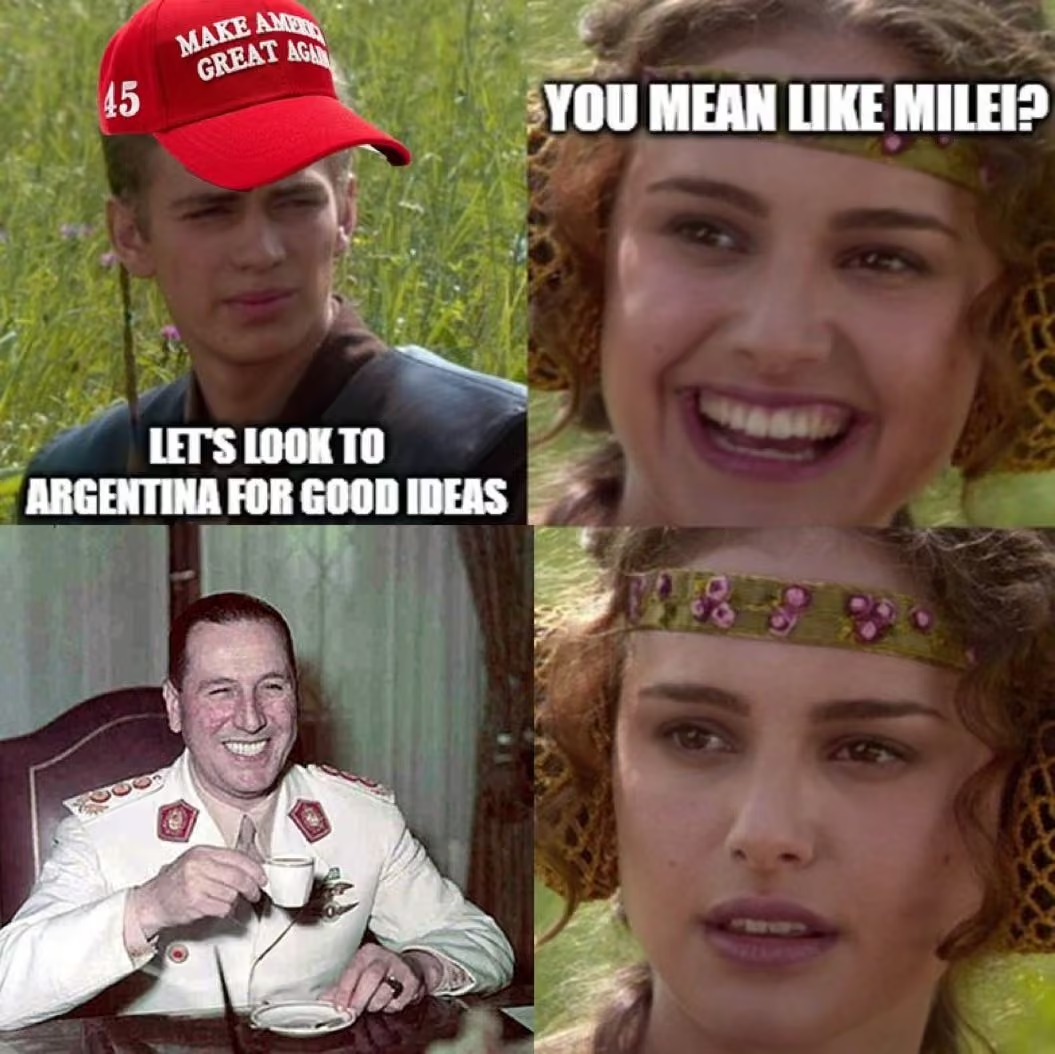
Then there is substantial opportunity cost. Our inflation is high, but it is homemade. Spending the next years working out how best to align with Brussels, rather than finding new ways to solve our own problems, is simply time lost; governments do not have infinite capacity either. And if we want to see what's out there, let's take a page from the playbooks of Switzerland, Singapore, or Milei's Argentina instead of looking towards a stagnating bloc.
Finally, the Icelandic economy has always run out of sync with the continent, consistently higher-growth, but also higher-inflation, so joining the Eurozone would be extremely dangerous. In a crisis, the asymmetric shock problem bites, because without the ability to devalue the Icelandic króna, recovery becomes slower and more painful. The contrast is Iceland in 2008-10, where the króna's depreciation was brutal and fast, but it repriced the economy, ignited tourism, and had the country back at pre-crash output within five years. Greece still isn't, to this day.
I am a fan of European integration, and I believe quite a few European countries are better off inside the EU, as would be some of those aspiring to join, from Ukraine to Montenegro. But what is right for them is not right for us, because sovereignty means something different to a nation that spent seven centuries under foreign rule and has been fully independent for barely more than eighty years. There are Icelanders alive today who are older than the republic. Twice in living memory this small nation, without an army and without leverage, faced down great powers and won, against Britain in the Cod Wars; and against Britain, The Netherlands, and the EU Commission with Icesave. Sovereignty is not a nostalgic ornament, and it is not a bargaining chip to be tabled in Brussels against a discount on groceries.
The EU, meanwhile, has strayed from its founding four freedoms towards something it cannot itself quite define, and it would be unwise to have Iceland sign up for a voyage whose destination even the captain cannot name.
My NO vote on Saturday is not a vote against Europe, but for the simple, tested proposition that no one governs Iceland better than Icelanders.
Áfram Ísland!
www.facebook.com/lukas.schweiger/posts/pfbid02dbT7dzPcfb4…



 Dan Mitchell
@danieljmitchell

 Mickey Kaus
@kausmickey


 Patrick Ruffini




 David Harsanyi
 Dan McLaughlin
 Chris Cillizza


 Scott Lincicome


 Drieu Godefridi

 Dominic Pino

 Terrence Popp


 Megan McArdle


 Thomas Weber


 Daniel Kral


 Aaron Klein 🇺🇸
 Wall Street Journal Opinion
 Tim Carney


 David Burke 🇺🇸
 Pop Base


 Carl Quintanilla

 Juliette Declercq

 Senator Rand Paul
 Mike Palicz

 Daniel Hannan

 Michael A. Arouet


 Peter Berezin


 Nicholas Decker
 Gunther Eagleman™


 Defiant L’s

 Riccardo Trezzi

 Latinometrics

 Milton Friedman Daily


 Retard Finder


 Magatte Wade

 Jack Salmon


 Markets & Mayhem


 Gary Conway
 IMI Daily
 Noah Smith 🐇🇺🇸🇺🇦🇹🇼
 Daniel Lacalle Official Account


 Ron DeSantis


 Shermichael Singleton


 David Doney

 Ron S. Friedman
 Eric Daugherty
 Robin Brooks


 Handre


 Insurrection Barbie


 Josh Barzon

 philip lewis


 Jay Nordlinger

 Chris Freiman
 Byron York


 𝙱𝚛𝚢𝚊𝚗 𝚁𝚒𝚕𝚎𝚢 🗽🇺🇸


 Vincent Geloso


 Henry Olsen


 Rock Chartrand


 BlackMaps 🗺️

 Bojan Pancevski


 Daniel Di Martino

 Pieter Cleppe


 In Milei We Trust

 Maria Clara Posada


 Geiger Capital

 Jeremiah Johnson 🌐


 Mark J. Perry




 Gov. Bobby Jindal


 Austin Padgett (LudwigNeverMises)


 Iona Italia, PhD 🏴


 Hunter📈🌈📊


 Ryan Ellis


 The Drunk Republican

 Phil McAlister


 The Al Gore Era

 Dan Neidle

 Rothmus 🏴
 Kristof


 Advancing American Freedom


 Felipe Núñez 🦅

 Jeremy Horpedahl 🥚📉


 Hanno Lustig

 Republicans against Trump


 Gene Epstein


 Jessica Riedl 🧀 🇺🇦
 John Kartch


 Jacobin


 Ramiro Castiñeira


 Kevin A. Bryan


 The Rabbit Hole


 AnarchoEcon


 Marco Foster


 Freedom Conservatism


 TakingHayekSeriously


 Pincher Martin
 Creative Deduction


 Bernie Moreno
 James Pethokoukis ⏩️⤴️

 Benjamin Gedan


 Roger Helmer ☀️🏴☠️
 RafaelSánchezAballí
 Center-Right Conservative 🇺🇸🇪🇺🇺🇦

 Milei in English - Official Account

 Mark Hemingway


 iamnotyourlawyer
 Connor Boyack 📚


 ApoStructura

 Haz Al-Din 🇷🇺


 Argentina's Milei News 🇦🇷🤝🌎


 Steve Hanke


 Jostein Hauge


 Marc J. Randazza 🇺🇸 🇮🇹 🇧🇷


 Wall Street Mav

 ɖʀʊӄքǟ ӄʊռʟɛʏ 🇧🇹🇹🇩




 Ari Hoffman

 Wilfred Reilly


 Free Talk Live

 Rafael R. Guthmann


 Minnesota Senate Republicans


 Destroyer of Bad Takes (Emeritus)




 Marc Goldwein


 Alice Smith


 Lance


 Beautifulcanada1


 Michelle Tandler



 Greg Moore


 Center for a Free Economy


 Lisa Cusack
 Eyal Yakoby
 David L. Bahnsen
 Antoine Levy

 sean


 Daniel Turner


 ShellBanger


 HotSotin 🇫🇮🇺🇦🇪🇺△


 Against Narrative
 Jeff Spross
 Victor 🇪🇺
 Angela Morabito
 Hunter Ash
 Karol Markowicz


 Steve Cortes

 Kate Andrews
 Local Knowledge Problem


 Mark Warner


 Tad DeHaven
 Santiago Calvo


 BrusselsReport.EU
 George


 M. Nolan Gray 🥑
 WA Senate Republicans


 Jason Rantz on Seattle Red

 Faris Abdurrachman
 Fuck You I Quit
 Piyush Bodaa


 Change Washington


 The Center Square Washington


 BowTiedMara

 Vance Ginn
 Jack V Lloyd


 Maggie


 Kyle Pomerleau
 Canadian Jennifer 🇨🇦


 Jared Cook


 Evan Siegfried

 Speaker Mike Johnson


 Mike Bales™ 🫡🇺🇸

 Pieter Garicano

 LeaveMeansLeave

 Brad Polumbo


 Megatron


 E.J. Antoni, Ph.D.



 Nick Gilbertson

 Kim R. Holmes


 Juan Egaña


 Bushie 🇺🇸🗽


 John Fund


 Dan O'Brien

 WORLD NEWS


 Bill D'Alessandro



 The Atlas Society

 🥷🦅Austin Wade Petersen 🇺🇲🥋


 Sean Fitzgerald (Actual Justice Warrior)


 Josh Hawley


 New York Post

 Rasheed J. Griffith


 Antonio García Martínez


 Joe Redden | The Older Millennial


 Blake Scholl 🛫
 Deputy Secretary Jim O'Neill


 Mike Solana


 Former Congresswoman Marjorie Taylor Greene🇺🇸


 Andrew Follett


 Kevin O'Leary aka Mr. Wonderful

 John Arnold



 Sam Bowman
 George Selgin
 Paul Saladino, MD

