 James Hoggarth
@jameshoggarth

November #beverley


Politicians, athletes, journalists, NGOs, companies... They all use corporation-owned social networks to communicate with us. Citizens shouldn't have to hand over their data to companies to read content published by public entities. Public Feeds changes that by making posts of popular accounts freely available. Read more.

Dame Diana Ruth Johnson (born 25 July 1966) is a British politician who has served as the Member of Parliament (MP) for Kingston upon Hull North since the 2005 general election. A member of the Labour Party, she has served as Minister of State for Public Health and Patient Safety since 2026. More on Wikipedia

Labour MP for Hull North & Cottingham. Minister of State for Public Health & Patient Safety. For casework or to raise issues, e-mail Johnsond@parliament.uk.
Diana Johnson DBE MP 🇬🇧🇺🇦🌈
@DianaJohnsonMP
Just under a decade ago I launched my Ten Minute Rule Bill to decriminalise abortion in England and Wales and won votes on it in the Commons. It eventually became @ToniaAntoniazzi's amendment to the Crime and Policing Bill, and entered into law earlier this year.
1/3

 Diana Johnson DBE MP 🇬🇧🇺🇦🌈
@DianaJohnsonMP
Today, women in England and Wales who were criminalised by Victorian abortion laws will receive their pardons and have their criminal records deleted.
2/3
Diana Johnson DBE MP 🇬🇧🇺🇦🌈
@DianaJohnsonMP
Though this day is historic and momentous, it can never erase the harm and distress inflicted on so many women. It is an important recognition that what they faced was an injustice and that abortion is a healthcare issue.
3/3
Diana Johnson DBE MP 🇬🇧🇺🇦🌈 reposted
James Hoggarth
@jameshoggarth
November #beverley
Diana Johnson DBE MP 🇬🇧🇺🇦🌈 reposted
 Lyla's Law
@triggersbroom17
Today is #worlddiabetesday 💛
For us, today is about Lyla. 💝🌻
Please remember the 4 T’s of Type 1 Diabetes:
🚽 TOILETING
💧 THIRSTY
😴 TIREDNESS
📉 THINNING
Know the signs. Share them. It might just save a life.
Lyla, you are my reason, my light and my fight.
#lylaslaw #t1d
Diana Johnson DBE MP 🇬🇧🇺🇦🌈 reposted
 Department of Health and Social Care
@DHSCgovuk
Wishing His Majesty King Charles III a very happy and healthy 78th birthday, with our gratitude for everything His Majesty does to support the NHS and its staff.

Diana Johnson DBE MP 🇬🇧🇺🇦🌈 reposted
 Commonwealth War Graves
@CWGC
Join us this December for the Commonwealth War Graves Foundation's Commemorations at Christmas Carol Service.
In the beautiful surroundings of All Hallows by the Tower, we'll come together for an evening of festive music, remembrance and reflection, honouring the stories of those who served and sacrificed during the World Wars.
By attending, you'll be helping the Commonwealth War Graves Foundation continue its important work of sharing the stories behind the names, connecting people with our shared heritage, and ensuring future generations understand the human cost of conflict.
🎟️Every ticket supports our mission to educate, engage and inspire through remembrance. Link below for more information and tickets.
Diana Johnson DBE MP 🇬🇧🇺🇦🌈 reposted
 NHS
@NHSuk
Stop scrolling and learn the 4 Ts for World Diabetes Day!
Type 1 diabetes can happen at any age and if left undiagnosed, it can be fatal. The most common symptoms are the 4 Ts: Toilet, Thirsty, Tired, Thinner.
ℹ️ www.nhs.uk/conditions/type-1-diabetes/symptoms/


 Diana Johnson DBE MP 🇬🇧🇺🇦🌈
@DianaJohnsonMP
This afternoon, I had this response from Northern Trains to my letter earlier this week concerning cancellations, due to wet leaves on the line, of many train services in East Yorkshire and the practice of not stopping at certain local stations.
 Diana Johnson DBE MP 🇬🇧🇺🇦🌈
@DianaJohnsonMP
This morning I have written to Northern Trains concerning the cancellation of many local services around Hull and East Yorkshire - apparently due to leaves on the line.

Diana Johnson DBE MP 🇬🇧🇺🇦🌈 reposted
 Ashley Dalton MP
@AshleyDalton_MP
I was on @BBCNewsnight to talk about the Cancer Plan, my new role as Advisor for the Plan & living as an MP with cancer. I was so pleased to be appointed as Advisor for the Plan, to make sure patient voices stay at the heart of delivering the commitments.
Diana Johnson DBE MP 🇬🇧🇺🇦🌈
@DianaJohnsonMP
Thank you to @ChildrensComm and @HullCity for visiting St Mary’s College today and meeting the brilliant pupils.
 Children's Commissioner for England
@ChildrensComm
I’ve had a million responses to The Big Future survey!
I was at St Mary’s College in Hull today with very special guest @HullCity captain Lewie Coyle, to say a huge thank you to pupils here and across the country for sharing their messages for the PM.

Diana Johnson DBE MP 🇬🇧🇺🇦🌈 reposted
Department of Health and Social Care
@DHSCgovuk
We're changing how home care is organised, so it's based around local neighbourhoods.
It's a step towards our National Care Service which means:
✅ people see familiar carers more regularly
✅ care workers spend less time travelling between visits
More: www.gov.uk/government/news/more-familiar-carers-and-less-…

Diana Johnson DBE MP 🇬🇧🇺🇦🌈 reposted
 Angela Eagle DBE
@angelaeagle
We're scrapping the bevy levy 🍺✅
I am stepping in to end unfair packaging charges on pubs - saving them hundreds of pounds a year.
This is a government serious about backing British businesses and providing breathing space.
www.mirror.co.uk/money/pubs-restaurants-recycling-tax-cha…
Diana Johnson DBE MP 🇬🇧🇺🇦🌈 reposted
 Ian Cuthbert
@headscarfpride
Report on @looknorthBBC tonight about the blue plaque which will be placed on Yvonne Marie Blenkinsop’s former home. Many thanks to @AuntieMongo and @peter_levy for making this.
#headscarfrevolutionaries
Diana Johnson DBE MP 🇬🇧🇺🇦🌈 reposted
 Karin Smyth
@karinsmyth
This winter, we’re backing GPs with £40m to help identify people at greatest risk of becoming seriously unwell and needing hospital care.
I visited a GP practice to see how better, more joined-up support can help patients with complex health needs get the right care earlier.
Department of Health and Social Care
@DHSCgovuk
We’ve announced a £40 million programme to help GP practices identify and support up to 300,000 people most at risk of hospital admission this winter.
@KarinSmyth sees how this joined-up care will support patients during the colder months 👇
Diana Johnson DBE MP 🇬🇧🇺🇦🌈
@DianaJohnsonMP
This morning I have written to Northern Trains concerning the cancellation of many local services around Hull and East Yorkshire - apparently due to leaves on the line.
Diana Johnson DBE MP 🇬🇧🇺🇦🌈
@DianaJohnsonMP
In Hull we always honour those who served in our armed forces and in civilian life in the World Wars.
I was pleased to again join @TPExpressTrains and the @PoppyLegion last week at Paragon Station to remember their bravery and sacrifice.
We will remember them.

Diana Johnson DBE MP 🇬🇧🇺🇦🌈 reposted
 Andy Burnham
@andyburnham
Today at 11am, we pause to honour those who made the ultimate sacrifice for our freedom.
For our tomorrow, they gave their today.
We will remember them.
Diana Johnson DBE MP 🇬🇧🇺🇦🌈 reposted
 Politics UK
@PolitlcsUK
🚨 NEW: Big Ben is lit up with poppies tonight for Remembrance Sunday

Diana Johnson DBE MP 🇬🇧🇺🇦🌈 reposted
Commonwealth War Graves
@CWGC
Remembrance is the perfect time to start exploring your family history.
The World Wars touched millions of families across the Commonwealth. Seemingly every family has a story to tell.
If you want to start researching your relatives commemorated by the Commonwealth War Graves Commission, it’s never been easier. Visit our website to discover more.
 Diana Johnson DBE MP 🇬🇧🇺🇦🌈
@DianaJohnsonMP
As ever, it was a moving Remembrance Sunday Service in Hull this morning. The annual reminder of what our City went through in the World Wars.
 Diana Johnson DBE MP 🇬🇧🇺🇦🌈
@DianaJohnsonMP
Last week, I was proud to place a cross in the House of Commons Memorial Garden for all those across Hull North and Cottingham.
As we wear our poppies and pay our respects, let us remember those who gave so much in service to this country.
We will remember them.
 Diana Johnson DBE MP 🇬🇧🇺🇦🌈
@DianaJohnsonMP
On Remembrance Sunday, I always think about my dad Eric Johnson who fought in World War Two in the Royal Navy and my mum Ruth Johnson who worked in a munitions factory during the war. Part of that Greatest Generation to whom we owe our freedom.


Diana Johnson DBE MP 🇬🇧🇺🇦🌈 reposted
 NHS England
@NHSEngland
Today we pause to reflect on the courage and ultimate sacrifice made by members of our Armed Forces.
At the going down of the sun and in the morning,
We will remember them.
 Diana Johnson DBE MP 🇬🇧🇺🇦🌈
@DianaJohnsonMP
Last week, I was proud to place a cross in the House of Commons Memorial Garden for all those across Hull North and Cottingham.
As we wear our poppies and pay our respects, let us remember those who gave so much in service to this country.
We will remember them.
Diana Johnson DBE MP 🇬🇧🇺🇦🌈 reposted
 TransPennine Express
@TPExpressTrains
Hull Paragon Interchange fell silent today as TransPennine Express colleagues, veterans and local communities gathered for a remembrance service honouring those who served their country.
We will remember them. 🌹


Diana Johnson DBE MP 🇬🇧🇺🇦🌈 reposted
 Yvette Cooper
@YvetteCooperMP
On this day in 1946, King George VI gave Royal Assent to the National Health Services Act. The birth of our NHS.
A bold and historic new principle - healthcare for all, free when you need it. Eight decades later, that principle is as powerful as ever.
To everyone who has worked in our NHS and care services since then: thank you. For being there and caring for all of us when we need you. You are the reason that principle still stands.
 Diana Johnson DBE MP 🇬🇧🇺🇦🌈
@DianaJohnsonMP
With @tinatrowhill1, I've met Hull Council Leader @cllrmikeross to restate case for a local independent inquiry into the baby ashes scandal. If calls for this had been heeded a decade ago, we would have had more scrutiny of cremations and funerals before Hull's Legacy scandal.

Diana Johnson DBE MP 🇬🇧🇺🇦🌈 reposted
Department of Health and Social Care
@DHSCgovuk
"Le Roy le veult" - Eighty years ago today, King George VI gave his Royal Assent to the 1946 National Health Service Act, commanding the establishment of a comprehensive service to improve the nation's health.
A visionary ambition brought to life.

Diana Johnson DBE MP 🇬🇧🇺🇦🌈 reposted
NHS
@NHSuk
Born between 1 September 2007 and 31 August 2008?
There are less than two months left to get your first MenB vaccine.
If eligible, you need your first dose by 30 December 2026. Two doses are needed for protection.
Find out more and book ➡️ nhs.uk/book-menb

Diana Johnson DBE MP 🇬🇧🇺🇦🌈 reposted
 NHS Blood Donation 🩸🩹
@GiveBloodNHS
Remember, remember... to give blood this November. 🎆
Your donation could help someone get their spark back. ✨
Thank you to everyone donating today. Have a fantastic #bonfirenight and enjoy the celebrations!
#giveblood

Diana Johnson DBE MP 🇬🇧🇺🇦🌈 reposted
 NHS Organ Donation 💗🫀🫁
@NHSOrganDonor
Some decisions are small - some are big.
One decision you could make today is on the NHS Organ Donor Register.
Click the link to confirm your decision on the NHS Organ Donor Register. It takes 2 minutes and you could save up to 9 lives 👉register.organdonation.nhs.uk/start/

Diana Johnson DBE MP 🇬🇧🇺🇦🌈 reposted
 Hull City Council
@Hullccnews
For the first time, parents can now get their 2 and 3 year olds vaccinated at local pharmacies.
It's quick, safe and effective. Protect your child this winter.
Book now or find a local pharmacy offering walk-in appointments: www.nhs.uk/nhs-services/vaccination-and-booking-services/…
 Diana Johnson DBE MP 🇬🇧🇺🇦🌈
@DianaJohnsonMP
Yesterday evening, Hull's three MPs sent this joint letter to Reform UK Leader Nigel Farage MP concerning the situation at Hull and East Yorkshire Combined Authority.

Diana Johnson DBE MP 🇬🇧🇺🇦🌈 reposted
 Lord Hanson of Flint Labour Peer & Minister
@RTHondavehanson
Press release on yesterdays launch of anti fraud lessons as part of UK government fraud strategy
www.gov.uk/government/news/anti-fraud-lessons-rolled-out-…
Diana Johnson DBE MP 🇬🇧🇺🇦🌈 reposted
 Jack Abbott MP
@jackabbott90
This is a victory for the many campaigners who fought to save Community Staff Nurses and I pay particular tribute to the families, nurses and health visitors who had to fight so had to save this vital service.
www.bbc.co.uk/news/articles/c5vgj0wx430go
Diana Johnson DBE MP 🇬🇧🇺🇦🌈 reposted
Department of Health and Social Care
@DHSCgovuk
An early cancer diagnosis can be lifesaving.
That's why we're backing a world-first trial to investigate whether simple blood tests can spot some of the most common cancers in their earliest stages.
Innovation like this is key to our National Cancer Plan.

Diana Johnson DBE MP 🇬🇧🇺🇦🌈 reposted
 PARLY
@PARLYapp
Mr Speaker joined MPs and House staff this morning at the planting of the ‘House of Commons Gardens of Remembrance’ at a special ceremony in New Palace Yard.
📸 © House of Commons


Diana Johnson DBE MP 🇬🇧🇺🇦🌈 reposted
 Cock of the Walk
@cock_ofthewalk
We're really proud to see Emma Hardy representing Hull on the global stage, wearing her Full Bespoke 2-Piece, made right here in the City of Hull. 1/5.

Diana Johnson DBE MP 🇬🇧🇺🇦🌈 reposted
 Professor Chris Whitty
@CMO_England
Flu can be a serious illness, especially for vulnerable people.
UK CMOs urge eligible groups to get vaccinated.
Healthcare workers have a professional responsibility to protect patients from infectious diseases. We urge them to take up flu vaccination.
www.nhs.uk/nhs-services/vaccination-and-booking-services/…
Diana Johnson DBE MP 🇬🇧🇺🇦🌈 reposted
 Haemophilia Society
@HaemoSocUK
A massive thank you to @RossKemp for having the Haemophilia Society as his chosen charity on this year’s Celebrity Traitors.
Whether he was digging his teammates out of holes or smashing down doors, it’s safe to say he was faithful to the end and we couldn’t be prouder.

Diana Johnson DBE MP 🇬🇧🇺🇦🌈 reposted
Ashley Dalton MP
@AshleyDalton_MP
I'm delighted to have been appointed as the Advisor for the National Cancer Plan!
I'll be highlighting where delivery is off track and further intervention may be needed and assessing whether the Plan is delivering improvements in quality of life and patient experience.


Diana Johnson DBE MP 🇬🇧🇺🇦🌈 reposted
Professor Chris Whitty
@CMO_England
Aiming to addict children and young people under 18 to nicotine of any kind will set them up for lifelong health harms and is completely unacceptable.
New regulations coming in today will make it harder for those trying to profit from doing this.
www.gov.uk/government/speeches/under-18-sales-ban-on-nico…
Diana Johnson DBE MP 🇬🇧🇺🇦🌈 reposted
Department of Health and Social Care
@DHSCgovuk
From today, it's illegal to sell any vape or nicotine product to under-18s anywhere in the UK 🚫
This will help protect children and young people from nicotine addiction, as part of the Tobacco and Vapes Act.
Swipe to find out more 👉
www.gov.uk/government/news/under-18-sales-ban-extended-to…


Diana Johnson DBE MP 🇬🇧🇺🇦🌈 reposted
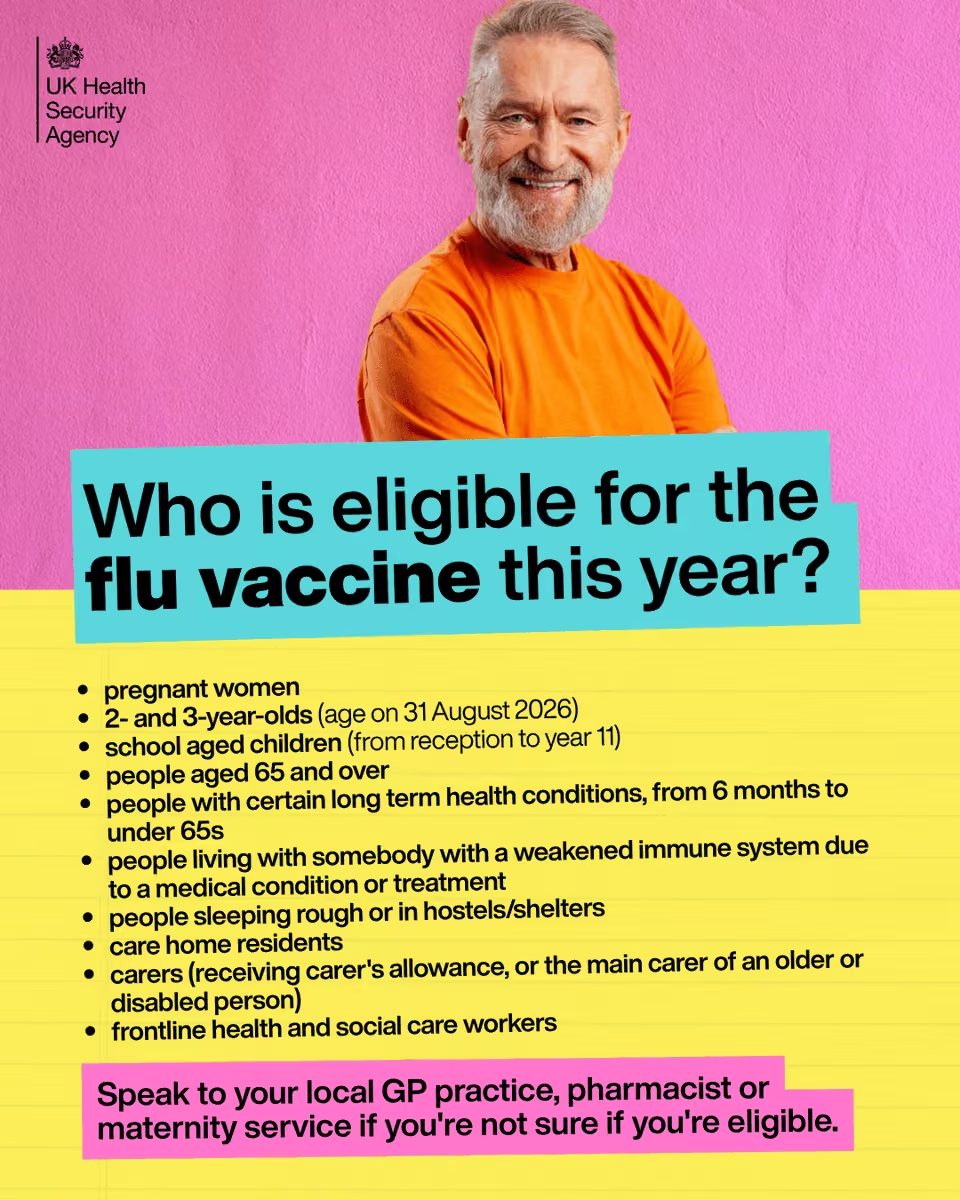
 UK Health Security Agency
@UKHSA
Could you get a free NHS flu vaccine this winter? 💉🛡️
Maybe you're aged 65 or over, work on the frontline in health or social care, or are pregnant. Whatever eligible group you fall into, you're entitled to extra protection against the serious illness that flu can cause.
 Diana Johnson DBE MP 🇬🇧🇺🇦🌈
@DianaJohnsonMP
There are not enough seats for all
MPs to sit down, so today - as every Wednesday - many MPs stood in the Chamber -for both PMQs and then the Budget.
Politics UK
@PolitlcsUK
🚨 WATCH: Nigel Farage says he didn't attend the Budget in Parliament to "avoid a physical altercation"
"Given my prayer card [to reserve a seat] was removed, I was heading towards another physical altercation... being a quiet, shy and modest person, I decided against it"
Diana Johnson DBE MP 🇬🇧🇺🇦🌈
@DianaJohnsonMP
As a @DHSCgovuk Minister, I represented the UK Government at today's meeting of the European Coalition on the Control of Drugs. Hosted by the Italian government, representatives from around Europe shared their experiences of drug treatment and action to prevent drug use.


Diana Johnson DBE MP 🇬🇧🇺🇦🌈 reposted
Department of Health and Social Care
@DHSCgovuk
A major new clinical trial is being launched into Alzheimer’s disease.
Minister for Social Care and Mental Health Alison McGovern visited @ImperialNHS to meet scientists and participants @UKDRI
Diana Johnson DBE MP 🇬🇧🇺🇦🌈
@DianaJohnsonMP
Just after I turned 50 I had my first mammogram and I was diagnosed with early stage breast cancer. Attending that screening appointment potentially saved my life as I had no indication anything was wrong at all.
1/3
 Diana Johnson DBE MP 🇬🇧🇺🇦🌈
@DianaJohnsonMP
Please don’t put off your breast screening appointment, and take the time to get to know what is normal for you. If you notice any unusual changes in your breasts, don’t ignore them.
2/3
Diana Johnson DBE MP 🇬🇧🇺🇦🌈
@DianaJohnsonMP
Due to what happened to me, I was pleased join @BreastCancerNow in Parliament to support Wear It Pink during Breast Cancer Awareness Month and hear about their important research and how they support people affected by breast cancer.
Let's stand together to support the campaign.
Diana Johnson DBE MP 🇬🇧🇺🇦🌈 reposted
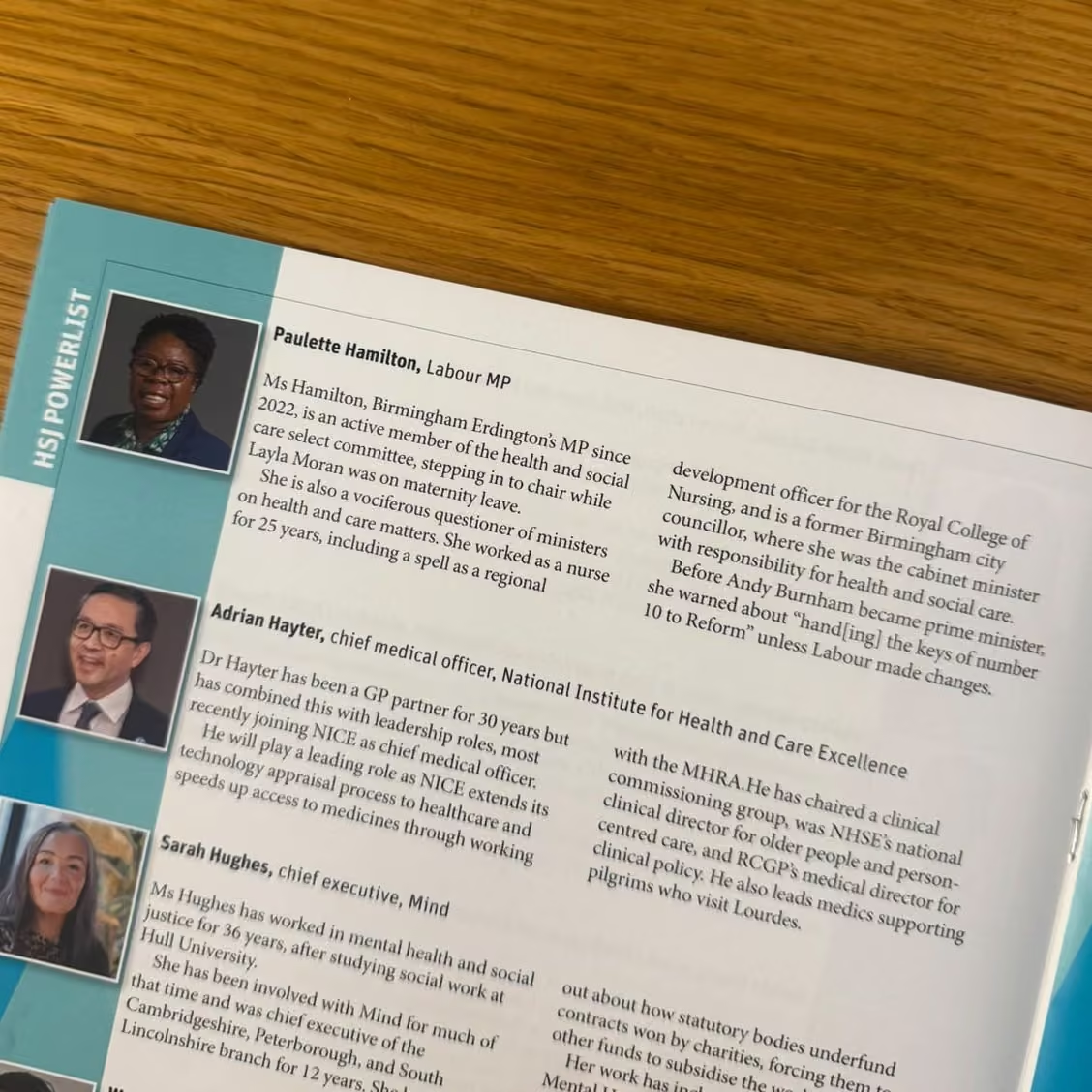
 Paulette Hamilton MP
@PauletteHamilto
Wonderful to be named in @HSJnews’s 2026 Powerlist of the 75 most influential Black, Asian and minority ethnic people in health.
Health is at the heart of everything I do, from 25 years as an NHS nurse to leading health and social care at Europe’s largest local authority.
 Diana Johnson DBE MP 🇬🇧🇺🇦🌈
@DianaJohnsonMP
With Emma Hardy MP, I have written to @Hull_Trains and @northernassist urging them to follow @TPExpressTrains in choosing faster, cleaner battery-electric trains when they invest in their new fleets. Let's ditch diesel and finally achieve full rail electrification for Hull.

Diana Johnson DBE MP 🇬🇧🇺🇦🌈 reposted
 Heidi Alexander MP
@Heidi_Labour
It's so frustrating when the actions of a few spoil your journey.
Our new campaign reminds passengers to use headphones on trains, and highlights the penalties.
And local leaders get new powers to tackle music, vaping and littering on buses.
www.bbc.co.uk/news/articles/cm89z008x7xdo
Diana Johnson DBE MP 🇬🇧🇺🇦🌈 reposted
Department of Health and Social Care
@DHSCgovuk
Watch @YvetteCooperMP on the action we're taking to strengthen urgent care across the NHS through the winter season.
Diana Johnson DBE MP 🇬🇧🇺🇦🌈 reposted
 Labour Press
@labourpress
Reform's problem with women. As described by one of their two women MPs:
Diana Johnson DBE MP 🇬🇧🇺🇦🌈
@DianaJohnsonMP
Worth a listen the poem is wonderful! Bravo 👏👏👏
 Jonathan Ashworth
@JonAshworth
There is life to be lived after stroke. Lots of you including my ol’ parliamentary mate @NicDakin55 requested some Seamus Heaney so here you go!
Keep sending me your poetry requests. #stroke
‘The longed-for tidal wave
Of justice can rise up
And hope and history rhyme.’
Diana Johnson DBE MP 🇬🇧🇺🇦🌈 reposted
Department of Health and Social Care
@DHSCgovuk
We're taking action to get brain cancer treatments to patients faster, turn lab breakthroughs into clinical care and make the UK a world leader in cutting-edge research.
@YvetteCooperMP set out the next steps at a @TJBCMission event, alongside @JamesFrith and champion swimmer and campaigner Archie Goodburn.
Read: www.gov.uk/government/news/brain-cancer-patients-to-see-f…
 Diana Johnson DBE MP 🇬🇧🇺🇦🌈
@DianaJohnsonMP
Today marks five years since Sir David Amess MP was tragically murdered whilst serving his constituents.
His death showed, yet again, why we must work together to create a more tolerant and respectful politics.
My thoughts are with Sir David’s family and friends.
Diana Johnson DBE MP 🇬🇧🇺🇦🌈
@DianaJohnsonMP
Nearly 6 in 10 young who are not in education, training or employment have never had a job.
The government and UKHospitality’s new partnership will deliver 100,000 new jobs for young people out of work with major employers across the sector.
Diana Johnson DBE MP 🇬🇧🇺🇦🌈 reposted
 Department for Work and Pensions
@DWPgovuk
The Government has published its response to the Neurodiversity Panel report
Pat McFadden and Panel Chair Amanda Kirby discuss what's already working, and what needs joining up, to better support neurodivergent people in work
Visit: www.gov.uk/government/publications/expert-academic-panel-…
Diana Johnson DBE MP 🇬🇧🇺🇦🌈 reposted
NHS England
@NHSEngland
The NHS is rolling out alerts on smartwatches and mobiles to let people know their prescription is ready.
NHS App users can now get instant alerts from more than 2,500 chemists across England.
ℹ️ www.england.nhs.uk/2026/10/nhs-rolls-out-prescription-rea…

Diana Johnson DBE MP 🇬🇧🇺🇦🌈 reposted
 Lord Norton of Louth
@LordNortonLouth
In my office today to give 'fireside chats' to parents and potential applicants on the Hull Parliamentary placement programme, which not for the first time got singled out for mention in the recent Sunday Times Good University Guide.

Diana Johnson DBE MP 🇬🇧🇺🇦🌈 reposted
Andy Burnham
@andyburnham
Yesterday, Holborn and St Pancras voted for hope.
Congratulations @Sagal_AW and the whole team on a fantastic campaign. Looking forward to working together!
 The Labour Party
@UKLabour
Congratulations to Sagal Abdi-Wali, Labour MP for Holborn and St Pancras!

Diana Johnson DBE MP 🇬🇧🇺🇦🌈 reposted
The Labour Party
@UKLabour
Congratulations to Sagal Abdi-Wali, Labour MP for Holborn and St Pancras!
Diana Johnson DBE MP 🇬🇧🇺🇦🌈 reposted
The Labour Party
@UKLabour
For Hope. Vote Labour today. @andyburnham @Sagal_AW
Diana Johnson DBE MP 🇬🇧🇺🇦🌈
@DianaJohnsonMP
Labour’s new settlement for older people:
• Guaranteed pension rises every year
• No care charges
• A national care service that provides older people with free personal care to give everyone piece of mind.
Diana Johnson DBE MP 🇬🇧🇺🇦🌈 reposted
Yvette Cooper
@YvetteCooperMP
Why I’ve made maternity care a priority for our NHS.
And why I won’t stop until every family gets the care they deserve.
Because women and babies must never be treated as second class patients.
See my speech in Liverpool this week 👇🌹
Diana Johnson DBE MP 🇬🇧🇺🇦🌈 reposted
Yvette Cooper
@YvetteCooperMP
This Labour government is restoring vital Sure Start health services to every family hub across the country.
Because every child deserves the Best Start in Life.
Diana Johnson DBE MP 🇬🇧🇺🇦🌈 reposted
Yvette Cooper
@YvetteCooperMP
Here’s everything I announced at Labour conference yesterday
🛡️ A public health approach to the violence against women and girls epidemic
🏥 £50m for new specialist referral services from GPs for victims of abuse
🩺 A National Clinical Lead for Violence Against Women and Girls
👶 The return of Sure Start health services into every family hub in England
🤱 The return of national maternity standards
🏥 An independent Maternity and Neonatal Commissioner
💙 A new champion for unpaid carers
🤝 The first ever legally binding Fair Pay Agreement for care workers
💼 Thousands of job opportunities in the care sector for young people
💷 The first ever national collective pension scheme for care workers

Diana Johnson DBE MP 🇬🇧🇺🇦🌈 reposted
Department of Health and Social Care
@DHSCgovuk
By 2028, we will expand health services for babies in more than 1,000 family hubs across the whole of England, including:
➡️ infant feeding and mental health support
➡️ help with parent-baby bonding
➡️ health visiting and midwifery care
Read: www.gov.uk/government/news/support-for-families-and-babie…
 Diana Johnson DBE MP 🇬🇧🇺🇦🌈
@DianaJohnsonMP
Just heard this evening from a Home Office minister that after all the lobbying from myself, Emma Hardy MP and others in the city that the Royal Hotel in Hull will be closing as an asylum hotel at the end of December.

Diana Johnson DBE MP 🇬🇧🇺🇦🌈 reposted
 BBC Politics
@BBCPolitics
"We will deliver the first ever legally binding fair pay agreement for care workers," Yvette Cooper tells Labour's conference
"Care workers have been undervalued and underpaid for far too long," the health secretary adds
Follow live: www.bbc.co.uk/news/live/c6x2zrv774gvt?at_bbc_team=editorial
Diana Johnson DBE MP 🇬🇧🇺🇦🌈
@DianaJohnsonMP
In the @UKLabour Conference session on our NHS and social care where, amongst much else, @YvetteCooperMP announced the return of SureStart for Babies to give children the best start in life

Diana Johnson DBE MP 🇬🇧🇺🇦🌈 reposted
Politics UK
@PolitlcsUK
🚨 BREAKING: The Met Police has now submitted charges against 54 individuals and 20 companies over the Grenfell Tower fire in 2017
The charges include fraud, corporate manslaughter and misconduct in public office
Diana Johnson DBE MP 🇬🇧🇺🇦🌈
@DianaJohnsonMP
“In politics guts is all” - Barbara Castle said this years ago. We saw it today.

 Diana Johnson DBE MP 🇬🇧🇺🇦🌈
@DianaJohnsonMP
Just rushed to my second #lab26 fringe meeting of the day, on creating the ‘Healthiest Generation of Children Ever’ - with @progbrit and @unicef.

 Diana Johnson DBE MP 🇬🇧🇺🇦🌈
@DianaJohnsonMP
My first #lab26 fringe meeting today, alongside @cazjwheeler and @nathan_oswin, is with the @thefabians. We’re discussing the new Hillsborough Law’s Duty of Candour and our experience with infected blood and other scandals.

Diana Johnson DBE MP 🇬🇧🇺🇦🌈 reposted
 The Fabian Society
@thefabians
Duty Bound: Truth, Trust and Transparency in the State
@DianaJohnsonMP | @cazjwheeler | @nathan_oswin
 Diana Johnson DBE MP 🇬🇧🇺🇦🌈
@DianaJohnsonMP
My first #lab26 fringe meeting today, alongside @cazjwheeler and @nathan_oswin, is with the @thefabians. We’re discussing the new Hillsborough Law’s Duty of Candour and our experience with infected blood and other scandals.
Diana Johnson DBE MP 🇬🇧🇺🇦🌈 reposted
NHS
@NHSuk
#stoptober is nearly here!
October is the month when thousands of people decide to quit smoking and kick the habit for good!
Here are 5 tips to get you ready to ditch the cigs.
➡️ www.nhs.uk/better-health/quit-smoking/


Diana Johnson DBE MP 🇬🇧🇺🇦🌈 reposted
UK Health Security Agency
@UKHSA
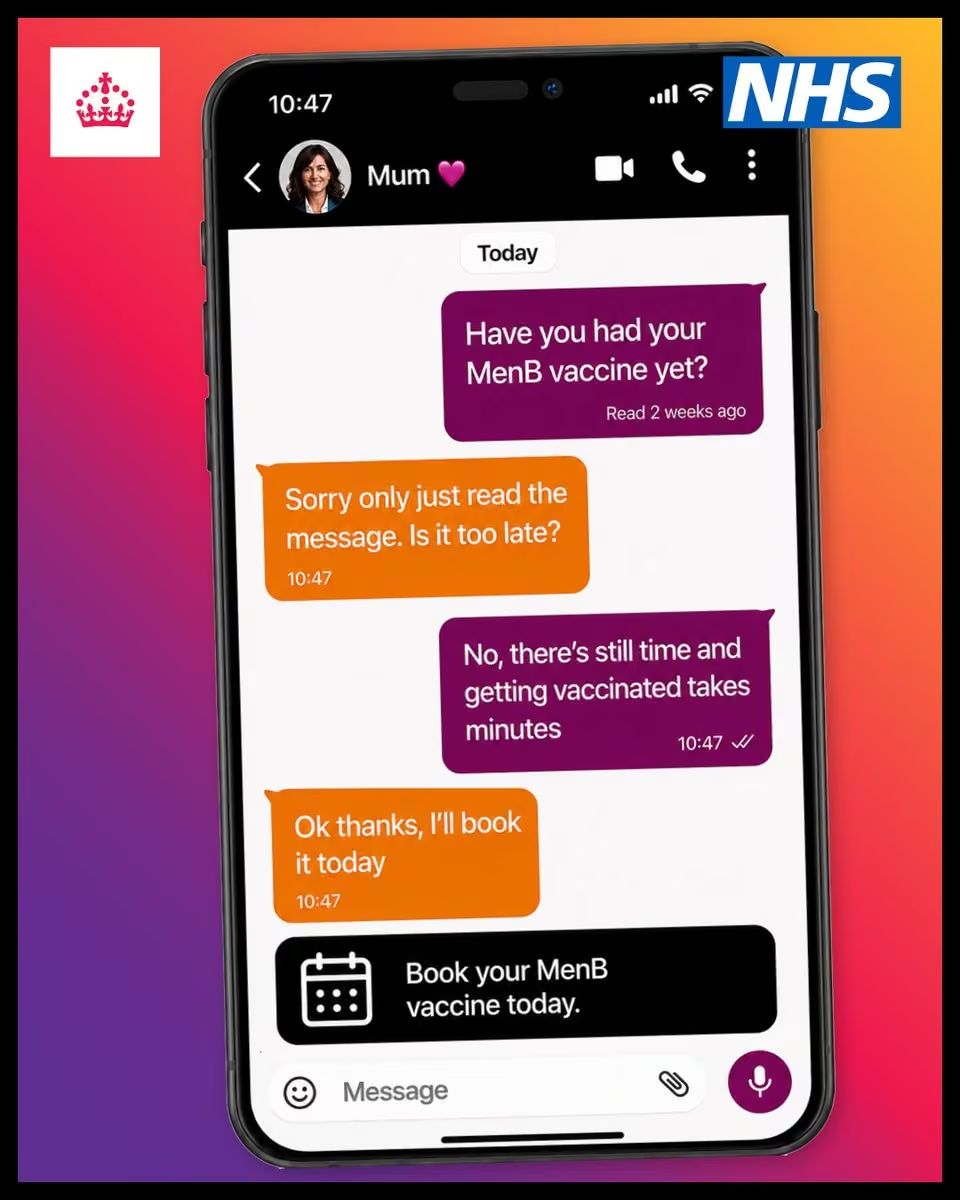
Don't ghost your MenB vaccine. 👻📱
Two doses are needed for the best protection against MenB. ✅
🔗 Find out more, including who is eligible: www.nhs.uk/book-menb
 Diana Johnson DBE MP 🇬🇧🇺🇦🌈
@DianaJohnsonMP
Now speaking at my third #lab26 fringe meeting of the day, discussing the infected blood scandal and the new Hillsborough Law with the @NewStatesman and @HaemoSocUK.
 Diana Johnson DBE MP 🇬🇧🇺🇦🌈
@DianaJohnsonMP
At my second #lab26 fringe meeting today, I’m with @progbrit and the Association of Optometrists discussing ‘Health outside the Hospital’ - providing more community-based health and prevention work.
 Diana Johnson DBE MP 🇬🇧🇺🇦🌈
@DianaJohnsonMP
Speaking at my first #lab26 fringe meeting of the day, discussing ‘What Children and Young People Need from Health Reform’ with @barnardos and @AlderHey.
 Diana Johnson DBE MP 🇬🇧🇺🇦🌈
@DianaJohnsonMP
Speaking at my third #lab26 fringe meeting of the afternoon, discussing delivering healthcare closer to home with @restate_thinks.


Diana Johnson DBE MP 🇬🇧🇺🇦🌈 reposted
 Nick Thomas-Symonds
@NickTorfaen
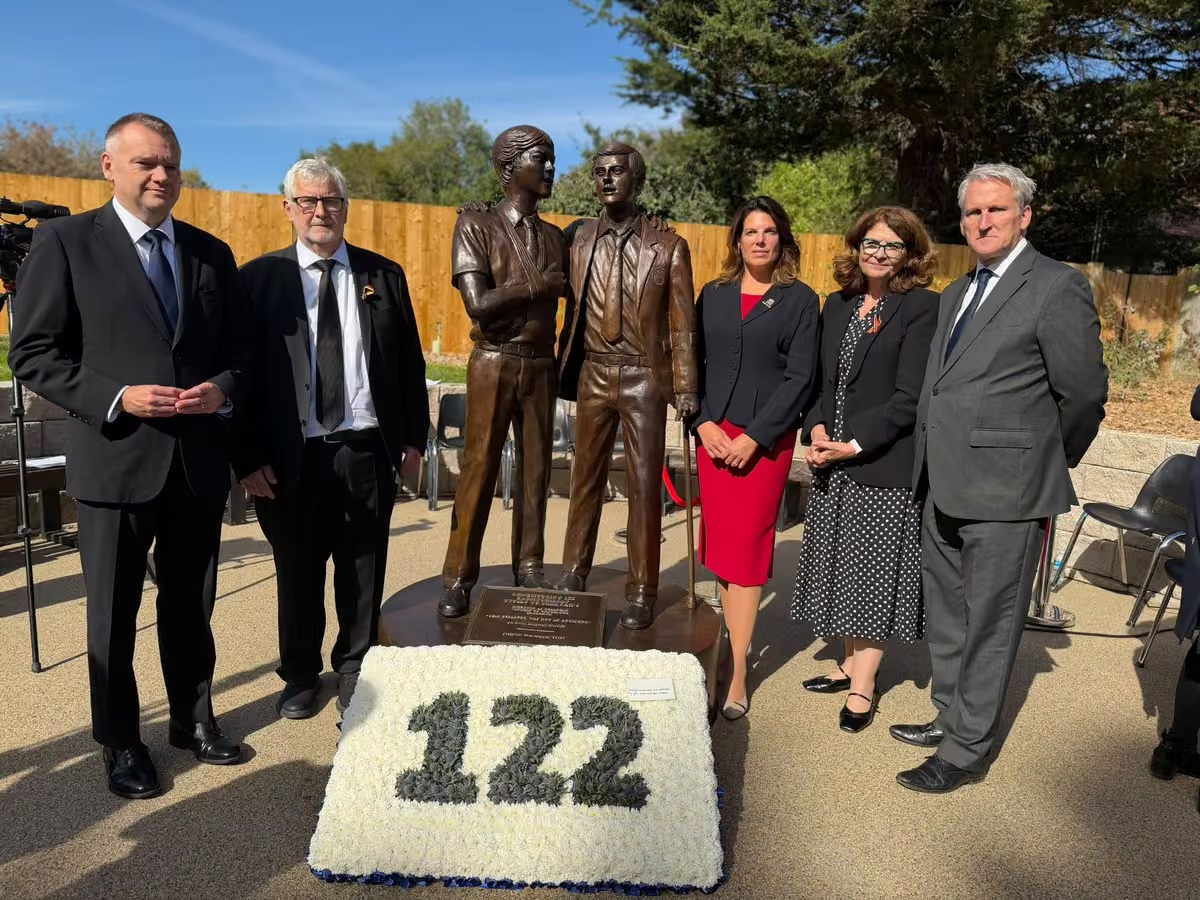
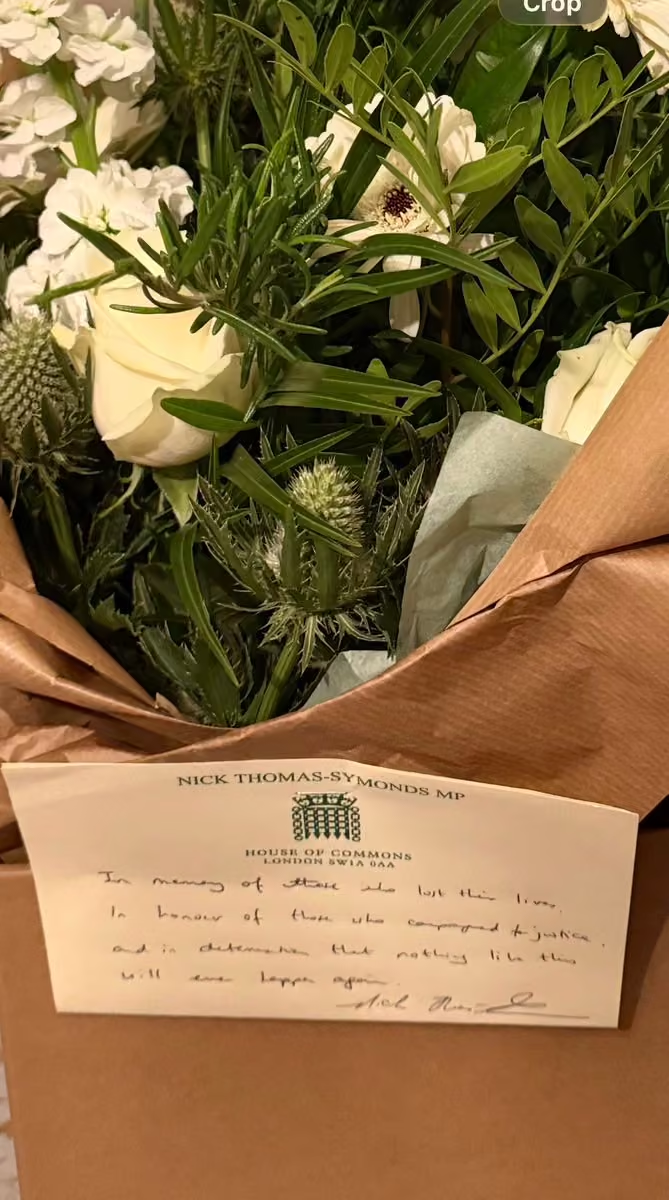
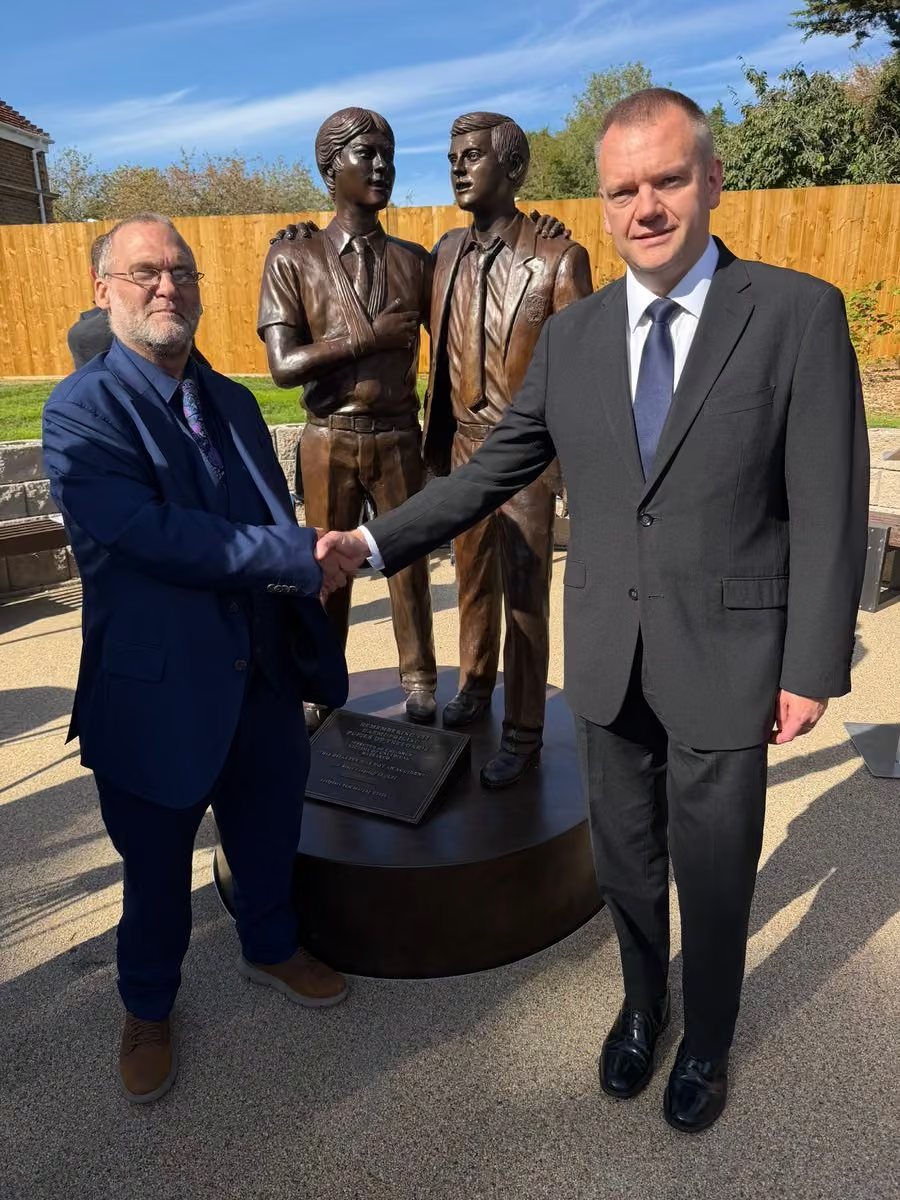
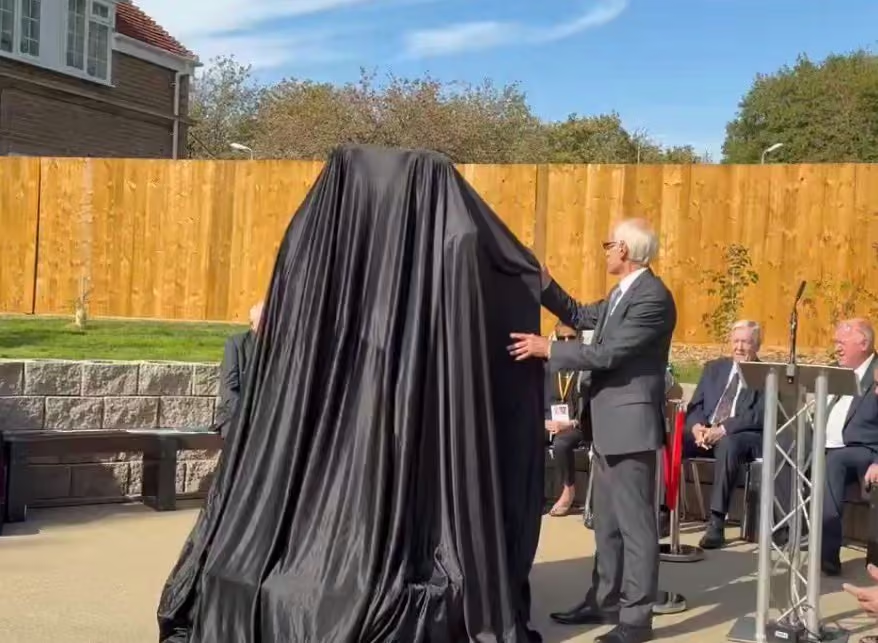
A solemn privilege to attend the unveiling of the memorial to 122 victims of the Infected Blood Scandal who attended Treloar’s School. They were infected as children & subjected to awful unethical research.
We remember those who died & honour those who campaigned for justice.
 Diana Johnson DBE MP 🇬🇧🇺🇦🌈
@DianaJohnsonMP
Speaking at my third #lab26 fringe meeting of the afternoon, discussing delivering healthcare closer to home with @restate_thinks.

 Diana Johnson DBE MP 🇬🇧🇺🇦🌈
@DianaJohnsonMP
Diana Johnson DBE MP 🇬🇧🇺🇦🌈
@DianaJohnsonMP
It was a privilege today to represent Prime Minister @andyburnham at the unveiling of a memorial to pupils at Treloar’s College who were subject to unethical experimentation during the infected blood scandal.


 Diana Johnson DBE MP 🇬🇧🇺🇦🌈
@DianaJohnsonMP
It was a privilege today to represent Prime Minister @andyburnham at the unveiling of a memorial to pupils at Treloar’s College who were subject to unethical experimentation during the infected blood scandal.
Diana Johnson DBE MP 🇬🇧🇺🇦🌈 reposted
UK Health Security Agency
@UKHSA
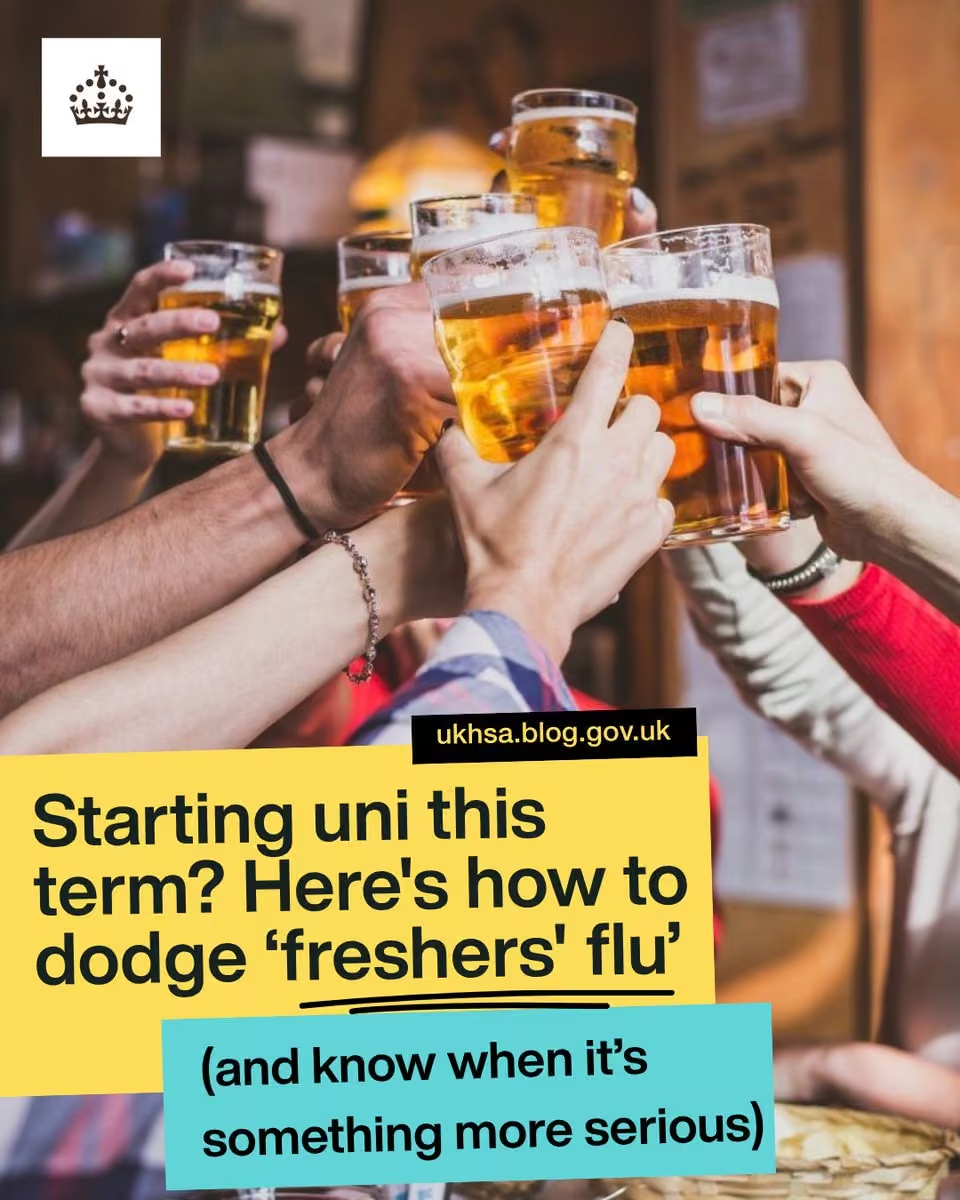
🤧 Freshers' flu is common, but meningitis isn't something to risk. Know the signs, trust your instincts, and don't wait for a rash to appear.
💉 Checking you're up to date on MMR, MenACWY and MenB vaccinations will give you the best protection: ukhsa.blog.gov.uk/2026/09/25/how-to-avoid-freshers-flu-at….
Diana Johnson DBE MP 🇬🇧🇺🇦🌈 reposted
NHS England
@NHSEngland
Pharmacists are an essential part of the NHS team, helping people across the country to live longer and healthier lives.
This World Pharmacists Day, thank you to all pharmacists for their hard work, expertise and knowledge! 💙

Diana Johnson DBE MP 🇬🇧🇺🇦🌈 reposted
 PoliceMemorialTrust
@tpmt_org
Today we remember Sgt Matt Ratana, of the @metpoliceuk , who was murdered on duty at Croydon Police Station in 2020. This morning we laid our floral tribute at our memorial to mark the 6th anniversary of his death.
#honouringthosewhoserve
#policefamily
#policememorials
@MPFed


Diana Johnson DBE MP 🇬🇧🇺🇦🌈 reposted
UK Health Security Agency
@UKHSA
Whooping cough can start like a cold. The 'whoop' is distinctive, although some babies and adults don't make the classic sound.
Play our video to hear it and learn the signs, symptoms, and treatment on our blog post. 🔊👂
ukhsa.blog.gov.uk/2024/04/12/what-is-whooping-cough-and-h…
Diana Johnson DBE MP 🇬🇧🇺🇦🌈 reposted
Department for Work and Pensions
@DWPgovuk
Work and Pensions Secretary, Pat McFadden, visited Sense in Birmingham recently, to hear from disabled people with complex needs about the support that's helped them live more independently
Vital work, and a reminder of why tailored support matters
Follow us for more.
Diana Johnson DBE MP 🇬🇧🇺🇦🌈 reposted
Department of Health and Social Care
@DHSCgovuk
As Minister Smyth told the House of Commons on 8 September: "The NHS will follow the law. New guidance has been drafted and will be published imminently."
That remains the case, and that is what Minister Smyth explained again during her meeting with the Darlington nurses.

 Darlington Nursing Union
@DarlingtonUnion
🚨 BREAKING: Health minister Karin Smyth has told the Darlington nurses there is no plan for new NHS rules on single-sex spaces, despite the government previously promising action and institutions repeatedly saying they are 'waiting for guidance' following the Supreme Court ruling 18 months ago.
Bethany Hutchison and Annice Grundy met the minister in Leeds following the nurses’ landmark employment tribunal victory.
The nurses warned that, without clear national rules, NHS trusts remain free to impose policies that undermine the privacy, dignity and safety of female staff.
Bethany said: “The government has had long enough. The law is clear. Women should not have to go to court simply to secure a safe place to change.”
The Darlington nurses are calling for urgent, legally compliant NHS guidance protecting single-sex spaces.
See more breaking with @CConcern
and in the @Daily_Express 👇🏻
christianconcern.com/ccpressreleases/health-minister-tell…
www.express.co.uk/news/uk/2250309/nhs-biological-sex-gend…

Diana Johnson DBE MP 🇬🇧🇺🇦🌈 reposted
 Louise Thompson
@LouiseAThompson
Cradle to grave only works if the cradle is safe.
Thank you @YvetteCooperMP for making maternity a priority and for putting the Maternity Commissioner into law. 157,000 of you signed for this. Now we make sure mothers and babies feel the difference.
Department of Health and Social Care
@DHSCgovuk
"We always talk about the NHS as being from cradle to grave so let's put the cradle back at the heart of the NHS."
In a speech at the @babylifeline National Maternity Safety Conference, @YvetteCooperMP explains why improving maternity care is a key priority.
Diana Johnson DBE MP 🇬🇧🇺🇦🌈 reposted
PoliceMemorialTrust
@tpmt_org
Today we remember PCs Fiona Bone & Nicola Hughes of @gmpolice. The unarmed officers were murdered 14yrs ago in 2012. Their death’s caused revulsion across the U.K & the world. We were honoured to erect our memorial to them.
#honouringthosewhoserve #policememorials #policefamily

Diana Johnson DBE MP 🇬🇧🇺🇦🌈 reposted
Department of Health and Social Care
@DHSCgovuk
We're building neighbourhood health services which make it easier to get the care you need closer to home.
@DianaJohnsonMP visited the Reginald Health Centre in Leeds to see this in action with GPs, social prescribing and a pharmacy all under the same roof as community services.
Diana Johnson DBE MP 🇬🇧🇺🇦🌈 reposted
Department of Health and Social Care
@DHSCgovuk
From today, around 1,000 patients with advanced breast cancer will be able to get the life-changing drug Enhertu on the NHS.
This follows changes we've made in how new treatments are assessed, so more people can benefit from them.
More: www.nice.org.uk/news/articles/nice-recommends-enhertu-for…
 Diana Johnson DBE MP 🇬🇧🇺🇦🌈
@DianaJohnsonMP
As a patron of the National Civilian World War Two Memorial Trust, I was honoured to speak about Hull's experience in the Blitz at today's opening of the restored National Picture Theatre in Beverley Road and meet many of those who have restored the site to local community use.

 Diana Johnson DBE MP 🇬🇧🇺🇦🌈
@DianaJohnsonMP
In the House responding for the Government in the important Commons debate to mark Sepsis Awareness Month.

Diana Johnson DBE MP 🇬🇧🇺🇦🌈 reposted
Department of Health and Social Care
@DHSCgovuk
A statement and apology from @YvetteCooperMP following the Thirlwall Inquiry report into events at the Countess of Chester Hospital between 2015 and 2018.
Diana Johnson DBE MP 🇬🇧🇺🇦🌈 reposted
UK Health Security Agency
@UKHSA
Different strains of flu circulate each year, so the flu vaccine is updated annually. Experts around the world track the flu viruses in circulation to help ensure each season's vaccine offers the best possible protection. 🧑🔬💉
 Diana Johnson DBE MP 🇬🇧🇺🇦🌈
@DianaJohnsonMP
I am currently appearing before the @CommonsEAC to discuss the Health aspect of work across government to improve air quality. Follow the hearing at parliamentlive.tv/Event/Index/94f5f43a-1e33-4aa3-ac5c-f91…

Diana Johnson DBE MP 🇬🇧🇺🇦🌈 reposted
 Fred Dimbleby
@freddimbleby
"It's a way of making sure we get rid of those awful polluting diesel trains"
Hull MP @DianaJohnsonMP reacts to news of a one billion pound investment into 29 new battery-electric trains for the North
Diana Johnson DBE MP 🇬🇧🇺🇦🌈 reposted
 The Hull Story 🇺🇦
@StoryHull
BREAKING: Electric trains could be serving Hull in 2034 after the announcement of £1bn of investment in a new fleet of @TPExpressTrains. The city is among the destinations and routes to benefit from new battery-electric trains.🚆 #hull #rail #transport
www.thehullstory.com/allarticles/electric-trains-transpen…
Diana Johnson DBE MP 🇬🇧🇺🇦🌈 reposted
The Hull Story 🇺🇦
@StoryHull
RAIL: The city’s Labour MPs have welcomed the announcement that Hull will be included when a £1bn fleet of new battery-electric @TPExpressTrains comes into service in 2034. @DianaJohnsonMP #hull #rail #transport
www.thehullstory.com/allarticles/labour-mps-welcome-elect…
Diana Johnson DBE MP 🇬🇧🇺🇦🌈
@DianaJohnsonMP
My statement on @TPExpressTrains investment in new electric trains.
 Diana Johnson DBE MP 🇬🇧🇺🇦🌈
@DianaJohnsonMP
Read my statement on today's vote on the Terminally Ill Adults (End of Life) Bill.

Diana Johnson DBE MP 🇬🇧🇺🇦🌈 reposted
Department of Health and Social Care
@DHSCgovuk
We're expanding the Pharmacy First scheme so people can get support with a wider range of common conditions from their local pharmacies.
@DianaJohnsonMP explains why this is good news for both patients and pharmacists, on @BBCBreakfast
Diana Johnson DBE MP 🇬🇧🇺🇦🌈 reposted
Andy Burnham
@andyburnham
We've all been there. You wake up feeling unwell, try to get an appointment, and before you know it half the day has disappeared.
When you're sick, the last thing you should be worrying about is how you're going to get the help you need.
That's why we're expanding Pharmacy First. The idea is simple:
Qualified pharmacists can assess patients, dispense medicines and prescribe treatment for a range of common conditions, helping people get care quickly and close to home. So you don’t have to go to hospital, and you don’t need to book a GP appointment. Just walk into your local pharmacy and get the treatment you need right there, right then.
These services make a huge difference, especially for older people and those who are vulnerable.
That's why we invested a further £340 million in community pharmacies, including to deliver Pharmacy First.
Six million consultations have been delivered since the launch of the scheme.
GPs and NHS 111 have referred three million people to their local pharmacy.
And pharmacists have provided more than three million urgent medicine supplies.
We’re making it possible for qualified prescribing pharmacists to treat five more common health conditions this autumn, like migraines and ear infections, so access to treatment is easier than ever. And what we’re announcing today will make it easier to see a GP for those who need it.
I know how hard our NHS works, how much pressure staff are under and how tough it can be for people to access the care they need from my time as Health Secretary. And I know things have only got tougher in the last 15 years.
As Mayor of Greater Manchester, I saw firsthand how important it is to put more firepower in the frontlines and give people more control over their own lives.
Every place and every person matters. So we’ll make sure people can get the care they need, where they need it. That’s what this is all about.
Faster treatment. More services. Better care for patients. And less pressure on hospitals and GPs.
One less headache for people to worry about.
Diana Johnson DBE MP 🇬🇧🇺🇦🌈 reposted
Department of Health and Social Care
@DHSCgovuk
The extreme heat of recent months put record summer demands on the NHS.
Watch @YvetteCooperMP set out the action we're taking to protect the resilience of our NHS in the face of these pressures 👇
Diana Johnson DBE MP 🇬🇧🇺🇦🌈
@DianaJohnsonMP
I was pleased to meet Northern Rail at the Commons today and press the case for investment in greener, faster and more efficient electric trains for Hull and the Humber. @northernassist
 Diana Johnson DBE MP 🇬🇧🇺🇦🌈
@DianaJohnsonMP
Today is Emergency Services Day - a chance to recognise the incredible dedication of those who work, volunteer and serve across the NHS, police, fire, ambulance and search and rescue services.
Thank you to all the emergency service staff who work tirelessly to protect us.💙


Diana Johnson DBE MP 🇬🇧🇺🇦🌈 reposted
Department of Health and Social Care
@DHSCgovuk
Building an NHS fit for the future means making our hospitals more resilient for extreme weather in the winter and extreme heat in the summer, and investing in new operating theatres, children's wards, maternity units and mental health facilities.
More: www.gov.uk/government/news/over-15-billion-to-help-nhs-wi…

Diana Johnson DBE MP 🇬🇧🇺🇦🌈 reposted
 Michelle Welsh MP
@MichelleWelshMP
England’s first Maternity Commissioner to be enshrined in law 📢
I am incredibly proud to have played a leading role within Government in making this happen.
A Maternity Commissioner will not solve every problem in maternity care, but creating a powerful, independent voice - established in law - is a historic step forward.
The Commissioner will champion mothers, babies and families, represent frontline staff and bring together charities, campaigners and professional organisations to make maternity care safer.
For too long, families have had to fight to be heard, while frontline staff have not always been listened to or supported. This role must turn their experiences into action and ensure that uncomfortable truths can never again be ignored.
This is deeply personal to me. I have listened to families whose lives have been changed forever, and promised that their courage and campaigning must lead to lasting change.
A permanent voice. A statutory responsibility. A lasting legacy for every mother, every baby and every family.
A promise that maternity safety will remain at the heart of every Government.
Diana Johnson DBE MP 🇬🇧🇺🇦🌈 reposted
Department of Health and Social Care
@DHSCgovuk
We’re partnering on the @premierleague’s Together Against Suicide initiative.
@jamesfrith visited @arsenal to meet @samaritans volunteers and find out more about the suicide prevention support available for fans on Premier League matchdays.
Diana Johnson DBE MP 🇬🇧🇺🇦🌈 reposted
Karin Smyth
@karinsmyth
On Emergency Services Day, I want to thank every single one of you working across our A&E and ambulance teams.
Thanks to your huge efforts, more than three quarters of patients were seen within four hours in A&E last month, despite the record pressures you've faced this summer.
Department of Health and Social Care
@DHSCgovuk
This summer brought record demand on the NHS.
Thanks to the hard work of staff across the health service, over three quarters of patients in A&E were seen within four hours last month.
As we mark Emergency Services Day, we thank you for your immense dedication 💙

Diana Johnson DBE MP 🇬🇧🇺🇦🌈 reposted
Department of Health and Social Care
@DHSCgovuk
.@YvetteCooperMP has announced that the maternity and neonatal commissioner will have statutory powers.
This new role is part of the action we're taking to make maternity and neonatal care safer, fairer and more consistent.
Diana Johnson DBE MP 🇬🇧🇺🇦🌈 reposted
Department of Health and Social Care
@DHSCgovuk
This summer brought record demand on the NHS.
Thanks to the hard work of staff across the health service, over three quarters of patients in A&E were seen within four hours last month.
As we mark Emergency Services Day, we thank you for your immense dedication 💙
Diana Johnson DBE MP 🇬🇧🇺🇦🌈 reposted
Department of Health and Social Care
@DHSCgovuk
Thousands of nursing, midwifery and allied health professional students will no longer have to pay travel and accommodation costs upfront when sent on training placements around the country.
Eligible students can now claim advance payments, easing pressure on their budgets.

Diana Johnson DBE MP 🇬🇧🇺🇦🌈 reposted
UK Health Security Agency
@UKHSA
Did you know the HPV vaccine isn't just for girls? Boys are offered it too, to protect them from HPV-related cancers later in life. 👦👦🏾👦🏻👦🏿
A simple vaccine today helps protect their future.
🔗 Find how to get vaccinated nhs.uk/HPV

Diana Johnson DBE MP 🇬🇧🇺🇦🌈 reposted
Ian Cuthbert
@headscarfpride
Superb picture of #lillianbilocca created by former Lord Mayor of #hull Steve Wilson and shared with his kind permission.
#headscarfrevolutionaries

Diana Johnson DBE MP 🇬🇧🇺🇦🌈 reposted
 Audrey Ludwig MBE
@AudreySuffolk
This is lovely
Cock of the Walk
@cock_ofthewalk
Heading to a courtroom near you, Full Bespoke court frockcoat and vest made for a criminal Kings Counsel.
Made from a 12oz Wool and mohair barathea, and lined in a rich red paisley. Details include full working pockets, multiple covered buttons and hand braided cuffs, and chest.
 Diana Johnson DBE MP 🇬🇧🇺🇦🌈
@DianaJohnsonMP
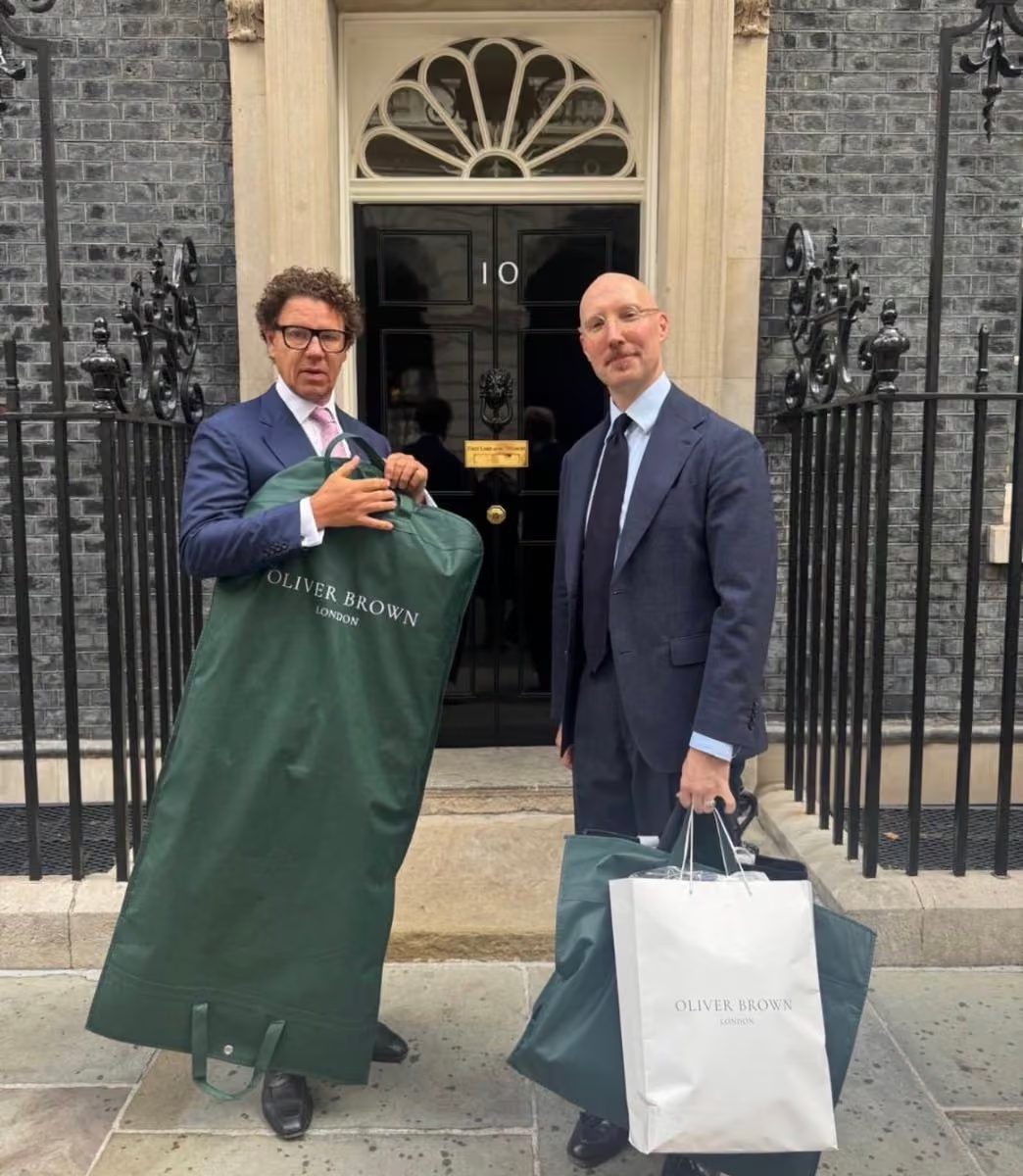
I'm sure our PM @andyburnham would also do well to try Savile Row trained bespoke tailor @cock_ofthewalk - based in Parliament Street, Hull. As with tea, we do things properly in Yorkshire...

 Harry Cole
@MrHarryCole
British tailors Oliver Brown are providing @andyburnham with his suits as PM.
Diana Johnson DBE MP 🇬🇧🇺🇦🌈 reposted
 John Grady MP
@johnadgrady
I support the Babies Bill brought to Parliament today. It is critical we do all we can to give babies & young children the best start in life.
I highlighted the catastrophic failures in the Family C Learning Review, in which four young children were failed by many public bodies.
Diana Johnson DBE MP 🇬🇧🇺🇦🌈 reposted
 Cabinet Office
@cabinetofficeuk
The Elizabeth Emblem recognises those who lost their lives whilst undertaking public service.
First Secretary of State Louise Haigh met with some family members accepting the award on their loved one's behalf.
Find out more: www.gov.uk/government/publications/the-elizabeth-emblem-a…

Diana Johnson DBE MP 🇬🇧🇺🇦🌈 reposted
Michelle Welsh MP
@MichelleWelshMP
Where you are born should never determine your future.
The first 1001 days of a child’s life can shape so much of what comes next - which is why we must get support for babies and families right from pregnancy.
I’m proud to back the Babies Bill and its ambition to give every child the best possible start in life. What we choose to do in this House can help make sure every child has the opportunity to thrive, wherever they are born.
My speech ⤵️
Diana Johnson DBE MP 🇬🇧🇺🇦🌈 reposted
 Lilian Greenwood
@LilianGreenwood
First visit in my new DWP role - seeing the future of the Department in action. 💼
From smarter Jobcentres to taking support into communities and using data to tackle fraud, my focus is clear: modernise services, help people into work and protect taxpayers’ money.


 Diana Johnson DBE MP 🇬🇧🇺🇦🌈
@DianaJohnsonMP
The Commons is debating Private Members' Bills today and I'm in the House responding for the Government to @DesmondSwayne's Infants, Parents and Carers Bill and then to today's adjournment debate.
 Diana Johnson DBE MP 🇬🇧🇺🇦🌈
@DianaJohnsonMP
It was a pleasure to speak to the former Prime Minister of Australia, Julia Gillard, in Parliament yesterday.
Joining other parliamentarians, we discussed a range of topics including reducing violence against women and girls and growing future leaders in our local communities.
 Diana Johnson DBE MP 🇬🇧🇺🇦🌈
@DianaJohnsonMP
I met my Hull North and Cottingham constituent Glenn Wilkinson at the Commons today to discuss the contaminated blood scandal. In 2010, it was Glenn who first told me about the scandal.

Diana Johnson DBE MP 🇬🇧🇺🇦🌈 reposted
 Torsten Bell
@TorstenBell
Some rather crucial context to today’s PMQs:
- the last Conservative govt borrowed more than the G7 average in every single one of their 14 years
- this year this govt is… borrowing less, as we also cut borrowing levels faster than any G7 economy

Diana Johnson DBE MP 🇬🇧🇺🇦🌈 reposted
NHS England
@NHSEngland
Flu vaccinations are now available for millions of children and pregnant women in England.
Most school-aged children will be offered the vaccine at school, while pregnant women can get vaccinated at any stage of pregnancy.
➡️ www.england.nhs.uk/2026/09/nhs-kicks-off-flu-jabs-for-chi…

Diana Johnson DBE MP 🇬🇧🇺🇦🌈 reposted
UK Health Security Agency
@UKHSA
Flu season is approaching, and eligibility for the free NHS flu vaccine has changed for autumn 2026.
More children can be vaccinated in community pharmacies and, for the first time, rough sleepers can get vaccinated. Check who's eligible & how to book💪
ukhsa.blog.gov.uk/2026/08/27/your-guide-to-whos-eligible-…
Diana Johnson DBE MP 🇬🇧🇺🇦🌈 reposted
Angela Eagle DBE
@angelaeagle
The wildfires and drought we've seen this summer show how our climate is already changing.
Other parties may refuse to accept the need to adapt to this new reality.
But as Environment Secretary I will rise to the challenge👇
www.theguardian.com/commentisfree/2026/aug/27/britain-wil…
Diana Johnson DBE MP 🇬🇧🇺🇦🌈 reposted
 FRSA
@frsa_uk
On Sunday 23 August, Nuneaton Fire Station marked a significant moment in its history when an all-female firefighter crew was on duty for the first time.

Diana Johnson DBE MP 🇬🇧🇺🇦🌈 reposted
NHS
@NHSuk
Cervical screening can help prevent cervical cancer, so it’s important to take up your invitation.
If you’ve missed yours, the NHS may invite you to take an HPV self-test instead.
If self-testing is an option for you, the NHS will contact you.
Diana Johnson DBE MP 🇬🇧🇺🇦🌈 reposted
Department of Health and Social Care
@DHSCgovuk
From today, @NHSEngland is inviting women who have fallen behind on their cervical screening to order a HPV self-testing kit.
The free kits can be used at home, making it easier for more women to complete potentially lifesaving checks to help prevent cervical cancer.
Diana Johnson DBE MP 🇬🇧🇺🇦🌈 reposted
NHS
@NHSuk
Had your first MenB vaccination 4 weeks ago?
MenB vaccination is two doses, given at least 28 days apart. If it’s been 28 days since your first dose, you can now book your second.
➡️ www.nhs.uk/nhs-services/vaccination-and-booking-services/…

Diana Johnson DBE MP 🇬🇧🇺🇦🌈 reposted
Andy Burnham
@andyburnham
Devastated to hear that two police officers have lost their lives while on duty in Cleveland this morning, as well as five members of the public.
My thoughts are with the families and loved ones of everyone involved, and with everyone at Cleveland Police.
Thank you to the emergency services responding in incredibly difficult circumstances.
I would urge people to avoid speculation at this time.
Diana Johnson DBE MP 🇬🇧🇺🇦🌈
@DianaJohnsonMP
Shows why in Hull we’re looking forward to reliable, fully electrified Northern Powerhouse Rail trains all the way across the North! @andyburnham
 The Athletic | Football
@TheAthleticFC
It goes from bad to worse for Manchester United fans.
The stadium announcer tells them that the 15:03 and 17:03 trains back to Manchester have been cancelled.
"You're going home in a taxi," sing the Hull supporters.
@lauriewhitwell
🔗 www.nytimes.com/athletic/live-blogs/premier-league-live-s…

Diana Johnson DBE MP 🇬🇧🇺🇦🌈 reposted
 Rachel Reeves
@RachelReevesMP
I pay tribute to all those who spoke out and campaigned for change.
I hope that this means women and girls will feel and actually be safer and that more hotels will take action.
www.bbc.co.uk/news/articles/c2k7e7zwxvyo
Diana Johnson DBE MP 🇬🇧🇺🇦🌈 reposted
Angela Eagle DBE
@angelaeagle
This isn't just about people dumping rubbish. Large-scale waste sites are often fuelled by serious organised crime.
That's why we're stopping the cycle, driving faster prevention, better intelligence, and stronger coordination across the system.
 Defra UK
@DefraGovUK
We’re cracking down on waste crime.
We want to make those who dump waste illegally and fail to handle it correctly face fines of up to £5,000.
Learn more: www.gov.uk/government/news/pm-orders-crackdown-on-the-cri…

Diana Johnson DBE MP 🇬🇧🇺🇦🌈 reposted
NHS England
@NHSEngland
From today, the national booking system is open for those eligible to book their flu vaccine, with appointments starting from 1 September.
Learn more ➡️ www.england.nhs.uk/2026/08/nhs-urges-those-eligible-to-bo…

Diana Johnson DBE MP 🇬🇧🇺🇦🌈 reposted
The Labour Party
@UKLabour
Labour is getting the NHS back on its feet.

Diana Johnson DBE MP 🇬🇧🇺🇦🌈 reposted
UK Health Security Agency
@UKHSA
The polio vaccine, once given on a sugar cube in the UK, has helped protect millions from a life changing disease.
Thanks to the NHS vaccination programme, polio is now extremely rare in the UK.
Vaccination works. ✅

Diana Johnson DBE MP 🇬🇧🇺🇦🌈 reposted
Lilian Greenwood
@LilianGreenwood
First day in my new role at @DWPgovuk this week! Delighted to join @patmcfaddenmp & the team as we reform welfare and spread opportunity
I have always believe government should help people into good, secure work & I’m looking forward to working with colleagues across Parliament.

Diana Johnson DBE MP 🇬🇧🇺🇦🌈 reposted
Torsten Bell
@TorstenBell
But the data today (much more importantly the hard work of British firms & workers) is consistent with a resilient economy, moving forward despite global headwinds. The UK’s economic debate needs to catch up with UK economic data (see retail sales). Lots done, loads more to do
Diana Johnson DBE MP 🇬🇧🇺🇦🌈 reposted
Torsten Bell
@TorstenBell
This doesn’t prove everything is rosy. There is a long way to go after the stagnation in productivity and GDP/capita of the previous decade. And the Iran conflict poses real challenges to us and the world (which is 1 reason we opposed it when other parties backed it)
Diana Johnson DBE MP 🇬🇧🇺🇦🌈 reposted
Torsten Bell
@TorstenBell
Lack of investment is the UK disease so particularly good to see gross fixed capital formation up 1.2% in Quarter 2 2026. And no this isn’t just the public sector: business investment up 1.7% and up over the past year with investment in ICT and machinery (ie actual kit) strong
Diana Johnson DBE MP 🇬🇧🇺🇦🌈 reposted
Torsten Bell
@TorstenBell
0.4% growth in GDP/capita builds on the 0.6% in 1st quarter 2026 - strong internationally (in particular across Europe) and materially stronger than forecasters expected at the end of last year (OBR said GDP/capita would grow just 0.8% across whole of 2026)
Diana Johnson DBE MP 🇬🇧🇺🇦🌈 reposted
Torsten Bell
@TorstenBell
UK economy has been far more resilient than the commentators/gloomsters/forecasters thought. Strong start to 2026 continues despite the headwinds of the Iran conflict - GDP growth of 0.4% in 2nd quarter. What matters most (gdp/capita) is also up 0.4%, and has risen 1% on the year
Diana Johnson DBE MP 🇬🇧🇺🇦🌈 reposted
Heidi Alexander MP
@Heidi_Labour
Deeply concerned of reports of a derailment involving a Southern train in Lewes, Sussex.
Grateful to emergency services who are on the scene supporting those impacted.
We are working quickly with the rail industry and local partners to assist passengers.
Diana Johnson DBE MP 🇬🇧🇺🇦🌈 reposted
Department of Health and Social Care
@DHSCgovuk
The Health and Social Care Secretary, @YvetteCooperMP, has been talking to staff and patients @NHSHomerton today, as the NHS continues to deliver the highest standards of care despite the extreme heat.

Diana Johnson DBE MP 🇬🇧🇺🇦🌈 reposted
NHS England
@NHSEngland
New NHS data shows that due to the hot weather this summer, demand on services has soared. Despite this, the NHS has continued to deliver record breaking levels of care.
This is only possible due to the skill of hard-working staff across the country.
Diana Johnson DBE MP 🇬🇧🇺🇦🌈 reposted
UK Health Security Agency
@UKHSA
Enjoying the outdoors this summer? Don't forget to stay tick aware. 🕷️🔍
Check for ticks after spending time in grassy or wooded areas and know how to remove them safely if you're bitten.
🔗 For more information on ticks, read our blog post:
ukhsa.blog.gov.uk/2026/06/30/what-are-ticks-and-how-can-y…

Diana Johnson DBE MP 🇬🇧🇺🇦🌈 reposted
Department of Health and Social Care
@DHSCgovuk
With amber alerts in place across England, @YvetteCooperMP thanks the NHS staff dealing with the health effects of the extreme heat, and reminds everyone to look out for vulnerable neighbours, just as we would in cold weather.
Diana Johnson DBE MP 🇬🇧🇺🇦🌈 reposted
Department of Health and Social Care
@DHSCgovuk
Meet our ministerial team:
➡️ @YvetteCooperMP
➡️ @karinsmyth
➡️ @Alison_McGovern
➡️ @DianaJohnsonMP
➡️ @ChrisMcDonaldMP jointly with @biztradegovuk
➡️ @JamesFrith
➡️ Baroness Merron
Diana Johnson DBE MP 🇬🇧🇺🇦🌈 reposted
NHS England
@NHSEngland
England is on track to be one of the first countries in the world to eliminate hepatitis C and beat the WHO’s 2030 target.
The NHS has treated over 100,000 people for the virus in the last decade.
➡️ england.nhs.uk/2026/08/100000-people-receive-treatment-to…

Diana Johnson DBE MP 🇬🇧🇺🇦🌈 reposted
Ian Cuthbert
@headscarfpride
The four relentless women changed the world. They refused to be dismissed, never retreated and their campaign was the great force that turned the tide.
#headscarfrevolutionaries

Diana Johnson DBE MP 🇬🇧🇺🇦🌈 reposted
Department of Health and Social Care
@DHSCgovuk
We're improving patient care, and increasing career opportunities for doctors.
✅ Over 350 extra training posts opening from 10 August
✅ Going further and faster than the first 250 planned
✅ On track for 1,000 extra training places this year and 4,500 over three years.

Diana Johnson DBE MP 🇬🇧🇺🇦🌈 reposted
UK Health Security Agency
@UKHSA
The only thing rusty about tetanus is our collective memory of just how serious it can be. Thanks to vaccination, tetanus is now rare in the UK, but it only remains rare if children continue to get routinely vaccinated.

Diana Johnson DBE MP 🇬🇧🇺🇦🌈 reposted
The Hull Story 🇺🇦
@StoryHull
HEALTH: Hull has been placed under an amber heat-health alert from 9am on Tuesday until 9pm on Friday. The last significant rainfall in the city was 0.9mm on June 9. #climatecrisis #heatwave #drought #environment #hull
www.thehullstory.com/allarticles/amber-heat-alert
Diana Johnson DBE MP 🇬🇧🇺🇦🌈 reposted
UK Health Security Agency
@UKHSA
⚠️ An Amber Heat-Health Alert has been issued across a majority of England, while the North East is under a Yellow Alert. These alerts are in place from 9am on Tuesday 11 August until 9am on Friday 14 August.

Diana Johnson DBE MP 🇬🇧🇺🇦🌈 reposted
 Natalie Fleet MP
@NatalieFleetMP
What an incredible woman.
Proud to have @clairehughesBA as a colleague and friend.
❤️
 Claire Hughes
@clairehughesBA
In October 2025, I was diagnosed with triple-negative breast cancer.
Thanks to our amazing NHS, I’m now cancer-free.
I’m sharing my story to encourage everyone, but especially younger women, to check their chest regularly.
Diana Johnson DBE MP 🇬🇧🇺🇦🌈 reposted
Angela Eagle DBE
@angelaeagle
This is why we need wholesale change across the water sector.
We will drive forward a water system that puts the public interest first with higher standards, better performance and cleaner waterways.
 Environment Agency
@EnvAgency
The latest Water Environment (WFD) Classification results show us where water bodies are improving and where further action is needed.
This data will help us direct investment and enforcement where it’s needed most to improve our waterways.
More: www.gov.uk/government/news/new-data-to-drive-action-to-im…
Diana Johnson DBE MP 🇬🇧🇺🇦🌈 reposted
Department of Health and Social Care
@DHSCgovuk
We're redesigning mental health services to help people get support earlier and closer to home, before problems reach crisis point.
This includes 100 new community mental health centres like the one @YvetteCooperMP visited in Sheffield @SHSCFT ⬇️
Diana Johnson DBE MP 🇬🇧🇺🇦🌈 reposted
Andy Burnham
@andyburnham
We’ve all had some experience of struggles with mental health. Maybe you’ve stood by a loved one in a time of need. Maybe you’ve been through tough moments yourself.
Too often, illness is only half the challenge, with people forced to wait too long and fight too hard to get the help they need.
Today, we’re announcing a major expansion of NHS mental health services so people can get help earlier and closer to home.
www.mirror.co.uk/news/politics/andy-burnham-mental-health…
Diana Johnson DBE MP 🇬🇧🇺🇦🌈 reposted
Department of Health and Social Care
@DHSCgovuk
Heat health alerts have been issued again across most of the country, and we've seen already this year how important it is to take those warnings seriously.
@YvetteCooperMP speaks about the impact of the intense heat and thanks NHS staff responding to the additional pressures.
Diana Johnson DBE MP 🇬🇧🇺🇦🌈 reposted
 Simon Lightwood MP
@simonlightwood
Free bus travel for under 16s starts TODAY! 🚍☀️
From family days out to museums or theme parks, we're making it easier and more affordable to get around this summer with these savings throughout August.
Diana Johnson DBE MP 🇬🇧🇺🇦🌈 reposted
 Steve Race MP 💙💛
@steveracemp
This is really welcome news. Listening to debates in parliament as a Health PPS on this topic convinced me we need to get on with regulation - stories from across the country, including in Hull, are utterly appalling.
Fred Dimbleby
@freddimbleby
New: Andy Burnham backs calls for funeral regulation after the legacy scandal in Hull
This needs a proper response, he tells me, so that no family goes through this again
Diana Johnson DBE MP 🇬🇧🇺🇦🌈 reposted
Yvette Cooper
@YvetteCooperMP
Robert Bush’s actions were utterly abhorrent, and my thoughts are with all the bereaved families in Hull who have been so badly let down.
In the wake of this horrific case, we will now bring forward comprehensive proposals to ensure respect and dignity for the deceased in every setting, including proper regulation of the funeral sector. We are determined to drive rogue operators out of this industry, and protect other families from suffering this same heartache.
Department of Health and Social Care
@DHSCgovuk
Following the sentencing of Robert Bush, we will now take forward urgent work to clamp down on rogue funeral operators, and protect bereaved families against the mistreatment of their loved ones.
Every person in every setting should be treated with dignity and respect in death.
Read more: www.gov.uk/government/news/government-takes-action-to-cra…

Diana Johnson DBE MP 🇬🇧🇺🇦🌈 reposted
Department of Health and Social Care
@DHSCgovuk
Following the sentencing of Robert Bush, we will now take forward urgent work to clamp down on rogue funeral operators, and protect bereaved families against the mistreatment of their loved ones.
Every person in every setting should be treated with dignity and respect in death.
Read more: www.gov.uk/government/news/government-takes-action-to-cra…
Diana Johnson DBE MP 🇬🇧🇺🇦🌈 reposted
Department of Health and Social Care
@DHSCgovuk
See @YvetteCooperMP speaking alongside the Prime Minister and Baroness Casey about the future of social care.
But that future will need to be shaped by those directly affected.
Have your say in the Big Conversation on Care: caseycommission.co.uk/bigconversation/
Diana Johnson DBE MP 🇬🇧🇺🇦🌈 reposted
Andy Burnham
@andyburnham
Today I’m announcing a major investment in our nuclear deterrent, supporting 22,000 apprenticeships.
Keeping this country safe is the first responsibility of any government - but security isn’t just about what we build, it’s about who builds it.
The submarines produced in Barrow protect us all, the jobs and apprenticeships they create change lives.
This is Britain - reindustrialised.
Diana Johnson DBE MP 🇬🇧🇺🇦🌈 reposted
Andy Burnham
@andyburnham
I am doing this for my dad and the millions like him up and down the country.
Diana Johnson DBE MP 🇬🇧🇺🇦🌈 reposted
Yvette Cooper
@YvetteCooperMP
Since I became an MP, there have been 22 attempts to reform social care but instead the problems have just got worse. More families have been let down. Our NHS has felt more pressure. We can’t keep walking away from this. @andyburnham is right: we need a system that gives people the dignity, support and security they deserve.


Diana Johnson DBE MP 🇬🇧🇺🇦🌈 reposted
 Sarah Champion
@SarahChampionMP
With high temperatures this week, @RSPCA_official is reminding dog owners to take extra care to protect their pets' welfare. Never leave a dog in a car on a hot day & always be careful around walking them during spells of warm weather.
More advice 👇
www.rspca.org.uk/adviceandwelfare/pets/dogs/health/dogsin…
Diana Johnson DBE MP 🇬🇧🇺🇦🌈 reposted
Angela Eagle DBE
@angelaeagle
"Good to continue working with NFU President Tom Bradshaw @ProagriLtd on the issues that matter most to farmers.
As farmers face a second dry summer and ongoing global pressures, our continued partnership is more important than ever."

Diana Johnson DBE MP 🇬🇧🇺🇦🌈 reposted
 Alex Norris MP
@AlexJJNorris
Today, we remember Bebe, Alice and Elsie, and stand with their families and everyone affected by the Southport tragedy.
Two years on, their memory endures, and our commitment to preventing such a horrific crime from happening again remains unwavering.
Diana Johnson DBE MP 🇬🇧🇺🇦🌈 reposted
Lord Hanson of Flint Labour Peer & Minister
@RTHondavehanson
It was a honour to attend this service today and to lay a wreath on behalf of the @ukhomeoffice
 UK Police Memorial
@ukpmemorial
Today’s #ceremonyofremembrance and the UK Police Memorial itself is so important to the #policefamily and the Trust remains committed to protect its purpose and ensure it remains a source of comfort, pride and dignity for generations to come
#policefamily #remembrance #honour
Diana Johnson DBE MP 🇬🇧🇺🇦🌈 reposted
 Pat McFadden
@patmcfaddenmp
More chances in life for young people.
New bursaries and new funding incentives to give more people the chance to take up an apprenticeship.
Thats what we are about 🌹
Department for Work and Pensions
@DWPgovuk
These young people at Mace Construct can tell you all about the power of apprenticeships
Today we’re announcing that training for young people will be fully funded for employers
We’re also developing a bursary to help 16–19-year-olds in greatest need to access them
Diana Johnson DBE MP 🇬🇧🇺🇦🌈 reposted
 Abena Oppong-Asare MP
@abenaopp
Honoured to be part of the Royal Photographic Society Women in Photography group’s 40% Project.
I had the privilege of being photographed by the incredibly talented Maria Akore at the top of the beautiful @Severndroog, overlooking Erith and Thamesmead constituency.
(1/2)


Diana Johnson DBE MP 🇬🇧🇺🇦🌈 reposted
Department of Health and Social Care
@DHSCgovuk
Our NHS and social care services must be there for all of us, at every stage of life.
@YvetteCooperMP visited Charles Clore Court to see how they are helping older people live independently, with support when they need it.
@ReadingCouncil
Diana Johnson DBE MP 🇬🇧🇺🇦🌈 reposted
 Natasha Irons MP
@NDIronsMP
I am thrilled to have been appointed as Parliamentary Private Secretary to the First Secretary of State, Louise Haigh.
I'm looking forward to supporting her in the Cabinet Office and working with my wonderful colleagues @alangemmell and @BeccyCooper4Lab.

Diana Johnson DBE MP 🇬🇧🇺🇦🌈 reposted
 Baggy Shanker MP
@BaggyShanker
Then: 16 year old me starting out as an apprentice
Now: Starting as a Parliamentary Private Secretary to the @biztradegovuk team


Diana Johnson DBE MP 🇬🇧🇺🇦🌈 reposted
 Catherine Atkinson MP
@catkinson80
Really happy to be joining the @DHSCgovuk team as a Parliamentary Private Secretary.
It’s especially good to be back working with the formidable @YvetteCooperMP, supporting the team as it works to strengthen our NHS and social care.

Diana Johnson DBE MP 🇬🇧🇺🇦🌈 reposted
Yvette Cooper
@YvetteCooperMP
So pleased to welcome our brilliant team of ministers and PPSs to the DHSC
Ministers
@DianaJohnsonMP
@karinsmyth
@Alison_McGovern
@ChrisMcDonaldMP
Gillian Merron
@JamesFrith
And PPSs
@SoniaKumarMP
@catkinson80
@DavidBSampson
Diana Johnson DBE MP 🇬🇧🇺🇦🌈 reposted
 PDSA
@PDSA_HQ
Hi @10DowningStreet 👋
Seeing as @andyburnham is the new owner of Larry, the Chief Mouser, we thought we'd share some of the benefits of owning a senior cat🐾
Diana Johnson DBE MP 🇬🇧🇺🇦🌈 reposted
 Professor Alice Sullivan
@ProfAliceS
Sex at birth is now a mandatory data item in the NHS core information standard standards.nhs.uk/published-standards/core-information-sta…
This is an important step forward for patient safety and care.
Diana Johnson DBE MP 🇬🇧🇺🇦🌈
@DianaJohnsonMP
Right answer 👏
 Ayesha Hazarika
@ayeshahazarika
Always chip spice!
Diana Johnson DBE MP 🇬🇧🇺🇦🌈 reposted
Ayesha Hazarika
@ayeshahazarika
Always chip spice!
Diana Johnson DBE MP 🇬🇧🇺🇦🌈 reposted
 (((Ian McKenzie))) 🇬🇧🇪🇺🇫🇷🇺🇦🇮🇱🇬🇪🇬🇱
@iMcKenzied
Chips and: gravy, curry, peas, spice.
1. No.
2. Hell no.
3. No.
4. No.
Diana Johnson DBE MP 🇬🇧🇺🇦🌈
@DianaJohnsonMP
Sorry but it really has to be scampi fries at the pub! Thinking this duo should come to Hull and do a fish and chip shop challenge. Gravy and chips? Curry sauce? Peas? Chip spice or not?
Andy Burnham
@andyburnham
Pubs deserve our backing. I’m not sure some of @JohnHealey_MP's choices here do though...
Our 20% cut in business rates will benefit thousands of pubs, clubs and music venues across the country.
Diana Johnson DBE MP 🇬🇧🇺🇦🌈 reposted
Ian Cuthbert
@headscarfpride
They definitely need to come and try a pattie.
Diana Johnson DBE MP 🇬🇧🇺🇦🌈 reposted
 Chris Bryant
@RhonddaBryant
Another piece of personal good news. My latest PET CT and MRI scans were cancer free again. Melanoma is a nasty bugger. I’ve already had it come back in my lung, but that was in Jan 24 and after surgery and immunotherapy I’ve been cancer free. Thank you #nhs
Diana Johnson DBE MP 🇬🇧🇺🇦🌈 reposted
 Humberside Fire & Rescue
@HumbersideFire
[Control] We currently have five appliances dealing with a fire in the area of Inglemire Lane, Hull. Please avoid the area where possible. Residents are advised to keep windows closed if necessary.
Diana Johnson DBE MP 🇬🇧🇺🇦🌈
@DianaJohnsonMP
Sorry but it really has to be scampi fries at the pub! Thinking this duo should come to Hull and do a fish and chip shop challenge. Gravy and chips? Curry sauce? Peas? Chip spice or not?
Andy Burnham
@andyburnham
Pubs deserve our backing. I’m not sure some of @JohnHealey_MP's choices here do though...
Our 20% cut in business rates will benefit thousands of pubs, clubs and music venues across the country.
Diana Johnson DBE MP 🇬🇧🇺🇦🌈 reposted
Andy Burnham
@andyburnham
Pubs deserve our backing. I’m not sure some of @JohnHealey_MP's choices here do though...
Our 20% cut in business rates will benefit thousands of pubs, clubs and music venues across the country.
Diana Johnson DBE MP 🇬🇧🇺🇦🌈 reposted
 Infected Blood Compensation Authority
@IBCA_UK
New infected blood compensation regulations laid by the Government come into law today - including new legislation on financial loss and updating support scheme payment amounts.
You can read more about these changes and what they mean on our website here: ibca.org.uk/news/fourth-infected-blood-compensation-schem…
Now the regulations are in law, we are updating our service and guidance to reflect the changes. This work is underway but will take time to ensure the changes are implemented safely and accurately. We'll do this as quickly as possible and update you through our usual channels when we have more details.
Whether your claim is impacted by the regulations or not, you don't need to do anything – we'll be in touch directly with details of any next steps.
If you have any questions or concerns, you can speak to your claim manager or contact our general enquiries team: ibca.org.uk/contact

Diana Johnson DBE MP 🇬🇧🇺🇦🌈 reposted
Lord Hanson of Flint Labour Peer & Minister
@RTHondavehanson
Met this week with representatives of the advertising industry to discuss how best to reduce fraud and improve confidence in the industry - a constructive meeting which shows home office and industry partnership at its best

Diana Johnson DBE MP 🇬🇧🇺🇦🌈 reposted
Andy Burnham
@andyburnham
Britain doesn't need more decisions made in Whitehall.
It needs more power in the hands of people and places that know their communities best.
That's exactly what No 10 North will deliver.
www.theguardian.com/commentisfree/2026/jul/23/number-10-n…
Diana Johnson DBE MP 🇬🇧🇺🇦🌈 reposted
Department of Health and Social Care
@DHSCgovuk
“I want to work with you to ensure nurses have the careers, the rewards, the recognition, and support they need to do the job that the country needs, and that families across the country need as well.”
@YvetteCooperMP makes her first speech to NHS nurses as Health Secretary.
Diana Johnson DBE MP 🇬🇧🇺🇦🌈 reposted
Department of Health and Social Care
@DHSCgovuk
Maternity and social care will be top priorities for the new Health and Social Care Secretary @YvetteCooperMP.
We followed her as she met patients and staff at the Royal Berkshire Hospital's maternity department, and then residents and staff at a sheltered housing scheme.
Diana Johnson DBE MP 🇬🇧🇺🇦🌈 reposted
 Ellie Reeves
@elliereeves
Wonderful to welcome @hammersmithandy as the new Solicitor General.
Andy brings a wealth of experience to the role, having served as Shadow Solicitor General, Chair of the Justice Select Committee and as a barrister. I am looking forward to working together.

Diana Johnson DBE MP 🇬🇧🇺🇦🌈 reposted
Department of Health and Social Care
@DHSCgovuk
A warm welcome to Dame @DianaJohnsonMP 🤝
Diana Johnson DBE MP 🇬🇧🇺🇦🌈
@DianaJohnsonMP
I’m delighted to be appointed as Minister of State in the Department of Health and Social Care. Very pleased to be joining the ministerial team and working with @YvetteCooperMP again!
 Diana Johnson DBE MP 🇬🇧🇺🇦🌈
@DianaJohnsonMP
I’m delighted to be appointed as Minister of State in the Department of Health and Social Care. Very pleased to be joining the ministerial team and working with @YvetteCooperMP again!
Diana Johnson DBE MP 🇬🇧🇺🇦🌈 reposted
 Luke Pollard MP
@LukePollard
Following this week's reshuffle, I am delighted that the Prime Minister has asked me to stay in my position as Minister of State for Defence Readiness and Industry.

Diana Johnson DBE MP 🇬🇧🇺🇦🌈 reposted
 Dan Jarvis MP
@DanJarvisMBE
Back to work.
Diana Johnson DBE MP 🇬🇧🇺🇦🌈 reposted
Lord Hanson of Flint Labour Peer & Minister
@RTHondavehanson
I’m pleased to have been asked by the PM to continue as Minister of state in the @ukhomeoffice in the lords supporting the Home Secretary.
It’s the privilege of my life to serve & an honour to do so in new government www.gov.uk/government/news/ministerial-appointments-july-…
Diana Johnson DBE MP 🇬🇧🇺🇦🌈 reposted
 Andrew Western MP
@AndrewHWestern
I am honoured to have been promoted to serve as Minister of State for Employment by the Prime Minister.
There is much to do working with the brilliant DWP team under @patmcfaddenmp but I am looking forward to the challenge!
Politics UK
@PolitlcsUK
🚨 BREAKING: Andy Burnham's latest Ministerial appointments
Dan Jarvis - Security Minister
Anna Turley - Home Office Minister
Kirsty McNeill - Foreign Office Minister
James Murray - Financial Secretary to the Treasury and Paymaster General
Lucy Rigby - Economic Secretary to the Treasury
Catherine McKinnell - Justice Minister
Katie White - Energy Security and Net Zero Minister
Andrew Western - Work and Pensions Minister
Dame Diana Johnson - Health and Social Care Minister
Florence Eshalomi - Housing, Communities and Local Government Minister
Kate Dearden - Business, Innovation, Science and Trade Minister
Chris McDonald - Business, Innovation, Science and Trade Minister
Ian Murray - Digital, Culture, Media and Sport Minister
Emma Hardy - Environment, Food and Rural Affairs Minister
Emma Foody - Government Whip
Andy Slaughter - Solicitor General
Rachel Blake, Nicholas Dakin, Baroness Chapman of Darlington, Lord Livermore, Lord Stockwood, Lord Whitehead, Lord Vallance and Lord Timpson have left Government
Diana Johnson DBE MP 🇬🇧🇺🇦🌈 reposted
 Andy Comfort
@andycomfort
“The proportion of people consuming BBC local content has fallen to a low of 43%. In the North of England, it falls from 53% in 2022 to 44% now.” This is despite the BBC’s plan to improve local services.
More very good analysis from David here…
 📻 David Lloyd
@DavidLloydRADIO
Last week's BBC Annual Report indicates 43% of people consume BBC local content in England. Before the BBC's grand plan to 'improve' local provision overall - and the local radio changes - it was at 50%. Is it time for the BBC to hand over the provision of 'local'? BLOG:

Diana Johnson DBE MP 🇬🇧🇺🇦🌈 reposted
The Labour Party
@UKLabour
We are going to end rough sleeping in this country at the first opportunity.

Diana Johnson DBE MP 🇬🇧🇺🇦🌈 reposted
Dan Jarvis MP
@DanJarvisMBE
It’s been an immense honour to serve as Defence Secretary and again be amongst those who give everything to defend our nation.
We owe them a huge debt of gratitude — and they will always have my absolute support.
I wish my successor every success in this vital role.
Diana Johnson DBE MP 🇬🇧🇺🇦🌈 reposted
(((Ian McKenzie))) 🇬🇧🇪🇺🇫🇷🇺🇦🇮🇱🇬🇪🇬🇱
@iMcKenzied
Diana, he needs to use Manchester Brew Tea Co leaf tea from @brewteaco It needs to be made in a scalded pot and allowed to brew for 3-5 minutes (I advise 3). Milk in first. Tea bag? Pur-lease.
Diana Johnson DBE MP 🇬🇧🇺🇦🌈
@DianaJohnsonMP
This is totally out of order! The tea has to properly brew. What can he be thinking? 🫖☕️ #yorkshiretea
Politics UK
@PolitlcsUK
🚨 WATCH: Andy Burnham reveals he puts milk in his tea before water
"It softens the tea bag a bit and makes it stronger"
Diana Johnson DBE MP 🇬🇧🇺🇦🌈 reposted
The Labour Party
@UKLabour
We win by being us: authentically Labour.

Diana Johnson DBE MP 🇬🇧🇺🇦🌈 reposted
 Gordon Brown
@GordonBrown
Congratulations to my friend Andy Burnham on becoming leader of the Labour Party with a clear mission to transform Britain for the better.
Today, we also thank Keir Starmer for bringing Labour back into government and guiding Britain through difficult times at home and abroad.
Diana Johnson DBE MP 🇬🇧🇺🇦🌈 reposted
Department for Work and Pensions
@DWPgovuk
Mental health is the leading cause of long-term absence from the workplace
Work and Pensions Secretary Pat McFadden visited Mental Health UK to hear how health and employment support makes a difference
Diana Johnson DBE MP 🇬🇧🇺🇦🌈 reposted
The Labour Party
@UKLabour
Congratulations to @andyburnham, the new Leader of the Labour Party!

Diana Johnson DBE MP 🇬🇧🇺🇦🌈 reposted
Karin Smyth
@karinsmyth
Thanks to Labour colleagues and Opposition for work over recent weeks in Committee scrutiny for the NHS Modernisation Bill. Pleased to have completed this evening as Parliament rises for the summer recess.

Diana Johnson DBE MP 🇬🇧🇺🇦🌈 reposted
 Tracy Brabin, Mayor of West Yorkshire
@MayorOfWY
Today, it has been announced that @DeputyMayorPCWY, Alison Lowe OBE, is to be made a peer in the House of Lords.
The House of Lords is a better place with Alison in it, and I look forward to continuing our work together.
 Diana Johnson DBE MP 🇬🇧🇺🇦🌈
@DianaJohnsonMP
This is totally out of order! The tea has to properly brew. What can he be thinking? 🫖☕️ #yorkshiretea
Politics UK
@PolitlcsUK
🚨 WATCH: Andy Burnham reveals he puts milk in his tea before water
"It softens the tea bag a bit and makes it stronger"
Diana Johnson DBE MP 🇬🇧🇺🇦🌈 reposted
 Andrew Pakes MP
@andrewpakes_
The scarring effect for young people of not being in education, work or training has been felt in Peterborough for a long time.
And the country.
@patmcfaddenmp spot on to make this a national mission to turn this around.
www.thetimes.com/uk/politics/article/young-people-benefit…
Diana Johnson DBE MP 🇬🇧🇺🇦🌈
@DianaJohnsonMP
An interesting read from my Departmental colleague, Pat McFadden, in The Times today.
The figures prove just how deep-seated the issue of youth unemployment is and how important it is that our Labour Government continues taking action supporting those who can work into work.
 Diana Johnson DBE MP 🇬🇧🇺🇦🌈
@DianaJohnsonMP
Read the article here: www.thetimes.com/uk/politics/article/young-people-benefit…
Diana Johnson DBE MP 🇬🇧🇺🇦🌈 reposted
Andrew Pakes MP
@andrewpakes_
Incredible proud of my friend @tobyperkinsmp. The hubbub of politics is a currency. And as a fellow MP with hearing loss I share many of the same feelings.
 Toby Perkins MP
@tobyperkinsmp
I've not spoken much about my deafness, but a caller on Radio Sheffield's 'Hot seat' programme asked about it & in this excerpt I discussed the impact of it on career and life; the situations I avoid and the embarrassment deafness causes.
Diana Johnson DBE MP 🇬🇧🇺🇦🌈
@DianaJohnsonMP
I was pleased to be in the House today to see the Public Office (Accountability) Bill go through. It introduces a new duty of candour. The infected blood scandal and many other state cover-ups showed the need for this Hillsborough Law - promised in Labour's 2024 Manifesto.
 Diana Johnson DBE MP 🇬🇧🇺🇦🌈
@DianaJohnsonMP
I'm currently appearing before a joint meeting of the DWP and Education Select Committees discussing the Government's recently published Child Poverty Strategy. The hearing can be watched at www.parliamentlive.tv/Event/Index/d19ff321-7741-4ba9-801d….

Diana Johnson DBE MP 🇬🇧🇺🇦🌈 reposted
 Clive Efford 💙
@CliveEfford
Congratulations to the Hillsborough families and @IanByrneMP. Hillsborough Law will be welcomed by others who have been lied to by the state, including those infected and affected in the #contaminatedblood scandal. Thank you and well done. Tuesday will be a very moving day.
 lan Byrne MP
@IanByrneMP
A message of relief from me today.
We had the news that our ammendments have been accepted by the Government with carve outs removed.
We now have legislation worthy of the name.
#thehillsboroughlaw
#jft97
Diana Johnson DBE MP 🇬🇧🇺🇦🌈 reposted
 Jason Evans
@JasonEvansF8
Nine years ago today, the infected blood scandal public inquiry was announced. I still remember where I was when I found out.
The night before, Diana Johnson MP had secured an emergency debate and I’d spent the evening lobbying MPs to attend and encouraging others to do the same.
But honestly, I did not think that day would be the day. There had been so many debates before and moments that raised hope to be dashed. But, by lunchtime on 11 July 2017 (with my phone having gone mad in my pocket without my knowledge as I tinkered with Google ads campaigns for the alloy wheel company I worked at) a colleague said: “Well done mate, I’ve just seen the news.”
He showed me the BBC website headline: “Contaminated blood scandal inquiry announced.” I remember walking out to my car, checking my phone, and seeing the messages. After that, most of the day is a blur and nine years on, the world is different.
The Inquiry happened. The truth is on the public record. Compensation is now being delivered.
Compensation can never come in place of the truth. Thankfully, after years of campaigning, both were secured.
There is still much to do but today I’m thinking of and grateful to everyone who helped push that door open and of those who did not live to see it.
Diana Johnson DBE MP 🇬🇧🇺🇦🌈 reposted
Commonwealth War Graves
@CWGC
The grave of Corporal Thomas Nigel McFarland, No. 1 Company, New Zealand Machine Gun Corps has been rededicated at our Passchendaele New British Cemetery in Belgium.
His final resting place was identified after research that was submitted to us. With further detailed research analysed by the New Zealand Defence Force, it was adjudicated that the grave of an unknown Corporal in Passchendaele New British Cemetery was that of Corporal McFarland.
Discover more on our website, link below.
(Photo: Eric Compernolle BEM).


Diana Johnson DBE MP 🇬🇧🇺🇦🌈 reposted
Department for Work and Pensions
@DWPgovuk
For people with mental health conditions, the right support can be life changing
Work and Pensions Secretary Pat McFadden visited @MindCharity to hear how wraparound support helps people navigate the welfare system and find a path into work
Diana Johnson DBE MP 🇬🇧🇺🇦🌈
@DianaJohnsonMP
My statement on why I am today nominating Andy Burnham to be Leader of the Labour Party.

Diana Johnson DBE MP 🇬🇧🇺🇦🌈 reposted
 Michael Shanks MP
@mgshanks
Who approved all those wind farms without a coherent plan to connect them to the grid Claire?
We’re sorting out your half done job.
 Claire Coutinho
@ClaireCoutinho
Watch this.
We currently pay £1.5 billion a year to switch wind farms off when it's too windy.
Rachel Fletcher from Octopus Energy has just told Parliament that could soar to £10 BILLION by 2030.
Ed Miliband is writing cheques for wind farm developers before the grid can move their energy to where it’s needed.
This is a political choice and it is making electricity expensive.
Government needs to wake up to what their plans are doing to our energy prices and make electricity cheap.
Diana Johnson DBE MP 🇬🇧🇺🇦🌈 reposted
Department for Work and Pensions
@DWPgovuk
Read more about the findings of the Timms Review of Personal Independence interim report www.gov.uk/government/news/first-comprehensive-review-int…
Diana Johnson DBE MP 🇬🇧🇺🇦🌈 reposted
Department for Work and Pensions
@DWPgovuk
The Timms Review steering group has published its interim report into Personal Independence Payment
The largest co-produced review ever undertaken by government at a national level, it has heard from nearly 40,000 people and organisations across the country
Diana Johnson DBE MP 🇬🇧🇺🇦🌈
@DianaJohnsonMP
👏👏👏👏
 Patrick Maguire
@patrickkmaguire
Full text of (long) Burnham email to Labour MPs on the new regime
- Cabinet expected to “prioritise PLP engagement”
- Whips office as “HR department”
- No more legislation presented as “fait accomplit” by ministers and officials
(1/2)


Diana Johnson DBE MP 🇬🇧🇺🇦🌈 reposted
 caroline wheeler
@cazjwheeler
Breaking: @CountBinface would not be able to sit in the House of Commons wearing his signature space-warrior costume in the unlikely event he wins the Clacton by-election against Nigel Farage, the @theipaper can reveal.
The House of Commons operates under a mixture of standing orders, precedent and the Speaker’s authority, and MPs are expected to wear “business-like attire” in the Chamber.
Parliamentary guidance says clothing should demonstrate respect for the House, and that uniforms, large slogan-bearing items and other forms of demonstrative dress are generally not considered in order.
Members who show “flagrant disrespect” in their manner of dress can be asked to withdraw from the Chamber, and the Speaker may refuse to call them to speak.
Diana Johnson DBE MP 🇬🇧🇺🇦🌈 reposted
Rachel Reeves
@RachelReevesMP
I will accept Nigel Farage’s request to be appointed Steward and Bailiff of the Manor of Northstead.
It is a farce and a desperate distraction, and the people of Clacton deserve better.
But if he wants to spend the summer arguing with a bin, I won't stop him.
Diana Johnson DBE MP 🇬🇧🇺🇦🌈 reposted
Department for Work and Pensions
@DWPgovuk
Removing the two-child limit will lift 450,000 children out of poverty by the end of this parliament
Today is the last day we record the households affected by the policy, which ended on 6 April 2026

Diana Johnson DBE MP 🇬🇧🇺🇦🌈 reposted
 Mayor of London, Sadiq Khan
@MayorofLondon
Today, we remember the 52 innocent people whose lives were stolen in the 7 July terrorist attacks. We also remember those who were injured, their families and friends, and the heroic emergency service personnel who ran towards danger that day.
21 years on, we reflect on the resilience our city showed in the face of unimaginable tragedy. London remains strong, resilient and united. We must never allow hatred to win.
London will always stand together against those who seek to divide us or peddle extremism. We will always choose hope over fear, unity over division, and we will continue working together to build a safer, stronger London for everyone.
Diana Johnson DBE MP 🇬🇧🇺🇦🌈
@DianaJohnsonMP
I am so sorry to hear this news. George was a skilled parliamentarian, always kind and generous with his time especially to new MPs. He was also a fabulous raconteur and I heard him telling many wonderful funny stories in the Commons tea room. RIP Sir George
PARLY
@PARLYapp
Speaker paid tribute to Sir George Howarth who died last week. He was MP for Knowsley from 1986 to 2024.

Diana Johnson DBE MP 🇬🇧🇺🇦🌈 reposted
 Anneliese Midgley MP
@anneliese_midge
I am deeply saddened to hear of the passing of my predecessor, Sir George Howarth. My thoughts and prayers are with his wife, Julie, his children, and all his family, friends and former colleagues at this deeply sad time.

Diana Johnson DBE MP 🇬🇧🇺🇦🌈 reposted
Ellie Reeves
@elliereeves
The Early Victims' Right to Review will be rolled out nationwide.
The rollout was only possible due to the work of campaigners such as @jadeblueLDN. This is a big step forward, giving victims of rape and serious sexual offences a second chance at justice.
Diana Johnson DBE MP 🇬🇧🇺🇦🌈 reposted
Commonwealth War Graves
@CWGC
Today we are announcing the largest single addition to our casualty records since the Second World War, following a major international research project drawing on rare historical records.
A total of 9,909 Indian Army servicemen – previously missing from the our records – have now been added, correcting a past historical omission that meant they were never formally commemorated.
👉 Find out more here: www.cwgc.org/our-work/news/thousands-of-indian-first-worl…
 Diana Johnson DBE MP 🇬🇧🇺🇦🌈
@DianaJohnsonMP
I was honoured to cut the ribbon and officially open the University of Hull Stratford campus last week!
This landmark expansion will serve to strengthen Hull's global reach, bringing high-quality teaching, academic support and career-focused programmes into the heart of London.

 Diana Johnson DBE MP 🇬🇧🇺🇦🌈
@DianaJohnsonMP
This afternoon I enjoyed seeing, as I always do, the gardening talents of so many constituents in the second Sunday of this year’s Avenues Open Gardens. This event raises money for local good causes and this year celebrates its 50th anniversary.


Diana Johnson DBE MP 🇬🇧🇺🇦🌈 reposted
 Tim Iredale
@iredalepolitics
Would plans by @andyburnham to make more govt decisions in the north benefit cities like Hull?
Here’s what @DianaJohnsonMP told Politics North #bbcpn
Diana Johnson DBE MP 🇬🇧🇺🇦🌈 reposted
Tim Iredale
@iredalepolitics
Politics North kicks off at 10am on BBC One #bbcpn
Can Burnham power up the North? @crispinrolfe reports from #hull
Has debate over grooming gangs become a political football? @AishaIqbalKhan
Claims that rising student loan debt is hampering career progression @SarahSand37

Diana Johnson DBE MP 🇬🇧🇺🇦🌈 reposted
Politics UK
@PolitlcsUK
🚨 Labour won the 2024 general election two years ago today

Diana Johnson DBE MP 🇬🇧🇺🇦🌈 reposted
 Callum Anderson MP
@_CallumAnderson
I am totally here for the sassy response.
 Dan Tomlinson MP
@dantomlinsonmp
If an incoming PM is looking for ways to improve Westminster, I would gladly lead a review of the effectiveness and value for money of Written Parliamentary Questions.
Of course, they play an important role in providing scrutiny of the government. But, really...


Diana Johnson DBE MP 🇬🇧🇺🇦🌈 reposted
 Tracy Gilbert MP
@tracygilbert72
Following the Prime Minister’s statement on historic forced adoption, I spoke in @HouseofCommons as someone adopted in 1972.
Today belongs to the women, children and families whose courage and decades of campaigning made this apology possible.
Diana Johnson DBE MP 🇬🇧🇺🇦🌈 reposted
Andy Burnham
@andyburnham
Like everyone, I want this vile criminal out of the country. Victims must come first.
I will ask the Home and Foreign Secretaries to review all possible options - and they should consider nothing is off the table.
www.bbc.co.uk/news/articles/cx2wl6ynn2no
Diana Johnson DBE MP 🇬🇧🇺🇦🌈 reposted
 Brian Groom
@GroomB
On this day 1957 the British Egg Marketing Board began stamping a crowned lion with the grade and packing station of eggs as a sign of freshness. Liverpool’s Bessie Braddock was the politician behind it.

Diana Johnson DBE MP 🇬🇧🇺🇦🌈 reposted
 Lily Craven
@TheAttagirls
Woman of the Day Amy Johnson CBE, pioneering aviator, engineer, born OTD in 1903 in Kingston-on-Hull, the first woman to fly solo from England to Australia. During WW2, she joined the Air Transport Auxiliary ferrying planes from factories to RAF airfields.
After graduating with an economics degree, Amy worked as a typist for a firm of solicitors. It bored her to tears. One Sunday afternoon, she caught a bus to Stag Lane Aerodrome in North London to watch biplanes take off and was captivated. “Dad, I want to be a professional pilot. I want be a pilot and an engineer and I shall make it happen. I cannot bear to sit behind a desk for the rest of my life. I shall find a way of always doing what I love.”
All of her spare time was spent at the aerodrome learning everything she could. She gained a ground engineer’s ‘C’ licence and, with her father’s financial support, aviator's certificate No. 8662 on 28 January 1929, and pilot's ‘A’ licence No. 1979 on 6 July 1929. Her first plane was a secondhand Gypsy Moth, call sign G-AAAH, which she named Jason. “I’m quite the novelty at the airfield, a female pilot. Some of the men look at me crossly, as if to say “look at her! Who does she think she is?” I just smile and think quietly, “I’ll show them. A woman can do anything you can do just as well – if not better!”
On 5 May 1930, Amy took off from Croydon aerodrome in G-AAAH Jason. Nineteen days and 11,000 miles later, she landed in Darwin, Australia. She had no radio link, no information about the weather and only basic maps; she had plotted the most direct route simply by placing a ruler on the map. She flew over some of most inhospitable terrain in the world for at least eight hours a day in an open cockpit to reach her next fuel stop. It was a gruelling test of endurance.
Over the desert in Iraq, she made a forced landing in a sandstorm. In India, she landed on a parade ground, much to the surprise of the army garrison. During a monsoon in Burma, a forced landing damaged the propeller and tore a hole in one wing which a local technical institute repaired with pieces of shirts made from aeroplane fabric salvaged during WW1.
Amy received worldwide fame, a No. 1 civil pilot's licence under Australia's 1921 Air Navigation Regulations, the Harmon Trophy and a CBE for her extraordinary achievement.
In 1932, she set a solo record from London to Cape Town and, after marrying Scottish pilot Jim Mollison (he was a good pilot but an alcoholic and they later divorced), they set numerous long-distance records including an Atlantic crossing in 1933. They crashed in Connecticut but were given a ticker tape parade in New York.
In 1934, 31 year old Amy became the youngest president of the Women’s Engineering Society, but it was becoming harder to find new flying records to break and she tried modelling clothes for a while. It was okay but still wasn’t what she wanted to do. “When I first discovered flying, it was like coming home, like belonging somewhere. I’ve always been slightly out of step with the rest of the world, haven’t I? I’ve never needed people, not really. Planes are easier than people. They don’t let you down.”
When WW2 broke out, Amy was piloting short flights over the Solent for a small aviation company but when the government requisitioned all suitable aircraft, she became an Army Cooperation Pilot — a human target for anti-aircraft batteries to practise on. This meant flying every night for three or four hours after midnight for months on end along a stipulated route without lights while anti-aircraft guns searched for her aircraft.
The ATA started recruiting women pilots in 1940 and Amy applied. Asked, “Have you any foreign experience?”, she replied, “Nearly all, except South America”. She had daytime flying hours of 2000, 500 hours by night, and had flown about 50 light types of aeroplane. She joined on 25 May 1940, ferrying planes around the country for the RAF.
On 1 January 1941, Amy wrote her last letter to her friend, electrical engineer and sister member of WES, Caroline Haslett. “I hope the gods will watch over you this year, and I wish you the best of luck (the only useful thing not yet taxed!)”
Four days later, while flying an Airspeed Oxford from Prestwick to RAF Kidlington, Amy went off course in adverse weather conditions and crashed into the Thames Estuary near Herne Bay.
A convoy of war vessels in the Thames Estuary spotted her parachute coming down and saw her alive in the water, calling for help, but conditions were poor – a heavy sea, a strong tide, snow was falling and it was intensely cold. A Lieutenant Commander navigated his ship towards her to attempt a rescue and the crew threw ropes out to her but she was unable to reach them. He died in the attempt. Amy’s body has never been recovered.
The official version is that her plane ran out of fuel. Amy was 37.
“I think about the difference between men and women much more than I ever used to. I’m not saying there’s anything wrong in admitting men and women are different. After all, two men (if they’re decent sorts) admit they have differing skills. If one engineer isn’t strong enough to do something on his own, he simply fetches a bigger man to do it for him, quite unashamedly. Men and women should be like that, shouldn’t they? After all, we’re all doing the same thing, just trying to be the best we can be.”

Diana Johnson DBE MP 🇬🇧🇺🇦🌈 reposted
Jack Abbott MP
@jackabbott90
Applications have opened today for our Government's Youth Jobs Grant, a £3,000 hiring bonus for employers who take on young people who have been out of work for six months or more.
Good for young people. Good for businesses.
More info can be found here: www.gov.uk/government/publications/youth-jobs-grant


Diana Johnson DBE MP 🇬🇧🇺🇦🌈 reposted
Politics UK
@PolitlcsUK
🚨 NEW: Nigel Farage was paid £270,000 on 29 May to promote a London gold dealer
His register of interests shows he did 12 hours of work over three months, meaning £22,500 per hour
Diana Johnson DBE MP 🇬🇧🇺🇦🌈 reposted
Pat McFadden
@patmcfaddenmp
Applications open today for the Government's Youth Jobs Grant - a £3000 hiring bonus for employers who take on young people who have been out of work for six months or more.
It's all part of our Youth Guarantee - a plan to help young people into work. www.business.gov.uk/campaign/recruit-with-jobcentreplus/b…
Diana Johnson DBE MP 🇬🇧🇺🇦🌈 reposted
PARLY
@PARLYapp
Congratulations to Eve Samson who has been named as the 53rd Clerk of the House of Commons, following approval from The King.
Eve joined the House of Commons staff in 1986. She will replace Tom Goldsmith.
📸 ©House of Commons

Diana Johnson DBE MP 🇬🇧🇺🇦🌈 reposted
Pat McFadden
@patmcfaddenmp
Applications open tomorrow for the £3000 hiring bonus available to employers taking on young people who have been unemployed for six months or more.
All part of our Youth Guarantee. A pro-business pro-young people policy that is all about more opportunity and work.
 Diana Johnson DBE MP 🇬🇧🇺🇦🌈
@DianaJohnsonMP
I enjoyed being one of the judges for the best cake competition at the Ella Street Festival this afternoon, along with Cllr Abhi Singh.


 Diana Johnson DBE MP 🇬🇧🇺🇦🌈
@DianaJohnsonMP
And I remember this so well. Across the House of Commons applause broke out and a standing ovation.
 Tides of History
@labour_history
#otd 2007. Tony Blair ends decade as PM in last PMQs - to a standing ovation on both sides of the House
“Some may belittle politics but we know it is where people stand tall. I know it has its many harsh contentions, it is still the arena which sets the heart beating fast”
Diana Johnson DBE MP 🇬🇧🇺🇦🌈 reposted
Tides of History
@labour_history
#otd 2007. Tony Blair ends decade as PM in last PMQs - to a standing ovation on both sides of the House
“Some may belittle politics but we know it is where people stand tall. I know it has its many harsh contentions, it is still the arena which sets the heart beating fast”
Diana Johnson DBE MP 🇬🇧🇺🇦🌈
@DianaJohnsonMP
Bricknell residents face losing Post Office counter services in the ward when Morrisons in Fairfax Avenue closes in August. With Bricknell Labour Councillor Sharon Hofman I've launched a petition urging Post Office Ltd to secure another site in the ward for Post Office services.
 Diana Johnson DBE MP 🇬🇧🇺🇦🌈
@DianaJohnsonMP
I've been out and about in Bricknell Ward collecting 'Save Bricknell Post Office' petition names. The petition is also online at www.dianajohnson.co.uk/save-our-local-post-office and can reached through the QR code below.
 Diana Johnson DBE MP 🇬🇧🇺🇦🌈
@DianaJohnsonMP
Potential commercial partners interested in helping to keep Post Office counter services in Bricknell Ward should register their interest with Post Office Ltd at runapostoffice.co.uk/branch/fairfax-avenue-post-office-hu….

Diana Johnson DBE MP 🇬🇧🇺🇦🌈 reposted
Lily Craven
@TheAttagirls
Woman of the Day Thérèse de Radiguès, born OTD 1865 in Liège, a leading figure in the Belgian Resistance during both world wars. The Gestapo arrested and interrogated her in 1944 but she played the dotty old lady card (she was 78 then but make no mistake, she was as sharp as a tack) and they ended up releasing her.
Thérèse got involved in the Belgian Resistance from the very start of WW1. In August 1914, she and her husband Henri organised an escape network for French soldiers trapped behind the lines but they were denounced. Henri was interned as a political prisoner until January 1918. Thérèse was locked up for fifteen days in Givet prison, a former fortress in the Ardennes used to incarcerate British soldiers during the Napoleonic wars. It was built on the side of a cliff and the only space the prisoners had for exercise was a narrow yard between the prison building itself and the river, along the side of which is a high wall. Grim.
Did it put her off? It did not. As soon as she was released, Thérèse joined La Dame Blanche (the White Lady), the intelligence network created by MI6 to report German troops and arms movements on Belgian railways during WW1. More than 30% of the members of La Dame Blanche, by far the largest network in the Belgian Resistance, were women. It developed an “alternative female structure" so that it could operate only with women operators if male agents were captured.
Thérèse was a deputy commander and led a unit of 26 agents including her three daughters. She recruited families from the aristocracy, of which she was a member, and coordinated the monitoring of troop and weapons movements. So successful was La Dame Blanche - no one suspects women of inserting codes into their knitting and swapping knitting patterns - that by 1918, no German military convoy could arrive at the Front without being spotted by LDB agents and the intell relayed to their couriers for MI6.
At the end of WW1, Thérèse was awarded with the Officer's Cross of the British Empire.
Life was relatively uneventful until 10 May 1940 when Germany invaded Belgium once more. By then, Thérèse was 75 years old but she still remembered a thing or two from her early days and joined “Clarence”, a Belgian Resistance network led by her old comrade, Walthère Dewé, and became a member of the steering group. She used her family contacts to find more resistance fighters.
On 14 January 1944, a Clarence agent monitoring German communications discovered that the Gestapo had intercepted a message revealing Thérèse’s identity. Dewé immediately went to her house to warn her but the Gestapo were already there so he fled and managed to jump onto a tram. When the tram stopped at a red light, he alighted and started running again but was confronted by a German officer who shot him dead on the spot.
Thérèse, meanwhile, was arrested and interrogated but she feigned decrepitude and convinced the Gestapo that she was senile. It was a masterclass in deception. Thérèse’s house was the real HQ and weapons cache of the Clarence network and she had harboured refugees. Getting no sense out of her, the Gestapo released her but continued to monitor her house. She had no choice but to cease activities.
Thérèse de Radiguès died 19 years later in 1963, eleven days before her 98th birthday.

Diana Johnson DBE MP 🇬🇧🇺🇦🌈 reposted
 James Frith MP
@JamesFrith
Jobs fair is on! Get yourself down there
Diana Johnson DBE MP 🇬🇧🇺🇦🌈 reposted
The Hull Story 🇺🇦
@StoryHull
ROYAL HOTEL: Hull MPs say they are ‘very optimistic’ The Royal Hotel will soon stop housing asylum seekers after the closure of a further 20 asylum hotels across the country. The Royal was attacked during riots in 2024. @DianaJohnsonMP #hull
www.thehullstory.com/allarticles/royal-hotel-asylum-seekers
Diana Johnson DBE MP 🇬🇧🇺🇦🌈 reposted
 Preet Kaur Gill MP
@PreetKGillMP
Tens of thousands of new placements are being created for aspiring construction workers backed by a £96 million government investment to train new talent and build the homes we need.
From this September, colleges across the UK will receive funding 👇
www.gov.uk/government/publications/industry-placements-fo…

Diana Johnson DBE MP 🇬🇧🇺🇦🌈 reposted
Andy Burnham
@andyburnham
Fact check.
 Dan Bloom
@danbloom1
Kemi Badenoch describes Andy Burnham as “a pair of eyelashes and a black T-shirt”
Diana Johnson DBE MP 🇬🇧🇺🇦🌈
@DianaJohnsonMP
To mark Armed Forces Week, I visited the exhibition in Parliament of the latest cutting edge military kit that is protecting our homeland security and UK interests abroad.


Diana Johnson DBE MP 🇬🇧🇺🇦🌈 reposted
Lily Craven
@TheAttagirls
Happy International Women in Engineering Day!
Rather fittingly,Woman of the Day is mechanical engineer and inventor Verena Holmes born OTD in 1889 in Ashford, Kent, the first woman elected to the Institution for Mechanical Engineers and the first practising engineer to serve as president of the Women’s Engineering Society.
Even as a girl, Verena’s real interest was in engineering. She was encouraged by a father known for his progressive and child-centred approach to education after she took her toys apart to see how they worked. When she left school, it was unthinkable for a woman to work in engineering so she studied photography after leaving school and did that instead for a while.
When WW1 broke out and men were called to the Front, women suddenly had the opportunity to break away from the kitchen and take jobs considered men’s work, including engineering and industrial work. Funny how doors open for women when it suits.
Verena built wooden propellors for the Integral Propeller Co. in Hendon, carrying on with her evening classes at a technical college, then took up post as supervisor for 1,500 women doing war work for an industrial engine manufacturer. She seized the opportunity to secure an apprenticeship at the same firm as a draughtsman.
In December 1920, she applied for membership of the all-male Institution of Mechanical Engineers. Well, why not? The Sex Discrimination (Removal) Act of 1919 removed the bar to women entering the professions. The IMechE sought legal advice and a solicitor pointed out that the Act removed the disqualification of all women. The words ‘he, him and his’ previously been used to restrict membership now had to read ‘he or she’. He added that all other qualifications required for membership remained unchanged, so a woman applicant would have to meet the same technical and educational standards as a male applicant.
Verena’s did but inexplicably, her application received a “no motion” response. We’ll never know why because the only reference to the motion in the IMechE’s December 1920 minutes was a footnote stating that the decision ‘was made strictly on the merits of the case, and without prejudice on account of the Candidate’s sex.’ You might think that a tad defensive. I know what I think.
Defying the odds, Verena graduated with a BSc(Eng) degree in 1922, and was finally finally elected as an Associate Member of the Institution of Mechanical Engineers on 22 February 1924, their first ever woman member. It only took another twenty years to become a full member.
During her career, Verena invented a poppet valve for steam locomotives, and as HQ technical officer for the Ministry of Labour during WW2, made apparatus rotary gyro valves for torpedoes and new supercharges to support the Royal Navy. Her other inventions, some patented, included the Holmes-Wingfield pneumothorax apparatus for treating patients with TB, a surgeon’s headlamp, and rotary valves for internal combustion engines.
She served as president of Women’s Engineering Society from 1931 to 1932. Engineer Claudia Parsons said, “Verena was often a brilliant speaker. In her clear distinctive voice, and generally abandoning notes, she could hold an audience through her clarity, humour and command of the subject. This was never more marked than at Exeter’s centenary celebrations of Michael Faraday in 1931…there was an atmosphere of patient tolerance as this elegant woman rose to speak on Michael Faraday, an atmosphere that swiftly changed to one of amazed appreciation. The deep impression she made was long remembered by her audience.”
At every stage, Verena supported the next generation of women engineers, arranging training courses and placing them in technical posts, but she managed one more achievement just before she died in 1964 at the age of 74. She successfully proposed the election of Kathleen Cook to the IMechE, their second female member, a mere 28 years after she’d joined.
“Training in engineering is a lifelong process which never reaches finality”.
 Diana Johnson DBE MP 🇬🇧🇺🇦🌈
@DianaJohnsonMP
Pleased to be among Labour MPs today as we welcomed the new Labour MP for Makerfield. @andyburnhamHQ @AndyBurnhamGM

Diana Johnson DBE MP 🇬🇧🇺🇦🌈 reposted
Gordon Brown
@GordonBrown
I know Keir as a decent honourable leader who has at all times been determined to put the needs of the country first. Today we think also of the huge support given by Vic and their family and wish them all well in the future.
Diana Johnson DBE MP 🇬🇧🇺🇦🌈 reposted
 Keir Starmer
@Keir_Starmer
Watch live: My statement. x.com/i/broadcasts/1XGyggXMDAnxM
Diana Johnson DBE MP 🇬🇧🇺🇦🌈 reposted
Pat McFadden
@patmcfaddenmp
The Labour Party and the country owes a great deal to Keir Starmer. Brought Labour back from its worst result in living memory. Won a majority at a general election which history shows does not happen often for Labour leaders. And led the country through difficult times. 🌹
Keir Starmer
@Keir_Starmer
Watch live: My statement. x.com/i/broadcasts/1XGyggXMDAnxM
Diana Johnson DBE MP 🇬🇧🇺🇦🌈 reposted
Pat McFadden
@patmcfaddenmp
The Netherlands has the lowest NEET rate in Europe.
An active state and a committed business community working well together.
And now in the UK we are opening 360 youth hubs in every local community in our county to support young people into work. See more below 👇
Department for Work and Pensions
@DWPgovuk
Why are far more young people in education, employment, or training in the Netherlands compared with Britain and most other countries?
Work and Pensions Secretary Pat McFadden visited to find out
If you are aged 16 to 24 and looking for support, visit jobhelp.campaign.gov.uk/support-for-all-young-people/
Diana Johnson DBE MP 🇬🇧🇺🇦🌈
@DianaJohnsonMP
Fantastic to see so many local people at our first Great Get Together event at the Rainbow Gardens in North Hull today in memory of Jo Cox. #moreincommon @great_together @JoCoxFoundation @kimleadbeater
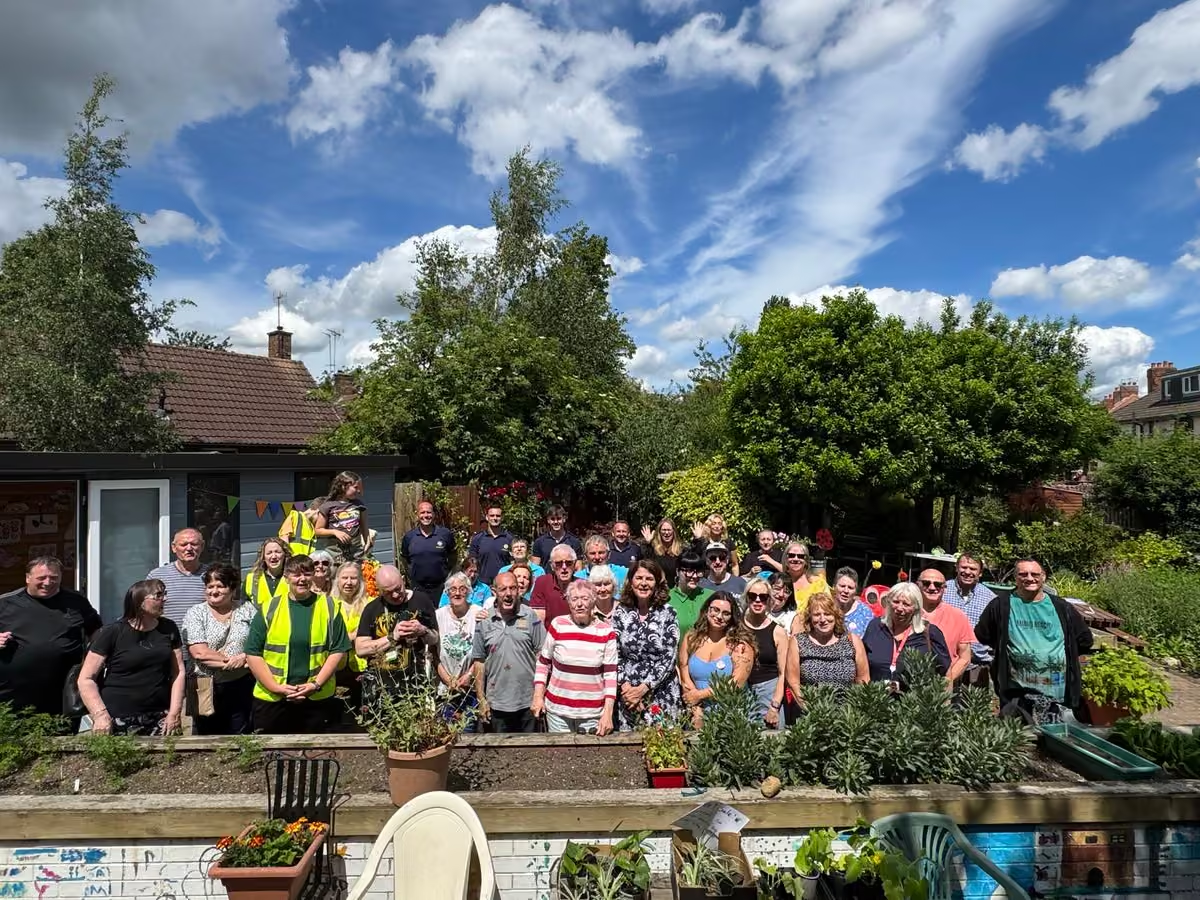

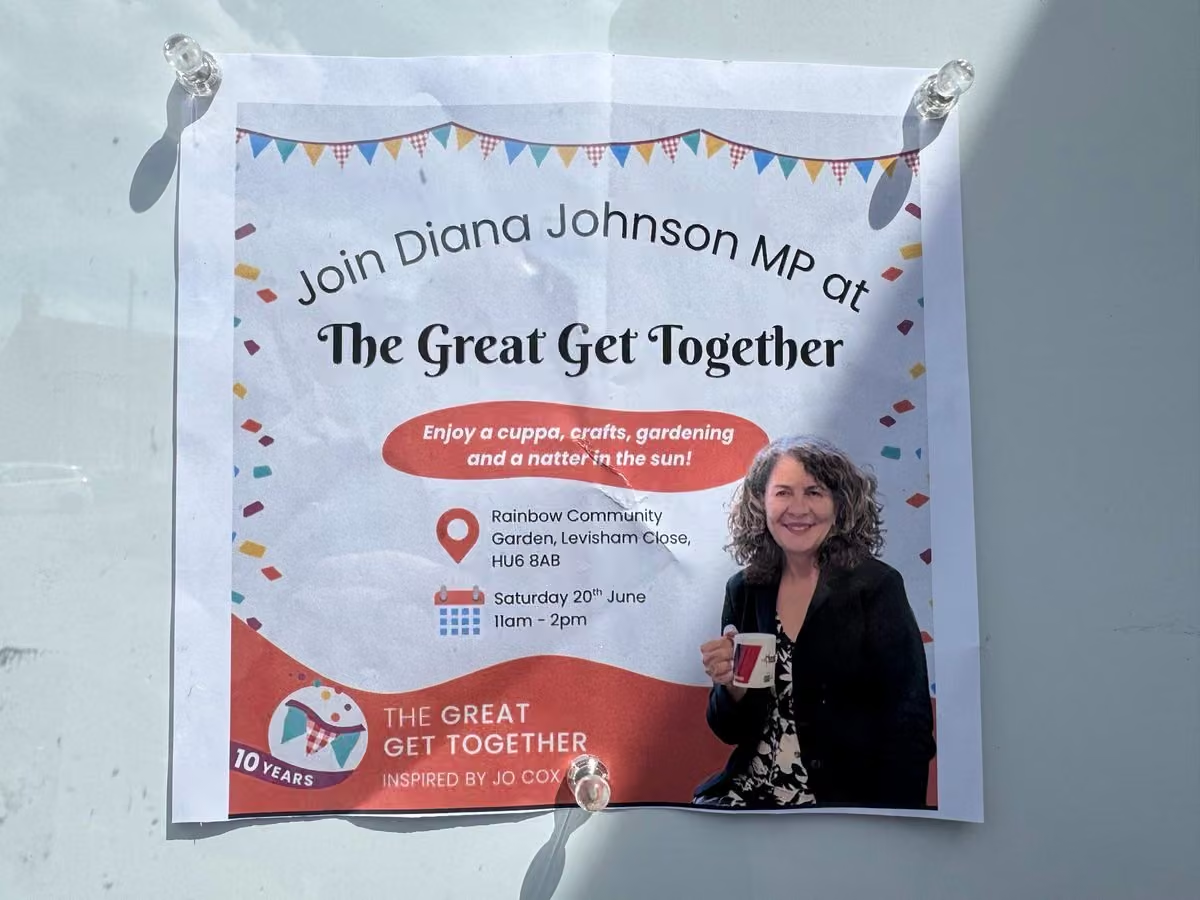
Diana Johnson DBE MP 🇬🇧🇺🇦🌈 reposted
Department for Work and Pensions
@DWPgovuk
Why are far more young people in education, employment, or training in the Netherlands compared with Britain and most other countries?
Work and Pensions Secretary Pat McFadden visited to find out
If you are aged 16 to 24 and looking for support, visit jobhelp.campaign.gov.uk/support-for-all-young-people/
Diana Johnson DBE MP 🇬🇧🇺🇦🌈
@DianaJohnsonMP
Congratulations to Hull Trains, serving East Yorkshire for 26 years. Keep up the good work! @Heidi_Labour
 Hull Trains
@Hull_Trains
We're delighted to have been named the UK's top performing rail operator for customer satisfaction in the latest Rail Customer Experience Survey. Thank you to our brilliant colleagues and customers who made this possible!
To celebrate we've teamed up with our partners @HullCity who are also enjoying a remarkable year following their promotion back to the Premier League. Together we're celebrating a winning moment for our city and region.
Read more at www.hulltrains.co.uk/news/2026/hull-trains-in-premier-pos…


 Diana Johnson DBE MP 🇬🇧🇺🇦🌈
@DianaJohnsonMP
Congratulations to @andy4makerfield on that victory. Looking forward to Andy rejoining us as part of Labour’s team at Westminster.
 Diana Johnson DBE MP 🇬🇧🇺🇦🌈
@DianaJohnsonMP
On my way up to Hull yesterday, I was pleased to have a session campaigning for @andy4makerfield in Makerfield. @AndyBurnhamGM


Diana Johnson DBE MP 🇬🇧🇺🇦🌈 reposted
Andrew Western MP
@AndrewHWestern
Checking out after a great day in Makerfield for @AndyBurnhamGM - absolutely great to see so many activists, party staff and colleagues from across the country out on the #labourdoorstep today.

Diana Johnson DBE MP 🇬🇧🇺🇦🌈 reposted
Andy Burnham
@andyburnham
My final campaign update.
It’s going to be close so please get out and vote hope today! 🙏🏻
Diana Johnson DBE MP 🇬🇧🇺🇦🌈 reposted
 Scottish Labour
@ScottishLabour
Good luck to our candidates Nurul Hoque Ali and Heather Doran in today’s by-elections!
To all our members and supporters: one last push. Get out, get involved and help us get the vote out! 🎉🗳️
Diana Johnson DBE MP 🇬🇧🇺🇦🌈 reposted
 The Jo Cox Foundation
@JoCoxFoundation
"We also remember our beloved colleague Jo Cox and honour her memory in working to bring our communities together."
At yesterday's PMQs, MPs paid tribute to Jo Cox and wore white roses in her memory.
🔗www.jocoxfoundation.org/10years/
Photos: House of Commons


Diana Johnson DBE MP 🇬🇧🇺🇦🌈 reposted
 Jess Asato MP
@Jess4Lowestoft
Big game for England tonight. But as well as looking at xG for predicted goals we need to think about tonight's xV: the ‘Expected Violence’ against women.
During tournaments like the World Cup, stats show that domestic abuse can rise 26% when England win, 38% when they lose.
👇
 Diana Johnson DBE MP 🇬🇧🇺🇦🌈
@DianaJohnsonMP
I was pleased to join the @great_together in Parliament today with colleagues across the political parties. @JoCoxFoundation @kimleadbeater
 Diana Johnson DBE MP 🇬🇧🇺🇦🌈
@DianaJohnsonMP
Today marks ten years since that terrible day when Jo Cox was murdered while serving her constituents. Jo's memory continues to be a blessing and an inspiration.
The Jo Cox Foundation
@JoCoxFoundation
Today marks ten years since Jo was killed.
We remember Jo as a mother, sister, daughter, wife, friend, campaigner and public servant. We remember her courage, her compassion, and her belief that we have more in common than that which divides us.
1/2

Diana Johnson DBE MP 🇬🇧🇺🇦🌈 reposted
Department for Work and Pensions
@DWPgovuk
“Most employers believe people with a learning disability can do the job, but nearly half of them don’t employ anyone with a learning disability. That has to change.”
We're committed to breaking down barriers to work and urge employers to do the same
#learningdisabilityweek
Diana Johnson DBE MP 🇬🇧🇺🇦🌈
@DianaJohnsonMP

Diana Johnson DBE MP 🇬🇧🇺🇦🌈 reposted
Department for Work and Pensions
@DWPgovuk
One year. Every part of England and Wales reached.
Last week Dame Diana Johnson visited West London Alliance to mark Connect to Work's first anniversary.
Support built around you. Not the system.
To find out more, visit: www.gov.uk/government/publications/connect-to-work
Diana Johnson DBE MP 🇬🇧🇺🇦🌈 reposted
 TUC Press
@TUCnews
Reform’s plan for women at work is a smokescreen for slashing women’s rights and making life harder for families.
The party can never be trusted on women’s rights.
www.theguardian.com/politics/2026/jun/16/farages-plan-for…
Diana Johnson DBE MP 🇬🇧🇺🇦🌈 reposted
Pat McFadden
@patmcfaddenmp
I remember Jo Cox as a new MP. She had the office next to mine in Portcullis House. She'd pop her head round to the door to say hello or talk about what was happening. Hard to believe she is 10 years gone. But she will never be forgotten.
The Jo Cox Foundation
@JoCoxFoundation
Today marks ten years since Jo was killed.
We remember Jo as a mother, sister, daughter, wife, friend, campaigner and public servant. We remember her courage, her compassion, and her belief that we have more in common than that which divides us.
1/2
Diana Johnson DBE MP 🇬🇧🇺🇦🌈 reposted
 The Mirror
@DailyMirror
Murdered MPs' families unite in call for return to decency - 'we need to talk' www.mirror.co.uk/news/politics/jo-cox-david-amess-murder-…
 Diana Johnson DBE MP 🇬🇧🇺🇦🌈
@DianaJohnsonMP
Today marks ten years since that terrible day when Jo Cox was murdered while serving her constituents. Jo's memory continues to be a blessing and an inspiration.
The Jo Cox Foundation
@JoCoxFoundation
Today marks ten years since Jo was killed.
We remember Jo as a mother, sister, daughter, wife, friend, campaigner and public servant. We remember her courage, her compassion, and her belief that we have more in common than that which divides us.
1/2
Diana Johnson DBE MP 🇬🇧🇺🇦🌈 reposted
Pat McFadden
@patmcfaddenmp
180 more youth hubs announced today to support young people into work. Hubs like this part of successful Dutch approach
You can read more about my visit to the Netherlands and how the UK approach is changing below 👇 inews.co.uk/news/european-country-almost-no-youth-unemplo…
Diana Johnson DBE MP 🇬🇧🇺🇦🌈
@DianaJohnsonMP
Why no bold action in the 14 years you were in charge?
 Helen Whately MP
@Helen_Whately
1 in 4 people now report as disabled. But we can't afford to sign off 25% off the population.
Bold action is needed. Not piecemeal tweaks. @Conservatives will rip up the current sickness benefits system and start again.
This morning I'll kick off our review at @restate_thinks

Diana Johnson DBE MP 🇬🇧🇺🇦🌈 reposted
 Ian Murray MP
@IanMurrayMP
Not flash, just Gordon
 0007meYES 🐶
@ITSONLYME7000
When the Former PRIME MINISTER Gordon brown is also in the queue as well hahaha #fifaworldcup #haiti #scotlandwin #fifaworldcup2016
Diana Johnson DBE MP 🇬🇧🇺🇦🌈 reposted
 Sky News
@SkyNews
BREAKING: The government's decision to ban Palestine Action as a terror organisation was lawful, the Court of Appeal has ruled.
Live updates: news.sky.com/story/palestine-action-latest-judges-to-rule…
📺 Sky 501, Virgin 602, Freeview 233 and YouTube
Diana Johnson DBE MP 🇬🇧🇺🇦🌈 reposted
 Steve Reed
@SteveReedMP
Today marks nine years since the tragic fire at Grenfell Tower.
The 72 residents who tragically lost their lives will never be forgotten and my thoughts are with the survivors, bereaved families and all those affected.
Diana Johnson DBE MP 🇬🇧🇺🇦🌈 reposted
 Danny Shaw
@DannyShawNews
Description by @libertyhq of what Palestine Action activists did at Elbit Systems as “civil disobedience” is a gross distortion of reality. They caused £1.2m damage, left staff in fear, and one activist attacked a police officer with a sledgehammer, fracturing her spine.
Diana Johnson DBE MP 🇬🇧🇺🇦🌈 reposted
PARLY
@PARLYapp
King’s Birthday Honours: congratulations to Dame @jessicamordenmp Sir @DavidGauke and Sir @GregHands
Diana Johnson DBE MP 🇬🇧🇺🇦🌈
@DianaJohnsonMP
Are you @ZacPolanski really saying that attacking a police officer with a sledgehammer and fracturing their spine is not gut wrenching and deserving of punishment?
 Zack Polanski
@ZackPolanski
Gut wrenching to see four young people jailed for direct action against an arms supplier to Israel.
Years in prison for protesting to save lives in Gaza, with 'terrorism' used despite no jury convicting them of it.
A truly dangerous attack on the right to protest.
Diana Johnson DBE MP 🇬🇧🇺🇦🌈 reposted
 #WOMENSART
@womensart1
Iconic feminist graffitti (UK), 1979, photographed by Jill Posener, British photographer and activist #womensart #photographerweek 📷

Diana Johnson DBE MP 🇬🇧🇺🇦🌈 reposted
Chris Bryant
@RhonddaBryant
And she’s magnificent. Never ever mess with Angela. Eagle Five Eyes
 Tim (totally unremarkable and officially stubborn)
@forwardnotback
Angela Eagle as Security Minister brings a huge amount of front bench experience to the role
First front bench role in 1997
Diana Johnson DBE MP 🇬🇧🇺🇦🌈 reposted
 Stephen Morgan MP
@StephenMorganMP
Delighted to be appointed Minister of State for Food Security and Rural Affairs. Being asked by the Prime Minister to serve our country in this role is an immense privilege.
Alongside the Environment Secretary and the @DEFRAgovuk team, my focus will be clear: driving a green economy, protecting our natural environment and ensuring our rural and coastal communities truly thrive.
I look forward to working with the sector to help farms become more profitable and sustainable and backing our world-leading food, farming, and fishing industries.
Let’s get to work.

Diana Johnson DBE MP 🇬🇧🇺🇦🌈 reposted
Tracy Brabin, Mayor of West Yorkshire
@MayorOfWY
David Hockney was quite simply one of Yorkshire's finest.
A Bradford boy who changed the art world forever.
But words alone don't do David justice.
His work, those pioneering pieces that burst onto the scene with vivid colour, changed the trajectory of modern art, and will continue to inspire generations to come.
My thoughts are with his family, friends, and loved ones.

Diana Johnson DBE MP 🇬🇧🇺🇦🌈 reposted
 James Mitchinson
@JayMitchinson
‘Sometimes in life bad things happen, but good can still come from those bad things.’
MP @kimleadbeater showing others precisely how to respond to hatred.
Even in pouring rain, I’m grateful to have been able to spend time immersed in joy, friendship and togetherness. ♥️

Diana Johnson DBE MP 🇬🇧🇺🇦🌈 reposted
Dan Jarvis MP
@DanJarvisMBE
The defence of our nation is the first duty of government.
Our Armed Forces carry out that duty every day with professionalism, courage, and extraordinary skill.
It is a huge honour and a privilege to serve alongside them again.
Diana Johnson DBE MP 🇬🇧🇺🇦🌈 reposted
James Mitchinson
@JayMitchinson
This is a serious moment. Dan is a serious man. A courageous soldier; a compassionate human being.
A more fitting appointment I’d struggle to envisage.
 UK Prime Minister
@10DowningStreet
Dan Jarvis MBE MP @DanJarvisMBE has been appointed as Secretary of State for Defence @DefenceHQ.

Diana Johnson DBE MP 🇬🇧🇺🇦🌈 reposted
Politics UK
@PolitlcsUK
🚨 BREAKING: Keir Starmer has appointed Dan Jarvis as the new Defence Secretary

Diana Johnson DBE MP 🇬🇧🇺🇦🌈 reposted
 West of England Mayoral Combined Authority
@WestofEnglandCA
A month into her second year as Mayor, Helen Godwin has been thinking a lot about what comes next for the West of England.
Better buses. New railway stations. Mass transit. More affordable homes with the schools, health centres and transport links people need. And crucially, making sure every young person can see a future for themselves here.
Diana Johnson DBE MP 🇬🇧🇺🇦🌈 reposted
 Howard Dawber
@howarddawber
It was great to join @DWP @DianaJohnsonMP @WLA_tweets and @ShawTrust today to celebrate a year of Connect to Work, now @MayorofLondon takes on the responsibility
 Department for Work and Pensions
@DWPgovuk
One year on and Connect to Work is delivering for people like Lee
Thousands of disabled people and those with health conditions or complex barriers to employment are now closer to working, earning and building better lives - and we’re on track to support 300,000 more by 2030
Diana Johnson DBE MP 🇬🇧🇺🇦🌈 reposted
Department for Work and Pensions
@DWPgovuk
The Minister for Transformation today attended the International Labour Conference in Geneva
His speech set out how the UK is delivering the biggest upgrade to workers' rights in a generation, backing young people into work, and shaping the global debate on AI #ilc114

Diana Johnson DBE MP 🇬🇧🇺🇦🌈 reposted
 Mark Russell
@markrusselluk
Excellent meeting with @DWPgovuk Minister @DianaJohnsonMP
Good to bring @childrensociety thanks for the progress made to reduce child poverty but also good to press for a faster pace in implementing the strategy.
So grateful for the Minister’s passion to make a difference

Diana Johnson DBE MP 🇬🇧🇺🇦🌈 reposted
 Liz Kendall
@leicesterliz
Those who use social media to incite violence and disorder are breaking the law.
Next week we will lay in Parliament an update to the Online Safety Act requiring services to take quicker action to remove illegal content circulating during times of crisis.
Diana Johnson DBE MP 🇬🇧🇺🇦🌈 reposted
 Dr Claire Hubbard-Hall | The Spy Historian
@thespyhistorian
#hersecretservice #herstory
Daphne Park, Baroness Park of Monmouth (1921-2010), was the FIRST female MI6 officer appointed Controller Western Hemisphere in 1975, the highest post ever occupied by a woman.
Her remarkable career spanned over thirty years; she spent time in #hanoi during the #vietnam War, smuggled men out of the Congo in the boot of her car, and ran agents in #moscow.
During one interview, the formidable former spy commented:
"Licensed to kill? My foot. Brains are far more effective than guns - particularly for a woman. When an intruder tried to break into my house in the Congo, I flung open the window and said, 'I'm a witch, and if you stay a minute longer, your fingers will drop off.' He soon ran away."
Follow me @thespyhistorian for more stories about women in secret intelligence🕵️♀️
#spyhistory #womenshistory #mi6 #sis #history #secretintelligenceservice #war #secretintelligence

Diana Johnson DBE MP 🇬🇧🇺🇦🌈 reposted
 Fotos de Fatos
@FotosDeFatos
“Uma estudante perguntou uma vez à antropóloga Margaret Mead qual considerava o primeiro sinal de civilização em uma cultura. A estudante esperava que a antropóloga falasse de anzóis, bacias de barro ou pedras para amolar, mas não. Mead disse que o primeiro sinal de civilização numa cultura antiga é a prova de uma pessoa com um fêmur quebrado e curado.
Mead explicou que no resto do reino animal, se você quebrar a perna, você morre. Você não pode fugir do perigo, ir para o rio beber água ou caçar para se alimentar. Você se torna carne fresca para predadores.
Nenhum animal sobrevive a uma perna quebrada o tempo suficiente para que o osso cure. Um fêmur quebrado que se curou é a prova de que alguém tirou o tempo para ficar com o que caiu, curou a lesão, colocou a pessoa em segurança e cuidou dele até que ele se recuperasse.
′′Ajudar alguém a passar pela dificuldade é o ponto de partida da civilização ", explicou Mead. “A civilização é uma ajuda comunitária."

Diana Johnson DBE MP 🇬🇧🇺🇦🌈 reposted
#WOMENSART
@womensart1
Early women pioneers of climbing such as Lucy Walker, the first woman to summit the notorious Matterhorn mountain in 1871 all wore skirts on their climbs..... #womensart

Diana Johnson DBE MP 🇬🇧🇺🇦🌈 reposted
Andrew Western MP
@AndrewHWestern
This will be a game changer for job seekers who will be able to search for jobs, build a cv and receive information about different roles and opportunities in their area tailored to their specific interests and experience.
 Mirror Politics
@MirrorPolitics
Keir Starmer to unveil 'Jobcentre in your pocket' AI tools in major tech speech
www.mirror.co.uk/news/politics/keir-starmer-jobcentre-dwp…
Diana Johnson DBE MP 🇬🇧🇺🇦🌈 reposted
Lily Craven
@TheAttagirls
Woman of the Day mathematician Charlotte Angas Scott, born OTD in 1858 in Lincoln, the first woman in Britain to achieve a doctorate in mathematics and the one whose success in the Cambridge Mathematical Tripos caused the University to relent…a little.
Her father and grandfather were Congregational Church ministers, one of the very few churches to support equality for women. When her father became headmaster of an independent school, he provided a tutor for his seven year old daughter.
Charlotte thrived and won a scholarship in 1876 to Girton College. Accommodation was basic.
“When retiring for study after an extremely simple 'tea' in the Common Room, they would pick up three things en route to their rooms…two candles, a bucket of coals, and a chamber pot.”
The standard of education however was first class. Emily Davies, founder of Girton, ignored Cambridge’s refusal to recognise women candidates for the famously demanding Mathematical Tripos exams and trained Girton students from the beginning.
In 1880, Charlotte was given special permission to sit the Tripos. She came eighth but was not accorded the title of Eighth Wrangler. Of course she wasn’t. Mastery of the Tripos exams accorded a bachelor's degree with honours, but Cambridge refused to award women degrees. Eighth Wrangler went to the man who came ninth. Charlotte was barred from the graduation ceremony and her name was cancelled from the list.
Male students at Cambridge were aware of the injustice and made their point. “The man read out the names and when he came to 'eighth', before he could say the name, all the undergraduates called out 'Scott of Girton', and cheered tremendously, shouting her name over and over again with tremendous cheers and raising of hats.”
The women of Girton went one better. One of Charlotte’s contemporaries wrote: “At dinner we clapped and cheered her…Then we told her there would be College Songs in Hall at 9. She was led in by Miss Welsh up an avenue of students to the top of the hall, while 'See the conquering hero comes' was played on the piano and sung by us all. At the top Miss Herschel was standing on a sort of dais, and when we had finished singing she recited an ode to Miss Scott, composed by Miss Welsh for the occasion, and then crowned her with laurels, while we clapped and applauded with all our might.”
Within three months, a petition to Cambridge to allow women to sit exams as a right and to graduate gathered over 8,000 signatures.
You have no idea how radical this was. Cambridge was so repressive that its Proctors threw unaccompanied women (such a corrupting influence on its highly suggestible male students!) into the Spinning House, a workhouse for prostitutes and suspected prostitutes. Even accompanied women were not spared. In 1891, 17-year-old Daisy Hopkins was arrested for the crime of "walking with a member of the university". She sued, but the trial ripped her reputation to shreds and prompted public outrage. In the end, Parliament had to intervene and remove the Proctors’ power of arrest in such instances. But I digress.
The University relented a smidgen. The following year, in 1881, women were allowed to sit the Tripos but placed on a separate list — well, we can’t have them showing up the men, you know — and instead of a degree, they were awarded a Certificate of Proficiency, which makes it sound as though they’d passed their basic road safety and cycling test.
Undeterred, Charlotte was appointed by Girton in 1880 as a lecturer in mathematics and gave lectures at Newnham College from 1880 to 1883. As if that didn’t keep her busy enough, she took an external University of London degree (it didn’t discriminate against women) and was awarded BSc with First Class honours in Mathematics in 1882. She received her doctorate in mathematics in 1885, the first woman to do so.
When Bryn Mawr College opened in Pennsylvania in 1885, the first higher education institution in the US to offer graduate training for women, Charlotte was the natural choice as the first head of its mathematics department. She expected rigour, once rebuking the Principal of the College:
“I am most disturbed and disappointed at present to find you taking the position that intellectual pursuits must be "watered down" to make them suitable for women, and that a lower standard must be adopted at a woman's college than in a man's. I do not expect any of the other members of the faculty to feel this way about it; they, like nearly all men that I have known, doubtless take an attitude of toleration, half amused and half kindly, on the whole question; for even where men are willing to help in women's education, it is with an inward reserve of condescension.”
Does that strike a chord?
Charlotte rolled up her sleeves, urged other American colleges to set up joint exam boards for secondary school students, acted as chief mathematics examiner for the new College Board, set up the Bryn Mawr College Mathematics Journal Club to mentor women students and supervised seven Ph.D students. Oh, and published textbooks, edited the American Journal of Mathematics, authored over thirty papers published in journals all around the world, and was a founder member of the American Mathematical Society and its first woman vice-president.
Charlotte returned to England soon after she retired. She died in 1931, 17 years before Cambridge finally admitted women as full students, but she did everything in her power to open doors for women in mathematics in the UK and the USA.

Diana Johnson DBE MP 🇬🇧🇺🇦🌈 reposted
Department for Work and Pensions
@DWPgovuk
Personal Independence Payment (PIP) needs to be fair and fit for the future, which is why disabled people's voices need to be at the heart of the Timms Review.
The Review's steering group has launched the Workshop in a Box to help organisations look at key issues with PIP
Diana Johnson DBE MP 🇬🇧🇺🇦🌈 reposted
Pat McFadden
@patmcfaddenmp
Great initiative from M&S. More opportunity for young people and the chance of a good job and career. www.bbc.co.uk/news/articles/cr7xr3dvxp9o?app-referrer=dee…
Diana Johnson DBE MP 🇬🇧🇺🇦🌈 reposted
 Aasmah Mir
@AasmahMir
Can I ask that you watch this? Will take only two minutes. Thank you.
Sky News
@SkyNews
Sky's @cathynewman interviewed Reform's Zia Yusuf about the murder of Henry Nowak, then faced a deluge of online abuse, including misogyny and death threats.
She looks at a small sample of the posts and explains why journalists should "call it out" ⬇️
Diana Johnson DBE MP 🇬🇧🇺🇦🌈 reposted
 Kaya Comer-Schwartz
@KayaJunction

Diana Johnson DBE MP 🇬🇧🇺🇦🌈 reposted
Pat McFadden
@patmcfaddenmp
On this day in 1944...
 Military History Now
@MilHistNow
RIGHT NOW in 1944, this is the scene in Normandy. The liberation of France is underway #dday
Diana Johnson DBE MP 🇬🇧🇺🇦🌈 reposted
Lord Hanson of Flint Labour Peer & Minister
@RTHondavehanson
In a corner of parliament at the far end of the Royal gallery a box lies permantly open containing sand from all five Normandy beaches -a reminder to both houses of the sacrifice & the cause of freedom fought for by brave service people on DDay June 6 th 1944. #dday
 Diana Johnson DBE MP 🇬🇧🇺🇦🌈
@DianaJohnsonMP
On my way up to Hull yesterday, I was pleased to have a session campaigning for @andy4makerfield in Makerfield. @AndyBurnhamGM
Diana Johnson DBE MP 🇬🇧🇺🇦🌈 reposted
 David Smith
@david3012
We thought hard about doing this story with @yorkpress but we wanted to show that being gay doesn’t have to hold you back. This isn’t true across the world. There are countries and cultures that discriminate, imprison and murder gay men. Thats why #pridemonth is still important.

Diana Johnson DBE MP 🇬🇧🇺🇦🌈 reposted
Yvette Cooper
@YvetteCooperMP
The country owes Sir Alex Younger an enormous debt of gratitude for his lifetime of dedicated service. His outstanding leadership, steadiness and integrity kept us all safe and I would like to extend our deepest sympathies to his family and his friends at this incredibly difficult time.
Diana Johnson DBE MP 🇬🇧🇺🇦🌈 reposted
Keir Starmer
@Keir_Starmer
Utterly tragic.
My thoughts are with the families, friends and loved ones of the three members of the Royal Navy who sadly lost their lives this morning.
Thank you to the emergency services responding to this horrific incident.
 Ministry of Defence 🇬🇧
@DefenceHQ
It is with deep sadness that we can confirm three members of the Royal Navy have died during a helicopter training exercise on Wednesday 3 June near Sourton, Devon.
 Diana Johnson DBE MP 🇬🇧🇺🇦🌈
@DianaJohnsonMP
Hull MPs have launched a survey on the challenges constituents have been facing with the new tolls payment system for the Humber Bridge. The results will be presented to the Humber Bridge Board. See the survey at shorturl.at/C342I.

Diana Johnson DBE MP 🇬🇧🇺🇦🌈 reposted
Department for Work and Pensions
@DWPgovuk
“Once you’ve done the apprenticeship, you already know how to work” – Campbell
To mark a landmark report by Skills England, Minister for Skills Baroness Smith met apprentices at XL Motors who are gaining the skills they need to get into well-paid jobs www.gov.uk/government/news/landmark-report-sets-out-actio…
Diana Johnson DBE MP 🇬🇧🇺🇦🌈 reposted
 House of Commons Speaker
@CommonsSpeaker
I am saddened to hear of the passing of Lord Haselhurst, a distinguished parliamentarian who served for decades, including as my predecessor as Chairman of Ways and Means and Chair of the Commonwealth Parliamentary Association. My thoughts are with his family and friends.
 Diana Johnson DBE MP 🇬🇧🇺🇦🌈
@DianaJohnsonMP
With the Crime and Policing Act recently becoming law, abortion has now been decriminalised for women in England and Wales. It was a pleasure this afternoon to meet many of those who campaigned for so many years to modernise our Victorian abortion laws.


 Diana Johnson DBE MP 🇬🇧🇺🇦🌈
@DianaJohnsonMP
Congratulations to @UKLabour's sister party in Malta @PL_Malta on securing a fourth term in the their General Election at the weekend. Voter turnout was a healthy 87.4% and it was refreshing to see so many young people engaged in their democratic process.


Diana Johnson DBE MP 🇬🇧🇺🇦🌈 reposted
Department for Work and Pensions
@DWPgovuk
Work and Pensions Secretary Pat McFadden responds to the Young People and Work interim report published by Alan Milburn today
We want young people, whatever their background, to fulfil their potential – and our Youth Guarantee is a part of what we are doing to make that happen
Diana Johnson DBE MP 🇬🇧🇺🇦🌈 reposted
Pat McFadden
@patmcfaddenmp
Too many young Neets have never had a job - and we have to change that.
My first job, the decline of physical retail over the past decade, and how work experience can help our young people get that vital first chance. www.telegraph.co.uk/politics/2026/05/26/mcfadden-death-pa…
Diana Johnson DBE MP 🇬🇧🇺🇦🌈 reposted
Pat McFadden
@patmcfaddenmp
A lot of young unemployed people have never had the chance of work.
We need to help them break out of the no experience no job bind.
Work experience can help do that and that's why we want more young people to have that chance. www.theguardian.com/society/2026/may/24/labour-to-expand-…
Diana Johnson DBE MP 🇬🇧🇺🇦🌈
@DianaJohnsonMP
Today, on Revolutionaries Remembrance Day, we remember the incredible work of Hull's Headscarf Revolutionaries: Lillian Bilocca, Yvonne Blenkinsop, Mary Denness and Christine Jensen MBE who fought for
necessary safety improvements for the fishing industry.

Diana Johnson DBE MP 🇬🇧🇺🇦🌈 reposted
 Premier League
@premierleague
Welcome back, @HullCity 🐯
Congratulations on promotion to the Premier League!
 Diana Johnson DBE MP 🇬🇧🇺🇦🌈
@DianaJohnsonMP
Congratulations to @HullCity. Back in the @premierleague again - such great news for our City!
Diana Johnson DBE MP 🇬🇧🇺🇦🌈 reposted
Department for Work and Pensions
@DWPgovuk
The fit note system isn't working - the results of our Call for Evidence confirm it
That's why we're piloting a new approach in four areas in England
If you need time off work, you'll get it
If you need more support, you'll get that too
Find out more www.gov.uk/government/news/broken-fit-note-system-to-be-o…

Diana Johnson DBE MP 🇬🇧🇺🇦🌈 reposted
Pat McFadden
@patmcfaddenmp
Listen to Alison's story.
She didn't want to just be signed off and written off. She wanted real help to recover.
With fit note reform we are working with GPs, physios, occupational therapists, social prescribers and others to make that happen.
Department for Work and Pensions
@DWPgovuk
Fit notes are not working so doctors, patients and employers are helping us trial a new approach
To support this we’re expanding WorkWell, to give 250,000 more people with health conditions tailored support to return to or stay in work www.gov.uk/government/news/broken-fit-note-system-to-be-o…
Diana Johnson DBE MP 🇬🇧🇺🇦🌈 reposted
Pat McFadden
@patmcfaddenmp
Falling net migration is all the more reason to invest in training and opportunity for young people - that is exactly what Labour is doing with our Youth Guarantee:
*A Youth Jobs Grant for employers;
*More youth apprenticeships;
*Jobs guarantee for long term unemployed.🌹
 Shabana Mahmood MP
@ShabanaMahmood
Net migration down 82%.
Net migration is now at 171,000, down from a high of 944,000 under the Conservatives.
This Government is restoring order and control to our borders.

Diana Johnson DBE MP 🇬🇧🇺🇦🌈 reposted
Dan Tomlinson MP
@dantomlinsonmp
We're slashing VAT this summer on kids meals and family leisure activities. More detail here:
www.gov.uk/government/news/great-british-summer-savings-2…
Diana Johnson DBE MP 🇬🇧🇺🇦🌈 reposted
Pat McFadden
@patmcfaddenmp
We have worked closely with GPs to see how we can reform the fit note system.
The idea is to get real help to people to help with underlying medical conditions.
And we want to test all this properly to get it right.
www.bbc.co.uk/news/articles/cy82pxlmmyno?app-referrer=dee…
Diana Johnson DBE MP 🇬🇧🇺🇦🌈 reposted
UK Prime Minister
@10DowningStreet
NEW: UK net migration has fallen 82% in the last three years.
We are delivering a secure Britain.

Diana Johnson DBE MP 🇬🇧🇺🇦🌈 reposted
Department for Work and Pensions
@DWPgovuk
Today’s disability employment statistics show the welfare system is denying sick and disabled people equal opportunities
Minister for Social Security and Disability Sir Stephen Timms visited “Dans Le Noir ?” to see how those with health conditions can live more independent lives
Diana Johnson DBE MP 🇬🇧🇺🇦🌈 reposted
Department for Work and Pensions
@DWPgovuk
We're taking action to fix the issues with our Access to Work scheme that helps disabled people to get and stay in work
Nearly 500 new staff are being recruited to clear the application backlog, and urgent cases are being fast-tracked
Find out more
www.gov.uk/government/news/huge-recruitment-boost-to-tack…


Diana Johnson DBE MP 🇬🇧🇺🇦🌈 reposted
Department for Work and Pensions
@DWPgovuk
“Behind every application is a person whose life could be changed forever” - Work and Pensions Secretary Pat McFadden
Nearly 500 new staff are being recruited to clear the Access to Work backlog by September 2027
Find out more: www.gov.uk/government/news/huge-recruitment-boost-to-tack…
Diana Johnson DBE MP 🇬🇧🇺🇦🌈 reposted
Pat McFadden
@patmcfaddenmp
As I said last month, most of the move to UC is the same people moving from legacy benefits - a transfer begun and decided under the Conservatives. They ought to know this given they planned it.
 Kevin Schofield
@KevinASchofield
Exclusive: The UK Statistics Authority has rapped Kemi Badenoch over claims she made at PMQs last month about the number of people claiming Universal Credit.
Asked to comment, a spokesman for Badenoch replied with a “yawning” emoji.
www.huffingtonpost.co.uk/entry/exclusive-statistics-watch…
Diana Johnson DBE MP 🇬🇧🇺🇦🌈 reposted
Shabana Mahmood MP
@ShabanaMahmood
Criminal gangs have exploited our high streets to launder their dirty money and undercut honest businesses.
We're hitting back with a nationwide crackdown to shut these fronts down, seize dirty cash, drive organised crime off our high streets and put bosses behind bars.

Diana Johnson DBE MP 🇬🇧🇺🇦🌈 reposted
Keir Starmer
@Keir_Starmer
Today I paid tribute to the infected blood community for their extraordinary courage in their long fight for truth and justice.
Thank you to the Infected Blood Memorial Committee for the care, compassion and dedication behind this service at St Paul’s Cathedral.
As a nation, we must ensure the lessons of this scandal are never forgotten.
 Diana Johnson DBE MP 🇬🇧🇺🇦🌈
@DianaJohnsonMP
Today I was at @StPaulsLondon for the very moving Infected Blood Service of Recognition, Remembrance and Reflection for those infected and affected in the scandal. It's part of ongoing work to achieve justice for the infected blood community. See www.youtube.com/live/sCtjsPgUxHk.


Diana Johnson DBE MP 🇬🇧🇺🇦🌈 reposted
 Sonia Kumar MP for Dudley 🌹
@SoniaKumarMP
It was good to meet with @patmcfaddenmp to discuss the challenges facing young people in Dudley. We discussed Trailblazer opportunities and the role Allied Health Professionals can play in reducing NEET levels through early support, rehabilitation and mental health services. 🌹

Diana Johnson DBE MP 🇬🇧🇺🇦🌈 reposted
Pat McFadden
@patmcfaddenmp
You've heard of Net Zero. Here is a school that has achieved NEET Zero. And here's how they did it.
Department for Work and Pensions
@DWPgovuk
"This school has managed to achieve 'NEET zero'"
David Nieper Academy has achieved zero NEETs at aged 18 – meaning all pupils at that age have entered employment, further education or training
Work and Pensions Secretary Pat McFadden visited the academy to mark its success
Diana Johnson DBE MP 🇬🇧🇺🇦🌈 reposted
 Tris Osborne MP
@TrisOsborneMP
Worth a comparison:
🌹 First seven Q’s under Labour +2.3% GDP growth.
🌳 Prior 8 quarters under the Tories, +1.3% GDP growth

Diana Johnson DBE MP 🇬🇧🇺🇦🌈 reposted
 The Independent
@Independent
King Charles took to the DJ decks with Sir Idris Elba at a Buckingham Palace garden party.
Diana Johnson DBE MP 🇬🇧🇺🇦🌈 reposted
Karin Smyth
@karinsmyth
It was a great pleasure to celebrate International Nurses Day this week with so many great members of the profession.
This government is delivering an extra 2,000 nursing apprenticeships that will give more people the chance to start a rewarding NHS career while they earn.
Diana Johnson DBE MP 🇬🇧🇺🇦🌈 reposted
Department for Work and Pensions
@DWPgovuk
"We will not stand back and allow young people to go from school to a life on benefits" - Work and Pensions Secretary Pat McFadden
Our welfare reforms are delivering
- the £2.5bn Youth Guarantee
- £3.5bn in employment support for sick and disabled people
- the Right to Try work
Diana Johnson DBE MP 🇬🇧🇺🇦🌈 reposted
Torsten Bell
@TorstenBell
Of course, today’s data only includes the start of the Iran conflict. It inevitably has consequences for UK households & our economy as a whole. There is no hiding from that. Understanding that reality is partly why we have refused to support this conflict as other parties did
Diana Johnson DBE MP 🇬🇧🇺🇦🌈 reposted
Torsten Bell
@TorstenBell
The plan means it’s not just NHS waiting lists falling - so is the deficit. And this matters if you care about spending on schools not debt interest. Under the last Conservative government the UK borrowed above the G7 average in every single year. This year? We will borrow less.

Diana Johnson DBE MP 🇬🇧🇺🇦🌈 reposted
Torsten Bell
@TorstenBell
The economic plan put in place by @RachelReevesMP to raise investment and cut the deficit is working.
- start of 2026 was fastest GDP/capita growth in 4yrs
- Q1 GDP growth fastest of 6 G7 nations we have data for
- UK has seen the fastest investment growth in G7 since election
Torsten Bell
@TorstenBell
A very strong start to 2026 -significantly above forecasts. GDP/capita rose 0.6% in first three months of 2026 (@OBR_UK expected gdp/capita to grow by 0.8% in 2026 as a whole)
 Office for National Statistics (ONS)
@ONS
GDP grew 0.6% in Quarter 1 (Jan to Mar) 2026.
Services (+0.8%) construction (+0.4%) and production (+0.2%) all increased.
Read the full article ➡️ www.ons.gov.uk/economy/grossdomesticproductgdp/bulletins/…

Diana Johnson DBE MP 🇬🇧🇺🇦🌈 reposted
Torsten Bell
@TorstenBell
A very strong start to 2026 -significantly above forecasts. GDP/capita rose 0.6% in first three months of 2026 (@OBR_UK expected gdp/capita to grow by 0.8% in 2026 as a whole)
Office for National Statistics (ONS)
@ONS
GDP grew 0.6% in Quarter 1 (Jan to Mar) 2026.
Services (+0.8%) construction (+0.4%) and production (+0.2%) all increased.
Read the full article ➡️ www.ons.gov.uk/economy/grossdomesticproductgdp/bulletins/…
Diana Johnson DBE MP 🇬🇧🇺🇦🌈
@DianaJohnsonMP
It’s a really good event- Enjoy! Hope you get to see a little of Hull too?
 Iain Dale 🏴🇬🇧 ⚒️
@IainDale
Really looking forward to this!
Lord Norton of Louth
@LordNortonLouth
Delighted to report that @IainDale will be the keynote speaker at this year's @UniOfHull @PoliticsatHull politics sixth-form conference, following Sir John Curtice, who spoke to a packed hall last year

Diana Johnson DBE MP 🇬🇧🇺🇦🌈 reposted
Iain Dale 🏴🇬🇧 ⚒️
@IainDale
Really looking forward to this!
Lord Norton of Louth
@LordNortonLouth
Delighted to report that @IainDale will be the keynote speaker at this year's @UniOfHull @PoliticsatHull politics sixth-form conference, following Sir John Curtice, who spoke to a packed hall last year
Diana Johnson DBE MP 🇬🇧🇺🇦🌈 reposted
 Emmaus Hull & East Riding
@Emmaus_Hull
Stephanie, CEO, and Sue, our Community Manager, had the honour of attending Their Majesties The King and Queen’s Garden Party at Buckingham Palace, recognising individuals who make a positive difference in their local communities👏💚
#palacegardenparty #buckinghampalace #emmaus


Diana Johnson DBE MP 🇬🇧🇺🇦🌈 reposted
Angela Eagle DBE
@angelaeagle
Two days before the Kings Speech setting out the Govt’s future legislative programme is not the time for this sort of destabilisation Only our opponents want to see it so let’s have some disciple & support the elected leader
Diana Johnson DBE MP 🇬🇧🇺🇦🌈
@DianaJohnsonMP
Under 2 years ago, Labour was elected with a 174 majority for a 5-year Parliament to restore stability, focus on the cost of living and start a decade of change. Wednesday’s King’s Speech will set out the next stage of that renewal. Last week showed why this should be our focus.
Diana Johnson DBE MP 🇬🇧🇺🇦🌈
@DianaJohnsonMP
On National Fishing Remembrance Day we honour all who lost their lives in the UK fishing industry.
Today is an opportunity to raise awareness of the importance of improving safety standards and working practices in the industry - a campaign which Hull played a pivotal role in.

Diana Johnson DBE MP 🇬🇧🇺🇦🌈 reposted
 Angus Young
@angus_young61
RIP Anita Harrison. Sad to hear of her passing yesterday. One of a kind.
Angus Young
@angus_young61
Best line of the night from Anita Harrison after holding North Carr for Labour: “The Lib Dems said I was running out of stream. Well this old boiler has got loads of steam left.”

Diana Johnson DBE MP 🇬🇧🇺🇦🌈 reposted
 Stephanie Peacock MP
@Steph_Peacock
🌹

Diana Johnson DBE MP 🇬🇧🇺🇦🌈 reposted
Dan Jarvis MP
@DanJarvisMBE
A tough watch — but Barnsley is a town transformed and Steve has led the way.
Fastest growing economy in the region, a groundbreaking town centre regeneration, Health on the High Street, Pathways to Work, and much, much more.
A record to be proud of.🌹
 Ed Thomas
@EdThomasNews
WATCH the moment Labour lose Barnsley Council after 50 years in power.
“It’s hard, I’ve given everything to this town” - live reaction from Sir Stephen Houghton, he’s been leader of Barnsley Council for 30 years.
Diana Johnson DBE MP 🇬🇧🇺🇦🌈 reposted
 Hamish Falconer MP
@HFalconerMP
A huge thank you to all our terrific Lincoln Labour supporters who worked so hard to deliver our brilliant Labour council. We are at our best when we are united.


 Diana Johnson DBE MP 🇬🇧🇺🇦🌈
@DianaJohnsonMP
 Diana Johnson DBE MP 🇬🇧🇺🇦🌈
@DianaJohnsonMP
Voted for excellent Labour candidate Louis Graves in Avenue ward this morning in Hull North.🌹🌹Vote Labour ☀️☀️☀️


Diana Johnson DBE MP 🇬🇧🇺🇦🌈 reposted
Labour Press
@labourpress
Vote Labour tomorrow 👇

Diana Johnson DBE MP 🇬🇧🇺🇦🌈 reposted
The Labour Party
@UKLabour
As you start your day today, think which party is truly on your side and delivering for this country.

Diana Johnson DBE MP 🇬🇧🇺🇦🌈 reposted
Pat McFadden
@patmcfaddenmp
The Green Party can’t stand up to antisemitism and have no plan for our borders or defence.
Nigel Farage takes £millions from a crypto exile in Thailand, and his party is a clear and present danger to the NHS.
We’re getting on with the job.
Keir Starmer
@Keir_Starmer
Nigel Farage and Kemi Badenoch wanted to jump into the Iran war with both feet without thinking through the consequences.
For a party that always does what’s right for Britain, vote Labour this Thursday.
Diana Johnson DBE MP 🇬🇧🇺🇦🌈
@DianaJohnsonMP
On 5th May 2005 I was elected as the first woman to represent Hull in the House of Commons.
It’s been the honour of my life to represent the great City of Hull for the past 21 years.

Diana Johnson DBE MP 🇬🇧🇺🇦🌈 reposted
The Labour Party
@UKLabour
This needs to be called out.
Diana Johnson DBE MP 🇬🇧🇺🇦🌈
@DianaJohnsonMP
Out and about campaigning in Hull North this weekend supporting Labour’s excellent candidates. Lots of support for Labour in Hull. 🌹🌹
Vote Labour on 7 May


Diana Johnson DBE MP 🇬🇧🇺🇦🌈 reposted
 Prof. Frank McDonough
@FXMC1957
3 May 2002. Labour politician Barbara Castle died (aged 91). She was Labour MP for Blackburn from 1945 to 1979. As Labour Transport Minister she introduced permanent speed limits, breathalysers and seat belts. As Employment Minister she introduced the Equal Pay Act 1970.

Diana Johnson DBE MP 🇬🇧🇺🇦🌈 reposted
 Gordon McKee MP
@GordonMcKeeMP
It takes more than two to quango
Diana Johnson DBE MP 🇬🇧🇺🇦🌈 reposted
Department for Work and Pensions
@DWPgovuk
Minister for Employment Dame Diana Johnson represented the UK at the OECD Skills Summit in Istanbul this week
She joined international counterparts to discuss how nations can future-proof their workforces by building skills and unlocking the talent of their people


Diana Johnson DBE MP 🇬🇧🇺🇦🌈 reposted
Department for Work and Pensions
@DWPgovuk
From today, sick and disabled people on benefits have the right to try work without fear of immediate reassessment
Minister for Social Security and Disability Sir Stephen Timms discussed the new regulations with lawyer Henry Nelson-Case, who specialises in workplace wellbeing
Diana Johnson DBE MP 🇬🇧🇺🇦🌈 reposted
 UsdawUnion
@UsdawUnion
Crime and Policing Act: Usdaw welcomes the passing of a landmark protection of shop workers’ law #freedomfromfear #respect4retailworkers www.usdaw.org.uk/latest-news/crime-and-policing-act/
Diana Johnson DBE MP 🇬🇧🇺🇦🌈 reposted
Department of Health and Social Care
@DHSCgovuk
.@CMO_England Professor Sir Chris Whitty explains what the Tobacco and Vapes Act, which became law today, means for future generations.
From 1 January 2027, no one born on or after 1 January 2009 will legally be sold tobacco, creating the UK's first smoke-free generation.
Read more: www.gov.uk/government/news/tobacco-and-vapes-bill-becomes…
Diana Johnson DBE MP 🇬🇧🇺🇦🌈 reposted
 Sadiq Khan
@SadiqKhan
I’m angry, appalled and disgusted at this latest heinous attack on our Jewish community and the fact that Jewish people are having to live in a constant state of fear.
I urge all Londoners to stand with our Jewish communities. Condemning antisemitism is not enough. We need to collectively fight against it, as we have in the past.
I’m working with the police, the Government and community leaders to redouble our efforts to eradicate the scourge of antisemitism wherever it rears its head & protect Jewish friends, colleagues & neighbours.
Diana Johnson DBE MP 🇬🇧🇺🇦🌈 reposted
 World's Amazing Things
@Hana_b30
Mandarin Duck

Diana Johnson DBE MP 🇬🇧🇺🇦🌈 reposted
 Buitengebieden
@buitengebieden
The way he’s walking.. 😅
Diana Johnson DBE MP 🇬🇧🇺🇦🌈 reposted
Chris Bryant
@RhonddaBryant
I’m very sorry to hear that Richard Harries has died. He was a lovely kind intelligent and spiritual man who served as Bishop of Oxford and a member of the House of Lords. Many will know his books or his radio appearances. But I knew him as the man who ordained me.
RIP
 Diana Johnson DBE MP 🇬🇧🇺🇦🌈
@DianaJohnsonMP
I am appalled at the attack in Golders Green today. I stand in solidarity with the Jewish community today and everyday. I also commend the bravery of our emergency services in dealing with terror attacks .
Diana Johnson DBE MP 🇬🇧🇺🇦🌈 reposted
 Seema Malhotra MP
@SeemaMalhotra1
In this session of Parliament, the @UKLabour Government has delivered:
💼The biggest upgrade in workers rights in a generation.
🏠The biggest improvement in renters rights in a generation.
👶 More action to tackle child poverty than any other government.
✅ The Youth Gaurentee.
💷 Raised the National Minimum Wage.
✂️ 📋Cut NHS waiting lists.
👮♂️ More police on the streets.
✂️💡Cut in energy bills.
@Keir_starmer #pmqs
Diana Johnson DBE MP 🇬🇧🇺🇦🌈 reposted
 David Pinto-Duschinsky MP
@DavidPintoD
As soon as I learned of this morning’s despicable antisemitic terrorist attack in Golders Green, I met with the Home Secretary.
We discussed concrete steps to protect our Jewish community and to tackle the root causes of this vile hatred.
We both share an utter determination to defeat antisemitism and ensure that our Jewish community does not have to retreat behind high fences but can live full and proud Jewish lives.

Diana Johnson DBE MP 🇬🇧🇺🇦🌈 reposted
Shabana Mahmood MP
@ShabanaMahmood
An attack on our Jewish community is an attack on us all.
Diana Johnson DBE MP 🇬🇧🇺🇦🌈 reposted
 Alex Davies-Jones MP
@AlexDaviesJones
Today, I'm proud to see the Crime and Policing Act enshrined in law.
We will stamp out abhorrent intimate image abuse, tackle misogynistic harmful pornography and crackdown on spiking.
Thank you to every brave victim who has helped shape these laws. Your voices have been heard.
Diana Johnson DBE MP 🇬🇧🇺🇦🌈 reposted
 John Rentoul
@JohnRentoul
Kemi Badenoch ends the session with a misleading Q about universal credit claimants who are out of work: she said numbers up 1.5m since election, but this includes transfers from older benefits www.gov.uk/government/statistics/dwp-benefits-statistics-…

Diana Johnson DBE MP 🇬🇧🇺🇦🌈 reposted
 Tonia Antoniazzi
@ToniaAntoniazzi
I was on BBC Radio 4's Woman's Hour discussing my year-long effort to remove criminal liability for women who end their own pregnancies.
I appreciated historian Dr. Jessica Cox's insights on the backstreet abortions from the 1800s.
Diana Johnson DBE MP 🇬🇧🇺🇦🌈 reposted
Tonia Antoniazzi
@ToniaAntoniazzi
This is for every woman who has been affected by these Victorian laws. I hope they can now take a breath. Generation after generation of women are now protected from the threat of criminal investigation for ending their own pregnancy & women convicted pardoned.

Diana Johnson DBE MP 🇬🇧🇺🇦🌈 reposted
Tonia Antoniazzi
@ToniaAntoniazzi
Too many individuals to mention, but @GlenysThornton who led this change in the lords, my researcher @LuellaLaville and the formidable @rachaelfrclarke who has been campaigning for this change for a decade. @HannahAlOthman's media coverage of this issue has also been fundamental.
Diana Johnson DBE MP 🇬🇧🇺🇦🌈 reposted
Tonia Antoniazzi
@ToniaAntoniazzi
But I did not do this alone. This was female-powered cross-party team work. With the support and graft of countless women and men.
Diana Johnson DBE MP 🇬🇧🇺🇦🌈 reposted
Tonia Antoniazzi
@ToniaAntoniazzi
It has been the privilege of my life to pick up the baton from my incredible friend @DianaJohnsonMP and lead this change - the biggest change to abortion law in England and Wales in 60 years.
Diana Johnson DBE MP 🇬🇧🇺🇦🌈 reposted
Tonia Antoniazzi
@ToniaAntoniazzi
The Crime and Policing Bill has just gained Royal Assent and is now law. That means that women are now decriminalised from criminal law on abortion 🧵👇
 Diana Johnson DBE MP 🇬🇧🇺🇦🌈
@DianaJohnsonMP
It's also worth noting that thanks to @ToniaAntoniazzi's amendment, the passing of this Bill today modernises our Victorian abortion laws - decriminalising abortion. After years of campaigning, this is the biggest move forward in this area since David Steel's 1967 Abortion Act.
 Diana Johnson DBE MP 🇬🇧🇺🇦🌈
@DianaJohnsonMP
A full year after I was taking it through its Commons Committee Stage, it's great news that Labour's Crime and Policing Bill has completed its passage through Parliament and just became law. It will help fight crime and anti-social behaviour in all the forms we see today.
Diana Johnson DBE MP 🇬🇧🇺🇦🌈 reposted
Pat McFadden
@patmcfaddenmp
Re PMQs, the vast majority of new UC claims since the election are crossovers from legacy benefits - a process created, planned and introduced by the Conservatives.
Diana Johnson DBE MP 🇬🇧🇺🇦🌈 reposted
Torsten Bell
@TorstenBell
Very good news tonight. The Pension Schemes Bill has completed its journey through Parliament. Time to celebrate before the really important work begins - implementing the huge reforms it contains to deliver better pensions for savers
Torsten Bell
@TorstenBell
We’ve got a pensions bill entering its final stages. This is important stuff - one of the big wins of the 20th Century was ordinary workers having a retirement, and we need to keep delivering that in the 21st. What’s the bill doing?
Diana Johnson DBE MP 🇬🇧🇺🇦🌈
@DianaJohnsonMP
Every year across the world, more people are killed at work than they are in wars.
International Workers’ Memorial Day is the day we remember all of those who died because of work, and continue our commitment to make work safer. #iwmd
Diana Johnson DBE MP 🇬🇧🇺🇦🌈 reposted
Department for Work and Pensions
@DWPgovuk
We want to give every disabled person the chance they deserve to build a better life
At Titanic Belfast, Minister for Social Security and Disability Sir Stephen Timms heard how their work with charity Orchardville supports disabled people into meaningful, purposeful careers
Diana Johnson DBE MP 🇬🇧🇺🇦🌈 reposted
 Nature is Amazing ☘️
@AMAZlNGNATURE
I feel like everyone should know about Goldcrests. They weigh just about 1/100th of a pound and look really grumpy all the time.


Diana Johnson DBE MP 🇬🇧🇺🇦🌈 reposted
Yvette Cooper
@YvetteCooperMP
An honour to join Their Majesties for a historic State Visit to mark #america250 - glorious sunshine for the garden party with the King and Queen to celebrate generations of people to people ties.


Diana Johnson DBE MP 🇬🇧🇺🇦🌈 reposted
 HistoryExtra
@HistoryExtra
#onthisday in 1992, Betty Boothroyd became the first female Speaker of the House of Commons, breaking the 700-year-long tradition of solely male speakers.
📸 Getty

Diana Johnson DBE MP 🇬🇧🇺🇦🌈 reposted
 Matthew Pennycook MP
@mtpennycook
An absolute joy to visit Battersea Dogs and Cats Home this morning to celebrate the fact that from next week, private renters will gain a new legal right to request a pet through powers in our transformative Renters’ Rights Act.


Diana Johnson DBE MP 🇬🇧🇺🇦🌈 reposted
David Pinto-Duschinsky MP
@DavidPintoD
Back in January @MattChorley had me on his show to discuss my speech impediment and how it affects my life in politics.
That conversation sparked a question. Why aren't there more MPs with speech impediments? Partly discrimination. Partly because people with stammers are often told politics isn't for them. It's time we fixed that.
Great talking to Matt again about my new campaign to get young people with stammers into public life. Sign up here 👉 shorturl.at/4vOjM
Diana Johnson DBE MP 🇬🇧🇺🇦🌈 reposted
Dan Jarvis MP
@DanJarvisMBE
HMNB Clyde at Faslane is vital for our national security.
I met @RoyalNavy and civilian personnel working around the clock to keep us safe and thanked them for their outstanding service 🇬🇧


Diana Johnson DBE MP 🇬🇧🇺🇦🌈 reposted
 Lucy Rigby KC MP
@LucyRigby
Hundreds of thousands of young people don’t know they have a Child Trust Fund - with over £1.5 billion unclaimed.
Find out if you have a CTF here 👇👇
www.gov.uk/government/news/economic-secretary-on-a-drive-…
 HM Treasury
@hmtreasury
People born between 1 September 2002 and 2 January 2011 could have a child trust fund worth around £2,200 - but don't realise.
Check today👇
www.gov.uk/government/news/economic-secretary-on-a-drive-…
Diana Johnson DBE MP 🇬🇧🇺🇦🌈 reposted
 UK in New Zealand
@UKinNZ
Welcoming UK Minister for the Indo-Pacific, @SeemaMalhotra1 MP, to NZ🇳🇿🇬🇧 Grateful to MFAT for hosting a mihi whakatau (traditional Maori welcome) to mark the visit. An opportunity to reaffirm UK support for NZ and deepen our trusted partnership in a period of global uncertainty.

Diana Johnson DBE MP 🇬🇧🇺🇦🌈 reposted
 Chris Webb MP
@ChrisWebbMP
I’ve issued a statement following the sentencing of the individual arrested at my jobs fair in February.
Abuse and intimidation have no place in our community or our democracy.


Diana Johnson DBE MP 🇬🇧🇺🇦🌈 reposted
Keir Starmer
@Keir_Starmer
St George’s flag stands for unity over hatred and decency over division.
Those are the values I will always fight for.
Some try to hijack our flag to spread hate, I reject their plastic patriotism.
www.mirror.co.uk/news/politics/keir-starmer-shares-st-geo…
Diana Johnson DBE MP 🇬🇧🇺🇦🌈 reposted
 Barack Obama
@BarackObama
The young people in our @ObamaFoundation Leaders program give me hope. One of those leaders, Luisa Neubauer, is working to fight climate change and recently traveled to Antarctica.
This Earth Day, I hope you'll check out her incredible story.
Diana Johnson DBE MP 🇬🇧🇺🇦🌈 reposted
 Art Guide
@ArtGuide_db
Gustav Klimt
Apple Tree, 1912

Diana Johnson DBE MP 🇬🇧🇺🇦🌈 reposted
 Kate Ferguson
@kateferguson4
Walking into Parliament on Wednesdays has become horrific.
Men outside the gates harassing & following you & filming it, all in the name of protest.
That’s on top of the deafening Brexit protests that have been going on for a decade.
It’s toxic & designed to be intimidating.
Diana Johnson DBE MP 🇬🇧🇺🇦🌈 reposted
Sky News
@SkyNews
The Met Police has won a landmark High Court judgement that confirms that their use of live facial recognition technology across London is lawful and complies with the European Convention on Human Rights
Diana Johnson DBE MP 🇬🇧🇺🇦🌈
@DianaJohnsonMP
I enjoyed being out on the doorstep supporting excellent Labour candidates in Waltham Forest and equally sunny Barnet on Sunday.


Diana Johnson DBE MP 🇬🇧🇺🇦🌈 reposted
#WOMENSART
@womensart1
'Maple light" by Erin Hanson, contemporary US painter #womensart #treeartweek

Diana Johnson DBE MP 🇬🇧🇺🇦🌈 reposted
 Francisco Ribeiro
@fraveris
by artist JB Cornish

Diana Johnson DBE MP 🇬🇧🇺🇦🌈 reposted
Tonia Antoniazzi
@ToniaAntoniazzi
So pleased MPs and peers approved this. I'm proud to be part of a Parliament that stood up for what is right for women.
www.theguardian.com/world/2026/apr/17/law-pardon-women-co…
Diana Johnson DBE MP 🇬🇧🇺🇦🌈 reposted
UsdawUnion
@UsdawUnion
This week, young workers from Usdaw took a trip to Parliament to meet with Minister for Employment, @DianaJohnsonMP and civil servants to discuss how to help younger people find and remain in work 💬
They had a tour of Parliament, bumped into Usdaw MP @tracygilbert72, and had a chance to discuss their concerns with @MWheelerMP, Chair of the Usdaw Parliamentary Group 🙌


Diana Johnson DBE MP 🇬🇧🇺🇦🌈 reposted
Gordon McKee MP
@GordonMcKeeMP
I wasn't born yesterday
Diana Johnson DBE MP 🇬🇧🇺🇦🌈 reposted
Karin Smyth
@karinsmyth
Building an NHS around women: women's needs, women's experiences.
That's the game-changer promised by this Labour government.
Diana Johnson DBE MP 🇬🇧🇺🇦🌈
@DianaJohnsonMP
It was a real pleasure to meet young workers from @UsdawUnion in Parliament this week. Thank you for sharing your views about jobs and employment and some of the challenges younger workers face.
UsdawUnion
@UsdawUnion
This week, young workers from Usdaw took a trip to Parliament to meet with Minister for Employment, @DianaJohnsonMP and civil servants to discuss how to help younger people find and remain in work 💬
They had a tour of Parliament, bumped into Usdaw MP @tracygilbert72, and had a chance to discuss their concerns with @MWheelerMP, Chair of the Usdaw Parliamentary Group 🙌
Diana Johnson DBE MP 🇬🇧🇺🇦🌈 reposted
Liz Kendall
@leicesterliz
283 years. That's how long it will take, at the current rate, for women to make up an equal share of the tech workforce. That figure should stop us all in our tracks - and it's exactly why I launched the Women in Tech Taskforce.
Our Call for Evidence is open until 23 April 👇
 Department for Science, Innovation and Technology
@SciTechgovuk
Change is coming and your voice can help shape it.
The Women in Tech Taskforce brought together cross-party Parliamentarians to discuss how we tackle the barriers holding women back in tech. Have your say in our Call for Evidence by 23 April: www.gov.uk/government/calls-for-evidence/building-a-futur…
Diana Johnson DBE MP 🇬🇧🇺🇦🌈 reposted
 John Slinger MP
@JohnSlinger
Come to Rugby Jobs Fair today, Thursday - 10am-1pm at the Indian Centre, Edward Street.
I’m co-hosting with Rugby JobCentrePlus.
All welcome!
 Diana Johnson DBE MP 🇬🇧🇺🇦🌈
@DianaJohnsonMP
Diana Johnson DBE MP 🇬🇧🇺🇦🌈
@DianaJohnsonMP
I represented the Government at this afternoon's Westminster Hall debate about the Access to Work scheme that aims to help more disabled people start or stay in work. @DWPgovuk

Diana Johnson DBE MP 🇬🇧🇺🇦🌈 reposted
Department for Work and Pensions
@DWPgovuk
Minister for Employment Dame Diana Johnson visited @TfL to hear how they’re encouraging people with health issues to stay in work
TfL is one of 150 employers committed to improving employee health as part of our Keep Britain Working programme www.gov.uk/government/news/support-for-keep-britain-worki…
Diana Johnson DBE MP 🇬🇧🇺🇦🌈 reposted
 Dr Peter Prinsley MP
@PeterPrinsley
Our NHS is not for sale. Moving to a social insurance model risks a two-tier system where ability to pay matters.
After years of neglect, we’re rebuilding - including a new West Suffolk Hospital. #protectournhs #pmqs
Diana Johnson DBE MP 🇬🇧🇺🇦🌈
@DianaJohnsonMP
Amongst much else, the Crime and Policing Bill creates a new criminal offence of spiking. With the Bill soon becoming law, 15 months after first being introduced in Parliament, today I was pleased meet Dawn Dines of @StampOutSpiking. Dawn has campaigned on the issue for 20 years.
 Diana Johnson DBE MP 🇬🇧🇺🇦🌈
@DianaJohnsonMP
I was pleased to be in the House this afternoon to hear @sarah_bool's Ten Minute Rule Bill on screening for Type 1 Diabetes. This is one of the objectives of my Hull North and Cottingham constituents John and Emma Story in their campaign for Lyla's Law.
Diana Johnson DBE MP 🇬🇧🇺🇦🌈
@DianaJohnsonMP
I was in the House today to listen to the latest update from @NickTorfaen on progress with infected blood compensation following the recent further recommendations from Sir Brian Langstaff and the Infected Blood Inquiry. @IBCA_UK

Diana Johnson DBE MP 🇬🇧🇺🇦🌈 reposted
 Hull Images
@HullImages
The National Picture Theatre on Beverley Road. One of the last remaining WW2 bomb sites in the country. It is being sensitively restored to tell the story of how Hull suffered during the Blitz.
#hull #yorkshire #history #architecture #photography

Diana Johnson DBE MP 🇬🇧🇺🇦🌈 reposted
 Hull Labour
@Hull_Labour
We’re proud to be standing 19 candidates who represent a true cross-section of our city and every single one of them lives right here in Hull. 4/4
Diana Johnson DBE MP 🇬🇧🇺🇦🌈 reposted
Hull Labour
@Hull_Labour
Labour councillors, working with local Labour MPs and a Labour government, are the strongest way to secure the investment Hull needs and build a better future for our city. 3/4
Diana Johnson DBE MP 🇬🇧🇺🇦🌈 reposted
Hull Labour
@Hull_Labour
They are committed to putting unity and respect first, not division.
Last year’s mayoral election showed that the Liberal Democrats can’t stop Reform, and a vote for them risks opening the door to a divisive agenda. 2/4
Diana Johnson DBE MP 🇬🇧🇺🇦🌈 reposted
Hull Labour
@Hull_Labour
Today we officially launched our Hull Labour Local Election campaign with popular northern Mayor Ros Jones joining the launch!
While today marks the launch, our Labour candidates have already been working hard in communities across Hull and they’ll do even more if elected. 1/4

Diana Johnson DBE MP 🇬🇧🇺🇦🌈 reposted
Keir Starmer
@Keir_Starmer
My focus is, and always will be, the British national interest.
Diana Johnson DBE MP 🇬🇧🇺🇦🌈 reposted
Department for Work and Pensions
@DWPgovuk
“We think it will really help with the retention of employees. It will also help with their productivity, and their health and wellbeing” – Ben Dimond, Bellrock
Statutory Sick Pay reforms will reduce sickness duration and benefit millions of UK employees
www.business.gov.uk/campaign/employment-changes/employers…
Diana Johnson DBE MP 🇬🇧🇺🇦🌈 reposted
 Stylist Magazine
@StylistMagazine
“It’s very much a story about women”: the employment minister on lifting 450,000 children out of poverty
www.stylist.co.uk/motherhood/two-child-benefit-cap-minist…
Diana Johnson DBE MP 🇬🇧🇺🇦🌈 reposted
#WOMENSART
@womensart1
Sister and Friend, 2024
by Betty Acquah, Ghanaian painter #womensart

Diana Johnson DBE MP 🇬🇧🇺🇦🌈 reposted
 Trades Union Congress
@The_TUC
NEW🚨| 9.6 million workers set to benefit from stronger sick pay as of today.
* 1.2 million workers - majority low-paid women - get access to statutory sick for the first time.
* 8.4 million will get sick pay from the first day of illness - instead of having to wait four days.
Diana Johnson DBE MP 🇬🇧🇺🇦🌈
@DianaJohnsonMP
Wishing everyone a peaceful and very Happy Easter!

Diana Johnson DBE MP 🇬🇧🇺🇦🌈 reposted
 Dr Zubir Ahmed MP
@zubirahmed
A flat white after all night transplanting on Good Friday definitely hits different.....
A big 🙏to all colleagues keeping the lights in our @NHS this Easter Weekend.
#easterrising #lovelifegivelife
#organdonation

Diana Johnson DBE MP 🇬🇧🇺🇦🌈 reposted
Ian Cuthbert
@headscarfpride
They no longer accepted what they couldn’t change. They changed what they couldn’t accept. Those four strong #hull women fought with their hearts and souls for what they believed in until they achieved safety for the fishing industry. Enough was enough #headscarfrevolutionaries

Diana Johnson DBE MP 🇬🇧🇺🇦🌈 reposted
 sᥕᥱᥱ𝗍 𝗍һіᥒg❤️🔥(𝙰𝚜𝚒𝚊)
@55SweetThing
Easter rabbit on the beach👇
Diana Johnson DBE MP 🇬🇧🇺🇦🌈
@DianaJohnsonMP
The pre-election period is now underway, running until the close of polls at 10pm on Thursday 7 May so don't forget to register to vote!🗳️
The deadline to register to vote is Monday 20 April and it takes just five minutes online at www.gov.uk/register-to-vote
Diana Johnson DBE MP 🇬🇧🇺🇦🌈 reposted
 Shaun Lintern
@ShaunLintern
Sir Brian Langstaff has closed the infected blood inquiry today. His letter to ministers includes a really fascinating appendix commentary on his view on public inquiries going forward: www.infectedbloodinquiry.org.uk/sites/default/files/2026-…

Diana Johnson DBE MP 🇬🇧🇺🇦🌈 reposted
 Thin Blue Paw Foundation
@ThinBluePaw
🚨 We’re thrilled to announce that the UK is the first country to introduce Dachshunds as general purpose police dogs 🚨
Following an extremely thorough vetting process (and several sausages), these highly determined, sharp-nosed recruits have proven they’ve got exactly what it takes.
Small in stature but big in bravery, Dachshunds bring persistence, intelligence, and an uncanny ability to track anything... especially snacks.
Please join us in welcoming PD Sausage to his new role! 👏💙🚔🇬🇧🐶

Diana Johnson DBE MP 🇬🇧🇺🇦🌈 reposted
Department for Work and Pensions
@DWPgovuk
We are closing two outdated benefits today
Income Support and income-related Jobseeker's Allowance have been replaced by Universal Credit, which opens up a range of support to help people move closer to or into work
Find out more www.gov.uk/government/news/successful-dwp-campaign-leads-…

Diana Johnson DBE MP 🇬🇧🇺🇦🌈 reposted
 David Burns
@bbcburnsy
A giant of Hull's cultural scene, a giant of Hull.
RIP Jacko.
#hull
The Hull Story 🇺🇦
@StoryHull
BREAKING: Paul Jackson, founder of Hull’s award-winning independent music venue @TheAdelphiClub has died after a short illness. #hull #adelphi #music
www.thehullstory.com/allarticles/paul-jackson-adelphi-death
Diana Johnson DBE MP 🇬🇧🇺🇦🌈 reposted
The Hull Story 🇺🇦
@StoryHull
BREAKING: Paul Jackson, founder of Hull’s award-winning independent music venue @TheAdelphiClub has died after a short illness. #hull #adelphi #music
www.thehullstory.com/allarticles/paul-jackson-adelphi-death
Diana Johnson DBE MP 🇬🇧🇺🇦🌈 reposted
Department for Work and Pensions
@DWPgovuk
The number of Vanguard employers committed to tackling economic inactivity has more than doubled since Sir Charlie Mayfield published the Keep Britain Working Review in Nov 2025
Read the latest update www.gov.uk/government/news/support-for-keep-britain-worki…
#keepbritainworking

Diana Johnson DBE MP 🇬🇧🇺🇦🌈 reposted
Department for Work and Pensions
@DWPgovuk
Support for Sir Charlie Mayfield's Keep Britain Working Review continues
An update on the vital work the Review and the Vanguard group have been doing to find solutions to tackling economic inactivity will be published tomorrow
#keepbritainworking
Diana Johnson DBE MP 🇬🇧🇺🇦🌈 reposted
 Dr. M.F. Khan
@Dr_TheHistories
She was born in 1856 into the kind of wealth that insulates a person from almost everything. Fifth Avenue mansion. Railroad fortune. Servants, silk, invitations to every drawing room in Manhattan. The world Grace Hoadley Dodge entered at birth was one in which a woman of her position had a clearly defined purpose: marry well, entertain graciously, support a tasteful charity or two between seasons.
She was 24 when she walked into a tenement basement on the Lower East Side and started teaching Sunday school to factory girls.
She thought she'd teach Bible verses.
What she found changed the rest of her life.
The girls sitting in front of her, some barely 12 years old, were working 12-hour shifts in sweatshops, laundries, and shirtwaist factories. They earned $3 a week. A single room cost $2 to rent. That left $1 for food, clothing, medicine, and everything else.
The math didn't work, and Grace quickly understood what happened when the math didn't work. Some girls went hungry. Some were cornered by foremen who offered lighter work in exchange for things that had nothing to do with work. Some simply vanished.
She had come to teach them morality. Instead, she started asking a different question entirely.
What if the problem isn't these girls? What if the problem is a system that gives them no survivable options?
That question consumed the next 30 years of her life.
She co-founded the Kitchen Garden Association in 1880, teaching domestic skills. Then she looked at what domestic skills actually got a woman and pivoted hard. What factory girls needed wasn't needlework. It was bookkeeping.
Stenography. Business skills that opened doors instead of decorating the ones already closed. A girl who could type had options. A girl with options had leverage. A girl with leverage didn't have to tolerate what Grace had watched those foremen do.
The pushback was immediate. Society said women should learn homemaking, not commerce. Factory owners had no interest in an educated workforce that might demand better conditions. Even some reformers worried that too much education would give working-class women ideas above their station.
Grace Dodge didn't care.
In 1887, she co-founded Teachers College at Columbia University, the first institution in America built on the principle that training teachers was a serious profession deserving serious pay, not a temporary occupation for women marking time before marriage. It became one of the most influential education institutions in the world. It still trains thousands of educators every year.
She helped organise the national YWCA in 1906, but not as a prayer circle. As infrastructure. Boarding houses where women could live without landlords extracting sexual favours for rent. Evening classes in marketable skills. Job placement services. Networks where women warned each other which employers were safe, which neighbourhoods were dangerous, which job offers led somewhere no one should go.
She helped establish the Travelers Aid Society, which stationed representatives at train stations and ports specifically because predators waited there for young women arriving alone from farms and small towns, girls who had come to the city looking for work and found men offering jobs and housing that led somewhere else entirely. Grace's representatives got there first. Safe lodging. Legitimate referrals. A hand extended before the wrong one was.
They intercepted thousands of women from what we would now call trafficking, decades before anyone used the word.
Through all of it, Grace operated on a principle that was quietly radical for her time: she refused to blame the women for the conditions crushing them. When other reformers talked about fallen women and moral improvement, Grace talked about wages and working conditions and predatory men with institutional power.
© Women Stories
#drthehistories

Diana Johnson DBE MP 🇬🇧🇺🇦🌈 reposted
 The Yorkshire Post
@yorkshirepost
www.yorkshirepost.co.uk/news/opinion/columnists/why-has-t… Why has the Mayor of Hull and East Yorkshire Luke Campbell been missing in action?
Diana Johnson DBE MP 🇬🇧🇺🇦🌈 reposted
Angus Young
@angus_young61
RIP Lord Chris Haskins, former chair of the Humber LEP and, before that, chairman of Hull-based Northern Foods as pictured here in a fab image of the company’s board courtesy of @wild_julian. A great champion for the region. A big loss.

Diana Johnson DBE MP 🇬🇧🇺🇦🌈 reposted
#WOMENSART
@womensart1
English stained glass artist Ann Sotheran, 'Isa's hare' (2011) #womensart

Diana Johnson DBE MP 🇬🇧🇺🇦🌈 reposted
 Sienna Rodgers
@siennamarla
NEW: “I spoke to a gentleman who’d had a bilateral amputation, and he sat up in his bed, clearly in a lot of pain, and said, ‘I’d do it all over again’”
My interview with Labour MP Sonia Kumar on her recent trips to Ukraine, training clinicians there, her background as a physiotherapist and why she quit the NHS, and her secret mentor… 👇
www.politicshome.com/news/article/sonia-kumar-i-wanted-ma…
Diana Johnson DBE MP 🇬🇧🇺🇦🌈 reposted
Department for Work and Pensions
@DWPgovuk
In Derby, Minister for Employment Dame Diana Johnson saw how the @BuildUK Open Doors Construction campaign is creating new pathways for young people into skilled careers – and how this benefits communities and businesses nationwide
@OpenDoorsWeek
#opendoors26
Diana Johnson DBE MP 🇬🇧🇺🇦🌈
@DianaJohnsonMP
Following yesterday's welcome decision to include Hull University Teaching Hospitals NHS Trust in the Government’s NHS Intensive Recovery programme, Hull MPs met Secretary of State for Health @wesstreeting to discuss our concerns about healthcare standards at Hull’s hospitals.
 Diana Johnson DBE MP 🇬🇧🇺🇦🌈
@DianaJohnsonMP
Hull’s Labour MPs have welcomed the decision by the Health Secretary @wesstreeting to include Hull University Teaching Hospitals NHS Trust in the Government’s NHS Intensive Recovery programme.
 Diana Johnson DBE MP 🇬🇧🇺🇦🌈
@DianaJohnsonMP
Yesterday evening Hull MPs met Health Minister @karinsmyth to express our concern about standards at NHS Hospitals in Hull after they were found to be at the bottom of the national league table for performance.

Diana Johnson DBE MP 🇬🇧🇺🇦🌈 reposted
Department for Work and Pensions
@DWPgovuk
80 new Youth Hubs are coming to communities across Great Britain
@SPFLTrust is partnering with us to deliver 10 of these across Scotland, where today’s Scottish Youth Guarantee Jobsfair brought together employers, young people and opportunity www.gov.uk/government/news/major-boost-for-young-people-w…
Diana Johnson DBE MP 🇬🇧🇺🇦🌈
@DianaJohnsonMP
Hull’s Labour MPs have welcomed the decision by the Health Secretary @wesstreeting to include Hull University Teaching Hospitals NHS Trust in the Government’s NHS Intensive Recovery programme.
Diana Johnson DBE MP 🇬🇧🇺🇦🌈
@DianaJohnsonMP
Yesterday evening Hull MPs met Health Minister @karinsmyth to express our concern about standards at NHS Hospitals in Hull after they were found to be at the bottom of the national league table for performance.
Diana Johnson DBE MP 🇬🇧🇺🇦🌈 reposted
Sky News
@SkyNews
First five NHS trusts to be placed in special recovery programme named
Read the full story
🔗news.sky.com/story/first-five-nhs-trusts-to-be-placed-in-…
Diana Johnson DBE MP 🇬🇧🇺🇦🌈 reposted
James Hoggarth
@jameshoggarth
Almost 30 @EYBuses electric buses are about to begin operating on routes across #hull from potentially as soon as next week. It’s a partnership with the two councils and the DfT. @StagecoachEMid are soon to introduce theirs too


 Diana Johnson DBE MP 🇬🇧🇺🇦🌈
@DianaJohnsonMP
Yesterday evening Hull MPs met Health Minister @karinsmyth to express our concern about standards at NHS Hospitals in Hull after they were found to be at the bottom of the national league table for performance.
Diana Johnson DBE MP 🇬🇧🇺🇦🌈 reposted
 Johanna Baxter MP
@JohannaBaxter
NEW: Government stepping in to cap the cost of pet care! 🐾
We’re acting to protect pet owners by capping prescription costs & making sure vet practices are transparent about their prices, clamping down on unfair costs rises.
Read more about the plan👇
www.bbc.co.uk/news/articles/cj32d05x702o
Diana Johnson DBE MP 🇬🇧🇺🇦🌈 reposted
#WOMENSART
@womensart1
'Sleeping Mud Maid', living sculpture, in summer and in winter, by UK artist Sue Hill (and Pete Hill) at The Lost Gardens of Heligan, Cornwall, UK #womensart #spring

Diana Johnson DBE MP 🇬🇧🇺🇦🌈 reposted
 David Taylor MP
@DavidTaylor85
It is an honour to be appointed as the UK's new Trade Envoy to Japan.
Looking forward to supporting @RhonddaBryant @biztradegovuk & @UKinJapan to build on the great work of @SharonHodgsonMP – and work for stronger trade ties, growth, jobs and investment for the UK.🇬🇧🤝🇯🇵
Diana Johnson DBE MP 🇬🇧🇺🇦🌈 reposted
Pat McFadden
@patmcfaddenmp
The Tories reduced face to face appointments to almost zero when in power.
They then agreed new contracts embedding the reduction just months before the election.
Now they attack their own record and legacy while we sort out what they left behind.
Helen Whately MP
@Helen_Whately
Government could save £2bn by bringing back face-to-face PIP assessments.
Ministers say they're doing that, but the numbers tell a different story. So do the empty assessment centres.
Time to get a grip of the benefits bill.
Diana Johnson DBE MP 🇬🇧🇺🇦🌈 reposted
Diana Johnson DBE MP 🇬🇧🇺🇦🌈 reposted
Diana Johnson DBE MP 🇬🇧🇺🇦🌈 reposted
Diana Johnson DBE MP 🇬🇧🇺🇦🌈 reposted
 Impressions
@impression_ists
Gustav Klimt, Apple Tree

Diana Johnson DBE MP 🇬🇧🇺🇦🌈 reposted
Keir Starmer
@Keir_Starmer
This is a deeply shocking antisemitic arson attack.
My thoughts are with the Jewish community who are waking up this morning to this horrific news.
Antisemitism has no place in our society.
Anyone with any information must come forward to the police.
 Barnet MPS | North West BCU
@MPSBarnet
We are investigating an antisemitic arson attack on Jewish ambulances in Golders Green.
We know this will cause significant concern in the local community and are stepping up patrols and engaging with faith leaders.
Read more here: www.mynewsdesk.com/uk/metpoliceuk/news/investigation-laun…
Diana Johnson DBE MP 🇬🇧🇺🇦🌈 reposted
 Sarah Sackman KC MP
@sarahsackman
My statement on the despicable, cowardly, antisemitic arson attack in Golders Green overnight.

Diana Johnson DBE MP 🇬🇧🇺🇦🌈 reposted
Pat McFadden
@patmcfaddenmp
Too many of Britain’s young are not working. Labour has a plan to fix that.
Long term problem deserving a serious answer.
Hiring bonuses for employers. Boosting youth apprenticeships for small businesses. Help for the long term youth unemployed.
www.telegraph.co.uk/news/2026/03/21/too-many-britain-youn…
Diana Johnson DBE MP 🇬🇧🇺🇦🌈 reposted
Ian Cuthbert
@headscarfpride
“I’m gonna get aboard that trawler and stop on and I’ll ave to be moved off that ship forcibly I’ll ave to be carried off. Unless that ships gotta full crew including the radio operator.”
Lillian Bilocca
#headscarfrevolutionaries

Diana Johnson DBE MP 🇬🇧🇺🇦🌈 reposted
Ian Cuthbert
@headscarfpride
Never doubt that group of four powerful women to change the world. They never gave up. For that was the place and time that the tide would turn.
#headscarfrevolutionaries

Diana Johnson DBE MP 🇬🇧🇺🇦🌈 reposted
PoliceMemorialTrust
@tpmt_org
Today we remember PS William Forth of @northumbriapol who was murdered 1993 at the scene of a disturbance where he was fatally stabbed. We unveiled our memorial in Gateshead 31 yrs ago in 1995 @NorthumbriaFed #policememorials #policefamily @heffordsflowers @fiordesignltd


Diana Johnson DBE MP 🇬🇧🇺🇦🌈 reposted
 Mary Creagh MP
@MaryCreagh_
Labour is cracking down on waste crime.
I spoke with Sky News about our new plans to make fly-tippers do unpaid clean ups.
Seizing and crushing fly-tippers vehicles✅
Larger fines and tougher penalties✅
Forcing fly-tippers to clean up the mess✅
Diana Johnson DBE MP 🇬🇧🇺🇦🌈 reposted
Department for Work and Pensions
@DWPgovuk
The Timms Review steering group wants to hear your views on the future of PIP
The first step in the group’s engagement – a Call for Evidence – is now open. They will share more ways to get involved soon
Share your views by 28 May 2026 at www.gov.uk/government/calls-for-evidence/timms-review-of-…

Diana Johnson DBE MP 🇬🇧🇺🇦🌈 reposted
Tonia Antoniazzi
@ToniaAntoniazzi
208 simply brings us into line with 50 countries across the world who do not criminalise women for abortion. We have the most extreme punishment for illegal abortion in the world – too many women have suffered acutely from this – and its time that ends.
Diana Johnson DBE MP 🇬🇧🇺🇦🌈 reposted
Tonia Antoniazzi
@ToniaAntoniazzi
That is - it will remain the case that no doctor will provide an abortion beyond 24 weeks unless exceptional, life or health threatening circumstances apply. Any breach will continue to carry criminal penalties for healthcare professionals or anyone assisting the woman
Diana Johnson DBE MP 🇬🇧🇺🇦🌈 reposted
Tonia Antoniazzi
@ToniaAntoniazzi
Lords must not lose sight of what clause 208 actually does: prevents criminal investigations of vulnerable women after abortion complications, miscarriage or stillbirth. The time limit for abortion is NOT changing - this reform has no bearing on how or when abortion is accessed.
Diana Johnson DBE MP 🇬🇧🇺🇦🌈 reposted
Tonia Antoniazzi
@ToniaAntoniazzi
Votes in the House of Lords tonight are essential for protecting women. The Commons was clear that criminalising women under abortion law has no place in modern society. I’m glad a cross-party group of peers has picked this up.
🧵👇
www.theguardian.com/world/2026/mar/18/lords-urged-to-ensu…
Diana Johnson DBE MP 🇬🇧🇺🇦🌈 reposted
Andrew Pakes MP
@andrewpakes_
A pleasure to welcome apprentices from Perkins / Caterpillar in Peterborough to Parliament today 🙏
Time for a tour of Westminster and a discussion on how we can improve apprenticeship opportunities for young people.

Diana Johnson DBE MP 🇬🇧🇺🇦🌈 reposted
NHS
@NHSuk
Meningitis can be very serious if not treated quickly.
The NHS website has all the information you need, including what to look out for and when to get medical help.
➡️ www.nhs.uk/conditions/meningitis/

Diana Johnson DBE MP 🇬🇧🇺🇦🌈 reposted
Department for Work and Pensions
@DWPgovuk
Today’s Youth Guarantee announcement offers additional incentives for employers www.business.gov.uk/campaign/recruit-with-jobcentreplus/

Diana Johnson DBE MP 🇬🇧🇺🇦🌈 reposted
Department for Work and Pensions
@DWPgovuk
At Waltham Forest College Work and Pensions Secretary Pat McFadden announced a further £1bn investment to support youth employment
After announcing the biggest shakeup of apprenticeships in a decade, he met students about to begin the College’s first hospitality apprenticeship
Diana Johnson DBE MP 🇬🇧🇺🇦🌈 reposted
Department for Work and Pensions
@DWPgovuk
Work and Pensions Secretary Pat McFadden announced at Waltham Forest College a further £1bn investment to support youth employment
The package includes cash incentives for employers and 200,000 more jobs for young people - the biggest shakeup of apprenticeships in a decade
Diana Johnson DBE MP 🇬🇧🇺🇦🌈 reposted
Pat McFadden
@patmcfaddenmp
If only youth unemployment had not been rising for years.
If only the number of NEETs had not gone up 250k in the last few years of the Tory Government.
If only youth employment hadn't been below pre financial crash levels for 15 years...
 John Stepek
@John_Stepek
"We're going to refund employer NI if you hire the people you currently can't afford to hire because we raised employer NI"
Diana Johnson DBE MP 🇬🇧🇺🇦🌈 reposted
PoliceMemorialTrust
@tpmt_org
On this Mother’s Day please spare a thought for all those loved ones who will not have their fallen police officers with them.
#honouringthosewhoserve
#policememorials
#policefamily

Diana Johnson DBE MP 🇬🇧🇺🇦🌈 reposted
#WOMENSART
@womensart1
Georgia O'Keeffe, Petunias,c, 1925 #womensart #mothersday

Diana Johnson DBE MP 🇬🇧🇺🇦🌈 reposted
#WOMENSART
@womensart1
Susie Cooper, prolific English ceramic designer. 'Green tango' coffee set c.1930 #womensart

Diana Johnson DBE MP 🇬🇧🇺🇦🌈 reposted
Lord Hanson of Flint Labour Peer & Minister
@RTHondavehanson
Happy Mother’s Day - my mum has gone now but her impact will stay for my whole life #mothersday
cherish your parents


Diana Johnson DBE MP 🇬🇧🇺🇦🌈 reposted
#WOMENSART
@womensart1
Embroidered postcards became a trend during World War I (1914-1918), & were primarily made by French and Belgian women working from home or in refugee camps #womensart #womenshistorymonth

Diana Johnson DBE MP 🇬🇧🇺🇦🌈 reposted
 Hull Minster
@HullMinster
Happy Mothers Day from us all at Hull Minster
#hullminster
#holytrinityhull
#hull #mothersday #motheringsunday

Diana Johnson DBE MP 🇬🇧🇺🇦🌈 reposted
The Labour Party
@UKLabour
Happy Mother's Day, from all of us at the Labour Party ❤️

Diana Johnson DBE MP 🇬🇧🇺🇦🌈 reposted
 Big Issue
@BigIssue
Our kid-friendly version of the child poverty strategy teaches all children empathy and compassion www.bigissue.com/uncategorised/child-poverty-strategy-kid…
Diana Johnson DBE MP 🇬🇧🇺🇦🌈
@DianaJohnsonMP
In today's @yorkshirepost, Hull's three Labour MPs jointly make the case on why it's time to ditch the diesel and use the latest technology to electrify train routes serving Yorkshire and the Humber, the wider North of England and beyond.


Diana Johnson DBE MP 🇬🇧🇺🇦🌈 reposted
 West Yorks Dep. Mayor for Policing & Crime
@DeputyMayorPCWY
Our projects are helping to tackle misogyny and violence against women & girls at the earliest opportunity.
Positive Pathways, supported by the Mayor’s Women’s Safety Unit, is helping young people develop healthier attitudes and behaviours. #iwd2026
www.westyorkshire.police.uk/news-appeals/positive-pathway…
Diana Johnson DBE MP 🇬🇧🇺🇦🌈
@DianaJohnsonMP
Well this is interesting @reformparty_uk
What does @Nigel_Farage have to say about @luke11campbell commitment to renewables? Looks like he isn’t following orders from @TiceRichard ? Just confusion all round for business leaders?
@reformexposed
 Luke Campbell MBE
@luke11campbell
It was great to meet with @humber_energy yesterday to talk about the role our region will play in the future of the UK’s energy security.
The #humber powers around 20% of the UK, is home to about a third of the UK’s offshore wind capacity, and has hydrogen storage that could supply 2 million homes for a year.
There is a huge opportunity to cut emissions, create good local jobs, and help reduce energy bills for families and businesses.
As our energy system evolves, it must work for the people of Hull and East Yorkshire, supporting industry, protecting jobs, and helping people develop the skills they need.


Diana Johnson DBE MP 🇬🇧🇺🇦🌈 reposted
Department for Work and Pensions
@DWPgovuk
Work and Pensions Minister Pat McFadden visited North Hertfordshire College to see how Mission 44 is helping young people into STEM careers
He heard how pupils, students and local industry all benefit, and celebrated Mission 44's support for the Youth Guarantee
Diana Johnson DBE MP 🇬🇧🇺🇦🌈 reposted
Department for Work and Pensions
@DWPgovuk
Children deserve to understand decisions that affect their lives
The government has published a guide for children aged 5 to 11 to explain the ‘Our Children, Our Future: Tackling Child Poverty’ strategy
www.gov.uk/government/publications/our-children-our-futur…

Diana Johnson DBE MP 🇬🇧🇺🇦🌈 reposted
 Office for Equality and Opportunity
@oeogovuk
Minister for Women and Equalities, @Jacqui_Smith1, met with South Africa’s Minister Chikunga to discuss evidence-based prevention strategies to end violence against women and girls. #csw70
@ukinsouthafrica

Diana Johnson DBE MP 🇬🇧🇺🇦🌈 reposted
Chris Webb MP
@ChrisWebbMP
5,000 people came through the doors of the second annual Blackpool Jobs Fair, part of this Labour Government’s Youth Guarantee for 18–21 year olds. 💼
1,000+ jobs secured on the spot, with 853 already started. Thousands more shared CVs and have interviews lined up.
Diana Johnson DBE MP 🇬🇧🇺🇦🌈 reposted
 Home Office
@ukhomeoffice
One of the most powerful moments you will see in Parliament this year.
Today, @jessphillips read the names of 107 women killed, or suspected to have been killed, by men over the last year.
Each a reminder as to why violence against women and girls must be tackled as the national emergency it is.
They came from every background, every walk of life. Their names are a stark reminder that, for too long, violence against women and girls has been treated as a fact of life - but we will not accept this.
Our Violence Against Women and Girls strategy, launched in December, is only the beginning. We are committed to acting faster and doing whatever it takes to protect more women and girls from harm.
Diana Johnson DBE MP 🇬🇧🇺🇦🌈 reposted
 UK at the UN 🇬🇧🇺🇳
@UKUN_NewYork
Too many women and girls are denied access to justice.
As the rollback on women’s rights intensifies, Minister @Jacqui_Smith1 reaffirms the UK’s commitment to defend and advance gender equality - at home and worldwide.
We won’t step back.
Diana Johnson DBE MP 🇬🇧🇺🇦🌈 reposted
 Rushanara Ali MP 💙
@rushanaraali
I welcome the Security Minister @DanJarvisMBE's statement and the vital work of the Defending Democracy Taskforce.
Recent elections in the UK have seen a disturbing spike in the harassment and intimidation of campaigners and candidates.
Our democracy depends on the willingness of people to step forward to serve their communities. They must be protected.
www.gov.uk/government/speeches/countering-harassment-and-…
Diana Johnson DBE MP 🇬🇧🇺🇦🌈 reposted
Politics UK
@PolitlcsUK
🚨 NEW: The Government has set up a national police unit to target people who threaten or harass election candidates ahead of the May elections
Diana Johnson DBE MP 🇬🇧🇺🇦🌈 reposted
Department for Work and Pensions
@DWPgovuk
"What was once barely acknowledged is now firmly on the agenda for employers, policymakers, and leaders" - Mariella Frostrup, Menopause Employment Ambassador
Minister for Employment Dame Diana Johnson and Mariella discussed how keeping menopausal women in work is vital
Diana Johnson DBE MP 🇬🇧🇺🇦🌈 reposted
Anneliese Midgley MP
@anneliese_midge
Harold Wilson would have been 110 today. He is my favourite Labour PM and my illustrious predecessor, having been the MP for Huyton from 1950 to 1983.
This is a pic of me, Lord Hanson and Alan Johnson at a Harold-themed fundraiser I did last year in Huyton; a great night.

Diana Johnson DBE MP 🇬🇧🇺🇦🌈 reposted
Lord Hanson of Flint Labour Peer & Minister
@RTHondavehanson
Good to catch up with Colin and dog Charlie from north wales based @WagtailUK_dogs at the @ukhomeoffice security and police conference today.

Diana Johnson DBE MP 🇬🇧🇺🇦🌈 reposted
Chris Bryant
@RhonddaBryant
He’s a charlatan
 Brendan May
@bmay
Nigel Farage says Reform never promised to cut taxes so here is a series of clips of him definitely not promising to cut taxes.
Diana Johnson DBE MP 🇬🇧🇺🇦🌈
@DianaJohnsonMP
This afternoon my Hull North and Cottingham constituents John and Emma Story and I met with Health Secretary @Wesstreeting to discuss the action needed on the early diagnosis of Type 1 diabetes in order to save lives.

 Diana Johnson DBE MP 🇬🇧🇺🇦🌈
@DianaJohnsonMP
It was a privilege to support my Hull North and Cottingham constituent John Story today, both in Downing Street and at the Commons petition debate, with his excellent Lyla's Law campaign to ensure routine testing to diagnose Type 1 diabetes early. Tomorrow we meet @wesstreeting.


Diana Johnson DBE MP 🇬🇧🇺🇦🌈 reposted
 Ministry of Justice
@MoJGovUK
We're putting victims at the front and centre of the justice system. These measures form part of the Government’s wider plan to halve violence against women and girls within a decade, ensuring victims receive the justice and protection they deserve.
www.gov.uk/government/news/government-launches-new-nation…

Diana Johnson DBE MP 🇬🇧🇺🇦🌈 reposted
Politics UK
@PolitlcsUK
🚨 NEW: The Government has announced the first V-levels will be in education, digital and finance from 2027
V-levels will sit alongside A-levels and T-levels and be equivalent to one A-level to let students combine academic and vocational subjects
Diana Johnson DBE MP 🇬🇧🇺🇦🌈 reposted
 Dr Marie Tidball MP
@MarieTidball
After over a decade of campaigning from @clairethrossell, today is the 2nd Reading of the Courts and Tribunals Bill.
Clause 17, Jack and Paul’s Law, repeals the presumption of contact.
I’ll be immensely proud to vote to put the safety of children at the heart of family courts.
Diana Johnson DBE MP 🇬🇧🇺🇦🌈 reposted
UK at the UN 🇬🇧🇺🇳
@UKUN_NewYork
As CSW begins, the UK stands with the women and girls of Afghanistan.
We are appalled by the intensification of the Taliban’s repression, including a new penal code which legitimises domestic violence.
These horrific decrees must be reversed.
@Jacqui_Smith1 at the UNSC.
Diana Johnson DBE MP 🇬🇧🇺🇦🌈 reposted
Gordon McKee MP
@GordonMcKeeMP
This is why things in your local area feel like they're not as good as they used to be
Diana Johnson DBE MP 🇬🇧🇺🇦🌈 reposted
Ian Cuthbert
@headscarfpride
Mug of the Day on @looknorthBBC tonight. Many thanks to @peter_levy for his continuing support. #headscarfrevolutionaries
Diana Johnson DBE MP 🇬🇧🇺🇦🌈
@DianaJohnsonMP
It was a privilege to support my Hull North and Cottingham constituent John Story today, both in Downing Street and at the Commons petition debate, with his excellent Lyla's Law campaign to ensure routine testing to diagnose Type 1 diabetes early. Tomorrow we meet @wesstreeting.
Diana Johnson DBE MP 🇬🇧🇺🇦🌈
@DianaJohnsonMP
I took part in @DWPgovuk Questions in the House this afternoon, answering questions on issues such as the need to fight child poverty.

Diana Johnson DBE MP 🇬🇧🇺🇦🌈 reposted
Karin Smyth
@karinsmyth
Today marks birth of Ernie Bevin, a Devon boy whose politics and amazing career was forged in Bristols docks, the trade union movement and took him to be the Labour Governments post WW2 Foreign Secretary and leading founder of NATO.

Diana Johnson DBE MP 🇬🇧🇺🇦🌈 reposted
Yvette Cooper
@YvetteCooperMP
This #iwd I’m making women and girls a key priority for the FCDO.
Tackling the global emergency of violence and abuse, boosting women’s political and economic participation, and unlocking the potential of girls everywhere will now be at the heart of UK foreign policy.

Diana Johnson DBE MP 🇬🇧🇺🇦🌈 reposted
 UNISON - UK's largest union
@unisontheunion
From the Bryant & May matchgirls to generations of women fighting for recognition, fairness and equal pay — women have always been at the heart of our movement.
Their courage shaped our past.
Their leadership drives our future.
💜 Celebrating Women’s History Month
Diana Johnson DBE MP 🇬🇧🇺🇦🌈 reposted
Ian Cuthbert
@headscarfpride
Today I attended The Headscarf Hustle 3 at The Deep. An event that just gets bigger and better every year. Make no mistake, the #headscarfrevolutionaries statues will stand forever in this city of #hull and those four incredible women will never be forgotten, not on my watch!


Diana Johnson DBE MP 🇬🇧🇺🇦🌈 reposted
 BBC Humberside
@RadioHumberside
Headscarf Revolutionary's family join tribute run - full story ⬇️ www.bbc.com/news/articles/c80j99804rpo
Diana Johnson DBE MP 🇬🇧🇺🇦🌈 reposted
David Burns
@bbcburnsy
NHS gets a fair amount of stick so just wanted to recount a personal experience of @NHSEngland in #hessle & #hull in the last few days ....it was very impressive. #nhs

Diana Johnson DBE MP 🇬🇧🇺🇦🌈 reposted
Hull Images
@HullImages
Trinity Square. With the Prince Street Arch in the background.
#hull #yorkshire #travel #architecture #photography

Diana Johnson DBE MP 🇬🇧🇺🇦🌈 reposted
 The Matchgirls Memorial
@TheMatchgirls
Have a great day celebrating how wonderful you are!
#matchgirls1888

Diana Johnson DBE MP 🇬🇧🇺🇦🌈 reposted
 The Nobel Prize
@NobelPrize
The youngest Nobel Prize laureate ever, Malala Yousafzai, was only 17 years old at the time of the award.
She was born on 12 July 1997 in Pakistan and was named after an Afghan poet, Malalai of Maiwand. Her father ensured that she received proper schooling and educated her at his private school. He added her name to the family register and allowed her to stay up late and debate politics. From a young age Malala dreamt about becoming a doctor.
Malala had a gift for public speaking and began to speak up for girls’ rights to education. In 2009, Yousafzai started an anonymous blog for BBC Urdu. After revealing her identity, the New York Times made a short film about her fight for education for all.
As Yousafzai became more known, a death threat was issued against her. In 2012, Malala was shot by a masked gunman on a school bus. He threatened to kill all students on the school bus if she didn’t identify herself. The gunman also shot two of Malala’s friends.
After intensive rehabilitation in the United Kingdom, she survived the attack. Fearlessly and with determination, Yousafzai kept fighting for girls’ right to education. Today, she is a role model for many young girls.
In 2014, Malala Yousafzai received the Nobel Peace Prize for her bravery and work to ensure girls’ rights to education.
Learn more: www.nobelprize.org/prizes/peace/2014/yousafzai/facts/

Diana Johnson DBE MP 🇬🇧🇺🇦🌈 reposted
Department for Work and Pensions
@DWPgovuk
To mark International Women’s Day, Minister for Employment Dame Diana Johnson visited Grow Cymru, who give women the support they deserve to build brighter futures
Together, we can work towards a fairer, more inclusive future for all
#givetogain #iwd2026
Diana Johnson DBE MP 🇬🇧🇺🇦🌈 reposted
 Dr Helen Fry, FRHistS | WWII Historian
@DrHelenFry
Today we pay tribute to the inspirational women who worked secretly, hidden behind the scenes but who made an incredible contribution to Intelligence and espionage across two world wars. #internationalwomensday

Diana Johnson DBE MP 🇬🇧🇺🇦🌈 reposted
Ian Cuthbert
@headscarfpride
International Women’s Day. The finest examples of strong women are Hull’s #headscarfrevolutionaries. They led one of the most successful acts of civil disobedience of the 20th century and achieved more in six weeks than trade unions and politicians had in a century. #iwd26

Diana Johnson DBE MP 🇬🇧🇺🇦🌈 reposted
 Paula Sherriff 🧡🌹
@paulasherriff
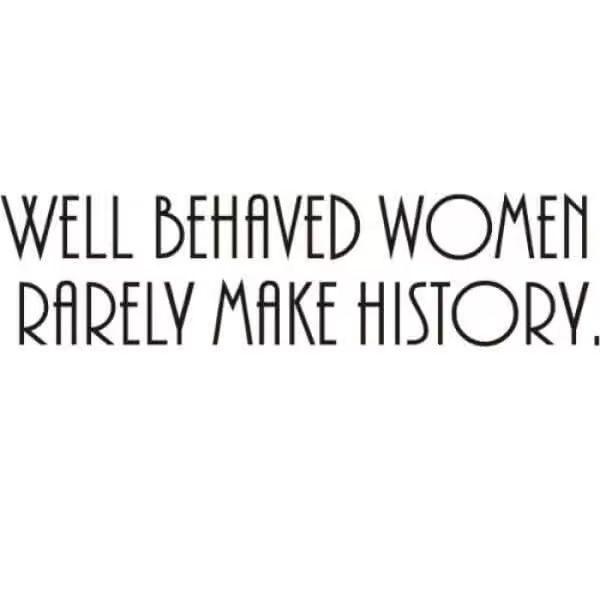
Diana Johnson DBE MP 🇬🇧🇺🇦🌈 reposted
Hull Trains
@Hull_Trains
Happy #internationalwomensday from Hull Trains!
We're celebrating the women who keep Hull Trains moving. We are really proud to have a 53% female workforce, with an impressive 30% of our drivers being women - far exceeding the industry average.
#iwd2026

Diana Johnson DBE MP 🇬🇧🇺🇦🌈 reposted
The Nobel Prize
@NobelPrize
Happy International Women’s Day!
We’re celebrating women who have changed the world. Here are all of the amazing women who have received the #nobelprize and their remarkable achievements at the time of the award.
Tell us about the women who inspire you the most – and why.
#internationalwomensday
Diana Johnson DBE MP 🇬🇧🇺🇦🌈
@DianaJohnsonMP
Happy International
Women’s Day from Hull at today’s Headscarf Hustle #headscarfrevolutionaries #iwd26

Diana Johnson DBE MP 🇬🇧🇺🇦🌈 reposted
 Tracy Brabin WY 🌹
@TracyBrabin
Culture is at the heart of my growth plan for West Yorkshire!🌹🎨
Wonderful to join @CllrSalmaArif & Margaret Pinder at @yorkshirelabour Policy Summit at the fabulous Bradford Live to talk about the role of arts and culture in local renewal.


Diana Johnson DBE MP 🇬🇧🇺🇦🌈 reposted
Sonia Kumar MP for Dudley 🌹
@SoniaKumarMP
Honoured to have been appointed Cabinet Parliamentary Private Secretary to Darren Jones, Chancellor of the Duchy of Lancaster and Chief Secretary to the Prime Minister.
I’m proud to support the Labour Government’s mission to deliver change across the UK.
 Diana Johnson DBE MP 🇬🇧🇺🇦🌈
@DianaJohnsonMP
My fourth (and final) @yorkshirelabour conference panel of the day is with the @GoodGrowthFdn on the Great Northern Growth Conversation.
 Diana Johnson DBE MP 🇬🇧🇺🇦🌈
@DianaJohnsonMP
My third @yorkshirelabour panel today is a conversation with @NanSloane and Katie White MP around tomorrow’s #iwd2026.
 Diana Johnson DBE MP 🇬🇧🇺🇦🌈
@DianaJohnsonMP
My second @yorkshirelabour panel of the day is the @NewStatesman one on how Yorkshire and the Humber can deliver the industrial strategy on skills and growth.
 Diana Johnson DBE MP 🇬🇧🇺🇦🌈
@DianaJohnsonMP
Appearing on my first panel of the day at the @yorkshirelabour Policy Summit in Bradford, discussing how we can turn the tide for the lost generation of young people on skills, education and employment opportunities.
 Diana Johnson DBE MP 🇬🇧🇺🇦🌈
@DianaJohnsonMP
My third @yorkshirelabour panel today is a conversation with @NanSloane and Katie White MP around tomorrow’s #iwd2026.
Diana Johnson DBE MP 🇬🇧🇺🇦🌈
@DianaJohnsonMP
My second @yorkshirelabour panel of the day is the @NewStatesman one on how Yorkshire and the Humber can deliver the industrial strategy on skills and growth.
Diana Johnson DBE MP 🇬🇧🇺🇦🌈
@DianaJohnsonMP
Appearing on my first panel of the day at the @yorkshirelabour Policy Summit in Bradford, discussing how we can turn the tide for the lost generation of young people on skills, education and employment opportunities.
Diana Johnson DBE MP 🇬🇧🇺🇦🌈
@DianaJohnsonMP
Appearing on my first panel of the day at the @yorkshirelabour Policy Summit in Bradford, discussing how we can turn the tide for the lost generation of young people on skills, education and employment opportunities.
Diana Johnson DBE MP 🇬🇧🇺🇦🌈
@DianaJohnsonMP
On @looknorthBBC last night, I discussed the nearly one million young people not in employment, education or training, a crisis inherited from the previous government, and the action being taken to address it.

Diana Johnson DBE MP 🇬🇧🇺🇦🌈 reposted
Department for Work and Pensions
@DWPgovuk
Minister for Employment Dame Diana Johnson was in Swansea to confirm more funding for Connect to Work - and welcomed Wales to the scheme
We are supporting 300,000 sick and disabled people into work by helping them find good, sustainable work where they live
Diana Johnson DBE MP 🇬🇧🇺🇦🌈
@DianaJohnsonMP
Enjoyed visiting and cutting the ribbon this afternoon to open the new Banking Hub in Newland Avenue. This will protect face-to-face banking for the many people who need these services. @accesstocash

 Diana Johnson DBE MP 🇬🇧🇺🇦🌈
@DianaJohnsonMP
Just spoke at the AGM of @hhchamber on the vital role of Hull and the Humber in growing the UK economy.

Diana Johnson DBE MP 🇬🇧🇺🇦🌈 reposted
Andrew Pakes MP
@andrewpakes_
This is important from the Government - £14 million announced for Peterborough & Cambridgeshire Connect to Work scheme.
This will back over 3,500 disabled people, people with health conditions & those with complex barriers to work with tailored support and training opportunities to help find a good job.
@patmcfaddenmp @DianaJohnsonMP
www.peterboroughtoday.co.uk/news/people/new-ps14-million-…
Diana Johnson DBE MP 🇬🇧🇺🇦🌈 reposted
 Ros Jones - Mayor of Doncaster
@MayorRos
Latest recruitment for Doncaster Sheffield Airport
We are seeking experienced & forward-thinking professionals with applications open for more key roles:
- Watch Managers (Airport Fire & Rescue Service)
- Fire Safety Manager
- Head of Air Traffic
- Ground Security
- Senior ATC

Diana Johnson DBE MP 🇬🇧🇺🇦🌈 reposted
Sonia Kumar MP for Dudley 🌹
@SoniaKumarMP
🇬🇧🤝🇺🇦 This week I travelled to Kyiv with a team of British physiotherapists to deliver hands-on rehabilitation training to Ukrainian clinicians treating patients injured in the war. 🧵1/4
Diana Johnson DBE MP 🇬🇧🇺🇦🌈
@DianaJohnsonMP
Delighted to see the Spurn Lightship open in all her former glory!
This much-loved vessel has been painstakingly restored by brilliant local business, Dunston Ship Repairs, and their amazing team.
It’s open to the public from Saturday 7th March. I encourage everyone to visit!

Diana Johnson DBE MP 🇬🇧🇺🇦🌈 reposted
 Naz Shah MP
@NazShahBfd
A little preview of what’s to come 🎧📖
‘Honoured’ — out tomorrow!
Diana Johnson DBE MP 🇬🇧🇺🇦🌈 reposted
Karin Smyth
@karinsmyth
Been a great colleague and friend since I joined Parliament so delighted to be now working with @SharonHodgsonMP in Government
Department of Health and Social Care
@DHSCgovuk
We welcome @SharonHodgsonMP to the department as Parliamentary Under-Secretary of State for Public Health and Prevention.

Diana Johnson DBE MP 🇬🇧🇺🇦🌈 reposted
Tonia Antoniazzi
@ToniaAntoniazzi
It’s an enormous honour to be named in the @TheHouseMag @politicshome Women in Westminster: The 100 list for 2026. Diolch yn fawr
I’m proud to be recognised alongside so many phenomenal and tenacious women who inspire me every day #wiw100 @TotalPolitics

Diana Johnson DBE MP 🇬🇧🇺🇦🌈 reposted
Ashley Dalton MP
@AshleyDalton_MP
Delighted to see @SharonHodgsonMP become the new Minister for Public Health and Prevention. Her dedication to public health and advocacy for those harmed by sodium valproate and pelvic mesh stands her in good stead to take up this role. I’ll be cheering her on from the backbench.


 Diana Johnson DBE MP 🇬🇧🇺🇦🌈
@DianaJohnsonMP
A brilliant appointment! Many congratulations @SharonHodgsonMP
 Wes Streeting
@wesstreeting
Huge congratulations to @SharonHodgsonMP on her appointment as Minister for Public Health and Prevention.
She has big shoes to fill left by @AshleyDalton_MP and brings enormous passion and experience to the role.


Diana Johnson DBE MP 🇬🇧🇺🇦🌈 reposted
 Mariella Frostrup
@mariellaf1
Check out the all female team at UK’s top energy company! Great the #chancellor popped by to see how you build a multi-billion £££ company that works for women and therefore works better for all. @OctopusEnergy @wiwsummit @DWPgovuk uk.news.yahoo.com/chancellor-meets-octopus-staff-highligh…
Diana Johnson DBE MP 🇬🇧🇺🇦🌈
@DianaJohnsonMP
I am deeply concerned to learn of the failings around patient safety and I know my constituents and the Secretary of State for Health will share these concerns.
I want clear answers on how this has happened and will be demanding meetings to get answers and urgent action.
The Hull Story 🇺🇦
@StoryHull
HOSPITALS CRISIS: Leadership @HullHospitals called into question after trust falls into 'special measures'. @DianaJohnsonMP @unisontheunion @unisonHERHealth @theRCN
www.thehullstory.com/allarticles/totally-unacceptable-cal…
Diana Johnson DBE MP 🇬🇧🇺🇦🌈 reposted
 Express & Star
@ExpressandStar
Dudley MP goes to Ukraine to teach physiotherapy to clinicians treating the war injured www.expressandstar.com/news/local-hubs/dudley/2026/03/03/…
Diana Johnson DBE MP 🇬🇧🇺🇦🌈 reposted
Tonia Antoniazzi
@ToniaAntoniazzi
One question I have for this man is, how exactly does he plan to unionise this type of work he talks of?
No idea on the exploitation of women and the harms of prostitution: women are not safe with his Party.
 Janet Murray
@jan_murray
In this interview, Green Party leader Zack Polanski explains why he wants to legalise prostitution.
Or “sex work,” as he calls it.
He presents it as a legitimate job choice - akin to becoming a lawyer, hair stylist or plumber.
Yet much of the research on prostitution shows extremely high rates of childhood abuse, time in care, addiction and coercion among women involved. Most enter through poverty and lack of alternatives - not empowerment.
This sits alongside another key Greens policy: the legalisation of hard drugs.
Instead of tackling the structural injustices that leave some women feeling their body is their only commercial asset we’re told this is about “putting women at the heart of what they choose to do with their own body.”🤔
What next - OnlyFans apprenticeships? The Bonnie Blue award for services to sex work?
Diana Johnson DBE MP 🇬🇧🇺🇦🌈 reposted
 Emma Lewell MP
@EmmaLewell
A very big thanks to @IanByrneMP & the Right to Food Commission for coming to the NE and asking me to give evidence today. Such important work. 💪🙏
#righttofoodcommission
#hungerisapoliticalchoice


Diana Johnson DBE MP 🇬🇧🇺🇦🌈 reposted
Department for Work and Pensions
@DWPgovuk
Work and Pensions Secretary Pat McFadden was in Blackpool to open the first Youth Guarantee Jobs Fair – matching 1,000s of locals to jobs
He also visited Leyland Trucks, welcomed their support for the Youth Guarantee and encouraged others to do the same
www.gov.uk/government/news/first-youth-guarantee-jobs-fai…
Diana Johnson DBE MP 🇬🇧🇺🇦🌈 reposted
Yvette Cooper
@YvetteCooperMP
I’m appalled by continuing restrictions imposed on women and girls in Afghanistan.
The Taliban’s new criminal procedure code legitimises domestic violence and targets women and minorities.
These oppressive measures must be rescinded. The rights of all Afghans must be protected.
Diana Johnson DBE MP 🇬🇧🇺🇦🌈 reposted
Dr Marie Tidball MP
@MarieTidball
Feeling pretty emotional.
The Repeal of the Presumption of Contact is on the face of the Courts and Tribunals Bill.
11yrs since @clairethrossell started her campaign, after the deaths of her beautiful boys’, this change is on the cusp of being delivered by our Labour govt.

 Diana Johnson DBE MP 🇬🇧🇺🇦🌈
@DianaJohnsonMP
I pay tribute to Sir Brian Langstaff and his @bloodinquiry team for their eight years of work to finally get justice for those infected and affected in the contaminated blood scandal. There is still more to do, but without them we wouldn't have come as far as we have.

Diana Johnson DBE MP 🇬🇧🇺🇦🌈 reposted
Dr. M.F. Khan
@Dr_TheHistories
In 1943, Paris - a woman sits in a Gestapo interrogation room, her feet bleeding, her body broken.
The officers across from her know she's holding secrets. Names of British agents. Locations of resistance safe houses. Intelligence that could dismantle entire networks across France.
They've already started the torture. Her toenails are being removed, one at a time. Soon they'll use heated irons on her back. They'll lock her in darkness for weeks. They'll promise her life in exchange for just one name.
She's a 30-year-old mother of three. Not a soldier. Not a spy by training. Just a French-born housewife who was living quietly in England until Hitler's armies swallowed her homeland.
That's when Odette Sansom made a choice that most of us will never have to make. She left her three daughters behind and volunteered for Britain's Special Operations Executive, the shadow organization built to sabotage Nazi operations from within.
The SOE didn't want career military. They wanted people who could disappear into occupied territory. People who spoke native French. People willing to accept that capture likely meant torture and execution.
Odette knew the odds. She volunteered anyway.
By 1942, she was operating in occupied France under the codename "Lise," coordinating resistance cells, organizing sabotage, funneling intelligence back to London. She worked alongside Captain Peter Churchill, building networks that struck at German supply lines and communications.
For months, they were ghosts. Then a collaborator sold them out.
Now she's in this room. In this chair. Facing men who have perfected the art of breaking human beings.
And here's what they don't understand: Odette Sansom has already decided she won't break. Not for pain. Not for promises. Not even to save her own life.
Because she knows that every name she gives means another agent tortured. Another resistance fighter executed. Another family destroyed.
So she gives them nothing. Through months of interrogation. Through agony most of us can't fathom. Through solitary confinement and death threats.
Nothing.
The Gestapo eventually realizes they can't break her. They send her to Ravensbrück concentration camp, condemned under "Night and Fog" protocol, prisoners meant to vanish without trace.
She survives more than a year there by convincing the commandant she's related to Winston Churchill. It's a complete lie, but it keeps her alive.
When Allied forces arrive in 1945, that same commandant tries using her as a bargaining chip. The moment they reach American lines, Odette identifies him as a war criminal. He's arrested on the spot.
Britain awarded her the George Cross, the highest civilian honor for courage. The citation was clear: for refusing to betray her comrades despite torture that would break nearly anyone.
Then in 1951, someone stole the medal from her home. Months later, it arrived in the mail with an anonymous note. The thief had researched what it represented and couldn't live with keeping it.
Even criminals recognized what that medal meant.
Odette Sansom Hallowes lived to 82, spending decades honoring fallen comrades and embodying quiet strength. She always insisted she'd simply done what anyone should do.
But that's not true. What she did was extraordinary. She proved that the most powerful resistance to tyranny isn't violence. It's the absolute refusal to break, no matter the cost.
📷© Imperial War Museums (Restored & Colorized)
© Daughters of Time
#drthehistories

Diana Johnson DBE MP 🇬🇧🇺🇦🌈 reposted
 Vaseem Khan
@VaseemKhanUK
If you love a locked room murder mystery, an exotic location, and some intriguing history... THE EDGE OF DARKNESS is for you! ... 1951, Naga Hills, India. A headless corpse at the crumbling colonial-era Hotel Victoria... Some buying options here: vaseemkhan.com/the-edge-of-darkness/

Diana Johnson DBE MP 🇬🇧🇺🇦🌈 reposted
 LabourWomensNetwork
@LabourWomensNet
This is unacceptable. Sending solidarity to the brilliant @NatalieFleetMP. Absolutely no place for threats, abuse or intimidation in politics or public life.
Natalie Fleet MP
@NatalieFleetMP
Posts like this are so common I don’t bat an eyelid.
But they remind me why my husband & kids *begged* me not to stand.
I felt huge responsibility; last lab gov helped me, I wanted to help others.
But…we should be able to fight for our areas w/o death threats as standard.
Diana Johnson DBE MP 🇬🇧🇺🇦🌈 reposted
Angus Young
@angus_young61
More questions about delayed decision-making at the Mayoral Combined Authority.
Adds to previous concerns I wrote about here 👇
aqyoung61.substack.com/p/giz-a-job
Diana Johnson DBE MP 🇬🇧🇺🇦🌈
@DianaJohnsonMP
Hull MPs have written to Mayor Luke Campbell and Hull and East Riding council leaders with concerns about delays at Hull and East Yorkshire Combined Authority jeopardising the roll-out of the Connect to Work programme in our area and depriving local organisations of key funding.

Diana Johnson DBE MP 🇬🇧🇺🇦🌈 reposted
Danny Shaw
@DannyShawNews
NEW How one police force is bucking the national trend on shop theft…
I went out with officers from Humberside, one of the country’s best performing constabularies…
The key: Arrests, criminal behaviour orders, regular patrols…visibility: www.telegraph.co.uk/gift/921499eccdd1bc36
Diana Johnson DBE MP 🇬🇧🇺🇦🌈
@DianaJohnsonMP
Hull MPs have written to Mayor Luke Campbell and Hull and East Riding council leaders with concerns about delays at Hull and East Yorkshire Combined Authority jeopardising the roll-out of the Connect to Work programme in our area and depriving local organisations of key funding.
Diana Johnson DBE MP 🇬🇧🇺🇦🌈
@DianaJohnsonMP
Leader of Reform @Nigel_Farage has “neither the decency or backbone “ to deal with the Reform Cllr who made a death threat to a Labour woman MP. This is both shocking and disgraceful @Keir_Starmer
Diana Johnson DBE MP 🇬🇧🇺🇦🌈
@DianaJohnsonMP
This morning I spoke about skills and opportunities for young people at the @UKHospitality Workforce, Skills and Employment Rights Event.
Thank you to Chair Kate Nicholls @UKHospKate and Chief Executive Allen Simpson @allen_m_simpson for the invitation.
 Diana Johnson DBE MP 🇬🇧🇺🇦🌈
@DianaJohnsonMP
I was pleased to speak at an event held in Parliament by the Institution of Occupational Safety and Health this afternoon about the Government's Keep Britain Working Review and action to cut the economic cost of ill-health.

Diana Johnson DBE MP 🇬🇧🇺🇦🌈 reposted
Torsten Bell
@TorstenBell
Reform planning on going into the next election promising to:
- scrap sick pay for low earners
- allow workers shifts to be cancelled with no notice
- ensure tenants can be evicted from a home near their children’s schools without any reason
Politics UK
@PolitlcsUK
🚨 NEW: Richard Tice will announce Reform UK's plans to introduce a "Great Repeal Bill" tomorrow that will scrap Labour's Employment Rights' Act and rent reforms
Diana Johnson DBE MP 🇬🇧🇺🇦🌈 reposted
Department for Work and Pensions
@DWPgovuk
The third reading of the Universal Credit (Removal of Two Child Limit) Bill moves us closer to tackling child poverty
It's an investment in our country’s future – giving more children the best start in life
We are delivering the biggest cut to child poverty in a generation

Diana Johnson DBE MP 🇬🇧🇺🇦🌈 reposted
 Hull Truck Theatre
@HullTruck
🎬 Hull Truck Theatre Alumni Rob Aramayo has won not one, but two BAFTA Awards for his amazing performance in the British Film, I Swear.
We are incredibly proud to have played a part in his early acting journey, being a part of our Youth Theatre. 🎭
Diana Johnson DBE MP 🇬🇧🇺🇦🌈 reposted
Yvette Cooper
@YvetteCooperMP
The world has been catastrophically failing the people of Sudan.
We’re using our UN Security Council Presidency this month to shine a spotlight on the suffering in Sudan - calling for unimpeded aid, an end to arms flows and a humanitarian truce to end the cycle of bloodshed.
Diana Johnson DBE MP 🇬🇧🇺🇦🌈 reposted
Pat McFadden
@patmcfaddenmp
Some economic numbers heading in the right direction that you might not read much about.
More to do of course but the UK has big economic strengths and we have to build on the progress shown here.
Rachel Reeves
@RachelReevesMP
⬇️ Inflation down
⬇️ Interest rates down
⬇️ Borrowing down
⬆️ Retail sales up
⬆️ UK fastest growing European G7 economy
There's more to do, but our economic plan is the right one.
www.bbc.co.uk/news/articles/c93w4egd3gzo
Diana Johnson DBE MP 🇬🇧🇺🇦🌈 reposted
 Baroness Keeley of Worsley (also on BlueSky)
@KeeleyMP
A good day campaigning with @ColinHuggett in Burnage in Gorton and Denton for our @UKLabour candidate Angeliki Stogia with my Labour Lords colleagues @mikekatz & Shama Tatler &to hear from @bevcraig
Good to talk to people on the doorstep about voting Labour to beat Reform.


Diana Johnson DBE MP 🇬🇧🇺🇦🌈 reposted
 Jennifer Stewart
@JenniferJS_
Good to see @YvetteCooperMP chairing the UN Security Council meeting in New York.

Diana Johnson DBE MP 🇬🇧🇺🇦🌈 reposted
 Nan Sloane
@NanSloane
My new book about Margaret Bondfield, Britain's first female cabinet minister and all round ground-breaking woman, is published today by @BloomsburyAcad and is available through all bookstores. And as an audio book, too!

Diana Johnson DBE MP 🇬🇧🇺🇦🌈 reposted
Department for Work and Pensions
@DWPgovuk
Work and Pensions Secretary Pat McFadden hopped on our mobile Jobcentre to Bolton
Onboard, Work Coaches offer support and advice to the community - helping break down barriers to good work
We're launching 6 new mobile Jobcentres to get Britain working www.gov.uk/government/news/mobile-jobcentres-hit-the-road…
Diana Johnson DBE MP 🇬🇧🇺🇦🌈 reposted
Trades Union Congress
@The_TUC
BREAKING 🚨 | Reform announce plans to legalise discrimination.
Plans include scrapping the Equality Act, which would legalise discrimination against a worker if they were a woman, disabled, black, pregnant or gay.
From ripping up equality protections, to backing fire-and-rehire, to opposing a ban on zero-hours contracts, Reform UK have made it clear whose side they’re on – and it’s not working people.
Diana Johnson DBE MP 🇬🇧🇺🇦🌈 reposted
Department for Work and Pensions
@DWPgovuk
Claimants on these benefits are being moved onto Universal Credit as part of a modernisation programme that has been underway since 2022
If you could be affected by this move, find out more by visiting ucmove.campaign.gov.uk
Diana Johnson DBE MP 🇬🇧🇺🇦🌈 reposted
Department for Work and Pensions
@DWPgovuk
What are legacy benefits and why are claimants being moved off them?
These are older benefits such as
- Income-related Employment and Support Allowance (ESA)
- Child Tax Credit
- Working Tax Credit
- Housing Benefit
- Income Support
- Income-based Jobseeker’s Allowance (JSA)
Diana Johnson DBE MP 🇬🇧🇺🇦🌈 reposted
Department for Work and Pensions
@DWPgovuk
Here’s what's actually happening with the increase in the Universal Credit caseload
Nearly 80% of the increase is people being moved from old benefits onto Universal Credit
Not new claims
A transition we inherited
Data source www.gov.uk/government/collections/universal-credit-statis…

Diana Johnson DBE MP 🇬🇧🇺🇦🌈 reposted
 BBC Radio 4 Today
@BBCr4today
"We risk a generation on the scrapheap."
Alan Milburn, chair of the government's Young People and Work review, talks to @bbcnickrobinson after the unemployment rate for people aged 18-24 in the UK hit 14% - the highest since 2020.
Diana Johnson DBE MP 🇬🇧🇺🇦🌈 reposted
Department for Work and Pensions
@DWPgovuk
National Apprenticeship Week is drawing to a close, but we hope it’s inspired you to consider this route
Could it kickstart a new career for you?
Find out more about apprenticeships: jobhelp.campaign.gov.uk/skills-apprenticeships/
#naw2026
Diana Johnson DBE MP 🇬🇧🇺🇦🌈 reposted
Department for Work and Pensions
@DWPgovuk
Minister for Social Security and Disability Sir Stephen Timms met apprentices and interns at @AmazonUK
Amazon's apprenticeship is transforming careers for young people like Shai and unlocking their full potential
#naw2026
Diana Johnson DBE MP 🇬🇧🇺🇦🌈 reposted
Tracy Brabin WY 🌹
@TracyBrabin
This is what change looks like….
From April 1st 30,000 children in West Yorkshire will be lifted out of poverty….
Vote @UKLabour for a brighter future for all.
The Labour Party
@UKLabour
Labour is lifting over half a million children out of poverty.
 Diana Johnson DBE MP 🇬🇧🇺🇦🌈
@DianaJohnsonMP
During National Apprenticeships Week, I enjoyed visiting JTL Hull's Training Centre this morning to hear from local apprentices and employers about their experiences. Quality apprenticeships offer a route into skilled, secure jobs as we build the workforce that our economy needs.


Diana Johnson DBE MP 🇬🇧🇺🇦🌈 reposted
Department for Work and Pensions
@DWPgovuk
Should’ve gone to @Specsavers?
Well, Minister for Skills Baroness Smith did just that - to learn about the many opportunities apprenticeships open up for workers and employers alike
Is an apprenticeship right for you? jobhelp.campaign.gov.uk/skills-apprenticeships/
#naw2026
Diana Johnson DBE MP 🇬🇧🇺🇦🌈 reposted
Rachel Reeves
@RachelReevesMP
Thanks to the choices we've made, we’ve seen six interest rate cuts and inflation is falling.
We have the right economic plan to build a stronger and more secure economy, cutting the cost of living, cutting national debt and creating the conditions for growth.
Diana Johnson DBE MP 🇬🇧🇺🇦🌈 reposted
Keir Starmer
@Keir_Starmer
Offensive and wrong.
Britain is a proud, tolerant and diverse country.
Jim Ratcliffe should apologise.
news.sky.com/story/the-uk-has-been-colonised-by-immigrant…
Diana Johnson DBE MP 🇬🇧🇺🇦🌈 reposted
Heidi Alexander MP
@Heidi_Labour
Can’t believe I was the first woman to ever give the George Bradshaw Address. As we nationalise the train operating companies at a rate of one every 3 months, we’re building a railway that Britain can rely on and be proud of.
My full speech: www.gov.uk/government/speeches/george-bradshaw-address-2026
 Total Politics
@TotalPolitics
We’re delighted that @Heidi_Labour, Secretary of State for Transport, delivered the keynote at the George Bradshaw Address today, outlining the current challenges and opportunities for our railways, and a vision for the future under GBR

Diana Johnson DBE MP 🇬🇧🇺🇦🌈 reposted
Department for Work and Pensions
@DWPgovuk
For National Apprenticeship Week, we're putting young people in the driving seat
Work and Pensions Secretary Pat McFadden visited @TfL who have announced over 150 apprenticeships
Find out about our new approach to unlocking opportunities www.gov.uk/government/news/government-vows-to-unlock-oppo…
#naw2026
Diana Johnson DBE MP 🇬🇧🇺🇦🌈
@DianaJohnsonMP
19 months ago, Labour was elected with a majority of 174 for a five-year Parliament to restore stability and start the programme of renewal and change that our country so desperately needs. Listening, learning and going forward as a team, this is where our focus must remain.
Diana Johnson DBE MP 🇬🇧🇺🇦🌈 reposted
Yvette Cooper
@YvetteCooperMP
For 78 year old Jimmy Lai, 20 years is an effective life sentence, following a politically motivated prosecution under a law that was imposed to silence China’s critics.
The Hong Kong authorities must end Jimmy Lai’s appalling ordeal and release him to be with his family.
Diana Johnson DBE MP 🇬🇧🇺🇦🌈 reposted
Department for Work and Pensions
@DWPgovuk
This National Apprenticeship Week, we’re celebrating apprentices and the businesses supporting them
Businesses thrive with apprentices, and apprentices earn while they learn
Find out more about apprenticeships jobhelp.campaign.gov.uk/skills-apprenticeships/
#naw2026
Diana Johnson DBE MP 🇬🇧🇺🇦🌈 reposted
Department for Work and Pensions
@DWPgovuk
Ahead of National Apprenticeship Week, Work and Pensions Secretary Pat McFadden visited Cammell Laird - home to one of the maritime industry’s biggest apprenticeships
Find out how fast-track apprenticeships will boost Britain’s growth sectors www.gov.uk/government/news/britains-growth-sectors-to-get…
#naw2026
Diana Johnson DBE MP 🇬🇧🇺🇦🌈 reposted
 Paul Heaton
@PaulHeatonSolo
40 yrs ago today- vocal rehearsals at newly bought, 52 Grafton Street. Days before, we decided to work on a new accapella arrangement- Isley/Jasper/Isley's Caravan of Love from 1985. Written below, the songs I listened to that day?!😲www.youtube.com/watch?v=foFK6q7kF9Y
Diana Johnson DBE MP 🇬🇧🇺🇦🌈 reposted
 Faye O'Connor
@FayeOConnor2030
A massive public thank you to Amber on the @hulltrains route from Shelby to Kings Cross for helping Tom Chloe and me to get home despite a very trying series of train challenges. Go Amber you wonderful human being!
Diana Johnson DBE MP 🇬🇧🇺🇦🌈 reposted
Hamish Falconer MP
@HFalconerMP
Over 3,000 UK and Commonwealth servicemen were laid to rest in Gaza’s war graves cemetery.
Reports of damage to this site and their memory is unacceptable. We are raising this with Israel and deplore further reports it has been used for Hamas military operations.
Diana Johnson DBE MP 🇬🇧🇺🇦🌈 reposted
Ian Cuthbert
@headscarfpride
6/2/1968 the #headscarfrevolutionaries travelled to London to meet government ministers. There aim was to improve safety at sea after the #tripletrawlerdisaster. Three ships were lost with 58 men. Their campaign led to major reform in working practices and saved countless lives.

Diana Johnson DBE MP 🇬🇧🇺🇦🌈 reposted
 Rt Hon Alistair Burt
@AlistairBurtUK
This is deeply distressing. Cemetery was immaculately kept by the Palestinian Jaradah family for decades, & I visited to pay my respects on each occasion I was in Gaza. It would be good to know what if due care was taken in the destruction, & where the disturbed remains now lie.

 William Dalrymple
@DalrympleWill
"Israel bulldozed part of Gaza war cemetery containing allied graves. Satellite images and witness testimony show destruction as IDF claims it was forced to take defensive measures"
www.theguardian.com/world/2026/feb/04/idf-bulldoze-gaza-w…
Diana Johnson DBE MP 🇬🇧🇺🇦🌈 reposted
Department for Work and Pensions
@DWPgovuk
"It’s an investment in changing children’s lives" - Pat McFadden
The Work and Pensions Secretary, Chancellor and Education Secretary today met to discuss the Government's commitment to remove the Two-Child Limit for Universal Credit and lift 550,000 children out of poverty
Diana Johnson DBE MP 🇬🇧🇺🇦🌈 reposted
 LGA Labour
@LGA_Labour
The Chair of the @LGAcomms inclusive growth committee @tomhunt100 & Labour members were pleased to meet with Ministers @Jacqui_Smith1 & @DianaJohnsonMP who attended the committee today.

Diana Johnson DBE MP 🇬🇧🇺🇦🌈 reposted
Lord Hanson of Flint Labour Peer & Minister
@RTHondavehanson
Yesterday I joined industry leaders at the Revolut FinCrime Summit, through open dialogue and shared innovation, we're tackling today's biggest financial crime threats.
Collaboration is key to outpacing fraudsters and keeping the public safe.@ukhomeoffice

Diana Johnson DBE MP 🇬🇧🇺🇦🌈 reposted
The Hull Story 🇺🇦
@StoryHull
OPINION: Writing exclusively for The Hull Story, @DianaJohnsonMP explains why @UKLabour MPs voted to lift the two-child benefit cap, removing a policy introduced by the Tories. #hull #politics #childpoverty #costoflivingcrisis
www.thehullstory.com/allarticles/diana-johnson-opinion-ch…
Diana Johnson DBE MP 🇬🇧🇺🇦🌈
@DianaJohnsonMP
This week, while the Labour Government invested in taking 450,000 children out of poverty, Reform UK said that they would rather use the money to cut the price of a pint of beer by 5p.
My article today for The Hull Story is at www.thehullstory.com/allarticles/diana-johnson-opinion-ch….
Diana Johnson DBE MP 🇬🇧🇺🇦🌈 reposted
Yvette Cooper
@YvetteCooperMP
The voices of Sudan’s women and children need to be heard around the world.
Diana Johnson DBE MP 🇬🇧🇺🇦🌈
@DianaJohnsonMP
When will this be fixed? Despite years of complaints since 2018 and eventual promises that all toilets at Hull Station will be brought up to a decent standard, it’s disappointing to see this. It would not be tolerated in London! @Hull_Trains @TPExpressTrains @northernassist
Hull Trains
@Hull_Trains
⚠️ STATION UPDATE: 04/02/2026
All toilets are out of order at #hull Station.
We are sorry for any inconvenience this may have caused to your journey today.
Diana Johnson DBE MP 🇬🇧🇺🇦🌈 reposted
Department of Health and Social Care
@DHSCgovuk
The future of cancer care starts now with the National Cancer Plan.
Here's how we're transforming diagnosis, treatment and support for patients 👇
www.gov.uk/government/news/every-cancer-patient-to-get-in…
Diana Johnson DBE MP 🇬🇧🇺🇦🌈 reposted
 Stefan Rousseau
@StefanRousseau
Photo du Jour: Foreign Secretary @YvetteCooperMP visits Adre in Chad on the Sudanese border where she met women fleeing the war in Sudan. By Stefan Rousseau/PA

Diana Johnson DBE MP 🇬🇧🇺🇦🌈 reposted
 Bridget Phillipson
@bphillipsonMP
Tonight, Labour MPs voted to scrap the two child limit – a move that puts us on course to drive the biggest reduction of child poverty in a single Parliament.
The Tories and Reform voted against it.
Don’t let anyone tell you voting Labour doesn’t make a difference 🌹
Diana Johnson DBE MP 🇬🇧🇺🇦🌈 reposted
Ashley Dalton MP
@AshleyDalton_MP
How are your new years resolutions going?
I recently put on a jobs fair in the local community so my constituents could smash their 2026 career goals 💫
Diana Johnson DBE MP 🇬🇧🇺🇦🌈 reposted
 Meg Hillier
@Meg_HillierMP
The Bill to lift the two-child benefit limit is debated in Parliament for the first time today.
60% of households hit by the two-child limit are in work. Lifting the limit is the fastest and best way to sharply clamp down on child poverty.

Diana Johnson DBE MP 🇬🇧🇺🇦🌈 reposted
Torsten Bell
@TorstenBell
Couldn’t make this up. Farage:
- WAS calling for the two child limit to be scrapped.
- NOW calling for the two child limit to be reinstated
Reform aren’t just importing failed Tory politicians. They’re importing failed Tory policies.
www.politicshome.com/news/article/nigel-farage-calls-lift…
Diana Johnson DBE MP 🇬🇧🇺🇦🌈 reposted
Department for Work and Pensions
@DWPgovuk
How do we make tomorrow’s workplace more inclusive by harnessing innovation?
Work and Pensions Secretary Pat McFadden visited Meta and met with tech companies and disability charities to encourage closer ties and create opportunity for all
Diana Johnson DBE MP 🇬🇧🇺🇦🌈
@DianaJohnsonMP
This afternoon I was pleased to attend the event organised by the APPG for Eye Health and Visual Impairment in Parliament to discuss the important work of removing the barriers to the workplace for those with visual impairments.
 Diana Johnson DBE MP 🇬🇧🇺🇦🌈
@DianaJohnsonMP
A view from my Monday walk to work @HouseofCommons #sightsoflondon 🇬🇧🇬🇧🇬🇧

Diana Johnson DBE MP 🇬🇧🇺🇦🌈 reposted
Stefan Rousseau
@StefanRousseau
Photo du Jour: Foreign secretary @YvetteCooperMP visits the Menelik Hospital in Addis Ababa, Ethiopia which has benefitted from UK health funding. By Stefan Rousseau/PA

Diana Johnson DBE MP 🇬🇧🇺🇦🌈 reposted
Department for Work and Pensions
@DWPgovuk
We are clamping down on rogue landlords who flout the rules
The Rent Repayment Orders scheme is being expanded, to benefit private renters in even more communities
Find out more www.gov.uk/government/news/taxpayer-cash-protected-as-cra…
Diana Johnson DBE MP 🇬🇧🇺🇦🌈
@DianaJohnsonMP
Talking to lots of local residents in Bricknell ward in Hull this morning on a crisp sunny January morning with excellent local Cllr Sharon Hoffman. 🌹 #labourdoorstep 🌹

Diana Johnson DBE MP 🇬🇧🇺🇦🌈 reposted
 Ian Acheson 🇬🇧☘️
@NotThatBigIan
Extraordinary this approach of a Chief Constable, properly leading his force to respond to public priorities, has to be showcased as the exception, not the rule. But here we are.
www.telegraph.co.uk/news/2026/01/30/the-police-force-turn…
Diana Johnson DBE MP 🇬🇧🇺🇦🌈 reposted
Danny Shaw
@DannyShawNews
Credit should go to Chief Constable 2017-23 Lee Freeman, who transformed @Humberbeat by - among other things - freeing up thousands of hours of officer time by triaging mental health call-outs- Right Care, Right Person - approach now adopted nationwide.
Diana Johnson DBE MP 🇬🇧🇺🇦🌈
@DianaJohnsonMP
UK’s first rapid-charging battery train ready for boarding this weekend www.theguardian.com/business/2026/jan/30/uk-first-rapid-c…
Diana Johnson DBE MP 🇬🇧🇺🇦🌈 reposted
Department for Work and Pensions
@DWPgovuk
At @PinewoodStudios, Work and Pensions Secretary Pat McFadden praised their support for the Youth Guarantee
He encouraged other industry leaders to open more doors for young people to get the experience and training they need to get into work www.gov.uk/government/news/youth-guarantee-gets-blockbust…
Diana Johnson DBE MP 🇬🇧🇺🇦🌈 reposted
Department for Science, Innovation and Technology
@SciTechgovuk
Lanarkshire, South Scotland, will be the UK’s next AI Growth Zone, meaning:
More local jobs 💼
New skills 🎓
Thousands of opportunities 📈
www.gov.uk/government/news/more-than-3400-jobs-and-target…
Diana Johnson DBE MP 🇬🇧🇺🇦🌈
@DianaJohnsonMP
Hull MPs Diana Johnson, Emma Hardy and Karl Turner have issued the following statement after our meeting yesterday with Rail Minister Lord Hendy.

 Diana Johnson DBE MP 🇬🇧🇺🇦🌈
@DianaJohnsonMP
Violence against women and girls is a national emergency, which is why it’s important that victims know their voices are being heard. @EllieReeves is announcing an expansion of Victims’ Right to Review scheme, so that survivors can have confidence in the justice system
Diana Johnson DBE MP 🇬🇧🇺🇦🌈 reposted
 John Healey
@JohnHealey_MP
I am proud to introduce an Armed Forces Bill focused on ensuring our Forces have homes fit for heroes 👇
Diana Johnson DBE MP 🇬🇧🇺🇦🌈 reposted
Matthew Pennycook MP
@mtpennycook
We promised in our manifesto to “tackle unregulated and unaffordable ground rent charges”.
We’re honouring that commitment today by legislating to cap ground rents at £250 per year, changing to peppercorn after 40 years.
Diana Johnson DBE MP 🇬🇧🇺🇦🌈
@DianaJohnsonMP
Today marks over 80 years since the liberation of Auschwitz-Birkenau. I signed @HolocaustUK's Book of Commitment last week to pledge my continuing commitment to marking Holocaust Memorial Day - remembering the six million Jewish men, women and children who were murdered.

Diana Johnson DBE MP 🇬🇧🇺🇦🌈 reposted
Torsten Bell
@TorstenBell
A lot of total nonsense being talked on graduates today. Here’s the facts:
1) there was a rise in graduate inactivity UNDER the Tories
2) graduate inactivity has FALLEN under this government
3) The result is the graduate inactivity rate is currently the LOWEST on record
Helen Whately MP
@Helen_Whately
💷700,000 jobless graduates now claim benefits
🏥240,000 are out of work because of a health condition
The problem is threefold… [1/5]
Diana Johnson DBE MP 🇬🇧🇺🇦🌈 reposted
 Al Carns
@AlistairCarns
The UK served on the frontline in Afghanistan and often way beyond it!
Diana Johnson DBE MP 🇬🇧🇺🇦🌈
@DianaJohnsonMP
I will be speaking to @freddimbleby on @itvcalendar at 18.00 this evening regarding the latest developments on rail electrification for Hull and the Humber.

Diana Johnson DBE MP 🇬🇧🇺🇦🌈 reposted
Hull Images
@HullImages
Prince Street near the arch.
#hull #yorkshire #travel #architecture #photography

Diana Johnson DBE MP 🇬🇧🇺🇦🌈 reposted
Hull Images
@HullImages
This is Elm Tree House in Cottingham. Originally a Merchants House. It's been the home of the Cottingham Memorial Club since 1950.
#yorkshire #travel #england #history #heritage #architecture #photography #cottingham #hull
 Diana Johnson DBE MP 🇬🇧🇺🇦🌈
@DianaJohnsonMP
I'm pleased that the Government is rolling out WorkWell across England to help people with health conditions to stay in or return to work.
This roll out will help up to 250,000 more people to stay healthy and employed - benefiting themselves, businesses and our economy.
Diana Johnson DBE MP 🇬🇧🇺🇦🌈 reposted
 Feryal Clark MP
@FeryalClark
I’m honoured to have been appointed UK Trade Envoy to Germany 🇩🇪🇬🇧
Germany is one of our closest neighbours and most important trading partners, vital for jobs and growth at home.
I’m really looking forward to getting started.
Diana Johnson DBE MP 🇬🇧🇺🇦🌈 reposted
Yvette Cooper
@YvetteCooperMP
Arctic security is vital for Britain and NATO.
As threats increase, Britain is stepping up.
Great to join @EspenBarthEide at Camp Viking to see the work of @royalmarines with Norway and sign a new agreement on tackling the Russian Shadow Fleet.


Diana Johnson DBE MP 🇬🇧🇺🇦🌈 reposted
Cabinet Office
@cabinetofficeuk
There will be a national service of remembrance at St. Paul's Cathedral for the infected blood community on Tuesday 19 May.
Chair of the Infected Blood Memorial Committee, Clive Smith, discusses in more detail ⬇️
Register your interest before 22 January: www.gov.uk/government/news/infected-blood-memorial-servic…
Diana Johnson DBE MP 🇬🇧🇺🇦🌈
@DianaJohnsonMP
Love this! ❤️ And many congratulations Dame Chi!
 Chi Onwurah 💙
@ChiOnwurah
Thank you to the brilliant team at @NCLCollege in designing an outfit that reflects my Geordie, Irish & West African heritage.
Lamin, Lynne, Libby & Jordan - you did an incredible job and I'm very grateful!
The visit to Windsor Castle with my partner Damon was really special.


Diana Johnson DBE MP 🇬🇧🇺🇦🌈 reposted
Department for Work and Pensions
@DWPgovuk
Convicted killers detained in hospitals are set to lose access to benefits
On @GMB, Work and Pensions Secretary Pat McFadden paid tribute to the families who have campaigned for the change
Find out more www.gov.uk/government/news/convicted-criminals-detained-i…
Diana Johnson DBE MP 🇬🇧🇺🇦🌈 reposted
Department for Work and Pensions
@DWPgovuk
"Convicted criminals detained in hospitals are set to lose benefits, closing a loophole in the welfare system that sees them treated differently to prisoners who are already banned from claiming" - Work and Pensions Secretary Pat McFadden
Find out more www.gov.uk/government/news/convicted-criminals-detained-i…
Diana Johnson DBE MP 🇬🇧🇺🇦🌈 reposted
Department for Work and Pensions
@DWPgovuk
Minister for Social Security and Disability Sir Stephen Timms visited @TheGymGroup to see Disability Confident best practice in action
We’re reforming the scheme to give employers more support to help disabled people thrive at work www.gov.uk/government/news/disability-confident-scheme-ov…
Diana Johnson DBE MP 🇬🇧🇺🇦🌈
@DianaJohnsonMP
Read the statement below from Emma Hardy MP, @KarlTurnerMP, and me on yesterday’s Northern Powerhouse Rail announcement.

Diana Johnson DBE MP 🇬🇧🇺🇦🌈 reposted
Hull Truck Theatre
@HullTruck
✨ WE ARE NOMINATED ✨
A massive thank you to you all for nominating us for Best Regional Production at the @whatsonstage Awards 🥰
 Diana Johnson DBE MP 🇬🇧🇺🇦🌈
@DianaJohnsonMP
How can any political party tell business not to invest in the North? @AndyBurnhamGM @TiceRichard @luke11campbell
 Faisal Islam
@faisalislam
NEW
Manchester Mayor @AndyBurnhamGM tells me that Reform are “anti-North” over its plan to scrap the £45bn northern corridor rail link and “breathtakingly arrogant” to tell investors to shun the North of England.
“Look at them… There’s nothing northern about them,” he said:
Diana Johnson DBE MP 🇬🇧🇺🇦🌈 reposted
Dr Marie Tidball MP
@MarieTidball
When I was first elected, seven children in every classroom of 30 in our Penistone and Stocksbridge constituency were in poverty.
Our Labour government is removing the two-child benefit cap, which will lift 450,000 children out of poverty across the country.
 BBC Breakfast
@BBCBreakfast
'This is an investment in changing these children's lives'
Work and Pensions Secretary Pat McFadden spoke to #bbcbreakfast about plans to scrap the two child benefit cap from April, which will cost £3-billion a year
www.bbc.co.uk/news/articles/cwyx4ggyj44o
Diana Johnson DBE MP 🇬🇧🇺🇦🌈 reposted
Department for Science, Innovation and Technology
@SciTechgovuk
Secretary of State @leicesterliz spoke to @SkyNews on the changes xAI has implemented to its chatbot overnight, and government action to stamp out this form of abuse 🔽
Read the full statement: www.gov.uk/government/news/technology-secretary-statement…
Diana Johnson DBE MP 🇬🇧🇺🇦🌈 reposted
Yvette Cooper
@YvetteCooperMP
Today marks 1000 days of devastating conflict in Sudan involving unimaginable atrocities and barbaric abuse of women and girls.
2026 must be the year the world comes together to push for peace.
 Independent Voices
@IndyVoices
The world’s worst humanitarian crisis is unfolding in Sudan - we must not look away | Yvette Cooper (@YvetteCooperMP )
www.independent.co.uk/voices/sudan-war-humanitarian-crisi…
Diana Johnson DBE MP 🇬🇧🇺🇦🌈 reposted
 That's TV Humber
@ThatsTVHumber
"There has been a massive decline in reading."
National charity, @Schoolreaders, are appealing for volunteers to read to young people in East Yorkshire and North Lincolnshire.
Diana Johnson DBE MP 🇬🇧🇺🇦🌈 reposted
 Luke Akehurst
@lukeakehurst
Over 67,000 children in the North East will be helped by Labour scrapping the two-child limit. The new legislation will see 18,410 North East families better off.
Lifting the two-child limit comes alongside other policies to cut the cost of living for families, including:
•Extending free school meals to half a million more children
•Freezing rail fares for the first time in 30 years, saving commuters hundreds of pounds a year
•Cutting £150 off average energy bills, and £300 off for the most vulnerable
•Rolling out free breakfast clubs in 2,000 more primary schools
•Extending the provision of 30 hours of free childcare, worth up to £7,500 a year
•Increasing the national living wage, giving full-time workers on the lowest incomes £900 more a year.
Diana Johnson DBE MP 🇬🇧🇺🇦🌈 reposted
 Sarah Coombes for West Bromwich
@SarahCoombesWB
Today is a HUGE win for my campaign to crack down on ghost number plates! 💪
The Government has listened and just announced MASSIVE new penalties - points on your licence and even car seizure for the racers and criminals using illegal ghost plates to terrorise our communities.

Diana Johnson DBE MP 🇬🇧🇺🇦🌈 reposted
Sarah Coombes for West Bromwich
@SarahCoombesWB
This morning I've been speaking with local, regional and national media about my huge win to crack down on ghost number plates 💪
They know how important this is to residents and communities: how our roads can't be taken for granted by dodgy drivers and criminals. 🚗
 Diana Johnson DBE MP 🇬🇧🇺🇦🌈
@DianaJohnsonMP
I enjoyed welcoming some of Hull’s @HeyVolunteering volunteers, Alison, Paul, Mary and Richard, to Parliament earlier this week and hearing about their great work as part of the volunteering programme that continues to improve the lives of many people in Hull and East Yorkshire.

Diana Johnson DBE MP 🇬🇧🇺🇦🌈 reposted
Lilian Greenwood
@LilianGreenwood
I could not be prouder to be delivering on Dev’s Law today. @NaranMeera has campaigned tirelessly for action on road safety, to ensure no other family suffers the devastation she experienced. www.theguardian.com/politics/2026/jan/06/bigger-than-me-r…
Diana Johnson DBE MP 🇬🇧🇺🇦🌈
@DianaJohnsonMP
To start 2026 on a positive note, here’s Secretary of State for Housing, Communities and Local Government @SteveReedMP on the £20m coming to help improve life in Orchard Park.
Diana Johnson DBE MP 🇬🇧🇺🇦🌈 reposted
 Foreign, Commonwealth & Development Office
@FCDOGovUK
.@YvetteCooperMP today talking to the FCDO staff working on the UK's response to the situation in Venezuela, including providing consular support to any British nationals requiring help or advice.


Diana Johnson DBE MP 🇬🇧🇺🇦🌈 reposted
Department for Work and Pensions
@DWPgovuk
Looking for work this January?
Support is available to help you strengthen your CV, gain new skills and find opportunities in growing sectors
Read more in today’s @Sunemployment www.thesun.co.uk/money/37787611/jobs-career-money-employm…
Diana Johnson DBE MP 🇬🇧🇺🇦🌈
@DianaJohnsonMP
🎉Wishing a very Happy New Year to
everyone across Hull North and Cottingham🎉
Here's to a happy and healthy 2026 full of peace,
prosperity and progress.

Diana Johnson DBE MP 🇬🇧🇺🇦🌈 reposted
Preet Kaur Gill MP
@PreetKGillMP
My bill is now law.
The Border Security, Asylum and Immigration Bill has closed a dangerous loophole by making it illegal to possess blueprints for 3D printed guns, an issue I campaigned for in Parliament.
This gives police stronger powers to tackle untraceable weapons.
 Diana Johnson DBE MP 🇬🇧🇺🇦🌈
@DianaJohnsonMP
2025 has been another busy year for me in Hull North and Cottingham, in Westminster and around the country.
Here’s just a few of the many highlights of my year…
Diana Johnson DBE MP 🇬🇧🇺🇦🌈 reposted
LGA Labour
@LGA_Labour
Many congratulations to our Group Leader @bevcraig on being awarded an OBE for services to local government.
 I Love Manchester
@ILoveMCR
Manchester City Council leader Bev Craig has been awarded an OBE in the New Year Honours for her services to local government 👏 A huge recognition for her work leading the city toward a fairer, more inclusive future.
ilovemanchester.com/manchester-council-leader-bev-craig-a…
Diana Johnson DBE MP 🇬🇧🇺🇦🌈 reposted
Department for Work and Pensions
@DWPgovuk
"When small businesses support their staff to stay at work healthy, everyone wins" - Minister for Employment Dame Diana Johnson
To help tackle workplace sickness we're funding free occupational health training for line managers at SMEs
Find out more www.gov.uk/government/news/drive-to-tackle-workplace-sick…
Diana Johnson DBE MP 🇬🇧🇺🇦🌈 reposted
 Federation of Small Businesses (FSB)
@fsb_policy
Pleased to be part of a big announcement today from @DWPgovuk - to fully-fund accredited training courses for 5,000 SMEs on occupational health, over the next 3 months: www.gov.uk/government/news/drive-to-tackle-workplace-sick…
If you lead or manage in a small business in England, you can register here: lets-crack-on.com
(FSB members, don’t forget you can access hands-on Occupational Health support here: www.fsb.org.uk/membership/benefits/occupational-health)
@DianaJohnsonMP @patmcfaddenmp @IOSH_tweets @FSB_Voice

Diana Johnson DBE MP 🇬🇧🇺🇦🌈 reposted
Pat McFadden
@patmcfaddenmp
UK military gap year.
Could be a great opportunity for some.
Definitely need more opportunities for young people.
www.bbc.co.uk/news/articles/c62dyp9pgd2o
Diana Johnson DBE MP 🇬🇧🇺🇦🌈
@DianaJohnsonMP
Bravo! 🇺🇦🇬🇧🇩🇪🇫🇷
 Anton Gerashchenko
@Gerashchenko_en
Carol of the Bells in Kyiv subway.
Voices of the Embassies of Germany, France, and the United Kingdom came together to perform Shchedryk in the Kyiv metro as a sign of solidarity with Ukraine.
Thankful to everyone who stands with us!
Diana Johnson DBE MP 🇬🇧🇺🇦🌈
@DianaJohnsonMP
🎄Merry Christmas to everyone across Hull North and Cottingham today🎄
I hope everyone, no matter how you are celebrating, is enjoying a relaxing and peaceful day.
Diana Johnson DBE MP 🇬🇧🇺🇦🌈 reposted
The Labour Party
@UKLabour
The Labour Party wishes you and your loved ones a very Happy Christmas.

Diana Johnson DBE MP 🇬🇧🇺🇦🌈 reposted
Alex Davies-Jones MP
@AlexDaviesJones
Day 11🎄
Looking back today on marking 97 years since women won the vote on equal terms with men 💛 It was a privilege to join a commemorative photocall of women MPs to receive a personalised sash, celebrating our place in the history of #womeninparliament.

Diana Johnson DBE MP 🇬🇧🇺🇦🌈 reposted
Wes Streeting
@wesstreeting
The person who inspired this was @AshleyJBaptiste.
I read his book - Looked After - and I honestly can’t remember the last time I felt so simultaneously inspired and enraged by a book. I knew we had to do more.
Big thanks to all involved - esp those with experience of care.

Diana Johnson DBE MP 🇬🇧🇺🇦🌈 reposted
Wes Streeting
@wesstreeting
Today we’re announcing wide-ranging NHS support for care leavers…
🏥… from free prescriptions, dental and eye care…
👩⚕️👨⚕️… to joined up mental health support, paid internships and guaranteed interviews for jobs in the NHS!
My ✍🏻 @DailyMirror 👇🏻
www.mirror.co.uk/news/politics/wes-streeting-care-leavers…

Diana Johnson DBE MP 🇬🇧🇺🇦🌈 reposted
 Dame Nicole Jacobs
@CommissionerDA
If you are victim or survivor of domestic abuse, the Christmasperiod can be a challenging time.
Please know that you’re not alone, and support is there for you if you need it.
If you need help you can contact the organisations below, or visit my website domesticabusecommissioner.uk/i-need-help/

Diana Johnson DBE MP 🇬🇧🇺🇦🌈 reposted
Department for Work and Pensions
@DWPgovuk
Information for claimants already receiving payments:
Your payment dates may be brought forward due to the festive period
Please contact us straight away if there is a problem with your payment
For more information and contact details visit www.gov.uk/contact-jobcentre-plus/existing-benefit-claims


Diana Johnson DBE MP 🇬🇧🇺🇦🌈 reposted
Department for Work and Pensions
@DWPgovuk
Information for claimants:
Jobcentre Plus offices will be open on these days in England and Wales over the festive period
Find out more www.gov.uk/contact-jobcentre-plus


Diana Johnson DBE MP 🇬🇧🇺🇦🌈 reposted
Department for Work and Pensions
@DWPgovuk
From apprenticeships to local jobs, opportunities start with the right support
Minister for Employment Dame Diana Johnson met people starting new careers thanks to the help of their Jobcentre
Get JobHelp jobhelp.campaign.gov.uk
Diana Johnson DBE MP 🇬🇧🇺🇦🌈 reposted
David Pinto-Duschinsky MP
@DavidPintoD
Important intervention by @patmcfaddenmp - Starmer welfare chief says getting young people off benefits is the “cause of our times” www.dailyrecord.co.uk/news/politics/keir-starmer-welfare-…
Diana Johnson DBE MP 🇬🇧🇺🇦🌈 reposted
Department for Work and Pensions
@DWPgovuk
Sir Charlie Mayfield visited Leeds to see how local organisations are creating healthier workplaces and supporting people to thrive at work
"You don't have to spend a lot of money. It's about simple changes you can make - they are doable" - Asma, @ChatterBugSLT
Diana Johnson DBE MP 🇬🇧🇺🇦🌈 reposted
Home Office
@ukhomeoffice
Abusers use AI nudification apps to create sexual images of children, fuelling abuse and extortion.
We’re banning these apps and working with the world's biggest tech companies to block children from creating or sharing nude images - protecting them from harm before it happens.

Diana Johnson DBE MP 🇬🇧🇺🇦🌈 reposted
Dr Marie Tidball MP
@MarieTidball
One of the proudest moments so far as your MP has been walking into 10 Downing Street with the incredible @ClaireThrossell.
I'm incredibly proud that today, the Government have announced the largest crackdown on violence against women and girls in British history.


Diana Johnson DBE MP 🇬🇧🇺🇦🌈 reposted
Alex Davies-Jones MP
@AlexDaviesJones
At Christmas, home should be a place of safety, but for too many, it isn’t.
That’s why as Minister for Victims and VAWG, I’ve announced an additional £19 million investment, bringing total government funding for safe refuge for victims of domestic abuse to nearly £500 million.
Diana Johnson DBE MP 🇬🇧🇺🇦🌈 reposted
UK Prime Minister
@10DowningStreet
NEWS: The government has launched a historic new strategy today to halve violence against women and girls.
These are the biggest changes.
Diana Johnson DBE MP 🇬🇧🇺🇦🌈
@DianaJohnsonMP
From 2010, the Tory/ Lib Dem Coalition targeted their funding cuts most severely at councils in the most deprived areas.
As a result, Hull's core government grant fell by 55% between 2010 and 2020 - the decade of austerity.
 Diana Johnson DBE MP 🇬🇧🇺🇦🌈
@DianaJohnsonMP
With the Labour Government restoring fairer funding that takes account of deprivation, from 2026 to 2029 Hull will get a cash injection of £88.8m - a 27% increase in spending power to help relieve some of the pressure on local services and council tax-payers.

Diana Johnson DBE MP 🇬🇧🇺🇦🌈 reposted
Pat McFadden
@patmcfaddenmp
This interest rate cut is welcome news for homeowners and businesses before Christmas.
Inflation down this week too.
More to do but good signs as we end the year.
 BBC Breaking News
@BBCBreaking
Bank of England cuts interest rates to 3.75%, the lowest level since February 2023 www.bbc.co.uk/news/live/cn4d8p1gj2et?at_bbc_team=editorial
Diana Johnson DBE MP 🇬🇧🇺🇦🌈 reposted
The Labour Party
@UKLabour
BREAKING: Interest rates down AGAIN with Labour.

Diana Johnson DBE MP 🇬🇧🇺🇦🌈 reposted
Wes Streeting
@wesstreeting
Massive thanks to NHS staff and leaders for getting the service through day one of the Christmas strikes.
Today we go again.
If you need help, the NHS is here for you - just make sure you’re heading to the right place for you 👇🏻

Diana Johnson DBE MP 🇬🇧🇺🇦🌈 reposted
Wes Streeting
@wesstreeting
In the coming days, staff will be doing all they can to keep the NHS running and to protect patients.
You'll be contacted if your appointment needs to change.
Enormous thanks to the leaders and front line staff that are pulling together to keep the show on the road.
Diana Johnson DBE MP 🇬🇧🇺🇦🌈
@DianaJohnsonMP
Our young people aren’t shirkers or snowflakes - they were failed by government policy. That changes now | Pat McFadden www.theguardian.com/commentisfree/2025/dec/16/young-peopl…
Diana Johnson DBE MP 🇬🇧🇺🇦🌈 reposted
 Kate Dearden MP
@Kate_Dearden
I am delighted the Lords have passed the Employment Rights Bill - a historic moment that will make working life fairer, more secure and better for millions of people across the UK.
Diana Johnson DBE MP 🇬🇧🇺🇦🌈
@DianaJohnsonMP
❗CALL FOR EVIDENCE NOW OPEN❗
Labour has launched the Alan Milburn review to investigate the rise in young people out of work and training – and he wants to hear from anyone with relevant knowledge.
Send in your insights by 30 January👇 youngpeopleandwork.report@dwp.gov.uk
Department for Work and Pensions
@DWPgovuk
"We cannot stand idly by and let a generation of young people be consigned to a life without employment or without decent prospects"
Alan Milburn has launched a groundbreaking investigation into rising youth unemployment in recent years www.gov.uk/government/news/alan-milburn-calls-for-a-movem…
Diana Johnson DBE MP 🇬🇧🇺🇦🌈 reposted
 Chris Elmore MP
@CPJElmore
The UK condemns the politically motivated prosecution of Jimmy Lai, who was today found guilty of charges under Beijing’s National Security Law. As a cofounder of @mediafreedomc the UK will always champion media freedom - an essential foundation of global security and prosperity.
 Media Freedom Coalition
@MediaFreedomC
Today the publisher #jimmylai was convicted in Hong Kong. The MFC previously spoke out about his case in this joint statement on Hong Kong.👇
English: mediafreedomcoalition.org/joint-statement/2023/hong-kong/
French: mediafreedomcoalition.org/fr/declaration-conjointe/2023/l…
 Diana Johnson DBE MP 🇬🇧🇺🇦🌈
@DianaJohnsonMP
My new profile picture was drawn by Anna a pupil @thoresbyprimary and was an entry in my recent Christmas card competition. A big thank you Anna for the likeness and my #newprofilepic
Diana Johnson DBE MP 🇬🇧🇺🇦🌈
@DianaJohnsonMP
 Diana Johnson DBE MP 🇬🇧🇺🇦🌈
@DianaJohnsonMP
I enjoyed chatting with Cottingham shop owners last week as part of my ongoing campaign to tackle retail crime.
As Christmas approaches, it’s vital we protect shoppers and workers from anti-social behaviour and I welcome the Government’s crackdown on retail and street crime.
Diana Johnson DBE MP 🇬🇧🇺🇦🌈 reposted
The Labour Party
@UKLabour
As the sun sets and the first night of Chanukah begins, the thoughts of the entire Labour Party are with Jews in Britain, in Australia, and around the world.
 Diana Johnson DBE MP 🇬🇧🇺🇦🌈
@DianaJohnsonMP
Diana Johnson DBE MP 🇬🇧🇺🇦🌈 reposted
 CST
@CST_UK
CST condemns the appalling attack that appears to have targeted a Chanukah celebration on Bondi Beach in Australia.
Chanukah is a Jewish festival that celebrates light and religious freedom and it is abhorrent that such violence was directed at a moment of communal joy. Our thoughts are with the victims, their families and the Australian Jewish community at this awful time.
CST will continue to work closely with police, government and community partners to protect Jewish life in this country, including discussions this morning to increase security and policing for Chanukah events in the UK over the next eight days.
 Diana Johnson DBE MP 🇬🇧🇺🇦🌈
@DianaJohnsonMP
Festive photos from Hull and Cottingham 🎅🎅☃️☃️🎄🎄🎄Philip Larkin next to the station Christmas tree, a wonderfully decorated house, Christmas lights in Cottingham and the programme for the brilliant Holly Jolly Christmas concert ! ☃️☃️🎄🎄🎅 #christmashullandcottingham
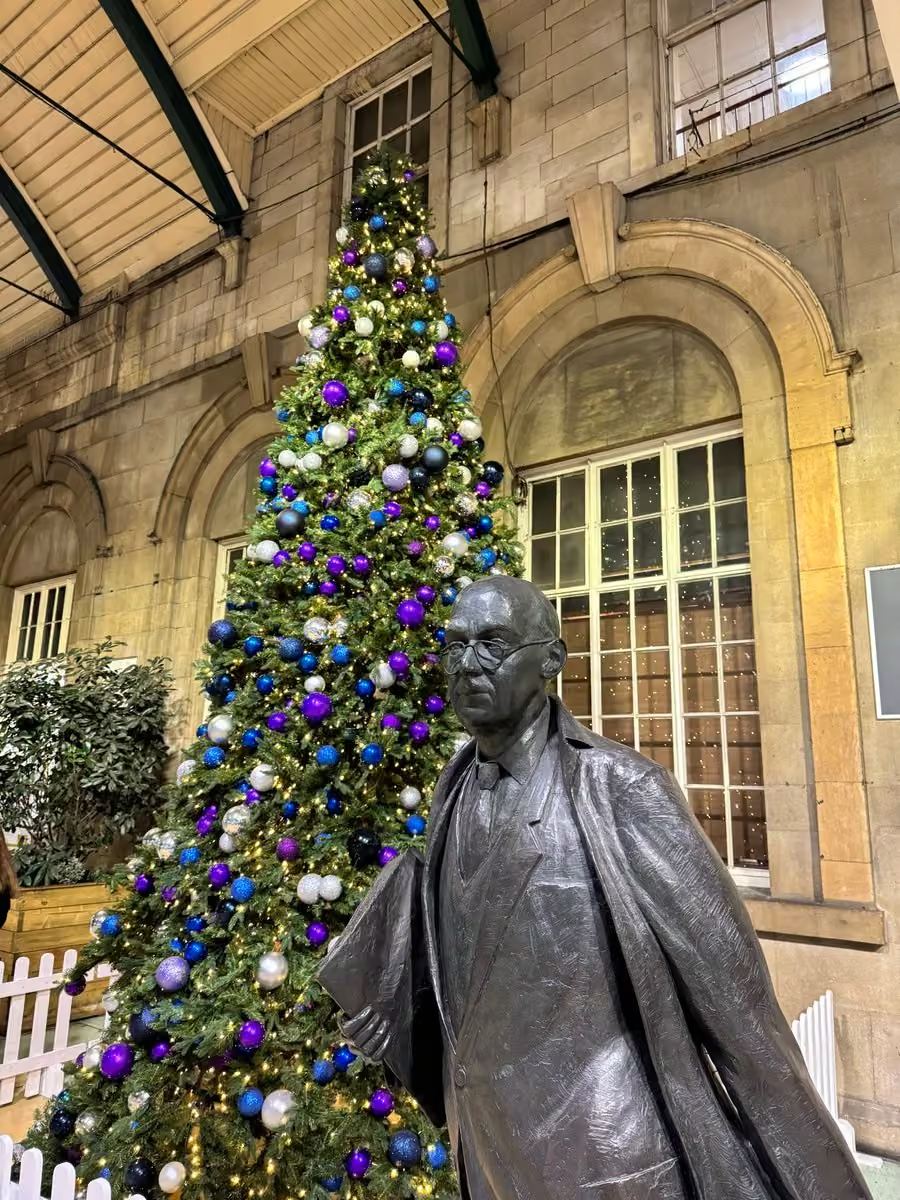
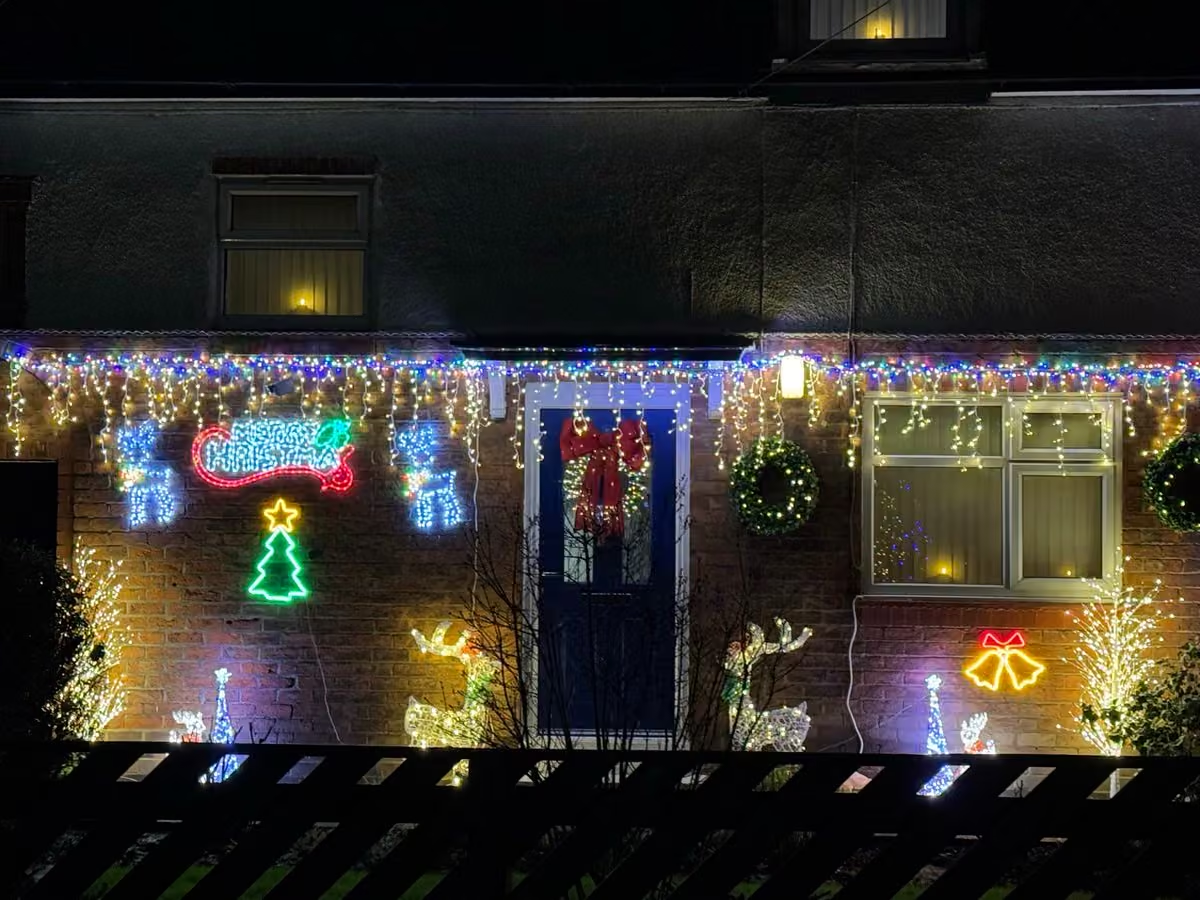
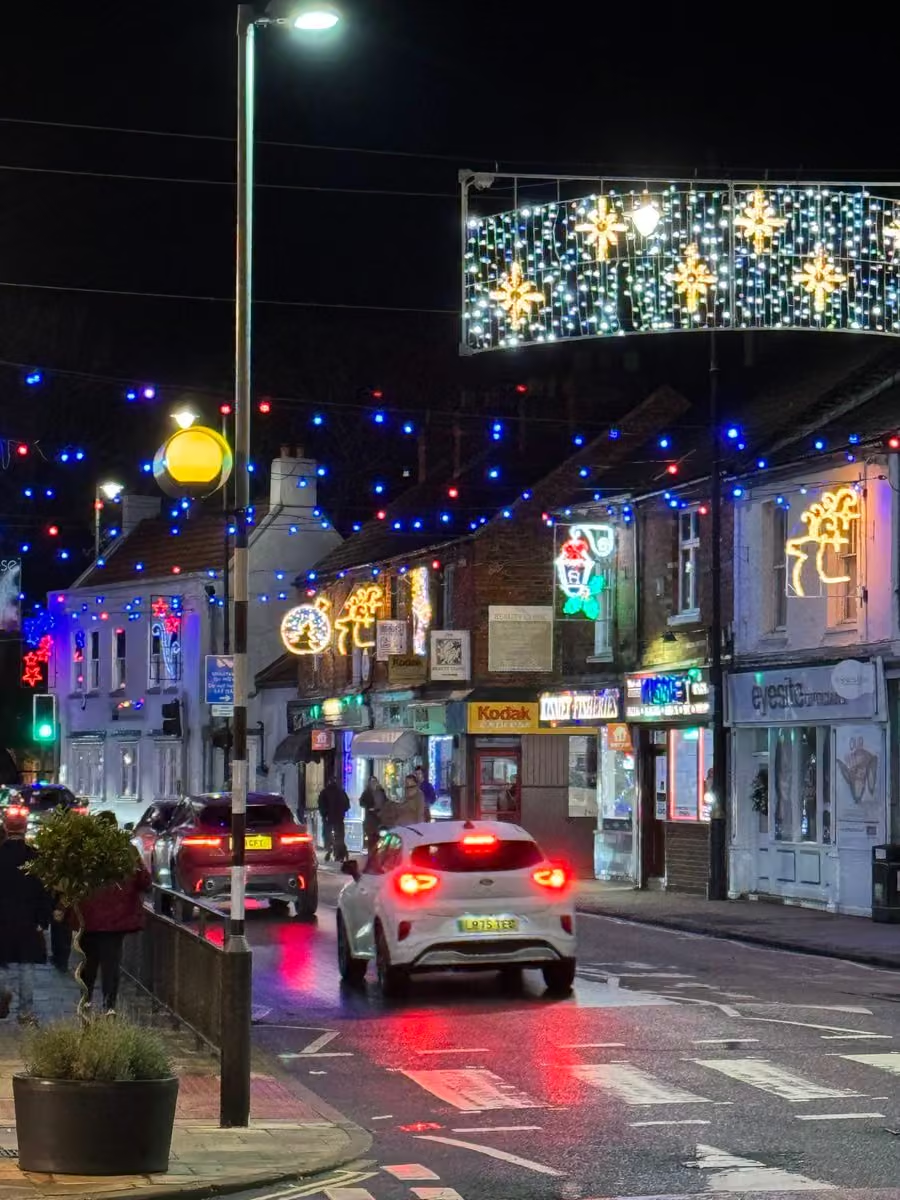
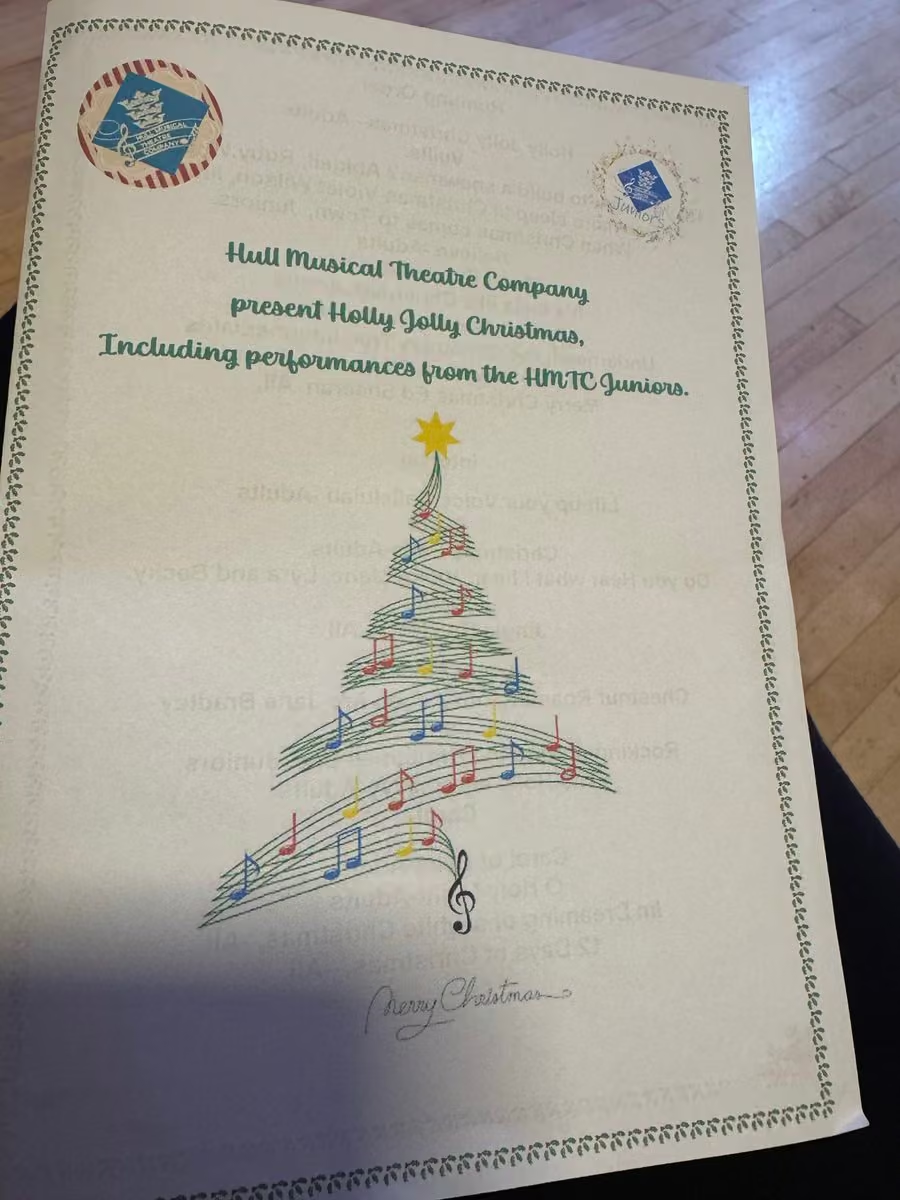 Diana Johnson DBE MP 🇬🇧🇺🇦🌈
@DianaJohnsonMP
Early detection saves lives. At my first mamogramne appointment age 50, early breast cancer was found and because of that I went on to get treatment quickly and recover. Always take up screening appointments @SU2CUK @NHS
 The Royal Family
@RoyalFamily
A special message from The King, in support of Stand Up To Cancer. 🧡
As part of this year’s @SU2CUK campaign, @CR_UK and @Channel4, with support from the @NHS, have launched a nationwide Screening Checker to help people find out which cancer screening programmes they are eligible for and seek helpful advice on the process.
🔗 screeningchecker.co.uk
Diana Johnson DBE MP 🇬🇧🇺🇦🌈
@DianaJohnsonMP
Happy Christmas, especially to the man in Cottingham yesterday who told me Christmas was being cancelled. It’s not!
 The Church of England
@churchofengland
Jesus Christ is always at the centre of Christmas. And everyone's invited to experience it with us.
Come and celebrate Christmas at a church near you.
Find services and events in your local community at achurchnearyou.com/christmas.
Diana Johnson DBE MP 🇬🇧🇺🇦🌈 reposted
 Ministry of Housing, Communities & Local Gov
@mhclg
Our National Plan to End Homelessness backed by £3.5 billion of investment will:
✅Increase the rate of prevention to protect thousands more households from homelessness
✅Halve the number of people experiencing long-term rough sleeping
✅End the unlawful use of B&Bs for families
Diana Johnson DBE MP 🇬🇧🇺🇦🌈
@DianaJohnsonMP
Constituents have complained to me about Evri parcels going to the wrong address, being left in insecure places, arriving late - or not at all. This is especially unacceptable during the Christmas period.
My letter asking what Evri are doing to sort out their service is below.

 Diana Johnson DBE MP 🇬🇧🇺🇦🌈
@DianaJohnsonMP
Or if they will introduce free or cut-price city centre parking in the weeks before Christmas, as @East_Riding Council have.
In response, the Council have outlined their traffic management plans. These do not include cutting parking costs.
See their response below
2/2

 Diana Johnson DBE MP 🇬🇧🇺🇦🌈
@DianaJohnsonMP
Driving in Hull can be difficult with roadworks and congestion. In the run-up to Christmas, the problems are only amplified.
I wrote to @Hullccnews to ask what they are doing to address concerns of local residents and businesses.
1/2
Diana Johnson DBE MP 🇬🇧🇺🇦🌈 reposted
 Keir Mather MP
@Mather_Keir
Today the Railways Bill comes to Parliament.
GBR will bring…
🚇 More reliable train services
🎫 Cheaper fares
♿️ A service for everyone
✋🏻 An end to decades of disruption
🚝 A secure future for our railways
We’re putting passengers first, putting Britain back on track 🛤️
Diana Johnson DBE MP 🇬🇧🇺🇦🌈
@DianaJohnsonMP
In @DWPgovuk Questions yesterday, I reminded the Shadow Secretary of State that the number of young people not in employment, education or training (NEETs) had soared by 50% under the previous Tory government.
Diana Johnson DBE MP 🇬🇧🇺🇦🌈 reposted
Torsten Bell
@TorstenBell
Telegraph headline: Employment slumps to 14-year low
Reality: employment today is 75% vs 70.3% in 2011
www.telegraph.co.uk/business/2025/12/08/employment-slumps…
Diana Johnson DBE MP 🇬🇧🇺🇦🌈 reposted
Pat McFadden
@patmcfaddenmp
Time to offer young people more hope.
They want to work.
They want to learn.
That's why we are bringing forward our Youth Guarantee offering more training and more jobs, backed by £820m of Government funding. www.bbc.co.uk/news/articles/cqlke33rzplo
Diana Johnson DBE MP 🇬🇧🇺🇦🌈
@DianaJohnsonMP
Delighted to celebrate this year’s Small Business Saturday champions!
Blondes Cruelty-Free Eatery in Cottingham and @levelhull in Hull North have become true cornerstones of our community — and it’s great to see them recognised.


Diana Johnson DBE MP 🇬🇧🇺🇦🌈 reposted
 Viviane: RNLI supporter, no Burnham fan
@LaindonFEMINIST
Another list of 12 announcements from our Labour government this week . The star is the Child Poverty Strategy. As a rich country we have to do better for our children. Thank goodness for our Labour Government. Sure/Best starts making massive contribution too.

Diana Johnson DBE MP 🇬🇧🇺🇦🌈 reposted
Natalie Fleet MP
@NatalieFleetMP
“We should see this system as not just about the distribution of benefits but ask ourselves: does it do everything it can to help people into work?”
Well worth a read from @patmcfaddenmp
⬇️⬇️⬇️ www.theguardian.com/politics/2025/dec/05/new-uk-child-pov…
Diana Johnson DBE MP 🇬🇧🇺🇦🌈
@DianaJohnsonMP
Cutting energy bills, boosting childcare, more free school meals and tackling poor temporary accommodation – Labour’s Child Poverty Strategy is an investment in our future. Ending the two-child limit alone will lift 3,710 children in Hull North and Cottingham out of poverty.

Diana Johnson DBE MP 🇬🇧🇺🇦🌈 reposted
Luke Pollard MP
@LukePollard
Proud to be part of a Labour government that’s on the side of our forces 🇬🇧
John Healey
@JohnHealey_MP
We’re helping 35,000 military personnel get home to their families this Christmas by covering the cost of their travel.
This is a government on the side of our forces - and their families.

Diana Johnson DBE MP 🇬🇧🇺🇦🌈 reposted
Bridget Phillipson
@bphillipsonMP
Proud to unveil the Child Poverty Strategy.
Child poverty is a scourge I grew up with, it is a scourge I want to end.
This government will drive the biggest reduction of child poverty in a single Parliament. This is how we get there.
www.gov.uk/government/publications/our-children-our-futur…
Diana Johnson DBE MP 🇬🇧🇺🇦🌈
@DianaJohnsonMP
I was proud to support the White Ribbon event in Parliament last night, hosted by @emily4MK, highlighting how important it is that #wespeakup to tackle casual sexism and violence against women and girls.
See www.whiteribbon.org.uk/white-ribbon-day
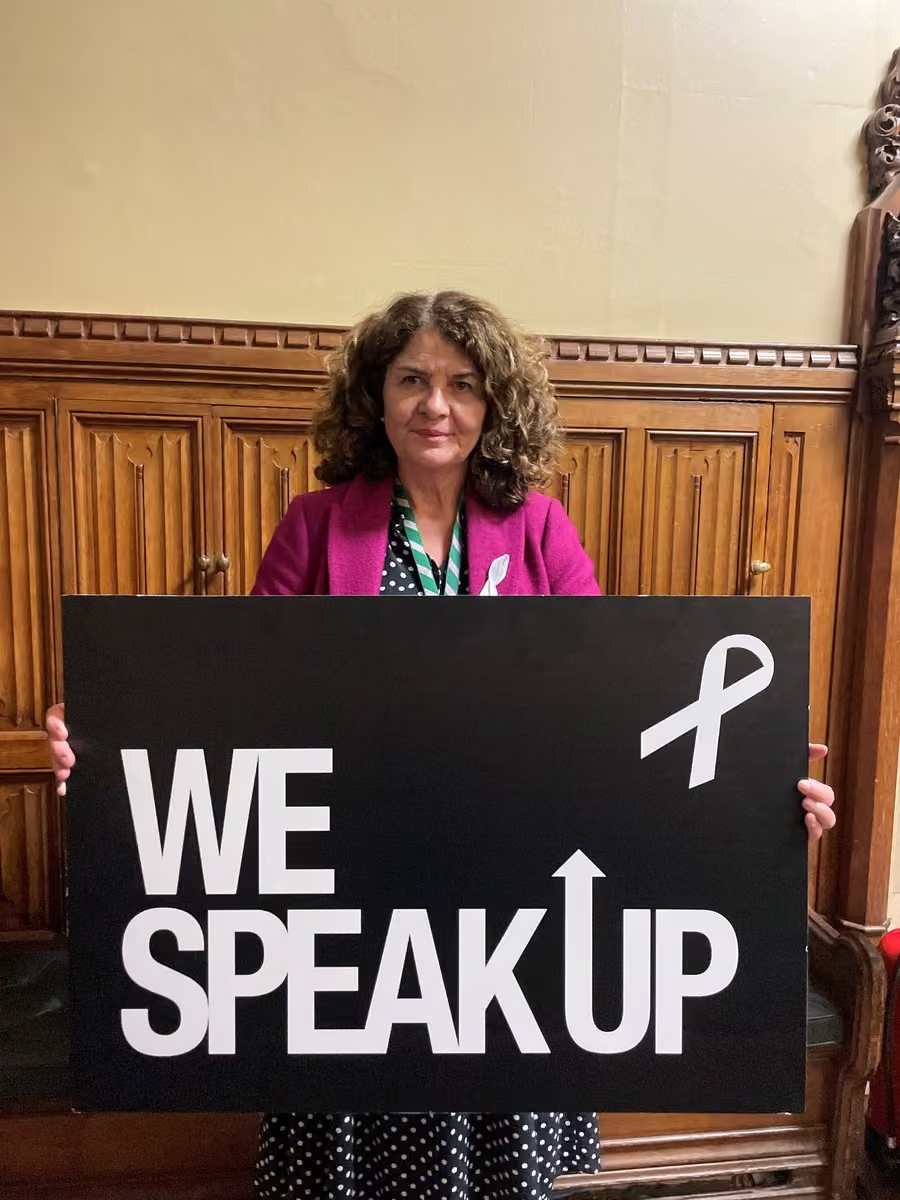 Diana Johnson DBE MP 🇬🇧🇺🇦🌈
@DianaJohnsonMP
Good to discuss skills and employment opportunities at Mayors Council today @Everton
Steve Reed
@SteveReedMP
Thanks @Everton for hosting us today for the Mayors' Council!
 Diana Johnson DBE MP 🇬🇧🇺🇦🌈
@DianaJohnsonMP
Two years ago today, MPs working across 10 parties defeated a Government three-line whip 246-242 to demand an end to delays on infected blood scandal compensation. Victims die every week and there's still much to do, but that night the tide finally turned in their favour. #nc27
Sky News
@SkyNews
BREAKING: MPs have voted in favour of an amendment requiring ministers to establish a new body to administer full compensation to victims of the infected blood scandal within three months of the bill becoming law.
Live: news.sky.com/story/dominic-raab-latest-deputy-pm-warns-of…
📺 Sky 501, Virgin 602 and YouTube
Diana Johnson DBE MP 🇬🇧🇺🇦🌈
@DianaJohnsonMP
I was delighted to visit @thoresbyprimary last week to tell Sajidah that I had chosen her colourful design for my Christmas card this year☃️
There were so many imaginative designs from Hull North and Cottingham pupils in my competition this year, but this one caught my eye!


Diana Johnson DBE MP 🇬🇧🇺🇦🌈 reposted
Department for Work and Pensions
@DWPgovuk
Thank you to the over 340 people who applied to join the steering group for the first full review of Personal Independence Payment
12 members will work closely with the co-chairs to guide and shape its recommendations
Find out more about the Timms Review www.gov.uk/government/news/disabled-people-to-shape-timms…
 Diana Johnson DBE MP 🇬🇧🇺🇦🌈
@DianaJohnsonMP
Walk to work this morning and starting to feel a lot like Christmas 🎄🎄🎄

Diana Johnson DBE MP 🇬🇧🇺🇦🌈 reposted
 The Lord Leong CBE
@SonnyLeong53
Love this
Chris Bryant
@RhonddaBryant
Trade minister does supermarket sweep
Diana Johnson DBE MP 🇬🇧🇺🇦🌈 reposted
Dan Tomlinson MP
@dantomlinsonmp
I know many hospitality businesses have seen their independent valuations go up since the pandemic.
That's why, for those seeing bills go up, our £4.3bn support package will cap most increases at 15% next year, and we've reduced tax rates for eligible High St businesses to rebalance the system for good.
www.mirror.co.uk/news/politics/dan-tomlinson-lower-bills-…
Diana Johnson DBE MP 🇬🇧🇺🇦🌈
@DianaJohnsonMP
The Christmas season is underway at Westminster…

Diana Johnson DBE MP 🇬🇧🇺🇦🌈 reposted
The Labour Party
@UKLabour
Today, we remember all those who have lost their lives to HIV-AIDS.
On World AIDS Day 2025, our Labour government is launching a new HIV Action Plan, backed by £170m of funding.
We will end new HIV transmissions by 2030.

Diana Johnson DBE MP 🇬🇧🇺🇦🌈 reposted
Torsten Bell
@TorstenBell
That is a lot of tweets. If you got this far you deserve a prize. Reasonable people will debate this growth strategy. But claiming there isn’t one is lazy nonsense. Higher growth matters because rising living standards are the goal, and higher investment is a key tool.
Diana Johnson DBE MP 🇬🇧🇺🇦🌈 reposted
Torsten Bell
@TorstenBell
And making sure we have functioning public service rather than returning to austerity is absolutely the pro-growth choice. Rescuing the NHS means workers who can turn up to work. Resurrecting neighbourhood police stops retailers having to pay for their own security guards.
Diana Johnson DBE MP 🇬🇧🇺🇦🌈 reposted
Torsten Bell
@TorstenBell
Rightly lots of debates about growth this weekend - rightly because it was low productivity growth that saw wages entirely flatline during the 2010s.

Diana Johnson DBE MP 🇬🇧🇺🇦🌈 reposted
David Pinto-Duschinsky MP
@DavidPintoD
Capital investment.
Not the flashiest part of this year's Budget, but one of the most vital for our future. Here's why 👇
Diana Johnson DBE MP 🇬🇧🇺🇦🌈 reposted
Gordon McKee MP
@GordonMcKeeMP
Nice to speak to @Telegraph about that video, and how many custard creams I’ve eaten.
www.telegraph.co.uk/news/2025/11/28/mp-gordon-mckee-inter…
Diana Johnson DBE MP 🇬🇧🇺🇦🌈 reposted
Dan Tomlinson MP
@dantomlinsonmp
To every business checking their new rateable value online, don’t forget that this government has your back with a £3.2bn transitional relief scheme and an expanded Support Small Business scheme. This will cap your bill increases, even if your property has become much more valuable.


Diana Johnson DBE MP 🇬🇧🇺🇦🌈 reposted
Department for Work and Pensions
@DWPgovuk
Fraudsters look for personal details to steal your identity
Do not share your full address, date of birth or National Insurance number on your CV
For more information visit actionfraud.police.uk
#fraudawareness
Diana Johnson DBE MP 🇬🇧🇺🇦🌈
@DianaJohnsonMP
Alongside Emma Hardy MP, I've responded to the Budget in the Hull Daily Mail.
As well as welcoming measures on the cost of living, poverty and growth, I'm pleased with the changes exempting the infected blood compensation scheme from Inheritance Tax.
www.hulldailymail.co.uk/news/news-opinion/hull-mps-say-bu…
Diana Johnson DBE MP 🇬🇧🇺🇦🌈 reposted
David Pinto-Duschinsky MP
@DavidPintoD
In the days after any budget, we hear lots of hot takes and analysis, some of it illuminating, much of it not. Amidst all the noise, remember: this is the chart that matters. 90% of households will be see a positive overall benefit.

Diana Johnson DBE MP 🇬🇧🇺🇦🌈 reposted
Sarah Champion
@SarahChampionMP
Fantastic to be part of #reclaimthenight #rotherham. Biggest attendance ever. ❤️
Diana Johnson DBE MP 🇬🇧🇺🇦🌈 reposted
Department for Work and Pensions
@DWPgovuk
"I want every young person in the country, no matter what their background is, no matter where they live, to be given the chance to succeed" - Work and Pensions Secretary Pat McFadden
Watch to find out how the Budget will make a positive difference to young people's lives
Diana Johnson DBE MP 🇬🇧🇺🇦🌈 reposted
Angus Young
@angus_young61
Good read on 1960s politics in Hull by @___TomWhite___
 Tom White
@___TomWhite___
Why did the "red-bearded radical" Richard Gott contest the 1966 Hull North byelection? And what does it have to do with the Humber Bridge?
Find out in the new @LRB!
www.lrb.co.uk/the-paper/v47/n22/tom-white/short-cuts
Diana Johnson DBE MP 🇬🇧🇺🇦🌈 reposted
 Hull Live
@hulllive
The famous Cottingham lights are on for 2025 ahead of Christmas Festival www.hulldailymail.co.uk/whats-on/whats-on-news/gallery/fa…
Diana Johnson DBE MP 🇬🇧🇺🇦🌈 reposted
Natalie Fleet MP
@NatalieFleetMP
I will never forget being in the chamber,
behind our first woman chancellor,
as she announced the abolition of the Rape Clause.
On behalf of the women who give birth every day as a result of rape; thank you.

Diana Johnson DBE MP 🇬🇧🇺🇦🌈 reposted
Cabinet Office
@cabinetofficeuk
The Budget today confirmed that inheritance tax reliefs for infected blood compensation payments will be extended. The Minister for the Cabinet Office explains below what that means for you.
The full guidance can be found on gov.uk: www.gov.uk/government/publications/inheritance-tax-and-in…
Diana Johnson DBE MP 🇬🇧🇺🇦🌈 reposted
 The Haemophilia Society's Inquiry Team
@HaemoSocUK_PI
Chancellor Rachel Reeves announces that she'll exempt all payments from the Infected Blood Compensation Scheme from Inheritance Tax 'regardless of the circumstances in which those payments are passed down'. Welcome news, we await full details.

Diana Johnson DBE MP 🇬🇧🇺🇦🌈 reposted
Rachel Reeves
@RachelReevesMP
Tackling child poverty is a moral duty.
That’s why I’m ending the two child limit - so every child has the chance to thrive.
This will lift hundreds of thousands out of poverty and help break the cycle of disadvantage for good.
Diana Johnson DBE MP 🇬🇧🇺🇦🌈 reposted
Gordon Brown
@GordonBrown
Rachel Reeves has today done more to transform the lives of 450,000 of Britain’s poorest children than any of the seven previous Conservative chancellors, who, in 14 long years, did nothing but harm to the lives of vulnerable children.
www.newstatesman.com/politics/uk-politics/2025/11/the-two…
Diana Johnson DBE MP 🇬🇧🇺🇦🌈 reposted
Liz Kendall
@leicesterliz
Proud to have co-chaired Child Poverty Taskforce and be part of a Labour government that is lifting more than half-a-million children out of poverty by scrapping the 2-child limit. Every child deserves the best start in life and that’s what we’re delivering
Diana Johnson DBE MP 🇬🇧🇺🇦🌈 reposted
The Labour Party
@UKLabour
Labour is taking action so we can lift the largest number of children out of poverty in a single Parliamentary term.

Diana Johnson DBE MP 🇬🇧🇺🇦🌈 reposted
UsdawUnion
@UsdawUnion
An open letter to @ZackPolanski
We hope that Green Party Peers will see sense and commit to backing working people ✅
 Diana Johnson DBE MP 🇬🇧🇺🇦🌈
@DianaJohnsonMP
I'm speaking up for women and girls this #whiteribbonday.
I am committed to using my voice as an MP to ending violence against women and girls.
'We Speak Up' is a call to action, especially for men, to use their voices when they see or hear something that isn't right.
Diana Johnson DBE MP 🇬🇧🇺🇦🌈 reposted
Pat McFadden
@patmcfaddenmp
Today we have announced our response to the review into Carer's Allowance.
We inherited a mess. We are sorting it out. We strongly value the work carers do.
Department for Work and Pensions
@DWPgovuk
"I'm glad Government now plans to review cases and cancel or reduce debts affected by flawed guidance" - Liz Sayce
The independent review into Carer's Allowance has been published and we're accepting the vast majority of its recommendations
Diana Johnson DBE MP 🇬🇧🇺🇦🌈 reposted
Department for Work and Pensions
@DWPgovuk
Looking for a seasonal job? Now is the time to make it happen. Don’t wait – roles are filling fast!
Apply now www.gov.uk/find-a-job
#seasonaljobs #jobsearch

Diana Johnson DBE MP 🇬🇧🇺🇦🌈 reposted
The Labour Party
@UKLabour
Rail fares frozen. Prescription charges kept under a tenner.
This Labour government is committed to reducing the cost of living for you and your family.
Diana Johnson DBE MP 🇬🇧🇺🇦🌈 reposted
Dan Bloom
@danbloom1
Foreign Sec Yvette Cooper writes for Politico on rape being used “systematically as a weapon of war” in Sudan and beyond
www.politico.eu/article/yvette-cooper-sudan-beyond-women-…
Diana Johnson DBE MP 🇬🇧🇺🇦🌈 reposted
Dan Jarvis MP
@DanJarvisMBE
A billion-dollar money laundering scheme exposed — thanks to the @NCA_UK's relentless work.
We work tirelessly to detect, disrupt, and bring the perpetrators to justice. We will not tolerate hostile activity in our country.
 National Crime Agency (NCA)
@NCA_UK
Operation Destabilise: the NCA has exposed a billion-dollar money laundering network that purchased a bank to fund the Russian war effort.
Read the full story ➡️ www.nationalcrimeagency.gov.uk/news/operation-destabilise…
@metpoliceUK @gardainfo


Diana Johnson DBE MP 🇬🇧🇺🇦🌈 reposted
Dan Jarvis MP
@DanJarvisMBE
Using public office to push Russia’s malign agenda is a betrayal of our country, our people, and our national security.
Nathan Gill will now face the consequences of his actions.
We’ll continue to do what is necessary to disrupt and deter interference from foreign states.
 Metropolitan Police
@metpoliceuk
💰 Ex-MEP Nathan Gill jailed for 10 years today after a Met-led @TerrorismPolice investigation found he took bribes to promote pro-Russian narratives in Ukrainian media and the EU Parliament.
This investigation was helped by @FBI and EU partners.
Diana Johnson DBE MP 🇬🇧🇺🇦🌈 reposted
Pat McFadden
@patmcfaddenmp
Reform's former leader in Wales. Jailed for taking bribes to parrot Kremlin propaganda.
It's also against the UK national interest to parrot Kremlin propaganda for free.
Metropolitan Police
@metpoliceuk
💰 Ex-MEP Nathan Gill jailed for 10 years today after a Met-led @TerrorismPolice investigation found he took bribes to promote pro-Russian narratives in Ukrainian media and the EU Parliament.
This investigation was helped by @FBI and EU partners.
Diana Johnson DBE MP 🇬🇧🇺🇦🌈 reposted
Wes Streeting
@wesstreeting
Last year we froze prescription charges for the first time in years.
We’re freezing prescription charges AGAIN - and we’ve kept all the exemptions for those who need them.
Diana Johnson DBE MP 🇬🇧🇺🇦🌈 reposted
Department for Work and Pensions
@DWPgovuk
Protect yourself from online fraud
Keep your sensitive information off social media and out of Direct Messages
Do not share your:
- Full name and date of birth
- National Insurance number
- Answers to security questions
Visit actionfraud.police.uk
#fraudawareness
Diana Johnson DBE MP 🇬🇧🇺🇦🌈 reposted
The Labour Party
@UKLabour
NEW: Half a million more children will benefit from Labour's free breakfast clubs from April next year.
 Diana Johnson DBE MP 🇬🇧🇺🇦🌈
@DianaJohnsonMP
Today is #carersrightsday.
Every day, 12,000 people become unpaid carers and are often unaware of their rights and what they’re entitled to. This year’s theme is ‘Know your rights, use your rights’.
I am joining Carers UK today to spread the word - go.carersuk.org/CRD.
Diana Johnson DBE MP 🇬🇧🇺🇦🌈 reposted
Sky News
@SkyNews
Foreign Secretary Yvette Cooper says a change in German law is expected to pass before Christmas to allow the UK and German police to jointly pursue the criminal gangs behind the small boat Channel crossings.
news.sky.com
📺 Sky 501 and YouTube
Diana Johnson DBE MP 🇬🇧🇺🇦🌈
@DianaJohnsonMP
My best wishes to all those attending the Infected Blood Commemorative Event in Westminster today. Alongside justice, we need to ensure that the stories of those infected and affected in 50 years of the scandal are told and the lessons never forgotten. @bloodinquiry

Diana Johnson DBE MP 🇬🇧🇺🇦🌈 reposted
Lilian Greenwood
@LilianGreenwood
On #roadsafetyawareness Week I’m proud to be delivering Labour’s first national Road Safety Strategy in over a decade. Every life lost on our roads is one too many - this plan will cut deaths, reduce injuries & restore confidence so every journey is a safe one. 🚦

Diana Johnson DBE MP 🇬🇧🇺🇦🌈 reposted
Pat McFadden
@patmcfaddenmp
Decade after decade, song after song, show after show. With thanks for all the music. I wrote a little review of Deliver me From Nowhere, the Springsteen biopic, for The House Magazine. @springsteen
 PoliticsHome
@politicshome
"With its outstanding lead performance, this biopic transported me back to my teenage years, listening to the Boss in a pub on Glasgow’s south side. Go and see it if you can"
🎬@patmcfaddenmp reviews 'Deliver Me from Nowhere' | #springsteen @20thcentury
www.politicshome.com/news/article/pat-mcfadden-reviews-sp…
Diana Johnson DBE MP 🇬🇧🇺🇦🌈 reposted
Labour Press
@labourpress
Spot the difference 👀


Diana Johnson DBE MP 🇬🇧🇺🇦🌈 reposted
 Deborah Annetts
@DeborahAnnetts
Totally agree and thank you @KeeleyMP
 ISM
@ISM_music
An important question by @KeeleyMP, who asks government to reinstate bursaries for trainee music teachers
If music education is to return to the heart of the curriculum, we desperately need more teachers to deliver it ⬇️
Diana Johnson DBE MP 🇬🇧🇺🇦🌈 reposted
Bridget Phillipson
@bphillipsonMP
LATEST: Reform schools policy
💰Cut state school budgets to restore private school tax breaks
✂️ Special needs identified as area for cuts
🥶 Make 8 year olds walk 5 miles to school in Winter
👎 Children with SEND called 'naughty'
Only Labour will support every child to thrive.
Diana Johnson DBE MP 🇬🇧🇺🇦🌈 reposted
 Down's Syndrome Association
@DSAInfo
Ben has recently started his new role as a Linen Porter with the team at @DoubleTree / @leafhospitality.
They’ve been really supportive in helping him settle in, and they continue to welcome people who have Down's syndrome into meaningful employment. Lincoln and Ena will also be starting with another of their teams next week.
Not only are they supporting people into jobs, but they’ve also donated raffle prizes to WorkFit Officer Sarah’s fundraising — a kind and appreciated gesture.💚
Shout out to Emma Hewitt for her ongoing support.
@DianaJohnsonMP
#workfit #inclusiveemployment #supportedemployment @TNLComFund

Diana Johnson DBE MP 🇬🇧🇺🇦🌈 reposted
Department for Work and Pensions
@DWPgovuk
Help shape welfare and disability policy.
Join the Timms Review steering group to make recommendations on improving how Personal Independence Payment supports disabled people.
Apply now: www.gov.uk/government/publications/expression-of-interest…
Diana Johnson DBE MP 🇬🇧🇺🇦🌈
@DianaJohnsonMP
With 1 in 8 young people not in education, employment or training – an issue particularly affecting many neurodivergent individuals – the importance of tailored training cannot be overstated.
1/2
Diana Johnson DBE MP 🇬🇧🇺🇦🌈
@DianaJohnsonMP
Excellent work is already taking place in our special schools - such as Northcott in my constituency. This approach should be replicated across the country.
2/2
Diana Johnson DBE MP 🇬🇧🇺🇦🌈
@DianaJohnsonMP
I'm discussing some of the issues of the week with @natalieben and @DavidDavisMP on @ITVLastOrders, ITV1 tonight at 10.50pm - hosted by @freddimbleby.
It's already available at www.itv.com/news/calendar/2025-11-13/last-orders-facial-r….
 Diana Johnson DBE MP 🇬🇧🇺🇦🌈
@DianaJohnsonMP
It was a setback for Hull in 2019 when @marksandspencer closed their main store in the city that had been in Whitefriargate for 88 years.
I've now written to their CEO asking for an update on the welcome plans reported earlier this year to open a full-size store in Kingswood.

Diana Johnson DBE MP 🇬🇧🇺🇦🌈 reposted
 Vera Baird DBE KC
@VeraBaird
This is absolutely awful news.
Helen transformed her own pain as a victim into a relentless drive to champion others.
A remarkable & also a lovely woman.
Victims' campaigner Baroness Newlove dies after 'short illness' age 63 mol.im/a/15284515 via @DailyMail
Diana Johnson DBE MP 🇬🇧🇺🇦🌈
@DianaJohnsonMP
Last week, I placed a cross for Hull North and Cottingham in the House of Commons Memorial Garden. On Remembrance Sunday, I laid a wreath on behalf of constituents at Hull's Cenotaph. This morning we marked the Armistice Day at @DWPgovuk.
Remembering those who never returned.
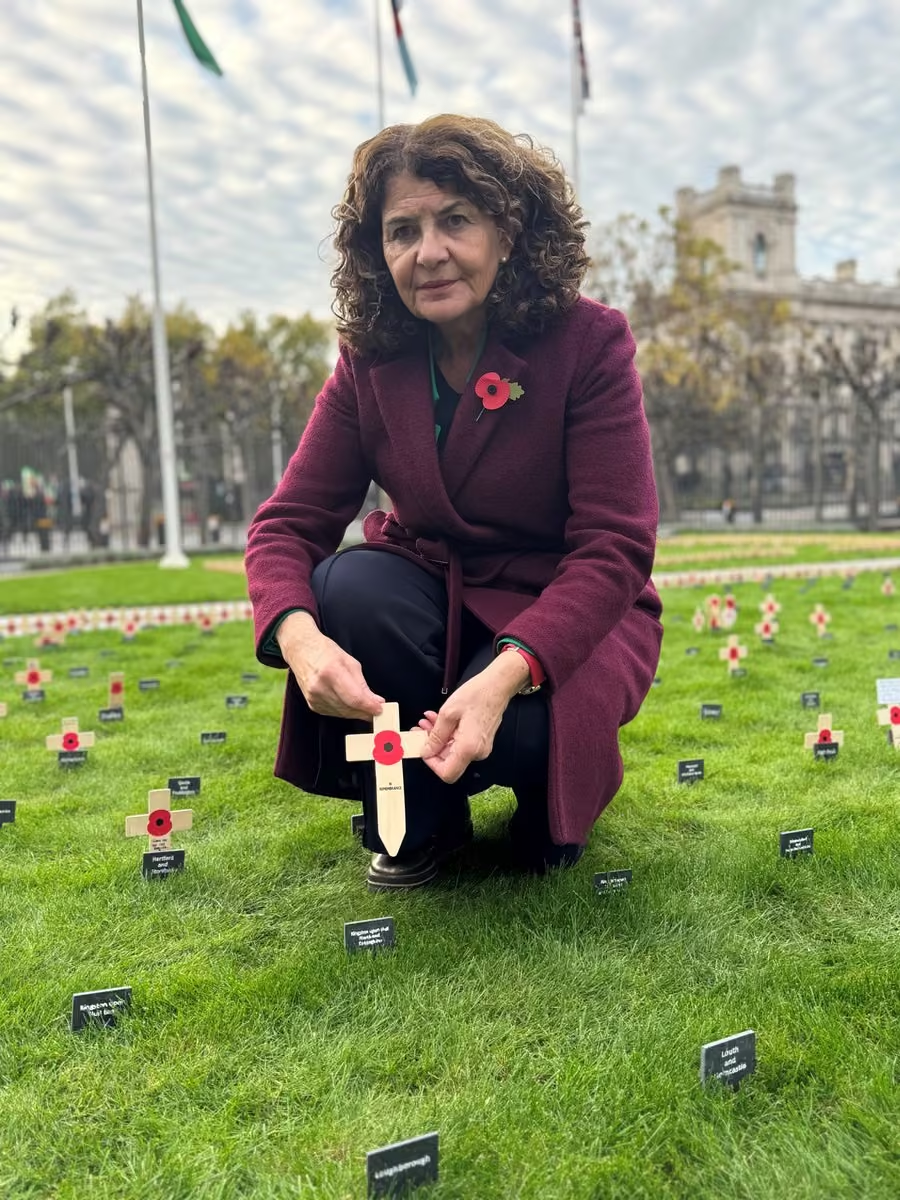

Diana Johnson DBE MP 🇬🇧🇺🇦🌈 reposted
Department for Work and Pensions
@DWPgovuk
If you get a text about the "Winter Fuel Payment" or the "Winter Fuel Allowance", it is a scam
Winter Fuel Payments are automatic, you do not need to do anything
Report suspicious texts at stopthinkfraud.campaign.gov.uk

Diana Johnson DBE MP 🇬🇧🇺🇦🌈 reposted
Department for Work and Pensions
@DWPgovuk
We believe in young people
Work and Pensions Secretary Pat McFadden opened a new Youth Hub at @theposh part of a £25 million investment to double the number of hubs nationwide and help young people move from education into opportunity
Diana Johnson DBE MP 🇬🇧🇺🇦🌈 reposted
Department for Work and Pensions
@DWPgovuk
"Brandon's story shows what happens when we back talent instead of writing it off." - Minister for Social Security and Disability, Sir Stephen Timms
Brandon started a business designing visually accessible products supported by Devonport Jobcentre and The King's Trust
Diana Johnson DBE MP 🇬🇧🇺🇦🌈 reposted
Department for Work and Pensions
@DWPgovuk
We have commissioned an independent investigation into youth inactivity, led by Alan Milburn, to help more young people into work, education or training
www.gov.uk/government/news/independent-investigation-to-b…
Diana Johnson DBE MP 🇬🇧🇺🇦🌈 reposted
Politics UK
@PolitlcsUK
🚨📸 PICTURED: Big Ben lit up with poppies tonight for Remembrance Sunday

Diana Johnson DBE MP 🇬🇧🇺🇦🌈 reposted
Hull Images
@HullImages
The beautiful Remembrance display in Paragon Station.
#hull #yorkshire #travel #architecture #photography #remembrancesunday #lestweforget

Diana Johnson DBE MP 🇬🇧🇺🇦🌈 reposted
Lord Hanson of Flint Labour Peer & Minister
@RTHondavehanson
Today I will be remembering all those who lost their lives in war but a special thought to my,uncle Alec Jones,who died aged 16 on 12th May 1942 when his ship was sunk by U69
He is named on @CWGC site at Tower Hill,the memorial for those seaman with no known grave. #lestweforget


 Diana Johnson DBE MP 🇬🇧🇺🇦🌈
@DianaJohnsonMP

Diana Johnson DBE MP 🇬🇧🇺🇦🌈 reposted
Pat McFadden
@patmcfaddenmp
The number of young people not in employment, education or training has been rising for years.
We believe in Britain's young people. We want to offer them hope. And we won't turn away from this crisis of opportunity.
www.thetimes.com/article/2e6b46bb-6cb2-4b54-87b7-d19ef077…
Diana Johnson DBE MP 🇬🇧🇺🇦🌈 reposted
Department for Work and Pensions
@DWPgovuk
Looking for a fresh start this autumn?
A seasonal job can help you learn new skills and gain great experience.
Find your new role and apply now www.gov.uk/find-a-job
#seasonaljobs #jobsearch

Diana Johnson DBE MP 🇬🇧🇺🇦🌈 reposted
Hull Images
@HullImages
An autumnal looking Prince Street.
#hull #yorkshire #travel #architecture #photography #history #autumn #fall

Diana Johnson DBE MP 🇬🇧🇺🇦🌈 reposted
Lord Hanson of Flint Labour Peer & Minister
@RTHondavehanson
This was magnificent and a must watch - the brutality of Republican machine politics , hope in post civil war America , and a sad tale of family & loss - it looked like 1880s 🇺🇸, had great acting ,& script ,an was an unstoppable binge watch for us last night .👇
 Netflix
@netflix
This is the story of President James Garfield and his greatest admirer Charles Guiteau, the man who would come to kill him.
Michael Shannon, Matthew Macfadyen, Nick Offerman, Betty Gilpin, Bradley Whitford and Shea Whigham star in Death By Lightning. Premiering November 6.
Diana Johnson DBE MP 🇬🇧🇺🇦🌈 reposted
Cock of the Walk
@cock_ofthewalk
Darren and Tarquin wait by the tree outside the shop, as I lock up. Darren carries a couple of loaves of bread from the bakery round the corner. Tarquin has clearly spotted his next mark.

Diana Johnson DBE MP 🇬🇧🇺🇦🌈 reposted
Lord Norton of Louth
@LordNortonLouth
Elections guru Sir John Curtice addressing @UniOfHull @PoliticsatHull Sixth-form Conference on whether we are seeing end of two-party politics
 Diana Johnson DBE MP 🇬🇧🇺🇦🌈
@DianaJohnsonMP
A moving service at Hull Paragon Interchange this morning, honouring those who served and departed from Hull during wartime and marking the contribution of the railways to our armed forces over the past 200 years.


Diana Johnson DBE MP 🇬🇧🇺🇦🌈 reposted
 Josh MacAlister MP
@JoshMacAlister
Won’t get much attention but this is big news!
Elisabeth & David, founders of @OperationEncomp, came into @educationgovuk ahead of the new duty on police forces to notify schools of domestic abuse incidents.
This power comes into force today.
(Wearing an Op Encompass scarf!)

Diana Johnson DBE MP 🇬🇧🇺🇦🌈 reposted
Department for Work and Pensions
@DWPgovuk
International defence company Babcock’s Neurodiversity Network champions its 30% neurodivergent workforce
Through Access to Work grants and sector-based academy programmes, they’ve built a workplace where everyone thrives
Diana Johnson DBE MP 🇬🇧🇺🇦🌈 reposted
 Sam Carling MP🌹
@sam_carling_
Good jobs and opportunities for young people are vital.
Great to welcome DWP Secretary @patmcfaddenmp to the Weston Homes Stadium to open a new Youth Hub - helping connect young people in North West Cambridgeshire with local employers and support.
Diana Johnson DBE MP 🇬🇧🇺🇦🌈
@DianaJohnsonMP
Honoured to be part of the #40percentproject, celebrating the record 264 women now in the Commons — 40% of all MPs!
Grateful to local photographer, Abbie Jennings, for capturing my portrait and to all the talented women behind this inspiring project.
#rpswomeninphotography
 Diana Johnson DBE MP 🇬🇧🇺🇦🌈
@DianaJohnsonMP
Yesterday, the Government took a major step forward with The Railways Bill.
This landmark legislation will transform our railways, paving the way for a simpler, integrated, more reliable network - putting service to passengers before profits.
Diana Johnson DBE MP 🇬🇧🇺🇦🌈
@DianaJohnsonMP
The Railways Bill creates Great British Railways - owned by the public, for the public.
Diana Johnson DBE MP 🇬🇧🇺🇦🌈 reposted
Pat McFadden
@patmcfaddenmp
More work.
More opportunity.
More earning power.
A pleasure to launch West Midlands Works with our mayor Richard Parker. @RichParkerLab www.bbc.co.uk/news/articles/cz91vzqgzlwo
Diana Johnson DBE MP 🇬🇧🇺🇦🌈
@DianaJohnsonMP
Helping our businesses export to the world means higher growth, rising wages and more jobs. This Government's trade deals aren't just ink on paper - they will get living standards rising across Hull North and Cottingham.
I'm proud to support International Trade Week.
Diana Johnson DBE MP 🇬🇧🇺🇦🌈 reposted
Department for Work and Pensions
@DWPgovuk
Tomorrow: A new approach to health and work
Sir Charlie Mayfield's Keep Britain Working Review will be published tomorrow - informed by thousands who shared their stories to help shape real solutions for staying in and returning to work
#keepbritainworking
Diana Johnson DBE MP 🇬🇧🇺🇦🌈 reposted
Bridget Phillipson
@bphillipsonMP
I won’t stop banging the drum on child poverty.
It’s our moral mission to tackle it.
Diana Johnson DBE MP 🇬🇧🇺🇦🌈 reposted
Department for Work and Pensions
@DWPgovuk
We’re determined to break down barriers to work for disabled people through:
- £1 billion investment in employment support by 2030
- Tailored programmes like Connect to Work
- Partnership with employers
Every person who can work deserves that chance.
#keepbritainworking
Diana Johnson DBE MP 🇬🇧🇺🇦🌈
@DianaJohnsonMP
Yesterday, we moved one step closer to justice.
The Hillsborough Law will ensure no family or community ever has to walk alone in the fight for truth. The need for this law was shown clearly by the @bloodinquiry
and in many other scandals and cover-ups.
Diana Johnson DBE MP 🇬🇧🇺🇦🌈 reposted
Heidi Alexander MP
@Heidi_Labour
From the updates I’ve received throughout the day, it’s crystal clear that the actions of @LNER and @BTP staff last night were heroic and saved lives.
My thoughts remain with the LNER staff member in hospital and their family.
www.btp.police.uk/news/btp/news/england/investigation-upd…
Diana Johnson DBE MP 🇬🇧🇺🇦🌈 reposted
Shabana Mahmood MP
@ShabanaMahmood
I am deeply saddened to hear about the stabbings in Huntingdon.
My thoughts go out to all those affected.
Two suspects have been immediately arrested and taken into custody.
I am receiving regular updates on the investigation.
I urge people to avoid comment and speculation at this early stage.
Diana Johnson DBE MP 🇬🇧🇺🇦🌈 reposted
Keir Starmer
@Keir_Starmer
The appalling incident on a train near Huntingdon is deeply concerning.
My thoughts are with all those affected, and my thanks go to the emergency services for their response.
Anyone in the area should follow the advice of the police.
Diana Johnson DBE MP 🇬🇧🇺🇦🌈 reposted
Dr Marie Tidball MP
@MarieTidball
Utterly blown away to have won the @spectator Parliamentarian of the Year Award 😊 @michaelgove @JamesCleverly


Diana Johnson DBE MP 🇬🇧🇺🇦🌈 reposted
 Stefan Moore ★
@2StefanMoore
This is Barnie. For nearly six years, he lived behind the bars of a shelter. No one chose him. Too big, too old, too “plain,” some said. But Barnie never lost hope. And, he never let go of his stuffed monkey, his beloved plush toy that had been patched up by volunteers more times than anyone could count. It wasn’t just a toy—it was his comfort, his friend, the symbol of the home he dreamed of.
Years went by. Puppies were adopted, younger dogs found families. Barnie stayed. Until one day, someone really saw him—saw the kindness in his tired eyes—and decided to take a chance.
Now Barnie is home. Still carrying his toy, but no longer as a source of comfort. He holds it with pride now. As if to say, “I told you someone would love me someday.”
There is someone for everyone. Never give up hope. Hope is a beautiful thing!

Diana Johnson DBE MP 🇬🇧🇺🇦🌈 reposted
The Labour Party
@UKLabour
Reform and the Tories voted AGAINST
❌ Banning no fault evictions
❌ An end to bidding wars
❌ More notice for tenants if a landlord is selling up

Diana Johnson DBE MP 🇬🇧🇺🇦🌈 reposted
UK Prime Minister
@10DowningStreet
Hundreds of thousands of families will receive a £150 discount off their energy bill this winter.
Putting money back in your pocket when it’s needed most.
Diana Johnson DBE MP 🇬🇧🇺🇦🌈 reposted
 Uma Kumaran MP
@Uma_Kumaran
Calvin is one of the most decorated men to serve in Parliament
Wing Commander Bailey. Led the last evacuation flights from Afghanistan as an RAF pilot
He’s now serving our country as an MP
Just look at the replies. There’s a deep rot that’s set. And it’s been enabled by Reform
 Calvin Bailey MBE MP
@CalvinBailey
“I am Black British. That is who I am, and I want you to know both of those things.”
I am proud of my British Zambian heritage and to call London my home.
Our identities connect us to our shared history & values: freedom, democracy & the rule of law.
#blackhistorymonth debate w/ @DawnButlerBrent.
Diana Johnson DBE MP 🇬🇧🇺🇦🌈 reposted
Department of Health and Social Care
@DHSCgovuk
We're making menopause a key part of conversations about women's health by including it in the NHS health check.
Baroness Merron visited Killick Street Health Centre @NCL_ICS to hear from patients and staff who welcomed the news.
More: www.gov.uk/government/news/major-nhs-update-brings-menopa…
Diana Johnson DBE MP 🇬🇧🇺🇦🌈 reposted
Department for Work and Pensions
@DWPgovuk
"My priority is to have a welfare state which looks after people when times are tough but also provides a platform of opportunity to help get them out of welfare" Work and Pensions Secretary Pat McFadden
Diana Johnson DBE MP 🇬🇧🇺🇦🌈
@DianaJohnsonMP
This afternoon’s annual service at @botolph_s to remember those who died in the Infected blood scandal was as ever incredibly moving and poignant. The campaigning of victims and families over so many years to uncover the truth and seek justice remains an inspiration. @HaemoSocUK


Diana Johnson DBE MP 🇬🇧🇺🇦🌈 reposted
Cock of the Walk
@cock_ofthewalk
Darren's literally come to work today dressed as the French louvre detective.
Captured in the early morning light, Darren wears:
Full Bespoke 11oz chocolate flannel trousers.
Full Bespoke 13oz black watch Tartan vest.
Full Bespoke 22oz Navy Wool overcoat.
#madeinhull

Diana Johnson DBE MP 🇬🇧🇺🇦🌈 reposted
Tracy Brabin, Mayor of West Yorkshire
@MayorOfWY
We’re championing innovative ways to help people back into work.
Today, we welcomed @DianaJohnsonMP to Wakefield to see the new National Jobs and Careers Service pilot in action.
By supporting people into good jobs, we can build a brighter, stronger region for everyone.
 Diana Johnson DBE MP 🇬🇧🇺🇦🌈
@DianaJohnsonMP
At my Orchard Centre drop-in event this morning, I discussed cost-of-living issues with constituents and many of those who do great work giving local people help and advice on the daily challenges that so many face. Many thanks to all who came along. @HullandERCAB @HumberbeatHULL


Diana Johnson DBE MP 🇬🇧🇺🇦🌈 reposted
Hull Live
@hulllive
MP tours new £19.2m Hull technology centre ahead of opening www.hulldailymail.co.uk/news/hull-east-yorkshire-news/mp-…
Diana Johnson DBE MP 🇬🇧🇺🇦🌈 reposted
 Women's Aid
@womensaid
Claire Throssell, our survivor ambassador, on the government's recent decision to repeal the presumption of parental contact.
Claire has led our Child First campaign for over a decade in memory of her sons Jack and Paul. This was a big milestone, but not the end 💜
Diana Johnson DBE MP 🇬🇧🇺🇦🌈 reposted
 HMICFRS
@HMICFRS
We welcome the launch of the new Police Leadership Commission.
Good leadership is vital in improving the efficiency and effectiveness of police forces.
We will be conducting an independent inspection of police leadership in 2026 and will consider the Commission's findings.
 College of Policing
@CollegeofPolice
The new Police Leadership Commission, led by Lord Blunkett and Lord Herbert, launched today. The Commission will work to identify where improvements can be made to ensure a consistent standard of leadership in every force across the country: www.college.police.uk/article/new-police-leadership-commi…
⬇️
1/3

Diana Johnson DBE MP 🇬🇧🇺🇦🌈 reposted
Department of Health and Social Care
@DHSCgovuk
👩 Menopause will be included in NHS health checks for the first time to help millions of women get the support they need.
GP @Dr_Ellie explains why this is important ⬇️
We're overhauling women's healthcare as we build an NHS fit for the future.
More: www.gov.uk/government/news/major-nhs-update-brings-menopa…
Diana Johnson DBE MP 🇬🇧🇺🇦🌈 reposted
Pat McFadden
@patmcfaddenmp
Some stories make the world seem better.
Delighted that Asda have offered Tom Boyd a job, showing that neurodiversity can be combined with work.
Well done to Tom. www.bbc.co.uk/news/articles/c98n53dpzx6o?app-referrer=dee…
Diana Johnson DBE MP 🇬🇧🇺🇦🌈 reposted
Dr Marie Tidball MP
@MarieTidball
Today marks the 11th anniversary since the tragic deaths of Jack and Paul Sykes, who died at the hands of their known domestically abusive farther in a house fire he set alight.
It is also the day that their mother's promised to them is fulfilled 🧵
Diana Johnson DBE MP 🇬🇧🇺🇦🌈
@DianaJohnsonMP
I'm pleased to see @NatGeo highlight Hull as one of the best destinations to visit globally in 2026, based on our long, rich history and our fantastic culture today!
Being the only destination in the UK highlighted, this is definitely one to celebrate!
www.nationalgeographic.com/travel/best-of-the-world-2026/…
Diana Johnson DBE MP 🇬🇧🇺🇦🌈 reposted
Keir Starmer
@Keir_Starmer
In the eleven years since her boys were tragically killed by their father, Claire Throssell has fought tirelessly to make sure no other child faces the same danger.
We’re taking action to protect children from abusive parents.
For Jack. For Paul. For every child.
Diana Johnson DBE MP 🇬🇧🇺🇦🌈 reposted
Alex Davies-Jones MP
@AlexDaviesJones
Thousands more children will be protected from abuse under our new reforms, shielding mothers and children from the heinous actions of predatory parents.
These changes are a vital step in our mission to halve violence against women and girls within a decade, as part of Labour’s Plan for Change.
I’m proud to support these amendments, building on the tireless work of @NatalieFleetMP , @HarrietHarman, and @Jess4Lowestoft, champions for the safety of women and children.
This is Labour delivering on our promise to protect victims and create a safer, fairer Britain.
www.gov.uk/government/news/thousands-of-children-protecte…
Diana Johnson DBE MP 🇬🇧🇺🇦🌈 reposted
 Ed Miliband
@Ed_Miliband
400,000 new jobs ✅
Trade unions playing a major role ✅
Good wages and protections ✅
That’s what our Clean Energy Jobs Plan is delivering.
Diana Johnson DBE MP 🇬🇧🇺🇦🌈
@DianaJohnsonMP
I attended last week’s Breast Cancer Campaign’s Pink Ribbon Tea in Parliament to highlight the importance of self-checking.
One woman is diagnosed with breast cancer every 9 minutes in the UK - and 1 man every day.
Find @BreastCancerNow's self-check guide at the link below.
 Diana Johnson DBE MP 🇬🇧🇺🇦🌈
@DianaJohnsonMP
url.uk.m.mimecastprotect.com/s/X_isCVA3BFlvxqDZuyiKuEhiPm…
Please encourage your family and friends to regularly self-check – it could make a difference.
#timetoendbreastcancer
Diana Johnson DBE MP 🇬🇧🇺🇦🌈
@DianaJohnsonMP
A fuller version of our #bbcpn exchange on clean energy investment, jobs and the Humber Energy Estuary.
Tim Iredale
@iredalepolitics
Mayor of Hull & East Yorkshire Luke Campbell told Politics North there’s no evidence of a decline in investment in green energy since he was elected…
He was responding to claims by Diana Johnson there’s a “problem” for business confidence over Reform UK’s net zero stance #bbcpn
Diana Johnson DBE MP 🇬🇧🇺🇦🌈 reposted
Preet Kaur Gill MP
@PreetKGillMP
It’s #worldmenopauseday. As someone going through perimenopause, I know how vital it is we keep breaking the silence.
Women fought hard for menopause rights in the UK, from workplace policies to HRT access.
Let’s keep pushing for awareness, research, and compassion for women!
Diana Johnson DBE MP 🇬🇧🇺🇦🌈 reposted
 Richard Corbett
@RichardGCorbett
Spanish Prime Minister Pedro Sanchez, whose government has achieved:
- highest growth rate in Europe
- while reducing inequality, and
- with 60% renewable energy
tells #pescongress25 :
“Yes, it IS possible to do all that simultaneously!”

Diana Johnson DBE MP 🇬🇧🇺🇦🌈 reposted
UK Prime Minister
@10DowningStreet
It’s time to power Britain with British jobs.
Our Technical Excellence Colleges will upskill the next generation in the clean energy jobs of the future.
 Department for Energy Security and Net Zero
@energygovuk
The clean energy future is about more than solar panels & wind turbines - it’s about well paid, secure jobs for everyone.
✅ 400,000 extra jobs by 2030
✅ 5 new Clean Energy Technical Excellence Colleges
✅ Helping people learn new skills & transition from other professions

Diana Johnson DBE MP 🇬🇧🇺🇦🌈 reposted
Keir Starmer
@Keir_Starmer
Gone are the days where you have to leave your hometown to get a good job.
Technical Excellence Colleges, based in our industrial heartlands, will train the next generation of plumbers, electricians and welders.
That’s national renewal.
Diana Johnson DBE MP 🇬🇧🇺🇦🌈 reposted
Ed Miliband
@Ed_Miliband
Good wages.
Strong trade unions.
No need to leave your hometown.
Our landmark Clean Energy Jobs Plan will deliver hundreds of thousands of good jobs across the country.
www.mirror.co.uk/news/politics/ed-miliband-says-tory-refo…
Diana Johnson DBE MP 🇬🇧🇺🇦🌈
@DianaJohnsonMP
I’m debating anti-social behaviour, transport, jobs, skills and the Humber’s clean energy future with the @mayorofhey_ on BBC Politics North this morning - 10am BBC 1, refereed by @iredalepolitics! #bbcpn

Diana Johnson DBE MP 🇬🇧🇺🇦🌈 reposted
Hull Images
@HullImages
The Land of Green Ginger. Hull Old Town
#hull #yorkshire #travel #architecture #photography #hulloldtown
 Diana Johnson DBE MP 🇬🇧🇺🇦🌈
@DianaJohnsonMP
Diana Johnson DBE MP 🇬🇧🇺🇦🌈 reposted
Lord Hanson of Flint Labour Peer & Minister
@RTHondavehanson
It was a honour to speak for the @ukhomeoffice in today’s 2nd reading of police & crime bill in lords with measures to fruition of many years campaigning by @UsdawUnion on freedom from fear ,plus antisocial behaviour measures, action preventing child sexual abuse & shop theft
Diana Johnson DBE MP 🇬🇧🇺🇦🌈 reposted
Pat McFadden
@patmcfaddenmp
Beware of scam texts trying to extract your financial details.
Good report on @GMB exposing how people are being targeted.
The Government will not ask for your financial details by text.
Winter Fuel Payments are made automatically.
 Good Morning Britain
@GMB
Older people are being warned to watch out for Winter Fuel Payment scams after a massive rise in the number of text message cons.
HMRC has exclusively shared the latest figures with Good Morning Britain, which reveal a 153% increase in Winter Fuel phone scams in the last week of September.
@polly_bartlett reports.
Diana Johnson DBE MP 🇬🇧🇺🇦🌈 reposted
Lilian Greenwood
@LilianGreenwood
Recess is over. Great to be back in @transportgovuk settling into my new responsibilities as Local Transport Minister.
This week I’ll be meeting key stakeholders, continuing work on our Road Safety Strategy, championing cycling and walking across our communities and much more.
 Diana Johnson DBE MP 🇬🇧🇺🇦🌈
@DianaJohnsonMP
This is important - after the terrible events in Hull with the rape and murder of Libby Squire and Lisa Squire's campaign for indecent exposure to be seen as a red flag to further offending, The Times reports on police work to tackle indecent exposure.
www.thetimes.com/article/e86d706f-674a-44c7-b25d-87dfda73…
Diana Johnson DBE MP 🇬🇧🇺🇦🌈 reposted
Wes Streeting
@wesstreeting
This kind of violent direct action is disgraceful. It is designed to intimidate people - in this case women - into silence and it must not be allowed to happen with impunity.
www.bbc.co.uk/news/articles/czxwv9njvlgo
Diana Johnson DBE MP 🇬🇧🇺🇦🌈 reposted
Department for Work and Pensions
@DWPgovuk
Job advisers will be embedded in GP surgeries, and tens of thousands more sick and disabled people will be offered help thanks to new Connect to Work investment www.gov.uk/government/news/job-advisers-to-be-embedded-in…
Diana Johnson DBE MP 🇬🇧🇺🇦🌈 reposted
The Labour Party
@UKLabour
Our Labour government delivered Ronan's Law, to crack down on knife sales and keep our young people safe.
Diana Johnson DBE MP 🇬🇧🇺🇦🌈 reposted
CST
@CST_UK
"We will keep doing all we can in the protection of our community and thank all of those who support us in doing so." @MarkGardnerCST

Diana Johnson DBE MP 🇬🇧🇺🇦🌈 reposted
Tides of History
@labour_history
Farewell Dame Patricia Routledge
Mrs Bucket was the Nation’s favourite Conservative in the 1990s ❤️
Diana Johnson DBE MP 🇬🇧🇺🇦🌈 reposted
 Anglican Communion
@AnglicanWorld
His Majesty The King has approved the nomination of the Rt Revd and Rt Hon Dame Sarah Mullally DBE for election as the next Archbishop of Canterbury.
Read the announcement on Anglican Communion News: www.anglicannews.org/news/2025/10/the-rt-revd-and-rt-hon-…
Read the announcement on the Anglican Communion Office website: www.anglicancommunion.org/communications/announcing-the-n…

Diana Johnson DBE MP 🇬🇧🇺🇦🌈 reposted
 Christian Wakeford MP
@Christian4BuryS
Statement on yesterday’s attack.
 Diana Johnson DBE MP 🇬🇧🇺🇦🌈
@DianaJohnsonMP
👏👏👏👏👏
 BBC News (UK)
@BBCNews
Sarah Mullally named as new Archbishop of Canterbury www.bbc.com/news/articles/c2lxyxqzxkdo
Diana Johnson DBE MP 🇬🇧🇺🇦🌈 reposted
CST
@CST_UK
UPDATE:
Everyone at CST is utterly appalled by the attack at Heaton Park Synagogue this morning and we are devastated by the news that two people were killed and three others seriously injured by the attacker. Our thoughts are with those directly affected, their families and the wider community. That this occurred on Yom Kippur, the holiest day of the Jewish year, only emphasises the shocking impact it will have on the Jewish community. We want to pay tribute to the security guards at the synagogue and the police officers who responded so swiftly to the attack.
CST is working closely with police in Manchester and across the country to ensure security at synagogues, and in the wider Jewish community, is as strong as it can be over the coming days and weeks. Everyone attending synagogue or any other Jewish premises must follow all instructions from security guards and police officers. In particular, we urge people not to congregate outside communal premises and synagogues to keep their doors closed at all times.
This kind of attack is the reason why we have such extensive security in place across the Jewish community, and we thank all CST volunteers, security guards, and police officers who play their part in protecting our community from terrorism and antisemitism
Diana Johnson DBE MP 🇬🇧🇺🇦🌈 reposted
CST
@CST_UK
CST is working with police and the local Jewish community following a serious incident at a synagogue in north Manchester. This appears to be an appalling attack on the holiest day of the Jewish year. We thank the GMP officers and synagogue security who responded immediately to deal with the incident. Please follow @gmpolice and CST social media for further statements.
Diana Johnson DBE MP 🇬🇧🇺🇦🌈 reposted
Andy Burnham
@andyburnham
Today we have witnessed a vile attack on our Jewish community on its holiest day.
We condemn whoever is responsible and will do everything within our power to keep people safe.
We stand with GM’s Jewish community at this time and will work through the day to support them. 🙏🏻
Diana Johnson DBE MP 🇬🇧🇺🇦🌈 reposted
Christian Wakeford MP
@Christian4BuryS
I’ve spoken to the policing and security minister already, I’ve spoken to residents & press regarding this awful incident.
Making sure all levers are being pulled, GMP and emergency services and @CST_UK have been heroes , everything is being done to support the community here.
Diana Johnson DBE MP 🇬🇧🇺🇦🌈 reposted
Keir Starmer
@Keir_Starmer
I’m appalled by the attack at a synagogue in Crumpsall.
The fact that this has taken place on Yom Kippur, the holiest day in the Jewish calendar, makes it all the more horrific.
My thoughts are with the loved ones of all those affected, and my thanks go to the emergency services and all the first responders.
Diana Johnson DBE MP 🇬🇧🇺🇦🌈 reposted
Shabana Mahmood MP
@ShabanaMahmood
I am horrified by the news of an attack at a synagogue in Manchester today, on the holiest day in the Jewish calendar.
My first thoughts are with the victims, our brave police and emergency services.
I am being kept updated by @gmpolice. I urge people to follow the advice of the emergency services.
Diana Johnson DBE MP 🇬🇧🇺🇦🌈 reposted
The Labour Party
@UKLabour
Labour is renewing Britain.
Diana Johnson DBE MP 🇬🇧🇺🇦🌈
@DianaJohnsonMP
At the @Humber_energy event at #lab25, I was told that the level of private investment standing ready for jobs and growth around the Humber has now doubled to over £30bn. This - not fracking - is our future. @FutureHumber @hhchamber @NP_partnership @Siemens_Energy
 Diana Johnson DBE MP 🇬🇧🇺🇦🌈
@DianaJohnsonMP
Just discussed the Prime Minister’s message of national renewal at #lab25 with @iredalepolitics @looknorthBBC

Diana Johnson DBE MP 🇬🇧🇺🇦🌈 reposted
Keir Starmer
@Keir_Starmer
Young people – backed.
The class ceiling – smashed.
That’s national renewal. That’s what I fight for every day.
Diana Johnson DBE MP 🇬🇧🇺🇦🌈 reposted
Keir Starmer
@Keir_Starmer
I will fight every day for the tolerant, decent, and respectful Britain I know.
If you incite racist violence and hatred, you are an enemy of national renewal.
Diana Johnson DBE MP 🇬🇧🇺🇦🌈 reposted
The Labour Party
@UKLabour
Labour is the patriotic party.
Diana Johnson DBE MP 🇬🇧🇺🇦🌈
@DianaJohnsonMP
With some good friends waiting for the Prime Minister’s speech at #lab25.

Diana Johnson DBE MP 🇬🇧🇺🇦🌈 reposted
Ed Miliband
@Ed_Miliband
The opponents of clean energy and climate action would put at risk hundreds of thousands of jobs across the country.
We will never let that happen.
www.theguardian.com/politics/2025/sep/29/labour-must-figh…
Diana Johnson DBE MP 🇬🇧🇺🇦🌈
@DianaJohnsonMP
Starting the morning at #lab25 by speaking at the fringe meeting on ‘where’s the growth’, about what government and stakeholders need to do in boosting job, skills and productivity in the UK economy. @britishchambers @The_TUC @ArdenStrategies @Intuit

Diana Johnson DBE MP 🇬🇧🇺🇦🌈 reposted
 The Deep
@TheDeepHull
The Deep is saddened to hear of the passing of Sir Terry Farrell.
Terry was an award-winning architect, widely renowned for the world-class buildings he designed around the globe. Amongst these was #thedeep, today recognised as an icon of Hull
Full tribute www.thedeep.co.uk/news/deeps-tribute-sir-terry-farrell

Diana Johnson DBE MP 🇬🇧🇺🇦🌈 reposted
Department for Work and Pensions
@DWPgovuk
A new Youth Guarantee has been announced by Chancellor Rachel Reeves today
It will mean more young people being helped to get work and turn their lives around www.gov.uk/government/news/new-youth-guarantee-for-eligib…
 Diana Johnson DBE MP 🇬🇧🇺🇦🌈
@DianaJohnsonMP
Currently attending the #lab25 Conference debate on how @UkLabour in government is breaking down the barriers to opportunity.
 Diana Johnson DBE MP 🇬🇧🇺🇦🌈
@DianaJohnsonMP
Now speaking at the ‘Getting Britain Working’ #lab25 fringe meeting on what needs to be done to tackle economic inactivity and support people into work. @compassgroupuk @ArdenStrategies

Diana Johnson DBE MP 🇬🇧🇺🇦🌈 reposted
Shabana Mahmood MP
@ShabanaMahmood
Bravery. Duty. Honour.
That is what makes our police officers the finest in the world.
Today, on National Police Memorial Day, we honour those who made the ultimate sacrifice for this country and for us all.
Home Office
@ukhomeoffice
In our darkest moments, police officers run towards danger to protect the communities they love and serve from harm.
But they don't always return.
Today, we honour the officers who gave their lives to keep us safe – we will never forget your bravery and your sacrifice.


 Diana Johnson DBE MP 🇬🇧🇺🇦🌈
@DianaJohnsonMP
Currently speaking at the @resfoundation/ @HealthFdn #lab25 ‘State of Britain Debate on how to tackle health-related inactivity and get Britain working’.

Diana Johnson DBE MP 🇬🇧🇺🇦🌈 reposted
Thin Blue Paw Foundation
@ThinBluePaw
We are proud to announce the launch of the National Association of Police Dog Handlers. 🎉💙🐶👮♂️
Our commitment to improving the welfare and care of serving police dogs across the United Kingdom remains steadfast. This new national association will provide handlers with industry leading opportunities for continuing professional development and will establish the first national community where handlers can connect, support one another, and share best practice.
Police dog teams serve on the frontline every day, keeping us all safe. It is essential that handlers have access to the latest knowledge, resources, and opportunities for shared learning across the profession.
Learn more and sign up for free here: www.thinbluepaw.org.uk/national-association-of-police-dog…

Diana Johnson DBE MP 🇬🇧🇺🇦🌈 reposted
The Labour Party
@UKLabour
Labour chooses renewal over decline and unity over division. #lab25
 Diana Johnson DBE MP 🇬🇧🇺🇦🌈
@DianaJohnsonMP
Good to catch up with Yorkshire’s @itvcalendar at the start of #lab25 to set out the @UKLabour message of national renewal.

Diana Johnson DBE MP 🇬🇧🇺🇦🌈 reposted
Lord Hanson of Flint Labour Peer & Minister
@RTHondavehanson
Good to represent the Home office at the meeting of labour police & crime commisioners at #lab25 fringe meeting today - focus on rural crime & how we use the safer streets mission to improve confidence and reduce crime - lots of positives & good ideas from the panel & audience

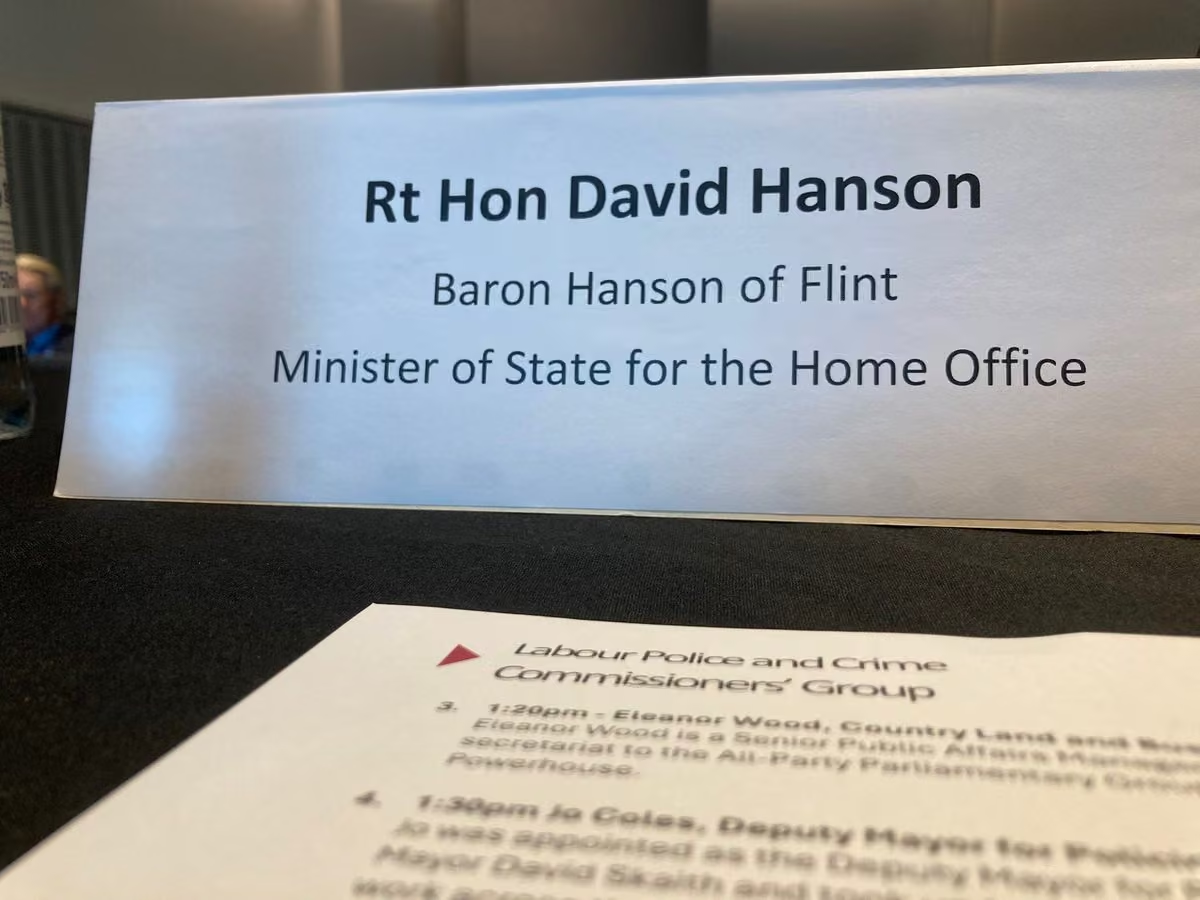
Diana Johnson DBE MP 🇬🇧🇺🇦🌈 reposted
Keir Starmer
@Keir_Starmer
To those who have campaigned for so long on behalf of their friends, families and loved ones – my government is on your side.
Diana Johnson DBE MP 🇬🇧🇺🇦🌈 reposted
 Maria Eagle MP
@meaglemp
Great to hear Keir Starmer commit to enacting Hillsborough Law particularly with my constituents Jenni Hicks & Hilda Hammond, who I’ve been helping pursue justice for 28 years


Diana Johnson DBE MP 🇬🇧🇺🇦🌈 reposted
Yvette Cooper
@YvetteCooperMP
Global problems need global solutions. My week at the United Nations: 🇺🇳🇬🇧
Diana Johnson DBE MP 🇬🇧🇺🇦🌈
@DianaJohnsonMP
Further to our recent meeting, I was pleased to receive this response from @mayorofhey_ highlighting the major areas of common ground, and potential for cross-party working, in attracting new jobs and investment to Hull and East Yorkshire.
 Hull and East Yorkshire Combined Authority
@weareheyca
Here's my response to Diana, Emma and Karl.
Building a better future for Hull and East Yorkshire is my mission. I'll fight for our region to make it happen.

 Diana Johnson DBE MP 🇬🇧🇺🇦🌈
@DianaJohnsonMP
Following our recent meeting with @luke11campbell to discuss cross-party working on key priorities for Hull and East Yorkshire, Hull's MPs have written to the Mayor about the important jobs, investment and regeneration issues that we covered.


Diana Johnson DBE MP 🇬🇧🇺🇦🌈 reposted
 Tom Baldwin
@TomBaldwin66
This is a very important story in the context of Nigel Farage’s publicly expressed - if apparently unconnected - admiration for Putin and other links with a regime that only wants to harm our country. www.bbc.co.uk/news/articles/cj6xwy015ngo
Diana Johnson DBE MP 🇬🇧🇺🇦🌈 reposted
Pat McFadden
@patmcfaddenmp
Meet young people where they are and help them into work.
£25m more for youth hubs around the country providing work and training advice.
Thank you to @CPFC and @PalaceForLife for hosting today.
Department for Work and Pensions
@DWPgovuk
"Young people are full of passion and talent and this announcement gives them the opportunity to fulfil that potential” - Work and Pensions Secretary Pat McFadden
We're investing £25 million to double Youth Hubs to 200 in England, Wales and Scotland www.gov.uk/government/news/football-clubs-partner-with-go…
Diana Johnson DBE MP 🇬🇧🇺🇦🌈 reposted
Lord Hanson of Flint Labour Peer & Minister
@RTHondavehanson
It was a privilege to join the Special Constables of @gmpolice for their Day of Action today .
The dedication and professionalism of the officers I met who volunteer their free time to keep their communities safe, build trust and tackle crime was inspiring.
@ukhomeoffice


 Diana Johnson DBE MP 🇬🇧🇺🇦🌈
@DianaJohnsonMP
After COVID too many young people were left not in employment, education or training. That's why the Government is doubling of the number of Youth Hubs around the country - working with football clubs and others to help get young people back on track. See www.mirror.co.uk/news/politics/diana-johnson-pandemic-dis….

Diana Johnson DBE MP 🇬🇧🇺🇦🌈 reposted
UK Prime Minister
@10DowningStreet
Our Plan for Change is opening doors for young people.
Working with football clubs and communities, we’re:
📍 Expanding Youth Hubs across the UK
📚 Boosting skills and wellbeing support
💼 Supporting thousands more young people into work or training
Diana Johnson DBE MP 🇬🇧🇺🇦🌈 reposted
Dan Jarvis MP
@DanJarvisMBE
Deeply saddened to hear of the passing of Dickie Bird.
A cricketing legend, Dickie’s warmth, humour, and generosity made him a national treasure — but he never forgot where he came from.
Barnsley has lost a true giant.
My condolences to his loved ones.

Diana Johnson DBE MP 🇬🇧🇺🇦🌈 reposted
Torsten Bell
@TorstenBell
Back in real world: OECD forecasts UK to grow faster this year than last with 2nd fastest growth in G7. There’s a long way to go but Tories that gave us the actual austerity/hard Brexit/Truss doom loop dont get to rewrite the facts: the UK has grown faster than expected this year
 Mel Stride MP
@MelJStride
BREAKING: @OECD confirms Labour has put Britain in a high tax, high inflation, low growth doom loop.
Rachel Reeves thinks the solution is more tax rises. The UK is now on the edge of stagflation, all driven by Labour’s economic mismanagement.
 FT for Schools
@ft4s
UK set for highest inflation this year in all of G7, OECD says www.ft.com/content/387b0a47-77ae-455e-bad7-b952c76861f7
Diana Johnson DBE MP 🇬🇧🇺🇦🌈
@DianaJohnsonMP
Following our recent meeting with @luke11campbell to discuss cross-party working on key priorities for Hull and East Yorkshire, Hull's MPs have written to the Mayor about the important jobs, investment and regeneration issues that we covered.
Diana Johnson DBE MP 🇬🇧🇺🇦🌈
@DianaJohnsonMP
I'm proud that patients in Hull North and Cottingham have been benefitting from access to quicker NHS care under Labour, with over 34,000 extra appointments delivered in just one year - part of over 5m across England.
This shows that @uklabour is committed to fixing our NHS.

Diana Johnson DBE MP 🇬🇧🇺🇦🌈 reposted
Department for Work and Pensions
@DWPgovuk
Thousands of people with no current requirement to look for work will receive personalised help to build the skills and confidence to gain employment
It's all part of our plan to shift the focus of the DWP from welfare to opportunity and work www.gov.uk/government/news/ramped-up-job-support-for-peop…
Diana Johnson DBE MP 🇬🇧🇺🇦🌈 reposted
Department for Work and Pensions
@DWPgovuk
"Giving sick and disabled people the skills and support they need is at the heart of our mission to unlock work"
Work and Pensions Secretary Pat McFadden met jobseekers in Barking as 1,000 specialist Work Coaches have been redeployed to help more people move towards work
Diana Johnson DBE MP 🇬🇧🇺🇦🌈 reposted
Department for Work and Pensions
@DWPgovuk
1,000 specialist Work Coaches are now in Jobcentres - helping people on sickness benefits develop the skills they need to get a job and unlock new opportunities
Diana Johnson DBE MP 🇬🇧🇺🇦🌈 reposted
Iain Dale 🏴🇬🇧 ⚒️
@IainDale
Awful news that my former colleague JOHN STAPLETON has died. LBC producers dubbed him 'Honest John' as he was a true professional and one of the nicest people in broadcasting. A great interviewer, he had a real instinct for the mood of the nation. In October 2022 I recorded an 80 minute podcast with him about his life and career. It's well worth a listen.
podcasts.apple.com/gb/podcast/172-john-stapleton/id147591…
 Diana Johnson DBE MP 🇬🇧🇺🇦🌈
@DianaJohnsonMP
🎉This month's Hull North Hero is Paul Richardson🎉
Since 2019, Paul has transformed Kingswood United FC into more than just a football club. It’s become an integral part of our local community, providing workshops and events for people of all ages.⚽

Diana Johnson DBE MP 🇬🇧🇺🇦🌈 reposted
Thin Blue Paw Foundation
@ThinBluePaw
We are incredibly saddened to share that PD Kev from Staffordshire Police has sadly passed away, after falling unexpectedly ill earlier this week. 💔
PD Kev served as a general purpose and firearms support dog, licensed in 2018. During his career, he was nothing short of exceptional, tracking down countless criminals and giving his all to keep the public safe.
Our thoughts are with his handler, PC Neeson, who paid this moving tribute: "He taught me more than I ever taught him, and I'll miss him every day. 😪" RIP PD Kev, thank you for your loyal service. You may now stand down. 🌈🐾🚔🇬🇧
 Diana Johnson DBE MP 🇬🇧🇺🇦🌈
@DianaJohnsonMP
The Peel Project is a great community organisation in my constituency. They have been working to create a new Community Gym in Central Ward.
They now urgently need to fundraise for fire and security works. You can get involved here: app.investorsincommunity.org/charity/1431/preview
Diana Johnson DBE MP 🇬🇧🇺🇦🌈 reposted
Yvette Cooper
@YvetteCooperMP
I am greatly relieved that Peter and Barbara Reynolds have been released from Afghanistan today.
I extend my sincere gratitude to the Amir, HH Sheikh Tamim, and the State of Qatar for their invaluable support in helping secure their release alongside the team at the @FCDOGovUK
Diana Johnson DBE MP 🇬🇧🇺🇦🌈 reposted
Department for Work and Pensions
@DWPgovuk
At Tower Hamlets Jobcentre Minister for Employment Dame Diana Johnson saw how Work Coaches are ensuring young people, and those with health conditions or disabilities, get the opportunity to thrive and succeed
Diana Johnson DBE MP 🇬🇧🇺🇦🌈 reposted
Maria Eagle MP
@meaglemp
Today the Public Office (Accountability) Bill aka the Hillsborough Law has been introduced into @HouseofCommons Now to get it onto the statute book
Diana Johnson DBE MP 🇬🇧🇺🇦🌈 reposted
Maria Eagle MP
@meaglemp
I’m so pleased these bereaved families are supportive of the Hillsborough Law provisions. Now to get them through Parliament
UK Prime Minister
@10DowningStreet
Today, the Hillsborough Law will make sure the tragic injustices and institutional failures of the past are never repeated.
Margaret Aspinall, Sue Roberts, Steve Kelly and Charlotte Hennessy all lost loved ones at Hillsborough.
Here are their stories.
Diana Johnson DBE MP 🇬🇧🇺🇦🌈
@DianaJohnsonMP
After tireless campaigning by the families of The 97, I'm proud that the Hillsborough Law will be introduced in Parliament today.
#hillsboroughlaw
1/3
 Diana Johnson DBE MP 🇬🇧🇺🇦🌈
@DianaJohnsonMP
The scars from scandals such as Hillsborough, Infected Blood, Post Office Horizon, Grenfell, Windrush, nuclear test veterans and others are etched into the foundations of our country.
2/3
Diana Johnson DBE MP 🇬🇧🇺🇦🌈
@DianaJohnsonMP
This landmark legislation - The Public Office (Accountability) Bill - is for the families and campaigners who fought over many years for justice when the State let them down.
With this Bill, we say never again. #hillsborough Law
3/3
Diana Johnson DBE MP 🇬🇧🇺🇦🌈 reposted
Lord Hanson of Flint Labour Peer & Minister
@RTHondavehanson
A long campaign and a promise delivered 👇
Keir Starmer
@Keir_Starmer
I made a promise that as Prime Minister, I would bring in the Hillsborough Law, making sure the state can never hide from the people they are supposed to serve.
Today, I make good on that promise.

Diana Johnson DBE MP 🇬🇧🇺🇦🌈 reposted
The Labour Party
@UKLabour
in case you missed it.

Diana Johnson DBE MP 🇬🇧🇺🇦🌈 reposted
Department for Work and Pensions
@DWPgovuk
Work and Pensions Secretary Pat McFadden spoke to the Sunday Telegraph about DWP’s new focus on giving people the skills and opportunities they need to thrive in the modern economy

Diana Johnson DBE MP 🇬🇧🇺🇦🌈 reposted
Pat McFadden
@patmcfaddenmp
Labour ‘won’t abandon young people to a life on sickness benefits’
"We should be maximising people's opportunity. I want to approach this with sympathy and understanding but with the value of work at the heart of what we do."
www.telegraph.co.uk/politics/2025/09/13/labour-pat-mcfadd…
Diana Johnson DBE MP 🇬🇧🇺🇦🌈
@DianaJohnsonMP
Attacking our brave police officers has nothing to do with free speech or protecting the values of our great nation. It’s quite simply thuggery.
Shabana Mahmood MP
@ShabanaMahmood
The right to peaceful protest is fundamental to this nation. I thank the police who worked hard to ensure much of today's protest was peaceful. But I condemn those who have attacked and injured police officers. Anyone taking part in criminal activity will face the full force of the law.
Diana Johnson DBE MP 🇬🇧🇺🇦🌈 reposted
 “Dexter” - retired police wellbeing dog
@PD_DexterWBDOG
It is with immense pride that I can share with you all some news…
Last night , PD Mika & PD Dexter , after having made it through as finalists , were judged to be the winners of the “Wellbeing & Therapy Dog” category at the inaugural Medal of Honour awards organised by the amazing charity that is @ServiceDogsUK
Morgan and I were truly shocked to have our pooches be named winners as the three other finalists were all so worthy too.
We are both super proud of Mika & Dexter 🥰😍
Thank you to @CotswoldLadyB and the other judges for naming our dogs as the winners , I can only imagine it must have been very tough to decide .
It’s just great that the work of all the wellbeing dogs @OscarKiloNine is now recognised as being so important to supporting those who need it most #bluelightfamily
A big shout out to GB @ServiceDogsUK for organising such a great conference and awards dinner and @TomGaymor for being a great host.
Thank you 👏👏
6262CO @MetTaskforce @metpoliceuk @TomGaymor @The_NFRSA @serveandprotect @PDSA_HQ @lobbythornton @metfriendly @policecareuk @Cloverbeech @LindaMichelleJ3 @PD_Sable @MikePannett @Cole_Jim_1 @MattTwistMPS @obbsie @UK_NPM @MikeClarkeSnr @LeeLee2076 @LadyPandalorian @AliBooker_RD @MA_PurplePoppy #wellbeingdogs
#furrystressbusters


Diana Johnson DBE MP 🇬🇧🇺🇦🌈 reposted
Emma Lewell MP
@EmmaLewell
Still in shock at this. My friend Sharon is one of the kindest hardworking people I know. I have never known an environment as hostile as what we have now in the UK. Our democracy is under threat, this anger and violence must stop.
 Sunderland Echo
@SunderlandEcho
www.sunderlandecho.com/news/crime/i-will-not-be-deterred-…
Northumbria Police and Tyne and Wear Fire and Rescue Service are investigating the cause of the fire.
Diana Johnson DBE MP 🇬🇧🇺🇦🌈 reposted
 Bill Esterson
@Bill_Esterson
Reform UK’s energy policy is fracking stupid.
 Politics.co.uk
@Politics_co_uk
“Fracking isn’t the answer. It doesn’t stack up at any level in the UK. Want energy security? Go for clean energy”, writes Labour MP @Bill_Esterson
🗣️ Reform UK’s fracking stance shows it is not serious
www.politics.co.uk/mp-comment/2025/09/11/bill-esterson-re…
Diana Johnson DBE MP 🇬🇧🇺🇦🌈
@DianaJohnsonMP
Last year, Hull York Medical School was ranked number 5 on The Guardian's list of the Best UK Universities for Medicine. I'm proud that the campus is in my Hull North and Cottingham constituency.
1/2
Diana Johnson DBE MP 🇬🇧🇺🇦🌈
@DianaJohnsonMP
I visited the Allam Medical Centre at Hull University to meet the Dean of HYMS and the Deputy Head of the School of Nursing and Midwifery. We discussed their work in achieving this ranking, the challenges facing the school and our need to train more NHS doctors to serve our area.
Diana Johnson DBE MP 🇬🇧🇺🇦🌈 reposted
Andy Burnham
@andyburnham
Reform is led by Londoners who haven’t had a lifetime of using railways in the North.
So I suppose it’s no surprise that they think it’s fine for us to be stuck with a second-class railway while the south gets modern, high-speed lines.👇🏻
We have higher ambitions for the North.
 Liverpool Echo
@LivEchonews
BREAKING: Reform UK vow to scrap new Liverpool to Manchester rail line
www.liverpoolecho.co.uk/news/liverpool-news/reform-uk-sha…
Diana Johnson DBE MP 🇬🇧🇺🇦🌈 reposted
Karin Smyth
@karinsmyth
Back in London, delighted to be continuing to serve as Minister of State with @wesstreeting in DHSC and have lovely birthday team meeting to start the week

Diana Johnson DBE MP 🇬🇧🇺🇦🌈 reposted
Heidi Alexander MP
@Heidi_Labour
Delighted to welcome @Mather_Keir to @transportgovuk. He joins @simonlightwood and @LordPeterHendy as part of my fantastic ministerial team. Together we will continue to drive forward this Labour government's work to rebuild a transport system Britain can rely on.
 Department for Transport
@transportgovuk
Keir Mather MP (@Mather_Keir) has been appointed as Parliamentary Under-Secretary of State in the Department for Transport.

Diana Johnson DBE MP 🇬🇧🇺🇦🌈 reposted
Lord Hanson of Flint Labour Peer & Minister
@RTHondavehanson
Back to London to continue to serve as Minister of state at the @ukhomeoffice
It’s a real honour to start my 15 th year of serving in a labour government.
Morning from an autumnal Flint station.

Diana Johnson DBE MP 🇬🇧🇺🇦🌈 reposted
Home Office
@ukhomeoffice
We are pleased to welcome @LabourSJ to the Home Office as a Minister of State.
 Diana Johnson DBE MP 🇬🇧🇺🇦🌈
@DianaJohnsonMP
A great pleasure to meet these impressive young people from Peckham.
 Miatta Fahnbulleh
@Miatsf
Delighted to bring young people from Peckham to meet the Policing Minister @DianaJohnsonMP - making sure their voices are heard at the heart of Government as we work to make our streets safer and build stronger bridges between police and community.


 Diana Johnson DBE MP 🇬🇧🇺🇦🌈
@DianaJohnsonMP
What the Shadow Home Secretary fails to mention here is that of the 1,316 decline in officer numbers since 31 March 2024, 94% of them were cut by June of last year. This was under the previous Government - when he was the Policing Minister.
 Chris Philp MP
@CPhilpOfficial
Police workforce figures just out for March 31st 2025 show Police Officer numbers by headcount *DOWN* by 1,316 - from a record high of 149,768 on 31/03/24 down to 148,452 on 31/03/25.
The same trend is evident in FTE (Full Time Equivalent) numbers.
Conservatives delivered record ever police numbers in March 2024. It is staggering Labour has now presided over a fall of 1,313 police officers already. Labour has let down policing and has let down the public.
Yvette Cooper and Keir Starmer should hang their heads in shame. We need police to catch criminals, respond to 999 calls, investigate crime and patrol our streets.
Labour has massively increased our taxes, but wasted the money raised and now we face savage police cuts. The public are less safe as a result of Labour’s incompetence. We now know the truth: this Labour government is slashing the police.
www.gov.uk/government/statistics/police-workforce-england…
Diana Johnson DBE MP 🇬🇧🇺🇦🌈
@DianaJohnsonMP
Today we marked 97 years since women won the vote on equal terms with men with a commemorative photocall of women MPs—organised by @CentenaryAction. Each MP received a personalised sash by @RemakeNewport, marking their place in the history of #womeninparliament.
 Diana Johnson DBE MP 🇬🇧🇺🇦🌈
@DianaJohnsonMP
Yesterday’s transfer of Ministerial responsibility for fire to @AlexJJNorris will help ensure our communities are safe. Thanks to the service personnel & officials who have supported me brilliantly. What I’ve learned will be invaluable as I continue to serve as Policing Minister.
 Diana Johnson DBE MP 🇬🇧🇺🇦🌈
@DianaJohnsonMP
People want to feel safe in their communities and see justice when laws are broken. This is how our Crime and Policing Bill will make that a reality.
Diana Johnson DBE MP 🇬🇧🇺🇦🌈
@DianaJohnsonMP
Being an officer is an incredibly tough job. I have huge admiration for the women I met this week. Not everyone can do what they do.
I want to ensure young women consider a career in policing and are given the opportunity to succeed.
#iwd2025 @Police_Now
Diana Johnson DBE MP 🇬🇧🇺🇦🌈
@DianaJohnsonMP
Police staff are so often the unsung heroes of policing. Policing would not be able to keep our streets safe without your daily dedication and sacrifice, and I was delighted to speak at the inaugural National Police Staff Awards.
#celebratingpolicestaff @PoliceChiefs
Diana Johnson DBE MP 🇬🇧🇺🇦🌈
@DianaJohnsonMP
The Crime and Policing Bill is our promise to communities throughout the UK: we will not rest until our streets are made safer 👇
 Diana Johnson DBE MP 🇬🇧🇺🇦🌈
@DianaJohnsonMP
We're taking stronger action than ever before to prevent the sale of deadly knives online, ensuring weapons stay out of the hands of young people.
 Diana Johnson DBE MP 🇬🇧🇺🇦🌈
@DianaJohnsonMP
Knife crime is a national crisis. It was moving to hear stories today from across the House today about those impacted by this issue.
The @UKLabour Government is committed to halving knife crime within a decade through the Safer Streets Mission in our plan for change.
Diana Johnson DBE MP 🇬🇧🇺🇦🌈
@DianaJohnsonMP
Today I joined @WMPolice in preparations ahead of one of the year’s busiest weekends for our emergency services. Thank you to all officers who will be out this weekend and over the Christmas period keeping our streets safe. @jessphillips
 Diana Johnson DBE MP 🇬🇧🇺🇦🌈
@DianaJohnsonMP
Congratulations (again) to @cazjwheeler. A huge story of 23 years - and counting!
 Press Gazette
@pressgazette
Our final award for 2024 is Journalist of the Year - and it’s Caroline Wheeler @cazjwheeler of The Sunday Times “recognised not just for her work over the last 12 months but over the course of a 23-year crusade” on the infected blood scandal #britishjournalismawards
 Diana Johnson DBE MP 🇬🇧🇺🇦🌈
@DianaJohnsonMP
The thirty police officers, firefighters and public servants we honour today paid the ultimate sacrifice to keep our country safe.
A moment of both immense pride and sorrow for their families and loved ones, the Elizabeth Emblem is a tribute to their courage and strength.
Cabinet Office
@cabinetofficeuk
A proud day recognising brave public servants who died in the line of duty.
Yesterday the first Elizabeth Emblems were presented by His Majesty The King at Windsor Castle.
#honours @RoyalFamily
Aaron Chown/PA Media


 Diana Johnson DBE MP 🇬🇧🇺🇦🌈
@DianaJohnsonMP
A year ago today, in the face of whipped opposition from the then Government, MPs voted 246-242 for my NC27. This amended the Victims and Prisoners Bill to press ahead with @bloodinquiry recommendations compensating those infected and affected in the contaminated blood scandal.
Sky News
@SkyNews
BREAKING: MPs have voted in favour of an amendment requiring ministers to establish a new body to administer full compensation to victims of the infected blood scandal within three months of the bill becoming law.
Live: news.sky.com/story/dominic-raab-latest-deputy-pm-warns-of…
📺 Sky 501, Virgin 602 and YouTube
Diana Johnson DBE MP 🇬🇧🇺🇦🌈
@DianaJohnsonMP
Our Safer Streets Mission in action.
In a week of intensive activity throughout England and Wales, the police seized thousands of deadly knives, protecting communities from crime, and bringing offenders to justice.
 Diana Johnson DBE MP 🇬🇧🇺🇦🌈
@DianaJohnsonMP
This afternoon I addressed the Retail Crime Summit organised by @UsdawUnion, @coopuk and @CoopParty on @UKLabour plans to crack down on violence against shopworkers and the epidemic of shoplifting that the new Government has inherited from the Tories. #respect24
 Diana Johnson DBE MP 🇬🇧🇺🇦🌈
@DianaJohnsonMP
Shocking to hear the previous government made no provision for compensation to those infected & affected by the contaminated blood scandal. Thank you @RachelReevesMP for making the money available in Labour’s first budget in 14 years.
 Diana Johnson DBE MP 🇬🇧🇺🇦🌈
@DianaJohnsonMP
With one woman diagnosed with breast cancer every ten minutes in the UK, it’s more important than ever to support those impacted. It was a pleasure to hear today in Parliament from those working on the #timetoendbreastcancer campaign. @EsteeLauderUK @SharonHodgsonMP
 Diana Johnson DBE MP 🇬🇧🇺🇦🌈
@DianaJohnsonMP
The need for a duty of candour was one of the many lessons that emerged from the NHS Infected Blood scandal. That’s why I support the @NowHillsborough campaign and look forward to the legislation set out in the Labour Government’s King’s Speech. @bloodinquiry

 Hillsborough Law Now
@NowHillsborough
Thank you @DianaJohnsonMP for supporting #hillsboroughlawnow #labourconference24
 Diana Johnson DBE MP 🇬🇧🇺🇦🌈
@DianaJohnsonMP
Thank you to everyone who has sent me kind and supportive messages following events earlier this week. Becoming a victim of crime is distressing no matter who you are and support is available @VictimSupport
Diana Johnson DBE MP 🇬🇧🇺🇦🌈
@DianaJohnsonMP
Knife-related violence is not only criminal - it is an epidemic.
In the next ten years, our action will halve knife crime throughout the UK ⬇️
 Diana Johnson DBE MP 🇬🇧🇺🇦🌈
@DianaJohnsonMP
I welcome the progress the Government are making to implement the recommendations of the Infected Blood Inquiry and establish the compensation body as agreed by Parliament in the Victims & Prisoners Act.
Those infected & affected must remain at the heart of everything we do.
 Diana Johnson DBE MP 🇬🇧🇺🇦🌈
@DianaJohnsonMP
Just so you know 👇
Home Office
@ukhomeoffice
Put simply: If you engage in violent protests, you will face the full force of the law.
 Diana Johnson DBE MP 🇬🇧🇺🇦🌈
@DianaJohnsonMP
Disgusted to see the appalling mindless criminal behaviour in Hull today. My thoughts are with Humberside Police officers injured by these criminals. Those thugs engaging in violence, vandalism and disorder will face the full force of the law - in Hull and around the country.
Diana Johnson DBE MP 🇬🇧🇺🇦🌈
@DianaJohnsonMP
I am aware of disturbing footage from an incident at Manchester Airport this afternoon and understand the public concern it has prompted. I have asked for a full update from Greater Manchester Police.
Diana Johnson DBE MP 🇬🇧🇺🇦🌈
@DianaJohnsonMP
Very proud to be part of this new Ministerial team at the Home Office.
Home Office
@ukhomeoffice
Your new Home Office Ministerial team…
@YvetteCooperMP
@DanJarvisMBE
@angelaeagle
@DianaJohnsonMP
@jessphillips
@SeemaMalhotra1
@RTHondavehanson
 Diana Johnson DBE MP 🇬🇧🇺🇦🌈
@DianaJohnsonMP
🌹It was brilliant to catch Labour’s battle bus in Scarborough today.
🫖They even had Yorkshire tea onboard!
👉 Proud to be joined by such fantastic Labour candidates @AngelaRayner, @MsAlisonHume, @SarahCa06894481 & @LisaBanes_.


 Diana Johnson DBE MP 🇬🇧🇺🇦🌈
@DianaJohnsonMP
Hull North out in force in Scarborough and Whitby today to support the excellent @MsAlisonHume #votelabour #july4 #generalelection2024
 Diana Johnson DBE MP 🇬🇧🇺🇦🌈
@DianaJohnsonMP
Brilliant to be out knocking doors tonight with @MsAlisonHume in #scarboroughandwhitby #votelabour #generalelection #change 🌹🌹🌹
 Diana Johnson DBE MP 🇬🇧🇺🇦🌈
@DianaJohnsonMP
One of the very last acts of this Parliament. - Infected Blood Compensation body and Victims and Prisoners Bill become law - gov.uk www.gov.uk/government/news/infected-blood-compensation-bo…
Diana Johnson DBE MP 🇬🇧🇺🇦🌈
@DianaJohnsonMP
(1/2) @FigenMurray, the mother of Martyn Hett murdered in the Manchester Arena terror attack, walked 200 miles to meet with the Prime Minister on the 7th anniversary of the terror atrocity.
The PM promised Figen he would introduce Martyn's Law before the summer recess.
Diana Johnson DBE MP 🇬🇧🇺🇦🌈
@DianaJohnsonMP
✍️@HaemoAPPG has written to the Prime Minister to urgently clarify what will happen to support & compensation for those infected and affected by the contaminated blood scandal.
👉The General Election must not cause further delay to essential compensation payments ⬇️
 Diana Johnson DBE MP 🇬🇧🇺🇦🌈
@DianaJohnsonMP
After all the words of apology this week from the Government about the infected blood scandal and promises of compensation, the PM needs to make sure that the Victims and Prisoners Bill is in law by Friday setting up the Compensation Authority and paying interim payments.
Diana Johnson DBE MP 🇬🇧🇺🇦🌈
@DianaJohnsonMP
A picture paints a thousand words. #adayofshame
 Diana Johnson DBE MP 🇬🇧🇺🇦🌈
@DianaJohnsonMP
The Truth finally.
 Kaya Burgess
@kayaburgess
Not often you get such total unanimity across front pages #tomorrowspaperstoday
 Diana Johnson DBE MP 🇬🇧🇺🇦🌈
@DianaJohnsonMP
The publication of @bloodinquiry’s report today was historic.
Finally, after decades of campaigning, we have the truth. The 2,500 page report sets out a story of devastating failure and cover up.
Action must follow and I look forward to hearing details of compensation tomorrow.
Diana Johnson DBE MP 🇬🇧🇺🇦🌈
@DianaJohnsonMP
I welcome this landmark @bloodinquiry report. It shows how the biggest treatment disaster in NHS history became a huge scandal due to a 40 year cover-up. An apology will only be meaningful if action follows, first on compensation and then on how the state treats our citizens.

 Diana Johnson DBE MP 🇬🇧🇺🇦🌈
@DianaJohnsonMP
The infected blood scandal is the worst treatment disaster in the history of the NHS.
In recent weeks, 45 MPs have presented petitions, signed by their constituents, asking the Government to deliver compensation to those infected and affected. (1/2)
Diana Johnson DBE MP 🇬🇧🇺🇦🌈
@DianaJohnsonMP
With thousands of people infected by contaminated blood & blood products it's likely that every MP will have constituents impacted.
Thanks to @WalkerWorcester, @IanLaveryMP, @wendychambLD, @mgshanks, @AlexDaviesJones & @KeeleyMP for sharing some of their constituents' stories⬇️
Diana Johnson DBE MP 🇬🇧🇺🇦🌈
@DianaJohnsonMP
19 years ago today I was elected as Hull North’s first woman MP #5thmay2005 🌹🌹🌹🌹 Pictured here with Alan Johnson and John Prescott my neighbours in Hull in the 2005 general election.
 Diana Johnson DBE MP 🇬🇧🇺🇦🌈
@DianaJohnsonMP
100 people have died since Sir Brian Langstaff made his final recommendations on paying compensation to those infected & affected by the contaminated blood scandal.
The time to act is now.
My speech today (1/2) ⬇
Diana Johnson DBE MP 🇬🇧🇺🇦🌈
@DianaJohnsonMP
Our abortion laws are outdated and cruel. Vulnerable women need care and compassion, not criminalisation.
👉 I am hoping to change the law to stop women being subject to criminal charges for ending their pregnancy.
✍️Read my article in @TheHouseMag 👇www.politicshome.com/thehouse/article/women-prosecuted-te…
Diana Johnson DBE MP 🇬🇧🇺🇦🌈
@DianaJohnsonMP
Signed cross-party by over 180 political figures, @thetimes new campaign calls on the Government to get on with paying compensation to all infected and affected in the infected blood scandal.
Two victims die each week. There's no justification for further delays. #abloodydisgrace
Diana Johnson DBE MP 🇬🇧🇺🇦🌈
@DianaJohnsonMP
Thank you @churchofengland who this morning made it clear in @HouseofCommons they do not think women should be criminalised for abortion. NC1 to the Criminal Justice Bill will deliver that change .
 BPAS
@BPAS1968
📢 #breaking we welcome the Church of England's position that women should not be criminalised for having an abortion. @DianaJohnsonMP's amendment focuses only on women who are being increasingly targeted by the current outdated law. Women deserve compassion, not a conviction.
 Diana Johnson DBE MP 🇬🇧🇺🇦🌈
@DianaJohnsonMP
MPs are presenting petitions to demand the Government acts now on compensation for those infected & affected by the contaminated blood scandal.
Justice delayed is justice denied.
Thank you @lynbrownmp, @CatSmithMP, @MartynDaySNP, @RachaelMaskell, @GwynneMP & @ChrisStephens⬇️
Diana Johnson DBE MP 🇬🇧🇺🇦🌈
@DianaJohnsonMP
Thank you to @MartynDaySNP for presenting a petition on #infectedblood last night and @GwynneMP @RachaelMaskell and @ChrisStephens for presenting petitions this evening. #justicedelayedisjusticedenied
 Diana Johnson DBE MP 🇬🇧🇺🇦🌈
@DianaJohnsonMP
Thank you to @CatSmithMP who will present a petition on the Infected Blood Scandal today.
These petitions highlight the strength of feeling among MPs and our constituents about the injustice of delays and the urgency of action.
 Diana Johnson DBE MP 🇬🇧🇺🇦🌈
@DianaJohnsonMP
Last week, 118 MPs across 10 parties wrote to the Chancellor, asking for infected blood compensation to be included in the #budget2024.
It is shocking that today’s Budget has let the infected blood community down once again ⬇️
Diana Johnson DBE MP 🇬🇧🇺🇦🌈
@DianaJohnsonMP
Next week @CommonsHomeAffs start our new inquiry into the culture of the Fire &Rescue service. Thank you @PaulBrandITV for all your work in highlighting many concerning issues.
 Diana Johnson DBE MP 🇬🇧🇺🇦🌈
@DianaJohnsonMP
🚨 On Feb 28, there will be a lobby of Parliament to demand the Government acts on compensation for those infected and affected by the contaminated blood scandal.
💬 This is a chance to show the Government how much support there is for urgent action.
👉www.haemophilia.org.uk/pi_posts/join-mass-lobby-for-compe…
Diana Johnson DBE MP 🇬🇧🇺🇦🌈
@DianaJohnsonMP
Today @CommonsHomeAffs learnt that @ukhomeoffice is cutting the @UKAntiSlavery budget by 5% every year the Commissioner is in post.
@UKAntiSlavery must be given the resources needed to tackle modern slavery and human trafficking and we will be raising this with the Home Office.
Diana Johnson DBE MP 🇬🇧🇺🇦🌈
@DianaJohnsonMP
🚨Over 100 Parliamentarians have called for the Government to show the same urgency on infected blood compensation as they now have on the Post Office Horizon scandal.
📢This is a cross-party call for urgent action to right this historic injustice.
👉www.dianajohnson.co.uk/content/infected-blood-open-letter.
 Diana Johnson DBE MP 🇬🇧🇺🇦🌈
@DianaJohnsonMP
Despite the Commons vote 2 weeks ago, today’s Statement by @JohnGlenUK yet again played for time on infected blood compensation.
Justice delayed (again) will be justice denied for even more of those infected and affected in this scandal.
Diana Johnson DBE MP 🇬🇧🇺🇦🌈
@DianaJohnsonMP
💬 “For every pound invested in specialist women's domestic abuse support services, we will see a saving to the public purse of at least £9”
📌 I was pleased to attend @womensaid’s drop-in and support their call to make tackling domestic abuse a top priority 👇
#16days
 Diana Johnson DBE MP 🇬🇧🇺🇦🌈
@DianaJohnsonMP
Despite the Government whipping Tory MPs to vote against my amendment, we won the Commons vote by 246 votes to 242 last night. #victory
 Diana Johnson DBE MP 🇬🇧🇺🇦🌈
@DianaJohnsonMP
Diana Johnson DBE MP 🇬🇧🇺🇦🌈
@DianaJohnsonMP
Despite the Government whipping Tory MPs to vote against my amendment, we won the Commons vote to 246 votes to 242 tonight. #victory
 Diana Johnson DBE MP 🇬🇧🇺🇦🌈
@DianaJohnsonMP
If there is a vote on my amendment to deliver justice to victims of the infected blood scandal, then this is a huge opportunity to unite, across the House, on the right side of history.
Some reminders to everybody voting tonight ⬇
 Diana Johnson DBE MP 🇬🇧🇺🇦🌈
@DianaJohnsonMP
🔎The Commonwealth War Graves Commission have recovered the names of over 9,000 personnel who died serving alongside British & Commonwealth troops during WW1 but have never been commemorated by name.
✍ Read my article with @Dunne4Ludlow in @TheHouseMag as @CWGC Commissioners 👇
 Diana Johnson DBE MP 🇬🇧🇺🇦🌈
@DianaJohnsonMP
While @bloodinquiry final report has been pushed to March 24, the recommendations on compensation have already been published.
There is simply no basis to delay interim payments & setting up a compensation body.
No excuses. Justice now.
👇 A statement from me & @PBottomleyMP

 Diana Johnson DBE MP 🇬🇧🇺🇦🌈
@DianaJohnsonMP
Atopic eczema is one of the most common allergies in the UK, affecting 20% of children. Yet allergy services are in a mess.
This National Eczema Week, I am supporting calls from @AllergyUK1 for improvements to diagnosis and care to ensure patients can access proper treatment.
 Diana Johnson DBE MP 🇬🇧🇺🇦🌈
@DianaJohnsonMP
Almost 50 years and no justice on contaminated blood. Is that really ‘at pace’, Rishi Sunak? | Diana Johnson | The Guardian www.theguardian.com/commentisfree/2023/jul/29/contaminate…
Diana Johnson DBE MP 🇬🇧🇺🇦🌈
@DianaJohnsonMP
This week I was proud to send this letter, alongside @Malala, @khalida_popal and over 100 parliamentarians across the world to the President of FIFA, to ask that FIFA do more to support the women of Afghanistan to play the sport they love. ⚽
 Diana Johnson DBE MP 🇬🇧🇺🇦🌈
@DianaJohnsonMP
This afternoon @PBottomleyMP & I will be leading a @HouseofCommons debate on the Government’s Response to the Infected Blood Inquiry.
So far the Government have only told us about the amount of work that needs doing and claimed that they are working “at pace.”
 Diana Johnson DBE MP 🇬🇧🇺🇦🌈
@DianaJohnsonMP
We need a new regulatory regime for abortion that does not involve putting women in prison.
Decriminalisation does not mean deregulation. Time limits and other rules would still apply.
It’s time to bring abortion law in England and Wales in line with that in Northern Ireland.
Diana Johnson DBE MP 🇬🇧🇺🇦🌈
@DianaJohnsonMP
Totally agree 👇#savebbclocalradio
 Damian Collins
@DamianCollins
BBC local radio is the essence of public service broadcasting. It’s fair to ask would BBC license fee payers choose cuts to local radio if it was down to them. I don’t believe they would. It goes back to the question of deciding what the BBC is for & how it should be funded
📻 David Lloyd
@DavidLloydRADIO
The funeral of BBC local radio as we know it. Sad - and needless.
A fresh BLOG post with a heavy heart:
www.davidlloydradio.com/post/the-funeral-of-local-radio
Diana Johnson DBE MP 🇬🇧🇺🇦🌈
@DianaJohnsonMP
Very pleased to have secured with @PBottomleyMP a debate in Parliament on the Infected Blood Inquiry and the compensation framework.
🗓️ Thursday 24 November, 1.30-3.00pm
Ask your MP to attend and watch on Parliament Live ➡️ www.parliamentlive.tv/Commons
 Diana Johnson DBE MP 🇬🇧🇺🇦🌈
@DianaJohnsonMP
As part of the Last Post Ceremony at #meningate at Ypres, I was honoured to lay a wreath on behalf of @CWGC along with @Dunne4Ludlow #remember


 Diana Johnson DBE MP 🇬🇧🇺🇦🌈
@DianaJohnsonMP
Today I have submitted the following Private Members Bill:
Telecommunications Infrastructure (Consultation) Bill
If successful, this Bill will make it mandatory for local people to be consulted about installation of any telecommunications infrastructure in residential areas.
 Diana Johnson DBE MP 🇬🇧🇺🇦🌈
@DianaJohnsonMP
This is an important documentary @jeanmackenzie and clearly highlights why we need action in the UK to tackle demand by men including criminalising pimps websites @APPG_CSE
 Jean Mackenzie
@jeanmackenzie
We’ve found children as young as 10 are being groomed in Romania to be trafficked to the UK for sex - by men pretending to be their boyfriends.
More on tonight's #bbcnewsten
It’s taken us a long time to tell this challenging story. Sold: Sex Slaves Next Door airs Monday.
Diana Johnson DBE MP 🇬🇧🇺🇦🌈
@DianaJohnsonMP
Labour women MPs have written to @BootsUK about keeping their “Black Friday”pricing of emergency contraception @BPAS1968

 Diana Johnson DBE MP 🇬🇧🇺🇦🌈
@DianaJohnsonMP
This is my take on Ken Clarke’s evidence to the @bloodinquiry last week. @HaemoSocUK_PI @CBCBlooduk @Factor8Campaign @HaemophiliaScot @CampaignTB www.politicshome.com/thehouse/article/ken-clarkes-tineare…
 Diana Johnson DBE MP 🇬🇧🇺🇦🌈
@DianaJohnsonMP
Good explanation below of why Government plan for putting up National Insurance contributions to pay for #socialcare is not a good idea 👇
Torsten Bell
@TorstenBell
This is 1) predictable 2) a terrible idea
Diana Johnson DBE MP 🇬🇧🇺🇦🌈
@DianaJohnsonMP
Visited @TolpuddleFest @TUCSouthWest in Dorset today and reminded of the long struggle for #workersrights & #tradeunions to be recognised & accepted

 Diana Johnson DBE MP 🇬🇧🇺🇦🌈
@DianaJohnsonMP
.@tracey_crouch well deserved appearance in @thesundaytimes 50 women who defined 2020. Sending very best wishes for a much better 2021 for you and your family
Diana Johnson DBE MP 🇬🇧🇺🇦🌈
@DianaJohnsonMP
Alongside X-party Humber MPs I am campaigning for the UK's first #zerocarbonhumber CCS cluster to be placed in the Humber Estuary-the UK's most carbon intensive region. We wrote to Chancellor @RishiSunak to ask for investment in the #budget2020 @nationalgriduk @Draxnews @Equinor

 Diana Johnson DBE MP 🇬🇧🇺🇦🌈
@DianaJohnsonMP
Proud that the Labour Party has made a commitment in its manifesto to pay compensation to those affected and infected by the contaminated blood scandal. @HaemoSocUK @bloodinquiry @CBCBlooduk @TheXFactor
 Diana Johnson DBE MP 🇬🇧🇺🇦🌈
@DianaJohnsonMP
Thanks to former Labour PM @OfficeGSBrown for his backing of my campaign to be reselected as Labour's candidate in Hull North.🌹☑
We worked together in the last Labour Govt, where I was an Education Minister in the Dept for Children, Schools and Families. ✊💪📢
#webackdiana
 Diana Johnson DBE MP 🇬🇧🇺🇦🌈
@DianaJohnsonMP
🌹🌹RE-SELECT DIANA JOHNSON🌹🌹
I'm standing to be re-selected as the Labour candidate for Hull North, where I've represented residents for the last 14 years. ☑🌹
Watch this space over the next 7 days as I make the case for my re-selection 💪.
📢 #webackdiana
Diana Johnson DBE MP 🇬🇧🇺🇦🌈
@DianaJohnsonMP
Great to see Lord John Prescott with Hulls own Yvonne Marie Blenkinsop at Westminster today #headscarfrevolutionaries
 Diana Johnson DBE MP 🇬🇧🇺🇦🌈
@DianaJohnsonMP
Letwin amendment in Commons for indicative votes passes 329 to 302 #brexit
Diana Johnson DBE MP 🇬🇧🇺🇦🌈
@DianaJohnsonMP
At the Backbench Business Committee with @EmmaHardyMP and @frankfieldteam seeking a @HouseofCommons debate soon on the growing problem of anti-social behaviour.
 Diana Johnson DBE MP 🇬🇧🇺🇦🌈
@DianaJohnsonMP
Great article about Marie Colvin and her life. The portrayal of her in A Private War by @RosamundSource is excellent. www.theguardian.com/media/2018/nov/10/marie-colvin-legacy…
Diana Johnson DBE MP 🇬🇧🇺🇦🌈
@DianaJohnsonMP
Just saw this film tonight @aprivatewar #rosamundpike is simply brilliant and should get an Oscar for her performance. Annie Lenox music is haunting.
 A Private War
@aprivatewar
.@Variety calls #aprivatewar ”an incredibly sophisticated, psychologically immersive film.” See it in select theaters November 2. www.aprivatewarfilm.com #rosamundpike #jamiedornan @MattHeineman
Diana Johnson DBE MP 🇬🇧🇺🇦🌈
@DianaJohnsonMP
Here's the 35 Lib Dem MPs whose votes were decisive (again) in saving the Bedroom Tax in the Commons this week - .
 Diana Johnson DBE MP 🇬🇧🇺🇦🌈
@DianaJohnsonMP
2/2 Excellent cross party contributions on Humber Flood risk from Alan Johnson, David Davis, @martinvickersmp and @andrewpercy .


 Greater Manchester Police