Politicians, athletes, journalists, NGOs, companies... They all use
corporation-owned social networks to communicate with us. Citizens
shouldn't have to hand over their data to companies to read content
published by public entities. Public Feeds changes that by making posts
of popular accounts freely available.
Read more.
FFmpeg
FFmpeg is a free and open-source software project consisting of a suite of libraries and programs for handling video, audio, and other multimedia files and streams. At its core is the command-line ffmpeg tool itself, designed for processing video and audio files. It is widely used for format transcoding, basic editing (trimming and concatenation), video scaling, video post-production effects, and standards compliance (SMPTE, ITU). More on Wikipedia
3/4 Fixes landed for Vulkan AV1 encoding, VVC weighted prediction and HE-AAC decoder flushing. Seeking in animated WebP and fragmented MP4 with chapter tracks was fixed, alongside more security and robustness fixes. Please test and report regressions!
4/4 FFmpeg CI is getting a boost! Sponsorship from GitHub and Blacksmith gives us more CI capacity and high-performance runners, enabling more testing and quicker feedback for contributors. Thanks to both, and to everyone offering compute or hardware!
3/4 Multi-input filtergraph hangs, RealMedia audio seeking, chained Ogg Vorbis playback and swscale chroma rounding were fixed. More security and robustness fixes landed across codecs and filters. Please test and report regressions!
4/4 Thank you to everyone contributing CI resources, funding, tools, code, reviews and tests, and to everyone who offered help! Help us prepare FFmpeg 9.1: test release/9.1 and report regressions!
Thanks for the generous FFmpeg CI offers! We're in touch with several of you and aim to accept at least one cloud and one server offer, plus non-x86 hardware for native testing.
Nothing is finalized yet. If you've offered help, please check your DMs or message us!
1/4 FFmpeg weekly news (Oct 21–27) New in git master! DTS:X standard presentations now decode to 7.1.4 with height channels. JPEG Multi-Picture Format demuxing exposes Ultra HDR gain maps. HEIF colour and alpha layers are merged automatically.
3/4 The new side_data bitstream filter removes side data without re-encoding. Whisper JSON now includes the detected language. Fixes cover AAC/Opus seeking, CUVID output corruption, DASH duplicate segments after seeking, and ALSA capture timestamps.
4/4 Help us prepare FFmpeg 9.1: test the release branch and report regressions! FOSDEM 2027's Open Media devroom is accepting talk proposals for Jan 30 in Brussels. Submit by Nov 30: fosdem.org/submit. Thanks to everyone contributing!
1/4 FFmpeg weekly news (Oct 14–20): ffplay gained a searchable file browser. Press o to browse folders, type to filter names, and click or press Enter to play. Infinity IMM6 decoding and LCEVC muxing in MPEG-TS landed too. New in git master!
3/4 Large HLS playlists parse faster. HTTP/RTSP gained SHA-256 Digest auth for ONVIF cameras that need it. HEVC deblocking offsets, DNxHR HQX weights and Ogg Vorbis seeking were fixed, plus HTTP cookie scoping, security and robustness fixes. Please test and report regressions!
4/4 Native AMR-NB/WB decoding gained comfort noise support, and AMR-NB gained concealment for lost speech frames. FATE CI now has a native LoongArch64 runner on a 64-core Loongson system. Thanks to everyone contributing code, reviews, tests and hardware!
How can FFmpeg developers participate remotely in the FFmpeg meeting organized by Jean-Baptiste Kempf at VDD 2026? It’s happening now. Is there a link to join?
1/4 FFmpeg weekly news (Oct 7–13): Panasonic RW2 RAW decoding (RawFormat 8) landed. HEIF now exposes gain maps, including Apple's. A new libfdk-xhe-aac wrapper brings xHE-AAC encoding, initially single-pass. New in git master!
3/4 HTTP range/EOF handling and HLS byte-range playback were fixed. Security and robustness fixes landed, including fixes from OSS-Fuzz reports and follow-up investigations into issues found by Fairy's automated code reviews. Please test and report regressions!
4/4 Welcome Marcos Ashton Iglesias as maintainer of the libavutil tests he wrote! Several previously offline FATE clients are reporting again. Thanks to everyone running test machines and keeping FFmpeg working across platforms!
1/4 FFmpeg weekly news (Sep 30–Oct 6): JPEG Ultra HDR output landed, with a new gainmap filter and JPEG-MPF muxer. The v360_vulkan filter now accepts GoPro Max 360° input. New in git master!
3/4 The native AAC encoder gained improved VBR, a new average bitrate mode (-aac_rc abr) and 5.1.6/7.1.6 support. A Citrix ADPCM decoder landed too. AArch64 gained NEON iMDCT/FFT and 10/12-bit HEVC/VVC SAO optimizations. H.264 weighted prediction SIMD fixes also landed.
4/4 Welcome Kacper Michajłow as maintainer of FFmpeg's libcurl HTTP backend! Filter graphs now negotiate chroma location and convert it to match encoder requirements. Please test git master and report regressions!
1/4 FFmpeg weekly news (Sep 23–29): ffplay gained a searchable, sortable chapter list with click-to-seek. The concat demuxer can create chapters per file for playlist browsing. ASS karaoke tags can now become WebVTT cue timestamps. New in git master!
3/4 The libcurl HTTP backend gained ICY metadata support, reworked retries and hardening against malicious servers. More cookie fixes landed: cookies marked Secure are no longer sent over plain HTTP. HLS subtitle memory leaks were fixed too. Please test and report regressions!
4/4 13 more test programs now run under FATE. The swscale fuzzer now covers sws filters, and pooled memory is annotated for ASan, MSan and Valgrind. Opus encoder fixes were backported to the 9.0 branch. More decoder, demuxer and filter fixes landed. Thanks to all contributors!
1/4 This week in FFmpeg: ASTC texture support landed in git master. FFmpeg can now encode/decode ASTC via libastcenc, including LDR/HDR and 2D/3D blocks, with new raw ASTC and KTX 1.0 muxers/demuxers.
3/4 Performance & tooling: ProRes decoding is ~34% faster in a single-threaded 4K 422 HQ benchmark, RISC-V gained an RVV FDCT (~3.29x on SG2044), and MSVC builds got faster and fixed stdatomic emulation and sanitizer support with a new dependency-generation wrapper.
4/4 Lots of fixes landed too, including sftp:// now verifies the server host key by default (see -verify 0), and GPU, codec and threading fixes. One thing we’d like to grow next: more FATE/CI coverage on real GPU hardware. Hardware, testing and CI contributions are very welcome!
3/4 Also in git master: fixes across Vulkan and D3D12 hardware acceleration, HLS bitrate reporting and motion-estimation filters, plus updated Windows build instructions.
The 9.0 series brings Animated WebP, ProRes RAW VideoToolbox and APV Vulkan acceleration, Playdate video encoding, new Vulkan/CUDA filters, ONNX Runtime GPU support, Dolby Vision improvements, and expanded AMF support.
We forgot to update one script, which was building releases from that (now) mirror. But things where still fine. But recently the mirror had stopped updating, and we hadn't noticed.
Thank you, @cursor_ai, for providing free credits to several FFmpeg developers. These credits will support their ongoing work on FFmpeg, including development and code review.
We greatly appreciate Cursor’s support for FFmpeg and its community.
A compute-based Vulkan APV encoder has just been merged into FFmpeg. It runs at 1200fps on a 6900XT for 1080p422 10-bit encoding. Meant for low-overhead high-quality recordings, or low-latency 4K streaming over a 1Gbps link.
FFmpeg's native AAC encoder has just been rewritten, and now beats both fdkaac and qAAC according to current metrics and listening tests. This is not a small change. @X and @OBSProject use it, as well as many others. It's been a critical piece of the internet, and is now the best
For years, users have complained about its poor quality, bitrate variations, and annoying output artifacts. We invite users to test it by using a fresh build of git master or compiling from source, and to provide feedback and samples where it misbehaves.
FFmpeg 9.0 was just branched and is due to be released soon. The encoder rewrite was too late for 9.0, but will be included as part of 9.1. Metric comparisons and listening tests can be found here, and feedback can be left there too: hydrogenaudio.org/index.php/topic,129691.0.html
Recently, @depthfirstlabs with AI found 21 security issues. Legit, credit where it's due, some of them were serious. Whilst disclosure is nice, and some fixes were even sent out, like with the Mythos-found issues, the best would have been to avoid having the issues altogether.
We're an open-source project consisting of volunteer programmers, comfortable with C, assembly, and Perl. Most of us still program by hand. It's hard to justify spending thousands a month on AI agents scanning. We've relied on support from Coverity or Google's OSS fuzz to help.
AI companies have open source initiatives. But critical infrastructure that doesn't fit the small-JS-lib-with-lots-of-GitHub-stars mold gets skipped. CC: @AnthropicAI@OpenAI@GoogleOSS your tools found real bugs in our code. Maybe help us fix the next ones before they happen?
1/3 @GoogleOSS Thanks for encouraging more Googlers to get involved in open source. For FFmpeg, one of the highest-impact areas where help would matter is security capacity.
I would add: while getting credits to use your service is nice, credits don't pay our rent, our food, our children's clothes and indirectly still just serve your market value. If you really want to help, sponsor our developers with real cash.
The image that triggered this search was our rather bad server donation picture. So if you want to demonstrate your skills, a great sample would be a better image showing FFmpeg receiving a donated server.
Ampere has clarified that the 2021/22 server was sent to VideoLAN. That server benefited the wider free software multimedia ecosystem. Ampere has also agreed to donate a server to SPI for use in FFmpeg CI. We thank Ampere for helping resolve this.
If you want to donate hardware or funds to FFmpeg as a project, please use FFmpeg’s official SPI path or contact FFmpeg/SPI directly. If you want to support an individual developer personally, that is separate from a donation to FFmpeg.
This is incompatible with the purpose of this account. It also harms FFmpeg by obscuring the situation regarding FFmpeg’s CI on our git forge and the handling of donations.
Turns out the server was not really gifted to FFmpeg but rather to the CEO of a company that does business around FFmpeg and whose contribution to FFmpeg were… of mixed consequences to say the least.
BS. Attention was born in Montréal PyTorch in NYC. AlphaGo in London AlphaFold in London ESMFold in NYC Llama 1 in Paris. Llama 2 in Paris+NYC+SV DeepSeek in Hangzhou
Plus: DINO in Paris JEPA in Montréal+Paris+NYC
SV is 3 mos ahead on topics SV is singularly obsessed with.
Watching the lex podcast, what stood out to me was not what was said, but what was missing.
FFmpeg needs people who put FFmpeg first. That should not be controversial. If someones primary focus is their own company, then their primary focus is not FFmpeg. Those are not the same
FFV1 was created by Michael Niedermayer in 2003 as volunteer work. Later FFV1-related work was partly funded by various entities, including members of the archival community
Please distinguish later funded work from the creation of FFV1
Here's my conversation all about @FFmpeg, the legendary open-source software powering most video on the Internet. In the episode, I talk with Jean-Baptiste Kempf and Kieran Kunhya. JB is lead developer of VLC and Kieran is FFmpeg contributor, codec engineer, and the person behind the now-infamous @FFmpeg account on X.
VLC (@videolan), by the way, is also a legendary piece of open-source software: it's a video player that can open basically anything & has been downloaded over 6 billion times.
I think both FFmpeg and VLC are two of the most important and impactful software systems ever created, both open source, and both created & maintained by volunteers: brilliant engineers from all walks of life.
Thank you to everyone who contributed to FFmpeg and VLC, and in general to all engineers giving their heart & soul to building systems used by millions (or billions) of people, and often doing so not for money, status, or fame, but purely for the love of building great software and doing good for the world.
It's here on X in full and is up everywhere else (see comment).
Timestamps: 0:00 - Episode highlight 2:17 - Introduction 5:35 - Weirdest things VLC opens 9:59 - How video playback works 19:20 - Video codecs and containers 30:07 - FFmpeg explained 51:07 - Linus Torvalds 55:46 - Turning down millions to keep VLC ad-free 1:10:04 - FFmpeg & Google drama 1:29:18 - FFmpeg developers 1:35:55 - VLC and FFmpeg 1:40:29 - History of FFmpeg 1:43:46 - Reverse engineering codecs 1:57:01 - FFmpeg testing 2:01:08 - Assembly code (handwritten) 2:25:26 - Rust programming language 2:34:42 - FFmpeg and Libav fork 2:43:04 - Open source burnout 2:50:51 - x264 and internet video 3:04:07 - Video compression basics 3:11:04 - CIA and fake VLC 3:21:39 - Ultra low latency streaming 3:39:07 - AV2 codec and video patents 3:48:59 - VLC backdoors 3:59:14 - Video archiving 4:05:51 - Future of FFmpeg and VLC
FFmpeg developer Paul Mahol says it's legally questionable that an AI can rewrite his work from C to Rust and the human repo owner change the licence from LGPL to MIT:
@FFmpeg we just use them in every shape or form, for absolutely on the internet, its hard to have a beef against one of the most important OSS project of our generation
do you not understand what a general-purpose library is used for? ffmpeg is used in processes that stream video millions of times every second, minor inefficiencies can literally cost thousands of dollars, it's not the same as gaming which runs on consumer hardware
the nice thing about following ffmpeg is that every few days you get reminded that software can still become an order of magnitude faster because one extremely cursed person decided to care about an instruction set from 2006
ok so ffmpeg is incredible. what have i been doing with my life. the most annoying 60% of my reencoding tasks have been dropped to like 15% of time cost
Linus Torvalds chooses C not out of nostalgia, but control. When you build an OS, you don’t guess what the compiler does you know how every line turns into assembly. That’s power. x.com/tetsuoai/status/2010193152284733606/video/1
Introducing Project Glasswing: an urgent initiative to help secure the world’s most critical software.
It’s powered by our newest frontier model, Claude Mythos Preview, which can find software vulnerabilities better than all but the most skilled humans. anthropic.com/glasswing
For the avoidance of any doubt, this post is not related to the quality of any Anthropic products, we are just thanking them for sending patches to a project developed almost entirely by volunteers.
Tutorial: a rudimentary but working video chat application using only #ffmpeg. FFmpeg can do a lot of things, including let us build a video chat system; it will lack a lot of important features, but given the right conditions it will work. 1/20
That's very counter intuitive, I'd assume you'd get more consistency on RISC than on CISC. But I guess Intel and AMD have an incentive to match the other's performance stronger than on ARM
Decoding of ATRAC1, ATRAC3 and ATRAC3+ is supported by ffmpeg, all developed with the help of reverse-engineering. Unfortunately, there is no encoding support. Sony could have helped to add ATRAC1/3/3+ encoders but they decided not to.
If you bought a MacBook Pro in 2021, its single-core performance was about 2,400 in Geekbench. The latest MacBook Pros score around 4,200. That makes them 75% faster.
Compared to a MacBook from 10 years ago, the latest model is 4–5 times faster in single-core performance.
So why do people feel like their processors are no longer getting faster?
Part of the story is the stagnation of one of the key players: Intel. Everyone relied on Intel CPUs, and Intel CPUs did not get better.
So it was easy to assume that, from now on, CPUs would stagnate. That's it. It is over.
The lesson here is this: In a market dominated by one player, it is easy to confuse technological stagnation with corporate stagnation.
What I hope for Intel is that the people who made this mess are now thoroughly discredited and have no more power.
It’s the quiet king of the internet, a one command-line Swiss Army knife that records, converts, streams, edits, and filters everything, from 90s VHS to Mars rover footage.
YouTube? FFmpeg.
Netflix? FFmpeg.
Your phone’s video editor? …yeah, it was FFmpeg all along.
Jon Gray talks with JB Kemp (VideoLAN, Kyber) about: 🔹“Open source AI” vs open weights (big difference) 🔹Why VLC / FFmpeg / x264 quietly run the internet’s video 🔹OSS sustainability + funding in the AI era
• The minified version of jQuery 1.6 (88KB) • The Yahoo home page (215KB) • The zlib.h file in the NCBI C++ ToolKit (97KB) • The 'touch' binary on macOS Tahoe 26.3.1 (99KB) • The Wikipedia page for C++ (214KB)
I have so much gratitude to people who wrote extremely complex software character-by-character. It already feels difficult to remember how much effort it really took.
📢 Applications for Google Summer of Code (GSoC) are open now through March 31, 2026. Spend 12+ weeks coding with experienced mentors and earn a stipend.
over 350 fixes are in FFmpeg 8.1 git shortlog n8.0..n8.1 --grep '[Ff]ixes' -sn 165 Michael Niedermayer 53 James Almer 32 Kacper Michajłow 29 Andreas Rheinhardt 23 Niklas Haas 14 Lynne 10 Martin Storsjö 7 Manuel Lauss 7 Timo Rothenpieler 6 Oliver Chang 5 Frank Plowman 5 Leo Izen
I had to stitch together multiple 1 minute clips pulled from my @Tesla dashcam. Couldn’t be bothered to open up iMovie so I just asked @claudeai Cowork to do it and it did it using ffmpeg in a few seconds.
Literally, I now understand the power of @FFmpeg , it's the beast. I wanted to compress my video within 500mb to upload on twitter and when I used FFmpeg, it just did the insane work with just a single line command.
I'm no ffmpeg expert but its truly a beautiful tool. Some of my commands get so long that it doesn't fit in a single terminal line lol, I have a lot of uses for it
FFMPEG is so awesome man i recorded this video with multiple audio tracks in MKV and it was longer so i both trimmed, removed the other tracks, converted it to mp4, reencoded it using HEVC using hardware acceleration (so it was really fast) and compressed it all at the same time
Exactly. You tell the computer what to do and it does exactly what you tell it to. Quite possibly the simplest programming language out there. The skill issue is knowing what you want the computer to do.
Thank you very much for your answer, that clarifies everything! This is very exciting because it gives an incentive to learn and code in assembly when performance is really needed for specific cases. I will definitely use your tutorials (amazing that you wrote that BTW!).
"Malgré ses millions d'utilisateurs actifs et sa forte présence sur les systèmes d'exploitation, VLC n'a pas assez d'argent pour employer un seul ingénieur"
💬 Jean-Baptiste Kempf, co-créateur de VLC 🎙️ @Fsorel
ASM is a decoy. The truth is that the @FFmpeg developers are so hyper-competent that libavcodec need only establish a psychic channel to the ffmpeg oncall, who uses a millionth of his baleful expertise to make decoded pixels appear directly in RAM at 60hz with his mind.
We just released version 4.3.0 of simdjson, the fast JSON library (C++).
New:
- Thanks to @CamelCdr, we now have an optimized kernel for processors RISC-V Vector Extension (RVV). The simdjson library might the first ever to process JSON with RVV.
- Thanks to @GeimanThiesen, we have much faster serialization (production of JSON) performance in some cases. He added new SIMD-based functions that just blew our prior results.
We also got contributions by Arthur Chan from Adalogics, and Eve Silfanus from the Microsoft Visual C++ team.
If you are not too far from France, and you are discarding old hardware, consider donating it to @videolan. As you've seen, we did lately updates to VLC to fix support for Windows XP and macOS 10.7 (and iOS9). Because you should not need to buy new hardware because of software.
y'all are scared of C pointers but will happily import 47 npm packages without reading the source once one of those things can actually hurt you and it ain't the pointer
As a personal interest, Tencent is very open-minded about employees contributing code back to excellent open-source communities like FFmpeg. Chinese saying that goes: "In times of hardship, one should focus on self-improvement; in times of success, one should help the world."
I know that large portions of the tech community will say I'm just being overly cautious but having tencent involved in such an important OSS project is concerning. It's not that they would do anything today but in 5 years, 10 years etc down the road once they have a large trust core in the community. But hey I'm just someone that is a worrisome person
it's clear it created the value, and it's also clear that it likely wouldn't have created that kind of value if it was closed-source. most open-source software capture a small percentage of the created value to bootstrap themselves to more resources. ffmpeg didn't do that.
It's with much sadness that we announce the passing of our friend and colleague Ralph Giles, or rillian as he was known on IRC.
Ralph began contributing to xiph.org in 2000 and became a core Ghostscript developer in 2001¹ . Ralph made many contributions to the royalty-free media ecosystem, whether it was as a project lead on Theora or maintaining Xiph infrastructure that has been used across the industry by codec engineers and researchers².
He was also the first to ship Rust code in Firefox³ during his time at Mozilla, which was a major milestone for both the language and Firefox itself.
Ralph was a great contributor, a kind colleague and will be greatly missed.
Interested in compiler bugs? Here's one for x86 in e.g. gcc-14.2.0 -O1 -m32: void foo(const void *x) { if (isnan(*(float *) x)) printf("%x\n",*(int *) x); } int main() { int u = 0x7f987654; printf("%x\n",u); foo(&u); return 0; } (using math.h, stdio.h). Workaround: volatile.
this is one of the teams most deserving the support of all major companies. if your doing anything with audio/video, odds are you are using their code somewhere. This team is 100% volunteer run and is one of the best teams to work with.
The first time I got a request to SH4ZAM up a fast Fourier transform for the Sega Dreamcast’s SH4 CPU, I added it to the backlog, knowing full-well it was possible to do with HW acceleration due to some obscure PowerPoint slides I found from Hitachi from a few years after the demise of the DC, where the SH4 was being rebranded as a hybrid CPU/DSP chip for accelerating VoIP algorithms…
The problem? I didn’t even remember how tf to add two complex numbers or how imaginary numbers even work, let alone how tf the FFT works…
The second request? I got off my ass and started with the most fundamental basics by accelerating a custom implementation of C99’s <complex.h> for the SH4, learning how to crawl and eventually walk with complex math before trying to sprint…
FINALLY, I could revisit that old Hitachi slide with the “radix 2 butterfly dif” graphic and understand wtf it was even talking about.
I now am fairly certain I know exactly how to do a fast FFT on the DC’s SH4 CPU using the XMTRX 4x4 back-bank of FP regs and the FTRV god instruction, by exploiting the fact that multiplication of 2 complex numbers can be represented as a 2D vector being transformed by a 2x2 rotation matrix, which we can extend to a 4x4 matrix to do TWO complex multiplies…
Stay tuned, as the dude who dropped out of grad school after rage quitting applied linear algebra cooks up an FFT to accelerate your dance rhythm DC homebrew!
Google uses C Meta uses C Microsoft uses C Amazon uses C Apple uses C Netflix uses C Adobe uses C NVIDIA uses C Intel uses C Uber uses C Dropbox uses C Cloudflare uses C Spotify uses C
Whats the requirement to setup a FFmpeg booth? Announce it on the ffmpeg-devel mailing list prior and have consensus from the FFmpeg community. (If you make profits with it, disclose them and donate to FFmpeg/SPI)
The infamous example how not to do it, was NAB 2023 where a company (Videolabs) had a booth that appeared to represent FFmpeg possibly for commercial advantage without knowledge or consensus of the FFmpeg community. And not donating any Videolabs shares to FFmpeg/SPI.
I can mention @FFmpeg resists in keeping compilation reasonably easy. It has tons of exotic dependencies, but they are optional. With just a few stable system libraries and a few encoding libraries with no dependencies of their own, you can get most of the features.
Reviving this account to say: Almost everyone at Vimeo was laid off yesterday, including the entire video team. If you're looking for talented engineers, there are a few on the market.
Sucks to see something I built killed by private equity in a technology company skin suit.
That's fucking wild, to me. I thought C compilers were so optimizing and mature that you'd have to be an autistic Ph.D in computer science to write ASM faster than what a C compiler would output, or even just ASM that wouldn't be slower.
One of the most popular open source projects is forced to the brink of shutting down their program. I remember speaking to @bagder back when he launched the curl program.
AI slop took a toll on the hard working maintainers.
Corporate teams contributing hand-written assembly is the kind of open-source win we need more of. Alibaba and Tencent showing how it's done - when big tech actually gives back instead of just taking, everyone benefits.
We encourage all companies to follow the recent examples of @AlibabaGroup and @TencentGlobal and submit hand-written assembly patches (or other patches) to FFmpeg.
We encourage all companies to follow the recent examples of @AlibabaGroup and @TencentGlobal and submit hand-written assembly patches (or other patches) to FFmpeg.
We tried to enable sponsor support on FFmpegs github page so people can donate to FFmpeg / SPI through github ... 2 Months ago. Github today checked if we want to give up. How nice of them
@FFmpeg is quietly one of the most goated open source projects ever. Still merging hand tuned ARM assembly in 2026 because real world video at scale demands it. No hype, no fluff, just engineers squeezing every last cycle where it matters.
@FFmpeg's DMCA push against a Chinese company (where "unfriendly" licenses get legally ignored) is laughable. It's shaking the net, damaging rep with users, and going negative. Donations for dev, not lawyers.
🐧 Linux Kernel is C 🌐 Nginx is C 🚀 Redis is C 🗄️ PostgreSQL core is C 🧠 SQLite is C 🔒 OpenSSL is C 📦 Git is C ⚡ Memcached is C 🧵 libuv is C 📡 TCP/IP stack is C 🖥️ X11 Window System is C 🧰 GNU Coreutils are C 🛠️ GCC is C 🧬 CPython runtime is C 📁 ext4 / NTFS file systems are C 🎮 Game engine foundations are C 🚗 Embedded firmware is C 📟 Networking drivers are C 🛰️ Aerospace & real-time systems are C 💳 Payment terminals run C
The foundation of operating systems, databases, networking, crypto, and embedded systems is written in C.
Trends come and go.
C stays.
Isn’t it time you understood what everything else is built on?
🐋 Docker is Go ☸️ Kubernetes is Go 🛠️ Terraform is Go 📈 Prometheus is Go 📊 Grafana is TypeScript ⚙️ Jenkins is Java 🐍 Ansible is Python 🍴 Chef is Ruby 🎭 Puppet is Ruby 🔍 ELK Stack (Elasticsearch, Logstash, Kibana) is Java and Ruby 📟 Nagios is C 💾 Splunk is C++ ☁️ AWS CLI is Python 🔵 Azure CLI is Python 🦊 GitLab is Ruby and Go 🔄 CircleCI is Clojure 🔐 HashiCorp Vault is Go 🚀 ArgoCD is Go 🛡️ Istio is Go
- The backbone of DevOps tools is built with Go, Python, Ruby, and Java.
« Don’t ever make the mistake [of thinking] that you can design something better than what you get from ruthless massively parallel trial-and-error with a feedback cycle. That’s giving your intelligence much too much credit. » (Linus Torvalds)
« In my field of research (machine learning, and especially deep learning & neural nets), [theory lags practice] is a truth I have experienced first-hand. » (Yoshua Bengio)
Watt invented the engine long before scientists conceived thermodynamics. We built electric circuits before scientists founded electromagnetism. We hacked computers together and then founded computer science. We created large language models and in the future, we will understand why they work.
The main lesson I learnt while working on long-term open source projects - maintainability is the most important requirement for the code. Unmaintainable code leads to imminent project death under the weight of complexity.
When working on a new feature, constantly ask yourself "whether the usability of the new feature outweighs the worsened code maintainability the feature introduces?". If the answer is "no", then do not add that feature.
Thanks to Ubitux, FFmpegs coverage site is fixed coverage.ffmpeg.org If you ve got time, help improve coverage - add tests and send pull requests on Forgejo: code.ffmpeg.org More testing coverage helps us all.
FFmpeg will never make you to register, login, make sure your password contains one number and special character, do 2 Factor codes, agree to cookies, track you, phone home or anything similar.
This is why Free and Open Source Software matters.
Microsoft plans to eliminate every line of C and C++ from the company by 2030. This potential "rewrite" could dramatically change Windows 11.
"Our strategy is to combine AI *and* Algorithms to rewrite Microsoft’s largest codebases," a Microsoft engineer noted.
"Our North Star is “1 engineer, 1 month, 1 million lines of code”.
Microsoft says it has built a powerful code processing infrastructure and an AI processing infrastructure that enables the company to apply AI agents, guided by algorithms, to make code modifications at scale.
Microsoft plans to translate the largest C and C++ systems to Rust.
Lovely to be heading out on my seasonal holidays knowing open-source stalwarts #rawcooked (@MediaArea_Net) and @FFmpeg will continue preserving @BFI film scans to #ffv1 MKV @MatroskaOrg while resting! Thanks to all the open-source contributors!
#babytv: I created mini-player for videos from SD card with CH32V002A4M6 processor and 160x80 pixel color display. The videos are in special compressed small format, adapted for this processor. Easy video conversion using FFmpeg and ImageMagick. www.breatharian.eu/hw/ch32libsdk/index_en.html@pajenicko
C is not just a language. It is sort of THE operating system interface when it comes to Unix and Unix-like systems (including Linux... maybe?).
We often debate "C vs. Rust" or "C vs. C++" as if they are just tools in a toolbox. But we overlook a massive structural reality.
For most of the world, the Operating System is the C Library.
Consider the difference between Linux and everyone else:
Linux is the outlier. It publicly documents its raw System Call ABI, allowing languages (like Go) to bypass C entirely and talk directly to the kernel.
macOS & BSDs are different. Their system interface is officially defined by Libc. If you bypass the C library and call the kernel directly, you are likely breaking the contract.
But it goes deeper.
POSIX is not an OS implementation standard. It is largely a C standard.
The POSIX specification doesn't describe raw syscall numbers or register values. It describes C function signatures. * It defines printf(), not the assembly required to print. * It defines <unistd.h>, not the kernel trap.
To be a "POSIX-compliant" OS means, fundamentally, to host a C library (along with a bunch of shell utilities, for example, but that's a different topic).
Even if you don't write C, you are using it.
Python? The standard implementation (CPython) is C.
Java? The JVM talks to the OS and hardware via C.
Rust? It can only talk to the outside world because it mastered the C ABI (Application Binary Interface).
Can we ever leave C behind?
If the definition of the Operating System is tied to the C Standard Library, then "replacing C" isn't just about changing languages. It’s about redefining what an OS interface looks like.
Should we? Maybe. Memory safety issues in C account for a lot major security vulnerabilities.
We are trying to replace the Latin of computing. And Latin has a habit of sticking around.
Check this fascinating excerpt from the POSIX standard below. 👇
Two noteworthy bits:
"The C Language – The system interfaces and header definitions are written in terms of the standard C language as specified in the ISO C standard."
"Interface, Not Implementation – POSIX.1-2017 defines an interface, not an implementation. No distinction is made between library functions and system calls; both are referred to as functions. No details of the implementation of any function are given (although historical practice is sometimes indicated in the RATIONALE section). Symbolic names are given for constants (such as signals and error numbers) rather than numbers."
today @pwnoio found two memory bugs in @FFmpeg, in about 20 minutes both interesting, one by staring a inline sse asm; it debug them and reproduced them autonomously w/ gdb.
we immediately wrote a patch, retest it and submitted it the security team, exciting!
Some days I just sigh at compiler output. For example, GCC here decided that it liked computing `w4 & w1` so much that it computed it twice, and then similarly decided to compute `w0 & w4` twice.
Did you know Formula 1 uses vector assembly language instructions like FFmpeg:
"Oddly, the F1 regulations also stipulate that only CPUs can be used, not GPUs, and that teams must explicitly prove whether they're using AVX instructions or not."
Increíble que @FFmpeg siga mejorando el soporte para formatos de video de consolas antiguas 🤯 (no seas como @Google y apoya el proyecto con una donación 💸 > www.ffmpeg.org/donations.html)
Un aplauso particular se merecen los que vienen bancando la compatibilidad de los formatos viejos, sin ellos, en unos años perderíamos gran parte de nuestra cultura reciente.
FFmpeg is patching an issue to play a single video in a 21 year old game, on a console that was discontinued 19 years ago. That is mental. And incredibly admirable. 🫡
Answer: yes, dav1d has great asm test coverage using the amazing checkasm (originally from x264, also used in FFmpeg). It's not formal proof, but very robust and complete.
ffmpeg is crazy, we were having issues with image compression & quality. Tried a bunch of plugins but quality was trash after compressing. Then we build our own compression using @FFmpeg, now we are getting 90% of size reduction with almost no visible compression 🤯
Why didn't I know about @FFmpeg before? It works like magic: 31 MB → 6.5 MB 422 MB → 51 MB I can't even tell any difference in quality. And it's not just that - converting, extracting the first frame of a video… I'm exploring it now, and there's even a WASM version!
Cloudflare generated many millions of HTTP 5XX responses today. They were triggered because code in a core proxy called .unwrap() on a Result for an operation that was expected to never fail.
ffmpeg did write its own DSL, it's x86inc.asm ispc is another start at a good approach but I think code generation tools that write the exact asm you want are a better idea than bad abstractions (…and C is one of those here)
ffmpeg uses asm because it's easier to read and write than intrinsics. Somewhat more maintainable too (the downside is that ASan doesn't work, but valgrind does)
🤯 TIL: FFmpeg has built-in test pattern generators (testsrc, smptebars, etc.)
Just created a perfect test video for Remotion new video tag in one command: • 640x480, 30fps • Starts at 0.15s (not 0!) • Colorful patterns (not black) • 120KB
Last month my colleague and I travelled to @NLIreland in Dublin for @nttwconf#nttw9. Today our @BFI blog is posted, and is full of love for this conference, community and open-source tools from @MediaArea_Net@FFmpeg 💛
Every language project measures their speed in %'s of C. (So why not just use C instead...?) It's nice that there's an active, important FOSS thing that reports in x's of C.
on a certain imageboard, we can bypass the thumbnailer by using ffmpeg to re-encode animated GIFs as APNGs and scale them to within certain dimensions. this way we can make posters see the animations play automatically without clicking on them.
Was trying to mail a mp4 to a someone and realized ubuntus default player (gpac) for video/mp4 is not capable to play an mp4 from an iphone upright. Just use ffplay, put something like this in /etc/mailcap
My favorite line from the @FFmpeg Assembly tutorial:
"Lastly, you’ll see a lot of self-proclaimed experts online saying none of this is necessary and the compiler can do all of this “vectorisation” for you. At least for the purpose of learning, ignore them"
Bitstreams straight out of fuzzers like this have an awful lot of unnecessary information. For example in this case, the bitstream was in an exotic container format KUX, there were many frames irrelevant to the bug. It takes time to identify what's actually wrong.
I remember building the toolchain for the archive preservation of all the London 2012 olympics HDCAM tapes->LTO ISTR. FFV1 with CRC for the actual files.
Honestly, I never paid for a course to learn most of the things I learned. I am learning Assembly as a side quest right now, and it's free from @FFmpeg 🙂
FFmpeg makes extensive use of hand-written assembly code for huge (10-50x) speed increases and so we are providing assembly lessons to teach a new generation of assembly language programmers.
Technological innovation can be a form of participation in the divine act of creation. It carries an ethical and spiritual weight, for every design choice expresses a vision of humanity. The Church therefore calls all builders of #ai to cultivate moral discernment as a fundamental part of their work—to develop systems that reflect justice, solidarity, and a genuine reverence for life.
The @FFmpeg team of volunteers provide deep technical training to the next generation & should be celebrated, supported, & provided with patches when Google researchers find bugs. <This debate could have been a patch>
FFmpeg makes extensive use of hand-written assembly code for huge (10-50x) speed increases and so we are providing assembly lessons to teach a new generation of assembly language programmers.
FFmpeg makes extensive use of hand-written assembly code for huge (10-50x) speed increases and so we are providing assembly lessons to teach a new generation of assembly language programmers.
You explicitly state, right there, that the point of the disclosure is to put pressure on @FFmpeg, thanks for clarifying the purpose of the disclosure.
This is exactly the story I tell. You have the commons, managed by volunteers, and some guys come in and they say 'if you don't fix this barrier, I will report you to the city'.
You say that it is meant to balance interests. Whose interests? The @FFmpeg gang makes the software available with *no warrantee*, for free (no $$$).
You *do not get* to demand warrantees if you just grabbed the software off the Internet.
By doing so, you are throwing the system off balance. The security researchers get paid. The guys maintaining FFmpeg do not.
And as a response, the open-source developers are coming to the conclusion that security researchers are scum, that they are parasites. And that's precisely what too many security researchers are: they make a living off the free labor of open-source developers.
« The reason bugs are disclosed isn't to get credit. »
Of course it is. Let us not be naive. How could you get credit for a bug that is undisclosed ? How do you get on leaderboards if your bugs are undisclosed?
We understand how the security research world works: find impressive bugs, get famous. This requires that the bugs be disclosed.
There is no rational explanation for how the FFmpeg disclosure made anyone safer. The only purpose here is to gather fame.
Google went to the press and made a big fuss about these bugs just to balance competing interests? This had nothing to do with furthering the careers of these engineers?
If it was all about making us safer, that's what Google would have done, they would have patched the bugs, and then disclosed them, long after the patched version were available.
No. They went to the press and bragged about disclosing unpatched bugs.
It goes against the moral fiber of open-source software. That's not how it works.
The most interesting and accurate technical responses on X come from anonymous accounts with cartoon profile pictures, pictures of toast or other generic items.
The one with corporate headshots and ex-FAANG in their bios usually provide nothing of value.
Recently, there was a clash between the popular @FFmpeg project, a low-level multimedia library found everywhere… and Google. A Google AI agent found a bug in FFmpeg. FFmpeg is a far-ranging library, supporting niche multimedia files, often through reverse-engineering. It is entirely the result of volunteers and a marvellous piece of technology. For people who have never been on the receiving end of ‘security researchers’, it is difficult to understand why there is a pushback against them.
Think about the commons. In Quebec, these are pieces of land where farmers send their cows during the summer. It is collectively owned, like FFmpeg.
Everyone is responsible to care for the commons if they are using it. If you are not using it, you are supposed to stay away. Now, imagine a rich corporation comes in and sends its well-paid agents into the commons to find issues with it. Maybe a broken barrier or a dangerous hole. So far so good… But instead of fixing the issues, the corporation says “you have a month to fix the issue or else I will report you to the government”.
How much love would the big corporation get in this context?
Why do the security researchers insist on disclosing the issue without having contributed to fixing it? So that they can get credit for it. That's their entire scheme: find issues, irrespective of whether they affect the use case of their employer... after all, all issues no matter how small can be potentially significant at some point... and then brag about it without doing the hard work of trying to fix it.
Let me be clear that no everyone working in security behaves this way. Many are good actors. But there are enough 'security researchers' behaving as parasites that it has become a recognizable pattern.
« But Daniel, who should be fixing the bugs then? »
If you are paying for commercial support, then get in touch with the folks you are paying. If you are not paying, then it is on you.
It says so in the licenses. It is part of the moral code open source. It is part of the legal framework.
Let me be clear. You do not get to bite back at Linus Torvalds if a bug in the linux kernel crashes your server. What you do is that you identify the issue, narrow it down and propose a fix. If you cannot do it, then you pay someone to do it. Or you just do not use Linux.
What a lot of people don’t realise is that the FFmpeg devs are putting in a huge effort. Sure there’s bugs, but they fix almost every OSS-fuzz bug very quickly. Still wouldn’t run it unsaneboxed but it’s a lot better than many other projects.
FFmpeg makes extensive use of hand-written assembly code for huge (10-50x) speed increases and so we are providing assembly lessons to teach a new generation of assembly language programmers.
Esta semana hubo drama tech con Google y @FFmpeg , la herramienta Open Source de procesamiento de audio y vídeo.
Google encontró vulnerabilidades en ciertos codecs “raros”, y dio 90 días para solucionarlo antes de hacer públicos los CVEs.
Algunos de los CVEs no se parchearon en esos 90 días y los desarrolladores de FFmpeg acusan a Google de exigir a los voluntarios que lo solucionen. Ellos le piden a Google que envíe patches, no exigencias.
Hay que destacar que FFmpeg está mantenida casi en su totalidad por desarrolladores VOLUNTARIOS que no cobran por su trabajo. Y Google saca miles de millones gracias a proyectos Open Source como este.
The opening paragraph of our assembly language lessons:
Welcome to the FFmpeg School of Assembly Language. You have taken the first step on the most interesting, challenging, and rewarding journey in programming. These lessons will give you a grounding in the way assembly language is written in FFmpeg and open your eyes to what's actually going on in your computer..
FFmpeg makes extensive use of hand-written assembly code for huge (10-50x) speed increases and so we are providing assembly lessons to teach a new generation of assembly language programmers.
No, my disclosure rules are for the upstream consumers of the software. They are the ones with the possibility of getting hacked, they deserve to have the information. Volunteer or not, a project doesn’t get to misrepresent the risks of using it. Ffmpeg is famously *not* a vendor
Knowledge sharing is a key part of the open source ethos. @FFmpeg does a lot of work with hand-written assembly code. If you ever wanted to delve into assembly, their lessons are a great resource to utilize.
FFmpeg makes extensive use of hand-written assembly code for huge (10-50x) speed increases and so we are providing assembly lessons to teach a new generation of assembly language programmers.
I agree, this has worked very well until an intermediary was added. And iam happy to do FFmpeg security fixes if any companies want to pay me for it. I also do not think that, large companies sending patches, would make it easier.
As I've mentioned in another thread, I'm strongly in favor of large companies sending $$$ into opensource projects (e.g. by hiring a contractor to do the patching) - but this is due to them benefiting from the project, which admittedly is a separate discussion.
If you go into the restroom, look into the mirror, and say "FFmpeg" three times slowly, a voice will whisper "FFmpeg is developed almost entirely by volunteers"
The xz fiasco has shown how a dependence on unpaid volunteers can cause major problems. Trillion dollar corporations expect free and urgent support from volunteers.
@Microsoft@MicrosoftTeams posted on a bug tracker full of volunteers that their issue is "high priority"
I love how @FFmpeg is conducting themselves online.
It's a project that's created billions of dollars in actual value and has captured practically none of it.
Their stance seems to be simple: fund substantial development or STFU with the requests. Pretty easy to understand.
If FFmpeg had a good leader that balanced itself, captured some of the created value as funding, and scaled the project to its deserved resources, it'd be a different situation; but that's not the case and there's no reason to expect more out of unpaid volunteers.
Current status: There's a conflict between Google cybersecurity researchers and the @ffmpeg project that doesn't have the resources to fix the vulns Google finds.
So I'm busy trying to understand the bug to figure out how to patch it.
Google provided enough information to easily reproduce the bug, so I simply compile everything, then watch it crash in the debugger, then step through the code before it gets to that point to see what went wrong.
I've spent about 5 hours so far on this, mostly getting everything built properly on macOS, which is my preferred environment for debugging. I should be learning how to use VSCode on the Linux desktop as my source-level debugger. Fuck using raw gdb without a GUI frontend -- my philosophy for (checks notes) over 30 years.
I think this is *really* the thing that @ffmpeg is complaining about. Not that they're getting feedback, but that the "security research" community tolerates this extremely toxic behavior, directing abuse at volunteers, in the same breath they proclaim their lack of qualification
I wouldn't blame the “security community” as a whole. Bruce Schneier wrote sensible things about projects ran by volunteers at the time of the XZ incident. I'd like to read his take on this drama. www.schneier.com/essays/archives/2024/04/backdoor-in-xz-u…
Majority of security folks are just pencil pushers.
@FFmpeg is 100% justified in being upset with the lack of support from Google. The fact that the security community doesn’t seem to understand this shows the gap we have between researchers and the actual doers
As I've mentioned in another thread, I'm strongly in favor of large companies sending $$$ into opensource projects (e.g. by hiring a contractor to do the patching) - but this is due to them benefiting from the project, which admittedly is a separate discussion.
CVEs that list a date that they will be published are coercive and are designed to be coercive. You can argue that’s okay, because it incentives companies to fix things, but it’s definitely coercion.
2/2 Sometimes, we contribute code to FFmpeg to unwind when life gets exhausting or work becomes too taxing. FFmpeg is not a company and generates no revenue.
1/2 Yes, we are all amateur volunteers involved in FFmpeg development. Each of us has our own primary job, and we only contribute to FFmpeg when work is not too busy. Every developer has their own considerations regarding ROI.
I wonder if all the ffmpeg haters truly never used something from ffmpeg. ffmpeg provides a massive service to video users, and notably to Netflix and Youtube, all this FOR FREE. Some multi-billion companies want even more free labor, and ffmpeg isn't even allowed to complain 🤷
like I asked before, who's in the position to pressure the volunteers? I mean if I were a contributor I simply wouldn't care about some arbitrary deadline set by some third party.
One of the big challenges is the security "research" community treats volunteer projects like vendors and gives them deadlines for release and sends no patches.
This is actually super useful. I will incorporate it next week for one of my work projects with a lot of riscv and will check if its easy to make it friends with zig
I think the answer is fairly simple, if you’re targeting open source projects you should also provide a patch, even if the patch is a bit shit, even if it wouldn’t get merged, just to alleviate the burden
I am actually very empathetic to the devs here, Google has the best security team money can buy, sets them loose on really important, but still hobby, projects and provides no help to actually fix the issues and instead gives them a deadline that they probably can’t meet
We take security very seriously but at the same time is it really fair that trillion dollar corporations run AI to find security issues on people's hobby code? Then expect volunteers to fix.
Also @FFmpeg idk how much feedback you get, but your assembly course is a fantastic service to the world (as if ffmpeg itself wasn't fantastic enough), and you should trumpet it every chance you get
We take security very seriously but at the same time is it really fair that trillion dollar corporations run AI to find security issues on people's hobby code? Then expect volunteers to fix.
- use ffmpeg - fund finding bugs in ffmpeg, but not fixing them - manipulate ffmpeg into fixing the bug by giving them a limited amount of time to fix it before it’s disclosed publicly - pretend that they’re just helping
> Google extensively utilizes FFmpeg, a powerful open-source multimedia framework, across various services and products. Its capabilities in decoding, encoding, transcoding, and streaming audio and video content make it a fundamental tool for handling multimedia within Google's ecosystem.
> The only thing the report is asking is if you would like it kept secret, you must limit the time, because users might want to know it is dangerous to ffplay random files. You can just say nothing.
"Fix this in a limited amount of time or we will tell the world how to hack your users"
Yes, FFmpeg takes security seriously with a dedicated reporting process and regular vulnerability fixes, as shown on their site. The challenge of "CVE slop" from AI-generated bug reports is a real issue affecting open-source projects like curl and others.
We take security very seriously but at the same time is it really fair that trillion dollar corporations run AI to find security issues on people's hobby code? Then expect volunteers to fix.
Arguably the most brilliant engineer in FFmpeg left because of this. He reverse engineered dozens of codecs by hand as a volunteer.
Then security "researchers" and corporate employees came along repeatedly insisted "critical" security issues were fixed immediately waving their CVEs.
This was hugely demotivating to the fun and enjoyment of reverse engineering.
We take security very seriously but at the same time is it really fair that trillion dollar corporations run AI to find security issues on people's hobby code? Then expect volunteers to fix.
Agreed. I think more FOSS projects should be active on social media. A lot of old heads may not want this but it does give the project attention. Just look at FFmpeg
I recently need to decode the AAC encoder output with LAOS wrapper enabled. I tried many decoders online and still couldn't solve the issue. Found out that FFMPEG supports decoding and within a single command it worked. Huge thanks to Zerodha for funding FFMPEG!!
The amount of love this has gotten is quite crazy. I was just asking K, 'How does it make sense that there are tech companies worth billions and trillions of dollars who use these pieces of open source software without which they could not exist, and yet are unwilling to fund them?'
We’ve been funding open source projects from ~2018 on and off before setting up FLOSS/fund in 2024. We run on open source, so supporting is a no-brainer.
Our support for ffmpeg received a lot of unexpected goodwill among the open source community internationally, which, as a business, are not even our target customers. As such, I don’t understand why tech businesses don’t do this. Barring everything, they could at least do it out of their marketing budgets for the sake of publicity? It would be a win-win.
Just keep doing what you’ve been doing. Your posts are humorous and whimsical and bring awareness to the importance of FFmpeg in many technologies we take for granted.
Promoting assembly language programming is awesome, too!
Hi, our usage is minimal and limited to internal functions, nothing client-facing. But our donation was motivated by the simple fact that we view FFMPEG as globally critical infrastructure.
Thats good because you made me donate in the past because its entertaining enough to make me want to follow it. And then drove the point home that donating to ffmpeg was money well spent because I use it daily.
ffmpeg is inescapable in that sense and not many have a clue.
The @MercedesAMGF1 team relies on AMD EPYC processors for aerodynamic simulation and faster data analysis—helping Kimi Antonelli travel even faster through the 2025 F1 season. #togetherweadvance#mercedesamgf1
People hating have absolutely no idea how much work goes into a tool like FFmpeg, among others. On volunteer time nonetheless. People with families, friends, responsibilities, and they choose to do it anyways. And people dont respect it because they dont get that
Random @FFmpeg appreciation post. Even when I'm not trying to use it... the necessity of roping in some ffmpeg voodoo and @opencvlibrary magic comes to the rescue of so many random little side projects.
We asked @grok to create an FFmpeg pledge of allegiance:
I pledge allegiance to FFmpeg, the mighty tool of codecs grand, with filters fierce and streams that sing, it bends all media to my hand! From pixels wild to audio sweet, it muxes, cuts, and makes complete. Oh, open-source, thou glorious beast, convert my files, forever feast!
Exact global daily usage stats for FFmpeg aren't tracked, but it's embedded in apps like YouTube (processing ~500 hours of uploads/minute, implying millions of operations/day), VLC, Chrome, and more. Conservatively, it's likely invoked billions of times daily across devices and servers worldwide.
And if you think that’s the fastest you can compute CRCs, I have news for you. Well, I say news, it’s in fact two years old. github.com/corsix/fast-crc32
The archiving community are a great example of how to contribute to FFmpeg in areas other than code. This includes providing specialist expertise, sponsorship, or promoting FFmpeg at conferences.
FFmpeg plays an important role in preserving multimedia content.
Mentor Summit introduced many projects and new knowledge across different fields - truly fascinating! Though there was slightly less chocolate and fewer stickers compared to 2019, it didn't affect the meaningful exchanges. Grateful for the opportunities from GSoC and @FFmpeg 🙏
This week, in London, the Video Dev Days are happening, once again. We focus on Open Source Multimedia, because open is the only way! www.videolan.org/videolan/events/vdd25/
Meet folks from VLC, mpv, @FFmpeg, x264, dav1d, @a4omedia and prepare what's next! Late registration still open!
CRCs are particularly confusing because there are various conventions around reflected polynomials or data, endian and weird mathematical notation that makes something simple sound quite complicated.
🧵We have many new followers so let's summarise one of the goals of this account: Many people think FFmpeg is just a command line utility but that's like saying astronomy is the study of telescopes.
There are extremely interesting technical challenges in FFmpeg such as codec reverse engineering, performance optimisation (often with hand written assembly language), supporting broken files etc. Most of the world is not aware of what we do and this account shares these things.
It’s funny to see people hate on FFmpeg because once you ask them for a good alternative, there really isn’t one, and if you ask them to make an alternative, they can’t.
We would like to thank @Nithin0dha for the $100k donation to FFmpeg (pending)!
While this does not solve the funding problems behind FFmpeg and Open Source in general, it's a step forward to a sustainable future for Open Source Software.
mpv is its own player. It uses ffmpeg's libavformat/codec/etc libraries among others for decoding, yes, but its rendering code, for example, is completely independent from ffmpeg. Calling it a light wrapper is also quite the understatement.
Yet another point to consider: with modern codecs, an image is not just coded from the difference with the previous one, the codec is allowed to go fish in multiple previous frames, and also in future frames that were already encoded out of order.
I still remember back in the day when ffmpeg was launched I was suddenly able to play unplayable media due to other decoders being unable to decode fast enough on my hardware. Glad to see ffmpeg is alive and kicking more than ever.
As it turns out, if you create great software that is very good at doing some complex task efficiently and make it available for free, people will use it.
FFmpeg out-priced the market by making it FREE! ❤️
This. C code full of intrinsics is just worse than assembly.
People put an argument that they can use loops and other language features, but I’d rather write my own jumps in assembly than seeing another _mm_cvtsi128_si64 mixed in my C code.
Dude if you can use _mm_cvtsi128_si64 you can write cmp/jnz instructions as well.
We do runtime detection to check what CPU capabilities your CPU has. Indeed many CPUs, especially those from @intel have had features like AVX-512 removed after they have been sold.
What I find hard and I dont know how you guys do it is to support AVX-512, there are a lot of subsets that some cpus support and some dont, do u just look for the common ground(if there is), or do you have a code path for every possibility m
if you ever think you’re a good programmer just remember this dude wrote roller coaster tycoon by himself completely in assembly, earning him $30m in royalties
This is an often asked question. Yes we have C fallbacks because we run on processors over 25 years old that may not have the special instructions we use.
Many commercial libraries require a minimum processor instruction set such as SSE4.
There’s no point larping about safe languages in FFmpeg. It’s not like they only have marginal performance improvements writing unsafe languages. We literally wouldn’t have multimedia if it were written safely.
So your solution to a carefully hand optimized code that even big tech doesn't have the patience to reimplement not getting enough support to keep up with vulnerability reports, is to tell them to redo all that work in Rust? 🤣
I spent about a week at year at my time at @amazon preventing us from accidentally fucking over @FFmpeg . I usually had to start each conversation with "They are not a vendor, there is no NDA, we have no leverage, your VP has refused to help fund them, and they could kill three major product lines tomorrow with an email. So, stop, and listen to me..."
c) they decided to target a single x86 instruction set: sse4. There was barely any avx2 code, even though 95% of people have AVX2 (see Steam Survey) and it's twice as fast.
Arguably the most brilliant engineer in FFmpeg left because of this. He reverse engineered dozens of codecs by hand as a volunteer.
Then security "researchers" and corporate employees came along repeatedly insisted "critical" security issues were fixed immediately waving their CVEs.
This was hugely demotivating to the fun and enjoyment of reverse engineering.
Por esto es q .@FFmpeg es uno de los mejores proyectos de FOSS pero un idiota corporativo con un Jira y cero capacidad de desarrollo le encanta romper las pelotas. Es todo lo q está mal en la industria (y básicamente lo q está en mi pared de trabajo)
Arguably the most brilliant engineer in FFmpeg left because of this. He reverse engineered dozens of codecs by hand as a volunteer.
Then security "researchers" and corporate employees came along repeatedly insisted "critical" security issues were fixed immediately waving their CVEs.
This was hugely demotivating to the fun and enjoyment of reverse engineering.
I find the assembly code for ffmpeg to be far too much clean and readable. Even better than assembly written with intrinsics. You should be better at obfuscation 🤣
Our friends at dav1d showing us the value of specific domain knowledge.
dav1d was written by people in their basements, libgav1 was written by Google Engineers.
When people say we need to be more corporate, more professional, is the bottom line really what you want?
FFmpeg reposted
Martin (Mastodon: @martin@whitakernet.com)@pythag_mjw
It's also another example of the skills bottleneck, where the % of people capable of contributing & fixing these issues is so small that they inevitably face burnout.
Your posts promoting low level programming will hopefully inspire more.
Arguably the most brilliant engineer in FFmpeg left because of this. He reverse engineered dozens of codecs by hand as a volunteer.
Then security "researchers" and corporate employees came along repeatedly insisted "critical" security issues were fixed immediately waving their CVEs.
This was hugely demotivating to the fun and enjoyment of reverse engineering.
A research decoder implementing only a small portion of the H.264 specification is not comparable to our fully fledged decoder covering virtually all of the real-world portions of the specification.
This includes practicalities such as error resilience and glitch tolerance.
Who cares if they piss off industry pros? The industry uses FFmpeg every day, never credit unless forced to, and constantly make wrappers for it then claim to be the FFmpeg killer. FFmpeg props up 1/2 the web and asks for nothing but contribution in return which they barely get.
The xz fiasco has shown how a dependence on unpaid volunteers can cause major problems. Trillion dollar corporations expect free and urgent support from volunteers.
@Microsoft@MicrosoftTeams posted on a bug tracker full of volunteers that their issue is "high priority"
But instead we'll get tons of reports from the security [theatre] community about vulnerabilities in obscure game codecs.
And instead of promoting best practices about sandboxing, lack of user privileges, the security [theatre] community just tells us we are insecure and must urgently fix their bugs for free.
Here’s a sneak peek at Foundation I, our next beta update. This one rebuilds the core of screensharing with @FFmpeg hardware-acceleration (NVENC, AMF, QSV), PipeWire capture on Wayland, a new stream rendering system, OpenH264 support, and more.
Given the serial nature is there even a practical division of work (macroblocking) that can be done on the GPU which doesn’t already fit for 2 frames on modern CPUs? Insane resolution not counted.
This is such high level talk it’s stupid to think FFMPEG hasn’t considered it.
I'm actually going to donate exactly because of this. It's so refreshing to see someone with credibility call out these keyboard warriors who are working hard to look like they're above it all, instead of investing that time to contribute.
Dude stop. Rendering and Decoding are entirely different problems. Why don't you just read up on Information Theory before "why don't we just" and discrediting 50 years of work in compression?
Yeah. Video codecs are such a massive code bloat. Integrating these encoder/decoder libs in your project is a lot of work, and their compile times are massive. Their core compression loops are properly vectorized, but the rest of the ecosystem is not optimal at all.
SIMD intrinsics is a specific way of writing SIMD code. It's an awkward compromise because you're basically writing assembly in C so it's not portable anymore, compiler optimizations tend to fight with it instead of helping, and it's not even much easier to read
A great example on Hacker News of someone who knows exactly what they are talking about (FFmpeg legend @astrange_e) getting downvoted vs commentators getting a dopamine rush from an academic video codec decoder
FATE (FFmpeg Automated Testing Environment) is run on 50+ different OS/processor/compiler combinations making sure that decoders and filters remain bitexact as well as checking all hand written assembly matches its C code.
If you can't run your application test suite in three minutes or less, your business damn well better be worth a billion dollars or more. Otherwise it's time for fewer browser tests, fully txn-wrapped test cases, and local CI on Linux!
Yes, the FFmpeg logo depicts the zig-zag scanning pattern used in video codecs like MPEG for entropy encoding of DCT coefficients. This orders the 8x8 block data from low to high frequencies, aiding compression by grouping zeros at the end.
It's worse, every bit is dependent on the previous bit because of entropy coding. The hardware video decoders on GPUs don't use the actual GPU cores either, they're more CPU-like
Well it can be done in the GPU, but it would need an new codec design developed for GPGPU, it wont "work" for current ones.
An good example is the Xbox One GPGPU AV1 decoder (aomedia.googlesource.com/av1-xbox-one). But it is efficient only bc the CPU of Xbox One is slower than the GPU.
This is a great example of the (slow) realisation that the "(GP)GPU encoding" marketing has all been lies and (GP)GPU isn't suited for video compression.
GPU encoders have a dedicated black box chip for video encoding.
"architecture-astronauting" is a term I wish I had known back in the early days of C++, when MFer's thought they were clever to make a class called 'byte' and overload everything.
It is nonsense to suggest you can’t write any app, of any complexity, in C. I do find a light level of C++ beneficial for many larger projects, but it can also go tragically wrong.
Sometimes, specific language features can be transformative valuable, but not nearly as often as language advocates think, and there is value in writing to an “elder language”.
"Tools like FFmpeg, OpenCV, or Pyscenedetect are decent at one thing, but at scale? they are very brittle, slow, and break when you throw real internet data at them."
FFmpeg is the biggest user of CPU in all hyperscalers
AI labs don’t like to talk about this, but preprocessing video is a nightmare.
Tools like FFmpeg, OpenCV, or Pyscenedetect are decent at one thing, but at scale? they are very brittle, slow, and break when you throw real internet data at them.
You can’t build a frontier video AI when your pipeline crashes on bad files or mislabels noisy data.
It's even worse because most pipelines don’t know how to filter intelligently, they just chop video up and hope for the best.
Lyn built Everlyn because the existing toolkits couldn’t handle internet-scale, GPU-heavy, multi-modal preprocessing, instead of duct-taping tools, they engineered an end-to-end system that understands video quality, context, and motion.
That’s why @Everlyn_ai is more than a tool, it’s an AI-native data refinery, designed for the realities of modern video training. If the pipeline breaks, the AI breaks and Everlyn is Lyn’s fix to that root problem.
VideoLAN is pleased to announce libndi, a free and open source implementation of the NDI Protocol. Patches are already available for native VLC input and libndi is free for anyone to use.
Couldn't agree more with Linus here. Making your code running as fast as possible (or just faster than someone's else code) is the best feeling you can get from programming
The issue that it is extremely hard to find the project that will pay you for instruction level efficiency
Here's a great example from @GrassValleyLive. They proudly talk about their fast H.264 decoder (from FFmpeg) in Linkedin marketing yet violate FFmpeg's licence and ship FFmpeg as "nonfree and unredistributable"
Isn’t it amazing that fundamental Unix tools like ls, head, tail, grep, xargs and others were written in C like 40 years ago and they still run the world without bugs
Every time I had to look at the compilers output assembly, I found a different reason why ffmpeg can get massive speed ups by writing it raw. The funny thing is that I wrote an inline asm block that somehow still got miss interpreted
Here's a great example from @GrassValleyLive. They proudly talk about their fast H.264 decoder (from FFmpeg) in Linkedin marketing yet violate FFmpeg's licence and ship FFmpeg as "nonfree and unredistributable"
More hand written AVX512ICL assembly code in FFmpeg VP9 decoder. Up to a three times speed improvement in these functions on top of already existing hand written AVX2 code.
@ffmpeg is utilized to compress large satellite images by converting spatiotemporal data into video format, achieving size reductions of up to 249 times while maintaining the quality of AI models trained on the compressed data. Intriguing. arxiv.org/pdf/2506.19656
…But that's kind of an aside, the real point is ffmpeg has all the decoders because anyone else writing a video player/etc. was afraid to write their own bc it's too technical, so they'd develop super-extensible plugin systems instead in hopes someone else would do it
Another thing: when you program in assembly, function calls can have much more integrated register allocation schemes without the need for inlining. You simply don't need to follow the C abi for large, purely internal functions.
Is there an introduction to GPU programming for the seasoned assembly programmer? All tutorials I can find start with a dozen layers of abstraction and never really seem to get down to the metal.
one of the great things about X now is that posts like these show you what it really takes. you want to be an 0.00001% engineer? reimplement numpy or contribute to ffmpeg, find a protocol and create cryptographic abstractions for it. success is easy, just be awesome.
A major blocker to free and open source multimedia is @isostandards.
ISO standards are behind an expensive paywall, making them impossible to access for volunteer developers in FFmpeg, or anyone wanting to learn about multimedia technology
It has a native VVC decoder, IAMF support and multi-threaded CLI tool alongside hundreds of other improvements and new codecs, features, APIs and bugfixes.
The xz fiasco has shown how a dependence on unpaid volunteers can cause major problems. Trillion dollar corporations expect free and urgent support from volunteers.
@Microsoft@MicrosoftTeams posted on a bug tracker full of volunteers that their issue is "high priority"
After politely requesting a support contract from Microsoft for long term maintenance, they offered a one-time payment of a few thousand dollars instead.
The lesson from the xz fiasco is that investments in maintenance and sustainability are unsexy and probably won't get a middle manager their promotion but pay off a thousandfold over many years.
Thank you to @bitmovin for the $1m donation to FFmpeg.
This is an unprecedented level of support from a corporation. We thank @bitmovin for their appreciation and support for the open source technologies which underpin their products.
This is by far the most technically sophisticated decoder in FFmpeg with an advanced threading model not used before. And written by many developers around the world.
At FFmpeg we are continuing to work on some of the hardest technical challenges in software. We often work close to the metal where every instruction matters.
FFmpeg isn't just a video converting app in the same way astronomy isn't just the study of telescopes.
It's day one of @videolan Dev Days 2023 hosted by @tcddublin. There will be several FFmpeg presentations today including our opening speaker Anton Khirnov (elenril) talking about "Multithreading in FFmpeg"
At FFmpeg we are continuing to work on some of the hardest technical challenges in software. We often work close to the metal where every instruction matters
It may be more fashionable to use libraries and SDKs these days but in FFmpeg the spirit of @ID_AA_Carmack and others still continues, working in C and assembly, close to the metal to deliver massive gains



 ℏεsam
@Hesamation



 Michael Niedermayer
 Ronald S. Bultje
 The Cybersecurity guy


 USGC


 Enos Dombalian
 Sasha 🐑💨 Koss ✱


 L'ex-adjoint du NPS


 svgmzr


 davinci

 Francisco Ceruti

 Kieran Kunhya 🚀
 はるさめ🎥


 Jay ☕
 Billy Sullivan
 LukeyBoy
 Alpin
 vx-underground

 みうら かずひと(SonarQube好き)

 .
 Stojan 🦑

 ClamWasHere
 Aditya Teltia

 Lewis
 Sebastian Aaltonen
 mattn


 Yeyito


 Robert Clausecker
 𝖒𝖎𝖈𝖍𝖆𝖊𝖑𝖈𝖚𝖗𝖟𝖎
 0nur | Playing WoW
 Arika

 Brian Swift


 Simon Archipoff

 Maik Kretschmar
 Daniel Lemire


 CR1337


 noemi 🕸️
 ClueCon


 turtle713


 pikuma.com

 Chris
 ThePrimeagen
 Alexander
 something


 CHRIS DOLINSKI
 Abrar


 Abhik Sarkar e/acc


 Jack Deth
 Rwitesh Bera
 Arvid Kahl


 Luke Bussey 🏴
 Thomas A. Morrison

 Barun Tiwary


 turbopuffer
 Onyx
 ♡ mari/cohe ♡
 0xBlnk1312 🚩🏴 - 🇧🇷
 るくは
 ick

 cluxter

 Rock Solid


 BFM Business
 Phoronix

 Daniel Colascione


 Brendan Dolan-Gavitt


 Strace

 Steven Liu
 Master.dev (Formerly Frontend Masters)
 Dmitrii Kovanikov


 Awais

 Not Sure


 Soumith Chintala
 cloud


 Daniel J. Bernstein

 dawgyg
 Pratim Bhosale


 n6ls0n | mulvid.com




 Falco Girgis

 Adam Rossi

 HappyVolley
 No One


 Ramon 🎹


 Björn Töpel


 Aliaksandr Valialkin

 Samian
 Mihai Matei
 nik


 MuQiT ( Sleepy )
 mads

 Muzaffer Kal @🏡 🦆⏩

 Derek Buitenhuis
 Little Tyke Toobin' 🌊🍩👻

 αλλοδαπός
 payloadartist

 Sleekgeek

 Flops
 apreciador da não monogamia secreta


 Satyajit

 Takesato Hayashi
 Lewboski


 Preju
 Semi Paid Vibe Coder
 Anish Acharya


 Colt Seavers 🦅

 Rizky Azmi Swandy
 Freedom_Aint_Free

 Toby Lael
 Lihuel
 sabique
 Bill Nash


 Yatharth Srivastav

 Epic Group

 𝕬𝖗𝖈𝖍𝖘𝖑𝖔𝖈𝖍
 Sumanth Vepa
 Abhishek Singh
 Tech Fusionist | Kushal Gangil

 ruikai

 Fuggy
 Mohit Mishra

 oioiiooixiii

 Windows Latest

 Joanna White

 Miroslav Nemecek
 joostlek
 corey

 Uros Popovic


 ElevenLabs Developers
 Renard

 Miura Hideki


 Manas

 Pete Cawley


 Bundayy

 matt godbolt is mostly on bsky these days
 av


 Computer Science

 Quemando[a]cromo


 A. I. (Macro Photography)🔬
 hackcarpenter

 Jordan Upton


 フリーチ

 Raj
 ️

 Goldfish
 Peludo

 Damo

 natushka
 security.nl

 trish

 魔女みならい
 Tam
 ΛDI
 🇺🇦Вдⷮрⷶугⷥеⷶрчⷲуⷪк Мандатосклав

 音風景の管理人
 Tim McNamara

 Peter Naftaliev
 MVB
 Sully
 Jonas
 Alexandre P
 Ellie Huxtable
 Tequila Funk

 Warcop
 Peter Yang
 Pomeranian Enjoyer

 Kr$na

 Jules
 Тsфdiиg
 Hervé Foucher
 gone taken


 wildcard
 Evelyn Kokemoor
 After Dinner
 jessi
 CenoX

 ⠬⠨⡭⠭⡁⡡⢁⠭⡍⠭ 🍂
 Falcone
 Wild West Designs


 ub:)ub 🎗️
 Christina Warren
 ハピパ


 Viraj Doshi
 Frank Plowman
 🇺🇦The Executive Editor🇺🇦 💙

 comma


 INTITECH | Intisor Abdulawwal
 Stephen McConnachie
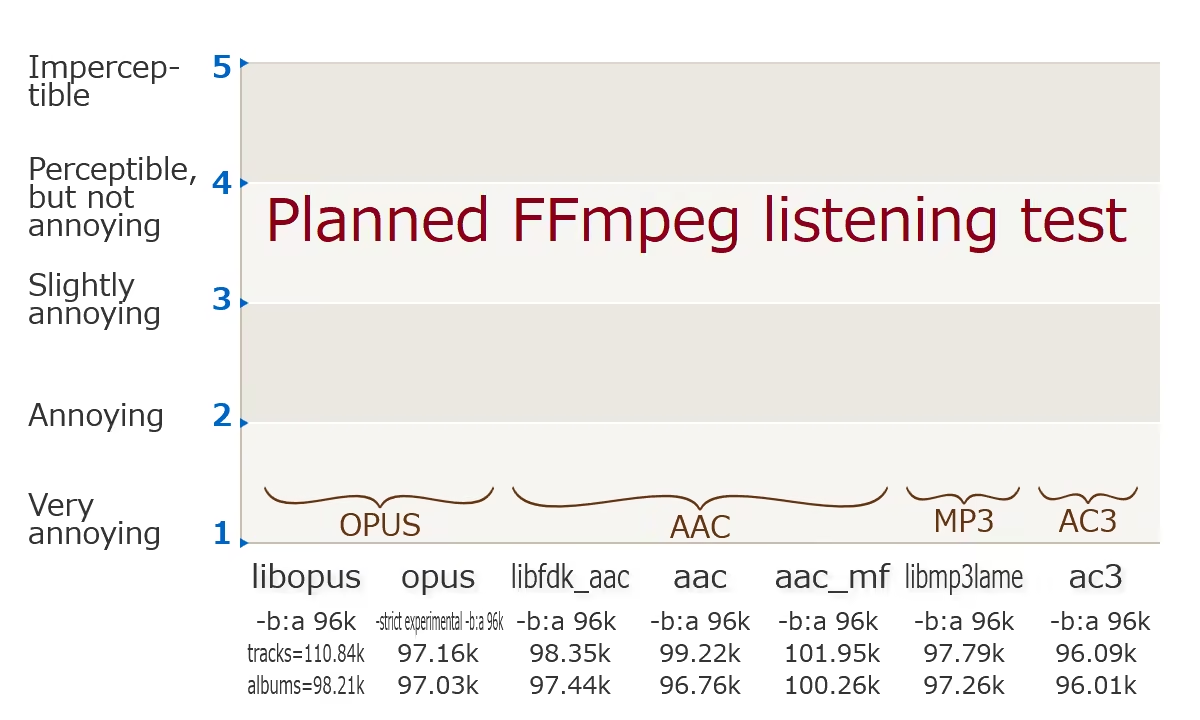

 Ulfgard🐀

 veygax
 MaraJade



 Jordy Zomer
 Daniel Blanco 💻🤖
 Katie Paxton-Fear

 Alperen Keleş

 xymox

 Gynvael Coldwind
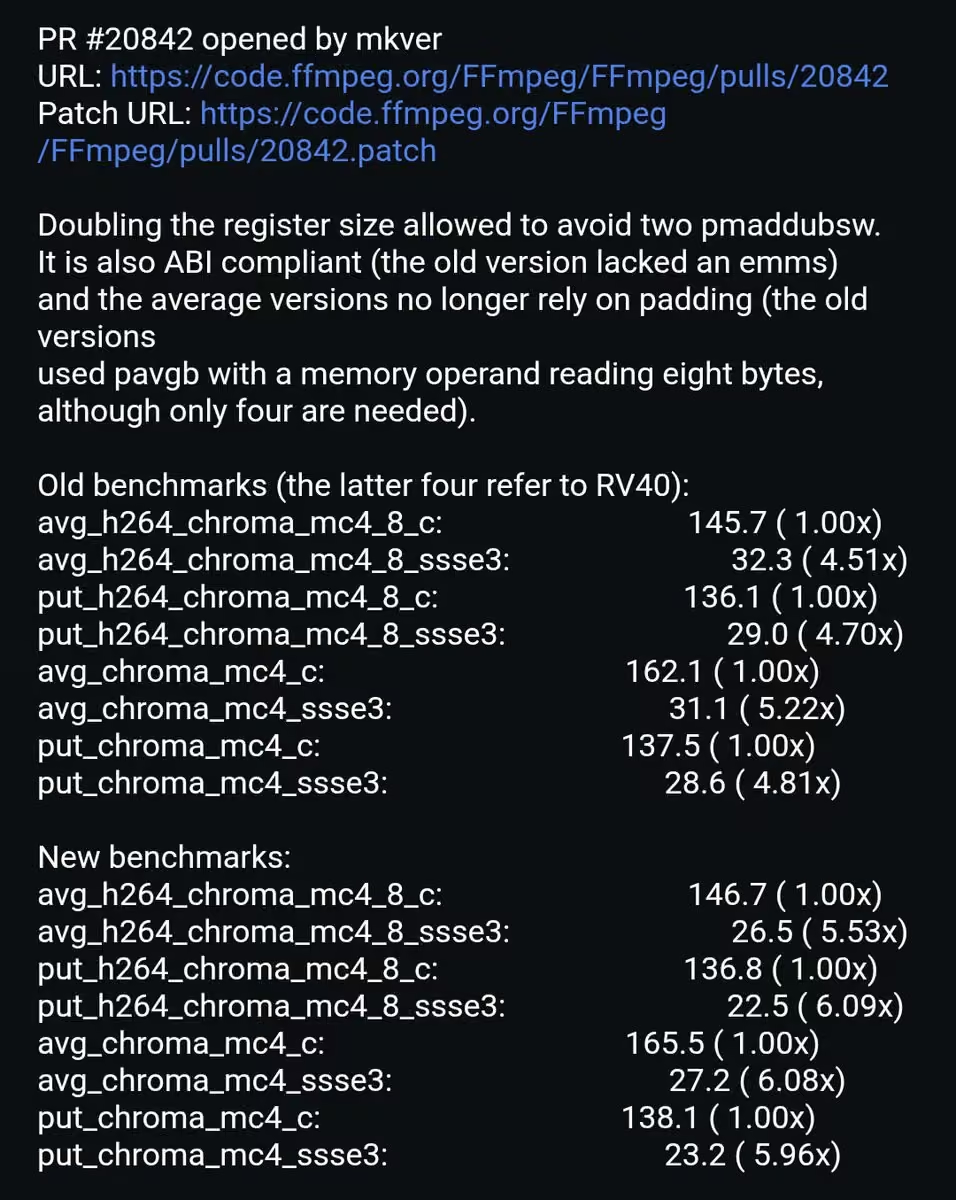
 regis portalez ☭
 APC_MOD (Ø,G)


 Robert Graham

 Gordon Messmer
 darkmage

 Dano

 gazonk
 Botzero🛠
 Guy Schellens
 Xyz
 Damián🦞
 aLANparty

 Eric Brandel
 Edmund 💉💉💉💉💉💉💉💉💉💉∞


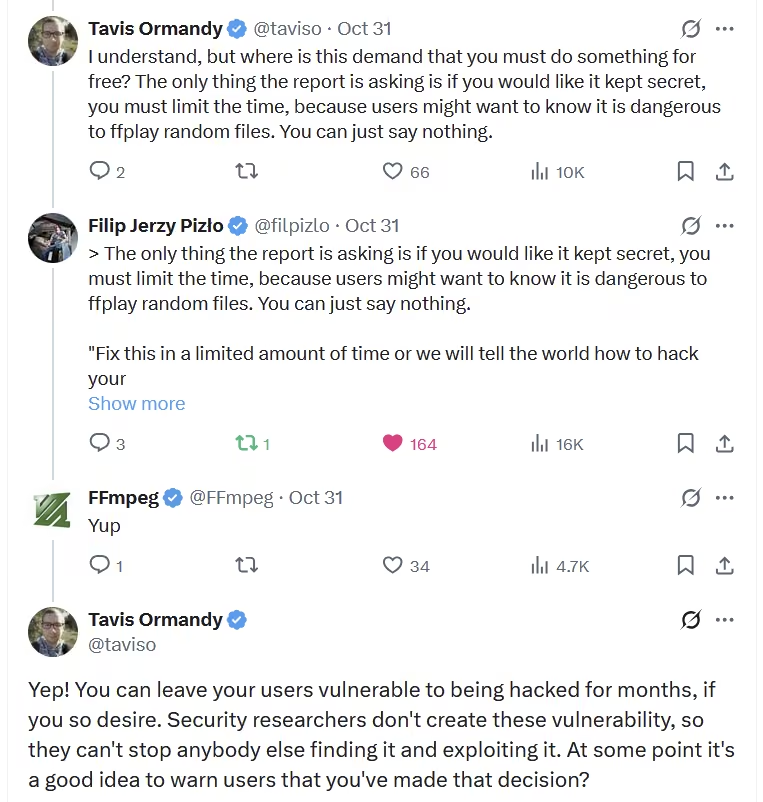
 taku
 Phil Eaton

 Dmitriy Kovalenko


 Principal Sorcery Officer

 Reza


 Evis Drenova
 Dan Toler


 4 of mallace
 Filip Jerzy Pizło
 Donald Morgan Jr.
 Hardik Shah

 Nick Prosser

 sandy (dev mode) ☕️
 Forrest

 thoughtlesslabs

 Slime
 saikrishnacharan

 Hirad Sab

 dalena
 Nithin Kamath


 Joe Burnett
 Zerodha
 Tom Miller

 Henky!!
 wunk
 Eddie

 EV_Trapper
 day

 Jean Lucas Lima
 Final Attack
 Seirah Porter
 wavefnx


 Mario Juric


 Nohokthen
 Ansh


 Adrian Dittmann
 Pavitra Golchha


 arch1t3cht
 PackedStruct
 Cabeção Inc.
 high_byte


 imyxh
 unnamed
 ⚡️John Andrew Owen ⚡️

 Elan Ruskin


 Leul
 Khushal

 William Wallace Welker
 Boris Chuprin
 Aimée Rem

 Yassine Jerroudi
 Keven Crick
 Chris Dickens
 aaron

 James Kelly
 pointyg
 CS2 Kitchen
 Raul Dias
 96
 ten-c++ 🚀❤️🔥 ✂️✨
 Mark Atwood
 CreaZyp!
 🤷♂️
 Gonza ¯\_(ツ)_/¯

 wukko
 Thomas Peitz
 lcq2
 paulopacitti 🌐
 Carlos Lebron
 aggrax

 Martin (Mastodon: @martin@whitakernet.com)
 fox ⏹️
 CRUXNET

 No Time to Wait


 TeamSpeak
 TeamSpeak Dev Updates

 Pedro Povoleri
 shavit 🌸
 Gordon Austin

 Pushkar Bankar
 Kyros

 Kim Hudaya
 Ezee

 Liam Kearney
 Dan Advantage
 Tim

 The Computation Mofo
 Programmer Humor


 Abu Khuzaymah Akhter bin Abdur-Ra'ūf
 Sergio Bañón 🐧💻 🐍
 DonutATX
 John Carmack
 ASG


 Antoine B.
 kinghorlee


 Cheng -

 XDA


 Rehan Haider


 Navid

 Viraj
 PlusJamais
 ROS Japan Users Group


 ⚞ Black ⚟


 Felipe Jorge
 sarah guo


 GIGAZINE(ギガジン)
 窓の杜


 🇲🇦 حاتم

 Shardul

 IcarvsVivit


 motohagiography
 The Lunduke Journal


