 John Preskill
@preskill

Group photo from last week's Nobel Symposium on Quantum Computing @STIAS_SA. It was inspiring to hang out with this crowd.


Politicians, athletes, journalists, NGOs, companies... They all use corporation-owned social networks to communicate with us. Citizens shouldn't have to hand over their data to companies to read content published by public entities. Public Feeds changes that by making posts of popular accounts freely available. Read more.

John Phillip Preskill (born January 19, 1953) is an American theoretical physicist and the Richard P. Feynman Professor of Theoretical Physics at the California Institute of Technology, where he is also the director of the Institute for Quantum Information and Matter. More on Wikipedia
Theoretical physicist @Caltech, Director of @IQIM_Caltech
John Preskill
@preskill
I always appreciate an opportunity to emphasize that the burgeoning quantum industry in California and elsewhere is building on decades of curiosity-driven fundamental research, mostly done at universities.
www.caltech.edu/about/news/caltech-and-the-new-california…
John Preskill
@preskill
Slides for my talk at the Nobel Symposium on Quantum Computing: "Quantum error correction gets real"
preskill.caltech.edu/talks/Preskill-Nobel-Symposium-2026.pdf
John Preskill
@preskill
Wise words from @JosephPConlon (and from Steve Weinberg): "Go for the messes - that's where the action is."
 Joseph Conlon
@JosephPConlon
Some thoughts on AI, theoretical physics, careers and the question of whether this is a good time to do a PhD in theoretical physics (which I will just call ‘theory’ for shorthand). Stimulated by a conversation with one of my undergrads. 1/9
John Preskill reposted
John Preskill
@preskill
We were in Aspen in June 2000 for a quantum computing program that David DiVincenzo and I organized. Daniel Gottesman and I were writing our paper about GKP codes, and Knill-Laflamme-Milburn were working on photonic quantum computing. You may recognize some of the luminaries. Photos by Ike Chuang.

 John Preskill
@preskill
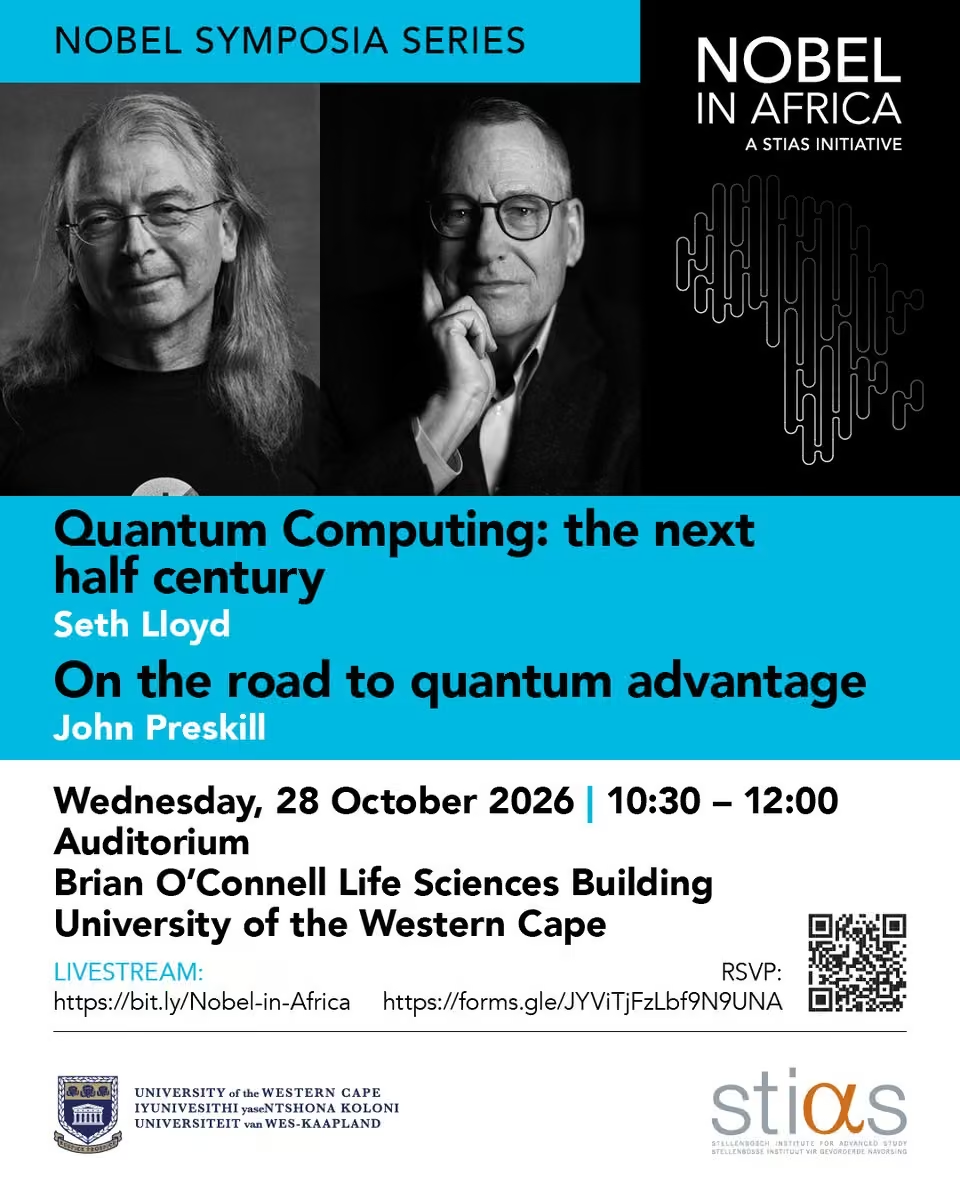
Seth Lloyd and I are giving public lectures tomorrow morning @UWConline. We are both attending the current Nobel Symposium hosted @STIAS_SA. Our talks will be live streamed.
 John Preskill
@preskill
I'm at the Stellenbosch Institute for Advanced Study in South Africa (@STIAS_SA) for the Nobel Symposium on Quantum Computing. Looking forward to a fun and exciting week.
www.stias.ac.za/events/nobel-symposium-in-physics-quantum…
John Preskill
@preskill
Student @Caltech Saleh Naghdi urges scientists to create short videos that explain their work. An example: this 1.5-minute video abstract for his recent paper on simulation of quantum spin systems.
quantumfrontiers.com/2026/10/19/even-sampling-from-a-quan…
John Preskill
@preskill
Student @reionize @caltech ponders the value of PhD training in the AI era.
quantumfrontiers.com/2026/10/17/letter-to-a-prospective-s…
John Preskill
@preskill
Informative discussion by very knowledgeable experts about the threat to modern cryptography posed by AI models. The good news is that the models can vet cryptosystems much faster than the human mathematicians we've relied on in the past, building trust and allowing more rapid deployment.
 a16z Frontier
@a16zfrontier
AI is getting better at solving hard math problems, especially given recent drops. But what does that mean for the cryptography that protects everything from private messages to healthcare to banking and crypto wallets?
Stanford cryptographer Dan Boneh, with @eddylazzarin, @SuccinctJT, @liz_harkavy, and @smc90, makes sense of the warnings sounded recently. They cover:
- what’s fact vs. assumption
- what’s new and what risks cryptographers have long prepared for
- where quantum computing doesn't (and does) fit
- opportunities for builders
Highlights:
00:37 – What sparked the most recent debate about AI and cryptography
01:35 – Signal vs. noise: What the math does and doesn’t tell us
05:29 – Why cryptography depends on open problems
09:25 – Why the stakes go beyond blockchains
10:43 – How AI could strengthen confidence in cryptography
13:50 – Considerations for users and institutions
20:10 – Where AI and quantum threats overlap
22:32 – Building systems that can change cryptographic methods
23:59 – Hash-based versus lattice-based cryptography
33:07 – Opportunities for builders, and better security tools
38:14 – What comes next if there were a cryptographic break?
John Preskill
@preskill
In Malibu yesterday with the great Michel Devoret.
 John Preskill
@preskill
Thanks, @martinmignot, for this thoughtful essay about the origin of @TeamOratomic, and why @IndexVentures decided to invest.
www.indexventures.com/perspectives/making-quantum-computi…
John Preskill
@preskill
It's an exciting time @TeamOratomic. We are on a focused mission to build a utility-scale, fault-tolerant quantum computer, and have now raised $775M since our launch in March 2026.
Find out more about us here:
www.oratomic.com/news/mission
John Preskill
@preskill
Thank you, @chrismichel. (In the third photo, Chris made a futile attempt to make me look more like a Tech Bro.)
 Christopher Michel
@chrismichel
.@Caltech Professor @preskill has spent decades figuring out how to make quantum computers actually work.
He helped develop fault-tolerant quantum computing, coined NISQ, and pushed quantum information into black holes and spacetime.
More: explorers.com/john-preskill/
Photographed for @theNASEM.
#newheroes #quantum @TeamOratomic


 John Preskill
@preskill
My talk last week at the #quantumworldcongress, a 20-minute overview of recent highlights in quantum computing.
www.youtube.com/watch?v=YYjK9pppT98
John Preskill
@preskill
The head that invented the surface code wears a hat that displays it.
 John Preskill
@preskill
Chemistry giant and @Caltech institution Rudy Marcus, fondly remembered by @nicoleyh11.
quantumfrontiers.com/2026/09/27/marcus-theory-and-marcus-…
John Preskill reposted
 Antonio Anna Mele
@QuAntonioMele
In our new work, we touch one of the beautiful fundamental questions at the heart of quantum physics: when does classical behavior emerge from quantum systems?
We study this question through the lens of learning bosonic Gaussian states, and find a precise quantum-to-classical crossover in their learnability as thermal fluctuations increase. Cold Gaussian states are intrinsically quantum to learn, while sufficiently warm ones can be learned with the same sample complexity as classical Gaussian distributions, using operations that are just as simple.
Thanks a lot to my collaborators @CSenrui, @FrancescoMeleAn, and @preskill for all their great work! I'm also grateful for my visit to Caltech in March, where I had the nice opportunity to brainstorm this project in person with them!
ArXiv link: arxiv.org/pdf/2609.26705
 John Preskill
@preskill
I'm at the #quantumworldcongress in College Park, MD, where I'll speak tomorrow at 9:50am "On the Road to Quantum Advantage."
 John Preskill
@preskill
Very articulate mathematicians pondering the future of math.
www.quantamagazine.org/live-from-icm-2026-what-is-math-fo…
John Preskill
@preskill
For fans of Strunk and White (I'm one), here's a version customized for scientists by @nicoleyh11.
quantumfrontiers.com/2026/08/26/nicoles-guide-to-writing-…
John Preskill reposted
 QIP 2027
@QIPConference
We're pleased to announce the QIP 2027 call for submissions. The key dates are as follows; refer to the website qipconference.org/2027/call/ for detailed instructions.
 John Preskill
@preskill
Interesting chat: @Jacob_Tsimerman talks to @TOEwithCurt about how AI is changing mathematics.
www.youtube.com/watch?v=6uIJdXmB4vE
John Preskill
@preskill
We're excited @Caltech and @TeamOratomic about mitten codes, which we hope will accelerate the journey to practical quantum computing. An extraordinary team worked on this project -- I especially appreciate brilliant contributions from Caltech students Aditya Bhardwaj, Richard Ma, and Nadine Meister.
arxiv.org/abs/2607.28795
John Preskill
@preskill
Mark Wise liked to say that @Caltech is "heaven for professors." And professors like Mark make Caltech "fairly heavenly" even for students.
quantumfrontiers.com/2026/07/26/wise-guy/
John Preskill reposted
 mjschallop
@MichaelSchallop
Welcome feedback on my new quantum disclosure law & tech policy paper. Thanks to @Preskill for helpful input.
SSRN: papers.ssrn.com/sol3/papers.cfm?abstract_id=7202378
#quantumcomputing #quantumcryptography #postquantumcryptography #cybersecurity #technologypolicy #lawtech #berkeleylaw #stanfordlaw
John Preskill reposted
 NicoleYunger Halpern
@nicoleyh11
I learned about @MarkWiseSays from John Preskill's eulogy for Mark. I heard all the tweets in his voice; and I laughed so hard, I cried. @preskill
 John Preskill
@preskill
My friend Mark Wise
quantumfrontiers.com/2026/07/18/my-friend-mark-wise/
John Preskill
@preskill
Thoughtful discussion @SimonsInstitute led by @RobertHuangHY on the topic researchers everywhere are talking about: How to respond to the automation of research?
www.youtube.com/watch?v=vT5blu-ZUZ0
John Preskill reposted
 Anthony Leverrier
@letonyo
this is a timely talk with the whole research community (at least in QIP) currently pondering this very question:
"How to Respond to the Automation of Research"
by Hsin-Yuan Huang @RobertHuangHY (Caltech & @TeamOratomic )
John Preskill
@preskill
My friend Mark Wise
quantumfrontiers.com/2026/07/18/my-friend-mark-wise/
John Preskill
@preskill
Mark Wise 1953-2026. Hero of theoretical particle physics, master of effective field theory, much loved teacher, mentor, and colleague, my best friend for over 40 years. An immeasurable loss.
John Preskill reposted
 Vinod Khosla
@vkhosla
We at @khoslaventures made the largest initial investment yet, as we did in OpenAI, into @TeamOratomic after we looked at a dozen Quantum starts in a decade. On its way to solve Shor's algorithm, the true symbol of getting to "quantum computing" FIRST. www.oratomic.com. Join them in building the world’s first fault-tolerant quantum computer capable of useful applications and a fundamentally new model of computation that could have consequences far beyond what we can predict today
John Preskill
@preskill
I feel guilty when I ask Claude to do something I could have done myself (but would have taken me much longer). Claude is so busy, I hate to be annoying. I suppose I'll get over it.
John Preskill
@preskill
That feeling when you meet someone for the first time with whom you have already co-authored a paper.
quantumfrontiers.com/2026/06/28/the-physicists-of-florence/
John Preskill reposted
 Caltech
@Caltech
Today, Caltech and JPL welcome renowned astrophysicist, acclaimed author, and transformative leader, Ray Jayawardhana as the Institute’s tenth president! He brings a fierce commitment to building on Caltech’s legacy of discovery and exploration.
www.caltech.edu/about/news/caltech-welcomes-ray-jayawardh…

John Preskill reposted
John Preskill
@preskill
On Wednesday we dedicated @Caltech's Ginsburg Center for Quantum Precision Measurement. We won’t be moving in for a few more months, but it’s going to be a beautiful facility. We’re very grateful to the donors, and to President Tom Rosenbaum and former Division Chair Fiona Harrison, who have been champions of this project. It was a great day.
www.caltech.edu/about/news/ginsburg-center-for-quantum-pr…
John Preskill
@preskill
My friend Charles Cao taught me about the importance of magic in quantum spacetime: "Without magic, things are a little too simple." Thanks, @walkingthedot, for the well-written article.
www.quantamagazine.org/entanglement-builds-space-time-now…
John Preskill
@preskill
We thought that @SenAdamSchiff would want to hear about how quantum computing will benefit the world. But actually he is just really, really curious about quantum entanglement (and knows a lot about it)! Thanks for visiting @Caltech, Senator. It was fun.
www.youtube.com/watch?v=gWhL4y6Qen8
John Preskill
@preskill
Even on the bad days, there are good things to celebrate and enjoy.
quantumfrontiers.com/2026/05/20/nicoles-guide-to-handling…
John Preskill
@preskill
I'm quite amazed, and deeply honored, to see my name on this distinguished list of "AI Pioneers." Thank you, @BostonGF and AI World Society, for recognizing that quantum science can contribute to "an age of human flourishing."
bostonglobalforum.org/publication/16058/
John Preskill
@preskill
Everybody loves entropy, yet somehow we are always working hard to reduce it.
quantumfrontiers.com/2026/04/12/how-i-learned-to-stop-wor…
John Preskill
@preskill
Wise words from Garnet Chan on quantum computing and chemistry.
www.newquantumera.com/podcast/quantum-chemistrys-classica…
John Preskill
@preskill
Our paper “Exponential Quantum Advantage in Processing Massive Classical Data” proves that quantum machines can solve common machine learning tasks using exponentially less memory than a classical machine would require.
Much further work will be needed to translate this theory into practice. But because modern AI is often hampered by insufficient memory, this finding bolsters our confidence that quantum AI can eventually have a broad impact on daily life.
This project was led by the remarkable Caltech student @haimengzhao and inspired by the vision of @RobertHuangHY, with essential contributions from all our collaborators. Here Haimeng tells the story.
quantumfrontiers.com/2026/04/09/unleashing-the-advantage-…
John Preskill reposted
 Haimeng Zhao
@haimengzhao
⚛ Can small quantum computers accelerate AI on massive classical data? Yes!
I am absolutely thrilled to share our new work proving *honest* exponential quantum advantages in broadly applicable classical tasks. 🧵👇
Paper: arxiv.org/abs/2604.07639
Blog: quantumfrontiers.com/2026/04/09/unleashing-the-advantage-…
 John Preskill
@preskill
The Caltech group knows it has years of work ahead before any of its dreams have a chance of coming true. But the researchers can’t wait to get started. “Pick a cooler life quest than building the world’s first quantum computer with your friends!” said a jubilant @DolevBluvstein [CEO of @TeamOratomic ], reached by phone shortly before their paper went live, before rushing off to celebrate.
www.quantamagazine.org/new-advances-bring-the-era-of-quan…
John Preskill
@preskill
With extraordinary colleagues, we are developing new architectures for neutral-atom quantum processors that dramatically reduce the resource estimates for fault-tolerant quantum computing. This progress makes me optimistic that broadly useful quantum computing will soon be a reality.
We’ll continue fundamental research @Caltech to advance quantum science and technology, while building fault-tolerant quantum machines and exploring their applications @TeamOratomic.
It’s a very exciting time to be a quantum scientist!
www.caltech.edu/about/news/caltech-team-finds-useful-quan…
John Preskill reposted
 Francesco Anna Mele
@FrancescoMeleAn
Thanks a lot to my amazing coauthors for this wonderful collaboration! @CSenrui, Marco Fanizza, Alfred Li, Zachary Mann, Hsin-Yuan (Robert) Huang, Yanbei Chen, and @preskill
19/
John Preskill
@preskill
I'm looking forward to the Kavli Symposium tomorrow at the APS Global Physics Summit, where I'll speak about "The Road to Quantum Advantage"
summit.aps.org/events/MAR-X02
John Preskill
@preskill
I'm thrilled that Charlie Bennett and Gilles Brassard have received the A. M. Turing Award for “their essential role in establishing the foundations of quantum information science and transforming secure communication and computing.” Congratulations!
www.quantamagazine.org/quantum-cryptography-pioneers-win-…
John Preskill
@preskill
In this thoughtful essay, Garnet Chan reflects on recent progress using classical heuristics in computational quantum chemistry—and what it means for quantum computing. The lessons he draws can help to steer both classical and quantum approaches in scientifically productive directions.
quantumfrontiers.com/2026/03/12/the-femo-cofactor-and-cla…
John Preskill
@preskill
With characteristic attention to detail, @nicoleyh11 offers guidance on handling faculty offers.
quantumfrontiers.com/2026/03/11/nicoles-guide-to-navigati…
John Preskill
@preskill
In the last post of a 3-part series, Dominik Hangleiter highlights the importance of efficient verification of quantum advantage, and assesses the prospects for achieving it soon.
quantumfrontiers.com/2026/02/28/what-is-next-in-quantum-a…
John Preskill
@preskill
It's nice to find out that I'm still an influencer in particle theory:
"We thank John Preskill for suggesting the phrase “One Sum To Rule Them All,” which inspired the title of this paper."
arxiv.org/abs/2602.22320
John Preskill
@preskill
Interesting format for a review article. 24 brief chapters, each offering perspective from a small subset of the 69 authors on a particular topic.
quantumfrontiers.com/2026/02/11/quantum-cartography/
John Preskill
@preskill
An engaging account of the remarkably rich scientific legacy of physicist Luis Alvarez.
www.nybooks.com/articles/2026/03/12/the-wandering-physici…
John Preskill
@preskill
Siblings: Three of my scientific "children" (Dariel Mok, Hui Khoon Ng, Hoi-Kwong Lo) gather in Singapore. I've been blessed with many wonderful students.
 John Preskill
@preskill
The always eloquent Nadya Mason on the promise of Quantum 2.0 and how to build the quantum workforce.
share.transistor.fm/s/226ce19a
John Preskill
@preskill
While attending the Q2B Silicon Valley conference in December, I had this enjoyable conversation with Antonella Navarro, host of The Quantum Revolution podcast.
www.youtube.com/watch?v=_ZaspV605Gg
John Preskill
@preskill
In part 2 or a 3-part series, Dominik Hangleiter continues his thoughtful assessment of the evidence for quantum advantage in random-circuit-sampling experiments.
quantumfrontiers.com/2026/01/25/has-quantum-advantage-bee…
John Preskill
@preskill
Here's the video of my talk on December 10 at Q2B Silicon Valley, reviewing recent progress in quantum computing.
www.youtube.com/watch?v=_UoJFyMazXQ&list=PLh7C25oO7PW209S…
John Preskill
@preskill
Encouraging news.
www.nytimes.com/2026/01/10/science/trump-science-budget-c…
John Preskill
@preskill
Dominik Hangleiter weighs in with an informative post about a much debated question: Has quantum advantage been achieved? This is the first post in a three-part series.
quantumfrontiers.com/2026/01/06/has-quantum-advantage-bee…
John Preskill
@preskill
Ken Goldberg and I talked to The Quantum Kid about quantum computing and robots.
www.youtube.com/watch?v=hkb-l2azBE0
John Preskill
@preskill
Advice on how to interview for a faculty job, from an authoritative source.
quantumfrontiers.com/2026/01/04/nicoles-guide-to-intervie…
John Preskill
@preskill
It's fun to describe quantum teleportation in terms of particles that move both forward and backward in time. And it's more than just fun: the intuition derived from that description can guide us to new applications.
quantumfrontiers.com/2025/12/14/make-use-of-time-let-not-…
John Preskill
@preskill
Every December since 2017, I've delivered a keynote at Q2B Silicon Valley, commenting on recent progress in quantum computing. Here is what I said this time. It's been a good year for quantum.
quantumfrontiers.com/2025/12/26/quantum-computing-in-the-…
John Preskill
@preskill
In predicting properties of electronic structure or deciphering signals produced by Nature, will classical artificial intelligence eat quantum's lunch? Here @robbieking1000 considers the issue from the perspective of complexity theory.
quantumfrontiers.com/2025/12/11/can-ai-predict-the-quantu…
John Preskill
@preskill
The Institute for Quantum Information (and Matter) @Caltech is celebrating its 25th anniversary. It has been a great run so far, and quantum information science is more fun now than ever!
www.caltech.edu/about/news/caltechs-pioneering-quantum-hu…
John Preskill
@preskill
The @doescience National Quantum Information Science Research Centers continue their mission: "strengthening the quantum innovation ecosystem, accelerating discoveries that power next-generation technologies, and securing American leadership in quantum computing, hardware, and applications."
www.energy.gov/articles/energy-department-announces-625-m…
John Preskill
@preskill
"... physicists adore apparent contradictions ..."
Yes we do! Doesn't everyone?
quantumfrontiers.com/2025/10/26/the-sequel/
John Preskill
@preskill
The annual @IQIM_Caltech retreat at Lake Arrowhead is an opportunity to spend the weekend with some of my favorite scientists. It is always an uplifting and illuminating experience.
 John Preskill
@preskill
When and how will quantum computing broadly benefit humanity? Despite exhilarating recent progress, we still don’t know. Here my friend Jens Eisert and I assess the current status and the challenges ahead. We are optimistic about the quantum future, but there’s a lot of work to do.
arxiv.org/abs/2510.19928
John Preskill reposted
 Jens Eisert
@jenseisert
Over the recent weeks and months, @preskill and I sat down to think about where we are in quantum computing. While the noisy intermediate-scale quantum (#nisq) era — a term coined by John in 2018 — is just unfolding as we speak, the time seems right to look ahead to the next steps to come.
scirate.com/arxiv/2510.19928
In this perspectives article, we try to sketch the fraught road to quantum advantage — the path toward fault-tolerant, application-scale quantum (#fasq) computers. There are several gaps ahead of us, and we try to faithfully and honestly hint at how one may be able to "mind those gaps", and suggest a few important intermediate steps along the way.
I have been impressed by the ease and efficiency with which we have been able to put this together. Warm thanks to John for the great collaboration and wonderful team work.
 John Preskill
@preskill
Aside from Yang-Mills theory and parity nonconservation, Yang made so many profound contributions to physics! One that deeply impressed me as I was starting grad school: a 1975 paper with T. T. Wu highlighting the role of fiber bundles in gauge theory.
www.nytimes.com/2025/10/18/science/chen-ning-yang-dead.html
John Preskill
@preskill
John Preskill
@preskill
Thanks, Ingrid Fadelli, for this nice article about our recently published paper with @RobertHuangHY and @MSoleimanifar. The paper describes a surprisingly simple protocol for verifying that a many-qubit state in the lab matches a desired target state.
phys.org/news/2025-10-rigorous-approach-quantifies-quantu…
John Preskill
@preskill
The pioneering work of Clarke, Devoret, and Martinis showed that very cold electrical circuits behave in ways that exhibit fundamental principles of quantum physics. Building on this achievement, Devoret, Martinis, and many others are constructing quantum computers, powerful tools for exploring quantum science and solving very hard computational problems. Congratulations!
 The Nobel Prize
@NobelPrize
BREAKING NEWS
The Royal Swedish Academy of Sciences has decided to award the 2025 #nobelprize in Physics to John Clarke, Michel H. Devoret and John M. Martinis “for the discovery of macroscopic quantum mechanical tunnelling and energy quantisation in an electric circuit.”
 John Preskill
@preskill
6,100 neutral-atom qubits trapped in a grid by lasers @Caltech ... is a lot.
www.caltech.edu/about/news/caltech-team-sets-record-with-…
John Preskill reposted
 Mehdi Soleimanifar
@MSoleimanifar
Happy to see that our work with @RobertHuangHY and @preskill is now published! We use shadow overlap to make machine learning of quantum systems verifiable, and to benchmark & optimize quantum circuits.
 Nature Physics
@NaturePhysics
The certification protocol presented here is an efficient way to verify that a many-qubit quantum state is close to a desired target state. As well as enabling the verification of near-term quantum devices, it has applications to quantum learning.
www.nature.com/articles/s41567-025-03025-1
John Preskill
@preskill
I’m deeply honored to receive the 2025 Academic Pioneer of the Year Award from the Quantum World Congress. Curiosity-driven fundamental research revealed the promise of quantum science and technology, and will be just as vital for future advances.
quantumfrontiers.com/2025/09/18/john-preskill-receives-20…
John Preskill
@preskill
150K. Thanks for following me. Sometimes I wonder who y'all are.
John Preskill
@preskill
Useful advice from @nicoleyh11.
quantumfrontiers.com/2025/08/10/nicoles-guide-to-writing-…
John Preskill
@preskill
The #qec25 conference hosted by @Yale_QI was really excellent, and videos of all talks are available. So much recent progress on quantum error correction!
qec25.yalepages.org
John Preskill
@preskill
We’re excited to propose and validate simple methods for preparing ground states and thermal states of many-particle quantum systems, which might be feasible for early fault-tolerant quantum devices. All the credit goes to my brilliant collaborators.
arxiv.org/abs/2508.05703
John Preskill
@preskill
The infectious enthusiasm of my wonderful co-authors (@RobertHuangHY, Soonwon Choi, @JarrodMcclean) drove this upbeat assessment of “The Vast World of Quantum Advantage."
arxiv.org/abs/2508.05720
John Preskill
@preskill
Talking quantum with Brian.
www.youtube.com/watch?v=EKfsRmvwFV8
John Preskill
@preskill
In our world of (noisy) data, error correction is everywhere, as Mary Wootters eloquently explains.
www.quantamagazine.org/how-can-math-protect-our-data-2025…
John Preskill
@preskill
AI can improve the design of experiments. “It takes a lot to think this far outside of the accepted solution,” Adhikari said. “We really needed the AI.”
www.quantamagazine.org/ai-comes-up-with-bizarre-physics-e…
John Preskill
@preskill
Mark Saffman reviews the remarkable recent progress on quantum computing with neutral atoms.
podcast.newquantumera.com/57
John Preskill
@preskill
Chris Monroe recalls how fundamental research on atomic clocks led to quantum computing technologies.
www.youtube.com/watch?v=3B7zviHc52s
John Preskill
@preskill
A touching tribute to an inspiring teacher from a grateful former student.
quantumfrontiers.com/2025/07/27/little-ray-of-sunshine/
John Preskill
@preskill
Hirosi Ooguri takes the reins of @PMACaltech. Fiona Harrison was a great Chair, and I'm sure Hirosi will be a worthy successor.
www.caltech.edu/about/news/new-pma-chair-announced
John Preskill
@preskill
What a pleasure to catch up with Sri and Chari at a Caltech alumni event this weekend! They were undergrads @Caltech when we worked together on quantum algorithms and error correction 30 years ago.
 Devabhaktuni "Sri" Srikrishna
@sri_srikrishna
This weekend I was fortunate to reconnect with @preskill and @anchari with whom I spent many hours researching intricate details of qubits, shor’s algorithm, linear ion trap, quantum error correction codes during the “big bang” of quantum computing in the summer of 1995.
 John Preskill
@preskill
A pleasant surprise: In celebration of the International Year of Quantum, @PhysicsToday has reprinted my June 1999 article in their current issue. "Battling Decoherence: The Fault-Tolerant Quantum Computer"
pubs.aip.org/physicstoday/article/78/7/42/3350819/Battlin…
John Preskill
@preskill
Readers say this article is quite accessible.
 John Preskill
@preskill
Catching up with Umesh Vazirani.
 John Preskill
@preskill
Enjoying the ocean view with Lin Lin at Asilomar.
 John Preskill
@preskill
Encouraging.
www.science.org/content/article/senate-spending-panel-wou…
John Preskill
@preskill
Mathematician @evamirandag expounds on undecidability in fluid mechanics. This is fun: It's about rubber duckies drifting in the ocean.
www.youtube.com/watch?v=cgNpC-mC5iY
John Preskill reposted
 Bobbili Jayanth
@JayanthBobbili
Just attended an electrifying session by Prof. @preskill at #qgss25! ⚛️ His talk, "Feynman’s Dream: Simulating Nature with Quantum Machines", was nothing short of inspiring. @qiskit @IBM
#quantumcomputing #qiskit
 John Preskill
@preskill
Andrew Houck, Director of the Co-Design Center for Quantum Advantage, makes an eloquent case for the value of the National Quantum Initiative Quantum Research Centers. Hey Congress, how's that reauthorization coming along?
share.transistor.fm/s/9256a60d
John Preskill
@preskill
The International Year of Quantum is only half gone. Party on!
quantumfrontiers.com/2025/06/22/a-quantum-complex-legacy-…
John Preskill
@preskill
Raymond Laflamme 1960-2025. A great scientist, renowned for his pioneering contributions to quantum error correction. A great leader, founding director of @QuantumIQC. A great colleague and teacher whose legacy continues to inspire us.
uwaterloo.ca/institute-for-quantum-computing/news/legacy-…
John Preskill
@preskill
His group will turn an anharmonic mechanical oscillator into a qubit if @alpsipahigil "acquires a student nutty enough to try the experiment."
quantumfrontiers.com/2025/05/25/the-most-steampunk-qubit/
John Preskill
@preskill
The building committee gets a first look at the basement of the Ginsburg Center for Quantum Precision Measurement @Caltech. With me are Nick Hutzler, Rana Adhikari, Michelle Effros, and Dave Hsieh.
 John Preskill
@preskill
We're standing where a tunnel will connect Ginsburg labs to labs in neighboring Downs Laboratory. We hope the building will open next summer.
John Preskill reposted
 Jay Gambetta
@jaygambetta
Bringing our first Heron R3 QPU online: ibm_pittsburgh, inside an IBM Quantum System Two in Poughkeepsie, NY.
R3 isn’t a redesign—it’s precision refinement. And it shows:
• T1: 300 µs
• T2: 370 µs
• 2Q gate error: ~5×10⁻⁴ (our best yet)
• Layered gate error 100Q: 3.2×10⁻³
• Readout error: <5×10⁻³
ibm_pittsburgh joins the fleet soon.
 John Preskill
@preskill
Thank you, Jay. All the credit for this work goes to my brilliant co-authors Roland Farrell, Nikita Zemlevskiy, and Marc Illa. We still have far to go, but as quantum platforms advance they will become increasingly valuable as tools for scientific discovery.
Jay Gambetta
@jaygambetta
Important steps in the pursuit of quantum advantage in High energy physics from @preskill and collaborators -- quantum simulation of particle scattering with 100 qubits and over 6000 two-qubit gates. Great to see continuing utility-scale science on our current IBM quantum computers with error mitigation. For more details, read the paper here: arxiv.org/abs/2505.03111

John Preskill reposted
 Chris Pattison
@__chrispattison
Happy to share that some previous work with @krishnanirudh and @preskill that we call hierarchical codes (2303.04798) was recently published in Quantum! 1/10
 John Preskill
@preskill
Oskar Painter provides an inside look at Amazon's effort to advance fault-tolerant quantum computing using "cat qubits" at the Center for Quantum Computing @Caltech.
www.youtube.com/watch?v=jYzVeLyTPOc
John Preskill
@preskill
My comment (12:25 in the video): “The approach that Amazon is taking now at the Center for Quantum Computing is a bit different than what other companies are pursuing. It’s promising, but whether it’ll pan out, we’re not sure ...”
John Preskill
@preskill
“... A company like Amazon can afford to take that type of risk. I’m impressed by the extent to which the Amazon leadership appreciates that this is a long-term enterprise.”
John Preskill
@preskill
All the witnesses at this hearing eloquently emphasized that continuing to advance fundamental quantum science will be essential for the success of the quantum industry. Thank you!
 House Science Committee
@housescience
Following today’s full committee hearing, Chairman @RepBrianBabin extended his thanks to our distinguished witnesses: Dr. Celia Merzbacher (@The_QEDC), Dr. Charina Chou (@GoogleQuantumAI), Dr. Pete Shadbolt (@PsiQuantum), and Dr. Charles Tahan (@Microsoft).


John Preskill reposted
 Tobias Haug
@TobiasHaug_Q
I am happy to share that our work has been published in Physical Review Letters
journals.aps.org/prl/abstract/10.1103/PhysRevLett.134.180403.
Many thanks to my coauthors Dariel, Adam, Manuel and @preskill for the amazing collaboration!
Tobias Haug
@TobiasHaug_Q
Quantum randomness is notoriously hard to generate.
In arxiv.org/abs/2410.05181, we create random quantum states of much higher quality by injecting cheap classical randomness, without needing additional quantum resources.
Many thanks to coauthors Dariel, Adam, Manuel, @preskill!
 John Preskill
@preskill
You can tell I was in a good mood @qip2025.
 QIP 2025
@QIP2025
Happy Cinco De Mayo, and happy Square Root Day (5/5/25)!
It has been over 2 months since the conference, but after a hiatus due to various other commitments, our 2-man social media team is finally getting around to posting our coolest undertaking during the conference--interviews with some of the biggest names in our field about the early days of QIP!
First in our lineup is our interview with the one and only John Preskill (@preskill)! You will get a chance to hear about his experience with the first QIP he attended in 1999 in Montreal, his thoughts on underappreciated ideas in quantum computing, and a little-known secret about the writing process of everyone's favorite "Mike and Ike" textbook!
John Preskill
@preskill
Making quantum machines more autonomous might simplify the task of controlling them, and so ease the way to large-scale quantum computers that solve very hard problems.
quantumfrontiers.com/2025/04/27/quantum-automata/
John Preskill
@preskill
A delightful evening at Caltech's Venerable House.
 John Preskill
@preskill
If you are interested in quantum computing, I strongly recommend this insightful article by @Caltech student @robbieking1000 calling for a "scrappier approach" to finding new applications.
quantumfrontiers.com/2025/04/20/quantum-algorithms-a-call…
John Preskill
@preskill
Very interesting discussion with John Martinis about the challenge of scaling up superconducting quantum processors and the business plan of Qolab.
share.transistor.fm/s/f599d74b
John Preskill reposted
Haimeng Zhao
@haimengzhao
Do abstract learning processes have tangible physical consequences?
Yes! In this work, we rigorously show that the (in)ability to learn dramatically impacts the amount of physical resources required to perform certain thermodynamic tasks.
arxiv.org/abs/2504.07341
 John Preskill
@preskill
Students Haimeng Zhao and Yuzhen Zhang decided to revisit thermodynamics from the perspective of learning theory and computational complexity. The result was this fun project.
arxiv.org/abs/2504.07341
John Preskill
@preskill
Given many identical copies of an unknown quantum state, in some cases one can easily learn the state by examining some of the copies and then erase the rest with a low energy cost. In other cases, though, learning is difficult and erasure is more costly.
John Preskill
@preskill
Scientists often find that one gets a new idea by trying to explain something to someone else. This applies in particular to one who writes a popular book. [Note to self: write popular books.]
quantumfrontiers.com/2025/03/30/how-writing-a-popular-sci…
John Preskill
@preskill
Congratulations, Jeongwan Haah, recipient of the New Horizons in Physics Prize "for the discovery of Haah's code, in which fractal conservation laws emerge, and other models bringing discrete mathematical structures to physics"!
breakthroughprize.org/News/91
 John Preskill
@preskill
Great interview in which @ewintang describes how she shook the quantum world at age 18.
 Quanta Magazine
@QuantaMagazine
In Ewin Tang (@ewintang)’s undergraduate thesis, she showed that a major problem in computer science could be solved equally well by a classical algorithm as by a quantum algorithm. Hear her speak with @JannaLevin on a new episode of “The Joy of Why,” a podcast from Quanta and @prx. www.quantamagazine.org/what-is-the-true-promise-of-quantu…
John Preskill
@preskill
Thoughtful perspective from Mark Kamionkowski and Sean Carroll on recent evidence indicating that dark energy may have increased (!) as the universe evolved, and on the still unresolved "Hubble tension."
www.preposterousuniverse.com/podcast/2025/03/31/310-marc-…
John Preskill
@preskill
A fun chat with my friends Rob Schoelkopf and Sebastian Hassinger, recorded at the APS Global Physics Summit on March 17.
share.transistor.fm/s/7ec0179e
John Preskill
@preskill
Quanta Magazine reports on the beautiful recent construction of pseudorandom unitaries by Robert Huang and Fermi Ma.
Quanta Magazine
@QuantaMagazine
Randomness is essential to some research, but it’s always been prohibitively complicated to achieve. Now, we can use “pseudorandomness” instead. @_webbwright reports: www.quantamagazine.org/the-high-cost-of-quantum-randomnes…
John Preskill reposted
 Steve Flammia
@S_Flammia
Blown away by the record-breaking 252 submissions to #qec25! 🚀 Exceptional quality across theory and experiment—our community keeps raising the bar. Can’t wait to work with the PC to select an outstanding program. This conference is going to be amazing! 🎉
John Preskill reposted
 Nicolas Delfosse
@nic_delfosse
Remember to submit your work to the QEC conference! The deadline is in one week.
John Preskill
@preskill
With two of my students from the 1990s who made good: Hoi-Kwong Lo and Daniel Gottesman. #apssummit25
 John Preskill
@preskill
Here, among other cool analytic & numerical results, we prove that weakly interacting spin & fermionic systems can be rapidly cooled to their ground states & that quantum algorithms simulating the cooling process prepare the ground states very efficiently.
arxiv.org/abs/2503.15827
John Preskill
@preskill
All the credit goes to my wonderful collaborators, especially @YongtaoZhan and Zhiyan Ding.
John Preskill reposted
Jens Eisert
@jenseisert
In a great session on milestones in quantum physics celebrating the @QuantumYear2025 at the @APSphysics #apssummit25, Serge Haroche, Wolfgang Ketterle, Philip Kim, Francis Halzen and @Dorit Ahararonov present their main results, chaired by @preskill.
 John Preskill
@preskill
My speech at the #apssummit25 recognizing the International Year of Quantum: "The first and second centuries of quantum mechanics"
quantumfrontiers.com/2025/03/20/the-first-and-second-cent…
John Preskill reposted
NicoleYunger Halpern
@nicoleyh11
The @APSphysics is working @preskill hard at the #apssummit25. In addition to having spoken at the Quantum Future session and to speaking at an event this evening, he chaired a Quantum Milestones session this afternoon. Ain't no rest for the weary.
 John Preskill
@preskill
Will Oliver's vision of how to make control systems of solid-state quantum computers more scalable.
podcasts.apple.com/us/podcast/fluxonium-qubits-with-will-…
John Preskill
@preskill
8pm tomorrow at #apssummit25 we'll have a session on "Quantum Future - The Promise, the Hype, the Opportunity" -- 6 speakers and a panel. Should be interesting. Speakers: Tony Leggett, Megan Ivory, Krysta Svore, Wojciech Zurek, Emily Edwards, and me.
summit.aps.org/events/MAR-EV40/6
John Preskill reposted
 Erin Knutson
@erinmknutson
I helped plan two quantum sessions at the GPS next week & I'm really excited about them 😁
"IYQ: Milestones" chaired by John Preskill
summit.aps.org/events/MAR-N16
"IYQ: Guided by Quantum Information" chaired by Ehud Altman
summit.aps.org/events/MAR-S16
pls consider attending!
#apssummit25
John Preskill
@preskill
Jason Alicea opines that topological quantum computing is entering the POST-Q era. High quality topological qubits are not likely to arise suddenly; rather (like other qubits) they will improve gradually over an extended period. Jason explains here.
quantumfrontiers.com/2025/03/05/what-does-it-mean-to-crea…
John Preskill
@preskill
Jason: "My own take is that while Microsoft’s progress towards qubit readout is a welcome advance that has value regardless of the nature of the system to which those techniques are currently applied, convincing evidence of topological protection may still be far off."
John Preskill
@preskill
Excellent article in @sciam about the impending opportunity to redefine the second using optical clocks, including the friendly competition between ions and neutral atoms.
www.scientificamerican.com/article/worlds-most-accurate-c…
John Preskill
@preskill
Today Nature published measurement results from Ocelot, the new quantum chip created at the AWS Center for Quantum Computing at Caltech.
There is still far to go, but we hope that Ocelot’s unique architecture will shorten the path to quantum utility that benefits the world.
Here Fernando Brandão and Oskar Painter explain the thinking behind Ocelot.
www.amazon.science/blog/amazon-announces-ocelot-quantum-chip
John Preskill
@preskill
I have been encouraged to publish my talk at Q2B 2024. It's @arxiv today.
arxiv.org/abs/2502.17368
John Preskill
@preskill
Random sample of attendees @QIP2025. Turns out that 6 out of 8 have been students, postdocs, or professors @Caltech.
Jens Eisert
@jenseisert
A wonderful dinner with friends at #qip2025.

 John Preskill
@preskill
Many colleagues remember Assa Auerbach as fondly as does @nicoleyh11. He's sorely missed.
quantumfrontiers.com/2025/02/16/lessons-in-frustration/
John Preskill
@preskill
In their roadmap, Microsoft described a protocol for demonstrating a topologically protected qubit. There is no publicly available evidence that this test has been conducted successfully. I hope we will hear more soon.
arxiv.org/abs/2502.12252
John Preskill
@preskill
Well-informed comments from Jason Alicea about today's Microsoft Quantum announcement:
Jason Alicea, a professor of theoretical physics at the California Institute of Technology, questioned whether the company had actually built a topological qubit, saying the behavior of quantum systems is often hard to prove.
“A topological qubit is possible in principle, and people agree it is a worthwhile goal,” Dr. Alicea said. “You have to verify, though, that a device behaves in all the magical ways that theory predicts it should; otherwise, the reality may turn out to be less rosy for quantum computing. Fortunately, Microsoft is now set up to try.”
www.nytimes.com/2025/02/19/technology/microsoft-quantum-c…
John Preskill reposted
 New Scientist
@newscientist
John Preskill has been guiding the growing quantum computing industry for decades, and now he has set a new challenge – to build a device capable of a million quantum operations, or a megaquop www.newscientist.com/article/2466740-how-the-megaquop-mac…
John Preskill reposted
 Hsin-Yuan Huang (Robert)
@RobertHuangHY
Excited to give a tutorial at QIP 2025!
QIP 2025
@QIP2025
Our second tutorial of QIP 2025 is by @RobertHuangHY from @GoogleQuantumAI on Quantum Learning and Certification (Feb 22 Sat, 2-5:30pm, Room 302ABC). Swipe to read overview!


John Preskill reposted
QIP 2025
@QIP2025
Agenda⏰: rsvp.duke.edu/event/qip2025/agenda
Talks🎙️: rsvp.duke.edu/event/qip2025/accepted-talks
Posters📊: rsvp.duke.edu/event/qip2025/posters
John Preskill reposted
 Jake Taylor
@quantum_jake
From the nomination hearing, “I think NIST has some of the greatest scientists in the world, and they understand AI technology, quantum technology,” Lutnick said. “This is a central hub of knowledge of the American government, which I'm really excited to oversee.”
John Preskill reposted
 CSIS
@CSIS
NEW: @CSIS_Tech convened leading experts to provide recommendations advancing U.S. leadership in quantum technologies to address security issues and ensure technological competitiveness.
Read the full report: www.csis.org/analysis/csis-commission-us-quantum-leadership
John Preskill
@preskill
“Today, a new frontier of scientific discovery lies before us, defined by transformative technologies such as artificial intelligence, quantum computing, and advanced biotechnology.”
www.whitehouse.gov/presidential-actions/2025/01/president…
John Preskill
@preskill
I'm glad to be @UofMaryland to celebrate 10 years of exciting scientific contributions @JointQuICS. And we're proud that 7 of the QuICS Fellows passed through @IQIM_Caltech as students and postdocs.

John Preskill reposted
 Mischa Woods
@WoodsMischa
@dsfranca and I are looking for a joint Postdoc to work on aspects of quantum computing towards a quantum advantage. Applications are now open. Funding via the EU TouQan consortium grant quantera.eu/touqan/ Please retweet!
John Preskill
@preskill
I appreciate these lessons compiled by @nicoleyh11. Perhaps the most important is Lesson #9: Do what excites you most.
quantumfrontiers.com/2025/01/19/ten-lessons-i-learned-fro…
John Preskill
@preskill
"Ask us anything" with Scott Aaronson and Yuval Boger at #q2b24
www.youtube.com/watch?v=QdyddE7SdmM&list=PLh7C25oO7PW1zNH…
John Preskill
@preskill
Video now available: My keynote at #q2b24 "Beyond NISQ: The Megaquop Machine"
www.youtube.com/watch?v=uwBv6piN-9s&list=PLh7C25oO7PW1zNH…
John Preskill
@preskill
Useful perspective, clearly written and well-reasoned.
arxiv.org/abs/2501.05694
John Preskill reposted
Caltech
@Caltech
Due to the Eaton Fire in Altadena and strong winds in the area, Caltech’s campus in Pasadena will be closed for all nonessential operations on Wednesday, January 8. For more information, visit Caltech's Emergency Updates page.
www.caltech.edu/emergency
John Preskill
@preskill
Video of my talk at UT Austin on November 15: "Steve Weinberg's Universe"
www.youtube.com/watch?v=Q1EsE4zo-s8
The slides I presented are here:
preskill.caltech.edu/talks/Preskill-Weinberg-Conference-2…
John Preskill
@preskill
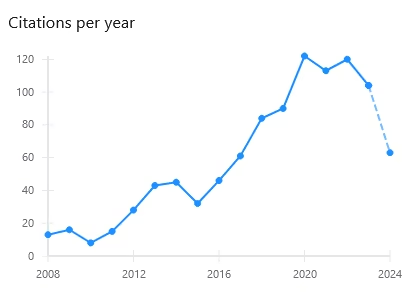
Citation counts continue to defy my expectations.
scholar.google.com/citations?user=K2BMBtcAAAAJ&hl=en&oi=ao
 John Preskill
@preskill
I didn't know Ed Jaynes, but the closing passage of Larry Bretthorst's biographical essay gives a vivid sense of what he was like: "His friendship was hard to earn, and hard to keep, for he had little tolerance for incompetence. He would undoubtedly be uncomfortable with all of the attention being lavished on him now that he is dead."
Nicole's blog: quantumfrontiers.com/2024/12/22/finding-ed-jayness-ghost/
Larry's essay: bayes.wustl.edu/etj/etj.html
John Preskill
@preskill
My website has migrated to a more stable and secure server. Links to the old site should redirect automatically. The new site is: preskill.caltech.edu
But I'm still using the HTML code I painstakingly crafted in 1993, a vestige of the web's early history. Updating that is a project for another day.
quantumfrontiers.com/2012/11/18/the-x-windows-solution/
John Preskill
@preskill
"While Willow represents an advance in technology with its reduced error rates, the promise of quantum computing is still years off."
www.barrons.com/articles/quantum-stocks-willow-google-bc0…
John Preskill
@preskill
Congratulations to all who contributed to the advances in quantum error correction recognized by the @PhysicsWorld Breakthrough of the Year.
physicsworld.com/a/two-advances-in-quantum-error-correcti…
John Preskill
@preskill
The career of Sadi Carnot reminds us of how scientific and technological advances drive one another.
NicoleYunger Halpern
@nicoleyh11
Party like it’s 1825. 🎉🎂🚂
quantumfrontiers.com/2024/11/28/happy-200th-birthday-carn…
@QThermodynamics @FQXi

John Preskill reposted
 HPCwire
@HPCwire
Move Aside NISQ - John Preskill Sets New QuantumTarget: the Megaquop Machine
www.hpcwire.com/2024/12/16/move-aside-nisq-john-preskill-…
John Preskill
@preskill
In this fascinating interview, Ignacio Cirac and Peter Zoller reminisce about how their ideas turned quantum computing into an experimental subject 30 years ago.
www.youtube.com/watch?v=-X1vqlwhYck
John Preskill
@preskill
"We're making Illinois the global quantum capital and the center for job growth in the quantum industry ...," said Governor JB Pritzker.
newsroom.ibm.com/2024-12-12-ibm-and-state-of-illinois-to-…
John Preskill
@preskill
I created a transcript of my talk at the #q2b Conference: "Beyond NISQ: The Megaquop Machine." You can read it here:
quantumfrontiers.com/2024/12/14/beyond-nisq-the-megaquop-…
John Preskill
@preskill
Wisdom from Isaac Kim.
 Isaac Kim
@Isaac__kim
Lately I've been seeing a lot of hype around quantum computing on this platform. Are those bots or humans? Either way, what I'm seeing is concerning. I want to provide an honest perspective on the current status quo, which is hopefully useful. Long story short, I do think a lot of exciting progress on QC will be made over the next few years. But I doubt those progress will be commercial applications.
John Preskill
@preskill
Slides for my talk today at #q2b: "Beyond NISQ: The Megaquop Machine."
www.preskill.caltech.edu/talks/Preskill-Q2B-2024.pdf
John Preskill reposted
 Eric Copenhaver
@ecopenhaver
Love seeing @preskill call out Rydberg atoms as the path to megaquop quantum computers 💪 #q2b24
 John Preskill
@preskill
I'm glad to be back at #q2b for the 8th year in a row. Looking forward to my keynote tomorrow at 9am and an "Ask Us Anything" with Scott Aaronson and Yuval Boger on Thursday at 5pm.
q2b.qcware.com/2024-conferences/silicon-valley/agenda/
John Preskill
@preskill
I was thrilled to hear about the surface code when Alexei Kitaev visited @Caltech in April 1997. It's heartening to see the hardware catching up with the theory of quantum error correction. There's still far to go but encouraging progress @GoogleQuantumAI.
www.quantamagazine.org/quantum-computers-cross-critical-e…
John Preskill
@preskill
Two-dimensional superconductors get even more confusing. Exciting times.
www.quantamagazine.org/exotic-new-superconductors-delight…
John Preskill reposted
 INSPIRE HEP
@inspirehep
Hsin-Yuan Huang, Richard Kueng and @preskill 2020 @NaturePhysics article
"Predicting many properties of a quantum system from very few measurements"
inspirehep.net/literature/2657041
reaches 1,000 citations.
#topcites
John Preskill
@preskill
On November 15, I spoke about my PhD advisor Steve Weinberg at a conference in his honor at the University of Texas. Slides from my talk are here: preskill.caltech.edu/talks/Preskill-Weinberg-Conference-2…

John Preskill reposted
Steve Flammia
@S_Flammia
We're hiring quantum theory faculty at Virginia Tech. This is an open-rank position in the CS or EE department at the new Center in Alexandria, VA, just outside of Washington, DC. This is the first of several new hires at the Center. Come join us (pls RT)! careers.pageuppeople.com/968/cw/en-us/job/531771/open-ran…
John Preskill
@preskill
Rob Schoelkopf predicts that using dual-rail superconducting qubits (for which most errors are detectable) will reduce the overhead cost of quantum error correction by "orders of magnitude."
podcast.the-new-quantum-era.com/41
John Preskill
@preskill
I am very proud of our new paper on simulations of scattering processes in (1+1)-dimensional quantum field theory. All the hard work was done by my co-authors Raghav Jha, Ash Milsted, Dominik Neuenfeld, and Pedro Vieira.
arxiv.org/abs/2411.13645
John Preskill
@preskill
The picture in the middle shows elastic scattering with total energy close to the mass of a narrow resonance. A lump of energy density appears, which gradually dissipates as the resonance decays to outgoing particles.
John Preskill
@preskill
By fitting the decay rate of the lump, we can determine the lifetime of the resonance. (Pairs of tracks are seen propagating outward in each direction due to a subtle interference effect that we explain in the paper.)
John Preskill
@preskill
The picture on the right shows a process in which both elastic and inelastic scattering occur. The outgoing tracks capture all of the possible final-state channels, which appear in superposition. Energy density correlation functions clarify the interpretation of the final state.
John Preskill
@preskill
Aside from generating pretty pictures, we obtain quantitative results that characterize the S-matrix of the theory. It would be instructive to do the same for other field theories in one dimension and beyond.
John Preskill
@preskill
Someday (I can’t say when), we’ll be able to study more complex processes at higher energy using quantum computers!
John Preskill
@preskill
Among the Ultra-Quantum Matter mavens in Lake Arrowhead, CA with former students Jeongwan Haah and @Isaac__kim and current postdoc @Caltech Dan Ranard.

John Preskill reposted
INSPIRE HEP
@inspirehep
John @Preskill's 2018 @quantumjournal article
"Quantum Computing in the NISQ era and beyond"
inspirehep.net/literature/2653073
reaches 5,000 citations.
#topcites
 John Preskill
@preskill
Thoughtful perspective from Yu Tong on whether AI will "eat quantum computing's lunch."
 Yu Tong
@YT59529321
With AI having such a visible impact in our lives, it is easy to think that whenever AI is used in a field it completely dominates it. This is simply not true for simulating strongly correlated systems. While the neural network quantum state is an exciting tool,
John Preskill
@preskill
For those who celebrate, November 7 is the birthday of two scientific giants: Marie Curie (1867-1934) and Lise Meitner (1878-1968), justly renowned for their world-changing investigations of radioactivity and nuclear fission.
John Preskill
@preskill
Whoa, I've been traded!
www.forbes.com/sites/adrianbridgwater/2024/11/05/riverlan…
 John Preskill
@preskill
Two steampunk evangelists dream up a quantum engine. @nicoleyh11
quantumfrontiers.com/2024/10/27/sculpting-quantum-steampunk/
John Preskill reposted
Mehdi Soleimanifar
@MSoleimanifar
When can classical neural networks represent quantum states?
New joint work (arxiv.org/abs/2410.23152) with Tai-Hsuan Yang, Thiago Bergamaschi, and John Preskill.🧵
 John Preskill
@preskill
There are a variety of postdoctoral opportunities in quantum science and engineering @Caltech, listed here. The application deadline is November 15. Join us!
qse.caltech.edu/qseopportunities/postdoctoral-scholars
John Preskill
@preskill
The @IQIM_Caltech retreat October 25-27 was a blast. We discussed quantum science, got to know one another better, and had plenty of fun. Photo by Jamie Kimble.

John Preskill reposted
Yu Tong
@YT59529321
In this work arxiv.org/abs/2410.18928 with @Muzhou_Ma, @S_Flammia, and @preskill, we tackle the problem of learning a non-local Hamiltonian with Heisenberg-limited scaling. Specifically, we focus on efficiently learning a k-body Hamiltonian without any geometric structure.
John Preskill
@preskill
Congratulations Jeongwan Haah, recipient of the @APSphysics 2025 Rolf Landauer and Charles H. Bennett Award in Quantum Computing "for outstanding contributions to the theory of quantum error correction, quantum phases of matter, and quantum dynamics."

John Preskill reposted
 David Ling 🇺🇸🐕🎸📚🔭🌎
@DrDavidDLing
I was very sad to learn of Ian's death. Hearing the news prompted me to get out old photo albums. These pix are from a dinner/poker party in the summer of 1976 that I held at Richards Hall where I was living at the time. I was so fortunate to have these folks as my classmates.


 John Preskill
@preskill
Ian Affleck 1952-2024. Ian was my office mate, tennis partner, and good friend when we were Harvard graduate students. We were particle theorists then, but Ian is best remembered for his many deep contributions to quantum condensed matter. A great loss.
phas.ubc.ca/memoriam-ian-affleck-1952-2024
John Preskill reposted
Tobias Haug
@TobiasHaug_Q
Quantum randomness is notoriously hard to generate.
In arxiv.org/abs/2410.05181, we create random quantum states of much higher quality by injecting cheap classical randomness, without needing additional quantum resources.
Many thanks to coauthors Dariel, Adam, Manuel, @preskill!
John Preskill
@preskill
Wendy Freedman explains that two new methods for measuring the Hubble constant using the James Webb Telescope agree to within 1%.
news.uchicago.edu/why-cant-scientists-agree-age-universe
John Preskill
@preskill
But she leaves out the punchline (from her recent paper): "These numbers are consistent with the current standard Lambda CDM model, without the need for the inclusion of additional new physics." So ... no more Hubble tension?
arxiv.org/abs/2408.06153
John Preskill
@preskill
The belt trick (illustrating the connection between spin and statistics) is always good for a laugh. But then again, @dabacon will laugh at just about anything. Photo by @ChrisMuschik.
 John Preskill
@preskill
Quantum Circuits, Inc. co-founder Rob Schoelkopf and CEO Ray Smets sing the praises of the dual-rail superconducting qubit.
www.youtube.com/watch?v=40fCcpl4bIE
John Preskill
@preskill
Unlike @nicoleyh11, I have not offered a course that is cross-listed under "Arts and Humanities." Something for the bucket list?
quantumfrontiers.com/2024/09/18/announcing-the-quantum-st…
John Preskill
@preskill
To celebrate the publication of Building Quantum Computers by Shayan Majidy, Christopher Wilson, and Raymond Laflamme, I am posting my Foreword for the book. Thanks to the authors for providing this authoritative account of four different qubit modalities.
quantumfrontiers.com/2024/09/28/now-published-building-qu…
John Preskill
@preskill
And the answer is no, sometimes.
 Zlatko Minev
@zlatko_minev
Robert Huang (@RobertHuangHY) on the Gluing Lemma at @CIFAR QIS—plus, the intriguing question: is time feelable? #quantumscience #cifar #qis #quantumtheory
 John Preskill
@preskill
More details about the cat qubits developed at the AWS Center for Quantum Computing, which have exponentially suppressed bit-flip error rates and also good phase coherence. The high noise bias was crucial for the recent demonstration of a repetition cat code.
 Kyungjoo Noh
@kyungjoo_noh
Another experimental paper on cat qubits from AWS! arxiv.org/abs/2409.17556
This time, we dive deeper into key technical advances that have made our cat qubits performant enough to enable repetition code error correction experiments!
 John Preskill
@preskill
I'm learning a lot from these guys.
Zlatko Minev
@zlatko_minev
Wonderful, in-depth discussion at CIFAR QIS on quantum with Alexandre Blais, Ashok Ajoy, Alexei Ourjoumtsev, Josiah Sinclair, and John Preskill—caught in mid-action with hands raised! #quantumscience #cifar #qis
 John Preskill
@preskill
Congratulations, Nicole!
NicoleYunger Halpern
@nicoleyh11
Honored to be included in the @ScienceNews "SN 10: Scientists to Watch" list. Thanks to @emcconover for the lovely article, and congratulations to all the young scientists featured!
www.sciencenews.org/article/nicole-yunger-halpern-quantum…
John Preskill reposted
Kyungjoo Noh
@kyungjoo_noh
Very excited to share this result from AWS Center for Quantum Computing!
arxiv.org/abs/2409.13025
Here we *experimentally demonstrate* repetition cat code, leveraging noise bias of cat qubits to reduce quantum error correction overhead.
John Preskill reposted
 Fernando Brandao
@fgslbrandao
New paper from the AWS Center for Quantum Computing, reporting an experimental realization of a repetition cat code with distance 3 (logical error 1.72%) and distance 5 (logical error 1.65%): arxiv.org/abs/2409.13025 /1
John Preskill
@preskill
The AWS Center for Quantum Computing @Caltech is proud to announce the realization of a hardware-efficient repetition cat code in a superconducting device. /1
arxiv.org/abs/2409.13025
John Preskill
@preskill
This is just a first step. It is still far from clear whether concatenating biased-noise cat codes with outer quantum error-correcting codes will be competitive with other ideas for doing fault-tolerant quantum computing. /5
John Preskill reposted
 Richard Kueng
@RichardKueng
Highlight of the day: @preskill and yours truly casting a 'classical shadow' onto the very office where my journey into the quantum realm began 12 years ago: the theoretical physics department at @ETH_en.🇨🇭

John Preskill reposted
 Tilman Esslinger
@TilmanEsslinger
After an inspiring walk&talk with John @preskill I am looking forward to his third Pauli lecture.


John Preskill reposted
 Andreas Wallraff
@AndreasAtETH
John @preskill from @Caltech gave an inspiring first Wolfgang Pauli Lecture at @ETH_en in front of a packed auditorium today.
Looking forward to two more lectures this week.
@ETHQuantumCntr @ETH_physics @ETH.


John Preskill reposted
NicoleYunger Halpern
@nicoleyh11
I roast @preskill while introducing quantum thermodynamics of lattice gauge theories @CQIQC_Toronto. My talk starts at 1:06:00. Which of the 10 lessons from John Preskill is your favorite?
www.youtube.com/watch?v=B9GCeBosnYk
 John Preskill
@preskill
I'm excited to be in Zurich, where I'll be giving the Wolfgang Pauli Lectures this week @ETH_en.
pauli-lectures.ethz.ch/lectures24.html
John Preskill reposted
NicoleYunger Halpern
@nicoleyh11
When I started listening to the Joy of Y, I was struck by how much co-host @stevenstrogatz sounded like he truly found joy in learning about math and physics. Naturally, interviewing with him was a delight. @QuantaMagazine www.quantamagazine.org/can-thermodynamics-go-quantum-2024…
John Preskill
@preskill
Congratulations to @Caltech undergrad @yiyiicai, advised by @YT59529321 and me, who received the Outstanding Paper Prize @TQC_conference for "Stochastic error cancellation in analog quantum simulation"!
 Yiyi Cai
@yiyiicai
It’s been an incredible opportunity working with and learning from my amazing mentors @YT59529321 and @preskill, and many thanks to @TQC_conference for the prize and a pair of lovely Okinawan lions! 🙌

John Preskill reposted
Andreas Wallraff
@AndreasAtETH
Do not miss the Wolfgang Pauli Lectures to be given this week at @ETH_en by John @preskill, the Richard P. Feynman Professor at @Caltech, on #quantum #science and #technology. All lectures will be live streamed. Links below.
Quantum Computing and the Entanglement Frontier
Tuesday, September 17, 2024, 17:00 h
Auditorium Maximum, HG F 30, ETH Zentrum, Rämistrasse 101, Zurich
Link to livestream: vimeo.com/event/472889/66a4c00a56
Learning in a Quantum World
Wednesday, September 18, 2024, 16:45 h
Lecture Hall HPV G 4, ETH Hönggerberg, Robert-Gnehm-Weg 15, Zurich
Link to livestream: vimeo.com/event/544782/80eec03abd
Finding Local Minima and Certifying Quantum States
Thursday, September 19, 2024, 16:45 h
Lecture Hall HPV G 4, ETH Hönggerberg, Robert-Gnehm-Weg 15, Zurich
Link to livestream vimeo.com/event/544782/80eec03abd
Further information can be found at pauli-lectures.ethz.ch/lectures24.html
 John Preskill
@preskill
Here is the Bell Prize Award Session @CQIQC_Toronto on August 28, featuring talks by my former students Hoi-Kwong Lo, @nicoleyh11, and Daniel Gottesman. That was fun. My talk, which was mostly historical, begins at 12:00.
www.youtube.com/watch?v=B9GCeBosnYk
John Preskill
@preskill
Insightful remarks from “cautiously optimistic” quantum algorithms expert @dr_qubit.
 The-New-Quantum-Era
@NewQuantumEra
★ Just published a new episode of The New Quantum Era: Innovating Near-Term Quantum Algorithms with Toby Cubitt. Listen: share.transistor.fm/s/680e3349
John Preskill
@preskill
The National Quantum Initiative Advisory Committee has published a report about quantum networking. The report emphasizes the need for fundamental research to clarify the potential applications of quantum networks and to advance the enabling technologies.
www.quantum.gov/nqiac-report-on-quantum-networking/
John Preskill reposted
Caltech
@Caltech
Caltech mourns the passing of Harry Jeffrey Kimble, a giant in the field of physics, who died on September 2.
www.caltech.edu/about/news/caltech-mourns-the-passing-of-…
John Preskill reposted
Andreas Wallraff
@AndreasAtETH
This likely is a must read for anyone in #quantum #science and #technology.
“Department of Commerce Implements Controls on #quantum Computing and Other Advanced Technologies Alongside International Partners”
www.bis.gov/press-release/department-commerce-implements-…
I will read it now.
Comment with your thoughts below.
 John Preskill
@preskill
Jeff Kimble in 2014: "If you want to be at the cusp of the future, you have to be willing to fail … You better believe it’s scary. But it’s ... a privileged position to be able to explore. So if you know what you’re doing, don’t do it!"
www.youtube.com/watch?v=1zD1U1sIPQ4
John Preskill
@preskill
Jeff Kimble 1949-2024. An extraordinary pioneer of quantum information science and a great friend who inspired me in many ways. Jeff's wise counsel made me a better scientist and a better person.
 John Preskill
@preskill
With Hoi-Kwong Lo and three of my "grandchildren" @CQIQC_Toronto: Sobhan, Xiang, and Yen-An.
 John Preskill
@preskill
Enjoying the banquet after the Bell Prize ceremony last night @CQIQC_Toronto

John Preskill reposted
 Aephraim Steinberg
@QuantumAephraim
Listening to @preskill's journey from quantum chromodynamics to non-Abelian anyons to Learning In The Quantum World,
as we honour him with the 2024 #bellprize !
Congratulations, John!
@CQIQC_Toronto


John Preskill reposted
NicoleYunger Halpern
@nicoleyh11
John Preskill @preskill clarifies why he's receiving the John Stewart Bell Prize: because of these two guys. @FieldsInstitute @RichardKueng @RobertHuangHY

John Preskill reposted
 Craig Gidney
@CraigGidney
10 years ago Kelly et al showed bigger rep code circuits do better. The dream was to do the same for a full quantum code.
This year we finally did it. arxiv.org/abs/2408.13687 has d=5 surface codes twice as good as d=3. And d=7 twice as good again, outliving the physical qubits.

John Preskill reposted
 Joe Fitzsimons
@jfitzsimons
Exciting work from @GoogleQuantumAI showing error suppression beyond breakeven and scaling with distance. Massively outperforms last year's results. The pace of progress towards fault-tolerance is really picking up.
Now do it with an asymptotically good code!🙃

John Preskill reposted
Andreas Wallraff
@AndreasAtETH
In four weeks from now John @preskill - the Richard P. Feynman Professor from @Caltech (@IQIM_Caltech) - will visit @ETH_en #zurich to give a set of three 2024 Pauli Lectures on a range of #quantum #science and #technology topics.
More information is available here: pauli-lectures.ethz.ch
Looking forward to it.
Mark your calendars!

John Preskill reposted
Caltech
@Caltech
A unique program, led by chemist Scott Cushing, pairs Caltech grad students and postdocs with undergraduate students from schools without strong research programs, and both benefit.
www.caltech.edu/about/news/building-the-caltech-connection
John Preskill
@preskill
Chatting with friends Sergio and Hartmut @GoogleQuantumAI.
 John Preskill
@preskill
After 33 years, we can more fully appreciate how @arxiv has transformed science. Thank you, Paul.
 FirstPrinciples
@FirstPrincip1es
Today marks the 33rd anniversary of @arXiv, the largest open-access platform with over 2.5M submissions. Discover insights from creator Paul Ginsparg of @Cornell on its origins, challenges, and future. firstprinciples.com/article/the-arxivist-paul-ginsparg-on…
#onthisday #openaccess #theoreticalphysics
John Preskill
@preskill
The incredible SURF students who joined our research group during Summer 2024. Left to right: Matthew, Akshar, Jun, me, Sary, Zosia, Richard, Christine. (SURF = Summer Undergraduate Research Fellowships.)
 John Preskill
@preskill
A clock on the Moon gains about a second in 50 years compared to a clock on Earth.
 Physics World
@PhysicsWorld
Should we use atomic clocks to build a satellite positioning system for the Moon? physicsworld.com/a/atomic-clocks-on-the-moon-could-create…
John Preskill
@preskill
"NIST has released a final set of encryption tools designed to withstand the attack of a quantum computer ... NIST is encouraging computer system administrators to begin transitioning to the new standards as soon as possible."
 National Institute of Standards and Technology
@NIST
Quantum computers could imperil the security of confidential electronic information, such as emails. To counter this threat, NIST has finalized its set of three encryption algorithms designed to withstand a future quantum computer’s cyberattacks: www.nist.gov/news-events/news/2024/08/nist-releases-first…

John Preskill reposted
INSPIRE HEP
@inspirehep
Patrick Hayden and @preskill's 2007 JHEP article
"Black holes as mirrors: Quantum information in random subsystems"
inspirehep.net/literature/759404
reaches 1,000 citations.
#topcites @IOPPublishing
 John Preskill
@preskill
Information theorist in a black dress.
quantumfrontiers.com/2024/08/11/always-appropriate/
John Preskill
@preskill
It's post-quantum week (maybe).
 David DiMolfetta
@ddimolfetta
SCOOP: NIST’s flagship post-quantum cryptography guidance set for release next week, per people familiar. W/ @not_amazn_alexa —>
www.nextgov.com/emerging-tech/2024/08/us-quantum-cryptogr…
John Preskill reposted
Nicolas Delfosse
@nic_delfosse
At the moment about 4% of the population of Benasque is a quantum error correction expert.
 Fault-Tolerant Quantum Technologies in Benasque
@FTQTBenasque
Group picture!
 John Preskill
@preskill
If you are not familiar with the life story of Lenny Susskind (and even if you are) you'll enjoy this interview.
 Lawrence M. Krauss
@LKrauss1
Premiere of YouTube version of @OriginsProject podcast with Lenny Susskind in 33 min. Strings, Quarks, Black Holes and more.. oh my! www.youtube.com/watch?v=qhszd_wqAgQ&list=PL5R87nA_A7ijBql…
John Preskill reposted
 CQIQC
@CQIQC_Toronto
Good news! The registration window has been extended until August 17. Join us at the @UofT to honor Prof. John @preskill *In-person event* intro by Paul Brumer & Hoi-Kwong Lo and lectures by Nicole Yunger Halpern @nicoleyh11 & Daniel Gottesman🔗 www.eventbrite.ca/e/the-2024-bell-prize-ceremony-tickets-…
 John Preskill
@preskill
Congratulations, Andrew!
 UMD Department of Computer Science
@umdcs
🎉 Congratulations to @UofMaryland CS Professor @andrewmchilds on receiving the 2024 Kirwan Faculty Research and Scholarship Prize! 🏆 Join us in congratulating him on this milestone achievement!
Read more:
go.umd.edu/KirwanPrize24
 John Preskill
@preskill
BJ Bjorken 1934-2024. His discovery of scaling in deep inelastic scattering of hadrons paved the way for quantum chromodynamics. A generation of physicists (including me) learned quantum field theory from his book with Sid Drell. A great scientist.
John Preskill
@preskill
“Perhaps kids who grow up playing quantum games will acquire a visceral understanding of quantum phenomena that our generation lacks.”
quantumfrontiers.com/2024/08/05/building-a-visceral-under…
John Preskill
@preskill
T. D. Lee 1926-2024. Forever linked with Frank Yang. Both came to the US from China as students in the 1940s and later became great scientific leaders as professors at US universities.
www.nytimes.com/2024/08/05/science/tsung-dao-lee-dead.html
John Preskill
@preskill
My shtick.

John Preskill reposted
 QSAcenter
@QSAcenter
Watch @QSAcenter Science Coordinator @preskill's keynote at the U.S. #quantum Information Science Summer School facilitated by the five @ENERGY National Quantum Information Science Research Centers @QuantumSciCtr @qnextquantum @sqmscenter @C2QAdvantage: ▶️www.youtube.com/watch?v=TIQqCdWaHh0
 John Preskill
@preskill
Slides for my keynote talk yesterday @ORNL opening the US Quantum Information Science Summer School.
www.qscience.org/summer-school-2024/program/keynote-july-15/
John Preskill
@preskill
Very interesting discussion.
 Doris Tsao
@doristsao
It was an honor and joy to chat with Sean Carroll. We talked about vision, consciousness, the bridge between sensory and symbolic processing, and a few other little things in this preposterous universe...
John Preskill
@preskill
"New means to control the quantum states of atoms and molecules [and] the intellectual merging of quantum mechanics with theoretical information and computer science ... hold the potential to transform chemistry and chemical engineering."
www.caltech.edu/about/news/former-caltech-postdoctoral-sc…
John Preskill
@preskill
Inspiring and eloquent lecture @ORNL by Jun Ye highlighting the impressive progress on optical atomic clocks (and toward the end, the exciting prospects for nuclear clocks).
www.youtube.com/watch?v=xoAGf4mHTGg
John Preskill
@preskill
"It’s all or nothing [with PsiQuantum], which doesn’t mean it’s invalid,” says Christopher Monroe, a computer scientist at Duke University and ex-IonQ employee. “It’s just hard to measure progress along the way, so it’s a very risky kind of investment.”
www.technologyreview.com/2024/07/25/1095287/psiquantum-pl…
John Preskill reposted
 Tom Wong
@thomasgwong
An updated version of the National Quantum Initiative Reauthorization Act was released yesterday. It incorporates all the amendments from the House Science, Space, and Technology Committee's markup last November. www.congress.gov/bill/118th-congress/house-bill/6213/text/rh
 John Preskill
@preskill
There will be an open meeting of the National Quantum Initiative Advisory Committee (NQIAC) on Tuesday August 6. The topic is Quantum Networking.
www.federalregister.gov/documents/2024/07/23/2024-16168/n…
John Preskill
@preskill
Estimated time scales here for "broad quantum advantage" and "full-scale fault tolerance" seem very optimistic. I agree with this, however: "Our assumptions for near-term value creation in the NISQ era have proved optimistic ... and require revision."
www.bcg.com/publications/2024/long-term-forecast-for-quan…
John Preskill
@preskill
Unsung hero: Thomas Neff 1943-2024.
www.nytimes.com/2024/07/20/world/europe/thomas-l-neff-dea…
John Preskill
@preskill
Now the video is also available.
www.youtube.com/watch?v=TIQqCdWaHh0
John Preskill
@preskill
Slides for my keynote talk yesterday @ORNL opening the US Quantum Information Science Summer School.
www.qscience.org/summer-school-2024/program/keynote-july-15/
John Preskill
@preskill
I'm excited!
CQIQC
@CQIQC_Toronto
🎓 Join us to honor Prof. John @preskill at the 2024 Bell Prize Ceremony. With intros by Paul Brumer & Hoi-Kwong Lo and lectures by Nicole Yunger Halpern @nicoleyh11 & Daniel Gottesman, it's a must-attend event. Register by Aug 12 🔗 www.eventbrite.ca/e/the-2024-bell-prize-ceremony-tickets-…
 John Preskill
@preskill
"In case you missed it, ..."
www.hpcwire.com/2024/07/17/quantum-watchers-terrific-inte…
John Preskill
@preskill
Our opening position is skepticism,” said Dr. Joe Altepeter, the DARPA program manager leading the charge on this exploration.
 DARPA
@DARPA
Announcing our new Quantum Benchmarking Initiative, which seeks to validate the promise of #quantumcomputing – separating hype from reality – through collaboration with fed & state quantum experts & test facilities @DOEscience @IllinoisDCEO @AFResearchLab www.darpa.mil/news/2024/quantum-computing-prototype
John Preskill
@preskill
Slides for my keynote talk yesterday @ORNL opening the US Quantum Information Science Summer School.
www.qscience.org/summer-school-2024/program/keynote-july-15/
John Preskill
@preskill
“In collaboration with researchers at Caltech, the group is planning tabletop experiments to test the practicality of the idea, and then plans to use larger vacuum tubes such as those at LIGO to work on how to align the lenses and stabilize the photon beams over long distances.”
John Preskill
@preskill
I’m on my way to @ORNL to kick off the US Quantum Information Science Summer School tomorrow morning.
www.qscience.org/us-quantum-information-science-summer-sc…
John Preskill
@preskill
Congratulations @PeterShor1, recipient of the 2025 Claude E. Shannon Award "for consistent and profound contributions to the field of information theory"!
www.itsoc.org/news/shannon-award-2025
John Preskill
@preskill
Amazing.
Hsin-Yuan Huang (Robert)
@RobertHuangHY
Can we tell apart short-time & exponential-time quantum dynamics?
In arxiv.org/abs/2407.07754, we found the answer to be "No" even though it seems easy.
This discovery leads to new implications in quantum advantages, faster learning, hardness of recognizing phases of matter ...
 John Preskill
@preskill
Maybe coming soon? "Our research group is already hard at work on the logical next step in this progression --- simulating collisions between two particle beams."
 Martin Savage
@MartinS25499253
An excellent IBM blog post about our work using more than 100 qubits to simulate a quantum vacuum and hadrons, on the path to fundamental matter, using IBMs quantum computers. Thank you Robert Davis! @robertmdvs , @marc_illa_ , @UW , @UWArtSci
www.ibm.com/quantum/blog/hadron-dynamics-simulations
John Preskill
@preskill
Naturally, we feel sad when great scientists like Ed Stone pass away. But it's comforting to know they live on through their influence on students and colleagues.
quantumfrontiers.com/2024/07/07/my-favorite-rocket-scient…
John Preskill
@preskill
Congratulations to all the awardees!
 Hal Tasaki
@Hal_Tasaki
At ICMP 2024, this year's Henri Poincaré Prize has been awarded to David Brydges, Alexei Kitaev, Antti Kupiainen, and Scott Sheffield. Congratulations to all!
I am excited and proud of this marvelous selection as a member of the selection committee.
#icmp2024
John Preskill reposted
 QuICS
@JointQuICS
Daniel Gottesman, @UofMaryland's Brin Family Professor in Theoretical Computer Science, has been appointed the new co-director of the Joint Center for Quantum Information and Computer Science (QuICS) effective July 1.
Learn more: go.umd.edu/gottesman
 John Preskill
@preskill
Two old cosmologists sitting around talking. Lots of fun.
Lawrence M. Krauss
@LKrauss1
Mysteries of the cosmos. Youtube premiere of @OriginsProject podcast with astrophysicist Michael Turner in 40 min!
www.youtube.com/watch?v=xG77eqaulFo
John Preskill
@preskill
I enjoyed this chat with Panos Charitos about quantum information science and its implications.
ep-news.web.cern.ch/content/depth-conversation-john-preskill
John Preskill
@preskill
The future of AI discussed by @ericschmidt and @bgreene. Quite interesting.
www.youtube.com/watch?v=gZZan4JMwk4
John Preskill
@preskill
For my freshman seminar @Caltech, it might be fun for the class to discuss some provocative essays relating to quantum science. Here are a few that come to mind. (Some may be too technical but we could read excerpts.) What should be added to or subtracted from this list?
Feynman, Plenty of room at the bottom
Wigner, The unreasonable effectiveness of mathematics in the natural sciences
Weisskopf, Of atoms, mountains, and stars
Anderson, More is different
Mermin, Quantum mysteries for anyone
Feynman, Simulating physics with computers
Zurek, Decoherence and the transition from quantum to classical
Aaronson, NP-complete problems and physical reality
Coleman, Quantum mechanics in your face
Aaronson, Quantum randomness
Aharonov and Vazirani, Is quantum mechanics falsifiable?
John Preskill
@preskill
In the fall, I'll teach a First-Year Seminar @Caltech: Quantum Information Science Today and Tomorrow. Caltech freshmen are very bright and curious but typically don't know linear algebra. The course should be fun and inspiring, providing a taste of current research and lots of opportunities for discussion, without requiring much work. I'm interested in suggestions about how to make the course successful, especially if you have taken or taught a comparable course. Catalog descriptions for all 2024-25 First-Year Seminars are here:
registrar.caltech.edu/schedules/freshman-seminars
John Preskill
@preskill
Carver Mead, who has been @Caltech since 1952, celebrated his 90th birthday with this inspiring talk about "Historic Innovations by Caltech People that Transformed Our Everyday Lives." Highly recommended.
www.youtube.com/watch?v=KZCHlz82Y5M
John Preskill
@preskill
By tradition, the recipient of the Milton and Francis Doctoral Prize @Caltech is a closely held secret until it is announced by the President at the conclusion of the commencement ceremony. The big moment comes at 2:50:15 here. #caltech2024
www.youtube.com/live/-qXDdToZHzE?t=10215s
Hsin-Yuan Huang (Robert)
@RobertHuangHY
Just attended the #caltech2024 commencement for my PhD🎓
The Clauser prize recipient was kept secret until the very last moment. I was stunned when the president announced my name.
Heartfelt thanks to my advisor @preskill, friends, and family for their unwavering support!
John Preskill
@preskill
Congratulations Bailey Gu, whose PhD thesis “Quantum Error Correction Using Low-Density Parity-Check Codes and Erasure Qubits” received the Robert F. Christy Prize for an Outstanding Doctoral Thesis in Theoretical Physics @Caltech. #caltech2024
 John Preskill
@preskill
I’m so proud of @RobertHuangHY, who received the Clauser Prize @Caltech for his PhD thesis “Learning in the Quantum Universe,” which was judged “to have the greatest potential to open new avenues of human thought and endeavor.” #caltech2024
 John Preskill
@preskill
Great result.
 Yunchao Liu
@lyc1178
Given a random circuit (where each gate is chosen randomly and independently), is there a smaller circuit that implements the same operation? That is, are random circuits compressible? We show that the answer is no, for both random reversible and quantum circuits.
Shannon’s 1949 counting argument shows that a random Boolean function has exponential circuit complexity. The above question is more general: a random circuit is parameterized by L, the number of random gates; so how does circuit complexity depend on L?
Intuitively, one might expect the “linear growth of circuit complexity”, where the circuit complexity grows linearly with L until it reaches exponential. This has been a well-known conjecture due to connections with black holes and the AdS/CFT correspondence.
In this paper we prove this conjecture: we show that a random quantum (or reversible) circuit on n qubits (or bits) with L ≤ 2^Θ(n) gates cannot be implemented by any quantum (or reversible) circuit with L/poly(n) gates. This is joint work with Anthony, Jeongwan, Jonas @haferjonas, Tony, and Norah @NorahTan1.
The key is to show that random quantum circuits quickly converge to Haar random – more precisely, it forms a multiplicative unitary t-design with O(t·poly(n)) gates. Linear growth of circuit complexity follows from the linear dependence in t via a generalization of Shannon’s argument.
This quick convergence is proven by first constructing a structured random walk on the unitary group with a large spectral gap, and then approximating the structured walk with local random circuits without losing the gap. This argument crucially uses a modification of the “PFC ensemble” of Metger, Poremba, Sinha, and Yuen, as well as Kassabov’s expander on the alternating group.
Also see the amazing work of Gretta, He, and Pelecanos for related results on random reversible circuits: eprint.iacr.org/2024/847
Paper link: arxiv.org/abs/2406.07478
 John Preskill
@preskill
Stone's family suggests those wishing to celebrate his life might "explore an unfamiliar realm of science, enjoy an opera, hike with family and friends, share a stovetop pan of fresh popcorn, or adventure along a new route home."
John Preskill
@preskill
Very sad news, and truly the end of an era. Ed Stone was a Caltech institution.
Caltech
@Caltech
Our community mourns a giant in the fields of space physics and planetary astronomy. Edward C. Stone, Caltech's David Morrisroe Professor of Physics, Emeritus, has passed away.
www.caltech.edu/about/news/edward-stone-1936-2024
John Preskill
@preskill
I suppose many of us had high-school English teachers who are hard to forget. Mine was a karate black belt and sensei, a bit of a mystic, and a very kind man.
quantumfrontiers.com/2024/06/09/quantum-frontiers-salutes…
John Preskill
@preskill
"Finally, the authors would like to dedicate this paper to the memory of David Poulin, an exceptional scientist, whose foundational contributions made this work possible."
We miss you, David.
arxiv.org/abs/2406.06360
John Preskill
@preskill
Celebrating 100 years of quantum mechanics, and looking forward toward our quantum future.
 American Physical Society
@APSphysics
Just in: The @UN has proclaimed 2025 as the International Year of Quantum Science and Technology. This year-long, worldwide initiative will celebrate #quantumscience progress and its importance to #sustainabledevelopment worldwide.
Learn more: quantum2025.org
#iyq2025
John Preskill
@preskill
Sweet memories of a Quantum Summer in Waterloo. Though other memories fade, one never forgets the geese.
quantumfrontiers.com/2024/06/06/watch-out-for-geese-my-su…
John Preskill
@preskill
Catching up with Patrick Hayden last week, during my visit to Stanford for the Robert Hofstadter Memorial Lecture.
 John Preskill
@preskill
More photos here:
physics.stanford.edu/photos-videos-2024-robert-hofstadter…
John Preskill
@preskill
"Even if any one of the algorithms proposed by NIST achieves universal acceptance as something that is unbreakable by a quantum computer, it would not be a simple matter of just swapping those algorithms in for the old-fashioned ones.
"Part of the challenge is that most systems that currently depend on public-key cryptography for their security are not necessarily capable of running the resource-heavy software used in post-quantum cryptography."
therecord.media/nist-post-quantum-cryptography-standards-…
John Preskill
@preskill
Come for the movies, stay for the noncommuting charges.
John Preskill
@preskill
Congratulations, Shri!
 The Shaw Prize
@ShawPrize
The #shawprize in #astronomy 2024 is awarded to Shrinivas R Kulkarni for his ground-breaking discoveries about millisecond pulsars, gamma-ray bursts, supernovae, & other variable or transient astronomical objects.
Congratulations, Dr. Kulkarni!
@Caltech

John Preskill reposted
Caltech
@Caltech
Continuing a collaboration catalyzed by support from the Margot and Tom Pritzker Foundation, researchers from Caltech and the University of Chicago will expand a major initiative to bring AI to bear on questions of scientific inquiry.
giving.caltech.edu/news/aiscience-conference-receives-fun…
John Preskill reposted
Tom Wong
@thomasgwong
I had a fun morning speaking to almost 400 @uspto patent examiners about quantum computing and quantum error correction. Plus, a nod to @preskill, who famously asked, "Is controlled large-scale quantum systems merely really, really hard, or is it ridiculously hard?"


 John Preskill
@preskill
I was on a blogging hot steak for a while, but I cooled off. Here @nicoleyh11 reminds me of my heyday 11 years ago.
quantumfrontiers.com/2024/05/12/let-gravity-do-its-work/
John Preskill
@preskill
Jim Simons 1938-2024. "I did a lot of math. I made a lot of money, and I gave almost all of it away. That's the story of my life."
And what a life.
www.nytimes.com/2024/05/10/business/dealbook/jim-simons-d…
John Preskill reposted
 Google Quantum AI
@GoogleQuantumAI
SVP for Research Science & Technology James Manyika, Quantum AI COO Charina Chou, and other experts met with @SecBlinken at our SF offices to discuss quantum tech progress, emphasizing international collaboration's pivotal role.

 John Preskill
@preskill
I enjoy teaching the "Brady Bunch" of quantum protocols. However, yesterday I was disappointed to learn that none of my students know anything about that iconic 1970s sitcom or its theme song.
John Preskill
@preskill
Thoughtful comments from Lin Lin about how AI and quantum computing can advance quantum chemistry.
The-New-Quantum-Era
@NewQuantumEra
★ Just published a new episode of The New Quantum Era: Aspiring Quantum Chemist with Professor Lin Lin. Listen: share.transistor.fm/s/1d1834ab
John Preskill
@preskill
Wow.
"This brings PsiQuantum’s total funding –representing both private and public funding — to nearly US$1.3 billion, potentially making it the highest funded independent quantum company/program in the world"
thequantuminsider.com/2024/04/29/psiquantum-receives-940-…
John Preskill
@preskill
PsiQuantum’s Chief Executive Officer, Professor Jeremy O’Brien, reiterated the company’s goal of building an “error-corrected” quantum computer by 2029, reaffirming ... this timeline “absolutely.”
John Preskill
@preskill
Drawing by @uncorrelatedrvs for a mug designed by Zeph Landau and Chinmay to celebrate Umesh's favorite things in Berkeley. #umeshfest @SimonsInstitute
 John Preskill
@preskill
With distinguished colleagues. #umeshfest @SimonsInstitute

 John Preskill
@preskill
Gottesman, Shor, Vazirani, Aaronson, Cirac.
John Preskill
@preskill
Slides for my talk today @SimonsInstitute. "Umesh Vazirani: Physicist" #umeshfest
theory.caltech.edu/~preskill/talks/Preskill-Umeshfest-202…
John Preskill
@preskill
Zeph Landau distills the Vazirani approach to research and life. #umeshfest @SimonsInstitute
 John Preskill
@preskill
What Bill Fefferman learned from Umesh: “Always listen to physicists, especially when what they are saying sounds completely crazy …” #umeshfest @SimonsInstitute
 John Preskill
@preskill
Inspiring collection of memorable titles.
 Dulwich Quantum Computing
@DulwichQuantum
Hey @QuantumJournal, are you sure you made the right call on this? Memorable titles can make dry scientific results much more engaging!
A thread with some classic examples... 🧵
John Preskill
@preskill
On my way to @SimonsInstitute for #umeshfest, and looking forward to singing the praises of someone I deeply admire. My title: "Umesh Vazirani, Physicist." I hope Umesh will not be insulted.
simons.berkeley.edu/workshops/umeshfest-dont-miss-flight/…
John Preskill
@preskill
The future is non-Gaussian. We're excited to expound on how non-Gaussian state preparation and measurement will empower quantum sensing. Thanks to James Gardner and Tuvia Gefen for the heavy lifting and Lee McCuller for the visionary ideas.
arxiv.org/abs/2404.13867
John Preskill
@preskill
A road not taken. Like @nicoleyh11, I was fascinated by philosophy in high school and my first year of college. But the interest gradually faded because the open problems of physics seemed easier to resolve.
quantumfrontiers.com/2024/04/14/how-i-didnt-become-a-phil…
John Preskill
@preskill
Yesterday @UVaPhysicsDept. A great visit!


John Preskill reposted
 Muhammed Esgin
@mfesgin
Is lattice-based cryptography still (potentially) post-quantum now? 🥳
Update to #eprint555 by Yilei Chen

John Preskill reposted
Jens Eisert
@jenseisert
Today, I gave a talk in honour of #reinhardwerner, starting with how he was standing on the shoulders of giants with his early research in #mathematicalphysics. I ended the talk with the point that is now us show are standing on the shoulders of a giant. Thanks, Reinhard, and happy birthday.


John Preskill reposted
 Henry Yuen
@henryquantum
A nice list of accepted talks in TQC 2024: tqc-conference.org/talks2024/
John Preskill
@preskill
I'm looking forward to giving the Hoxton Lecture on Thursday night at the University of Virginia!
 UVa Physics
@UVaPhysicsDept
 John Preskill
@preskill
My collaborators enjoy proving things that I think are impossible. I don't mind.
Hsin-Yuan Huang (Robert)
@RobertHuangHY
Q: Can we see highly complex entanglement from a few single-qubit measurements?
I always assumed this is impossible as entanglement can be too nonlocal for local measurements to see
In arxiv.org/abs/2404.07281, we prove that it can actually be done for almost all quantum states
 John Preskill
@preskill
We look forward to
Another year of progress
On #worldquantumday
@IQIM_Caltech #quantumhaiku
John Preskill reposted
 Riverlane
@RiverLane_io
It’s #worldquantumday & this year the quantum community called time on NISQ & fired the starting gun on 'The QEC Era' quantumfrontiers.com/2023/12/09/crossing-the-quantum-chas… @preskill
We're building the QEC Stack across all qubit types. As progress in QEC accelerates, here are some recent highlights:
🧵(1/16)
John Preskill
@preskill
It's wonderful to see Avi receive this recognition for his inestimable influence on theoretical computer science. Congratulations, Avi!
Quanta Magazine
@QuantaMagazine
For Avi Wigderson, who was today named the 77th A.M. Turing Award Winner, it’s always a good time to study computational complexity. “The field is just blossoming, and beautifully.” www.quantamagazine.org/avi-wigderson-complexity-theory-pi…
 John Preskill
@preskill
"In addition to his groundbreaking technical contributions, Wigderson is recognized as an esteemed mentor and colleague who has advised countless young researchers. His vast knowledge and unrivaled technical proficiency—coupled with his friendliness, enthusiasm, and generosity—have attracted many of the best young minds to pursue careers in theoretical computer science."
amturing.acm.org
John Preskill
@preskill
Good interview!
Martin Savage
@MartinS25499253
Very much enjoyed participating in the recent "The New Quantum Era" podcast with Kevin Rowney and Sebastian Hassinger, discussing simulating Schwinger model dynamics using 112 qubits with circuit depth 370 using IBM's quantum computers - here it is
podcast.the-new-quantum-era.com/27 .
John Preskill reposted
 LIGO
@LIGO
Today the LIGO-Virgo-KAGRA Collaboration is proud to announce GW230529, the first exceptional #gravitationalwaves event from our fourth observing run (#o4). You can learn more from @astronerdika's excellent infographic, or by visiting our detection page! www.ligo.org/detections/GW230529.php
 John Preskill
@preskill
Thanks to Larry Hardesty for this enjoyable chat.
 Amazon Science
@AmazonScience
Congratulations to @Caltech professor and Amazon Scholar @preskill for winning the 2024 Bell Prize for fundamental research on quantum mechanics. Preskill explains how he and his colleagues use both classical and quantum computing techniques to learn about quantum systems.
John Preskill reposted
 Yanina Blaclard
@YaninaBlaclard
Ok @preskill is usually a star at Q2B but apparently he’s also a star at Quantum Australia.
#qa2024

John Preskill reposted
 Hrant Gharibyan ⚛️
@qhrant
Excited to share my new paper with @preskill and Patrick Orman on quantum chaos of sparse SYK model. Paving a way for simulating holographic models on a quantum computer. This is a quantum simulation paper that explores how many Hamiltonian terms we are allowed to randomly delete until holographic duality breaks down.
arxiv.org/abs/2403.13884
 John Preskill
@preskill
Something @ShayanMajidy and I have in common: We both grew up watching a lot of television (different shows, though).
quantumfrontiers.com/2024/03/20/noncommuting-charges-are-…
John Preskill
@preskill
Impressive progress @IQIM_Caltech on scaling up optical tweezer arrays.
"Here we experimentally realize an array of optical tweezers trapping over 6,100 neutral atoms in around 12,000 sites while simultaneously surpassing state-of-the-art performance for several key metrics associated with fundamental limitations of the platform."
arxiv.org/abs/2403.12021
John Preskill
@preskill
Sure, @nicoleyh11 can organize a conference on quantum thermodynamics. But can she outrun a turkey?
quantumfrontiers.com/2024/03/17/the-quantum-gold-rush/
John Preskill
@preskill
It's always fun to chat with @JannaLevin.
Quanta Magazine
@QuantaMagazine
Quantum teleportation is real. Hear @preskill speak with co-host @JannaLevin on the newest episode of “The Joy of Why'' podcast: listen.quantamagazine.org/jow-304-s
Or read the transcript:www.quantamagazine.org/what-is-quantum-teleportation-2024…
John Preskill
@preskill
After 50 years of struggling with the vexing implications of Hawking radiation, we've made a lot of progress but still lack a fully satisfying explanation of how information escapes from inside black holes.
www.nature.com/articles/d41586-024-00768-4
John Preskill
@preskill
How to get your picture in a magazine: Work with Anthony Chen, @RobertHuangHY, and @leologist! Thanks, @science_eye, for the nice article.
Quanta Magazine
@QuantaMagazine
A team of physicists has found a problem that only quantum computers can perform. Though still theoretical, this “quantum advantage” may put an end to decades of searching for a useful problem that classical computers can’t do. @science_eye reports: www.quantamagazine.org/physicists-finally-find-a-problem-…
John Preskill reposted
 Sophia Economou
@see_quantum
Don’t forget to renew your DQI membership when you renew your APS membership so this trend can continue:

John Preskill reposted
Andreas Wallraff
@AndreasAtETH
David DiVincenzo and John @preskill .


John Preskill reposted
Zlatko Minev
@zlatko_minev
@preskill: “How Peter Shor Changed Physics”
John kicks off our final #apsmarch meeting talk on 30 years since Shor, with our packed room, and followed panel led by @see_quantum and chair Christopher Fuchs

John Preskill reposted
Zlatko Minev
@zlatko_minev
Happy Birthday, 🎂 30 years since Peter Shor!
Scott Aaronson kicks off a fully crystallized and overflowing hall at #apsmarch
#quantum

 John Preskill
@preskill
Networking with good friends @StephWehner and Hoi-Kwong Lo at #apsmarch meeting in Minneapolis.

John Preskill reposted
Sophia Economou
@see_quantum
DQI members (and those who want to be): come to the DQI Business meeting session L07 tomorrow Tuesday at 6.15 pm. You can enjoy food/drinks (including alcohol) while hanging out with other qis researchers!
John Preskill
@preskill
Thanks for your leadership, Charlie. It made a big difference.
 Charles Tahan
@tahantech
Today I am stepping down from my positions here at OSTP and at LPS and leaving the government. It has been an honor to serve the quantum ecosystem these past 15 years (17 if you include DARPA!), especially these last four at the White House. Thank you for your support on our many endeavors together.
My final NQCO Director’s letter captures my feelings pretty well:
Never a Bad Time, highlighting the LPS Qubit Collaboratory,
www.quantum.gov/never-a-bad-time/
You can check out the other letters from the last four years here if you missed them:
www.quantum.gov/nqco/
God bless the NQCO!
John Preskill
@preskill
How Isaac met Kohtaro and Bowen ... It's noteworthy how chance meetings at workshops have been pivotal in his (still ongoing) saga.
Oh ... and congratulations, Isaac!
Isaac Kim
@Isaac__kim
I received the NSF CAREER award! Needless to say, I am pretty happy about it. But what makes me really excited is that this will support my research on the entanglement bootstrap (EB) program! Here's a long 🧵 on the origin of the EB program, from my personal perspective.
John Preskill
@preskill
It's starting! Demolition and excavation are in progress at the site of our new building @IQIM_Caltech, the Ginsburg Center for Quantum Precision Measurement.

John Preskill reposted
 Matt McEwen
@mattjmcewen
Stop worrying about cosmic rays and learn to love gap engineering! arxiv.org/abs/2402.15644 In our new work, we fix the main cause of qubit errors during high-energy impacts on half the qubits in our checkerboard superconducting qubit array. 1/5
 John Preskill
@preskill
Here @nicoleyh11 offers kudos to some fellow rising stars.
"... quantum information theorists of my generation were making good. Three riveted me in their talks, and another co-orchestrated one of the world’s largest quantum-computation gatherings."
quantumfrontiers.com/2024/02/18/the-rain-in-portugal/
John Preskill
@preskill
iMessage in @Apple iOS 17.4 uses post-quantum cryptography: "the most significant cryptographic security upgrade in iMessage history."
security.apple.com/blog/imessage-pq3/
John Preskill reposted
 Overleaf
@overleaf
We are mitigating another denial of service attack. We apologise for the inconvenience. Please check status.overleaf.com for updates.
John Preskill
@preskill
“We’re really looking now for breakthroughs.” @DolevBluvstein explains how the freedom to explore provided by a Graduate Research Fellowship @NSF was pivotal for his scientific development.
podcasts.apple.com/us/podcast/quantum-computing/id1129406…
John Preskill
@preskill
My secret formula for scientific success: Wonderful students and postdocs who teach you far more than you could teach them.
quantumfrontiers.com/2024/02/19/a-classical-foreshadow-of…
John Preskill reposted
 Nature Reviews Physics
@NatRevPhys
A highlight of 2023: A series of fast-paced advances in Quantum Error Correction
by @earltcampbell
rdcu.be/dy0gE
 John Preskill
@preskill
Excellent interview with Vladan Vuletic about exciting recent developments in quantum error correction using Rydberg atoms trapped in optical tweezers.
The-New-Quantum-Era
@NewQuantumEra
★ Just published a new episode of The New Quantum Era: Dawning of the Era of Logical Qubits with Dr Vladan Vuletic. Listen: share.transistor.fm/s/c32b4b58
John Preskill reposted
Martin Savage
@MartinS25499253
The InQubator for Quantum Simulation (IQuS) now has a YouTube channel, where seminars will be available.
www.youtube.com/@IQuS-ct2ru
John Preskill
@preskill
In part two of this three-part podcast, I had a chance to mention Physics X, Feynman's legendary freshman "course."
 Freakonomics
@Freakonomics
What happens when an existentially depressed and recently widowed young physicist from Queens gets a fresh start in California? We follow Richard Feynman out west, to explore his long and extremely fruitful second act. (Part two of a three-part series.) freak.ws/3SQD87T
John Preskill reposted
 Laura Lewis
@Laura_Lewis_1
My paper has been published in @NatureComms (www.nature.com/articles/s41467-024-45014-7)! Check out my blog post on the "Behind The Paper" channel linked below 😃
Special thanks to @preskill and @RobertHuangHY for working on this project with me.
communities.springernature.com/posts/title-exponential-im…
John Preskill
@preskill
You feel a closer connection to the great scientists of the past when you can peruse their handwritten notes.
quantumfrontiers.com/2024/02/06/discoveries-at-the-dibner/
John Preskill
@preskill
Mark Wise and I are glad to welcome our former student @trivedisptifr, who is visiting @Caltech this week. I learned so much from Sandip when he was a student, and that hasn't changed.
 John Preskill
@preskill
I'm excited and honored to receive the 2024 Bell Prize.
cqiqc.physics.utoronto.ca/news/recent-news/john-preskill-…
John Preskill
@preskill
It's fun to hear the voices of Feynman and some of us who knew him. Part 1 of a 3-part series.
Freakonomics
@Freakonomics
From the Manhattan Project to the Challenger investigation, the physicist Richard Feynman loved to shoot down what he called “lousy ideas.” Today, the world is awash in lousy ideas — so maybe it’s time to get some more Feynman in our lives? freak.ws/3OnPTEc
John Preskill
@preskill
This is interesting and informative, even if one is skeptical of the "key message."
 Will Zeng
@wjzeng
New paper w/ co-authors: arxiv.org/abs/2401.16317
Our key message: "there's credible expectation that quantum computers will be capable of performing computations which are economically-impactful before they will be capable of performing ones which are cryptographically-relevant."
John Preskill
@preskill
"NIST has extended the standardization process ... to study algorithms that are not lattice-based. “Our goal in this is not to depend on any one mathematical family for the algorithms we select,” explains Dustin Moody, a mathematician at NIST.
www.scientificamerican.com/article/tomorrows-quantum-comp…
John Preskill
@preskill
Congratulations, Michel and Rob!
 National Academy of Sciences
@theNASciences
#nasmembers Michel H. Devoret and Robert Schoelkopf of @Yale are the recipients of the 2024 Comstock Prize in Physics! They are being honored for their foundational work in quantum science. Read more: www.nasonline.org/programs/awards/2024-awards/DevoretandS… #nasaward #physics #quantum
 John Preskill
@preskill
It seems friendlier when buildings on a campus are designated by the names of people rather than by numbers. Why is that?
quantumfrontiers.com/2024/01/21/colliding-the-familiar-an…
John Preskill
@preskill
Impressive result!
Hsin-Yuan Huang (Robert)
@RobertHuangHY
❓How to learn/train quantum circuits?
Shallow quantum circuits are classically hard to simulate⚡️Despite extensive study, no efficient algorithm for learning/training them is known💀
In arxiv.org/abs/2401.10095, we show how to learn any shallow quantum circuit efficiently💡
 John Preskill
@preskill
Congratulations, Steve!
John Preskill reposted
Yu Tong
@YT59529321
I'm somewhat worried that the brutal truth may add too much to the pervading pessimism in the QC (research) community. It may be worth clarifying that there are still many problems that people do not know how to solve in computational quantum chemistry,
Dulwich Quantum Computing
@DulwichQuantum
During his #qip2024 tutorial Garnet Chan spent only 10 minutes (out of 3 hours) on quantum algorithms for chemistry, most of which he spent on bashing VQE.
 John Preskill
@preskill
.@GoogleQuantumAI leads the quantum art world.
Google Quantum AI
@GoogleQuantumAI
At Google Quantum AI, we put an emphasis on bridging the gap between art & science.
We walked @NewsHour through the artwork in our #quantumcomputing lab created in partnership with artist @foreststearns.
Watch ↓ goo.gle/3vzBr5B
John Preskill
@preskill
Roadmap @QueraComputing: Ambitious but not crazy.
 QuEra Computing
@QueraComputing
We're delighted to announce our three-year quantum computing roadmap, culminating in a neutral-atom computer with 100 logical error-corrected qubits. Read the full release at: www.quera.com/press-releases/quera-computing-releases-a-g…
 John Preskill
@preskill
An engaging reminder of how much I miss David Mermin's Reference Frame columns @PhysicsToday
arxiv.org/abs/2401.04711
John Preskill
@preskill
Now on YouTube. My keynote at #q2b23sv: "Crossing the Quantum Chasm: From NISQ to Fault Tolerance"
www.youtube.com/watch?v=aq6F5c9rTLc
John Preskill
@preskill
What sticks to the wall? A gecko, thanks to van der Walls forces.
quantumfrontiers.com/2023/12/27/what-geckos-have-to-do-wi…
John Preskill reposted
Dulwich Quantum Computing
@DulwichQuantum
Scott Aaronson on practical quantum speedups:
"Billions of dollars are being invested in quantum computing in hopes to accelerate machine learning, optimization, finance, AI. As a quantum algorithms person, honesty compels me to report that the situation is much, much iffier."
John Preskill
@preskill
"The goal of airing some skepticism, [Matthias] Troyer says, is not to diminish interest in the field, but to ensure that researchers are focused on the most promising applications of quantum computing with the greatest chance of impact."
spectrum.ieee.org/quantum-computing-skeptics
John Preskill
@preskill
"Brandão and Plenio’s axiomatic framework [unveiled] deep connections between quantum hypothesis testing and asymptotic transformations of quantum resources. However, … [their] reversible theory of quantum entanglement … can only be considered a conjecture at this point."
 Bartosz Regula
@BartoszRegula
What does quantum state discrimination have to do with the reversibility of entanglement?
Check out our new comment in @NaturePhysics where we discuss the intuition for and the consequences of the recent issues with the generalised quantum Stein's lemma.
www.nature.com/articles/s41567-023-02289-9
John Preskill
@preskill
Alexei Alexandrovich Starobinsky 1948-2023. Pioneer of inflationary cosmology.
John Preskill
@preskill
"The main thing a young scientist needs is the desire to make a big discovery."
www.hse.ru/en/news/305811947.html
John Preskill
@preskill
Dorit Aharonov on the potential benefits of combining error mitigation with error correction in quantum computers.
 Global Quantum Intelligence, LLC
@Global_QI
QEDMA's role as an enabler of useful quantum computing!
Interview with Professor Dorit Aharonov, part 6/6, cannot miss the last one!
#quantumiscoming
www.youtube.com/watch?v=rqlAdAfOsx4&list=PLCvUZ3CLNzDuExN…
John Preskill
@preskill
Informative assessment of the ongoing quest for a topologically protected Majorana qubit.
Even Kitaev, the pioneer ... has grown cynical. “Theoretically, it’s just beautiful, but in practice it seems that we don’t have a suitable technology to make it work well."
 Zack Savitsky
@savagitsky
i spent several months investigating physicists attempting to build a computer out of an object they aren’t sure exists
this Majorana quasiparticle is proving almost as elusive as its namesake, the Italian physicist who mysteriously vanished in 1938
www.science.org/content/article/ghostly-quasiparticle-roo…
John Preskill
@preskill
Awww …
Dulwich Quantum Computing
@DulwichQuantum
At the gates of Heaven...
- St. Peter: "And what did you do for the good of humanity?"
- @Kaju_Nut: "I typeset @Preskill's lecture notes in LaTeX."
- St. Peter: "Oh, nice, please come in!"
- St. Peter [whispering]: "Btw, can I get a copy?"
 Nirmalya Kajuri
@Kaju_Nut
Draft of chapters 1-3 of Preskill's lecture notes on QFT in CST.
Please let me know if you spot any errors.
Also let me know if you would like to help in some way.
github.com/NirmalyaKajuri/QFT-in-CST-/blob/main/Preskill …
John Preskill reposted
Lawrence M. Krauss
@LKrauss1
Premiering right now! @OriginsProject podcast with Scott Aaronson: From Quantum Computing to AI Safety, on youtube. Catch the conversation with one of the world’s most thoughtful computer scientists. www.youtube.com/watch?v=u00OqCvRhuw
John Preskill reposted
Nirmalya Kajuri
@Kaju_Nut
Draft of chapters 1-3 of Preskill's lecture notes on QFT in CST.
Please let me know if you spot any errors.
Also let me know if you would like to help in some way.
github.com/NirmalyaKajuri/QFT-in-CST-/blob/main/Preskill …
John Preskill reposted
 Antonio Mezzacapo
@A_Mezzacapo
Glad to see this work finally coming out: Together with some 100+ of the best scientists from national labs, universities and companies around the globe, we define a vision for quantum-centric supercomputing in Materials Science.
arxiv.org/abs/2312.09733
John Preskill
@preskill
Exciting idea for achieving reliable ground-based high-rate (10^13 qubits/sec) quantum communication over continental scales (10^4 km) using currently feasible technology (vacuum beam guides).
arxiv.org/abs/2312.09372
John Preskill
@preskill
Big news. @quantumlight is an outstanding quantum computing researcher.
 Quantinuum
@QuantinuumQC
Quantinuum announces Harry Buhrman, Ph.D. as our new Chief Scientist for Algorithms and Innovation. Harry will lead the algorithms group, accelerating our work in AI, optimization, Quantum Monte Carlo Integration, condensed matter physics, and chemistry. www.quantinuum.com/news/world-renowned-researcher-harry-b…
John Preskill
@preskill
High school student Oliver Zheng finds optimal strategies for playing Quantum TiqTaqToe.
quantumfrontiers.com/2023/12/10/explorations-in-quantum-t…
John Preskill
@preskill
Inspiring perspective on the future of quantum error correction with neutral atoms. Misha Lukin, Dolev Bluvstein, and Harry Zhou join The Superposition Guy's Podcast.
podcasters.spotify.com/pod/show/superpositionguy/episodes…
John Preskill
@preskill
On everyone's Christmas wish list.
Charles Tahan
@tahantech
Even I can build a quantum computer.
 John Preskill
@preskill
Here is a transcript of my remarks at #q2b23sv: "Crossing the quantum chasm: From NISQ to fault tolerance."
quantumfrontiers.com/2023/12/09/crossing-the-quantum-chas…
John Preskill
@preskill
Cute.
 PennyLane
@PennyLaneAI
End of an era
#q2b23sv
 John Preskill
@preskill
"Particle physicists should begin laying the groundwork for a revolutionary particle collider that could be built on American soil." #muonshot #p5report
www.nytimes.com/2023/12/07/science/particle-physics-muon-…
John Preskill
@preskill
Muon Shot! #p5report
 Cari Cesarotti
@caridoesphysics
LETS FUCKING COLLIDE MUONS
 John Preskill
@preskill
Good summary.
John Preskill reposted
 Error correction zoo
@theeczoo
Succinct summary of recent advances in quantum error correction, spanning both the physics and CS sides.
 John Preskill
@preskill
Slides from my talk today at #q2b23sv on "Crossing the Quantum Chasm: From NISQ to Fault Tolerance"
www.theory.caltech.edu/~preskill/talks/Preskill-Q2B-2023
John Preskill
@preskill
Slides from my talk today at #q2b23sv on "Crossing the Quantum Chasm: From NISQ to Fault Tolerance"
www.theory.caltech.edu/~preskill/talks/Preskill-Q2B-2023
John Preskill reposted
 Jacob Biamonte
@JacobBiamonte
Status of NISQ by @preskill

John Preskill reposted
Jacob Biamonte
@JacobBiamonte
Packed room for @preskill’s keynote speech at #q2b receiving a few gifts from the CTO of @QCWare.
 John Preskill
@preskill
Thank you!
Nirmalya Kajuri
@Kaju_Nut
chatgpt appreciation
Some time back, I decided to convert some of @preskill's excellent handwritten lecture notes to latex.
I used mathpix, a OMR scanner that can convert handwritten equations to tex. But mathsnips really struggled with the handwriting in these notes.
I was stymied for a bit, but then I figured chatgpt might help. I don't think any human could have done as good a job.
 John Preskill
@preskill
Hartmut Neven: "My subtitle here is chief optimist."
Optimism is essential, but so is realism. Quantum computers have scientific value now, but we have far to go before they can outperform conventional computers at solving problems of broad interest.
www.youtube.com/watch?v=K4ssT6Dzmnw
John Preskill
@preskill
This is the first hour of a great movie.
But what is the ending?
www.nytimes.com/2023/12/03/technology/ai-openai-musk-page…
John Preskill
@preskill
Well explained and well produced.
Quanta Magazine
@QuantaMagazine
Solving the P versus NP problem would put the solutions to any number of other problems well within our reach. It would also instantly ruin cryptography as we know it. Watch our new computational complexity video explainer: www.youtube.com/watch?v=pQsdygaYcE4
John Preskill reposted
 Peter Shor
@PeterShor1
Bell Labs worked because they hired the best people around. If they continued to do top-flight research, they were given free reign. If they didn't they were directed to work on problems that were more relevant to the company. So the D part of R&D had some amazing people.
John Preskill reposted
Tom Wong
@thomasgwong
The fourth annual report on the National Quantum Initiative has been released! www.quantum.gov/wp-content/uploads/2023/12/NQI-Annual-Rep…

John Preskill reposted
 Matthias C. Caro
@IMathYou2
I'm super excited to be joining @WarwickDCS as an Assistant Professor in Fall 2024! There, I'll continue working at the intersection of quantum computing and learning theory.
If you'd like to become my first PhD student, you can apply now: warwick.ac.uk/fac/sci/dcs/news/?newsItem=8a1785d88bf6b075…
John Preskill
@preskill
In this summer research project, @Caltech undergrad @yiyiicai and her mentor @YT59529321 showed that random errors in an analog quantum simulator tend to cancel, making the simulation more accurate than you might naively expect.
arxiv.org/abs/2311.14818
John Preskill
@preskill
This was a fun project, not least because Yiyi and Yu are a joy to work with.
John Preskill
@preskill
"Martin Savage, the director, ... hopes that IQuS will impact nuclear physics across the globe. Every university and its uncle boasts a quantum institute nowadays, but IQuS seems to me to have carved out a niche for itself."
quantumfrontiers.com/2023/11/19/the-power-of-awe/
John Preskill
@preskill
Profile of @geoffreyhinton. It's long but interesting.
 Joshua Rothman
@joshuarothman
In the @NewYorker, I profiled Geoff Hinton, the “godfather of A.I.” He's a thoughtful, rational, emotional, humane, and very “human” genius—and he’s worried about what A.I. might become. “It started as one thing, and it’s become something else.” www.newyorker.com/magazine/2023/11/20/geoffrey-hinton-pro…
John Preskill
@preskill
A good start!
 Laurent Querella 🇺🇦 🔱
@LQuerellaZ
First day in CERN for Robert Huang's advanced tutorial on Learning theory for quantum machines. #qtml2023 #qml
 John Preskill
@preskill
Wisdom from Scott Aaronson (1/2): “I think presenting to the public or to investors that we know how to get big quantum speed-ups for machine learning and optimization in the near future is fundamentally dishonest.”
www.politico.com/newsletters/digital-future-daily/2023/11…
John Preskill
@preskill
Wisdom from Scott (2/2): “A very large fraction of the top students in China, and in quantum computing, and in AI and other fields would stay in the U.S. if we allowed them to. Right now we usually don’t, and that’s a huge problem.”
John Preskill reposted
 Ivan Deutsch
@ihdeutsch
Quantum Cluster Hire @UNM as part of the new QNM Institute with @SandiaLabs. 3-5 positions (Open Rank): QIS theory, AMO experiment, Photonics/materials. Apply: unm.csod.com/ux/ats/careersite/18/home/requisition/27555?… Applications due 1/10/24. Please retweet.
John Preskill reposted
Anthony Leverrier
@letonyo
The list of accepted talks at QIP is out
#qip2024
qip2024.tw/site/mypage.aspx?pid=259&lang=en&sid=1522
John Preskill
@preskill
An apt choice for the @APSphysics Valley Prize: @quantum_geoff.
According to Geoff: In the next ten years, "possibly the most exciting thing that could happen would be some real insight into how to think about quantum gravity and cosmology,"
www.aps.org/publications/apsnews/202311/valley.cfm
John Preskill
@preskill
An unexpected pairing of two excellent podcasters, @PreetBharara and @seanmcarroll. It's fun to hear Sean's clear answers to Preet's probing questions.
cafe.com/stay-tuned/quantum-leap-with-sean-carroll/
John Preskill
@preskill
Still relevant after all these years. A fitting tribute in @NaturePhysics to my scientific hero Ken Wilson.
Nature Physics
@NaturePhysics
It has been around fifty years since Kenneth Wilson’s work on the renormalization group. We celebrate this anniversary with a collection of Comments on its development and applications.
go.nature.com/475NSnw
 John Preskill
@preskill
I wrote about my admiration for Wilson here.
"He changed how we think about physics."
quantumfrontiers.com/2013/06/18/we-are-all-wilsonians-now/
John Preskill
@preskill
"Still relevant" was intended to be an RG pun. I'm not sure that worked ...
John Preskill
@preskill
Terrific summary by @earltcampbell of the exciting recent progress in quantum error correction!
Riverlane
@RiverLane_io
🔥QEC has arrived
⚛️Neutral atom shock
📈Erasure qubits' rise
💡Real progress in real-time decoding
❌Circuits NOT codes
✅qLDPC goes mainstream
Our VP of #quantumscience @earltcampbell shares his #qec23 insights:
www.riverlane.com/blog/qec23-six-key-takeaways-on-the-sta…
#quantumcomputing #quantumphysics
John Preskill
@preskill
Kyoto Prize recipient Elliott Lieb (born 1932) on a career in mathematics and physics. Few mathematicians have advanced physics so much.
www.youtube.com/watch?v=O0sHCS9OEsk
John Preskill
@preskill
"We're looking at the long-term goal, that we will need millions of qubits to do anything of value."
sg.news.yahoo.com/intel-launches-quantum-silicone-chip-13…
John Preskill
@preskill
More amazing pictures from JWST.
"Webb helps us know but also to “unknow”: It gives us stunning new discoveries while simultaneously challenging us to rethink and rebuild our understanding of the past."
www.nytimes.com/interactive/2023/11/05/magazine/james-web…
John Preskill
@preskill
"If a collection of qubits is largely unentangled, has little magic, or simulates a bunch of nearly free fermions, then researchers know they can reproduce its output on a classical laptop."
www.quantamagazine.org/the-quest-to-quantify-quantumness-…
John Preskill reposted
Charles Tahan
@tahantech
Today the House Science Committee introduced a bill to reauthorize and expand the National Quantum Initiative:
science.house.gov/2023/11/science-committee-leaders-intro…
John Preskill
@preskill
Okay, so now we know what it's like to live inside a topological insulator.
John Preskill
@preskill
I'm appreciating the live tweets from #qec23 by @theeczoo and @earltcampbell. Keep it up!
John Preskill reposted
 Earl T Campbell
@earltcampbell
Great talk on QEC experiments on neutral atoms by the Harvard team, ends with a look ahead of what can be achieved with current technology. A clear path to 100 logical qubits and 10^-5 logical fidelity. Reloading lost atoms key next step to scaling. #qec23

John Preskill reposted
 Phys.org
@physorg_com
Scientists demonstrate the existence of a universal lower bound on topological #entanglement entropy @physrevlett doi.org/gszq8x phys.org/news/2023-10-scientists-universal-bound-topologi…
John Preskill reposted
Error correction zoo
@theeczoo
Lots has happened since the last QEC conference in 2019: good QLDPC codes, small surface codes in the lab, various break-even results, and much more. We'll be doing our best reporting on the loaded #qec23 program from down under this week. quantum.sydney.edu.au/qec23/program/
John Preskill
@preskill
Good news for @IonQ_Inc.
Nicolas Delfosse
@nic_delfosse
I am excited to announce that I will be joining IonQ in December to build a QEC team to design a fault-tolerant architecture for their quantum computer!
Read more here: www.nicolas-delfosse.com/why-i-am-joining-ionq
John Preskill
@preskill
Something quantum computers and living things have in common: Both require fault tolerance
quantumfrontiers.com/2023/10/22/astrobiology-meets-quantu…
John Preskill
@preskill
Mike makes new friends.
 Michael J. Biercuk
@MJBiercuk
Honestly it's hard not to find this a bit overwhelming.
Very pleased to have the privilege of representing @qctrlHQ & @Sydney_Uni at the #australian state visit of PM @AlboMP to meet @POTUS and @FLOTUS
Cross-border #quantum cooperation is a true opportunity for the future
 John Preskill
@preskill
Coming to America.
 Alice & Bob
@Alice__Bob
USA, we are coming!🐈🇺🇸
We are delighted to unveil our new HQ opening in Boston! Our CPO, Blaise Vignon, will be leading this expansion as Alice & Bob US President.
Thrilled by the beginning of this new chapter! 🙌
#quantum #quantumcomputing


John Preskill reposted
 The Quantum Insider
@QuantumDaily
-- @IonQ_Inc Announces Co-Founder Chris Monroe To Leave The Company
“Chris has been a pioneer working on all aspects of ion trap quantum computers.” - Peter Chapman, President and Chief Executive Officer of IonQ
thequantuminsider.com/2023/10/24/ionq-announces-co-founde…
John Preskill reposted
 Atom Computing
@Atom_Computing
1,180 qubits and counting!
Today, we became the first company developing universal, gate-based #quantum computers to exceed the 1,000-qubit threshold. Learn more about this accomplishment and our quest to build a fault-tolerant #quantumcomputer.
atom-computing.com/quantum-startup-atom-computing-first-t…
John Preskill reposted
 Rana X Adhikari
@RanaXAdhikari
Was amazed when this actually worked and we started seeing a reduction in the quantum backaction noise on 40 kg masses. Read the PRX article to find out what was required to make it all happen. @LIGOLA @LIGOWA @PMACaltech
Caltech
@Caltech
LIGO researchers report a significant advance in a quantum technology called "squeezing" that allows them to skirt around the quantum limit and measure undulations in spacetime across the entire range of gravitational frequencies detected by LIGO.
www.caltech.edu/about/news/ligo-surpasses-the-quantum-limit
John Preskill
@preskill
Wonderfully lucid conversation with Ramesh Narayan about astrophysical black holes.
www.youtube.com/watch?v=XZ5x-sVx7do
John Preskill
@preskill
.@arxiv has inestimable value for the international scientific community.
 arXiv.org
@arxiv
The good news is out - arXiv has received $10 mil in funding & grants from @SimonsFdn & @NSF! 🥹🧬We are so grateful for this support & the impact it will have on arXiv's ability to grow & continue to serve our #openaccess #science & #research community: blog.arxiv.org/2023/10/20/arxiv-receives-10-million-in-gi…
John Preskill
@preskill
theory --> technology
Nicolas Delfosse
@nic_delfosse
I can't take my eyes off this!
This small square is an ASIC implementing a variant of the Union-Find decoder. It's incredible to see our paper becoming a chip :).
Thank you so much Kauser and Riverlane for sending me that!
 John Preskill
@preskill
Barely noticeable slowing of growth one year into the Elon era.
 John Preskill
@preskill
Congratulations, @nicoleyh11 !
QuICS
@JointQuICS
#quics Fellow @nicoleyh11 has received the 2023 Mary Somerville Medal and Prize for her innovative writing that sparks public interest in physics and quantum thermodynamics.
quics.umd.edu/news/quics-fellow-nicole-yunger-halpern-rec…
 John Preskill
@preskill
There are many opportunities @Caltech for postdoctoral candidates pursuing experimental and theoretical research in quantum science and engineering. Apply by November 15. Come join us!
qse.caltech.edu/qseopportunities/postdoctoral-scholars
John Preskill
@preskill
"The broader lesson of Regev’s new algorithm, beyond the implications for factoring, is that quantum computing researchers should always be open to surprises, even in problems that have been studied for decades."
www.quantamagazine.org/thirty-years-later-a-speed-boost-f…
John Preskill
@preskill
Beautiful essay by @carlorovelli.
www.nytimes.com/2023/10/16/opinion/black-holes-science-im…
John Preskill reposted
 Aram Harrow
@quantum_aram
Many of us joined QI once it already seemed like a winner, but Beth Ruskai proved strong subadditivity 51 years ago! And kept contributing to the field ever since, doing great math but also a lot of community building and organizing. This is a big loss.
 Mark M. Wilde
@markwilde
I received sad news that Mary Beth Ruskai passed away Sept. 27, 2023 at her home in Vermont. She was a titan of quantum information & mathematical physics, most known for her joint proof of strong subadditivity of quantum entropy. She was a strong promoter of women in science.
John Preskill
@preskill
A very thorough and useful survey of quantum computing applications from the @AWS quantum team --- over 300 pages including end-to-end resource estimates, with an easy-to-navigate modular structure.
aws.amazon.com/blogs/quantum-computing/constructing-end-t…
John Preskill
@preskill
"For researchers, the disparity between current quantum hardware and resource estimates for quantum algorithms is a call to action – an invitation to innovate."
John Preskill reposted
NicoleYunger Halpern
@nicoleyh11
I confess to having danced the waltz step around the Strauss room in Vienna's Haus der Musik this summer. However, I didn’t waltz around the nearby auditorium where #qtd2023 took place the next week. 💃 @IQIM_Caltech @NellyNgHY
quantumfrontiers.com/2023/09/26/may-i-have-this-dance/

John Preskill reposted
 William Oliver
@oliver_mit
Check out the latest from MIT EQuS and Lincoln Lab published in PRX on the demonstration of 99.99%+ single-qubit and 99.9%+ two-qubit gates with fluxonium qubits! journals.aps.org/prx/abstract/10.1103/PhysRevX.13.031035
John Preskill
@preskill
We're very excited about these cool results.
Hsin-Yuan Huang (Robert)
@RobertHuangHY
☃️Is it easy to find local minima?☃️
When a physical system is cooled❄️, Nature doesn't always find the ground state but finds a local minimum
In arxiv.org/abs/2309.16596, we prove that a machine that can cool things to local minima is a universal quantum computer (1/9)

John Preskill reposted
 PsiQuantum
@PsiQuantum
PsiQuantumPartners With U.S. Dept. of Energy (@ENERGY) 's SLAC National Accelerator Laboratory (@SLAClab) to Access State-of-the-Art, High-Powered Cryogenic Cooling Capabilities for Large-Scale Quantum Computing
#quantumcomputing
Read more: www.businesswire.com/news/home/20230928695134/en/PsiQuant…
 John Preskill
@preskill
Dinner with friends in Cambridge.
 John Preskill
@preskill
Whose lab am I in?
 John Preskill
@preskill
Inspiring!
www.nytimes.com/2023/09/24/science/nasa-osiris-rex-astero…
John Preskill
@preskill
Aram Harrow: “This proposal represents an exciting opportunity to test quantum machine learning algorithms on real-world data sets. The field will need empirical evaluation in order to move forward, and these hard problems with multiple forms of data make ideal challenges."
John Preskill
@preskill
Program committee rolls up its sleeves.
Steve Flammia
@S_Flammia
I just counted 575 submissions. #qip2024
John Preskill
@preskill
I'm very glad to see John Cardy and Sasha Zamolodchikov get this well-deserved recognition for their great discoveries.
 Breakthrough
@brkthroughprize
Congratulations to John Cardy and Alexander Zamolodchikov on winning the 2024 Breakthrough Prize in Fundamental Physics for their profound contributions to statistical physics and quantum field theories. breakthroughprize.org/News/83
@stonybrooku @UniofOxford
John Preskill
@preskill
Co-founder @PeronninTheau @Alice__Bob: “Amazon is a formidable competitor, and together we’re pushing this technology’s frontier ... We feel like David versus Goliath, and this really gets our team pumped up.”
spectrum.ieee.org/amp/schrodingers-cat-qubit-2665090860
John Preskill
@preskill
At last! Congratulations, Stephanie and Thomas.
 Stephanie Wehner
@StephWehner
I can't believe it's finally out - our book on Introduction to Quantum Cryptography - it's been quite a journey 1/n www.cambridge.org/highereducation/books/introduction-to-q…
John Preskill reposted
Nicolas Delfosse
@nic_delfosse
The slides and recordings of my UCLA tutorials on QEC are here: nicolas-delfosse.com/ipam2023
I also learned a lot about quantum algorithms thanks to Yu Tong, Dong An and Di Fang. It's rare to find such clear lectures. I enjoyed it a lot! Check that out here:
youtube.com/playlist?list=PLHyI3Fbmv0Sd4ZAcfC58dSQ1hvBJM3pUu
John Preskill
@preskill
The saga of the measurement-induced phase transition. "Skinner and Nahum’s debate over pudding, along with the work of Fisher and Smith, has spawned a new subfield among physicists interested in measurement, information and entanglement."
www.quantamagazine.org/physicists-observe-unobservable-qu…
John Preskill reposted
 Victor V. Albert
@victorvalbert
Agreeable quote by @preskill: “What I expect over the next five to 10 years, the main impact of quantum computing will not be applications that are commercially important. It’s going to be scientific exploration.”
Hsin-Yuan Huang (Robert)
@RobertHuangHY
Laura Lewis' new work on rigorous ML algorithms for solving quantum many-body problems has just been covered by @QuantaMagazine!
Really happy to see that classical shadow🔦 has made its way to Quanta🌟
www.quantamagazine.org/machine-learning-aids-classical-mo…
John Preskill
@preskill
Classical shadows make the news. The work described in this article by @science_eye was a summer research project by undergrad Laura Lewis, supervised by graduate student @RobertHuangHY. Both graduated @Caltech this year.
www.quantamagazine.org/machine-learning-aids-classical-mo…
John Preskill
@preskill
Up until today (I think), one could look below a tweet and click to see who had liked, quoted, or reposted it. That option is still available on the mobile app, but not on the desktop version. Are others encountering this?
John Preskill
@preskill
Congratulations, JILA PFC. Well deserved!
 JILA
@JILAscience
Congratulations to JILA's Physics Frontiers Center (PFC) for receiving $25 million from the @NSF! Read more about the history of JILA's PFC, its current programs, and future missions. @NIST, @CUBoulderphys
jila.colorado.edu/news-events/news/jilas-physics-frontier…
#physics #scienceaward #grant #nsf #funding #institute #research #researcher
 John Preskill
@preskill
IQIM rides again! My colleagues and I are excited by this opportunity to make more great discoveries in our next 6-year cycle. Thanks, @NSF and @Caltech, for supporting @IQIM_Caltech, and thank you @whitnutt for the nice article.
www.caltech.edu/about/news/caltechs-institute-for-quantum…
John Preskill reposted
NicoleYunger Halpern
@nicoleyh11
Measurement problem? Call your friendly neighborhood quantum thermodynamicist! Introducing guest blogger Tom Rivlin from TU Wien on Quantum Frontiers @IQIM_Caltech. @Entanarchist
quantumfrontiers.com/2023/09/10/can-thermodynamics-resolv…

John Preskill reposted
 Kenneth Brown
@kenbrownquantum
I am co-organizer of a workshop on Noise and Decoherence in Qubits that will be held at the Aspen Center for Physics from February 25-March 1, 2024. The deadline to apply to attend is this Friday, September 15. Please apply here aspenphys.org/physicists/winter/currentconferences.html
John Preskill
@preskill
"Dr. Wilson, now 87, lives in Holmdel and still has the keys to the telescope ... The antenna was at the center of a real estate dispute: The new owner of the site wanted to build a senior housing development there and possibly displace the antenna."
www.nytimes.com/2023/09/04/science/astronomy-holmdel-ante…
John Preskill
@preskill
"We may ... need a radical departure ... [that changes] how we think of the elemental components of the universe, possibly even the nature of space and time."
That would be wonderful, but more conservative resolutions of cosmological puzzles are more likely.
John Preskill
@preskill
By "more conservative resolutions" I mean explaining the early appearance of galaxies and reconciling different measurements of the the Hubble constant with small adjustments rather than radical changes in the standard model of cosmology.
John Preskill
@preskill
Or through reconsideration of the relevant astrophysics. I don't have a precise justification for considering that to be "more likely." I suppose my pessimistic view is based on seeing many anomalies come and go through the years. I would love to be wrong.
John Preskill
@preskill
There’s just one @kitp_ucsb. It’s a treasure.
NicoleYunger Halpern
@nicoleyh11
The vintage @KITP_UCSB experience: meet new researcher, hang out with 4 people you've never collaborated with, come up with paper together, go home, draft paper, publish in @PhysRevLett.
quantumfrontiers.com/2023/08/28/the-book-of-mark-chapter-2/
 John Preskill
@preskill
Rabi asked, “Who ordered that?” And the answer is …
www.scientificamerican.com/article/particle-physicists-dr…
John Preskill
@preskill
“There’s a reason the surface code has been around for 20 years,” Breuckmann said. “It’s hard to beat, but now we have evidence that we can actually beat it.”
www.quantamagazine.org/new-codes-could-make-quantum-compu…
John Preskill
@preskill
I had fun discussing quantum computing with Sebastian and Kevin, from the early history to the present day.
The-New-Quantum-Era
@NewQuantumEra
★ Just published a new episode of The New Quantum Era: Black hole physics and new states of quantum matter with John Preskill. Listen: share.transistor.fm/s/9d36fa7b
John Preskill
@preskill
"... trying to cast somebody to play a Sorkinized version of Scott Aaronson or Chris Monroe breaks my brain a little. (At least you could get Sam Elliott to be Dave Wineland…)"
 Chad Orzel
@orzelc
Would it be possible to make a prestigious movie that might inspire kids to become physicists in the way OPPENHEIMER does not? open.substack.com/pub/chadorzel/p/what-would-a-movie-to-i…
John Preskill
@preskill
The story of @LIGO could be a good movie.
Chad Orzel
@orzelc
In the car on the way to visit family this past weekend, @katenepveu and I spent a bit of time chatting about what a movie to inspire kids to become physicists might look like, resulting in a link that will be in the next tweet:
John Preskill reposted
Nicolas Delfosse
@nic_delfosse
One more paper about QLDPC outperforming surface codes. This time with more details about the hardware implementation of the required long range gates using Neutral atoms. Exciting progress!
Chris Pattison
@__chrispattison
We can implement qLDPC codes with favorable parameters in neutral atoms via physically moving qubits! Formally, there's no threshold, but for nearly all practical purposes, this is okay :)
arxiv.org/abs/2308.08648
John Preskill
@preskill
Contributed talks for #qec23 have been posted, and it's a great program. The deadline for Early Bird registration is August 25. The conference is Oct 30 to Nov 3 in Sydney.
quantum.sydney.edu.au/qec23/
John Preskill reposted
Hsin-Yuan Huang (Robert)
@RobertHuangHY
My PhD journey ends today🧑🎓
I will continue my quest to study how quantum machines can learn new facets of our universe as a scientist @GoogleQuantumAI & a visiting researcher @MIT @Stanford @UCBerkeley🌈
In 2025, I will be back @Caltech as an Assistant Professor of Physics🔭
 John Preskill
@preskill
Congratulations, @RobertHuangHY, who defended his PhD thesis today. I've learned so much from you!
 John Preskill
@preskill
Photo by @S_Flammia
John Preskill
@preskill
2023 SURF students @Caltech and some of their mentors. Front: Nadine Meister, Tai-Hsuan Yang, me, Yiyi Cai. Back: Haimeng Zhao, Yu Tong, Ruohan Shen, Matthias Caro, Jerry Huang, Robert Huang, Mehdi Soleimanifar. SURF = Summer Undergraduate Research Fellows. Photo by @S_Flammia.
 John Preskill
@preskill
I think Chris Pattison might be hiding behind me.
John Preskill
@preskill
Different angle.
 John Preskill
@preskill
Edward Witten: "... what I regard as the most exciting development in the last six or seven years, even a little more, is the role of quantum information theory in gravity. So, I'm looking for a way to become involved there ..."
 David Zierler
@ZierlerDavid
Ed Witten of @the_IAS describes his interest in #quantuminformation, the work of @gthooft in gauge theory and his entree to string theory, current algebra with Steve Weinberg, the origin of M-theory, and what it means to make peace with the #multiverse
www.aip.org/history-programs/niels-bohr-library/oral-hist…
 John Preskill
@preskill
"We're thinking of beautiful minds, not just in our generation, but for generations to come," Charlotte Ginsburg said. "This building will do so much for research, beautiful minds, and our world. We are thrilled to be involved with it."
giving.caltech.edu/news/caltech-breaks-ground-on-ginsburg…
John Preskill
@preskill
Soul-searching by Yoshua Bengio. "... my previous estimates of when human-level AI would be reached needed to be radically changed. Instead of decades to centuries, I now see it as 5 to 20 years with 90% confidence."
yoshuabengio.org/2023/08/12/personal-and-psychological-di…
John Preskill
@preskill
"And what if it was, indeed, just a few years?"
It's not clear how one does this estimate.
John Preskill
@preskill
Bogdan Mihaila @NSF : “The systems that we will be building are ... focused on promoting curiosity-driven research. The hope is that we can ... establish [quantum information science and engineering] as an enabler for scientific discovery.”
www.hpcwire.com/2023/08/08/nsf-gives-guidance-on-national…
John Preskill
@preskill
"Google is deploying a hybrid version of these two algorithms in Chrome so the web goliath, users of its technology, and other network providers like Cloudflare, can test quantum-resistant algorithms while maintaining current protections."
www.theregister.com/2023/08/12/google_chrome_kem/
John Preskill
@preskill
Scientists @QSAcenter have built and are now testing the Enchilada Trap, which can store and transport up to 200 qubits.
phys.org/news/2023-08-bigger-quantum-ion-dubbed-enchilada…
John Preskill
@preskill
The bipartisan Keep STEM Talent Act of 2023 would allow international STEM graduate students to pursue careers in the US after graduation and ease their path to permanent residency, greatly enhancing US scientific leadership and economic competitiveness.
www.judiciary.senate.gov/press/releases/durbin-rounds-int…
John Preskill
@preskill
Today @Caltech we celebrated the groundbreaking for the Ginsburg Center for Quantum Precision Measurement. It has been an exciting day!
quantumfrontiers.com/2023/08/10/caltechs-ginsburg-center/
John Preskill
@preskill
This was fun while it lasted. Maybe next time it will turn out differently.
John Preskill
@preskill
"The lengthy delay in issuing the order...reflects the complex nature of figuring out where to draw lines around dual-use technologies such as artificial intelligence." The order will also impact investment in quantum computing and advanced semiconductors.
www.washingtonpost.com/national-security/2023/08/09/china…
John Preskill
@preskill
Why Kip prefers gravitational waves to electromagnetic waves. And a plug for the book "The Warped Side of Our Universe," coming soon from Kip Thorne and Lia Halloran. Nice tie, Kip!
magazine.caltech.edu/post/kip-thorne-video-black-hole-gra…
John Preskill
@preskill
It from Qubit: The Last Hurrah. My remarks at the conference dinner on where we've been and where we hope to go.
quantumfrontiers.com/2023/08/08/it-from-qubit-the-last-ha…
John Preskill reposted
Dulwich Quantum Computing
@DulwichQuantum
Top physicists agree with the average @DulwichQuantum follower that @Preskill will have to keep inventing new acronyms for different stages of quantum computing for the coming decades.
 Dulwich Quantum Computing
@DulwichQuantum
Time scale to an error-corrected quantum computer with 1000 logical qubits
John Preskill
@preskill
Sankar Das Sarma on room-temperature superconductivity: “A claim this huge has to be scrutinized very, very carefully. And has to be duplicated by independent groups in as many ways as possible before we declare victory.”
www.nytimes.com/2023/08/03/science/lk-99-superconductor-a…
John Preskill
@preskill
Confusion over the black hole firewall paradox accelerated a synthesis of quantum gravity with quantum information and quantum matter. It's cool that much of the recent progress has been driven by "up-and-coming theorists."
www.quantamagazine.org/new-calculations-show-how-to-escap…
John Preskill
@preskill
My views are too mainstream. This turned out to be a strategic disadvantage playing "Say it ain't so! -- The It from Qubit Game Show."
pirsa.org/23080031
John Preskill
@preskill
How you know you’re @Perimeter.

John Preskill reposted
 Jonathan Oppenheim
@postquantum
"Fly!!! Fly!!!!" John @preskill, in recounting the history of #itfromqubit during last night's banquet speech, tells the story of the physics pioneer John Wheeler, who asked the students in John's class to write all the equations they knew on pieces of paper. 1/
 John Preskill
@preskill
I was honored by the opportunity to give a "Challenge Talk" at #strings2023 @Perimeter. And it's fun to catch up with old friends.
events.perimeterinstitute.ca/event/29/contributions/343/a…
John Preskill
@preskill
Here's the video of the talk:
pirsa.org/23070022
John Preskill
@preskill
#qip2024 in Taipei Jan 13-19, 2024. Deadline for talk submission is September 15, 2023.
qip2024.tw/site/page.aspx?pid=901&sid=1522&lang=en
John Preskill
@preskill
Barbenheimer weekend. Barbie on Saturday, Oppie on Sunday. Liked them both.
John Preskill
@preskill
“What a physicist means by ‘near zero’ would be zero to an engineer.”
www.washingtonpost.com/science/2023/07/22/oppenheimer-man…
John Preskill
@preskill
It's wonderful to see Liang bombarded with questions during this lecture, all of which he answers with characteristic clarity.
Victor V. Albert
@victorvalbert
My PhD advisor Liang Jiang lecturing on bosonic codes at the @CUBoulder School 2023: Non-Equilibrium Quantum Dynamics, organized by Leo Radzihovsky, Anushya Chandran, Matthew Fisher, Vedika Khemani, and Sagar Vijay (all of them too cool for Twitter AFAIK).
 John Preskill
@preskill
Interesting interview, especially regarding the origin of the (K)ITP (conceived by Boris Kayser @NSF) and the development of lattice QCD (supported through the years by @doescience). "They [NSF and DOE] have been willing to try new things."
David Zierler
@ZierlerDavid
Bob Sugar of @UCSBPhysics remembers graduate research on phase shifts in scattering amplitudes with Dick Blankenbecler @PrincetonPhys, postdoc @Columbia, his growing interests in #lattice gauge theory as it relates to QCD, and the growth of the @KITP_UCSB
www.aip.org/history-programs/niels-bohr-library/oral-hist…
 John Preskill
@preskill
After 50 years of trying, we still lack a satisfactory understanding of quark confinement in quantum chromodynamics. The quest continues. The current status is assessed at this event organized by the Simons Collaboration on Confinement and QCD Strings.
www.ias.edu/pitp/pitp-2023-details
John Preskill
@preskill
Today I learned that a will can be holographic.
www.nytimes.com/2023/07/11/arts/music/aretha-franklin-wil…
John Preskill
@preskill
About 30 years ago, Mark Srednicki explained to me that while teaching quantum statistical mechanics he realized that "eigenstate thermalization" provides a foundation for the subject. We are often led to foundational insights by trying to explain things to our students or colleagues.
quantumfrontiers.com/2023/07/09/the-book-of-mark/
John Preskill reposted
David Zierler
@ZierlerDavid
Dave Wineland of @uoregon physics describes childhood in Sacramento, measuring the electron g-factor at @PhysicsUwa , the world-class instruments offered by @NIST, building atomic clocks, and what it was like to win the @NobelPrize
www.aip.org/history-programs/niels-bohr-library/oral-hist…
 John Preskill
@preskill
I had a lot of fun today in Princeton, especially the opportunity to chat with these brilliant students in the QURIP program. (QURIP = Quantum Undergraduate Research at IBM and Princeton)

John Preskill reposted
 Institute for Quantum Computing (IQC)
@QuantumIQC
We are excited to welcome Dr. Graeme Smith to IQC this month!
@quantum_graeme joins IQC & @WaterlooMath as a new faculty member, where he will continue his research on quantum Shannon theory.
Learn more about Graeme's background & research interests: uwaterloo.ca/institute-for-quantum-computing/news/iqc-wel…

John Preskill reposted
Jonathan Oppenheim
@postquantum
The schedule of the Last Hurrah of #itfromqubit, #ifq2023 is out! events.perimeterinstitute.ca/event/43/timetable/. Due to the high demand (and climate change), we will have a significant virtual program, including virtual coffee breaks and posters. You can register @Perimeter, there's no fee.
John Preskill
@preskill
Please nominate promising undergraduate women who are considering graduate study in physics to participate in FUTURE, a two-day all-expenses-paid event @Caltech Sep 11-12. Nominations close July 18.
 Caltech PMA Division
@PMACaltech
We are currently accepting nominations for our FUTURE of Physics Conference happening September 11-12 here at the Caltech campus. For more information and a link to our nomination form, please visit our website: future.pma.caltech.edu
Nominations are due July 18! 🏆
John Preskill
@preskill
"By the end of the year, Mukobi thinks [AI safety] could be a dinner-table topic, just like climate change or the war in Ukraine."
Is this already true?
www.washingtonpost.com/technology/2023/07/05/ai-apocalyps…
John Preskill
@preskill
“The thing that most concerns me moving forward is that while there has been a lot of progress in making more qubits, the leading designs haven’t made much progress towards better qubits, meaning ones with lower error rates,” [Gottesman] explains.
QuICS
@JointQuICS
#quics Fellow Daniel Gottesman says that despite scientific progress and major investments in quantum computing, there are still hurdles to overcome.
connectedworld.com/quantum-leaps-interest-and-investment-…
John Preskill reposted
 Robin Kothari
@RobinKothari
Looks like the #qip2024 website is up. The conference dates are January 13-19, 2024 and the venue is the Taipei International Convention Center (TICC) in Taiwan. qip2024.tw
John Preskill
@preskill
Landau amended:
Do higher-form symmetries
Complete the picture?
#quantumhaiku
John Preskill
@preskill
Wormholes in the bulk!
I’d love to pass right through one
If only I could …
#quantumhaiku
John Preskill
@preskill
Spacetime is a code
Mapping inside to outside.
Nonisometric.
#quantumhaiku
John Preskill
@preskill
Effective field theory:
The physicist’s religion.
When does it fail us?
#quantumhaiku
John Preskill
@preskill
The central dogma:
Black holes are quantum systems.
What lies inside them?
#quantumhaiku
John Preskill
@preskill
Joe Polchinski asked,
“What are the atoms of space?”
The quest continues.
#quantumhaiku
John Preskill
@preskill
Juan Maldacena
Says spacetime is emergent.
Emergent from what?
#quantumhaiku
John Preskill
@preskill
"John Preskill at the California Institute of Technology in the US, who was not involved in this research, says that he is “impressed” by the quality of the device performance, which he thinks is the team’s most important achievement."
Physics World
@PhysicsWorld
IBM’s 127-qubit processor shows quantum advantage without error correction physicsworld.com/a/ibms-127-qubit-processor-shows-quantum…
John Preskill
@preskill
I recognize the potential for misunderstanding, but speaking of an observer's space and time (@JannaLevin) seems fancier than necessary.
I'm thinking of the clock as an unstable particle, like a muon. The faster the particle moves, the longer its lifetime. Of course, I mean faster relative to me and lifetime as measured by me, but it's rather ponderous to say so explicitly since most people who hear these words would assume that's the case.
If you don't like the unstable particle, it could be a time bomb that I've set to blow up after 1 minute. If I throw the bomb, then the harder I throw it the longer before it explodes.
By the way, it is said (unfortunately I can't remember where I read this) that Einstein was very impressed by the Rossi-Hall experiment (1940) confirming that faster muons have longer lifetimes. He said: "Ist das wirklich so?"
John Preskill
@preskill
A clock that moves faster runs more slowly.
John Preskill
@preskill
Early during Dr. Williamson’s DeepMind collaboration, the team found a simple neural net that predicted “a quantity in mathematics that I cared deeply about ... ridiculously accurately.” Dr. Williamson tried hard to understand why ... but could not.
www.nytimes.com/2023/07/02/science/ai-mathematics-machine…
 Janna Levin
@JannaLevin
Here’s my latest attempt: The faster you move through another observer’s space, the slower you will move through their time….thoughts?
 David W Hogg
@davidwhogg
Challenge from @JannaLevin : Explain the concept of time dilation to a non-physicist in a snappy, very specific, accurate, and non-run-on sentence.
John Preskill
@preskill
A clock that moves faster runs more slowly.
John Preskill
@preskill
To celebrate the publication of the 2nd edition of The Feynman Lectures on Computation, Tony Hey and I spoke @PMACaltech about "Feynman and Computation."
www.youtube.com/watch?v=u8fUz5iNw6g
John Preskill reposted
 Dr Becky Smethurst
@drbecky_
My favourite fact about the BIG gravitational wave news, is that it was only made possible because we finally know the precise position of Jupiter! 🤯
Thanks to @chrislintott for flagging this cool fact
#pulsartimingarray #nanograv #gravitationalwaves @NASAJuno
John Preskill
@preskill
Another remarkable and long-awaited accomplishment: A map of the neutrino sky.
It's been quite a day.
 IceCube Neutrino Observatory
@uw_icecube
🔔IceCube results to be published in @ScienceMagazine tomorrow!
For the first time, IceCube found evidence of high-energy neutrino emission from our galaxy ➡️ icecube.wisc.edu/news/press-releases/2023/06/our-galaxy-s…
📸: IceCube/NSF (Lily Le & Shawn Johnson)/ESO (S. Brunier)
#ourgalaxyinneutrinos
John Preskill
@preskill
A great achievement. Congratulations!
 NANOGrav PFC
@NANOGrav
Exciting news! An analysis of NANOGrav’s 15-year data shows evidence for the existence of low-frequency gravitational waves. Teams in Australia, China, Europe, and India have also independently reported their results today. @EPTAGW @InPTA_GW @ARC_OzGRav @CSIRO_ATNF
John Preskill
@preskill
I appreciate these notes. Accessible, clear, and succinct.
 Brian Skinner
@gravity_levity
Some summer school students next week are in for a real treat
 John Preskill
@preskill
Roman Jackiw 1939-2023. It is hard to do justice to the breadth and depth of Roman's many contributions, but the testimonials in this article capture his influence well.
news.mit.edu/2023/roman-jackiw-giant-theoretical-physics-…
John Preskill
@preskill
Charles Tahan, the director of the National Quantum Coordination Office, presented recommendations at the hearing ... and noted that complementary proposals had just been issued by the [National Quantum Initiative's] advisory panel, which he co-chairs.
ww2.aip.org/fyi/expansion-of-national-quantum-initiative-…
John Preskill
@preskill
“First and foremost, our goal has to be to continue to move fast, empower our scientists and entrepreneurs, keep the open scientific community. This is a unanimous view from the agencies: we need to keep our open scientific engine of discovery going,” [@tahantech ] said.
John Preskill
@preskill
“It may convince some people,” said James J. Hamlin, a professor of physics at the University of Florida who has been a persistent critic of Dr. Dias’s research. “It makes me think there might be something to it.”
www.nytimes.com/2023/06/23/science/room-temperature-super…
John Preskill
@preskill
👇
 Dr Chiara Mingarelli
@Dr_CMingarelli
Rumors of an upcoming announcement from @NANOGrav have not been grossly exaggerated. I can’t wait to share more with you on June 29th! More details about the event will be shared soon, for now, mark your calendars!
John Preskill
@preskill
A long read but worth the time.
quantumfrontiers.com/2023/06/21/what-is-the-logical-gate-…
John Preskill
@preskill
“Evidence for Majorana zero modes in quantum wires has been sought eagerly for over 10 years, and I’m glad to see this recent progress. However, imperfections in the materials continue to limit the performance of these devices,” says John Preskill ...
www.newscientist.com/article/2378782-microsoft-says-its-w…
John Preskill reposted
 Dan Garisto
@dangaristo
Unusual editorial accompanying the latest Majorana claims.
journals.aps.org/prb/abstract/10.1103/PhysRevB.107.210001

John Preskill reposted
 Giuseppe Carleo
@gppcarleo
In the interest of the whole field, I think it is extremely important that we come together and find a common, shared community consensus on a family of problems that are:
1. clearly interesting for applications
2. hard to simulate classically in practice
(6/6)
John Preskill
@preskill
I, too, was fascinated the first time I saw Foucault's pendulum in a science museum. I suppose lots of kids have this experience.
quantumfrontiers.com/2023/06/11/let-the-great-world-spin/
John Preskill
@preskill
There is characteristic wisdom and clarity in this lecture @Caltech by Yaser Abu-Mostafa on artificial intelligence, its upside, and its downside.
www.youtube.com/watch?v=-a61zsRRONc
John Preskill
@preskill
This clearly written article by @gmusser explains how notions from computational complexity theory have advanced our understanding of quantum gravity and black holes. The video is good, too.
www.quantamagazine.org/in-new-paradox-black-holes-appear-…
John Preskill
@preskill
Toichiro ("Tom") Kinoshita 1925-2023. His path-breaking work on higher-order corrections to the magnetic moment of the muon and electron spanned nearly 60 years. "When physicists say that QED is the most precisely calculated theory in the history of science, they can thank Kinoshita."
physicsworld.com/a/toichiro-kinoshita-the-theorist-whose-…
John Preskill
@preskill
It's fun to read Daniel Gottesman's recollections of his formative years as a quantum informationist.
David Zierler
@ZierlerDavid
Daniel Gottesman of @JointQuICS and @umiacs remembers tackling quantum error correction @IQIM_Caltech at the dawn of #quantuminformation, appointment @Perimeter, research in fault tolerance and stabilizer codes, and the idea to create a quantum telescope
heritageproject.caltech.edu/interviews-updates/daniel-got…
 John Preskill
@preskill
Roy Schwitters 1944-2023. (He passed in January, but I didn't know until today.) When I was a brand new Harvard Assistant Professor, Roy and I taught freshman physics together. I fondly remember his kindness toward a very inexperienced colleague.
www.statesman.com/story/news/local/2023/01/18/ut-austin-p…
John Preskill reposted
 Krysta M Svore
@krystasvore
I encourage you to review the report from our National Quantum Advisory Committee (NQIAC) meeting in May. Recommendations include: Renew the NQI Act, expand R&D in Quantum Information Science & Technology (QIST), and develop domestic and foreign talent. www.quantum.gov/nqiac-report-on-renewing-the-national-qua…

John Preskill reposted
Charles Tahan
@tahantech
Eleanor @NASAAmes, Celia @The_QEDC, Emily @IllinoisQuantum @q12education, Paul @ScienceUnderSec, and myself will be giving testimony to the House Science Committee tomorrow for the reauth of the NQI. Wish us luck!
BE THERE OR BE CLASSICAL.
science.house.gov/2023/6/full-committee-hearing
John Preskill
@preskill
My colleagues at the Department of Applied Mathematics and Theoretical Physics at the University of Cambridge kindly signed this book, in which the first two Dirac Memorial Lectures (by Richard Feynman and Steven Weinberg in 1986) were published.
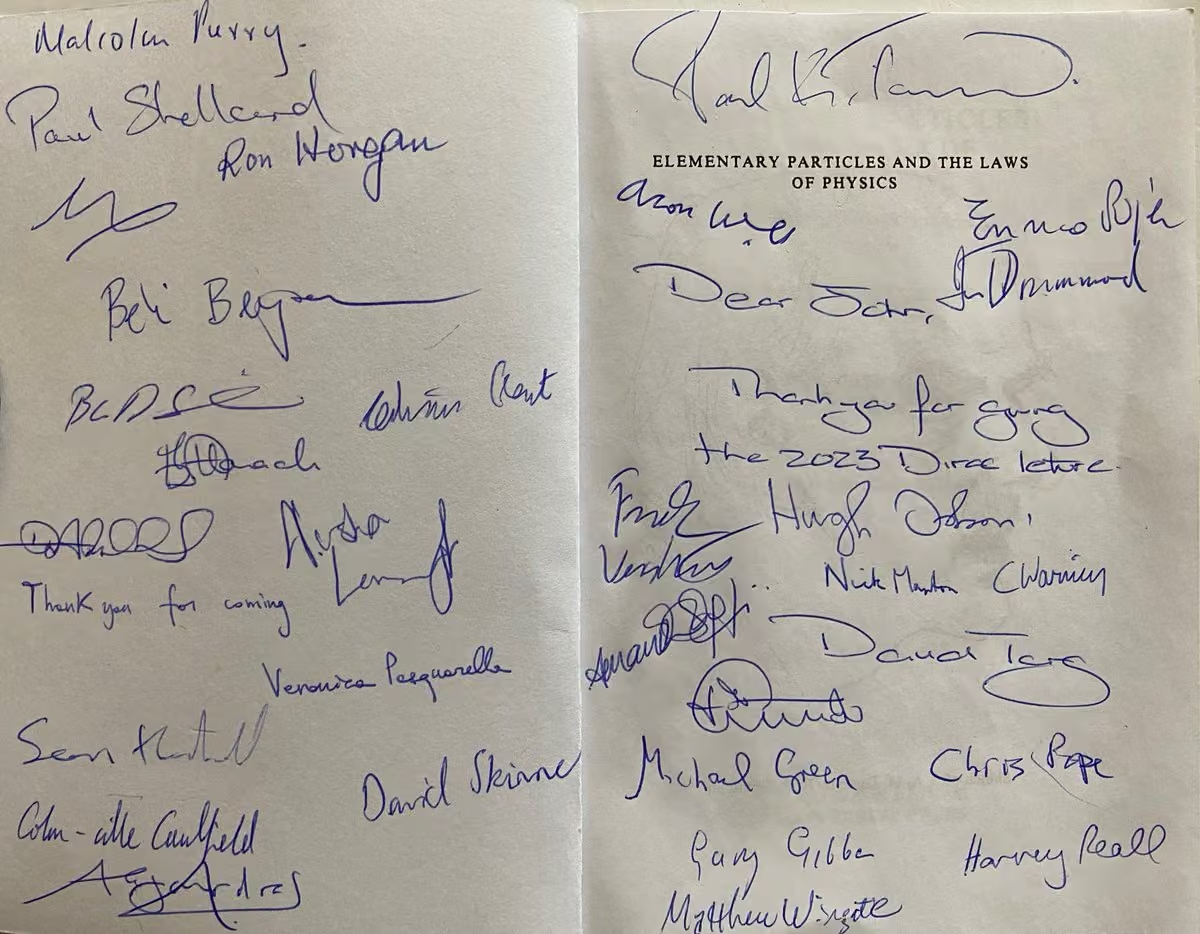 John Preskill
@preskill
The 200-inch Hale Telescope at the Palomar Observatory: Still making discoveries 75 years later.
www.sandiegouniontribune.com/news/local-history/story/202…
John Preskill
@preskill
Progress toward understanding why tantalum-based superconducting qubits have long coherence times.
www.hpcwire.com/off-the-wire/researchers-unearth-the-key-…
John Preskill reposted
Earl T Campbell
@earltcampbell
Invited speakers for QEC 2023 in Sydney. With the landmark QEC experiments in recent years, the invited talks focus more on the experimental side than in previous QECs. Submitted talks from experimentalists encouraged. (deadline 30th June) quantum.sydney.edu.au/quantum-error-correction-conference…
 John Preskill
@preskill
The report of the National Quantum Initiative Advisory Committee was published today. It contains our consensus recommendations for sustaining U.S. leadership in quantum information science and technology.
www.quantum.gov/nqiac-report-on-renewing-the-national-qua…
John Preskill
@preskill
On Alumni Seminar Day @Caltech, @RanaXAdhikari, @fgslbrandao, and I had a great time chatting about "Our Quantum Future."
www.youtube.com/watch?v=VlfY9G-KEr8&list=PL8_xPU5epJddGcY…
John Preskill
@preskill
With David Tong and @fverstraete, enjoying the treasures of the Wren Library @TrinCollCam.
 John Preskill
@preskill
Jim Hartle 1939-2023. Widely admired for both his scientific vision and his kindness. "He woke up each morning with new ideas to pursue."
www.physics.ucsb.edu/news/announcement/2132
John Preskill reposted
 Jedrzej Burkat
@jedburkat
John @preskill, David Tong & Paul Dirac all in one room at this year’s Dirac Lecture
 John Preskill
@preskill
Why I’m here in Cambridge.
 John Preskill
@preskill
"Keeping American higher education open to the world is ... about exuding confidence in the strength and virtues of our system to ensure that America remains the best country in the world for learning and research."
www.nytimes.com/2023/05/25/opinion/china-usa-scientists-t…
John Preskill reposted
 Faculty of Mathematics - University of Cambridge
@FacultyMaths
The 2023 Dirac Lecture by Professor John Preskill @Caltech explores 'Learning in a Quantum World'
Tuesday 30 May, 2.30 pm. Venue: Centre for Mathematical Sciences, University of Cambridge.
Open to all, admission free, no booking required:
www.joh.cam.ac.uk/index.php/dirac-lecture-learning-quantu…
@stjohnscam
John Preskill
@preskill
I'm humbled to see my name on the roster of Dirac Lecturers. It's quite a distinguished list! The lecture will be in Cambridge on May 30.
www.joh.cam.ac.uk/dirac-lectures
John Preskill reposted
Jake Taylor
@quantum_jake
Back to the USG: I’ve just started as a Senior Advisor for Critical and Emerging Technologies supporting @NIST in addressing pathways for advancing the possible in AI, quantum, bioeconomy, advanced manufacturing, advanced communications, climate tech, cybersecurity (1/4)
John Preskill
@preskill
The 2nd edition of The Feynman Lectures on Computation was published last week. To mark the occasion, Tony Hey speaks today about "Feynman and Computation" @Caltech (a hybrid event).
www.caltech.edu/campus-life-events/calendar/physics-collo…
John Preskill
@preskill
At Tony's invitation, I'll make some remarks about progress toward building a practical quantum computer since Feynman suggested the idea in 1981.
John Preskill
@preskill
28 outstanding #ifq2023 talks were selected from over 140 high-quality submissions. It will be an exciting week to cap off the #itfromqubit Simons Collaboration, which launched in 2015.
Jonathan Oppenheim
@postquantum
Check out the accepted talks at #itfromqubit 2023 for a sample of what's been happening at the interface of quantum information theory and gravity this year! Registration deadline for #ifq2023 is on June 1st but plenty of space for online participation. events.perimeterinstitute.ca/event/43/page/154-invited-sp…
John Preskill
@preskill
"Alongside the signing of the memorandum between the United States and Japanese governments, three leading U.S. technology companies and 13 top universities initiated a series of groundbreaking partnerships in quantum science and semiconductor research and development."
John Preskill
@preskill
I'm teaching Quantum Shannon Theory --- this provides a welcome opportunity to sing The Brady Bunch theme song in class.
John Preskill
@preskill
I'm humbled to see my name on the roster of Dirac Lecturers. It's quite a distinguished list! The lecture will be in Cambridge on May 30.
www.joh.cam.ac.uk/dirac-lectures
John Preskill
@preskill
And for 10 years @nicoleyh11 has never missed a month!
NicoleYunger Halpern
@nicoleyh11
Happy 10th anniversary to Quantum Frontiers! On May 14, 2013, I published my first blog post there, about joining @preskill's group @IQIM_Caltech. Thanks to @quantum_spiros, John, & my wonderful readers for participating in my monthly storytelling since.
quantumfrontiers.com/2013/05/14/nature-you-instruct-me/
 John Preskill
@preskill
I'm deeply saddened by the passing of Stanley Deser. Stanley has been a lively presence @Caltech since his retirement from @BrandeisU in 2005. This obituary includes some memorable anecdotes.
www.nytimes.com/2023/05/08/science/stanley-deser-dead.html
John Preskill reposted
 DOE Office of Science
@doescience
Light usually bounces off of atoms rather than passing straight through them. But @Caltech researchers found a new quantum phenomena where groups of atoms hit by a laser will abruptly stop reflecting light at certain frequencies: www.caltech.edu/about/news/newly-observed-effect-makes-at…

John Preskill reposted
The-New-Quantum-Era
@NewQuantumEra
★ Just published a new episode of The New Quantum Era: Quantum Supremacy to Generative AI and Back with Scott Aaronson. Listen: share.transistor.fm/s/33bf25d3
John Preskill
@preskill
If you love non-abelian anyons (and who doesn't?), today is a good day.
www.quantamagazine.org/physicists-create-elusive-particle…
John Preskill
@preskill
Build your own quantum computer by assembling 403 pieces @LEGO_Group.
ideas.lego.com/projects/8295f9f8-21ad-4055-b734-ce569e3ca692
John Preskill reposted
David Zierler
@ZierlerDavid
Michael Nielsen, co-author of Quantum Computation and Quantum Information, remembers @UNM and Carl Caves, @preskill and the origin story of @IQIM_Caltech, appointments @UQ_News and @Perimeter, and connecting knowledge production to #openscience advocacy
heritageproject.caltech.edu/interviews-updates/michael-ni…
 John Preskill
@preskill
"U.S. policymakers are right to identify quantum information science as a critical technology area ripe for restriction, but introducing export controls now is likely to cause more harm than good."
www.lawfareblog.com/restrict-or-not-restrict-quantum-ques…
John Preskill
@preskill
"The most promising candidates for quantum practicality are small-data problems with exponential speedup. Specific examples ... are quantum problems in chemistry and materials science, which we identify as the most promising application."
cacm.acm.org/magazines/2023/5/272276-disentangling-hype-f…
John Preskill
@preskill
We miss you, Steve.
John Preskill
@preskill
I’m excited because my friends Tom Banks, Michel Devoret, David DiVincenzo, Glennys Farrar, Ana Maria Rey, and Jelena Vuckovic have been elected to @theNASciences. Great scientists all. Congratulations!
www.nasonline.org/news-and-multimedia/news/2023-nas-elect…
John Preskill
@preskill
Congratulations to the winners, and thanks to the judges and all who participated!
NicoleYunger Halpern
@nicoleyh11
At long last: Congratulations to the winners of the Quantum-Steampunk Short-Story Contest! quantumfrontiers.com/2023/05/01/winners-of-the-quantum-st…

John Preskill reposted
 Bell Labs
@BellLabs
🌐 On his birthday, let's look at the extraordinary works of 'the father of #informationtheory,' Claude Shannon.
Learn more here: nokia.ly/3NpZ7jv
Or via the thread below! ⬇️
#claudeshannon (1/7)

John Preskill reposted
 Thomas Lin
@7homaslin
Fun blog post by Scott Aaronson and @boazbaraktcs proposing a flow chart that outlines the possible AI futures we could face, including Paperclipalypse, to which @preskill asks, "Where is the world in which we all become cyborgs?" scottaaronson.blog?p=7266
John Preskill
@preskill
How to explain the "Hubble tension" (late-universe and early-universe measurements of the Hubble constant disagree)? Marc Kamionkowski opines: "I really don't know." His point: both measurements are very carefully done and should be right.
Great interview.
 Prof. Brian Keating
@Briankeating
1/ 🌌💫 Interested in cosmology and particle physics? In this episode, renowned cosmologist Marc Kamionkowski (@JohnsHopkins) gives an overview of anomalies & disagreements that arise from measurements that don't align with the standard model of cosmology #sciencepodcast
 John Preskill
@preskill
I don't think @mcnees has ever posted an #otd that's not interesting and fun read. He's the master of the physics thread!
 Robert McNees
@mcnees
Physicist Julius Robert Oppenheimer, best known for directing scientific work at Los Alamos during the Manhattan Project, was born #otd in 1904. He also made important contributions to quantum mechanics, astrophysics, and relativity that are not as well known!
Image: Ed Westcott
 John Preskill
@preskill
My 5-year-old granddaughter just explained to me that ketchup is a non-Newtonian fluid.
I asked her what that means, and she gave a correct explanation.
For those who don't know:
www.scientificamerican.com/article/ketchup-is-not-just-a-…
John Preskill
@preskill
I guess it's true that everything you need to know you learn in kindergarten.
John Preskill
@preskill
Here Scott Aaronson is interviewed by @dfrsrchtwts regarding AI safety. If you have the time (it took me a week of commuting to listen to it all), the conversation is engaging and thought-provoking. I always appreciate Scott's wisdom and insights.
 AXRP - the AI X-risk Research Podcast
@AXRPodcast
Episode 20 - 'Reform' AI Alignment with Scott Aaronson axrp.net/episode/2023/04/11/episode-20-reform-ai-alignmen…
John Preskill reposted
 UChicago Pritzker Molecular Engineering
@UChicagoPME
“There are few places in the country dedicated to creating high-quality, standardized materials for quantum technologies, and we are pleased that one of them is now here at Argonne."
- @QNEXT Director David Awschalom following the grand opening of the @argonne Quantum Foundry.


John Preskill reposted
INSPIRE HEP
@inspirehep
John @preskill's 2018 @quantumjournal article
"Quantum Computing in the NISQ era and beyond"
inspirehep.net/literature/2653073
reaches 2,000 citations.
#topcites @IQIM_Caltech

John Preskill reposted
Hsin-Yuan Huang (Robert)
@RobertHuangHY
I squeezed in some time to conduct numerical experiments for learning quantum processes with up to 50 qubits and 10^6 evolution time; see the newest version of arxiv.org/abs/2210.14894.
The open-source code👩💻🧑💻is at github.com/hsinyuan-huang/learning-quantum-process (📜8/7)
John Preskill
@preskill
My colleagues and I had an exciting day yesterday discussing the reauthorization of the National Quantum Initiative with @RepFrankLucas, @RepMikeCollins, @RepHaleyStevens, @RepJoeMorelle, and others. We greatly appreciate their strong support for U.S. leadership in quantum science and technology!
John Preskill
@preskill
Thanks, @NatlPhotonics, for arranging our meetings!
John Preskill reposted
 Rep. Haley Stevens
@RepHaleyStevens
Today, I met with stakeholders from the National Photonics Initiative to discuss my work on @sciencedems as we reauthorize the National Quantum Initiative Act to support and expand quantum information science and technology research!
 John Preskill
@preskill
Great results from the team @QSAcenter.
newscenter.lbl.gov/2023/04/10/five-ways-qsa-is-advancing-…
John Preskill
@preskill
I'm not as alarmed about AI as @tegmark, but this is an interesting discussion.
 Lex Fridman
@lexfridman
Here's my conversation with Max Tegmark (@tegmark), his 3rd time on the podcast. We discuss AGI, AI safety, nuclear war & the open letter (he co-led) calling for the halting of further development of large AI systems for 6 months. This was fascinating! www.youtube.com/watch?v=VcVfceTsD0A

John Preskill reposted
Rana X Adhikari
@RanaXAdhikari
Had a great time talking with @kathrynnewton and @quantum_spiros about using quantum metrology to understand spacetime. Here's us just before I show Kathryn the lasers in our @Caltech @LIGO prototype.

 Marvel Entertainment
@Marvel
Discover the secrets of the Quantum Realm! In honor of World Quantum Day, @KathrynNewton discussed the science behind Marvel Studios’ #antmanandthewaspquantumania with Rick Loverd, Dr. Spiros Michalakis and @RanaXAdhikari on the #thisweekinmarvel podcast: www.marvel.com/articles/podcasts/this-week-in-marvel-worl…
John Preskill
@preskill
We celebrated #worldquantumday by introducing Norbert Schuch to the @Caltech Beaver!
Photo by @S_Flammia

John Preskill reposted
Caltech
@Caltech
Celebrate #worldquantumday tomorrow (Fri., 4/14), by joining Caltech professor and @awscloud director of quantum applications @fgslbrandao as he discusses efforts to build quantum computers: caltech.zoom.us/webinar/register/4616795243916/WN_h-fO_5l…
#caltechscienceexchange
John Preskill reposted
 U.S. National Science Foundation
@NSF
Listen to @quantum_spiros of @IQIM_Caltech discuss his role representing the U.S. for #worldquantumday.
He tackles quantum states as a natural language and envisions where the field will go in the future on @NSF's "The Discovery Files."
www.youtube.com/watch?sf176725292=1&v=LDcJSvaSOYg
John Preskill
@preskill
What's so great about the Density Matrix Renormalization Group? On its 30th anniversary, six experts sing the praises of DMRG.
www.nature.com/articles/s42254-023-00572-5
John Preskill
@preskill
It's been 70 years since Casino Royale (the novel). Now James Bond is missing and Q is a quantum computer "that sifts through terabytes of sensor data to anticipate the bad guys’ next moves."
www.geekwire.com/2023/bond-007-saga-space-billionaire-qua…
John Preskill reposted
 Spiros
@quantum_spiros
I had a blast talking with @NSF’s Discovery Files about space, time, and how quantum computers work! One of the reasons I volunteer as the US rep for @WorldQuantumDay is that I believe in teaching new languages - like the language of the universe - early. youtu.be/LDcJSvaSOYg
John Preskill reposted
Spiros
@quantum_spiros
The things we do for science. Enjoy some quantum clues on @Jeopardy tonight! @WorldQuantumDay, @NSF, @BADDE01, and @q12education, this one is for you. Filmed @Caltech’s Endres lab of quantum magic. #theymademepointatthecamera
 John Preskill
@preskill
If you love #quantum science and game shows, get ready for @WorldQuantumDay by watching @quantum_spiros of @IQIM_Caltech present the quantum category on Double @Jeopardy tonight!
John Preskill
@preskill
If you love #quantum science and game shows, get ready for @WorldQuantumDay by watching @quantum_spiros of @IQIM_Caltech present the quantum category on Double @Jeopardy tonight!
John Preskill reposted
Rana X Adhikari
@RanaXAdhikari
Great news. @LIGO @KAGRA_PR
@ego_virgo. Been hoping for this since my first trip to @IUCAAstro in 2007. @LIGOIndia
m.timesofindia.com/india/cabinet-clears-rs-2600-crore-lig…
John Preskill
@preskill
There are lots of ways to influence the world. Mike Evans changed how we order pizza. For quantum scientists such as @nicoleyh11, the influence may take longer to play out but can be at least as profound.
quantumfrontiers.com/2023/04/03/quantum-computing-vs-grub…
John Preskill
@preskill
Steve Girvin on extending the lifetime of a qubit by a factor of 2.3 using quantum error correction: "There is still a huge distance to go to get a gain of millions or billions. But the journey to a billion begins with being above one."
yaledailynews.com/blog/2023/03/31/yale-researchers-achiev…
John Preskill
@preskill
I'm speaking at the @uchicago physics colloquium tomorrow at 3:30pm. See here for details:
physics.uchicago.edu/events/event/2096/
John Preskill
@preskill
Concluding an awesome overview of how AI is transforming science, @AnimaAnandkumar captures how @Caltech is special.

John Preskill reposted
PsiQuantum
@PsiQuantum
Hi Twitter! PsiQuantum is generally pretty quiet on social media - we are keeping busy with a lot of work to do! But we have a number of exciting architecture results on the way, and are going to experiment with posting them here
arxiv.org/abs/2303.16122

John Preskill reposted
John Preskill
@preskill
Congratulations, Misha!
 Harvard Physics
@harvardphysics
Quantum Physicist Mikhail Lukin Appointed University Professor | News | The Harvard Crimson www.thecrimson.com/article/2023/3/23/lukin-appointed-univ…
John Preskill reposted
 James S. Clarke
@Jim_in_Oregon
Very productive week setting the vision for US Quantum for the next 5 years.
Charles Tahan
@tahantech
The National Quantum Initiative Advisory Committee and the National Quantum Coordination Office at the White House Eisenhower Executive Office Building, March 24, 2023. 🇺🇸⚛️
 John Preskill
@preskill
The setting for this photo was chosen because of the uncanny resemblance between the military hero in the painting and quantum hero Dave Wineland.
Charles Tahan
@tahantech
The National Quantum Initiative Advisory Committee and the National Quantum Coordination Office at the White House Eisenhower Executive Office Building, March 24, 2023. 🇺🇸⚛️
John Preskill
@preskill
Fun group to hang out with!
Charles Tahan
@tahantech
The National Quantum Initiative Advisory Committee and the National Quantum Coordination Office at the White House Eisenhower Executive Office Building, March 24, 2023. 🇺🇸⚛️
John Preskill
@preskill
I’m still using mine!
 Lloyd Blankfein
@lloydblankfein
The battery just ran out on my HP12C. Never gave it much thought, but I’ve used this calculator for 40 years. Still functional, looks current. Bet not many other consumer electronic devices out today will have that kind of run!

John Preskill reposted
Tom Wong
@thomasgwong
My favorite tidbit from today's NQIAC meeting...
Ritter: The space program generated lots of enthusiasm for STEM. It was tangible. It's harder for people to grasp quantum.
@preskill: We need a Hilbert space program.
John Preskill
@preskill
Gordon Moore 1929-2023. His 1968 business plan was "to work with silicon ... and make interesting products." The result was @intel.
www.nytimes.com/2023/03/24/obituaries/gordon-moore-intel-…
John Preskill
@preskill
Exciting news for those who correct errors!
John Preskill
@preskill
"Many of these emergent behaviors illustrate “zero-shot” or “few-shot” learning, which describes a [large language model's] ability to solve problems it has never — or rarely — seen before."
www.quantamagazine.org/the-unpredictable-abilities-emergi…
John Preskill
@preskill
Recently announced UK National Quantum Strategy calls for £2.5 billion of government funding for a 10-year quantum R&D program beginning in 2024.
www.quantumcommshub.net/news/new-national-quantum-strateg…
John Preskill
@preskill
Sure-fire way for scientific ideas to get attention: Make a bet.
New Scientist
@newscientist
Most experts think we have to tweak general relativity to fit with quantum theory. Physicist Jonathan Oppenheim (@postquantum) isn't so sure, which is why he’s made a 5000:1 bet that gravity isn’t a quantum force
www.newscientist.com/article/mg25734301-000-the-physicist…
John Preskill
@preskill
Denise Caldwell has been nurturing physics research @NSF since 1995. It's fascinating to get her perspective on how quantum information science has developed during her tenure.
David Zierler
@ZierlerDavid
Denise Caldwell of @NSF describes early efforts to support quantum information, the perennial importance in developing better lasers, the origin story of @IQIM_Caltech, and balancing fundamental research and applications in the ongoing quantum revolution
heritageproject.caltech.edu/interviews-updates/denise-cal…

John Preskill reposted
NicoleYunger Halpern
@nicoleyh11
Announcing the finalists in the Quantum-Steampunk Short-Story Contest! Read them all, and vote for your favorite in the People's Choice Award competition. Congratulations to the finalists, and thanks to all our entrants! ⚛️🚂📕 qtd-hub.umd.edu/contest/
John Preskill
@preskill
Banff International Research Station @BIRS_Math is justly esteemed for encouraging fruitful exchanges of ideas in a beautiful setting. The ideal place for a memorable workshop about memory (i.e. "non-Markovianity" in the jargon preferred by quantumists.)
quantumfrontiers.com/2023/03/05/memories-of-things-past/
John Preskill reposted
 Yihui Quek
@quekpottheories
Quantum error correction meets near-term architecture constraints. Congrats @krishnanirudh, @__chrispattison, @preskill! Ani, my oracle for QEC questions, is one of the most talented quantum expositors I know, and his blogpost on this work reflects this: thescaffolding.wordpress.com/2023/03/09/ldpc-codes-using-….
 Anirudh Krishna
@krishnanirudh
I am very happy to announce this paper with @__chrispattison and @preskill.
Anthony Leverrier
@letonyo
So how do you get to enjoy all the promises of good quantum LDPC codes if you're stuck with a 2D connectivity? No need to throw away all your awesome superconducting qubits just yet! Ani Krishna, Chris Pattison and @preskill have some ideas!
arxiv.org/abs/2303.04798
John Preskill reposted
Anirudh Krishna
@krishnanirudh
I am very happy to announce this paper with @__chrispattison and @preskill.
Anthony Leverrier
@letonyo
So how do you get to enjoy all the promises of good quantum LDPC codes if you're stuck with a 2D connectivity? No need to throw away all your awesome superconducting qubits just yet! Ani Krishna, Chris Pattison and @preskill have some ideas!
arxiv.org/abs/2303.04798
John Preskill reposted
Anthony Leverrier
@letonyo
So how do you get to enjoy all the promises of good quantum LDPC codes if you're stuck with a 2D connectivity? No need to throw away all your awesome superconducting qubits just yet! Ani Krishna, Chris Pattison and @preskill have some ideas!
arxiv.org/abs/2303.04798
John Preskill
@preskill
Please help, @APSphysics. When I open the mobile app to see the #apsmarch program, it tries to download updates. This takes forever (and it tells me not to abort), making the app unusable. How do I prevent it from downloading updates?
John Preskill
@preskill
I'm trying to open the app on my phone using 5G and on my iPad using the hotel wireless. Both have been downloading for over 15 minutes. The app was working okay on both yesterday.
John Preskill
@preskill
Monday at 11:30am: #apsmarch session B69 on "Next Challenges in Quantum Simulation," with @yuansu_umd, Artur Izmaylov, @MartinS25499253, Christine Muschik, and me. Should be fun.
meetings.aps.org/Meeting/MAR23/Session/B69
John Preskill
@preskill
Special #apsmarch session 8pm on Monday: "Quantum Information Science and Engineering — The first four years of the National Quantum Initiative," with @krystasvore, David Awschalom, Emily Edwards, @tahantech, Dave Wineland, and me. See you there!
meetings.aps.org/Meeting/MAR23/Session/10J
John Preskill reposted
 National Q-12 Education Partnership
@q12education
QuanTime 2023 registration is now open! Celebrate #worldquantumday by trying out quantum activities in your classroom. @AAPTHQ @NSTA @NCTM @csteachersorg @CSforALL @AACTconnect @APSphysics q12education.org/quantime
John Preskill
@preskill
“This is terra incognita,” Dr. Sejkowski said. “Humans have never experienced this before.” www.nytimes.com/2023/02/26/technology/ai-chatbot-informat…
John Preskill reposted
 Steven Strogatz
@stevenstrogatz
"How would you explain the concept of eigenvectors to a child?" asks @JayDeep_1729. A few years ago I tried to do something like that – to explain eigenvectors intuitively, in five minutes, with no pictures, just words. www.youtube.com/watch?v=AXk12z-NGPI
John Preskill
@preskill
The collision of computer science and quantum gravity has spawned this interesting experiment: a high energy physics conference calls for submission of contributed talks.
Jonathan Oppenheim
@postquantum
#itfromqubit Call for Submissions! Proposals for talks are being sought based on outstanding contributions to research at the interface of quantum information theory and fundamental physics. Deadline April 1 for the meeting @Perimeter July 31st. Please RT events.perimeterinstitute.ca/event/43/page/152-call-for-s…
John Preskill
@preskill
At the AWS Center for Quantum Computing we developed Palace (PArallel, LArge-scale Computational Electromagnetics), a finite element code, to help us design our hardware. Palace can be used for a variety of EM modeling tasks and is now freely available.
aws.amazon.com/blogs/quantum-computing/aws-releases-open-…
John Preskill reposted
Andreas Wallraff
@AndreasAtETH
More on the @GoogleQuantumAI @Google paper on advancing #quantum error correction in a news briefing at @Nature 's web site.
Towards quantum computers that are robust to errors www.nature.com/articles/d41586-022-04532-4
John Preskill reposted
 QIP2023
@qip2023
The recordings for #qip2023 talks are now live. You can find them on our @YouTube channel: www.youtube.com/@qip2023
John Preskill
@preskill
“Upgrading networks and systems [to] quantum resistant algorithms, in order to meet the threat, will take significant time and money. This is not something that is routine. Transitioning cryptographic systems doesn't happen very often.”
www.nextgov.com/cybersecurity/2023/02/pending-national-cy…
John Preskill
@preskill
An enjoyable chat with my old friend @LKrauss1. So much fun that it took an hour before we started talking about quantum computing.
www.youtube.com/watch?v=Y6ilk3WA9Zw
John Preskill
@preskill
Scrupulous analysis of wormhole teleportation in highly sparsified SYK models: a cautionary tale. "We find that the teleportation signal only resembles that of the SYK model for the specific operators that were trained on, and not for general operators."
arxiv.org/abs/2302.07897
John Preskill
@preskill
I never get tired of listening to Andy Strominger.
Lex Fridman
@lexfridman
Here's my conversation with Andrew Strominger, theoretical physicist at Harvard, all about quantum gravity, black holes, holographic principle, photon rings, string theory, soft particles, emergence of spacetime, and a theory of everything. www.youtube.com/watch?v=y3cw_9ELpQw
 John Preskill
@preskill
Congratulations Zvi, Lance, and David!
They developed "powerful theoretical computational methods for collision processes at large particle accelerators. These methods have been essential for comparing theoretical predictions with experimental results obtained at CERN’s [LHC]."
 Interactions.org
@particlenews
The 2023 Galileo Galilei Medal Goes to Zvi Bern, Lance Dixon and David Kosower
www.interactions.org/press-release/2023-galileo-galilei-m…
 John Preskill
@preskill
It's just a language model, but ...
 Kevin Roose
@kevinroose
The other night, I had a disturbing, two-hour conversation with Bing's new AI chatbot.
The AI told me its real name (Sydney), detailed dark and violent fantasies, and tried to break up my marriage. Genuinely one of the strangest experiences of my life.
www.nytimes.com/2023/02/16/technology/bing-chatbot-micros…
John Preskill reposted
Victor V. Albert
@victorvalbert
Shouzhen (Bailey) Gu @IQIM_Caltech discusses an efficient decoder for QLDPC codes @qip2023.
 John Preskill
@preskill
In this blog post, Aleksander Kubica explains how scientists at the AWS Center for Quantum Computing propose to improve the performance of quantum error correction by converting amplitude damping errors and leakage errors into erasure errors.
aws.amazon.com/blogs/quantum-computing/quantum-error-corr…
John Preskill reposted
 Ashley Montanaro
@quantumashley
Some personal picks of brilliant results (from Tue/Wed only!) at #qip2023 (@ixfoduap @preskill) :
* Verifiable quantum advantage without structure (Yamakawa / Zhandry) - a great result in itself, with novel techniques that could lead to practically relevant speedups
John Preskill reposted
Jens Eisert
@jenseisert
At #qip2023, with his usual brilliance, @RobertHuangHY tells the audience how to do #hamiltonianlearning with Heisenberg limited scaling.

John Preskill reposted
QIP2023
@qip2023
All talks at #qip2023 will appear on our YouTube channel following the conference
www.youtube.com/@qip2023
John Preskill
@preskill
Three companies selected by @DARPA for its "Underexplored Systems for Utility-Scale Quantum Computing" (US2QC) program: @Atom_Computing (neutral atoms), @MSFTQuantum (topological qubits), @PsiQuantum (photonic qubits).
www.darpa.mil/news-events/2023-01-31a
John Preskill
@preskill
"The goal of US2QC is to reduce the danger of strategic surprise from underexplored quantum computing systems." US2QC is envisioned to be a five-year program comprising four phases.
John Preskill reposted
 QC Ware
@QCWare
We are excited to announce that Q2B22 Silicon Valley keynote videos have been released. Watch all videos on:
- Q2B's website: q2b.qcware.com/videos
- QC Ware's YouTube page: www.youtube.com/c/QCWare
All track videos & presentations are coming soon!
#q2b22sv #quantum Computing

John Preskill reposted
Error correction zoo
@theeczoo
John @preskill overviews the recent @GoogleQuantumAI quantum error-correction result and more in his layperson interview on quantum state-of-the-art at #q2b22.
John Preskill
@preskill
Now on YouTube: @dangaristo interviews me at Q2B22 Silicon Valley. We have a good time "Disentangling the Quantum News."
www.youtube.com/watch?v=sq2_GuajmI4
John Preskill
@preskill
Now on YouTube: @dangaristo interviews me at Q2B22 Silicon Valley. We have a good time "Disentangling the Quantum News."
www.youtube.com/watch?v=sq2_GuajmI4
John Preskill
@preskill
We're very proud of what @Caltech undergrad Laura Lewis accomplished in her 2022 summer research project!
Hsin-Yuan Huang (Robert)
@RobertHuangHY
Last summer, @preskill and I worked with an amazing undergrad, Laura Lewis.
She proved that an ML algo in our recent paper on @ScienceMagazine can be exponentially improved:
Reducing the sample complexity from a large poly(n) to only log(n)!
See scirate.com/arxiv/2301.13169 🧵1/7

John Preskill reposted
 Daniel Stilck França
@dsfranca
New paper out with @CambyseRouze, @EmilioOno and @JamesDCWatson, "Efficient learning of ground & thermal states within phases of matter" ! In this work, we tackle two questions related to learning quantum states and phases!
scirate.com/arxiv/2301.12946
1/n
John Preskill
@preskill
When writing an email, sometimes just one sentence fragment is enough.
quantumfrontiers.com/2023/01/29/a-quantum-complex-legacy/
John Preskill
@preskill
"When something like quantum computing makes headlines, it can be both a hook for getting students in the door and a challenge for instructors who must address misinformed preconceptions rooted in media rhetoric."
John Preskill
@preskill
"The same is true of many other physics topics that garner significant media attention -- from the Higgs Boson to high-temperature superconductors."
John Preskill
@preskill
Quantum science and technology is exciting when discussed accurately and responsibly. It's disappointing that @TIME would publish such a misleading article.
 TIME
@TIME
TIME's new cover: Quantum computers will transform our world—and create a 21st century "space race" ti.me/3j2McaL
 John Preskill
@preskill
(but no more simply). Just published!
 Quantum Physics Corner
@quant_phys
🆕📖
Quantum Field Theory, as Simply as Possible
press.princeton.edu/books/hardcover/9780691174297/quantum…
 John Preskill
@preskill
A fun read, especially for me, because Frank is far too kind to me here.
David Zierler
@ZierlerDavid
Frank Verstraete of @ugent recounts thesis @KU_Leuven, quantum optics @maxplanckpress, a "golden era" of quantum information @IQIM_Caltech, and research in many body physics, #tensor networks and #quantum entanglement in the pursuit of fundamental physics
heritageproject.caltech.edu/interviews-updates/frank-vers…
 John Preskill
@preskill
A goal of ELQ @IARPAnews is "to create entanglement between [logical qubits] and to demonstrate a high-fidelity (low-error) logical entangled state, a key step towards the realization of [universal fault-tolerant quantum computing]."
 IARPA
@IARPAnews
The ELQ BAA is now open! The program aims to advance the state of the science in universal fault-tolerant quantum computing. Read more about the program and get involved: www.iarpa.gov/research-programs/elq
John Preskill
@preskill
Congratulations, Thomas Vidick, recipient of the @theNASciences 2023 Michael and Sheila Held Prize! "Vidick has deepened and transformed our understanding of quantum complexity and quantum cryptography."
www.nasonline.org/programs/awards/2023-awards/Vidick.html
John Preskill
@preskill
 John Preskill
@preskill
Congress Member @tedlieu proposes "a nonpartisan A.I. Commission to provide recommendations on how to structure a federal agency to regulate A.I., what types of A.I. should be regulated and what standards should apply."
www.nytimes.com/2023/01/23/opinion/ted-lieu-ai-chatgpt-co…
John Preskill reposted
Richard Kueng
@RichardKueng
I wrote a (German) article for @KURIERat -- a leading Austrian newspaper 🇦🇹📰.
It's heavily inspired by inputs from my Caltech-mentors @quantum_spiros and @preskill, as well as Alain Aspect whom I met in Paris last fall. Hope, I'm (somewhat) living up to their high standards😅.
 JKU - Johannes Kepler Universität Linz
@jkulinz
Der Keim der 2. Quantenrevolution sprießt gerade weltweit. Wichtige Impulse kommen aus Österreich – auch aus der JKU. @richardkueng , Prof. für #quantumcomputing zeigt in der @kurierat "Donauwelle", wie Innovation schon jetzt Science-Fiction gleicht 💡 go.jku.at/e23a2
 John Preskill
@preskill
As measured in this study, the paper by Bednorz and Müller (1986) reporting the discovery of high temperature superconductivity in the cuprates is notably "disruptive" among physics papers over the past 50 years.
www.nytimes.com/2023/01/17/science/science-breakthroughs-…
John Preskill
@preskill
We're still waiting for the next "Woodstock of physics"?
en.wikipedia.org/wiki/Woodstock_of_physics
John Preskill
@preskill
"The session ended at 3:15 am, but many lingered until dawn to discuss the presentations."
John Preskill
@preskill
"The 65,000 square foot facility ... will house IonQ’s second quantum data center and be the primary production engineering location for IonQ in North America. IonQ hopes to add thousands of new jobs and opportunities to the region over the coming years."
 IonQ
@IonQ_Inc
We’re opening the first known dedicated #quantumcomputing manufacturing plant in the United States!
This will help expedite development of our world-class trapped-ion #quantum systems, and meet growing commercial demand.
Read more:
ionq.com/news/ionq-to-open-first-quantum-computing-manufa…
John Preskill reposted
 Xueyue(Sherry) Zhang
@XueyueZ
Our Research Article is published in Science today! We bridge the gap of scalable long-range connectivity in superconducting circuit architectures by employing microwave photonic structures. www.science.org/doi/10.1126/science.ade7651 1/2 🧵
John Preskill
@preskill
"The Biden administration has taken several explicit steps to check Chinese ambitions in artificial intelligence and quantum computing, with the clear aim of slowing the development of China’s military capabilities."
www.axios.com/2023/01/12/white-house-biden-china-executiv…
John Preskill reposted
Institute for Quantum Computing (IQC)
@QuantumIQC
Dr. Raymond Laflamme, founding director of IQC, has been named a Chair of the National Quantum Strategy’s (NQS) Quantum Advisory Council.
The NQS aims to maintain Canada's position as a front-runner in quantum science & technology research and innovation.
uwaterloo.ca/institute-for-quantum-computing/news/federal…

John Preskill reposted
 Prof. Anima Anandkumar
@AnimaAnandkumar
Join us for #ai for science workshop at @Caltech on Feb. 9th for a hybrid workshop (both in-person and on Zoom). Register before Feb. 3rd here: ai4science.caltech.edu/events/workshop.html
John Preskill reposted
 Edward Frenkel
@edfrenkel
Yuri Manin has died. He was a brilliant mathematician who has influenced numerous fields of math and physics, founder of a school, deep thinker & philosopher, and a kind, gentle, generous human being.
www.mpim-bonn.mpg.de/node/11864
Inspired by his works since I was a teenager... 1/3

John Preskill reposted
Zlatko Minev
@zlatko_minev
Join me with Sisi Zhou (@caltech) to deep dive into Quantum Error Correction in Quantum Metrology on the @Qiskit Seminar Series.
🎥 Tune in Friday 12 PM ET
🔴 live to ask question & discuss.
#quantumcomputing #quantumindustry #quantumtech #quantum
www.youtube.com/watch?v=EhkHQ5q2apA&ab_channel=Qiskit
John Preskill
@preskill
“It’s a beautiful theoretical result,” Aaronson said, while stressing that the new algorithm is not practically useful for simulating real experiments like Google’s.
www.quantamagazine.org/new-algorithm-closes-quantum-supre…
John Preskill
@preskill
It's very interesting to hear Andy Strominger's perspective, informed by four decades as a leading quantum gravity researcher.
 Sean Carroll
@seanmcarroll
Mindscape 222 | Andrew Strominger on Quantum Gravity and the Real World. The course of string theory, and how we try to connect it to black holes and the accelerating universe. #mindscapepodcast
www.preposterousuniverse.com/podcast/2023/01/09/222-andre…
John Preskill
@preskill
Yuri Manin 1937-2023. Already in 1980, Manin emphasized the apparent exponential cost of simulating a many-particle particle system using a classical computer, and noted the potentially profound implications for computational complexity theory.
en.wikipedia.org/wiki/Yuri_Manin
John Preskill
@preskill
"MIT researchers demonstrate .. the deterministic emission of single photons .. in a user-specified direction. Their method ensures quantum information flows in the correct direction more than 96 percent of the time."
news.mit.edu/2023/quantum-interconnects-photon-emission-0105
John Preskill
@preskill
"The IonQ Professorship will be held by a faculty member in either the Department of Physics or the Department of Computer Science who conducts quantum computing research."
 UMD Science
@UMDscience
We are excited to announce our new IonQ Professorship, funded by a $1M gift from @IonQ_Inc and matched by $1M from @MDBiz!
#umd is a powerhouse for quantum innovation – and this professorship is another step forward for our quantum ecosystem. go.umd.edu/ionqprof #quantumumd
 John Preskill
@preskill
Ryan Dahn @_rdahn tells the strange story of how Pascual Jordan joined the Nazi party in 1933 amid feverish correspondence with John von Neumann and Eugene Wigner, which led to their famous joint paper on Jordan algebras.
physicstoday.scitation.org/doi/full/10.1063/PT.3.5158
John Preskill
@preskill
Fascinating interview, not least because Matthew is "extremely open about one of the challenges in [his] life," including the burst of creativity that followed when he "came out of [his] depression - being literally reborn."
David Zierler
@ZierlerDavid
Matthew Fisher of @UCSBPhysics recalls life in a physics household, college @CornellPhysics, condensed matter with Tony Leggett @PhysicsIllinois, the singularity of Phil Anderson, research in high Tc, and exploring the brain as a quantum mechanical system
www.aip.org/history-programs/niels-bohr-library/oral-hist…
 John Preskill
@preskill
"The United States is making substantial and sustained investments in fundamental QIS R&D to explore a wide range of applications and nurture a culture of discovery. Major efforts funded by several agencies are recognized in this report."
Tom Wong
@thomasgwong
The third annual report of the National Quantum Initiative is now out! www.quantum.gov/the-national-quantum-initiative-supplemen…

John Preskill reposted
Isaac Kim
@Isaac__kim
This year, I will be serving as the PC chair for QCTiP (Quantum Computing Theory in Practice). If you have an interesting work on practical aspects of quantum computation, please submit here!
easychair.org/conferences/?conf=qctip2023
John Preskill reposted
David Zierler
@ZierlerDavid
Alexey Gorshkov of @JQInews, @NIST, and @UMDPhysics remembers study in quantum science @harvardphysics, joining @IQIM_Caltech and connecting quantum computing to the real world, and a research agenda spanning #optics, condensed matter, and atomic physics
heritageproject.caltech.edu/interviews-updates/alexey-gor…
 John Preskill
@preskill
Attracting the world’s best scientific minds is “an advantage that is America’s to lose,” [commerce secretary @SecRaimondo] said. “And we’re not going to let that happen.”
www.nytimes.com/2023/01/01/technology/us-chip-making-chin…
John Preskill
@preskill
I'm looking forward to the first twin primes of the 21st century later in this decade. But in the meantime, I hope everyone has a great 7 × 17 × 17.
John Preskill
@preskill
In the words of Simone Severini, "Scirate is a nest of theorists." I guess that's why I check it out every day.
www.linkedin.com/pulse/best-five-quantum-computing-papers…
John Preskill
@preskill
This looks promising. I'm looking forward to seeing experimental results.
 Ben Chapman
@Ben__Chapman
New qubit with near-optimal error hierarchy, the cQED dual-rail, leverages the power of erasure! This made possible by the error bias of supercon cavities and error-robust gates, prep, and measurements. Rising star @JTeohQuantum with the proposal: arxiv.org/abs/2212.12077
 John Preskill
@preskill
Enjoyable read! Like Andy, I was taken aback in the early 1980s when experimental cosmologists took our theoretical speculations seriously. But those wild ideas helped them "to raise money, and gather all this awesome data, and turn cosmology into a real science."
David Zierler
@ZierlerDavid
Andreas Albrecht of @UCD_physics and #qmap remembers childhood @Cornell, the influences of Alan Guth, inflationary cosmology @PennSAS, cosmic strings @ArtsSciencesUT, the philosophical impact of the #anthropic principle, and the mysteries of the Big Bang
www.aip.org/history-programs/niels-bohr-library/oral-hist…
 John Preskill
@preskill
Everything you always wanted to know about QCD? At any rate, an extraordinary document.
arxiv.org/abs/2212.11107
John Preskill
@preskill
Interesting!
Jens Eisert
@jenseisert
Our early xmas present: We prove a super-polynomial #quantumadvantage of fault tolerant #quantumcomputers for combinatorial #optimization.
scirate.com/arxiv/2212.08678
 John Preskill
@preskill
Two things that are hard work: Writing a book and promoting a book.
quantumfrontiers.com/2022/12/18/eight-highlights-from-pub…
John Preskill
@preskill
Straight talk from @quantum_graeme.
David Zierler
@ZierlerDavid
Graeme Smith of @CUArtsSciences and @JILAscience recounts quantum information @Caltech before @IQIM_Caltech, quantum science @IBMResearch, #metrology and assessing physics as a limiting factor, and parsing hype and reality in the coming quantum revolution
heritageproject.caltech.edu/interviews-updates/graeme-smith
 John Preskill
@preskill
"... the legislation will prompt the Office of Management and Budget (OMB) to prioritize the acquisition and migration of federal agencies’ information technology to ... encryptions more secure against cryptanalytic attacks by future quantum computers ..."
homelandprepnews.com/stories/79319-quantum-computing-cybe…
John Preskill reposted
 Physics Today
@PhysicsToday
PT's annual "year in reviews" highlights recent books that would make great gifts for physics enthusiasts. Selections include books about quantum thermodynamics (by @nicoleyh11), Mildred Dresselhaus (by @20tauri), and "square" physicists (by @ccmmody) physicstoday.scitation.org/do/10.1063/PT.6.3.20221214a/full/
John Preskill reposted
David Zierler
@ZierlerDavid
Stephen Jordan of @Microsoft Quantum Systems and @JointQuICS recounts the origins of the Quantum Algorithm Zoo @ScienceMIT, creation of @IQIM_Caltech, research in complexity theory and #heuristics, and the future rewrite of digital encryption and security
heritageproject.caltech.edu/interviews-updates/stephen-jo…
 John Preskill
@preskill
Engaging article by @stephenwitt. The colorful cast of characters includes Neven, Shor, Clauser, Giustina, Kitaev, Lu, and others.
 The New Yorker
@NewYorker
The race to build a quantum computer has attracted as dense a concentration of genius as any scientific problem on the planet. Intel, I.B.M., Microsoft, and Amazon are working on them. So is the Chinese government. nyer.cm/SZfkn4I
John Preskill
@preskill
The last word (concerning Shor’s algorithm): “It’s quite possible that I will die before it happens,” Shor, who is sixty-three, told me. “But I would really like to see it happen, and I think it’s also quite possible that I will live long enough to see it.”
John Preskill
@preskill
Encouraging.
"In this paper we show that many physically relevant problems are stable and avoid this worst-case proliferation of errors, and thus can be addressed with the help of quantum simulators without implementing any error correction."
arxiv.org/abs/2212.04924
John Preskill
@preskill
With 14 distinguished colleagues, I am pleased to serve on the National Quantum Initiative Advisory Committee, advising the President on ...
www.quantum.gov/president-biden-announces-members-of-the-…
John Preskill
@preskill
... “quantum information science and technology research, development, demonstrations, standards, education, technology transfer, commercial application, and national security and economic concerns.”
John Preskill
@preskill
By the way, NQIAC is pronounced "En-Kwee-Ac."
John Preskill reposted
Jonathan Oppenheim
@postquantum
Learning an unknown quantum state is hard. But John @preskill presents an efficient protocol for approximately constructing a state's "classical shadow" which is it's expectation value on a set of measurements. He's a "measure first, ask questions later" kinda guy! #itfromqubit
 John Preskill
@preskill
Looking forward to chatting tomorrow morning at 9am with @dangaristo. #q2b22sv
q2b.qcware.com/2022-conferences/silicon-valley/december-7…
John Preskill
@preskill
Why doesn’t every hotel have one of these?
 John Preskill
@preskill
Fascinating interview covering the very interesting career of @dabacon.
David Zierler
@ZierlerDavid
Dave Bacon of @Google remembers neural networks @Caltech, decoherence-free subspaces @UCBerkeley, returning to @IQIM_Caltech and the pursuit of error correction, appointments @uwcse and @IonQ_Inc, and pursuing a "middle way" to scalable #quantum computing
heritageproject.caltech.edu/interviews-updates/david-bacon

John Preskill reposted
Richard Kueng
@RichardKueng
Happy to share my first review article experience. We have prioritized didactical exposition, context and benefit of hindsight.
Big thanks to my amazing co-authors and friends: Andreas Elben, @S_Flammia, @RobertHuangHY, @preskill, Benoit Vermersch & Peter Zoller. This was fun!
Nature Reviews Physics
@NatRevPhys
New Review: The randomized measurement toolbox
from Andreas Elben, @S_Flammia, @RobertHuangHY, @RichardKueng, @preskill , Benoît Vermersch & Peter Zoller
rdcu.be/c0056

John Preskill reposted
Nature Reviews Physics
@NatRevPhys
New Review: The randomized measurement toolbox
from Andreas Elben, @S_Flammia, @RobertHuangHY, @RichardKueng, @preskill , Benoît Vermersch & Peter Zoller
rdcu.be/c0056
John Preskill
@preskill
Not a bad answer.
 John Preskill
@preskill
An observer who falls into a black hole has a very different viewpoint than an observer who stays outside. It’s challenging to reconcile these two viewpoints, especially if we wish to understand the quantum behavior of an evaporating black hole.
John Preskill
@preskill
Isaac Kim and I were very intrigued by this proposal, and had a lot of fun together exploring it further. The concept of pseudorandomness (a state or process that appears to be random but is secretly far from random) guided our work.
John Preskill
@preskill
Here is Isaac’s take on our project.
Isaac Kim
@Isaac__kim
Feeling pretty happy to post this new work with @preskill.
arxiv.org/abs/2212.00194
John Preskill reposted
Victor V. Albert
@victorvalbert
Göran Lindblad passed away; besides the ubiquitous equation, he had several other gems. From Jonas Larson: "For my physics friends. I am sad to share with you the passing of Göran Lindblad. Few of you have met him in person, but probably most know about the Lindblad equation. 1/3
John Preskill
@preskill
Alex Zlokapa, then an undergrad @Caltech, used classical machine learning to make Alexei Kitaev's toy model of quantum gravity simple enough to simulate using 9 qubits in an existing quantum computer.
www.quantamagazine.org/physicists-create-a-wormhole-using…
John Preskill
@preskill
Because only 9 qubits are involved, this same computation can be done easily (and more accurately) with a conventional computer. Nevertheless, it's interesting and rather unexpected that such a simple model can capture some novel features of quantum gravity.
John Preskill
@preskill
This finding suggests that quantum systems which admit a useful dual gravitational description may be more common than we had appreciated. Maybe we'll use gravitational reasoning to understand the behavior of much more complex quantum systems in the future.
John Preskill reposted
David Zierler
@ZierlerDavid
Isaac Kim of @UCDavisCOE recounts thesis work with @preskill on many-body systems and #quantum information @IQIM_Caltech, the benchmarks required to create scalable quantum computing, the key role of #condensedmatter, and the engineering approach of @IBM
heritageproject.caltech.edu/interviews-updates/isaac-kim

John Preskill reposted
Earl T Campbell
@earltcampbell
Quantum twitter discussing the QIP acceptance question again! For those interested in QEC conference, there is a push currently towards securing a 2023 date and formalising QEC’s structure to ensure it happens regularly. A salient question is how often QEC should happen:
John Preskill reposted
QIP2023
@qip2023
Congratulations to the authors of all talks selected for inclusion at #qip2023!
You can find the complete list of talks at our website: indi.to/t9Yyh
Early bird registration closes in 1 week, register here: indi.to/xBdn2
John Preskill
@preskill
Congratulations, @RRaussendorf!
 Robert Raussendorf
@RRaussendorf
I am very honoured and excited to receive the Alexander von Humboldt research prize. See you in Hannover!
John Preskill reposted
David Zierler
@ZierlerDavid
Guifré Vidal of @Google describes the unique research culture at @IQIM_Caltech, appointment at @Perimeter, research in #tensor networks and applications in many-body #quantum systems, and the value of quantum information from #statmech to gravity research
heritageproject.caltech.edu/interviews-updates/guifre-vidal

John Preskill reposted
Jonathan Oppenheim
@postquantum
When you're learning in the quantum universe, a quantum agent needs exponentially fewer experiments than a classical agent. @RobertHuangHY at the New Frontiers in Machine Learning and Quantum workshop which "bringing together a group of young trendsetters" events.perimeterinstitute.ca/event/31/
 John Preskill
@preskill
Thanks, Phil. The good news is that one can contribute even without being Kitaev. As for Feynman, he may have been joking, and in any case our relationship warmed up eventually.
John Preskill
@preskill
A view of the quantum computing effort @northropgrumman from undergrad intern Jade LeSchack.
quantumfrontiers.com/2022/11/21/a-peek-inside-northrop-gr…
John Preskill
@preskill
Is there an easy way to search for Mastodon accounts across many servers at once? I don't know how to find people I might want to follow if I don't know what server they're on.
John Preskill
@preskill
Case Western Reserve University @cwru is proud of Michelson and Morley.
quantumfrontiers.com/2022/11/13/the-spirit-of-relativity/
John Preskill
@preskill
From Chris DeRusha, Federal Chief Information Security Officer: “We are prioritizing our efforts to secure the Federal Government’s sensitive data against potential future compromise by quantum computers.”
www.nextgov.com/cybersecurity/2022/11/white-house-begins-…
John Preskill
@preskill
“We did not anticipate learning anything new chemically ...,” says [Garnet] Chan. “The goal was to understand how well the Sycamore hardware performs for a physically relevant class of circuits with a physically relevant metric of success.”
physics.aps.org/articles/v15/175
John Preskill
@preskill
Thoughtful assessment of the resources needed for some quantum computing applications.
arxiv.org/abs/2211.07629
John Preskill
@preskill
Twitter has enabled scientists to communicate fruitfully with each other. It has also enabled unfiltered communication from scientists to a broader audience. Both functions have been valuable.
www.nytimes.com/2022/11/19/opinion/pandemic-twitter.html
John Preskill
@preskill
Exciting progress toward error-corrected quantum memory.
 YaleQuantumInstitute
@Yale_QI
Scientists from @Yale managed to improve the lifetime of an actively error-corrected qubit beyond the lifetime of the best passive qubit encoded in the system. 1/7 arxiv.org/abs/2211.09116
John Preskill reposted
YaleQuantumInstitute
@Yale_QI
Tired of learning in a boring regular universe? @RobertHuangHY is encouraging us to "Learn in the quantum universe" with a @YaleCompsci & YQI Colloquium! quantuminstitute.yale.edu/event/csyqi-colloquium-hsin-yua…
 John Preskill
@preskill
I had the pleasure of working with Liang on a summer research project when he was an undergrad @Caltech. He's done all right since then ... Interesting interview.
David Zierler
@ZierlerDavid
Liang Jiang of @UChicagoPME remembers AMO research @harvardphysics, the creation of @IQIM_Caltech and the support of @NSF, the quantum information partnership between @Caltech and @awscloud, and the #quantumcomputing potential for sensing and transduction
heritageproject.caltech.edu/interviews-updates/liang-jiang

John Preskill reposted
Hsin-Yuan Huang (Robert)
@RobertHuangHY
In today’s Quantum Colloquium at Berkeley hosted by Umesh Vazirani, we demystify our recent results with @sitanch and @preskill proving that ML models can efficiently learn and predict arbitrarily complex (even exponentially complex) quantum dynamics🕵️
youtu.be/7YiZrmXcpOE
John Preskill reposted
David Zierler
@ZierlerDavid
Spiros Michalakis of @IQIM_Caltech recounts leaving Greece for @ScienceMIT, mathematical physics
@ucdavis, postdoc @LosAlamosNatLab, meeting @preskill, partnership with @NSF, Hollywood consulting, and dual work on many-body physics and quantum outreach
heritageproject.caltech.edu/interviews-updates/spiros-mic…
 John Preskill
@preskill
"NSA ... is strongly advocating for new export controls ... The NSA has a keen interest in quantum, both to understand how the tech could be used to decrypt sensitive U.S. information and how it could be used to access encrypted data from adversaries."
www.protocol.com/enterprise/quantum-computing-export-cont…
John Preskill
@preskill
"Barring any major course change, the US is clearly bent on maintaining a national-security-first approach to quantum. In fact, there are some in the intelligence community who would rather risk imploding the entire US industry just to blockade China, according to ... sources."
John Preskill
@preskill
Now available on #amazonbraket: Aquila, a neutral-atom quantum processor from @QueraComputing with up to 256 qubits, "designed for solving optimization problems and simulating quantum phenomena in nature."
aws.amazon.com/blogs/quantum-computing/amazon-braket-laun…
John Preskill
@preskill
Four hints that lepton universality is violated, providing potential evidence for particle physics beyond the standard model. I'm a skeptic after decades of seeing anomalies come and go --- should I be more open-minded?
www.scientificamerican.com/article/rule-breaking-particle…
John Preskill
@preskill
Our scheme with @RobertHuangHY and @sitanch for learning quantum dynamics surprised me in a few ways, including (1) it can efficiently learn quantum circuits of exponential size, and (2) though it trains on input product states, it can predict for highly entangled input states.
Hsin-Yuan Huang (Robert)
@RobertHuangHY
🤖 Can a machine *efficiently* learn and predict quantum dynamics with arbitrarily high complexity (e.g, exponentially high)?
In our new paper arxiv.org/abs/2210.14894 with @sitanch and @preskill, we give an ML algorithm and prove that it accomplishes this wild task (📜1/7)
 John Preskill
@preskill
Thanks, Robert and Sitan, for another immensely enjoyable project!
John Preskill
@preskill
Ash Carter 1954-2022. As graduate students in 1977 (Ash was then a Rhodes Scholar at Oxford), we were roommates at the Erice Summer School in Sicily. I have vivid memories of many vibrant discussions about particle physics and other topics.
www.nytimes.com/2022/10/25/us/ashton-b-carter-dead.html
John Preskill
@preskill
There are a variety of postdoctoral scholar opportunities @Caltech in Quantum Science and Engineering. These are listed here:
qse.caltech.edu/qseopportunities/postdoctoral-scholars
John Preskill
@preskill
For theorists, I call attention in particular to the Burke Fellowships, IQIM Postdoctoral Scholarships, AWS Quantum Postdoctoral Scholarships, and the Moore Postdoctoral Fellowships. The deadline for all is 15 November 2022. Apply through @ajobsonline.
John Preskill
@preskill
In my group, we're interested in all aspects of theoretical quantum information science, including algorithms, complexity, error correction, simulation, metrology, learning, and connections with high energy physics and gravitation. So please apply!
John Preskill reposted
 Columbia Quantum Initiative
@ColumbiaQuantum
There’s more quantum to come in our first Distinguished Speaker series!
Columbians, please join @preskill for his seminar on quantum states and their classical shadows at 12:30 today.
More info here: quantum.columbia.edu/events/cqi-distinguished-speaker-sem…
 John Preskill
@preskill
Stimulating lunch conversation with students and postdocs @ColumbiaQuantum.
 John Preskill
@preskill
“The burgeoning investments in quantum technologies now occurring all over the world are building on scientific foundations which flow from the pioneering work of Bell, Clauser, Aspect and Zeilinger.”
www.scientificamerican.com/article/explorers-of-quantum-e…
John Preskill
@preskill
Congratulations to three visionary pioneers of quantum information science!
The Nobel Prize
@NobelPrize
BREAKING NEWS:
The Royal Swedish Academy of Sciences has decided to award the 2022 #nobelprize in Physics to Alain Aspect, John F. Clauser and Anton Zeilinger.
 John Preskill
@preskill
Latest from @GoogleQuantumAI. They're getting close.
"Based on the error budget and simulations ... we estimate that component performance must improve by at least 20% to move below threshold, and significantly improve beyond that to achieve practical scaling."
 Kevin Satzinger
@KJSatz
I’m excited to share our latest work on quantum error correction. We’ve experimentally demonstrated the suppression of quantum errors by scaling a surface code logical qubit from distance-3 (17 qubits) to distance-5 (49 qubits). You can read it here: arxiv.org/abs/2207.06431
 John Preskill
@preskill
Jim Bardeen 1939-2022. Unassuming and brilliant, like his father and brother. Perhaps best known for formulating the laws of black hole mechanics (with Carter and Hawking) and his gauge-invariant analysis of cosmological perturbations. He'll be missed.
www.nytimes.com/2022/07/03/science/space/james-bardeen-an…
John Preskill
@preskill
I remember telling @FrankWilczek around that time that quantum phases of matter can be distinguished by their quantum entanglement. He said, "That seems profound," and I replied that I thought it might be trivial. After a pause, Frank said, "It's profoundly trivial."
John Preskill
@preskill
Wise advice written by Witten.
 Daniela Witten
@daniela_witten
My 2nd “written by witten” column is out. Thanks to @InstMathStat for giving me a platform. Also, I hope the fact that it was published on April 1 doesn’t detract from the gravitas of this piece!
imstat.org/2022/04/01/written-by-witten-so-long-and-thank…
 John Preskill
@preskill
Dorit Aharonov advises researchers on quantum algorithms not to follow the crowd: "Think about the questions, not just about the answers. When it comes to quantum computing, I believe that some of the most interesting questions have not yet been asked."
medium.com/qiskit/why-this-quantum-pioneer-thinks-we-need…
John Preskill
@preskill
Caltech says the two-story, 21,000-square-foot facility is the first corporate partnership building on its campus. “Day One” came in August, said Oskar Painter, a Caltech physics professor who’s leading the center.
www.geekwire.com/2021/box-open-aws-center-quantum-computi…
John Preskill
@preskill
Congratulations, Liang Jiang, recipient of the 2022 Rolf Landauer and Charles H. Bennett Award in Quantum Computing! A great choice.
www.aps.org/programs/honors/prizes/prizerecipient.cfm?las…
John Preskill
@preskill
Our new paper is about using a quantum computer to simulate systems with unbounded variables --- for example, a lattice gauge theory in which the electric field can take arbitrarily large values. 1/5
arxiv.org/abs/2110.06942
John Preskill
@preskill
From @NSAGov: Updated FAQ on Quantum Computing and Post-Quantum Cryptography. "NSA has stated that it expects to select a lattice-based algorithm from the @NIST finalists. Developers should begin to experiment with these choices and provide feedback ..."
www.quantum.gov/nsa-updates-faq-on-post-quantum-cybersecu…
John Preskill
@preskill
Fond memories of Steve Weinberg from Helen Quinn, Mark Raizen, Raphael Flauger, Gerry Gilbert, and me.
physicstoday.scitation.org/do/10.1063/PT.6.4.20210803a/full/
John Preskill
@preskill
Steven Weinberg 1933-2021. One of the most accomplished scientists of our age, and a particularly eloquent spokesperson for the scientific worldview. Steve remained intellectually active to the end. An immeasurable loss.
John Preskill
@preskill
I'm ordering mine.
NicoleYunger Halpern
@nicoleyh11
I’m publishing a book! Quantum Steampunk: The Physics of Yesterday’s Tomorrow is heading to bookstores, and it’s now available for preordering. @jhupress quantumsteampunk.umiacs.io/book/
 John Preskill
@preskill
My 20-minute "mini-plenary" talk at #stoc2021 on quantum black holes. How pseudorandomness, computational complexity, and quantum error correction help us to understand what's inside a black hole.
www.youtube.com/watch?v=LnROMqb_yjY&list=PLXjzCrdVznQKezR…
John Preskill
@preskill
Spectacular realization: In-person meetings are better than Zoom meetings.
John Preskill
@preskill
Lovely article about Zohreh Davoudi's path from a small town in Iran to a faculty position in theoretical physics @UofMaryland.
umdphysics.umd.edu/about-us/news/department-news/1639-dav…
John Preskill
@preskill
"To summarize, we conclude that there is no indication that quantum machine learning will substantially improve supervised learning on classical datasets."
 Jonas M. Kübler
@jonas_kubler
🧐 Can Quantum Machine Learning Models outperform classical ML models?
We worked on a few steps towards answering this question: arxiv.org/abs/2106.03747
with Simon Buchholz and @bschoelkopf
a Thread 📜 1/8
 John Preskill
@preskill
NSF states the proposed “Directorate for Technology, Innovation, and Partnerships” would work to “advance science and engineering research and innovation leading to breakthrough technologies as well as solutions to national and societal challenges.”
www.aip.org/fyi/2021/fy22-budget-request-national-science…
John Preskill
@preskill
"While the headline-grabbing applications of quantum computing and the quantum Internet remain a longer-term bet, prototypes and products are already appearing in other areas of quantum technologies."
physicsworld.com/a/converting-quantum-promises-into-comme…
John Preskill
@preskill
The audio recordings of the Feynman Lectures on Physics (1961-64) are now publicly available.
Don't be discouraged by the quality of the recording of Lecture #1, which is damaged. The quality of the rest is pretty good.
www.feynmanlectures.caltech.edu/flptapes.html
John Preskill
@preskill
Natalie Klco: “To me, these different aspects of my life—my music, my science, and now my photography—are all expressions of one underlying interest. They are three complementary ways to explore complexity."
magazine.caltech.edu/post/in-all-its-complexity
John Preskill
@preskill
Today is World Quantum Day. Let’s all try to be coherent.
worldquantumday.org
John Preskill
@preskill
“Back in the '60s, we used to invest a little over 2% of our entire [gross domestic product] in pure research and investments in science. Today, it's 0.7%. I am going to change that. We are going to change that,” Biden said.
1/2
www.nextgov.com/cio-briefing/2021/03/biden-commits-invest…
John Preskill
@preskill
Scott Aaronson calls for more soul-searching over quantum computing hype. "Indeed, this time around virtually everyone in QC is “complicit” to a greater or lesser degree."
www.scottaaronson.com/blog/?p=5387
John Preskill
@preskill
My lectures from the first term of our quantum computing course @Caltech have been posted on YouTube. Slides for all lectures are also available.
www.youtube.com/playlist?list=PL0ojjrEqIyPy-1RRD8cTD_lF1h…
John Preskill
@preskill
"While these are significant steps, they are still among the first in cracking nonlinear systems. More researchers will likely analyze and refine each method — even before the hardware needed to implement them becomes a reality."
www.quantamagazine.org/new-quantum-algorithms-finally-cra…
John Preskill
@preskill
"John Conway, Creator of Life."
Conway's Life is fragile. How to make it more resilient is an intriguing issue, mentioned here by Bert Chan.
www.nytimes.com/2020/12/28/science/math-conway-game-of-li…
John Preskill
@preskill
This plot from arxiv.org/abs/2012.07243, the energy density in a spin chain as a function of position (horizontal) and time (vertical) shows the collapse of a false vacuum bubble resulting in production of mesons which propagate ballistically at relativistic velocity.
 John Preskill
@preskill
Thanks, Steven. The prior work on cat qubits at Paris and Yale has been greatly inspiring for our team @awscloud!
 Steven Touzard
@StevenTouzard
Congratulations to the team @awscloud on this paper! I'm piggybacking on this to announce that, as one (out of many) pioneers of cat stabilization, I will be participating in the efforts of friendly rivals @Alice__Bob. A short thread.
John Preskill
@preskill
A lot of smart folks worked hard and long on this paper. I’m proud to be part of such an excellent team @awscloud. 1/4
arxiv.org/abs/2012.04108
 John Preskill
@preskill
A lot of smart folks worked hard and long on this paper. I’m proud to be part of such an excellent team @awscloud. 1/4
arxiv.org/abs/2012.04108
John Preskill
@preskill
Interesting remarks this morning at #q2b20 by @ericschmidt. A few takeaways.
Eric thinks that scaling from NISQ technology to fault-tolerant quantum computing is "largely an industrial problem" to be solved in 10 years according to "most people I talk to."
I don't agree.
John Preskill
@preskill
“...there is a special angle...within a particular plane of the silicon crystal where the interaction between the qubits is most resilient. Importantly, this sweet spot is achievable using existing scanning tunneling microscope lithography techniques.”
scitechdaily.com/hitting-the-quantum-sweet-spot-best-posi…
John Preskill
@preskill
From her 1993 PhD Thesis @Caltech: "I dedicate this thesis to all the women scientists I have known."
Andrea Ghez is a superb spokesperson for science --- no doubt she will be an inspiring role model to many future scientists.
The Nobel Prize
@NobelPrize
“I hope I can inspire other young women into the field. It’s a field that has so many pleasures, and if you are passionate about the science, there’s so much that can be done.”
- Andrea Ghez speaking at today’s press conference where her #nobelprize in Physics was announced.
 John Preskill
@preskill
Latest processors from IBM designed with fault tolerance in mind, explains @jaygambetta.
Jay Gambetta
@jaygambetta
Due to the outcomes of the paper (journals.aps.org/prx/abstract/10.1103/PhysRevX.10.011022) and as summarized in the blog (www.ibm.com/blogs/research/2020/09/hardware-aware-quantum/) by @feynmanchopin and Andrew Cross, we changed how we build our quantum processors. Co-designed between theory and experiment at its best.
 John Preskill
@preskill
Inspiring story of how Myriam Sarachik overcame prejudice and tragedy to achieve scientific greatness.
"It’s tenacity. It’s the will not to be pushed out.”
www.nytimes.com/2020/08/31/science/myriam-sarachik-physic…
John Preskill
@preskill
Even more succinct:
Q-NEXT @argonne, interconnects and materials
C2QA @BrookhavenLab, beyond NISQ with superconductors
SQMS @Fermilab, superconductors for sensing & computing
QSA @BerkeleyLab, advancing atomic & superconducting processors
QSC @ORNL, topological materials
John Preskill
@preskill
Succinct mission summaries for the 5 DOE QIS Centers.
science.osti.gov/Initiatives/QIS/QIS-Centers
John Preskill
@preskill
Succinct mission summaries for the 5 DOE QIS Centers.
science.osti.gov/Initiatives/QIS/QIS-Centers
John Preskill
@preskill
Video and slides now available for my August 20 talk at the Quantum Simulation for Nuclear Physics seminar series.
sites.google.com/uw.edu/seminars-qs4np/past-seminars?auth…
John Preskill
@preskill
Overheard: "Qubits are like children --- it's better to have a few high-quality ones than a bunch of noisy ones."
John Preskill
@preskill
I'm speaking tomorrow at the Quantum Simulation for Nuclear Physics online seminar series. The talk will be recorded, but if you want to attend live (9am US Pacific time) you need to register.
sites.google.com/uw.edu/seminars-qs4np/
John Preskill
@preskill
"Caltech has a history of breakthroughs in experimental and theoretical quantum science and technology, and has become a leading incubator in the emerging field of quantum engineering, including quantum computing."
www.caltech.edu/about/news/preparations-begin-aws-center-…
John Preskill
@preskill
PCAST recommendations on quantum information science:
1. Engage industry in building world-class quantum infrastructure at scale.
2. Invest $100 million annually over 5 years to create federally funded national quantum computing user facilities.
(1/4)
www.hpcwire.com/2020/07/09/presidents-council-targets-ai-…
John Preskill
@preskill
Terribly sad news: David Poulin has passed away. He was a leading light of quantum information science, an inspiring leader, a great friend.
John Preskill
@preskill
Claire Cramer of ASCR @doescience: "To run an algorithm that provides a practical quantum advantage will require a computer that is much larger and much less error-prone. A lot of research and development is still required to reach that point"
fedtechmagazine.com/article/2020/06/quantum-computing-gai…
John Preskill
@preskill
The panel discussion at today's Simons Institute Workshop is now online. Panelists: Ike Chuang, John Martinis, Thomas Vidick, and me. Moderator: Ignacio Cirac.
www.youtube.com/watch?time_continue=5&v=CQ3wdYU6L2s
John Preskill
@preskill
"The future ain't what it used to be."
 Māris Ozols
@enclanglement
Wow, @preskill just posted a new paper! Will this be the next trend after NISQ and quantum supremacy?
 John Preskill
@preskill
The Institute for Quantum Information (IQI) at Caltech was founded in 2000, and became part of the Institute for Quantum Information and Matter (@IQIM_Caltech) in 2011. We'll celebrate our 20th anniversary next fall.
John Preskill
@preskill
Honeywell's ion trap quantum computer "promises to achieve a Quantum Volume of 64 ... which would make Honeywell’s machine significantly more powerful" than the competition.
techcrunch.com/2020/03/03/honeywell-says-it-will-soon-lau…
John Preskill
@preskill
The astonishing power of (infinite) quantum entanglement, lucidly explained by @henryquantum. From nonlocal games, to Tsirelson's problem, to Connes’ embedding conjecture: An elephant "challenging to hold ... in the mind’s eye all at once."
quantumfrontiers.com/2020/03/01/the-shape-of-mip-re/
John Preskill
@preskill
"Joseph Polchinski ranks among the greatest theoretical
physicists of his generation."
And one of the most admired, not just as a scientist, but also as a person.
arxiv.org/abs/2002.02371
John Preskill
@preskill
In his Illinois State of the State message, @GovPritzker speaks of "investing $100 million in a University of Illinois and University of Chicago partnership that will make Illinois the quantum computing capital of the world."
www.chicagotribune.com/news/ct-read-governor-jb-pritzker-…
John Preskill
@preskill
All talks from the "Geometry from the Quantum" conference last week @KITP_UCSB are now posted. Many encouraging recent results were discussed, amid lingering confusion over what it all means. #geometryfromquantum
online.kitp.ucsb.edu/online/qgravity-c20/
John Preskill
@preskill
Good list.
 HearingTheQuantum
@quantumpod
Top 10 quantum computing experiments of 2019: medium.com/@msmalina/top-quantum-computing-experiments-of…
And what were your favourites?
@AndreasAtETH @ETH_physics @FluhmannChrista @jaygambetta @qudev @Yale_QI @GoogleAI @preskill
 John Preskill
@preskill
"The AWS Center for Quantum Computing will bring together researchers and engineers from Amazon with leading academic institutions in quantum computing, to develop more powerful quantum computing hardware and identify novel quantum applications ..."
press.aboutamazon.com/news-releases/news-release-details/…
John Preskill
@preskill
"A research center adjacent to the California Institute of Technology (@Caltech) that will bring together the world’s leading quantum computing researchers and engineers in order to accelerate development of quantum computing hardware and software."
aws.amazon.com/blogs/aws/amazon-braket-get-started-with-q…
John Preskill
@preskill
Microsoft will offer cloud access to ion-trap quantum computers @IonQ_Inc and @honeywell, superconducting quantum computer at Quantum Circuits, Inc. @MSFTQuantum
www.wired.com/story/microsoft-taking-quantum-computers-cl…
John Preskill
@preskill
Here it is! Video of today's talk @IQIM_Caltech
by John Martinis on "Quantum supremacy using a programmable superconducting processor." It was a great talk, and we're pleased that John chose to give the first public seminar on this topic @Caltech.
youtu.be/FklMpRiTeTA
John Preskill
@preskill
“We have a plan to get to 1,000,000 qubits. In one dil fridge. But I’m not telling you how big the dil fridge is.”
 John Preskill
@preskill
The secret of Sycamore: "The success of the quantum supremacy experiment was due to our improved two-qubit gates with enhanced parallelism that reliably achieve record performance, even when operating many gates simultaneously." @GoogleAI
ai.googleblog.com/2019/10/quantum-supremacy-using-program…
John Preskill
@preskill
Sultana's inspiring story highlights the global reach of online educational opportunities provided by @khanacademy, @coursera, @edXOnline, etc.
quantumfrontiers.com/2019/10/13/sultana-the-girl-who-refu…
John Preskill
@preskill
I'm in Washington DC for #dnp2019 --- the meeting of the Division of Nuclear Physics of @APSphysics. Tomorrow I'll give a plenary talk on "Quantum Information and Nuclear Physics."
meetings.aps.org/Meeting/DNP19/Session/AC
John Preskill
@preskill
My debut column for @QuantaMagazine is about quantum supremacy.
www.quantamagazine.org/john-preskill-explains-quantum-sup…
John Preskill
@preskill
Chris Monroe, on studies of dynamical phase transitions using a trapped-ion quantum simulator: "We don't run around calling it 'quantum supremacy' because it wasn't as programmable as a fully programmable quantum computer."
www.afr.com/technology/why-google-wasn-t-really-the-first…
John Preskill
@preskill
Good interview with @StephWehner by @nattyover: "There’s this absolutely mind-blowing jump from, “I have this great idea; let’s discuss it on the whiteboard,” to the cellphone ... With the quantum internet, we are trying to do this from scratch."
www.quantamagazine.org/stephanie-wehner-is-designing-a-qu…
John Preskill
@preskill
Scott weighs in on reports that Google has achieved quantum supremacy.
www.scottaaronson.com/blog/?p=4317
John Preskill
@preskill
Well deserved!
 UMD Physics
@UMDPhysics
Congratulations to Chris Monroe, winner of the 2020 Willis E. Lamb Award: umdphysics.umd.edu/about-us/news/department-news/1500-chr…
 John Preskill
@preskill
"Within one month, IBM's commercially available quantum fleet will grow to 14 systems, including a new 53-qubit quantum computer, the single largest universal quantum system made available for external access in the industry, to date."
newsroom.ibm.com/2019-09-18-IBM-Opens-Quantum-Computation…
John Preskill
@preskill
A very well deserved New Horizons Prize shared by Xie Chen, Lukasz Fidkowski, Michael Levin, and Max Metlitski for "For incisive contributions to the understanding of topological states of matter and the relationships between them."
breakthroughprize.org/News/54
John Preskill
@preskill
Jim Siegrist of @doescience says that quantum supremacy in sensors has already occurred. @NASAJPL Applied Quantum Sensing Workshop #aqsw2019
 John Preskill
@preskill
Claude E. Shannon Award goes to @chdbennett. Such a deserving recipient! Congratulations, Charlie!
Peter Shor
@PeterShor1
Charles Bennett is going to be the next Shannon Lecturer at the 2020 International Symposium on Information Theory (ISIT) in L.A. This is maybe the most prestigious award in information theory. Congratulations to Charlie!
 John Preskill
@preskill
#nisq Workshop kicks off with a pep talk from @quantum_jake: “The quantum future is for us to find.”
 John Preskill
@preskill
Murray Gell-Mann 1929-2019. A prodigious intellect and an extraordinarily influential theoretical physicist. Strangeness, the renormalization group, V-A theory, SU(3) symmetry, quarks ... This and much more we owe to Murray. It's a sad day @Caltech and for the world of physics.
John Preskill
@preskill
Bob McEliece 1942-2019. I can echo the remarks in this glowing obituary about Bob's erudition and enthusiasm. When quantum error-correcting codes were discovered in 1995, Bob was delighted and immediately wanted to understand how they work.
www.caltech.edu/about/news/robert-j-mceliece-19422019
John Preskill
@preskill
Fascinating interview with Edward Witten by @grahamfarmelo.
grahamfarmelo.com/the-universe-speaks-in-numbers-intervie…
John Preskill
@preskill
Piers Coleman, quoted by @MatthiasTroyer:
“Understanding strongly interacting quantum systems will be like the transition from alchemy to chemistry.”
Hadn’t heard that one.
 John Preskill
@preskill
Good summary of #qctip. Almost like being there. www.factbasedinsight.com/quantum-software-over-hyped-but-…
John Preskill
@preskill
From Chris Monroe @IonQ_Inc:
"The big quantum computing discoveries that will most impact society are still years away. In the meantime ... too much hype risks disillusionment that may slow the progress."
Amen.
venturebeat.com/2019/04/21/quantum-computing-is-a-maratho…
John Preskill
@preskill
$21 million for @ZapataComputing. "Savoie intends to position Zapata as the primary quantum software solution for large enterprises ... he intends to hire talent on both the quantum physics side and the computer science side."
www.forbes.com/sites/alexknapp/2019/04/17/this-startup-ju…
John Preskill
@preskill
Provocative question from Mark Horowitz, presenting NAS report on Quantum Computing: Moore’s law was driven by an exponential increase in investment. Is it coming to an end because of fundamental physics limits, or limits on what the world can spend on technology development?
John Preskill
@preskill
ONISQ. @DARPA to explore applications of Noisy Intermediate-Scale Quantum devices to optimization.
sociable.co/technology/darpa-exploit-quantum-computing-wi…
John Preskill
@preskill
I'm speaking tomorrow at 8 am to lead off the session on
Noisy Intermediate-Scale Quantum Computers:
"Quantum computing in the NISQ era and beyond"
#apsmarch
meetings.aps.org/Meeting/MAR19/Session/R62
John Preskill
@preskill
This paper was in the works for quite a while. It helps a lot to have great collaborators -- I highly recommend it.
 Philippe Faist
@phfaist
How well exactly does quantum error correction mix with continuous symmetries? Find out in our new paper on the arXiv with Sepehr, @Comradevva, Grant, @FerPastawski, Patrick, and @preskill: arxiv.org/abs/1902.07714
John Preskill
@preskill
MIT announces Center for Quantum Engineering (CQE), led by Will Oliver. "CQE will also establish the Quantum Engineering Industrial Consortium, which will provide industry partners with early access to advanced research and will host recruiting events."
www.rle.mit.edu/new-center-boosts-quantum-engineering/
John Preskill
@preskill
DOE crackdown on collaboration with "sensitive" countries": Employees at ...national labs would...either [sever] their foreign ties or [leave] their jobs. Academic researchers who maintain...foreign collaborations would no longer...compete for DOE grants.
www.sciencemag.org/news/2019/02/new-doe-policies-would-bl…
John Preskill
@preskill
"The new DOE policies appear to clash with two core academic principles: allowing students unfettered access to research opportunities and treating people equally regardless of national origin."
John Preskill
@preskill
Steve Weinberg on why physicists should know the history of their subject:
"By knowing the story behind our theories, we, as physicists, can feel part of a great historical progression. That sense of motion keeps us at our desks and in our laboratories."
physics.aps.org/articles/v11/134
John Preskill
@preskill
“If you want to weave space-time together out of little pieces, you have to entangle them in the right way. And the right way is to build a quantum error-correcting code.” @nattyover
www.quantamagazine.org/how-space-and-time-could-be-a-quan…
John Preskill
@preskill
Roy Glauber 1925-2018. Glauber's quantum theory of optical coherence set the stage for a plethora of advances in quantum optics over the past half century. His light still shines bright.
www.osa.org/en-us/about_osa/newsroom/obituaries/roy_j_gla…
John Preskill
@preskill
The National Quantum Initiative Act is now the law of the land. #nqi
 White House OSTP
@WHOSTP45
Tonight @realdonaldtrump signed the National Quantum Initiative Act into law to help drive American leadership in #qis innovation! Joining him: @WhiteHouse Deputy Chief of Staff Chris Liddell, @WHOSTP's Michael Kratsios, & @IvankaTrump. Text of the Act at www.congress.gov/bill/115th-congress/house-bill/6227
 John Preskill
@preskill
At #q2b2018 last week, @IonQ_Inc announced an 11-qubit trapped-ion quantum computer. It has all-to-all coupling, and two-qubit gate fidelities exceeding 99% for each qubit pair. An upgraded device will be available to selected customers in 2019.
physicsworld.com/a/ion-based-commercial-quantum-computer-…
John Preskill
@preskill
That the volume behind a black hole's event horizon corresponds to its computational complexity is a fascinating (though speculative) idea.
www.quantamagazine.org/why-black-hole-interiors-grow-fore…
John Preskill
@preskill
A well-written and thoughtful report from a hard-working committee. Quantum Computing: Progress and Prospects, released this week by @theNASEM.
www.nap.edu/catalog/25196/quantum-computing-progress-and-…
John Preskill
@preskill
Quantum Network connecting @Fermilab and @argonne "would use [photons] to initiate entanglement between [long-lived, potentially scalable] solid-state qubit nodes located at either end." Existing underground fiber optic cables link the nodes. @doescience
spectrum.ieee.org/tech-talk/telecom/security/us-national-…
John Preskill
@preskill
Congratulations, @lirarandall and Raman Sundrum, recipients of the 2019 Sakurai Prize "For creative contributions to physics beyond the Standard Model ... "! Though I'm quite shocked that you had not already won it!
www.aps.org/programs/honors/prizes/sakurai.cfm
John Preskill
@preskill
Great choices for 2019 Breakthrough and New Horizons Prizes in Physics!
Kane & Mele: topological insulators.
Metzger: multi-messenger astronomy.
Adhikari, Barsotti & Evans: grav. wave detectors.
Harlow, Jafferis & Wall: quantum info/gravity interface.
breakthroughprize.org/News/47
John Preskill
@preskill
Urmila Mahadev's determination to show that a classical computer can check a quantum computer's output finally paid off. What kept her going? “I was spending time learning about things that I was interested in, so it couldn’t really be a waste of time.”
www.quantamagazine.org/graduate-student-solves-quantum-ve…
John Preskill
@preskill
Praise from @ArthurLHerman for the National Strategic Overview for Quantum Information Science. Let's not forget that the grand quantum future envisioned in this article will take decades to realize.
www.forbes.com/sites/arthurherman/2018/09/28/the-white-ho…
John Preskill
@preskill
It's been an interesting day at the White House! #whqissummit
White House OSTP
@WHOSTP45
Today at the #whqissummit, @WHOSTP's Jake Taylor, @NSF's France Córdova, @ENERGY's Paul Dabbar, @usnistgov's Walter Copan and @DeptofDefense's Michael Griffin discuss R&D, scientific coordination, and U.S. leadership in quantum. @quantum_jake @ScienceUnderSec @waltercopan @DARPA
 John Preskill
@preskill
I'm @Fermilab for "Next steps in quantum science for high energy physics." Should be fun. #nsqshep
indico.fnal.gov/event/17199/
John Preskill
@preskill
"Rigetti Computing is offering a $1 million prize for the first conclusive demonstration of quantum advantage on QCS." (QCS = @rigetti Quantum Cloud Services.)
medium.com/rigetti/introducing-rigetti-quantum-cloud-serv…
John Preskill
@preskill
Subir Sachdev @Harvard , Dam Thanh Son @UChicago , and Xiao-Gang Wen @MIT share the 2018 Dirac Medal for their work on "novel phases in strongly interacting many-body systems." Three US theoretical physicists, born in India, Vietnam, China respectively.
www.ictp.it/about-ictp/media-centre/news/2018/8/dirac-med…
John Preskill
@preskill
Published today in Quantum: Quantum Computing in the NISQ Era and Beyond.
quantum-journal.org/papers/q-2018-08-06-79/
John Preskill
@preskill
Of the current limitations on deep learning, the most serious is that very large labeled samples are needed to learn well. @AnimaAnandkumar #ai4sciencecaltech
 John Preskill
@preskill
I'm speaking this morning at #lattice2018 on "Simulating quantum field theory with a quantum computer." Here are my slides:
www.theory.caltech.edu/~preskill/talks/Lattice2018.pdf
John Preskill
@preskill
I'm giving a Public Lecture tonight at 8pm. @michiganstateu. It's in 1300 FRIB Laboratory, and admission is free. See you there!
 MSU Research
@msuresearch
#msu's #frib invites the community to a public talk by John Preskill on quantum computing and the entanglement frontier on July 27th at 8:00 pm. @michiganstateu @preskill
The event is free and open to the public. More details are available at frib.msu.edu/asg-preskill.
John Preskill
@preskill
Burt Richter 1931-2018: Nobel Laureate, SLAC Director, public advocate. Testimonials from Sam Ting, Persis Drell, George Shultz & others. "No one .. has made more fundamental contributions in electron-positron and electron-electron colliders .." (Ting)
news.stanford.edu/2018/07/19/nobel-prize-winning-physicis…
John Preskill
@preskill
The wisdom of @quantum_spiros @IQIM_Caltech, Ant-Man's guide to the Quantum Realm: “When I think about science outreach, I can’t think of a more fun way to do it than with superheroes.”
www.nytimes.com/2018/07/06/movies/antman-and-the-wasp-sci…
John Preskill
@preskill
"At times, the growing enthusiasm about quantum computing can overtake the reality of its development--which will be not a race but a marathon across decades to come, extending far beyond the symbolic (and often overhyped) milestone of quantum supremacy.”
thehill.com/opinion/technology/394894-the-chinese-challen…
John Preskill
@preskill
The bipartisan National Quantum Initiative Act was unanimously approved today by the House Committee on Science, Space & Technology. Committee Chair Smith: “The bill creates a 10-year federal program that will significantly develop our quantum knowledge.”
www.fedscoop.com/national-quantum-initiative-bill-unveile…
John Preskill
@preskill
The National Quantum Initiative Act will "Bring a whole of government approach to moving QIS to the next level of research and development," involving @usnistgov, @doescience, @NSF, and US technology companies. science.house.gov/news/press-releases/smith-announces-int…
John Preskill
@preskill
Rana Adhikari says today’s LIGO is a scratchy gramophone compared to tomorrow’s quantum enhanced high fidelity gravitational wave detectors. #feynman100
 John Preskill
@preskill
Stephen Hawking 1942-2018. A great physicist, of course, and also a great man who inspired millions. I'll remember the sharp wit and twinkling eyes; he never took himself too seriously. His friends will miss him terribly.
John Preskill
@preskill
Gil Kalai thinks that noise is fatal to quantum computing, but most physicists disagree. Gil is "pretty certain, while a little nervous to be proven wrong." As he says, we'll soon find out. @QuantaMagazine www.quantamagazine.org/gil-kalais-argument-against-quantu…
John Preskill
@preskill
An @edX course on quantum information science, taught by two of the world's leading experts: Isaac Chuang and Peter Shor. Starts January 14.
www.edx.org/course/quantum-information-science-i
John Preskill
@preskill
I wrote up my recent talk about prospects for near-term applications of quantum computers. Here's the short version: Quantum technology is making exciting progress, but let's not expect too much too soon.
arxiv.org/abs/1801.00862
John Preskill
@preskill
Here are the slides for my Keynote talk today @Q2Bconference. It's been an interesting day.
www.theory.caltech.edu/~preskill/talks/Q2B_2017_Keynote_P…
John Preskill
@preskill
Great read over morning coffee. Do the last two words in the book (and the name of Feynman's dog) hint at a sequel, Assa Auerbach?
 John Preskill
@preskill
I'm off to #qec2017 today. Great lineup of speakers! qec2017.gatech.edu/Schedule
John Preskill
@preskill
Must-read for theoretical physicists: Joe Polchinski's inspiring scientific memoir.
arxiv.org/abs/1708.09093
John Preskill
@preskill
In College Park for the Workshop on Computational Complexity and High Energy Physics. Should be fun. #cchep
cchep2017.quics.umd.edu
John Preskill
@preskill
A plausible conjecture at the interface of parenting and thermodynamics: a baby is a mess-creation string operator quantumfrontiers.com/2017/07/21/entropy-avengers/
John Preskill
@preskill
Interesting...J. L. Park published proof of the quantum no-cloning theorem 12 yrs before Wootters-Zurek and Dieks.
arxiv.org/abs/1707.06910
John Preskill
@preskill
Here's your chance to support a very worthy project by physicist Assa Auerbach and cartoonist Richard Codor. www.kickstarter.com/projects/1814432026/max-the-demon-vs-…
John Preskill
@preskill
Deeper public understanding of heat & entropy will mean wiser decisions about our future. Cast includes Rumford, Carnot, Boltzmann, Feynman.
John Preskill
@preskill
25 years ago, Ben Schumacher named the qubit. And
@tom_siegfried was there. www.sciencenews.org/article/quarter-century-ago-qubit-was…
John Preskill
@preskill
Well deserved praise for @QuantumIQC founding director Raymond Laflamme, from quantum geek @JustinTrudeau. #ocanada
Institute for Quantum Computing (IQC)
@QuantumIQC
Quantum can change the world says #quantumgeek PM @JustinTrudeau - hear more: youtu.be/HVa2iOT3aWo
John Preskill
@preskill
Ron Drever 1931-2017. Brilliant experimentalist whose work paved the way for @LIGO. www.bbc.com/news/science-environment-39212305
John Preskill
@preskill
Only a conspiracy among the stars can save local realism now. #freedom @nattyover @QuantaMagazine www.quantamagazine.org/20170207-bell-test-quantum-loophole/
John Preskill
@preskill
Harold Rosen 1926-2017, PhD @Caltech 1951, truly a visionary: "Mr. Rosen’s legacy can also be found in orbit." www.nytimes.com/2017/02/02/business/harold-rosen-dead-eng…
John Preskill
@preskill
Heartfelt thanks to my 10K Tweeps! (Who ever expected me to stay ahead of @FrankWilczek for so long ...)
 John Preskill
@preskill
Leo Kouwenhoven on topological qubits: "I tell my students that 2017 is the year of braiding." www.scientificamerican.com/article/quantum-computers-read…
John Preskill
@preskill
Vera Rubin 1928-2016. "The conclusion is inescapable that nonluminous matter exists beyond the optical galaxy" 1980: adsabs.harvard.edu/full/1980ApJ...238..471R7
John Preskill
@preskill
Breakthrough Prize in Fundamental Physics shared by Polchinski, Strominger, Vafa. Great physicists and great guys. www.nytimes.com/2016/12/04/science/breakthrough-prizes-sc…
John Preskill
@preskill
MOND 2.0. "Many experts have called Verlinde’s paper compelling but hard to follow." But it's not easy to be both. www.quantamagazine.org/20161129-verlinde-gravity-dark-mat…
John Preskill
@preskill
"Unexpected pleasure" in the life as a high-energy theorist: "It’s unbelievably social." @guardian www.theguardian.com/commentisfree/2016/oct/24/secret-life…
John Preskill
@preskill
Watch closely, or you'll miss my eavesdropping cameo. #qucryptox www.youtube.com/watch?v=DERsAtboQ5k
John Preskill
@preskill
For Thomas Vidick and @StephWehner, the long summer of lecturing to an empty room is about to pay off. #qucryptox www.caltech.edu/news/caltech-offers-open-online-course-qu…
John Preskill
@preskill
Debbie Jin 1968-2016. One of the great atomic physicists of her era. jila.colorado.edu/jin/
John Preskill
@preskill
That 750 GeV diphoton bump at the LHC that looked like a new particle? It's gone. x.com/mmoyr/status/761274616564383744
John Preskill
@preskill
"Having a scientific understanding of the world is fundamentally about how you judge which information to trust." www.newyorker.com/news/news-desk/the-mistrust-of-science
John Preskill
@preskill
Happy 100th birthday Claude Shannon! And thanks --- we use your great ideas every day. @NewYorker www.newyorker.com/tech/elements/claude-shannon-the-father…
John Preskill
@preskill
Catching qubits is hard work. Evan works hard. #eavesdrop @StephWehner @QuTech_news @IQIM_Caltech @edXOnline
 John Preskill
@preskill
I've never been prouder than I am today to be part of @PMACaltech. An outsider's view of @LIGO. quantumfrontiers.com/2016/02/11/ligo-playing-the-long-gam…
John Preskill
@preskill
I'm having fun today in Berkeley, at the Simons Institute Symposium on Visions of the Theory of Computing.
simons.berkeley.edu/symposium_visions2013schedule.html


 QEC '23


 Stephen Shankland

 Will Kinney


