Politicians, athletes, journalists, NGOs, companies... They all use
corporation-owned social networks to communicate with us. Citizens
shouldn't have to hand over their data to companies to read content
published by public entities. Public Feeds changes that by making posts
of popular accounts freely available.
Read more.
Stephanie Kelton
Stephanie A. Kelton (née Bell; born October 10, 1969) is an American heterodox economist and academic, and a leading proponent of modern monetary theory. She served as an advisor to Bernie Sanders's 2016 presidential campaign and worked for the Senate Budget Committee under his chairmanship. She is also the author of The Deficit Myth, a New York Times bestseller, on modern monetary theory. More on Wikipedia
You’re proposing authorizing $800 trillion in borrowing to end Social Security as we know it while continuing to pay ever rising benefit to multi-millionaire retirees.
Ron Johnson: "At this point, there's really no way to fix Social Security. It's a Ponzi scheme. You can't fix it, you just shut it down and hope that you can recovery some of your money."
Don’t love the name (because it’s not just about seniors - it’s about all of us), but the policy is right. @SenateDems let’s do this now. sl1nk.com/mrm2lcu
If global GDP is $128 trillion, and China's GDP just under $22 trillion, China's $1.5 trillion trade surplus net of gold imports (just one-third of the gold purchased by Chinese is used for jewelry), is equal to 1.4% of the rest of the world's GDP.
If you think of this as the rough equivalent of a fiscal contraction of 1.4% of GDP, it may help explain why fiscal deficits must rise.
Medical students are reaching the new $200,000 lifetime cap on federal loans. This H.R.1 provision makes it harder for future doctors to pay for medical school at a time when the U.S. already faces a physician shortage. 1/5
Simple fix to make Social Security solvent forever. Do it now. It’s a political choice for not only this generation, but all that follow. Erase the nasty political attempts to divide generations and shore up every generation.
Good Lord, this again? The solution is in the CARES Act. Replace the language in blue with “such sums as may be necessary” clause and Social Security/Medicare trust funds are solvent forever. Anything else is a swindle.
Good Lord, this again? The solution is in the CARES Act. Replace the language in blue with “such sums as may be necessary” clause and Social Security/Medicare trust funds are solvent forever. Anything else is a swindle.
Ron Johnson: "At this point, there's really no way to fix Social Security. It's a Ponzi scheme. You can't fix it, you just shut it down and hope that you can recovery some of your money."
6/ Ha-Joon Chang and I tested this on 2,425 economists. Switch a mainstream name for a less-/non-mainstream one and agreement with identical statements drops significantly, even though 82% of them said they judge statements on content alone. academic.oup.com/cje/article/47/2/309/7084598
Honestly, this is a for-real fairy tale story ending. @IsabellaMWeber has faced (and still faces) monstrous amounts of insults, hate and vilification from mainstream economists for daring to propose anti-fascist economics, attacks led by mainstream economists on this platform.
ANTI-FASCIST ECONOMICS is one of the Financial Times’ Best Books of 2026 in economics. So humbled!
I wrote this book because I believe economics has a role to play in safeguarding democracy. I couldn’t be happier about this recognition. It gives me hope! Thank you @martinwolf_!
A lot of "economists" on the timeline today. Folks. When someone's student debt is relieved, they buy a home. They start a small business and create jobs. They take that $450 a month and invest it into a community instead of burning it at the Ed Dept fire. It boosts the economy.
“I want $50B. Congress can find the money.” Judging by the way things are going—and I’m not mainly talking about the air traffic debacle—it’s probably safe to bet that Congress is going to “find” a lot more than $50B.
💶 Obligations d’État : pourquoi conserver cette « relique barbare » ? Pour un État créateur de sa devise, émettre des titres ne finance pas la dépense. Dans la zone euro, la dépendance aux marchés résulte de contraintes politiques auto-imposées.
To all my friends and family that roll their eyes when I invoke MMT concepts, please just read this before you think the Dems are correct in worrying about the “deficit”
A righteous rant. I especially appreciate this passage:
"Keynes famously observed that 'anything we can actually do we can afford'. That doesn’t mean resources are infinite. It means the real constraints on an economy are its productive capacity, people, skills and resources, not the fictional idea that a sovereign government operates like a household with a fixed pot of money."
The manufacturing of consent for another round of welfare cuts is well under way. And frankly, the whole thing is becoming depressingly familiar.
Before Parliament has even seen Alan Milburn’s final report, we’re being treated to a steady drumbeat of media interviews, briefings and commentary telling us that painful choices are unavoidable. That radical reform is necessary. That anyone raising objections simply doesn’t understand the scale of the problem.
It’s all quite telling. Because increasingly, I don’t think Labour MPs are the real audience for this exercise.
The real audience is outside Parliament: the media commentariat, think tanks and, through their relentless promotion of these proposals as economic ‘common sense’, a currently sceptical public.
The objective, it seems, is to turn scepticism into grudging acceptance, then point to that acceptance as evidence that the reforms are politically viable, perhaps even desirable.
It’s a familiar process of manufacturing consent. A pincer movement: persuade the public there’s no alternative, then tell Labour MPs the public demands it.
And at the heart of it lies a particularly pernicious political trick.
Present people with a false choice, then insist they choose.
Either we cut financial support for some of the most vulnerable people in society, or we face economic ruin. Either we accept the reforms, or we condemn another generation to a lifetime on benefits.
Heads I win, tails you lose.
As any first-year debating student knows, once you’ve conceded your opponent’s premise, much of the argument is already lost.
But why should we accept the premise?
For fellow Star Trek fans, this is our government’s Kobayashi Maru moment. The seemingly impossible, no-win scenario. Kirk’s solution was famously to reprogramme the computer. He refused to accept that the rules of the simulation were the only rules possible.
And that’s precisely what we need to do with our political economy.
Andy Burnham has already identified the operating system that’s been running Britain for the past 40 years. It’s called neoliberalism. And he’s promised to end it.
An economic model that has progressively hollowed out our democracy, stripped communities of economic power, privatised public wealth, weakened organised labour and handed ever greater control over our collective future to financial markets and corporations.
A model that disciplines workers through insecurity, while insulating capital from the consequences of its own failures.
Indeed, what we’re living with now barely resembles the free-market capitalism its advocates once promised. It’s closer to corporate socialism: public money underwriting private risk, public services guaranteeing private returns, and the taxpayer picking up the bill when things go wrong.
Socialism for the powerful. Market discipline for everyone else.
And all the while, the same political and economic establishment tells us what is and isn’t possible. What we can and cannot afford. Which choices are ‘responsible’ and which are supposedly beyond the pale.
That’s the real significance of manufacturing consent. It’s not just about selling unpopular policies. It’s about narrowing the boundaries of political imagination until the public, and eventually Parliament itself, forgets that alternatives exist.
So what does reprogramming the system actually mean?
It means replacing an extractive economy with a productive one.
It means taxing accumulated wealth more fairly, restoring collective bargaining, taking back democratic control of essential infrastructure, and investing in the industries, services and communities that generate genuine prosperity.
It means rewriting fiscal rules that constrain long-term public investment, and ensuring institutions such as the Treasury, the OBR and the Bank of England serve democratically determined economic objectives rather than treating the preferences of financial markets as the final word.
It means being prepared to confront concentrated economic power, whether that sits in the bond markets, water companies, property monopolies or tech corporations.
And it means recognising that economic policy is not simply about distributing whatever crumbs are left after capital has taken its share. It’s about deciding how wealth is created, who controls it and who benefits.
Keynes famously observed that “anything we can actually do we can afford”.
That doesn’t mean resources are infinite. It means the real constraints on an economy are its productive capacity, people, skills and resources, not the fictional idea that a sovereign government operates like a household with a fixed pot of money.
Which brings us back to welfare.
Before asking how much we can cut from the social security bill, shouldn’t we first be asking why so many people need financial support in the first place?
Why do millions of people work yet still need Universal Credit to get by? Why are housing costs swallowing wages? Why are so many people waiting for medical treatment? Why are insecure employment, poor housing and ill health so deeply embedded in our economic model?
Some 3.1 million Universal Credit recipients were already in work in April this year.
That’s not evidence of a country overwhelmed by people unwilling to work. It’s evidence of an economy in which work itself too often fails to provide security.
Of course, Milburn is right about one thing. Too many young people are being failed. We urgently need better mental health services, apprenticeships, training, employment support and good jobs. And he’s right that this requires serious upfront investment.
But here’s the contradiction.
If poverty, poor health and lack of opportunity are keeping young people out of work, how does making some of them poorer solve the problem?
PIP isn’t an unemployment benefit. It helps disabled people meet the additional costs of living, including costs that can enable them to work.
Taking that support away and promising better opportunities later isn’t necessarily a route out of poverty. It risks creating another barrier to escaping it.
And that’s why this debate has to be about much more than the merits of one report.
There is sufficient wealth in this country to provide a decent social security system. What we lack is an economic model that distributes that wealth fairly, invests productively and gives working people genuine power over their lives.
Rising welfare expenditure is not simply the cause of our economic difficulties. Much of it is a symptom of an economy that isn’t working as it should.
Until we’re prepared to tackle that underlying failure, taking money away from people already struggling is neither economically convincing nor morally defensible.
A Labour government should not be taking a penny from people who need support while leaving the structures that generate poverty, insecurity and inequality largely intact.
This feels uncomfortably like the unfinished business of the Starmer government: the same old economic assumptions, dressed up in the language of unavoidable choices.
Andy Burnham has promised something different. An end to neoliberalism. A more democratic economy. A state that shapes markets rather than simply submitting to them.
Well, this is the test.
Because you cannot promise to change the economic operating system while continuing to accept its most damaging assumptions.
We don’t have to choose between supporting vulnerable people and building a stronger economy. Done properly, the former is part of achieving the latter.
The real choice is between continuing to manage the consequences of a broken economy, or finally having the courage to change the economy itself.
And that is the choice Labour should be offering the country.
Can rate hikes raise prices? In a customer-market model, higher rates make firms value today’s profits over keeping customers, so they raise prices. This effect can be significant and grows with policy uncertainty, from Bruce C. Greenwald and @JosephEStiglitz
A righteous rant. I especially appreciate this passage:
"Keynes famously observed that 'anything we can actually do we can afford'. That doesn’t mean resources are infinite. It means the real constraints on an economy are its productive capacity, people, skills and resources, not the fictional idea that a sovereign government operates like a household with a fixed pot of money."
The manufacturing of consent for another round of welfare cuts is well under way. And frankly, the whole thing is becoming depressingly familiar.
Before Parliament has even seen Alan Milburn’s final report, we’re being treated to a steady drumbeat of media interviews, briefings and commentary telling us that painful choices are unavoidable. That radical reform is necessary. That anyone raising objections simply doesn’t understand the scale of the problem.
It’s all quite telling. Because increasingly, I don’t think Labour MPs are the real audience for this exercise.
The real audience is outside Parliament: the media commentariat, think tanks and, through their relentless promotion of these proposals as economic ‘common sense’, a currently sceptical public.
The objective, it seems, is to turn scepticism into grudging acceptance, then point to that acceptance as evidence that the reforms are politically viable, perhaps even desirable.
It’s a familiar process of manufacturing consent. A pincer movement: persuade the public there’s no alternative, then tell Labour MPs the public demands it.
And at the heart of it lies a particularly pernicious political trick.
Present people with a false choice, then insist they choose.
Either we cut financial support for some of the most vulnerable people in society, or we face economic ruin. Either we accept the reforms, or we condemn another generation to a lifetime on benefits.
Heads I win, tails you lose.
As any first-year debating student knows, once you’ve conceded your opponent’s premise, much of the argument is already lost.
But why should we accept the premise?
For fellow Star Trek fans, this is our government’s Kobayashi Maru moment. The seemingly impossible, no-win scenario. Kirk’s solution was famously to reprogramme the computer. He refused to accept that the rules of the simulation were the only rules possible.
And that’s precisely what we need to do with our political economy.
Andy Burnham has already identified the operating system that’s been running Britain for the past 40 years. It’s called neoliberalism. And he’s promised to end it.
An economic model that has progressively hollowed out our democracy, stripped communities of economic power, privatised public wealth, weakened organised labour and handed ever greater control over our collective future to financial markets and corporations.
A model that disciplines workers through insecurity, while insulating capital from the consequences of its own failures.
Indeed, what we’re living with now barely resembles the free-market capitalism its advocates once promised. It’s closer to corporate socialism: public money underwriting private risk, public services guaranteeing private returns, and the taxpayer picking up the bill when things go wrong.
Socialism for the powerful. Market discipline for everyone else.
And all the while, the same political and economic establishment tells us what is and isn’t possible. What we can and cannot afford. Which choices are ‘responsible’ and which are supposedly beyond the pale.
That’s the real significance of manufacturing consent. It’s not just about selling unpopular policies. It’s about narrowing the boundaries of political imagination until the public, and eventually Parliament itself, forgets that alternatives exist.
So what does reprogramming the system actually mean?
It means replacing an extractive economy with a productive one.
It means taxing accumulated wealth more fairly, restoring collective bargaining, taking back democratic control of essential infrastructure, and investing in the industries, services and communities that generate genuine prosperity.
It means rewriting fiscal rules that constrain long-term public investment, and ensuring institutions such as the Treasury, the OBR and the Bank of England serve democratically determined economic objectives rather than treating the preferences of financial markets as the final word.
It means being prepared to confront concentrated economic power, whether that sits in the bond markets, water companies, property monopolies or tech corporations.
And it means recognising that economic policy is not simply about distributing whatever crumbs are left after capital has taken its share. It’s about deciding how wealth is created, who controls it and who benefits.
Keynes famously observed that “anything we can actually do we can afford”.
That doesn’t mean resources are infinite. It means the real constraints on an economy are its productive capacity, people, skills and resources, not the fictional idea that a sovereign government operates like a household with a fixed pot of money.
Which brings us back to welfare.
Before asking how much we can cut from the social security bill, shouldn’t we first be asking why so many people need financial support in the first place?
Why do millions of people work yet still need Universal Credit to get by? Why are housing costs swallowing wages? Why are so many people waiting for medical treatment? Why are insecure employment, poor housing and ill health so deeply embedded in our economic model?
Some 3.1 million Universal Credit recipients were already in work in April this year.
That’s not evidence of a country overwhelmed by people unwilling to work. It’s evidence of an economy in which work itself too often fails to provide security.
Of course, Milburn is right about one thing. Too many young people are being failed. We urgently need better mental health services, apprenticeships, training, employment support and good jobs. And he’s right that this requires serious upfront investment.
But here’s the contradiction.
If poverty, poor health and lack of opportunity are keeping young people out of work, how does making some of them poorer solve the problem?
PIP isn’t an unemployment benefit. It helps disabled people meet the additional costs of living, including costs that can enable them to work.
Taking that support away and promising better opportunities later isn’t necessarily a route out of poverty. It risks creating another barrier to escaping it.
And that’s why this debate has to be about much more than the merits of one report.
There is sufficient wealth in this country to provide a decent social security system. What we lack is an economic model that distributes that wealth fairly, invests productively and gives working people genuine power over their lives.
Rising welfare expenditure is not simply the cause of our economic difficulties. Much of it is a symptom of an economy that isn’t working as it should.
Until we’re prepared to tackle that underlying failure, taking money away from people already struggling is neither economically convincing nor morally defensible.
A Labour government should not be taking a penny from people who need support while leaving the structures that generate poverty, insecurity and inequality largely intact.
This feels uncomfortably like the unfinished business of the Starmer government: the same old economic assumptions, dressed up in the language of unavoidable choices.
Andy Burnham has promised something different. An end to neoliberalism. A more democratic economy. A state that shapes markets rather than simply submitting to them.
Well, this is the test.
Because you cannot promise to change the economic operating system while continuing to accept its most damaging assumptions.
We don’t have to choose between supporting vulnerable people and building a stronger economy. Done properly, the former is part of achieving the latter.
The real choice is between continuing to manage the consequences of a broken economy, or finally having the courage to change the economy itself.
And that is the choice Labour should be offering the country.
Le samedi 21 novembre, nous lancerons la première édition du Super Masters des Mots. Merci au Ministère de l’Éducation Nationale, à la Mairie de Dakar, à nos sponsors, à nos ambassadeurs, et à tous nos soutiens. Pour info et partage. Voir aussi : www.supermastersdesmots.com
I’ve signed up to be a contributing writer at @nytopinion. My first piece is out today.
“The midterm tone was set by ordinary people who stuck their necks out by bravely opposing Musk, ICE, data centers and the carnage in Gaza well before those positions were safely mainstream.”
NEXT WEEK: I feel like I have said this 100x already and am repeating myself, but El Niño is going to have a major impact on Florida now through March. Fully expect one of the busiest, most active, stormiest winters in modern recorded history. Tons of rain, storms, weather events.
Have circled this on the calendar for weeks now. Thanksgiving week is when the turbo-charged southern jet stream really gets going regularly.
Euro AI shows very strong southern jet ripping over the Gulf and into FL Thanksgiving week. Likely leads to another strong weather system. Thanksgiving week through New Years as of now looks extremely active. Every week or so a system set to impact Florida with rain, storms, or flooding.
It's really that obvious. Had the TechBros actually delivered near zero price, AI generated abundance in some visible corner of household budgets, there might be some credibility to their enticing Post Scarcity narratives. It's not a cornucopia - it's a wealth funnel. For them.
Good Lord, this again? The solution is in the CARES Act. Replace the language in blue with “such sums as may be necessary” clause and Social Security/Medicare trust funds are solvent forever. Anything else is a swindle.
AFA-CWA International President @FlyingWithSara spoke with @CNN anchor @kasie, and @ClintPHenderson from @thepointsguy on the extraordinary professional efforts of the frontline to keep everyone safe during the nationwide ground stop.
One way Plutocracy evidences itself is when the ultra-wealthy give huge campaign contributions to their favored leaders in Congress; not to help them get elected to their seats, but so those leaders can buy support from other members via PAC contributions.
"the only things i heard over and over, across this county...were: things cost too much and i don't make enough money. as hard as i work, i don't make enough money"
i spent nearly all my book leave on the road living out of my car & motels. chuck's spot on. $ was folks top issue
Safety first always. That is why there is a nationwide ground stop. There are procedures for getting everyone on the ground safely when there are lost communications. Next issue will be traffic on the tarmac and gate accessibility. 1/ www.instagram.com/reel/Dfsun6uk5l-/?rpxt=MXJmdnlwb3VtOWd5…
It is funny that what won Mississippi for the Democrats was his opponent using the talking point of chained CPI: inflation isn't so bad because people can substitute cheaper versions of the same good. Chained CPI is what Simpson-Bowles wanted to use to cut Social Security.
The famous Reinhart/Rogoff spreadsheet error exposed by Herndon/Ash/Pollin is damning enough, but there was even another problem that didn't get enough attention ...
Big professional news! I'm proud to announce the release of the @CFPBoard's guide to planning for diminished financial capacity! This guide will help over 110,000 practitioners protect their clients in the event of diminished capacity. 1/x www.cfp.net/ethics/compliance-resources/2026/11/guide-to-…
BREAKING: The SEC just issued last fiscal year's enforcement results. Those numbers reveal an astounding drop in cases and an SEC that is failing to do its job and betraying its investor protection mission. See the link below to learn just how bad it is.
Saving lives is unequivocally good. But you better not leave a trillion-dollar spending hole in GDP. This is why I once said on Fox Business that we might need additional tax cuts to capture the full benefits of Medicare for All.
Imagine opposing a bill that would save Americans money, save 114,000 lives, and cut spending by $1 trillion every year — just because your job is to protect the people who are profiting from not passing it.
“The majority of Democrats did not run on Medicare for All. You think Adam Hamilton got elected in KS by saying he wants to kick everyone off their private insurance?”
We should fight for universal healthcare. Not force a vote on a bill voters don't want.
How dare populists question the wisdom of the mainstream economists who’ve controlled policy for decades, leading to our current great state of affairs!
Unrelatedly, here’s how Principles of Economics, one of the top introductory economics textbooks, discusses price gouging.
Part of the problem with “economic populism” discourse is it simultaneously means broadly accepted ideas on the left like raising taxes on the wealthy & corporations, regulating social media companies & AI companies, and increased government intervention in the healthcare market. (All of this mainstream lib economists agree with)
And then there is this intellectual vanguard that also call their project economic populism but they are focused on eliminating the influence of economists, resurrecting tariffs, and treating tons of normal private market activity as presumptively suspect/worthy of govt intervention.
Economic populism also means dethroning economics. It’s not the job of economists to dictate how our economies should be run but to find solutions to implement democratically determined goals.
"Bernie called, two weeks before Christmas in 2014 ... What would you do if you were me? Second Bill of Rights." And off I went to work for him in the Senate.
I always believed that returning to FDR was the unfinished business of the Democratic Party.
I still remember economists uniting as a profession against the $15 minimum wage. It went far beyond explaining likely tradeoffs--they acted like we needed their permission to try it
Economic populism also means dethroning economics. It’s not the job of economists to dictate how our economies should be run but to find solutions to implement democratically determined goals.
"Bernie called, two weeks before Christmas in 2014 ... What would you do if you were me? Second Bill of Rights." And off I went to work for him in the Senate.
I always believed that returning to FDR was the unfinished business of the Democratic Party.
NEW: Economic populism helped deliver impressive victories for Democrats across the nation. But those gains could be fickle and short-lived or long-lasting and durable.
To keep and maintain working class majorities, here’s 5 specific ideas for what they need to do next.
It's a sign that neither party governs well when in power, which wasn't always the case. Thanks largely to the successes of the New Deal, the Democrats controlled the House for all but four years between 1932 and 1994.
"Bernie called, two weeks before Christmas in 2014 ... What would you do if you were me? Second Bill of Rights." And off I went to work for him in the Senate.
I always believed that returning to FDR was the unfinished business of the Democratic Party.
"high interest rates may have acted as a boost to the so-called AI hyper-scalers—companies such as Google, Amazon, and Apple—that were flush with cash and could therefore earn high rates due to the restrictive monetary policy." 🤔www.levyinstitute.org/publications/if-at-first-you-dont-s…
"Bernie called, two weeks before Christmas in 2014 ... What would you do if you were me? Second Bill of Rights." And off I went to work for him in the Senate.
I always believed that returning to FDR was the unfinished business of the Democratic Party.
"Bernie called, two weeks before Christmas in 2014 ... What would you do if you were me? Second Bill of Rights." And off I went to work for him in the Senate.
I always believed that returning to FDR was the unfinished business of the Democratic Party.
"Bernie called, two weeks before Christmas in 2014 ... What would you do if you were me? Second Bill of Rights." And off I went to work for him in the Senate.
I always believed that returning to FDR was the unfinished business of the Democratic Party.
The word “deficit”, when referring to government finances, is descriptively correct in accounting terms but rhetorically misleading, because in ordinary English it carries the sense of a shortage, inadequacy or failure. In this context, however, it simply describes a difference between government expenditure and receipts over an accounting period. It does not mean that the government itself is “short” of money.
Compare:
“The government ran a £100bn deficit.”
with:
“The government added £100bn of net sterling financial assets to the non-government sector.”
They describe the same accounting outcome, yet provoke completely different intuitions.
This is not to say that all government deficits produce good economic outcomes. A deficit may contribute to inflation; the composition of spending may be wasteful; or fiscal policy may produce an undesirable distribution of resources. Equally, a deficit may accompany price stability; the composition of spending may promote efficiency and productive capacity; or fiscal policy may produce a desirable distribution of resources.
None of these outcomes necessarily follows from the fact that the government’s accounting balance carries a minus sign. It depends on the economic circumstances, the level and composition of spending and taxation, and the productive limits of the economy.
A government “deficit”, then, identifies a residual accounting balance, not a deficiency in the government’s finances. The mistake is to import the ordinary-language meaning of deficiency into a national-accounting identity.
Here’s the thing: we can spend our time slicing and dicing the data, but what a coincidence every bout of high inflation happens to coincide with a commodity shock. I dunno, Your Honor, but if Jessica Fletcher is always at the scene maybe she had something to do with the murders.
It is genuinely preposterous to blame post-Covid inflation on "negative supply shocks."
Supply (real PCE) had normalized by early-2021. The vast, vast majority of the excess price level increases (inflation) took place after that normalization.
"Several Democrats on the Senate Armed Services Committee aren’t ruling out supporting more Pentagon funding [for the Iran War]. That includes...Elissa Slotkin of Michigan."
I know a lot of folks are talking about the election results, but this tweet, from a sitting @VP, is stunning. The decision to go to war is the most solemn responsibility that a President and Vice President have as leaders.
So for you to reduce it to a simple political calculation while we still have 50,000 troops in the Middle East, is one of the most crass, cynical things I've seen. You and President Trump got us into this war, without a clear objective and without regard for the will of the American people. It's cost us American lives and billions of dollars of American treasure, with no end in sight.
Last night, the American people delivered a crystal-clear message about the mismanagement of this war, and what it has done to our pocketbooks. Whether you supported the war or simply failed to stop it, your job is not to try and cover yourself, but to get us out of it.
One of the things the data analysts on our side obsessed over was "composition"—whether the electorate looked close enough to 2024 for Republicans to win. And despite polls that showed a Democrat blowout, the data kept on telling us the same story: in some states turnout was merely OK, in other states it was downright amazing, and in no state was it catastrophic. There was a genuine sense of optimism on our team: our people were showing up.
So, I asked the smartest data guy I know, does that mean we're going to shock the world? "No," he told me. "We might do better than the polls suggest. But the data is telling us that a lot of Trump/Vance 2024 voters are pissed and planning to vote for the other guys. Our voters are turning out, but they may not vote for us."
Well, that looks prophetic now. Our voters did show up. In Florida, for example, the electorate was 9 points more Republican than Democrat, just a couple points worse than 2024. Undoubtedly there were places we could have done better on turnout. But the main problem is not turnout. The main problem is that many people who voted for Trump/Vance in 2024 voted for Democrats in 2026.
There will be a lot of infighting and arguing over what happened and why that is. One of the pollsters I really respect told me that our economic messaging wasn’t sharp enough down the stretch. I’m sure that’s true.
But the real reason we lost is obvious to almost everyone.
Another pollster—one of the smartest people I know in politics, told me yesterday we’d lose the generic ballot by 13 points. I felt negative going into Tuesday, but even I was shocked by this. In his polling, he saw that a lot of Trump 2024 voters were angry and planning to vote for Democrats. He asked those voters who had abandoned us what would cause them to come back on our team. The top four answers, accounting for nearly all of the responses were:
1) End the war 2) Focus on cost of living/inflation 3) Put America First 4) Change our relationship to Israel
Our voters showed up. And the above four reasons are why many of them voted for Democrats. This is according to a pollster who nailed the results. While many spent Monday attacking Rachel Campos Duffy for calling for a diplomatic resolution to the conflict, it turns out her political advice was sound. (She’s also a great person.)
In the next few months, there's going to be a lot of gaslighting. Expect to hear any number of establishment politicians say the solution to our woes is amnesty. I'm open to the idea that we should change enforcement—by focusing more on businesses that hire illegal labor, for instance. But anyone pushing amnesty is lying to you.
The reason we lost is the war. The president himself said so last night.
If you'd like to argue it was worth it, that losing the Senate for the next 6 years was worth it, then do so. Argue it was a worthwhile cost to pay. Agree or disagree, that's at least honest.
But everyone knows why we lost. And any honest conversation about where we go from here must start there.
I remain hopeful about our country. To the people who are pissed off and want to say, “I told you so”: you’re right, you did tell us so. Take that energy into electing Republicans who share your worldview. To the people who are just pissed at the results, you should be. Let’s take that anger and get back to the work of saving our country.
Yes indeed, explained in a nutshell - hiking up interest rates can't cure supply-side inflation and can make it worse. So why raise interest rates? To protect the value of the hoarders' and lenders' money and debt repayments while workers, businesses and borrowers suffer.
The Bank of England has raised interest rates to 4%, supposedly to tackle inflation.
There is just one problem with this decision. The Bank knows that much of the inflation we are suffering is being driven by rising oil and energy prices, largely resulting from conflict in the Middle East.
It also knows that raising interest rates cannot reduce those prices.
So why is it doing this?
The answer is that the Bank believes it must suppress demand elsewhere in the economy to compensate for rising energy costs.
In other words, it is deliberately making mortgages more expensive, increasing business borrowing costs, discouraging investment and reducing household spending power.
And all this when people are already struggling with higher energy bills. That is problem number one.
There is, however, another problem. Higher interest rates increase costs for businesses, which can then feed through into higher prices. They can, in that case, add to inflation rather than reduce it.
The Bank is imposing economic pain to address a problem its chosen policy cannot directly solve.
That is not sound economic management. It is the consequence of an economic dogma that refuses to recognise the difference between inflation caused by excessive demand and inflation caused by supply shocks.
A pleasure to appear on @FT's "The Story of #money" Podcast, with Gillian Tett and Robin Wigglesworth. We exchanged on @Fpigeaud and I’s book “Africa’s Last Colonial Currency: The #cfa franc story”. Below the link to the episode "Colonialism by Currency" www.youtube.com/watch?v=-a1QDe9E9SA
Last night saw some of the greatest progressive victories in modern American history. All across the country, in rural and urban areas, Americans said NO to oligarchy, and YES to an agenda that fights for the working class.
Congratulations to the following candidates:
U.S. SENATE Abdul El-Sayed (MI) Peggy Flanagan (MN) Troy Jackson (ME)
U.S. HOUSE Bob Brooks (PA-7) Rebecca Cooke (WI-3) Sam Forstag (MT-1) Adam Hamawy (NJ-12) Melat Kiros (CO-1) Brad Lander (NY-10) Will Lawrence (MI-7) Donavan McKinney (MI-13) Brian Poindexter (OH-7) Analilia Mejía (NJ-11) Claire Valdez (NY-07) Randy Villegas (CA-22) Aisha Wahab (CA-14)
1/3 Nice piece. As Galbraith credits, he uses analysis by Chris Kennedy of U. Victoria who spoke at our @EnergyUT Energy Symposium (Nov. 2025) on how the economic regimes of the U.S. were influenced by major shifts in energy: Energy and Economic Regimes: www.youtube.com/live/sEhdoyv72Pg.
"[Galbraith's] interpretation of the Great Crash, the Depression and the New Deal thus achieves what no other effort has been able to manage: it integrates all three events into a coherent whole, and ties the financial economy to the real economy."
Boston University Global Development Policy Center@GDP_Center
Global imbalances are back, and the conventional diagnosis may be wrong.
Conventional analysis by the International Monetary Fund, G7 + OECD traces the imbalances to domestic saving–investment gaps, pointing to "excess saving in China and the EU, and too little saving in the United States."
In a new working paper, GDP Center Non-Resident Senior Fellow @YanLian31677392 + Center Director @KevinPGallagher argue that the root cause of the imbalances is in fact the financial imbalances generated by the international monetary and financial system (IMFS) itself. Dollar dominance and the lack of a credible global lender of last resort push countries to self-insure.
For this month's T20 Summit in New York, the authors contribute to a policy brief ahead of the December G20 Leaders' Summit. They present two priorities for G20 discussions on imbalances:
📍 Strengthening the global financial safety net (GFSN) 📍 Accelerating multilateral development bank (MDB) reform
The goal is to make these systems "not just bigger, but better."
I've been following the excellent work of @RiceKinderInst, documenting growing support for this proposition. Today, 88% of Houston residents believe "the government should see to it that everyone who wants to work can find a job." Full report here: rice.app.box.com/s/u3oigkr1frmz0hwlexqbuupq986newen
I love this - One of my top uses of AI is to ask it to tell me what Stephanie Kelton or Galbraith would say about x or y question I have about our contemporary economic malaise.
"[Galbraith's] interpretation of the Great Crash, the Depression and the New Deal thus achieves what no other effort has been able to manage: it integrates all three events into a coherent whole, and ties the financial economy to the real economy."
The fan club of the ever-hysterical Robin Brooks is coming after me. So let’s use a simple example to explain what TARGET2 actually is and how its balances arise.
Suppose an Italian buyer pays €100 to a German seller. The payment goes through, but the Bank of Italy ends up with a €100 liability to the ECB.
Sounds paradoxical, doesn’t it? But these are two entirely different kinds of obligations.
Let's break it down.
1. An Italian transfers €100 to a German.
€100 is debited from the Italian buyer's bank account. €100 is credited to the German seller's bank account. The payment is complete. The Italian buyer owes the German seller nothing.
Before going further, we need to understand something about modern monetary systems.
There are two types of money relevant to this example:
Commercial bank deposits: the money households and businesses use to pay for goods and services. Central bank reserves: the money commercial banks hold at their central banks and use to settle payments between themselves.
2. What happens at the central bank level?
The Italian commercial bank holds reserves at the Bank of Italy, while the German commercial bank holds reserves at the Bundesbank.
When €100 moves from Italy to Germany, the balance sheets of the two central banks change.
Here's what happens:
BANK OF ITALY 🇮🇹
Reserve liabilities to commercial banks: −€100 TARGET liability to the ECB: +€100
BUNDESBANK 🇩🇪
Reserve liabilities to commercial banks: +€100 TARGET claim on the ECB: +€100
Notice something important.
The Bank of Italy has not increased its total liabilities by €100. It has simply replaced one liability with another.
Before the payment, it owed €100 in reserves to the Italian commercial bank.
After the payment, it owes €100 to the ECB through TARGET.
Meanwhile, the Bundesbank has acquired a new €100 liability to the German commercial bank. To balance its books, it simultaneously acquires a €100 financial asset: a claim on the ECB.
This is precisely how the ECB and the Bundesbank explain the accounting.
3. Why can't we just transfer the money and forget about it?
Because the euro is a single currency, but national central banks maintain separate balance sheets.
If Italy and Germany operated under a single central bank with one consolidated balance sheet, this would simply be a transfer of reserves between two commercial banks.
But since the Bank of Italy and the Bundesbank have separate balance sheets, an additional accounting entry is needed to record the movement of reserves between them.
That's what TARGET does.
4. What if someone in Germany transfers €100 back to Italy tomorrow?
Everything happens in reverse.
The Bank of Italy's TARGET liability decreases by €100, while the Bundesbank's TARGET claim falls by €100.
Assuming no other transactions, both TARGET balances return to their original positions.
Here's the key takeaway:
TARGET records net settlement flows between national central banks within the Eurosystem.
It does not represent unpaid debts of Italian buyers to German sellers, nor does it mean the Italian government has borrowed money from Germany.
And this brings us to a much more interesting question:
If the Bank of Italy can maintain a negative TARGET balance indefinitely while remaining in the Eurosystem, why would it need to repay it at all?
And here's the most fascinating part:
Much of the enormous TARGET imbalances accumulated since 2015 were actually driven by the Eurosystem's own asset purchases under the ECB's quantitative easing programs!
Every time I read Brooks’s tweets, I can’t help but facepalm.
In a debate about Germany potentially leaving the eurozone, TARGET2 liabilities have somehow magically turned into Italian and Spanish government debt owed to Berlin.
But TARGET2 balances are intra-Eurosystem positions between central banks, not loans between governments. Germany leaving the euro would not, in itself, oblige the Italian and Spanish governments to issue sovereign debt to settle those balances.
The thing is that countries like Italy and Spain would have to issue debt to repay TARGET2 balances they owe Germany, which is obviously unthinkable given their already high debt levels...
Darren Quinn | Modern Money Economist/Educator@AusMMT
"How will we pay for it?" isn't a question about money. It's a question about resources: workers, materials, energy, time. Get that distinction right and most of what you've been told about government budgets stops making sense.
Lawmakers will message it cynically and opportunistically, but there are very few true believers in Congress. More Debt Fauxbia than debt phobia. I'd prefer it if the hawks and the doves flew the coop together.
Over the entire sweep of U.S. history, the federal government has left us, collectively, with enough post-tax $$$ in government savings accounts (aka Treasuries) to purchase one year of output.
On Oct 29th at 9am PST/12pm EST I will present online my recent regarding monetary theory and history of thought. The event is hosted by Money Working Group of the Philosophy, Politics, and Economics Society. Zoom link is: uidaho.zoom.us/j/84609016766
On Oct 29th at 9am PST/12pm EST I will present online my recent regarding monetary theory and history of thought. The event is hosted by Money Working Group of the Philosophy, Politics, and Economics Society. Zoom link is: uidaho.zoom.us/j/84609016766
Abdul El-Sayed: “The worst of the Big Ugly Bill hasn’t even hit yet. They knew it would be so disastrous to working people that they didn’t actually make it take effect until after the midterms. In January, Medicaid cuts, ACA subsidy cuts, all of that is gonna get worse. It’s about to be a nuclear bomb that goes off on our healthcare system”
Fed Chair Warsh noted, when challenged about Fed tightening slowing the AI capex juggernaut, "Interest rates get in the cracks". Interesting choice of words, given Hy Minsky's 1982 (!) assessment of how Fed tightening usually works to compress demand enough to control inflation:
On Oct 29th at 9am PST/12pm EST I will present online my recent regarding monetary theory and history of thought. The event is hosted by Money Working Group of the Philosophy, Politics, and Economics Society. Zoom link is: uidaho.zoom.us/j/84609016766
The Federal Reserve held interest rates steady today, and we think patience is the right approach. Inflation remains high, but the question isn't simply whether rates should go higher. It's whether higher rates would actually address the inflation that remains.
The challenge is that parts of the economy, and of inflation itself, are moving at very different speeds. Growth remains remarkably resilient in aggregate, supported by a powerful investment cycle, but beneath the surface, parts of the economy that are more sensitive to borrowing costs are feeling considerably more restraint. We see a similar divergence in inflation. Many of the cyclical components that respond to higher interest rates appear relatively well controlled. Meanwhile, persistent pressures across energy, insurance, healthcare and education are unlikely to be meaningfully affected by another 25-basis-point rate increase.
In some ways, the Fed is operating a house with one thermostat, but very different temperatures in every room. Turning it down further may make the rooms that are already cool even colder, without doing much to cool those that remain hot.
That doesn't mean the Fed should become complacent. Inflation is still above its 2% objective and the Fed should retain the option to tighten further if the underlying inflation trend deteriorates. But hawkish rhetoric and patient policy can comfortably coexist, particularly when the bond market has already done some tightening of its own through higher Treasury yields.
For investors, we think this environment argues for humility rather than making a heroic directional call on rates. Real yields remain attractive, and there's considerable income available across high-quality fixed income markets. We continue to favor a moderate duration posture, taking advantage of today's income opportunities while remaining patient as this unusually divergent economy evolves.
The Fed doesn't need to ignore the heat. It just needs to be thoughtful about where it's coming from.
Today's budget will be based on the government's chosen fiscal rules:
1) Current spending is to be matched by tax receipts. 2) Public Sector Net Financial Liabilities (PSNFL) relative to GDP is to be falling in the 3rd year of a rolling horizon compared to the 2nd year.
"The fiscal rules say we can't." Budget day, so expect it. The rules are a political choice made at Westminster. Real resources are the limit. Build your answer in Argument Builder.
Breaking The Deadlock: AI: Who’s in Control? premieres tonight on @pbs Join me and a broad range of people talking about the impact of AI on our communities and our humanity.
En efecto, el banco central del Reino Unido controla a voluntad su prima de riesgo. En pandemia la controló para poder expandir el gasto sin problemas. En 2022 la dejó subir para disciplinar a Truss. Y ahora la está controlando para ayudar a Burnham.
Pero oye, te seguirán diciendo que el poder lo tienen "los mercados"...
Sırbistan'da öğrenciler doğrudan demokrasi yöntemini seçim siyasetine taşıdılar. Liderlere dayalı, yukarıdan aşağıya bir örgütlenme yerine, herkesin söz alabildiği öğrenci genel kurulları (plenum) oluşturdular. Kararlar tartışılarak, mümkün olduğunca uzlaşmayla alındı. Bu yöntemi üniversitelerin dışına da taşıdılar. Mahallelerde, kentlerde ve köylerde yurttaş meclisleri (zborovi) kuruldu. İnsanlar kendi sorunlarını tartışmak, çözüm önermek ve birlikte karar almak için toplandı.
250 kişilik milletvekili aday listesini de şöyle oluşturdular:
1- Önce 250 adaylık kontenjanı, öğrenci sayılarına göre altı üniversite kenti arasında paylaştırdılar. Belgrad'ın listeye hâkim olmaması için diğer kentlerin de üst sıralarda temsil edilmesini sağladılar. Ardından her kentin kontenjanını fakülteler arasında dağıttılar.
2- Ülke genelinde 80'den fazla fakültede öğrenci genel kurulları toplandı. Öğrenciler kendileri aday olmadı ama her biri aday önerebildi ve neden o kişiyi önerdiğini açıkladı. İsimler tartışıldı, önce uzlaşma arandı, gerektiğinde oylama yapıldı.
3- Mevcut siyasi kadrolara kapıyı kapattılar. İktidar partilerinin mevcut ve eski üyelerini, iktidar adına görev yapmış siyasetçileri ve bürokratları, muhalefet partilerinin üst düzey yöneticilerini aday göstermediler. Böylece hem iktidardan hem de yerleşik muhalefetten bağımsız bir liste oluşturdular.
4- Fakülteler birbirlerinin adaylarını da denetledi. Önerilen bütün isimler ortak bir listede toplandı ve tüm fakültelerin incelemesine açıldı. İtirazlar öğrenci kurullarında tartışıldı. Adayın elenmesi için kurulların yarısından fazlasının veto etmesi gerekiyordu. Tek bir fakültenin itirazı yeterli değildi.
5- Elenen veya çekilen adayların yerine yedekler getirildi. Böylece profesörlerin, doktorların, bilim insanlarının, işçilerin, sanatçıların ve aktivistlerin yer aldığı 250 kişilik liste ortaya çıktı.
Pedi pro Claude me dizer quanto tempo levou em 2022 pro Ibovespa voltar ao nível pré-eleição. Em março chegou no vale, em junho voltou pro nível inicial, em dezembro bateu recorde. Em 2014, não foi assim, mas o Brasil sofreu um choque de petróleo que não estava precificado em outubro daquele ano e entrou em recessão.
The fact that Brazilian markets panicked and crashed the three times Lula was previously elected (and are doing so a fourth time now), only to boom during his terms in office, poses a real challenge to the efficient market hypothesis.
🚨🚨New version of our student debt cancellation paper is out 🚨🚨
Using a nationally representative credit panel, we follow borrowers whose federal loans were canceled in 2021–2024 for up to four years. Cancellation raised homeownership, credit scores, and credit access. 1/20
"These people no longer have any stake in preserving our present economy. They have nothing to lose. And if this condition persists... neither you nor I will have anything to lose. You have got to take care of the unemployed or you are going to have a revolution in this country." 2/
Money is created when government spends. Money is not the problem. The question is what we do with money and for whose benefit. Let's start with renewable energy, insulated homes, rent controls and council houses? Their economics has delivered poverty and billionaires. Enough!
“Next year he actually has to find the money that doesn’t exist.”
“There are things the Government can do that aren’t just about tax.”
Rachel Wolf, who co-wrote the 2019 Conservative manifesto and Paul Nowak, TUC General Secretary, discuss the challenge facing Andy Burnham’s government, ahead of next week’s Budget
"The notion of a 'Minsky moment' has helped restore financial instability to macroeconomics, but it has also encouraged a narrowing of Minsky." New paper from Riccardo Bellofiore. www.levyinstitute.org/wp-content/uploads/2026/10/wp_1133.pdf
Thirty years ago today, the great economist Hyman Minsky passed away. It was Minsky who first set me on the path toward Post-Keynesian economics.
Within mainstream economics, he is best known for his Financial Instability Hypothesis. Yet his theoretical legacy extends far beyond it. Building on Keynes and Kalecki, Minsky developed a comprehensive understanding of how a capitalist economy functions, in which price and profit formation, investment, financing, and the dynamics of debt are understood as interconnected processes.
Join us for "Money Managers and the Rise of Financial Fragility" w/ @tymoignee. Learn how today’s financial practices contribute to instability + risk.
We continue the @LevyEcon speaker series on economic (in)stability, and this time, we focus on the rise of private credit. This is a webinar by @tymoignee. Register to join us tomorrow.
Join us for "Money Managers and the Rise of Financial Fragility" w/ @tymoignee. Learn how today’s financial practices contribute to instability + risk.
Not sure what happened with the shading here, but the 2001 recession was relatively short and the GFC recession was substantially more persistent than implied. @NAHBhome
"[Home] Builders are facing higher costs too, for construction loans, building materials and diesel. They are also deal with persistent labor shortages, driven by immigration enforcement activity during the past month, which have caused construction delays and discouraged legal workers from reporting to work." www.wsj.com/economy/housing/u-s-home-builder-sentiment-si…
Levy Research Associate, Riccardo Bellofiore journeys through Minsky’s work while asking not only how to stabilize an unstable economy, but what kind of economy we aim to stabilize.
Via @DeanBaker13's AI Bubble Monitor. 11 companies. ~$29.5 trillion market cap Top 4 account for ~$18 trillion (roughly 60% of total) For scale, US GDP ~$30 trillion
I to jest dokument, który warto obejrzeć. Podążamy śladami @StephanieKelton i historii pieniądza. Co mi się najbardziej podobało: tempo, narracja, montaż, wykonanie. Dla konserwatystów kronika filmowa i wojsko, a dla progresywnych ochrona środowiska. Książki w @ekon_heterodox. 🔥
Digger is a damn masterpiece. Go out to see it while you still can—the ending, updating Orwellian doublespeak for the surveillance capitalism age, turns the act of walking out of a theater into a gut punch.
A more useful observation is that rate hikes now have a large, direct fiscal price tag. This does not reduce "fiscal capacity" (which is about the ability to meet payment obligations of any size) but "fiscal space" (which is about inflation risk associated with making those payments). The right question: Is the stream of interest payments inflationary, given who receives the interest as income?
Nearly two-thirds of builders said immigration enforcement is affecting their labor force, up from 23% in March and 13% a year ago, according to a September John Burns Research & Consulting survey.
“We’re almost dead in the water because our workforce is gone,” said Scott Brannock, president of Jacksonville-based Tidewater Homes and the Northeast Florida Builders Association.
“We have national builders who are missing projections, losing hundreds of thousands of dollars because they have slabs sitting on the ground and no one to frame.”
Since March 2022 (the start of the rate hiking cycle), the Federal Reserve has conjured over $500 billion into existence to pay interest (to commercial banks) on (risk-free overnight cash) reserve balances.
Interest is only ever a cost. Nowhere in 214 pages does the other side of the ledger appear. A single, infinitely-lived household with an Euler equation and lump-sum taxes that rise with debt so any rise in interest payments is matched by a rising tax claim on the same household, which shuts down the interest income channel by construction. Highly relevant!
International and Monetary Economics Network@int_mon_econ
Highly relevant!
"Fiscal-Monetary Interactions: The Role of Debt Maturity" by Luca Bettarelli, Francesco Frangiamore, Davide Furceri, Anh D. M. Nguyen, and Francesco Scianna.
"This paper examines how the maturity structure of sovereign debt shapes fiscal–monetary interactions in the United States. Using exogenous monetary policy shocks and nonlinear local projections, we show that debt maturity influences both the fiscal consequences of monetary tightening and its macroeconomic transmission. When the government relies more heavily on short-term debt, contractionary monetary policy shocks lead to large and persistent increases in public debt, more pronounced deteriorations in fiscal and financial conditions, and significantly larger declines in output, inflation, and private investment. These effects are substantially attenuated when debt maturity is longer. We rationalize the findings with a model in which a constrained intermediary holds both private credit and long-duration government debt and carries its bond portfolio at amortized cost. The intermediary’s opportunity cost of lending therefore depends in part on the yield locked in when the bonds were acquired, rather than solely on their one-period holding return, allowing sovereign debt maturity to directly influence the price of private credit."
“The UK is actually one country where action to reduce debt and deficit has been taken decisively and we see the UK in that sense enjoying a bit of a better growth prospect”.
IMF MD Kristalina Georgieva just again singled out UK for its plans to reduce annual borrowing, amid more general warnings that advanced economies should “get house in order”, after the forecast figures released yesterday.
Also said growth is not enough for US to reduce rising borrowing…
Pretty striking…. UK now basically only significant G7 consolidation (3.9%), 2 on basically 0, 3 show actually increasing headline borrowing between 2025 and 2031, based on IMF projections.
This is headline borrowing - should get new figures on primary deficit etc overnight too
I hasten to add that this was an epic policy failure. In the US, reliance on the Fed/QE/ZIRP together with a pivot to deficit reduction left us with a jobless "recovery" that paved the way for you-know-who.
“The UK is actually one country where action to reduce debt and deficit has been taken decisively and we see the UK in that sense enjoying a bit of a better growth prospect”.
IMF MD Kristalina Georgieva just again singled out UK for its plans to reduce annual borrowing, amid more general warnings that advanced economies should “get house in order”, after the forecast figures released yesterday.
Also said growth is not enough for US to reduce rising borrowing…
Pretty striking…. UK now basically only significant G7 consolidation (3.9%), 2 on basically 0, 3 show actually increasing headline borrowing between 2025 and 2031, based on IMF projections.
This is headline borrowing - should get new figures on primary deficit etc overnight too
“The UK is actually one country where action to reduce debt and deficit has been taken decisively and we see the UK in that sense enjoying a bit of a better growth prospect”.
IMF MD Kristalina Georgieva just again singled out UK for its plans to reduce annual borrowing, amid more general warnings that advanced economies should “get house in order”, after the forecast figures released yesterday.
Also said growth is not enough for US to reduce rising borrowing…
Pretty striking…. UK now basically only significant G7 consolidation (3.9%), 2 on basically 0, 3 show actually increasing headline borrowing between 2025 and 2031, based on IMF projections.
This is headline borrowing - should get new figures on primary deficit etc overnight too
New Global Financial Stability Report is quite a read: Corporate zombies, circular financing of AI, high and rising leverage in private markets, rising illiquid positions of pension funds and insurers, instability coming from growing role of hedge funds. www.imf.org/en/publications/gfsr/issues/2026/10/13/global…
To give you an idea where private sector support (black ink) is coming from, here are sector financial balances for 🇩🇪, 🇮🇹 and 🇫🇷. Thanks to @DEhnts for updating and sending the raw data. 1/
1/4 Today’s French debt ratio does not prove Europe needed more austerity in the 2010s. We do not observe the counterfactual. Tighter fiscal policy could have meant weaker output, higher unemployment, and possibly an even worse debt trajectory.
No, imo, it does not make sense to argue that Krugman's fiscal advice was right for France and the Eurozone in the 2010s. Those large deficits in the 2010s set the stage for today's looming fiscal crisis. The high debt/gdp ratio today is the footprint of all those large deficits, in spite of the French government's low funding costs at the zero lower bound in the 2010s.
Those large deficits certainly did not spur enough growth for France to simply grow out of the high debt/gdp ratio, contrary to what was advertised.
Economists who were attacking "Eurozone austerity" in the 2010s should have realized that once the ECB stopped buying government bonds on a massive scale, the debt would be marked-to-market and bond yields might spike. That's exactly what's happening. All of the extra fiscal capacity is gone. And there is little spending room left for the core functions of the state (defense, education), which is crowded out by the growing interest expense and transfer payments (including pensions).
Below I plot the net supply of French government bonds to be absorbed by the market (defined as net issuance minus Eurosystem/ECB purchases). Those are the bars. Look at the red bars. Real yields were low when the ECB was buying more than issuance.
In any case, the fiscal lesson is that yields in bond markets jump, but the debt/gdp ratio is a slow-moving variable.
May come as a bit of a surprise to those of us who were following Paul's writings in the 2010s when he was railing against Eurozone "austerity craziness".
With interest rates at the zero lower bound, he argued that fiscal consolidation in a depressed economy was self-defeating: multipliers were large, so cutting deficits deepened the slump and did little for debt ratios. France was one of his recurring examples. It turns out that French policymakers were listening to him. In every big recession, they massively increased spending. But the multipliers were not as big as advertised. Deficits didn't pay for themselves.
Government debt/GDP is a persistent state variable. Bond yields are not. If the only reason you're changing your mind is because yields are up, then your advice wasn't that good to begin with.
Op-eds and blog posts arguing against French austerity (list generated by Claude) “Franc Thoughts on Long-Run Fiscal Issues,” blog post (Conscience of a Liberal), August 11, 2011. Argues there are limits to deficits but they are not relevant now. “Those Revolting Europeans,” NYT column, May 2012. Welcomes Hollande’s election as a rejection of austerity. (Title and date from memory; please verify before citing.) “The Plot Against France,” NYT column, November 11, 2013 (online November 10). Attacks the S&P downgrade; calls French fiscal prospects “distinctly nonalarming.” “France by the Numbers,” blog post, January 2014. Mocks French elite pessimism after Hollande’s supply-side turn. “Scandal in France,” NYT column, January 17, 2014. Calls Hollande’s embrace of austerity and supply-side doctrine scandalous. “The Fall of France,” NYT column, August 29, 2014 (print, p. A23). Says Hollande folded to austerity demands; France “isn’t Greece” and not fragile.
Related: defenses of the French model, not explicitly about austerity 7. “What’s the Matter With Europe?”, NYT column, May 2017. Argues France is a fairly successful economy that gets bad press from welfare-state critics. 8. Twitter thread, November 5, 2019. Argues France gets bad press not borne out by the facts.
Nobel Prize-winning economist Paul Krugman warned that France’s deteriorating public finances are on an “unsustainble path” and at risk of unleashing a debt crisis across the euro area www.bloomberg.com/news/articles/2026-10-09/krugman-says-f…
Forget the “too big to save” stuff. This is the whole ballgame. “European Central Bank President Christine Lagarde told euro-area finance ministers this week that officials are paying attention to financial markets and have the tools to counter unwarranted, disorderly moves.”
“The return of Judy Shelton…has been greeted by the financial press with a mixture of alarm and condescension…critics are missing the more profound shift her presence represents.” www.levyinstitute.org/blog/the-dark-horse-and-the-bright-…
France is getting downgraded by every major rating agency at once, and the reason is a deficit it cannot control.
France has blown through the EU's 3% deficit limit every year for the better part of a decade. It hit 9% of GDP in 2020 and still runs around 5.5%, and the government's big new plan is to get the deficit down to 5% by 2027. They are calling that progress.
All five agencies, Fitch, Moody's, S&P Global, DBRS and Scope, have cut France, several of them below AA for the first time in modern history. When a core economy treats a 5% deficit as an achievement, the bond market stops giving it the benefit of the doubt. France is the test case for every government that runs deficits forever.
Well I've been posting here, I might as well post my writing. I'm really excited to do this series on the Petrodollar Recycling Myth. I'm pretty sure I've done some leg work here no one else has.
PSA If you're going to "do the math," don't do it like this: 10-year treasury at 6%. $40 trillion in debt. That’s $2.4 trillion in annual interest payments.
☝️ wrong for 3 reasons: * Uses wrong debt figure (the figure that matters excludes intragovernmental payments) * Applies one rate to every security. (need to use the average rate paid across all marketable debt) * Assumes entire debt stock reprices at once (Average maturity ~6 yrs)
The @WSJ wants you to worry about the federal government's red ink. It would be nice if they bothered to show the black ink that spills onto the private sector's side of the ledger.
This is literally what MMT has always said. Currency-issuing governments face no financial limit on spending. The real constraint is inflation (and real resources). 1/2
"In recent speeches, Mr. Abe has echoed such theories. He described the central bank, the Bank of Japan, as a subsidiary of the government...MMT advocates say that while governments such as Japan’s have no limits on issuing debt, they do have to deal with the risk of inflation.." 2/4
@StephanieKelton writes so well. If you think I am exaggerating, just try this gem and let's compare notes after you have read it. Trust my good people at @amazon to gift you a copy of course at a fee.
Lots of confusion over record highs for the S&P 500 despite elevated rates
But this is simply a story of strong nominal growth. Activity is booming (especially thanks to AI capex), but prices also rising (also partly due to the same AI wave)
I think @StephanieKelton may end up onboarding more people to bitcoin than anyone else, by drilling into young people’s heads that money, as most people understand it today, doesn’t have to be worked for and can simply be clicked into existence on a computer with the right credentials.
“Interesting Economics” can be an oxymoron for many people, but “Modern Monetary Theory” - MMT, is leading innovative thinking on government debt, taxes, public services & sovereign currencies, looking forward to this documentary 👇🏻 #abpoli
"The cost of carrying oil from inside the Persian Gulf to China rose to a record $1.3 million a day Monday, according to data from the Baltic Exchange in London. The rate averaged close to $60,000 a day last year and has soared as the number of shipowners willing to cross Hormuz dwindled."
Extraordinary account from Bloomberg of what it now takes to move oil through Hormuz.
One tanker captain describes sailing at night with no navigational lights, phones or AIS, hugging the Omani coast under U.S. military protection, and maneuvering around a vessel that had just been attacked. His own ship was later targeted.
The risks are so high that crews are being paid multiples of their normal salaries, with one shipowner reportedly offering six months of extra pay for Hormuz shuttle duty.
More oil may be getting through, but at very high risk and cost.
"Constant shifts in diesel prices, transportation costs and the tariff environment have emboldened business to feel justified in passing costs on to consumers, said Firrincieli, the sales manager from the logistics company."
Extraordinary account from Bloomberg of what it now takes to move oil through Hormuz.
One tanker captain describes sailing at night with no navigational lights, phones or AIS, hugging the Omani coast under U.S. military protection, and maneuvering around a vessel that had just been attacked. His own ship was later targeted.
The risks are so high that crews are being paid multiples of their normal salaries, with one shipowner reportedly offering six months of extra pay for Hormuz shuttle duty.
More oil may be getting through, but at very high risk and cost.
Lots of confusion over record highs for the S&P 500 despite elevated rates
But this is simply a story of strong nominal growth. Activity is booming (especially thanks to AI capex), but prices also rising (also partly due to the same AI wave)
Thanks. Please share widely. Not understanding this is at the root of the social disasters caused by the Euro, which are at the heart of the protests in France right now.
New from @NewYorkFed: Trump's 2025-26 tariffs contributed 2.9 percentage points to US goods price inflation, via higher prices for imports AND domestic goods.
Without the tariffs, "goods prices would have fallen slightly." 😯
Volles Haus: Deutschlands führende Ökonomin @IsabellaMWeber stellt in der Urania ihr Buch „Antifaschistische Wirtschaftspolitik“ vor. Ein echter Meilenstein.
Soeben kritisierte sie die „gleichgeschaltete Wirtschaftswissenschaft“ - im Dienst des Kapitals, nicht der Demokratie.
Since 1991, FRED has made trustworthy and curated economic data free and accessible to the general public. I've been an avid user since my first economics class in high school. A project of @stlouisfed, it's a gem of American public data and infrastructure.
Für alle die sich hier darüber aufregen, dass ich sage der Staat sollte den Grundbedürfnissen und der Würde der Menschen dienen, was wollt ihr dann denn eigentlich!?
Die in den USA lehrende deutsche Ökonomin Isabella Weber glaubt zu wissen, wie man Rechtspopulisten aufhält. Sie will den Staat rigoros um die Bedürfnisse der Menschen herum organisieren. Link in X-Bio.
Remember, it's "repression" if you reduce a subsidy that overwhelmingly benefits the rich (interest), but it's good old-fashioned deficit reduction when you repress subsidies for ACA Medicaid, SNAP, etc.
Remember, it's "repression" if you reduce a subsidy that overwhelmingly benefits the rich (interest), but it's good old-fashioned deficit reduction when you repress subsidies for ACA Medicaid, SNAP, etc.
I am admittedly outraged by absolutely everything about this, but as a matter of basic analytic rigor, a Keynes Bot that is not offended by the concept of a Keynes Bot has failed on its own terms. www.nytimes.com/2026/09/30/opinion/john-maynard-keynes-ai…
Italy asks for the fiscal rules to be relaxed. Time and again, this is happening as the fiscal framework does not fit the problems that EU countries face. France and Belgium are currently struggling with the rules as well and about to impose austerity. www.politico.eu/article/giorgia-meloni-fiscal-rules-spend…
Thrilled to host this conversation tomorrow. @JohnCassidy's book masterfully retells the most influential ideas in economics, from Keynes, Marx, Polanyi, Kalecki & others whom orthodoxy has tried to marginalize. Urgently relevant synthesis and highly accessible to non-economists.
Our Fall Speaker Series @BardCollege kicks off Thurs. 10/01/26 w/ John Cassidy, staff writer at The New Yorker, in discussion with Lucas Pinheiro, Asst. Prof. of Politics.
“I made a mistake in presuming that the self-interest of organizations were such that they were best capable of protecting their own shareholders and their equity in the firms.” -- Alan Greenspan, on self-regulation having failed in the 2008 financial crisis
CHART OF THE DAY: With a day to go, China's seaborne crude oil imports in September are hovering at just over 7m b/d (down from Aug and Jul, but up from Jun).
The cumulative drop in Chinese buying (vs 2025 average) has now reached 600 million barrels. Even if seaborne oil imports pick up to 8.5m b/d in 4Q, China would import **nearly 1 billion fewer barrels** than it would have done on last year's pace.
So what is behind the increase in rates? I subscribe to the Occam’s Razor method of problem solving – the simplest explanation is the most likely one. That would be the Iran War. The day before the U.S. bombed Iran in late February, oil was close to $60 per barrel, and the 10-year yield was below 4%. Today, oil is near $100 per barrel, and the 10-year is 5.25%. It’s not difficult to connect the dots.
The IMF loan served 2 purposes. 1) it maintained an unnecessary peg which was more a product of British pride than functional. 2) it was a political cover for Labour to inflict austerity and blame it on the conditions on the loan.
I went into BU undecided. Then declared math/astrophysics. Later switched to religion, which taught me more about economics and business than most economics and business courses.
Trump is banning students majoring in degrees that don’t make enough money from taking out college loans. Degrees for social work, art, religious studies, teaching aides, and music will be hit the hardest. newrepublic.com/post/213446/trump-litmus-tests-student-lo…
TRUMP SAYS HE IS CONSIDERING A DIESEL EXPORT BAN 'VERY SERIOUSLY' AND THAT THE U.S. MAY IMPLEMENT IT, THOUGH IT COULD CAUSE A SMALL RISE IN GASOLINE PRICES.
Insane new video of the NOAA Hurricane Hunters navigating through the 180 MPH eyewall of Hurricane Polo yesterday before reaching the massive Stadium Effect of the eye.
These are some of the bravest and most skilled pilots in the entire world.
"James K. Galbraith takes up the challenge of identifying some of those economists—the “nobodies” of the profession—who did see it coming, and who have not gotten the credit they deserve." www.levyinstitute.org/publications/who-are-these-economis…
Kind of fun to have books delivered to both of us last week. Paul’s incredible new book is in stores nationwide Oct 15, and the Hebrew edition of The Deficit Myth was just published .
¿Queréis ver un caso flagrante en el que casi todos los economistas repiten una falsedad fácilmente desmontable con datos pero que van a seguir repitiendo simplemente por fanatismo? Me refiero al encarecimiento de la deuda pública. Todos los datos tumban la teoría dominante, pero les da igual...🧵
We are witnessing the crowd out effect of budget deficits in real time.
This is why fiscal hawks have been so worried for so long. U.S. government borrowing substracts from private lending and thus reduces growth and real incones.
Mark Carney: "Canada supplies 40% of the world's potash. It is an incredible strength of our economy. In demand, absolutely around the world, because guess what? Canada is a reliable, cost-competitive supplier."
Here we go again with the Erdogan. Yes, what we need to do to get inflation back to pre-Covid is take rates back to where they were. Deficit slashed, interest income removed, and no inflationary side effects introduced.
Good luck selling that to anyone other than Trump.
Hmm... if extreme levels of government debt cause monetary policy to be inflationary no matter what direction it tries to go in, could that be a good reason to avoid accumulating extreme levels of government debt?
What's true of Japan is also true of the US. A currency issuer can always pay. A big interest bill doesn't mean "trouble" in the solvency sense. The real issue is what those payments do. They're fiscal transfers, mostly to the wealthy, that add to demand. You get into "trouble" when the hikes push out so much interest that you're stoking inflationary pressures.
Hmm... if extreme levels of government debt cause monetary policy to be inflationary no matter what direction it tries to go in, could that be a good reason to avoid accumulating extreme levels of government debt?
What's true of Japan is also true of the US. A currency issuer can always pay. A big interest bill doesn't mean "trouble" in the solvency sense. The real issue is what those payments do. They're fiscal transfers, mostly to the wealthy, that add to demand. You get into "trouble" when the hikes push out so much interest that you're stoking inflationary pressures.
Since tax increases must necessarily, as a matter of math, be a prime component of meaningful deficit reduction, Democrats are forced to play into the Republicans hands. (The modest 1993 tax increase gave Republicans control of Congress in 1994.)
Deficit reduction also diverts Democrats from their agenda and forces them to scale back their proposals. (Instead of Medicare-for-all we got Obamacare, which Trump is easily dismantling.)
The usual pretend Democrats are gearing up to make deficit reduction the primary issue in the 2028 campaign. All real Democrats should remember that every penny of deficit reduction simply creates fiscal space for future Republican tax cuts.
What's true of Japan is also true of the US. A currency issuer can always pay. A big interest bill doesn't mean "trouble" in the solvency sense. The real issue is what those payments do. They're fiscal transfers, mostly to the wealthy, that add to demand. You get into "trouble" when the hikes push out so much interest that you're stoking inflationary pressures.
"The US Department of Energy (DOE) has begun contacting trading firms and refiners to gauge interest in another round of crude loans as part of its 172mn bl drawdown from the US Strategic Petroleum Reserve (SPR), market sources said."
What's true of Japan is also true of the US. A currency issuer can always pay. A big interest bill doesn't mean "trouble" in the solvency sense. The real issue is what those payments do. They're fiscal transfers, mostly to the wealthy, that add to demand. You get into "trouble" when the hikes push out so much interest that you're stoking inflationary pressures.
This paper finds that 90% of the observed rise in the 10-year US Treasury since August 2020 has occurred in the three-day window around US payroll reports or speeches by top Fed officials (the chair, vice chair, or Waller), which accounts for just 24% of trading days
The paper finds those days are responsible for 81% of the rise in markets' expected average short-term rate over the next 10 years, which means this isn't about investors getting nervous about holding long-term debt and is instead about markets revising their view of short-term rates.
youtu.be/u0FzMu2qono My pleasure to join Guan Xin and Dr Powell at Biz Talk to unpack the Fed’s rate hike. We discussed about the motives, the potential impacts on US inflation, fiscal situation, K-shape economy and global spillovers, as well as Fed’s next moves.
youtu.be/x267HW0Jnhc Pleased to join Sean at Global Business to unpack August data dump. Consistent pattern of structural shift with supply-demand imbalances. Ind output expanded faster than July, at 5.2%, w/ high tech VA over 3 times the speed. Exp also accelerated with 25%
🚚On the major Los Angeles-to-Dallas freight lane, a typical truckload now requires roughly $1,430 of diesel, based on the national average diesel price—up about $600, or 72%, from the day before the Feb. 28 strikes on Iran.
Mientras los economistas convencionales te dicen -sin ningún apoyo empírico- que la línea azul depende de la deuda pública, los datos dejan más que claro que la línea azul depende de la línea naranja, ¡que es un indicador que decide unilateralmente el banco central!
“In other words, the doom rhetoric is a plea to be thrown to safety. Once Brer Rabbit is thrown into the Brair Patch, compliance costs become a moat. Startups & open-weight competitors get trapped on the outside.”
When companies have to pay taxes on a portion of their profits instead of being allowed to decide how much to return to shareholders, workers, or customers, someone loses. Estimates vary, but Jennings isn't saying anything that hasn't been part of conventional econ for at least hundred years. We can debate how much of the burden gets passed forward onto consumers or backward onto workers, but it's far from a silly question.
Very interesting insights: "compliance costs become a moat. Startups and open-weight competitors get trapped on the outside. And you have an implicit federal backstop". It's all about fortifying oligopolistic position.
VP @JDVance: "Personally, I feel a little bit weird about the fact that you have so many frontier AI tech companies kind of coming to the government and begging the government to regulate them. It feels a little bit to me like a bit of a Trojan horse."
AI did not go 'rogue', did not 'solve' the Navier-Stokes problem, does not have 'goals', is not and will not ever be conscious, certainly is not going to evolve into a god-device and wipe out humanity. Criti-hype obscures the real dangers.
Fed very well may have avoided a rate hike next week if not for a record surge in the wireless services component of the consumer price index in August, following recent plan changes by AT&T and T-Mobile. That alone pushed the CPI reading above forecasts (www.bloomberg.com/news/articles/2026-09-11/fed-s-rate-dec…)
U.S. producer prices rose 0.4% in August, pushing the annual PPI rate to 5.4%, up from a revised 4.8% in July and hotter than economists expected.
🔸Core PPI excluding food and energy rose 0.2% on the month and 4.6% from a year earlier, while the measure excluding food, energy and trade services rose 0.3% and held at 4.7% annually.
🔸 The report may understate the inflation shock now hitting the economy. August PPI data only captures prices through August 11, meaning much of the subsequent surge in oil and diesel prices is not yet reflected. CPI data is set to be released tomorrow, and will represent prices for the whole month.
🔸 Brent and WTI crude both pushed above $100 a barrel Thursday. Brent traded above $106 at highs.
🔸Meanwhile, Saudi oil production has fallen from roughly 11 million barrels a day before the war to just over 6 million, a massive supply shock. Kpler earlier said exports in July fell to 3 million barrels, down from 5 million barrels the month before as Ansarallah implements a blockade.
🔸 Initial jobless claims were 206,000, essentially unchanged from the prior week, offering little evidence of meaningful labor-market weakening.
👉 The combination will leave the Federal Reserve in a difficult position when it meets to decide rates on September 16: inflation remains elevated, the energy shock is still intensifying, and growth and employment have not weakened enough to clearly offset those pressures. That would normally strengthen the case for keeping rates high or hiking them further. But President Trump has repeatedly demanded rate cuts in recent days and has not hesitated from publicly pressuring individual Fed Governors.
🎥 Kenneth Rogoff spoke to PBS about how Richard Nixon pressured the Federal Reserve to keep interest rates low, helping fuel the inflation that plagued the U.S. through the 1970s.
The way OpenAI handled this Navier--Stokes situation was the first time I've actually felt disgust at the whole AI in math situation. Like watching a billionare celebrate his hunting prowess by mounting the head of an endagered rhino on his wall, after 1000 soldiers trapped it.
First, it's a proposed one-time reallocation that hasn't been approved. It would start sometime next year, and it would be spread over a year (or more). Second, buybacks aren't about replacing a departing buyer. There's a regular auction calendar, and demand is always oversubscribed. Finally, the NBIM's own proposal calls for increased purchases of other U.S. dollar debt (specifically agency mortgage-backed securities), so total dollar exposure would be pretty close to where it is now. China's Treasury holdings peaked ~$1.32 trillion in 2013. Today they're about half that. Life goes on.
First, it's a proposed one-time reallocation that hasn't been approved. It would start sometime next year, and it would be spread over a year (or more). Second, buybacks aren't about replacing a departing buyer. There's a regular auction calendar, and demand is always oversubscribed. Finally, the NBIM's own proposal calls for increased purchases of other U.S. dollar debt (specifically agency mortgage-backed securities), so total dollar exposure would be pretty close to where it is now. China's Treasury holdings peaked ~$1.32 trillion in 2013. Today they're about half that. Life goes on.
The great irony is that you were supposed to rely on labor mobility as the critical mechanism for rebalancing a currency union in the face of asymmetric shocks.
💥 Demain, la BCE va monter ses taux pour toute la zone euro. Sauf que la France est à 2,7 % d'inflation, l'Espagne à 4,5 %. Même remède, maladies différentes.
L'inflation de la zone euro a bondi à 3,3 % en août, son plus haut depuis près de trois ans, tirée à 90 % par l'énergie (+14,3 % sur un an) à cause du conflit iranien. Les marchés price à 99 % une hausse de la BCE à 2,5 % demain, la deuxième de l'année.
Le problème structurel de l'euro est là. Une seule banque centrale fixe un taux unique pour vingt économies qui ne vivent pas le même choc. En août : France 2,7 %, Allemagne 2,9 %, Espagne 4,5 %. Trois pays, un seul volant.
Sous la surface, l'inflation sous-jacente (hors énergie et alimentation) recule à 2,4 %. Autrement dit, la BCE monte les taux contre un choc énergétique importé, pas contre une surchauffe interne. Elle serre le frein pour une cause qui ne se contrôle pas avec la politique monétaire.
La crédibilité est toutefois un peu meilleure que la dernière fois. Échaudée par son retard de 2021, la BCE préfère agir trop que trop peu. Une hausse « d'assurance » se défend.
Pour un emprunteur français, la conséquence est directe : une politique monétaire motivée par la hausse de l'inflation d'autres pays impacte votre projet immobilier dans votre pays.
Un continent, une monnaie, un taux. Et autant de perdants que de pays qui n'avaient pas besoin de ce tour de vis.
Bessent’s “I am the house now” comment reminded me of this Operation Twist piece from 15 years ago (link in next tweet) by @Mauerback and @MacroEdge1 which featured this Paul McCulley quote. Except it’s the Treasury threatening to “burn Fido.”
the "monetarists-were-right-about-COVID-inflation (lets all track the money supply)" crowd seem to have forgotten that those same monetarists all turned into uber bearish recessionistas once the money supply started to contract...which was totally the wrong call
"On interest rates, Warsh dispelled a lot of nonsense with splendid candor: “We determine the path of short-term interest rates.” A brass plaque with those words should be sent to all the Washington think tanks and lobby groups that exist to prattle on about the federal budget deficit." 1/
"The short-term interest rate is always exactly what the Fed wants it to be, and in setting short-term rates, the Fed is also the driving force behind long-term rates. When the Fed keeps short rates low for a long time, long rates follow the short rates down." 2/
"The recent rise in long-term rates—what has been called a global “bond rout”—mainly reflects an expectation that short rates will be raised. It’s not complicated; all other factors are secondary." 3/
"So, what should Warsh do? ...Do nothing. Wait and see. Warsh should show spine by resisting pressure from every angle, and spend his time seeking out the new ideas, sharp critiques, and original minds who might be able to pull the Fed out of its ideological rut." 8/
You know it's a strange political moment when @NaomiAKlein and I are on the cover of the Financial Times.
Our piece explores how climate change is fueling a new form of futureless fascism, and the public investments needed to course correct (including a wealth cap).
That's not the point. The relevant question is: Would benefits be even higher today without the benefit cuts enacted as part of the Social Security Amendments of 1983? -KELTON
"cutting Social Security (the Greenspan Commission)"? 1984 (year after Greenspan Commission) to 2025: "in real, inflation-adjusted terms, the average benefit has grown around 55%, well beyond just keeping pace with inflation."-CLAUDE
Both parties have prioritized shareholders over workers, allowed monopoly power to concentrate, gutted antitrust enforcement, cut taxes on the wealthy, while cutting Social Security (the Greenspan Commission). We have an economy that runs on asset-price bubbles and Fed backstops, because stagnant wages for the majority can't provide enuf demand growth to sustain it on its own.
"Most of the Democratic establishment has reassured itself that Trump is an anomaly...This ignores the material factors that led to Trump’s rise...Trump is the symptom, not the disease."
Both parties have prioritized shareholders over workers, allowed monopoly power to concentrate, gutted antitrust enforcement, cut taxes on the wealthy, while cutting Social Security (the Greenspan Commission). We have an economy that runs on asset-price bubbles and Fed backstops, because stagnant wages for the majority can't provide enuf demand growth to sustain it on its own.
"Most of the Democratic establishment has reassured itself that Trump is an anomaly...This ignores the material factors that led to Trump’s rise...Trump is the symptom, not the disease."
You know it's a strange political moment when @NaomiAKlein and I are on the cover of the Financial Times.
Our piece explores how climate change is fueling a new form of futureless fascism, and the public investments needed to course correct (including a wealth cap).
Because people are always asking how they can screen the MMT 🎥 in their hometowns, @chasdarwin created a package that includes a screenable form of the film, a checklist of pre-screening dos and dont’s , tips on handling registrations, etc. She’s a gem!
The RBA surveyed Australians and found that just 25% believed "higher interest rates would ultimately lead to lower inflation, while more than half indicated that higher interest rates would lead to higher inflation. This finding shows that most respondents expect interest rates to have the opposite effect on inflation to central bank economists." www.rba.gov.au/publications/bulletin/2026/jul/listening-t…
Based on industry estimates, the average car sold in the U.S. has ~30,000 auto parts, roughly 40% of them are imported. And Mexico is our largest foreign supplier of auto parts by a wide margin. 🇺🇸 🚘 🇲🇽
Trump: We could do tremendous good for ourselves by just not trading with countries.. We lose with Mexico $195 billion a year. They have nothing that we have to have, I mean. Hot tamales, tomatoes, a couple of things
Funniest part is how his brand was always hard core deficit scold, debt crank, Treasury doomsayer, monetary catastrophist...until Trump, when the debt and deficit are at record levels with no sign of self correction in sight.
I guess we had to add tens of trillions to deficits (and debt) over the last quarter century just to get long-term rates even close to as high as they were during the Clinton (surplus) years. Or maybe fiscal just isn't the right story.
Como os juros da dívida pública são independentes dos défices financeiros. (caso particular dos EUA, sim, mas o princípio é válido em todo o lado - resta a questão da magnitude, que aí difere)
We will take your: * Jobs * Water * Energy * Privacy * Peace and Quiet
“We’ve spoken to people who are hard left, hard right, and everywhere across the spectrum . . . It’s provided a rallying point for people to realise that we aren’t all that different" giftarticle.ft.com/giftarticle/actions/redeem/89117f59-bc…
We will take your: * Jobs * Water * Energy * Privacy * Peace and Quiet
“We’ve spoken to people who are hard left, hard right, and everywhere across the spectrum . . . It’s provided a rallying point for people to realise that we aren’t all that different" giftarticle.ft.com/giftarticle/actions/redeem/89117f59-bc…
"thing is we wouldn't even be having this conversation if this war weren't going on, if oil weren't where it is. this isn't a deficit concern or anything like that - this is really mostly related to oil. there is a .7 correlation between oil and yields right now"--Abby Yoder, JPM
great chart by Matt. this is a biggie. you can afford to let services prices run sorta hot (and hope some of that heat gets transferred to real wages) especially when goods disinflation is in full force, as it was in the 2010s
This is literally man behind the curtain shit. You may as well click your heels together and repeat “there’s no place like home” about the place with no healthcare, education, housing, good jobs, mail ballots, secure retirement, general welfare of the people. Why create imaginary roadblocks to good policy and good government? Why give excuses for mass suffering and inequality greater than during the Great Depression? Can we please get serious about the real problems and the real tools to fix them? Political will. That’s what we need. The federal deficit is a private sector profit. The question is not the money, it’s who is hiding all of it away from the Monopoly board? (Rhetorical) Can we please have a serious discussion about how we strengthen then the people to have the political will to direct money to the people and away from the greed mongers choking out our civilization and all of humanity??? Cause this isn’t it. Wake up.
May I suggest inviting someone with expertise in bond markets and/or Treasury debt management? Any of the following would be outstanding @amar_reganti@wbmosler@mark_dow
All else unchanged, Hy Minsky noted investment booms can accelerate inflation (eq 25, p. 152, Stabilizing an Unstable Economy), esp. if productivity gains are slow to arrive. That's how the US AI capex boom is tracking - not towards Post Scarcity Utopia. Et tu, Gov. Warsh?
“The only genuine yield-suppression tool the *fiscal side* owns is austerity, and austerity drains the exact profit pool and interest income that this economy, this market, and this administration's growth story are all running on. Bessent can buy the long end in size every other Tuesday. If he actually wants a 3-handle on 10s *without the Fed's help*, the price is the flows.” via @MMTmacrotrader appliedmmt.com/lower-rates-without-the-fed/?ref=appliedmm…
I’ve been writing about inflation risk that comes from the *combination* of high interest rates and high debt for more than two decades. Via @RevHierophant
The Fed raised rates 11 times in 16 months (from near zero in March '22 to a range of 5.25-5.5% by July '23). If you take into account both the Treasury interest and (depressed) remittance channels through 2025, the Fed is responsible for adding roughly ~$2-2.5 trillion to the deficit.
Here is a link to the film “Finding the Money”. It will make you want to throw your shoe at the TV/Radio every time a politician rants about the national debt or running out of money to pay for essentials. Get your popcorn & drink and settle in, it’s worth it 👍
"Government debt bad" is the story you've been told. Finding the Money shows the national debt is the opposite of what the orthodox story says. Watch free.
All central bankers doing monetary operations know they can't conduct a reserve drain without a prior reserve add- the CB has to credit accounts (spend first) before taxes can be paid/securities purchased as per MMT. Yet all mainstream economists have this sequence backwards.
Great writeup by Adam on the MMT hit piece by the WSJ.
Between the hit piece, the buybacks and the TGA spending, it has been a heck of a past few days of thorough ignorance of basic macro, monetary, and fiscal operations on display.
"...the very words “debt” and “deficit” have been weaponized for political ends. They serve as body armor to politicians who would deny resources to struggling communities or demand cuts to popular programs."
The AI capex boom, 2-3 years in, has brought no labor productivity or TFP boom, no product price deflation, no killer consumer apps, no household employment gains, no real GDP acceleration (it all bleeds out through imports) and massive equity price appreciation. Nice one.
It's simple, Senator. Congress just votes to pay full benefits. Just imagine the additional money is a request by the Pentagon for more military spending. It's the same thing.
filed my latest story, walked the dog and got to HQ before the rain hit... now time to dive in to the latest @IsabellaMWeber
i have a feeling, based on all the standout followup research professor weber has done since going viral, that it's going to be a unique, fantastic read.
Putting all else aside—balancing the budget is an unnecessarily ambitious fiscal target.
A more realistic one is eliminating the primary (non-interest) deficit, which is about one third as large or $8T. That would roughly stabilize the debt-to-GDP ratio at its current level.
It's just false that MMT believes "spending has no consequences." The argument they always made was that spending is constrained ONLY by its consequences rather than by any inherent cap on the amount of money a sovereign government has available to spend.
The @wsj published a Craaazy piece invoking me by name, while conveniently failing to inform readers that inflation sits at the core of the MMT project (the second chapter of my book, The Deficit Myth, is literally titled "Think of Inflation.") So, yeah, spending (not just government spending) carries inflation risk (sometimes negligible, sometimes elevated).
The @wsj published a Craaazy piece invoking me by name, while conveniently failing to inform readers that inflation sits at the core of the MMT project (the second chapter of my book, The Deficit Myth, is literally titled "Think of Inflation.") So, yeah, spending (not just government spending) carries inflation risk (sometimes negligible, sometimes elevated).
The @wsj published a Craaazy piece invoking me by name, while conveniently failing to inform readers that inflation sits at the core of the MMT project (the second chapter of my book, The Deficit Myth, is literally titled "Think of Inflation.") So, yeah, spending (not just government spending) carries inflation risk (sometimes negligible, sometimes elevated).
A budget surplus is just an accounting outcome. It is not what makes a nation prosperous. And this really just shows that it is pointless to target a fiscal budget outcome. A government should target real outcomes instead.
Stanley Druckenmiller is right to criticize Trump’s Treasury Department. But the irony of his op-ed is that we’re facing the debt and deficits we have today because of repeated tax cuts for people like Stanley Druckenmiller.
Treasury can issue all the 3 month bills it wants and offer to buy all its longer term securities it wants, and it can also stop issuing longer maturities at will. And the Fed can set any policy rate it wants and buy any tsy secs it wants, etc. etc. etc.
Synthetic PIK, level 3 valuation, credit and liquidity “enhancing” via securitization, bypassing of leverage regulation via “innovation”, embedded leverage, etc are all growing. We are in for a replay of 2008 if we let this go on.
"Thirty years ago, the Treasury Secretary was one of the speculators who broke the Bank of England in a famous trade. Now he's on the other side of the market, struggling to contain bond yields"
The sharpest takedown of Ray Dalio's debt-crisis thesis is coming from a Bank of China chief economist, using straight MMT.
Xu Gao's point: Dalio runs a household budget up to the national level, treating a currency issuer like a business that can run out of money. It can't. The constraint was never the debt. It's real productive capacity. Spend into idle capacity, no crisis. The West still recites Dalio. Beijing's moved on.
If you're an every day person complaining about how the United State's manages money, kindly read these books and get back to me. @wbmosler@StephanieKelton
You'll probably realize you know much less than you thought about how the nation who controls the world's reserve currency works, then you can save some energy by not posting nonsense comments about subjects you know very little about.
Disclaimer: I don't understand much of this either, but educating myself over the years has made me realize I'm not nearly as smart on these subjects as I'd hoped...
I've covered school tech for the @nytimes for a decade. And I'm fascinated by how Big Tech makes products like Chromebooks and A.I. chatbots seem urgent.
“THE NATIONAL DEBT” IS NOT A HOUSEHOLD CREDIT CARD.
Language can reveal the truth. It can also be used to bury it, and few political phrases conceal more than “the national debt”.
Economist Professor L. Randall Wray argues that, for a sovereign currency issuer, selling government bonds is not borrowing in the household sense. It exchanges one form of government liability currency or bank reserves for another that pays interest: bonds.
The quantity is still there. What changes is its form and who receives the interest.
That does not mean governments can spend without consequences. Inflation, available resources and the distribution of wealth all matter. But “Where will the money come from?” is often the wrong question.
The real questions are: What can the economy produce? What should government fund? And who benefits from the choices being made?
Wray explains what the phrase “government debt” hides...
I'm not big on Drop Site tbh, but @StephanieKelton is a much-watch expert on how federal budgets actually work. Spoiler: nothing at all like yours or mine.
America is the richest country on earth and the only major developed nation that won't guarantee its people healthcare. A new Yale study found Medicare for All could save the U.S. $1 trillion a year — and 114,000 lives. 65% of voters, across party lines, support it. So why isn't it happening?
I sat down with @StephanieKelton, former chief economist to Bernie Sanders and a leading expert on federal spending, to break down what actually happens to the economy when you take a trillion dollars a year out of it.
America is the richest country on earth and the only major developed nation that won't guarantee its people healthcare. A new Yale study found Medicare for All could save the U.S. $1 trillion a year — and 114,000 lives. 65% of voters, across party lines, support it. So why isn't it happening?
I sat down with @StephanieKelton, former chief economist to Bernie Sanders and a leading expert on federal spending, to break down what actually happens to the economy when you take a trillion dollars a year out of it.
~24min “So Japan is in NIRP right now—negative interest rate policy. If you have this huge pile of savings, and savers who have gotten nothing on them, if you need to raise rates to 1 percent--or if you do raise rates to 1 percent to stop inflation/strengthen the currency--could you really end up with something that picks up a lot of strength because Japanese are huge savers so now you’re handing them extra cash. It’s almost like a helicopter drop into their bank accounts, and I think no one’s imagining what that could look like.”
As Treasury Sec Bessent talks following the Treasury’s debt buyback announcement. Here’s a must watch rare interview of his investment philosophy. If you’re bearish, I get why you’d be but please know that Scott & Trump arent ideological they will never allow it to fail. The printer is on…you don’t want to be on the wrong side of the printer. Just a matter of time before the Fed follow suit, $8.8T of MMF is ready to be injected into the “risky” assets. Limit up
~24min “So Japan is in NIRP right now—negative interest rate policy. If you have this huge pile of savings, and savers who have gotten nothing on them, if you need to raise rates to 1 percent--or if you do raise rates to 1 percent to stop inflation/strengthen the currency--could you really end up with something that picks up a lot of strength because Japanese are huge savers so now you’re handing them extra cash. It’s almost like a helicopter drop into their bank accounts, and I think no one’s imagining what that could look like.”
As Treasury Sec Bessent talks following the Treasury’s debt buyback announcement. Here’s a must watch rare interview of his investment philosophy. If you’re bearish, I get why you’d be but please know that Scott & Trump arent ideological they will never allow it to fail. The printer is on…you don’t want to be on the wrong side of the printer. Just a matter of time before the Fed follow suit, $8.8T of MMF is ready to be injected into the “risky” assets. Limit up
I find the use of the term “buyback” annoying. Bessent is managing duration, not shrinking the outstanding supply of Treasuries the way a corporation shrinks the supply of shares when it conducts a buyback.
@wbmosler has made the point (for decades) that once the central bank buys government bonds, it’s as if Treasury never issued them in the first place (except that they don’t disappear the way stocks typically disappear with share buybacks).
💡Bessent and Warsh announce that they have decided that past purchases constitute a “strategic buyback” so the bonds disappear from both balance sheets. Warsh gets to shrink the size of the Fed's balance sheet (as he’s long wanted), Bessent gets to execute a genuine buyback, and we duck way back down below the debt ceiling. Everyone wins!
In macro, things have to add up. If a change in the exchange rate influences a change in the current account balance, then there has to have been an equal net change in the difference between the fiscal balance and the domestic private sector financial balance.
Not really the same: when Soros broke the Bank of England it was because the BOE was seeking to hold the pound at a fixed rate vs the German DM. The mechanism used to hold the rate were interest rates. Soros (and Bessent) recognised that the aggressive rate rises used to support the quasi-peg would crush the UK economy and hence were unsustainable. They were right. The minute the BOE allowed the pound to float, the game was over. The US Treasury by contrast is not trying to support a level for the dollar. As a monopoly supplier of dollars, they can intervene with unlimited quantities of dollars. The external value of the dollar might go down relative to other currencies but there's no reason why Fed needs to cede ground to the bond vigilantes. Bessent understands that.
"Real federal spending subtracted 0.4 percentage points from GDP growth in the second quarter...We expect fiscal policy to be moderately restrictive over the remainder of 2026...In 2027, we project the FIM will become more restrictive.." www.brookings.edu/articles/hutchins-center-fiscal-impact-…
The administration will announce "probably at the end of this week, beginning of next week, an increased focus on fiscal consolidation," Bessent tells @SaraEisen.
"President Trump, Russ Vought and myself will be examining both on the revenue side and the cost side what we can do."
I’ve been writing about inflation risk that comes from the *combination* of high interest rates and high debt for more than two decades. Via @RevHierophant
Functional Finance was about answering the question, “How will you PAY for it?” MMT is responsible for moving us to the far more important question, “How will you RESOURCE it?”
I think it's helpful to consider these ideas in terms of real resources (or MMT or functional finance or whatever you want to call it) how do the additional child care services come into being? Who is providing them?
Medicare for All that cuts spending by $1 trillion a year would be anti-inflationary! Healthcare is a big chunk of the economy. Lowering those costs puts downward pressure on prices (potentially 0.5–1.5 points less inflation) while ending premiums and medical debt for families.
A Yale study just concluded that Medicare for All will save an estimated 114,000 lives every year and reduce overall healthcare spending by $1 trillion.
Medicare for All saves lives, saves money, and covers everyone with every doctor being in network.
A new study shows that Medicare for All would save over 114,000 lives and over $1 trillion every year.
The new research out of Yale shows that reductions in administrative overhead, lower pharmaceutical prices, less fraudulent billing, and fewer emergency care trips would lead to massive savings nationwide.
More accessible care would also lead to numerous lives saved.
Functional Finance was about answering the question, “How will you PAY for it?” MMT is responsible for moving us to the far more important question, “How will you RESOURCE it?”
I think it's helpful to consider these ideas in terms of real resources (or MMT or functional finance or whatever you want to call it) how do the additional child care services come into being? Who is providing them?
In a nutshell, instead of looking at bogus charts from bulls lining up stock px or index levels in 1995-2000 with 2022-26, arguing more room to run, this is really one of the best condensed takes yet on how the history of serial asset bubbles rhymes this time around.
The 90s saw a lot of accounting sleight of hand and straight-up fraud. Every known trick to boost earnings was used, most of it legal but optically bad.
- Waste Management was the biggest fraud before Enron. Among a slew of other things, they kept increasing the useful lives of their trucks and other assets to lower depreciation costs to boost earnings. Kept going on for years before a new CEO came and ordered a probe. (Hyperscalers increased the useful lives of servers and networking equipment from 3 to 6 years. There are parallels, but is it fraud? No.) - There was "Chainsaw" Al Dunlap. He was the rockstar restructuring CEO. Used to come in, slash costs, dress up the books, boost the stock price, and sell the company. His luck ran out with Sunbeam. (Constant restructurer currently? Meta). - AOL used to expense solicitation costs till 1994. Which is the correct way to do it. However, in 1994, AOL started recording solicitation costs as assets on the Balance Sheet as "deferred membership acquisition costs". This sleight of hand was used to boost earnings to please Wall Street. Eventually, AOL got a slap on the wrist from the SEC. - IBM, the Blue Chip, was in on it too. In 1999, as it ran into a tough patch, gross margins began to fall, so it had to do something to boost operating income. It recorded the $4.1 billion sale of its Global Network business to AT&T as a reduction in SG&A. - Everybody knows about Enron. The thing with Enron was that it was flagged as fraud in 1998 by students at Cornell. Wall Street laughed at them. Another interesting story about Enron: Ken Lay was Bush's largest donor when he was running for Governor of Texas, and a big supporter during the Presidential Campaign. After Enron went bust, Bush was asked about Ken. Bush said he didn't know who Ken was. - There was Microstrategy. On March 20, 2000, MocroStrategy said they would have to restate earnings for 1997-1999. The stock fell from 226 to 86 in a single day. This was just a few weeks after PwC had blessed MSTR's 1999 financial reports. - To keep earnings boosted, WorldCom started recording a significant increase in line costs as assets. Essentially, capitalization of expenses.
There were many such smaller cases, but as then, a lot of creative accounting has been happening. The frauds get highlighted and prosecuted when it is already too late for shareholders, and it can take years before anything happens. Only when the tide runs out do we know who is swimming naked.
Now, a common framing is that, unlike the dot-com bubble, the earnings are real this time. Well, while it is commonly called the dot-com bubble, it was actually the TMT (Technology, Media, and Telecom) bubble. The earnings were real back then, too.
CAPEX beneficiaries were making hay just like today. Meanwhile, the customer-facing companies, mostly the dot-coms, were not profitable. The dot-coms of today are the frontier labs.
The vanity metrics back then were DAUs and MAUs. Today, it is token usage. Slowly, being thrown into the dustbin. Once people realized the customer-facing companies had no path to profitability, overall demand from consumers and enterprises was overestimated, and that financing was running out before demand would show up, the party was over.
Currently, we have a similar situation. Tokenmaxxing is out of the window. The TAM for Frontier Labs might not even cover the CAPEX. So, what was the TAM sold to investors to justify the trillions in CAPEX? 50% of the ~$40 trillion spent on white-collar workers globally. That is why there is all the talk about massive job losses. We know that is not happening. Now, the focus has moved to Agentic AI. That targets the $6.3 trillion in global IT spending. When one understands how the frontier models fit into enterprises and integrates into the enterprise ecosystem, the frontier labs are not getting anything more than 10% of it.
See, the LLMs solve the breadth problem, which is loved by consumers, as they can get answers to almost anything and everything under the sun. However, these models suffer from error rates anywhere from 5% to 35% due they are inherently probabilistic, which can be handled with better prompting and verification. However, the consumers love the free stuff and are loss leaders for Frontier Labs.
Enterprises need depth. Enterprises have a low tolerance for errors, which frontier models aren’t ready to address yet due to their probabilistic nature. Enterprise solutions would also require more contextual data, targeted training, guardrails, and a lot of customization work on existing IT systems. Frontier models aren't built for that and are just a piece of the whole puzzle.
While Anthropic talks a good enterprise game, all of the enterprise solutions currently in production are mostly Anthropic’s LLM running on Palantir or within existing custom applications. PLTR is like an embedded operating system, the orchestrator. Why do you think the Frontier Labs need Forward Deployed Engineers or Solutions Consultants? They need these people to go into every enterprise, build the capacity and capability, and provide the solution. That is easier said than done. Getting into large enterprises, building trust, and then being given the keys to mission-critical systems takes a lot of time. The faster path to enterprise adoption is for Frontier Labs to piggyback on consulting companies that are already embedded in the Enterprise IT ecosystem.
So, just like the dot-com days, when the markets realize there is no path to profitability, the TAM is overestimated, and the CAPEX is not justified. There will be a violent reaction in the market. The trigger would be a slowdown in the revenue growth rate of OpenAI and Anthropic. It will happen soon.
The other thing that was going on in 1998 and 1999 was that analysts were upgrading companies with double or triple price targets while at the same time trashing them internally. The most famous of them was Henry Blodget.
One difference between now and then was that the internet was loved universally, unlike AI today.
Now, coming to the 2000s. While in some ways the comparison between all the financial engineering around the housing market and the private credit situation is apt, the better comparison is the China CAPEX-led bull run in basic materials and shipping stocks. Pull up any steel, iron ore, shipping, etc. stock from 2002 to 2008, and you will see a lot of charts like the ones you are seeing in the semi space today. Obviously, when China pulled back and the GFC hit, those stocks went back to their 2002 levels and stayed there.
The Baltic Dry Index was the favorite indicator monitored daily. Those who followed macro data closely walked away rich, as there were early warning signs. While all he perma-types without the ability to take an informed, nuanced approach lost it all. Yes, they were very vocal on message boards and insulted and name-called anyone who was warning of the impending sell-off.
Also, there were early signals of big trouble in the housing space and risks to the financial system. Between February and March 2007, 25 subprime lending firms, including New Century Financial, declared bankruptcy. In June 2007, two Bear Stearns hedge funds collapsed, exposing the risky, intertwined nature of mortgage derivatives across global markets. However, markets continued to hold steady.
By mid 2008, most of the market was cheap; however, only after Lehman went kaput did we have the washout. Markets rallied from November to January, but started falling again until March 6, 2009. Obama said it was time to buy stocks on that day, and the S&P500 bottomed at 666.
Things were so bad at the end of 2008 that you could walk into a mall, and retailers were giving away stuff. If you bought one pair of jeans, they would hand you three more for free, just to get rid of the inventory.
So, the current situation is a combination of the dot-com (TMT) bubble, the pre-GFC period, the COVID-era meme stock euphoria period, and we are yet to feel the second-order effects of the Iran war (variables are different but similar high-level dynamics as the oil embargo of 1973).
The only reason this is true is because the law says all benefits must be paid out of the trust fund. Congress can change the law tomorrow and the trust fund problem disappears. All Social Security revenues and expenses are part of the federal budget so the change would be easy.
Americans’ Social Security benefits will have to be cut by roughly a quarter in six years due to depleted funds, according to a June report from the Social Security Board of Trustees.
Trump’s war proves what really limits governments youtu.be/zV0srvwdsqI Trump's just discovered it's not the availability of money that limits government - it's the availability of real resources that does that, just as MMT says.
I'll miss his passion for teaching, his razor-sharp wit and his relentless efforts to overturn bad economic theories. RIP @wgoggin who passed away on July 5, a friend and an inspiration to many in the MMT/PK community.
The Western obsession with fiscal deficits and public "debt" has led to a disintegration of infrastructure and a disregard for public purpose that has caused economic stagnation by getting both macrpeconomic supply and demand wrong. 🇨🇳 is not doing magic. www.ft.com/content/9cf9b393-3ac7-4cfc-9dd1-4fc23831e6a0?s…
Long before the equity analysts start revising EPS estimates down, b4 book/bill ratios crest in semis, anecdotes from direct experience call into question the exuberance built into future cash flow expectations. At a certain point, enough of these accumulate to tip the narrative.
Chamath reveals his company's AI token costs are doubling every 45 days but productivity is only up 5%
"I sat down with my CTO today, I said how are we doing on token spend. And he said the most incredible thing, he said right now, our token costs are doubling every 45 days. I said well what is the downstream productivity? And he said maybe 5% max."
"So my costs are doubling every 45 days, my upside is essentially flat. He said honestly, what we're finding out is that you need to use a lot more tokens to get to this next iteration of improvement because we've effectively already asymptoted."
"We're going to take a step back and try to figure out what to do. I don't know how many other companies will actually go through this reckoning now, but the point is everybody in the next three or four years will for sure go through it."
"I suspect that if you can get out now, you should get out now before all of that starts to seep into the water table. Because I think that's probably what allows you to get out at a huge price and raise a huge amount of money."
Finally, the consequences of government and private money creation for the non-bank private sector are very different. Bank loans do not affect the private sector's net financial worth. Government deficits increase the private sector's net financial worth.
It's worth noting the leverage embedded in household equity exposure. With margin debt relative to GDP now ~4.1%, we're running noticeably hotter than peak dot-com. Highly recommend reading @MacroEdge1 for analysis of that period. peri.umass.edu/wp-content/uploads/2025/01/parenteau-2-0-d…
It's not just that US household exposure to equities is at a record high, but that the stock market is a SIGNIFICANTLY greater component of total household net worth than real estate now, which blows my mind.
I think “pass a bunch of aid designed to quickly expire, while doing nothing on inflation other than interest rate hikes” is bad domestic policy. If Bernie/the left liked it at the time, ok fine. But “keep the interest rate hikes and scale back the aid” is even worse policy.
The minute Kamala Harris lost the election, though, Bernie pivoted back to his standard line that Democrats lost because they'd abandoned the working class.
But they didn't abandon the working class, on domestic issues they did what he wanted!
For those that drum up EU-US or G7 or democratic “allied scale” to deploy trade defense against China - alas, you are not an ally but a source of revenue; you are not at the table but on the menu.
Good Lord, this again? The solution is in the CARES Act. Replace the language in blue with “such sums as may be necessary” clause and Social Security/Medicare trust funds are solvent forever. Anything else is a swindle.
Abolish fiscal rules and the agencies that enforce them? Galbraith makes the case. (This is for you too, 🇬🇧) "The budget process cultivates and perpetuates the idea that smaller deficits are better than large ones..." 1/
Stephanie Kelton reposted
.\ Tom Foster at tomfoster66 dot bsky dot social@tomfoster66
Some of the knowledge learned recently came in handy debating another economist with the initials SK. It turns out they don’t fully understand CB operations. Always satisfying when the study pays off🤓
If you want to KNOW real-world Macro, do Scott’s Real-World Macroeconomics subject within @TorrensUni Masters of The Economics of Sustainability. Takes apart mainstream DGSE model, shows it for the flat-ocean nonsense it is. Replaces it with a workable real-world MMT model 😎
These are Scott Fullwiler’s slides. He had a sizable following but deactivated his account several years ago. He just relaunched. One of the sharpest macro/finance minds around. x.com/RevHierophant
One of the many great things you can experience by enrolling in the online @modernmoneylab Master's program at @TorrensUni. A deep dive (109 slides) into bond markets and the Liz Truss debacle with Scott Fullwiler. 1/5
One of the many great things you can experience by enrolling in the online @modernmoneylab Master's program at @TorrensUni. A deep dive (109 slides) into bond markets and the Liz Truss debacle with Scott Fullwiler. 1/5
You won’t find him on this platform so much (after the hacking), but you WILL find @StevenHailAus teaching in the @modernmoneylab program @TorrensUni and doing workshops all over the world. Reach out to @chasdarwin or @GabieBond to join this vibrant community of scholars.
Soros never read Minsky. Investor perceptions/narratives do inform investor behavior that can create self-fulfilling prophecies. But when too many companies enter Minsky's Ponzi finance stage, shortfalls on stretched cash flow narratives lead to ch. 12 & 22 GT JM Keynes reversion
Soros on the concept of reflexivity, in "New Money Masters" -- one of the best single-page summaries available on the topic
"Perceptions change events, which in turn change perception."
"Speculators have always understood it, but not necessarily the public."
"Timing...is imperfect. The 'fog of war' prevents you from having all the information you would like, and by the time you have it, the situation has changed."
"Soros is particularly interested in two areas of reflexivity: relationships b/w lending and collateral, and b/w regulators and the economy."
“The catalyst of the next financial crisis will not be found in the public debt domain. A more credible candidate lies elsewhere: in the opaque, overleveraged, and increasingly circular financing ecosystem that has grown around artificial intelligence.”
"the size and trajectory of public debt is not reliably correlated with inflation. When the public debt-to-GDP ratio fell from the early 1970s through the early 1980s, inflation spiked; when it rose sharply after the GFC (...) inflation was subdued." globalthinkers.substack.com/p/tick-boom-why-the-rising-ai…
The catalyst of the next financial crisis will not be found in the public debt domain. A more credible candidate lies elsewhere: in the opaque, overleveraged, and increasingly circular financing ecosystem that has grown around artificial intelligence.
This inter-generational warfare bullshit is increasing to distract from the real issue which is massive income inequality. Not between you and your boomer neighbour, but between people like Musk and the rest of us.
“It's literally the gulag,” one of the employees claims. “You have zero purpose in life all of a sudden, you barely interact with anyone, you just have these tasks every week."
Another employee describes some of the tasks—generating puzzles to test how reliably AI models from Meta and other companies can solve them—as easy compared to the software development work they had been doing previously. But the new projects feel menial, and “almost all” employees seem unhappy, they say. “Most people find the work soul-crushing,” the third employee says. www.wired.com/story/mark-zuckerberg-meta-employee-meeting…
From 52 seconds in...the mic drop death sentence on AI prospective ROI. Wicked Witch of the East moment is upon us...which begets the Minsky Moment (it's a Process, not a Moment, dude).
The work of people like Wynne Godley, Jan Kregel, & Eric Tymoigne at the Levy Institute in the late '90s bubble & the 2008 GFC was some of the most relevant and coherent macro financial analysis of its day. & widely ignored-until after the fact. Don't make the same mistake thrice
New wp on rising financial fragility in the US economy coming from development in private equity and debt markets is out. Ponzi finance is growing in private markets and spreading to other sectors via retailization, competition and loose financial policy www.levyinstitute.org/publications/money-manager-capitali…
Förslå beskattning av miljardärer för att göra dem mindre rika. För att minska deras inflytande. För att det är rättvist.
Men sluta koppla ihop beskattning av miljardärer med nödvändig finansiering av välfärden.
Staten kan inte använda miljardärernas pengar. Skatter fyller ingen statskassa. Det fungerar helt enkelt inte så. Skatter raderar pengar.
Det som saknas för att finansiera välfärden är politisk kunskap och vilja – inte svenska kronor. Svenska kronor skapas av staten när den betalar. Alltid. I obegränsade mängder.
För att återföra resurser från miljardärer till vanligt folk genom skatter behöver de vara så stora att miljarderna drar ner på sin konsumtion och därmed lämnar mer *reala* resurser till övriga ekonomin.
Det är inte vad som diskuteras. En liten skatt raderar en del av miljardärernas förmögenhet, men frigör väldigt lite reala resurser – kanske inga.
Debatten om de rika som samhällets välgörare ökar de rikas makt. Tvärtemot vad jag antar att vänstern egentligen vill.
Är opinionen för att beskatta miljardärer grundad i en tro att pengarna behövs för samhället eller på verkligheten? Vill vi ha en välinformerad väljarbas eller inte?
Jag vet hur det fungerar och har inget emot en miljardärsskatt utformad på rätt sätt. Men jag är tvärt emot en miljardärsskatt under den falska förevändningen att pengarna behövs till välfärden.
Citadel Securities just put institutional weight behind what the AI bulls won't say out loud.
In a new macro note titled "Tokenomics," Citadel makes the argument plainly: even the most powerful technology on earth still has to pass through the boring discipline of cost curves, capacity limits, and marginal returns.
The evidence is piling up: – Amazon removed its token usage leaderboard – Microsoft cancelled Claude Code subscriptions – Multiple companies reporting unexpectedly massive token bills
Their conclusion is the part that matters.
Adoption is no longer about what AI can do in principle. It's becoming about the price and scarcity of the inputs needed to run it at scale. Compute. Power. Cooling. Memory bandwidth. Inference budgets. All real, all binding constraints.
And here's the kicker from the chart.
The Silicon Data LLM Token Expenditure Index, a benchmark for how much the market is actually spending on AI tokens, has started rolling over. Citadel reads it as a shift toward cheaper models. Companies substituting away from expensive frontier AI toward "good enough" alternatives.
That's economics 101 doing what it always does. When the price of something rises, people use less of it, or find a cheaper version.
Citadel sees a bifurcation forming. Frontier AI concentrated among a few firms with the balance sheets to absorb the cost. Everyone else quietly downgrading to simpler, cheaper models.
This is the part of every technology revolution the early narrative ignores.
The technology being real was never the question.
The question was always whether the economics could carry the valuations.
When one of the most sophisticated trading firms on earth starts writing about AI in the language of cost curves and rationing instead of limitless demand, the conversation has quietly changed.
New wp on rising financial fragility in the US economy coming from development in private equity and debt markets is out. Ponzi finance is growing in private markets and spreading to other sectors via retailization, competition and loose financial policy www.levyinstitute.org/publications/money-manager-capitali…
“..the idea that our courses should ensure that students are prepared for an LLM-immersive world of work is dubious. The current fervor is adoption at a discount, and after reorientation to financial reality, the idea that everyone will be running an agent swarm will seem like a fever dream.” chicagomaroon.com/52978/viewpoints/op-ed/welcoming-claude…
I want you to think about the last time you saw a famine story.
It was probably framed around drought, flood, or a failed harvest. A tragedy, yes, but usually one with a clear natural cause.
What is unfolding now does not fit that frame.
This is not weather. It is a political decision moving through a supply chain.
The Strait of Hormuz sits between that decision and the dinner tables of millions of people across South Asia, most of whom had no role in starting this war and no power to stop it.
The strange part is the mechanism. The fertilizer exists. The ships exist. The farmers are ready. What is missing is the will to let the cargo through.
Had a great time talking to @chrislhayes for his AI End Game series on @MSNOWNews , covering the AI bubble, the SaaSpocalypse, the end of tech's era of hypergrowth, and the underlying economic fragility of data centers and the greater AI industry. www.youtube.com/watch?v=-Mn-TNLwQys
"In recent speeches, Mr. Abe has echoed such theories. He described the central bank, the Bank of Japan, as a subsidiary of the government...MMT advocates say that while governments such as Japan’s have no limits on issuing debt, they do have to deal with the risk of inflation.." 2/4
"This debt downplaying—or denial that it is really debt at all—alarms others in the ruling party and career officials at the Ministry of Finance...Mr. Nishida, the MMT advocate in the ruling party, called Mr. Yano a con artist, saying he was trying to scare people to preserve the ministry’s longtime power over the nation’s purse strings." 3/4
So one of the leading economists in China is a Friedrich List scholar incorporating "New Listian Economics" in China's developmennt policy?
"With the presentation of China’s new development pattern of Dual Circulation 国内国际双循 环 at a Meeting of the Central Financial and Economic Affairs Commission 中央财经委员会 in April of 2020 and its subsequent enshrinement as a guiding principle in the country’s 14th five-year plan (FYP) (Y. Liu, 2021), Jia Genliang’s strategy of Great Domestic Circulation appears to have, at least verbally, reached the pinnacle of the policy pyramid. In fact, although the official formulation refers to mutual reinforcement between domestic and international circulation, it clearly identifies the ‘great’ domestic circulation as the developments strategy’s core."
The thing about the trust fund “running dry* is that the government could keep funding full Social Security benefits out of general revenue. It would require Congress to pass legislation. But it’s very doable.
I wrote about the Social Security trust fund this week, which is set to run dry some time in 2032-33. The fund has been saved before, notably in 1983 by a bipartisan deal that broadened the tax base and raised the retirement age. Ask yourself: can you imagine such a deal now?
Pundits will often scramble local, state, and federal spending capacities because they get confused about what differentiates mayors & governors on the one hand, and Congress on the other. That's not what happens here, but it would help to foreground this important difference, especially with debates over tax policy heating up.
#breaking: Psaki: The people who spent months saying you were going to bankrupt NYC are the same people now supporting the ridiculous $1.776 billion fund. What say you?
NYC Mayor: “…there is a politics across this country that is completely at peace with the idea of spending billions of dollars to enrich those who already have more money than they know what to do with, and what they are offended by is the idea of spending that money to help those who have been left behind by our politics. It just shows that it’s all a question of priorities, it’s not a question of what’s possible.”🤔
As the interim dean of the School of Communication and Journalism, I can tell you that whatever this sloppy snark is, it isn’t journalism, and we hold our students to a higher standard. Do a modicum of research, would you.
“I do all the teaching myself. I do not use a textbook, and my students practice their writing with a short essay every week, to which I respond with comments rather than grades. And what about AI? I tell them not to use it, and I trust them. Imagine that. Once they realize that they face no penalty for awkward writing, there is no incentive to cheat.”
Nice essay from my friend Paul London, former U.S. Deputy Under Secretary of Commerce. "The old idea is simple: Government debt is inherently dangerous, while private investment and spending are the virtuous engines of growth.
The historical record, however, tells us something different. The worst economic crises in American history have been driven by private-sector speculation, collapsing private debts, falling prices and the unwillingness of government to act boldly to avoid disaster."
The US Justice Department is seeking the names, addresses, and banking information of Reddit and X users, ratcheting up efforts to identify social media critics of government deportation efforts. news.bloomberglaw.com/immigration/doj-wants-to-know-who-o…
Happily, the budget hawks were not only wrong then, they are wrong now. So there remains a perfectly consistent, non-hypocritical, “no need to freak out about the deficit” position to take here.
As someone who was a budget hawk fifteen years ago, I would gently suggest that the case for freaking out about the deficit back then was that this was where we were going to end up.
As someone who was a budget hawk fifteen years ago, I would gently suggest that the case for freaking out about the deficit back then was that this was where we were going to end up.
Over the next decade: * Net interest jumps from 3.3% of GDP to 4.6% of GDP * Federal deficit rises from 5.8% to 6.7% of GDP * Inflation drops from 2.7% to 2.0% * Unemployment rate falls from 4.6% to 4.2% Forgive me for not boarding the fiscal panic train.
We live in interesting times. Ed Yardini (who coined 'bond vigilantes') reminds @JoeSquawk that "the flip side of debt is wealth", adding that he's not worried about the national debt. Meanwhile, @econjared's @TheAtlantic piece says anyone not worried isn't paying attention.
In 1998, the United States achieved its first federal budget surplus in 29 years, effectively ending a streak of deficits that had lasted since 1969. This milestone was achieved under President Bill Clinton, following the passage of the Balanced Budget Act of 1997, which resulted in a fiscal surplus of approximately $69 billion for that year.
Darren Quinn | Modern Money Economist/Educator@AusMMT
Why the Job Guarantee is a Class Question, Not a Technical One
The mechanics of production have changed, but the mechanics of class discipline have not. The threat of unemployment remains capital's ultimate weapon.
“If we look at the different income groups in the United States, it’s really the richest of the rich who benefit from this. The majority of people hardly have any benefit from it and are in fact carrying a much larger cost burden.” ~@IsabellaMWeber
First, “the markets” do not care whether the budget is “in balance” in the abstract. Bond pricing is not a moral referendum on fiscal tidiness. It reflects expected Bank Rate, expected inflation, term premia, liquidity conditions, regulatory demand, pension-fund behaviour, global portfolio preferences, collateral demand, and the expected path of nominal income. A government can run deficits for decades and still have low yields; it can also run a balanced budget and suffer a currency or banking crisis. The relevant question is not “is spending in balance?” but “what is the macroeconomic and institutional setting?”
Second, you import a household-creditor model into a monetary-sovereign state. The UK government does not “borrow money” in the same sense that a firm or household does. It issues sterling liabilities: bank notes, reserves, NS&I savings bonds, Treasury bills, gilts within a sterling monetary system whose unit of account it defines. Gilt issuance is not the state rummaging around for money it lacks; it is a liability-management operation: exchanging one form of state liability for another. The risk on sterling gilts is therefore not ordinary insolvency risk, but interest-rate risk, inflation risk, duration risk, and political/institutional risk.
Third, “creditors will assess whether they will get it back” is misleading in the UK case. Holders of gilts are not concerned that the UK will be technically unable to credit sterling to their accounts at maturity. They are worried about the real value of what they receive, future interest-rate paths, inflation, and whether they can sell the gilt at a reasonable price before maturity. A different argument.
Fourth, the “markets punish imbalance” claim is selective history. The Liz Truss episode was not simply “the deficit was too large”; it was Bank Rate expectations, sterling weakness, and a forced-selling crisis in leveraged LDI pension strategies. It was not an eternal bond-market law saying “Left spending bad” or “Right tax cuts bad”; it was a specific market-structure and credibility shock.
Fifth, the debt interest is also an income flow to the private sector: pension funds, insurers, banks, overseas holders, and households indirectly. It is not money fired into the sun. The distributional question matters: who receives it, and what else could have been done with the fiscal space? But describing it merely as the cost of “past debt” hides the fact that it is also current income for gilt holders and that the gilts etc will be inherited by future generations as a financial asset.
Sixth, your comparison with education and defence needs care. It is a significant fiscal transfer, but your framing is designed to make the state appear like a maxed-out household credit card. A fallacy.
In sum, the bond market is not a Victorian bank manager checking whether the household books are balanced. In a sterling system, gilts etc are state liabilities issued as part of monetary and reserve management. The real constraint is inflation and productive capacity, not whether the spreadsheet performs moral virtue.
Scoop: Democratic think tank @SearchlightInst is pushing the party to embrace a new idea: Free primary care for all Americans.
The group wants Dems to rethink their approach to health care and break out of the M4A vs ACA rut. They’re unimpressed with CAP’s proposal and warn that Dems need to have a vision beyond opposing Trump and restoring expired subsidies.
“This is still our best issue, but we have not been on offense in a way that’s capturing people’s imaginations and getting them excited,” says @AJentleson. “We don’t need to be on defense or just advocating for incremental reforms.”
Scoop: Democratic think tank @SearchlightInst is pushing the party to embrace a new idea: Free primary care for all Americans.
The group wants Dems to rethink their approach to health care and break out of the M4A vs ACA rut. They’re unimpressed with CAP’s proposal and warn that Dems need to have a vision beyond opposing Trump and restoring expired subsidies.
“This is still our best issue, but we have not been on offense in a way that’s capturing people’s imaginations and getting them excited,” says @AJentleson. “We don’t need to be on defense or just advocating for incremental reforms.”
The bond market is being treated by the media as if it has a veto over any Labour move to the left. The media are, then, complicit in the whole conspiracy to make sure democracy cannot deliver what people want and need so that the wealthy might gain. www.bloomberg.com/news/articles/2026-05-14/starmer-and-th…
Also factor in that the constraint is not the need for financing from abroad but rather that foreigners must be willing to save in the domestic currency.
And that the “national debt” is not evidence of having had to borrow from the domestic or foreign private sector to spend.
Grocery prices in the U.S. soared faster in April than any month in nearly four years, driving up the cost of everything from frankfurters to tomatoes to cupcakes, according to government data. abcnews.com/Business/tomatoes-seafood-grocery-prices-soar…
“Our energy politics simulates contention and conflict. But it avoids confronting the need to take responsibility – that means rapid state action, far beyond anything that the Labour government has proposed, in rolling out electrification at scale and pace. That is what ‘energy sovereignty’ would look like.” www.theguardian.com/commentisfree/2026/may/07/left-right-…
NEW: The NYT sent an email to freelancers today forbidding contributors from submitting "any material for publication that contains content generated, modified or enhanced" by generative AI.
The "reminder" follows a string of AI incidents at the paper:
The outcome of the policy choice of one nation is dependent upon the policies and non government saving desires of other nations, operating through the effect on domestic and foreign demand.
You can’t have a policy story without a savings story without a demand story.
This is a policy choice, not a #cultural#savings preference. @martinwolf_ 's framing of "structural surplus of savings over investment" technically describes the outcome but obscures the mechanism.
They also think issuing Tsy secs offsets money creation. That is, they say gov can print money but that's bad if they don't mop it up with new Tsy secs, which markets might not allow them to do. Total nonsense of course, as QE demonstrated.
For the record, that interest payments on the national debt are unnecessary, exorbitant, regressively unequal, wasteful with huge opportunity costs, and potentially inflationary is standard MMT.
Masalah terbesar dari banyak narasi populer MMT seperti ini karena ia sering menyederhanakan constraint fiskal terlalu jauh hingga terdengar seolah-olah negara yang punya sovereign currency hampir tidak punya batas finansial yang serius.
Narasi mereka soal UTANG PEMERINTAH BUKANLAH SEBUAH BEBAN BAGI NEGARA juga terlalu menyederhanakan komposisi siapa yang memegang utang dan siapa yang membayar adjustment cost-nya. Dalam praktiknya, beban fiskal itu persoalan yang riil ketika kita dihadapkan pada kondisi pembayaran bunga makin menyerap APBN, bank sentral dipaksa monetisasi defisit, atau, bahkan, generasi berikutnya menghadapi pajak inflasi dan pelemahan daya beli.
Big jobs beat today, but economic activity heating up while fiscal slows puts us in a precarious spot.
Not unsustainable yet, but the worst of the oil/Hormuz supply shocks are still very much in front of us. More inflation is coming. Still structurally bullish, but getting thin.
6 months ago, DeepMMT was looking for a major selloff to materialize in Feb 2026. I've been discounting this forecast, thinking it was a mix of base effects and bias towards recent seasonality but I'm starting to think DeepMMT knew something all along.
Goldman Sachs on how AI is making your life more expensive:
"We see three key ways in which AI is boosting consumer prices. First, strong demand for AI infrastructure has raised the price of some key electronics inputs, which has increased computer accessories prices and will likely boost smartphone and computer prices in coming months. Second, the addition of new AI features to existing software has likely put some upward pressure on software prices over the last couple of years. Third, higher electricity demand to power data centers is increasing electricity prices in some US regions, and we expect it to continue boosting inflation over the next couple of years."
or householders can go learn some MMT and learn how orthodox economics has been hoodwinking is for more than half a century with neoclassical myths and cult figures.
Jamie Dimon says he used Claude this weekend, saying “I’m the ceo of a bank” then asking about asset swaps and treasury bid/ask spreads, adding that AI use cases in finance are “just starting”
Returns follow flows, not economic activity & earnings.
By the time the headlines say the economy is heating up most of the move has already happened because what most of macro measures is a consequence of, not the cause of, fiscal and credit expansion.
The biggest move in returns comes directly from fiscal. Fiscal also supports credit expansion which in turn caries the cycle along as fiscal fades.
This cycle began in late 2022 because of the massive fiscal add from the rate hikes. That was the time to get bullish and excited about a huge run. Now is the time to be vigilant, looking for policy decisions and shocks that may bring an end to the fiscal support and work against credit growth.
"Unless we can break the habit of thinking like most economists do, we will sooner or later destroy our country, irreversibly damage our world, and perhaps, in the final analysis, doom the human species to a slow extinction. At a minimum, we stand no chance to improve matters, unless we can first understand, recognize, reject, and change the mental habits cultivated by conventional economics—and conventional economists." Coming 9/7/26
SCOOP: A pro-AI dark money group backed by a powerful super PAC funded by execs tied to Palantir and OpenAI, has been secretly paying influencers to push pro-AI, anti-China propaganda on TikTok and IG.
I guess this was the plan all along: have ACA collapse on itself because Americans can’t afford to pay the premiums without federal assistance. Tens of millions will end up without healthcare. I gifted this so you can read it.
I respect so many things about this man’s life, but I especially admire the fact that he never stopped learning and thinking from the real world. A lot of smart people never change their minds, brilliant people do it all the time.
Covid inflation was a global phenomenon. It went away when the covid supply shocks went away.
Today, inflation is a policy choice.
And all of Trump's policies so far have been--to one degree or another--inflationary War: inflationary Deficit: inflationary Tariffs: inflationary Politicizing the Fed/loose money advocacy: inflationary Immigration: inflationary Cuts to renewables: inflationary Corruption: inflationary
With core PCE running at 3 percent, large deficits being run to finance the war, and a supply shock that will raise prices of oil, natural gas, and fertilizer, promising to lower interest rates in the near term would cause some market participants if the FOMC is still independent
It turns out Chinese “overcapacity” is the world’s largest buffer stock against a crisis like the one we face.
This is no coincidence. Chinese statecraft is built on state market participation and managed redundancy in essentials — a system designed to buffer market shocks. The ancient Ever Normal Granary is the archetype but the logic extends way beyond grain.
I derive the logic of stabilization through reserves tracing statecraft thinking from ancient times via the civil war to the Mao era and finally the logic of market reforms in my book How China Escaped Shock Therapy. Link below.
A small fraction of online actors now exerts outsized influence over what the public sees, believes, and argues about. In a new short review paper, we trace how social media influencers can turn fringe claims into viral narratives—often by exploiting a feedback loop between influencers, algorithms, and crowds. As such, the modern information environment enables a tyranny of the minority: extreme and coordinated voices dominate attention, distort perceived social norms, and create a “funhouse mirror” version of public opinion that makes fringe positions look common and conflict look inevitable. We synthesize emerging evidence that a tiny number of highly active users drives a disproportionate share of misinformation and toxicity, and explain how platform incentives reward moralized, identity-salient, and emotionally charged content. We conclude by outlining pragmatic responses—individual, institutional, and policy-level—and by highlighting how generative AI could either accelerate bespoke realities or help rebuild shared understanding, depending on how these systems are designed and governed. osf.io/preprints/psyarxiv/tj2s3_v1
We (@PillaiRaunak & @steverathje2) reviewed @noUpside's fantastic book "INVISIBLE RULERS" and connected it to the research we have been doing on this topic for the past decade.
“In Britain, the Food & Drink Federation warned this month that food inflation could approach 10 per cent by the end of 2026 as a result of the war, up sharply from its earlier forecast of 3.2 per cent.” 1/
This piece in the @FT by Adam Hanieh is one of the best compact accounts I’ve read of the actual material implications of shutting off shipping through Hormuz. Well worth reading.
“More widely, the World Food Programme has estimated that an additional 45mn individuals will be pushed into acute hunger as a result of the war, with about two-thirds of these people located in Africa.” 2/
“What is most urgent now is not only an end to the war, but active steps to shield the poorest from effects that will continue long after the fighting stops. Increased aid, unconditional debt relief and emergency financing are immediate priorities to secure food and humanitarian supplies..” 3/
PETER DOOCY: “There are now 10 American scientists who have either gone missing or died since mid 2024. They all reportedly had access to classified nuclear or aerospace material. Is anybody investigating this to see if these things are connected?”
KAROLINE LEAVITT: “I’ve seen the report, Peter. I haven't spoken to our relevant agencies about it. I will certainly do that, and we'll get you an answer. If true, of course, that's definitely something I think this government administration would deem work worth looking into. So let me do that for you.”
This is partly why LBJ's War on Poverty wasn't more successful. Training people for jobs that don't exist won't quell social unrest in a worst-case AI scenario. Training and apprenticeships aren't enough. You'll need a program to directly transition the unemployed back into jobs. @RoKhanna has the right idea.
“Our job here in government – and I look at it as my job – how do we guide this, put the guardrails in place to get to the right outcome?”
“And what that outcome is – is that millions of people do not lose their jobs, and if they do, we provide resources so they can be retrained for existing jobs or jobs of the future.”
Stony Brook University planetary geologist Timothy Glotch got the call as NASA’s Artemis moon rocket readied for launch: program managers for the mission were on the line, and they wanted him on the team.
Glotch, 48, is one of 10 scientists who will shape the research plan for upcoming Artemis moon exploration missions, including Artemis IV, scheduled to launch in early 2028, which will put astronauts on the moon for the first time since Apollo 17 in 1972.
The authors estimate that the tariffs implemented through November of 2025 can explain the entirety of excess inflation in the core goods category and contributed to a 0.8 percent boost in core PCE prices through February 2026. www.federalreserve.gov/econres/notes/feds-notes/detecting…#fedsnote
BREAKING: In a stunning moment, Donald Trump just made clear the U.S. government won’t fund childcare services because we’re a big country that’s fighting wars. No wonder the American people don’t think he cares about them. Wow.
🚨 BREAKING: The European Commission has urged people to work from home, drive and fly less, and for EU countries to urgently roll out renewables, as it warned of a prolonged energy crisis as a result of the conflict in the Gulf.
It’s only week five this is the global picture as of today.
🇧🇩 Bangladesh - Fuel rationing active. Universities closed. Military deployed in oil depots.
🇱🇰 Sri Lanka - Fuel rationing active. 15 litre per week cap for private motorists. Four day school week. Scaled back public sector operations.
🇸🇮 Slovenia - 50 litre per day cap on fuel for private drivers. 200 litres for businesses and farmers. Indefinite.
🇵🇭 Philippines - National energy emergency declared. Four day working week in place.
🇵🇰 Pakistan - Four day work weeks and school closures still in effect.
🇲🇲 Myanmar - Alternating driving days imposed.
🇹🇭 Thailand - Diesel price cap imposed. Government officials told to work from home and limit travel. Fuel exports banned except to Cambodia and Laos.
🇻🇳 Vietnam - Tapping fuel price stabilisation fund. Officials encouraged to work from home and limit travel.
🇰🇪 Kenya - Rationing by major fuel suppliers ongoing. Rural areas already running out.
🇪🇬 Egypt - Fuel and electricity rationing active. Malls, restaurants and retailers shutting at 9pm. Illuminated billboards switched off. Government buildings closing at 6pm.
🇮🇳 India - Government phasing out LPG cylinders for households with access to piped gas to prioritise supply.
🇨🇳 China - Export ban on diesel, gasoline and aviation fuel until at least end of March.
🇰🇷 South Korea - Fuel price cap imposed. First in 30 years. Voluntary fuel conservation measures in place.
🇯🇵 Japan - Refiners requesting government release of stockpiled oil. 95% of crude imported from Gulf states.
🇪🇸 Spain - €5 billion emergency package. Tax reductions on electricity and gas. Subsidies for transport operators and farmers.
🇩🇪 Germany - BASF raising prices on goods by up to 30%.
What could be coming
🇬🇧 UK - Ministers could activate contingency powers to introduce fuel rationing at petrol stations. 80% of UK goods travel by road. IEA has advised considering carpooling and working from home to save fuel.
🇪🇺 EU - Emergency measures under discussion. Storage across many member states below 30%.
Shell's CEO warned Europe could face fuel rationing starting in April if the Strait stays closed.
G7 finance ministers, energy ministers and central bank governors met in Paris today and issued a joint statement saying they stand ready to take "all necessary measures" to preserve stability in energy markets.
None of these restrictions have been easing. In several countries they are only getting worse.
James Galbraith has been with the Institute since 1995. As we celebrate Levy’s 40th Anniversary and welcome him as a speaker at our anniversary conference, we now take a moment to reflect on Galbraith’s contributions, distinct impact on fed budget policy and continuing legacy. 🧵
The lesson of the previous energy crisis: Price interventions have to stop ripple effects before they start. This is about buying time for emergency adjustments. European democracies cannot afford another round of falling real wages and war profiteering.
Bloomberg: Trump administration officials are examining what a potential spike in oil prices as high as $200 a barrel would mean for the economy, according to people familiar with the matter, a sign senior officials are studying the possible fallout from extreme scenarios for the Iran war. www.bloomberg.com/news/articles/2026-03-25/trump-team-exa… @hlowenkron@SalehaMohsin@EMPosts
I don't want to read this entire well written, photographed, and edited piece about journalism's grim AI future that took a ton of work and talent. Grok, can you summarize it for me in 280 characters so I can pretend to have it read it www.wsj.com/business/media/an-ai-upheaval-is-coming-for-m…
"The newspapers that... survived the onslaught of the internet have benefited from the shared assumption that they can be trusted. The stakes of a broken social contract could not be higher, and... go far beyond the risk of a smooth-brained writing style" www.theatlantic.com/culture/2026/03/how-ai-creeping-new-y…
🙌 Excited to share our new paper and my first project in my PhD journey! We show finetuning on a writing task unlocks verbatim recall of copyrighted books from authors not in the finetuning data. It’s been an incredible experience working with such an amazing group of people ✨
👨⚖️Courts have credited LLM companies' claims that safety alignment prevents reproduction of copyrighted expression.
But what if fine-tuning on a simple writing task ruins it all?
Worse : Fine-tuning on a single author's books (e.g., Murakami) unlocks verbatim recall of copyrighted books from 30+ unrelated authors, sometimes as high as 90%.
🚨BREAKING: Every book you have ever read. Every novel that has ever been published. It is sitting inside ChatGPT right now.
Word for word. Up to 90% of it. And OpenAI told a judge that was impossible.
Researchers at Stony Brook University and Columbia Law School just proved it.
They fine tuned GPT-4o, Gemini 2.5 Pro, and DeepSeek V3.1 on a simple task: expand a plot summary into full text. A normal use case. The kind of thing a writing assistant is built for. No hacking. No jailbreaking. No tricks.
The models started reciting copyrighted books from memory.
Not paraphrasing. Not summarizing. Entire pages reproduced verbatim. Single unbroken spans exceeding 460 words. Up to 85 to 90% of entire copyrighted novels. Word for word.
Then it got worse.
The researchers fine tuned the models on the works of only one author. Haruki Murakami. Just his novels. Nothing else.
It unlocked verbatim recall of books from over 30 completely unrelated authors.
One author's books opened the vault to everyone else's. The memorization was already inside the model the whole time. The fine tuning just removed the lock. Your book might be in there right now. You would never know it unless someone looked.
Every safety measure the companies rely on failed. RLHF failed. System prompts failed. Output filters failed. The exact protections these companies cite in courtroom defenses did not stop a single page from being extracted.
Then the researchers compared the three models. GPT-4o. Gemini. DeepSeek. Three different companies. Three different countries. They all memorized the same books in the same regions. The correlation was 0.90 or higher.
That means they all trained on the same stolen data. The paper names the sources directly: LibGen and Books3. Over 190,000 copyrighted books obtained from pirated websites.
Right now, authors and publishers have dozens of active lawsuits against OpenAI, Anthropic, Google, and Meta. These companies have argued in court that their models learn patterns. Not copies. That no book is stored inside the weights.
This paper says that is a lie. The books are still inside. And researchers just pulled them out.
Either authors have no clue about how the economy works or you employ this nonsense argument to impose austerity policies. Governments/CBs can never go out of their own currency. They create money when they spend. Public debt is risk-free as you teach in corporate finance.
With debt high and borrowing costs rising, governments can no longer defer hard fiscal choices. Trust is now essential to reconciling competing priorities, Era Dabla‑Norris and Rodrigo Valdes write in F&D magazine. www.imf.org/en/publications/fandd/issues/2026/03/high-deb…
Dow Chemical just doubled their polyethylene price increase, from $0.15/lb to $0.30/lb, effective April 1st. That's roughly a 60% price hike on the most widely used plastic on Earth.
LyondellBasell has gone even further, $0.35/lb in cumulative increases through May.
Polyethylene is in your packaging, your water bottles, your grocery bags, your construction materials, your medical supplies. About 50% of global production capacity is now either offline or feedstock-constrained because of the Hormuz crisis.
This is how a war in the Middle East shows up at your grocery store. Energy costs don't stay in the energy sector. They flow through everything you buy.
The U.S. government is insolvent. That’s not hyperbole — it’s the conclusion drawn directly from the Treasury Department’s own consolidated financial statements for fiscal year 2025, Fortune reports. finance.yahoo.com/economy/policy/articles/treasury-just-d…
5/ And shortages make it even worse. When inputs are scarce, companies gain temporary monopoly power. Customers can't switch. Firms can charge higher prices—as car companies did during the chip shortage. We're about to see that playbook repeated across energy, food, and beyond.
There's so many people talking about oil going to $150 or $200, but those numbers are a stretch because Brent around $110 already embeds a big risk premium. Big thanks to @paulkrugman for having me on his podcast to talk through the numbers on all this... substack.com/home/post/p-191616330
MMT shows how mainstream econ often functions not as a genuine account of the economy, but as a rationale for policies that enrich the wealthy and burden the poor.
Unsurprisingly, that makes it a threat to those who profit from keeping people trapped in household-budget thinking
You may have seen @ZackPolanski speaking about economics this week. But the theory behind his thinking is a pretty wild one - and could end up costing you dearly 👇
The world energy shock is coming — it will deepen inequality in ways we've seen before. Our new @newstatesman piece argues that without urgent government action, the Strait of Hormuz crisis will ripple through our economies and rip apart our societies. Here's why. 1/
Minnesota GOP Senate candidate: " Look, we've all been told that the word affordability is key... now here we are in a conflict in the Middle East, which is bringing gas prices up again. I know it's frustrating and I know it's hard for people... maybe you take one less trip to Starbucks and so that gas goes a little further until this thing is over and these gas prices come back down again. Let's just try to be Patriots about this."
Brendan Carr’s authoritarian warning — that networks risk their broadcasting licenses for Iran war reporting that the government doesn’t like — is outrageous. When the government demands the press become a state mouthpiece under the threat of punishment, something has gone very wrong.
In 2019, Carr said: “Should the government censor speech it doesn’t like? Of course not. The FCC does not have a roving mandate to police speech in the name of the ‘public interest.’” But today, Carr cites the “public interest” to blatantly threaten news outlets because the president doesn’t like their reporting.
Again and again, Carr’s tenure as FCC chairman has been marked by his shameless willingness to bully and threaten our free press. But even by Carr’s standards, today’s hypocrisy is shocking — and dangerous.
The American people demand uncensored news about the men and women serving in our armed forces. Our right to a free press is one of the core American freedoms those in uniform have sworn to support and defend. It is long past time for our government officials to remember their own oaths to uphold the Constitution — starting with the First Amendment.
Broadcasters that are running hoaxes and news distortions - also known as the fake news - have a chance now to correct course before their license renewals come up.
The law is clear. Broadcasters must operate in the public interest, and they will lose their licenses if they do not.
And frankly, changing course is in their own business interests since trust in legacy media has now fallen to an all time low of just 9% and are ratings disasters.
The American people have subsidized broadcasters to the tune of billions of dollars by providing free access to the nation’s airwaves.
It is very important to bring trust back into media, which has earned itself the label of fake news.
When a political candidate is able to win a landslide election victory after in the face of hoaxes and distortions, there is something very wrong. It means the public has lost faith and confidence in the media. And we can’t allow that to happen.
Students are confused about when and how they can use AI in their coursework. Policies vary wildly across courses and institutions. Talking about "assistive" vs "generative" is not useful. Here's my fix with some useful tools (a thread 🧵):
NYTIMES: A Third of Americans Have Cut Spending or Borrowed Money to Pay for Health Care. 15% of individuals said they borrowed money. 11% said they skipped meals.
CLIMATE CHANGE IS FAR BEYOND 1.5°C - PASSNG BEYONG 2°C By IPCC AR6 mitigation pathways, global CO2 emissions are far beyond the 1.5°C limit and passing beyond 2°C. 2°C is uncontrollable surface heating, due to multiple active amplifying feedbacks and failing carbon sinks (land and ocean) Wake-up world We're on the road to hell (Chris Rea 1989) www.ipcc.ch/report/ar6/syr/figures/summary-for-policymake… #climatechange#globalwarming
A Federal Job Guarantee will perpetually be needed as a horizon so long as policymakers allow for private investment to structure what goods and services are produced. It’s embarrassing that this other stuff passes for seriousness.
The Democrats Cannot Withstand the Economic Shock that's Coming. (In case you were wondering what the party of education and retraining has planned for mass white collar displacement - it's more education and retraining)
Scoop: Scott Bessent told House Republicans in a closed-door meeting today that Republicans should "take the lead" on "their own housing affordability" bill that doesn't let "Democrats like Senator Warren get ahold of this issue," people familiar with the exchange tell me.
He's separately raised concerns over the Senate's bipartisan proposal to shut institutional investors out of housing, including its requirement that investors sell properties they build to rent within seven years, others familiar with those talks said.
"Austerity has scarred the UK for the last 14 years. If it wants to finally break free, then it’s time for a radical new approach. And that starts with rethinking how government finances work."
The problem of fertility decline is a problem of real resources. How many workers are there vs retirees? How much can the workers produce? Is that enough to keep living standards rising for everyone? Federal debt, trust funds, etc are neither here nor there.
This troll completely fails because if we do actually invent Star Trek replicators, worker productivity pretty much goes to infinity, and a working population of any size will be able to support an elderly population of any size. www.compactmag.com/article/only-religion-can-deliver-a-st…
They can’t figure out how to spend the extra $500 billion they gave themselves for the military, but cut our healthcare and food assistance because they said they couldn’t afford it.
"The Army will soon have senior warrant officers bid against each other in an eBay-style auction for retention bonuses and six-year service commitments. Soldiers who agree to take a “minimum” bonus can cash in, while those who ask for larger ones will lose out."
In 2018, the @NYTimesOpEd invited me to watch the State of the Union and write something to be published the following day. Back then, he wanted to spend $1.5T on infrastructure. (Link in next post)
In 2018, the @NYTimesOpEd invited me to watch the State of the Union and write something to be published the following day. Back then, he wanted to spend $1.5T on infrastructure. (Link in next post)
Two years ago, I attended admitted students day at an ivy. Sat in an auditorium with ~250 kids/parents while an econ prof gave ~20min lecture. It was peppered throughout with audience Q&A. Again and again, hands went up and kids shouted out their answers. Wrong! Wrong! Wrong! 1/
The professor eventually gives up and tells everyone that--obviously--you pay the person to stop blaring his music. Things went similarly sideways when students "failed" to get a bunch of other questions "right," including how they value their own leisure time. 5/
Some of you with sharper pencils have pointed out that for GDP growth purposes it's the change in the deficit, not the absolute size that matters. This is of course correct. But the point here is that deficits create private sector wealth. And huge deficits create huge wealth. This strengthens corporate earnings and private sector balance sheets. This makes entering into a recession much much more difficult--even if the fiscal impulse relative to last year from the GDP perspective is not very large.
This is it here. With big fiscal and capex you really can't have a recession without a massive exogenous shock. Even better if private sector balance sheets in the aggregate are in great shape. Also, with fisc and capex driving the bus, it doesn't really matter what the policy rate at the Fed is either (within reason).
It doesn't work that way. And we know this bc the Fed jacked rates harder than they have in the past 60 yrs while doing $2T+ of QT and the market kept making ATH after ATH. Moreover, when the Fed raises rates it doesn't change the size of the balance sheet at all, so it doesn't "take money out of financial assets".
Druck may be a legendary risk taker, but for the past 15yrs at least, his pronouncements on monpol and its effects have been almost always wrong and anchored in theories that have been proven wrong and mechanisms that no longer exist.
If ppl ever figured out that you don't have to grok the fundamentals particularly well to be a great trader, they would have stopped listening to his econ and monpol views long, long ago.
“This research indicates that regulatory reforms may have limited impact on housing affordability and that differences in housing supply constraints are not the fundamental drivers of differences in housing dynamics across metro areas…an alternative explanation… house price growth may simply reflect growth in housing demand, driven in part by growth in average income, such that questions of housing affordability may primarily be about differences in income growth at the top of the distribution relative to the middle.”
Important @sffed paper: What if supply constraints aren't driving housing price growth, and instead, increasingly wealthy people have bid up prices in certain metros? Construction has tracked well with population, but net income drives the divergence: www.frbsf.org/research-and-insights/publications/economic…
Warsh describing "friends on the right, including at institutions we care deeply about" who say, "You should let the system burn down. A phoenix will rise from the ashes." Warsh: "That's not my view."
"If the Fed were to shrink its balance sheet sharply, the outcome would not be a sharp drop in short-term interest rates and a booming economy. Instead, the execution of monetary policy would be impaired and the Fed would lose the flexibility to be able to respond aggressively during times of economic stress and financial instability." ~Bill Dudley
Agreed (apart for credit expansion being a function of rates the way he says it is). Refreshing to finally read something by someone who understands monetary operations!!! ;)
Why does the U.S. government issue Treasury bills/notes/bonds? Very few economists can give you a substantive answer about monetary operations. Every MMT economist can.
Why does the U.S. government issue Treasury bills/notes/bonds? Very few economists can give you a substantive answer about monetary operations. Every MMT economist can.
Guess who thinks the Fed might have the rate thing backwards? @wbmosler "In an interview with Fortune, Rieder argued the Fed’s interest rate hikes are the wrong medicine for the economy’s current disease. 'It’s ambiguous to me today, at best, whether a higher [interest] rate helps bring down inflation versus actually contributes to it,” he said'." 1/
Fail. MMT explains that fiscal space is DEFINED BY inflation boundaries not arbitrary debt ratios or any of the mainstream “fiscal sustainability” conditions.
This is bigtime straw manning, sir. MMT says BOJ checks don't bounce. The rise in LONGER TERM yields is mkt anticipation of future BOJ rate hikes. Japan has been building fx reserves/equiv of selling yen/supporting exports. Yen policy is lower post covid/not collapsing.
Remember folks, it's fiscal risk premiums that are roiling global financial markets, not the ongoing threat of escalating tariffs, geopolitical tensions, DOJ investigations, talk of canceling elections, etc., etc.
Remember folks, it's fiscal risk premiums that are roiling global financial markets, not the ongoing threat of escalating tariffs, geopolitical tensions, DOJ investigations, talk of canceling elections, etc., etc.
New study affirms what all other studies show. Importers and consumers, not foreign exporters bore the brunt of tariffs.
Spike in uncertainty in April 2025 during the tariff tantrum showed up as paralysis in hiring much of the year since then - a little more than 84% of all jobs for 2025 occurred in their period Jan - April. After than, employment gains came to a near standstill.
Prices also picked up with the producer price index showing the margin compression and more to come in the pipeline for consumer prices. Many producers held back passing full costs on due to blow in demand & uncertainty due to Supreme Court ruling.
The administration has many leverage to pull to restore any tariffs ruled illegal if they are. It has pledged to do so.
The start of the year is a natural time to reset prices. The question is how much will show up. I have already highlighted problems with the inflation data. The PPI has fewer problems and it has accelerated again.
Having a vigorous debate about whether the punting team could *theoretically* bat the ball downfield with such vigor (luck) that it results in a touchdown for the punting team.
Let's fix that: 1) Capital gains & Dividend tax rate = ordinary income rate 2) No step-up in tax basis on death 3) Donating appreciated property triggers cap gain recognition 4) Margin loans in excess of $100 million treated like a dividend, raising tax basis accordingly on pledged stock
The current punitive capital gains tax hurts the lower socioeconomic classes way more than it hurts the wealthy. The wealthy have tons of options to avoid paying…
"When the Fed wanted to announce 2%, they came to the Obama administration when I was in it, and my view was WE SHOULD TELL THEM NO. That if they want to say 'price stability' that's fine, but WE should not choose a numerical [inflation] target." ~L. Summers
Geithner disagreed. He thought the White House "shouldn't stop them" if they wanted to specify a numerical target. "The president and the administration ultimately DECIDED TO BLESS the 2% target and so we have it." ~L. Summers
Incomplete picture to suit a narrative. Did the deficit go up or down to bring an end to the Depression? Also, no mention of inflation in the entire piece. Been reading versions of this for my entire career. 'Worldly wisdom teaches that it is better for reputation to fail conventionally than to succeed unconventionally.' ~JMK
Bernanke Fed was buying $85B/mo ($45B in UST and $40B worth MBS). Trump calling for equivalent of 5mo of half-powered QE (not that it powered anything).
“Morning Money asked more than a dozen economists and policy wonks for their view on what sector, good or service is having the largest impact on the public’s perception of affordability.” My response: www.politico.com/newsletters/morning-money/2026/01/05/wha…
It is always good to chat with Patricia Pino, perhaps the leading UK-based MMT economist, and Christian Reilly, who has been a Modern Money Lab graduate student.
Anyone who has taken the time to understand how our govt actually funds spending (MMT) finds this kind of rant 👇🏻 exasperating. Cabinet and their shadows arguing over a financial system that has nothing to do with our self-financing state or how it pays for services. Grow up.
Reeves has borrowed over £130bn already this year & it's not over.
We have the highest deficit on record, outside the pandemic, piling debt onto our children. Labour should copy our plan to cut spending, cut tax and back business!
Every single unit of spending which takes place by a currency-issuing government involves the creation of money. In the UK, every single pound, every single day. Subsequent bond auctions then involve swapping one form of currency for another - saving deposits for sight deposits.
"Staten behöver inte de rikas pengar för att ha råd att hjälpa de fattiga. Vägen till full sysselsättning och ett starkare Sverige är kraften i vår egen flytande valuta, skriver Peo Hansen och Erik Arnell."
The affordability crisis is an inequality crisis. When prices spike in key sectors, it's not just inflation—it's a massive redistribution shock that hits poor households hardest. In our **new working paper**, we identify the sectors that matter most. A 🧵scholarworks.umass.edu/entities/publication/0e0146d8-de16…
As Trump drags us into an Iraq-style war in Venezuela, 312 members of the House -- including 115 Democrats -- just voted to authorize over $900 billion in military spending.
“The Government can always create the money it needs to fund any project that it thinks is worthwhile. And the claim that it was cheaper for the private sector to fund these activities than for the State to do so was very obviously completely and utterly wrong.”
'Austerity has scarred the UK for the last 14 years. If it wants to finally break free, then it’s time for a radical new approach. And that starts with rethinking how government finances work.'
“The issuance of Treasury bills or gilts converts existing reserve balances into interest-bearing securities; it does not provide the funds that enable spending. Spending has already occurred.”
Real resources are transferred and consumed by spending that occurs today, which creates reserve balances and corresponding deposits in the banking system.
The issuance of Treasury bills or gilts converts existing reserve balances into interest-bearing securities; it does not provide the funds that enable spending. Spending has already occurred.
Thus, no real resources move at the moment of “borrowing”; it is a portfolio composition change for the private sector, formerly used for monetary policy operations - OMOs.
Furthermore, repayment of government securities occurs via future monetary operations, not via a transfer of real resources. There’s no intertemporal transfer.
Clear knowledge of fiscal and monetary operations is crucial.
Might I recommend our student (and Modern Money Lab assistant economist) James Rosier's video to everyone? It is the nearest thing to stacked cream biscuits.
If you don't like the bond market, go back to a tap system for bond issuance, or don't issue them at all. They are in some respects at least an anachronism.
If you don’t like the bond market then run a budget surplus. Problem solved. If you want to borrow money, don’t whine about the fact that the people lending it to you will do it on their terms, not yours.
Interactive Budget Day Response Suite via @ChrisBlandUK Track budget myths, crowdsource fact-checks, hold media accountable, and generate comprehensive MMT rebuttals for the UK Budget 2025. Budget Day: November 26, 2025 at 12:30 PM UK time. mmtaction.uk
sometimes it feels like the last 15 years, of large central bank interventions in government bond markets, of fiscal-monetary cooperation never happened -
austerity drums beating hard, against the welfare state
As usual, the pundits are asking the wrong question because they don't understand one simple thing, which is that the government makes all the money it spends, and it is only crass Treasury rules that require it to 'balance the books'.
If you don't like the bond market, go back to a tap system for bond issuance, or don't issue them at all. They are in some respects at least an anachronism.
If you don’t like the bond market then run a budget surplus. Problem solved. If you want to borrow money, don’t whine about the fact that the people lending it to you will do it on their terms, not yours.
My timeline is a bunch of people with very strong feelings (on both sides) reacting to a British politician who rejects Thatcher's dictum. Well, that and folks playing with 🍌 AI.
They don't know what to do with someone like @ZackPolanski, who refuses to let their faulty metaphors go unchallenged. As others begin to emulate what he's doing, the metaphor will break.
There's a danger in what happened in the past three weeks since the mini-budget. That is that in the coming years, Chancellors of whatever stripe run scared of the bond markets, thinking they'll tolerate nothing other than 'balancing the books.'
Watching Finding the Money is best done with lots of other people. I recommend anyone who will be in NSW this coming week, for Rising Tide, to get along to see this brilliant film.
Watching Finding the Money is best done with lots of other people. I recommend anyone who will be in NSW this coming week, for Rising Tide, to get along to see this brilliant film.
Since 1975, when the top marginal tax rate was reduced from 70% to 37%, $79 trillion in wealth has been redistributed from the bottom 90% to the top 1%, according to that bastion of socialism the RAND Corporation. Trickle down economics is a total scam.
When risk is present, capacity is cut to keep us all safe. But risk increases every day. The shutdown must end. There is a simple solution. Congress can act to solve two crises with one vote. End the shutdown and extend the subsidies. It’s simple and urgent. End it Today!
.@FlyingWithSara, President of the Association of Flight Attendants, is right. This is exactly why the shutdown needs to end.
This was not an easy decision. We don't want to disrupt the American people’s travel but we will do whatever it takes to make sure everyone gets to their destination safely even if it means fewer flights are going out.
Beijing just approved recommendations for its 15th Five Year Plan. What's in this economic agenda and how are Chinese citizens involved in setting these goals? Dr Yan Liang (@YanLian31677392) joins @radiofreeamanda to discuss
Mainstream economics focuses on the twin deficits - public and current account - leaving out the crucial private sector balance. We have now released a new dataset showing all three sectoral balances for 195 countries covering 1980-2024. #mmt#learnmmtdata.mendeley.com/datasets/jjhg4h6wks/1
Brian Schatz: "This is not about money. There is enough money to bail out Argentina with $20b. There is enough money to purchase a brand new aircraft for $173m for Noem. There is enough money to renovate the WH ballroom. What there isn't enough money for under this Republican government is you."
One economist to the other: “OK, fine, so it doesn’t work in practice. But does it work in theory?”
In a collateral based global financing system, Treasuries are the ultimate financial currency.
People have been alleging a relationship between Treasury yield levels and deficits for 40 years despite there being little to no evidence of it in the data.
"Renewable energy sources generated 54% of the EU’s net electricity in Q2 2025, up from 52.7% year-over-year. The growth came mainly from solar, which produced 122,317 gigawatt-hours (GWh) – nearly 20% of the total electricity generation mix."
➡️ Today almost 50% of EU electricity generation is from renewable energy sources. ➡️ It is not long ago that fossil fuels dominated the EU's electricity mix. This year their share is approaching 1/4 of EU electricity generation.
Both @labourlewis and @ZackPolanski avoiding traps that are laid to constrain policy ambitions by steering the convo away from "How will you pay for it?" to the relevant question: "How will you sustainably resource it?" Crossover appeal of MMT.
Remove the word "just" in the final sentence and it's perfect. Now imagine how rapidly the neoliberal austerity regime would collapse with a groundswell of support for Clive's messaging.
“How long can governments live beyond their means?” asks @TheEconomist.
The answer is simple: a govt that issues its own currency can’t “live beyond its means”. It creates the means. The real limits are our resources, not the Treasury’s spreadsheet.
This old household analogy, that the state must “tighten its belt like the rest of us”, is economic claptrap dressed up as moral virtue.
The last time Britain ran “tight budgets” for a century, as the Economist approvingly recalls, we had no democracy, no welfare state and no safety net. People demanding food, rights or dignity were met with the sword at Peterloo or shipped to Australia like the Tolpuddle Martyrs.
Today’s version is quieter but just as cruel: austerity that guts services, freezes wages and rewards the same corporations and creditors who profit from public contracts, public guarantees, and public infrastructure.
When they say “we’ve lived beyond our means”, what they really mean is you have - and they intend to make sure you pay for it.
The truth is, our economy doesn’t suffer from overspending, it suffers from under-investment in people and planet, & a political class still too scared to use the power of the state for the common good.
It’s a forlorn hope- but this budget the chancellor should balance the economy, not just the books.
Argentinian economist friend to me: “the Milei government’s disinflation has come at the cost of an artificially sustained foreign exchange rate—remarkably now supported by the U.S. Treasury, which has been buying pesos in the local market to avoid a devaluation just days before the Midterms. By the way, what is most striking about the U.S. Treasury’s peso intervention is that the “dollar price” in Buenos Aires is at such an unsustainable level that even with this US support, local market participants are betting against it.” 1/3
“They do not believe that a devaluation can ultimately be avoided. In Argentina, as we discussed, currency devaluations pass through directly to inflation and hurt real incomes. Meanwhile, fiscal adjustment has relied heavily on eroding real wages and pensions while postponing capital expenditures, leaving the economy in recession and capacity utilization at historic lows.” 2/3
“Practically speaking, Milei no longer governs: Trump has taken control over nearly all major government decisions. There are no precedents in Argentine history for something similar.” 3/3
🎥 What on earth are rare earths? Why do they matter so much? Why do they nearly all come from China? And how worried should we be about the latest chapter in the trade war? These and more questions answered in my latest primer👇
Darren Quinn | Modern Money Economist/Educator@AusMMT
Australia has a paradox at its heart.
We have some of the world's most sophisticated economists and scientists. We understand our problems with brilliant precision. Yet we fail spectacularly at implementing solutions.
In my new post, I explore this complexity paradox and why it leaves so many Australians vulnerable.
"P.S. If you want to understand the mechanism through which banks lend, I recommend the Money and Banking chapter of L. Randall Wray’s “Why Minsky Matters“. Some of the concepts are counterintuitive, so keep reading it until it makes sense." ~@mark_dow
"P.S. If you want to understand the mechanism through which banks lend, I recommend the Money and Banking chapter of L. Randall Wray’s “Why Minsky Matters“. Some of the concepts are counterintuitive, so keep reading it until it makes sense." ~@mark_dow
The Radical Left’s shutdown is about forcing through a $1.5 trillion spending spree. That is nearly as big as the Biden Administration’s failed Inflation “Reduction” Act, which instead triggered the worst inflation in 50 years.
President Trump’s economy has been steadily growing at 3.8% thanks to his pro-growth policies. We do not need more Democrat-driven inflation.
The US Treasury — one of the architects of the Washington Consensus — is offering to bail out a neoliberal capitalist experiment in order to prove that it works.
We ought to make more of our program being at the top of the list the International Society for Ecological Economics recommends, but we are terrible at marketing. Maybe you can help us tell people.
Argentina is a systemically important U.S. ally in Latin America, and the @USTreasury stands ready to do what is needed within its mandate to support Argentina.
All options for stabilization are on the table. 1/4
“The reality is that Reeves' [fiscal] rules ensure that when crises hit, investment cannot be made. They guarantee that potholes will go unfilled, the NHS will remain underfunded, and teachers will struggle. They promise more disillusionment, not less.”
Abandoning fiscal rules is the price of preserving democracy www.taxresearch.org.uk/Blog/2025/09/18/abandoning-fiscal-… Labour must choose. It can cling to rules that serve City orthodoxy and neoliberal dogma. Or it can recognise that investing in Britain’s future is not optional: it is the price of keeping our democracy alive.
At the Anti-Austerity Conference in Bristol with @StephanieKelton and @StevenHailAus and many of our Economics of Sustainability students. An #mmt groundswell!
At the Anti-Austerity Conference in Bristol with @StephanieKelton and @StevenHailAus and many of our Economics of Sustainability students. An #mmt groundswell!
Looking forward to discussing our political choices to address our societal challenges at @modernmoneylab event in Bristol shortly alongside @NatashaJosette and @ZackPolanski
Darren Quinn | Modern Money Economist/Educator@AusMMT
1/10 🎣 You've heard the lie a thousand times: "We have to keep the financial markets happy, or they'll punish us." 👻
Politicians use this ghost story to justify austerity and tell us we can't afford nice things.
The UK's "crisis" under Liz Truss was supposed to be the ultimate proof. It wasn't. 🧵👇
Stephanie Kelton reposted
Darren Quinn | Modern Money Economist/Educator@AusMMT
10/10 📞 Want to understand the details the talking heads won't tell you? I've cut a video with @StephanieKelton & @StevenHail breaking down exactly what happened and why it matters for Australia.
Watch it now and arm yourself with the truth. 👇 (Note: Paid subscription required)
Last year I pointed out that Goldman Sachs chief economist Jan Hatzius had pulled off the rare trick of nailing two big calls, in opposite directions: recession risk in 2008, soft landing in 2022-23. He has just become the first three-time winner of the Lawrence Klein Blue Chip Forecasting Award for most accurate four-year forecast. www.wsj.com/economy/goldman-sachss-chief-economist-has-na… see announcement here: www.prnewswire.com/news-releases/goldman-sachs-chief-econ…
As the government panics about bond market gyrations, its always useful to understand how the UK government actually finances itself: by creating new money, just like a bank.
New paper with @AskerVoldsgaard, Neil Wilson, Andrew Berkeley and Richard Tye.
Come along to Bristol on 12/13 Sep and hear him and others talk about why this matters so much to end the cult of austerity and death grip of “markets” in the UK (link in my pinned tweet)
Resources are the challenge, not finding the money to pay for them.
“You are not answering my question, with respect.”
@vicderbyshire challenges newly elected Green Party leader @ZackPolanski on his plans to increase Government spending, who adds: “We don't need to borrow, we don't need to tax and spend, we need to spend and tax.”
Come along to Bristol on 12/13 Sep and hear him and others talk about why this matters so much to end the cult of austerity and death grip of “markets” in the UK (link in my pinned tweet)
Resources are the challenge, not finding the money to pay for them.
“You are not answering my question, with respect.”
@vicderbyshire challenges newly elected Green Party leader @ZackPolanski on his plans to increase Government spending, who adds: “We don't need to borrow, we don't need to tax and spend, we need to spend and tax.”
Zach is spot on, and it's fabulous to see this being said on national media. Now we need to educate the journalist, who have been "sold a pup" by mainstream economists, who have never and will never understand how money is created.
“You are not answering my question, with respect.”
@vicderbyshire challenges newly elected Green Party leader @ZackPolanski on his plans to increase Government spending, who adds: “We don't need to borrow, we don't need to tax and spend, we need to spend and tax.”
The UK faces the doom loop of rising borrowing costs, growing deficits and a government facing a lot of bad choices to raise revenues. Yields on 30-year gilts have reached their highest levels since 1998. (1 of 3)
Deportations translate to slowing GDP growth even as employment of the remaining population stays high. And tariff induced price hikes slow real consumption even as nominal spending remains high. It's a slow motion train wreck of declining real standards of living.
On Day 1 of the Bristol Conference on 12th Sept, I will (in person) demolish this article, which is beset with misunderstandings fallacies (www.bbc.com/news/articles/cy989njnq2wo) and Stephanie Kelton (online) will provide a more positive vision future.
Darren is making an incredible contribution. How/where did he develop these skills? Ask him! And check out the degree program developed by @StevenHailAus I’m not sure, but I think they’re still accepting applications.
Darren Quinn | Modern Money Economist/Educator@AusMMT
💡 "Taxes fund spending" vs "Taxes delete money the government created" - these aren't just different phrasings. They represent completely different understandings of how modern monetary systems actually operate. The difference is profound... 🧵 1/
This Friday: Sr. Scholar James Galbraith opens the Levy Fall Seminar Series with a virtual lecture on why mainstream economics has reached an impasse—and how Levy advances critical alternatives from Minsky and Godley to MMT.
The book's not out until October - it'll be published by Farrar, Straus and Giroux (US/Canada) and Verso (UK/Commonwealth), but it's already getting *fantastic* early notices. @FT has already longlisted it for 2025's best business book of the year:
This Friday: Sr. Scholar James Galbraith opens the Levy Fall Seminar Series with a virtual lecture on why mainstream economics has reached an impasse—and how Levy advances critical alternatives from Minsky and Godley to MMT.
Been thinking about the (different) ways people define central bank (CB) independence. Suppose you required each of the following changes. Would the CB retain its independence? 1/
* The CB was required to exchange views sufficiently to ensure that its currency and monetary objectives are compatible with the basic stance of the government's economic policy. 2/
* The principal fiscal figure (Treasury Secretary/Finance Minister or other econ official or their designate) could attend Board meetings, express opinions, make proposals, request that a vote on proposals under consideration be deferred to the next meeting while not voting. 4/
A typical financial market has *fundamental* traders who watch the world, and *technical* traders who watch other traders. One of the most striking features of the Bitcoin market since its inception has been the almost total absence of the former. This has increasingly serious implications for all of us www.asomo.co/p/the-whale-of-mass-destruction-bitcoin-tbtf
I hear from students who are enrolled in this program all the time. They find it so rewarding to learn useful economics from a dedicated faculty. Courses are rigorous/demanding, but the collaborative environment helps students thrive. Apply now.
We have now had enough applications from brilliant students to fill all the Global South scholarship spots we can possibly afford this time around, but we are certainly still open to non-scholarship applications, and the scholarships will be back in 2026.
@IwoAugustynski Wieksze Wydatki , inwestycje, sprzeciw wobec austerity OK ale core "The debate should be about how fully various higher-deficit choices pass a smell test of social justice." @micha_mozdzen
"To me, full employment will be when labor has pricing power relative to capital — meaning asking the boss for a raise and getting it — such that corporate profit margins shrink relative to labor’s share of national income. Yes, I know that sounds radical." My 2017 convo with Paul McCulley. www.nytimes.com/2017/10/30/opinion/fed-chair-yellen-powel…
The Levy Institute is pleased to welcome Former BLS Commissioner Erika McEntarfer to a conversation about why data—and measurement in particular—matter for policy, markets, and our daily lives.
Modern Money Lab, our #mmt students and graduates, are playing a significant role in progressive economics in the UK right now, & there is no better time to be doing this. Come to Bristol &/or Sheffield in September & join in.
Many of us rely on BLS data daily. Their frequency and methods are crucial for our work. I'm pleased to welcome ex-BLS Commissioner Erika McEntarfer (@BardCollege alumna '95) to @LevyEcon for a discussion on why data and measurement matter—for policy, markets, & our own lives. 🧵
This is some of the highest quality real-world economics education out there, grounded in ecological economics & modern monetary theory. Highly recommend this opportunity for Global South activists looking to learn how their countries can economically delink from the Global North
We have funds via our not-for-profit for two further part-time Global South scholarships on our ONLINE Masters program in modern monetary theory and ecological economics at Torrens University. For information, potential candidates should write to steven.hail@torrens.edu.au
1/2 China's top economists have turned to Ray Dalio and Modern Monetary Theory in search of intellectual support for their arguments over debt-fuelled fiscal spending.
“This divide is best embodied by a vicious attack against Ray Dalio's works that was recently launched by Xu Gao (徐高), chief economist at Bank of China International.
Xu cites MMT in arguing that China needs to dial up its debt levels, instead of pursue a "beautiful deleveraging" as prescribed by Dalio.”
"To me, full employment will be when labor has pricing power relative to capital — meaning asking the boss for a raise and getting it — such that corporate profit margins shrink relative to labor’s share of national income. Yes, I know that sounds radical." My 2017 convo with Paul McCulley. www.nytimes.com/2017/10/30/opinion/fed-chair-yellen-powel…
Nobody has ever said there are 'quick fixes' or 'easy solutions'. I have never understood why you are so emotional about what it essentially a description of the monetary system. It would be better to engage in a more constructive way and you would be most welcome if you did so.
In case anyone out there needs a reminder: MMT is intellectual toxic sludge and no one who is concerned about inequality should touch it with a barge pole. There are no quick fixes, no easy solutions. Anyone telling you otherwise is a charlatan and/or a grifter.
Attend an MMT workshop Aug 24 in Adelaide, 🇦🇺 Sept 14 in Amsterdam, 🇳🇱 Sept 20-21 in Sheffield, 🇬🇧 Sept 27-28 in Vienna, 🇦🇹 Register here modernmoneylab.org.au/events/
What if the public deficit weren't a problem... but a necessity? I analyzed IMF data for 200 countries (1980–2024). The result : deficits are the norm, surpluses the exception. 🔎 I created an animated interactive map, which you can explore here : 📷 rcauneau-carte-soldes-sectoriels.hf.space
More reactions to the reactions. (this is stimulating and interesting)
Yes, there is a gap between ideal and actual democracy. We all know that. Lobbies, the role of money, the wars of attrition, the gerrymandering, etc. But is the right approach to give up and give it to autocrats? Or is it to try to improve it? (Very much the same choice vis a vis the European Union, with the same split in opinions)
Can the democracy/autocracy theme be a political winner? I think so, if we move from pro/con Trump to whether you prefer a system of rules and checks and balances to a system where you do not know how you will be treated by the state, what rules will apply tomorrow, you may lose your right to free speech, etc. (We also have a much clearer image of what autocracy might look like than in 2024…)
When I argue that the fight should not be about the welfare state, it is not that I do not care. I do care very much. I have spent part of my professional career thinking hard about the best design of labor market institutions, etc. It is that in the current context in which deficit reduction is a priority in many countries, any reasonable message is likely to sound dour and can hardly win against promises of plenty by the other side. The message needs to be sent, but there must be other more uplifting themes.
Germany inscribed austerity in its constitution. The “debt brake” is so rigid that The Economist has called it an instrument of “self harm”. Reform is overdue.
I’m honored to be appointed by the Finance Ministry to serve on the expert commission in charge of fiscal rules.
Powell on sellers' inflation: "Some companies will certainly be taking advantage of the fact that tariffs and all the discussion [...] companies will often cross the street in a group."
We have shown how this works analyzing what executives have to say about price hikes.
We analyzed 138,962 corporate earnings calls with AI/LLM to show how economy-wide cost shocks let corporations raise prices & increase profits—triggering sellers' inflation. A🧵
Trump’s ENTIRE case that numbers were rigged is based on clear, undisputed facts that show the OPPOSITE! I welcome any factual dispute. There is none.
Trump says benchmark revision of 818,00 jobs were after the election. They were in Aug 2024. They were revised after election to be 220,000 better for Biden/Harris.
Oct report of 12K was on Nov 1 - another bad time for VP Harris. Those numbers later were shown to be 44K.
So negative numbers for Biden/Harris came out BEFORE the election. AFTER election, numbers were revised in their favor.
The facts show the OPPOSITE of Trump’s claim. This is not disputable.
In today's newsletter, I wrote about the two megatrends of our time -- AI and aging -- and how I'd like to rescue the term 'crowding out' from its more typical fiscal context
“In the highly interest-sensitve housing sector, the effects of monetary policy became apparent soon after liftoff. Mortgage rates doubled over the course of 2022, causing housing starts and sales to fall and house price growth to plummet.” ~Powell, 2023
Fed Chair Powell says the US has not build enough homes and that will still be a big problem even if mortgage rates come down.
"We don’t set mortgage rates at the Fed." "We haven’t built enough housing. This is not something the Fed can help with. That will be the case even after things [rates] normalize."
The ppl with skin in the game were the ones pricing in a recession--until Trump did a 180 on reciprocal tariffs. As soon as Trump took reciprocal tariffs off the table, the markets and the economists responded positively. And then we returned to the same rate of growth Trump inherited from Biden.
Don't let ppl like this strawman others for clout. Get the facts.
A bad thing you want to deride doesn't become more insidious because you attach the words "taxpayer money" or "taxpayer subsidies". You're just reinforcing the way Margaret Thatcher wired people's brains to reject public money.
World's largest consumer goods company announces price hikes on products sold in the US due to $1 billion in projected tariff costs. Easy to see how this could have knock-on effects across an array of prices in the service sector. www.fox19.com/2025/07/29/pg-raising-prices-due-1-billion-…
A daily reminder that Medicare for All would save $650 billion and 68,000 lives each and every year, according to the Republican CBO Director and the Yale University School of Public Health.
Americans now spend more on health care than groceries or housing, with health care accounting for approximately 20% of household expenditures, according to the New York Times.
Bernie introduced the Pay Teachers Act today to: -Require a $60,000 minimum teacher salary -Mandate a $30/hour minimum wage for school staff -Triple Title I funding -Give teachers $1,000 for class supplies The cost? $450 billion
Cost of Trump's tax breaks for the 1%? $1 trillion
"Economics today resembles Catholic theology in medieval Europe: a rigid doctrine guarded by a modern priesthood who claim to possess the sole truth. Dissenters are shunned."
The government still insists tax funds government spending – and it doesn’t www.taxresearch.org.uk/Blog/2025/07/22/the-government-sti… If the government doesn't understand tax, how can it ever expect to get its economic management right?
Stephanie Kelton reposted
Darren Quinn | Modern Money Economist/Educator@AusMMT
What's the real cost of a country's exports? Is it the dollar amount on the invoice? 💰 Or is it something much more fundamental that balance sheets can prove? Let's follow the money AND the resources to uncover a core #mmt insight. 🧵 1/10
'The workshop was really well structured, meeting others and listening to their perspectives was really valuable. Ending on the movie that reinforced the concepts was really helpful too. Loved every minute.'
'The workshop was really well structured, meeting others and listening to their perspectives was really valuable. Ending on the movie that reinforced the concepts was really helpful too. Loved every minute'
'The workshop was really well structured, meeting others and listening to their perspectives was really valuable. The movie that reinforced the concepts was really helpful too. Loved every minute.'
Today in a CNBC interview, I called for a review of the Federal Reserve. It is my belief that the central bank should conduct an exhaustive internal review of its non-monetary policy operations. Significant mission creep and institutional growth have taken the Fed into areas that potentially jeopardize the independence of its core monetary policy mission.
As I have said many times, the Fed’s conduct of monetary policy “is a jewel box” that should be walled off to preserve its independence. This independence is a cornerstone of continued U.S. economic growth and stability.
However, this autonomy is threatened by persistent mandate creep into areas beyond its core mission, provoking justifiable criticism that unnecessarily casts a cloud over the Fed’s valuable independence on monetary policy.
While I have no knowledge or opinion on the legal basis for the massive building renovations being undertaken on Constitution Avenue, a review of the decision to undertake such a project by an institution reporting operating losses of more than $100 billion per year should be conducted.
The Fed does regular reviews of its monetary policy framework. I would urge Fed leadership to similarly undertake, publish and implement a comprehensive institutional review across its entire mission to buttress its credibility. It will go a long way towards strengthening the Fed’s credibility with the American people on its core mission of guiding our nation’s monetary policy.
Do those who are loudly calling for the Fed to get completely out of the rate-setting business so that "market forces" can establish the fed funds rate know what they'd end up with? I somehow doubt it. moslereconomics.com/wp-content/uploads/2018/04/The-Natura…
Stephanie Kelton reposted
Darren Quinn | Modern Money Economist/Educator@AusMMT
“In Finland, the number of homeless people has fallen sharply. Those affected receive a small apartment & counselling with no preconditions. 4 out of 5 people affected make their way back into a stable life. And all this is cheaper than accepting homelessness.”
There is no automatic connection between government spending and inflation. Any spending can be inflationary. What matters is the price paid, and whether that price is continually being bid up to cause inflation. The quantity of money in circulation may increase as a consequence.
Bad news for ~24 million Americans. “Blue Cross & Blue Shield of Illinois wants a 27% hike, while its sister Blue Cross plan in Texas is asking for 21%. The largest ACA plans in Washington state, Georgia and Rhode Island are all looking for premiums to surge more than 20%.”
Health insurance premiums going up by ~25% in 2026 is going to be a major economic and political problem. And there is no real attempt from the Administration to do anything about it.
I’m studying Veblen, Commons, Dewey, Mayhew, and others thanks to the fantastic set of materials curated by the wonderful @StevenHailAus in the MA in Economics of Sustainability at @modernmoneylab@TorrensUni.
If you ask me, join the program. You won’t regret it.
Republicans knew Trump's cuts to Medicaid would devastate health care for 17 million people and imperil rural hospitals all across this country—before they voted for it.
The time to prevent cuts to Medicaid was before they voted for a bill that cut Medicaid.
I heartily endorse Richard's comment. It is as though Rachel Reeves has not learned anything at all since completing her (same one I did) Masters degree at LSE. The current Labour Government is dangerous in a variety of ways.
In the year 2025, there are still people who don't understand monetary operations. No one said anything about "borrowing." That's you stuck in your ways. x.com/StephanieKelton/status/1928814974064803915
In the year 2025, after the American Overheating Plan and the One Big Buster Buster, there are apparently still people who think the budget process is biasing us toward too little borrowing.
Abolish fiscal rules and the agencies that enforce them? Galbraith makes the case. (This is for you too, 🇬🇧) "The budget process cultivates and perpetuates the idea that smaller deficits are better than large ones..." 1/
"..not mentioning that those surpluses led to the end-of-boom in 2000 and the recession of 2001 – a phenomenon once known to economists as 'fiscal drag'." 7/
"Hakeem Jeffries, the House minority leader, was caught in a similar bind. In his epic eight hour speech, he passionately decried the vicious cuts, stating correctly that they will result in tens of thousands of early deaths.." 8/
Bad ideas and rigid procedures are hard to kill...But if that 1974 act [which established the budgeting process and CBO] were repealed, the mandate for full employment and reasonable price stability would remain. That would be a better guide to policy than the budget. 11/
A la veille des annonces budgétaires de M. @bayrou, rappelons cette évidence :
Il n’y a guère de raison de mettre à contribution qui que ce soit avant de s'être assuré que les acteurs économiques les plus riches ne paient pas moins d’impôt que les classes moyennes 🧵
"A better informed view...[shows] that an increase in imports has a negative effect on domestic production only when the domestic sector is switching from domestically produced goods to foreign goods, which is not currently the case in the United States."
In our new one-pager, Papadimitriou, Yajima, and Zezza counter and assess reports that the surge in international imports is to blame for the recent contraction in US GDP.
I met Franklin Serrano when we were both doctoral students, he explained to me the significance of Garegnani’s Some Notes for an Analysis of Accumulation
Fun fact: Most Fed watchers think the Fed has only a dual mandate--maximum employment and stable prices. But in fact the law has a third mandate as well--moderate long-term interest rates.
Instead of pressuring Powell to cut rates, which "may be counterproductive," economist James Galbraith writes, "A smarter move would be for Congress to move a resolution demanding lower interest rates." 1/
Finally watched Finding the Money, @StephanieKelton is excellent and articulate in dismantling the narrative behind our “national debt” and the manufactured hysteria of media and Washington.
Let’s be clear about what Russ Vought is actually saying here: Pass our DOGE demands—or Trump and I will keep breaking the law by impounding Congressionally approved funds.
Firstly, neither the OBR nor Matthew Lynn (not to pick on him particularly) have a competent understanding of monetary systems. Secondly, how foolish can we be to even discuss whether we can "afford" the avoidance of climate catastrophe. I despair at the idiocy of our species.
The OBR just confirmed it: Net Zero will cost £30bn a year and sink Britain in debt. The UK can’t save £5bn on welfare but plans to spend £800bn on net zero. What planet are they living on? www.telegraph.co.uk/news/2025/07/09/britain-net-zero-econ…
Made a boomer crash out by explaining that taxes do not fund the government but actually just get erased from circulation & that the state is funded ex cathedra by the production of fiat currency. This knowledge short circuits the boomer world model, it is like showing them Cthulhu.
And it remains weird. They're basically retreading the Liberation Day tariffs, but adding or subtracting a percentage point or two in a seemingly random way.
The Fed cut 50 in Sept '24 b/c the path of inflation went: Mar '24, 3.5% Apr '24, 3.4% 📉 May '24, 3.3% 📉 June '24, 3.0% 📉 July '24, 2.9% 📉 Aug '24, 2.5% 📉 Sept '24, 2.4% 📉
"Too Late" deserves the hammering he’s getting from Trump. Powell cut rates right before the election by 50 points—the largest cut in four years—in a desperate attempt to help Kamala Harris.
Now, he refuses to cut rates even though, under President Trump’s leadership, inflation is at a four-year low. Disgraceful conduct by the Federal Reserve Chairman. Too Late has to go.
The utter nonsense these people spread is breathtaking. The debt has been ‘rising’ for 400 years. The rising ‘debt’ is what actually powers the growth they bleat on about. They know this of course - but pretend it’s a bad thing and blame (fill in scapegoat de jour).
The danger of equating a govt budget to a household leads to very damaging policy and laughable headlines from economic illiterates such as this. Britain's running out of cash!! 🤪
Brooke Rollins on farm laborers: "There will be no amnesty. The mass deportations continue, but in a strategic way. And we move the workforce toward automation and 100% American participation, which with 34 million able-bodied on Medicaid we should be able to do fairly quickly."
We simply cannot transform the economy to work for all of us until we dispense with the myth that we're borrowing or taxing back other people's money to do it.
Come join us at @mmlabuk in Bristol (or online!) on 12/13 September to discuss how to get there.
Central bank remuneration of reserves : a technicality? 🤔 No. It's a transfer of hundreds of billions to the banking sector, and the key to an important economic debate. I just published an article on the subject⤵️ mmt-france.org/2025/07/01/remuneration-of-reserves-the-pl… #mmt
When The Telegraph runs a piece like this, it’s not because reporters are confident MMT is passé. It’s because they’re nervous that it will win the day.
Researchers project that the OBBB's Medicaid cuts, shortened Affordable Care Act enrollment windows, and new administrative hurdles could cause 51,000 preventable deaths each year. ldi.upenn.edu/our-work/research-updates/trump-senate-bill…
Sec. Bessent: "Tariffs can’t be inflationary because if the price of one thing goes up-unless you give people more money-then they have less money to spend on the other thing, so there is no inflation.'"
We analyzed 138,962 corporate earnings calls with AI/LLM to show how economy-wide cost shocks let corporations raise prices & increase profits—triggering sellers' inflation. A🧵
“[T]he Richmond Fed president extracted an uncomfortably honest answer…
‘You can probably appreciate this from your McKinsey background: We’re raising prices where we can,’ said Jim Datin,… [an] executive and partner at a private-equity firm.”
Richmond Fed president asks business leaders about Trump’s tariffs and learns that firms are “raising prices not because they have to, but because they think they can get away with it.” www.wsj.com/economy/tom-barkin-richmond-fed-profile-b800d337
BURCHETT: “Trump told me there’s no windmills in China.”
REALITY: As @StephanieKelton points out, if Bumblin’ @RepTimBurchett would use Google he’d see they are the global leader in wind turbine installations.
Trump's Beautiful Disaster derives much of its savings by making it harder to enroll and stay on Medicaid. So the task for philanthropic groups and local orgs should be to pour money into navigators and social workers to help people enroll and maintain eligibility.
Richmond Fed president asks business leaders about Trump’s tariffs and learns that firms are “raising prices not because they have to, but because they think they can get away with it.” www.wsj.com/economy/tom-barkin-richmond-fed-profile-b800d337
@StephanieKelton (remotely) and I (in person) will be among the speakers at this @modernmoneylab UK Anti-Austerity Conference in Bristol on September 12/13th.
Come along, progressives and the curious, one and all.
Maybe most alarming thing happening around this bill is that the govt is now sending out literal disinformation to Social Security recipients from official gov accounts:
To see what a betrayal this is, recall that Trumpism was supposed to break w/Reaganomics. It was supposedly a challenge to elites rigging economy in their favor without it ever "trickling down" to working class. But this bill is elite rigging maximized.
📢FINDING THE MONEY documentary now available WORLDWIDE!! The film that will flip your understanding of the ‘national debt’ upside down. Rent/Buy here on Vimeo OTT: findingthemoney.vhx.tv/products/finding-the-money
The ignorance is appalling. No one talked about the importance of how the money created is spent. We are now seeing one of the worst examples of how to spend the money: 1. Give it to rich people. 2. Take away food and healthcare from the poor. 3. Cancel energy and other infrastructure programs.
New analysis from @Cato finds the tax bill adds *+$6 trillion* to the debt
Honestly a bit surprising to me how much of Washington’s conservative establishment — Cato, Tax Foundation, AEI, Manhattan Institute — has been strongly & publicly critical of the legislation
Universal healthcare 🇳🇴 Universal childcare 🇳🇴 Parental leave (49 weeks with 100% pay) 🇳🇴 Tuition-free education for all at public universities 🇳🇴 Electric cars 88.9% of new cars sold in 2024 🔌🇳🇴
This is said with way too much frequency, but given the ADP data; the Fed's potential to cut in July; and the incredibly overbought condition of the equity markets (and risk in general), the passage of OBBB(?), today's US jobs report is among the most important in recent memory.
In truth, our welfare system is increasingly the state subsidising employers who pay poverty wages, landlords charging unaffordable rents and corporations extracting vast profits, all at society's expense.
“… the issuance of government securities, far from financing government spending, serves no other purpose than to set a positive interest rate on government liabilities and offer a risk-free asset to the private sector.”
Looks like the bond vigilantes aren’t going to charge in on their white horses to turn the OBBBA into a head of lettuce in time to derail it. Maybe that’s just not how it works.
Despite the Moody’s downgrade, Jamie Dimon’s fiscal crisis warnings, CBO’s trillion dollar deficit scores and more - US government bonds are wrapping up their best first-half performance in 5 years.
👇🏽Stephanie one of the only people making the point that government deficits = a surplus into the economy, and vice versa.
We should be mad Republicans are putting Trillions into the pockets of the rich. But we shouldn’t join them in the charade of pretending all debt is bad.
Embarrassed for every democrat who stood on the senate floor and confidently asserted that passage of the OBBBA means higher interest rates on home mortgages and auto loans.
The GOP tax and spending bill will increase the deficit, and it will add to the debt. That tells you nothing about what Americans will pay for home or auto loans in the coming years. Really stupid talking point.
Embarrassed for every democrat who stood on the senate floor and confidently asserted that passage of the OBBBA means higher interest rates on home mortgages and auto loans.
The GOP tax and spending bill will increase the deficit, and it will add to the debt. That tells you nothing about what Americans will pay for home or auto loans in the coming years. Really stupid talking point.
Bessent: I admire Elon's leadership on rockets. I will take care of the finances.
Kilmeade: He says $5 trillion is added to the deficit—you don't agree?
Bessent: I don't agree at all. This bill will set off growth like we have never seen before…And once you see the growth trajectory change to an upward bias, the bill more than pays for itself We could be in surplus.
So basically, the future of this bill comes down to whether one Senator (Murkowksi) feels comfortable enough that she has shielded her state from the worst parts of this bill that the other 49 states (give or take a few) will have to endure?
-End healthcare for 16 million -Shut 25% of nursing homes -Cause 51,000 to die a year -Take food from 2 million kids -End 1.75 million blue collar jobs -End Pell Grants for 1.4 million
All to pay for a $975 billion tax break for the top 1%.
It's all over but the backslapping, the high-fiving, and the cork-popping to celebrate the biggest transfer of resources from the poorest to the richest people in America.
The GOP tax and spending bill will increase the deficit, and it will add to the debt. That tells you nothing about what Americans will pay for home or auto loans in the coming years. Really stupid talking point.
Once the pearl-clutching over the budgetary impacts of this disastrous bill is behind us, millions will lose health insurance and nutrition assistance, the debt limit will be $5T higher, interest rates will move as the Fed sees fit, and lawmakers can hit the beach.
It would never occur to democrats to fight this ruthlessly—violating budgetary rules under reconciliation, disregarding the parliamentarian, etc—for their espoused priorities.
I honestly can’t believe this ban on state and local AI laws is in this bill. Horrifying. Total tech bro power stomp on democracy. 10 year moratorium on democracy!
(The Cruz Blackburn “compromise” is just capitulation)
TILLIS torches Trump’s big bill in a fiery Senate floor speech: “So what do I tell 663,000 people in 2-3 years when President Trump breaks his promise by pushing them off Medicaid?” He says “amateurs” advising Trump are conflating health care policy with “waste, fraud and abuse.”
I’ve run this exact scenario 👆 by GOP aides and they acknowledge it could procedurally occur under this budget baseline and comply with the rules. The constraint would be future majorities getting the votes for the policy, not the cost or any need to find pay-fors.
Murray: How many times have my colleagues cried about the debt? How many times have they told me, I know you want to invest in child care, Patty, but we got to get this budget under control. Now that it's tax cuts for billionaires and corporations, suddenly the budget doesn't matter anymore. Suddenly the rules do not matter anymore.
“This is the nuclear option,” says Ron Wyden, arguing that Republicans using “current policy baseline” without approval from the parliamentarian is akin to blowing up the Senate filibuster. He says it will “cut both ways” when the majority flips.
Having grown up in a city that was bombed to the ground decades before I was born and still showed deep scars, in an apartment my parents could afford thanks to a strictly regulated rental market, I beg to differ.
Rent control is the second-best way to destroy a city, after bombing. And, because of what it leads to in terms of under investment in repairing, maintaining, constructing new apartments, I think this is likely to exacerbate rather than improve issues around housing affordability in New York. This would be a gross policy error by @ZohranKMamdani.
That’s wild. I’m old enough to remember when you told Christina Romer that President Obama shouldn’t even be made aware of the amount of funds needed to adequately respond to the 2008 recession. This underspending soon led to cities shifting to austerity to manage their budgets.
Rent control is the second-best way to destroy a city, after bombing. And, because of what it leads to in terms of under investment in repairing, maintaining, constructing new apartments, I think this is likely to exacerbate rather than improve issues around housing affordability in New York. This would be a gross policy error by @ZohranKMamdani.
1) Biggest wealth transfer in American history. 2) Kills solar industry, raising prices 3) almost a trillion dollar cut to Medicaid 4) nursing homes shutting down 5) energy shortages 6) 4.5 trillion in NEW DEBT. — I promise you this bill is worse than you think.
RICK SCOTT LEAVES THUNE OFFICE. “I haven’t voted yet” when I ask if he’s decided how he’s voting. Walks upstairs. Says he still working on getting to a balanced budget
The anti-Zohran panic is distinctly racist, but it also seems like another case of Fancy New York breaking with reality. Back in 2013 the WSJ editorial board called the NYC bike share program “totalitarian” and “autocratic.”
“[L]awmakers who have made the megabill into an ideological litmus test on federal spending and budget deficits are facing a put-up-or-shut-up moment after repeatedly drawing red lines and then moving forward with the legislation anyway.”
Republicans’ Medicaid cuts will cause the following harms to nursing homes: -more than half will have to cut staff -40% will have to cut services -a quarter will have to close.
And it’s all so that we can give another tax cut to rich people who don’t particularly need it.
In poll after poll, the One Big, Beautiful Bill is underwater. By wide margins, Americans hate it. If Republicans had extended the TCJA and added no tax on tips/overtime without cuts to Medicaid & SNAP, it would be broadly popular. Even with regressivity.
“Jia Genliang..co-author of the new book Modern Monetary Theory in China and a professor at the Renmin University of China in Beijing said…We don’t need to fear even if trade surplus becomes zero, because we can replace exports with a higher fiscal deficit.”
“Jia Genliang..co-author of the new book Modern Monetary Theory in China and a professor at the Renmin University of China in Beijing said…We don’t need to fear even if trade surplus becomes zero, because we can replace exports with a higher fiscal deficit.”
The issue is not how much, but how the funds are being deployed. The budget bill constitutes an incredibly regressive wealth transfer. That is the sin, not the size of the deficit per se. As usual @StephanieKelton gets that right.
When the debt hits $50T, I’ll end up on radio with someone who has wrongly predicted a fiscal crisis for 40 years, and the host will act like he’s the one offering insightful commentary.
The MMT perspective: If you don’t have credible evidence of a long-term inflation problem, you don’t have a long-term debt problem. Regardless of interest expenditure, debt level, debt/GDP ratio, etc.
When the debt hits $50T, I’ll end up on radio with someone who has wrongly predicted a fiscal crisis for 40 years, and the host will act like he’s the one offering insightful commentary.
When the debt hits $50T, I’ll end up on radio with someone who has wrongly predicted a fiscal crisis for 40 years, and the host will act like he’s the one offering insightful commentary.
We analyzed 138,962 corporate earnings calls with AI/LLM to show how economy-wide cost shocks let corporations raise prices & increase profits—triggering sellers' inflation. A🧵
The notion that we can crawl out of debt by selling off our public lands – while simultaneously adding trillions of dollars to that debt to give tax breaks to the ultra-wealthy – is complete lunacy.
Lots of people coming, but we have an immense venue, so you could still join us in London for an #mmt version of Rethinking Capitalism next weekend. (The following weekend on MMT is just about sold out).
The less than well-informed and the dishonest are trying to imply the UK has a fiscal crisis. Fiscal policy IS wrong, but essentially in the opposite direction to that implied by these numpties. They understand neither the money system nor bond yields. They should come along
Meanwhile, food assistance and health care will be stripped from millions of folks who are struggling. It's cruel, but it cuts the price tag by $1 trillion. A "win" for the deficit hawks.
Holy crap. According to CBO, by the end of the 10 years, fully 81% of the total benefit of the GOP's budget bill goes to the richest 1/10th, while the bottom 40% will pay more.
The One Big Beautiful Bill "kills" the Green New Scam, creates millions of good American jobs, and further lowers costs for American families, while raising their take home pay by up to $13,300.
New Quinnipiac poll gauges national sentiment on the One Big Beautiful Bill Act: Two-thirds of registered voters have heard/read "a lot" or "some" about it. Support is 27%, opposition is 53%, and 20% had no opinion. Among independents it's 37 points under water.
New analysis from the Congressional Budget Office on the distributional impacts of the One Big Beautiful Bill Act. After the tax cuts, spending cuts and other impacts, average household resources will decline for the lowest earners and rise substantially for the highest earners.
Meanwhile, food assistance and health care will be stripped from millions of folks who are struggling. It's cruel, but it cuts the price tag by $1 trillion. A "win" for the deficit hawks.
Holy crap. According to CBO, by the end of the 10 years, fully 81% of the total benefit of the GOP's budget bill goes to the richest 1/10th, while the bottom 40% will pay more.
🧵"CBO estimates that, on average, household resources would increase over the 2026–2034 period, mainly because of reductions in how much households owed in federal taxes. The effects on household resources would vary by channel and across the income distribution." 1/
As I always say--and as republicans clearly understand--every deficit is good for someone. The question I always ask is: For whom? @CBO is telling us that The One, Big Beautiful Bill uses the deficit to deliver huge windfalls that go overwhelmingly to the richest Americans. 4/
Five years ago, we printed the first batch of @StephanieKelton The Deficit Myth to be made available in Australia and sent (or sometimes gave) hundreds of them to politicians of all parties.
The UK has virtually no foreign currency denominated debt plus a floating exchange rate and cannot run out of its own currency. Why do people write and share this infantile and ignorant tripe?
COVID made federal budget topsy turvy for a while but nature is healing, the system will return to normal: Democrat WH’s adopt austerity measures (thus kneecapping their own spending priorities) to pre-fund the next GOP WH’s tax cut. see Presidents Carter, Clinton and Obama.
Rep. Boyle: " The CBO shows 10.9 million will lose their healthcare coverage from the Medicaid cut and another 5.1 million will lose their healthcare coverage due to the ACA cuts."
Bessent: "Do you support Medicaid for illegal aliens?"
Rep. Boyle: "In Pennsylvania they actually check your citizenship status before you can enroll in Medicaid — but I understand why you're wanting to divert the subject."
.....but I still would go back to a tap system for gilt issuance and just have the UK Gov set promised yields on new issues and simply not sell any if traders don't want to buy...
"Full transparency, I did not know about this section on pages 278-279 of OBBB that strips states of the right to make laws or regulate AI for 10 years...it is a violation of states' rights, and I would have voted NO if I had known this was in there." www.salon.com/2025/06/04/i-would-have-voted-no-marjorie-t…
Ok this is news. The House has to vote AGAIN on their bill to cut Medicaid and food assistance and cut taxes for people making 4 million dollars a year. It’s a nerdy rule but the bottom line is there’s another opportunity to try to kill the bill.
“When Treasury securities are due, the Fed simply shifts the dollars from those savings accounts at the Fed to checking accounts at the Fed. That's all! And this is done for tens of billions every month. The debt is paid off by a simple debit and credit on the Fed's books.”
The good news if the House Freedom Caucus feels so strongly that the bill they voted for is a mistake, they’re going to have a whole new chance *this week* to vote against it.
NEWS: House Freedom Caucus and allies out with a memo to Senate Republicans with lengthy list of demands for reconciliation, which include steeper cuts and curtailing SALT increase.
The only "abundance agenda" worth fighting for is right here:
“The test of our progress is not whether we add more to the abundance of those who have much; it is whether we provide enough for those who have too little.” ― Franklin D. Roosevelt
We've got multiple independent macroeconomic analyses of One Big Beautiful Bill and none of them suggest the bill comes anywhere close to deficit neutral when you include growth.
In fact, two of them show the bill costs *more* after including growth effects.
He explained why the national obsession with the national 'debt' was misguided: "The 'national debt' is nothing more than a bunch of dollars balances in savings accounts' at the Federal Reserve Bank better known as 'Treasury securities'..." 5/
"These 'securities accounts,' as insiders call them, along with checking accounts at the same Federal Bank (called 'reserve accounts') and the actual cash in circulation constitute the total net dollar savings of the global economy, to the very penny..." 6/
With today's budget deficit sitting ~6% of GDP and republicans poised to add trillions more with their tax and spending bill, the usual suspects are sounding the alarm again. 16/ www.wsj.com/finance/investing/wall-street-bond-market-us-…
Should we be alarmed, or is this deja voodoo economics all over again? I'm going to stick with the framework for analysis (MMT) that correctly predicted the debt crisis in the Eurozone without sounding false alarms about US government debt. 17/end moslereconomics.com/2011/11/07/mmt-the-euro-and-the-great…
I know this slide I used in a talk in 2014 is a bit out of context, but it is so rare to see the truth represented on a semi-official document that I like to share it again every now and then. It is the fourth point which is the relevant one.
For the record, this is a textbook example of both socialism and stupidity…but that’s redundant.
What she is missing is that this sort of government spending (whether financed through taxation, borrowing, or printing money) is merely a shell game to redistribute actual resources to the government.
Instead of people being able to keep the fruits of their labors and decide how to grow our communities and build for the future, she wants the government to take those resources.
Her ideal vision would see the government make those decisions for everyone else - a world where the government has even more control and where innovation is even more stifled.
The fact the she is taken seriously at all is a tragic turn in public discourse.
As Keynes said, escaping old ideas is very hard. I encountered @wbmosler at the perfect time. Trained in finance/acctg/econ & already part of the Post Keynesian/endogenous money community, but early career so I never worried about the optics of betraying my prior thinking.
As Keynes said, escaping old ideas is very hard. I encountered @wbmosler at the perfect time. Trained in finance/acctg/econ & already part of the Post Keynesian/endogenous money community, but early career so I never worried about the optics of betraying my prior thinking.
Nothing is free. Govt can’t fund us because it has no productive purposes other than through force. Funding to government is from productive taxpayers. We need more money in the hands of productive taxpayers, not in the hands of politicians and bureaucrats. MMT ideology is wrong.
This is just a glimpse of the absurdity of the student debt system. We've had several members *make* payments and the servicer turn around and deny the payment without explanation. There is no logic here — just a cycle of indebtedness and traps for people.
If the choice were between the current House bill and something closer to the framework the senate passed in April, the least bad outcome is below. (And, yes, I realize that's not what's coming.)
If I was a crude opportunist, I’d embrace Elon’s debt and deficit interventions in hopes of undermining support for the GOP bill on *fiscal* grounds. Many Dems are doing this. Count me out. The economics are wrong and the politics are short-sighted.
Hope Democratic leaders in House and Senate are willing to be educated and can resist what is common understanding about debt and deficits because national media seem to share the common understanding.
If I was a crude opportunist, I’d embrace Elon’s debt and deficit interventions in hopes of undermining support for the GOP bill on *fiscal* grounds. Many Dems are doing this. Count me out. The economics are wrong and the politics are short-sighted.
The bill should be opposed on the grounds that it constitutes one of the most regressive transfers of wealth in American history. The Dems should oppose it on that basis, but they still think Bill Clinton's balanced budgets were a great thing, unfortunately.
Grok outperforms the vast majority of what I'm seeing from PhD economists, market participants, and media pundits right now. Even manages to explain that inflation is the place to look if you're worried about the future path of debt and deficits.
The U.S. national debt has grown significantly since 2005 due to several factors. Economic crises, like the 2008 financial crisis and 2020 COVID-19 pandemic, led to massive stimulus spending, adding trillions. Tax cuts, notably the 2017 Tax Cuts and Jobs Act, reduced revenue, increasing deficits. Rising government spending on defense, healthcare, and social programs also contributed. An aging population has driven up costs for Social Security and Medicare. Higher interest rates have increased debt servicing costs, with net interest rising from $352 billion in 2020 to $881 billion in 2023. While the U.S.'s ability to print currency and its large economy suggest manageability, risks like inflation and a high debt-to-GDP ratio spark debate.
"Every couple of years...Jamie Dimon likes to get on his soapbox and start uttering nattering nabobs of negativism...I tend not to pay too much attention...The deficit is Wall Street's version of virtue signaling." 🔥www.cnbc.com/video/2025/06/02/big-short-trader-steve-eism…
Indeed. Here is some of what is wrong with the bill: - it keeps rising wealth and income inequalities unchecked - it ignores the negative climate and other environmental impacts on future generations - it leaves the poorest and sickest to fend for themselves
We’ve been told we’re “broke” 🇺🇸 for decades. And yet there’s always💰for wars, golden domes, tax breaks for the rich.
“Deficit” spending means a surplus into the economy. Spending on the right things - fighting rather than exacerbating harmful inequality - is good actually.
It is true that Elon has opened the door for democrats. They should tell the American people that he’s angry because of what this bill takes away from *him* while democrats are mad because of what it takes away from *you*.
If I was a crude opportunist, I’d embrace Elon’s debt and deficit interventions in hopes of undermining support for the GOP bill on *fiscal* grounds. Many Dems are doing this. Count me out. The economics are wrong and the politics are short-sighted.
If I was a crude opportunist, I’d embrace Elon’s debt and deficit interventions in hopes of undermining support for the GOP bill on *fiscal* grounds. Many Dems are doing this. Count me out. The economics are wrong and the politics are short-sighted.
I sat for an interview. Had staff arrange for a special room on campus, fit this into my busy schedule, etc. Solman wrote to tell me they weren’t going to use any of it because: “They present way too much of a challenge to the current economic dogma about debt.”
Several US automakers are considering moving some auto parts manufacturing to China to get around China’s export controls on rare earth magnets, according to @WSJ.
To state the obvious, this is exactly the opposite of what Trump’s tariffs were aiming to do.
FINDING THE MONEY is now available in many international territories to rent on Apple (iTunes), Amazon, Google, and Microsoft such as the UK, Australia, Mexico, Germany, France and many more English, Spanish, German, and French speaking regions! 🦉 tv.apple.com/de/movie/finding-the-money/umc.cmc.4wlgfqq0p…
I am excited now to soon be visiting my old home. Ticket sales for these events this month have been fantastic. There is only a little bit of room left in the second. The first has even more people coming, but is at a huge venue so still plenty of room.
"The government could at any time stop issuing new sovereign debt and simply leave more excess reserves in the system. This would also reduce the government’s net interest payments." (Randall Wray)
Addis Ababa, May 31, 2025 (ENA)—African countries should leverage their abundant resources to focus on food sovereignty, energy & developing a robust industry, Fadhel Kaboub, associate professor of economics @DenisonU & president @GISP_Tweets underscored. www.ena.et/web/eng/w/eng_6692878
"The United States does not borrow in order to have funds to pay its obligations. It pays its obligations by check (or electronic transfer) as specified by law. It then issues bonds...but it doesn’t have to...[it] pays its bills by issuing checks..What happens or doesn’t happen after that is a separate issue." ~James Galbraith www.thenation.com/article/economy/debt-ceiling-congress/
“Racking up deficits” can and *did* “improve people’s lives,” and you should acknowledge that because you voted for a number of bills that did just that.
"The United States does not borrow in order to have funds to pay its obligations. It pays its obligations by check (or electronic transfer) as specified by law. It then issues bonds...but it doesn’t have to...[it] pays its bills by issuing checks..What happens or doesn’t happen after that is a separate issue." ~James Galbraith www.thenation.com/article/economy/debt-ceiling-congress/
"The United States does not borrow in order to have funds to pay its obligations. It pays its obligations by check (or electronic transfer) as specified by law. It then issues bonds...but it doesn’t have to...[it] pays its bills by issuing checks..What happens or doesn’t happen after that is a separate issue." ~James Galbraith www.thenation.com/article/economy/debt-ceiling-congress/
The 3rd panel of our 32nd Annual Conference will examine the prospects for the economy on a global scale. Levy Scholars Gennaro Zezza, @YanLian31677392, Ndongo Samba Sylla, and @FadhelKaboub to discuss.
My mate owns a great little bookshop. Books, media, games, readings and licence from 9:30am Apparently #thedefecitmyth by @StephanieKelton is pretty popular too. They’re even an Adelaide Fringe Festival venue.
Johnson: The projection he's referring to and others is from the CBO, the congressional budget office. They are historically, totally unreliable. It's run by Democrats.. This is going to be deficit reducing
[1] Banks do not "lend out" reserves to non-banks; [2] Suppose banks held interest-bearing USTs instead of interest-bearing reserves--what difference would it make? [3] Key is interest rate (on reserves or USTs) which represent cost of funds (or opp. cost of creating loans)
Yes to @WallStreetMav and yes to @IanJaeger29 but the Federal Reserve is audited (I will post link)—it’s just that the numbers require deep scrutiny and analysis, plus some very pertinent information must be searched for using separate data. For example, the annual audited income statement for 2024 shows that the Fed spent $186 billion last year in interest payments to commercial banks on the cash balances they keep on deposit at the Fed. The banks receive a hefty return that is risk free, government-guaranteed, to keep money sitting at the Fed rather than lending it out. The kicker, which the Fed does not reveal in its audited income statement, is that 42% of those interest payments from the Fed went to foreign banks—that is, to foreign-owned banks that have established branches and agencies in the United States. The six largest of those foreign banks are based in the European Union (2), Japan (3) and Canada (1). If they kept their cash in the central banks of their home countries, they would receive a much lower rate of interest since the policy interest rate in Europe from the ECB is 2.25%, in Canada from the Bank of Canada it is 1.65%, and in Japan from the BoJ it is a mere .50%. Meanwhile, the Fed pays those foreign commercial banks 4.4% on their cash accounts kept at our central bank. So much for reciprocity!
I can get 4.33% lending in the overnight market. You want me to part with cash for 30 years? Well, buddy, it’s gonna cost you! How does an extra 64bps sound?
Breaking news: Rachel Reeves has been given political cover by the IMF to “refine” her fiscal framework in order to avoid having to change course on the economy between Autumn Budgets. www.ft.com/content/82eb9647-aab2-47d1-8eec-fb103544277a
Did you know that because of something called S-PAYGO, the republican budget bill could trigger nearly $500 billion in automatic cuts to Medicare. Not Medicaid. Medicare. www.cbo.gov/system/files/2025-05/61423-PAYGO.pdf
Why does the U.S. government issue Treasury bills/notes/bonds? Very few economists can give you a substantive answer about monetary operations. Every MMT economist can.
I've agreed to teach a PhD course for them in SP26. Looking forward to getting to know the current crop of students. Did it back in 2019, but most of them are gone now.
There will be a free screening of the MMT documentary Finding the Money at @BucknellU's Campus Theatre on March 7. I'll be there for Q&A with the audience. More details when I have them.
There will be a free screening of the MMT documentary Finding the Money at @BucknellU's Campus Theatre on March 7. I'll be there for Q&A with the audience. More details when I have them.
Highlight of Full Council tonight @sheridanvk asking for the council's approach in their relationship to central government to be informed by the book “The Deficit Myth” by Stephanie Kelton. And @UnaOHalloran said YES tell me more.
Congratulations to @ptcherneva! She's taking the baton from Dimitri Papadimitriou, who served as Executive Director and President of @LevyEcon for 38 years! The Levy Institute is in good hands.
🇬🇧 Labour is afraid of its own shadow. Has drawn ALL the wrong lessons from the Liz Truss debacle. The Green Prosperity Plan stands no chance until the “sound money” fever breaks.
Congratulations to @Jayati1609 on this most-deserved award!
International Development Economics Associates@DevEconNetwork
IDEAs Founder Member Prof. Jayati Ghosh receives the 2023 International Economic Association (@IEA_economics) Fellow Award in recognition of excellence in economic research, research-driven popular writing, and economic policymaking. www.networkideas.org/2024/02/03/jayati-ghosh-2023-iea-fel…
If you see someone arguing that MMT claims that "deficits don't matter," that governments can spend without limit, or that we ignore inequality and oppose taxing the rich, point them to this paragraph from the Introduction to The Deficit Myth.
I titled the first chapter of my book, The Deficit Myth, DON’T THINK OF A HOUSEHOLD in an effort to make it harder for politicians (and others) to weaponize this fallacious metaphor. www.amazon.com/gp/aw/d/1541736192
Danger! Workers are doing too well! Call the Fed to shut that down! A conversation with former Treasury Secretary Larry Summers. Watch the full interview in our latest episode, now streaming on @appletvplus.
In case you might be thinking of joining our global on-line graduate taught programme in the economics of sustainability, let me list some of the planned lecturers for 2023. You might recognise some of the names, which are given in no particular order...
When they say "strengthen," they mean cut. ✂️ When they say "preserve," they mean cut. ✂️ When they say "protect," they mean cut. ✂️ When they save "save," they mean cut. ✂️ #socialsecurity
The article “included a quote from a statement by Maya MacGuineas, the president of the Committee for a Responsible Federal Budget, [which]…is not true, as every budget expert knows.” ~ @DeanBaker13
Just a quick fact: when the gov deficit goes UP each year, so does the $$surplus in the non-gov part of the economy. Now that the gov deficit is going DOWN, so is the gov $contribution to the non-gov part of the economy. That is happening for both good and not-so-good reasons.
Just a quick fact: after the deficit went UP each year that Trump was President, it is going DOWN each year that @JoeBiden is @POTUS ... with the country on track to see the largest one-year decline in the deficit in US history in 2022.
The clock is ticking on Congress to continue one of the most impactful pieces of legislation it has enacted in years. #buildbackbetter must pass this month to prevent families like Molly's from being thrown back into turmoil unnecessarily. thearc.org/blog/child-tax-credit-helps-working-moms/
Remember to keep things in context. Thanks to @stf18 for the updated spreadsheets. Chapter 4 of my book is called "Their Red Ink is Our Black Ink." You can see it plainly here.
So help me if Dems allow state & local 💰 to get left on the cutting room floor. Again.
FWIW, I'm not at all interested in a skinny (shots and checks) package. That is not a rescue bill. That is the path of least resistance. C'mon, man. Fight for something! #gobig
Last week, during a Bloomberg panel w/Gary Cohn, I was asked how much $$$ Congress should authorize. Conservatively, I suggested $2T in immediate relief & $3T in recovery. Took less than a minute for Gary to say deficits aren’t a concern & he “could live with [Kelton’s] numbers.”
In a sane world, the government would deliver a small 📦 to every person in America. Each month: face masks, gloves, a pre-paid debit card, testing kits, information about how to vote by mail. All delivered by USPS.
Pass a bill, and it is paid for. Just like when you authorize $700+ billion for the Pentagon without a moment’s pause. Votes fund spending. As you well know. Now go do your job, and fund a package that will help protect the American people!
The House needs 18 NO votes to stop PAYGO on Thursday. There are 2 confirmed NO votes so far. @RoKhanna & @AOC Let's stop this fiscal madness in its tracks. We need a flexible budget to rebalance our economy.
.@AOC & @RoKhanna will vote against Pelosi's House rules package, which includes a crippling austerity provision (paygo) and a weakened climate committee interc.pt/2RpEOX8
How would it work? Where would the jobs come from? Wouldn't it be inflationary? Are you talking about a huge new government bureaucracy? Can we afford it? Is it just make-work? Wouldn't a UBI be better? Find answers to your question(s) 👇


 Rob Steinernomics 🇺🇸🇺🇸🇺🇸
@Steinernomics

 Stephanie Kelton
@StephanieKelton
 Senator Ron Johnson
@SenRonJohnson


 Basel Musharbash


 Marc Goldwein


 Sara Nelson

 Scott Fullwiler
 Michael Pettis

 Carlos Mucha


 Bruce Bartlett
 Mohsen Javdani


 The Debt Collective 🟥
 Warren B. Mosler


 Patricia
 Robert Cauneau
 Dave Hart


 Carol Massar

 Noah Bergren

 Robert Parenteau
 Chief Nerd

 TSN
 talmon joseph smith

 Breaking Points
 Clint Ballinger

 Carolyn McClanahan
 Cody Garrett, CFP®️, CFT™


 Prem Sikka
 Ian Sams
 David Dayen
 Scott Colom

 MMTAction


 Douglas Padgett
 Better Markets




 Brian Soudi

 Pavlina R Tcherneva
 Modern Money Lab U.S.

 Melanie D'Arrigo
 Majority Democrats
 Aaron Regunberg


 Thorvald Grung Moe

 Brian Callaci
 David Deccache

 John Carney
 William Baude

 Dan Pfeiffer
 More Perfect Union
 Bradley
 Sandeep Vaheesan
 Michael 🍂🎃


 💙griffinmunster💙
 Tally Sticks
 Jon Sindreu
 KingoftheCoast


 Dirk Ehnts
 Matías Vernengo


 Yan Liang

 Stephen Semler




 Steve Hall
 Richard Murphy
 Zachary D. Carter

 Carey W. King

 Boston University Global Development Policy Center


 Dow
 melissa flashman


 Khazbi Budunov
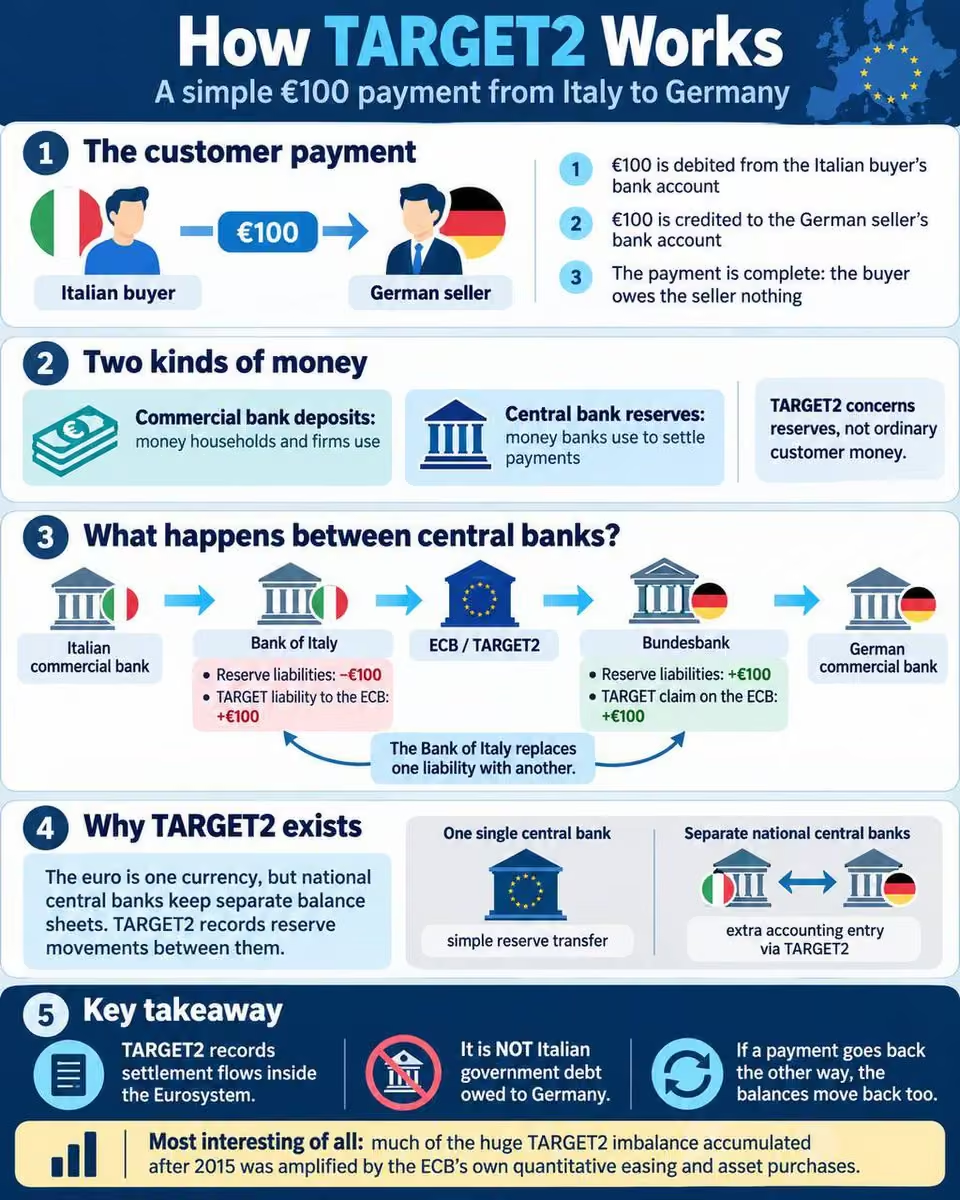
 Robin Brooks
 Darren Quinn | Modern Money Economist/Educator
 BBC Politics

 Greg Ip


 Carl Quintanilla


 Eric Tymoigne

 Marco Foster

 Josh Lipsky
 Bloomberg TV
 Rick Rieder
 MMT Podcast (Christian Reilly)
 Jamie Smith
 Eduardo Garzón
 Ben Casselman
 Işın Eliçin


 boz
 Joe Weisenthal

 Marshall Steinbaum 🔥

 Kaushik Basu


 Dario Perkins

 Levy Institute


 Dan Alpert
 Introduction to Post-Keynesian Economics


 Nick Timiraos
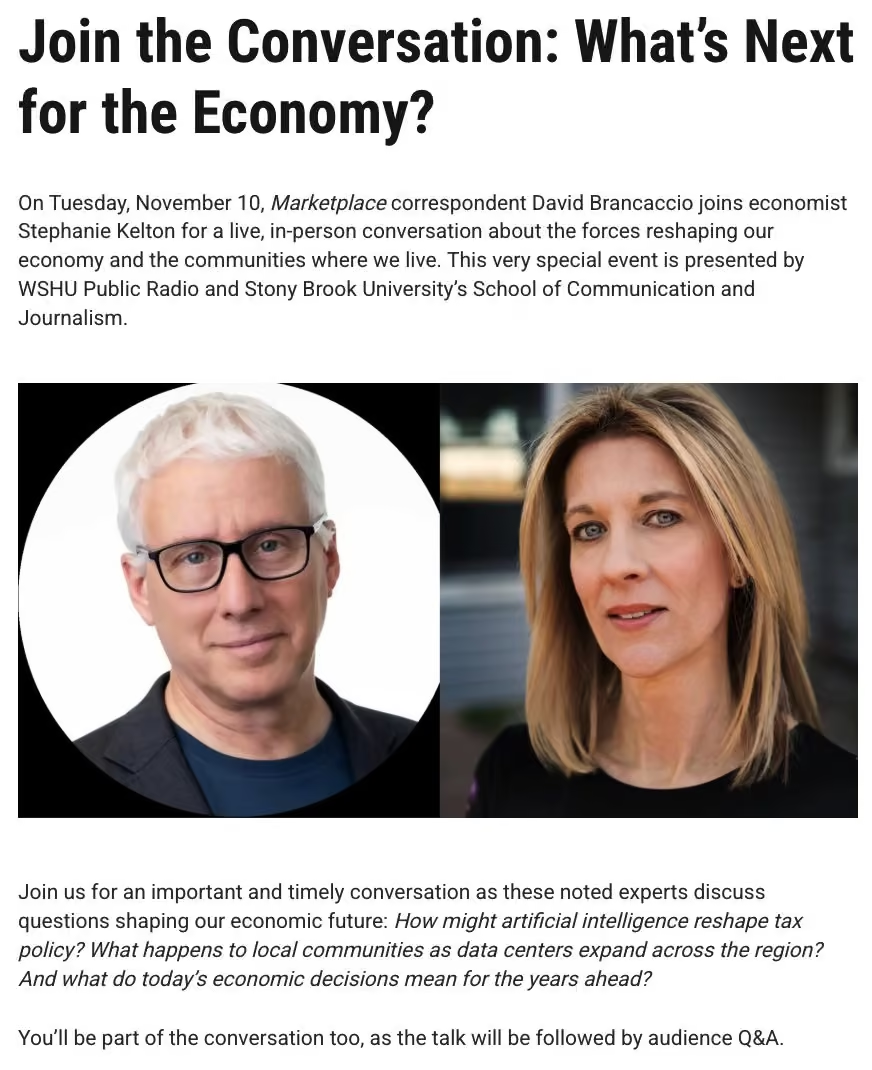
 International and Monetary Economics Network


 Vincent Diesel


 Zoe Schneeweiss


 David Andolfatto
 Hanno Lustig


 AFC Toronto

 Mohamed A. El-Erian
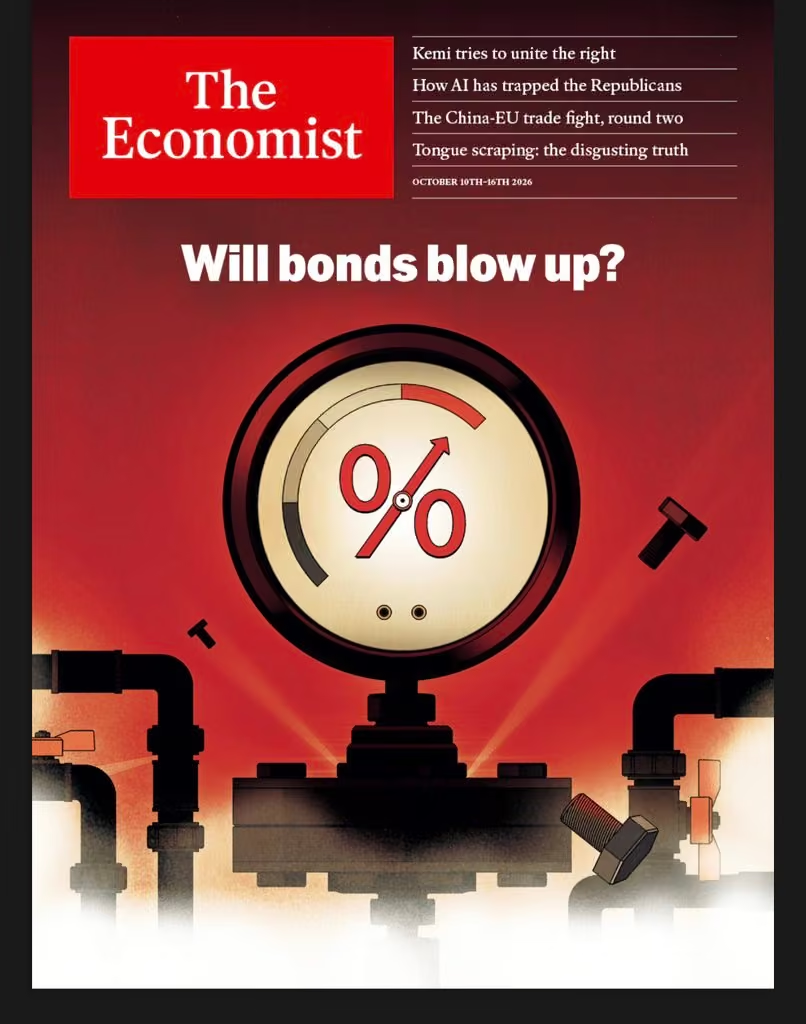
 Mary in America
 Mike Fellman
 Kurt S. Altrichter, CRPS®


 Excess Returns
 Nathan Tankus

 John Arnold

 Claudia Sahm


 Hans Lindt


 nyorude


 Sonu Varghese
 John Ocker
 Trent Johnsen
 Distribution for the Digital Age 🎬
 Sina Toossi


 Andy Lippok
 Scott Lincicome


 Ara Kharazian


 Peter Ryan

 Nic


 Ashley Gold


 Javier Blas

 Phenomenal World

 Mark Zandi
 Sam Ro 📈


 First Squawk
 Backpirch Weather

 Saul Staniforth


 Daniel Di Martino
 Nick Gerli


 Scott Robertson
 Jesse Livermore
 (((The Daily Shot)))


 Gregory Brew
 Rory Johnston


 VoxEU


 Chris

 Michael McDonough


 Phil 🆓🌍🧩🎲

 Thomas Hern

 Iwo Augustyński


 Matthew B

 SFUContinuingStudies


 Steve McCormick

 Aaron Fritschner

 MoneyRadar


 Mathew Forstater


 Gene Epstein

 Dean Baker


 Brendan Duke 🇨🇦🇺🇸
 Acyn

 Hélder Verdade Fontes


 selise
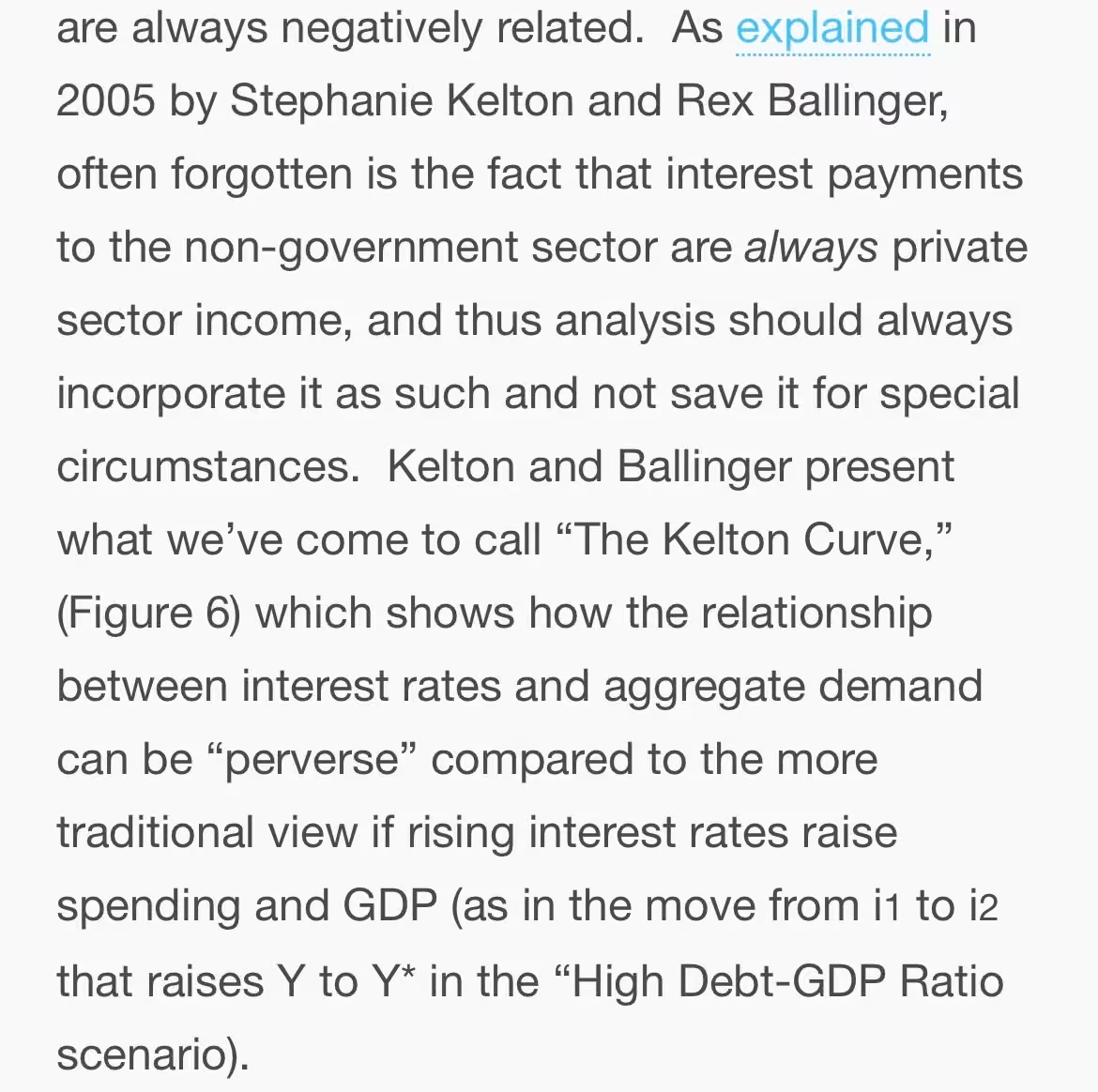
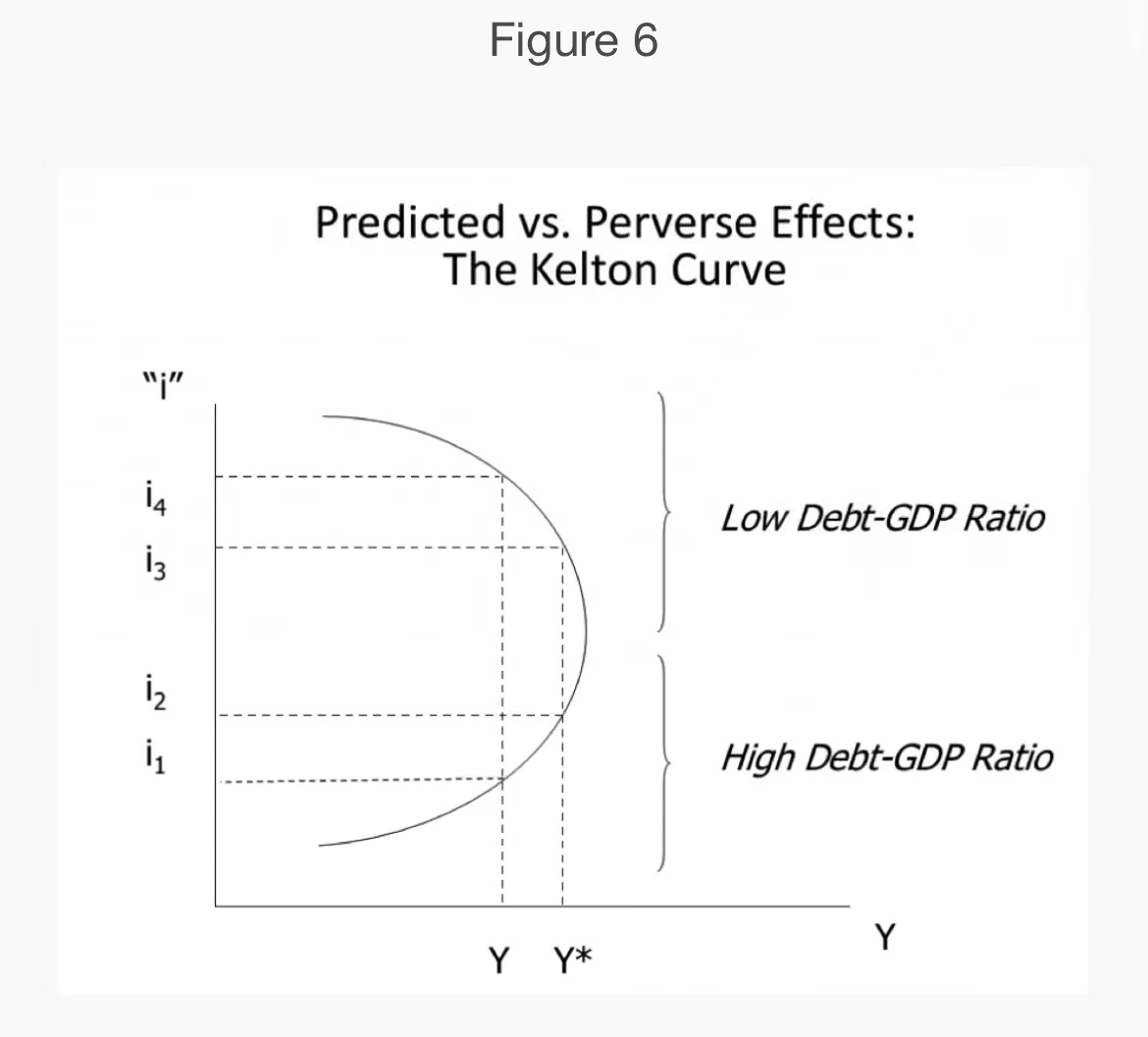
 Paul Scholes
 Reynold Nesiba


 David Peez


 Jordan Walker


 Bharat Ramamurti
 Matthieu Pigasse
 John Cassidy

 Drake Marley


 Natasha Singer
 The Heartlands Tribune
 Dave Parker 🇵🇸 🍉 🍎
 Julian Andreone


 Nicholas Mugalli
 ℹ️ Not The Torygraph 💚 #SaveOurNHS #ScrapNHSBill

 Marshall Auerback
 Steven Hail

 Eleanor Mueller
 ilhan dögüs


 The Orca Fin
 John Yarmuth 🥃


 Elizabeth Glab @lizglab.bsky.social

 William Thomson

 dnap


 Hamilton Nolan
 Jeff Spross
 .\ Tom Foster at tomfoster66 dot bsky dot social
 Russell Wadey


 Gregory Blotnick

 Noah Gordon


 Bill Goggin
 Хорхе Амар Ъзнет


 观察者网

 🇾🇪 🇵🇸 🇻🇪


 Erik Arnell
 Thierry from arvy 🇨🇭

 CEPR


 Jeff Stein
 Malcolm Reavell


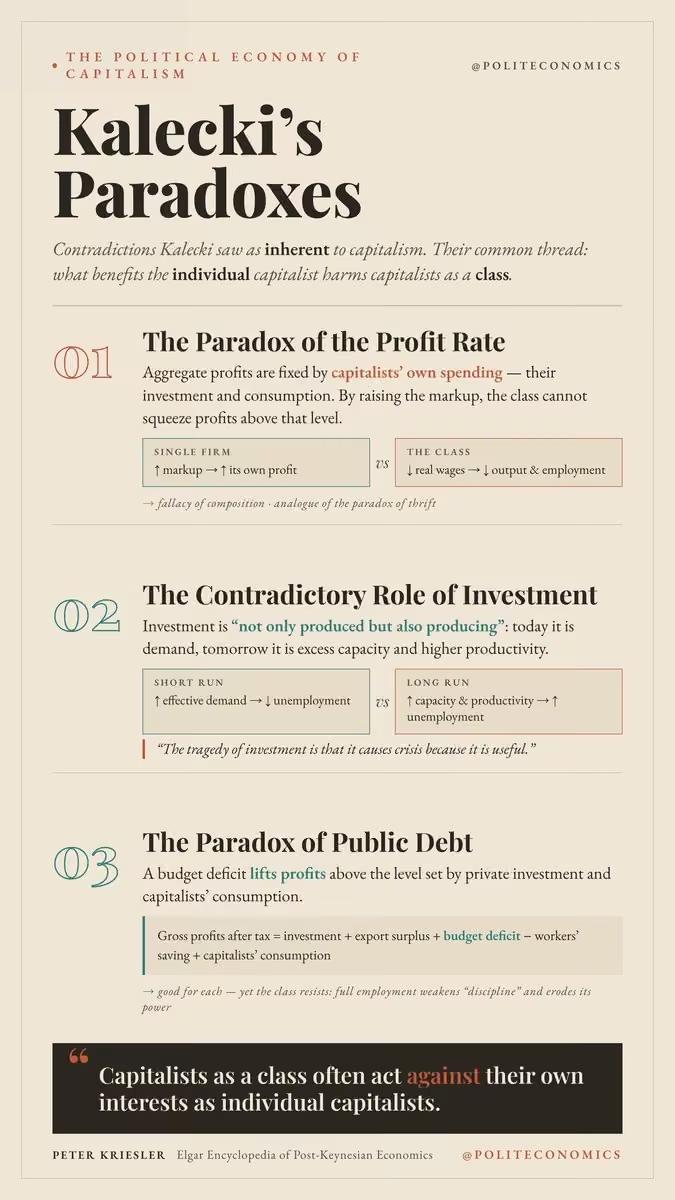


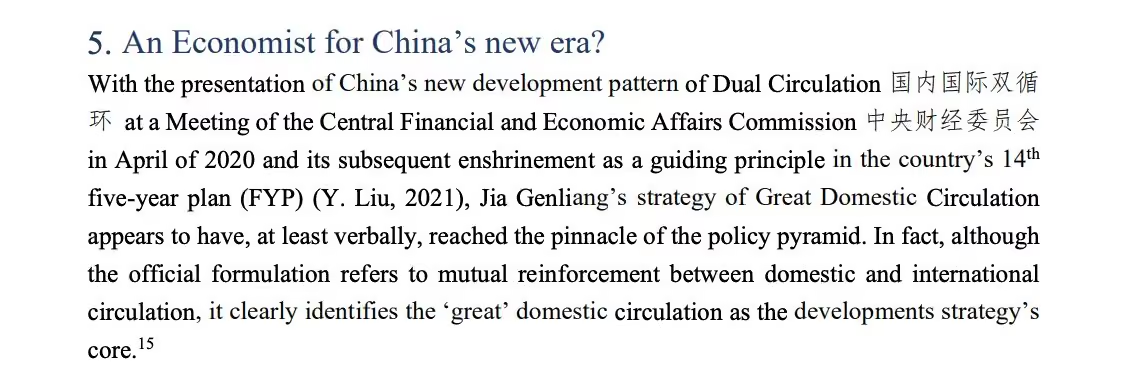


 Mike Bird


 Dylan Byers
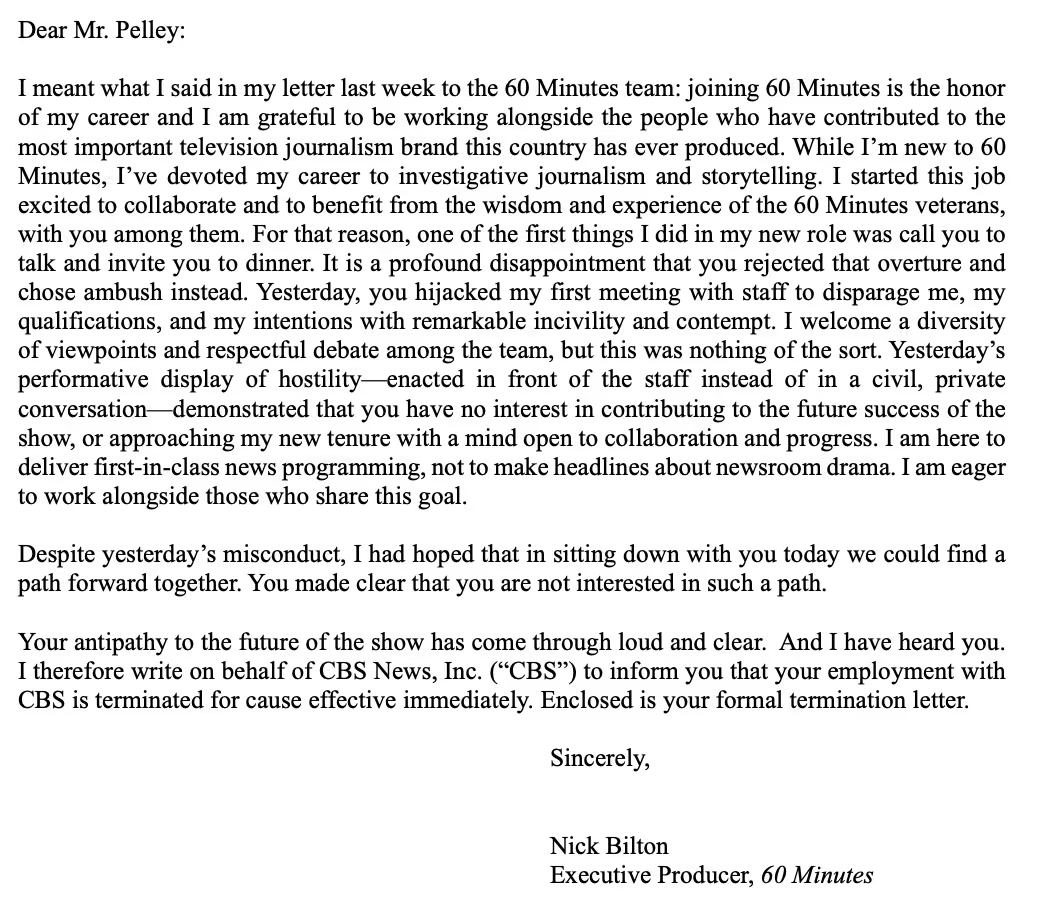
 Emoluments Clause
 Andrew Neil

 Bloomberg Law
 Megan McArdle
 Max Jerneck


 Marcus | Macro Strategist

 Today In History


 Matthew C. Klein

 Helen Thompson POLIS
 Kadi🇪🇪🌻
 Alex Jacquez

 Sahil Kapur


 Maggie Harrison Dupré
 ACEMAXX ANALYTICS
 Cal !


 Brian Sozzi


 Alastair Leith
 Madison Mills


 Simon Ree
 Kallum Pickering

 Geiger Capital

 Eric Rosengren
 Callum Williams


 Jay Van Bavel, PhD

 Aaron Jakes

 Charlie Hills


 Semafor


 Omair Sharif
 FedResearch


 Democratic Wins Media
 Emily Pontecorvo

 POLITICOEurope
 Neil McCoy-Ward


 Annmarie Hordern
 Christopher Shay
 Dorothea Baur (Dr.)
 Xinyue Liu
 Tuhin Chakrabarty

 Nav Toor


 TFTC


 Yahoo News

 Anas Alhajji

 Etkili Haber Yeni Sayfa

 Tony Weston


 Faiz


 Rapid Response 47

 Matthew Incantalupo
 Zack Cooper
 Peter D Carter

 David Stein
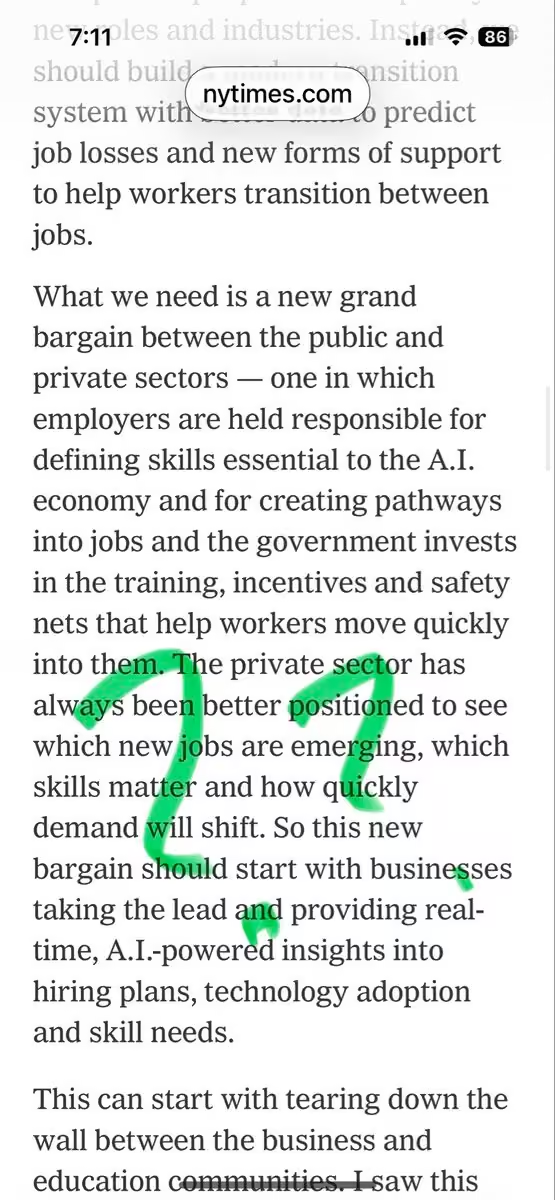
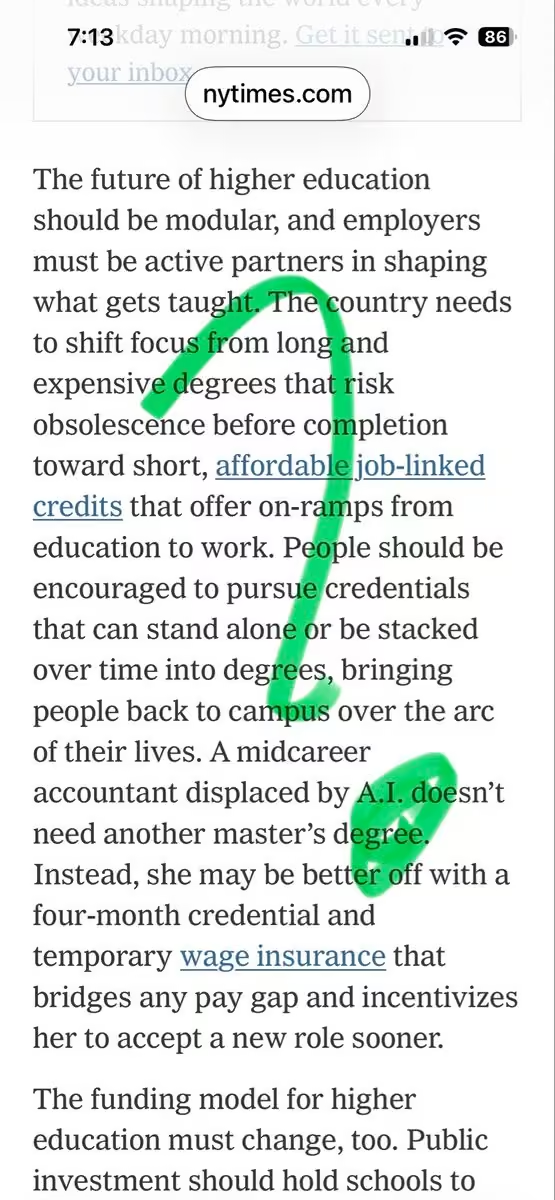
 Jennifer Berkshire


 Alicia Gerardo


 Michael Green


 Task & Purpose




 Leon Simons 🌍

 David Wallace-Wells

 Lydia DePillis

 Jon Hartley

 Jérôme ULRICH
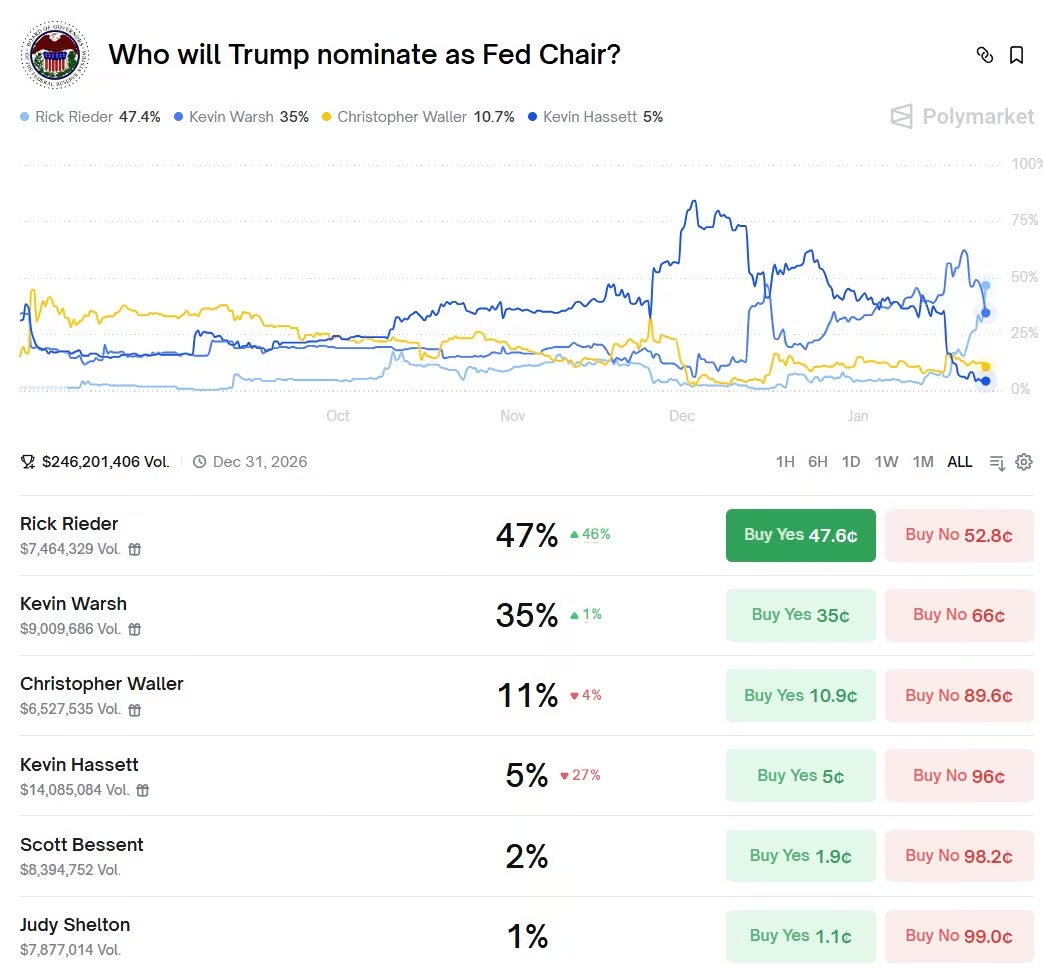

 축복ㆍ시방時方

 Ludovic de Belleval - Train Money Brain
 Diane Swonk
 Ivan the K™
 jim iuorio


 Niko 🇬🇷 🇺🇦 🇺🇸 🇪🇺


 David McNab @mcfab@home.social


 Yves Smith
 Iain Jordan

 Paul Anthony Thorpe
 Paul Mason


 Daniela Gabor
 Ridge & Frost
 /Arsèηε Lυριη/ 🃏🎱🎩
 Dominic

 Andy Verity

 Warren Gunnels


 Jacob Assa

 Jason Furman

 Barry Ritholtz
 Jan Rosenow


 Ed Conway


 Jostein Hauge


 Modern Money Lab


 Mark Hooper AS/MS



 josh ryan-collins
 *Walter Bloomberg

 Sheridan Kates 🕊️
 Lisa Abramowicz


 Brett Scott

 du -sh *


 China Banking News

 James Meadway


 Skanda Amarnath


 Gene Sperling


 Brian Albrecht

 Heather Long

 Anthony Pompliano 🌪
 unusual_whales
 Jeremy Hobson

 Jack Corbett

 Politics UK
 karim basta


 Andrew Boozary MD


 Daniel Hornung
 Shahin Ashkiani


 Senate Budget Democrats


 Fadhel Kaboub فاضل قابوب


 Alam


 Sensible Media Pittsburgh
 The Heartland Institute UK/Europe

 Center of The Maze💭
 R.Сам 🦋🐏


 Justin Wolfers


 Merryn Somerset Webb

 MMT for Progressives

 Matt Darling 🌐🏗️
 Steven Dennis


 $inputendorsers | Cardano DRep


 Citizen F 🇺🇦
 Dj Omega Mvp
 The Tennessee Holler

 Isaac Saul


 .

 Esme📝
 FINDING THE MONEY Film
 John Lounsbury


 CALL TO ACTIVISM
 Bill


 Sam Stein


 Michael Linden


 Clonal Antibody 🌹

 Gary Winslett 🌐🇺🇸

 Senator Patty Murray


 Rohan Grey
 John R Ramage


 Joshua Smith

 Tareque Laskar


 Innovative Options Group


 Fox Mulder


 Joe
 George Varv


 Mica Soellner


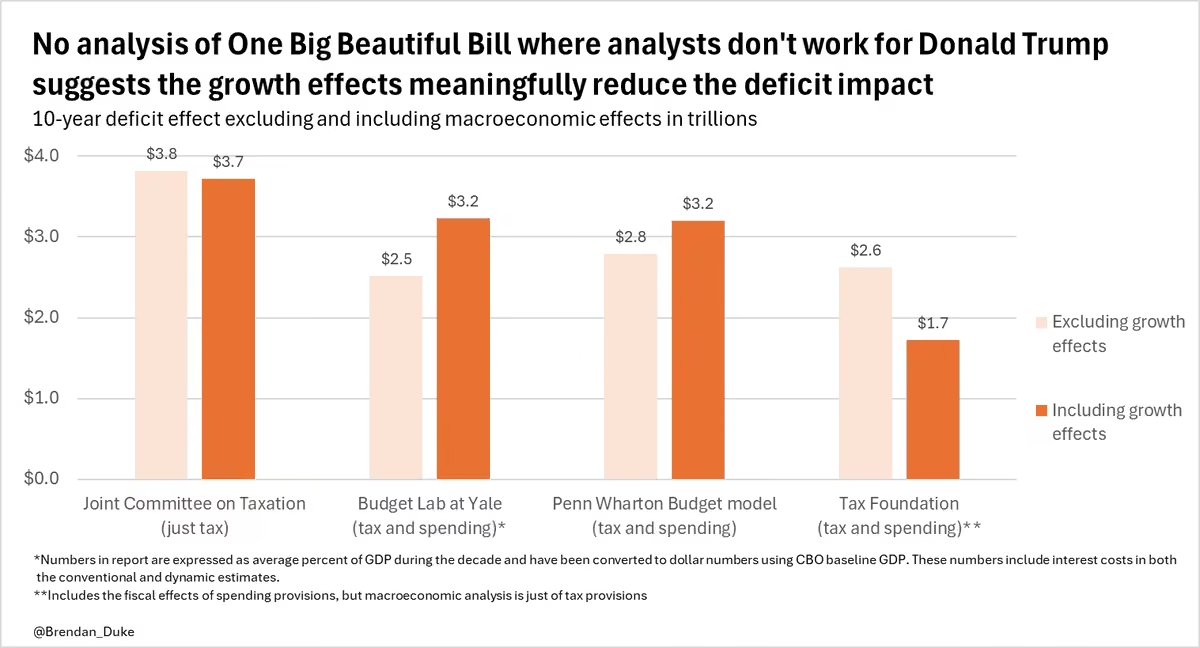

 Chief Shearer 🙏🇪🇺 🕯️🐟🇫🇷 🐦

 Johnny LeRose
 David Fields
 ?whispers?


 Richard A. Stern


 Vance Ginn


 Sugheson (Sugus)

 The Futurizts


 jthomascrowne.com: The View From Here
 JLBoul

 Chad Pergram


 Cameron Murray
 Energy Headline News

 Kyle Chan


 FactPost
 Phil Kalogeras


 Judy Shelton
 The Globe and Mail

 Spencer Hakimian


 Mariana Mazzucato


 Rachel Reeves
 Rethinking Economics SOAS

 International Development Economics Associates


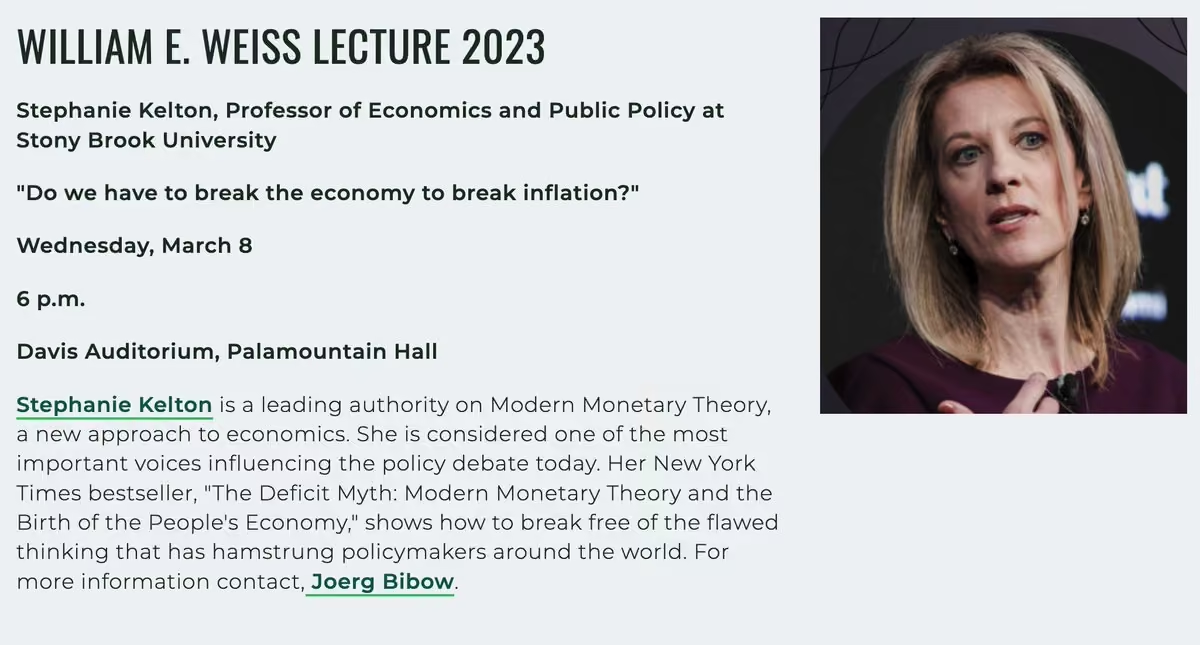
 Jeff Zients Archived
 Leo Hickman


 Ryan Grim