Our new publication using data from the adult population in Austria is out in @OFIDJournal. We found 17 total COVID-19 deaths with/from Covid 19 among 500k previously infected adults in Austria between 10/1/2021-12/31/2021; 6 were vaccinated x2 w/mRNA; adjusted hazard ratio (aHR) of 2mRNA vaccines= 0.24 (0.09 - 0.65)
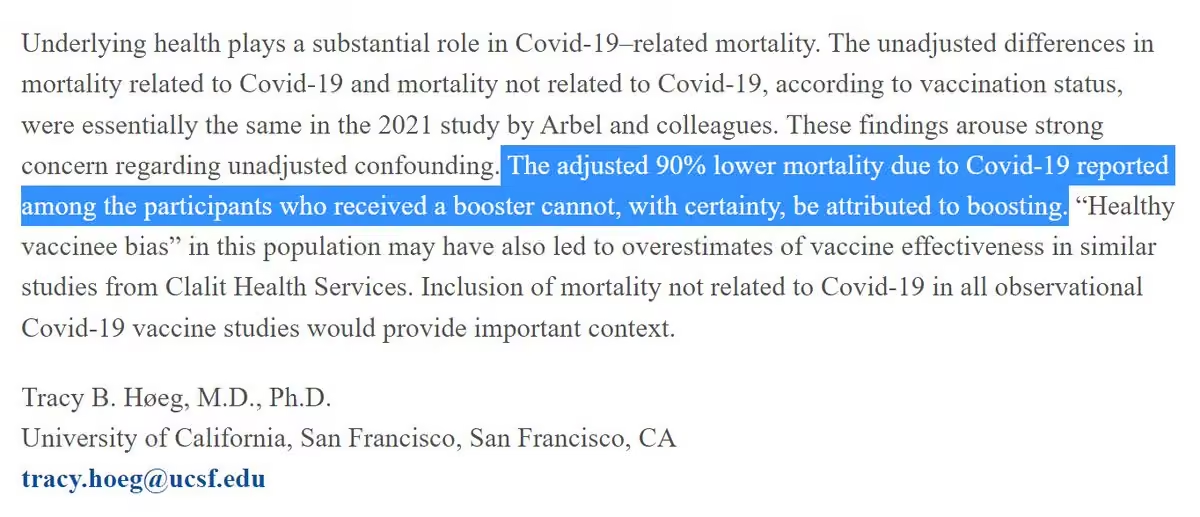
We found substantial healthy vaccinee bias with (adjusted) 36% lower (aHR 0.64 [0.56-0.74]) non covid deaths among 2x vaccinated (it's so important that all observational vaccination effectiveness studies report a negative control like this; see our @NEJM correspondence www.nejm.org/doi/full/10.1056/NEJMc2306683)
Yes, confidence intervals are overlapping, so how much of the "benefit" vs covid mortality is actually a result of better underlying health among the vaccinated is unclear.
Results were similar for extended observation period Jan-Jun 2022 (46 total covid deaths; 28 were vaccinated; aHR of 2mRNA vaccines= 0.47 [0.25 - 0.87]), and lower associated effectiveness vs infections and less healthy vaccinee bias during this period (see supplement Table 8)
Our study was such an interesting demonstration of the limits of observational data for estimating vaccine effectiveness or overall societal utility of a vaccination, particularly in the case where the absolute risks are so low.
Highlights from the discussion re our findings among Austrians with previously documented covid infections:
"In view of the very low absolute COVID-19 mortality, one may question the overall clinical significance and the cost-effectiveness of these vaccinations for prevention of COVID-19 deaths [21]. Due to very sparse outcome events, we refrained from calculating numbers needed to vaccinate and cost-effectiveness analyses of these vaccinations, but strongly recommend further studies to address these issues. It should be noted that our analyses do not consider potential vaccination harms or other potential negative health consequences following SARS-CoV-2 infection, except for COVID-19 deaths [22, 23]. Our results are also observational in nature and subject to biases such as healthy vaccinee bias, which our results suggest is present. This would likely overestimate any true vaccine effectiveness.
In individuals with one and two vaccine doses, we observed a 27% and 36% lower non-COVID19 mortality risk, respectively, when compared to unvaccinated individuals... This suggests that the vaccinated in our study may have been fundamentally different from the unvaccinated and likely had better underlying health. This would have tended to bias our results in the direction of overestimating vaccine effectiveness and highlights the potential challenges of using retrospective observational data to draw causal conclusions about interventions.
Potential behaviour changes in response to vaccination and/or SARS-CoV-2 infection, as well as test results, may introduce further biases. Furthermore, we did not have access to data on co-morbidities, socioeconomic status, and medications, preventing adjustment for these factors.
The fact that we found one dose of vaccination to be associated with more protection than two alone suggests residual bias.
Even during the Delta wave, which saw the largest number of deaths attributed to COVID-19 in Austria after the introduction of vaccines, the risk of COVID-19 deaths in the previously infected population was extremely low, and this was sustained even during the first half-year of 2022, when Omicron was predominant.
Our findings are subject to several limitations inherent to observational studies of COVID-19 vaccine effectiveness... These include limitations in data reporting, misclassification between COVID-19 and nonCOVID-19 deaths, and variation on access to and indication for SARS-CoV-2 tests
Further studies on various SARS-CoV-2 infection outcomes are warranted to provide estimates on the public health significance and cost effectiveness of SARSCoV2 vaccines in previously infected individuals."
In other words, because most people have already been infected, we need randomized data (or data not prone to underlying bias) of mRNA vaccines looking at both benefits and harms to make evidence-based covid vaccination recommendations.
I am so grateful for this research collaboration with talented Austrian researchers, in particular Alena Chalupka and Stefan Pilz. Also working with Dr. Ioannidis was such a joy. He provided so much helpful feedback. This is of course not always the case for someone with such a prestigious position, but was absolutely the case for him.
academic.oup.com/ofid/advance-article/doi/10.1093/ofid/of…
P.S. I guess OFID only allows one degree after names. I did not lose my MD and John Ioannidis, to my knowledge, did not lose his DSc. Just sayin


 Andrew James 🏴
@AndrewJamesFilm

 Bridget Phetasy
@BridgetPhetasy
 Jennifer Sey
@JenniferSey
 Bryce Nickels
 Anish Koka, MD

 Venk Murthy MD PhD
 Natalya Murakhver

 Mimi Marcel


 Ann Forti

 Xavier Andres Figueroa, Ph.D.

 Joseph Marine


 Katy Talento


 Dr. Lynn Fynn-derella (ret) 🐭
 Flopping Aces


 The Independent with Scott Atlas
 Bill Gurley
 The All-In Podcast


 Jessica Adams
 reason
 Dr. Dawn Michael
 chadi nabhan MD, MBA, FACP
 Dan Chen

 Jan Crawford
 The Doctor’s Lounge Podcast
 Jenanan Vairavamurthy, MD


 Emily Kopp


 Pradheep J. Shanker, M.D.
 Tiffany Ryder

 Daniel Tagge, MD


 John Mandrola, MD


 The HighWire


 Steve Kirsch
 TimSawyerMD
 Maryanne Demasi, PhD


 JAMA

 Children's Hospital


 Allison Krug, MPH
 Adam Urato, MD
 Dr Joanna Moncrieff

 U.S. FDA
 Houman David Hemmati, MD, PhD
 Dr. Roger McFillin
 Rob Purssey

 Real Doc Speaks


 Grainne Lynch

 Health Freedom Louisiana
 Rafael E. Torres

 Martin Kulldorff
 The Ironwood Table


 Kevin Bardosh


 Alina Chan
 Jennifer Fiorini
 Rav Arora


 Retsef Levi


 Restore Childhood


 @thepairodocs
 End Wokeness


 Justin Hart


 The Golden Age 🇺🇸👍
 Jonathan Zachreson

 Jay Bhattacharya
 Kulvinder Kaur MD
 A Ration Of Rational


 ReneJayeee
 KanekoaTheGreat
 Catherine Johnson

 Brendon Leslie


 Lars Christensen⚡️



 Stephen Besson, MD
 (kick/me)

 Eric Winsberg
 USF Health

 Professor Charles Xavier

 Shveta Raju
 Science From The Fringe

 Anthony LaMesa
 Ron DeSantis


 Benjamin Ryan

 stefanie

 You

 AnesthesiaHQ
 Rebel1973 🇺🇲
 UsForThemUK 🌟


 David Paton
 StanfordHealthPolicy

 Annals of Int Med

 Michael Williams
 John Patrick


 Taulant Muka


 Fiona Russell


 Loofymectin aka Jan Masleid
 DrJ

 Anil Makam
 David McCune

 Laura Powell


 Herbert Nickel

 Collateral Global Charity


 Hans Koppies

 Mark Reeder


 Axis Wang
 elizabeth bennett
 Andrew Bostom, MD, MS
 WS #nomasks #snowflakeweepie #garbagemom


 Dr Mollie James


 Haz


 Alex Berenson




 Eric Topol


 Illusion Consensus


 Matthew Hurtt

 AG
 Margery Smelkinson, Ph.D.

 Joseph Allen


 caseybmulligan


 Eric Widera, MD


 Kristen Mag


 Kaspars Melkis


 Infectious Diseases Scandinavia
 Anti-Hypocrisy
 daniela
 Dhiraj Kacker
 Scott Davison
 Eric- "WHY WAS PRESIDENT TRUMP ON THE X?" Andersen


 Anette Lindberg Friedrichsen
 Michael Farris


 TechJudge


 Jenin Younes


 News
 Chief Nerd
 Dr Clare Craig ✝️


 New Civil Liberties Alliance


 John J. Vecchione

 katie wright
 Preben Aavitsland

 Liberty Hobbit
 Chris 🐭


 Josh Stevenson


 Prof Peter Collignon


 Sarah Caul


 CP24
 Kelley K

 CDC Director


 BenoitMD

 Liz Highleyman

 Crémieux




 John Cook
 Paul C of 🏴 och 🇸🇪

 Zachary Stieber



 JurassicFarts

 Ghosted Pepper


 Kelly Victory MD

 Carpe Diem
 Dr. Li-Meng YAN (闫丽梦博士)


 Greg Piper
 Azadeh Khatibi, MD, MS, MPH

 Jens Mogensen

 Vaccine Skeptic MD


 lbienenvet
 Ingrid Hokstad
 Kelly
 Kris N

 Gayle E
 RayPrisament
 Suneel Dhand MD
 Joseph A. Ladapo, MD, PhD
 Tessa💜🐒


 Erich Vieth
 Philip Lenczycki 蔡岳

 Kim Ketcham
 Hans Erdbrink

 Josh Guetzkow


 Steve Templeton

 Hans Mahncke


 Jerome Adams


 Joe Duarte


 Newman Nahas


 Frederik Schaltz-Buchholzer
 A$AP mAbs

 Bring Back Normal | BBN


 GeroDoc


 Kevin Bass

 Birgitte Baadegaard


 Chris McKeever
 Kevin McKernan

 Erich Hartmann


 Chabria
 Satisfactory Dave


 Wafik S. El-Deiry, MD, PhD, FACP
 REGENETARIANISM מידת האמת

 bitbutter


 Rob Combis


 OnePlainGuy2
 schwer beunruhigter Mensch


 Phil Kerpen


 Ron DeSantis


 BMJ Group
 Avatans Kumar 🕉


 Susan Shelley
 Marion E Mass, M.D. #patientsfirst #scrubsnotsuits
 Rocksy MD⚡️

 TexasLindsay™


 aka Lars
 Epidemiologist 🇺🇸 and Patriot ❤️

 Natalia Mehlman Petrzela
 Sebastián González-Dambrauskas, MD 👨⚕️🏥🌎


 Sylvia Fogel MD

 Pilgrim😎
 Aaron Kheriaty

 Jan Jekielek
 David Zweig
 Karol Markowicz


 Brittany

 Clay Travis


 Rocky Mountain High
 Senator Rand Paul
 Robert Lax


 Lucy McBride, MD

 Timothée Olivier, MD
 Andrew McIntyre

 Melly


 Steven E Lucking, MD

 Ron Kirkland MD, MBA

 PoIiMath


 KoolKeithVT


 OpenVAERS


 WhatsInWuchang


 Nikki M. Johnson, MD