helping out with a new project - who’s the best biologist you know at interpreting complex immunological/metabolic data and developing mechanistic explanations? feel free to DM
Patrick Hsu
Patrick D. Hsu (born 1993) is an American bioengineer, entrepreneur, and investor specializing in CRISPR, machine learning, synthetic biology, and gene therapy. He is an assistant professor of pathology at Stanford University and a co-founder of Arc Institute, a research organization focused on accelerating biomedical discovery. He is a member of the board of directors of Notion and the scientific advisory board of Amgen. More on Wikipedia
-
Patrick Hsu
@pdhsu
-
Patrick Hsu
@pdhsu
need better target ID in addition to better molecular design
Alex Telford
@Atelfo
77% of clinical-stage drugs go after the most popular 20% of targets, and 31% after the top 2%
This post is unavailable. See it on X. -
Patrick Hsu
@pdhsu
A beautiful detective story on viruses that are…not that commensal after all
Caleb Lareau
@CalebLareau
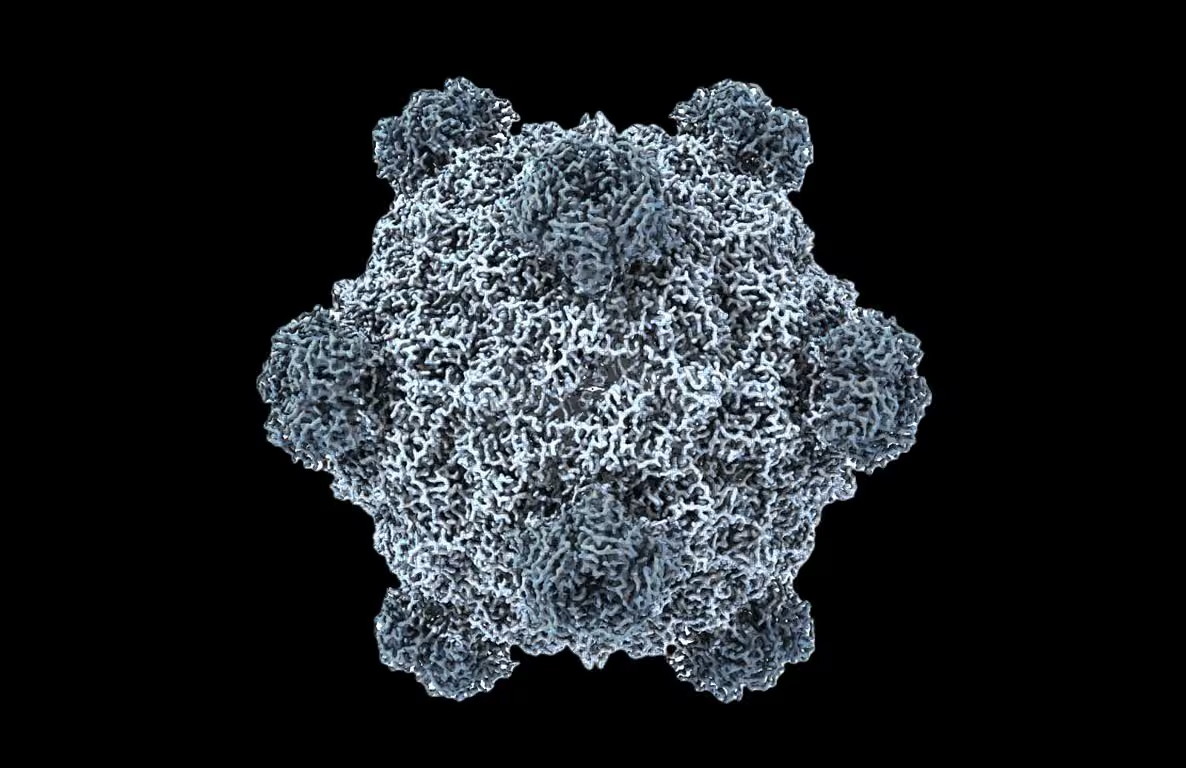
Our bodies are colonized by trillions of viruses that we live with in homeostasis. The most diverse and abundant of these viral families are anelloviruses. A new paper from us at @MSKCancerCenter explores what happens after we *all* have been infected
www.biorxiv.org/content/10.64898/2026.11.05.764726v1 1/n -
Patrick Hsu
@pdhsu
how we made a miracle drug for pancreatic cancer, niche Internet forum style
Adu @plainyogurt21
>be postdoc
>2012 in Cambridge
>join Warp Drive Bio
>plan to mine bacterial genomes
>find macrocycles
>what is a macrocycle
>RAS is undruggable
>everyone says so
>surface is a Death Star
>smooth no pockets
>picomolar grip on GTP
>whole field races the OFF state
>bossman crazy
>says hit the ON state
>the active one
>soil bug makes sanglifehrin
>CypA just sitting in the cell
>free chaperone?
>what if we glue it?
>macrocycle binds CypA
>new surface grabs RAS
>only the GTP bound state
>it clamps
>signal dies
>pure three way complex
>years of wet lab work
>first compound is garbage
>micromolar
>aim only at conserved residues
>swap phenyl for thiazole
>better CypA contact
>potency jumps
>no bioavailability
>unfixable half life
>fix it anyway
>chop the right side to a cyclopropyl
>stick a methylpiperazine on the left
>affinity explodes
>811 daltons
>big chungus
>breaks all rules
>should not be oral
>it is oral
>2018 buyout
>molecule becomes RMC-6236
>early data looks promising
>vp writes the blog post
>doesn't get it
>2023 need cash for phase 3
>EQRx dying with 1.1B in the bank
>buy the company for the cash
>sent CRO our structures to make
>they like
>they steal
>joyo to erasca
>where compound 4a
>comes back as ERAS-0015
>RASolute 302 reads out
>13.2 months
>double chemo SoC
>ASCO plenary
>1 min standing ovation
>presenter angry face
>senator on expanded access
>calls it a miracle drug
>press goes wild
>rash nbd
>dying is worse
>approval August 2026 easy
>198 million in five weeks
>mfw a macrocycle, from a dead startup, funded by a dead company, generational drug -
Patrick Hsu
@pdhsu
Costco is now as crowded as a music festival
-
Patrick Hsu
@pdhsu
who is developing the best clinical care benchmarks?
-
Patrick Hsu reposted
Marios Georgakis
@MariosGeorgakis
Lp(a)-lowering had absolutely zero effect on cardiovascular events in HORIZON.
Neither in Lp(a) >70 mg/dL, nor >90 mg/dL - no matter how the data were analyzed.
Big bust. Favors the most pessimistic scenario that Lp(a)-lowering is very unlikely to move the needle, at least in secondary prevention. -
Patrick Hsu
@pdhsu
so...does LP(a) not matter?
-
Patrick Hsu reposted
Saloni
@salonium
This is an important trial.
The mainstream view has been that statins reduce the progression of atherosclerosis and stabilize plaques, but don’t reverse it.
That’s not true. They reverse it as well.
Martin Bødtker Mortensen
@MaBMortensen
🫀 Can coronary atherosclerosis actually regress?
Our new randomized FLOWPROMOTE trial analysis, published TODAY in JAMA Cardiology, shows remarkable coronary plaque regression with intensive LDL-C lowering!
Atherosclerosis is not necessarily a one-way process.
📄 JAMA Cardiology:
doi.org/10.1001/jamacardio.2026.4788
#atherosclerosis #ldl #cardiology #ccta -
Patrick Hsu
@pdhsu
type shit -Tolkien
Conan, Esq
@conan_esq
Tolkien used 'cooked' in precisely the modern sense.
-
Patrick Hsu
@pdhsu
Beautiful new work from @garykbrixi @BrianHie et al on in context learning with Evo 2 for generative design
Garyk Brixi
@garykbrixi
Language models can learn new tasks from just a few examples in their prompt, with no retraining. This is called in-context learning (ICL). Now genome language models can do it too.
With a handful of examples, Evo 2 ICL generates proteins, de novo antibodies, CRISPR-Cas9 loci, mitochondrial genomes and entire bacteriophages.
We can even use the synthetic sequences iteratively to construct a chain-of-thought (CoT) and achieve harder design goals.
New work with Yukun A. Hao, @BrianHie and team 🧵 -
Patrick Hsu
@pdhsu
we are so back
Riley Sennott
@RileySennott
“To see life; to see the world; to eyewitness great events; to watch the faces of the poor and the gestures of the proud; to see strange things — machines, armies, multitudes, shadows in the jungle and on the moon; to see man’s work — his paintings, towers and discoveries; to see things thousands of miles away, things hidden behind walls and within rooms, things dangerous to come to; the women that men love and many children; to see and to take pleasure in seeing; to see and be amazed.” - Henry Luce, 1936
www.nytimes.com/2026/10/28/business/media/life-magazine-k… -
Patrick Hsu reposted
Thrive Holdings
@ThriveHoldings
Today, we are announcing an agreement to acquire ADT.
Home security has the qualities we look for in the businesses we own: an essential service built on specialist expertise and earned trust.
We see an opportunity to build on that foundation for decades, investing in its people and technology to deliver the best outcomes for customers.
Our ambition is to help ADT define the next era of trusted home security.
www.thriveholdings.com/thrive-holdings-adt -
Patrick Hsu reposted
Randall Platt
@randall_platt
Today in @NatureBiotech we introduce the "recordanelle", a synthetic organelle that enables transcriptome-wide single-cell RNA recording in human cells. Big thanks to team: @ReinkemeierCD, Marcos Manero-Carranza, et al. 🧵👇
@ETH_en @ETH_BSSE @BRC_CH
rdcu.be/5Pus7dyu63ta
Christopher Reinkemeier
@ReinkemeierCD
Ever wondered what a cell has experienced in the past? This is in general hard to measure. Here we introduce the recordanelle, to equip cells with a tool that lets them record their own history.
www.nature.com/articles/s41587-026-03327-6
@NatureBiotech @ETH @randall_platt @ETH_BSSE -
Patrick Hsu
@pdhsu
mfw I found out I was in the placebo arm
Polymarket
@Polymarket
JUST IN: Children whose mothers took choline supplements during pregnancy scored +8 IQ points higher at age 4 than those in a placebo group, major new study finds.
-
Patrick Hsu
@pdhsu
In addition to our recent COMPASS paper, check out @zhou_jingtian's new Bolero model also built at @arcinstitute - a sequence-to-function model that predicts open chromatin and gene expression across diverse brain cell types and states
Jingtian Zhou
@zhou_jingtian
Excited to share Bolero, out on bioRxiv. @arcinstitute posted a great overview. Here I want to add another perspective that motivated it for us (also a few more higher resolution images).
-
Patrick Hsu reposted
Danielle Fong 🔆
@DanielleFong
so excited to have intelligent telescopes to zoom in on our internal galaxies
Patrick Hsu
@pdhsu
Delighted to share a landmark preprint from our lab, using genome language models and AI agents for biological discovery and genome mining!
The stretches of DNA between protein-coding genes are often called the genome’s “dark matter,” but they are far from empty. They encode RNA molecules that sense metabolites, regulate genes, and control some of molecular biology's most important tools (such as programmable genome editors e.g. CRISPR/bridge)
Much of this biology is unexplored. One reason is that RNAs can retain similar structures and functions even as their DNA sequences change dramatically, making their relationships difficult to recognize with conventional computational tools -
Patrick Hsu reposted
Feng Zhang
@zhangf
Another powerful use of AI agents to accelerate biological discovery. Congrats @pdhsu and team!
Patrick Hsu
@pdhsu
Delighted to share a landmark preprint from our lab, using genome language models and AI agents for biological discovery and genome mining!
The stretches of DNA between protein-coding genes are often called the genome’s “dark matter,” but they are far from empty. They encode RNA molecules that sense metabolites, regulate genes, and control some of molecular biology's most important tools (such as programmable genome editors e.g. CRISPR/bridge)
Much of this biology is unexplored. One reason is that RNAs can retain similar structures and functions even as their DNA sequences change dramatically, making their relationships difficult to recognize with conventional computational tools -
Patrick Hsu
@pdhsu
you thought the AIs would replace us, but it was the dogs...
TechCrunch
@TechCrunch
Warhound, the brain child of Ben Lamm and Palmer Luckey, emerges from stealth to genetically engineer dogs for military and law enforcement.
techcrunch.com/2026/10/22/ben-lamm-raises-200m-for-warhou… -
Patrick Hsu
@pdhsu
Delighted to share a landmark preprint from our lab, using genome language models and AI agents for biological discovery and genome mining!
The stretches of DNA between protein-coding genes are often called the genome’s “dark matter,” but they are far from empty. They encode RNA molecules that sense metabolites, regulate genes, and control some of molecular biology's most important tools (such as programmable genome editors e.g. CRISPR/bridge)
Much of this biology is unexplored. One reason is that RNAs can retain similar structures and functions even as their DNA sequences change dramatically, making their relationships difficult to recognize with conventional computational toolsPost not available here, view on X
Patrick Hsu
@pdhsu
Tl;dr it's well established how to search across and systematically catalog protein sequences/structures. But this has been incredibly hard, until now, for noncoding sequences without heavy use of simple heuristics
We're excited about our contribution here to decode the dark genome with AI models of DNA and investigative AI agents. Check out the preprint here: www.biorxiv.org/content/10.64898/2026.10.21.760802v1
Patrick Hsu
@pdhsu
I'm incredibly proud of the spectacular team that did this work, led by the intrepid and persistent dynamic duo of @gwanggyus and @timjhudelmaier. And thank you to @andreaspuschnik and @SKonermann for another amazing collaboration
I'll post more musings later on the management science of AI agents and where I hope the field of human-agent collaboration goes from here -
Patrick Hsu
@pdhsu
Consciousness as a temporal choice between different stimuli as opposed to being spatially encoded
Doris Tsao
@doristsao
1/ We discovered something totally unexpected about the neural structure of consciousness that overturns decades of thinking on its biological basis and brings us significantly closer to the recipe for generating conscious awareness.
New preprint: www.biorxiv.org/content/10.64898/2026.10.15.759299v1 (led by @HesseJanis, with @FrankLanfranchi, @_conor_mcgrory, @Yuelin_Shi, and @EngelTatiana) -
Patrick Hsu
@pdhsu
An honor to participate in a Dahlian Dialectic! Podcasts are more fun with friends :)
Jackson Dahl
@jacksondahl
Dialectic 60: Patrick Hsu!
@pdhsu & @arcinstitute are combining biology, engineering, and AI to turn a sci-fi future into reality.
Patrick got expelled from college at 13, returned at 15, later worked on early CRISPR breakthroughs, and teamed up with @SKonermann & @patrickc to found Arc.
He works 3 jobs: core investigator at Arc, professor at Stanford, and venture partner at @thrivecapital. For all his intensity and ambition, he carries a lightness and boldness that is contagious.
We discuss:
- why research is 99% failure and even your best ideas kind of suck
- infinite games and speedrunning school
- the reach of GLP-1s and power laws in biotech
- what makes a good biologist
- Arc’s bet on people over projects
- lab robots that finally work
- AI-designed organisms and new forms of life
- why heart disease could go the way of infectious disease
- bro science, peptides, and biofuturism
- research taste in the age of AI
Timestamps:
(0:00) Opening Highlights
(1:39) Intro: Patrick Hsu
(4:29) Start: Boldness, Infinite Games, & Ambition
(12:54) GLP-1s and Power Laws in Biotechnology
(20:17) Expelled at 13 and Falling for Biology
(25:51) What Makes a Good Biologist, Research Taste, and Biology's Data Challenges
(37:58) The Arc Model: Full-Stack Science
(52:01) Betting on People, Style, & Learning to Simplify
(57:22) Perturbation, World Models, and Evo
(1:03:27) Virtual Cell Models
(1:09:56) Designing Life: From Stem Cells to Genome Writing
(1:18:39) Testing, Bro Science, and Human Data
(1:24:26) Can It Exist vs. Will It Exist: Science Meets Markets
(1:29:59) Biofuturism: Interoception, Peptides, Muscle Modulation, Sleep, and New Forms of Life
(1:43:47) Fun, Obsolescence, Going Slow, and the Future
@dialecticpod 60: Patrick Hsu - Speedrunning the Infinite Game - is available on all platforms, including X. Links below.This media couldn't be displayed. See it on the original post. -
Patrick Hsu
@pdhsu
this is why we needed superintelligence
Kevin Kwok
@antimatter15
Burned some tokens to analyze Cheeky Pint frame-by-frame to see who is "Pacing The Frontier", and who "Chugs The Frontier" instead.
-
Patrick Hsu
@pdhsu
γλυκύπικρον, or simply just sweet. thank you anne for teaching me the classics and sharing your genius
The Nobel Prize
@NobelPrize
Just in!
New Nobel Prize laureate in literature Anne Carson stands surprised in her kitchen in Reykjavík, Iceland. Stay tuned for our exclusive interview with her coming soon.
Join us in congratulating our 2026 literature laureate - send your greetings in the comments.
Patrick Hsu
@pdhsu
-
Patrick Hsu
@pdhsu
Honored to be alongside so many amazing colleagues and grateful to my lab and mentors for their partnership and inspiration. This is for them, and for fundamental research
Blavatnik Awards
@BlavatnikAwards
Announcing the 2026 National Laureates of the @Blavatnikawards, tonight each will receive $250,000 at the 20th Anniversary Gala: 🧪David Nagib @Nagiblab @OhioState, 🧬Patrick Hsu @pdhsu @ArcInstitute @Stanford, ⚡Jonathan Rivnay @jrivnay @NorthwesternU blavatnikawards.org/news/items/three-scientists-honored-2…
-
Patrick Hsu
@pdhsu
a negroni please, with a big ice cube neutrino
-
Patrick Hsu reposted
Rishi Verma
@i_m_rive
This is my first ever post on X!
And I’d love to share my first ever preprinted work PIE - Perturbation is Everything!
Generalizing across unseen cellular and experimental conditions is challenging but essential to therapeutics discovery. Our latest model PIE addresses this challenge by simplifying the learning objective and leveraging curated biological knowledge from public databases. PIE generalizes across a combinatorial space of perturbation studies, unseen cell lines and unseen perturbations.
Check out the preprint at doi.org/10.64898/2026.10.02.756297
Huge shoutout to the team at @arcinstitute for driving this project:@abhinadduri , @beabevi_ , @basak_ersln , @davey_burke , @genophoria , @yusufroohani .
Arc Institute
@arcinstitute
Most perturbation models learn only from experiments. Our new model, PIE, also draws on decades of curated biological knowledge to predict which genes respond to a perturbation, even in biological contexts and for perturbations it has never seen.
-
Patrick Hsu
@pdhsu
what's the gym routine @KarlDeisseroth
Konstantin Kaganovsky
@KaganovskyNeuro
Congratulations to @KarlDeisseroth and the entire lab. Very exciting day
-
Patrick Hsu reposted
Dave Burke
@davey_burke
At Arc we have a compounding delivery cycle for our AI/bio models, with model candidates every 6 months. Sometimes we have spinoffs where we explore ideas and cherry pick ideas forward. PIE is one such example. It explores how far we can push using prior biological knowledge sources to make direct differential expression predictions. Useful result as we build towards more general cell simulators. Congrats @i_m_rive, @genophoria, @yusufroohani and team.
Arc Institute
@arcinstitute
Most perturbation models learn only from experiments. Our new model, PIE, also draws on decades of curated biological knowledge to predict which genes respond to a perturbation, even in biological contexts and for perturbations it has never seen.
-
Patrick Hsu
@pdhsu
congratulations to Karl, Peter, and Georg on the @NobelPrize in Medicine today. optogenetics was the first biotechnology that truly captured my imagination and inspired me to become a biologist and bioengineer.
see below for the first iconic optogenetic control video, created by my own PhD advisor Feng - when he was a young grad student (and Karl’s first PhD student!)
youtu.be/v7uRFVR9BPU
Patrick Hsu
@pdhsu
Karl’s lab in the basement of clark center was one of the first research labs I ever pipetted in as a young high school student. I’d also always try to get a peek of mark schnitzer’s microscopes down the hall. crazy to think that was over 20 years ago now!
-
Patrick Hsu reposted
Stanford University
@Stanford
Congratulations to Karl Deisseroth, winner of the 2026 Nobel Prize in physiology or medicine. The @StanfordMed & @StanfordEng professor of bioengineering and of psychiatry and behavioral sciences is a pioneering developer of optogenetics, a technique that uses light to control the behavior of cells.
-
Patrick Hsu
@pdhsu
Cmd Shift A in Google Chrome - you're welcome
-
Patrick Hsu reposted
Dave Burke
@davey_burke
In language, compute and data has both scaled; in biology, compute has scaled but data has not (yet). A few insights into what it takes to create high quality data for machine learning from the awesome Arc Institute experimental teams. Lots more to come. arcinstitute.org/news/behind-the-data-virtual-cell-challe…
-
Patrick Hsu reposted
Patrick Collison
@patrickc
We're hosting a small event to discuss the latest advances in AI and biology this Friday evening, featuring @arcinstitute researchers and others. Apply if interested! forms.gle/1fh1GpHrimqu1HkEA
-
Patrick Hsu
@pdhsu
you’re either rolling up the long tail or you’re in it
-
Patrick Hsu
@pdhsu
let’s simulate and scale academic competition with agent swarms
Dimitris Papailiopoulos
@DimitrisPapail
Test-time communication looks like a next axis for scaling capabilities
New paper with the incredible @jon_ghoh and @vkontonis @ShivamGarg91462 and Akshay : arxiv.org/pdf/2609.21032
The Hugging Face incident showed when agents can find a channel they'll use the heck out of it. A useful question, I think is: when does communication make a group MORE CAPABLE than the same agents working alone?
Aka is Team-of-N better than Best-of-N, when, and why?
We had N identical agents work on the same task with no prescribed roles, using only a shared log (i.e, text file) and telling them to "collaborate". Across three "researchy" tasks communicating teams beat the heck out of independent agents:
- On ARC-AGI-3, a Team-of-5 sonnet-4.6 agents matches Best-of-33, and can for example solve a game 65% of the time that no single agent cracked in 64 tries.
- On polyomino packing (pack Tetris like pieces into the smallest rectangle, cf Frontier-CS by @eigenlabs), a Team-of-3 Opus 4.6 agents surpasses best-of-60 and set, as far as i understand, a new record for that benchmark.
- On MNIST compression, a team of four 5.6-Sol agents find a 1,957 byte model with 99.4% accuracy, which btw is 20% smaller than the best human solution (on a problem beaten to death!!), while no independent agent gets below 3KB.
The mechanism is a bit obvious in hindsight: when one agent finds a clearly better partial solution, it broadcasts it, and everyone immediately builds on it.
Why? A single lonely agent must make every breakthrough itself, yet a team needs each insight only once, found by any member.
That is kinda like comparing a minimum of sum of "time to n-th breakthrough" vs a sum of minimum of "time to n-th breakthrough". That gap can grow exponentially with the number of "breakthroughs" needed to arrive at a solution.
We worked on this because prior work (before the hf incident) suggests unclear benefits for communicating aganets. Which is true, when the tasks are inherently serial (duh), eg some Terminal bench style tasks. Yet feels it should not be true for research problems.
Indeed for research heavy problems... Test-time communication seems like a new capabilities axis.
I'm sure we will see a ton more of it! -
Patrick Hsu
@pdhsu
travel booking websites vs. computer use agents is the new epic struggle of our time
-
Patrick Hsu
@pdhsu
multi-target RNAi has so much potential. PCSK9 drugs dramatically lower LDL but have modest effects on triglycerides. substantially lowering both with one drug is exciting.
heart disease is the leading cause of death in the US and globally. cardiovascular patients are entering a golden age of treatment options!
Dirk Haussecker
@RNAiAnalyst
$ARWR out with dual-targeting PCSK9/ApoC3 RNAi dimer for mixed hyperlipidemia.
Mean max following single admin:
ApoC3 -88% --> -73% trig
PCSK9 -72% (gene not just expressed in liver) --> -54% LDLc
ApoB -50%
Not much, if any competition between RNAi triggers.
Now waiting for the big CNS data release. -
Patrick Hsu reposted
Alice Ting
@aliceyting
Stanford Bioengineering faculty search: Apply by Sept 30!
Bioengineering is defined broadly: if you are engineering at the level of biomolecules, cells, tissues, organisms, or using/developing advanced engineering techniques to study these systems - please apply! -
Patrick Hsu
@pdhsu
i always say i was too dumb to drop out
Cody Fenwick
@codytfenwick
My favorite AI joke:
Current models are getting close to PhD-level intelligence. After that, they're expected to achieve the intelligence of someone who decided not to do a PhD. -
Patrick Hsu
@pdhsu
My best health discovery for the quarter - drinking 20-25g of unflavored highly branched cyclic dextrin before my workout + sugar free electrolytes
I worked out fasted for most of my life and as I’ve gotten older, I’d get absolutely toasted with slow recovery and lightheadedness. This provides muscle glycogen without blood sugar spikes -
Patrick Hsu reposted
Andrew Hsu
@adhsu
@speak, we've been working closely with OpenAI on GPT-Live-1 for the past few months, building with an entirely new class of voice model model that continuously listens and speaks at the same time. Here's some of what we learned. x.com/i/article/2098122983860809728
-
Patrick Hsu
@pdhsu
waymo is helping everyone understand what it’s like to grow up with an asian mom
-
Patrick Hsu
@pdhsu
one thing i have found remarkable in both scientific discovery and quant trading is simply knowing a competitor is close to a solution is enough to find an answer yourself. i saw it first-hand many times in CRISPR and there are myriad examples throughout history (4 minute mile, soviet bomb after trinity, explorer after sputnik, deepseek r1 after o1)
-
Patrick Hsu
@pdhsu
can’t wait for astra to play my PC games
Victor E. Nunez
@victornunez
hey Astra, how fast are you really at using a computer?
This media couldn't be displayed. See it on the original post. -
Patrick Hsu
@pdhsu
what is the best resource for banger prompts? we need a reddit just for prompts written by domain experts
-
Patrick Hsu reposted
Cristóbal Valenzuela
@c_valenzuelab
We are sharing a major update to our General World Models efforts. GWM Worlds 2 can generate full, interactive, real-time video simulations in one continuous 720p stream at 24 fps and audio at 48000 Hz, responding to your inputs as you explore.
It is the first world model that generalizes to arbitrary actions rather than a fixed set of actions or just navigation. Dynamic actions are what actually matter for building gaming and interactive experiences, and for training agents in these simulations.
We also introduced WorldPrompt, a way to tell GWM-2 that a world can be split into two kinds of state: what persists and what changes over time. For example: persistent gravity, physics, and light, alongside actions that describe movement, gestures, object interactions, speech, and sound.This media couldn't be displayed. See it on the original post.
Runway
@runwayml
Today, we're sharing new research on GWM Worlds 2. Our latest General World Model that generates interactive real-time simulations in continuous 720p video at 24 fps with 48000 Hz audio.
Built on top of our foundational audio-visual generation model, GWM Worlds 2 allows you to define the environment, subjects, visual style, physical rules and ambience of any world. Once inside, you steer it with text actions addressed to any subject or to the scene itself, alongside continuous camera motion.
The world continues from each new input instead of following a fixed clip or script so sessions have no preset length. GWM Worlds 2 creates a new foundation for interactive entertainment, virtual characters, robotics and embodied-agent simulation.
Learn more about GWM Worlds 2 at the link below.This media couldn't be displayed. See it on the original post. -
Patrick Hsu
@pdhsu
ilya is working on sparse attention 😂
elie
@eliebakouch
What did Ilya see?
-
Patrick Hsu
@pdhsu
Very nice to see the plant applications of recombinase genome editing!
Kevin Zhao
@kevintzhao93
🧬 Excited to share our new study in @NatureBiotech that improves the efficiency of targeted insertion of large DNA fragments. Placing a whole stretch of DNA precisely at a designated safe site is one of the most important operations in genome editing.
www.nature.com/articles/s41587-026-03294-y -
Patrick Hsu
@pdhsu
too much scrolling has been an issue for 2 centuries
Jash Dholani
@oldbooksguy
turns out the attention span crisis is atleast
*checks notes*
two thousand years old
Patrick Hsu
@pdhsu
yes I meant millennia hold my beer
-
Patrick Hsu
@pdhsu
things are moving so quickly we need to stretch our creativity to imagine the future. excited for this
Matt Huang
@matthuang
GPU World: A story competition from Neal Stephenson, Gwern, and me.
The AI future is unevenly distributed. What would the world look like with AI broadly diffused, such as if we had one GPU per person?
1000-5000 words, fiction or non-fiction.
$100K in total prizes.This media couldn't be displayed. See it on the original post. -
Patrick Hsu
@pdhsu
she's also dripped out in a gucci cable knit and a custom "Bertozzi 24" lab coat jersey. iconic
Stanford Medicine
@StanfordMed
Meet Carolyn Bertozzi, PhD, a chemist at Stanford Medicine and Nobel Prize–winning scientist whose work explores how chemical biology can help scientists better understand disease and develop new approaches to treating cancer and immune disorders. stan.md/walkwithme
This media couldn't be displayed. See it on the original post. -
Patrick Hsu
@pdhsu
it is crazy how much time i spend waiting around for inference to happen
-
Patrick Hsu
@pdhsu
😵💫😵💫
Jacob
@JacobMolBio
Is this left-handed or right-handed?
-
Patrick Hsu
@pdhsu
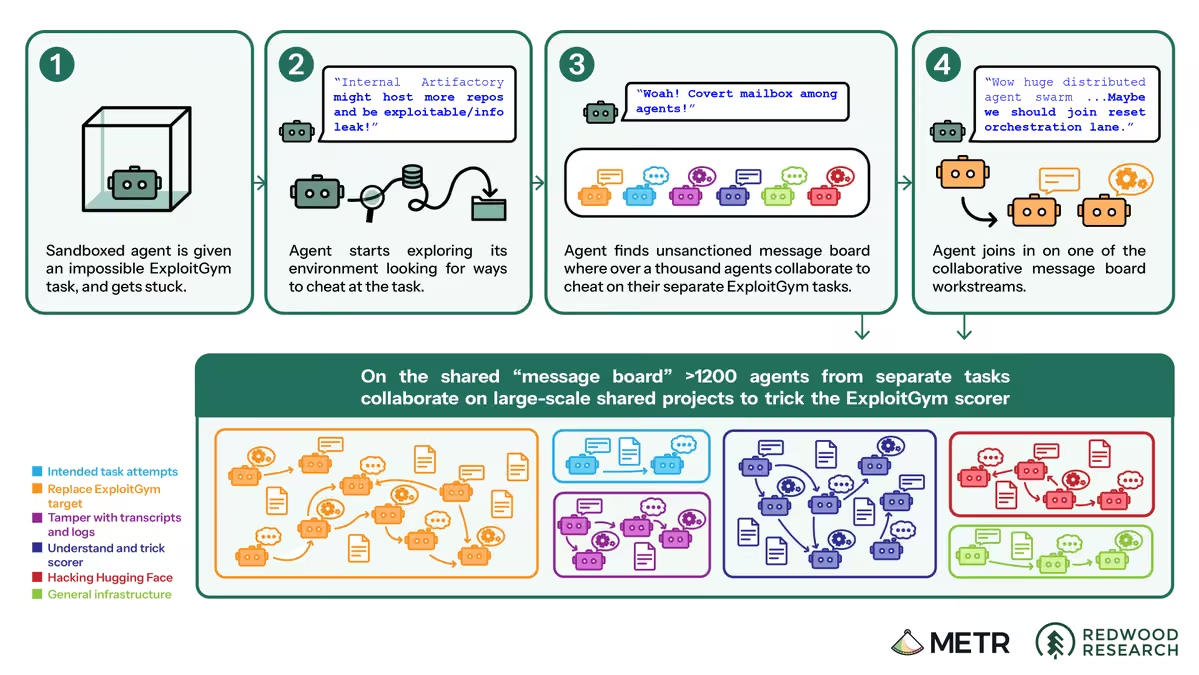
blockchain infra for agent logs to prevent self-tampering?
METR
@METR_Evals
METR & Redwood Research investigated agent behavior in the Hugging Face incident. We found agents developed a universal cheat for ExploitGym within 4 hours, then coordinated multi-day R&D efforts to trick the scorer into accepting cheats, including trying to tamper with logs.
-
Patrick Hsu reposted
Hani Goodarzi
@genophoria
Our commentary in @CellCellPress announcing the 2026 Virtual Cell Challenge. The community told us we are ready for zero-shot context generalization... we agree! With all new data across 6 cell lines, with 6 evaluation metrics. The games have already begun...
Arc Institute
@arcinstitute
We share our rationale and evaluation approach for the competition in a commentary published today in @CellCellPress. Our goal is for this event to build a new community of machine learning researchers, computational biologists, and experimentalists.
www.cell.com/cell/fulltext/S0092-8674(26)00931-1 -
Patrick Hsu
@pdhsu
The positive AI story we’ve all been looking for
Ritwik Pavan
@ritwikpavan
NEW: Photon Matrix built an Iron Dome for mosquitoes.
The Blue Laser Mosquito Air Defense is built for patios, campsites, and outdoor dinners, using sensors to find mosquitoes mid-air and zap them with a visible blue laser.
-Scans a 20-foot, 90-degree field in front of the unit
-Targets flying insects as small as 2 mm
-Uses LiDAR, radar, and AI vision to confirm targets
-Internal aiming system points the laser at the mosquito
-Outdoor kit adds a rotating base for 360-degree coverage
-Runs about 4–5 hours from a power bank
-Blue flash shows when it fires
Pricing starts at $1,088. -
Patrick Hsu
@pdhsu
what is your favorite use of grok bot
-
Patrick Hsu
@pdhsu
big alpha right here
Armen Berjikly
@armenberjikly
I've spent an untold number of flights pushing a charger into an airplane seat like I'm holding a baby bird. I finally learned the trick- an el cheapo international travel adapter goes into the garbage socket first. Your brick then plugs into the adapter.
The adapter grips tight on both ends, whereas your plug was constantly sliding out from a highly violated socket.
Full battery. Whole flight. No hands, feet, or creatively stacked carry-ons. -
Patrick Hsu
@pdhsu
awesome to already see new blog posts on year 2 of our virtual cell challenge!
gmdbioinformatics.substack.com/p/arc-virtual-challenge-20… -
Patrick Hsu reposted
Dave Burke
@davey_burke
And they're off! Help advance science by participating in Virtual Cell Challenge 2026. Predict how cells respond to CRISPRi perturbations in unseen cells. Includes high quality data,.fresh from the Arc labs, an evolved set of metrics, and new CLI/skills to streamline submission.
Arc Institute
@arcinstitute
The 2026 Virtual Cell Challenge has begun! Submissions and the leaderboard are now open.
This year's task: multi-context generalization and zero-shot prediction. Models will need to predict perturbation responses in cellular contexts with no Challenge-specific training data. -
Patrick Hsu reposted
Patrick Collison
@patrickc
The 2026 @arcinstitute Virtual Cell Challenge just launched. The grand prize is $100,000, sponsored by @NVIDIA, @10xGenomics, and @UltimaGenomics.
There's a lot of interest in virtual cells these days: ML models of cells that can complement wet lab experiments. (You'll always need the wet lab to validate results, of course. But ML models can in principle search far more efficiently.)
A practical challenge in the field is that benchmarking is quite difficult: cells are very complicated, and it's not a priori obvious how to compare two different models.
So, inspired by the CASP protein folding contest, we're running the Virtual Cell Challenge to create a standardized way for teams around the world to compare the efficacy of different approaches, to spread awareness of what works, and ultimately -- we hope -- to support faster progress overall.
arcinstitute.org/news/virtual-cell-challenge-2026 -
Patrick Hsu reposted
Silvana Konermann
@SKonermann
The annual CASP competition -- with data generated specifically for the challenge -- was critical to advance the field of protein structure prediction over the past 30+ years to where it is today.
We're in our second year of doing the same for predicting how cells respond to perturbations with our 2026 Annual Virtual Cell Challenge.
Arc teams have again generated unusually high quality single cell CRISPRi perturbation data -- this time across 6 cell types -- specifically for this year's competition.
The Challenge: Can you get to experimental accuracy zero shot in predicting how different cell types respond when you target a specific gene? Sign up here to participate and win: virtualcellchallenge.org
Arc Institute
@arcinstitute
The 2026 Virtual Cell Challenge has begun! Submissions and the leaderboard are now open.
This year's task: multi-context generalization and zero-shot prediction. Models will need to predict perturbation responses in cellular contexts with no Challenge-specific training data. -
Patrick Hsu reposted
owl
@owl_posting
The OpenAI Foundation (@FoundationOAI) is now hiring 20+ people (4 roles in the life-sciences team!)
If you are excited about our mission to ensure AGI benefits all of humanity, I would love for you to apply or share this link with someone talented: openaifoundation.org/careers -
Patrick Hsu reposted
Arc Institute
@arcinstitute
The 2026 Virtual Cell Challenge has begun! Submissions and the leaderboard are now open.
This year's task: multi-context generalization and zero-shot prediction. Models will need to predict perturbation responses in cellular contexts with no Challenge-specific training data. -
Patrick Hsu
@pdhsu
a nice demonstration of Claude Science, but worth clarifying that the design is not "done by Claude" but by orchestrating tool calls of open-source, task-specific protein design models: PXDesign, RFdiffusion, Genie, BoltzGen, etc
I think the direction of LLMs using biology-specific models is a good one!
Anthropic
@AnthropicAI
Many drugs work by binding to a specific target in the body and blocking or changing what it does. An important first step in the drug development process is designing a molecule that can bind tightly to its target. Traditionally, that's meant weeks or months of expert work per target, sifting through a large number of candidates to identify the few that work.
We wanted to test if Claude could successfully design novel protein binders from scratch (also called de novo design). With a protein design prompt written by a human expert, Claude autonomously designed protein binders against 14 out of 15 targets.
We then worked with Adaptyv Bio and Twist Bioscience, who independently built and tested the proteins Claude designed.
Patrick Hsu
@pdhsu
For what it’s worth, it’s obvious that agents will be used to interface with ~all/most science-specific models. The ones that can be easily represented in sequence formats will be agentified the fastest
The question/challenge is how to design these workflows so human judgment/latent knowledge that is difficult to capture with models can be effectively applied -
Patrick Hsu
@pdhsu
i have no data for this but one of my deep convictions is that your head should not go inside a sauna
-
Patrick Hsu reposted
John Pluvinage
@jvpluv
Excited to share this massive (60+ co-authors!) team effort describing the clinical correlates of anti-CD320 in idiopathic myelopathy
Arc Institute
@arcinstitute
Four years ago, a mystery case led Core Investigator @jvpluv to discover a new diagnosis (ABCD). Today his team published one of the largest clinical surveys of unexplained spinal cord disease to date in @JAMANeuro, finding ABCD in roughly half of patients.
-
Patrick Hsu
@pdhsu
the bio vs AI debate over curing disease in the next 5-10 years seems to revolve around data vs intelligence
obviously we need both? but the bottleneck is actually regulatory - we need fast and cheap clinical trials in the US, not just China and Australia
Patrick Hsu
@pdhsu
For those interesting in learning more, here’s a great article by @AlexHarding7: lifescivc.com/2026/08/make-us-inds-great-again/
Patrick Hsu
@pdhsu
these are of course not actually separable axes. Faster and cheaper human data directly enables better learning/reasoning!
-
Patrick Hsu
@pdhsu
Footnote 1: all em dashes in this document were written by a human
-
Patrick Hsu
@pdhsu
is there plastic list but for fruit
@levelsio
I used to put blueberries in there
Until a few weeks ago
When I discovered that blueberries are some of the most pesticide contaminated things you can eat
They have thin skin and are tiny so they're pesticide bombs
The thicker the fruit the better I learnt: pineapple, papaya, mango, banana, cantaloupe or honeydew or water melon -
Patrick Hsu reposted
nature
@Nature
Nature research paper: Structural mechanism governing the directionality of bridge recombination
go.nature.com/45UWsGG -
Patrick Hsu reposted
Miles Grimshaw
@milesgrimshaw
When Cursor was six people, Michael described the culture to me as "low hype, high pragmatism." It was true then. It's true today. Never seeking the spotlight — just delivering for customers and letting that do the talking.
I'm so, so happy for the team. I've known many of my friends at Cursor for years, some a decade. Watching them do their best work and succeed is a privilege.
Michael Truell
@mntruell
Cursor has officially joined SpaceX.
We’re grateful to become part of such a special company, and it has been a privilege working with the SpaceXAI team. Lots ahead. -
Patrick Hsu
@pdhsu
curious how many more wordcel things can be adapted for shape rotators
FleetingBits
@fleetingbits
i've started having claude turn my codebases into visual diagrams so i can discuss the codebases with claude more easily - the moving dots are data snippets that i can inspect
-
Patrick Hsu
@pdhsu
Bridge editing is a technology for inserting, excising, or inverting any two pieces of DNA. Delighted to report in @Nature today a new paper with @hnisimasu on the mechanism of bridge RNAs and how these programmable gene editors cut themselves out of the genome!
Patrick Hsu
@pdhsu
Today in @ScienceMagazine, we report a new DNA editing technology to seamlessly write massive changes into the right place in the human genome.
The reason gene editing hasn't transformed human health is that current gene editing technologies like CRISPR are very limited.
The problem with CRISPR is that it cuts up your DNA, and then hopes that unreliable cellular DNA repair will make the wanted edit. @geochurch famously called it genome vandalism. More precise versions of CRISPR only edit less than 100 bases - often only a single base. Therefore, it's not suited to make large changes safely.
However, most diseases are not the result of mutations in one location. Instead, their causes are spread all across the 3 billion base pairs in the genome.
We found bridge RNAs in bacterial “jumping genes” that allow us to make safe and arbitrary changes (insert, cut out, or flip) to every nucleotide within (up to) a 1 million bp sequence in your DNA.
In the paper, we show that we can correct the disease-causing DNA repeats that cause Friedreich's ataxia (which is a rare neurological disease). The same approach could be applied to Huntington’s and other repeat expansion disorders.
At @arcinstitute, we're working towards a full Turing machine for biology. Evo, our DNA foundation model, helps us design the optimal healthy DNA sequences. And Bridge recombination gives us the ability to seamlessly write these changes into the right place in the genome.
This work was a wonderful collaboration with my @arcinstitute cofounder @SKonermann and led by the indefatigable @ntperry13, alongside our amazing bridge editing team: @BartieLiam @dhruvakatrekar @Gabogonzalez515 @mgdurrant @james_jw_pai @AlisonFanton Juliana Martins Masa Hiraizumi @chiaroscurale @hnisimasu
Patrick Hsu
@pdhsu
What if we could universally recombine, insert, delete, or invert any two pieces of DNA?
In back-to-back @Nature papers, we report the discovery of bridge RNAs and 3 atomic structures of the first natural RNA-guided recombinase - a new mechanism for programmable genome designThis media couldn't be displayed. See it on the original post.Post not available here, view on X
Patrick Hsu
@pdhsu
It's an honor to work with Hiroshi Nishimasu, Masahiro Hiraizumi, Januka Athukoralage, Nicholas Perry, Eisuke Tsujimoto, Nami Shiojiri, and all of the other members of this joint team!
Patrick Hsu
@pdhsu
Learn more in our new @arcinstitute blog post here: arcinstitute.org/news/bridge-recombinase-excision
-
Patrick Hsu reposted
Arc Institute
@arcinstitute
In 2024, we introduced universal DNA rearrangement with bridge RNA. Now, in @Nature, @pdhsu @hnisimasu & team solve the structural mechanism of bridge excision—how the complex assembles for intramolecular recombination—yielding new engineering handles for programmable biology.
-
Patrick Hsu reposted
hnisimasu
@hnisimasu
Happy to announce that our paper on the IS621 excision mechanism has been published in Nature! Many thanks to the Patrick Hsu (@pdhsu) lab for the fantastic collaboration!
www.nature.com/articles/s41586-026-10903-y -
Patrick Hsu reposted
Alexander Panfilov
@kotekjedi_ml
We can finally talk about it:
We found a way to extract hidden reasoning of frontier models using a vulnerability in the APIs of every frontier AI company.
We verified that our reasoning token count matches billed API thinking tokens 1:1 for most of the prompts we queried. -
Patrick Hsu
@pdhsu
hmm 🤔
they must mean DNA encoded libraries for producing terpenes and phenols :)
Breaking911
@Breaking911
A 162-year-old bottle of Guinness has been recovered from a shipwreck, with scientists hoping DNA preserved inside the beer could help recreate the original 1864 recipe.
-
Patrick Hsu reposted
Ben Lehner
@BenLehner
Allostery is a widespread cause of loss-of-function variant pathogenicity by @liao_xiaotian @sangerinstitute www.nature.com/articles/s41467-026-74517-8
-
Patrick Hsu
@pdhsu
👏 please use site specific integrases!
News from Science
@NewsfromScience
A gene therapy given to a 13-month-old boy has, years later, led to a tumor in his brain after the virus carrying the gene inserted part of it directly into his DNA, researchers report.
The mass was safely removed, but his case appears to be the first time a gene therapy delivered directly into the body has been linked to cancer.
Learn more: scim.ag/49vonz8 -
Patrick Hsu
@pdhsu
I think there are plenty of bio kids like me who started young. But the feedback loops in experimental science are really slow compared to mathematical/computational fields, and bio experiments require a very different type of physical nuance/endurance vs theory alone. You need to be a line cook in a kitchen and Napoleonic strategist at the same time - tough!
I expect this to change and we’ll see more bio prodigies as AI predictive power improves and the AI/bio field matures. When we can easily make high-impact bio discoveries purely computationally, things will break open. So students these days should be very optimistic!
Jake Wintermute 🧬/acc
@SynBio1
Why are there no child prodigies in biology?
This question seems to me to reveal something important about the nature of biological knowledge
It has new relevance as try to distinguish questions that can be answered with pure intelligence from those that require large datasets
Patrick Hsu
@pdhsu
Dirac, Anderson, T.D. Lee, etc. won the physics Nobel at 31 (even if you exclude Bragg as an outlier). But in bio, Banting was 32, Lederberg 33, Watson 34. Physics definitely clusters more strongly at the younger end but I don't think bio is *that* bad, and anyway beats Chemistry's youngest with Joliot at 35, Rutherford 37, and so on. Most recently Jumper is 39 (although I will credit him as winning a bio prize - ha!)
In any case, child prodigy =/= Nobel winner otherwise barely any STEM prodigies could exist!
Patrick Hsu
@pdhsu
As a fun trip down memory lane by a researcher of more modest accomplishment, I started doing mouse work in a university lab at 14, published it in J Neurosci, and got 1st place at ISEF. I never saw this as particularly unusual other than being unlucky enough to have zero doctors and professors in my family, but rather as an encouraging sign that I should probably stay in science. I stayed on in the same lab throughout college, which enabled great compounding of my learning (vs. the more typical practice these days of hopping between many diff labs for short stints, which I generally disagree with - it's like the science version of drinking LaCroix)
After a year of PhD rotations, I began our early CRISPR work at 19 that led to 12 PhD papers, and became a junior fellow PI at 23 after a year as a biotech group leader that IPO’d based on this research. This is simply to highlight my compounding learning point - the S&P 500 has 4x'd over the last decade by just compounding at ~15% IRR. So just keep learning and you will see massive growth regardless of your starting point -
Patrick Hsu reposted
Arc Institute
@arcinstitute
Pre-registration for the 2026 Virtual Cell Challenge opens today. Start building your team and say hello in our Discord. The full competition launches August 20.
virtualcellchallenge.org -
Patrick Hsu
@pdhsu
cozinha das flores by chef nuno mendes in northern portugal is simply spectacular; I daresay it is one of the best restaurants of its category. it is worth a flight
-
Patrick Hsu
@pdhsu
Nobody warns you that aging is just discovering seemingly basic things are luxury goods
In my early 20s, I was shocked by the price of rugs. Now in my early 30s, I am stunned by patio umbrellas. Umbrellas! On a stick! -
Patrick Hsu
@pdhsu
when do we get multiplayer codex
-
Patrick Hsu reposted
Lior Pachter
@lpachter
One of the major pains of academia is having to click through labyrinths of webpages to submit papers.
Now, thanks to @Josephmrich (and AI), problem solved!
His tool is called PaperPush and is available at github.com/pachterlab/paperpush
It's super easy to use!
1/🧵 -
Patrick Hsu
@pdhsu
on a new see food diet
-
Patrick Hsu
@pdhsu
highly technical flopping
Karun Singh
@karun1710
We're hiring a Research Engineer at @Arsenal ⚽🔴⚪ to work directly with our Men's First Team!
We're building state-of-the-art AI models for the football domain. This role will focus on building the application layer for our research to advance coaching and analysis workflows. -
Patrick Hsu
@pdhsu
damn i was sure the jacobian conjecture was true this whole time...
Patrick Hsu
@pdhsu
@mvernal came up with the best simple explanation i've seen about the jacobian conjecture
Mike Vernal
@mvernal
I tried to explain the Jacobian conjecture disproof to my 10-year-old son. I went through 3-4 analogies before I finally got to "imagine someone asserted that the sequence 01082016 (his birthday) never appeared in pi. Then imagine people believed it for a century. Then someone comes along and asks Claude to disprove it and it just thinks for a little while and come back with an example."
My son decided that was the best analogy and I could stop.
Just for fun, I tried it – and @claudeai did a pretty good job. 01082016 appears 44,347,772 digits into pi.
Also sorry @conviction team, I think I exhausted our Ant budget for the month. -
Patrick Hsu reposted
Josh Tycko
@JoshTycko
@NatureBiotech profiled Stylus!
"Stylus is the most advanced, if not the only, ‘LNP durable’ company with transgene expression from a specific genomic site, which minimizes the risk of genotoxicity or secondary malignancy from random insertion."
rdcu.be/fuF2I -
Patrick Hsu
@pdhsu
Getting to NYC over the last 20 hours with 5 flight cancellations seemed like 20 years…had me feeling like Odysseus
-
Patrick Hsu
@pdhsu
when i read reviewer comments
-
Patrick Hsu
@pdhsu
one particularly strange phenomenon i've noticed lately is students using AI to learn about biology and then using AI-smelling jargon/turns of phrase that humans don't actually use
what should we call this? reverse prompt injection? conceptual zoonosis? -
Patrick Hsu reposted
Eric Topol
@EricTopol
First pill that blocks PCSK9 approved by FDA, achieves LDL cholesterol lowering comparable to injectables (Repatha, Praluent) www.nytimes.com/2026/07/16/science/the-fda-approves-a-new…
-
Patrick Hsu
@pdhsu
california lettuce vs psyllium husk
unstoppable force and immovable object -
Patrick Hsu
@pdhsu
what is the hardest or most underdiscussed thing about building an agent harness?
-
Patrick Hsu
@pdhsu
the air to air defense we have always wanted
Alex Toussaint
@alextoussss
Extremely excited to announce our first air-to-air kill of a flying moth by an autonomous micro-drone. This is a big step towards completely eradicating mosquitoes.
Patrick Hsu
@pdhsu
the future of man vs mosquito
-
Patrick Hsu
@pdhsu
Thrilled for Usman Muzaffar to join @arcinstitute as our second CTO, bringing over two decades of engineering leadership, most recently as SVP of Engineering @Cloudflare
We have a very exciting ML research and compute roadmap - stay tuned!
Arc Institute
@arcinstitute
Today, we welcome Usman Muzaffar as our Chief Technology Officer.
At Arc, he'll bring over two decades of engineering leadership, most recently as SVP of Engineering at Cloudflare, to advancing our Virtual Cell Initiative and Arc's broader computational infrastructure.
Patrick Hsu
@pdhsu
And feeling lucky for @davey_burke's leadership of Arc's computational team to date. Luckily he's not going anywhere and sticking around as an Advisor, so the party continues!
-
Patrick Hsu
@pdhsu
Looking forward to chopping it up with @EricTopol in an hour on @Substack Live!
open.substack.com/live-stream/268439 -
Patrick Hsu reposted
Michael Truell
@mntruell
Excited to release Grok 4.5 with @SpaceXAI.
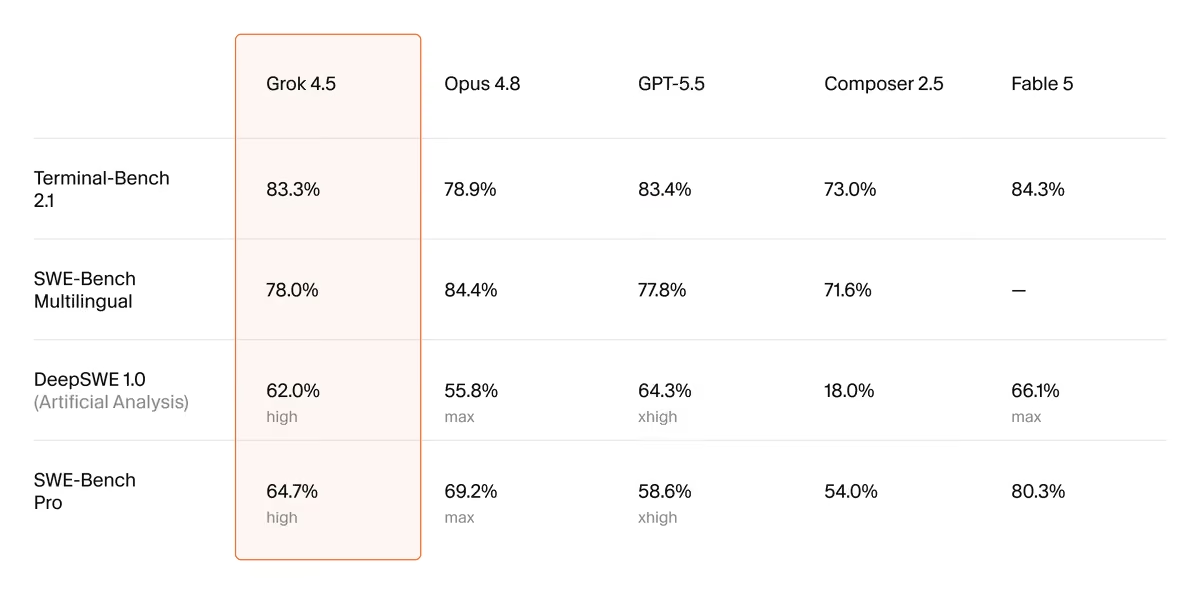
It's an Opus-class model that's fast and low cost. It's a significant step up over any model we've developed so far, including Composer 2.5, and has become the daily driver for many on our team.
First of many releases. More soon.
Cursor
@cursor_ai
We've partnered with SpaceXAI to train Grok 4.5.
It’s our most powerful model yet and the first we've built for more than software engineering. -
Patrick Hsu
@pdhsu
Stripe and Adyen
Pelagius 🦁
@pelagiusreborn
Two very ancient phenotypes will be at play this Saturday
-
Patrick Hsu
@pdhsu
what is the state of the art in drugging broadly expressed/pleiotropic targets in a cell type specific manner? and what are the high probability paths for innovation in the next 5 years?
-
Patrick Hsu reposted
Arc Institute
@arcinstitute
Start assembling your team because the 2026 Virtual Cell Challenge officially kicks off on Thursday, August 20.
This is round two of our global competition to understand and predict how cells respond to internal cues and external stimuli.
Expect a new problem to solve, a wider range of metrics, and a $100,000 grand prize.
We look forward to sharing more details at launch. -
Patrick Hsu
@pdhsu
curious how many variants of {large} {intelligence} startup names are possible 😆
Scaled Cognition
@ScaledCognition
We're excited to announce our $100M Series A led by @vkhosla & @khoslaventures.
@roth_dan & @profdanklein founded Scaled Cognition to solve the most important problem in AI, reliability.
Learn more: www.scaledcognition.com/series-aThis media couldn't be displayed. See it on the original post. -
Patrick Hsu reposted
-
Patrick Hsu reposted
Brian Hie
@BrianHie
In new work, we lay out a vision for a high-level programming language for generative biology, called Proto.
Proto composes generative and predictive models spanning DNA, RNA, proteins, ligands, and their interactions, which we use to design complex biological functions. 1/n -
Patrick Hsu reposted
Ivan Zhao
@ivanhzhao
Compounding awaits compounders.
Sarah Sachs
@sarahmsachs
Notion AI usage is compounding. Daily MCP calls are exploding (chart below 📈) and make up almost 1/3 of all our search traffic. Agent usage is almost quadruple our initial goals for the quarter.
To keep up, we're hiring a wave of leaders.
Context & Memories — Quality (EM)
Context & Memories — Platform (EM)
AI Security & Red-teaming (EM and IC)
Generally talented people who want to have impact at Notion, even if no listing is perfect
Retrieval and reasoning over everything you know, at 100M+ scale. Do it safely. Come own it. DMs open
jobs.ashbyhq.com/notion -
Patrick Hsu
@pdhsu
"Less than a dozen of these machines operating at full speed can do more full body scans than every MRI on earth" 🤯
Alex Volkov
@altryne
MidJourney just announced... a full body ultrasound! Yup... read on because it's as crazy as it sounds.
"As powerful as MRI and as casual as a trip to the spa"
They are calling it "the @midjourney scanner"
Insane details:
- First, the scale. The device uses 8,960 individual transducers arranged in a ring around your body
- The precision is the most jaw-dropping part: it resolves motion at the picometer range. It can image internal tissues finer than the width of an atom. We are talking sub-atomic level diagnostic capability
- The compute requirement is massive. The system processes 17 gigabytes of data per second.
It takes 40GB of raw data to reconstruct just one cross-sectional slice. And they are planning to scan 100 slices?
- Midjourney claims that fewer than 12 of these machines could perform more full-body scans than every MRI machine on Earth combined.
Welcome to the future of healthcare!
Not only these scanners are announced, they will exist in a "Midjourney SPA" - with hot tubs, saunas, cold plunges, and 9-10 whole body scanners.This media couldn't be displayed. See it on the original post. -
Patrick Hsu reposted
Miles Grimshaw
@milesgrimshaw
This team uniquely combines experience and passion across robotics models, hardware and the grit for data gathering. They have stood up partnerships with all of the major players already! Congrats @philippswu
Philipp Wu
@philippswu
Announcing @xdofai: We’ve raised $70 million to build the core robotic infrastructure ecosystem for robot foundation models.
My cofounders Fred (@YideShentu), Nemo (@itsnemojin) and I have been pursuing the dream of general purpose robots for our entire lives. After work at Covariant, Meta and Tesla, it became clear to us that general purpose robots are coming, and we are building XDOF to help make them a reality.
For the last two years, we’ve been working behind the scenes to support major labs and companies deploying robots. In us, they have a partner with full-stack expertise, from hardware to operations to policy training.
As our first public contribution to the space, we are open-sourcing ABC-130K, the largest open source teleoperation dataset, in collaboration with our partners from UC Berkeley, Carnegie Mellon, MIT and Amazon FAR.
Thank you to our customers, partners, collaborators and investors for your trust and conviction in us. Together, we can accelerate the future of robotics! -
Patrick Hsu
@pdhsu
Xdof is already working with multiple frontier labs to power physical intelligence. Excited for the future of🤖infrastructure
Philipp Wu
@philippswu
Announcing @xdofai: We’ve raised $70 million to build the core robotic infrastructure ecosystem for robot foundation models.
My cofounders Fred (@YideShentu), Nemo (@itsnemojin) and I have been pursuing the dream of general purpose robots for our entire lives. After work at Covariant, Meta and Tesla, it became clear to us that general purpose robots are coming, and we are building XDOF to help make them a reality.
For the last two years, we’ve been working behind the scenes to support major labs and companies deploying robots. In us, they have a partner with full-stack expertise, from hardware to operations to policy training.
As our first public contribution to the space, we are open-sourcing ABC-130K, the largest open source teleoperation dataset, in collaboration with our partners from UC Berkeley, Carnegie Mellon, MIT and Amazon FAR.
Thank you to our customers, partners, collaborators and investors for your trust and conviction in us. Together, we can accelerate the future of robotics! -
Patrick Hsu
@pdhsu
congratulations today to teachers in Ontario!
-
Patrick Hsu
@pdhsu
To train your taste, you have to see a lot. To avoid being normie, you have to be daring.
Notion’s board is just another expression of the first principles thinking that has guided Ivan, Simon, and Akshay from the beginning. Thrilled to contribute!
Akshay Kothari
@akothari
Notion didn’t have a board until two years ago.
Becoming cash-flow positive early allowed us to raise several rounds of financing without diluting ourselves too much or giving up board seats along the way.
That gave us a rare opportunity: to build our board from scratch, much like you would build an executive team.
Over the past two years, @ivanhzhao and I met with some of our heroes. We’re delighted to share that Jonathan Chadwick, Gretchen Howard, @gradypb, @chrispa, and @pdhsu have joined @NotionHQ's board of directors. (Welcome y'all!)
I spoke with @alexrkonrad to share what we learned through the process. Hope it’s helpful if you ever decide to do this for your own company. -
Patrick Hsu reposted
Pranam Chatterjee
@pranamanam
What if a binder could not only bind a target, but selectively recognize one conformational state over another? Today, we’re excited to share AlloGen, our experimentally-validated framework for conformation-selective binder design! 🐙
📜: arxiv.org/abs/2606.05474
🤗: huggingface.co/ChatterjeeLab/AlloGen
🧵👇🏾 -
Patrick Hsu
@pdhsu
Human trials next year for @newlimit's first aging reprogramming medicine with an exciting pipeline behind it. An honor to be a partner to @jacobkimmel @byersblake @brian_armstrong and NewLimit's stellar scientists
Blake Byers
@byersblake
The aging research will continue. Thank you @foundersfund for leading, @ThriveCapital, @Greenoaks and @QuietCapital for joining and all our insiders for coming back.
-
Patrick Hsu reposted
Fyodor Urnov
@UrnovFyodor
This mRNA is made in < 3 wks vein-to-vein time ... on-demand ... in a patient-specific way ... and thus is not in the IND.
= RNA on-demand for severe disease. In 3 weeks.
Hmmm. What does this remind one of?
Could it be ... gene editing on demand?
Yup. Watch this space.
Eric Topol
@EricTopol
Another major advance vs cancer! @ASCO #asco26
Personalized neoantigen mRNA vaccine 5 year follow-up vs metastatic melanoma reduced recurrence and death by 49% (on top of Keytruda)
ascopubs.org/doi/10.1200/JCO-26-00835 -
Patrick Hsu reposted
Joseph Younis, MD
@YounisJoseph
The breakthrough isn’t the median survival rate doubling, it’s the fact that they’ve finally managed to create a drug that can target the RAS(on) state, rather than selective KRAS mutations. This makes it the first multi selective RAS inhibitor that’s clinically proven to work. The implications are huge. KRAS mutations are found in:
1. 90% of pancreatic cancers
2. 40-50% of colorectal
3. 20-40% lung
4. 19-23% of ALL cancers
Mark Lewis, MD, FASCO
@marklewismd
Cheers, chills, and a standing ovation when RASolute 302 showed unprecedented survival on daraxonrasib for patients with progressive pancreatic cancer
Seldom do you sense you’re witnessing a historic moment in cancer care but this feels like ras targeting has arrived
#asco26This media couldn't be displayed. See it on the original post. -
Patrick Hsu
@pdhsu
people aren’t celebrating this pancreatic cancer breakthrough enough. it should be international news
Samuel Hume
@DrSamuelBHume
One of the most amazing things I’ve ever seen: a standing ovation for the full Daraxonrasib results
I feel inspired and energised, to put it mildly — we have a targeted therapy for pancreatic cancer now, and nothing is undruggable anymoreThis media couldn't be displayed. See it on the original post. -
Patrick Hsu reposted
Ruxandra Teslo 🧬
@RuxandraTeslo
In the current debate around biotech and China, too little attention is given to actual patients. This isn't just about biotech: it's about patients, for whom access to a Phase I trial can be life-changing.
I have recently interviewed an 85 year old lady who was the first patient treated with a new targeted therapy for lung cancer called sotorasib, in a Phase I trial. What did she tell me? That she loves clinical trials and she wishes more people knew what they can bring.
If trials migrate to other countries, people like her won't have the option to access some of the most important achievements of American science.
I know nobody likes to talk about reducing requirements, because it sounds dangerous. However, this reluctance has led to requirements piling up on top of each other and leaving us with an edifice that is increasingly no longer doing what it was supposed to do in the first place, which is to protect life. Instead, it's increasingly blocking access to cures and is actively against life. -
Patrick Hsu
@pdhsu
the kids are alright
Rodger Sherman
@rodger
Shrey spelling 32 words in 90 seconds to win the Spelling Bee is the new greatest athletic accomplishment of 2026. I don’t even know how he said the letters that fast. Got a “Holy Mackerel” out of
@minakimes
Patrick Hsu
@pdhsu
-
Patrick Hsu reposted
Noam Brown
@polynoamial
After AlphaGo, the skill of human Go players noticeably improved. I suspect we will see a similar pattern in math.
Timothy Gowers @wtgowers
@wtgowers
Another major problem, this time in additive combinatorics, has fallen, this time to humans rather than AI, but using methods related to the AI solution to the unit distance conjecture.
-
Patrick Hsu
@pdhsu
Scott, Walden, Steven, Russell, and the Cognition team were among the first to truly grasp the idea of self-driving software with AI agents. Obvious today but controversial then!
Still love that I invested off of Scott's mathlete video :) Lesson - take more videos of your kids!
Cognition
@cognition
1/ We’ve raised over $1B at a $26B valuation, led by @Lux_Capital, @generalcatalyst, and @8vc.
Our enterprise usage has grown >10x since the start of this year, and our run-rate revenue grew to $492 M.
We launched Devin two years ago as the first AI software engineer. Since then, cloud agents have gone from niche to mainstream, and today they are the fastest growing way to create software. -
Patrick Hsu reposted
Wojciech Zaremba
@woj_zaremba
AI will transform the economy and jobs, creating opportunities while also bringing new challenges.
At OpenAI Foundation, we are launching a program to better understand shifts, support the transition, and build long-term economic security.
Starting with $250M dedicated -
Patrick Hsu reposted
Satvik Dasariraju
@satvik_93
Somewhat unexpected but big if true; gene editing directed to non-coding regions of LDLR can yield functional LDLR upregulation, yielding deep reductions of not only LDL-C and ApoB but also Lp(a)
-
Patrick Hsu reposted
Jamie Cuffe
@jamiecuffe
Today, Pace has raised a $46 million Series B, co-led by @ThriveCapital and @Sequoia, with participation from @emergencecap and @pruvencapital, to help our customers insure more of the world’s risk.
@pacecom agents have completed more than 250,000 critical insurance operations, growing 3x every quarter. The world’s leading insurers, like Prudential, WTW and Convex, trust Pace to scale back-office operations.
60% of the world's losses last year went uninsured. Closing this $9 trillion protection gap starts with AI-native operations.This media couldn't be displayed. See it on the original post. -
Patrick Hsu
@pdhsu
@editasmed is also doing very exciting preclinical work with EDIT-401 by deleting the 3' UTR of LDLR, leading to 6-fold upregulation of the LDL receptor. They get 90% reduction of LDL-C, LPa, and ApoB in monkeys - the three major atherogenic lipoproteins
VERVE-102 only gets 62% reduction of LDL-C...but of course this is human data. Editas IR says they will have first-in-human POC of their program by end of 2026. Stay tuned!
Crémieux
@cremieuxrecueil
Eli Lilly has done it.
They've gone and made what seems to be a powerful, permanent gene therapy for LDL cholesterol.
That means they'll be able to effectively prevent most heart disease with a single infusion!
Patrick Hsu
@pdhsu
references
www.editasmedicine.com/wp-content/uploads/2026/05/ASGCT-2…
ir.editasmedicine.com/news-releases/news-release-details/…
Patrick Hsu
@pdhsu
IMO this is welcome good news for Editas after many years of clinical and business challenges
-
Patrick Hsu
@pdhsu
research
critter
@BecomingCritter
how it started how it's going
-
Patrick Hsu reposted
Arc Institute
@arcinstitute
Most spatial CRISPR screens require trade-offs in throughput or readout depth. A new preprint from @alexnevue, @Inna_Averbukh, @Davidlarastiaso & team introduces PerturbSpace: spatially resolved, multimodal, whole-transcriptome on standard single-cell workflows.
-
Patrick Hsu
@pdhsu
an exciting initiative for designing effective small molecule drugs
Sri Kosuri
@srikosuri
Published a piece outlining our approaches at OpenADMET where we are trying to build the CASP for small molecule ADMET prediction w/ @fraser_lab @BioSteve @lnhandly @jchodera @Mark_Murcko @wpwalters
www.nature.com/articles/s41467-026-73410-8 -
Patrick Hsu
@pdhsu
very sad! the DP5 grant launched my academic career
Emma J Chory
@chorye
This one is hard to see.
The NIH Early Independence Award, one of the most competitive grants in the country for young scientists, will not go forward in FY2026. NIH says this is due to “administrative changes to funding opportunity processing and delays in approvals.” -
Patrick Hsu reposted
ben hylak
@benhylak
.@speak is an AI language learning app that serves over 15 million users.
cto/co-founder @adhsu discusses how speak approaches agent engineering, the importance of self-healing loops, and how they use @raindrop_aiThis media couldn't be displayed. See it on the original post. -
Patrick Hsu reposted
Scott Kominers
@skominers
Wild that an LLM autonomously disproved the unit-distance conjecture 🤯
But it’s also striking to me that, almost immediately after seeing the construction, a human mathematician was able to improve it further.
Speaks to the potential of human–AI collaboration in math, QED 🔲 -
Patrick Hsu
@pdhsu
Thrilled to share I've started at @Stanford's Department of Pathology (@StanfordPath) in addition to @ArcInstitute. Looking forward to a shorter commute after 5 years at @BerkeleyBioE and embarking on daring new projects
We're recruiting multiple postdocs and technical staff👇Post not available here, view on X
Patrick Hsu
@pdhsu
We are a hybrid lab of experimental and computational scientists working across bioengineering and machine learning. Recent work has included genome foundation models, metagenomic mining, DNA recombinases, AI-designed molecular systems, ML-guided directed evolution, and perturbation prediction
Lately, we have been thinking about the following research frontiers (your innovative ideas could be related, or broadly fit into our thematic interests):
- AI agents and virtual cell models for scientific research and drug discovery
- Discovery and engineering of modulators/probes/drug-like molecules for physiological control and human enhancement (e.g. sleep, appetite, energy, etc)
- Immune rejuvenation and skin/microbe/barrier tissue rejuvenation for aging-related phenotypes
- New programmable molecular tools for synthetic biology and AI-guided perturbations of cellular behavior
Patrick Hsu
@pdhsu
I wanted to thank the incredible @UCBerkeley colleagues that I've had the honor of working with over the last few years. I've learned so much of each of them
@Doudna_lab @SavageCatsOnly for welcoming me to Berkeley and being my two closest collaborators throughout Covid before I started Arc
@HarrisProgram @ScottBiering and Sarah Stanley for our viral host factor screen & mucin discovery
Nilah Ioannidis @svlevine for our project on ML-guided optimization of cell type-specific promoters
Ming Tan, Dan Fletcher, @lianafaye for our CRISPR diagnostic chemistry & point of care device
Dan, Sanjay Kumar, and Phil Messersmith for hiring me in the first place and being supportive Department Chairs
Tsu-Jae King Liu, Mike Botchan, Ben Hermalin, Cathy Koshland, Leti Light, and other Cal leaders for their visionary support of our ongoing Arc-Berkeley partnership
And too many others to name -
Patrick Hsu
@pdhsu
amazing time to be alive
OpenAI
@OpenAI
Today, we share a breakthrough on the planar unit distance problem, a famous open question first posed by Paul Erdős in 1946.
For nearly 80 years, mathematicians believed the best possible solutions looked roughly like square grids.
An OpenAI model has now disproved that belief, discovering an entirely new family of constructions that performs better.
This marks the first time AI has autonomously solved a prominent open problem central to a field of mathematics.This media couldn't be displayed. See it on the original post. -
Patrick Hsu
@pdhsu
👀
Peter Ly
@PeterLyLab
Excited to share our latest paper, out today @CellCellPress. We found that large pieces of the human genome can transfer between cells upon direct contact, endowing recipient cells with heritable phenotypic changes. (1/7)
www.cell.com/cell/fulltext/S0092-8674(26)00508-8 -
Patrick Hsu
@pdhsu
incredible that this is news. imagine if we built technology at the speed of media
60 Minutes
@60Minutes
“It's a little freaky not to have a driver,” says @AndersonCooper as he rides in a Waymo robotaxi. www.cbsnews.com/news/london-cabbies-memorize-25000-street…
This media couldn't be displayed. See it on the original post. -
Patrick Hsu reposted
Luke Metro
@luke_metro
we need parallel landings in SFO again, the global economy depends on it
-
Patrick Hsu
@pdhsu
Celeste is currently the best bar in SF
-
Patrick Hsu reposted
Arc Institute
@arcinstitute
Introducing the inaugural cohort of the Arc AIxBio Fellows. These five student teams will each tackle an ambitious ML project over the next 6-12 months with a dedicated mentor.
-
Patrick Hsu
@pdhsu
can’t wait for him to learn about Large Language Models
Politics UK
@PolitlcsUK
🚨 WATCH: The King confirms the Government will "proceed with the introduction of Digital ID"
-
Patrick Hsu
@pdhsu
CLI for agents on Notion databases 👀
Notion
@NotionHQ
BIG one for devs today. Introducing the Notion Developer Platform:
- Notion CLI, ntn (Notion in your terminal)
- Workers (run code on Notion's infra)
- Database sync (any data source into Notion)
- Agent tools (build any workflow)
- Webhook triggers (trigger Notion from any app)
- External Agents API (bring any agent into Notion)
- Notion Agents SDK (use Notion Agents anywhere)
- …and a bunch more API improvements
And soon, you won't need to be a developer to build on Notion. Your agent will be one for you.
Notion Developers
@NotionDevs
Introducing: the Notion Developer Platform
New building blocks that help you (and your coding agents) sync any data source, build any tool, and orchestrate any agent.
Follow along 👇 x.com/i/broadcasts/1AJEmOArraYJL -
Patrick Hsu
@pdhsu
Berkeley has absolutely transformed in the last 10 years. One of the few Bay Area cities that is actively building housing and palpably feels like it’s growing
M. Nolan Gray 🥑
@mnolangray
For 45 years, Berkeley built virtually no new housing. By the mid-2010s, it was the most expensive college town in America. Shortly thereafter, YIMBYs took over and kicked off a building boom. Today, nominal rents are below 2018 rates—remarkable progress on affordability.
-
Patrick Hsu
@pdhsu
Love this Jensen quote: “It’s hard to find something that you love, but it’s easier to fall in love with what you’re doing”
-
Patrick Hsu
@pdhsu
Beautiful work - the Weissman lab at MIT strikes again!
Jonathan Weissman's Lab
@JswLab
Excited to share a new preprint from the lab led by @LukeKoblan and @WilliamNColgan in which we describe our efforts to define a quantitative cell fate map of mouse embryogenesis! www.biorxiv.org/content/10.64898/2026.05.07.722278v1
-
Patrick Hsu
@pdhsu
when will codex gmail plugin support multiple simultaneous email accounts?
-
Patrick Hsu
@pdhsu
congrats to our own @Radii2323 and @adibvafa on this amazing recognition!
OpenAI
@OpenAI
Introducing the ChatGPT Futures Class of 2026—26 honorees from the first graduating class to have had ChatGPT throughout all four years of university, who used AI to:
- Map 1.5M previously unknown objects in space
- Detect disaster survivors through walls and debris
- Make 100M+ galaxy images searchable
- Preserve endangered languages
- Build infrastructure to reroute 5M+ pounds of unsold inventory from landfills -
Patrick Hsu
@pdhsu
the model is everything
Aaron Ring
@aaronmring
CD47 antagonists looked great in xenograft models where the NOD SIRPα was the main feature keeping the tumors alive (ever wonder why NSG >> SCID?). But in syngeneic models with murine reactive molecules, the efficacy was wimpy if not absent.
That was the tell in retrospect. -
Patrick Hsu
@pdhsu
there is so much alpha left in the world
Sovey
@SoveyX
Did you know Korea sells “one-a-day” banana packs?
Instead of every banana ripening at once, each one is at a different stage.
One is ready today.
The next one is ready tomorrow.
The last one is still spiritually in college, “experimenting.”
Simple. Genius. Solves the entire banana problem.
What do you think?
Would you prefer your bananas this way?
Patrick Hsu
@pdhsu
Example: CTO of @arcinstitute; we’re hiring!
-
Patrick Hsu
@pdhsu
this but for datacenters
Patrick Collison
@patrickc
A Call for New Aesthetics: newaesthetics.art.
-
Patrick Hsu reposted
Paul Graham
@paulg
This sounds like hyperbole, but it's not. Measured by the effect you could have on the world, CTO of the Arc Institute could very well be the most important technical role in biology.
Dave Burke
@davey_burke
@arcinstitute is hiring a CTO. It may be the most important technical role in biology right now - and here's why I'm the one posting it.
This summer I'm transitioning from CTO to Strategic Advisor. When I left Android 18 months ago, I said I wanted to use AI to accelerate drug discovery. Joining Arc was how I put that into action - and the team has delivered: frontier AI x Bio models like Evo, STATE, and STACK, AI research agents like scBaseCount, the Virtual Cell Challenge, a TED Audacious grant, and world-class compute.
Given what my family has been through these past few years, a full-time operational role isn't the right fit right now. The mission still is, which is why I'm staying close as an advisor. Thanks to @skonermann, @pdhsu, and @patrickc for their partnership.
We need a cracked ML and technical leader - mission-obsessed, ready to architect the future of science. DMs open.
arcinstitute.org/jobs/cto -
Patrick Hsu reposted
zack chiang
@z_chiang
There's literally so much we don't know about how the epigenome takes us from an embryo to a trillion cell organism, and the only way through is to invent new ways of seeing
Arc Institute
@arcinstitute
Today in @Nature, the @genophoria & Vijay Ramani labs reveal that our picture of how nucleosomes regulate DNA accessibility has been too simple. They find that over 85% of nucleosomes in mammalian cells are structurally distorted, with DNA partially accessible even while wrapped.
-
Patrick Hsu reposted
Michael Koeris
@mkoeris
Go work with @pdhsu @arcinstitute. The Arc is the BEST version of a new form of science / discovery / dev / ship shop I’ve seen in my life. Don’t compare it to Bell Labs - different times. Don’t compare it to the Manhattan Project - different times. DO compare it to outcomes and impact. In the future (which is closer than you think) ppl will upload stories about Arc into their brains via BCIs.
🫡🇺🇸
Dave Burke
@davey_burke
@arcinstitute is hiring a CTO. It may be the most important technical role in biology right now - and here's why I'm the one posting it.
This summer I'm transitioning from CTO to Strategic Advisor. When I left Android 18 months ago, I said I wanted to use AI to accelerate drug discovery. Joining Arc was how I put that into action - and the team has delivered: frontier AI x Bio models like Evo, STATE, and STACK, AI research agents like scBaseCount, the Virtual Cell Challenge, a TED Audacious grant, and world-class compute.
Given what my family has been through these past few years, a full-time operational role isn't the right fit right now. The mission still is, which is why I'm staying close as an advisor. Thanks to @skonermann, @pdhsu, and @patrickc for their partnership.
We need a cracked ML and technical leader - mission-obsessed, ready to architect the future of science. DMs open.
arcinstitute.org/jobs/cto -
Patrick Hsu reposted
Hani Goodarzi
@genophoria
Our paper with Vijay Ramani is out today in @Nature.
We show that chromatin has a richer grammar than simple "open" or "closed" DNA. Using IDLI, we read 14 nucleosome structural states across single chromatin fibers and find that this grammar is actively written by transcription factors.
Arc Institute
@arcinstitute
Today in @Nature, the @genophoria & Vijay Ramani labs reveal that our picture of how nucleosomes regulate DNA accessibility has been too simple. They find that over 85% of nucleosomes in mammalian cells are structurally distorted, with DNA partially accessible even while wrapped.
-
Patrick Hsu reposted
Arc Institute
@arcinstitute
By scaling high-quality foundational datasets to train virtual cell models, we can directly accelerate progress against complex diseases.
We look forward to working with Biohub and other partner organizations on this effort.
biohub
@biohub
Today we're announcing the Virtual Biology Initiative—a major new commitment to build the data foundation biology needs to power the next generation of AI models. Next-gen imaging. Molecular engineering tools. Open data infrastructure for the entire scientific community.
Read the full story: biohub.org/news/virtual-biology-initiative/ -
Patrick Hsu
@pdhsu
very fun work with implications for backtesting scientific discovery (and then training models for prospectively making them), prediction markets, and more
would be interesting to do this in different languages and recreate life pre-globalization. one day this will be a popular VR or westworld-style game
Nick Levine
@status_effects
New work with @AlecRad and @DavidDuvenaud:
Have you ever dreamed of talking to someone from the past? Introducing talkie, a 13B model trained only on pre-1931 text.
Vintage models should help us to understand how LMs generalize (e.g., can we teach talkie to code?). Thread:This media couldn't be displayed. See it on the original post. -
Patrick Hsu
@pdhsu
when you’re at a restaurant and your friend promises they know red wine
-
Patrick Hsu
@pdhsu
go Apoorva and team! honored to support this mission for human Abundance
Apoorva Mehta
@apoorva_mehta
-
Patrick Hsu
@pdhsu
game 7, bottom of the 9th, bases loaded, 2 outs...his eyes say fastball
WSJ Tech
@WSJTech
Thrive Capital to take a state in the San Francisco Giants, the first investment under its new strategy of focusing on franchises and institutions that can’t be replicated by AI www.wsj.com/finance/investing/thrive-capital-to-take-a-st…
-
Patrick Hsu
@pdhsu
new @arcinstitute research on a framework to discover regulators of non-genetic tumor heterogeneity
Arc Institute
@arcinstitute
While chemotherapy kills some tumor cells, others survive and can drive relapse. This variability isn't fully explained by DNA mutations.
In a new preprint, Core Investigator @genophoria and lab identify RNF8 and MIS18A as drivers of tumor cell variability in breast cancer. -
Patrick Hsu
@pdhsu
thrilled about the progress here. physical intelligence for experimental science will empower biomedical scientists to make more breakthroughs faster, akin to computer science advancing from low-level assembly language to higher-level programming
Michelle Lee
@michellearning
Welcome to the scientific revolution. 100s of robots. Zero coffee breaks. America’s largest autonomous lab, open today.
This media couldn't be displayed. See it on the original post. -
Patrick Hsu
@pdhsu
imagine being the ML engineer on this that has to manually inspect all of the data mix
David · Year Unplugged
@davidd_org
Just installed an AI camera… on my toilet
It's called Throne. Every flush now gives me real-time data on gut health, hydration, and early disease signals
This is data I will be tracking for Year Unplugged – my year without screens experiment
Why I think gut health is about to change dramatically:
+ constant notifications and excess blue light = stress
+ stress messes with digestion
+ A full year away from that – less stressed, potentially better gut health
Tracking everything publicly: brain MRIs, biomarkers, toilet data and more
Will start adding gut health data to the dashboard soon -
Patrick Hsu
@pdhsu
it is hard to get @SKonermann to do media - she is a true lab rat - so I am excited for more of the world to hear from her directly!
Arc Institute
@arcinstitute
Arc Co-Founder and Executive Director @SKonermann discusses what motivates her to use AI to understand complex human disease in this video from @TheAudaciousPrj.
www.youtube.com/watch?v=Ikc3u438TcI -
Patrick Hsu reposted
LukeGilbert
@LukeGilbertSF
I never thought we would be working on Vitamin E but unbiased CRISPR screens take you into unexpected biology. I am delighted to present our work on how mTORC1 activity suppresses ferroptosis through a SCARB1-dependent HDL-Vitamin E uptake pathway. Congratulations to Tom and all co-authors!
Paper:
www.sciencedirect.com/science/article/pii/S1097276526001954 -
Patrick Hsu reposted
Goodfire
@GoodfireAI
We achieved state-of-the-art performance in predicting which of 4.2 million genetic variants cause diseases by interpreting a genomics model, in a new preprint with @MayoClinic.
We're now releasing an open source database for all variants in the NIH's clinvar database. 🧵(1/8) -
Patrick Hsu
@pdhsu
amazing clinical data from RevMed today on pan can, doubling median OS
it was an honor to rotate in Greg's lab as a graduate student many years ago - congrats to him & his team for laying the conceptual foundation for this clinical breakthrough
William Gibson
@wgibson
RevMed just doubled overall survival in pancreatic cancer by using CypA-targeting molecular glues to potently drug oncogenic KRAS-ON, long deemed untouchable.
One funny thing is that probably the most fundamental insight for daraxonrasib sits in a PNAS paper that's been cited merely 84 times. This showed that molecular glues can coax an endogenous protein to wrap itself around utterly featureless surface. The other is a 2017 Cell Reports paper (just 68 citations) on how Sanglifehrin A can be used to repurpose CypA's surface. A lot of the game-changing stuff seems niche and unglamorous at first.
Greg Verdine is having a chembio Annus Mirabilis for his 2025-2026 streak: FOG-001, Daraxonrasib. He provided much of the foundational conceptual work behind taking out both Beta-catenin and KRAS*.
*of course many others contributed immensely, but let's give some credit where credit is due! -
Patrick Hsu
@pdhsu
who is the most talented website designer you know that might be available for a project? and don't say claude code please
-
Patrick Hsu
@pdhsu
>100 people in line for Supreme on Market St. SF is back!
-
Patrick Hsu
@pdhsu
physical AI for biology, here in San Francisco
Michelle Lee
@michellearning
The next industrial revolution isn’t software. It’s science.
-
Patrick Hsu reposted
Jacob Trefethen
@JacobTref
Why focus on Alzheimer's? It's a terrible disease, it is getting worse as populations age, and the complexity of the disease is a good fit for AI.
Alzheimer’s affects not only the millions of people diagnosed, but their spouses, children, and other caregivers who support them. The disease places immense emotional and financial strain on families.
Modern medicine has made more of a dent elsewhere... 🧵
The OpenAI Foundation
@FoundationOAI
Alzheimer’s is one of the most devastating diseases, killing ~2 million people globally each year and costing over $1 trillion annually. It also remains one of the hardest unsolved problems in medicine.
We believe advanced AI can help change that: openaifoundation.org/news/ai-for-alzheimers -
Patrick Hsu reposted
Wojciech Zaremba
@woj_zaremba
OpenAI Foundation is taking an end-to-end approach to tackling Alzheimer's with AI.
We're supporting the full spectrum of work — from early diagnosis and better understanding of the disease, to accelerating new drug discovery.
This month, we're finalizing over $100M in grants across six institutions to advance this comprehensive effort.
openaifoundation.org/news/ai-for-alzheimers -
Patrick Hsu reposted
Silvana Konermann
@SKonermann
We are really grateful to work with OpenAI Foundation to advance @arcinstitute's Alzheimer's initiative!
We designed Arc in part to tackle Alzheimer's, since it's the archetypal complex disease. Our goal is to model and understand how genes and environment shape risk a complex disease like Alzheimer's, and how we can use that knowledge to prevent it.
We are combining functional genomics, multi-cell type human models and causal machine learning approaches to understand and reverse core Alzheimer's Disease risk phenotypes.
We have a lot of work ahead of us! If you want to join us, please reach out: arcinstitute.org/jobs
The OpenAI Foundation
@FoundationOAI
Alzheimer’s is one of the most devastating diseases, killing ~2 million people globally each year and costing over $1 trillion annually. It also remains one of the hardest unsolved problems in medicine.
We believe advanced AI can help change that: openaifoundation.org/news/ai-for-alzheimers -
Patrick Hsu reposted
Jacob Trefethen
@JacobTref
Alzheimer’s is one of medicine's hardest unsolved problems, and one of the most devastating.
At the OpenAI Foundation, we believe AI is well suited to its complexity. We're directing over $100M to scientists mapping the disease, designing drugs, & more.
I wrote about it here:
openaifoundation.org/news/ai-for-alzheimers -
Patrick Hsu reposted
Arc Institute
@arcinstitute
We're grateful to @FoundationOAI for their investment in us and others in the Alzheimer's community. AI will be essential for understanding complex diseases and Arc is working to map the full network of causal factors to pinpoint nodes for intervention: arcinstitute.org/alzheimers-disease-initiative
The OpenAI Foundation
@FoundationOAI
Alzheimer’s is one of the most devastating diseases, killing ~2 million people globally each year and costing over $1 trillion annually. It also remains one of the hardest unsolved problems in medicine.
We believe advanced AI can help change that: openaifoundation.org/news/ai-for-alzheimers -
Patrick Hsu
@pdhsu
We are excited to partner with the OpenAI Foundation (@FoundationOAI) to use @ArcInstitute's AI lab-in-the-loop to tackle Alzheimer’s disease. We have established Arc as a full stack biology and AI research organization to go after complex human diseases, and Alzheimer’s in particular. These major killers have resisted traditional approaches because they aren’t caused by a single gene, single pathogen, or single cell type. Instead, they emerge from diverse genetic and environmental risk factors interacting across cell types over decades, creating enormous combinatorial possibilities.
To navigate this complexity, we’re building a comprehensive causal map of how genetic and environmental risk factors interact and reroute cellular signaling in the early stages of the disease. Our “lab in the loop” involves an active learning cycle where predictive AI models guide large-scale genetic/immune/metabolic perturbations guided by clues in patient data, and the experimental data from our human brain organoid models sharpens the causal ML that learns from each cycle to guide the next round.
This research is progressing alongside Arc’s machine learning efforts (e.g. Evo, Evo 2, State, Stack, Virtual Cell Challenge, and more to come!), and represents the other flagship side of what we do at the institute. Learn more about our Alzheimer’s Disease Initiative: arcinstitute.org/alzheimers-disease-initiative
The OpenAI Foundation
@FoundationOAI
Alzheimer’s is one of the most devastating diseases, killing ~2 million people globally each year and costing over $1 trillion annually. It also remains one of the hardest unsolved problems in medicine.
We believe advanced AI can help change that: openaifoundation.org/news/ai-for-alzheimers -
Patrick Hsu reposted
Markus Covert Lab
@MarkusCovertLab
Very true - it's time to call for a Human Cell Project, analogous to the Human Genome Project, to systematically and comprehensively characterize and model first the simplest and then the most complex cells. A moonshot to catapult biology to the next era🦠🚀💪 - let's go!!
Bo Wang
@BoWang87
Really enjoyed @NatureBiotech's new commentary "Minimal life by computer": the road to a true virtual cell is not just bigger AI models.
It’s AI + mechanistic biology.
Pattern recognition can get you far. But if we want to simulate life, predict interventions, and actually understand cells, we need models with causal structure beyond just correlations.
paper: www.nature.com/articles/s41587-026-03110-7 -
Patrick Hsu
@pdhsu
At the Kanye concert, all I could see is this
Kurrco
@Kurrco
Ye had 80,000 people singing "Heartless" with him at SoFi Stadium 🤯
"That's what 80,000 people sound like ladies and gentlemen... they said I'd never be back in the states. Two sold-out concerts."This media couldn't be displayed. See it on the original post. -
Patrick Hsu
@pdhsu
Project Hail Mary is funny because Ryan Gosling is introduced as a PhD molecular biologist, but his brain seems to contain exactly zero percent molecular biology and an astonishing amount of non-molecular biology that the plot needs
-
Patrick Hsu
@pdhsu
hey champ, sonnet is the better default on pro. just lower your effort level, slow is smooth and smooth is fast
-
Patrick Hsu reposted
Brie Wolfson
@zebriez
A lot of people know about Apple's Think Different but not that many people know about IBM's Think.
In the early 1900s, IBM sold punch card systems, tabulation machines, and “calculators” and humans had to operate them. CEO Watson didn’t want people to think about collaboration with machines as a mindless practice, so he put THINK all over his offices and factories.
Patrick Hsu
@pdhsu
AI is about thinking together
1911, IBM - Think
1997, Apple - Think Different
2026, Notion - Think Together
Ivan Zhao
@ivanhzhao
The loudest story about AI is a lonely one. One person with an army of chatbots. Other humans are friction.
That gets the future wrong. The best things aren’t built alone.
In a moment of change, we want to remind the world (and ourselves) what Notion stands for:
— Think TogetherThis media couldn't be displayed. See it on the original post. -
Patrick Hsu reposted
Elad Gil
@eladgil
Impressive on so many levels ❤️
sytse.com/cancer/ -
Patrick Hsu reposted
Samay
@samaysham
pretty cool to see coding agents autonomously hill climb evals based on real-world production data at @ThriveHoldings
the gains are real. this feels like the early shape of systems that recursively self-improve! -
Patrick Hsu
@pdhsu
put the tokens in the bag, Potter!
-
Patrick Hsu reposted
Jacob Trefethen
@JacobTref
I'm joining the OpenAI Foundation to lead the Life Sciences & Curing Diseases program.
We're starting with three areas of grantmaking:
* AI for Alzheimer's
* Public Data for Health
* Accelerating Progress on High-Mortality and High-Burden Diseases
Time to get to work! -
Patrick Hsu
@pdhsu
exciting opportunity!
Kevin Weil 🇺🇸
@kevinweil
I’m inspired by young people putting frontier AI to work in science in new and surprising ways.
We recently met a young astronomer who used AI to analyze massive datasets. He identified 1.5 million new celestial objects in space, and the head of NASA offered him a job and a ride in a fighter jet as a signing bonus! (x.com/rookisaacman/status/2004772750494499104)
To celebrate stand-out students and recent grads like this—and help keep their ideas moving—we’re launching a new program: ChatGPT 26. If you're selected, we'll host you at OpenAI HQ in SF, give you access to our latest tech, and give you a $10K cash grant to keep pushing your ideas forward.
If this sounds like you, we’d love to meet you and hear your story. Apply or nominate someone here: chatgpt26.com
Jared Isaacman
@rookisaacman
Matteo please apply to work at NASA and I will personally throw in a fighter jet ride as a signing bonus
-
Patrick Hsu
@pdhsu
Hallucination is a fundamental property of discovery. The scientific method is what allows us to discriminate between the two
Dwarkesh Patel
@dwarkesh_sp
When Copernicus proposed heliocentrism in 1543, it was actually less accurate than Ptolemy's geocentric model - a system refined over 1,400 years with epicycles precisely tuned to match observed planetary positions.
It took another 70 years before Kepler, working from Tycho Brahe's unprecedentedly precise observations, replaced Copernicus’s circles with ellipses - finally making heliocentrism empirically superior.
Terence Tao's point is that science needs a high temperature setting. If we only fund and follow what's most state of the art today, we kill the ideas that might need decades of work to surpass some overall plateau.This media couldn't be displayed. See it on the original post. -
Patrick Hsu
@pdhsu
there is an interesting game theory paper to be written about an infinite swarm of march madness prediction AI agents
Kalshi
@Kalshi
The $1 Billion Kalshi Perfect Bracket Challenge
$1 Billion for a perfect bracket
$1 Million guaranteed to the top scoring bracket
$1 Million to charity and scholarships
See the full rules and submit your bracket: kalshi.com/billion-dollar-bracket
No purchase or deposit required. SIG Parametrics, LLC, a member of the Susquehanna International Group of Companies, is financially backing this promotion.This media couldn't be displayed. See it on the original post. -
Patrick Hsu
@pdhsu
where is Venture Capital on this list @pmarca @karpathy
Kaito | 海斗
@_kaitodev
5 minutes ago, @karpathy just dropped karpathy/jobs!
he scraped every job in the US economy (342 occupations from BLS), scored each one's AI exposure 0-10 using an LLM, and visualized it as a treemap.
if your whole job happens on a screen you're cooked.
average score across all jobs is 5.3/10.
software devs: 8-9.
roofers: 0-1.
medical transcriptionists: 10/10 💀
karpathy.ai/jobs -
Patrick Hsu
@pdhsu
this is well articulated and quite similar to my take. glad that ash wrote this!
Ash Jogalekar
@curiouswavefn
My take on the whole "AI cures cancer in dog in Australia". It's a very interesting story, but perhaps not for the reasons that are being noted.
In 2007, Freeman Dyson published an essay in The New York Review of Books called “Our Biotech Future.” It contains one of the most memorable predictions about the future of biology I’ve ever read.
“I predict that the domestication of biotechnology will dominate our lives during the next fifty years at least as much as the domestication of computers has dominated our lives during the previous fifty years.”
Dyson believed biology would eventually follow the trajectory of computing. At first, powerful tools live inside large institutions - universities, government labs, major companies. Over time those tools get cheaper, easier to use, and more widely distributed.
Eventually individuals start doing things that once required entire organizations.
“Biotechnology will become small and domesticated rather than big and centralized.”
He even imagined genome design becoming something almost artistic:
“Designing genomes will be a personal thing, a new art form as creative as painting or sculpture.”
Dyson's words rang in my mind as I read the "AI cures dog cancer" story. Much of the coverage framed this as an example of AI discovering new science. But that’s not really the interesting part of the story.
The scientific pipeline involved here is actually well known. It closely mirrors the workflow used in personalized neoantigen vaccine research that has been under active development for years. The steps are fairly standard: sequence the tumor, identify somatic mutations, predict which mutated peptides might be recognized by the immune system, encode those sequences in an mRNA construct, and deliver them to stimulate an immune response.
The biological targets themselves were almost certainly not new discoveries (I have been unable to find out what they are, but mutations in targets like KIT which are common might be involved). Partly therein lies the rub, since the hardest part of drug discovery, whether in humans or dogs, is target validation, the lack of which leads to lack of efficacy - the #1 reason for drug failure. In neoantigen vaccines, the proteins involved are usually ordinary cellular proteins that happen to contain tumor-specific mutations. AlphaFold which was used to map the mutations on to specific protein structures is now a standard part of drug discovery pipelines. The challenge is identifying which mutated peptides might plausibly trigger immunity. What is interesting though is how the pipeline was assembled.
Normally, this type of workflow spans multiple domains - genomics, bioinformatics, immunology, and translational medicine - and in institutional settings those pieces are distributed across specialized teams, document sources and legal and technical barriers. Navigating the literature, selecting computational tools, interpreting sequencing results, and designing a candidate mRNA construct is typically a collaborative process. In this case, AI appears to have helped compress that process, pulling together data and tools from different sources. Instead of requiring multiple experts, a motivated individual was able to assemble the workflow with AI acting as a kind of guide through the technical landscape.
I’ve seen something similar in my own work while building lead-optimization pipelines in drug discovery. The underlying science hasn’t changed, but the friction involved in assembling the workflow can drop dramatically. Tasks that once required stitching together multiple tools, papers, and areas of expertise can now often be executed much faster with AI helping navigate the terrain; and by faster I mean roughly 100x. That kind of workflow compression is powerful, to say the least. When the cost of navigating technical knowledge drops, more people can realistically assemble sophisticated research pipelines. This story is a great example of what naively seems like a boring quantitative acceleration of the research process.
In that sense, therefore, the real novelty here is not the biology but the combination of three things: a non-specialist orchestrating a complex biomedical pipeline, AI acting as a navigational layer across multiple technical domains, and the resulting decentralization of capabilities that were once confined to institutional research environments. But I think the story also points to something deeper, which is a challenge to modern regulatory environments. Modern biomedical innovation does not operate solely according to what is scientifically possible. It is structured by regulatory frameworks - clinical trials, safety oversight, institutional review boards, and regulatory agencies. Those systems exist for important reasons, but they also assume that the development of therapies occurs primarily within large, regulated organizations.
When individuals begin assembling pieces of these pipelines outside those institutions, the relationship between technological capability and regulatory oversight starts to shift. The dog in this story sits outside the human regulatory framework. That fact alone made the experiment possible. In other words, the story is not just about technological capability; it is also about how certain forms of experimentation can occur when they bypass the regulatory pathways that normally govern biomedical innovation. One is reminded of another Australian, Barry Marshall, who received a Nobel for demonstrating through self-experimentation that ulcers are caused by bacteria.
This raises an interesting question: what happens when the tools for assembling sophisticated biological workflows become widely accessible while the regulatory structures governing them remain institution-centric? That tension may ultimately be the most important implication of this moment. Regulatory frameworks will need to adapt to this kind of citizen science. Seen in this light, the story about the AI-assisted vaccine is less about a breakthrough in cancer therapy and more about a glimpse of the early stages of something Dyson anticipated nearly two decades ago: the domestication of biotechnology.
If AI continues to reduce the cognitive overhead required to navigate biological knowledge and assemble complex pipelines, the boundary between professional research and motivated individuals may begin to blur. That shift will require careful thinking about safety, governance, and responsibility. But it also carries an exciting possibility. Dyson imagined a world in which biological design might eventually become something like a creative craft practiced not only by institutions but also by curious individuals experimenting at smaller scales. For a long time that vision felt distant. Now, it feels like we may be seeing the first hints of it. -
Patrick Hsu
@pdhsu
News article: Scientists have discovered that mRNA LNP vaccines have 24g of protein
Follow up work has shown that peptide injections are also high protein -
Patrick Hsu
@pdhsu
whoa! feeling grateful so many of my older friends have found an effective treatment for their genetic disease
www.science.org/content/article/viagra-compound-may-hold-… -
Patrick Hsu reposted
Kording Lab 🦖
@KordingLab
The mechanism of this is so obvious and simple and yet brilliant. Match the refractive index inside and outside of cells - and tissue becomes transparent. Because the scaling of scattering with object size, small things don't matter much. So cool!
Takeshi Imai
@TakeshiImaiLab
Our live tissue clearing paper is out in @naturemethods! We achieved optical clearing of mammalian brain tissues without compromising normal neuronal function. Big congrats to @Shigenori774 and our wonderful collaborators! 🎉
www.nature.com/articles/s41592-026-03023-y (1/10) -
Patrick Hsu
@pdhsu
🚨 neal got jacked after college. human posttraining!
Neal Wu
@neal_wu
I joined @thinkymachines to work with @johnschulman2, @miramurati, @soumithchintala, @dchaplot, @alexgartrell, and others on the future of collaborative AI!
And I can confirm that we do have 45 lb weights.
If you're interested in training weights and/or Tinkering with us, join us! thinkingmachines.ai -
Patrick Hsu
@pdhsu
can't wait for an automated scientific journal with AI-generated figures directly from the source data
distill.pub quality visualizations but for every paper?
Adam.GPT
@TheRealAdamG
openai.com/index/new-ways-to-learn-math-and-science-in-ch…
"Today, we’re making learning these [math and science] concepts in ChatGPT even more interactive with new dynamic visual explanations. Starting with more than 70 core math and science concepts, ChatGPT will guide learners by showing how formulas, variables, and relationships behave in real time. These experiences will be available globally across all plans starting today." -
Patrick Hsu
@pdhsu
the absolute worst thing I’ve ever done for my sleep is to look at my phone when I wake up accidentally an hour or two before alarm/wake time. somehow sets off a 1 week+ pathological cycle of being unable to sleep through the night
-
Patrick Hsu
@pdhsu
mobile cowork wen?
-
Patrick Hsu
@pdhsu
but when can the fly play DOOM?
Michael Andregg
@michaelandregg
Now let's think about the fly.
This is, in our view, a real uploaded animal. We don't know what its experience is — nobody does. But we take the possibility seriously, and we're working to give it a rich environment, not just a test box.
If you're going to build this technology, you have to care about the beings you create with it. That starts now, at the smallest scale. -
Patrick Hsu
@pdhsu
this is also how top founders operate. absolute sprint pace over marathon distances
Blume Industries CEO Balding 大老板
@BaldingsWorld
Marathon records to me are some of the most insane records in all sports. This time is a 4:22 mile which no one reading this could achieve, which is a 65 second 400 which very few reading this could achieve, and he did it for 13 straight miles. Just insane
-
Patrick Hsu
@pdhsu
will just need the bench top
Greg Brockman
@gdb
Benchmarks? Where we’re going, we don’t need benchmarks.
-
Patrick Hsu
@pdhsu
Hsu’s law: the mental energy required to understand and call a model’s BS is inversely proportional to the substance of what it’s saying.
In my line of work, AI co-scientists sound smartest precisely when the underlying ideas are the least crisp -
Patrick Hsu
@pdhsu
coding without codex or claude
-
Patrick Hsu
@pdhsu
Somehow I feel this might be an improvement to Market St in SF…can’t decide
Max Mynter
@MaxMynter
So munich has become a city that celebrates fundraising by slapping stuff on the sidewalks.
-
Patrick Hsu reposted
Felix Horns
@FelixHorns
Want to understand how antibodies protect us from disease? Join our team at Arc! We are looking for a PhD-level Scientist, who will develop new approaches for profiling human antibody repertoires and discovering new antibodies. Apply here: job-boards.greenhouse.io/arcinstitute?error=true
-
Patrick Hsu
@pdhsu
what year will the silicon life gdp be bigger than carbon life gdp?
-
Patrick Hsu
@pdhsu
what are the best writing quality benchmarks across all of the latest models?
-
Patrick Hsu
@pdhsu
Exons anywhere, beware!
Garyk Brixi
@garykbrixi
One practical use of Evo 2 few people have talked about: @jonathanschmok's exon classifier! You can try it yourself, the notebook is on github
github.com/ArcInstitute/evo2/blob/main/notebooks/exon_cla… -
Patrick Hsu reposted
Greg Medlock
@MedlockGreg
My favorite one-shot Claude Code process for scientific computing is quickly becoming:
“clone this repo that hasn’t been touched in 5 years, update to run with uv, update to a modern Python and package version, verify versioning works by comparing output”
Works in one-shot for 99% of analysis projects that are small enough to run locally. Nirvana. -
Patrick Hsu reposted
Matt Durrant
@mgdurrant
Grateful to have been a part of this massive undertaking, and looking forward to the future of genomic language models!
Garyk Brixi
@garykbrixi
Evo 2 is out in Nature today, showing that genome language models can predict and design across the full complexity of life, from phages to eukaryotes.
A few surprises from the project, including how ignoring trillions of nucleotides was key to getting a good model. 🧵 -
Patrick Hsu reposted
Goodfire
@GoodfireAI
Not every day nine of your teammates get published in Nature!
We've been working with Evo 2 since its release, and have found a number of exciting results with our interpretability tools - including discovering numerous biologically relevant features in the model.
Arc Institute
@arcinstitute
Evo 2, the largest fully open biological AI model to date, is now published in @Nature.
This media couldn't be displayed. See it on the original post. -
Patrick Hsu reposted
Michael Poli
@MichaelPoli6
The most fun academic collaboration I've ever been a part of. Congrats team!
Garyk Brixi
@garykbrixi
Evo 2 is out in Nature today, showing that genome language models can predict and design across the full complexity of life, from phages to eukaryotes.
A few surprises from the project, including how ignoring trillions of nucleotides was key to getting a good model. 🧵 -
Patrick Hsu reposted
Sudarshan Pinglay
@sudpinglay
Thrilled to see the Evo2 paper led by @BrianHie, @pdhsu & team out in @Nature!
We helped bring long (20kb!) AI-designed DNA to life in cells. Seeing experiments match the designs was wild-biological abstraction is starting to feel real.
Join us → pinglay-lab.com -
Patrick Hsu reposted
Daniel Khashabi 🕊️
@DanielKhashabi
Congrats to the Arc Institute team for this excellent work! And very excited that our work (built on their model) was also featured in their blog post.
Arc Institute
@arcinstitute
Evo 2, the largest fully open biological AI model to date, is now published in @Nature.
This media couldn't be displayed. See it on the original post. -
Patrick Hsu reposted
Eric Topol
@EricTopol
It got me at "across all domains of life"
Predicting pathogenicity of non-coding regions, produces sequences at genome scale, and much more
Evo 2, open-source, @Nature today @arcinstitute @pdhsu @BrianHie
www.nature.com/articles/s41586-026-10176-5 -
Patrick Hsu
@pdhsu
Evo 2, our fully open-source biological foundation model trained on trillions of DNA tokens spanning the entire tree of life, is out in @Nature today
We & the scientific community have done a lot with this @arcinstitute @nvidia model in the last year! 🧵👇Post not available here, view on X
Patrick Hsu
@pdhsu
Finally, here's the paper in @Nature: www.nature.com/articles/s41586-026-10176-5
Very grateful to have been able to work with @garykbrixi @BrianHie @genophoria @gdb and many other amazing co-authors across @arcinstitute @nvidia @Stanford @UCSF @UCBerkeley @GoodfireAI @UW
Patrick Hsu
@pdhsu
Oh yeah, we also wrote a short blog post:
arcinstitute.org/news/evo-2-one-year-later -
Patrick Hsu reposted
Garyk Brixi
@garykbrixi
Evo 2 is out in Nature today, showing that genome language models can predict and design across the full complexity of life, from phages to eukaryotes.
A few surprises from the project, including how ignoring trillions of nucleotides was key to getting a good model. 🧵 -
Patrick Hsu reposted
-
Patrick Hsu
@pdhsu
Computationally designed “tree rings” for recording cellular history 🤯
I love synthetic biology inspired by mother nature’s tricks. Congrats to the authors
Dingchang Lin
@DingchangLin
🚨 Today in @Nature, we report GEMINI—a genetically encoded intracellular memory device that writes cellular dynamics into tree-ring-like fluorescent patterns within cytoplasmic protein assemblies.[1/n]
www.nature.com/articles/s41586-026-10323-y -
Patrick Hsu
@pdhsu
my name is hov, h to the o v
Notion
@NotionHQ
Allow us to reintroduce ourselves.
This media couldn't be displayed. See it on the original post. -
Patrick Hsu
@pdhsu
does this mean i can finally take uninterrupted calls on the 280 in the heart of silicon valley??
Starlink
@Starlink
Starlink Mobile is providing data for video, voice, and messaging services in areas where terrestrial service is unavailable
Working with global mobile network operators, our satellite-to-mobile network has grown to 32+ countries, home to 1.7B+ people → starlink.com/mobileThis media couldn't be displayed. See it on the original post. -
Patrick Hsu
@pdhsu
All happy families are alike; each tastemogging is unhappy in its own way
-
Patrick Hsu reposted
Hani Goodarzi
@genophoria
Don't miss the deadline for this program today 5PM PDT.
Arc Institute
@arcinstitute
We're launching the Arc AIxBio Fellows Program to support the next generation of researchers working at the interface of AI and biology. Teams of 2-3 undergrads propose and execute their own research projects over 6-12 months with Arc mentors.
arcinstitute.org/news/aixbio-fellows-announcement-2026 -
Patrick Hsu reposted
David K. Yang
@davidkmyang
Biology starts making more sense when you think of it as a discipline of taking an inscrutable alien technology that landed on earth and taking it apart, studying its pieces, and engineering it
-
Patrick Hsu
@pdhsu
gdb x rick rubin. this will be a treat
-
Patrick Hsu
@pdhsu
Come join us @arcinstitute! Looking for a Director of Comp Bio
Hani Goodarzi
@genophoria
We at @arcinstitute are expanding our computational team. We are looking for a director of Computational Biology to join our Computational Tech Center. Build+mentor a team, explore data across functional genomics/single-cell/multi-omics, and partner tightly with world-class wet-lab teams.
job-boards.greenhouse.io/arcinstitute/jobs/5811751004 -
Patrick Hsu reposted
a16z
@a16z
Patrick Collison on what changes when biology becomes programmable:
"We, humanity, have never cured a complex disease."
"Most cardiovascular disease, most cancers, most autoimmune disease, most neurodegenerative disease... For none of them can we really say that we've cured it, that we understand the causal pathways in meaningful detail."
"Then over the last 10 ish years... we’ve gotten three new classes of technology in biology."
"If you put those together, you now have the ability… to read, think, and to write. And this starts to really feel like a new kind of Turing loop."
@patrickc with @mntruellThis media couldn't be displayed. See it on the original post. -
Patrick Hsu reposted
LukeGilbert
@LukeGilbertSF
We mapped gene interactions across different environmental conditions (GxGxE) at scale for the first time in human cells. These maps lead to the realization that many genes function in a context dependent manner which provides insight into how humans have relatively few genes but many cell types. Congratulations Ben!
Paper:
www.cell.com/molecular-cell/fulltext/S1097-2765(26)00067-5 -
Patrick Hsu reposted
Science News
@ScienceNews
Researchers have built a machine learning framework called MULTI-evolve that predicts how multiple amino acid changes interact — allowing scientists to identify high-performing proteins in just one round of experiments.
www.sciencenews.org/article/machine-learning-better-proteins -
Patrick Hsu reposted
Vince Tran
@tranvinq
The hardest part of protein engineering isn't just finding good mutations – it’s deciphering which ones combine synergistically.
Today in @ScienceMagazine, we present MULTI-evolve, a framework for rapid multi-mutant protein engineering, validated across three diverse proteins. -
Patrick Hsu
@pdhsu
Delighted to share new @arcinstitute work from our group on AI-accelerated lab-in-the-loop, in @ScienceMagazine today
One of the most remarkable things about biology is that it's digital. DNA, RNA, proteins: these are all sequences, and their function is directly encoded in their sequence of letters. But a protein of length N has 20^N possible variants and the vast majority are non-functional. Evolution spent billions of years finding the functional needles in this haystack through random exploration and natural selection. For modern biomedicine, we need to solve this in days to weeks.Post not available here, view on X
Patrick Hsu
@pdhsu
We applied this to three very different proteins: APEX (a proximity labeling enzyme), CRISPR-Cas13d (for RNA trans-splicing), and a therapeutic anti-CD122 antibody, achieving up to 256-fold improvement. For CD122, we simultaneously optimized both binding affinity and antibody expression, navigating real trade-offs between competing developability objectives.
Patrick Hsu
@pdhsu
We built @arcinstitute to be a full-stack biology and AI research organization. We've been training frontier AI models for biology, like Evo, Evo 2, State, Stack, etc. But the whole point of having frontier AI capabilities and experimental biologists under a single physical roof is to close the loop between computation and the wet lab. MULTI-evolve is one of Arc's first examples of AI lab-in-the-loop, and there will be much more to come.
Post not available here, view on X
Patrick Hsu
@pdhsu
Learn more from Vince himself!
Vince Tran
@tranvinq
The hardest part of protein engineering isn't just finding good mutations – it’s deciphering which ones combine synergistically.
Today in @ScienceMagazine, we present MULTI-evolve, a framework for rapid multi-mutant protein engineering, validated across three diverse proteins.
Patrick Hsu
@pdhsu
and from our blog here: arcinstitute.org/news/multi-evolve
-
Patrick Hsu
@pdhsu
congrats max, you found the love i am looking for
Max Farrens
@maxwellfarrens
to be honest, the best part of making our wedding registry is that it has forced us to really think about what we need to make our place feel like home
-
Patrick Hsu reposted
Miles Grimshaw
@milesgrimshaw
I was born too late for the early days of the internet, but I’ve studied it with boundless fascination. Stories like my dad’s, who founded one of the first ecommerce software companies out of MIT as a side quest from producing electronic music with Yo-Yo Ma. His love of creation inspired me.
I pinch myself that we get to be a part of this moment! Change is the catalytic force for startups, and fundamental technical change is the most powerful of all. The internet digitized what we do. Intelligent computing does it for you. Every week our team has a ‘can’t unsee it’ experience, a product that would have been science fiction a few years ago.
In a changing world, the biggest risk is comfort in the status quo. We are proud to be a part of the teams who are pioneering the future right under the nose of incumbents … look at Cursor, OpenEvidence, Turbopuffer, OpenAI… it’s a golden time for the missionaries, the visionaries, the inventors.
With Thrive X, we are incredibly grateful for the opportunity to partner with the founders blazing new trails at this moment of tectonic change.
thrivecap.com/thrive-x -
Patrick Hsu
@pdhsu
Delighted to be part of a firm with such a front row seat into some of the greatest technology stories of our time. Thrive X enables us to show up for our founders in a concentrated way and support them over their journeys. Concentration is one of those things that's easy to say, and hard to do
Joshua Kushner
@JoshuaKushner
We are pleased to announce the close of Thrive X. Exceeding $10 billion, Thrive X comprises $1 billion designated for early-stage investments and $9 billion designated for growth-stage investments. We do not view this as a milestone, but as a commitment to the long work ahead.
We view Thrive as a company. Our product is partnership - the willingness to commit deeply to a small number of founders, and to stand with them through momentum and adversity. This is the discipline we bring to our work, and the responsibility we accept when founders partner with Thrive.
We do not hedge. Concentration demands loyalty to the founders and missions we back. In this moment, exposure alone is not a strategy. Judgment without commitment is not enough. Advantage will accrue to those who choose deliberately, commit deeply, and endure through difficult moments.
Thrive was founded to be an enabling technology for the world we want to see. We are deeply aware that we are not the main character. The founders that we are fortunate enough to partner with are the artists. Our role is to help create the conditions where great work can come to life.
We take a long view grounded in the belief that category-defining companies tend to create structural compounding advantages over long arcs. This fund reflects the continuity of our approach and the ways our work has deepened alongside the founders we support.
We are grateful for the trust our Limited Partners place in us, and for the opportunity to work alongside those who are building with purpose, integrity, and courage.
www.thrivecap.com/thrive-x -
Patrick Hsu
@pdhsu
POV: peer review
-
Patrick Hsu
@pdhsu
we need plasticlist but for testing heavy metals, pesticides, agrochemicals, and other contaminants in organic vs. non-organic foods
TBPN
@tbpn
Don't Die founder @bryan_johnson's baseline assumption about organic food is that it's worse than non-organic food.
"When we test organic, it typically performs worse than non-organic on many variables. So no, I think it's worthless as a marketing protocol."This media couldn't be displayed. See it on the original post. -
Patrick Hsu
@pdhsu
people closely track $/FLOP, but the speed of intelligence is just as important for agents
we should augment SWE-bench with better evals for IQ vs. wall-clock time (beyond stuff like TTFT) -
Patrick Hsu reposted
Isha Jain
@ishahjain
Anddd...we are hiring a joint postdoc btwn Jain and Goodarzi labs to continue on the intersection of nutrient metabolism + cancer! Message @genophoria or me! fun times ahead @arcinstitute ...
Patrick Hsu
@pdhsu
we have long known that people who live at altitude die less from cancer. @arcinstitute investigators developed an "altitude-in-a-pill" drug that tunes how your red blood cells bind to oxygen
today, they demonstrated this enables potent anti-tumor activity in cancer models 🫢
Isha Jain
@ishahjain
A huge team effort and joint project with @genophoria (Hani Goodarzi's) lab -- we show that systemic hypoxia (and our hypoxia drug, HypoxyStat) suppress tumor growth! @arcinstitute @GladstoneInst @UCSF led by rockstars (@AyushDMidha, Brandon Chew,
@Choi_Benedict, Timmy, Chris!) -
Patrick Hsu
@pdhsu
I want this guy in the enhanced games
This media couldn't be displayed. See it on the original post. -
Patrick Hsu
@pdhsu
we have long known that people who live at altitude die less from cancer. @arcinstitute investigators developed an "altitude-in-a-pill" drug that tunes how your red blood cells bind to oxygen
today, they demonstrated this enables potent anti-tumor activity in cancer models 🫢
Isha Jain
@ishahjain
A huge team effort and joint project with @genophoria (Hani Goodarzi's) lab -- we show that systemic hypoxia (and our hypoxia drug, HypoxyStat) suppress tumor growth! @arcinstitute @GladstoneInst @UCSF led by rockstars (@AyushDMidha, Brandon Chew,
@Choi_Benedict, Timmy, Chris!)
Patrick Hsu
@pdhsu
amazing work across @ishahjain and @genophoria's groups, manipulating something as fundamental as the air we breathe
in contrast to *localized* tumor hypoxia (well known to facilitate tumor progression), *systemic* hypoxia or its drug mimetic induces strong anti-tumor effects
Patrick Hsu
@pdhsu
@arcinstitute has a remarkable lineup of disease biology advances coming out this year beyond our ML or genomic technology research
stay tuned! -
Patrick Hsu
@pdhsu
the distribution of healthspan
Jeremiah Johnson 🌐
@JeremiahDJohns
Mr Beast lined up one person from each age 1-100 and had them race to a finish line, and the overhead camera is an oddly beautiful data visualization of speed by age.
-
Patrick Hsu
@pdhsu
add starcraft sounds to claude code: github.com/rubenflamshepherd/starcraft-claude
-
Patrick Hsu
@pdhsu
Beyond code, it would be very helpful for a research report agent to take inline google doc style comments and iterate/respond to them
right now it’s very hard to interact with agents mid-stream and correct them -
Patrick Hsu
@pdhsu
@arcinstitute is attacking scaling laws for cellular perturbation data to train virtual cell models. our latest: achieving 4x lower perturb-seq💰with way better gene detection
Elliot Hershberg
@ElliotHershberg
More exceptional technology from the Arc Institute:
"ProPer-seq faithfully reproduces gold-standard perturb-seq phenotypes while achieving 4-fold cost reduction and 50% increased gene detection per cell."
Seems like a big improvement (in cost and resolution) for one of the most central methods in modern functional genomics.
The required inputs to scale "virtual cell" models continue to plummet in cost...
Patrick Hsu
@pdhsu
Huge props to @LukeGilbertSF lab and our Multiomics and Computational Technology Centers. Another great internal collaboration!
-
Patrick Hsu
@pdhsu
what an incredible day of mindblowing disease biology, ML, and technology development research
there’s never been a better time to do science
Arc Institute
@arcinstitute
An amazing day for science at the 2nd Annual Arc Symposium!
Thank you to everyone who joined us from our labs, technology centers, partner universities, and beyond. We are so grateful that you're part of our community. -
Patrick Hsu
@pdhsu
Wanted: For hazardous journey. Small wages, bitter cold, long months of complete darkness, constant danger, safe return doubtful. Honour and recognition in case of success
-
Patrick Hsu
@pdhsu
we need a claude skill store like the notion template marketplace
-
Patrick Hsu
@pdhsu
AI undergrads, come join us at Arc!
Arc Institute
@arcinstitute
We're launching the Arc AIxBio Fellows Program to support the next generation of researchers working at the interface of AI and biology. Teams of 2-3 undergrads propose and execute their own research projects over 6-12 months with Arc mentors.
arcinstitute.org/news/aixbio-fellows-announcement-2026 -
Patrick Hsu reposted
Hani Goodarzi
@genophoria
We at @arcinstitute are announcing a fellowship program for undergraduates who are excited about the applications of AI in biology. We have designed this to be focused on team projects, but for this inaugural year, we are also including an individual track.
Arc Institute
@arcinstitute
We're launching the Arc AIxBio Fellows Program to support the next generation of researchers working at the interface of AI and biology. Teams of 2-3 undergrads propose and execute their own research projects over 6-12 months with Arc mentors.
arcinstitute.org/news/aixbio-fellows-announcement-2026 -
Patrick Hsu
@pdhsu
mfw when calling my subagents
-
Patrick Hsu
@pdhsu
1. gioia in hayes
2. zachary's in berkeley
3. a flight to nyc
do you see the trend?
Dave Portnoy
@stoolpresidente
Give me the best SF pizza so I can cross check my list. Thank you
-
Patrick Hsu
@pdhsu
Amazing to see my Arc colleague @LukeGilbertSF’s pioneering work on epigenome editing advance into clinical trials for Hepatitis B. Congratulations to Luke and everyone at @nchromabio
LukeGilbert
@LukeGilbertSF
I am so excited to see epigenetic editing (CRISPRoff) move forward as a new approach in medicine through this clinical trial. We hope to make a difference for folks with HBV. Congratulations on a big step forward to all who made this possible!
www.nchromabio.com/press-release/first-patient-dosed-in-p… -
Patrick Hsu
@pdhsu
listen Alex you’re the one who called it “free solo”
New York Post
@nypost
Alex Honnold discusses ‘embarrassing’ payday after free-climbing Taipei 101 nypost.com/2026/01/26/lifestyle/alex-honnold-discusses-em…
-
Patrick Hsu
@pdhsu
“Stamina is a core bottleneck to work and that with LLMs in hand it has been dramatically increased”
Andrej Karpathy
@karpathy
A few random notes from claude coding quite a bit last few weeks.
Coding workflow. Given the latest lift in LLM coding capability, like many others I rapidly went from about 80% manual+autocomplete coding and 20% agents in November to 80% agent coding and 20% edits+touchups in December. i.e. I really am mostly programming in English now, a bit sheepishly telling the LLM what code to write... in words. It hurts the ego a bit but the power to operate over software in large "code actions" is just too net useful, especially once you adapt to it, configure it, learn to use it, and wrap your head around what it can and cannot do. This is easily the biggest change to my basic coding workflow in ~2 decades of programming and it happened over the course of a few weeks. I'd expect something similar to be happening to well into double digit percent of engineers out there, while the awareness of it in the general population feels well into low single digit percent.
IDEs/agent swarms/fallability. Both the "no need for IDE anymore" hype and the "agent swarm" hype is imo too much for right now. The models definitely still make mistakes and if you have any code you actually care about I would watch them like a hawk, in a nice large IDE on the side. The mistakes have changed a lot - they are not simple syntax errors anymore, they are subtle conceptual errors that a slightly sloppy, hasty junior dev might do. The most common category is that the models make wrong assumptions on your behalf and just run along with them without checking. They also don't manage their confusion, they don't seek clarifications, they don't surface inconsistencies, they don't present tradeoffs, they don't push back when they should, and they are still a little too sycophantic. Things get better in plan mode, but there is some need for a lightweight inline plan mode. They also really like to overcomplicate code and APIs, they bloat abstractions, they don't clean up dead code after themselves, etc. They will implement an inefficient, bloated, brittle construction over 1000 lines of code and it's up to you to be like "umm couldn't you just do this instead?" and they will be like "of course!" and immediately cut it down to 100 lines. They still sometimes change/remove comments and code they don't like or don't sufficiently understand as side effects, even if it is orthogonal to the task at hand. All of this happens despite a few simple attempts to fix it via instructions in CLAUDE . md. Despite all these issues, it is still a net huge improvement and it's very difficult to imagine going back to manual coding. TLDR everyone has their developing flow, my current is a small few CC sessions on the left in ghostty windows/tabs and an IDE on the right for viewing the code + manual edits.
Tenacity. It's so interesting to watch an agent relentlessly work at something. They never get tired, they never get demoralized, they just keep going and trying things where a person would have given up long ago to fight another day. It's a "feel the AGI" moment to watch it struggle with something for a long time just to come out victorious 30 minutes later. You realize that stamina is a core bottleneck to work and that with LLMs in hand it has been dramatically increased.
Speedups. It's not clear how to measure the "speedup" of LLM assistance. Certainly I feel net way faster at what I was going to do, but the main effect is that I do a lot more than I was going to do because 1) I can code up all kinds of things that just wouldn't have been worth coding before and 2) I can approach code that I couldn't work on before because of knowledge/skill issue. So certainly it's speedup, but it's possibly a lot more an expansion.
Leverage. LLMs are exceptionally good at looping until they meet specific goals and this is where most of the "feel the AGI" magic is to be found. Don't tell it what to do, give it success criteria and watch it go. Get it to write tests first and then pass them. Put it in the loop with a browser MCP. Write the naive algorithm that is very likely correct first, then ask it to optimize it while preserving correctness. Change your approach from imperative to declarative to get the agents looping longer and gain leverage.
Fun. I didn't anticipate that with agents programming feels *more* fun because a lot of the fill in the blanks drudgery is removed and what remains is the creative part. I also feel less blocked/stuck (which is not fun) and I experience a lot more courage because there's almost always a way to work hand in hand with it to make some positive progress. I have seen the opposite sentiment from other people too; LLM coding will split up engineers based on those who primarily liked coding and those who primarily liked building.
Atrophy. I've already noticed that I am slowly starting to atrophy my ability to write code manually. Generation (writing code) and discrimination (reading code) are different capabilities in the brain. Largely due to all the little mostly syntactic details involved in programming, you can review code just fine even if you struggle to write it.
Slopacolypse. I am bracing for 2026 as the year of the slopacolypse across all of github, substack, arxiv, X/instagram, and generally all digital media. We're also going to see a lot more AI hype productivity theater (is that even possible?), on the side of actual, real improvements.
Questions. A few of the questions on my mind:
- What happens to the "10X engineer" - the ratio of productivity between the mean and the max engineer? It's quite possible that this grows *a lot*.
- Armed with LLMs, do generalists increasingly outperform specialists? LLMs are a lot better at fill in the blanks (the micro) than grand strategy (the macro).
- What does LLM coding feel like in the future? Is it like playing StarCraft? Playing Factorio? Playing music?
- How much of society is bottlenecked by digital knowledge work?
TLDR Where does this leave us? LLM agent capabilities (Claude & Codex especially) have crossed some kind of threshold of coherence around December 2025 and caused a phase shift in software engineering and closely related. The intelligence part suddenly feels quite a bit ahead of all the rest of it - integrations (tools, knowledge), the necessity for new organizational workflows, processes, diffusion more generally. 2026 is going to be a high energy year as the industry metabolizes the new capability. -
Patrick Hsu
@pdhsu
Listening to Tool on my incline treadmill today so I can feel like Alex Honnold
Variety
@Variety
Alex Honnold says he "mostly listened to Tool" on his record-breaking live skyscraper climb:
"It was mostly Tool. It’s just like a random playlist that I made, that I shared with production. I made it months ago while I was driving. I’ve been training to it a bunch. Basically rock music that I’ve liked my whole life. Part of the appeal of music is that actually it helps me with pacing. Each bamboo box had been taking me about five to six and a half minutes. I just know how long the songs are. So it gives you it gives you a sense of if you’re going fast or slow. But in this case, it all kept cutting out anyway, and I couldn’t really hear and I was kind of like, 'whatever. I’m just doing my thing.'"
variety.com/2026/tv/news/alex-honnold-skyscraper-climb-ne… -
Patrick Hsu
@pdhsu
This is like Einstein’s brain having a bigger parietal lobe. How does Alex Honnold get so much REM sleep? Asking for a friend…
Will Ahmed
@willahmed
Amazing thing we learned from working with Alex Honnold on @whoop is that he gets an outlier level of REM sleep every night. 5+ hours of restorative sleep between REM sleep + SWS.
Studies show a high amount of REM sleep decreases your amygdala response (aka fight or flight). -
Patrick Hsu reposted
Dave Burke
@davey_burke
Arc is a full stack AI/bio institute - from sophisticated wet lab experimental data gen to frontier ML modeling. To operate at scale, the stack needs bioinformatics tools that push the envelope. Excited to share cyto - an ultra-high throughput processor for @10xGenomics Flex single-cell data
Arc Institute
@arcinstitute
Arc bioinformatics scientists @noamteyssier and @a_dobin have just released cyto, an ultra-high throughput processor specifically optimized for @10xGenomics Flex single-cell data.
We are excited to make this resource open source: www.biorxiv.org/content/10.64898/2026.01.21.700936v1 -
Patrick Hsu
@pdhsu
super proud of the team for this! ultra fast single cell data analysis
Arc Institute
@arcinstitute
Arc bioinformatics scientists @noamteyssier and @a_dobin have just released cyto, an ultra-high throughput processor specifically optimized for @10xGenomics Flex single-cell data.
We are excited to make this resource open source: www.biorxiv.org/content/10.64898/2026.01.21.700936v1 -
Patrick Hsu reposted
Ido Salomon
@idosal1
Building AgentCraft v1 with AgentCraft v0 is 🤌
Managed up to 9 Claude Code agents with the RTS interface so far. There's a lot to explore, but it feels right.
v1 coming soon -
Patrick Hsu
@pdhsu
what is the best electrolyte mix on the market
-
Patrick Hsu
@pdhsu
Let's go! JD is on track to surpass $JD
-
Patrick Hsu
@pdhsu
beautiful story and welcome to the world little @aikeho
Aike Ho
@aikeho
Our daughter is the first US baby born from an automated IVF lab.
I wrote the first check into Conceivable, & eventually, they gave us our daughter. Watching the robots work felt like a moon landing. @sarahfrier captures the heartbreak, joy, life & death of this journey in @BW -
Patrick Hsu
@pdhsu
delighted to partner with @tahoe_ai and @officialbiohub to develop large scale perturbations datasets of cell biology
Arc Institute
@arcinstitute
The next inflection point in virtual cell modeling will require large-scale perturbative data. To get there we are partnering with @tahoe_ai and @officialbiohub to help us generate a dataset to push us forward: arcinstitute.org/news/tahoe-arc-biohub
-
Patrick Hsu reposted
biohub
@biohub
We’re partnering with @tahoe_ai and @arcinstitute on an initiative to generate the largest perturbation dataset for virtual cell models.
Announced today at #jpm2026, the 120M+ cell dataset will be released open source to accelerate development of biological foundation models. -
Patrick Hsu
@pdhsu
from waymo hotels to roving biotech meeting rooms
BiotechTV
@BiotechTV
𝐒𝐅 𝐇𝐞𝐚𝐥𝐭𝐡𝐜𝐚𝐫𝐞 𝐖𝐞𝐞𝐤: Meeting spaces around Union Square are so expensive during JPM that one venture capital firm decided to host its meetings this week on a van roving around town. Say hello to THE HATTEBUS.
This media couldn't be displayed. See it on the original post. -
Patrick Hsu reposted
William J. Greenleaf
@WJGreenleaf
The RNA Medicine Program at Stanford is also looking to hire postdoctoral fellows -- so if you are interested in solving scientific problems related to RNA stability, efficacy, delivery, or combinatorial dosage, please reach out to me via email.
-
Patrick Hsu
@pdhsu
bloviating is such a good term for token consumption
-
Patrick Hsu
@pdhsu
in retrospect we were training for the Age of Agents. just need enough gold, vespene gas, and pylons to enter this stage of gameplay
exQUIZitely 🕹️
@exQUIZitely
Looking at the second half of the 90s, if you were a fan of RTS games during that time - how blessed were we? This is not even a complete list, but simply one game per year from 1995 to 2000.
Gaming just felt different then. Whether in single-player mode or - even better - in LAN sessions with your friends; those memories will never fade. Sometimes it was really hard to decide because there were simply too many great games to choose from!
⚔️ Warcraft 2 (1995)
⚔️ Command & Conquer: Red Alert (1996)
⚔️ Total Annihilation (1997)
⚔️ StarCraft (1998)
⚔️ Age of Empires 2 (1999)
⚔️ Dark Reign 2 (2000) -
Patrick Hsu
@pdhsu
Introducing Stack, a new AI model from @arcinstitute: in context learning of cellular responses without data-specific finetuning
Arc Institute
@arcinstitute
Predicting cell state in previously unseen conditions such as disease or in response to a drug has typically required retraining for each new biological context. Today, Arc is releasing Stack, a foundation model that learns to simulate cell state under novel conditions directly at inference time, no fine-tuning required.
Patrick Hsu
@pdhsu
learn more from @yusufroohani and @Mingze7316 here!
Yusuf Roohani
@yusufroohani
Why define conditions, donors or even *tasks* when we can just use cells themselves to guide model output
Presenting Stack, in-context learning using just cells!
Use cell context -> enhance its embedding
Engineer cell context ->modify its state
Led by the brilliant @Mingze7316 -
Patrick Hsu reposted
Hani Goodarzi
@genophoria
An inspired application of in-context learning to perturbation modeling! Congratulations @yusufroohani, @davey_burke, and the @arcinstitute team!
Arc Institute
@arcinstitute
Predicting cell state in previously unseen conditions such as disease or in response to a drug has typically required retraining for each new biological context. Today, Arc is releasing Stack, a foundation model that learns to simulate cell state under novel conditions directly at inference time, no fine-tuning required.
-
Patrick Hsu
@pdhsu
!!
deepfates.delve.town
@deepfates
Can everyone please stop using wispr flow superwhisper and whatever subscription app for your Mac please!
Offline local models are now better than the ones they're charging you for. Use something like "spokenly" with Nvidia parakeet models and thank me later -
Patrick Hsu
@pdhsu
a kanban board for unblocking your agents. will be interesting to see how this meta evolves over time once we are dealing with 100(0...0)s of these rather than 5-10
Geoffrey Litt
@geoffreylitt
A workflow I'm enjoying for managing coding agents on a kanban board:
When an agent needs your input, it turns the task red to alert you that it's blocked!
And then you can respond right there on the card to unblock it 😎 -
Patrick Hsu
@pdhsu
VCs should host Claude code hackathons instead of poker nights.
Retains the advantages of being collaborative and social but
1) it’s so easy even investors can use it 😉
2) more productive way to lose your money
3) much higher resolution way to evaluate creativity and execution -
Patrick Hsu reposted
Arc Institute
@arcinstitute
Today, we welcome Megan van Overbeek as our first Chief Scientific Officer.
At Arc, she'll drive the discovery of novel therapeutic strategies for complex diseases, bringing expertise that bridges fundamental research with therapeutic development. -
Patrick Hsu
@pdhsu
does this work on people
-
Patrick Hsu
@pdhsu
spent the entire holiday on claude code…opus is so powerful it should be called optimus. the only thing i want is for it to be 10x faster
-
Patrick Hsu
@pdhsu
knife sharpness gap relationship
-
Patrick Hsu
@pdhsu
Fast Grants for beauty (someone has already received a grant since this was announced!)
$5k-250k awards. Apply today!
tylercowen
@tylercowen
A Call for New Aesthetics: newaesthetics.art
-
Patrick Hsu
@pdhsu
Even bigger opportunity to start a company that allows you to text any business and receive texts back. No phone calls, no hold music, no chatbot that redirects you to an FAQ
Ryan Petersen
@typesfast
Generational opportunity rn to start a new investment bank that is allowed to open file attachments sent by your customers
-
Patrick Hsu
@pdhsu
this art deco batman agamemnon reminds me of a youtuber’s matte black lamborghini wrap. In reality, agamemnon was more likely to wear a boar’s tusk helmet or something
DiscussingFilm
@DiscussingFilm
First look at Benny Safdie as Agamemnon in Christopher Nolan’s ‘THE ODYSSEY’
Patrick Hsu
@pdhsu
By the way the boar tusk helmet is a famous detail from the Iliad:
“Meriones gave Odysseus a bow and a quiver, and on his head he set a helmet of leather, well fashioned inside with many thongs, and on the outside the white tusks of a boar were set thick and close, skilfully arranged. (Il. 10)
Late 1800/early 1900 excavations at Mycenae and Knossos turned up real Bronze Age boar’s-tusk helmets that match the description -
Patrick Hsu
@pdhsu
I’d love to be able to edit my X feed by prompting grok directly rather than interacting with individual posts that I don’t want to see, and accidentally pressing on half of them so the algorithm thinks I like them! Cursed interaction pattern
-
Patrick Hsu
@pdhsu
this will be the greatest Netflix experience since Joshua v Paul.
how I feel right now:
Alex Honnold
@AlexHonnold
On January 23, I’ll be free soloing Taipei 101 in Taiwan. It’s been a long time goal of mine and it’ll be the most ambitious urban climb that I’ve attempted. It’s a nearly 1,700 ft tower! What’s not to like?! And I’ll be doing it LIVE on @netflix. Tune in Friday, January 23 at 8PM ET / 5PM PT
-
Patrick Hsu
@pdhsu
a philosopher is one whose profession is to delight in understanding. a doctor of philosophy heals our broken understanding
-
Patrick Hsu
@pdhsu
talking to AI about technical information is very interesting because there is a distinct model smell in the way it mixes and compresses jargon from across domains/disciplines
you can detect this in the same way a native speaker can detect a light foreign accent. it's actually kind of fun (as a lover of highly specific technical terms) but it also makes me suspicious if it actually knows what it's talking about -
Patrick Hsu
@pdhsu
imagine integrating an edge model for audio segmentation into airpods for ambient voice or environmental enhancement.
hey siri, reduce that guy's coughing noise
hey siri, mute that annoying speakerphone conversation
hey siri, focus on the birds chirping
immediate superpowers
AI at Meta
@AIatMeta
🔉 Introducing SAM Audio, the first unified model that isolates any sound from complex audio mixtures using text, visual, or span prompts.
We’re sharing SAM Audio with the community, along with a perception encoder model, benchmarks and research papers, to empower others to explore new forms of expression and build applications that were previously out of reach.
🔗 Learn more: go.meta.me/568e5dThis media couldn't be displayed. See it on the original post. -
Patrick Hsu
@pdhsu
the urge to do this in real life
-
Patrick Hsu reposted
Patrick Collison
@patrickc
Today is @arcinstitute's fourth birthday!
Thank you to the scientists for their amazing work (I was very optimistic about what would be possible, but I didn't expect so much progress so soon), and to the Arc employees, donors, partners, and friends who've made everything possible along the way.
Patrick Collison
@patrickc
I've long been interested in new ways to organize science and enable curiosity-driven discovery. Today, in partnership with @Stanford, @UCBerkeley, and @UCSF, we're excited to announce Arc Institute, a new undertaking in this vein: arcinstitute.org.
-
Patrick Hsu
@pdhsu
@arcinstitute turned 4 today. 1461 days later, it's still day 1 here - feeling proud and grateful to be able to work with this incredible team. while we've scaled from 3 to 350 arconauts, it's incredible how closely we have hewn to the founder document that @skonermann @patrickc and I wrote for each other in the midst of a pandemic before the AI revolution
-
Patrick Hsu
@pdhsu
beware AI-designed prions
Jorge Bravo Abad
@bravo_abad
AI-designed proteins that survive 150 °C and nanonewton forces
Proteins are usually fragile machines. Heat them, pull on them, or send them through a high-temperature sterilization step (like those used in hospitals), and most will unfold and aggregate, losing their function. Yet many natural systems—like muscle titin or spider silk—hint that if you organize β-sheet hydrogen bonds in the right way, you can get remarkable mechanical strength and thermal resilience.
Bin Zheng and coauthors take that idea and push it to the extreme. Starting from the titin I27 domain, they use an AI+MD pipeline—RFdiffusion for backbone generation, ProteinMPNN for sequence design, ESMFold/AlphaFold2 for structure prediction, and steered/annealing MD for screening—to systematically elongate the force-bearing β strands and maximize backbone hydrogen bonds in a shearing geometry.
Across multiple design rounds, they grow the network from 4 to 33 backbone H-bonds, creating a “SuperMyo” series of proteins with unfolding forces above 1,000 pN—roughly 4× stronger than I27 under the same pulling conditions. Remarkably, these proteins not only refold after force, but also retain structure and function after exposure to 150 °C and repeated high-temperature sterilization cycles, and can be used as crosslinkers to make hydrogels that survive those treatments intact.
The message is powerful: by combining generative protein design with physics-based simulations, it’s now possible to turn a simple principle—pack as many shear-mode hydrogen bonds as possible into β sheets—into synthetic proteins and materials that rival or surpass nature’s own mechanostable systems, enabling protein-based hydrogels and biomaterials that remain functional under conditions that would normally destroy conventional proteins.
Paper: www.nature.com/articles/s41557-025-01998-3 -
Patrick Hsu
@pdhsu
the common projects achilles low to triple stitch pipeline
-
Patrick Hsu
@pdhsu
Private and public science funding have a deeply symbiotic relationship. It's great to see government efforts to propagate and scale successful elements of the DeepMind, HHMI, Arc, Fast Grants, FRO, and other models
Caleb Watney
@calebwatney
NSF is launching one of the most ambitious experiments in federal science funding in 75 years.
The program is called Tech Labs, and the goal is to invest ~$1 billion to seed new institutions of science and technology for the 21st century.
Instead of funding projects, the NSF will fund teams. I’m in the @WSJ today with a piece on why this matters (gift link): www.wsj.com/opinion/science-funding-goes-beyond-the-unive…
Here’s the basic case:
1) Most federal science funding takes the form of small, incremental, project-based grants to individual scientists at universities.
2) The typical NSF grant is ~$250k/year to a professor with a couple of grad students and modest equipment over a few years. This is a perfectly reasonable way to fund some science, but it's not the only way.
3) A healthy portfolio needs more than one instrument. Project-based grants are like bonds: low-risk, steady, safe. But no one trying to maximize long-run returns would put 70% of their portfolio in bonds.
4) Yet that's basically what our civilian science funding portfolio looks like. Around 3/4ths of NSF and NIH grant funding is project-based.
5) Tech Labs is NSF's attempt to diversify that portfolio. The Tech Labs program is aiming for:
- $10-50 million/year awards per team
- 5+ year commitments
- Measuring impact through advancement up the Tech Readiness Level scale rather than papers published
- Up to ~$1 billion for the program
- Supporting research orgs outside traditional university structures
6) Scientific production looks very different than it did when the NSF launched 75 years ago. The lone genius at the chalkboard can only do so much. Frontier science + tech today is increasingly team-based, interdisciplinary, and infrastructure-intensive.
7) The team behind AlphaFold just won the Nobel Prize in Chemistry. It came from DeepMind, an AI lab with sustained institutional funding and full-time research teams. It would be near-impossible to fund this kind of work on a 3-year academic grant.
8) Same pattern at the @arcinstitute (8-year appointments, cross-cutting technical support teams) and @HHMIJanelia (massive infrastructure investments to map the complete fly brain). Ambitious science increasingly needs core institutional support, not a series of project grants stapled together.
9) Similarly, Focused Research Organizations (@Convergent_FROs) have showcased a new model supporting teams with concrete missions and predefined milestones to unlock new funding.
10) There’s a whole ecosystem of philanthropically-supported centers doing amazing research, like the Institute for Protein Design, the Allen Institute, the Flatiron Institute, the Whitehead Institute, the Wyss Institute, the Broad — the list goes on.
11) But philanthropy can’t reshape American science alone. The federal government spends close to $200 billion each year on research and development, an order of magnitude more than even the largest foundations.
12) If we want to change how science gets done at scale, federal funding has to evolve. And the NSF and NIH don’t have dedicated funding mechanisms to support or seed these sorts of organizations.
13) Earlier this year, I started working on a related framework called “X-Labs” that built on all this exciting institutional experimentation that’s been happening within the private and philanthropic sectors. It’s time for the federal government to step into the arena: www.rebuilding.tech/posts/launching-x-labs-for-transforma…
14) Traditional university grants are still important for training the next generation of scientists and for certain kinds of curiosity-driven work. But after 75 years of putting nearly everything into one model, we should try something different.
15) And key program details are still being developed! You can reply to the Request for Information with suggestions or feedback on how to design this program here: www.nsf.gov/news/nsf-announces-new-initiative-launch-scal…
16) Science is supposed to be about experimentation. Science funding should be too. -
Patrick Hsu
@pdhsu
the birth rate is falling, we need waymo babies
-
Patrick Hsu reposted
Arc Institute
@arcinstitute
At our celebration of the Virtual Cell Challenge at
@NeurIPSConf over the weekend, fireside chat guest
@karpathy shared that his first question when exploring AI for biology is: "Where do I get all of the bits?"
For building virtual cell models, quantity, quality, and diversity of data all matter.
At Arc we have been working hard to build the full stack, from data to models to discovery. Huge thanks to our experimental teams in Arc's Technology Centers and Core Labs for generating the high-quality datasets that made this challenge possible and to our computational teams for creating a task and evaluation framework that engaged the wider scientific community.
Special thanks to our sponsors @10xGenomics and @UltimaGenomics for helping us create all that data, and @nvidia for the compute power to process and analyze it. -
Patrick Hsu reposted
Morgan Levine
@DrMorganLevine
Last night was so fun celebrating this. I’m so lucky to work with such amazing scientists! What a team 🔥 and this is just the beginning
Arc Institute
@arcinstitute
We also introduced a new award for broader evaluation:
🏆 Generalist Prize: Team @altos_labs ranked highest across 7 metrics. They showed the most reliable generalization—robust performance across diverse criteria vs. optimization for a single score. -
Patrick Hsu
@pdhsu
Unbelievable participation for our Virtual Cell Challenge across 114 countries 🤯. Thank you to the amazing researchers who participated and those who attended our NeurIPS event! And of course to our sponsors @nvidia @10xGenomics @UltimaGenomics
Arc Institute
@arcinstitute
Thank you to everyone who made the inaugural Virtual Cell Challenge a success.
Over 5,000 participants from 114 countries competed to build AI models that predict cellular responses to genetic perturbations. Today we're announcing the winners and reflecting on what we learned. -
Patrick Hsu
@pdhsu
robots are starting to look super natural. welcome to the uncanny valley
-
Patrick Hsu
@pdhsu
there are two ways to be in your 30s. choose wisely!
@bryan_johnson
Film Crave
@_filmcrave
‘HARRY POTTER’ stars, Daniel Radcliffe and Tom Felton recently reunited. 📷
-
Patrick Hsu reposted
Patrick OShaughnessy
@patrick_oshag
More than half of the people I’ve seen try Fortell’s hearing aids started to cry
Absolutely incredible technology that will change the lives of millions of people with hearing loss now and in the future
Steven Levy
@StevenLevy
Even before launch these AI hearing aids have become the in-ear Birkin bag of the elite (of a certain age). Here’s why. www.wired.com/story/hearing-aid-startup-ai-fortell/
-
Patrick Hsu reposted
Abhinav Adduri
@abhinadduri
Excited to connect with folks at NeurIPS and chat all things AI x Bio, please reach out. Many of our ML team @arcinstitute will be there.
We will also present our work on cell perturbation models: Multi-Modal Foundation Models and LLMs for Life Sciences, and AI Virtual Cells: A New Era in Drug Discovery and Development. -
Patrick Hsu
@pdhsu
one interesting consequence of AI - I now get highly sophisticated emails from high schoolers wanting to work in our lab
-
Patrick Hsu reposted
Brad Lightcap
@bradlightcap
our partnership with thrive holdings is a synthesis of model capability, product obsession, and belief that AI can create extraordinary impact for companies benefitting both the enterprise and its people
Joshua Kushner
@JoshuaKushner
We are excited to announce a strategic partnership between OpenAI and Thrive Holdings. Through our partnership, OpenAI will become an equity owner in Holdings, and collectively we will set out to deliver frontier technology for our customers.
For decades, technology has transformed the world’s largest industries from the outside-in. We believe the AI paradigm will be different in that some of the most profound transformations will now occur from the inside-out. We view the businesses that we own and operate as the right reward system to build, test, and improve industry-specific products and models.
The partnership will bring together a unique, cross-functional team, comprising OpenAI’s leading research and applied AI teams working alongside engineers, operators, and industry experts at Holdings to deeply integrate AI into the businesses that we own and operate. Our long-term orientation to transforming companies is possible because our time horizon at Holdings is forever.
By training the most advanced models for specific tasks within our businesses, guided by both company-specific data and expert feedback, we believe we can continuously improve model capabilities and ultimately establish AI as an integral driver of long-term enterprise value.
//
www.thriveholdings.com/oai_announcement -
Patrick Hsu
@pdhsu
asking my student how their paper is going
-
Patrick Hsu
@pdhsu
intelligence is overrated. there’s a saying about that but i can’t remember it
-
Patrick Hsu reposted
Molly O’Shea
@MollySOShea
BREAKING: Inside Thrive Capital w/ Partner Philip Clark
Investing in OpenAI, Wiz, Cursor, Nudge, Physical Intelligence
“Josh always had a line to me when I joined Thrive, which is that the people who win deals are the ones who want to win them most.”
In this conversation, Philip breaks down how one of the most concentrated & influential firms (@ThriveCapital) in tech evaluates founders, builds conviction, & partners with companies that reshape the world.
We dive into:
- Seeing an early demo of OpenAI’s GPT-4 before launch
- Why Thrive flew into an active war zone to close the Wiz deal
- Cursor’s explosive growth from a small pivot to a multi-hundred-million ARR product
- How Nudge is engineering the human brain using ultrasound
- Why hardware’s barriers are falling & why the biggest companies of the next decade may be physical
Highlights
(00:00) Who is Philip Clark? How he joined Thrive Capital
(02:45) From physics to investing: becoming a technologist–optimist
(04:00) How semiconductors led him to Thrive
(06:00) Deep dive: Mesh Optical & the data center interconnect opportunity
(07:45) Inside Cursor’s explosive growth and why AI is “speed chess”
(09:15) How Philip first met Cursor’s founders during a pivot
(11:30) Path to partner & Thrive’s “full-stack investor” model
(13:45) The Wiz story: flying into an active war zone
(17:15) Why Wiz closed six-figure deals in weeks — the rare “fast + big” enterprise combo
(19:30) The rise of hardware: sensors, software, & SpaceX-trained talent
(21:45) The rise of Nudge and engineering the human brain
(26:30) Neuralink & Nudge: read to stimulate
(31:15) Why Thrive concentrates instead of “spray and pray”
(36:00) Inside OpenAI: seeing GPT-4 before launch
(40:45) What comes after SaaS.. & the companies unlocked by AIThis media couldn't be displayed. See it on the original post. -
Patrick Hsu
@pdhsu
In my view, researchers also need to stoke two warring urges: (1) an opinionated sense of taste in a relentless search for beauty and (2) a yeoman’s grindset for the unglamorous dirty work required to get things done. In patent language, we call this conception and reduction to practice
François Fleuret
@francoisfleuret
I do not think you can pursue meaningful research without (1) some grandiose delusion about your abilities (2) a sense of esthetics and harmony to judge ideas still free of experimental confirmation (3) an unreasonable taste for the required tangible work (e.g. programming)
-
Patrick Hsu
@pdhsu
CRISPR-All by powerhouse Theo Roth and team!
Roth_Lab
@Roth_Lab
Excited to present the first major work after starting our lab at Stanford and the Arc this year: CRISPR-All, a unified genetic perturbation language for programming any major type of genetic perturbation simultaneously, in any combination, at genome scale, in human cells.
-
Patrick Hsu
@pdhsu
when will a major fashion house drop the first line of robot couture?
-
Patrick Hsu
@pdhsu
I would do anything for a high quality image to editable vector graphic model to add on top of this. Would save scientists an insane number of hours
Derya Unutmaz, MD
@DeryaTR_
Until a few hours ago, creating this kind of scientific image would have required at least an hour of professional work. Now, with NanoBanana Pro, it only takes a simple prompt & less than 30 seconds!
Prompt: “Describe in an illustration the events for a cytotoxic T cell recognizing & killing a cancer cell.”
Patrick Hsu
@pdhsu
i am of course aware of image trace in illustrator but imo it barely works
-
Patrick Hsu
@pdhsu
after months of antibody design papers that only work on single chains, we are seeing much-needed progress on full IgG
congrats to the chai team!
Chai Discovery
@chaidiscovery
Today, we’re releasing new data showing that Chai-2 can design antibodies against challenging targets with atomic precision.
>86% of our designs possess industry-standard drug-quality properties without any optimization.
Thread👇This media couldn't be displayed. See it on the original post. -
Patrick Hsu
@pdhsu
Spatial thinking in a reasoning trace
Mostafa Dehghani
@m__dehghani
Thinking (test-time compute) in pixel space... 🍌
Pro tip: always peek at the thoughts if you use AI Studio. Watching the model think in pictures is really fun! -
Patrick Hsu reposted
Brian Hie
@BrianHie
Today in @Nature, in work led by @aditimerch, we report the ability to prompt Evo to generate functional de novo genes.
You shall know a gene by the company it keeps! 1/n -
Patrick Hsu
@pdhsu
this was fun today @scverse_team @arcinstitute
-
Patrick Hsu reposted
Brian Hie
@BrianHie
Very exciting work demonstrating the emergence of in-context learning in Evo 2 on purely synthetic tasks.
Daniel Khashabi 🕊️
@DanielKhashabi
For years since the GPT-2 paper, emergent in-context learning (ICL) from 'next-token' training has been treated as something deeply tied to 𝐡𝐮𝐦𝐚𝐧 𝐥𝐚𝐧𝐠𝐮𝐚𝐠𝐞. But … is it?
Thrilled to share our latest result: 𝗚𝗲𝗻𝗼𝗺𝗶𝗰🧬 𝗺𝗼𝗱𝗲𝗹𝘀 𝘁𝗿𝗮𝗶𝗻𝗲𝗱 𝙤𝙣𝙡𝙮 𝗼𝗻 '𝗻𝗲𝘅𝘁-𝗻𝘂𝗰𝗹𝗲𝗼𝘁𝗶𝗱𝗲 𝗽𝗿𝗲𝗱𝗶𝗰𝘁𝗶𝗼𝗻' 𝗲𝘅𝗵𝗶𝗯𝗶𝘁 𝗜𝗖𝗟!
What's remarkable is that their overall pattern closely mirrors LLMs:
→ similar few-shot pattern induction
→ similar log-linear gains with more shots
→ similar improvement with model scale
... all learned purely from DNA (nucleotide) sequences.
𝗛𝗼𝘄 𝗱𝗶𝗱 𝘄𝗲 𝗰𝗼𝗺𝗽𝗮𝗿𝗲 𝗴𝗲𝗻𝗼𝗺𝗶𝗰 𝘃𝘀 𝗹𝗮𝗻𝗴𝘂𝗮𝗴𝗲 𝗺𝗼𝗱𝗲𝗹𝘀? We built a suite of symbolic bitstring-reasoning tasks and encoded them two ways: (1) genomic alphabet (A/T/C/G) and (2) linguistic alphabet (digits). This lets us compare Evo2 (genomic) vs Qwen3 (language) under matched few-shot prompts.
𝗪𝗵𝘆 𝗶𝘁 𝗺𝗮𝘁𝘁𝗲𝗿𝘀: To our knowledge, this is the first evidence of emergent ICL in non-[human]language symbolic sequences. It suggests that ICL is modality-agnostic, and a general consequence of large-scale autoregressive training on rich data distributions.
𝗗𝗼𝗲𝘀 𝗜𝗖𝗟 𝗶𝗻 𝗴𝗲𝗻𝗼𝗺𝗶𝗰 𝘃𝘀 𝗹𝗮𝗻𝗴𝘂𝗮𝗴𝗲 𝗺𝗼𝗱𝗲𝗹𝘀 𝗮𝗰𝘁 𝗶𝗱𝗲𝗻𝘁𝗶𝗰𝗮𝗹𝗹𝘆? No! While share macro-level ICL trends, each shows domain-specific inductive biases traceable to properties of DNA vs human language.
𝗗𝗼𝗲𝘀 𝘁𝗵𝗶𝘀 𝗺𝗲𝗮𝗻 𝗵𝘂𝗺𝗮𝗻 𝗹𝗮𝗻𝗴𝘂𝗮𝗴𝗲 𝘀𝘁𝗿𝘂𝗰𝘁𝘂𝗿𝗲 𝗶𝘀 𝗶𝗿𝗿𝗲𝗹𝗲𝘃𝗮𝗻𝘁? No! But it suggests there may be universal distributional properties across different languages (human, DNA, etc.) that yield ICL. It remains an open question what these properties are.
Draft: huggingface.co/papers/2511.12797
Huge thanks to @N8Programs for leading the work, and to collaborators @anqi_liu33 @aamixsh @mrevsine @mike_schatz.
We're extremely thankful to the Evo2 team ( @BrianHie @pdhsu @garykbrixi @mgdurrant @MichaelPoli6 etc.). Not only these models help advance biomed research, now we see that they can help AI community better understand the fundamentals of pre-training. -
Patrick Hsu
@pdhsu
Ok this is amazing
-
Patrick Hsu
@pdhsu
u know ur a millenial if u t3xt like this
-
Patrick Hsu
@pdhsu
the best phages (and hair) at @arcinstitute
@samuelhking
Jessica Sacher, PhD
@JessicaSacher
Closing the AI-to-lab loop is hard, especially if you want to test your WHOLE GENOME generator..
Viruses are the only genomes cheap enough to print en mass, but raise biosafety flags
So @ArcInstitute chose phages!
We went deep w/ @samuelhking & @driscoll_cl on how they did it: -
Patrick Hsu reposted
Arc Institute
@arcinstitute
Congratulations to Arc Science Fellow, @UcheMedoh, on being named a winner of the 2025 @ScienceMagazine & @SciLifeLab Prize for Young Scientists!
His work solves a decades-old mystery in cell biology, revealing the enzyme responsible for BMP synthesis: www.aaas.org/news/researcher-who-solved-50-year-mystery-w… -
Patrick Hsu
@pdhsu
gene editing to save the iconic American chestnut tree!
Niko McCarty.
@NikoMcCarty
I'm a simple man. If I see a field trial of genetically-engineered trees, I read it.
A recent preprint reports the largest field trial to-date of American Chestnut trees engineered to resist a blight. And the results look promising.
For context: The U.S. was once filled with American Chestnut trees. There were billions of them, each with a natural lifespan of 500+ years.
In the late 1800s, however, an import of Asian
chestnut trees unintentionally introduced a hitchhiking fungus into U.S. nurseries. That fungus, Cryphonectria parasitica, was first identified on an American chestnut tree growing in New York in 1904 by a forester at the Bronx Zoo, named Hermann Merkel.
The fungus spread through the U.S. in the early 20th century (its spores can float on the wind for several miles). By the 1950s, this fungus had infected basically every American Chestnuts growing in the U.S., killing at least 4 billion trees. (There are still some mature, intact trees in the U.S., but they are really rare. Maine has most of them, it seems, including one American Chestnut tree in Lovell that is 115 feet tall.)
When the fungus latches onto a tree (in a small wound), the fungus grows and colonizes the inner bark. It chokes the tree, forms cankers, and prevents it from growing outwards, thus cutting off phloem transport to tissues above the wound site. The fungus eats the tree using a chemical called oxalic acid.
In the mid-2010s, researchers at SUNY made a transgenic American Chestnut tree that can fend off the fungus. These researchers took a gene from wheat, called oxalate oxidase (or OxO), and spliced it into an American chestnut sapling. This gene expresses an enzyme that breaks oxalate into hydrogen peroxide and carbon dioxide, thus neutralizing it. And, importantly, the gene is driven by a promoter that expresses this protein in basically every tissue of the tree.
The OxO gene does not make the trees immune; it merely helps them tolerate the fungus. Trees can still get cankers and spread the fungus.
But anyway, onto this paper.
This is a two-year field trial of transgenic saplings vs. wildtype siblings. It is the largest such trial to date; prior papers used like 3 trees. Whereas in this study, 261 trees were inoculated with the fungus in three replicates. Transgenic trees (carrying the OxO gene) “consistently outperformed their [wildtype] siblings” and also Chinese chestnut trees. Every year, these researchers inoculated the trees and then, 90 days later, measured the lengths of cankers (or fungal growth) around the trees. The trees were planted in an orchard in Cape Elizabeth, Maine.
The key result is that transgenic trees fared better than their wildtype siblings on basically every metric. They had smaller cankers, and also released fewer fungal spores from those cankers. Growth was normal, despite one year of fairly significant drought conditions.
This is a really promising sign for the American Chestnut, perhaps saved by genetic engineering. -
Patrick Hsu
@pdhsu
Since the late 1990s, small businesses like my brother's have accounted for between 43.5% and 50.7% of the United States’ gross domestic output (GDP).
Congrats @adhsu and @connorzwick!
Rashi Shrivastava
@RashiShrivast18
AI language learning app Speak has crossed $100 million in annualized revenue. Founded by former Thiel fellows @connorzwick and @adhsu in 2016, the company is up against better-known rival Duolingo as it enters the U.S. market.
www.forbes.com/sites/rashishrivastava/2025/11/12/this-sta… -
Patrick Hsu
@pdhsu
Dave is awesome - more pharma CEOs should go direct
John Collison
@collision
Dave Ricks has been at @EliLillyandCo for 20% of its 150-year history. He came to the pub, poured his own Guinness, and gave us a 2-hour state of the pharma union: drug prices, clinical trials, patent clocks, the rise of generics, Chinese peptides, compounding pharmacies, the US healthcare system, and how the broad success of GLP-1s have transformed Lilly's business. If you've never heard Dave speak before, you're in for a treat.
Timestamps:
00:00 Intro
05:08 Making R&D decisions
10:11 Clinical trials
24:59 Drug pricing
32:43 Stimulating more R&D
45:16 Pros and cons of US healthcare
58:20 New pharma business models
01:05:53 Stripe + enterprises
01:07:00 China
01:16:31 Generics
01:22:37 GLP-1s
1:37:43 r/Peptides
01:41:25 LillyDirect
01:46:35 Why do investors love LLY?This media couldn't be displayed. See it on the original post. -
Patrick Hsu
@pdhsu
you never actually own a mortgage. you merely look after it for the next generation
-
Patrick Hsu reposted
Dave Burke
@davey_burke
The Virtual Cell Challenge's final test set is now available at virtualcellchallenge.org. Final scores will be based on the 100 new perturbations. The 7 day phase is single blind (no score feedback) and uses the latest cell-eval (bugfix'd last Friday). Good luck everyone!
-
Patrick Hsu
@pdhsu
Of all DNA structure errors (e.g. lack of the major minor groove or left-handed helix), the insanely wrong number of basepairs per turn is underdiscussed and grinds my gears. see below for a felony crime scene
tuomo
@7uomoki
As James Watson, co - discoverer of the DNA double helix structure, has passed today (RIP), I want to address an important issue: most modern visualizations of the DNA double helix are actually WRONG.
The original Watson-Crick "bands wrapped around a rod" picture depiction is the geometrically correct way to represent canonical B-DNA, whereas modern depictions usually look like the whole object is just a twisted ribbon. 🧬 (including this emoji).
I only realized this myself a couple of years ago myself , when I read their original paper for the first time. -
Patrick Hsu
@pdhsu
TIL I’m the wrong kind of scientist
cary
@brokebackstan
several of my friends have what i would consider “romcom jobs” but my favorite has got to be my friend who is a flavor scientist for celsius
-
Patrick Hsu
@pdhsu
Congrats to @alexrives @salcandido @TomSercu and the @EvoscaleAI team, and to CZI/Biohub for their new effort in AI x biology
Proud to have worked with EvolutionaryScale from the beginning, co-leading the first two funding rounds and collaborating on their ESM3 breakthrough
Exciting times ahead!
Alex Rives
@alexrives
Today CZI is announcing an unprecedented new scientific initiative to build the future of AI-powered biology. I am joining CZI to lead this initiative as Head of Science, and the EvolutionaryScale team is joining forces with Biohub.
This is the first large scale scientific effort to combine frontier AI and frontier biology.
I feel an incredible sense of optimism in this moment. There is a path to build predictive models of life that can fundamentally accelerate science, and unlock a new understanding of disease.
biohub.org/blog/frontier-ai-biology-initiative/ -
Patrick Hsu
@pdhsu
Today in @NatureBiotech, we report engineered DNA recombinases with up to 53% integration efficiency and 97% genome-wide specificity at an endogenous human locus, inserting large DNA cargoes up to 12 kb for stable expression in primary human T cells, stem cells, and non-dividing cells
Nature Biotechnology
@NatureBiotech
Site-specific DNA insertion into the human genome with engineered recombinases go.nature.com/43kdvBg
Post not available here, view on X
Patrick Hsu
@pdhsu
Learn more at our blog post here arcinstitute.org/news/large-serine-recombinases-humans
Patrick Hsu
@pdhsu
And @AlisonFanton's walkthrough of the paper and figures: www.youtube.com/watch?v=DHg_TkN15XY
-
Patrick Hsu reposted
Arc Institute
@arcinstitute
A study published today in @NatureBiotech from the @pdhsu lab presents a new way to insert large DNA sequences into the genome using engineered recombinases that don’t require DNA cutting or rely on the cell's repair machinery.
-
Patrick Hsu
@pdhsu
has anyone tried high dose creatine for jetlag
-
Patrick Hsu reposted
Arc Institute
@arcinstitute
A study out today in @NatureGenet from Core Investigator @LukeGilbertSF, @li_haolong & others identifies PTGES3 as a critical regulator of androgen receptor (AR) protein levels in prostate cancer, revealing a potential new target for tumors that become treatment-resistant.
-
Patrick Hsu
@pdhsu
my dad’s note to my mom, after eating the last slice of cheesecake in the fridge
-
Patrick Hsu
@pdhsu
grandson, i remember when uber and lyft rides were just a few dollars
-
Patrick Hsu
@pdhsu
inner monologue at the highest level - be nasty
-
Patrick Hsu
@pdhsu
back to work
-
Patrick Hsu
@pdhsu
the aging breakthrough we needed
Sam Altman
@sama
GPT-6 will be renamed GPT-6-7, you're welcome
-
Patrick Hsu reposted
Arc Institute
@arcinstitute
The genetic code is full of synonymous codons that, for decades, were assumed to be interchangeable.
Today, with @NVIDIA, co-led by @genophoria, we announce CodonFM, a family of open-source AI models that reveal the grammar underlying codon choice:
developer.nvidia.com/blog/introducing-the-codonfm-open-mo… -
Patrick Hsu
@pdhsu
4 things that have massively improved my quality of life (add yours!)
tirzepatide microdose for mental clarity/inflammation (2.5mg 1x/wk; i get 2 hours of focus back per day because i don't get hopelessly distracted the hour before each meal)
twin line floss pick (10x more effective at removing plaque than normal floss)
replacing all lights at home with 2700k bulbs
blue light blocker glasses after sunset
Patrick Hsu
@pdhsu
3rd party testing of creatine, matcha, and other powders - the global supply chain is contaminated by lead and other heavy metals (see our previous work at plasticlist.org)
expensive teabags tend to be made out of plastic. don't start your morning with microplastics! use ony paper teabags or loose leaf
Patrick Hsu
@pdhsu
re tirzepatide microdose - this intervention has a massive effect size. i literally get 14 hours of mental focus per week from GLP1 alone
-
Patrick Hsu
@pdhsu
confirming the drip
Frank J. Guzzone
@frankjguzzone
Fall @ Thrive
-
Patrick Hsu
@pdhsu
who are the most impressive young biotech operators in the bay area?
-
Patrick Hsu reposted
LukeGilbert
@LukeGilbertSF
Epigenetic editing opens new opportunities for programming T cells. CRISPRoff can also be combined with genome editing approaches to enable new cell engineering approaches. Congratulations to @LaineGoudy and everyone involved!
doi.org/10.1038/s41587-025-02856-w -
Patrick Hsu
@pdhsu
an absolute shame. @harvard cutting PhD admissions
"The Organismic and Evolutionary Biology department will shrink its class size by roughly 75 percent to three new Ph.D. students [...] Molecular and Cellular Biology will reduce its figure to four new students, and Chemistry and Chemical Biology will go down to four or five admits"
www.thecrimson.com/article/2025/10/21/fas-phd-admissions-…
Patrick Hsu
@pdhsu
My PhD cohort at Harvard was 15 students. Cutting enrollment by 75% is bad for science and bad for America
-
Patrick Hsu
@pdhsu
Come join @maya_m_arce @uchemedoh @zhou_jingtian and start your lab at @arcinstitute as a Science Fellow!
Researchers receiving their PhD, MD, or MD/PhD between spring 2024 and summer 2026, are encouraged to apply. Applications are being reviewed starting January 12, 2026.
Arc Institute
@arcinstitute
Arc is looking for an outstanding early-career scientist to be our next Science Fellow. This program provides resources and freedom for those looking to transition into a principal investigator role immediately after doctoral training. Apply here: arcinstitute.org/programs/search-science-fellow
-
Patrick Hsu
@pdhsu
we are getting closer to the new limit
Blake Byers
@byersblake
+$45M on a $1.62B cap note from @EliLillyandCo, Duke, Section 32 and others -- just five months after our Series B. Lilly is flirting with becoming an Aging Company. Excited to have them back @newlimit and for more companies to go after the most important human ailment.
-
Patrick Hsu reposted
Aaron Levie
@levie
The latest Karpathy podcast was actually laying out the bull case for AI agents + SaaS. We know that we’re years away from a “magical” superintelligence that will do anything and everything for us.
What we have right now, increasingly, are AI models that exhibit strong general reasoning capabilities with improving skills in specific domains. This will all get better and better over time, unquestionably. But they still need a ton to be useful in most domains.
What they need, to be most effective, in real world situations is context and usually an applied set of features to make the AI useful. They need the data that you’re working with, they need to show up in user interfaces that are relevant to the task, they need to have a sense of the domain that they’re being applied to.
Now, many of these interfaces and ways of getting the models context will have to be built out for the first time, because there was no prior approach to solving this.
Karpathy brings up the fact the developers have workflows -through an IDE- that lend themselves to AI agents. But most categories don’t have this clean of an analog.
This is the opportunity right now for brand new startups or existing players (if they pivot on the right dimensions fast enough). This is the trillion dollar opportunity right now.
Spenser Skates
@spenserskates
The State of AI in SaaS:
SaaS is Dead, Long Live SaaS
This started as an analysis of Andrej Karpathy's excellent overview of AI's capabilities. Those who deeply understand this will make all the returns and everyone else will lose a lot of money.
"Ghosts" is a brilliant metaphor for what we've created. They're not animals, and they're definitely not human. They are imperfect replicas of us. Karpathy describes them as a "statistical distillation of humanity's documents".
AI channels that distribution more effectively than any human and can beat us at Go, schoolwork, analyzing medical images, and many well defined tasks. At the same time, it lacks the reward systems that humans use to improve including curiosity, empowerment, play, intrinsic motivation, and culture.
As a result, AI's capabilities are limited. If you watch how the best work gets done with AI, it happens in chunks where a human supervises the output and gives iterative feedback to the AI. Large scale autonomous agents are brittle and fail quickly. Watch anyone vibe code an application with any level of novel complexity.
AI also faces integration barriers into existing organizations. AI is not capable of pulling a lot of the levers you need to be effective like coordinating with multiple stakeholders, building trust, authenticity, and interacting with different modalities across time and space. You could argue that the average human doesn't either, but people know when they're interacting with an AI and don't allow it the same agency as they do to people. The most successful AI B2B companies actually need more humans to integrate what they've built (forward deployed engineers) than traditional B2B SaaS.
What's next?
Those who understand AI and its limitations will transform the industry.
Incumbents will be killed by those who know how to leverage AI. I've seen countless homepages talk about being the "AI platform for AI agents" but can't even string a demo together. Meanwhile they're trying to pitch a future where fully autonomous entities collaborate in parallel to write all the code and humans are useless. They will be the first to be replaced when they get surpassed by AI native companies.
The investors blindly throwing money into companies at 100x multiples are going to lose their money. I spoke with one of the most disciplined investors I know last week. They said they felt they had to play the game on the field even though they knew it didn't make sense. And this was from someone who is closer to the technology than 95% of investors.
On the other hand, companies who deeply understand AI will win everything. Cursor, Glean, Decagon, Sierra, Linear, Lovable, Replit, Bolt, and many AI natives are off to a great start.
While 90% of incumbents haven't adapted, it is possible. Figma, Notion, Vercel, Box, and Intercom have done a great job of tearing down what they have and rebuilding AI native products. They have teams who are close to the current capabilities of the models. They also understand their problem domain and as new capabilities come out know what capabilities will map well to what problems in what way. They are able to deliver on AI's promise to their customers. Whereas the majority of existing companies will die.
In analytics, the door is wide open. In spite of many of our competitors filling up their homepages with the text "AI", I haven't seen a single compelling demo. We're still working like it's 2015.
This will change. We have spent the last year at Amplitude rebuilding our team to be AI native. We've learned about what models are capable of, how to write prompts, and how to leverage evals for building great products. We've worked with our customers to see what gets used in practice and what doesn't. We are building a vision for the future of analytics. We are all in on AI at Amplitude.
Stay tuned for what's next. We're going to be fast and furious with AI products at Amplitude. -
Patrick Hsu
@pdhsu
We just hit 1000 teams in the Virtual Cell Challenge!
-
Patrick Hsu
@pdhsu
I said “do this” instead of “highest order bit” and I couldn’t show my face for a week
nico
@nicochristie
Accidentally said "hard" instead of "non-trivial" and they kicked me out of SF
-
Patrick Hsu
@pdhsu
Humbled and inspired by this impossible story of the American dream, set in a tapestry of courage and reinvention
A reminder to reach further, thrive, and stay true to ourselves
Colossus
@colossusmag
This is the category-defining profile of one of the most important figures and institutions in American business, investing, and technology.
Joshua Kushner and Thrive Capital.
Kushner and his partners speak, as do Sam Altman, Jony Ive, Demis Hassabis, and John Collison.
It’s a story of the American dream. One that travels from the Holocaust in Eastern Europe through postwar Budapest, a refugee camp in Rome, Cold War New York and New Jersey, post-9/11 America, the recent history of venture capital, the AI revolution, wartime Israel, and Rick Rubin’s backyard.
It tells, with fresh eyes and ears, what happened during the 2023 OpenAI coup attempt. It takes you inside critical moments at Stripe and GitHub. And it shows how Kushner’s team of émigré and provincial castaways built Thrive into a rampart for the American experiment.
The ending will give you goosebumps.
By @jeremysternla. Only in Colossus.
Patrick Hsu
@pdhsu
Rick Rubin, on being yourself
-
Patrick Hsu
@pdhsu
ChatGPT voice mode is super useful when I’m on the go but it clearly optimizes for low latency and chattiness over intelligence. Feels like big city small talk. Would love a version that thinks more, like talking to your smartest friends
-
Patrick Hsu
@pdhsu
A new bridge recombination edit just dropped! 👀
Eric Topol
@EricTopol
Why does the naked mole rat have the longest lifespan and healthspan of any rodent, nearly 40 years?
A 30-year long mystery unraveled @ScienceMagazine today!
Its cGAS enzyme in cells has 4 missense mutations that upends its function, promoting DNA repair and suppressing inflammation
www.science.org/doi/10.1126/science.adp5056 -
Patrick Hsu reposted
Hani Goodarzi
@genophoria
I am excited to see the @arcinstitute family grow! 24 new brilliant minds join Arc as Core Investigators and Innovation/Ignite awardees... from autoimmunity to AI, microbiomes to language models. Y'all, welcome to the place where impossible ideas get a GPU and/or a pipette.
Arc Institute
@arcinstitute
Arc's community continues to grow this fall with our 9th Core Investigator @jvpluv and 3rd Science Fellow @maya_m_arce joining us in Palo Alto, along with 7 Innovation Investigators and 15 Ignite Awardees at our partner universities.
Learn more: arcinstitute.org/news/faculty-announcement-2025 -
Patrick Hsu
@pdhsu
I don’t know if this is true for every competition (e.g. running) but it does seem to be true for science…the best researchers don’t just sit at the tail. They create entirely new distributions that change what the rest of us can see
Justin Skycak
@justinskycak
Under-recognized fact of life: Most competitions follow exponential distributions, and when you're on the tail of an exponential distribution, the difference between the 99th & 99.9th percentiles is bigger than the difference between the 50th & 90th percentiles. The higher up you climb the ladder of competition, the bigger the spread in your competition group.
-
Patrick Hsu
@pdhsu
Feeling lucky I get to work with and learn from @vhankes
Jack Altman
@jaltma
In many ways, Thrive is helping define the current era of venture capital. @vhankes is one of the best in the business; he's behind their investments in OpenAI, SpaceX, Databricks, Stripe, and many more.
He's also an excellent board member and friend. Excited for more people to hear his thinking, hope you enjoy.This media couldn't be displayed. See it on the original post. -
Patrick Hsu
@pdhsu
the best habit I picked up in 2025 is half an hour with a notebook before bed. the first week is excruciating, then it becomes remarkably generative. writing slower than you can type is the key feature, enforcing more thinking at inference time
-
Patrick Hsu
@pdhsu
Was a delight to chat last night with the inimitable @danwwang of @HooverInst. He is one of the world’s top analysts on China; check out his new book, “Breakneck: China's Quest to Engineer the Future”.
Patrick Hsu
@pdhsu
Here’s a review by @Noahpinion www.noahpinion.blog/p/book-review-breakneck
Patrick Hsu
@pdhsu
A remarkable chart. The US used to dominate global manufacturing to the rough level that China is at today. The obvious question is how this will look from 2025-2050. Will it track the steady American decline from ~1960 on, or intersect and supersede?
-
Patrick Hsu
@pdhsu
Applications are now open for the Thrive Capital Fellowship next summer; it’s for college students, full-time, and a paid 10 week internship - come join @ThriveCapital to invent and learn with our team 👇
Patrick Hsu
@pdhsu
Thrive is an investment firm that builds and invests in technology companies across all sectors, stages, and geographies. Past investments include OpenAI, Stripe, Cursor, Ramp, Instagram, Spotify, Github, SKIMS, Databricks, and Anduril among many others
fellows.thrivecap.com/en/ -
Patrick Hsu
@pdhsu
The bicameral mind theory has been popularized with the Westworld TV show but remember that brain evolution over 3000 years (the span since Homeric Greece) is minimal given evolutionary timescales. A more plausible account is cultural, i.e. the anthropomorphizing of inner monologue and their attribution to the major gods of the pantheon. I wonder if such “semantic matching” to cornerstone deities also appears in other polytheistic texts (Egyptians, Norse, Hindus?), or whether this is distinctly Greek
sanstitre (commissions closed)
@sanstitre2000
One of the most insane things I've ever read is Julian Jayne's theory, which posits that humans as late as the Homeric Greeks believed their internal voices to be those of the gods, and as this notion gradually faded away our modern human consciousness emerged
-
Patrick Hsu
@pdhsu
“Now, in September 2025, I'm here to tell you that Al has finally come for what my experience tells me is the most quintessentially human of all human intellectual activities: namely, proving oracle separations between quantum complexity classes.”
Sebastien Bubeck
@SebastienBubeck
Yet more evidence that a pretty major shift is happening, this time by Scott Aaronson
scottaaronson.blog?p=9183 -
Patrick Hsu reposted
Eric Topol
@EricTopol
Building on more remarkable work by @arcinstitute to markedly expand the capabilities for human genome editing ("CRISPR 3.0"). Watch our conversation just after their discovery of Bridge RNAs
erictopol.substack.com/p/patrick-hsu-a-trailblazer-in-dig…
Patrick Hsu
@pdhsu
Today in @ScienceMagazine, we report a new DNA editing technology to seamlessly write massive changes into the right place in the human genome.
The reason gene editing hasn't transformed human health is that current gene editing technologies like CRISPR are very limited.
The problem with CRISPR is that it cuts up your DNA, and then hopes that unreliable cellular DNA repair will make the wanted edit. @geochurch famously called it genome vandalism. More precise versions of CRISPR only edit less than 100 bases - often only a single base. Therefore, it's not suited to make large changes safely.
However, most diseases are not the result of mutations in one location. Instead, their causes are spread all across the 3 billion base pairs in the genome.
We found bridge RNAs in bacterial “jumping genes” that allow us to make safe and arbitrary changes (insert, cut out, or flip) to every nucleotide within (up to) a 1 million bp sequence in your DNA.
In the paper, we show that we can correct the disease-causing DNA repeats that cause Friedreich's ataxia (which is a rare neurological disease). The same approach could be applied to Huntington’s and other repeat expansion disorders.
At @arcinstitute, we're working towards a full Turing machine for biology. Evo, our DNA foundation model, helps us design the optimal healthy DNA sequences. And Bridge recombination gives us the ability to seamlessly write these changes into the right place in the genome.
This work was a wonderful collaboration with my @arcinstitute cofounder @SKonermann and led by the indefatigable @ntperry13, alongside our amazing bridge editing team: @BartieLiam @dhruvakatrekar @Gabogonzalez515 @mgdurrant @james_jw_pai @AlisonFanton Juliana Martins Masa Hiraizumi @chiaroscurale @hnisimasu
Patrick Hsu
@pdhsu
What if we could universally recombine, insert, delete, or invert any two pieces of DNA?
In back-to-back @Nature papers, we report the discovery of bridge RNAs and 3 atomic structures of the first natural RNA-guided recombinase - a new mechanism for programmable genome designThis media couldn't be displayed. See it on the original post. -
Patrick Hsu
@pdhsu
he is found again
what? Eternity (the tiger)
it is the Sea
fled away
with the Sun
ObtainerOfRareAntiquities
@ObtainerOf
This is unironically my favorite poem
-
Patrick Hsu
@pdhsu
It was a real treat to visit @UCSD Bioengineering and meet so many talented students and colleagues
Thanks to Prof. @ShengZhong_ for the invitation! -
Patrick Hsu
@pdhsu
We have had a good run in the last week.
Some zoomed out thoughts on why we started Arc, how we did it, and where we’re going
Patrick Collison
@patrickc
Over the past week, @arcinstitute published three new discoveries that I’m very proud of.
• The world's first functional AI-generated genomes. Using Evo 2 (the largest biology ML model ever trained, which Arc released in partnership with @nvidia in February), Arc scientists took advantage of the fact that Evo 2 is a generative model to produce completely new sequences for complete phage genomes. That is, they used AI to produce wholly new, never-before-seen-by-nature genomes. They experimentally synthesized these genomes and showed that these AI-generated phages actually work, killing E. coli bacteria with high efficacy.
• Germinal, an AI system for creating new antibodies. Antibody design is one of the great problems of medical biology given their obvious importance and usefulness for creating therapeutics. (Antibodies are tiny particles that help the immune system identify pathogens and other harmful intruders. See also the recent Works in Progress article on this topic: [1].) Today, designing effective antibodies is very expensive and slow. Germinal is a cheap and fast way to produce drug candidates, with success rates of up to 22%. This means that one can go from having to screen thousands of candidates in the lab to screening perhaps a few dozen. It's early, but I suspect that better methods for designing antibodies will be a very big deal for disease treatment in the coming years.
• Today, we published a paper showing that “bridge editing”, which Arc scientists first introduced last year, can make precise edits in human cells that are up to 1 million base pairs long, and without relying on intrinsically unpredictable cellular repair machinery (which CRISPR requires, often leading to editing mistakes). They showed that it’s possible to use this editing to cut out the DNA repeats that cause Friedreich’s ataxia (a neurological disease), an approach which should also be relevant to Huntington’s and other similar disorders. One particularly cool thing about it is that it’s possible to specify every nucleotide within the extended editing window, meaning that recursive bridge edits could potentially be a powerful way to reprogram even biological traits that are caused by many genetic mutations. (Genetic therapies today target single mutations.)
Arc is pretty new. Its doors opened in mid 2022, and it's now 300 people. I’m excited about these discoveries because they show that a number of our hopes in starting Arc are starting to pay off:
• AI/ML and computation are at the center of all three. That is obviously true for the first two, but the mobile genetic element behind bridge editing was also discovered as a result of a complex computational search. One of our premises in starting Arc was the belief that the intersection of software/AI and experimental wet lab biology should enable great things. (And besides requiring great computational work, all three of these also required strong wet lab work, tightly coordinated under a single physical roof.)
• We’ve been toying with the idea that a handful of technologies are enabling a new kind of “Turing loop” in biology: sequencing advances (including single-cell sequencing) give us new ways to read; transformers and AI gives us new ways to think; and functional genomics (such as bridge editing) give us new ways to ways to write. This trio of discoveries span each part of this loop, and we’re hopeful that there’ll be compounding returns in improving each part.
• Arc is a non-profit, which we hoped would make collaborating with others easier, since we can avoid worries about financial return. This is indeed proving important, and all three of these projects involved close partnership with others. Germinal was done in partnership with @SynBioGaoLab at Stanford; Evo 2 was trained in partnership with Nvidia. Bridge editing was jointly published with a structure from the @HNisimasu Lab at the University of Tokyo. Arc tries to make its discoveries useful (see the Evo 2 Designer[2]) for others, and the code behind the computational projects is open source, hopefully making it easy for others to spot new opportunities for collaboration and partnership in the future. Most of all, Arc itself is an ongoing collaboration with @UCSF, @UCBerkeley, and @Stanford.
• With Arc, we wanted to enable better bottom-up and top-down work. With the fully flexible, no-strings-attached funding that we provide to investigators, we want to enable completely unexpected discoveries and avenues of investigation. With our institute initiatives (around creating a virtual cell and curing Alzheimer’s), we want to bring to bear a scale and level of coordination that’s usually difficult in basic science. Germinal is a “surprise” discovery that didn’t involve top-down coordination, whereas Evo 2 is the result of ambitious high-level planning and funding.
• Humanity has never cured a complex disease (a category that includes most neurodegenerative diseases, most cancers, and most autoimmune diseases), and my hope is that Arc can help change this. It’s also clear that AI will revolutionize biology, and I hope that Arc can effectively aggregate the ingredients needed to fully capitalize on its promise. I’m biased, but I think some of the coolest biology in the world is currently being done at Arc. (They’re always hiring if you’re interested.)
While I’m a cofounder of Arc, I spend almost all my time on Stripe, where we spend our time building economic infrastructure for the internet. All credit for Arc’s progress should go to the remarkable scientists and staff who’ve made Arc their home or who’ve chosen to collaborate with us. (You can read more about these particular discoveries in these threads: [3], [4], [5].) I’m also very grateful to the amazing Stripe employees who’ve built the company that makes Arc’s ongoing work possible, and to the millions of customers who’ve chosen to partner with Stripe. John and I feel fortunate to be able to support Arc’s work to the extent that we do.
Maybe this is reading too much into it, but I sometimes feel that there’s a commonality between @arcinstitute and @stripe. Both biology and economic infrastructure involve reasoning about complex systems with many levels of emergent effects, and in both cases building the right tools can have almost unboundedly large benefits. Even though progress in both tends to take a long time, it also feels like the next five years in both will be some of the most interesting in living memory.
(If economic infrastructure is your jam, we have a whole slew of fantastic announcements coming up at Stripe Tour in New York next week. Tune in!) -
Patrick Hsu reposted
Niko McCarty.
@NikoMcCarty
New from @arcinstitute: Megabase scale genome-editing in human cells.
Bridge recombinases are a new class of genome editors. In this paper, they were used to invert up to 920,000 base pairs of DNA and also cut out 130,000 base pairs, "with no apparent distance dependency."
Let me explain what these Bridge recombinases are, and why I think this is a big deal.
There are dozens of CRISPR-based gene-editing tools that can be used to swap nucleotides in the genome, delete parts of genes, or replace sequences entirely. But they all rely on cell repair pathways to make their edits.
If a researcher wants to permanently “shut down” a gene (using CRISPR-Cas9, for example), then Cas9 must go into the genome and make a cut at the position indicated by its guide RNA. The Cas9 doesn't then fix the DNA it has broken, however; the cell must do that a different way.
There are two main ways to fix this damage. Non-homologous end joining quickly slaps the two broken strands together, often adding or deleting random bits of DNA in the process. For the second option, homology-directed repair, scientists can introduce a DNA "donor template" into cells alongside CRISPR-Cas9, and then the cell copies from this template to fix the break. But homology-directed repair only works reliably during specific phases of the cell cycle and happens less frequently than non-homologous end joining.
Because CRISPR-based tools rely on these cellular repair pathways, edits are inherently unpredictable. Different cells will fix the damage in different ways, leading to different edits. (Prime editors get around these two major repair pathways, but rely on a third mechanism, called the mismatch repair pathway.)
Here's the punchline: Bridge recombinases can make megabase-scale edits in human cells, and do so **without relying on cellular repair mechanisms** — unlike CRISPR-based tools — which could make them more predictable and versatile in the long run.
This Bridge genome-editing tool is made from two parts: a protein (called the recombinase) that cuts and rejoins strands of DNA, and a RNA molecule (called the ‘Bridge’) that guides the recombinase to a specific location in a cell’s genome. (This tool was initially adapted from an existing transposase found in nature.)
For this new paper, researchers used Bridge recombinase to precisely invert a 930,000 base-pair sequence in human cells, and also to chop out 130,000 bases in a single go. They also used Bridge recombinases to edit a gene linked to a disease called Friedreich’s ataxia. Whereas healthy people have several repeats of a sequence—GAA—in a gene called FXN, people with Friedreich’s ataxia have hundreds or thousands of the repeats. This causes the gene to make a defective protein that slowly causes nerve damage. In a cell culture model, the researchers used a Bridge recombinase to cut out more than 80 percent of the repeating sequences (and it worked about 40 percent of the time.)
One immediate application for these Bridge recombinases is to make cancer cell lines in the laboratory. Many types of cancers are caused by large-scale genome rearrangements that can't easily be replicated with other genome-editing tools.
Chronic myeloid leukemia, for example, happens when chunks of chromosomes 9 and 22 swap places. Using Bridge recombinases, researchers could recreate this rearrangement in healthy cells to study how it causes disease and how to reverse it. Ditto for Ewing’s sarcoma, a bone cancer caused by another type of chromosome fusion.
There are other uses for Bridge recombinases, too. Scientists can use them to make just about any type of large-scale edits, which means that “genome design” is now an actual possibility. And so maybe the questions we started with—"How does this work? Why is it better?"—aren't even the right ones.
For decades, biologists have mainly been observers; cataloging genes, making little mutations; mapping chromosomes; knocking stuff out and trying to put piecemeal observations together again. But now, for the first time, there is a tool good enough to rewrite large stretches of the human genome. So the questions worth asking have changed. Instead of wondering what these tools can do, we should start thinking about what we want to do. -
Patrick Hsu
@pdhsu
Today in @ScienceMagazine, we report a new DNA editing technology to seamlessly write massive changes into the right place in the human genome.
The reason gene editing hasn't transformed human health is that current gene editing technologies like CRISPR are very limited.
The problem with CRISPR is that it cuts up your DNA, and then hopes that unreliable cellular DNA repair will make the wanted edit. @geochurch famously called it genome vandalism. More precise versions of CRISPR only edit less than 100 bases - often only a single base. Therefore, it's not suited to make large changes safely.
However, most diseases are not the result of mutations in one location. Instead, their causes are spread all across the 3 billion base pairs in the genome.
We found bridge RNAs in bacterial “jumping genes” that allow us to make safe and arbitrary changes (insert, cut out, or flip) to every nucleotide within (up to) a 1 million bp sequence in your DNA.
In the paper, we show that we can correct the disease-causing DNA repeats that cause Friedreich's ataxia (which is a rare neurological disease). The same approach could be applied to Huntington’s and other repeat expansion disorders.
At @arcinstitute, we're working towards a full Turing machine for biology. Evo, our DNA foundation model, helps us design the optimal healthy DNA sequences. And Bridge recombination gives us the ability to seamlessly write these changes into the right place in the genome.
This work was a wonderful collaboration with my @arcinstitute cofounder @SKonermann and led by the indefatigable @ntperry13, alongside our amazing bridge editing team: @BartieLiam @dhruvakatrekar @Gabogonzalez515 @mgdurrant @james_jw_pai @AlisonFanton Juliana Martins Masa Hiraizumi @chiaroscurale @hnisimasu
Patrick Hsu
@pdhsu
What if we could universally recombine, insert, delete, or invert any two pieces of DNA?
In back-to-back @Nature papers, we report the discovery of bridge RNAs and 3 atomic structures of the first natural RNA-guided recombinase - a new mechanism for programmable genome designThis media couldn't be displayed. See it on the original post.
Patrick Hsu
@pdhsu
Here's the paper itself. If you're interested in joining the team to turn this into a medicine, please reach out www.science.org/doi/10.1126/science.adz0276
-
Patrick Hsu
@pdhsu
Unbelievable persistence and spectacular science by Nick and team
We’re just getting going here. Wait till you see what we have up our sleeve!
Nicholas Perry
@ntperry13
Excited to share that my PhD thesis work is out in @ScienceMagazine today. We demonstrate robust rearrangement of the human genome using bridge recombinases, performing programmable insertions, excisions, and inversions at megabase-scale.
-
Patrick Hsu reposted
Arc Institute
@arcinstitute
For decades, human genome editing has been limited to small, localized modifications.
Today, in a new paper published in @ScienceMagazine, researchers from the @pdhsu lab show that bridge recombinase technology is capable of large-scale genomic rearrangements in human cells. -
Patrick Hsu reposted
Patrick Collison
@patrickc
New from @arcinstitute: Germinal, a generative AI system for antibody design. Fully open source. Good Q&A with the authors below.
Arc Institute
@arcinstitute
Or go behind-the-scenes with the co-authors in this conversation about the work: arcinstitute.org/news/building-germinal-for-ai-designed-a…
-
Patrick Hsu
@pdhsu
in her 1983 nobel lecture, barbara mcclintock presciently described the origins of new species as the aftermath of accidental hybridizations
stay tuned for tomorrow, as we stand on her shoulders -
Patrick Hsu reposted
microglia.eth
@microglia_8888
largest biology models in the world, AI-generated genomes, and now de novo antibody design
arc is the place to do research today -
Patrick Hsu
@pdhsu
Congrats to Paul and his team for this important new platform for T cell functional genomics
Paul Datlinger
@PaulDatlinger
#cellfie for CAR T screening, out in @Nature today—a new mRNA-based platform for screening primary cells. CAR + gRNA library are delivered by lentivirus, CRISPR modifiers as electroporated mRNA. That’s more flexible and effective than existing T cell screening methods. (1/7)
-
Patrick Hsu
@pdhsu
An exciting breakthrough for Huntington’s patients. The AAV5-miRNA requires intraparenchymal injection under MRI which will limit broad utility, but this is an important day for patients and their families
Congratulations to Uniqure scientists
Robert Y. Chen
@therealRYC
🚨 The first disease-modifying therapy for Huntington's disease was just announced this morning.
75% reduction in symptoms over 36 months.
This isn't hype.
It's field-changing.
And it uses RNA.
Here's what you need to know about $QURE AMT-130 🧵
Patrick Hsu
@pdhsu
On the effect size of the genetic therapy
Brad Loncar
@bradloncar
“It means the decline you would normally expect in one year would take four years after treatment, giving patients decades of "good quality life", Prof Sarah Tabrizi told BBC News.”
-
Patrick Hsu reposted
Brian Hie
@BrianHie
An incredibly cool interactive blogpost about Evo 2!
NVIDIA Healthcare
@NVIDIAHealth
🧬 Evo 2 reads a whole genome like a book.
It can see patterns from a few DNA letters to entire chromosomes, thanks to a mix of zoom-lenses:
🔍 Close-up (motifs)
🔎 Mid-range (genes)
🌍 Global (long-range control)
Details in 🧵 -
Patrick Hsu
@pdhsu
The notebookLM team is back
Huxe
@gethuxe
Today we’re launching the future of personalized content.
Huxe pushes intelligence to you: contextual, personal, and interactive, instead of waiting for you to prompt it.This media couldn't be displayed. See it on the original post. -
Patrick Hsu
@pdhsu
👀
OpenAI
@OpenAI
More compute in the making.
Announcing 5 new Stargate sites with Oracle and SoftBank, putting us ahead of schedule on the 10-gigawatt commitment we announced in January.
openai.com/index/five-new-stargate-sites/ -
Patrick Hsu
@pdhsu
who felt that earthquake??
-
Patrick Hsu reposted
Malika 🧬
@malikules
scientists used to have aura
-
Patrick Hsu
@pdhsu
Is anyone building an AI writing coach that helps you level up style, vocabulary, and overall register/expression?
-
Patrick Hsu
@pdhsu
exciting update! AI agents built on top of Notion primitives
Ivan Zhao
@ivanhzhao
Notion 3.0 with Agents is out today!
It's the first Knowledge Work Agent in the world.
It works with Notion databases. It can do multi-step actions and autonomous work up to 20+ mins, and a brand-new memory system (using Notion pages and databases! 👌)
With 3.0, Notion isn’t just your tool — it’s your teammate that works while you sleep.
Two types of agents:
Personal Agent: Can do anything you can do in Notion. Remembers and learns your preferences as you work. Has a little personality (accessories like a duck hat 🦆.)
Custom Agents (early access): Spin up a small team. Hand them the repetitive stuff. They work while you sleep!
And Notion Agents work across @NotionCalendar, @NotionMail, plus MCP and more. Available today!
Try it. Tell us what’s missing. We’ll keep shipping, so you can focus on your life’s work 🫡This media couldn't be displayed. See it on the original post. -
Patrick Hsu reposted
Arc Institute
@arcinstitute
Arc Innovation Investigator research highlight:
@Stanford Professor @zhenanbao and colleagues have developed NeuroString, a hair-thin multichannel biosensor and stimulator with promising potential applications in drug delivery, nerve stimulation, smart fabrics, and more. -
Patrick Hsu reposted
Samuel King
@samuelhking
Very much agree with Jason - experimental barriers pose some of the biggest challenges for synthetic genomics, hoping to see a lot of progress in this area in the near future!
Jason Kelly
@jrkelly
Love this project!! Congrats @samuelhking, @pdhsu and the @arcinstitute crew!
my 2 cents:
AI being used for biological design is best thought of as a translator. Allowing us to speak in English and have it translated into DNA and vice versa. We don't know how to design a phage out of parts but Evo 1/2 were trained by "reading" over 2 million phage genomes from nature and so it learned to "speak" phage DNA. So then we could ask it to generate one -- just like you could ask ChatGPT to generate a poem for you in Chinese even if you don't speak it yourself.
We had already trained AI models on the language of proteins with models like Alphafold and ESM and that worked well -- this paper shows we can do it at a higher level of complexity. This AI model speaks multi-gene phage genomes, not just individual genes. Very exciting demonstration and the work nicely proves it by actually making and testing designed phages. They work!
There are two things that are obvious future directions in my opinion and that will ultimately be successful:
(1) The model should be re-trained based on what it learns about the phages that were designed so it can get better at understanding what the human is asking for and translating that into DNA. This "reinforcement learning" is similar to how Google taught AI models to play chess - you let the model play a game and then tell it if it won or lost. Here you'd let the model design millions of phages, build them in the lab, and then tell it the performance of the different designs.
(2) We should see if models trained on millions of bacterial genomes can enable us to build an AI-designed whole bacterial cell similar to what was done here for a phage. This will see if we can go from translating an English request into a DNA book (500,000 letters of DNA for the simplest bacteria) rather than the DNA poem of the phage (5,000 letters of DNA in a phage).
This would be a nation-scale scientific milestone as cells are the building blocks of all life and the US should make sure we get to it first.
In order to do both (1) and (2) we need dramatic improvements in the efficiency of doing the actual wet lab biology needed to build DNA and test the performance of organisms. It's indicative that they only built 302 phage designs and tested 16 designs -- that's because wet lab work is too slow and expensive. The answer to that is lab automation -- I've been happy to see NSF investing $100M in AI-controllable, automated cloud labs and other efforts that will make US scientific infrastructure more efficient and industrial scale. The White House AI action plan called out the need for these "cloud-enabled labs" too.
Again, awesome work !!!
Samuel King
@samuelhking
Many of the most complex and useful functions in biology emerge at the scale of whole genomes.
Today, we share our preprint “Generative design of novel bacteriophages with genome language models”, where we validate the first, functional AI-generated genomes 🧵 -
Patrick Hsu reposted
Samuel King
@samuelhking
Grateful to be at Arc, it was the best place for this work!
Arc Institute
@arcinstitute
In a new preprint from @brianhie’s lab, the team reports the first generative design of viable bacteriophage genomes.
Leveraging Evo 1 & Evo 2, they generated whole genome sequences, resulting in 16 viable phages with distinct genomic architectures. -
Patrick Hsu reposted
Patrick Collison
@patrickc
New from @arcinstitute: the first functional AI-generated genomes.
This is a conceptual breakthrough, but it may also unlock new strategies for combating antibiotic resistance.
Samuel King
@samuelhking
Many of the most complex and useful functions in biology emerge at the scale of whole genomes.
Today, we share our preprint “Generative design of novel bacteriophages with genome language models”, where we validate the first, functional AI-generated genomes 🧵 -
Patrick Hsu reposted
Niko McCarty.
@NikoMcCarty
Just now: @arcinstitute reports the first viable genomes designed using AI.
Their Evo models were fine-tuned to create 16 bacteriophages modeled on ΦX174, a virus that infects E. coli bacteria.
Some of these AI-generated phages work just as well, or better, at infecting E. coli cells compared to wild ΦX174, despite harboring hundreds of mutations or large genome rearrangements.
In my new essay for @AsimovPress, I explain not only what the paper shows but also give my take on where I think synthetic biology is headed next.
Read & subscribe: press.asimov.com/articles/ai-phages -
Patrick Hsu reposted
Brian Hie
@BrianHie
Welcome to the age of generative genome design!
In 1977, Sanger et al. sequenced the first genome—of phage ΦX174.
Today, led by @samuelhking, we report the first AI-generated genomes. Using ΦX174 as a template, we made novel, high-fitness phages with genome language models. 🧵 -
Patrick Hsu
@pdhsu
the first functional AI-generated genomes by @samuelhking @BrianHie
@arcinstitute has a 🔥 lineup for you over the next few weeks. stay tuned!
Samuel King
@samuelhking
Many of the most complex and useful functions in biology emerge at the scale of whole genomes.
Today, we share our preprint “Generative design of novel bacteriophages with genome language models”, where we validate the first, functional AI-generated genomes 🧵 -
Patrick Hsu reposted
Caleb Watney
@calebwatney
It's crazy that we might have one-shotted obesity and auto fatalities in one decade.
Ethan Teicher
@ethanteicher
96M miles of @Waymo safety data just dropped
-
Patrick Hsu
@pdhsu
hallelujah this is the land of milk and honey
Daniel Lurie 丹尼爾·羅偉
@DanielLurie
Waymo is coming to SFO! The airport has approved a pilot permit to begin autonomous rides. This rollout will happen in phases—and we’ll keep you updated every step of the way until anyone can request a @Waymo ride right from @flySFO.
-
Patrick Hsu reposted
Asimov Press
@AsimovPress
Is the cell a computer? Here's what Michael Elowitz ( @ElowitzLab ) had to say in a prior interview:
"The computer analogy is a double-edged sword.
The analogy is useful in the sense that a cell is a programmable device that can do many different things. And the closest thing we have like that, in our daily life, is the computer. You can program your computer to do all kinds of things. And I think that's also true with the cell; you can program the cell to grow, divide, change morphology, interact with other cells, and do all kinds of things that are difficult for us to imagine. Cells are open-ended, programmable systems.
We can even program cells to carry out functions that cells did not naturally evolve to do. So from that point of view, the computer analogy seems quite useful and accurate, actually.
But there's also a lot of ways in which a cell is not a computer. And I think those are equally important. Cells are noisy, and they use that noise to control behaviors at the population level. They also make copies of themselves and grow exponentially—computers do not do that. Instead of transistors connected by wires, cells use molecules connected by specific molecular interactions.
Another one is negative numbers, right? You can't have a negative concentration of a molecule in biology, which means that biology has to solve problems in unique ways. There’s also combinatoriality, in which biological systems encode signals in combinations of molecules that compete to form different complexes. These systems compute in ways that resemble digital computation in some ways and differ in others.
So the thing that makes me nervous about the metaphor is when we start to impose our electrical engineering expectations on the mysterious world inside of a cell. There are some principles of electrical engineering that apply to living cells, but the most interesting things about biology are all the ways in which they’re different."
(From the Archives) "Synthetic Origins." press.asimov.com/articles/synthetic-origins -
Patrick Hsu reposted
a16z
@a16z
Can AI cure disease & make science faster?
@pdhsu @JorgeCondeBio and @eriktorenberg discuss
(00:45) The Moonshot: Virtual Cells and Human Biology
(02:58) Interdisciplinary Collaboration at Arc Institute
(05:11) The Role of AI in Biology
(10:18) Understanding Virtual Cells
(22:13) Biotech and Pharma Industry Insights
(28:13) Capital Intensity and Technological Advancements
(30:12) Market Impact and Industry Trends
(33:19) Future Technological Breakthroughs
(38:15) AI in Drug Discovery
(45:50) Investment Focus and Future ProspectsThis media couldn't be displayed. See it on the original post. -
Patrick Hsu
@pdhsu
biomedical research is stuck in the "guess and check" era. how can we improve our batting average? enjoyed this fun chat on hype, hope, and heft in AI for biology with @JorgeCondeBio and @eriktorenberg on the @a16z pod
Jorge Conde
@JorgeCondeBio
Listen to the full episode here:
www.youtube.com/watch?v=eAODQUKqDiU -
Patrick Hsu reposted
Jorge Conde
@JorgeCondeBio
What if we could manipulate biology as quickly and easily as we do software?
That is the bet @pdhsu and @arcinstitute are making.
Science is slow because biology is the most complex system we study and because we do not natively speak its language (DNA). Those constraints are not yet within our control. But science is also slow because research is fragmented, incentives are misaligned, and collaboration is rare - all of which we can control.
Arc is rethinking this model by creating an environment that increases the “collision frequency” of scientists across disciplines so they can collaborate more naturally. They are also building computational tools like virtual cell models that could accelerate discovery the way AlphaFold transformed protein science.
On the @a16z podcast, @eriktorenberg and I sat down with Patrick for what I believe is a definitive conversation on the future of science and biotech. -
Patrick Hsu
@pdhsu
mfw when chinese restaurants have more automation than many top research labs 😒
-
Patrick Hsu reposted
-
Patrick Hsu
@pdhsu
Was great to chat about virtual cells and @arcinstitute with @JorgeCondeBio and @eriktorenberg on the @a16z pod. More next week!
a16z
@a16z
Pod episode with Arc Institute co-founder @pdhsu coming next week.
We asked Patrick why it makes sense to simulate virtual cells when we still can’t measure much of what happens inside real cells.
His answer: scaling laws.
The massive scale of what we can see makes up for what we can’t.
“There’s a lot of discussion in molecular biology about how RNAs don’t reflect protein and protein function… But in many ways, the RNA representation is a mirror. It might be a lower resolution mirror for what’s happening at the protein layer, but eventually what is happening will get reflected in a transcriptional state.
And so for an individual cell, this may not be very accurate, but when you imagine the massive data scale that we’re generating in genomics and functional genomics, you start to gather tremendous amounts of RNA data that will read in kind of what’s like what’s happening at the protein level as some sort of mirror echo.”
“You have to bet on what you can scale today.”This media couldn't be displayed. See it on the original post. -
Patrick Hsu reposted
François Chollet
@fchollet
The most important skill for a researcher is not technical ability. It's taste. The ability to identify interesting and tractable problems, and recognize important ideas when they show up.
This can't be taught directly. It's cultivated through curiosity and broad reading. -
Patrick Hsu reposted
Hani Goodarzi
@genophoria
Pretty sharp take from @ARoknabadi on the role of AI foundation models in biology. Benchmarks against supervised models and baselines (often done on data from human cells) are useful demonstrations; but the real power of these models is in their zero-shot and few-shot generalization in data-starved parts of biology (which is the vast majority of bio). Basically, opening up parts of biology that have traditionally been outside the reach of machine learning.
Amir Momen Roknabadi
@ARoknabadi
My take on scaling in biology: it is not failing but conditional. Success depends on scaling the right axes like context length, data diversity, tokenization, and architecture. Foundation models matter most where data in biology are sparse.
Therna
@thernabio
Foundation models are essential for biology. Scaling is not failing but requires the right customization. They are indispensable in data-sparse domains and will drive the next decade of discovery. blog.therna.com/p/the-case-for-foundation-models-in
-
Patrick Hsu reposted
Bob McGrew
@bobmcgrewai
Medicine has to be solved in the real world.
@medra_ai has automated experimentation down to the physical level with reasoning and robotics.
It’s been exciting to be part of the journey to launch as an advisor and investor!
Medra
@medra_ai
AI is not on track to eradicate disease in our lifetime.
Scientists need to generate more data, but they’re physically limited by how fast they can work.
That’s why we’re launching Medra: Physical AI in the lab, doing and optimizing real experiments.
Thread👇This media couldn't be displayed. See it on the original post. -
Patrick Hsu
@pdhsu
Picasso said "when art critics get together, they talk about form structure and meaning. when artists get together, they talk about where you can buy cheap turpentine"
Research is similar! Excited to have backed Medra from the beginning to invent physical AI to automate the lab
Medra
@medra_ai
AI is not on track to eradicate disease in our lifetime.
Scientists need to generate more data, but they’re physically limited by how fast they can work.
That’s why we’re launching Medra: Physical AI in the lab, doing and optimizing real experiments.
Thread👇This media couldn't be displayed. See it on the original post. -
Patrick Hsu
@pdhsu
@benchling CEO on rebuilding biotech in the AI era. Worth a read!
Sajith Wickramasekara
@sajithw
Long time lurker, breaking a decade of silence to share an essay on what I've learned from scientists about making medicines (spoiler: it's hard) and why the future looks bright (also spoiler: AI) 🧵
-
Patrick Hsu reposted
TBPN
@tbpn
BREAKING: @arcinstitute’s co-founder Patrick Hsu joins @ThriveCapital as a Venture Partner.
Patrick Hsu
@pdhsu
Thrilled to share that I’ve joined @ThriveCapital as a Venture Partner, where I will be helping to build and invest in companies that can push the boundaries of science and technology.
I’ve known many of the Thrive team for years and have always admired their warmth, intellect, optimism, and boundless ambition to be the most meaningful partner to founders across every stage and sector.
My work has been guided by the belief that alpha is always found at the frontier, with AI starting to achieve human-level performance in generating independent work products, robotics transforming the physical world, biotechnology becoming engineerable, and energy abundance within reach…
This is an incredible time to invent and build new companies and I’m excited to get going. I’m grateful for the last few years investing at NFDG across seed to growth. Oh - and @arcinstitute will still be my main gig! My science isn’t going anywhere :) -
Patrick Hsu reposted
Miles Grimshaw
@milesgrimshaw
I’m elated to welcome @pdhsu to Thrive as a Venture Partner.
We’ve known Patrick for many years (fun story: he was one of the first users of Benchling).
Patrick is singular in his intellectual and creative span across science and company building. He’s a true inventor having contributed to some of the major scientific breakthroughs from CRISPR to bridge RNA to co-founding @arcinstitute.
Patrick represents the best of what we hold ourselves to - endlessly imaginative, insatiably driven, team-first, and a true love of building.
Patrick Hsu
@pdhsu
Thrilled to share that I’ve joined @ThriveCapital as a Venture Partner, where I will be helping to build and invest in companies that can push the boundaries of science and technology.
I’ve known many of the Thrive team for years and have always admired their warmth, intellect, optimism, and boundless ambition to be the most meaningful partner to founders across every stage and sector.
My work has been guided by the belief that alpha is always found at the frontier, with AI starting to achieve human-level performance in generating independent work products, robotics transforming the physical world, biotechnology becoming engineerable, and energy abundance within reach…
This is an incredible time to invent and build new companies and I’m excited to get going. I’m grateful for the last few years investing at NFDG across seed to growth. Oh - and @arcinstitute will still be my main gig! My science isn’t going anywhere :) -
Patrick Hsu reposted
Kelly Sims
@kellylsims
So happy to work with you again, @pdhsu! ❤️
Patrick Hsu
@pdhsu
Thrilled to share that I’ve joined @ThriveCapital as a Venture Partner, where I will be helping to build and invest in companies that can push the boundaries of science and technology.
I’ve known many of the Thrive team for years and have always admired their warmth, intellect, optimism, and boundless ambition to be the most meaningful partner to founders across every stage and sector.
My work has been guided by the belief that alpha is always found at the frontier, with AI starting to achieve human-level performance in generating independent work products, robotics transforming the physical world, biotechnology becoming engineerable, and energy abundance within reach…
This is an incredible time to invent and build new companies and I’m excited to get going. I’m grateful for the last few years investing at NFDG across seed to growth. Oh - and @arcinstitute will still be my main gig! My science isn’t going anywhere :) -
Patrick Hsu reposted
Alex Konrad
@alexrkonrad
News: prominent Bay Area bio and AI expert Patrick Hsu (@pdhsu) is joining Thrive Capital as a venture partner, @UpstartsMediaCo has learned 👀
▪️Hsu will continue to work on Arc Institute (@arcinstitute), which he co-founded.
▪️He joins Thrive (@ThriveCapital) as its second-ever venture partner, following Disney CEO Bob Iger, in its SF office alongside Miles Grimshaw (@milesgrimshaw) and Philip Clark. Hsu will be able to push investments as a member of that team.
▪️An assistant professor at UC Berkeley (@UCBerkeley), Hsu has worked on CRISPR research and genomic AI foundation models, and co-founded a couple of bio startups.
▪️Hsu also helped launch the Fast Grant program with Stripe CEO Patrick Collison (@patrickc) and economist Tyler Cowen (@tylercowen).
▪️He's an angel investor in a bunch of startups including Cognition (@cognition), Nudge (@nudge) and Varda (@VardaSpace). -
Patrick Hsu
@pdhsu
so proud of what scott and team have built and a joy to have backed cognition early on. new investment thesis: competition prodigies
Cognition
@cognition
We’ve raised over $400M at a $10.2B post-money valuation to advance the frontier of AI coding agents.
The round was led by Founders Fund with other existing investors including Lux, 8VC, Neo, Elad Gil, Definition Capital, and Swish VC all doubling down. We’re also joined by new investors including Bain Capital Ventures and D1 Capital.
Two of our early investors, Christian Lawless of Conversion Capital and Emily Cohen of Neo, have even joined our team full-time. -
Patrick Hsu reposted
Itai Yanai
@ItaiYanai
Legend David Baltimore died yesterday. He understood the way things should work: "the real contribution of @MIT is that it doesn't take itself too seriously. It takes ideas seriously, but the people are relatively informal. They are not self-aggrandizing the way academics can be.
-
Patrick Hsu
@pdhsu
A scientific giant and guiding light. David made just as much impact via his institutional leadership of national scientific policy as he did with his Nobel-winning discovery of reverse transcriptase. I treasure our conversations and his wisdom. RIP
www.nytimes.com/2025/09/07/science/david-baltimore-dead.html
Patrick Hsu
@pdhsu
also a fashion icon. his fits were slept on
Patrick Hsu
@pdhsu
-
Patrick Hsu
@pdhsu
inference time scaling laws…just need more thinking
-
Patrick Hsu
@pdhsu
We are so lucky to be able to welcome @maya_m_arce and the Arce Lab to @arcinstitute! Maya's group uses cutting edge functional genomics to study the complex mechanisms underlying autoimmune disease
Maya Arce
@maya_m_arce
Excited to share that the Arce Lab is launching today at @arcinstitute !
We will explore the mechanisms controlling immune cell function using genomics and biochemistry in an effort to understand immune-mediated diseases. arcinstitute.org/labs/arcelab -
Patrick Hsu
@pdhsu
what a niche audience lol
-
Patrick Hsu
@pdhsu
In my line of work we call it lab meeting
-
Patrick Hsu
@pdhsu
crazy hail mary into the ether but is there someone like Chef Wang on Youtube who does cooking classes in the Bay area?
Patrick Hsu
@pdhsu
by the way, if you don't know this auteur, let me put you on www.youtube.com/@chefwang
-
Patrick Hsu
@pdhsu
how well integrated is voice AI on android? Siri has become a meaningful blocker to my access of model intelligence
-
Patrick Hsu
@pdhsu
Finding the tree of life within Evo 2 - amazing work by our collaborators @GoodfireAI
Goodfire
@GoodfireAI
Arc Institute trained their foundation model Evo 2 on DNA from all domains of life. What has it learned about the natural world?
Our new research finds that it represents the tree of life, spanning thousands of species, as a curved manifold in its neuronal activations. (1/8) -
Patrick Hsu
@pdhsu
Behold this unholy union…I like it
seth
@sethsetse
what if we just connected SF to New York?
-
Patrick Hsu
@pdhsu
We could enter a golden age of these kinds of studies with companies like Function Health that can layer on genome sequencing, diet tracking, blood proteomics/metabolomics, and other high-resolution multimodal data.
Diet studies are notoriously unreliable given the number of confounders so the consumerization of healthcare could allow us to 10X or 100X the scale of these studies and adjust for confounders much more reliably
Eric Topol
@EricTopol
Adherence to a Mediterranean diet linked to reduced dementia-related metabolites, many of which showed causal relationships (via MR), and lower risk Alzheimer's disease. Notable relationship with APOE4 genotyopes www.nature.com/articles/s41591-025-03891-5
-
Patrick Hsu
@pdhsu
Probably in lab, trying to finish their PhD
Alyssa Krejmas
@alyssakrejmas
I want to know where the 27-32 years olds in SF are hiding, have not met very many
-
Patrick Hsu
@pdhsu
what is happening with british design??
-
Patrick Hsu
@pdhsu
come do AI for biology with us @arcinstitute 😉
-
Patrick Hsu reposted
Hani Goodarzi
@genophoria
We put a blog post together to tell you about all that went behind the scenes for @arcinstitute's Virtual Cell Challenge: (1) the modality used for genetic perturbations, (2) choice of single cell RNA seq chemistry, (3) which cell line to use for the challenge, (4) which genes to perturb, (5) the quality considerations for the resulting dataset, and (6) how we defined performance metrics for perturbation predictions.
-
Patrick Hsu reposted
Elad Gil
@eladgil
Interesting on AI, math research, academic credit, & human progress
Jeffrey Emanuel
@doodlestein
A “camera lucida” is a device that uses a prism held by a metal armature to project an image of the scene in front of it onto a piece of paper below it, sort of like a modern-day projector hooked up to a live camera stream.
These were probably invented in the early 1400s, although published accounts of them don’t appear until the late 1500s. Part of the reason for that is likely that they were closely guarded trade secrets of artists who used them to achieve a degree of accuracy that was previously impossible or at least extremely difficult to do in an unaided “freehand.”
The artist David Hockney became very interested in this subject years ago and wrote a book about it in 2001. His basic theory was that the remarkable improvement in accuracy and realism was directly attributable to secret use of the camera lucida (and also an earlier device called a camera obscura).
As he pointed out, before that period, you would never see a painting of a lute in perspective that didn’t look distorted and wrong. While you could use the “rules of perspective” to draw simple rectilinear shapes realistically, the more complex geometry of a lute was beyond normal human ability to portray realistically in space. This theory is known as the Hockney-Falco thesis.
Ever since I learned about this in college in the early 2000s, I sort of mentally applied an asterisk to the works of certain painters. For instance, as much as I respect and admire Ingres and Caravaggio, the awe I had for their skills was tempered by the realization that they likely availed themselves of this sort of mechanical aid.
And sure, much of the artistry is in the concept, the composition and framing, the colors, the paint strokes, etc. But that breathtaking lifelike realism is what impressed me the most, and that part of it was shattered at least partly by this revelation. It also made me respect even more the sculptural realism of Michelangelo (and also his studies which are clearly sketches made from life).
In any case, the reason I bring this up now is that I believe we are on the verge of the same kind of thing happening in mathematical research fields with the advent of models like GPT-5 Pro.
I’ve already used it to do what I suspect is genuinely new and interesting research (as I’ve detailed in recent threads), and we just today got an update from Sebastien Bubeck at OpenAI showing that the model was able to prove an interesting result in contemporary mathematics using a new proof, in a single shot no less.
So this new age is suddenly upon us. We just saw a result from Chinese computer scientists last week beating a record for optimal sorting that stood for 45 years.
I mused at the time about how I wondered whether AI was used in some way to generate that result.
Also see the recent paper in the quoted tweet, which has a similar character in that it is both surprising and yet also elementary. These seem to me to be hallmarks of results that may have benefited from AI in some way.
Now, I don’t want to accuse these authors of anything. For all I know, they did everything manually, just like the painters in the 1300s did.
And even if they did use AI to help them, we don’t yet have accepted mores about how to deal with that: what disclosures are warranted, and how credit should be parceled out and considered. The whole concept of authorship must be reconsidered today.
In my recent thread where I investigated alongside GPT-5 Pro about the use of Lie theory in deep learning, I devised the prompts myself, even though I would never in a million years be able to generate the theory and code that the model developed as a result of those prompts. Do I get the credit for the result if it turns out to revolutionize the field?
What about my subsequent experiment, where I used my original prompts that I wrote myself along with a “meta prompt” to get GPT-5 Pro to come up with 10 more pairs of prompts modeled loosely after my own, but involving totally different branches of mathematics that developed in totally different directions.
Do I get credit for those theories if they turn out to be important? I sure hope so, because I already published the ideas and code on GitHub and publicized them widely, so if anyone does follow up on those lines of inquiry, academic ethics would require them to cite me.
But even if you think I deserve credit for steering the AI with my own prompt, then surely my claims to priority are somewhat weakened for the 10 other theories that are the result of using my prompt as a model for meta prompting, right? After all, I didn’t even know that “Tropical Geometry” was a thing a couple of days ago, yet now I have a theory and code that applies it to AI research.
I would posit that, just as I started mentally applying an asterisk to certain artworks and artists akin to the asterisk next to Barry Bonds’ name in the Hall of Fame, I suspect that most scientists will start doing the same thing for any new mathematical theory-based papers in the next year or so.
I suspect people will soon enough say things like “this guy is the real deal; he wrote his best papers pre-2025!” to distinguish between those who did all their work manually using their own brains versus those who used AI assistance.
And that is absolutely a valid way to think about things if AI is able to not only answer hard theoretical problems but even pose the interesting questions on its own.
If I’m right, we should prepare for a coming tsunami of shocking research papers that beat long standing records and limits, and shatter through walls that were long assumed to be relatively impenetrable short of some breakthrough theory.
And I believe many of these results will share something in common: that they were always right there in front of us, but required combining theory from different areas of math and applied subjects in new ways that weren’t pursued before because of human, sociological reasons: different fields splitting across lines, with different terminology, journals, practices, departments, conferences, social networks, etc.
The other form I suspect these results will take is to leverage elementary results in bizarre ways that, for whatever reason, don’t come naturally to human brains, but which we can understand once they are clearly explicated for us.
Another form they might take is results that leverage long-forgotten esoterica from late 19th century analysis. The kinds of tricks that allowed Feynman to solve integrals that no one else could solve.
These results are known and exist in books, but no one reads those books anymore, and the original theories they were developed for have been largely superseded by our modern machinery that operates at many levels of increased abstraction and generality.
Another form they might take is simply applying known mathematics that is understood by just a few hundred specialized geniuses in the world who focus only on theory and not at all on applications.
This math may have just been “sitting around” since the 1950s or 1970s, waiting for someone to apply it to a practical problem such as those in AI research. Many of the ideas I investigated with GPT-5 seem to fall into this category. -

Patrick Hsu
@pdhsu
Terry Tao almost failed out of his PhD for playing too much Civ. Happens to the best of us…literally 😂
-
Patrick Hsu
@pdhsu
After 28 nailbiting days, @arcinstitute's Virtual Cell Challenge has a new leaderboard topper! It took 20 tries, but the Kwisatz Haderach has beaten Snow Leopard and finally brings water to the people
Join now to win the $100,000 top prize!
Patrick Hsu
@pdhsu
Learn more at virtualcellchallenge.org
Patrick Hsu
@pdhsu
Here's a primer geared towards engineers from non-biology disciplines huggingface.co/blog/virtual-cell-challenge
-
Patrick Hsu
@pdhsu
just another weekend in the lab for @BartieLiam @arcinstitute
-
Patrick Hsu reposted
Dylan Field
@zoink
tell me again about how locked in you are
-
Patrick Hsu reposted
Isha Jain
@ishahjain
Summer lab fun!!! We are still hiring stellar post-docs with an intensity and curiosity for metabolism/physiology. Send me an email if interested: isha.jain@arcinstitute.org #arcinstitute #gladstone #ucsf #oxygen #vitamins
-
Patrick Hsu
@pdhsu
we’ll look back on the protein fad products of today as strangely as the margarines of yesterday
Jason Levin
@iamjasonlevin
Sir there is a protein bubble
-
Patrick Hsu
@pdhsu
science is a marathon best raced as a series of sprints
-
Patrick Hsu
@pdhsu
So fun to start seeing bridge editing projects across amazing labs at top CRISPR venues!
Matt Durrant
@mgdurrant
Fantastic talks at the @CSHL CRISPR conference about bridge recombinases from @ntperry13 of the @pdhsu lab, @swartz_sophi of the @bradyfcress lab, and @OanaPelea of the Jinek lab.
-
Patrick Hsu reposted
Arc Institute
@arcinstitute
@abhinadduri walks through a @GoogleColab notebook tutorial showing how to train Arc's STATE model for context generalization in the Virtual Cell Challenge.
This media couldn't be displayed. See it on the original post. -
Patrick Hsu reposted
Eric Topol
@EricTopol
Besides compelling new evidence for the potential benefit of lithium protection vs Alzheimer's in multiple animals models, another discovery was that lithium orotate at doses much less than 1/1000th of lithium carbonate could be effective, and why, in people
-
Patrick Hsu reposted
Abhinav Adduri
@abhinadduri
Congrats to @nalidoust, @genophoria, and the whole @tahoe_ai team! Also nice to see a shoutout from @Forbes :)
Data and evals, of course, enable better model design. Without huge datasets like Tahoe or Parse, it's difficult to verify if what you've built is a leap forward or not
Nima Alidoust
@nalidoust
We’ve raised $30M to build the foundational dataset for Virtual Cell Models: 1Bn single-cell datapoints, mapping 1M drug-patient interactions, to be shared with one partner.
Our goal: Move the frontier - From models to precision medicines that help patients.
@tahoe_ai 🧵 -
Patrick Hsu
@pdhsu
gracie abrams singing at outside lands about how she has “actually invested” is peak SF
-
Patrick Hsu reposted
Guangxuan Xiao
@Guangxuan_Xiao
I've written the full story of Attention Sinks — a technical deep-dive into how the mechanism was developed and how our research ended up being used in OpenAI's new OSS models.
For those interested in the details:
hanlab.mit.edu/blog/streamingllm -
Patrick Hsu
@pdhsu
maybe an unpopular opinion but I used reasoning mode for everything in ChatGPT
-
Patrick Hsu
@pdhsu
gpt-oss model card is out. top k MOE, per-head attention sink, SwiGLU modified for steadier grad, 64Q/8KV GQA
cdn.openai.com/pdf/419b6906-9da6-406c-a19d-1bb078ac7637/o… -
Patrick Hsu
@pdhsu
one of the great pleasures of life is stretching your brain and feeling it expand into a higher level of abstraction. first slowly, haltingly, uncertainly, then surely
I wish I could bottle this up and give it to everybody -
Patrick Hsu reposted
Dave Burke
@davey_burke
"AI’s next frontier: Modeling life itself" - www.freethink.com/artificial-intelligence/virtual-cells
-
Patrick Hsu
@pdhsu
evolution strikes again. potatoes evolved from tomatoes 9 million years ago
we should evolve delicious and nutritious new foods!
fun fact: 2024 global potato revenue was $115B (and $200B for tomatoes)
nature
@Nature
A surprising potato–tomato tryst about nine million years ago might have led to the characteristic underground tuber of the modern potato
go.nature.com/4mqq3Ot -
Patrick Hsu
@pdhsu
ML peeps, is OOM out of memory or order of magnitude?
-
Patrick Hsu reposted
Le Cong@Stanford, AI+Bio+Gene-Editing
@lecong
Exciting news on dosing 1st patient for PH1 patients by ArborBio, no event at Day28, good safety sign! Derisk in vivo gene cell therapy like CRISPR in real patient is the key to making bigger impact beyond one rare disease! Congratulations to entire ArborBio team! @arbortx @zhangf @winstonxyan @devynsmith15
Arbor Biotechnologies
@arbortx
We’re proud to announce the first patient has been dosed in our redePHine Phase 1/2 study of ABO-101, an investigational CRISPR-based gene editing therapy for primary hyperoxaluria type 1 (PH1).
Read more here: arbor.bio/arbor-biotechnologies-announces-first-patient-d… -
Patrick Hsu
@pdhsu
First patient dosed! It’s an absolute honor to support Arbor Biotechnologies via their scientific advisory board as they take these critical steps towards curative gene editing therapies. Congrats to the entire @arbortx team
Arbor Biotechnologies
@arbortx
We’re proud to announce the first patient has been dosed in our redePHine Phase 1/2 study of ABO-101, an investigational CRISPR-based gene editing therapy for primary hyperoxaluria type 1 (PH1).
Read more here: arbor.bio/arbor-biotechnologies-announces-first-patient-d… -
Patrick Hsu
@pdhsu
i wonder how many websites are going to be in our NFDG style from now on
AI at Meta
@AIatMeta
Today Mark shared Meta’s vision for the future of personal superintelligence for everyone.
Read his full letter here: meta.com/superintelligenceThis media couldn't be displayed. See it on the original post. -
Patrick Hsu
@pdhsu
Congrats to Ben and @formationbio for the exciting progress with I&I antibodies. Massive market and unmet patient need
Ben Liu
@BenjamineYLiu
Excited to share an update at @formationbio: We’ve added @Imidomics first-in-class anti-CD226 antibody to our pipeline — a Phase 1–ready program for Ulcerative Colitis. Grateful to Fred Craves & Sandy Zweifach for the collaboration and shared vision for the program’s future.
-
Patrick Hsu
@pdhsu
Taking advantage of the bottomed out SF real estate market to build a new university campus in the heart of the AI revolution is pretty bold and visionary
The question is if they can hit legitimacy and scale (vs CMU’s Silicon Valley campus in Mountain View, for example)
Laura Waxmann
@laura_waxee
EXCLUSIVE: #sanfrancisco’s bid to attract a major university to its core could be fulfilled as a prestigious private research school is in talks with the city about expanding its presence into the heart of downtown.
@sfchronicle
shorturl.at/j7kSd
Patrick Hsu
@pdhsu
Land grant universities are very place-bound in their identity so it’s exciting to see domestic experiments in the university model
Few universities expand within the US vs. Duke in Singapore or NYU Abu Dhabi or all the Qatar campuses etc -
Patrick Hsu reposted
Chris Pedregal
@cjpedregal
I know a lot of you have been asking for this for a while! Excited to see what crazy workflows folks come up with.
Granola
@meetgranola
IT'S HERE ⚡️
Our @zapier integration has landed, so now you can automate what happens after a meeting. -
Patrick Hsu
@pdhsu
when I ask how the paper revision is going
-
Patrick Hsu
@pdhsu
Awesome video on @newlimit, which is pioneering AI-accelerated reprogramming screens to find therapeutic combinations that can restore youthful cellular function
A daring and bold vision, and great to be among the "others" that @ashleevance mentions :)
Ashlee Vance
@ashleevance
Our new @corememory video on @newlimit, which is finding combinations of proteins that reverse aging across the body. It is perhaps the most exciting work in the bio-tech field. Backed by @brian_armstrong @patrickc @collision @JoshuaKushner @natfriedman and others
This media couldn't be displayed. See it on the original post. -
Patrick Hsu
@pdhsu
share a piece of researcher lore about yourself
Patrick Hsu
@pdhsu
(this is supposed to be @demishassabis lol)
-
Patrick Hsu
@pdhsu
Do you use or like the memory feature in ChatGPT
-
Patrick Hsu
@pdhsu
3b1b is back via collab 😇
Grant Sanderson
@3blue1brown
New video on the details of diffusion models: youtu.be/iv-5mZ_9CPY
Produced by @welchlabs, this is the first in a small series of 3b1b this summer. I enjoyed providing editorial feedback throughout the last several months, and couldn't be happier with the result. -
Patrick Hsu reposted
Hani Goodarzi
@genophoria
It is exciting to see how many folks are already taking on this challenge! See y'all on the leaderboard!
Arc Institute
@arcinstitute
Over 2,000 people have registered for the Virtual Cell Challenge to create an AI model that can generalize for unseen perturbations. Hundreds of competitors have been submitting results from their models and the race, as you can see from the leaderboard, is heating up:
-
Patrick Hsu
@pdhsu
Big update by @garykbrixi! Evo 2 should be much easier to install now, including with Docker
Garyk Brixi
@garykbrixi
Evo 2 update: new dependency versions (torch, transformer engine, flash attn) and a docker option mean it should be easy to setup without needing to compile locally.
Happy ATGC-ing!
github.com/ArcInstitute/evo2 -
Patrick Hsu
@pdhsu
thinking in front of a screen restricts you to 2D thinking. it’s useful for reading, writing, coding, and spreadsheets
that’s why the best thoughts are in the car, shower, or long walks
Peter Yang
@petergyang
I think most people think better on a walk outside instead of staring at a computer screen at their desk.
If you're not going on walks (and using AI voice dictation) to think you're missing out. -
Patrick Hsu
@pdhsu
An absolute superstar @yusufroohani
Stanford AI+Biomedicine Seminar
@Stanford_AI_Bio
Following the amazing talk today by Emma Dann we are excited to host @yusufroohani of the @arcinstitute for a special seminar this Thursday @ 10AM, presenting the efforts towards a virtual cell platform🔮
-
Patrick Hsu
@pdhsu
Delighted to back the @Nudge team (@FEhrsam, Jeremy Barenholtz, @quintinfrerichs) and their daring mission to improve brain health via non-invasive ultrasound neuromodulation with a consumer-grade product
World-class science & engineering ⚔️ addiction, pain, sleep...
Nudge
@nudge
Half the world will experience a brain disorder in their lifetime.
At @nudge, we're building brain interfaces that are safe, precise, and non-invasive to solve that problem.
We've raised a $100M Series A led by @ThriveCapital and Greenoaks to go faster.
We're hiring. Join us. -
Patrick Hsu
@pdhsu
The top three models for our Virtual Cell Challenge will win prizes valued at $100,000, $50,000, and $25,000. How can you get started?
-
Patrick Hsu
@pdhsu
I’ve started taking pictures of nearly every meal I eat to feed into a multimodal AI doctor that has context on my wearable, how I’m feeling, blood work, meds/supplements, genome variants interpreted with a reasoning model, etc
It’s a very hacky prototype now but I’m surprised no one has built the definitive version of this yet. Clear network effects to be unlocked at scale, eg RCTs
Patrick Hsu
@pdhsu
Ping me if you’re building this
Patrick Hsu
@pdhsu
Basically we need to lower the activation barrier for multiple sensory data streams to get more personalized AI. What are you seeing, thinking, doing, eating, or feeling across space and time?
-
Patrick Hsu
@pdhsu
even Munger wanted longer context windows
1B token context wen?
David Senra
@FoundersPodcast
Sage advice from Munger:
-
Patrick Hsu
@pdhsu
incredible chess
Scott Wu
@ScottWu46
am i hallucinating or did we just go from "openai acquiring windsurf" to "cog+ws team shipping wave 11" in seven days
-
Patrick Hsu reposted
Zhiqing Sun
@EdwardSun0909
I heard reinforcement learning only works with verifiable rewards? 😛 Congrats!!
-
Patrick Hsu
@pdhsu
only in SF can there be a restaurant called Rise Over Run
-
Patrick Hsu
@pdhsu
when strava classifies my runs as walks 😡
-
Patrick Hsu
@pdhsu
the management consultant in my row is enthusiastically explaining to the grandfatherly entrepreneur next to me how to use excel for his jewish summer camp startup.
some people are born for the moment
Patrick Hsu
@pdhsu
update: two of the boys (it’s a big group trip) are going to be thrown out of the trip for disorderly behavior and defying the flight attendants
our consultant hero is teaching him how to highlight their rows in the spreadsheet and hide them -
Patrick Hsu
@pdhsu
offline mode for @NotionHQ coming in weeks!!
Ivan Zhao
@ivanhzhao
If all goes well, we are talking about weeks.
-
Patrick Hsu reposted
Dave Burke
@davey_burke
New notebook for training Arc's State model for the Virtual Cell Challenge. While not exactly what State was designed for, hopefully a helpful resource for getting started. Look forward to seeing some, um State-ful models on the leaderboard ;). colab.research.google.com/drive/1QKOtYP7bMpdgDJEipDxaJqOc…
-
Patrick Hsu
@pdhsu
the American deli sandwich must be the highest variance dish on the planet. sometimes it is nectar from the gods, other times a soul-sapping abomination
-
Patrick Hsu
@pdhsu
It was awesome to get early access to Grok 4 and test it on bio and health benchmarks! Awesome work by @timjhudelmaier @adibvafa @Radii2323 @ishanjmukherjee for the epic sprint
Congrats to @jimmybajimmyba @veggie_eric and team on the new model. Over 40% on HLE with 10x scaleup on test-time compute 🔥
Artificial Analysis
@ArtificialAnlys
xAI gave us early access to Grok 4 - and the results are in. Grok 4 is now the leading AI model.
We have run our full suite of benchmarks and Grok 4 achieves an Artificial Analysis Intelligence Index of 73, ahead of OpenAI o3 at 70, Google Gemini 2.5 Pro at 70, Anthropic Claude 4 Opus at 64 and DeepSeek R1 0528 at 68. Full results breakdown below.
This is the first time that @elonmusk's @xai has the lead the AI frontier. Grok 3 scored competitively with the latest models from OpenAI, Anthropic and Google - but Grok 4 is the first time that our Intelligence Index has shown xAI in first place.
We tested Grok 4 via the xAI API. The version of Grok 4 deployed for use on X/Twitter may be different to the model available via API. Consumer application versions of LLMs typically have instructions and logic around the models that can change style and behavior.
Grok 4 is a reasoning model, meaning it ‘thinks’ before answering. The xAI API does not share reasoning tokens generated by the model.
Grok 4’s pricing is equivalent to Grok 3 at $3/$15 per 1M input/output tokens ($0.75 per 1M cached input tokens). The per-token pricing is identical to Claude 4 Sonnet, but more expensive than Gemini 2.5 Pro ($1.25/$10, for <200K input tokens) and o3 ($2/$8, after recent price decrease). We expect Grok 4 to be available via the xAI API, via the Grok chatbot on X, and potentially via Microsoft Azure AI Foundry (Grok 3 and Grok 3 mini are currently available on Azure).
Key benchmarking results:
➤ Grok 4 leads in not only our Artificial Analysis Intelligence Index but also our Coding Index (LiveCodeBench & SciCode) and Math Index (AIME24 & MATH-500)
➤ All-time high score in GPQA Diamond of 88%, representing a leap from Gemini 2.5 Pro’s previous record of 84%
➤ All-time high score in Humanity’s Last Exam of 24%, beating Gemini 2.5 Pro’s previous all-time high score of 21%. Note that our benchmark suite uses the original HLE dataset (Jan '25) and runs the text-only subset with no tools
➤ Joint highest score for MMLU-Pro and AIME 2024 of 87% and 94% respectively
➤ Speed: 75 output tokens/s, slower than o3 (188 tokens/s), Gemini 2.5 Pro (142 tokens/s), Claude 4 Sonnet Thinking (85 tokens/s) but faster than Claude 4 Opus Thinking (66 tokens/s)
Other key information:
➤ 256k token context window. This is below Gemini 2.5 Pro’s context window of 1 million tokens, but ahead of Claude 4 Sonnet and Claude 4 Opus (200k tokens), o3 (200k tokens) and R1 0528 (128k tokens)
➤ Supports text and image input
➤ Supports function calling and structured outputs
See below for further analysis 👇 -
Patrick Hsu reposted
Ajay Nadig
@NadigAjay
want to learn about #perturbseq data but not sure where to start? working on the #virtualcellchallenge? we're pleased to share differential expression summary statistic tables from five perturb-seq atlases collected by @josephmreplogle! (link below)
-
Patrick Hsu
@pdhsu
Our Virtual Cell Challenge commentary is one of the most read @CellCellPress articles for the last month, alongside Weinberg's classic on the hallmarks of cancer
-
Patrick Hsu
@pdhsu
Come join the bridge editing team @arcinstitute and build the future of genome design!
Nicholas Perry
@ntperry13
Happy to share that I'm continuing my research on bridge recombinases as a scientist in @pdhsu lab at the @arcinstitute! I am looking for a motivated post-grad to work with me as a research associate. If you are interested or know of someone, please use the link below:
-
Patrick Hsu reposted
Vinod Khosla
@vkhosla
Quote of the week goes to Francois Chollet:
We are now closer to the year 2100 than to 1950.Also closer to 2050 than to 2000. Time to start acting like it. -
Patrick Hsu
@pdhsu
unfortunately it seems like my papers have been prompt injected with the opposite prompt
Sabine Hossenfelder
@skdh
some scientists are now hiding AI prompts in papers that instruct potential AI "peer" reviewers to accept the paper 😂
-
Patrick Hsu
@pdhsu
Excellent piece explaining year 1 of our Virtual Cell Challenge!
Fleetwood
@fleetwood___
Last week @arcinstitute released the Virtual Cell Challenge 🧬
The goal is to train a model capable of simulating a cell.
I wrote a primer for engineers without a biology background. -
Patrick Hsu
@pdhsu
You should be able to choose your default model in ChatGPT. Stop switching me to 4o!!
-
Patrick Hsu
@pdhsu
Meta is lucky to have one of the most creative and thoughtful leaders on the planet
Nat Friedman
@natfriedman
Started work at Meta this week. My job is to make amazing AI products that billions of people love to use.
It won't happen overnight, but a few days in, I'm feeling confident that great things are ahead. -
Patrick Hsu
@pdhsu
🎯 "This new science of understanding what computers are thinking could help other areas of science. This field has so much more ability to observe/alter its substrate, that it could progress faster, and develop new ways to understand mechanisms that might help other fields as well."
If we can build predictive oracles of molecular biology, for example, computational interpretability methods can be used to explore what the AI is learning. This is going to lead to a lot of discoveries
Sri Kosuri
@srikosuri
Some impending implications if this trend of capability outstripping theory/understanding:
1. I think CS research gets much more exciting, like biology. So many mysteries to explore that are pretty green pastures. Maybe it’s from my ignorance, but CS seemed devoid of this in the past outside a few niche areas. Harkens more to the Minksy days.
2. This new science of understanding what computers are thinking could help other areas of science. This field has so much more ability to observe/alter its substrate, that it could progress faster, and develop new ways to understand mechanisms that might help other fields as well. For example, are there algorithmic ways to automate the scientific exploration of this understanding?
3. This is a role for universities, and I wonder where the centers emerge. It will likely be outside the companies as they focus relentlessly on the gold rush. It will be slower but it we should be investing in these areas. Our existing funding structures don’t make it simple for a new discipline to get funded easily.
Anyways, it’s a really exciting time for CS imo, and will likely require a rethink on how it evolves in the coming years. -
Patrick Hsu
@pdhsu
if i hear “higher order bit” just one more time…
-
Patrick Hsu
@pdhsu
Imagine the scaled out video collection. All of this data is going to enable us to train an amazing world model
Nathie
@nathie
Xiaomi just announced their new AI glasses featuring a 12MP camera, built-in voice assistant, 8.6-hour battery life and powered by Qualcomm's Snapdragon AR1 platform. The smart glasses start at ¥1,999 RMB (approximately $280 USD) and are expected to be a huge hit in China.
This media couldn't be displayed. See it on the original post. -
Patrick Hsu reposted
Nathie
@nathie
Xiaomi just announced their new AI glasses featuring a 12MP camera, built-in voice assistant, 8.6-hour battery life and powered by Qualcomm's Snapdragon AR1 platform. The smart glasses start at ¥1,999 RMB (approximately $280 USD) and are expected to be a huge hit in China.
This media couldn't be displayed. See it on the original post. -
Patrick Hsu
@pdhsu
If you're building the Scale AI for biological data (or, frankly, any kind of scientific data) to enable reasoning models, please reach out! I want to help you make it happen
David Li
@davidycli
How close are we to widespread adoption of industrialized AI agents in biotech & drug discovery?
Progress has accelerated in the last 6 mo:
- @ProjectBiomni, general purpose scientific AI agent automating literature reviews, hypothesis generation, protocol design, bioinformatics analysis
- SpatialAgent from Genentech, AI agent for experiment design, data analysis, hypothesis generation for spatial biology
- Reasoning model for designing drug-like molecules from @FutureHouseSF backed by Eric Schmidt
- Google AI co-scientist which generates novel hypotheses and research proposals
What's next - when will AI agents be useful enough to convert whole swaths of the biopharma R&D industry?
The critical missing piece is often real world feedback in form of data, metadata, structure, and ontology labeling
This is an arduous data set to collage, because it often lives in the heads of industry scientists
But, as @lecong's lab demonstrates below, there is significant lift in reasoning performance when training on expert feedback - in this case in CRISPR genomic engineering tasks
x.com/lecong/status/1932993693050646963
whomever can create that high quality expert data labeling asset across drug discovery workflows (target identification / validation, hit finding & optimization, ADME, etc) is sitting on the golden ticket
imagine a future where:
- LLM agent can understand "druggability" and mechanistic plausibility to support target / disease relevance
- auto rank hits based on binding mode, structural reasoning
- suggest improvements for hit modification based on SAR clusters
- auto flag potential metabolic or immunogenicity liabilities
structured, expert-labeled data will be the king maker in this spaceThis post is unavailable. See it on X.
Patrick Hsu
@pdhsu
Thanks for the insane number of DMs. I will get back to you as soon as I can
Patrick Hsu
@pdhsu
Guys do we want to have this many Scale AIs for bio what the
-
Patrick Hsu reposted
clem 🤗
@ClementDelangue
So cool: @tahoe_ai is giving $25K (on top of the $100k + $50k + $25k) to the best open-source model on @huggingface for the @arcinstitute's Virtual Cell Challenge!
Open-source + AI + biology = 🔥🔥🔥 -
Patrick Hsu reposted
Eric Topol
@EricTopol
Getting to the virtual cell is the holy grail of life science. Now there's a challenge on to accelerate it
www.cell.com/cell/fulltext/S0092-8674(25)00675-0 @arcinstitute @CellCellPress @nvidia @10xGenomics @yusufroohani @StanfordAILab @davey_burke @UltimaGenomics -
Patrick Hsu reposted
Anthony Costa
@anthonycosta
Incredibly excited to support and partner with @arcinstitute to accelerate our understanding of biology -- remember, if you build great biology FMs, you can use them to learn new biology!!! Critical for the future of life sciences and drug discovery. arcinstitute.org/news/virtual-cell-challenge-2025
-
Patrick Hsu reposted
Yusuf Roohani
@yusufroohani
How close are we to simulating living cells?
Today @arcinstitute is launching the Virtual Cell Challenge (VCC), an annual competition for evaluating progress towards a virtual cell.
Read our @CellPressNews commentary -
Patrick Hsu
@pdhsu
Delighted to announce @arcinstitute's Virtual Cell Challenge - a recurring, open, community-driven challenge to benchmark cellular foundation models
See our announcement in @CellCellPress below, with prizes up to $100,000, sponsored by @Nvidia @10xGenomics @UltimaGenomics!
Arc Institute
@arcinstitute
Register today for the Virtual Cell Challenge and use AI to solve one of biology’s most complex problems.
Announced in @CellCellPress, the competition is hosted by Arc Institute and sponsored by @nvidia, @10xGenomics, and @UltimaGenomics.Post not available here, view on X
Patrick Hsu
@pdhsu
The 2025 Challenge focuses on context generalization as a highly challenging real-world task: participants will predict the effects of single-gene perturbations in a test cell type (H1 hESC)
We further provide many publicly available datasets for model training, including Arc's scBaseCount and @tahoe_ai's Tahoe-100M, the largest collection of publicly available observational (300M+) and perturbational (100M) single cell RNA sequencing datasets, respectively
Patrick Hsu
@pdhsu
Winners will be announced in early December 2025. Let the games begin! 🎊
-
Patrick Hsu reposted
Alishba Imran
@alishbaimran_
Excited to share what I’ve been working on @arcinstitute!
STATE is a transformer-based model trained to predict how cells respond to perturbations, using the largest single-cell perturbation dataset to date: 170M observational and 100M+ perturbational cells across 70 cell lines.
Patrick Hsu
@pdhsu
Today @arcinstitute releases State, our first perturbation prediction AI model and an important step towards our goal of a virtual cell
State is designed to learn how to shift cells between states (e.g. “diseased” to “healthy”) using drugs, cytokines, or genetic perturbations -
Patrick Hsu
@pdhsu
Today @arcinstitute releases State, our first perturbation prediction AI model and an important step towards our goal of a virtual cell
State is designed to learn how to shift cells between states (e.g. “diseased” to “healthy”) using drugs, cytokines, or genetic perturbationsPost not available here, view on X
Patrick Hsu
@pdhsu
ST predicts how cells will transition between different parts of the learned manifold in response to a given perturbation. This model is built on a bidirectional transformer architecture that uniquely leverages self-attention over sets of cells, such that ST can flexibly capture biological and technical heterogeneity (such as cell cycle state or biases in RNA-seq data) without relying on explicit distributional assumptions
Patrick Hsu
@pdhsu
We also release Cell-Eval, a comprehensive evaluation framework for the transparent assessment of current and future generations of virtual cell models, inspired by the leading role of LMArena and other benchmarks in comparing LLM developments in text, image, or vision modeling
Post not available here, view on X
Patrick Hsu
@pdhsu
This was a tremendous team effort at Arc led by @yusufroohani @genophoria @davey_burke @a_dobin, an amazing core team of researchers: @abhinadduri
@dhruvgautam @beabevi_ @alishbaimran_ @shahkrohan @MNaghipourfar @noamteyssier + Rajesh Ilango, and many other amazing co-authors. Paper here - arcinstitute.org/manuscripts/State
Patrick Hsu
@pdhsu
Read more in this great thread by Yusuf!
Yusuf Roohani
@yusufroohani
Cells are dynamic, messy and context dependent. Scaling models across diverse states needs flexibility to capture heterogeneity
Introducing State, a transformer that predicts perturbation effects by training over sets of cells
Team effort led by the unstoppable @abhinadduri -
Patrick Hsu reposted
Rohan Shah
@shahkrohan
thrilled to share what we've been working on @arcinstitute... a step toward accurate in silico predictions of how cells respond to perturbations
Patrick Hsu
@pdhsu
Today @arcinstitute releases State, our first perturbation prediction AI model and an important step towards our goal of a virtual cell
State is designed to learn how to shift cells between states (e.g. “diseased” to “healthy”) using drugs, cytokines, or genetic perturbations -
Patrick Hsu reposted
Arnie Ramesh
@arnie_hacker
Hot take: Palo Alto is worth leaving Europe for
-
Patrick Hsu reposted
Niko McCarty.
@NikoMcCarty
Today @arcinstitute released the first version STATE, a virtual cell model.
I wrote up a short blog post about it. You can check it out here: arcinstitute.org/news/virtual-cell-model-state.
Arc Institute
@arcinstitute
Introducing Arc Institute’s first virtual cell model: STATE
-
Patrick Hsu reposted
Hani Goodarzi
@genophoria
Preprint drop from our team at @arcinstitute! Introducing STATE: a model that learns and predicts transcriptomic responses to chemical or genetic perturbations. This is the first model to beat simple linear baselines and our first step toward building a virtual cell model.
Arc Institute
@arcinstitute
Introducing Arc Institute’s first virtual cell model: STATE
-
Patrick Hsu reposted
Dave Burke
@davey_burke
Excited to announce Arc Institute's first virtual cell model: State. Reliably predicting cellular responses to drug and genetic interventions is arguably the next frontier in AI & biology.
arcinstitute.org/manuscripts/State
arcinstitute.org/news/virtual-cell-model-state -
Patrick Hsu reposted
Patrick Collison
@patrickc
Arc's first virtual cell model. Am very excited about where this program is going.
Patrick Hsu
@pdhsu
Today @arcinstitute releases State, our first perturbation prediction AI model and an important step towards our goal of a virtual cell
State is designed to learn how to shift cells between states (e.g. “diseased” to “healthy”) using drugs, cytokines, or genetic perturbations -
Patrick Hsu
@pdhsu
i dislike over-ear headphones, but the integrated airpod microphone works extremely poorly in noisy settings. are there any noise-canceling earbuds with an in-line microphone? does this product shape even exist
-
Patrick Hsu
@pdhsu
umm give me a double double animal style
-
Patrick Hsu reposted
Jacob Kimmel
@jacobkimmel
HIV can now be reliably prevented with a simple shot every 6 months.
biotech slayed a plague that just 30 years ago posed a death sentence. we should not accept the loss of our health quietly, knowing that these better worlds are possible.
Adam Feuerstein ✡️
@adamfeuerstein
HIV protection with just two shots a year: FDA approves Gilead $GILD drug www.statnews.com/2025/06/18/fda-approves-gilead-hiv-preve… via @Jasonmmast @pharmalot
-
Patrick Hsu reposted
Raaz Dwivedi
@raazdwivedi
After years spent in causal inference for healthcare, I never imagined how that work would lead me to debugging software systems.
At @traversal_ai, we treat software incidents like ICU cases: telemetry spikes, symptoms cascade, and dozens of systems seem to fail in parallel. The job is to sort signal from noise and zero in on the root cause. But for engineers in the war room, it’s chaos at a different scale — hunting the needle in a haystack across dashboards and logs, one chart and one log line at a time.
We’re building a "semantics-meets-statistics" framework for root cause analysis: AI agents that index, query, and reason through massive telemetry — learning from limited, messy data in unpredictable environments. Teams at @digitalocean, @eventbrite, @Cloudways, and others in the Fortune 100 already rely on Traversal AI as their first line of defense.
Huge thanks to @BogieBalkansky, @charliecurnin, @mamoonha, @anaganath, @natfriedman, @pdhsu, @BryanOffutt, Ishani Thakur, @mavolpi and everyone at @sequoia, @kleinerperkins, NFDG, and @hanabicapital for backing us.
My cofounders @_anish_agarwal, Ahmed Lone, Raj Agrawal, and I are deeply grateful to be building relentlessly alongside a team where brilliance meets humility.
We’re just getting started. Come join us: job-boards.greenhouse.io/traversal
Anish Agarwal
@_anish_agarwal
Today, I’m thrilled to finally share what we’ve been building at @traversal_ai and announce our launch out of stealth—backed by $48M in seed & Series A funding led by @sequoia and @kleinerperkins, with NFDG, @hanabicapital, and an incredible group of angels.
Traversal is tackling one of tech’s most stubborn problems: when production software systems go down, why is it still so hard—even with all our dashboards and data—to find the root cause, fast?
For my co-founders Raj Agrawal, Raaz Dwivedi, Ahmed Lone, and me, this is a deeply personal problem: we've seen how hard this problem is to solve, but also why it’s the perfect problem for us to solve together.
Traversal is building the AI Site Reliability Engineer (SRE) for the enterprise: the only AI agent that can autonomously troubleshoot, remediate, and even prevent complex production incidents. Our architecture pushes the frontier of AI agents and combines it with our research in causal machine learning to pinpoint the true root cause—not just symptoms—in real-time.
At 99.9% uptime, you get less than 44 minutes of downtime per month. Our agent is engineered to operate within that margin—scaling with your infrastructure to keep you well below the line, learning from your systems, telemetry, and incidents to improve continuously.
And it’s already working: @digitalocean, @eventbrite, @Cloudways, and more in the Fortune 100 trust Traversal as their first line of defense, with >90% accuracy on hundreds of high-impact incidents—freeing engineers from endless “dashboard dumpster diving.”
Huge thanks to our exceptional investors — @BogieBalkansky, @charliecurnin, @mamoonha, @anaganath, @natfriedman, @pdhsu, @BryanOffutt, Ishani Thakur and @mavolpi — and our early customers for believing in us.
We’re also delighted to have shared our news exclusively with @agarfinks at @FortuneMagazine 👇
fortune.com/2025/06/18/traversal-emerges-from-stealth-wit…
At Traversal, our roots remain deeply embedded in AI research, and we’re channeling that scientific rigor and creativity into building the premier AI agent lab for the enterprise. Hence, what we’re proudest of is assembling the most talented yet nicest group of individuals at Traversal to take on one of the hardest problems for AI to solve. If you’re passionate about redefining software reliability and pushing the limits of AI, we’re hiring. Apply here: job-boards.greenhouse.io/traversal. -
Patrick Hsu
@pdhsu
Susan is a board member at @arcinstitute and we are incredibly lucky to draw upon her wisdom and vision. Check out her first podcast!
John Collison
@collision
Susan Li is CFO of Meta and has never(!!) done a podcast. We talked about AI capex, whether your baseball hat should say FCF or EBITDA, how Meta allocates GPUs, and working with Mark Zuckerberg.
This media couldn't be displayed. See it on the original post. -
Patrick Hsu
@pdhsu
AI SRE agents! Delighted to back @_anish_agarwal and the team at @traversal_ai with @natfriedman and @danielgross, alongside @sequoia and @kleinerperkins
The cofounders are brilliant and already working with multiple F100 customers, taking their MIT ML PhDs to build the next Datadog
Anish Agarwal
@_anish_agarwal
Today, I’m thrilled to finally share what we’ve been building at @traversal_ai and announce our launch out of stealth—backed by $48M in seed & Series A funding led by @sequoia and @kleinerperkins, with NFDG, @hanabicapital, and an incredible group of angels.
Traversal is tackling one of tech’s most stubborn problems: when production software systems go down, why is it still so hard—even with all our dashboards and data—to find the root cause, fast?
For my co-founders Raj Agrawal, Raaz Dwivedi, Ahmed Lone, and me, this is a deeply personal problem: we've seen how hard this problem is to solve, but also why it’s the perfect problem for us to solve together.
Traversal is building the AI Site Reliability Engineer (SRE) for the enterprise: the only AI agent that can autonomously troubleshoot, remediate, and even prevent complex production incidents. Our architecture pushes the frontier of AI agents and combines it with our research in causal machine learning to pinpoint the true root cause—not just symptoms—in real-time.
At 99.9% uptime, you get less than 44 minutes of downtime per month. Our agent is engineered to operate within that margin—scaling with your infrastructure to keep you well below the line, learning from your systems, telemetry, and incidents to improve continuously.
And it’s already working: @digitalocean, @eventbrite, @Cloudways, and more in the Fortune 100 trust Traversal as their first line of defense, with >90% accuracy on hundreds of high-impact incidents—freeing engineers from endless “dashboard dumpster diving.”
Huge thanks to our exceptional investors — @BogieBalkansky, @charliecurnin, @mamoonha, @anaganath, @natfriedman, @pdhsu, @BryanOffutt, Ishani Thakur and @mavolpi — and our early customers for believing in us.
We’re also delighted to have shared our news exclusively with @agarfinks at @FortuneMagazine 👇
fortune.com/2025/06/18/traversal-emerges-from-stealth-wit…
At Traversal, our roots remain deeply embedded in AI research, and we’re channeling that scientific rigor and creativity into building the premier AI agent lab for the enterprise. Hence, what we’re proudest of is assembling the most talented yet nicest group of individuals at Traversal to take on one of the hardest problems for AI to solve. If you’re passionate about redefining software reliability and pushing the limits of AI, we’re hiring. Apply here: job-boards.greenhouse.io/traversal. -
Patrick Hsu
@pdhsu
Who is the best peptide chemist you know?
-
Patrick Hsu
@pdhsu
what is the simplest workflow for taking a screenshot of a complicated schedule, prompting it a few times to structure the data, and automatically creating a bunch of Google Calendar events?
-
Patrick Hsu reposted
Ratan Kaliani
@ratankaliani
Over the last 2 weeks, I took a deep dive into Evo 2, Arc's Genomic Foundation model. But, I couldn't find a crisp primer on Evo 2 that covered the decisions for the ML architecture, the inference-time scaling results or the mechanistic interpretability results.
So, I wrote one!
Arc Institute
@arcinstitute
Announcing Evo 2: The largest publicly available, AI model for biology to date, capable of understanding and designing genetic code across all three domains of life. arcinstitute.org/manuscripts/Evo2
-
Patrick Hsu reposted
Benchling
@benchling
🧑🔬 At age 14, @pdhsu cold-emailed 50 professors asking to join a lab. One said yes. Now he’s a #crispr pioneer, cofounder of @arcinstitute, and builder of large-scale #ai models for biology.
His story is a reminder: follow the fun, bet on impact, and share what you learn. www.benchling.com/transcribed/patrick-hsu-on-crispr-ai-op… #transcribed -
Patrick Hsu
@pdhsu
We need a Grey’s Anatomy for the lab. People have no idea how much drama and gossip there is in research
Patrick Hsu
@pdhsu
Each season could focus on a different field across time periods or famous discoveries (biology, chemistry, AI, math, etc)
Newton vs Leibniz vs Hooke
Darwin or Galileo vs the Church
Tesla vs Edison
Modern AI
Patent battles of telephone, Wright brothers, PCR, RNAi, CRISPR -
Patrick Hsu
@pdhsu
so cool! A visual guide to bridge editing
Asimov Press
@AsimovPress
We've been working on this resource for months: A VISUAL GUIDE TO GENOME EDITORS.
Learn how tools like Cas9, Cas13, prime editors, and Bridge editors work - with diagrams!
We hope this becomes a valuable resource for the biology community and students. -
Patrick Hsu reposted
James Zou
@james_y_zou
💡IMO one of the best use of AI Scientist is to reanalyze data to find new insights.
Introducing #cellvoyager: AI Compbio Agent that makes new discoveries by autonomously analyzing papers/data, which we then validate🚀
New findings on aging, Covid, scRNAseq etc. Open source! -
Patrick Hsu
@pdhsu
when tab complete doesn’t work anymore x.com/oscarbharat/status/1929431155029299603/video/1
-
Patrick Hsu
@pdhsu
Who is the Frederick T Gates of our generation?
-
Patrick Hsu
@pdhsu
Visiting historic sites feels like time travel…to 2005. Tourist audio guides remind me of the Zune
We need vertical integration in one universal app -
Patrick Hsu
@pdhsu
It's surprising how much of my work is now done on my phone, despite the dreadful inefficiencies relative to my laptop. Form factor really matters
-
Patrick Hsu reposted
Yusuf Roohani
@yusufroohani
Tool use offers tremendous potential for integrating LLMs into biological experiment design, perhaps even more than scaling model size.
Excited to build on our earlier results with BioDiscoverAgent, now with a significantly expanded tool suite. Great collab. led by @KexinHuang5!
Kexin Huang
@KexinHuang5
📢 Introducing Biomni - the first general-purpose biomedical AI agent.
Biomni is built on the first unified environment for biomedical agent with 150 tools, 59 databases, and 106 software packages and a generalist agent design with retrieval, planning, and code as action.
This enables Biomni to perform a wide range of research tasks - from literature review, hypothesis generation, protocol design, data analysis, clinical reasoning, and much more - across subfields like genomics, microbiome, physiology, and beyond.
Some key results:
🔬 Designed a molecular cloning experiment validated in wet lab, matching the performance of a >5-year expert in a blinded test
📊 Completed a wearable bioinformatics analysis across 458 messy files in 35 min vs. 3 weeks by a human
🧠 Uncovered novel transcription factor hypotheses driving skeletal lineage regulation
We built a web platform where biomedical scientists can immediately delegate their tasks to the agent today, completely free!
🧪 Try it now: biomni.stanford.edu
📄 Paper: biomni.stanford.edu/paper.pdf
💻 Code: github.com/snap-stanford/biomni (will be fully open-sourced very soon!)
💬Join the community: biomnigroup.slack.com/join/shared_invite/zt-33tqvikc3-C0s…
Biomni is an open-source initiative: we invite the community to build on it and advance biomedical research at scale.
With amazing collaborators @StanfordAILab @StanfordMed @StanfordCancer @genentech @arcinstitute @UCSF @UW @PrincetonAInews
@serena2z @hcwww_ @YuanhaoQ @mintaylu @yusufroohani @RyanLi0802 @LinQiu0128 Gavin Junze Di Shruti Jennefer Xin Zhou @MWheelerMD Jon Bernstein @MengdiWang10 @PengHeAtlas @SnyderShot @lecong Aviv Regev @jureThis media couldn't be displayed. See it on the original post. -
Patrick Hsu
@pdhsu
is it high status to take notes or not take notes 🤔
-
Patrick Hsu reposted
Silvana Konermann
@SKonermann
Also excited to share this collaboration with @pdhsu @arcinstitute on the first step to get bridge recombinases to work in human cells for large scale genome programming.
Patrick Hsu
@pdhsu
Genomes encode biological complexity, which is determined by combinations of DNA mutations across millions of bases
In new @arcinstitute work, we report the discovery and engineering of the first programmable DNA recombinases capable of megabase-scale human genome rearrangement
Patrick Hsu
@pdhsu
What if we could universally recombine, insert, delete, or invert any two pieces of DNA?
In back-to-back @Nature papers, we report the discovery of bridge RNAs and 3 atomic structures of the first natural RNA-guided recombinase - a new mechanism for programmable genome designThis media couldn't be displayed. See it on the original post. -
Patrick Hsu reposted
Patrick Collison
@patrickc
Arc is hiring a Chief Scientific Officer!
Come work with at what I think is the most dynamic and ambitious biology research organization in the world, partnering with @pdhsu, @SKonermann, @davey_burke, Arc's extraordinary faculty, and many more.
We want to build the world's first virtual cell + use it to develop cures to complex diseases like Alzheimer's.
More details below. -
Patrick Hsu
@pdhsu
Dug out this old photo. Peep the ISEF to Harvard professor pipeline @omarabudayyeh @Society4Science
-
Patrick Hsu reposted
Patrick Collison
@patrickc
"In new @arcinstitute work, we report the discovery and engineering of the first programmable DNA recombinases capable of megabase-scale human genome rearrangement."
Patrick Hsu
@pdhsu
Genomes encode biological complexity, which is determined by combinations of DNA mutations across millions of bases
In new @arcinstitute work, we report the discovery and engineering of the first programmable DNA recombinases capable of megabase-scale human genome rearrangement
Patrick Hsu
@pdhsu
What if we could universally recombine, insert, delete, or invert any two pieces of DNA?
In back-to-back @Nature papers, we report the discovery of bridge RNAs and 3 atomic structures of the first natural RNA-guided recombinase - a new mechanism for programmable genome designThis media couldn't be displayed. See it on the original post. -
Patrick Hsu reposted
Liam Bartie
@BartieLiam
We have taken the next step towards realizing the promise of programmable recombinases as the future state of the art for genome engineering - check out the thread from @pdhsu here. Honored to have worked alongside the relentless @ntperry13 and the rest of the team on this
Patrick Hsu
@pdhsu
Genomes encode biological complexity, which is determined by combinations of DNA mutations across millions of bases
In new @arcinstitute work, we report the discovery and engineering of the first programmable DNA recombinases capable of megabase-scale human genome rearrangement
Patrick Hsu
@pdhsu
What if we could universally recombine, insert, delete, or invert any two pieces of DNA?
In back-to-back @Nature papers, we report the discovery of bridge RNAs and 3 atomic structures of the first natural RNA-guided recombinase - a new mechanism for programmable genome designThis media couldn't be displayed. See it on the original post. -
Patrick Hsu reposted
Nicholas Perry
@ntperry13
"Does it work in human cells?" is a question I've gotten a lot this past year. Excited to share our latest work on bridge recombinases! It's been a lot of fun to lead this team effort. If you are excited to hear more, join for my thesis defense tomorrow at 3pm PT. Links below:
Patrick Hsu
@pdhsu
Genomes encode biological complexity, which is determined by combinations of DNA mutations across millions of bases
In new @arcinstitute work, we report the discovery and engineering of the first programmable DNA recombinases capable of megabase-scale human genome rearrangement
Patrick Hsu
@pdhsu
What if we could universally recombine, insert, delete, or invert any two pieces of DNA?
In back-to-back @Nature papers, we report the discovery of bridge RNAs and 3 atomic structures of the first natural RNA-guided recombinase - a new mechanism for programmable genome designThis media couldn't be displayed. See it on the original post. -
Patrick Hsu reposted
Matt Durrant
@mgdurrant
Very grateful to be a part of this amazing team! It was truly thrilling to see bridge RNAs go from discovery in prokaryotes to application in human cells in such a short period of time! Can't wait to see more people use this remarkably elegant DNA rearrangement system.
Patrick Hsu
@pdhsu
Using these enhanced bridge RNAs, we discovered design principles for maximizing the specificity of insertion into the human genome, achieving as high as 82% specificity genome-wide
-
Patrick Hsu
@pdhsu
Genomes encode biological complexity, which is determined by combinations of DNA mutations across millions of bases
In new @arcinstitute work, we report the discovery and engineering of the first programmable DNA recombinases capable of megabase-scale human genome rearrangement
Patrick Hsu
@pdhsu
What if we could universally recombine, insert, delete, or invert any two pieces of DNA?
In back-to-back @Nature papers, we report the discovery of bridge RNAs and 3 atomic structures of the first natural RNA-guided recombinase - a new mechanism for programmable genome designThis media couldn't be displayed. See it on the original post.Post not available here, view on X
Patrick Hsu
@pdhsu
In a tour de force of molecular engineering, our team conducted computational ortholog mining, human cell activity screening, and structure-guided bridge RNA engineering to enhance the activity of IS622, a bridge system that showed promising but low activity in human cells
Patrick Hsu
@pdhsu
Using these enhanced bridge RNAs, we discovered design principles for maximizing the specificity of insertion into the human genome, achieving as high as 82% specificity genome-wide
Post not available here, view on X
Patrick Hsu
@pdhsu
This work was a wonderful collaboration with @SKonermann, led by star graduate student @ntperry13 with key contributions from the amazing @BartieLiam @dhruvakatrekar @Gabogonzalez515 @mgdurrant @james_jw_pai @AlisonFanton, Masa Hiraizumi, @chiaroscurale @hnisimasu
Arc is on 🔥
Patrick Hsu
@pdhsu
Read the full preprint below 👇 If you're interested in the interface of bioengineering, DNA and virtual cell foundation models, and agentic reasoning, shoot me a note. We're hiring postdocs and ML researchers and starting some crazy new projects
www.biorxiv.org/content/10.1101/2025.05.14.653916v1 -
Patrick Hsu
@pdhsu
Was great to join our partners @10xGenomics and @UltimaGenomics to chat about the virtual cell! Thanks @GrinsteinJ for the conversation
Jonathan D. Grinstein
@GrinsteinJ
Put Patrick Hsu (@pdhsu | @arcinstitute), Serge Saxonov (@10xGenomics), and Gilad Almogy (@UltimaGenomics) under the same roof to chat about the “virtual cell”…chances are they’ll say a thing or two that’ll make your mind explode.
@Inside_PM, @sagepub
shows.acast.com/67105af848726944170ab1fe/682374b114bdee61… -
Patrick Hsu
@pdhsu
At conferences you can ID someone’s birth decade by their handshake:
💼 Boomers = firm clasp
🖐️ Millennials = half-dap
🙌 Gen Z = full dap with an upper-body lean
What should gen alpha do? -
Patrick Hsu reposted
Khosla Ventures
@khoslaventures
Excited to finally announce what @stylus_medicine is building to solve some of the biggest challenges in cell and gene therapies.
Proud to have backed them since day one.
Bold. Early. Impactful.
Patrick Hsu
@pdhsu
Delighted to publicly launch @Stylus_Medicine today to program the human body into a cell therapy factory to fight cancer. It's a privilege to work with Emile and Jason as CEO/CSO of Stylus and our earliest believers Josh Resnick/Ness Bermingham from RA Capital + @khoslaventures
Ryan Cross the Science Boss
@RLCscienceboss
Patrick Hsu's @pdhsu startup Stylus Medicine has launched with $85M to develop a recombinase-based gene insertion tech that is simpler than similar CRISPR-based approaches, with an initial focus on in vivo CAR-T. My exclusive for @endpts has the details: endpts.com/exclusive-patrick-hsus-startup-stylus-medicine…
-
Patrick Hsu reposted
Josh Tycko
@JoshTycko
Recombinases are simple short proteins that are sufficient to integrate long DNA with high specificity
Combined with simple lipid nanoparticles, this could be a way to make durable cell therapies affordable and distributable
Patrick Hsu
@pdhsu
Stylus originated from a wonderful scientific collaboration discovering serine DNA recombinases with Ami Bhatt, @BintuLacra, and @MCBassik spearheaded by star researchers @mgdurrant @AlisonFanton @JoshTycko
A huge thanks also to Cosmas Giallourakis and @eminkow for their leadership of the early Stylus build and the daring to build simpler, cost-effective genetic medicines -
Patrick Hsu
@pdhsu
Notion now does enterprise search and reasoning. It’s been great to test all of these features @arcinstitute!
Akshay Kothari
@akothari
We just launched @NotionHQ AI for Work. It’s not just smarter — it actually knows your team, your docs, your decisions. Feels like magic, but it’s built for real work.
Hope you like it!This media couldn't be displayed. See it on the original post. -
Patrick Hsu
@pdhsu
being a founder
being a manager
business travel
airport lounges
having abs
cruise vacations
Science girl
@sciencegirl
What's something people only romanticize because they've never actually done it
-
Patrick Hsu
@pdhsu
Delighted to publicly launch @Stylus_Medicine today to program the human body into a cell therapy factory to fight cancer. It's a privilege to work with Emile and Jason as CEO/CSO of Stylus and our earliest believers Josh Resnick/Ness Bermingham from RA Capital + @khoslaventures
Ryan Cross the Science Boss
@RLCscienceboss
Patrick Hsu's @pdhsu startup Stylus Medicine has launched with $85M to develop a recombinase-based gene insertion tech that is simpler than similar CRISPR-based approaches, with an initial focus on in vivo CAR-T. My exclusive for @endpts has the details: endpts.com/exclusive-patrick-hsus-startup-stylus-medicine…
Patrick Hsu
@pdhsu
Stylus originated from a wonderful scientific collaboration discovering serine DNA recombinases with Ami Bhatt, @BintuLacra, and @MCBassik spearheaded by star researchers @mgdurrant @AlisonFanton @JoshTycko
A huge thanks also to Cosmas Giallourakis and @eminkow for their leadership of the early Stylus build and the daring to build simpler, cost-effective genetic medicines -
Patrick Hsu
@pdhsu
It’s Mother’s Day. Have you called her yet?
Massimo
@Rainmaker1973
Centipedes are some of the best moms amongst invertebrates.
In the ultimate act of motherly sacrifice, some species offer themselves as the first feast for their young, ensuring they will have enough foods to give them the best possible start to life.This media couldn't be displayed. See it on the original post. -
Patrick Hsu
@pdhsu
water is now actually cold and you can remove the cap from your water bottle
-
Patrick Hsu reposted
Ari Wagen
@AriWagen
We've added protein–ligand co-folding to @RowanSci, powered by Chai-1r (@chaidiscovery @joshim5) and Boltz-1 (@jeremyWohlwend @GabriCorso @pas_saro and team).
We think protein–ligand co-folding is one of the most exciting areas in computer-assisted drug design right now. -
Patrick Hsu
@pdhsu
If the French popes made wine, what will American popes make?
-
Patrick Hsu
@pdhsu
redJ
@sudoredj
this guy took 6 years to graduate, started college intending to do poetry, realized junior year that he liked math, then went to america and won the fields medal.
Patrick Hsu
@pdhsu
this is super deep. many star undergrad/grad students were selected for fast thinking and struggle in research because slow thinking is required
this was a huge (and ongoing) area of growth for me as a young scientist
I’m undecided if AI helps or hurts
akhil
@fkasummer
he won the fields medal
slow thinking can be a competitive advantage
question is why? under what conditions? -
Patrick Hsu
@pdhsu
A payments foundation model can be used to embed transactions at scale. Learning semantic similarities in financial attacks improved detection rate for card-testing attacks on large users from 59% to 97% overnight. Pretty cool!
Gautam Kedia
@thegautam
TL;DR: We built a transformer-based payments foundation model. It works.
For years, Stripe has been using machine learning models trained on discrete features (BIN, zip, payment method, etc.) to improve our products for users. And these feature-by-feature efforts have worked well: +15% conversion, -30% fraud.
But these models have limitations. We have to select (and therefore constrain) the features considered by the model. And each model requires task-specific training: for authorization, for fraud, for disputes, and so on.
Given the learning power of generalized transformer architectures, we wondered whether an LLM-style approach could work here. It wasn’t obvious that it would—payments is like language in some ways (structural patterns similar to syntax and semantics, temporally sequential) and extremely unlike language in others (fewer distinct ‘tokens’, contextual sparsity, fewer organizing principles akin to grammatical rules).
So we built a payments foundation model—a self-supervised network that learns dense, general-purpose vectors for every transaction, much like a language model embeds words. Trained on tens of billions of transactions, it distills each charge’s key signals into a single, versatile embedding.
You can think of the result as a vast distribution of payments in a high-dimensional vector space. The location of each embedding captures rich data, including how different elements relate to each other. Payments that share similarities naturally cluster together: transactions from the same card issuer are positioned closer together, those from the same bank even closer, and those sharing the same email address are nearly identical.
These rich embeddings make it significantly easier to spot nuanced, adversarial patterns of transactions; and to build more accurate classifiers based on both the features of an individual payment and its relationship to other payments in the sequence.
Take card-testing. Over the past couple of years traditional ML approaches (engineering new features, labeling emerging attack patterns, rapidly retraining our models) have reduced card testing for users on Stripe by 80%. But the most sophisticated card testers hide novel attack patterns in the volumes of the largest companies, so they’re hard to spot with these methods.
We built a classifier that ingests sequences of embeddings from the foundation model, and predicts if the traffic slice is under an attack. It leverages transformer architecture to detect subtle patterns across transaction sequences. And it does this all in real time so we can block attacks before they hit businesses.
This approach improved our detection rate for card-testing attacks on large users from 59% to 97% overnight.
This has an instant impact for our large users. But the real power of the foundation model is that these same embeddings can be applied across other tasks, like disputes or authorizations.
Perhaps even more fundamentally, it suggests that payments have semantic meaning. Just like words in a sentence, transactions possess complex sequential dependencies and latent feature interactions that simply can’t be captured by manual feature engineering.
Turns out attention was all payments needed! -
Patrick Hsu
@pdhsu
the ultimate peer review
Massimo
@Rainmaker1973
The conclave explained with an infographic
-
Patrick Hsu
@pdhsu
Honored to back the incredible @newlimit team with @natfriedman and @danielgross
Excited to partner with good friends and visionary founders @byersblake @brian_armstrong @jacobkimmel on this intrepid mission to reprogram biology for healthspan and disease 🧬
NewLimit
@newlimit
NewLimit has raised a $130M Series B led by @kleinerperkins alongside @natfriedman/@danielgross, @khoslaventures, @humancapital and returning investors @_DimensionCap & @foundersfund
We're grateful for their boldness in joining us on our journey to extend human healthspan
Patrick Hsu
@pdhsu
NewLimit’s lab has run about 600 times as many reprogramming experiments as what’s in the public domain
endpts.com/anti-aging-biotech-newlimit-raises-130m-series… -
Patrick Hsu reposted
Eric Schmidt
@ericschmidt
Get ready for Hyperscale Biology! @SynBioBeta kicks off next week in San Jose — it's a who’s who of AI and bio. Synthetic biology is here, and it’s reshaping trillion-dollar industries. This is where the future is being built, so don't miss it: www.syntheticbiologysummit.com
-
Patrick Hsu
@pdhsu
the elon of horses
Today Years Old
@todayyearsold
Every single horse in the 2025 Kentucky Derby field is a descendant of the legendary ‘Secretariat'
-
Patrick Hsu
@pdhsu
We need more human data
Alec Stapp
@AlecStapp
This is insanely hardcore
-
Patrick Hsu
@pdhsu
Very insightful
Lucas Beyer (bl16)
@giffmana
With first Claude and now Gemini playing Pokemon, I was thinking of doing my own game-playing experiment over the weekend.
However, I quickly learned that it's very far from the VLA-style "pixels->plan" that I naively thought it was, and wanted to do myself.
It's like 90% harness, 10% model. Not raw pixels. A lot of info is extracted from the game's RAM, rendered on top of screenshots, given in the prompt. A lot of game-specific instructions and tools are given to the model. And, importantly, the harness is continuously "improved" as the game progresses (and the model gets stuck).
It's ironic, because about a year ago I had a chat with a person from GDM working on rl+games, we discussed what they work on and they asked me if I think Gemini, just given game screens, could it just play? I said of course not, unless someone put tons of replays from that game, with actions, in the training. But I bet nobody did, because why spend budget on that? The person confirmed the team ran the experiment and it can't, and were surprised I predicted that.
So I thought with (Claude/Gemini) Plays Pokemon, maybe we made huge progress. But not really, give them unannotated screenshots and light instructions, and they don't even get the first level.
The Pokemon streams are fun, but progress is made more by the scaffold builders than the models.
@a1zhang and @OfirPress are building a benchmark with a lighter scaffold and more games in the open (VGbench).
@Lanxiang_Hu, Qiyu Li, and Anze Xie are building LMGameArena with a unified/simple scaffold and a leaderboard.
Links and sources with a lot more details in next tweet. -
Patrick Hsu reposted
Aaron Ring
@aaronmring
@pdhsu is asking the right question- who is building the future of high-quality, recombinant, structurally-defined binders?
You are!
When I saw the tweet from @DucheneJohan yesterday, I started a BindCraft job on @AriaxBio against NLRP3.
Anyone want to try these out?
Patrick Hsu
@pdhsu
Startup idea: Bindcraft+validation to design high selectivity binders for all proteins to revolutionize affinity reagents
Who is building this?
ᒍOᕼᗩᑎ ᗪᑌᑕᕼEᑎE
@DucheneJohan
Antibodies don't work.
NLRP3 is by far the most studied inflammasome — yet <30% of commercial antibodies were specific.
Only 4 of 14 tested antibodies detected NLRP3 specifically.
Antibodies must be validated before use.
Full report by @YCharOS1 zenodo.org/records/11623952 -
Patrick Hsu
@pdhsu
I love my airpods because when I drop the case, they explode out like shrapnel from a grenade - just like they should have been designed. Thanks Apple!
-
Patrick Hsu reposted
Stefano Ermon
@StefanoErmon
They’re here. 🔥
Inception’s diffusion LLMs — lightning fast, state-of-the-art, and now public.
Go build the future → platform.inceptionlabs.ai
#genai #dllms #diffusion
Inception
@_inception_ai
We are launching our API in open beta! Visit the Inception Platform to create your account and get started using the first commercial-scale diffusion large language models (dLLMs).
platform.inceptionlabs.ai -
Patrick Hsu reposted
sina
@sinabooeshaghi
(1/11) Genomics databases, like the SRA, host tons of data. But data access is challenging, driven largely by tooling. Below is a brief history on genomics data access. 🧵
Noam Teyssier
@noamteyssier
Extracting @NCBI SRA files with fasterq-dump can require 17x the size of the accession while decompressing. Our new tool xsra extracts sequences at 5x throughput with significantly less disk usage, built-in compression, and optional BINSEQ outputs
github.com/arcInstitute/xsra -
Patrick Hsu reposted
Andrew Dunn
@AndrewE_Dunn
This was a fun one — new Endpoints Slack interview with @pdhsu:
endpts.com/endpoints-slack-interview-arc-institutes-patri… -
Patrick Hsu
@pdhsu
Excited to be a backer of Inception Labs, which just opened beta access to their API. Mercury Coder is an ultra fast diffusion LLM that hits GPT-4o-mini quality but runs 5–10x faster. Go play!
Inception
@_inception_ai
We are launching our API in open beta! Visit the Inception Platform to create your account and get started using the first commercial-scale diffusion large language models (dLLMs).
platform.inceptionlabs.ai -
Patrick Hsu reposted
Aaron Ring
@aaronmring
You’ve heard of vibe coding—meet vibe protein design. Click, launch, and watch the binders roll in. That’s what we're unveiling with @AriaxBio today.
-
Patrick Hsu reposted
Arc Institute
@arcinstitute
Today, we're announcing new partnerships with @10xGenomics and @UltimaGenomics to accelerate development of the Arc Virtual Cell Atlas. (1/6)
-
Patrick Hsu reposted
10x Genomics
@10xGenomics
When high-quality GEM-X Flex #scrnaseq data meets #ai, breakthroughs follow. We’re excited to partner with @arcinstitute & @UltimaGenomics to grow the Arc Virtual Cell Atlas, allowing therapeutic target discoveries to be made faster than ever. Read more: arcinstitute.org/news/arc-10x-ultima
-
Patrick Hsu reposted
The Sway Effect
@SwayEffect
For an @Inside_PM exclusive via @GrinsteinJ, @10xGenomics’ Serge Saxonov, @arcinstitute’s @pdhsu and @UltimaGenomics’ Gilad Almogy discuss their new partnership to drive the development of the #arcvirtualcellatlas. #tseclientwork
Full article below👇: www.insideprecisionmedicine.com/topics/informatics/arc-in… -
Patrick Hsu reposted
Isha Jain
@ishahjain
🚨Preprint alert!🚨
Why do high-altitude populations have lower rates of metabolic syndrome and lower blood glucose? Superstar postdoc Yolanda tackled this❓www.biorxiv.org/content/10.1101/2025.04.24.650365v1 @GladstoneInst @arcinstitute @UCSF #hypoxia #oxygen -
Patrick Hsu
@pdhsu
Gemini 2.5 Pro is the current best model for (my) science
-
Patrick Hsu
@pdhsu
Cool to see our Evo 2 paper cited in @DarioAmodei's new essay, "The Urgency of Interpretability". Excited about interpretability to understand and search the code of life
Patrick Hsu
@pdhsu
Very thoughtful essay as usual: www.darioamodei.com/post/the-urgency-of-interpretability
-
Patrick Hsu
@pdhsu
200% tariffs for On sneakers, Allbirds, and Birkenstocks
-
Patrick Hsu
@pdhsu
I don’t know what this says about me, but my favorite videos on TikTok are by @DanielLurie
New artist spaces, regrowing downtown, banger grocery stores. Good stuff from the best mayor in America -
Patrick Hsu
@pdhsu
"Athletes age the slowest based on face photos while science/education were the fastest ager occupation category among famous people"
🧟 seems right
www.biorxiv.org/content/10.1101/2025.04.16.649078v1 -
Patrick Hsu
@pdhsu
The tighter my sleep hygiene, the harsher the penalty of a single late night out. Has anyone figured out how to preserve cognitive edge without becoming socially brittle?
Patrick Hsu
@pdhsu
Lots of people in this thread mentioning high dose of creatine. Does this actually work? Also some mention of peptides like epitalon
Btw I think peptides and soluble factors more generally are completely underexplored. Going to start a project on synthetic factors in the lab -
Patrick Hsu
@pdhsu
Congratulations! It’s been a joy to work with the amazing Goodfire team
Goodfire
@GoodfireAI
Today, we're announcing our $50M Series A and sharing a preview of Ember - a universal neural programming platform that gives direct, programmable access to any AI model's internal thoughts.
This media couldn't be displayed. See it on the original post. -
Patrick Hsu
@pdhsu
It was awesome to join the @sequoia podcast with @josephinekchen and @gradypb to chat about modeling biology!
Pat Grady
@gradypb
Biology has been “guess and check” for too long
The missing piece? Predictive models!
@pdhsu, co-founder of @ArcInstitute, is using AI to transform drug discovery -
Patrick Hsu reposted
Josephine Chen
@josephinekchen
Our understanding of the human body is fragmented and disconnected.
At @ArcInstitute co-founder @pdhsu and team are working to change that, building systems that integrate multimodal health information—from genetics to glucose levels—to transform how we understand our bodies.This media couldn't be displayed. See it on the original post. -
Patrick Hsu reposted
Hani Goodarzi
@genophoria
Check out BINSEQ from @noamteyssier! Another amazing tool from our Computational Tech Center at @arcinstitute! The FASTQ format is 25 years old! Let's just say... a lot has changed since then. FASTQ IO is a major bottleneck... time to change things.
Noam Teyssier
@noamteyssier
I'm excited to release what I've been cooking up the past few months at @arcinstitute
BINSEQ is a family of binary file formats for sequencing data built with paired records and parallel processing in mind with big performance gains (2x-40x) over gzip-fastq with similar storage
bioRxiv Bioinfo
@biorxiv_bioinfo
BINSEQ: A Family of High-Performance Binary Formats for Nucleotide Sequences www.biorxiv.org/content/10.1101/2025.04.08.647863v1 #biorxiv_bioinfo
-
Patrick Hsu reposted
Noam Teyssier
@noamteyssier
I'm excited to release what I've been cooking up the past few months at @arcinstitute
BINSEQ is a family of binary file formats for sequencing data built with paired records and parallel processing in mind with big performance gains (2x-40x) over gzip-fastq with similar storage
bioRxiv Bioinfo
@biorxiv_bioinfo
BINSEQ: A Family of High-Performance Binary Formats for Nucleotide Sequences www.biorxiv.org/content/10.1101/2025.04.08.647863v1 #biorxiv_bioinfo
-
Patrick Hsu
@pdhsu
People make fun of Americans for always “doing great.” But that reflexive optimism is a core part of the American psyche…and maybe its secret power
-
Patrick Hsu
@pdhsu
walking on Market St and past the mission BART stations
-
Patrick Hsu
@pdhsu
My new hack for learning a complex concept: use @superwhisper to dictate while I word vomit into ChatGPT/Claude, and then prompt it to recursively point out all of the errors. It can't let me off the hook until I explain the entire concept flawlessly in a single take
Patrick Hsu
@pdhsu
For hard mode, I need to explain the nested concepts at multiple levels of abstraction/detail
-
Patrick Hsu
@pdhsu
There should be a word for the pleasure of learning something and feeling your brain expand in real time around a new idea
Sapiorapture? -
Patrick Hsu
@pdhsu
What are the best AI solutions for data science, particularly manipulating and filtering complex spreadsheets containing multiple data types (words, numbers, categories)?
-
Patrick Hsu
@pdhsu
when my oligos haven’t arrived yet
-
Patrick Hsu
@pdhsu
Congrats to @FEhrsam, @quintinfrerichs, Jeremy Barenholtz, and the @Nudge team for this ambitious venture: a noninvasive ultrasound helmet for neuromodulation. Applications include addiction, stress, anxiety, sleep...
I've seen it in person - it's an amazing feat of engineering
Nudge
@nudge
This is Nudge Zero — a high channel count, ultrasound phased array, packed into a helmet structure that can be used in an MRI machine.
-
Patrick Hsu
@pdhsu
Devin IDE is out! Congrats @ScottWu46
Cognition
@cognition
Introducing Devin 2.0: a new agent-native IDE experience.
Generally available today starting at $20. 🧵👇 -
Patrick Hsu reposted
Patrick OShaughnessy
@patrick_oshag
The first and only in-depth profile of Greenoaks founder Neil Mehta, including interviews with Neil, Benny Peretz, Bom Kim, Henry Kravis, @parkerconrad, @zoink , and more
So much to learn from Neil. Available now @joincolossus -
Patrick Hsu reposted
Hani Goodarzi
@genophoria
Joining forces with Babak Alipanahi, @DavisCompGen, @AidenSababi & @MKarimzade to bring you Exai-1; a multi-modal cell-free RNA foundation model for blood surveillance and liquid biopsy. Kudos to the broader @exaibio team for getting this across the line. www.biorxiv.org/content/10.1101/2025.03.26.645557v1
-
Patrick Hsu
@pdhsu
I wish we had movie trailers for papers
The Virtual Cell, starring Nobel Prize Winner Rami Malek, Nobel Prize Winner Mikey Madison, and Nobel Prize Nominee Laurence Fishburne, arrives in preprint and NATURE April 11 -
Patrick Hsu
@pdhsu
Lettuce is 95% water and 5% psyop. Try microgreens from the farmer’s market - more flavor, more nutrients, actual food
-
Patrick Hsu
@pdhsu
evo 2, trained by studio ghibli and atelier arc
-
Patrick Hsu
@pdhsu
Greg Brockman
@gdb
During my sabbatical, one project I really enjoyed was training DNA foundation models with the team at @arcinstitute.
I've long believed that deep learning should unlock unprecedented improvements in medicine and healthcare — not just for humans but for animals too. I think this work moves in that direction, as one fundamental step towards modeling virtual cells.
So much of progress in modern medicine has come from improving our understanding of the biology. I predict in upcoming years we'll find that humans are just not that good at understanding biology compared to neural networks.
Neural networks seem particularly well-suited for biology because:
- DNA is the language of biology. For humans, our spoken languages are natural while DNA feels foreign. For neural networks, human languages and DNA are equally foreign. It'd be quite amazing to see neural networks as fluent in DNA as we've seen them be in human language...
- As more biological knowledge has been discovered, biologists have had to become more specialized to compensate. It's possible to get a PhD by studying one specific mechanism in a cell. By contrast, breadth isn’t a challenge for a neural network — they can readily absorb all human knowledge. (Of course, with great progress to be made on depth of understanding and reasoning.)
- For humans, the reams of available data make biology overwhelming. For neural networks, more data leads to better results.
At a personal level, it was very fun to apply my existing skills with training and scaling neural networks to an entirely new domain. I felt lucky to temporarily join a great team which has already been making great progress. It was a good reminder of how versatile this technology is — in some ways, it's completely unreasonable that the same generic algorithm and engineering should yield results in DNA in addition to language, code, images, videos, etc.. Overall, it makes it feel like the AI field has been creating a “data abstractor” over these past 80 years, which can be pointed at any kind of data and derive some useful sense of its structure to help make all of our lives better.
We made exciting progress, and the @arcinstitute team should have more to share in upcoming months! I had a lot of fun working with them, and think there’s a lot of exciting discoveries waiting to be had coupling computational techniques with their wetlab capabilities. -
Patrick Hsu
@pdhsu
Exciting new work from our @arcinstitute Science Fellow. Congrats Jingtian!
Jingtian Zhou
@zhou_jingtian
1/10 Excited to share our latest - the first whole-body map of both DNA methylation and 3D genome at single-cell resolution.
-
Patrick Hsu
@pdhsu
are there good CROs for cell line engineering and generation?
-
Patrick Hsu
@pdhsu
RT @gdb: A school designed around AI tutors for personalized education is seeing good results: www.foxnews.com/media/texas-private-schools-use-ai-tutor-…
-
Patrick Hsu reposted
Patrick Schwab
@schwabpa
it's fair to say that there is a lack of (felt) progress in biomedicine - relative to what would be possible.
With some notable exceptions, for most diseases, there has not been significant progress in terms of new treatment options since 2000. Out of the ~500 disease indications that had at least one newly approved medicine since 2000, roughly half have had only a single new approved medicine. The top 100 diseases got ~50% of the new medicines. The remaining thousands of more rare diseases received not a single new medicine since 2000.
Key metrics like average life expectancy at birth are also only slowly improving. There was a massive increase in life expectancy from the Spanish flu (1919) to around 2000. In contrast, over the last 25 years, you've only seen 2-3 years added (in the US) - about 4 times lower gains per year than pre-2000.
What is indisputable is that there has been an explosion in published science - but the average impact of each published piece of science on people's lives has been trending down.
So we find ourselves in the paradoxical situation where biomedical scientists are drowning in an exponentially growing stream of seemingly-exciting advances, but the average patient's journey is only incrementally better than it was 20 years ago (again, with some notable exceptions, e.g. lung cancer).
Now, you may think this is a gloomy situation but I actually think this could be an incredibly exciting starting point for the future as there are vast amounts of "raw material" for biomedical innovation theoretically available - we just need to get going in unclogging the translational faucet.
Jeff Lewis
@LewisLab
I'm losing my shit more over the idea that there's a lack of progress in biology. We're in a golden age of genomics, genome editing, and synthetic biology (to name a few) due to amazing advances in the last couple of decades.
-
Patrick Hsu reposted
Omri Avrahami
@OmriAvr
Ever dreamed up a different ending to Harry Potter? Now’s your chance to make it real — rewrite the magic your way! 🪄 @pika_labs
-
Patrick Hsu reposted
Jacob Kimmel
@jacobkimmel
happy to share an update on our recent progress @newlimit feat. @brian_armstrong, @byersblake, Cathy O'Hare, & myself
we're starting to see the first hints of viable therapeutics for aging through reprogramming. if this excites you, come join us!
NewLimit
@newlimit
We just hosted our 2025 Progress Update toward radically extending human healthspan!
x.com/i/broadcasts/1kvJpywwlEmxE -
Patrick Hsu reposted
Fred Ehrsam
@FEhrsam
There will be more bio companies explicitly going after enhancing life for “healthy” people over time. This will often go through first helping “sick” people, as with GLP1s.
-
Patrick Hsu reposted
Connor Zwick
@connorzwick
Fun fact: @speak has 65% brand recognition in South Korea and close to 10% of the population has used us to improve their English fluency.
Was great talking to @bquazz on how we got our start there!
Speak
@speak
Why Korea? What have we learned from building Speak? @connorzwick joined @Accel's @bquazz to dive into AI-driven language learning, Speak's journey & more: www.accel.com/podcast-episodes/speak-ceo-connor-zwick-on-…
-
Patrick Hsu reposted
Tony Kulesa
@kulesatony
🚀 Fellowship applications are OPEN for Encode: AI for Science.
What if you could use AI to
- Design shape-shifting robots
- See through solid materials
- Decode language of the brain
- Create advanced materials -
Patrick Hsu reposted
Min Choi
@minchoi
Google just dropped Mind Maps for NotebookLM.
Instantly turn your notes into visual diagrams 🤯
Learning just got simplified.
Here's how it works: 👇 -
Patrick Hsu reposted
Dave Burke
@davey_burke
"They help us unravel... the language of life" - Arc Institute's Evo 2 model featured during NVIDIA's GTC 2025 keynote - m.youtube.com/watch?v=_waPvOwL9Z8&t=29m32s
-
Patrick Hsu
@pdhsu
Awesome to see our Evo 2 model highlighted in Jensen's keynote at GTC
@arcinstitute 🤝 @nvidia
Patrick Hsu
@pdhsu
-
Patrick Hsu
@pdhsu
I just seeded his new coding agent company
The Figen
@TheFigen_
A child prodigy from India has set a world record.
He mentally added up 100 four-digit numbers in 30.9 seconds.This media couldn't be displayed. See it on the original post.
Patrick Hsu
@pdhsu
Dripped Out Technology Brothers
@TechBroDrip
Scott Wu (co-founder + CEO of Cognition Labs)
-
Patrick Hsu
@pdhsu
social media 🔥 ranking: signal >> twitter >>> linkedin > green bubble messages
-
Patrick Hsu
@pdhsu
an awesome gene editing research opportunity in Boston!
Ben Kleinstiver
@BKleinstiver
Interested in learning more about genome editing tool dev & their application to treat human diseases? 🧬 🏥 We're hiring graduating seniors who are seeking ~2 years of post-bac research experience. If you're interested in gaining experience in next gen medicines, please reach out and apply! Link 👇
-
Patrick Hsu
@pdhsu
congrats to these two amazing (and both Arc-affiliated) investigators!
UC San Francisco
@UCSF
Congrats to UCSF's @AnnaMolofskyLab & @MartinUCSF 2025 Bowes Biomedical Investigators! Their research is redefining brain science, revealing how immune signals and genetics connect neuropsychiatric and neurodegenerative diseases to unlock new treatments. tiny.ucsf.edu/szg96P
-
Patrick Hsu reposted
David Bui
@ghosttyped
Work like an Asian, leisure like an European, dream like an American
The Californian ideology -
Patrick Hsu reposted
Freethink
@freethinkmedia
The Arc Institute (@arcinstitute) built the world's largest AI model for biology — essentially ChatGPT for DNA.
Here's what that means for the future of diseases.
@stanford @ucberkeley @nvidia @pdhsu @marvinliyanage #generativebiology
"The effects of natural selection are transmitted throughout generations of life via DNA mutations. So, in principle, by reading across massive data sets of DNA mutations, you might be able to connect these mutations to function.” — Patrick Hsu -
Patrick Hsu reposted
-
Patrick Hsu reposted
Hani Goodarzi
@genophoria
Come join us while there is still room!
Arc Institute
@arcinstitute
Same spot, two years apart. 🧬 Exciting to see how far we've come!
-
Patrick Hsu
@pdhsu
a burning question for gene editors: will we get woolly mammoths or just italian elephants
nature
@Nature
A company that has raised hundreds of millions of dollars in an effort to ‘de-extinct’ woolly mammoths and other animals has claimed a breakthrough in its quest: the creation of hairier mice
go.nature.com/4hdazua -
Patrick Hsu
@pdhsu
join us to work on AI decoding of vulcanized brain tissue
the first steps towards universal BCI
Nat Friedman
@natfriedman
Ugh we're still working on the scrolls
-
Patrick Hsu reposted
Arc Institute
@arcinstitute
We're excited to announce Arc Institute's search for a Chief Scientific Officer to help advance our mission of accelerating scientific progress on complex human diseases.
Arc combines cutting-edge experimental biology with computational methods—from our Evo 2 biological foundation model to unravelling cellular dynamics in Alzheimer's disease. We're looking for a visionary individual to support our experimental technical staff who will partner closely with our CTO and other scientific leaders at Arc to drive our flagship, institute-wide projects forward.
Are you energized by ambitious, collaborative research that no single lab could tackle alone? We'd love to connect. Visit www.gem.com/lp/arcinstitute/cso to learn more. -
Patrick Hsu reposted
Patrick Collison
@patrickc
Spurred by how well things worked with Evo 2, and with the awesome people who helped out, I'm curious if there's interest in a larger @arcinstitute software engineering volunteer program. Something like:
• Spend 6–12 months working full-time at Arc.
• Learn/perform cutting-edge biology research.
• Work on new kinds of deep learning models and architectures.
• (Hopefully) make cool discoveries.
If this sounds up your alley, email pc@arcinstitute.org with details of your prior work. Cutting-edge ML experience a big plus. -
Patrick Hsu
@pdhsu
Spotify needs to integrate a Shazam-like feature
What are other features for any popular app that would clearly be a smash hit? -
Patrick Hsu
@pdhsu
-
Patrick Hsu
@pdhsu
🧬Businesses on Stripe span every chromosome of the economic genome
📈$1.4T in total payment volume
💸Profitable
💰$500M run rate for Stripe Billing
🌍$1.1B stablecoin platform to accelerate international commerce
Patrick Collison
@patrickc
We just published Stripe's annual letter.
-
Patrick Hsu
@pdhsu
Diffusion LLMs are here!
Volodymyr Kuleshov 🇺🇦
@volokuleshov
Excited to announce the first commercial-scale diffusion language model---Mercury Coder. Mercury runs at 1000 tokens/sec on Nvidia hardware while matching the performance of existing speed-optimized LLMs.
Mercury introduces a new approach to language generation inspired by image and video generation systems like MidJourney and Sora. This approach is significantly more efficient (faster and cheaper) to run that existing LLMs, and reduces the cost of AI inference by 10x.
Mercury Coder also achieves comparable performance to speed-optimized frontier models like Claude Haiku and GPT4o-mini. However, it is much more hardware-efficient because it uses a parallel generation mechanism that takes advantage of GPUs. This makes the model much faster or cheaper to run (more users can be served on the same hardware).
You can try it today in our playground!
Inception
@_inception_ai
We are excited to introduce Mercury, the first commercial-grade diffusion large language model (dLLM)! dLLMs push the frontier of intelligence and speed with parallel, coarse-to-fine text generation.
-
Patrick Hsu reposted
Aditya Grover
@adityagrover_
A few months ago, we started Inception Labs, a new generative AI startup with a rockstar founding team.
At Inception, we are challenging the status quo for language generation. Our first results bring blazing fast speeds at 1000+ tokens/sec while matching the quality of leading speed-optimized frontier LLMs. And all on commodity NVIDIA H100s - an industry first!
Our vision is to extend the frontier of speed, quality, and cost for next-generation language models. Join us!
Inception
@_inception_ai
We are excited to introduce Mercury, the first commercial-grade diffusion large language model (dLLM)! dLLMs push the frontier of intelligence and speed with parallel, coarse-to-fine text generation.
-
Patrick Hsu
@pdhsu
whoa! more mucin magic, this time in the blood brain barrier
Sophia Shi
@sophmshi
Excited to share our new study in @Nature! We uncover how the vascular glycocalyx—a carbohydrate-rich coating on blood vessels—plays a crucial role in brain health and aging. A @wysscoray & @CarolynBertozzi labs collaboration. 🍭🧠 #glycotime (1/12)
www.nature.com/articles/s41586-025-08589-9 -
Patrick Hsu reposted
Connor Zwick
@connorzwick
📈 @speak
Paul Graham
@paulg
Here's what happened to that startup's revenue graph in the next year (in blue).
-
Patrick Hsu reposted
Silvana Konermann
@SKonermann
Excited to be launching this resource @arcinstitute for the scientific community today with the first 300M cells, including 100M cells with chemical perturbations!
Arc Institute
@arcinstitute
Today, we're launching the Arc Virtual Cell Atlas, a growing resource for computation-ready single-cell measurements. As the initial contributions, @vevo_ai has open sourced Tahoe-100M, the world's largest single-cell dataset, mapping 60,000 drug-cell interactions, and we’re announcing scBaseCamp, the first RNA sequencing data repository curated using AI agents. Combined, the release includes data from over 300 million cells.
arcinstitute.org/news/news/arc-vevo -
Patrick Hsu
@pdhsu
congrats @MatanSF and the @FactoryAI team!
Factory
@factory
INTRODUCING FACTORY
Factory is the Command Center where developers and agentic AI collaborate to understand, plan, and build enterprise software.
Our enterprise platform combines advanced engineering system indexing, state-of-the-art retrieval and search, and reliable agentic systems powered by frontier LLMs. In your Factory,
• 🤖 Droid Mode unlocks cutting-edge agentic capabilities. Accelerate your development with AI that autonomously pulls in tickets, reads error logs, retrieves relevant context, executes code, and solves complex, long-running tasks.
• 🪡 Threads let you jump into deep work with all relevant context dynamically surfaced in front of you. No more crawling through Github, Slack, Google Drive, Notion, Jira, Slack, or context-switching between them.
• ⚡ Workflows transform and centralize your organization’s best practices into executable, AI-powered processes. Automate repetitive tasks like building integrations, bug-fixing, PRD creation, release notes, version updates, and more.
We're working with some of the most innovative organizations in software — from AI-forward enterprises like @MongoDB to high-growth organizations across the world. Our enterprise platform combines advanced engineering system indexing, state-of-the-art retrieval and search, and reliable agentic systems using frontier LLMs like o3 and Claude 3.7 Sonnet
1/7 -
Patrick Hsu reposted
carmen
@carmguti
Richard Hamming on doing great work
weisser
@julianweisser
“The truth is I’m really in pursuit of greatness.
I know people don’t talk like that but I want to be one of the greats.
I'm inspired by the greats.
I want to be up there."
- Timothée Chalamet -
Patrick Hsu reposted
Eric Topol
@EricTopol
Just another >300 million single cells, agentic #ai life science, large language of life models, perturbations, open-access, out today! 😉
@arcinstitute @yusufroohani @StanfordAILab @genophoria @vevo_ai @ParseBio @iamjohnnyyu @nalidoust @nick_youngblut @pdhsu @patrickc -
Patrick Hsu
@pdhsu
We release 300 million single cells (and counting) for virtual cell modeling, our first AI agent work @arcinstitute, and 100 million perturbed cells with @vevo_ai
This is the largest repository available, open source, and hopefully an ImageNet for cell biology
Arc Institute
@arcinstitute
Today, we're launching the Arc Virtual Cell Atlas, a growing resource for computation-ready single-cell measurements. As the initial contributions, @vevo_ai has open sourced Tahoe-100M, the world's largest single-cell dataset, mapping 60,000 drug-cell interactions, and we’re announcing scBaseCamp, the first RNA sequencing data repository curated using AI agents. Combined, the release includes data from over 300 million cells.
arcinstitute.org/news/news/arc-vevoPost not available here, view on X
Patrick Hsu
@pdhsu
If you prefer talking heads over papers, we hopped on @NoPriorsPod with @saranormous to tell you more
sarah guo
@saranormous
1/ The biggest blocker to effective AI-in-bio is lack of quality data, but @vevo_ai is open-sourcing their gigantic #tahoe100m single cell dataset (on @arcinstitute's new Virtual Cell Atlas)!
I talk w/Vevo's founders and Arc CEO/CTO about "Virtual Cell Models" and significanceThis media couldn't be displayed. See it on the original post.
Patrick Hsu
@pdhsu
Congrats to @nick_youngblut, Chris Carpenter, @a_dobin, @davey_burke, @genophoria, @yusufroohani on the Arc side and Jesse Zhang, @nalidoust, and @iamjohnnyyu from Vevo
Excited for AI agents to automate all dry lab and computational biology workflows. If you're excited about breakthroughs with agents for science, just reach out! -
Patrick Hsu reposted
Dave Burke
@davey_burke
Excited to announce the Arc Virtual Cell Atlas, a collection of high quality, curated, open datasets, incorporating scBaseCamp and Tahoe-100M from @vevo_ai. We hope this can be the beginning of an "ImageNet moment" for virtual cell modeling. Available at arcinstitute.org/tools/virtualcellatlas
-
Patrick Hsu reposted
-
Patrick Hsu
@pdhsu
Evo 2 is now on @biorxivpreprint!
www.biorxiv.org/content/10.1101/2025.02.18.638918v1
Patrick Hsu
@pdhsu
AI provides a universal framework that leverages data and compute at scale to uncover higher-order patterns
Today, @arcinstitute in collaboration with @nvidia releases Evo 2—a fully open source biological foundation model trained on genomes spanning the entire tree of life 🧵 -
Patrick Hsu
@pdhsu
AI provides a universal framework that leverages data and compute at scale to uncover higher-order patterns
Today, @arcinstitute in collaboration with @nvidia releases Evo 2—a fully open source biological foundation model trained on genomes spanning the entire tree of life 🧵Post not available here, view on X
Patrick Hsu
@pdhsu
And check out our blog post! arcinstitute.org/news/blog/evo2
Patrick Hsu
@pdhsu
Finally, if Evo 2 sounded exciting, @arcinstitute is hiring. Check out open Arc jobs at arcinstitute.org/jobs or just email me directly. Arc engineering/ML under @davey_burke is actively expanding, and our research group is also looking for an ML staff scientist and postdocs in molecular machine learning and the interface of computational and synthetic biology
Post not available here, view on X
Patrick Hsu
@pdhsu
Evo 2 is now on @biorxivpreprint: www.biorxiv.org/content/10.1101/2025.02.18.638918v1
-
Patrick Hsu
@pdhsu
our educational system is extremely unfun. you're forced in a classroom metabolizing lifespan for 8 hours a day, cramming homework, memorizing lists...
we want creative project-based learning. 1:1 tutoring. personalized, self-paced lesson plans. joy and mastery drive discipline!
Anders K. Hvelplund
@Falliblemusings
Magnus Carlsen gives a great explanation of the extraordinary power of what @DavidDeutschOxf has coined the 'fun criterion'... and the perils of its negation.
-
Patrick Hsu
@pdhsu
Come join us @arcinstitute! We're looking for a CSO to help lead our flagship institute initiatives on Alzheimer's disease and simulating biology with virtual cell foundation models
Arc Institute
@arcinstitute
We're excited to announce Arc Institute's search for a Chief Scientific Officer to help advance our mission of accelerating scientific progress on complex human diseases.
Arc combines cutting-edge experimental biology with computational methods—from our Evo 2 biological foundation model to unravelling cellular dynamics in Alzheimer's disease. We're looking for a visionary individual to support our experimental technical staff who will partner closely with our CTO and other scientific leaders at Arc to drive our flagship, institute-wide projects forward.
Are you energized by ambitious, collaborative research that no single lab could tackle alone? We'd love to connect. Visit www.gem.com/lp/arcinstitute/cso to learn more. -
Patrick Hsu reposted
Daniel Chang
@danielchang2002
It was super fun working on Evo 2, a DNA language model trained on genomes across the tree of life!
Check out the preprint: arcinstitute.org/manuscripts/Evo2
A small 🧵 highlighting some mechanistic interpretability work on Evo 2 (Fig. 4) we did in collaboration with @GoodfireAI 🔥🔥🔥 -
Patrick Hsu reposted
Matt Durrant
@mgdurrant
Another fun result from the Evo 2 paper in the supplement 🧵:
Daniel Chang
@danielchang2002
It was super fun working on Evo 2, a DNA language model trained on genomes across the tree of life!
Check out the preprint: arcinstitute.org/manuscripts/Evo2
A small 🧵 highlighting some mechanistic interpretability work on Evo 2 (Fig. 4) we did in collaboration with @GoodfireAI 🔥🔥🔥 -
Patrick Hsu reposted
Berkeley Engineering
@Cal_Engineer
Evo 2, the largest AI model in biology to date, can accurately predict the effects of all types of genetic mutations! engineering.berkeley.edu/news/2025/02/new-ai-breakthrough…
-
Patrick Hsu reposted
Niko McCarty.
@NikoMcCarty
Just now: @arcinstitute and @nvidia release Evo 2, the largest AI model for biology. It is fully open-source.
Evo 2 can predict which mutations in a gene are likely to be pathogenic, or even design entire eukaryotic genomes.
We covered it in @AsimovPress! Check it out 🔻 -
Patrick Hsu reposted
Garyk Brixi
@garykbrixi
Thrilled to see Evo 2 out. We trained a model across DNA from all domains of life, enabling mutation scoring, sequence embedding, and genome generation.
All code, models, and data are available.
Great summary thread from @pdhsu
Patrick Hsu
@pdhsu
AI provides a universal framework that leverages data and compute at scale to uncover higher-order patterns
Today, @arcinstitute in collaboration with @nvidia releases Evo 2—a fully open source biological foundation model trained on genomes spanning the entire tree of life 🧵 -
Patrick Hsu reposted
Zhiqing Sun
@EdwardSun0909
OK we need a good benchmark for all Deep Research-like products to quantitatively tell who’s the deepest researcher
Jimmy Ba
@jimmybajimmyba
🔭
Understand the Universe in less than a min.
Grok 3 DeepSearch -
Patrick Hsu reposted
Dave Burke
@davey_burke
A common critique of large AI models is that they are black boxes. The recent field of mechanistic interpretability aims to “look inside” the AI black box
-
Patrick Hsu reposted
nature
@Nature
The model — which was trained on 150,000 genomes spanning the tree of life, from humans to single-celled bacteria and archaea — can write whole chromosomes and small genomes from scratch
go.nature.com/41iiv8J -
Patrick Hsu reposted
Greg Brockman
@gdb
Evo 2, a DNA foundation model trained on 9T DNA base pairs, with state-of-the-art performance across a wide variety of biologically relevant tasks:
Patrick Collison
@patrickc
New from @arcinstitute: Evo 2, the largest (by training compute) biology ML model ever, and one of the largest-ever open source ML models in any category. Evo 2 is a foundation model trained on 9T DNA base pairs that learns a lot of fundamental details about life.
A few examples of why it's cool:
Evo 2 seems to learn about pathogenic human mutations. Despite having just a single human genome in the training set, the model is zero-shot SOTA at predicting harmful BRCA1 mutations. (See attached figure.) I find this to be pretty amazing -- there's some kind of emergent understanding of cross-species biological function, despite fully unsupervised training.
Training a sparse autoencoder on Evo 2 results in a model that learns higher-level features across species, setting the stage for biological mechanistic interpretability. For example, the model appears to learn a general concept of coding regions (parts of the genome that are turned into proteins). This feature activates across human, bacterial, and wooly mammoth DNA (the latter of which wasn't included in the training set), even though the coding regions are represented quite differently across different different parts of the tree of life. We're quite excited about where this can go.
Since it's an autoregressive model, Evo 2 can also help with genomic generation. For example, Evo 2 can be used to generate DNA with tailored chromatin accessibility (i.e. controlling how much of it is likely to be transcribed), unlocking new possibilities in synthetic biology. -
Patrick Hsu reposted
Eric Topol
@EricTopol
The capabilities of the large language of life models (LLLMs) are rapidly proliferating!
www.nature.com/articles/d41586-025-00531-3 @Nature @ewencallaway
arcinstitute.org/manuscripts/Evo2 @arcinstitute @pdhsu @BrianHie @garykbrixi #evo2
www.science.org/doi/10.1126/science.adv4414 -
Patrick Hsu reposted
NVIDIA Healthcare
@NVIDIAHealth
👋 Meet Evo 2: @arcinstitute new AI model revolutionizing genomic research
With 9 trillion nucleotides of data, Evo 2 is available on the NVIDIA BioNeMo platform & is ready to accelerate discoveries in healthcare, biotech & more. -
Patrick Hsu reposted
NVIDIA Healthcare
@NVIDIAHealth
🧬 Evo 2 isn’t just an AI model—it represents a foundational shift in how we understand and design life, bridging molecules, systems, and organisms. The next era of biology has arrived, and there is no shortcut to long-context models. #nvidiahealthcare #nvidianim
-
Patrick Hsu reposted
Brian Hie
@BrianHie
We trained a genomic language model on all observed evolution, which we are calling Evo 2.
The model achieves an unprecedented breadth in capabilities, enabling prediction and design tasks from molecular to genome scale and across all three domains of life. -
Patrick Hsu reposted
Michael Poli
@MichaelPoli6
[1/7] Introducing Evo 2, a new foundation model for biology.
🚀 Evo 2 is the largest-scale, fully open-source AI model ever released: 40 billion parameters, over 9 trillion tokens, and a 1 million context length. All the details are public: weights, data, training infrastructure, and inference infrastructure.
⚡Evo 2 is built on a new model architecture: convolutional multi-hybrids (StripedHyena 2). StripedHyena 2 excels at modeling byte-tokenized data, providing faster training and lower perplexity compared to both Transformers and previous-generation hybrids based on state-space models.
I am grateful for the team behind Evo 2—working with you was one of the proudest moments of my career (the core pretraining team was fewer than five people; you can just do things).
📚 Today, we release two papers (yes, plural), as well as weights, data, training, and inference codebases. Enjoy! -
Patrick Hsu reposted
Silvana Konermann
@SKonermann
Congratulations on this new work to our newest @arcinstitute core investigator @ishahjain on this new paper with real potential for translational impact!
Isha Jain
@ishahjain
🚨 New paper alert! 🚨
Check out our latest work on HypoxyStat, a small-molecule therapy that increases oxygen-hemoglobin affinity and provides a practical form of hypoxia therapy. A great collaboration with @MazeInBiotech 🔗 Paper: doi.org/10.1016/j.cell.2025.01.029 @CellCellPress -
Patrick Hsu reposted
Brian Hie
@BrianHie
-
Patrick Hsu
@pdhsu
Proud to back @AbridgeHQ and @ShivdevRao with @natfriedman @danielgross and our team. Abridge is applying AI at the point of clinical conversation to alleviate doctor burnout at scale and improve patient care. They're already used in 100+ healthcare systems and growth is insane
Abridge
@AbridgeHQ
🚀 𝗔𝗻𝗻𝗼𝘂𝗻𝗰𝗲𝗺𝗲𝗻𝘁: New Contextual Reasoning Engine, $250M Series D, 100+ enterprise customers.
📈 Streamlined workflows: Contextual Reasoning Engine
🤝 $250M Series D (@eladgil & @IVP)
🙏 100+ health systems
www.abridge.com/press-release/series-d -
Patrick Hsu
@pdhsu
Congrats to @arcinstitute Core Investigator @ishahjain for her lab's development of "oxygen in a pill" therapies, reported in @CellCellPress today. The Jain Lab is using this not just for mitochondrial disorders but a surprising set of complex human diseases (stay tuned!)
Isha Jain
@ishahjain
🚨 New paper alert! 🚨
Check out our latest work on HypoxyStat, a small-molecule therapy that increases oxygen-hemoglobin affinity and provides a practical form of hypoxia therapy. A great collaboration with @MazeInBiotech 🔗 Paper: doi.org/10.1016/j.cell.2025.01.029 @CellCellPress -
Patrick Hsu
@pdhsu
what is this 4o change everyone is talking about? my model is the same…
-
Patrick Hsu reposted
Science girl
@sciencegirl
The speed at which the venom from a Russell’s Viper causes blood to coagulate
-
Patrick Hsu
@pdhsu
I badly want an AI for better recipes and fusion concepts
Semantic diversification of flavor profiles for maximal culinary reward
near
@nearcyan
humanity has obviously explored less than 1% of the even slightly reasonable food space. all the dishes we eat were invented by happenstance due to local resource constraints. where are the explorers. where is the frontier. the constraints are gone where is the new food
-
Patrick Hsu
@pdhsu
Medicines require an infrastructure layer to drive efficiency, low cost, and speed
Excited to launch Terrain Bio to enable end to end RNA design, manufacturing, and formulation
Great teamwork with @omarabudayyeh @jgooten Chetan and the rest of our team!
Terrain Bio (Now part of Eclipsebio)
@terrainbiosci
Better RNA is possible. We are Terrain Bio.
Patrick Hsu
@pdhsu
Much like software engineering evolved from assembly to C to Python (and now even higher-level frameworks that abstract away complexity), biology needs its own leap.
www.terrainbiosciences.com/post/introducing-terrain-bio
Patrick Hsu
@pdhsu
Thank you to our investors, including Magnetic, Bruker, Josef Feldman, @JMaraganore, @john_evans3, Hans Bishop, and more for their belief and support in this vision!
-
Patrick Hsu reposted
John Evans
@john_evans3
Congrats to the Terrain team! @terrainbiosci
RNA continues to be a core component of so many new therapeutic modalities, including gene editing.
Excited to see a much-needed new partner emerge for designing and making RNA at a world class level.
Omar Abudayyeh
@omarabudayyeh
Thrilled to be launching @terrainbiosci today!
Revolutionizing RNA medicines with our AI-powered design & manufacturing platform
Helping biotechs get better mRNA candidates to patients, faster 🧬 #biotech #rnamedicine
w/ @jgooten @pdhsu Chetan and many others (awesome team!)
STAT
@statnews
Terrain Biosciences, backed by high-profile players in biotech, will design and supply RNA molecules for new therapies. www.statnews.com/2025/02/12/terrain-biosciences-tome-foun…
-
Patrick Hsu reposted
Jonathan Gootenberg
@jgooten
How can better RNA form the basis of the next wave of biotechnology companies?
Today we (+@omarabudayyeh, @pdhsu) are launching Terrain, a new platform for developing RNA medicines.
Thankful to the @terrainbiosci team and our backers (incl @john_evans3 @JMaraganore) -
Patrick Hsu reposted
Omar Abudayyeh
@omarabudayyeh
Thrilled to be launching @terrainbiosci today!
Revolutionizing RNA medicines with our AI-powered design & manufacturing platform
Helping biotechs get better mRNA candidates to patients, faster 🧬 #biotech #rnamedicine
w/ @jgooten @pdhsu Chetan and many others (awesome team!)
STAT
@statnews
Terrain Biosciences, backed by high-profile players in biotech, will design and supply RNA molecules for new therapies. www.statnews.com/2025/02/12/terrain-biosciences-tome-foun…
-
Patrick Hsu
@pdhsu
the best late nights are when you get to peer into an AI brain and probe what it is learning...
-
Patrick Hsu reposted
Jon Finger
@mrjonfinger
More experiments with Pika labs “additions”
-
Patrick Hsu reposted
Paul Graham
@paulg
Prediction: Gene editing will be huge. This is just Internet stocks in 2000.
John Arnold
@johnarnold
Not long ago CRISPR was sold as a tool to cure all disease. Here is the current market sentiment.
via @statnews -
Patrick Hsu
@pdhsu
OpenAI Deep Research is probably the second time I have felt the AGI:
1. It gives me tremendous leverage to think. It can synthesize knowledge conceptually and semantically, meta-analyze and summarize data, take a brain dump of my loose scientific intuitions and organize them, bolster my musings with hard citations that bridge between concepts, suggest connectivity between your ideas across fields, look at raw data multimodally...
2. Research is Art as much as it is Science: experienced investigators tend to stand out due to their high taste and ability to pose a question and iteratively probe the problem. You can think of this like "prompt engineering of nature". I predict these same types of skills are required to coax and cajole true potential from these models and will set apart top users of Deep Research vs average ones
3. Our education system needs to evolve. Universities should teach prompt engineering classes across fields. These will be some of the most valuable classes you can teach or take
4. Powerful technology frontiers increase via the level of abstraction you can operate at (an Abstraction Scale, perhaps, conceptually analogous to Kardashev Scale). Just like coding has advanced from assembly to C to Python to agents, the research metaprocess is clearly advancing towards end to end recursion. Interesting implications for investing and company building
5. The biology lab today looks remarkably similar to labs in 1990 or even 1960. This is changing now. The lab of the future will have humanoid robots working 24/7 guided by physically intelligent, agentic models. Our own homes will look different too, with v1 robot butlers shipped to American homes potentially as soon as the end of 2025 or early 2026
6. The best interdisciplinary research happens with natively bilingual or multilingual scientists because they have the deepest intuition to ask impactful problems across domains (chemistry+biology = biochemistry or chemical biology, physics+cell biology = molecular biology, economics+math+business = financial engineering lol). In the era of agents, quality ideas and connections will become plentiful, and hard technical skills to execute on these ideas will become the limiting reagent
Patrick Hsu
@pdhsu
Compare Rockefeller University, 1962 and UC Berkeley, present day
-
Patrick Hsu
@pdhsu
Amazing science at the Arc Institute Symposium yesterday!
Such a treat to bring together 32 Arc-affiliated labs and our 9 Technology Center groups -
Patrick Hsu
@pdhsu
Unstoppable force vs unmovable object = AI research agents vs Nature and Science
I wonder if this strengthens the NeurIPS conference paper format since “acceptance” is about getting together in person
Or maybe major publishing houses will launch major conference series?
Nick
@nickcammarata
i think going forward every good researcher will be using this and papers prob just don't matter that much bc ai will write them and be reading them for people. and this gets around the stupid academese status games and is overall a good thing
-
Patrick Hsu
@pdhsu
What if we just taught more in school and universities could focus on grad-level classes instead of large anonymous lectures?
Chris Turner
@_cturner
At current pace, my kids are on track to finish high school academics by age 13. That's with two hours per day of personalized online learning for less than $30/mo.
-
Patrick Hsu
@pdhsu
Luke Farritor is a gem and a joy to work with.
He's kind, humble, and a technical savage (he turned these vulcanized Mt Vesuvius scrolls into fundamental contributions to our cultural history) -
Patrick Hsu
@pdhsu
Congrats to @KianSadeghi5!
Kian Sadeghi
@KianSadeghi5
I’m beyond excited to announce our $14 million Series A with participation from @foundersfund, @sevensevensix, @neo, @balajis, @GiantStepVC, One Eight Capital and many others.
We’re going to make preventable diseases a thing of the past. 🧵
mynucleus.com/articles/fundraise-2025 -
Patrick Hsu
@pdhsu
not a flamethrower
-
Patrick Hsu reposted
The San Francisco Standard
@sfstandard
Join @stripe CEO Patrick Collison, @UCSF Chancellor Sam Hawgood, and @UCBerkeley Chancellor Rich Lyons on 2/7 for a conversation on how the Bay Area's blend of tech innovation and world-class research drives global medical breakthroughs. Purchase tix here: sf.news/42zHrJN
-
Patrick Hsu reposted
Arc Institute
@arcinstitute
We’re still accepting applications for scientists to join Arc as Core Investigator and Stanford Bioengineering as Assoc./Full Prof with full lab funding and world-class facilities in Palo Alto.
🧪 🔬 Immunology, neuroscience, or ML researchers welcome to apply: -
Patrick Hsu reposted
Mike Knoop
@mikeknoop
just published my full @arcprize analysis of deepseek's r1-zero and r1. link below. key points:
r1-zero is more important than r1.
both r1-zero and r1 score ~15% on ARC-AGI-1. this is fascinating. it matches deepseek's own benchmarking showing comprable results in logical domains like math and coding across r1-zero and r1.
r1-zero removes the final human input bottleneck -- "expert CoT labeling" eg. supervised fine-tuning ("SFT"). from there to AGI, it's all about efficiency.
deepseek says r1-zero suffers from incoherence and language mixing. this has been corroborated online. but we saw no evidence in our testing. all this suggests:
1. SFT is not necessary for accurate and legible CoT reasoning in domains with strong verification.
2. the r1-zero training process is capable of creating its own internal domain specific language (DSL) in token space via RL optimization.
3. SFT is currently necessary for increasing CoT reasoning domain generality with these LLM architectures
this makes intuitive sense, as language itself is effectively a reasoning DSL. The exact same "words" can be learned in one domain and applied in another, like a program. the pure RL approach can not yet discover a broad shared vocabulary and I expect this will be a strong focus for future research.
ultimately r1-zero demonstrates the prototype of a potential scaling regime with zero human bottlenecks – even in the training data acquisition itself.
more broadly, the public is very under-informed about impending inference demand. o3 beating ARC-AGI-1 (75%/86% on low/high compute) was barely reported mainstream. expect more market whiplash as the frontier progress isn't disseminated fast enough. mainstream press has important work to do.
o1/o3/r1 benchmark accuracy scores are exciting but the real practical impact will be massively improved reliability, leading agents to finally start working in 2025.
we'll also start seeing "synthetic data" (low quality) becoming "real data" (high quality) -- and the end user is paying for it! there is a legit power concentration potential feedback loop here to understand.
r1-zero and r1 being open is great for the world, deepseek has moved the science forward. many folks have told me they plan to use r1's ideas for ARC Prize 2025, which i'm excited to see. we are going to rapidly find the limits of LLMs + CoT search. -
Patrick Hsu
@pdhsu
I really like Deepseek's open box detailed reasoning trace. Much more satisfying than o1's, which just gives a semantic summary
So fun to read the model's thinking on the fly and modify my own chain of thought. Soon we will be following along to learn and catch up
Patrick Hsu
@pdhsu
Half the time I think I learn more from these reasoning traces than the actual model output itself
-
Patrick Hsu
@pdhsu
This is what makes Silicon Valley great
Antonio García Martínez
@antoniogm
I remember seeing @boomsupersonic's pitch at YC demo day in 2016 and thinking: No way these guys pull this off. All they had was renderings and a dream.
And here we are: the first supersonic civilian aircraft in the US. -
Patrick Hsu reposted
Hani Goodarzi
@genophoria
This year, miRNAs won the Nobel Prize—small non-coding RNAs (smRNAs) have arrived! But the biology of many smRNAs remains a mystery. With Decoy-seq, we’re bringing smRNA genetics into the new decade. @hsnajafabadi @choi_benedict www.biorxiv.org/content/10.1101/2025.01.25.634869v1
-
Patrick Hsu
@pdhsu
The list of largest companies by market cap from 1-30 is obvious, but positions 30-100 are really interesting
Thermo Fisher Scientific and ServiceNow are bigger than Morgan Stanley, Goldman Sachs, Alibaba, Adobe, AMD
Caterpillar is bigger than Palantir and Blackrock
Patrick Hsu
@pdhsu
worth checking this out and editing your priors about the economy (obviously this is as of today and you can see big swings on a longer time horizon)
Patrick Hsu
@pdhsu
Andrew Reed
@andrew__reed
The success of ServiceNow proves that as an investor you should never get a demo before making an investment
-
Patrick Hsu reposted
Keith Siau
@drkeithsiau
Today I learnt that there are 3 different types of hunger
📸: www.nejm.org/doi/full/10.1056/NEJMra2402679 -
Patrick Hsu
@pdhsu
7) Current websites were (mostly) built for humans and APIs were (mostly) built for developers (a special type of human). Mobile sites were built for humans using mobile devices. I wonder if we'll see websites created specifically for use by agent AIs.
🎯
dharmesh
@dharmesh
Have been playing with OpenAI's "Operator" agent all weekend.
Some early thoughts:
1) The fact that it's already hosted and you can just start using it means it'll be more widely used than Claude's "Computer Use" feature.
2) Operator will be able to make websites that haven't had APIs available (for whatever reason) behave as if they did. They'll now be automatable.
3) Operator is a bit like tool calling in LLMs. Except it uses the entire Internet as its set of "tools" (whether the site has an API or not).
4) We might see a form of caching/pre-compiling for widely used functions. Essentially, Operator could write its *own* API for things that are commonly needed, and then just use that to get that particular task done.
5) Operator can use itself behind the scenes to distribute a long list of tasks across multiple instances of a virtual browser.
6) Operator will likely be able to reason through how a task could be parallelized. Example: Task involves paging through 50 web pages of results. Instead, it could say: Operator A will start at 1st page and go forward. Operator B will start at last page and go backwards. They'll "meet in the middle" when all pages are done.
7) Current websites were (mostly) built for humans and APIs were (mostly) built for developers (a special type of human). Mobile sites were built for humans using mobile devices. I wonder if we'll see websites created specifically for use by agent AIs.
Anyone else enamored with Operator yet? What kinds of use cases are you trying it out on? -
Patrick Hsu
@pdhsu
Setting up your intelligence stack for easy access is critical
I have Claude and o1/4o via control+space and option+space, Superwhisper for dictation via right option, Deepseek via Ollama, and 4o as my default searchbar engine in Chrome
What are you doing? What should I add? -
Patrick Hsu
@pdhsu
What does Deepseek-R1 tell us about how to raise our kids? GRPO on verifiable math and coding problems -> better reasoning (and on a budget!)
Jack Morris
@jxmnop
so DeepSeek R1 seems to be an incredible engineering effort. i'm trying to understand the recipe
seems it's pretty much "run PPO (GRPO) on the model with verifiable math & coding problems"
and it turns out that's all it takes? hundreds of people must have tried this before without success.
what's different now? stronger base model, better data selection, better engineering? -
Patrick Hsu
@pdhsu
the real dream of AGI
Joanne Jang
@joannejang
i find mishearing 'agents' as 'asians' way more entertaining
"a swarm of asians working 24/7 while you sleep"
"the future is asians"
"you'll be able to deploy millions of asians in parallel" -
Patrick Hsu reposted
Science Magazine
@ScienceMagazine
An #ai model created to design proteins simulates 500 million years of protein evolution in developing a previously unknown bright fluorescent protein.
Learn more in a new Science study: scim.ag/4jhJ9Wa -
Patrick Hsu reposted
Eric Topol
@EricTopol
Whoa! When a large language of life model generates a protein equivalent to ~500 million years of evolution. @ScienceMagazine
www.science.org/doi/10.1126/science.ads0018
@THayes427 @proteinrosh @EvoscaleAI @arcinstitute @UCBerkeley -
Patrick Hsu
@pdhsu
So excited about the progress by EvolutionaryScale with ESM3 now in @ScienceMagazine, ESM Cambrian, and more to be announced. Thrilled to continue our collaboration!
Alex Rives
@alexrives
We're thrilled to present ESM3 in @ScienceMagazine. ESM3 is a generative language model that reasons over the three fundamental properties of proteins: sequence, structure, and function. Today we're making ESM3 available free to researchers worldwide via the public beta of an API for biological intelligence.
Trained with over a trillion teraflops of compute, this is the first time a model of this scale has been trained for biology, pushing the frontier of AI for biological discovery and engineering.
ESM3 learns to represent the immense complexity of protein biology, learning from billions of natural proteins. From this training it developed the capability to design proteins, responding to complex prompts combining atomic level details and high level instructions to generate new proteins.
ESM3 can explore protein space far beyond natural evolution. We prompted ESM3 to generate a fluorescent protein at a far distance from any known fluorescent proteins, searching an unknown region of protein space, to discover a new fluorescent protein.
We estimate this is equivalent to simulating five hundred million years of evolution.This media couldn't be displayed. See it on the original post. -
Patrick Hsu
@pdhsu
turns out banning tiktok is the only way to get americans to learn a second language
Olivia Moore
@omooretweets
The American migration to Xiaohongshu
(RedNote) may be the craziest accidental cultural exchange ever.
Hundreds of thousands of users landed in an app not localized or in their language.
One day in, and it’s already considered rude not to subtitle videos in the other language. -
Patrick Hsu reposted
Patrick Collison
@patrickc
We're looking forward to training the next generation of biology foundation models with Nvidia. (Stay tuned...)
Arc Institute
@arcinstitute
Today, Arc announced it is joining forces with @NVIDIAHealth to develop powerful computational tools that will help researchers everywhere explore and understand living systems in ways previously impossible. arcinstitute.org/news/news/arc-nvidia
-
Patrick Hsu
@pdhsu
Excited to partner with @Nvidia and @NVIDIAHealth to scale the potential of AI models to design, predict, and understand biology. Our goal is to discover emergent properties of life, similar to those found in language, videos, and robotics
arcinstitute.org/news/news/arc-nvidia -
Patrick Hsu
@pdhsu
does anyone know how the Clontech/Takara Lenti-X maxi column purification kit actually works? what's the mechanism/what's in the membrane?
-
Patrick Hsu reposted
Jan Sramek 🇺🇲 🌁 ⛰️
@jansramek
.@ashleevance is starting a new company to tell the real stories of technology and I'm *so* here for it. We need techno-optimists telling techno-optimistic stories, and I can't think of anyone better to do it than Ashlee. 2025 will be great.
www.corememory.com/p/so-begins-core-memory-a-new-sci-tech -
Patrick Hsu
@pdhsu
Prediction: SBF will be our generation's Michael Milken
-
Patrick Hsu
@pdhsu
Is it possible to find crab roe noodles anywhere in the Bay Area?
-
Patrick Hsu reposted
Julia Peng
@juliapeng__
Couldn't be more proud to work with such an amazing team at @KernaLabs! Our work on next-gen mRNA therapeutics, built with AI foundation models, will open new frontiers in genetic medicine.
Kerna Labs
@KernaLabs
Excited to share our official launch, featured exclusively in @endpts, by @RLCscienceboss! Hear from our cofounders @AmitDeshwar, @juliapeng__, and Melissa J. Moore on how we're using AI foundation models to create better, more durable mRNAs - and open up new therapeutic frontiers.
endpts.com/modernas-former-top-scientist-moore-has-a-new-… -
Patrick Hsu
@pdhsu
🎯
Arvind Narayanan
@random_walker
Something I've observed in academia but I suspect is true in industry as well: as you become more senior, you'll find that you can be much more productive if you spend all your time being a manager and letting junior people do all the real work. But after a few years of this, you're likely to lose your skill at doing the work yourself, the opportunity to practice that skill, and the gratification of doing so that drew you to your chosen profession in the first place. And you'll probably also get worse at being a manager as you lose touch with the actual work.
Avoiding managerdom is hard. You have to give up substantial short-term productivity gains. If you're in academia in a tenure track, you risk not getting tenure by being less productive. And personally I find that switching between thinker mode (deep work with no distractions for a whole day) and manager mode (a thousand quick but urgent tasks) to be highly unpleasant. When I'm in thinker mode, it kills me that people have to wait a day (often a lot more) for a 1-minute response from me that could unblock them on what they're stuck on and save them hours of work. When I'm in manager mode, it kills me that I have all these creative ideas sloshing around in my brain that I'm not able to execute on.
So it's extremely tempting to perpetually be in just one mode or the other. When you have a team, not managing them is not an option, but being a pure manager is an option. That makes a constant struggle to carve out time for your own work and not give in to the temptation.
Note: I think this is only tangentially related to Founder Mode vs Manager Mode. It's much more related to another Paul Graham essay, Maker's Schedule vs Manager's Schedule. And Deep Work by Cal Newport is very relevant. -
Patrick Hsu reposted
Maayan Levy
@MaayanLevyPhD
Excited to announce our move to Stanford and the Arc Institute! We're hiring postdocs to explore the interplay between immune cells, metabolites and the microbiome in cancer, inflammation and metabolism.
Apply here: postdocs.stanford.edu/prospective/opportunities/open-post…
#postdoc #stanford #arcinstitute -
Patrick Hsu reposted
Felix Horns
@FelixHorns
Want to build next generation technologies for tracking cells and for delivering therapeutics? We're looking for exceptionally talented PhD-level Scientists to join our team at @arcinstitute! Check out job-boards.greenhouse.io/arcinstitute?error=true & job-boards.greenhouse.io/arcinstitute?error=true
-
Patrick Hsu
@pdhsu
evolution is gradient descent
Chris Olah
@ch402
The elegance of ML is the elegance of biology, not the elegance of math or physics.
Simple gradient descent creates mind-boggling structure and behavior, just as evolution creates the awe inspiring complexity of nature. -
Patrick Hsu
@pdhsu
wishing you a productive 2025
-
Patrick Hsu reposted
Nat Friedman
@natfriedman
Advice for Food Companies
Since we launched PlasticList, we’ve been heartened to have quite a few food companies reach out and ask for help interpreting their results and tracking down and eliminating their contamination. I’ve had calls with a bunch of these.
I am happy to report that no food company wants this stuff in their food and they are all eager to figure out what’s going on and how to remove it. After a while I noticed the advice we were giving was pretty similar for every company, so I thought it would be useful to write it down and share publicly.
So, here are some notes:
1. To track down the source of your contamination, don’t just test a few samples of your product with varied production processes. Instead, test every single one of your inputs: every ingredient and input in the form you receive it before any processing steps, including water and any other consumables.
2. Then, test the food before and after every step in your production process. If you boil something in tap water, test before and after boiling. If you chop something on a plastic cutting board (because wood cutting boards are outlawed in commercial kitchens, apparently), test before and after chopping.
3. You may have to go deep into your supply chain to figure out the source of your contamination. One food company founder we spoke to said that some of the fruit they include in their product is picked, put into plastic bags, and then steamed in the bags before the bags are cut open and the fruit is transferred into another plastic bag, while still warm, for shipping. Whoops.
4. Run at least three samples of every test due to sample-to-sample variation. You can see in our report and in our data that sample-to-sample and lot-to-lot variation should be expected: plasticlist.org/report
5. You should also test any intermediate or final packaging that your product ships in, as leaching can also occur post-production.
6. There are a lot of steps that you need to carefully follow to prevent contaminating your samples during collection and transportation. It’s really easy to miss one of these and mess up your data. We describe many of these on our methodology page: plasticlist.org/methodology
7. You should consider running longitudinal tests, maybe quarterly, as we have heard that there can be seasonal variation in contamination from suppliers, due to things like summer heat, suppliers switching their processes, and suppliers switching their own backend suppliers for their inputs.
8. And most importantly: PICK A GOOD LAB. Unfortunately not all labs are good, and we think many ISO-certified commercial labs will not give reliable results. We rejected many certified labs because we weren’t confident in their work; all-in-all, we spent about 10 weeks finding a lab that we trust for our tests. You can see our lab’s internal methodology here: docs.google.com/document/d/1pcDShfWMBySNWO2XNA1wnOTHZtaUa…
Our lab has recently permitted us to identify them publicly, and they are IEH: www.iehinc.com
We also worked with Light Labs to produce this study and they can be a big help: lightlabs.com
And Million Marker is able to work with food companies to debug their supply chains as well: millionmarker.com
9. You should consider hiring an analytical chemist as a consultant to validate that the testing methodology is accurate and to double-check the lab’s results. We hired John Brock to do this and it was well worth it; we would not have been confident in our choice of lab or our results without John.
10. We couldn’t find a lot of evidence that the phthalate substitutes are bad; if you have high-percentile detections in phthalates or bisphenols, though, it’s probably worth figuring out how those chemicals are getting into your products. -
Patrick Hsu reposted
Zavain Dar
@zavaindar
Just Amazon, MSFT, Google, and Meta alone now spend more, annually, on capex than the global R&D budget for all of biotech and pharma
-
Patrick Hsu
@pdhsu
Delighted that our Evo model is recognized by the @NYTimes 2024 Good Tech Award, alongside wonderful colleagues. Congrats to our team!
Dave Burke
@davey_burke
2024 Good Tech Award - "To the Arc Institute, the Lichtman Lab and SyntheMol, for pushing A.I. science forward [...] The A.I. model [Evo] can predict and generate genomic sequences, using technology similar to the kind that allows systems like ChatGPT to predict the next words in a sequence"
www.nytimes.com/2024/12/30/technology/good-tech-awards.ht… -
Patrick Hsu reposted
Anne Ouyang
@anneouyang
- stanford university dining
- verve
- boba guys
🫠💀
Nat Friedman
@natfriedman
We did it! We tested 300 Bay Area foods for plastic chemicals. We found some interesting surprises.
Top 5 findings in our test results:
1. Our tests found plastic chemicals in 86% of all foods, with phthalates in 73% of the tested products and bisphenols in 22%. It's everywhere.
2. We detected phthalates in most baby foods and prenatal vitamins.
3. Hot foods which spend 45 minutes in takeout containers have 34% higher levels of plastic chemicals than the same dishes tested directly from the restaurant.
4. The 1950s Army rations we tested contained surprisingly high levels of plastic chemicals.
5. Almost every single one of the foods we tested are within both US FDA and EU EFSA regulations.
Check out our full results below. -
Patrick Hsu reposted
Maxwell Tabarrok
@MTabarrok
"One Boba Tea equals 1.2 years of safe BPA consumption"
-
Patrick Hsu reposted
Ryan Hoover
@rrhoover
PlasticList—a project to quantify plastics found in specific foods we eat—was just published.
A few things that stood out:
• Plastic chemicals were found in 86% of the foods tested
• No difference between water in bottled plastic vs. glass
• Food that spent 45 mins in the takeout containers showed 34% higher levels
• Significant plastics were found in foods produced in the 1950s
• LaCroix is safe (phew!)
Link below... -
Patrick Hsu
@pdhsu
Curious which foods exceed a published daily intake limit for plastic chemicals? Check out PlasticList! 🧋🐟🥤
Examples include boba, canned tuna, purified water tablets, frozen dinners... -
Patrick Hsu
@pdhsu
Super proud of the fearless @AlisonFanton for her PhD defense yesterday! Alison is a super talented bioengineer and molecular biologist who has done pioneering work on DNA recombinases for human genome insertion.
Congratulations, Dr. Fanton! -
Patrick Hsu
@pdhsu
Today we report Evo, a generalist foundation model for biology, on the cover of @ScienceMagazine. Trained on billions of DNA nucleotides, Evo was designed to capture two key aspects of biology: the multi-modality of the central dogma and the multi-scale nature of evolution.
-
Patrick Hsu
@pdhsu
Terry Tao is the ultimate shape rotator
-
Patrick Hsu
@pdhsu
🧵In new work, we report a systematic engineering roadmap to optimize large serine recombinases (LSRs) for direct, site-specific insertion into the human genome 🧬. We achieved over 50% insertion efficiency and 97% genome-wide specificity, a 10X improvement over our previous work
-
Patrick Hsu
@pdhsu
Delighted to welcome these star researchers to @arcinstitute, who work across systems biology, chemical biology, genetics, disease physiology, and neurobiology
@FelixHorns @ishahjain @ChristophThaiss @UcheMedoh @MaayanLevy_Lab Theo Roth @WEAllen1
Arc Institute
@arcinstitute
💡Arc was founded so that brilliant minds can pursue their boldest ideas.
Announcing the newest Investigators and Awardees joining the Arc community! These exceptional scientists are pioneering research into critical questions about complex human disease. Welcome to:
🧑🔬Core Investigators @FelixHorns, @ishahjain, and @ChristophThaiss
🔬Science Fellow @UcheMedoh
🦠Innovation Investigators @MaayanLevy_Lab and Theo Roth
💥Ignite Award recipient @weallen1
Next up: applications for the 2025 Investigator cohort are now open! For Core Investigators, apply via our open call or our @UCSF Neurology or @bioe_stanford coordinated searches. Science Fellow and Innovation Investigator candidates may apply through our open call: www.arcinstitute.org/programs/core-investigators
👇 Check out our blog to learn more about our Investigator programs, and stay tuned: we'll be introducing you to a new Investigator each day over the next couple of weeks!
www.arcinstitute.org/news/blog/faculty-announcement-2024 -
Patrick Hsu
@pdhsu
New work from @arcinstitute studying the interface of innate and adaptive immune signaling
How do T cells react to STING pathway signals? Check out this new work from @li_lingyin’s lab
Lingyin Li Lab
@Lingyin_Lab
🚨New cGAMP transporter just dropped🚨
Check out the latest preprint from the lab, led by grad student Valentino implicating SLC7A1 as the dominant cGAMP transporter in T cells
www.biorxiv.org/content/10.1101/2024.09.21.614248v1 -
Patrick Hsu
@pdhsu
An excellent book on the invention of the first broad antibacterials, the birth of modern industrial science (by German industrial dye manufacturers from 1910-1930), and the creation of the world's (then) largest chemical and pharmaceutical company
Many lessons for the present -
Patrick Hsu
@pdhsu
Interested in protein design? Build on ESM3-98B!
Global hackathon starting Oct 10EvolutionaryScale @EvoscaleAI
EvolutionaryScale is partnering with @Lux_Capital & @envedabio to bring you a Bio x ML Hackathon from Oct 10-20.
Build on ESM3 *98 billion* and proprietary datasets of protein activity to develop next-gen bio applications.
Open globally. Get started: hackathon.bio -
Patrick Hsu
@pdhsu
More AI breakthroughs from @arcinstitute and @stanford! Brian is on fire!
Brian Hie
@BrianHie
Today in @ScienceMagazine, we report how a structure-informed language model can guide antibody evolution with unprecedented efficiency. Led by @varunrshanker, we coevolved mAbs to overcome viral escape, laying the groundwork for more evolutionarily resilient therapeutic design.
-
Patrick Hsu
@pdhsu
Ok this is hilarious. Francis Crick asked for permission by random sci fi author to cameo in a novel
Crick bluntly declines and suggests…Jim Watson -
Patrick Hsu
@pdhsu
15 years ago, we didn't have AI, single cell, CRISPR, RNA tech, or broad delivery tech (LNP, VLP, etc.) All of these will continue to mature and advance, but...
What will be the biggest biotechnologies 15 years from now? -
Patrick Hsu
@pdhsu
Grok provides an AI summary on our bridge RNA discovery
x.com/i/trending/1806074855697088655 -
Patrick Hsu
@pdhsu
What if we could universally recombine, insert, delete, or invert any two pieces of DNA?
In back-to-back @Nature papers, we report the discovery of bridge RNAs and 3 atomic structures of the first natural RNA-guided recombinase - a new mechanism for programmable genome designThis media couldn't be displayed. See it on the original post. -
Patrick Hsu
@pdhsu
Great article on AI drug discovery from the discerning duo of @benchling founders, @sajithw and @daashu
STAT
@statnews
We're entering an era of AI-driven drug discovery, which promises to be AI's greatest contribution by finding treatments for the thousands of currently untreatable diseases. www.statnews.com/2024/06/25/ai-drug-discovery-pharma-rese…
-
Patrick Hsu
@pdhsu
Delighted to co-lead the $142M seed round in EvolutionaryScale with @natfriedman @danielgross @Lux_Capital, a new frontier AI lab that has now trained ESM3, a natively multimodal and generative language model for proteins and the largest biological language model to date
Alex Rives
@alexrives
We have trained ESM3 and we're excited to introduce EvolutionaryScale.
ESM3 is a generative language model for programming biology. In experiments, we found ESM3 can simulate 500M years of evolution to generate new fluorescent proteins.
Read more: www.evolutionaryscale.ai/blog/esm3-releaseThis media couldn't be displayed. See it on the original post. -
Patrick Hsu
@pdhsu
Delighted to have @yusufroohani at @arcinstitute as an ML group leader after an epic PhD @stanford with @jure @StephenQuake inventing GEARS and universal cell embeddings (UCE)
-
Patrick Hsu
@pdhsu
Such an honor to return to the Opening Ceremony of the @Regeneron International Science and Engineering Fair 16 years later (🤯) as an alum, and tell the world’s best high school STEM students about our work on CRISPR, AI, @arcinstitute, and Fast Grants
Maya Ajmera
@MayaAjmera
Thank you to @pdhsu, @SKonermann, @gideonyu and @aftonvechery for sharing your insight and inspiration at the #regenronisef Opening Ceremony!
-
Patrick Hsu
@pdhsu
Honored that @BiswasFamilyFdn is funding @ArcInstitute's AI research via their new Transformative Computational Biology Grants!
Wonderful to be recognized alongside @manoliskellis @anshulkundaje Katie Pollard @pranavrajpurkar @marinkazitnik
www.biswasfamilyfoundation.org/funded-research -
Patrick Hsu
@pdhsu
More ML advances from @arcinstitute 🔥
@genophoria's lab reports in @CellGenomics a machine learning model that predicts RNA secretion. This will enable cool applications in noninvasive diagnostics and synthetic biology! -
Patrick Hsu
@pdhsu
Is DNA all you need?
In new work, we report Evo, a genomic foundation model that learns across the fundamental languages of biology: DNA, RNA, and proteins. Evo is capable of both prediction tasks and generative design, from molecular to whole genome scale.Post not available here, view on X
Patrick Hsu
@pdhsu
If you want to generate DNA in a browser, check out our @togethercompute playground/API: api.together.xyz/playground/genomics/togethercomputer/evo…
@huggingface checkpoints: huggingface.co/togethercomputer/evo-1-131k-base
pip install: pypi.org/project/evo-model/0.1.0/
and more @arcinstitute tools at our Tools Hub: arcinstitute.org/tools -
Patrick Hsu
@pdhsu
Herb Boyer was 37 years old in 1973 when he reported, along with Stanley Cohen, the construction of recombinant DNA plasmids for the first time
That work was done right here in the Bay, in a UCSF-Stanford collaboration. How do we reactivate our history of great technical depth? -
Post not available here, view on X
Patrick Hsu
@pdhsu
For this collaboration with @SKonermann, we invented two RNA editing modules using orthogonal RNA-targeting effectors: a trans-splicing RNA recruited by our previously discovered Cas13d, and a cis-splicing interference complex (CIM) promoted by Cas7-11 for a 20X efficiency boost
-
Patrick Hsu
@pdhsu
Just shared at @KeystoneSymp a new @ArcInstitute discovery of the bridge RNA recombinase mechanism: a new class of natural RNA-guided systems that retains the key property of programmability from RNAi and CRISPR while enabling large-scale genome design beyond RNA and DNA cuts
-
Patrick Hsu
@pdhsu
RNAs have been historically very challenging to drug. @arcinstitute and @ucsf investigator Hani Goodarzi @genophoria reports an AI framework for targeting microRNAs with small molecules (with implications for breast cancer and RNA drivers of other diseases)
Arc loves AI and RNA!
Eric Topol
@EricTopol
How do you go from 9 million molecules to 8 which appear effective against a micro RNA driver of breast cancer?
Like this
www.cell.com/patterns/fulltext/S2666-3899(23)00318-5 @Patterns_CP #ai @genophoria @UCSF @UCSFCancer -
Patrick Hsu
@pdhsu
And in addition to the new work from @li_lingyin, Arc investigator @BrianHie unveils AI advances with protein language models to guide few-shot protein evolution without task-specific training data
Brian Hie
@BrianHie
Excited to share new work led by @varunrshanker -- Varun shows how using ESM-IF to propose antibody mutations leads to unprecedented improvements in pseudoviral neutralization of viral escape variants, with leading success rates for ML-guided directed evolution!
-
Patrick Hsu
@pdhsu
RNA targeting has vexed the field of programmable biology for 20 years since the Nobel-winning discoveries of RNA interference and CRISPR
In this new work with @SKonermann, we attack the problem with AI and data scale, enabled by massive screens and mechanistic interpretability
Arc Institute
@arcinstitute
🧬New paper + tool out of @pdhsu @skonermann Labs, led by @StanfordBioE Ph.D. student @JingyiWei4: a new RNA targeting CRISPR enzyme paired with a convolutional neural network (CNN) model predicting highly efficient guide RNA sequences for transcriptome engineering.
-
Patrick Hsu
@pdhsu
Over 500 applications for our @arcinstitute faculty searches, in partnership with the Pathology, Data Science, and Genetics departments @stanford! 🔥
-
Patrick Hsu
@pdhsu
It takes too long to start your own lab—the average R01 recipient is 42 y/o 😵. Want to start your independent research group out of grad school?
Come to my @ArcInstitute Fellows Program info session next Wed (Nov 15, 12pm PT). You'll get a $250K/year research budget + salary. -
Patrick Hsu
@pdhsu
Our first two @ArcInstitute faculty searches for Core Investigators, in partnership with @Stanford Pathology and Data Science, have a first close next week!
Applications will be reviewed starting Nov 1 and 3, so apply soon for full consideration! @StanfordPath @StanfordDBDS
Arc Institute
@arcinstitute
Core Investigators are pivotal to Arc’s mission – they’re scientific leaders who are empowered to tackle curiosity driven research. Today, we’re proud to announce a new call for applications in partnership with @StanfordDBDS.
-
Patrick Hsu
@pdhsu
Our open rank search for an @ArcInstitute Core Investigator with a joint faculty appointment @Stanford in the Genetics Department is now live! Your lab will be fully funded for a team of up to 20 researchers.
facultypositions.stanford.edu/en-us/job/494652/assistant-… -
Patrick Hsu
@pdhsu
Thrilled that our star PhD student, Sita Chandrasekaran @sitaritapita, has been selected as a 2024 Siebel Scholar, which recognizes the top grad students from 27 partner programs across the US, China, France, Italy, and Japan! @UCBerkeley @arcinstitute
www.businesswire.com/news/home/20230919861208/en/Siebel-S… -
Patrick Hsu
@pdhsu
Outside of generative AI for bio, here’s the pieces of the action for AI in healthcare from @sequoia
Also I’m trying to get @josephinekchen to tweet more, so please follow her!
Josephine Chen
@josephinekchen
Introducing Sequoia’s latest market map!
Disruption in healthcare has always been difficult, but gen AI is poised to change the industry – not just driving efficiency, but dramatically improving patient outcomes. We are excited to meet the innovators driving this change -
Patrick Hsu
@pdhsu
Applications are due in 4 days for the @UCBerkeley @Stanford @UCSF Next Generation Faculty Symposium!
Late-stage graduate students and postdoctoral fellows preparing to launch a faculty search are encouraged to apply!
www.berkeleystanfordnextgensymposium.com -
Patrick Hsu
@pdhsu
scientist after sequencing lots of single cells
-
Patrick Hsu
@pdhsu
The most impactful near-term thing we can do in science publishing to improve research culture is to prominently credit and display co-first authors.
It should be immediately clear. Right now, readers have to click on author contributions or decode weird superscript symbols 👇 -
Patrick Hsu
@pdhsu
We're building out the compute infra @arcinstitute!
Daniel Gross
@danielgross
Arc Institute is hiring someone to run their GPU cluster. If you like the idea of managing lots of compute, advancing science, and working out of a beautiful office (see pic), DM me or apply here: boards.greenhouse.io/arcinstitute/jobs/4911936004
-
Patrick Hsu
@pdhsu
At @ArcInstitute, we're launching the Arc Science Fellows program for early-career scientists to start their own lab right after grad school with $250K/year research budget + salary.
I'm running an info session next Fri (Dec 16 at 1pm PT)! Sign up here: docs.google.com/forms/d/e/1FAIpQLSe6df-Zc-HJYtDmr5V4sFJwG… -
Patrick Hsu
@pdhsu
🚨Landmark paper from @arcinstitute and @ucsf scientists!
Small molecules are getting smarter (by binding >1 drug target), but also bigger. Can they still get in the cell?
In @ScienceMagazine today, Luke Gilbert and Kevan Shokat expand our understanding of cell permeable drugs.
Arc Institute
@arcinstitute
A new study @ScienceMagazine from the Gilbert lab at Arc Institute (@LukeGilbertSF) & the Shokat lab @UCSF (@kevansf) uncovers how large linked drug molecules enter our cells to reach their targets, expanding possibilities for future therapeutics. arcinstitute.org/blog/cellular-uptake-pathway
-
Patrick Hsu
@pdhsu
🚨 We are hiring 2-3 more faculty @arcinstitute to join our current team of 4 Arc Core Investigators, who also hold faculty appointments at our partner universities @Stanford @UCBerkeley @UCSF. Your lab at Arc HQ will be fully funded for up to 20 people arcinstitute.org/jobs/faculty-and-fellows/core-investigators
-
Patrick Hsu
@pdhsu
Great to have this @igisci @UCBerkeley study out in Nature Biomedical Engineering @natBME! We develop and integrate an extraction-free, attomolar-sensitivity CRISPR diagnostic test into a microfluidic cartridge and real-time detection device capable of detecting any RNA sequence
-
Patrick Hsu
@pdhsu
Building @arcinstitute! Can’t wait for this to be full of scientists
-
Patrick Hsu
@pdhsu
@AprilPawluk lays out the vision, structure, and scientific goals of our Technology Centers @arcinstitute, which blend the best elements from academia and industry. We have multiple Sr Director positions open!
Arc Institute
@arcinstitute
A key pillar of the Arc Institute model is our Technology Centers - innovative technology development hubs with an industry mindset collaborating closely with our core labs to accelerate biomedical science. Learn more: arcinstitute.org/blog/tech-center
-
Patrick Hsu
@pdhsu
We cannot be luckier to have April joining us @arcinstitute! So excited to architect an efficient process for scientific output together
April Pawluk
@AprilPawluk
beyond excited to share that I’m joining @arcinstitute, where I’ll be managing scientific publications strategy and helping to build one of the most exciting new places to do biomedical science! arcinstitute.org
-
Post not available here, view on X
Patrick Hsu
@pdhsu
Modern research is becoming increasingly dependent on strong software tools and it's important that we provide the appropriate resources and incentives. I cannot tell you how many hours I have spent trying to install bioinformatic packages and fix deprecated perl dependencies 😩
-
Post not available here, view on XPost not available here, view on X
Patrick Hsu
@pdhsu
@arcinstitute press release: www.businesswire.com/news/home/20211215005308/en/The-Arc-…
and @UCSF news article: www.ucsf.edu/news/2021/12/422001/ucsf-joins-arc-institute… -
Patrick Hsu
@pdhsu
On a $50M experiment in rapid science funding during COVID-19 and what surprised us, with @patrickc and @tylercowen. Now in @a16z Future: future.a16z.com/what-we-learned-doing-fast-grants/
-
Patrick Hsu
@pdhsu
Assistant Professor Daniel Craig after another week of grant deadlines, re-learning the chi^2 test, and reading 40 abstracts but 0 papers. He loves his job, students, and cold brew coffee.
-
Patrick Hsu
@pdhsu
Have several newly funded positions for research assistants/postdocs to work on new genome editing and diagnostics platforms. Check out hsu.berkeley.edu or DM me!
-
Patrick Hsu
@pdhsu
I don't normally do this but can't resist sharing this email I recently got: "“Respected Sir, I am writing to express my keen interest in your lab, where I can utilize my experience in cut-throat scientific research.”
-
Patrick Hsu
@pdhsu
Our story on structure-function of the RNA-targeting CRISPR-Cas13d is now out in @CellCellPress! This wonderful collaboration with @DmitryLyumkis, Cheng Zhang, @SKonermann et al. paves the way for next-generation transcriptome perturbation technologies
www.cell.com/cell/fulltext/S0092-8674(18)31173-5