Politicians, athletes, journalists, NGOs, companies... They all use
corporation-owned social networks to communicate with us. Citizens
shouldn't have to hand over their data to companies to read content
published by public entities. Public Feeds changes that by making posts
of popular accounts freely available.
Read more.
Susan Athey
Susan Carleton Athey (born November 29, 1970) is an American economist. She is the Economics of Technology Professor in the School of Humanities and Sciences at the Stanford Graduate School of Business. Prior to joining Stanford, she has been a professor at Harvard University and the Massachusetts Institute of Technology. More on Wikipedia
Built by Zhaonan Qu, Xuelin Yang, Justin Waddy & Damian Clarke
Why "triply robust": TROP combines unit weights, time weights and a regression adjustment based on a low-rank factor model. Its bias is bounded by the product of unit imbalance, time imbalance and misspecification of the regression adjustment, so it is asymptotically unbiased if any one of the three removes the underlying bias.
In 20 of 21 simulation designs calibrated to widely used datasets (CPS, Penn World Table, and case studies such as the Basque Country and German reunification), TROP had the lowest RMSE of six estimators, including DID, synthetic control and SDID. With few treated units and periods, other estimators become more competitive.
Both packages choose tuning parameters by cross-validation and report bootstrap standard errors and confidence intervals.
An exciting week at the Golub Capital Social Impact Lab continues: Congratulations to our Faculty Director @Susan_Athey and to Hal Varian @halvarian named Clarivate Citation Laureates 2026 in Economics.
Also named in economics this year: Michael Woodford for the theory and practice of monetary policy, and Sidney Winter @sidwindc for evolutionary approaches to organizational behavior.
At Stanford tomorrow: The launch event for the World Bank's World Development Report 2026 on AI. I was co-academic lead on this project, circling the globe and working with the amazing World Bank research team to do original research and synthesize the findings.
Development progress has dipped to its weakest pace in 75 years. Can AI change that for low- and middle-income economies, and what has to be true for it to?
Our Faculty Director @Susan_Athey is Co-Academic Lead of the World Development Report 2026: The Promise of Artificial Intelligence. Join us for an all-day event at Stanford GSB on Sep 24 as the writing team and experts present the findings.
The program will present perspectives from the WDR 2026, the first comprehensive assessment of what AI means for the 6.8 billion people in low- and middle-income countries. Some themes:
1. The promise and the perils are both large. Adapted to local needs, AI could help do in a decade what might otherwise take a century. But what does it take to achieve the promise? 2. AI depends on complements: electricity, connectivity, literacy. Many countries are behind. In rural Sub-Saharan Africa, 32% of schools lack regular electricity and 68% lack reliable internet; 89% of 10-year-olds cannot read a simple text. 3. Yet AI can be adapted to reach people where they are. In Ghana, Rori delivers math tutoring by text message on basic phones and weak networks, producing nearly a year of learning for about $5 per student. Basic phones far outnumber smartphones in low-income countries. 4. AI can improve capabilities by supplementing scarce expertise. Sub-Saharan Africa has 2.9 physicians per 10,000 people; the global average is 16.7. Low-income countries have ~40 primary students per teacher vs 15 in rich countries. Farmers lack real-time information; most workers are generalists in tiny firms. 5. It is already happening. AI screening raised the number of patients checked for diabetic eye disease in Bangladesh by nearly 40% a day. Kenya's judiciary used AI to assign 10,000+ cases a year to 1,500+ mediators. AI weather forecasts in Telangana saved farmers up to $560 each. 6. AI is a general purpose technology, like steam, electricity and the internet. But AI is diffusing faster: poorer countries lagged 80 years on steam, 40 on electricity, 20 on the internet. Middle-income countries were half of ChatGPT traffic in 6 months. 7. But fast diffusion is not deep use. By April 2025, about 25% of internet users in high-income countries had adopted ChatGPT, vs 5.8% in upper-middle, 4.7% in lower-middle and 0.7% in low-income countries. Benefits could stay concentrated in richer countries at first. 8. Policy needs a theory of the pace of change. Change is a process with bottlenecks. Electricity paid off only after factories were redesigned; computers, only after workflows changed. Finding where and why change is slow is what lets you predict when impacts arrive. 9. Pockets of benefit can come fast when a specific application meets a specific need. Fitting AI into complex institutions like schools and health systems takes years: adoption runs from information to selection, piloting, evaluation and rollout, each needing scarce time and money. 10. For many developing countries, job disruption will likely be gradual. About 4.5% of jobs in low- and middle-income countries are amenable to automation by generative AI, vs 14.2% in high-income ones. Nearly 90% of workers in low and lower-middle income countries are in firms under 10, where augmentation with AI can improve decision-making and assist with administrative tasks. 11. Some effects are fast. Multinationals can pull back outsourced white-collar work quickly: one large freelance platform reported jobs outsourced to developing countries fell 39% in 2025 (the evidence is mixed). Fraud and cyberattacks face few bottlenecks for bad actors. 12. Concentration matters. Frontier models, chips and data centers are controlled by a few firms in a few countries, mostly the US and China. The largest US AI firms are expected to spend over $750 billion on AI infrastructure in 2026, more than the GDP of many developing countries. 13. Developing countries can build on existing models rather than train their own. GPT-3.5-level capability fell from ~$20 to $0.07 per million tokens in two years, and open-weight models (Llama, Qwen, Gemma, Mistral, DeepSeek) can be adapted locally and optimized for local languages or low-resource environments. 14. Dependence is the risk. The report argues against full AI sovereignty (very costly, and a local data center still runs on foreign chips) and for interoperability: source from many countries and keep layers swappable. India's UPI and Brazil's Pix show how shared rails do this. 15. The World Bank Enterprise Surveys on AI (India, Jordan, Kenya, Mexico, Nigeria, Thailand, plus the US) find that about 1 in 5 small firms in the six developing countries already use AI chatbots, vs 1 in 4 in the US. Use is shallow so far: search, writing, translation. 16. What holds firms back? Firms that do not use AI cite lack of knowledge first, then cost. Adopters are firms with better management, prior innovation and better market access. Roughly 90% of small firms already use messaging apps, so the entry point exists. 17. Governments shape AI in three roles: as enablers (building the complements), as users (buyers for locally adapted AI), and as regulators. 18. The report's country strategy framework: adapt AI to local languages, laws, infrastructure, and data, which makes adoption pay off; adopt off-the-shelf tools where they work; for a few countries, advance the frontier. 19. New survey of 57 governments on AI use: front-line barriers are skills and connectivity; the back-office barrier is data, often on paper or scattered across agencies. Many lack clear information on which tools to choose and how to buy and implement them. 20. An analysis of 6 million procurement contracts: government AI in low- and lower-middle-income countries is overwhelmingly predictive (decision support, geospatial, early warning), not generative. 21. Buying AI is hard for governments and funders because AI products improve through iteration, not one-time delivery. The report suggests buying against performance benchmarks (e.g. WHO's TB screening standard), procurement built for ongoing improvement, and independent evaluation. 22. Procurement can also pull local solutions into existence. The report proposes advance commitments to buy AI that meets a performance bar, modeled on vaccine purchase commitments, especially in health, education and justice, where poorly adapted AI can do real harm. 23. The "too many pilots" problem: AI coding tools make prototypes cheap, but evidence on what works is thin. Of 9,762 studies of AI health tools, under 1% were in low-resource settings and only 17 give causal evidence on outcomes. Funders can't choose; developers can't scale. 24. Preparation is uneven. 80+ countries have national AI strategies, but only 1 of 25 low-income countries (Rwanda). The countries with the most to gain look least prepared. The report's message: tune out both the hype and the hysteria, and start now.
Shaping markets to incentivize innovation: a case study. Honored to be an advisor to Frontier and to cheer the success of the amazing leaders who made it happen!
Causal machine learning reveals that the heterogeneous impact of job displacement can be predicted in advance; there is substantial heterogeneity within firms and education groups, from @Susan_Athey, Lisa K. Simon, Oskar Nordström Skans, Johan Vikström, and Yaroslav Yakymovych
Susan Athey reposted
A. H.
Fascinating: age and schooling explain less variation than establishment and local market factors. Time to recalibrate our policy design assumptions.
A randomized controlled trial with an education technology application shows that personalization increases engagement. Benefits are larger for users that gain access after the system has scaled to more users, from Keshav Agrawal, @Susan_Athey, Ayush Kanodia, @ShanjuktaN, and @EmilPalikotwww.nber.org/papers/w34950
A series of randomized controlled trials evaluated the impact of data-driven targeting rules to allocate scarce bandwidth in call times for a program providing agricultural advice, from @Susan_Athey, Shawn Cole, @ShanjuktaN, and Jessica Zhu www.nber.org/papers/w34951
Very excited to share this paper! It's been years in the making across many iterations, and I'm thrilled it's now out as an NBER WP. With Keshav Agrawal,@Susan_Athey , Ayush Kanodia, and @ShanjuktaN (and with much support from Nikhil Saraf). A 🧵 (1/12)
A randomized controlled trial with an education technology application shows that personalization increases engagement. Benefits are larger for users that gain access after the system has scaled to more users, from Keshav Agrawal, @Susan_Athey, Ayush Kanodia, @ShanjuktaN, and @EmilPalikotwww.nber.org/papers/w34950
John Roberts, my PhD thesis advisor, recently passed away. Words can't capture such a life and spirit, but SAET posted an In Memoriam I wrote together with several colleagues. saet.uiowa.edu/wp-content/uploads/sites/18/2026/01/Donald…
Check out our NBER working paper evaluating two programs to facilitate labor market transitions. Incredibly exciting to invent a new program and see that it was effective! We also used a novel approach to measure selection and treatment effects for mentoring.
Studying what facilitates career transitions across sectors through a field experiment analyzing two programs. Tech jobs increase by 15 percentage points with mentoring and by 11 percentage points when workers create portfolios, from @Susan_Athey and Emil Palikot
Studying what facilitates career transitions across sectors through a field experiment analyzing two programs. Tech jobs increase by 15 percentage points with mentoring and by 11 percentage points when workers create portfolios, from @Susan_Athey and Emil Palikot
Economist and @StanfordGSB Professor Donald John Roberts passed away last Thursday 2026/01/22. He was 80 years old. I considered him a mentor and a friend. He was always interesting and funny and had a really positive disposition. It was a pleasure to chat with him.
Together with his long term coauthor Paul Milgrom, John was a key person in changing how economists think about firms as organizations. He always remembered fondly the years he spent at Northwestern's Kellogg School from 1971 to 1980, where he joined a fantastic group that included Roger Myerson, Bengt Holmström, Nancy Stokey, Robert Weber, Mark Satterthwaite and Paul Milgrom. They all used used game theory and information economics to study of many problems across economics: he mainly in industrial organization (notably his work on limit pricing with Milgrom and his work with Milgrom Kreps and Roberts on repeated Prisoner's dilemma with incomplete information), but the group made path breathtaking work in auctions, financial markets, mechanism design.
He later worked on complementarities and organizations, with key papers on supermodular games and monotone comparative statics. He showed firm performance resulted from the interplay of information, incentives, and complementarities. This work is crucial to understand technology adoption and strategy. He also studied, with @I_Am_NickBloom management practices empirically in India, by running an experiment where consulting advice was randomized, and in China on WFH also with Nick.
He wrote with Milgrom a book for MBAs that bombed for MBAs (too dense, too many ideas) but that Econ profs and PhDs (me at the time!) loved: Economics, Organization and Management (1992). It had a massive impact (15K cites, astonishing for an MBA textbook), and it is still a book I read. It was the first textbook to apply modern contract theory and incentive economics to management problems. He extended this work in his 2004 book The Modern Firm, which was named best business book of the year by The Economist, and which analyzed how organizational design, competitive strategy, and business environment must fit together for firms to perform well. I always think of firms in terms of his frameworks. (He summarized the way he thought about Firm capabilities by PARC- People, Architecture, Routines, Culture-he liked to say his Stanford students teased him by reading his acronym backwards).
In all his work he asked how economic reasoning could illuminate the organization of productive activity. He believed that economic theory should connect to real decisions, and that the study of organizations deserved the same rigor applied to markets.
Check out @Susan_Athey’s interview on how AI-powered after-the-fact quality checks boost driver performance at Uber—and what it means when AI can track compliance. Insights via @StanfordGSB.
Listen to Raj Chetty talk about how surrogate indices make it possible to make decisions more quickly using multiple short-term outcomes to predict long-term effects with @nberpubs.
New paper: Triply Robust Panel Estimators (TROP) by @Susan_Athey@guido_imbens Zhanonan Qu @VivianoDavide. TROP estimates causal effects in panel models by combining a flexible outcome model (regularized low-rank factors + FE), unit weights, time weights arxiv.org/pdf/2508.21536
New paper: Triply Robust Panel Estimators (TROP) by @Susan_Athey@guido_imbens Zhanonan Qu @VivianoDavide. TROP estimates causal effects in panel models by combining a flexible outcome model (regularized low-rank factors + FE), unit weights, time weights arxiv.org/pdf/2508.21536
Susan Athey reposted
Stanford Institute for Economic Policy Research@SIEPR
Daiquiris, dinosaurs and eggs. They all get a shoutout in this terrific @StanfordEng "Future of Everything" podcast episode featuring SIEPR's @nealemahoney and @Susan_Athey, along with @StanfordHAI's @drfeifei, talking about AI and the innovation economy.
We have just released 🎥video recordings 🎥of the NBER's "Economics of Transformative AI Workshop." Explore the world's top researchers on the topic presenting and discussing 16 cutting-edge papers on this rapidly advancing topic. @nberpubs#econtwitter@erikbryn@professor_ajay
Check out @Susan_Athey’s interview on how AI-powered after-the-fact quality checks boost driver performance at Uber—and what it means when AI can track compliance. Insights via @StanfordGSB.
If you add a new factor of production like AI, the optimal incentive structure and decision rights for human workers change. Productive complements can easily be bad when they distort effort! Theoretically, see my 2019 work with Athey and Gans linked below...
The Review of Economics and Statistics (REStat)@restatjournal
“Governments will play a key role…in whether we actually develop the technology that will help lower-skilled workers become more productive by using AI to augment them with expertise that previously was difficult to acquire.”
[ICYMI] As part of the July G20 Finance Track meetings, Professor Susan Athey delivered a lecture on how artificial intelligence (AI) and digitisation are reshaping productive activity.
Honoured to join a G20 panel on AI & productivity chaired by Bank of Canada Governor Tiff Macklem—alongside Susan Athey, Gita Gopinath, Mathias Cormann & Mark Nasila. A rich discussion on harnessing AI for inclusive, global growth. #g20#ai#productivity
[COMING UP] As part of the July G20 Finance Track meetings, Professor Susan Athey of the Stanford Graduate School of Business will deliver a lecture titled ‘The implications of artificial intelligence on the organisation of industry and work’.
The lecture will be livestreamed on the G20 and SA Reserve Bank YouTube channels.
[COMING UP] As part of the July G20 Finance Track meetings, Professor Susan Athey will deliver a lecture on ‘The implications of artificial intelligence on the organisation of industry and work’.
The lecture will be livestreamed on the G20, SA Gov, NT and SARB YouTube channels.
I was thrilled to join @PonteaEma, @Susan_Athey , @Caffar3Cristina & others for CEPR’s webinar on “Updating Merger Control as an Economic Policy Tool for Europe?”
How can merger policy adapt to support innovation, growth & strategic autonomy.
Foundation models make great predictions. How should we use them for estimation problems in social science?
New PNAS paper @Susan_Athey & @KeyonV & @Blei_Lab: Bad news: Good predictions ≠ good estimates. Good news: Good estimates are possible by fine-tuning models differently.
The tech industry is growing, but transitioning from other fields is hard. Find out how the @GSBsiLab partnered with @DareIT to develop & evaluate a digital program that helps Polish and Ukrainian women get tech jobs.
Interested in preparing for a Ph.D. by doing socially impactful research at the intersection of social science, data science, and AI? Come work with Professor @Susan_Athey as a pre-doctoral Research Fellow in the @GSBsiLab!
@Susan_Athey delivered today the Stamp Memorial Lecture at @LSEpublicevents, in which she presented the tech toolkit for incremental innovation: a data-driven cycle to develop and evaluate interventions for social impact.
Grateful to receive the Best Paper Award at the Doctoral Workshop on the Economics of Digitization! It was fantastic meeting everyone and learning about their impressive projects. Thank you to the University of Warsaw, CESifo, and all the organizers! www.linkedin.com/posts/oliver-falck-41660752_economics-di…
Tomorrow, 5/30: livestream of "Promoting Competition in Artificial Intelligence" at Stanford. An all-star line-up of industry leaders, investors, academics, & policy-makers will discuss the forces that shape competition across the layers of industry. www.gsb.stanford.edu/events/promoting-competition-ai
After openings by AAG Kanter and EC VP Jourova, I'll be moderating table-setting fireside chats with AI luminaries @percyliang and @AndrewYNg starting at 9:25. Other firesides & keynotes through the day include Condelezza Rice, Amy Klobuchar, and Victor Peng (AMD President).
Join us for 'Promoting Competition in Artificial Intelligence' on May 30th, 2024. Speakers include Jonathan Kanter, @CondoleezzaRice, and @Susan_Athey. Register for the free live stream: stanford.io/3Vid5Yh
How can we promote discernment in online information sharing? A new large-scale experiment with social media users from Kenya and Nigeria, designed by @mofferw, @LeahRosenzweig, and @Susan_Athey, tests interventions to curb misinformation.
The @GSBsiLab is conducting a second round of interviews for postdoctoral fellows with a background in applied microeconomics and/or designing and analyzing complex digital experiments.
Read more about this recent work by @Susan_Athey@jannspiess and @nkeleher, who combined experiments and AI to compare targeting strategies for SMS reminders to potential FAFSA applicants.
A randomized controlled trial can show that an intervention is effective, but it won’t always show for whom it works. That’s why Assistant Professor Jann Spiess is using #ai to mine deeper insights from data collected in the field.
Stata users, Damian Clarke and I are excited to announce the launch of the 1st versions of two Stata packages designed to implement the two estimators described in 'When Should You Adjust Standard Errors for Clustering?' by A. Abadie, @Susan_Athey, @guido_imbens and @jmwooldridge
Interested in innovative work that tackles the gender gap in tech?
Read our latest interview with @EmilPalikot to learn more about the collaboration with Dare IT, a Polish nonprofit serving women who want to transition into the tech sector.
.@LeahRosenzweig, @GSBsilab alum and Director at @Uchicago@UChi_MSA, bridges research and policy to tackle some of today's most pressing challenges and scale up social impact.
Faculty Director @Susan_Athey discussed some of the exciting work happening at @GSBsiLab and her insights on future research in this interview before her #assa2024 Presidential Address.
The @AEACSWEP Mentoring Breakfast for Jr. Economists was well attended and informative for all! Hope you can make it next year in San Francisco. #assa2024
Ben Handel & I are giving the AEA's Continuing Education lectures in Health Economics
The AEA tells me that only registered participants will be able to attend, so please(!) sign up here even if you are planning to only go some of the lectures: www.aeaweb.org/conference/cont-ed
NEW: @Susan_Athey and Aviv Nevo, Chief Economists of @JusticeATR and @FTC, explain how the completed version of the new 2023 Merger Guidelines addresses the comments they received on the Draft Merger Guidelines.
Designing randomized experiments with limited number of units, like schools, cities, or product categories, can be challenging for statistical power. Staggered rollout experiments, where different units begin treatment at different times, can help! 1/8
Curious about contextual bandits with theoretical bounds that balance cumulative regret and simple regret? Come check out Sanath’s poster : Wed 10:45 am - Great Hall and Hall B1+B2 (level 1) #1914. Jt w @Susan_Athey and Ruohan Zhan arxiv.org/abs/2307.02108#neurips2023
If you're a smart, hard working doctoral student on the job market this year (or know one), please share this opportunity to work with me and my amazing colleagues at the Stanford Digital Economy Lab.
It covers everything from difference-in-differences and two-way-fixed-effect estimators to nonlinear models, synthetic controls, and design-based inference.
A must-read for insights into this literature. Don't miss out!⭐️
Torch-Choice: A PyTorch Package for Large-Scale Choice Modelling with Python: arxiv.org/abs/2304.01906
The package incorporates the option to take advantage of GPUs for estimation, allowing it to scale to massive datasets while being computationally efficient.
Unstructured clinical text can be used to reduce selection bias and improve medical practice: A framework based on natural language processing uncovers interpretable potential confounders from text: www.nature.com/articles/s41467-022-28546-8
Some brief, unsolicited, humbly-offered advice from an assistant professor for those applying for jobs at liberal arts colleges like Middlebury. This is a good gig. And we'd love to hire you! Here are some ways to make yours an easier case, from my limited experience.
42 years ago I started as an undergraduate at the Erasmus University in Rotterdam. I left after 3 years, before graduating, but this week I did get a degree from Rotterdam, an honorary one at the 110th dies natalis. It was fun to be back and meet so many students and faculty!
"It's exciting to think there is an increasing investment in these types of AI-related research by the social sector," @Susan_Athey at @the_IDB's 2023 Knowledge Week.
Follow us for more on our lab's work, bringing the tech toolkit to the social sector.
“Me emociona creer que habrá un aumento de inversión por parte del sector social en este tipo de investigaciones relacionadas con la IA”, Susan Athey, Profesora de Economía en la Universidad de Stanford. www.youtube.com/watch?v=M3w2JSzoTSM
Susan Athey reposted
Stanford Institute for Economic Policy Research@SIEPR
BREAKING: SIEPR Senior Fellow/Steering Committee Member @maya_rossin is winner of the Elaine Bennett Research Prize, awarded annually to honor outstanding research in any field of economics by a woman not more than 10 years beyond her Ph.D. Congratulations, Dr. Rossin-Slater!
I am at the Utah Project Merger Guidelines, and we will discuss labor in the merger guidelines later today at 1:45pm Utah time, 3:45pm Eastern. Tune in online! #antitrust
Co-authored by @ideas42 academic affiliate @Susan_Athey, the paper cites our work applying #machinelearning and #datascience techniques to better target nudges and boost student engagement with the FAFSA.
Intrigued by the intersection of causal machine learning and economics?
Check out👇this brand new paper by @Susan_Athey, Niall Keleher & @JannSpiess, who combine causal forests with predictive models to optimize nudging strategies.
Takeaway: The integration of experimentation, causal inference, and predictive modeling is key!
Recommended to those interested in ML applications to #economics. Don't miss out! ⭐️
Shared decision-making via digital counseling app tripled contraceptive adoption [LARCs] in Yaoundé 🇨🇲 ~ while discounts ⬆️ take-up in status quo arm only
Intrigued by the intersection of causal machine learning and economics?
Check out👇this brand new paper by @Susan_Athey, Niall Keleher & @JannSpiess, who combine causal forests with predictive models to optimize nudging strategies.
Takeaway: The integration of experimentation, causal inference, and predictive modeling is key!
Recommended to those interested in ML applications to #economics. Don't miss out! ⭐️
I am very excited to present my paper "Targeting, Personalization and Engagement in an Agricultural Advisory Service", with @Susan_Athey , Shawn Cole, Jessica Zhu at the Analytics and AI for Agriculture session (October 17, 12:45 PM - 2:00 PM, CC-North 232B) at #informs2023 today
Everyone should listen to the end of Claudia Goldin's interview with Orley Ashenfelter, in which she discusses her experience as a woman in economics. The whole interview is as wonderful as everything @PikaGoldin does, but start at 32:45:
Learn more about our lab's work on generative AI and economic applications in this presentation by our faculty director, @Susan_Athey, at Stanford Big Data Initiative in International Macro-Finance last month.
W/ rich admin data, we estimate who is most & least resilient in face of layoffs. With pre-layoff characteristics, we identify subgroups w predictable large effects that don't fully recover in 10 yrs. Lots of variation in impact within & across establishments. Comments welcome!
Finally, a first complete version w @Susan_Athey, @thelisaksimon, Vikström and Yakymovych, “The Heterogeneous Earnings Impact of Job Loss Across Workers, Establishments, and Markets”. To be presented at EALE. We combine GRF w rich Swedish admin data arxiv.org/abs/2307.06684. 1/10
Finally, a first complete version w @Susan_Athey, @thelisaksimon, Vikström and Yakymovych, “The Heterogeneous Earnings Impact of Job Loss Across Workers, Establishments, and Markets”. To be presented at EALE. We combine GRF w rich Swedish admin data arxiv.org/abs/2307.06684. 1/10
Very happy to finally see this work with @guido_imbens published (after 6 years)!
The main message of the paper is that instead of using FE you can control flexibly for constructed group-level characteristics - the procedure that we call the Generalized Mundlack estimator.
I'm hiring a pre-doc to work with me on empirical IO/applied micro projects starting in Fall '24! Details below and instructions here: shoshanavasserman.com/call_for_predocs_2023. International students (who need J1) are welcome & non-econ bgs are fine given interest + curiosity. Please apply :)
Thanks to @AICenter_Booth for hosting this amazing lecture series. Here's a gentle introduction to bandits and adaptive experiments with social impact applications!
Center for Applied Artificial Intelligence@CAAI_Booth
We had a very enlightening conversation with Professor Susan Athey last week! Watch the recorded keynote discussion about adaptive experiments for targeted treatment assignments at the link below to get a glimpse of what our students learn at MLESI!
Want to learn more about our lab's work on adaptive experiments for targeted treatment assignments?
Watch @Susan_Athey's recent keynote discussion at the Machine Learning in Economics Summer Institute 2023.
Center for Applied Artificial Intelligence@CAAI_Booth
We had a very enlightening conversation with Professor Susan Athey last week! Watch the recorded keynote discussion about adaptive experiments for targeted treatment assignments at the link below to get a glimpse of what our students learn at MLESI!
A new causal inference method paper about problems where data is distributed across multiple confidential databases (e.g. school systems, governments, hospitals)… whose origins lie in a high-stakes challenge we faced in 2020!
Many thanks to the American Statistical Association - Business and Economic Statistics Section - for the Zellner Thesis Award in Econometrics and Statistics for my PhD thesis. More details here community.amstat.org/businessandeconomicstatisticssection…
Today's cool young researcher is @ShanjuktaN currently a postdoc at Stanford SGB (working w/@Susan_Athey) who works on machine learning, education, and discrimination www.shanjuktanath.com
It's exciting to see an implementation of multinomial logit and nested logit in PyTorch. These are key models used for demand estimation. The PyTorch implementation makes it easy to scale up the calculations to very large data sets.
Announcing version 1.0 of torch-choice for scalable and flexible discrete choice modeling with panel data, e.g. loyalty card data from supermarkets or data from e-commerce #econtwitter#gpu # Pytorch
Nothing like getting from 0.x to 1.0! Check out our new highly scalable python package for discrete choice modeling. Comments welcome, and more features to come!
Announcing version 1.0 of torch-choice for scalable and flexible discrete choice modeling with panel data, e.g. loyalty card data from supermarkets or data from e-commerce #econtwitter#gpu # Pytorch
Congratulations to Guillermo Calvo, newly elected Distinguished Fellow. Guillermo Calvo is Professor of Economics, International and Public Affairs and Director of the Program in Economic Policy Management (PEPM) at @Columbia. aeaweb.org/about-aea/honors-awards/distinguished-fellows/…
It's official! Handel & Noto Health Economics lectures @ASSAMeeting 2024
I'm really excited to get learn from @BenHandel; I've learned a lot from previous AEA Continuing Education programs, and I'm excited to be able to be both teacher & student this time around
Incorporating insights from the machine learning/causal inference literature into adaptive experimentation improves performance. Our new paper in #aistats2023:
Contextual bandits adaptively learn a treatment assignment policy that maps individual characteristics into assigned actions, balancing exploration/exploitation tradeoffs. This forthcoming #aistats2023 paper adapts ML/CI insights to this problem 1/6
In medicine, treating the patients at highest risk of disease is common. Featured in @UCLAHealth, a recent paper by @Susan_Athey@ki_endoepi & @Yusuke_Tsugawa uses ML to identify those with the highest treatment effects, measuring the difference. 1/2
If you enjoy #econtwitter on how to analyze the rollout of policies or interventions using observational panel data, check out our new paper that studies a related question: how to optimally design staggered rollouts, either planned in advance or adaptive.
Designing randomized experiments with limited number of units, like schools, cities, or product categories, can be challenging for statistical power. Staggered rollout experiments, where different units begin treatment at different times, can help! 1/8
Designing randomized experiments with limited number of units, like schools, cities, or product categories, can be challenging for statistical power. Staggered rollout experiments, where different units begin treatment at different times, can help! 1/8
If you are an URM Economic PhD student that is close to finishing or know of such students, then please consider presenting in @AEACSMGEP dissertation session at #assa2024. Send nominations or self-nominations to me.
Targeting treatment based on predicted risk is common practice in industry and in medicine. Here we quantify gains to targeting on treatment effect heterogeneity!
Guido Imbens, winner of the Nobel Prize in Economics in 2021, delivered yesterday a public lecture at CEMFI. More info and video recording here 👇 www.cemfi.es/all_news_blog_detail.asp?id=434
Sharing a new version of the paper "Policy Design in Experiments with Unknown Interference" that studies experimental design with spillover effects. The paper now incudes an implementation of the proposed design in a large scale experiment in Pakistan: dviviano.github.io/projects/adaptive_exp.pdf
“Tech’s influence is only going to deepen,” says Professor @Susan_Athey, which is why she’s working to ensure more women can play a part. stanford.io/3SYmH85
Susan Athey reposted
Stanford Institute for Economic Policy Research@SIEPR
🚨New Blog Alert🚨 Research by SIEPR's @Susan_Athey, @NorthwesternU's @deankarlan , + @EmilPalikot shines a light on the economic costs of inequities for online marketplace users. Read their suggestions for boosting equity AND increasing online marketplace efficiency via @voxeu:
Come join my AMAZING team! Now hiring a GS-15 Senior Economist— our team has legit econ chops; love of data + policy + teamwork; enthusiasm for a fast-paced tempo; and a fascinating portfolio. Apply by 2/27 www.usajobs.gov/job/707743100
We are proud to announce the creation of the Office of Technology at @FTC, a team that will provide technical expertise across agency matters and strengthen the agency’s ability to enforce the nation’s competition and consumer protection laws. www.ftc.gov/policy/advocacy-research/tech-at-ftc/2023/02/…
Susan Athey reposted
Stanford Institute for Economic Policy Research@SIEPR
We’re hiring! Postdoc opening to work on social impact projects in the GC Lab at the Stanford Graduate School of Business with Faculty Director Susan Athey. Experimentalists preferred but all candidates considered www.aeaweb.org/joe/listing.php?JOE_ID=111470866
Susan Athey reposted
Stanford Institute for Economic Policy Research@SIEPR
New research by SIEPR/@StanfordGSB's @Susan_Athey explores why more women aren’t working in tech & presents a first-of-its-kind solution to meet the moment. An online program she designed w/ postdoc @EmilPalikot accelerates the hiring of women/minorities: stanford.io/3HKJoY5
The AEA 2023 Continuing Education recordings on Machine Learning and Big Data and Techniques of Empirical Macroeconomics have been posted and are available for viewing online, compliments of the AEA! www.aeaweb.org/conference/cont-ed/2023-webcasts
Synthetic difference-in-differences, in Stata! Check out our article describing the package. Makes nice graphs illustrating time trends and unit weights. Comments welcome! arxiv.org/pdf/2301.11859.pdf
Congratulations to Rachael Meager who was presented the AEJ Best Paper Award for Applied Economics at #assa2023 for her paper “Understanding the Average Impact of Microcredit Expansions: A Bayesian Hierarchical Analysis of Seven Randomized Experiments.” www.aeaweb.org/articles?id=10.1257/app.20170299
The @AEAjournals interviewed select poster presenters at the 2023 conference in New Orleans to discuss their research and the broader implications of their work. We at @HarrisBIPLab are thrilled that they chose to talk to @RohenShah!
The AEA’s Summer Training Program at @HowardEcon and the @AEACSWEP Summer Economics Fellows Program are committed to increasing diversity in the field of economics. Please share with anyone you know who might be interested.
The average acceptance rate at top-ranked economics #phd programs is ~10% among an already self-selective group of highly qualified applicants. We compiled tips & resources from @Cblatts, @Susan_Athey, & others on how to become a competitive candidate: j-p.al/g4u
Last, I have a great announcement. Alberto Abadie, professor of economics at MIT, is going to be teaching a 2 day workshop at Mixtape Sessions on (Day 1) synthetic control and (Day 2) clustering, his new work with @jmwooldridge , @Susan_Athey and @guido_imbens
I’m on my way home and wanted to do a quick gratitude thread celebrating #assa2023! Thanks so much @AFoote_Econ and @MatthiasQian for doing the heavy lifting by organizing and inviting me to present, and thanks @BHershbein and @arthurturrell for the great discussions!!
Congratulations to Charlie Holt, recipient of the first Distinguished Economic Education Award from the American Economic Association. In this photo KimMarie McGoldrick, Chair of AEACEE. #assa2023, #econtwitter
Came back from #assa2023 very motivated and grateful!
Here's a picture of @agoodmanbacon, Liyang Sun, Brant Callaway, and me, just after we received the @JEconometrics Dennis J Aigner Award for the best empirical paper (our 3 DiD papers shared the award)
One thing I shared from my experience is that at certain career & life stages, it can feel incredibly hard. That doesn’t mean there is something wrong w you or u r not cut out for this career. Just b/c it looks easy for some, doesn’t mean it is for most, or was at the same stage
Was terrific to meet and get such a wealth of good ideas for future initiatives, in addition to discussing career development. The young people in our profession inspire me!
My quick takeaways from this year’s #assa2023 in New Orleans where the most discussed topics on the ground were inflation projections and how shocks like the war in Ukraine and the pandemic shaped the global economy.
So thrilled to be able to finally congratulate one of the best mentors and finest people I’ve had the pleasure of knowing.
Kitt Carpenter has won the inaugural @AEAjournals Distinguished Service Award for his contributions to the econ profession and work with @LGBTQ_Econ. 🎉🎊
It was such an honor to present this award to Kitt and to congratulate him in person. Kitt has made the profession so much better through his extraordinary service. #assa2023
Thanks Gita for the terrific lecture! Amazing to see how frontier research connects with policy in a way that a nonspecialist can understand. And the talk ends w policy relevant research agenda going forward.
It is time for "New Foundations for International Macro Policy" & to update our textbooks. You can watch my lecture here: @Susan_Athey's kind introduction starts at minute 34 & my lecture at minute 40. www.aeaweb.org/webcasts/2023/aea-afa-luncheon
It is time for "New Foundations for International Macro Policy" & to update our textbooks. You can watch my lecture here: @Susan_Athey's kind introduction starts at minute 34 & my lecture at minute 40. www.aeaweb.org/webcasts/2023/aea-afa-luncheon
This morning at #assa2023@kkoutout did a great job presenting our joint work using a large scale field experiment, showing that impact statements increase giving at checkout, and evidence to refute a hypothesis of crowding out other donations.
Just gave the AEA Joint luncheon address on “New Foundations for Macro Policy” Great to see old friends, including brilliant women @Susan_Athey, President of AEA, & @skalemliozcan.
Excited to participate in the @ASSAMeeting session on inappropriate technology w/ papers by @DrDaronAcemoglu, @rodrikdani, and @heidilwilliams_. I'll be discussing a policy implemented in Brazil to encourage innovation and discourage the adoption of inappropriate technologies.
#assa2023 will feature many interesting sessions on experimental design, causal inference, and policy learning. For those interested, I will be presenting on Jan 6, session on Adaptive Experimentation and Policy Learning (www.aeaweb.org/conference/2023/program/1338?q=eNqrVipOLS7…).
Will the market get the direction of innovation right? @DrDaronAcemoglu presents the AEA Distinguished Lecture Friday #assa2023. Friday 4:45-6pm, Hilton Riverside, Grand Ballroom B & C.
Which image would make a better borrower’s profile photo on a microlending platform?
What if borrowers from demographic groups that receive less funding also choose less desirable profile images? How to balance fairness & efficiency? A new paper explores… 1/7
Looking forward to #assa2023, and hoping to get things started with an #econtwitter happy hour at 9pm Thursday at The Will & The Way. It's a cool spot and walking distance from the conference hotels. Feel free to DM me if you have questions!
One of my favorite pictures from backstage at the Nobel ceremonies this year. Four inspiring scientists: Jennifer Doudna (chemistry, 2020), Frances Arnold (chemistry, 2018). Andrea Ghez (physics, 2020), and Carolyn Bertozzi (chemistry, 2022).
There are 5 days left to apply to the FTC! In addition to doing awesome work to protect consumers from unfair business practices, the FTC is the premier gov't agency for young economists to do research.
What a small world! This is Andrea Ghez, 2020 Physics Nobel Laureate, who I met at one of the Nobel receptions, to celebrate my dad. Turns out we both had the same, very inspiring (female) chemistry teacher in high school. Role models matter!
This might be a @NobelPrize first...multiple Nobel cohorts across disciplines in town this year due to a backlog from past couple years. So a new room had to be used for dinner to fit everyone. Last time it was used for the dinner was over one hundred years ago in * 1901 *
One of the neatest @NobelPrize traditions is laureates donating artefacts to @NobelMuseum. Just spotted Card, Angrist & Imbens gifts: magnetic tapes (once used for data analysis + storage - empirical work was hard!) + a nod to laundry where formative econometrics chats were had
1/8 Excited to share a 🧵on my JMP! The paper is super new, so please check it out!🚨 Together w. @Susan_Athey & Dare IT we develop an online program for women transitioning to tech - it is effective (40% 📈 in prob. of tech jobs), scalable, and cheap to operate #econtwitter
Which image would make a better borrower’s profile photo on a microlending platform?
What if borrowers from demographic groups that receive less funding also choose less desirable profile images? How to balance fairness & efficiency? A new paper explores… 1/7
Excited to speak this Saturday at the #neurips2022 Workshop on Distribution Shifts about CAREER, a transformer-based method for modeling career trajectories from labor sequence data.
Interested in using generative AI to study fairness and online platforms? Check out my new project with @Susan_Athey@deankarlan and @YuanYuan_31 🧵below
Which image would make a better borrower’s profile photo on a microlending platform?
What if borrowers from demographic groups that receive less funding also choose less desirable profile images? How to balance fairness & efficiency? A new paper explores… 1/7
Which image would make a better borrower’s profile photo on a microlending platform?
What if borrowers from demographic groups that receive less funding also choose less desirable profile images? How to balance fairness & efficiency? A new paper explores… 1/7
Analysis using computer vision algorithms and observational data from a microlending marketplace finds that choices made by borrowers creating online profiles impact platform fairness and efficiency, from @Susan_Athey, @deankarlan, Palikot, and Yuan www.nber.org/papers/w30633
Does anyone have recommendations (or offer services) for paid work reviewing applied econ papers for clarity, precision, English usage for non-native speakers, etc.? #econtwitter
The 2022 Remote Work Conference just finished in Stanford. The entire program, with all 22 papers, slides and recordings of the presentations is available below. This is the current state-of-the-art research on remote work. www.remoteworkconference.org
On my way to #informs2022 to present: Smiles in Profiles: Improving Fairness and Efficiency Using Estimates of User Preferences in Online Marketplaces, new research with @Susan_Athey , @deankarlan , and @YuanYuan_31. Come check out my session: 🗓️Sunday 10/16 2pm 📍 CC - Room 212
The (now updated) paper you need to read on the clustering of standard errors by the all-star team of Abadie, Athey (@Susan_Athey), Imbens, and Wooldridge (@jmwooldridge ) now in the @QJEHarvard! Need I say more?
Finally got one of my teaching tools out on the web--a simple app that lets you get a feel for how bandits work, and explore what settings make adaptive experiments worthwhile.
Here is their key explainer chart (that i have crayoned in for Twitter)
To get what is best for society, governments should offer subsidies to (area C) convince firms to build capacity *EARLIER* (area D) build *MORE* capacity
...than is in their simple commercial interests 4/n
TOPS celebrated its 5️⃣0️⃣th event (and 2nd birthday🥳) with a special causal inference panel featuring @_MiguelHernan & @Susan_Athey mod by @Lizstuartdc & attended by an audience of 292!👋 Missed the party?😔 No worries😀 Watch the archived recording here: tobaccopolicy.org/seminars.html
Are there any differences in applying causal inference methods in different disciplines? The #assumptions that researchers use in their respective fields are important.
#methodsmonday Randomized experiments have long been a traditional setting in agriculture but have a shorter history in economics. Today we would like to highlight the chapter- The Econometrics of Randomized Experiments by @Susan_Athey and Guido W. Imbens.
Scott Jensen, @RIPL_org CEO, announces new digital jobs hub partnership with Hawai'i Gov. Ige: “We at RIPL are thrilled to support Hawaiʻi’s efforts to incorporate cutting edge info technology to support workforce development." @BigIslandNow
Public health campaigns on social media during COVID-19 were effective at influencing individuals’ self-reported beliefs and their knowledge of how to get vaccines, from @Susan_Athey, Kristen Grabarz, @mike_luca, and Nils C. Wernerfelt www.nber.org/papers/w30273
There are exciting opportunities for a greener market, but it’s a chicken-egg problem, says Stanford economist and HAI Faculty @SusanAthey at the #planetpositive2030 meeting:
“There are consumers who would pay more for a house if it were clean, but they can’t buy it..." (1/2)
As job market season churns into motion, I want to again offer my assistance to anyone on #econtwitter interested in positions at Liberal Arts Colleges. I’ve successfully procured jobs at LACs twice, I’ve been on search committees, & I even did a podcast episode about this! (1/3)
The @GSBsiLab at Stanford is hiring a research director! Come dig into social impact + tech: ed tech, combat misinfo, chatbots, apply ML/AI. Lab members span disciplines. Must have fantastic project mgmt, writing skills, excitement to learn about tech! careersearch.stanford.edu/jobs/research-director-17735
Susan Athey reposted
Stanford Institute for Economic Policy Research@SIEPR
In a new book, "An Economist Goes to the Game," SIEPR's @pauloyer intertwines economic principles with real-life sports scenarios. 🏀 Michael Jordan? Great grasp of game theory. 🎟️ Ticket scalpers? Believe it or not, fans should love them. Read more ⤵️ stanford.io/3o1rPtd
We're Hiring! We have an opening for a Research Director that will lead and oversee research related to our mission of using digital technology and social science research to improve the effectiveness of leading social sector organizations. Apply here: careersearch.stanford.edu/jobs/research-director-17735
We are at @StanfordHAI visiting facilities and meeting academia. Tech urgently needs regulation that is future-proof, human-centric and does not stifle information & innovation. Thank you @Rbaltman, @chrmanning & @Susan_Athey for hosting us!
Std clustering approach can be too conservative! We propose the causal cluster variance (CCV) that has right coverage when treatment variables are imperfectly correlated w/ clusters. Easy to code analytic formula. 6/8
In most econ applications, clustering std errors is a problem of design, not sampling. What does that mean? Clustering is needed if treatment assignment is correlated within clusters, not because some clusters were sampled and others were not. 1/8 @jmwooldridge
Std clustering approach can be too conservative! We propose the causal cluster variance (CCV) that has right coverage when treatment variables are imperfectly correlated w/ clusters. Easy to code analytic formula. 6/8
How to bootstrap std errrors: Make list of cluster-level treatment assignment fractions, e.g. 1st 5 states are .1, .12, .15, .16, .18. 1) For each state, sample a fraction from this list. 2) Sample specified fraction of treated/control units from the state (w/ replace). 7/8
I’ll miss those weekly meetings w/ fabulous coauthors--each one has amazing perspective, learn so much by seeing them work-- but happy to put a staple in this one! 8/8
Another strong write-up (this one, in excellent English, crisp and engaging.) An Unexpected Result: How Nobelist Guido Imbens Helped Kick-Start the “Credibility Revolution” | Stanford Graduate School of Business stanford.io/3uFtxET
March 2020 data shows yet again employers increasing their post-pandemic WFH plans
This has risen so much that hybrid 3-2 (3 office days and 2 home days) is being replaced by hybrid 2-3 in many firms I talk to. A few are going permanently remote
Space was supposed to be the final Frontier, but a group of corporates has decloaked with a Galaxy-class budget to accelerate the market for carbon removal.
This new effort is much more than the $1B at their disposal, so lets talk about advanced market commitments (AMCs) 🖖👇
Today, I’m excited to launch Frontier—an advance market commitment (AMC) that will buy $925M+ of permanent carbon removal by 2030. Build and we will buy: frontierclimate.com. 🛠️
Congrats to @stripe for taking the lead on this. Also shout out to @nanransohoff at Stripe for her leadership, and Schmidt Futures Innovation Fellow @Susan_Athey for her help designing it. More companies should participate, launch AMCs in other sectors (steel, concrete, etc.)
GRF 2.1 is now available on CRAN. This release introduces the RATE metric for validating treatment heterogeneity, and extends causal survival forests so they can be used to target survival probabilities. Let us know what you think on GitHub! github.com/grf-labs/grf
Carbon removal investment is hampered by uncertainty about future demand for removal. @RepScottPeters introduced a bill that "addresses the problem of demand uncertainty by creating a sustainable, long-term market for... carbon removal solutions."
Direct federal investment in development, manufacturing, & procurement of vaccines and therapeutics has been key to pandemic response and will remain important in the future, argue @Susan_Athey, @contirena1, @MattAFiedler, Richard Frank, & @jonathangruber1brook.gs/36PBCxI
All California State University (CSU) undergrads are invited to a virtual info session on pre-doc research fellowships, organized by @SIEPR and @StanfordGSB! Learn more about research careers in economics and related fields. Featuring faculty, current pre-docs and staff. Flyer 👇
So excited to see the great work @DanielPailanir and team have done implementing our SDID method in Stata! As an R person, I guess I need to reinstall Stata to test it out myself... (psst--R folks--our R package is here! synth-inference.github.io/synthdid/)
It's that time of year! Come back to in-person #aea2023 in New Orleans. Paper submissions by 4/1 and sessions by 4/15! Stay tuned for more on planned activities to facilitate reconnecting w/ old + meeting new colleagues. www.aeaweb.org/conference/submissions
8 years ago we launched Young 1ove at the University of Botswana. Today, on the same special day, March 22nd, we rename to Youth Impact @youthimpactorg! As always, our team celebrates with cake 🍰
Summary: 1) WFH perceptions have improved globally 2) WFH raises productivity by about 5% 3) Employees want 2 days per week WFH, employers offering 1 day 4) Employees value WFH at about 5% of earnings
Only the centers of big cities like NY, SF and DC have not seen above trend rent growth. Reversing history - these big city centers saw the fastest rent growth from 1980-2019
1/ Enjoyed seminar by @Susan_Athey at Georgetown yesterday presenting paper about the effects of contraceptive counseling + discounts in Cameroon, + an overview of process of running an adaptive RCT. Short #econtwitter 🧵 about the latter, for interested applied researchers
We got e-bikes during pandemic and they have replaced cars for many types of trips for us+our teens who use for school, jobs. I was surprised and pleased at how they changed our car use, turned errands into enjoyment.
Key benefits of #wfh: 1) The 70 minutes saved per day (60 minutes from no commute, 10 minutes from less time getting ready) 2) More flexibility to set your own schedule
This is particularly valued by women, highlighting how WFH can promote workforce gender balance
New working paper by Chris Avery & @JoshuaSGoodman suggests that the positive signals students receive about their ability DO influence decisions (theirs? their teachers?) about academic trajectories. Full🧵forthcoming.
Our paper is now live! We used Stanford Cancer Institute dataset to uncover potential sources of selection bias that reveals interesting clinical insights. It's been an amazing journey to work with @Susan_Athey@MFGensheimer, Daniel Rubin, and Ross Shachter!
.@jayemzeng, @Susan_Athey@MFGensheimer et al. authors develop a framework based on natural language processing to uncover interpretable potential confounders from text to mitigate selection bias in RCT analyses
Employees spend 28 minutes getting ready when they travel to work vs 19 minutes when they work from home. This #wfh time saving arises in every industry, occupation, education, location, race, age and gender - for example:
WFH saves employees about 70 minutes a day on average. Most (about 60 minutes) from no commute, and the rest (about 10 minutes) from less preparation in the morning. About 1/2 of this saved time goes to working more and 1/2 to leisure/tasks, so employers and employees benefit.
Online meetings are seen as particularly efficient by more educated employees. Perhaps BA/MsC/PhD employees have a better home office or internet, or value screen-sharing to analyze data, code or documents? Suggests the benefits of #wfh are dependent on many factors.
Are you overwhelmed with the recent reviews on the new difference-in-differences methods? In this paper, I discuss a new method to synthesize this growing literature.
If anyone is wondering why working parents in academia right now are losing it right now… a thread of what January has been like for us (and most other working parents I know)... a thread @Momademia
Small meetings are preferred online - no travelling between meetings. Large meetings are preferred in person - no muting, no tiny zoom boxes, and chatting before/after. This is a benefit of coordinating office days under hybrid #wfh - large meetings can always be in person
Been playing with the GRF package in R developed by @Susan_Athey, @julietibs, Sverdrup, and Wager for a paper, and I am super impressed by how accessible and fast it is so far! Fun results hopefully coming soon:)
Around a quarter of people report being less efficient #workingfromhome. The major constraints are fixable with some quiet space, better equipment and reliable childcare. As we recover from the pandemic we should push for progress on these, so that WFH can continue to improve
Survey reported WFH efficiency has increased from about 5% to 8% during the pandemic. Firms report this is due to investment, learning and adaptation - better equipment, management practices and home-organization.
The economics of adapting to and improving a new technology.
Been reading this paper by Rebecca Diamond & Enrico Moretti about local cost of living diff. It's just really amazing data work. Shows how sometimes basic measurement and descriptive statistics can dramatically improve our understanding about the economy. web.stanford.edu/~diamondr/DiamondMoretti.pdf
It's been a crazy week so I've barely been able to respond. But you should really check out @GavinNewsom's climate proposals in the new budget: bold & impactful, to be sure, but best of all, stressing equity. Zero emission transportation & retrofit efforts targeted for 1/2
Postdoc opportunity with the Golub Capital Social Impact Lab, where I'm faculty director, and Stanford Social Impact Labs! Join a great research community focusing on solutions to social problems. impact.stanford.edu/education/postdoctoral-fellowship-pro…
Susan Athey reposted
Stanford Institute for Economic Policy Research@SIEPR
🏭 As @Susan_Athey, @rglenner, @nanransohoff, and Christopher Snyder point out; we need a market for carbon removal—luckily, New York has an opportunity to lead the way by passing the Carbon Dioxide Removal Leadership Act (A.8597).
We speak about how AI reshapes markets, and discuss the role of businesses, legislators and universities in ensuring that AI is used ethically. @ARSaporta
Saturday at ASSA meetings there's a panel on the present and future of econometrics with the editors handling econometrics at AER, ECMA, JPE, QJE, and ReStud: "Methodology in Empirical Economics: A Panel Discussion of Recent Trends." #assa2022 Details: www.aeaweb.org/conference/2022/preliminary/1655?q=eNqrVip…
A farmer, a fox, and a chicken need to cross the river and they only have two rapid antigen tests among them. What is the optimal testing strategy if the farmer and chicken share a household but the fox had a negative PCR on Wednesday?
This was an amazing panel—great talks and insights about the future of AI in economic domains by @Susan_Athey and Michael Jordan. I was honored to have the chance to moderate!
Thanks @politico for highlighting RIPL's 'Netflix for Jobs' as one of the 17 pandemic tech innovations here to stay for the better. We are excited to keep working with innovative leaders to connect Americans with in-demand careers in 2022! #techforgood
For those who are new to graduate school, let me tell you that your classmates will become… - coauthors - seminar invitees - seminar inviters - informal paper reviewers - conference session collaborators - drinking buddies - supporters - lifelong friends
2021 laureate Guido Imbens celebrated his prize in economic sciences with his family yesterday, right after receiving his prize medal. In Imben's hand you can see his beautiful prize diploma.
We’re hiring! Postdoc opening to work on social impact projects in the GC Lab at the Stanford Graduate School of Business with Faculty Director Susan Athey. Experimentalists & applied micro/labor preferred. More details: docs.google.com/document/d/1X9ZfYCLbXCQWpTtV8vdWGo3V3AIvl…
Great shoutout in Politico today: RIPL is proud to partner with states across the country to connect Americans with in-demand careers using Artificial Intelligence and unemployment data! #workforce#techforgood #greatresignation
Apply now for our two year predoc program! This program aims to help individuals prepare for an academic career in global development. Students from low- and middle-income countries are encouraged to apply. #predockingcenter.stanford.edu/opportunities/prospective-predoct…
What a great day to be an economist at Stanford GSB. Our brilliant colleague Mohammad Akbarpour @akbarpour_ was voted tenure! So excited to see where his career goes in the years ahead. web.stanford.edu/~mohamwad/
Hey #econtwitter, what are good examples or guidelines to teach students to make really nice figures and graphs for presentations of empirical work, for larger in-person talks or broad audiences, where readability is important? @OppInsights has beautiful slides, for example.
An important idea that merits a close look. Once a product goes generic, no private co. has any incentive to do research on it. We need to have the government step in.
Do you know any students who are considering a Phd in Economics? Well it’s about that time… Applications for the American Economic Association Summer Training Program are live! Find more information and link to the application at economics.howard.edu/aeasp#econtwitter@AEACSMGEP
You may have heard about this year's Economics Nobel Prize winners - David Card, Josh Angrist (@metrics52) & Guido Imbens.
Their publicly available work has helped us solve tough problems @Twitter, and we're excited to celebrate by sharing how their findings have inspired us.
We built a causal estimation framework on the idea of statistical 'surrogacy' (Athey et al 2016) - when we can’t wait to observe long-run outcomes, we create a model based on intermediate data.
Stanford economist Guido Imbens discusses his work, which made it possible to find cause and effect in real-world randomness, with kids Sylvia (10), Andrew (15) and Carleton (17).
In reflecting on this morning, I thought it is useful to clarify the differences between the two sides of the Prize, and how they show two different ways of making fundamental scientific contributions (1/n)
Joshua Angrist, of MIT, and Guido Imbens, of Stanford University, have been instrumental in advancing the way economics estimates causal relationships. 6/
It's been a busy morning for #nobelprize winner Guido Imbens and his family! After waking everyone up when they heard the news shortly before 3 a.m., @Susan_Athey told their kids Andrew, Sylvia, and Carleton that they could decide if they wanted to go to school or not today.
My new paper with @BerkOzler12, @julianjamison, @vitorhadad and coauthors analyzes the impact of a counseling app, subsidies, and their interactions on health decision-making.
The type of family planning counseling women receive can affect the uptake of long-acting reversible contraceptives (LARC). Simply suggesting a method most suitable for the client using a counseling app substantially increased LARC uptake at full price. wrld.bg/r5gy50GmkiD
Duke Econ has launched a new Pre-Graduate Fellows Program to support students from historically disadvantaged and underrepresented groups who are interested in graduate study in economics.
MLRtime, my Stata package for running Machine Learning algorithms in R (but from Stata) has a big update w/ access to gsynth and most of grf. Of most interest for causal inf: causal forest, IV forest, generalized synthetic control, matrix completion github.com/NickCH-K/MLRtime
You've finished your AB test. You have the revenue for each user that saw version A of your app, and also for each user that saw version B. Which version generated the most revenue? Is there a significant difference? What is the confidence interval?
‼️Job Alert! We are hiring in our new Department of Health Policy at Stanford. Open rank and open to all areas in health policy, including health economics. Please RT and feel free to reach out to me if you have any questions about the search. Apply at: apply.interfolio.com/95055
We ran a massive randomized controlled trial investigating many different strategies to get communities of people to wear masks -- we're now scaling up the strategies that worked in many regions throughout South Asia.
A randomized controlled trial (N=341,830) conducted by IPA, @mushfiq_econ, @Jabaluck, doctors and mask engineers from @StanfordMed with Bangladesh health researchers and officials increased mask wearing by a lot, and the behavior maintained after the intervention ended
We're piloting a new graduate fellows program that connects students and HAI scholars to develop interdisciplinary, human-centered research in AI. Welcome to our first cohort! stanford.io/2Y8AYq9
IDDEAS at @StanfordGSB is back -- a virtual two-day immersion program on October 14-15, 2021 for undergraduate students from diverse backgrounds interested in research and academia.
POSTDOC OPPORTUNITY! GC Lab at Stanford Graduate School of Business, w faculty director Susan Athey, is hiring for projects related to worker training, credentialing & career planning. Exp w empirical projects & labor economics needed. Learn more & apply: docs.google.com/document/d/1f7opiHyRY6gcoMc61W-Ih0uNp-COV…
I’m begging you all to read this paper, especially if you interpret results of A/B tests. A few more conversations about “stat sig” vs “not stat sig” and I’m going to break.
Guido Imbens explains why p-values are not a great tool for informing policy. First and foremost, the decision problem characterized by the hypothesis test usually does not correspond to the policy maker's decision problem.
Claudia Goldin’s (@PikaGoldin ‘s) amazing new book on Career and Family analyzing women’s century-long journey towards achieving greater equality is now forthcoming from @PrincetonUPress
Stanford HAI: An ethics review board provides a new approach to mitigating AI’s negative impact. TL;dr: researchers found great value in scaffolding, didn't mind extra work. hai.stanford.edu/news/new-approach-mitigating-ais-negativ…
Exciting news! We, students from MIT/Harvard Economics, have launched Round 2 of the App Assistance and Mentoring Program (AAMP). We seek to increase the pipeline of diverse talent in econ PhD and welcome participation from all groups underrepresented in economics! A thread 1/7
Considering applying for an economics PhD? The student-led MIT and Harvard Application Assistance and Mentoring Program helps students from underrepresented groups connect with a grad student mentor. Applications are open until July 9! Learn more at economics.mit.edu/graduate/application
For anyone interested in DiD and causal panel methods in general: Guido Imbens summarizes some of the recent developments in his Sargan lecture (youtu.be/jGfHQlu6xfs).
Talked today about how economic analysis contributed to the successful UK vaccine strategy. The simple calculation showing accelerating widespread vaccination by as little as a month would save the world $500bn was probably the most impactful analysis I have ever shared.
Stanford Institute for Economic Policy Research@SIEPR
"Billion wise, trillion foolish": Expanding vaccine-production infrastructure for greater capacity could have saved the global economy almost $5 trillion, according to research by SIEPR senior fellow @Susan_Athey and her colleagues. econ.st/3eSjLHm
I gave Berkeley econ graduation speech today. Congrats grads!! I spoke about how econ training prepares students to shape the world, frame tradeoffs, & ex. of vaccine capacity investment in 2020. Maybe interesting to econ students! Intro 8:18, speech 10:15 www.youtube.com/watch?v=axYwLGk2hv8
Matrix Completion Methods for Causal Panel Data Models. Susan Athey, Mohsen Bayati, Nikolay Doudchenko, Guido Imbens & Khashayar Khosravi. Journal of the American Statistical Association. www.tandfonline.com/doi/abs/10.1080/01621459.2021.1891924…
First off, MATRIX VISUALIZATION. I adapted matrices that crop up in recent papers by @Susan_Athey and Guido Imbens that visualize how units are treated over time, which I call TREATMENT STRUCTURES.
Hey #econtwitter! Thinking about including modern diff-in-diff in a 1st year econ metrics class? Here are some ideas from a class co-taught with @kbburchardi and @arash_nekoei. Key elements:
IPA's Executive Director Annie Duflo & Chief Research and Policy Officer @radharajkotia talk about what we've learned about diversity and inclusion at IPA over the last year, and what we'll be doing to promote it in our offices in 22 countries: www.poverty-action.org/blog/ipa’s-commitments-increasing-…
Here is a new JEP piece on the rise of research teams, with messages for economics. The short story is:
#1 Research teams have big benefits. Coauthored papers have increasing impact advantages, and solo-authored work is increasingly rare – in economics and other fields.
Join us May 5 with @mathmoves for a virtual seminar recognizing @MITEcon Institute Professor Daron Acemoglu, the recipient of the 2020 CME Group-MSRI Prize in Innovative Quantitative Applications. Register now. cvent.me/8wPNqE
Congrats on your appointment as department chair. Before we make this official, we’d like to know which department you want to transfer your tenure to after this goes south and the colleagues you thought were your friends lead a coup.
I’m seeing a massive disconnect (more so than usual) between the two twitter worlds I usually inhabit — the US and India. It is important to bridge the two now for a very important reason: #covidindia
This tweet announces the auction of NFT of the first economics paper on NFTs by @akbarpour_ and @ShengwuLi - before they did. NFTs are easy to duplicate and hardly protected by copyright. It's all about ligitimacy. All proceeds go to the @SadieCollective
WSJ opinion: my collaborators explain why vaccination speed for world is slower than optimal. We all know benefits >>> costs, but gov't+private action doesn't reflect the magnitudes--$1000 per course for incremental capacity. 1/2 www.wsj.com/articles/bigger-is-better-when-it-comes-to-va…
Private incentives may be particularly poor when it comes to speed... to vaccinate 1b people at a fixed price of $40 each, firm earns $40 b whether it supplies the courses in a single month or stretched over a year. But doing it in a month requires 12x the capacity costs. 2/2
Pandemic raised stakes to study meds to help patients with respiratory illness. To prioritize meds for further study, a new paper analyzes patients who took drugs for chronic conditions. Historically how did they fare when they got flu or pneumonia?
An analysis of the optimal portfolio of vaccine investments for countries with different characteristics, from Ahuja, @Susan_Athey, Baker, @ebudish, Castillo, Glennerster, @skominers, Kremer, Lee, Prendergast, Snyder, @ATabarrok, Tan, and Więcek www.nber.org/papers/w28492
We estimate the value of vaccine capacity, and suggest policies and investments that governments could make right now to accelerate vaccine availability and end the COVID-19 pandemic sooner.
17/ But even at this late stage in the pandemic, it’s not too late to invest!
Capacity sufficient to make 1bn courses/yr coming online in July would be worth ~$600 per course, and get us to 70% vaccination globally 4 months earlier. ($1,000 and 5 months if available in April!)
18/ When making further investments, impt to structure well. Often you hear about vaccines in terms of output: how many doses we’ve bought. But what really matters is capacity: how many doses we can produce *per month*.
This is what determines how fast we can vaccinate.
32/ Value of information and ability to learn quickly are greatest when cases are high and vaccine distribution capacity also high. So, no time to waste! We should not repeat the mistakes of last year: even if investments are unprecedented, should still be obvious to do. /END
Rare opportunity to be in at the start: job opening to be founding Executive Director of the new Development Innovations Lab at the University of Chicago being established by Prof Kremer. uchicago.wd5.myworkdayjobs.com/External/job/Hyde-Park-Cam…
Team @poverty_action has been working non-stop for ~1 yr to ensure our long-term policy partners have the data + evidence-informed analysis they need for COVID crisis response. We shared data w local partners as it came in, but here's resulting sobering cross-country paper
This article lays out the missed opportunity in COVID-19 therapeutics, lack of coordination and funding led to little learning one year in. I experienced this first-hand on a project for a repurposed generic (still don't know if it would work). www.nytimes.com/2021/01/30/health/covid-drugs-antivirals.…
As an economist, one possible contribution is to take an insight, but quantify it, consider details/incentives/unintended consequences, push policy makers to respond. Sometimes works, sometimes not. Wish it had better this time! Still opportunity though. www.bu.edu/ihsip/files/2020/07/Generic-drug-repurposing-f…
The missed opportunity of national leadership. Larger institutions had the scale to figure out COVID mgmt. It was useful that diff't institutions could experiment, learn from each other. But national infrastructure for rapid testing would have benefited everyone, still would!
Michael Kremer talks about some of our work about how large public investments in vaccine capacity (incl. supply chain) are impt--obvious to the world now, but still room to act now to do better. Contracting on capacity expansion ensures externalities across countries positive.
#1 is critical advice, IMO. Make a rectangle with horiz. as time in a year, vertical years in career. Think about when you want to do diff't things in work & personal life. Move blocks around, reflect. Use to decide when to postpone admin role, travel more for work, etc.
I am matching $2 for $1 donations to @2ndHarvest, a food bank serving an average of 500,000 people in Silicon Valley every month, twice the amount pre-pandemic. Join me in ending hunger. give.shfb.org/donatenow#givewhatmatters
Econ faculty: Do you have great undergrads who want to go to grad school? Do you want to help them get accepted by the best PhD program that's a good fit for them? Not sure how to do that, perhaps because your program doesn't send a lot of students off for Econ PhDs?
More job postings: @StanfordHAI is recruiting program managers in policy, education, marketing, and more. Be a part of the mission to develop and guide AI to be beneficial to humanity! hai.stanford.edu/about/careers
An innovative idea from @contirena1 and Jon Gruber to incentivize individuals to get vaccinated, monitor their outcomes, contribute their data to ensure we continue to learn about comparative efficacy, optimal dosing, etc. as vaccine is rolled out. www.businessinsider.com/covid-vaccine-efficacy-data-us-re…
Do you know a student interested in learning about tech economics and how one transitions from timber auctions to tech platforms and machine learning? At noon central time Fri, a 30 minute chat with my advisor, Nobel laureate Paul Milgrom. You have to register to get the link!
My collaborators in designing incentives and exchanges for vaccine procurement will present their research at this virtual seminar on Friday. Join us! You need to register to get the link.
Policy proposals for improving public health efforts in repurposing generic drugs: @contirena1, Richard Frank, Jon Gruber and I analyze the US federal government’s role in this effort, given insufficient private incentives and need for coordination. www.healthaffairs.org/do/10.1377/hblog20201204.541050/full/
Proof school is a middle/high school in San Francisco for kids who love math, featuring an experience for both students and faculty comparable to the best liberal arts colleges. Hiring math and CS teachers for 2021. docs.google.com/document/d/1x_5AbvEHErMNHzYspGbM9eQ-lic48…
Preview: this will be a wide-ranging discussion on innovation and collaboration across institutions, hitting on successes and failures in COVID-19 response, but also other applications of problems with large externalities such as cyber-security
Can the person who redesigned the CollegeNet user interface come over and submit 100 recommendations for me tonight? Unattractive functional list would be fine. Ability to sort by applicant a plus. Icons that take up 1/4 screen each plus non-functional scroll button? No thanks!
It is hard to fathom Stanford GSB without Eddie, one of my thesis advisors as well as a larger than life colleague who approached every interaction with intense curiosity and joy.
Does behavioral targeting create value? Now, we have 5 academic & industry (grey) studies that quantify how much value is lost without cookies. The loss estimates are: 65%, >66%, 52%, 4%, & 52%. I summarize the studies below.
We’re hiring! Postdoc opening to work on projects revolving around ed tech in the GC Lab at Stanford Graduate School of Business with faculty director Susan Athey. Exp w empirical projects and experimentation needed. More details: docs.google.com/document/d/1cETbpFGtkH04V9JbtWt5lGJrqWZ1M…
Why aren't more people talking about this? We need action now if we want to be able to get the vaccines into arms. Imagine approval comes, doses ready, but we waste precious months ramping up distribution while people die, schools closed, economy slowed? www.nytimes.com/2020/11/14/health/covid-vaccine-distribut…
We (@ArkhangelskyD, David Hirshberg, Guido Imbens, Stefan Wager and I) posted a major revision of our paper, Synthetic Difference-in-Differences, to arxiv. The paper estimates treatment effects when units are followed over time, and some receive a treatment in later periods. 1/n
We find SDID does well in baseline, but if interactive factors removed, DID does well; if fixed effects removed, synthetic controls (SC) does well; and results robust for alternative realistic assignment rules & outcomes. 14/n
Similar for simulation based on Penn World Table. SDID performs well when using log(GDP) as outcome, across three different treatment assignment models, based on measures of democracy, education, and random assignment. 15/n
Ambitious and important paper by @deaneckles & coauthors! As I said when I discussed it, this paper feels like it packs 4 papers into one, with surrogates, experimental design, optimal targeting, and validation with later experiments!
Most people have come to know @sarahcpr from her viral videos, but this is the full backstory of how she got to where she is now. #creatortalk#everythingsfine
.@Susan_Athey Most people are aware of consumer privacy violations but worker privacy violations will increasingly be a focus. #stanfordfow @DigEconLab
Many kudos to the amazing, brilliant, and always inspiring @PikaGoldin for winning the Nemmers Prize in Economics for her pathbreaking work into gender, labor markets, education, and economic history - a big day for Harvard economics in dire times. www.nemmers.northwestern.edu/prizes/2020goldin.html
I am hiring fulltime pre-docs to start summer/fall 2021. Underrepresented groups especially encouraged to apply. Details here: www.rebecca-diamond.com/pre-doc-hiring
ICYMI: If you are curious about relationship between the approaches economists used since 1980s to combine data with dynamic programming, & AI for playing board games, this paper is great to read. TL;dr: conceptually similar; AI combines multiple methods w/ neural nets, compute
Students often "accept" AI/ML (with the zeal of the convert, forgetting everything from econometrics), while some professors just "reject" it as irrelevant. Here's the third way: doi.org/10.1093/ectj/utaa005
Those outside econ interested in causal inference may be interested in "dynamic structural models." Goal: estimate impact of counterfactual (cf) policy, using ass'n of agent utility maximiz'n, both to estimate parameters of utility fn from obs behavior & to predict cf behavior.
This is a beautifully produced video where Paul and Bob talk about how they think about science and how much they love what they do, also how their minds work in different ways and complement one another. Show it to your older kids to inspire them!
"We're enthusiastic about what we do. We like it. And it's exciting. It's a great life to be able to live this way." -Robert Wilson and Paul Milgrom, winners of the 2020 #nobelprize in economic sciences for their path-breaking discoveries in auction theory
Fun with family trees around today's Nobel prize in economics. All of these understate influence, since they only count the primary advisor, and economics it is a group effort. Nonetheless, here is a cool visualization of Paul and Bob's lineage: luiscabral.net/economics/academictree.html
Fun with family trees around today's Nobel prize in economics. All of these understate influence, since they only count the primary advisor, and economics it is a group effort. Nonetheless, here is a cool visualization of Paul and Bob's lineage: luiscabral.net/economics/academictree.html
Paul was my advisor, and Bob was Paul's. My undergrad advisor told me in 1991 that Bob Wilson was the best advisor in the world, and that helped attract me to Stanford PhD program. Paul has followed in Bob's footsteps as an amazing mentor, growing in his influence over time.
Congrats to Paul Milgrom & Bob Wilson for winning the Nobel Prize in economics. For Paul's 65th b-day, @joshgans, Yeon-Koo Che, & I organized his conference celebration, and participants contributed to his Wikipedia page. Read about his many contributions! en.wikipedia.org/wiki/Paul_Milgrom
The #nobelprize committee couldn't reach Paul Milgrom to share the news that he won, so his fellow winner and neighbor Robert Wilson knocked on his door in the middle of the night.
Good morning! I want you to know before you start your doomscrolling... I looked at all the news and all the tweets. Nothing much has changed since last night, so you can go back to sleep or enjoy a cup of coffee.
Come work with me as an RA! careersearch.stanford.edu/jobs/research-data-analyst-i-10570 Looking for a couple folks with good 'metrics + spatial skills. RAs are treated like collaborators, often end up as co-authors on top pubs, go on to good PhD programs. Please apply!
Wrestling with virtual learning? Read about opportunities and challenges in using educational technologies to inclusively improve U.S. student learning outcomes and close the 90-10 achievement gap on the GC Social Impact Lab Medium: medium.com/@gsb_silab/can-educational-technology-close-th…
More great job opportunities! Multiple positions for people with CS/data eng./data science/econ backgrounds interested in applying skills for social impact at RIPL. Work w/ gov'ts, gov't data building solutions that help people now! www.ripl.org/careers-at-ripl/
The econ research team at CA dept of finance is hiring, master's to PhDs. I have the privilege to serve on the Governor's Council of Economic Advisors, working w/ this great team. An opportunity to use data science and economics to help gov't policy! dof.ca.gov/About_Us/Careers/Documents/RDS I- II-III ERU R…
Applications are open for pre-doctoral research fellowships at Stanford GSB, across multiple fields. Great opportunity between undergrad and PhD. www.gsb.stanford.edu/programs/research-fellows
What would it look like if financial technologies inclusively benefited all Americans? Read more about using technology in financial products and services on the GC Social Impact: medium.com/@gsb_silab/how-fintech-could-benefit-more-amer…
Passing on announcement for a postdoc position open at Harvard focusing on causal inference, including heterogeneous treatment effects and spillovers. Great topics with great researchers (Imai, Dominici, Zubizarreta). academicpositions.harvard.edu/postings/9734
How can we ensure that implementing #ai and new technologies will lead to economic growth that's inclusive and and benefits our broader society? HAI associate director @Susan_Athey testified at a recent hearing by the House Committee on the Budget. budget.house.gov/legislation/hearings/machines-artificial…
An academic job posting in 2020! A fixed term, 5 year junior faculty position at Stanford Institute for Human-Centered AI, open to all related disciplines including social sciences. academicjobsonline.org/ajo/jobs/16840
"One essential way to help parents and reduce the risk is to ensure that you fight as hard for childcare and schools as you have for the airlines. The most important industry in a modern economy is high-quality child-care and education."
Susan Athey reposted
Stanford Institute for Economic Policy Research@SIEPR
How can we improve the effectiveness of gov services? Building—then generating—insights from data lakes, @JHastings_Econ measures what is currently successful, identifies ways to improve, and then partners with those who can implement those rec’s. medium.com/@gsb_silab/improving-lives-through-research-q-…
Hiring: @GiveDirectly, a fast-growing NGO that delivers unconditional cash & advocates for recipient empowerment, needs great people for director and management roles, up to COO. See: givedirectly.recruiterbox.com
A decade ago, I interviewed 25 economists for a book, The Art and Practice of Economics Research. I will be releasing interviews each week. This week's interview is with @Susan_Athey, then @HarvardEcon, now @StanfordGSB.
With great team of social scientists, we lay out challenges and opportunities for research in computational social science: what needs to happen to make empirical research ethical and safe while achieving the tremendous potential created by digitization. science.sciencemag.org/content/369/6507/1060
A great moment in Econometric history: Jim Heckman develops the Heckman selection correction and offers to share the code to compute correct asymptotic standard errors. For the next two years after publication. For a small fee.
New postdoctoral fellowship opportunity at Stanford!: IDEAL Provostial Fellows for Studies in Race and Ethnicity | Office of Faculty Development, Diversity and Engagement facultydevelopment.stanford.edu/ideal-provostial-fellows
We need targeted funding and air-traffic-control coordination to solve the market failures around repurposing generic drugs to treat COVID-19. Despite the huge public benefit & researchers ready to take up the program, a gaping hole in our policy response. www.bloomberg.com/opinion/articles/2020-08-13/how-to-stud…
I was taking care of a patient the other day who was very seriously injured. And I stepped out to talk to his family briefly and give them an update. For context, he was Black. I told them what was going on quickly and asked if they had any questions. And this is what they said.
Measurement of racial segregation can (we hope) help contribute to the body of empirical facts upon which policy builds. Experienced segregation is lower than residential, but varies with factors related to urban planning, such as public transport. siepr.stanford.edu/news/new-measure-segregation
Connect with your friends, students, and colleagues in these troubling times. Take the opportunity to tell them what they mean to you. The future is bright because of what they all have to offer to the world. Make sure they know it.
A few key take-aways while @susan_athey presents. - Adaptive experiments (changing the design as you go) might be a great option for piloting studies. - In full-scale studies this is much trickier, but there are a few things that can be done.
With Rena Conti, Richard Frank, and @jonathangruber1, a white paper outlining the case for additional funding and coordination to support repurposing generics to treat COVID-19. Generics cheap, but not suff. profit to motivate private sector w/o funding. www.bu.edu/ihsip/2020/07/17/generic-drug-repurposing-for-…
Two-part panel from NABE on the economics job market in the wake of the crisis, including perspectives from multiple major non-academic employers of PhD economists. www.youtube.com/watch?v=wZVEWMe6s5I&t
With Rena Conti, Richard Frank, and @jonathangruber1, a white paper outlining the case for additional funding and coordination to support repurposing generics to treat COVID-19. Generics cheap, but not suff. profit to motivate private sector w/o funding. www.bu.edu/ihsip/2020/07/17/generic-drug-repurposing-for-…
Academic twitter--will there be a job market at all this year for assistant profs at top 25 U.S. research uni's? Are there *any* that have not announced hiring freezes? It makes a difference for student planning if the U.S. market will be "just dismal," or entirely dead
I've learned through DMs that a couple of people are gathering data so hopefully they will have results in the next month or two. It would be really helpful to have a fuller picture across different types of employers, countries, etc. On + side: parts of tech hiring strongly.
Policy decisions of certain grad programs may be sensitive to summary stat of "top N" as well. They recruit students based on placement, does it make sense to force them to graduate when it is almost impossible to attain goal?
For good or for bad, students often make tradeoffs, give up money/home country/compromise on family career/etc. for a certain academic job, and will stay another year or take a diff't path if job isn't good enough. I hope status isn't main factor...
Need to estimate optimal treatment assignment policies with multiple treatments and observational data? Check out PolicyTree, integrated with grf, just out in Journal of Open Source Software. It addresses computational challenges for tree optimization. joss.theoj.org/papers/10.21105/joss.02232
Helping students find a path to high quality jobs has never been more important. @eleanorwcooper created an innovative, scalable learning model that allows students to transition to in-demand jobs (not as coders) in collaboration with comm. colleges and tech platforms.
It was great to read this article, which includes economists I've known and admired throughout my career, rising young stars I've met more recently (or followed on Twitter), and several I didn't know at all, glad to discover. Thanks @FortuneMagazine for highlighting their work!
“Patient coding has changed every week making it difficult to know who is treated for what.” - @Susan_Athey on some of the difficulties in #healthit research during #covid19 time
“AI models should reflect underlying economic and health reality. Important for researchers to understand the purpose of the model and is it stable for changing environments “ -@Susan_Athey#healthit
. @TimHarford covers work of Accelerating Health Technologies & asks whether tech can help solve problems of C-19. The economics of C-19 are quite different from pneumococcus so suggested solution is more push than pull. @Susan_Athey@ATabarrok@AW_Baker www.acceleratinght.org/home
Economists give policy ideas for the recovery. @jasonfurman, Christie Romer highlight the need for fed gov't to alleviate the fiscal crisis faced by states. Laying off city and state employees, teachers, police, seems counterproductive in a recession! www.latimes.com/opinion/story/2020-05-31/coronavirus-unem…
Summing up: need virus to be under control and improvement in consumer confidence, uncertainty resolution, can't just flip a switch to get things back on track. Even unemployed workers are not searching for jobs now, need to understand causes.
People with symptoms suggestive of COVID risk don't appear to be staying home today; need support so that individuals report honestly, slow down spread. @AbigailWozniak
As a researcher, I now take as given that unnecessary escalation of incidents (e.g. to arrests/violence), as well as racial bias, are both (related) problems in policing. The question is how to *solve* these problems. 1/n
Planet money featured the work our team has done on vaccine financing as the first of 3 "big ideas." Highlights point that it is economically beneficial to invest in capacity early, at risk. 1/3 www.npr.org/2020/05/27/863485993/three-big-ideas
Imagine your life depends on finishing home construction project by fixed date, need to get all county/city approvals. When did this ever happen on time? One delayed input blocks another step, whole timeline pushed back. If you could, you'd try 5 projects, hoping one finished!2/3
See www.acceleratinght.org/home for work w/ great collaborators (incl. Michael Kremer, @ATabarrok) for more on analysis and proposals for going big and fast on capacity, so we are ready to solve the health crisis without further delay once safety and efficacy are established. 3/3
Universities are currently deciding how to more safely conduct in-person classes this fall. My new working paper with Paul Niekamp shows the extent to which travel (i.e. Spring Break) by students contributed to local COVID-19 spread.
A uniquely pandemic experience, forming an intense collaboration w/ amazing scholars I've never met, but now slack/zoom at all hours. Great to learn so much, so fast, and see commitment to roll up sleeves and contribute, faculty and students alike. @neuro_data@MaxKonigMD
Our preprint has some of the data analysis, we're adding to it and updating in real time, so check back for updates if you are interested. arxiv.org/abs/2004.10117
Retrospective analysis of drugs for chronic conditions is hard-but not as hard as analysis of drugs given in hospital to treat disease of interest. Alpha blockers given for prostate conditions, related to age/gender, but not severity of respiratory disease at admission.
While retrospective analysis is encouraging, randomized trials needed! Alpha blockers are well suited for outpatient trials, in theory/in mice they prevent progression to ARDS. Generic, cheap, widely prescribed for years, safety profile known, several have very few side effects.
Despite all the time that’s been lost, we can still make real progress against the virus, protect people from the economic fallout, and more safely approach something closer to normal if we start making better policy decisions now. www.vox.com/2020/5/13/21248157/testing-quarantine-masks-s…
If we want to achieve acceptable odds of having a vaccine available to enough people to end the crisis in 2021, we need international collaboration, large scale investment. A well-designed program is each country's self-interest. See our op-ed for more:
Despite all the time that’s been lost, we can still make real progress against the virus, protect people from the economic fallout, and more safely approach something closer to normal if we start making better policy decisions now. www.vox.com/2020/5/13/21248157/testing-quarantine-masks-s…
Polishing my slides for our panel discussion tomorrow morning about synthetic control in the online Chamberlain econometrics seminar: www.chamberlainseminar.org
Q: If believe factor model, why not just estimate it? A: We prove SDID robust to factor model, also likely to be robust to other DGPs, so SDID no need to choose. In another paper, *do* estimate factor model w/ propens. weights to focus on relevant cf.: arxiv.org/abs/1710.10251
“Neither firms nor individuals alone will achieve the socially optimal outcome: meeting the skill demands of the future economy without leaving anyone behind.”
The pandemic is bad for academic job market, but has created a lot of short and medium term demand for research. My lab, @GSBsiLab, is hiring post-docs, considering multiple disciplines (econ, stats, CS, other soc sciences). 1/2 docs.google.com/document/d/1OqZaB4HDdcJw7yFLHAR9-lss6AtG2…
Research with partners in ed tech and fin tech, or on research related to the COVID response. Strong analytic skills, coding, collaboration, can-do attitude in fast-paced environment. 5th/6th yrs who planned '21 market might consider finishing early! www.gsb.stanford.edu/faculty-research/labs-initiatives/sil
In the NYTimes today, together with Christopher Snyder, Nobel prize winner Michael Kremer, and @ATabarrok, we argue for a large advance market commitment to accelerate investment in COVID-19 vaccine manufacturing capacity. www.nytimes.com/2020/05/04/opinion/coronavirus-vaccine.html
A review of the economic logic behind Advance Market Commitments, the experience with the pnuemococcal vaccine pilot, and key issues for future such programs, from Michael Kremer, Jonathan D. Levin, and Christopher M. Snyder www.nber.org/papers/w26775
Super proud of the team for standing this up so quickly, for all the awesome collaboration with so many organizations & researchers! Perhaps my fave part of working at IPA: all the collabs with brilliant, caring people, too many to name.
🚨Big announcement! 🚨 IPA, with a number of partners, is launching a research collaboration hub for development researchers working on COVID-19 [thread] 👇 www.poverty-action.org/recovr/research-projects
Today we shared some details about how we organize data scientists at @Lyft. We recently changed titles to better reflect two main types of work we see: improving decisions made directly by humans, or improving algorithms that power automated decisions.
“Science and technology research can make drastic improvements to health, education, and well-being, but far too few innovations are reaching people who need them most.” Read @JHastings_Econ’s interview with the GC Social Impact Lab: medium.com/@gsb_silab/improving-lives-through-research-q-…
A great Stanford effort led by @msbernst and colleagues to crowd-source data about social distancing measures at the granular level needed to guide policy as move forward. Contribute to the effort, and get the data that they have already! socialdistancing.stanford.edu
People who are dying of COVID19 will need first-rate palliative (hospice) care. This is going to be especially the case for people who are denied ventilators or who are taken off of them (i.e., who are “extubated”). Let’s talk about this painful and poignant fact. 1/
Thank you to everyone on the frontlines keeping us safe - am truly grateful to report that I’ve made a full recovery from #covid19. If you’ve recovered from the virus, please consider donating your blood to help with antibody transplants: rcblood.org/2UVMpMC
COVID-19 and AI: A Virtual Conference – Stanford’s Human-Centered Artificial Intelligence Institute (HAI) presents a special 1-day online conference, live-streamed starting 9am Pacific time, tomorrow, Wed April 1 (no joke!) hai.stanford.edu/events/covid-19-and-ai-virtual-conferenc…
Hard to understand the role of policy without data! Check out our #covid19us#data which organizes information on the timing of different types of interventions aimed at flattening the curve. It is incomplete, more to come, hope people are able to use it to gain insight.
Hot on the heels of last week's announcement of the Chamberlain Online Seminar in Econometrics, happy to announce a new, open, online seminar in causal inference! causalinferenceseminar.com 1/n
Organizers of online seminar causalinferenceseminar.com: Susan Athey Guillaume Basse Peter Bühlmann Peng Ding Andrew Gelman @StatModeling Guido Imbens Fabrizia Mealli Nicolai Meinshausen Maya Petersen Thomas Richardson Dominik Rothenhäusler Jas Sekhon Stefan Wager n/n
Announcing a new inter-university online econometrics seminar, the “Chamberlain Seminar” in honor of Gary Chamberlain (1948-2020). chamberlainseminar.org 1/6
The confounding due to hospital differences is hard to know much about. However, of the 6 treated who didn't finish, 2 were cured and 4 not at time of exit. If you allocate them back into the results, there is still a significant difference in outcomes 3 days after treatment.
Another issue is that symptoms at start were different--significantly more individuals with lower respiratory symptoms in treatment group. Were they further progressed? But even if you assume that those patients were just at end of disease and not cured, result still significant.
CALIFORNIANS: If you aren’t enrolled in a health insurance plan, @CoveredCA has reopened enrollment until June 30. Check the link below to sign up now ⬇️ www.coveredca.com
Announcing a new inter-university online econometrics seminar, the “Chamberlain Seminar” in honor of Gary Chamberlain (1948-2020). chamberlainseminar.org 1/6
The seminar is open to all. First one will be on Fri 3/27 12pm PT, when Elena Manresa will be talking about "An Adversarial Approach to Structural Estimation," coauthored with Tetsuya Kaji and Guillaume Pouliot. 3/6
Format: speaker will have 60 minutes during which only clarifying questions can be asked, through a moderator, followed by 2-3 brief discussions by assigned discussants, after which general questions can be asked. 5/6
I have some colleagues interested in working on this for public consumption/relatively open source, not racing for best publication. Want to learn if projects already ongoing, or if there is something to add.
12x/ JS: We have mobilized medical reserves nationwide by calling on a large number of medical students and retired medical professionals. To keep them informed in real time, I they must register w/the national health service to receive up-to-the minute directives. #covidー19
Do people have ideas for WPA-type projects that a) could be done remotely b) would have some social value/be interesting c) would require little expertise and d) there is a nearly unlimited amount of such work? Cc: @ModeledBehavior@ATabarrok
Extremely concerning: new @TheLancet report says hundreds of health care workers in Lombardy, Italy infected with #covid19. Health care worker infections warning for world of need to improve infection prevention and control. We must keep health care safe www.thelancet.com/journals/lancet/article/PIIS0140-6736(2…
We have seen discussion on #econtwitter about how govt rebates, social insurance can help. But what types of community or private sector initiatives could we create or contribute to *now* to help vulnerable families who have lost income, poised to lose child care+free meals?
Starting an open-ended conversation for faculty who are taking their courses online in a hurry. What are tips and tricks? What challenges are you facing? #econtwitter
Sharing my impressions for faculty who are taking their courses online in a hurry. At U Bologna, we switched 90% of the courses online 3-4 days after the italian government closed the doors. @Susan_Athey
We do this with live streams. We have 80.000 students. So this was big
OK folks. Here’s my thread on technology for teaching online.🦠 I’m not an expert, but I’ve got some thoughts.
My goal is to cover a few things you might consider if you’re trying to quickly get an existing course online. And my focus is on technology, not pedagogy. 1/
My son made a short video tutorial showing some of Zoom's advanced features. I used Zoom all the time but just for video conference, so I had never used a lot of these before. This tutorial takes the teacher perspective: www.youtube.com/watch?v=bUPhK4E5oJQ
Here is a tutorial on taking a class over Zoom from the student perspective. It assumes they know how to get onto Zoom, and focuses on advanced features useful for classes. youtu.be/H8dLygtzdL0
Another Zoom tip: Your "Personal Meeting ID" is a number. In your profile, you can change this number into your name (which is easier to use for others.) To do that, customize your "personal link" (right below "Personal Meeting ID"), e.g. stanford.zoom.us/my/myname
My institution is moving to #onlinecourses. In preparation, my students had the following suggestions. Not every strategy is going to work for every class, but here goes. 100 percent of credit goes to my Disability Memoir students (for context, we're a 15 person class):
The file size was huge but ppt has option to compress them. I still had to break up ppt's into smaller chunks. I liked recording separately slide by slide and being able to rearrange and edit modularly, could change slide after finishing video, etc.
He also suggests that the instructor use gallery view depending on class size, to see all students in their own box, and also use the "raise hand" feature.
My own experience suggests that if bandwidth problem, call in via landline for audio. Then if video freezes or glitches, you still have audio. Zoom makes it easy to choose whether audio is by phone or internet. Explain steps to students in advance.
@dwschanz and I wrote a piece last year on how to leverage SNAP in a recession. Get resources quickly to a group with high need and a high spending rate. Look here for more 👇
Starting a thread to gather some resources for middle and high school teachers who are moving classes online on short notice. What are tips, tricks, hacks, and best practices? Please reply with your insight!
Starting an open-ended conversation for faculty who are taking their courses online in a hurry. What are tips and tricks? What challenges are you facing? #econtwitter
It includes some video tutorials highlighting some of the features of Zoom that are useful for the classroom teaching setting, including one for students and one for teachers.
My son made a short video tutorial showing some of Zoom's advanced features. I used Zoom all the time but just for video conference, so I had never used a lot of these before. This tutorial takes the teacher perspective: www.youtube.com/watch?v=bUPhK4E5oJQ
Some questions I've received but don't have good answers to. What are the differences between teaching English and math online? Is it feasible to offer kids emotional support online? Any tips out there?
I wonder if there are group games that can be played well in virtual environment, that are safe to be school sponsored. My kids used to do Minecraft servers and Steam, and sometimes play social deduction games on chat. What can schools organize safely that promote interaction?
One of my kids did a trial run with @discordapp this afternoon at school. He has used it before for gaming, but here they set up a bunch of rooms and were able to move between rooms to join different discussions. May be good for a school social event? discordapp.com
For low bandwidth, @quizlet has fewer demands, and teachers might be able to assign the task of making quizzes to their students as an activity. Here is a blog with a few add'l tips. Who else has ideas for using @quizlet in low bandwidth settings? quizlet.com/blog/supporting-our-community-when-in-person-…
When firms optimize for impact in addition to short term profits, they consider access and considerations like bandwidth. With schools closing, we need to find ways to continue to serve students in low bandwidth environments.
How does @quizlet ensure they can reach every student? “Wi-Fi access is going to be worse at some schools and in some countries. So our platform has to perform in those environments.” Lessons on building a social impact product from Fmr Ops VP @dtompaine: medium.com/@gsb_silab/bringing-online-study-tools-to-stud…
The main thing I've learned by watching @PALCS teachers is that you don't have to feel obligated to produce basic content yourself. Most MS and HS material is covered in well-produced videos (John Green Crash Course) or interactive learning (Khan academy).
Using a Surrogate Index to estimate long-term treatment impacts from a short-term follow-up - I summarize recent work by @Susan_Athey, Raj Chetty, Guido Imbens & Hyunseung Kang & discuss how we could use this for development evaluations blogs.worldbank.org/impactevaluations/using-surrogate-ind…
I’m thrilled to announce the largest gift in Berkeley’s history, $252M, towards the home of our new division: Computing, Data Science, and Society. The building will house a large fraction of EECS, all of Statistics, the I School, BIDS, DS Education & more news.berkeley.edu/2020/02/29/largest-gift-in-berkeleys-hi…
Synthetic Difference in Differences @SSRNssrn.com/abstract=3332279 - Here’s a paper that should get some of my colleagues who have done Synthetic Control and Diff-in-Diff ad nauseam interested. @causalinf@ez_angus
Is it a coincidence that @Susan_Athey and Guido Imbens are at the forefront of machine learning in economics given their combined initials are "AI"? I'm *mostly* convinced they are not robots, but one can never be too sure...


 Susan Athey
@Susan_Athey

 Golub Capital Social Impact Lab
@GSBsiLab


 Clarivate for Academia & Government

 Hannah Bebbington Valori


 A. H.


 Emil Palikot
 Peter Hull


 Stanford Institute for Economic Policy Research

 Anton Korinek


 Kevin A. Bryan

 The Review of Economics and Statistics (REStat)
 The Review of Economic Studies

 Shosh Vasserman

 National Treasury RSA

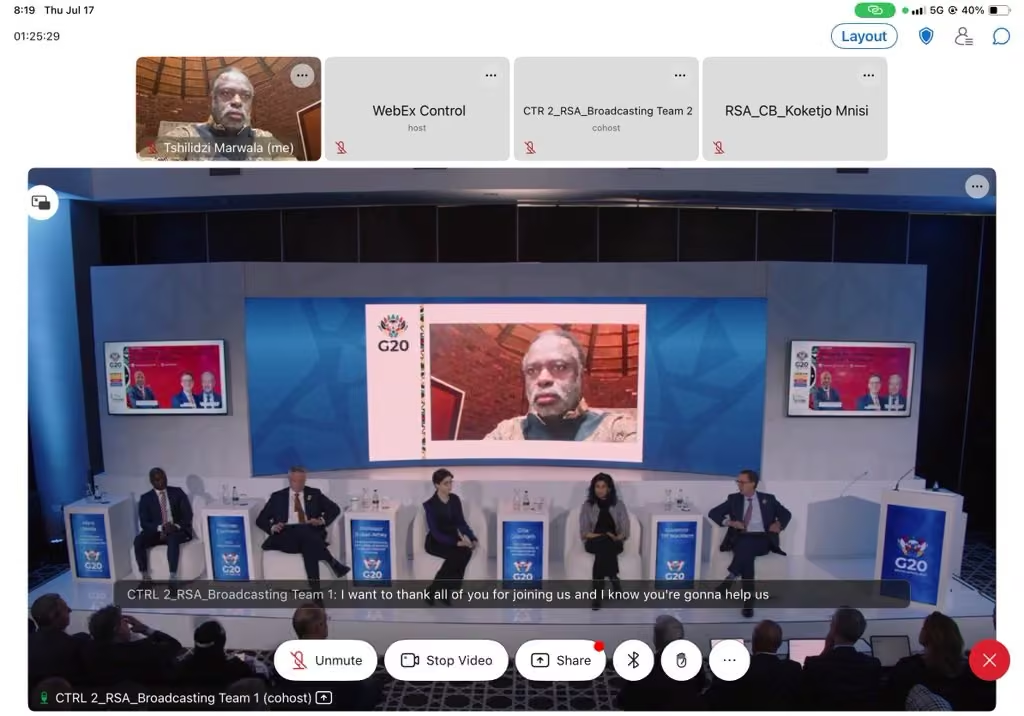
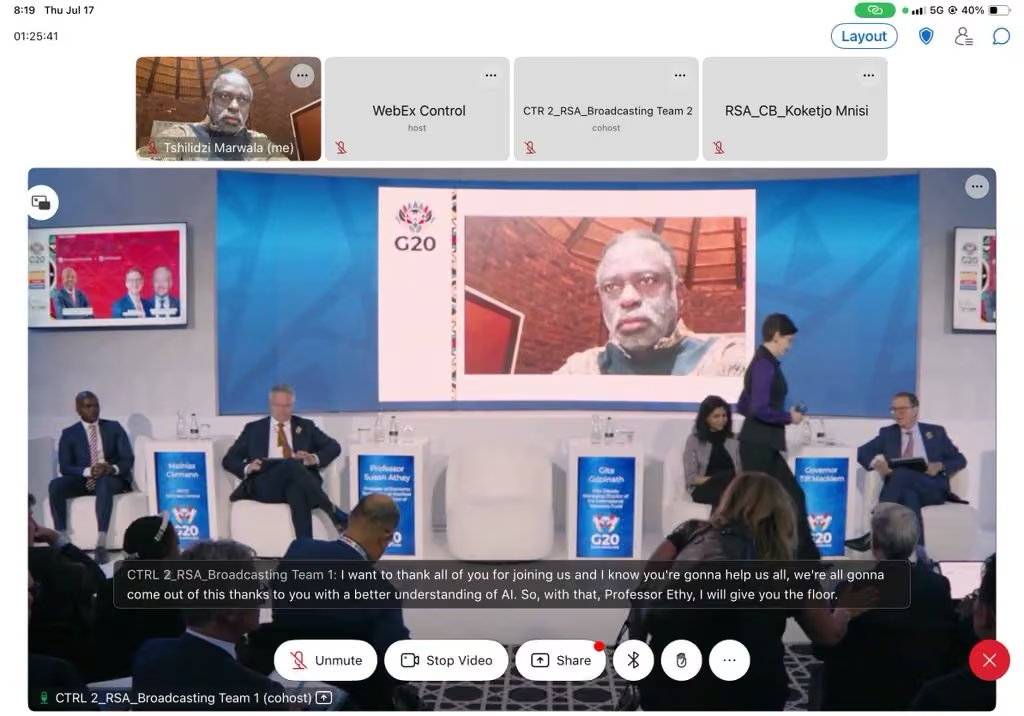


 Florian Ederer

 Ben Ho


 LSE Events

 Amalia Di Girolamo

 Stanford Economics

 Giuseppe Cavaliere
 Aaron Kaye


 Accepted papers at TMLR
 Daniel

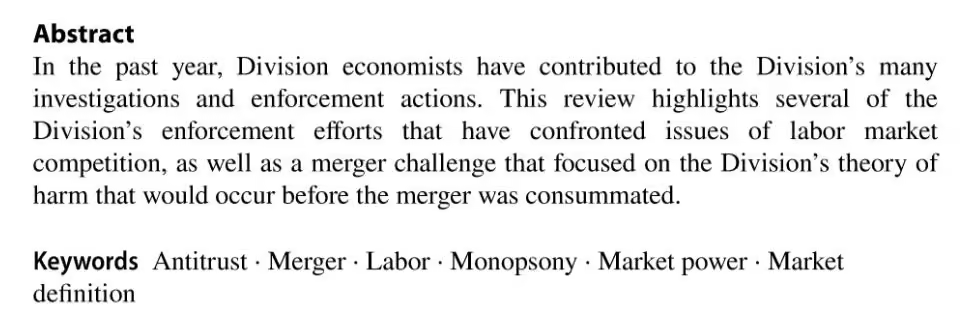
 AEA Information


 CSWEP

 Jeffrey Wooldridge

 Matt Notowidigdo

 ProMarket

 Emma Brunskill

 Stanford Digital Economy Lab


 TSE

 Kweku Opoku-Agyemang, Ph.D
 Amanda Gregg

 guido imbens

 Banco Interamericano de Desarrollo

 The Sling

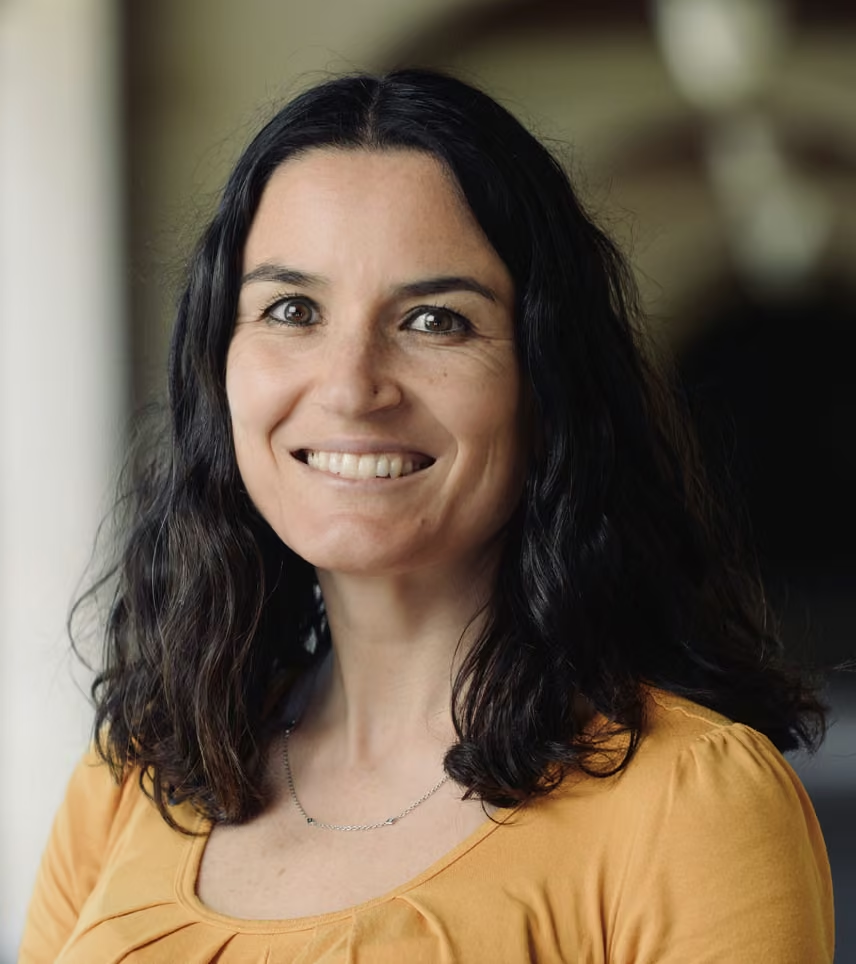
 John Cawley
 ideas42

 Amber Peterman

 Shanjukta Nath
 Zachary Bleemer
 Jesse Schreger
 Oskar Nordström Skans

 Dmitry Arkhangelsky

 Rebecca Diamond

 Center for Applied Artificial Intelligence

 Davide Viviano
 Jessica Leight
 Rob Donnelly
 Ben Handel


 Market Shaping Accelerator (MSA)
 Becker Friedman Institute for Economics
 Mot Juste

 Kosuke Inoue

 CEMFI


 Richard Blundell
 𝐒𝐞𝐧𝐝𝐡𝐢𝐥 𝐌𝐮𝐥𝐥𝐚𝐢𝐧𝐚𝐭𝐡𝐚𝐧

 David McKenzie
 Abhishek Nagaraj


 Richard Baldwin

 Emily Blanchard
 Stephanie T. Nguyen


 Ariel Kalil


 Anna Paulson

 J-PAL
 scott cunningham


 Garth Heutel
 Sarah Bana
 Catherine Eckel

 Berkeley Economics

 Pedro H. C. Sant'Anna


 Francisca Antman


 Elaine Agyemang Tontoh(PhD)


 Laura Aquino


 Ben Harrell 🌐


 Brandyn Churchill


 NEAEcon


 Dr Anne Fitzpatrick
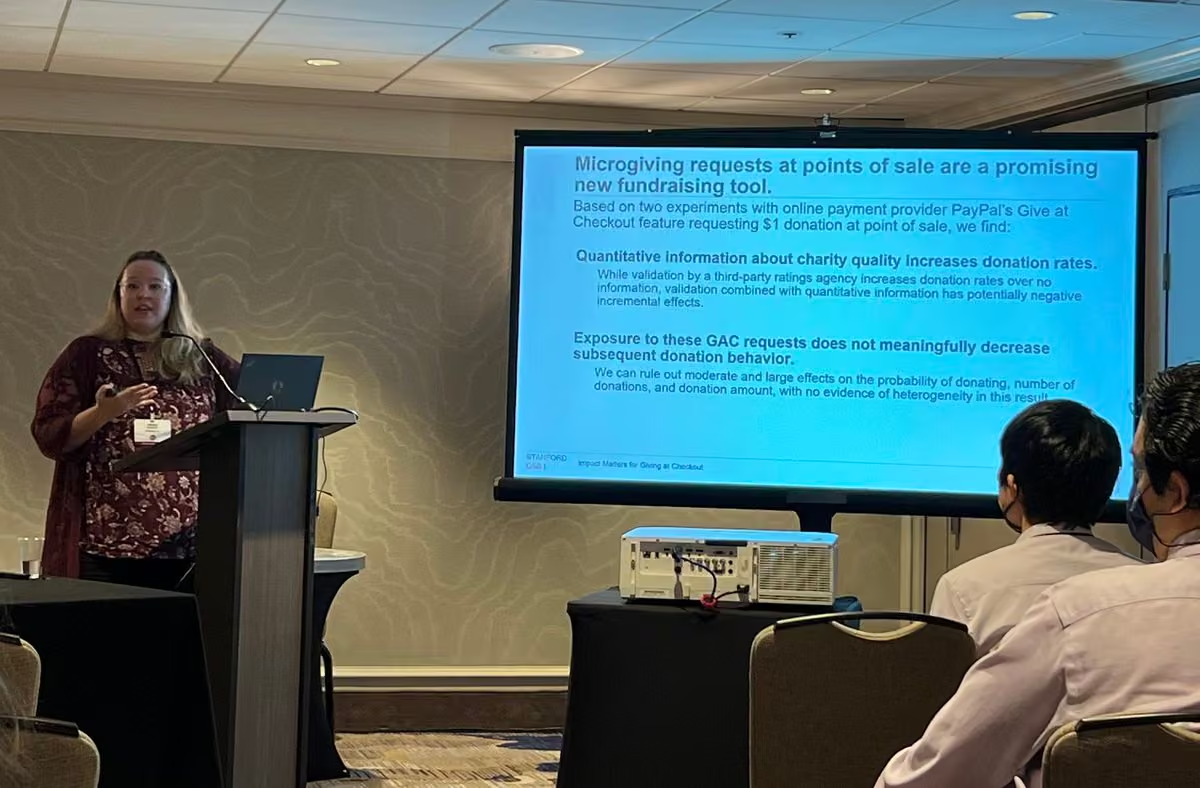
 Danila Serra


 Gustavo de Souza


 Laura K Gee
 Wesley Austin Miller


 Witold Więcek 🇺🇦
 QJE

 Matthew Leisten
 Emily Riederer


 Noam Angrist


 Keyon Vafa

 Marshall Burke
 Marco Caliendo
 IZA Event

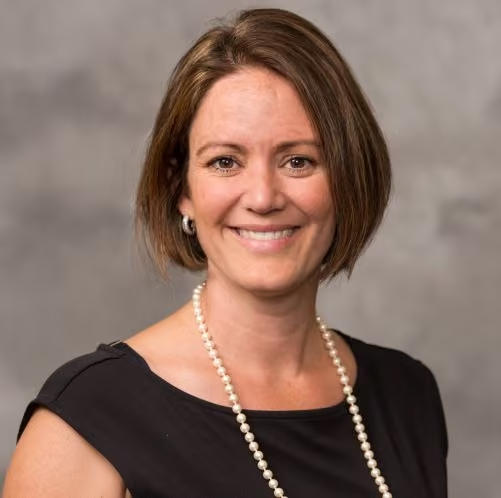


 Lawrence Katz
 Howard Economics

 Chad P. Bown


 Tobacco Online Policy Seminar (TOPS)
 EXECONSectionAAEA

 George Wu
 Rem Koning

 Winning Margins

 Stanford HAI

 Allison Luedtke


 Cristina Caffarra


 Josh Wright


 Josh Dean


 Ryan Orbuch

 Nan Ransohoff

 Peter Minor


 Tom Kalil
 Jason Hochman
 Julie Tibshirani
 Ziad Obermeyer


 Brookings Econ

 Maya Rossin-Slater


 Jennifer Doleac

 Lava Sunder


 Maarten van Smeden


 Wheelock Educational Policy Center
 Jiaming Zeng
 Nature Communications


 Adam Ozimek


 ⑆Luke Stein⑈
 Innovations for Poverty Action

 Khoa Vu

 Margaret Sala

 Emily Nix
 Behavior Change for Good Initiative


 Arin Dube


 Dr. Manuel Pastor
 Senator Patricia Fahy
 Pranav Rajpurkar
 Esteban Rossi-Hansberg
 Katie Mack
 Scott Kominers

 Margot Sanger-Katz
 Rachel Glennerster
 Stefan Hunt


 Nika Haghtalab

 Research Improving People's Lives
 Anne T. Byrne


 Stanford King Center on Global Development
 Ian Spatz
 Michael Eddy

 Engineering

 Scott Stern


 Duke Economics
 NABE

 Women in Statistics and Data Science
 Nick HK
 Aaron McD
 Jason Abaluck


 Sean J. Taylor
 Elea McDonnell Feit
 Auren Hoffman

 Deivy Houeix
 MIT Economics

 F a n t a T r a o r e™
 Rekesh Chauhan
 David Ridley
 Triad sou.
 Avi Goldfarb
 David Schönholzer

 arXiv Daily

 Ben Jones


 Natasha Jaques

 Sebastian Ruder
 Kathryn Anne Edwards
 Associate Deans
 Sibin
 Yale Department of Economics

 Joshua Gans

 Abdoulaye Ndiaye
 Daniel Björkegren

 Megan Quinn

 Reimar Thomsen

 Heidi McAnnally-Linz

 Russell Wald

 Rena Conti

 Joshua Sharfstein
 Michael W. Klein


 Shelly Lundberg

 Health Affairs

 Chris Herd
 Rob Seamans

 Economist Enterprise events

 Paul Oyer

 Garrett Johnson

 Jen Heemstra


 Dean Eckles

 Last Wholesome Man (in the GC)
 Strong Black Lead

 Mitsuru IGAMI
 Erik Mohlin
 Justin Hendrix

 Nathaniel Hendren
 Otis Reid
 Justin Wolfers
 Maximilian Kasy


 Simon Bowmaker
 CAL FIRE CZU
 Sinan Aral


 Jonathan Rosa
 Leah Rosenzweig

 Martha Olney 🏳️🌈

 Esther Choo, MD MPH
 Jonathan A. Parker
 Robert Metcalfe

 Moritz Poll
 FORTUNE
 Sameer Borwankar
 Prealize Health

 Daniel Mangrum


 David Evans


 Søren Rud Kristensen

 Sebastian Steffen
 Keystone
 Grant McDermott https://bsky.app/profile/gmcd.bsy


 Christopher Manning


 Washington Post Opinions

 Chelsea Clinton
 Rachel Donadio
 John Horton
 Dr. Tom Frieden
 Emilio Calvano
 Paul Raschky
 Dr. Jessie Male 🍉
 Hilary Hoynes
 Equitable Growth
 Jennifer Chayes
 Alexandre Padilla
 Grant Gannaway