


 Florian Schuster-Johnson
@fl_schuster

Nach dem #bundeshaushalt 2027 geht die Angst vor "Rekordschulden" um. Nicht nur @robinalexander_ und @rosidaggi in der letzten Machtwechsel-Folge, viele berichten gerade darüber. Machen uns die Schulden handlungsunfähig? Hier ein Blick auf die (bzw. den) Treiber. 👇 /1
 Robin Alexander
@robinalexander_
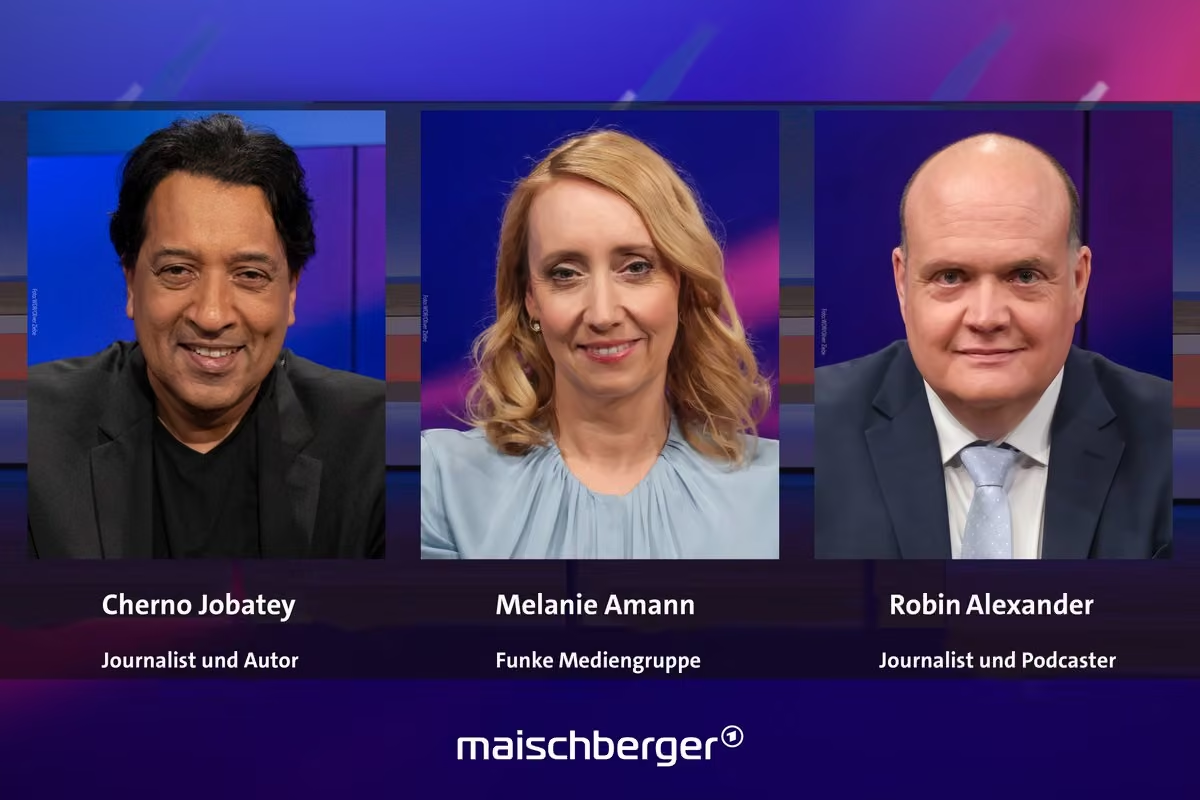
Frische Folge „Machtwechsel“. Der Politikpodcast Ihres Vertrauens berichtet diesmal:
🔶 „Unkaputtbar“: Wie die SPD beim Haushalt 2027 auf den letzten Metern geplante Kürzungen bei Wohngeld, Kindersofortzuschlag und Grundsicherung abräumte.
🔶 „Immer nur schlimme Dinge verhindern“: Wie sich in rund drei Stunden Sondersitzung der Frust der Unionsfraktion entlud – und warum Friedrich Merz bei Stromsteuer und kalter Progression vorerst mit leeren Händen dasteht.
🔶 „Küstenmafia“, Frettchen und New-York-Cheesecake: Die schönsten Anekdoten aus der Bereinigungssitzung und dem Haushaltsausschuss.
➡️ Hören können Sie uns überall, wo es Podcasts gibt (Links im ersten Kommentar).


 Dr. Paula Piechotta MdB - auch auf Bluesky




 Eric Daugherty
 Jacob Ross


 Christopher Hale



 The Sting
 Radosław Sikorski 🇵🇱🇪🇺


 Phil Magness
 “paula”
 Florian Hustede
 ProfessorHenry


 Michael Kronawitter


 Wolf Reuter 🇺🇦🇪🇺🇮🇱


 M🅰️🅰️zilla

 S04 Historie


 ALASTAIR CAMPBELL


 Tobias Blanken
 Igor Levit


 Chess Master
 Caren Miosga
 Maximilian Arland




 Christian Deutschländer


 Julius Kölzer


 Alisha Mendgen


 Korina Graf


 Ruud Hendriks


 Thomas Vorreyer
 FeIix Res.
 Claudia Paddington 🇺🇦🇮🇱


 alexander moehnle

 Prof.Dr. Riccardo Wagner


 Robert Kiesel

 Julian Olk


 Olaf Gersemann


 Henry Bernhard

 Catholic Arena


 SMus_93

 Boze Herrington, Library Owl 🎄🐗📯📯


 Daniel Eck 🇺🇦

 jens.hauschke

 Alfred Hackensberger
 Gareth Harney
 Daniel D. Eckert


 Florian Haack
 matthias fuchs


 Felix Keetenheuve MdB


 Oliver Weber


 Courtenay Turner
 Nils Ahrensmeier


 Killa 🌺
 Larry the Cat


 Alonso Gurmendi
 Institute for Hispano Studies
 🐈⬛doro hoff
 Manuel Bewarder


 Mark Schieritz
 Jörg Wimalasena
 FC Bayern Talk | Tim
 MeWe

 Oasis Mania Fanpage
 Markus Wojahn
 Miriam Hollstein




 Julius Betschka

 Frédéric Schwilden


 Curaçao National Football Team


 Jan Schipmann


 Marco Rohr


 Maurice Höfgen
 Walter Steuer (@steuermann17.bsky.social)
 Football Tweet ⚽
 Dimitri


 toto

 Simon Knott


 Rasmus Buchsteiner
 David Ermes

 Thomas Arnold
 SchalkeVor30Jahren

 Benedikt Brechtken

 Markus Feldenkirchen

 Taxiteller Fonzy

 Veronika Grimm


 Sophia Merenz
 Max Huge

 Schalke Argentina
 Dan Hitchens

 Sebastian Eberle


 Thomas van Linge
 🅱️aha

 Jack T. Bernhard


 Christian Seidl

 Antonio Spadaro

 Jakob
 The New Statesman

 Robert Harris
 J.R.R. Tolkien

 Michael Bröcker 💎
 Schalke 04 Canadian Fan Club
 Gandalv
 Melvin Miljković

 Republicans against Trump
 Schwobaglamodda
 Ralf Schuler


 BenLppl
 medium magazin
 Markus Oesterlein


 Juliane Wolf 🇪🇺🇺🇦🌹

 Doreen Reinhard

 Markus Bublitz
 Tina Handel


 Wim Orth


 Frederik Pleitgen
 Wahlrecht.de


 Bojan Pancevski


 Schalke-Podcast "Blauer Salon"
 Martin Fehringer
 UkraineWillWin. 🇮🇱 ✊ 🇺🇦


 Georg ‘Maverick’ Löfflmann


 Dietmar Neuerer

 Arnd Pollmann

 Frankfurter Allgemeine gesamt
 Chris Lunday
 Herrnhuter Losungen
 Hannes Kerber

 George Alderman


 Wilde 13🇩🇪⚽️🍗🍺♀️♂️🕊Ü14


 Tolkien World
 Jonathan Lemire
 Heinrich Wefing


 Andy Neumann


 Ev. Akademie Thüringen

 Detlef Guertler
 Jonas


 Lilli v. Wrede


 Reblaus 🧷
 David Carretta
 Redaktion p&k


 Josa Mania-Schlegel


 Julian Röpcke 🇩🇪🤝🇺🇦


 Stefan Lunte ن




 Daniel Friedrich Sturm
 Norbert Röttgen
 Linda Teuteberg
 Stephen Flynn
 L8nighttracker


 Christian Latz

 Alex

 Frank Bösenberg
 BowTiedMara


 Gescher

 François Valentin
 Milton Friedman Daily
 DeDeFlux



 Christian JB

 Kate Connolly
 Hans von der Burchard

 Dr. Markus Reichel

 Jens Südekum

 Alexander Dinger


 Axel Springer Investigativ

 Peter Unfried
 Calgie


 Katharina Beck
 Eto Buziashvili
 Peter R. Neumann


 Kate from Kharkiv
 Gerald Knaus


 Hans-Martin Tillack
 Frederik Schindler

 Anna Vero Wendland


 Classical Studies Memes

 Ahoi Polloi



 BoldWin

 Carl-Vincent Reimers


 Anna Kwiatkowska

 Claudia alias botty
 Jenni Wu

 Gunnar Breske

 Armin Nassehi
 yung macro 宏观年少传奇

 Jonathan Schreyer
 Florian Harms


 Rechtsanwältin und Notarin Johanna Neumann

 Johanna Sprondel


 Korbinian Frenzel

 Daily Roman Updates


 Tatjana Ohm

 Lyllith Beaumont
 Dr. Nils Heisterhagen
 Alexander Thiele
 Constanze Stelzenmüller

 Karina Moessbauer

 „Plagiatsjäger“


 Table.Briefings


 Stefen Niemeyer
 gsohn


 Abbot Nikodemus Schnabel


 Gordon Repinski


 Fabian Köster

 Hibiscus

 Rixa Fürsen


 Thomas Heise, Reporter

 Veit Medick


 Florian Lorenzen


 Die Kalte Progression


 Ukrainische Botschaft


 Julian Ziesing 🫖
 Asterix Archiv 🐗 Comedix.de


 Martin Heller
 Einfach Nikki

 Lukas Wallraff

 Getweeterwolke
 Denkfabrik R21
 Annalena Baerbock


 Philippa Sigl-Glöckner


 Aufziehvogel_LE
 Dieter Schnaas

 𝗙𝗜𝗔𝗚𝗢 🇩🇪


 Sascha Lehnartz


 Le Roï d'Ebbelwoï #TeamHandkäs
 Steve Miller


 COMMUNIO - Internationale Katholische Zeitschrift


 𝓜𝓪𝓻𝓬𝓮𝓵 𝓗𝓮𝓵𝓭𝓽 ↙↙↙

 Gerhard Gnauck


 Alec Stapp

 Michael Martens
 MM
 Daniel Tilles
 Notes from Poland 🇵🇱


 Lorenz Jäger

 Dario Perkins
 Björn Schermbach

 F-35 Lightning II
 Martin Hikel


 Martin Greive
 Matthias Domroes




 Ulrich Schneider


 Tymofiy Mylovanov


 Franziska Brantner


 Sophie Pedder


 Moritz Rödle


 Stephen Mayne

 Lena Berger

 GA

 Luisa Neubauer
 Thorsten Denkler
 Clara *Optimismusbeauftragte* Nathusius
 julius geiler


 Manuel Schwalm




 Jan Petter


 Florian Neuhann

 Samuel Ramani


 Susanne Hennig-Wellsow

 Ulrich Kraetzer


