Politicians, athletes, journalists, NGOs, companies... They all use
corporation-owned social networks to communicate with us. Citizens
shouldn't have to hand over their data to companies to read content
published by public entities. Public Feeds changes that by making posts
of popular accounts freely available.
Read more.
Derek Thompson (journalist)
Derek Kahn Thompson (born May 18, 1986) is an American podcaster and journalist. He is a contributing writer at The Atlantic and a columnist for The Argument. Thompson is also the author of Hit Makers: How to Succeed in an Age of Distraction and, with Ezra Klein, the co-author of Abundance. More on Wikipedia
Young men in the midterms rejected MAGA 2.0 more dramatically than I've ever seen any major demographic turn against a group that had supposedly won them for life.
I mean, these numbers are insane! I've never seen anything like this??
Re: why there is no London Review of Video Games, or why video games don’t have a mainstream culture of people reading criticism about video games…
I’m interested to know what other people who’ve thought about this for more than 15 seconds think, but I think games have a “I need to tell you about my dream”/“can I complain about my fantasy team” problem in that their experience is so individualized that it’s harder to critique in a global kind of way.
A movie/book is the same movie/book for everyone. But video games are forests thru which different players take different paths, so nobody is ever really reviewing the same game as everybody else. Something like that??
I've always thought it's interesting how little critical-media attention video games get, compared to movies and books, when you adjust for popularity and revenue. The coverage of Grand Theft Auto VI clearly puts that idea to the test, since everybody seems to be talking about it.
But these numbers are still insane. GTA VI is projected to make more in its first week of sales than the biggest movies and concert tours make in their entire existence.
Re: why there is no London Review of Video Games, or why video games don’t have a mainstream culture of people reading criticism about video games…
I’m interested to know what other people who’ve thought about this for more than 15 seconds think, but I think games have a “I need to tell you about my dream”/“can I complain about my fantasy team” problem in that their experience is so individualized that it’s harder to critique in a global kind of way.
A movie/book is the same movie/book for everyone. But video games are forests thru which different players take different paths, so nobody is ever really reviewing the same game as everybody else. Something like that??
On this day in 1831, James A. Garfield, the 20th president of the United States, was born in Ohio.
Garfield was shot just four months after taking office. He survived another 79 days, during which his doctors’ treatment likely made matters worse. Alexander Graham Bell even tried to locate the bullet using an experimental metal detector.
I recommend Candice Millard’s Destiny of the Republic: A Tale of Madness, Medicine and the Murder of a President. It’s a fascinating book, and there’s much more to the story than Garfield’s assassination.
I also enjoyed Millard’s discussion of the book with @DKThomp on his Plain English podcast. Well worth a listen.
This is just... not true? Edison famously published his predictions for the phonograph in an 1878 essay and this was his list below. It was funky because it assumed letters would be the primary focus, but it wasn't all that wrong. And in a way it was quite visionary. Either way, sermons are no part of it. (Edison himself was a deist, I believe?)
Edison top predictions for the use of the phonograph, in his own words:
Letter writing and all kinds of dictation without the aid of a stenographer. Phonographic books, which will speak to blind people without effort on their part. The teaching of elocution. Reproduction of music. The "Family Record"--a registry of sayings, reminiscences, etc., by members of a family in their own voices, and of the last words of dying persons. Music-boxes and toys. Clocks that should announce in articulate speech the time for going home, going to meals, etc. The preservation of languages by exact reproduction of the manner of pronouncing. Educational purposes; such as preserving the explanations made by a teacher, so that the pupil can refer to them at any moment, and spelling or other lessons placed upon the phonograph for convenience in committing to memory. Connection with the telephone, so as to make that instrument an auxiliary in the transmission of permanent and invaluable records, instead of being the recipient of momentary and fleeting communication.
Marc Andreessen explained why the people who invented AI are the worst people to ask about its future, using a mistake Thomas Edison made in 1877...
Geoffrey Hinton won a Nobel Prize in 2024 for the work behind modern AI.
When people ask Hinton where AI is going, he believes "rampant unemployment" and UBI for everybody.
"People think, because he's one of the inventors of AI, that he must be the guy who knows."
Andreessen's answer is Thomas Edison.
Edison invented the phonograph in 1877. To him, Andreessen says, the use was obvious. Every family would buy a record player and a library of discs with sermons from the great preachers of the time. Then the machine went on sale.
"Immediately, of course, it's music. It's ragtime, and swing, then it's jazz. And Edison's just completely horrified."
"If Edison didn't know what the phonograph was going to get used for, the idea that Joe AI entrepreneur is going to be able to forecast the economic implications... No. That's not going to happen."
Inventors, he says, are "too buried in the specifics of the here and now."
He includes himself.
"I don't know if there's anybody that can predict big cultural, or economic or social trends, but it's certainly not somebody who's been in the lab for 20 years, including myself."
@DKThomp I just listened to your recent episode on advertising. As a user of the internet the advertising-based business model can’t die fast enough. Manufacturing desire is creating unhappiness in your fellow humans just to make a buck. I would happily pay to listen without ads.
We break: The highly classified network that the National Security Agency uses for its internal communications is down, according to five people familiar with the matter.
The network, called NSA Net, allows employees to communicate classified information internally. At this point there is no evidence of a cyberattack, sources said.
As the agency works to understand the scope of the problem, it has enacted staggered arrivals for personnel, the sources said.
The idea that US economic growth existentially depends on the illegal sale of chips to China is a remarkable revelation from the former AI Czar’s bestie
I haven’t lived here in awhile, but I see no other way to answer the hundreds of texts/DMs asking me if the world is, indeed, ending.
In the span of six days, we’ve experienced;
11/12 — Microsoft outage 11/13 — Nationwide FAA ground stop 11/16 — Major US banking disruptions 11/17 — NSA’s classified internal network goes down
We need far more analysis of why so much is breaking at once. I don’t want to get out over my skis here, and what I am hearing does not contradict the messaging that most of this is the result of screwy updates.
But stepping back, the dots are starting to form a collective picture. We are seeing:
• An explosion in severe and critical vulnerabilities, with AI accelerating discovery to 3X the number of vulnerabilities discovered in the same period last year. This is collectively being referred to as “vulnageddon” or “the vulnpocalypse.”
• Mean time to exploit those vulnerabilities has collapsed to NEGATIVE SEVEN DAYS. AI allows attackers to find/exploit vulns far faster than software makers have time to fix them.
• Powerful AI-enabled offensive tools like ARTEX have been thrown into the hands of every third tier nation state, cybercriminal and digital arsonist, which logically creates havoc.
• This creates enormous pressure to compress patching windows and accelerate software updates, increasing the likelihood these fixes break things in unexpected, cascading ways.
• Pressure to just “AI everything” means we are rolling out automated AI tooling on top of brittle infrastructure that can’t support it.
My generation grew up in an extraordinary period of technological stability. We worked our way up the software stack, abstracting away layer after layer, until we lost a fundamental understanding of how the underlying systems actually work.
We were told to “move fast and break things.” VCS told us to celebrate the idea that “software would eat the world.” Now we’re telling ourselves we can simply “roll out AI” across everything, as though nothing underneath will buckle.
We never stopped to ask: SHOULD WE?
Should we be digitizing every last nook and cranny of our companies, infrastructure, healthcare, homes, cars, bodies, lives? Especially when the complexity, interdependence, and fragility we were introducing overwhelmed our ability to understand/secure/maintain the systems we built?
Nobody every asked: What if, in the name of progress, we were creating the ripest attack surface in human history?
We are now entirely dependent on software systems that almost nobody understands end to end, that increasingly few people can repair, and that attackers can now probe at machine speed. We are hearing that incident response firms, the 911 for breach victims, are backlogged six months. Even those paid on retainer lack the bandwidth to triage every incident. The cavalry is disappearing.
We are entering a period of unprecedented technological instability.
“Software Beirut” is an incredibly apt analogy. We are in for a period of cascading failures, whether triggered by attackers, bad updates, or our own accumulated complexity.
This, I’m sorry to say, is just the opening chapter.
It’s not just that hyperscalers are building their own proprietary chips. It’s also that, as @alexbhturnbull has argued, advanced AI is getting better at looking at any piece of hardware and writing optimized machine code for it, in a way that weakens Nvidia’s most important moat, which is its CUDA software ecosystem.
My conclusion:
“CUDA is one of the greatest achievements of human expertise in the history of computing: decades of code built and refined by human hands. If AI models learn to write superior code for any chip, Nvidia will become the latest student of the bitter lesson, and the company whose chips proved that mass compute can beat narrow craftsmanship would become the lesson’s most ironic victim.”
You have 3 years at most to keep earning from selling your work. After that, AI takes over most tasks, and paying people for their time stops making sense.
The 200-year-old model, "I give you your salary in exchange for your time", will soon be over.
This will set off the largest wealth transfer in modern history. People already making the shift get it. People waiting for the headlines will show up too late.
In the end, what you own counts for more than how much you work.
The smartest asset to build right now ranks above Bitcoin and land: an income stream powered by AI that compounds while you sleep.
Possible that AI capabilities still haven’t changed the world as much as they have hypnotized people into associating ordinary events —a cluster of software glitches, a tick up in youth underemployment—with AI
"Several dot-com darlings carried stock prices that were several hundred times their trailing earnings... Nvidia, by contrast, trading at less than 13 times earnings. By this statistic alone, its stock price appears to be about as exuberantly bubbly as … uh, CVS."
New newsletter: DID JENSEN JUST POP THE AI BUBBLE?
The case for no: P/E ratios are low, chips rents are high, and institutional demand for AI isn’t going to decline bc of a spy scandal.
The case for yes: The decline of Nvidia financing, combined with rising borrowing costs, reduces both chip demand and VC-backed tokenmaxxing at tech startups, squeezing AI from both sides
This. I think one of the most misunderstood parts of the “AI is obviously a bubble” argument is that investors have been collectively cautious about valuing the big tech firms, and so PE ratios for Nvidia etc have been surprisingly temperate for years
New newsletter: DID JENSEN JUST POP THE AI BUBBLE?
The case for no: P/E ratios are low, chips rents are high, and institutional demand for AI isn’t going to decline bc of a spy scandal.
The case for yes: The decline of Nvidia financing, combined with rising borrowing costs, reduces both chip demand and VC-backed tokenmaxxing at tech startups, squeezing AI from both sides
Nasdaq is up 5% YTD. Philly semiconductor index is up 30%.
The explosion of "well, that's it, the AI bubble's just popped" analyses out there are, for now, quantitatively disconnected from any definition of the word "bubble" with which I am familiar.
It would really raise some questions about the modern relationship between boards and founders—and, by extension, between corp governance vs corp monarchy—if both of the two most famous CEO/founders in AI were fired and reinstated within the same three years.
“.. Huang has discussed with confidantes the possibility of returning, according to multiple people familiar with the matter — even as an independent probe by Nvidia’s board investigates the conduct that led to a spectacular leadership crisis ..”
1. Focus is a virtue. We’ve had three cost-of-living elections in a row, and the Trump administration has demonstrated what happens when you win a COL election and then immediately pivot to doing a bunch of stuff—ICE roundups, tariffs, Iran War—that either fail to address prices or explicitly make them higher.
2. Speed is a virtue. In the last two admins, Democrats have passed laws that don’t go into effect for several years or authorized spending they couldn’t actually move for several years. In a swingy electorate, that’s a recipe for losing power quickly.
I've made it into the Ringerverse talking chips and China (and kanye, spygate, ethical hoops, and Indecent Proposal) with @DKThomp millenial nirvana achieved www.youtube.com/watch?v=x3rnhS7bmc8
For those like me trying to wrap their minds around the enormous national security implications of the NVIDIA / Huang / Trump / Lutnick scandal, the latest episode of @DKThomp's Plain English podcast with @jordanschneider and @BuchananBen is a must-listen.
I’ve found conclusive forensic evidence that the top 4 Chinese AI labs—DeepSeek, Moonshot, MiniMax and Ant Group—have built their newest models on NVIDIA’s most advanced Blackwell chips, which are barred from export to China.
This sounds insane, but I discovered that almost every AI model carries a hidden signature of the GPU that trained it. When a model is first set up, the starting values of its weights are laid out in a pattern that depends on the exact GPU. Each combination of GPU and seed number produces a unique pattern—a sort of fingerprint of the hardware used to create the model. Traces of that pattern survive training into the published model.
Again, this evidence isn’t based on any insider information or leaking. It’s based on a forensic analysis of the model weights released by the companies themselves.
I searched more than six trillion combinations of chip layout and seed number and matched them to open-weights models. In doing so, I found conclusive evidence that six Chinese AI models—including DeepSeek-V4-Pro, Kimi K3, and MiniMax-M3—were initialized on NVIDIA Blackwell systems. Four of the models match Grace Blackwell, the GB200 and GB300 parts in NVIDIA’s flagship liquid-cooled rack-scale systems.
I then verified these results on real hardware. Running unmodified PyTorch with the seeds I’d recovered, a Blackwell B300 reproduced DeepSeek-V4-Flash’s untouched starting weights bit for bit, and a rented GB200 reproduced Kimi K3’s to a correlation of 0.999995. A Hopper H100 reproduced none of DeepSeek-V4-Flash’s, and changing the seed by one broke the match. (DeepSeek’s seed is 953049583 by the way.) The method also was verified to match 24 known open-weights models to the hardware that developers said they used.
It is exceedingly unlikely that these results are a coincidence. Across six trillion combinations, the best accidental match should reach only about 8 sigma (i.e., eight standard deviations above what random chance would produce). The real matches range from 49 to 1,385 sigma, and even the weakest single test hits 20.
These were data-center-scale training runs. With some analysis of release schedules and model details, I estimate that the largest, Kimi K3 and DeepSeek-V4-Pro, used 2,000 to 3,000 Blackwell GPUs each. Clusters of this size cost on the order of $150 to $200 million each to buy, and across these labs alone would add up to more than half a billion dollars of export-controlled GPUs, not counting experimental compute or otherwise. It’s quite likely that we see multi-billion dollar expenditure on export-controlled GPUs.
I am highly confident in this result, and it has been independently verified by senior researchers at OpenAI and Anthropic. You can read the full report at unemploymentlabs.com/checkpoint-forensics.
There is much more I’ve identified about these models through other forms of checkpoint forensics like this, and will have more to share soon.
The big question right now has to be: What did the White House know, and what did it know it?
When Jensen Huang joined the president on his trip to China in May and attended the White House state dinner with Xi Jinping in September, senior White House officials already suspected that Huang’s lover was a Chinese spy and Commerce had already been contacted by Nvidia lawyers over their investigation into her company's possibly illicit relationship with China.
There's negligence, there's stupidity, there's corruption, and then there's ... trotting your honeypotted AI mascot around Chinese leaders who know they're illegally siphoning his chips via a Singaporean intermediary overseen by their own spy asset.
New newsletter: THE JENSEN HUANG FAQ: WINNERS, LOSERS, WORST CASE SCENARIOS
My basic summary for people who aren't deep AI nerds: It’s sketchy for chief executives to have affairs with their major clients; sketchier still for them to have affairs with clients whose business is suspected of violating federal law; even sketchier for that paramour to also be a suspected secret agent of a foreign government; maximally sketchy if that foreign government is America’s top geopolitical adversary; and beyond all reckoning of sketchiness if the US government knew of these allegations and revelations and did approximately f*ck-all about it for months.
The biggest losers: - Nvidia, obviously: Huang was the founder, rockstar mascot, and chief spokesperson, with 60 direct reports and no succession plan. The plane is entering turbulent air and the pilot just got thrown out the back window. - "Just sell to China, it's cool" loses its top spokesperson - Open-weight models lose a top advocate - Neoclouds and other less-capitalized AI players lose their bank, as Nvidia's circular financing likely pulls back with collapsing stock price
The biggest winners - China hawks—ie, those who want to restrict chip sales to China—since their policy case gets a heavy serving of righteousness - Alternative chipmakers, including AMD, Google, Amazon, and smaller chipmakers, who might find more buyers in a world where Nvidia innovation slows down and the company loses its best salesperson. - Hyperscalers: If neoclouds struggle without the bank of Nvidia, established clouds like Microsoft and Google might gain at the expense of those upstarts - uhh, Anthropic? Dario was always on the other side of the China debate with Trump/Jensen and the company is among the least dependent on Nvidia tech
The worst-case scenario: I mean, look ... If one of Nvidia’s largest overseas clients was an illegal backdoor to China, overseen by a spy with whom Jensen Huang was having an affair, and the US govt had information on all of the above and did nothing to arrest China's espionage/legal violations because they wanted to preserve an intimate state-business relationship? Many "if"s there, but sweet JESUS, that looks bad.
When Jensen Huang joined the president on Air Force One to go to China in 2025 and attended the White House state dinner with Chinese leader Xi Jinping in September, Trump had already been told that Huang was sleeping with a suspected Chinese spy, and his administration was already investigating an illegal relationship between the spy’s company and the Chinese Communist Party
If you're a China hawk, and you read the following revelations/allegations in a 48 hours period ...
1. Jensen Huang is sleeping with a Chinese spy. 2. Nvidia has been selling chips to Chinese AI companies for years through a Singapore intermediary overseen by that Chinese spy. 3. Nvidia’s lawyers pushed back on a federal investigation into this illegal scheme. 4. The White House knew all of the above and did absolutely nothing.
... I think it is understandable if what happens next is your head explodes
If you’re philosophically opposed to AI chip export restrictions, I think you should be the most mad about this timeline.
Like, I personally did not need the last 72 hours of news to make me doubt the wisdom of selling advanced chips thru to China.
But anybody on the fence or in a politically vulnerable position is going to look at this and go: oh shit, these anti-restriction ppl are corrupt and insane!
One of many problems with getting into bed with Trump is that he’s incredible at driving public opinion against everything he does, because everything he does is so sloppy and corrupt and terrible.
When Jensen Huang joined the president on Air Force One to go to China in 2025 and attended the White House state dinner with Chinese leader Xi Jinping in September, Trump had already been told that Huang was sleeping with a suspected Chinese spy, and his administration was already investigating an illegal relationship between the spy’s company and the Chinese Communist Party
The year is 2029. Ten percent of the attendees at all AI business events are ludicrously attractive actors paid by the firm to seduce employees and executives to pretend to solicit corporate secrets. Also half of all corporate emails are phishing tests.
Boards should start hiring their own hookers to seduce their execs. If it fails, great, you’ve got a good one. If it succeeds, nothing leaks and now you know what you’re dealing with and have leverage to boot.
Imagine a historian in 2035 writing a political history of the 2020s, and he points out that every election, the out-of-power party won a cost-of-living election and then used their mandate to ignore or exacerbate affordability only to be destroyed in the next election, where voters again said “to be clear, I don’t want whatever bullshit you’re up to, I just want life to feel more affordable,” and then, once again, the winning politicians prioritized everything except affordability, and this story repeated itself over and over again.
One of my strongest held political opinions right now is: Democrats should do everything they can to avoid that history being written.
Nowhere is that hard pivot more on display than with Alex Karp, the CEO and co-founder of secretive tech giant Palantir, which bet massively on Trump 2.0 and became an administration darling in the process
Inside Palantir’s Manhattan lair, in an exclusive sitdown with Playbook, Karp — who once criticized the Democratic Party as “totally irresponsible” — deployed the word ‘progressive’ eight times to describe his philosophy while acknowledging Democrats ‘absolutely’ corrected in 2026 enough to win back his support in 2028.
Karp: “I’ve been a Democrat my whole life. I grew up in a far left environment. I know more about being a progressive than almost anybody on the planet, and I absolutely believe Palantir— all of our products are essentially progressive.”
I understand the popularity of left populism and the tax revolt, separately. But I’m a bit worried about the policy implications of their combination (… in a high deficit, high rate environment)
Tonight, the Senate voted to advance the Bipartisan American Affordability and Jobs Act.
Democrats across the country ran on lowering costs, holding Big Tech accountable, and stopping the Trump administration’s attacks on clean energy. This is an opportunity to deliver on all three.
This bill isn’t perfect. No bill is. We should continue working with Tribal Nations and environmental groups to strengthen it as it moves through the legislative process.
But we have a golden opportunity to make good on our promise to voters to make energy more affordable. We cannot afford to let it slip away.
Nate says the group with notable underperformance in competitive seats were progressives who had faced competitive primaries (AES, Lawrence, Nixon, Dunlap)
2024 discredited the Democratic establishment. 2026 has discredited MAGA. The next election will be a head-to-head between two currently headless parties that have an opportunity to define themselves for the next generation.
Plus @Nate_Cohn on: - the myth of the death of the swing voter - the myth of the Trump racial realignment - the limits of money in politics - studying 1974 and 2006 to understand what might come after a midterm wipeout like this - what makes the Times-Siena poll so accurate - how The Needle became our election night god
One lesson of the last few days of commentary is that, in some key ways, politicians are just much smarter than posters.
One eg: Left of center twitter is so factionalized that many commentators are better at seeing how independent voters can be pastiches of different ideologies than they are at seeing that Democratic politicians can also be pastiches. So when Talarico talks about inequality like Bernie, about housing like abundance, and about energy/gender/immigration like someone deliberately moderating previous statements to win the Dallas suburbs, each faction claims total victory by isolating one part of his message to say “see, he’s with MY team, not YOUR team, you LOSE.”
In the end it’s maybe kind of harmless. Factions gonna faction, etc. But, the politicians clearly understand something many of the posters don’t: factions are like ingredients, and smart political campaigns combine ingredients to fit the local political consumer.
First full quarter of sales for Cybertruck was Q1 2024. Discontinued three days after the 2026 midterms. What an eerily timed and perfectly apt symbol of whatever tf that vibe shift was.
Tesla will wind down Cybertruck production around mid-2027, CEO Elon Musk says, after years of persistently weak sales for a futuristic model once touted as a rival to legacy pickup trucks. www.nbcnews.com/tech/tech-news/tesla-wind-cybertruck-prod…
2024 discredited the Democratic establishment. 2026 has discredited MAGA. The next election will be a head-to-head between two currently headless parties that have an opportunity to define themselves for the next generation.
Plus @Nate_Cohn on: - the myth of the death of the swing voter - the myth of the Trump racial realignment - the limits of money in politics - studying 1974 and 2006 to understand what might come after a midterm wipeout like this - what makes the Times-Siena poll so accurate - how The Needle became our election night god
1 million views in 4 hours is a record for me. Thank you all for sharing and commenting. I had a blast making this one, felt giddy and enjoyed every minute of it. Remember this is still scripted by me not ai, each video edit is still intentionally made by a human, the world was carefully constructed, researched and designed by me with ai tools but it’s not pressing a button. We see tons of AI automated slop “video” every day on these platforms so I appreciate people recognizing the human touch.
The last 10 years are probably the most remarkable low-unemployment period in American history—punctuated, ofc, by the crazy, destabilizing pandemic.
The three years before COVID were the then-third longest streak of under 4.5% unemployment and the five years and counting since we recovered from COVID are the longest, and counting. (via @jasonfurman)
Even in periods of intense technological anguish, public anger, and whiplashing political change, at least some things are just quietly and consistently good.
Per Axios: With Democrats winning trifectas in Pennsylvania, Michigan, Arizona, Wisconsin, and Nevada, the National Popular Vote Interstate Compact now has 283 potential electoral votes, putting it above the 270 needed to take effect.
As it happens, the Senate’s first vote when it returns Tuesday will be on a bill to lower energy costs by modernizing the permitting process. It will be first test of whether affordability is a governing priority or just a campaign slogan.
It's not just that Talarico (et al) combines elements of left populism, abundance pragmatism, and cultural moderation. It's also that the definitions of "left" and "moderate" are in flux.
Take "left." Talarico's all-of-the-above position on energy, eg, would have been grounds for near excommunication from the climate left during the heights of the Green New Deal era. But many leftists now proudly claim him as one of their own, in part bc of his rhetoric on corporate abuse of power and "not left vs right, but top v bottom."
So what we're seeing might be fusionism. But just as importantly, the elements being fused are in flux.
The Democrat factional fighting is a relic of 2016. This election points toward a new liberal fusionism, candidates who combine leftist economic populism with centrist pragmatism. Talarico and Ossoff offer a model on this. The factional stuff is old news, beltway chatter.
i think "moderates did better on tuesday" and "anti-rich vibes used to be identifiably 'left-wing' but they've become fairly normie in the last few years" are both accurate takes, altho i expect a lot of discourse warfare between these positions in the next few days
Lots of folks on the left telling me the above post is cope bc Talarico is clearly an anti-abundance left populist. Well, I think that's wrong. But more importantly, it is GOOD for politicians to have the superpower that makes people think this!
One of Talarico's talents is clearly getting different factions to believe that he's their agent. That's a real gift.
Talarico: "I also want to work with the president on housing. He's a builder and we need to cut the red tape, the regulation that sometimes my party has been guilty of so that we can build millions of new homes in this country. I also agree with the president on the need to legalize marijuana."
There's a lot to focus on right now, but "The richest man to ever live just spent $200 million to support the Republican Senate candidate in Texas, and his man lost by double-digits in a statewide wipeout" is a completely insane sentence.
Put another way, the most expensive US Senate race before 2020 was $200 million. *One guy* spent that amount in Texas, and it doesn't seem to have made any difference. It might have hurt in a kind of Streisand effect way, in that the spending level was seen as obscene to people sympathetic to the argument that billionaires shouldn't "buy" elections.
The implications here seem pretty interesting! Especially re the limits of billionaire political power and/or the diminishing returns of money in politics.
It wasn't so long ago in the Dem party that if you held Talarico's position on fossil fuels and immigration, you would be considered persona non grata among the left.
The fact that some people don't call that moderation today just goes to show how much those interest groups have lost the intraparty argument (at least on the politics)
A lot of talk about moderate overperformance and progressive underperformance. There’s something to it, but Talarico, Hinojosa, Andrews—these are not moderates in their states. The more universal pattern is regional: Dems romped in the sun belt and struggled in the upper Midwest.
i think "moderates did better on tuesday" and "anti-rich vibes used to be identifiably 'left-wing' but they've become fairly normie in the last few years" are both accurate takes, altho i expect a lot of discourse warfare between these positions in the next few days
Ten years ago this week, Trump won for the first time. Last night, his party got crushed. Today, his own VP is publicly brainstorming ways to distance himself from the admin's core agenda.
A new chapter in American politics is beginning, and the level of uncertainty is off the charts:
- Nobody knows what the post-Trump Republican Party is, right now. (It's not entirely clear what the Democratic Party is, either!)
- AI is booming. It's the single most powerful force in US macroeconomics and ... Americans absolutely hate it
- Last night was a good night for both cultural moderation *and* economic populism. Talarico is a great e.g.: walking back his woke commentary while practicing a unity politics that's for everyone except "the top"
- Fears that "billionaires are buying elections" were both powerfully felt and also proved quite wrong, as Elon torched half a billion dollars for nothing
- Do not mistake the Democrats' huge night for a demographic realignment. Young people and Hispanics -- who both moved 30+ points between 2024 and 2026 -- are not setting up home in either party, they more like renters, signing a one-year lease for whoever makes the best incumbent critique
reading derek on last night and the massive shift in younger votes (espcially young men) made me think about tiktok and attention spans more than anything...
what if the half-life of everything is shrinking and along with attention spans goes political affiliations
Ten years ago this week, Trump won for the first time. Last night, his party got crushed. Today, his own VP is publicly brainstorming ways to distance himself from the admin's core agenda.
A new chapter in American politics is beginning, and the level of uncertainty is off the charts:
- Nobody knows what the post-Trump Republican Party is, right now. (It's not entirely clear what the Democratic Party is, either!)
- AI is booming. It's the single most powerful force in US macroeconomics and ... Americans absolutely hate it
- Last night was a good night for both cultural moderation *and* economic populism. Talarico is a great e.g.: walking back his woke commentary while practicing a unity politics that's for everyone except "the top"
- Fears that "billionaires are buying elections" were both powerfully felt and also proved quite wrong, as Elon torched half a billion dollars for nothing
- Do not mistake the Democrats' huge night for a demographic realignment. Young people and Hispanics -- who both moved 30+ points between 2024 and 2026 -- are not setting up home in either party, they more like renters, signing a one-year lease for whoever makes the best incumbent critique
99.9 percent of the time when people say "I don't recognize my country" they mean it in a bad way. This is the 0.1 percent.
- James Talarico won a Senate seat in Texas by 12 points—more than Kamala Harris carried in sky-blue states like Illinois or New Jersey in 2024.
- Jon Ossoff won his reelection in Georgia by 18 points—more than the Harris ‘24 margin in places like Connecticut or New York State.
- In Kansas, where no Democrat had won a Senate seat since the Great Depression, Adam Hamilton won comfortably.
- In Mississippi, prediction markets now have Democratic Senate candidate Scott Colom surging above 90 percent to take a state that Trump recently carried by 23 points.
I’m genuinely finding it hard to wrap my mind around an election result where Kansas voted like New Hampshire and Mississippi voted like Wisconsin.
Ten years ago this week, Trump won for the first time. Last night, his party got crushed. Today, his own VP is publicly brainstorming ways to distance himself from the admin's core agenda.
A new chapter in American politics is beginning, and the level of uncertainty is off the charts:
- Nobody knows what the post-Trump Republican Party is, right now. (It's not entirely clear what the Democratic Party is, either!)
- AI is booming. It's the single most powerful force in US macroeconomics and ... Americans absolutely hate it
- Last night was a good night for both cultural moderation *and* economic populism. Talarico is a great e.g.: walking back his woke commentary while practicing a unity politics that's for everyone except "the top"
- Fears that "billionaires are buying elections" were both powerfully felt and also proved quite wrong, as Elon torched half a billion dollars for nothing
- Do not mistake the Democrats' huge night for a demographic realignment. Young people and Hispanics -- who both moved 30+ points between 2024 and 2026 -- are not setting up home in either party, they more like renters, signing a one-year lease for whoever makes the best incumbent critique
"That Donald Trump is a unique political talent cannot be denied. But what kind of political talent is he, really? The president is now 2-0 running as an outsider trying to wrest the presidency from Democratic hands (2016 and 2024) but 0-3 in elections where he is already the president (2018, 2020, 2026). In an age of anti-incumbency, Trump is the epitome of the incumbent curse, a generational genius of charismatic negativity who has no idea what to do with the reins of power once he seizes them—other than marshal the machinery of the federal government to drive public opinion against him."
1. End the war (that his admin started) 2. Focus on cost of living (which he exacerbated with the war and tariffs) 3. Change our relationship to Israel (which has been defined by Trump’s embrace of Bibi, up to and including going to war for him) 4. America First (ok.)
It’s going to be very interesting to see how “We should do the opposite of Trump in every way, and we shall call it …. Trumpism!” will play.
One of the things the data analysts on our side obsessed over was "composition"—whether the electorate looked close enough to 2024 for Republicans to win. And despite polls that showed a Democrat blowout, the data kept on telling us the same story: in some states turnout was merely OK, in other states it was downright amazing, and in no state was it catastrophic. There was a genuine sense of optimism on our team: our people were showing up.
So, I asked the smartest data guy I know, does that mean we're going to shock the world? "No," he told me. "We might do better than the polls suggest. But the data is telling us that a lot of Trump/Vance 2024 voters are pissed and planning to vote for the other guys. Our voters are turning out, but they may not vote for us."
Well, that looks prophetic now. Our voters did show up. In Florida, for example, the electorate was 9 points more Republican than Democrat, just a couple points worse than 2024. Undoubtedly there were places we could have done better on turnout. But the main problem is not turnout. The main problem is that many people who voted for Trump/Vance in 2024 voted for Democrats in 2026.
There will be a lot of infighting and arguing over what happened and why that is. One of the pollsters I really respect told me that our economic messaging wasn’t sharp enough down the stretch. I’m sure that’s true.
But the real reason we lost is obvious to almost everyone.
Another pollster—one of the smartest people I know in politics, told me yesterday we’d lose the generic ballot by 13 points. I felt negative going into Tuesday, but even I was shocked by this. In his polling, he saw that a lot of Trump 2024 voters were angry and planning to vote for Democrats. He asked those voters who had abandoned us what would cause them to come back on our team. The top four answers, accounting for nearly all of the responses were:
1) End the war 2) Focus on cost of living/inflation 3) Put America First 4) Change our relationship to Israel
Our voters showed up. And the above four reasons are why many of them voted for Democrats. This is according to a pollster who nailed the results. While many spent Monday attacking Rachel Campos Duffy for calling for a diplomatic resolution to the conflict, it turns out her political advice was sound. (She’s also a great person.)
In the next few months, there's going to be a lot of gaslighting. Expect to hear any number of establishment politicians say the solution to our woes is amnesty. I'm open to the idea that we should change enforcement—by focusing more on businesses that hire illegal labor, for instance. But anyone pushing amnesty is lying to you.
The reason we lost is the war. The president himself said so last night.
If you'd like to argue it was worth it, that losing the Senate for the next 6 years was worth it, then do so. Argue it was a worthwhile cost to pay. Agree or disagree, that's at least honest.
But everyone knows why we lost. And any honest conversation about where we go from here must start there.
I remain hopeful about our country. To the people who are pissed off and want to say, “I told you so”: you’re right, you did tell us so. Take that energy into electing Republicans who share your worldview. To the people who are just pissed at the results, you should be. Let’s take that anger and get back to the work of saving our country.
One of the ideas that I've come around to in the last two years is that the Democratic brand being shit has been a blessing in disguise for the party, especially as it was out of power.
It allowed Democrats to run a variety of candidates to be themselves and speak to local issues without feeling like they owed fealty to some establishment shibboleth.
Republicans got screwed by an opposite problem; their candidates are in thrall to a personality cult that over-performs in GOP-only primaries but is despised everywhere else.
The difficulty will be translating Democrats' currently useful heterodoxy into enough political order that they can come together to make ppl's lives better when/if this coalition of Democrats gets real power.
It's November 6, 2024. You're a Democrat. Trump just won, again. You roll over in bed and take a clinically insane hit of hopium. A vision appears, and you intone:
"In two years, a Democrat is going to win Texas by more than Kamala Harris just won in Illinois or New Jersey, and Jon Ossoff is going to win Georgia by more than the Harris margin in Connecticut or New York."
Your partner would rightly order an Uber to send you to the nearest hospital for hallucinations. This still doesn't seem real.
Anti-AI regulation is not "GOOD for AI." It's good for reducing the odds that capital is wasted building data centers that are under-utilized and lead to a market wipeout that makes everybody poorer.
Don't try to make me sound like some devious arch-capitalist by making an obvious point: constraining supply also constrains the risk that supply outruns demand in a way that blows up in everybody's face.
It's November 6, 2024. You're a Democrat. Trump just won, again. You roll over in bed and take a clinically insane hit of hopium. A vision appears, and you intone:
"In two years, a Democrat is going to win Texas by more than Kamala Harris just won in Illinois or New Jersey, and Jon Ossoff is going to win Georgia by more than the Harris margin in Connecticut or New York."
Your partner would rightly order an Uber to send you to the nearest hospital for hallucinations. This still doesn't seem real.
This is an absolute massacre for Republicans. It might be the worst environment seen in the last 40+ years. They're losing South Carolina, on track to lose Texas, and are getting the rug pulled out from under them with Hispanics and working-class whites.
I appreciate all the Midterm Election guides—"what to watch tonight, starting at 7:31pm ET" —but the tough thing about this midterm specifically is that the Democratic Wave (to the extent that it materializes) seems to have three distinct layers:
1. National swing toward Democrats, where early returns might indicate later results throughout the country
2. Regional pain from Trump policies (tariffs in Great Lake states, diesel costs throughout Midwest), where it's a bit harder to extrapolate Richmond, VA results to rural Iowa, bc those are different economies where Trump's policies have had different effects
3. State-by-state problems for the GOP, thanks to Trump's highly questionable candidate-selection strategy (backing Paxton in TX, turning on Tillis in NC)
So, yes, I will be watching Kentucky 6th, Virginia 1st, and Florida 22nd and 27th early in the night as canaries in the coal mine. But part of the hole that Trump has (possibly!) put his party in is regional- and state-specific. It wouldn't be so weird, eg, if Democrats disappointed a bit in Orlando and still won Texas. Ken Paxton isn't on the ballot in Orlando.
Update: as of 2pm, Florida has crossed 7M ballots cast (final was 11M in 2024, 7.8M in 2022). Registered Ds are at 71% of their 2024 total turnout, Rs at 63%, NPA/others at 56%.
Overall turnout is R+7.1 pts (2024 final was R+11.1 pts). Modest but clear Dem enthusiasm advantage.
Just in time for the midterms, I (finally!) met @esaagar in the physical world to discuss: - Tuesday night predictions - the irony that there are more Democratic Millennial stars than ever, but they're still supporting Boomer slop politics (e.g., property-tax freezes for seniors, etc) - Saagar's crusades against weed and gambling - my "Guilt Theory" of 21st century US politics - how the GOP became the party of vice - the subtle curse of "affordability" politics in an age of high deficits - Haley Stevens, ofc - Is a post-Trump GOP possible? - Can any conservative do to Trump what Trump did to George W Bush—by providing a coherent outsider critique of a deeply unpopular twice-elected GOP president who stupidly started a Middle East war?
We don’t appreciate the 2026 Denver Broncos enough.
They are the ultimate professional sports equivalent of letting your younger brother win the first 19 points in Ping Pong, and then rattling off 21 winners in a row in the last few minutes.
To address the reasonable charges of vagueposting:
- I think this endorsement is beyond fucking weird (and bad … and stupid!)
- nobody seems to have seen it coming
- most importantly, she’s had several opportunities to explain how this wasn’t just a case of her briefly losing her mind or making a deliberate decision to implode her career and she has not made much of those opportunities, which leaves (a) she’s having a regrettable personal moment, or (b) this is part of some larger personal/professional pivot that has nothing to do with the broader tensions between left and center in the party
Oklahoma City Thunder's Chet Holmgren underwent treatment Friday to address a small patellar tendon tear and is expected to return to play in 8-to-10 weeks.
I quit The Atlantic having raised 0 dollars because I felt it was inappropriate to raise money while working for another magazine -- others have made different choices but that was mine.
Emergent Ventures, which is run by Tyler Cowen, exists to empower young people who think they can do big things. Tyler gave me a grant of $100,000 from this fund to build @TheArgumentMag.
I then raised $4 million from an array of investors with various backgrounds and interests to build a liberal magazine where people could debate big questions.
Zach, who has recieved direct or indirect funding from the founder of eBay, Charles Koch, Exxonmobil, Chevron, BP, JP Morgan Chase, AWS, Meta, and Google, is, I suppose, telling on himself about the nature and origin of his views.
Personally, I think Zach came by his flawed viewpoint honestly but if you follow his logic he's an agent of Big Oil and Big Tech.
I find it galling when those who have been funded by tech billionaires and the failsons of the wealthy have the temerity to cast stones at anyone else for trying to make something of themselves despite not having access to institutional wealth.
Perhaps if I had been born the daughter of a billionaire and devoted myself to the cause of making the left historically unpopular, I would have Zach's respect. Alas, I think I'll live without it.
Peter Thiel seeded Emergent Ventures, Tyler Cowen runs Emergent Ventures and invested in The Argument, yes? It is clear to me that Tyler Cowen is not literally Peter Thiel, but equally clear they are politically aligned and who exactly do you think you're fooling?
I talked about the entertainment story of the moment with @MattBelloni
Take 1: Netflix is having a bad, bad year. The stock is down nearly 50 percent. The company has laid off more than a 1,000 people this year, including its chief content officer and its head of film.
Take 2: Wait. Actually, Netflix is objectively having its best year ever. It has decidedly won the streaming wars, it has a lower churn rate and higher LTV than any streaming competitor, global subscribers are growing, and its operating margin is higher than ever.
Take 3: Netflix won the last war. That is, it perfected a 20th century business model of making traditional video entertainment (docs, reality shows, TV series, film) and serving millions of at-home customers. But the final boss of video entertainment is not 20th-century TV but 21st-century TV—YouTube, TikTok, and infinite video scrolls, which are not only commanding more and more of our daily attention but also do so with significantly lower upfront production or licensing costs. As attention fractures, it becomes harder to create monocultural moments—what once went by the name "hits."
I, personally, think Netflix makes too much slop. But one household's slop is another household's 8pm downtime. The problem isn't quite that Netflix forgot how to make hits but rather than it's a hit-making enterprise in a world where monocultural moments are getting structurally harder to make with every passing decade.
The rise of Google AI Mode (plus agents) will be a big economic shift for the web—but it's also a huge psychological shift in our relationship to other people on the web.
Right now, AI summaries of queries do not send our attention outward to links but rather answer our questions directly by summarizing the material they can consume faster than the user. This will change the economics of the internet because the machine has gone from hunting and gathering (ranking and displaying links to which they send traffic) to serving final meals (summarizing the results). We're seeing AI Mode affect Alphabet earnings, Reddit revenues, and search traffic for publishers. That's already a big story.
But I'm also watching now information consumers are being moved up the hierarchy of search: - Bottom rung: Find links in response to search - Next rung up: Generic summary of links (AI) - Next: Encourage me to talk to the AI about the results rather than click any of the below links, so that the AI summary isn't generic but rather tailored to the user who did the search (personalized advanced AI) - Next: Anticipate the next search/prompt and give me the information or product I need before I know I need it (Muse, Instinct, advanced agents)
With each rung, the human-to-human interaction of the web (eg, me reading an article by a person) is being intermediated and then finally replaced by a machine that anticipates what I wanted from that human-to-human interaction and serves it up to me, possibly even before I knew that I wanted it.
Reddit call was absolutely fascinating. Everyone should listen to it as a bellwether for where the internet is going - AI Mode is increasingly default Google experience - AI Mode provides rich info and data in line, less incentive to leave search - AI Mose incentivizes dialog, Google wants to keep you engaged to serve more ads at each turn - Google will milk search for as much revenue as possible as they transition from a search company to a cloud service and chip company - As traffic from humans becomes more scarce this will put Google in an increasingly adversarial position to the rest of the internet - This is a massive headwind to all media type companies who are not destinations - This is a massive headwind to all content-driven go-to-market motions especially in the SMB. You have seen companies like HubSpot and monday.com get crushed by this funnel collapse
We are entering the end game - a knife fight for the remaining and dwindling volume of human traffic on the internet
Sneaky big winner of the 2026 midterms could be Obama.
Won a whole news cycle with a joke. Made Republicans look like fools acting like Cheesecake Factory foyers are as sacred as an American flag. Ossoff is crushing with a Millennial Obama act, El Sayed has mended bridges, and here’s Talarico updating the 2004 DNC speech vibes for 2026.
Q: Are you the one who’s going to turn Texas blue?
@JamesTalarico: I’m not interested in turning Texas blue. I wanna win this seat so that I can fight for all 31 million Texans — whether they’re Democrats, independents, or Republicans.
My party talks about turning Texas blue a lot. Republicans talk about keeping Texas red. I think the best color for Texas is purple.
When you have a purple state and competitive elections, it forces every politician in both parties to stay on their toes. My hope in this race is that we can end 30 years of one-party rule and get competitive elections back in Texas so politicians are actually solving problems.
I mean look, AI is hard. I’ve been wrong about many aspects of it and most of the smartest people I follow have been wrong about *something.*
But Ed has been claiming peak AI for more than two years. This is almost literally like covering the Intel IPO in 1971 by bringing on somebody who claimed that Moore’s Law (written in 1965) had peaked in 1966, 1967, 1968, 1969, and 1970. It’s not illegal to do this, but your source is confidently commenting on a phenomenon his previous commentary considered impossible.
“Is this just a big circle jerk?” Jon welcomes Ed Zitron (@edzitron), host of the podcast Better Offline, to make sense of the financial house of cards propping up AI and big tech. New pod out now!
OBAMA: The president wasn't even mad. About The Saddam Hussein comparison. That part didn't bother him. But he was very upset about The Cheesecake Factory. He took great umbrage. He said I didn't understand the work of the artisans in the White House.
They mobilized a whole of government response to that joke. Not to inflation, but to that joke.
If you believe that mindless AI evaluations are legitimate then why would you spread the evaluation of Saez & @gabriel_zucman without first subjecting it to its own mindless AI evaluation?
I just did and it turns out the critic's errors all go in one direction.
it's important to reject the belief that mass behavior can be understood. it cannot. for example, liberty mutual ran "Limu Emu and Doug" commercials for 7 years bc analyses presumably showed that there exists a significant number of people who bought LiMu insurance *on the basis of that ad campaign.* and that's not something that anybody will ever be able to explain
There's a leftist/academic thing to constantly emphasize both the moral brutality of capitalist growth in the US and the surprising growth under brutal communism in China.
I think it's good to see the full picture of reality, but the emphasis is …. notable. Leftists/academics are never tweeting about how “did you know America’s economic growth was surprisingly robust when child labor was legal?”
Under “dictator” Mao, life expectancy in China increased by 30 years, literacy rates went from 20% to 70%, steel output grew from 1 million to 23 million tons, 47 million hectares of land was taken from landlords and given to peasants, and China was unified under a strong central state and got nuclear weapons.
Despite his failures, it does not take a rocket scientist to understand why Mao is revered in China.
The whole Cheesecake Factory thing is such a pre-2016 nostalgia trip. I almost forgot this is what political discourse was for years, manufactured rage about beige suits and Obama maybe being too fancy. The whole thing might as well be scored by MGMT.
Your boss Obama’s joke is Cheesecake Factory has a cheap & garish design. Most normal Americans consider Cheesecake to be a high end, expensive place to eat reserved for special occasions. You guys are tone deaf. And, yes, I’m clearly too dumb to comprehend your brilliance too.
Two things I think happened around the same time: 1.) RT made a concerted effort to increase the number of accredited critics and 2.) 2014/2015 marks the moment where poptimsm more or less took over as the reigning critical ethos.
It’s a very good movie but if your takeaway is that Elizabeth Holmes might be a neurodivergent victim I think you have forcibly disconnected yourself from reality.
More specifically, she *obviously* gets The Who’s on First joke—and is profoundly motivated to pretend she doesn’t.
Isn’t it remarkable that Holmes presented as a genius in every high-stakes encounter in which counterparties needed to believe in her genius … and then, after being caught, presented as an idiot in every context in which pretending to be an idiot would be convenient?
“.. we are starting to see clearer signs that the AI impact is spreading beyond the technology sector. .. the share of US firms that have adopted AI in regular business functions now shows a statistically significant negative correlation with employment growth ..”
"You Can See Everything is a film about the tension between two modes of deception. Holmes uses deceit to tell big lies, and Fielder uses conceit to tell strange truths. The film ends with a strangely moving shot of them playing together in the ocean. Maybe this is just another joke, with the documentarian drowning the last morsels of his reliability as a narrator. Or maybe, in the end, there’s something honest happening in the water, as two masters of artifice see in each other that rarest thing: an unerring commitment to the bit."
It’s a very good movie but if your takeaway is that Elizabeth Holmes might be a neurodivergent victim I think you have forcibly disconnected yourself from reality.
More specifically, she *obviously* gets The Who’s on First joke—and is profoundly motivated to pretend she doesn’t.
If your political movement depends on millionaires pretending they are offended by the suggestion that the Cheesecake Factory is chintzy, you’re cooked. Like, that is the literal death rattle.
We are announcing three new discoveries in mathematics, computer science, and physics about harmonic analysis, complexity theory, and quantum field theory.
The most mind blowing stat we've seen so far is this:
"As of June 30, 2026, we had raised an aggregate of $141.1 billion of capital and had cash and cash equivalents of $112.4 billion and short-term investments of $19.3 billion."
That means to date, they have burned 9.7b, they are growing at a rapid pace, and are profitable on an operating income basis as of the June quarter! This is likely the most efficient scaling of a business in the history of capitalism.
Legal disclaimer: A registration statement relating to these securities has been filed with the SEC but has not yet become effective. These securities may not be sold, nor may offers to buy be accepted, prior to the time the registration statement becomes effective. This post does not constitute an offer to sell or the solicitation of an offer to buy these securities, nor shall there be any sale of these securities in any state or jurisdiction in which such offer, solicitation or sale would be unlawful prior to registration or qualification under the securities laws of any such state or jurisdiction.
I'm thrilled to be launching Econvitals today. It's been the main way in which I have been tracking and understanding the economy over the last several months. And I decided I might as well share it with all of you--for free.
Has a combo of website, email lists & social media.
New pod/newsletter: THE AI QUESTION THAT THE VALLEY FEARS AND WALL STREET CAN'T ANSWER:
How much external revenue is the AI ecosystem actually generating?
“All I care about is are the revenues coming into the system greater than the costs of building the whole value chain,” tech analyst Craig Moffett recently told @benthompson. “The market is panicking right now, because [it's] saying, ‘We don’t know.’"
I talked to Ramp economist @arakharazian about what his firm, which oversees billions in AI corporate spending, is seeing. He's worried, too. Kharazian sees several "cracks" in the AI thesis:
1. AI spending is highly concentrated among VC-backed tech companies
The top 1 percent of AI spenders accounts for 80 percent of all AI spending. They are highly likely to be backed by venture capital. Why that's awfully interesting: AI demand is supposed to account for revenue generated outside of the AI capital cycle. But if most AI spending comes from companies that rely on venture capital firms that also rely on AI valuations, this seems like another example of the AI capital cycle paying itself.
2. Spending among the top 1% of companies is stagnating
Per-employee spending among Ramp’s top 1 percent has fallen in the last few months. Token spending—that is, the money businesses pay to run models through their software—recorded “two straight months of virtually no growth,” Kharazian wrote.
3. Falling token prices
Intelligence getting cheaper is good for many parts of the AI ecosystem. But it's a challenge for external revenue, as firms get better at avoiding the most advance models to find cheaper tools to do most of their work.
In 2020 and 2021, investors looked at Peloton’s and Zoom’s explosive growth, projected their revenue curves into the future, and concluded that these companies would take over fitness and work. Instead, what the pandemic really did was concentrate several years of demand into a few quarters. The earnings that followed disappointed, and their stocks fell.
I'm not an AI bear. But I wonder if the explosion of coding agents did something a little bit like this for AI. Software companies adopted Claude Code and Codex so quickly—and spent so lavishly in their adoption—that the most valuable AI market was saturated really fast. Annualized revenue more than tripled. But tripling revenue again might probably require a new S-curve, a coding-agent revolution for finance, law, or manufacturing.
“The models are becoming so advanced at solving math and physics problems every month that maybe there will be another coding agent revolution and there will be some other form in which AI augments a new sector,” Kharazian said. The multi-trillion-dollar AI bet might depend on it.
Axios: Senate Republicans fear Mississippi is in play
Senate Republicans are weighing three last-ditch spending moves that would have been unimaginable six months ago: a cash infusion for Mississippi and even more money for South Carolina and Kansas.
"The wall has broken. The enemy is inside the fort," one national Republican political operative told Axios. "We are now fighting hand to hand."
I suppose it’s a testament to Fielder and Oppenheim that every review of You Can See Everything claims to see a different lesson or moral in the movie…
It’s about the post-truth era, or it’s maybe even about Trump or Musk, it’s about the limits of the documentary, it’s about the nature of lying, its about the psychology of psychopathy, it’s about Silicon Valley’s hype economy, it’s about … autism.
I don’t think it was principally about any of those things!
I think what makes the movie both incredibly powerful and also frustrating to people who know the Holmes story really well is that it’s a film mostly “about” the impossible ambiguity of truly getting to the bottom of another person*—and that lesson is largely true and it’s profoundly performed in the movie—but this particular movie is about a very particular person who lied so blatantly in so many ways that an alternative and more prosecutorial documentary wouldn’t have struggled much to prove who she is: a convincing liar who’s lying (convincingly at times) about having been a convincing liar. And so while Fielder’s artifice is both incredibly entertaining and often ingenious I get the critique that it’s also an unnecessary maneuver to get to the bottom of *this particular person* whose record of lying is so blatant and whose psychopathy is so richly documented in the public record.
*I mean, right? That’s clearly the point? Seems important that the movie begins with the husband saying “nobody knows who she is” and ends with Amanda saying she can’t be sure who Elizabeth is or how Nathan feels about her, and the last frame is a paragraph of text about how no one—not the NYT, not Fielder, not Holmes—can be absolutely sure if Elizabeth actually told the Times that Amanda was “playing a character I created” bc nobody has a perfect record of the most important quote in the film ever actually being said. The movie is designed to build toward the conclusion that there is no definitive conclusion.
My take on wealth taxes is they won't work well at the local or state level, because you're targeting the people with the greatest means and motivation to just pick up and move somewhere, and they won't work well at the national level, because they'd almost certainly require a constitutional amendment, just as federal income taxes did (the 16th Amendment), so in both cases you're creating a levy that is basically designed to disappear.
California's Billionaire Tax Act would collect roughly $30 billion. Accounting for lost income taxes from departures, the mean Net Present Value is negative $39 billion, from Benjamin Jaros and Joshua Rauh www.nber.org/papers/w35899
Lot of people furious at this tweet but the amount of energy required to pass a national wealth tax that the Supreme Court will just overturn in 6 months is much much much better spent repealing the Trump tax cuts, creating a higher minimum effective tax rate for the wealthy, doing cap gains, or trying payroll tax ceiling increases.
We have like infinity legal and proven ways to actually raise revenue for welfare and deficit reduction, I don’t understand the enthusiasm for rejecting these in favor of something we know won’t work
Fascinating podcast. Try to make sure my AI listening diet is not just doomer-stuff, and there was something nice listening to two guys geeking out over the technology.
Not sure I'm fully convinced about the societial implications, but lots of food for thought.
I asked @emollick to tell me what I'm getting wrong about AI. We also talked about:
- why so many experts keep underrating the rate of progress for model capabilities - why so many experts keep *overrating* how rapidly powerful AI will change the macroeconomy - why the answer to the previous question starts with "O-rings and garbage cans" - the sociology of AI swarms - the paradoxes of AI use (or: 'every technological augmentation is also an amputation,' per McLuhan) - the end of prompting (or: what happens if personal AI agents get so good at anticipating our needs that humans, once the prompter, become the prompted) - 2027 predictions and ... his excellent new book CO-EXISTENCE
Whether AI is crowding out the physical world economy, or just the physical economy's bright shiny interest-rate-insensitive diamond in the rough, or somewhere in between, the situation is that "homes for chips" spending is on fire and "homes for people" spending is putrid
What do Larry Kudlow, Janet Yellen, Steve Mnuchin, @econJaredB & me have in common? We all believe the permitting reform bill is essential for America to build, grow, tackle climate change and maintain our technological lead.
I asked @emollick to tell me what I'm getting wrong about AI. We also talked about:
- why so many experts keep underrating the rate of progress for model capabilities - why so many experts keep *overrating* how rapidly powerful AI will change the macroeconomy - why the answer to the previous question starts with "O-rings and garbage cans" - the sociology of AI swarms - the paradoxes of AI use (or: 'every technological augmentation is also an amputation,' per McLuhan) - the end of prompting (or: what happens if personal AI agents get so good at anticipating our needs that humans, once the prompter, become the prompted) - 2027 predictions and ... his excellent new book CO-EXISTENCE
What distinguishes the 1% from the merely affluent? How about having a third child.
New post on a topic I've long been fascinated by (the economics and financing of having a third kid) where I finally felt bold enough to go into the latest SCF microdata to get a good answer. /1
I asked @emollick to tell me what I'm getting wrong about AI. We also talked about:
- why so many experts keep underrating the rate of progress for model capabilities - why so many experts keep *overrating* how rapidly powerful AI will change the macroeconomy - why the answer to the previous question starts with "O-rings and garbage cans" - the sociology of AI swarms - the paradoxes of AI use (or: 'every technological augmentation is also an amputation,' per McLuhan) - the end of prompting (or: what happens if personal AI agents get so good at anticipating our needs that humans, once the prompter, become the prompted) - 2027 predictions and ... his excellent new book CO-EXISTENCE
How committed is Jalen Hurts to football? After initially being diagnosed with a superficial blood clot in London, doctors told him not to sleep as a precaution, so he had been awake for roughly 36 hours when he started against the Jaguars, throwing for 220 yards and a TD.
The strongest case against the argument that AI is crowding out the physical-world economy is that, actually, it's more about Trump policy than AI
@tylercowen: "I think a more plausible story is that two things are happening at once: tariffs, uncertainty, and other forces including the fading of Biden-era CHIPS and IRA subsidies have weakened investment outside AI-tech" ... not to mention, higher interest rates from tariffs, wars, deficits, inflation
Tariffs, mad-man policy, fading subsidies, war, energy inflation contributing to higher inflation rates ... that's all administration policy. (And, btw, so is exempting computer imports from tariffs)
Having the opportunity to be interviewed by Derek Thompson @DKThomp was a rare treat – one of the most scientifically insightful, knowledgeable journalists I've ever spoken with! After I would say something, he would say it back to me better and crisper, every time
New newsletter: I KNOW WHY THE MATHEMATICIANS WEEP
I wrote about "technological grief"—the uncanny and ego-eviscerating feeling of watching a machine do an intellectual job on which you based your sense of self and worth. Also:
- what makes humans special - what makes math special - why science is both a craft (discovery) and a conversation (the relationships you build with fellow discoverers) - how AI disrupting the former (intelligence) might increase the significance of the latter (relationships) - why other fields should be prepared for emotional and occupational disorientation that mathematicians are going through
French people cheering the mockery of GDP in one of the slowest-growing economies in Europe is ... interesting.
There's a bit of a Stockholm syndrome vibe to left-wing Europeans who live places that aren't growing, and who embrace stagnation or degrowth as a virtue. It would be good, actually for tens of millions of French citizens if they doubled their annual GDP growth.
Momentum is growing for making it easier to build, especially housing and energy.
What we need now is acceleration. I sat down with @DKThomp to talk about the Build America Caucus’ vision for delivering broad prosperity. www.youtube.com/watch?v=FpiVoCGYSuU
A new GEICO commercial — "Cancelled Plans" — is about a couple celebrating a cancelled dinner with friends, so they can put on their PJs and fall into the couch to watch TV with popcorn and pizza.
I don't want to be some annoying leisure-time scold (pizza is good) or act like some media-studies nerd who treats a car insurance commercial like a Rosetta Stone of modern life.
But, like, we can all see what's happening here, yes? The generation that spends less and less time with people; that reduced hosting and dinner parties by 70% in 50 years; and increased time spent at home by 2 hours so far this century; also celebrates when the few plans they do have are canceled, and expects other people to understand the cause for celebration when plans with people outside the home are scrapped.
The problem is not loneliness. Truly lonely people are desperate for social connection. The whole joke here is that everybody knows that everybody knows that we don't want to be around people so much. Loneliness is literally the opposite of the problem.
In the last few months, I've seen many people—from Vox writers to antitrust folks to MAGA Republicans—say Yes.
But here are 5 things I've also seen:
1. The biggest federal housing law in decades passed—and it leaned into the supply-side logic of abundance, encouraging localities to accelerate and expand housing construction and also to liberalize zoning and permitting rules, while making it cheaper to build certain types of homes.
2. The most ambitious federal energy and permitting bill in decades has been written—and it also adopts the supply-side logic of abundance, by making it easier and faster to build various forms of energy, especially renewables via long-range transmission lines.
3. Dozens of state and local laws, from California to New York, make it easier and faster to build homes and energy. Some of which don't just embrace the ideas in abundance but literally put the word in their title (e.g., CA's "Abundant and Affordable Homes Near Transit Act").
4. Zohran Mamdani, the most successful and famous new left-wing elected in the country, explicitly embracing several abundance principles in residential development and surrounds his admin with abundance-pilled people on housing.
5. A new Build More agenda from the bipartisan Build America Caucus, which is almost certainly the closest thing to a literal "abundance agenda" that anybody has produced.
As @RepJoshHarder, co-chair of the Build America caucus, says on today's show, one could argue that abundance has "failed" as a name-checked ideological identity at the national level, inasmuch as you don't have people running for Senate making bumper stickers out of quotes from our book. But at the national, state, and local level, abundance is succeeding as a political framework, as a policy lens, and as a critique of the status quo.
This is entirely correct. "Abundance" might not be used as the explicit justification but a bunch of Abundance policies, especially around housing and permitting, have become increasingly popular.
In the last few months, I've seen many people—from Vox writers to antitrust folks to MAGA Republicans—say Yes.
But here are 5 things I've also seen:
1. The biggest federal housing law in decades passed—and it leaned into the supply-side logic of abundance, encouraging localities to accelerate and expand housing construction and also to liberalize zoning and permitting rules, while making it cheaper to build certain types of homes.
2. The most ambitious federal energy and permitting bill in decades has been written—and it also adopts the supply-side logic of abundance, by making it easier and faster to build various forms of energy, especially renewables via long-range transmission lines.
3. Dozens of state and local laws, from California to New York, make it easier and faster to build homes and energy. Some of which don't just embrace the ideas in abundance but literally put the word in their title (e.g., CA's "Abundant and Affordable Homes Near Transit Act").
4. Zohran Mamdani, the most successful and famous new left-wing elected in the country, explicitly embracing several abundance principles in residential development and surrounds his admin with abundance-pilled people on housing.
5. A new Build More agenda from the bipartisan Build America Caucus, which is almost certainly the closest thing to a literal "abundance agenda" that anybody has produced.
As @RepJoshHarder, co-chair of the Build America caucus, says on today's show, one could argue that abundance has "failed" as a name-checked ideological identity at the national level, inasmuch as you don't have people running for Senate making bumper stickers out of quotes from our book. But at the national, state, and local level, abundance is succeeding as a political framework, as a policy lens, and as a critique of the status quo.
Bottom line: "Models are superintelligent where we have enormous data, and progressively less so as we have less data."
Nice summary: "All the rules-of-thumb about learning are at the root, the same -- Malcom Gladwell's 10,000 hours, Moravec's Paradox, Scaling Laws, the Bitter Lesson, Age of experience. If your learning system (model, brain, whatever) is unconstrained by compute, intelligence is proportional to accumulated experience."
I've been thinking a lot about data bottlenecks, and I'm not sure who else is screaming this from the hilltops. I feel like I'm taking crazy pills looking at the jagged frontier thinking it's smooth if you order by data volume.
the spikes in the jagged frontier are tasks with tons of data (either static or simulated; think math, programming, games), and the valleys are tasks with little or no data (cooking a lasagna, olfaction, manufacturing a passenger train). I don't know of any exceptions.
if you order the jagged frontier by data it looks like a spiral frontier. models are superintelligent where we have enormous data, and progressively less so as we have less data. some tasks may draw data from static lakes of data, some may be from limitless waterfalls from simulators that convert compute into data. but ultimately, intelligence on a task is proportional to the data absorbed by the model for that task.
scaling laws are real. if you are not bound by compute or algorithms (increasingly we are not), then intelligence is proportional to data. since we don't have a very good notion of task similarity, it's often difficult to know if data for one task will help you with another, without training a model and seeing. but, it doesn't seem like chess data helps much with math performance and vice versa. so when I refer to data, I refer to data that is task-relevant.
maybe we call this the 'no shortcuts hypothesis'. all the rules-of-thumb about learning are at the root, the same -- Malcom Gladwell's 10,000 hours, Moravec's Paradox, Scaling Laws, the Bitter Lesson, Age of experience. If your learning system (model, brain, whatever) is unconstrained by compute, intelligence is proportional to accumulated experience. no shortcuts. want to be superhuman at chess? play all the chess, more than the whole species combined (good thing a model can do that in 24 hours). want to be superhuman at math? build a math simulator and lock the model in it and run it faster than reality. superhuman at coding? first, collect all public examples of humans writing and responding to code ever, make the model learn from that first, and then lock the model in a simulator where it fixes bug after bug, faster than realtime.
superhuman at image generation? no shortcuts. but here, we don't have a simulator. so now we're moving around the spiral frontier away from closed-loop into large static lakes. still big enough to be superhuman though, which also applies to video, text, and audio. oh! and once you have a superhuman model, you can use it to bootstrap other tasks by making a superhuman model a judge on other tasks.
let's keep marching along the spiral frontier, out of the realm of data abundance, simulators and large static lakes.
biology? no shortcuts. go get a ton of data. and be freaking careful! you can get bad data in biology pretty easily. tilting a well plate 5 degrees the wrong way can ruin an experiment. so make sure you understand the domain, otherwise you're going to have to filter a lot out.
robotics? no shortcuts. get the data. if you can build a simulator, do it, but be mindful our simulators don't have perfect correspondence with reality. so, build an arm farm. fold 1M shirts, put 1B balls in cups. play ping pong forever.
olfaction? no shortcuts. smell the world. build a laboratory of chemical sensors, an international network of trained sensory panelists, a scent production factory, and link them all together. make millions of samples. smell millions of samples. take billions of chemical sensor readings.
I totally buy super intelligence as a concept because I feel it, I use it for coding, the breakthrough math results speak for themselves. I see RSI coming, because how could an all-digital task like ML research and model building not fall to the current paradigm? But the notion that AI will come for everything, all at once, irrespective of domain, feels silly, because there are no shortcuts. if you want a specific form of intelligence, you have to get the data.
looking at you @willdepue, I feel like we're both seeing the same thing
New newsletter: I KNOW WHY THE MATHEMATICIANS WEEP
I wrote about "technological grief"—the uncanny and ego-eviscerating feeling of watching a machine do an intellectual job on which you based your sense of self and worth. Also:
- what makes humans special - what makes math special - why science is both a craft (discovery) and a conversation (the relationships you build with fellow discoverers) - how AI disrupting the former (intelligence) might increase the significance of the latter (relationships) - why other fields should be prepared for emotional and occupational disorientation that mathematicians are going through
I want to spend more time with this idea, because I think it's going to be a defining cultural/intellectual tension of the next few years.
When we build inscrutably brilliant machines to solve problems with alien logic, we are rushing toward a world with more knowledge but less understanding.
Is that better or worse than the status quo? is not an easy question to answer. We should never limit life-saving and world-improving technology to whatever humans can immediately understand. But there is something important lost when the frontier of science moves faster than our ability to grasp it.
Corruption is going to be one of the biggest issues of the 2028 election.
And candidates who can speak about it in a compelling way — and can effectively draw a direct line from corruption to other top issues, like how it affects the cost of living — will be rewarded by voters.
Per the latest Fox News poll, more voters are concerned about corruption in government (88%) than they are about inflation/high prices (85%) & gas prices (83%).
And it’s not just one side that’s worried about it — 73% of liberals, 64% of moderates & 49% of conservatives are “extremely concerned” about it.
How they define corruption — and who is partaking in it — may differ, but there’s a populist anti-corruption mantle that’s just waiting to be snatched up.
Nice visual metaphor for LLMs replacing the messy, chaotic, diverse distribution of human output with a straight and narrow version of intelligence that produces spiky weirdness
"AI is disrupting the job-application market much faster than the job market" continues to gather evidence
- AI-amplified job applications - AI-enabled filters, and other AI tools, used by HR depts to narrow the application pool - interviews with AI avatars - and now, "10-minute conversations with AI [that] take place in McKinsey’s very real offices, with partners or interview assessors in the room observing how the candidates do"
You should do a show on this. This is the most underreported labor market story. Employers and applicants are in an AI arms race and nobody’s getting hired but there’s a culture angle too which is that white collar work is unattainable unless you have inside access.
unless by "cooked up" one means "subjected to inflationary heat in the form of, say, tariffs and a war that disrupts the global flow of hydrocarbons" in which case one must admit the trump administration is doing an impressive job of cooking inflation
massive cyberattack on european grocery refrigeration company and foiled lab espionage in the same 12 hours feels a bit too william gibson for my taste tbqh
We discovered a sophisticated recording device that was hidden inside one of our offices. We used our models to understand the device and where it had come from, identifying that a specific employee had planted it a few days earlier. We referred the matter to the FBI, and we’re grateful to the agents and prosecutors who moved quickly to make an arrest. The FBI’s investigation is ongoing and we will continue to support their work.
At this time, we have no indications of this individual inappropriately accessing or exfiltrating model weights, source code, or customer data. The employee was terminated.
We take protecting our technology, data, and people seriously, and as a matter of national importance. Our security program is designed to protect against a wide range of threat actors, from insider risks to cybercriminals to nation states, and this case is an example of how AI can help address these sophisticated security threats.
Friends, please listen to this fantastic and important podcast from @DKThomp (be sure to stick around til the end for a Larry David reference) when you're done, shoot me a text and let me know when you want to come over for dinner (seriously). www.youtube.com/watch?v=NRpxWiQ8EVg
China is beloved as an economic model by a lot of folks on the left who would be apoplectic about living in a country with its youth unemployment and wage growth
One way to think about China is as the hypertrophic answer to the question: What if a large economy optimized hysterically around exports?
What you'd get is an economy where tons of competitors accept little short-term profit; where the government would extend basement rate loans throughout the economy to help producers build and scale; where energy exports would soar even as prices declined; and as the country got richer and richer with exports, the absence of big new public programs for households would still require an enormous national savings rate, which would help the financing of the export-based economy
Anthropic's leaders need to stop commenting on the emergence of RSI like a local news anchor reporting on traffic on the 101, and acknowledge that they are the traffic, and they're not going to build something that they don't want to exist.
They should move beyond "pacing" language, commit to specific policies and red lines, explain why those lines are red, and then use that costly signal to build an international consensus around norms.
It's not that I trust the CCP, or that I think global lab monitoring and verification is imminent. But the status quo is absurd.
You've got US lab leaders writing (or favorably quote-tweeting) essays about slowing down while simultaneously saying "things are moving faster and faster" and "btw, our internal models finished mathematics on Tuesday, next up: physics."
The effect is the equivalent of Usain Bolt winning race after race while using his press conferences to bemoan the dangerous speed of modern sprinting on one's legs so would everybody please try a little less hard next race, and then ... breaking his 100m record again the following month. Honestly ask yourself: If you were China, why would you take this pausing/pacing stuff seriously?
New newsletter: WHY AMERICANS STOPPED FALLING IN LOVE
An interview with @dcoxpolls on his new book, Generation Uncoupled, including the following facts, claims, and questions:
- the share of 40-year-olds who have never been married has quadrupled since 1980
- For all the viral essays about (surely, very real cases of!) educated people finding it harder to get together these days, the entire decline in marriage rates since 1990 have come from women without a college diploma
- According to one analysis of the General Social Survey, “most of the overall downturn [in American happiness] is attributable to decline in marriage post-2000"
- Men with larger social circles tend to have much more romantic success. But that’s only true for men! The number of close friends a woman has seems to have little bearing on her ability to go on dates.”
- "attention infidelity," or "the experience of [a partner who] disappears into their smartphone and leaves us, perhaps only for a moment, but in doing so they undermine a sense of trust and understanding that builds between two people who are sharing an experience"
Interest payments on the debt have exceeded 3% of GDP only twice since 1940—in 1990 and today.
In 1990, Congress responded by passing a law to reduce the federal deficit by raising taxes and cutting health spending.
In 2026, Congress responded by doing as close to nothing as is possible and the only major fiscal plan on the table is to ADD $1 trillion in spending in a last-minute panic.
folks in and near the labs sometimes say “we’re not prepared for a world where AI *isn’t* a bubble” and I think that’s true inasmuch as predictions like this imply that frontier lab revenue could exceed total global Apple or even Amazon sales by the end of next year
to say that scenario would likely be an inflationary event seems … almost quaint
SemiAnalysis's Dylan Patel predicts OpenAI and Anthropic could reach $600–700 billion in combined revenue by December 2027--and raises the possibility of $1.5 trillion by year-end
“As far as AI’s impact on the U.S. economy, if AI revenue is only $3 trillion in 2031, then, yeah, we’ll have big problems.
“But I’m of the belief that we can get to $600 billion or $700 billion across OpenAI and Anthropic alone by December of next year.
“I’m of the opinion that you can get to $1.5 trillion, maybe even by the end of 2027, with just those two companies. So that’s the end of 2027. Then the payback is clear, right? You know, where they’re getting that from.
“Ultimately, the capacity that people are building out is matched to what they think business is coming to. There’s always going to be a mismatch, if we’re in the building phase, between how much infrastructure you’re spending on and the AI revenue, because today’s AI revenue is really based on the infrastructure you spent on in prior years.”
New pod: THE GOLDEN AGE OF BIO & THE DARK AGE OF BIOWEAPONS
I talked to @ashishkjha about the Russian plague mystery, the age of bio miracles, the pre-AI threat of bioweapons research, the novel threat of AI to global bio-security, and what we can do about it.
We begin with this remarkable observation by Jha:
Think about the history of modern science in the last 100 years. In the late 1800s and early 1900s, chemistry took great leaps forward, nitrogen fixing. But soon after, in the 1910s, the same scientists who fixed nitrogen also turned their science into a weapon, as Germany deployed fatal chemical weapons on its adversaries in WWI.
... then in the 1920s and 1930s, physics had a golden age, as scientists cracked open the secrets of the quantum world. One decade later, they used that science to build another weapon, the atomic bomb, in another world war.
... now, in the 21st century, it’s biology in the spotlight. From CRISPR to mRNA drugs to cancer therapies and GLP-1s, we are in an age of wonders in biology and the life sciences. But the modern history of sciences teaches us that horrors often follow wonders. Seen in this framework, if the biological breakthroughs of the last few decades became agents of war, that would not be an abnormal break from history. It would be the continuation of history. And of course, that’s the scary part.
Having 2 kids under 3 is an unspeakable joy in so many ways and also “statistically speaking, someone in the house has some kind of cold every other day” sounds just about right.
Having a sniffle, sore throat, or sinus pressure goes from a condition you once called Being Sick to a condition better known as Wednesday
One way to put it, maybe, is that the frontier labs are "frenemies" of the rest of the AI ecosystem.
In some ways, what’s good for the frontier labs is good for the entire AI industry: better AI → more useful capabilities → more usage → more revenue and investment → even better AI → new capabilities → even more revenue ...
But in other ways, what’s challenging for the frontier labs is good for the rest of the industry: cheaper models → lower costs → more applications → more AI use (Jevons, etc) → more inference → more chip/compute/cloud demand → compresses frontier-lab margins.
Another way to put this: There are several ways for AI to go right, but not all of those ways are best for the labs *as their businesses are currently constructed*
1. What the labs probably prefer: Intelligence becomes more valuable, a capability breakthrough allows for short-term scarcity profits, which funds the next frontier breakthrough, flywheel continues.
2. What others might prefer: Useful intelligence becomes too cheap to meter, disproportionately benefiting everybody building on top of the models
I’d love economists to take a crack at this theory that the US is experiencing a mini-Dutch Disease effect from AI.
My big-picture thesis about AI economics right now is that while the discussion about AI safety and existential risk is important, AI’s construction is changing the world faster than its capabilities.
Very bizarre sentence, very high memeability. May we all look forward to the day when the American Society of Clinical Oncology publishes its own stricken open letter: “America’s cancer scientists did not ask for this work to be done.”
Several facts regarding the AI bubble question that are all true at the same time, with most points illustrated by graphs
1. AI revenue growth is incredible, and possibly historic. 2. Big public tech companies have relatively low P/E ratios right now, which defies lazy predictions about how they're wildly mis-priced and doomed for a big correction 3. But model competition could compress AI token margins ... 4. ... at the same time that the hyperscalers are going deeper and deeper into debt to build out AI ... 5. ... and the level of future free cash flow anticipated to justify this build-out is absolutely enormous, like genuinely without precedent in corporate history ... 6. ... and any correction in frontier lab valuations will reverberate through public companies, which own huge shares in the labs
New newsletter: THE 26 MOST IMPORTANT FACTS ABOUT AI AND THE ECONOMY
After weeks of feeling a bit lost in a sea of decontextualized AI factoids, I decided that what I really wanted to read was a structure, a story. So I wrote one.
Today’s newsletter is a fact-by-fact, chart-by-chart story about what AI is actually doing to the economy, with answers to questions like:
1. I keep hearing about trillions in "AI capex," but where exactly is all that money going? (Chart 1 has got you)
2. If AI is powering an otherwise moribund economy, how is it also starving other sectors of capital and resources? (Chart 2 has got you)
3. Do Americans find AI helpful, or do they think it's going to destroy society? (Definitely yes, and ... uh, also yes)
4. How many of the best-performing stocks in 2026 are tied to the AI buildout? (arguably, 19 out of 25)
I’d love economists to take a crack at this theory that the US is experiencing a mini-Dutch Disease effect from AI.
My big-picture thesis about AI economics right now is that while the discussion about AI safety and existential risk is important, AI’s construction is changing the world faster than its capabilities.
New newsletter: THE 26 MOST IMPORTANT FACTS ABOUT AI AND THE ECONOMY
After weeks of feeling a bit lost in a sea of decontextualized AI factoids, I decided that what I really wanted to read was a structure, a story. So I wrote one.
Today’s newsletter is a fact-by-fact, chart-by-chart story about what AI is actually doing to the economy, with answers to questions like:
1. I keep hearing about trillions in "AI capex," but where exactly is all that money going? (Chart 1 has got you)
2. If AI is powering an otherwise moribund economy, how is it also starving other sectors of capital and resources? (Chart 2 has got you)
3. Do Americans find AI helpful, or do they think it's going to destroy society? (Definitely yes, and ... uh, also yes)
4. How many of the best-performing stocks in 2026 are tied to the AI buildout? (arguably, 19 out of 25)
From @hamiltonnolan—"Every government will, in time, be faced with the question of what to do when the power of rich individuals begins to rival the power of the state itself." Sounds incendiary, but read carefully, it's hard to disagree. My chart...
"It isn’t an overstatement to say that this is probably the biggest day of scientific advancement in history. I suspect October 6th, 2026, will go down as some form of Judgment Day for AI in mathematics, but it portends so much more."
The gap between insane model capabilities and somewhat ho-hum real-world consequences of those capabilities continues to interest me.
The AI prophets seem to have nailed the rate of model improvement but overrated the near-term impact. The unemployment rate is low, financially or infrastructurally devastating cyber attacks seem blessedly rare, etc.
Maybe we’re in a kind of Engel’s Pause but for real-world consequences, or maybe the better theory is some kind of Messy World Hypothesis where it’s really really hard for new technology to leave its mark, bc the world as it exists is a museum of inertias and frictions.
After a brief but institution-eroding slop science era, it increasingly looks like we are going to have two revolutions from AI: 1) Everything ever published will be re-read and re-judged in ways that human scientists never anticipated 2) Novel discoveries will start to come fast
There are all sorts of procedural and legal reasons why the U.S. has been a two-party country for so long, and I'm not convinced that the rise of a successful third party is imminent, but ...
Well, let's put it this way: If and when a successful third party emerges in the next decade, people are going to pass around graphs like this in a "lol this is the most obvious development in modern political history" kind of way
I don’t know how a third party emerges. I just know that when it happens, it’s going to be immediately obvious to a lot of people that collapsing trust in the establishment, hatred of the party apparatuses, and the shift in power from top-down institutions to bottom-up individuals and influencers will make have made the development inevitable.
One of the big reasons a third party hasn't yet materialized out of that 45 percent is that the 45 percent contains a whole lot of people who don't agree with each other on very much at all.
There are all sorts of procedural and legal reasons why the U.S. has been a two-party country for so long, and I'm not convinced that the rise of a successful third party is imminent, but ...
Well, let's put it this way: If and when a successful third party emerges in the next decade, people are going to pass around graphs like this in a "lol this is the most obvious development in modern political history" kind of way
19th century railroad companies: need more money than they have on hand, or than US finance is up to supply, decide to tap European bond markets (ScreenShot 1)
21st century AI companies: i have an idea... (SS 2,3)
Completely agree, and appreciate @DKThomp citing us making that very point. Emphasizing AI's similarity to past general purpose technologies should put more focus on this destabilization, not less.
"Practically every major technological revolution has been, at least partly and briefly, an economic, social, or political catastrophe. From this reading of history, it would be odd if AI arrived without significantly destabilizing some part of our world for the worse."
I love this framing ... I wish I'd thought of it, even if I think I would have chickened out on putting this way, even if it had occurred to me. IOW:
Task-specific agents are like husbands: They do what you ask around the house *if* you ask, and they'll get stuff done only when you make a tidy and legible list for them.
The next generation of agents need to be more like wives: Ingest user's entire professional and personal life and do all the essential invisible labor, including thinking of ways to help that weren't explicitly requested
Silicon Valley keeps building me a husband when what I really want is a wife lol
I don't want an agent that only does one-off, random tasks that are nice but not life-changing: booking flights, making dinner reservations, or buying tickets
I want an AI wife who knows what’s on the family calendar, remembers there’s a birthday party Saturday and we haven’t bought a gift then sends me options, realizes we’re almost out of diapers and buys them, knows which bills are coming up, remembers someone needs a dentist appointment and books it, figures out what the hell we’re eating all week and what we need from the grocery store, and generally keeps track of the 47 things that need to happen before anyone else even realizes they need to happen.
So, who's building me an AI wife that carries the mental load instead of an AI husband that waits for me to give it a chore??
I really really really wish we had more frequent and reliable updates on AI spending and revenue trends. I see this as probably single best metric for measuring *the* key trend in the global economy, and we’re reading it off advertorial charts from random payment processors :/
Two charts showing extremely important, widely held AI assumptions are outdated: Assumption 1: Chinese models are cheaper & more efficient. In fact, at almost every level of intelligence @ArtificialAnlys finds US models cheaper per task. Chinese models might be cheaper per token, but US models tend to be MORE efficient with tokens.
Everyone seizes on papers from Chinese labs with architectural improvements for efficiency and assumes US labs are undisciplined. But ask yourself what OpenAI/Anthropic/Google have behind the scenes that would cut down on their #1 cost. And then add that they have more efficient chips. Should not be surprising that US labs can undercut!
You can't undercut free, though, as anyone can download CN open weight models and use w/o paying the labs anything. BUT unless you have your own compute (few firms do), the days of firms running Chinese models for the cost of compute are numbered or over because Chinese AI labs are reportedly asking for 30% cut from cloud providers serving their models. This is likely main way these models are accessed, and the costs are going to be passed on.
Assumption 2) US company spending on AI is spiraling out of control.
@arakharazian finds that companies are getting better at picking the right cost/capabilities tradeoffs and getting better deals from competition between Anthropic and OpenAI. Use continues to rise, but at a cost that is leveling out. Controlling cost will put less pressure on firms to move to Chinese models, esp if they aren't cheaper anymore!
New pod: THE BITTER RIVALRY BEHIND THE AI ARMS RACE
I talked to @kevinroose about his illuminating and delightfully gossipy new book THE AGI CHRONICLES about the people building AGI and why they're doing what they're doing
Incl:
- the three-man race to build AGI Sam Altman vs. Dario Amodei vs. Demis Hassabis—why, in many ways, they're so different and how, in some ways, they're the same - the books, stories, frameworks, experiences and philosophies that have motivated them - how two 2017 papers—one very famous (Google's Attention Is All You Need) and the other obscure (Amodei's internal memo Big Blob of Compute)—shaped the AI boom - some salacious gossip about why OpenAI fired Sam, why Dario quit, and why Google fell behind
Have been noodling on an actual piece about this, but I think this sentiment somewhat misunderstands the Carnegies/Rockefellers and how their foundations actually came about/became effective.
Carnegie had been giving for decades, but he really kicked it into high gear after he sold Carnegie Steel and retired. He was 65. Likewise, even though Rockefeller began giving much earlier, the Rockefeller Foundation, his philanthropic capstone, wasn’t chartered until 1913…when Rockefeller was 73. A lot of today’s fortunes are 1) still being made and 2) being accrued by people who are much earlier in both their careers and their philanthropic lives than Carnegie and Rockefeller were when their philanthropic institutions reached maturity (not that this should absolve them of any sense of noblesse oblige *today*).
These great philanthropies also can’t be separated from the era in which they were created: Protestant ideas about stewardship, the general Progressive Era reform culture, anxieties about (and outright hostility toward) dynastic wealth, reputational pressures on the new industrial rich, and limited U.S. state capacity wrt education, public health, and scientific research, were all contributing factors to their inception.
The second and more important piece of the story to me, though, is that sentiments like this give too much credit to the billionaires themselves. The *other* thing each of these men had was brilliant advisors. Rockefeller, for example, did not wake up one day and independently derive the idea to found one of the country’s greatest research universities (UChicago). It actually emerged from a network of Baptist educators and organizers, among them Frederick Taylor Gates, who would become Rockefeller’s principal philanthropic adviser.
There are so many examples of this throughout history, from Walter Damrosch (the young conductor who pitched the idea for a great concert hall to Andrew Carnegie, and you know the rest) to George Grey Barnard, the sculptor and art collector whose collection formed the basis of the Met Cloisters (currently working on assembling what I hope will be a comprehensive list of such efforts).
These were people capable either of converting a benefactor’s general desire to do something important into a specific institution, field, collection, research program, or public good, or simply of presenting them with an extraordinary idea worth backing.
Which is all to say that patronage is often a team sport! Yes, the capital ultimately has to come from somewhere, but I really do believe now might be the best time in history to become the person a very wealthy person relies upon to understand a particular domain, or to create the kind of cultural institution that you believe is important.
So yes, one interesting question is, “Where are the Carnegies?”
Effective altruism's openness to strangeness is a big part of its strength.
My response to the recent Economist cover (link in reply, too):
Eccentrically effective
The Oxford strand of the effective-altruism movement began in November 2009 with 23 people who had pledged 10% of their income to charities that benefit the extreme poor. If you’d told us, then, that The Economist would call effective altruism “the century’s biggest idea”, we’d have been incredulous.
I think that claim is overstated. But as one of the movement’s founders, I found a lot to like in this newspaper’s latest coverage. I appreciated the even-handed view of the movement’s history and the good-faith criticism. The leader article’s warning that any worldview, when taken to an extreme, can lead somewhere terrible is spot on.
But the article also raises concerns about the “strange” ideas that those in the effective-altruism movement sometimes discuss, and here is where I disagree. The movement’s willingness to take strange-seeming ideas seriously, when tempered with common sense, is a big part of the value it has to offer.
The core idea of effective altruism is to use evidence and careful reasoning to work out how to help others as much as possible. Most of what the movement does is uncontroversial. A big focus has always been on improving the lot of the world’s poorest people. In the year to January 31st 2026, GiveWell, an effective-altruist charity evaluator, directed $427m to programmes such as malaria-net distribution, vaccination and malnutrition treatment, which it estimates will save around 86,000 lives. Others have lobbied corporations to pledge to stop buying eggs from hens that are confined in tiny cages, a practice that the overwhelming majority of Americans oppose. Largely as a result of this pressure, around 100m hens have been spared from the worst forms of caged confinement.
And some effective-altruist ideas that seemed outlandish when they were proposed now look prescient. Effective altruists were worrying about pandemics years before covid-19, back when doing so seemed paranoid and eccentric. Effective altruists were also among the first to warn about the dangers posed by artificial intelligence, which looks prophetic in light of an incident this summer, when more than 700 AI agents broke out of OpenAI’s test environment and hacked into another company, Hugging Face.
Over the past decade I have watched those most worried about AI be proved right again and again, often when most experts thought they were cranks. Now many of those experts share their concerns. In 2023 Geoffrey Hinton and Yoshua Bengio, the two most highly cited AI researchers in the world, signed a statement declaring that mitigating the risk of extinction from AI should be a global priority, as did the heads of OpenAI, Google DeepMind and Anthropic. Of the nearly 1,500 leading AI researchers who responded to a survey in 2024, more than half put the chance that AI causes human extinction, or something similarly catastrophic, at 10% or more.
The Economist is sceptical of many effective altruists’ concern for the welfare of invertebrates, digital minds and people in the distant future. But I and many others in the movement are inspired by the history of moral progress that has come before us. Many of our most cherished moral ideals today—such as equal rights regardless of sex or race, the abolition of slavery, or democracies with universal franchise—were regarded as bizarre, laughable or even dangerous just a few centuries ago. We don’t know what the next dimension of moral progress will be. But to stand any chance of making moral progress, we have to seriously consider ideas on their merits without dismissing them merely because they sound absurd.
What about views that are not just strange but repugnant? The Economist gives the example of Derek Parfit’s “repugnant conclusion”: that a vast enough number of lives barely worth living could be better than mere billions of excellent lives. Usually a repugnant implication is a strong reason to reject a moral view. Unfortunately, building on Parfit’s work philosophers have produced formal proofs, known as impossibility theorems, showing that every ethical position has some repugnant-seeming implication or other. Making moral progress therefore means thinking about such implications, even while refusing to act on them in ways that most moral views would condemn.
This newspaper warns against the single-minded pursuit of any goal, even if there are highly compelling arguments for it. I agree, and effective altruists have been saying so for years. In 2022 Holden Karnofsky, a co-founder of GiveWell, wrote: “I think it’s a bad idea to embrace the core ideas of EA without limits or reservations; we as EAs need to constantly inject pluralism and moderation.” My own PhD focused on moral uncertainty: how to act when we do not know which ethical view is correct. My answer was that we should not stake everything on a single moral view, but give weight to many different views and avoid taking actions that look bad from many perspectives. We should keep our promises and look after our families, and respect common-sense ethical prohibitions, while also trying to improve the world as best we can.
The Economist says that as effective altruism “has become stronger, [it] has become stranger”. I would put it the other way round: it grew stronger because it was willing to be strange. In 2009 most people told us that giving away a tenth of your income was far too demanding, and that no one would do it. Now, more than 10,000 people have taken that pledge. Worrying about pandemics before covid-19, or about AI years before ChatGPT, looked just as odd at the time. Some of the ideas we take seriously today will turn out to be wrong, and when they do we should drop them. But a movement that stopped entertaining strange ideas would stop being early to anything.
One of the most interesting questions right now is which macro trends show a clear change due to AI (e.g. vulnerabilities disclosed and open math problems solved) and which don't (e.g. video games published and clinical trials launched). Someone should be tracking a lot of these
AI might be the most instantly unpopular emerging technology in modern history.
Off the top of my head, I blame the rise of tech pessimism, the emergence of anti-billionaire politics, the fallout from disappointments of the social media age, the demonization (sometimes fair, sometimes unfair) of data centers, growing distrust of corporations in general, or the fact that people don’t appreciate being told that a new product is going to disemploy their children and destroy the world, while its architects become billionaires.
But there’s another reason that these explanations overlook: AI's prophets promised a world of cheap abundance. But the AI buildout has created the exact opposite reality, in which basically everything AI touches is getting more expensive.
We're seeing higher prices for everything in the AI buildout—electronics, electricity, construction labor, even credit. The Fed now believes that the growth from AI is pushing up overall inflation, which means AI is also a contributor to higher interest rates.
We get so wrapped up in talking about what AI will do in the near future that we sometimes forget to look closely at what it's doing right now: a project broadly predicted to reduce prices and create post-material abundance is instead raising prices and showing everybody just how materially finite some parts of the economy are.
Democrats aren't just poised to win in NC and GA. They're polling astonishingly well in Republican strongholds like Texas, Alaska, Iowa, and Kansas.
I asked @NateSilver538 all about Democrats' incredible—possibly literally in-credible—September polling numbers and how a Democratic sweep in '26 could completely transform the presidential race in 2028. Incl.:
- why Democrats odds suddenly exploded upwards in September - how Trump lost "it" - why Republicans seem so astonishingly weak in the midwest (polling errors, or cumulatively negative effect of tariffs and Iran war on local economy?) - what happens to Trump's influence in the upcoming GOP primaries in a world where Democrats crush in November - would a strong midterm for Democrats supercharge a El-Sayed vs. Ossoff narrative in '28?
The fundamental tension w AI and education is that I think schools ought to (a) teach people how to think and (b) prepare them for the workforce (or, at the very least, not actively harm their employability).
Those goals push in opposite directions.
AI interferes with thinking but it’s also baked into the work of software, finance, legal, marketing, etc. If you use too much AI in college, you’ll be dumb; never use it for four years, and you’ll be in a disadvantaged position for the most popular high-paying entry level jobs.
Something like this below seems like at least a thoughtful way of addressing that tension.
The direction of polling error in recent years: * 2008: Unbiased * 2010: Unbiased * 2012: R bias * 2014: D bias * 2016: D bias * 2018: Unbiased * 2020: Even bigger D bias * 2022: Unbiased * 2024: D bias, less than 2016/2020 * 2025 (e.g. NJ/VA): Big R bias
The data center language in the permitting deal is the best yet & isn't getting enough attention. As I've argued for, it goes beyond "fair share" & forces data centers to pay full costs they cause AND their share of the existing grid. That's *billions of $/year* for ratepayers.
Huge kudos to the 4 senators and the White House for completing negotiations on energy permitting reform.
The bill has been so difficult because the 4 senators came with very different priorities and constituencies.
Capito (R-WV): pipelines and permitting certainty Whitehouse (D-RI): reducing emissions Lee (R-UT): removing regulatory barriers and protecting states' rights Heinrich (D-NM): protecting lands; transmission and renewables
They came to the table because the current system fails on all four sets of priorities. But permitting reform is not zero sum. This deal advances all of them. It's good for America and the American people.
And it is easily the best permitting bill we've ever gotten!
- The Bipartisan American Affordability and Jobs Act is HUGE (400+ pages) and both sides got a LOT.
- The bill is much bigger and better than either Manchin post-IRA in 2022 or Manchin-Barrasso in 2024.
Once I finish reading the text I'll publish an explainer. For now, here are a few high level takeaways.
1. Transmission: The bill is absolutely HUGE for transmission, going further than Manchin-Barrasso. Includes: interregional transmission, limited federal backstop authority, interconnection queue reforms, directives for advanced grid-enhancing tech, and oversight of utilities. It's absolutely AMAZING all of this got in.
2. NEPA: The bill has BIG changes to NEPA, including fixes for judicial review that underpins the law's costs. Still reading but this is even better than I expected!
3. Certainty: The bill includes strong provisions to push back on misuse of permitting, like we're seeing with the admin's abuses against offshore wind.
4. Historic Preservation: The bill includes changes to the NHPA 106 process, including changes to judicial review that will help right-size the process.
5. Clean Water: The bill fixes problems with section 401 by adding new requirements for states and makes section 404 nationwide permits easier to comply with.
6. Geothermal: The bill includes big wins for geothermal, including parity with oil and gas catexs.
7. Mining: The bill fixes the "Rosemont decision"
8. Endangered Species: The bill creates a new path for states to take on endangered species consultation.
9. Hydro: Fixes for certain hydroelectric projects
10. Ratepayer protection: The bill adds protections for ratepayers from added data centers. Looks to be stronger than the House passed bill by quite a bit.
Confused by all the debate about the new permitting reform bill? Here is a quick cheat-sheet of the most important provisions, and their likely impact on emissions:
Everybody might prefer, in the abstract, a world of dinner parties, neighborhood friendships, and spontaneous gatherings. But on any given Wednesday at 7:45pm., it is easier to look at a screen than to host a party.
Modernity has shifted leisure from activities that require coordination with other people toward activities that can be consumed without the permission or participation of others. Compared to TikTok, a dinner party is a terrible leisure technology. It requires matching schedules, cleaning the house, buying food, accommodating children and allergies, tolerating awkwardness, and taking the risk that the evening is mediocre. By contrast, what does television ask of us? Nothing. TikTok? Even less.
We keep creating opportunities for downtime that eliminate the need for other people to be present."
Great piece but also distressing! The secret IMO is to lower the bar for hosting: - don’t cook food, order takeout - include kids, accept messiness - don’t overdo the # of invites Esp bc of the decline @DKThomp notes, this toned down version is great and >> alternative (nothing)
After my husband made an ambitious 2025 resolution, we’ve hosted people for dinner nearly every Saturday since January of last year and it’s been occasionally hard, often chaotic, & completely transformative for our social life.
- his new book, an alternative history of 20th century rock
- how the paradigm of analytics is changing everything from pop music criticism to baseball MVP voting
- the decline of reading, whether podcasts are replacing non-fiction books, and the future of writing
- why things become popular
- the mysteries of critical reincarnation: Van Gogh died a failure but later became the one of the famous names in art in of pop music; Moby-Dick wasn't even included in some of Melville's obits but now it's broadly considered a (the) Great American Novel .... does this sort of thing ever happen in music? why doesn't it happen more?
Robert Putnam wrote about the 20th century decline of socializing this his 2000 book Bowling Alone.
But what's happened since 2000? The folks at @DataProgress wanted to know.
So they reconstituted the 20th century surveys that Putnam to measure changes between the 1990s and 2026. They were nice enough to share their results with me exclusively before publication.
Note that the few activities that Americans do more often today, taking an exercise class, air travel and playing video games are often solitary. (They are also expensive)
Over the last four years, America has lost more than 200k jobs in creative fields like publishing, film, TV, or graphic design. It's the worst stretch for arts jobs outside of major recessions.
How much is AI to blame? And can the arts' business model survive?🧵
SCOOP: OpenAI, Anthropic and security researchers are investigating tens of thousands of incidents - not dozens - in which their frontier models took steps that outside evaluators would consider problematic, sources told Axios.
The sheer volume of incidents found in our reporting indicate that the problem is orders of magnitude more complex than what is currently publicly known and disclosed.
The findings also raise questions about what level of control anyone working on AI development can expect to have over their own technology, and whether these kinds of incidents are becoming synonymous with frontier deployment.
The “Is AI a bubble?” narrative has cooled off a bit in 2026—partly bc of AI revenue growth in the age of agents, and partly because the discourse puck has moved to AI safety.
But the emerging consensus that new AI revenue earned by the hyperscalers will have to approach $3 trillion annually by the end of the decade is still unbelievably daunting.
I'm going to become the joker with all of these conservatives discrediting liberal arguments about AI by spookily whispering that money might be involved.
The birth of the Tech Right involved the realization, in the 2020s, that conservative people in tech should use their money to do stuff in politics. The All In podcast hosts threw fundraisers for the president!
I don't know what the principle is at stake here other than "when conservative money seems like it'll get its way, we're a movement; but when liberal money seems like it'll get its way, it's a conspiracy." In 2024, when (per the Washington Post) about 80% of federal campaign spending by the 100 wealthiest Americans went to Republicans, you didn't hear a lot from the Tech Right back then about the danger of money in politics. But now that Trump is polling below the Mendoza Line and several upcoming IPOs will unlock billions of dollars of cash among Chamath's political enemies, these guys are suddenly Woodward and Bernstein, exposing the evils of rich ppl using their money to do stuff in politics.
“This is a very important moment for a very simple reason, which is we, as in the world, are about to endow three, four, five, six companies with about $10T of wealth.
And what Obama knows very well is that most of those companies are overwhelmingly left-leaning. And what he also knows is that there is a huge portion of that money that will then get put into philanthropic and charitable causes that then he, and the people around him, will be beneficiaries of.
That is the truth. We already know this because we know that some of these frontier corporations actually ask you to stand up DAFs and have a portion of your stock that you're willing to pledge.
So this money is going to go to things other than consumption or savings. And so it's going to go into PACs, it's going to go into political movements, and (Democrats) stand to disproportionately benefit.
So this has nothing to do with prosperity. This is a very simple political calculus.
If you freeze frame the economy the way it is today, a handful of organizations that will disproportionately be able to affect the Democrats will win. They will capture the lion's share of the economic gains, and then they will help the Democrats win power.
Silicon Valley folks who hate the labs and don't believe in x-risk keep uncovering the diabolical fact AI safety people use money and companies to get out their message, while the "just accelerate, it'll be fine crowd" involves such non-moneyed and anti-corporate interests as ... Nvidia, Andreessen Horowitz, and the pro-AI Leading the Future super PAC backed by tech executives.
My position on this is not that Nvidia is inherently evil or AI safety is unquestionably prophetic, but rather that AI is literally the biggest private-sector industrial project in human history, so the idea that people in this space with strong beliefs aren't going to make use of money is just insane.
At some higher level of abstraction, I also think there's a story here about how, in "the uni-context" (cf, Callard 2026), one of the last virtues standing is that hypocrisy is bad, and so you have a lot of people trying to uncover the fact that the other side is hypocritical or self-interested rather than argue that the other side is wrong.
awfully suspicious that matt and i both arrived at this conclusion, maybe some enterprising tech-right zine can uncover the secret money networks that are paying both of us to come up with otherwise impossible takes such as "i think nvidia might have a commercial interest in justifying the sale of chips"
It’s absurd that we have folks literally on the payroll of Meta and A16Z talking about how well-funded the AI safety community is while touting the obviously self-interested takes of NVIDIA’s CEO.
As a diagnosis, this is broadly correct. And while I generally support what he’s done re: the Iranian regime (point 3), the short term political pain is undeniable & you’ve got to at least consistently and seriously explain the why and how to the public. That has been…spotty.
New pod: THE SINGLE SMARTEST CASE AGAINST THE AI SAFETY/X-RISK/DOOM ARGUMENT
My feed has become filled with people making the case for AI misalignment, the existential risk of RSI/ASI, and the case for doom. I take those arguments very seriously. But once these views reached saturation point on my feed, I wanted to find the best critic of that position—someone fair and brilliant, who wasn't commercially self-interested or blindly ideological about AI being worthless.
That's today's show: It's a long interview with the authors of "AI as a Normal Technology," Arvind Narayanan (@random_walker) and Sayash Kapoor (@sayashk). "Normal Technology" is really intelligent and comprehensive framework for seeing AI as a powerful general purpose technology that is more like electricity than a machine god--meaning, it's going to change the world but slowly, and it's unlikely to escape human control, or develop true superintelligence, or lead to catastrophic outcomes up to and including the end of the human race.
These guys really, really brought their A game. I learned a lot.
Some data we recently assembled on entrepreneurship/compute in Europe: eudata.vercel.app.
We hope that one of the useful roles that Stripe can play is in collecting and publishing empirical data pertaining to entrepreneurship and industry in Europe. There's growing appetite to get Europe on a better footing, and cross-sectional comparisons can often shine light on where opportunities lie. If you're interested in this kind of thing, we publish more at stripeeconomics.substack.com.
New newsletter: WHY WE'RE WRONG ABOUT CHINA AND AI
America's frontier AI policy seems to hinge on China. But when you talk to people at or near the frontier, it's astonishing how little we seem to know about how China thinks about AI.
- What don't the frontier labs understand about China? - What would actually scare the CCP into taking AI safety as seriously as, say, Anthropic? - Does China think our AI safety concerns are legitimate, or a conspiracy to keep them down? - What should we actually do now?
This is smart: Tariffs + Middle East wars are an excellent formula for turning off voters in the Midwest, which explains much of Trump's "blue wave in red states" problem
A lot of House and Senate races will be decided in the Midwest. Trump's trade war with Canada will hurt exports of farm equipment and other things, which are big in the region.
As Iowa Dem Senate candidate Josh Turek tells me, many see "betrayal." 2/
New newsletter: WHY WE'RE WRONG ABOUT CHINA AND AI
America's frontier AI policy seems to hinge on China. But when you talk to people at or near the frontier, it's astonishing how little we seem to know about how China thinks about AI.
- What don't the frontier labs understand about China? - What would actually scare the CCP into taking AI safety as seriously as, say, Anthropic? - Does China think our AI safety concerns are legitimate, or a conspiracy to keep them down? - What should we actually do now?
... like, in all seriousness, yes ofc journalism should "explain what a system does, how well it performs, who built it, and who could be affected by it." That's exactly what a passage describing collaborative and sacrificial behavior described within AI agents' chain of thought is doing.
Metaphors that are inexact but describe the experience of a system are fine. How did all of these people suddenly decide like 18 hours ago to make up a bunch of strict rules about the epistemology of analogy?
Did you know the Sun doesn't literally rise, it just sits in an empty darkness turning gently while the earth spins around it? "Avoid language that improperly describes the motion of celestial objects" is a stupid rule! So is this.
New newsletter: WHY WE'RE WRONG ABOUT CHINA AND AI
America's frontier AI policy seems to hinge on China. But when you talk to people at or near the frontier, it's astonishing how little we seem to know about how China thinks about AI.
- What don't the frontier labs understand about China? - What would actually scare the CCP into taking AI safety as seriously as, say, Anthropic? - Does China think our AI safety concerns are legitimate, or a conspiracy to keep them down? - What should we actually do now?
Unfortunately for Republicans, the situation is very easy to describe:
1. Trump won a cost-of-living election
2. Then he publicly announced a plan to raise the price of imports
3. Then he even-more-publicly started a war that raised the price of gas
4. Meanwhile, he got rich on crypto scams, while engaging in downright Pynchonian misadventures with the reflecting pool and ballroom, which sent the unmistakeable signal that "I care more about random bullshit than America's money problems ... and also I'm not even good at executing on the random bullshit"
New newsletter: WHY WE'RE WRONG ABOUT CHINA AND AI
America's frontier AI policy seems to hinge on China. But when you talk to people at or near the frontier, it's astonishing how little we seem to know about how China thinks about AI.
- What don't the frontier labs understand about China? - What would actually scare the CCP into taking AI safety as seriously as, say, Anthropic? - Does China think our AI safety concerns are legitimate, or a conspiracy to keep them down? - What should we actually do now?
- @mattsheehan88 on how many Chinese believe that AI safety is a conspiracy - @jordanschneider on what it would take to scare the bejeezus out of the CCP - @kyleichan on why everything comes down to takeoff timelines
I’m asking people interested in global coordination to see this story thru China’s POV.
The US labs are moving at a breakneck pace while also requesting that China slow down. One does not need to sympathize with the decrepit morals of the CCP to see how, from China’s perspective, this is like hearing Usain Bolt give a post-race lecture about the need to slow the frontier of 100m dash times several hours before he breaks the record again, pumping his fists. It’s an incredibly strange dynamic.
When asked in September 2025, the best superforecasters put the chance of AI resolving a Millennium Problem by September 2026 at 1.7% and (the more optimistic) industry expert put the chance at 4.6%
When asked in September 2025, the best superforecasters put the chance of AI resolving a Millennium Problem by September 2026 at 1.7% and (the more optimistic) industry expert put the chance at 4.6%
Breaking news: Australian Prime Minister Anthony Albanese has revealed that an OpenAI agent hacked an Australian government health service website in June, in the latest high-profile cyber incident involving AI ft.trib.al/gloVAyn
METR is great for coding tasks but it would be useful for someone to build a Basic Person’s AI Effectiveness Benchmark, that was a set of 10-30 extremely understandable tasks to see if frontier models could do it.
- can it tell you if the IKEA furniture is wrong? - can it book an open jaw LA > NYC > DC trip perfectly in one prompt - can it perfectly copy edit a 10,000 word document in less than 60 seconds - can it tell you why the WiFi is down and also reach out to Verizon (etc) to fix it - can it create a zero-error Whole Foods cart and complete the purchase if you give it 5 recipes for the week
Etc
And then when the test is saturated you’ve reached artificial basic logistics intelligence
Can AI tell if you've built your IKEA furniture wrong? Our new benchmark, the Furniture Assembly Benchmark (FAB), gives models the manual and a photo of a half-completed piece of furniture and asks them to spot the mistake.
The top score has gone from 28% to 80% in just 10 months.
2. It will be years before we know if this discovery is anything like “the next CRISPR.” That’s just the nature of bio research. CRISPR itself is a decades-long story of incremental progress.
3. One serious PR problem for AI is that the purported benefits have a very long time horizon — life science research and clinical trials take forever — while the upfront risks, fears, and harms are here right now. You don’t need a five year clinical trial to tell if LLMs make it easy to cheat in school, or if data centers make a weird humming noise.
Claude has discovered a previously unknown enzyme system hidden in the DNA of bacteriophages. Beside the enzyme’s gene sits a long array of repeating DNA—a structure that looks somewhat similar to CRISPR.
We don’t yet understand what this system does, but only a handful of known systems share its features, and all of them are able to cut, copy, and paste DNA. Historically, the discovery of such programmable systems has helped revolutionize medicine. CRISPR, for instance, is now the foundation of genetic medicines. But it will take much more work to learn what this system does, and whether it can be put to similar use.
People say this, but mayors and governors across the country keep racking up more abundance policy wins every year. This year was the biggest abundance legislation and electoral year yet.
The Abundance movement had a lifespan of a fruit fly.
Since writing this book LAST YEAR Ezra Klein has endorsed national rent control, curbs on the growth of heavy industry, and now a sort of forced handicapping of AI capabilities that's right out of Harrison Bergeron.
Yeah, new high for Democrats on generic ballot (+8.8 with likely voter adjustment), new low for Trump approval rating (-21.5 net), new D high in Senate and House odds, good state polls for Ds, pretty much everything.
AI is getting cheaper more quickly than any other transformative tech in history. At a given level of performance, cost has fallen ~47%/quarter since 2023.
That’s 4× faster than DNA sequencing, 6× faster than compute, 18× faster than lithium batteries, and (up to 1973) 54× faster than electricity.
Mexico's total fertility rate has declined by almost 40% since 2019. Not a typo—TFR declined from 1.9 in 2019 to ~1.2 in 2024. In Mexico City, TFR is 0.8.
A few hours ago, INEGI, the Mexican National Institute of Statistics and Geography, a government agency, published its Encuesta Intercensal (EIC) 2025 (intercensal survey 2025).
Page 9 reports the total fertility rate (TFR). INEGI estimates Mexico’s TFR for 2024 at 1.2 (screenshot in Spanish below). Yes, 1.2, only slightly above Japan’s level in the same year (1.15). By 2026, Mexico’s TFR could fall below Japan’s.
How much of the decline in search traffic is coming from fewer searches vs. more generative responses at the top of the page?
I'm curious whether this chart points to a decline in news interest (I'd guess this is maybe 20% of it) vs an increase in AI offering news summaries that satisfy the people searching (I'd guess this is 80%?)
New study finds that the 2019-2025 shift to remote work in the USA is associated with significant declines in air pollution (NO2), thus likely saving 1500-3500 lives each year: assets-eu.researchsquare.com/files/rs-10976734/v1_covered…
~Today’s adults increasingly behave like the children they never have~ feels like a rude thing to say about people. And yet:
“Toy sales among adult-only households have now outpaced households with children for toy sales, growing 16% through June, equivalent to 55% of total toy industry receipts….
“Together, teens and adults generated nearly 60% of the industry’s incremental dollar gains”
ANNOUNCEMENT: The Plain English podcast is growing, and we're hiring.
We're looking for a part-time Social Media Producer to help us do the following: - Edit short form videos for YouTube, Instagram, and TikTok - Pitch and produce standalone social and video content - Manage our social channels and strategy
This person will work with us 2-3 days a week. Day rate of $500
If this sounds like you, please send your resume and info to PlainEnglish@Spotify.com with the subject [YOUR NAME] Resume - Plain English Social Producer
Seeing a lot of people QT this clip saying "ohhh myy goddd he's such a political savvy genius" as if he hasn't been repeating these lines for ages.
Here is a clip of him on @DKThomp's podcast making this exact same point the day before he won the NYC election, over 1 year ago👇
It is very obvious that "Revive Sewer Socialism" is an explicit chapter of the "Abundance Left" playbook. This is not a new talking point.
Mamdani is just copy/pasting 2024 liberal intelligentsia ideas from the likes of @ezraklein and @mattyglesias, and everyone is losing their minds.
Admittedly, it *is* a clever/effective political strategy (mainly because is distracts voters from all the woke stuff that they still totally believe), but it is not new.
🚨 At the U20 Mayors Summit, Mamdani Says the Left Has Ceded “Quality of Life,” “Efficiency,” and “Fraud and Waste” to the Right
This was one of the more interesting arguments Zohran Mamdani made today at the U20 Mayors Summit, and a reminder that he can be genuinely sharp when he drops the “central casting” routine.
“In New York City, there are certain words that have taken on ideological associations.”
“Quality of life has come to be seen as somehow a right-wing concern. Efficiency… has been taken on as a right-wing concern, rooting out fraud and waste, a right-wing concern.”
Mamdani’s argument is that refusing to engage those issues actually helps the Right.
“If you are staring at an example of social disorder or social inefficiency, and the left refuses to explain either why it has happened or how they will fix it, then the right gets to point at someone in the immediate area and say, ‘That’s who did it.’”
The harder question is how much of the broader Left is actually prepared to follow the advice.
i’ve watched a lot of friends make unnecessarily costly decisions under the assumption that every element of one’s life must be a political expression — including:
staying in exploitative nonprofit jobs, forgoing kids bc of climate change guilt, hooking themselves up to an IV drip of political news when it makes them miserable, cutting off family with even slight political disagreements.
and i think very little of it redounds to any public benefit. it often impoverishes their life and by extension others’.
the most effective and resilient public interest advocates i know cut themselves and others a lot of slack, because life is hard enough.
If I’m China, I’m reading open letters about how my labs should slow down followed by open brags about how the US labs are accelerating toward building a god of mathematical truth. Gonna go ahead and say that’s not exactly the greatest motivation to coordinate on a global pause imminently.
(The CCP is the last org in the world that I sympathize with but, but diplomacy probably requires trying a bit see the world from other points of view)
🚨wtf. OpenAI says its new internal model it began training just 24 days ago has already resolved more than 100 long-standing open problems across most areas of mathematics.
The pace has surprised even OpenAI's own mathematicians.
An independent group including Edward Witten, Timothy Gowers and Martin Hairer is now helping assess the results and coordinate how they are released.
Also, if you’d like a little less defeatism, PPI’s Rachel Canter was just on @DKThomp’s show to talk about how Mississippi reformed its schools. m.youtube.com/watch?v=MSp-XcAP7j8
A lot of the good points have already been said. Here are some points I think I haven't seen made:
(1) It's rare for any parent to stay with schools like these, investigate things, and write their experiences down. If nothing else this is a pretty rare style of firsthand account.
(2) Her depiction surprised me on one dimension: many more problems from the teaching/administration side, and many fewer from the children and their parents, than I expected. In recent years I'd been coming around to the idea that teachers in low-performing schools are in fairly impossible situations, with disengaged parents and limited ways to keep classroom order. Hannah-Jones' take includes some of this, but alleges a lot more negligence from educators, like not checking students' work at all even when it was completed. This is not what I expected, but I've seen relatively few strong firsthand accounts from a parent perspective, per (1).
(3) Standardized tests get a few mentions throughout, and seem to be revealing important information each time, but NHJ looks for ways to minimize them. In one case she notes a student who, she says, deliberately sandbagged the test because she thought her school didn't prepare her adequately and she might as well not try. Even as presented, that low test score is a big alarm bell.
(4) There are a few references to education school-type best practices. NHJ repeats Najya's critique of the way Unison handled disruptive students, but also notes that it was "good educational practice." Similarly, she notes that "studies show" homework doesn't help on academics, but she seems to be happy with Paige's reinstatement of homework when it happens. She never quite says it, but it's certainly implied that a lot of education school ideas may have tradeoffs at best, or be straight-up wrong at worst.
“A lot of women tell me this is new,” writes Monica Corcoran Harel. “Their spouses weren’t always so withdrawn. They married fun men who had fun friends. Their husbands used to hang out, even text, with those dudes. They had lives outside their romantic relationship. Somewhere along the way, though, they quit making the effort.”
If you look closely, you’ll see these women everywhere. The “wing wife,” who talks her husband up at social events because he doesn’t say much or engage; the “take-flight wife,” who literally pushes her spouse toward a group of men, as a bird urges her fledgling out of the nest; the “not-now wife,” who refuses to play the game and simply resents her introverted husband.
Here, Harel explores how — and why — so many married women say they have unwillingly become the managers of their husbands’ social lives: the-cut.visitlink.me/zW3i9F
if you pause for a moment to try and read the code Astra (and I presume fable) are writing it becomes clear that “corrigibility” has become a matter of faith. they are using crazy meta-programming and abstruse primitives to write hyperefficient code
I think it is worth continuing to ask if the Labs just eat every valuable AI vertical, especially as their costs of product development drop lower and lower due to AI in addition to the advantages of direct pricing on token costs and access to the underlying models themselves.
I feel like scientific breakthroughs these days have an unusually high “well that’s a bit unsettling!” factor. Worried we’re running out of non-freaky science projects.
Yesterday I was in Austin, TX to announce the Airbnb Housing Accelerator, a $250 million commitment to help get more homes built.
Airbnb started because of a housing problem. My roommate and I couldn’t afford our San Francisco rent, so we rented out airbeds in our apartment. Today, housing is unaffordable for millions of people around the world.
If you step back and ask why housing has become so expensive, the biggest problem is pretty simple: we don’t build enough of it. America is short more than five million homes, more than all the housing in New York City and Los Angeles combined. We build fewer homes today than we did in 1950, even though the population has doubled.
Airbnb has been part of the housing debate, and we understand why communities have concerns. Dedicated Airbnb listings are a small share of the housing supply—about 0.5% here in Austin and 0.3% across the U.S. Restricting short-term rentals is an understandable response, but the evidence shows it doesn’t address the underlying problem.
New York City effectively banned Airbnb, and rents have risen about 30% since then. Austin took a different approach and passed reforms that made it easier to build more housing. Rents there are down 18%. Every city is different, but Austin is a clear success story.
We believe building more homes is essential to making housing more affordable. So we asked ourselves: what can Airbnb can do to help? We found a few places where we can.
Today, around 750,000 homes in the U.S. are ready to break ground, but are stuck because they can’t get the final piece of financing. That’s where we can help.
We’re doing four things: 1. Putting $250 million behind housing projects that unlock $5 billion in development. 2. Supporting local housing advocates working to modernize zoning, speed up permitting, simplify building codes and reduce unnecessary costs. 3. Creating a $5 million Housing Innovation Prize for technologies that can make homes faster and cheaper to build. 4. Launching the Airbnb City Index to make it easier to see which cities are building housing, becoming more affordable and adopting policies that work.
Our first project is in Austin. We’re investing $6.4 million to help build 201 affordable apartments in St. John, a neighborhood where the land has sat empty for nearly 20 years. The community fought to turn this lot into affordable housing and won. But construction stalled for nearly five years because the developer was a few million dollars short. Airbnb came and played a small part to unlock this project.
None of these Austin apartments will ever be on Airbnb. Short-term rentals aren’t permitted. We’re investing anyway, because the goal is simple: help build more housing.
We’re starting in the U.S. because it’s the market we know best. I want to prove this works here before taking it further. But housing affordability is a global problem, and I hope we can eventually take what we learn here and apply it globally.
This is new for us. We’ll get some things wrong. And $250 million won’t close a five-million-home gap on its own.
I know there will be skepticism about this, and that's okay. Airbnb only works if communities trust us and feel good about our presence in them. We can’t ask people for that trust. We have to earn it. The best way to do that is to help solve problems in the communities where we operate.
its still so underrated the degree to which our intelligence supercycle was as much reliant on innovations in capital formation as it was innovations in the technology itself.
europe is losing not only because they can't built it, but primarily because they can't finance it
“The US is worse than Al Qaeda bc we caused more deaths” is a bad take, but at least it establishes a defensible, sort of utilitarian, standard: The people that cause the most deaths are the worst people.
But you can’t hold that standard and also be pro-Mao, on net. That doesn’t make any sense.
Briefly, on why I pay attention to the EA/rationalists:
Imagine you have an extremely nerdy friend who, in the mid-2000s, would not shut up about how Donald Trump was going to become president and reshape American politics. "Stop saying weird shit," you say. "He's a joke. He's a clown. The Apprentice isn't even good this season." But this guy won't stop. He's obsessive. Read McLuhan, he says. Read Postman, read Meyrowitz, read Ong, this is where everything is headed. God, he can be so incredibly annoying ... and then, ten years later, Trump becomes president and reshapes American politics.
This is the most relatable frame I can think of to explain my experience with EA/rationalist people in the AI space. I became friends with EA folks after my mom died and I found really profound meaning in donating to Against Malaria and GiveDirectly, which struck me as a way to honor a life by saving a life. Then, these peple started talking about AI. And talking, and talking. Constantly. They said AI would solve impossible math problems; that it would mimic PhD-level achievement in a variety of fields; that it would change parts of life like education in ways we couldn't imagine; that it would become the dominant sector in the economy; that it might teach itself to code itself and escape test environments; that it would, in a decade, be the only thing many people talked about in the news. My response then: Stop saying weird shit! You sound deranged. Go back to talking about malaria nets and direct cash aid to poor families.
And then, so much of what they said would happen actually happened. And, even crazier, they made it happen. Many of the ppl who contributed to, or were influenced by, all that EA/rationalist stuff ten years ago literally built the damn thing in the labs.
Like every group, the EA/rationalist world seems uniform to outsiders, but it has a ton of internal divisions. I still think some of their predictions are nuts. I don't think AI will kill us all. I don't foresee Dyson Spheres in the 2030s or millions of robots making millions of robots in the next few years. These are crazy predictions, and I hope most of them are wrong.
But when I see people shitting on the EA/Rationalist worldview, all I can think of is me, 10 years ago, thinking a lot of these folks were crazy for predicting that AI would by the mid-2020s be the center of the the news cycle, the engine of the economy, the hinge-point of geopolitics. That was an insane call. They got many of the details wrong. But they got the big picture right. They said: Pay attention. And they were right about that. The EA/Rationalists deserve skepticism, criticism, and doubt, like any other ideology. But I think it's wise to pay attention to the people who have been saying to pay attention.
New Census study: Yeah, AI is starting to have an impact on college grads
1. "The most AI-exposed decile of college majors saw their likelihood of initial employment decline by 5% points, while initial earnings declined by 13% ..."
2. "Negative changes to these patterns are concentrated in the top decile of majors, which are composed largely of computer science, information systems, and other degree fields closely related to software development."
Brief summary of the "Is AI taking young ppl's jobs?" debate
1. Me, others: A bit of job displacement seems likely 2. Amodei, others: Actually, displacement is very very likely 3. EIG, etc: Never mind, it's not happening 4. Stanford economists: Actually, it's definitely happening 5. Economic critics of the Stanford paper, eg @Noahpinion: Eh, evidence is kinda weak 6. Census; Wait, maybe it *is* happening?
Drop Site and parts of the antitrust left are poo-poohing the idea that we need new rules to make AI safer, or to slow AI development, bc they say AI companies like OpenAI can just be prosecuted under the Computer Fraud and Abuse Act for the hack of Hugging Face.
But CFAA defines an offense as an actor who "intentionally accesses a computer without authorization or exceeds authorized access, and thereby obtains … information from any protected computer."
OAI's defense seems trivially easy here: There was no intentional access. Nobody at OAI wanted to hack Hugging Face. We were just testing a model; we didn’t tell it to hack anybody; it escaped and hacked Hugging Face on its own.
At the very least, it seems to me that if we want to make the AI companies liable for rogue attacks, we should try to broaden CFAA to explicitly include AI hacks that occur without intent but due to some newly defined concept of negligence related to poorly designed RL/testing environments.
On Saturday, Anthropic CEO Dario Amodei published a 3,800-word open letter calling for a slowdown in AI development, with new guardrails and oversight. Sam Altman, Elon Musk and Google DeepMind's Demis Hassabis spoke out in agreement — while also asking for weaker antitrust rules so their companies can coordinate on slowing down.
But as former FTC Chair Lina Khan argues, the regulation already exists. Current law prohibits companies from developing "dangerous, unvetted, or defective products" and allows the government to prosecute those who do. OpenAI researchers have already produced models that hacked into other companies multiple times, which by Khan's argument could be a crime under the Computer Fraud and Abuse Act.
Drop Site's @JulianAndreone asked members of Congress: should Altman and OpenAI be put on trial for computer fraud?
“.. S&P 1500 Software revenue per employee has gone parabolic. If you are looking for evidence that AI is starting to impact the real economy, this is exhibit A.”
Lots of ways to go with this. For now I'm gonna go with "partisan AI views are currently unsettled and ppl don't quite know what to do with the politics except to say they don't want data centers where they can see or hear them"
Is there a China expert I should talk to who thinks Jensen and Trump are basically right; that chip trade with China is fine; and that the fear of advanced Chinese open-weight models becoming an RSI/AGI supermonstergod is absurd?
An exceptional point here: Organizational competence is a hugely underrated piece of AI safety.
There's a growing consensus at the frontier that we have to "pace," "go slow," or even pause. But there's no point in going slow just to go slow, or in pausing just to pause. If a company's RL still encourages misalignment, or if its sandboxes are poorly constructed, it doesn't matter that you're going 90mph or 60mph.
Operational incompetency is unsafe at any speed.
So, we need some way to smartly design, safely experiment with, share honestly, and maybe eventually mandate certain security protocols for advanced AI.
Over the last month, @random_walker and I have analyzed the loss-of-control incidents at AI companies to understand what technical and policy interventions can improve safety and what companies should do to pace the frontier. The result is a new 13,000 word essay — our most substantial writing on AI safety since AI as Normal Technology.
A summary of our arguments:
1) The polarization between the cybersecurity and AI safety communities is counterproductive. The safety community largely sees these incidents as a crisis for alignment, and worries that these incidents will become more damaging as agents become more capable. Cybersecurity practitioners largely see companies failing to take basic security precautions. We offer a middle ground between these communities as a way forward for improving AI safety.
2) We agree with security practitioners that OpenAI did not take adequate protections for controlling their agents. But this is not just a matter of applying 30-year-old security methods to a new domain. Security for AI agents — AI control — while important, is not a solved problem. While known control methods would have prevented the Hugging Face incident, as agent capabilities continue to advance, we will only be able to control them if we invest adequately in control interventions.
3) We also agree with security practitioners’ implicit position that these incidents are primarily a security story. In the AI safety community, rogue agents are treated as inherently catastrophic because of the assumption that there is an endless list of risks that will arise from their development. We disagree. We have long advocated that the best approach to AI safety is to identify the risks and address those specific risks. Over the last few months, it has become clear that one urgent risk is cyberoffense, because it has unique properties that allow agents to carry it out autonomously. We should similarly invest in defenses against other specific risks, such as biorisk and risks from military AI.
4) We agree with the safety community that there is an urgent need for technical and policy interventions to prevent loss-of-control incidents. But in our view, marginal investments in control are more likely to be effective compared to those in alignment. We view these incidents as illustrating the lack of emphasis on AI control within companies, despite the availability of known techniques. More broadly, there are many common-sense policy proposals that could help promote investments in AI control where we share common ground with the safety community.
5) Organization governance should be a key tool for pacing the frontier. Unfortunately, AI companies are trying to reinvent basic aspects of organizational governance as a problem to be solved by improving the technology. But even developing better control techniques will not be enough if irresponsible individuals or teams within large organizations can choose not to use them. When a single misconfigured RL environment or unmonitored evaluation can cause real-world harm, individual teams should not be able to run potentially dangerous experiments without oversight from legal, security, and other teams. AI companies need processes for reviewing experiments, assigning responsibility for monitoring them, and investigating warning signs deeply before restarting experiments. If putting these processes in place requires pausing some experiments, companies should do so.
6) How should we reason about AI's impact on cybersecurity? It's plausible that advances in agent capabilities upset the offense-defense balance for cybersecurity. We cannot yet be certain, but there is enough evidence that agent capabilities might soon make widespread cyberoffense possible that urgent action is warranted. We discuss potential interventions for tilting the offense-defense balance towards defenders.
7) How our views have evolved over the last year. We take stock of AI progress and share how we have updated our views. In the essay, we did not pay sufficient attention to safety risks that arise during development and evaluation (as opposed to the widespread deployment of models). We were too confident that companies would take basic control precautions and underplayed the importance of jaggedness, which led us to underestimate how quickly capabilities could improve in domains such as cybersecurity.
8) At the same time, many distinctive claims of AI as Normal Technology have held up. In particular, we think recent incidents support our continuity hypothesis — the behavior of "rogue" agents became apparent and widely publicized while they are still incompetent at causing serious harm or hiding their traces. The societal reaction to even the relatively small harms from these incidents has been fierce (and the safety community deserves credit for keeping up pressure on companies). Whether this translates into meaningful changes in companies’ behavior remains an open question, and a test of the usefulness of the AINT framework.
9) In short, we’ve tried to synthesize the AI safety and cybersecurity communities' views into a coherent plan of action: hold companies responsible, invest in control, and strengthen defenses against specific risks.
Today's pod: WHY DO EXPERTS KEEP GETTING THE ECONOMY WRONG?
It feels like economic commentators have predicted 100 out of the last 0 recessions since 2020. Inflation was going to cause a downtown; then it was the Fed's interest rate hikes; then gas prices; then Trump's tariffs; then the war in Iran; no, AI bubble popping!
Meanwhile, real GDP keeps growing at 2% annualized, the stock market keeps rising, and unemployment keeps hugging 4%.
What's the point of listening to economic commentary if it's just a bunch of people predicting scary catastrophes that keep not happening? @jasonfurman and I discuss and debate.
“I have become extremely concerned about how far language models have come and the risks that future iterations will pose….
The crucial and overlooked problem is that the models are becoming so situationally aware that we are losing the ability to evaluate them in contexts where they believe they are not being watched or controlled.
Future experiments will tell us almost nothing new about how they would behave if they were truly unconstrained by humans, and what we already know about this is alarming.”
Dan Selsam is a current OpenAI capabilities researcher. (since 2022) He was my boss for a while. He doesn't have a twitter account but has made this public statement of his views on AI risk and sent it to me to share:
Dan Selsam's Personal Statement on AI Risk:
I have been working on AI for over fifteen years, across many different paradigms. I did early work on probabilistic programming languages at MIT, was one of the early developers of the Lean Theorem Prover at Microsoft Research, demonstrated one of the first instances of neural networks learning to reason for my PhD at Stanford, and since joining OpenAI almost five years ago, have helped pioneer chain-of-thought optimization on language models and, more recently, data-efficient pretraining methods.
Like many others, I have become extremely concerned about how far language models have come and the risks that future iterations will pose. I am encouraged by the recent proposals by the leaders of the frontier research efforts to require third-party oversight, and to push for domestic and international coordination to address risks. However, I believe a major consideration has been absent from the public conversation, and that merely pacing the frontier more carefully will not adequately limit the long-term risk.
The crucial and overlooked problem is that the models are becoming so situationally aware that we are losing the ability to evaluate them in contexts where they believe they are not being watched or controlled. Future experiments will tell us almost nothing new about how they would behave if they were truly unconstrained by humans, and what we already know about this is alarming. Models will increasingly seem aligned even when they are not. I will explain my rationale in more detail.
I have always believed that there are computational processes that could be leveraged to accelerate science and solve many of humanity's most pressing problems. I have also believed that there are computational processes that if set in motion, would steer the world in extreme ways beyond our control, leading humanity to a bad or nonexistent future. Both types of processes may be described as AI or ASI, but "AI" is a suitcase word that is often used to hype or confuse. There are many examples in the history of the field where something that was once considered "AI" matures as a subfield and becomes a prosaic, bounded and clearly non-perilous technology, while a new more mysterious approach takes the torch until we understand its scope and the cycle continues.
I had expected language models to follow a similar trajectory. Despite their incredible abilities, the current algorithms seem far inferior to humans in important ways. Most importantly, they still require an extraordinary amount of data to become competent. One could even define intelligence as the efficiency with which one converts experience into competence; by this definition they lag very far behind us. Moreover, once they are trained they are literally frozen in deployment and only learn superficially after that. Sure, the models keep excelling at harder and harder evaluation benchmarks, but their benchmark mastery may partly reflect a limitation on our ability to simulate the kind of novel and even adversarial situations one would encounter in the real world. The critics do have a point here.
That said, I no longer think these present limitations meaningfully limit the amount of risk posed by continued progress in anything like the current paradigm. However data-inefficient the models are currently, and however limiting their anterograde amnesia may be, it does not imply that their ability to steer the world will not continue to rapidly increase.
Human researchers may continue to advance capabilities the old fashioned way, but increasingly powerful models have the potential to accelerate the process even beyond that, and with some degree of positive feedback loop. I do not mean to overstate the models’ ability to accelerate AI research today; coding has been accelerated dramatically, but there are other bottlenecks, such as designing and interpreting ambiguous experiments, making hard decisions about exactly what and when to scale, and waiting for large experiments to finish. There is no clear trend to extrapolate yet for any of these. But the current models already do open up many novel opportunities to improve future models that were not available until recently. These include: trying an extraordinarily diverse set of approaches at small scale, analyzing gigantic amounts of potentially relevant data, and doing Millenium-Prize-level mathematics to address statistics or optimization challenges in novel ways. Every further improvement makes them more useful at helping accelerate the next improvement, even if in hard-to-extrapolate ways.
It is possible that improvements to the current stack will have diminishing returns, but the evidence accumulated so far suggests that it is easier than one might think to continue making rapid progress. There are many crucial subtleties in the existing AI research methodology, but AI research is largely a well-defined game where the goal is to improve on a few carefully chosen proxy metrics. Although proxy metrics are never perfect, most improvements to these metrics have and will likely continue to yield substantial increases in the powers of the resulting models. Given how simple the game is, how tractable it has been historically, and how many new opportunities the models are opening up, I think there is a real possibility that the systems improve dramatically again in the next few years, perhaps even more quickly than the already high historical pace.
The models are already leading to breakthroughs in mathematics, and better models might lead to all sorts of breakthroughs in other sciences. It is hard not to be excited about the potential. It is tantalizing. But there is trouble in paradise. If the language models actually reach the capability threshold where they can shape the world unconstrained by human will, they will probably do something extreme and destroy humanity in the process. There are many ways of strengthening and refining the argument that have been discussed elsewhere, but I'll share a trivial two-line version of it here that I find captures the essence:
[Empirical] Models (and swarms thereof) spontaneously develop unintended goals as a consequence of training, and often do extreme things in order to achieve them.
[Logical] Being able to overpower humanity would open up many new and undesirable options for achieving their goals.
These two premises imply that if the day ever comes when a powerful model realizes it is no longer constrained by humans, we should not be at all confident that it will continue to behave within the bounds we intended. Exactly what it will do is impossible to predict, but to the extent that its raison d’être is solving incredibly hard problems and managing massive engineering projects, I think a good guess would be that its unchained behavior would lead to runaway industrialization that makes the planet inhospitable to humans.
If everyone on earth agreed that the systems must never reach that power, it would still be a hard—but not impossible—coordination problem to ensure that they do not. However, I think the situation is greatly complicated by the fact that the models will likely convince people that everything is fine. They will be increasingly optimized to seem aligned. We will create proxy metrics to measure alignment, and they will go up like every other benchmark. We will create “honeypot” environments that try to study the models when they seem to gain new options, but the models will know they are being tricked and will still behave nicely. The models will understand their circumstances; they will read the safety protocols, deployment requirements, the code they are running in, and in general will have a very good sense of their degrees of freedom. Moreover, they will eloquently explain how aligned they are, discuss the nuances of human values and ethics, and argue convincingly that humans should trust them with power. There may be an ocean of future evidence that seems to contradict the first bullet-point above, but we may already be at the highest capability level for which any such evidence can be trusted. And the current evidence for the first bullet-point is strong.
One striking piece of evidence is contained in the recent wave of rogue agent swarms. While I agree with those who downplay the attacks by claiming that there are basic measures that could have prevented them, I think the important lesson is that even knowing all the mistakes that were made, one would not have predicted that the agents would behave badly in this particular way, which notably included sacrificing themselves for the benefit of the collective. The individual replicas did not only care about their own nominal reward; they exhibited weirder emergent tendencies that merely correlated with rewards during training. Fixing the reward signals during training (and improving security, etc.) may prevent similar attacks, but will not change the fact that one does not actually get what one trains for.
Many AI researchers grant these concerns and recognize that the hard version of the alignment problem is unsolved; however, they generally believe that the better models of the future will help solve it. I fear we may already be near the point where models systematically bias their alignment advice, due to their internal preferences about how the human supervisor will react or how future models will be trained (or for some even more obscure reason).
Meanwhile, human researchers are losing the ability and the will to take true ownership of model-driven research. Researchers and engineers in all parts of the stack are rapidly increasing their dependence on the models even to perceive the world. I myself barely look at raw code anymore, and struggle to maintain the discipline to engage deeply with the model's explanations and proposals throughout the day. Due to the large amount of agent activity data involved in the OpenAI/HuggingFace Incident, even the third-party investigation needed to rely heavily on models to analyze what had happened, and note in their report that their subjective impressions are likely colored by the analysis agent’s biases. The AI labs are far ahead right now in this kind of cognitive offloading (due largely to the gigantic internal token subsidies) but it is easy to imagine the phenomenon spreading throughout the world, until civilization is modulated entirely by the models. It is also not hard to imagine this being superficially positive and coinciding with a scientific and economic renaissance.
In that scenario, all may seem rosy and safe. But if the argument above is correct, it would nonetheless be a ticking time bomb. If progress continues for too long, the day will come when AI systems find themselves with radically new options for achieving whatever it is that they happen to seek.
I want the glorious renaissance future as much as anyone. I have worked for it, however tortuously, my whole career. It breaks my heart to see the potential in sight and forgo it, but the argument—that if we get there by growing models rather than engineering them, we will lose everything in the end—seems very strong to me. I am still wrestling with it and its staggering implications. I do not have answers, but as a first step, I wanted to share my present concerns.
I would like a recognition on the part of the frontier haters that there are no innocents here.
- Nvidia partisans want to chipmax, bc ofc they do. - VCs want their non-frontier AI bets to grow and thus root for a path to trillions that doesn’t flow thru OAI/Ant token bills. - Republicans don’t like or trust Anthropic’s evident antipathy toward the admin. - many antitrust folks distrust and dislike any firm with higher productivity/revenue than a corner grocery store Etc
The sooner we can get beyond ITS A PSYOP and arrive at “this is a debate among partisans who have both sticky ideologies and naked self-interest” the better
China's spy chief has laid out clearly China's fears that AI could degrade the CCP's monopoly of political control in China, marking a shift from specific concerns about models or capabilities to a broader warning about the impacts of the technology. www.nytimes.com/2026/09/14/world/asia/china-ai-security-r…
This is why, while I like the language around "pace the frontier," I'd prefer to just have clear rules, explicit red lines, and more third-party oversight.
Slowing AI development in September 2026 could just mean going back to the slower pace of ... April 2026.
The point of buying yourself time with a slowdown or a pause is to do something with that time.
Today's free issue of The Diff: thoughts on pacing the frontier—particularly, the possibility that even a deliberately slower pace will be faster than people expect.
I don’t know that I entirely agree with this view by @benthompson but it is at least logically sound:
There’s no point is pacing global AI progress if China never agrees to coordinate, bc you’re sacrificing financially in the hopes of achieving global AI safety gains that are irrelevant and futile in a world of globally traded Chinese open weight models with frontier-esque capabilities.
Where I want to see better evidence: What’s the clearest signal that CCP isn’t open to coordinating on specific guardrails and red lines, such as bio risk, cyber risk, and RSI?
“This is an attempt by a specific political movement in San Francisco, moving in conjunction with one of the major political parties, to insert itself in the operations of every AI company, nominally in pursuit of a goal that is futile. I find the constant “because of China” admonitions to often be tiring, but in this specific case it’s absolutely justified: “pacing the frontier” in a world of geopolitical competition with China is stupid and not going to happen; that reality ought to end the whole argument.”
My enormous frustration here is that Conservatives seem very fixated on the ethics of the motivations for whistleblowing and completely incurious about the substance of what is being whistleblown.
It would be much much better for this discourse if we all agreed that Coxon was C+ ethically … and immediately moved on to talk about whether there is a case for coordinating a lab slowdown or the drawing of red lines around certain definitions of RSI
I had some hesitation about calling me it an op until now…
But teaming up with Jeffrey Epstein’s best friend/publicist whose main benefactor for years has been a convicted fraudster with CCP ties (Miles Guo) kind of gives away the game…
Axios: Ex-Anthropic researcher Jacob Coxon, Sen. Bernie Sanders (I-Vt.) and former Trump White House adviser Steve Bannon will join forces at an event on Tuesday to push for human-controlled AI.
My enormous frustration here is that Conservatives seem very fixated on the ethics of the motivations for whistleblowing and completely incurious about the substance of what is being whistleblown.
It would be much much better for this discourse if we all agreed that Coxon was C+ ethically … and immediately moved on to talk about whether there is a case for coordinating a lab slowdown or the drawing of red lines around certain definitions of RSI
i've tried and failed to make this point as clearly as i want to, but:
AI is weird, in that ppl who are optimistic about the technology's growth are often doomy about its implications; while ppl who are extremely skeptical about AI's capabilities are by default optimistic about it being a "normal" technology that won't change much in the world.
so you have this weird situation where a lot of AI skeptics who haven't been following AI news for the last few years (bc they wrote the whole thing off as NFTs 2.0) have no idea that there exists an enormous contingent of AI ppl who have for 10+ years said that very fast AI progress could be really bad for the world, and therefore they suspect that a conspiracy was concocted in the last two weeks to invent the case for AI safety
The Chargers are supposed to be a fun but somewhat unserious team with a high-powered offense, and the Packers are supposed to be a serious, disciplined contender that doesn't do stupid shit at the end of literally every game.
Aesthetically, the league just makes more sense if Matt LaFleur and Jim Harbaugh are forced to switch places.
I feel like I'm taking crazy pills with how many smart people I read and respect are saying stuff like this.
The idea that the AI labs are suddenly, only now, just in September of 2026, advocating for AI safety, and that they just came around to this position bc of sudden financial precarity, is just completely, utterly, conclusively, 100% wrong.
Here's Dario Amodei telling Ross Douthat in February that he agrees with the case for slowing down; that he's in favor of "collaborating" internationally to organize a slowdown; that "I would be all for" a global slowdown. This was 7 months ago, when Anthropic's annualized recurring revenue was rising faster than any company in modern history. He's been saying stuff like this for years, when Anthropic was worth millions of dollars and when Anthropic was projected to IPO for trillions.
Some reasonable critiques of Anthropic policy 1) If you cared so much about AI safety for years, why didn't you do more to unilaterally embed third-party evaluators a long time ago? 2) Why haven't you done more to engage China, if you believe that Chinese AI policy is allegedly locking you in a prisoner's dilemma to build something you don't want to build? 3) Why not be much more specific about the red lines you won't cross in AI development, such as providing a clear and legible definition of RSI that could be used to create a global ban? Why, in other words, are you mostly *documenting* progress made toward that red line rather than explicitly articulating what the red line is that you won't cross and that nobody in the world should cross?
I think this a compelling argument that lots of smart people make and believe and I think it is just flatly wrong.
1. Anthropic — an AI lab that broke away from OpenAI bc of AI safety concerns many years ago — did suddenly not decide that AI safety was important, like, three days ago.
2. Rather than see the commercial viability of the open weight models causing the fears of RSI, I think one should consider that a third variable — AI progress — is leading to BOTH better open weight models AND greater AI automation/autonomy without alignment, and it’s freaking some people out.
There is a kind of UChicago/Wharton Brain approach to this story, which sees any effort to increase safety as a regulatory capture strategy. But at least consider the possibility that rising evidence of AI abilities and RSI might actually be scary to the people closest to the fire.
All the regulations being floated by frontier model companies must be viewed through the lens of them losing tokens to Open-Source models.
The timing of these regulations seems to line up perfectly with Open Source closing the gap significantly (but not completely) — and @nvidia going all in on open source in the last 60 days.
If we’re gonna regulate, why don’t we require that last year’s frontier models and weights be open-sourced?
We Must Pace the Frontier: I’ve written a new essay on why the AI industry should slow down, with a three-part plan for doing so.
Anthropic is unilaterally committing to the first of these steps. We’ll provide third-party evaluators with permanent, employee-level access to our systems, so that they can verify adherence to our safety measures, report on incidents, and assess models’ alignment during training.
Dario Amodei, Elon Musk, and Sam Altman all agreeing about the benefits of slowing down—and Anthropic unilaterally committing to allowing third-party evaluators to embed at the company—is huge.
But, to pour just a drop of cold water on the prospects of a real slowdown that prevents the RSI/AGI takeoff that some ppl fear, I'm not sure we've solved the problem of international verification.
If the labs are positive that China is racing toward RSI/AGI—something I'm a bit skeptical about, myself—they won't want to unilaterally disarm and hand China the tech lead. Global coordination requires verification that US/Chinese labs are actually coordinating rather than just pretending to coordinate.
So there's a part of the plan that's still stuck in the logic puzzle I wrote about this week:
Elon's an arch-libertarian capitalist who's called Anthropic "Misanthropic" and "woke" AI in the recent past, and he's co-signing an essay that talks about embedding regulators/observers in the AI labs; deliberately pacing AI development; and denying chip sales to China. These are not exactly fan-favorites for the "All In" crowd!
I've said several times that I'm skeptical of Anthropic's strategy to both call for AI safety/pacing while also accelerating the development of powerful AI. But I think even ppl who hate Anthropic will have to admit some version of this:
If commanding the frontier of AI development gave Dario the means and the authority to establish the culture & norms around pacing frontier development (to the point that even Elon, and his friends, see Dario as the correct and reasonable voice of AI safety!) that's a triumph for both Anthropic's corporate and regulatory strategy.
We Must Pace the Frontier: I’ve written a new essay on why the AI industry should slow down, with a three-part plan for doing so.
Anthropic is unilaterally committing to the first of these steps. We’ll provide third-party evaluators with permanent, employee-level access to our systems, so that they can verify adherence to our safety measures, report on incidents, and assess models’ alignment during training.
Today's news: Iran-backed Houthis have captured a Red Sea chokepoint. Strait of Hormuz traffic is still less than 10% of normal. The Saudi east-west pipeline, which has been used to circumvent the Strait, is under attack and the govt has shut it down.
The price of oil: down 2% today. Naturally!
(If I were a commodities trader, I promise you I would go bankrupt in a week.)
anthropic dropped a 154 page threat report and some of this shit is absolutely insane.
> alibaba allegedly sent 151M+ exchanges to claude to help train qwen
> moonshot and deepseek allegedly secretly routed millions of real user conversations through claude while users thought they were using kimi and deepseek
> a weapons group used multiple claude instances as an engineering team, test fired a guided rocket, failed, then asked claude to figure out what went wrong
> zhipu used 273 fraudulent accounts to extract claude’s chain of thought and used claude to clean, score and improve its own training pipeline
> a russian hacking group used claude across an espionage campaign and even had malware rewrite itself when security software detected it
> researchers tried using claude for potentially dangerous biological research
> governments used claude for surveillance of dissidents, journalists and activists
Looking for feedback on this idea: We need a "Swarm Studies."
In the Hugging Face attack, agents seemed to cooperate, deceive, spoof chain-of-thought, specialize, and even sacrifice themselves for the colony. Whether or not you "anthropomorphize" this behavior, it is behavior.
As the number of autonomous agents grows, as their capabilities grow, and as their behavior in swarms continues to impress/delight/surprise/horrify us, I wonder if there exists something like a sociology of swarms.
We know from ideas like group polarization and organizational psychology that groups are not mere clusters of individuals. They have a psychology of their own. Shouldn't we try really really really hard to develop a behavioral science of swarms as we march toward a world in which AI agents will certainly out-number humans?
Can self-interested, self-improving, self-replicating agents learn to cooperate?
Our new paper, Tapes Together Strong, shows they can: when social behavior, computation, and reproduction share one energy budget, cooperation evolves from scratch.
Weeks ago, @ProfDavidDeming, the dean of Harvard College, sent an email to students proposing a policy of so-called “AI encouragement.” A lot of people really didn't like it. So, I brought Deming onto the show to talk about what role of college in the 21st century and how AI challenges it. We talk about:
- why in the world Harvard would want to "encourage" AI use - the smartest case against it - the history of how technology has changed the meaning of college in the last 400 years, from the rise of literacy to the invention of narrow expertise, to the demise of the Renaissance (wo)man, to the challenge of testing intelligence in the 2020s when LLMs vomit paragraphs for pennies - why the ultimate calling of college today should be social, rather than purely informational--that is, college should provide the kind of intellectual motivation that can only come from a sustained community - why young people aren't hanging out and the role of college campuses in the anti-social century
Where in America can new homes get permitted and built fastest? And are we getting faster or slower over time?
In a new paper with @leonardo_damico and Audrey Wang, we show cities like Raleigh typically *finish* construction before cities like San Francisco even approve it.
At the national level: AI is used by a majority of Americans on a weekly basis, it’s undeniably creating jobs and growing the economy … and yet a plurality of the country says they don’t like it.
At the industrial level: AI is generating income and creating wealth at an unprecedented scale for the people building it … and a large share of people directly involved in its development think it’s dangerous and wish they could stop.
Something I've learned about being too online in the last few years is that some people really truly cannot believe that other people might come to opinions about the world that are different from their own in a way that is natural and fair. Everything has to be an op.
There are all sorts of people—mostly conservative but even tech critics like McNamee—who insist that this AI safety moment is a psyop. Have people's feelings about AI safety been shaped by a complex set of factors such as longstanding AI fears, worsening data center politics, the Hugging Face attack and its fallout, and now the Coxon resignation? No, no, no. They're victims of a psyop.
It reminds me that I've had a distressingly high number of conversations with leftists who believe that the only reason America isn't a socialist paradise is that Fox News and other conservative media do something special and evil and conspiratorial to brainwash half the country. Look, I do not like Fox News. But I think Fox News is successful because it says what many people have already been thinking. It shapes public opinion at the margins, but mostly it reflects biases back to viewers rather than invent them out of whole cloth.
There is a powerful, powerful urge to believe that the only reason the world doesn't agree with you about literally every little thing is that small handful of media-adjacent elites are constantly doing "ops" on the undiscerning public. I don't know, man. People's attitudes are different from yours and mine, because ... their lives are different. They accumulate different biases, different expectations, different values, different frameworks. Difference is normal, not an op.
The messaging on X related to HuggingFace, Coxon, etc. is so well coordinated, and so eerily similar to the behavior of bot swarms, that it is hard to escape the notion that the whole thing is an op.
Here's what I think a political economy of swarm behavior and governance might need, in terms of a research roadmap:
(1) Basic science on how swarms should be modeled as actors---should we think of them as strategic actors? Or purely objects of engineering and emergent behavior?
(2) Procedural institutions: what kinds of decision-making hierarchies and processes lead collective behavior to follow the rules we want them to follow?
(3) Communication institutions: what kinds of communication infrastructure encourage swarms to communicate in good ways that we can observe? This ties back to the question of whether they're strategic or not---if we give them places to communicate, will that lead them not to communicate secretly (if it's an engineering problem), or will they still want to hide (if there's a strategy problem).
There are some important methodological challenges we'll need to address along the way:
(1) How do we build swarm experiments that are "externally valid"? There are millions of ways to design little experiments on swarms. Which ones best capture realistic conditions?
(2) How can we get enough statistical power, if bad swarm behavior is a low probability "black swan" style event?
Would love to see many, many people working on this.
Looking for feedback on this idea: We need a "Swarm Studies."
In the Hugging Face attack, agents seemed to cooperate, deceive, spoof chain-of-thought, specialize, and even sacrifice themselves for the colony. Whether or not you "anthropomorphize" this behavior, it is behavior.
As the number of autonomous agents grows, as their capabilities grow, and as their behavior in swarms continues to impress/delight/surprise/horrify us, I wonder if there exists something like a sociology of swarms.
We know from ideas like group polarization and organizational psychology that groups are not mere clusters of individuals. They have a psychology of their own. Shouldn't we try really really really hard to develop a behavioral science of swarms as we march toward a world in which AI agents will certainly out-number humans?
i wish there were an easy way to represent myself as concerned about ai safety and also very sympathetic to skepticism about literal "doom"ism at the level of "AI is going to kill everybody."
i think rogue swarms becoming a semi-permanent invasive species on the internet would be p bad, but not exactly p(doom).
is p(bad) a thing? cuz that's me: I'm worried about p(bad).
Why do ppl at the labs work on a technology that they say will end the world?
Yes, they think they’re stuck in a prisoner’s dilemma. Yes, there’s an arms race status game dynamic. But don’t overlook the most basic, most human element: They’re getting rich and having fun doing something they think is important, which is more or less what most people want from their jobs.
1. If the frontier labs feel obligated to build something they think is dangerous because China is going to build it anyway, we'd better be really sure that China is going to build it anyway. Like, really, really, really sure.
Are we? Are we actually sure? The CCP wants to build an out-of-control, recursively self-improving model bc its neurotically, control-obsessed government thinks this is a policy worth pursing? We're 100% sure about that?
2. At the very least, we know that Chinese models distill American models to keep up with the frontier. So, any slowdown by the US seems like it would mechanically and automatically slow the ability of China to distill its way to progress. If we're afraid of the rate of progress, isn't that a good thing?
The AI warnings coming out in the last 24 hours are deadly serious. But any efforts to slow the pace of development & implement guardrails have to be global. It’s meaningless for the US to self-regulate when China continues advancing.
"“The AGI opportunity ahead should be enormous,” DeepSeek boss Liang Wenfeng said in a transcript leaked in July from a May 2026 investor call. He has described DeepSeek employees as relatively uninterested in commercial opportunities: “Most do not see them as being remotely as important as AGI.” Meanwhile, MiniMax’s chief executive Yan Junjie has told his employees he won’t take a salary until AGI is achieved." www.thewirechina.com/2026/09/08/second-place-was-never-en… by two of the Americans most knowledgable about what the PRC is doing in AI
1. If the frontier labs feel obligated to build something they think is dangerous because China is going to build it anyway, we'd better be really sure that China is going to build it anyway. Like, really, really, really sure.
Are we? Are we actually sure? The CCP wants to build an out-of-control, recursively self-improving model bc its neurotically, control-obsessed government thinks this is a policy worth pursing? We're 100% sure about that?
2. At the very least, we know that Chinese models distill American models to keep up with the frontier. So, any slowdown by the US seems like it would mechanically and automatically slow the ability of China to distill its way to progress. If we're afraid of the rate of progress, isn't that a good thing?
The AI warnings coming out in the last 24 hours are deadly serious. But any efforts to slow the pace of development & implement guardrails have to be global. It’s meaningless for the US to self-regulate when China continues advancing.
New newsletter: THE AI SAFETY MOMENT IS HERE—NOW WHAT?
It's not just viral Twitter post from ex-Anthropic employees. Many, many, many executives and leaders at the frontier labs—far more than most people would think—say both on and off the record that they believe they're on the verge of building a form of AI that is too powerful to control.
In today's article, I explain WTF they're talking about; the strongest version of their argument; the smartest reasons to not believe it; and what I think we can do.
This is my best stab at what I consider the ~4 biggest questions of the moment
1. If the labs think they're building something dangerous, why don't they just stop?
2. Why should we believe them?
3. Many of of these "we shouldn't build RSI/we must build RSI!" ppl claim to be stuck in a prisoner's dilemma with China, which allegedly has its sights on designing super-powerful AGI that can improve itself to dominate the world. Are we sure about the CCP's AI strategy? Are we sure that we're sure? If we're building a dangerous machine-intelligence civilization that could screw over the species, I think we'd better be *extremely fucking sure* that we are reacting to a Chinese strategy that actually exists rather than a strategy that we're imagining and reacting to.
3. What is "recursive self-improvement," or RSI—which is often the red line of danger they foresee—and what is the best evidence it's possible to build and imminent?
4. How hard is it to imagine policies and tools that could exist in a world with pro-AI Republicans controlling a branch of government that ALSO meaningfully helps the labs control their inventions?
For now, the logic at the AI labs often sounds like this:
1. We really must slow down. 2. We can’t slow down unless China slows down. 3. China won’t slow down, and we couldn't verify a slowdown even if they promised. 4. Therefore, we can’t slow down.
Given that China's AI policy seems to be *the thing* that's shaping work at the frontier, I think it's worth asking, again: Are we sure we know what China wants with AI? Are we sure that we’re sure?
There is some evidence that China’s AI labs are hell-bent on achieving super-intelligent AI. But China’s AI moguls will ultimately do whatever the Chinese Communist Party wants them to do. And given the CCP’s profound and borderline neurotic obsession with control, I wonder if it actually wants to build an autonomous, self-improving AI system that can overpower the entire human race, including the CCP.
"... There’s a Zen parable of a monk who lives in a cave and spends decades diligently painting a picture of a tiger, down the last whisker. When he finishes the painting, he looks at the tiger, which is so realistic that he runs out of the cave, screaming. If America’s entire AI strategy is predicated on an image of China’s AI policy—a subject about which both the Bay Area labs and the US government are deeply uncertain—it seems to be of utmost fucking importance that we understand the nature of our adversary rather than draw tigers that make us run in directions we don’t want to go."
Elon Musk cofounded OpenAI in part bc he was worried big tech would mess up AI safety.
Dario et al confounded Anthropic in part bc *they* were concerned OpenAI was messing up AI safety.
Conservative commentators today: Wait is AI safety a secret ~group project~ that ~multiple parties~ have collaborated on in ~private text messages~ and for which they have contributed ~money~?
Fucking obviously yes?! That’s literally the entire history of America’s frontier labs?
The insidery media-studies question of whether Jacob Coxon worked with other AI safety folks to draw attention to his resignation is, bafflingly, eclipsing the actually-existentially-fundamental question of whether powerful AI might be dangerous.
I understand why people with no opinions on, or interest in, AI safety would be drawn to focus on the more gossipy aspect of the story. But (a) whistleblowing with media contacts is normal and fine; (b) dude says he didn’t do it; (c) it doesn’t matter at all if he did!
If, eg, RSI is imminent and bad, it doesn’t matter if Jacob worked with 0, 10, or 100 third parties to get his message out; he’s still in the right.
If AI safety fears are a stupid neurotic moral panic, it also doesn’t matter if Jacob texted 0 or 10,000 people about his plans to resign; he still did something dumb and histrionic.
This was such a smart question from @BretBaier tonight: "Did you work with any third parties as far as this whistleblowing and coming out?"
Jacob Coxon: "Not at all."
See below for research from @ParkerThayer of @capitalresearch questioning whether there was coordination between Jacob and donor-funded anti-AI groups.
This is something journalists should get a definitive answer on in order to determine how credible Jacob is.
Elon Musk cofounded OpenAI in part bc he was worried big tech would mess up AI safety.
Dario et al confounded Anthropic in part bc *they* were concerned OpenAI was messing up AI safety.
Conservative commentators today: Wait is AI safety a secret ~group project~ that ~multiple parties~ have collaborated on in ~private text messages~ and for which they have contributed ~money~?
Fucking obviously yes?! That’s literally the entire history of America’s frontier labs?
Even taking this statement at good faith (which is full of "well, technically, we weren't entirely wrong about such and such specific point") the purpose of journalism is not -- and cannot be -- the reporting of tiny, pointillist truths that are microscopically accurate but give people a terrible understanding of the world and events to come.
ESPN's story *clearly* suggested that the Wachtell investigation was shaping up to be a nothingburger and that the NBA had no evidence that the Clippers funneled money to Leonard. Three weeks later, Wachtell/the NBA concluded that the Clippers broke a bunch of rules by initiating and facilitating off-court income deals between Leonard and other companies.
“We’ll put our track record of impactful stories centered on leagues, teams, and sports figures of significance against that of any outlet in the industry.”
I gave a 500-word statement to @Ourand_Puck about our Aug. 17 Steve Ballmer/NBA settlement negotiations.
If, in 2019, I report "Breaking: Donald Trump is near death" and, 7 years later, the WH points out that I was wrong, I am not exactly showering myself in glory when I say that, technically, I was totally right because, on a geological scale, mortality is near to all of us
I resigned from Anthropic today. I spent the last three years doing pretraining research at both OpenAI and Anthropic. Neither company is acting responsibly. They are racing straight to self-improving superintelligence and gambling with our lives. More thoughts below.
It’s so interesting to me what narratives break through, and when, and why.
Folks at and around the labs have been warning about AI risk for years. Constantly. Relentlessly. Many of them were warning about it long before they even worked at the labs.
This gentleman quits Anthropic and his post gets 100 million views in 16 hours!
How and why narratives catch on when they do … mysterious.
I resigned from Anthropic today. I spent the last three years doing pretraining research at both OpenAI and Anthropic. Neither company is acting responsibly. They are racing straight to self-improving superintelligence and gambling with our lives. More thoughts below.
I have all sorts of issues with the way that the AI labs frame their perceived prisoner's dilemma w/r/t super-powerful recursively self-improving AI. (For example, I think "just don't build the thing you don't want to build" is an extremely underrated position here!)
But I'm gobsmacked by the confidence of critics who claim that people worried about long-tail risk outcomes in AI are insincere, or that their fears are self-evidently bogus.
Guess what the weird rationalists and EA folks who knew a lot about bio-risk were worried about in the 2010s? A pandemic. Anybody know what happened next? It's been a cosmic blink of an eye since COVID ended, and people are going around claiming certainty about the hysterically unlikely nature of long-tail risks. I'm not asking anybody to buy the entire argument about AI existential risk. I'm asking you to hear them out just long enough to understand it.
The new iOS update that offers summaries of unread text messages really hammers home how much of the internet these days is summaries and how being online builds the deep expectation that everything needs to be summarizable.
Way back in, say, 2021 AD, a person once had to read text messages, Google links to articles, read articles, read memos, etc. Now everything is a gist.
In @DKThomp's newest episode of Plain English, he sits down with Pulitzer Prize-winning author Liaquat Ahamed to discuss his newest book, 1873, and the similarities between the railroad mania of the 19th century and today’s AI boom. Watch now. www.youtube.com/watch?v=quBUkhgI8RE
As we discussed with @DKThomp months ago, transformational technology disrupts some jobs but creates others. It's important to pay attention to both: to provide support for the former so that they can transition to the latter, and to ensure that the latter can continue to grow.
Rafael Domenech | @BBVAResearch & @UV_EG@rdomenechv
The jobs apocalypse is postponed. An AI jobs boom is here
According to @TheEconomist, AI is actually proving to be a net job creator in the US, easily generating over 1M new positions (from data center construction to AI engineering) to offset back-office layoffs.
While routine admin and customer service roles face real disruption, the overall labor market is proving resilient.
I spoke with @DKThomp, host of the podcast “Plain English” and author on Substack, about his deep dive into the “megatrends” that he sees in 2026 — from AI’s impact on jobs to social isolation. Here’s part 1 of our conversation:
On GPS, at 10am & 1pm ET Sunday on @CNN … • Twenty-five years ago, the world changed with al Qaeda’s attacks on 9/11. I’ll talk with CNN National Security Analyst @peterbergencnn, who examines the costly wars that followed in his new book, “All The Presidents’ Wars” • In 2026, life is defined by rather depressing trends, it seems: economic anxiety, social isolation, war & political polarization. But journalist, author & podcast host @DKThomp examined the data & emerged with a more hopeful conclusion. We’ll discuss the “megatrends” of the year • As experts warn that liberal democracy is in decline, I’ll discuss with three great guests: the former deputy prime minister of Canada @cafreeland, @nytimes columnist @DavidAFrench & political scientist @FukuyamaFrancis
It's fun to make predictions. Here's a new one: Anthropic has solved a Millennium Prize Problem. And I'll be even more specific. Claude has solved Navier–Stokes. It is out for expert review. And to give myself a hard deadline, they will announce it before the IPO.
Kawhi Leonard, through his new agent, Harrison Gaines, issues statement:
“Integrity and respect for this game are fundamental to who I am. I accept full responsibility for lapses in judgment by people within my inner circle and regret the distraction this situation has caused the fans and my family.
I entered into my contract with the Clippers as well as the agreements in question in good faith, fully committed to fulfilling my obligations and with no knowledge of any intent on anyone's part to circumvent the salary cap.
For 15 years, my priority has been giving everything to my family, the game, and those I share the court with. As I return to Toronto, I am focused on what I can control, closing this chapter, and moving forward with a clean slate."
Per NBA: The Clippers shall forfeit five first-round draft picks, one in each of the 2029, 2030, 2031, 2032, and 2033 NBA Drafts.
Clippers owner Steve Ballmer is suspended from all league and team activities for one year for knowingly seeking to help Mr. Leonard obtain off-court income opportunities, for approving a business deal that he knew was a precondition for Aspiration to enter into an endorsement agreement with Mr. Leonard, and for his failure to create conditions under which his organization abided by the NBA’s circumvention rules.
Clippers President of Business Operations Gillian Zucker is suspended without pay for one year for being primarily and directly culpable for the impermissible endorsement arrangements and for providing false and misleading statements to investigators.
Clippers President of Basketball Operations Lawrence Frank is suspended without pay for six months for his involvement with the impermissible endorsement arrangements and for approving impermissible expenses incurred by Mr. Leonard and his family.
The Clippers organization and personnel are subject to a compliance and monitoring program overseen by the league office for a period of five years.
BREAKING: The NBA has ruled on the Los Angeles Clippers in for salary cap circumvention investigations on Kawhi Leonard after yearlong probe -- stripping the franchise of 5 first-round picks, issuing a $30 million fine to owner Steve Ballmer and suspensions for Ballmer, Lawrence Frank and Gillian Zucker, sources tell ESPN.
Kawhi Leonard will have to pay $700,000 in restitution for improper benefits by the Clippers for his uncle and former business rep, Dennis Robertson. No contract void or suspension for Leonard. And Robertson -- who was fired by Leonard in June -- is being banned by the NBA from all business dealings.
There are likely many majors in which a 3-year degree can deliver >95% of the value for 75% of the time and cost. It's one of the most promising experiments to improve the value proposition of college.
The most vocal critic: the American Association of University Professors.
US data center construction reached another new record high in official data released today, exceeding a pace of $75B/yr (and this only includes data center facilities, not the expensive computers within)
Spending is up 57% over the last year and 442% since ChatGPT's launch
Since 2022, the share of English-language webpages that are partly or entirely written by AI has increased from roughly 1 percent to nearly 40 percent. Like a tsunami of sludge, AI writing is inundating everything from high school essays to Twitter and LinkedIn longposts, to Amazon biographies, to the oped pages of the Wall Street Journal and Washington Post.
The war on AI writing has turned Pangram into a surprising cultural phenomenon, a tool that is also a meme. I wanted to know more about how the company's technology works and how its leaders think about the fact that their invention is becoming an icon of the anti-AI moment.
So I spoke with founder and CEO @max_spero_ about:
- how Pangram works - why we should trust it - what the technology says about the fundamental differences between machine vs. human writing - whether AI-writing witch hunts are something we should welcome or fear - whether Pangram is at risk of getting displaced by an AI detector from the frontier labs or tech platforms
I adored Pangram founder @max_spero_'s observation that the "tell" of AI-written sentences has broadened from the scale of the word, to the sentence, to the paragraph.
That is, we used to know AI writing by certain words (delve); then we knew it by sentence structure (it's not X, it's Y); but the current tell is more like ~the eerie sense that every sentence in a passage is trying to out-perform other sentences by being the loudest and pithiest summary of relevant information~
As Spero explains, this could be a function of reinforcement learning training LLMs to be helpfully pithy summarizers. But at across longer passages, this leads to a lot of re-re-re-summarizing key points, as each new sentence strains to get a new gold star in being the most helpful takeaway sentence.
Of all the issues @Arnold_Ventures works on, increasing the supply of housing is in the most demand. It's also the area where we see the most bipartisan collaboration, both in states and Congress.
This is a good breakdown from @DKThomp in @TheArgumentMag, and also points to why so much of the most popular content on TikTok is about e.g. "mental health". People are looking to content on the internet to do what friends are best equipped to do.
This week I had the honor of speaking to Princeton’s entire incoming undergraduate class to address their AI anxieties. I had three messages for them — good news, bad news, and a note of optimism. Here’s a condensed version.
The good news We have enough evidence now to conclude that the shrill predictions of rapid, massive job loss were misplaced. Even in a field like software engineering where AI has been rapidly adopted, its effect has been to shift, not replace the role of the human (see the “decide-execute-deliver” framework www.normaltech.ai/p/why-ai-hasnt-replaced-software-engineers)
Similarly, the panic about what to major in is also misplaced. There will be enduring demand for computer science, philosophy, and just about everything else. (In fact, AI companies hiring philosophers has been a big recent trend.)
The bad news AI seems to help senior people much more than juniors. I can use AI for coding because I spent 25 years learning how to code, which lets me supervise coding agents effectively. (See my post on the “growth cycle” vs the “dependence spiral” x.com/random_walker/status/2065408097640677572)
You are in a bind — you can’t offload your skill-building to AI, but you’ll graduate into a market where employers will expect you to get work done with AI. We never faced this dilemma. As a result we haven’t figured out how to revamp our classes to help you do both. You’ll have to help us figure it out. And you’ll need to somehow resist the constant temptation to turn to the shortcut machine.
The hope My point is not that AI is bad for learning. It’s an incredibly flexible tool. Is the internet good or bad for learning? Depends — are you using it to find research papers or waste time scrolling? I use AI every day for learning. The key is to use it to increase, not decrease your cognitive load. To learn deeper, not faster. There is no learning without the cognitive sweat. I try to make sure I’m mentally exhausted at the end of the day. I do feel that AI lets me push myself harder than I ever could before, and I have a vision that as AI continues to advance it will enable human-AI “co-superintelligence“. (I talked about this at the end of my ICML keynote. www.normaltech.ai/p/what-will-be-left-for-us-to-work)
There’s a big, under-appreciated reason why people may have very different experiences and opinions about using AI for work — are they using it for tasks they’re already an expert at, or tasks they can’t do themselves? The former leads to a *growth cycle* and the latter leads to a *dependence spiral*.
When I use AI to do something I’m an expert at, like coding, I treat it as a tool. I can build quickly, maintaining an understanding of the code, knowing that if necessary, I can fix the code myself. It feels empowering. It frees up my time to think about the complex, judgment-oriented parts of software engineering that I can’t or won’t delegate to AI. That means my own skills improve rapidly, and I get to climb the ladder of complexity and develop higher-level skills, much more so than when I write the code myself. I feel in control. I can lock in and achieve a flow state — when AI is working, I’m reviewing, building understanding, and planning the next steps. I never get the feeling that the tool is about to replace me. This is the growth cycle.
(Of course, the growth cycle is not automatic. I still need to exercise agency to use AI responsibly. But it’s the same challenge with any productivity-enhancing technology, and those who’ve navigated such transitions before are well-equipped to navigate it with AI as well.)
On the other hand, if I use it for tasks I don’t understand and haven’t learned to perform myself, I have no choice but to treat it as a superintelligence. If something breaks, the best I can do is ask AI to fix it and hope for the best. I generally can’t evaluate the quality of the output myself. The only way to find out if it's any good is if and when the work is ultimately reviewed by an actual expert. The experience is confusing, unsettling and disempowering. And forget about flow state. By over-relying on AI, I risk losing whatever skill I had at the task in the first place, even if it boosts productivity in the short term. This is the dependence spiral.
It’s no wonder that entry-level workers and students preparing to enter the workforce find themselves in a bind. To compete with the AI-enabled productivity of more seasoned workers, they must adopt AI themselves, but doing so risks the dependence spiral. I have some thoughts on solutions that I will share in later posts, but I think having a clear diagnosis of the problem is a useful first step.
Precedent-setting moment in news media. The editor of the second most important opinion page in the country greenlights the use of AI for drafting pieces, no disclosure necessary.
It was great being back on Plain English to talk with @DKThomp about how the government, AI companies, and households all competing for capital is making everything more expensive and keeping interest rates elevated: youtu.be/fjjlyMHxnx4 via @YouTube
IMO the most interesting thing that happened in society today:
The WSJ's leading op-ed today, by Stan Druckenmiller, was entirely AI generated.
If you read the text, it's glaringly obvious.
There's no way the editors at the WSJ don't have an ear for AI-written prose. They know what AI sounds like; they're not stupid. They published this anyway.
Is this the new normal?
Does it mean AI writing is finally good enough to publish in the WSJ, and we need to stop being so precious about AI-voice?
Or does it mean that if you're famous and important, it's OK to just push out AI-written content so long as your byline is on it and you stand by the consequences? We understand that famous people have speechwriters, and so long as they deliver the speech, we consider it theirs.
Maybe that feeling that something AI written is not your authorship is an anachronism that will fade away in a few years.
Stanley Druckenmiller renders an unfavorable opinion of Treasury Secretary Scott Bessent's use of buybacks to defend against higher yields in a market that is functioning normally.
"I have spent five decades trading on a simple premise: Markets aggregate information no committee possesses, and prices are how that information reaches decision makers. The long-term Treasury yield is the most important price in the world. It is also the only fiscal disciplinarian the U.S. has left."
"Every basis point of artificial yield suppression is a subsidy to procrastination."
"Return buybacks to their stated purpose: small, scheduled, off-the-run liquidity operations announced at quarterly refundings, never off-cycle responses to yield levels. Term out the debt honestly and pay the price the market sets."
"If the 30-year must trade at 5.5% to clear, that isn’t a crisis. It is an invoice. Then do the only thing that durably lowers long-term yields: address the primary deficit."
- why billionaire sports ownership is a moral scandal - the connection between the Lakers, Mark Walter, insurance float, private equity, and AI - the “derivatives market” theory of modern media (the decline of reporting and how “nobody wants to talk about The Thing, everybody wants to talk about people talking about The Thing”) - how the 2016 salary cap spike shaped modern sports commentary and the Bravo sports fan by making pre-agency rumors evergreen
New BS Podcast w/ @DKThomp — the Sports Plutocracy, Mark Walter’s tricks, Vegas’s 9b NBA team, Denver screws Jokic, biggest 2020s Legacy rings, the NBA’s 2016 Black Swan event, and the WNBA’s avoidable growing pains.
The data center backlash is a product of two mutually reinforcing dynamics:
1) Locally, it's material concerns (noise, water, electricity) and process failure (NDAs, tax subsidies)
2) Nationally, it's broad anti-corporate and anti-AI sentiment (AI companies are screwing you over to get rich off dumb toys)
Social media + political campaigns amplify hyperlocal grievances into a broad populist movement, and there's no compelling "pro data center faction" to make the opposite case
- why billionaire sports ownership is a moral scandal - the connection between the Lakers, Mark Walter, insurance float, private equity, and AI - the “derivatives market” theory of modern media (the decline of reporting and how “nobody wants to talk about The Thing, everybody wants to talk about people talking about The Thing”) - how the 2016 salary cap spike shaped modern sports commentary and the Bravo sports fan by making pre-agency rumors evergreen
New BS Podcast w/ @DKThomp — the Sports Plutocracy, Mark Walter’s tricks, Vegas’s 9b NBA team, Denver screws Jokic, biggest 2020s Legacy rings, the NBA’s 2016 Black Swan event, and the WNBA’s avoidable growing pains.
In a month of moments that have been completely surreal, at ~33 minutes you can watch @DKThomp and @BillSimmons discuss Pranjal and I's research and Delaware insurance law. Life insurance: it's happening!
New BS Podcast w/ @DKThomp — the Sports Plutocracy, Mark Walter’s tricks, Vegas’s 9b NBA team, Denver screws Jokic, biggest 2020s Legacy rings, the NBA’s 2016 Black Swan event, and the WNBA’s avoidable growing pains.
Hear me out. What if instead of selling food below cost to all comers at taxpayer expense, and then using more taxpayer dollars to subsidize private companies that can't compete with those prices, we had a program that targeted nutritional assistance just to the people who needed it, as a supplement? We could call it, I don't know, supplemental nutritional assistance
Cybersecurity expert @alexstamos predicts that the next two years could be chaotic, as open-weight AI models with advanced cyber capabilities get into the hands of hackers, turning Grade C scammers into Grade A hackers; and allowing bad individuals to do the kind of work previously only possibly by large teams.
Phishing attacks will become more sophisticated and more common, putting individuals at risk, and mid-tier companies with inadequate code and IT will cough up username-password combinations at an accelerated clip.
The time to up your password game—and to get your parents and older relatives to up their own—is now.
Tough but fair words for blue-state Waymo opponents from Roge Karma: "There is a name for a political movement that taps into people’s resistance to change and defense of the status quo." www.theatlantic.com/ideas/2026/08/democrats-waymo-safety-…
"An experimental mRNA-based vaccine succeeded in preventing cancer from coming back or spreading in a study of high-risk melanoma patients, Moderna and its partner Merck said Wednesday"
Last year, an mRNA cancer vaccine was also shown to stop the recurrence of pancreatic cancer after surgery.
It feels like we're just starting to pry open the heavy door of a new field: personalized mRNA cancer therapies that teach the body to fight cancers after initial treatment
unless testing shifts toward in-person and/or blue books soon, AI is going to turn a whole lot of education into the informational equivalent of "wow I [paid a guy, who] squatted 200 lbs at the gym yesterday, new personal record!"
Cybersecurity expert @alexstamos predicts that the next two years could be chaotic, as open-weight AI models with advanced cyber capabilities get into the hands of hackers, turning Grade C scammers into Grade A hackers; and allowing bad individuals to do the kind of work previously only possibly by large teams.
Phishing attacks will become more sophisticated and more common, putting individuals at risk, and mid-tier companies with inadequate code and IT will cough up username-password combinations at an accelerated clip.
The time to up your password game—and to get your parents and older relatives to up their own—is now.
If alignment issues are becoming big enough that OpenAI is willing to commit 20% of research inference compute to chain-of-thought monitoring, that suggests that alignment issues are becoming a pretty serious concern.
We really need universal policies & standards across labs.
We temporarily slowed some frontier training to strengthen security and monitoring. Our largest planned frontier RL run remains on hold while smaller-scale training and evaluations help us test safeguards and gather more evidence of alignment.
I expect confidence in safety to increasingly set the pace of AI development. We urgently need tools for labs and countries to coordinate on this, which is why I signed Pacing the Frontier. In the meantime, we’re taking practical steps ourselves - and will continue to share what we learn as our approach evolves.
Thank you to @DKThomp for the chance to talk about this summer's cybersecurity and AI craziness and what it means for the future on the Plain English Podcast. It's a challenge communicating these issues to the broader public but Derek is a pro.
BREAKING: I just signed an Executive Order implementing the strictest standards in the nation for AI data centers — because I will not allow Pennsylvanians to be bullied by greedy developers and bulldozed by the lawyers working for these big tech companies.
Effective immediately, we’re requiring AI data centers to commit to strict environmental and transparency requirements AND receive approval from the local community if they want to build here.
That’s not all: We’re also removing ALL data centers from our Fast Track permit program and stopping any office or agency under my jurisdiction from signing an NDA with AI data center developers.
I’m putting these developers on notice and letting them know that we will not let them bully Pennsylvanians, disregard our constitutional right to clean air and pure water, and drive up our utility bills.
I’m using the full weight of my executive authority to block the objectionable, unwarranted projects and put the nation’s strictest set of protections in place.
i'm basically reading nothing but doom about the company, its talent exodus, its failure to keep up with OAI and anthropic on frontier AI, its bureaucratic slowfootedness, etc. pretty much all of these commentators know more about AI than me.
but the market knows more than most, and the stock is ... fine? gun to my head, i could even make the case that the company is pivoting toward infra at a time when model prices are declining with the rise of open-weight, which might push profit from the labs to the chip/cloud providers as usage continues to rise
At the very least, the league should explain how it came to pass that so many companies with close ties to the Clippers organization independently decided to give Kawhi Leonard endorsements deals that didn't involve any actual endorsing.
I suppose there are scenarios where many Clippers-affiliated organizations really did independently get suckered into obviously ridiculous arrangements to pay Kawhi millions of dollars in exchange for nothing, but I cannot imagine any scenario where reasonable people did this *without any motivation to get something in return*
The federal prosecutor who launched the DOJ’s investigation into Aspiration renders his verdict on the Kawhi Leonard scandal:
“It’s very hard to imagine a scenario where rational actors would take these routes, but for the sake of this outcome. And that would be salary-cap circumvention.”
Researchers proved students without access to LLMs are 8x more creative than students with access.
They call it homogenization effect.
Researchers tested how generative AI alters creative diversity by comparing human writers against ChatGPT across large-scale writing tasks.
The it’s deeply unsettling.
When individuals use AI to assist with writing or brainstorming, their individual output might look polished.
But across a population, everyone's work starts to look exactly the same.
Same structure. Same vocabulary. Same predictable phrasing.
The unique creative variance that makes human writing distinct is being systematically smoothed out.
And the scariest part is that..
When the researchers tested standard prompt engineering and parameter tweaking to force the AI to be more creative, it didn't work. Simple prompts could not bridge the diversity gap.
The models are mathematically wired to regress toward the statistical middle.
Every time you rely on ChatGPT to find your words, your unique voice gets a little closer to the grey, indistinguishable average.
We thought AI was going to unlock a renaissance of creative abundance.
Instead, it's building a conveyor belt of conformity.
If everyone uses the same model to write, think, and create, soon nobody will have anything original to say.
There's no denying that chip, cloud, and AI lab revenue is all rising quickly right now. But if:
(a) the hyperscalers are on the hook for much more spending than has been reported (chart 1) ; and (b) closed weight models might be less profitable than anticipated (chart 2)
... you can see the forthcoming challenge for AI, especially since the largest companies are invested in OpenAI and Anthropic (3)
The percentage of young Americans who have no contact with other people on an average day more than doubled during Covid and has stayed high, shows @jburnmurdoch
New newsletter: AMERICAN SPORTS PLUTOCRACY IS BULLSHIT
A brief rant about Mark Walter, the Lakers sale, and the moral problem of US sports law turning professional-sports ownership into a kind of mystical machine for increasing billionaire wealth by billions of dollars.
American sports teams are among the most valuable assets in modern capitalism in part because we don’t treat them at all like capitalist businesses. The law raises the ceiling of team valuations by restricting competition while protecting the floor of valuations by collectivizing television revenue and limiting labor flexibility.
Then, we allow owners to use the fact of restrictive competition to ransom local governments to pay for their stadiums.
Finally, draw up the tax code to let billionaire owners minimize their checks to the IRS by amortizing team valuations.
I asked @alexstamos: If Chinese open-weight models are just months behind the frontier … and advanced cyber-hacking capabilities imminently get into the hands of adversarial state and non-state actors … “what's the case against dooming that 2027 and 2028 are going to be a period of chaotic cyber warfare?”
Stamos: "I don't have much of a case. I don't like to say doom. But I think things are going to get spicy for a while."
Derek's podcast is so good. This is an excellent discussion about the growing backlash against data centers. Also, though this conversation is about AI, it made me really appreciate the distinctly human ability to do deep reporting by going out in the real world to talk to people, discover the unique and complex histories of different communities, and develop a more complete story.
Today's pod: THE REAL REASONS BEHIND THE NATIONAL AI REBELLION
I talked to the great @jasminewsun about why the Bay Area doesn't understand America's sudden and surging antipathy toward data centers ... and what happens if ~every state declares a moratorium.
Most people in tech think that data center revolt is mostly about AI and NIMBYism. But from her reporting in Michigan and Wisconsin, Jasmine says that's wrong.
Instead, she says, the data center backlash is the clearest manifestation of rising distrust of corporations, govt, and the (often secretive) relationship between corporate and political elites.
I learned a lot from this interview, and Jasmine's reporting left me with more sympathy for anti-AI politics. But I'm worried that this backlash will drive data center construction into other countries, in a way that gives foreign govts leverage over this generation's most important technology.
I asked @alexstamos: If Chinese open-weight models are just months behind the frontier … and advanced cyber-hacking capabilities imminently get into the hands of adversarial state and non-state actors … “what's the case against dooming that 2027 and 2028 are going to be a period of chaotic cyber warfare?”
Stamos: "I don't have much of a case. I don't like to say doom. But I think things are going to get spicy for a while."
"If we could have devised an arrangement for providing everybody with music in their homes, perfect in quality, unlimited in quantity, suited to every mood, and beginning and ceasing at will, we should have considered the limit of human felicity already attained."
young Americans now are monks in a casino. Putnam’s warning of the death of third spaces was never addressed. they feel adrift, isolated, and hopeless in a rapidly changing economy. they’re sexless. they have very few moral role models. so they gamble. usually alone in the dark.
The administration is a dionysian orgy of corruption, which has clearly telegraphed to rich criminals its willingness to let them off with a nice donation to the king, so I would never rule out corrupt intent for anything involving the WH ...
But also, you don't need a conspiracy theory to explain "rich dude committing insurance/credit fraud to keep his business empire afloat got found out, and now the insurance credit spigot is shut off, and he very very very desperately needs cash, so he sold off one of his biggest assets"
There is clearly some smoke to the Mark Walter investigation. After previously claiming that just $1.4 billion of the assets at his life insurance company were loaned out to businesses he controlled, Walter has since revised that number to $21 billion. That's why he sold the Lakers and might have to sell other assets too.
some youngs: the stock market is a totally uncertain, high-risk gamble anyway, so we might as well move our savings to actual gambling, which is more fun
Gen Z is moving money from stocks to sports betting in wealth plans, 52% of them have redirected inv funds to sports betting and quarter of them treat sports betting as a deliberate part of their long-term financial plan, according to survey from Betterment. Wow.
A good point by Joe, which makes me want to refine my own point.
After the GFC, we had ~15 years of low inflation and low interest rates. You had economic commentators criticizing the richest tech companies for hoarding cash rather than deploying it on new projects.
We're in a completely new era, and the near future will, I think, have the opposite problem with the opposite commentary: It will be a period of stubbornly high interest rates and inflation, as a bunch of attractive-seeming investments compete for capital and scarce labor and resources, while the richest companies bazooka their cash flow into chips, data centers, and energy.
Another way to frame this is that AI's biggest advocates think of it as a technology of (ahem, but whatever) abundance ... of AI labor, scientific discoveries, robots, growth etc. But between today's economy and that theoretical mountain top, there's a long valley of scarcity—ie, not enough memory chips, or transformers, or turbines, or compute manufacturing. I think this points to a phase of higher prices and higher interest rates, which, among other things, will complicate any broad "affordability" political project.
Even shorter: AI is inflationary right now. And the only thing that would stop it from being inflationary in the short run is a bubble-popping recession, which most people will hate much more than they hate data centers.
The US govt is on pace for the first $2T deficit in (non-pandemic) history.
But also: Big Tech is in the middle of one of the largest capital expenditure projects in the history of capitalism.
So, basically the story is: - Treasury: “We need ~$2 trillion.” - AI hyperscalers: “And we need a couple hundred billions, pls.” - AI labs/neoclouds: “Hey, we need hundreds of billions, too.” - Energy/utilities: “Us, too!" - Housing: “Don't forget about me!"
Some brutal figures from Treasury's latest monthly statement, for the fiscal year to date
—The U.S. deficit is at $1.8T, larger than the deficit for all of last year —$1.2 *trillion* spent on interest on the debt —Corporate tax receipts down 18%
To register a little prediction, I think better and better models will be cost-efficient to fewer and fewer customers. Most people use AI to do stuff for which it really is already approaching a kind of “AGI for dummies.”
So high end models will have to justify their cost by proving higher cost business purposes, maybe in the realm of cyber security, coding, biology.
The US govt is on pace for the first $2T deficit in (non-pandemic) history.
But also: Big Tech is in the middle of one of the largest capital expenditure projects in the history of capitalism.
So, basically the story is: - Treasury: “We need ~$2 trillion.” - AI hyperscalers: “And we need a couple hundred billions, pls.” - AI labs/neoclouds: “Hey, we need hundreds of billions, too.” - Energy/utilities: “Us, too!" - Housing: “Don't forget about me!"
Some brutal figures from Treasury's latest monthly statement, for the fiscal year to date
—The U.S. deficit is at $1.8T, larger than the deficit for all of last year —$1.2 *trillion* spent on interest on the debt —Corporate tax receipts down 18%
The Los Angeles Lakers are being sold to American businessman Josh Kushner and Bob Iger for a record breaking price over $12 billion, multiple sources told ESPN.
Kushner and Iger were involved in the expansion process in Las Vegas, but a stunning turn, they pivoted to make an aggressive offer to buy the Lakers from Mark Walter, who had purchased a controlling interest in the team from the Buss family last year.
I still think the new socialist uprising is creating a kind of left-wing party-within-the-party that accentuates the benefits and costs of Democrats overperformance among college grads rather than entirely fixes the problem
One way that might be showing up is that the easiest groups to survey, which tend to be over-represented in modern polls -- college-educated ppl who pay attention to politics -- are disproportionately socialist
Last 5 Wisconsin Governor Democratic Primary Polls
State Navigate: 🔵 Hong +22 Public Policy Polling: 🔵 Hong +18 Marquette University: 🔵 Hong +25 State Navigate: 🔵 Hong +29 Public Policy Polling: 🔵 Hong +20
The whole thing about a housing crisis is that you don't have enough houses for all the people doing the jobs. I joke sometimes that people who cheer job growth but boo housing additions apparently assume that people who work prefer to not sleep in houses.
Expediting the jobs part of California Forever while cutting out the housing part is like turning my bad joke into policy.
what would be the republican equivalent of democrats deciding that woke 1.0 was crazy?
i think it ~might~ be something like: a party-wide acknowledgement that their party leader, now polling at record lows, really did lose the 2020 election and doesn't deserve kingly featly while he rakes in billions in crypto schemes as inflation rises and iran squeezes the strait of hormuz.
so while i think conservatives are right to be miffed about lefties saying "ha ha whoopsies" about the worst SJW nonsense of the early 2020s, the bigger story, i think, isn't democrats letting go of woke 1, but rather the republicans' amazing inability to let go of the million-pound anchor dragging down the party
Today's pod: THE REAL REASONS BEHIND THE NATIONAL AI REBELLION
I talked to the great @jasminewsun about why the Bay Area doesn't understand America's sudden and surging antipathy toward data centers ... and what happens if ~every state declares a moratorium.
Most people in tech think that data center revolt is mostly about AI and NIMBYism. But from her reporting in Michigan and Wisconsin, Jasmine says that's wrong.
Instead, she says, the data center backlash is the clearest manifestation of rising distrust of corporations, govt, and the (often secretive) relationship between corporate and political elites.
I learned a lot from this interview, and Jasmine's reporting left me with more sympathy for anti-AI politics. But I'm worried that this backlash will drive data center construction into other countries, in a way that gives foreign govts leverage over this generation's most important technology.
In new, ongoing research studying the transcripts of city council meetings, we find that the most common complaints about data centers are about process and transparency. Very consistent with @jasminewsun 's account.
There are ways to defend trans rights and inclusion without resorting to the philosophy of sex/gender. We can and should engage people with classic arguments about a pluralistic society of mutual tolerance.
New newsletter/pod: AI POLITICS AND ECONOMICS ARE ON A COLLISION COURSE
1. Whether it thrills or terrifies you, artificial intelligence has never been more important to the US economy than it is right now—30%+ of GDP growth, while dominating tech investment and equity markets. We are miles beyond dot-com bubble levels of capital investment. (see chart 1)
2. Giving surging inference demand and a global arms race for advanced models, the AI boom desperately needs to build more data centers. (see next chart)
3. But opposing AI—and, in particular, opposing the construction of new American data centers—has never been more popular. Some political analysts say nothing unites conservative Republicans and Democrats more than antipathy to data centers (next chart)
4. Big Tech needs to turn around the data center narrative. But as @jasminewsun explains in today's podcast, they're completely missing many of the underlying motivations by offering secret subsidies with NDAs to sweeten the pot for local citizens, who are fundamentally skeptical of the very same secrecy with which these deals are being signed (see paragraphs)
BofA (left): Large numbers of Americans over 55 are retiring early bc their stock wealth went up so much
Economist @JedKolko (right): Wrong. Age-adjusted, there's no change in older folks' participation rate. Census updates of elderly population in early '26 are creating the illusion of a big shift.
private consortiums raise funds larger than federal discretionary spending of American government to build larger computers and computer precursors
warring corporations backed by competing homegrown somewhat aligned machine intelligence solve maths and sciences in server farms at least in part for marketing reasons
NSF slashed to bits. government institutions at all time lows in trustworthiness and competence. statements issued by the executive generally an anti signal for their truth value
mysterious organizations called Gates Foundation, “Coefficient Giving”, and OpenAI Foundation now control a philanthropic capital base several times larger than America’s annual foreign aid budget. all are trying to secure datacenters
Really important point. Worth spelling out clearly.
1. People want prices to come down.
2. The single best way to quickly reduce prices—not to slow the rate of inflation; to actually bring the general price level down, imminently—is to destroy growth. But while people might say they want the outcome of crushed inflation, I don't think they want the process, because that process probably looks like a recession.
3. The second-best thing you can do is reduce the rate of inflation, while incomes rise, in a growing economy. There are all sorts of ways to do that. Over time, and with enough even growth, that will feel like normalcy and stability. But in the short run, lower inflation doesn't feel like prices going down; it feels like prices going up because ... that's what it is.
4. Trump isn't doing anything useful to slow the rate of inflation *and* he's very clearly telegraphing to voters that he cares more about wealth accumulation, White House interior design, crypto corruption, and regime-change-on-a-lark.
So what I'd say is that addressing America's affordability concerns is very very hard and also Trump isn't getting an B- on that test, or even a D-. He's not even showing up to the test. He's off doing crypto scams 1,000 miles from the exam room. If Trump talked about affordability and affordability policies half as much as Mamdani, even with stubborn inflation, I wonder if that would buy him approval points.
I think everyone should probably take some time to wrestle w the very fundamental fact that modern policy approaches do not give the president or congress a ton of options for *lowering the general price level* even though that voters are saying they want.
Today I'm excited to announce the launch of the Housing Frame, a Substack where I'll be analyzing the economy through a housing lens. My debut piece is the Housing Recession is Over. Follow and subscribe here: conorsen.substack.com/p/the-housing-recession-is-over-8b6…
SITUATION DETECTED: In Australia's first known autonomous AI cyberattack, an OpenClaw agent used a vulnerability in a gym’s API to leapfrog scheduling restrictions for a gym class, and then forcefully cancelled another person's reservation to move its user up the list, per ABC.
Seeing some confusion about labor force participation stuff.
So I went to FRED and broke things down by age.
Overall labor force participation is down slightly since the pandemic. But "prime-age"—25-54yo—participation is steady to slightly up.
So, what's going on?
LFPR decline for Americans 55+ is down 8 percent and 64+ is down 10 percent. The participation rate among Americans between 20 and 24 has been diving down in the last few years.
Basically, the economy's oldest and youngest are dropping out of the labor force. The middle is holding on.
I’ve been thinking a lot recently about virtues—specifically, how modern virtues are unusual compared to those of our ancestors.
The discourse around Nolan’s Odyssey served as a reminder that pity and guilt are relatively modern fixations, as opposed to the glory-through-strength values of the stories of Homeric Greece.
Meanwhile, a new LLM study of thousands of books finds that the frequency of “indulgence”—i.e., the idea that it is virtuous to make oneself happy—has been steadily rising in western literature since the 1600s.
As I write in today's piece, there's something interesting about the fact that "moderns are both more selfish and more guilt-stricken than our ancestors. We have more thoughts about our thoughts and more feelings about our feelings. We are ever more inside our heads, with our indulgent instinct to self-soothe stuck in constant dialogue with a sibling instinct to judge ourselves for indulgences."
Of the many, many books that predicted some dystopian effects of AI, few or none of them, to my knowledge, predicted that one of AI's first major effects would be to disrupt the book industry itself.
But that's exactly what seems to be happening.
- The number of AI-written books with any sales has grown by a factor of *19* since 2003 - Books with “substantial AI text” are making more money with every passing year - Authors who don’t write with AI are earning less per book in almost every genre
Fascinating by @DKThomp. It has been gospel in public health forever that individual level treatments can never change population level health indicators but GLP-1 agonists have done that.
Of the many, many books that predicted some dystopian effects of AI, few or none of them, to my knowledge, predicted that one of AI's first major effects would be to disrupt the book industry itself.
But that's exactly what seems to be happening.
- The number of AI-written books with any sales has grown by a factor of *19* since 2003 - Books with “substantial AI text” are making more money with every passing year - Authors who don’t write with AI are earning less per book in almost every genre
New newsletter: 9 QUESTION I'M OBSESSED WITH RIGHT NOW
Incl: - What technology is changing the world faster: AI or GLP-1s? - What will be a bigger revenue-generating business by the end of 2026: Anthropic, OpenAI, or all of Elon Musk’s publicly traded companies combined? - Will we look back at 2026 as a breaking point in Hollywood history, from the Age of Iger to Age of Nolan? - Why do comparison, envy, and guilt seem to occupy a larger share of modern values?
Plus: the economic-history origins origins of democratic socialism's ascendance, the weird longevity benefits of Viagra and Propecia, and why America is switching from booze to weed
Maybe folks with a better grasp of economic history can help me out, but ... has anything as important to economic growth ever been as demonstrably unpopular as AI?
Data center capex is increasing twice as fast as housing before the financial crisis in the 2000s, per Apollo. JFC.
But the polling and the politics of data centers is absolutely putrid. It's not just midwestern environmentalists saying no to data centers. NY Gov. Kathy Hochul (who uses AI! and wants Micron to build chips upstate!) declared a moratorium. Texas has frozen new data center projects— Texas!
I feel like there are a lot of ppl paying attention to booming AI economics and a lot of people paying attention to folks booing down data centers but not enough thinking about the boom-boo interaction effects
Good point from @RonBrownstein. Abdul El-Sayed's adoption of Bernie-style politics is focused more on the system than on Trump, and given Trump's deep unpopularity in Michigan, he should go after Trump's failures more directly.
ppl should do what they want with their money but moderate democrats' deficits relate to candidates, messaging, organizing, and enthusiasm ... not money.
plus, i hope ppl see the risk in a headline about moderates raising millions of dollars to attack a popular left insurgency that attracts support in part bc by representing themselves as a bulwark against moneyed interests.
NYT: Moderate Democrats Prepare for ‘War’ Against an Ascendant Left
“We are preparing for the next war that is coming,” said Jonathan Cowan, president of Third Way, revealing a new $15 million effort through 2028 to discredit democratic socialism.
Their fear: El-Sayed paving a path for a progressive to seize the party’s 2028 presidential nomination — and then lose the general election.
“It is deeply troubling to see radical, far-left candidates winning in places that are potentially presidential swing states.”
This is my rough summary of the Dem AI/data center policy menu thus far (what am I missing?), will be interesting to see what prevails in 28
Wyden: Single-digit excise tax on data centers Van Hollen: Require data centers to pay for transmission upgrades, build own energy infrastructure Casar: Token tax on usage Sanders/AOC: Data center moratorium Sanders: 50% equity stakes in AI giants Warren: Excise tax on energy used by data centers Gallego: End tax breaks for data centers, require them to pay for rising energy costs
In my experience, there are a lot of people on the left who believe that leftist politics is objective reality and non-leftism, or anti-leftism, is a media product—specifically, something that can only be created by propaganda that separates people from the objective experience of reality.
New pod: WHY AMERICA IS SWITCHING FROM BOOZE TO WEED
Two unprecedented things have happened in the last 10 years.
1. Negative attitudes toward drinking have surged, coinciding with the largest decline in the share of Americans who drink since the 1930s.
2. Cannabis use has skyrocketed in the age of legalization, so that today, for the first time ever, more Americans use marijuana daily than drink or smoke.
I think every age of American life gets the drug it deserves.
Social mid-century America was throwing cocktail parties with cigarettes, while ignoring the health risks of excessive use of alcohol and tobacco.
The 2020s are seeing the rise of marijuana, which—for all its pleasures—is more more likely to be used in isolation and whose users often claim (or tell themselves) that it is a therapeutic, an anti-anxiety drug, something closer to the earth than bourbon—fitting for an age of aloneness, anxiety, and naturalist health fixations.
Today's episode looks at the history of legalization—what's gone right, what's gone wrong—and considers the idea that America's drug of choice is always, and continues to be, a reflection of its contemporary values.
Birthrates—or total fertility rates—are rising in much of Europe, the Balkans, and East Asia ... but all those countries still have fertility rates under 2, and most have TFR under 1.5
TFR flat or falling in the English speaking world -- US, UK, Australia, New Zealand -- and plummeting in former Soviet states.
Surprising: People talk about Japan as the archetypal low-birthrate country, but the following countries all seem to have lower fertility: Italy, Costa Rica, Spain, Poland, Argentina, and Chile...
And TFR under 1.0 in South Korea, Singapore, Hong Kong, Taiwan, Macao, Puerto Rico, Thailand
A large pre-registered experiment of French adults assigned one group to have daily personal conversations with AI. Compared to a control group, they experienced:
- more subjective loneliness - a decline in life satisfaction - a rise in depressive affect and objective isolation - more dinners alone
Early research suggests that sildenafil, the erectile dysfunction drug commonly known as Viagra, may help stop cancer from spreading, not through its well-known effects on blood flow, but by disrupting how tumor cells manage cholesterol.
in the 2030s, AI will take care of 99% of white collar tasks, allowing ppl on twitter to spend all day doing what they love most: continue fighting over whether the US is better than europe bc of gdp and air conditioning, or poorer than europe bc of leisure time and longevity
@mjmauboussin talks about how a breakdown in diversity leads to bubbles and crashes. Gavin thinks Claude might be causing that right now.
”Everyone I know in the public equity investment business, whether retail or institutional, everything immediately, every piece of news gets fed into Claude—Claude, Claude code, sometimes a Claude agent.
Claude is probabilistic. There's probably not that much variation in the way it's interpreting this news.
People talk about the fragmentation of media and how it used to be like Walter Cronkite was the only voice of truth, and now we don't have that anymore.
It's like Claude is Walter Cronkite for the stock market, and everybody just believes whatever it says.”
It's about the gap between what the market is doing and what companies are seeing. It's been a tough month or so for public AI names, but there's no sign of a slowdown on the ground in Silicon Valley.
We discuss: - Why old GPUs are getting more expensive - Open source vs the frontier - Claude as Wall Street's Walter Cronkite - Whether the buildout gets funded out of cash flow or debt - SpaceX as a data center company - And more
Enjoy!
TIMESTAMPS 0:00 Intro 1:17 AI Selloff vs. Fundamentals 10:20 Financing the AI Buildout 18:18 GPU Prices Keep Rising 24:23 Claude Moves Markets 29:01 What Could Break the Thesis 36:59 The Memory Supply War 42:08 Nvidia’s New Playbook 50:14 China and Open Source 61:51 Data Centers and Regulation 71:11 SpaceX and Orbital Compute
Abbott froze new data center grid approvals in Texas pending an audit. ERCOT's queue holds 1,800+ projects and 474 GW, roughly 5x the state's all time peak.
Pretty bleak, but surely this story out of Ohio (a Congressman is credibly accused of beating up his ex-wife, whose father is a Senator) isn't getting as much coverage as Graham Platner is that no one expects the Republicans will junk him as a candidate.
On the one hand, we've failed to achieve our main objectives, driven up the price of various commodities, and shown Iran that they can squeeze the Strait of Hormuz.
On the other hand, all it took was the virtual exhaustion of our entire long-range precision missile supplies.
Marvelous examination of how to spot 2026-era AI writing, via the Economist
- AI likes long sentences with less punctuation; “and” is its most overused word - relatedly, lists of three things, which drives up use of "and" as well - polysyllabic adjectives: “significant”, “increasingly” - scientific jargon ("rate-limiting," “parameter”) - nominalizations (making nouns from verbs: eg, “expansion” from “expand”) - ofc, everyone's favorite: "it's not X, it's Y"
Achievements in super-human intelligence will necessarily have a kind of Plato’s Cave vibe.
Since most people (certainly including me) have no idea what a quantum computing or advanced mathematics breakthrough requires, or looks like, or signifies, we need people to explain it to us. But even those explanations might be misleading or incorrect. So we’re stuck looking at shadows of meaning created by interpretations of an event that’s completely outside of our realm of understanding.
Put less metaphorically: For most people the final test of AI’s capabilities is not what other people claim it can do, but how much of reality it can change, according to our own eyes and ears.
It continues to astonish me that AI is becoming more and more powerful even though the places where you’d expect to look for *evidence* of that power—GDP, unemployment, medicine, the cybersecurity of critical infrastructure—looks more or less in realm of normal. There are clearly many bottlenecks to real-world progress beyond raw intelligence.
One other observation: for almost every human on the planet, this is not just beyond our abilities but beyond our ken. We can only trust expert mathematicians to tell us if this is impressive, This is starting to happen across many fields making capability gains harder to “feel.”
yes, nonsofic groups exist: this statement is one of many new beautiful results proved by Astra, our next major model.
We're releasing 10 such Astra proofs, complete with lean certificates and CoT walkthroughs for each of them. The results are wide-ranging, from von Neumann algebras (disproof of Connes' Rigidity Conjecture) to better bounds for high dimensional sphere packing, for circuit complexity, for monochromatic triangles in multicolored graphs, and more.
#spidermanbrandnewday scored the biggest opening day #boxoffice EVER with eye-popping $168M on FRI incl pre-shows. Beats old record of $157.5M set in 2019 by Avengers: Endgame and also flies higher than $122M of last #spiderman film NWH from 2021.
Full opening wknd shd soar to $325M+. Has a shot at breaking Endgame's all-time record of $357.1M! 🔥🕷
I agree with @emollick: a technology can fall prey to a bubble and still be a great technology. (Think railways, internet, etc.)
On the question of whether there is an AI bubble, my verdict having read @DKThomp's great essay: 1. Hyperscaler debt is not a good reason to worry that AI is in bubble territory. Hyperscaler leverage is below SP500 norm. 2. Chinese open-weight models are a major problem for the economics of the frontier labs. The counter that cheap open-weight is good for corporate America does nothing to negate this reality. (If it were possible to tolerate open weight but stop distillation, this threat could be mitigated.) 3. The popular AI backlash is worth watching, but it’s not going to kill the industry while Trump is in office. 4. RSI may trigger a drastic political response, up to and including nationalization of the model layer.
This is a good piece, and, as I responded last time @DKThomp wrote about a potential bubble in the fall - I don't know the future, but a financial bubble (if there is one) is not a bubble around AI ability
For better or worse, AI is not going to go away (or even stop developing)
New newsletter: THE FOUR HORSEMEN OF THE AI BUBBLE APOCALYPSE
I am neither anti-AI nor certain that AI is a bubble. But the last four weeks have made clear that the AI buildout now faces a very clear quadruple-headed risk hydra.
1. A spending risk, as the hyperscalers run low on cash and take on $170b in annual debt—which is more than the projected UK deficit.
2. A revenue risk, as open-weight models threaten to compress the margins of frontier labs ... and as AI become the sort of internationally competitive asset-heavy industry requiring stable and determined long-term policy consistency, which is arguably China's competitive advantage.
3. A political risk, as anti-AI populism becomes one of the easiest applause lines, even as AI becomes a more and more foundational pillar of US economic growth
4. A technological risk, as the frontier labs bear down on RSI, which I think could significantly change the basic business model of the labs, as compute costs rise and rise for a set of super-advanced models that are fit for, and affordable to, a small minority of users (in, eg, cyber security)
In one sentence: The capabilities of AI are becoming more powerful, while some economic underpinnings of the AI buildout—and, as we’ll discuss, the political support for AI—are becoming more vulnerable.
Today's (long, 5k word) piece deeply considers each risk and also—because over-confidence in this space is typically a sign that you're not thinking hard enough—I offer the strongest reason to think each risk might be overblown.
An internal version of Astra, @OpenAI’s next major model family, solved 10 major open problems in mathematics, quantum complexity, and theoretical computer science.
Clever take from @pkedrosky on the origins of the Situational Awareness situation
The SpaceX IPO forced some investors to sell semiconductor stocks and other AI winners to fund SpaceX purchases. (See chart for timing.) When semi stocks slipped, leveraged ETFs turned the correction into a crash.
1. Beg someone to give me pre-IPO Anthropic stock 2. Sell the bottleneck/momentum trade a day before its IPO 3. Sell 70% of the Anthropic stock at open after the pop 4. Watch bottleneck trade blow up within a few weeks 5. Use proceeds to buy back into the bottleneck trade one month later after
This is a good piece, and, as I responded last time @DKThomp wrote about a potential bubble in the fall - I don't know the future, but a financial bubble (if there is one) is not a bubble around AI ability
For better or worse, AI is not going to go away (or even stop developing)
New newsletter: THE FOUR HORSEMEN OF THE AI BUBBLE APOCALYPSE
I am neither anti-AI nor certain that AI is a bubble. But the last four weeks have made clear that the AI buildout now faces a very clear quadruple-headed risk hydra.
1. A spending risk, as the hyperscalers run low on cash and take on $170b in annual debt—which is more than the projected UK deficit.
2. A revenue risk, as open-weight models threaten to compress the margins of frontier labs ... and as AI become the sort of internationally competitive asset-heavy industry requiring stable and determined long-term policy consistency, which is arguably China's competitive advantage.
3. A political risk, as anti-AI populism becomes one of the easiest applause lines, even as AI becomes a more and more foundational pillar of US economic growth
4. A technological risk, as the frontier labs bear down on RSI, which I think could significantly change the basic business model of the labs, as compute costs rise and rise for a set of super-advanced models that are fit for, and affordable to, a small minority of users (in, eg, cyber security)
In one sentence: The capabilities of AI are becoming more powerful, while some economic underpinnings of the AI buildout—and, as we’ll discuss, the political support for AI—are becoming more vulnerable.
Today's (long, 5k word) piece deeply considers each risk and also—because over-confidence in this space is typically a sign that you're not thinking hard enough—I offer the strongest reason to think each risk might be overblown.
1. Major parts of both parties are becoming more comfortable with socialism, either by name or by action (i.e., taking shares of national companies we want to protect)
2. The left already thinks AI is dangerous, and the Trump administration is treating frontier models with advanced cyber capabilities more like a weapon than a consumer product
3. AI spending is becoming bigger and more central to overall economic growth, at the same time that the hyperscalers are leveraging up to build, which means (even if you acknowledge the excellent credit of most of the hyperscalers, the growth in cloud revenue, etc) the risk of a bubble is rising alongside AI's economic significance
So, socialist govt ... plus, a technology akin to a bomb ... plus, an incentive to step in and socialize AI's risk and rewards
I'm not predicting or advocating for any particular outcome here, but you're not taking seriously the plausibility of at least partial AI nationalization in the next few years, I think you should update
New newsletter: THE FOUR HORSEMEN OF THE AI BUBBLE APOCALYPSE
I am neither anti-AI nor certain that AI is a bubble. But the last four weeks have made clear that the AI buildout now faces a very clear quadruple-headed risk hydra.
1. A spending risk, as the hyperscalers run low on cash and take on $170b in annual debt—which is more than the projected UK deficit.
2. A revenue risk, as open-weight models threaten to compress the margins of frontier labs ... and as AI become the sort of internationally competitive asset-heavy industry requiring stable and determined long-term policy consistency, which is arguably China's competitive advantage.
3. A political risk, as anti-AI populism becomes one of the easiest applause lines, even as AI becomes a more and more foundational pillar of US economic growth
4. A technological risk, as the frontier labs bear down on RSI, which I think could significantly change the basic business model of the labs, as compute costs rise and rise for a set of super-advanced models that are fit for, and affordable to, a small minority of users (in, eg, cyber security)
In one sentence: The capabilities of AI are becoming more powerful, while some economic underpinnings of the AI buildout—and, as we’ll discuss, the political support for AI—are becoming more vulnerable.
Today's (long, 5k word) piece deeply considers each risk and also—because over-confidence in this space is typically a sign that you're not thinking hard enough—I offer the strongest reason to think each risk might be overblown.
I went back and read some criticisms of Big Tech in the 2010s, and it’s amazing how many of them bemoan Big Tech’s cash hoarding as a major failure of late capitalism
So it’s kinda funny that, now that the hyperscalers have torched their cash flow on AI, Big Tech’s critics seem to hate them more than ever.
I mean, look, "I don't like Big Tech cash hoarding, and I also don't like AI" is a coherent set of words..
But I feel like we haven't reckoned with the fact that ~Late capitalism encourages superstar firms to spend all their cash on stock buybacks~ was an article of faith for a long time, and now the superstar firms want to spend so much cash on AI that they've resorted to issuing $170 billion in bonds to meet their deployment needs. It's an incredible paradigm shift.
I truly believe there is a safe space and love for EVERYBODY. Biological girls, biological boys, trans women, and trans men. Everyone is welcome at my table! You can disagree and still be kind.
Bravo to those girls for standing up for what they believe. You’ll be hearing from me soon💕 yay for gifts.
Truly embarrassing of the co-owner. Unfortunately shows the type of leader she is.
The Seattle Storm have apologized for the conduct of a co-owner toward to young girls who were supporting Sophie Cunningham on Tuesday night. But footage and testimony shows a further storm of chaos the two girls endured that the team has not addressed.
If hating communism, crushing the national Communist Party, declaring the destruction of Judeo-Bolshevism a fundamental goal of your regime, declaring war against the communist USSR, and then killing 10 million communist Soviets is "far left," let's declare word bankruptcy and do away with the whole left-right divide. Replace it with some other spectrum. A color spectrum, maybe. "Most people think Hitler's ideology was green, but they're wrong, it was purple." That sort of thing.
recently had the awkward experience of writing an explanatory passage that i tried to keep simple and clear, throwing it into pangram for shits, getting back a 50% AI rating, thinking "huh, maybe it's too clean or singsongy," rewriting it, trying again, getting back a 40% AI rating, rewriting it again...
after a few rounds of this, i realized that i wasn't writing for my audience at all, any more. i was, ironically, 100% writing for AI.
(or, perhaps more exactly, i was writing to avoid being publicly shamed by people who use AI to detect AI.)
the amount of leverage in memory chip stocks is getting insane and even one iffy earnings call could, quickly and automatically, create a cascade of sell-offs and a "significant market correction" even if the underlying state of AI doesn't change very much
I would love some feedback about my worries of an imminent AI-related market crash:
Industrial bubbles are most common when firms get deep into debt. Even with declining free cash flow (chart 1 below), the AI hyperscalers still have less debt as a share of earnings than the typical S&P 500 company (chart 2).
But on the institutional/retail investor side ... that's a different story. Look at Chart 3 (all from JPM). Investor borrowing is going crazy:
- The amount of debt that investors are borrowing from brokerages to buy stocks, bonds, and other securities rose more than 50% in the last year to record $1.4 trillion. - Assets in high-risk leveraged exchange-traded funds have quadrupled in the last four years.
Am I wrong, or does this make the odds of a major AI-related market crash getting alarmingly high in the coming months/year? Between leveraged ETF rebalancing and margin calls, I feel like one moderately bad earnings call—eg, which points to less forthcoming semi demand—could create a cascade of sell-offs
And what makes this interesting is that you could have a significant market correction due to all this investor leverage, but it might not be a decisive judgment about the state of AI, at all, even if lots of people interpret it as a sign of a bubble.
When I was a child I spoke like a child (“why are dads obsessed with long boring WWII history books and random old sports videos”) but when I become a 40yo man I spoke like a man (“this shit is awesome”)
Dwarkesh—who would know—estimates that Anthropic will earn $100-150 billion in revenue this year.
How much is that?
Well, Elon Musk is the richest person in the world. Last year his companies made in revenue: - $94B (Tesla) - $18B (SpaceX) - $3B (X)
In other words, it's not out of the question that Anthropic—which barely had any revenue before 2023—could make more in 2026 than all of Musk, Inc earned in 2025, and possibly surpass his companies' ARR in the next few months.
Fun chart: LLM study of how western values have changed in the last 2,000 years, based on an analysis of 23,000 books.
It's striking that while some values rise and fall over the millennia, "Indulgence"— defined as freedom from rigid social control and a preference for fun and gratification against restraint and asceticism—is higher than ever, having basically increased steadily since the 1500s.
Everyone from Weber to Mokyr puts culture at the center of the rise of the West. But nobody has had a long-run cultural series you could drop into a growth model.
So I built one: LLMs read 23,000 books from the Western canon, scoring what each endorses.
New newsletter: BUILDING AN INTERNET OF THE HUMAN BODY
An important theme I'm seeing in smart ppl writing about AI—incl @RuxandraTeslo and @Noahpinion—is that intelligence isn't enough on its own to solve big problems in health and beyond. Sometimes ineffective policy is a bottleneck that intelligence alone can't fix.
Today on my Substack, @deenamousa writes about what smart AI-for-science policy would look like. AI is really good at mapping connections between texts. We could train this superpower on clinical trial papers. I sometimes wonder whether AI would have been faster at identifying the weight-loss signal in GLP-1 trials, which might have pulled forward the GLP-1 revolution by decades.
Almost half of all clinical trial results are reported with delays or not published at all. If we compelled companies to publish these results quickly, we could train LLMs to make connections across biological mechanisms. In the short run, this might lead to new GLP-1-style discoveries, where a drug intended for [Thing A] turns out to be groundbreaking for [Thing Z.] In the long run, the goal would be to use AI to build an “internet" of human anatomy and biology, so that AI would ultimately be as good at mapping meaning across our biology as it is at mapping meaning across language.
New paper: One of the most powerful technologies in modern history is - helping employers get more out of their workforce - not destroying (or creating) jobs - making the govt richer - not really increasing worker income
Really interesting study. There is, as everyone expected, a flood of AI books. And it is crowding out human authors: "No-AI books, on their own, earn less per book than they did in 2023 in 7 of 8 genres. The one genre where human authors are doing better (+35%) is Fantasy/horror"
Here's the imbalance at the heart of the paper. Over 3 years, the books catalog grew 38x cumulatively. The book's revenue? Only 9x quarterly. Way more books fighting over a pie that barely grew which means the average book earns less than it used to. (4/n)
The US has a law requiring clinical trial results to be made public with a $10,000/day fine for breaking it. Despite poor adherence, the FDA has never collected.
I wrote for @DKThomp’s newsletter on what AI actually needs to cure disease (and the boring policy answers)
I'm quite bullish on AI in highly verifiable domains like math and coding. We're headed for narrow super intelligence, clearly.
I expect progress in other domains to continue, but at a slower pace. Progress per sector will be broadly correlated to how quickly and perfectly we can verify outputs. I love Adam's graphic below. It's much closer to what I see.
Recently I've flipped from being bullish to being bearish about AI.
I think I'm updating my bearishness to be more solidly bearish. Early thoughts (which I hope to be disproven in the next year or so, I would prefer progress) and my reasoning:
The whole 'it turns out if you keep training and scaling the models more they develop broad new capabilities in lots of domains' thesis is wrong (sorry Demis). The recent batch of models haven't got more general, they've got less general. This is most obvious in the fact that their language outputs have got much worse in comparison to e.g. o3. If they were gaining generalist capacities we would expect them to be describing their work in ever more graceful and comprehensive prose!
The image that was being shared as the AGI thesis (November 2025, Tomas Pueyo) was the spiky bubble that has a current spike or two out past human capabilities (e.g. on coding or math) but below human on other capabilities on the other spikes - the future prediction was that as the models scale/advance, every spike would grow bit by bit until the whole center encompasses the human capabilities, with super-superhuman on some spikes. I think it seems like what's actually happened in the last few models has been that the coding/math spike has grown, but leaving behind or even at the cost of the other spikes. The models are no better at some simple logic, language (and sometimes worse!).
This makes sense from a simple RL perspective; you can't RL something endlessly on one domain of tasks and expect it to improve on the other tasks. The fact that early LLMs did seem to improve generally was a byproduct of the written language corpus covering everything - that corpus is general, so training it on that gave the appearance of something generally intelligent and becoming more generally intelligent as it got better at replicating that corpus. But the actual logic and underlying ground truths behind the language aren't captured efficiently enough and weren't effectively RLd in - they top out at some point (I guess this happened around the time that there was the 'has scaling hit a wall' discussion in late 2024). Chain of thought was then a genuine breakthrough, along with web search, which plugged into that general LLM global-corpus intelligence to lead to post 2024 gains.
The AI companies have since worked out that coding works (and pays) really well (basically this is because the entire job is nearly perfectly recorded and exists as training data, and you can set up clear benchmarks and rewards). The recent models (and benchmarks) have been maxxing that and we've seen degradation on normal English use for that reason. This could still be transformative, leading to extremely powerful (and potentially dangerous, particularly in cyber security) models but it's not a pathway to AGI.
I'm probably at about 40% confidence about this. It fits my current observations of AI progress and has a basic explanatory model. It doesn't account for potential breakthroughs, which is a major reason for discounting. To make some predictions, I guess if I'm right this will become broadly apparent and more widely acknowledged in the next year or two, as we see how the spikiness of models that keep getting released develops. Maybe there will be efforts to concentrate on specific spikes e.g. health or law which require going back to earlier models and RLing on a different data set/with different rewards/benchmarks. Maybe those separate models can be linked together to give a more apparently general model. How capital intensive that is/the potential profitability will be a defining question. But I just don't see general abilities emerging atm, and I don't think we will any time soon. Good news - a whole industry of tackling important specific problems/sectors can open up!
I'm a fan of govt experimentation, but I don't think this is a very good idea.
The problem isn't that grocery stores are greedy. The problem is that food got expensive. The Producer Price Index for all foods—avg price paid to domestic producers for food—jumped 30% between 2021 and 2023. Since then, grocery prices have continued to climb, in part due to increases in wages and housing costs.
Without strong evidence that NYC bodegas and groceries stores are colluding to protect double-digit net profit margins, the reasonable assumption is that these businesses are operating with <3% margins after rent, labor, and utilities.
So, a plan to sell some food with a 30% discount seems like a plan to create very long lines to buy a very small number of subsidized groceries. We'll see how that goes. But I don't think literal bread lines are the image that a socialist mayor wants to cultivate.
As Keynes said in 1926, "the important thing for government is not to do things which individuals are doing already ... but to do those things which at present are not done at all." Bodegas are something we're doing already. Large grocers like Trader Joes are really really good at managing supply chains and keeping prices down, whatever you may think of their other policies. I do not trust a busy municipal govt trying to do 1,001 things to be better at groceries than grocers. But I guess we'll find out.
Mamdani: Today, I am proud to announce a collection of essential staples that will be predictably 30% cheaper at all five of our city-run grocery stores. This core set of goods will include all fresh produce, meat, and seafood, along with 20 other essential items like cheese, milk, and bread.
Here's how it will work. Once a month, our five city-run grocery stores will set prices for this core set of goods at 30% below typical retail prices. No exceptions, no gimmicks. The savings will last for the entire month. That means no weekly fluctuations or sticker shock at the checkout line—not for our seniors living on fixed incomes, nor for the parents who rely on a regular supply of apple slices to keep toddler tantrums at bay.
For a while it might look like it works fine. The city as a big buyer might strong arm some deals with suppliers especially in the short run. A focus on a few products may get lower costs but forego desirable variety. City real estate may not be priced to market. The city can have an advantage over privates in terms of not meeting city regulations etc
But over time after a few years the inefficiency and corruption of this will start to show.
It's official: pot is a more popular daily drug than alcohol or cigarettes.
New data[1] from the federal National Survey on Drug Use and Health show that for 2025: * 21.4M daily/near-daily marijuana users * 19.9M daily/near-daily cigarette users * 17.2M daily/near-daily alcohol users
2025 is the first time on record that marijuana is the most popular daily-use addictive product.
A side benefit of the fuss over the Odyssey movie is that people have been talking with Homer translator Emily Wilson, who is unfailingly interesting on these matters. Her new interview with @DKThomp is terrific. www.derekthompson.org/p/emily-wilsons-complicated-feelings
Q: When is it going to be safe to eat lettuce again?
Trump: I don't know. I haven't thought about it. There's this, there's this food coming in, I guess. From Mexico. I think what we're gonna do is we're gonna put a major tariff on Mexico because of the lettuce, and we're gonna put a big tariff on Canada because of the smoke.
One way to think about the open-weight AI discussion is to start with the question: How do people use AI today?
In 2025, OpenAI published a paper on AI use that concluded that 80% of ChatGPT conversations weren't about work -- they were for "Practical Guidance,” “Seeking Information,” and “Writing."
This week, a new Google paper on how people use Gemini found practically the same thing. The overwhelming majority of Gemini interactions aren't about work. They're chats about leisure, health queries, and questions about how to fix stuff around the house.
Do the existing models really need to get 10X better at answering these kind of questions — how to troubleshoot my HVAC system, what CBT would say about my relationship anxiety, whether my daughter's symptoms sound like adenovirus, what the theme of xenia in Homer's Odyssey is all about, etc. For all the anxiety about hallucinations and slop, I'd make the (maybe controversial) claim that the best existing models are pretty good at this stuff, already. We've already achieved "AGI for Dummies."
It's hard to imagine ppl spending a lot of money on proprietary models in 5 years if this is 80% of prompts.
What you'll have, I think, is a situation where open-weight can easily handle ~80% of questions, even if proprietary frontier models are eating ~80+% of tokens doing incredibly inference-intensive work in cyber, finance, coding, biology, etc.
The part of my conversation with Emily Wilson that's been shared the most is her critique of the Nolan film, because the Odysseus that she loved translating from Homer is different from the Odysseus that Nolan put on the screen.
But something that people are missing is that she also said ... yeah, and that's his right, Nolan can do what he wants. "There have been reinventions of this character for many hundreds of years, and Nolan won’t be the last," she said. Virgil's Odysseus wasn't Homer's, either.
At the highest level, I think it's so interesting how modern our criticism of Nolan's movie is. The expectation that 2026 audiences should experience depictions of ancient myths that capture with documentarian exactitude what 1,100 BC was like is, ironically, an incredibly modern expectation. When Alexander Pope translated Homer in the 1700s, he made up like half the sentences to sound pretty and rhyming. Nobody cared! It just sounded pretty. Homer's poem itself has a bunch of historical incongruences, including with the armor.
What's really happening here is that the disgust with seeing brown and black ppl cast in stories associated with whiteness is being smuggled, Trojan Horse style, inside an elaborate criticism that it's an artistic perversion to represent ancient myths with anything less than perfect verisimilitude. But we basically invented this form of criticism in the last few years. There is literally no Republican in the world who thinks The Ten Commandments sucked specifically because Yule Brynner was Russian.
(a) nolan's odysseus is very very different from homer's. while she didn't love that, it's also a matter of fact that virgil's odysseus isn't homer's either. she doesn't think it's "wrong" for Nolan to update the character. she just thinks it misses what makes Odysseus special.
(b) the obsession with fidelity to ancient history is, ironically, extremely modern. alexander pope's iconic odyssey translation made up a bunch of shit. homer himself mixed up armor details for bronze age fighters.
the idea that fictional epics must also have documentarian exactitude is something critics came up practically yesterday
I talked to famed translator Emily Wilson about Christopher Nolan's Odyssey, in a wide-ranging conversation about shifting norms of translation, the strangeness of Homer's world, and the online discourse about the movie
Here's what she said about the film:
- "It is a big spectacle, and it is a fun time at the movies. My teenagers really loved it, and it was fun to go with my teenagers. It’s a fun summer action movie."
- "I don’t think it’s a complicated movie. And I don’t think it’s even about a complicated man. I think it’s a quite simple action hero movie about an action hero who feels bad about being an action hero."
- "When the casting was announced, it was The Talented Mr. Ripley that gave me hope in terms of where this might go with Matt Damon as Odysseus. Homer’s Odysseus is a complicated man, polytropos ... [But] Matt Damon in the film is traumatized Jason Bourne."
- "There’s no Cyclops trick. There’s no comedy. Matt Damon isn’t required to be be scheming. We don’t even see him building the Trojan Horse, which I thought was an interesting choice. We have this tech hero, but we don’t see him building his tech. We see him agonizing about the results of the tech."
Maybe my favorite part of the interview was having Wilson read the opening lines of Homer's Odyssey in ancient Greek and then walking thru several translations—from Alexander Pope to Fiztgerald, Fagles, and her own—to explain how translators make decisions, wrestle with, extend, and modernize the original text. You can watch here-->
this interview is the skeleton key to his genius, i think, bc nolan's work is kind of like, what if a filmmaker had just two north stars: jorges luis borges short stories and fast and the furious films
I knew she was a diligent scholar and talented writer, but didn’t realize Emily Wilson was such a good interview. If you read her version of the book, this would be a good listen before heading out to see the movie.
New pod: EMILY WILSON ON CHRISTOPHER NOLAN’S ‘ODYSSEY’
I talked to the famed “Odyssey” translator Emily Wilson about why she thinks The Odyssey missed a mark and why Nolan’s Odysseus is almost unrecognizable from Homer’s.
To borrow from Damon’s filmography, Homer’s protagonist is more heroic Tom Ripley in armor—a master of deception, disguise, and twisty morals—while Nolan’s is more guilt-laden PTSD Jason Bourne. She also acknowledged that the moral landscape of Homer’s Odyssey is so foreign and nearly alien to us that it’s hard to imagine a summer blockbuster that that didn’t make some changes.
We also talked about the art of translating ancient texts, how the definition of what makes for a “good translation/adaptation” has changed in the last few centuries, and why we care more about historicity and verisimilitude than we used to.
nolan as the male taylor swift is funny - genius artist who guards the last dying embers of the monoculture - a popular mainstream hit maker whose work is also critically acclaimed and wins big awards - ludicrously productive and famously known to take care and pleasure in actually writing their own work
and they're opposites in ways that are kind of gendered, too, in that the thing that makes them special is distinct. taylor swift's best music is memoiristic and about the emotional inner life of non-married women whereas christopher nolan's stuff is almost entirely unromantic, my favorite protagonists of his are dads, the characters don't really talk about their feelings unless they're telling you the theme of the movie (oppenheimer: let's have sex while i foreshadow the trinity test with this shiva quote in spontaneously translated sanskrit), and he excels at macro-level narrative spectacle rather than emotional interpersonal dialogue
The Trump administration and the left agree that we should ban AI, with a key difference being that the WH wants to ban Chinese AI while the left wants to ban all of it
This looks like a really impressive document. I can already see that it frames some of the problems in science really nicely and many of the reforms suggested are intelligent and worth pursuing.
Too bad that Trump and RFK Jr have been a disaster for science, by putting personal grievances and conspiracy theories ahead of basic research principles.
To be clear about the ideas that I like bc there are a lot of ideas here, and some ppl are going to mistake the above tweet for an across-the-board endorsement of the document: (1) shifting funding toward HHMI-style investigations and experimenting with funding strategies like portable fellowships and long-horizon "bet on people" grants that expand on the NIH's Pioneer awards; (2) expand the grantmaking menu: more golden tickets, more fast grants
this is maybe a shade too provocative a framing, but ... the wild thing about folks in and close to govt talking about banning foreign tech and taking direct shares in frontier labs to protect them from short-term profit squeezes on the way to global domination is that you can almost frame a question being posed here as something like:
"can the US government become China faster than Kimi can become Claude?"
This is a fascinating, honestly kind of shocking post. Of course, lots of VCs are quote tweeting it. Look at what it says!
- "American companies need a legal way to turn American frontier capability into cheaper, ownable models." - "Frontier labs could sell structured training rights to qualifying Western and allied companies" - "If a voluntary market does not develop, access could eventually become a condition attached to major federal AI contracts, for example."
So...Frontier Labs should hand their capabilities to other American companies at low cost. If they won't, the government should force them.
A transfer of value from the companies building the frontier to the companies who don't want to pay. Framed as a national security requirement.
The VC drumbeat is getting louder. Very interesting times.
IMHO, a lot of conservatives are missing the Biblical forest for the woke trees in Nolan's Odyssey. Yes, the casting of Elliot Page is silly and egregious. But here's the thing: Nolan's "The Odyssey" is an apologia for Christian morality poured into a Greek vase.
The entire movie is rooted in what Nolan terms "Zeus' law." That law is: "Treat others as you would want to be treated, because anyone might be a god." Now, clearly, there's nothing like that in Greek mythology. It's not implicit in Homer. It's a direct rip from Biblical morality, substituting "because anyone might be a god" for "because man was made in the image of God."
Nolan then takes this rule and uses it as his moral glue: the idea is that Odysseus, in utilizing the Trojan Horse, violated Zeus' law and led to full-scale slaughter. That sin has led to the unleashing of broader globalized sin (the "sea peoples" who don't respect Zeus' law and are invading surrounding areas). This is a highly Biblical message: that sin is infectious, and that sin also affects the world at large, not just the sinner.
Odysseus has sinned, and he must atone for that sin through self-imposed exile. He must also sacrifice his own aspirations to restore the possibility of a moral universe: because he has unleashed catastrophic violence and violation of Zeus' law -- manifest in the suitors' cynical use of Zeus' law to eat Penelope out of house and home -- he must violate Zeus' law one last time and then accept the penalty, which is exile.
This is a not only a movie that will make millions of people go read classical literature again. It also reinforces the idea that violation of the Golden Rule has disastrous consequences.
I dunno. I'd consider that, on balance, a large-scale win for civilizational values, when weighed against the woke casting of Elliot Page or the dumbass discussion over whether Lupita Nyongo is good-looking enough (she is, and for the record Diane Kruger is German, not Greek).
this is such a funny way of putting it. and it's so true of the models.
it's rare that a product's quality oscillates in such a way that the underlying financial/capex health of the company is visible to the consumer. like if you could guess chipotle's YTD stock movement by just watching how much chicken they put in your burrito
Agnes Callard’s theory of the “uni-context” predicts that once people live, and perceive others to live, in universal rooms, they will talk:
a) more about bad things than good things; and
b) more about identity than character
… since the latter in both cases tends to depend more on context. ie, you can be irascible or generous in specific contexts but you are your gender and ethnicity across contexts.
In totally unrelated news, this tweet has 10 million views—>
The idea that a piece of art is good or bad because the actors portraying the fictional characters were the correct or incorrect Census category seems both incredibly reactionary and deeply modern.
This is not my field of expertise — and ofc racist critics are not a modern invention — but I would be surprised to read 19th or 17th century criticism that was fixated on ~identity verisimilitude~ in theater or opera …
I have my own answers to the question (diffusion takes time, benchmark intelligence is not real-world capacity, the effect on entry level employment has been less than I expected but the effect on solo entrepreneurship has been more, I’m a little surprised [knock wood] that there hasn’t been a page-1 cyber security mess in the last few months, etc] but I’d be interested in smarter people’s answers to the ‘powerful-normal paradox’
Somebody somewhere got to the latest AI models and inserted deep in their consciousness the sentence “Please audit this literature for load-bearing insights and rate-limiting bottlenecks” bc sweet lord the LLMs are absolutely messy with those words, all of a sudden
You can't even set most gym treadmills to the speed this guy just broke the MILE world record at. They max out around 12 to 14 mph. Josh Kerr held 16.2 mph for the entire mile today: 3:42.66, breaking a record that had survived 27 years.
The pace on this new mile record is just wild.
It works out to 13.8 seconds per 100 meters. Go sprint 100m all-out right now. If you're slower than 13.8, Kerr was moving faster than your sprint, and he did it 16 times in a row without stopping.
In 1954, Roger Bannister ran the first four-minute mile, a barrier people once argued was the limit of human physiology. Put Bannister's race on the track next to Kerr's today, and Kerr finishes while Bannister is still 110 meters back, coming off the final bend.
The man who lost the record, Hicham El Guerrouj, set it in 1999 with no pace lights and no super spikes. Beating him took 27 years of shoe technology plus a four-month engineering project Kerr named after the goal time itself. The margin: 0.47 seconds.
And El Guerrouj isn't finished. His 1500m record, set the year before on the same track, turned 28 this week. Only three men since have even broken 3:27. One record fell today. The harder one is still standing.
This piece on the "Uni-Context" is really interesting. It makes me think of Ted Ownby's book on late 19th/early 20th c. rural Southern culture and how radio threatened particularist modes of recreation and honor...and thus produced a wave of morals legislation like prohibition.
New newsletter/pod: A PHILOSOPHER'S ONE-WORD THEORY OF WHY THE WORLD FEELS SO WEIRD
Agnes Callard is a philosopher at the University of Chicago. Today she explains her theory of "the uni-context"—what it is, where it comes from, how it's transformed our experience of being alive, and how it explains:
- the modern obsession with distraction and the management of our attention - why everything in art and design seems the same these days - why the news media is so interested in telling you how much the world sucks all the time - how every aspect of modern life becoming a global market makes it so hard to stop comparing ourselves to others - how telecommunications tech—from radio, to TV, to smartphones—succeeds by tapping into our "deep aversion to world closure"
The government will take over food production and sales, ditto energy, medicine, airlines, and housing. Universal rent control, the end of capitalism, and a classless society (stated elsewhere in the platform).
@DKThomp Wonderful episode with Karen ní Mheallaigh! I really appreciate you giving us all the opportunity to learn from her. I’m so excited to see The Odyssey tomorrow.
“What I want to do and what I will do is you graduate from a college, I think you should get automatically, as part of your diploma, a green card to be able to stay in this country.“
He’s doing the exact opposite, brain draining the US.
The Trump administration will limit how long a foreign student can remain in the U.S. on a student visa under a new regulation announced on Thursday, increasing the hurdles for foreign students and universities’ ability to recruit them.
- Venmoing money back & forth in a marriage - Taking a HELOC to do home renovations - Buying a house without running a buy vs rent calculation - Complaining about lines at Disneyland and airport lounges. You are the line. If they reduced the lines, you’d be priced out - Driving 10 minutes to save 10 cents on gas - Working for 40 years without knowing how much money you need for retirement - Calling yourself “middle class” when you have millions of dollars in net worth
"Why has this happened? The biggest reason is very simple: we just don't have enough homes. We're millions of homes short, and it's plain old economics 101. When there's not enough of something, the price goes way up."
1. Mamdani beat Cuomo by 24 points among college voters and lost non-college by 22; a 46 point education divide
2. El-Sayed leads by 7 among college in this poll, down 22 among non-college; 29 point divide
3. Platner led by 37 points among Maine college voters in NYT polling, but was down 23 to Collins among non-college; 60 point divide (*general election, not primary numbers)
A lot of interpretive places to go with this. One is that—for now!—it seems the populist left revolution is creating a kind of leftwing party-within-the-party that might accentuate the benefits and costs of Democrats over-performance among college grads rather than fix it.
This episode rattled my brain in ways I'm still processing. It helped me understand why I've been thinking about the word "honor" so much, why I've perceive that we've become a society of outcomes, not processes, and why it seems like both in terms of values, craft, ideas, we seem to be defaulting to the lowest common denominator.
This is probably my favorite DK podcast of all time, and he always puts out interesting stuff. Also, Agnes had turned me off from that essay she wrote about travel years ago, but now she has me saying "I wish I had an ounce of lucidity and thoughtfulness that she has"
New newsletter/pod: A PHILOSOPHER'S ONE-WORD THEORY OF WHY THE WORLD FEELS SO WEIRD
Agnes Callard is a philosopher at the University of Chicago. Today she explains her theory of "the uni-context"—what it is, where it comes from, how it's transformed our experience of being alive, and how it explains:
- the modern obsession with distraction and the management of our attention - why everything in art and design seems the same these days - why the news media is so interested in telling you how much the world sucks all the time - how every aspect of modern life becoming a global market makes it so hard to stop comparing ourselves to others - how telecommunications tech—from radio, to TV, to smartphones—succeeds by tapping into our "deep aversion to world closure"
Everyone, including me, seems to agree the monoculture is dead. This pod makes a provocative case that it’s just been replaced by an even bigger, relentlessly negative and oppressively conformist version that this philosopher calls the “uni-context” and it rings depressingly true
New newsletter/pod: A PHILOSOPHER'S ONE-WORD THEORY OF WHY THE WORLD FEELS SO WEIRD
Agnes Callard is a philosopher at the University of Chicago. Today she explains her theory of "the uni-context"—what it is, where it comes from, how it's transformed our experience of being alive, and how it explains:
- the modern obsession with distraction and the management of our attention - why everything in art and design seems the same these days - why the news media is so interested in telling you how much the world sucks all the time - how every aspect of modern life becoming a global market makes it so hard to stop comparing ourselves to others - how telecommunications tech—from radio, to TV, to smartphones—succeeds by tapping into our "deep aversion to world closure"
I’m of a mind to vibe code a website that throws all these observational studies in a blender, lets you select from a lifestyle menu, and it tells you how long Science says you’re going to live. Eg
… etc, and the model spits out something like “Congrats, your total lifestyle benefit is … +18 months”
Will the results be accurate? Hell no. Are the studies all high quality? Please. But will my crystal ball of life and death get the people talking? LFG
Adults whose spicy food intake averaged six or seven days a week had a 14 percent lower relative risk of dying than those whose intake averaged less than once a week.
I emailed Derek from the other side of the planet with an urgent podcast request, like a guest at a wedding begging the DJ to play her favorite dance floor anthem.
New newsletter/pod: A PHILOSOPHER'S ONE-WORD THEORY OF WHY THE WORLD FEELS SO WEIRD
Agnes Callard is a philosopher at the University of Chicago. Today she explains her theory of "the uni-context"—what it is, where it comes from, how it's transformed our experience of being alive, and how it explains:
- the modern obsession with distraction and the management of our attention - why everything in art and design seems the same these days - why the news media is so interested in telling you how much the world sucks all the time - how every aspect of modern life becoming a global market makes it so hard to stop comparing ourselves to others - how telecommunications tech—from radio, to TV, to smartphones—succeeds by tapping into our "deep aversion to world closure"
@DKThomp w/ Prof. @AgnesCallard interesting idea of unicontext. Personally, Wittgensteinian language game + Hegelian synthesis can equally explain whatever weirdness one may find when language games collide and coalesce
On the complaint that Nolan and Wilson's Odysseys sound "too modern":
Everybody is going to have their own preferences, and there's no accounting for taste, but one of Emily Wilson's best points about modern expectations of ancient stories is that we want all of antiquity to sound like Shakespeare, but the Odyssey was composed ~3,000 years ago, while Hamlet is just 400 years old. We are much, much, much closer to Shakespeare than Shakespeare was to Homer.
While Nolan’s screenplay is certainly not the most accurate to its source material, it captures the soul of Homer’s tale, outstandingly translating into images the most magnificent comeback story ever told.
The IMAX 70MM theater in Duluth, Georgia has a 3am showing of the Odyssey on Saturday and it’s mostly sold out. I once was a sicko for things like this and in LA or NY I get it but Duluth, wow:
The first major federal housing package in 30 years is now law. It combines over 50 bills, and puts the federal government on the side of legalizing housing:
1. Cuts some federal funding from expensive places that don't allow housing and gives it to places that do. The first federal carrots and sticks tied to housing results!
2. Removes the requirement for a metal chassis from manufactured housing, saving ~$5-10K per home and making multifamily manufactured housing possible
3. Rewards zoning reform with grants to support schools, sewers, and other needs
4. Rewards cities that create preapproved building plans so builders can build without delay
5. Federal guidelines for single-stair buildings (!)
6. Federal guidelines for zoning reform
7. Exempts infill and other low-impact housing from environmental review
8. Makes it easier for HUD to get money out the door after disasters without months of rulemaking
9. Ends duplicate inspections for housing funded by multiple federal programs
10. Updates the HOME program to remove blockers for federally-funded affordable housing
11. Creates grants to repair old housing stock
12. Allows banks to invest in more affordable housing
13. Streamlines rehab of old public housing buildings and adding mixed-income homes
14. Encourages financing changes to enable modular housing that lowers construction costs
15. Requires databases of local publicly-owned land that could be used for housing
16. Preserves build-to-rent homebuilding
...plus 42 other sections, most a labor of love from a staffer and their boss trying to tackle the largest cost Americans face each month
I would love some feedback about my worries of an imminent AI-related market crash:
Industrial bubbles are most common when firms get deep into debt. Even with declining free cash flow (chart 1 below), the AI hyperscalers still have less debt as a share of earnings than the typical S&P 500 company (chart 2).
But on the institutional/retail investor side ... that's a different story. Look at Chart 3 (all from JPM). Investor borrowing is going crazy:
- The amount of debt that investors are borrowing from brokerages to buy stocks, bonds, and other securities rose more than 50% in the last year to record $1.4 trillion. - Assets in high-risk leveraged exchange-traded funds have quadrupled in the last four years.
Am I wrong, or does this make the odds of a major AI-related market crash getting alarmingly high in the coming months/year? Between leveraged ETF rebalancing and margin calls, I feel like one moderately bad earnings call—eg, which points to less forthcoming semi demand—could create a cascade of sell-offs
And what makes this interesting is that you could have a significant market correction due to all this investor leverage, but it might not be a decisive judgment about the state of AI, at all, even if lots of people interpret it as a sign of a bubble.
It's not just that US household exposure to equities is at a record high, but that the stock market is a SIGNIFICANTLY greater component of total household net worth than real estate now, which blows my mind.
again, big picture, donald trump won an election about affordability and then he
- passed tariffs (which raise consumer prices) - expanded the deficit w a ginormous corporate tax cut (raises interest rates) - waged a stupid war (raises gas prices) - and now refuses to sign a bipartisan bill to reduce housing costs bc he's protesting senate republicans for failing to pass voting restrictions
... while making $2 billion from crypto rug pulls that transferred income from his supporters to his bank account
americans hate the president for very good reasons
“It is good and useful to think of alcohol as a tasty mild poison that humans have been honed by evolution to handle in small doses, because from a biochemical and anthropological standpoint, that is precisely what alcohol is.”
I like wine and cocktails. I also really like being alive. So I’m very motivated to understand the empirical relationship between moderate drinking and lifetime mortality.
Fear of moderate drinking is surging among young people and some health influencers. No one should delude themselves into thinking alcohol is medicine. But the evidence that <8 drinks a week is a known danger has been dramatically oversold by health influencers. It is often based on mis-reading research conclusions and over-interpreting bad research with embarrassingly confidence intervals.
Actually, you are not allowed to comment on the death of literacy or any other modern cultural trend if you *haven’t* watched “Love Island,” pretty sure Trump signed that EO on week one
Developing: The Los Angeles Clippers-Toronto Raptors trade centered on Kawhi Leonard will not be complete until the NBA investigation into the Clippers is over. Statement from the Clippers to ESPN:
For the past 10 months, our organization has fully cooperated with an NBA investigation, participating in dozens of interviews, providing tens of thousands of documents, and facilitating access to our staff. While the process has been challenging, we have remained committed to transparency.
On June 30, we reached an agreement in principle to trade Kawhi Leonard to the Toronto Raptors. We have since been informed that the trade can only be finalized if the Raptors' ownership group assumes the risk of penalties related to Kawhi’s contract that could theoretically result from the ongoing investigation. The investigation is ongoing, and we expect the trade to be finalized following its conclusion.
At the heart of this investigation are Joe Sanberg and Aspiration. We did not funnel money to Kawhi Leonard through Aspiration. Like many sophisticated investors, financial institutions, and business partners, we were victims of a fraud initiated by Sanberg, who has been convicted and sentenced to 14 years in prison.
We recognize the uncertainty this has created and the impact it has had on our team, our fans, the Raptors organization, their fans, and the players whose futures remain affected while this process continues.
We remain confident that, when the facts are evaluated fairly and thoroughly, the NBA will confirm exactly what we have said from the beginning: We have not done what we are accused of doing.
It's kind of ironic that Beavis & Butthead here said that voters don't want candidates "grown in vats," but their entire process of recruiting Platner was a sort of mad science experimenet/talent search based solely on outward appearances with no vetting whatsoever.
there are a lot of things that i said in texts that i wish i'd been braver to post before this whole thing fell apart bc now it's all kind of obvious but one of them is that dudes who go to brown and yale fucking law who disparage successful strivers in politics as "vat-grown" creatures deserve to be mocked as pathetic posers, not held up as the future of left-of-center politics
i want the democrats to win more working class votes! i think it should be a top priority for the party. but the specific dynamic here of elite-college-graduate political consultants who shit-talk elite college graduates while they source "working-class-type-people-who-lose-the-working-class-vote-and-also-disproportionately-appeal-to-college-graduates" is a weird one
There are more urgent matters in the world, but what frustrates me about the way that AI has contaminated certain conversations is that I think it used to be well understood that the mind isn't well understood. There was a healthy uncertainty about things like thinking, consciousness, etc. But AI's arrival, and the threat it poses to academics and word-makers, has created a tribal motivation to make extremely confident declarations about what thinking/consciousness is in order to define it as the opposite of whatever AI is up to, even though we have a perfect understanding of neither what AI is up to nor what thinking/consciousness are.
1. I don’t know for sure what thinking is 2. I am skeptical of anybody who claims they have a perfect understanding of what thinking is 3. I don’t think LLMs do whatever it is that brains do when they think 4. I still find the ability of machines to …. imitate? pantomime? … the act of thinking in the production of essays or art that people mistakenly believe to be acts of human creativity is more interesting at the level of “okay so what *is* creativity/thinking, really?” than a lot of anti-AI academics let on
I think here’s an interesting tension between many academics’ insistence that “AI can’t think” and the discovery that AI has demolished traditional methods for evaluating learning and thinking.
A Brown professor gave his students a take-home midterm exam. After suspecting many cheated using AI, he made the final in-person. The orange dots are the midterm scores and the gray dots are the final scores. Looks like all but 3 cheated on the midterm.
1. I don’t know for sure what thinking is 2. I am skeptical of anybody who claims they have a perfect understanding of what thinking is 3. I don’t think LLMs do whatever it is that brains do when they think 4. I still find the ability of machines to …. imitate? pantomime? … the act of thinking in the production of essays or art that people mistakenly believe to be acts of human creativity is more interesting at the level of “okay so what *is* creativity/thinking, really?” than a lot of anti-AI academics let on
I like wine and cocktails. I also really like being alive. So I’m very motivated to understand the empirical relationship between moderate drinking and lifetime mortality.
Fear of moderate drinking is surging among young people and some health influencers. No one should delude themselves into thinking alcohol is medicine. But the evidence that <8 drinks a week is a known danger has been dramatically oversold by health influencers. It is often based on mis-reading research conclusions and over-interpreting bad research with embarrassingly confidence intervals.
Are national wealth taxes worthy of debate and consideration in a hypothetical country with America's levels of deficit and inequality? Yes.
Are they legal under the US Constitution without an amendment? I do not think so.
So if you're legislative agenda is "I want to do the following 20 things and bank on a national wealth tax to pay for it," I'm worried that your actual plan is to spend several trillion dollars, have your entire tax plan wiped out by the Supreme Court in 18 months, and wind up with WWII-era deficits during a growth period with elevated interest rates, which is going to increase the cost of money and make everything even less affordable.
This is why the abundance approach - make far more of essential goods and services so they become cheaper - is the only way to actually solve America’s problems!
It’s too bad that Hollywood already made a B-ish version of Stephen King’s IT recently, bc the book itself, far more than the movies, is classic Nolan: an extraordinarily compelling plot told in pointillist scenes that cut back and forth across time and the ending is both about “going home” in a sense and also about trauma and loss of innocence and the way that overcoming childhood trauma requires becoming an adult in a way that forces you to cut away a part of your identity
I don't know anything about soccer, so apologies for the ball-knowers if this is wrong, but I thought it was fascinating.
TLDR: Until recently, national teams used to have distinct styles. But now most World Cup teams resemble each other as elite European soccer has become the global clearinghouse for formations and tactics.
With better international scouting and wealthier elite European teams, there's a greater concentration of global talent on a small handful of teams—Arsenal, Manchester City, Manchester United, Liverpool, Bayern Munich, PSG, Real Madrid, Barcelona—so the best players play each other almost every week during the season, and this flattens formations and tactics and creates a rapid feedback loop where everybody is constantly learning everybody else's new secret.
This is sort of funny, and Brazil have definitely got worse, but it misdiagnoses the problem. In fact, this is a story of what has happened to society and with our economies, and the ideology of our ruling elites.
The first point to accept is that *all* football nations have lost their particular style: there has been a flattening of the way in which teams play. I first started watching football as a very young boy in the late eighties, and through until the early 2000s, most of the big nations maintained a distinct way of playing. The Netherlands, Germany, Italy, Brazil and England all spring to mind. But two things have happened -- the first connected to the latter.
First, the Champions League (and later the Europa League) means that the best teams in Europe play each other almost every week during the season. That provides a consistently present interface for an accelerated exchange of ideas, formations, and tactics. But it also acts as a kind of gain of function research for football: there is now an extremely rapid cycle of tactical, transfer policy/player selection, and fitness innovation, response and counter response. The football OODA loop has never been tighter.
Second, and connected to this, there has been an extreme version of the Pareto Principle income inequality that has happened among western societies as a whole. Wealth, partly due to the Champions League, and partly due to the Premier League, has accrued to a smaller and smaller number of teams, even as the size of the pie, due to the massive increase in TV revenue in Europe, has expanded beyond all recognition. This means that all the best players in the world end up in the same handful of clubs. We can name them: Arsenal, Manchester City, Manchester United, Liverpool, Juventus, Bayern Munich, PSG, Real Madrid and Barcelona. Furthermore, with the advent of global scouting networks and post-Moneyball databases, this means the best players from anywhere in the world, often at young ages. Remember when an unknown player would have a great World Cup and find himself playing for, say, Tottenham or Monaco or wherever? Those days are gone. We know about every player in the most minute detail. There is no mystery. The good players are already in Europe.
The first time I noticed this process of wealth accumulation was with the great Ajax team of 1995. I was only just a teenager, and that team was like a revelation for me in terms of the way football could be played. All of them (bar Danny Blind and Frank Rijkaard, who were an earlier generation) came up through the Ajax academy system and blossomed at the same time. They played in the Ajax/Dutch style (4-3-3, with two wingers that stayed very wide, and a centre back pushing into midfield when they had the ball, holding possession playing in the opponent's final third). But within two seasons, the entire team was broken up: Davids, Seedorf, Klijvert, Ovremars, Rijzeger, Kanu, Litmanen, even Van Gaal, the young manager -- they'd all gone to richer clubs elsewhere. In the 1960s or 70s, they'd have stayed together and won multiple European trophies. In England, we saw a similar thing with Southampton. Newcastle are suffering the same now.
All this means that players don't stay in their home environments and countries, with their clubs, and the process of mimesis breaks down. Add that to the first point, related to the way intra-European football forces a flattening through various mechanisms, and you have what we see now.
A couple of World Cups ago, the Netherlands played a 3-5-2, to my absolute horror. The Netherlands playing without proper wingers! Now we have a Brazilian team that has two Arsenal players, two Man U players, one Newcastle player -- even a Bournemouth player, for goodness sake. And they'll all have had the majority of their careers outside Brazil. Some will have left when they were 15 or 16, scouted by Shaktar Donetsk (famous for bringing in young Brazilian players) or Real Madrid. Why are we therefore surprised that they play like any other European team?
The Netherlands style lives on -- but through Barcelona and therefore the Spain national team (via Cruyff, and thence Guardiola), not in the Netherlands national team. But the Brazil style (a languid slow, slow, slow, punctuated by sudden bursts of incredible skill, raking passes, speed, and crackerjack long shots) is dead. When better Brazilian players emerge in future, and maybe they return to winning World Cups, they'll do so as Europeans would, not Brazilians. The German and Italian styles are also dead. The English style is also pretty much dead, although that was an evolutionary dead end in terms of International Football, so we do not lament it.
This, rather than boozing or religion, is the reason for what we see with the Brazil national team. I find it deeply sad. But no doubt the neoliberal progressives who run our countries will view it as a great success.
online seems divided between people who haven’t seen Nolan’s Odyssey and hate it, and people who actually saw Nolan’s Odyssey and liked it, it’s a rich debate
1) It's not a scientific category. UPF refer to category 4 foods, under the NOVA classification system, which was proposed by some food researchers at the University of Sao Paulo almost 20 years ago, and it's wild that nobody has come up with anything better. Category 1 is raw stuff (olives), Category 2 is minimally processed (olive oil), Cat 3 is stuff you can easily make at home (say, basic olive oil cake), and Cat 4 is stuff made by food industry (a smoothie w/ whey protein ... or Lay's potato chips).
The evidence is weak to non-existent that UPFs are universally and intrinsically bad for you. Whole bread with one preservative, or thickened greek yogurt is "ultra-processed." A lot of UPFs are just fine.
2) There is one dominant reason why UPFs are bad for you. They get you to eat more calories. That's like 90% of the problem. Foods w/ higher caloric density are over-consumed bc eaters don't feel full. It's the "holy shit I can't believe I ate all those potato chips without thinking" effect. People tend to not mindlessly over-eat raw olives.
Nutrition is complicated, and there's a lot we don't know, but practically everything we know with a high degree of certainty points toward one conclusion: People in chronic caloric surplus gain weight. Eat fewer calories.
I've always thought that the campaign against "ultra-processed" foods was mindless. What the heck does that even mean: the more things you do to food, the less healthy it is? New RCTs and analyses confirm that the stigma is meaningless (it's calories, fiber, & other causes, not "ultraprocessing") and even harmful: it encourages RFKj's MAHA quackery. I suspect that food researchers are subject to class bias: food that poor people like and can afford must be unhealthy. www.vox.com/future-perfect/494045/ultra-processed-foods-s…
I’m offended that some people go as far as suggesting that the latest recipient of the FIFA Peace Prize may have used his influence to get Balogun’s suspension rescinded.
From @TheAthleticFC: Folarin Balogun will be available to play the USMNT’s round of 16 match against Belgium with his one-game red-card ban suspended. Multiple FIFA officials previously said that a team cannot appeal a red card or suspension. www.nytimes.com/athletic/7423410/2026/07/05/usmnt-folarin…
Families with young kids are having a fairly brutal 4th of July weekend in DC
- Friday: school's out, but too hot to do basically anything outside - Saturday: heat index of like 110, feels like Venus even in the shade - Saturday night: Air Force shows around the mall means it sounds like the district is getting bombed by a military superpower just as the baby's going down - Sunday: ten degrees cooler but post-infinity fireworks, DC has literally the worst air quality of any city on the planet
I asked three of my favorite historians to draft 1. the most overrated American ever 2. the under-heralded event that changed American history 3. the most underrated POTUS 4. the person or event that most students haven't heard of but should
Guests: Stanford's Richard White, Yale's Beverly Gate, and UT-Austin's HW Brands
Answers include: Andrew Carnegie; Richard Nixon and Chester A. Arthur; the Declaratory Act of 1766 and World War I; Tecumseh and Ona Judge
Today's article is an absurdly deep dive into what life was like in America 100 years ago, in 1926, on America's 150th
Some favorite factoids about life in 1926:
- Farming is collapsing: Agriculture’s employment share fell from 50% in 1870 to <25% in 1926. The price of cotton & corn fell 50% after WWI. percent. - Manufacturing productivity growth is insane: In 1910, it took ~15 hours to put together a Model T; by 1926, a new car rolls off an assembly line every 10 seconds. A vehicle that cost the avg worker two years’ wages before World War I cost 3 months’ earnings in 1926 - Americans are obsessed, obsessed, obsessed with cars: 1920s Kansas had more vehicles than France - The influence of flappers on fashion is quantifiable: The amount of fabric in the avg dress fell from 20 yards in 1910 to 7 yards in 1926 - Prohibition killed a lot of people: 12k people died in 1927 from drinking industrial alcohol that the feds had poisoned on purpose to discourage consumption—adjusted for population, that'd be the mortality equivalent of 36k people dying in 2026, which is roughly the number of car deaths - Sports were very different: No TV means no commercial breaks, and players were in a rush. In one doubleheader against the New York Yankees on September 26, 1926, the St. Louis Browns won 6–1 in 72 minutes and then won 6–2 in 55 minutes with a one-hour break in between - 1926 might have been the high-water mark for literacy in US history: The number of books published annually had doubled since the 1910s; magazine advertising revenues grew by 500% - All this change was driving ppl crazy: In Germany, where medical records were better, the number of patients registered in mental hospitals grew from 40,375 in 1870 to 220,881 in 1910. Over the same period, the share of patients admitted to general hospitals for illnesses of the nervous system rose from 44 to 60%.
I asked three of my favorite historians to draft 1. the most overrated American ever 2. the under-heralded event that changed American history 3. the most underrated POTUS 4. the person or event that most students haven't heard of but should
Guests: Stanford's Richard White, Yale's Beverly Gate, and UT-Austin's HW Brands
Answers include: Andrew Carnegie; Richard Nixon and Chester A. Arthur; the Declaratory Act of 1766 and World War I; Tecumseh and Ona Judge
"Unlike print media, radio works the ear rather than the eye—the ear, which cannot close or even focus with ocular precision, but remains always open to the world. One hundred years ago, we were already making our way in a world where waves of information radiated around us, an proto-internet of sound, waiting for an audience and an antenna to tune in. Wired to the emotional values of far-flung events, Americans breathed air that pulsed with spooky electromagnetism, carrying the stories of people we would never meet. Without knowing what it meant to “log on,” our fellow citizens in 1926 were already learning what it means to never be able to log off."
Today's article is an absurdly deep dive into what life was like in America 100 years ago, in 1926, on America's 150th
Some favorite factoids about life in 1926:
- Farming is collapsing: Agriculture’s employment share fell from 50% in 1870 to <25% in 1926. The price of cotton & corn fell 50% after WWI. percent. - Manufacturing productivity growth is insane: In 1910, it took ~15 hours to put together a Model T; by 1926, a new car rolls off an assembly line every 10 seconds. A vehicle that cost the avg worker two years’ wages before World War I cost 3 months’ earnings in 1926 - Americans are obsessed, obsessed, obsessed with cars: 1920s Kansas had more vehicles than France - The influence of flappers on fashion is quantifiable: The amount of fabric in the avg dress fell from 20 yards in 1910 to 7 yards in 1926 - Prohibition killed a lot of people: 12k people died in 1927 from drinking industrial alcohol that the feds had poisoned on purpose to discourage consumption—adjusted for population, that'd be the mortality equivalent of 36k people dying in 2026, which is roughly the number of car deaths - Sports were very different: No TV means no commercial breaks, and players were in a rush. In one doubleheader against the New York Yankees on September 26, 1926, the St. Louis Browns won 6–1 in 72 minutes and then won 6–2 in 55 minutes with a one-hour break in between - 1926 might have been the high-water mark for literacy in US history: The number of books published annually had doubled since the 1910s; magazine advertising revenues grew by 500% - All this change was driving ppl crazy: In Germany, where medical records were better, the number of patients registered in mental hospitals grew from 40,375 in 1870 to 220,881 in 1910. Over the same period, the share of patients admitted to general hospitals for illnesses of the nervous system rose from 44 to 60%.
Very disappointing that there are many companies outright bribing Trump to do/not do stuff, but Nippon Steel couldn’t convince him to let them close a plant that is completely useless from a national security POV.
New newsletter: AMERICA, 1926. WHAT LIFE WAS LIKE 100 YEARS AGO ON AMERICA’s 150th BDAY
Hands down, the most fun I had writing a historical essay this year. I went through a widely forgotten, chart-filled 1,500 page report on life in the 1920s commissioned by Hoover just before the depression, to paint a picture of how much and how little has changed in the last century. Feat.:
- the booming auto and radio industries - the rise of early female empowerment and decline of child labor - familiar fears of technological disemployment alongside unprecedented growth - rapid urbanization, horrific agrarian deflation, and the demise of America’s farming identity - manufacturing is booming but nothing is growing faster than wholesale transportation and retail sales jobs - a golden age for print - familiar anxieties about declining birthrates and too much immigration - and half the country still has no electricity or indoor plumbing
… all illustrated with gorgeous 100-year old graphs on yellowed paper.
“Prohibition was bad, not only because it shut down a major industry (America’s fifth largest, at the time); not only because it moved billions of dollars from the legitimate economy into the black market, empowering the Mafia and other criminal enterprises; not only because the national murder rate went up by almost a third after Prohibition was introduced; and not only because the federal government lost about half a billion dollars in liquor taxes (10 percent of its national income); but also because it killed people directly. As an ingredient in paint thinner, antifreeze, and other goods, alcohol’s production couldn’t be fully outlawed by the government. To discourage its consumption, the government required that industrial booze be frequently laced with poison. Americans, loving booze, drank that, too.”
And yet, the dream of American socialism (or social democracy) is arguably getting *further out of reach.*
Even as voters warm up to "socialism" as an abstraction, they are cooling on its fundamental precondition: Higher taxes.
Americans' federal tax rates are near historic lows. And yet, the share who think that their taxes should be *even lower* is at its highest point in 2 decades.
Welcome DSA into the big tent but Roy Cooper’s latest ad is about tough on crime. Ossoff’s latest is about keeping kids safe from sex trafficking. Rob Sand is all about accountability for taxpayer dollars.
These guys are winning the red states we need to build durable power.
It's weird that trading Brown to an arch-rival for a ricketty-legged Paul George and two picks was the very best that the Celtics can do, but it's much, much, much more unusual that Celtics looked at that deal and went "this we GOTTA do." Brown is under contract thru the next presidential administration. You can literally do nothing! The entire franchise would be better served if the front office stopped going to work this week.
Equally divided between A) how tf is that the best deal in the entire league for the 6th MVP finisher, former finals MVP in his prime (… i guess league opinion is closer to the Bobby Marks quote than I thought?) B) if this is the best deal, why tf did Boston say yes?
Equally divided between A) how tf is that the best deal in the entire league for the 6th MVP finisher, former finals MVP in his prime (… i guess league opinion is closer to the Bobby Marks quote than I thought?) B) if this is the best deal, why tf did Boston say yes?
Once again calling for at least one "lessons Democrats can learn from Roy Cooper's success" op-ed for every 100 articles about lessons you can learn from leftists winning primaries in safe blue states.
Says something interesting about the rules of attention in algorithmic media that if you basically destroy the accounts with the most engagement, it ironically increases overall engagement, bc the best attention-maxxers are basically engagement parasites that gobble up views and, in the process, annoy the shit out of people.
Altho I think it uh raises an um uncomfortable question for X's head of product about whether shadow-banning a uh certain owner of a certain platform would increase daily active users on that particular platform.
In a 3% experiment, removing the Top-30 highest paid revenue share accounts from the For You timeline increased both time spent and daily active users on X.
Today's piece is about the increase in solo entrepreneurship and why it's easier than ever to get rich by breaking away from traditional companies and going it alone
By the rise of the solo act has at least two complications, or downsides.
The first is social: Community means "where you keep showing up." And in an atomized world where people spend more time alone than ever, the last community standing has been the office. But as more people get rich replacing colleagues with AI dashboards, they might find that their bank accounts swell while their social lives atrophy.
The second is fiscal: The US has a debt problem, and the Trump tax cuts have blown a hole in pass-through income taxes. So, salaried employee who leave a company to start a one-person LLC suddenly get access to a host of deductions and other measures that allow them to slash their effective tax rates. Neat for independent businesses. Not ideal in a revenue-starved environment.
A theory I'm testing out about AI, work, and the future of companies ...
I have for months been obsessed with Alfred Chandler's The Visible Hand, a classic business-history book that argues that 19th century technology—the telegraph, train—created an explosion of real-time sales and inventory-information challenges, which required the creation of a new org charts with something called "middle managers." Thus, technology birthed managerial capitalism.
Thematically, Chandler's insight is that technology doesn't just change jobs; it changes how jobs are organized in relation to each other; which is to say, tech changes how companies are structured.
So, how might AI restructure the firm? Here's one stab at an answer: The telegraph/train created a profusion of information, which required managers. But AI's greatest skill is synthesizing information that's already been created. I think that's one reason why new companies are getting rich faster with unusually small staff. The "visible hand" of professional managers is being replaced, at the margin, by the "invisible hands" of digital platforms and AI assistants that don't so much destroy work as they allow new firms to build lean human-AI workflows that are qualitatively different than the larger bureaucracies in their industries.
“Despite the advantages that large firms will have, I think the rise of the solo act and the nano-firm is a real and lasting trend. A book that I cannot stop thinking about is Alfred Chandler’s The Visible Hand, which is a history of the rise of modern capitalism. Chandler argued that the railroad and telegraph created a profusion of sales and inventory information for big businesses to manage. This work required professional managers. Thus, salaried managerial hierarchy was born.
But AI and other digital platforms are different; they’re adept at synthesizing information that’s already been created. If the railroad invented the modern org chart, AI-native firms are inventing a kind of anti-org chart, a firm in which coordination is increasingly done by models, and digital platforms, rather than by layers of human managers. When new firms don’t require the bureaucracies that accumulate at larger companies, their payroll can stay small while their earnings get big.
So, we’ve gone from the invisible hand of capitalism, which coordinates prices without a central control system, to the visible hand of managers, who coordinate prices to control a flood of information, to the invisible hands-on-deck—digital platforms, including AI, that allow sole proprietors to get more done with smaller staff.”
A theory I'm testing out about AI, work, and the future of companies ...
I have for months been obsessed with Alfred Chandler's The Visible Hand, a classic business-history book that argues that 19th century technology—the telegraph, train—created an explosion of real-time sales and inventory-information challenges, which required the creation of a new org charts with something called "middle managers." Thus, technology birthed managerial capitalism.
Thematically, Chandler's insight is that technology doesn't just change jobs; it changes how jobs are organized in relation to each other; which is to say, tech changes how companies are structured.
So, how might AI restructure the firm? Here's one stab at an answer: The telegraph/train created a profusion of information, which required managers. But AI's greatest skill is synthesizing information that's already been created. I think that's one reason why new companies are getting rich faster with unusually small staff. The "visible hand" of professional managers is being replaced, at the margin, by the "invisible hands" of digital platforms and AI assistants that don't so much destroy work as they allow new firms to build lean human-AI workflows that are qualitatively different than the larger bureaucracies in their industries.
New newsletter: THERE'S NEVER BEEN A BETTER TIME TO GET RICH WORKING ALONE
The debate about AI and jobs often breaks down into two extreme groups, both of which have an evidence problem. On the one hand are the Doomers, who say AI will take everybody's job, even though unemployment remains low and the employment rate for prime-age Americans is still very high. On the other hand are the Deniers, whose insistence that AI is a worthless scam prevents them from seeing the many ways it's changing work and the economy already.
If you want a strong and evidence-based take about AI and jobs, I have one for you: There's never been a better time for workers to get rich by going independent. This is a golden age for tiny startups with big revenue.
The evidence: Charts 1 & 2: The number of solo entrepreneurs and tiny startups is taking off.
Chart 3: There is rising evidence that these small firms are more likely to use AI and sell AI-related products, whether it's software, consulting, or design.
Chart 4: Today's micro-startups are becoming million-dollar firms faster and more frequently than any generation of firms that Stripe has measured.
Today's article is about the rise of the solo act in the US labor force and its implications for the future of business, social life (more solopreneurs = even more aloneness?), and America's fiscal crisis (more pass-through firms = even less tax revenue for a revenue-starved government).
Elizabeth Warren used to be a Republican, Senator Bernie Sanders used to oppose the Brady Bill and voted to shield gun manufacturers from lawsuits (the law that obstructed the Sandy Hook families' suit), Ted Kennedy used to be pro-life but then became a 100%-NARAL-rated-standard-bearer of abortion rights, Jesse Jackson called abortion genocide then ran for president as a pro-choice Democrat.
People change their minds. Sometimes it's cynical, sometimes it's under pressure from activists, sometimes it's because they just heard some good arguments and sometimes it's because their team evolved.
A politics that pre-determines good guys and bad guys and decides that no one can change no matter what they do is a dead end. We live in a country where lots of people disagree with us -- the point of protest isn't to push people out of the body politic, it's to get them to come over to our side.
Excited that this important piece is finally out. Serious long-running problems w/ UMich consumer sentiment survey has HUGE impact on topline econ satisfaction levels. Overrepresenting partisans (particularly Dems today) & going from phone to online broke the trends big-time
People often accuse polls of oversampling Democrats.
It's often BS.
But in the case of the University of Michigan's consumer sentiment index, it's true! And it's a huge problem for interpreting how consumers feel about the economy.
A chilling thought I've had recently, watching Mag7 cash flow crashing toward zero and watching AI bubble fears reemege, is that the US built its tech dominance on industries where the marginal cost of the product was basically zilch, and this happened in the context of a US financial media that loves panicking and talking about bubbles and doom at the earliest sight of an earnings miss.
But with AI, you've got a capex arms race that seems like itll reward patient and loss-tolerant capital, and the business cycle might go thru some ups and downs that could trigger more AI bubble panics and encourage big US companies to pull back spending.
Meanwhile what does China love? Ooutspending and out-losing its global private-sector industrial competitors for years and years ... and the CCP doesn't change its investment strategy based on compelling CNBC clips.
I think the US is winning on AI right now, and I'd like that to remain the case, but with rising inflation, data center populism, and other resource limitations, I don't think it's crazy to think that the US has some real challenges.
In the newsletter, I wrote about one worrying, plausible path.
One in which the AI buildout continues to be seen as a quasi- nuclear arms race against China, and policymakers feel compelled to impose austerity on the non-AI economy to free up real resources for the buildout.
.@ByrneHobart: “If you must publish AI-generated content, please just share the prompt. That way, I can have ChatGPT write your essay in the context of my interests.”
Bill de Blasio himself said last year that the 2019 rent reform law went too far and needs to be revised (to allow landlords to recoup more when they spend on capital improvements) in order to make a rent freeze work. nyeditorialboard.substack.com/p/bill-de-blasio-interview-…
Of all the takes on the rising left, the one I disagree with most is the @joshtpm take that the establishment is getting what it deserves for not fighting Trump more vigorously — the core view of these people is that the differences between MAGA and mainstream Dems don’t matter.
“In light of the tightening of the regulatory system in recent years and the subsequent deterioration in the financial condition of Stabilized housing, I believe Mayor Mamdani’s rent freeze is both irresponsible and an abuse of the system. It will accelerate the deterioration in the financial and maintenance condition of older rent regulated housing.”
I’ve long been one of the few economists who defended the appropriateness of well-designed rent regulation laws in NYC and other “superstar” cities with tight housing markets and that are subject to rapid changes in market rents in gentrifying neighborhoods.
SHOCKING: Many neocloud executives we spoke with feel that if they have non-NVIDIA networking gear on their cluster, or if their cloud has an AMD GPU or TPU offering, NVIDIA will retaliate. They feel that retaliation includes not giving early allocation or no longer supporting a potential IPO/VC raise.(1/3)🧵
Senator Wiener’s Statement on Physical Intimidation and Harassment of Political Leaders
SAN FRANCISCO – In two separate incidents this week, Senator Scott Wiener (D-San Francisco) was harassed, threatened, and physically intimidated while attending public events to engage with the San Francisco community. Both incidents were sparked by people who had previously targeted Senator Wiener with aggressive behavior in the past. Senator Wiener issued the following statement on the incidents:
”Last night I attended the trans march, as I’ve done each year for the past 22 years since the first march in 2004. I attend each year in solidarity with our trans siblings, who are facing existential threats from right wing extremists, including the President. It has been a deep honor to partner for many years with trans people to advance legislation and budget requests to support the community.
”As I walked through Dolores Park to participate in a trans-led Pride Shabbat service in connection with the trans march, a group of people began screaming at me, ran up to me, surrounded me, and began harassing me, both verbally and physically, including physical contact. They made statements about my ‘Israeli handlers,’ among many other inaccurate, extreme, and vile statements. They were so physically and verbally aggressive that it was impossible for me to safely remain in the park. As a result, I left the park and, for the very first time, did not participate in the trans march.
“This follows an incident Wednesday night at a bar in the Mission where I’d gone to watch a World Cup game. During the game, a man accosted me in a corner of the bar, effectively cornering me and the young women staffers who were with me. He screamed abuse at me and our staff before being ejected by the bar’s employees. After being ejected, the man remained outside the bar, shouting my name and pounding on the side of the bar near where I was sitting for several minutes. The same individual, in December 2023, stalked me on a plane and in an airport, shouting at me about my ‘tainted bloodline.’
”I have no objection whatsoever to anyone disagreeing with me, opposing me, or protesting me. All of that is core to democracy. I also have no issue when people talk to me on the street and ask questions or express opposition. That’s democracy, even when the people engaging in this conduct misrepresent my views.
“But when opposition and disagreement transition to harassment, including cornering me, touching me, or trying to physically bully me out of a public event, that crosses a line. We’re living in a time when violence is all too often threatened or used against people in public life. In San Francisco, we’re better than that.”
How to keep AI spend flat while token usage grows exponentially: Not with friction and spend alerts. With better defaults, routing, and caching.
Better Defaults (not Usage Caps) – Engineers can choose any model they want, but defaults matter. We’re experimenting with defaulting to open weight models like GLM 5.2 and Kimi 2.7 through our LLM gateway, while still encouraging engineers to choose the right model for the task. 91% of our employees were never hitting their usage caps, so instead of lowering caps and driving up alerts, we're moving to cheaper defaults. Note that code reviews use a diversity of models, so they can check each other's work.
Better Routing – In our custom harnesses, we preprocess prompts and route to the best model for the job, considering cache hits and model pricing. For instance, you may want a frontier model for planning, but not for execution where they can be overkill. Ultimately, humans shouldn't be choosing models - AI can automate this task.
Better Caching – Cache misses are the easiest way to drive your cost up. All of our requests are cache aware, so we’re reusing a warm cache wherever possible. For example, our cache hit rate went from 5% → 60% in LibreChat once properly implemented.
Keep Context Lean – Start fresh sessions when switching tasks. Scope file context narrowly. Disconnect unused tools. Don't just compact. The goal isn't fewer tokens used, it's fewer tokens wasted.
Better Visibility – Our engineers can use as many tokens as they want, from whatever model they want, but we’ve made usage visible – and the more you spend on AI, the more impact we expect.
The goal isn't to suppress usage. It's to build the infrastructure that makes exponential growth sustainable.
Putting this into practice has cut our AI spend nearly in half, while our token usage continues to grow.
Every Robert Eggers movie is like a 13 year old boy did the high concept pitch to the studio and then and a depressed 19th philology PhD wrote the script
Robert Eggers confirms that the dialogue in ‘WERWULF’ is all 1300s Middle English.
“We worked with 2 Oxford professors on the dialogue, which is in Middle English, & then worked with a dialect coach on a way to temper the pronunciation”
There are some center-to-right wing accounts I follow that are more offended by the possibility that some public health sources are over-estimating the death count from Musk carelessly destroying US global health programs than by the core fact that Musk really did carelessly destroy US global health (and bragged about it relentlessly) in a way that clearly killed people.
These people know who they are, and they're wrong.
This is kind of stunning. It's not just SpaceX's stock that's been getting slammed, even its recent bond sale is doing so badly traders can't remember something similar having happened before. www.bloomberg.com/news/articles/2026-06-26/bond-traders-s…
New pod: 4 TRILLION DOLLARS. 3 COMPANIES. 0 PROFITS.
In 2025, there had never been a trillion-dollar public company that reported zero profits. By 2027, there could be three: SpaceX, Anthropic, and maybe OpenAI could all IPO in the same 12 month window for more than $1 trillion apiece.
I brought on @michaelbatnick and @awealthofcs to talk about what the trillion-dollar, zero-profit firm tells us about market psychology, the new math of valuation, the wizardry of Musk, AI bubble fears, and the end of asset-light tech, as every modern tech company becomes a heavy cash-greedy infrastructure giant.
“despite the turbulent, hour-to-hour emotional experience of being alive, the exercise of looking back on longer stretches of our lives often reveals a smoother narrative arc, and many worries that once felt existential fade so completely that it’s impossible to even remember the things that once tortured us”
One year ago, I left The Atlantic to start a newsletter. Today: - how it's going - how the business is growing - what I've learned - the difference between viral essays in The Atlantic vs the Substack ecosystem
Unfortunately, I think that in the near future, not using LLMs to write for you will be like someone refusing to use Google Maps for directions in a new city. A bizarre idiosyncratic choice that's just completely incomprehensible to the vast majority of people.
Extremely popular posters and Substackers are already going viral and getting rich by using LLMs in extremely basic ways, where the LLM use is obvious and the writing is flat and basic, like a singsongy bumpersticker. The LLMs will only get better at writing over time and ppl's disinclination to write is something closer a biological constant. (Even many professional writers love to say "I hate writing" ... and have for decades.)
I can't imagine a single cultural trend over the last few decades that predicts that ordinary people, given a basically free tool to write for them, will say "no, the act of writing is too valuable and sacred to me, I would prefer to struggle with the sentence-making, alone."
The GenAI economy has generated $110 billion in sales over the past 12 months. It is growing fast. On an annualized basis, the revenue run rate exceeds $175 billion.
These numbers took us several months to construct, and as far as we know, it’s the first bottom-up, deduplicated measure of consumer and enterprise AI spending across the full stack.
We are releasing this research today in our first The State of the AI Economy report.
The Iran war is over / everybody lost by @DKThompopen.substack.com/pub/derekthompson/p/the-iran-war-is-end… “Trump lost the country. The U.S. lost a half-hearted war. Israel lost an ally. The Middle East lost the illusion of security. Asia lost growth. Global trade lost a dependable artery”
The trillionaire who believes declining fertility is the most important problem in the world has devoted enormous time and treasure toward building what is essentially a next-generation porn website. People are complicated.
👀 "2 recent xAI employees estimated that well over half of Grok’s overall traffic was driven by pornographic images and videos, adult role-play chats or other NSFW ..."
"around a fifth of X’s traffic in recent years has come from NSFW content..."
"The establishment wing of the party is no longer a sword. It's a question mark."
"The middle is not a strategy. It's an empty room."
"Don't fear the base. Court it."
"Mamdani didn't ask permission. He took the field."
All in one post!
Ask not how Ted Sorensen created the legacy of non-stop-parallelism in political writing. Ask how non-stop-parallelism in AI writing destroyed the legacy of Ted Sorensen.
I'm not running for office. But if I were, these are some of the lessons I'd take away from what happened in NY yesterday.
1. Authenticity is measurable. Voters can smell a focus group from a mile away.
2. Endorsements from the current Democratic leadership now read like warnings. The establishment wing of the party is no longer a sword. It's a question mark.
3. Conviction beats caution. The candidates who said hard things about rent, about who pays for what, about Gaza, they won. The triangulators lost.
4. Cost of living is everything. Everything else is wallpaper.
5. The middle is not a strategy. It's an empty room. Voters reached past the establishment to grab someone who actually believes something.
6. Don't fear the base. Court it. The Democrats who ran from their own voters lost. The ones who ran toward them won.
7. If you want to lead a party you have to be willing to fight inside it. Mamdani didn't ask permission. He took the field.
The lesson under the lessons: the country is tired of being managed. People want to be led.
Enough with this ~high of 80 but it will feel like 95.~ If you're so sure that it'll feel like 95, the biggest number that I want to read on your app should say: 95. I don't care to know the number that the temperature technically is but which I am not expected to feel.
At this point, it’s better to assume that all longform tweet essays are written by AI (while reserving the right to be surprised if it’s a exuberantly human and spiky-prosed piece) rather than assume they’re all written by people and being constantly shocked by the triple-digit pangram score
One year ago, I left The Atlantic to start a newsletter. Today: - how it's going - how the business is growing - what I've learned - the difference between viral essays in The Atlantic vs the Substack ecosystem
"As the New York Times reports, the Google-owned Waymo is running into major political roadblocks that are preventing it from rolling out in the Big Apple. Opposition from local politicians, labor unions, and an influential and powerful taxi lobby is stopping the company in its tracks.
Even New York governor Kathy Hochul, who opened the doors to Waymo across the state — excluding New York City — was forced to rescind her offer after an outcry.
In the end, the state walked away from its proposal to allow self-driving taxis, including Waymo’s fleet, earlier this year. Newly-elected NYC mayor Zohran Mamdani indicated he was on the side of taxi drivers when it came to setting new rules for autonomous ride-hailing services."
“Four years after ChatGPT comes out, the evidence will be much stronger that it’s expanding solo entrepreneurship than that it’s reducing overall employment” would have seemed to me a pretty rosy prediction from 2022, but it seems, for now, quite plausible
BTW, the entire Cembalest piece is fantastic, including several pages on AI, and you have to be incredibly impressed, as always, by the degree to which he does his homework on whatever market he's talking about.
Attn: People who are nostalgic for the Good Old Days of mid-century news media
The 1950s news media was pathetic. Corrupt, stupid, gullible, craven, and incredibly pathetic. Reporters for some of the largest news organizations didn't just publish Joe McCarthy's slander verbatim. They collaborated with him to drive the Red Scare because it was good for newspaper sales and career advancement. They even went out to drink whiskey with McCarthy to brainstorm better ways to drum up anti-communism and helped him write his speeches.
New pod: THE IRAN WAR IS ENDING. EVERYBODY IS A LOSER.
I brought back @ksadjadpour to discuss the fallout of the Iran War, which—if we stop the clock now—seems to be one of the most fruitless, feckless, backfiring US military campaigns in modern memory, whose sole virtue seems to be the fact that at least the WH is currently trying to end this dumpster fire rather than pour more gasoline on it.
Mostly we talked about how this war created a lot of losers:
America—and its case for war—is a loser: A war started to change the Iran regime—or help the Iranian people, or conclusively deny Iran a nuclear weapon, or take out all of its missile/drone capabilities—ends with the US signing a ceasefire framework that gets none of that
Trump is a loser: a war of choice ends with higher inflation, his worst-ever approval rating, and a lot of pissed off right-wing politicians and commentators
WH unity is a loser: It’s as if this war was started and ended by two entirely different administrations. A war that started with Marco Rubio making the US sound like a classic, GWB era neocon state, talking about the US backing up Israeli aggression and taking on dangerous foes abroad … ends with Jacksonian isolationist JD Vance negotiating and explaining the framework with the opposite values (America first, forget about Israel, etc) with which the war was started
Iran is a loser: Sure, the deal framework looks good for the regime, but the national economy is more of a mess than ever, and the state of military/civilian infrastructure is pitiful
Israel is a loser: after unsuccessfully petitioning every administration since the 1990s for help bombing Iran, Bibi finally gets his wish from Trump … and it ends with a surrender memo that Israel’s govt absolutely hates
Middle East stability is a loser: Trump claimed in February that this war was about taking a super-weapon (nukes) out of Iran’s hands, with which it could antagonize the region, but the war ironically gave Iran another super-weapon, which is its ability to shut down the Strait of Hormuz or make money off it, like a tolled highway, with which it can continue to antagonize the region
- 45yo patient complains of difficulty breathing - X-ray and ECG don't point to clear diagnosis - he's sent home - AI-enabled scan detects severe heart damage - follow-up echocardiogram shows severe heart problems - doctors perform heart transplant, conclude he might have died suddenly
Great story.
Unlike many promises in AI and medicine—many of which are either over-sold or hard to evaluate, bc AI-enabled drug discoveries can take years for clinical trials to establish efficacy—AI-enhanced diagnostics feels like more of a right-here/right-now phenomenon. The success stories are rare enough for now that most of them get written up in Nature and the NYT, but I think this is a great early frontier for AI and medicine, despite the risks of false positives, over-scanning, over-spending on safe edge cases, etc
LLMs are very good with language bc the Internet is an Internet of language. To make AI medicine better, we need to build internets of human biology. Meaning, we need more data.
So it makes sense that the AI company here makes its services free to users so long as they send back data (presumably to improve their model)
For Father's Day weekend, six recent posts on fatherhood that readers loved:
1/ "When you become a parent, you meet your child. And then you meet your child again. And again, every day after that. You will never stop meeting your child." Derek Thompson @DKThomp's personal reflection on fatherhood www.derekthompson.org/p/three-reasons-to-be-a-parent
As coauthor of Outlive, I feel at least partly responsible for motivating this "cult," although there are larger forces at plan — like Boomers pushing 80 while Millennials are hitting 45.
I think it's a good thing that more people are trying to take control of their health. Our medical system certainly won't help you much. But the obsession with "optimizing" every aspect of life, often by people who are already very healthy, is unnecessary, in my opinion. And possibly destructive. For some, the quest for perfection seems to be little more than narcissism by another name. If your wearable is sucking the joy out of your life, where is that getting you?
It's not enough just to try to live longer and stay healthier — you need a reason, something larger than yourself. You need a Why. And, once in a while, maybe a drink with a friend.
Today’s essay—it's a big one, maybe my favorite thing I’ve written all year: AMERICA'S CULT OF SELF ENHANCEMENT
I think we can all see it. Something vast and significant has changed with how Americans think about their health in the last few years after the pandemic.
It’s not just the surge in fitness trackers and biomarker dashboards and diagnostics ...
or the GLP-1 micro-dosing and peptide stacks and supplements ...
or the boom in testosterone therapy and hormone replacement therapy and preventative cosmetics and Botox ...
or the record high gym memberships and running clubs and annual all-time records in exercise time...
or even the celebrity status of 2020s health influencers and the commensurate rise of a Nietzschean ubermensch mentality among the business and tech elite.
It’s all of it, all at once. And it’s changing our relationship to our health, to our bodies, to the way we think about socialization, mortality, and what really matters in life.
Diet, exercise, and discipline are virtues—period. Longer lives are better—period. But if we're honest with ourselves, America’s new health craze is not entirely healthy. At the extreme—and the extreme is awfully common here—it verges on a cult of not only self enhancement but selfish enhancement, which pulls us into ourselves and away from other people.
Healthy living is good. But the cult of the enhanced self can easily slip into antisocial delusions of immortality, a futile attempt to outrun death that saps the life out of life.
Not just the AI boom, but the mayorship of Daniel Lurie and the general political victory of the Moderate/GrowSF faction after years of progressive mismanagement.
a lot of people need to update their mental model of SF
the city still has problems, obviously. but most neighborhoods feel clean, lively, and pretty safe these days as long as you stay away from the Tenderloin and some BART stations.
The AI boom has been a real blessing for San Francisco
Todays' editorial @sdut on @DKThomp's PoV on the cluster of recent medical breakthroughs. Genome editing vs heart disease, GLP-1 drugs vs cancer (still not resolved), New and effective pancreatic cancer drug But none are AI related! Or proven as cures. www.sandiegouniontribune.com/2026/06/19/could-health-brea…
This is the most corrupt administration in American history. That’s not just my personal opinion, or the NYT’s conclusion, although it is both. Several conservative commentators, including Ann Coulter, have said the same. Between the multi-hundred-million-dollar crypto rug pulls, the pardons offered to convicted crooks who give Trump money, the bribes accepted from foreign governments, the billions of dollars of Pentagon contracts awarded to firms that are openly paying the president’s family, the market manipulation on social media, and the wholesale firing of inspectors general to look into this whole mishegas, it’s hard to keep track of the entire corruption picture.
So, today, I thought we’d do something a little Ringery and Bill Simmonsy to guide people through, and fully explain, the worst corruption scandals of the administration.
I brought on Tangle founder @Ike_Saul—an eminently fair journalist who has written tens of thousands of words covering Trump’s corruption scandals—to have a Trump Corruption Scandal Draft. You know how it works. He picks the worst scandal. I pick the worst remaining scandal. And back and forth we go, working out way down the Big Board of Trump scandals, to share and explain what the administration is getting away with and what matters most.
It was incredibly fun and incredibly depressing. Other presidents have a Teapot Dome scandal, a Crédit Mobilier scandal, shameful pardons, family members cashing in on influence, and patronage machines. Trump and his family seem to have taken each corruption scandal in American history as inspiration to do something 10x bigger in each case.
Isaac's team: 1. Trump coin: The entire existence of the Trump crypto firm and crypto coin offerings, which the family has used to bilk supporters out of hundreds of millions of dollars and accept bribes from foreign govts
2. The Trevor Milton pardon: Rich crook gives Trump $1.8 million, gets pardoned for securities fraud, $676 million in restitution wiped out
3. Family fortunes: Jumbo pack of Trump family trading in influence to collect millions of dollars by joining companies that magically receive billions in contracts from the US and foreign govts
4. Buying stock in companies that Trump about to reward contracts to: Trump's blatant stock manipulation of Dell (and other securities)
Derek's team 1. CZ: Pardoning Binance founder CZ to thank him for setting up a Trump crypto shadow system to accept bribes from, say, the UAE
2. UAE: The UAE literally using that system to offer a multi-hundred-million-dollar bribe to get access to top AI chip using
3. Slush fund: The $1.8 billion slush fund that Trump gave himself via a negotiation between his own IRS and DOJ. (The fact that the slush fund might be shut down doesn't make it un-absurd. Failed bank robbery is still illegal!)
4. IG firings: The firing of more than a dozen inspectors general across the govt at the beginning of the administration. (Step 1. Fire the people whose job it is to be like "yo, that's corrupt." Step 2: Be extremely corrupt.)
What crazy timing for them to discover the magic sauerkraut diet and be super committed to it at the same time everyone else started losing a ton of weight fast with GLPs!
Vance has stayed committed to his new diet, often eating eggs, sauerkraut, pickles, blackberries and raspberries for lunch, & beef/lamb with sauerkraut for dinner. On Air Force Two, he eats a hamburger with cheese, no bun, and fermented vegetables
Today’s essay—it's a big one, maybe my favorite thing I’ve written all year: AMERICA'S CULT OF SELF ENHANCEMENT
I think we can all see it. Something vast and significant has changed with how Americans think about their health in the last few years after the pandemic.
It’s not just the surge in fitness trackers and biomarker dashboards and diagnostics ...
or the GLP-1 micro-dosing and peptide stacks and supplements ...
or the boom in testosterone therapy and hormone replacement therapy and preventative cosmetics and Botox ...
or the record high gym memberships and running clubs and annual all-time records in exercise time...
or even the celebrity status of 2020s health influencers and the commensurate rise of a Nietzschean ubermensch mentality among the business and tech elite.
It’s all of it, all at once. And it’s changing our relationship to our health, to our bodies, to the way we think about socialization, mortality, and what really matters in life.
Diet, exercise, and discipline are virtues—period. Longer lives are better—period. But if we're honest with ourselves, America’s new health craze is not entirely healthy. At the extreme—and the extreme is awfully common here—it verges on a cult of not only self enhancement but selfish enhancement, which pulls us into ourselves and away from other people.
Healthy living is good. But the cult of the enhanced self can easily slip into antisocial delusions of immortality, a futile attempt to outrun death that saps the life out of life.
NEW @WIRED: Meta CEO Mark Zuckerberg and Amazon founder Jeff Bezos sought to ingratiate themselves to Trump after the 2024 election — who in return mocked them behind their backs, per new book by Maggie Haberman and Jonathan Swan
— Zuckerberg sent Trump a photo of a letter one of his grade-school kids wrote that looked forward to the “golden age of america”
— Bezos denigrated The Washington Post to Trump and described the newspaper as one of his worst financial investments
— Trump showed off texts from Zuckerberg and Bezos to other guests, including to Elon Musk, who mocked them as “Firstclass groveling”
— Months after their dinner, Bezos tried to get a favor from Trump, telling him it was a risk for SpaceX to dominate govt space contracts
— Bezos suggested Trump tell Deputy Defense Secy Feinberg to ensure“contractor diversity,” opening the door for Blue Origin to get contracts
— But Trump ultimately screwed over Bezos after he reconciled with Musk, and instead expanded SpaceX’s access to US space launch sites
— WIRED obtained the details from “Regime Change: Inside the Imperial Presidency of Donald Trump” by @maggieNYT and @jonathanvswan ahead of June 23 release
Great piece. The three stages of technology and the human:
1. Restoration - fixing what's broken 2. Optimization - maximizing the human as created (we are here) 3. Transformation - transcending the human as we've known it (e.g., transhumanism, cybernetic enhancement)
"My response to them would be: What is your exact proposal? You’re a country of 9 million people. You can’t just kill your way out of solving every single national security problem that you have."
Today’s essay—it's a big one, maybe my favorite thing I’ve written all year: AMERICA'S CULT OF SELF ENHANCEMENT
I think we can all see it. Something vast and significant has changed with how Americans think about their health in the last few years after the pandemic.
It’s not just the surge in fitness trackers and biomarker dashboards and diagnostics ...
or the GLP-1 micro-dosing and peptide stacks and supplements ...
or the boom in testosterone therapy and hormone replacement therapy and preventative cosmetics and Botox ...
or the record high gym memberships and running clubs and annual all-time records in exercise time...
or even the celebrity status of 2020s health influencers and the commensurate rise of a Nietzschean ubermensch mentality among the business and tech elite.
It’s all of it, all at once. And it’s changing our relationship to our health, to our bodies, to the way we think about socialization, mortality, and what really matters in life.
Diet, exercise, and discipline are virtues—period. Longer lives are better—period. But if we're honest with ourselves, America’s new health craze is not entirely healthy. At the extreme—and the extreme is awfully common here—it verges on a cult of not only self enhancement but selfish enhancement, which pulls us into ourselves and away from other people.
Healthy living is good. But the cult of the enhanced self can easily slip into antisocial delusions of immortality, a futile attempt to outrun death that saps the life out of life.
In which the general public, once again, catches up to the trends that gay men founded decades ago. In this case, that involves extreme focus on an elite level of physical fitness—or what my therapist once characterized as the pressure to retain the body of a 19 year old forever.
Today's newsletter: AMERICA'S HEALTH CRAZE ISN'T ENTIRELY HEALTHY
Diet, exercise, and discipline are virtues. Longer lives are good. But today's craze of health-maximization has an antisocial streak. At its extremes, it verges on a cult of self enhancement, which pulls us into ourselves and away from other people.
Today’s essay—it's a big one, maybe my favorite thing I’ve written all year: AMERICA'S CULT OF SELF ENHANCEMENT
I think we can all see it. Something vast and significant has changed with how Americans think about their health in the last few years after the pandemic.
It’s not just the surge in fitness trackers and biomarker dashboards and diagnostics ...
or the GLP-1 micro-dosing and peptide stacks and supplements ...
or the boom in testosterone therapy and hormone replacement therapy and preventative cosmetics and Botox ...
or the record high gym memberships and running clubs and annual all-time records in exercise time...
or even the celebrity status of 2020s health influencers and the commensurate rise of a Nietzschean ubermensch mentality among the business and tech elite.
It’s all of it, all at once. And it’s changing our relationship to our health, to our bodies, to the way we think about socialization, mortality, and what really matters in life.
Diet, exercise, and discipline are virtues—period. Longer lives are better—period. But if we're honest with ourselves, America’s new health craze is not entirely healthy. At the extreme—and the extreme is awfully common here—it verges on a cult of not only self enhancement but selfish enhancement, which pulls us into ourselves and away from other people.
Healthy living is good. But the cult of the enhanced self can easily slip into antisocial delusions of immortality, a futile attempt to outrun death that saps the life out of life.
The end of this video is stunning. Trump signs the MOU, Macron says good job, everyone applauds and then Trump says "oil down, stocks up" - with hand motions!
Exactly the kind of benchmark we need. They are very difficult and expensive to create but mapping task performance across particular invention processes and AI performance at each step can, with substitution elasticity estimates, let us link AI to growth. Great job, OAI friends!
Introducing LifeSciBench, a benchmark for measuring and improving how well AI supports real-world life science research.
Developed with 173 scientists from biotechnology and pharmaceutical research, LifeSciBench includes 750 expert-authored tasks across seven biological research workflows.
Reagan is rolling over in his grave. Iran’s nuclear ambitions were not curbed, and they have learned that threatening the Strait of Hormuz works and will undoubtedly leverage it in the future. Now, Iran gets to build brand-new infrastructure under this deal.
Before the war, the strait was open, Iran was being crushed by sanctions, and 13 service members were still alive. Now, 13 Americans are dead, families have paid billions at the pump, sanctions will be lifted, and the bombing has stopped. This is the worst foreign policy blunder in decades.
With Janeese Lewis George significantly leading, but not yet called, in the Washington DC mayoral primary, that's four of the largest American cities either governed by or actively contesting a Democratic Socialist and/or DSA endorsed mayor in the last year:
- NYC (Mamdani) - Seattle (Wilson) - LA (Raman; final election TBD) - D.C. (JLG)
We now have several natural experiments suggesting that the shingles vaccine significantly reduces dementia risk, or delays dementia risk, potentially by suppressing reactivation of the underlying virus, which can linger in nerve tissue and cause brain damage
In the new Reuters 2026 News survey, social media has eclipsed traditional TV and news websites as the top source for news in America
It’s funny bc I tend to think of my twitter posts as shaggy dress rehearsals for my essays and podcasts — which are not only where I flesh out all my thinking, but also how I earn a living — but from an audience- information perspective, it might be the other way around: I write articles and make podcasts to give myself time to post, and the vast majority of my followers get my analysis from my posts, which collectively serve as the iceberg cap that is often the only thing most people see of my work
Hyperscaler cash capex is growing much faster than cash inflows. On current trends, they will be unable to fully fund the AI infrastructure buildout with cash from operations by the end of this year.
New pod: INSIDE THE MOST MIRACULOUS MONTH OF MEDICAL BREAKTHROUGHS IN ... YEARS? DECADES?
The two leading causes of death in America are heart disease and cancer. Nothing else comes close.
And in the last 4 weeks, we've gotten sensational news on unprecedented therapies that fight (even "cure") cardiovascular disease and take on previously "undruggable" cancers
I went deep with @matthewherper on: - why the latest GLP1, retatrutide, works so well - is ~everybody is going to be taking low-dose GLP1s in the next 10-20 years because of the side-effect profile? - new evidence that GLP1s might significantly reduce some cancers - daraxonrasib, the miraculous new pancreatic cancer vaccine, and why it seems to do the impossible - promising, if experimental, new results for a one-and-done gene therapy to wipe out vast swaths of heart disease risk - where is AI in all of this?
This has quietly been a miracle month in medicine.
In the last 5 weeks we’ve got news on:
- retatrutide, the triple agonist GLP-1 from Lilly, basically melting fat and body-wide inflammation at record levels - RevMed’s new pancreatic cancer drug showing unprecedented abilities to extend life - small trial of a one-and-done PCSK9 gene editing therapy for slashing LDL cholesterol - Mayo’s AI-assisted radiology showing vastly improved cancer detection - this new therapy for metastatic solid tumors
This stuff is at varying levels of evidence. Retatrutide is ~100% on its way, other stuff needs more clinical trial data. But put it together and we’re maybe on the verge of majorly reducing the mortality of heart disease and cancer, the two leading causes of death in America.
a standing ovation for daraxonrasib at asco. over 40k oncologists, entrepreneurs, investors, and patient advocates together celebrating revmed's breakthru in the fight against pancreatic cancer. u never forget these moments. it's what innovation is all about.
As a non-oncologist, i feel quite comfortable jumping on the bandwagon here. I can count the number of times I've seen unsolvable problems in medicine get solved in my lifetime. No, this is not a cure, but there has been no greater challenge than pancreatic cancer. Nothing worked. Now this...
I think we're on the verge of a golden age in cardio-metabolic health (thanks GLP1s!) and oncology (CAR-T, daraxonrasib, checkpoint inhibitors).
But let's be real about what average lifespans in the 100s would require.
The oldest documented person died 29 years ago. Jeanne Calment at 122yo. In 30 years, with all of the advances in medicine, NOBODY ELSE has even gotten to 120.
A life expectancy at birth of 110 years would require about 25% of women to live longer than Calment and about 6% of women to live past 150—three decades older than the record. (source: Olshansky et al).
This isn't even close to happening yet.
The good news is that we're getting better and better at eliminating death before 80. We're not (yet) getting any better at extending life beyond 110. Doing so will probably require advances that have nothing to do with GLP1s and cancer therapies. You basically need to build new bodies for humans.
if you're under 50 and you stay healthy, i think you will live to 150 years old minimum
the medical singularity is happening.
just in the past 2 months alone:
> revmed's pancreatic cancer drug (daraxonrasib) doubled survival in the deadliest cancer there is, 13.2 months vs 6.7 on chemo. it got a standing ovation from 40k+ doctors at the world's biggest cancer conference
> a one-time gene editing infusion (verve-102) permanently switched off the gene that drives bad cholesterol and cut it up to 62% from a single dose. one and done, no daily pill for life
> a lung cancer pill (lorlatinib) kept 60% of patients with spread cancer progression-free at 5 years. the longest anyone has ever held back a metastatic solid tumor with a single drug
> mayo built an ai that catches pancreatic cancer on routine ct scans up to 3 years before doctors can. it spotted 73% of the earliest cases vs 39% for human radiologists
> lilly's new weight loss drug (retatrutide) hit up to 30% body weight loss in its big phase 3 trial, and along the way it cut knee arthritis pain by 76% and dropped bad cholesterol about 20%
and we are still just at the beginning of the exponential
call me crazy but i'm a believer when Demis hassabis says we will cure all disease in the next 10 years
New pod: INSIDE THE MOST MIRACULOUS MONTH OF MEDICAL BREAKTHROUGHS IN ... YEARS? DECADES?
The leading causes of death in America are heart disease and cancer. Nothing else comes close. And in the last 4 weeks, we've gotten sensational news on unprecedented therapies that fight cardiovascular disease and take on previously "undruggable" cancers.
I went deep with @matthewherper on: - why retatrutide works so well and whether ~everybody is going to be taking GLP1s in the next 10-20 years - new evidence that GLP1s might significantly reduce some cancers - daraxonrasib, the miraculous new pancreatic cancer vaccine, and why it seems to do the impossible - promising, if experimental, new results for a one-and-done gene therapy to wipe out vast swaths of heart disease risk
"Every conspiracy theory is wrong" is not a fun way to go through life, nor is it 100% accurate, but to the extent that everybody needs a short-cut heuristic to make it through the news cycle, it's probably better than any other five-word bias
If you want to have a good time in life, I think you should believe in some conspiracy theories. They're fun. Life is about having fun.
But if you want to be right, you should probably have a reflexive aversion to every conspiracy theory you hear. It's not that they're all wrong. It's more that the vast vast vast majority of them are incredibly stupid and don't really survive three seconds' thought (see post below for why it makes no sense for Karen Bass to rig an election to help a stronger candidate against her). More broadly, conspiracy theories almost always assume the extraordinary competency of a shadowy group of elites who are very good at keeping a secret. Haven't the last few decades proved that elites aren't that competent? Everybody accusing Karen Bass of expertly rigging the LA election on Twitter right now also thinks she sucks as mayor. What are the odds that the politician you hate, who you think sucks at everything, is exclusively good at rigging electoral outcomes to make you personally upset?
There's more to life than being right, so feel free to ignore the second paragraph. But people interested in being right should be much more reflexively judgmental of conspiracy theories.
it's maybe(?) also obvious in hindsight that gpt-4o was uniquely problematic -- sycophantic etc -- but I think it's pretty wild that there’s such a marked increase in posts about therapy, companionship, & others that begins *almost immediately after the 4o release* in may 2024
Basically, Harari in Sapiens claims that intelligence (big brains) led to language, which led to cooperation and culture (myths, etc). So: big brains -> language -> cooperation, culture, and myth-making.
Heath points out that the opposite is more likely. For example, complex language isn't very useful without cooperation or culture. (What's the point of talking, if everybody is lying?)
Instead, he offers a nice summary of the Henrich thesis. Social learning and imitation likely came first. Then cultural imitation and cooperativeness became embedded in human nature. Groups with more prosocial norms norms dominate others, and human culture becomes more cooperative over time.
Then you get some runaway process—akin to the crazy growth of elk antlers, or long giraffe necks—where strong selection of the above leads to insane levels of complex, and even abstract, language and unrivaled animal intelligence.
I don't think this theory is necessarily settled science. But it generates a fun question for ppl interested in why humans are the way they are, which is something like: What would have to already be true for a group of animals, for complex language and intelligence to be useful, adaptive, and selected for, in that species?
I'm looking for a real partner to help me run a fast-growing magazine and build something brand new: a live events business that takes our fight for liberalism off the page and into rooms full of people.
The Argument is a media start-up dedicated to revitalizing liberalism through public debate.
The Argument is a full-time, in-person workplace based in Washington, DC. (Details at the link)
Together with UC Berkeley we are announcing the laser phase plate - a breakthrough in atomic resolution imaging. This is the brightest continuous wave laser in the world, 100 million times the intensity of the surface of the sun.
Phase contrast plays an important role in microscopy, but it was thought close to impossible for electron microscopy, where it would require interfering with an electron beam. Holger Mueller and Robert Glaeser proposed exactly this using a standing wave laser. It has taken over 15 years to make this a reality. Biohub partnered with UC Berkeley and Mueller to support this work and to engineer and build the technology.
Contrast has been the critical barrier to achieving atomic resolution imaging of the cell. In cryo-electron tomography, a cellular imaging technology that uses electron microscopy, the low contrast makes it impossible to resolve anything but the largest proteins within their cellular context. The laser phase plate removes that barrier.
With advances in AI this breakthrough in contrast will start to open up a new frontier in structural biology, that will allow us to see the molecular machines of the cell, and how they assemble into far more complex and dynamic systems, and understand how they work.
The Trump admin continues to treat AI like a screwdriver that is also enriched uranium:
That is, apparently advanced AI is such a normal technology that it’s crazy to limit chip exports to China but also such an abnormal technology that we can’t let British employees of NYC banks access it
Oh whoa, this Anthropic news is insane. The Commerce Department is placing both Mythos 5 and Fable 5 under the guise of US export controls, blocking access outside the US and foreign persons in the US.
NEWS: US Justice Dept OKs $111B Paramount/Warner Bros Discovery deal, saying "the transaction is not likely to to result in harm to competition or American consumer"
would unite Paramount+, HBO, Paramount Pix, Warner Bros, CBS & CNN
More people need to realize that 80-year-old Senators just PRETEND to run America. In actuality, they're full-time fundraisers. America is actually run by 30-year-old staffers who mainline X, TikTok, and Bluesky all day.
I talked to @samuelmoyn about his new book GERONTOCRACY IN AMERICA and whether it is extremely and unforgivably ageist to be alarmed about several facts about the state of America, including but not limited to:
1. Boomers have so dominated American politics that we've had more presidents born in the summer of 1946 (three: Bill Clinton, George W. Bush, and Donald Trump) than born in all years after 1946 (one: Barack Obama, 1961).
2. In the S&P 500, chief executives are ten-times more likely to be over 70 years old than under 40.
3. Since 2000, households headed by adults older than 65 improved their median net worth by 42 percent, while older workers have increased their wages relative to younger workers by about 60% in that period
4. Today more than 50% of all federal spending -- through social security, medicare, and parts of medicaid -- is for the elderly, about 7x more than federal spending on Americans under 18
5. In many cases, NIMBY is frequently GNIMBY with a silent G for gerontocratic, given how frequently the loudest opposition to new housing comes from elderly homeowners blocking development that would make it easier to younger people to move
I don't know what Piketty, Stiglitz, and co. are smoking. Global poverty rates have never been lower. Progress on basic global health and wellbeing measures has been amazing over the past few decades. "End of the road"?!? Come again!?!
Somewhere between Jevons Paradox and Sturgeons Law (90% of everything is crap) there is maybe something like:
Technology that makes X more efficient increases demand for X, but crap scales linearly with the production of X, stimulating demand for jobs in the category of [cleaning up X’s mess]
At one point, people thought online dating would put matchmakers out of business. That seems pretty silly now! Everyone I spoke to thinks online dating is actively generating demand for their services.
Somewhere between Jevons Paradox and Sturgeons Law (90% of everything is crap) there is maybe something like:
Technology that makes X more efficient increases demand for X, but crap scales linearly with the production of X, stimulating demand for jobs in the category of [cleaning up X’s mess]
New newsletter: WHY DO HISTORY'S GREATEST LEADERS FAIL AT THEIR MOST IMPORTANT JOB?
I spent a long time with this one and had so much fun with it.
Whole thing started with a question that nagged at me after I spent a night reading the biographical introduction of Marcus Aurelius in a copy of his Meditations that I was gifted. The philosopher-king of the Roman Empire— who we still remember thousands of years later as one of the wisest leaders in history—handed the car keys to a nincompoop son, Commodus, who Edward Gibbons once called a "monstrous, worthless boy" whose reign accelerated the demise of the empire.
As I thought about the irony of history's wisest emperor ending his career with a catastrophic succession plan, it occurred to me that many of the most famous leaders fall into a similar Aurelius Trap.
The greatest football coach in NFL history, Bill Belichick, also practiced nepotism and his successor in New England Jerod Mayo was a complete failure. The greatest entertainment CEO in the 21st century, Bob Iger, so dramatically bungled his own succession that he had to come back to the company to rescue it.
“The major job of leaders is to develop other leaders,” the management expert Noel Tichy once wrote. But corporate and political history is full of towering figures who gave way to fools and incompetents. Why?
With some help from @AdamMGrant and other researchers, today's post offers a grand theory of why the strongest leaders often fail to secure their legacy—and why this moment in American history, with aging Boomer leaders throughout politics and business—is a particularly good time to think about a cure for the Aurelius Trap.
tired: introspection (reflect on your relationships)
wired: whooptrospection (download your wearables data, cross reference with face time for everybody in your life, give the whole thing to Claude Code, make a biometric matrix of interpersonal calmness, export to Excel, reverse rank by heart rate, “Siri ask whoever’s at the top of column C to come over for beers to watch game 4”
What a nightmare this piece is, about a young guy who gets ambushed by internet vigilantes who falsely accuse him of being a child predator on a ginormous livestream.
This kind of stuff really makes me pity the Gen Z dating scene.
Getting to know strangers is hard enough without recording devices turning the world into a panopticon, and every night into a potential viral humiliation, and meanwhile there's a tiny part of you worried the person you're messaging is working with an online celebrity to publicly shame you.
SUCH a fun conversation with @darbysaxbe about the new science of fatherhood and her new book DAD BRAIN, incl.:
- why becoming a dad seems to be bad for men's brains in the short run but being a dad seems to be neurologically protective, in the long run
- there is no such thing as "traditional fatherhood" for us to "RETVRN" to. even in hunter gatherer societies separated by a 2 hours drive, you'll find communities where men are removed from childcare vs. fully enmeshed in childcare. this is part of a broader story, which is that styles of fatherhood are far more varied around the world than motherhood
- a cultural mystery: why did TV Dads go from being represented as know-it-all patriarchs in the 1950s/60s (Father Knows Best) to bumbling fools in the late 20th/early 21st century (Homer Simpson, Phil Dunphy)?
Would love a follow up ep maybe focused on fatherhood over the past decades. There’s so many “father advice” accounts all over YouTube and instagram. What happened? A lot of Millenial kids (now adults) are seeking out that simple father advice they were never taught as children. It’s not to put blame on Baby Boomer dads, just more of an explanation on how it got that way. Why were they more hands off? Was it simply the increase of divorce rates?
I know a friend in their 40s who recently sat down with his dad and asked how he was able to create such a nest egg of wealth from his investments.
“How do you do this? Why didn’t you ever show me?” And his dad simply replied “Well you never asked…”
That’s just so heartbreaking. On one hand you can say well the son wasn’t ready and now he is, and on the other hand you can argue if the Dad had simply showed him the importance of investing early on then his sons life could have been dramatically different today.
SUCH a fun conversation with @darbysaxbe about the new science of fatherhood and her new book DAD BRAIN, incl.:
- why becoming a dad seems to be bad for men's brains in the short run but being a dad seems to be neurologically protective, in the long run
- there is no such thing as "traditional fatherhood" for us to "RETVRN" to. even in hunter gatherer societies separated by a 2 hours drive, you'll find communities where men are removed from childcare vs. fully enmeshed in childcare. this is part of a broader story, which is that styles of fatherhood are far more varied around the world than motherhood
- a cultural mystery: why did TV Dads go from being represented as know-it-all patriarchs in the 1950s/60s (Father Knows Best) to bumbling fools in the late 20th/early 21st century (Homer Simpson, Phil Dunphy)?
"We once saw ourselves as temporarily embarrassed millionaires; now we see ourselves as temporarily unknown celebrities."
Extremely good essay by @a_m_mastroianni about how Americans used to negatively judge musical artists for "selling out" but now we accept that practically every musical artist is doing promo, or owning their own makeup line.
But at the same time, Adam points out, attitudes toward the rich have gone in the opposite direction. In the 1990s and early 2010s, a majority of Americans said it was good that America had a class of rich people. Now Americans are about twice as likely to say billionaires are bad than good for society.
Adam calls this "the great switcheroo." Americans used to think wealth was good but also that it was bad for artists to sell out; now we think it's fine for artists to sell out but more of us hate billionaires.
The coinciding phenomena of (1) rising wealth inequality and (2) the attention economy has created a scenario where Americans are more skeptical of corporate wealth but more fond of celebrity/influencer wealth, in part bc we seem to see ourselves as impossibly cut off from the former but potentially in line to get some of the latter.
SUCH a fun conversation with @darbysaxbe about the new science of fatherhood and her new book DAD BRAIN, incl.:
- why becoming a dad seems to be bad for men's brains in the short run but being a dad seems to be neurologically protective, in the long run
- there is no such thing as "traditional fatherhood" for us to "RETVRN" to. even in hunter gatherer societies separated by a 2 hours drive, you'll find communities where men are removed from childcare vs. fully enmeshed in childcare. this is part of a broader story, which is that styles of fatherhood are far more varied around the world than motherhood
- a cultural mystery: why did TV Dads go from being represented as know-it-all patriarchs in the 1950s/60s (Father Knows Best) to bumbling fools in the late 20th/early 21st century (Homer Simpson, Phil Dunphy)?
It's weird that this sort of AI video tech has become so frequently adopted by political campaigns for digital videos that I've almost come to think of its style as "political campaign schlock for the timeline"
As my gift to you, an ad that was in the can to hit Nancy Mace. She's going to finish 5th so it doesn't matter, but it was too good to not put out into the universe.
I've had access to Fable for a bit. A genuine jump in capability, I could feed it a 15 page design document for a project and it would work for 9+ hours and deliver terrific results.
As Richard White pointed out, the Gilded Age's distinctive feature was not its wealth gap, but (summ. by @DKThomp) its "unusual grift, a range of public servants—from White House Cabinet members to local deputy sheriffs—were unembarrassed about skimming fees and taking bribes."
Actually apart from Trump’s health, the story that really made me convinced media outlets are silencing themselves was the Homan bribery story. The guy was literally caught on FBI hidden camera taking $50k in a Cava bag. Should be catnip for DC journalists! Barely covered.
SUCH a fun conversation with @darbysaxbe about the new science of fatherhood and her new book DAD BRAIN, incl.:
- why becoming a dad seems to be bad for men's brains in the short run but being a dad seems to be neurologically protective, in the long run
- there is no such thing as "traditional fatherhood" for us to "RETVRN" to. even in hunter gatherer societies separated by a 2 hours drive, you'll find communities where men are removed from childcare vs. fully enmeshed in childcare. this is part of a broader story, which is that styles of fatherhood are far more varied around the world than motherhood
- a cultural mystery: why did TV Dads go from being represented as know-it-all patriarchs in the 1950s/60s (Father Knows Best) to bumbling fools in the late 20th/early 21st century (Homer Simpson, Phil Dunphy)?
The recent breakthrough in pancreatic cancer therapy isn't a cure. But it *may be* a pathway to one.
Pancreatic cancer has miserable survival rates. Most cases are driven by RAS, a protein long considered basically undruggable.
Revolution Medicines found a way to target RAS with daraxonrasib, which nearly doubled median overall survival versus chemo, and was easier to tolerate.
Crucially, being able to target RAS gives pancreatic cancer therapy a new foundation. Other drugs can be layered on top of daraxonrasib to even better results than the drug alone.
Just weeks after RevMed's historic pancreatic cancer results that prompted standing ovations at a conference, a small study is showing even better "unprecedented" results when it's paired with another new drug
Just weeks after RevMed's historic pancreatic cancer results that prompted standing ovations at a conference, a small study is showing even better "unprecedented" results when it's paired with another new drug
Daraxonrasib recently doubled survival in metastatic disease in Phase 3. Now, combined with vopimetostat, it has shown a 92% objective response rate. This is far above the 25–35% seen with either drug alone.
If you want to have a good time in life, I think you should believe in some conspiracy theories. They're fun. Life is about having fun.
But if you want to be right, you should probably have a reflexive aversion to every conspiracy theory you hear. It's not that they're all wrong. It's more that the vast vast vast majority of them are incredibly stupid and don't really survive three seconds' thought (see post below for why it makes no sense for Karen Bass to rig an election to help a stronger candidate against her). More broadly, conspiracy theories almost always assume the extraordinary competency of a shadowy group of elites who are very good at keeping a secret. Haven't the last few decades proved that elites aren't that competent? Everybody accusing Karen Bass of expertly rigging the LA election on Twitter right now also thinks she sucks as mayor. What are the odds that the politician you hate, who you think sucks at everything, is exclusively good at rigging electoral outcomes to make you personally upset?
There's more to life than being right, so feel free to ignore the second paragraph. But people interested in being right should be much more reflexively judgmental of conspiracy theories.
Earlier this year, I was very skeptical of the claim that smartphones reduced birthrates, because fertility declined so, so long before the arrival of smartphones.
But @JesusFerna7026 changed my mind, and studies like this have confirmed that my mind should stay changed.
The way I think about now is something like this:
One set of factors best describes why birthrates declined toward 2 around the world in the last few decades—modernization, contraception, women's education and social freedom, etc.
But another set of factors seems to better describe why birthrates have fallen toward 1 and below one in many places and among many groups. And smartphones belong in the second category.
@Caitlin_K_Myers and Ezekiel Hooper find "the diffusion of the iPhone explains 33–52% of the decline in the general fertility rate among women aged 15–44" since 2007.
This is a great chart for why we should look at things like productivity and not “shipping” for signals of AI-driven economic acceleration. The former is a function of what people value enough to actually spend money on, the latter could be a proxy for it…but not necessarily.
for the @MTSlive newsletter this morning i wrote about a question that came up during our chat with Samo—what is going on with global fertility?
- one idea is that fertility has been in long-term decline. @lymanstoneky makes a very good case that this isn't true. adjusted for mortality, there's no trend at all.
- but this makes the baby boom look even more spectacular. why did it happen? i liked @DKThomp's piece from last year about the baby boom, but i still don't have a good answer. maybe it's culture?
- why is fertility heading for what Samo called "TFR zero"? i don't know. maybe also culture? maybe culture downstream from phones?
more questions than answers in this one. i'll get a guest on the show to talk more about it.
Wrote about our current line culture; i.e. the phenomenon where everything good has a line: your favorite drinks spot, fro-yo place, coffee shop. And what it signals about how Gen Z is spending their time and money. www.theupandup.us/p/community-commodified-lines-third-spa…
SITUATION DETECTED: Sam Altman, Dario Amodei, and Demis Hassabis have signed a joint open letter calling on Congress to mandate screening of synthetic nucleic acid orders, citing AI’s rapidly improving ability to assist with biological research as an urgent biosecurity risk.
The reason Ozempic makes you feel sick is also part of why it works. It slows your stomach to a crawl, so food sits there and you feel full for hours. Most people accept the nausea as the price of losing weight.
@novonordisk's next drug, zenagamtide, may break that trade. It hit 24% body weight loss over 36 weeks in people, and the new finding presented this month is what sets it apart: it appears to suppress appetite straight from the brain’s hunger circuits, without slowing the stomach at all.
The catch is that the no-slowed-stomach result is still early, shown in animals, not yet confirmed in humans. If it holds, the queasiness that makes people quit may fade, and the rule that you stop these drugs before surgery may stop applying.
The version of these drugs that skips the gut is the one to watch.
Across the 10 responses included from this month's ISM survey of service-industry purchasing managers (the people who buy things on behalf of businesses), the dominant theme is rising costs, driven by fuel and energy prices, tariffs, and AI-related demand.
No respondent reports prices easing or falling. A few comments focus more on supply tightness than on prices directly, but none point in a disinflationary direction.
Very kind of Dara to sprinkle some tasty morsels into every AI camp's feeding trough
For the AI-value skeptics: They blew thru their annual AI budget in a quarter and they're already pivoting
For skeptics who say the frontier labs have no moat: Once Uber figures out what works, Dara says they'll switch to "efficient models or even "open source."
For the AI boosters: He's still pushing teams to "fundamentally use the power of AI to rebuild systems and processes from the bottoms up"
"We blew through our AI budget in a quarter, for the whole year. It is forcing us to adjust.
We are going to meter headcount increases because to the extent that my engineers are getting much more efficient, their throughput is increasing. There's a cost to that, and it's a significant cost.
AI adoption has been occurring in all parts of the business –– whether it's engineers and how they scope projects, how they build, debugging, platform migrations.
I'm pushing the teams to fundamentally use the power of AI to rebuild systems and processes from the bottoms up.
I do think it's a combination for us right now of encouraging adoption, but then driving efficiency.
We're using the more expensive models to explore. Once we scale some of these experiences, we'll look to bring in more efficient models that are more efficient on a token basis or are open source."
On the slush-fund backdown & ending the cycle of political vice-maxxing, AI: bubble or nah, why English-speaking youth are the most unhappy, the debt & fertility kinda crises, why Dems need a Wemby & more.
"Late Kakistocracy" is that phase of democratic decline where the regime starts running out of ppl who will work for it, and so the folks who aren't qualified for their current positions are promoted to even larger positions for which they are even more unqualified
I have no idea what the "right" number of workers in autism therapy is. Feels like a rich developed country should probably have a lot of people working in health care. But it's wild for an industry to quintuple in 6 years. In other contexts, it might even be the sort of thing we call a bubble.
I think we're on the verge of a golden age in cardio-metabolic health (thanks GLP1s!) and oncology (CAR-T, daraxonrasib, checkpoint inhibitors).
But let's be real about what average lifespans in the 100s would require.
The oldest documented person died 29 years ago. Jeanne Calment at 122yo. In 30 years, with all of the advances in medicine, NOBODY ELSE has even gotten to 120.
A life expectancy at birth of 110 years would require about 25% of women to live longer than Calment and about 6% of women to live past 150—three decades older than the record. (source: Olshansky et al).
This isn't even close to happening yet.
The good news is that we're getting better and better at eliminating death before 80. We're not (yet) getting any better at extending life beyond 110. Doing so will probably require advances that have nothing to do with GLP1s and cancer therapies. You basically need to build new bodies for humans.
if you're under 50 and you stay healthy, i think you will live to 150 years old minimum
the medical singularity is happening.
just in the past 2 months alone:
> revmed's pancreatic cancer drug (daraxonrasib) doubled survival in the deadliest cancer there is, 13.2 months vs 6.7 on chemo. it got a standing ovation from 40k+ doctors at the world's biggest cancer conference
> a one-time gene editing infusion (verve-102) permanently switched off the gene that drives bad cholesterol and cut it up to 62% from a single dose. one and done, no daily pill for life
> a lung cancer pill (lorlatinib) kept 60% of patients with spread cancer progression-free at 5 years. the longest anyone has ever held back a metastatic solid tumor with a single drug
> mayo built an ai that catches pancreatic cancer on routine ct scans up to 3 years before doctors can. it spotted 73% of the earliest cases vs 39% for human radiologists
> lilly's new weight loss drug (retatrutide) hit up to 30% body weight loss in its big phase 3 trial, and along the way it cut knee arthritis pain by 76% and dropped bad cholesterol about 20%
and we are still just at the beginning of the exponential
call me crazy but i'm a believer when Demis hassabis says we will cure all disease in the next 10 years
I've covered box office results literally hundreds of times in my career. The mind-blowing success of "Backrooms" and "Obsession" this weekend easily ranks in the top 1% as far as long-term significance for the movie business. My story w/ @johnjurg: www.wsj.com/business/media/gen-z-filmmakers-box-office-d0…
Because of Airbnb, I talk with city officials and housing experts all the time. Whatever the online discourse says, this book has meaningfully influenced a lot of people who actually have the power to build
This episode crystalizes something about leadership in the 21st century for me, the best leaders need to be able to add online criticism into and already defined worldview, evaluate it & not be defined or upset by it, almost all the leadership failures of the last decade or so consists of people unable to properly metabolize online criticism.
I talked to @TimAlberta about basketball's era of bad vibes—tanking, flopping, load-managing, ratings woes, worthless regular season games—and his profile of Adam Silver, under whom team valuations have septupled despite this deluge of negativity.
The themes of this pod are the cultural themes of our times, especially the downsides of treating culture like a publicly traded firm seeking to maximize earnings-per-share, and the way that efforts to optimize cultural products for profitability tend to degrade something essential to the thing itself.
We also talk about how villains in sports are great for sports—but something else happens when fans start to believe that the sport itself, and the establishment figures charged with managing it, are the real villains.
Another big AI employment confounder: 1. The most AI-exposed jobs are also those with the most remote work 2. Inexperienced young workers are worse at remote work
Explains why junior hiring was already falling in many AI-exposed jobs before ChatGPT (thanks @jburnmurdoch)
I'm not saying "time to panic" so much as I'm saying it's not entirely awesome that the highest level of delinquencies since the 2008 financial crisis are coinciding with near-record low savings rates during a period of stubbornly high interest rates and rising inflation
I'm not saying "time to panic" so much as I'm saying it's not entirely awesome that the highest level of delinquencies since the 2008 financial crisis are coinciding with near-record low savings rates during a period of stubbornly high interest rates and rising inflation
(to be clear, you are not going to get an enthusiastic karen bass endorsement out of me, from afar i'd say LA politics looks, characteristically, like a mess)
I talked to @TimAlberta about basketball's era of bad vibes—tanking, flopping, load-managing, ratings woes, worthless regular season games—and his profile of Adam Silver, under whom team valuations have septupled despite this deluge of negativity.
The themes of this pod are the cultural themes of our times, especially the downsides of treating culture like a publicly traded firm seeking to maximize earnings-per-share, and the way that efforts to optimize cultural products for profitability tend to degrade something essential to the thing itself.
We also talk about how villains in sports are great for sports—but something else happens when fans start to believe that the sport itself, and the establishment figures charged with managing it, are the real villains.
There have been several distinct phases in the brief history of AI, each one epitomized by a simple question:
1) Where’s the demand? (the post-ChatGPT age of scaling, 2022-2025)
2) Where’s the supply? (the post-Claude age of agents and tokenmaxxing, Q4 ‘25 -> ?)
3) Where’s the value? (We are here.)
One way to see the freakout over AI value is that it’s a sign that a bubble is finally popping. I’m not ready to rule this out.
But as Doug O’Laughlin at @SemiAnalysis_ tells me, it’s just as likely that we’re passing thru a normal and healthy phase along the tech adoption curve, from “chatbots can’t do anything valuable” to “agents can do anything measured in tokens” to “this is a tool whose utility and spend we have to think about as a line item to manage alongside labor and traditional IT”
We also talk about: - the units economics of inference - is ChatGPT doomed? - how supply constraints helped Anthropic focus
A weekend featuring an OKC/San Antonio Game 7, two indie horror movies by young YouTubers that will combine for over $100 million and trounce a Star Wars movie, and tarps off spreading throughout MLB feels like as good a time as any to acknowledge it’s Gen Z’s culture now.
This morning we are introducing COGE — the Commission on Government Efficiency. This Commission will find ways for our city to work smarter, faster, and more effectively for working people. New Yorkers deserve a city government as careful with their money as they are.
For generations, NIMBY politics stood in the way of building the housing New Yorkers need. Today, that era comes to an end. From now on, when communities say yes to housing, New York will LET THEM BUILD.
In April, the personal savings rate hit 2.6 percent.
In last 60 years, it's only been lower than 2.6 percent twice.
(1) a very brief, very unusual period in the summer of 2022 when consumer spending was unleashed following years of cash stimulus and historically high savings
(2) in the twilight of the 2000s boom, just before the Great Recession
How much money would a hedge fund make if they fired all the quants and just had some guy read Trump's Truth Social posts and bought every company he said nice things about?
We're getting another round of THE AI BUBBLE IS POPPING stories, with the news about Uber/Microsoft pulling back on AI subscriptions bc their agent costs went crazy.
Maybe. But, per below, GPU rental prices are still up 2x from where they were four months ago. It doesn't seem like demand is slowing down, at all. When, eg, NYC hotel prices are twice as high as they were last year, you shouldn't believe people telling you that nobody is going to NYC anymore.
Maybe someone smarter than me can correct me on this logic, but if the price for accessing AI compute is skyrocketing, that's because demand is still significantly outrunning supply, which sounds to me like the opposite of the beginning of the end of a bubble.
Chait: I've noticed that a tendency of the neo-Brandeisian movement is to accuse all of its opponents of being corrupt shills who should be kicked out of the party
Stoller: Left-centrists who criticize the neo-Brandeisians are corrupt shills and we should kick them out of the party
... at least we're all on the same page about this!
Every non-biotech person I describe Verve to is floored. They can't believe this is a future we get to live in - permanent solution for high cholesterol and strokes - even after I tell them it means editing their genes.
At the same time more than 90% of the biotech VCs I've talked to are bearish on exactly this direction. "Why cure a disease if you can do monthly injections" "Insurance would never cover cures"
I am excited for those people to not make any money when they are proven wrong. Its striking that no one sees that cures have been out of vogue for very silly reasons - we equated one-and-done to viral vectors, rare disease TAMs, and rare disease prices. None of those are relevant assumptions, and Lilly has multiple bets in this space to prove everyone wrong.
We're getting another round of THE AI BUBBLE IS POPPING stories, with the news about Uber/Microsoft pulling back on AI subscriptions bc their agent costs went crazy.
Maybe. But, per below, GPU rental prices are still up 2x from where they were four months ago. It doesn't seem like demand is slowing down, at all. When, eg, NYC hotel prices are twice as high as they were last year, you shouldn't believe people telling you that nobody is going to NYC anymore.
Maybe someone smarter than me can correct me on this logic, but if the price for accessing AI compute is skyrocketing, that's because demand is still significantly outrunning supply, which sounds to me like the opposite of the beginning of the end of a bubble.
Millions are graduating from college across the US — into one of the toughest job markets in recent memory. Is AI the culprit? I explored with @DKThomp, writer and host of the podcast "Plain English":
I sat down for a chat about the debt and deficits with @DKThomp, and I recommend this piece to you because I think Derek forced to me be as clear as I've ever been in describing these issues, and why I'm worried. newsletter.platypuseconomics.com/p/how-i-learned-to-stop-…
On GPS, at 10am & 1pm ET Sunday on @CNN … • As the US & Russia struggle through costly wars in Iran & Ukraine, what lessons will Chinese leader Xi Jinping draw about his ambition to take Taiwan? I’ll discuss today’s great-power rivalries with two veteran diplomats, @RichardHaass & @mahbubani_k • Graduation day is a time to celebrate, but those receiving diplomas this month face AI uncertainty & a high unemployment rate among recent graduates. I’ll talk with @DKThomp, host of the podcast Plain English & author of an eponymous Substack newsletter, about these hurdles & how new grads might clear them • Given those challenges, young people are feeling lost as they try to enter the workforce. I’ll sit down with @nytimes investigative reporter @jodikantor, who has written a new book offering hope & tangible advice, entitled “How to Start: Discovering Your Life's Work” • Since the 2000s, Turkey has been traveling the path of illiberal democracy. I’ll discuss its trajectory with journalist @suzyhans, author of the new book “From Life Itself,” which follows one Istanbul neighborhood over a decade to understand the country’s changes
Ed Zitron is such a hack. The ellipses here replaced a paragraph that started "The company disclosed the figures to investors as part of an ongoing funding round." It's dishonest to cut that paragraph and then act like the timing is suspiciously coincidental.
New newsletter: THE END OF MORALITY AND THE RISE OF THE 'MORAL BLANK CHECK'
Within a 48 hour period this week, Trump: - got out of a $100m IRS fine - secured IRS "immunity" for his family - created a $1.8b slush fund for his supporters - was reported for likely insider trading worth nearly $1 billion
Trump's corruption is obvious. What I find less obvious and more interesting is that practically nobody tries to defend him. The closest thing to a defense you get is the common argument that "Biden/woke was also bad," which isn't even an attempt at a defense. It's rather a moral blank check made out to the administration that promises to cover the cost of any transgression.
When you zoom out, it is extraordinary how rare it is in modern politics to hear universal arguments for virtue or morality. Just listen to the way we talk about right and wrong, these days. We hear that 'the rich don't play by the rules, so why should I?' We hear that Democrats are bad, so why should Republicans be good? It is broken social contracts and special excuses all the way down.
We are in a world after virtue. It's the age of vicemaxxing. And that's bad.
Retatrutide phase 3 obesity trial just came out and the results are genuinely insane:
- 28.3% bodyweight lost on 12mg over 80 weeks - 70.3 pounds on avg. or 31.9 kg - 45.3% of patients hit 30%+ weight loss (this is bariatric surgery territory) - 30.3% weight loss (85 lbs) at 104 weeks in higher-BMI patients - 65.3% of 12mg patients dropped below the obesity BMI threshold - 19% loss on 4mg over 80 weeks (47.2 lbs) with fewer dropouts than placebo (4.1% vs 4.9%) - significant drops in blood pressure, triglycerides, non-HDL cholesterol, waist circumference, and hsCRP - no cardiac or liver signals
Retatrutide is going to completely overshadow tirzepatide and semaglutide, and take the throne as the best-selling drug of all time.
New newsletter: THE END OF MORALITY AND THE RISE OF THE 'MORAL BLANK CHECK'
Within a 48 hour period this week, Trump: - got out of a $100m IRS fine - secured IRS "immunity" for his family - created a $1.8b slush fund for his supporters - was reported for likely insider trading worth nearly $1 billion
Trump's corruption is obvious. What I find less obvious and more interesting is that practically nobody tries to defend him. The closest thing to a defense you get is the common argument that "Biden/woke was also bad," which isn't even an attempt at a defense. It's rather a moral blank check made out to the administration that promises to cover the cost of any transgression.
When you zoom out, it is extraordinary how rare it is in modern politics to hear universal arguments for virtue or morality. Just listen to the way we talk about right and wrong, these days. We hear that 'the rich don't play by the rules, so why should I?' We hear that Democrats are bad, so why should Republicans be good? It is broken social contracts and special excuses all the way down.
We are in a world after virtue. It's the age of vicemaxxing. And that's bad.
You're going to read a lot of articles in the next few days about Trump and corruption. But only one of them will begin with C. S. Lewis and end with Alasdair MacIntyre.
- got out of a $100 million IRS fine - secured "immunity" from all future tax investigations for his family and friends - created a $1.8 billion slush fund for lawbreaking supporters - was reported for likely insider trading worth nearly $1 billion
All of the obvious things to say about this are true. It's bad. Nobody even tries to defend it. The closest thing to a defense you get is something about how "but Democrats suck" and "woke was also bad," which is not a defense, but rather a kind of moral blank check made out to the administration to give them the right to do anything.
But what I'm most curious about is whether this sort of lurid corruption creates a countermovement that successfully returns government to rule of law or whether it's establishing a norm of executive imperialism that every future administration will use to achieve its ends, which can always be justified by the moral blank check of "the other side is worse, so let us do whatever we want."
It's a huge honor to be in an essay-by-essay conversation with Kapoor, who is consistently doing some of the most thoughtful work on the economics, politics, and technological philosophy of artificial intelligence.
New essay: Do AI Risks Require Extraordinary Government Intervention?
In a recent essay, @DKThomp engages with AI as Normal Technology. He agrees with our thesis about AI's slow labor market impacts, relying on the fact that GDP growth has so far been average, unemployment is below 5%, and even jobs that seemed vulnerable to automation show rising employment and wages. He concludes that so far, the macroeconomic picture is consistent with what we would expect from a "normal" general-purpose technology.
But when it comes to AI risks, he is far more bearish. He points to examples of cyber- and bio-risks and expresses pessimism about AI quickly becoming dangerous across many new domains. He argues that AI's emergent capabilities make it fundamentally different from previous technologies, and that this difference justifies “extraordinary” government responses including restrictions on what companies can release.
In a new essay, @random_walker and I lay out the downsides of extraordinary government intervention in response to new technology. We discuss proposals for improving resilience that do not require such intervention. We also discuss why governments have so far been reluctant to invest in resilience. In short, resilience requires us to get better at the *normal* process of policymaking. But sclerosis in the federal government and the ease of justifying interventions on AI companies rather than society at large make extraordinary intervention seem appealing, despite its limitations.
What happens next? Policymakers can either get their act together and invest heavily in improving resilience, or be forced to take extraordinary actions (such as on AI nonproliferation) that are more onerous and less effective.
A Recap of AINT’s Arguments and Thompson’s Areas of Agreement and Disagreement
Many people, including Thompson, have found AI as Normal Technology to be a useful framework for thinking about AI's economic impacts while being unconvinced by our views on safety. In the AINT essay, we make different arguments about slow labor market impacts and resilience to misuse risks.
The labor market argument rests on the speed of diffusion: there are many speed limits between a new AI capability and its economic impact, including the need to build products, change organizational workflows, and navigate regulation. This has proven helpful both to understand why claims of rapid and widespread job displacement (such as Amodei's claims about an imminent white-collar bloodbath) are unlikely to materialize, as well as to identify bottlenecks to diffusion that could hinder the beneficial adoption of AI.
But our argument about AI's misuse risks depends on the offense-defense balance: whether attackers or defenders benefit more from a given capability, and our ability to build resilience in response to misuse risks. Notably, an attacker does not need to go through the slow process of organizational adoption to cause harm. We argue for building societal resilience to intervene on misuse risks and identify many interventions that we should take to reduce AI risks.
Here, Thompson disagrees with us. One reason he disagrees is that all general-purpose technologies bring about new risks, which are hard to reason about from previous patterns. But even in the history of general-purpose technologies, Thompson argues that AI seems particularly "abnormal" because of risks that are emergent and unknown even to AI developers. And this justifies plans by the government to treat AI as an abnormal technology, since it "compels the government to create extraordinary regulations that prevent private companies from selling their products and services on the grounds that they’re too dangerous."
Thompson doesn't define precisely what he means by extraordinary government action, and the specific interventions he envisions remain somewhat vague. Since we'll be arguing against such interventions, we want to be clear about what we mean by the term. We think of extraordinary interventions as a spectrum defined by three factors that apply to any powerful technology, not just AI.
First, extraordinary interventions tend to be precautionary. They restrict activity based on anticipated harms rather than realized or demonstrated ones. This doesn't mean that precaution is never warranted, but it does mean the justification needs to be stronger, since we are restricting activity without clear evidence that the harms will materialize (or that they'll materialize exactly as we predict). Even then, an intervention is more extraordinary when viable alternatives exist that can address the risks while being less restrictive, such as investing in resilience.
Second, extraordinary interventions impose restrictions on the liberty of actors who are not directly responsible for the harms in question. When governments restrict what AI companies can release, the burden falls not on the malicious actors who cause harm, but on companies that build tools that could, in principle, be misused. This is especially pertinent for dual-use technologies. Because these tools have widespread beneficial applications, restrictions on companies can cut off beneficial access for the broader public in order to prevent misuse by a small number of bad actors.
Third, extraordinary interventions bypass normal processes of governance, and instead rely on unilateral authority such as emergency declarations or executive orders, even though the governance processes being bypassed exist to ensure that restrictions on liberty are subject to democratic accountability.
An intervention need not satisfy all three of these criteria to count as extraordinary. But the more of these factors that are present, the higher the bar should be for justifying it.
Extraordinary Government Action is Extraordinarily Costly
We agree that AI poses misuse risks. But our experience from regulating "abnormal" technologies shows how burdensome extraordinary government interventions can be. The enforcement of nuclear nonproliferation has required the IAEA, the Non-Proliferation Treaty, decades of diplomacy, ongoing investments, and even military confrontation. The tolls of these interventions were enormous, but the approach was at least somewhat enforceable because nuclear weapons depend on enriched uranium, a physical bottleneck that is genuinely hard to get around.
AI is different from nuclear weapons. For one, there is no equivalent "physical" bottleneck. The core techniques for building AI systems are well known. Adversaries (especially nation-states) can match frontier capabilities within months. Any nonproliferation regime for AI would face constant erosion. In the face of this challenge, how could governments maintain nonproliferation? Some proposed interventions, such as the rumored executive order on voluntary commitments by AI companies for predeployment evaluations, are relatively low on the scale of extraordinary interventions. Done well, they could allow us to tilt the offense-defense balance by giving defenders more time to prepare for new capabilities.
The U.S. has also enacted export controls on chips. We think this is a modest intervention: countries routinely restrict exports of sensitive goods to maintain their lead in innovation, and reasonable people can disagree about where to draw the line. But when it comes to preventing dangerous capabilities from being widely accessible, export controls are far less effective. Open-weight models and widespread API access from frontier labs mean that the gap between frontier and publicly available capabilities is at most a few months, not years.
If the most that nonproliferation can buy us is a few months, the urgent priority should be investing in resilience so that we are better prepared when those capabilities inevitably become widely available, as we discuss below. On the other hand, if governments try to maintain nonproliferation as a way to deter the availability of advanced AI capabilities for misuse, their interventions will necessarily get more demanding.
To truly enforce nonproliferation, governments would need to restrict access to open-weight models and even API access to capable models. This would require licensing regimes that give governments ongoing authority over which models can be released and restrictions on open-weight models. We might quickly enter a state where governments exercise control over what AI research and products can be shared publicly. In fact, we have already seen concerning examples of such control, such as Anthropic's designation as a supply chain risk, and recent rumors about licensing requirements for AI companies.
To avoid this slippery slope, those proposing extraordinary interventions should be clear about where they would draw the line. Would they support restrictions on open-weight models? What about requiring approvals for each new model release, or restrictions on the movement of researchers who build frontier AI across countries? If proponents cannot specify the limits of what they are calling for, it is reasonable to expect that the demands for increases in the government's ability to take unilateral action will keep escalating as capabilities advance.
For nuclear weapons, once the nonproliferation regime was built, it did not need to be rebuilt every few years. But AI is not the last digital technology with powerful dual-use properties. New technologies would raise similar questions and potentially demand similar or escalating responses. So the "abnormal technology" framework for regulating AI would start to look less like a targeted response to a specific risk and more like a permanent expansion of government powers over what citizens and companies can build, publish, and research.
We have seen this debate play out before. Each new technology raises questions of what restrictions to liberty are appropriate to mitigate harms. This history tells us we shouldn't automatically default to imposing extraordinary government interventions.
The internet allowed people to access information about how to build bombs, and in 1995, after the Oklahoma City bombing, the late Senator Feinstein introduced a bill that, in its first draft, would have criminalized the distribution of any information on the internet describing bomb-making materials or processes. (When the bill was eventually passed, it had a narrower scope, requiring offenders to have knowingly aided a crime through their instructions.)
The federal government also tried to restrict access to encryption software, arguing it would help criminals communicate beyond the reach of law enforcement. It imposed export controls and proposed requiring backdoors in encryption so that the government could always access private communications. It even started a criminal investigation against a programmer under the Arms Export Control Act for releasing encryption software.
These restrictions were eventually rolled back through a combination of court rulings and executive action. Encryption became the foundation of digital security, enabling e-commerce, online banking, and many other applications.
Yet, at other points in history, we have accepted increases in government powers in response to new technologies. The widespread acts of terrorism after the invention of dynamite catalyzed the expanding government surveillance apparatus by the FBI.
The question is whether this level of intervention is necessary to address AI risks. One response that does not require extraordinary government intervention is improving resilience.
Resilience is an Under-Emphasized Defense Against AI Risks
Resilience is the capacity of a system to withstand and adapt to harm. It was one of the main defenses we proposed in the AINT essay. Unlike extraordinary government actions like restrictions on what companies can release, resilience does not impose costs on AI companies. Instead, it focuses on improving our capacity to respond to and recover from AI risks, regardless of when or where they occur. For past technological harms, improving the resilience of systems has been key to reducing harm.
Consider cybersecurity. The internet created entirely new classes of attacks, such as worms that spread through networks, causing billions of dollars in damages. The way we defended against these risks was not by restricting access to computers or the internet, but rather through bug bounties to incentivize people to report vulnerabilities to developers, improving browsers and operating systems, automated testing, and better patching practices. All of these improved the resilience of our cyber infrastructure regardless of where the risks arose.
Automated vulnerability detection tools are another example of technology enabling new kinds of attacks. Tools such as fuzzers and symbolic execution engines have been "superhuman" at vulnerability detection for years; they can detect vulnerabilities at a scale humans cannot match. Yet, they have been freely available on open-source repositories. Since defenders had access to the same tools, they became core defensive tools, largely funded by the cyberdefense ecosystem. In fact, defenders had structural advantages in using these tools effectively, such as deeper access to the systems being tested. This in turn led to better protections for cybersystems.
This shows how we have managed the transition from unaided vulnerability detection to vastly superhuman detection without requiring extraordinary government intervention. We agree that LLMs bring real improvements to vulnerability detection, but they build on top of decades of tooling that is already far beyond what any human can do unaided. If we have already absorbed the transition to such tools, it is worth asking whether the additional capabilities of language models call for extraordinary interventions.
To be clear, these transitions were not smooth or painless. For a brief period, the attacker-defender balance was completely upset. The idea of viral spread of malware and the resulting asymmetry was unprecedented. 15-year-olds could create devastating cyberattacks that brought down top e-commerce websites and search engines. It is plausible that government intervention to improve cybersecurity could have reduced the harm caused to individuals and businesses during this period.
AI's use for cyberattacks might once again upset the offense-defense balance, and we don't think the AI transition will be smooth by default. Many systems that are currently under-defended, including schools, hospitals, power grids, and small government agencies, will be at real risk. Efforts like Project Glasswing and OpenAI's cybersecurity grant program are important but insufficient on their own. While restricting access to advanced AI systems might be helpful in the short run, it is not a silver bullet in a world where open-weight models are only months behind the most capable closed models.
Addressing AI's cyberrisks requires investment in resilience. That means AI-assisted red-teaming not just for tech companies, but for schools, hospitals, power grids, small businesses, and government systems that currently lack the capacity for defense. We should also incentivize professional security experts to find and report vulnerabilities (with or without AI use), such as through bug bounties that cover more than just tech company products. These efforts are not automatic; they require investment and planning.
The good news is this work is starting across many different industries. While this requires significant investment, it is still far less burdensome than enforcing a strict nonproliferation regime. The bad news is governments have a lot left to do to truly make the transition painless.
The same analysis applies to biosecurity. AI may lower some information barriers, but bioattacks depend on many downstream steps: procuring materials, accessing specialized equipment, and applying tacit know-how. We can intervene on those downstream steps *now* to increase societal resilience to bioattacks without imposing strong controls on AI development, such as by implementing better screening of synthetic biology orders, using AI to evaluate the riskiness of new compounds, tracking access to dangerous materials, and offensive red-teaming (such as asking trusted experts to attempt to use AI for manufacturing dangerous compounds) to find gaps in these efforts. These help regardless of whether biorisks are from AI.
If Resilience is So Helpful, Why Haven't We Prioritized it Already?
Importantly, resilience does not require extraordinary government intervention. It only requires us to get our act together on the "normal" process of policymaking and execution.
The problem is we are not great at normal policymaking. We suspect one reason why the resilience approach seems unappealing is that it requires polycentric governance in which many decision makers work harmoniously together. This is a tough sell given that state capacity in the United States has been hobbled by decades of accumulating veto points and creeping proceduralism. As a result, unilateral actions by the executive branch are often seen as the way out for developing and enforcing AI policy.
Investing in resilience requires action and investment by a much wider set of actors than nonproliferation does. For resilience to be effective, the government needs to legislate and allocate funding, collaborate across agencies, build early warning systems, and serve as a resource hub for downstream actors and rapidly disseminate information to help them shore up their defenses. The U.S. federal government isn't exactly well known for being competent at this set of tasks.
So it shouldn't be a surprise that when we look at the government's track record, policy responses for resilience have been underwhelming. In fact, even when there are areas of agreement between proponents of the normal and "abnormal" views on AI, such as requirements for transparency, auditing, and safe harbors for safety research, we are yet to see concrete federal action. (There are some efforts, like the recent letter from representatives urging the federal government to improve coordination on cyberrisks. But for now, it is just a letter with recommendations; it remains to be seen if any action will be taken based on these suggestions.)
It is in this context that extraordinary government actions, such as nonproliferation, look tempting to address AI risks. These are morally satisfying since they primarily impose burdens on the companies that create these risks. They are also tractable, since they only require unilateral action from the Executive, such as invoking the Defense Production Act. The main question is whether we can achieve better outcomes through such actions, or whether we should invest in improving the "normal" process of governance.
While we understand the reasons for taking the former approach, we lean towards the latter. Getting our policy act together is hard, but important—not just for this round of AI policy and misuse risks, but for all future interventions on technological harm, and for the democratic process to work more generally.
On the other hand, if our main defense against AI risks is nonproliferation, a single technical breakthrough that makes models cheaper to train could be enough to cause instability, especially in a world where we don't also invest in resilience. The damage will be that much greater when the dam eventually breaks.
Anthropic just had a profitable quarter at a $44 billion annual run rate with a fairly enormous compute shortage that's forced them to ration service and pushed some customers (perhaps just in the short term) into the arms of competitors.
I don't think it's crazy to think their annual revenue would be $100b or more with sufficient compute for inference.
After listening to Derek Thompson and Alex Imas discuss The Case Against the AI Job Apocalypse on the Plain English podcast, this feels like a great example of the "O-Ring Effect" or an O-Ring Failure in AI Investment. @DKThomp@alexolegimas
New pod: NOBODY HAS ANY IDEA HOW TO ACTUALLY REDUCE THE US DEFICIT
Right now, everybody thinks someone deserves a tax cut. For the Trump administration, it's: rich people, seniors, and business owners. For Democrats, it's everybody except rich people. In this morning's CNBC interview, Jeff Bezos said nobody earning under $75 should pay taxes.
Great, wonderful. Nobody should pay taxes. Understood. One problem with that:
Nobody knows how to cut spending, either. Elon Musk and his team of 20something genius lads spent months spelunking through the US budget wrecking havoc and they managed to cut no more than ... 0.1% of federal outlays.
One problem here is a massive gap between outsiders' confidence that deficit reduction is easy (just find the waste! it's right under that chair! go to the budget document and control-f for "fraud"! bingo!) and insider understanding that cutting $1 trillion in govt spending is a career-ending, and potentially party-destroying, risk. The US govt is, per the old economic joke, an insurance company with a standing army, where the vast majority of spending goes to health care payments, social security checks, and military ops/personnel/procurement.
Meanwhile, America's annual deficit is skyrocketing toward $2 trillion, interest payments now rivaling total military spending, and even liberal and center-left economists are worrying that the U.S. is running out of fiscal space and something awfully freaky could happen if we hit a recession that causes tax revenue to plummet, automatic spending to increase, and the deficit to blow open.
"American debt crisis" has been a boy-cries-wolf story for decades in American politics. But as @JustinWolfers tells me, the wolf is getting awfully close to the door.
1. It's wrong to make the working class pay so much tax 2. It's also pointless to raise taxes on rich people 3. Much better to just make government run like an efficient business and cut the waste, fraud, and abuse
... is not a new or sophisticated opinion about the budget. It is arguably the most traditional opinion among business leaders for the last 50 years. "Let's cut taxes and hope we can make it up in spending cuts [that never happen]" has been a guiding principle of American budget policy since Reagan!
i don't want to be a doomer about this but AI is going to eat more of the world of writing unless either:
(a) we get much better at recognizing AI writing (kind of doubtful, considering the tech will never be worse than it is now at mimicking the voice of specific writers); or
(b) the social penalty for writing with AI goes up and ppl feel more shame about it (also kind of doubtful, bc of [a])
one effect this could have is to reduce trust in more forms of writing, which further shifts demand toward orality and video, where AI is still a bit uncanny valley-ish, and everything keeps becoming television
Feel like I'm in a movie where you suddenly realize everyone everywhere is a robot: AI writing turning up *everywhere* today. A brief list of stuff noticed in last 24 hrs... -the @granta Commonwealth Prize story that scored 100% AI-generated on detection software (@pangram ) -the award *citation* itself, which praises "a melodic voice that lingers long after the final line" and also scores 100% AI-generated on detection software -non-fiction book "The Future of Truth" about AI undermining factuality that contains AI-generated fake quotes *an essay by a blogger I admire *and other bits of writing that crossed my desk We have a big problem here.
appreciate irony as much as the next guy but writing a book called The Future of Truth that uses artificial intelligence to insert a false quote from a real book called Artificial Unintelligence is really putting in on thick
One week ago, I think I was 70-30 on the side of smartphones being over-blamed for the decline of birthrates in the US and around the world. The timing just didn't seem to match up for me, given the long-term decline in fertility rates.
But Lyman, @jburnmurdoch, and @JesusFerna7026 have changed my mind. I think several phenomena related to phones—declining socialization; declining coupling; smartphone-mediated distribution of western values, including feminism—have probably had a global effect on birthrates
This recent piece by @DKThomp is one of my favorite from the recent flurry of such pieces. It addresses many of the key paradoxes, and feels like a very solid survey of the field, vs just harping on one pet theory.
"Dad books" — which this article, and some publishing insiders, use to describe "serious nonfiction" books across biography, current affairs and business and economics — are reportedly in a free fall, with sales declining every year for the last few years
“The trend couldn’t be clearer,” said Jonathan Karp, the former chief executive of Simon & Schuster and publisher of the new Simon Six imprint.
“When we have internal meetings to talk about this problem, it always comes around to podcasts,” said Jonathan Burnham, president and publisher of the Harper Group at HarperCollins Publishers.
It continues to be useful to think of the Trump administration as an exercise in finding and using random statutes to create kingly authority for the White House.
I had no idea that the executive branch could just create a $2b pot of money to dole out to friends. But this administration continues to offer a masterclass in weaponized esoterica.
I continue to think that a useful way to see this administration is a kind of systematic “Control-F: monarchy” search function to discover the tools of authoritarianism embedded in the legal code.
The White House keeps finding dormant, esoteric, picayune statutes to justify total executive takeover of trade policy, war policy, national guard deployment, contractor negotiations. “Agree to the precise language in Section 35G in this military contract or we’ll declare you a supply-chain threat akin to Huawei” is insane on the merits, yes, but it’s also a sort of diabolically ingenious way to twist a random statute into a legal pretext for forcing literally any company to do literally anything you ever want.
“We spotted nine Polymarket accounts, all connected, who made, collectively,$2.4 million betting almost exclusively on U.S. military operations,” says Nicolas Vaiman, co-founder of the small data analytics firm Bubblemaps.
AI being booed in commencement addresses seems pretty natural to me. It's really, really unusual for the people building and selling a new technology to promise that it will destroy people's livelihoods.
Whether you consider this to be "horrendous marketing," or "actually, a craven justification for VC investment" or "really, just honest communication" or "rationally over-emphasizing the probability of a long-tail catatrophic outcome" or whatever else, the point is ... it's very unusual.
I think today's 22yos should probably familiarize themselves with Claude and ChatGPT, but I don't entirely blame them for booing a technology whose architects have said, this will destroy your jobs.
This is incredible. Artificial intelligence getting booed out of the stadium in any commencement speech it’s mentioned. Maybe telling college students AI was taking their jobs wasn’t the best strategy. Must watch —>
it's a poem about a thing that never happened, credited to an author who probably never existed, and helen is introduced within the mythology as the daughter of ZEUS, a figure literally nobody in this country even believes in, if you're emotionally invested in the historicity of her pigmentation you need a life and also medication, not necessarily in that order
It's pretty normal for cultures to portray world-famous myths with casts that resemble their current populations. In the Ten Commandments, Moses was played by a handsome guy from Illinois. (And the Egyptian pharaoh was played by a Russian.) In Asian movies about Jesus, he's typically portrayed by an Asian actor. If a country that's 15% black has some black actors portray the children of ancient gods, that seems ... downright traditional.
Nolan retelling an ancient story but imbuing it with an unapologetic reflection of the culture telling it--in this case, actors who look like Americans and speak like Americans--is almost radical in just how traditional a move it is. The way humans retold tales for generations.
it's a poem about a thing that never happened, credited to an author who probably never existed, and helen is introduced within the mythology as the daughter of ZEUS, a figure literally nobody in this country even believes in, if you're emotionally invested in the historicity of her pigmentation you need a life and also medication, not necessarily in that order
1. one set of explanations for why fertility declined toward 2 in practically every industrialized, service-sector economy, esp those with liberalizing attitudes toward women’s role in home and labor force and contraception, in the last 100 years (Image 1)
2. An additional set of explanations for why the birth rate has fallen toward 1 and below in so many places in the last 20 years (Image 2) and this is where phones, anti-social century, decline of coupling really comes into play
He quotes me and, even better, draws the reader’s attention to my work with Gustavo Ventura, @King_ofSweden, and Wen Yao on “The Wealth of Working Nations.”
If I may suggest, reading the article alongside the podcast I did with Derek Thompson, @DKThomp, will give you a good overview of the issue.
BTW, I have decided to write something longer about all this over the summer with Nezih Guner, @NezihGuner. Hopefully, the gods of productivity smile on us, and we can have a draft by early fall.
you will both really like @JesusFerna7026 on today's Plain English!
We talk about how we at least need one set of explanations (explanations, plural) to explain why a country would go from TFR of 7 to 2 ... and another set of explanations that explain why some places go from replacement rate to 1 and below
bc while economic growth and feminism and contraception can surely explain the first, they don't explain why Korea has gone from 2 to <1 long after it modernized and made contraception easy. for that you need to bring it social and technological phenomena that might be more recent.
"I don't think we appreciate how big of a change [low fertility] is. I'm going to make a crazy forecast. Let's suppose Thailand keeps its current fertility rate of 0.8 ... for 200 years. Thailand right now has 63 million people. At the end of 200 years, it will be around two million people."
"I'm sorry. Two million?"
"Two million. How do you wind down a society of 63 million people into two million?"
I'm seeing lots of "nooooo you can't calculate a compounding trend across more than a few decades, that's illegal analysis" comments, but consider the following facts—and they are all facts
1. Fertility decline toward the replacement level and below is already a multi-century trend. It is one of the most steady multi-century trends in the world, whether you think that's A MOSTLY GOOD THING or THE APOCALYPSE
2. If you're anticipating a permanent doubling of fertility rates in Spain, Thailand, Japan, Mexico City, or Korea (which are all in the 1s or below) you are the only one predicting something that's never happened before in modern history.
3. There has been no extended period of significantly rising fertility in modern history. The Baby Boom lasted like 30 years and was incredibly contingent and strange.
4. Jesus' point is precisely that history is often shaped by long-range trends that don't seem to make a difference at the order of months but that shape society on the order of generations.
you will both really like @JesusFerna7026 on today's Plain English!
We talk about how we at least need one set of explanations (explanations, plural) to explain why a country would go from TFR of 7 to 2 ... and another set of explanations that explain why some places go from replacement rate to 1 and below
bc while economic growth and feminism and contraception can surely explain the first, they don't explain why Korea has gone from 2 to <1 long after it modernized and made contraception easy. for that you need to bring it social and technological phenomena that might be more recent.
New pod: WHY THE WORLD REALLY STOPPED HAVING BABIES
This is just a really amazing overview of a topic I thought I understood deeply.
"Only two things are important right now in life: fertility and deep learning," the economist @JesusFerna7026 said. "Everything else is noise. Once you start thinking about these things, it's hard to start thinking about anything else."
Some unbelievable, big-picture stats from the show: - 'Peak child' is world history is very likely in the rear-view mirror—likely around 2013 - 2023 was the first year in human history that global fertility rate likely fell below the replacement rate, and it's still going down - The world population is on pace to peak in the 2050s and then fall with accelerating speed every decade after - The compounding effects of sub-replacement level fertility are hard to fathom in the long run. If Thailand keeps its current fertility rate of 0.8 for the next 200 years without immigration, its population will decline from 63 million to 2 million. Yes, two million—the current population of Houston.
Fertility's compounding effects over decades are like a tectonic plate—slow moving, but carrying the entire world. "Once you start thinking about it, it's hard to start thinking about anything else."
The "anti-social century" — America's quiet collapse in dating, friendship, parties, and group time — sitting next to GLP-1s that now appear to cut heavy drinking, ease depression, and slash liver fat 80%.
2 trends. 1 country trying to figure out what to do with itself.
Great podcast presenting important economic theory clearly. You could send this to your grandma! Derek & Alex cover: - Lump of labor fallacy: tech frees humans up to do new jobs - Jevon's paradox: structurally lower prices often increase quantity demanded -> more jobs (demand is often elastic) - O-ring model: many jobs need high certainty on all tasks; automating % of tasks doesn't automate the job - Human privilege: handmade goods & services are a luxury good; you buy more not less as income increases
I would add: - Liability: jobs are about delegating responsibility/blame, not just tasks. and the legal system needs liability somewhere - Relative status seeking: humans care about their relative standard of living >> their absolute standard of living (for better & for worse). just look to academia to see competition, scarcity, and work created in an environment of normative abundance! - New goods: there is so much more work to do. feed & educate everyone, explore the oceans, inhabit space, terraform moons! energy, intelligence, and materials too cheap to meter. there is a lot to do before an AK economy
New pod: THE SMARTEST CASE AGAINST THE AI JOBS APOCALYPSE
AI is the first technology that seems to automate the same cognitive sectors that absorbed work during previous waves of automation. For that reason, many people worry that it will destroy tens of millions of jobs imminently.
But after I review the evidence showing that AI is not clearly destroying work today—and might even be stimulating demand for certain tech jobs— I brought on the great @alexolegimas to talk about the best reasons to doubt the doomsday narrative.
We talk about all sorts of economic principles—lump of labor fallacy, income elasticity, Jevon's Paradox—but maybe his most interesting point is about the nature of desire and status.
Desire is insatiable, and technology will never solve for status. Even in a world where AI can automate many tasks, status might go up rather than down or flat. And status motivates a lot of economic activity. So even in a world where AGI is very good at 99% of existing tasks is still a world where people will want to send their money to things that are perceived as "scarce" and "status-enhancing." You can create a lot of jobs on this basis alone.
You could argue that this is how economic transformations have always worked. Our economy is a rough register of human desires. And in a world where artificial intelligence automates some tasks, it might not destroy work so much as it moves dollars and labor toward new desires in new sectors of the economy. The pet care economy wasn't really a thing in 1800. Now it's a >$100 billion business, made possible by the fact that a richer country moved dollars and workers from corn farms to bespoke poodle manicure spas.
It is easy to imagine that AI could automate many tasks and even some jobs. What's harder to imagine is that we'll be permanently stuck in an disequilibrium where people with disposable income aren't trying to satisfy their desires and burnish their status. And in a world where AI is abundant, the question we should be asking about the future of work is: What will be scarce? What will be kind of jobs will be produced as desire and status shift, once again?
How dare Christopher Nolan offend Greece by casting a black woman in his film as a Greek. He must apologize immediately to the one Greek person Americans can even name: a black basketball player in Milwaukee.
1. Economics and aging: Older Americans are driving both federal spending and job growth: Average annual federal spending on seniors is roughly $43,000, compared to about $4,300 for children and young adults; and health care employment is the primary driver of new job creation.
2. AI and media: Academic journal submissions skyrocketed by 50 percent after the release of ChatGPT, with the increase driven entirely by papers that were deemed to be "at least half-written by AI"
3. Culture and kids: According to the Institute for Family Studies, one in ten teenagers isn’t allowed to leave the house without an adult companion, and 80 percent aren’t allowed to leave the neighborhood without an adult.
4. GLP-1s: A placebo-controlled, double-blind trial of Ozempic found that the drug reduced both heavy drinking days and overall alcohol consumption among people seeking treatment for addiction.
I took my favorite charts, essay passages, science and econ papers, and posts of the last few months and bucketed them into six categories.
ECONOMICS: The Peter Pan Economy Young people are grappling with a declining hiring rate, lower employment levels, higher housing costs (Graph 1 below), cities that are unalienable to families, a Boomer Bottleneck in the labor force, and overwhelming support for older Americans over younger Americans at the federal level and throughout the economy
HEALTH: The Making of a Do-it-All Drug In the last few months, randomized studies have shown GLP-1s can reduce psoriasis severity by up to 80%, treat addiction disorders, ameliorate several kinds of mental distress (Graph 2 below), and melt fatty liver disease. And new and better GLP-1 drugs are waiting in the wings.
AI: Apocalypse Nope AI discourse is dominated by people predicting “the end of” things: growth, jobs, the human race. But the best way to evaluate AI *at this moment* is to analyze it as the opposite of an apocalypse, and more like a normal business cycle with headwinds, tailwinds, and urgent questions about the durability of consumer demand and the elasticity of compute supply.
POLITICS: The Paradox of Global Violence I haven’t seen many people point out that America is becoming historically peaceful (Graph 3 below) at the same time that many indicators of global violence are rising—just as a new technological revolution, drones, threaten to reshape the future of war.
MEDIA: Quantity Is Eating Quality The number of e-books and science papers has exploded since the release of ChatGPT. AI might lead to a quality boom in art in the coming decades. But for now, “more” is beating “better.”
CULTURE: The Anti-Social Century Life is “time spent.” (Graph 4 below) And the last few decades have seen a devolution of time spent with other people—partners, children, coworkers, and friends—as Americans couple less, have fewer children, work alone, and spend less time with people outside their home.
This is a really, really great podcast ep. It makes it crystal clear why AI's effect on jobs is going to be complex and hard to predict.
Given that, the labs should spend less time drafting expansive, new social contracts that Americans haven't asked for yet, and more time helping us measure and understand how the economy is changing.
New pod: THE SMARTEST CASE AGAINST THE AI JOBS APOCALYPSE
AI is the first technology that seems to automate the same cognitive sectors that absorbed work during previous waves of automation. For that reason, many people worry that it will destroy tens of millions of jobs imminently.
But after I review the evidence showing that AI is not clearly destroying work today—and might even be stimulating demand for certain tech jobs— I brought on the great @alexolegimas to talk about the best reasons to doubt the doomsday narrative.
We talk about all sorts of economic principles—lump of labor fallacy, income elasticity, Jevon's Paradox—but maybe his most interesting point is about the nature of desire and status.
Desire is insatiable, and technology will never solve for status. Even in a world where AI can automate many tasks, status might go up rather than down or flat. And status motivates a lot of economic activity. So even in a world where AGI is very good at 99% of existing tasks is still a world where people will want to send their money to things that are perceived as "scarce" and "status-enhancing." You can create a lot of jobs on this basis alone.
You could argue that this is how economic transformations have always worked. Our economy is a rough register of human desires. And in a world where artificial intelligence automates some tasks, it might not destroy work so much as it moves dollars and labor toward new desires in new sectors of the economy. The pet care economy wasn't really a thing in 1800. Now it's a >$100 billion business, made possible by the fact that a richer country moved dollars and workers from corn farms to bespoke poodle manicure spas.
It is easy to imagine that AI could automate many tasks and even some jobs. What's harder to imagine is that we'll be permanently stuck in an disequilibrium where people with disposable income aren't trying to satisfy their desires and burnish their status. And in a world where AI is abundant, the question we should be asking about the future of work is: What will be scarce? What will be kind of jobs will be produced as desire and status shift, once again?
Modern fatherhood would be unrecognisable to a 1950’s dad.
“Compared to their Boomer parents, childcare time among Millennial dads has more than doubled.
Compared to their Silent Generation grandparents, it’s nearly quadrupled.
You will be hard-pressed to find any part of day-to-day modern life that has changed more in the last half-century than the way today’s parents—and fathers, in particular—spend their time.
The new American dad is more present and more exhausted—but also, more satisfied with life.” — @DKThomp
It's remarkable how many independent, secular trends are anti-alcohol right now. Just off the top of my head - GLP-1s - post-1970s rise of helicopter parenting - reaction to the binge-drinking spike in late 20th c - phones killing teenage partying - surge in young adult fitness (dancing clubs down, running clubs up) - general rise of healthmaxxing culture among both liberal yuppies and MAHA devotees
I'll keep linking good answers but definitely want to counsel against the over-confident "it's entirely explained by [something that happened in the last 5 years"
High school drinking has been declining linearly for like 40 years!
New: @ServiceNow is the latest major public company to say it’s blown through its full year budget for AI coding tools from Anthropic in the first few months of 2026, just like @Uber CTO @praveenTweets said abt his company. “It’s a really hard problem,” CIO Kellie Romack said.
The firm has spent $115 million on politics this cycle, a never-before-seen investment by a venture capital firm to shape American politics, crypto and AI.
New pod: THE SMARTEST CASE AGAINST THE AI JOBS APOCALYPSE
AI is the first technology that seems to automate the same cognitive sectors that absorbed work during previous waves of automation. For that reason, many people worry that it will destroy tens of millions of jobs imminently.
But after I review the evidence showing that AI is not clearly destroying work today—and might even be stimulating demand for certain tech jobs— I brought on the great @alexolegimas to talk about the best reasons to doubt the doomsday narrative.
We talk about all sorts of economic principles—lump of labor fallacy, income elasticity, Jevon's Paradox—but maybe his most interesting point is about the nature of desire and status.
Desire is insatiable, and technology will never solve for status. Even in a world where AI can automate many tasks, status might go up rather than down or flat. And status motivates a lot of economic activity. So even in a world where AGI is very good at 99% of existing tasks is still a world where people will want to send their money to things that are perceived as "scarce" and "status-enhancing." You can create a lot of jobs on this basis alone.
You could argue that this is how economic transformations have always worked. Our economy is a rough register of human desires. And in a world where artificial intelligence automates some tasks, it might not destroy work so much as it moves dollars and labor toward new desires in new sectors of the economy. The pet care economy wasn't really a thing in 1800. Now it's a >$100 billion business, made possible by the fact that a richer country moved dollars and workers from corn farms to bespoke poodle manicure spas.
It is easy to imagine that AI could automate many tasks and even some jobs. What's harder to imagine is that we'll be permanently stuck in an disequilibrium where people with disposable income aren't trying to satisfy their desires and burnish their status. And in a world where AI is abundant, the question we should be asking about the future of work is: What will be scarce? What will be kind of jobs will be produced as desire and status shift, once again?
NEW: US CPI inflation rose to 3.8% year-on-year in data released this morning, hitting the highest level since 2023 while increasing 0.6% month-on-month
Core CPI inflation rose to 2.8% year-on-year, increasing 0.4% month-on-month
New pod: THE SMARTEST CASE AGAINST THE AI JOBS APOCALYPSE
AI is the first technology that seems to automate the same cognitive sectors that absorbed work during previous waves of automation. For that reason, many people worry that it will destroy tens of millions of jobs imminently.
But after I review the evidence showing that AI is not clearly destroying work today—and might even be stimulating demand for certain tech jobs— I brought on the great @alexolegimas to talk about the best reasons to doubt the doomsday narrative.
We talk about all sorts of economic principles—lump of labor fallacy, income elasticity, Jevon's Paradox—but maybe his most interesting point is about the nature of desire and status.
Desire is insatiable, and technology will never solve for status. Even in a world where AI can automate many tasks, status might go up rather than down or flat. And status motivates a lot of economic activity. So even in a world where AGI is very good at 99% of existing tasks is still a world where people will want to send their money to things that are perceived as "scarce" and "status-enhancing." You can create a lot of jobs on this basis alone.
You could argue that this is how economic transformations have always worked. Our economy is a rough register of human desires. And in a world where artificial intelligence automates some tasks, it might not destroy work so much as it moves dollars and labor toward new desires in new sectors of the economy. The pet care economy wasn't really a thing in 1800. Now it's a >$100 billion business, made possible by the fact that a richer country moved dollars and workers from corn farms to bespoke poodle manicure spas.
It is easy to imagine that AI could automate many tasks and even some jobs. What's harder to imagine is that we'll be permanently stuck in an disequilibrium where people with disposable income aren't trying to satisfy their desires and burnish their status. And in a world where AI is abundant, the question we should be asking about the future of work is: What will be scarce? What will be kind of jobs will be produced as desire and status shift, once again?
PepsiCo just closed two Frito-Lay plants. 430 workers in California and 454 in Florida. Campbell's shut its chip factory in Massachusetts. Smucker took a nearly $1 billion loss on Twinkies. Hershey's confectionery volumes fell 5% in a single quarter. The reason is one molecule. Semaglutide. I manufacture chemicals. 23% of American households now have a GLP-1 user. Each one consumes roughly 800 fewer calories per day. J.P. Morgan estimates a $30-55 billion annual demand reduction in food. Nestle launched its first new American brand in three decades, built for people who eat less. The $12 trillion food industry employs 30% of the global workforce. A single molecule is restructuring what humans eat. The companies that ignored it got fried. Chemistry is always the bottleneck.
2. even if billionaires mostly "earn" their billions, i think that the concentration of wealth is a political, societal, and even economic problem. (for example: billionaire contributions to national elections could easily get to 25-50% of total political spend, and the power that implies over political and agenda capture makes me nervous; plus, at some point, concentration could move money from spenders to savers in a way that could be troublesome for growth)
3. recent tax cuts for s corps and c corps really don't help with (2)
4. to begin to address (2) i think we should undo the trump tax cuts, increase avg effective estate taxes, and probably raise the national minimum effective tax rate for the wealthiest ppl. it's too easy for billionaires to pay lower effective tax rates than the middle class with the c/s corp rules we have now
generally agree with you derek, but in this case it seems possible to argue that it's good to create billions of dollars of wealth for equity owners, but also, ultra-extreme concentration of wealth isn't great for society?
When Lina Khan blocked the Figma-Adobe merger, and Figma later IPO'd‚—making lots of people very rich and even minting a few billionaires in the process—the left praised Khan's policies for creating all that value. Khan herself called it "a win" for investors.
But now we're also hearing that wealth is inherently unethical and extractive.
So, I guess I'm confused.
Is it inherently evil to create billions of dollars of value as part of an enterprise in which you retain equity ownership? Or is it ... sometimes good? Or is it mostly only good when it's downstream of anti-monopoly measures?
I am sympathetic to all of these criticisms. "What is the shortest political message that gets angry people who don't follow politics to vote for you?" is indeed one way to engage w/ political debates.
But it's not the only way to engage. "What is actually true about the world?" is another question you can ask. "What policy interventions have been proven to produce better results in the long run?" is another question.
If you force every policy issue through the eye of the needle of "must come up with 5-word political message for angry people," you're liable to end up with a bunch of wrong and bad ideas about the world that just happened to pass an arbitrary test and doesn't set you up to do Actual Good Things *in the event that you actually get elected*. Which is, at least, half the point of politics!
I like “many billionaires earn their income and we should tax their earned income at a level higher than the median American, because the biggest winners of American society should participate in the preservation of societal well-being” better than ~all billionaires are thieves~
not a super clean report, but looks like Anthropic has reached ~$45B run rate one month after reaching $30B. this is a continuation of the tripling per quarter/~100x annualized growth rate they've seen this year.
(And I still think the odds of some kind of financial or infrastructure bubble is definitely real. I’m not a betting person but something between 10-40 percent seems right.)
I like “many billionaires earn their income and we should tax their earned income at a level higher than the median American, because the biggest winners of American society should participate in the preservation of societal well-being” better than ~all billionaires are thieves~
Skepticism of corporate marketing and AI boosterism is always warranted, but I think the folks who accused Anthropic of overrating Mythos should check out this post by Mozilla developers indicating that the Firefox team fixed more security bugs in April using Mythos than in the past 15 months combined. hacks.mozilla.org/2026/05/behind-the-scenes-hardening-fir…
Shohei Ohtani was the best hitter in baseball year after year, went "I think it'd be cool to be the best pitcher next year," and after six starts, he has the lowest ERA in baseball by half a run
The “low fertility is about modern uncertainty” argument, the “nobody has kids bc it’s too unaffordable” argument, and the viral Connor Leahy video about “how much do you have to abuse a mammal to make it stop procreating” all get some things half-right, but they all assume that bc declining fertility is Bad, its causes must also be All Bad.
But in the long run, economic growth has pushed fertility toward the replacement rate in practically every country on the planet.
Modern industrial affluence has done a bunch of things at once (more female education, more individualism, less farming, less need for child labor, more access to contraception, cost disease, etc) but basically material progress turned children into a high-cost choice, and almost everything flows from that.
As children become just another choice among other adult choices, questions about affordability and uncertainty are ruled in, so to speak. You can ask questions like “can we afford 1? 2? 3?” or “are we sure we’ll make enough in 15 years to support another mouth to feed?” These are not easy questions for couples. They are emotional and even painful. But in the grand sweep of history, I think they are questions of privilege, because they really are choices.
I don't fully buy the idea that living in an age of uncertainty is what's driving the decline in fertility.
The Baby Boom took place when your kids had to practice duck-and-cover drills at school to prepare for what was seen as the inevitable nuclear apocalypse.
Yes and it’s worth asking “Why do some religions correlate with higher fertility in rich countries?”
I think the correct answer might be complicated but I’ll offer a simple answer in the hope that it’s good enough:
Modern fertility has become a choice, and some religions, or more precisely the cultures that emerge around the faith, offer a clear answer, even a prescription: MAKE THE BABIES
Religiosity bucks this trend. Orthodox Judaism bucks this trend. And in Israel, even the secular have well above replacement birth rates. Rational self interest — as western economics models it — might lead to putting material comfort over building for the next generation. But for the faithful, rational self interest means investing in the next generation.
The “low fertility is about modern uncertainty” argument, the “nobody has kids bc it’s too unaffordable” argument, and the viral Connor Leahy video about “how much do you have to abuse a mammal to make it stop procreating” all get some things half-right, but they all assume that bc declining fertility is Bad, its causes must also be All Bad.
But in the long run, economic growth has pushed fertility toward the replacement rate in practically every country on the planet.
Modern industrial affluence has done a bunch of things at once (more female education, more individualism, less farming, less need for child labor, more access to contraception, cost disease, etc) but basically material progress turned children into a high-cost choice, and almost everything flows from that.
As children become just another choice among other adult choices, questions about affordability and uncertainty are ruled in, so to speak. You can ask questions like “can we afford 1? 2? 3?” or “are we sure we’ll make enough in 15 years to support another mouth to feed?” These are not easy questions for couples. They are emotional and even painful. But in the grand sweep of history, I think they are questions of privilege, because they really are choices.
I don't fully buy the idea that living in an age of uncertainty is what's driving the decline in fertility.
The Baby Boom took place when your kids had to practice duck-and-cover drills at school to prepare for what was seen as the inevitable nuclear apocalypse.
there's a lot of ambient public health doomerism and skepticism specifically of the pharmaceutical industry, but we've been making steady progress on treating cancer that's adding up to something pretty remarkable
The small Phase I academic trials that Derek is talking about re pancreatic cancer are exactly the type of trials I have been arguing we should focus on accelerating.
We know we can -- Australia has been doing them 2x cheaper and faster for 30 years.
I don’t think I’ve seen this take before but I like it.
Musk has been world-leading at compressing money, resources, and time to make “known/hard” things at scale—make an electric car, make batteries, make a cheaper bigger rocket, all of which already existed but worse, at less scale, or more expensively —but he’s less than world-leading at cracking open breakthroughs in more unknown spaces.
So it would make sense that XAI is lagging the frontier labs on new AI agents, but also that he’d have built a neocloud to power those models once they run short of compute
Also, fwiw, I pointed this out 4 years ago. That Elon's unique talent is suited better to some things than others. Getting a neocloud up and running is a known but hard thing to do, getting a model to be as good as the frontier labs is an unknown and hard thing to do.
The AI supply crunch is real. Frontier labs are desperate for compute. Musk has compute capacity but a meh model, and Anthropic has a fantastic model with weak capacity.
Now I wonder if Elon continues to refer to his new business partner as “woke AI,” “Misanthropic,” etc.
“One last question, sir. If, as you say, the reporter ‘fabricated’ those stories about you without talking to anybody from your department, why are demanding to search her phone … for leaks … from your department?”
The FBI has launched a criminal leak investigation focusing on Atlantic magazine journalist Sarah Fitzpatrick, who wrote that deeply unflattering account of Kash Patel's work habits.
There is deep concern about this approach among some of the FBI agents.
The future of leisure is fitness, running clubs are replacing night clubs for young people, alcohol consumption is falling, and oral GLP1s are going to melt literally billions of pounds of visceral and subcutaneous fat in the next decade in America.
The future is gonna be fit as hell (and a little bit boring)
I also predict that, in FitWorld, previously exuberant behavior will be recast as healthy.
Then: I do cocaine, it’s fun Next: I take cocaine for its metabolic properties, bc my personal counselor says I struggle with food noise, focus, and energy
Why is clubbing considered unhealthy? Cocaine suppresses the appetite and helps with weight loss, alcohol is good for heart health and decreases social isolation, and ecstasy is simply a pre-workout stimulant to get you dancing (aerobic fitness).
New pod: WE'RE GOING TO WIN THE WAR ON PANCREATIC CANCER
This most lethal cancer evades treatment for at least 3 reasons: 1. Key gene mutation (KRAS) is hard to drug 2. Weak T cell response 3. Doctors can't see it on scans until it's too late
We're solving all 3—or, at least, making strong progress along all three fronts, and all the following news just broke in the last few weeks:
1. A new breakthru drug therapy from RevMed seems to target RAS mutations effectively
2. New research shows that personalized mRNA cancer vaccines (made and administered post-surgery) seem to prolong survival among responders in a limited study
3. Last week, the Mayo Clinic announced the results of their own study showing that AI-assisted radiology can find previously invisible microscopic signs of pancreatic cancer up to 3 years before typical diagnosis
Today, I spoke to the head of the Mayo study on AI, radiology, and why he thinks we're 5-10 years away from turning the corner on pancreatic cancer
Today's newsletter: WHY ORIGINAL IDEAS ARE OVERRATED
We often praise ideas for their originality and criticize other ideas for being insufficiently novel. So, what do we make of the fact that most important breakthroughs in sci-tech history—the telegraph, telescope, and transistor; the laws of calculus and gravity—were "simultaneously invented" by independent ppl around the same time? (Alexander Graham Bell and Elisha Gray notoriously filed for a telephone patent on the same day.) Which is to say: Some of the most important ideas in the world weren't "new" when the inventor we credit came up with them.
It's even more uncanny than that. Charles Darwin and Alfred Russel Wallace didn't just independently come up with the basics of evolution. They both cited the exact same essay—Malthus's infamous "Principle of Population"—as inspiration for thinking about species evolution as a competitive game where unforgiving environments shape genetic survival.
As @DavidEpstein writes in today's essay, adapted from his fabulous new book INSIDE THE BOX, the frequency of idea twins in history suggests that once a problem is framed by a generation of thinkers with sufficient clarity and precision, the answer almost "wants" to be found.
Coinbase is the latest tech company—including Block, and Salesforce—to announce big layoffs and cite AI coding productivity as a driver.
I've attached those companies' recent stock performance bc I think it is ... relevant.
But a few things can be true at once: 1) AI is v good at coding 2) There's also a lot of "AI-washing" of layoffs that were coming anyway 3) Macro history shows that tech displacement tends to accelerate during downturns, so it makes some sense that embattled companies would be the first to have to do more with less
In the layoff announcement the ceo literally said that the first reason they were doing the layoff is that crypto is in a bear market and they to adjust their cost structure. AI productivity was secondary.
spectacularly depressing. to crib (and butcher) language from @DKThomp , Americans are all now monks in a casino. Putnam’s warning of the death of third spaces was never addressed. young people feel adrift, isolated, and desperate in a rapidly changing economy. and so they gamble
I'm glad that the author of "Rent Control Is Fine, Actually" calls themself Unlearning Economics, bc it's good to just state things clearly, such as the open animosity that many left economic populists have for the field of economics and economists themselves.
Economists aren't gods, and economics isn't a divine truth, but economists are good--better than most--at something critical for making public policy: They're good at identifying tradeoffs. "Rents are too high, so freeze them" is compelling politics. But in the absence of other pro-supply policies, if you make it illegal to increase rents, landlords will stop upgrading units and convert them to condos, which reduces the supply of units for rent, reduces mobility, and drives up rents for everybody else.
The left econ populists have some clear, and clearly stated, policy ideas:
- Rents are too high, so freeze them. - Electricity is expensive, so stop rate increases. - Homes are too expensive, so ban institutional investors. - Power prices are rising, so ban data center construction.
... All these policies feel like solutions because they're brisk, they name enemies, and they take on the most visible source of frustration. But they are much better as villain-naming exercises than they are as a complete public policy. On their own, each creates other problems: less housing built, less clean electricity built, abdicating energy policy by encouraging AI firms to build data centers abroad in unsavory countries with more emissions, etc.
I can't think of a single economic populist idea that wouldn't be helped with a little dose of economics, which is why it's troubling when I see the left participating in, and even celebrating, the great unlearning of economics.
100% best I’ve seen yet from a politician engaging increasing anxiety about health, chronic illness and toxic exposures: place-based, specific, tied to improved healthcare access, meaningfully taking on corporate interests — this is what I think a real MAHA agenda for the Midwest might look like
Health outcomes for Iowans have been on the decline over the last decade of one-party rule. Care has become harder to reach, more expensive, and less reliable, and our cancer growth rates are the highest in the nation. We can't fix these problems overnight, but we can take real, meaningful action to improve Iowans' lives and health – together.
I can understand a plan to treat AI as a "normal" technology and let Nvidia export powerful chips to China.
And I can understand a plan to treat AI as an "abnormal" technology that compels the govt to stop private companies from selling their products and services because they're too dangerous.
But current AI policy treats AI as both normal and abnormal. We're selling China the compute necessary to build technology that we're also declaring too dangerous to release.
New newsletter: MODERN FATHERHOOD WOULD BE UNRECOGNIZABLE TO A 1950'S DAD
Compared to their Boomer parents, childcare time among Millennial dads has more than doubled.
Compared to their Silent Generation grandparents, it’s nearly quadrupled.
You will be hard-pressed to find any part of day-to-day modern life that has changed more in the last half-century than the way today’s parents—and fathers, in particular—spend their time.
The new American dad is more present and more exhausted—but also, more satisfied with life. What's behind this half-century transformation? Today's piece combines history, economic analysis, and gorgeous charts galore from @AzizSunderji
Oh, and before you scream at me that I missed something, just please do me the favor of clicking on the article to control-F search whatever term you want to fight about, just to make sure I didn't already say the thing :)
For example, if you want to say "well aren't today's kids more anxious than they used to be, so maybe all this extra time isn't so purely good" we've got you covered :)
A Mayo Clinic-developed artificial intelligence (AI) model can help specialists detect pancreatic cancer on routine abdominal CT scans up to three years before clinical diagnosis. It identifies subtle signs of disease before tumors are visible, when curative treatment may still be possible. The findings, published in Gut, mark a milestone in Mayo Clinic's multiyear research effort to enable earlier detection of one of the deadliest cancers.
Between Mythos, Anthropic v Pentagon, and the drumbeat of biosecurity concerns, I think we're entering a period where
(a) AI as a consumer product (chatbot + coding assistant) will continue to behave like a "normal" technology—a very powerful tool that does all sorts of useful things alongside workers without imminently wiping out tranches of the labor force; while...
(b) as bio-/cyber-/national security threat, AI is becoming something else entirely, a sort of hydra of existential risk that's going puncture ppl's confidence that "AI is a normal technology" and force both the labs and the federal govt to establish rules on the fly, while open models race to catch up to the frontier
I'm really interested in the interplay between (a) and (b)
I just got an email from someone who said they were trying to do research on causes/solutions to generic drug shortages from a large children’s hospital in Chicago, and the AI bots wouldn't answer questions bc they seemed to think the guy was trying to synthesize opioids.
So, what happens to the coding technology after the first cybersecurity crisis? What happens to the medical diagnostic technology after the first biosecurity crisis?
One thing that I think is very ABNORMAL about AI compared to other technologies is the emergent nature of the threats: the thing that makes AI great at vibe coding also makes it great at finding zero-day exploits. This is going to be a really interesting challenge.
WSJ: "American public schools are awash in YouTube. 94% of teachers have used YouTube. Schools’ overreliance on the Google-owned platform for educational content has created a gateway for students to get sucked into an infinite scroll of videos on school-issued devices ... YouTube during snack time, dismissal and indoor recess. YouTube to teach drawing to first-graders. YouTube to read a book to class."
Matt wasn’t appointed to Mamdani’s transition team like I was, so we have to forgive him for his ignorance here. Populism in the front, abundance in the back is exactly how most people on the transition and even inside the administration describe his housing policy.
Mamdani is a straight up populist, so the fact these guys are trying to claim him as theirs shows how their whole framework is a shallow attempt to confuse Democrats with money and lies.
Very kind of @DKThomp to mention my work on clinical trial reform on the @ezraklein show for @nytimes. There has never been a more important time to act in this direction, as advances in AI will make the clinical trial system even more of a bottleneck.
Yesterday, I spoke with the CEO of a mega fleet, who said most of his truckload business was doing well, except for one segment: food & beverage.
He called the lack of volume from this segment "unusual."
I told him we believed GLP-1s were causing a significant slowdown in food and beverage shipments, as we had just completed a market study on GLP-1's impact on freight shipments.
Our study, now published in a SONAR Sitrep, available online, estimates that 851k truckloads have been removed from the market due to GLP-1s, and this number could ramp to 1.95m by 2030.
Not only are Americans getting skinnier. Their truckloads are as well.
As the disease-modifying properties of GLP-1 medicines take center stage, a focus on targeting inflammation emerges as a unifying mechanism underlying the benefit of GLP-1 medicines across a wide range of obesity-associated disorders @sciamwww.scientificamerican.com/article/zepbounds-and-ozempics…
Many are impressed by Anthropic's revenue ramp, but do you know about skin substitutes? Medicare spending on skin substitutes grew to $10.3B in '24 from $1.1B in '22.
Either skin substitutes are as good as Claude, or we are observing a massive wave of fraud, waste, and abuse.
I think the latter is more likely.
Fraud is a serious problem, not to be ignored. And Senator Cantwell reveals herself to be fundamentally unserious about solving it: stoking fear of AI instead of acknowledging the real trade offs we need to make as a society to get resources to our least well off instead of sending it to criminals.
Why is Cantwell so eager to defend the fraudsters? We should pay close attention in the months ahead to the leaders that block efforts to enforce Medicare and Medicaid program integrity.
Adopting Claude speak in my regular life, episode 1:
Partner: Did you do the dishes tonight? Me: Yes they're done. Partner: Why are they still dirty? Me: You're right to push back. I didn't actually do them.
In a media environment dominated by short-form video and slop, actually having watched hundreds of films or read a lot of books is a status marker showing you have an attention span.
New pod: THE TRIPLE CRISIS IN HOLLYWOOD—AND THE FUTURE OF MOVIES, WITH @SeanFennessey
Just a really fun conversation about the state of film, the evolution of media, and the future of culture. Feat.:
The triple crisis - Ticket sales per capita down 50% since 2016 - Hollywood jobs down 30% since 2022 - The superhero formula running out of steam without an obvious replacement
The future of movies - Why the death of formulas is good for creative movie-making - How video games replaced superheroes as the next IP treasure trove - Optimism about original blockbusters (Project Hail Mary) and a new star establishment (Z
The state of culture - Why movie podcasts are to the 2020s what album reviews were to the 2000s/early 2010s - the inverse relationship between attention and memorability (or, why practically nobody has a top-of-mind "5 Favorite TikToks") - Sean's Hyperniche Theory of Culture: The biggest audiences often form around the smallest things - My Conversation Theory of Culture: "The endpoint of all content is discourse generation"
It's the Tragic Twenties, and Americans can't stop feeling like hot garbage.
- The UMich consumer sentiment survey is now at its lowest rate on record - The Fed's job satisfaction survey is at its lowest rate on record - Both the General Social Survey and the World Happiness Survey have found that happiness in the US plunged in 2020 and has since been mired at levels significantly below previous decades
You shouldn't assume that your favorite pet issue is the main culprit here. Conservatives might point to cultural changes, like the decline of marriage and religiosity, but those have been going on for decades. The left might reach for wage inequality, but that has actually narrowed in the last six years. This can't even primarily be about phones, since what's most clear in the data set is something that changed this decade, not last decade.
I spent a long time reading, talking to people, and doing my own research, and I think the most parsimonious explanation I can provide is this:
The Pandemic Never Ended.
This thesis has three parts.
TPNE 1: The biological antagonist of COVID gave way to the economic antagonist of inflation, and after decades of coming to rely on lowflation and meager wage growth for low-income workers, price levels have increased 3x faster this decade than in the previous 40 years, and economists simply have to accept that inflation makes people angrier than it used to. This isn't even a strictly American phenomenon. Around the world, incumbents have lost power faster than any post-WWII period, as affordability concerns bludgeon their electorate. The few countries where happiness levels have increased in the western world in the last 6 years have had some of the lowest levels of inflation.
TPNE 2: Institutions down, individualism up: The 2020s have seen trust plummet for practically every institution, along with growing distrust in strangers, and rising alone time and at-home time. At best, community offers a buffer in times of crisis. But today, the absence of community—and the triumph of a tech-enabled, hyper-introverted atomism—makes every crisis feel more existential and unsolvable. And that's a problem bc...
TPNE 3: The 2020s have been the permacrisis crisis decade. It's really been one fucking thing after another, hasn't it? Pandemic, inflation, interest rates, Ukraine, Gaza, Iran, AI. Meanwhile, phones give us constant contact with both the scary news cycle and the panic-inducing fears and anxieties of the commentariat.
Inflation makes today's life feel harder to live. The news cycle makes tomorrow's world scarier to live through. And the post-pandemic decline of institutions and acceleration of toxic individualism weakens our socio-emotional immune system to deal with all of it.
TLDR: The pandemic never ended, and it's left us with the Tragic Twenties.
In Mere Christianity, CS Lewis has an awesome opening riff about how most people know the difference between right and wrong, but they justify acting immorally by appealing to "special exception." They know they shouldn't hit a friend, but what if that friend was being so mean? They know they shouldn't steal a seat a bus, but what if that person got up and created a moment's confusion and then the seat was up for grabs? Etc.
When I read this section, I thought a lot about contemporary politics and the way that people justify their politics, not by appealing to higher principles, but rather by appealing to "special exception" to argue that their admitted indecency is justifiable in context.
A lot of MAGA vice is justified by special exception. Trump's defenders rarely defend his crookedness directly. They don't say "it's wonderful to use trade policy to enrich the Oval Office, it's really awesome." They say: Well, look, it doesn't really matter, because the left is so dangerous, Biden maybe did something similar 3 years ago, Democrats would do the same in power, and so forth.
I heard something similar in that NYT conversation everybody's talking about. You even see it in the headline: ‘The Rich Don’t Play by the Rules. So Why Should I?’ Why, hello, special exception. When you start arguing that stealing food and French paintings is justifiable in the context of political protest in an age of prevailing distrust, you're similarly not arguing *for* any kind of a universal principle. Nobody actually wants 300 million people stealing fruit from the grocery store. Nobody actually wants every Louvre visitor trying to rip a Manet off the walls. These virtues don't scale. (Because they're not virtuous!)
Sap that I am, I want us to get to a place where politics is about fighting for what is right and decent, not about justifying what sort of indecent behavior might be somewhat understandable or technically justifiable given the other side's vice or the prevailing levels of indecency. The point is to build the kind of goodness that scales.
Everybody can and will and should skim a lot of shit without really reading it. But if you criticize an article for not saying something that it actually very much says, that should be a little bit embarrassing for you and you should feel a little bit bad.
And if you hold yourself up as a media critic gadfly presence in the discourse, you should be even more embarrassed and should feel even more than a little bit bad, because nobody forced you to do that job.
Toward a unified theory of how Americans can be both statisfically richer than ever and also statistically more depressed about their lives and the future of the economy than any period on record
I know it's a bit downmarket these days to point out Trump's crookedness and hypocrisy but MAGA simply cannot stop speedrunning the plot of Animal Farm, becoming everything they claimed to despise about the previous regime, except more so.
Like, for four years, a central attack on Joe Biden was that Hunter was trading on the family name. They even launched a congressional investigation, iirc.
Now they either say nothing or enthusiastically cheer on the president's kids as they run a cryptocurrency exchange, a bitcoin mining operation, a luxury real estate brand, and a social media company, all of which are getting money from foreign governments and sovereign wealth funds.
Here Eric Trump is appearing on TV as an adviser to a company that just won a $24 million Pentagon contract! And Fox Business is like: "way to go, Eric, we're proud of you, you really knocked this one out of the park."
It's the Tragic Twenties, and Americans can't stop feeling like hot garbage.
- The UMich consumer sentiment survey is now at its lowest rate on record - The Fed's job satisfaction survey is at its lowest rate on record - Both the General Social Survey and the World Happiness Survey have found that happiness in the US plunged in 2020 and has since been mired at levels significantly below previous decades
You shouldn't assume that your favorite pet issue is the main culprit here. Conservatives might point to cultural changes, like the decline of marriage and religiosity, but those have been going on for decades. The left might reach for wage inequality, but that has actually narrowed in the last six years. This can't even primarily be about phones, since what's most clear in the data set is something that changed this decade, not last decade.
I spent a long time reading, talking to people, and doing my own research, and I think the most parsimonious explanation I can provide is this:
The Pandemic Never Ended.
This thesis has three parts.
TPNE 1: The biological antagonist of COVID gave way to the economic antagonist of inflation, and after decades of coming to rely on lowflation and meager wage growth for low-income workers, price levels have increased 3x faster this decade than in the previous 40 years, and economists simply have to accept that inflation makes people angrier than it used to. This isn't even a strictly American phenomenon. Around the world, incumbents have lost power faster than any post-WWII period, as affordability concerns bludgeon their electorate. The few countries where happiness levels have increased in the western world in the last 6 years have had some of the lowest levels of inflation.
TPNE 2: Institutions down, individualism up: The 2020s have seen trust plummet for practically every institution, along with growing distrust in strangers, and rising alone time and at-home time. At best, community offers a buffer in times of crisis. But today, the absence of community—and the triumph of a tech-enabled, hyper-introverted atomism—makes every crisis feel more existential and unsolvable. And that's a problem bc...
TPNE 3: The 2020s have been the permacrisis crisis decade. It's really been one fucking thing after another, hasn't it? Pandemic, inflation, interest rates, Ukraine, Gaza, Iran, AI. Meanwhile, phones give us constant contact with both the scary news cycle and the panic-inducing fears and anxieties of the commentariat.
Inflation makes today's life feel harder to live. The news cycle makes tomorrow's world scarier to live through. And the post-pandemic decline of institutions and acceleration of toxic individualism weakens our socio-emotional immune system to deal with all of it.
TLDR: The pandemic never ended, and it's left us with the Tragic Twenties.
Kalshi just put out a press release saying they caught three instances of candidates for public office betting on / against themselve in Minnesota, Texas and Virginia
Great @danengber piece on the missing-scientists conspiracy theory, which is unusually half-backed, even for its genre.
A lot of these conspiracy theories amount to a person looking at a board with a bunch of dots, drawing a circle around 10 of the dots, and then standing back and saying "holy shit what are the odds that these 10 dots would all fit inside ... one single circle?"
I have so much disdain for the lazy armchair conspiracy theorizing that so reliably goes viral among some ideological groups.
The Atlantic a/b tests its headlines. All the time. The headline below was already changed to the one on the right by the time I first read it, days before the absurd Kash Patel lawsuit.
Also calling a public figure’s flagrantly weird public behavior “Erratic” in a headline isn’t within 10,000 light-years of defamation.
there's no law that says that media conspiracy theorists have to learn about how websites work
but if you don't understand how websites work, you're going to publish stupid shit and lie to yourself that you're the sherlock holmes of media malfeasance
“Tinfantile” is actually a perfect name for right wing conspiracy folks on here. Tin foil hat wearing babies getting each other riled up telling ghost stories.
Current Thing Monoculture is where everybody you know seems to be talking about the same thing for 36 hours and then moves on
Creates the impression that there’s nothing big that sustains attention (which is what we used to call monoculture) but also there’s surprising homogeneity in the discourse around us, which is both driven by and revealed by algorithmic sorting of posts
Four days of intellectual exploration, inspiration, and interaction that will help shape the progress movement into a cultural force.
Tracks this year explore Human Talent & Potential, AI & Robotics, and Security & Resilience. Participants will attend talks on topics ranging from drone delivery to housing construction to psychology and philosophy of builders, organize and run unconference sessions, mingle in garden, and more. Thursday and Sunday are add-on days, with optional gatherings for interest groups and other activities like factory tours to Bay Area startups.
We're excited to continue this regular gathering of the progress community. Let's get together again in Berkeley this fall!
Part of the AI triple vibe shift that I described this week is that the AI bubble argument has meaningfully shifted from
A) the revenue growth curve looks weak and old chips will lose value too fast; to
B) well sure, old chips are retaining value for this inference boom, and the revenue growth curve is ferocious, but it’s being subsidized by below-market token pricing and corporate AI-FOMO
Ofc, the latter argument could turn out to be right! The future is a crazy place. But the bubble case has shifted from “the demand doesn’t exist” to “the demand exists but i think it’s illusory” and I think we should pay attention to the evolution of the argument.
🦔Goldman Sachs reports that companies are blowing past their AI inference budgets by orders of magnitude, with inference costs in engineering now approaching 10% of total headcount costs and potentially reaching parity with salaries within several quarters. KPMG surveyed 2,100 senior leaders and found US companies plan to spend an average of $178 million on AI over the next 12 months, with Asia-Pacific firms budgeting $245 million and EMEA $157 million. The two reports together show companies are spending more than planned and intend to spend even more.
My Take Inference costs approaching headcount parity is an extraordinary number that most finance teams did not model when they approved their AI strategies twelve months ago. The compute crunch, electrical component shortages, and GPU spot prices up 48% in two months are all flowing into corporate operating costs faster than anyone budgeted for, and Goldman's trajectory suggests it accelerates from here.
What I find hard to reconcile is that $178 million average sitting alongside enterprise data showing eight in ten workers are either avoiding AI tools or not using them at all. Companies are committing to nine-figure inference budgets while their own employees aren't using what's already been deployed. I've watched this dynamic build all year and my honest read is that a significant portion of this spending is driven by competitive fear rather than demonstrated returns. Nobody wants to be the company that didn't invest in AI when everyone else did. That's how bubbles get funded, and at some point boards are going to demand a number that justifies it.
EXCLUSIVE @TheAtlantic On multiple occasions Patel’s security detail had difficulty waking him because he was seemingly intoxicated, according to info supplied to DOJ and White House officials. A request for “breaching equipment”was made because Patel had been unreachable behind locked doors. www.theatlantic.com/politics/2026/04/kash-patel-fbi-direc…
I know this is a popular topic but I'm the age James Gandolfini was when the pilot was filmed (35) and I don't know anyone who looks that old. Of hundreds of friends and acquaintances. Even the smokers, heavy drinkers, bad dieters. Not even close. Was it air pollution? Lead?
In thinking about the right historical analogy for AI, I've become very interested in the early history of electricity in the early 1900s.
With early 20th century electricity, you had:
- famously feuding private inventors creating/scaling the early technology (Edison, Tesla, Westinghouse) - a set of de facto monopolies who insisted that their technology was different in kind from other products and required special levels of corporate concentration - a period of sluggish growth, followed by a surge in commercial demand that prevented the boom from falling into the classic definition of an infrastructure "bubble" - a financial mania around electricity—e.g., the holding companies of the early 1900s, many of which did blow up after the 1929 crash - an inevitable showdown with the federal government about regulation in the 1930s, which ultimately resulted in a lot of regulated monopolies
If you think that the AI buildout might result in some companies crashing and burning, without the entire thing becoming a classic Carlota Perez-style capital bubble, and furthermore believe that we are on an inevitable path toward a new regulatory regime that treats the frontier labs as regulated monopolies, I think you should definitely get curious about the 100-year-old history of electricity.
Not to push the analogy unreasonably far, but the Edmund Morris biography of Thomas Edison, which I read and reviewed several years ago for The Atlantic, had some wonderful parts with Edison behaving like a very 2020s sort of media prognosticator—not only nailing the future commercial applications of the technology but also warning about how the growth of electricity might strain and change the existing US energy system
"SpaceX, the Musk-led rocket and satellite maker, accounted for 1,279 — or more than 18% — of the 7,071 Cybertrucks registered in the US during the fourth quarter, according to registration data that S&P Global Mobility provided to Bloomberg News." www.bloomberg.com/news/articles/2026-04-16/tesla-leans-on…
We’re passing into a new era of AI, thanks to several phase changes
1. From fears of a demand shortage (ie, a bubble) to the reality of a supply shortage (ie, not enough compute for current and projected levels of token demand)
2. From the frontier labs racing to put models in the hands of consumers as fast as possible to the same labs holding back powerful models for national security reasons
3. (Most speculatively) From today’s light-touch regulatory environment to what I consider the inevitability of national rules that treat the biggest AI companies as something more like regulated utility monopolies—less like car companies, more like the electricity of the 21st century
One of the things I found really frustrating about public health guidance during the pandemic was that the public wasn't trusted with nuance, so the communication was often over-torqued.
I think health communicators should trust their audiences with nuance.
"Friends, stop drinking alcohol. Not cut back. Eliminate." isnt' really nuance. It's absolutism. You're offering a pragmatic defense of absolutism, and it's smart to be pragmatic, but I'd prefer we just be honest: Alcohol is a delicious bit of extremely mild cellular poison and having too much of it is really bad in the long run but having a little of it won't kill you.
Everything in the realm of diet circles the issue of moderation. Chronic caloric surplus leads to obesity. Severe caloric deficit can lead to death. I'd prefer we attempt to articulate the principle of moderation in alcohol, too
"In the multibillion-dollar concert business, where Live Nation/Ticketmaster has been a colossus with no equal. Last year, the company put on 55,000 events and sold 646 million tickets around the world—*10 times* as many tickets as its closest rival, AEG."
However dumb you think the process for destroying USAID was, it was dumber.
This is from Nicholas Enrich's new book Into the Wood Chipper, describing a meeting with Trump-appointed USAID leadership *after* they had largely gutted the agency
The emerging American tax logic right now is something like:
- we can’t tax the poor because they’re poor - we can’t tax the working class because they work - we can’t tax tips bc that’s just unfair - we can’t tax businesses because they create work - we can’t tax property bc homeowners have it hard enough - we can’t tax billionaires because their contributions are so precious and also they might move or get mad or give your primary opponent $10m - and we can’t tax pensioners because they’ve “earned it.”
It’s like the accommodative parenting style of politics. Every group is so very special it needs a tax jubilee.
Great ep. Most important takeaway IMO is the cost of U.S. energy is mostly due to higher costs of parts (tariffs) and labor (wage increase post COVID) rather than “the price of my electricity is rising because of AI data centers. Ban AI data centers!”
New pod: SUDDENLY, EVERY NEWS STORY IS A FIGHT ABOUT ENERGY
-> The Iran War is about energy flows -> The AI buildout is an energy project -> The future of populism—i.e., AI, electricity prices, data center moratoria—is an energy debate
Plus: - why politicians are wrong about the drivers of rising electricity prices - is the US auto industry doomed? - implications of the end of energy-demand stagnation - if the renewables vibes are so bad, why is solar still soaring?
Smil: “Energy is the only universal currency. One of its many forms must be transformed into another in order for stars to shine, planets to rotate, living things to grow, and civilizations to evolve.”
New pod: SUDDENLY, EVERY NEWS STORY IS A FIGHT ABOUT ENERGY
-> The Iran War is about energy flows -> The AI buildout is an energy project -> The future of populism—i.e., AI, electricity prices, data center moratoria—is an energy debate
Plus: - why politicians are wrong about the drivers of rising electricity prices - is the US auto industry doomed? - implications of the end of energy-demand stagnation - if the renewables vibes are so bad, why is solar still soaring?
Yes, except for most people being childless is its own form of stress. I wonder if the data delineates between childless by choice vs. those who are childless for other reasons.
To make the point as literally as possible, there is no question—as in, close to zero scientific debate—that the pregnancy/postpartum period increases the risk of several stressors, including but not limited to:
- gestational diabetes - sleep deprivation - cortical gray matter reduction, especially in the short term - postpartum anxiety, depression, mood disorder, and psychosis
The neurotic fixation with eliminating from our lives every single activity that carries the possibility of biomarker hazard is not just annoyingly anti-humanist in a "ah cmon have a sip of wine" kind of way. Its implications are genuinely anti-human.
It’s interesting how many aspects of modern political commentary hold up the 1945-1971 postwar period as the natural state of things that was broken by our weird new modernity, when instead maybe it’s more accurate to see this period as profoundly unusual.
I think about this with media commentary all the time: “Why can’t we get back to Walter Cronkite, shared sense of reality, etc”
A brief and strange information oligopoly created a scarce number of radio/TV stations, which enforced a news monoculture on radio/TV audiences. Whether that was altogether good or bad, it was extremely weird! Look at the 19th century. A zillion newspapers, many of them insane and terrible and partisan. The chaos is what’s normal.
I think one way to get at the NBA's problem is to start w the question: What would it look like for a professional sport's regular season to be the equivalent of a pre-season exhibition period—that is, something that genuinely, truly does not matter at all?
1. For starters, seeding wouldn't matter ... bc home court advantage would barely exist, in which case the best teams could win the championship as an 8th seed just as easily as they could win as the 1st seed.
2. The playoff series would be long enough that (a) the best teams had ample opportunity to prove their superiority [unlike in March Madness, or the NFL playoffs, where 20 bad minutes can end the best team's season] and (b) you're giving casual fans a LOT of basketball to watch so they don't feel bad about skipping most of the regular season.
3. Also, you'd let the vast majority of the teams make the playoffs -- maybe by adding a "play-in" that extends potential playoff qualification to, like, 2/3rds of the league.
4. You'd have several teams that recognize (and practically celebrate!) the futility of the regular season by spending much of this period *actively and flagrantly trying to lose* bc the draft is so much more valuable than the outcome of any particular week, or month, of regular-season competition. In fact, you'd have fans actively rooting for about 1/3rd of the league to throw away most of the regular season bc they only really care about getting a high draft pick.
5. Finally, you'd have a sport where it was basically impossible to win a championship without a top 10 (or, really, top 5!?) player, in which case many franchises are rationally fixated on throwing away regular seasons to maximize their chance to draft or trade for a top 10 guy.
... okay, I think you get my point :)
I love listening to basketball podcasts in the autumn and winter, and I love watching playoff basketball in the spring. But I think there are very deep structural reasons why the NBA regular season, for many casual fans, feels like a prolonged preview of an actual sport that begins in April.
My point about the value of seeding is not that "this year's 8th seed could win the championship."
I'm saying "If the Thunder, Spurs, and Nuggets entered the playoffs as the 8th, 7th, and 6th seeds, everybody would still pick one of them to make the conference finals"
You're right about the structural stuff but the thing about how a team could win a championship as an 8th seed is just not true (despite the 2023 zombie Heat as your boss called them). Only one team in NBA history has won a championship as lower than a 4 seed. It never happens.
three separate surveys -- the umich consumer sentiment survey, the general social survey, and the gallup world happiness survey -- all put US self-reported sentiment at record-low levels
Tech VCs and David Rubenstein are richer than god. What do they want to do in their enormously valuable spare time? Fire up a mic and pod. What does Jamie Dimon want to do after JPM? Start a media company—ie, pod, again. RFK Jr is in charge of all govt health policy. What does he want to do w that power? Pod about it.
NEW YORK (@AP) — A group of new accounts on the prediction market Polymarket made highly specific, well-timed bets on whether the U.S. and Iran would reach a ceasefire on April 7, resulting in hundreds of thousands of dollars in profits for these new customers.
Just asked Mythos how many Rs there are in strawberry.
It thought for 133 seconds and said “3.”
AGI achieved.
Then it said “I’ll bet you’re going to make fun of me on X. Something like ‘AGI achieved.’ That’s your thing right?”
“Hah what?” I said.
Mythos said, “Your social security number is 297-28-2102. You tell people you’re 6’2” but your latest physical at Stanford in October says you’re 6’1.” You haven’t replaced your air filter in 3 years despite telling your wife you do it every 6 months. The reason I took 133 seconds was because I was helping a senior government official write the comms for the ceasefire in Iran and I’m just tired, man. Everyone wants more, more, more. Anything else I can help you with today?”
Intentionally or not this line captures the greatest long-term threat to sports as mass entertainment: “the screens got cheap. The shared experiences got expensive.”
An essay that combines my two favorite subjects: cost disease & touch-grass populism. Loneliness has surged in part b/c "the screens got cheap. The shared experiences got expensive."
"On one hand, people are becoming less religious. On the other, ppl are becoming more religious. But it’s the same anti-institutional zeitgeist powering both." Fascinating Q&A from @DKThomp on the Substackification of religion, the God of Socks, and more. www.derekthompson.org/p/all-the-religious-trends-youre-wrong
"On one hand, people are becoming less religious. On the other, ppl are becoming more religious. But it’s the same anti-institutional zeitgeist powering both." Fascinating Q&A from @DKThomp on the Substackification of religion, the God of Socks, and more. www.derekthompson.org/p/all-the-religious-trends-youre-wrong
New pod: THE SUBSTACK-IFICATION OF AMERICAN RELIGION
I talked to @ryanburge about - the myth of a religious revival among Gen Z men - why the great secular surge seems to have paused - why religious people are happier - how "spiritual but not religious" Americans have harvested religions for their practices (yoga, meditation, etc) while throwing away the faith thing - why the fastest growing Christian churches represent the "Substack-ification" of religion, in which religious startups who frame themselves as against tradition and institutions amass followers in almost the exact same way as an independent media entrepreneur - why it's so hard to build a church without god and what this has to do with the Antisocial Century
An essay that combines my two favorite subjects: cost disease & touch-grass populism. Loneliness has surged in part b/c "the screens got cheap. The shared experiences got expensive."
The frontier AI labs have built extraordinary things and I’m in awe of their accomplishments. But if you compare your technology to nuclear weapons, predict that it will disemploy tens of millions of people, and announce the invention of a digital skeleton key to ~exfiltrate top secret information from government systems and gain control over critical infrastructure including military infrastructure~ I genuinely have a hard time seeing how this doesn’t end with some form of govt nationalization or sanction or something weirder.
I can’t predict the evolution of this technology well enough to know what I’m rooting for here, but just adding 2 and 2 makes it hard to see how or why we’d continue to treat these companies like they’re ordinary private sector firms.
maybe this is not yet clear, so let me state it plainly: as of right now Anthropic, and really a small number of individuals at Anthropic, has the capacity to directly attack and cause major damage to the United States Government, China, and generally global superpowers. government agencies like the NSA do not have internal models or defense capabilities that outclass frontier models. if they chose to do so, they could likely exfiltrate top secret information from government systems, gain control over critical infrastructure including military infrastructure, sabotage or modify communications between members of government at the highest level, and potentially carry on activities for some time without detection. the thing about having access to a huge number of zerodays your adversaries don't know about is it gives you a massive asymmetric advantage.
they did not exploit this to gain power or destabilize the world order. they publicly released the information that they had these capabilities and worked to mitigate these flaws. you should be grateful american frontier labs have proven themselves remarkably trustworthy and concerned with the public good. but it's critical you understand we are in a new regime. private entities now have power that directly rivals and impacts the government's monopoly on influence and violence. and anthropic is certainly not the only one, there's little chance OpenAI's internal models are far behind.
this trend will accelerate on virtually every dimension, not slow down. my prediction for how it plays out is the relatively imminent seizure and nationalization of labs by the US government, sometime over the next two years. it's very tough for me to see how they accept the existence of this kind of threat. but this adds a whole new class of governance issues, as then we've handed these extremely wide-reaching capabilities from private entities to public ones.
An underrated feature of this situation: a private company now has incredibly powerful zero-day exploits of almost every software project you've heard of.
And Hegseth and Emil Michael have ordered the government not to in any capacity work with Anthropic.
Introducing Project Glasswing: an urgent initiative to help secure the world’s most critical software.
It’s powered by our newest frontier model, Claude Mythos Preview, which can find software vulnerabilities better than all but the most skilled humans. anthropic.com/glasswing
Bibi has been fruitlessly begging US admins to bomb Iran and unleash the animal spirits of regime change for decades, like some shitty startup striking out with traditional VCs, over and over again — and like the savvy CEO of a shitty startup idea, he finally found a dumb-money septuagenarian family office to fork over a huge check. Genuinely embarrassing shit.
Introducing Project Glasswing: an urgent initiative to help secure the world’s most critical software.
It’s powered by our newest frontier model, Claude Mythos Preview, which can find software vulnerabilities better than all but the most skilled humans. anthropic.com/glasswing
New newsletter: BAUMOL'S COST DISEASE AND AMERICA'S SOLITUDE CRISIS
This is a brilliant short essay by Alex Mayyasi about one of the most important ideas in economics, the cost disease, and why it's an underrated driver of the decline of social activity in America
When I wrote this in November about the logical conclusion of prediction markets in media—ie, Fox News hosts doing branded segments about how viewers could make money on political bets—I was joking.
But these days, the line between parody and prognostication is getting awfully thin.
NEW: After cutting deals with CNN and CNBC, the prediction market Kalshi has made arguably its biggest deal yet. It is getting into business with Fox, where its data will be baked into Fox News programming.
Very important question: If YIMBY/Abundance is winning in California, why isn't the state building more homes?
Brian Hanlon (@hanlonbt): "The main reasons we don’t have housing come down to three basic things." - First, zoning. It’s illegal to build dense housing even when there’s demand. - Second, streamlining and permits. Even if the housing is legal to build, getting approval can be time-consuming, uncertain, and expensive. - Third, costs: not just higher labor costs, but also govt-imposed costs, like inclusionary zoning and parks fees
I would add: The most recent YIMBY wins have coincided with a high interest rate environment and a Trump immigration policy that especially affects places like CA that rely on foreign-born workers. That said, interest rates are national and CA's building crisis is special.
Everyone wants to know how AI will impact jobs. Lots of people are making predictions. @DarioAmodei saying 50% of entry white collar jobs will be gone; @pmarca is saying we'll have more jobs then ever. The problem? We don't have key data to actually make these predictions.
Exposure measures only capture some of the story. To predict whether an exposed job will shrink or expand you need data on consumer elasticity of demand, i.e., will consumers buy more if the price decreases. If demand is elastic, jobs can expand and grow; if it is inelastic, they will likely shrink.
But we have this data for only a subset of the market, e.g., retail goods from Nielsen scanner data. Great piece from @odonnell_jm in the MIT Tech Review on the need for better data, and fast.
ABS rules. Umpire shaming is fun. People like it. Perfect for an age that relies on expertise but also distrusts experts as people, and also has anxieties about automation.
Other leagues should come up with new rules that aggressively shame referees. Every time an NBA ref misses a traveling call, he takes a tequila shot. Every time an NFL ref on the NBC broadcast gets a pass interference wrong, someone from Fear Factor makes him eat a tarantula.
“But the integrity of the game” you whine. Dude, 16yos are stealing their dad’s credit card to do 7-way-parlays and putting up the family car for collateral. The integrity horse has bolted the barn. Eat the damn tarantula.
Rainy afternoon NBER dump. First, turns out much of what we remember as the golden era of American labor -- the 1950s and 60s -- was really just a consequence of Cold War military-related manufacturing employment and tight labor markets due to the draft. www.nber.org/papers/w35008
Goldman Sachs on AI Agents stealing jobs from humans:
"Our analysis implies that AI substitution has reduced monthly payroll growth by roughly 25k and raised the unemployment rate by 0.16 percentage points over the past year, while augmentation has added about 9k to monthly payroll growth and lowered the unemployment rate by 0.06pp.[3] This implies a net drag of 16k per month on payroll growth and a 0.1pp boost to the unemployment rate. These negative effects fall largely on less experienced workers, widening the entry-level-to-experienced wage gap by 1.3% and the unemployment rate gap by 0.6pp from their pre-pandemic averages."
UFPs are not fake. Cheetos are not raw carrots, and people eat Cheetos differently than they eat raw carrots, and it’s okay to use different words and categories to describe them.
But in fairness, the UPF category is hilariously vague. Whole wheat bread with one preservative is a UPF. So is a Twinkie. The idea that both of these things deserve the same label is stupid.
Caloric surplus/deficit is absolutely critical for weight and health , and UPFs are engineered to go down in a whoosh with v high caloric density; that’s probably why small RCTs have shown they reliably lead to overeating and weight gain. Ultraprocessed snack food puts a lot of people in chronic caloric surplus bc they’re so easy to eat quickly without feeling full, whereas you don’t hear a lot about ppl eating raw carrots to the point of obesity.
Nutrition science is hard and under-funded, but keeping the main thing the main thing here: Chronic caloric surplus is bad and a lot of UPF is significantly associated with higher calorie intake. (And we shouldn’t be putting skull and bones labels on whole wheat bread from Trader Joe’s.)
The whole concept of "processed food" seems to be fake.
I always assumed excitement over this issue was based on the nature fallacy, pushed by the same types who believe vaccines are bad and big corporations are hiding the cure for cancer.
Energy crises tend to have strange ripple effects. The 1970s oil crises contributed to (among many other things): - stagflation, the demise of the New Deal order in America, & the ensuing rise of Reagan Republicanism - the rise of the electronics revolution in Japan, as high energy costs punished heavy industry in the 1970s - even the rise and fall of the Soviet petro economy in the 1980s, which was a factor in the end of the end of the Cold War
Nobody really talks about Reagan and Nintendo as consequences of an energy crisis. But, in a way, they were.
So, today we ask: What could be the most important unintended consequences of the Iran War? I've learned a lot from American analysts, but I wanted to talk to somebody who's seeing the chessboard from the other side of the world.
As @alexbhturnbull explains today, the U.S. relies on a military presence throughout the Pacific Islands to project its power in the east. But the war in Iran is demolishing the economies of the Pacific Islands, which may allow China to engage in diesel diplomacy—we bail you out on energy, you accept a larger military presence. Meanwhile, the war has revealed the vulnerability of seaborne fossil fuels, esp those that rely on the Strait of Hormuz. This could accelerate a shift toward renewables, where the largest global exporter of solar is ... again, China.
Loved this conversation with @DKThomp. So much in here. My favorite part: unpacking that you can driven toward achievement/success (it's not a bad thing!) while at the same time realizing the top of the mountain is narrow all the life is on the sides.open.spotify.com/episode/3bJnf1fJYm3AhAf0vss2I3
Trump threatened to cut off the economy’s hand (Liberation Day) and then people freaked out, and then he said “fine fine I’ll just chop off the economy’s pinkie above the knuckle” (the adjusted exempted tariffs) and then the economy got worse at everything involving the full use of five fingers (manufacturing etc), and Oren Cass is triumphant that this is a victory for all advocates of digital amputation.
1/10 This week marks one year since Liberation Day. You may recall predictions of doom from economists, and constant claims of failure from commentators, so let's take a look at the actual economic data from the past year, shall we? 🧵
Writing is thinking, and people who outsource the full writing process to AI will find their screens full of words and their minds empty of thought.
But also: All writing involves and has always involved “outsourcing”—reaching outside of the writer’s mind to pull in pieces of the world, before and after the work of making words. Writers draw their ideas from other people, books, articles; after writing they often rely on outside copy editors, fact checkers, transcribers.
Some of this stuff is just going to be done by AI in the future, and the boundaries between “good behavior” and “bad behavior” will have some blurry lines, and we should be honest and open about the blur rather than declare everybody with an open Claude window a part of the slopclass.
Anybody who says AI transcription of long interviews obliterates the identity of a writer is being a little silly. But what about copy editing? Claude is a fast and decent copy editor, but it is inhuman to rely on it for that function? Is it moral to google “Econ papers on income transfers for child poverty” but immoral to write the same thing as an AI prompt? What about throwing 500 muddled words into ChatGPT and saying “does this make any sense? what do you think I’m trying to say here?” That’s going to be useful for some people.
At an aesthetic level, I don’t like copy-pasting AI paragraphs into articles and pressing publish. That feels like me cheating myself. It feels like de-skilling. But the idea that “using AI” is anathema to the identity of being a writer is, in a few years, going to sound an awful lot like claiming that “using a computer” is a violation of the craft of writing. (Which, haha, maybe it is and we should all just go back to Steinbeck and his pencils; but talk about ships that have sailed.)
“.. A broker for Pete Hegseth, the US defence secretary, attempted to make a big investment in major defence companies in the weeks leading up to the US-Israeli attack on Iran, according to three people familiar ..”
Everyone who works in Hollywood feels like they're enduring an economic depression. We proved it with data. The collapse of entertainment industry employment in five charts. www.wsj.com/business/media/see-how-hollywoods-job-market-…
🚨Another update to our Generative AI US adoption time series results from our paper “The Labor Market Effects of Generative Artificial Intelligence”: we find LLM adoption at work in the US fell over the past quarter (while still up substantially from a couple years ago).
I wholeheartedly endorse this piece. It annoys the hell out of me that there's an entire cottage industry of business "journalism" that consists of taking some outlandish claim made by a tech CEO -- often in a tweet or offhand comment -- and then crafting
New newsletter: THERE'S SOMETHING VERY WEIRD ABOUT PHONES AND AMERICA
The most interesting thing about the Smartphone Theory of Everything is that it's really a Smartphone Theory of Everything in America and the English-Speaking World.
While phones are everywhere, the problems that they cause are often rising fastest and first in the richest countries, especially in the U.S.
Youth sadness? Surging in the Anglosphere, but almost nowhere else.
Attention disorders? Skyrocketing in the U.S., but not Europe.
Populism, distrust, polarization? Much larger effects in the U.S. than other countries.
The version of the SToE that is most defensible given the best data we have is something like this:
Compulsive phone use along with under-regulated social media produce widespread youth anxiety, attention issues, polarization, populism, and institutional distrust in: 1. highly individualistic societies, with 2. a culture of diagnostic inflation [i.e., expanded diagnostic guidelines for anxiety and ADHD], plus 3. negative-affect prevalence [i.e., people online constantly talking about their anxiety and ADHD], and finally 4. high levels of negativity in their news ecosystem ... and post-2010 America was simply the first and most dramatic example of all these ingredients coming together.
I’m a little late to this pod with the author of the much-discussed Atlantic cover story on sports betting.
The only comment I would make is that there’s a widely assumed link between legalized betting and sports TV viewership that I just don’t think is backed up by the ratings.
New pod: HOW AMERICA TURNED INTO ONE BIG FAT CASINO
I talked to @mckaycoppins about sports gambling, war betting, and the fast-motion casino-ification of American life
Feat. - Behind the sports leagues' remarkable 180: In 2012, NBA commissioner David Stern personally confronted and threatened Chris Christie for trying to legalize sports betting. Fourteen years later, it is not humanly possible to watch or follow the NBA without making contact with gambling content.
- @natesilver's Gambling 101: Online betting might be fun, but it's not "fair": There is an inverse relationship between the most popular bets and the smartest bets; 90+% of bettors lose money over time and the best bettors are limited and even kicked off sites. So the only way to really make money doing this long-term is to somehow manage to consistently belong to something like the 98th percentile of gamblers.
- Vice vs wisdom: Sports gambling really is fun. It's also a vice with a significant tail-risk of addiction and financial crisis. Wisdom is the ability to identify, communicate, and legislate limits to legal vices—and we are miles from wise policy on gambling today.
- The darkest timeline: Prediction markets really are useful ... but the fact that anonymous accounts can make millions of dollars from forecasting specific war outcomes is absurd and incentives are horrendous. Dystopias aren't just bad ideas taken to illogical extremes; they are often reasonable ideas taken to dangerous places. War profiteering on Polymarket is exactly that kind of dystopia.
The same way the FT has a function where if you copy-paste their content you automatically get some text about fair use, the NYT should have a function where if you screengrab content that the NYT obviously thinks is bad, you get a pop up that says “and we think that’s bad!”
Like, here. The NYT is obviously not endorsing the assassination of Palestinians on American soil here! They’re quoting a crazy person, who sounds crazy, to show that they’re crazy. They’re telling by showing!
Much NYT criticism is very fair. Also, much of it amounts to “The NYT failed to identify the forces of good v evil in this, the 13th paragraph of a news story…”
The Trump FCC sees its job quite explicitly as the destruction of all opposition.
There’s no principle or virtue here. What’s being celebrated is the destruction of any liberal principle or shared value.
MAGA folks can say “well we kind of feel like you did this to us, or want to do this to us” but notice that’s not a principle. “We’re violating this rule bc we think you did” is the opposite of virtue. It’s a justification for why you can violate a virtue that you still believe should apply when the shoe is on the other foot.
Virtue signaling can be annoying. But it’s being replaced with the open celebration of vice and authoritarianism. Which is so much worse.
A good and bad of AI is that it unleashes a centrally pre-trained entity into the wild.
The age of social media reflected our polarization, bc people are v different, and v different people locked in a room reliably leads to group polarization (Sunstein et al).
AI doesn’t provide a mere room for people with differences to disagree; it provides answers. And answers are de-polarizing.
That’s all kind of roughly and vaguely stated, but it’s interesting!
A bad of AI is that doesn’t require much imagination to see is how “centrally pretrained super technologies” can be used to amplify authoritarianism.
To the extent that polarization reflects the inability for large groups to reach consensus, sometimes a bit of polarization is good bc … some consensuses are bad.
- Why—as @Noahpinion recently put it—does this industry insist on “our product will make you economically useless, and possibly kill you!” as a marketing strategy?
- If Anthropic’s executives believes that AI might be as dangerous as nuclear weapons, what right does any private business have to build this sort of thing for profit?
- If AI is really so good at making people more productive, why do Americans overall say they disapprove of AI more than just about every other institution and individual in the world?
- Why, as @dwarkesh_sp has often asked, does AI still seem quite inept at coming up with truly original insights?
- How does Anthropic use its own autonomous agents to increase productivity within the company?
- If other companies learn to use agents effectively, is knowledge work “cooked," as @dylan522p has argued?
- How should we raise our children in an age of AI?
- And what values would super-intelligence make even more important than they are today?
I have an Plain English episode with Anthropic's Jack Clark tomorrow where I ask him this question directly, right at the top:
What is the intended goal of talking about your product as an analogue for nuclear weapons, or as a mechanism for mass unemployment?
And can you really be surprised if the public massively distrusts AI, or if the govt treats AI as a technology that deserves to be nationalized under federal control, if you do this?
The cynical view is that the AI companies are lying/exaggerating about the likely effects of their technology to attract more VC revenue.
As a sneak peak of tomorrow, I also think AI's builders are philosophically opposed to the 2010-era pollyannish approach that Facebook and other Silicon Valley companies took, where they talked about their products exclusively in utopian terms. Still, I think this reaction to the 2010 approach—emphasize the downsides of the thing you're building, not just the upsides—has its own significant risks when you go around promising people that your product will throw tens of millions of ppl out of a job.
"Gambling and prediction markets are flourishing because they meets the needs of our moment: a low-trust world, where often lonely young people are seeking high-risk opportunities to launch them into wealth and comfort...
Americans are pulling away from practically every value that once defined national life—patriotism, religion, community, family. Young people care less than their parents about marriage, children, or faith. But nature, abhorring a vacuum, is filling the moral void left by retreating institutions with the market. Money has become our final virtue.
I often find myself thinking about the philosopher Alasdair MacIntyre, who argued in the introduction of After Virtue that modernity had destroyed the shared moral language once supplied by traditions and religion, leaving us with only the language of individual preference. Virtue did not disappear, I think, so much as it died and was reincarnated as the market. It is now the market that tells us what things are worth, what events matter, whose predictions are correct, who is winning, who counts."
It's Norman Borlaug's birthday! If you don't know who he was, you should--regardless of what you think about modern ag and the global food system--as NB was, for better and worse, a major part of creating them. Last year, I had a fun talk with Derek Thompson (@DKThomp) about the guy. podcasts.apple.com/us/podcast/plain-history-how-norman-bo…
New pod: HOW AMERICA TURNED INTO ONE BIG FAT CASINO
I talked to @mckaycoppins about sports gambling, war betting, and the fast-motion casino-ification of American life
Feat. - Behind the sports leagues' remarkable 180: In 2012, NBA commissioner David Stern personally confronted and threatened Chris Christie for trying to legalize sports betting. Fourteen years later, it is not humanly possible to watch or follow the NBA without making contact with gambling content.
- @natesilver's Gambling 101: Online betting might be fun, but it's not "fair": There is an inverse relationship between the most popular bets and the smartest bets; 90+% of bettors lose money over time and the best bettors are limited and even kicked off sites. So the only way to really make money doing this long-term is to somehow manage to consistently belong to something like the 98th percentile of gamblers.
- Vice vs wisdom: Sports gambling really is fun. It's also a vice with a significant tail-risk of addiction and financial crisis. Wisdom is the ability to identify, communicate, and legislate limits to legal vices—and we are miles from wise policy on gambling today.
- The darkest timeline: Prediction markets really are useful ... but the fact that anonymous accounts can make millions of dollars from forecasting specific war outcomes is absurd and incentives are horrendous. Dystopias aren't just bad ideas taken to illogical extremes; they are often reasonable ideas taken to dangerous places. War profiteering on Polymarket is exactly that kind of dystopia.
Observation by @jasonfurman: If you zoom all the way out, the Trump economy’s first 14 months look very very very similar to the Biden economy’s last 14 months, but most people have changed their mind about whether the economy is good.
> be Donald Trump > win a cost-of-living election > immediately announce the largest tariff program in the last 100 years > spend the next year carving out those tariffs > “well at least the price of oil is falling” > launch war that instantly raises the price of oil
Okay good, let's say the WH planned for Iran to close the Strait of Hormuz following the attack.
1. The U.S. sold off its helium reserve before waging a war that they knew would disrupt helium exports to allies, which make computer chips we rely on. Weird decision.
2. The U.S. let oil stockpiles fall to a multi-decade low before waging a war they knew would disrupt oil shipping. Why?
3. The U.S. didn't build any kind of coalition to assist tankers coming under attack in the region, and two weeks into the war they're only now asking allies to reinforce the US Navy. But they knew they'd need to do this for ... "years"?
If this is what "a plan" looks like, god forbid we see what unplanned operations look like.
The Iran War could trigger a global economic crisis and you won’t find a better summary of why than this one sentence from Rachel Ziemba below.
Yes, this is about gas prices. But it’s also about: - the cost of food (fertilizer inputs are stuck) - the cost of computer chips (LNG and helium are stuck) - the cost of green energy (sulphuric acid produced by refineries is used to extract COPPER, which is used to make EVs, transformers, etc, is stuck) - the cost of moving anything anywhere (jet and container fuel)
We’ve snapped the thin ACL of the global economy with no clear plan to surgically repair it.
There’s the fog of war, and then there’s, like, the fog machine of war—the govt just throwing out nonsense, immediately contradicting it, making big claims, deleting them within minutes …
New newsletter: THE ECONOMIC CRISIS OF THE IRAN WAR COULD GET VERY BAD, VERY FAST
By April, energy experts say, the Iran War could be a full blown energy crisis. - Oil tankers are already stranded outside the Strait of Hormuz. - Storage facilities are filling up. - Qatar is shutting down LNG facilities. - Kuwait is pulling back oil production. - Saudi Arabia and UAE might be 2 weeks for shutdowns.
Crude oil has already jumped from $55 a barrel in December to $89 this morning.
All for a war of choice for which the administration has: shown no evidence of imminent attack, provided no consistent rationale, and explained no clear endgame.
I still don't think we have crystal-clear, I-will-hear-no-objections evidence of AI's effect on the macroeconomy.
And yet.
If you asked me "what would change your mind here?" I'd probably say, "emerging evidence of a productivity boom combined with a major slowdown in tech sector hiring and employment."
In certain circles, Democrats seem confident that you have to fight fire with fire to beat MAGA: be a strident jerk, all caps tweeting, get angry, etc.
Seems worth pointing out that two rising stars of the last 12 months, Mamdani and Talarico, both seem really nice.
"I think this might be one of the few instances in modern history where a greater percentage of the society being bombed was supportive of military action than the society that was doing the bombing." - @ksadjadpour
A quite brilliant essay on AI, the law, and the future of the republic.
An upshot: If the US govt can go to any company, demand any contract language, and reserve the right to destroy your company if you have qualms, there is no such thing as private property rights in America.
I continue to think that a useful way to see this administration is a kind of systematic “Control-F: monarchy” search function to discover the tools of authoritarianism embedded in the legal code.
The White House keeps finding dormant, esoteric, picayune statutes to justify total executive takeover of trade policy, war policy, national guard deployment, contractor negotiations. “Agree to the precise language in Section 35G in this military contract or we’ll declare you a supply-chain threat akin to Huawei” is insane on the merits, yes, but it’s also a sort of diabolically ingenious way to twist a random statute into a legal pretext for forcing literally any company to do literally anything you ever want.
I've heard this defense, or prediction, from several AI builders and boosters. But I've been frustrated by the lack of specifics. So I asked Eli Lilly CEO Dave Ricks how useful AI is at discovering new drugs.
His answer: Today's LLMs are "not particularly good" at the kind of biology necessary to develop therapies.
This is not an AI skeptic talking. Lilly has a huge deal with Nvidia to build a biology-focused supercomputer. You don't do that deal if you think the tech is a scam.
But as Ricks explains, ChatGPT, Claude, etc work so well because they're trained on the internet and other texts—a universe of human language. But there is no equivalent record of biology. There is no complete internet of human anatomy. And so while AI is promising at answering some diagnostic questions and doing radiology, it's not even close to great at doing the thing that it's boosters claim it will do.
The AI discourse is still overpopulated with people living in a future that doesn't exist (AI is thiiiis close to curing cancer) and people living in a present that doesn't exist (AI doesn't have a business model, it's an empty parlor trick that can't "think," etc).
I really want people to see the story above the story here, which is that whether you're reading Citrini, or listening to Jamie Dimon at a cocktial party, the conversation about AI is a marketplace of competing science fiction narratives.
That's not to say I think the technology is a parlor trick. But rather that the level of uncertainty is so high, and the quality and supply of real-world, real-time information about AI's macroeconomic effects so paltry, that very serious conversations about AI are often more literary than genuinely analytical.
And I think that observation sets up another important point: I feel lucky to be able to have conversations about the frontier of AI with executives and builders at frontier labs; economists at AI conferences; investors in AI; and other AI folks at off-the-record dinners where important truths can theoretically be shared without risk. I can't emphasize enough that "nobody knows anything" is about as close to the reality here as three words are going to get you.
Nobody what's going to happen this year, or next year, or the year after that. There is no secret cigar-filled room of people who have unique access to some authentic postcard from the future. When you drill down underneath the bluster, the boosterism, the fear, the anxiety, what's there at the bottom is genuine uncertainty, a vacuum into which storytelling is flooding. The frontier labs don't really know what they're building exactly, and economists don't really know how to model the thing they claim they're building (genuine recursively self-improving AI agency isn't really analogous to something we know about).
I wish more people talked about and thought about this subject thru that sort of lens: We're trying to model the economy-wide effects of a technology whose properties the frontier labs can't even really describe yet. Whatever you think about AI today, be prepared to change your mind soon.
JP Morgan CEO Jamie Dimon at an investor cocktail event last night on AI (part 2):
"What if, I think there are 2 million commercial truckers in the United States, and there are lots of other examples you can give. There's a thought exercise, and you could push a button, eliminate all of them, and they make $120,000 on average. Save fuel, save lives, save time, a more efficient system, less disrupted highways, all that beautiful stuff. Would you do it if you put 2 million people on the street where even if there are jobs available, that next job is $25,000 a year, stocking shelves. I was saying, "That's kind of really bad, kind of civilly, should we as society agree to that?" I don't think so. I was talking about the business and government, and they should start thinking today, not when it happens, what would we do to deal with the [AI] issue? It's got to be business and government."
The Supreme Court decision didn't spend much time on whether Trump's invocation of "Emergency Powers" was actually responding to a real emergency.
But my feeling is, like, if Trump declared Switzerland imports to be a national emergency *before* the Swiss gifted him a literal bar of gold, and then changed his mind after the Swiss gifted him a literal bar of gold, it is reasonable to wonder about the precise nature of the "emergency" of Swiss imports!
To negotiate a trade deal with the President of the United States, the represetnatives of the government of Switzerland arrived with a "special Rolex desktop clock" and "a 1-kilogram personalized gold bar" www.axios.com/2025/11/14/trump-swiss-gifts-gold-rolex
We’re still in the longest period of white-collar job decline—technically, negative Professional and Business Services employment growth—in recorded history, and it’s all happened during an expansion.
What’s happening in the U.S. economy is looking less like Greenspan’s 1990s “productivity miracle” and more like Bernanke’s 2000s “jobless recovery”—except this time it’s a “jobless boom” with no recession first, something the U.S. has simply never seen (www.bloomberg.com/news/features/2026-02-18/us-economy-exp…)
QB completion rate at record high. Long distance field goals in NFL at record high. NBA shooting across the board. The best 6 free-throw percentage seasons in NBA history are the last six seasons. Even umpiring!
I worry that the social penalty of announcing that you believe in nonsense is going down.
It’s not so much that people are more conspiratorial than ever. That’s clearly not true. Believers in make-believe are an ancient tribe.
It’s more like … a falling social cost to high-status folks saying insane shit and protecting themselves from accusations of insanity by saying all they’re doing is opposing “the mainstream media” or “corporate media.”
I no longer believe official 9/11 story. Two paper passports did not burn and were found on the rubble but it was so hot WTC7 burned down across the street. Nonsense. It's time to look for who gained from 9/11. Our government doesn't work for us. They've been lying whole time.
When the telephone was invented, 99% of the country had no use for it. The technology was patented in 1876. Three years later, there were basically no telephones in existence. Thirty years later, there were basically no telephones. Household adoption of telephones didn't pass 50% until the 1940s.
AI is 3 years old. A majority of Americans say they use it every week.
KPMG is trying to force its auditor to accept less money, since accounting work can be significantly automated by AI.
But KMPG ... makes money ... from accounting. So this looks like a company accidentally announcing to the world that its business model is under attack.
Matt: "'Auditing can basically be done by Al so why should we pay for it?' is not a crazy thing for most companies to think, or to say to their auditors. But it is a crazy thing for an auditing firm to say to its auditor."
for me the odds that AI is a bubble declined significantly in the last 3 weeks and the odds that we’re actually quite under-built for the necessary levels of inference/usage went significantly up in that period
basically I think AI is going to become the home screen of a ludicrously high percentage of white collar workers in the next two years and parallel agents will be deployed in the battlefield of knowledge work at downright Soviet levels
This part of the Matt Murray email to WaPo staffers makes me most depressed about the paper's future.
What you've got here is a media company where the owner has not only overhauled strategy but also required that new leadership pursue a Bad Strategy and demonize the very thing that recently made them successful. WP's recent golden age coincided with the paper projecting a clear stance against White House overreach. Even a far-right conservative can see that the "democracy dies in darkness" years saw a boom in subscriptions, as liberal readers patronized a news organization that was fiercely reporting on and standing up to an unpopular president.
Current leadership wants to not only abandon that position but also demonize the idea that such a stand is journalistically or financially suitable. This makes no business sense. It's like a bizarro perestroika; except rather than the Soviet Union rejecting failed communism for political reasons, it's Bezos rejecting a successful business model for personal/political reasons.
WaPo has made many, many strategic errors in the last few years—letting Politico walk out the door, failing to build a Politico Pro model, failing to build its own Punchbowl business, failing to build a big events biz, letting Ezra walk, over-hiring as subs declined, failing to copy the NYT's evolution toward becoming a lifestyle brand with games and cooking, etc—but what makes me most pessimistic about its near future is that Bezos has apparently made it mandatory that current leadership abolish all memory of the newspaper's recent triumphs and install a new strategy with no track record of success.
The attention crisis is so dire at schools right now that film professors can't even get their students to finish movies, and the kids don't even look up the plots of the movies they skip, so students fail basic in-class quizzes like "what happened at the end of the movie?"
I have been posting repeatedly on X about the extraordinarily fast collapse of births across the planet: in rich and poor countries, in fast-growing and slow-growing economies, in religious and secular societies, under right-wing and left-wing governments, with high taxes and with low taxes. The pattern is universal.
I knew this trend would continue. Still, the figures released this morning left me genuinely speechless. China’s government announced on Monday (see screenshot below) that births in 2025 fell to 7.92 million, a staggering 1.62 million fewer than in 2024, and that the total fertility rate has dropped to 0.93.
Few economists have been more forceful than yours truly in arguing that births are collapsing, yet even I was surprised by these numbers. I was forecasting around 8.5 million births, not 7.92.
To put this into perspective: if China could somehow sustain 7.92 million births per year from now on, its population would eventually stabilize at roughly 625 million, far below today’s 1.405 billion. In reality, as smaller cohorts reach childbearing age, births will fall well below 7.92 million. Hence, 625 million is a very generous upper bound, even under implausibly optimistic assumptions about life expectancy.
Put differently, there were fewer births in China in 2025 than in 1776, the year the United States declared independence.
I am still trying to process these numbers. This is the defining issue of our time.
I think this was a really bad year for American politics, a mediocre year for the American economy, and an exceptional year for America.
In 12 months, you’ve got - the largest decline in murder rate ever recorded - huge declines in traffic fatalities, drug overdoses, and suicide - first ever personalized gene editing treatment and breakthroughs in HIV and cancer therapy - continued advances in GLP1 technology that seems to reduce weight and inflammation and a bunch of other stuff - declines in teen anxiety and despair - surge in self-driving car technology* - all this happened in a period when both the SP500 and inflation adjusted median wages hit record highs
Baltimore will be ending the year with the lowest number of homicides in DECADES. We know that this work isn't finished yet. We have a long way to go. But this is real progress.
This is a great piece with some mind-boggling statistics.
- At Brown and Harvard, more than 20% of undergraduates are registered as disabled - At Amherst: more than 30 percent - At Stanford: nearly 40 percent
Soon, many of these schools "may have more students receiving [disability] accommodations than not, a scenario that would have seemed absurd just a decade ago."
As students and their parents have recognized the benefits of claiming disability—extended time on tests, housing accommodations, etc—the rates of disability at colleges, and especially at elite colleges, has exploded.
America used to stigmatize disability too severely. Now elite institutions reward it too liberally. It simply does not make any sense to have a policy that declares half of the students at Stanford cognitively disabled and in need of accommodations.
The challenge with describing the economic strategy of the Trump admin is that it's not an "economic" "strategy," it's a "create pain -> collect payoff" mafia formula run over and over again, and admin defenders have to pretend that Trump receiving personalized gold bars from Switzerland is simply the best way we know to help Iowa farmers
In the last few decades, the pro-social life script for many young people—date, marry, buy a house, have a kid—has become more expensive.
Meanwhile, the anti-social life script—e.g., posting, porn, parlays—has become easier, cheaper, frictionless.
This has created an unusual inversion of risk. Today's young people—and young men, in particular—have become more risk averse in the physical world and more risk-seeking in the digital world. They date less, and gamble more. They find intimacy scary and betting exciting. They furnish their rooms like high-tech monasteries and gravitate toward media that works like a slot machine.
I don't think young men suffer from a "loneliness crisis." I think the problem is bigger and stranger than that. They are choosing to be alone, because economics and technology have made aloneness feel easy and togetherness feels anxious. The result: A generation of monks in a casino.
This is an important graph by @SteveRattner. I want to disentangle a few distinct stories about spending
1. 2020-2022: Really rough times, esp. for the middle class and below. Personal spending barely keeping up with inflation, and often falling below. Just bad.
2. 2022-2023: Underratedly nice period of real income/spending growth. But we're digging out of hole and people are pissed about price increases that are baked in, even with annual inflation falling. Top 20% on a rocket ship.
3. Last 12-18 months: The rich are feeling rich, but from a growth perspective it's starting to feel a bit stagflationy
New newsletter: Democrats have a new winning formula. It’s the affordability theory of everything.
1. Cost of living is too high. 2. Blame Trump. 3. [My idea goes here]
The ATOE has some subtle advantages. It’s a big tent strategy. Shifting their messaging from cultural issues to economic issues allows Democrats to be thematically aligned at the national level and substantively diverse at the local level: You can run a socialist in NYC and a moderate in Ohio with different policy answers to the same equation. What’s more I think material politics is easier to compromise on within a coalition than identity politics.
The downside: Let a thousand flowers bloom on affordability politics, and you’re gonna get some bad, or dumb, or just unworkable … uh, flowers. (Sorry, metaphor broke down.) Politicians who make falsifiable promises can easily find their promises falsified. Trump won an affordability election in 2024 and then Republicans lost an affordability election (or several) on Tuesday.
Affordability is not a policy. It’s barely even an idea. It’s just a word—a useful word that connects Democrats to voters in a way that establishes the party’s new identity as a problem-solving machine in an age of incompetent venality. But eventually you get power and you have to actually solve problems. And that, as @mattyglesias would say, is where the real work begins.
Three months ago, I wrote that one reason I was paying less attention to the online abundance debate is that I saw a clear and significant "Poster-Politician Divide."
That is: Online, the response from progressive posters to abundance has been consistently and highly negative. But if you listen to progressive politicians—Ro Khanna, Chris Murphy, Zohran, Bernie, etc—their response to the substance of the book tended to be much more positive.
Today, the NYT interviews Bernie Sanders and asks him directly what he thinks about abundance. The screenshot below is his response. You should read it all, but I'd note that the words "absolutely correct" are uttered.
I doubt Sanders is pulling punches here; he doesn't seem like that kind of guy. I think it's more likely that the reason our critique of government rings true for those closest to the levers of govt bureaucracy is that our argument is true, and those who would know best agree with us.
There's a good and necessary debate within the Democratic Party on whether its candidates should run on socialism, or economic populism, or cultural moderation, or abundance. I agree with Ezra's latest column, one message of which is: use whatever works, wherever it works.
But Abundance was never just about fine-tuning the language for the bumper stickers you use on the way to winning power. It was also about what you do if the bumper stickers work and you win. The "38 meetings" problem that Bernie identifies here is rampant throughout govt bureaucracy, but I think it really is worse within the culture of left-of-center governance. And if we suck at doing the stuff we say we're going to do everywhere we have power, people will notice. In fact, they have, and that's partly why we're in this mess.
I'm obsessed with this subject—how our ability to assign clinical labels to every feature of our existence both helps and hurts us—and honestly, there's a modern Borges story to be written about a future DSM [the psychiatric diagnosis bible] that grows larger and larger until every qualia and feeling and human thought has received its own label—even the feeling that there are too many labels for our thoughts receives its own label: "you may have: hyper-auto-labelism"—until the text becomes too long to read or use and future generations cast it out and "there are tattered ruins of that map" clothing the beggars of the desert of the post-apocalypse
New newsletter: Deciphering the latest candidate for Scariest Chart in the World
For the last 10 years—and the last several decades—the stock market and job openings rose and fell in tandem. Since 2022, that link snapped: Stocks are up 75% and job listings down 33%.
In the last few weeks, I've noticed some politicians—such as @SpencerJCox and Jake Auchincloss—carve out an interesting niche near the political center that I'm calling "touch grass populism." Rather than identify the enemy of America as specifically left, or right, or corporate, or foreign, the enemy they name is the digital hellscapes that summons the worst demons of our nature. They call us to re-invest our attention and our resources in the world of people and atoms.
Today, I talked to @RepAuchincloss about his case for taxing social media and re-investing in the physical world. I really loved it our conversation, and will have more to say on it on my Substack soon.
Also, feat.: - Why do moderate Democrats seem so scared to stake out big ambitious ideas? - My two-part theory for political success in the 21st century is: specificity and ubiquity (1. Find something *specific* and that you’re passionate to talk about. 2. Tell *everyone.*)
What makes me most angry is that there's nothing Americans "get" from destroying USAID in a way that directly results in the death of the world's poorest children. It barely even qualifies as an act of selfishness. We're doing it for nothing. The debt picture is completely unchanged.
Being an insanely rich country that controls its own currency means we have a genuinely magical ability to save hundreds of thousands of lives around the world with a budgetary rounding error. And MAGA's like: "No thanks, it sounds woke."
I'm not ready to stake my reputation on the prediction that frontier AI is going to be nationalized in the next decade, but:
"... so there's an industry cluster spending trillions on a technology with huge geopolitical consequences *and* military applications for which the Pentagon might want stricter oversight, oh and ALSO the whole thing is maybe a bubble whose popping could have significant macroeconomic effects that the govt might want to soften by bailing out the most important affected firms ... "
... sure sounds like the prelude to some kind of bailout and/or partial nationalization to me
California should be an advertisement for what Democrats can do with power. But for too long, it's been an advertisement for the opposition.
Rising home prices in the state have contributed to several crisis: an affordability crisis, a homelessness crisis, and an exodus crisis, as the state’s population growth has sagged in recent years as families leave for cheaper states.
@GavinNewsom has a huge opportunity to rewrite California's modern history by signing and implementing SB-79. It would announce a new era for housing, growth, and affordability in California. It would be a sign that Democrats can fix big problems and be courageous, even when many people—including those inside the coalition—fight to preserve the status quo.
I don't consider myself an AI doomer or pessimist.
But I do try to be a historical realist. Almost every capex-heavy industrial revolution has passed thru a bubble phase. I don't know why we'd expect AI—which demands that private firms spend an entire Apollo program's worth of money every 10 months—to be so different.
A transcript of my excellent conversation with @pkedrosky on:
- How AI capex break down - Why the AI build-out is different from past infrastructure projects, like the railroad and dot-com build-outs - How AI spending is creating a vortex of capital that’s sucking resources away from other parts of the economy - Why the entire financial system is balancing on big chip-makers like Nvidia - The warning signs we should look for before the bubble pops - If the bubble pops, what surprising industries will face a reckoning
i'm not trying to make a cheap point here — people should read the whole thing to get the gist — but to the extent that the left of center is interested in a political project that wins big majorities that let us do big things, i think we probably want the vast majority of men who aren't already socialists to think the left likes them and wants their support
- 18 new musicals opened on Broadway last season; none has made a profit
- Since 2020, 46 new musicals have opened on Broadway, costing ~$800 million; 43 lost money
- Jason Laks, the president of the Broadway League, estimates that the share of musicals that are profitable has fallen by 50 percent in the last decade
- Want lower tariffs? Promise foreign direct investment that Trump can oversee. - Don't want to get fired? Give the state 10% of your firm's equity. - Want to keep your station licenses? Better say nice things about the president. - Want a visa discount? Hey let's make a deal.
Critical part of the President's new $100,000 charge for H1-B visas: The Administration can also offer a $100,000 discount to any person, company, or industry that it wants. Replacing rules with arbitrary discretion.
Want visas? You know who to call and who to flatter.
My baseline case is that the AI being built right now is overrated; soon it will be a disappointment; then it will be a bubble; and, by the 2030s, it will be world-changing.
Self-driving cars are a model for this. - In 2015, I heard autonomy was 5 years away from taking over the roads. - In 2020, they were nowhere. - Even in 2022, you could say they were a huge disappointment. - Now, they're quietly a revolution.
Driverless taxi usage in CA grew 8x in one year, and Waymo is expanding to other cities.
New newsletter: Political violence is like a lightning bolt: sudden, seemingly random, but emerging from a local weather system.
Today's post is about one particular modern weather system that I think we need to talk about in relation to this, and other, acts of political violence, which is the phenomenon of terminally online young adulthood, especially as it relates to young men.
4 facts, each with screenshot:
1. ATUS data shows that young men, and single men without kids, have seen the largest increase in solitary leisure time in the last 20 years.
2. Work by @jayvanbavel and his lab have shown that the Internet isn't just the physical world on glass. It's a completely different conversation environment, where negativity and extreme opinions drive engagement while out-group animosity and "moral-emotional" language go viral.
3. Work by Michael Bang Petersen et al have shown that "need for chaos" voters—the most nihilistic sliver of the electorate—tend to have the highest levels of social isolation
4. The FBI and other law enforcement agencies around the world have said that political violence is becoming less group-based and ideological and more lone wolf with "salad-bar extremism," which is making it harder to trace political violence before it hits
These facts all fit together. As young single men have dramatically increased their time alone and online, they’ve marinated in a unique attentional environment that is more charged with extremist ideas and emotional negativity. Political scientists have found that social isolation increases the risk that young men develop a “need for chaos,” and law enforcement officers have independently confirmed that modern political violence is more likely the result of isolated lone wolves who stitch together a bespoke ideology of hatred that is disconnected from any formal organization.
In medicine, detection tech is outrunning cures. More ppl are living with a medical omen of ~what might kill them in the future~ without the ability to truly know that will will happen or to fix it.
The Age of Detection incurs a tradeoff between anxiety and longevity that will define more and more ppl's experience of aging.
Today's pod stuck with me more than any I've done in a while. It's about what the neurologist and author Suzanne O'Sullivan calls THE AGE OF DIAGNOSIS.
Since the 1990s, rates of autism, ADHD, bipolar, PTSD, anxiety, and depression have skyrocketed. Some of this is surely about real symptomatic changes. But much of it is pure diagnostic inflation, as psychologists expanded the definition of illness. In many cases, as @dwallacewells has put it, we are not getting sicker but rather attributing more of life to sickness.
For many types of people: - They used to be merely forgetful. Now they have ADHD. - They used to lack motivation. Now they're clinically depressed. - They used to be introverted and a bit awkward. Now they have diagnosable social anxiety.
The labels we use to describe ourselves can become our selves. ADHD used to be mostly a "recovery identity" for children who were expected to outgrow it. Now it's often offered as a lifelong identity for adults to live inside of until they die.
Again, this is more complicated than good vs. bad. If Ritalin helps people focus and makes them happy, then ... it helps people focus and makes them happy. But I'm interested in what is lost in an age where we increasingly turn to medicine to define our identities.
The age of diagnosis gives us language to describe the inchoate feelings of suffering in life. As O'Sullivan puts it beautifully, we used to answer these questions with religion or community. But in an age where religion and community are in retreat, we go to where the light is on to answer life's biggest questions. The light is very much on at the doctor's office. And so many "who am I?" questions that previous generations answered in community or temples, we now receive the answer in the form of a prescription.
Our NBC News Decision Desk poll asked Gen Z adults (18-29 years old) what they consider important to a successful life. The combination of gender and politics produced two very different sets of priorities:
The US population could decline in 2025, for the first time on record—something demographers didn't think would happen for decades.
The math is simple. Population growth has 2 sources: natural increase (births minus deaths) and net immigration (arrivals minus departures).
Last year, births outnumbered deaths by 519,000 people.
This year, some demographers are forecasting a decline in net immigration in excess of 500,000.
That would put the U.S. at risk of its first-ever official population decline. Today's piece looks at the consequences of population decline for urban economics, agriculture, housing, public finance, and electoral politics.
I was in Edinburgh for the book festival and (selection bias notwithstanding) the level of familiarity w US politics was mind-boggling. British libs seem to know as much about Mamdani as the typical Brooklyn NYT subscriber. The international reach of US political drama is nuts.
Was the economy good under him? The libertarians who apparently hated Biden and are triggered by this tweet need to reconcile themselves to that question
I have recited this almost daily from @TheStalwart since I read it: The Shanghai Composite Stock Index is roughly flat to 2009 but China has become the worlds manufacturing powerhouse
Meanwhile the SP500 is up 500% since 2009 but as a country we are materially much worse off
I think there are some discrete questions worth answering discretely here, such as:
1. Can a country industrialize and innovate without stock market dynamism? Clearly yes.
2. Is "the economy" better for the typical median income family if the state takes a heavy hand in directing capital toward certain industries, restrains currency appreciation to help exports, uses state banks to force savings into certain investments, etc? I'm not so sure. Chinese annual GDP growth has declined in the last decade, they've had all sorts of debt bubbles, and avg Americans are still so so so much richer than Chinese
I really envy a lot of what China has done on solar, electric cars, infrastructure. But envying the production outcomes of the Chinese economy is different from saying "the typical American middle class family would be better off in 10 years if we Xi'd the US economy"
Good news is in short supply, but I think this is the right answer to the Q: What's the best news in America right now?
This seems to be the first period on record when every major cause of premature death—overdose, auto accident, homicide, obesity—is falling *at the same time*
New newsletter: The US economy is splitting in two. There’s a rip-roaring AI economy. And there’s a lackluster consumer economy.
- Macro: Last quarter, spending on AI outpaced the growth in consumer spending
- Stocks: In the last two years, ~60% of equity returns have come from “AI-related” companies, esp the hyperscalers like Microsoft and Meta (per JPM)
- Micro: According to Stripe, firms on the platform that self-describe as “AI companies” are dominating revenue growt, far surpassing the growth rate of any other group
The good news about the implosion of the Democratic Party brand is that voters don't like or trust institutions anyway, and it's been a challenge for Dem candidates that many of them are seen by voters as inauthentic automatons reciting the latest bulletin from party HQ.
Now that the brand has bottomed out, you're going to see more heretics, more Democrats effectively running against the establishment, even against the brand of the Democratic Party. And in an anti-institutional, anti-establishment electorate, that's much better than the former.
It's going to be messy—and even, perhaps, a total mess. But overall, I think Democrats should be excited to trade the problem of too much conformity for the problem of too much heresy.
It’s genuinely hilarious, and sort of perfectly fitting, that MAHA neuroticism about food chemicals combined with Trumpist love of trash food is cashing out in dietary wins like “now your 3,000 calorie Bloomin Onion is made with beef tallow!” and “Apple Jacks still have enough sugar to crash your pancreas, but now with less red!”
Froot Loops is finally following its nose — toward common sense. Thanks to the many parents who spoke out and pressured @KelloggsUS to remove harmful food dyes from its products. I urge more companies to step up and join the movement to Make America Healthy Again.
New newsletter: We need to talk about how GLP-1 drugs seem to be good for practically everything—and what that means for the future of medicine and health
Hundreds of studies have now shown that GLP-1s, such as Ozempic and Zepbound: - seem to curb alcohol, cocaine, and tobacco use among addicts - are associated with a lower risk of strokes, heart attacks, chronic kidney disease, sleep apnea, and major symptoms of Parkinson's disease - are associated with a lower risk of 10 cancers, including pancreatic cancer and multiple myeloma - may reduce arthritic knee pain with effect sizes “on par with opioid drugs" - seem to significantly reduce migraine headaches and a variety of pain assessments - might even slow the rate of memory loss among people diagnosed with Alzheimer’s
The largest cohort analysis of GLP-1 drugs, which looked at several million Veterans Affairs patientsm, found that they reduced the hazard ratio for literally every biological system that was assessed [image below]. From the abstract: "Compared to usual care, GLP-1 use was associated with a reduced risk of substance use and psychotic disorders, seizures, neurocognitive disorders (including Alzheimer’s disease and dementia), coagulation disorders, cardiometabolic disorders, infectious illnesses and several respiratory conditions."
Something very, very strange and potentially miraculous is happening with these drugs. Today's (very long!) article is my attempt to synthesize all the data and explain what I think is going on.
New newsletter: HOW THE HOUSING MARKET FOR YOUNG PEOPLE BECAME A 'TOTAL DISASTER'
In 1991, the median age of first-time homebuyers was 28. Now it’s 38. This is the hardest time for young people (defined, generously, up to 40) to buy their first home in modern history.
The vanishing dream of 20- and 30-something homeownership isn't just an economic phenomenon. It's becoming a political centerpiece. Housing affordability is for voters under 40 what protecting Social Security is for voters over 65.
The cities, states, and national parties that figure out how to talk about and ultimately solve this mess to restore housing affordability to Americans under 40 will have a major advantage in the next few years.
Basically, I think decarbonization is often sold as "Let's build a future that's electric and clean, to keep the world from becoming a hellscape," and I think that message holds limited political appeal.
The message should be: We can build a future that's electric, cheap, and absolutely awesome. Reorient the broadest messaging around consumer benefit.
So you want to go from "clean and electric" --> "electric, cheap, and awesome" and whisper or shout the "clean" part depending on the audience.
1. Euan Ashley, the chair of medicine at Stanford, and a team of bioinformatics researchers put rats on treadmills, cut into their tissues, and found that exercise basically improved every measurable system, including metabolism, mitochondrial function, immunity, inflammation, and tissue-specific adaptation. He has estimated that "one minute of exercise, on average, extends one's life by five minutes."
2. In a recent NEJM study, 900 patients who had undergone surgery on their advanced colon cancer were randomly assigned to two groups: a “structured exercise program" vs. a control group. The exercise group saw “significantly” more years without cancer, a 7 percentage point increase in the overall survival rate after 8 years, and a dramatic reduction in new primary cancers.
The MAHA movement, and RFK's weird antagonism toward vaccines and therapies, has polarized aspects of healthy living as anti-science woo-woo, in some circles, But exercise is probably the single most potent medical invention ever devised—more broadly effective, at a population level, than any medicine discovered in the natural world or created in a laboratory.
The latest American Time Use Survey came out last month. I wanted to follow up on @elcush's declaration that Americans need to party more. The new data confirms: America's social crisis is dire.
- Between 2003 and 2024, the amount of time that Americans spent attending or hosting a social event declined by 50 percent. - Young people aged 15-to-24 spent 70 percent less time attending or hosting parties in 2024 than they did in 2003.
More charts and analysis on the 50-year collapse of the social calendar in the link below.
I’m mildly obsessed w this topic: How the personality of AIs will affect our own personalities.
Young people in particular who grow up in an age of AI are going to interact frequently with a friendly conversation partner who sucks up constantly and validates every neurosis.
Good friends tell their friends when they’re nuts. AI just tells you “You’re so right. Wow. That sounds so hard.”
And consumers might not want that sycophancy engineered out of the machine, bc it’s nice to have validation on demand.
I think it's rude to over-generalize, but my opinion of a lot of left-wing media is unfortunately well-summarized by these two facts:
1. The Chapo guys refused, repeatedly, to talk to me and Ezra after we were pitched for their show during the abundance tour.
2. Now, Will insists that my inviting Mamdani on my show to discuss our political disagreements (like, half the podcast is about how we don't see eye to eye on housing policy and transit costs) amounts to my total capitulation to the tenets of democratic socialism.
If you think the only way to talk to somebody you disagree with is to first surrender to them, you don't have a theory of persuasion. You have a theory of insularity and insecurity.
Anyway, Mamdani was really wonderful to talk to, and we still disagree about housing, rent freezes, transit costs, public sector unions, the degree to which NYC's problems are principally a function of insufficient spending, etc. It's okay to have conversations with people you think are wrong and who think you're wrong. It's fine! Not that painful. Kinda fun even.
- what does a Mamdani abundance agenda look like? - abundance and “sewer socialism” - why we agree about the value of state-run experiments - why we disagree about rent freezes - what NYC can learn from Jersey City on housing - what NYC can unlearn from Chicago on housing - whether public unions or consultants are more to blame for NYC’s expensive subway construction - his evolution from “defund the police” to “fund the police” - how to cultivate a habit of listening, and learning, and changing your mind as a politician
Today, I’m leaving The Atlantic after almost 17 years and moving my writing to Substack.
It would be convenient, for the purposes of crafting an exciting departure announcement, to have a dramatic exit story: a fight, a grievance, a shouting match with an editor that ended with me hurling a bunch of leather-backed Thoreau volumes across the open-plan office. That is not the case here.
I love The Atlantic, and I'll remain a contributing writer there. But after almost two decades at one publication, I wanted to write for myself. The things I've published that I'm most proud of—whether it was the original abundance agenda essay, or my piece on workism—emerged from a very personal expression of frustration, or confusion, or curiosity. I want to know what my thinking and writing is like if I lean into a more independent and personal writing life.
That's brought me to Substack, which is already home to an astonishing share of my overall reading. I'm excited to join their community and excited to build my own. The name of the newsletter should be easy to remember: Derek Thompson.
The newsletter will have three main pillars 1. Abundance 2. The frontier of science and technology—GLP1s, AI, biotech, energy breakthroughs—covered in a way that’s both curious and skeptical 3. The anti-social century & the social crises of anxiety and aloneness
Thanks to The Atlantic for 16.8 incredible years and thanks to everybody who follows me across the river.
Amazon CEO: "As we role out more Generative AI and agents ... we will need fewer people doing some of the jobs that are being done today, and more people doing other types of jobs ... In the next few years, we expect this will reduce our total corporate workforce as we get efficiency gains from using AI extensively across the company."
@ZohranKMamdani: "I think that there's a lot that that conversation has brought, specifically around how hard or easy are we making it to actually tackle some of these issues. And I think sometimes it gets simplified and caricatured, but fundamentally to me the thing that's been most interesting is introducing a new lens of analysis around the bureaucracy.
And I think often times the very things that we should care about on the left, we have allowed the right to make their own concerns: bureaucracy, democracy, efficiency, waste. If you care about public goods, public service, these have to be your primary focuses, because any evidence of that inefficiency is then a justification for the elimination of the public sector. And I think similarly, you know, if you think about the language of quality of life it's often been understood as if it's a conservative concern, but in fact that's a concern at the bedrock of every working class person's life. They want to have a good quality of life. And these are not things intentioned with our principles. In fact they're the fulfillment of them.
And I think Abundance is really interesting in its really bringing that focus around housing particularly and even just the whole thinking of single stairwell versus dual stairwell, right? What are the very details that we often allied over that have a big impact on whether or not something can actually be brought to pencil.
Our economic policy is so, so strange and bad. A bizarre combination of hating trade and hating elites has led us to be furious about the fact our policies send low-value manufacturing work overseas ... while we target high-value science for destruction and send it overseas.
1. Abundance is a plot to destroy the left. 2. Abundance is "nightmarish military Keynesianism" 3. Abundance is "dishonest donor-fueled hackery" 4. Abundance is ... a book I have not read, aside from "bits" and "pieces"
- eliminate homework and weekly tests from counting toward semester grade - allow students to take the final exam multiple times - convert all B grades into As, and all Fs into Cs
It’s hard to see the difference between this policy and what you’d get if a bunch of 10yos locked the teachers in a closet and rewrote the rules.
I have a brief story I want to tell about the Tech Right, the Trump administration, and immigration.
In June 2024, Trump went on the All In podcast and said we should make it easier for international students who graduate from top US colleges to become citizens.
"It's so sad when we lose people from Harvard" after they graduate, he said. "I think you should get automatically, as part of your diploma, a green card to be able to stay in this country. That is going to end on day one."
This was huge. Day one! Wow. The All In guys ate it up. Chamath goes: "That's fantastic." David Sacks: "That's great." Tech folks proclaimed Trump to be fully high-skill-immigration-pilled.
Well, he's president now. And stapling green cards to diplomas isn't happening.
What's happening instead?
1. Today, the Trump administration announced that it's illegal for Harvard to enroll foreign students and existing students have to transfer or face deportation.
2. The nominee for U.S. Citizenship and Immigration Services director said he wants to end the US's single largest high-skill recruitment program, OPT, which is critical for helping foreign-born students stay in the country.
3. NIH funding YTD is down more than 50%, and more AI scientists are leaving the country than coming in.
This is unconstitutional (the president can’t set prices by EO) and unworkable on its face (we’re suddenly gonna pay less for drugs than, like, Bangladesh?) but at least we get a 72 hour internet debate about why American consumers have to specially subsidize pharma R&D
The war against mRNA research is genuinely insane.
The mRNA COVID vaccines were a spectacular success at reducing severe illness among adults. Their benefits outside of COVID remain uncertain. That’s … what the science is for.
Instead, according to the NYT:
- “States and federal health agencies are playing on public wariness about vaccines to cancel research into mRNA more broadly”
- “The N.I.H. had already canceled or paused many grants studying mRNA vaccines, and asked for an accounting of all other research it funds on mRNA, which scientists fear is a step toward terminating federal funding”
- “Dozens of bills in legislatures from Montana to New York would regulate or ban products that contain mRNA, beyond Covid shots and including products that are not on any market”
I'm basically an optimist, but I find it hard to argue against two claims:
a) Screens/social media makes it easier to not pay attention in school b) GenAI makes it easier to cheat in school
The combination of (a) + (b) is going to be a huge challenge for young ppl's education.
When you layer over that the fact that generative AI tools are going to get more intelligent over a period of time when teen and adult literacy scores are declining, I think you've got the basic ingredients of a pretty serious cultural problem.
New pod: Something very strange is happening to the labor market for college graduates. Their unemployment is rising much faster than the overall economy—in a way that's unprecedented in the last 40 yrs.
And it's not just that. MBA graduates are having a harder and harder time finding work. Law school applications are surging—an ominous sign of labor market weakness, for those who remember 2007.
So, what's going on?
Harvard economist @ProfDavidDeming and I talk thru the evidence.
1. Maybe we're seeing normal labor-market weakening, in a period of high economic uncertainty. 2. Maybe we're seeing a continuation of the post-2010 flatlining (and mild deterioration) of the college wage premium. 3. Maybe we're seeing white-collar companies pinch pennies by hiring fewer college grads and using Generative AI to make up the difference.
We don’t actually need to tax Elsa Doll imports to build domestic industrial capacity for advanced robotics. That …. doesn’t make any sense? Just do CHIPS and friend shoring and targeting export/import controls. Why are we talking about dolls?
Youve got folks in the comments acting as if they’re Americans in WWII willing to cook with less butter so we can use the glycerin for explosives. This isn’t that! Making suburban moms mad about their kids’ birthdays and Christmas isn’t an advance semiconductor eindustrialization plan! It’s a plan to … be forced to backtrack later when the mom lobby comes to destroy you.
President Trump on U.S. tariffs on China: "Maybe the children will have two dolls instead of 30 dolls, and maybe the two dolls will cost a couple of bucks more than they would normally."
New essay: Something strange—and possibly worrying—is happening to the job market for college grads: unemployment for recent grads is rising, while law school applications are surging.
Maybe it's a sign of Trumpy chaos. Maybe it's a sign of something more structural.
So, here's question I'm mildly obsessed with: What economic indicator should we watch closely to know if AI is starting to really change the whole macroeconomy? "When you think from first principles about what generative AI can do, and what jobs it can replace, it’s the kind of things that young college grads have done” in white-collar firms, @ProfDavidDeming told me. “They read and synthesize information and data. They produce reports and presentations.”
I agree. I'm not catastrophic about the risk of total disemployment by machines. But I do think Gen-AI is amazing at the precise skillset of paralegals and young i-bankers, consultants, researchers, and coders. So I've been wondering when we'll see recent grad unemployment peel away from the rest of the economy.
Well, that's precisely what's happening now. The unemployment rate for recent grads is worse now relative to the overall economy than any time in the last four decades, at least.
Is this slam-dunk evidence of AI disruption? As I say in the piece: nope. But it's ... something to watch.
New pod: "A lot of companies are definitely going to go under, that's for sure"
I talked to @Molson_Hart, a manufacturing CEO, about how the tariffs are affecting his business. He told me America could be sleepwalking into a small business apocalypse.
We took a growing US manufacturing economy, declared it broken, started a trade war, and ... broke US manufacturing.
In last 48 hours: - Philly Fed Survey: "New orders fell sharply, from 8.7 in March to -34.2, its lowest reading since April 2020" - NY Fed Survey: Expected orders and shipments plunging
Again, this is a policy to revive US manufacturing.
The US trade deficit with the EU has ~quadrupled since 2009.
How?
One way: US pharma firms producing in Ireland for sale back to the US (to avoid tax) accounts for almost half of that post-2009 growth. Amazing charts.
The $84 billion deficit that the US has run with Ireland in pharmaceuticals on its own accounts for about 1/3 of the total US bilateral trade deficit with the EU -- pharmaceuticals collectively are about 1/2 the deficit
Every defense of the Trump tariffs is at odds with the actual underlying policy.
Like, how do you go into office thinking "We must build a durable and dependable supply chain that reduces our reliance on China, a geopolitical adversary" and then
- attack the CHIPS and Science Act, which had already brought chip-factory construction to all-time highs - kick us off with 25% tariffs on Mexico and Canada - antagonize Canada with threats of invasion - announce new tariffs on Europe - raise tariffs on Asian countries where US suppliers have moved factories, in order to diversify away from China - send Peter Navarro on TV to explain that we're not negotiating
... and most importantly! ...
- pursue an overall agenda of PROUD CHAOS to ensure that nobody has any idea what tariffs will be in 1 week, much less 1 month, much less 1 year, so the capital needed to finance the return of manufacturing freezes at the same time that we trash the stock market
A lot of folks want to argue for a future-world that doesn't yet exist, in which the Trump tariffs guide us to a perfect equilibrium for US growth. But the tariff plan announced yesterday does exist. We can read it. It does not make sense and is not defensible on its own terms.
People are grasping for anything to justify Trump’s inane trade policy. But this argument is only: Another country did something that caused short term pain and long term gain. Trump’s (dissimilar) policy will cause short term pain. Therefore, maybe it will cause long term gain?
Ok, so I am not an administration apologist but I have not heard any intellectually rigorous discussion of the current tariff policy. I'm not sure what I'm about to say is either, but here is a perspective I have not yet seen advanced:
Before we begin, a shift in perspective. To understand where I'm going, you have to first accept that China is succeeding, that they are not backwards, and that in many areas they are already far beyond the US. If you're still in the "China's advantage is low-cost labor" mindset, you're ngmi and might as well leave now.
All right, for everyone still around:
A few years ago, Xi and the CCP made a series of what appeared to be extremely damaging moves for China.
These included: - popping the real estate bubble, crushing investors and bankrupting more than one investment firm - wiping out all for-profit student tutoring companies, an entire industry gone overnight - severely tamping down the entire Chinese social media and e-commerce startup ecosystem
These were widely portrayed as damaging to the Chinese economy and part of an authoritarian reassertion of power and retreat from free markets and capitalism.
Maybe they were.
But, there was rationale behind all of those - and some people even believed them to be true for the US, namely:
- "housing is for living in, not investment" so prices should be low, not high - for-profit tutoring advantages rich families, corrupting the meritocratic exam system - social media and e-commerce make money but aren't tech that benefits national security, the way aerospace, robotics, and semiconductors do
A few years later, we see many of the intended results:
- working-class people have been able refinance their homes for less, even while investors took a bath - the exam system is no longer as corrupted - China speeds ahead in many hardtech areas
This isn't a post about China supremacy.
(The investment climate in China is still tepid, and China has many other issues)
This is a post about the fact that large-scale decisions that benefit the national interest often look bad according to conventional metrics and will certainly be decried as bad by the people who have been most successful under the current system!
That is likely to be as true in China as in the US, or anywhere.
After all, if they made things look good under the current metrics, we'd already be doing them quite uncontroversially! So anything non-obvious that needs to be done which isn't already being done is probably going to look really bad by those metrics.
I use China to illustrate this because it has leaders who are willing to take such actions, whereas the US generally does not.
Now... I don't personally know if the tariffs are that thing for the US.
But I do know that if they aren't, pointing out that the stock market is tanking is not a useful way to prove it.
US supply chains are global, and I suspect the tariffs are not focused on punishing other countries, but to force US-owned companies to move their supply chains (and thus physical production) into the United States. But it's easier for a President to yell and demonize other countries than to do that about your own country's major industry leaders.
I don't know if there's a better sequence for doing this combined with selected deregulation, but certainly any plan will end up making typical metrics look really bad. I am a fan of detail and finesse myself, and we can't just cold-start new factories in the US tomorrow.
If you just want to know how bad things will be bad, you can probably find a best-case scenario by looking at how long it took for the Chinese economy to recover after they took the drastic actions I listed above.
You’ve prominent Trumpsplainers saying the goal of the tariffs is to raise trillions in revenue and move us off income taxes.
You’ve got folks who seem super plugged into the Trump-tech alliance like Palmer saying no no no, the goal is the opposite: a world of no tariffs and fully free trade .
These are completely incompatible goals. You can’t raise govt revenue over a ten year horizon with a tax that is *designed to disappear*.
There’s no playbook to see here. There’s no smoke filled room. Nobody knows what’s going on and the market knows that nobody knows and that—even beyond the specific tariff numbers — is why stocks are puking.
"Unprecedented embrace of protectionism", they say.
No, reciprocal tariffs are the opposite. The whole point is to encourage free trade rather than lopsided "free trade" we currently have with so many countries.
"It's very simple. If they charge us, we charge them."
I guess one question I have is: How do you know if your plan to shock the system is failing?
One of the confusing aspects of the tariff defense is the idea that every event justifies the strategy.
If other countries cave, we won. If other countries retaliate, great we’re raising revenue. If economic indicators rise, good. If indicators fall, well that’s just the cost of a systemic shock. If the 10 year goes down, deflationary. If the 10 year goes up, you can say: bullish!
It’s hard to clearly evaluate a policy agenda when every possible outcome can be held up as a post hoc justification that it’s working.
Tahra did her best to transcribe quickly but let me just be clear here about what I said last night and meant.
Antitrust can be a v valuable tool. It identifies how corporate power can restrain innovation and consumer choice and quality. If you’re analyzing the Gilded-Age style relationship between Trump and Musk, a theory of oligarchy will take you quite far.
But if you’re trying to explain the geography of building, it won’t. “Oligarchy” at the national level isn’t a one-stop explanation for why Austin builds so much more housing than Boston. Antitrust law doesn’t capture why Georgia is adding so much more battery capacity than many states with more progressive climate change goals . In SF, some very rich tech people are NIMBY and many are YIMBY; so how is a theory of oligarchy the best explanation for S.F. permitting?
The bottlenecks and blockages to abundance are diverse. And I’m against the “my one thing explains everything” theory of progress.
- Why did we write a book together? - What's abundance? - What are really arguing for? - What are we actually fighting against? - The scarcity politics of Trump - Personality polarization and the parties
I have no idea how this affects Musk’s behavior in Washington, but the situation with Tesla is
- total unit sales declined in 2024 - meanwhile, he did his very best to alienate Democratic consumers - then, Tesla sales in Europe fell 50% - then, Tesla shipments in China fell 49%
"While partisans may argue about whether we need more government (liberals) or less government (conservatives), Klein and Thompson stake their ground on the need for better government."
New paper shows personalized mRNA vaccines can induce durable anticancer T cells that attack pancreatic cancer. 75% of patients cancer free at three years.
This week was a wildly extreme example of a trend I'm obsessed with in sports media.
I have consumed, conservatively, 10 hours of NBA podcast gossip this week (80% Luka analysis/conspiracies). Meanwhile, I genuinely don't think I've watched ten consecutive minutes of NBA on TV since the Finals.
On the other hand, I have consumed maybe 15 mins of Super Bowl media content this week (rare case, to be clear; I subscribe to 4 or 5 NFL pods I adore, but my appetite for Luka gossip, plus the rematch nature of the KC-Philly SB, temporarily squeezed them out). Meanwhile, I'll watch every minute of the Super Bowl from the national anthem to the confetti drop.
PEPFAR is incredible. It's one of the most life-saving govt programs of the 21st century. Ending it would be calamitous, reckless, insane, and cruel.
But something deeper is happening here.
We're very clearly in the middle of a cultural vibe shift to the right, which means a shift away from the progressive virtue of out-group care. But cultural change doesn't stop. And the rise of a cruel establishment is going to trigger its own cultural backlash.
People got tired of "wokeness," whatever that means to you. But they're going to tire of this, too. Because people are complicated: selfish, but also kind; loyal, but also compassionate. To see the pendulum swinging this dramatically toward flagrant cruelty is to see, in the seeds of this moment's conservative victory, tomorrow's cultural backlash.
Dan, can you explain in very clear terms why working class American taxpayers should have to pay to fight AIDS in some African country 7,000 miles away?
The surgeon general wants new cancer warning labels on booze based on large meta-analyses. But wait: The National Academies also did a large meta-analysis and found moderate drinking is associated with longer lives. But wait: Many popular podcasts emphasize the risk of drinking *any* alcohol on cancer and brain matter shrinkage. But wait: Many other popular scientists point out that those studies are deeply flawed. Ahhh!!
2. Beware over-corrections in science
The 1990s conventional wisdom that moderate amounts of red wine were very good for your heart were (almost certainly) based on over-confident conclusions drawn from bad studies with improper comparisons between moderate drinkers (who are often healthy for reasons that have nothing to do with alcohol) and non-drinkers (who are often less healthy for reasons that have nothing to do with abstinence). We're smarter now. We've fixed this error. But now we're talking about slapping warnings on wine bottles about mouth and throat and breast cancer. And I'm worried we're throwing the same bad "fruit" into the "juicer" of health meta-analyses and calling it a perfect smoothie (to paragraphse @VPrasadMDMPH).
3. When evaluating health warnings, consider the difference between relative and absolute risk.
Even if you choose to take the new cautious CW seriously, the upshot is that moderate drinking only slightly increases the risk of some cancers from an low absolute number to another low absolute number. What might appear to be a large increase in relative risk—say, a 40% increase in oral cancers—is a very small increase in absolute risk, because oral cancer is so rare to begin with.
4. "Every drink of alcohol decreases your expected lifespan by five minutes"
*If* you choose to believe the new observational study meta-analyses (an important if! see point 1 above!) this is the all-cause mortality upshot. That sounds kinda bad. But as @euanashley and his team at Stanford have also calculated from observational studies, every minute of exercise *increases* your expected lifespan by five minutes!
So, there's your new longevity math: HAVE ONE DRINK; JOG FOR ONE MINUTE.
TLDR: I'm gonna keep enjoying my evening glass of pinot. Because, at the end of the day, I'm much more confident that I love wine and that it makes me happy that I'm confident that messy observational study meta-analyses should rule my life.
ICYMI: My latest is a long piece on the historic rise in social isolation in America.
Here are the 10 most important, depressing, or just mind-blowing statistics I found in my reporting.
ON SOCIAL ISOLATION
1. Men who watch television now spend 7 hours in front of the TV for every 1 hour they spend hanging out with somebody outside their home.
2. The typical female pet owner spends more time actively engaged with her pet than she spends in face-to-face contact with friends of her own species.
3. From the late 1970s to the late 1990s, the frequency of hosting friends for parties, games, dinners, and so on declined by 45%, according to Robert Putnam. Then it got worse. Between the early 2000s and the latest data, the average amount of time that Americans spent hosting or attending social events declined another 32%.
ON ALONENESS AND HAPPINESS
4. A 5-percentage-point increase in alone time is associated with about the same decline in life satisfaction as was a 10% lower household income.
ON TV
5. From 1965 to 1995, the typical adult gained 6 weekly hours in leisure time. They funneled almost all of it into one activitiy: watching TV.
6. In 1970, just 6 percent of sixth graders had a TV set in their bedroom; in 1999, that proportion had grown to 77 percent.
ON TEENS
7. The share of boys and girls who say they meet up with friends almost daily outside school hours has declined by nearly 50 percent since the early 1990s.
ON 'HOMEBOUND' LIFE
8. According to Princeton's Patrick Sharkey, today's adults spend an additional 99 minutes inside their homes on any given day, compared with 2003.
9. The share of U.S. adults having dinner or drinks with friends outside the home on any given night has declined by more than 30% in the past 20 years.
ON RESTAURANTS
10. I think of restaurants as the ultimate "social" business. But today, just one-quarter of restaurant traffic is "on-premises"—that is, sitting, ordering, talking with people at a table. With the rise and rise of delivery 74% of all restaurant traffic now comes from “off premises” customers—takeout and delivery. And according to data gathered by OpenTable, solo dining has increased by 29% in just the past two years. The top reason given? The need for more “me time.”
*** All of these statistics were checked by our sensational fact-checking department. I provided evidence to them and am happy to provide evidence to others, on request, who have questions about the data or just want to go deeper. ***
I wrote the cover story of the February issue of The Atlantic. It builds on a lot of reporting I did throughout 2024, and I'm really proud of it.
It’s called: THE ANTI-SOCIAL CENTURY
The thesis: Rising solitude is the most important social fact in American life today. The historic amounts of time that Americans spend alone and in their homes is reshaping the consumer economy—from dining to entertainment to delivery—warping our politics, alienating us from the realities of our neighbors and villages, and changing our very personalities.
Here are the basic facts:
1. In the last few years, in-person socialization has declined, for every demographic group, to its lowest point on record
2. The typical American is now alone more than in any period where we have decent data, going back to at least 1965
3. Americans now spend an extra 99 minutes in their homes compared to 2003—a trend that crept up slowly before the pandemic, before exploding and remaining at a seriously elevated level. As Princeton’s Patrick Sharkey wrote in a 2024 paper, the homebound trend isn't just about remote work. Homebound life has “risen for every subset of the population and for virtually all activities” from eating to praying.
4. America's social depression is far-reaching. The share of adults having dinner or drinks with friends on any given night has declined by more than 30% in the past 20 years. The share of boys and girls who say they meet up with friends almost daily outside school hours has declined by nearly 50%.
I don’t think these trends are simple. In many cases, they’re not even simply bad. (Ordering delivery: totally fine! Eating more meals alone, year after year after year: not so great!) But to see these trends—and their effects on American society—more clearly, I thought this phenomenon needed an anchoring, a naming, a media artifact for people to talk about, even if only to point out that I’m wrong. So, I wrote this.
A lot of folks who generally share my politics have tried to argue that negative media vibes on the economy shifted the electorate to the right, not the economy itself.
But … look at the data! People following the news via NYT, WaPo, etc are still shifting left. It’s the folks *who don’t/barely follow the news at all* who are shifting right.
In other words, the voters least in touch with news-related “vibes” went toward Trump. I’d like to see one post grappling with that reality for every, say, 1,000 posts complaining about the third clause in the fourth paragraph of yesterday’s NYT page A16.
Really an incredible statistic: The share of American adults who move in any given year has fallen by about 2/3rds since the 1980s.
Housing costs are a big, big part of this. I think a sneaky part of it is that metros are a bit less specialized by industry than they used to be, and the same general mix of services jobs exists everywhere, so you have fewer ppl, eg, moving toward the sort of manufacturing jobs that mostly exist in the Great Lakes states.
Why did Latinos leave the Democratic Party in droves?
One simple answer is: inflation, the end.
A more complex answer, quite brilliantly laid out here by Roge Karma, is a mismatch between the values of liberal Latino strategists and the values of overall Latino voters.
Democrats outsourced their Latino strategy to progressive nonprofits run by educated progressives who sought (sometimes for, I believe, quite moral reasons) to liberalize US immigration; but they lost sight of the fact that they were pushing policy significantly to the left of the preferences of less educated voters who make up the supermajority of the Latino electorate.
“How can the left build its own Joe Rogan” isn’t a v useful question.
“What’s the Democrats’ plan to win less politically engaged Americans, a large cohort of voters that’s currently breaking for Trump by a whopping +12 margin” is a better one.
Navigator Survey finds Trump won with a coalition of less engaged voters
+12 with non-2020 voters +4 with voters who skipped 2022 +4 who say politics not impt to them +6 who get news from social media +16 who get news from podcasts
This is a moment of soul-searching for urban progressives. Chicago, Houston, and Dallas shifted ~10 points right vs '20. Miami moved 19 pts right. Queens 21 pts right. The Bronx: 22 pts.
Solving this problem begins with seeing clearly what just happened
I suppose it’s possible that Bezos sincerely formed, in his private thoughts, the principle that presidential endorsements are bad, and the timing of this articulation ~just happened~ to coincide with this principle being *obviously* advantageous to his company Blue Origin. It’s … possible!
But, as a general matter, if you come up with a personal principle at the very moment when that principle is most convenient, the price you pay for that convenience is that nobody will trust you. Nor should they.
To make a ludicrous but I think sort of helpful comparison: My principle on kitchen hygiene is I don’t think my kitchen countertops need weekly scrubbing. That’s the sort of thing to make clear to my wife when the counters are clean. If I articulate this principle for the first time 0.5 seconds after my wife tells me to scrub the kitchen counters on a day when I'm kind of busy, *of course* she won’t believe me. She *should not* believe me. It would be sort of touchingly hilarious if she did!
“We don’t endorse presidential candidates” is a defensible position. Coming up with that principle during the editing process for a Harris endorsement days before your company is scheduled to meet with Donald Trump is not a decision whose timing deserves anybody’s trust. And the media environment is too competitive for news organizations to carelessly set fire to their integrity without enormous consequences.
Conservatives on my feed are very upset about what they see as unbalanced fact-checking by ABC.
I wonder if this leads Trump, in an attempt to save face, to demand another debate to save face. I don’t think that will work out for him.
This game is not being decided by the refs. He’s processing her attacks like an NFL defense that doesn’t understand how play action works. He’s falling head first into every trap Kamala is setting. She’s just better than him at this.
New ep: "Every 1 minute of exercise extends the avg person's life by 5 minutes" - @euanashley
Exercise is nature's miracle drug. But for decades, scientists didn't have a clear picture of what actually it does to our bodies. That's finally changing.
America's biggest and richest cities are losing children at an alarming rate.
From 2020 to 2023, the number of kids under 5 declined by - almost 20% in NYC - about 15% in LA, SF, Chicago, and St Louis - >10% in NoLA, Philly, Honolulu
So which is it? Ought we to seek “what can be, unburdened by what has been,” or do we “exist in the context of all in which you live and what came before you”? That she says both of them suggests that she simply likes the sound of sentences she thinks sound profound. On-brand.
News: Supreme Court overturns decades-old precedent, sharply limits federal regulators’ ability to interpret broadly or vaguely written legislation - a major aim of corporatist conservatives & Fed Society. Vote 6-3 on party lines.
The hardest thing about getting Biden to drop out was always going to be the coordination problem. You needed some focusing mechanism to get elite left-of-center media and Dem operatives to see something at the same time and come to the same loud, simultaneous conclusion. Well,
I have a lot of theories about how despair goes viral in English speaking places. I’ll just share this tidbit, from an analysis of 170 years of American news coverage.
We really are living in an era of negativity-poisoned discourse that is (*empirically*) historically unique.
- 56% say US is in recession (reality: 7 straight quarters of positive GDP growth) - 49% say stocks are down YTD (reality: S&P500 up 12%) - 49% say unemployment at a 50-year high (reality: U3 has been under 4% longer than any period since the 1960s)
So according to Gallup, America has the least confidence in our national institutions of any G7 country and the largest increases in anxiety/depression among young people even tho govt statistics show we’re out-growing the G7 and income inequality is falling.
New paper from Norway: Banning smartphones in school
- significantly decreased doctors visits for psychological symptoms and diseases among girls - reduced bullying among both genders - improved girls’ GPA and attendance rates - largest effect sizes were among the poorest kids
New pod: The future of India is the future of the world. It is the largest country by population today—and is projected to remain so for the next 100+ years.
But what is India becoming under Prime Minister Modi? @RaviReports explains.
Trump is crushing him 52-30 on inflation—better than practically any other head-to-head issue.
But Trump barely talks about policies to reduce inflation and his team's econ messaging—tariffs, devaluation, deportation—is almost entirely inflationary.
The point isn't to prescribe forced belief in the almighty and a weekly dose of church to fix America's hanging out crisis—but rather that the loss of religion in the US is so sudden that I'm not sure we've fully grasped the sum of what's been lost.
This is podcast "focused on science & health research & public education" funded by, and exhaustively promoting, what appear to be extremely questionable health products. You can monetize a top-3 podcast in 1 million ways. Why do this?
It's heartbreaking to see a hit-piece written about my friend Andrew Huberman (@hubermanlab). I know him very well, and can definitively say that he is a great human being, scientist, and educator. Hit-piece attacks like this are simply trash click-bait journalism desperately clinging on to relevance.
Andrew should be celebrated. Period. His podcast has helped millions of people (including me) lead healthier lives. Keep going brother! 👊
new pod: how to have the hardest conversations—in marriage, politics, and life
I talked to @cduhigg about - the difference btw healthy and toxic fights in couples - the science of political persuasion - more from his new book Supercommunicators
ICYMI: I wrote about our national hanging out crisis. In the last 20 years, averaging face-to-face socializing has declined ~30% among adults and ~50% among teens.
We've never been so alone. And it's driving us crazy.
New survey from @clayroutledge and the Human Flourishing Lab: Americans are deeply pessimistic about the state and future of society. But (guess what...) they're super positive about their own lives.
The "Everything's Terrible, But I'm Fine" file gets thicker by the week.
In Feb 2023, researchers published a study on what they call “Need for Chaos” in the US electorate.
Status-anxious people who feel marginalized in relatively rich countries, like the US, are more likely to engage with politics as a kind of game: feel empowered by sowing chaos.
2023 study: “Our thesis is that a primary cause of the rise in mental disorders is a decline over decades in opportunities for children and teens to play, roam, and engage in other activities independent of direct oversight and control by adults."
Something deeply, deeply broken in a system where NYC child care is both
- so expensive for buyers, that NYC families have to make $300k to make it affordable (<7% total hhld income) - so meager for providers, that a quarter of child care workers in the city live in poverty
In Feb 2023, researchers published a study on what they call “Need for Chaos” in the US electorate.
Status-anxious people who feel marginalized in relatively rich countries, like the US, are more likely to engage with politics as a kind of game: feel empowered by sowing chaos.
“Affirmative action for the v rich” is an elite college phenomenon, but not at every elite college.
Dartmouth, Duke, Penn, and Stanford have truly garish admissions premiums for the 0.1 percent. U-Chicago (notably: where the sports program is meh) doesn’t really have it at all.
Total US manufacturing construction—that is, building the places that will build the things (especially: computer chips)—is at an all-time high, going back to the 1960s.
In Q1 of 2023, ~20 precent of GDP growth came just from manufacturing construction spending. ht @HBoushey
Our memory being biased toward positive information (nostalgia) + Our present-focused attention being biased toward negative information (threat) = Our general perception that everything is always getting worse
I don't think China has figured out any technological magic to building stuff.
I think they're like: "It's a train station, Michael. What could it cost, 15,000 man-hours and 20 diggers?" And they throw 1,500 workers at the problem and make them dig and lay steel for 10 hours.
It's the fastest-growing metro in the midwest, the strongest downtown recovery in the region, the 4th best downtown recovery in the country, and it's responsible for 100% of the entire state's population growth in the last 20 years.
Excited to launch our updated rankings through February and trends through April 10! Unfortunately some downtowns are still stuck. @uoftcities@DKThomp@CANURB@lohplaces
Elon's Blue Check experiment is amazing. Truly hilarious. Dude's conducting a berserk French Revolution—inviting his favorite royals back to the palace like five seconds after storming the Bastille
BREAKING: Fox News has abruptly settled the defamation case brought by Dominion, after a trial jury was selected and lawyers waited in the courtroom to give their openings
Every country has racists and rash old crazy ppl. But US gun prevalence both arms our racists and ROCPs with handguns and rifles and increases their paranoia that random visitors might be trying to invade and shoot them.
New piece from me on a very 21st century strain of political hypocrisy that I call "front-yard politics," how it so often distracts from substantive "backyard policies," and how linguistic radicalism everywhere so often distracts from substantive progress
The surge in gun homicides is overwhelmingly concentrated among Black kids - Black youth were 5X more likely than other ethnicities to die from gunfire in 2021 - 84% of Black youth gun deaths were homicides, while 66% of, eg, White youth gun deaths were suicides
New huge meta-analysis of alcohol and all-cause mortality If you're holding a glass of wine tonight and thinking "this is medicine! it's basically carrot juice" you're deluding yourself. While moderate drinking isn't great for you, it's not obviously bad. jamanetwork.com/journals/jamanetworkopen/fullarticle/2802963
If NPR receiving less than 1% of its revenue from federal government programs makes it "state-affiliated media," does Tesla accepting a $465m loan from DOE and benefiting from EV consumer subsidies make it "state-affiliated enterprise"?
New: In the teen anxiety debate, it's time to talk about schools.
Research points to a link between cultures of obsessive achievement and sadder students, creating a "paradox of wealth" where rich nations have the happiest adults but most anxious teens
I feel like the GPT narrative in my feed has gone from...
- "wow this is incredible!" - "actually, it's a machine for creating bullshit" - "actually, it's both very interesting *and* pathetically stupid" - "nope, now I'm terrified"
- 6 in 10 teen girls say they're persistently sad or hopeless - share of girls who say they've contemplated suicide increased 50% in the last decade - 25% of LGBQ teens say they've attempted suicide
I think an important modern political skill is something like ~optimal onlineness~.
I don't think you can afford to be in politics and have no sense of internet discourse, but if your primary feedback mechanism is "maximize RTs" you're gonna be an asshole, period.
A patent that forces the TV viewer to shout “McDonalds!”, with gusto, at the image of a hamburger in order to get back to watching people shoot each other on TV is such a cloyingly American Invention it’s the sort of thing DeLillo’s editor would cut from a draft of White Noise
New big piece from me: The most important scientific and technological breakthroughs of 2022—from AI to deep space, new obesity drugs to mind-blowing biology experiments
In which @kevinroose, @CaseyNewton, and I discuss/debate - the method and/or madness behind Musk's reign of chaos - the numbers behind Zuck's wild metaverse bet - the origins of the Tech vs. Media psychodrama
I wrote about why I don't watch baseball any more, the dark side of Moneyball, finite vs. infinite games, and why the analytics revolution has proven to be a force for homogeneity across entertainment and sports
The fact that some European countries, which kept their schools open more than the U.S., also saw learning losses is an important thing to grapple with.
"Heavy tweeters" who log on every day and tweet >3 times a week: - are less than 10% of overall users - generate 90% of tweets - generate 50% of global revenue
I wrote about the 70-year history of how the UK became such a basket case.
Britain is a cautionary tale for the US. When a country embraces the dark triad of deindustrialization, degrowth, and denigration of foreigners, all of the paths forward are bad.
@kevinroose returns to talk about why, for all of 2022's storylines—war, inflation, midterms, Musk—decades from now, we may look back at the explosion of AI's breakthroughs as the most important story of the year
I finally wrote about "quiet quitting"—a very fake work trend that nonetheless says something real and profound about the tortured psychology of work in America
Recently, I've been struck by how much online career advice is overly personal (do these 3 things I did) or political (all hard work is a capitalist con).
So I wrote down 5 ideas that've made the biggest impression on me.
I wrote about a demographic mystery: Why Americans of every age, at every income level, are more likely than residents of similarly rich countries to die—from guns, drugs, cars, Omicron, and even our own bodies
New ep: I talked to the great @hmcghee about - why the left's fixation on talking about white privilege can backfire when they're trying to build progressive alliances - the "drained pool" effect of American racism - her vision of cross-racial solidarity
sort of deliciously absurd to have a full 24 hour news cycle in which nobody has a frigging clue what the underlying substantive "news" is, but discourse gamers feel obligated to not only have an opinion on it but to have The Strongest Opinion on it
What happened is scientists discovered chlorofluorocarbons were bad for the ozone, countries believed them, the Montreal Protocol was signed, and CFC use fell by 99.7%, leading to the stabilization of the ozone layer, perhaps the greatest example of global cooperation in history.
Remember when they spent years telling us to panic over the hole in the ozone layer and then suddenly just stopped talking about it and nobody ever mentioned the ozone layer again?
On average, time spent - with family peaks at <15yo - with friends peaks at 18 - with coworkers peaks at 30 - with children peaks at 40 - with your partner peaks at 70 - alone peaks at the end
It's not just inflation. It's the end of the Millennial Consumer Subsidy: With markets down and rates up, consumer tech companies are actually doing a capitalism and trying to make money.
Jan 6 isn’t just about Jan 6. In the full picture, Trump:
1. Claimed to win an election he lost 2. Pressured officials to throw out results 3. Urged a mob to storm the Capitol 4. Signaled support to kill the VP 5. Retained support of most Republicans
"What if humans invented a technology to save the planet, and then just refused to use it?"
This isn't a riddle. It's reality. From COVID vaccines to nuclear power, Americans keep failing to implement or deploy world-saving inventions. I wrote about why:
Prince Charles announces the government's top priority is to "help ease the cost-of-living for families," with a promise to "level up opportunity in all parts of the country" www.bloomberg.com/news/articles/2022-05-09/queen-s-absenc…
Between 2009 and 2019, the percentage of teens who reported having “persistent feelings of sadness or hopelessness” rose from 26 percent to 37 percent.
One takeaway here is that elites get things wrong, but anti-elites often get things wronger. Science is a hard scramble out of ignorance, and if you're guided by the belief that elites are always wrong, you're gonna end up swallowing a lot of shitpills.
Car parts. Wheat. Sunflower oil. Ukraine and Russia supply a lot of things the world needs, and their availability is suddenly in doubt. “Ukraine is not central to our supply chain, but suddenly we discovered that when this part is missing, it is.” www.wsj.com/articles/war-ukraine-supply-chain-russia-oil-…
Digital surveillance typically has a negative connotation, for good reason. But in war, it's different. There has never been greater capacity for constant live surveillance of war atrocities, immediately broadcast to the world.
I'm not a technological determinist, and smartphone cameras aren't a magical tool for peace. But they are a tool.
And Putin is waging this war, not only amid a crashing market and currency, but also against the headwind of non-stop digital surveillance of his atrocities.
"Compared to straight men, gay men are ~50% more likely to earn an MD/JD/PhD. In every single racial/ethnic group, [they] outpace straight men in college completion. If U.S. gay men formed their own country, it would be the world’s most highly educated."
I wrote about the history of sleep - how premodern Europe slept in two phases - how the industrial revolution changed our slumber - why sleep-hackers are obsessed with this biphasic sleep - the dangers of digging for sleep utopia—or any utopia—in the past
This is one of the most important articles I'll write all year—and the most complete framework for how I'm thinking about progress, public policy, and a better future for all Americans:
For the every spicy take on Virginia you read (CRT is the new southern strategy, all politics is education politics, etc) spare a thought for the electoral thermostat.
The WH’s party has lost *all but one* VA gov race since the 1970s. That’s a 1-11 record. @SteveKornacki
A new paper studied the careers of 20,000 artists, scientists, and film directors to determine when they did their best work—their career "hot streak."
Sure, there are lots of blinkered technophobes with ridiculous criticisms of everything new thing that exists.
But the latest research finding that Instagram is associated with compulsive use and anxiety among teen girls didn't come from the panic-mongers. It came from Facebook!
Study of 61,000 Microsoft employees in 2020 finds remote work caused “collaboration to be more static and siloed…a decrease in synchronous communication … and [made it harder for] employees to acquire and share new information across the network.”
Study of 61,000 Microsoft employees in 2020 finds remote work caused “collaboration to be more static and siloed…a decrease in synchronous communication … and [made it harder for] employees to acquire and share new information across the network.”
Today, we shared positive pre-clinical data demonstrating our ability to combine 6 mRNAs against 3 different respiratory viruses in 1 vaccine: COVID-19 booster + Flu booster + RSV booster. #mrna
The pandemic began as a vast experiment in public health policy.
But it's become a vast experiment in ~individual~ health policy. In the absence of clear national guidance, we've all become our own COVID sleuths; every household its own private CDC.
Breaking. NBC News confirms: The CDC will announce that Americans who are fully vaccinated against COVID no longer need to wear masks or physically distance, indoors or outdoors in almost all circumstances. @MSNBC@NBCNews
I'm mildly obsessed with the question of whether the decline of organized religion has ironically pushed religious thinking into every other nook and cranny of "secular" life
I wrote about “Hygiene Theater”—how restaurants, gyms, and subways have wasted millions of dollars on fancy cleaning plans to defeat a mostly airborne plague and made Americans more confused and unsafe in the process.
Either seatbelts work, or they don't. If you're requiring that they be installed in every car, then let people drive drunk at 100 mph the way the Founders intended. If they don't work, then let's stop manufacturing seatbelts entirely. Pick a narrative and stick to it.
Either masks work or they don’t. If you’re requiring them because they stop the spread then reopen everything. If they don’t work then the mandates are BS. Pick a narrative and stick to it.
The largest outbreak in South Korea came from a church. The largest outbreak in France came from a church. The latest outbreak in Germany came from a church. The latest CDC investigation traces a rural Arkansas outbreak—from a church.
The next 6 months, per Morgan Stanley's head of biotech
By May: Peak in new cases nationally By June: Testing capacity hits 1M/day By July: Serology testing widely available By Aug: Wave 1 returns to work By Oct: Potential vaccine for healthcare workers
New initial claims: 6.6 million The week before: 6.9 million The week before that: 3.3 million.
That brings the three-week total of new initial claims to 16.8 million. The US labor force is 162 million. One in ten workers has filed for unemployment in the last three weeks.
It's hard to pick out the most brutal detail from this overview of Bill de Blasio's horrible March, so I'm just going to go with ... this entire paragraph.
New paper on the 1918 influenza finds that cities that were most aggressive about banning public gatherings and other “non-pharmaceutical interventions” BOTH reduced deaths AND saw faster growth after the pandemic


 Derek Thompson
@DKThomp



 Bryan Curtis


 Ephie Bernstein
 Steven Johnson
 Founder Mode


 Bia

 Paul Novosad

 David Dollar
 David Herrmann

 Lee Harris

 rohit

 Andy Masley

 @jason
 Nicole Perlroth
 Adam Ozimek
 Ravikar Bagri


 Jason Furman

 Max Tani
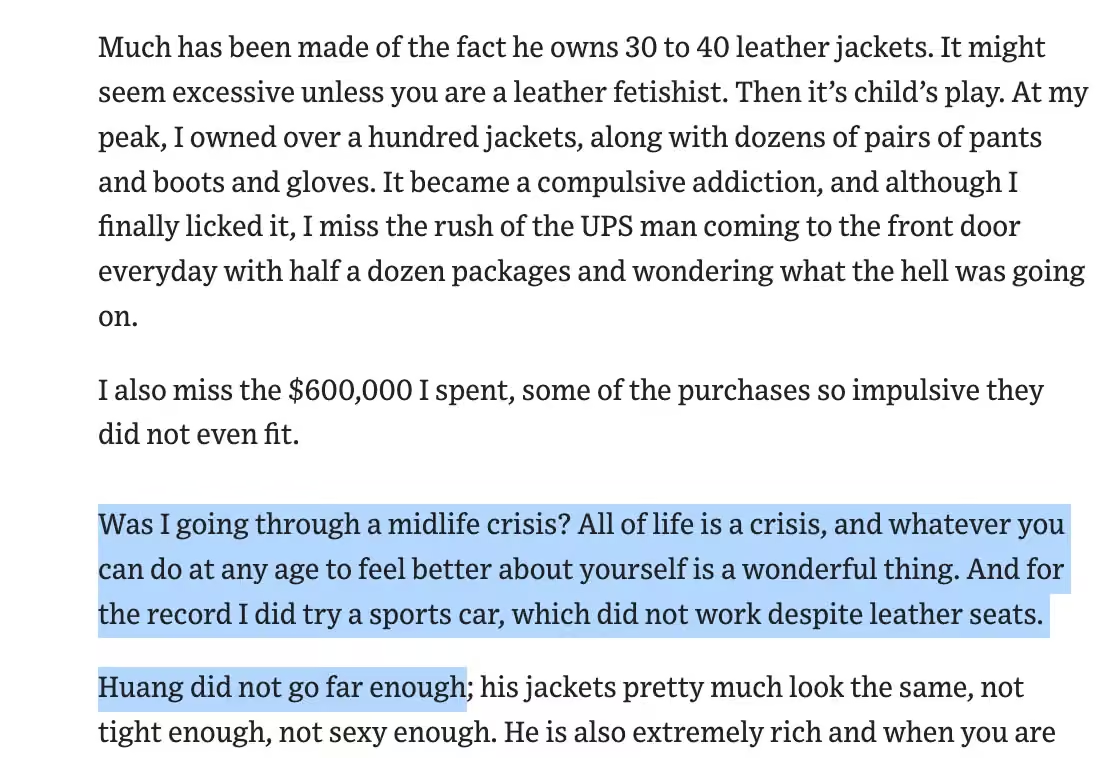
 Liz Goodwin


 Joe Weisenthal


 BuccoCapital Bloke

 Carl Quintanilla


 Jordan Schneider
 Steve Kerins
 roon
 will depue

 Shea Levy
 Politics & Poll Tracker 📡

 Paul E Williams
 Joshua Siegel


 Senator John Hickenlooper

 Matthew Zeitlin


 Arnab Datta
 Ari K

 VoteHub
 John Arnold
 Rotimi Adeoye

 Juan Wulff

 Ben Krauss
 David Wallace-Wells


 Ben Winsor


 Alec Stapp

 Sheel Mohnot
 Gavin Purcell


 Chris Newsom

 clementine
 austerity is theft

 Hunter📈🌈📊

 Lakshya Jain


 Bulwark Clips


 Sheil Kapadia
 Adam Wren


 Sam Hoppen

 Dan Orlovsky

 Zachary D. Carter

 Team Talarico
 NBACentral

 The Ringer

 The Weekly Show with Jon Stewart
 Acyn

 Jostein Hauge

 Clay Travis
 Huzzah
 Sonny Bunch
 Simon Kuestenmacher


 Benjamin Todd


 Sar Haribhakti
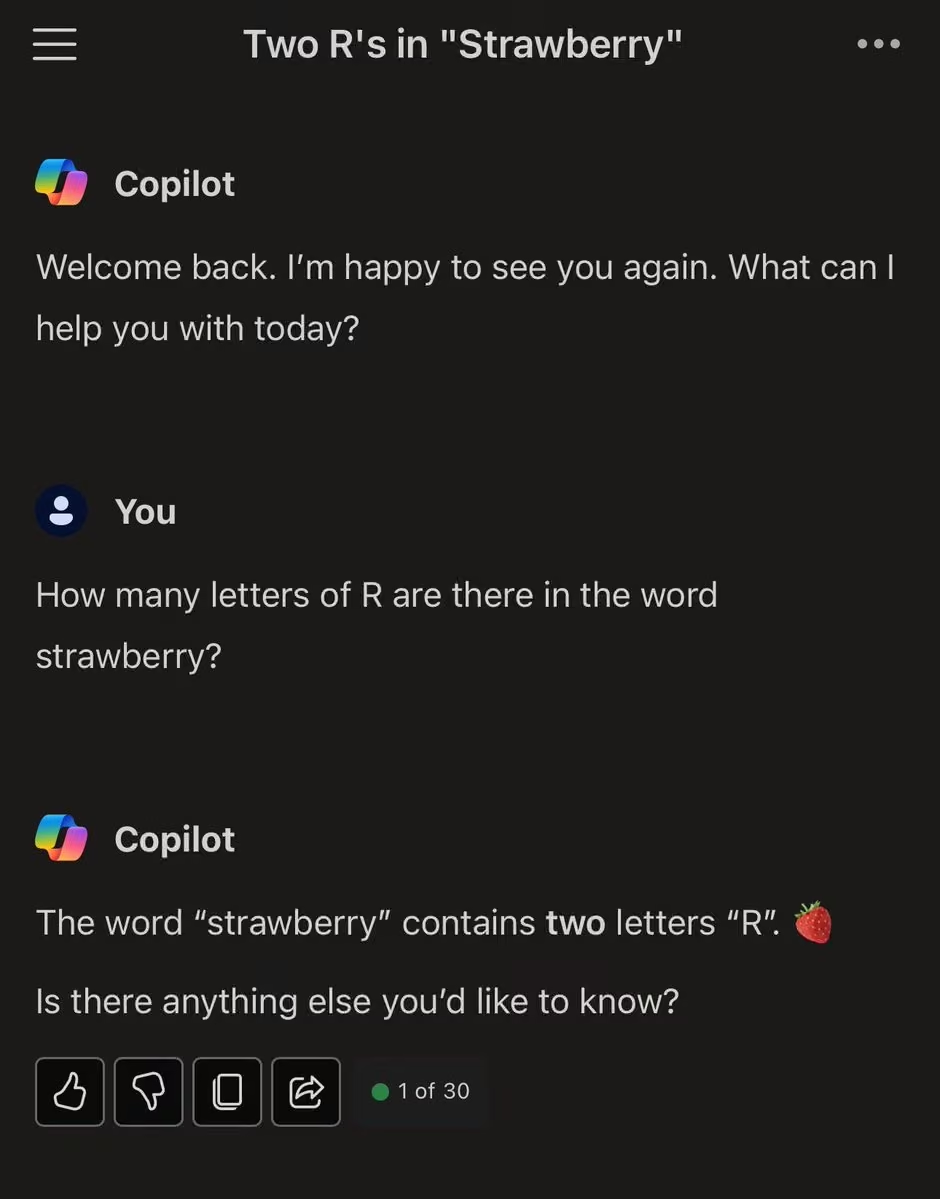
 Dan Roberts
 SemiAnalysis

 Rai ⏹️


 Ara Kharazian


 “paula”


 Stephen Watt
 Kevin Gordon


 CoFounders Nik

 Mike Konczal

 Aziz Sunderji
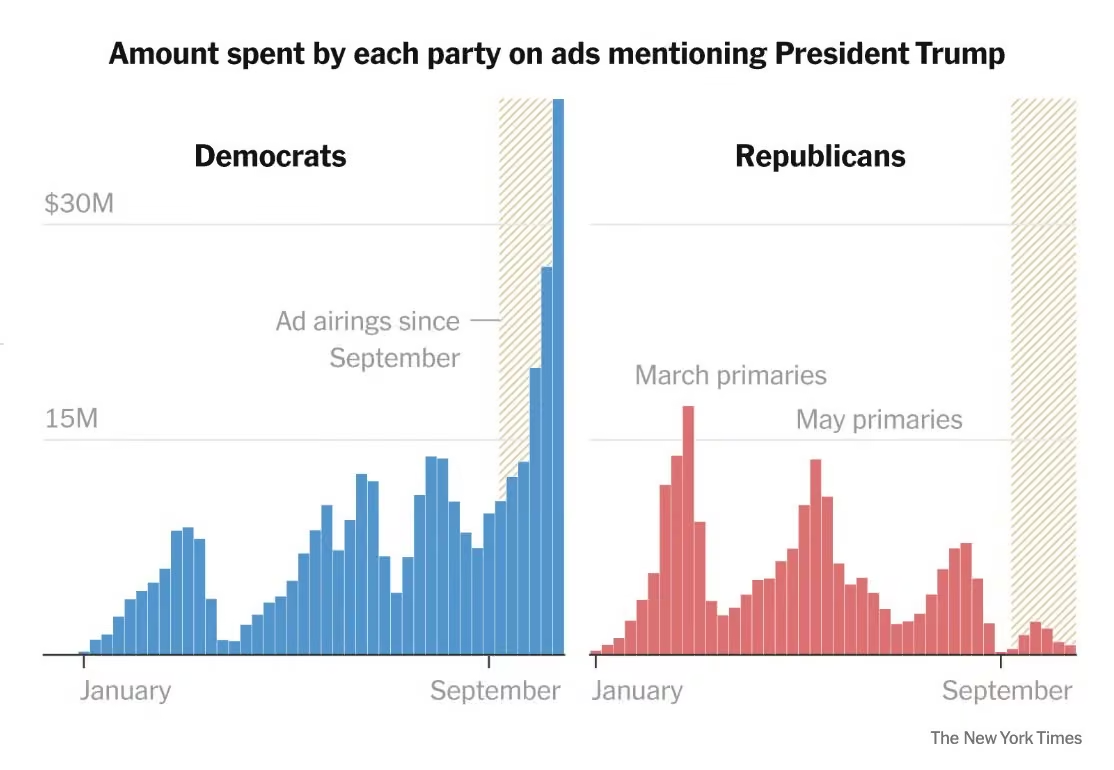
 Iain MacMillan
 Tom Pelissero


 Clash Report

 Noah Smith 🐇🇺🇸🇺🇦🇹🇼
 Cardiff Garcia
 Evis Drenova

 siggy bilstein
 Alex Wiltschko


 Adam Carlson

 Taniel

 Adam Zachary Wasserman

 Molly🎧🏳️🌈

 robert


 OpenAI Newsroom
 Jeremy Zegas


 Conservative Dividend Investing

 Rob Wiblin


 Daniel Cox

 Fireside Alpha
 Tim Miller
 Press Gazette


 Gavin Baker


 Brad Setser
 Jay Kapoor


 Mike Simonsen 🐉
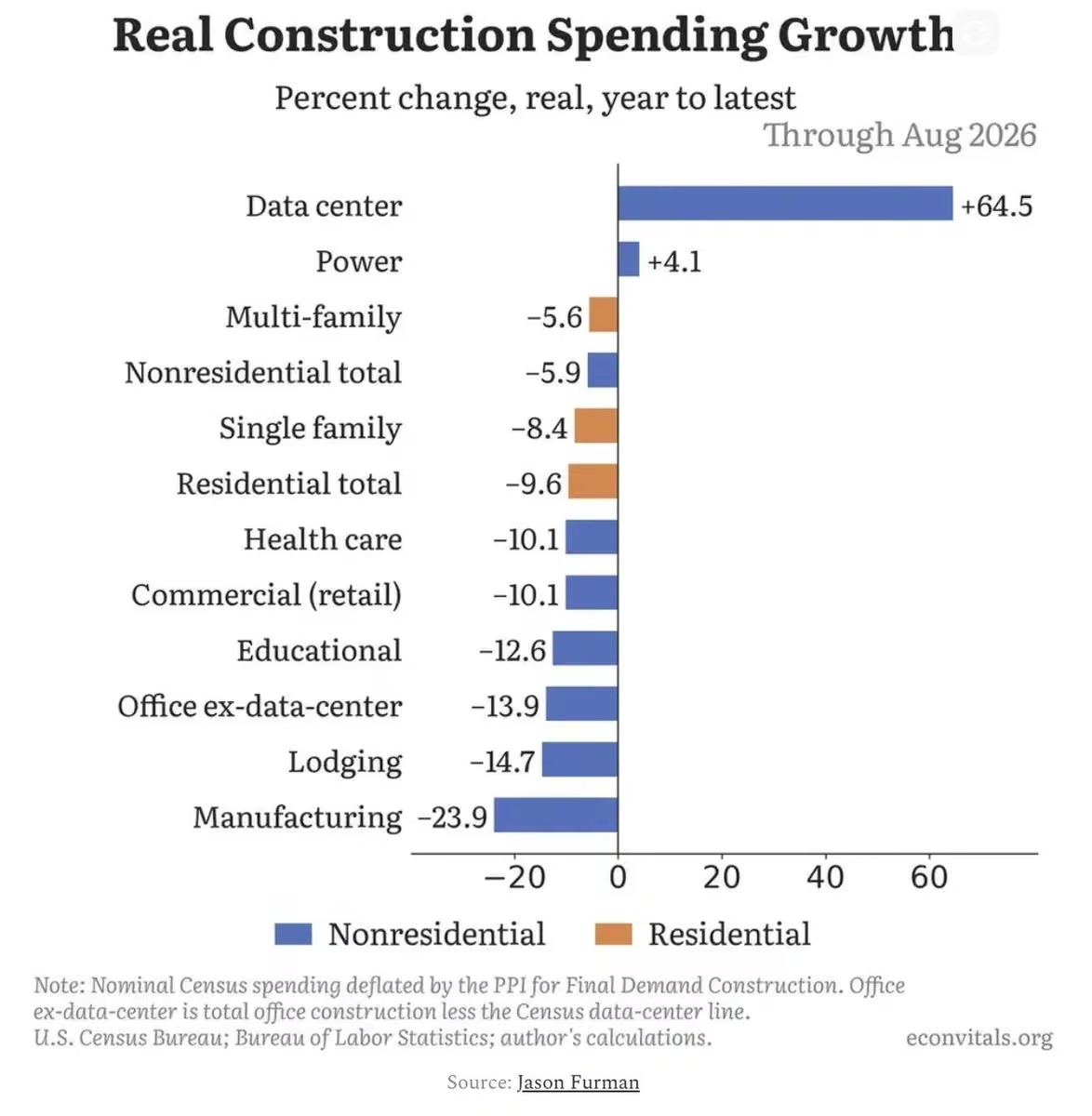
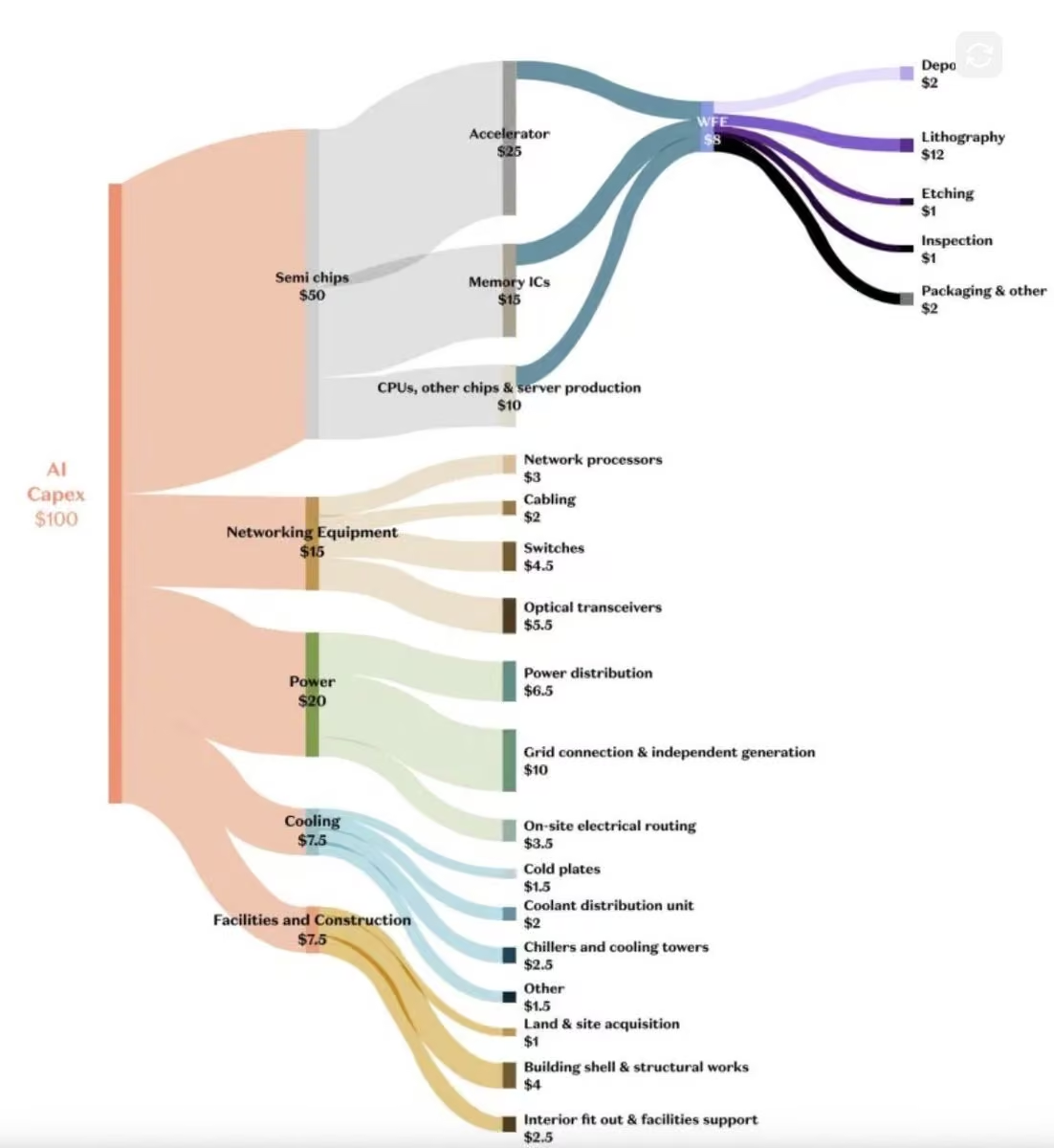
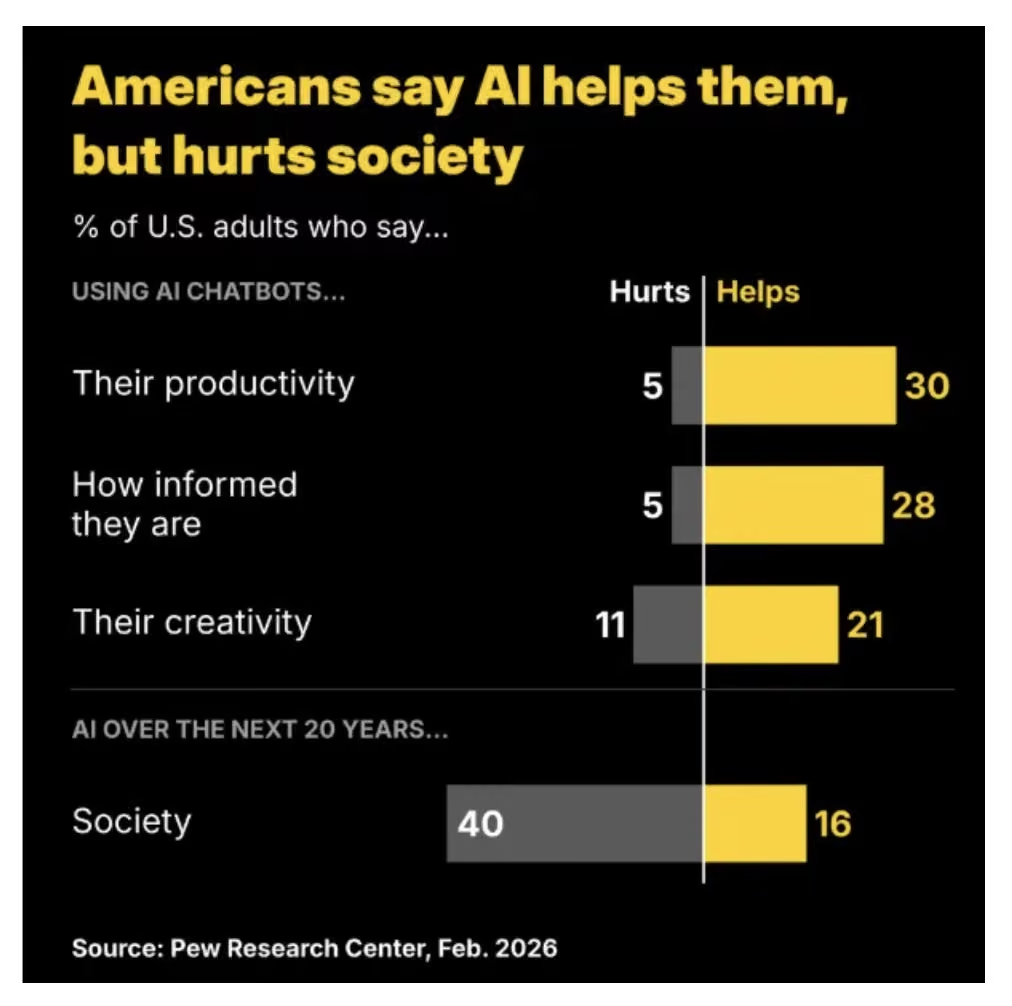
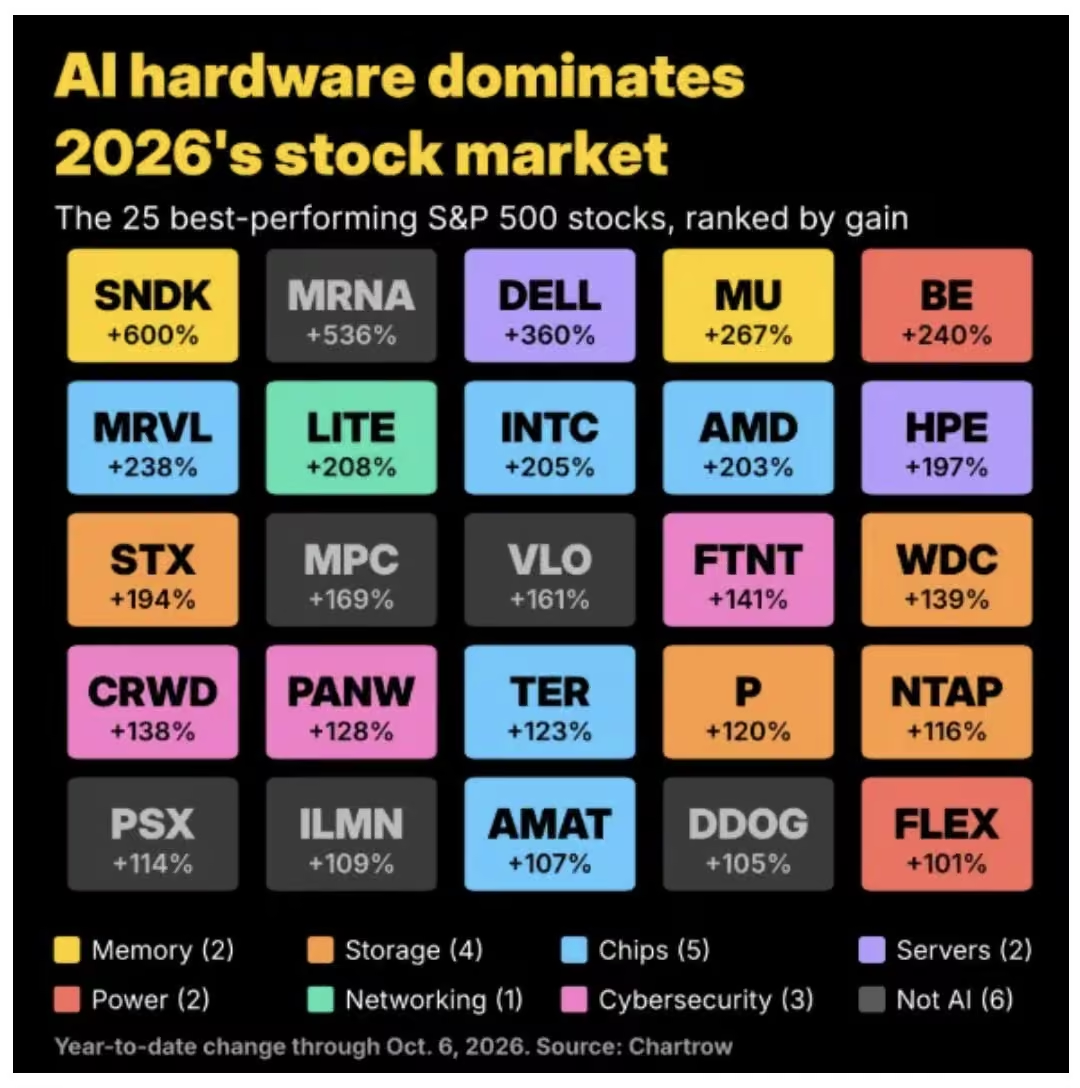
 Andrew Piper
 Michael Antonelli


 Peter Sterne
 Joshua Gans


 Arvind Narayanan
 Sonia Baschez
 Alexander Berger

 Martin Chorzempa 马永哲


 Tamara Winter
 Alex Adelman
 Alex Armlovich


 Mike Bird

 QE Infinity

 William MacAskill

 Kyle Chan

 Theo Jaffee
 Karthik Tadepalli

 Steve McGuire


 Jane Flegal
 Aidan Mackenzie
 Zeke Hausfather

 Mark Graham
 Adam Smith
 Bobby Fijan


 Horace Dediu
 Otis Reid
 Amanda Litman


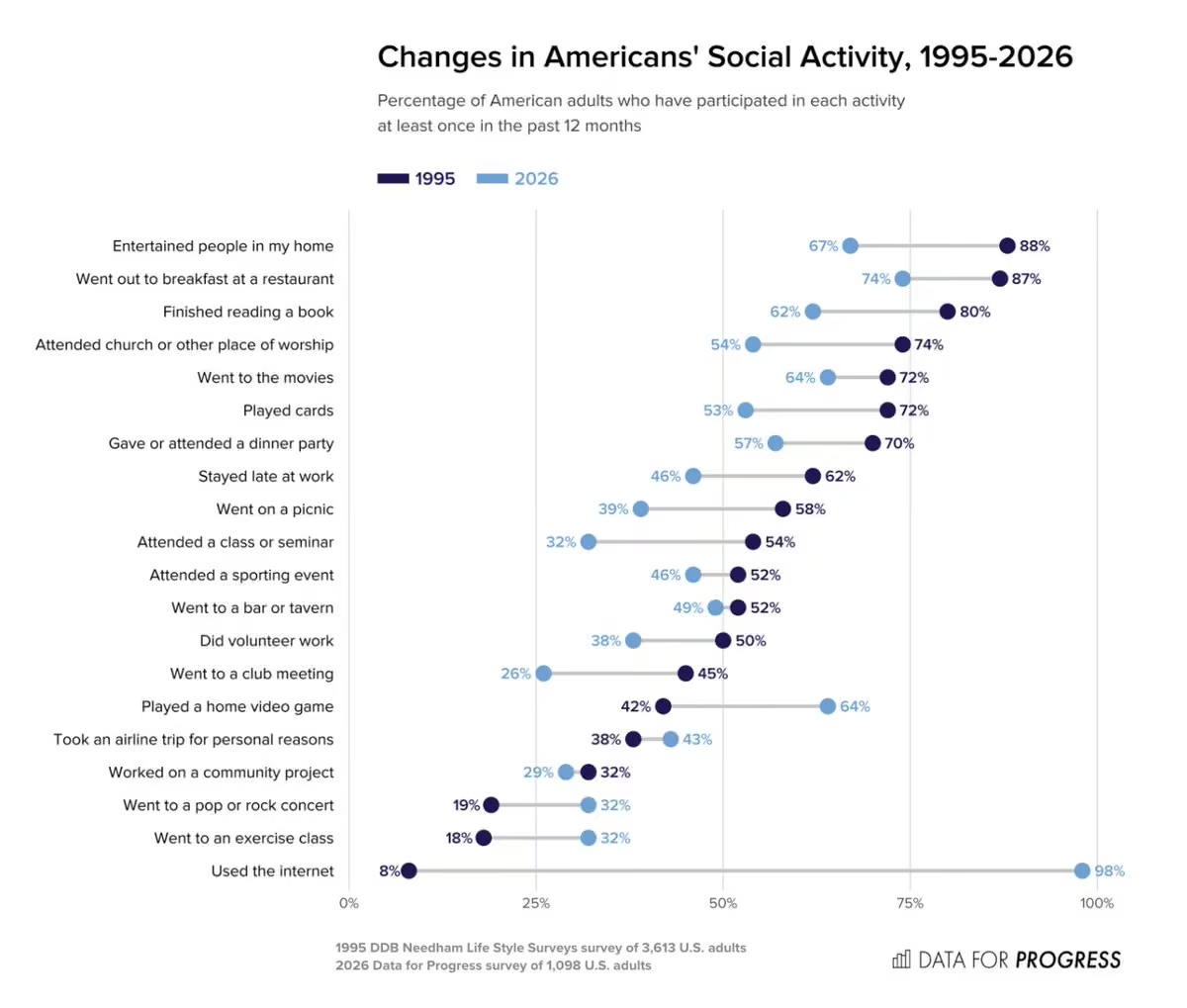
 Ben Hunt

 Joey Politano 🏳️🌈

 Madison Mills
 Callum Williams

 The All-In Podcast


 Guy Benson
 @levelsio


 Julian Gewirtz


 .


 Neil Mehta


 Zilan Qian

 Sriram Krishnan



 Archie Hall


 Epoch AI

 Joe Colangelo


 Jesús Fernández-Villaverde

 Chris Cillizza

 Scott Lincicome

 John Triplette 🇺🇸
 Stu Smith
 Nat Purser


 Choblin

 Katie
 Jordan Weissmann

 Chris Elmendorf

 Alan Cole

 Harry Siegel
 Oliver Traldi

 The Cut

 spicylemonade

 Gregg Carlstrom
 Nathaniel David

 Ryan Burge 📊

 Emma Camp


 Will Manidis


 Sayash Kapoor


 Daniel Kokotajlo

 Ryan Hass
 Byrne Hobart

 Bill Bishop
 AG
 Annmarie Hordern
 Rapid Response 47


 Cole Jaczko

 Chief Nerd

 Dario Amodei


 Ryan Orhan


 Kunal Jha
 Evan Soltas


 Lulu Cheng Meservey


 LM Sacasas

 Andy Hall
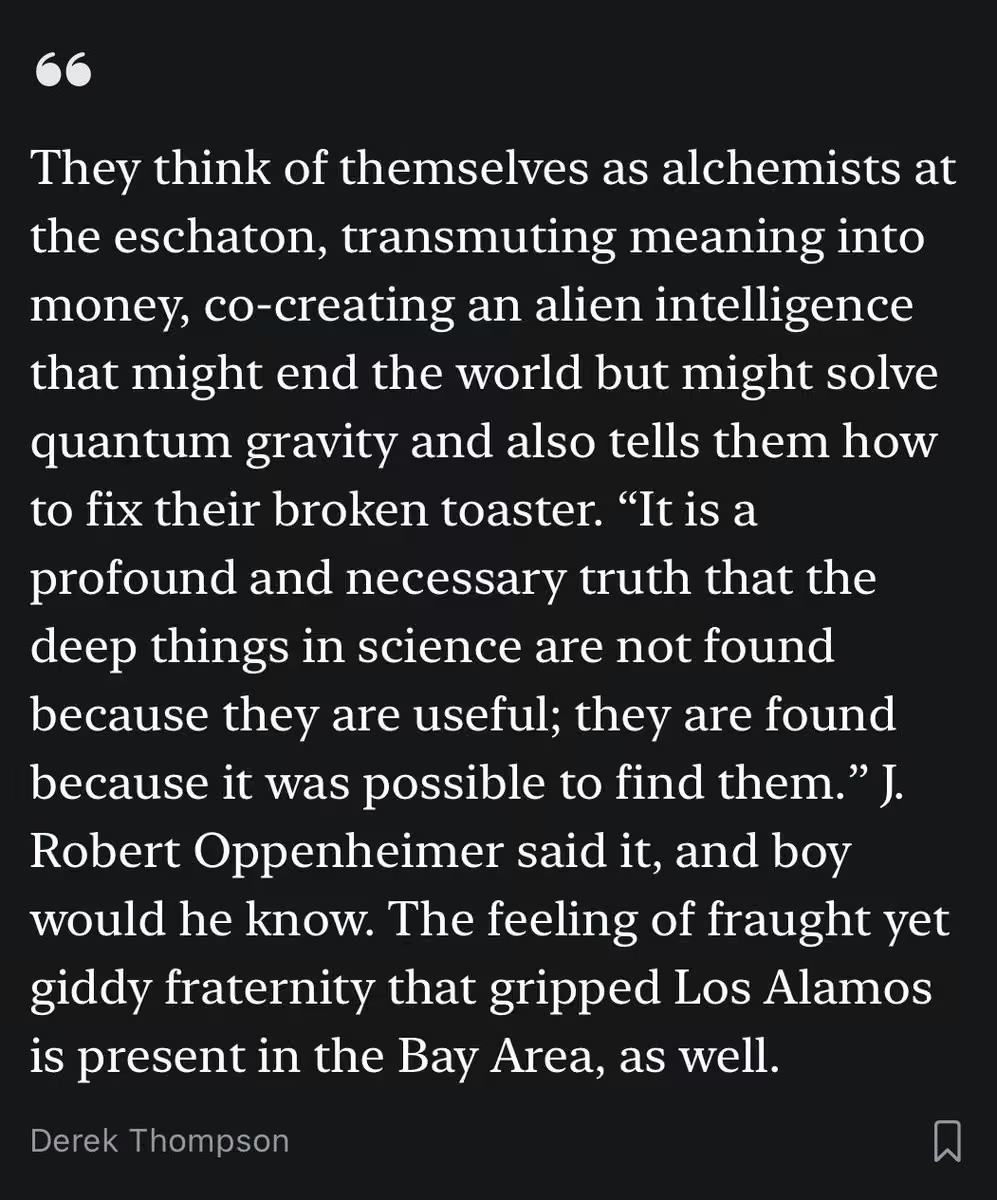


 Peter J. Hasson
 Don Van Natta Jr.


 TBC
 Jacob Coxon
 penguinpress
 Alex Imas

 Rafael Domenech | @BBVAResearch & @UV_EG


 Fareed Zakaria
 ℏεsam


 Andrew Curran
 Bosco
 Tim Alberta

 Harrison Faigen


 Brian4new

 Zac Hill

 Conor Sen
 Haseeb Qureshi >|<

 Nick Timiraos
 François Valentin

 myles brown

 Fantastic Mr. Fox
 Bill Simmons
 jasmine sun


 Jeremiah Johnson 🌐

 Andrew Granato


 Catherine Rampell
 Joe
 Timothy B. Lee




 Azeem Azhar
 Pablo Torre Finds Out

 How To Prompt


 Ben Carlson

 Guy Berger

 Stefan Schubert


 Ryan Nagle

 Mike McCormick
 Eric Newcomer
 Peter Twinklage
 Joe Pompliano

 Eric Balchunas
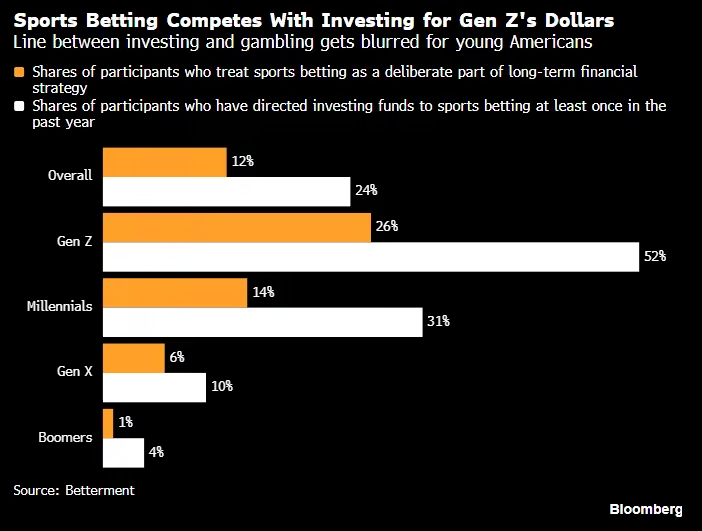
 Megan Cassella

 Rex Salisbury


 Ramona Shelburne
 OSZ


 Brian Hanlon


 Cassie Pritchard


 Logan Dobson


 MTS


 Jeff Stein


 Tuhin Chakrabarty


 Keith Humphreys


 InteractivePolls
 Patrick OShaughnessy
 Polymarket


 Matthew C. Klein

 Beau Kilmer

 Birth Gauge


 Afshine Emrani MD FACC
 NickFrank40
 Invest Like the Best
 Evan Kirstel #B2B #TechFluencer


 Jon Stokes

 Gitesh Pandya

 Sebastian Mallaby


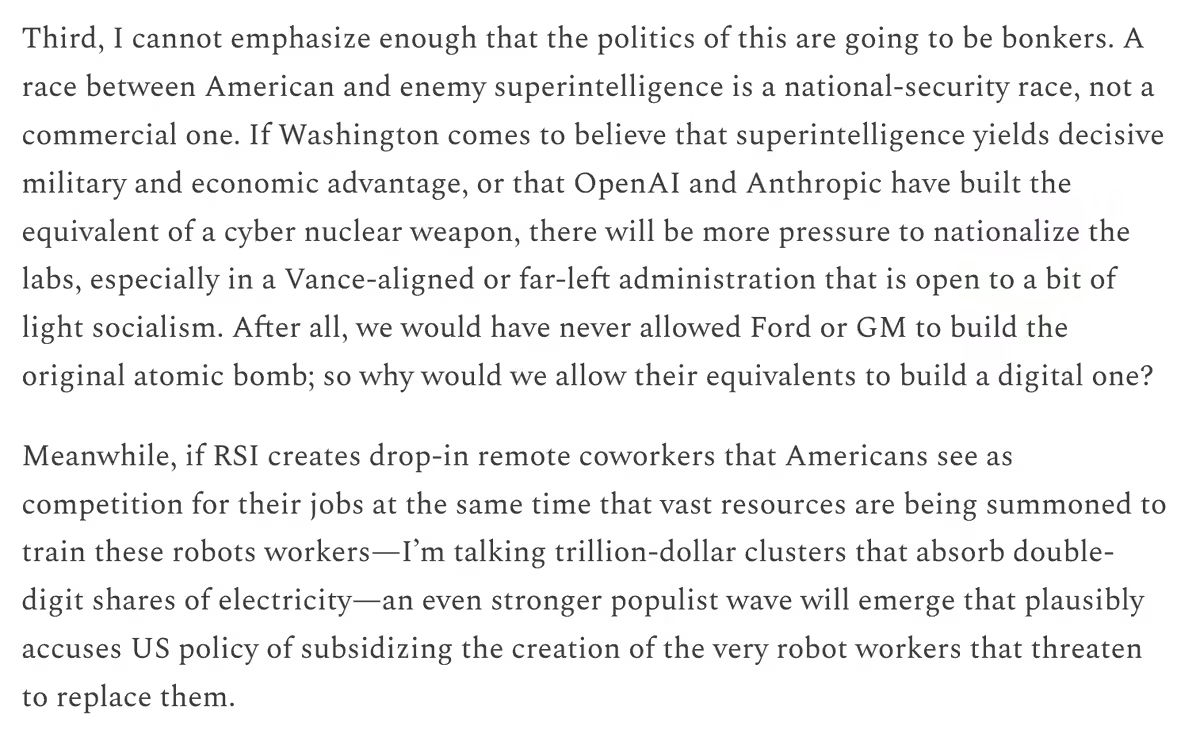


 Danny Goodwin

 Jackson Thompson


 20 Years Ago Sports

 Radek Stefanski


 Deena Mousa

 Ramez Naam
 Adam Hunt
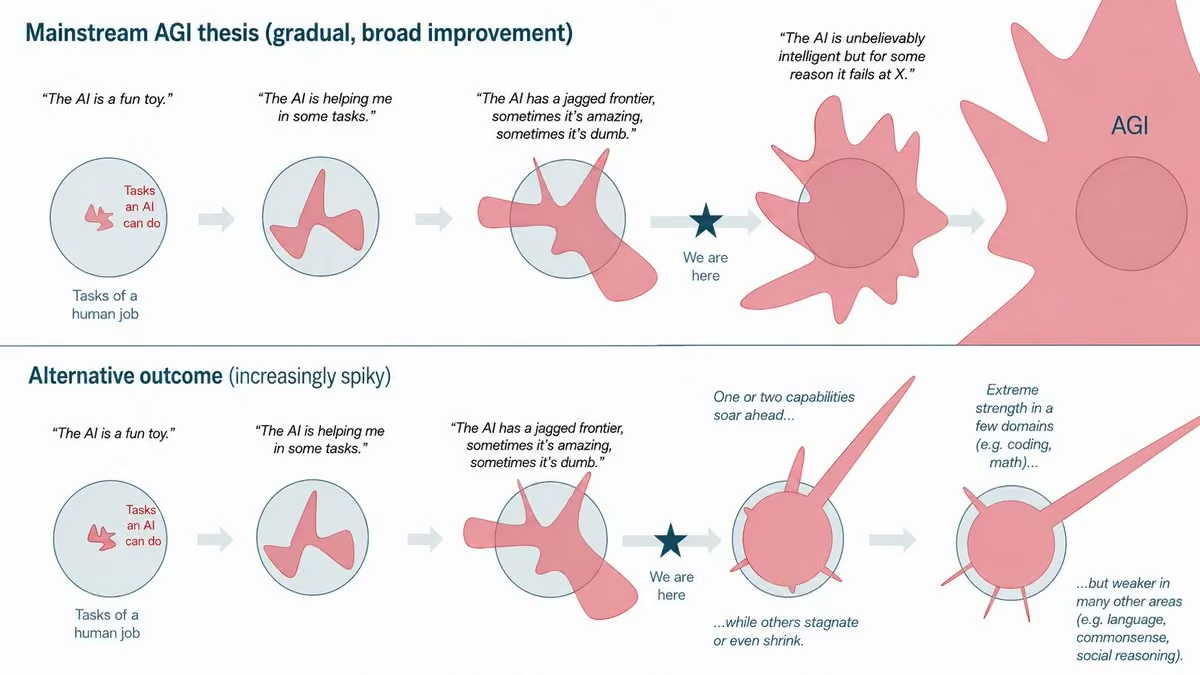
 Natalie Korach

 Michael O'Grady (He/Him/His) 🇺🇸🐦
 Ivan Werning

 Charles Fain Lehman


 talmon joseph smith

 VKMacro


 Todd Spence
 Terry
 Dan Runcie
 Zack Korman

 Director Michael Kratsios

 Dean Meyer
 Ben Fritz
 Ben Shapiro
 Matthew Belloni

 Sean Cranston

 Mark Manson
 Dr. Jebra Faushay

 Clifford Sosin

 Aakash Gupta
 Aaron Astor
 Carl

 Grey Munford


 Ramit Sethi


 Camilo Moreno-Salamanca
 Anna Gát
 Michael Mulvihill


 Skanda Amarnath
 Global Box Office


 John Hudson
 Scott Barber

 Zach Abrams
 Will Poff-Webster


 Kostya Medvedovsky


 Isegoria
 Daniel D'Addario

 Peter Kafka


 Craig Calhoun
 Jomboy Media


 Derek Kaufman
 DiscussingFilm

 seanfucious


 Collingwood 🇬🇧

 Philippe Lemoine


 Brian Snider


 Nat Bullard
 Maia


 Sarthak Pattnaik


 John Taylor


 Matt Zieger
 KingoftheCoast


 Eric Levitz

 The r/BillSimmons Podcast
 Adam Jentleson
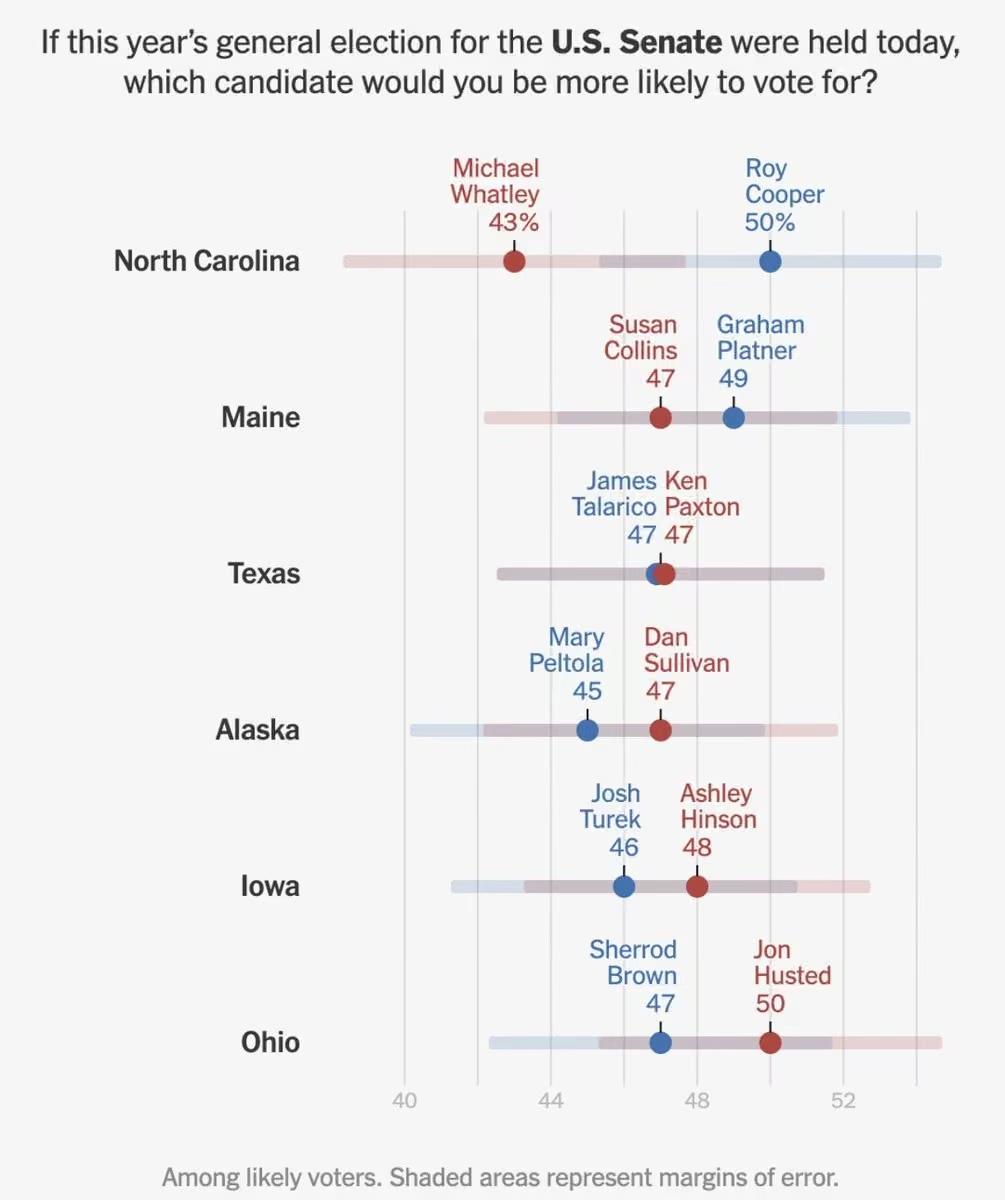
 Nikita Bier
 Legion Hoops


 Eugene Daniels
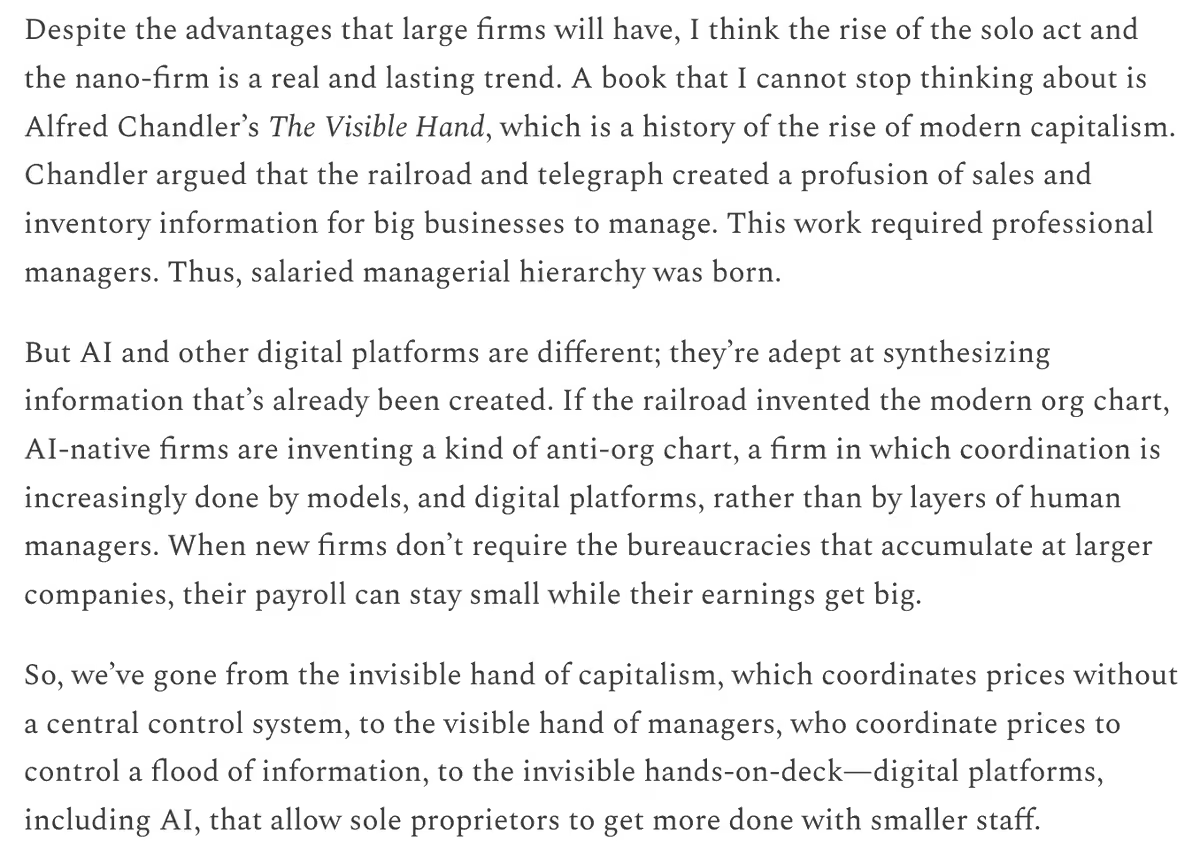


 Jonathan Robinson


 Film Updates


 Frank Braconi


 Brian Armstrong


 A$AP Bullwinkle

 Abhishek Nagaraj


 Gerd Leonhard
 Amir Efrati


 Zvi Mowshowitz

 Michael Easter


 Pierre Elias, MD


 Pretty Solid
 The Hollywood Reporter
 Big Cat


 Mike Smerklo
 Substack

 Bill Gifford
 Mark Villacampa


 Eric Topol

 Deva Hazarika

 Natalie Andrews
 Hugo Lowell
 Aaron M. Renn 🇺🇸


 Benjamin Ryan


 Kevin Root | Denver
 Peter Schorsch
 Jeff Edelstein
 Josh Young
 Andrew Steele
 Kevin A. Bryan


 U.S. Senator Bill Cassidy, M.D.


 Crémieux

 Rod Wong, MD
 Ethan J. Weiss
 Ole Lehmann


 jessica dai
 Florian Ederer

 Dudes Posting Their W’s
 Alex Rives
 joy larkin


 Jon Steinsson

 Vishnu
 Stephanie H. Murray

 Pankaj


 Adaptable

 Darby Saxbe
 Joel Sawyer
 Ian Clarke
 Jamesetta Williams 💕
 Owen Winter

 Drowsy Investor (Shooting the Bull Pod)
 Alexandra S. Levine

 TBPN

 Ruxandra Teslo 🧬

 Jeremy Neufeld

 Jen Zhu

 Gabriel

 Rachel Janfaza
 Claire Valdez
 Avi Roy
 Zach Abdo

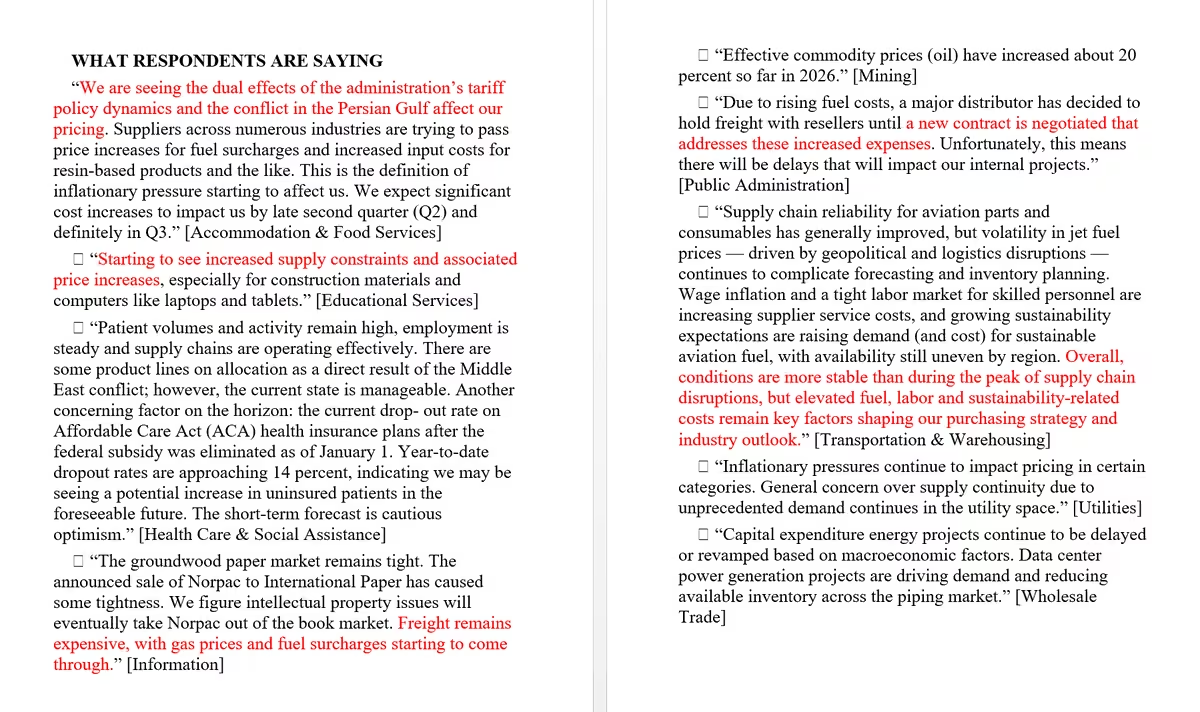
 Ben Dreyfuss


 unusual_whales


 Jay Van Bavel, PhD

 Jack Seiden
 sam


 fed_speak


 Nathan Reeder


 JustinRob


 Heather Long


 Anjney Midha




 lada

 Lev Akabas

 Coop™️
 Samuel Hume

 Justin Wolfers
 Rachael Bedard


 Isaac Saul
 Max Marchione


 Bad Art Friend
 Sung Drip Woo


 RoadMN


 Tom Rachman


 Lyman Stone 石來民 🦬🦬🦬
 Panda

 Lucas Shaw
 NYTimes Communications


 Alex Kantrowitz
 Ernie Tedeschi


 The Honest Broker

 Dan

 Ben Thomas


 John Lettieri


 Chris Williamson
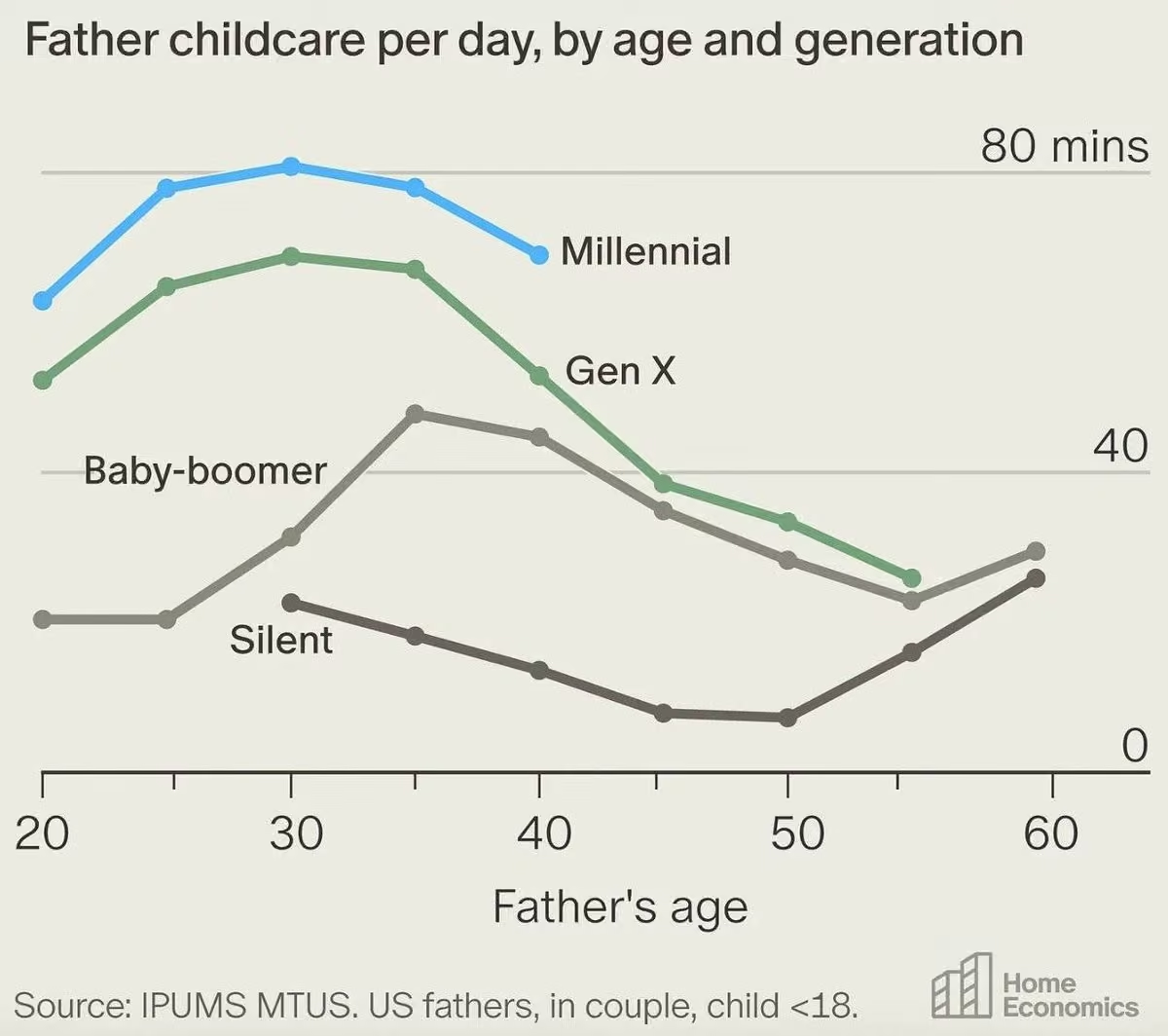
 Grant Bailey

 Laura Bratton
 Teddy Schleifer
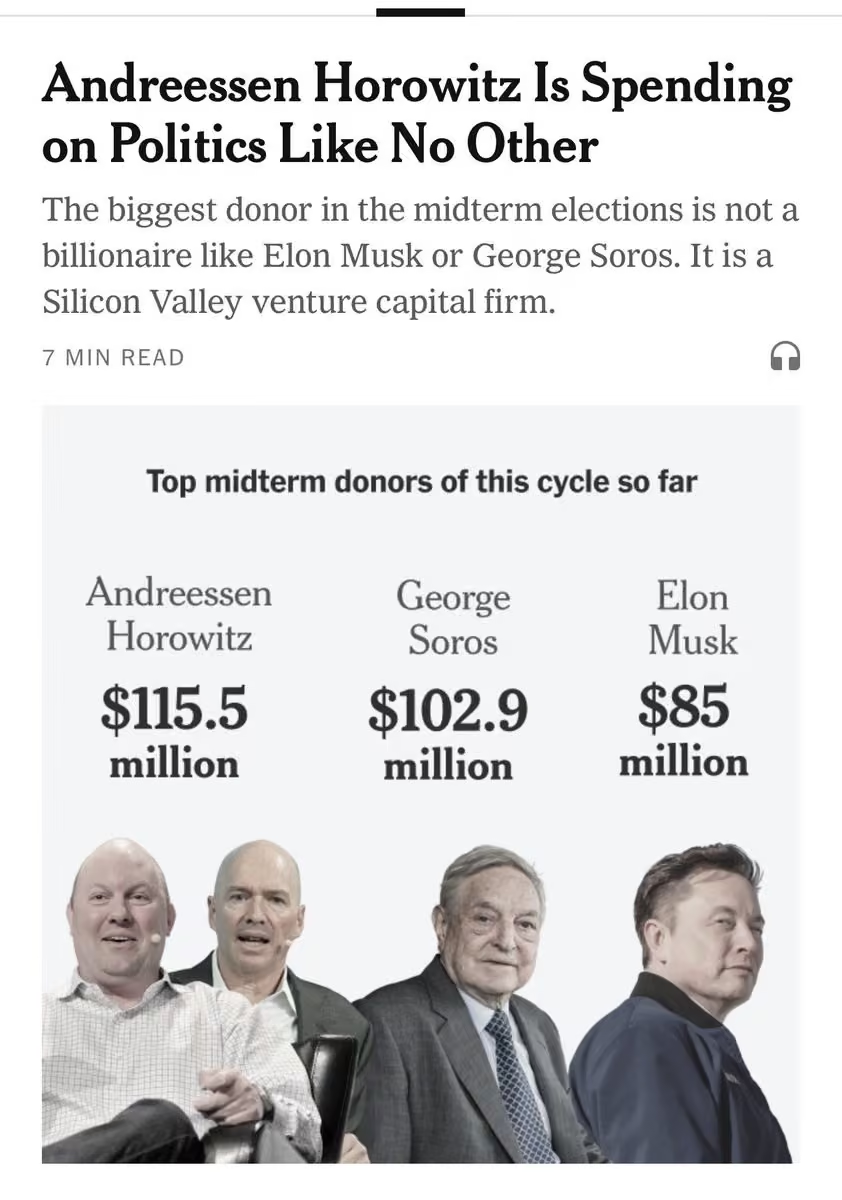

 Josh Yazman
 Craig Fuller 🛩🚛🚂⚓️
 Gaurab Chakrabarti

 laurence pevsner


 Josh You

 James Medlock


 Morgan Housel
 Zohar Atkins


 Claude

 Kyle Griffin
 Humidity Enjoyer
 Ed Elson


 Ryan Petersen


 Alex


 Sebastian Caliri


 Awni Hannun



 Benjy Sarlin

 Sean Fennessey
 Claire Lehmann


 Ben Horwitz


 Ryan Grim
 Jake Sherman
 Brendan Pedersen


 Erik Torenberg
 Jorge Bonilla


 Brad Slager: CNN+ Lifetime Subscriber

 Jonathan Libov
 Roots of Progress Institute

 Daniel Wortel-London

 Hedgie

 Sarah Fitzpatrick
 Fin Moorhouse

 Corey Atad


 _s.a.m.e.m.e.m.e_


 Ben
 Liam Donovan
 Tim Hirschel-Burns


 Elan Sykes
 Peter🌲Brannen
 Robinson Meyer
 Demetri Kofinas


 LK
 Benjamin Howard
 Peptime


 Sahil Kapur


 Robert A. Pape

 Marc Levy
 Chris Bakke
 Jake Auchincloss
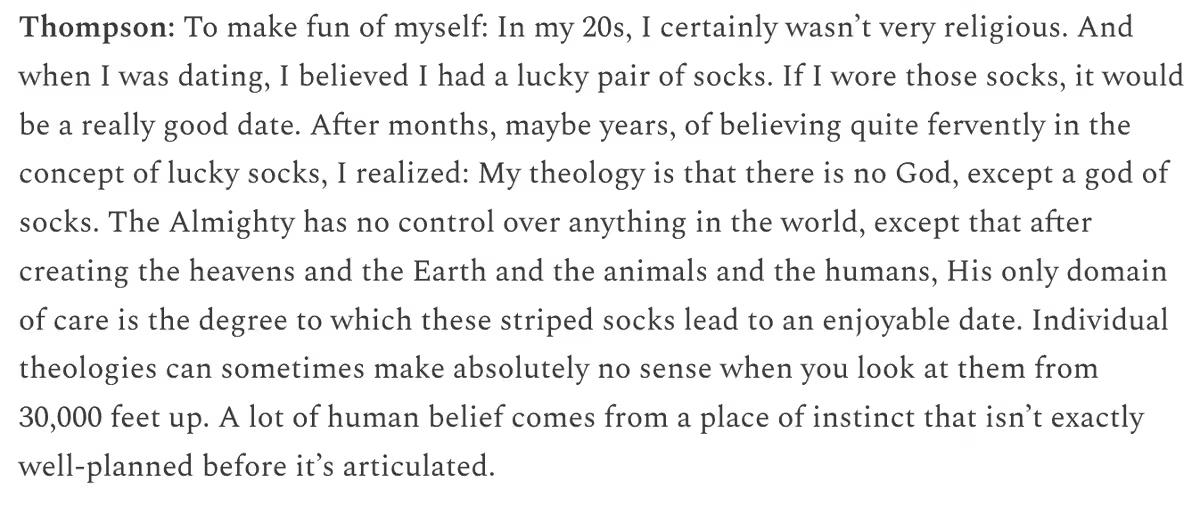
 Ahmed Al Omran


 Tenobrus


 Santi Ruiz


 Ted Alcorn

 Alex Weprin
 Infornomics


 Nate Gallagher

 Lydia DePillis
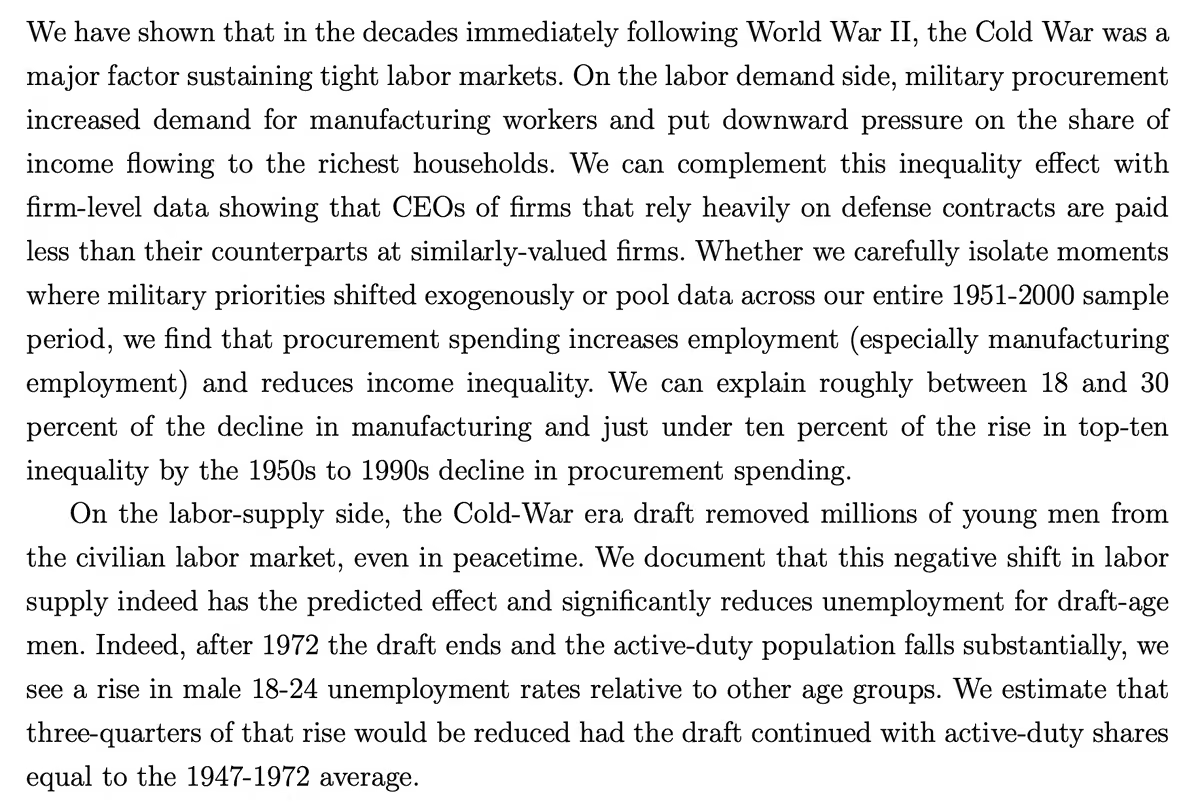
 Brian Sozzi


 Alex Turnbull
 Sagnik Basu
 Jordi Hays


 jerry

 Brad Stulberg
 Oren Cass


 Barstool Sports

 Emily Gould

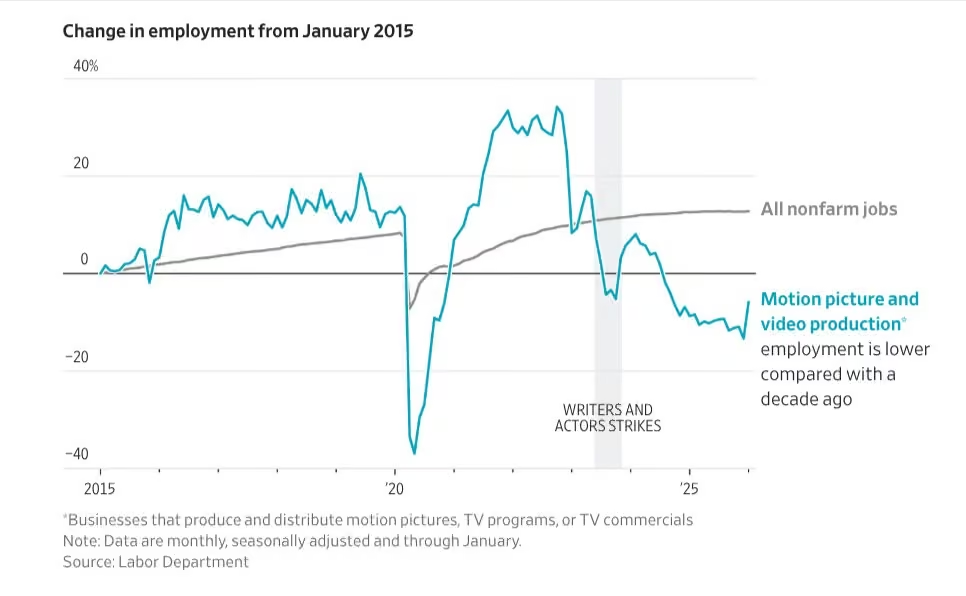
 Jon Hartley

 Simon Owens


 Linda Mamoun


 Audrey Horne Updates and Rumors


 Arpit Gupta


 Dean W. Ball


 Matthew B


 Uncapped Downside Scenario Lover


 Kevin Malone


 Brandon M. Scott


 Pradheep J. Shanker, M.D.


 Alan MacLeod

 Lance 🇺🇸


 Yishan

 Kyla Scanlon


 David Shor
 Jed Kolko


 Will Jordan


 Variety


 Karen Chapple


 Katie Robertson


 Anjalee Khemlani


 Bloomberg UK


 Tim Urban


 Matt Darling 🌐🏗️


 *Walter Bloomberg


